
non in magazzino
Ordina ora e ordineremo l'articolo per te presso il nostro fornitore.
21,43 €
Last In: 3 years ago
Ordina ora e ordineremo l'articolo per te presso il nostro fornitore.

“Klangstof are conducting deliciously evil experiments on indie rock.” – Clash. Klangstof recently returned to attention with the ‘Ocean View’ EP, which was one of two projects they recorded simultaneously in 2021. Its release added to the anticipation for the bigger set that was recorded at the same time, their third studio album ‘Godspeed To The Freaks’, which will be released on September 16th. The band today launch the album by sharing its lead single ‘Disguiser’. ‘Godspeed To The Freaks’ will see the Edison Award (the Dutch equivalent to the Grammy or BRITs) winning band add to the widespread tastemaker attention that has greeted their previous two albums. It’s an album which focuses on self-reflection; finding the courage to confront your inner self and being at peace with your demons. There’s a power that comes with the acceptance that every good day might have a touch of darkness to it. And in a further contrast to the electronic-orientated 2020 set ‘The Noise You Make Is Silent’, this record is focused primarily upon the warmth of its live instrumentation and the intuitive interplay between the band members. Remarkably, the bulk of ‘Godspeed To The Freaks’ was recorded in just two weeks. The trio - Koen van de Wardt, Wannes Salomé, and Erik Buschmann - were boosted by the addition of their touring guitarist Wouter Van Nienes and channelled the energy of their live show, an approach further amplified by recording in a temporary studio in De Bolder, a music venue on the tiny Dutch island of Vlieland. Klangstof essentially rehearsed, recorded and produced the core of the record themselves in that serene environment, giving them a bubble of freedom amidst a world in chaos. Any outside input only followed later, with additional mixing by Sam Petts-Davies (Radiohead, Frank Ocean) and mastering by Heba Kadry (Björk, Slowdive, Big Thief). The album campaign’s visual aesthetic features band portraits courtesy of the iconic photographer and director Anton Corbijn. His timeless photography includes shoots for R.E.M., U2 and Nick Cave, while Nirvana, Metallica and Depeche Mode lead his numerous renowned music videos. He is also a feature-length film director who is best known for the Ian Curtis / Joy Division biopic ‘Control’. Klangstof will play several European shows this summer as guests to Pixies, including Manchester’s Castlefield Bowl on July 5th. They will again link up with Pixies in December for a tour of Australia and New Zealand.
dovrebbe essere pubblicato su 16.09.2022

Ordina ora e ordineremo l'articolo per te presso il nostro fornitore.

Synthetic Music From Yugoslavia 1980-1989
"The galloping technical progress in the second half of the last century dominated all spheres of daily life, art and culture. In the music industry machines took over the role of classical instruments and did not stop at RnR, punk nor industrial music. No one could resist the challenge, but also the prevailing trends in the 80s. The music industry was influenced by the electronic virus globally, not sparing even the remotest corners of the planet, producing bands like Depeche Mode, New Order, Soft Cell or lesser known ones like Liquid Liquid, Section 25, The Wake as well as the pioneers of the electronic music Silver Apples, Pierre Henry,etc .
What was going on in the music industry of former Yugoslavia and at Jugoton, the biggest YU music label at that time? The all over answer is given by a new release of Everland Music: Electronic Jugoton - Synthetic music from Yugoslavia 1964. - 1989. Vol. 1
Electronic Jugoton is the first part of two double albums, where the second part will even go back to pre-electronic music from 1964. Both double albums were initially released by Croatia Records (ex-Jugoton) in 2014 on a 2CD set with no less than two and a half hours of material (47 songs, 35 performers), showing the contemporary trend of Jugoton at that time towards avant-garde and provocative directions in electronic music. This untimely compilation is released for the first time on vinyl now on two double LPs, housed in gatefold sleeves by Everland Music, where part 2 will be released in 2023.
The brave and insightful creators of the compilation Electronic Jugoton, veteran crate diggers Višeslav Laboš and Zeljko Luketić, have excelled at reconstructing the musical past of electronic music in Yugoslavia from 1964 – 1989. Jugoton's extensive research included the most exciting and progressive moments of pop and disco music, early rap, electronic responses of new wave, RnR, post punk and industrial bands to the current trend of the 80s, but also pioneers of avant-garde electronic music.
Electronic Jugoton part 1 is officially opened by the band Laboratorija with the song Devica 69, which opens a window to a completely new and experimental world in former Yugoslavia.Laboš and Luketić have boldly chosen the material without reservations, suggesting that for the first time in one place we have a section of forgotten, unique underground bands like Beograd, Data, Brazil, The Master Scratch band, DU DU A and beyond.
Besides the excellent underground bands, we find popular performers of the time performing less well-known songs: Denis & Denis, Oliver Mandić, Slađana & Neutral Design.
Electronic Jugoton part 2 is partly dedicated to unique electronic music in the performance of important Yugoslav punk, new wave, RnR and industrial bands: Zana, Pekinška patka, Električni orgazam and Borghesia, while the second part of the material is focused on avant-garde early electronic music in Yugoslavia, where the works of composers Igor Savin, Branimir Sakac, Igor Kuljerić and Miroslav Miletić were presented. Luketić and Laboš rescued the obscure electronic tune Elektra by Zdenka Kovačiček, who was at that time Jugoslovska Soul and funk diva.
The uniqueness and quality of this compilation are also audio stories for children, which were extremely fertile ground for an experimentation with electronic sounds, as they should be highly imaginative to attract the attention of the childrens. Electronic Jugoton is also the first compilation in which the listener will find fragments of interviews with actors from the time gave for Jugoton Express. This was a series of promo vinyls printed in extremely small quantities in the 80's and intended to be exclusively for radio stations. An average of 30 minutes of promotion material and interviews with musicians were available for the first time through this compilation.
The value of this compilation is time and priceless. The only question is whether you will be fast enough to catch your copy of the limited double vinyl editions!"
Ordina ora e ordineremo l'articolo per te presso il nostro fornitore.

Mathias Kaden returns to Rekids with ‘Blackbird’, featuring a remix from Ian Pooley.
Last appearing on Rekids with the ‘Control Your Mind’ EP in 2020, Mathias Kaden now delivers his third release on Radio Slave’s label, teaming up with Zoë Xenia for the mammoth ‘Blackbird’ backed with a pair of remixes from house legend Ian Pooley.
Leading the A-side, ‘Blackbird’ sees Mathias Kaden reach for rumbling basslines, fluttering synths, and lush piano chords to craft a tense, building track enhanced by Zoë Xenia’s soaring vocal performance. Additionally, an instrumental version of the track features on the A2, providing a welcome bonus for listeners and DJs alike.
On the flip, Ian Pooley twists the track into a rattling house jam, with wriggling keys, bouncing low-end sizzling percussion sitting under slices of Xenia’s effortless vocals. Rounding out the release is the ‘Basic Dub’ mix, which sees Pooley playing with classic dub techniques for a sharp instrumental take on the original.
Ordina ora e ordineremo l'articolo per te presso il nostro fornitore.

Tape
»Mediocrity and the Master Narrative« is about coming to terms with having grown up with unrealistic expectations of life. Moose Malloy spent multiple years crafting this many-layered 19 minutes masterpiece by masterfully molding a plethora of reference points and influences. Ranging from minimal music to free-form sampling and the more spiritual kind of Jazz, to geographical influences they never visited (like Mongolia or Mali) and paintings by Lucian Freud or the film Koyaanisqatsi. In a way, this album is not even an album, it's many stories all at once. And they all tell us that our very own life's mediocrity can only be paradoxically dissolved by fully accepting it.
dovrebbe essere pubblicato su 09.09.2022

Ordina ora e ordineremo l'articolo per te presso il nostro fornitore.

New Darius album, featuring Wayne Snow, Kadhja Bonet, Benny Sings...
After the release of his last EP "OASIS (Prelude) on Roche Musique, Parisian producer Darius reveals his second album "OASIS" with the powerful track "EASE YOUR MIND". A groovy dancing track reminiscing of his early trademark electro dance sounds with catchy R&B lead from Devin Tracy. The acclaimed and certified artist is now ready to unveil his new project, teased since the release of the +10 Million streams "EQUILIBRIUM" in 2020.
Ordina ora e ordineremo l'articolo per te presso il nostro fornitore.

In the musical universe of the Brazilian singer-songwriter Raphael Gimenes, wild landscapes are metaphors for unspoken feelings. The Copenhagen-based artist writes hauntingly visual, and poetically surrealistic stories, in which he can be hunted by sun-kissing jaguars, chased by thirsty horizons, become a kaleidoscope of butterflies, or turn into dream-singing birds. His 2016 debut album, "Raphael Gimenes & As Montanhas de Som", was elected the best Brazilian album of 2016 by the Dutch website Written in Music, received 5 stars on Jazzism, and was hailed as a "conceptual masterpiece" by the Japanese magazine Latina. His sophomore release, "A tongue full of suns", is co-produced by the Faroese singer-songwriter Teitur, who also features on synths. On this new album, Gimenes explores his non-Brazilian influences and his life outside of Brazil. The songs are sung in English, a language that he learned when he lived in the United States as a boy. The lyrics are inspired by the mountainous landscapes of Jotunheimen, Norway, where he goes trekking on a yearly basis. The production and the arrangements draw heavily on sounds he heard on vintage European prog rock bands, particularly Yes and PFM. The music itself does not stray far from the universe of his debut album, but the songs do take more symphonic, progressive forms, while the Brazilian rhythms are substituted by the more meditative, minimalistic tabla played by the German musician Jan Kadereit. "A tongue full of suns" also features two guitar virtuosos from Argentina and the Netherlands: Matias Arriazu and Tim Panman. The fictitious story behind the concept album is presented as a poetic short text written by Gimenes himself: "These are the last songs written by The Painter, a broken-hearted sorcerer who disappeared on a journey of self-discovery in the vast canvas of the great wild. They were found floating above the silence of an ageless rock, in a valley of slumbering glaciers. It is said that on his odyssey, he learned the hypnotic dialects of the trees, and deciphered the translucent poetry of the moon; that he unearthed ancient vestiges of rhymeless metaphors, and mastered the alchemy of cosmic verbs. It is believed that The Painter could enter the memories of rivers, interpret the dreams of birds, and that his sun-gilded tongue carried melodies that filled entire horizons. Legend says that he is now a wanderer of the infinite; a sacred secret, revealed only by the colors of the solstice alpenglow on inaccessible, rugged peaks."
dovrebbe essere pubblicato su 19.08.2022

Pye Corner Audio releases a new album, Let’s Emerge!, for Sonic Cathedral. It’s his first studio outing for the label following the acclaimed live recording Social Dissonance, which came out earlier this year, and it features Ride guitarist Andy Bell playing on five of its ten tracks. From the first glimpse of the artwork to the first note of the music it’s a marked deviation from Pye Corner Audio’s more traditional shadowy sounds. Whereas his last outing for Ghost Box (2021’s Entangled Routes) was inspired by the underground fungal pathways through which plants communicate, this one is very much above ground, bathed in sunlight and acid-bright psychedelia.
“This is a departure to sunnier climes, but a departure nonetheless,” says Pye Corner Audio, aka Martin Jenkins. “It’s something that I’d been thinking about for a while. I try to tailor my work slightly differently for the various labels that I work with, and this seems to fit nicely with Sonic Cathedral’s ethos.” Designer Marc Jones’ bold and ultra vivid artwork consciously references the likes of LFO, Spacemen 3 and the early output of Stereolab. “I think it mixes together many of my earliest influences,” explains Martin. “I’ve been a long-time fan of Spacemen 3 and Stereolab.
Their moments of repetition and drone have always seeped into what I’ve tried to create.
“I was living in a small apartment and I’d stripped down my studio set-up when I was recording this album. This enabled me to focus on a few key pieces of equipment and explore them fully.” The recordings were fleshed out by Andy Bell, who Martin first met at the Sonic Cathedral 15th birthday party at The Social in London back in 2019 – the same show that became the live album Social Dissonance.
“New alliances were formed and friendships made in that basement in Little Portland Street,” recalls Martin. “When I met Andy, we agreed that we needed to work together in some way. After I’d remixed a few tracks from his album The View From Halfway Down, he kindly repaid the favour.” The end results – mastered in New York by acclaimed engineer Heba Kadry – are incredible, from the first stirrings of opener ‘De-Hibernate’, via the glorious ‘Haze Loops’ and ‘Saturation Point’, the album slowly but surely awakens, blinking and feeling its way into the light. It all culminates in the epic closing track ‘Warmth Of The Sun’ which, with its vocal harmonies and acid breakdown, is seven and a half minutes of pure release.
“That one’s about life’s simple pleasures,” concludes Martin. “The Beach Boys, tremolo guitars, infinite drones, Spacemen 3. Let’s emerge from this darkened era and feel the ‘Warmth Of The Sun’. “The last few years have seen huge changes, both personally and in a wider perspective. The album title is a reaction to this, a collective (tentative) sigh of relief. Here’s to new beginnings and a sense of hope.”
Ordina ora e ordineremo l'articolo per te presso il nostro fornitore.

Very limited vinyl pressing, 500 copies in a gatefold sleeve, a printed inner housing white and marbling effect vinyl with full download included. CD in a 4 panel digipack with a 4 page booklet. New Heavy Sounds is very proud to bring you Moongazer, the 2nd album by the 4 piece stoner rock powerhouse from Italy, TENEBRA. The band had already made waves on the scene with their debut album ‘Gen Nero’ before delivering ‘What We Do is Sacred’ their debut EP for New Heavy Sounds last year, 3 killer tracks that were but a taster of things to come. Moongazer takes the story a stage further with 9 slabs of crushing fuzzed up grooves, fuelled by 70’s proto metal, hard rock, punk, psych-blues and noise, loaded with great riffs and melody and topped off by gutsy soulful vocals. Musically, you could say that TENEBRA occupy similar musical terrain to bands such as Graveyard, Witchcraft, Kadaver and other bands of that ilk, but TENEBRA are very much their own beast. They have all the chops of course, but are musically less slavish, often adding a twist that keeps the songs fresh and now. There’s also very little reliance on Sabbath-isms (apart from one cheeky nod) and though occult rock is also part of the vibe, the music steers well clear of the cliches. In fact the band bring a clutch of left field influences into their melting pot as well, from June of 44 and Love Battery to the Misfits and the psych grunge of Screaming Trees. Of the 4 members, Claudio (bass), Emilio (guitar) and Mesca (drums) came from the hardcore and post-hardcore squat scene that gathered around Bologna, whereas their formidable vocalist Silvia (the youngest of the crew) is immersed in the underground rock of the '60s and' 70s. When you hear her sing you’ll know where she’s coming from as she has one helluva rock voice, laced with whiskey, smoke, grit, late nights and a whole lotta soul. Think Maggie Bell meets Betty Davis with a smattering of Gillan, and you'll be in the right ballpark. So what you get with ‘Moongazer’ is a band revelling in the spirit of 70’s rock rather than recreating it. ‘Heavy Crusher’ lulls you with its dreamy intro, but it’s not long before the riffs hit with Silvia in full effect. This pretty much sets the tone for the record, coiling proto metal riffs, executed with gusto and joie de vivre. And as with every track on this album, Silvia belts it out like she absolutely means it man. ‘Cracked Path’ continues the journey and ups the heavy fuzz a notch or 2. First heard on ‘What We Do Is Sacred’ (full length album version). ‘Black Lace’ is a brooding beast, epic and melodic, almost a ballad, with a heap of soul lurking within, courtesy of Silvia’s mighty voice. ‘Carry My Load’ keeps the brooding vibe going till the loping off kilter killer riffs kick in. This is definitely Silvia at her most Gillan-esque. ‘Winds Of Change’ does just that, dial things down to bluesy, almost psych feel, with dreamy solos and a hooky guitar break. ‘Stranded’ is a full on stoner rocker as is ‘Space Child’ with its short homage to the dark lords, there’s even a a sax solo. Never one’s to just play it straight these guys. ‘Dark And Distant Sky’ is pure proto metal, a la Bloodrock or Grand Funk, it truly rips, and once again, it’s construction veers it away from anything approaching what you’d expect. ‘Moon Maiden’ is the album’s closer, featuring Gary Lee Conner (no less) of the aforementioned grunge legends Screaming Trees, guesting on guitar. It’s a fitting and epic closer, by turns hard ‘n’ heavy, psychedelic and chock full of great ideas. MOONGAZER is without doubt an accomplished sophomore release that deserves to be heard and appreciated, purely because, though it may appear to reside in the world of stoner, it is so much more.
dovrebbe essere pubblicato su 12.05.2022

Something fresh and dark from a newcomer. First record on a new label... At the frontier between Hardcore and Industrial Techno... This new label will provide one EP per industrial catastrov... Infinite project init ? Here Individu Lambda offers an unconfortable industrial techno, pushing it to the core with strident frequencies and obsessing sounds. Intro and drops are beautyfull and kick is hard and dry. The whole thing really offers an industry-core ambiance and gives the naufrage trauma another memory in time....
Ordina ora e ordineremo l'articolo per te presso il nostro fornitore.

Es braucht nur ein paar Sekunden, bis die verführerisch honigsüß-rauchige Stimme von Sängerin Jillian Taylor, Johnny Scarps' satte, knackige Gitarrenriffs und Sean Hurs große, beinahe nostalgische Rockorgel auf '1000 Years', dem ersten Track von RUBY THE HATCHETs neuer EP "Live at Earthquaker" ihre Hooks fest in Herzen und Ohren versenken.
Durch die Adern von "Live at Earthquaker" pulsiert eine organische, rohe Energie, da die EP im Hauptquartier der EarthQuaker Devices in Akron, Ohio während der US-Tour mit KADAVAR komplett live aufgenommen wurde. Die drei Tracks bestehen aus zwei frühen Versionen brandneuer Songs, die auf dem für 2022 angekündigten neuen Studioalbum der Riff-Rocker in überarbeiteten, voll produzierten Fassungen erneut auftauchen werden. Mit ihrer erstmals in physischer Form erscheinenden, wilden Interpretation von URIAH HEEPs 70er-Hymne 'Easy Livin'' setzen RUBY THE HATCHET der EP das Sahnehäubchen auf.
"Live at Earthquaker" ist ein köstlicher Vorgeschmack auf die mit Spannung erwartete Rückkehr der Band aus New Jersey mit einem frischen Album und Konzertreisen im Jahr 2022.
dovrebbe essere pubblicato su 22.04.2022

Es braucht nur ein paar Sekunden, bis die verführerisch honigsüß-rauchige Stimme von Sängerin Jillian Taylor, Johnny Scarps' satte, knackige Gitarrenriffs und Sean Hurs große, beinahe nostalgische Rockorgel auf '1000 Years', dem ersten Track von RUBY THE HATCHETs neuer EP "Live at Earthquaker" ihre Hooks fest in Herzen und Ohren versenken.
Durch die Adern von "Live at Earthquaker" pulsiert eine organische, rohe Energie, da die EP im Hauptquartier der EarthQuaker Devices in Akron, Ohio während der US-Tour mit KADAVAR komplett live aufgenommen wurde. Die drei Tracks bestehen aus zwei frühen Versionen brandneuer Songs, die auf dem für 2022 angekündigten neuen Studioalbum der Riff-Rocker in überarbeiteten, voll produzierten Fassungen erneut auftauchen werden. Mit ihrer erstmals in physischer Form erscheinenden, wilden Interpretation von URIAH HEEPs 70er-Hymne 'Easy Livin'' setzen RUBY THE HATCHET der EP das Sahnehäubchen auf.
"Live at Earthquaker" ist ein köstlicher Vorgeschmack auf die mit Spannung erwartete Rückkehr der Band aus New Jersey mit einem frischen Album und Konzertreisen im Jahr 2022.
dovrebbe essere pubblicato su 22.04.2022
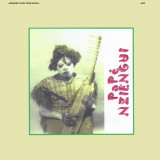
Kadi Yombo, published in 1989, is the most successful album in the quest for a fusion between tradition and modernity in Bwiti harp music of the Tsogho people of Gabon. Combining beating rattles with a layer of synthesizers, Papé Nziengui blends in a contrapuntal dialogue characteristic of harp playing: male song in appeal and female choir in response, male voice of the musical arc and rhythms of female worship. But above all it’s Tsogho ritual music and modern studio orchestration. The result is an initiatory itinerary of 10 musical pieces which are all milestones likely to be simultaneously listened to, danced, meditated on, and soon acclaimed. In the years since, Nziengui has traveled he world from Lagos to Paris, from Tokyo to Cordoba, from Brussels to Mexico City to become a true icon, the emblem of Gabonese music.
Like Bob Dylan, "electrifying" folk and Bob Marley mixing rock with reggae, some purists have criticized Nziengui for having distorted the music of harp by imposing a cross with modern instruments. They even went so far as to claim that Nziengui was just an average harpist covering his shortcomings with stunts that were only good for impressing neophytes; like playing a harp placed upside down behind his back or playing two or three harps simultaneously. Sincere convictions or venomous defamations, in any case, Nziengui never gave in to such attacks, imposing himself on the contrary to pay homage to the elders (Yves Mouenga, Jean Honoré Miabé, Vickoss Ekondo) while instructing the maximum of young people. He is thus the promoter of many young talents, the most prominent of which is certainly his nephew Jean Pierre Mingongué. In a conservative society where the sacred is confused with secrecy, exposing the mysteries of Bwiti in broad daylight can be punished by exclusion or even execution.
Papé Nziengui has always claimed that he faces such risks because he never felt enslaved to a community that governs his life, that regulates his conduct, that has a right of censorship over his activities. Like Ravi Shankar, the famous sitarist, Papé Nziengui is a man of rupture but also of openness, a transmitter of culture. As proof, he has established himself in Libreville, Gabo’s capital, as the main harpist for sessions and concerts, accompanying the greatest national artists (Akendengué, Rompavè, Annie-Flore Batchiellilys, Les Champs sur la Lowé, etc.) as well as foreign artists (Papa Wemba, Manu Dibango, Kassav', Toups Bebey, etc.). In 1988, he was the first harpist to release an album in the form of a cassette produced by the French Cultural Center (Papé Nziengui, Chants et Musiques Tsogho). At the same time, he created his own group (Bovenga), combining traditional music instruments (musical bow, drums, various percussion instruments, etc.) in the framework of a true national orchestra, which gave the first concert and the first tours of a traditional music that was both modern and dynamic, thus "democratizing" the harp, to the dismay of certain purists.
On the other hand, in modern music, dominated by the logic of profit or even commercialism, artistic creation must often be adjusted for a specific audience based on reason rather than heart. But instead of allowing himself to be distorted, Papé Nziengui has always tried to produce music that is not a caricature, worthy in its expression as in its content, of the sacredness and transcendence of the music of the Origins. This is what makes Nziengui not only the musician, but the man someone whose age hasn’t altered any of his freshness or authenticity
dovrebbe essere pubblicato su 08.04.2022

Kadi Yombo, published in 1989, is the most successful album in the quest for a fusion between tradition and modernity in Bwiti harp music of the Tsogho people of Gabon. Combining beating rattles with a layer of synthesizers, Papé Nziengui blends in a contrapuntal dialogue characteristic of harp playing: male song in appeal and female choir in response, male voice of the musical arc and rhythms of female worship. But above all it’s Tsogho ritual music and modern studio orchestration. The result is an initiatory itinerary of 10 musical pieces which are all milestones likely to be simultaneously listened to, danced, meditated on, and soon acclaimed. In the years since, Nziengui has traveled he world from Lagos to Paris, from Tokyo to Cordoba, from Brussels to Mexico City to become a true icon, the emblem of Gabonese music.
Like Bob Dylan, "electrifying" folk and Bob Marley mixing rock with reggae, some purists have criticized Nziengui for having distorted the music of harp by imposing a cross with modern instruments. They even went so far as to claim that Nziengui was just an average harpist covering his shortcomings with stunts that were only good for impressing neophytes; like playing a harp placed upside down behind his back or playing two or three harps simultaneously. Sincere convictions or venomous defamations, in any case, Nziengui never gave in to such attacks, imposing himself on the contrary to pay homage to the elders (Yves Mouenga, Jean Honoré Miabé, Vickoss Ekondo) while instructing the maximum of young people. He is thus the promoter of many young talents, the most prominent of which is certainly his nephew Jean Pierre Mingongué. In a conservative society where the sacred is confused with secrecy, exposing the mysteries of Bwiti in broad daylight can be punished by exclusion or even execution.
Papé Nziengui has always claimed that he faces such risks because he never felt enslaved to a community that governs his life, that regulates his conduct, that has a right of censorship over his activities. Like Ravi Shankar, the famous sitarist, Papé Nziengui is a man of rupture but also of openness, a transmitter of culture. As proof, he has established himself in Libreville, Gabo’s capital, as the main harpist for sessions and concerts, accompanying the greatest national artists (Akendengué, Rompavè, Annie-Flore Batchiellilys, Les Champs sur la Lowé, etc.) as well as foreign artists (Papa Wemba, Manu Dibango, Kassav', Toups Bebey, etc.). In 1988, he was the first harpist to release an album in the form of a cassette produced by the French Cultural Center (Papé Nziengui, Chants et Musiques Tsogho). At the same time, he created his own group (Bovenga), combining traditional music instruments (musical bow, drums, various percussion instruments, etc.) in the framework of a true national orchestra, which gave the first concert and the first tours of a traditional music that was both modern and dynamic, thus "democratizing" the harp, to the dismay of certain purists.
On the other hand, in modern music, dominated by the logic of profit or even commercialism, artistic creation must often be adjusted for a specific audience based on reason rather than heart. But instead of allowing himself to be distorted, Papé Nziengui has always tried to produce music that is not a caricature, worthy in its expression as in its content, of the sacredness and transcendence of the music of the Origins. This is what makes Nziengui not only the musician, but the man someone whose age hasn’t altered any of his freshness or authenticity
dovrebbe essere pubblicato su 08.04.2022
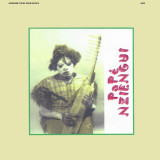
Kadi Yombo, published in 1989, is the most successful album in the quest for a fusion between tradition and modernity in Bwiti harp music of the Tsogho people of Gabon. Combining beating rattles with a layer of synthesizers, Papé Nziengui blends in a contrapuntal dialogue characteristic of harp playing: male song in appeal and female choir in response, male voice of the musical arc and rhythms of female worship. But above all it’s Tsogho ritual music and modern studio orchestration. The result is an initiatory itinerary of 10 musical pieces which are all milestones likely to be simultaneously listened to, danced, meditated on, and soon acclaimed. In the years since, Nziengui has traveled he world from Lagos to Paris, from Tokyo to Cordoba, from Brussels to Mexico City to become a true icon, the emblem of Gabonese music.
Like Bob Dylan, "electrifying" folk and Bob Marley mixing rock with reggae, some purists have criticized Nziengui for having distorted the music of harp by imposing a cross with modern instruments. They even went so far as to claim that Nziengui was just an average harpist covering his shortcomings with stunts that were only good for impressing neophytes; like playing a harp placed upside down behind his back or playing two or three harps simultaneously. Sincere convictions or venomous defamations, in any case, Nziengui never gave in to such attacks, imposing himself on the contrary to pay homage to the elders (Yves Mouenga, Jean Honoré Miabé, Vickoss Ekondo) while instructing the maximum of young people. He is thus the promoter of many young talents, the most prominent of which is certainly his nephew Jean Pierre Mingongué. In a conservative society where the sacred is confused with secrecy, exposing the mysteries of Bwiti in broad daylight can be punished by exclusion or even execution.
Papé Nziengui has always claimed that he faces such risks because he never felt enslaved to a community that governs his life, that regulates his conduct, that has a right of censorship over his activities. Like Ravi Shankar, the famous sitarist, Papé Nziengui is a man of rupture but also of openness, a transmitter of culture. As proof, he has established himself in Libreville, Gabo’s capital, as the main harpist for sessions and concerts, accompanying the greatest national artists (Akendengué, Rompavè, Annie-Flore Batchiellilys, Les Champs sur la Lowé, etc.) as well as foreign artists (Papa Wemba, Manu Dibango, Kassav', Toups Bebey, etc.). In 1988, he was the first harpist to release an album in the form of a cassette produced by the French Cultural Center (Papé Nziengui, Chants et Musiques Tsogho). At the same time, he created his own group (Bovenga), combining traditional music instruments (musical bow, drums, various percussion instruments, etc.) in the framework of a true national orchestra, which gave the first concert and the first tours of a traditional music that was both modern and dynamic, thus "democratizing" the harp, to the dismay of certain purists.
On the other hand, in modern music, dominated by the logic of profit or even commercialism, artistic creation must often be adjusted for a specific audience based on reason rather than heart. But instead of allowing himself to be distorted, Papé Nziengui has always tried to produce music that is not a caricature, worthy in its expression as in its content, of the sacredness and transcendence of the music of the Origins. This is what makes Nziengui not only the musician, but the man someone whose age hasn’t altered any of his freshness or authenticity
dovrebbe essere pubblicato su 08.04.2022

Remastered vinyl reissues of the two essential albums by Turkish folk singer Tülay German, starting with the self-titled release (1980) and followed by "Hommage to Nazım Hikmet" (1982) in early 2022.
Referring heavily on turkish poets and the tradition of aşıks (singer-poets and wandering bards) these two albums represent unique and modern interpretations of turkish folk songs unmatched to this day. A matured artist with full conviction at the height of her powers!
Back in the 60s Tülay German (*1935 in Istanbul, Turkey) shook the turkish music landscape with several 7" records. Most notably her first 7" record "Burçak Tarlası" (1964) is now considered the cornerstone of what was to become the Anadolu Rock/ Pop movement and underlines her rebellious nature and sense of justice.
But due to the increasing repression Tülay German and her lifelong partner and intellectual impetus Erdem Buri decided to leave Turkey a few years later. In fact, an impending prison sentence for Erdem Buri for translating Hegel's "Dialectic and Science of Logic" and
Plekhanov's "Fundamental Problems of Marxism" led the couple to emigrate to France.
In France Tülay German signs a major contract with Philips resulting in many 7" releases sung in french under her french moniker Toulaϊ. In the long run Tülay German doesn't feel quite comfortable with this major deal. And thus, despite the success and recognition she had
gained, she decides to quit the contract with Philips!
Later on she signs to independent world-music label Arion to pursue her actual artistic goals more in line with her origin and temperament. Back to her mother tongue, Tülay German records above mentioned albums for Arion under full artistic freedom, the only full-lenghths
in her 20+ years career. Alongside with double-bass virtuoso and turkophil François Rabbath (*1931 in Aleppo, Syria) the albums consist of aşık traditionals and intonated poems mainly
by Nazım Hikmet. Her passionate voice and the restrained arrangements of François Rabbath turn these centuries old melodies and poems into glowing manifestos for love and
justice. The fruitful collaboration of these artists-in-exile adds significantly to the rich heritage of turkish folk music.
The self-titled debut, which was awarded with the prestigious "Grand Prix du Disque" of Académie Charles Cros in 1981, is now seeing a vinyl reissue after 40 years.
Tülay German ended her musical career in 1987 and after the death of Erdem Buri in 1993 she retired from public life completely, leading a quiet life in Paris where she still lives to this day. In 2021 Tülay German was awarded with the Lifetime Achievement Award by the Istanbul Foundation for Culture and Arts, Turkey.
Ordina ora e ordineremo l'articolo per te presso il nostro fornitore.

Black LP[33,82 €]
A beautifully haunting and plaintive collection of songs, the album stands as a refracted echo of an imagined life as it may have been in an old country of long ago. With songs reaching out through time and space, it captures a fascinating musical and personal journey of a man displaced from his native Dalmatia (now Croatia) during WWII who eventually ended up in Los Angeles in the mid 60s via time in a German labour camp, West Yorkshire and Canada.
Born in 1923 in the coastal town of Bekar, Branko and his family arrived on North Hollywood in 1964. Abandoning his previous profession as a barber, he began to focus on guitar repair and taught himself to fix various related instruments and studio gear.
dovrebbe essere pubblicato su 25.03.2022

White blossom LP[37,40 €]
A beautifully haunting and plaintive collection of songs, the album stands as a refracted echo of an imagined life as it may have been in an old country of long ago. With songs reaching out through time and space, it captures a fascinating musical and personal journey of a man displaced from his native Dalmatia (now Croatia) during WWII who eventually ended up in Los Angeles in the mid 60s via time in a German labour camp, West Yorkshire and Canada.
Born in 1923 in the coastal town of Bekar, Branko and his family arrived on North Hollywood in 1964. Abandoning his previous profession as a barber, he began to focus on guitar repair and taught himself to fix various related instruments and studio gear.
dovrebbe essere pubblicato su 25.03.2022
