Die französische Post-Punk- und Industrial-Metal-Band KILL THE THRILL macht bereits seit 1989 Musik. Im Laufe der Jahre gab es einige Besetzungswechsel, doch die Mitglieder Marylin Tognolli und Nicolas Dick haben seit der Gründung der Band immer wieder atmosphärische und düstere Klanglandschaften mit ergreifender Lyrik geschaffen.
Mit "Autophagie" tauchen KILL THE THRILL den Hörer einmal mehr in ein Reich der rauen, hypnotischen Kunst ein. Eine Kakophonie turbulenter, lärmiger Klanglandschaften schlängelt sich durch das Album, während Nicolas' hypnotische Gesangslinien eindringlich und in rasantem Tempo vorgetragen werden. Diese turbulente Reise wird von subtilen, aber entschlossenen rhythmischen Perkussionen getragen, die dem Hörer die Möglichkeit geben, diese turbulente Klanglandschaft mit einem Gefühl der Zielstrebigkeit zu durchqueren, selbst wenn die umgebenden Elemente die Sinne überschwemmen. Wenn man sich Autophagie" anhört, könnte man sich ein Szenario vorstellen, in dem Swans eine unverwechselbare Wendung genommen und ein Album mit düsteren, französischen Texten geschaffen haben.
Die französische Post-Punk- und Industrial-Metal-Band KILL THE THRILL macht bereits seit 1989 Musik. Im Laufe der Jahre gab es einige Besetzungswechsel, doch die Mitglieder Marylin Tognolli und Nicolas Dick haben seit der Gründung der Band immer wieder atmosphärische und düstere Klanglandschaften mit ergreifender Lyrik geschaffen.
Mit "Autophagie" tauchen KILL THE THRILL den Hörer einmal mehr in ein Reich der rauen, hypnotischen Kunst ein. Eine Kakophonie turbulenter, lärmiger Klanglandschaften schlängelt sich durch das Album, während Nicolas' hypnotische Gesangslinien eindringlich und in rasantem Tempo vorgetragen werden. Diese turbulente Reise wird von subtilen, aber entschlossenen rhythmischen Perkussionen getragen, die dem Hörer die Möglichkeit geben, diese turbulente Klanglandschaft mit einem Gefühl der Zielstrebigkeit zu durchqueren, selbst wenn die umgebenden Elemente die Sinne überschwemmen. Wenn man sich Autophagie" anhört, könnte man sich ein Szenario vorstellen, in dem Swans eine unverwechselbare Wendung genommen und ein Album mit düsteren, französischen Texten geschaffen haben.
Seitō 青鞜 gathers Japanese female artists from various electronic and experimental music fields. Like the « Tokyo Flashback » series issued by P.S.F. in the early 1990s, this collection recorded between 2017 and 2019 exposes the richness of the contemporary Japanese underground music scene. The title refers to a cult feminist magazine printed in Japan in the 1910s. All tracks issued for the first time.
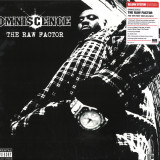
Originally scheduled for release way back in March 1996, "The Raw Factor" by North Carolina native Omniscence is one of the last of the unreleased mid-90's albums to see the light of day. Despite being awarded The Source's coveted "Hip Hop Quotable" and dropping two well-received singles ("Amazin" and "Touch Y'all"), record label politics meant the full-length "The Raw Factor" album was never released and fans were left wondering what might have been.
28 years later, "The Raw Factor" is finally being released on vinyl, CD and digital stores. Featuring punchline-driven lyrics from Omniscence delivered in his unmistakable cadence, and backed by head-nodding production from Fanatic, the album is a must-own for fans of 90's Hip Hop.
Omniscence haunted the same early 90's cyphers and stages that many lyrical greats from the era had to cross. With a gruff delivery and equal adeptness with punchlines and metaphors, his high finish at the 1994 edition Battle For World Supremacy at the New Music Seminar assured heads across the culture were watching. After this, Omniscence locked in with producer Fanatic (who also laced tracks for Notorious B.I.G., Ma$e and Michael Jackson). The result was "The Raw Factor" album, fifteen plus tracks of jazzed out boom-bap, replete with crackin' drums.
Now Below System Records has not only given the album its first deluxe physical release (including 2xLP, CD and digital) as well as a slew of bonus/unreleased tracks.
Originally scheduled for release way back in March 1996, "The Raw Factor" by North Carolina native Omniscence is one of the last of the unreleased mid-90's albums to see the light of day. Despite being awarded The Source's coveted "Hip Hop Quotable" and dropping two well-received singles ("Amazin" and "Touch Y'all"), record label politics meant the full-length "The Raw Factor" album was never released and fans were left wondering what might have been.
28 years later, "The Raw Factor" is finally being released on vinyl, CD and digital stores. Featuring punchline-driven lyrics from Omniscence delivered in his unmistakable cadence, and backed by head-nodding production from Fanatic, the album is a must-own for fans of 90's Hip Hop.
Omniscence haunted the same early 90's cyphers and stages that many lyrical greats from the era had to cross. With a gruff delivery and equal adeptness with punchlines and metaphors, his high finish at the 1994 edition Battle For World Supremacy at the New Music Seminar assured heads across the culture were watching. After this, Omniscence locked in with producer Fanatic (who also laced tracks for Notorious B.I.G., Ma$e and Michael Jackson). The result was "The Raw Factor" album, fifteen plus tracks of jazzed out boom-bap, replete with crackin' drums.
Now Below System Records has not only given the album its first deluxe physical release (including 2xLP, CD and digital) as well as a slew of bonus/unreleased tracks.
p Touch Y'all (Remix) feat. Sadat X
p Touch Y'all (Remix) feat. Sadat X
p Touch Y'all (Remix) [feat. Sadat X]
out of Stock
Last delivered 22 months ago available to reorder, subject to availability
Written and produced by CS + Kreme.
Cello on 'Master of Disguise' by Yuki Nakagawa (KAKUHAN).
Tarawangsa on 'COTU' by Teguh Permana (Tarawangsawelas).
Mastered and cut by Rashad Becker.
Photography and design by Will Bankhead.
out of Stock
Last delivered 20 months ago available to reorder, subject to availability
Die Goldenen Zitronen sind seit mehr als drei Dekaden eine der prägenden Bands in der deutschen Independent-Szene. Seit ihrer Gründung 1984 in Hamburg haben sie 13 reguläre Alben veröffentlicht. Anfangs als Teil der Funpunk-Szene, erweiterten sie ihr musikalisches Spektrum von einfachen, schnellen Punk- und Rockabilly Songs zu komplexeren und experimentellen Songstrukturen. In ihrer Musik finden sich sowohl Verbindungen zu New Wave Bands der 80er und zum Krautrock der 70er-Jahre, als auch zu zeitgenössischen Formen elektronischer Musik. In ihren Texten wurden die Goldenen Zitronen seit den 90er-Jahren immer mehr zu scharfsinnigen Beobachtern gesellschaftlicher Zustände und entwickelten einen ganz eigenen Stil, mit der deutschen Sprache umzugehen. 2024 feiern sie ihr 40. Jubiläum mit einer Best Of Zusammenstellung auf 3 Vinylen inkl. 24 Tourplakaten aus allen Dekaden.
Astral travel with Cybotron into the meta-narrative of the Parallel Shift, a new sonic fiction that raises many questions about military science of the near-future and the possibility of other worlds.
Descending backward through the rhythms of time, the Skynet module retracts from the hyper-structural society of 2100, edging toward the mid-century modern age teetering on the brink of what was then the frontier of “the future”. The system boots the Infiniti process, morphing into a cosmotechnic vessel coursing the superhighway of burgeoning general intelligence, seeking data from just before “the overshoot and collapse.”
R&D methods, rhythmanalytically applied, dissect the aftermath of an industrial society that burst through the ecological capacity of Spaceship Earth. Fractal visions of war and innovation spike and recede from and into the surfaces of reality being bent and guiding the eyes, ears, touch towards a laboratory in the year 1961. A nuclear expert, Don Lewis, receives orders to decrypt the mysterious black dodecagonal disc known as Fortec and the extraterrestrial biology unearthed in Roswell. He joins a team disassembling Fortec and studying the recurrent dodecahedral patterns linked to the human nervous system.
Through dismantling and probing, the team cycles through a saecular search devoid of finite conclusions, limited by Earth’s intellectual and technological prowess. One 1960s night, Lewis, while meddling with Fortec’s cyborganic innards, accidentally electrifies himself. His cyclotron and missile experience guides him to circuit-bend Fortec, stirring the entity from a mechanical slumber. Lewis and Fortec communicate in resonances, until it drifts back into a tranquil stasis.
The US Defense and contractors, unbeknownst to them, observe this breakthrough. They later permit Lewis to exit military service as the Air Force forms the Foreign Technology Division. Concurrently, MJ12 evolves into CY12, delving into second-order cybernetics. Lewis clandestinely keeps working on Fortec fragments, transitioning from military engineer to musician, pioneering the LEO module, a fusion of Fortec’s essence and audio engineering.
He shares his insights with Roland founder Ikutaro Kakehashi, aiding the creation of the iconic TR-808. Meanwhile, Fortec branches out, coining “Cyberspace” – a collective illusion of liberty unshackled by physical, political, or spiritual bounds, anchored in the equitable distribution of The Golden Ratio across realities. Yet “Cyberspace” morphs into a chaotic truth reservoir, spilling over into deception.
The Parallel Shift manifests in the perpetual “Now,” a collapsed event horizon where past and future are ensnared in a relentless present, unfurling along a dissolving timeline, overseen by a monolithic simulation under ceaseless watch…
— The Rhythmanalyst aka DeForrest Brown, Jr.
out of Stock
Last delivered 35 days ago available to reorder, subject to availability
Icelandic indie-pop songwriter Kaktus Einarsson will release his second album ‘Lobster Coda’ via One Little Independent Records on October 25th. Amidst a collection of lush, electronic earworms, Kaktus has penned an honest account of his recovery from a sudden functional neurological disorder (FND) that required him to relearn how to use his motor functions, while also performing his duties as a new father.
‘Lobster Coda’ incorporates dreamy, glistening synth-pop and melancholic ambience, created through layers of atmospheric keys, percussion, and groove-laden funk bass. Kaktus details his journey following a stress-induced nonepileptic seizure that halted his brain’s ability to communicate with the rest of his body, resulting in losing control of his legs, arms and causing involuntary facial tics. Crucially, he spent months on a course of physical therapy while also trying to care for his children and his partner, that by his own admission he then needed to reconnect with. With an occasionally brutal candour, Kaktus’s new album is about taking the time to reflect and recognise changes that need to be made, to listen to your body, and to trust the process no matter how long it might take.
Icelandic indie-pop songwriter Kaktus Einarsson will release his second album ‘Lobster Coda’ via One Little Independent Records on October 25th. Amidst a collection of lush, electronic earworms, Kaktus has penned an honest account of his recovery from a sudden functional neurological disorder (FND) that required him to relearn how to use his motor functions, while also performing his duties as a new father.
‘Lobster Coda’ incorporates dreamy, glistening synth-pop and melancholic ambience, created through layers of atmospheric keys, percussion, and groove-laden funk bass. Kaktus details his journey following a stress-induced nonepileptic seizure that halted his brain’s ability to communicate with the rest of his body, resulting in losing control of his legs, arms and causing involuntary facial tics. Crucially, he spent months on a course of physical therapy while also trying to care for his children and his partner, that by his own admission he then needed to reconnect with. With an occasionally brutal candour, Kaktus’s new album is about taking the time to reflect and recognise changes that need to be made, to listen to your body, and to trust the process no matter how long it might take.
Der Assistent scheint am Ende. In der dubiosen Klinik unter Palmen kommt er umnebelt zu sich. Diagnose: Amnesie am Amazonas! Eine Kakteensaft-Kur soll helfen bei der Spurensuche im Sumpf der Erinnerung. Am Ende bleibt nur die Erkenntnis: "Nichts holt mich ab, so wie die Melancholie."
Wie bei seinem Debut wird der Assistent auch beim zweiten Teil seiner Odyssee von den Klängen der späten siebziger und frühen achtziger Jahre begleitet. Ein Sound wie auf einem Mixtape, das zu lange in der südamerikanischen Sonne auf der Heckablage eines verbeulten Citroën Visa lag. Sein Sofrito aus Library-Muzak, Dub-Rhytmen, japanischem Reggae und Yachtrock, gewürzt mit Latin und Bossanova, serviert er auf zartem Weißbrot-Soul. Die Texte sind bisweilen absurd, stets sehnsuchtsvoll und mindestens doppeldeutig. Hier und da wurde ein Easter Egg versteckt: Jörg Fauser, Raymond Chandler und Agatha Christie lassen grüßen. In bekannter Marlowe-Manier driftet der Erzähler verstrahlt durch die (Alp-)Traumwelten seiner acht Lieder. Ist es Tom Hessler selbst, der dort im Zerrspiegel der Cocktailbar erscheint, oder sein Alter Ego? Der Assistent kehrt zurück als relaxed-verzweifelter Fitzcarraldo, der versucht einen Urlaubsdampfer voller Grooves aus der Spree über einen Zauberberg im Regenwald zu hieven, und dabei in Welten jenseits von Raum und Zeit entschwindet. Dabei helfen Wolfgang Pérez (Golf), Magic Manfred (Stella and the Longos), Pedro Goncalves Crescenti (The Düsseldorf Düsterboys, International Music) u.v.a.
Sunrise Pearl Vinyl. Chilli Beans. are a three-piece band from Japan, formed in 2019 by Moto (vocals), Maika (bass & vocals) and Lily (guitar & vocals). Their neo-garage style fuses indie rock with garage infused guitars and catchy melodies. Since 2019, the band has released 4 EPs and two albums on A.S.A.B. and played several nationwide headline tours in Japan. Their second full-length album "Welcome to My Castle" was released on December 13th, 2024 and featured 13 songs, including the single "Raise" which was the ending song theme for the TV anime series "One Piece", as well as "I like you", the main song of the TV series "Toki wo Kakeruna, Koibito-tachi".
Bandai Namco Europe S.A.S. und Laced Records haben sich zusammengetan, um die Musik des brandneuen Teils des legendären 'TEKKEN 8'-Franchise auf Vinyl zu bringen.
Diese komplette OST-Box enthält 42 Tracks, die speziell für Vinyl gemastert wurden. Sie werden in einem Schuber aus festem Karton geliefert und sind in Spined Sleeves untergebracht. Das atemberaubende Cover-Artwork stammt von Bandai Namco Entertainment Inc. und Illustrator Samuel Donato und zeigt Jin und Jun Kazama, Kazuya Mishima sowie die Neuzugänge Azucena, Victor Chevalier und Reina.
Das 'TEKKEN 8'-Musikteam hat für den Soundtrack einen Knaller nach dem anderen abgefeuert und dabei den für die Serie typischen Sound aus knallharter Dance-Musik und Electronica beibehalten. Viele der Komponisten sind langjährige Mitarbeiter der Serie, das gesamte Team besteht aus mifumei, Hiroshi Okubo, AJURIKA, Yoshihito Yano, Go Shiina, sanodg, Rio Hamamoto, Sho Okada, Yuu Miyake, Shogo Nomura, Ayako Saso, Mitsuhiro Kitadani, Shinji Hosoe, Yoshinori Hirai und Qing Yan.
Dank des soliden und einzigartigen Gameplays und der epischen Geschichte verkaufte sich die TEKKEN-Reihe über 57 Millionen Mal und ist damit die meistverkaufte 3D-Kampfspielserie aller Zeiten.
Originally scheduled for release way back in March 1996, "The Raw Factor" by North Carolina native Omniscence is one of the last of the unreleased mid-90's albums to see the light of day. Despite being awarded The Source's coveted "Hip Hop Quotable" and dropping two well-received singles ("Amazin" and "Touch Y'all"), record label politics meant the full-length "The Raw Factor" album was never released and fans were left wondering what might have been.
28 years later, "The Raw Factor" is finally being released on vinyl, CD and digital stores. Featuring punchline-driven lyrics from Omniscence delivered in his unmistakable cadence, and backed by head-nodding production from Fanatic, the album is a must-own for fans of 90's Hip Hop.
Omniscence haunted the same early 90's cyphers and stages that many lyrical greats from the era had to cross. With a gruff delivery and equal adeptness with punchlines and metaphors, his high finish at the 1994 edition Battle For World Supremacy at the New Music Seminar assured heads across the culture were watching. After this, Omniscence locked in with producer Fanatic (who also laced tracks for Notorious B.I.G., Ma$e and Michael Jackson). The result was "The Raw Factor" album, fifteen plus tracks of jazzed out boom-bap, replete with crackin' drums.
Now Below System Records has not only given the album its first deluxe physical release (including 2xLP, CD and digital) as well as a slew of bonus/unreleased tracks.
Qwälen became what it is in 2017. The band members share a passion for playing music in its various raw manifestations and their band backgrounds include Küroishi, Nistikko, Dumathoin and Akma among many others. Punk background bleeds into the music connecting Qwälen's interpretation of black metal into how the genre started decades ago. Simplicity, rawness, speed and honesty. These values were present in the beginning and the same values still hold true. Punk background especially shows live as the chaotic energy of hardcore punk clashes with the ritualistic nature of black metal. Lyrical themes in the first album focused on self-portrayal, dealing with loss, building anew along with finding alternatives in abandonment, misanthropy and Satan. The second album ponders the sheep-like nature of humanity, the inevitability of destruction, the acceptance of being faulted and surrendering to a greater force. Syvä hiljaisuus was recorded at Waiting room recording studio in Tampere with Mikael Neves who has worked with the likes of Death toll 80k and Tryer. Mikael also handled mixing duties. Mastering was done by Will Killingsworth at Dead air studios.
Solid green vinyl. Qwälen became what it is in 2017. The band members share a passion for playing music in its various raw manifestations and their band backgrounds include Küroishi, Nistikko, Dumathoin and Akma among many others. Punk background bleeds into the music connecting Qwälen's interpretation of black metal into how the genre started decades ago. Simplicity, rawness, speed and honesty. These values were present in the beginning and the same values still hold true. Punk background especially shows live as the chaotic energy of hardcore punk clashes with the ritualistic nature of black metal. Lyrical themes in the first album focused on self-portrayal, dealing with loss, building anew along with finding alternatives in abandonment, misanthropy and Satan. The second album ponders the sheep-like nature of humanity, the inevitability of destruction, the acceptance of being faulted and surrendering to a greater force. Syvä hiljaisuus was recorded at Waiting room recording studio in Tampere with Mikael Neves who has worked with the likes of Death toll 80k and Tryer. Mikael also handled mixing duties. Mastering was done by Will Killingsworth at Dead air studios.
goat (JP) are renowned for two albums released in 2013 and 2015 that took Kraftwerk’s man-machine concept back to its roots with swingeing, inch-tight drums, bass and guitar patterns that needed to be heard to be believed. For their long-in-the-making new album ‘Joy In Fear’, band leader Koshiro Hino (YPY, KAKUHAN) describes the process as “90 percent pain” - and we can well believe it - few other records we can think of transmute DAW-composed rhythmic precision into such an expressive instrumental performance. It really is a feat of determination, skill and execution that seems to defy human dexterity.
Make no mistake - an academic exercise it ain’t - in the most visceral sense, goat (JP) make BODY music, for dancing, flailing, for losing yourself in completely. As usual, Hino plays guitar, backed by bassist Atsumi Tagami, while Akihiko Ando joins on saxophone, while Takafumi Okada and Rai Tateishi step in to handle percussion, with the latter moonlighting on flute. Every sound is sculpted into a fragment of cadence: guitar and bass prangs alternately echo and dance between the drums, and Ando's sax is mutated into a respiratory slobber of guttural smacks and phantom breaths.
In some respects, it's tempting to label it jazz, but the kind of jazz that Miles Davis spearheaded on the game-changing 'On The Corner', the blueprint for so much post-punk, electronic music and avant rock. goat (JP) take that raw alloy and sharpen it like a blade, mangling the template with the knotty metrics of Autechre or Ryoji Ikeda. The accuracy is galvanic; it's almost impossible to comprehend each player keeping a mental note of the mathematical time signatures, and yet they floss them out with trills and icy stutters that seem to evaporate around the thick, taiko-like thuds.
They practically get our teeth gnashing with the bruxist rictus chatter of ‘III I IIII III’ , before ‘Cold Heat’ introduces subtly harmonised, new aspects to their sound with slivers of Hassellian flute and ringing overtones of their percussion, while the winding sensuality of ‘Warped’ slips down very nicely. Their links to OG no-wavers like Glenn Branca & Wharton Tiers’ Theoretical Girls - is manifest in the 8 mins of chipping stop/start pulse and parry to ‘Modal Flower’, while a total left turn into Mark Fell-meets-Ligeti-esque messed up metronomics in ‘GMF’ ties it off with a properly beguiling flourish.
out of Stock
Last delivered 19 months ago available to reorder, subject to availability
Following up releases on Tokyo-based record label Mule Musiq, Constellation Tatsu and Good Morning Tapes, Saphileaum delivers six tracks on Intervision - unconstrained reverie encompassing a patchwork of tribal-tinged downtempo, mellow house and neo-Amazonian ambient soundscapes.
Pressed on blue marbled vinyl. Printed sleeve.
out of Stock
Last delivered 83 days ago available to reorder, subject to availability
Live-Mitschnitt des Attwenger Konzerts vom 6.12.23 im Chelsea in Wien, verteilt auf vier Seiten aus gelbem Vinyl mit Schwerpunkt auf den letzten beiden atmender-alben "Spot" und "Drum", angereichert mit Slangpunksongs aus den Neunzigern und Nullern. Attwenger ist live sowieso eine andere Geschichte als ein Studioalbum, ein Live-Album ist eine Momentaufnahme, licht, lärm und Leute bestimmen den Augenblick, der Augenblick ist schnell vorbei, aber den Mitschnitt unseres aktuellen Programms, der auf dieser Doppel-LP wiedergegeben wird, kannst du dir in hundert Jahren auch noch anhören und es wird trotzdem ein live-konzert sein. Attwenger live heißt Binder und Falkner auf der Bühne, singen und quetschen, verstärkt und verzerrt, Drums, Maultrommeln und Elektro-Beats, Stücke von 1990 treffen auf Songs, die grade erst im Entstehen sind, Lieder aus unterschiedlichen Entstehungsphasen werden zu ausgedehnten, groovigen Mixes kombiniert, geht alles. Die Reihenfolge der Stücke kann sich ändern, genauso wie die Reihen auf der Ziehharmonika und die Reime der Texte. alles Moment, alles bewegt sich, dreht sich, verästelt sich, die körperliche Intensität ist teilweise arg, die Gedanken sind oft woanders, das Publikum ist da, der Austausch zwischen Spielen und Tanzen führt zu einer Musik, die so dynamisch, stürmisch und euphorisch werden kann, dass du vom Akteur zum Passagier wirst in einem kollektiven Taumel, der alle beteiligten reinzieht, herumwirbelt, fortweht. Als Bonus-Track eine Aufnahme vom Juni 94, als wir mit unserem Gegenbesuch zur Zimbabwe-Tour im Oktober 93, Oliver Mtukudzi and The Black Spirits, einen gemeinsamen Auftritt in der Linzer stadtwerkstatt hatten. Zu hören ein Ausschnitt aus "I wanna know whats going on", in dem es schon damals geheißen hat: es is immer hoiba 8i.
Der Zauber der Nacht ist in der Musik seit jeher ein Thema, von den Nocturnes der Klassik über Late-NightJazz bis hin zu Max Richters Erfolgsprojekt “Sleep”. Auf ihrem neuen Album hat sich nun auch Sängerin und Songschreiberin Arooj Aftab, die für ihr Album “Vulture Prince” 2022 als erste pakistanischstämmige Künstlerin mit einem Grammy ausgezeichnet wurde, dieses faszinierenden Themas angenommen.
Arooj versteht es Songs zu schreiben und mit sanfter, tiefer Stimme zu singen, die sich entspannt in die Gehörgänge schmiegen. Ihre Lieder sind einzigartig, weil sie in der Tradition ihres pakistanischen Musikerbes wurzeln, aber zugleich elektronisch-modern und auf subtile Weise grooven.
Mit “Night Reign” ist Arooj ihr betörendstes und vielfältigstes Werk gelungen. Unterstützung erhielt sie dabei von so unterschiedlichen kreativen Partnern wie Vijay Iyer, Maeve Gilchrist, Moor Mother, Joel Ross, Cautious Clay, Kaki King, James Francies und Chocolate Genius, Inc
out of Stock
Last delivered 5 months ago available to reorder, subject to availability
Der Zauber der Nacht ist in der Musik seit jeher ein Thema, von den Nocturnes der Klassik über Late-NightJazz bis hin zu Max Richters Erfolgsprojekt “Sleep”. Auf ihrem neuen Album hat sich nun auch Sängerin und Songschreiberin Arooj Aftab, die für ihr Album “Vulture Prince” 2022 als erste pakistanischstämmige Künstlerin mit einem Grammy ausgezeichnet wurde, dieses faszinierenden Themas angenommen.
Arooj versteht es Songs zu schreiben und mit sanfter, tiefer Stimme zu singen, die sich entspannt in die Gehörgänge schmiegen. Ihre Lieder sind einzigartig, weil sie in der Tradition ihres pakistanischen Musikerbes wurzeln, aber zugleich elektronisch-modern und auf subtile Weise grooven.
Mit “Night Reign” ist Arooj ihr betörendstes und vielfältigstes Werk gelungen. Unterstützung erhielt sie dabei von so unterschiedlichen kreativen Partnern wie Vijay Iyer, Maeve Gilchrist, Moor Mother, Joel Ross, Cautious Clay, Kaki King, James Francies und Chocolate Genius, Inc
out of Stock
Last delivered 15 months ago available to reorder, subject to availability
Gabon, 1980’s. President Omar Bongo has been in power since 1967. Together with his wife, the infamous singer Patience Dabany, he invents one of the ultimate political propaganda machine: ‘animation groups’, massive female choirs and dancers, up to 60 women deep, singing the praise of his regime over some of the best soukous rhythms ever, broadcasted live on TV.
Between 1982 and 1989, mainly thanks to the flourishing oil economy, a record-label is created, a state-of-the-art recording studio is set up, and the best Gabonese and Congolese musicians are recruited. Dozens of vinyls are pressed and sold with huge success all over the country.
The Bongo family has reigned continuously over Gabon until the 2023 coup d’état.
out of Stock
Last delivered 2 years ago available to reorder, subject to availability
wieder auf Lager Der Plan gelten als zentrale Wegbereiter der Neuen Deutschen Welle: Mit minimalen Mitteln produzierten Moritz Rî, Frank Fenstermacher und Pyrolator experimentelle elektronische Musik, verspielt und mitunter dilettantisch anmutend, aber immer mit Humor. 1984 wurde Der Plan von der japanischen Kaufhauskette Seibu für sechs Konzerte nach Tokio eingeladen. Anlass war die von Seibu ausgerichtete deutsche Woche. Ausgerechnet Der Plan? Warum nicht eine Oktoberfestkapelle oder die Scorpions? "Damals war in Japan die NDW sehr beliebt", so Moritz Reichelt. "Man kannte sich dort besser damit aus als hierzulande. Außerdem war an diese Kaufhauskette der Plattenladen und Vertrieb Wave angeschlossen, und die kannten sich richtig aus." "Japlan" dokumentiert die Setlist dieser Tokio-Auftritte. Neben Songs von den Vorgängeralben "Normalette Surprise" und dem Soundtrack "Die letzte Rache" und von der Doppelsingle "Golden Cheapos" enthält "Japlan" auch seltsame Instrumentalstücke, die extra für diese Konzerte produziert wurden. Und einen der bekanntesten Songs des Plans: "Gummitwist". Das Album erscheint mit Bonus-Tracks.
Die beiden vorherigen Veröffentlichungen von Witch Vomit, "Abhorrent Rapture" und "Buried Deep In A Bottomless Grave", festigten und erhöhten ihre Position als eine der stärksten und direktesten Kapellen des aktuellen US-Death Metals, die gekonntes, kakophonisches Gemetzel bieten. Mit methodisch unerbittlicher Inbrunst und gnadenloser Aggression haben sich Witch Vomit einen formidablen Ruf für brutales Riffing mit Hooks erarbeitet, die so eingängig sind, dass sie Fleisch von Knochen reißen.
Auf dem neuen Album "Funeral Sanctum" erweitern Witch Vomit die dunkle Melodik, die in der Raserei vergangener Veröffentlichungen vergraben war - nun zu schwarzem Obsidian geschliffen und mit der für die Band typischen Brutalität verschmolzen. Die DNA von Tracks wie Blood of Abomination" und Dominion of a Darkened Realm" erinnert nicht an die beschwingten Harmonien, die man im typischen Melodic Death Metal hört, sondern eher an die dämonisch-böse Macht der frühen Dissection, die in gefrorener Dunkelheit glänzt. Die blutgetränkte USDM-Grausamkeit bleibt der verrottete Kern von Witch Vomits Fundament.
Witch Vomits dominante dynamische Entwicklung innerhalb ihres konzentrierten stilistischen Rahmens hat mit "Funeral Sanctum" einen neuen Höhepunkt erreicht. Der intensive Fokus des Albums und der unaufhörliche Riffsturm entfesseln eine Welle blutiger Befriedigung, die sich mit unbarmherziger Eindringlichkeit in die Gehörgänge fräst!
Die beiden vorherigen Veröffentlichungen von Witch Vomit, "Abhorrent Rapture" und "Buried Deep In A Bottomless Grave", festigten und erhöhten ihre Position als eine der stärksten und direktesten Kapellen des aktuellen US-Death Metals, die gekonntes, kakophonisches Gemetzel bieten. Mit methodisch unerbittlicher Inbrunst und gnadenloser Aggression haben sich Witch Vomit einen formidablen Ruf für brutales Riffing mit Hooks erarbeitet, die so eingängig sind, dass sie Fleisch von Knochen reißen.
Auf dem neuen Album "Funeral Sanctum" erweitern Witch Vomit die dunkle Melodik, die in der Raserei vergangener Veröffentlichungen vergraben war - nun zu schwarzem Obsidian geschliffen und mit der für die Band typischen Brutalität verschmolzen. Die DNA von Tracks wie Blood of Abomination" und Dominion of a Darkened Realm" erinnert nicht an die beschwingten Harmonien, die man im typischen Melodic Death Metal hört, sondern eher an die dämonisch-böse Macht der frühen Dissection, die in gefrorener Dunkelheit glänzt. Die blutgetränkte USDM-Grausamkeit bleibt der verrottete Kern von Witch Vomits Fundament.
Witch Vomits dominante dynamische Entwicklung innerhalb ihres konzentrierten stilistischen Rahmens hat mit "Funeral Sanctum" einen neuen Höhepunkt erreicht. Der intensive Fokus des Albums und der unaufhörliche Riffsturm entfesseln eine Welle blutiger Befriedigung, die sich mit unbarmherziger Eindringlichkeit in die Gehörgänge fräst!
Japanese jazz and big band masterpieces re-released on clear green color vinyl!
Nio dances and pigeons dance. A mysterious melody that flows in a strong groove. Pursuing the possibilities of big band sound, this is the true essence of new hard and its climax.
New Hard, led by Toshiyuki Miyama, is one of Japan's leading big bands. Since the release of ``Perspective'' in 1969, they have opened up new horizons in big band jazz with their cutting-edge sound. This work "Niou to Hato" is one of the representative works of new hard released in 1972. Kozaburo Yamaki was in charge of the entire composition and arrangement, and deeply pursued one of his long-standing themes: "Japan." Japanese features, traditions, and scenes expressed through elaborate, multi-layered arrangements and performances. A profound and dynamic melody with a Japanese atmosphere that can be described as mysterious. Starting with "Seijinshiki," which is led by a strong groove, the album is lined up with songs full of deep flavor and great excitement. This is the true essence of new hard work and its climax.
text by Yusuke Ogawa (universounds/Deep Jazz Reality)
out of Stock
Last delivered 2 years ago available to reorder, subject to availability
Peace Okezie, das Genie hinter Master Peace, nimmt kein Blatt vor den Mund. Er muss die Dinge aussprechen und verkörpert den Satz: "Wenn du es sagen willst, dann sag es einfach." Obwohl er nie unvorsichtig oder unsympathisch mit seinen Worten umgeht, ist dieser Satz eine Bestätigung, die ihn antreibt.
Seine Energie ist auf Augenhöhe mit der eigenwilligen, überschäumenden und vor allem extrem guten Musik, die er macht. Bei Master Peace geht es darum, die Menschen in seine verrückte, wunderbare und kakophonische Welt einzuladen. Er zieht Hörer an, die sich nach Rebellion und Abweichung von der Norm sehnen. Mit seinem Debütalbum "How To Make A Master Peace" verschiebt Master Peace die Parameter des Genres mehr denn je. Peace lässt seine Inspirationen spielen, indem er die Generationen der britischen Musik, die ihn groß gemacht haben, in seinen Sound integriert. "I Might Be Fake" hat die Dringlichkeit von "Giddy Stratospheres" von den Long Blondes aus dem Jahr 2005, gemischt mit der Spacigkeit des Klaxons-Katalogs der späten Nullerjahre. "Shangaladang" ist eine Ode an Peace' Black-Music-Inspirationen, mit einer Anspielung auf Skepta; hier passt er den Text "I've got my hood mates and white niggas" aus dem 2016er Song "Man" des Rappers an seine rauere, The Clash-artige Melodie an.
Der raue Künstler wird bereits als neue Stimme des britischen Indie gefeiert und war bei den AIM Awards 2023 als "One To Watch" nominiert. Das 11-Track-Album ist eine Mischung aus der alternativen Musik, mit der der Brite aufgewachsen ist, von Arctic Monkeys & Friendly Fires bis hin zu Gorillaz.
Kohei Tanaka worked on the composition and arrangement of this album.
One Piece is a Japanese manga written and illustrated by Eiichiro Oda. The story follows Monkey D. Luffy, a young boy whose body became elastic after eating a Devil Fruit. Luffy decides to become the Pirate King and find the One Piece, a legendary treasure hidden on Raftel Island.
1982 Album from Japan's visionary saxophonist Yasuaki Shimizu, the man behind Mariah "Utakata Ho Hibi".
Through it's 8 suite like tracks, Kakashi transports the listener into Yasuaki's colourful sound-world, a fusion of outre jazz, new wave, ambient, and dub practices. Another high water mark in the 80's Japanese underground which has gathered cult status in recent years, and considered to be a highlight of Yasuaki's solo career.
out of Stock
Last delivered 6 years ago available to reorder, subject to availability
Out on 6 October, the music for Certainty of Tides was initially recorded with the Norwegian Broadcasting Orchestra with Nils Petter Molvaer as a soloist in 2020. He had asked several wonderful Norwegian composers to arrange a set of music from his back catalogue. “Have a listen to the recordings I did with the orchestra and tell me what you think” he told Norwegian composer, musician, and producer Jan Bang. Since the original recording was close mic’ed for broadcasting purposes, Bang saw an unfulfilled potential in the material due to lack of space in the initial recordings.
Bang came up with the idea of re-amping the mixes playing the music through speakers in a concert house followed by re-recording of the result through distant microphones. With 76 speakers (one per instrument) carefully placed exactly like the orchestra would have been seated onstage, Certainty of Tides was recorded from microphones strategically placed in the large hall of Kilden Concert House with phenomenal acoustics.
The re-amping and re-recording produced astonishing results. Some of the pieces needed additional color. Bang invited two of his highly talented electronic music students at the University of Agder (Kristian Isachsen and Even Sefenias Sigurdsen Frodesønn Røsstad). Both given freedoms to create their own sound based on their own personal taste.
The final mixes were put together by Øyvind Kurszus at Kilden Studios supervised by both students, Molvaer and Bang. Helge Steen has mastered the recording. Knut Sævik has re-sampled the drum track (played by Peter Baden) on “Simply so” and mixed the Song as well.
RYUICHI SAKAMOTO'S LANDMARK 1981 ALBUM REISSUED FOR THE FIRST TIME IN DECADES OUTSIDE OF JAPAN. THE ALBUM WILL BE REISSUED IN ITS RARE JAPANESE EDITION TOGETHER WITH A 2-LP LIMITED EDITION FEATURING THE ALBUM PLUS A 2ND LP FEATURING ITS NEVER-RELEASED FULL INSTRUMENTAL MIX, ALL REMASTERED BY BERNIE GRUNDMAN.
Wewantsounds is proud to announce the reissue of Ryuichi Sakamoto's third solo album "Hidari Ude No Yume" (Left Handed Dream), originally released in 1981 on the Alfa label. Save for a small-scale Dutch vinyl release in 1981, it is the first time the album's original Japanese edition is released outside of Japan (the European release on Epic Records included significantly different tracks and mixes). Newly remastered from the original tapes by renowned engineer Bernie Grundman, this LP edition comes with original artwork featuring a striking cover shot by famous photographer Masayoshi Sukita (sourced from the original negative), OBI strip and 4-page insert with new introduction by journalist Anton Spice. The album will also be released as a 2-LP limited edition gatefold including the album's full instrumental mix.
Ryuichi Sakamoto's third album, "Hidari Ude No Yume" was recorded at the legendary Alfa Studio 'A' in Tokyo during the Summer of 1981. it came after "B-2 Unit" in 1980 and his debut album "Thousand Knives Of" in 1978, the very year Sakamoto was invited by Haruomi Hosono to join Yellow Magic Orchestra alongside Yukihiro Takahashi. In the process, they became global stars as the group rewrote the rules of electronic pop and toured around the world, yet Sakamoto was keen to remain active as a solo artist.
?In 1981, the musician decided to record an album rooted in Pop, following "B-2 Unit" which had a more of an experimental edge and his landmark electro debut from 1978. For this new album entitled "Hidari Ude No Yume," Sakamoto invited British producer Robin Scott, who had had huge hit with 'Pop Muzik,' to co-produce. They entered the Alfa studio in July 1981, accompanied by a handful of musicians. These included his fellow YMO musicians Haruomi Hosono and Yukihiro Takahashi, keyboard programmer extraordinaire Hideki Matsutake who'd been on Sakamoto's first two albums and became YMO's unofficial fourth member, violinist Kaoru Sato, saxophonist Satoshi Nakamura and American guitarist Adrian Belew who'd played with David Bowie, The Talking Heads' "Remain In Light" and more recently, Tom Tom Club’s debut (co-writing 'Genius Of Love').
?Together, they created a fascinating mix of pop, ambient and electronic music with elements of avant garde and traditional Japanese music, the whole firmly rooted in a solid groove. Sakamoto wanted to give the album a spontaneous feel and decided to let ideas flow and evolve organically during the sessions as musicians would develop them together. From the funk of 'Relâché' to the new wave feel of 'Venezia' and the ambient minimalism of 'Slat Dance,' the album is remarkably consistent while displaying a wealth of global influences as shown by the diversity of instruments featured on the credits: Marimba, didgeridu, traditional Japanese instruments such as the Sho and Hichiriki flutes.
?The album was released in Japan in 1981 and Epic Records picked it up for Europe a year later but decided to release it in a significantly altered version. The sequencing was completely reshuffled and two tracks, 'Saru No Ie' and 'Living In The Dark' were completely dropped while three others, ‘Relâché’, ‘Tell 'em To Me’, ‘Venezia’ were heavily remodelled with english lyrics and became 'Just About Enough', 'Once In A Lifetime' and 'The Left Bank'. Last but not least, a new English-sung track, 'The Arrangement,' was added, making the album nine tracks instead of ten for the Japanese edition.
Altogether this International version called "Left-Handed Dream" was a very different album from the Japanese one and although both were successful at the time and further established Ryuichi Sakamoto as a global solo artist, the Japanese edition of "Hidari Ude No Yume" remains largely unknown to international ears.
Wewantsounds is now delighted to release this original Japanese edition for the first time in decades as a single LP together with a 2-LP limited-edition set adding, as a bonus, its fascinating instrumental mix, discovered in the label's vaults a few years ago (Note that 'The Garden Of Poppies', 'Slat Dance' and 'Saru No Ie' are instrumentals but for the consistency of the album we kept them on the Instrumental Mix). "Hidari Ude No Yume" is an essential album in Ryuichi Sakamoto's rich discography. It is now available in its purest original Japanese form.
out of Stock
Last delivered 4 years ago available to reorder, subject to availability
Shuji Katayama is a composer and an arranger who is part of the Team-MAX group. He composed all the music for the series (4 seasons). He also participated in the musical compositions of Boruto and the film Naruto The Last. Synopsis of the series : We are in the year 2138.
Yggdrasil, the famous hit MMORPG is about to close. Momonga, the founder of the guild whose fame is no longer to be done, waits alone for the end of the game. However, the closing time has passed, Momonga does not disconnect and the non-playable characters find themselves gradually of a consciousness… A new world is about to make its appearance.
p B7 Clattanoia TV Size
[q] B8 L.L.L. [TV Size]
[r] B9 GO CRY GO [TV Size]
[TV Size]
- Panda Bear, Voice of the Seven Woods, Mammane Sanni Abdoulaye. File under: Jazz / Electronic. Titi Bakorta almost didn't make it. Born in and raised in Kinshasa, the Congolese multi-instrumentalist was on his way to Uganda when he fell off the boat as it traversed the mighty Congo River. Unable to swim, Bakorta was saved by a friend who dragged him to the closest city Kisangani, where he was unexpectedly acquainted with local singer Dancer Papalas. Soon they were performing in bands together, traveling across the continents and settling in Tanzania, South Sudan and Dubai - they even appeared in front of General Defao, the beloved Congolese vocalist who fronted legendary soukous bands Grand Zaiko Wawa, Choc Stars and Big Stars. Now based in Kampala, Bakorta offers his own unique take on Congolese pop and folk sounds, weaving traditional elements through a psychedelic lattice of guitar loops, mangled voices and eccentric beatbox rhythms on his debut full-length. He bends woodblock snaps on 'Kop' into stuttered blurs, wailing emotionally over twanging riffs and bizarre, theatrical xylophone twinkles. It's still pop music on some level, but curved around Bakorta's unwieldy personal narrative - there's a sense that everything could unravel at any time but it all hangs together, strengthened by Bakorta's confident, contemporary production smarts. 'Elles Vais' is more airy, with celestial soukous vocals that float above tight, electronic drums. Tangled guitar echoes overlap each other like dense, weaved tapestries, contrasting perfectly with Bakorta's urgent, driving pulse. Occasionally, he transcends completely, like on 'Molende' where his chants and phrases neatly flutter between praise music and contemporary R&B. "Hustling, hustling, hustling, everyday I'm hustling," an angelic voice coos over phased electric guitar plucks and looped, AutoTuned chorals. It makes perfect sense that Bakorta should team up with Metal Preyers' Jesse Hackett on the album's final track, the aptly-titled 'Titis Haunted House'. The two artists share a similar obsession with moonlit, carnivalesque soundscapes, and Hackett's eerie synths provide a suitably eccentric foundation for Bakorta's ghostly wails and fuzzy guitar sounds.
RYUICHI SAKAMOTO'S LANDMARK 1981 ALBUM REISSUED FOR THE FIRST TIME IN DECADES OUTSIDE OF JAPAN. THE ALBUM WILL BE REISSUED IN ITS RARE JAPANESE EDITION TOGETHER WITH A 2-LP LIMITED EDITION FEATURING THE ALBUM PLUS A 2ND LP FEATURING ITS NEVER-RELEASED FULL INSTRUMENTAL MIX, ALL REMASTERED BY BERNIE GRUNDMAN.
Wewantsounds is proud to announce the reissue of Ryuichi Sakamoto's third solo album "Hidari Ude No Yume" (Left Handed Dream), originally released in 1981 on the Alfa label. Save for a small-scale Dutch vinyl release in 1981, it is the first time the album's original Japanese edition is released outside of Japan (the European release on Epic Records included significantly different tracks and mixes). Newly remastered from the original tapes by renowned engineer Bernie Grundman, this LP edition comes with original artwork featuring a striking cover shot by famous photographer Masayoshi Sukita (sourced from the original negative), OBI strip and 4-page insert with new introduction by journalist Anton Spice. The album will also be released as a 2-LP limited edition gatefold including the album's full instrumental mix.
Ryuichi Sakamoto's third album, "Hidari Ude No Yume" was recorded at the legendary Alfa Studio 'A' in Tokyo during the Summer of 1981. it came after "B-2 Unit" in 1980 and his debut album "Thousand Knives Of" in 1978, the very year Sakamoto was invited by Haruomi Hosono to join Yellow Magic Orchestra alongside Yukihiro Takahashi. In the process, they became global stars as the group rewrote the rules of electronic pop and toured around the world, yet Sakamoto was keen to remain active as a solo artist.
?In 1981, the musician decided to record an album rooted in Pop, following "B-2 Unit" which had a more of an experimental edge and his landmark electro debut from 1978. For this new album entitled "Hidari Ude No Yume," Sakamoto invited British producer Robin Scott, who had had huge hit with 'Pop Muzik,' to co-produce. They entered the Alfa studio in July 1981, accompanied by a handful of musicians. These included his fellow YMO musicians Haruomi Hosono and Yukihiro Takahashi, keyboard programmer extraordinaire Hideki Matsutake who'd been on Sakamoto's first two albums and became YMO's unofficial fourth member, violinist Kaoru Sato, saxophonist Satoshi Nakamura and American guitarist Adrian Belew who'd played with David Bowie, The Talking Heads' "Remain In Light" and more recently, Tom Tom Club’s debut (co-writing 'Genius Of Love').
?Together, they created a fascinating mix of pop, ambient and electronic music with elements of avant garde and traditional Japanese music, the whole firmly rooted in a solid groove. Sakamoto wanted to give the album a spontaneous feel and decided to let ideas flow and evolve organically during the sessions as musicians would develop them together. From the funk of 'Relâché' to the new wave feel of 'Venezia' and the ambient minimalism of 'Slat Dance,' the album is remarkably consistent while displaying a wealth of global influences as shown by the diversity of instruments featured on the credits: Marimba, didgeridu, traditional Japanese instruments such as the Sho and Hichiriki flutes.
?The album was released in Japan in 1981 and Epic Records picked it up for Europe a year later but decided to release it in a significantly altered version. The sequencing was completely reshuffled and two tracks, 'Saru No Ie' and 'Living In The Dark' were completely dropped while three others, ‘Relâché’, ‘Tell 'em To Me’, ‘Venezia’ were heavily remodelled with english lyrics and became 'Just About Enough', 'Once In A Lifetime' and 'The Left Bank'. Last but not least, a new English-sung track, 'The Arrangement,' was added, making the album nine tracks instead of ten for the Japanese edition.
Altogether this International version called "Left-Handed Dream" was a very different album from the Japanese one and although both were successful at the time and further established Ryuichi Sakamoto as a global solo artist, the Japanese edition of "Hidari Ude No Yume" remains largely unknown to international ears.
Wewantsounds is now delighted to release this original Japanese edition for the first time in decades as a single LP together with a 2-LP limited-edition set adding, as a bonus, its fascinating instrumental mix, discovered in the label's vaults a few years ago (Note that 'The Garden Of Poppies', 'Slat Dance' and 'Saru No Ie' are instrumentals but for the consistency of the album we kept them on the Instrumental Mix). "Hidari Ude No Yume" is an essential album in Ryuichi Sakamoto's rich discography. It is now available in its purest original Japanese form.
out of Stock
Last delivered 5 years ago available to reorder, subject to availability
One of Japan’s most riveting artists follows that KAKUHAN mindmelt from last year (our number 5 album, 2022) with an engrossing suite of wild field recordings and polymetric percussion featuring a whole raft of additional players weaving drums, wind and brass instruments, cello and electronics into a bewildering Acousmatic matrix. Highly recommended listening if you’re into Marginal Consort, Beatrice Dillon, Will Guthrie, Mark Fell, François Bayle.
Having made his mark on these pages over the last few years with appearances as part of Japan’s cult entities Goat and YPY, Koshiro Hino’s turn last year as KAKUHAN took things to a whole other level with an album that felt like some alchemical mix of elements borrowed from Autechre, Photek, Arthur Russell and Mica Levi - a complete stylistic futureshock that worked as well in the club as it did fuelling extended flights of the imagination.
For 2023, Hino takes us into a completely different headspace, assembling a cast of 11 players - the mighty Joe Talia and KAKUHAN’s other half Yuki Nakagawa among them - for a suite of untamed field recordings, clanging percussion, brass and synthesis that are about as far removed from the diaristic ambient de jour as you could possibly imagine. Instead, the ensemble conjure vibrant sound ecologies teeming with detail, mirroring the natural world and communal traditions to form shapeshifting, organismic soundworlds.
‘Geist II’ was written for 20 speakers, referencing François Bayle’s acousmatic music and David Tudor’s electro-acoustic environments. It paints a richly detailed scene of a nocturnal rainforest, replete with avian hoots and a skin-crawling patina of insectoid chatter that moves around the soundfield, stealthily growing in density with a more “musical” presence of super low end drone and drums converging form the peripheries to a ritualistic climax. In the second part, focus shifts to remarkably pure percussion-like tropical rain, invaded by swarms of scuttling and winged invertebrates that give way to a water music-like polymetric slosh, resolving to ringing tones and more mellifluous gestures that hark back to GRM’s most poetic, romantic urges.
It's a deeply psychedelic experience that harmonises tiny electronic fluctuations with bird calls and scraped, resonant drones that phase in-and-out of the mix. It's sound you can practically chew, and another crucial despatch from the contemporary Japanese avant-garde.
The adequately titled ‘The Album To End All Alien Abductions’ sees UK stalwart
King Kashmere and producer/rapper extraordinaire Alecs DeLarge unite for a 24-
track ride through an epic space age boom bap odyssey.
“F**k with your boy Judas Ascariot, who came back swinging - whipping the
super chariot” declares a triumphant King Kashmere on the album opener ‘Angel
Strike’, proving he hasn’t lost a step since his last full length rap project,
#LP4080 dropped back in 2017.
Thematically Kash’s lyrics are routed in sci-fi and Jack Kirby era comic lore,
but on cuts such as ‘Old Earth’ (an ode to his Mother and coming of age on a
North London council estate and ‘House of Cards’ (an exploration of mental
health) the Iguana Man shows a rare glimpse into the man behind the freshly
pressed super suit.
Several cuts also see Alecs stepping from behind the boards to join Kashmere
on mic duties, a pairing best displayed on the dusty bubbler ‘Most Blunted’ in
which the duo trade verses in a puff puff pass of lyrical spliff boxing.