Accomplished trumpeter, composer, bandleader and educator, Kamal Abdul-Alim has been actively involved in creative music for decades. He has toured Africa, Europe, the Caribbean and the United States. He has recorded with all kinds of bands, large and small, and performed in festivals all over the world. “He takes the postbop of the 50s and free-form jazz of the 60s and turns it into an even balance of fine textures. Alim, who is highly underrated, has one of the most beautiful tones and concepts of jazz. A master of improvisation, he knows the art of weaving different ideas, whether they stem from Manhattan’s lower East Side or Europe” (Hugh Wyatt, New York Daily News). “Dance” was recorded in 1983 but first released on vinyl in 1987. Rhythm section includes drummer Idris Muhammad. Original pressings are extremely rare and expensive. “Brotherhood” is a much sought after track on the jazz dance scene. There is a high demand for this title again on vinyl and pressings are limited to 1000 copies, all individually hand numbered.
Songs about the unity of Sudan, peace between Muslims and Christians and the fate of war orphans, backed by grooves equally taking influence from Arabic sounds, American funk as well as neighboring Ethiopia.
Kamal Keila was among the first artist we met in Sudan during our two trips to Khartoum and Omdurman last year. He is one of the key figures of the Sudanese jazz scene that was a vital part of the musical culture in Sudan from the mid 1960s until the islamist revolution in the late 1980s. When we meet Kamal he luckily presented us with two mold covered studio reels.
Each tape included five tracks. One with English lyrics and another with Arabic ones. Musically you can hear the influence of neighboring Ethiopia much more than on other Sudanese recordings of the time, as well as references to Fela and American funk and soul. His lyrics, at least when he sings in English which gave him more freedom from censorship, are very political. A brave statement in the political climate of Sudan of the last decades, preaching for the unity of Sudan, peace between Muslims and Christians and singing the blues about the fate of war orphans called "Shmasha".
A note inside one of the boxes specified the track titles, durations and the fact that the sessions were recorded on the 12th of august 1992. Both sessions stand as a hearable testament how Kamal Keila stuck to a sound aesthetic from decades ago, while incorporating current events into his lyrics.
Kamal Keila's album is the first in a series of releases covering the Sudanese jazz scene on Habibi Funk. Be on the lookout for albums by The Scorpions and Sharhabeel coming soon.
It’s been a while since Toronto based Hi Bias Records and Crash Records left their indomitable mark on house music, and although not noted for being as musically productive as its North American counterparts of Chicago, Detroit, New York and Jersey, there is none the less a bubbling underground scene there, of which Brother Charles is at the vanguard of. Yogi literally stumbled across Charles on social media and called Roual up right away to make him aware of this prolific producer’s talent, and to explore the possibilities of a vehicle to drop Charles’ incredible, Afro, deep, soulful music on the street. Roual was in agreement with Yogi after viewing Charles’ numerous online videos, all of which feature Charles’ urban freestyle street dancing friends and his skater lovin’ crew too. Is it too early to compare Brother Charles’ deepness to the likes of Kerri Chandler, Larry Heard, Roland Clark, or Osunlade? We think not, and we believe that Toronto is ‘bout to be put back on the musical map, where it belongs.
Space Lady Recordings is a brand new label born out of an irrational musical passion harboured by two industry hardened cronies. Roual Galloway is the A&R man behind Cordial Recordings, was also one of the proprietors at Love Vinyl and he is a man with a wealth of knowledge in the vinyl and CD manufacturing business. Yogi Haughton has worked in A&R at several labels over the years, including one of the U.K.s first modern soul labels, Move Records, as well as numerous respected house labels. He is also one of the U.K.s most influential tastemaker DJs and a record producer, and a former scribbler at DJ Magazine (16 years).
нет на складе
Последняя поставка 3 года назад доступно для дозаказа без гарантии
In Sudan, the political and cultural are inseparable. In 1989, a coup brought a hardline religious government to power. Music was violently condemned. Many musicians and artists were persecuted, tortured, forced to flee into exile — and even murdered, ending one of the most beloved music eras in all of Africa and largely denying Sudan's gifted instrumentalists, singers, and poets, from strutting their creative heritage on the global stage.
What came before in a special era that protected and promoted the arts was one of the richest music scenes anywhere in the world. Although Sudanese styles are endlessly diverse, this compilation celebrates the golden sound of the capital, Khartoum. Each chapter of the cosmopolitan city's tumultuous musical story is covered through 16 tracks: from the hypnotic violin and accordion-driven orchestral music of the 1970s that captured the ears and hearts of Africa and the Arabic-speaking world, to the synthesizer and drum machine music of the 1980s, and the music produced in exile in the 1990s. The deep kicks of tum tum and Nubian rhythms keep the sound infectious.
Sudan of old had music everywhere: roving sound systems and ubiquitous bands and orchestras kept Khartoum's sharply dressed youth on their feet. Live music was integral to cultural life, producing a catalog of concert recordings. In small arenas and large outdoor venues, musical royalty of the day built Khartoum's reputation as ground zero for innovation and technique that inspired a continent.
Musicians in Ethiopia and Somalia frequently point to Sudan's biggest golden era stars as idols. Mention Mohammed Wardi — a legendary Sudanese singer and activist akin to Fela Kuti in stature and impact in his music and politics — and they often look to the heavens. A popular story is of one man from Mali who walked for three months across the Sahel to Sudan because the father of the woman he wanted to marry would only allow it if he got him a signed cassette from Wardi himself. Saied Khalifa is said to be the one of the few singers to make Ethiopian emperor Haile Selassie smile.
Such is the stature of Sudanese singers and the reputation of Sudanese music, particularly in the "Sudanic Belt," a cultural zone that stretches from Djibouti all the way west to Mauritania, covering much of the Sahara and the Sahel, lands where Sudanese artists are household names and Sudanese poems are regularly used as lyrics until today to produce the latest hits. Sudanese cassettes often sold more in Cameroon and Nigeria than at home.
But years of anti-music sentiment have made recordings in Sudan difficult to source. Ostinato's team traveled to Ethiopia, Somalia, Djibouti, and Egypt in search of the timeless cultural artifacts that hold the story of one of Africa's most mesmerizing cultures. That these cassette tape and vinyl recordings were mainly found in Sudan's neighbors is a testament to Sudanese music's widespread appeal.
With our Sudanese partner and co-compiler Tamador Sheikh Eldin Gibreel, a once famous poet and actress in '70s Khartoum, Ostinato's fifth album, following our Grammy-nominated "Sweet As Broken Dates," revives the enchanting harmonies, haunting melodies, and relentless rhythms of Sudan's brightest years, fully restored, remastered and packaged luxuriously in a triple LP gatefold and double CD bookcase to match the regal repute of Sudanese music.
A 20,000-word liner note booklet gives voice to the singers silenced by an oppressive regime.
Take a sail down the Blue and White Nile as they pass through Khartoum, carrying with them an ancient history and a never-ending stream of poems and songs. It takes two Niles to sing a melody.
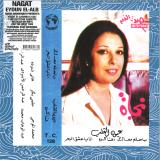
FIRST-EVER VINYL RELEASE OF CULT 1980 CASSETTE-ONLY ALBUM BY EGYPTIAN SINGER NAGAT EL SAGHIRA, CURATED AND ANNOTATED BY DISCO ARABESQUO. INCLUDES PRODUCTION BY EGYPTIAN FUNK LEGEND HANY SHENOUDA
Following the highly-acclaimed "Sharayet El Disco" compilation, Wewantsounds is delighted to team up with Disco Arabesquo for the reissue of Nagat El Seghira's cult 1980 album "Eyoun El Alb"
Originally released only on cassette on the Egyptian label Soutelphan, the album has since become a sought-after classic on the Arabic groove scene and this is the first time it is released on vinyl. Consisting of four tracks, the album features two tracks produced by Hany Shenouda whose group Al Massrieen is a reference on the Arabic disco funk scene.
Remastered for vinyl by Colorsound Studio in Paris, the album features the original cassette artwork plus a two page colour insert featuring liner notes by Disco Arabesquo.
When it comes to Arabic Divas, Oum Kalthoum, Fairuz and Warda usually take the lead in the poll list. But in her native Egypt, singer Nagat Al Saghira comes very close to this triumvirate. Born in Cairo in 1938, Nagat began singing when she was still a child gaining her stage name "El-Saghira" ("the young one") at this occasion as she started giving concerts at the age of seven, pushed by her father, the famed calligrapher Muhamad Hosny (Nagat's half-sister is the renowned actress Soad Hosny).
Nagat quickly rose to fame in the late forties and became an essential part of classic period of Arabic music, interpreting songs by such titans as Mohamed Abdel Wahab, Baligh Hamdy and Kamal Al Taweel. She also sang the works of Syrian poet Nizar Qabbani whom she introduced to a mainstream audience. Nagat started singing shorter songs but then upgraded to longer ones, often performing/recording them live as it was the trend in the 60s and 70s.
One such song is "Eyoun El Alb" ("Eyes of the Heart") which makes up the whole of Side 1 of the original cassette. Written by Mohamed El Mougy and Abd al-Rahman al-Abdouni, Eyoun El Alb is a love song made up of several distinct sections enhancing Nagat's hypnotic singing, accompanied by a percussion-heavy, traditional Egyptian orchestra.
Side 2 is the "diggers" groovier side featuring two floaters,"Bahlam Ma'ak" ("I Dream with You") and "Ana Basha El Bahr" ("I Adore The Sea") produced by cult Egyptian musician and producer Hany Shenouda, whose albums with his group Al Massrieen are highly sought after on the Arabic funk and Disco scene. One Al Massrieen track features on the "Sharayet el Disco" set compiled by Disco Arabesquo who notes that "Hany Shenouda had made waves with his new musical style that weaved in western funk and disco sounds into Egyptian music"
Both tracks feature an infectious slow-burning groove and incorporate funk influences with fat bass and lines of synth and clavinet that adds a funky tone to Nagat's soft singing. The third track "Fakra" ("Do You Remember") brings the best of both world with a syncopated rhythm and arrangements that are slightly more traditional than the Shenouda-produced tracks.
Originally released in Egypt on Cassette in 1980 on the venerable Soutlephan label, the album is now making its vinyl debut on Wewantsounds annotated by Disco Arabesquo and remastered for vinyl by Colorsound Studio in Paris for the joy of Arabic funk and Global beats worldwide.
A perfect mix, 4 versions, a unique psychedelic trip , special guest The godfather,Howie B with a special remix ;dark ambient and drone music style, the essence of cosmic sound, by Daniele Baldelli, from Malaysia with Love, Kamal Sabran -lo -fi beats, and the original version of
Kabaret Maker
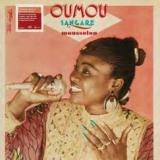
Diese Veröffentlichung ist Teil der farbigen Vinyl-Serie zum 40-jährigen Jubiläum von World Circuit. „Moussolou“ ist das Debütalbum der malischen Sängerin Oumou Sangaré; es wurde 1989 aufgenommen und 1991
veröffentlicht. Der Titel bedeutet auf Bambara „Frauen“ und verweist von Anfang an auf das zentrale
Thema des Albums. Viele der Lieder basieren auf Sangarés eigenen Erfahrungen als Frau in einer männerdominierten Gesellschaft, in der Polygamie nach wie vor praktiziert wird. Ihre Texte behandeln Themen wie
Liebe, Ehe, Unabhängigkeit und Frauenrechte mit einer Direktheit, die sowohl mutig als auch bahnbrechend
war.
Auch die Musik war ebenso revolutionär wie die Thematik. Verwurzelt in den kraftvollen, pulsierenden
Rhythmen des traditionellen Wassoulou-Sounds und geprägt durch das brillante Kamalengoni-Spiel von
Bénogo Diakité, modernisierte „Moussolou“ diese Traditionen mit zeitgenössischen Arrangements und einer
Instrumentierung, die bei einer neuen Generation von Hörern in Mali und ganz Westafrika Anklang fand.
Das Album, das sowohl tiefen Respekt vor der Tradition als auch einen unverkennbar modernen Geist zeigte,
entwickelte sich rasch zu einem großen Erfolg und begründete Sangarés Karriere, als sie noch sehr jung
war.
Die Mischung aus kultureller Authentizität und furchtlosem Eintreten für ihre Überzeugungen machte
„Moussolou“ zu einem Meilenstein der afrikanischen Musik und der Weltmusik; es legte den Grundstein
für Sangarés anhaltenden Ruf als eine der gefeiertsten Künstlerinnen des Kontinents und als starke Stimme
für Frauenrechte.
Anlässlich des 40-jährigen Jubiläums von World Circuit Records erscheint dieses kraftvolle und einflussreiche
Debüt nun neu auf transparentem, türkisfarbenem Vinyl. Die Veröffentlichung enthält zudem ein farbiges
Booklet mit den Liedtexten auf Englisch und Französisch.
Mit Maaya präsentiert Ami Yerewolo, die bedeutendste weibliche Hip-Hop-Stimme Malis und eine zentrale Figur des westafrikanischen Rap, ihr neues Studioalbum. Maaya ("Menschlichkeit") verbindet die rohe Energie modernen Hip-Hops mit traditionellen malischen Instrumenten wie Kamalé Ngoni und Tamani. Das Ergebnis ist ein kraftvoll geerdeter, zugleich zeitgenössischer Sound, der Amis künstlerische Identität präzise widerspiegelt. Als Rapperin, Produzentin und Gründerin eines eigenen Frauen-Rap-Festivals hat sich Ami Yerewolo gegen gesellschaftliche Widerstände durchgesetzt und eine Vorreiterrolle für eine gesamte Generation junger afrikanischer Künstlerinnen übernommen. Ihre Texte thematisieren Resilienz, Selbstbestimmung und den Mut, gegen konservative Normen aufzustehen - Botschaften, die weit über Mali hinaus Wirkung entfalten. Mit Gastbeiträgen von Jah Moko und Mina la Voilée erweitert Maaya seine musikalische und emotionale Tiefe. Das Album ist vollständig unabhängig produziert und überzeugt durch Authentizität, Haltung und eine klare, unverwechselbare Stimme.
The Duo Okvsho is one of the most promising prospects of upcoming musicians from Zurich, Switzerland. With the release of their „Traphouse Jazz EP“ via Boyoom Connective in 2018, Okvsho gained the attention of a wider audience for the first time through placements in Bandcamp Weekly, NTS Radio and many more. Their music is mostly inspired by the upcoming, young and vibrant UK Jazz Scene and their origins in beatmaking and house/electronic music.
The two brothers started out their musical careers at a very young age in Brazilian percussion groups and, due to their Hungarian roots, they are also familiar with traditional Balkan music. This background came to light on their 2020 released debut album “Kamala’s Danz“, in which they wanted to let their original musical backgrounds flow in and discover new ones at the same time. Especially through Placements of two Singles in the very popular Spotify-Playlist “State of Jazz“, Okvsho became one of the most interesting Names in the modern Jazz-Scene.
Through playing with local jazz-musicians their live-band project emerged, which celebrates improvisation, spontanity and jazz as dance music. Their Live-shows are characterized by driving rhythms and should make the listener feel like moving and immersing into a world without time and beyond their own.
нет на складе
Последняя поставка 7 дней назад доступно для дозаказа без гарантии
Sixteen wonders from the first three years of Franco’s own imprint Les Editions Populaires, founded in 1968. Mostly OK Jazz, performing ravishing rumbas and bolero ballads in Lingala, traditional songs in Kikongo, Kimongo, and even Yoruba, collaborations with Ngoma artists Camille Feruzi and Manuel d’Oliveira, and their own tough take on US funk.
Glorious music. Bim.
Carrying on from recent archival releases from masters of Indian classical tradition such as Kamalesh Maitra and the Dagar Brothers, Black Truffle is pleased to present a previously unheard recording of a concert by Pakistani vocalist Salamat Ali Khan. Born to a musician family in Hoshiarpur in the northwestern state of Punjab, Khan moved with his family to Lahore in Pakistan after the 1947 partition of India, becoming a child musical prodigy. Khan was a master of the kyhal form of Hindustani classical vocal music, a style integrating influences from Middle Eastern musical traditions that gives the singer a great deal of improvisational freedom. Travelling widely across the globe from the 1960s until his death in 2001, Khan approached ragas performed in the kyhal style as expressive forums for risk-taking improvisation, enlivened by ceaseless ornamental invention.
This remarkable recording was captured by Michael Hönig (of krautrock legends Agitation Free) in concert at Berlin’s Neue Nationalgalerie as part of the MetaMusik festival in 1974 (which also featured Nico, Tangerine Dream, and Roberto Laneri’s Prima Materia, among many others). Khan, who is also heard accompanying himself on a specially tuned alpine zither (in place of the traditional swarmandal, an Indian style of zither), is joined by Shaukat Hussein Khan on tabla and Hussein Bux Khan on harmonium. The lack of a familiar underlying tanpura drone gives this performance a weightless, floating quality, with all three of the musicians playing masterfully with the interaction between silence and the pulse propelling each section of the raag.
As Khan explains in his opening remarks, this performance of the rainy season Raag Megh is divided into three parts, each with its own tempo and rhythmic scheme (tala). The opening vilambit, in a twelve-beat tala, stretches out for over twenty minutes, lingering for a long time in a space of meditative calm, Khan lightly strumming the zither while exploring the lower end of his range in languorously extended notes. Virtuoso tabla interjections at first barely state the tempo, and the interplay between musicians is so spacious that we hear scraps of audience noise and the squeak of the harmonium’s mechanism in between the notes. Gradually picking up rhythmic definition and melodic complexity, after around fifteen minutes the music builds dramatically, with Khan letting out emotive yelps and swooping scalar shapes ranging across his full vocal range. This flows seamlessly into the following jhaptal, at a faster tempo in ten beats, which then makes way for the concluding teental, very fast in sixteen beats, which becomes a frantic improvisational exchange of daring rhythmic disruptions from the tabla, flowing harmonium melodies, and a stunning variety of vocal approaches from Khan, ranging from rapid-fire staccato consonants to guttural growls.
Accompanied by stunning black and white concert photographs, the LP also contains a moving and entertaining recollection from acclaimed German musicologist Peter Pannke, looking back on his experience assisting Khan and his musicians in Berlin at the Metamusik festival (including a mouth-watering description of a feast cooked by the maestro himself). As Pannke describes in his account of attending the concert, the beauty and spiritual intensity of this music leaves the listener speechless.
нет на складе
Последняя поставка 16 месяцев назад доступно для дозаказа без гарантии
“Egypt’s “official” popular music throughout much of the 20th Century was a complex form of art song steeped in tradition, well-loved by the middle and upper classes, and even accommodating to certain non-Arabic influences. It was highly structured by professional musicians working an established industry centered in the capitol, Cairo. However, far from the bustling cosmopolitan center of Cairo, north and northwest, in towns like Tanta and Alexandria and extending across the Saharan Desert to the Libyan border, dozens of fully marginalized artists were developing a raw, hybrid shaabi/al-musiqa al-shabiya style of music, supported by smaller upstart, independent labels, including the short-lived but deeply resonant Bourini Records. Launched in the late 1960s in Benghazi, Libya, Astuanat al-Bourini اسطوانات البوريني (Bourini Records) published some 40 to 50 titles from 1968 to 1975. Bourini released 7-inch 45 RPM singles by 15 artists, all but one of them Egyptian, igniting brief careers for Alexandrian singer Sheikh Amin Abdel Qader and the blind Bedouin legend Abu Bakr Abdel Aziz (aka Abu Abab). The tracks compiled here comprise a full range of styles covered by the label, while highlighting some of its most gobsmacking moments, from Basis Rahouma’s beastly transformation into a growling and barking man-lion by the end of “Yana Alla Nafsa Masouda,” to Reem Kamal’s hopeful-if-bitter handclapping party pivot “Baed Al Yas Yjini,” which descends into an almost Velvet Underground outro-groove of nihilistic dissonance. All the tracks on this compilation were laid down in stark divergence from the mainstream Egyptian popular music topography of heightened emotions buoyed by lush arrangements. The contrast is most evident in Mahmoud al-Sandidi’s “Ana Mish Hafwatak,” wherein his voice weaves heavily but deftly through a constant accordion drone, and Abu Abab’s “Al Bint al Libya,” a sparse, slow-burning lament with minimal percussion, violin, and Abab’s nephew Hamed Abdel Muna'im Mursi on lyre. Whereas the Egyptian mainstream was aspirational, attempting to reflect Egyptian culture at its most refined, the performances captured by Bourini were manifestations of everyday life lived by the mostly otherwise ignored masses. More than half century old, this music has lost none of its urgency, presence, or relevance. We hear these artists as if they’d just joined us in our living room, and not on a stage decades ago surrounded by tens of thousands of long-forgotten acolytes.
Besançon, sometime before lockdown… Still in high school, Laszlo, Baptiste, Matthieu, Maël and Marius, driven by a common desire to make people dance till they sweat, formed Wet Enough!?, and began to make music together, driven by a burning passion for funk, electro, rap and disco.
Early 2023, they were contacted by Antoine Rajon from label KOMOS who was to go on to produce their debut EP “DASH”, released in January 2024. A series of gigs followed in Paris, London, Brussels and the Jazz à Vienne festival under the aegis of Astérios Spectacles. That same year, they were also selected to take part in the Inouïs talent showcase at the Printemps de Bourges, as representatives of the Bourgogne Franche-Comté region.
The “Burgundy Five” then studied at music schools in Brussels, Amsterdam and Lausanne, in institutions more open than their French counterparts when it comes to exploring the full gamut of musical styles; they also frequently met up for composition sessions and concerts.
In September 2024, they left for London to record their debut album, in the studio of producer and musician Malcolm Catto, as he was charmed by a live at ‘91 Living Room’ in Brick Lane. The Heliocentrics drummer and sonic wizard behind Yussef Kamal’s famous ‘Black Focus’, used his trademark analogue approach to help craft 10 powerful tracks, collectively composed and arranged by the group.
On this release, we detect the influence of American groups like Ghost-Note and Butcher Brown, but also an energy almost akin to punk rock. And especially, we can sense an enthusiastic appetite for defying genres, without a care for codes or the constraints of aesthetic purism.
Their starting point is new jazz, conjuring up current scenes in the UK and America (‘Green Tangerine’, ‘Emile Lédonien’, ‘Lullaby for a riot’), but they soon wander into the club with the unashamed housey inflections of ‘Dump’ (carried aloft by Galawesh Heril on vocals). When Marius, the trombonist grabs the mic, he displays mastery of chiselled flow and old school French hip-hop vibes (‘Lascars, San Pé’) as well as ultra-modern, alternative aesthetics (Les 2).
During the studio sessions in London, the band invited two British musicians to guest on the record - a junglist rapper from Manchester, OneDa, who illuinates up single ‘One Leg’ with the brightness of her rhymes; and a Londoner, saxophonist Camilla George who offers a vibrant solo, riding high over the amped-up groove of Funk4.
There’s no doubt they shall join the group for upcoming shows whose philosophy is also expressed in the album’s title :
Carrying on a string of stunning archival releases from major figures of Indian classical tradition (including releases from members of the Dagar family and Amelia Cuni), Black Truffle is pleased to announce an unheard recording from tabla master Kamalesh Maitra (1924-2005). For over fifty years, Maitra devoted himself to the rare tabla tarang, a set of between ten and sixteen hand drums tuned to the notes of the raga to be performed. While the tabla tarang has its origins in the late 19th century, Maitra was the first to recognise its potential as a solo concert instrument, using the set of tuned drums to perform full-length raags. Seated behind a semi-circular array of drums, Maitra produced stunning waves of melodic improvisation enlivened with the rhythmic invention of a master percussionist.
Across his career, Maitra performed in ensembles led by Ravi Shankar, collaborated with George Harrison, and led his own East-West fusion group, the Ragatala Ensemble. However, it is in the solo setting that his remarkable artistry and the otherworldly timbral qualities of the tabla tarang are most strikingly on display. Recorded during the same 1985 Berlin sessions that produced Maitra’s self-released solo LP Tabla Tarang: Ragas on Drums, on Raag Kirwani on Tabla Tarang we are treated to Maitra stretching out for over forty minutes on the late night Raag Kirwani, accompanied by Laura Patchen on tabla and Mila Morgenstern and Marina Kitsos on tanpura. The performance begins with the traditional free-floating exposition section, where Maitra’s spacious melodic improvisation at times almost resembles a plucked string instrument (like the sarod, which Maitra also played). For the listener unaccustomed to the tabla tarang, the sound of these microtonally inflected melodic patterns played on drums has a magic quality. As Maitra begins to imply the rhythmic cycles more strongly, Patchen joins on tabla, beginning half an hour of rhythmic-melodic exploration, where virtuosity sits side by side with delicacy and meditative attention. Accompanied by beautiful archival images and extensive liner notes from Laura Patchen, for many listeners Raag Kirwani on Tabla Tarang will be the perfect introduction to the magical world of Kamalesh Maitra, released to coincide with the hundredth anniversary of the master musician’s birth.
нет на складе
Последняя поставка 20 месяцев назад доступно для дозаказа без гарантии
‘Diré’, Idrissa Soumaoro new album, comes as a surprise to Malian and international audiences. Composer, singer, guitarist and master of the kamalen n’goni Idrissa Soumaoro presents here a beautiful collection of songs on his third album, Diré, named in honor of the town where he met his wife and where his first daughter, who is no longer with us, was born.
In 1971, after his studies at the INA in Bamako, Idrissa was transferred to Diré to teach music at the lPEG (Pedagogical Institute of General Education). He was 22 years old when he arrived in Diré. Idrissa has always been nostalgic for this beautiful place in the 333 Saints of Timbuktu region. As Idrissa sings in ‘Diré taga’ (Going to Diré), the track that opens the album, the city evokes deep emotions for the artist, as if it were a long-lost friend or lover. Celebrating the memory of the city of Diré leads the artist to retrace stories and lived situations that marked and animated him in years gone by: ‘I really miss the people, the colleagues, the friends and that period. Despite the time that has flown by, I would ardently wish to see Diré again’. Today, at the difficult time Mali is experiencing, remembering the city of Diré in the 1970s also means for the artist not giving up hope for peace: ‘The memory of Diré, a beautiful town in northern Mali, strengthens my hope for peace, union and real independence for the happiness of my people’; as he sings in ‘Sababou’, ‘Without hope, there is no life. Together we will succeed’.
The ten highly original compositions of the album are strongly based upon traditional music of Mali, but Idrissa’s life experiences, travels, education, collaborations and personal musical career have led him to compose and perform music with other influences. As Idrissa quotes: ‘My inspiration generally comes from the donso n'goni, a Bambara instrument played by and for hunters throughout Mali. This is a pentatonic instrument, similar to the blues exported to the USA by black African slaves. I've also spent so much time playing a variety of music that my music also reflects rumba, salsa (as well as Bamanan blues and a few derivatives: jazz, country, soul, rhythm and blues) etc. I have looked for and hope to have found my own form of expression from these influences’.
Throughout the album, his strong, clear voice sings in French, Bambara and English. It rides seamlessly upon a complex rhythmic sea of distinctly West African stringed instrumentation and percussion with accents of flute and balafon. There are keyboards in a few songs, but these, happily, do not dominate the music as we hear so often in today’s music. This album presents the music of a mature artist who has ‘been there, done that’ and returned to celebrate his country, his roots and his dreams in a flawlessly produced collection of songs of love, reassurance, fatherly advice and hope.
The album already has a long history: it was initiated in 2012 by Marc-Antoine ‘Marko’ Moreau, former producer and manager of Amadou and Mariam. Moreau had plans to produce the album and invited Idrissa Soumaoro to start recording in Manjul's studio in Bamako. When Moreau suddenly passed away, work on the album was still missing. The pandemic still added time for the production to continue. With the help of Climax Orchestra, arrangements and orchestrations were finalized in France. At the artist's behest, 'Diré' will finally be presented to the public by Mieruba, the independent label based in Ségou, the home of the blues in Mali. 'Let's stand together so that Mali can flourish': from conception to production and distribution, this is the message that 'Diré' carries.
нет на складе
Последняя поставка 2 года назад доступно для дозаказа без гарантии
A collection of mind blowing songs from Hindi films 1958-1984. 12 musical gems from the Bollywood vaults with a wide variety of styles thrown in the mix, from the classic to the rare, a must! An astonishing overview of the magnificent musical talents populating Bollywood films. With a predilection for movies with a strong musical backbone where songs and musical numbers play a pivotal role, the Hindi cinema boom gave birth to a strong and creative music industry where composers, musicians, musical directors, conductors, producers, singing actors, and playback singers (singers who provide vocals for the musical parts of roles played by actors or actresses) found a perfect place to develop their careers. A sample of those incredible talents is included in this compilation, the ideal point to start digging deeper into the lush garden of musical delights that is Bollywood
Out of print as a stand-alone release for decades since its original 1974 issue. Produced by George Harrison, Shankar Family & Friends is an almost-forgotten masterwork – an emotional and sonic pact between two like-minded souls to both advance their spiritually minded bond and unite musical styles, cultures, and sounds in wondrous fashion Contributions from Ringo Starr, David Bromberg, Billy Preston, Nicky Hopkins, Jim Keltner, Klaus Voorman, and a host of virtuosic Indian musicians add to a diverse album that melds Eastern and Western traditions; encompasses jazz, funk, bhajan, Indian, and pop; and represents the spirit and breadth of Harrison's Dark Horse Records imprint.
Memorable contributions from an A-list of American and English musicians — Ringo Starr (drums), David Bromberg (electric guitar), Billy Preston (organ), Nicky Hopkins (piano), Jim Keltner (drums), Klaus Voorman (bass), Robert Margouleff (Moog), Malcolm Cecil (Moog), Tom Scott (saxophone) included — add to the richness of a set that melds Eastern and Western traditions. These “names” mesh with a host of Indian virtuosos — Alla Rakha, Ashish Khan, Kamala Chakravarty, Hariprasad Chaurasia included — who turn Shankar Family & Friends into a journey laced with percussive, string, and vocal components that aren’t soon forgotten.
Throughout, Shankar Family & Friends remains true to its title — a mesmerizing record named to reflect the group participation approach of its creators. The idea started when Shankar told Harrison about a ballet he wrote. The Beatle, who first met Shankar in June 1966 — roughly a year after Harrison became interested in Indian music after overhearing it in a restaurant while filming Help! — immediately was convinced they needed to record it. Harrison’s staunch admiration of Shankar and serious approach to Eastern styles are reflected throughout the album.
Indeed, for Harrison, Shankar Family & Friends marks the culmination of a years-long effort to master the sitar, study Hinduism, and incorporate elements such as drones, unusual chords, and expressive picking into his own songs. The seeds of this unique collaboration can be heard in Beatles works such as “Norwegian Wood,” “Love to You,” and “Within You Without You.” Both musicians were also fresh from performing at the 1971 Concert for Bangladesh shows. Yet Shankar Family & Friends remains entirely unique in each visionary artist’s history — and ultimately, led to a collaborative tour Harrison and Shankar staged across North America.
Encompassing jazz, funk, bhajan, Indian, and pop, Shankar Family & Friends is thematically split into halves. Side One reveals Shankar’s uncanny ear for melody — even when applied to Western forms. The lead-off “I Am Missing You,” the first single ever released by Dark Horse Records and reportedly the first pop composition Shankar completed, underscores his skills as a composer and global ambassador. Beautifully sung across three octaves by his sister-in-law, Lakshmi Shankar, the devotional song features multiple drummers and production that mirrors Phil Spector’s Wall of Sound approach. Harrison plays autoharp and guitar; Starr sits in on drums; Scott handles flute and soprano saxophone. It’s the inviting start of a musical adventure teeming with color, majesty, and mysticism.
A second version of the track — designated with a “(Reprise)” tag — appears minutes later. Unfolding in different ways, it follows a folk ballad structure stitched together with Indian instrumentation. Here, according to Shankar, the musicians “attempted to convey the sounds and atmosphere of Vrindavan, the ancient holy place where Krishna grew up.” Both renditions speak to the cross-continental fusion that came so naturally to Harrison and Shankar, whose oversight on the side’s other vocal tracks ensures listeners familiar with Western methods gain easy access to the hypnotic allure of his native country’s music.
Nowhere is this more evident than on Dream, Nightmare & Dawn (Music for a Ballet), the side-long piece that served as the genesis for Shankar Family & Friends. Launched with an airy overture and unfolding across three movements, the mostly wordless suite features everything from call-and-response interplay and classical lyricism to uptempo dance figures, stacked rhythms, and intoxicating grooves. Blurring the lines between contemporary and traditional, and Western and Eastern, the inspirational work is the exclamation point on a record that defined “world music” well before the term became co-opted as a catch-all genre.
As she's gotten older, Ella Smoker has found that her subconscious has been trying to tell her "some pretty wacky stuff". Thoughts will come to the 21-year-old singer-songwriter in dreams, or as she writes lyrics in studio sessions, words floating onto the page before she's really had a moment to realise what they are. "As soon as we start making the music, my brain sort of turns off," she explains. "I'll be sitting there, writing all this stuff that feels like a load of nonsense, and a month later, I'll look back and be like `oh'. It all comes from a place I didn't even realise was there." In learning how to open up to herself, gglum ended up finding a kindred spirit in producer Karma Kid (Maisie Peters, Shygirl, Connie Constance), pushing past her natural bedroom-pop introversion to find joy in the process of collaboration. Whether it's the ragged radio-rock of `SPLAT!' ("basically about realising that somebody you held up very highly is actually just a massive shambles of a person") or the riotous, industrial energy of `Easy Fun', Smoker is able to reshape her vocal around the mood, creating a record which expertly balances light and shade. "I've never really done anything in like that vocal style before," she says of `Easy Fun's near-spoken delivery. "I love that song because it's not something I would have come up with on my own, but Karma Kid was great at pushing me out of my comfort zone. I just thought like, look: I can be a little silly with this." The release of `The Garden Dream' will offer gglum plenty more opportunity to get both silly and serious, to be bold in her exploration of new ideas and sounds But it will also offer the opportunity to further accept herself as the dreamlike artist she always wanted to be; confidently embellishing acoustic worlds that her listeners can burrow safely within. "I feel like I naturally gravitate towards wanting to make musical spaces that you can feel like you're living in, rather than trying to make songs", she says. "That's something I really wanted to solidify with this album: I basically want to make music that feels like when you're looking out the window and it's the end of the film and you're imagining what comes next. That's the sound of what I want to be doing."
As she's gotten older, Ella Smoker has found that her subconscious has been trying to tell her "some pretty wacky stuff". Thoughts will come to the 21-year-old singer-songwriter in dreams, or as she writes lyrics in studio sessions, words floating onto the page before she's really had a moment to realise what they are. "As soon as we start making the music, my brain sort of turns off," she explains. "I'll be sitting there, writing all this stuff that feels like a load of nonsense, and a month later, I'll look back and be like `oh'. It all comes from a place I didn't even realise was there." In learning how to open up to herself, gglum ended up finding a kindred spirit in producer Karma Kid (Maisie Peters, Shygirl, Connie Constance), pushing past her natural bedroom-pop introversion to find joy in the process of collaboration. Whether it's the ragged radio-rock of `SPLAT!' ("basically about realising that somebody you held up very highly is actually just a massive shambles of a person") or the riotous, industrial energy of `Easy Fun', Smoker is able to reshape her vocal around the mood, creating a record which expertly balances light and shade. "I've never really done anything in like that vocal style before," she says of `Easy Fun's near-spoken delivery. "I love that song because it's not something I would have come up with on my own, but Karma Kid was great at pushing me out of my comfort zone. I just thought like, look: I can be a little silly with this." The release of `The Garden Dream' will offer gglum plenty more opportunity to get both silly and serious, to be bold in her exploration of new ideas and sounds But it will also offer the opportunity to further accept herself as the dreamlike artist she always wanted to be; confidently embellishing acoustic worlds that her listeners can burrow safely within. "I feel like I naturally gravitate towards wanting to make musical spaces that you can feel like you're living in, rather than trying to make songs", she says. "That's something I really wanted to solidify with this album: I basically want to make music that feels like when you're looking out the window and it's the end of the film and you're imagining what comes next. That's the sound of what I want to be doing."
As she's gotten older, Ella Smoker has found that her subconscious has been trying to tell her "some pretty wacky stuff". Thoughts will come to the 21-year-old singer-songwriter in dreams, or as she writes lyrics in studio sessions, words floating onto the page before she's really had a moment to realise what they are. "As soon as we start making the music, my brain sort of turns off," she explains. "I'll be sitting there, writing all this stuff that feels like a load of nonsense, and a month later, I'll look back and be like `oh'. It all comes from a place I didn't even realise was there." In learning how to open up to herself, gglum ended up finding a kindred spirit in producer Karma Kid (Maisie Peters, Shygirl, Connie Constance), pushing past her natural bedroom-pop introversion to find joy in the process of collaboration. Whether it's the ragged radio-rock of `SPLAT!' ("basically about realising that somebody you held up very highly is actually just a massive shambles of a person") or the riotous, industrial energy of `Easy Fun', Smoker is able to reshape her vocal around the mood, creating a record which expertly balances light and shade. "I've never really done anything in like that vocal style before," she says of `Easy Fun's near-spoken delivery. "I love that song because it's not something I would have come up with on my own, but Karma Kid was great at pushing me out of my comfort zone. I just thought like, look: I can be a little silly with this." The release of `The Garden Dream' will offer gglum plenty more opportunity to get both silly and serious, to be bold in her exploration of new ideas and sounds But it will also offer the opportunity to further accept herself as the dreamlike artist she always wanted to be; confidently embellishing acoustic worlds that her listeners can burrow safely within. "I feel like I naturally gravitate towards wanting to make musical spaces that you can feel like you're living in, rather than trying to make songs", she says. "That's something I really wanted to solidify with this album: I basically want to make music that feels like when you're looking out the window and it's the end of the film and you're imagining what comes next. That's the sound of what I want to be doing."
Tapestry, first LP of Namas; a modern jazz band from Rennes BZH, is a self-produced piece mixing the traditional sound of a trio and modern hip-hop grooves.
It is where night falls that Namas finds his universe through dreamlike compositions, influenced both by the London jazz scene and pictorial art.
нет на складе
Последняя поставка 2 года назад доступно для дозаказа без гарантии
Pink Siifu’s latest release, GUMBO!, is another sprawling Afrocentric vision from one of the boldest voices in contemporary rap. Following up on 2020’s NEGRO, the album’s songs are as rich and varied as its titular stew. Siifu’s boundless style makes for an unpredictable but rewarding ride across the album’s 18 tracks, as he explores the diverse sounds of his influences and breaks new ground with a unique class of co-stars.
Siifu, born Livingston Matthews and raised between Alabama and Cincinnati, has already notched a conspicuous list of collaborations in his burgeoning career, from legendary producer the Alchemist to Australian electronic group the Avalanches. Siifu also embodies various inspirations through a range of alter-egos, often producing under the moniker “iiye,” or as half of the duo B. Cool-Aid with Ahwlee, both of which appear on GUMBO!.
The variety of guest features and production on GUMBO! only elevates Siifu’s ability to push the boundaries of genre and song structure. “Voicemails Uptown” (produced by Soulection’s Monte Booker) is the second of two back-to-back posse cuts, sporting five plus vocalists each. “Lng hair dnt care,” the album’s first single, was produced by Ted Kamal, who first garnered attention for his outside-the-box edits of contemporary rap staples. And while several of the album’s tracks are well within his bag, the jazzy, drumless loop on “Fk U Mean/Hold Me Dwn” could’ve been a cut off of his collab album with Virginia rapper Fly Anakin, FlySiifu’s.
Though rife with standout tracks, GUMBO! is greater than the sum of its parts. Siifu’s ambitious range and impressive pool of features create an otherworldly listening experience. Overall, it reflects an intense desire for self-expression and creative growth, one which he shares with many of his influences. Like Outkast, Sun Ra, Baraka, or Bad Brains, his unique soundscapes re-imagine a genre without restrictions, breaking new ground in search of artistic and personal freedom.
ZEHRA is proud to present the debut album ISTEHLAL by the MOHAMAD ZATARI TRIO, consisting of musicians from Syria, Iran & India. The trio merges traditional Middle Eastern sounds with contemporary vibes incl. interpretations of Hossein Alizadeh & Riad Al-Sunbati classics.
In a contemporary globalised world where music has lost its borders and is fighting a constant – yet particular – stream of Western commodification, the Mohamad Zatari Trio stands out as an original cultural artefact, aiming at transcending the boundaries between different music worlds.
Founded in 2019 the ensemble had its first public appearance in 2020 at the Outernational Virtual Festival. Comprising the performers Sara Eslami (Iran) on tar, Avadhut Kasinadhuni (India / Romania) on tabla and Mohamad Zatari (Syria) on oud.
Their debut ISTEHLAL plunges into its own aesthetics, politics and sound intricacies and represents the combined efforts of three musicians hailing from different, yet deeply rooted cultures. Over the course of eleven songs, the album transcends stylistic, ideologic and
geographic boundaries and reflects on the human condition in an interconnected and interrelated technological world. The repertoire includes not only original compositions in different stylistics
but also rearranged traditional pieces by influential composers Riad Al Sunbati (Egypt) and Hossein Alizadeh (Iran).
The Mohamad Zatari Trio introduces itself as a strong new voice within a new generation of young musicians that carry the musical heritage of great masters like Ravi Shankar, Nusrat Fateh Ali Khan or Zakir Hussain with a fresh and contemporary approach.
Mohamad Zatari is a composer and oud player from Aleppo, Syria, currently based in Bucharest, Romania. His artistic effort is devoted to deconstructing stereotypes and blending various musical genres. He has been taught traditional and regional music by Tarek Al-Sayed,
and has a Bachelor in classical composition at the National University of Music Bucharest (2021). His compositions were used for short films as well as educational courses. He performed in various ensembles and groups, in countries such as Syria, Romania, Hungary, Germany, Italy
and Austria.
Sara Eslami is an Iranian composer, tar and setar instrumentalist and improviser. She has a bachelor's in musical Performing at the Tehran University of Arts (2011).
Romanian/Indian Avadhut Kasinadhuni has a Master in Musical Performing / Violin at the National University of Music Bucharest (2022) and started studying tabla intermittently in India with Prof. Kamal Kant (2008) and Prof. Durjay Bhaumik (2017).
Credits:
Recorded by Alexandru Zaharencu at Avanpost media, Bucharest, Romania
on 29th & 30th January 2022
Mixed by Dirk Dresselhaus at ZONE, Berlin, Feb. 2022.
Mastering & lacquer cut by Anne Taegert at D&M.
нет на складе
Последняя поставка 3 года назад доступно для дозаказа без гарантии
I hold Your hand Like I want My hand To be held. When we are young we show our love by emulating those we love. Tributes, respect, adoration, getting lost in things. Trying to become a person we wish to be. Hold that process and don't be afraid to let it always hold you too. Swallow Me is the result of playing Kamala Sankaram’s astonishing performance in clubs, of splicing it into and out of things, of those ideas taking on a little life of their own and connecting her ideas to new spaces and audiences. I Love Like Your Men is a tribute to the undated diaries of Samuel R Delaney, slices of time that cut themselves holes into other times and other places. Moments of reflection that now tie into the heads and bodies of others. Thank you to Kamala for your work, it’s clearly so inspiring, and for being supportive of this, which is humbling. Swallow Me samples Kamala Sankaram’s performance at the final Resonant Bodies festival in New York in 2019. “In Ancient Greek, ololyga is the ritual shriek of women, a sound so alarming to men that it could not be uttered within their earshot. Kamala Sankaram’s work was written as a direct response to the 2016 election.” It was released on New Focus Recordings.
нет на складе
Последняя поставка 3 года назад доступно для дозаказа без гарантии
Hailing from Sydney, Australia, prolific producer Cabu (860K Monthly Listeners and more than 90M cumulative streams on Spotify alone) has come a long way; from his successful remix work – from Joe Hurtz's "Stay Lost" edit (37M Spotify-streams) to Big Wild's "Empty Room" flip (20M Spotify-streams) – to his consistently catchy original productions, Cabu's only getting started. He keeps this momentum alive with the EP "So Far To Go", his first to be released by Ta-ku & Jakarta Records' sublabel 823 Records.
823 is a perfect place for Cabu's bouncy, hypnotic grooves and is a return to form for what "Cabu" represents: a driving force in the pursuit of happiness through sound. It's a well-timed collaboration, as Cabu's fanbase has continuously grown over the past few years through features on Australia's Triple J, DJ Complexion's Future Beats Radio, Soundistyle, The South East Grind, Mutual Friends, ThisSongIsSick, Majestic Casual, Soulection Radio, BBC 1xtra, Pilerats, Maison Kitsune and more. To that end, "So Far To Go" features some of the most talented artists to come out of the Pacific continent, such as Milan Ring (95K monthly Spotify listeners) – coined "Australia's R&B Princess" by Apple Music – Brisbane native hit-maker Young Franco (1M+ monthly Spotify listeners), Kamaliza (123K monthly Spotify listeners), NOÉ, Gabby Nacua, Pastel and of course label-head Ta-ku himself.
1st single, "Process" featuring Ta-ku & Milan Ring was released on November 3rd. Hypnotically bouncy, with heavenly synth pads, crisp percussive elements combined with the ethereal voices of Ta-ku and Milan harmonically push the sonic envelope to make this track an infallible groovy knockout. As Cabu says, "Process" is "the dream-like state in which you take gratitude in your current situation whilst being hopeful in the future." The track provides a perfect taste of these artistic and creative powerhouses. The stunningly beautiful music video – directed by Sydney based Redscope Films and premiered on The Sound You Need – is the perfect accompaniment.
2nd single, "Sun & Moon" featuring Young Franco & NOÉ is set to be released on December 10th along with an announcement of the EP and pre-order. The song is a contagiously bouncy bop, with the different vocal harmonies and synth chords giving the track an almost prime 00's throwback, it's the perfect year-end anthem to keep dancing and growing through the good and bad.
The album's focus track, "About U" featuring Kamaliza will be released along with the EP release on January 28th, 2022. The song perfectly blends electronic elements within an R&B / Soul aesthetic, and is all about moving forward with intention, from the lyrics to the groove, making you feel tipsy on life.
All singles off the EP will be accompanied with custom visualizers by Perth-based design / creative firm Gesture Systems. The album's single-releases and videos will be promoted in-house via the artist's and the label's social media channels in Germany and Australia.
The 823 label represents the appreciation for the people, ideas and places that inspire and push their protagonists forward. "823 celebrates the simple beauty of everyday life and the people in it that inspire us." (Regan Matthews aka Ta-ku)
нет на складе
Последняя поставка 2 года назад доступно для дозаказа без гарантии
M$R is now Termina. Time for something new.
The first offer on Termina sees 2 psyched out rhythms on a 7 inch by Gerry Franke.
More bedroom rock, dub adventures and club experiments to follow...
Deviation Records is pleased to present you their latest and exiting collaboration with the Mieruba Label Team.
The Super Biton has existed since the 60s, like Ségou, its orchestra, the Super Biton has always remained behind what was done in Bamako and in the big cities of Africa. The Ségou orchestra developed and incorporated amplified instruments that mingle with brass, in particular electric guitars, symbols of modernity at the time. It opens up to Cuban music, and congas and bongos complement the sound of the orchestra. The group drew a unique sound from it, a perfect balance between tradition and the modern. There are about fifteen artits on stage, singers, guitarists drummer and percussionists. The Super Biton has for years been the best known and most sought-after orchestra of Mali outsid the country's borders, the Super Biton transcends the only Bambara heritage with its repertoire. Ségou is crossroads between Bambara, Fulani, Mandingo and Somono cultures and Biton has drawn on all these traditions to creat a repertoire extremely rich in rhythms and words. Some musicians completed their training in Cuba. They play "bambara jazz", incorporating a lot of
brass instruments such as saxophone, trumpet, clarinet. The compositions are modern and sophisticated.
Mieruba Art Center is a place dedicated to the transmission and safeguarding of Malian musical heritage through musical exchange between the older and newer generation - Artist residences, music lessons, rehearsals, Workshops, Masterclasses - and so on. Just as happy former musicians of Mali, the members of Super Biton give lessons on site. It is also the office of the Mieruba-ML label in the same place where Deviation Records is collaboration for the second time on the album - After the « Lost Maestros Collection » - with the
support of La Manufacture de Vinyles. Phil of Deviation Records tells: "I am very enthusiastic at the idea of offering you these two volumes of the History of the Super Biton of Ségou, Clique of Super Heroes of sound,
a source of inspiration for generations of musicians, DJs and also griots and storytellers of great renown! This double LP compiles the first Chapter of the rich Afro-Jazz-Folk Collection whose tapes have been remastered by Monsieur Jonin and cut at the MB Mastering Studio in Aubervilliers .The gatefold artwork is conceived by
Ewwanuelle Collage and formatted by Bertrand Tondeur, Graphic designer of Les Mouches. All that’sleft to say is that i hope that you enjoy listening to the final result !"
нет на складе
Последняя поставка 4 года назад доступно для дозаказа без гарантии
2021 marks the 50th Anniversary of the legendary record Fela Kuti made
with Ginger Baker of Cream.
This Anniversary edition features a newly unearthed second drum solo
from Tony Allen and Ginger Baker, taken from Afrika 70’s performance
at the 1978 Berlin Jazz Festival. Part I has never appeared on vinyl and
this second part has never been heard - until now.
1978’s Berlin Jazz Festival marked Afrika 70’s final live performance with
Fela. In the Spring of 1979, several members of Afrika 70, including
Allen, would leave the band. Allen had been with Fela since 1964. 1980
saw the birth of Egypt 80, with Baritone saxophonist Lekan Animashaun,
who had been with Fela since 1965, as its founding bandleader.
Reissued with Abbey Road mastered audio.
Red double vinyl with collector's 50th Anniversary gold foil obi strip.
Bespoke etching of album artwork on Side D.
Fela’s legacy spans decades and genres, touching on jazz, pop, funk,
hip-hop, rock and beyond. While he never achieved true icon status
during his lifetime, the last (roughly) decade has seen a broad
resurgence in his popularity and a critical reevaluation of his life, music
and influence. In 2008, the biographical musical ‘Fela!’ (co-produced by
Jay-Z and Will Smith) became a surprise hit off-Broadway and then
Broadway itself. Since then, Beyoncé performed Fela’s ‘Zombie’ at
Coachella, he’s been called out as an influence by everyone from Paul
McCartney to Questlove and sampled by Missy Elliott, Kendrick Lamar,
J. Cole, Nas, and more. Vice President Kamala Harris even used Fela’s
music at her and President Biden's first joint event together.
‘Let’s Start’ features prominently in the trailer and the soundtrack for the
new Western, ‘The Harder They Fall’, staring Idris Elba and Regina King.
Fela features prominently in an episode of Hulu’s docuseries ‘McCartney
3, 2, 1’, where Paul McCartney cites Fela as one of his important
influences.
This past spring Fela came in second place, behind Tina Turner, for the
fan vote for the Rock & Roll Hall Of Fame nominations and received
great press coverage in NY Times, Rolling Stone, MOJO, Record
Collector and more.
Priya Ragu’s story is just as fascinating as her music. She was born and raised in Switzerland following her parents' escape from the Sri Lankan civil war in the early eighties. As she grew older, the Swiss and Sri Lankan cultures began to clash. Although they are now fully supportive of their daughter, Priya’s parents were initially strict, she wasn’t encouraged to listen to Western music or hang out at the mall after school. However, her musical ambitions soon began to take root.
At the age of 16, she performed Alicia Keys’ ‘Fallin’’ to her brother, who insisted she perform at a show he was doing with his rap group. Her father discovered their plans and stopped her from performing, but Priya wasn’t deterred. She instead made her ambitions more covert, sneaking out to jam sessions and open mic nights, before decided to fully pursue her ambitions by moving to America with the help of her friend, the rapper Oddisee. Working remotely with Japhna, the pair created several tracks which would provide the launchpad for where she is today.
‘damnshestamil’ Priya Ragu’s debut mixtape is a result of her highly productive creative partnership with her producer and brother Japhna Gold, featuring all Priya’s singles to date, including the international sensation ‘Chicken Lemon Rice’, ‘Good Love 2.0’, ‘Forgot About’ as well as her most recent single ‘Kamali’ which launched with a BBC Radio 1 ‘first play’ – with Annie Mac, and most recently A-Listed with the BBC Asian Network – showing no signs of slowing down.
Priya has coined the term ‘Raguwavy’ for her vibrant sound which defies standard genre definitions. It signposts the next era of forward-thinking R&B and electro-pop by tapping into the sonic accents of her Sri Lankan roots.
The current single ‘Kamali’ was inspired by a short BAFTA nominated film of the same name. It explores the story of Suganthi a single mother living in a small village in India, who was raised in a culture in which gender roles are clearly structured and as a result she stayed at home until she was old enough to marry. Suffering through abuse– she escaped to create a better future for herself and her daughter – Kamali. Musically and visually Priya connected to the story of Kamali and brought her world to life through song, placing emphasis on the important of motherhood and the circle of life.
As the road to the mixtape approaches - Priya fulfilled a lifetime ambition when she played a sold-out show as part of the Montreux Jazz Festival in Switzerland. Later Latitude Festival in July, and scheduled to perform at All Points East in August, where she begins to peel back the layers of her first body of work, to a live audience.
She will end the year on a high by embarking upon her long awaited debut UK & European headline tour. Consisting of nine shows spanning six countries, the tour includes a London show at the Jazz Café which is now sold out and will culminate with a homecoming show in Zurich a week later.
Hong Kong based hypno-tropicalia duo Blood Wine or Honey are set to release their second album 'DTx2' on 30th June 2021. Made up of seasoned multi-instrumentalists James Banbury (synths, bass, percussion, cello) and Joseph von Hess (vocals, clarinet, sax, percussion), they create a heaving, heady brew of brazen sax themes, lo-fi/hi-tech electronics, densely layered cello inflections and motorik drums.
These explorations start with the dance-floor then go above and beyond, taking notes from post-punk and tropical polyrhythms, always anchored by the bass weight of the sound system. Their distinctive sound is created in the industrial warehouses and hidden rural settlements of Hong Kong, surrounded by the low-end throb of heavy machinery, the lingering scent of hand sanitiser and the humidity of the South China Sea.
Written and recorded during 2020-21, new album 'DTx2' looks ahead to an uncertain future, drawing deep on their experiences and influences and welcoming a host of co-conspirators.
Jean Daval, aka Preservation (credits include Yasiin Bey fka Mos Def, MF Doom, RZA, GZA, Raekwon, KRS-One, Aesop Rock), provided truffle-hunted beats, synths and basses, which, when put through the BWoH mangle, emerged as 'Messenger'.
Superstar and old friend of the band KT Tunstall came to work with BWoH after they contributed a DJ mix for her lockdown 'KTRave' on Instagram. 'Attraction' was the result. Wonky bass, found-bounce beats and Buddy Rich drums smashed out by Tim Weller (Marc Almond, Future Sound of London, Goldfrapp, The Chemical Brothers, David Axelrod) resulted in a bonkers production with passionate vocals and layers of harmony.
'I Shall Rush Out As I Am' is a collaboration with legendary pop provocateur Paul Morley and Janice Lau of Hong Kong band David Boring. The track is based on the words and the spirit of sci-fi writer, satirist, literary critic and radical feminist Joanna Russ and took shape quickly, with tinges of A Certain Ratio and memories of Suicide, provoking Janice to an authentic scream-of-consciousness delivery.
Multi-talented London singer, musician and composer Kamal (Neighbourhood Recordings) took time away from being the Next Big Thing to transform 'Testing Time' with funk-edged keys. A key figure in the extraordinary '90s Hong Kong music scene, Zoë Brewster contributed vocals.
Roughly divided, the album's first set of songs make relatively short statements, punchily self-contained with common threads. The final four tracks, Testing Time, Embers, Embrasure
and Echt Embrace disperse into flights of mantric fantasy, with quicksand time-signature shifts and key-changes emerging into a more introspective zone with a fervent pulse, a shift in energy: stamina over speed.
For it’s 4th release, Melodeum Records embarked on an epic quest in the search of a treasure which has remained hidden in the musical ether for many suns. After months of digging, a hidden gem emerged, a true diamond in the rough, a life form who only goes by the name of Roluce.
Roluce mastered the binding powers of enthralling House with the drawing influence of Minimal rhythms. Every frequency on the Rogustine EP was individually curated to forge this powerful composition. All 4 original tracks have the power to destroy dancefloors and cause mass euphoria - please play with the utmost care.
Support:
Dewalta, Arapu, Sascha Dive, Norm Talley, Herck, Cosmjn, Sublee, Andrea Ferlin, Barbara Preisinger, Pheek, Charliee, Matheiu, Dan Primaru,
нет на складе
Последняя поставка 19 месяцев назад доступно для дозаказа без гарантии
Nahawa Doumbia's new album Kanawa concisely captures this current moment in Malian history. The singer, whose storied career spans more than four decades, reflects on the immigration crisis from the Malian perspective in the title of her new album Kanawa. Across eight songs recorded in Bamako with a band including traditional and modern instruments, Doumbia merges her early work that relied on a spare expression of her trademark didadi rhythm with the bombastic range of contemporary Malian pop. The beautifully complex musical accompaniment that results is courtesy of the large ensemble she pulled together with producer and arranger (and day one collaborator) N'gou Bagayoko. The band features two highly expressive Malian string instruments, the ngoni and the slightly smaller kamalé ngoni, as well as a variety of percussion, drum programming, karignan (a metal scraper) and acoustic and electric guitars. Doumbia's daughter, a celebrated singer with her own group and busy concert schedule, Doussou Bagayoko sings on "Adjorobena," a song about patience, tolerance and living in peace. Doumbia weaves together a roadmap of her psyche when it comes to the good and bad life has to offer. She talks about marriage and women leaving home to join another through the metaphor of a tree in the garden; she includes gunshot samples in the song "Foliwilen" to honor the bravery of hunters, soldiers and other courageous people; she uses a bird in "Djougoh" to talk about lazy people; and, in "Ndiagneko" she advises people to ignore critics, just do you. Mali has gone through an intense period of regional strife and terrorist incidents over the last ten years and Doumbia roots the album in tragic local concerns with deep global implications. "The meaning of Kanawa is so simple. We see our children trying to cross the ocean all the time. I said that many of our children die in the ocean and some of them die while crossing the Sahara. But I ask them why do they leave their country? They said that they leave because of the family situation or problems like poverty and unemployment. I ask them to stay and work in their country. I call on the UN and African leaders so that we can coordinate our efforts to find a solution, to create jobs for them so that young people stop leaving. That's why I chose it as the title of my album so that everybody can learn from it and also so that there is a reduction in the number of people emigrating. So that some will hear the message and stay home and grow the land. Leaving is not the only solution. My message is to help the youth find jobs."
нет на складе
Последняя поставка 5 лет назад доступно для дозаказа без гарантии
Nahawa Doumbia's new album Kanawa concisely captures this current moment in Malian history. The singer, whose storied career spans more than four decades, reflects on the immigration crisis from the Malian perspective in the title of her new album Kanawa. Across eight songs recorded in Bamako with a band including traditional and modern instruments, Doumbia merges her early work that relied on a spare expression of her trademark didadi rhythm with the bombastic range of contemporary Malian pop. The beautifully complex musical accompaniment that results is courtesy of the large ensemble she pulled together with producer and arranger (and day one collaborator) N'gou Bagayoko. The band features two highly expressive Malian string instruments, the ngoni and the slightly smaller kamalé ngoni, as well as a variety of percussion, drum programming, karignan (a metal scraper) and acoustic and electric guitars. Doumbia's daughter, a celebrated singer with her own group and busy concert schedule, Doussou Bagayoko sings on "Adjorobena," a song about patience, tolerance and living in peace. Doumbia weaves together a roadmap of her psyche when it comes to the good and bad life has to offer. She talks about marriage and women leaving home to join another through the metaphor of a tree in the garden; she includes gunshot samples in the song "Foliwilen" to honor the bravery of hunters, soldiers and other courageous people; she uses a bird in "Djougoh" to talk about lazy people; and, in "Ndiagneko" she advises people to ignore critics, just do you. Mali has gone through an intense period of regional strife and terrorist incidents over the last ten years and Doumbia roots the album in tragic local concerns with deep global implications. "The meaning of Kanawa is so simple. We see our children trying to cross the ocean all the time. I said that many of our children die in the ocean and some of them die while crossing the Sahara. But I ask them why do they leave their country? They said that they leave because of the family situation or problems like poverty and unemployment. I ask them to stay and work in their country. I call on the UN and African leaders so that we can coordinate our efforts to find a solution, to create jobs for them so that young people stop leaving. That's why I chose it as the title of my album so that everybody can learn from it and also so that there is a reduction in the number of people emigrating. So that some will hear the message and stay home and grow the land. Leaving is not the only solution. My message is to help the youth find jobs."
нет на складе
Последняя поставка 5 лет назад доступно для дозаказа без гарантии
"Available again for the first time since original release in 1974, Outernational Sounds proudly presents one of the deepest custom press jazz recordings of all – Jaman’s spiritualised and funky Sweet Heritage.
The history of jazz is often told as though it was principally a history of releases and recordings. On those terms, it’s easy to mistake a small recorded footprint for obscurity or silence. But that is to put the cart before the horse, for the true history of the jazz is the story of the music as it was played night after night in the clubs, bars, concert halls and backrooms of cities and towns across America and the world. Only a tiny fraction of this living tradition ever makes it onto a recording. The far greater part is embodied in the musicians and their music as they play it and live it. And even though 1974’s Sweet Heritage is James Edward Manuel’s only release, the pianist and educator better known as Jaman has undoubtedly lived it.
Brought up in Buffalo, New York, Jaman studied classical piano before beginning formal jazz studies under greats including Earl Bostic and Horace Parlan. Quickly becoming a respected regular on the club scene in Buffalo, Jaman held down innumerable residencies and worked with top local musicians – one of his early trios included the renowned bassist John Heard and drummer Clarence Becton, both of whom were poached one night by a visiting Jon Hendricks; sometime Sun Ra Arkestra bassist Juini Booth and regular Ahmad Jamal sideman Sabu Adeyola (also of Kamal & The Brothers) have graced his groups too. At famous night spots all over Buffalo’s East Side and on excursions to Manhattan’s storied jazz clubs, Jaman has shared the stage with some of the most illustrious names in jazz and blues: Big Joe Turner, Muddy Waters, Joe Henderson, Ruth Brown, Frank Morgan, Woody Shaw, Sonny Stitt, and too many others to mention. His eponymous group, Jaman, was formed in 1970; they toured the US and Canada steadily in the years that followed. He became, in short, one of Buffalo’s true jazz stalwarts, and so he remains.
But despite a life lived deep within the music, Jaman only recorded a single LP, 1974’s Sweet Heritage. Pressed in tiny quantities by the Mark Records custom service, and issued with a stock landscape cover, Sweet Heritage featured the regular Jaman group playing a mixture of covers and originals. The whole LP showcases an ensemble in compete control, and with the flying, spiritual sound of ‘Free Will’ and the upful, Latin-tinged ‘In The Fall of The Year’ – both Jaman originals – the album has since become a legendary collector’s classic. Unavailable since its original issue, Outernational Sounds is proud to present Jaman’s Sweet Heritage – the soulful and spiritualised sounds of a master at work."
нет на складе
Последняя поставка 5 лет назад доступно для дозаказа без гарантии