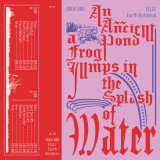
BRUK welcomes the daring shapes and inquisitive textures of ELLLL for her debut album, Earth Rotation. Across 13 scuffed cuts and grubby miniatures the Irish producer shapes out a distinctive sound world, steeped in sample science and powered by low-slung grooves. There's no direct message permeating Earth Rotation, but burning issues around embattled ecosystems hang in the air as ELLLL pushes her sound palette until it bites. Extended instrumental techniques lend the album an in-the-room tangibility, while dislocated micro-loops speak to less grounded atmospheres. Starting from densely packed collages and diligently chipping away until spacious, head-knocking arrangements remain, the end results of ELLLL's process call to mind the wayward sample acrobatics that made trip-hop and jungle so emotionally resonant and eerily alien in the same beat. There's rarely anything like conventional boom-bap or a cosily familiar break, but ELLLL finds compelling rhythms in unlikely sources of funk, whether plucked, bowed, sequenced or sculpted. Even when teetering towards techno on 'Titan', her particular approach is gloriously skewed and, by extension, innovative. No matter how serious the techniques involved, Earth Rotation is a celebration of the magic that happens when sound gets mistreated. If there are foreboding ideas lingering in the album's tendency towards dissonance, ELLLL also knows how to inject her work with a necessary mischief, making her a perfect fit amongst the maverick BRUK alumni.
Cerca:knock knock
Coloured[25,17 €]
Ben Lukas Boysen’s new album, Alta Ripa, signifies a seismic shift in his artistic journey. It revisits the foundational impulses of his youth, shaped amidst the serene beauty of rural Germany—a bucolic backdrop where his creative palette flourished. However, it was his move to Berlin in the early 2000s that electrified his sound, infusing it with the city’s pulsating energy and diverse cultural influences. Alta Ripa captures this transformative experience, blending the introspective melodies of his rural beginnings with the bold, experimental tones born from Berlin’s vibrant electronic music scene. This album is a testament to Boysen’s evolution, showcasing how geographical shifts can profoundly shape artistic expression.
Boysen’s fourth studio album under his own name, Alta Ripa is a nod to his beginnings as much as a hint to his future, and as a work, it’s almost contradictory in its boldness and humility. He invites the listener on a journey of self-discovery; both for himself and for them, describing the music as “something the 15-year-old in me would have liked to hear but only the grown-up version of myself can write.”
His last two albums involved working closely with other musicians, including cellist Anne Müller, flugelhorn player Steffen Zimmer, and drummer Achim Färber. However, inspired in part by a recent return to live performance, Alta Ripa sees Boysen circling back to his passion for pure computer music.
For Boysen, the return to his youthful musical language marks a major turning point in his career. It represents a departure from his roots in classical music – his mother was an opera singer and his father an actor with an appreciation for Wagner, Arvo Pärt, Keith Jarrett, and Stockhausen. Although these are still important influences, Alta Ripa encapsulates a new, exploratory interplay between Boysen’s careful craft and his ability to let go of some of the process.
The album’s title comes from the original Roman name of the town that Boysen grew up in, Altrip, where he lived until his early twenties. This formative period is central to the ideas behind this album, from Boysen’s parental ‘schooling’ in classical music through to his sonic journeys through drum and bass, Aphex Twin, and Autechre — all of which changed his idea of what music could be. The extreme energy of tracks like ‘Acperience 1’ by Hardfloor, ‘Tracks & Fragment’ by Cari Lekebusch, ‘Focus2 Implan’ by Jiri.Ceiver, and ‘Low On Ice’ by Alec Empire are also pivotal influences.
For Boysen, this time of his musical development also involved knocking down the pillars that he previously thought had carried his world. A key moment for Boysen was being given a precious (pre-internet) club cassette at school that featured artists like Source Direct, Photek and Goldie. Excited by this new discovery, he introduced his father to the song ‘Dred Bass’ by Dead Dred. After the song finished, Boysen Sr. turned off the tape and proclaimed it was “the end of all music”. This heated exchange sparked a new, and more mature dialogue between the two that involved them sharing and discussing music on a regular basis.
Boysen’s classical and jazz music upbringing might not be easily noticeable from the electronic palette that he uses. But it can be found in its bones; the structure of the tracks and their dynamic shifts. On Alta Ripa, he intentionally embraces a spirit of controlled chaos, churning out sonic ideas to see what sticks.
One of Brian Eno’s Oblique Strategy cards contains the phrase “gardening, not architecture”, and the trajectory of Boysen’s creative path reflects this metaphor. In much of his previous work he followed a sort of Brutalist architect’s approach; here, he was fully responsible for the tracks’ austere structures and planned them with deliberate care. But by sacrificing some of that control on Alta Ripa, he sets the right conditions for a dark and unpredictable, organic growth. It’s a push forward into a new world.
- Opening Drive
- Walking To The Grave
- Attacked
- Flight From The Cemetery
- Refuge
- Trophy Room
- The Clothesline
- Dead Connection / Corpse On The Stairs / Ben Arrives
- Panic
- Blood From The Landing
- Smashing The Headlight
- Tire Iron Attack
- Don't Look At It!
- Back Porch Bonfire
- Searching The House
- The Music Box
- Boarding Up The House
- Knocked Out
- Fireplace And Torch
- Lounge Chair Bonfire
- The Cellar Door
- Finding The Rifle
- Ben Comforts Barbra
- Cleaning Upstairs
- Grasping Hands
- Ghouls Approach The House
- Down To The Cellar
- Up From The Cellar
- Escape Plan
- Tom And Judy
- Unboarding
- Molotov Cocktails
- Escape From The House
- Truck Escape
- Truck On Fire
- Feeding Frenzy
- Lights Out
- Final Siege
- Breakthrough
- Helen's Death
- Ghouls Overrun
- Cellar Nightmare
- The Posse
- Bonfire
- End Credits
- Bonus Night Of The Living Dead 1968 Radio Spot
- New Arrivals
- Attack At The Window
B&W[48,95 €]
"Waxwork Records is honored to present the release of the Original Motion Picture Soundtrack to George A. Romero’s horror classic, NIGHT OF THE LIVING DEAD. Written, filmed, and released in 1968 by a rag tag group of Pittsburgh based misfits, NIGHT OF THE LIVING DEAD is an American independent horror film that follows the story of seven people trapped in a rural farmhouse that is besieged by a large and growing group of living dead ghouls. The film is regarded as a cult classic by critics, film scholars, and fans and has garnered critical acclaim. The film has been selected by the Library Of Congress for preservation in the National Film Registry and is deemed “culturally, historically, and aesthetically significant”.
Filmed and released on a shoestring budget, NIGHT OF THE LIVING DEAD became a smashing success earning over 250 times its budget. The film is a first of its kind and ushered in a new way of writing, directing, and filming horror films. The overused script of romantic, fantastical tales of otherworldly monsters and creatures was completely flipped and tossed aside by visionary George A. Romero. As the film’s writer and director, Romero created a new, obvious threat, and one that is universally recognizable - Our very own neighbors. Due to an unseen force beyond man’s control, the recently deceased arise from the dead in seek of living human victims. These ghouls kill and feast upon the flesh of their victims, and the only way of stopping them is by destroying their brains.
From 2015 to 2018, Waxwork Records worked closely with the remaining members of the independent production company that made NIGHT OF THE LIVING DEAD, Image Ten, to produce a definitive soundtrack album featuring all music from the film. Much of the film’s music was thought to be lost or destroyed but was located in its entirety and faithfully restored and re-mastered for vinyl. This special release of NIGHT OF THE LIVING DEAD features the complete soundtrack, double LP “Black & White Hand Poured” colored vinyl, all new artwork by Robert Sammelin, a booklet featuring never before seen production photos, liner notes by Daniel Kraus (co-author of THE SHAPE OF WATER with Guillermo Del Toro), liner notes by Night Of The Living Dead’s dialogue recorder and sound engineer, Gary Streiner, and deluxe packaging."
Black[23,49 €]
Ben Lukas Boysen’s new album, Alta Ripa, signifies a seismic shift in his artistic journey. It revisits the foundational impulses of his youth, shaped amidst the serene beauty of rural Germany—a bucolic backdrop where his creative palette flourished. However, it was his move to Berlin in the early 2000s that electrified his sound, infusing it with the city’s pulsating energy and diverse cultural influences. Alta Ripa captures this transformative experience, blending the introspective melodies of his rural beginnings with the bold, experimental tones born from Berlin’s vibrant electronic music scene. This album is a testament to Boysen’s evolution, showcasing how geographical shifts can profoundly shape artistic expression.
Boysen’s fourth studio album under his own name, Alta Ripa is a nod to his beginnings as much as a hint to his future, and as a work, it’s almost contradictory in its boldness and humility. He invites the listener on a journey of self-discovery; both for himself and for them, describing the music as “something the 15-year-old in me would have liked to hear but only the grown-up version of myself can write.”
His last two albums involved working closely with other musicians, including cellist Anne Müller, flugelhorn player Steffen Zimmer, and drummer Achim Färber. However, inspired in part by a recent return to live performance, Alta Ripa sees Boysen circling back to his passion for pure computer music.
For Boysen, the return to his youthful musical language marks a major turning point in his career. It represents a departure from his roots in classical music – his mother was an opera singer and his father an actor with an appreciation for Wagner, Arvo Pärt, Keith Jarrett, and Stockhausen. Although these are still important influences, Alta Ripa encapsulates a new, exploratory interplay between Boysen’s careful craft and his ability to let go of some of the process.
The album’s title comes from the original Roman name of the town that Boysen grew up in, Altrip, where he lived until his early twenties. This formative period is central to the ideas behind this album, from Boysen’s parental ‘schooling’ in classical music through to his sonic journeys through drum and bass, Aphex Twin, and Autechre — all of which changed his idea of what music could be. The extreme energy of tracks like ‘Acperience 1’ by Hardfloor, ‘Tracks & Fragment’ by Cari Lekebusch, ‘Focus2 Implan’ by Jiri.Ceiver, and ‘Low On Ice’ by Alec Empire are also pivotal influences.
For Boysen, this time of his musical development also involved knocking down the pillars that he previously thought had carried his world. A key moment for Boysen was being given a precious (pre-internet) club cassette at school that featured artists like Source Direct, Photek and Goldie. Excited by this new discovery, he introduced his father to the song ‘Dred Bass’ by Dead Dred. After the song finished, Boysen Sr. turned off the tape and proclaimed it was “the end of all music”. This heated exchange sparked a new, and more mature dialogue between the two that involved them sharing and discussing music on a regular basis.
Boysen’s classical and jazz music upbringing might not be easily noticeable from the electronic palette that he uses. But it can be found in its bones; the structure of the tracks and their dynamic shifts. On Alta Ripa, he intentionally embraces a spirit of controlled chaos, churning out sonic ideas to see what sticks.
One of Brian Eno’s Oblique Strategy cards contains the phrase “gardening, not architecture”, and the trajectory of Boysen’s creative path reflects this metaphor. In much of his previous work he followed a sort of Brutalist architect’s approach; here, he was fully responsible for the tracks’ austere structures and planned them with deliberate care. But by sacrificing some of that control on Alta Ripa, he sets the right conditions for a dark and unpredictable, organic growth. It’s a push forward into a new world.
The last couple of years have seen a renaissance for West Coast singer-songwriters. LA-based youngsters such as Drugdealer and Sylvie have attracted considerable attention releasing warm and mellow records tonally reminiscent of the early 70s. Most fans of this new/old sound are unaware of Bart Davenport's early explorations in the same sonic territory. His now 20-year-old "Game Preserve"album should gain an appreciative new audience with its first ever vinyl release.
In the year 2000, Bay Area troubadour Bart Davenport and several other musicians were recruited by a major tech corporation in Seattle to work on an algorithm-based music matching/search engine. It was what looked like the beginning of a promising career. After a year, however, the project was shelved. Bart and his colleagues were laid off with a healthy severance package... on the 12th of September, 2001. Not only had the musician's life changed, so had the world. Rather than blow the money on a holiday or new car, Bart knew he had to make a record. A proper album that meant something.
Back in Oakland, he entered Wally Sound Studios with former Kinetics bandmate Jon Erickson at the controls, and a swathe of talented local musicians. "With Game Preserve," Bart explains, "Jon and I really wanted to knock it out of the park. I wanted to utilize people from my old bands like Loved Ones drummer John Kent. I also invited my newer indie-pop friends from Call & Response, and a young Nedelle Torrisi. Harmony singing by The Moore Brothers was an essential ingredient on Game Preserve as well."
Both Erickson and Davenport fondly recall growing up in households where the music of The Carpenters, Joni Mitchell and The Eagles soundtracked their young lives. By the early 00s they were ready to reconnect with what is often referred to as the "Laurel Canyon" sound. "I'd buy used tapes at garage sales and play them in the car. "Ladies Of The Canyon" by Joni and Jackson Browne's first album were both in heavy rotation. Jon Erickson was getting deeper into the Steely-Mac-Doobie yacht-rock sound in earnest. A certain amount of childhood nostalgia led a lot of us back to that part of the 70s. I'd flirted with classic soft-rock on my first album, but that record was pretty scattered esthetically. I wanted my next one to be more focused. Jon and I made some ground rules: no electric guitars (except on 'Bar-Code Trees'). No synths. Most importantly, all the songs have an air-tight, super dead, close mic'd drum sound. Putting these sorts of limitations on the sessions will give your record a specific quality. In the case of "Game Preserve"it's mostly about tight drums, acoustic instruments and analog production. We used a 24-track, two-inch tape machine for tracking, then ran the mixes through an analog board straight to a 1/4 inch master tape."
While the album's sonic palette may be firmly planted in 1970, Davenport's songwriting covers a sizable landscape of moods and reflections. From the quasi-flamenco intro of 'Sweetest Game' to the somber Wurlitzer of 'Nowhere Left To Go', to the 12-string shimmer of 'Intertwine', "Game Preserve" tells a story of young love, lost innocence and redemption, crossing borders and oceans along the way.
Released in 2003 on family-run Oakland label Antenna Farm, the ultra-analog sounding "Game Preserve" was only made available on digital formats, including CD. Copies were later pressed by labels in Germany and Spain; the latter being one country the album actually did well in, establishing Bart Davenport with a small but loyal fanbase he still enjoys today. Two European tours as support for Kings of Convenience also helped gain a foothold on the continent. Back in the US, however, Davenport and his sophomore album remained quite obscure.
Limited promotion meant it did little, but for the music lovers that heard it, the album undoubtedly remains a classic of the era, deserving far more. Twenty years on, it now finally receives its vinyl debut. "I personally think it holds up well," says Bart of the album two decades later. "The idea was to make something that could be an homage to late 60s/early 70s West Coast pop but hopefully timeless as well. Years on, I hear it as just that. It was a colorful and brief period of my life that felt at times like it could last forever. I discovered the joy of working in a proper studio with a perfect cast of characters. I'm still very close with all these people and still play music with many of them."
- Conversation Heart
- Stolen Moments
- Knock At My Door
- Falling Over Evening
- Awaiting Elemental Meltdown
- Confusing Possibilities
- Night Behind The Stars
- Everything Wrong Is Right Again
Clear Vinyl. Like the soundtrack to a heartbreaking film that never existed, the songs on Casually Smashed To Pieces are simultaneously beautiful and completely unpredictable. "Knock At My Door" features gorgeous, interwoven melodic playing, layered arrangements and a twangy undercurrent; "Confusing Possibilities" is full of the band's characteristic dueling guitar lines, shifting dynamics, and sub-bass tones that help transport the band's music into uncharted territory; while "Stolen Moments" showcases singing horns and crescendos so gradual you'll wonder how you got from point A to point B. Let's be honest though, instead of mapping out each track for you, you're probably best off listening to it yourself... Like all great music, there's an undeniable amount of mystery in what the Six Parts Seven accomplish that can't be conveyed via adjective or analogy.
BRAND NEW STUDIO ALBUM FOR AN ITALIAN PROG-ROCK LEGENDS!
The comeback of the Milanese band Alphataurus can only have the status of a big event among fans of Italian progressive rock, thanks mainly to the indelible mark left several decades ago with their 1973 eponymous masterpiece. After ten years of absence, filled with a long series of live appearances, Alphataurus once again knocks on the doors of prog-rockers with a brand new album, whose long recording process unfortunately ended with the departure of founder guitarist Guido Wassermann.
“2084: Viaggio nel Nulla” (2084: Journey into Nowhere) is a 100% Alphataurus record, starting from its beautiful and futuristic three-panel cover illustrated by the band’s new drummer, recalling the paintings of the magnificent debut album.
- Once Upon A Time
- Come To Me
- Premonition
- Herr Knock
- Ellen's Dream
- Incantation
- Goodbye
- The Inn / Moroi
- Shrine
- A Carriage Awaits
- Come By The Fire
- Destiny
- The Castle
- Covenant
- The Crypt
- Lost
- Hysterical Spell
- Devourance
- The Monastery
- Solomonar
- Increase Thy Thunders
- The Professor
- Dreams Grow Darker
- Possession
- An Arrival
- A Return
- Grünewald
- Despair In My Coming
- A Curious Mark
- Orlok's Shadow
- The Vampyr
- The First Night
- Death, All Around Us
- I Know Him
- The Second Night
- These Nightmares Exist
- A Priestess Of Isis
- Last Goodbye
- Never Sleep Again
- The Third Night
- The Prince Of Rats
- Daybreak
- Liliacs
Oxblood Vinyl[30,04 €]
Robin Carolan's latest soundtrack for Robert Eggers' highly anticipated Nosferatu is a haunting, gothic-infused and meticulously crafted work that draws from a vast palette of sounds, instruments, and inspirations. Following their successful collaboration on The Northman, Carolan reunites with Eggers to bring the legendary tale of Nosferatu to life, infusing the film with a score that is as complex and nuanced as the story itself. With Daniel Pioro, one of Britain's most exciting young classical musicians, at the helm as the orchestra leader and first chair for a vast majority of the recording, the soundtrack features a vast orchestration, including 60 string players, a full choir, various horns and woodwinds, a harpist, and two percussionists. Despite the grandeur of the orchestration, one of the most challenging pieces was the music box used at the film's beginning. Carolan and Eggers struggled to perfect its sound, a process marked by their meticulous attention to detail, which Carolan describes as almost telepathic. Set in the 1800s, Nosferatu allowed Carolan to incorporate contemporary instrumentation, though he made a deliberate effort to ensure the score didn't sound overly modern. Letty Stott, who also worked on The Northman, contributed ancient horns and pipes, enhancing the soundtrack's eerie atmosphere. Additionally, percussionist Paul Clarvis custom-built a toaca-like instrument for added authenticity. Carolan's inspirations for the soundtrack were as eclectic as they were profound. He frequently drew upon the works of Bartok and Coil, while films like The Innocents, Angels and Insects, and Eyes Wide Shut provided cinematic inspiration. Additionally, he explored the more obscure side of Hammer Horror soundtracks and found a deep connection to the music of the Ukrainian film The Eve of Ivan Kupalo, which helped shape the score's otherworldly tone. Carolan intentionally moved beyond the typical horror score, focusing on capturing the tale's melancholy and tragic elements while weaving in a sense of warped romanticism. The result is a soundtrack that not only complements the film but also stands on its own as a testament to Carolan's artistry and the enduring power of collaboration.
- A1: Once Upon A Time
- A2: Come To Me
- A3: Premonition
- A4: Herr Knock
- A5: Ellen's Dream
- A6: Incantation
- A7: Goodbye
- A8: The Inn/Moroi
- A9: Shrine
- A10: A Carriage Awaits
- A11: Come By The Fire
- A12: Destiny
- A13: The Castle
- B1: Covenant
- B2: The Crypt
- B3: Lost
- B4: Hysterical Spell
- B5: Devourance
- B6: The Monastery
- B7: Solomonar
- B8: Increase Thy Thunders
- B9: The Professor
- B10: Dreams Grow Darker
- C1: Possession
- C2: An Arrival
- C3: A Return
- C4: Grunewald
- C5: Despair In My Coming
- C6: A Curious Mark
- C7: Orlok's Shadow
- C8: The Vampyr
- C9: The First Night
- C10: Death, All Around Us
- C11: I Know Him
- D1: The Second Night
- D2: These Nightmares Exist
- D3: A Priestess Of Isis
- D4: Last Goodbye
- D5: Never Sleep Again
- D6: The Third Night
- D7: The Prince Of Rats
- D8: Daybreak
- D9: Liliacs
Black Vinyl[28,78 €]
Robin Carolan's latest soundtrack for Robert Eggers' highly anticipated Nosferatu is a haunting, gothic-infused and meticulously crafted work that draws from a vast palette of sounds, instruments, and inspirations. Following their successful collaboration on The Northman, Carolan reunites with Eggers to bring the legendary tale of Nosferatu to life, infusing the film with a score that is as complex and nuanced as the story itself. With Daniel Pioro, one of Britain's most exciting young classical musicians, at the helm as the orchestra leader and first chair for a vast majority of the recording, the soundtrack features a vast orchestration, including 60 string players, a full choir, various horns and woodwinds, a harpist, and two percussionists. Despite the grandeur of the orchestration, one of the most challenging pieces was the music box used at the film's beginning. Carolan and Eggers struggled to perfect its sound, a process marked by their meticulous attention to detail, which Carolan describes as almost telepathic. Set in the 1800s, Nosferatu allowed Carolan to incorporate contemporary instrumentation, though he made a deliberate effort to ensure the score didn't sound overly modern. Letty Stott, who also worked on The Northman, contributed ancient horns and pipes, enhancing the soundtrack's eerie atmosphere. Additionally, percussionist Paul Clarvis custom-built a toaca-like instrument for added authenticity. Carolan's inspirations for the soundtrack were as eclectic as they were profound. He frequently drew upon the works of Bartok and Coil, while films like The Innocents, Angels and Insects, and Eyes Wide Shut provided cinematic inspiration. Additionally, he explored the more obscure side of Hammer Horror soundtracks and found a deep connection to the music of the Ukrainian film The Eve of Ivan Kupalo, which helped shape the score's otherworldly tone. Carolan intentionally moved beyond the typical horror score, focusing on capturing the tale's melancholy and tragic elements while weaving in a sense of warped romanticism. The result is a soundtrack that not only complements the film but also stands on its own as a testament to Carolan's artistry and the enduring power of collaboration.
- Knockin' On Your Screen Door
- I Have Met My Love Today
- Egg & Daughter Night, Lincoln Nebraska, 1967 (Crazy Bone)
- Summer's End
- Caravan Of Fools
- Lonesome Friends Of Science
- No Ordinary Blue
- Boundless Love
- God Only Knows
- When I Get To Heaven
Green Vinyl[26,68 €]
- Knockin' On Your Screen Door
- I Have Met My Love Today
- Egg & Daughter Night, Lincoln Nebraska, 1967 (Crazy Bone)
- Summer's End
- Caravan Of Fools
- Lonesome Friends Of Science
- No Ordinary Blue
- Boundless Love
- God Only Knows
- When I Get To Heaven
black[26,68 €]
Amp Fiddler was one of Detroit's most prominent musicians of the past 40+ years, widely known as a longtime member of George Clinton’s Parliament Funkadelic touring outfit, a collaborator with luminaries like Prince, Raphael Saadiq and J Dilla, and was a co-writer and performer on classic singles such as Seal’s “Kiss from a Rose” and Maxwell’s “Til The Cops Come Knockin.”
Amp was well known for teaching a young J Dilla to play the Akai MPC drum machine, as well as effectively catapulting him towards a successful career by introducing him to Q-Tip from A Tribe Called Quest in 1994 on the Lollapalooza tour.
Amp Fiddler passed away in December 2023, shocking the music world and receiving published obituaries in the New York Times and Los Angeles Times, as well as nationally-televised recognition at the Grammy Awards and BET Awards.
Detroit City Council declared May 16 as Amp Fiddler Day in the city of Detroit, planned as a yearly event, as defined by the Detroit Free Press as "a “collective acknowledgment” by the Detroit community of his impact and legacy."
Will Sessions are a mainstay on the Detroit music scene, having released masterful full-length projects in vastly different styles, from the faithful hip hop recreations of “The Elmatic Instrumentals,” the futuristic jazz of 2022’s “Electromagnetic Reality,” and the deep 70’s funk of 2017’s “Deluxe.”
Dames Brown is a Detroit-based vocal trio who have a forthcoming full-length LP ”As I Am” on dance-music powerhouse Defected Records, as well as a self-titled EP on Sessions Sounds dropping in 2025.
The overlooked 2018 boogie masterpiece from Detroit maestro Amp Fiddler and jazz/funk virtuosos Will Sessions is finally back on vinyl! "The One" transports you to a time when rich arrangements and big-studio production values didn’t mean sacrificing the funk!
Fronted by powerhouse lead vocals from Amp, "The One" features everything you want out of a roller disco classic: analog synths, snappy guitars, air-tight percussion, Fender Rhodes & Clavinet mastery, and plenty of slap bass. Sprinkle in some lush string and horn arrangements, and the cherries on top are supreme background vocals from the unstoppable female trio Dames Brown.
Transcendental poetry meets Southern Nightmare Jazz on the third album by Alabama-based artist Johnny Coley Mister Sweet Whisper is the meeting of poet & artist Johnny Coley and the band Worst Spills, led by guitarist & arranger Joel Nelson. (Imagine "King Tubbys Meets Rockers Uptown," but more like "William Burroughs Meets Lounge Lizards in Ghost Swamp"). Joined by vibraphone player and recordist of the group, Jasper Lee, Mister Sweet Whisper centers Coley as a gifted writer and unique elder voice, supported by an eclectic cast of friends & collaborators. Tapping into French surrealism and transgressive American poets such as John Ashbery, the songs in Mister Sweet Whisper evolve, cinema-like, with Coley as an uninhibited, almost mystical, narrator. Textural, jazz-like playing complements Coley's decadent landscapes, which glide by like cigarette-inspired invocations. Echoing, and at times, dissonant notes of saxophone, crystalline tones of vibraphone, and jagged guitar arrangements punctuate Coley's dreamlike visions, populated by ballet dancers, haunting nightclubs, and ghostly car drivers. Wistful and expansive, the songs in Mister Sweet Whisper speak of Coley's talent and natural ability to channel his poetic world into songs. A remarkable follow-up to Coley's first two albums_Antique Sadness, from 2021, and Landscape Man, from 2022_which were praised as "exquisitely haunting, sublime, hilarious" and falling "somewhere between Robert Ashley, David Wojnarowicz, and Intersystems," Mister Sweet Whisper arrives in full form: unpredictable and brilliant. LP comes with a 4-page booklet featuring artwork and writing by Johnny. Pressed in black vinyl.
Brand new reissue of the NIGHTSTALKER legendary debut album Side FX. Nightstalker's debut album, recorded in 1993 and released in 1994, captures the raw, rebellious energy of the era, blending gritty, Motörhead-inspired heaviness with infectious grooves. Emerging from Greece during the height of grunge and alternative music, the band delivers a sound that's unapologetically rough and driven by a heavy, rhythmic pulse. Their music channeled the raw power of '90s rock while Nightstalker carved out their own space with their hypnotic riffs, groovy basslines, and a dark, rebellious spirit. A bold first step, this album sets the tone for Nightstalker's journey.
For centuries, the drum and its practitioners have been stewards to the physical and ancestral planes.
Detroit afroteknologist Huey Mnemonic advances his sound into a tomorrow unheard with his latest Subsonic Ebonics record, Brainscraatch, a 4-tracker of his researched and highly developed Afriko Tekno.
A portal tears open with the speaker splitting ‘Ankhobi’, blurring the lines between ritual and rave. An opening ceremony of a drum circle in the year 3000, knocking on the door of a domain beyond our own.
Entering the gateway with ‘Brainscraatch’ , a peak time percussive calling where a high pitched whine of sacred electronics becomes the foundation for a slippery hypnotic rhythm. Warranting a double take for the heads in the back fully immersed into the moment.
The portal collapses onto the unknown with the dramatic closer ‘Slipping Into Madness’. Rushing you beyond the dance into a flow state where time and space behave a little differently.
Offering his own perspective, Sard shares a jacking ‘Rescratch’ of the title track, leaning into an acidic groove faithful to the timeless freak funk of the midwest.
With this release, Mnemonic forges ahead to the borderlands of techno, leaving us with an ancient-to-the-future message,
- Rent I Pay
- Inside Out
- Rainy Taxi
- Do You
- Knock Knock Knock
- Outlier
- They Want My Soul
- I Just Don't Understand
- Let Me Be Mine
- New York Kiss
- Rent I Pay (Home Demo)
- One More Shot (Home Demo)
- The Way Love Comes (Home Demo)
- Inside Out (Home Demo)
- They Want My Soul (Home Demo)
- Outlier (Band Demo)
- Let Me Be Mine (Night Version Dub)
- Knock Knock Knock (Band Demo)
- Do You (Band Demo)
- New York Kiss (Home Demo)
- Inside Out (Reduction Mix)
Heute, genau 10 Jahre nach dem ursprünglichen Release, veröffentlicht Matador Records ein Re-Issue des populären achten Studioalbums von Spoon, "They Want My Soul". Es ist ab sofort auf allen digitalen Plattformen verfügbar und erscheint am 08. November auch als Doppel-LP und Doppel-CD. Neben den zehn Originaltracks - inklusive der Band-Klassiker "Inside Out", "Do You" und "Rent I Pay" enthält die Deluxe-Version elf Demos und Alternate Versions, die bislang fast alle unveröffentlicht sind. Die Wiederveröffentlichung unterstreicht den herausragenden Platz des Albums in einer beeindruckenden Diskographie und bietet Einblick in eine der prägenden Phasen der Spoon-Geschichte. "They Want My Soul" folgte 2014 auf "Transference", ein von der Band selbst produziertes Album, nach deren Veröffentlichung sich die Band erschöpft fühlte. Als "Transference" herauskam, waren sieben Alben in 14 Jahren erschienen und Spoon hatten sich beständig auf Tour befunden. Der ungewohnte Sound des Albums machte es dem Publikum zudem schwer und obwohl es ihre bis dahin erfolgreichste Platte wurde, blieb es um die Veröffentlichung insgesamt relativ ruhig. Es folgte eine Bandpause. Und 2014 dann schließlich die Rückkehr mit "They Want My Soul", das sie mit Joe Chiccarelli (Strokes, White Stripes) aufnahmen - und mit Dave Fridmann, dem visionären Produzenten von Flaming Lips, MGMT oder Low. Die Arbeit mit Fridmann, der für seine maximalistisch-psychedelische Herangehensweise bekannt ist, scheint erst mal keine allzu offensichtliche Wahl, erwies sich dann aber schnell als außerordentlich fruchtbar. Nicht zuletzt entstand so "Inside Out, der heute meistgestreamte Song der Band überhaupt. Aus klanglicher Sicht ist "They Want My Soul", das vielleicht das strahlendste Album, das Spoon je gemacht haben. Umso interessanter ist es, nun ergänzend die Demos hören zu können, die zu diesem Album führten und die in dieser Deluxe-Edition enthalten sind.
Rian Treanor keeps knocking new doors of possibility with his new label Electronic Music Club and its initial focus on Rotherham Sight & Sound, participants of a community-based initiative in their shared post-industrial home town Rotherham. Utilising software synths designed by Rian and his dad Mark Fell, the trio twist out vortices of shearing, asymmetric anarchitecture, rudely resembling the sort of hyper-contemporary styles alluded to in Rian’s solo works, but inflected with cranky timing and an intuitive freedom that bears extraordinary results, especially when considering the fact the trio had no prior musical ability, and only encountered electronic music a few years ago.
After a couple of years of practice and performance, ‘Action Potential’ now firms up their quicksilver sound for club and home buzzes with seven actions that warp and morph from the needling jolts and hoof of ‘Pass The Go’, to shuddering detonations in ‘Dial’, each with a properly electrifying force carrying a genuine futureshock. Working within Rian’s systems-based framework, Anne, Kathleen, and Mick deploy a tactile feel for the machines, finely honed over the course of many sessions at the Rotherham Sight & Sound facility, that uses their visual impairments to synaesthetic advantage.
Between the wickedly metallic ragga swivel of ‘Hold’, the diffractive chain reactions of ‘When It Ends’, and more tempered, sloshing sensuality of ‘30 Seconds’, the trio follow their noses down wormholes that manifest an ideal of accessibility and expressionism within electronic music contexts that Rian and Mark have long worked towards, with Anne, Kathleen and Mick’s relative lack of cultural conditioning in this paradigm prompting them to act on pure instinct