Written during and after a year touring the world, Sweet American Boy
expands the raw honesty that built honestav's audience while pushing his
sound into bigger, rock-driven territory - heard on Can't Let Go, Storm In
This House, and Crash First.
Across 16 tracks he wrestles with family history, addiction, grief, love, and
the complicated reality of chasing - and catching - the dreams he once
chased. It’s honestav at his most vulnerable, self-aware, and ambitious: an
evolution of his signature storyteling that feels larger, louder, and more
unfiltered than ever before.
• MGK co-sign Multiple dates on MGK's Lost Americana Tour; Crash
First (with mgk) on the LP
• Deeply engaged fanbase: 1.8M TikTok • 1.2M Spotify monthly
listeners
• A bigger, bolder chapter: Rock-driven evolution of his sound, with a
headline tour on the way
God of War is Douglas Dulgarian (They Are Gutting A Body Of Water), Scott Turner (hooky) and Sam Silbert (hooky, circle of fire).
It's 2007. You’re watching your older cousin play SSX tricky. How is he such a monster at this game. Dude for real what the fuck. Such style, such finesse. I know he smokes weed. Should I tell Aunt Vicky? No no no- that would ruin this moment. He is racking up points that were formerly unheard of, and with such grace. There’s no expression on his face. And considering that he just sat open mouthed at the dinner table staring into nothing for forty minutes, this revelation is more than remarkable. It seems as if he has always existed in this moment. As if his very essence was plucked from the ether. And perhaps he has. He was made for this moment.
God of War is Douglas Dulgarian (They Are Gutting A Body Of Water), Scott Turner (hooky) and Sam Silbert (hooky, circle of fire).
It's 2007. You’re watching your older cousin play SSX tricky. How is he such a monster at this game. Dude for real what the fuck. Such style, such finesse. I know he smokes weed. Should I tell Aunt Vicky? No no no- that would ruin this moment. He is racking up points that were formerly unheard of, and with such grace. There’s no expression on his face. And considering that he just sat open mouthed at the dinner table staring into nothing for forty minutes, this revelation is more than remarkable. It seems as if he has always existed in this moment. As if his very essence was plucked from the ether. And perhaps he has. He was made for this moment.
WHIMM formed around the shadowy heart of the Toronto post-punk underground over a decade ago. The partnership between Mounir Al Shami and Andrew Matthews has emitted sporadic musical shards over time, while slowly evolving into something so much bigger than its beginnings. Ideas seep out of every corner of No Promotion, showcasing a burning desire to explore and challenge while delivering very direct sonic offerings. The result is an album that feels as if you took the entire Coil discography and smashed it into pieces, assembling these precious songs from the fragments. Or as if Vangelis beckoned Section 25 to the studio in hopes of recording the score to a seedy film. The resulting LP is in a state of flux – equal parts motion and decay.
Patrick Flegel, of Cindy Lee, welcomed Al Shami and Matthews into REALISTIK Studios in Montreal to engineer half of the tracks for the album, including lending guitar to the opening track "Five in Decline." That influence is evident early on, as the first three songs are taken from those sessions. "Five in Decline" throbs and barks before racing through the hallways closing in around it. "Another Labour" slows to a spidery waltz as anxious melodies call out to one another. "Returnal" pulses, floats through the night sky and haunts you forever. "Rye" carves a percussive pathway toward similar travellers like Terry Riley and Jon Hassell, before the lament of "A Death Remembered" forms the perfect midpoint for the record. A slow build countered by twitching drums and blanketed by organs recorded at Metropolitan United Church in Toronto, it feels like emotion right on the edge of resolve.
"Rhymes of December" screeches through on a solitary train under the towering cityscape as the flickering lights blur past, its doors opening to the candlelit altar of "After the Last Sky" (those beautiful organs again) with an operatic swirl. "K'20" throws you into a claustrophobic and chaotic cab ride (Who is talking? Are those sirens?) until you finally find the quiet of the early morning, waiting at the window for the sun to join you once again as the first notes of "No Promotion" are delicately plucked. The final song from the Flegel sessions, it is over eight minutes of contemplative beauty. A restless heart that is ready to rest. Closing with a final apparition in the key of The Caretaker, "After the Last Sky (Reprise)" is a return to melody when words lose all meaning.
Al Shami and Matthews weave their lyrics throughout, words describing a search for lucidity, and of reactions and reflections. Al Shami – speaking from the Palestinian diaspora – ruminates on displacement, both personal and collective. His journey from having "been without a land and I can still see clearly" in "Rhymes of December" to a more defiant "we will be back again, no matter how it ends or where we've been" in "Returnal" takes a very insular turn on No Promotion. That sense of alienation pulls at the very center of a relationship when land and circumstances separate: "And after our last breath, all that's left in me is our flesh and fears, your last words would swim for years, you'll never find a home in me." Hearts on the outskirts that know the direction.
Alveromancy is a method of divination performed by attending to and interpreting certain sounds, so that the loudness of sound is taken to indicate the severity of predicted event and from its proximity how soon the event will come to pass.
The label’s first divination session is made up of 4 selected cuts originally composed between 1994 and 1996 coming from Fred Exelby’s archives, bringing his All Broken solo project back to a renewed life more than 30 years after his last release.
Rooting its core into Canada’s 90s DIY electronic scene and drawing inspiration from themes such as anti-pop culture, shared knowledge, music programming and his formative frequentation of the seminal Rivoli in Toronto, this record might also be seen as a picture in time, a reflection of Fred’s world back then.
MALEDICTUS is a Portuguese metal band formed in Lisbon. Bringing together experienced musicians with a shared vision, the band creates dark, powerful and atmospheric heavy music. With a foundation of aggressive riffs, haunting melodies and emotional vocals, the band blends modern heavy metal with darker, more melodic influences.
The group was formed by musicians seeking to explore a heavier and more expressive sound, combining technical musicianship with compelling songwriting and a cinematic atmosphere. Their music strikes a balance between intensity and melody, moving between crushing guitar passages, dynamic rhythms, and dramatic vocal performances. ""Our music reflects who we are and how we process life and our own emotions. Music is life manifested through an artist's soul. We all process life with a sense of dark melancholy”, comments guitarist Ben Stockwell. As history has taught us, Portuguese metal bands are known for their melancholic sound, which reflects their cultural identity.
Since their formation, MALEDICTUS has been focused on creating music that reflects the darker and more emotional aspects of the metal genre. Drawing inspiration from classic and contemporary metal acts, the band aims to create a sound that feels familiar yet distinct, appealing to fans of powerful, atmospheric metal.
Boasting a line-up of seasoned performers and a clear artistic vision, MALEDICTUS is developing new material and establishing its presence in the Portuguese metal scene and beyond. Their debut album, „Lazarvs“, is set to be released on Friday 13th of November. The album title draws heavily on the biblical story of Lazarus in the Gospel of John, in which Jesus performs the great miracle of raising his deceased friend Lazarus from the dead after he had been in the tomb for four days.
With Rez on vocals, the band has an exceptional singer with a distinctive, powerful voice. „He is undoubtedly one of the best out there having power, soul, range and timbre. Everything fits perfectly with our sound. We couldn't have asked for a better voice or frontman"", says the guitarist. Rez’s lyrics are another perfect addition to the band's dark, epic and partly progressive sound. The lyrical themes focus on life's darkest moments. „Death brings an opportunity for renewal, as do our most difficult struggles, which require part of us to die in order to be overcome.
SELN Recordings is proud to present Sillons, the debut release from French musician Pierre François.
Straight from Nantes with love and sadness; Sillons is the soundtrack to being shut inside and sheltered from all the dread beyond your bedroom door. What may at first appear as a collection of abstract loops unravels into something much greater throughout its entirety.
Underneath a thick atmosphere of tape hiss and crackle, minimal synth explorations emerge and float away while the occasional guitar-esq riff ebbs in and out of the foreground like waves at the shore. Percussive refrains come through with perfect timing, their occasional rudimentary timbre all in the spirit of ‘do it yourself magique’.
Picture the following: it’s been decades and you’ve forgotten how to communicate with the world outside, all you have left are message-songs which leave behind a story of what it was like to be separated from everything you’d ever known during an existential sabbatical. This is very near to the audio experience that Sillons gives and thus makes it so real. On this merit alone François deserves his flowers.
Even the shortest of songs manage to conjure up visceral imagery. For example ‘Abouile’, with an impressive runtime of 51 seconds, dives straight into the eeriest corners of a Cold-War era ‘Numbers Broadcast’ being sent out from malfunctioning military personnel venturing off into the depths of their consciousness.
All in all there is something distinctly ambitious and positive within Francois’ work. It takes you to a place where little else matters except the mood and feeling the music provides, a hopeful and emotive landscape.
It's hard to pin down the age of chest's music, as it seems to be in a state of constantflux - a fusion of spontaneous energy and timeless electricity. The band didn't choose this name by chance: for years, its members have been breathing music through every pore of their bodies; they bonded amidst the darkness and vibrations of Supersonic, the heart of the independent music scene in Paris, where they met and have all worked. Even before releasing a single record,chest. were spotted by NME,which ranked them among the 100 to follow last year in 2025. A debut EP in February 2025, All Good Things End (Howlin Banana), further boosted the band's credibility and international popularity at breakneck speed. chest. opened for DITZ, Jehnny Beth, Heavy Lungs and KNIVES, who welcomed them with open arms onto a bustling Anglo-Saxon music scene. They're spotted at La Maroquinerie, Rock en Seine, ESNS and across the UK. chest. come of age without ever going through adolescence. In autumn 2025, chest. began recording their debut album at La Frette studio, known for having hosted sessions by Nick Cave and the Arctic Monkeys. The band, with a line-up featuring three sound engineers, self-produced the album there and opened themselves up to new inspirations without, however, straying from the powerful and melodic noise rock of their early days. Their sound becomes even more complex and personalised, revealing perfectly assimilated influences from industrial, techno and shoegaze. chest. embodies the future figurehead of a French rock scene that is no longer afraid of anything. A band capable of bringing people together without compromising their artistic standards.
Sometimes things go quickly. After meeting Canadian artist Pascale Project early this year (twice in one month) on the same dancefloor of a crusty underground club in Neukolln, we sent this Berlin-based DJ and producer a short appreciation email to show curiosity and interest in her unreleased music. Our hope was to listen to it and maybe just maybe start a record-release project. Pascale sent back quickly, and she shared some fantastic club music with us. We had separate listens to the full playlist, and, funnily/coincidentally, we chose the same 4 tracks as highlights from the big playlist. One week later, Pascale emailed us back, mentioning the tracks she would feel/see/love to be released on the label, and they were the exact same ones we had naturally and unanimously chosen. Stars aligned for sure. Having long been active in the Montreal music scene, Pascale absorbed the essence of all her different experiences and years of training and creating, and then let it all start Sparkling into the 22nd Basic Moves release entitled "Watch EP". The record is based on the concept of losing and breaking things up, and eventually finding it all back. Reflecting hope in between the fog of life. It is clever modern underground club music rooted in the textures and energies of the golden days of progressive house, breakbeats and (real!) tech-house. These 4 tracks reflect an artist who expresses herself honestly, fully understands how to creatively arrange and produce club music, and never loses sight of the dancefloor, as she is often found on that dancefloor herself. Dive in and let us know what you think of it. We are stoked to play out and vibe on these tunes for real!
Power Ballads and The Wash is the sophomore album from London-based multi instrumentalist James Howard, due for release on 6th November 2026 via boutique
label Faith & Industry. James is known as founder of critically acclaimed 2010’s band Blue House and collaborator with luminaries such as Rozi Plain, Dana Gavanski, Kate Bollinger and Alabaster Deplume.
For Power Ballads and The Wash James has worked with producer Mike Lindsay, co-founder of folktronica group Tunng. Power Ballads and The Wash follows James's debut solo album Peek-A-Boo, released to great acclaim in April 2023.
All eight songs of Power Ballads and The Wash began life as intimate live takes of
guitar or piano and voice, recorded at Howard’s studio in Deptford, south London.
Steeped in the energy of the local environment, each session was preceded by a visit to the Thames to ask for its muddy blessing, with the DLR rumbling by. The sessions at Lindsay’s Margate studio built a widescreen world around Howard’s original performances, from the restless Eventide vocal treatments on Seven Seconds to the Hollywood string samples of The Moon In The Movies and the Moog bass that quietly anchors the record throughout. Howard also praises violinist Magdalena MacClean's (Caroline) contributions.
Beneath this gentle absurdity, though, lies something quietly powerful. Howard’s
song-writing explores the notion that, despite our ever-shortening attention spans,
there is still the possibility of quiet reflection and the discovery therein of revelations hidden in plain sight. The world of these lucid dream-esque reveries is unmistakably London. The record began with a wing-and-a-prayer visit to the Thames, and ends there too: the wash from the Thames Clipper / nearly breaks through your shoe / like some feelings sometimes do.
“Let It Be Known” sits at a pivotal moment in Spice 1’s catalog — bridging the raw street energy of his independent Bay Area beginnings with the darker, more polished sound that would define West Coast gangsta rap in the early ’90s. This release captures the foundation of what made him one of the most respected voices to come out of the Bay Area scene.
Raised between Hayward and Oakland, Spice 1 helped shape the sound and attitude of West Coast rap during a period when the Bay was developing its own identity alongside Los Angeles. His delivery combined cold realism, street storytelling, and paranoia-laced lyricism in a way that influenced an entire generation of rappers across Northern California and beyond. At a time when gangsta rap was becoming national, Spice brought a distinctly Bay Area perspective — darker, more introspective, and rooted in the realities of East Bay street life.
This reissue highlights an important chapter in that evolution, featuring early versions of songs that would later become staples of his catalog. Tracks like “Ghetto Thang,” “187 Proof,” and “In My Neighborhood” reveal how Spice’s sound was already fully formed from the beginning. For collectors and longtime fans, Let It Be Known offers a rare look at the raw blueprint behind one of the defining voices of ’90s West Coast hip-hop.
"The Word II" became known worldwide after Mac DeMarco referenced it in "Chamber of Reflection" and HUNCHO JACK, the unit formed by Travis Scott and Quavo, sampled it in "How U Feel." This reissue on color vinyl presents one of Shigeo Sekito’s representative works, including that track. It is one of the world’s most listened-to Electone works, attracting attention from a wide range of listeners across hip-hop, Balearic, dream pop, and beyond.
Nashville’s Jess Kerber focuses on the profound resonances of simple moments, pairing delicate acoustic guitar lines with her rich and captivating tenor. The World Is Dark, but I Want It to Be Funny, her second LP for Felte, is a deeply affecting collection of homespun poetry and natural artistry that finds the artists reflecting on personal history, the emotional intricacies of relationships, and the value of cosmic perspective. She explains,“These songs come from a space of feeling a little left behind, so a lot of the album is about realizing and accepting impermanence, and learning how to be good to yourself and to others.”
Opening with “Familiar Strangers”, Kerber gets to the heart of her greatest talents: fluid fingerpicking, emotive vocal cadences, feather-light touches of piano, and subtle harmonies. “Louisiana Song” positions a lyrical chain of childhood recollections up against the literal rising waters that will one day submerge a cherished place: “I think about being southern / and the sand on the gulf coast / When I think about returning / I am wading in a graveyard”.
Throughout The World Is Dark, Kerber navigates an emotional tightrope, fully aware of the ills of the world while trying to find connections and peaceful corners. Even with all their nuances and challenges, she suggests, our relationships are essential to staying grounded, even when we lose them. “Much of my writing is about facing the struggles head-on, balancing what you need to do to survive while remaining true to yourself,” she says. There are echoes of influences like Joni Mitchell, Gillian Welch, and Lomelda, though Kerber injects her own unique wit, wonder, and humility into every passage, allowing the listener into her head for a spell while quietly taking up residence in theirs.
In a cultural landscape trending toward mindless diversion, Your Old Droog has defied the odds, building a thriving career through musical depth and captivating songwriting. In pursuit of hip-hop immortality, the Brooklyn artist engages listeners with inventive metaphors, genuine reflections, and sophisticated rhyme architecture. Now, Your Old Droog is back with his tenth full length album, Bread & Butter. Recalling his humble immigrant family stretching caviar across slices of bread shortly after arriving from Ukraine, YOD has crafted a testament to making the best of any situation. This philosophy runs throughout Bread & Butter, as Droog chronicles the turbulence of rap success, ruminates on youthful memories, and dismisses unworthy challengers with clever precision. The project’s rich sonic texture is shaped by beats from Flying Lotus, Conductor Williams, Ohbliv, and more, while hip-hop luminaries Evidence, Oddisee, and Masta Ace make memorable appearances, along with South African star A-Reece and acclaimed singer Georgia Anne Muldrow. Grounded in resilience, perspective, and self-determination, Bread & Butter is an inspired statement from a truly distinct talent. Transforming personal history into universal truth, the album reaffirms Your Old Droog's place among the most thoughtful and compelling voices in modern hip hop.
From deep in the hard funk pocket, the Winston Brothers return to Colemine after four years with a second helping of sounds rooted in horn-heavy, 70s-style soul cinema, taking cues from the soundtrack work of Issac Hayes, Willie Hutch, Roy Ayers, and JJ Johnson. Helmed by multi-instrumentalist/producer Sebastian Nagel and longtime collaborator Lucas Kochbeck on drums, Sweets serves as a timely reminder of how Hamburg, Germany’s music scene helps shape and influence today’s soul sound.
Ultimately, bringing musicians like Kimo Eiserbeck (sax and flute) and Hans Stephan (trumpet), alongside some additional drum contributions by Max Whitefield (née Weissenfeldt), demonstrates the close-knit nature of these musicians. From influential bands like Bacao Rhythm & Steel Band to Angels of Libra and the Mighty Mocambos, Hamburg’s deep groove scene has sired its share of worthy soul and funk acolytes.
These musicians have shared stages and studios over the years, with various
configurations finding their way in the aforementioned bands. “We started as a school project… we were just kids,” Sebastian recalls. “It’s a family thing, and we really know each other well.” Sweets is more than just another addition to this scene’s collective musical canon; it is a vibrant dispatch from funk’s leading edge.
From deep in the hard funk pocket, the Winston Brothers return to Colemine after four years with a second helping of sounds rooted in horn-heavy, 70s-style soul cinema, taking cues from the soundtrack work of Issac Hayes, Willie Hutch, Roy Ayers, and JJ Johnson. Helmed by multi-instrumentalist/producer Sebastian Nagel and longtime collaborator Lucas Kochbeck on drums, Sweets serves as a timely reminder of how Hamburg, Germany’s music scene helps shape and influence today’s soul sound.
Ultimately, bringing musicians like Kimo Eiserbeck (sax and flute) and Hans Stephan (trumpet), alongside some additional drum contributions by Max Whitefield (née Weissenfeldt), demonstrates the close-knit nature of these musicians. From influential bands like Bacao Rhythm & Steel Band to Angels of Libra and the Mighty Mocambos, Hamburg’s deep groove scene has sired its share of worthy soul and funk acolytes.
These musicians have shared stages and studios over the years, with various
configurations finding their way in the aforementioned bands. “We started as a school project… we were just kids,” Sebastian recalls. “It’s a family thing, and we really know each other well.” Sweets is more than just another addition to this scene’s collective musical canon; it is a vibrant dispatch from funk’s leading edge.
,Bread & Butter" ist das zehnte Album des Brooklyn-Rappers Your Old Droog und verbindet persönliche Erinnerungen mit scharfem Storytelling und komplexen Reimen. Inspiriert von seiner ukrainischen Einwandererfamilie, die aus einfachen Mitteln das Beste machte, reflektiert Droog über Herkunft, Erfolg und Durchhaltevermögen. Unterstützt von Produzenten wie Flying Lotus und Conductor Williams sowie Gästen wie Evidence, Oddisee und Masta Ace vereint das Album intelligente Texte mit vielseitigen Hip-Hop-Beats. Das Ergebnis ist ein selbstbewusstes und persönliches Werk, das Your Old Droogs Ruf als eine der interessantesten Stimmen des modernen Hip-Hop unterstreicht.
Berlin-based edit specialist Voodoocuts knows exactly how to tease out the best bits of any of the source tunes he works with. He's been doing it for years now on labels like Juice on Wax and Uluru, and now heads to Ritmo for his latest 7" bomb. 'Riddim Freak' gets this one going with a reggaeton rework of a Missy Elliott classic. It's an inspired pairing that has elastic bass and trampoline-like kicks with rave horns, fat-assed brass band energy and plenty of that original Missy attitude. 'Work This' takes another of the rap queens' most welcome jams and flips and reverses it into an early electro and hip-hop blend with old school drums and many magnificent samples all bringing it to life in full colour.
“These songs were written just before and while in my first stint in rehab at 20 years old. They were recorded about 4 days after I got out. Broke, walking on freshly sober baby giraffe legs, I sold my car and moved back in with my mom to make that recording happen. At a time where I had no direction, the mission of capturing sonically the love that unraveled my heart at that age became my North Star. These songs have sat in the vault for 8 years, and somehow never managed to collect dust. Anytime I’d revisit them, the glow they carried upon conception still shined bright. For years I’ve known there would be a time to let them loose, and that time has finally come. It took nearly a decade of gaining life experience and perspective to truly appreciate the beauty of young love, courage in the face of unknowning at such a formative time in a lifespan, and belief in magic that can break your heart as quickly as it can mend it. I hope these songs can serve as a reminder of the lessons we all learn from early heartbreak and that belief, and even more so, a looking glass at how our hearts are capable of forever expanding to find love that’s true.”
— Briston Maroney
“These songs were written just before and while in my first stint in rehab at 20 years old. They were recorded about 4 days after I got out. Broke, walking on freshly sober baby giraffe legs, I sold my car and moved back in with my mom to make that recording happen. At a time where I had no direction, the mission of capturing sonically the love that unraveled my heart at that age became my North Star. These songs have sat in the vault for 8 years, and somehow never managed to collect dust. Anytime I’d revisit them, the glow they carried upon conception still shined bright. For years I’ve known there would be a time to let them loose, and that time has finally come. It took nearly a decade of gaining life experience and perspective to truly appreciate the beauty of young love, courage in the face of unknowning at such a formative time in a lifespan, and belief in magic that can break your heart as quickly as it can mend it. I hope these songs can serve as a reminder of the lessons we all learn from early heartbreak and that belief, and even more so, a looking glass at how our hearts are capable of forever expanding to find love that’s true.”
— Briston Maroney
Forty years of cassette releases, pressed for the first time on vinyl
First of two instalments exploring the previously unreleased sonic archives of one of Poland’s most enigmatic
living artists - with its first volume focused on his deep listening practice and spiritual reverie (recorded 1990–2013)
The last time Andrzej Dudek-Dürer took a banknote bearing the face of the Polish anarchist Jarosław Dąbrowski from his pocket to trade it for a pair of shoes was in 1969. He bought them for 120zł - the equivalent of 100€ today - and never replaced them since then. Only rebuilt them, year after year, drawing a needle and thread through the leather each time it split, closing one wound before the next one opened. It became a ritual of precision, stitching a record of another year into their soles.
That same year, in Wrocław, he arrived at a conclusion that would recalibrate everything that followed. Convinced he was the reincarnation of Albrecht Dürer, he adopted the surname Dudek-Dürer, stopped cutting his hair and began wearing the same garments every day. It was the first ritual of many, though he wouldn't have called it that yet. Look closely enough, over the decades, and it is always the same gesture, returning in different material: hair growing in a single unbroken strand, a needle drawing thread through leather, sitar strings pulled taut across a neck he built with his own hands and magnetic tape spooling forward inside the cassette boxes stacked against his walls.
None of this began in a vacuum. Dudek-Dürer emerged from the Wrocław neo-avant-garde, in a Polish art world where an exhibition could be cancelled overnight by the stroke of a censor's pen. In 1973, his exhibition Auto-crucifixion was shut down by the state, and for a time he found himself blocked from exhibiting his own art at all - the one force in his life that ever came close to cutting the thread.
He seemed to experience it differently. In 1974, after long, patient research into sitar craftsmanship, he built his first prototype with his brother, a knowledgeable luthier. In 1978, in a smoked-out jazz club, he took his first steps into sound recording with the unreleased album Jazz From Underground with his first band. By 1979, recognition started to travel further than he could.
Turning toward Far-Eastern philosophy, meditation and the idea of reincarnation was another language of freedom for him. It was a way of claiming an inner territory the state could not reach, a border it could not close. Mail Art served a parallel function, reaching further out: in a country that restricted travel and expression, sending and receiving art through the postal system became an act of quiet rebellion.
The body, in his understanding, is only an envelope readied for constant transformation. From this came Metaphysical Telepathy: during the years he could not leave Poland, he treated that confinement as a rehearsal room, sending his mind out ahead on the same thread his body would later follow. Living Sculpture grew from the same root with performances of stillness beside static art objects, until the boundary between the object and the man beside it simply dissolved. Camera Meditation extended the same instinct into photography: a shutter click flattening three dimensions into two so that a single instant could be held forever. Inspired by the pioneers of self-portrait photography like Robert Cornelius, he used it to document time itself, and kept explaining to me: "You know. This is not about vanity. This is about observing time passing.”
The isolation did not end suddenly. It ended the way his own philosophy had already predicted it would, from the inside first. Mail Art quietly solved the problem politics couldn't. Correspondence built during years of confinement slowly worked its way through doors the state itself had kept locked. Contacts made through folded paper and stamps became invitations. Ultimately, invitations became passports.
In 1983 he made his first trip outside Poland, to Germany, in search of the audio technology he couldn’t get his hands on before. In 1985, he was invited by the Indian embassy in Poland to give a sitar concert on an instrument he had spent a decade patiently stringing together - half sitar, half tanpura, built from patience and determination. After the collapse of the People's Republic of Poland, the travels kept unspooling: South Korea, then Mexico, then Australia, Canada, New Zealand, Singapore, Japan and the United States - each stop leaving behind its own small knot of tape, tied off and carried home.
In the decades since, recognition arrived at the same unhurried pace: he conducted workshops at UC Berkeley, served as vice-president for artistic affairs of the Union of Polish Art Photographers and the Union of Polish Visual Artists between 2010 and 2014 and received the Bronze Medal for Merit to Culture - Gloria Artis. His visual work gradually entered collections including the National Museums of Warsaw, the Stedelijk Museum, Tate Modern, MoMA and the Venice Biennale. His musical practice, by contrast, never found that kind of room - left to circulate quietly, sharing his cassette tapes directly, waiting for someone willing to follow it further.
It took months before I could find a way to reach Andrzej Dudek-Dürer - his presence online is very close to nonexistent. Surprisingly, LinkedIn turned out to be the only door still open, a faintly absurd irony given everything else about him. I packed the strict minimum for a three-day trip and an empty notebook and made my way to Wrocław. His headquarters sits in the neighbourhood of Grabyszyn: a two-storey pre-war house that has belonged to his family for generations. The man who opened the door was long-haired, long-bearded, in his trademark leather shoes and patched jeans. We sat in his living room, in front of a computer where decades of recordings sat organised in cryptically named files, surrounded by books and objects that had arrived one layer at a time, leaving room for only two chairs in the middle. His shoes sat by the door, rebuilt so many times they had become their own quiet sculpture. Cassette tapes filled boxes against the walls, almost unlabelled, each one a spool of thread holding decades of sound that had never once been asked for, until now.
I listened for hours: meditating in front of strangers on the porch of a Seoul temple until the tourists stopped taking photos and simply waited with him; a stand-off with border guards at the US–Mexico crossing over an instrument they couldn't identify and didn't trust; a session with the Stockhausen family that he still, decades later, describes like it happened last week. All of it interrupted, occasionally, by the smell of soup boiling and fresh bread warming on the ceramic stove. After two days, it felt like being handed the end of a very long thread and asked, gently, to keep following it. I left with a USB drive holding his full discography, signed with his unmistakable signature.
Astral Meditations From A Living Statue is a length of that thread, drawn out from the boxes stacked against his walls - recordings gathered from different rooms, different countries, different decades. This first record breathes slowly: incense-thick, meditative, built for stillness. A cutting-edge séance in outer space where machines learn how to dream.
It begins with the neo-classical improvisations of Andrzej, space-delayed, recorded at Klub Muzyki i Literatury in Wrocław in 2002. 'When..So' opens the curtains with a deep-rooted meditation accompanied by slow-decaying piano figures illuminated by a candle-lit spirit gathering.
Los Angeles, 1990: a dormant villa, a grand piano, the voice of Bonnie Barnett. 'Exception' is captured in a single room, in a single afternoon - voice and keys circling each other, neither one leading, until the silence between the notes starts to feel like the instrument.
'The Meta...' and 'Tired Of...', recorded at Studio Morandi in Ponte Nossa, Italy, in 1992, settle into a sitar drone built entirely from patience - overtones stacking and beating against each other, strung by a man who never once set foot in India. 'Mastery Of...' follows, recorded the same year at Studio Suski in Łomianki, pushing that same hum further still, until pitch dissolves into a spectral reverie. 'Transcendental Sound', from 2000, closes the first record in a slow bath of celestial frequency - better heard beside the shores of the Odra river.
More than fifty years after deciding that a life could become an artwork, Andrzej Dudek-Dürer continues to inhabit that decision. His shoes keep wearing thin against the earth's crust. His hair keeps growing, one strand at a time. His cassette tapes keep spooling in the dark of their boxes.
Now the thread finds its last shape: a single unbroken groove, spiralling inward from the outer edge to the label at the centre. Never cut - the way nothing else in his life ever was. Drop the needle and it will find that groove and follow it, the same way a needle once followed leather, once followed a border it couldn't cross, once followed string into an instrument that didn't exist until he built it. This record is the other end of a thread that has been travelling for fifty years. For the length of both sides, it rests here, in your hands. This is a timeless proof that the Lord of the New Age was never lost."
* very limited edition
GRANULAR POLYPHONIES SHOOTING THROUGH LIKE BOLTS
For over ten years, Brussels-originals ladr ache have dipped their toes and vocal chords in all matter of
musical mischief as only they know how. With éclats z, their latest recorded offering, new canons arise
that belong to no place or genre. Between the layers of chant, other voices turn up in old tongues and
secret languages, gliding alongside pipes and electronic warps, pulsing in time with the granularity of
choice. Recorded over two years in different times and spaces, the living textures that emerge are sonic
libations as much as modern lullabies, inhabiting zones of ancient passages and timeless exploration.
Here is the debut, self-titled album from a.s.o., singer/songwriter Alia Seror-O'Neill, and producer Lewie Day. 'a.s.o.' is a thematic consolidation of the previous three singles and an impressive artistic progression. Day and Seror-O'Neill show they've mastered the format of the radio-friendly pop song and found how to subvert it completely. Across eleven songs, they have built a rich and compelling body of work.
We know where we are now, emotionally complex, trip-hop torch songs for club freaks. But the palette has broadened to encompass ethereal dream pop à la Cocteau Twins, slow- burning AOR-soul, and dubwise stylings. As a result, 'a.s.o.' is a satisfyingly coherent listen but never a musical monoculture. Variously there are nods toward Julee Cruise, Fleetwood Mac, and the uneasy listening of Portishead. It's an album that wears its influences lightly, is never weighed down by them, and always sure of its own identity.
It's anchored by Alia's unique voice. Her words speak of restraint and release, taking us from the elegiac to the euphoric. This elegantly crafted, perfect pop music sounds like it has had enough of your shit. And Day's music is the perfect foil; deep, slightly menacing, restrained, and powerful. The album has a cinematic texture, as with David Lynch; the seemingly familiar becomes uncanny and strange the closer we look. a.s.o. take our emotions for a joyride before leaving us floating in space.
'a.s.o.' is a journey; by its end, we all are changed
Mohammad Syfkhan is back with his second album for Nyahh Records. This collection of new recordings marks a hug milestone in Mohammad’s career as it’s the first album that features all original compositions. And with a full band! We had the great help of Syrian Cellist and composer Naseem Alatrash to help with the string arrangements. The resulting record is a beautiful journey into a timeless Middle Eastern and North African sound akin to the likes of Fairuz or Umm Kulthum with a fast Kurdish Dabke tempo.
I Love You Ireland is an incredibly personal album for Mohammad. The title alone, much like his debut ‘I Am Kurdish’ is as personal as it it’s political. To express such love for a place in music is saying, thank you for making me and family feel safe. Thank you for taking us in. A stand out track titled ‘Ah Yu Donia’ is Mohammad’s first real public moment of grieving for the loss of his son at the murderous hands of Isis. In this song he asks God why he was taken. Trying to figure the sense in the actions of fundamentalists. The strings sections are sad, but not morbid. Acting like a release or companion to the horrific reality of losing a child.
‘Al Huriya’ is Mohammad’s first attempt at using an Irish rhythm known as a Reel, as appose to his usual Middle Eastern rhythms. Again, this is a beautiful way for Mohammad to give thanks to all the musicians and supportive people his has met in Ireland since 2011.
WHO IS MOHAMMAD SYFKHAN
Mohammad Syfkhan is a Kurdish/Syrian Singer and Bouzouki player. He began
playing music in 1980 while he was in college studying nursing. When he got
his degree in 1983, Mohammad moved to the city of Raqqa, Syria where he
began working as a professional singer and started his own band, The Al-Rabie
Band which played concerts, parties, weddings and festivals all over Syria. The
Al-Rabie Band were a much sought-after group. Their live sets included Kurdish, Arabic, Turkish and some Western songs as well as Mohammad’s own original material.
Mohammad continued to play with his band while also working as a surgical
nurse until the war broke out in 2011. This unfortunately brought tragedy to
Mohammad’s family when one of his sons was killed by Isis thus threatening
the lives of the rest of his family. His family had no choice but to leave their
home and seek safety in Europe. Three of Mohammad’s sons were resettled in
Germany while Mohammad, his young daughter and wife were taken in by
Ireland. Mohammad has spoken at length of his confusion and despair with
fundamentalists and how their message is a far cry from the teachings of love
and understanding that he considers the true message of Islam.
RADYO BOMBERO - ABOUT THE LABEL
Radyo Bombero is the record label founded by acclaimed filmmaker, author, DJ and record collector Fatih Akin. Born out of his personal passion for vinyl and film music, the label will initially focus on soundtracks from his films: previously unavailable works will be released on vinyl for the first time, while out-of-print titles will return as carefully produced reissues. Its inaugural release is the soundtrack to Akin's new film Geister, scheduled for release in November 2026. Further projects are already in development.
ABOUT THE RELEASE
MALAKOFF KOWALSKI - GEISTER
ORIGINAL MOTION PICTURE SOUNDTRACK
Composed by Malakoff Kowalski, the soundtrack to Fatih Akin's Geister is the inaugural release on Radyo Bombero.
Born in the United States, raised in Hamburg and now based in Berlin, Kowalski is a composer, pianist and multi-instrumentalist whose work moves between film music, contemporary classical composition, theatre and pop. He composed the music for eleven films by Klaus Lemke, as well as for productions including Schweigend steht der Wald and Stasikomödie. His solo work has been released by MPS and Sony Classical, and he has collaborated with artists including 2raumwohnung, Igor Levit, Chilly Gonzales and Nils Frahm. His sound combines elegiac melodies with a warm, cinematic atmosphere and a subtle sense of unrest beneath the surface.
For Geister, this distinctive musical language meets Fatih Akin's vision of a deliberately anachronistic and romantic score: a tribute to Ennio Morricone's great love themes that plays a defining role in the film's tragic love story and atmosphere.
LP 1 contains Kowalski's complete original film score.
LP by JUGGLERZ opens up a second musical world, bringing together four productions by the internationally successful Jugglerz on a four-track 12-inch disc at 45 RPM: the film's title song Ya Mami, performed by Aya Samra; Mood by Cloudee, Milaa and Jugglerz; Tip by Jugglerz, Limitlezz, Maureen and Demarco; and Beirut Nights Riddim. The four tracks bring Arabic tarab and contemporary Levantine pop together with hip-hop, urban beats and dancehall rhythms.
FATIH AKIN ON RADYO BOMBERO
"Radyo Bombero is on the air. Don't miss a tune!
"
Music is - alongside cinema and literature - a fundamental source of inspiration for me. Having grown up in the 1980s, the way I listen to music has hardly changed: I buy records, listen to them carefully and then copy them onto a portable device. It used to be a Walkman, then an iPod - today it is my smartphone with my playlists.
I do not use Spotify or any other streaming services. Why that is, I do not know. In most other areas, I try to keep up with technological developments. Not with music. I like unpacking a record, cleaning it before listening, holding the sleeve in my hands and reading who worked in the studio, who wrote the music and where the record was made. These things interest me. And they lower my cortisol levels.
Music plays a major role in my films. It is not that, as a director, I want to impose my favourite music on the audience. The music must always serve the story. In Head-On, for example, it tells us something about the characters and their biographies. Crossing the Bridge - The Sound of Istanbul is the musical portrait of a city. Its music tells us about the people who live there: where they come from, the cultures they brought with them and how those cultures have merged with local traditions. The Cut was conceived as a Western, and the music had to help reinforce that idea.
Geister tells a tragic love story. The music was meant to be gloriously anachronistic. And romantic. Just like the light and colours, it had to shape the atmosphere of the film. My films are often about cinema itself, and Geister is no exception. Its music is a tribute to Ennio Morricone's great love themes.
In Malakoff Kowalski, I found the perfect creative partner. He immediately understood my idea and realised it brilliantly. That made it all the more painful when I was told by the music industry that there could be no soundtrack release for Geister because soundtracks were too expensive to produce and would simply sit on the shelves.
It is not as though I am a spoiled child who absolutely has to have a lollipop. But this music is simply too good to withhold from the audience. The idea that there would be no soundtrack release felt like a great injustice.
Then several friends and collaborators advised me to release the record myself. No sooner said than done. But Radyo Bombero is not a one-off project. Geister is only the beginning.
Finally, I have the opportunity to gradually release all the soundtracks from my films that have remained unavailable. Soundtracks that were previously released but have since gone out of print will also return as reissues.
Hainbach's soundtrack to Amrum is already in development, as is a double album featuring the unforgettable German pop songs from The Golden Glove. And, finally, a vinyl soundtrack to Head-On.
Fatih Akin
Scott Pilgrim EX, the newest video game from the Scott Pilgrim franchise developed by Tribute Games, is out now with an all new original soundtrack from Anamanaguchi. The sprawling soundtrack, which accompanies a brand-new storyline co-written by series creator Bryan Lee O’Malley, perfectly connects the band's legendary electronic past with their fuzzed out garage rock present while maintaining their unmistakable punchy style. Known for resonant world building across past projects, the depth of emotion and the range of styles displayed on Scott Pilgrim EX are uniquely Anamanaguchi while delivering a host of melodically anthemic and new energetic hooks that are sure to pack a punch for both newcomers and old school fans of the band alike.
Anamanaguchi's collaborative relationship with the Scott Pilgrim universe goes back to the early days of the band. After cutting their teeth programming music with playable Nintendo cartridges and helping to bring a wider audience to a largely internet based 8-bit chiptune scene, the band was brought in to score the fan-favorite soundtrack for Scott Pilgrim vs. the World: The Game. The success of this game soundtrack would help them to launch an early crowdfunding success story with their campaign for their debut album, 2013's Endless Fantasy. From there the band would go on to collaborate with virtual pop star Hatsune Miku (resulting in the perpetually viral, Fortnite featured hit, “Miku”), and later develop the intricately soundscaped compositions displayed across their second album, USA, but throughout it all the connection between the band and the Scott Pilgrim universe would remain a pivotal source of inspiration.
After being brought in to score the animated Netflix series, Scott Pilgrim Takes Off, in 2023, band members Peter Berkman and Luke Silas would credit the live kinetic energy they channeled when writing songs for the in-universe garage band Sex Bob-Omb with helping them get back in touch with the roots of how they learned to play music even before Anamanaguchi's earliest releases. This process would eventually lead to Peter and Luke alongside the remaining two band members — Ary Warnaar and James DeVito — flipping their typically meticulous digital writing process for the more collaborative, straight to tape, distorted angst that can be found on 2025's Anyway, marking another significant evolutionary turn for the band to come out of their relationship with Scott Pilgrim.
Now fresh off the heels of a nationwide tour in support of Anyway, Anamanaguchi have returned to the 8-bit beat em up world of Scott Pilgrim with a relentlessly high energy and genre defying original soundtrack for Scott Pilgrim EX. A return to form that comes with a depth of knowledge and innovative skills that have allowed the band to continue to evolve and grow alongside the characters in the Scott Pilgrim universe and the multi-generational fanbase that continues to follow along with them.
The new soundtrack for the latest installment in the Scott Pilgrim franchise, Scott Pilgrim EX
Berlin-based Dutch-Italian composer and musician Aimée Portioli aka Grand River presents the new album Temporary, returning to the renowned Editions Mego label with her most expansive and focused LP yet.
Rooted in existential ideas of impermanence and flux, Temporary is a deeply emotive work centred on the rich interplay between resonant guitar work and innovative electronics. Written in the wake of profound personal grief and loss, the album sees Portioli infuse her music with a raw, expressive intensity anchored in this experience. Across eight strikingly melodic and affecting soundscapes, Portioli powerfully embodies a dramatic encounter with mortality.
Temporary reprises Portioli’s exceptional streak of material across acclaimed labels including Donato Dozzy and Neel’s Spazio Disponibile, Caterina Barbieri's light-years, Ghostly International, Tresor and Umor Rex. The LP represents the latest tour de force in her distinctive electronic practice. Alongside a raft of lauded releases, Portioli has devised visionary multichannel installations which dissolve the boundary between the art gallery and the performance space.
Her new album signifies a culmination of her work, imbued with the depth of Portioli’s artistry. Shaped by a paradigm shift rising from loss, the record reflects a contemplation of the human condition and the ephemeral nature of existence. Ruminating on the thoughts and experiences that have fed into the record, Portioli reveals a consequential recognition underpinning the record:
"Sometimes, when travelling in places far from home that I know I will most likely never return to, or while accompanying someone I loved towards the end of their life, I become intensely aware of the singularity of the moment, and of how precious and sad this feels at the same time. It carries a particular weight because it will never happen again in quite the same way. Through experiences like these, I have gradually come to understand the temporary nature of all things. They taught me that to live is to experience the present while already feeling the trace of its disappearance, something both painful and blissful." - Aimée Portioli, Grand River
The album is invested with a potent mood and momentum from the outset. Establishing an evocative tone with the subtle, pulsating synthesis, rustling undertow, and oceanic low end of 18 circles to heaven, Portioli gradually ascends through the incandescent modular majesty of Come to stay, and the turbulent, brooding guitar figures of The crossing of the body, the crossing of the mind. The album progresses through the rapturous electronic phasing of The little we last into the coruscating synth grandeur of Let me know when you’re pure, before a thrilling endgame.
Closing with the wavering harp runs, heavy percussive thud, and cataclysmic guitar discordance of Maybe I am dead and this is paradise, and the evanescent atmospherics and beautiful acoustic refrains of Work of ending, Portioli takes the listener through vast landscapes of sound and mercurial emotional states. Intimate and immersive in equal measure, the record traces a compelling sensory journey.
Each part of the album is part of a larger poetic sentence, with track titles forming fragments that together articulate a meditation on transience. From 18 circles to heaven and Come to stay through From the other side and Work of ending, they read like quiet statements about being human, about loving, losing, remembering and eventually fading. The record moves through these states as a continuous passage, depicting a poignant soundworld guided by temporality.
The awareness that our time is limited sharpens the value of what remains. Each encounter, each gesture, each fleeting moment becomes more vivid. Temporary lingers in the space where presence and disappearance coexist, where everything is already passing away and therefore becomes infinitely precious. Things matter because they do not last. Mortality does not diminish life; it intensifies it. In confronting these ideas, Temporary feels irrepressibly alive.
Composed, produced and mixed by Aimée Portioli
Production and mixing assistance by Luca Sammartin
Acoustic piano on Maybe I am dead and this is paradise by Andert Tysma
Mastered by Rashad Becker
Cut by Marta De Pascalis at Schnittstelle, Berlin
Artwork by Nicola Tirabasso
Layout by Riccardo Piovesan
Fourteen years have passed since Woollen Kits released two albums in a single year (Woollen Kits and Four Girls, both 2012), but Melbourne/Naarm’s beloved Kits are back to remind us what we’ve been missing all this time.
Weather the Storm still draws from the same deck of cards, but opens the door to some more classically renowned influences like The Velvet Underground, Television Personalities, Beat Happening ,Marine Girls, Bob Dylan, Van Morrison, et al.
Across ten tracks it’s clear just how well they can write a hook, a verse, a chorus, a song; bringing together themes of everyday life, love and sincerity with aphorisms, stories and the classic sound we know and love.
Woollen Kits’ approach is almost as minimal and primitive as it was back in 2007, when singer/guitarist Tom Hardisty first sent a few channels into the red on an old Tascam tape machine. Simple chords, strong melodies, witty lyrics and a clear message. It’s a hell of a combination when it’s done well, and one they would only refine from there.
Tom (Hardisty) recruited a second Tom (Ridgewell, drums) and a Leon (Applebee, guitar) to help guide his new Cramps/Half Japanese- worship bedroom project into a real-life band, playing their first gig on NYE ’08 before launching into 2009 to record their first canon release, the Teenage Love 7”.
Yes, much time has passed since the band’s last record, Four Girls, came out in late 2012, but in the interim members have released plenty of other music across numerous projects, including Constant Mongrel, Nun, Canine Apathy, The UV Race, TB Ridge as The Director, Calamari Girls & more.
The Forbidden Planet is the new album by Tomorrow Comes The Harvest, featuring Rasheeda Ali. The album explores a wide range of electronic and acoustic improvisational conversations, creating expansive and constantly evolving sound landscapes.
The recording carries forward many of the qualities that have made Tomorrow Comes The Harvest so distinctive from its beginnings. The project originated through the percussive dialogue between Jeff Mills and the late Afrobeat pioneer Tony Allen. When thetwo creative forces first came together several years ago, what emerged was more than a collaboration or musical conversation. They opened a pathway-a way of creating through instinct, exchange, rhythm and freedom. That pathway continues to lead toward new horizons, and The Forbidden Planet is evidence of just how far it can travel.
The album is the result of an intricate creative process spanning nearly two years, connecting a series of recording sessions at notable studios including Criteria Studios in Miami, Soda Sound, and the legendary Studio Ferber in Paris, France.
The Forbidden Planet explores the more cerebral dimensions of the band's vast musical language. An idea is introduced, and almost immediately it begins to transform. Themes are questioned, reshaped and redirected as the musicians respond instinctively to one another.
As Tomorrow Comes The Harvest is known for, the performances were recorded largely through improvisation, often capturing the energy and spontaneity of an almost one-take process. These recordings were later carefully refined and shaped into the compositional structures heard throughout the album.
The creative seeds have been planted in fertile ground, allowing ideas to grow naturally and without restriction. In rhythm and in spirit, each musician contributes an essential voice to the conversation. Within that collective precision lies something even more important: a shared love of musical freedom and the possibility of creating without boundaries.
Prabhu Edouard - tabla and vocals
Jean-Phi Dary - keyboards
Jeff Mills - percussion and electronics
Featuring Rasheeda Ali on flute, with a special guest appearance by Laurent Vernerey on electric bass.
The Forbidden Planet will be released November 20th, 2026 on Axis Records on Double-Vinyl & CD + DVD. The DVD features selected live footage from Tomorrow Comes The Harvest, featuring Jeff Mills, Jean-Phi Dary, Prabhu Edouard and Rasheeda Ali.
Filmed & recorded live at London Jazz Café on September 27th, 2025, the footage captures highlights from the band's unique fusion of electronic music, jazz, percussion and improvisation.
Eve 6 is the debut studio album by American alternative rock band Eve 6, originally released in 1998. The lead single and popular song "Inside Out" became a hit and reached #1 on the Modern Rock charts. Other singles include "Leech", "Superhero Girl", "Open Road Song" and "Tongue Tied", all contributing to the album's wide recognition.
The album was produced by Don Gilmore, known for his work with Linkin Park and Good Charlotte. Eve 6 became certified Platinum, selling over one million copies in the United States and achieved high positions on the Billboard charts, making it a hugely successful rock debut.
Eve 6 is available as a limited edition of 1500 numbered copies on yellow & white marble vinyl. The record comes in a deluxe sleeve finished with leather laminate and includes an insert with lyrics and liner notes.
Flowgeist emerges from a shared inquiry into sound and aesthetics. Genre remains peripheral; meaning stays tethered to sensation. The self-titled debut, released on Evighet Records (EVIGHET007), follows that logic across a full record, moving from matter to memory and giving passing states somewhere to stay. Trip Hop, Drum and Bass, post-punk, breakbeat, EBM, Techno and modular electronics all surface within it, summoned only where a feeling demands them, with acoustic instruments retaining their grain inside the electronic frame. The A side keeps its instruments close and its focus intimate, opening on "Molecules," where Zainab J Lascandri's voice and Arthur Boudet's guitar set the album's tone before it moves through cycles that won't break: a life stuck in place, a trust already gone bu14t still being tended, an attraction whose charm thins out under repetition. That inward attention eventually turns outward, closing the side on a colder note about how influence gets performed and mistaken for substance. The B side works through broken rhythm and cinematic scale. It examines political language for the seams in its polish, follows a relationship reduced to proximity without real contact, and rises to the record's most forceful club passage before settling into "Crystal Muse," where Massimo Capobianco's guitar moves alongside an extended modular passage, luminous and unhurried. The album closes by turning its attention to composition itself, treating the act of writing music as a way of holding onto experience before it disappears. Across both sides, the record travels from immediate, bodily feeling toward something more contemplative, carrying the same emotional attention from private entanglement into wider systems and finally into the quiet work of making the record itself.
Cold, Bold & Together (CBT) CBT was founded in Bellingham, Washington in 1971 by percussionist Tony Gable and musicians Solomon Harris, Keith Hooks and twin brothers TC & Jamar Jenkins. It soon became evident that Bellingham was not a particularly welcoming environment for R&B music, so they moved to Seattle to try their luck and plumb the rich supply of venues, which they successfully did until disbanding in 1978. They spent their early Seattle years playing a combination of covers and originals in clubs, later becoming the "go to" opening act for various nationally known artists, such as Ohio Players, Kool and the Gang and Earth, Wind & Fire. While they were paying their club circuit and opening act dues, they squeezed in recording sessions whenever they could and released their own material, which was well-received and got strong regional airplay. However, because of the feudal nature of the music business at the time, they just couldn't break out, and like a lot of Northwest bands with great potential, they inevitably broke up and went their separate ways. Upon disbanding, they left behind a collection of original recordings at Seattle's legendary Kaye-Smith studios.
Unfortunately for CBT, the studio passed through several owners and at some unknown point in time, one of them did the unforgivable and destroyed the storied studio inventory of two-inch tapes and quarter-inch masters. Unknown to the band, a copy of their masters was smuggled out by their producer who added them to his legacy collection of cloned quarter-inch masters. After several years and many moves, he became concerned about the tendency for magnetic tape to deteriorate over time.
He sent the tapes to a Seattle lab to be restored and digitized, with the hope that perhaps, some day, they might be made available for the listening pleasure of R&B fans. The hoped-for day has finally arrived. Russell Paine and Super Disco Edits has pressed two of the Kaye-Smith CBT tracks: "Go For It", a jazz-influenced instrumental, featuring Kenny G, and "Unity", sung by the group en masse with Tony Gable singing lead. The musicians on these tracks are: Tony Gable, leader, vocals and percussion Harry Alexander, drums Kenny Gorelick (now world-renowned "Kenny G"), sax, flute and horn arrangements Chris Ishi, trumpet Michael Young, Trombone Jamar Jenkins guitar, vocals TC Jenkins bass, vocals 1 Philip Woo, keyboards Footnotes: CBT gave legendary saxophonist Kenny G his start in the music business. Kenny was still in high school when he was recruited to play sax and write horn arrangements. Kenny co-wrote, arranged and played sax and flute on the instrumental "Go For It." He rips a smoking tenor sax solo in the middle, which showcases his already masterful technique and solidifies his R&B bona fides. He went on to have a spectacular career recording for Clive Davis and Arista Records. Before his untimely passing in 2016, Tony Gable went on to found contemporary Jazz group, "Tony Gable and 206" (206 being Seattle's then only area code). With songwriting, performance and production help from Kenny G.
pdqb has been spending an increasing amount of time on the Blue Planet lately. From his perspective, this was never going to end well.
With an intelligence operating several evolutionary levels beyond anything currently available to humanity, pdqb identified the problem almost instantly. Humanity's operating system had developed a number of serious inefficiencies, and the planet was clearly heading in the wrong direction. Even artificial intelligence would not be of much help here: created by humans and trained on human knowledge, it remains, in pdqb's estimation, a rather primitive form of intelligence compared to the cognitive systems he carries within himself.
So pdqb has decided to intervene - personally, and in human form. His identity will remain undisclosed. His intervention, however, will be unmistakable: a brief intelligence boost, followed by approximately 10.000 years of world peace.
It will be fine.
Contact Imminent contains three transmissions from pdqb himself, carrying his characteristic Electro-Cognition signature sound - three pieces of evidence that the future is still worth saving.
For the B-side, pdqb selected two Earthlings whose music he already appreciated, but whose name was particularly appropriate for the occasion: Extrawelt.
Because after the intervention, this planet will no longer be what it was. It will not be the old world, nor simply a new one.
It will be an Extrawelt.
A slightly improved version of reality, with another 10.000 years to get things right.
5. VITAL SALES POINTS:
" transparent vinyl with black dots
" mastered by the infamous Andreas LUPO Lubich
" cover artwork by SUPERFLEX
" two remixes by Extrawelt
There are two version of the LP - limited to 100 numbered copies with transparent wax and classic black wax edition. Both 180g with special OBI strip.
Maciej Envee Goliński is an artist who probably needs no introduction. He has been working with U Know Me practically since the label's inception. His last album ("Time & Light") made a huge impact worldwide, but we had to wait eight years for the next vinyl release. In the meantime, Maciej has certainly been busy – he has released numerous club singles under several aliases, and has helped record and mix numerous albums from the world of jazz, soul, and electronica. "Wyszymory" is a carefully crafted concept album, inspired by our roots. "Wyszymory" is an album on which every open-minded listener will find something that has been playing in their soul for a long time...
"Of all things visible and invisible, my life is most filled with music and a fascination with sound. It matters not whether they are natural or artificial, isolated or resonating through space. Sounds that evoke
memories, as well as those entirely new. Some of them have resonated unchanged for thousands of years. Certain resonances and rhythms have remained unaltered for generations so distant that they have left no other trace in human civilization.
This bond with our ancestors truly fascinates me. Ever since I realized it, I have become more attuned to inspiration. Listening to traditional and classical music, I kept finding new anchor points. I was constantly surprised by new invitations to ponder what connects – or divides – the pulse of our region’s traditional music with the rhythms of Africa, the tribes of the vast East, or the frozen North. My great authority, Tomasz Stańko, in interviews conducted by Tomek Michałowski, used beautiful parables of love and creativity to bring me closer to the Cro-Magnon cave artists. The Icelandic literary magician Andri Snær Magnason, in his book On Time and Water, captivated me with the fascinating observation that through emotional contact, words, ideas, or memory, we reach back and forward two or even three generations – spanning a period of about 270 years. Then there is Sam Kowalski, who with his wonderful obereks played on the gitalele, took me on a hypnotic journey, from which one returns with a deep admiration for the art of musical storytelling, passed down from generation to generation. Finally, my own children surprise me with talents, behaviors, and increasingly distinct features of those generations that now dwell only in my hazy memory and on old photographs.
I wanted the protagonists of this album to be the very phenomena that modern humans share with their ancestors, regardless of the level of civilization. Most vital among them is the relationship between humans, nature, and their own emotions. Wyszymory has nothing to do with an academic study, though I did delve into Slavic mythology, archaeology, and history in search of inspiration. Nor is it an album of traditional music, even if such music is present thanks to wonderful instrumentalists. I managed to invite artists who cross boundaries daily, working not only with Polish music but also with Hindu and African traditions, and even jazz, with its long history of blending influences. Naturally, the album became a kind of sonic comic book, where individual scenes and stories – the sounds, pulsations, and ideas on how to use them – came to me over time, often under unique circumstances and in inspiring contexts."
Envee
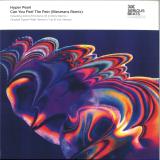
HYPER PEARL'S ICONIC TRANCE ANTHEM "CAN YOU FEEL THE PAIN" RETURNS WITH NEW REMIXES BY BIESMANS AND ZZINO.
First released in the mid-1990s, Hyper Pearl's cult classic Can You Feel The Pain is set to make a powerful return. Released via Serious Beats Classics, the new package features brand-new remixes from Biesmans and Zzino, alongside remastered versions of the original mixes.
Biesmans: "I grew up with the Serious Beats compilations and started buying my first vinyls around the time "Can You Feel The Pain" got released. Remixing this project really felt like a full circle moment for me."
Joining the release is a brand-new remix from Zzino, one of the pioneers of the Belgian techno movement and a key figure behind Hyper Pearl. His version reconnects directly with the track's roots while bringing fresh energy and perspective.
Together, these remixes celebrate the enduring legacy of "Can You Feel The Pain" while introducing the track to a new generation of listeners. The release highlights the lasting influence of Belgian electronic music and demonstrates how truly great records continue to evolve across decades.
About Biesmans:
Biesmans is a Belgian producer residing in Berlin, composer, and DJ known for his cinematic approach to electronic music. Blending elements of house, techno, synth-pop, and ambient music, his work has earned support from tastemakers and audiences across Europe and beyond.
About Zzino:
Zzino is widely regarded as one of the founding figuresof Belgium's techno scene. As a DJ, producer, label owner, and creative force behind numerous influential projects, he has played a pivotal role in shaping the country's electronic music landscape for more than three decades.
Techno mainstay Gary Beck drops hugely sought-after cut 'Hopper' on SHDW's Mutual Rytm sub-label Spectra, with remixes from KiNK.
Glasgow-born Gary Beck is a primary figure in techno and has been for well over a decade. Dropping seminal
underground classics and cultured full-lengths on an array of leading labels, as well as his own BEK Audio imprint,
he has also led the way as a revered DJ as his legacy continues to build. Now, adding to his standout 'Upside
Criminal' EP as well as his well-received track 'Fold' on the 'Federation Of Rytm III' VA, he returns with a record that
has often featured in both his and Mutual Rytm boss SHDW's sets, stepping out on the label's Spectra series with
a cut that has long been sought-after by those who know.
A spontaneous studio moment turned club weapon, the timeless 'Hopper' merges a syncopated disco bassline with
subtle nods to funk and classic dancefloor energy. It's one of those tracks that lingers in your head long after the
night ends - a pure embodiment of Beck's raw energy and production finesse built on an infectious groove full of
contrast and character.
Bulgarian synth wizard, hardware genius and tireless innovator KiNK delivered Spectra's inaugural release, so he
lands as the perfect person to remix. His first interpretation stays close to his roots with a house-leaning, slowed
down take that channels warmth and groove in equal measure. On the B2, however, he flips the script with a high
octane fusion of techno and UKG. It's a peak-time anthem engineered to ignite dancefloors and closes out a
standout EP with the third release in the Spectra catalogue.
Gary Beck 'Hopper' drops via Mutual Rytm Spectra on 20th June 2025.
The project first appeared as an anonymous transmission: a folder sent through the network, containing music, instructions and a name - Transpac. No photograph. No biography. Just the request to use the name and let the music speak.
There have been several transmissions since. Still no interviews, no confirmed identity, no explanation of who - or what - is behind the name.
Some say Transpac is a person. Others insist it is a machine. A few believe it is simply a data packet that escaped the network and somehow learned how to make music.
The name itself offers a possible clue. TRANSPAC was once the name of a French public data network, launched in 1978 and built around X.25 packet switching - breaking information into packets and moving them across a network long before the Internet became what it is today.
Perhaps Transpac has been travelling ever since.
Packet Switching EP is the latest intercepted transmission: six packets of pure machine music, assembled somewhere between circuitry, communication protocols and whatever exists on the other side of the network.
Whilst the packets have been received, the sender remains unknown.
Synaptic Cliffs is particularly pleased to have brought Transpac into its network - a feat made possible, not least, by its principal operative, pdqb. Through communication channels inaccessible to ordinary Earthlings, pdqb was able to locate Transpac with remarkable ease and secure its transmission for the label.
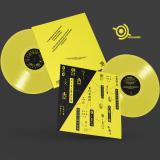
The artwork, rendered in yellow and black and largely composed of binary code, echoes the visual language of the early machine age - a world of geometric systems, electronic signals and human beings beginning to communicate with machines. Created by the legendary Infamous Image Division.
House is the Religion. The DJ is my Deacon. The Music is my God and James Bangura is cool af.
Genuine, passionate, clear, authentic and real…. He isn’t trying, he just is. And his music is the same. It’s fucking cool. It’s real and authentic and it just is James Bangura. So it’s a real honour to add him to the Shall Not Fade roster; from Techno to Jungle to House and everything between the DC native can extract the true essence of a genre and simultaneously make it his own & pay homage to its roots.
So on Jack Sermon there’s no surprise when he flexes a seemingly generationally inherited knack for all things House (and Techno) and delivers four tracks of raw, real, genuine House music. OG shit.
‘House is the Religion, and the DJ is my Deacon, but the music is my God” says the Evangelical vocal on title track ‘Jack Sermon’. Never has there been a more aptly named track…This is a jack sermon… an OG inspired Chi town cut channeling early house music’s soulful beginnings delivered with straight up jacking house beat offset with laidback dusty dub chords….. We don;t say this lightly but we’re calling anthem on this one.
‘Scat Pack’ takes a more percussive and drum forward House motif. Thunderous kicks tease techno but this is still house, NY at heart complete with voguing diva vocals . Blown out and choppy we could say ‘this could have been ripped from a late 90’s club recording on a lost tape’ but that would do disservice to the precise but invisible fusion that's been laid down here..
‘Funk To Berlin’ opens the flip side and in Bangura’s journey to explore classic forms of house and techno, this track may well have taken root from Dub techno pioneers from the past. Deep dub chords and deeper subs lead the track but that jacking percussion makes this more than homage. Machine Funk, Machine soul. AA side business.
‘The Green Line’ closes out the EP in style.. rolling it out with skittering synths that work like percussion, ethereal pads and a faint vocal ‘Chicago’ spiralling into itself making this track one you can get lost in. Some might argue that this one is techno but who cares. It’s the journey not the destination. Two tickets please.
If you don’t know James Bangura’s music already (or even if you do) do some digging.. Look for releases on Mister Saturday Night, K7! and Floorspeed and check his output as part of “Black Rave Culture” with Amal and Nativesun and as a member of Groovedeep with Toronto’s Ciel and fellow DC native Jackson Ryland.
To close, we’ll leave you with this note from James……. told he is cool af.
House music, to me, exists on a wide spectrum. I’m inspired by its many forms: stripped-back minimalism, percussive drive, hypnotic textures, and soulful undertones. Rather than confining myself to one approach, I treat each track as an exploration—testing structure, pushing rhythm, and allowing subtle details to carry emotional weight. The studio becomes a space where groove and atmosphere meet intention. This body of work highlights that process. It reflects how I balance technical precision with feel, tension with release, and tradition with forward motion. Every decision—from drum programming to spatial design—is part of shaping a sound that feels honest and instinctive. - James Bangura
This has been a very personal project and a mammoth undertaking for us folks here PACE HQ: 12 tracks unearthed from the cult Scottish figure’s completely overlooked back catalogue. Collected archive material from the past 25 years, originally composed as an OST for the feature length film The Flesher (1992) which was also written, shot and directed by Rae. No copies remain. Deep cuts that span G-funk, hip-hop, house, synth-pop, electro, dub, downtempo, funk/soul, R’n’B with appearances from Rae’s heavyweight list of frequent collaborators… Bernie Worrell, Adrian Sherwood and Jimmy Douglass.
"In 1991, the Scottish Rugby Union & the Royal Bank of Scotland, commissioned me tae make the world's first Scotland World Cup music video... they didn’t pay me so I fought back. It took 18 years tae win, and I nearly lost everything. I turned to audio visual art: under the pseudonym Jock Pleasure - I wrote and directed a feature length film called The Flesher as well as creating 100s of full length DVDs and tracks” (Jesse Rae).
One man took on the banks and won, but it took its toll and in this totemic corpus of work Jesse Rae counts the cost. The Flesher is art as pure defiance: “this stuff is very dark and deep, it is such a vast body o’ work, but when I won my battle against the bank, I secretly returned tae Hodge Close (in the Scottish borders) and dropped the entire work sealed in stone intae the deep deep murky depths of that water, where it has remained since 2009. There are no mair copies."
What we have here then is the salvaged remains. A hopeful dunt of Scottish erotica that gets you right in the pits.
Splice DJ Screw with Dean Blunt, Moodymann, Prince, Cocteau Twins, MF DOOM, Luther Van fuckin’ Dross, Barry fuckin’ White; run that through the B-movie videotape static meets Harmony Korine, Les Blank & early Grand Theft Auto. Empty boulevards. Small-town strip joints. Late-night dial-up. Sacrifice and solace. Outside of the OST, there’s a cast of forgotten characters: primary school kids making house jams, teenage popstars from the Scottish Borders, and the rhapsodic Ayrshire soprano NIKA laying down haunting vocals in Miami.
Celebrated as a cult figure in the USA, Jesse’s work has never fully had the appreciation it deserves at home. Not really. Aye, we know Inside Out and The Thistle. But he’s too easily fobbed off as an eccentric outsider: a helmet-wearing, claymore-wielding gimmick. But do we really know the extent of what this man has done - and gone through - for the sake of art?
‘An Undying Love For A Burning World follows Converge’s Love Is Not Enough this year as a pivotal metal album about acknowledging the darkness for what it is and trying to accept it.’ - the QUIETUS
‘Neurosis Know You’re Hurting. Their Stunning New Album Is a Life Preserver.
An Undying Love for a Burning World, the band’s first album with new member Aaron Turner, is a reminder of how even the darkest music can be a guiding light’ - 9/10 ROLLING STONE
Evolution can be ugly and beautiful, painful and euphoric. An Undying Love For A Burning World is the first new release from Neurosis in a decade, and a potent statement of intent and rebirth - one that marks the first new steps of resolve and resilience.
An Undying Love For A Burning World is an epic album of colossal hypnotism - beautiful, fearsome and utterly compelling in a way that only Neurosis can be. Aaron Turner (Sumac, Isis) joins the band on vocals and guitar, a name whose legacy is intertwined with the band’s own and a true kindred spirit.
“From the moment I first heard Neurosis over 30 years ago, I felt this was the music my heart and mind had been seeking but not yet heard. Now after many years travelling along various musical paths of my own, the singular sound and spirit embodied by Neurosis continues to speak to the depths of my being. It is an honor and a true pleasure to have been welcomed so warmly into a band that not only shaped my perspective on the limitless possibilities of music - but has lived and exemplified the necessity of upholding creative integrity and camaraderie above all else.” - AARON TURNER
Neurosis have never been afraid of change, and here they embrace endless regeneration, surrendering to the emotional exorcism through heaviness and distortion that their music incites. Just as the universe tends towards balance, Neurosis’cacophony of noise, rhythm and dissonance always resolves towards moments of beauty. The addition of Turner's powerful vocals and wildly creative and unhinged approach to guitar proves to be a vital force as Neurosis find themselves again at the mercy of evolution and expression.
On every song in the band’s history, Neurosis shifts restlessly between tension and relief, invoking a feeling both feral and transcendent in listeners. The band describe their songwriting process as an inescapable impulse to create with each other - a need rather than a choice. Indeed, the band insist that their return is “not a reunion - we never broke up.”
The album was recorded by Scott Evans (Kowloon Walled City, Sumac, and Great Falls) at Studio Litho in Seattle during three weekends this winter, and mixed in three days just six weeks before release at Evan's Antisleep Audio in Oakland.
Neurosis will play their first show in seven years on the traditional lands of the Blackfeet Nation in Montana as part of Fire in the Mountains festival by special invitation of Firekeeper Alliance, a non-profit dedicated to reducing youth suicide in Indian Country.
FITM, is a unique festival known for bringing epic music to epic landscapes with the intent of reconnecting and immersing oneself with the natural world, and strengthening our ancestral roots as human beings - an aim which aligns directly with Neurosis’ deep-rooted power.
Stay tuned for further news over the coming months.
PREVIOUS PRESS:
‘In less skilful hands, this relentless sonic oppression would be gruelling, but by expressing human frailty with such visceral abandon, Neurosis have once again turned darkness into euphoria.’ - 4/5 THE GUARDIAN
‘The Oakland band has evolved from gritty metallic punk to harrowing post-hardcore prog to the majestic doom of their current phase’ - 7.9 PITCHFORK
‘It’s not often an album of such stature exceeds one’s anticipations, but Honor is too astounding to not be revered.’ - The QUIETUS
“Fires Within Fires is the summation of thirty years of experimentation in tonality and texture. Yes, NEUROSIS are firmly positioned within the extreme metal underground yet their music, with its ability to generate images of beauty akin to those many of us have experienced in our own lives – not to mention the loss that accompanies them – challenges this categorization. ‘’ - WIRE MAGAZINE - FULL PAGE REVIEW.
"Their intensity remains undimmed on Fires Within Fires...The already converted will take heart from the evidence that age is unable to wither the fury of this heaviest of bands." - KERRANG! 4K REVIEW
"Every monstrous sludge riff gnashes menacingly for the right amount of time and every delicate moment of folk-inspired drift is emotionally exacting. Neurosis continue to create art without equal, and Fires Within Fires is another worthy addition to an awe-inspiring canon containing a number of truly pioneering and timeless albums." - METAL HAMMER - 8/10 LEAD REVIEW
Jason Singer spent years building Michigander from a DIY solo project in Kalamazoo into a national indie-rock staple through little more than a guitar and a refusal to quit. On his second album, Over Before You Know It, Singer isn’t retreating from the world, but learning how to move through it. The record finds power in the tension of living with both the good and the bad, refusing to let outside noise or internal doubt act as a roadblock. “We spend so much of our lives trying to build something that we never have the time to enjoy. That’s the lesson I’ve learned over the past year,” says Singer. “Tell people you love them. Take care of yourself. Fight for the good. That's what this album stands for.”
There is a kinetic energy that binds drummer and producer Karriem Riggins and singer-songwriter, rapper, and producer Liv.e, the spark that happens when instinct meets flow and spirit finds rhythm.
Their collaborative debut as GENA (short for “God Energy, Naturally Amazing,” and loosely inspired by Gina from Martin), The Pleasure Is Yours feels like a playful, soulful conversation between two kindred improvisers: Liv.e’s smoky, unpolished vocals glide through Riggins’ warm, percussive universe. Rooted in jazz, soul, and hip-hop, Liv.e brings a raw, experimental approach to R&B, while Riggins known for his work with Common, Erykah Badu, The Roots, Madlib, and his close kinship with J Dilla, extends his lifelong dialogue between jazz improvisation and beat science.
Together they create a world that’s analog and ethereal, percussive and poetic, bridging eras without settling in one, the sound of two artists finding a new shared language rooted in rhythm, vulnerability, and exuberance.
Pressed on 180g vinyl, the album comes in an embossed sleeve and is avaible in red and black splatter.
How many orbits before human becomes machine? How many moons are to be found in space?
From the cockpit of 92moons, a celestial mystery broadcasting from earth, comes 'ALT/ERA : The Cockpit'. Her latest transmission forms OG03, a cosmic journey through the birth, revival and expansion of a different era...
Who better to take the controls for the remix than Human Space Machine, steering these signals deeper into the fringes of the (un)known.
Crypt of the Wizard is proud to make available two legendary underground albums by Slutet on vinyl and digital formats.
Slutet originated in Uppsala well over a decade ago, first emerging as a loose idea around 2010. The original cluster of strangely like minded individuals - Dingir, Ryttersson, J.P., Sviatopolk, were equally set on starting a cult as they were a band, the former emerging as a loose collective known as The End Commune, while the latter eventually began rehearsing together as Slutet on September 1, 2013.
From this constellation three notorious demo tapes sprung which were self-released in very limited numbers, and only available by trading bodily fluids, blood, and/or hair for the cassettes. “A very loose guess but we made probably around 20-30 hand-drawn/custom demo tapes of the first three releases. We got blood and hair from many places, actually the very first offering was from INDONESIA. Slovakia, Germany, USA, Argentina, Norway, Canada, Finland followed.... if my memory serves..... hazy years indeed”
J.P. left early 2015. Later that year, after trying the band as a bass-drum-vocals outfit for a while, Fjalar joined on guitar. This is the classic constellation. Dingir, Ryttersson, Fjalar, Sviatopolk. The same troupe playing to this very day.
Following on from the compilation Slutet began work on their next offering entitled Jihad. While the departure of J.P. left them temporarily without a guitarist, a chance meeting with Fjalar at a rave ushered in a new era for the band. “I met the drummer and the bass player at a psytrance rave in the forest. I didn’t have any band and I wanted to play music and I saw this fucking weirdo with long dreads and a Hellhammer shirt and I just went up to talk to him”.
After Fjalar joined the rather chaotic fray, songwriting duties were spread out more broadly and Jihad was rehearsed and recorded in a haze. First released as a cassette by Manifest Of Hate Creations, and later on vinyl in an edition of 100 by Goatowarex the release quickly sold out and became as legendary, and as incredibly difficult to obtain as the previous releases. “It has got some psychedelic improvs, some very unorthodox and quite genius vocal work, some electronic undertones, some noisy ambience, a message of existentialism; all this wrapped up in some sloppy but very authentic and intense black metal-ish music.”
“After the vinyl compilation was out (early 2015) we felt probably a bit directionless, and, having parted ways with a befriended and talented guitar player, we felt maybe a bit morally weakened to continue. First, for a year almost, we toiled on without the 6-strings and rehearsed quite lengthy material for a proposed upcoming LP. However, that material never surfaced. Then we got a new guitar player (Fjalar) and created and recorded this mess”.
It is with great pride that we make these albums available to a general audience and in a wider pressing without need for bloodshed.
This is the very limited marbled vinyl version of the repressed Lords of The Null Lines EP.
Here we have the beautifully remastered Foul Play and Foul Play ft Randall remixes of Lords Of The Null Lines. There is little to say about these definitive classics that has not already been said. You know ‘em, you love ‘em, they are essentials. However, the Danny Styles remixes are perhaps deserving of some explanation. There were created in the early 90s, and were cut, but quickly stopped by Moving Shadow as they were not really official remixes. A few test presses got out, and the result has been these remixes reaching a near mystical status in the passing decades, and the vinyl changing hands on discogs for absurd prices.
So it was with great pleasure that Hyper-On Experience and myself managed to broker a deal with Moving Shadow and Danny Styles to bring these amazing remixes to a legal and official release! It took over 25 years, but they can finally be bought...
This might be Illegal Disco, but that doesn't mean it's bad - quite the opposite. The edits of the inimitable Monsieur Von Pratt are worth being arrested for. He knows how to tweak and toy with a well-chosen original just enough to turn up the heat without distilling any of the original, authentic vibes. 'You Can Dance' is a slinky, soulful anthem with a mid-tempo groove that will lock in anyone. 'Get Happy' has shimmering vocals that burst with joy and will get big smiles as well as big reactions. Last but not least is the gloriously upbeat and excitable disco of 'Gotta Have Lovin.' Pure fire from the Pratt, as always.
Flex7 is flexing its muscles here, with the currently ultra-prolific king of the multitrack The Reflex doing what he does best. Everything this producer and Pikes regular touches turns to gold and this time the edit maestro adds his know-how to 'D-Y-D', a low-slung and playful funky disco cut with plenty of atmospheric crowd chatter and jazzy chords that swoon through the mix. After that slice of warm proto deep house, the flip features a B-Boy classic cut that is loose-limbed and irresistibly funky.
In 2023, Kraków-based composer Martyna Basta and Los Angeles-based sound artist claire rousay were invited to Poland by Unsound for a short residency, where they spent a few days trading ideas and concepts, and brainstorming their first collaboration. Initially motivated to create lengthy, expansive pieces together, they also ended up experimenting with shorter vignettes, and ‘hotel room’ expresses these two extremes, featuring three long-form tracks and three brief, euphoric songs. “It wasn’t something we specifically planned,” explains Basta. “It just unfolded that way.” The most important stage of the process, however, was the period that followed the residency, when rousay and Basta began working on their sketches in isolation, trading drafts and sculpting the sounds independently before rousay handled the final mixdown. In the comfort of their own bedrooms, they were better able to reflect their individual creative routines, organically reaching a junction where their music felt truly unified. Even while they were in Poland, the duo joked that it might have been easier if they’d been holed up in separate rooms emailing each other.
Both artists have had an energetic few years: after steadily building a reputation for her diaristic and candid concrète experiments, rousay signed to Thrill Jockey in 2023, releasing the acclaimed ‘sentiment’, ‘a little death’ and the more eaze collaboration ‘no floor’; Basta, meanwhile, followed up 2023’s hallucinatory ‘Slowly Forgetting, Barely Remembering’ and her debut for Belgium’s Stroom imprint, ‘Diaries Beneath Fragile Glass’ with a studio album on !K7’s 7K sublabel: ‘Winged in Collapse’. The title of their collaboration reflects rousay and Basta’s hectic touring schedules in the wake of these releases, the constant feeling of displacement and the emotions that emerge when the environment is in flux. “I know we aren’t the only musicians traveling and creating work at the same time,” says rousay, “but being able to speak about that experience and all the things that come with it was comforting.” And the music itself, assembled from hypnagogic field recordings, spectral voices, electronics and filtered instrumental improvisations, sounds bewitchingly unmoored, not tied to a specific location but hovering around the uncanny space in-between.
Scratchy ASMR sounds introduce us to the opening track ‘zoom’, initially obscuring the duo’s elegiac harmonies. They are careful to let the various elements evolve at their own pace, with the fictile guitar drones melting into the foreground while Basta’s dissociated whispers and rousay’s illusory synths pick out the subtlest subliminal shades. It all builds to the piece’s dramatic third act, when layered chords ring out like organ blasts, enveloping the negative space. The shorter, more anxiety-provoking ‘denim’ is remarkably divergent, a dismantled folk memory pieced together from skeletal piano notes, vaporous choral echoes, haunting string plucks and pulsating feedback. Where the music aligns is in the mood itself, capturing a feeling that’s neither completely abstract nor fully referential. Not ambient exactly, ‘hotel room’ is a suite of soundscapes that gesture towards structure while repeatedly folding in on themselves.
On ‘Lost and Found’, wordless Autotuned ad-libs spiral around delicate guitar plucks and washing waves, coalescing into a faded Polaroid of opiated Americana, and on ‘Where Are You Now’, operatic squeals and corroded orchestral scrapes are juxtaposed with nauseous low-end tones. Evaporating until only industrial whirrs and music box chimes remain, the latter encapsulates the entire album’s chilling liminality, smudging saturated voices with casual electro-acoustic interjections before it erupts abruptly, transforming into a dense, pitch-skewed hymn. ‘hotel room’ plays like a surreal travelogue, teasing listeners with airy familiarities as it humidifies dry, awkward spaces. More a labyrinth of catacombs than a single, fixed chamber, it’s Escher-like – cryptic and seductive – and decked out with personal asides and intimate details that reward the most patient, curious listeners.
Jéroboam drop their debut on Space Grapes. This Parisian funk band, also known as Echoes Of, comes with an extensive live experience and a strong reputation as backing band for Howard Johnson, Junior Giscombe, Kyoto Jazz Massive and others. Recorded in the usual Space Grapes style; fully analog, rough and ready!
How time flies when we’re talking truly classic House Music.
Incredibly it is 35 years since the epic BREAK OF DAWN was released. Track creator Geoff Hibbert had released the much loved A PLACE CALLED BLISS by CYCLONE on Network before coming up with the stunning BOD.
It was decided that a change of artist I/D away from Techno/Bleep influenced Cyclone was required and RHYTHM ON THE LOOSE was born.
Network came up with an initial limited edition 12” press on their One After D label to tie in with the Rave zeitgeist of 1991, to help kickstart a buzz on the track. Once this was ignited the “ suitcase at the door “ gem was properly released on the main Network label.
Acclaimed as an instant classic both in the UK and USA - where Network label mate Kevin Saunderson was an enthusiastic early advocate - BREAK OF DAWN is one of the tracks that truly shaped and defined the House Music explosion. Since then it has matured like fine wine.
To celebrate the 35th anniversary Network invited M.A.S.C (Mark Archer and Shadow Child) to come up with a remix that befits the as good as it gets status of the mighty BOD. They duly obliged..it’s a gem.
First copies of the remix are on a unique ADVANCE DJ COPY label with the track on both a and b sides.
An instant do you know the score collectors item …1991 to 2026 35th Anniversary Remix 12.
Straddling an intriguing intersection of Drum & Bass, Jazz, Fusion and unidentifiable electronica, ‘You Won't Find Your Way From Here’ is the debut album from Jhauk.
An extremely talented multi-instrumentalist from Sheffield, UK, Jhauk came to Blu Mar Ten’s attention when, in 2017, he created a wild prog-rock inflected remix of BMT’s track ‘Titans’
Further conversations with Jhauk revealed the depth of his unorthodox approach to electronic music and unearthed a treasure trove of production skills, culminating in the album before you.
Oscillating between the late-night, moody calm of late 50s Miles Davis, John Coltrane & Bill Evans, the riotous 70s instrumentation of Weather Report, the modern cool stylings of Matthew Halsall and the gritty edges of modern D&B production, it’s scarcely believable that this collection of tracks came from one person working alone in their studio. With tempos and time signatures skittering all over the place, Jhauk uses genres as catalysts rather than containers, he finds the interesting stuff in the hinterlands of their structural relationships and tensions.
Talking about the album, Jhauk has strong opinions:
“Drum & Bass emerged as club music, and club music comes with its own logic. Specific structures, specific build-ups, a formula that supports that context.
That's fair enough, but almost 40 years later, why is 99% of D&B still made the exact same way when 99% of the time it's never heard in a club? The same structure, the same formula, barely any development beyond the core idea. Tracks where you can hear 10 seconds of the drop and know almost beat-for-beat how the next 5 minutes sound. No real musical depth or exploration. People regurgitating the same material ad-nauseum but never actually saying anything for themselves.
This period of composition for me was about taking what I love about D&B, the rhythmic energy and potential for creative freedom it presents and really stretching it to its limits. Of taking drum & bass as a starting point and seeing where it ends up without an idea of what that destination might be. Most people would probably never call a lot of the results D&B, but that's okay because it was never the point.”
Dripping with melancholy, euphoria, longing and pure urgency ‘You Won't Find Your Way From Here’ is unlike anything else you’ll hear this year. The sound of an artist entirely unconcerned with impressing peers or performing on ‘socials’; you're hearing a true musician at work, expressing ideas through the skill of his hands, mind and ears. The album’s secrets aren’t revealed with a single play-through, but bears (or even requires) multiple listens to expose its layers.
In previous times, they called this ‘art'.
Knowledge The Pirate returns with a powerful new statement with his new album, The Round Table, which is now available. The Round Table is produced in its entirety by longtime collaborator and legend Roc Marciano through his Pimpire International imprint.
With roots in New York’s revered ‘90s hip-hop scene, Knowledge The Pirate has steadily built a reputation as one of the genre’s most consistent and authentic voices. A frequent Roc Marci collaborator and key figure in the modern underground renaissance, Knowledge fuses golden-age grit with new wave innovation—bridging generations while staying firmly rooted in New York’s timeless sound.
Since his 2018 debut Flintlock, Knowledge has carved a lane entirely his own through his label Treasure Chest Entertainment, Inc. With five acclaimed projects under his belt, including the recent 5lbs of Pressure, he continues to deliver unfiltered street wisdom and personal reflection in every bar.
The Round Table stands as a testament to his evolution—an uncompromising body of work laced with Roc Marciano’s signature production and Knowledge’s lived-in lyricism. It’s not just a record—it’s a meeting of the minds, an audio council of kings.
“The Round Table is cinematic storytelling, teaching street knowledge, eating etiquette that will save your life” Knowledge professes. “This album is like an Honorable Elijah Muhammad book; How To Eat To Live. Produced fully by the true creator of the new wave sound, Roc Marciano, you are all invited to a seat at The Round Table; and break bread with the true Godfathers of this new wave rap renaissance.”
Straddling an intriguing intersection of Drum & Bass, Jazz, Fusion and unidentifiable electronica, ‘You Won't Find Your Way From Here’ is the debut album from Jhauk.
An extremely talented multi-instrumentalist from Sheffield, UK, Jhauk came to Blu Mar Ten’s attention when, in 2017, he created a wild prog-rock inflected remix of BMT’s track ‘Titans’
Further conversations with Jhauk revealed the depth of his unorthodox approach to electronic music and unearthed a treasure trove of production skills, culminating in the album before you.
Oscillating between the late-night, moody calm of late 50s Miles Davis, John Coltrane & Bill Evans, the riotous 70s instrumentation of Weather Report, the modern cool stylings of Matthew Halsall and the gritty edges of modern D&B production, it’s scarcely believable that this collection of tracks came from one person working alone in their studio. With tempos and time signatures skittering all over the place, Jhauk uses genres as catalysts rather than containers, he finds the interesting stuff in the hinterlands of their structural relationships and tensions.
Talking about the album, Jhauk has strong opinions:
“Drum & Bass emerged as club music, and club music comes with its own logic. Specific structures, specific build-ups, a formula that supports that context.
That's fair enough, but almost 40 years later, why is 99% of D&B still made the exact same way when 99% of the time it's never heard in a club? The same structure, the same formula, barely any development beyond the core idea. Tracks where you can hear 10 seconds of the drop and know almost beat-for-beat how the next 5 minutes sound. No real musical depth or exploration. People regurgitating the same material ad-nauseum but never actually saying anything for themselves.
This period of composition for me was about taking what I love about D&B, the rhythmic energy and potential for creative freedom it presents and really stretching it to its limits. Of taking drum & bass as a starting point and seeing where it ends up without an idea of what that destination might be. Most people would probably never call a lot of the results D&B, but that's okay because it was never the point.”
Dripping with melancholy, euphoria, longing and pure urgency ‘You Won't Find Your Way From Here’ is unlike anything else you’ll hear this year. The sound of an artist entirely unconcerned with impressing peers or performing on ‘socials’; you're hearing a true musician at work, expressing ideas through the skill of his hands, mind and ears. The album’s secrets aren’t revealed with a single play-through, but bears (or even requires) multiple listens to expose its layers.
In previous times, they called this ‘art'.
What changed between Av. General Roçadas and Junkeira? Seven years in people's lives — yet the team's commitment remains untouched, and the steady hand on the plumb line that keeps dance music (still) upright holds firm. Years of sustained research and field work from both producers, with their own records, mutually independent and independent too in how they brought them to life. Moreno Ácido has been navigating detours through a conceptual yet grounded underground — in sound and in format (two self-released cassettes since 2019) — while keeping one eye on the floor. His post pandemic reawakening carries a clear message: Call to Action is the label that in 2023 put the still-in-demand Trash/Treasure out on vinyl. Diogo keeps Discos Extendes as his shelter, gathering talent and retreating into it. At the same time, a disseminating vocation — that talent turned outward, on a mission to champion the different sensibilities that can converge in music made for dancing.
Junkeira is direct. It hides nothing in its intent, nor does it conceal the origin of its love, nor the way it exercises its fascination with the source. Geography can define movements, described and echoed countless times outside and then inside the net. The signifiers are known to all — it's a matter of applying them with respect and flow. Perhaps the craft in this production really does come down to love, when it comes to it. What is "WTF" if not a declaration of love — at the very least of closeness — to the sonic essence of the English rave? The piano stab, the breaks defining that hardcore state of mind, the string bed lifting feet off the floor. Closing out the EP, "Freak" gathers different emotions — eyes still shut, body in comedown while still moving. Chill. Everything rounded. Bassline, vibes, vocals woven into the rhythm.
Rewinding, the opening track "100 Planos" is a throwback to Roçadas (2019) — harder on the ground, with a 4/4 beat broken up by claps, a circular structure built for DJs, with mix-friendly entry and exit points. Then "Turbo Love" puts the keys in control, foregrounding them, letting a car alarm ring out and balance the beat — a reverential nod to UK Garage felt as raw material, already part of the lineage that has been the continuous evolution from Disco onwards: an evolution that traces a line and its branches, from which you can isolate any chronological point since at least 1977 and combine whatever elements form a personality. The spirit lives, as summer kicks in.
Released on Polydor in 1972, He’s Coming captures vibraphonist Roy Ayers at a creative apex, as Ubiquity’s sound settled into the blend of jazz improvisation, funk rhythm, soul harmony, and spiritual import that would define his work throughout the decade. Emerging at the start of the 1970s, the album reflects Ayers’s deepening move toward a groove-centred musical language rooted in soul-jazz and early jazz-funk. The vibraphonist, keyboardist, composer, and bandleader is supported by a core ensemble that includes Harry Whitaker on electric piano, organ, and vocals; John Williams on bass, with Ron Carter featured on ‘We Live in Brooklyn, Baby’; David Lee Jr. and Billy Cobham on drums and percussion; guitarists Sam Brown and Bob Fusco; saxophonist Sonny Fortune; and percussionist Juma Santos. Tracks like ‘He’s a Superstar’, ‘Sweet Butterfly of Love’, and ‘Fire Weaver’ embody the record’s mix of urban narrative, spiritual reflection, and deep rhythmic momentum — qualities that would later make Ayers’s catalogue a source of inspiration for soul, funk, hip-hop, and neo-soul artists.
Rhythm Of Paradise captures the essence of modern Italian piano house with the "Ti Sento EP".
A coherent and refined project that blends radio appeal and club depth, all with a warm, Mediterranean soul and pure Italian House Vibe.
The EP opens with the title track, an emotional summer anthem built on a sensual Italian female vocal. Beautiful piano hook in the real Italo style & warm M1 organ bassline, are the foundation that makes this track a unique narrative experience keeping balance between radio-friendly immediacy and a solid timeless club presence.
From the emotional Ti sento going to the festive, sunny mood of "Mi Piace" on A2, where the energy is amplified by a more driving rhythm and piano melodies that celebrate pure joy. It's the EP's track designed to create a peak of collective euphoria on the dancefloor.
On B, Micheal’s partner in crimes St. David reimagines “Mi Piace” track on a tribal dub journey with an Ibizan soul, where the original vocal is deconstructed into echoes, the bass becomes hypnotic, and the groovy organic percussions keeps the floor moving and shaking. A version for emotive charm of early Italo house, evoking euphoric dancefloors, Calypso beach parties in the style of Palmares or Irma records.
Closing with B2. Ti Voglio and its seductive groove, and a refined afterhours atmosphere. It demonstrates how Italian emotion in house music can also be communicated through the power of few elements that hits your sensitive side. Sax atmosphere and deep dub groove capture the rhythm of the listener for this beautiful closing track.
A complete collection of Timeless Italo House journey for those that knows !
Written and Produced by Michele Lamacchia. Includes remix from St. David
Mixed & Mastered by St. David
Truthdare Doubledare marked a significant change in the direction of synth-pop trio Bronski Beat’s as a band, with vocalist Jimmy Somerville leaving and being replaced with John Jøn Foster.
Whilst maintaining a clear voice in support of gay rights and political activism, the production gave way to a rougher and rawer style, featuring more real instruments, ever-powerful lyrics and more variety in genre.
This never-before re-issued album features the #3 single ‘Hit That Perfect Beat’, a full remaster, remixes & b-sides.
The fourth work of art by Introversion on the label, is a mature take of what he is known for. Three years after his debut on the label this artist gave us only the best from a technical and emotional point of view, always being a step ahead. "REM" is the study of a vivid dream, an electrical & chemical activity, a deep dive into his consciousness and another confirmation of how this artist is able to effortlessly take us inside his world.
Phone Me Tonight was recorded in 1981 at Studio Maïa in Bondy, just outside Paris - a creative hub where many artists of the African diaspora shaped their sound. On this track, Eko Roosevelt collaborates with producer Gabriel Nahas, known for his work with artists such as Pasteur Lappe, Marthe Zambo, Toto Guillaume, and Manu Dibango. The result is a shimmering blend of synth-driven groove and Eko’s signature ‘Funky Disco Music’ sound, capturing a moment where analogue warmth met futuristic ambition.
For this 2026 reissue, Phone Me Tonight has been carefully restored and remastered, breathing new life into Eko’s iconic Yamaha DX7 synth lines. The track has been subtly tightened to the grid, making it perfectly suited for contemporary dancefloors & dj’s while preserving its original spirit and charm.
This EP also offers a glimpse into Eko’s creative world: rare photographs of his home studio in Lobé, featuring the very DX7 synth used during the original recording. In addition, you’ll discover exclusive footage from the Phone Me Tonight video shoot, filmed at the breath-taking Lobé Waterfalls, documented together with Lobé’s community throughout 2025 and 2026.
ABOUT LOBE MON AMI
Lobé Mon Ami was written by Eko Roosevelt in 1981 as a heartfelt tribute to his home community of Lobé in Cameroon. Two versions of the song exist; this EP presents the rare and original version, restored and remastered here for the very first time. Using the download code, listeners can also access an exclusive alternate version of Lobé Mon Ami and the full EP in digital formats.
The song weaves together multiple languages, including Batanga and French, reflecting the rich cultural fabric of the region. Through its lyrics, Eko tells the story of his life - born and raised in Lobé, venturing abroad in pursuit of music, yet always drawn back home. Each return rekindles his deep connection to Lobé. In a poetic gesture, he names surrounding villages in various languages such as Batanga throughout the song, turning it into both a personal memoir and a cultural map.
ABOUT EKO ROOSEVELT
Born on November 13, 1946, to princess Kethy Mbenyo and William Roosevelt, Eko Roosevelt has led a life filled with mythical appeal and musical excellence. Local lore recalls how, at the age of ten, he bravely fought off and killed a serpent near the waterfalls of Lobé. An event that became part of his local legend prior to his enduring legacy as a musician and traditional chief.
Eko Roosevelt discovered his passion for music in church before furthering his studies in Dakar, where he met his wife, Nicole. Together they moved to France, where Eko launched his recording career - first with the Dikalo Group, and later as a solo artist. His discography includes standout releases such as Kilimandjaro My Home, Funky Disco Music, and the hit single Nalandi. In 2020 he renewed his status as hitmaker through his work with Disclosure on the revised version of his single ‘Tondoho Mba’, originally released in 1982. His enduring legacy and pioneership within Makossa and Funky Disco music helped shape the sound of many DJ’s and producers such as Gilles Peterson, Disclosure, Folamour, Diplo, ANOTR, Jax Jones, Sonny Fodera and Daphni.
Over the years, he shared stages and collaborations with renowned artists including Claude François, Nino Ferrer, Manu Dibango, and Miriam Makeba. As a producer and arranger, he became a respected figure across the African diaspora, working with talents such as Toto Guillaume, Marthe Zambo, M'Pongo Love, and experimenting in the studio with visionary artist Francis Bebey.
In 1998, Eko returned to Kribi, where he continues to live, create, and perform. Alongside his musical career, he has composed three albums of Catholic music, still awaiting release, and is currently working on new material. Today, he remains a beloved figure both locally and internationally.
Since 1996, he formally assumed his role as traditional chief of Lobé (usually reffered to as 'Chef Traditionnel'), following in the footsteps of his grandfather; his majesty ‘Bevigna Eko Louis’ - an enduring source of inspiration throughout Eko Roosevelt’s life. Despite his royal duties, he continues to perform regularly across Cameroon. When he takes the stage, entire crowds sing along to Lobé Mon Ami and classics like Nalandi and Attend-Moi, celebrating a legacy that bridges generations.
Balancing tradition and music, his majesty Eko Roosevelt Louis remains deeply committed to both his community and his art. This reissue of Phone Me Tonight / Lobé Mon Ami marks a renewed chapter in sharing his rich musical legacy, and his musical future with the world.
Known to many a canny Bandcamp digger through his excellent Lost Acid series of digital albums, Jim Thompson is a London based producer, skater & graphic designer. His debut vinyl release came last year on Ooze Records, run by Laurence, an estimable selector based in the excellent Palace Records store in Brixton.
The release caught the attention of System One head D. Howard who followed the trail & found High Score Table from Jim’s Glytek Audio album, a thoroughly captivating mid tempo acidic chug with aching pads & an old school charm; exactly the kind of track that needs to be played on vinyl at an after hours in a basement.
A conversation began, pints were downed & the idea was spawned; lets make a killer ep with another Glytek cut, The Hollow Tree, 2 phenomenal new cuts - the muscular sub acidic tweaker Cruiser and Numerology, a late night trippy gem - and 2 remixes including top tier Irish electro don, Cignol, who has made some of the finest cuts to grace the System One basement over the last few years.
An accomplished video producer, Jim has made videos to every track, stand by for these, the first one for the CIgnol remix drops May 22 & its a peach ! System One is a new label dedicated to soulful electronic music, late night grooves & intergalactic beats, drawing its inspiration from the early 90s techno & ambient sounds of Uk, Frankfurt, Detroit & beyond
There is a quiet, seasoned assurance to how Heimyl operates. Perhaps best known under his Lazer Man moniker the Lyon based producer a fixture in France’s undergroove community.
He burrows deep into a groove and lets the room come to him. On this record, that patience yields a formidable four tracker engineered specifically for proper sound systems and slow-burn dancefloors.
The A side sets the trap with "I Want Speak," a masterclass in tension pairing a skippy lock groove rhythm with a fragmented vocal samples.
"Power Cat" maintains the momentum, threading bell-like melodic fragments through a rolling, hypnotic bassline with a light, remarkably effective touch.
The flip is where the record earns its weight, anchored by "Sector 14." Here, pads rise imperceptibly over a relentless groove, mounting a subterranean pressure.
The closer "New Place" shifts gears gracefully, cooling the room down with a looser, sophisticated house sensibility, a natural exhale that hints at Heimyl's broader sonic palette.
In the creative Bologna of the 1980s and 1990s, Kinki was the first gay (LGBTQ+) Club in Italy: a visionary space where House music exploded
and the night became a symbol of freedom, identity, and cultural revolution. Through the DJs and charismatic figures who shaped it’s future,
the documentary tells how this small club beneath the Two Towers forever changed the way music and clubbing were experienced.
The documentary, produced by RCO Europe and directed by Lorenzo Miglioli, is available on Amazon Prime and Google Play platforms throughout Europe, the UK, the US, Australia, and South Africa.
The soundtrack, curated by Luca Trevisi (LTJ Xperience), features a selection of 1990s and more recent tracks, ranging from Italo House to
Nu Disco. Most of the tracks are re-edited by LTJ himself.
A double vinyl album packaged in a gatefold sleeve, also containing a 16-page color booklet featuring images of the Kinki crowd.
Globally adored Spanish techno protagonist Indira Paganotto releases her debut album 'Arte Como Amante' via ARTCORE / PIAS Électronique. It brings together thirteen fearless tracks that stretch way beyond any one genre. It's high-pressure, high-energy, and deeply personal. A full-spectrum dive into the world of one of electronic music's most dynamic artists.
It follows a huge 2025. She debuted at Coachella. Played her first ever b2bs with Armin van Buuren at Sonar and Sara Landry at EXIT. She became the first woman to close Monegros. She held down her first Club Room residency at Hï Ibiza for 14 weeks, and even launched her own creative studio space, ARTOPIA, in Santa Eulalia. Her label ARTCORE the home of this special album also took their presence in the dance world to the next level with their own curated stages at Tomorrowland, Mysteryland and Dreambeach.
Now, she's telling her story. The title 'Arte Como Amante' means 'art as a lover'. For Indira, that's not just a phrase. It's her life. This album has been 14 years in the making. It began in Madrid in 2012, when she was 19, and was completed in 2024. She waited for the right moment. She lived life. She collected experiences. She built the sound. "I know to take 14 years to make an album seems crazy," she says, "but without living those experiences, how could I have made the music about them?"
The result is a diverse, adrenaline-fuelled body of work that hits hard and moves deep.
In the evolving landscape of modern Southern hip-hop, the pairing of Starlito and Bandplay stands out as a unique bridge between street-level authenticity and refined, calculated musicality. Their collaborative project, Not The Country You Know, functions less like a standard release and more as a manifesto—a masterclass in the chemistry between a seasoned, introspective lyricist and a producer who possesses an intuitive grasp of the region's pulse. It is an exploration of legacy and adaptation, capturing the tension between where they came from and where the culture is currently headed.
Bandplay, long recognized for sculpting the sonic identity of Memphis icons, brings his signature, trunk-rattling 808s to the project, yet he manages to pivot here. The production feels remarkably expansive, masterfully blending the raw, stripped-back aesthetics of classic Tennessee rap with forward-thinking textures that refuse to be confined to a single sub-genre. Complementing this, Starlito operates with his trademark mix of cynical observation and genuine vulnerability. He navigates these beats with the weary grace of an artist who has weathered the music industry's relentless cycles, treating every bar like a necessary piece of a larger, ongoing story.
The album’s title serves as a direct commentary on these shifting tides. Across the tracklist, the duo investigates the growing disparity between the romanticized South and the cold realities of the streets, alongside the inevitable evolution of the music business itself. There is no frantic chasing of streaming-era trends or algorithmic bait here; instead, the project remains a stubborn, confident assertion of artistic identity. By weaving together Starlito’s "voice-of-reason" flow and Bandplay’s evolving, genre-bending sound, Not The Country You Know challenges the listener to abandon their preconceived notions of the region, offering instead a complex, urgent vision of a South that is as haunting as it is vibrant.
he all-time house music legend Roger Sanchez drops his brand new studio album ‘Spectrum’ - his first in twenty years. Previewed by three high-energy bangers - ‘Grinnin’ (with Fedde LeGrand), ‘Come My Way’ and ‘Temptation’ (with Low Steppa, featuring Ragdoll) - the record features the new focus track ‘How Do We Say Goodbye’, a collab with Karen Harding.
The globally celebrated and Grammy-winning DJ, producer and label head has been working on the album for years, much of it during his time in Shoreditch which has informed its euphoric UK summer sonic influences. But its diverse tracks reflect a spectrum of sounds, from pulsating club tracks to dancefloor fillers, through to more emotional moments and atmospheric elements. Lyrically it’s also the result of translating his personal experiences into song.
Roger says, “I’ve been working on this for the past six years, so it’s definitely a labour of love. During that time I got the chance to travel around the world and work with some amazing vocalists and songwriters to help me bring this project to life. I’ve got flavours from the UK, Spain, the US - all of this is part of the spectrum for. This project is about music and frequencies and light: so everything from the light to the soulful to the club-ready infrared, the emotionally-weighted ultraviolet. That’s what ‘Spectrum’ is all about for me.”
The new focus track ‘How Do We Say Goodbye’ was created with the topline extraordinaire and always in-demand collaborator Karen Harding, whose all-star credits include work with MNEK, Armand Van Helden, Rudimental, Wilkinson and many more. It’s a massive highlight of the album, with Karen’s soaring vocal class bringing both an irresistible hook and a touching sense of nostalgia, while Roger’s dynamic production ascends from a trance-like ambience into an electrifying drop.
Beyond the singles, ‘Spectrum’ also features a diverse array of other talents spanning multiple genres and nationalities. These include Melanic C, Kele Le Roc, Chico Castillo, Kelli-Leigh, Carnao Beats, Donae’O and more. It’s a guestlist which lives up to the anticipation for the record.
‘SPECTRUM’ is available as a special 3LP limited-edition pressed on red transparent vinyl.
Cristi Cons returns to Amphia with Out of Cycle Part 2, expanding the narrative beyond fixed frameworks.
Cristi Cons continues his exploration of fluid musical identity with Out of Cycle Part 2, released via Amphia, the label which he co-founded and runs alongside Vlad Caia.
Conceived as a continuation of Out of Cycle Part 1 released back in 2021, the new installment deepens the concept of operating outside predefined structures, both in form and in sonic direction. Rather than adhering to a single aesthetic, the album reflects a wide spectrum of influences, capturing an evolving artistic language shaped by intuition, experimentation, and long-term musical curiosity.
The title Out of Cycle acts as both a statement and a method: stepping outside familiar loops, resisting categorization, and allowing the music to exist beyond rigid expectations. This philosophy extends into the production itself, where subtle variations in structure, tone, and pacing reveal a process driven less by formula and more by exploration.
Across the album, rhythmic frameworks shift between hypnotic, club-oriented patterns and more introspective passages, while textures unfold with a focus on depth, movement, and spatial detail. Each track functions as part of a broader continuum, yet maintains its own identity, highlighting a deliberate departure from cyclical repetition in favor of a more open-ended approach.
Released on vinyl and digital formats, Out of Cycle Part 2 marks another chapter in Cristi Cons’ ongoing dialogue between club functionality and deeper listening contexts. While rooted in stereo composition, the project also opens the possibility for further reinterpretation, reflecting an interest in how the same material can evolve across different listening environments.
With this record, Cristi Cons continues to trace a distinct artistic trajectory, one that prioritizes depth, individuality, and an ongoing expansion of his musical language as it evolves beyond established forms.
Dedicated to my dear friend Laurentiu Gavrila (Funk-e).
Luke Una introduces a new series of original, dancefloor-focused productions on his É Soul Cultura imprint, in partnership with Mr Bongo. True to the label’s ethos, the series pushes sonic boundaries into deeper, more expansive territories, delivering forward-thinking music for discerning dancefloors. The first release brings together UK garage royalty Zed Bias and the underground talents of MJK, as we’re served up a double hit of hypnotic, futuristic techno and house.
Zed Bias is an artist that needs little introduction. The main moniker of Manchester’s Dave Jones, over the past 25+ years he’s cemented himself as a crucial figure in UK garage and dance music as a whole. He’s remixed hundreds of artists including Whitney Houston, The Streets and Azymuth, been nominated for a MOBO award and, through his more experimental take on 2 step garage, helped lay the foundations for the development of bass music into dubstep. For this new release he teams up with Ghanaian-British producer and DJ, MJK. Earmarked as ‘One To Watch’ by DJ Mag, and similarly championed by Mixmag, MJK’s sound draws from the worlds of bass, grime, house and beyond.
Opening track ‘Keep On Livin’’ sees Zed Bias and MJK coming together in the studio. Passed to Luke by his manager If Khan, it’s a sonic alchemy rooted in black heart soul music yet seen through a prism of bass futurism. A heads-down cut of driving techno, with nods to Detroit, and firm UK foundations, that is both bass-heavy and otherworldly. It’s a simple yet effective, entrancing combination of percussion, bass, and keys, peppered with old soul samples that lock you into a groove and never let go. A track built for dancefloors big or small.
On the flip, MJK steps up solo with ‘Late to Camberwell’, diving into deeper, late-night territory. Known for his three-deck DJ mixing style, MJK has a real understanding of how to layer elements to keep people moving. A swirling cosmic feel reverberates through ‘Late to Camberwell’. Drum hits, shakers and synth loops are weaved together in style, creating a dose of deep, immersive rolling house. In Luke’s own words, “I found it very exciting to hear a new artist create such a beautiful sound that reminded me of Detroit and Artwork's late ‘90s techno alias Grain. It’s stripped-back raw house music of the highest calibre”.
Take Me, I’m Yours is the first collaboration album between Alan Abrahams and Jan Jelinek. Released through the latter’s faitiche, it builds upon multi-layered vocal sketches by the former. The Paris-based artist, primarily known for his work as Portable and Bodycode, supplied Jelinek with multi-layered song sketches that the German artist subjected to a rigorous process of manipulation, excavating the ambiguities of the original material and transforming its rhythms into subtle pulses. Take Me, I’m Yours is neither a typical Abrahams record nor a classic Jelinek album—it is something third, mediating between the physicality of the voice and the abstraction of electronic sound design.
The two had crossed paths before really getting to know each other after Abrahams invited Jelinek to play at one of his Süd Electronic parties. The idea of a collaboration emerged slowly. “It started as an experiment, and over the past few years grew from a few tracks into this album,” says Abrahams. He describes recording the basic material as a “tantalizing” process, not knowing how Jelinek would transform his material, some of which was based on wordless chanting, while other tracks were working with lyrical content. However, their mutual trust allowed Jelinek to remove the harmonies, radically reduce the rhythms, and concentrate on Abrahams’ voice.
Jelinek heard something “fragile” in this voice, “moments of doubt and dark premonitions.” He points to Forever as an example. “Alan’s original song reminded me of classic vocal house, but his voice seemed to almost break,” he says. “This contradiction made the piece even bigger, because we hear a singer in the moment of an awakening.” He further accentuated such tensions through arrhythmic synth modulations and time-stretching algorithms, while also adding concrete sounds from a variety of sources. With its dedication to both transforming and amplifying the emotional qualities hidden within Abrahams’ pieces, Take Me, I’m Yours functions as a dialogue between those two singular artists.
Balancing glitch-pop and contemporary piano, the Belgian pianist explores the edges of her voice, language and twisted electronica
The Belgian pianist and producer maya dhondt releases a new album titled 'wow, x', marking her debut solo album under her own name. Navigating between bedroom glitch-pop and contemporary piano, she presents sounds of alienating beauty.
The album ‘wow, x’ will be released on September 13 on vinyl and all digital platforms via VIERNULVIER Records.
“I find beauty in the uncomfortable and disorienting" - maya dhont
The first single, 'desire,' is a mutated synth-pop track that gets under the skin. The song centralizes longing for something you don't know (yet). Perhaps it's the smell of damp earth, which can be both pleasant and unsettling? The single is now available on all streaming platforms and comes with a schizophrenic video by Sakis Brönnimann.
The first release show is scheduled for Saturday, October 5, at De Koer, Ghent.
More shows will be announced soon.
A postmodern cramp, that's how one could describe the music of pianist and producer maya dhondt. Her music is an intuitive and a never ending exploration that has the potential to be and become a multitude of things at once.
On her first solo album under her own name, 'wow, x,' she presents 10 varied tracks in which she creates equally idiosyncratic sound worlds. She takes the liberty to endlessly experiment with vocals, piano, and a mix of distorted lo-fi electronic sounds with an open mind. The result is sometimes synthetic and weird, sometimes compellingly beautiful, and always captivating, drawing you into its underlying melody. These intelligently crafted productions are connected by a penchant for alienating beauty: like a warm, but damp cave where it’s pleasant to linger just a little longer. Her original sound moves within a sonic spectrum reminiscent of contemporary artists such as Lolina, Astrid Sonne, claire rousay, aya or Carla Dal Forno.
"What I create never stands alone, it can be many things at once"
If the world were a sculpture garden, maya dhondt eagerly picks from it to draw inspiration from both visual and literary passages as well as personal experiences. Her highly personal bedroom productions are grounded firmly in the world due to philosophical references and politically charged messages. And the world she lives in is being questioned on 'wow, x', as the title refers to "What Or Why?". This is evident in the single 'desire': "What is the thing that matters / to exist / or to know you’re existing?" What does one choose in life: to live in the moment or to live to remember that moment?
In the lyrics on 'wow, x', maya dhondt plays - at times childishly - with language and its boundaries. On 'tip toe tip,' banal wordplay leads to an unexpected confession, and the seemingly simple phrases in 'untitled' conceal hidden life lessons. dhondt's world of words is multilayered and multilingual: Dutch ('kleine cijfers, groot verlies'), English ('desire'), and French ('untitled') are at her disposal. And on the fierce track that is 'minimalinvasiv,' not only she turns to hardstyle, but also to German - a language dear to her due to her Swiss heritage.
For his sixth solo album, Ezéchiel Pailhès returns with a new collection of songs infused by a sunny wandering spirit.
Within each of the twelve songs on SOL is a thread of melancholic happiness that has permeated much of Pailhès’ music and songwriting. He addresses love, the passing of time, hope, lost illusions, fleeting moments of grace, the temptation of forgetting, a need to escape, and desire. All this is
insulated by understated orchestrations that blend acoustic and electronic instrumentation with deft confidence.
The Portuguese and Brazilian concept of saudade—a form of melancholic longing and nostalgia— pervades, thanks in part to Pailhès decision to record the album in Rio de Janiero and to reinterpret some of the finest works of Música Popular Brasileira (MPB). In particular, he revisits a handful of
lesser known classics from the mid-century samba and bossa nova era—originally written or performed by talents including Vinícius de Moraes, João Gilberto, Tom Zé, Dorival Caymmi, João Donato, Os Tincoãs, and Ataulfo Alves.
The shift from Brazilian Portuguese to French and the decision to adapt rather than perform a straightforward cover versions, allows Pailhès to invent a form of prosody and euphony (the musicality and harmonious combination of words) that feels vibrant and unlike anything else in today’s French
chanson landscape.
“Some lyrics are simple translations from Portuguese, in what I’d call an expanded version. For others, I started from a single word or a single phrase and embroidered an entirely new text that carried me elsewhere,” explains Pailhès. “I allowed myself great interpretive freedom, while preserving the humanist dimension of the original songs. I’ve always been deeply moved by the way Brazilians transfigure reality through heightened emotion. I love this visceral and spontaneous country, which always seems to live through emotion. And above all, I love its music both popular and unifying,
bringing together all social classes. In that sense, it’s very political music, but even more so utopian, made by the people and for the people.”
On this new album, however, the French artist was keen to avoid cliché. Each song is therefore built around a carefully balanced interplay between Pailhès’ piano and synthesizers, alongside restrained arrangements of percussion, brass, bass, and cavaquinho (a small four-string plucked guitar). These parts were recorded in Rio de Janeiro with two musicians who regularly perform alongside the legendary Caetano Veloso—Kainã Do Jêje and Alberto Continentino—joined by Thomas Harres, Antônio Neves, Eduardo Neves, and Gabriel Loddo.
Since the 1960s, France and Brazil have shared a long-standing cultural and musical relationship. Some Brazilian artists, most famously Gilberto Gil, took refuge in France during the dictatorship years (1964–1985). But above all, French chanson quickly fell in love with the richness and ingenuity of
bossa nova and samba, translating and reinventing them in the language of Molière. Throughout the 1960s and 1970s, albums and hits by Henri Salvador, Georges Moustaki, Pierre Barouh, Pierre Vassiliu, and Claude Nougaro all drew from the MPB repertoire.
Fifty years later, with SOL, Ezéchiel Pailhès reinvents this rich Franco-Brazilian musical legacy, bringing to it a personality and modernity that stand confidently alongside those of his forbears.
If – in some parallel universe (or perhaps a not-so-distant-future version of the one we’re already sentenced to living in) – the evil overloads of artificial intelligence were actually successful in their attempts to create convincingly enjoyable “original music,” more specifically tasked with wholly encapsulating my own personal tastes by data-chugging some cocktail of – oh, I don’t know – the posters on my wall, the records in my “most listened to” pile, the mixtapes I made for others, intensive physical scans of my auditory cortex, amygdala, hippocampus, heart strings, whatever else they have splayed out on their autopsy table with the intention of generating one all-encompassing “perfect band” based on the fruitful sum of their findings – that band, for me, would be (or would at least sound exactly like) the Tara Clerkin Trio. It is, quite simply, without exception, the music I wish to hear.
Formed in Bristol UK (where none of them are from yet all of whom are deeply engrained) in 2020, the Tara Clerkin Trio – as it somewhat democratically exists today, despite the singular authority implied by its name – consists of the titular Tara Clerkin, her partner Sunny Joe Paradisos, and Sunny’s brother, Patrick Benjamin. I’ll confess, I don’t know what their respective roles are within the operation and there’s only a very small part of me that cares to learn, as one of my favorite qualities in an objective listening experience is the mystery of who is playing what, which sounds are “authentic” versus synthesized, which chunks are performed “live” in a room together versus meticulously Frankenstein’ed from measure to measure, or how exactly the overall sound is so (seemingly) effortlessly achieved. Though, I suspect, if and when I do witness a live performance by this band at any point, my enjoyment of the music will not be lost in my better understanding of it.
With two extraordinary mini-albums – In Spring (2021) and On The Turning Ground (2023) – making a splash on London’s formidable World of Echo label in wake of their self-titled 2020 debut, this upcoming Somewhere Good LP is, in many ways, the band’s most realised work. In running their usual gauntlet of idiosyncratic (*an overused adjective for which here there is regrettably no sufficient alternative) approaches, Clerkin & co. colour in and outside of compositional lines over the course of 40+ celebratory minutes - never wallowing, despite inherently somber subject matters of self-defeat, disease, displacement, restlessness, gentrification - allowing their arrangements and improvisations ample space and time to situate, stretch out, breathe, cross-pollinate, and ultimately take deeper hold on the listener’s imagination – all while somehow sounding more like themselves than ever before.
Of course, there are traceable influences herein, if one felt that such comparisons were necessary to properly examine and enjoy this music (they aren’t)… Being the big dumb American from the small boring town that I am, cornfed on ‘90s alternative radio with the enchantingly exotic sounds of Maxinquaye and Mezzanine emanating from my chunky tube television, I can’t help but to make a blatantly obvious reference to a “Bristol sound”, ie the whole trip-hop trip, the pastoral crooning over the suggestive urban grime of cracked electro/piano treatments, the digitally-yet-primitively reconstructed James Bond soundtrack string-beats, etc.. But the Tara Clerkin Trio is so infinitely much more than that. There are elements of avant-pop, modern classical, kraut-folk, audio verité, dare I say indie rock (and not of the beer guzzling, masturbatory fuzz-flex variety but perhaps more like a Trish Keenan-fronted Faust, Adrian Sherwood at the mixing desk of If You’re Feeling Sinister, or – in expanding on our alternate reality – a world in which High Llamas cut a full-length for Warp Records with Andrew Weatherall on coffee duty).
The hazy, unmappable skyline-mirage of droning harmonium, upright bass, peculiarly accentuated wind instruments, acoustic guitar, hushed yet literally mighty keys combine to hypnotizing effect. The band may make underlying nods to jazz, sure, but it’s not appropriation, it’s that they have the actual chops to build it out. Beneath the janky samples and oddball percussive embellishment lies actually great drumming. Beyond the manipulated vocal witchery and woefully reflective plain-spoke moments are Tara’s subtly inspired melodies, sung with what might honestly be the glue to the whole crazy equation. A calming consistency throughout the otherwise unpredictably dynamic, boldly intuitive, uniquely British exploration of this (their own) universe in song. – Ryan Davis (Chicago, February 2026)
Thirty years. That is how long it has been since 1996, when European electronic music was
overwhelmed and reshaped by a wave of melody, melancholy, and rhythm. At the center of that
big bang was Roberto Concina, known ar1s1cally as Robert Miles—a visionary capable of bringing
Dream Trance to the global stage. Today, to celebrate three decades of pure sonic magic, "Fable"
returns to the turntable in a splendid celebratory reissue that stands as a well-deserved act of love
for an ar1st who passed away far too soon.
If Children was the programma1c manifesto of that era, Fable was its emo1onal evolu1on—the
track that proved dance music could touch in1mate and cinema1c chords. Listening to it today,
remastered for vinyl, is an experience that goes way beyond a simple nostalgia trip. This 30th-anniversary reissue splits into two versions to sa1sfy both purist DJs and avid collectors,
offering two excep1onal vinyl op1ons:
The Standard Edi3on (Black Vinyl): Perfect for audiophiles and DJs who want to spin this
track in their sets without the fear of wearing out a museum piece. The warmth of the
black groove enhances the dynamics of the famous piano line and the depth of the
enveloping bass.
The Limited Edi3on (Transparent Blue Vinyl - Limited & Numbered): The true crown jewel
of this release. Visually stunning, the transparent blue vinyl seems to evoke the dreamlike,
liquid, and suspended atmosphere of the track itself. The fact that it is a limited, handnumbered edi1on instantly makes it a grail for collectors worldwide.
Thirty years. That is how long it has been since 1996, when European electronic music was
overwhelmed and reshaped by a wave of melody, melancholy, and rhythm. At the center of that
big bang was Roberto Concina, known ar1s1cally as Robert Miles—a visionary capable of bringing
Dream Trance to the global stage. Today, to celebrate three decades of pure sonic magic, "Fable"
returns to the turntable in a splendid celebratory reissue that stands as a well-deserved act of love
for an ar1st who passed away far too soon.
If Children was the programma1c manifesto of that era, Fable was its emo1onal evolu1on—the
track that proved dance music could touch in1mate and cinema1c chords. Listening to it today,
remastered for vinyl, is an experience that goes way beyond a simple nostalgia trip. This 30th-anniversary reissue splits into two versions to sa1sfy both purist DJs and avid collectors,
offering two excep1onal vinyl op1ons:
The Standard Edi3on (Black Vinyl): Perfect for audiophiles and DJs who want to spin this
track in their sets without the fear of wearing out a museum piece. The warmth of the
black groove enhances the dynamics of the famous piano line and the depth of the
enveloping bass.
The Limited Edi3on (Transparent Blue Vinyl - Limited & Numbered): The true crown jewel
of this release. Visually stunning, the transparent blue vinyl seems to evoke the dreamlike,
liquid, and suspended atmosphere of the track itself. The fact that it is a limited, handnumbered edi1on instantly makes it a grail for collectors worldwide.
DJ Support: Rocky, Yogi Haughton, Nick Welton, Chris Sweet - Northern Soul Rave Patrol, Dean Smith, Dave Hill
'Ghosted Edits Vol 2' the emphasis has been on the less obvious. 'Two Wings' on the initial 'Ghosted Edits' was a superb disco jaunt, whilst 'Follow Him' opted for a swaying jolly down groove with a nice soulful sound. If you dug 'Follow Him' I can guarantee that 'Save The Children' and 'Beautiful People' will be essential purchases for all you disc jockey types, and those of you who jus' like vibes that you can melt into a chair with or sip on yer long drink and spectate from the side of the dancefloor as the DJ builds the room. A stroke of genius from Moton too as they opt to release this latest couple of jams on a seven, and we all know how much the soul boys and gals love a seven.
ISKRA is the debut album by Polish multi-instrumentalist and composer Olga Anna Markowska. Starting at “Dawn” and ending at “Dusk”, it is a journey of melancholic depth and true beauty filled with warm memories from what was & what could be.
Using zither, cello, electronics and occasional wordless voice, Olga weaves together something so affecting and under the skin beautiful that it is hard to shake, bringing to mind classics from artists like Jacaszek and William Basinski, or the films of Kieslowski. However, there’s a personal touch in her playing and compositions that stands out. Olga explains: “the cello pieces, in particular, were born from a desire to reconnect with the instrument I’ve known intimately since childhood. However, I had to step away from it for two years to gain perspective and find a fresh approach when I returned.” She continues : “ISKRA is an album about "ignition" — a gradual shift in how I think about music and a search for new values. It also marks the closing of a chapter, blending archival recordings with the dawn of new ideas.”
The album feels deeply personal from the first note, and bridges the difficult point between classical and ambient music in a truly natural way, leaving any typical tropes far off, instead demanding your full attention. Olga uses plenty of loops throughout, which together with the cello and zither builds a transcendent atmosphere. Standouts contain amongst others the stunning “Train Ride Home” - a 7 minute piece with zither as main focal point; “Fever Dream” - a plunge into warm static noise and deep plucks, as well as the beautiful “Helix”, which sounds like a washed out dream with its minimal tape loops and ambient vocal washes. Overall the album connects very well with Olga’s subjects of identity, memory of the places and human relations with nature. There is a deep humanity burrowed within these 40 minutes of music which feels immensely appropriate in these contemporary times.
ISKRA was recorded in different times and places from 2017 to 2022 and lands with perfection on Miasmah - connecting the dots from the early years while reaching into the stars.
The Bait label is back with more stylish deep dubstep swagger, this time from various artists who know how to crank up the low end pressure. Eva Loveless opens up with 'Juniper red' which harks back to classic Techtonic sounds where techno and bass come together for front foot forward momentum. Slimy Ape's 'Guro' is a hefty stepper with dubby undertones and plenty of open space for the tape hiss to hiss and the conscious vocals to drift in. Furtive's 'Stormlight' is ice cold and minimal, with skeletal rhythms punctuated with clacking hits and doused in bass. Last of all, Buckley's 'Introspective' is a twitchy broken beat with classic dub techno chords and yelped vocals injecting some fragmented soul.
Sometimes the title of an album tells you everything you need to know. Laurence Pike’s Possible Utopias for Jazz Quintet is like that: The music within represents a search for freedom, potentiality—liberatory strategies that transcend the ego and the solitary, atomized figure.
But in this case, the album title is also a red herring, because there is no jazz quintet here—just Pike, his drums, and his machines, not so much an ersatz ensemble as a purely notional one, a thought experiment equipped with drumsticks, circuitry, and the desire to go beyond hardwired limits.
And the results, strictly speaking, aren’t really jazz, though they incorporate the vocabulary of jazz, along with that of ambient, electronica, and post-rock. They are some other thing, cognizant of genre but never beholden to it. Again, we’re talking about a search for freedom here.
The Sydney-based musician has a long history of coloring outside the lines, not just in his solo recordings—including four albums for the Leaf label between 2018 and 2024—but also in the trio Pivot (later PVT); Szun Waves (alongside saxophonist Jack Wyllie and Border Community’s Luke Abbott); Triosk, which recorded an album with Jan Jelinek in 2003; and even post-punk titans Liars, whom he joined in late 2018.
Of his first album for Balmat, Pike says, “My loose concept was: What does music sound like when the expectations of late capitalism are removed from it? How might a jazz musician from an idealised culture of the future, or even another world, utilise musical language when the conventions of style and marketing are no longer a factor in music making?”
That inquiry, he says, connects to his “guiding principle: that the purpose of music is to access something bigger than the individual, and reveal a sense of possibility and freedom in the world to the listener. To create an understanding that the future can be something other than what we imagined or expect, even unconsciously.”
Heady ideas, but plug into his stream-of-metaconsciousness flow and you may start to intuit what motivates him. There is a deeply lyrical expression in these pieces—in the ruminative piano of opener “Guardians of Memory,” for example—but also a sense of exploded perspective, of ideas approached from more angles than any one mind could dream up. Of a collectivized consciousness, of mycelial networks branching across tone and rhythm and timbre, of ideas articulated in distributed fashion, nodal points dancing across drum heads.
Pike’s imaginary quintet is hardly without precedent; it’s a continuation of concepts floated across Jan Jelinek’s Loop-Finding-Jazz-Records, Burnt Friedman’s many guises, and much of the recombinant improv of the International Anthem roster, not to mention the far corners of ECM’s catalog in the late 1970s and 1980s, which Pike says have been integral to his development since he was a teenager. Possible Utopias for Jazz Quintet is a point in a continuum, a voice in a conversation, a question with no obvious answer: How can the search for otherness in music manifest something true about ourselves?

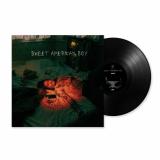













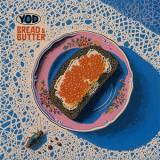














![pdqb - CONTACT IMMINENT[with two Extrawelt remixes]](https://www.deejay.de/images/l/1/2/1268612.jpg)