In his own time, in his own tone and in his own company.
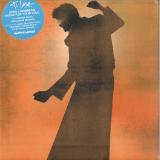
‘Win and lose without losing oneself’’ This line from French rapper Oxmo Puccino greatly accompanied David Walters while composing his fourth studio album. Over the eleven tracks on ‘Ti Love’, David took his time to find the right tone and in turn, tell his truth.
‘Ti Love’, is a French-Creole abbreviation for “petite love”, meaning ‘little love’, evoking that sweet fondness found in those small gestures and little acts of kindness.
Think of things like young kids' brotherly love or a stranger lending you a helping hand, while expecting nothing in return. It’s these motions that allow this album to feel full of real life, carried by beating drums that also pull at our heart strings.
Basing himself in a small village in Martinique, where David had not long since scattered the ashes of his late mother, the multi-instrumentalist decided to remain there and let the writing of Ti Love pour out from deep inside him. Taking influence from around the island, the energy from his makeshift studio set up in Fort de France, allowing a resilient yet grieving man to recount, let go and come to terms with his recent loss.
So embracing these new circumstances, on the rugged coastal Caribbean island of Martinique, David took up an artist’s residency in the island’s capital Fort de France, located near the town’s port is the ‘Manoir des Artistes’, a bustling recording studio space. A place where the walls shake as the latest sounds being created are blasted by locals and visitors alike. Most studio doors are wide open; as music here is a huge part of everyday life, feedback from encouraging neighbouring musicians is on hand and welcomed. A contrast to the isolation often assumed with working in more traditional music studios.
It was here in this stimulating environment that David recorded Ti Love’s initial demos.
With his first collaborator onboard, Neeweed, a 25-year-old producer and gospel expert who David met at the Martinique Jazz Festival.
Of the album’s initial versions of the record David recollects: ‘It took me three years to write it, then I rewrote it, reworked it. In the end I'm really glad I stepped back and listened to myself.’ I found a great ally in GUTS, who ended up being the artistic director of the record”
David surrounded himself with the right people who helped him express himself in the best possible way. He called on other friends and musical comrades; album opener and title track, ‘Ti Love’ features the incomparable Fatoumata Diawara (World Circuit Records / Africa Express) and further along additional production came in from; Izem, Art Of Tones, and GUTS himself, who all added just the right amount of ‘little love’ to this
project. Further helping hands came from Californian producer and DJ Captain Planet, who David was introduced to a few years ago. Closer to home, here in Europe, the German producer Bluestaeb appears on two tracks: the very catchy disco funk ‘Mr Maraboo’ and ‘Kite Koule’, the latter being the first single lifted from the album, where David invited Nigerian guitarist Keziah Jones.
Elsewhere on the album, fellow Heavenly Sweetness recording artist Blundetto contributed two tracks; the reggae ‘Voodoo Love’, which is David's tribute to Studio One, and the very sweet and resilient ‘Bon Voyage’, which closes the album... "It's gold, it doesn't need anything changing.” remarked David - ‘Bon Voyage’ is a goodbye to his mother, whose voice called him from the bottom of the sea one night while he was surfing during the full Moon.
Released almost 20 years after his debut album ‘AWA’ released on French imprint Ya Basta, home to Gotan Project and many others, David boasts a long list of radio supporters including; Gilles Peterson, Cerys Matthews and Don Letts at the BBC, while further field Cosmo Radio in Germany, and KCRW in Los Angeles.
On this new record, David has shown sincerity and vulnerability, while still honouring the infectious groove that he is known for the world over. Despite the upsets, a little love can indeed go a long way.
CREDITS:
Produced by Bluestaeb / Blundetto / Captain Planet / Izem / Art of Tones
A&R : Guts
Mixed by Mr Gib @ Onetwopassit
Except "Bon Voyage” and "Voodoo Love" mixed by Jerome “Blackjoy” Carron
Mastered by Benjamin Joubert @ Biduloscope
Art by Elliott Walters
Cerca:kou
Jana Koubková has long been one of the leading figures of Czech jazz, defined by rhythm, improvisation, playfulness and atmosphere. These new reimaginings of her tracks open a fresh chapter within the LBDISSUES series.
The original recordings, released in the late 80s, are almost impossible to pigeonhole into any single genre. Call it world music, call it jazz, call it avant garde, and you would be both right and wrong at the same time.
These remixes work for adventurous DJs as well as for listening in one continuous flow, where they almost read as a mini album. Trent's take on "Nijana" reshapes the piece from a tropical tribal mood into a cosmic downtempo roller, while Prague based artist Desteffan brings a completely new perspective to "Pipu", "Horor" and "Krocej". His versions draw from downtempo and trip hop influences, spontaneous live instrument jams and even flashes of EBM. And last but not least, "Vanany Vanyna" marks the return of label mainstay Regular Customer, whose reinterpretation expands the rhythm of the original into mid-tempo territory with a disco leaning feel. They all honour Jana's original sound while pushing it into unexplored terrain.
Now in her eighties and still performing, Jana is not being revisited here for nostalgia's sake. These tracks represent the next step in her remarkable and ever-evolving musical journey
c 03: Horor (DeSteffan Remix) [feat. Panta Rhei]
[d] 04: Vanany Vanyna (Regular Customer Remix) [feat. Panta Rhei]
- A1: Call (Kuki Koudan)
- A2: Goldwrap (E.s.t. (Esbjorn Svensson Trio))
- A3: U & I (After School Tea Time
- A4: The Postman (The American Analog Set)
- B1: Desire - Passion - (Akina Nakamori)
- B2: State Of Highway (Tokyo No.1 Soul Set)
- B3: Lady Madonna (The Beatles)
- C1: O Caroline (Matching Mole)
- C2: Giyaman (Tabito Nanao)
- C3: Don't Say Anything (Kako And Katsumi (Original: The Happenings Four))
- C4: Snoring Of The Clouds (Husking Bee)
- D1: Wishing For Happiness From Beyond (Izumi Kanata (Shimamoto Sumi))
- D2: I'm Getting Ready (Michael Kiwanuka)
- D3: Four In The Morning (Little Creatures)
The second cover album, released in 2013, is now available on vinyl for the first time! It features songs from a variety of genres, both Japanese and Western,
arranged in Clammbon's signature style.
[c] a3. U & I (After School Tea Time [Yui Hirasawa, Mio Akiyama, Ritsu Tainaka, Tsumugi Kotobuki, Azusa Nakano])
- A1: Hit Hunter
- A2: Fantasy
- A3: Strike!
- A4: Blue Night
- B1: Moonwalk
- B2: Tokyo Searchlight
- B3: Let's Meet At Daikoku Pier
- B4: Hit Number - Evisbeats And Punch Rmx
Celebrating its 10th anniversary in 2025, Emi Okamoto's debut mini-album "Strike!" is being released on vinyl LP with a newly remastered "10th Anniversary
Edition"!
Singer-songwriter Emi Okamoto is a multifaceted artist, active not only as the lead vocalist of the band Friends, but also in dramas, writing songs, and supporting
and guesting at RIP SLYME's live shows. Her fourth album, "Ten City," commemorating the band Friends' 10th anniversary, will be released in September 2025
and is generating rave reviews. Also celebrating its 10th anniversary in 2025, her debut solo album will be released on vinyl LP with a newly remastered"
10th Anniversary Edition"! Written and composed by herself, this album showcases her unique style, spanning everything from cheesy electro-pop to
Idol-esque tracks, '90s R&B, exotic pop, and emotional rock ballads. Also included as a bonus track is the remix "Hit Number - Evisbeats and Punch Rmx"
by Evisbeats and Michel☆Punch. The single-LP release of "Strike!" sold out immediately, skyrocketing in price even on the used market and making it
difficult to find, so this vinyl release is a welcome surprise! Guest appearances include Kouki Okamoto (Gt./Okamoto's) and Keisuke Okamoto (Dr./Kuroneko
Chelsea).
E-style single jacket / Japan pressing / 33 RPM / Lyrics included
- 1: Lexachast I
- 2: Lexachast Ii
- 3: Lexachast Iii
- 4: Lexachast Iv
- 5: Lexachast V
- 6: Lexachast Vi
- 7: Lexachast Vii
- 8: Lexachast Viii
- 9: Lexachast Ix
Lexachast is an ongoing collaborative work by Amnesia Scanner, Bill Kouligas & Harm van den Dorpel.
Initially birthed as a joint, improvised performance between Amnesia Scanner and Kouligas at the ICA, London in 2015, it was later recreated and extended with visual artist van den Dorpel into a 15-minute online-only audiovisual work – known simply as Lexachast. Since then, it has expanded into a live show that has been performed at Transmediale, CTM Festival, Unsound Krakow & Adelaide, Next and LEV Festival and during Paris Fashion Week in collaboration with the brand Ottolinger. Now to be released on PAN, is a new document of Lexachast in its current, full-grown form.
Whilst broadly inspired by the experience derived from and exposure to algorithmic patterns as generated by visual artist Harm van den Dorpel’s specially- devised program, the work is a sonic reference to the fallouts of avant-EDM and cyberdrone. This in turn is simultaneously mirrored by the perturbing visuals, created by a unique algorithm that sources and blends various filtered imagery from DeviantArt and Flickr in real time – with a bias towards the NSFW, extreme banality, and ornamental melancholia. The results were a perfect fit for the deliberate intention of non-intent, an anti-video of sorts, which ended up as a defining element for the project.
- 1: Workaround One
- 2: Workaround Two
- 3: Workaround Three
- 4: Workaround Four
- 5: Workaround Five
- 6: Clouds Strum
- 7: Workaround Six
- 8: Workaround Seven
- 9: Workaround Eight
- 10: Workaround Nine
- 11: Square Fifths
- 12: Workaround Bass
- 13: Pause
- 14: Workaround Ten
‘Workaround’ is the lucidly playful and ambitious solo debut album by rhythm-obsessive musician and DJ, Beatrice Dillon for PAN. It combines her love of UK club music’s syncopated suss and Afro-Caribbean influences with a gamely experimental approach to modern composition and stylistic fusion, using inventive sampling and luminous mixing techniques adapted from modern pop to express fresh ideas about groove-driven music and perpetuate its form with timeless, future-proofed clarity. Recorded over 2017-19 between studios in London, Berlin and New York, ‘Workaround’ renders a hypnotic series of polymetric permutations at a fixed 150bpm tempo.
Mixing meticulous FM synthesis and harmonics with crisply edited acoustic samples from a wide range of guests including UK Bhangra pioneer Kuljit Bhamra (tabla); Pharoah Sanders Band’s Jonny Lam (pedal steel guitar); techno innovators Laurel Halo (synth/vocal) and Batu (samples); Senegalese Griot Kadialy Kouyaté (Kora), Hemlock’s Untold and new music specialist Lucy Railton (cello); amongst others, Dillon deftly absorbs their distinct instrumental colours and melody into 14 bright and spacious computerised frameworks that suggest immersive, nuanced options for dancers, DJs and domestic play. ‘Workaround’ evolves Dillon’s notions in a coolly unfolding manner that speaks directly to the album’s literary and visual inspirations, ranging from James P. Carse’s book ‘Finite And Infinite Games’ to the abstract drawings of Tomma Abts or Jorinde Voigt as well as painter Bridget Riley’s essays on grids and colour. Operating inside this rooted but mutable theoretical wireframe, Dillon’s ideas come to life as interrelated, efficient patterns in a self-sufficient system.
With a naturally fractal-not-fractional logic, Dillon’s rhythms unfold between unresolved 5/4 tresillo patterns, complex tabla strokes and spark-jumping tics in a fluid, tactile dance of dynamic contrasts between strong/light, sudden/restrained, and bound/free made in reference to the notational instructions of choreographer Rudolf Laban. Working in and around the beat and philosophy, the album’s freehand physics contract and expand between the lissom rolls of Bhamra’s tabla in the first, to a harmonious balance of hard drum angles and swooping FM synth cadence featuring additional synth and vocal from Laurel Halo in ‘Workaround Two’, while the extruded strings of Lucy Railton create a sublime tension at the album’s palatecleansing denouement, triggering a scintillating run of technoid pieces that riff on the kind of swung physics found in Artwork’s seminal ‘Basic G’, or Rian Treanor’s disruptive flux with a singularly tight yet loose motion and infectious joy. Crucially, the album sees Dillon focus on dub music’s pliable emptiness, rather than the moody dematerialisation of reverb and echo. The substance of her music is rematerialised in supple, concise emotional curves
and soberly freed to enact its ideas in balletic plies, rugged parries and sweeping, capoeira-like floor action. Applying deeply canny insight drawn from her years of practice as sound designer, musician and hugely knowledgable/intuitive DJ, ‘Workaround’ can be heard as Dillon’s ingenious solution or key to unlocking to perceptions of stiffness, darkness or grid-locked rigidity in electronic music. And as such it speaks to an ideal of rhythm-based and experimental music ranging from the hypnotic senegalese mbalax of Mark Ernestus’ Ndagga Rhythm Force, through SND and, more currently, the hard drum torque of DJ Plead; to adroitly exert the sensation of weightlessness and freedom in the dance and personal headspace.
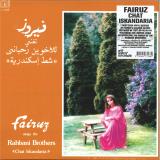
Wewantsounds is delighted to reissue Fairuz"s classic album Chat Iskandaria released on Relax-in in 1987. The album sees The Lebanese Diva going back to her roots and interpreting classic songs by the Rahbani Brothers in her own style accompanied by hypnotic traditional orchestral arrangements. Coming with its original deluxe gatefold sleeve, The album - curated by Mario Choueiry from Institut du Monde Arabe (Paris), who also wrote the liner notes (Fr/En) - has been newly remastered by Colorsound Studio in Paris.
A musical odyssey between West Africa, Jazz, and Hip-Hop Feat Magic Malik, Blacc El (Dafuniks), Fanta / Fatoma /
Dramane Dembélé, Mr J.Medeiros, Wamian Kaid. After three critically acclaimed albums, Tribeqa returns with SUMU,
a fourth masterful opus that confirms the collective's unique identity: a vibrant dialogue between African roots, the
momentum of jazz, and the power of hip-hop
- A1: Symphony
- A2: Autumn In City A
- A3: Where The Sigh Goes
- A4: Room 6
- A5: The Sky Is Gray
- B1: Beach A La Mode
- B2: Sketch Of An Afterimage
- B3: The Scenery We Were Together
- B4: Quietly In The Morning
- B5: Sachiko
Lamp's seventh album is so unique that it is difficult to compare it to a specific genre or other artists.
In particular, songs such as "Sachiko," "Symphony," and "Autumn in A City," which are a high level of harmony between complexity and beauty, are no
exaggeration to say that they have elevated popular music to the level of art.
"Yume," a beautiful culmination of sincerity in music, creative drive, and imagination, is permeated with a firm perspective and unwavering values.
This attitude can be called "Lamp-style rock."
The cover features a painting by Hayashi Seiichi, a painter and illustrator who represents the youth culture of the 1970s and is known for his illustrations for
Lotte's "Koume-chan" and the manga "Red Elegy." It adds color to Lamp's delicate and lyrical world.
- A1: Malavoi - Te Traigo Guajira
- A2: Los Caraibes - Donde
- A3: Tropicana - Amor En Chachacha
- A4: Ryco Jazz - Wachi Wara
- A5: Eugene Balthazar - Dap Pignan
- A6: Roger Jaffort - Oye Mi Consejo
- A7: Les Kings - Oriza
- B1: Les Supers Jaguars - Tatalibaba
- B2: Super Combo De Pointe A Pitre - Serrana
- B3: L'ensemble Abricot - Se Quedo Boogaloo
- B4: Henri Guedon - Bilonga
- B5: Les Aiglons - Pensando En Ti
- B6: Los Martiniquenos - Caterate
In Guadeloupe, many people think that jazz and ka music are like a ring and a finger. To some extent, the same could be said about so called Latin music and the music played in the French West Indies.
Both aesthetics were born in the Caribbean and bear so many connections that they can easily be considered cousins. In constant dialogue, there are lots of examples of their fruitful alliance and have been for a while. The English country dance that used to be practiced in European lounges came to be called kadrille in Martinique and contradanza in Cuba. They both featured additional percussion instruments inherited from the transatlantic deportation. Drawing from shared feelings about the same traumatized identity – later to be creolized – it would be hard not to assume that they were meant to inspire each other. The golden age of the orchestras that graced the Pigalle nights during the interwar period further proves the point. As soon as the 1930s, Havana-born Don Barreto naturally mixed danzón and biguine music in a combo based at Melody's Bar. In the following decade, Félix Valvert, a conductor who was born and raised in Basse-Terre in Guadelupe, also worked wonders in Montparnasse with La Coupole, which was an orchestra made up of eclectic musicians. Afro- Caribbean performers of various origins were often hired on rhythm and brass sections in jazz bands, which used to enliven the typical French balls of the capital. In the 1930s and onwards, Rico’s Creole Band was one of them.
Martinican violinist-clarinettist Ernest Léardée, who would become the king of biguine music as well as the main figure of French Uncle Ben's TV commercials (a dark stigma of post-colonial stereotypes), had musicians from the whole Caribbean sphere play at his Bal Blomet – and they all enchanted "ces Zazous-là" (according the words of Léardée's biguine-calypso piece). In les Antilles (French for French West Indies), music history started to speed up in the 1950s, when trade expanded and radio stations grew bigger. The Guadelupean and Martiniquais youth tuned in their old galena radio sets to South American and Caribbean music. As for the women traders, les pacotilleuses, they bought and sold goods across different islands (the "passing of items through various hands" was thought to be most pleasurable) and brought back countless sounds in their luggage. Such was the case of Madame Balthazar, who once returned from Puerto Rico with the first 45rpm and 33rpm to ever enter Martinique.
Out of this adventure was created the famous Martinican label La Maison des Merengues, a music business she opened and undertook with her husband and which proved to be a major landmark. At the end of the 1950s, in Puerto Rico, Marius Cultier competed in the Piano International Contest playing a version of Monk's Round 'Midnight. He won the first prize and this distinction foreshadowed everything that was to come. Cultier, the heretic Monk of jazz, was quickly praised for writing superb melodies, always tinged with a twist that conferred a unique sound to his music. It didn't take long for the gifted self-taught musician to get to play with Los Cubanos, making a name for himself thanks to his impressive maestria on merengues.
The rest is history. Besides, in the late 1950s, Frantz Charles-Denis, born into the upper middle class in Saint-Pierre and better known by his first name Francisco, went back home after working at La Cabane Cubaine – a club located rue Fontaine where he had caught the Latin fever. Francisco's music was therefore heavily marked by his Cuban cousins' influence, which gave the combos he led a specific style and also led to renewal. Things were swinging hard in La Savane, located in the main square in Fort-de-France. He set up the Shango club close by and tested out the biguine lélé there, a new music formula spiced up with Latin rhythms. Soon afterwards, fate had him fly to Puerto Rico and Venezuela.
As for percussionist Henri Guédon (percussions were only a part of his many talents), he was born in Fort-de-France in May 22nd 1944, the day marking the celebration of the abolition of slavery. As an old man, he could remember that in " his father's Teppaz, a lot of hectic 6/8 music was constantly playing...". In the opening lines of his Lettre à Dizzy, a small illustrated collection of writings published by Del Arco, he highlighted the huge impact that cubop had on him as a teenage boy, around 1960. He eventually turned out to be the lider maximo in La Contesta, a big band steeped in Latin jazz. He was also the one who originated the word zouk to describe music which brought the sound of the New York barrio to Paris. It was the culmination of a journey that started in Sainte-Marie: "a mythical place for bélé, the equivalent of Cuban guaguancó". In the early 1960s, the tertiary economy developed to the detriment of agriculture. Yet rural life was where roots music emerged in Martinique and in Guadeloupe.
Record companies played a major part in the process of Latin versions sweeping across the islands – before reaching everywhere else. Producer Célini, boss of the great Aux Ondes label, and Marcel Mavounzy, both the head of Émeraude records - a firm which was founded in 1953 - as well as the brother of famous saxophonist Robert Mavounzy, were big names to bear in mind. Although there were many of them - all of whom are featured on this record - Henri Debs was definitely the major figure in the recording adventure. He proved to be so influential that he even got compared to Berry Gordy. In the mid 1950s, when he acquired his first Teppaz, he worked on his first compositions: a bolero and a chachacha. Then, he became the one man who made people discover Caribbean music, from calypso to merengue. He was among the first ones to rush out to San Juan, Puerto Rico, to buy records and distribute them through a store run by one of his brothers in Fort-de-France. He had members of the Fania All Star come and perform there, which he was madly proud about. He was also the first one to pay attention to Haitian music, such as compas direct and various other rhythms which would soon flood the market. As a result, many of the combos hitting his legendary studio would end up boosted by widespread "Afro-Latin" rhythms. However, he never denied his identity: gwo ka drums were given a major role, although they were instruments which had long been banned from the "official" music spheres. The present selection bears witness to such a creative swarming. Here are fourteen tracks of untimely yet unprecedented cross-fertilization: all types of music rooted in the Creole archipelago have found their way, whatsoever, to the tracklisting. Whether originating from the city or being more rural, they all go back to what Edouard Glissant, in an interview about the place of West Indian music in the Afro-American scope, called "the trace of singing, the one which got erased by slavery." "It is so in jazz, but also in reggae, calypso, biguine, salsa... This trace also manifests through the drums, whether Guadelupean, Dominican, Jamaican or Cuban... None of them being quite the same. They all point to the idea of a trace, seeking it out and connecting to each other through it. This is the hallmark of the African diaspora: its ability to create something new, in relation to itself, out of a trace. It may be the memory of a rhythm, the crafting of a drum, a means of expression which doesn't resort to an old language but to the modalities of it." The opening track features one of the emblematic orchestras of this aesthetic identity, criscrossing many music types from the archipelago. The 1974 Ray Barretto guajira – Ray Barretto was a major New York drummer influenced by Charlie Parker and Chano Pozzo – is magnificently performed by Malavoi, a legendary Fayolais group (i.e from Fort-de-France). Additionally, the compilation ends on a piece by Los Martiniqueños de Francisco. It symbolically closes the circle as it is a genuine potomitan of Martinique culture which also functions as a tireless campaigner for Afro-Caribbean music. Practicing the danmyé rounds (a kind of capoeiria) to the rhythm of the bèlè drum, it delivers a terrific Caterete, a kind of champeta of Afro- Colombian obedience which was originally composed by Colombian Fabián Ramón Veloz Fernández for the group Wgenda Kenya. The icing on the cake is Brazilian Marku Ribas, who found refuge in Martinique in the early 1970s, bringing his singing to the last trance-inducing track. These two "versions" convey the whole tone of a selection composed of rarities and classics of the tropicalized genre, swarming with tonic accents and convoluted rhythms. It is the sort of cocktail that the West Indians never failed to spice up with their own ingredients. For instance, the Los Caraïbes cover of Dónde, a famous Cuban theme composed by producer Ernesto Duarte Brito, has a typical violin and features renowned Martinique singer Joby Valente and his piquant voice.
The track used to be – or so we think – their only existing 45rpm. The meaningful Amor en chachachá by L'Ensemble Tropicana, a band which included Haitian musicians among whom was composer and leader Michel Desgrotte, also recalls how Latin music was pervasive in the tropics in the mid-1960s. They were the ones keeping people dancing at Le Cocoteraie in Guadelupe and La Bananeraie in Martinique. Around the same time, another "foreign" band, Congolese Freddy Mars N'Kounkou's Ryco Jazz, achieved some success on both islands by covering Latin jazz classics – such as their adaptation of Wachi Wara, a "soul sauce" by Dizzy Gillespie and Chano Pozo whose interweaving of strings and percussions can have anyone hit the dancefloor. How can you resist Dap Pinian indeed, a powerful guaguancó by Eugene Balthazar, performed by the Tropicana Orchestra and published by the Martinique-founded La Maison des Merengues? It also acts as a symbol of the maelstrom at work. Going by the name Paco et L'orchestre Cachunga, Roger Jaffory used to play guaguancó too: his Fania-inspired Oye mi consejo is one example of his style. Baila!!!!! Dancing was also one of the Kings' focus points. Oriza is a Puerto Rican bomba and a "classic" originally composed by Nuevayorquino trumpeter Ernie Agosto, which reserves major space for brasses, giving it a special sheen.
Emerging from the New York barrios crucible was also La Perfecta, a Martinique group originating from Trinidad, whose name directly references the totemic Eddie Palmieri figure as well as his own band, also called La Perfecta. Here they borrow Toumbadora from Colombian producer and composer Efraín Lancheros and interpret it by emphasizing percussions, which set fire to the track even more than the wind instruments. The same goes for Martinique's Super Jaguars, who use Tatalibaba – a composition by Cuban guitarist Florencio "Picolo" Santana which was made famous by Celia Cruz & La Sonora Matencera – as a pretext for sending their cadences into a frenzy. In a more typically salsa vein, the Super Combo, a famous Guadelupean orchestra from Pointe-Noire that was formed around the Desplan family and had Roger Plonquitte and Elie Bianay on board, adapt Serana, a theme by Roberto Angleró Pepín, a Puerto Rican composer, singer and musician also known for his song Soy Boricua. Here again, their vision comes close to surpassing the original. In the 1970s, L'Ensemble Abricot provided a handful of tracks of different syles, hence reaching the pinnacle of the art of achieving variety and giving pleasure. They played boleros, biguines, compas direct, guaguancó and even a good old boogaloo - the type they wanted to keep close to their hearts for ever, "pour toujours", as they sang along together in one of their songs. Léon Bertide's Martinican ensemble excelled at the boogaloo which had been composed by Puerto Rican saxophonist Hector Santos for the legendary El Gran Combo.
Three years later, in 1972, Henri Guédon, with the help of Paul Rosine on the vibraphone, tackled the Bilongo made famous by Eddie Palmieri. Such a classic!!!!! And so were the Aiglons, the band from Guadelupe: choosing to execute Pensando en tí, a composition by Dominican Aniceto Batista, on a cooler tempo than the original, they noticeably used a wonderfully (un)tuned keyboard in place of the accordion. On the high-value collectible single – the first one released by Les Aiglons under the Duli Disc label – there is a sticker classifying the track under the generic name "Afro". Now that is what we call a symbol. Jacques Denis
- Hinomaru Factory - Chinese Boy
- Hinomaru Factory - Mercy Of Doom
- Hinomaru Factory - Modern Romance
- Dea - Draw The Curve
- Dea - Pretty Smile
- Vinyl Kaitai Koujou - Arigato Sensei
- Vinyl Kaitai Koujou - Katadore
- Vinyl Kaitai Koujou - Puraneri No Kopī
- Excentrique Noiz - Still In My Heart
- Excentrique Noiz - Dark Crystal Day
- Inpull Caco - Rakuda
- Inpull Caco - Cable Dance
- Tomoko Higuchi - Feel Me Up
- Tomoko Higuchi - Futari Demo Ima
- Gekko Imonkyaku - Sakyū Nite
- Gekko Imonkyaku - Aozora
- Juma - Object Glass
- Juma - Velvet Noise
- Juma - Clockwork Circus
- The Flag - Through The Heavenly Eyes
1[39,45 €]
After the success of the first volume, “Nihon No Wave 2” continues to unearth the hidden history of Japan’s underground electronic scene from the ’80s. This second installment digs even deeper into the archives, showcasing more rare tracks from obscure artists who operated on the fringes of Japan’s independent music world.
Like its predecessor, “Nihon No Wave 2” captures the raw energy and experimental spirit of the "Nippon-wave" era—where lo-fi synths, minimal rhythms, and post-punk aesthetics converged into a uniquely Japanese take on global sounds. Many of these recordings, originally released on cassette compilations or small-run vinyl with no international reach, have remained virtually unknown outside Japan.
- Keme Bourama
- Sozani
- Kasse Dya
- Kasse Moro
- Fognana Kouma
- Niagaleba
- Kaira
- Simbo
- Mande Djali
- Toumaro
Kasse Mady Diabate, a key figure in Malian music, left his mark on history with his gentle yet powerful voice, earning him the nickname "the golden voice of Mali". A respected Mandingo artist, he was known for his ability to touch souls with melodies and texts steeped in depth and tradition. As a griot, he carried the musical heritage of his people with dignity and talent. The album title song, Toumaro (A bientôt), written by his daughter Hawa Kasse Mady Diabate, is part of this heritage, celebrating love and gratitude. After Kasse Mady"s sudden death in 2018, Hawa continued the album her father had started, offering a poignant tribute to his legacy and a beautiful way to connect with him spiritually through music. Hawa herself is an iconic figure on the Malian music scene, particularly as a member of Trio Da Kali, the griot "super-group" whose album Ladilikan with the Kronos Quartet was a true masterpiece. Toumaro is a testament to the richness of the griot tradition, carried on by artists such as Hawa as well as Lassana Diabate and Madou Kouyate. Their collaboration on Toumaro with renowned musicians underlines the importance of passing on cultural and musical values, while renewing the genre through contemporary arrangements.
- A1: Orchestre Du Jardin De Guinée Sakhodou
- A2: Orchestre De La Paillote La Guinée Moussolou
- A3: Bembeya Jazz National Guantanamera-Seyni
- A4: Bembeya Jazz National Sabor De Guajira
- B1: Balla Et Ses Balladins Sakhodougou
- B2: Balla Et Ses Balladins Samba
- B3: Orchestre De La Paillote Kankan-Yarabi
- B4: Myriam’s Quintette Solo Quintette
- C1: Pivi & Les Balladins Ka Noutea
- C2: Horoya Band National N’banlassouro
- C3: Orchestre De La Garde Républicaine Sabouya
- C4: Keletigui Et Ses Tambourinis Samakoro
- D1: Keletigui Et Ses Tambourinis Miri Magnin
- D2: 22 Novembre Band Kouma
- D3: Les Frères Diabaté N’fa
On October 2 1958, after over 60 years of colonial rule, Guineans voted overwhelmingly for their independence, and Guinea was declared a Republic with Sékou Touré as President. Guinea was the first of West Africa’s Francophone colonies to gain independence. To free Guinea from its colonial legacy, president Touré sought to restore dignity to his nation and give cause for Guineans to take pride in their culture, history and newfound freedom. To achieve this, he instructed his government to implement new cultural policies that were intended to revitalise and celebrate indigenous culture. The focus of these new policies was on music.
In 1961, President Touré launched authenticité, the name of his new cultural policy for Guinea. One of its first acts was to assemble the best Guinean musicians into a new state-sponsored orchestras that were tasked with presenting traditional Guinean music in a new and modern style. All musicians in Guinea’s orchestras were officially designated as members of the public service. During the years of Sékou Touré’s presidency (1958 – 1984), the government’s cultural policy of authenticité was applied strictly to the creative arts. Guinea’s sole political party, the Parti Démocratique de Guinée exercised complete authority over artistic production. The scale of the Guinean government’s commitment and efforts to invigorate its indigenous musical cultures was unmatched in Africa, and it presented a clear contrast to the minimal endeavours undertaken by Guinea’s former colonial rulers.
From 1967 to 1983, Guinea’s government presented selections of songs from the Voix de la Révolution catalogue on its own recording label, Syliphone. These recordings were described as ‘the fruit of the revolution’. Syliphone was revolutionary in many aspects: it was the first recording label to feature traditional African musical instruments such as the kora and balafon within an orchestre setting; it was the first to present the traditional songs of the griots within an orchestre setting; and it was the first government-sponsored recording label of post-colonial Africa. Syliphone represented authenticité in action, and over 750 songs were released by the recording label on 12-inch and 7-inch vinyl discs. All are highly sought after by collectors worldwide.
This first volume of a two-volume series presents a selection of the best of early Syliphone recordings. The songs demonstrate not only the essence of Guinea’s authenticité policy and of its subsequent Cultural Revolution, but of a confluence of musical styles from Cuba, jazz, highlife and the diverse influences of Guinea’s cultural groups.
Das weltweit gefeierte Musikphänomen Africa Express ist zurück mit einem brandneuen Studioalbum mit
dem Titel „Africa Express presents... Bahidorá“, das in Mexiko aufgenommen wurde und Künstler und
Musiker aus vier Kontinenten zusammenbringt. Das bahnbrechende Musikkollektiv vereint seit über zwei
Jahrzehnten Künstler aus verschiedenen Ländern und Genres in radikal kreativen Kollaborationen, in denen
alles passieren kann und auch passiert.
Mit der Idee, Künstler aus verschiedenen Kulturen, Genres und Generationen zusammenzubringen, um
aufzutreten und Musik zu machen, wurde Africa Express 2006 mit einer Reise nach Mali gegründet, die die
lokalen Stars Toumani Diabaté, Bassekou Kouyaté und Amadou & Mariam mit Künstlern wie Mitbegründer
Damon Albarn, Martha Wainwright und Fatboy Slim zusammenbrachte.
Jeder Auftritt von Africa Express ist einzigartig, voller spontaner Momente der Magie, Zusammenarbeit
und Entdeckung. Im Jahr 2024 war Africa Express Headliner des Bahidorá-Festivals in Mexiko, einer Reise,
bei der eine außergewöhnliche Gruppe von Musikern, Sängern und DJs aus der ganzen Welt zusammenkam,
um an den Ufern der alten Quellen von Bahidorá zu proben, aufzutreten und neue Musik zu schreiben.
Das Ergebnis ist „Africa Express präsentiert ... Bahidorá“, eine völlig originelle, einmalige Sammlung von
21 Songs, die ein außergewöhnliches Line-up von Talenten aus Mexiko, Südamerika, Afrika, den USA und
Großbritannien präsentiert, darunter:Abou Diarra – Baba Sissoko – Bonobo u.a.
Wewantsounds is delighted to continue its Algerian music reissue program with the release of Freh Khodja's sought-after 1975 LP, Ken Andy Habib. Recorded in Paris with Les Flammes, a group of immigrant musicians, the album is now reissued for the first time. Selected by Paris-based DJ Cheb Gero, who recently compiled the Sweet Rebels Rai set and curated the Abranis LP release for Wewantsounds, Ken Andi Habib is a masterful blend of Arabic music, jazz, Carribean/Latin grooves and funk. Featuring original artwork, audio remastered by Colorsound Studio, and a two-page insert with new liner notes (French/English) by Algerian journalist Rabah Mezouane.
- A1: Kefi Mba 07:08
- B1: N‘ny 04:50
Als Erbe der Tradition der Griots - Geschichtenerzähler, Dichter und Musiker, die jahrhundertelang als Hüter des westafrikanischen Kulturerbes fungierten - war Ousmane ein Wegbereiter des modernen elektrischen Mandingue-Sounds. An der Seite von Mory Kanté & Kanté Manfi la bei Les Ambassadeurs du Motel de Bamako und später bei der in Abidjan ansässigen Band Les Ambassadeurs Internationaux schmiedete Ousmane seine Karriere, bevor er dem malischen Sänger Salif Keita mehr als drei Jahrzehnte lang als dessen Gitarrist diente. Unzählige Jahre des Tourens brachten Ousmane dazu, sich auf seine eigenen Kompositionen zu konzentrieren. „Kefi mba“, benannt nach dem schwarzen Stier aus seiner Kindheit, mit dem er sein Maniok-Essen geteilt hatte, und „N'Ny“ wurden im renommierten JBZ Recording Studio in Abidjan aufgenommen. Sie wurden zunächst auf Kassette veröffentlicht und kamen 1982 und 1983 auf Vinyl heraus. Nur wenige Monate nach der Leon Keita-Veröffentlichung präsentiert Analog Africa nun Ousmane Kouyatés zwei funkgetränkte Mandingue-Perlen aus den frühen 1980er Jahren, sorgfältig restauriert, gepresst auf pink gefärbtem 180g-Vinyl und in einer wunderschönen Siebdruckhülle.
Diese EP ist weltweit auf 2000 Exemplare limitiert und verspricht, die Tanzflächen mit ihren ansteckenden Rhythmen ordentlich zu rocken!
- A1: Sun People (Intro)
- A2: Sun Children (Original Mix)
- A3: La Lluvia (Feat Richard Shepard & Quantic)
- A4: The Love Feeling (Feat Brian J)
- A5: 2 Sips & Magic
- B1: Just Move! (Feat Mc Kwasi)
- B2: Brookarest
- B3: Didibina (Feat Falu & Quantic)
- B4: Gira Do Sol (Feat Liliana Araujo)
- B5: Calle Sol (Feat Tempo & Candela All Stars)
- B6: N`dini (Feat Ismael Kouyaté)
Wonderwheel is happy to present the very first pressing of Nickodemus' longtime classic "Sun People", pressed on translucent yellow vinyl. Originally released in 2009 by Thievery Corporation's Eighteenth Street Lounge label, "Sun People" was built with songs made for people who love the sun, sunshine and brighter days to come. Appropriate, of course, as Nickodemus has made his mark soundtracking NYC summers with his massively popular Turntables On The Hudson live events as well as with 20 consecutive years touring the World. The songs were inspired by various people Nickodemus met and places he's been, along with his collective feelings of optimism. It's these positive sonic vibes from all over the globe that Nickodemus matches with collaborators hailing from destinations including Guinea, Colombia, Puerto Rico, Brazil, Romania, India, Turkey, United Kingdom and New York City. These are the Sun People.As songs like "N'dini" "Sun Children" & "The Love Feeling" continue to kept parties dancing until today, "Calle Sol" & "Gira Do Sol" are being discovered by new fans & playlists today. As Jason Bentley, former Music Director at KCRW once said, "Sun People reflects a rich musicality, while infectious rhythms keep the party live. Nickodemus truly knows
no borders on this global dancefloor."Wonderwheel recordings is happy to keep the fire burning with this special limited color vinyl reissue out on June 21st, 2024.
a 01: Sun People (Intro) feat. Ismael Kouyaté
b 02: Sun Children (Original Mix) [feat. The Real Live Show]
- Mali Ni Woula
- Zani Djabaté
- Noumouna Kouloumba
- Sinaya
- Signanna
- Limaniya Kile De Boro
Coloured[22,27 €]
Black Vinyl[22,27 €]
- Oda Mimian
- Ozan Koukle
- Afon
- Alow Aton
- Afro-Love
- Sikiliza
- Racubah
Strut proudly presents a long-coveted gem from the discography of the legendary Ice, AKA Lafayette Afro-Rock Band, now available on vinyl LP. Afro Agban is the closest album in Ice"s catalogue to capturing the signature sound of the Lafayette Afro Rock Band. It showcases the band"s hallmark intricate rhythms and masterful soloing, delivering a collection of solid compositions that defined their first four records. Blending funk, jazz, and African rhythms across seven mostly instrumental tracks, and once again produced by the prolific Pierre Jaubert - one of 1970s France"s most influential producers - Afro Agban is an essential addition to the Topomic/Parisound catalogue.
Catching Flies' (aka Produzent/DJ George King) Musik ist ein bassig-melodisches Amalgam aus brütender Elektronik und komplexen Rhythmen mit Anklängen aus Hip-Hop, House, Soul und Jazz. Er veröffentlicht auf Ninja Tune, Anjunadeep, Cercle und seinem Label Indigo Soul, kollaboriert mit Sofia Kourtesis, Hot Chip, Pretty Girl und DJ Seinfeld und zählt Diplo, Bonobo, Keinemusik, Maribou State, Jungle und Nils Frahm zu seinen Fans. Nach "Silver Linings" (2019) und "Tides" (2024) folgt nun sein neuester Longplayer, den er wie folgt ankündigt: "Ich habe nach einer Tour an der US-Westküste ein Airbnb in Ojai gemietet und ein Beat Tape gemacht. Es ist eine Ode an die Downtempo-Beats-Szene der 1990er/2000er, mit der ich aufgewachsen bin."
- A1: The Universe In A Nutshell
- A2: Pure Love (Feat Damon Albarn)
- A3: Der Fall (Feat Sophia Kennedy)
- B1: Wie Schön Du Bist (Feat Arnim Teutoburg-Weiss & The Düsseldorf Düsterboys)
- B2: Tu Dime Cuando (Feat Ada & Sofia Kourtesis)
- B3: The Talented Mr Tripley
- C1: What About Us (Feat Markus Acher Of The Notwist)
- C2: Unbelievable (Feat Ada)
- C3: A Dónde Vas? (Feat Soap&Skin)
- C4: Vamos A La Playa (Feat Soap&Skin)
- C5: Die Gondel (Feat Sophia Kennedy)
- D1: Brushcutter (Feat Marley Waters)
- D2: Buschtaxi (Album Version)
- D3: Aruna
- D4: Umaoi
Magenta Vinyl[35,17 €]
"Pure Love," featuring Damon Albarn, is the first single from DJ Koze's highly anticipated new album Music Can Hear Us. The new long player, a follow-up to his worldwide hit album Knock Knock, which reached #7 in the German Album Charts and included the global dance hit “Pick Up” will be released on April 4th on Pampa Records. It's a 64-minute trip into space and back.
- Bagola
- Dadunkan
- Cela Sigui
- Tulunke
- Orpaillage
- Dissa
- Wara
- Nana Triban
- Fakoly
- Latege
- Deme
In their new album Bagola, Trio Da Kali present newly composed songs accompanied on balafon and ngoniba, that provide a rich accompaniment to the spectacular voice of Hawa Kasse Mady Diabaté. She inherits her singing style from her father, the late Kasse Mady Diabaté, who was widely recognized as one of Africa"s all-time greatest singers and won a Grammy nomination in 2004. Hawa"s voice has an exquisite purity and expressiveness, with a wide emotional range. She is equally at home in the lively, 9/8 rhythms of the title track Bagola, a light-hearted critique of men in Malian society, to the soulful Orpaillage, a song that laments the destruction of land from gold-panning. Orpaillage was in fact composed on the spot in the studio, reflecting the creative chemistry between these three musicians. The musical director of the trio is balafon (xylophone) player Lassana Diabaté, born in Guinea into a well-known family of balafon musicians. His remarkable dexterity on the balafon earned him a place in Toumani Diabaté"s Symmetric Orchestra, and later on in the group Afrocubism (featuring Eliades Ochoa). He has collaborated with many musicians, including bluesman Taj Mahal on the album Kulanjan. With two balafons of 22 rosewood keys each, tuned to play chromatic scales, Lassana Diabaté achieves a perfect balance of rhythm, melody, harmony and virtuosic embellishment. David Harrington, leader of Kronos Quartet, compares him to none other than JS Bach. Underpinning the balafon with compulsive groove, is the large ngoniba, played with brilliant musicality by Madou Kouyaté (son of Bassekou Kouyaté and member of his group Ngoniba). Madou, the youngest member of Trio Da Kali, also adds rich harmonies with his deep breathy voice to the songs. Trio Da Kali were founded in 2013 under the initiative of the Aga Khan Music Programme, with the help of three-times Grammy-nominated music producer Lucy Durán. The Trio first rose to international fame with their sublime album Ladilikan (World Circuit Records 2017), featuring an unprecedented and multi-award-winning collaboration with Kronos Quartet, the legendary classical string quartet from San Francisco. Bagola is a showcase of Trio Da Kali"s entrancing and unique sound, only equaled by their magical performances on stage.
- No Cruise Control
- Densite
- Jungle The Jungle
- Helix
- Aurillac Accident
- Double Z
- Dodorian
- Funk Kraut
- Snare Attack
- Magnavox Odyssey
Some record crates deserve a sub-category called 'play it again, Sam'. tracks that spin on the turntables without a push. Funk Kraut, Zombie Zombie's second LP on Born Bad, is of this kind. This well-proportioned classic is a fine example of the style the trio has been embodying: instrumental for synths and drums music played live. This time it was a quick affair, recorded by Laurent Deboisgisson in the studio of Cheveu's singer. A pretty straightforward job, and a far cry from their previous concept album. Let us praise Krikor Kouchian's mix: drums have been resampled with some restraint, and that Linn Drum kick lightens up the overall mix. It marks a notable evolution in the band's sound, and adds some dynamic. The album kicks off with 'No cruise control', a big bad sedan that effortlessly eats up the distance at 120 BPM. Kraut as can be, with a twist. And as far as funk goes, it's not Bootsy Collins, but there's a whiff. Space is structured by synth patterns, for optimized drumming : forward, straight and fluid, top-notch suspension (Cosmic Neman / Dr Scho?nberg take care of business on drums). They treat themselves to a diversion via Darmstadt to take some musique concrete on board : mechanical birds chirp, the odd atonal piano here and there. Nerds will appreciate liner notes detailing the equipment used : about twenty synths and they still describe it as minimal. With 'Densite?', we've just passed a polyphonic milestone: outright chords ! Long, suspended pads, pierced only by fat claps. Clapping hands are not far off. The band shows it has mastered concise pop formats. That same vibe can be found in 'Jungle the Jungle', paradoxical tune, catchy and moody at once. You'll get some brass riffs in 'Helix', which takes off on a synth moving from one speaker to another to herald the crash of syncopated drums to come.Zombie Zombie sounds ready to write themes for niche TV series.'Aurillac Accident' documents a haphazard soundcheck which, once in the studio, became a bitter ballad, breaking apart into dubby gravy. Live with two drummers performing, this aspect showcases in 'Snare Attack' and 'Double Z', with its jogging hi-hats and creepy little toy piano motifs. Cardio levels are high on 'Dodorian', perfect track for depraved spinning classes, with its moving filter, disco arpeggios and flashes of synthetic brass. 'Magnavox Odyssey', a nostalgic but bouncy synth lasagna, brings this album to a majestic close. The cover by Dddixie sets the tone with its 'Motorik Vibes & Stereo Grooves' sticker. Motorik, absolutely, it's autobahn time for 45 minutes. And when it comes to stereo grooving, the acoustic image is as wide as the canyons of Mars. DO NOT MISS THIS ALBUM (or the previous Vae Vobis)!
- A1: Idrissa Soumaoro Et L'eclipse De L'ija — Nissodia (Joie De L'optimisme)
- A2: Rail Band — Mouodilo
- A3: Les Ambassadeurs Du Motel De Bamako — M'bouram-Mousso
- B1: Super Tentemba Jazz — Mangan
- B2: Sorry Bamba — Yayoroba
- B3: Super Djata Band — Worodara
- C1: Zani Diabaté Et Le Super Djata Band — Fadingna Kouma
- C2: Salif Keita — Mandjou
- C3: Alou Fané & Daouda Sangaré — Komagni Bèla
- D1: Super Djata Band De Bamako — Mali Ni Woula
- D2: Idrissa Soumaoro Et L'eclipse De L'ija — Fama Allah
Mr Bongo is proud to present 'The Original Sound of Mali', compiled by Vik Sohonie & David Buttle.
Malian music is arguably deeper, more sophisticated and lyrical than any other form of African music. Those of us deeply entranced by Malian culture, and, in particular, the immense hypnotic beauty of Malian music, have put together a
selection of songs from across the country.
Compiled by Vik Sohonie & Dave 'Mr Bongo' Buttle, the story of this release began in 2015 when Dave happened upon the Soul Bonanza blog. A treasure chest of rare finds from around the world! One mix in particular stood out and totally enthralled Dave - le monde à change: a tribute to mali 1970 - 1991. He
already knew of Malian legends such as the Rail Band, Salif Keita, & Les Ambassadeurs du Motel de Bamako, but this mix was something else! Deep & culled from the collections of some of the heaviest African music collectors in the world, legends like Vik Sohonie, Hidehito Morimoto, Philippe Noel, Gregoire
Villanova, and Rickard Masip. Dave immediately contacted Vik and a journey of discovery tracking down the rights-holders began. He also turned to the font of Malian music knowledge, Florent Mazzoleni. Florent has written the definitive book about Malian music - 'Musiques modernes et traditionnelles du Mali'. He
proposed some incredible tracks to include and provided the back bone of the sleeve notes and photos that are used in the album. No Malian album would be complete without a striking front cover photo, and ours is sourced from the late great Malian photographer Malick Sidibé.
On this album you will find well-known artists sitting next to rarer
discoveries. The Rail Band, who are one of the best known of all the big bands in Mali, gave us the stars Mory Kanté and Salif Keita. Les Amabassedeurs du Motel de Bamako were another big act that had Idrissa Soumaoro, Kanté Manfila, and for a while Salif Keita in their ranks. Sometimes Salif would play in both bands in one night, quite a feat considering the bands were fierce rivals. As an albino Salif has had to face considerable prejudice from society, focussing on his musical career to help overcome this.
A major discovery on the album has been Idrissa Soumaoro et L'Eclipse de L'Ija. L'Eclipse de l'Institut des Jeunes Aveugles was a Blind teenagers institute and their record was produced by the German association that took care of blind Malian teenagers in Bamako. It was never properly released commercially and was the first recordings by the legends of Malian music Idrissa Soumaoro, Amadou Bagayoko and Mariam Doumbia. Amadou & Mariam later got married and became household stars, including making an album with Manu Chao.
This album is a concerted global effort to showcase the most vital cornerstone of Malian culture in an attempt to preserve its reputation in the face of its current, grim reality. We hope our highlights of Mali's rich history of musical innovation will serve as a starting point for reclaiming an image tainted by unnecessary conflict. May peace and music return to Mali soon.
Dedicated to Malick Sidibé.
ANAN is a project born from the musical inspiration of DJs Roberto Agosta and Massimo Napoli (Galathea). The name ANAN comes simply from the repetition of the initials of their surnames.
Their new single ‘Naif’ blends African musical roots with a European groove and celebrates the cultural fusion of modern times and explores sounds that transcend borders. Imagine listening to Fatoumata Diawara or Ali Farka Touré meeting St. Germain or Bonobo
This track opens with a pulsating rhythm, featuring traditional instruments, percussion, and the vocal performance of Kadi Koulibaly from Burkina Faso.
Koulibaly manages to convey a sense of joy and vitality, evoking soundscapes rich with texture and dynamic motion. The melody is skilfully combined with electronic and jazz elements, creating an aural experience that invites you to dance. In short ‘Naif’ is a celebration of cultural fusion, an invitation to indulge in rhythm and explore sounds that transcend boundaries.
- A1: Teacherman
- B1: I Love You
Sofia Kourtesis has announced that she will release her new EP Volver on 1 August via Ninja Tune. Along with the announcement she has shared lead single ‘Unidos’ which is made in collaboration with Daphni (aka Dan Snaith aka Caribou), the first ever Daphni collaboration track.
Speaking of the single Sofia says:
“Unidos is about the power and beauty of how much stronger we are together. I always admire the light and the beautiful shine of Dan, he is a hero and he is so generous without making a big fuss about it”
While Daphni says:
“Sofia sent me a demo of this track that she’d been working on and it was immediately evident that it was a massive track. To be clear, all the good ideas in this track are Sofia’s I just added some drums and pumped up the arrangement”
Speaking of the Volver EP Sofia says:
“In the Volver EP I am paying tribute to all the LGBT+ community and all the amazing trans women that I was lucky to meet through the course of the last few years. Their bravery and existence in a world full of hate and danger, they find a way to bring the lights to the most vulnerable communities, specifically those that are behind the walls of terrible corruption in the Latino America Security and Health System.”
The EP recording itself she describes - in keeping with its title - as like a Pedro Almodóvar movie: a chaotic, painful but ultimately joyful experience, as she worked across her twin homes in Germany and Peru with dramatic changes occurring all the time. Across this process Sofia was touring the world, playing bigger and bigger shows, working with local communities in Germany and South America, navigating the continued care of her mother, and even decided to throw beginning to study medicine into the mix.
This has always been what makes Sofia such a special artist - there is so much living crammed into every inch of her music. Here she builds on that, her intoxicating spirit more present than ever.
Anlässlich des 150. Geburtstags von Maurice Ravel präsentiert diese 4-LP-Box die Orchesterwerke des
Komponisten in prächtigem Klang. Das Boston Symphony Orchestra (BSO) zählt zu den “Big Five“, den
besten und angesehensten Klangkörpern Amerikas, und genießt seit den Tagen von Serge Koussevitzky und
Charles Munch den Ruf, das wichtigste „französische“ Orchester der Vereinigten Staaten zu sein. Seiji
Ozawa war von 1973 bis 2002 Musikdirektor des BSO, und diese Ravel-Aufnahmen, die gleich zu Beginn
der Amtszeit des Maestros in Boston aufgenommen wurden, zählen zu den besten Ergebnissen ihrer Zusammenarbeit.
Die audiophile Vinyl-Serie The Original Source präsentiert herausragende Aufnahmen der 1970er Jahre
in ganz neuer Klangqualität. Dafür haben die renommierten Emil Berliner Studios die originalen Vier- und
Achtspur-Bänder mit eigens für die Produktion der Serie entwickelten Technologien in 100% analoger Qualität (AAA) neu gemastert und geschnitten. Die klanglichen Unterschiede zu den Originalveröffentlichungen sind beträchtlich: Größere Klarheit, mehr Feinheiten und Verbesserungen im Frequenzgang, zugleich
weniger Nebengeräusche, Verzerrungen und Komprimierungen ermöglichen ein audiophiles Hörerlebnis wie
nie zuvor.
Auf 180g Vinylplatten und in einer Deluxe-Gatefold Edition mit Originalcovers und -texten werden die
Exemplare dieser Serie limitiert und nummeriert veröffentlicht, begleitet von zusätzlichen Fotos und Faksimiles der Aufnahmeprotokolle und Bandkartons.
Col.Vinyl[27,31 €]
Die finnischen Melodic-Death-Senkrechtstarter Horizon Ignited läuten mit „Tides“ eine beeindruckende neue Ära ein. Bühne frei für ein kolossales Album, ein Werk mit der Kraft, den Kurs eines stagnierenden Genres für immer zu ändern. Die südfinnische Brigade aus Kouvola hat sich seit ihrer Gründung 2017 hohe Ziele gesteckt. Nach zwei viel gelobten Alben kehren Horizon Ignited jetzt mit den kolossalen Hymnen von „Tides“ zurück.
Black Vinyl[15,76 €]
Die finnischen Melodic-Death-Senkrechtstarter Horizon Ignited läuten mit „Tides“ eine beeindruckende neue Ära ein. Bühne frei für ein kolossales Album, ein Werk mit der Kraft, den Kurs eines stagnierenden Genres für immer zu ändern. Die südfinnische Brigade aus Kouvola hat sich seit ihrer Gründung 2017 hohe Ziele gesteckt. Nach zwei viel gelobten Alben kehren Horizon Ignited jetzt mit den kolossalen Hymnen von „Tides“ zurück.
’之 / OF is a word that can be used as a preposition to express the relationship between a part and a whole. It is an unfinished tone, a broken sentence, a start and a whole. It is sustainable, full of potentials and longings.’’
London based performance and sound artist Li Yilei shared an experience familiar to many migrants during the past year of COVID-19 chaos. With their UK visa set to expire, and family back in China, Li made a last-minute dash to return to their nation of birth. Able to board one of the last few flights to China during the initial turmoil of the coronavirus outbreak, Li made it back to Shanghai for a two-week stint in a quarantine hotel.
Though Li had already begun creating OF, the reality of the pandemic began to seep into the recordings. Each of the 12 tracks is a study in horology, using metaphorical sound transcriptions and atmospheric extractions to focus on the temporal relationship between experience and surroundings. Li’s awareness of their own understanding of time became increasingly heightened during quarantine and the emotional involvement found within these new realities informed many of the sounds created.
‘’I tried to portray each song as a short, scattered poem - a moment that I captured to represent each hour.’’
Composed using analogue synthesisers, vocal samples, field recordings and string instruments such as the violin and guqin, Li indulges in moments of grief, panic, healing, cessation, melancholy, vastness, hope, joy and emptiness as they explore the acoustic relations between humans and the many forces of nature.
The art of the Song Dynasty, with its ancient traditions of poetry and timekeeping, were also great sources of inspiration for the album - whilst paintings from the period, specifically those of flowers and birds, are common themes throughout the tracks. Indeed, it is within the vastness of time that the album artwork comes to relevance. The eighth emperor of the Song Dynasty, Huizong, was a revered artist and a scene from his work ‘Finches and Bamboo’ adorns the album cover.
Das gute Leben bzw. die Abwesenheit des selbigen hat die fßnf GewUhnlichen seit Tag eins ihrer "Karriere" beschEftigt. "Es ist immer Sommer irgendwo" thematisiert den in Hamburg sechs Monate währenden Herbst und die zwar weithin bekannte, aber dennoch erstaunliche und irgendwie auch tröUstliche Tatsache, dass, wenn hier der Herbst sein nasskaltes Zepter schwingt, woanders auf der Welt Sommer ist. Man muss auch gUnnen köUnnen! Nun haben wir hier Sommer und ein Sommer ohne Sommer-Hit ist kein Sommer. Da hilft Die Liga Der GewUhnlichen Gentlemen natürlich gerne aus und verUffentlicht ihren Indie/Northern Soul-Ohrwurm "Es ist immer Sommer irgendwo" und zwar nicht nur digital sondern auch als auf 500 Stßck limitierte 7" Single. Ein Song ßüber den Herbst als Sommer-Hit? Verrüßckt, aber deswegen ist die Liga ja auch so beliebt, weil sie immer so Dinger raushaut und so angenehm anders ist. Gemixt wurde die Single vom legendEären Londoner DJ Andy Lewis. "Lege ich gleich nach der neuen Dexys-Single auf!" Gereon Klug
- A1: An Angel (Feat Lisa Li-Lund)
- A2: As The Flowers Turn Green (Feat Lisa Li-Lund)
- A3: Berceuse
- A4: Death Poem Prt2
- A5: Green Field (Feat Olga Kouklaki)
- A6: Playing With The Big Boys (Feat Mark Mulholland)
- B1: The Kid Is Dead (Feat Don Letts & Gaudi)
- B2: The Crown (Feat Louise Quinn)
- B3: Come Again (Feat Lex Amor)
- B4: Where Is The Love (Feat Horace Andy)
- B5: Wait For Me (Feat Annie O'connell)
The latest instalment from Acid Jazz’s Albarika Store series, ‘Afro Funk’ compiles the very best of the legendary T.P. Orchestre Poly-Rythmo’s funk cuts.
Formed in 1968 by leader Clément Mélomé, T.P. Orchestre Poly-Rythmo became the leading group in Benin and the cornerstone of the Albarika Store label and legacy.
Following a four-year hiatus from solo releases, the British musician Matt Karmil returns with the soft-focus gentle beauty and subtly stealthy beats of new LP, ‘No Going Back’.
With inspired moments of creation happening incrementally, the album came together amidst a busy mixing/remixing/ mastering/co-production schedule. Artists who’ve enlisted his^multiple skills includes Bicep, Underworld, Mall Grab, Jayda G, DJ Koze, Neneh Cherry, Sofia Kourtesis, DJ Fett Burger, Matias Aguayo and Carmen Villain.
Feeling the benefits of this new approach, ‘No Going Back’ is the strongest expression of Matt's artistic vision to date, honing the spectrum of styles for which he’s renowned, all smudged together by a warm, gauzy haze. The microhouse anthem ‘SFP’ is followed by the broken tech science of ‘No Going Back’, the spectral dub techno spookiness of ‘Old Haunts’ and the sublime misty shimmer of ‘The Last Time’.
Further switching things up is the oddball dancefloor experimentalism of ‘Still Something There,’ the washed-out electroid balm of ‘Things Really Happen’, and the epic dark ambient closer ’15 mins’.
• Originally released in 1971
• Pressed on clear purple vinyl
• Includes newly enhanced version of the original poster
Indulge in the allure of Reiko Ike, Japan's first adult film star, with the 1971 release, "Koukotsu no seka", now reissued on stunning clear purple vinyl.
This iconic Japanese "sexy jacket" album features a captivating photo from the Toei film "Gendai Poruno-den: Senten-sei Inpu.
"Included is a meticulously recreated poster, a coveted collectible that can fetch tens of thousands of yen in its original form.
Na de comeback plaat van 2021 'Is er iets?', is Madou terug met de EP, 'Engel', net op het moment dat Vera Coomans 75 jaar wordt.
De afgelopen 3 jaar speelde Madou op vele mooie plekken en is de band ook uitgebreid: Mattijs Vanderleen (Marble Sounds, Tommigun) op drums en Marc De Maeseneer (Lady Linn etc...) maken nu ook deel uit van de band.
Hoogtepunten waren Dranouter in 2022 en de uitverkochte AB 'Rewind' show in september 2022 met de re-release na 40 jaar van de eerste Madou plaat op vinyl.
Al die concerten gaven goesting en Vera begon Wiet en Thomas naar nieuwe songs te vragen.
Die nieuwe melodieën leidden tot nieuwe verhalen die nieuwe liedjes werden. Een beetje zoals Randy Newman deed op 'Little Criminals'. Filmische verhalen, muzikale kortfilms, als je wil, een beetje zoals Randy Newman deed op 'Little Criminals'. Maar hier heeft elke song een verhaal met een vrouw als hoofdpersonage.
In november 2023 kreeg Vera telefoon van Gorik van Oudheusden, aka Zwangere Guy.
Hij was op zoek naar muziek voor de TV-serie, 'Putain' waaraan hij werkte, en hij vroeg ons of hij wat nieuw materiaal kon horen. Vera en Thomas speelden in de ICP studio in Brussel een akoestische versie van 'Engel' voor Zwangere Guy en Chuki Beats en die reageerden meteen enthousiast. 'Engel' staat ook op de soundtrack van 'Putain' in een prachtig strijkersarrangement van Wiet Van De Leest.
In mei 2024 trok Madou een paar dagen naar de Jet studio in Brussel en namen ze de EP 'Engel' op onder leiding van Peter Van Laerhoven.
De EP:
Engel:
Gaat over de onvermijdelijkheid van de dood. Vera Coomans:' Als je 75 bent, dan probeer je je in verloren uren wel eens 'de overkant' voor te stellen en wie je op een dag zal komen halen. Of je hem zal herkennen ook. En of het spannend wordt.
Waar het beter was:
Een vrouw wordt wakker uit een nachtmerrie in een nog bangelijkere realiteit.
Koude Voeten:
Waar maanziek zijn toe leiden kan, of hoe je verloren kunt lopen in je eigen hoofd.
Myanmar:
Hoe troostend en het kan zijn om verloren te lopen in je eigen hoofd.
Mooie Dag:
Een mooie dag maar met weerhaken.
Gebroken Glas:
Wat eerst 'Bovary' als titel had, werd uiteindelijk 'Gebroken Glas'.
Madou:
Vera Coomans: zang
Wiet Van De Leest: piano, viool, altviool
Thomas Devos: gitaar, bas, zang
Louis Van De Leest: keyboards, synths, beats
Mattijs Vanderleen: drums, percussie, beats
Marc De Maeseneer: saxofoon
Madou speelt ook live:
Dalton was a band from Tunis, the capital of Tunisia. They came together as a band around 1968 when most of the members studied together at the University of Tunis. The band had five members. Faouzi Chekili on guitar, piano and vocals, Ridha Kouhen on bass guitar, Mustapha Rehouma and sax and percussion, Sadok Gharbi on trumpet and vocals and Skaner Alim on drums and vocals. They were active in the local scene, playing music that was heavily influenced by American soul and funk and at the same time regional musical traditions. In the early 70s the band got a regular gig at a beach hotel called Sahara Beach Resort on the coastline of Tunisia. They had six month contracts for a couple of years in the early 70s and during that time they would play every single night of the tourist season. While the hotel gig required the band to play sets leaning towards tourist entertainment, the regular work helped put some money into the band's accounts. Using those funds the band was able to travel to Rome to record their one and only 7' single release "Alech" around 1971/1972. The band eventually dismantled in the mid 70s and returned briefly as a new group with new members in the late 1970s under the name Carthago but that is a different story.
"That "Soul Brother" is my jam.... !!!!" Lefto
The single itself impressed us heavily when we first stumbled upon it through French collector Victor Kiswell. While the b-side "Soul Brother' sounds like a Tunisian version of modern soul / AOR with it's English lyrics and lush arrangements, the title track "Alech' is the one that will get every party started. An infectious 3/4 rhythm, a great horn arrangement and brillantly layered vocals that made us think of Brazillian music or the Georgian groove band Gaya. Luckily Faouzi Chekili, the former band leader and composer uses social media communication so he was easy to track down. He is still active as a renowned musician in the Tunisian jazz scene and remains active recording and playing concerts both in Tunisia and internationally.