Solid green vinyl. Qwälen became what it is in 2017. The band members share a passion for playing music in its various raw manifestations and their band backgrounds include Küroishi, Nistikko, Dumathoin and Akma among many others. Punk background bleeds into the music connecting Qwälen's interpretation of black metal into how the genre started decades ago. Simplicity, rawness, speed and honesty. These values were present in the beginning and the same values still hold true. Punk background especially shows live as the chaotic energy of hardcore punk clashes with the ritualistic nature of black metal. Lyrical themes in the first album focused on self-portrayal, dealing with loss, building anew along with finding alternatives in abandonment, misanthropy and Satan. The second album ponders the sheep-like nature of humanity, the inevitability of destruction, the acceptance of being faulted and surrendering to a greater force. Syvä hiljaisuus was recorded at Waiting room recording studio in Tampere with Mikael Neves who has worked with the likes of Death toll 80k and Tryer. Mikael also handled mixing duties. Mastering was done by Will Killingsworth at Dead air studios.
Suche:kut
Konkolo Orchestra ist das Züricher Projekt des Multiinstrumentalisten und Produzenten Alexis Malefakis und mit seinen jazzigen Afrobeat- und Highlife-Referenzen eine Hommage an Innovatoren wie Fela Kuti, Tony Allen und Ebo Taylor. Das Debütalbum 'Future Pasts' setzt das warme, lebendige, perkussive Motiv der beliebten 2022er Single 'Blue G' fort. Malefakis beherrscht das Afrobeat-Genre souverän, seine Tracks haben einen ausgeprägten Charakter, Struktur und fröhliche Melodien und featuren talentierte Gastsänger wie Nongoma (Südafrika), Sir Frank Karikari (Ghana) und Kitio Batola (Kongo), neben Eric Owusu (Ghana) an den Drums.
collecting orders for repress :)
DJ Haus drops the last UTTU release of 2019 with Modul8 - a slamming techno-house clone backed with a remix from ItaloJohnson! On the flip Jak Beat an IDM-Houz infused DJ tool gets the remix treatment from Spandau 20’s Nikk who recently turned heads with his incredible split EP with FJAAK. Tek Houz - a glitch house groover co-produced by Marquis Hawkes wraps up the EP of cold DJ kutz for House & Techno DJs alike.
- Introduction (Morning Sun)
- One Past
- If You Please
- Miss Chang Feat. Taiwan Mc & Cyph4
- Saudade
- Stand ! Feat. Plex Rock
- Racing With The Sun
- Down Feat. Scratch Bandits Crew
- In My Room
- Get Up Feat. Ex-I, Lush One & Plex Rock
- Ta Bom Feat. General Elektriks
- J.o.g.j.a Feat. M2Mx, Dubyouth, Kill The Dj
- The King
- The Mourning Son Feat. Jeru The Damaja
- One Past (Obf Remix)
- Saudade Feat. Femi Kuti & Liliboy (Deluxe)
- Stand ! (Extended Version) Feat. Plex Rock
- Racing With The Sun (Deluxe Remix)
- Down (Scratch Bandits Crew Remix)
- In My Room Feat. Chali 2Na
- Get Up (Leyan & Tomapam Remix)
- Ta Bom Feat. Tumi & General Elektriks
- Miss Chang (Tha Trickaz Remix)
- Racing With The Sun (Iration Steppas Remix)
- In My Room (Dj Suv Remix)
- The King - The Libra Priest Suite (Dj Simbad Remix)
Wiederveröffentlichung des CM Debtus! Limitiertes farbiges Triple-Vinyl mit Mamoreffekt. Nach zwei "Groove Sessions"-Compilations war es für die drei Künstler an der Zeit, ihr Rennen mit der Sonne zu starten und ein echtes Debütalbum mit Hip Hop, Dub, Electro und mehr zu schaffen... "Racing with the Sun" wurde wie ein Soundtrack zu einem imaginären Film konzipiert, einem seltsamen Western, der in einem geisterhaften fernen Westen spielt, in dem sich mysteriöse Charaktere in den verschiedenen Tracks verflechten. Später meldete sich das französische Kollektiv mit einem Remix-Album seiner bisher besten Veröffentlichung zurück und nannte es "Remix with the Sun". Ihre eigenen DJs und befreundeten Künstler haben das Album neu abgemischt, um einen neuen Einblick in die Lehren des Chinese Man zu geben. Simbad, Femi Kuti, DJ Suv, Deluxe, Mourning Son feat. Jeru The Damaja, Tha Trickaz, Iration Steppas, OBF, Scratch Bandits Crew, General Elektriks und weitere Gäste haben dazu beigetragen. Die Triple-Gatefold-LP enthält auf drei Seiten das reguläre Album und auf den drei anderen Seiten alle Remixe.
Samosa Records cranks up the summer groove with another sizzling release in the outstanding (Re) Funk+Head series – a collection of juicy tracks from the Samosa back-catalogue selected and re-edited by the man himself, De Gama.
This sumptuous vinyl cut of ITALO Funk and Boogie kicks off with Mexico’s finest, The Funk District and the enigmatic ‘La Rapina’. This is pure, unfiltered Funk District chemistry from the first bar. Snake hips guitar, rolling bass and that super-solid 4-4-4 beat pound into your consciousness whilst the hypnotic chant and Latino-infused vocal tempt you into sin.
Next up on the A-side is Samosa head honcho DeGama and his deliciously refreshing ‘Piňa Colada’ - a new edit of the original 2011 version never previously released on Samosa. And what a mystery box it is. Tight beats, punchy bass, looped synth and house-tinged high-hat lead us to a haunting, melodic vocal breakdown. There’s a subtle Afro flavour to this one, definitely for sipping cocktails in a hammock or Caribbean beach bar.
On Side B Italian Maestro Paul Older takes the beats down several notches with the explosive ‘Daboom’ – the DeGama Re-Groove of Paul’s first vinyl release way back in 2019. This is a straight up, mid-tempo peacock strut down Funksville Boulevard. Possibly wearing a Zoot Suit. Imagine having breakfast with Herbie Hancock and you might get an idea of just how funky this tune is. He’s passing you the eggs and you’re buttering the toast.
The last track sees DeGama delve into his dark magic box for the mind-melting, film noir themed ‘Higher’. The tempo is scaled right back to 92bpm for this portrait of pain, joy, lust and hallucinogenic dreams. ‘Higher’ reveals a side of DeGama that we know lurks in there, but only sometimes makes it to the surface. Smokey, sassy and sultry, this is definitely one for the dimly-lit after party.
The latest episode in the (Re) Funk+Head has set the Samosa bar even higher. This simply has to be in your summer record box and don’t you dare leave home without it.
Habibi Funk is thrilled to share a second collection of deep grooves and unreleased songs from Algeria's Ahmed Malek, often compared to Italian heavyweight Ennio Morricone. Malek’s music effortlessly switches between thematic jazz, funk, reggae and Algerian folk – creating indelible soundscapes that intersect the musical innovations made in African jazz by Mulatu Astatke, Bembeya Jazz National along with some of Europe’s finest experimental composers like Piero Piccioni and Janko Nilovic. “Musique Originale de Films, Volume Deux” is out June 28th, 2024 via Habibi Funk.
Whenever an interview asks about a “memorable moment” in Habibi Funk label history, one we always reference is how we got in touch Ahmed Malek’s (22K Spotify Followers, 285K Spotify Monthly Listeners) music and subsequently his family. It all started with us coming across Ahmed Malek’s music on YouTube in 2012. We were mesmerized by how effortlessly the music would switch between jazz, funk and Algerian folk while counterweighting it with an undertone of melancholia. Musical perception is different for every person, but there is a chance that his music will touch you in one way or another. At the time, we had just started the Habibi Funk label and we felt Ahmed’s music might be a good fit for the sound we were trying to highlight. Fast forward three years: we had become captivated with the idea of reissuing some of Ahmed Malek’s music. We knew some people had tried to locate his family but, but with no success. In the end it was an incredible amount of luck that made it possible for you to read these words and listen to Ahmed’s music. We were on a DJ gig in Beirut playing old Arabic records and we mentioned our passion for Ahmed Malek’s music to a friend. She said she knew one person in Algier, and as much as it would be a shot in the dark, she could ask her if she had an idea of how to find Malek’s family. Two weeks went by before we heard back, and what we got was incredibly good news - her Algerian friend was the neighbor of Ahmed Malek’s daughter! We’re not spiritual people, but it felt like the universe wanted to see the release happen. We started to speak with Henya, Ahmed Malek’s daughter and she was more than happy with our idea. She assured us that her father would have loved the plan as well. She provided us with tons of awesome material, from great photos, to unseen video footage and unreleased tracks. Eventually we visited Henya in Algeria and we licensed some of her father’s music, first for one (Habibi 003), then for another (Habibi 005), then we eventually organized an exhibition in June/July 2019 – Planète Malek – Une Rétrospective – at the Musée Public National D’Art Moderne & Contemporain in Algiers, focusing on Ahmed Malek’s artistic life. We also produced a small movie about him that our friend Paloma Colombe shot and directed. “Musique Originale de Films, Volume Deux” is a deep collection of unreleased songs and stemmed grooves from the Algerian master, from jazz, funk, psych to reggae rhythms and Latin flavors, all under the sonic umbrella of “Planète Malek;” and to quote the maestro, “I didn’t choose music, music chose me.” Lead single is the subtlety funky “Thème Rythme Léger,” out May 3rd along with LP Pre-Order (coincided with Bandcamp Friday for a larger impact) a delicate sonic dance between flute, piano and Spanish guitar with a Bossainfluenced groove. The steady, swingin’ drum groove is cloudlike - definitely toe-tapping friendly so just grab a partner to feel the Rhythme Léger. Second single out May 17th is the reggae-infused “L’Empire Des Rêves” – a sultry sax melody weaves through a prismatic rocksteady thematic groove. 3rd and final single “Thème Djalti feat. Aïda Guéchoud” – is a true Western-inspired ode to his Italian counterpart Ennio Morricone. “Thème Djalti” features the haunting vocals of Aïda Guéchoud, and combines elements of baroque and Bossa-jazz in a timelessly thematic way that seems grandiose yet remains uniquely personal to your ears. Swelling strings, trumpet, fem vox, flute, and plucked guitar expertly arranged, feels like you’re riding a horse into the sunset. Focus track “La La La” is fiery afro-arab-funk of the highest order! Put on your dancing shoes as Ahmed cuts the rug and gets us grooving along. Sonically the cut sounds like if Ahmed ran into The JB’s and Fela Kuti at a Cymande concert. Driving guitar and organ solos vie over pulsating bass riffs and afro-funk drumming that’ll have you out on the dance floor in no time. As always, both vinyl and CD come with an extensive booklet featuring background and interviews with Ahmed compiled through found newspaper clippings and newsreels, also including unseen photos, scans and more. “Ahmed Malek: Musique Originale de Films, Volume Deux” will be out everywhere June 28th.
”Artificial Paradise” ist das sechste Studioalbum der GRAMMY®-nominierten Band OneRepublic, bestehend aus Singer/Songwriter und Leadsänger Ryan Tedder, den Gitarristen Zach Filkins und Drew Brown,
Keyboarder Brian Willett, Bassist und Cellist Brent Kutzle und Schlagzeuger Eddie Fisher. Als Band haben
sie weltweit über 16 Millionen Platten verkauft. ”Artifical Paradise” enthält die Platin-Single „I Ain’t Worried“, die bahnbrechende Single ‚I Don’t Wanna Wait‘ mit David Guetta und die beliebten Hits ‚West
Coast‘, ‚Sunshine‘ und viele mehr. Frontmann Ryan Tedder ist dreifacher Grammy-Preisträger und u.a.
auch für seine Songwriting-Arbeit mit Adele und Taylor Swift bekannt. Außerdem hat er große, weltweite
Hits für die Jonas Brothers, Ed Sheeran, Tate McRae, Miley Cyrus, 5SOS, OneDirection, John Mayer,
Maroon 5 und viele mehr geschrieben.
In the penultimate episode of his widely popular and critically acclaimed HBO series, Painting with John, its creator, John Lurie, sat in a Manhattan recording studio, working out musical parts for the show’s soundtrack. “After the illness started, I didn’t think I’d ever be able to do this again,” said Lurie.
Even as he occupies an enigmatic, multi-faceted, five-decade career characterized by the unexpected, perhaps even Lurie is surprised by this new release of a double-album collection of music, Painting with John, extracted from the series.
Go back a quarter-century or so: As an exotic saxophonist and composer whose pieces alternately recalled cracked-mirror reflections of Thelonious Monk, or Fela Kuti, or Raymond Chandler, Lurie led the vastly influential, downtown NYC jazz ensemble, The Lounge Lizards, through dazzling albums and tours across the globe. He scored indie films and Hollywood hits, collecting a Grammy nomination for Get Shorty along the way and releasing his own surreality-TV series, Fishing with John.
“With their debut record, the merry order of musically miscreants from Los Angeles bring you their eccentric, eclectic, electric Polywave experience” The core members are: Neight Trion (The Black Angels, The Shine Brothers), Rocky (Death Valley Girls), Jay Eraser (Grooms, Roya), Oh-Ra (?) and Malware (Dead Meadow). Recorded and mixed by Jason Simon at Tekeli-li Sound. Mastered by Howie Weinberg "World Destroyers’ Pleasure Club is a musickal order formed during the great plague of the 20’s in Los Angeles in thanks to a constellation of fortuitous alignments. In the midst of the isolation that connected all people across the globe, in that unsettling quiet, a vision was obtained of community, ecstasy and revelry. The vision took on a life of its own as the band found each other and continues to propel the unit forward in their journey toward its realization. When asked to describe their strange, mutant music some fans and even members have found it difficult to do so. For this reason they have chosen the term Polywave as their designated genre which they envision as including other forms of expression besides music, a tendency to be hyper-eclectic and bearing the distinguishing mark of a commitment to continual, intentional self-transformation. WDPC has performed at venues such as Permanent Records Roadhouse, Zebulon, Lodge Room and more, both headlining and supporting artists such as The Intelligence, The Black Lips and The Nude Party. Nicknamed The Mysterious Party Band, they’ve been told they sound like a “Gospel Devo” by DJ Al Lover (Fuzz Club Records), and drawn comparisons to Talking Heads, The Fall, Butthole Surfers and Peter Gabriel. As influences they cite artists as varied as Hailu Mergia, Psychic TV, Scott Walker, Fela Kuti and Red Crayola but these influences don’t necessarily reveal themselves sonically as much as resembling the spirit in which they were conceived. Artist Neight Trion, the principal songwriter, spends as much time on the lyrics as composing the music, aiming for both to be strong enough to stand on their own. Membership includes a revolving and evolving collection of instrumentalists and collaborative mimetic entities but the core members are Neight Trion, singer/keyboards (The Black Angels, The Shine Brothers), Rocky, bass guitar (Death Valley Girls), Jay Eraser, guitar (Grooms, Roya), Oh-Ra, drums (?) and Malware, synth (Dead Meadow). Hailing from all across the US and Europe their operations are based in the Los Angeles area. Armed with their eponymous debut released by Blow Your Mind Records based in Santiago, Chile, they’ll be coming to a town near you and preparing the way for the coming Polywave. This is only the beginning, the first stages of metamorphosis. They invite you to join them in their pursuit of the communal ecstatic experience
Island Boogie arrives four years after Meecham’s previous full-length, Music Not Safari, and sees the veteran producer deliver his most ‘personal’ set yet – a collection of kaleidoscopic, cosmic-leaning, dub disco-influenced neo-boogie excursions inspired by his love of the custom-built soundsystem at Rotation Garden Party, an annual micro-festival founded by a group of friends including his former Chicken Lips production partner Dean Meredith. It's fitting, then, that the EP begins with a superb interpretation of ‘'Dévoilez-Vous’ by T-Kutt, AKA Meredith and long-term studio partner Ben Shenton. The pair’s ‘AM FM Club Mix’ sits somewhere between classic Prelude-style electrofunk, NYC proto-house and early British interpretations of American house music. Séverine Mouletin’s chopped-up improvised vocals weave in and out of sun-bright keyboard riffs, colourful synthesiser motifs, heady synth-strings, D-Train style synth-bass and delay-laden machine drums. It’s a superb re-imagination of one of the album’s most stellar moments.
The EP’s other headline-grabbing remix comes courtesy of Leng co-founder Paul Murphy AKA Mudd. He reworks title track ‘Island Boogie’, teasing out the spacey synths and languid jazz-funk grooves of Meecham’s original mix and dialling them up to the max. The resultant revision sparkles with crunchy clavinet licks, mazy synth and electric piano solos, and spacey chords rising above a mid-tempo dancefloor groove. To complete a strong package, Meecham adds two dubs in his distinctively stripped-back, tape echo-heavy style. He first takes on EP title track ‘Dévoilez-Vous’, wrapping vintage drum machine hits in oodles of space echo and dub delay while devoting more time and space to the killer bassline, Rupert Brown’s infectious hand percussion, and Mouletin’s vocalisations.
To round off the EP, he dubs out album epic ‘La Cassette’, another collaboration with Mouletin that also features additional percussion by Brown. Like the original synth-powered dancefloor dubs of the early-to-mid-80s that have long been an inspiration, Meecham’s ‘La Cassette’ dub features key musical elements – many drenched in trippy effects – popping in and out of the mix, while his sturdy drums and memorable bassline spar with Brown’s percussion below.
Das Debütalbum der Youthsayers, einem Südlondoner Community-Projekt, gegründet von zwei Mitgliedern der legendären Afro-Reggae-Band Soothsayers. Zu den aktuellen YS-Mitgliedern gehört u.a. auch der von Brownswood gesignte Oreglo. Die LP enthält acht einzigartige Interpretatione klassischer und neuer Dub- und Afro-Jazz-Tracks, darunter Coverversionen von Theon Cross, Fela Kuti, Cedric IM Brooks, The Fontanelles und Soothsayers.
Sounds as diverse as Tropical Disco, Afro Funk, Highlife, Juju, Disco, Soukous & more combine effortlessly on the Debut full LP from Bosq & Kaleta. Brilliant songwriter and former member of legendary African groups like Fela Kuti’s Egypt 80 & King Sunny Ade’s African Beats, Kaleta helms the vocal duties with his signature chants in a mixture of Yoruba, Goun, French, English & Fon.
Bosq brings his renowned balance of organic & electronic production to give the album a current but timeless feel. A fantastic cast of guest musicians from as far and wide as Colombias Choco region on the Pacific Coast, to Brooklyn, to Port Novo, Benin & Lagos Nigeria bring a depth of musicianship & musical histories to the beautiful group of tracks.
Repress!
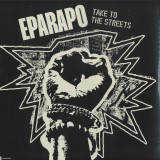
Wah Wah 45s are proud to present the full debut album from Afrobeat supergroupEparapo. Having come togetherduring the unprecedented events of the pandemic and the Black Lives Matter movement, and despite being a project born from the privations of lockdown, their music is ultimately an expression of hope, resilience & resurgence.
The word "eparapo" means "join forces" in Yoruba, the language of Afrobeat. It's also the title of a track by the late, greatTony Allen- drummer for Afrobeat legendFela Kutiand lifelong friend and mentor of our very own "Afrobeat Ambassador",Dele Sosimi. Not only did Tony help to invent Afrobeat, he always looked for ways to push the boundaries, never content with recreating what had gone before but constantly expanding and developing the genre. This project hopes to pay homage to his legacy, and that of Fela Kuti himself. Its aim is to innovate, fuse and diversify while still retaining the essence of the music.
The force behind Eparapo is bassist, composer & producerSuman Joshi.He has been a member of Dele Sosimi's Afrobeat Orchestra for nearly a decade and has performed on stage with the likes of Tony Allen, Seun Kuti, Ginger Baker & Laura Mvula. He is also bassist with UK jazz ensemble Collocutor and fusion project Cubafrobeat.
"The Eparapo project was conceived during a time of lockdowns & government scandals. The music that makes up this album was written and recorded against a backdrop of societal upheaval, culture wars and rising wealth inequality. With little scrutiny or resistance from the mainstream media, our human and democratic rights were being eroded and our institutions debased. Even our right to protest is now under threat. This is a call to action, an expression of frustration & anger at what our nation has become. It's saying that enough is enough, it's time to join forces and make our voices heard. It's time to take to the streets."Suman Joshi
The title track is an epic eleven minute musical representation of this frustration and anger, where the musicians really let loose and allow their voices to be heard. As the only instrumental track on the album it acts as a call to action that is central to this body of work. Featured vocalists on the album are Fela Kuti disciple and Wah Wah 45s artistDele Sosimi, who appears on the singlesBlack Lives Matter,From London To LagosandWho Invented Back & White?as well as a more recent recording,Follow The Money; and London based, Ghanaian born master percussionist and vocalistAfla Sackey, who takes lead vocals on the mournful yet somehow hopefulBeautiful City.
The rest of the group comprises of highly rated UK jazz vocalistSahra Gure; saxophonist, composer, producer and bandleader of the renowned forward thinking jazz outfit Collocutor,Tamar Osborn; keyboard player, producer and front man for Lokkhi Terra and Cubafrobeat,Kishon Khan; one of the UK's finest and most in demand trumpeters,Graeme Flowers, who has played with Quincy Jones, Gregory Porter and many more; trombonist for Bellowhead and mainstay of Dele's Afrobeat Orchestra,Justin Thurgur; and finally drummer for Steamdown and Sons of Kemet, as well as the man behind the Nache project,Eddie Wakili Hick.
The album will be available digitally and limited edition vinyl LP, with striking artwork by our award winning designer Animisiewasz.
"Driving By Numbers" ist bereits das achte Album der Hamburger Band HALMA. Schon beim ersten Stück des wieder instrumentalen Longplayers kommen die vier Musiker*innen Fiona McKenzie (Schlagzeug), Andreas Voss (Bariton-Gitarre), Gundi Voigt(Bass) und Thorsten Carstens (Gitarre) gleich zur Sache: Das Soundgefüge schmirgelt und fliegt - unmöglich, sich in dieser durchwogten Fülle des Hörbaren und Denkbaren sofort zurechtzufinden: Man muss erneut ansetzen, nochmal beginnen, um die komplexe Konstruktion und den artistischen Witz, der in dieser Musik steckt, zu erfassen. Sounds und Rhythmus spielen mit sich selbst Hase und Igel: Katapultstarts, Beschleunigungen, Verzögerungen, Auf- und Abblenden. Die Vielfalt macht klar, dass der Fokus der Band im Ungewissen liegt: Was zu hören ist, funktioniert wie die Brotkrümel im Hänsel-und-Gretel-Wald - die assoziativ montierten Improvisationen führen durch Höhen und Tiefen und Schluchten und Täler letztlich doch zum Ziel: und zwar zurück zum Anfang - wie die Nadeln, mit denen Insekten im Schaukasten fixiert sind - der Zeit entflogen.
Das MEANWHILE PROJECT LTD ist zurück - Knappe vier Jahre nach MARSEILLE erscheint ein neuer Longplayer des Kölner Projekts. Das Duo um MARCELL BIRRECK und MARCUSADAM ist mittlerweile zur fünfköpfigen Band angewachsen, die das neue Album mit der Unterstützung weiterer Gastmusiker gewohnt opulent und vielschichtig präsentiert. SIR MANDRILL wartet erneut mit einer üppigen Palette unterschiedlicher Stilrichtungen, die sich dabei gekonnt miteinander vermischen. So verschmelzen auch hier wieder Chansons, Folk, PostPop, Indie-Rock, Alternative, Ambient und noch viel mehr zu einem großen Ganzen, das in seiner Gesamtheit absolut stimmig wirkt. Einflüsse von so unterschiedlichen Bands wie dEUS, Motorpsycho, den Villagers oder Calexico blitzen hier und da auf. Und die beeindruckende Stimme von Sänger MARCELL hüllt alles abwechselnd in einen warmen Mantel, ermahnt, fleht, rüttelt auf und beruhigt von einem zum nächsten Moment. Damit ist der Band ein großartiges Album gelungen, das dazu einlädt, sich auf eine intensive musikalische Reise zu begeben und mit jedem Hören neu einzutauchen.
Warehouse Find!
As we hurtle towards our 200th Freerange release the quality output you've come to expect from Freerange shows no sign of faltering with Bas Amro bringing you an absolutely stellar EP entitled You And Me. Dutch wunderkind Bas has built himself a solid reputation through only a handful of releases on labels such as Wolfskuil, Kutchuli and most notably his 2011 EP Ten on Freerange which has gone onto become a stone-cold classic in the deep house mecca of Johannesburg. This long awaited follow up delivers on every level and if early feedback and crowd
response is anything to go by looks set to push Bas further into the spotlight where he deserves to be.
You And Me starts in a deceptively understated manner wrapping you in a shroud of warm, dubby stabs underpinned by a rolling groove that can't fail to draw you onto the dancefloor. Things stay deep with hints of Chandler and echoes of Basic Channel until the breakdown arrives, the filters roll up and the whitenoise
shines through bringing a new energy and dynamic to the track. A classic, timeless vibe which we're proud to be bringing you on Freerange. As with his previous release Ten, Bas works hard to deliver not one but two faultless originals so flip over for Across The Street featuring the vocals of Jennifer and you won't be disappointed. A simple, repeating six-measure synth hook drives the track and brings with it a lovely looseness and lack of obvious
structure. Kennifer's sparse, almost improvised sounding vocal drops heighten the sense of space and freefall effect making such a refreshing change to most of todays formulated and conventional house music. Last up is an amazing remix of You and Me from rising start Matt Karmil who brings his own unique and refreshing sound to the EP. Karmil's recent LP on PNN
won rave reviews from all corners and with just two other releases on Beats In Space and International Records Recordings he seems to have burst from out of nowhere but has certainly become hot property in the last 12 months. His forthcoming remix for John Talabot and Axel Boman under their Talaboman is immense and here he treads a similar path focusing on a raw percussion-heavy sound with very minimal tweaks and effects adding subtle colour and interest. These days it's very hard to breakthrough with an original, new approach to house
but Matt Karmil seems to have done it with ease.
- A1: Get Down • A2. The Cross • A3. Made You Look
- B1: Last Real Nigga Alive
- B2: Zone Out (Feat. Bravehearts)
- B3: Hey Nas (Feat. Claudette Ortiz & Kelis) • B4. I Can
- C1: Book Of Rhymes
- C2: Thugz Mansion (N.y.) (Feat. 2Pac & J. Phoenix)
- C3: Mastermind • C4. Warrior Song (Feat. Alicia Keys)
- D1: Revolutionary Warfare (Feat. Lake) • D2. Dance
- D3: Heaven (Feat. Jully Black)
Repress! PRESSED ON BLUE & WHITE SWIRL VINYL! Housed In A High Gloss Jacket With Each LP Tucked Into A Printed Inner Sleeve
Nasir "Nas" Jones' 2001 record Stillmatic was considered a major comeback for the 90s rap icon. It signalled a return to the gritty, urban chaos of his acclaimed debut album, after releasing record after record of gradually more mainstream material, and Nas' return to prominence in the highest echelons of hip-hop. In spite of this newfound critical clout, Stillmatic's release did nothing to squash his then ongoing feud with fellow New Yorker Jay-Z, who had gone so far as to challenge Nas to a pay-per-view rap battle. A challenge Nas rejected, stating "If Jay-Z wants to battle, he should drop his album the same day I do and let the people decide." Nas fans never would get the no-holds barred lyrical battle with Jay-Z many had speculated. What they got instead was one of Nas' most personal and introspective releases to date in 2002. Not long after Stillmatic's release, Nas spent much of his time away from the limelight to tend to his ill mother, who would pass on from breast cancer in 2002. His experiences with his mother's mortality as well as the fallout of his feud with Jay-Z, who continued to produce diss tracks as Nas tended to his mother, would inspire much of the lyrical material on his next record. God's Son was released in December of 2002, and like Stillmatic before it, was subject to major critical acclaim. On God's Son, Nas effectively took the battle-hardened demeanor he had cultivated and tore it down across 14 tracks that were emotionally insular, though still dusted in urban grit, and still finding time to shoot back at Jay-Z's potshots on tracks like "Last Real Nigga Alive" and "Mastermind." Assisting Nas was a slew of top-tier producers like The Alchemist, Eminem, Ron Browz, and Salaam Remi, over samples of James Brown, the Incredible Bongo Band, Fela Kuti, and Beethoven, and guest vocals from Alicia Keys, Kelis, Claudette Ortiz of City High, and even a posthumous 2Pac.
The Space Lady began her odyssey on the streets of San Francisco in the late 70s, playing versions of contemporary pop music an accordion and dressed flamboyantly, transmitting messages of peace and harmony.
Following the theft of her accordion, The Space Lady invested in a then-new Casio keyboard, birthing an otherworldly new dimension to popular song that has captured the imaginations of the underground and its lead exponents ever since, with the likes of John Maus, Erol Alkan and Kutmah being devotees.
Of her early street sets, only one recording was made, self-released originally on cassette and then transferred to a home-made CD. "The Space Lady's Greatest Hits"(LSSN021) features the best of these recordings - mostly covers but with some originals - pressed on vinyl for the first time and features archival photographs and liner notes from The Space Lady herself. 'Greatest Hits' contains The Space Lady's personal favourites; her haunting take on The Electric Prunes' 'I Had Too Much To Dream (Last Night),' a frantic 'Ballroom Blitz' amidst other reconstructed pop music. Included are also 4 originals that easily match for the Pop canon. Following the release of this archive, The Space Lady will be issuing new material and travelling the world to present her message outside the United States for the first time.
In the mid 90s The Space Lady packed away her Casio synth and silenced her distinctive voice, retiring from the streets of San Francisco. Now, more than 30 years after her initial forays on Haight Ashbury, she has surfaced with the first ever official release of her timeless, startling music and, even more remarkably, has re-started her live career. Now in Colorado, The Space Lady continues to spread her message of peace, harmony and love.
VINYL LP: Edition of 500, black Vinyl. Gatfold Poster and printed insert with Download Card.
WHITE COLORED VINYL
9-piece powerhouse Nubiyan Twist embark on a fresh musical odyssey with their vibrant fourth album "Find Your Flame". Over 12-track the band seamlessly weaves together global grooves, soul and jazz; expertly intertwined with electronic elements, horn-led melodies and spontaneous improvisation. The album marks a significant evolution for the group as they welcome Sheffieldbased vocalist Aziza Jaye to the forefront, adding a fresh dimension of Patois and RnB to their sound.
Recorded across three sessions over the last three years, ‘Behold’ is a testament to Parsnip at their most creative, catchy and collaborative. This album showcases the multi-talents of all four members, with spirited performances adding dazzle to the thirteen tracks.
Paris Richens lets the bass playfully roam. Carolyn Hawkins tumbles feeling into the drum rumble. Stella Rennex’s guitar soars alongside her saxophone work, whilst a sprightly keyboard is tenderly attended by Rebecca Liston. Everyone sings amidst this lush canopy.
Patience, environmental cues and internal signals are integral for a garden to flourish. The same can be said of the conditions necessary for ‘Behold’ to emerge. It is an album gleeful in reassessment, changed priorities and anticipation. The roots are deeply anchored to mystery, drinking up a hidden wonderment that lies within. ‘Monument’ is a twist of melody and mania, “For what am I? But a channel of light” they attest amongst the whoops and hollers. ‘The Babble’ sounds like Ray Davies playing Wordle for enlightenment. In fact most of these songs are pointing the way towards growth and understanding. ‘Turn to Love’ is mesmeric and timeless, thoroughly serene and perfectly judged. Parsnip write songs as a form of communion with the intangible in our increasingly delusory world, but there is always a gentle reminder; don’t take anything too seriously! “My head is gonna split in two, fix it with flour and glue” they demand on ultimate bop ‘Papier-Mâché’, this juxtaposition of mature resolve with childlike astonishment packs a more powerful punch.
On ‘Behold’, Parsnip explore both the inner and outer realms of consciousness with quick wits and some seriously quality jangle and jolt. ‘The Light’ is a whip smart workout, sprouting naturally from the propulsive nature of their debut album ‘When the Tree Bears Fruit’ (2019). ‘Placeholder’ is also devastatingly honest and channels The Field Mice as it buries itself like an arrow into your heart.
Anti Fade Records and Upset The Rhythm proudly present Parsnip’s first album in five years, ‘Behold’. Available in all good record stores April 26th.
- A1: Never In Doubt - Widescreen Rework
- A2: The Journey - Cardiac Club Remix
- A3: Vibration - Cardiac Club & A J E Rework
- A4: I Saw Stars - Cy Samuels & A J E Rework
- B1: The Journey
- B2: Waiting For Space - Dylan Colby 'Swerve Reunion' Mix
- B3: Jazz Face - A J E Rework
- B4: Quiet Hero - Cardiac Club Remix
- C1: Vibration - Leo Zero Remix
- C2: Cinematize - Curveball Version
- C3: Eyes Wide Open - Ribes Remix
- D1: Jazz Face Simbad Remix
- D2: Quiet Hero - Widescreen 'Healer' Rework
- D3: Hallucinogenic - Spaceface Remix
- D4: Eyes Wide Open - Ribes Remix
repress !
Das Ambient Jazz Ensemble liefert mit "Suite Shop Reworks" elektronische Upbeat-Dancefloor-Versionen seines gleichnamigen Albums aus 2014. Mastermind des AJE ist der Filmkomponist und Musikproduzent Colin Baldry, ihm zur Seite stehen Topmusiker wie Neil Cowley (Adele, Brand New Heavies), Finn Peters (Chick Corea) oder Nichol Thomson (Jamie Cullum). Gemastert wurde das Album von Guy Davie (Jon Hopkins, FKA Twigs, Jamie T) am Mischpult von Fela Kuti in Lagos, Nigeria.
- A1: Freedom Train
- A2: Give And Take
- B1: Beautiful World
- B2: Beginning Of The End
- B3: Long Way To Go
A groundbreaking album, originally released on Belgian label Antler in 1984. Fesobi Olawaiye debut is finally been re-issued, showcasing the incredible talent of the African musician, a longtime Fela Kuti associate in the legendary Afrika 70. Ander the moniker Feso Trombone he just prove an authentically brilliance, moving forward the afro-beat dogma while providing incredible white funk harmonies and contagious rare groove. Remastered from the original tapes!
- 01: How Can I Help You
- 02: We`ll See
- 03: Away From The Loud Crowd
- 04: Tonight In My Dreams She Found Me And We Finally Fell In Love And It Was A Feeling Long Unknown
- 05: 15Mm Pb
- 06: Floats And Strings
- 07: End Of The Summer (Early Version)
- 08: Veronica
- 09: Louis Vuitton Vs. Guilliame Apollinaire
- 10: I Am The Monster
- 11: No Part
- 12: A Song For The Trees, For The Swell Swishy Trees
- 13: Vyznanie #1
On the outskirts of Bratislava, in the pulsating shadows of a refinery's burning chimneys, on the plot of a family house, there stood a small shack. Initially, it housed trials in domestic mushroom growing. Later, after a makeshift acoustic touch-up - lining the walls with old cardboard egg cartons - it became a shelter for music. Sensitive, evocative, nostalgic, lo-fi music by a man named Cadillac Face.
Today we would probably use the term 'safe space', but back then it was (in Cadillac's words) kutica, a cubbyhole. He hid there from a world that ached. Here, Cadillac secretly smoked, sang, and composed. And tried not to go crazy from anxiety. He wrote music unlike anything during his time.
Here, he struggled. With sound (unable to adjust it to his liking), with instruments (which he couldn't bring himself to play), with the world (with which, understandably, he was at odds).
Cadillac Face was a man who didn't belong here.
He wrote and sang in English (in a post-socialist and early-capitalist Slovakia, when command of English was no matter of course); he also wrote in Slovak (blogs and diaries, which, due to a stream-of-consciousness and surrealist style, were as incomprehensible as they were immersive and intimate); gave advice to teenagers (to their quasi-banal questions on talking forums about relationships, life and adolescence, where they were often met with ridicule and mockery); he composed electronic and noise music (at a time when no one had a clue what the abbreviation DAW meant).
This Cadillac's compilation album is not aiming to compete with/replicate Noizy Days - a compilation of Cadillac's contributions to the project Noize Konspiracy. Underground compilations circulated through a local proto-social network. Borderline music without rules - open but often inaccessible. There, Cadillac contributed mostly with experimental-electronic compositions. Noizy Days was compiled by Ďuro Ďurček, one of the initiators of Noize Konspiracy. Both Ďuro and Cadillac have been dead for years.
Songs For The Trees is a selection from Cadillac's songwriting. The most intimate of his intimate recordings. Cadillac at his most fragile, brittle, and quiet. The most romantic, the most tormented, the most painful and direct of his songs I know.
Cadillac became an anthropomorphic grotesque tree. Neither broadleaf nor conifer. Or perhaps it's a candle slowly incinerating – bored, sad, playing the guitar. A tragicomedy. Sometimes it kindles what it doesn't mean to, and it can't put itself out. Or can it?
Kaito Cuts: Revert / Sequoia b/w Trek / Wait Up/ Sloan by Kaito | Galaxy Sound Co. — GSC45-042, Test Pressing | With their 42nd donut in the always-on-point 45 edit series, @galaxy_sound_company drops a new batch of lo-fi hip-hop beats instrumentals. This time out GSC is showcasing a newcomer to the head-nodding beat maker scene — @kaitoian.
Kaito, an out cold skater as well, has a couple of self-releases you can find on his Bandcamp page, which are solid & sound at home alongside his pop’s ( Todd Osborn) Ghostly International releases. This 7” EP outing spins at 33 1/3 to pack in as much as GSC can squeeze in & is straight up beatloverz heaven. What is impressive, for this old timer, is how clearly deep Kaito’s musical knowledge goes. He clearly has learned well from his father & all the good music he certainly has had at his fingertips. From Madlib to Os Mutantes to Fela Kuti to J Dilla & other artists who were not afraid to dig deep & unearth beats & melodies to tickle your fancy, Kaito’s tastes are as refined as anyone in the game. I know a number of the original source materials that comprise each track, but that I leave to you to dig out for yourself. Here I encourage you to open your eardrums & listen deep with your fav pair of headphones & let each track wash over you. From straight forward head-nodding hip-hop thumpers to beautiful Brazilian femme fatale vocals that lure you into the loop, to a Afrobeat driver that’ll break ya neck, to a mellow, soulful MPC hopper that will lovingly recall a Arlo Parks joint, to then closes out with a synth-laden spaced-out dreamy loop to end credits.
Yuval Havkin, also known as Rejoicer, is one of the foremost exponents of downtempo music, inspired by the fusion of jazz and hip-hop. His new album thus draws on his early influences while exploring the world of calm, melodic electronic music that borders on ambient.
This Is Reasonable has a chill-out feel to it, a record filled with melodies and atmospheres that, throughout its eleven tracks, conveys a sense of calm and floating, akin to ambient music. Stripped of the clichés of the genre, the album is built around subtle melodies and rich harmonies from keyboards and synths, which borrow as much from the spirit of jazz as from the inventions of electronica, whilst being supported by a gentle groove. This equilibrium is perfectly captured by Rejoicer's moniker, a term that evokes both the idleness of artificial paradises and a soft, caring form of spirituality.
Musical path
Yuval Havkin was born in Israel in 1985, and grew up in England before returning to his homeland. He began studying classical piano as a child, but was put off by such conservative teaching and turned to hip-hop and beatmaking in his teens. Throughout the 2000s, he learned his skills "on the job", working with musicians he met in Tel Aviv, a local scene that nurtured a sense of community and emulation. Back then, he was particularly impressed by the grooves and electronic inventions of Detroit producer Dabrye, who had a revelatory effect on him, before he discovered legendary musicians Madlib and Jay Dee aka J Dilla, who led him down the path of beatmaking.
Yuval Havkin's music career got off to a more serious start in the late 2000s with the creation of his own label, Raw Tapes, both based in Tel Aviv. Blending jazz, funk and hip hop, whilst still embracing pop influences, the label's productions showcased the richness of the new Israeli scene combining cool, elegance, playfulness, and a degree of research and inventiveness, thanks to the talent of artists and bands such as Duo Brothers, Maya Dunietz, iogi, Nitai Hershkovits, the Buttering Trio and Rejoicer, the artist's most personal project.
In 2018, Rejoicer's warm and engaging sounds caught the attention of the prestigious Los Angeles label Stones Throw, renowned for having signed his idols Madlib and J Dilla, not to mention Aloe Blacc and Peanut Butter Wolf (its founder). Two albums followed, Energy Dreams (2018) and Spiritual Sleaze (2020), both of which demonstrate his instrumental mastery, jazz culture and lush orchestrations. Both albums are on a par with more renown sampling prodigies of the beat scene, and gave him his first international recognition.
Now based between Los Angeles and Savyon, near Tel Aviv, this hyperactive and instinctive artist simultaneously pursues a career as a composer, musician and label owner, member of numerous bands and collective projects (Apifera, PlayDead, collaborations with Jimi Prasad and Avishai Cohen) while also offering his studios and production skills to other artists.
“Fela Kuti meets Aphex Twin”
This new Rejoicer album, which follows three earlier jazz-tinged records, marks a new and more personal musical direction for an artist who previously favored group work and collaborations. Following his meeting with Mathias Duchemin, founder of the Circus Company record label and a keen enthusiast of the new Israeli jazz scene, Yuval chose to delve into a more electronic and sequenced style of music, playing Prophet 6 and 8 synths, a Juno 60, a Minimoog and his Fender Rhodes keyboard, in contrast with the more organic sounds of his previous albums.
While a few tracks on this new album may sound like a laid-back version of some of the Warp label's early electronic classics by Aphex Twin or Boards of Canada, Yuval Havkin claims to have also been inspired by the great Fela Kuti, particularly in his search for harmonies between bass, keyboards and percussion, and by his elder trumpet-playing friend Avishai Cohen, a musician he particularly admires.
Beyond these various influences, This Is Reasonable is an album of compelling and bewitching melodies. The moods, peacefulness and sheer beauty of This Is Reasonable are, indeed, quite paradoxical, in stark contrast to the country's tragedies (the title explicitly refers to recent political disputes in Israel) and the war currently raging less than a hundred miles from his studio. A paradox fully embraced by the artist, who views his music as a response to the violence of our times.
10" in top-on sleeve, limted to 300 copies. Yiri Yiri! BOOM! A year and a half after their debut for Sdban Ultra, Brussels-based afrogroove formation M.CHUZI returns with a stunner of an EP.Yiri BOOM! offers a variety summery sauces to assaison this spring with a refreshing sound, catchy songs and some catchy features.
Captivated by a musical residency in Benin, this time the band relocates to the Black Atlantic, with the agogo bell as their guide. Literally, because in "Mojo Picon", drum legend Stéphane Galland actually performs a solo on cowbell. A world's first. Together with singer Vanesa Diaz Gil, M.CHUZI travels from the Canarias to Cuba with an innovative cover of the Cuban mambo classic "Yiri Yiri Boum". Following in the footsteps of this iconic song, the Brussels gents finally cross back across the ocean in the danceable "Pepper Sauce", in which the heyday of Fela Kuti's afrobeat resonates with an irresistible guitar riff, a rippling bass, a rousing shuffle groove and punchy horns.
The space between every love is filled with vigilance in preparation for future threat. This threat is not so much pain as failure and, above all, fatigue. Even the beginnings, when love seems at its most accessible, are disturbing. In spite of this we advance into the turmoil because we are inebriated with love.
Dominik Suchy's third album admits all this as a quality of love. Disembodied and denied to be gloom or bliss, love is revealed to be a raw process at full length. This makes for emotionally hypercharged music that is more inevitable than tense. The record unfolds, for all its ruptures and weight, as familiar. It is a music of pathos, because it benefits from the emotional knowledge that already resides in you.
The universality of this angle allows for compositions that are less than opulent. A focus on the mass of sound // verticality leads to a bareness that sets "Every Love..." apart from Suchy's previous works. At times sonically overwhelming and rhythmically ambiguous, it should be approached as free jazz rather than post-club.
Every Love Is an Exercise in Depersonalisation on a Body Without Organs Yet to Be Formed does not submit to the weariness of love // Weltschmerzen does not submit to the weariness of the world.
“In places harrowing and emotionally charged, in other places quite inconspicuous, you feel that you are standing in front of something big, transcending everything, which you observe with sacred reverence. Maybe it's the eye of the storm or that love which is the origin of everything.”
Peter Dolnik, 34.sk —
“One of the most distinct electronic artists in our geographical area.'”
Roberta Tothova, Pravda.sk —
“Everything happens with deep apprehension, the atmosphere and its variations are executed on a masterly level””
Richard Kutej, Fullmoon Zine —
“An album full of incessant soundscapes, undulations and sound-design based portrayals of magnificence.”
Mikulas Hamerla, Alterecho.cz —
"Dub From Creation" war die erste bahnbrechende Studioarbeit von Dub-Produzentenlegende Adrian Sherwood (Ministry, Nine Inch Nails, African Head Charge) unter Beteiligung des Kult-Toningenieurs Dennis Bovell (Fela Kuti, The Slits, Orange Juice). Die bedruckte Innentasche enthält ein neu verfasstes Essay von Steve Barker (The Wire, BBC) mit der Entstehungsgeschichte des Kultalbums. Der beiliegende Download-Code liefert zusätzlich zu den 10 LP-Tracks noch zwei weitere Bonustracks.
Japanese jazz, rare groove masterpiece re-released on clear lime yellow color vinyl!
The pleasure of feeling numb all over your body with a single drum beat. Akira Ishikawa, the super funky drummer born in Japan, runs through a wonderland of grooves!
Akira Ishikawa is a super funky drummer born in Japan. His ability to freely explore and fuse jazz, rock, and African music to create a unique musicality has been highly praised in many fields. His career includes masterpieces from jazz rock to rare groove, but this work is especially beloved for its outstanding song selection and exciting musicality. "Let's Start" is a tight cover of Fela Kuti's Afro-funk, "Bongo Rock" is a dynamic song with drum breaks, and "Pick Up The Pieces" is a jazz-funk version of the Average White Band's classic song. It is full of amazing monster tunes that are hard to believe were recorded in 1975. Support from masters such as Kiyoshi Sugimoto, Hiromasa Suzuki, and Takeru Muraoka also shines.
text by Yusuke Ogawa (universounds/Deep Jazz Reality)
Carpet is a band from Germany with huge influences by prog rock, psychedelic music, stoner rock and jazz. It's like putting Motorpsycho, Jaga Jazzist, the Notwist and the Beatles in a studio to create new material together. After their debut "Elysian Pleasures" in 2013, which was highly appreciated by listeners and the press (e.g. album of the month, eclipsed magazine), they widened their musical spectrum on the following two albums "Secret Box" (2017) and "About Rooms and Elephants" (2018) - all released on the Colour Haze Label Elektrohasch. The path to the new album began with a songwriting weekend in a tiny, remote cottage in the Italian Alps and continued in the band's own studio and in the studio of their mixing engineer Maximilian Wörle in their hometown Augsburg. With "Collision", Carpet recorded a strong and powerful album: "Some songs and parts were created in one go, almost from the gut, and are bursting with energy. Others were worked out down to the last detail and developed into sophisticated song structures." It is certainly this perfectly dosed, precise mixture of a heavy rock attitude with sophisticated songwriting and finely balanced arrangements that in a way marks the band's DNA.
- A1: Fela Kuti - International Thief Thief (I.t.t.) (Armonica & Moblack Extended Mix)
- A2: Fela Kuti - International Thief Thief (I.t.t.) (Armonica & Moblack Extended Dub)
- B1: Moblack, Emmanuel Jal & Henrik Schwarz - Chagu (Henrik Schwarz Extended Version)
- B2: Moblack, Emmanuel Jal & Henrik Schwarz - Chagu (Moblack Extended Version)
Repress!
These are the words of legendary Nigerian musician and activist Fela Kuti, words that remain as true as ever over two decades since his untimely death. A pioneer of the Nigerian revolution, his fight against police oppression remains an ongoing conversation in the country. Now, Defected pays tribute to the vital work of Fela with a special 12” release, as Armonica and MoBlack revisit Fela Kuti’s ‘International Thief Thief (I T. T.)’ as the fight against systemic corruption continues to be a pressing issue in Nigeria. The A-Side features Armonica & MoBlack’s flawlessly executed and ever respectful remix of the record where Fela called out and directly attacked former Nigerian president General Obasanjo and Moshood Abjola, the CEO of Nigeria’s biggest national telecommunications conglomerate I.T.T and Decca Records. Their homage to Fela brings a powerful and culturally relevant piece of music to the forefront of dance culture in 2020.
On the reverse side is ‘Chagu’, where a powerful and evocative spoken word narration is provided by South Sudanese-Canadian artist, actor, former child soldier and political activist Emmanuel Jal. A collaboration between Emmanuel, MoBlack and Henrik Schwarz, both producers provide their own version of ‘Chagu’, with MoBlack opting for a classic afro-house beat and hypnotic percussion, while Henrik’s signature crisp, harmonious composition makes for a guaranteed dancefloor weapon. Both visionary producers, Henrik and MoBlack’s versions are equally impactful, complementing the immediacy of Emmanuel’s lyrics.
repress !
A.Skillz and Krafty Kuts team up once again on this track with funk and soul Sensation Gizelle Smith on Vocals.
Creating a disco, funk summer time groover. Their remix takes the track in a more Chilled slice of Electro Funk.
The track has been licensed to a Monkey Shoulder Whiskey Campaign and will be featuring as part of their space launch project. The brand launched a bottle of whisly into space on a carbon netural Ballon, where it circled the earth and the track was played before decending to earth where the whsikey was used to create a cocktail.
Snips returns on Barbershop Records for a limited run of 7"s consiting of two classic remakes. Snips enlists Brazillian Yoruba artist Eduardo Brecho for a remake of Fela Kutis classic "Water Get No Enemy" on side A. An Uptempo take sung solely in Yoruba. On Side B Snips is joined by London poet Juno for a remake of a Gil Scotts clasic "The Revolution Will Not Be Televised". A Modern take on topics that seem as relevant today as they did at the time of the originals release.
Kapitän Platte will release the debut album from Belgium based band CHATTE ROYAL in March 2024. The four-piece group has already released two EPs in 2020 and 2022 and will present eight new songs on the first full-length, Diego Di Vito who is responsible for most of the songwriting on the album is also well known as the guitar player in cinematic-post-rock band We Stood Like Kings. CHATTE ROYAL is like the music of a film whose image we would have removed. Obsessions that result in powerful riffs accompanied by an impactful rhythm. This quartet travels through music oscillating between atmospheric and aggressive math-rock and melodic post-rock with a punk attitude. In a completely uninhibited style and imbued with virtuosity and energy on stage.
Fela definiert geistige Blindheit als eine Person, die mit weit geöffneten Augen die Richtung verliert und sich im Kreis dreht, ohne je an ihr Ziel zu gelangen. Die Ikoyi-Blindheit bezieht sich auf die nigerianische Elite, die falsche Berufe wählt, weil sie damit eher sozialen Status als berufliche Befriedigung erlangen. Sie üben nicht nur die falschen Berufe aus, sondern sind auch blind für das Leid ihrer Landsleute, die in Ghettos wie Mushin, Ajegunle, Somolu, Maroko und sogar Kalakuta leben. Als Beispiel nennt er den Anwalt, der statt eines Buches den Hammer als Werkzeug wählt, oder den Musiker, der den Schraubenschlüssel als Werkzeug wählt. Fela sagt, dass es für solche Menschen noch Hoffnung gibt, wenn sie ihre Denkweise an ihre Umgebung anpassen. '…them miss road! Them find road again oh!'. Jene sozialen Aufsteiger, die den Status quo und die Tatsache, dass sie in die Fußstapfen der ehemaligen Kolonialverwalter getreten sind, als Zeichen ihres sozialen Aufstiegs sehen. Sie vergessen, dass die Mehrheit ihres Volkes immer noch in den Ghettos kämpft. Diese Menschen müssen erkennen, dass es ihnen schlechter geht als einem Blinden, der am Ufer eines Flusses lebt. Sie werden fallen: "shallow" into more 'Ikoyi mental' Blindness.
Gba Mi Leti Ki N'Dolowo (Schlag mich, damit ich Geld bekomme): Das Jahr 1974 war ein Wendepunkt für das Justizsystem, das sich die Durchsetzung des Rechts auf die Fahnen geschrieben hatte. Vor allem in einem Land, in dem die Reichen die Armen ungestraft ausbeuteten. Eine Reihe von Prozessen, an denen Menschen aus den unteren Schichten der Gesellschaft gegen die Oberschicht und einflussreiche Männer beteiligt waren, führte dazu, dass die Reichen ihren armen Anklägern hohe Entschädigungssummen zahlen mussten. Fela sang darüber und betonte, dass man niemanden ausnutzen und damit davonkommen kann. Wenn du mich schlägst, bekomme ich Geld. Solange ich mich selbst respektiere, werde ich meine Grenzen nicht überschreiten - wenn du mich schlägst, wirst du bezahlen.
Ikoyi Blindness war im Box Set #5 enthalten, das von Chris Martin und Femi Kuti kuratiert wurde. Das Album wurde auf weißem Vinyl neu gepresst und ist untergebracht in einer bedruckten Innen- und single sleeve Außenhülle.
Original Sufferhead beginnt mit einer minimalen Improvisation mit Felas neuer Band Egypt 80 und steigert sich dann zu einer kühnen, komplex strukturierten Afrobeat-Hymne, die die Situation der Massen in Nigeria anprangert. "Lasst uns zusammen ein schönes Lied singen", schlägt Fela vor, während der Refrain parallel zu der lebhaften Melodie seines Saxophons erklingt. Mit Hilfe des Refrains zählt er dann die Probleme auf, die das Volk plagen: keine Wasserversorgung, exorbitante Lebenshaltungskosten, keine Gesundheitsversorgung, zweistellige Inflationsraten. Die "großen, großen Leute" haben das Volk zum Sarg des Staatschefs gemacht: Nach der Plünderung und Verbrennung von Felas Kalakuta Republic 1977 schrieb Fela mehrere musikalische Antworten, in denen er die schuldige nigerianische Regierung direkt angriff, darunter diese traurige Hommage an seine Mutter, Coffin for Head of State. Nachdem seine Mutter an den Komplikationen der Verletzungen gestorben war, die sie erlitten hatte, nachdem sie während des Überfalls auf Kalakuta aus einem Fenster geworfen worden war, trugen Fela, seine Frauen und seine Anhänger den Sarg seiner Mutter zum Eingangstor der Armeekaserne: ein mutiger Akt des Trotzes.
"Coffin For Head of State" ist Felas düstere Anklage gegen diejenigen, die "durch Jesus Christus, unseren Herrn" das afrikanische Volk korrumpieren, bestehlen und berauben. Der wummernde, gleichmäßige Beat und die sich wiederholende Struktur des Liedes ahmen den Marsch zur Kaserne nach, während der Text Felas überwältigende Trauer über den Verlust seiner Mutter und den Zustand seines geliebten Nigerias direkt anspricht: eine Nation von ewig Leidenden. Seid nicht passiv, fordert er: Steht auf für eure Rechte.
Die B-Seite, Power Show, baut auf dem gleichen Thema auf und hebt die Unterdrückung der Massen durch die herrschende Klasse hervor. Der Text handelt von einem reichen Mann in einem schicken Auto, der an den Straßenrand ranfährt, um einen armen, allein reisenden Mann zu beschimpfen. Fela nennt dies die "Power Show" und prangert das Verhalten an. So verhält man sich nicht gegenüber seinen Mitmenschen.
Original Sufferhead war im Box Set #5 enthalten, das von Chris Martin und Femi Kuti kuratiert wurde. Das Album wurde auf opakem, hellgrünem Vinyl neu gepresst und ist untergebracht in einer bedruckten Innen- und single sleeve Außenhülle.
In O.D.O.O. singt Fela über die Auswirkungen der militärischen Machtübernahme und die Zerstörung der jungen afrikanischen Demokratien seit der Unabhängigkeit - insbesondere der jungen Demokratien, die nach langen Auseinandersetzungen und manchmal sogar Kriegen mit den Kolonialmächten ihre Unabhängigkeit erkämpft und gewonnen haben. Er sagte, dass Putschisten, wenn sie an die Macht kommen, Namen annehmen wie: Nigerianischer Oberster Militärrat, Ghanaischer Erlösungsrat, Libyscher Revolutionär usw. In den meisten Fällen wurden die Putschversuche von den ehemaligen Kolonialmächten geplant und finanziert. Für diejenigen, die sich dessen nicht bewusst sind, schafft die Präsenz des Militärs auf der politischen Bühne die Illusion einer friedlichen "demokratischen" Partizipation und einer funktionierenden Regierung. Zumal der größte Teil der täglichen Regierungsarbeit von Zivilisten geleistet wird, die den Militärchefs unterstehen. Für Fela besteht die Aufgabe der Streitkräfte unter normalen Umständen darin, die zivile Regierung zu verteidigen und zu unterstützen, und nicht darin, sie zu stürzen oder die Aufgaben eines Regierungszweiges an sich zu reißen, weil sie kein politisches Mandat haben. Das Gegenteil zu tun - das bedeutet "überholen". Jede Vorstellung von einem wohlhabenden und friedlichen Land, in dem das Militär an der Spitze der Macht steht, ist eine Illusion.
Die anhaltenden Skandale und die Korruption auf höchster Ebene, die alle Regime seit der Unabhängigkeit kennzeichnen, tragen dazu bei, Felas Desillusionierung und sein Misstrauen gegenüber dem Militär ins rechte Licht zu rücken. Er weist auf die Zweideutigkeit hin, daß die Verfassungen der neuen unabhängigen afrikanischen Nationen an die Verfassungen der scheidenden Kolonialherren angelehnt sind. Identifiziert das als Ursache der Probleme. In seiner sarkastischen Art bezeichnet Fela das, was in Afrika als Regierung durchgeht, als: '…soldier go! Soldier come!' Damit meint er, dass die Institution, die die militärische Struktur geschaffen hat, die Armee absichtlich dorthin gebracht hat, um ihr koloniales Werk fortzusetzen. Um die Not der Afrikaner unter einer solchen Diktatur deutlich zu machen, führt Fela eine Liste von Liedern an, die er geschrieben hat und in denen er die Ungerechtigkeiten des Systems kritisiert: Kalakuta Show! Mr. Follow-Follow! Zombie! Shuffering und Shmiling! Leider sind es die armen Massen, die am meisten unter der Misswirtschaft und Korruption der Regierung leiden. Von klein auf müssen afrikanische Kinder lernen, wie man in einem System überlebt, in dem man nicht weiß, woher die nächste Mahlzeit kommt - keine soziale Sicherheit, keine Bildung etc.
Trotz all dieser Rückschläge versuchen die Afrikaner weiterhin, ihre Kinder zu erziehen. Die Kinder wachsen auf, nehmen feste Jobs an, um ihr Leben zu verbessern, sparen hier und dort, um zu überleben. Letzten Endes jedoch machen die Ereignisse der Misswirtschaft verschiedener Verwaltungen alle Opfer und Abstriche, die der Einzelne zur Verbesserung seines Lebens macht, nutzlos.
O.D.O.O. war im Box Set #5 enthalten, das von Chris Martin und Femi Kuti kuratiert wurde. Das Album wurde auf grünem, transparentem Vinyl neu gepresst und mit einem bedruckten Inlay versehen in einer single sleeve Außenhülle.
- Ltd. Col. LP: (Transparent Green Vinyl)
The iconic Is It Balearic heads to the slightly less iconic - in Balearic terms - West Midlands to retrieve this great EP of electric dance effort gems from Wrekin Havoc. 'Camino' is a loose, melody-rich sound with silvery drums and real nostalgia, then 'Moon Dance' it's a more laidback and zoned out sonic daydream for lazy and sunny afternoons by the pool. There is an electro vibe to 'RLTW' which is a reworking of a Christopher Cross Yacht classic then a T Kurt Remix reworks it into a boogie banger. Another varied and vital EP of grown up dance sounds.
LP im Fold-Out Cover inklusive Download-Code und sinnfreier Beilage. Die erste EP von Zinschauer alias Jakob Amr (Leoniden) erschien ursprünglich 2012 in einer CD Kleinstauflage und ist jetzt zum ersten Mal auf Vinyl erhältlich. Musikalisch bewegen sich die Songs zwischen Singer-Songwriter, Screamo und Mathrock und das hauptsächlich nur mit einer Akkustik-Gitarre eingespielt. Also ob Mars Volta oder The Hirsch Effekt ihre Songs unplugged vertont hätten.
Pelvis Wrestley's sophomore LP, ANDY, or: the Four Horsegirls of the Apocalypse, is a fantastical meditation on impermanence through the lens of missing persons, and people we miss. Written in the back-and-forth days of unclear pandemic guidelines, the songs are informed by the diasporas of 2020, where so many people relocated without even the suggestion of a goodbye party. The record is named for a previous Benjamin Violet project, ANDY, which saw its members relocate during lockdown. As Pelvis Wrestley, Violet repurposes the mythology of the titular demigod for a new era. Following the release of their debut record, "Vortexas Forever", the Austin-based group gained notoriety for their unique blend of Americana, baroque pop and 70s glam, reminiscent of Of Montreal, Sparklehorse and Arcade Fire. They garnered support from Kishi Bashi, The Austin Chronicle, Under The Radar, and was named NPR affiliate KUTX's artist of the month in June 2023.
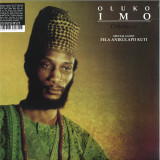
Reissue of the 80s 12” single from Trinidadian musician Oluko Imo (Black Truth Rhythm Band), featuring Fela Kuti and Femi Kuti. Recorded between Lagos and New York in 1988, the tracks sit at the fault line of the Trinidad-Yoruba connection, blending calypso heritage with the Afrobeat and jazz of Nigeria.
Ada Kaleh, the Romanian composer and DJ, follows up on his recent releases for R&S Records and Apollo with a brand new single, ‘Unravelling’.
Featuring the vocals of Fela Kuti at his most potent, ‘Unravelling’ also includes a featured performance from Eric Leeds, the American saxophone player most noted for his work with Prince, both in the studio and as part of the Purple One’s touring band.
Ada Kaleh constructs a hypnotising and minimalistic rhythm, reminiscent of Tony Allen's drumming style, speckled with dubbed out complexions and kaleidoscopic sonics that provide the perfect bed for Fela Kuti’s distinguished vocal delivery and conscientious lyric. The illustrious jazz musician Eric Leeds lends his prowess to the main mix here, as his smoky saxophone tones glide across ‘Unravelling’ with pure professional class!
'Why Black Man Dey Suffer', aufgenommen 1971, wurde von Fela Kuti's damaligen Label EMI ursprünglich als zu kontrovers für eine Veröffentlichung angesehen. Geprägt von der amerikanischen Black-Power-Bewegung und einer neuen panafrikanischen Weltsicht, diente dieses Album Fela als musikalisches Vehikel, um die kolonialen Ungerechtigkeiten und die Korruption der herrschenden Eliten seiner Zeit aufzudecken und herauszufordern.
Der Titelsong "Why Black Man Dey Suffer" ist eine Geschichtsstunde über die Unterdrückung des afrikanischen Menschen. Er beschreibt die Litanei des Missbrauchs, den Schwarze erlitten haben - von der Versklavung bis hin zur Auferlegung einer neuen Kultur durch ein fremdes Volk, das ihnen ihr Land wegnahm, sie bekämpfte und sie gegeneinander aufbrachte.
Der folgende Track, 'Ikoyi Mentality', bringt Felas Identifikation mit den unterdrückten Massen und seine Ablehnung der Lebensweise der herrschenden Klasse im Stadtteil Ikoyi in Lagos deutlich zum Ausdruck.
'Why Black Man Dey Suffer' ist Teil des von Chris Martin und Femi Kuti zusammengestellten Box Sets #5 und ist jetzt endlich auch einzeln erhältlich auf transparent gelbem Vinyl. Inkl. einer bedruckten Innenhülle.
'Why Black Man Dey Suffer', aufgenommen 1971, wurde von Fela Kuti's damaligen Label EMI ursprünglich als zu kontrovers für eine Veröffentlichung angesehen. Geprägt von der amerikanischen Black-Power-Bewegung und einer neuen panafrikanischen Weltsicht, diente dieses Album Fela als musikalisches Vehikel, um die kolonialen Ungerechtigkeiten und die Korruption der herrschenden Eliten seiner Zeit aufzudecken und herauszufordern.
Der Titelsong "Why Black Man Dey Suffer" ist eine Geschichtsstunde über die Unterdrückung des afrikanischen Menschen. Er beschreibt die Litanei des Missbrauchs, den Schwarze erlitten haben - von der Versklavung bis hin zur Auferlegung einer neuen Kultur durch ein fremdes Volk, das ihnen ihr Land wegnahm, sie bekämpfte und sie gegeneinander aufbrachte.
Der folgende Track, 'Ikoyi Mentality', bringt Felas Identifikation mit den unterdrückten Massen und seine Ablehnung der Lebensweise der herrschenden Klasse im Stadtteil Ikoyi in Lagos deutlich zum Ausdruck.
'Why Black Man Dey Suffer' ist Teil des von Chris Martin und Femi Kuti zusammengestellten Box Sets #5 und ist jetzt endlich auch einzeln erhältlich auf transparent gelbem Vinyl. Inkl. einer bedruckten Innenhülle.
Mit der Veröffentlichung des Albums 'Kalakuta Show' rächte sich Fela unerschrocken an dem Militärregime, das ihn 1974 angegriffen und brutal behandelt hatte. Die 'Kalakuta Show' war der zweite Angriff dieser Art innerhalb von acht Monaten und ein Versuch der nigerianischen Polizei, die Cause of Justice zu beeinflussen. Nach der ersten Polizeirazzia in Kalakuta im April 1974 wurde Fela vor Gericht angeklagt wegen Besitzes von gefährlichen Drogen und Entführung von "Minderjährigen". Die von der Staatsanwaltschaft vorgelegten Beweise konnten jedoch von der Verteidigung leicht entkräftet werden, die aussagte, dass die in den Räumlichkeiten gefundenen Drogen zur Junction Clinic gehörten, einer staatlich zugelassenen Klinik innerhalb der Republik Kalakuta, die von Felas jüngerem Bruder, Dr. Beko Ransome Kuti, geleitet wurde. Was den Vorwurf der Entführung von Minderjährigen betrifft, so bestritten alle jungen Mädchen, die in Felas Haus verhaftet wurden, minderjährig zu sein und entführt worden zu sein, und sie sagten vor Gericht aus, sie seien aus eigenem Antrieb zu Felas Haus gegangen. Da es keine stichhaltigen Beweise gab, um Fela in diesem vielbeachteten Prozess zu verurteilen, beschloss die Polizei, eine Woche vor der Urteilsverkündung eine zweite Razzia in Felas Haus durchzuführen, in der Hoffnung, dieses Mal Beweise zu finden. Das Ergebnis ist die Schilderung der zermürbenden und brutalen Art und Weise, wie die Polizei ihre Opfer behandelte. Sie führen den Fall auf, und Fela, der mit Kopfwunden und einem gebrochenen Arm vor Gericht erschien, erregte beim Richter mehr Mitleid als das Gegenteil. Eine Menschenmenge von mehr als fünfzigtausend Lagos-Jugendlichen trug Fela vom Gerichtsgebäude im Apapa-Gebiet von Lagos zur Kalakuta Republic - eine Entfernung von etwa sechs Kilometern. Während dieses Jubels kam der Verkehr im zentralen Teil des Festlandes von Lagos für mehrere Stunden zum Stillstand.
Bei 'Excuse O' geht es um natürliche menschliche Reaktionen auf Situationen, mit denen wir im Alltag konfrontiert sind.
Mr Grammarticalogylisationalism Is the Boss ist ein weiterer Song, in dem Fela das Bildungssystem in Afrika kritisiert - das er als schlechte Imitation des westlichen Bildungssystems bezeichnet.
'Excuse-O' ist Teil des von Chris Martin und Femi Kuti zusammengestellten Box Sets #5 und ist jetzt endlich auch einzeln erhältlich auf orangefarbenem Vinyl. Inkl. einer bedruckten Innenhülle.
Das nigerianische Establishment bezeichnete die Einwohner der Republik Kalakuta als "Hooligans", "Hanfraucher" usw. Noise For Vendor Mouth demonstriert Felas Gleichgültigkeit gegenüber diesen Beschimpfungen, denn für ihn sind die Menschen in Kalakuta in Wirklichkeit ein Haufen hart arbeitender Bürger, die versuchen, in einer von Korruption und Misswirtschaft geprägten Gesellschaft zu überleben. Er fügt hinzu, dass die wahren Hooligans die Machthaber sind, die auf politisches Gangstertum und manchmal auf Militärputsche zurückgreifen, um verfassungsrechtliche Probleme zu lösen. Er hält ihre Kritik für nichts anderes als den Lärm, den Straßenverkäufer machen, um ihre Waren zu verkaufen.
Mattress: Fela wurde von Kritikern vorgeworfen, dass er sich nicht um die Frage des Feminismus und der Ungleichheit der Geschlechter kümmere und sich damit im Einklang mit verschiedenen Traditionen befinde, die er aus ihrer Sicht willkürlich aufrechterhalte. Mehrere Themen stehen aus afrikanischer Sicht im Gegensatz zum modernen westlichen Blick. Nehmen wir die Polygamie: Fela wurde kritisiert, weil er die Polygamie offen befürwortet. Wie kann ein Mann, der sich gegen die ungleiche Stellung der Geschlechter und gegen Rassismus einsetzt, eine männliche Vorherrschaft gutheißen? Fela rechtfertigt die Polygamie, abgesehen von der traditionellen Wiederbevölkerung der afrikanischen Gesellschaft nach der Sklaverei, mit der polygamen Natur des Menschen. Der Mensch sei - so seine Überzeugung - von Natur aus polygam. In christlichen Gesellschaften, in denen Polygamie nicht geduldet wird, heirateten Männer offiziell eine Frau, hatten aber Mätressen. Afrikanische Männer sind seiner Meinung nach da ehrlicher - sie gehen damit offen um leben mit ihren Frauen unter einem Dach. Lieder wie Mattress tragen vielleicht nicht dazu bei, das Macho-Image von Fela zu ändern, doch zieht er ja lediglich Vergleiche.
Studio One was founded by Clement "Coxsone" Dodd1 in 1954, and the first recordings were cut in 1963 on Brentford Road in Kingston.1[2] Amongst its earliest records were "Easy Snappin" by Theophilus Beckford, backed by Clue J & His Blues Blasters, and "This Man is Back" by trombonist Don Drummond. Dodd had previously issued music on a series of other labels, including World Disc, and had run Sir Coxsone the Downbeat, one of the largest and most reputable sound systems in the Kingston ghettos.
In the early 1960s, the house band providing backing for the vocalists were the Skatalites[3] (1964–65), whose members (including Roland Alphonso, Don Drummond, Tommy McCook, Jackie Mittoo, Lester Sterling and Lloyd Brevett) were recruited from the Kingston jazz scene by Dodd. The Skatalites split up in 1965 after Drummond was jailed for murder, and Dodd formed new house band the Soul Brothers (1965–66), later named the Soul Vendors (1967) and Sound Dimension (1967-). From 1965 to 1968 they played 9 a.m. to 5 p.m., 5 days a week, 12 rhythms a day (about 60 rhythms a week) with Jackie Mittoo as music director, Brian Atkinson (1965–1968) on bass, Hux Brown on guitar, Harry Haughton (guitar), Joe Isaacs on drums (1966–1968), Denzel Laing on percussion, and on horns (some initially and some throughout): Roland Alphonso, Dennis 'Ska' Campbell, Bobby Ellis, Lester Sterling, among others on horns during the era of Rock Steady. Headley Bennett, Ernest Ranglin, Vin Gordon and Leroy Sibbles were included among a fluid line-up, to record tracks directed by Jackie Mittoo at Studio One from 1966-1968.
During the night hours at Studio One from 1965-1968, singers like Bob Marley, Burning Spear, The Heptones, The Ethiopians, Ken Boothe, Rita Marley, Marcia Griffiths, Judy Mowatt, Alton Ellis, Delroy Wilson, Bunny Wailer[4] and Johnny Nash, among others, would put on headphones to sing lyrics to original tracks recorded by the Soul Brothers earlier each day. These seminal recordings included "Real Rock" (by Sound Dimension), "Heavy Rock", "Jamaica Underground", "Wakie Wakie", "Lemon Tree", "Hot Shot", "I'm Still In Love With You", "Dancing Mood", and "Creation Rebel".
Jackie Mittoo, Joe Isaacs, and Brian Atkinson left Studio One in 1968, recorded drums and bass for Desmond Dekker's and Toots' biggest hits at other Kingston studios, then moved to Canada. Hux Brown stayed in Jamaica to record on the soundtrack The Harder They Come, The Harder They Fall, and toured in Nigeria with Toots and the Maytals and Fela Kuti. The Soul Brothers (a.k.a. Sound Dimension) formed the basis of reggae music in the late 1960s, being versioned and re-versioned time after time over decades by musicians like Shaggy, Sean Paul, Snoop Lion, The Clash, String Cheese Incident, UB40, Sublime, and countless other Billboard originals and remakes trying to emulate their original Rock Steady sound at Coxsone's Studio One.
The label and studio were closed when Dodd relocated to New York City in the 1980s.
Studio One was founded by Clement "Coxsone" Dodd1 in 1954, and the first recordings were cut in 1963 on Brentford Road in Kingston.1[2] Amongst its earliest records were "Easy Snappin" by Theophilus Beckford, backed by Clue J & His Blues Blasters, and "This Man is Back" by trombonist Don Drummond. Dodd had previously issued music on a series of other labels, including World Disc, and had run Sir Coxsone the Downbeat, one of the largest and most reputable sound systems in the Kingston ghettos.
In the early 1960s, the house band providing backing for the vocalists were the Skatalites[3] (1964–65), whose members (including Roland Alphonso, Don Drummond, Tommy McCook, Jackie Mittoo, Lester Sterling and Lloyd Brevett) were recruited from the Kingston jazz scene by Dodd. The Skatalites split up in 1965 after Drummond was jailed for murder, and Dodd formed new house band the Soul Brothers (1965–66), later named the Soul Vendors (1967) and Sound Dimension (1967-). From 1965 to 1968 they played 9 a.m. to 5 p.m., 5 days a week, 12 rhythms a day (about 60 rhythms a week) with Jackie Mittoo as music director, Brian Atkinson (1965–1968) on bass, Hux Brown on guitar, Harry Haughton (guitar), Joe Isaacs on drums (1966–1968), Denzel Laing on percussion, and on horns (some initially and some throughout): Roland Alphonso, Dennis 'Ska' Campbell, Bobby Ellis, Lester Sterling, among others on horns during the era of Rock Steady. Headley Bennett, Ernest Ranglin, Vin Gordon and Leroy Sibbles were included among a fluid line-up, to record tracks directed by Jackie Mittoo at Studio One from 1966-1968.
During the night hours at Studio One from 1965-1968, singers like Bob Marley, Burning Spear, The Heptones, The Ethiopians, Ken Boothe, Rita Marley, Marcia Griffiths, Judy Mowatt, Alton Ellis, Delroy Wilson, Bunny Wailer[4] and Johnny Nash, among others, would put on headphones to sing lyrics to original tracks recorded by the Soul Brothers earlier each day. These seminal recordings included "Real Rock" (by Sound Dimension), "Heavy Rock", "Jamaica Underground", "Wakie Wakie", "Lemon Tree", "Hot Shot", "I'm Still In Love With You", "Dancing Mood", and "Creation Rebel".
Jackie Mittoo, Joe Isaacs, and Brian Atkinson left Studio One in 1968, recorded drums and bass for Desmond Dekker's and Toots' biggest hits at other Kingston studios, then moved to Canada. Hux Brown stayed in Jamaica to record on the soundtrack The Harder They Come, The Harder They Fall, and toured in Nigeria with Toots and the Maytals and Fela Kuti. The Soul Brothers (a.k.a. Sound Dimension) formed the basis of reggae music in the late 1960s, being versioned and re-versioned time after time over decades by musicians like Shaggy, Sean Paul, Snoop Lion, The Clash, String Cheese Incident, UB40, Sublime, and countless other Billboard originals and remakes trying to emulate their original Rock Steady sound at Coxsone's Studio One.
The label and studio were closed when Dodd relocated to New York City in the 1980s.
Krafty Kuts and DJ Robert Smith have teamed up to highlight the skills they are best at. Krafty Kuts is known for his unique beats from Hip Hop to Ghetto Funk. DJ Robert Smith on the other hand is famous for his scratches and turntable work. After Krafty passed on a few beats to DJRS about 2 years ago, Smith quickly realized that he wanted to create an EP from these beats with the help of his worldwide connections. The first song to receive rap vocals was "Here I Come" ft. Wildelux, who delivered in no time. The vision was strengthened and more feature requests followed: Supastition, 1773, BambuDeAsiatic and Slimkid3 who took Moonbeam Kelly on board. Within a very short time a masterpiece of first-class artists was created. The "Krafty Smith EP"!
Don´t Stop featuring 1773 & Katjuscha
1773 are Wisdm Uno & Jay Nagoma from Chicago. They have worked together with Ohmega Watts, Othello & Bombeardo and among others. Katjuscha is a friend of DJ Robert Smith circle of friends. She is an absolute singing talent with an incredibly insane ability to perform live on stage. What a voice!
Hang On featuring Supastition:
Supastition is without a doubt one of the most talented underground rapper and beatproducer there is. His latest album "Every Last Word" and "Art Of Direspect" with his other project "Speaker Bullies" prove his rap and production skills, first-class entertainment.
Krafty Kuts and DJ Robert Smith have teamed up to highlight the skills they are best at. Krafty Kuts is known for his unique beats from Hip Hop to Ghetto Funk. DJ Robert Smith on the other hand is famous for his scratches and turntable work. After Krafty passed on a few beats to DJRS about 2 years ago, Smith quickly realized that he wanted to create an EP from these beats with the help of his worldwide connections. The first song to receive rap vocals was "Here I Come" ft. Wildelux, who delivered in no time. The vision was strengthened and more feature requests followed: Supastition, 1773, BambuDeAsiatic and Slimkid3 who took Moonbeam Kelly on board. Within a very short time a masterpiece of first-class artists was created. The "Krafty Smith EP"!
This Fear featuring Slimkid3 & Moonbeam Kelly:
I think we don´t need to announce Slimkid3 of the legendary group The Pharcyde. He is the living legend and voice of 1,2 many Pharcyde songs we all can sing along. His songs in collaboration with DJ Nu-Mark, such as "I know, didn't I feat. Darondo" are world famous. "This Fear" wouldn't be a masterpiece without the incredible voice of Moonbeam Kelly, who was brought to this song via Slimkid. She is an outstanding singer with gangster and soul appeal. It's simply beautiful to listen to her voice.
Here I Come featuring Wildelux:
Wildelux has worked on numerous albums and EPs as a producer over the last 15 years, and performed at shows across the UK and internationally during this time. His motto has always been quality over quantity. His latest album is called "The It Factor".
Repress 2024
Servus everybody!
Why "the hell" didn't anyone think of this before? It was so obvious: When the same music goes the same way, the truth always lies on the turntable.
KOMPAKT presents the long-awaited "two-tracker", cold-pressed and remixed. The Voigt brothers meet Helmut Geier and vice versa, or: Kölsch meets Löwenbräu, because we stand by you, star of the south.
So let's welcome the megahit "W.I.R." by Wassermann from 2000 in a brand new DJ Hell remix, and a remix by Voigt & Voigt of DJ Hell's "Anything Anytime" anthem from 2017. Two classics that go down like liquid gold. It comes from the heart.
Ja, Servus mitanand!
Warum ist da eigentlich niemand vorher d’rauf gekommen, es lag doch immer auf der Hand: Wenn gleiche Musik denselben Weg geht, liegt die Wahrheit immer auf dem Plattenteller.
KOMPAKT präsentiert Euch den lang erwarteten Zweiteiler, kalt gepresst und geremixt. Die Voigt-Brüder treffen auf Helmut Geier und vice versa, oder: Kölsch trifft auf Löwenbräu, denn mer stonn zo Dir, Stern des Südens.
Begrüßen wir also den Megahit "W.I.R." von Wassermann aus dem Jahr 2000 im neuen DJ Hell-Remix und den Remix von Voigt & Voigt zu Hells "Anything Anytime"-Hymne aus dem Jahr 2017. Zwei Klassiker, die runtergehen wie flüssiges Gold. Et kütt vun Hätze, oder wie der Bajuware sagt: ’S kimmd vo Herzn.
Krafty Kuts and DJ Robert Smith have teamed up to highlight the skills they are best at. Krafty Kuts is known for his unique beats from Hip Hop to Ghetto Funk. DJ Robert Smith on the other hand is famous for his scratches and turntable work. After Krafty passed on a few beats to DJRS about 2 years ago, Smith quickly realized that he wanted to create an EP from these beats with the help of his worldwide connections. The first song to receive rap vocals was "Here I Come" ft. Wildelux, who delivered in no time. The vision was strengthened and more feature requests followed: Supastition, 1773, BambuDeAsiatic and Slimkid3 who took Moonbeam Kelly on board. Within a very short time a masterpiece of first-class artists was created. The "Krafty Smith EP"!
Pen To The Paper featuring BambudeAsiatic:
BambuDeAsiatic is an emcee / producer, a veteran of the Atlanta, GA (USA) underground Hip Hop scene, and former member of the Atlanta based Hip Hop group, Collective Efforts.
There are two versions of the vinyl - classic black and triple-color limited Indie Shop edition.
Both have special insert inside with the bands bio and photos.
Generacja JAZZ is a project showing a fragment of the new wave of Polish jazz, treading its own path, creating, touring and jamming across Europe. Borders don't exist - especially musical - the new generation is engaging with nightclubs, festivals and playlists. The time has now come to show its broader perspective. We created a project which involves a handful of groups that have already racked up debut albums and festival wins, as they set out on their musical odyssey. The groups also have other things in common, like their passion, originality and, for the needs of the project, age - all the artists during the recording of this album were under 30 years old. This is the new generation - the Jazz Generation.
For the Jazz Generation record we invited five bands who had already released debut albums: Immortal Onion, Klawo, Rejoin, Twoosty Mayonez and USO 9001. We also reserved two spots on the compilation for the winners of our open call competition, whereby on the basis of the jury's choice (jury: Monika Borzym, Paulina Przybysz, Envee, Wojtek Mazolewski i Marcin Groh Grośkiewicz) we met the winning bands: Kosmos and quietet.
The sleeve artist is Kornelia Nowak, who won our open call for young designers and graphic artists. Here once again we could rely on the opinion of a prestigious jury comprised of: Beata Śliwińska Barrakuz, Bovska, Maciej Animisiewasz Grochot, Grzegorz Forin Piwnicki i Marcin Groh Grośkiewicz.
Generacja JAZZ LP is also a start of the new imprint - U JAZZ ME, which will be focused on jazz from Poland.
And here are the bands from the album:
1. Immortal Onion - A band from the Tri-City playing a broad spectrum of instrumental music.
Band members: Wojtek Warmijak (percussion), Tomir Śpiołek (piano, synths), Ziemowit Klimek (Upright Bass, synths).
The band Immortal Onion has already established itself as one of the most interesting projects of the new wave of Polish jazz, and is consistently being labelled as such abroad. After two well received albums ("Ocelot of Salvation" (2017) and"XD Experience Design" (2020) U Know Me Records) they released their third album "Screens" in 2022, which was recorded with the well known Tri-City composer and saxophonist - Michał Jan Ciesielski.
The inspiration behind the band's formation were such artists as: Esbjörn Svensson, Hiromi Uehara, Tigran Hamasyan and Tosin Abasi.
The group's guiding principle from the very beginning was the fusion of often disparate musical styles, which bore "post instrumental aggressive gay pop". Despite the stylistic discrepancies, between which they swim, the group has forged its own identifiable language, characterised by complicated rhythmical structures, energetic riffs and trance beats with lyrical melodies.
The trio has performed its original material at many venues and festivals around Europe and Asia.
2. Klawo - seven adventurous adventurers from Gdańsk, who were brought together by their love for music, halvah and throwing Frisbee. Their self-named début album, released in 2022 on the local label Coastline Northern Cuts, is an amalgam of the inspirations of each of the team members and played backwards contains tips on how to reach the Kashubian pyramids. After a win at the international competition Jazz in the Park, held in Cluj-Napoca in Romania, the band began work on their second album. Meanwhile, they were also travelling the length and breadth of Poland on a mission to infect people with the idea of Baltic Funk.
3. Kosmos is a Łódż based jazz quintet. It was formed in 2020 by Pianist Stanisław Szmigero, Saxophonist Iwo Tylman and Trumpeter Jan Ostalski. However, it wasn't until 2022 that Kosmos found its true form when Kamil Gużniczak (Upright bass) and Kacper Kuta (Percussion) joined the line-up.
Their compositions are influenced by Polish yass bands, electronic music and hip-hop. Kosmos music is a mix of lyricism, space, intensity and elements of experiment.
The band members are all eccentric characters possessing different means of musical expression - looking at them, one could even argue they are a group of oddballs. Despite this, for reasons unbeknownst to themselves, the members of Kosmos complement each other on stage and form a unified artistic vision of the world around them.
Kosmos officially released their début single "Ja" in June 2023. They regularly play concerts across Poland and recently were selected as distinguished artists at JAZZiNSPIRACJE (JAZZiNSPIRATION) - a competition held during the 13th Lublin Jazz Festival.
4. Quietet (formed at the beginning of 2023) is the result of meetings between five talented musicians with a deep passion for musical creation. Its sound is a unique blend of Jazz and classical music with a hint of hard rock. The band is inspired by the Scandinavian approach to making music, which brings a characteristic atmosphere and melodies to their work. Their music captivates listeners with its originality, refined improvisations and flawless technique. Both classical and modern musical trends feed their inspiration when creating passionate and emotional compositions.
Their works are full of sound experimentation, which equally surprise and expose new musical horizons. Through their compositions, "Quietet" aims to share their emotions evoked during performances, creating a musical journey that affects and inspires.
5. Connecting jazz with electronic music in fresh interpretations, six young musicians make up the group Rejoin. The group re-formed in 2020 after a four-year break, playing their debut concert at Lotos Jazz Festival Bielska Zadymka Jazzowa. The musicians in Rejoin have performed alongside such artists as: Urszula Dudziak, Krystyna Prońko, Marcin Masecki, Szczyl, Kuba Więcek and Paulina Przybysz.
Most of the members of Rejoin are students from the Katowice Music Academy, where they also develop their own projects. Rejoin was a recipient of the Fabryki Norblin Music Masterclass Foundation scholarship.
6. Twoosty Mayonez is something your grandad would listen to with his younger sister. The non-standard approach to jazz alongside a pursuit of strange sounds, culminated in the conceptual album entitled "Carmin". The material was created by Bartosz Wolerta (percussion) and Dominik Kaniewski (bass guitar/synths). "Triceradiplodocus" tells the story of a mechanical dinosaur that lives on the yet undiscovered planet Carmin.
Believe! International Records proudly presents (U.N) United Nonsense – the debut album by the Swedish Afrobeat band Olumo Soundz.
The twelve band members of Olumo Soundz are solidly rooted in the great musical tradition hailing from predecessors Fela and Femi Kuti. However, the band puts their own spin on a vibrant genre, and packs a punch at each and every show with their own repertoire.
The four track album (U.N) United Nonsense – presented in a high quality 180 gr vinyl edition – is a joyous musical announcement of awareness, resistance and faith.
Robert Hood's techno and Femi Kuti's Afrobeat intertwine in a new form where jazz-grooves reign supreme. For the fourth season of La Compagnie des Indes & Sourdoreille "Variations" live series of creations for France TV, the duo were united around the singer and producer James Brown, performing a tribute to the legendary Godfather of Soul who passed away in 2006. This "Variations" album is the live recording of this unique collaboration and performance, capturing a very special moment in time.
The evening witnessed a meeting of two icons in their own genres: one with synths and drum machines, the other on saxophone: Robert Hood and Femi Kuti embody excellence in their respective fields and the pair combined to make something truly unique, soulful, funky and spontaneous. Recorded in one 30+ minute take, "Variations" is embellished by Femi's exquisitely free-flowing yet restrained saxophone, whilst Hood anchors the groove with layers of pads and kicks with the long-time mastery of a true DJ.
Alongside Jeff Mills and Mad Mike, Hood is one of the original members of Detroit techno group Underground Resistance. His style is characterised by minimalist and experimental tones with an assertive groove. Throughout the '90s, he helped pave the way for techno to flourish - giving birth to minimal techno with his seminal album "Minimal Nation". Since then, he has been consistently forwarding electronic music culture with ground-breaking productions, sensational performances and his M-Plant label.
Alongside him, Femi Kuti takes on every musical style with his saxophone, which he plays with a virtuoso touch: pop, soul, electronic music and Afrobeat, of which he is one of the leading exponents. The son of Afrobeat singer and political activist Fela Kuti, he has inherited his father's zeal for both music and activism, where he continues to highlight the plight of most Nigerians living conditions in the oil rich state.
With "Variations" the duo capture an explosive combination on a special night in Paris 4 years ago, November 2019, filmed at the ADP Group headquarters (Paris Aéroport - Charles de Gaulle (CDG) - Roissy).
"It is so amazing when a vision comes to fruition. I enjoyed collaborating with the legendary Femi Kuti for this special project." Robert Hood
The Madlib Invazion Music Library Series Entry #6: Gabriel Rowland (Los Yesterdays) brings out Eastside LA’s Chicano Soul and Funk Grooves. Orale, vato! This is the next up in a series of music library releases, with future volumes produced by DJ Muggs, Karriem Riggins and more. The Madlib Invazion Music Library Series was created by Madlib and Egon to give their creative friends a chance to stretch out and indulge in whatever type of music they wanted. This music was created for easy, one-stop clearance in film and television synchronization usage and for sampling. You can also enjoy these albums in the way that many do with the best of the best vintage library catalogs – listen, ponder, repeat.
- A1: Open & Close
- B1: Swegbe & Pako
- B2: Gbagada Gbagada Gbogodo Gbogodo
- C1: 2000 Blacks Got To Be Free
- D1: Africa Centre Of The World
- E1: Stalemate
- F1: Don't Worry About My Mouth O (African Message)
- G1: I Go Shout Plenty!!!
- H1: Why Black Men Dey Suffer?
- I1: M O.p. (Movement Of The People) Political Statement Number 1 (Part 1)
- J1: M O.p. (Movement Of The People) Political Statement Number 1 (Part 2)
- K1: Custom Check Point
- K2: You Gimme Shit I Give You Shit (Part 1)
- L1: You Gimme Shit I Give You Shit (Part 2)
- M1: O P. (Opposite People)
- N1: Equalisation Of Trouser And Pant
Box Set #6 ist die neueste in einer Reihe von umfangreichen Box-Set-Neuauflagen des beliebten Backkatalogs des Afrobeat-Pioniers Fela Kuti. Nach früheren Ausgaben, die von Künstlern wie Chris Martin, Erykah Badu, Ginger Baker, Brian Eno und Questlove kuratiert wurden, wurde das neueste Box Set der Reihe von dem Schauspieler, Produzenten, DJ, Rapper und Sänger Idris Elba alias Big Driis zusammengestellt und enthält die Klassiker Open & Close (1972), Music of Many Colours (1980), Stalemate (1977), I Go Shout Plenty!!! (1977), Live in Amsterdam (1983) und Opposite People (1977).
Die auf 5.000 Exemplare limitierte Box enthält das Artwork jedes Albums, das originalgetreu von den Vinyl-Originalpressungen reproduziert wurde, sowie ein 24-seitiges Booklet mit den Songtexten, Kommentaren des bekannten Afrobeat-Historikers Chris May zu jedem Album, bisher unveröffentlichten Fotos und einer Einführung von Elba. Alle Boxen werden von einem speziellen 16" x 24" Poster begleitet, das von Lemi Ghariokwu, der kreativen Kraft hinter vielen von Felas bahnbrechenden Albumcovern, entworfen wurde.
- A1: Dead Man's Chest - Blunted
- A2: Tim Reaper & Drumlinezz - Deep Into Space & Back
- B1: Coco Bryce - Adventures In Perception
- B2: Threshold - Pluto's Song
- C1: Response & Pliskin - Anima Morta
- C2: Earl Grey - Levitate
- D1: Thugwidow - Pilgrim
- D2: Cavanaut - Vanishing Point
- E1: Theory - Smoke & Mirrors
- E2: Sonic - 00000005_Dubwise_Selection-V12
- F1: Dead Man's Chest & Coco Bryce - Trip Ii Trinity
- F2: King Kutlass - Trouble Dub
Compiled by Dead Man's Chest and drawing from some of the freshest talent in the contemporary jungle movement, Blunted Breaks Volume 01 aims to capture & document one of the most exciting musical resurgences of the era.
Blurring the lines between future & nostalgia, Blunted Breaks is intended as a true long-player, paying homage to the roots of jungle music & it's disparate & eclectic nature.
C"mon Tigre, the innovative music collective known for their genre-blending compositions, releases their highly anticipated fourth album Habitat. Drawing inspiration from the concept of an ecosystem where various forms of life, both animal and vegetal, thrive and coexist, the album takes listeners on a sonic journey through the intricate and ever-evolving nature"s theater. C"mon Tigre"s ability to blend inï¬éuences from distant corners of the world enriches their music and visual imagery. The album is deeply inï¬éuenced by rhythms coming from Brazilian tradition, the backbone is rooted in samba, forro, through instruments and tempos that come from this cultural magnificence. However, it retains the African jazz, electronic, and mixed inï¬éuences that have characterized the project thus far. Connecting the dots, the result is a richly layered and genre-defying soundscape. The record boasts a stellar lineup of collaborations. Among these are Seun Kuti, heir to the legacy of the legendary Fela Kuti, whose afrobeat roots infuse the album with a potent and infectious energy. The record also features Xenia Franca, a dynamic Brazilian artist hailing from Sao Paulo, Arto Lindsay, recognized as a pivotal figure in the world of experimental music, Giovanni Truppi and the Californian collective Drumetrics which featured on C"mon tigre"s records since their debut in 2014.
- A1: So May I Introduce You
- A2: The Platform
- A3: No Retreat
- A4: Guaranteed
- B1: Right On
- B2: The Main Event
- B3: Service
- B4: Ear Drums Pop
- C1: Years In The Making
- C2: Annihilation
- C3: Expanding Man
- C4: The Last Line Of Defense
- D1: Triple Optics
- D2: The Shape Of Things To Come
- D3: Work The Angles
- D4: Ear Drums Pop (Remix)
2023 Repress
On the West Coast, gangsta rap held sway in hip-hop as the 21st century began. The alternative and conscious rap music of the early-to-mid-90s had all but faded into the underground. The scene was set for a comeback, perhaps as a backlash to the perceived violence and misogyny of gangsta rap's content. Leading the resurgence of alternative hip-hop were groups like Jurassic 5, and recentsignees to Capitol Records, a West coast trio that had been building steam underground since the early 90s called Dilated Peoples. Anticipation was high for the release of the debut album from Evidence, Rakaa, and DJ Babu. (Of the influential turntablist collective Beat Junkies.) When The Platform arrived in May of 2000 it was met with critical and underground acclaim, as well as affording Dilated Peoples their first Billboard chartings. It featured a back-to-basics sound with a heavy debt to the old-school hip-hop ethos, the kind of sound that harkened back to the early days of legends like De La Soul & A Tribe Called Quest. Hits like "No Retreat" and "The Platform" were bolstered by Evidence & Rakaa's subtle, abstract wit, and swift, adroit wordplay, while DJ Babu provided production chops and dextrous scratches. On The Platform the trio were joined by the likes of B-Real, Tha Alkoholiks, Everlast, Planet Asia, and many more providing guest vocals, while boasting guest production from The Alchemist & Kut Masta Kurt, among others. Since its 2000 release this influential record, which heralded the return of alternative hip-hop, has never seen a vinyl reissue. With that, Get On Down-always on top of giving the greatest hip-hop albums their due-is proud to present this re-release of The Platform. The rhymes are still fresh, the production is still pristine, and the album is now back on vinyl for the first time in 17 years.
Synth pioneer and musical polymath, Wally Badarou is a genius. But you know that already. A vinyl version of his majestic Colors Of Silence has been craved by the Balearic cognoscenti ever since its low-key 2001 release. Indeed, when we first started work on Be With, we asked some pals with exquisite taste what their dream release would be. We asked Balearic legend Moonboots and, without hesitation, he said Colors Of Silence by Wally Badarou. We didn't know Wally had made this album. And most still don't. But that's about to change.
Colors Of Silence is ostensibly a new age album. As ever though, Wally's sophisticated synth textures and expressive keyboard runs are so full of character, so full of life, that this work of art transcends any easy genre categorisation. It's simply stunning, throughout. It sounds like A.r.t. Wilson or Suzanne Kraft, with traces of CFCF and Jonny Nash. But it was made a good decade earlier than the work of these modern giants. Sometimes, it doesn't seem far from some Larry Heard albums.
Island Records founder Chris Blackwell's friend Nathalie Delon asked Wally to provide music for the yoga DVD she was to release. Lack of time on both sides made them agree on using "quality demos" Wally had in his ideas bank. It's understandable why Colors Of Silence remains somewhat of a lost gem. As Wally explains: "Total lack of promotion made it an 'intimate' release, which was exactly what I was looking for: just a buzz-maker and time-buyer that would allow me to concentrate on the real thing as soon as I'd have time, which could also turn into a rare collecting item later, once the final versions made their way to success. You never know."
Over the years, Colors Of Silence has become a true cult record for the ambient/Balearic heads.
The beguiling but brief "Dance In The Dust" is the shuffling, hyper-percussive, hypnotic opener. It gives way to the deep serenity of "Amber Whispers". It's a gliding, divine, mini melodic masterpiece. It'll make you swoon in its extreme beauty. The bright and breezy "Where Were We" follows, a tropical, reggae-tinged bounce through the islands.
The uptempo groove is maintained on the keys-drizzled soca-funk of "The Lights Of Kinshasa" before Side A is rounded out with "Pictures Of You". It starts with stately, melancholic, unadorned piano and this alone would make for a beautiful song. But Wally always gives us that bit extra and he effortlessly introduces warm, dreamy pads and minimal, slo-mo percussion to augment a frankly stunning piece of work.
Ushering in Side B, Wally's mesmeric piano playing is to the fore again, in the intro to uber-chilled "Serendipity For Two". The playing becomes more mellifluous as the track progresses and adds warmth through exotic percussion, woodwind, sweeping synths and digi-drums. It has echoes of, er, Echoes. It segues seamlessly into the more propulsive, wavy "Smiles By The Millions". If you're not nodding and grinning along widely to the gently throbbing bassline underpinning this, we can't help you. The meditative "Higher Still" follows, cinematic in feel and ever so slightly sinister with the strings. It sounds particularly Badalamenti-esque, if you ask us.
That unmistakable, almost peculiar Badarou funk - so lyrical, so texturally rich and so rhythmically spacious - is all over "Oriental". Next up, "Days To Wonder" brings the serenity back, insistent yet melodic keys, as if played in a place of worship, coupled with birdsong, conjure a kind of instant nostalgia for halcyon days of youth. The contemplative "Dawn Of Europa" is a sombre, beatless, ambient journey whilst the glorious, too-brief "Crystal Falls" features soft percussion and sparkle before fully glistening with some gentle head-nod beats. Wally brings this incredible collection to a mellow, tender close with the graceful "Purple Lines".
There can be few artists more under-appreciated given their vast influence than Wally Badarou. His solo work practically defined the sound of the Balearic DJs of the 1980s, and thus the more sophisticated sound of dance culture thereafter. A synth specialist, Badarou was the long-time associate of Level 42. He was one of the Compass Point All Stars (with Sly and Robbie, Barry Reynolds, Mikey Chung and Uziah "Sticky" Thompson), the in-house recording team of Compass Point Studios responsible for a series of albums in the 1980s recorded by Grace Jones, Tom Tom Club, Mick Jagger, Black Uhuru, Gwen Guthrie, Jimmy Cliff and Gregory Isaacs. Badarou's keyboard playing could also be heard on albums by Robert Palmer, Marianne Faithfull, Herbie Hancock, M (Pop Muzik), Talking Heads, Manu Dibango and Miriam Makeba. He also produced Fela Kuti. Phew!
Meticulously remastered and cut by both Simon Francis and Cicely Balston respectively, it has been pressed to the highest possibly quality at Record Industry in Holland. Special thanks must go to Apiento from Test Pressing who first introduced us to Wally and facilitated all those early zoom meetings. It couldn't have happened without his help. Not least on pulling the art together, too, which features striking original photography by Mads Perch. Benji Roebuck of Roebuck Press did his thing brilliantly in art working the whole package to completion. All in all: essential.
- A1: Super Disco Breakin
- A2: The Move
- A3: Remote Control
- A4: Song For The Man
- A5: Just A Test
- A6: Body Movin
- B1: Intergalactic
- B2: Sneakin' Out The Hospital
- B3: Putting Shame In Your Game
- B4: Flowin' Prose
- B5: And Me
- B6: Three Mc's And One Dj
- C1: The Grasshopper Unit (Keep Movin')
- C2: Song For Junior
- C3: I Don't Know
- C4: The Negotiation Limerick File
- C5: Electrify
- D1: Picture This
- D2: Unite
- D3: Dedication
- D4: Dr. Lee, Phd
- D5: Instant Death
- E1: Description Of A Strange Man
- E2: Dirt Dog
- E3: Intergalactic (Colleone Webb Remix)
- E4: Dr. Lee Version Dub
- E5: Switched On
- F1: Body Movin' (Fatboy Slim Remix)
- F2: Auntie Jackie Poom Poom Delicious
- F3: Putting Shame In Your Game (Prunes Remix)
- F4: Stink Bug
- G1: Peanut Butter & Jelly
- G2: Piano Jam
- G3: Happy To Be In That Perfect Headspace
- G4: The Negotiation Limerick File (The 41 Small Stars Remix)
- G5: The Drone
- G6 20: Questions Version
- H1: The Bizz Grasshopper Experiment
- H2: Hail Sagan (Special K)
- H3: Body Movin' (Kut Masta Kurt Remix)
- H4: Creepin
- H5: Learning Remote Control
- H6: Oh My Goodness This Record's Incredible
Assiko Golden Band de Grand Yoff is the sprawling drum collective tearing up Dakar's nightlife scene. Senegalese poet Djiby Ly (Wau Wau Collectif) is backed by fourteen different percussive instruments plus horns, winds, balafon, and the occasional accordion, combining Count Ossie's spiritually elevated polyrhythms with Fela Kuti's orchestra and Tony Allen's groove. Based in the impoverished neighborhood of Grand Yoff and operating as a mutual aid group for the larger community, the band builds its songs on ancient rhythms passed on from Senegal, Cameroon and the infamous Gorée Island. In both Wolof and French, Djiby preaches a message of uplift and cooperation rooted in the Sufi teachings of the Mouride Brotherhood, as well as Christianity and animist religions. "Senegal, my life my joy" is the call and response chanted over cascading, infinitely layered drum patterns on opener "La Musique Du Coeur." "We build our own country" the band proclaims in Wolof on "Xarritt." For twenty years and across three generations of band members, Assiko have played raucous all-night jams at weddings, secret parties, and political rallies. Grainy cellphone footage of their live shows have spread online. But this is their first album, the result of a collaboration with Swedish musician and archivist Karl-Jonas Winqvist (Sing A Song Fighter), who met the band in Dakar in 2018 and facilitated recording sessions and overdubs via Whatsapp (no small feat with so many musicians). This is vital, exciting and innovative music, alive with energy and purpose, a band rooted in a very specific community but speaking to the world.
- A1: Buy Africa Von Baloji & L’orchestre De La Katuba Feat Kuku
- A2: Lady Von Tune-Yards, ?Uestlove, Angelique Kidjo + Akua Naru
- A3: Yellow Fever Von Spoek Mathambo + Zaki Ibrahim
- A4: No Buredi (No Bread) Von Nneka, Sinkane, Amayo + Superhuman Happiness
- B1: Who No Know Go No Von Childish Gambino + Just A Band
- B2: Trouble Sleep Yanga Wake Am Von My Morning Jacket, Merrill Garbus + Brittany Howard
- C1: Sorrow, Tears & Blood Von Kronos Quartet, Kyp Malone, Tunde Adembimpe + Stuart Bogie
- C2: Itt (International Thief Thief) Von Superhuman Happiness W/ Sahr Ngaujah, Abena Koomson + Rubblebucket
- C3: Afrodisco Beat Von Tony Allen, M1 + Baloji
- D1: Gentleman Von Just A Band, Bajah + Chance The Rapper
- D2: Highlife Time Von Gender Infinity
- D3: Zombie Von Spoek Mathambo, Cerebral Cortex + Frown
- D4: Go Slow Von King
Fela Kuti lives on! Die Neuauflage eines Klassikers. Das ursprünglich 2013 erschienene Tribute-Album zum 10-jährigen Jubiläum jetzt erhältlich auf bananengelbem und rotem Vinyl. Der gesamte Erlös aus den Verkäufen kommt Red Hot zugute, einer gemeinnützigen Organisation, die sich dem Kampf gegen AIDS verschrieben hat.
Das Album enthält klassische Fela-Hymnen wie 'Lady', aufgenommen von tUnE-yArDs, ?uestlove, Angelique Kidjo und Akua Naru. 'Who No Know Go No' von Childish Gambino und Just A Band; 'Trouble Sleep Yanga Wake Am', aufgenommen von My Morning Jacket, Merrill Garbus (von tUnE-yArDs) und Brittany Howard (von Alabama Shakes); 'Zombie', aufgenommen von Spoek Mathambo, Cerebral Cortex und Frown; und 'Sorrow, Tears & Blood', neu arrangiert vom Kronos Quartet zusammen mit Kyp Malone und Tunde Adembimpe von TV On The Radio.
Seit seinem Tod 1997 an Komplikationen im Zusammenhang mit Aids hat sich Fela von einem westafrikanischen household name und einem Musiker für Musiker in Europa und Amerika zu einer weltweiten Musikikone entwickelt.
Die Wiederveröffentlichung zum 50zigen Jahrestag von Fela Kutis Album 'Shakara' von 1972.
'Shakara' ist ein hauptsächlich instrumentales Stück mit einem kurzen, auf Yoruba gesungenen Text, der vor Prahlern und Angebern warnt. In 'Lady' hebt Fela die Übernahme europäischer sozialer Gewohnheiten zum Nachteil der afrikanischen Kultur hervor. Das Album ist der Sound der Reifung des Afrobeat zu einer globalen Musik. Felas Texte in Pidgin-Englisch erweitern das Publikum seiner Musik über Yoruba-Sprecher:innen hinaus und machen seine Worte in der gesamten anglophonen Welt verständlich. Wie schon bei seinen anderen Veröffentlichungen in den frühen 70er Jahren hat Fela jede Seite seiner LPs genutzt, um einen intensiven Groove zu kreieren, der die Hörer:innen in seinen Bann zieht und von metaphorischen Texten begleitet wird, die den korrupten Kolonialismus kritisieren.
Auf pinkes Vinyl gepresst und mit einer zusätzlichen gelben 7" enthält die Jubiläumsversion auch ein kurzes Essay über das Album und Fela Kutis globalen Einfluss auf die Musikwelt. Darüber hinaus gibt es zwei Remixes des Ezra Collective aus UK.
Not many bands can claim to be as influential as Mercyful Fate. As one of the early purveyors of true metal, the band's impact is felt far and wide; from the new wave of black metals' Cradle Of Filth and Dimmu Borgir to international metal gods Megadeth and Metallica. 1996's Into the Unknown features the killer track The Uninvited Guest and accompanying video which current has over 1.3 Million views on Youtube.
Der Plan sah vor, im Frühjahr 2023 direkt wieder ins Studio zu gehen, bei dem alten Freund Paul Grau in Motril, Spanien. Noch euphorisiert von der gelungenen Herbst-Tour machten Gisbert zu Knyphausen, Moses Schneider und Tobias "der dünne Mann" Friedrich Nägel mit Köpfen und buchten, was zu buchen war. Einziges Problem: sie hatten keinen einzigen neuen Song. Aber man wächst an seinen Aufgaben, nicht wahr? Irgendwo in der untersten Schublade, hinter der Rolle Zwirn, dem Anspitzer und der Ballpumpe lag dann doch noch das ein oder andere Instrumental, ein halbes Lied, ausgeschwitzte Reime und drei angebissene Texte. Um Weihnachten herum kamen in einem klammen, kleinen Übungsraum noch diverse ganz neue Stücke hinzu. Im Januar 23 traf sich die Husten-Delegation mit der Live-Ergänzungsmaschine Marcus Schneider (Gitarre), Ben Lauber (Schlagzeug) und Arne Augustin (Keyboard), um 15 oder 16 neue Lieder zu arrangieren. Obwohl Motril nicht mit Wärme und Sonne geizte, sahen sich am Ende der zwölftägigen Aufnahmen alle etwas verwundert an ob der Düsternis der Stücke. Wie sollte man das Konvolut sinnvoll auf einem Album anordnen? Also alles auf Schwarz. Von dunkel nach hell.Auf dem Weg kommt man aus dem dystopischen "Bis morgen, dann" an der Trauer von "Ja und ja" vorbei, schaut "Elli" dabei zu, wie sie unter die Armutsgrenze rutscht, bettelt "Lass mich bitte nicht in Ruh", blickt auf "Die andere Seite der Angst", sieht dem verblichenen Träumer Achim hinterher, tanzt "Nüchtern im Club", stellt sich hinter dem "Flamingo Hotel" ein paar philosophische Fragen, erinnert sich an ferne Tage und "Weiße Tiger" und bittet die Welt um Vergebung, da der perfekte Song auch mit "Für immer und ewig" nicht gelungen ist. Am Ende erschien es nur logisch, das Album "Aus einem nachtlangen Jahr" zu nennen.Ladies and Gentlemen: Aus einem nachtlangen Jahr - wohin auch immer. PS: Es passt sprichwörtlich ins Bild, dass die Berliner Künstlerin Tina Berning an wunderschöner Melancholie kaum zu überbietende Zeichnungen beisteuerte, für die Dunja Berndorff das perfekte Artwork fand.
Debut album by Sunbörn (formerly The KutiMangoes!)
On their first album as Sunbörn, the Danish 6-piece digs into what connects us as human beings: we are all born under the same sun and are connected by the same forces of nature. Meeting the world and connecting through music has been a vital mission for our band from day one, and again and again on our travels we have experienced how music can cross borders, build bridges and connect us with people from different backgrounds and cultures in shared experiences. In times when the world is tearing itself apart it is clear that music has the power to reach across divides and remind us of our common humanity. Sunbörn's self-titled ablum features collaborations with artists from all over the world: Caio Marcio (BR), Ida Nielsen/Bassida (DK), BIGYUKI (JP/US), DJ Opolopo (S), Clap! Clap! (I) & Moderator (G).
Quality Gatefold-LP pressed on yellow vinyl!
Transparent-bernsteinfarbenes Vinyl, limitiert auf 100 Exemplare! Values Here ist eine neue Band, gegründet von Sängerin Chui und dem legendären Gitarristen John Porcelly (Youth Of Today, Shelter, Judge). Die Entstehungsgeschichte von Values Here ist lang: Chui und Porcell trafen sich zum ersten Mal vor Jahren bei einer Shelter-Show in Chuis' Heimatstadt Barcelona, Spanien. Sie führten ein eher scherzhaftes Gespräch über die Gründung einer Band und Chui hielt den Kontakt zu Porcell über die sozialen Medien, bis er ihr eines Tages während der Pandemie einige ungenutzte Demos schickte und sie am nächsten Tag mit "Will Be Tomorrow" zurückkam, komplett mit mehreren Gesangsspuren und Harmonien. Von da an verbrachten die beiden ein Jahr mit dem Schreiben von Songs und beschränkten sich auf das, was schließlich die dreizehn Tracks auf "Take Your Time, I'll Be Waiting" werden sollten. Das Album selbst ist optimistisch und hoffnungsvoll und vermittelt ein positives Mindset. Es gibt Tracks mit klassischem New York Hardcore-Einfluss wie das treffend betitelte "Bring Me The PMA" und solche, die sich in Pop-Rock-Gefilde wagen, wie "We Get Stronger". Durch die Produktion von Tom Soares (Judge, Shelter) und dem Mastering von Dave Kutch (Billie Eilish, The Weeknd) war die Band in der Lage, einen dynamischen Sound zu kreieren, der sowohl ins Radio passt als auch zum Herumspringen in einem Moshpit geeignet ist. Über die klangliche Ausrichtung sagt Porcell: "Personally I always like to push the envelope with every band and record I do. I never just want to live off of past accomplishments and recreate a sound I did with previous bands just because I know it will be immediately accepted. I'd rather push forward and always challenge myself to make newer and more interesting music. I knew Chui was an amazing singer so I wanted to write songs that would showcase her voice and harmonies. I'm a punk rocker at heart so I'll always make music that's energetic and rallies around a message, but for this record I wanted to go further into the melodic side of things." Eines ist sicher: Values Here kreieren hymnische, energiegeladene Songs zum Mitschreien und Tanzen, die sich an die positive, optimistische Perspektive anlehnen, die dem Hardcore-Punk überhaupt erst ein Gefühl von Gemeinschaft und Verbundenheit verliehen hat.
ENG Dark, atmospheric heavy Americana from Austin, TX, haunting, psychedelic ghost-town sounds for fans of Woven Hand, Russian Circles, and Dead Meadow! Lord Buffalo is a mud-folk band from Austin, TX. They make music together under cover of darkness. Their songs are bricks with which to build a house slowly. They will not be rushed. They will not be quiet. They are the trees clapping, the rocks crying out, the whistle in your snore. Imagine the haunted sensibility of artists like Chelsea Wolfe, David Eugene Edwards (Woven Hand, 16 Horsepower) and Ian Astbury (The Cult) fused with the spacious, expansive psychedelics of Dead Meadow and All Them Witches. Lord Buffalo creates somber, crashy, ghost-town Americana on new album "Tohu Wa Bohu," thick with captivating intensity and brooding heaviness of the soul. 'The sound of Lord Buffalo - that atmospheric diving headlong into the very heart of darkness - is unsettling. And it's magnificent.' _Laurie Gallardo, KUTX Brand new 2023 pressing on sleek transparent coke bottle-green vinyl!
Eigenartige, schmutzige Geschichten über Unglück. Ohne lange zu überlegen, griff Fushigi nach dem Album, dessen buntes Cover aus der Wand mit den Zeitschriften, Büchern und Schallplatten herausragte. Neben den japanischen Schriftzeichen konnte sie auf der Hülle auch die deutschen Worte Husten und "Aus allen Nähten" erkennen. Fushigi bezahlte und machte sich zuhause daran, die auf Vinyl versammelten Lieder zu erforschen. Obwohl sie nur Bruchstücke der fremden Sprache verstand, träumte sie in der Nacht von der in einem Song beschriebenen Nahtoderfahrung, von dem Mann, der sich in einem anderen Lied in eine Vaterschaft hinein illusioniert, schreckte um Viertel vor drei hoch, weil sie sich sicher war, dass - wie auf Platte - eine Krankenschwester um diese Zeit anrufen würde. Später sah sie im Schlaf das gelbe Haus der Ausgestiegenen und durchlebte die in szenischen Miniaturen geschilderte tragische Lebensliebesgeschichte eines anonymen Paares. Hörte noch im morgendlichen Halbschlaf neben dem deutschen Sänger die Schweizerin Sophie Hunger nachhallen. Sofort nach dem Frühstück recherchierte Fushigi und fand heraus, dass "Aus allen Nähten" nach vier EPs das erste Husten-Album war. Warum es ein unglücklicher Zufall in dieser an Zufällen und glücklichen Unglücken so reichen Band-Geschichte war, dass deren Mitglieder Moses Schneider, Gisbert zu Knyphausen und der dünne Mann sich 2019 entschlossen hatten, ihre Tour 500 Tage im voraus anzukündigen und die Pandemie daraus über 1.200 Tage zwischen Mitteilung und Konzertbeginn machte. Sie erfuhr von der anfänglichen fluxusartigen Liederresteverwertung der Musiker, die inzwischen einer live aufnehmenden Band gewichen war. Doch kreidebleich wurde Fushigi erst, als sie las, dass jemand sie selbst ausschließlich für das Info der Band erfunden hatte.
Brussels-based power trio Don Kapot are set to release their rousing new album 'I Love Tempo' on the 15th of September via W.E.R.F. Records - NEWS distribution.
A lifeboat of free jazz, afrobeat and krautpunk sailed by Giotis Damianidis (bass), Viktor Perdieus (baritone saxophone) and Jakob Warmenbol (drums), the album follows the release of their critically acclaimed 2022 album 'Un Peu Live' recorded with Dutch multi-instrumentalist, vocalist and composer Fulco Ottervanger, and described by Bandcamp Daily as a 'very fun mix of modern jazz and krautrock.'
Don Kapot strike hard with their fourth album, mixed and co-produced by Greg Saunier (Deerhoof). Using a wide range of instruments, they evolve their sound into a solid complex rhythmic wave, shaken by demented samples and punk attitude.
From the vibrant, pounding rhythms of opening track 'Me Pig' to the off-kilter, whimsical beats of 'Macarona' and 'Terryble,' Don Kapot integrate new instruments and sounds into their repertoire, including keyboards and sampling. The groove remains a central element to the sound as the trio deliver a palpable blend of high tension and joyous energy where genres are demolished.
Elsewhere, the funk-heavy 'Bernadette' allows the magical, freestyle sax work of Perdieus take centre stage while 'Don Be No' is an urgent, flippant blast of vigour and zest before the album title track 'I Love Tempo' is an exhilarating and hypnotic journey that combines the freedom and verve of free jazz with the trance-like zeal of artists such as Tony Allen, Fela Kuti and Kologbo
Releasing their self-titled debut album in 2018 via Mr. Nakayasi Records, in 2021 they signed to Flemish record label W.E.R.F. Records and have released three albums under the label and have performed sold-out shows across Belgium and the Netherlands.
The players in Don Kapot also extend their musical adventures to other projects. Damianidis leads Punk Kong and has performed with Akira Sakata, Sakis Papadimitriou, Oghene Kologbo, Tony Allen, Baba Ani, Balasz Pandi and Gonzalo Almeida among others. Warmenbol was a member of The Unrevealed Society, Robbing Millions and M(h)ysteria. He also performs with Ruth Tafebe & the Afrosoul Messengers (with Giotis), Under The Reefs Orchestra and Monolithe Noir. Perdieus performs in Punk Kong and with Pompelmoes and The Milk Factory and took part in Ifa y Xango, Laia Arkestra, Bolhaerd, Nest and VVolk. He has also recorded and played with Andrew Cyrille (Bambi Pang Pang).
Founded in 1971, Matumbi was among the earliest and best British reggae bands. They did, however, also record under different guises, including The 4th Street Orchestra. In their acclaimed Rough Guide to Reggae, Steve Barrow and Peter Dalton rate this album (and its counterpart Leggo! Ah-Fi-We-Dis) as "the best showcase for Matumbi's talents". This release marks the first LP reissue of this genuine UK roots-monument since 1976.
Original member Dennis 'Blackbeard' Bovell (of LKJ and Dub Band fame) knew the local sound system-scene like the back of his hand and most tracks on Ah Who Seh? Go Deh! were initially cut as exclusive 'specials' for his own Jah Sufferer sound system and for fellow soundmen. Hardly anyone hearing these tunes at reggae parties or would have guessed they didn't originate in Kingston but were recorded in London. And neither did many who bought the records when they were released a few years later. That's hardly surprising, as the material Bovell & Co churned out could easily compete with the toughest output of their Jamaican counterparts. A splendid version of the 1970 Kingstonians smash "Singer Man" is the most familiar tune here. But it's the band's own outstanding, heavyweight roots tunes like "Jah Chase Dem" or "Za-Ion", their versions popping up later in true sound system style for maximum impact, that will have reggae fans prick up their ears.
Ah Who Seh? Go-Deh! is available as a limited edition of 750 individually numbered copies on orange coloured vinyl.
Burn Up The Night, das vierte Album von Kryptos, fällt bereits auf den ersten Blick durch sein grandioses 80er Jahre Retro-Cover auf. Entworfen wurde das Cover Artwork von Mattias Frisk, der unter anderem durch seine beeindruckende Arbeit für die Okkult Rocker von Ghost bekannt ist. Das ganze Album ist vollgepackt mit stahlharten Riffs und Twin Gitarrenläufe, die direkt aus den glorreichen Tagen des 80er Metals und der NWOBHM stammen können. Die beißenden Vocals und raue Produktion machen Burn Up The Night zum ultimativen Soundtrack von Kutten, Leder und Nieten. Old school or no school!
A complex and sometimes belligerent character in real life, on record,
John Martyn was the epitome of the folk-dreamer, embodying the spirit
of the bourgeoning London acoustic scene of the late 60s
Well- known and respected for his 70s albums Solid Air and One World, this is
where it began.John Martyn met Beverley Kutner and the pair married in 1969.
Kutner was a dazzling folk singer who had been invited by Paul Simon to sing on
Simon & Garfunkel's Bookends album. It was obvious that two such talents united
in love should also unite in music. Stormbringer! – produced by Joe Boyd – was
the first of two albums billed to both of them.
Recorded in Woodstock, the album featured The Band's Levon Helm on drums on
Beverley's standout, eight-minute long Sweet Honesty. Not to be overshadowed
John also contributed John The Baptist, one of his career highlights, with
Beverley adding sweet backing vocals.
This re-issue faithfully replicates the original 1970 Island Records UK release and
is pressed onto high quality 180g vinyl.
Analogue is the genre-bending debut album from ODIE. Originally released in April 2018. Analogue takes us through a range of emotions and explores themes such as growing up, figuring oneself out and striving for creative dreams as an analogue artist in a digital world. Channeling some of his key musical influences, such as Kid Cudi & Fela Kuti, the album acts as a coming of age story and introduces fans to who ODIE really is as a human and artist, "flaws and all." Singles from the album include "Little Lies," "Faith," "North Face," & "Night Terrific!" The second pressing of the album includes a gatefold jacket and 24x36 poster, and is pressed on Sky Blue Galaxy Vinyl.
Repress!
Funkiwala Records presents the third in the series of "Lokkhi Terra meets"albums, with the London fusionistas creating another unique sound-clash, this time with ex-Fela Kuti keyboardist and legendary UK Afro-beat ambassador Dele Sosimi, and members of his critically acclaimed Afro-beat Orchestra.
This particular collaboration has been bubbling away for a few years now, teasing audience expectations with a handful of sold out shows each year in between both bands busy schedules.
Featuring the two pianos of Kishon Khan and Dele Sosimi – Cuban percussionists/vocalists Geraldo De Armas (Yoruba Andabo), Oreste Noda (Ariwo), Javier Camilo (Ibrahim Ferrer) - a horn section led by Justin Thurgur (Bellowhead) featuring Yelfris Valdes (Sierra Maestra) and Graeme Flowers (Kyle Eastwood) to name a few – this is an All-star cast.
Kishon Khan's Lokkhi Terra have over a number of years now been quietly establishing themselves as one of London's more unusual heavyweight outfits, described as "Stunning Headliners… A majestic multi-cultural blend of sounds… effortlessly builds bridges between rolling Indian raga rhythms, Afro-Cuban grooves, Acid Jazz/funk and free flowing improvisation" (Timeout London). Included amongst the band members are London's top Cuban musicians, adding their infectious rich musical history to the city's melting pot.
When the band wanted to explore Cuban links with another of their favourite traditions, Afrobeat, who better to bring in then one of the Afrobeat originators – maestro Dele Sosimi – "Sosimi creates some of the most bewitching grooves in modern African music" E Jazz News.
Bringing together two Yoruba speaking musics - with different accents, from different sides of the Atlantic - Havana meets Lagos in London – A Cuban-Afrobeat-Experience. CUBAFROBEAT.
All About Jazz 4star review
A younger version of London's Grand Union Orchestra, founded by world-jazz pioneer Tony Haynes in 1982, Lokkhi Terra was put together by keyboard player Kishon Khan in 2005. Both ensembles have made a specialism of jazz / South Asian fusion, with Lokkhi Terra also giving as much attention to music from Cuba, where Bangladeshi-born, London-based Khan lived for a while in the early 2000s.
Cubafrobeat, as the title foretells, is a blend of Cuban dance music and Nigerian / Yoruban Afrobeat—a fusion rendered seamless by the synergies existing between Afro-Cuban and Yoruban music, language and mythology. The album is Lokkhi Terra's third and partners the band with the keyboard player and vocalist Dele Sosimi .
A young-going-on-child-prodigy member of Fela Kuti's Egypt 80, Sosimi went on to become musical director of Femi Kuti's Positive Force, before relocating to London and setting up Dele Sosimi's Afrobeat Orchestra, the finest Afrobeat band outside Nigeria, bar none, now with a string of consistently engaging albums under its belt. Cubafrobeat features Sosimi as lead vocalist on all four tracks, and on Fender Rhodes on two of them. His singing plays a prominent role in the Afrobeat Orchestra, but, such is the whirlwind impact of the band in full instrumental flight, that Sosimi is often thought of first and foremost for his keyboard and arranging talents. That may change by the time 2018 is over. Cubafrobeat is the third album in as many months to feature Sosimi as guest vocalist, spotlighting the gravitas, air of mystery, intimacy and ferocity his voice can bring to an occasion.
The first of these albums was the genre-bending spiritual-jazz band Emanative's Earth (Jazzman). One of the stand-out tracks, "Ìyáàmi," features Sosimi making obeisance to the titular Mother Goddesses of the Yoruba spirit worlds. His raw and intense invocations carry the track for nine mesmerising minutes. Otherwordly is not the half of it. Next up was dub / reggae / jazz band Soothsayers' Tradition (Wah Wah 45s), which featured Sosimi as lead vocalist on the compelling "Sleepwalking (Black Man's Cry)." Earth and Tradition are both outstanding albums and have previously been reviewed here.
Cubafrobeat is a total stonking blinder, too. It is an effectively nuanced affair, opening with the fiery "Afro Sambroso" and closing with the relatively reflective "Rumbafro." Sosimi's vocals light up the music, as do the several solos from trumpeters Graeme Flowers and Yelfris Valdes Espinosa and trombonist Justin Thurgur (a member of both Lokkhi Terra and the Afrobeat Orchestra). Sosimi and Kishon Khan's intertwining Fender Rhodes solos on "Cubafro" are also a delight, as is the drum and percussion section throughout.
The sound of summer, for sure, Cubafrobeat has enough depth and variety to make it something for all seasons.
Songlines 4star review
Lokkhi Terra are one of London's most authentic groups. They are a Latin-flavoured collective whose keyboard player and bandleader Kishon Khan segues from percussive montunos to complex Bengali rhythms and back, with jazz chops sparking funky and outward-looking fusions. Their collaboration with Dele Sosimi, Britain's foremost Afrobeat ambassador, has been bubbling for a while; here four tracks at ten minutes see musical conversations that never lose their sense of flow. An extensive line-up of stellar players, including trumpeter Yelfris Valdés, conguero Oreste Noda and trombonist Justin Thurgur, highlights the genre-crossing potential of world traditions. Opener 'Afro Sambroso' showcases batá drums from Gerardo de Armas Sarria before the track links Cuban grooves with Afrobeat. 'Timbafro' crackles and sways via Khan's organ, Sosimi's vocals and Oscar Martinez's timbales. 'Cubafro' features dazzling interplay between Khan, Sosimi and Javier Camillo's Spanish-language vocals. 'Rumbafro' is all rumba choruses, Yoruba vocals and Afrobeat horns. Rooted in their sources, but with musical threads intertwining, separating and reconfiguring – with grooves at a premium – this is a fusion lover's dream
- 1: Level Up (Feat. Youssou N’dour)
- 2: Alarm Clock
- 3: Way Too Big
- 4: Bebo
- 5: Wonderful
- 6: Onyeka
- 7: Naughty By Nature (Feat. Naughty By Nature)
- 8: Comma
- 9 23:
- 10: Time Files (Featuring Sauti Sol)
- 11: Monster You Made (Feat. Chris Martin)
- 12: Wetin Dey Sup
- 13: Real Life (Feat. Stormzy)
- 14: Bank On It
GRAMMY NOMINATED AFRO-FUSION SINGER, SONGWRITER, AND PERFORMING ARTISTE The Nigerian singer-songwriter, Burna Boy, was born Damini Ogulu on the 2nd of July, 1991 in Port Harcourt city, Nigeria to Bosede and Samuel Ogulu and he is the only son and eldest of three children.
He started producing music when he was ten years old. After graduating from college, Burna relocated to London to attend university. After two years, he dropped out and moved back to Nigeria to pursue his passion. Coming from a family where music was loved but where a greater premium was placed on education, he spent most of his summer holidays in the UK and in language immersion summer camps in France, Togo and Cote d'Ivoire, before finally moving to the UK where he picked up the Brixton Patois accents which have become a signature in his music.
Young Damini attended Montessori International primary school in Port Harcourt (1993-2002) and Corona Secondary School, Lagos (2002-2008). It has always been music for Burna Boy as observed by his mum when he was still a teenager. She recounts that he was always hanging around his Grandfather, listening to classical music; little wonder his role model later became the man his grandfather managed, Fela Anikulapo Kuti.
His quest for knowledge took him outside the shores of Nigeria to the United Kingdom to study Media Technology at the University of Sussex (2008–2009) and Oxford Brookes University (2009–2010) to study Media Communications and Culture.
Thereafter, he did a one-year internship with Rhythm 93.7 FM Port Harcourt before officially launching his professional music career when he was signed on to Aristocrat records - prompting a permanent relocation to Lagos.
Burna Boy has released a series of EPs, singles, mixtapes, and albums including 2018’s extraordinary “Outside”. The award-winning collection led to Burna’s U.S breakthrough, debuting at #3 on Billboard’s “Reggae Albums” chart, which was partly fueled by the blockbuster single/video, “Ye”. His most recent album, “African Giant”, released in July 2019 has garnered praise from both Nigerian and international media.
Furthermore, the “African Giant” album got nominated for the 62nd Annual Grammy Award in the Best World Album category. Burna is among the contemporary African music’s brightest stars and also the pioneer of an enigmatic genre he simply dubs “Afro-fusion”. The gifted singer-songwriter got featured on American songstress Beyonce's curated Lion King soundtrack, “The Gift”. He also recently took home the 2019 BET Best International Act Award and 2019 MTV Europe Music Award for “Best African Act”.
Renowned Italian spiritual jazz master, DJ, producer, guitarist, and bandleader Nicola Conte proudly presents his new album Umoja via London based label Far Out Recordings.
A joyous exultation across ten tracks, Umoja taps into the abundant well of knowledge Conte has amassed over his career as connoisseuring compiler and archivist of deep jazz, latin, afrofuturist, bossa-nova and soul music from around the world. Expressing unity, oneness and harmony in Swahili, Umoja coalesces universal feelings through the multifaceted global music Conte has spent his life studying and researching.
Having released music with Blue Note, Impulse! and Schema records, Nicola Conte’s relationship with Far Out began over a shared love of hard-edged bossa-nova and swinging samba-jazz. Between 2009-2013 Nicola Conte compiled five volumes of forgotten 60s Brazilian music for his Viagem series. He then released his critically acclaimed Natural album: a collaboration with vocalist Steffania Dippiero, featuring jazz standards alongside covers of lesser known Brazilian gems.
The music of Umoja draws on the deep-dug 70's independent spiritual and free jazz sounds, private-press soul records, and African and Afro Caribbean rhythms in Conte’s collection. But he equally recognises his debt to many of the decade’s more celebrated musical icons, such as North American cosmic jazz masters Lonnie Liston Smith and Gary Bartz, and Afrobeat originators Fela Kuti and Tony Allen.
Since founding the Bari-based bohemian cultural movement and club night Fez at the dawn of the nineties, Conte has proven to be a pillar of the contemporary, international soul-jazz scene. Composed alongside his long time friend, guitarist Alberto Parmegiani, Conte brings together a dazzling host of guests from around the world, including award winning British vocalist Zara Mcfarlane, acclaimed Finnish saxophonist Timo Lassy, french vibes player Simon Mullier, US vocalist Myles Sanko, rising South African drummer Fernando Damon, former Roy Hargrove bassist Ameen Saleem and Serbian flute sensation Milena Jancuric.
Proudly revivalist, Umoja was recorded direct to analog tape, with just two takes for each track. “Searching for an unadulterated, spontaneous, almost improvised feeling”, Nicola made sure that the few overdubs were also transferred to tape in order to retain the colour and warmth of the analog sound. “Very little post production or editing has been added, so what you hear is largely what happened in those magical live sessions”.
It is with great pleasure that we announce Mitchum Yacoub's debut album Living High in the Brass Empire a showcase in unique stylings of tropical funk, afrobeat, cumbia, and soul; a musical patchwork threaded by a heavy, hypnotic rhythm section and powerfully vibrant horn lines. What sounds like a 12-piece ensemble was actually mostly recorded and performed by Yacoub at his home in San Diego, featuring a few close friends from local groups Sure Fire Soul Ensemble and Boostive. The horn section is comprised of Travis Klein, Bradley Nash, and Wesley Etienne (featuring Todd Simon on "Los Muñequitos"), each with distinguished performances that send the music to higher heights. Nuanced vocalist Divina Jasso lends humanity and introspection throughout the head-nodding soul sounds of "Never Knew", latin dance anthem "Cumbia Divina", and the syncopated funk of "Empire". You'll hear rhythms from Colombia, folkloric percussion of Cuba, interlocking grooves à la Fela Kuti, 70's r&b influence, and something in between it all. Drawing many inspirations into a refreshing and unified record, we think you'll enjoy Living High in the Brass Empire.
Ltd Gold Colored Vinyl. Tony Allen JID018 is the eighteenth installment in the Jazz Is Dead catalog. This album features eight original songs by Adrian Younge and Tony Allen, the pioneering drummer of Afrobeat. Tony Allen JID018 was recorded during the summer of 2018 making Younge one of the last to record with Allen before his untimely passing in 2020. Allen never heard the finished recordings. Together, the two created a masterpiece that will stand alongside Allen's legendary recordings with Fela Kuti. All songs produced, recorded and mixed by Adrian Younge at Linear Labs, the preeminent analog studio of Los Angeles, CA.
- A1: Kutiman - Badawee
- A2: El Khat - Ya Raiyat (Radio Trip Edit)
- A3: Boom Pam - Uniton
- A4: Baharat - The Egyptian
- A5: Les Dynamites - Pop Oud #2
- B1: Sababa 5 & Shiran Tzfira - Manginat Mahapeha (Feat. Matan Caspi)
- B2: Sababa 5 (Feat. Yurika) - Nasnusa
- B3: Sababa 5 - Baksheesh
- B4: Sababa 5 - Rosenzweig
- C1: Eje Eje - Saved From The Jazz
- C2: Yossi Fine & Ben Aylon - Peres
- C3: Yuz - Galgalit
- C4: Baharat - Parsley Disco
- C5: Romano - Six
- D1: Buttering Trio - Little Goat (Iza Ktana)
- D2: Koy Kardeşler - Shürük
- D3: Şatellites - Deli Deli
- D4: Cherry Bandora - Esý
Batov Records “Middle Eastern Grooves’ 7” series have become staples in the sets of DJs looking to broaden their sets to incorporate psychedelic and Middle Eastern sounds alongside the familiar funk, jazz, and soul catalogue. In the process, the series has enjoyed support across BBC 6 Radio Music, from Gilles Peterson to Gideon Coe, and made waves around the world, from Radio Nova and FIP in France, across the Atlantic to KEXP and Music Is My Sanctuary,
and laid the seeds for debut albums from series staples, Sababa 5 and Şatellites.
The compilation opens with the desert funk sound of "Badawee" by the iconic producer and multi-instrumentalist, Kutiman, followed by the instrumental edit of "Ya Raiyat" by Tel Aviv digging pioneers Radio Trip. Other highlights include the deranged & spooky synths of “The Egyptian” by Baharat, a prime example of the label's core sound, the
psychedelic Middle Eastern groove bomb "Deli Deli" by Şatellites, and “Nasnusa”, Sababa 5’s acclaimed collaboration with Japanese vocalist Yurika Hanashima.
Batov Records is thrilled to announce the release of ‘Middle Eastern Grooves’, a double gatefold LP compilation of standout tracks from the label’s highly successful series of 7” singles released
under the same name, hand selected by label co-founder DJ Kobayashi. Spanning from 2015 to the present day, the compilation features a mix of classic favourites, new releases, and neverbefore-heard gems from some of the most talented emerging artists.
The compilation also includes some exclusive tracks, released here for the first time. Following their recent collaborative EP, Sababa 5 back the newly discovered vocalist Shiran Tzfira with a simple but
effective combo of synths and percussion on the haunting “Manginat Mahepeha”.
Şatellites band leader Itamar Kluger contributes “Saved From The Jazz” from his new psychedelic funk project Eje Eje - watch out for the drums on this!
And finally, underground belly dancing princess turned Mediterranean psych chanteuse, Cherry Bandora, contributes the hypnotic “Esý”.
This first volume of highlights from the Middle Eastern Grooves 7" series offers a comprehensive look at the evolution of the label's sound and its place in the wider musical context. From surf rock
to Mediterranean psych, this collection showcases the diverse and captivating sounds of the Middle East and its influence on modern music. The compilation will be available on double gatefold vinyl and for digital download and streaming from 19th May, 2023.
When he isn’t managing Batov Records, DJ Kobayashi can be found digging for grooves and melodies that stand out from the norm, and sharing them at the likes of Brilliant Corners, Spiritland, and his biweekly show on Soho Radio. His vast collection spans funk and beats from across the globe, and reflects, of course, a particular
predilection for Middle Eastern grooves. His refined tastes have created a great demand for his selections, leading to him playing alongside the likes of Islandman, Balkan Beat Box, The Apples, and Baba Zula.
When Belgian Adolphe Sax invented the saxophone in the mid-19th century, he could not have imagined what he had set in motion with his invention. Neither in classical music nor in military music did his new woodwind instrument find much appreciation. It was only long after his death that it became the most important instrument in jazz music via swinging big bands. It would probably have amazed Mr. Sax if he had been able to witness a young trio from Germany playing loudly against climate change and the lack of political consequences with two noisy saxophones and a drum set on a stage in front of the Reichstag in Berlin in front of more than 50,000 people jumping up and down during the climate strike in September 2021: BRASS RIOT.
The trio around Constantin von Estorff (Sax), Simon Sasse (Drums) and Carl Weiß (Sax) have been a band since their school days in Lüneburg. What started there as street music became a permanent and sought-after formation through the proximity to political initiatives, above all the Fridays-For-Future movement, and appearances at countless demonstrations. The band's name is slightly misleading, as "brass" in music refers to brass instruments such as the trumpet or tuba, even though most brass bands always include a saxophone. Moreover, the word "brass" means something in the German language, which in turn fits perfectly with this young, energetic trio: Fury.
On the heels of their debut album "Matschsafari" (2018), their second studio album "The Never Acting Story" is now released on Fun In The Church. The album title, in critical allusion to the world-famous fantasy book by Michael Ende, sums up well what the music of BRASS RIOT is about at its core: the possibility to get a noisy outlet for all the fury about the failed politics of the last decades and the frustrations and fears that go with it, and to free oneself from it for a moment. That this path has produced the wildest live music on this crisis-ridden planet is an irony of history - and certainly not the first time it has happened. It's no different in the jazz of Charlie Parker than in the songs of Patti Smith, the raps of Little Simz or the Afro-beat of Fela Kuti.
Musically, BRASS RIOT move more in the area of the melodic ska-pop of Madness, the fake jazz of the Lounge Lizards and contemporary rave brass ensembles like MEUTE between house music and electro beats. The fact that they have managed to politicize their sound so strongly over the years, despite all the party that goes with it, and without any song lyrics at all, is truly phenomenal.
A stone’s throw from the church where Desmond Tutu organised the escape of the most wanted antiApartheid activists of Soweto, BCUC rehearses in a shipping container-turned-community restaurant,
where their indomitable outspokenness echoes in a whole new way.
Like its elders, Bantu Continua Uhuru Consciousness sees its music as a hedonistic trance, but also as a weapon of political and spiritual liberation.
Bantu means people, Uhuru means freedom - the 7- pieces band led by vocalist Jovi Nkosi rekindle the freedom of awareness, giving contemporary voice to the ancestral traditions of indigenous peoples.
Jazz sounds of 1970s and ‘80s productions replaced by hip-hop in!uences and punk-rock energy, taking the listener on an intriguing epic journey.
With only a few releases under their belt, BCUC took the world by storm with their mesmerising performances, winning crowds at festivals such as Glastonbury (West Holts), Roskilde, Dour, Worldwide, Womad, Fusion and Sziget to name a few, while collaborating with legends like Femi Kuti and Saul Williams.
‘Millions Of Us’ is their first full-length album and most ambitious work to date - distilling their magic on record, summoning mainstage festival-energy and stewing down, casting spells for the intimate
audience. Recorded in Soweto, post dubbed and mixed in London the album is the coming together of this unique band and London’s On The Corner Records, a label that has been traversing underground
sounds worldwide.
White vinyl 7” is for Indie stores only. For Fans Of... Quantic, Erykah Badu, Fela Kuti, Antibalas. Unique blend of Alt. R&B and afrobeat. Smokey, soulful vocals, lush hom section and percussion. "Never Knew" features Divina Jasso's illustrious vocals over a heavy backbeat marinated in distorted farfisa, percussion, and a dynamic 3-piece horn section; a meditative groove that will keep your head nodding and hips swaying. On the flip, we have "Impala", a dark and hypnotic afrobeat tune that is mixed somewhere between Fela and Dr. Dre. Thick drums and bass with insistent percussion and scolding hot brass melted on top. Also Available From Mitchum Yacoub: Cumbia Divina 7”. Tracks: A: Never Knew (Feat. Divina Jasso. B: Impala (Inst. Feat. Bradley Nask)
Sometimes I sink into the dark side of life,
Lucky me to have music to pull me back into the light” Kutiman
Following on from his critically acclaimed Open LP released in October, revered polymath Kutiman returns to Siyal Music with his Dense EP. Kutiman continues to push forward with developing his sound as we see the artist creating his first ever electric leaning release. Not the only first, as the haunting vocals layered throughout are a result of Kutiman debuting his very own voice. Kutiman pulls elements from various musical inspirations, be it moody electronica, garage and 2step, modern classical music, ambient or twisted r'n'b. The outcome is a unique, cutting edge blend of emotional pitched down vocals, melodic airy pianos and glitching sound effects.
“This EP expresses emotions from a dark period that I went through. At the time I was into dark electronics and also found inspiration from Rhythm and Sound, Burial, The Blaze, Plasticman and more. The EP all started from a little "Volca" drum machine, which I hooked up and set up a mostly analogue setup around it with some synths and drum machines that enabled me to "jam" a lot of the music without the need to stop for overdubbing or editing”. Kutiman
With an illustrious career spanning over a decade, Ophir Kutiel aka Kutiman moved to Tel Aviv as a teenager to study jazz at the prestigious Rimon music college. It was during this time that he was able to immerse himself in music, with influences cited as Massive Attack, DJ Shadow, Amon Tobin and Parliament. Fast forward to 2007 and his self-titled debut album received a 8.2 rating from Pitchfork and set the precedent for what was to come. Other tastemakers to highlight over the years include; The Guardian, Billboard, The New Yorker, The Wire, Uncut and XLR8R among others. Kutiman is forever pushing boundaries with his music, and draws on a range of world influences from spiritual jazz to psychedelic funk. ‘Dense EP’ sees Kutiman adding yet another string to his musical bow, as we enter the era of electronic inspired music.
Gatefold Green Vinyl Double LP with design by Dian Vandermeulen, the popular Canadian visual artist
(limited edition cassette version will be released by Not Not Fun).
Between December 2018 and 2019, Stefana Fratila embarked on a series of research trips across North America (including to NASA Jet Propulsion Laboratory and NASA Goddard Space Centre), meeting with astronomers and scientists in order to address a complex question: “If each planet in our solar system were a different room, what would each room sound like?”
Her ongoing creative research culminated in Sononaut, eight open-source VST plug-ins created for digital audio workstations (DAWs) that emulate the atmospheric conditions of the planets in our solar system (made in collaboration with artist and coder Jen Kutler, using calculations by NASA astronomer and planetary scientist Dr. Conor Nixon).
Her forthcoming album I want to leave this Earth behind is the sonic extension of her creative research.
In her own words: “The album is conceptual, in that it centres on outer space exploration and my understanding of 'Crip futurity'. My vision is for the album to engage listeners in an exercise of imagining the sounds of interplanetary atmospheres– conditions which are inherently unlivable, unbreathable, converting all human body-minds into disabled-bodied-ness. Since I identify as Crip, or disabled, this idea deeply resonates with me. I am the first artist (a disabled producer/musician, no less) to have worked with NASA researchers on a sonic imagining of the solar system’s atmospheres that incorporates real scientific data. If we are all 'disabled' in (or by) outer space, my music is concerned with propelling all listeners into space, leaving Earth behind them, through my music.”
The solar system’s planetary bodies are inherently prohibitive even in regards to Earth’s most ‘able-bodied’ subjects. Her project seizes upon a form of radical agency and science-fictive ambition, placing all human subjects within new worlds, into the interplanetary bodies of our solar system, through her own sonic imaginings.
The album will be released by Toronto-based label Halocline Trance (Casey MQ, myst milano, ACT!).
During a 2019 residency at CMMAS (Centro Mexicano para la Música y las Artes Sonoras) in Morelia, Mexico, Fratila began writing the album on an octophonic sound system (8 planets = 8 speakers).
Afterwards, from her home studio in Toronto, she recorded additional synthesizer parts, finalized arrangements, and incorporated Sononaut (her 8 solar system VST plug-ins) into the album’s production. The album was recorded, written, and produced by Fratila. She worked with mixing engineer Jeremy Greenspan (Jessy Lanza, Caribou, Junior Boys), as well as mixing engineer Lisa Conway and mastering engineer Sage Kim.
Underlining each track is a five-minute soundscape representing the weather on that planet, based on Fratila’s research at NASA. The weather patterns are interwoven with layers of synths and time-stretched samples.
There are very few disabled femme electronic artists gaining exposure in Canada today.
In 1974, a brash young designer called Augustus Kerry Taylor had an idea. He'd gather together the hottest musicians in Ghana and record an album of the heaviest and funkiest sounds coming out of America. And this time, he wouldn't just design the cover, like he'd done with Fela Kuti, he'd even release it on his new label, Emporium, as well. Local Accra legends Joe Wellington, Jagger Botchway, Leslie Addy, Officer Toro, Oko Ringo, Soldier and Steve answered the call. They were christened the Kelenkye Band and gelled immediately. Moving World, is a funky, disparate album that exudes a rare warmth, enthusiasm and togetherness. 'Moving World' and 'Brotherhood of Man' are hard, grinding funk. 'Jungle Music' has a more soulful groove. There's also a bit of reggae, 'Dracula Dance', and old-skool highlife, 'Wale Tobite'. Accra's leading DJ, Charlie Sam, declared his mind 'well and truly boggled.' The Kelenkye Band never recorded another album. Augustus Kerry Taylor shut down Emporium and went back to designing album covers. But in Moving World they delivered a perfect moment of funk alchemy that has rightly become the Holy Grail of 70's Ghanian groove. - Peter Moore / Licensed by the bandleaders and songwriters of the album, Joe Wellington and Jagger Botchway.
Brand new Berlin based Label and Party Series "kickin' up dust" teams up with German Producer George Davis and brings out their first EP incl. a Kai Alcé NDATL Interpretation.
"Lovedancin" is the name of an event series by kickin’ up dust. Founder Tom Kutsche and his staff have dedicated their energy to bring together a diverse crowd celebrating in a field of Disco, Acid Jazz and Proto House. The bookings have the task of bringing together "from the old to the new" with dinosaur acts like Maurice Fulton, DJ Deep, Alex from Tokyo and Roy Davis Jr paired with new & local talents. Be sure to attend one of the next Lovedancin events and check out the debut release by George Davis on their freshly founded kickin’ up dust label.
Early DJ Support by: DJ Sneak, Honey Dijon, Charles Webster, Terry Farley, DJ Seinfeld, Jimpster, Horse Meat Disco, Robert Owens, Luke Solomon.
BBE Music are proud to reissue one of the most elusive and sought-after Afro-Funk LPs of all time: SON OF AFRICA, by REMI KABAKA.
Now a proud 85 years of age and enjoying retirement in America, Remi was the cornerstone of British West African music in the 50s, 60s and 70s, along with Ginger Oloronso Johnson, Fela Kuti and others. But while Ginger played mambo and cha cha cha in Soho clubland and Fela released his early ‘highlife jazz’ records on the Melodisc label, Remi Kabaka was fully ensconced in the UK Rock world, playing sessions and live shows with The Rolling Stones, Paul McCartney, Ginger Baker, Steve Winwood and countless others.
As the 60s became the 70s, Kabaka developed yet another string to his bow: the development of a UK based West African Funk scene, that found its genesis in the legendary Osibisa, but with an influence and an inspiration that spilled over into every contemporary Brit Funk band from Cymande and the Equals to The Average White Band, Matata and beyond.
SON OF AFRICA was originally released by Chris Blackwell’s Island records in 1976, to little acclaim, very few reviews, and with almost no promotion. African music was a hard sell when the 70s Black British record market wanted reggae first and foremost, and with Bob Marley on the books, Island understandably had other priorities at the time. The record disappeared. Until it reappeared in the early 2000s, as a £700-plus collectors’ item.
It’s barely 30 minutes long. But every single minute is drenched with sinuous, spare funk: no spacey psych rock, no disco, no boogie, no over-the-top production: just 90-110 BPM grooves that go straight to the body.
So: whether you’re a turntablist, a hip hop sampler, or just an honest-to-goodness African Funk lover, catch this limited reissue (with full, updated liner notes) while you can. There won’t be another chance.
An EP of limbo-inducing squelch courtesy of our good friends Latrec, ft. techno flavored remixes from Bristolian pal Remotif & our very own Matt Cowell & Quinn Whalley as The W.C. Enjoy.
In the furthest reaches of the cosmos, the intergalactic community gathers for the annual Kutika Limbo finals.
Reigning champion Latrec draws the first straw and the percussion rolls excitedly as he steps up to the pole. Kutika glides lithely under the bar, tentacles wobbling to the acid rhythm. He celebrates his victory as the crowd chants in a glitchy alien dialect. “Kutika-tika-tika-tika!”
Second in line, Latrec’s younger brother Dub Mix steps up for his first limbo. Shorter and stockier than his brother, we don’t know what to expect from this one. Once again the percussion rolls, the crowd gasps as his squidgy exoskeleton melts before their eyes, reforming on the other side of the bar - ‘blooooop’. The crowd goes wild “Kut-Kut!”
Next up is The W.C. Events take a strange turn as they forgo the competition, instead they walk to the stage to sweep the band aside, hijacking control of the instruments. Heavy percussive hits twist spacetime with material melting bass throbs. The crowd goes wild as the fabric of reality collapses around them.
Last but by no means least is Remotif, a techno unit resembling a giant cluster of biceps stands staring at the limbo pole, chaos erupting around him. The tempo of the percussion rises in anticipation and acid thunder roars in the background. Remotif picks up the bar, blinks, and hurls it off into the furthest reaches of the galaxy never to be seen again.
DJ Support:
Ivan Smagghe, Manfredas, Dave Harvey, Optimo, Roman Flugel, Red Axes, Vladimir Ivkovic, Powder, Apiento, Kiara Scuro and more.
- A1: Petit A Petit (Feat Agnès Hélène) 4 20
- A2: Man Bo Diak (Feat Amatah Keo) 5 06
- A3: Femme Qui Danse (Feat Pat Kalla) 4 11
- A4: Bas Les Masques (Feat Charly Sanga) 4 14
- A5: Oh Ma Cherie (Petit À Petit Part 2) (Feat Agnès Hélène & Charly Sanga) 3 39
- B1: Love Is Jokin (Feat Pat Kalla) 4 35
- B2: Metissage (Feat Sana Bob) 4 24
- B3: Kinkeliba (Feat Jy Cooly) 3 33
- B4: Electro Highlife (Instrumental) 5 10
- B5: T’es Haut (Instrumental) 4 18
After Joao Selva, Dowdelin, The Bongo Hop, Underdog Records continue their exploration of the Black Atlantic with IREKE.Ecstatic brass, 70’s keyboards, elastic guitars, round bass and world percussion: from this sonic heritage, Ireke makes a unique fusion, enhanced by the audacious contribution of his dub science, and a few electronic touches
IREKE
Ireke? Sugar cane in Yoruba. Like her, the duo loves tropical climates and intoxicating rhythms, quick to liberate the bodies gathered on a dancefloor. Afrobeat urgency, funk suppleness, dub alchemy, highlife jubilation: with Tropikadelic, Ireke summons the heritage of the masters and the audacity of machines to give life to new sonic territories. At the crossroads. For the love of groove.
From the West, with their ears to the Black Atlantic, Julien Gervaix and Damien Tes- son are both children of the collective and of improvisation, playgrounds for these complete multi-instrumentalists.
The first one puts his talents of arranger-saxophonist at the service of the Nantes collective Soulshine and of numerous formations - in turn funk or rhythm’n blues - where swinging is the rule.This is notably the case of the afrobeat group Walko, in which Julien Gervaix had the honour of sharing the stage and the studio for several years with Kiala Nzavotunga, guitarist extraordinaire for Fela Kuti and Egypt 80. Meanwhile, Damien Tesson was being trained as a dubmaster-guitarist-arranger at the reggae roots school with the digital option of the Vendée collective Shi Fu Mi Temple.This initiation led Damien Tesson to join, among others, the Nantes-based group BIBA (Bingy Band) and then to collaborate with Jideh High Elements, a key figure on the international dub scene, Roberto Sanchez and the team of his Lone Ark Studio, as well as Sana Bob, a famous reggae singer from Burkina Faso.And then, life being well done, the paths of Julien Gervaix and Damien Tesson ended up crossing within the jazz-funk combo Playtime, before meeting again in the Vendée a few years later.
With an obvious tropism for Afro-Latin grooves, tropical colours, electronic tricks and furious swaying, the two musicians create Ireke like a glass of well arranged rum. Here’s to us, here’s to you! As if guided by the spirit of the plant, Ireke toasts the immense richness of these danceable rhythms, true generators of life, connection and energy.
Like Legba, the Yoruba orisha of intersections and crossroads, Ireke thrives in the between worlds.Aware of the lineage of goldsmiths who preceded them, Ireke
knows his classics and humbly draws inspiration for Tropikadelic from the musical genius of Pat Thomas, Poly-rythmo Orchestra, King Tubby,Tony Allen, Fela Kuti, Maître Gazonga, Ernesto Djédjé or the Vikings of Guadeloupe. Ecstatic brass, 70’s keyboards, elastic guitars, round bass and world percussion: from this sonic heritage, Ireke makes a unique fusion, enhanced by the audacious contribution of his dub science, and a few electronic touches patiently flushed out in the studio - which the duo considers as an instrument in its own right.
Finally, to give voice to his compositions, on Tropikadelic, Ireke calls upon an army of serious enthusiasts, each member of which has come up with his or her own lyrics. Thus, alongside Ireke, we find the groove griot Pat Kalla (“Femme qui Danse”,“Love Is Jokin”), the Franco-Laotian reggaeman Amatah Keo (“Man Bo Diak”), the Vendée- based Agnès Hélène (“Petit à Petit”,“Oh Ma Chérie”) and Charly Sanga (“Bas Les Masques”,“Oh Ma Chérie”), the Burkinabè lion Sana Bob (“Métissage”) as well as the Nantes soulman Jy Cooly (“Kinkeliba”).
For the duo, music is above all a collective practice, an active liberation, a rhythmic approach to letting go, a source of communicative joy... In short, groove is the weap- on! And Ireke knows how to use it.
U.F.O was one of the many highlights of the Swedish Library Grooves Vol 2 LP which was released in 2022.
These explorations of the mid-70's sounds of rare grooves and library music, were all reimagined, recorded and produced by a Swedish duo consisting of multi-instrumentalists Carl Johan Fogelklou and Fredrik Segerfalk aka Falk & Klou.
U.F.O was Jason Boardman's (Before I Die) go to psychedelic jazz-funk party starter so he approached the FK Library about a release on vinyl, with an expanded version.
BiD knew there was only one person for the role and were delighted when Andi Hanley (Misadventures/Nu Northern Soul/Ruf Kutz) accepted and consequently turned out a superb 7-and-a-half-minute psychedelic funk workout, expanding on the original arrangement and taking it to another cosmos.
The Space Lady began her odyssey on the streets of San Francisco in the late 70s, playing versions of contemporary pop music an accordion and dressed flamboyantly, transmitting messages of peace and harmony. Following the theft of her accordion, The Space Lady invested in a then-new Casio keyboard, birthing an otherworldly new dimension to popular song that has captured the imaginations of the underground and its lead exponents ever since, with the likes of John Maus, Erol Alkan and Kutmah being devotees.
Of her early street sets, only one recording was made, self-released originally on cassette and then transferred to a home-made CD. "The Space Lady’s Greatest Hits"(LSSN021) features the best of these recordings - mostly covers but with some originals - pressed on vinyl for the first time and features archival photographs and liner notes from The Space Lady herself. “Greatest Hits” contains The Space Lady’s personal favourites; her haunting take on The Electric Prunes’ “I Had Too Much To Dream (Last Night),” a frantic “Ballroom Blitz” amidst other reconstructed pop music. Included are also 4 originals that easily match for the Pop canon. Following the release of this archive, The Space Lady will be issuing new material and travelling the world to present her message outside the United States for the first time.
"El Pasaje del Aumento" is a collection of syncopated rhythms for hypnotic slow dance. An accident of oppressive atmospheres with a humorous sense of rhythm and composition, which moves between downtempo, African rhythms and dub. With a certain oriental softness, it introduces you into a state of enchantment, spell... a hypnotic and mysterious restlessness, almost uncomfortable. Sentuhlà squeezes his Yamaha Rm1x on this second album, creating rhythms that you would never believe possible with a single synthesizer. He spins, twists and strangles it to the limit, til getting the last drop of frequency and oscillation.
Without too obvious references, it recalls the rhythms of Toulouse Low Trax or Wolf Müller, the experimentation of Muslimgauze, the repetition of Huerco S... But if you ask Sentuhlà himself, he will also mention Fela Kuti, Sun Ra, Can, Cabaret Voltaire, Tom Zé or Lee Scratch Perry...
Sentuhlà is one of the many aliases of musical jack of all trades José Guerrero, a long-standing figure in the already rich underground scene of Valencia. In this solo excursion, he explores the vast possibilities of mechanical repetition, the machine funk of dirtbag rhythms, and proper boogie DIY synth music, sculpting a syncopated sound that is both modern and atavistic. Coming from a deep knowledge and ability to communicate very diverse sounds, slow jams unfold into dance music for clear-eyed lounge lizards for whom sleaze comes not dizzy but focused. Whitened African rhythms beat up no-wave disco pleasure points, managing the hard task of being very cool and nonchalant, but also hot and dedicated.
- A1: We Are Waiting
- A2: Studio Time
- A3: Will Blast
- A4: Hit A Muthafucka
- A5: Are U Ready 4 Us
- A6: Prophet Posse
- A7: Motivated
- B1: I Ain't Cha Friend
- B2: Watcha Do
- B3: Spill My Blood
- B4: Who Got Dem 9'S
- B5: Gunclaps
- B6: Three-6 In The Morning
- C1: Tear Da Club Up '97
- C2: Late Nite Trip
- C3: Bodyparts 2
- C4: Flashes
- C5: Neighborhood Hoe
- C6: N 2 Deep
- D1: Anyone Out There
- D2: Land Of The Lost
- D3: Weed Is Got Me High
- D4: Tear Da Club Up (Dj Herb's Crunk & Tear It Up Mix - Radio Edit)
- D5: Late Night Tip (Dj Herb's Ride Out Late Nite Remix - Radio Edit)
Repressed again. On the West Coast, gangsta rap held sway in hip-hop as the 21st century began. The alternative and conscious rap music of the early-to-mid-90s had all but faded into the underground. The scene was set for a comeback, perhaps as a backlash to the perceived violence and misogyny of gangsta rap's content. Leading the resurgence of alternative hip-hop were groups like Jurassic 5, and recent signees to Capitol Records; a West coast trio that had been building steam underground since the early 90s called Dilated Peoples. Anticipation was high for the release of the debut album from Evidence, Rakaa, and DJ Babu. (Of the influential turntablist collective Beat Junkies.) When The Platform arrived in May of 2000 it was met with critical and underground acclaim, as well as affording Dilated Peoples their first Billboard chartings. It featured a back-to-basics sound with a heavy debt to the old-school hip-hop ethos, the kind of sound that harkened back to the early days of legends like De La Soul & A Tribe Called Quest. Hits like "No Retreat" and "The Platform" were bolstered by Evidence & Rakaa's subtle, abstract wit, and swift, adroit wordplay, while DJ Babu provided production chops and dextrous scratches. On The Platform the trio were joined by the likes of B-Real, Tha Alkoholiks, Everlast, Planet Asia, and many more providing guest vocals, while boasting guest production from The Alchemist & Kut Masta Kurt, among others. Since its 2000 release this influential record, which heralded the return of alternative hip-hop, has never seen a vinyl reissue. With that, Get On Down-always on top of giving the greatest hip-hop albums their due-is proud to present this re-release of The Platform. The rhymes are still fresh, the production is still pristine, and the album is now back on vinyl for the first time in 17 years.
Tears are in the eyes of Xabiib Sharaabi, nicknamed the Somali King of Pop when he entered the stage of Berlin’s HKW. It is a mix of nostalghia, pain and joy. Like many Somalis he had been deprived overnight of both glamour and friends, the war in his homeland had sent him into exile. The glamorous discos and beachfront stages Mogadishu had once been famous for, had disappeared as the city was bombed to the ground. The King of Somali pop found himself stranded in Sweden, others like the members of Dur-Dur Band Int. ended up in London which until today has the largest Somali diaspora in Europe.
In the last decade many early recordings of Somalia’s funk, soul and disco era have been reissued. This record is not a reissue. The Berlin Session – is the first studio album of its kind since the golden days of Mogadishu came to a halt three decades ago. It is the living proof that Somali music is hot, funky and (!) well alive.
The record captures a historic reunion which took place in 2019 in Germany’s capital Berlin. London-based Dur-Dur Band Int. an eight-piece powerhouse of Somali live- music unites with three legendary Somali singers: Xabiib Sharaabi, Faduumina Hilowle and Cabdinur Allaale for a concert at Berlin’s HKW. Fueled with a restored sense of pride, the freshly reunited musicians decided to get together in a Neukölln studio for two amazing days of recording.
Female vocalist Faduumina Hilowle opens the album with an invitation to kickass: “Let’s shake off the dust, boys!” (Inta ka hurguf). Grooving with such a strong accent on the off-beat, any non-Somali listener may think of Reggae. But when you ask the musicians, they tell you: “They took it from us! It’s Dhaanto! It’s our rhythm”. Originating from the Ogaden region (now in neighbouring Ethiopia’s borders), Dhaanto dates back to the era of “clap & chant”. Some say it is an imitation of the camel’s bounce. Xabiib Sharaabi was once nick-named Somalia’s King of Pop for the body language and magnetising voice with which he incorporated the latest global musical trends - even recording two disco albums entirely in English. On the album Xabiib chooses to sing his Somali adaptation of “Lady” originally by Afrobeat pioneer Fela Kuti. Not unlike the Motown Sound of Detroit and Kingston’s Studio One: a small scene of musicians were fueling that new Somali Disco scene in Mogadishu. Cabdinur Allaale, the third vocalist on the album comes from neighbouring Djibouti. In the heydays the leader of then famous Sharaf Band was a frequent visitor, flying back and forth between Mogadishu, Hargeisa, Kismayo & Djibouti entertaining his fans on the Horn of Africa.
Dur-Dur Band Int. ‚The Berlin Session‘ brings the spirit, joy and hope of this era back: In the last decades Somalis stars have lived among us, spread all over the world, it is time to see them step into the limelight again.
Nicolas Sheikholeslami:
In 2015 Berlin-based Nicolas Sheikholeslami became fascinated by Somali music and ended up compiling a mixtape to share his passion. He did not know that his tape Au Revoir, Mogadishu Vol. 1 - Songs From Before The War would spark a massive international interest for Somali music. Soon later Nicolas co-compiled Sweet As Broken Dates: Lost Somali Tapes from the Horn of Africa for Ostinato records which got a Grammy-nomination in 2017. Berlin’s venue HKW took notice and asked him to set up a show with a selection of Somali artists from the golden era. This lead to this remarkable reunion. A studio was booked and within 2 days this album was recorded. The Berlin Session captures this emotional moment. In 2021/22 Nicolas Sheikholeslami finally sat down and mixed the recorded material. This record is the living proof that Somali music is hot, funky and well alive.
First Word Records is extremely proud to welcome the legendary New Sector Movements to the label, and the first new release from this moniker in 15 years! A 5-track EP for 'These Times', comprised of street soul, hip hop, jazz and bruk-tinged vibes.
Founded, headed and produced by DJ & musician IG Culture (CoOp Presents / LCSM), this all-new quasi-group project also features the vocal talents of Allysha Joy, Mike City and Natalie May with additional accompaniment from Wonky Logic, Wayne Francis, Alex Phountzi and the NSM Fusion Starship!
New Sector Movements (aka NSM) were the first out the gate at the dawn of the original broken beat movement, releasing their first single 'Groove Now / New Goya' on the People label in 1997, then releasing several singles and EPs through to the late noughties, and dropping a classic album on Virgin entitled 'Download This'. The previous incarnation featured several other artists from the bruk foundation era, including Kaidi Tatham, Izzy Dunn, Julie Dexter and Eska Mtungwazi amongst others.
Awarded a 'Lifetime Achievement Award' at the 2019 Worldwide Awards, NSM's IG Culture is a hugely pioneering prolific artist in the UK music scene. His catalogue of releases over the years has seen numerous aliases, collaborations, remixes and productions. Appearing on the scene in 1990 as part of Dodge City Productions, to producing several solo albums throughout the noughties, to recent years with his hugely-acclaimed cosmic jazz outfit LCSM (Likwid Continual Space Motion), additionally to co-running the CoOp Presents label, continuing the legacy of the award-winning club night whilst showcasing new artists, IG Culture has been omnipresent at every corner of British black music for three decades deep, influencing many a sound.
This is all additionally to projects like NameBrandSound, Likwid Biskit, Da One Away and Son of Scientist to name just a few. His work has appeared on releases by Roots Manuva, Young Disciples, Les Nubians and Monday Michiru, while remix work over the years has included Gang Starr, Femi Kuti, José James, Miraa May, Slum Village, Digital Underground, Luniz, Naughty By Nature, Airto Moreira & Flora Purim.
As a DJ, he's shut down dances all over the world, recently at places like Fabric, We Out Here festival and Summer Dance Forever in Amsterdam, as well as regularly rocking the airwaves on Worldwide FM and combining the two at BBC 6 Music's All Points East stage in the Summer. IG Culture also founded Selectors Assemble; a collective of forward thinking DJs and producers.
So, as we head towards Winter 2022, New Sector Movements has returned (but don't call it a comeback!). After a turbulent few years in the world, it seemed a poignant moment to reinvigorate the soul, and reflect upon 'These Times'. Here we have five brand new tracks, each illustrating a pertinent mood and attitude representing the current climate. Allysha Joy leads the vocal on EP opener 'These Times', a sumptuous slice of street soul with a deeply infectious horn hook. 'Stand' is next - uptempo boom bap for the dancers, this one featuring the soulful pipes of Mike City. 'Hope' is a midtempo jazz-funk dub again feature vocal licks from Allysha, and introducing the mysterious NSM Fusion Starship into the fold. 'H.E.A.T.' picks up the pace with some infectious jazz-bruk business, this one lead by Natalie May on the vocals, who explains "heat = movement, motion". And finally 'Bless' with closes the set on a four-four riddim with bruk sensibilites, inviting Mike City back with an uplifting vocal requesting we "bless the people just trying to make it".
An essential EP of cross-genre vibes to resonate cross-generations, New Sector Movements do not ramp. IG Culture and crew proceed to give you what you need for 'These Times'.
'These Times' is released on vinyl and digital worldwide via First Word Records late February 2023.
After opening the dimension door via a hypnagogic contribution to recent Ruf Kutz comp 'Expansion Pack 2: Textures' and offering a sonic submersion into his 'Deep Waters Mixtape', Inner Glow takes the controls for RK18, treating the DJs and dancers to a high grade house triptych.
For the uninitiated, the man behind the music is a lifelong friend from Ruf Dug's Sydney sojourn, when the two would host mushroom squat parties with the rest of the "Bodega Clan", and who helped mastermind the seminal Paradise Lost warehouse parties. Virtuously patient, the Australian spent the years since perfecting his craft, maxing out the XP and emerging as his evolved form, Inner Glow.
On the A-side, Inner Glow comes through with the two clubbiest cuts from the 'Deep Waters' cassette, unmixed, mastered loud and exclusive to vinyl. Already a firm favourite with Bradley Zero 'Party People' pulses on the A1, its one note bassline and taut pads keeping tension at a maximum. At the top of the frequency band sparse stabs and nuanced percussion dance in tandem, while the deft use of E-Smoove and First Choice acapellas provide an underground intertext Sprinkles would be proud of.
'Call Me' coaxes us into the shadow realm with the lure of Lynchian dialogue, slowly taking shape as a dub techno phantom. It's a heads down affair as urgent subs push against the mist of static, until a rising, wriggling keyboard riff unwinds waists with a hint of UKG exuberance.
Inner Glow brings the beatific on the B-side's 'Love Has No Age', combining rippling keys and MK vocal chops over waves of hiss and haze.
The percussion combines classic house swing with the tinny hats of electro, keeping perfect time as the soulful vocals swell into the sublime.
Over the last twelve months Ruffy's rocked the spot from Pikes to Houghton with these heaters, and now he's sharing them with you.
- 1: Winston Jarrett - Poor Mi Isrealites
- 2: The Flames - Scare Him
- 3: The Meditators- Give Me True Love
- 4: The Helpers - Help
- 5: Jackie Mittoo - Night Doctor
- 6: Lloyd Robinson - Run For Rescue
- 7: The Meditators - Tomorrow When Youre Gone
- 8: W Wellington - Too Many Miles
- 9: Lloyd Robinson - Double Crosser
- 10: The Helpers - Sweet Talking
- 11: Winston Jarrett - Just Cant Satisfy
- 12: The Gladiators - Jane
Studio One was founded by Clement "Coxsone" Dodd1 in 1954, and the first recordings were cut in 1963 on Brentford Road in Kingston.12 Amongst its earliest records were "Easy Snappin" by Theophilus Beckford, backed by Clue J & His Blues Blasters, and "This Man is Back" by trombonist Don Drummond. Dodd had previously issued music on a series of other labels, including World Disc, and had run Sir Coxsone the Downbeat, one of the largest and most reputable sound systems in the Kingston ghettos.
In the early 1960s, the house band providing backing for the vocalists were the Skatalites[3] (1964–65), whose members (including Roland Alphonso, Don Drummond, Tommy McCook, Jackie Mittoo, Lester Sterling and Lloyd Brevett) were recruited from the Kingston jazz scene by Dodd. The Skatalites split up in 1965 after Drummond was jailed for murder, and Dodd formed new house band the Soul Brothers (1965–66), later named the Soul Vendors (1967) and Sound Dimension (1967-). From 1965 to 1968 they played 9 a.m. to 5 p.m., 5 days a week, 12 rhythms a day (about 60 rhythms a week) with Jackie Mittoo as music director, Brian Atkinson (1965–1968) on bass, Hux Brown on guitar, Harry Haughton (guitar), Joe Isaacs on drums (1966–1968), Denzel Laing on percussion, and on horns (some initially and some throughout): Roland Alphonso, Dennis 'Ska' Campbell, Bobby Ellis, Lester Sterling, among others on horns during the era of Rock Steady. Headley Bennett, Ernest Ranglin, Vin Gordon and Leroy Sibbles were included among a fluid line-up, to record tracks directed by Jackie Mittoo at Studio One from 1966-1968.
During the night hours at Studio One from 1965-1968, singers like Bob Marley, Burning Spear, The Heptones, The Ethiopians, Ken Boothe, Rita Marley, Marcia Griffiths, Judy Mowatt, Alton Ellis, Delroy Wilson, Bunny Wailer[4] and Johnny Nash, among others, would put on headphones to sing lyrics to original tracks recorded by the Soul Brothers earlier each day. These seminal recordings included "Real Rock" (by Sound Dimension), "Heavy Rock", "Jamaica Underground", "Wakie Wakie", "Lemon Tree", "Hot Shot", "I'm Still In Love With You", "Dancing Mood", and "Creation Rebel".
Jackie Mittoo, Joe Isaacs, and Brian Atkinson left Studio One in 1968, recorded drums and bass for Desmond Dekker's and Toots' biggest hits at other Kingston studios, then moved to Canada. Hux Brown stayed in Jamaica to record on the soundtrack The Harder They Come, The Harder They Fall, and toured in Nigeria with Toots and the Maytals and Fela Kuti. The Soul Brothers (a.k.a. Sound Dimension) formed the basis of reggae music in the late 1960s, being versioned and re-versioned time after time over decades by musicians like Shaggy, Sean Paul, Snoop Lion, The Clash, String Cheese Incident, UB40, Sublime, and countless other Billboard originals and remakes trying to emulate their original Rock Steady sound at Coxsone's Studio One.
The label and studio were closed when Dodd relocated to New York City in the 1980s.
- A1: Bonobo Feat Innov Gnawa - Bambro Koyo Ganda
- A2: Moullinex & Selma Uamusse - Ngoma Nwana
- A3: Bonga - Mona Ki Ngi Xica (Pablo Fierro Remix)
- A4: Vaudou Game Feat Roger Damawuzan - Pas Contente
- A5: Philippe Cohen Solal Feat Angélique Kidjo & Mo Laudi
- B1: Leeroy & Seun Kuti - Beasts Of No Nation (French 79 Eve
- B2: De Gama - Afrika (Radio Edit)
- B3: Daniel Rateuke - Marimbo
- B4: Cesaria Evora - Sangue De Beirona (Main Pass By Francoi
- C1: Guts - Kenke Corner
- C2: Lanu Feat Aloe Blacc & Quantic - Mother Earth
- C3: M, Toumani Diabaté & Sidiki Diabaté Feat Fatoumata Di
- C4: Oumou Sangaré - Kamelemba (Pouvoir Magique Remix)
- D1: Anchorsong - Ancestors
- D2: Daniel Haaksman Feat Spoek Mathambo - Akabongi (Kapo
- D3: Nyaruach - Gatluak (Hyenah Dub)
- D4: Manu Dibango Feat M.c. Mell'o - Mincalor (Dance Mix)
Studio One was founded by Clement "Coxsone" Dodd1 in 1954, and the first recordings were cut in 1963 on Brentford Road in Kingston.[1][2] Amongst its earliest records were "Easy Snappin" by Theophilus Beckford, backed by Clue J & His Blues Blasters, and "This Man is Back" by trombonist Don Drummond. Dodd had previously issued music on a series of other labels, including World Disc, and had run Sir Coxsone the Downbeat, one
of the largest and most reputable sound systems in the Kingston ghettos.
In the early 1960s, the house band providing backing for the vocalists were the Skatalites[3] (1964–65), whose members (including Roland Alphonso, Don Drummond, Tommy McCook, Jackie Mittoo, Lester Sterling and Lloyd Brevett) were recruited from the Kingston jazz scene by Dodd. The Skatalites split up in 1965 after Drummond was jailed for murder, and Dodd formed new house band the Soul Brothers (1965–66), later named the Soul Vendors (1967) and Sound Dimension (1967-). From 1965 to 1968 they played 9 a.m. to 5 p.m., 5 days a week, 12 rhythms a day (about 60 rhythms a week) with Jackie Mittoo as music director, Brian Atkinson (1965–1968) on bass, Hux Brown on guitar, Harry Haughton (guitar), Joe Isaacs on drums (1966–1968), Denzel Laing on percussion, and on horns (some initially and some throughout): Roland Alphonso, Dennis 'Ska' Campbell, Bobby Ellis, Lester Sterling, among others on horns during the era of Rock Steady. Headley Bennett, Ernest Ranglin, Vin Gordon and Leroy Sibbles were included among a fluid line-up, to record tracks directed by Jackie Mittoo at Studio One from 1966-1968.
During the night hours at Studio One from 1965-1968, singers like Bob Marley, Burning Spear, The Heptones, The Ethiopians, Ken Boothe, Rita Marley, Marcia Griffiths, Judy Mowatt, Alton Ellis, Delroy Wilson, Bunny Wailer[4] and Johnny Nash, among others, would put on headphones to sing lyrics to original tracks recorded by the Soul Brothers earlier each day. These seminal recordings included "Real Rock" (by Sound Dimension), "Heavy Rock", "Jamaica Underground", "Wakie Wakie", "Lemon Tree", "Hot Shot", "I'm Still In Love With You", "Dancing Mood", and "Creation Rebel".
Jackie Mittoo, Joe Isaacs, and Brian Atkinson left Studio One in 1968, recorded drums and bass for Desmond Dekker's and Toots' biggest hits at other Kingston studios, then moved to Canada. Hux Brown stayed in Jamaica to record on the soundtrack The Harder They Come, The Harder They Fall, and toured in Nigeria with Toots and the Maytals and Fela Kuti. The Soul Brothers (a.k.a. Sound Dimension) formed the basis of reggae music in the late 1960s, being versioned and re-versioned time after time over decades by musicians like Shaggy, Sean Paul, Snoop Lion, The Clash, String Cheese Incident, UB40, Sublime, and countless other Billboard originals and remakes trying to emulate their original Rock Steady sound at Coxsone's Studio One.
Red Vinyl
Die legendäre 'Rhythm Revolution' LP von Ferry Djimmy aufgenommen für die kommunistische Revolution in Benin gilt als ein einzigartiges Zeugnis des Afrobeat. Neben Anspielungen auf Henrix, Kuti und James Brown hat das musikalische Erbe von Ferry Djimmy etwas wirklich Einzigartiges. Die LP erscheint auf rotem Vinyl und erstmal in der gleichen Form wie bei ihrer Erstveröffentlichung.
THE FRIIMEN MUZIK COMPANY (also known as FRIIMEN) was formed after the Biafran war in 1973-1974 in the town of ABA in the eastern part of Nigeria. Aba was the Number 1 Music Hub in the entire Eastern Region of Nigeria. While bands and artists like ‘Ofege’ and ‘Fela Kuti’ ruled the LAGOS scene, bands like ‘Friimen’ and ‘The Apostles’ were ruling the ABA scene. Before forming the band, most of its members were already working together as freelance session musicians backing up solo artists on several recordings and concerts (or were playing in military bands that gradually became civilian bands because the war had just ended). FRIIMEN members’ credits were numerous and they played, wrote or performed on recordings from well-known acts like The Funkees, The Jets, The Apostles…and countless others. When they started concentrating on writing their own songs, the group instantly took off and became an overnight hit that resulted in them doing multiple successful nationwide tours. FRIIMEN would go on to record three albums: Free Man (1976), We Can Get It On (1978) and Merry Man (1979). All three albums were released on the Aba based label Anodisc Records (THE key label to be on if you wanted your music heard and out there), Anodisc also released hit records by ‘Sweet Unit’ and ‘Voice Of The Cross’ but The Friimen Muzik Company was the label’s signature band. The album we are presenting you today (Free Man from 1976) was recorded at the famous Decca Studios in Lagos and comes swinging right out of the gate with a set of no less than EIGHT monster tunes. Expect nothing less than crazy afrobeat and over the top melodic funk influenced by a wide array of artists (both local and international). Mesmerizing solos, captivating grooves, impeccable sequences that turned many heads…everything you need to get a dancehall into a complete uproar. The musicians’ skills are just plain incredible! FREE MAN is a quintessential record that every serious collector or fan needs to have in his/her collection.
Following the release of the limited edition gatefold edition last summer, Ferry Djimmy's obscure afro masterpiece 'Rhythm Revolution' sees its original-form reissue for the first time on 20 January. Number 2 among Rough Trade's 'Reissues of the Year' for 2022, this edition is pressed on red vinyl. The album was originally recorded in the mid-1970s in support of Benin's revolutionary leader Mathieu Kérékou. Rumour has it that less than two hundred copies survived a late-'70s fire. It is one of the toughest and deepest slices of African funk ever cut, combining raw African rhythms with distortion, energy and wit. In spite of obvious nods to James Brown, Fela Kuti, George Clinton and Jimi Hendrix, Ferry managed to create something very unique.
Repress !
Selva Discos returns to the LP reissue game with a bang – by giving a new life to the stunning and very sought-after Memória das Águas album by Fernando Falcão. Originally recorded in 1979 in Paris but only released independently in Brazil in 1981, the album comes complete with genre-hopping explorations that swirl around ambient soundscapes, lively jazz, experimental-leanings, Afro-rhythms and a unique blend of Latin grooves and French pop with a Brazilian accent, but it also comes with a story as deeply unique as the music.
To make a long story short, after participating in the political movements against the military regime in 1968 in Brazil, Fernando Falcão left the country and moved to France, where he lived in exile for 15 years. There, after working in music, acting, and sculpting, he involved himself in Jérôme Savary's legendary Grand Magic Circus, where he met his first wife, Valérie Kling. It was from this relationship that a partnership began between the musician and his father-in-law, the artist François-Xavier Lalanne, who guided Falcão in the process of inventing sound sculptures such as the balauê – a horizontal version of the berimbau string instrument whose sound was influenced by a water stream (since there was a hose soaking parts of the balauê wet during the performances). Much of this exploration and experimentation resulted in the album Memória das Águas.
The album still sounds like little else from the time. As audacious and experimental as it is seamlessly listenable, it takes in immersive textures one moment before breaking out into Fela Kuti-esque brass-soaked grooves the next. It’s ultimately a record that captures the spirit and rhythm of Falcão’s homeland combined with the lush production and art-pop approach associated with his exiled home; It’s a polished, well executed and glistening record. Its fusion of African, Brazilian, jazz, pop, classical and avant-garde collides to create a record that spans as many continents as it does genres.
Remastered from the original master tapes, not only the sound but the artwork of Memória das Águas was completely and faithfully restored. Also, the reissue comes with unprecedented liner notes featuring rare photos of the musician and his sound sculptures plus articles that help to explain who Fernando Falcão was and where Memória das Águas sits among other staples of Brazilian music, including one from DJ and selector John Gómez – who helped to connect Selva Discos' Augusto Olivani with Diana Lion, Fernando Falcão's daughter (since the musician died in 2002), for this project. After Memória das Águas, Selva Discos will also reissue another long lost Fernando Falcão LP album – Barracas Barrocas.
- A1: Bola Johnson & His Easy Life Top Beats - Ezuku Buzo
- A2: Ify Jerry Krusade - Everybody Likes Something Good
- A3: Sir Shina Peters & His International Stars - Yabis
- A4: Olufemi Ajasi & His New Nigerian Bros - Aiye Le
- B1: Ashanti Afrika Jah - Onyame
- B2: Sir Victor Uwaifo & His Melody Maestroes - Dododo (Ekassa No 1)
- B3: Peacocks Guitar Band - Eddie Quansa
- B4: Rex Williams - You Are My Heart
- C1: Peter King - African Dialects
- C2: Cheif Checker - Ire Africa
- C3: Eddie Okwedy - Happy Survival
- D1: Tony Tete Harbor And The Star Heaters Of Nigeria - Tete Muo Bo Muo
- D2: Eric (Showboy) Akaeze And His Royal Ericos - Wetin De Watch Goat, Goat Dey Watcham
- D3: The Immortals - Hot Tears
Originally released in 2001, Nigeria 70 was the first compilation of its kind to explore in depth the fertile music scene in Lagos as domestic artists mixed highlife and traditional rhythms with soul, funk, rock and jazz. While Western audiences were already familiar with Fela Kuti and his life story, the album placed the spotlight on some of the other great musicians and bandleaders in Nigeria during the "70s period: Joni Haastrup, Peter King, Segun Bucknor, Bala Miller, Blo, King Sunny Ade, Tunji Oyelana and many more.Three further volumes followed, exploring the far corners of original Afrobeat, juju, funk and soul.
Continuing his journey, the former member of Egypt 80 and last trumpeter of the Black President Fela Kuti releases his second album: APP (Accumulation of Profit & Power). Muyiwa Kunnuji and his band Osemako, which has been extensively recasted since Moju Ba O - which had already laid the foundations of his afroclassicbeat - have had quite an evolution, and are eager to share a recipe that has been
patiently elaborated and stewed, both on stage and in the studio.
A complex mix of deep musical and cultural heritages as well as a claimed and combative Pan-African culture, APP sets the bar still one step higher in the message, but also and especially in terms of composition and polyrhythms. Inspired by Western African highlife as well as the purest afrobeat of the Afrika 70 era, and even incorporating elements of South African marabi or Central African soukous, the whole does not sound less perfectly personal, tailored, with a natural and disconcerting ease.
But this easiness is only an apparent as Muyiwa devoted himself body and soul to the composition and harmony during the gestation of these tunes so widely inspired and yet intensely personal.
APP will thus delight fans of African music in the broad sense as well as connoisseurs, and just as much fans of funk grooves or jazzy solos; it is a deeply plural album. Multi-influenced, multicultural, multilingual, a slice of life as much as an initiatory journey, on which hovers the spectre of Covid, which has also largely inspired this second ‘effort’. Standing against absurd sanitary rules or the accumulation of profits by the powerful of this world and other
pseudo-philanthropists, APP, again, reminds us of the great Fela, as much by the use of an acronym to entitle the album as by the themes addressed or the mixing of genres. A warrior album, filled and full of revendications, but also of calls for open-mindedness. An intensely human, sincere, combative album, and however radically enthusiastic and optimistic.
A potentially surprising release on Editions Mego. Another planned prior to the untimely passing of Peter Rehberg in 2021.
Melvin Gibbs is the renowned bass player and producer from Brooklyn who’s vast resume includes playing with Sonny Sharrock, John Zorn, The Rollins Band, Dead Prez, Caetano Veloso and Femi Kuti amongst others. A solid resume, no doubt, but what is Gibbs doing on Editions Mego?
Behind the scenes, those who know Gibbs knew that amongst all this he was also tinkering away at another form of music, one which skirts around the border between music and sound design. The Wave is the first release that reveals this side of Gibbs’ creative output to those outside his inner circle.
The driving force for this output is Gibbs’ multi-decade friendship with acclaimed American video artist and cinematographer Arthur Jafa. Over the course of time Gibbs and Jafa have had many conversations about music and the connection between film and music. Jafa’s desire to make film that worked the way Black (as in Black/African-American/ Afro-diasporic peoples) music worked inspired Gibbs to study the filmmakers Serge Eisenstein and Dziga Vertov and incorporate their philosophies and tactics when recording his own music. The two discussed sound design which directly informed Gibbs’ choice of music making tools and led to him acquiring Symbolic Systems Kyma software and hardware, incorporating this as a composition tool and sound design and component in his work. These conversations bore concrete fruit through Gibbs’ work for TNEG, the film studio Jafa ran with filmmakers Malik Sayeed and Elissa Blount Moorhead. Gibbs created the soundtrack for their very first project, the short film “Deshotten 1.0” (2009 - directed by Jafa and Sayeed) as well as their Martin Luther King-inspired meditation on Black life “Dreams Are Colder Than Death” (2013, directed by Jafa)
The bass-forward music, or ‘sonics’ as Gibbs calls it, emerged from an alternative mode of contemplation, a mode that he sees as closer to the mindset of a rootworker, an African-American herbal doctor who cures psychic ailments using means derived from African spiritual practice, entering a forest to find the right plants for a suffering client than a mediator attempting to invoke mindfulness. Gibbs says this practice yields results that suggest an aural form of creation akin to coagulation, a formal movement that gives the sense that a flow of sounds can emit something bearing resemblance to solidifying objects.
In 2020 Jafa asked Gibbs to work on the soundtrack for a work in progress called “The Wave''. When they got together to work on the soundtrack, Jafa played Gibbs a selection of sounds that included random moments of (probably unwanted) feedback on 70's Miles Davis records, Pop Smoke's Brooklyn drill, the music of Bernard Gunter and Darmstadt-style compositions made with test equipment. Those sounds, filtered through years of conversation with Jafa about Black creativity and the possible evolution of Black music, formed the sonic vocabulary of “The Wave”.
DJ, Edit entrepreneur - Record Mission Records & Record dealer Nick The Record is adding another tab to his busy Calendar with the launch of a new label Natural House for showcasing new material & Remixes.
Studio 58's "Birds Of Paradise" is a place where Highlife meets House with a smile wider than its face.
Mandjou Koné hailing from Burkina Faso gives us "Wamian" which is perfectly pulled into the heart of the dance floor
with all manner of deftly deployed devices. Absolutely essential floor pieces from a man who knows.
In the late 90's Nick recorded a tribute to Fela Kuti with Tim Hutton under the Soul Ascendants moniker.
Tribute turned into an NYC underground anthem and was huge at Shelter & Body & Soul, often getting played 3 times a night.
For the Soul Ascendants project they worked with Tony Allen of Fela's Afrika 70 Band and on this new release Nick brings his love of African music onto the modern dance floor with 2 peak-time Remixes.
Wah Wah 45s are proud to present a new set of remixes, as well as originals released on vinyl for the very first time, from Afrobeat supergroupEparapo. Having come togetherduring the unprecedented events of the pandemic and the Black Lives Matter movement, and despite being a project born from the privations of lockdown, their music is ultimately an expression of hope, resilience & resurgence.
The word "eparapo" means "join forces" in Yoruba, the language of Afrobeat. It's also the title of a track by the late, greatTony Allen- drummer for Afrobeat legendFela Kutiand lifelong friend and mentor of our very own "Afrobeat Ambassador",Dele Sosimi. Not only did Tony help to invent Afrobeat, he always looked for ways to push the boundaries, never content with recreating what had gone before but constantly expanding and developing the genre. This project hopes to pay homage to his legacy, and that of Fela Kuti himself. Its aim is to innovate, fuse and diversify while still retaining the essence of the music.
The force behind Eparapo is bassist, composer & producerSuman Joshi.He has been a member of Dele Sosimi's Afrobeat Orchestra for nearly a decade and has performed on stage with the likes of Tony Allen, Seun Kuti, Ginger Baker & Laura Mvula. He is also bassist with UK jazz ensemble Collocutor and fusion project Cubafrobeat.
Featured vocalist on both original tracks, and remixes, is the aforementioned Dele Sosimi - keyboard player and musical director for Fela's Egypt 80 as well as Wah Wah 45s recording artist on both his solo material and the recent collaboration with house music producer, Medlar.
The rest of the group comprises of bandleader ofAfrik Bawantuand percussionist for Ibibio Sound Machine and Keleketla,Afla Sackey; highly rated UK jazz vocalistSahra Gure; saxophonist, composer, producer and bandleader of the renowned forward thinking jazz outfit Collocutor,Tamar Obsorn; keyboard player, producer and front man for Lokkhi Terra and Cubafrobeat,Kishon Khan; one of the UK's finest and most in demand trumpeters,Graeme Flowers, who has played with Quincy Jones, Gregory Porter and many more; trombonist for Bellowhead and mainstay of Dele's Afrobeat Orchestra,Justin Thurgur; and finally drummer for Steamdown and Sons of Kemet, as well as the man behind the Nache project,Eddie Wakili Hick.
From London To Lagoswas inspired by a talk given by writerRoberto Savianoat the Hay Book Festival in 2016, just before the Brexit referendum. In it he described the UK as the "most corrupt country in the world". This was a reminder of how the leaders of so-called developed countries, conveniently suffering from colonial amnesia, still point disparagingly at the rest of the world and talk of "endemic corruption" and "Banana Republics". All the while the ill-gotten gains of organised crime syndicates, corrupt multinationals and military juntas across the globe are funnelled through financial centres such as London. Same trouble, different methods, greater scale. Of course the best way to divert the population from all this is to find distractions such as populist leaders who declare their countries "world beating" and scapegoats such as refugees, immigrants and other members of the underclasses. It has always been thus but it doesn't always have to be so.
This track was once more recorded remotely during lockdown and features an all star lineup of world class musicians from the UK Afrobeat and jazz scenes. Members of the Dele Sosimi Afrobeat Orchestra, Keleketla, Sons of Kemet and beyond have come together to create this powerhouse of a band. They encapsulate the meaning of "eparapo" and "join forces'' to fight a common enemy in the shape of corrupt and divisive ideologies.
Its remix comes fromWheelUP- the moniker of West London broken beat revivalist Danny Wheeler, who here delivers something of a smoother straight up Afro flavoured house workout that's sure to be heard across dance floors and festivals this summer. The Tru Thoughts signed artist adds gliding synths and tight drums that ride the original's hypnotic melody perfectly and make for a future club classic.
Black Lives Matterwas obviously inspired by the movement of the same name and was the first track to be released by Eparapo in late 2020. Dele's voice tell the story slave ships leaving West Africa in the fifteenth century, the brutal conditions that were experienced on board, and the continued suffering of the African diaspora today. As always, half of the artist's income for this song will be donated to the NAACP - a civil rights organisation in the United States, created for the advancement of black people by means of following judicial policies.
The remix here comes from Birmingham based producer signed to Jalapeno Records,Sam Redmore. Sam's love for breaks and beats comes into play well here, subtly chopping up the original to create a bass worrying version that still sends that very important message of justice and equality - Black Lives Matter!
a 01: From London to Lagos (WheelUP Remix) feat. Dele Sosimi
[c] 03: Black Lives Matter (Sam Redmore Remix) [feat. Dele Sosimi]
Limited edition on green vinyl.The collective's debut album 'Papara' is an inviting mouthful of afro rhythms, funk, and prog jazz, combined with the spacey soundscapes of the Brussels metropole, as they look to Fela Kuti's afrobeat style for inspiration.
On the isle of Crete, the ancient practice of dipping your bread in different sauces and dips is called "papara". True to its music-as-sauce philosophy, Brussels-based groove formation M.CHUZI invites you to dip your ear into the sonic sauces that are on offer in its versatile menu.
Released 4th November via Sdban Ultra, the collective's debut album 'Papara' is an inviting mouthful of afro rhythms, funk, and prog jazz, combined with the spacey soundscapes of the Brussels metropole, as they look to Fela Kuti's afrobeat style for inspiration.
Winner of the prestigious Sound Track contest held at Ancienne Belgique back in December 2019, the octet has gone from strength to strength, including having album track 'Tzatzìki' feature on the critically acclaimed various artist's compilation 'Lefto presents Jazz Cats volume 2', released earlier this summer. The track was arguably the highlight of the album and received radio support from leading radio DJs including Gilles Peterson of BBC Radio 6 Music and Worldwide FM fame.
It's the tasty 'Tzatzìki' that launches 'Papara', an exotica-spawned, merry bombardment of fizzing percussion and a subsequent brass freakout. Next up is the heavy acid rock of 'Mammoet' featuring rising trombonist Nabou, which soon breaks out into a groove-laden mix of Egyptian-inspired horns and Fela-style rhythms, before poetic warrior Joy Slam, adds her vocals to the dub-centric rhythms of the sweet 'Carbonade'.
Elsewhere, 'Intermetsauce' fuses skittish horns with funky drums while the spicy 'Tahini Miso' bursts into life with trance-inducing beats and mystical, Middle-Eastern seasoning. The album closes with the multi-rhythms of the burning 'Sambal', before we dive-dip into the funky 'Pickles', featuring Mixmaster Menno's (STUFF.) wildstyle scratching skills. With each track named after a band member or featured artists' favourite sauce, M.CHUZI serves you a diverse and flavourful plate of unique compositions, taking afro-groove and its descendants to a new level of eclectic dynamism.
On the isle of Crete, the ancient practice of dipping your bread in different sauces and dips is called "papara". True to its music-as-sauce philosophy, Brussels-based groove formation M.CHUZI invites you to dip your ear into the sonic sauces that are on offer in its versatile menu.
Released 4th November via Sdban Ultra, the collective's debut album 'Papara' is an inviting mouthful of afro rhythms, funk, and prog jazz, combined with the spacey soundscapes of the Brussels metropole, as they look to Fela Kuti's afrobeat style for inspiration.
Winner of the prestigious Sound TrackIB1 contest held at Ancienne Belgique back in December 2019, the octet has gone from strength to strength, including having album track 'Tzatzìki' feature on the critically acclaimed various artist's compilation 'Lefto presents Jazz Cats volume 2', released earlier this summer. The track was arguably the highlight of the album and received radio support from leading radio DJs including Gilles Peterson of BBC Radio 6 Music and Worldwide FM fame.
It's the tasty 'Tzatzìki' that launches 'Papara', an exotica-spawned, merry bombardment of fizzing percussion and a subsequent brass freakout. Next up is the heavy acid rock of 'Mammoet' featuring rising trombonist Nabou, which soon breaks out into a groove-laden mix of Egyptian-inspired horns and Fela-style rhythms, before poetic warrior Joy Slam, adds her vocals to the dub-centric rhythms of the sweet 'Carbonade'.
Elsewhere, 'Intermetsauce' fuses skittish horns with funky drums while the spicy 'Tahini Miso' bursts into life with trance-inducing beats and mystical, Middle-Eastern seasoning. The album closes with the multi-rhythms of the burning 'Sambal', before we dive-dip into the funky 'Pickles', featuring Mixmaster Menno's (STUFF.) wildstyle scratching skills. With each track named after a band member or featured artists' favourite sauce, M.CHUZI serves you a diverse and flavourful plate of unique compositions, taking afro-groove and its descendants to a new level of eclectic dynamism.
Commissioned for Fela Day in Amsterdam Paradiso Noord, Raul Monsalve y Los Forajidos celebrates the legacy of the father of Afrobeat, Fela Anikolapu Kuti, with this new 10’’ vinyl on Super Sonic Jazz Records, where Nigerians rhythms travel the Atlantic ocean to meet Venezuelan Calipso , sangueos, and more.
First in Venezuela, Monsalve played with a number of bands before forming the first incarnation of his Forajidos band. A move to Paris, via London, led to opportunities to share stages with a vast array of musical giants, not least of all the legendary Nigerian saxophonist Orlando Julius, as well as the Heliocentrics, Venezuelan master percussionist Orlando Poleo and members of Fela Kuti’s legendary bands, Afrika 70 and Egypt 80.
“Calipso Time” is none other than a cover of Fela’s Koola Lobitos’ “Highlife Time. Taking the original track to the region of El Callao in Venezuela, where the population from Trinidad & Tobago and other islands in the Caribbean settled themselves at the end of the 19th century when they started to work in mineral exploitation. As a result, this region of Venezuela has a particular language, mixing English and Spanish elements, and of course the celebration of the Carnival and the birth of Venezuelan calipso .
Side B brings the Afrobeat madness of “Deo e’ Mono”, the very first track Monsalve did for the project back in the day. As Raul says “I just took the opportunity to celebrate Fela’s anniversary by recording this track as I dreamed it should sound when I was starting the project, learning Afrobeat only through records” . For this Monsalve called Chief Uduh Essiet, the original percussionist of the Egypt 80 and with the Forajidos’ Mario Orsinet on drums the rhythm section was without doubt cooking immediately. As on their last record, “Bichos” on Olindo Records, these two tracks are full of psychedelia, rough electronics, powerful vocals and tons of traditional Venezuelan percussion.
Repressed !
We are proud to present a set of edits of this long-lost classic from the golden age of African music, from a figure who is still beginning to get his props internationally, Eji Oyewole.
Born to a royal lineage in Ibadan, Prince Eji Oyewole has had a career as a flautist, saxophonist and sometime bandleader spanning well over half a century. He trained both in Nigeria and then at Trinity the prestigious music school in London, and his life as an itinerant musician also saw him living for extensive periods in Geneva, Hamburg and in Lyon.
While for many years Fela Kuti (with whom Eji played) and King Sunny Adé commanded international attention to the exclusion of most other Nigerian musicians, as if there was only room for one Nigerian superstar at a time on the world stage, on the domestic scene things were very different. Eji was part of the huge craze for ‘highlife’, a generic term that in fact subsumed many different styles, united in their fusion of traditional west African forms with jazz influences and electric instruments, and in the bands’ working practices as entertainers at the nation’s numerous hotel / nightclubs. As this cracking album, recorded for EMI Nigeria at the tail end of the ‘70s and now remastered, reveals, Eji’s version of highlife was even more distinctive than most, eschewing the usual emphasis on guitars for a brasher, horn- laden sound, seemingly influenced as much by American funk as it was jazz, and of course with the heavy percussive undertow central to most African music.
This gave Eji a chance to shine, and there are some scorching solos as well as tight ensemble playing across the four lengthy (to ears accustomed to the three-minute pop song) songs. Eji also played piano on the session. The material has an element of social commentary (Oil Boom and Unity In Africa) and should help feed the seemingly insatiable appetites of the many who have been turned onto African music by the enterprising efforts of devoted collectors, labels and fellow fans.
Surely one of the few musicians who has played with Fela, Miles Davis and Bob Marley, Eji Oyewole still plays regularly in Lagos, recently had an album of new material out with his current band The Afrobars, and has been a member of Faaji Agba, a super-group that has toured internationally and been dubbed ‘the Nigerian Buena-Vista Social Club’.
Repress!
Originally released in 2011 with a limited pressing and repressed once a few years later in 2016. “Right now in cities across the globe, there are plenty of great Afrobeat revivalist bands aping the sound and groove of Fela Kuti’s legendary sound. Yet, surprisingly few of the new groups have strayed from an orthodox interpretation of the genre or done much real innovation. ..Ikebe Shakedown is here to change that. The band takes signature Afrobeat elements—big unison horns, slinky bass lines, tight little guitar licks—and blends them with tasty grooves culled from '70s-style horn-driven funk”. -Marlon Bishop, WNYC
Ikebe Shakedown, the self-titled album and Ubiquity Records debut from the Brooklyn-based band, plays with elements of Cinematic Soul, Afro-funk, Deep Disco, and Boogaloo in all the right ways. Pushing their globally-informed sound and eclectic approach to tune-writing into new territory, “Self-titling the album is a way to introduce the audience to the many facets of the band -- to provide a more complete understanding of what we do,” bassist Vince Chiarito says. “Our sound has grown to incorporate our influences without overtly representing any one in particular. It just sounds like us," he adds.
„All The Colours“ was a concept that came about from Andy Ash bringing together his music and visual art in an attempt to try and identify the common ground between the two. In both mediums, Andy attempts to convey the full range of human identity – at first you see and hear euphoria and playfulness, but look a little closer and you will also notice anger, sadness and tension. On this album, Andy approaches house music as the vehicle to convey many different feelings. These tracks are designed to be played on the dancefloor and bring people together – this is what house music has always been about!
The whole album was made over a two-year period in Andy’s home studio using a mixture of analogue hardware and samples. During this period, Andy was suffering with some significant mental health problems and this album represents his attempts to channel this energy into something productive. This is also the first time Andy has worked with vocalists, bringing a new dimension to his music. Whether it is the old school inspired „The sound“ which features vocalist Erik Rico, or the deep and moody „I’m Here“ featuring Liverpool vocalist Amber Kuti, this album brings many different shades of house music to the table! A real statement!
The Deer have built a devoted audience for their uninhibited, cosmic indie folk the old-fashioned way: playing their hearts out, night after night. In addition to extensive headlining, they’ve shared stages with the likes of Big Thief and The Head and The Heart. Their label debut Do No Harm, released in 2019, marked a set of career breakthroughs, topping the KUTX chart and earning a nomination for the Austin Music Awards’ Album of the Year. When live music took global pause, The Deer had momentum to sort. The five musicians took the energy reserved for tour and brought it into the studio, a pressure cooker not only for creativity but newly, for existential reflection. The result is two full albums, the first of which, The Beautiful Undead, will be released September 9, 2022, on tastemaking indie Keeled Scales. It’s an uninhibited collection of cosmic indie-folk reflecting upon what it means to lose your sense of purpose. The Deer, amidst turbulent assessment, transformed a paralyzing void into an empowering surrender of ego a rollicking submission to the immense unpredictability of existing. It's a free-spirited album fueled by hard-earned revelation. The rich are getting richer, the poor are getting poorer, the planet is getting warmer, and human extinction looms likely. The Deer handle their devastated call for change with an artful subtlety, an infectious sense of play, and a projection of internal learning onto the external world. Their genius is in creating palpable, emotional urgency not with boisterousness, but fact. Throughout The Beautiful Undead, The Deer radiate an intensity fit for the times, but not at the cost of dancing. Also Available From The Deer: Do No Harm LP / CD. Track listing: SIDE A: 1. Bellwether 2. I Wouldn’t Recognize Me 3. Baby Green 4. Columns 5. Lilacs SIDE B: 6. The Lion Or The Bear 7. Six-Pointed Star 8. Golden Broken Record 9. Up I Presume 10. Bowl
This one is highly recommended for fans of Khruangbin, Lord Echo, Leon Bridges or Fat Freddy's Drop.
Open is the sixth studio album from acclaimed composer, producer, filmmaker and multi-instrumentalist, Kutiman. It is an addictive & irresistible twelve-track trip taking in elements of classic soul, Middle Eastern psychedelia, Afrobeat, Thai funk, jazz fusion, cosmic library soundscapes and more.
The uptempo “Vanishing Point” opens proceedings, recalling both Abstract Orchestra’s 2017 Dilla tribute and the lounge OST/library music flips of Tosca and DJ Vadim fame.
My Everything introduces prominent guest & frequent Kutiman collaborator, Dekel, whose soul-pop vocals coupled with jangly acoustic guitar riffs tip to contemporary indie artists such as Michael Kiwanuka and SAULT. “A Day Off passes through” Anatolian psych and Khruangbin-esque Thai funk whilst the afrobeat/jazz fusion “Confetti” pays tribute to Kutiman’s other namesake, Fela Kuti.
Dekel rejoins for the beatdown, lilting dub-soul “Believe In You” with hints of Lord Echo and the sun-inflected New Zealand dub-soul sound. The Tuareg-leaning guitar lines on “Canoe” travel across the Saharan desert easterly towards Sudan and Ethiopia by the end, whilst meditative and Coltrane-adjacent album closer “Ripples” provides a final moment of reflection from a truly global excursion of soundscapes.
New instrumental album from French producer Moresounds (Cosmic Bridge, Astrophonica), his second release for Italian label Original Cultures.
Originally intended for a rap project that was never finished, Roll G in Dub takes beats Moresounds had made for MCs and gives them a dub twist in his typical fashion. The result is 9 tracks of club ready, dubbed out trap beats.
Released as a 12" with artwork from Paper Resistance and mastering from Ian Carter (Stick In The Wheel, Various Production).
Early support from Om Unit, Fracture, Kutmah.
KUTU is the brainchild of revered French violinist and composer Théo Ceccaldi - a stalmart of the European improvised music scene - and Addis-Ababa based singers Hewan Gebrewold and Haleluya Tekletsadik. Following a first impressive round of shows and festivals all over France, KUTU are ready to take the world by storm with their astonishing debut album Guramayle (which both stands for ‘bilingual’ and ‘black and white’) due this fall. Unleashing hypnotic and trance-heavy grooves, thanks to a forceful rhythm section, cosmic keyboard lines and stellar vocal performances, KUTU merges the freedom of jazz, the immediacy of dance music and the incomparable depth of the Azmari sounds.
If the name Seb Martel is still unknown to you, the guitarist appears on the credits of classic albums from Tony Allen, Femi Kuti, Morcheeba or Blackalicious. Saturn 63, his new album on InFiné is dedicated to the exploration of the electric guitar in all its nuances. This new opus made from a selection of 9 guitars from the Musée de la Musique (a branch of the Philharmonie de Paris), and only enriched with the voices of his close collaborators (Camille, Sabrina Bellaouel...), unfolds on fourteen tracks a musical fresco faithful to the historical and geographical heritage of his instrument. The album includes fascinating reworks of Carl Perkins, Benjamin Britten, Chavela Vargas or Vincent Segal in addition to his own compositions. However, adopting a dogmatic approach, and dressing his compositions with sounds and effects collected during the recordings, Martel offers an abstract and experimental edge to Saturm 63, which transports the listener into an out of time experience. Two famous names of the French Chanson, -M- and Mathieu Boogaerts joined Martel to close the album with the snapshot of a speechless improvised session.
Musician and visual artist Andy Ash has been around for quite some time and may be considered as a „hidden gem“. With his forthcoming album „All The Colours“, this will change! Andy fuses differnet styles from past to present easily and this teaser 12“ is just an small bit of what will blossom on the album. Andy has worked with vocalists, bringing a new dimension to his music. Whether it is the old school inspired „The sound“ which features vocalist Erik Rico, or the deep and moody „I’m Here“ featuring Liverpool vocalist Amber Kuti, these tracks are designed to be played on the dancefloor and bring people together – this is what House Music has always been about!
As the name suggests, Sai Galaxy represents a star-studded
cluster of artists from around the world – their varied styles
colliding to form a refreshing fusion of classic Afrobeat, disco
and West African funk.
Drawing from the influence of 70s and 80s Nigerian artists
such as Nkono Teles, Jake Sollo and Mike Umoh, the Sai
Galaxy collective is on a mission to reproduce the analogue
warmth and groove from those decades. Consequently, they
lean heavily on 70s production techniques - free from the
predictable rigidity of digital sequencing.
Spearheaded by Australian multi-instrumentalist Simon
Durrington (from Digital Afrika), the members include
Olugbade Okunade - former trumpet player from Seun Kuti’s
Egypt 80 - as well as guests Gabriel Otu, Ray Lédon and
Vanessa Baker.
While the EP seeks to reflect 70s production, glimpses of
contemporary elements can be found in the arrangements
and harmonies, at times reminiscent of modern artists such as
Lord Echo, Bosq and Voilaaa.
As Durrington believes: “dance is vital to health and
community”. And with an EP that urges you to dance from
start to finish, consider Sai Galaxy a cosmic tonic for the
modern lifestyle.
Sababa 5 sharpens their euphoric Middle Eastern psych sound into an infectious four-track EP, featuring vocal revelation Shiran Tzfira, recorded here for the very first time. Together they reinterpret the traditional Yemenite songs of Shiran’s childhood into modern and irresistible blends of disco, funk, boogie, pop, and rock.
Tel Aviv based four-piece Sababa 5 is a supergroup of musicians from the local scene, steeped in psych rock, funk, the traditional Yemenite music that gave birth to popular Mizrahi Israeli music, and traditions from across the Mediterranean and the Middle East that have long blended into one another. Between them, they have played with everyone from the Hoodna Orchestra, Tigris, and Kutiman Orchestra to widely known vocalists such as Gili Yalo, Ester Rada, and Liraz Charhi.
Sababa 5’s catchy instrumentals and popular songs such as “Tokyo Midnight” have gained attention from the likes of BBC 6 Radio Music’s Gilles Peterson, Cerys Mathews, and Gideon Coe, Rashad “Ringo” Smith, and France’s leading purveyor of alternative sounds, Radio Nova.
Growing up in a traditional Yemenite Jewish household, Shiran Tzfira was heavily influenced by both the Jewish and Arabic traditional songs that play a major role in Yemenite culture. But her soulful, soft, yet powerful voice betrays a love of not only singers of Yemenite heritage, such as Ofra Haza and Balqees but also Western artists such as Stevie Wonder and Erykah Badu. Subsequently, Shiran has gained many fans in the Arab world, especially in Yemen, where she has been dubbed the Israeli Balqees”.
Limited edition 300 copies. Sababa 5’s debut single features the talented Japanese singer and belly dancer Yurika. The two songs - Crossroad of Love (Ai no Kousaten) and Blue Universe (Aoi Sekai) – blend Yurika's dreamy vocals and texts with the band's 70's sensibility and Israeli soul music. As the band plays a mediterranean groove of both Israeli and Arabic origins, Yurika's Japanese lyrics float effortlessly on top. Sababa 5 and Yurika met in the summer of 2017, when Yurika was in Israel for an internship at the Orly Portal Dance Company. Yurika, performing at the time as a belly dancer with Boom Pam and Ouzo Bazooka, wrote lyrics in Japanese for two melodies composed by Sababa 5 guitarist Ilan Smilan. Both songs on the single are love songs, love that is both personal and universal. The combination of lyrics in Japanese, Yurika's gossamer vocals influenced by the Kayokyoku style and the Israeli sound of Sababa 5 creates a unique and interesting sound. Yurika (vocals), Ilan Smilan (guitar), Amir Sadot (bass) In the recording Lior Romano (keyboards) and Assan (drums).
ABOUT SABABA 5 Sababa 5 was formed in 2016 by Amir Sadot and Ilan Smilan, both members of TIGRIS band and the Hoodna Orchestra. The four members of Sababa 5 are already well known for their work with some of Tel Aviv's top artists/vocalists such as Gili Yalo, Liraz Cherchi, Sari and Reno, Ester Rada and Kutiman - to name but a few. With influences that range from Wrecking Crew and The Funk Brothers recordings from the 60's, to analog Middle Eastern music from the 70's, the sound of the band constantly evolves around different genres and rhythms. Yet, in its core, Sababa 5 remains very much a groove-centric band. The main source of inspiration for the band are "lehakot ketzev" (beat groups) from Israel that played innovative combinations of psychedelic rock mixed with Mediterranean Arab music during the 60’s and 70's. The fusion of East and West, along with the new spirit brought by the band members, creates a unique mix of styles that comes together into a new and original work. The band is currently working on a new instrumental album alongside the production of new songs for local singers. ABOUT YURIKA Born in the Chiba district on the eastern outskirts of Tokyo, Yurika began her journey towards belly dancing at the tender age of five, taking up lessons in jazz dance. After high-school, she applied for belly dancing lessons almost by chance - yet as she quickly fell in love with the music and the nature of the movements, Yurika knew this is what she was meant to do. Before long, Yurika began traveling around the Middle East, learning belly dancing in different cities and countries like Egypt, Morocco and Turkey. Whilst in Turkey, she met the famous Istanbul-New York based female darbuka player Raquy Danziger - who later invited her to perform in Israel. Once in Israel, Yurika began studying with Orly Portal, a master of contemporary folklore dance. After finishing her studies with Orly, Yurika remained in Tel Aviv and joined bands like Boom Pam and Ouzo Bazooka as a dancer. In her work with Sababa 5, Yurika is featured as a vocalist for the first time.
Nigerian Afrobeat composer, bandleader, and multi-instrumentalist Fela Kuti has a vast catalogue that dates back over half a century. Roforofo Fight is one of the many standouts and it was recorded in Lagos in 1972 on the Jofabro label with the legendary Tony Allen on drums as well as Christopher Uwaifor on tenor, Lekan Animashaun on baritone and many other key players alongside the main man. The lyrics convey Fela's frustration at intolerant and violent behaviour as told through the story of a street fight.
The third release from Night Dreamer’s essential “Direct-to-Disc” sessions sees an incredible meeting between legendary US saxophonist Gary Bartz and leading UK spiritual jazz ensemble, Maisha, featuring two Bartz classics and three brand new joint songs written by both Bartz & Maisha in close collaboration.
Having cut his teeth playing with the likes of Charles Mingus, Max Roach, Art Blakey and finally in 1970, Miles Davis at the peak of his electric period, Gary Bartz became a leading figure of the early-to-mid 70s spiritual jazz movement, releasing a string of ground-breaking albums on legendary NYC jazz label Prestige Records with his NTU Troop, featuring classics such as “Celestial Blues”, “Uhuru Dance” and “I’ve Known Rivers”, before collaborating on Blue Note Records with the Mizell Brothers on the anthemic jazz funk of “Music Is My Sanctuary”. An oeuvre much loved by soul jazzers and hip hop fans alike.
Led by drummer Jake Long, Maisha have been central to the UK’s jazz explosion, and have fast become the UK’s most exciting and in-demand young spiritual jazz ensemble, from steller shows at Jazz re:freshed, Total Refreshment Centre & Church of Sound and supporting the Sun Ra Arkestra, to releasing their critically acclaimed debut LP, “There Is A Place” on Gilles Peterson’s Brownswood Recordings in 2018. Theirs is an organic & explosive sound that blends influences from afrobeat and broken beat to Persian music, with a deep love and understanding of jazz, particularly the heritage of spiritual jazz led by titans such as Pharoah Sanders, Alice Coltrane and of course, Gary Bartz.
Which makes this collaboration even more special. Bartz was first invited to share a stage with Maisha by Gilles Peterson to headline the inaugural We Out Here festival. Their chemistry was rich and instantaneous, certainly a two-way street, with the young musicians reinvigorating the legend’s performance and wowing the intergenerational festival audience. A European tour followed, including a London Jazz Festival highlight at the Royal Festival Hall, celebrating the 50th anniversary of his album “Another Earth”, originally featuring fellow legends, Pharoah Sanders, Charles Tolliver, Stanley Cowell, and John Coltrane’s own bassist, Reggie Workman.
Now the relationship has evolved into a special straight-to-disc recording for Night Dreamer Records, that captures the vitality of their collaboration. Whilst Bartz and Maisha reinvent classic Bartz compositions “Uhuru Sasa” and “Dr Follows Dance”, extending the pieces into long piece improvised grooves, their recording session gave birth to three brand new joint compositions, written the very same day. These include the propulsive “Leta’s Dance” that magically combines the Bartz’ soulful musical lyricism with Maisha’s African-jazz influences, and the organic jazz
funk of “Harlem to Haarlem”, featuring a hot solo from guest trumpeter Axel Kaner-Lidstrom of Cykada & Levitation Orchestra fame.
Like previous Night Dreamer efforts from afrobeat star Seun Kuti & Egypt 80, and the beautiful collaboration between Brazilian stars Seu Jorge & Rogê, the album was recorded in Haarlem’s Artone Studio, a stones throw from Amsterdam, in just one-take, straight-to-disc, avoiding post-production embellishments and retaining the purity of the performance lost in modern recording techniques.
This record really is an event, in and of itself, a meeting of talents, minds, generations and zeitgeist moments, captured in a unique and pure manner. The music does not disappoint, as Maisha have been inspired to reach new heights whilst we find Bartz truly reinvigorated, and both artists in tune to the spirit of the other.
Recorded direct-to-disc @ Artone Studio, Haarlem, The Netherlands on Tuesday 29th Wednesday 30th October 2019
- A1: Lee 'Scratch' Perry & The Upsetters - Soul Fire
- A2: Sister Nancy - Bam Bam
- A3: Gregory Isaacs - Babylon Too Rough
- A4: Wayne Smith - Under Me Sleng Teng
- A5: Sheila Hylton - The Bed’s Too Big Without You
- A6: Black Uhuru - Happiness
- B1: The Wailers - I Shot The Sheriff
- B2: John Holt - I Will
- B3: The Mighty Diamonds - I Need A Roof
- B4: Chaka Demus & Pliers - Murder She Wrote
- B5: Ini Kamoze - Jump For Jah
- C1: Bob Marley - Sun Is Shining
- C2: The Melodians - Rivers Of Babylon
- C3: Billy Boyo - One Spliff A Day
- C4: Black Uhuru - General Penitentiary
- C5: Sly, Robbie & Taxi Gang - Santa Barbara
- D1: John Holt - I’ve Got To Get Away
- D2: Sizzla - Solid As A Rock
- D3: Beenie Man - Tear Off Mi Garment
- D4: The Mighty Diamonds - Pass The Kutchie
- D5: Ini Kamoze - World A Music
* Comes with the original 1985 artworks & obi strip. * All-star line-up featuring Herbie Hancock, Mory Kante & Bernie Worrell. * 180g blue Vinyl repress. Manu Dibango needs little introduction, born in Cameroon in 1933, Manu developed a musical style fusing jazz, funk, and traditional Cameroonian music. He's definitely among the best known African artists outside of Africa. Collaborations were numerous and include top acts like Fela Kuti, Herbie Hancock, Bill Laswell, Sly & Robbie, Don Cherry and Bernie Worrell. In addition to selling hundreds of thousands of copies of the albums he recorded, he played such huge venues as Yankee Stadium and Madison Square Garden. In 1972, at 40 years of age, Manu Dibango did something almost unheard of for an African artist - he had a pop hit. His song "Soul Makossa" became an enormous hit which influenced popular music for decades to follow. First picked up by David Mancuso (The Loft), "Soul Makossa" took New York dance floors by storm & in July 1973 it became the first disco record to enter the Billboard Top 40_an early instance of Western pop experiencing a paradigm shift thanks to Africa. The song's chant of "ma-mako ma-ma-sa mako-mako sa" echoes through the greatest-selling pop album of all-time, Michael Jackson's Thriller, and it's in the DNA of the music of Kanye West, Rihanna, A Tribe Called Quest, Akon and The Fugees. By 1985, Dibango was back in Paris, one of the most successful African artists in the world, to start on the recordings for the Electric Africa album. This album hooked Manu and the Soul Makossa Gang up with New York avant garde producer Bill Laswell, jazz pianist Herbie Hancock, Parliament-Funkadelic keyboard player Bernie Worrell, Pan African synthesist Wally Badarou, New York guitarist Nicky Scopelitis, African drummer Aiyb Dieng and Malian kora virtuoso Mory Kante. This means of working gave Manu and Laswell license to fuse synthesizers and kora, talking drums and samples, ngoni and electric guitar. What it all boils down to is world beat in its truest sense. Electric Africa remains one of Manu's strongest albums. His deep growl of a honey and sandpaper voice and the energetic honk of his saxophone merge with the seamless samples and the myriad hand percussion and overt funkiness of his band. Herbie Hancock plays on three tracks, contributing an amazing electric piano solo on the title track and interacting with Manu's sax while weaving to the warp of Mory Kante's kora during "L'arbre a Palabres." Similarly but more subtly, Laswell, Badarou and Worrell play dueling synthesizers in and around the band throughout "Pata Piya." All of this makes the album an hypnotic & upbeat Afro-Funk classic that will rock every part your body (and mind). Now finally back available as a limited vinyl edition (Blue vinyl, limited to 500 copies) for the first time since 1985.
Recorded for Benin’s Communist revolution,
‘Rhythm Revolution’ is a rare and truly unique
Afrobeat record - it’s rumoured only 200 copies of
the original release survived.
Ferry Djimmy was a schoolteacher, former boxer,
and a personal friend of Muhammad Ali and Fela
Kuti. He was later Jacques Chirac’s personal
bodyguard.
Recorded at the Satel Studio in Cotonou, the
album is one of the toughest, wildest and deepest
slices of Afro-Funk cut - with raw African rhythms,
distortion, energy and wit.
Alongside nods to Hendrix, Kuti and James Brown,
there is something truly unique about Ferry
Djimmy’s musical legacy.
A must-have for Afrobeat, Afro Funk and Psych
collectors.
For Record Store Day 2022 Morcheeba have recruited Orbital, Gui Boratto, Kutiman and Voyou to remix four tracks from their latest album 'Blackest Blue' which was released in May 2021.
This is the second of a series of 12" remixes being released especially for RSD, the first 'Blazed Away - The Remixes' sold out in 2019. This year 'Blackest Blue - The Remixes' includes British giants of electronic music Orbital switching up the signature Morcheeba 'chill' vibe of 'Namaste' to an electronic drum and bass dancefloor stomper whilst producer Gui Boratto's remix of 'Sounds Of Blue' is a progressive Electronica/Chill House masterclass!
Morcheeba’s global reach is impressive, taking them to every corner of the world . Their signature chilled electronic/organic sound has been border-hopping ever since the London-based band emerged as a household name with a discography spanning three decades.
With at least 12 gold and platinum discs & over 350M all time streams, Morcheeba continue to create their own unique sound, a laid-back mix of fusion, funk, and blues with the sweet, fluid vocals of Skye Edwards.
"The past 5 years we have taken our music all over the world: Europe, Asia, Africa besides our homeland Denmark, and even though we cannot speak with many of the people we meet, our music is a universal language that transcends borders. The meetings we have had (and continue to have) all over inspire us to create new music. But of course we are the composers of the music, so this is our representation of those meetings.
Our 3rd album is called AFROTROPISM. Tropism is a biological phenomenon that indicates growth of a plant in response to the environment; so when you see a plant turning for the sunlight, this is tropism. In other words, this is not so much about the plant's roots but more about how it reacts when it touches the air, feels sunlight or rain - in other words the outside world. So AFROTROPISM refers to the fact that we are drawn towards the African traditions, but we are "growing" our own music.
On our first two albums we have recorded extensively with African musicians, and AFROTROPISM is centered around The KutiMangoes (TKM) as a band. We are developing our artistic direction by going more in depth with how we can mix our inspirations with our own musical heritage. Our musical mission is (and has always been) to mix cultures and create our own sound.
With our background in jazz music, TKM counts virtuoso instrumentalists with a heartfelt intent and sound innovators with our horns, effect pedals, synthesizers, drums and percussion from all over the world. AFROTROPISM is a further and deeper development of our trademark bold sound that experiments with synthesizers, soundscapes and a bit of electronic effects without losing it's focus on groove, melody, atmosphere and musicianship."
The KutiMangoes, July 2019
About each track:
STRETCH TOWARDS THE SUN
This track opens up with a synthesizer groove that is inspired by the polyrhythmic grooves played by the balafon (a predecessor of the piano) from West Africa. Our rolling sequence could not be played on the balafon because of the key changes, but the basic idea comes from that instrument. Quick and light, we wanted to write a song where you can feel the sun coming out and feel the energy it's rays give. The combination of the programmed groove, the horn-arrangement, the huge percussion section and the live instruments makes for a sound that we have not heard before, and it illustrates what this album is all about (and what the track's title refers to): that we stretch towards the things that give us energy – and that although our roots are in Denmark, when we encounter a musical tradition as rich as in West Africa, it changes us and our music.
A SNAKE IS JUST A STRING
The first time we saw Mali-bluesman extraordinaire Vieux Farka Touré on stage was just after we had played at a huge festival in Burkina Faso, and we almost literally caught on fire. Their groove was so strong and insistent that we were mesmerized, and it inspired us to come up with the opening guitar part of this song. Basically a bluesy tune with some unusual chord changes and a crazy synthesizer solo by Johannes Buhl Andresen reminiscent of that fuzzy guitar-sound we love so much in the Mali blues. The title is an homage to the Nigerian writer Chinua Acheba, who in his masterpiece novel "Things Fall Apart" tells that in the village during the night, to ward off the fear of darkness, people would call dangerous animals by a different name: don't be afraid, a snake is just a string.
KEEP YOU SAFE
It is a basic human necessity to have a place where you can feel safe. But there are far too many people in our world that fear for their safety, their livelihood, their children, their relatives – and this is surely not a feeling that helps us to flourish as humans. With this song we are saying that we all need to make it a priority to help our fellow humans to feel safe. And of course, if our song can offer a feeling of safety and comfort for a short time to those who listen, we are truly thankful.
MONEY IS THE CURSE
This track is directly inspired by Fela Kuti's ability to create music that is both physical and political. Dance music with a serious message about our times. For the solo part we wanted a more melancholy, pensive feel (than the full-on baritone-trombone melody) and also wanted to experiment with some choppy, stuttering effects to make the horns sound desperate. Money is the curse because it can become the objective of our life; money is the curse because it changes the relationships we have with our fellow humans. Money is the curse.
THORNS TO FRUIT
This melody is inspired by the scales and developments of a traditional Bambara folk-song. We love the way these melodies constantly evolve with small developments and changes. We felt like an accompaniment that is really dry, sparse and earthy would fit well and then made a contrasting solo part. As a group we are interested in how to develop our improvisations together and create sonic landscapes that evoke a distinctive atmosphere – so here, we have no soloist, but a collection of synthesizer parts, saxophone lines and guitar-sounds that together create a dreamy and lush ambience.
SAND TO SOIL
We started out with a short ngoni riff played by our good friend and master musician Aboubacar Konaté. We then sampled it, built soundscapes and our own both meditative and pumping groove around it. We created a melody with both melancholy and joy, with afterthought and impulse and then the brilliant Aske Drasbæk added an emotive and blistering saxophone solo. The title refers to the contrasts in our humanism. As part of our human nature, we have a dark side that drives us (and each other) towards destruction – making the fertile soil into barren sand. The title is an encouragement to emphasize the opposite movement in our nature: to create life and help it flourish. We keep ourselves human by insisting that we must never forget this side of our nature no matter how tough, tiresome or trying it might be. Let's keep our focus on the light, the warmth, the positive energy – that can turn the cold stone into fertile ground.
Kicking off proceedings on new label, Scene Unseen is Yorkshire’s finest, Jinjé a.k.a. Lee J Malcolm.
Scene Unseen will focus on exploring and showcasing scenes from around the world (some seen or some maybe unseen), as well as releasing music from artists who incorporate sounds from across the globe within a music style that's closer to home. This is where Jinjé steps in, delivering an EP of Afro-funk and Afro-tech. He draws upon his usual duties as a fine Techno, House and Electronica producer and combines them with rhythms inspired by African and Indian music, using instruments (played and recorded live by Jinjé) and field recordings from both regions.
Jinjé (Lee J Malcolm) has released on labels such as Messrs. Kicks & Drums, EPM Music, Mesh and Ostgut Ton. He was also a founding member and mainstay in the Leeds band, Vessels (Different Recordings), until leaving a couple of years ago to concentrate on solo projects.
The track names tell all, as Jinjé gives a clear nod to the Africanism is his music. First track, 'Ngoma' is a name used across Africa to describe certain drums and percussive instruments, which can be heard here, like Djembes from the Conga region, as well as live and acoustic components, blended with modular and other electronic sounds.
'Burkina Faso' takes us west and hits the ground running with a vocal sample of Tribal women from the area, singing praise and joy to engineers who have come to provide fresh water to the village: "Praise God for they have come to build us a well." The progression of the track is based around this joy and develops nicely alongside some intense bass and drums.
'Dusk' is inspired by thoughts of the Serengeti planes at night fall, all built around Jinjé's live M'bira plugged into a modular synth, grouped with live flute and field recordings from India which provide additional percussion.
'Ya Maji' is a collection of high energy rhythms from a Moroccan frame drum, congas, clapping, live bass, distorted marimba and the mighty Korg Ms20 playing the lead synth lines.
Last up is 'Jara', a nod to Steve Reich and his six marimbas, as well as drawing inspiration from Fela Kuti. Vocal samples bring in more of the field recordings Jinjé made in India, as well as the clapping elements. Acoustic and electronic sounds intertwine to great effect and sum up the EP as a whole.
Look out for more from Jinjé in this musical direction as he seeks to bring these tracks and future ones to a live band setup.
The music world is most fortunate that the past two decades have witnessed the rediscovery of mind-opening music that went under-recognized when originally released, and the wellspring of musical content produced by a generation of brilliant musicians. One such musician was the late great drummer Steve Reid, whose reissued eclectic recordings on his own Mustevic Sound label gave his career a second wind.
Though teased on a well-received compilation, one Mustevic release never saw reissue: New Life Trio’s Visions Of The Third Eye, a tremendous collaborative effort between Reid, guitarist Brandon Ross and bassist David Wertman.
Due to overwhelming demand, Early Future Records and Finders Keepers Records are proud to announce a second limited edition pressing of the classic and final Mustevic recording. The release also includes a 20-page written zine featuring an in-depth testimonial and interview with Brandon Ross, and an explorative essay by Finders Keepers’ Andy Votel, as well as a wealth of archival photos, scores and reviews.
Reid’s long and varied career began in his native New York City, where he was involved early on as a member of the Apollo Theater House Band and the R&B scene of the 1960s, including recordings with Martha Reeves and James Brown. In the late 1960s, Reid spent three years in West Africa absorbing musical traditions and experimenting with artists such as Fela Kuti, Guy Warren and Randy Weston. After a stint in prison for dodging the draft as a conscientious objector, the drummer came out swinging in the 1970s. He worked regularly as a session and Broadway musician even while immersing himself into the jazz world, from the straight-ahead styles of Freddie Hubbard and Horace Silver to the otherworldly sounds of Sun Ra and Charles Tyler.
The do-it-yourself ethos of the New York Loft Scene inspired Reid to create his own label, Mustevic Sound, on which he began releasing his own recordings and those of a couple of friends. One of these trusted friends was David Wertman, a young bassist from New York who released his own Kara Suite on Mustevic in 1976.
New Life Trio’s story began when Wertman moved from New York to the more sedate but creatively vibrant town of Northampton, Massachusetts. Here Wertman met Brandon Ross, a young guitarist from New Jersey who had relocated there with his brother to join a coterie of New York expats who had found a comfortable, collaborative environment amidst the liberal college towns in the area, including avant-garde legends Archie Shepp and Marion Brown. Wertman and Ross became friends and began to perform together regularly, both formally and informally.
A string trio of Wertman, Ross and violinist Terry Jenoure was set to record, but Jenoure dropped out just prior to the date. This led Wertman to call his friend Steve Reid to come join the two at the Tin Pan Hollow Studios in Vermont to record what would become Visions Of The Third Eye on December 6, 1978. Originally conceived as an all-acoustic date, the recording would morph slightly when Ross added electric guitar muscle on a number of pieces. Reid would then take the helm and release the recording in 1980, giving a very auspicious birth to what has now become a classic spiritual jazz recording.
Fast forward to 1995…..New Life Trio gets a belated second wind from Stuart Baker’s inclusion of the Ross-voiced “Empty Streets” on his Universal Sounds of America compilation. The brief, haunting lead track just hinted at what the full Visions Of The Third Eye album had to offer. Audience awareness resulted in the pursuit of out-of-print original LPs, thus the rarity of Visions Of The Third Eye led to it becoming a kind of “holy grail” record for collectors of jazz and creative music. The album’s cover image was even incorporated into the cover of Freedom, Rhythm & Sound (SJB, 2009), a wonderful coffee table book presenting album covers from those revolutionary decades in Black creative music. The recording’s legend was cemented.
New Life Trio’s legend continues to grow partly due to the brevity of its existence. The triumvirate of Reid, Ross and Wertman would never work together again. Each member would continue along his own path, finding success in numerous projects. Reid’s career was reinvigorated with the reissue of the bulk of his Mustevic Sound recordings in the early 2000s, which led him to a rewarding partnership with Four Tet’s Kieran Hebden until Reid’s untimely passing in 2010. Wertman balanced life between Florida and Massachusetts as a regular in the local jazz scene, recording numerous projects with his wife, Lynne Meryl, before passing away in 2013. The fantastically creative Ross has remained active in the New York creative music scene with a number of projects, most notably with Henry Threadgill, Cassandra Wilson and Harriet Tubman, a wildly eclectic co-led band with underpinnings of rock, dub and free jazz.
Peer through the windows of the sun-dappled homes in Sicily and you will be faced with a small, strange ceramic object adorning each hallway. It is a glistening pine cone standing upright – a pigna – the longstanding symbol of Sicilian openness and welcome hospitality.
The pigna is a delightfully unusual and yet apt symbol for the title of the third record from Benjamin Harris, AKA Yarni. Ever since his debut LP release in 2017, Yarni has established a following committed to his musical openness, an intuitive curiosity that has spanned everything from house and techno to cinematic ambience and Japanese percussion, as well as jazz horns and afrobeat fanfares. For Yarni, anything goes and everyone is welcome. Now, Pigna sees Yarni reach his fullest and most musically diverse expression, taking its name and ethos from Sicily, but finding a sonic home in the luscious orchestration of a new ensemble of musicians.
Here, at the helm of a nine-person ensemble, Yarni artfully pieces together live improvisations to create the warmth of a seasoned group performing deep within the groove. Opener “Midnight Getaway” places the listener squarely within the disco-funk of Daft Punk as Yarni’s top-line synth intersects with a rolling bassline and a lyrical flute solo from Rachel Shirley. This optimistic tone of sunlit spaciousness is then heightened on “Utopia”, as Yarni’s horn section comes to the fore to pay homage to the ineffable syncopations of Fela Kuti’s pioneering afrobeat.
Rather than scratch at the surface of these musical genres, Yarni’s attuned ear embodies the emotive essence of his various sounds by paying intimate attention to their creation. There is the punch of that afrobeat sax on “Utopia”; the rhythmic skitter of breakbeats on “The Astral”; the sludging thump of funk in the bassline on “Nova”. Collaborators are given free reign, too, to incorporate their own unique stylings into this remarkable whole, from vocalist Emily Marks’ languid tone on “In A Dream”, to saxophonist Jonoa’s innate swing on “Cherub”, and the metronomic movement of bassist Ally McMahon’s playing throughout.
Listening to Pigna is ultimately to find yourself squarely within the comforting embrace of Yarni’s musical mind. It is a truly LP experience – a record to be placed on the turntable’s platter and then left to play, allowing yourself an immersion in these journeying soundscapes. It is no wonder fellow sonic travellers such as the late Andrew Weatherall and DJ Harvey have been supporters of Yarni’s work, since here is a kindred spirit – an artist shaped in the form of radical openness, speaking the hospitable, universal language of beautiful music.
Peer through the windows of the sun-dappled homes in Sicily and you will be faced with a small, strange ceramic object adorning each hallway. It is a glistening pine cone standing upright – a pigna – the longstanding symbol of Sicilian openness and welcome hospitality.
The pigna is a delightfully unusual and yet apt symbol for the title of the third record from Benjamin Harris, AKA Yarni. Ever since his debut LP release in 2017, Yarni has established a following committed to his musical openness, an intuitive curiosity that has spanned everything from house and techno to cinematic ambience and Japanese percussion, as well as jazz horns and afrobeat fanfares. For Yarni, anything goes and everyone is welcome. Now, Pigna sees Yarni reach his fullest and most musically diverse expression, taking its name and ethos from Sicily, but finding a sonic home in the luscious orchestration of a new ensemble of musicians.
Here, at the helm of a nine-person ensemble, Yarni artfully pieces together live improvisations to create the warmth of a seasoned group performing deep within the groove. Opener “Midnight Getaway” places the listener squarely within the disco-funk of Daft Punk as Yarni’s top-line synth intersects with a rolling bassline and a lyrical flute solo from Rachel Shirley. This optimistic tone of sunlit spaciousness is then heightened on “Utopia”, as Yarni’s horn section comes to the fore to pay homage to the ineffable syncopations of Fela Kuti’s pioneering afrobeat.
Rather than scratch at the surface of these musical genres, Yarni’s attuned ear embodies the emotive essence of his various sounds by paying intimate attention to their creation. There is the punch of that afrobeat sax on “Utopia”; the rhythmic skitter of breakbeats on “The Astral”; the sludging thump of funk in the bassline on “Nova”. Collaborators are given free reign, too, to incorporate their own unique stylings into this remarkable whole, from vocalist Emily Marks’ languid tone on “In A Dream”, to saxophonist Jonoa’s innate swing on “Cherub”, and the metronomic movement of bassist Ally McMahon’s playing throughout.
Listening to Pigna is ultimately to find yourself squarely within the comforting embrace of Yarni’s musical mind. It is a truly LP experience – a record to be placed on the turntable’s platter and then left to play, allowing yourself an immersion in these journeying soundscapes. It is no wonder fellow sonic travellers such as the late Andrew Weatherall and DJ Harvey have been supporters of Yarni’s work, since here is a kindred spirit – an artist shaped in the form of radical openness, speaking the hospitable, universal language of beautiful music.
Soul / Electro / jazz / trip hop. It was in 2019 that Matteo (one of the 3 members of the band Chinese Man and co-founder of the label CMR) met the first musicians who would be part of the project "Matteo & Bro". Starting with guitarist Karim Addadi and bassist Christophe Lincontang (with whom he collaborates on a film score), Matteo then surrounded himself with drummer Hugo Pollon and saxophonist, flutist and Duduk (Armenian flute) player Lamine Diagne. A real desire to launch a project where the musicians are at the heart of the creative process progressively grew as the meetings went on. The artists gather in Bron (near Lyon) for the composition of the eponymous opening track. On this album we also find the voices of two female artists, Isadora (Belgium) on "Sweet Shadows" and Tania Saleh (Lebanon) on "Sakakeen", as well as General Elektriks with its keyboards and its sublime groove on several tracks ("Bina" & "Prumirim"). Between programming & electronic production, arrangements and composition, the demos take shape, the groove and the universe between soul, funk, trip hop and world music extend the desire and the production of an album. Due to the health crisis, the album is finally recorded in late 2021 with the help of Sodi, sound engineer and producer of many albums (Fela & Femi Kuti, Saul Williams, Deluxe, IAM ...). For the orchestration of the tracks "Path" and "Sakakeen", Matteo also called on Franck Lebon (film music composer) to add a cinematic dimension to these two tracks. Tracklist : 01 – Bron / 02 - Prumirim ft. General Elektriks / 03 - Sweet Shadows ft. Isadora / 04 - With S / 05 - Path ft. Franck Lebon / 06 - Sakakeen ft. Tania Saleh / 07 - Bina ft. General Elektriks / 08 – Playa
Justin Thurgur has been at the heart of the UK's World Music scene for over twenty years; principally in his collaborations with the former Fela and Femi Kuti keyboardist, Dele Sosimi, and with the pianist and composer Kishon Khan, most recently in his groups Lokkhi Terra and Cubafrobeat. He has also worked with the likes of Afrobeat drum legend Tony Allen, and with the Cuban giants Giraldo Piloto, Julito Padron and Changuito. Thurgur is also a member of the seminal English folk group Bellowhead.
'Many Faces' brings together this musical journey, with Afro-infused grooves and nods towards Cuban Jazz and Dub, with Thurgur's early passion for the likes of Miles Davis, Coltrane, Lee Morgan, Wayne Shorter, Herbie Hancock, et al....
It features both Khan and Sosimi, who have contributed as co-writers as well as bringing their own inimitable sounds on piano, rhodes and hammond organ. Alongside them are some of the leading musicians on the UK's African, Cuban and Jazz scenes, plus collaborations with rising star singers Jade Pybus and Sahra Gure.
Justin Thurgur - trombone (and some additional keys)
Graeme Flowers - trumpet and flugel horn
Simeon May - tenor, baritone and alto sax
James Allsopp - bass clarinet
Jade Pybus - vocals (on 'Woman')
Sahra Gure - vocals (on 'Be A Little Wiser')
Kishon Khan - piano, rhodes and hammond organ (on tracks 1,3,4 and 5)
Dele Sosimi - piano (on tracks 2 and 6) and vocala (on track 6)
Phil Dawson - guitar
Suman Joshi - double bass (except track 5)
Jimmy Martinez - double bass (on track 5)
Tansay Omar - drums (on tracks 1,3 and 4)
Kunle Olofinjana - drums (on tracks 2 and 6)
Yoann Julliard - drums (on track 5)
Afla Sackey - congas and djembe (on tracks 1,2 and 6), shekere and cowbell, and vocals (on track 6)
Oreste 'Sambroso' Noda - congas (on tracks 3 and 5)
Evie Hilyer-Ziegler - violin and viola
Paul Sartin - violin
Track 1 written by J Thurgur and S Gure
Tracks 2 and 6 written by J Thurgur and Dele Sosimi
Track 3 written by J Thurgur
Track 4 written by J Thurgur and J Pybus
Track 5 written by J Thurgur and K Khan
Recorded at Fish Factory by Simone Gallizio and Sean Douglas, at Boneman Studios by Justin Thurgur, at Better Pass Your Own Studios by Phil Dawson, at Thank You Please Studio by Kishon Khan and at 224 Studios by Matteo Musetti.
Mixed at Hi Street Studio by Mauro Caccialanza.
Mastered at Gearbox by Caspar Sutton-Jones.
Artwork by Matthieu Dufour
Photos of by Siobhan Bradshaw, Justin Thurgur, Stephanie Sian Smith,
Chantal Azari, Alex Bonney, Heather Hoyle, Nicole Thurgur, Joanna Mendel, Tansay Omar, Richard Gearey, Faye Hilyer-Ziegler and Svetlana Onye.




![Eparapo - From London To Lagos (Remixes) [feat. Dele Sosimi]](https://www.deejay.de/images/l/1/5/1008215.jpg)