For our ninth release, we are glad to have Konerytmi with a 5 tracker EP. Konerytmi?s CMYK is a dedication to the 80's. This is not a just simple tribute but own interpretation of the tastes of 80's generation. All tracks are homage to the musical fashion of those years. Timbres & drum sounds & melodies & harmonies takes you back to those times. If you don't have a time machine and you miss the 80's just listen to this 12.
Поиск:l ow
Все
Polish saxophonist, producer and composer Jerzy Mączyński fuses utopian electronics and organic improvisation on sci-fi jazz odyssey, DO 555ps. Building on his 2023 collaboration with Jamal Moss aka Hieroglyphic Being, DO 555ps is Mączyński’s first self-produced album – a tour de force of spacious, galactic sound design that leans into drone, minimalism and the rich history of sci-fi soundtracks for a 10-track suite of astral proportions.
Mączyński’s sound is both maximalist and restrained, sensitive to detail and atmosphere, defying categorisation and swirling in an orbit of its own making.
Set to be released on Eivind Vullum’s Vibrasjon label in Norway, DO 555ps follows the 2023’s TUNE IN, made under Mączyński and Hieroglyphic Being’s Universal Harmonies & Frequencies moniker.
Described by The Quietus as one of the most interesting records of the year (“as bold as it is massive”), TUNE IN laid the foundations for Mączyński to strike out alone on DO 555PS, inspired by Moss’s skewed production and arrangements to striking and unique effect. - Anton Spice
Here comes a true South American LATIN JAZZFUNK treasure from Argentina!!!
Sound Essence is more than proud to present these lost recordings from 1974 to music lovers again in all their glory.
CARLOS FRANZETTI, who has once again been in the spotlight in recent years thanks to the re-release of his strong late 70s JazzFusion record "Graffiti", was also in charge of this record called DEDOS. The story behind:
In 1974, after CARLOS FRANZETTI was living in Mexico and worked as the musical director of FERMATA International, he returned to Argentina. In Buenos Aires his friend MOCHIN MARAFIOTTI was recently appointed A&R at the local recording label MUSIC HALL . Marafiotti asked Carlos if he wanted to record some of his music and he answered that he had in mind a group playing LATIN JAZZ . After a couple of meetings they came out with the idea of covering the RUBEN RADA tune DEDOS recently recorded in the US by AIRTO MOREIRA along with the OPA TRIO. Carlos contributed his own composition "Doce y Diez" . He selected the group consisting of his friend and member of the uruguayan Band TOTEM, Ruben Rada on percussion, Ricardo Lew on guitar , Emilio Valle on bass and Osvaldo Lopez on drums covering keyboards and vocals himself . This formation recorded tracks and vocals in a three hour session and the next day the track was mixed. Music Hall released "Dedos" and "Doce y Diez" on a single record and after months of discrete airplay and not so good sales the project for an album was draped.
"It is a rewarding experience to see a re-release of this two songs a half century after the original release.
It was hot and it looks and sounds even hotter now. I love it!" (Carlos Franzetti, New Jersey, December 2024).
Following the “ALIEN DANCER EP” label owner Dove Quiete is back on Muovo Musica Records for its fourth release: a 4-tracker mixture of Acid, Bass, Electro, Punk, Techno, and a whole lot else. Written and produced by Guglielmo Prati aka Dove Quiete with two featuring with Sapo.
Mastered at Prisma Sonoro Studio By Claudio Brioschi. Milan, 2024.
NEW LP PRESSING on Opaque Yellow Wax
Released in September 1978, a mere two months before YMO’s debut, Cochin Moon is a clear precursor to the groundbreaking synth and sequencer-dominated sounds that would come to define the iconic trio. Huge tip!
Credited to Hosono and Pop Art legend Tadanori Yokoo (who created the cover art), Cochin Moon is a fictional soundtrack to a journey into unknown worlds, inspired by Hosono and Yokoo’s trip to India.
The unbelievably prolific Haruomi Hosono is one of the major architects of modern Japanese pop music. With his encyclopedic knowledge of music and boundless curiosity for new sounds, Hosono is the auteur of his own idiosyncratic musical world, putting his unmistakable stamp on hundreds of recordings as an artist, session player, songwriter and producer. Born and raised in central Tokyo, his adolescent obsession with American pop culture informed his early forays into country music, which he would revisit later in his career. Hosono made his professional debut in 1969 as a member of Apryl Fool, whose heavy psychedelia was somewhat at odds with his influences, which leaned towards the rootsy sounds of Moby Grape and Buffalo Springfield. The latter was one of the main inspirations for his next group, Happy End, whose unique blend of West Coast sounds with Japanese lyrics proved to be highly influential over the course of three albums. After the band’s amicable break up in 1973, Hosono began his solo career with Hosono House, an intimate slice of Japanese Americana recorded inside a rented house with recording gear squeezed into its tiny bedroom. Hosono’s solo career would take many twists and turns from this point forward, with forays into exotica, electronic, ambient, and techno, culminating in the massive success of techno pop group Yellow Magic Orchestra (YMO).
Released in September 1978, a mere two months before YMO’s debut, Cochin Moon is a clear precursor to the groundbreaking synth and sequencer-dominated sounds that would come to define the iconic trio. Credited to Hosono and Pop Art legend Tadanori Yokoo (who created the cover art), Cochin Moon is a fictional soundtrack to a journey into unknown worlds, inspired by Hosono and Yokoo’s trip to India. Initially the album was to be a kind of ethnographic musical document, using found sounds and field recordings made by Hosono himself. Instead, after Yokoo introduced Hosono to the sounds of Kraftwerk and krautrock during the trip, Cochin Moon became something much stranger. Created almost entirely on synthesizers and sequencers with the help of future YMO collaborators Ryuichi Sakamoto and Hideki Matsutake, the music on the album is the perfect encapsulation of Hosono’s concept of “sightseeing music,” transporting the listener to an exotic place that may or may not exist. This highly sought-after album sees its first-ever official release outside of Japan.
Emotional Especial returns to the music of Peter Reilly aka Persian, with a second EP diving into his extensive catalogue to celebrate this cult artist and evaluate his recent decision to retire from music production.
For over 20 years Reilly has been an exemplary electronic producer, a producer’s producer, a DJs producer, releasing over 50 EPs that crossed genres, from Breaks to Digidub, Electro to Garage, House to Jungle and on and on.
If this release is to act as an epitaph, then its exploration of Reilly’s wonderful programming, sampling and understanding of emotions is laid bare. Spread across a series of self-released edits hidden within limited run EPs, Questions appeared as something akin to beats interludes, across numerous releases over the last 10 years.
Bringing the best versions together on one EP, Questions 1, 2, 5, 3 and 7 have been re-edited, extended and sequenced into a continuous mix especially for this finale. Starting with the ambient breaks of Questions 1, this is a Balearic beginning where bubbling acid meets haunting refrain, before segueing effortlessly into the sunrise breaks of Questions 2. A nod to Carl Craig’s classic Incognito remix, the solo keys add a touch of jazz to a glide by shooting melody.
Side 2 rises. Question 5 heralds a half stepper Dub bassline riding the Amen breaks, the now familiar Brando sample, a wormhole in your brain that ties the EP together, joining the dots as strings float skywards, allowing Questions 3 break it all back down. Herbie Handcock inspired Funk Boogie beat, shouts out to his own Existence To Resistance label, leads to the pure ambient closing of Questions 7. A showcase again of Persian’s multi-genre dexterity and maybe, just maybe brings an influential music chapter to a close.
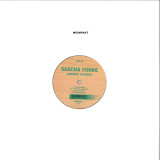
ascha Funke is creating a long overdue monument to an almost forgotten cultural artefact of the GDR: the ‘Germina Speeder’ was the only skateboard made in East Germany before reunification and was launched in 1986. It was produced by VEB Schokoladen-Verarbeitungsmaschinen (a state-owned chocolate processing machine factory) in Wernigerode and was therefore affectionately known as the ‘chocolate board’. However, it was hardly suitable for actual skateboarding due to technical inadequacies. It is not known whether Sascha himself owned such a board, but the tracks on the ‘Germina Speeder’ EP definitely roll better than the original. The opener ‘Blaupunkt’ breathes the euphoric spirit of the legendary Berlin club ‘E-Werk’, while the title track would have been more at home at the ‘Dubmission’ parties in the Turbine. Sascha leaves the 90s behind with radiant positivism; ‘Bo Knows’ sounds more like a 2000s open air at Café Schönbrunn. The EP closes with ‘Mastermind’, a high-octane psy-proghouse banger that, like all four tracks, quotes the past but still has both feet on today’s dance floors. Or rather, is dancing. 4:1 for love!
Sascha Funke setzt einem nahezu vergessenen Kulturgut der DDR ein längst überfälliges Denkmal: Der “Germina Speeder” war vor der Wende das einzige in Ostdeutschland hergestellte Skateboard und kam im Jahre 1986 auf den Markt. Es war ein Erzeugnis des VEB Schokoladen-Verarbeitungsmaschinen aus Wernigerode und wurde daher liebevoll auch als “Schoko-Board” bezeichnet. Zum eigentlichen Skateboardfahren war es allerdings aufgrund von technischen Unzulänglichkeiten kaum zu gebrauchen. Ob Sascha selbst ein solches Board besaß ist nicht überliefert, aber die Tracks auf der “Germina Speeder” EP rollen allemal besser als das Original. Der Opener “Blaupunkt” atmet den euphorischen Geist des legendären Berliner Clubs “E-Werk”, während der Titeltrack eher bei den “Dubmission” Parties in der Turbine gelaufen wäre. Mit strahlendem Positivismus verlässt Sascha die 90er; “Bo Knows” klingt eher nach einem 2000er Open Air am Café Schönbrunn im Volkspark Friedrichshain. Die EP schließt mit “Mastermind”, einem hochoktanigen Psy-Proghouse Knaller, der wie alle vier Tracks zwar das Vergangene zitiert, aber dennoch mit beiden Füßen auf den Tanzflächen von heute steht. Beziehungsweise tanzt. 4:1 für die Liebe!
After a Classic/Defected release and a string of edit projects/remix work Snips returns to his own Barbershop Records for his latest release "Blasphemy", a project drawing solely on Gospel samples from Snips' personal collection. Barbershop sticks with the theme of re-imagining the past to create something new while continually offering an alternative to todays mainstream. With Gospel music being the least commodified of its contemporaries yet the most essential element of them all, it would seem the perfect sample source for a Barbershop release and a sonically perfect fit for Snips' brand of Hip Hop, Soul & House inspired beats. From future club friendly anthems like "Feed The People" and "Feel The Spirit" to the true school Boom Bap sensibilities of "Pattersons Pilgrims" and "Never Waltz Alone" this release has all bases covered.
Next up on D.A.M.N. we got Ulysses, founder of Scatalogics Records, with his Immaterial Ep.
First released on his own imprint back in 2003, the Ep still stands his ground today as a fresh sounding release.
Filled with funky basslines, hypnotic atmospheric pads, disco claps, and vocals modulated in Vocoder!
Limited
The story of So-Do is both familiar and completely unique. A classically trained multi-instrumentalist with a poet’s sensibility and a passion for folk music meets a worldly bar owner with a love for psychedelia, post-punk and dub in the small town neither could bring themselves to leave. Over two years, they play dozens of shows in independent live houses across Japan, cut and self-release three singles – two 7”s and a 12” – and leave behind just eight tracks, all of which are set to be reissued for the first time forty years on.
So-Do’s Studio Works ’83-’85 collects the full output of this iconoclastic post-punk phenomenon, whose sparse, syncopated arrangements were infused with a dubbed-out flair that owed more to Dennis Bovell’s productions of Orange Juice, the Jah Wobble basslines of Public Image Limited or Adrian Sherwood’s live dubs of Mark Stewart than even they knew at the time.
Because for lead songwriter Hideshi Akuta, music offered an escape from the existential malaise of small-town life, folding a melancholy nihilism into tracks like ‘Kakashi’ and ‘Hashiru’ (which translates as ‘run’), or taking aim at the inequalities and creeping apathies of the middle classes, as he does on ‘Get Away’ and ‘Nothing’.
And if Talking Heads had CBGBs, Sex Pistols had the Roxy, then So-Do had Buddha. Influenced by Buddha venue owner and amateur producer Atsuo Takeuchi, Akuta turned So-Do’s sound towards dub, crafting playful, ironic and funky compositions that crackle with live energy at the vanguard of Japan’s nascent independent music scene.“So-Do is hard to explain,” Takeuchi says. “It’s been a struggle for years to try to find the words for our music.” The answer perhaps, is just to listen.
Both familiar and completely unique, So-Do extend Time Capsule’s genre-defining exposition of Japan’s reggae-inspired music of the ‘70s and ‘80s, as collected on the label’s two critically acclaimed Tokyo Riddim compilations, and London-based live outfit Tokyo Riddim Band.
Embracing the rip-it-up-and-start-again ethos of the early ‘80s, So-Do burned bright for a short time and then burned out. Their legacy is about to be reignited. Expect it to catch alight once more.
All songs are written & composed by Hideshi Akuta
Produced by Atsuo Takeuchi
Artwork by Ben Arfur
Liner Notes by Anton Spice, Ayana Honma, Kay Suzuki
Curated by Kay Suzuki
Licensed from Atsuo Takeuchi (Oregano Cafe)
Tape Restoration and Mastered by Mike Hillier at Metropolis Studios, London, UK
Time Capsule | TIME023 | 1983-1985 → 2025
Ten years of history, sweaty nights, and raw techno are celebrated with a very special vinyl. Umwelt, Silex92, Ancient Methods, and Phase Fatale come together to pay tribute to Lanna Club and its legacy in the underground scene.
This vinyl isnt just a collection of tracks its a statement. A decade of passion, resistance, and club culture in northern Spain. Dont miss the chance to own this unique piece of Lannas history.
Will You joins the roster of Philipp Priebe’s Stólar this February with his ‘Is It 2 Late?’ EP accompanied by remixes from Lb Honne and Orion. Producer, DJ and Oleeva Records label boss Will You has been slowly unveiling his take on contemporary deep house and dub-tinged techno over the past few years via solo material and remixes on his own imprint and most recently a remix of Philipp Priebe’s ‘Movements In An Empty Department Store’ on Stólar. Here we see Will You returning to the latter aforementioned imprint with his latest EP.
Leading the release is ‘Santé’, a six and a half minute excursion through snaking sub bass tones, a crisp, shu®ed rhythm section, dreamy synth chimes, squelchy 303 licks and spoken word vocal lines. Title-cut ‘Is It 2 Late’ follows next and deviates into more dubbed out territory via expansive, unfurling echoes, cinematic atmospherics and robust, intricate percussion. Opening the ¬ip-side is Zurich’s Lb Honne’s interpretation of ‘Is It 2 Late’, the Project Indigo artist extracts the essence of the original and reshapes it into a subtly nuanced, loop-led and hypnotic workout. Italian duo Orion then conclude the package with their take on ‘Santé’, reshaping the original with their signature deep techno style, fuelled by grainy textural components and bumpy saturated drums.
If there’s one thing we know at International Feel, it’s that good things take time. But sometimes, just sometimes, they take a little longer than expected. Enter IFEEL088, a split remix 12” that stitches together two albums, two projects, and a collection of kindred spirits who understand the delicate art of sonic transformation.
Charlie Charlie (the Swedish duo of Chords and Bella Boo) have been long-time admirers of Mondag, ever since their ears first met the melancholic splendor of Sad Soup. When it came time to create Save Us, they had one request: a sax solo from Kristian (of Mondag fame). A beautiful idea, but as the fates (and studio schedules) would have it, the horns never made it onto the album.
Fast forward, and what began as a missed opportunity has now come full circle. Mondag, still taken with Save Us, took matters into their own hands and offered up a remix – a shimmering, unexpected rework of a track that already carried so much weight. Charlie Charlie obliged. And, because there’s no such thing as too much of a good thing, Bella Boo herself offers a tight and nimble edit, while Gerd Janson drapes the track in an ambient mist for those more horizontally inclined.
Hypernatural exists in some liminal space between waking life and dreamstate, it makes sense that its remixes should play with perspective. The trio—Dan Whitford (Cut Copy), Mirko Vogel, and Mike Gamwell (a.k.a. Knightlife)—crafted their album between the Swedish coast and the Scottish highlands, capturing the sublime and the surreal in equal measure. Now, it’s time to hand things over to new guides.
Mike Gamwell himself steps up, delivering a fresh take that bends and stretches time, while Gerd Janson follows, offering another piece for the puzzle—one that slots seamlessly into the hazy, transportive nature of the Hypernatural sound.
One record, two projects, three perspectives, and infinite interpretations. IFEEL088 is a reminder that sometimes the best things in life are worth the wait.
The sixth release on Fear No System: our first vinyl release by New Zealand-based musician, synth warper, and drum creator Go Nuclear, delivering an EP filled with nasty booty beats, featuring renowned producer and beat creator Detroit's Filthiest (AKA DJ Nasty).
The four-track EP includes remixes from Raw Takes, the creator of the NO SERVICE label, straight from LA; acid master Wheez-ie; and DJ/Producer Aura T-09, co-owner of Evar Records.
Artwork: Bazukka & Mariam Kantaria
Mastering: Incision Mastering
Berlin-based producer EDE returns with the Odyssey EP, a forward-leaning release that stays true to house music’s roots while carving its own path. Following his Poptroit EP, known for its pop sensibilities and Detroit-inspired grit, EDE refines his dancefloor-focused sound with a cinematic edge.
“I Am Wavy” featuring Nowa is a true highlight of the EP, it digs into the core aspects of the genre—bass, groove, and an unrelenting "four-to-the-floor" drive—brought to life by a melody and vocal combination that makes the track a hot piece of music.
The title track, “Odyssey,” ramps up the tempo with bubbling, wafting elements and subtle acid touches. Closing track of the EP is “Paradox,” a collaboration between EDE, Nowa, and Samet Günal, delivering tool-like textures and energy to leave a lasting impression.
Born in 1989 in Bamako, Mali, Nfaly Diakité is a member of the Donsow, Bambara animist hunters. Nfaly Diakité is named after his grandfather, the late Nfaly Diakité, one of Mali’s most respected donso chiefs. His grandfather did not play, but as a leading figure in the donso brotherhood, he was always accompanied by musician Yoro Sidibé. Nfaly grew up alongside Yoro Sidibé, who became his first master of the donso ngoni, a type of eight-stringed antelope skin harp. After leaving school to devote himself to his instrument, Nfaly continued his apprenticeship with Diakaria Diakité and Oumar Sidibé, two donso masters from the Wassolo region.
He quickly made a name for himself in the donso community and was much asked to play at the traditional ceremonies of his brotherhood. He then met percussionist Ibrahim Sarr and joined the BKO Quintet, with whom he recorded an album and toured Europe and the United States. His virtuosity on the donso ngoni soon attracted attention, and he took part in numerous music and dance festivals in Mali and abroad, with the aim of raising awareness of this little-known traditional instrument.
Nfaly Diakité is also a Kônô, meaning that he is responsible for passing on the history and culture of the Bambara people through music and song. He pursues his mission by combining tradition with more contemporary sounds and by collaborating with artists from a wide range of musical backgrounds. For him, music is a means of conveying messages of peace, love and harmony, and his compositions evoke the values of respect, tolerance and open-mindedness.
‘Tribute to Toumani Koné’ is Nfay Diakité’s first solo album, recorded in Bamako in June 2020. On the album, Nfaly is the only singer, providing backing vocals and playing the donso ngoni and keregne. The album is a tribute to the storyteller and poet Toumani Koné, the greatest donso ngoni player since N’gonifo Bourama. Nfaly Diakité is a representative of the new generation of donso ngoni players and he wishes to pay tribute to Toumani Koné, who throughout his long career has been a symbol of courage, daring, loyalty and honesty.
The nine-track of this solo album leaves no room for hesitation. Three instruments (donso ngoni, voice and keregne) manage to carry one into another dimension without ever tiring. The fitting and precise rhythm is a deep but melodious transe. Nfaly’s voice plays between expressive urgency and calm wisdom, and the choruses with his own voice multiply the planes of dimension of the music. The donso n’goni, of which Nfaly is an excellent player, sounds rough and earthy but always clear and sharp. All the strength of a music that does not belong to a single musician but to a long cultural tradition of which he is the spokesman is expressed here. The young Nfaly, thanks to his experience and sensitivity, succeeds on his own in pushing us into this world without feeling the weight of tradition but only the liberation of music that sounds all the more contemporary. This album is to be listened to in its entirety as one tight journey between repeated formulas, highlights and moments of rest within the same relentless rhythm. The densest moment is probably found in the heart of the album, between the tracks Nankama (the predestined one) and Mogote Diabeye (no one can please everyone). Here, the message, which can be deciphered from the translation of the lyrics, seems to transcend language barriers and intepret us directly about our human condition, urging us to move our bodies to the dense rhythm of life.
The album SATO was made by the Ukrainian Crimean Tatar pianist and composer Usein Bekirov.
SATO was created during the difficult wartime for Usein’s motherland Ukraine and for the author himself.
Despite circumstances, the compositions of SATO express the ideas of the beauty and revival of Ukrainian music, a part of which is Crimean Tatar folklore.
The uniqueness of the release is caused both by the concept of the album and by the performers' star crew.
The jazz sound of the compositions of SATO is directed to the stylistic course of ethno-jazz and world music.
Rhythms and melodies of colorful Crimean Tatar folk music became the main source of inspiration in the creation of the album.
We can find both Usein's original author's themes, skillfully stylized to the oriental sound,
and referenced to the classic jazz vocabulary in its juicy riffs and grooves with features of fusion and funk music.
The name of the album reflected the inheritance of generations through music.
Sato is not only a folk instrument but also the name of the first Crimean Tatar jazz band, which made the first jazz arrangements of Crimean Tatar songs.
The music of this band became the basic musical experience of Usein Bekirov, because one of the members of the group was his father Riza Bekirov, to whom the album is dedicated.
The author and producer of the album is Usein Bekirov - Ukrainian pianist, composer, arranger, sound producer, and author of music for a number of films and theater performances.
Usein Bekirov cooperates with both foreign and Ukrainian musicians of the highest rank.
This is evidenced by the participants of the album Sato: Dennis Chambers, Randy Brecker, James Genus, Mike Stern, Ada Rovatti (USA), Hadrien Feraud (France), and Cenk Erdogan (Turkey).
Each performer reinterprets the author's material of Usein Bekirov through the prism of his own experience, character, and manner of performance, which was expressed in the daring stylistic combinations within a jazz style.
A special role in the creation of the album was taken by the participants of the recordings, especially, legendary jazzmen Dennis Chambers, Randy Brecker, James Genus, Mike Stern.
Their ideological and creative support became an important part of the creativity process.
Musicians expressed their impressions in small addresses for the audience.
One of the reviews of the musicians:
"The process of recording compositions was really exciting! This music reflects Usein's national origin and sense of his native culture.
It is full of real emotions. Actually, this music is quite difficult, but it is very well written and produced!
I sincerely hope you will notice this album, which also took part in Dennis Chambers, James Genus, Mike Stern, Ada Rovatti, and others.
I think it's going to be a really special album, can't wait to hear the final version.
When you hear about the premiere, I highly recommend listening to this new album created by Usein Bekirov.
It will be great!" Randy Brecker
Imagine a nocturnal rendezvous between the lyrical playfulness of Serge Gainsbourg and the infectious yet smooth danceability of Daft Punk. Tormento is a sexy soft disco odyssey that weaves a contemporary fantasy where dilemmas and desires—torments of the heart and flesh—are bathed in the sultry glow of classic erotic cinema.
Recorded in Los Angeles and Paris, the song is a collaborative effort between composer and multi-instrumentalist Louis Fontaine, DJ and music supervisor Alix Brown, and lyricist and writer Margo Fortuny. This sonic tale of longing and uncertainty, ignited by the trio's shared love for 1970s sounds, cinema, and style, draws inspiration from the cinematic soundscapes of François de Roubaix and from French and Italian chanson.
Tormento pairs a haunting, nostalgic melody with a late-70s disco arrangement featuring a mix of vintage synthesizers, driving basslines, and rhythmic percussion. Alix Brown's ethereal vocals convey the electrifying thrill of an immediate, magnetic attraction.There's seduction, mystery, the poetry of a moment, the allure of transgression, indecision, and all the things that happen late at night. When faced with temptation, what do you do? Perhaps, yousurrender to the sweet, intoxicating rhythm of the forbidden.
Adance song for night owls, loners, and romantics, Tormento is out on 7" and digital on February 14th, 2025, courtesy of Four Flies.