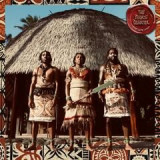
"Prime Sequences" is the latest album by dj and electronic music producer GummiHz, real name Alexander Tsotsos. Alex has an ear for what he describes as elastic frequencies, thus gummi-hertz! In other words, low bass lines, airy synth phrases and shuffle rhythms, playfully arranged within loose forms. A philosophy that comes across throughout this long player. Elements fall in and out of order, time swings back and forth, all together in perfect harmony! Pushing the boundaries of what has become his signature sound, a fusion of house and techno all the way from Berlin to Detroit! This package features underground music coming straight from the heart, or the Hertz more appropriately! The story unfolds within no less than nine tracks showcasing Alex's versatility in making waves!
The opening track titled "Berlinopolis" is a sonic portrait of the city of Berlin, where Alex lives since more than a decade. A smooth soundscape produced by combining abstract melodies with field recordings of the city's ambience. "'Second Wave" follows airy jazz chords and drum parts to launch the listener into trajectory. It feels like the sort of track that would probably make it into Herbie Hancock's deep house collection! The title track "Prime sequence" is a Detroit brewed piece with some Berlin minimalism rawness in the rhythm section! Combining a mixture of drama, suspense and shaking drums to dominate the dance floor. Next up comes "Submerge", a tight and hypnotic affair carrying the right amount of subtle release. It locks in right from the start and doesn't let go! "Prime Dub" dives deeper into the frequency spectrum. Rhythm and sound stimulate the brain waves as a heavy chord phrase cycles to infinity. "Proto Sequence" follows a simple still infectious groove laced with various modulations. This track has party written all over it! Inspired by proto-house motifs pioneered by artists like Chi-town's Ron Hardy. "Metafunk" reaches out to Berlin's club culture at its core. That is, the youth and street culture! The phrase on repeat signifies the urge to reclaim the streets, while endlessly flowing within finely tuned electronics. "Mindloop" is a track written for the after hours looping state of mind. Another minimal house cut with a fair dose of psychedelic sound design. Lastly, "Descension" relaxes the mood through deep pulsating rhythms and playful arpeggios. Pushing towards a meditative state by stimulating mind, body and soul!?
"Prime Sequences" covers a wide range of styles like ambient electronics, peak time house and techno, as well as seriously effed up after hour minimalism! Made for both djs and music lovers, this is the second long player by GummiHz to come out on vinyl after his debut album "Sleepless Nights" back in 2009! While it succeeds his latest EP, "Groove is in the Hertz". What makes it even more special is that it comes out on brainchild Claap, giving the artist total freedom of expression.
Buscar:la culture
28th April 2022 marks the 50th anniversary of the release of David Bowie’s STARMAN, the first single from THE RISE AND FALL OF ZIGGY STARDUST AND THE SPIDERS FROM MARS. To celebrate, Parlophone Records is proud to announce release details to mark the album’s Golden Jubilee.
On 17th June 2022, 50 years and one day after the original U.K. release date, THE RISE AND FALL OF ZIGGY STARDUST AND THE SPIDERS FROM MARS will be issued as a limited edition 50th anniversary picture disc, featuring a half-speed master and a replica promotional poster for the album.
THE RISE AND FALL OF ZIGGY STARDUST AND THE SPIDERS FROM MARS is the breakthrough album that catapulted David Bowie into the international spotlight. Over the past 50 years it has remained a touchstone record, growing in stature with each passing year. It is now ingrained in popular culture, its undeniable influence spanning musicians from Arcade Fire to Lady Gaga, to Harry Styles’s androgynous fashion sense to Noel Fielding’s shirts on The Great British Bake-Off to Ziggy make-up challenges on Tik-Tok.
David Bowie laid to rest the Ziggy Stardust persona in July 1973 at his infamous last show with the Spiders From Mars at London’s Hammersmith Odeon, but Ziggy’s impact reverberates to this day.
Unique fusion of the Indian and Egyptian music cultures devised by Baligh Hamdi, the most prominent of all modern composers in the Arab-speaking world. Hamdi, who penned dozens of hit compositions for Umm Kulthum, Abdel Halim Hafez, Warda and Sabah amongst others, also shaped the future of Arabic music in a way that's difficult to overestimate.
Directed by Hamdi, the renowned Indian sitar player Magid Khan joins the Egyptian musicians of Abdel Halim Hafez's orchestra in re-reading some of Hamdi's compositions from a new perspective – here sitar and tabla dance together with arghoul, ney and other Arabic instruments.
An east-meets-east masterpiece in which Hamdi once again pushed the boundaries of Arabic music in his tireless quest for a broader, more global reach.
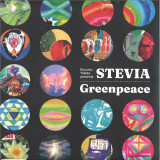
In 1997 and 1998, the late great Japanese composer, producer, and DJ Susumu Yokota released two of the most eclectic albums of his decades-long career, Fruits of The Room and Greenpeace. Recorded under his Stevia alias for Tokyo Techno pioneer DJ Miku’s Newstage Records/NS-COM, they were Yokota-san’s homage to the foundational days of club music in Japan.
This year, Glossy Mistakes are proud to present the first official vinyl editions of Fruits of The Room and Greenpeace, originally released on CD during the golden days of the format. Packaged in reimagined cover artwork created by the celebrated Japanese visual artist Masaho Anotani, these two albums perfectly capture the diversity at the heart of Yokota-san’s oeuvre. Across Greenpeace sees Yokota-san conjuring up a heady concoction of dusty loops, sampledelic breaks, kraut-rock and psychedelic downbeat. A remarkable listening experience based on the inspired era of a genius.
When Yokota-san wrote and produced the music on Fruits of The Room and Greenpeace in 1997, he was reflecting on the broader culture that surrounded dance music in Japan in the early to mid-nineties. It was an era when the psychedelic culture of late sixties America, the afterglow of UK acid house/rave, the new age movement and cyberpunk dovetailed together. Within DJ Miku and Yokota-san’s social circles, the thinking of Timothy Leary, Ram Dass, Allen Ginsberg, Jack Kerouac and William S. Burroughs electrified the air.
By 1996, the moment, brilliant and blinding as it was, was over. “We all felt that the rave scene fizzled out,” DJ Miku says. As he puts it, there was a collective feeling around him that it had all become too much. From the calm that followed, DJ Miku, Yokota-san and their open-eared peers made the decision to switch tracks and start from scratch. DJ Miku believes that with his Stevia releases, Fruits of The Room and Greenpeace, Yokota-san wanted to express the sweet and sour nature of the passing of those wild early days and his wish for true peace. “At the time, we saw eye-to-eye, with an implicit understanding of each other,” he explains. “Even now, twenty-five years later, I am confident it was like that.”
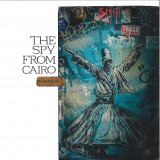
The Spy from Cairo (aka Moreno "Zeb" Visini) returns with his 5th studio album on Wonderwheel Recordings: "Animamundi" features some special collaborations from his travels & live shows from over the past few years. The album reflects the move from his home in NYC to his mother's home in a quiet village in Italy to take care of her in her older age. It's been a difficult transition with Italy's challenging experience with the pandemic, including some of the strictest measures enforced on the public. He recalls by stating "This album was conceived between 2020 and 2021 in Italy, between lockdowns, restrictions, and various pandemic mandates. Its message is of hope and positivity - a reminder that we are all spiritual beings… Free spiritual beings… and that freedom can't be broken."
"Animamundi" is a reconfirmation that The Spy from Cairo overcomes all obstacles & delivers a diverse progression of his iconic "Arabadub" sound, with the help of collaborators like Andalucian vocalist Carmen Estevez, Mexican vocalist Mambe Rodriguez on the heavy hitting "Criminal," Egyptian vocalist Adii Small on "Beautiful Baraka," and former touring band member, the multi-instrumentalist and vocalist Fatima Gozlan from Hungary. The music can vary from heavy deep electronic synths and live eastern instrumentation with Zeb playing oud, saz, chiftelli, bass, percussion, and other instruments, all along giving it his signature dub mixing style.
The songs take inspiration from a wide range of musical traditions and cultures, including Turkish (on "Cosmic Pasha," "Qanun in Dub" – using the qanun, an instrument popular across the Middle East, with a sound between the European harp and a dulcimer – and "Black Sea," which utilises a typical Dabke melody), Egyptian ("Mizmirized," sampling riffs from a mizmar), Indian ("Seeds of Culture), and Sufi ("Divination," a devotional composition), fusing these reference points with healthy doses of cumbia, funk, reggae, psychedelic, and dub. Thematically, "Animamundi" deals with some of the struggles Zeb – and all of us – have faced the last two years, through the lens of his personal experiences. Yet, the tone of the record manages to remain positive, like an uplifting dance through the world's sounds; after all, "Animamundi" means "soul of the world" in Greek. With album art by Sam Angeli and layout design by Marcial Arts, this beautiful album is a truly well-rounded worldwide collaboration.
"Animamundi" will be released digitally on March 4th, 2022, with the LP to follow shortly after.
- A1: A Planet
- A2: Going In
- A3: Engineers
- A4: Life
- A5: Weyland
- A6: Discovery
- B1: Not Human
- B2: Too Close
- B3: Try Harder
- B4: David
- B5: Hammerpede
- B6: We Were Right
- C1: Earth
- C2: Infected
- C3: Hyper Sleep
- C4: Small Beginnings
- C5: Hello Mommy
- C6: Friend From The Past (Contains “Theme From Alien”)
- C7: Dazed
- D1: Space Jockey
- D2: Collision 3
- D3: Debris
- D4: Planting The Seed
- D5: Invitation
- D6: Birth
Prometheus is the 2012 science fiction horror film directed by Ridley Scott, written by Jon Spaihts and Damon Lindelof and starring Noomi Rapace, Michael Fassbender, Guy Pearce, Idris Elba, Logan Marshall-Green and Charlize Theron. It is set in the late 21st century and centers on the crew of the spaceship Prometheus as it follows a star map discovered among the artifacts of several ancient Earth cultures. Seeking the origins of humanity, the crew arrives on a distant world and discovers a threat that could cause the extinction of the human species.
Marc Streitenfeld is a German composer. He has frequently collaborated with director Ridley Scott. Streitenfeld has composed the music for many high-profile Hollywood features as well as critically acclaimed independent films, including American Gangster, Body of Lies, The Grey, Poltergeist and All I See Is You.
Prometheus became the fifth collaboration between the composer and the director. The score was recorded over one week with a 90-piece orchestra at Abbey Road Studios. Streitenfeld began coming up with ideas for the score after reading the script prior to the commencement of filming. To create an “unsettling” sound, he provided the orchestra with reversed music sheets to have them play segments of the score backwards, before then digitally reversing it. The track “Friend from the Past” reprises Jerry Goldsmith’s original main title from the Alien soundtrack.
- 1: The Chambers Brothers - “Uptown”
- 2: B.b. King - “Why I Sing The Blues”
- 3: The 5Th Dimension - “Don’t Cha Hear Me Callin’ To Ya”
- 4: The 5Th Dimension - “Aquarius/Let The Sunshine In (The Flesh Failures)”
- 5: David Ruffin - “My Girl”
- 6: The Edwin Hawkins Singers - “Oh Happy Day”
- 7: The Staple Singers - “It’s Been A Change”
- 8: The Operation Breadbasket Orchestra & Choir Featuring Mahalia Jackson And Mavis Staples - “Precious Lord Take My Hand”
- 9: Gladys Knight & The Pips - “I Heard It Through The Grapevine”
- 10: Mongo Santamaria - “Watermelon Man”
- 11: Ray Barretto - “Together”
- 12: Herbie Mann- “Hold On, I’m Comin’”
- 13: Sly & The Family Stone - “Sing A Simple Song”
- 14: Sly & The Family Stone - “Everyday People”
- 15: Nina Simone - “Backlash Blues”
- 16: Nina Simone - “Are You Ready”
SUMMER OF SOUL (…Or, When The Revolution Could Not Be Televised) Original Motion Picture Soundtrack accompanies Ahmir “Questlove” Thompson’s directorial debut documentary SUMMER OF SOUL, which won the Grand Jury Prize and Audience Award at the Sundance Film Festival. Like the documentary, most of the audio recordings that were recorded during the 1969 Harlem Cultural Festival have not been heard for over 50 years, keeping this incredible event in America’s history lost – until now. The SUMMER OF SOUL (…Or, When The Revolution Could Not Be Televised) Original Motion Picture Soundtrack is a joyous musical celebration and the rediscovery of a nearly erased historical event that celebrated Black culture, pride and unity. For the album, Questlove carefully selected 16 live renditions of jazz, blues, R&B, Latin, and soul classics performed over the course of The Harlem Cultural Festival in 1969 as chronicled by the film. Performers include The 5th Dimension, Gladys Knight & The Pips, B.B. King, Nina Simone, The Staple Singers, David Ruffin and Sly & The Family Stone! Extensive promo & marketing activity across all media outlets. The CD format was released in Jan. Standard black vinyl 17 track double LP in gatefold sleeve. Promo/marketing activity.
Shirley Davis is centered, feet firmly planted and gazing right on into the future. The powerful soul singer takes no prisoners and holds no regrets on her third album, Keep On Keepin' On. As Shirley Davis & The Silverbacks, Davis harnesses the power of soul mothers past as well as her own history to deliver a record that rollicks from soul serenade to rocking ballad, then brings it on home with hard stepping soul.
Keep On Keepin' On embodies the best of the modern soul tradition, while showcasing a unique voice in its growing canon. Conjuring classic soul and funk sounds of the 1960s and '70s, as well as the mighty Sharon Jones – whose last words to Davis provide the album title -- Shirley Davis & The Silverbacks' latest is a highly personal tale of empowerment and self-realization, served up without losing an ounce of grooviness.
180g vinyl pressing.
During the late 2010s, music lovers around the world began obsessively listening to increasingly esoteric albums on Youtube. More often than not, they’d leave the browser on autoplay. This was how Facundo Arena, the composer and producer behind The Kyoto Connection, discovered the technonaturalistic pleasures of Kankyō Ongaku (environmental music), a distinctly Japanese interpretation of European, British and American minimalist composition and ambient music. “It was a kind of algorithmic magic,” he says.
Upload by upload, the utopian music of Hiroshi Yoshimura and his 80s Japanese contemporaries transported Facundo back to his childhood. When he was five, his father placed him in karate lessons and began watching martial arts movies with him. From those early experiences, Facundo became fascinated Japanese history, tradition, and culture, particularly that of Kyoto - the cultural capital of Japan. Kankyō Ongaku reminded him of hearing the sounds of Japanese folkloric instruments as a young boy, and suddenly, the way the influence of Japan had manifested in his music made sense. “I had the sensation that for many years, I’d been doing something similar to the style,” he explains.
Inspired, Facundo used an iPad and an old Akai cassette deck to record Postcards, his homage to Japanese minimalism and Kankyō Ongaku. By this stage, he was twelve years deep with The Kyoto Connection, the musical project he launched in 2005 in his hometown of Buenos Aires, Argentina. Over that late 2000s and 2010s, Facundo, later on joined by collaborators Rodrigo Trado (drums), Jesica Rubino (violin) and Marian Benitez (vocals, now his wife), released numerous D.I.Y albums. Project by project, they followed the threads between 80s synth-pop, ambient, new age, house, techno and acoustic composition.
Postcards introduced The Kyoto Connection to listeners around the world and brought Facundo into our orbit. During Argentina’s covid lockdown, Facundo received a set of soundscapes recorded in Kyoto by the Japanese musician and sound designer Masafumi Komatsu. Over several insular months, he decorated them with synthesisers, samples and subtle rhythms, creating The Kyoto Connection’s next album, The Flower, The Bird and the Mountain to be released via Isle Of Jura offshoot Temples Of Jura.
Ostensibly made up of twelve distinct tracks, listening to The Flower, The Bird and the Mountain feels more akin to spending calm, meditative time in twelve specific environments. Although the foundations they rest on are recordings made in geographic locations around Kyoto, Facundo has yet to visit Japan. As a result, the landscapes he paints sit somewhere between fiction and fact, richly pictorial sonic imagination juxtaposed with echoes of reality. Regardless, as his bubbling melodies and glistening synthesisers glide against Masafumi Komatsu's recordings, Facundo guides us into a blissful zone of tranquillity well worth spending time within.
White Vinyl
"CCR - Club Culture Rarities" the new record label exclusively dedicated to re-prints of cult and rare 12” taken form Expanded Music’s labels.
The 7th release on "CCR - Club Culture Rarities" DESIRE originally released on CREATIVELABEL in 1992
Produced by D.J. Martini, Fabrice & Davide Rizzatti during their artistic fertility period.
A new colored vinyl (white) release on CCR Club Culture Rarities
''The acts Mermaid Chunky call to mind here tend to lean on a blithe naivete: Animal Collective, Peaking Lights, youthful Norfolkians Let’s Eat Grandma and fuckwitted freak-folkers Cocorosie. This isn’t a fashionable sound in 2020 – venture your own sociopolitical reasoning – and I reckon I’ve found the one record of its type I want to hear this year.''
Mermaid Chunky are an audiovisual duo made up of artists Freya Tate and Moina Moin. Bathing in milkmaid serenity and improvised chaos, the duo boast of pumping trance rhythms, sad Easter time chicks and seriously arousing sax solos. Much of their cultivation has come out of the mossy club culture of Stroud's SVA and London's Total Refreshment Centre, collaborating with the likes of Alabaster DePlume, Danalogue, Donna Thompson, Grove, Snapped Ankles (UK tour support) and Yama Warashi.
Their debut Faith and Industry album VEST (produced by Capitol K at Total Refreshment Centre), was birthed last year out of a history of improvised cheek and club dexterity forefronting their live shows and audiovisual solstice celebrations, recently captured by British Vogue's 2021 PRIDE series. Championing this action is the Mermaid Chunky Mothership, a gang of fellow artists and performers, often clad in nauseous satin frills, swamping the stage with french mime and slut drops (Roundhouse 2021, End Of the Road 2021, SVA Solstice always.) The MC gang just scoured their PRS Woman Make Music funding so who knows what they will be stirring up in the heat of summer soup 2022 (the most ducks in a year we will ever experience.) The only way for you to find out is to join the chunklett buffet and dip your wicked, webbed fingers into something mega.
Mermaid Chunky will perform Camp Bestival (Shropshire), Kite Festival (Oxford) and at Orbury Common’s PrahEP launch (a collaborative audiovisual May Day celebration) at the Brunel Goods Shed, SVA, Stroud 30th April - 1st May.
They will aslo be collaborating with Percolate Music on a series of London based audiovisual events this year focused on experimental, electronic womxn performers, visual artists and DJs. More special announcements to be revealed in the present future of your past.
Incl. Schacke Remix
Having been extensively road-tested this past year by DJs including Daniel Avery, HAAi and Gerd Janson, Highdive arrives with tangible anticipation. The work of less-than-shadowy figures Gramrcy and John Loveless, the pair have passed lockdown and beyond remixing artists such as WH Lung, Discovery Zone and Ghost Culture. Debuting their first original material, closely following Gramrcy’s recent appearance on Loveless’s own Hot Concept imprint, Highdive is a long-anticipated explosion of energy.
Built around a sonic-boom breakdown, glossy rave chords and pounding post-punk drums, Highdive feels immediately at home on Phantasy. Having worked closely alongside founder Erol Alkan in recent years to shape the imprint's diverse output, Loveless' collaboration with the Peach Discs founder nods to the electro landscape of the label's earliest days. Having never left dance floors since, Gramrcy & John Loveless take a golden opportunity to plunge dancers into the sublime and the ridiculous.
While a stripped-down ‘Beats Mix’ sees the pair adopt a less-maximal approach, leave it to Schacke to stretch Highdive into hardcore rave heaven. The already-influential Copenhagen artist underscores his refreshing funk in the ‘fast-techno’ scene through which he has risen, turning the screws and upping the tempo with intense but elastic results.
- A5: French Film
- A10: Chairs Missing
- B2: Ignorance No Plea
- B5: Stepping Off Too Quick
- A1: Oh No Not So
- A2: Culture Vultures
- A3: It's The Motive
- A4: Love Ain't Polite
- A6: Underwater Experiences
- A7: Stalemate
- A8: Options R
- A9: Indirect Enquiries V1
- B1: Being Sucked In Again
- B3: Once Is Enough
- B4: The Other Window
- B6: On Returning
- B7: Former Airline
- B8: Two People In A Room
The original Not About To Die was an illegal bootleg, released at some point in the early 80s, by the dubiously named Amnesia Records. The album was made up of selections from demos recorded by the group for their second and third albums: Chairs Missing and 154. These demos had been recorded for EMI, with cassette copies circulated amongst record company employees. However, they were never intended for release. A typically shoddy cash-in, the songs on Not About To Die were taken from a second or possibly third generation cassette, with the album housed in a grainy green and red photo-copied sleeve. Compared with the high standards of production and design Wire have always been known for, it was something of an insult to band and fans alike. Now, in a classic act of Wire perversity, the group have decided to redress the balance and reclaim one of the shadier moments of its history, by giving Not About To Die its first official release on the bands own pinkflag imprint.. All the tracks have been properly remastered, with the relevant recording details in place. As for the sleeve artwork, whilst it strongly references the original, it is decidedly more artful in its execution. Not About To Die emerges as a fascinating snapshot of Wire in transition with embryonic versions of classic songs such as ‘French Film (Blurred)’, ‘Used To’ and ‘Being Sucked In Again’, that the group would develop considerably for their epochal 1978 album Chairs Missing. Later demos such as ‘Once Is Enough’, ‘On Returning’ and ‘Two People In A Room’ would surface in radically altered form on 1979’s 154. Some songs, such as ‘The Other Window’, are virtually unrecognisable from their later iterations but the biggest prizes here may well be the tracks that were omitted from Wire's later studio albums... Highlights include ‘Motive’, which has an undeniable power. Robert Grey’s drumming is crisp and minimal, and Graham Lewis’s bass runs are particularly ear-catching. Despite its distinctly un-Wire title, ‘Love Ain't Polite’ is also something of a gem. Meanwhile, the track which gives the album its title Not About To Die (officially known as ‘Stepping Off Too Quick’) possesses what Colin Newman half jokingly calls “The best intro to any song ever”. The intro is so good in fact, that it takes up a third of the song’s entire time frame. These properly mastered tracks have never been available on vinyl before, and they provide an opportunity to hear Wire at a point in their development when they were bursting with fresh ideas and a will to communicate them. This is post-punk at its very finest.
a A1 Oh No Not So [save The Bullet]
[e] A5 French Film [blurred]
[j] A10 Chairs Missing [used To]
[l] B2 Ignorance No Plea [i Should Have Known Better]
[o] B5 Stepping Off Too Quick [not About To Die]
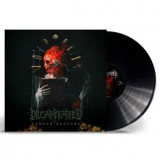
Across eight studio albums, DECAPITATED grew from the adolescent dream of teenagers from a small Central European town to one of the leaders of the metal genre. Each successive album further expands the band’s sound with genre-bending authenticity and integrity. As Metal Injection rightfully observed, “any self-respecting death metalhead knows the name well.”
DECAPITATED’s music is a weapon forged by four young men from a historic medieval-fortified town in Poland, which catapulted them to the top of a worldwide subculture. Like a rose in the devil’s garden, the DECAPITATED story builds triumph from tragedy. The gleeful grotesquery of extreme metal imagery and rifftastic bludgeoning beckons listeners to uncover broader truths.Upon the release of 2017’s Anticult, Metal Hammer declared DECAPITATED “a serious successor to the likes of Pantera and Lamb Of God – a band who can draw new legions into the metal world as its new champions.” Their diverse follow-up, 2022’s Cancer Culture, delivers on that promise.
Instantly recognizable devastation and deceptively sinister hooks abound. Freshly minted DECAPITATED anthems like “Last Supper,” “Hello Death,” “Just Cigarette,” “No Cure,” “Iconoclast,” and “Cancer Culture” shimmer with sonically sharp production and unrelenting bombast. There’s also a newly increased emphasis on melody, even venturing into darkly romantic territory. Wacław "Vogg" Kiełtyka (guitar), Rafał "Rasta" Piotrowski (vocals), Paweł Pasek (bass), and James Stewart (drums) are at the top of their game, delivering the goods at peak performance. Jinjer vocalist Tatiana Shmayluk and Machine Head frontman Robb Flynn make guest appearances.
Set on the descending plains of a mountain range amid a dense forest, Krosno boasts a 14th-century Gothic church, a Subcarpathian museum, and stunning artisan glassware. In this Polish town, teenage music student Wacław "Vogg" Kiełtyka discovered records from bands like Morbid Angel, Cannibal Corpse, Metallica, and Machine Head. The guitarist and his younger brother, drummer Witold “Vitek” Kiełtyka, cofounded DECAPITATED in 1996, inspired by a wide range of technical death, blackened thrash, and local heroes, like KAT and the world-renowned Vader. Death and black metal reigned supreme in the Polish scene of the 1990s, where Behemoth originated as well. In fact, a Vader song called “Decapitated Saints” inspired the band’s moniker.
The organic musical chemistry between the Kiełtykas was akin to the brotherly connectivity and vibe driving Pantera, Gojira, and the classic era of Sepultura. In 2006, Kerrang! praised the first three DECAPITATED albums - Winds of Creation (2000), Nihility (2002), and The Negation (2004) – as “superbly conceived and executed eruptions of technical brilliance and razor-sharp songwriting that turned these youthful Poles into one of the genre’s most widely respected bands.” That year’s Organic Hallucinosis further perfected Vogg’s penchant for blending extremity with catchy hooks.
The rule-breaking ferocity and invention of the first four albums reinvigorated death metal, as DECAPITATED inspired a new generation of bands who followed suit. Sadly, this era came to a shocking end in late 2007. While touring Russia, the band’s bus collided with a large truck near the border with Belarus. Both Vitak and then-singer Adrian “Covan” Kowanek sustained severe head injuries. Tragically, Vitak passed away in a Russian hospital a few days later. He was just 23.Vogg summoned the courage to continue, in honor of his brother and what they created, and returned with a new incarnation of DECAPITATED and the fiercely adventurous comeback album, Carnival is Forever (2011) featuring new vocalist Rafał "Rasta" Piotrowski. Blood Mantra (2014) introduced bassist, Paweł Pasek. Blabbermouth declared it “perhaps the most poised and gutsy” DECAPITATED album, adding “its courageous bends make it a turbulent but pleasurable ride.”
Cancer Culture sounds brilliant, modern, and tasty. “There is no place for any fake, plastic, bullshit drum machine or anything like that,” Vogg insists. “It’s all organic, pure, and clear, showing the true face of the band. Vogg and company entrusted the Cancer Culture mix to David Castillo at Sweden’s Fascination Street Studios / Studio Gröndahl (Sepultura, Carcass, Opeth, Katatonia), and legendary American producer Ted Jensen (Metallica, Slipknot, Pantera, Machine Head, Korn).
The devoted supporters who traveled to see DECAPITATED on international tours with the likes of Lamb Of God, Meshuggah, Soulfly, Fear Factory, and Suffocation over the years will recognize the ever-present pummeling backbone. Longtime fans and newcomers alike will connect to the variety of atmospheric depth throughout Cancer Culture’s ten boundlessly energetic and creative tracks.
“If you told me 25 years ago, in my neighborhood in the South of Poland, that I would be in Machine Head, sharing riffs with Robb Flynn,” Vogg marvels. “It’s simply incredible. It means that everything is possible in your life. That gives me the faith to believe that I can achieve even more in my career. The dreams we have when we are kids, things we can barely imagine, can happen.” Flynn contributes a hauntingly beautiful vocal to the Cancer Culture track “Iconoclast.” “Clean vocal singing is a really new thing in DECAPITATED,” Vogg notes. “It’s really unique and amazing.”
Driven by Vogg’s passion and integrity, the dual emphasis on creative invention and technical prowess maintains DECAPITATED’s stature as genre-leaders in 2022 and beyond. The band’s supporters continually demonstrate confidence and absolute certainty DECAPITATED will deliver.
Across eight studio albums, DECAPITATED grew from the adolescent dream of teenagers from a small Central European town to one of the leaders of the metal genre. Each successive album further expands the band’s sound with genre-bending authenticity and integrity. As Metal Injection rightfully observed, “any self-respecting death metalhead knows the name well.”
DECAPITATED’s music is a weapon forged by four young men from a historic medieval-fortified town in Poland, which catapulted them to the top of a worldwide subculture. Like a rose in the devil’s garden, the DECAPITATED story builds triumph from tragedy. The gleeful grotesquery of extreme metal imagery and rifftastic bludgeoning beckons listeners to uncover broader truths.Upon the release of 2017’s Anticult, Metal Hammer declared DECAPITATED “a serious successor to the likes of Pantera and Lamb Of God – a band who can draw new legions into the metal world as its new champions.” Their diverse follow-up, 2022’s Cancer Culture, delivers on that promise.
Instantly recognizable devastation and deceptively sinister hooks abound. Freshly minted DECAPITATED anthems like “Last Supper,” “Hello Death,” “Just Cigarette,” “No Cure,” “Iconoclast,” and “Cancer Culture” shimmer with sonically sharp production and unrelenting bombast. There’s also a newly increased emphasis on melody, even venturing into darkly romantic territory. Wacław "Vogg" Kiełtyka (guitar), Rafał "Rasta" Piotrowski (vocals), Paweł Pasek (bass), and James Stewart (drums) are at the top of their game, delivering the goods at peak performance. Jinjer vocalist Tatiana Shmayluk and Machine Head frontman Robb Flynn make guest appearances.
Set on the descending plains of a mountain range amid a dense forest, Krosno boasts a 14th-century Gothic church, a Subcarpathian museum, and stunning artisan glassware. In this Polish town, teenage music student Wacław "Vogg" Kiełtyka discovered records from bands like Morbid Angel, Cannibal Corpse, Metallica, and Machine Head. The guitarist and his younger brother, drummer Witold “Vitek” Kiełtyka, cofounded DECAPITATED in 1996, inspired by a wide range of technical death, blackened thrash, and local heroes, like KAT and the world-renowned Vader. Death and black metal reigned supreme in the Polish scene of the 1990s, where Behemoth originated as well. In fact, a Vader song called “Decapitated Saints” inspired the band’s moniker.
The organic musical chemistry between the Kiełtykas was akin to the brotherly connectivity and vibe driving Pantera, Gojira, and the classic era of Sepultura. In 2006, Kerrang! praised the first three DECAPITATED albums - Winds of Creation (2000), Nihility (2002), and The Negation (2004) – as “superbly conceived and executed eruptions of technical brilliance and razor-sharp songwriting that turned these youthful Poles into one of the genre’s most widely respected bands.” That year’s Organic Hallucinosis further perfected Vogg’s penchant for blending extremity with catchy hooks.
The rule-breaking ferocity and invention of the first four albums reinvigorated death metal, as DECAPITATED inspired a new generation of bands who followed suit. Sadly, this era came to a shocking end in late 2007. While touring Russia, the band’s bus collided with a large truck near the border with Belarus. Both Vitak and then-singer Adrian “Covan” Kowanek sustained severe head injuries. Tragically, Vitak passed away in a Russian hospital a few days later. He was just 23.Vogg summoned the courage to continue, in honor of his brother and what they created, and returned with a new incarnation of DECAPITATED and the fiercely adventurous comeback album, Carnival is Forever (2011) featuring new vocalist Rafał "Rasta" Piotrowski. Blood Mantra (2014) introduced bassist, Paweł Pasek. Blabbermouth declared it “perhaps the most poised and gutsy” DECAPITATED album, adding “its courageous bends make it a turbulent but pleasurable ride.”
Cancer Culture sounds brilliant, modern, and tasty. “There is no place for any fake, plastic, bullshit drum machine or anything like that,” Vogg insists. “It’s all organic, pure, and clear, showing the true face of the band. Vogg and company entrusted the Cancer Culture mix to David Castillo at Sweden’s Fascination Street Studios / Studio Gröndahl (Sepultura, Carcass, Opeth, Katatonia), and legendary American producer Ted Jensen (Metallica, Slipknot, Pantera, Machine Head, Korn).
The devoted supporters who traveled to see DECAPITATED on international tours with the likes of Lamb Of God, Meshuggah, Soulfly, Fear Factory, and Suffocation over the years will recognize the ever-present pummeling backbone. Longtime fans and newcomers alike will connect to the variety of atmospheric depth throughout Cancer Culture’s ten boundlessly energetic and creative tracks.
“If you told me 25 years ago, in my neighborhood in the South of Poland, that I would be in Machine Head, sharing riffs with Robb Flynn,” Vogg marvels. “It’s simply incredible. It means that everything is possible in your life. That gives me the faith to believe that I can achieve even more in my career. The dreams we have when we are kids, things we can barely imagine, can happen.” Flynn contributes a hauntingly beautiful vocal to the Cancer Culture track “Iconoclast.” “Clean vocal singing is a really new thing in DECAPITATED,” Vogg notes. “It’s really unique and amazing.”
Driven by Vogg’s passion and integrity, the dual emphasis on creative invention and technical prowess maintains DECAPITATED’s stature as genre-leaders in 2022 and beyond. The band’s supporters continually demonstrate confidence and absolute certainty DECAPITATED will deliver.
- A1: Boris - Funnel Of Love
- A2: Anika - Godstar
- A3: The Hunt - I Can't Stand
- A4: Constant Smiles - Spells
- A5: Dean Hurley - Our Day Will Come
- A6: Domingae - Change
- A7: Thou, Mizmor & Emma Ruth Rundle - Night
- A8: Hilary Woods - In Heaven
- A9: Institute - Boys At School
- A10: Marissa Nadler - Cold Wind Blowin
- A11: The Holydrug Couple - Coca-Cola Blues
Black & White Galaxy Colour[27,94 €]
Sacred Bones is an independent record label and publishing company based
in Brooklyn, NY that started over 15 years ago in the basement of a record store and has gone on to become a critically respected label that is synonymous with forward-thinking music and culture and won the 2020 Libera Award for Label of the Year. With over 300 releases under our belt, we’ve had the distinct pleasure to work with legendary artists the likes of Mort Garson, Patti Smith, Trent Reznor, and the late Genesis P-Orridge, as well as fostered the respective music careers of film directors David Lynch, John Carpenter, and Jim Jarmusch. We’ve also released career-defining albums by newer artists like Zola Jesus, SPELLLING, Molchat Doma, Marissa Nadler, Amen Dunes, and Jenny Hval, all while retaining our cult underground through smaller curated releases from some of the best punk and experimental artists.
- A1: Silly Games – Janet Kay
- A2: Hopelessly In Love – Carroll Thompson
- A3: I’m In Love With A Dreadlocks - Brown Sugar
- A4: I’m Still In Love With You – Marcia Aitken
- A5: Keep It Like It Is - Louisa Mark
- A6: Can’t Go Through With Life - Marie Pierre
- A7: Caught You In A Lie – Louisa Mark
- B1: We’ve Got A Good Thing Going – Sugar Minott
- B2: Money In My Pocket – Dennis Brown
- B3: You Make Me Feel So Good – Ruddy Thomas & Susan Cadogan
- B4: Dim The Light – Winston Reedy
- B5: Someone Loves You, Honey – June ‘J.c.’ Lodge
- B6: Taxi – Leroy Brown
- C1: Night Nurse – Gregory Isaacs
- C2: I’m So Sorry – Carroll Thompson
- C3: Getting Cozy - The In Crowd
- C4: When Push Comes To Shove – Freddie Mcgregor
- C5: Lovers Race - Sugar Minott
- C6: Wildfire – Dennis Brown & John Holt
- D1: I’m Still Waiting – Delroy Wilson
- D2: Walk Away - Marie Pierre
- D3: Love Has Found A Way – Dennis Brown
- D4: Paradise (In Your Eyes) – Winston Reedy
- D5: Ghetto Queen – John Holt
- D6: Key To The World – Ruddy Thomas
The first British reggae sub-genre to achieve ‘outernational’ success and influence the music of Jamaica, lovers rock was a dominating force in the UK scene, from the mid-Seventies through to the close of the Eighties.
Developed largely as a counterpoint to the more militant style of roots reggae, the romantically-themed genre was heavily influenced by the styles of US R&B and the predominantly soulful Jamaican rock steady sound of the Sixties.
Despite the style achieving mainstream success with a number of major UK chart hits, lovers rock received scant attention in the mainstream media until the screening of Steve’s McQueen’s award-winning 2020 BBC TV series, “Small Axe”, the highlight of which was an aptly titled episode that paid tribute to the style and its impact upon British culture.
Since then, interest in the genre has continued to grow internationally and reflecting this trend comes this handsomely packaged album which is presented in 2 physical formats – 2x LP and 3CD.
Comprising the most popular and influential recordings in the style, the collection includes works by such legendary British performers as Janet Kay, Carroll Thompson and Louisa Mark, alongside established Jamaican reggae royalty, notably Gregory Isaacs, Dennis Brown, John Holt and Sugar Minott.
With its focus firmly upon the best-loved romantic reggae sounds of the Seventies and Eighties (whilst the 3CD set also digs deep into the archive), this essential collection of dancefloor favourites provides the most authentic representation of lovers rock sounds yet to see issue.
- A1: Boris - Funnel Of Love
- A2: Anika - Godstar
- A3: The Hunt - I Can't Stand
- A4: Constant Smiles - Spells
- A5: Dean Hurley - Our Day Will Come
- A6: Domingae - Change
- B1: Thou, Mizmor & Emma Ruth Rundle - Night
- B2: Hilary Woods - In Heaven
- B3: Institute - Boys At School
- B4: Marissa Nadler - Cold Wind Blowin
- B5: The Holydrug Couple - Coca-Cola Blues
Sacred Bones is an independent record label and publishing company based in Brooklyn, NY that started over 15 years ago in the basement of a record store and has gone on to become a critically respected label that is synonymous with forward-thinking music and culture and won the 2020 Libera Award for Label of the Year. With over 300 releases under our belt, we've had the distinct pleasure to work with legendary artists the likes of Mort Garson, Patti Smith, Trent Reznor, and the late Genesis P-Orridge, as well as fostered the respective music careers of film directors David Lynch, John Carpenter, and Jim Jarmusch. We've also released career-defining albums by newer artists like Zola Jesus, SPELLLING, Molchat Doma, Marissa Nadler, Amen Dunes, and Jenny Hval, all while retaining our cult underground through smaller curated releases from some of the best punk and experimental artists. Our fifteenth anniversary as a label will be honored with several events and an exciting vinyl repress collection but the crown jewel of this year's celebration is the compilation Todo Muere that features beloved artists from our roster covering their favorite songs that we have released over the years. The compilation features innovative pairings, like punk stalwarts Institute covering art pop sensation SPELLLING, and matches made in heaven like Marissa Nadler's gorgeously eerie cover of David Lynch's already eerie song "Cold Wind Blowin." Some songs are sister renditions with their own imaginative touch like Constant Smiles' cover of Jenny Hval while others, like the Zola Jesus song performed by Thou, Mizmor and Emma Ruth Rundle take on entirely different genres. And while each song on the comp stands on its own as a testament to the many song writing and song performance talents housed on the Sacred Bones roster, the compilation as a whole was sequenced as a cohesive whole deserving prime placement on any record shelf.
- A1: Juan Pablo Torres Y Algo Nuevo - Y Que Bien
- A2: Orquesta Los Van Van - Por Que Lo Haces
- A3: Los Latinos - Quemando
- A4: Farah Maria - Amame Y No Pienses Mas
- B1: Fa 5 - Muevete Con Las Fuerzas Del Corazon
- B2: Tambores De Enrique Bonne - Como Arrullos De Palma
- B3: Ricardo Eddy Martinez - Expresso Ritmico
- C1: Los Papines - Solo De Tumba Y Bongo
- C2: Grupo Sintesis - Aqui Estamos
- C3: Los Van Van - Llegada
- C4: Grupo Raices Nuevas - Baila Mi Guaguanco
- D1: Luis Carbonell - La Rumba
- D2: Orquesta Riverside - En Casa Del Trompo No Bailes
- D3: Juan Formel & Los Van Van - Llegue, Llegue
- E1: Grupo Los Yoyi - Tu No Me Puedes Conquistar
- E2: Los Papines - Para Que Niegas?
- E3: Grupo De Experimentacion Sonora Del Icaic - Cuba Va!
- E4: Raul Gomez - Luces En La Pista
- F1: Los Brito - El 4-5-6
- F2: Leo Brouwer - Tema De El Rancheador De La Naturaleza
- F3: Ricardo Eddy Martinez - La 132
- F4: Los Reyes 73 - Finalizo Un Amor
Cuba: Music and Revolution: Culture Clash in Havana: Experiments in Latin Music 1975-85 Vol. 2 is the new album compiled by Gilles Peterson and Stuart Baker (Soul Jazz Records) that takes off in exactly the same vein as the much-acclaimed Vol. 1 – exploring the many styles that came out of Cuba in the 1970s as Latin and Salsa mixed with heavy doses of Jazz, Funk, and Disco to create some of the most dancefloor-friendly music ever made!
The album comes as a heavyweight 3xLP and deluxe 2xCD set, complete with extensive sleeve notes, and is jam-packed with heavy bass lines, synth and Wah-Wah guitar funk combined with the heavyweight percussion, powerful brass lines and the all-encompassing Latin rhythms of Cuban music known
throughout the world.
Much of the music on this album is featured in the deluxe large format book ‘Cuba: Music and Revolution: Original Cover Art of Cuban Music: Record Sleeve Designs of Revolutionary Cuba 1959-90’, released by Soul Jazz Books and also compiled by Gilles Peterson and Stuart Baker (Soul Jazz Records),
featuring the music and record designs of Cuba, made in the 30-year period following the Cuban Revolution.
The music on this new album features a host of rarities from legendary Cuban artists such as Los Van Van, alongside Grupo De Experimentación, Farah Maria, Ricardo Eddy Martinez, Juan Pablo Torres, Grupo Sintesis and Orquesta Riverside, most of whose names remain largely unknown outside of Cuba but have long been favourite club tracks and secret-weapons in Gilles Peterson’s record boxes!
The music on this album reflects the most cutting-edge of Cuban groups that were recording in Cuba in the 1970s and 1980s – all searching for a new Cuban identity and new musical forms reflecting both the Afro-Cuban cultural heritage of a nation that gave birth to Latin music and its new position as a socialist state. Most of the music featured on this album has never been heard outside of Cuba.
Both Gilles Peterson and Stuart Baker have been involved in Cuban music for more than two decades – Gilles Peterson with his many Havana Cultura projects for his Brownswood label and Stuart Baker with a number of Soul Jazz Records albums recorded in Cuba. This Soul Jazz Records album is released in conjunction with Egrem, the Cuban state record company, and has been put together after the many crate-digging trips that both compilers have made on the streets of Havana and beyond in Cuba stretching over a 20-year period, searching out rare and elusive original Cuban vinyl records
- A1: Lost Souls Of Saturn & Tokimonsta - Revision Of The Past
- A2: Moodymann - Keep On Coming Feat. Cd
- B1: Luciano - Mantra For Lizzie
- C1: Jamie Jones - Laser Lass
- C2: Carl Craig - Forever Free
- D1: Deichkind - Autonom (Dixon Edit)
- D2: Adam Beyer - Break It Up
- D3: Tale Of Us - Nova Two
- E1: Dj Tennis - Atlanta
- E2: Mano Le Tough - As If To Say
- F1: Kerri Chandler - You
- F2: Butch - Raindrops Feat. Kemelion
- G1: Damian Lazarus - The Future Feat. Robert Owens
- G2: Sama' Abdulhadi - Reverie
- H1: Seth Troxler - Lumartes
- H2: Margaret Dygas - Wishing Well
- I1: Rampa - The Church
- I2: Tini - What If, Then What? Feat. Amiture
- J1: Red Axes - Calib
- J2: Bedouin - Up In Flames
CircoLoco Records is proud to present the Monday Dreamin’ Vinyl Box Set, a 5-LP collection releasing on May 20, 2022.
Featuring heavy-hitting releases from visionaries of every era of CircoLoco’s 20-year party history, including Carl Craig, tINI, Kerri Chandler, Rampa, Sama' Abdulhadi, and other icons, the acclaimed debut compilation album from CircoLoco Records is presented in matte full color sleeves with box artwork designed by TOILETPAPER.
With support from DJ’s worldwide and accolades including back-to-back Essential New Tune awards from BBC Radio 1’s Pete Tong for Seth Troxler’s “Lumartes,” and DJ Tennis’ “Atlanta,” Monday Dreamin’ has already carved out a unique place in the world of dance music having been featured in the digital world of Los Santos in Rockstar Games’ blockbuster Grand Theft Auto Online: Los Santos Tuners which also featured Monday Dreamin’ artist Moodymann as a new character in the world.
Monday Dreamin’ is the first project from the pioneering partnership between global club culture icons CircoLoco and the creators of some of the world’s most popular and critically acclaimed video games, Rockstar Games, a partnership aimed at elevating and supporting dance music through the collective power of the two entertainment brands.
- 01-01: Hail (Ede _ Vietnam)
- 01-02: Celebrating The Festival (Cham Hroi _ Vietnam)
- 01-03: Funeral Music (Krung _ Punong _ Cambodia)
- 01-04: Buffalo Sacrifice (Jarai _ Cambodia)
- 01-05: Kids Routine After School (Krung _ Cambodia)
- 01-06: Duet Gongs (Coho _ Vietnam)
- 01-07: Funeral Music (Churu _ Cambodia)
- 01-08: Ghet Khil (Ede _ Vietnam)
- 01-09: Offering To The Spirits (Punong _ Cambodia)
- 01-10: Sre Don (Ma _ Vietnam)
- 01-11: Preparation For The Buffalo Sacrifice (Vietnam)
- 01-12: Chasing Birds To Protect The Rice Fields (Bahnar _ Vietnam)
- 01-13: Cutting The Bamboo (Mnong Prang _ Vietnam)
- 01-14: Song For A Dead Man (Ede-Bih _ Vietnam)
- 01-15: Harvesting (Mnong _ Vietnam)
- 01-16: Funeral Music (Se Dang _ Vietnam)
- 01-17: Harvesting (Tampuan _ Cambodia)
- 01-18: Buffalo Sacrifice (Jarai _ Vietnam) 01-19. Melody For Funeral Music By Mouth (Tampuan _ Cambodia)
- 01-19: Melody For Funeral Music By Mouth (Tampuan _ Cambodia)
- 01-20: Threshing (Ede-Bih _ Vietnam)
- 01-21: Hail (Ede _ Vietnam)
- 02-01: Rooster Dance (Isneg Grop _ Luzon Philippines)
- 02-02: Music For Funeral Ceremony (Sumba _ Sumba Island Indonesia)
- 02-03: Hedung Dance (Lamaholot _ Solor Island Indonesia)
- 02-04: Gong Music Ensemble (Kenyah _ Borneo Indonesia)
- 02-05: Manang Sirang Ritual (Iban _ Borneo Indonesia)
- 02-06: Tau Todu (Sumba _ Sumba Island Indonesia)
- 02-07: Soka Dance (Lamaholot _ Solor Island Indonesia)
- 02-08: Harvesting (Pagaddot) (Ifugao _ Luzon Philippines)
- 02-09: Tadok (Kalinga _ Luzon Philippines)
- 02-10: Harvesting (Kandingngang) (Sumba _ Sumba Island Indonesia)
- 02-11: Eagle Dance (Turayan) (Kankanaey _ Luzon Philippines)
- 02-12: Cole Oha Ritual (Lamaholot _ Adonara Island Indonesia)
- 02-13: Ritual For Calling Back Spirits (Bissu _ Saluwesi Indonesia)
- 02-14: Ambience_ Rambu Solo (Toraja _ Saluwesi Indonesia)
Gongs have played an integral role in the mythogeography of Asia. This is not music that aligns with national borders or ideas of homogenous populations, let alone racial stereotypes and exotic clichés. What connects all of these tracks is a simultaneous feeling of entrancement and social cohesion. Communal and collaborative, its form is hypnotically repetitious, melodies and rhythms spread out among the players using the technique of hocketing in which a flowing line is distributed among all the musicians. The effect is mesmerising, immediately intoxicating to anybody who loves Chicago footwork, free improvisation, Sun Ra or young hip hop producer Jetsonmade. The music is simple yet mysterious and enveloping, a sound world in which to disappear. A theory exists but this is not explained. - David Toop (extracts from the liner notes)
This project, Massif and Archipelago, is a field recording project initiated by Japanese sound artist Yasuhiro Morinaga, documenting traditional gong music by different Southeast Asian ethnic groups. The project aimed to examine the impact of the natural and social environment on the gong music culture of Southeast Asia. During the project, he visited over 50 different ethnic groups and made hundreds of recordings. This album presents a selection of the unique gong music from different ethnic minorities. The selected music has been divided into two broad sections: one focussing on the music from the Massif, i.e. mainland Southeast Asia (Central Highland of Vietnam and Northeast Cambodia), the other on music from the Archipelago, maritime Southeast Asia (the Luzon Islands of the Philippines, Borneo, Sulawesi, and the Flores Islands of Indonesia).
- A1: Wlodzimierz Kotonski - Study For One Cymbal Stroke (1951)
- A2: Symphony. Electronic Music, Part I (Performed By Bohdan Mazurek) (1966)
- A3: Elzbieta Sikora - Letters To M. (1980)
- B1: Bernadetta Matuszczak - Libera Me (1991)
- C1: Elzbieta Sikora - View From The Window (1978)
- C2: Magdalena Dlugosz - Mictlan I (1987)
- D1: Barbara Zawadzka - Greya Part V (1991)
- D2: Krzysztof Knittel - Poko (1986)
A Collection of Sounds from the Studio Eksperymentalne Polskiego Radia (1959-2001)
Art by Zofia Kulik
"Would it sound just as bad if you played it backwards?" assembles a collection of audio experiments created at the Polish Radio Experimental Studio (PRES) from 1959 to the beginning of the millennium. These exceptional works are presented alongside images from the Polish artist Zofia Kulik, whose career reached its apogee between the late 1960s and early 70s. While PRES and Kulik remain important artifacts in the recent history of the Polish avant-garde, presenting them together in one release may not seem like an obvious choice. There are, of course, some historical intersections-he most notable being a shared interest in Polish artist and architectOskar Hansen's Open Form theory. Open Form promoted a modular theory of architecture that became a tool adapted by its users and inhabitants to ??????????????..Hansen's ideas influenced Kulik's early works and also manifested in the PRES's iconic "black room", a music studio designed by Hansen, himself, which was equipped with moveable sound panels that absorbed or reflected sounds to promote a greater, creative freedom from its users. And yet, as it usually goes, the most obvious connections are usually the most deceitful. Whereas Kulik initially followed Open Form, she later turned away from it. And as for the black room-it mostly worked in theory but not in practice. What is it then that makes the two work together?
Polish Radio Experimental Studio - PRES (Polish: Studio Eksperymentalne Polskiego Radia) was an experimental music studio in Warsaw, where electronic and utility pieces were recorded. The establishment of the Polish Radio Experimental Studio was conceived by W?odzimierz Sokorski, head of the Radio and Television Committee. Between 1952 and 1956 he was a Minister of Culture, and as a strong supporter of socialist realism he fought against any manifestations of modernity in music. The Polish Radio Experimental Studio was founded on the 15th of November 1957,1 but only in the second half of the following year was it adapted for sound production.23 It operated until 2004.4
Until 1985, for 28 years the studio was headed by its founder - Józef Patkowski - musicologist, acoustician, and the chairman of the Polish Composers' Union. The second most important person in the Studio was Krzysztof Szlifirski, an electro-acoustics engineer. Before founding the studio Józef Patkowski visited similar hubs in Cologne, Paris, Gravesono and Milan.5 Though the studio was a place where autonomous electronic pieces were recorded, this wasn't its main purpose. It was launched as a space for the creation of independent compositions, sounds illustrations for radio dramas, and soundtracks for theatre, film and dance.
- 1: Burn This Mf (Feat. Gnar)
- 2: Fala
- 3: Kill The Killer
- 4: F U N U N U
- 5: I’d Die
- 6: Doesn’t Count Here
- 7: Down One
- 8: A Joy In Death
- 9: Pushing The Line
- 10: Poor Dom
- 11: No Dead Found
- 12: Yea
- 13: Hate Me When I’m High
- 14: I Was Aye Aye Aye
- 15: Ljflugcvj (Ain’t No In-Between)
- 16: Lost That, Found This
- 17: On My Side
Nathan Hose, known more commonly as N8NOFACE, has built a heavy history behind his name. Known for his previous work with Crime Killz and a string of solo mixtapes, EP’s and collab projects, he comes out swinging to close out 2021 with “Homicide”.
For Fans of: Screamers, Le Shok, Suicide, Xiu Xiu, Atari Teenage Riot
Both a full-length album of all new material and his debut Blackhouse release, N8 shows up with a catalog of raging synth-punk jams, knocked out with only a synthesizer, a computer, and the true-life humility and humanity only he can deliver. The dose of reality that lives within N8NOFACE’s lyrics resonate with a population of people who have stayed true to themselves all the while feeling disenfranchised. People needing an outlet and something raw and new over a year and a half long pandemic (and counting) is the allure behind N8NOFACE, and this record is sure to deliver that and more.
Southern California. A Jekyll-and-Hyde atmosphere of glitz and glamour, with a seedy dark side that lays as an unspoken wasteland in the streets. There’s a thriving underground that has always existed among the Southwest United States. It’s a melting pot of the punk, metal, and hip-hop scenes, skateboarding, art, underground fashion, and custom car cultures. It’s also a hotbed for some real-life shit, to say the least. Crime, drugs, homelessness, porn, and shady activity is part of the life; proof that the city is not only wide awake at night, but it burns white hot. With all the musings one would need to inspire nothing less than a prolific output, when it comes to Long Beach-by- way-of-Tucson synth-punk dynamo N8NOFACE, calling him prolific is an understatement.
In the post-pandemic era that we now live in, some artists have used its abnormal reality as an abstract muse or a reason to expand their repertoire into unseen territory or styles. Fortunately, the Charlotte, NC native with the gritty, gospel-flecked croon does neither. Instead, Hamilton returns with familiar collaborators (9th Wonder, Jermaine Dupri, James Poyser) and his signature Southern grit and lyrics, planting those winning elements, ten toes down, into contemporarily-rendered, yet unabashedly-influenced,1970s-era soul. Sometimes those aspects are shimmering and glossy, such as the awe-struck, surrendering ode, "White Hennessy," the buoyant Curtis Mayfield-channeling title track and "Real Love," a boom-bap-heavy groove with a mellow, half-spoken and half-sung tribute to the emotion (with FL's Rick Ross anchoring the bridge). His Generation X roots are also in display on the bass-dropping and ice-flossing "I'm Ready," with ATL's own Lil Jon.
"Back in the black." "Black Power!" "Give me five on the black-hand side." "Always bet on Black." In a literal sense, the color black is created by the complete absence of light or the total absorption of all shades. It represents solemnity, sophistication or literal all-encompassing darkness. But for the people residing within its varying hues, blackness signifies all that is meaningful, fly and pertinent to their culture and way of life. The rich contrasts of black life, and the layers of emotion in-between, are what Anthony Hamilton is exploring throughout his seventh studio album, Love Is the New Black
Repressed at last. The classic 1968 Debut Record, this is the Original MONO mix. The first time this has been reissued and its on Limited Green Vinyl. 1968 Debut album from the king of the psychedelic bayou – the hypnotic, mystical and powerful sound of the swamp coming to life. As he became Dr. John (real name Mac Rebennack), it was his LA session work with musicians like Sonny & Cher, Canned Heat, and Zappa that allowed him to start conjuring up his visions of guitar psych-pop to walk alongside his authentic New Orleans upbringing. While “Gris Gris” contains moments that make it a type stamped symbol of its era, it might have well been made in outer space. Recorded in its own psychic and stylistic vacuum, the album borrows as heavily from the New Orleans’ musical culture in which he grew up as it does the looming continuous pulse of war, heavy drugs, and the end of the free love/hippie movement. The album was taken under the wing of a small percentage of the “underground” upon its release in 1968 and did not find a true following for years. // Original 1968 Mono Mix // Sourced From The Original Master Tapes.
"Good To Be is a sort of homecoming for the five-time GRAMMY Award winning artist, most recently for 2019’s Oklahoma. Having recently renovated his childhood home in Compton, CA the album is heavily inspired by his connection to both Compton and where he finds himself now at the intersection of Country and Americana in Nashville, TN.
While it sonically contains the blues influence we come to expect, there’s a stronger country tinge thanks to production from country legend Vince Gil and help from Keb’s good friend Darius Rucker, who features on the first single “Good Strong Woman”. Outside the music, Keb’ collaborated with the Compton Cowboys, a local non-profit deeply rooted in the community who are re-introducing cowboy culture to South LA. A striking image of Keb’ driving a vintage Oldsmobile Dynamic 88 through the streets of Compton, flanked by the Cowboys on horseback, will be a part of both the album artwork and a music video. "
- 1: Intruh (Feat. Nui Moon)
- 2: 7Th Day (Feat. Kevin Mark Trail)
- 3: Loan-Sum (Feat. Mike Thesis And Thamson.p)
- 4: Beaut-I-Full World (Feat. Zima And Kalala)
- 5: Existential Lessons (Feat. Tiana Khasi)
- 6: Stars (Feat. Whosane And Pataphysics)
- 7: Full Moon (Feat. Ruru 432)
- 8: Sazon (Feat. Izy)
- 9: S.f Holiday (Feat. Izy)
- 10: Black Bond
- 11: Mercy
- 12: Us (Feat. Krown, Pookie, Nelson Dialect, 1/6, Mike Thesis, Tumi The Be, Clandestino, Jaal And Rara Zulu)
- 13: Hold On (To The Fallen Ones)
- 14: Fresh Gold Bloom-Age
- 15: This 2 (4 Moses)
- 16: Curtis On The Hiss
- 17: The Price Of Forgiveness (Feat. Dj Spell And Pataphysics)
Australian hip-hop/neo soul duo SO.Crates are a boom-bap prayer sent live and direct from the heart of two of the culture’s most committed students. The group features Melbourne based beatmaker and DJ Skomes alongside California-via-Adelaide MC & poet Cazeaux O.S.L.O, not to mention the MUSE, a forever changing third party who completes the creative trinity of the Crates. With a legacy built on releasing a steady flow of cold-crush records and delivering uplifting live performances to the party people, SO.Crates prove that hip-hop’s golden era is not a lost date in time, but a foundational state of mind. Functioning as a considered preview of what to expect from the album to follow, the hypnotic first release 'Stars' is an auditory exploration of what happens when two opposing charges collide; the joyful and the melancholy. Here, layers of instrumentation, samples and vocals sit atop a foundation of grounding beats — the track's roots from which piano samples, live trumpet and vocal embellishments spring. "When Skomes gets in his stride, it's always a bit of a happy/sad feeling. It can go either way, like a mood ring", says Cazeaux O.S.L.O. "I guess you could say we make mood ring beats, and 'Stars' is no exception".
South London based producer and multi-instrumentalist Neue Grafik announces his new EP 'Foulden Road Part II' from his Neue Grafik Ensemble band, released 25th March on Total Refreshment Centre. The sequel to their impressive 2019 release 'Foulden Road', Neue Grafik continues to incorporate 100% live takes with the ensemble, as well as solo productions that reflect Neue Grafik's past work with both the Rhythm Section and 22a labels.
Neue Grafik explains, "This EP is a reflection of the social context which surrounds me" – created in a year of much social isolation as well as political unrest, 'Foulden Road II' explores the complex feelings that he found himself battling. He adds "In 2019, we released 'Foulden Road Part I', which was a transitional album, exploring a new culture and navigating between two worlds: Paris and London. 'Part II' is a bit darker, closer to realness with a sprinkle of hope. I couldn't have predicted that I'd finish it encased in my flat, between four walls, in December 2020 after a year of lockdown, Brexit, George Floyd protests, and without London's brilliant culture mesmerising my mind. Everything was sad and closed. Hills were difficult to climb. But it also gave me the time to work hard and deliver this second part of Foulden Road, pushing it forward".
Combining an array of influences — from London, to Paris via New York, Nigeria and Cameroon — with well-measured confidence, ' Foulden Road II' allows you to reflect on the complexities of the last year, whilst braced with energy and hope to move forward positively. Heavy horns and hypnotic poetry form the backbone record, which will ignite any room. 'Foulden Road II' begins with the grounding poetry of MA.MOYO on 'Black Bodies'. The EP is dedicated to Adama Traoré, a black man who died in police custody in Paris. Neue Grafik explains "His name is not well known outside of France. I was shocked, devastated even, to learn that his story didn't cross the Channel". 'Queen Assa' is a heavily percussive dancefloor-hitter which honours French activist Assa Traoré, (Adama's sister) her family, and her struggle to support all families hurt by police brutality. Broken beat elements flow through the horn accompanied 'Officer, Let Me Go To School', while West London rapper Lord Apex offers an unapologetic and poignantly personal perspective on 'Step To It'.
Released on the Total Refreshment Centre label, based out of Stoke Newington's Foulden Road, the EP is a testament to his versatility as an ever-shifting figurehead. Engineered by Capitol K, recorded at Total Refreshment Centre, mixed by Marcus Linon at Greasy Records and mastered by Guy Davie at Electric Mastering – a significant pillar in Neue Grafik's musical career. Having played a DJ set there in 2017, he was convinced by TRC founder Lex Blondin to start a band after he was heard playing some compositions on the communal piano. After spending a couple of sleepless nights on the living room couch, his first gig was booked in the venue space downstairs a week later. The ensemble was established and he has remained in London ever since.
Neue Grafik Ensemble's musicians include; Matt Gedrych, Benjamin 'The Chief' Appiah, Jack Banjo Courtney, Chelsea Carmichael, Dougal Taylor, Yahael Camara-Onono, Xvngo, Rebekah Reid, Dan-Iulian Drutac, Jamie-lee Glinsman and Zara Hudson-Kozdój.
Neue Grafik hosts The Orii Jam Sessions, an energising weekly jam night at Hackney Wick's Colour Factory, which has become a pivotal weekly gathering, inspired by the likes of Unit 31 and Steam Down.
LNDFK (aka Linda Feki) presents her ground-breaking debut album, "Kuni" on Brooklyn-based Bastard Jazz Recordings. Undeniably on the rise after her 2019 breakout performance at Primavera Sound, LNDFK has already caught the attention of Pitchfork, Rolling Stone, Clash Magazine, Noisey, and Brooklyn Vegan (among many others) while being championed by the likes of Gilles Peterson, Tom Ravenscroft, and Jamz Supernova & landing spots on tastemaker playlists like Spotify's "Pollen" and "Fresh Finds."
"Kuni" is a spellbinding exploration of dichotomies: Love & Death (Eros & Thanatos), Flower & Fire, Delicacy & Violence, Poetry & Realism, Purification & Destruction. These opposites are reified in the 10-track LPs multifarious and multifaceted sounds, elegantly meandering through a variety of styles and genres, spearheaded by Linda and features the production wizardry of Darrio Bassolino who co-wrote the album.
"Kuni" opens with "Hana-bi," an ambient instrumental piece that sets the tone for the album. Inspired by the Takeshi Kitano 1997 film of the same name – particularly Joe Hisaishi's stunning soundtrack, as well as Kitano's paintings which appear in the film. "Hana-bi" expresses the dialoguing opposites of flowers and fire, the first of many dichotomous representations throughout the album. "Takeshi" acts as an extension and to "Hana-bi," albeit one of opposing sound, with its driving, highly syncopated drums (which reappear throughout "Kuni") – à la Karriem Riggins, Questlove, or Yussef Dayes – frenetic bass line, and jazz chords. Linda's sultry voice is interspersed, initially jumping around in scat fashion, being triggered as if a sample, before her lyrics come in; her vocals are used like an additional instrument, adding to the song's rich texture. "Kuni" truly hits its stride with the next song, "Smoke – a moon or a button" (its title lifted from the 1959 book by Ruth Krauss and Remy Charlip), which is structured like a jazz standard yet flows into neo-soul territory sonically with those prodigious drums a highlight once again.
LNDFK touches on experimental hip hop in two songs on the record (both of which were released as singles in 2021): "Don't Know I'm Dead or Not (feat. Chester Watson)" – track #4 – and "How Do We Know We're Alive (feat. Pink Siifu)" – track #9. Although they embrace a more hip hop-leaning sound, these songs by no means shy away from the exploratory theme, and feature two of the alt-rap scenes rising stars with Chester Watson and Pink Siifu who offer provocatively impressing verses, combining dense word play with unconventional flows. While these tracks may first appear to be outliers on the album, they are undeniably in tune with "Kuni's" message and sonic palette, acting as testaments to LNDFK's willingness to explore and experiment.
Meanwhile, "Ku" – the third and last single before the album release – furthers the pre-established future soul sound while meandering through nu jazz and left-field electronic. Inspired by the graphic novel and film, "Sin City," and its female assassin protagonist Miho, "Ku" is a musical interpretation of Miho's story, incorporating both her beauty – the first half of the song – and murderous tendencies – the second half – to create a stunning juxtaposition, culminating in an ambient finale that suggests the character's vulnerability and inner peace. The song gracefully bridges the gap between Hiatus Kaiyote-esque songwriting, Dilla's rhythmic syncopation, and Thundercat's instrumental prowess (LNDFK has shared a stage Brainfeeder labelmate Kamasi Washington).
Mixed in throughout "Kuni" are a series of instrumental pieces that function as something akin to an interlude. The aforementioned intro, "Hana-bi," and the album closer "se mi stacco da te, mi strappo tutto:" act as bookends, while "Om" indicates the half-way mark, and "Ktm" sees Jason Lindner add his sound the album. These tracks are the ambient foundation of "Kuni," representing the thematic duality of the work. Clocking in at only 24 minutes, "Kuni" packs an astonishingly diverse array of sounds, styles, and themes, all while showcasing virtuosic musicianship and instrumental prowess.
Appearing on "Hana-bi" and "Ktm," renowned international artists Asa-Chang and Jason Lindner add an additional perspective to "Kuni": Asa-Chang on "Hana-bi," and Jason Lindner on "Ktm." Asa-Chang - famously of the Japanese avant-garde group Asa-Chang & Junray - provides vocals and percussion to an alternate version of the instrumental opener, while the acclaimed keyboardist Jason Lindner offers his synth expertise on "Ktm." These features highlight the spirit of collaboration found in LNDFK's music, always willing to try out new ways of working.
LNDFK is a singer and songwriter, born of two cultures – an Italian mother and Arab father. She grew up in Naples, away from her father, the Sahara, her homeland and traditions, which has helped nourish the desire to rediscover – through art – an engagement to her roots. Her music melts with jazz, neo-soul and hip-hop influences, filtered through her experiences and sensibility.
Her first EP, "Lust Blue," was composed with the artistic production of Dario Bass and released by Feelin' Music; after that she released several singles that saw international radio support (BBC, NTS, Wordwide FM) and gained a massive audience on digital platforms. Together with her band, she toured around Europe, performing alongside such notable artists as Kamasi Washington and Mndsgn, among others. Most recently she toured Italy, and performed at Primavera Sound Festival 2019 in Barcelona.
"Kuni," is due out on NYC label Bastard Jazz Recordings in February, 2022, while the vinyl LP will follow shortly after.
Protean producer Jaymie Silk returns to Shall Not Fade with an intensely club-driven LP. On "The Rise & Fall Of Jaymie Silk & Rave Culture" a range of vocal samples tell a story over assertive rhythms that switch rapidly so that hard-hitting acid becomes breaks before melting into sleazy, low-end bass techno. Strap in!
It"s not easy to anticipate how any release from the Paris-based Jaymie Silk will sound. A self-proclaimed musical nomad and a real jack-of-all-trades, his artistic identity is defined by its undefinability. With this release - a follow-up from "The Legend of Jack Johnson" EP released on Shall Not Fade last year - Jaymie references the kaleidoscope of sounds which inspired him to make music in the first place.
Sampling an iconic Malcolm X speech, the force of which is bolstered by giant synth swells and clattering percussion, "Freedom For Everybody" places the album in the context of diaspora and resistance - themes that run ever-present through Jaymie's music. With "The Heat", he pays tribute to late '80s dance music, with a classic Lyn Collins drum break sample and diva-esque vocals. The hard-hitting acid-tinged techno of "Start Swinging" sees the album at its most assertive before "Bad B" takes things camper with deep bass pulses and
pitched-shifted vocals which affirm "I'm a bad bitch, yeah you heard about me". "Cats Love Drums" offers another direction completely with polyrhythmic percussion and real meow's before the two closing tracks leave a taste of sentimentality, with a major-key vocal melody and a giddy 150BPM pulse ("Waiting For The Day") and an intimate slow burner ("Take Time To Breathe").
The Rise & Fall Of Jaymie Silk & Rave Culture LP drops 6th May via Shall Not Fade.
- A1: Wham! - Wake Me Up Before You Go-Go
- A2: Huey Lewis And The News - Stuck With You
- A3: Bryan Ferry - Slave To Love
- A4: Frankie Goes To Hollywood - Relax
- A5: Pat Benatar - Love Is A Battlefield
- A6: China Crisis - Wishful Thinking
- B1: Duran Duran - Hungry Like The Wolf
- B2: Orchestral Manoeuvres In The Dark - (Forever) Live And Die
- B3: Thompson Twins - Hold Me Now
- B4: Nik Kershaw - I Won’t Let The Sun Go Down On Me
- B5: Level 42 - Take A Look
- B6: A-Ha - The Sun Always Shines On Tv
- C1: Simple Minds - Sanctify Yourself
- C2: Culture Club - The War Song
- C3: Propaganda - P: Machinery
- C4: Robert Palmer - Pride
- C5: Paul Young - Tomb Of Memories
- C6: The Christians - Forgotten Town
- D1: The Cure - In Between Days
- D2: Julian Lennon - Too Late For Goodbyes
- D3: Abc - When Smokey Sings
- D4: The Human League - (Keep Feeling) Fascination
- D5: Ub40 - If It Happens Again
- D6: Karel Fialka - Hey Matthew
- D7: Curiosity Killed The Cat - Down To Earth
The Decades Collected compilations are part of the new Collected compilation series, which is a collaboration between Universal Music and Music On Vinyl. The compilations bring together the biggest names of each decade, combined with forgotten hits and less discovered gems, giving the listener an experience of listening to their favourite tunes while uncovering new musical grounds at the same time.
Various Artists - Eighties Collected features original hits like Wham! “Wake Me Up Before You Go-Go”, Duran Duran “Hungry Like A Wolf”, A-HA “The Sun Always Shines On TV”, The Cure “In Between Days”, Pat Benatar “Love Is A Batteflield”, Culture Club “The War Song”, Robert Palmer “Pride”, Frankie Goes To Hollywood “Relax”, Simple Minds “Sanctify Yourself”, ABC “When Smokey Sings”, The Human League “(Keep Feeling) Fascination”, UB40 “If It Happens Again” and many more.
- A1: Bakeina's Dream (Feat Bocar Sana Coulibaly)
- A2: Golden Cage
- A3: Quicksand Blues
- A4: Mad Girl Lament (Feat Mariam Kone & Samba Toure)
- A5: Ghost Sands
- B1: Are U Satisfied (Feat Samba Toure)
- B2: The First Sone (Feat Anansy Cisse & Bocar Sana Coulibnaly)
- B3: Minamba (Feat Mariam Kone)
- B4: Heaven Sands (Feat Hugo Race)
- B5: Bankoni (Feat Djime Sissoko)
Based in Bamako for sixteen years, Philippe Sanmiguel has been the producer of albums by the famous Malian bluesman Samba Touré since his international debut. Over the years, Philippe has expanded his work with other artists such as the legendary Tuareg band Tartit, Anansy Cissé, Mariam Koné or Djimé Sissoko among others.
While working on the albums of these artists, he often had the inspiration to add influences from his original rock culture but in small measures. That's how Black Mango was born, to gather his favorite musical collaborators around his own compositions and expand the vision. It started with an EP released on Glitterbeat Records in 2014 from which the idea for a full-length album was born.
Black Mango's Quicksand album was recorded in Bamako over a period of several years, in various recording sessions, giving each musician free range to play on a rhythmic and melodic basis prepared in advance. The alchemy was immediate in all cases, often from the first takes.
Philippe originally met producer and musician Hugo Race with Chris Eckman during their stay in Bamako for the recording sessions of Dirtmusic's Troubles & Lion City albums. Hugo loved the raw feeling of the tracks and offered to remix the album in his Melbourne studio, bringing his own unique touch.
The fruit is ripe!
Recorded at Akan Studio & Funhouse Studio in Bamako, Mali by Konan Kouassi & Philippe Sanmiguel
Produced, mixed and mastered by Hugo Race at Helixed Studio
A few words about the main " stars " :
- Samba Touré is Samba Touré.
- Anansy Cissé is a young songhoy artist for whom Sanmiguel has produced two albums, including the recent and acclaimed "Anoura".
- Mariam Koné is one of the most beautiful voices of Mali, who has a self-produced album and teaches music at the conservatory of Bamako.
- Singer Bocar Sana Coulibaly & Ali Traoré are singer and guitarist from Niafunké, nephews of the great Ali Farka Touré and have a band called Espoirs de Niafunké
Cologne-based, multi-instrumentalist and creative jazz powerhouse
Gianni Brezzo presents his full-length LP “Tutto Passa,” arriving via
Berlin’s Jakarta Records May 5th.
Gianni Brezzo is the jazz affiliated band / studio project headed by
Cologne-based producer & creative maestro Marvin Horsch, whose diverse musical profile is reflected both in his scene-hopping as well as his creative output. Besides producing cologne bands like Keshavara, Woman and Xul Zolar, Gianni has released a number of EP and LP’s since 2017, culminating most recently with “The Awakening” EP in 2021 on Jakarta Records. While Gianni’s works are usually instrumental only, “The Awakening” featured vocal appearances from Berlin/Tel Aviv based singer / producer J.Lamotta and soul singer Otis Junior from Louisville, Kentucky. Gianni’s tracks have consistently placed on Editorial Lists including Spotify’s “State Of Jazz” and “Café / Croissant”, and most recently was synced in an episode of Gossip Girl for HBO US.
Gianni’s new LP, “Tutto Passa” is a meditation around Marvin’s relationship to Italian culture, accompanied by research into Italian composers of the 60’s / 70’s such as Piero Umiliani, Stelvio Cipriani, Piero Piccioni and Armando Trovajoli to more recent work by Sven Wunder. Sonically rich, the album rides a sonic wave similar to some Matthew Halsall, Surprise Chef, El Michels Affair and BadBadNotGood all rolled into one beautifully luscious work. Jakarta is ecstatic to share such a career-defining work, arriving May 6th, 2022.
The albums 1st single, “Il Sole” will be released Wednesday, March 2nd with the LP pre-order announcement that Friday, March 4th to capitalize on Bandcamp Friday. The track is a perfect sonic voyage that encapsulates the growth of Gianni’s sound and gives a sonic peak into the LP. Subtle, yet lush layers of synths, horns, keys and strong, beat-driven percussion all ebb and flow together, bringing to mind the finest Library Themes of Umiliani, Sven Wunder, Janko Nilovic and others. Visualizer accompaniments for all singles provided by Robert Winter and his DIE OTTOS crew that perfectly captures the sonic mood.
The LP’s 2nd single, “Capture This,” will be released March 30th and is a splash of pure, groovy, jazz-funk. Instantly catchy, the track will have you imagining yourself in a movie that perfectly captures the musical themes: playful flutes, crisp, fluid guitar riffs, heart-pulling strings, all held together by a strong, swingin’ drum groove.
The third single is the stunning, swirling, thematic track “Rising Of My
Mind.” Careful layers of harmonized brass, flutes, percussion ebb & flow, bubbling up to the acoustic surface like sonic ripples effortlessly bursting from Gianni’s auditory palette. Only reaching the tracks full crescendo more than 2 minutes in, “Rising Of My Mind” is on that finest jazz tip, raising Gianni’s musical caliber into the skies.
Focus track is the effortlessly smooth, soulful jazz-funk piece, “Torino.” Certified fresh, the progression gives you that euphoric, elated feeling, like you’re finally arrived at that special place you never knew existed, but were always meant to find.
“Tutto Passa” is a project with a variety of moods ranging from Arthur
Verocai and David Axelrod inspired arrangements to lush, thematic jazz progressions with a swingin’ percussive edge. It’s a timeless release, one that would sit just as well in 1972 as it does in 2022, and one that, as Gianni says:
“…reflects exactly the feeling I had last year when I was in Italy with my own family. As a musician, I was looking for the challenge of a more orchestral approach on this album, which I hoped to achieve with my arsenal from the Cologne jazz scene and the support of musicians from around the world.”
Besides online promotion from the label and artist profiles, the album will further be promoted by external agencies within the US, UK & Italy
Edizioni Ishtar and Schema Records proudly celebrate the 15th anniversary of one of their most successful releases and artists (more than 30 million streams and 300 thousand monthly listeners on Spotify) with the first ever vinyl edition of Toco’s Outro Lugar. Produced by S-Tone Inc., this record includes fan-favourite tracks “Outro Lugar”, “Samba Noir
” and most of all “Guarapiranga”, which was chosen for the soundtrack of “Silver Linings Playbook”, a film that awarded Jennifer Lawrence an Academy Award prize as best actress in a leading role in 2013. The strings at the beginning of the title-track have also been sampled by PinkPantheress for her song “Nineteen”, out of her latest album “To Hell With It”.
Outro Lugar hasn’t aged a bit during all these years, for various reasons; first of all it benefits from the outstanding contribution of bossa nova pioneer and inspiration source Roberto Menescal, who played guitar in every track. Most of the album was recorded in Rio De Janeiro at Menescal’s studio, with the participation of some of the best ‘carioca’ musicians, especially double-bass player Adriano Giffoni and pianist Adriano Souza. All these elements gave the album exactly the taste requested by the artist and the producer: inspired from the past yet, through thorough attention, aimed at a sound at the same time fresh and modern, slightly electronic, filled with grooves perfectly blending into acoustic instruments. The second part of the recording was carried out in Milan, with some of the best musicians in the Milanese jazz scene.
The album also sees the contribution of Rosalia De Souza, singing in several tracks and standing out in “Bom Motivo” especially. French chanteuse Coralie Clément appears in “Contradição”, her own piece here re-interpreted by Toco.
Outro Lugar is an album for any kinds of Brazilian music lovers that showed the world what Toco was capable of: a refined and cultured musician, a gifted performer of a warm and smooth voice able to awaken the emotions of the most sensitive listeners.
- 1: Can't Get It When You Want It
- 1: 2 (You're Never More Than) Seven Feet Away
- 1: 3 Crucify
- 1: 4 Nothing Left To Do But Cry
- 1: 5 Night After Night
- 1: 6 It Don't Come Cheap
- 1: 7 You Know I Do
- 1: 8 Ain't No Good (But It's Good Enough For Me)
- 1: 9 You're Bad For Me (But I'm Worse For You)
- 1: 0 Long Time No See
- 1: The Sins Of The Father
Having scooped the prestigious Record Store Day Unsigned 2020 award, her debut album 'In The Blue Corner' was released as a limited edition run on turquoise sparkle vinyl in November 2021. Now available on a full digital and physical release including a new vinyl pressing on dusk blue coloured vinyl. "Loving this. Really cool voice_ love the voice!" Craig Charles (6Music) // "The most original sound. Like Little Richard, Mark Ronson, Nina Simone and Nick Cave all got locked in a New Orleans speakeasy" Record Store Day Unsigned Panel 2020 // "Wow, I mean what's not to like about that? That is sensational! How groovy is that?! Mark Radcliffe, BBC 6Music // "What a voice!" Robert Elms, BBC London // "Her voice is stunning, powerful and unique, and her stage presence hits the back of the room at any venue she plays" DJ Anne Frankenstein, Jazz FM // Included in Craig Charles' Funk and Soul 'Ones to Watch 2022' list. From London via Lagos, charismatic chanteuse Sister Cookie will take you on an eclectic excursion into the roots & fruits of black music. Old sounds, new tricks. Sensuous, seductive and moody. As well as possessing a distinctive voice that's tender and sweet when it needs to be, she's a composer and self-taught pianist who writes honest and raw songs about pain, heartbreak, suffering - all that bad (meaning-good) stuff. A mainstay on the vintage Soul & R'n'R circuit since 2015 with slots at Wilderness, Latitude, Red Rooster, Port Elliot and more under her belt - as well as touring across Europe with her band - Sister Cookie has so far been supported by Craig Charles, Mark Radcliffe & Cerys Matthews at 6Music, Robert Elms on BBC London plus plays on Resonance, Jazz FM and Amazing Radio. Craig Charles is a big supporter on BBC 6 Music and has played current single 'Ain't No Good (But It's Good Enough For Me)' several times. Steve Lamacq and Lauren Laverne have also given the track multiple plays. The track has also been playlisted at Jazz FM. Singles from the album have been played many times across European radio stations including France Culture, Rock Radio (Greece), Radio Nova (Portugal), Mach 5 (Italy), HR Radio Sijeme (Croatia). She's performed at some of the UK's most esteemed venues including the 100 Club and Union Chapel, The Round Chapel and has enjoyed a number of stints as a guest vocalist with The Soulful Orchestra, Jim Jones & The Righteous Mind, Future Shape Of Sound & MFC Chicken. Sister Cookie Is going to be part of the judging panel for Record Store Day Unsigned competition in April, the competition she won in 2020.
Pink Clear Vinyl
Nottingham based artist Cyclonix launch new journey Little Red Hand and kicks off its schedule with heavy 3 track "Metal Bass" EP from him. Label aim is to champion the sounds of modern electronic fusion music on the broken beat and future jazz spectrum taking in hints of house, techno and breakbeat culture. Music that will stand the test of time - like the handprint in the logo - one of the oldest forms of human expression. POWERED BY ART-AUD
- A1: Billy Murray - The 20Th Century Rag
- A2: Billy Jones - Yes, We Have No Bananas
- A3: Arthur Fields - Oh, How I Hate To Get Up In The Morning
- A4: Bert Williams - Nobody
- A5: Fred Duprez - The 11:69 Express
- A6: Billy Jones & Ernest Hare - Barney Google
- B1: Murray K Hill - The Tale Of The Cheese
- B2: Billy Murray - Alcoholic Blues
- B3: Ed Gallagher & Al Shean - Mister Gallagher & Mr Shean - "Absolutely Mr Shean
- B4: Savoy & Brennan - You Must Come Over
- B5: Harry Lauder - Stop Your Tickling, Jock
- C1: Clarice Vance - I'm Wise
- C2: Len & Harry Spencer - Reuben Haskin's Ride On A Cyclone Auto
- C3: Cal Stewart - Uncle Josh Buys An Automobile
- C4: Billy Murray - The Little Ford Rambled Right Along
- C5: Joe Hayman - Cohen At The Telephone
- C6: Billy Murray - Fido Is A Hot Dog Now
- D1: Roy Atwell - Some Little Bug Is Going To Find You
- D2: Dewolf Hopper - Casey At The Bat
- D3: Ada Jones - Oh, You Candy Kid
- D4: Eddie Cantor - I Love Me
- D5: Anonymous - The Ravings Of John Mccullough
- D6: Billy Jones & Ernest Hare - Old King Tut
- D7: Anonymous - The Okeh Laughing Record
1900 to 1930: The Dawn of Dementia; The Oldest Novelty Records of All
Time from Dr Demento.The world famous Dr
Demento's influence on pop culture is undeniable and to commemorate his 50th
anniversary, we celebrate the earliest days of novelty and comedy records.
He is a world- renowned record collector and music historian, whose lifelong
passion for music of all kinds (from Frank Zappa to punk rock and everything in
between) is reflected in his radio show and most importantly, in this unique
collection of rare songs from the early days of records.
Milanese producer Nelson of the East sets out on a deeper exploration of percussive house/techno on Sub Erotic, the first release on Tartelet Record’s new dance floor-focused sub-label DANCEMPORIUM – out May 6th.
Following his 2021 album release of Kybele, Nelson of the East (Nicolas Meyer) is embarking on a new area of sonic exploration rooted in club music motifs. His forthcoming EP, Sub Erotic, builds on his accomplished artistic imprint, balancing the urgent pulse of dance music with the rhythmic sensibilities of non-Western cultures. “After the release of Kybele, it took me a while to figure out what would be a good sequel, and I found myself deconstructing tracks from the album,” says Nelson. “I came to the conclusion that the most important thing on the new EP would be the relationship between the different elements, while trying to use fewer layers.” While the lilt and sway of organic musicality remains at the heart of his sound, the Berlin-based producer applies these qualities in a variety of ways. On “Ellipsis”, for example, live percussive patterns were recorded and recreated using synthesis, which Nelson found to be more effective than the acoustic originals. The result is three tracks that pivot around danceable structures while moving well outside the established norms of house and techno. From the pinging textures and staggered beat impulses of “Ellipsis” to the Go Go-flavored funk of “Sub Erotic” and the trance-inducing acid incantation of “Memoria”; Nelson’s distinctive inspirations spill out of his music in intriguing formations.
Danish mainstay Kasper Marott rounds out the EP, applying a seductive pulse to push “Ellipsis” towards a psychoactive peak. The perfect brooding partner to the original, while reinforcing Nelson’s vision of an electronically minded album. Sub Erotic marks the first release on DANCEMPORIUM, Tartelet Records’ new home for dance floor-oriented music. Having grown to become a broad church of musical modes and expressions, the label is now breaking out into more focused sonic spheres. With his use of rich timbres and adventurous spirit, Nelson of the East is the perfect inaugural candidate.
Toma Kami returns to Livity Sound for a third EP of provocative, experimental club gear. At the helm of his own Man Band label the French producer continues to explore a hybridised style which favours fractured beats, playful samples and occasional psychedelic flourishes.
Compared to the busier sound of previous releases, minimalism informs Toma’s approach on LIVITY053 as he sits his crunchy drums and weighty low-end in a tangibly spacious mix on ‘Amapicante’. Even within a stripped-down context, his unique approach shines through as ‘Later To The Bone’ progressively ramps up in scratched and scuffed sonic interference and ‘Mzecal’ trips over its own fragmented found-sound drum formations.
Livity Sound is a label set up by Peverelist in 2011 as a vehicle for a raw and exploratory strain of UK techno, rooted in the heritage of UK dance music and sound system culture. It has since become one of the UK's foremost protagonists for cutting edge underground electronic music.
Kinshasa, Democratic Republic of Congo - a group of street children gathered around the artist Lova Lova to form the Atelier Kamikazi and record the album "Mokili na poche" in cooperation with Oyo Projects. They are "shégués", sons of soldiers, orphans or accused of being "child sorcerers". They talk in a funny and provocative tone about the difficulties encountered in their daily lives, about rivalry, politics, sexuality, and survival. These kids know they are fucked - and they fuck back.
About Seismographic Records:
Seismographic Records is a label for global hybrid music, run by Martin Georgi (Quiet Elegance Records). «Seismo» deals with connections of local and international sounds, of cultures and epochs far apart. It wants to break through the boundaries of Western music history and focus on the unheard. On currents that have so far been excluded from algorithms and streaming services due to their lack of market relevance. This is about the localization of new trend-setting centers in the Global South. In this way «Seismo» wants to make visible the potential of a decolonized music development. Music takes on the function of a seismograph. It is a sensitive instrument to register social transformations.
The focus of the label is on the production of vinyls and their distribution on the global market. The pressing makes the projects materially tangible. The productions are preceded by a close collaboration with artists, researchers, designers, and journalists in order to explore the cultural and historical contexts of musical trends and to make them audiovisually accessible. Texts, graphics, and videos are used to illustrate the background and contextualize the music. Seismographic Records also collaborates with cultural institutions in order to provide a platform for the projects in the form of exhibitions, concerts, radio broadcasts and to anchor them in cultural discourse.
repressed !
Emotional Rescue reissue 'Into Dark Water', the second album from UK post-industrial ambient pioneers O Yuki Conjugate (OYC).
The willfully obscure OYC formed in Nottingham in 1982 and have had a sporadic career on the outskirts of musical culture ever since. Initially associated with the early 80s post-industrial scene - along with Soviet France and Muslimgauze - OYC quietly forged their own brand of ambient music at a time when it was distinctly unfashionable to do so.
Always reluctant to categorise their sounds, OYC have been variously described as post-industrial, ambient, darkwave, tribal ambient, chill out, electronica and Fourth World. Take your pick.
'Into Dark Water' was recorded in 1986 over four days in an eight-track garage studio in Nottingham. Produced and engineered by John Kaukis, the result was a blend of flutes, percussion, electronics and loops that focused their sound and became for many the definitive OYC album.
Originally released in 1987 on the Leeds-based Final Image label, 'Into Dark Water' quickly sold out and has been highly sought after ever since. The re-issue, featuring a lovingly recreated sleeve, makes a vinyl version of this classic available again for the first time in over 30 years.
- A1: K15 & Labdi - Utokapo
- A2: K15, Lex Amor & Karun - Hold On
- A3: Lynda | Dawn - Roses (Xl Middleton Version)
- B1: Maxwell Owin & Xenia Manasseh - Probably Never (Feat Joe Armon-Jones)
- B2: Sola & Labdi - Nanae
- B3: K15 & Lex Amor - Inevitable Winters
- C1: Azu Tiwaline & Labdi - Hewa
- C2: Lex Amor, Hibotep & Faizal Mostrixx - Ancestry
- C3: Faizal Mostrixx & K15 - Zone Maasai
- D1: Faizal Mostrixx & Karun - In My Soul
- D2: Hibotep & Itsmdnyt - Lunar Ritual
- D3: Faizal Mostrixx & Karun - In My Soul (Ethiopian Records Remix)
Extra Soul Perception is a collaboration and community music platform which started life between the UK, Kenya and Uganda, and continues to grow and connect independent musicians worldwide. In November 2019, eight artists from Kenya, Uganda and the UK spent a week in Nairobi together exploring new tangents in soul music, the result was their 2020 debut EP 'New Tangents In Kampala, London & Nairobi Vol. 1'.
The growing collective is made up of Faizal Mostrixx (UG), Hibotep (UG), K15 (UK), Karun (KE), Labdi (KE), Lex Amor (UK), Lynda Dawn (UK) and Maxwell Owen (UK). Now with the with the addition of Itsmdnyt (UG), XL Middleton (US), Xenia Menasseh (KE), Sola (UK) and Azu Tiwaline (TUN), the collective are preparing to release their album 'New Tangents in Kampala, London and Nairobi', released 25th March.
Three years in the making, work started on the album at a writing camp in Nairobi, and was completed remotely over the course of the worldwide lockdowns of 2020 and 2021. The album celebrates the potential of collaboration, both in a physical and digital sense.
Innovators in their own fields, each artist brings unique knowledge and musical culture to the project, collectively they represent a broad spectrum of sound. The album reflects this via an inspiring mixture of beautiful soul, glitchy beats, spoken word and bumping instrumentals. Embracing the same values of the writing camp but through virtual collaborations, seeing 'soul' as much in the spiritual sense as the musical one, expanding the sound into new territories.
- A1: Omar Aramayo - Nocturno 1
- A2: Manongo Mujica - Invocacion
- A3: Corina Bartra - Jungle
- A4: Julio Algendones Chocolate - Eleegua
- A5: Ave Acustica - Llegue A Lima Al Atardecer
- A6: Espiritus - Bosques Girando Al Ritmo Del Sol
- A7: Miguel Flores - Indio De La Ciudad
- A8: Luis David Aguilar - La Tarkeada
- A9: Arturo Ruiz Del Pozo - Retorno
VARIOUS - TERRITORIO DEL ECO:EXPERIMENTALISMOS...PER· ( HIGHLIGHTS
First compilation brings together the Peruvian experimental scene from 1975 to 1988, a period was the most prolific for a generation of Peruvian artists who, based on musical conceptions derived from modern jazz and techniques inherited from avant-garde music. Collect unpublished and loss pieces from artists such as Omar Aramayo, Manongo Mujica, Arturo Ruiz del Pozo, Miguel Flores (Ave Acústica), Douglas Tarnawiecki (Espíritus), Luis David Aguilar, Chocolate Algendones and Corina Bartra. Rescued from private archives and limited editions on cassette. DESCRIPTION First compilation brings together the Peruvian experimental scene from 1975 to 1988, a period was the most prolific for a generation of Peruvian artists who, based on musical conceptions derived from modern jazz and techniques inherited from avant-garde music, sought to integrate the sounds of Andean, Afro-Peruvian and Amazonian cultures in search of a new musical universe. Native instruments and folk melodies were used in compositions that demanded modern recording techniques and electronic sounds. This generation was articulated in Lima and was made up of musicians such as Omar Aramayo, Manongo Mujica, Arturo Ruiz del Pozo, Miguel Flores (Ave Acústica), Douglas Tarnawiecki (Espíritus), Luis David Aguilar, Chocolate Algendones and Corina Bartra. But more than a movement, it was a set of individuals from dissimilar origins, who came from rock, jazz, contemporary classical and popular music, but also from the visual arts and poetry, and who had in common the cultural climate of the late seventies and early eighties in a country marked by a series of social and economic transformations, as well as the emergence of new visions and insertions of Andean culture and folklore in the city. The appearance of a mythical substrate connected the work of these musicians and defined an aesthetic, based on the deconstruction of folklore and the exploration of the possibilities that indigenous instruments offered. From there, these musicians immersed themselves in abstract, but also symbolic and conceptual forms. In many cases, they were strongly influenced by jazz and were keen to explore the possibilities of the recording studio. Territorio del eco: experimentalismos y visiones de lo ancestral en el Perú (1975-1989) - The Land of Echo: Experimentalisms and Visions of the Ancestral in Peru (1975-1989) - is a compilation that offers an overview of what was one of the moments of greatest creative intensity for experimental music in Peru in its encounter with indigenous sounds. Collect unpublished and loss pieces, rescued from private archives and limited editions on cassette, these pieces are reissued for the first time in vinyl LP format. The album includes 8 pages booklet with extensive notes written by Luis Alvarado, author of the compilation, as well as much visual documentation. Cover art by Paloma Pizarro. Limited to 300 copies. Beneficiary project of the Economic Stimuli for Culture of the Ministry of Culture of Peru.
Double-LP on 45rpm 180gm black vinyl, housed in a gatefold jacket with printed inner sleeves. Alternate cover artwork & 20 page lyric book.
2020’s A Hero’s Death saw Fontaines D.C. land a #2 album in the UK, receive nominations at the GRAMMYs, BRITs and Ivor Novello Awards, and sell out London’s iconic Alexandra Palace.
Now the band return with their third record in as many years: Skinty Fia. Used colloquially as an expletive, the title roughly translates from the Irish language into English as “the damnation of the deer”; the spelling crassly anglicized, and its meaning diluted through generations. Part bittersweet romance, part darkly political triumph - the songs ultimately form a long-distance love letter, one that laments an increasingly privatized culture in danger of going the way of the extinct Irish giant deer.
“They were so solid. They meant what they said, they did what they did… here’s two guys, a guitar player and a harmonica player, and they could make it sound like a whole orchestra.” – Taj Mahal
“It was perfect. What else can you say?” – Ry Cooder
Nearly sixty years after they first played together, Ry Cooder and Taj Mahal, longtime friends and collaborators, reunite with an album of music from two Piedmont blues masters who have inspired them all their lives: GET ON BOARD: THE SONGS OF SONNY TERRY & BROWNIE MCGHEE, on Nonesuch Records.
With Taj Mahal on vocals, harmonica, guitar, and piano and Cooder on vocals, guitar, mandolin, and banjo – joined by Joachim Cooder on drums and bass – the duo recorded eleven songs drawn from recordings and live performances by Terry and McGhee, who they both first heard as teenagers in California.
Explaining where Terry and McGhee took him musically, Cooder says, “Down the road, away from Santa Monica. Where everything was good. ‘I have got to get out of here,’ was all I could think. What do you do, fourteen, eighteen years old? I was trapped. But that first record, Get on Board, the 10” on Folkways, was so wonderful, I could understand the guitar playing.”
Taj Mahal adds, “I started hearing them when I was about nineteen, and I wanted to go to these coffee houses, ‘cause I heard that these old guys were playing. I knew that there was a river out there somewhere that I could get into, and once I got in it, I’d be all right. They brought the whole package for me.”
Taj Mahal and Ry Cooder originally joined forces in 1965, forming The Rising Sons when Cooder was just seventeen. The band was signed to Columbia Records but an album was not released and the group disbanded a year later. The 1960s recording sessions, widely bootlegged, were finally issued officially in 1992. GET ON BOARD is Taj Mahal and Ry Cooder’s first recording together since then.
Harmonica player Sonny Terry and guitarist Brownie McGhee, both originally from the southeastern United States, had active solo careers as well as collaborating with some of the most celebrated musicians of their time. But they were best known for their forty-five-year partnership, which began in 1939 and included mesmerising live performances around the world and numerous acclaimed recordings.
Their Piedmont blues style became popular during the folk music revival of the 1940s and ’50s, centered in New York City’s flourishing club scene for jazz, boogie-woogie, blues and folk music. Terry and McGhee traveled in the same circles as Woody Guthrie, Pete Seeger, Leadbelly, and Josh White, among others in a rich mix of writers, actors and musicians. As a new generation emerging in the 1960’s drew inspiration from folk and blues, Terry and McGhee toured the world as the foremost exponents of the acoustic music of the Piedmont. They were named National Heritage Fellows in 1982 in recognition of their distinctive musical contributions and accomplishments.
“You got the south on steroids, when you got the music of the south, the culture of the south, the beauty of the south, through Brownie and Sonny,” Taj Mahal says. He describes McGhee as a “solid rhythm player. To really play behind the harp like that. He would set stuff up. He wasn’t making many notes. Sonny had all the notes, running around. But Brownie, he laid it down.” Cooder adds: “This thing of squeezing the thumb and first finger and a little bit of the second finger, which I still do. I’d forgotten where it came from. That’s what Brownie did. I saw him do that and said, ‘I think I can do that.’”
Taj Mahal calls Terry “a wizard harmonica player”. Cooder says, “Sonny had incredible rhythm for one thing. Making sounds with his voice and the harmonica so you couldn’t tell quite which was which. He was good at that.”
“We’ve been doing this a while,” Cooder says. “Perhaps we’ve earned the right to bring it back. Taj Mahal concludes. “We’re now the guys that we aspired toward when we were starting out. Here we are now… old timers. What a great opportunity, to really come full circle.”
Chris Korda is an internationally renowned multimedia artist, whose work spans thirty years and includes electronic music, digital and video art, performance and conceptual art, and culture jamming. Chris pioneered the use of complex polymeter in electronic dance music, and invented a unique MIDI sequencer in order to explore polymeter composition techniques. Chris composes and performs music in a variety of genres, and has released many albums on labels such as Perlon, Mental Groove, and Gigolo Records. Chris also worked as a computer programmer for thirty-five years.
Her new album "Passion For Numbers" is one of the very few album in the world entirely composed in complex polymeter, meaning that each pieces of music uses several prime meters simultaneously. A unique way to compose music with a new generation of musical algorithmic, inside which Korda injects the DNA of neo classical, ambient and jazz music.
This refreshing album will please you whether you are into complex musical composition, experimental music or just seeking for a beautiful, emotional and accessible musical moment. This is a "In your hearts not the charts" album, as Irdial Discs once said.
Pleases read an extract of Chris Korda's letter about Passion For Numbers, included as insert in its entirety in this vinyl release:
This is an album of piano music, but I wrote it without a piano. Not having a piano turned out to be constructive, because I had to rely on my brain instead of my fingers, and particularly on my imagination and inner hearing. The album belongs to a category called phase music, and it’s also algorithmic, or more precisely rules-based generative music.
I don’t write music in the usual sense of the word “write.” I build kinetic sculptures, and the sculptures generate my music. My sculptures are virtual, meaning they’re invisible machines that exist only as data within my home-grown software.
My process is related to the work of a relatively obscure early 20th century artist named Thomas Wilfred. Like me, Wilfred was an engineer-artist, and built machines that generated art from phase shift.
My music is in complex polymeter, meaning it’s not just in odd time, but in multiple odd time signatures, and not one odd time signature after another sequentially, but all of them running concurrently. Most music isn’t constructed this way, which is why I needed to develop custom software in order to compose my music. My software is called The Polymeter MIDI Sequencer, and you can easily find it on the Internet. I also use music set theory, change-ringing and gray code, explanations of which can be found in Wikipedia.
Chris Korda
- A1: Apollo
- A2: Takeoff
- A3: Southside
- A4: Flex
- A5: I Can See My House From Here
- A6: Earthrise
- B1: Apollo (Horatio Luna Remix)
- B2: Takeoff (Odyssey Zelno Remix)
- B3: Southside (Felix Meredith Remix)
- B4: Flex (Felix Meredith Remix)
- B5: I Can See My House From Here (Odyssey Zelno Remix)
- B6: Earthrise (Felix Meredith Remix)
Founded in 2019, Astral Flex is a band of musicians/producers born of an ascendant local culture of producer based, improvised music in Melbourne, Australia. Recorded on the 50th anniversary of humankind's first step on the moon, their debut release "I Can See My House From Here" is presented here in two forms; as a spacey nu-jazz improvisation on Side A, and as a collection of house/electronic remixes on Side B.
Felix Meredith - Trumpet
Angus Gray - Keys
Horatio Luna - Bass
Odyssey Zelno - Drums
FROM MUSIC COMES HARMONY
HARMONY BRINGS BALANCE
BALANCE RESTORES PEACE
Enter the heart of drums ..
With obvious intent Nui and Simon set out to create an album that encompasses all of their influences and experiences as musicians and journeymen in the world of African inspired rhythm and sound and have arrived at a work that is at once global, innovative and deeply funky !
It’s been an incredible journey that has taken them from the wilds of the northern hinterlands of New South Wales in Australia to the dreamy secret gardens of Marrakesh, from the onsite recordings of Afro-Cuban choirs of Havana, to the Gnawa street sounds of Moroccan medinas.
Nui and Simon have traversed the globe to create these recordings and have collected diverse and international group of artists to collaborate with in the making of Heart of Drums.
Artists such as Cazeaux Oslo, who is an African-American Mc and vocalist hailing from California.
Olugbade Okunade , Nigerian trumpeter and vocalist , was formerly a member of the Femi Kuti Positive Force band.
Members of Clave y Guaguanco, One of Cuba’s foremost folkloric groups, who have been around since the 60’s.
Lalita Yagnik, Portuguese Speaking Indian, vocalist and martial artist.
Radouan Naim, Traditional Moroccan vocalist and instrumentalist .
And
Close Counters, Australian Up and coming Electronic duo.
Digital Afrika is made up of two main protagonists:
Zhonu ‘Nui” Moon (Future Roots)
An African-Australian producer, percussionist and Dj that has performed and recorded all over the world.
With a strong focus on African music,He has worked with the likes of Femi Kuti , Mulatu Astake and Tony Allen.
And Simon Durrington (Si Fixion ) who is an Australian based producer, keys player and DJ. With extensive experience of working with Melanesian , Indian and world musicians.
Drawing on these influences, Si weaves these styles together seamlessly with his unique high quality electronic production.
This album ‘Heart of Drums’ is a synergy of lush analog electronica and fiery African percussion, vocals and instrumentation.
With occasional reinvented throwbacks to the Disco and Funk era as well as forward thinking Afro-futuristic Record bag essentials, Heart of Drums really brings the party!
These are constructed dance floor motivators for any environment.
The artwork for this record deserves special mention as the mask was handcrafted by the interesting and talented artist Ju Mu Monster. Based in Berlin, the studied fashion designer creates colourful, wildly dancing image-worlds, in which beings from diverse cultures are combined with shamanism and spiritual worlds. Her enchanting works of art include murals and canvases as well as magical masks.
All tracks produced and arranged by Zhonu (Nui) Moon & Simon Durrington
Having worked together for several years on the project 'Zeitgeist Freedom Energy Exchange' Zeitgeist and Tucceri come together here in a very intimate and vulnerable setting. This recording offers a place of reflection and healing amongst an ever imposing and disposable pop culture. In a time where we fight for each others attention in 10 second social media grabs. The duo offer something of the opposite. An opportunity to tap out of the technological bombardment and allow the listener the place to reflect, to ponder, to imagine.
The idiosyncratic musical style and production practices by Sheldon, Sidney Thompson (aka Sid Le Rock) are shaped by the DIY electronic-music movement that has encouraged his creativity to develop and thrive since the late ’90s. This is a contributing factor to his impressive discography that currently stands at twelve albums under his various aliases, including Sid’s collaborations with artists from various fields and musical genres such as Depeche Mode, DJ Koze, Placebo, and persistent impressions of the journeys he has made throughout the world as a result of his live music performances.
These invaluable experiences are the supplements for his next important leap forward as follows: As a tribal member of the Algonquin First Nations, Sid seeks to explore his ancestral heritage to uncover the traditional, ceremonial soundscapes of the Native American indigenous peoples as an integral component for his new solo album project – Invisible Nation. It is his respectful endeavour to bind this seamlessly together through his knowledge of music theory and his own distinctive production sound. Sid Le Rock’s current album concept is a fusion of traditional music and organic elements utilised by the Aboriginal peoples of Canada, combined with the modernisation of electronic-based music. Mixing of both sound styles achieve balance with a shared importance to rhythm as a source of impulse and functionality. It is his equitable attempt to produce and deliver a complementary synthesis of sonic peculiarities, modern electronic methods and the repurposed use of ceremonial music, to showcase a profound pride and pay homage to his forebears.
The Algonquin First Nations otherwise referred to as Anishinaabe, are a group of indigenous peoples present in the Great Lakes region of Canada. They consider music and dance to be sacred and an integral part of their lives. It is a culture in which it heavily relies on rich oral traditions to pass on its stories, teachings, history, and cultivates their verbal language. Membranophone, idiophone, aerophone, and chanting are traditionally essential components to our sacred sound, "Drumming is the heartbeat of Mother Earth, chanting is the heart”. This musical connection produces a narrative depth that can transport an effective atmosphere to dance-floors, bridged by the unconventional virtues, to which electronic music permits limitless possibilities. Sid Le Rock’s latest release, marks his eighth studio album – Invisible Nation, is an exploration into his cultural roots, combining myth and musical expression to bring forth a prideful nation.
Kadi Yombo, published in 1989, is the most successful album in the quest for a fusion between tradition and modernity in Bwiti harp music of the Tsogho people of Gabon. Combining beating rattles with a layer of synthesizers, Papé Nziengui blends in a contrapuntal dialogue characteristic of harp playing: male song in appeal and female choir in response, male voice of the musical arc and rhythms of female worship. But above all it’s Tsogho ritual music and modern studio orchestration. The result is an initiatory itinerary of 10 musical pieces which are all milestones likely to be simultaneously listened to, danced, meditated on, and soon acclaimed. In the years since, Nziengui has traveled he world from Lagos to Paris, from Tokyo to Cordoba, from Brussels to Mexico City to become a true icon, the emblem of Gabonese music.
Like Bob Dylan, "electrifying" folk and Bob Marley mixing rock with reggae, some purists have criticized Nziengui for having distorted the music of harp by imposing a cross with modern instruments. They even went so far as to claim that Nziengui was just an average harpist covering his shortcomings with stunts that were only good for impressing neophytes; like playing a harp placed upside down behind his back or playing two or three harps simultaneously. Sincere convictions or venomous defamations, in any case, Nziengui never gave in to such attacks, imposing himself on the contrary to pay homage to the elders (Yves Mouenga, Jean Honoré Miabé, Vickoss Ekondo) while instructing the maximum of young people. He is thus the promoter of many young talents, the most prominent of which is certainly his nephew Jean Pierre Mingongué. In a conservative society where the sacred is confused with secrecy, exposing the mysteries of Bwiti in broad daylight can be punished by exclusion or even execution.
Papé Nziengui has always claimed that he faces such risks because he never felt enslaved to a community that governs his life, that regulates his conduct, that has a right of censorship over his activities. Like Ravi Shankar, the famous sitarist, Papé Nziengui is a man of rupture but also of openness, a transmitter of culture. As proof, he has established himself in Libreville, Gabo’s capital, as the main harpist for sessions and concerts, accompanying the greatest national artists (Akendengué, Rompavè, Annie-Flore Batchiellilys, Les Champs sur la Lowé, etc.) as well as foreign artists (Papa Wemba, Manu Dibango, Kassav', Toups Bebey, etc.). In 1988, he was the first harpist to release an album in the form of a cassette produced by the French Cultural Center (Papé Nziengui, Chants et Musiques Tsogho). At the same time, he created his own group (Bovenga), combining traditional music instruments (musical bow, drums, various percussion instruments, etc.) in the framework of a true national orchestra, which gave the first concert and the first tours of a traditional music that was both modern and dynamic, thus "democratizing" the harp, to the dismay of certain purists.
On the other hand, in modern music, dominated by the logic of profit or even commercialism, artistic creation must often be adjusted for a specific audience based on reason rather than heart. But instead of allowing himself to be distorted, Papé Nziengui has always tried to produce music that is not a caricature, worthy in its expression as in its content, of the sacredness and transcendence of the music of the Origins. This is what makes Nziengui not only the musician, but the man someone whose age hasn’t altered any of his freshness or authenticity
Kadi Yombo, published in 1989, is the most successful album in the quest for a fusion between tradition and modernity in Bwiti harp music of the Tsogho people of Gabon. Combining beating rattles with a layer of synthesizers, Papé Nziengui blends in a contrapuntal dialogue characteristic of harp playing: male song in appeal and female choir in response, male voice of the musical arc and rhythms of female worship. But above all it’s Tsogho ritual music and modern studio orchestration. The result is an initiatory itinerary of 10 musical pieces which are all milestones likely to be simultaneously listened to, danced, meditated on, and soon acclaimed. In the years since, Nziengui has traveled he world from Lagos to Paris, from Tokyo to Cordoba, from Brussels to Mexico City to become a true icon, the emblem of Gabonese music.
Like Bob Dylan, "electrifying" folk and Bob Marley mixing rock with reggae, some purists have criticized Nziengui for having distorted the music of harp by imposing a cross with modern instruments. They even went so far as to claim that Nziengui was just an average harpist covering his shortcomings with stunts that were only good for impressing neophytes; like playing a harp placed upside down behind his back or playing two or three harps simultaneously. Sincere convictions or venomous defamations, in any case, Nziengui never gave in to such attacks, imposing himself on the contrary to pay homage to the elders (Yves Mouenga, Jean Honoré Miabé, Vickoss Ekondo) while instructing the maximum of young people. He is thus the promoter of many young talents, the most prominent of which is certainly his nephew Jean Pierre Mingongué. In a conservative society where the sacred is confused with secrecy, exposing the mysteries of Bwiti in broad daylight can be punished by exclusion or even execution.
Papé Nziengui has always claimed that he faces such risks because he never felt enslaved to a community that governs his life, that regulates his conduct, that has a right of censorship over his activities. Like Ravi Shankar, the famous sitarist, Papé Nziengui is a man of rupture but also of openness, a transmitter of culture. As proof, he has established himself in Libreville, Gabo’s capital, as the main harpist for sessions and concerts, accompanying the greatest national artists (Akendengué, Rompavè, Annie-Flore Batchiellilys, Les Champs sur la Lowé, etc.) as well as foreign artists (Papa Wemba, Manu Dibango, Kassav', Toups Bebey, etc.). In 1988, he was the first harpist to release an album in the form of a cassette produced by the French Cultural Center (Papé Nziengui, Chants et Musiques Tsogho). At the same time, he created his own group (Bovenga), combining traditional music instruments (musical bow, drums, various percussion instruments, etc.) in the framework of a true national orchestra, which gave the first concert and the first tours of a traditional music that was both modern and dynamic, thus "democratizing" the harp, to the dismay of certain purists.
On the other hand, in modern music, dominated by the logic of profit or even commercialism, artistic creation must often be adjusted for a specific audience based on reason rather than heart. But instead of allowing himself to be distorted, Papé Nziengui has always tried to produce music that is not a caricature, worthy in its expression as in its content, of the sacredness and transcendence of the music of the Origins. This is what makes Nziengui not only the musician, but the man someone whose age hasn’t altered any of his freshness or authenticity
Kadi Yombo, published in 1989, is the most successful album in the quest for a fusion between tradition and modernity in Bwiti harp music of the Tsogho people of Gabon. Combining beating rattles with a layer of synthesizers, Papé Nziengui blends in a contrapuntal dialogue characteristic of harp playing: male song in appeal and female choir in response, male voice of the musical arc and rhythms of female worship. But above all it’s Tsogho ritual music and modern studio orchestration. The result is an initiatory itinerary of 10 musical pieces which are all milestones likely to be simultaneously listened to, danced, meditated on, and soon acclaimed. In the years since, Nziengui has traveled he world from Lagos to Paris, from Tokyo to Cordoba, from Brussels to Mexico City to become a true icon, the emblem of Gabonese music.
Like Bob Dylan, "electrifying" folk and Bob Marley mixing rock with reggae, some purists have criticized Nziengui for having distorted the music of harp by imposing a cross with modern instruments. They even went so far as to claim that Nziengui was just an average harpist covering his shortcomings with stunts that were only good for impressing neophytes; like playing a harp placed upside down behind his back or playing two or three harps simultaneously. Sincere convictions or venomous defamations, in any case, Nziengui never gave in to such attacks, imposing himself on the contrary to pay homage to the elders (Yves Mouenga, Jean Honoré Miabé, Vickoss Ekondo) while instructing the maximum of young people. He is thus the promoter of many young talents, the most prominent of which is certainly his nephew Jean Pierre Mingongué. In a conservative society where the sacred is confused with secrecy, exposing the mysteries of Bwiti in broad daylight can be punished by exclusion or even execution.
Papé Nziengui has always claimed that he faces such risks because he never felt enslaved to a community that governs his life, that regulates his conduct, that has a right of censorship over his activities. Like Ravi Shankar, the famous sitarist, Papé Nziengui is a man of rupture but also of openness, a transmitter of culture. As proof, he has established himself in Libreville, Gabo’s capital, as the main harpist for sessions and concerts, accompanying the greatest national artists (Akendengué, Rompavè, Annie-Flore Batchiellilys, Les Champs sur la Lowé, etc.) as well as foreign artists (Papa Wemba, Manu Dibango, Kassav', Toups Bebey, etc.). In 1988, he was the first harpist to release an album in the form of a cassette produced by the French Cultural Center (Papé Nziengui, Chants et Musiques Tsogho). At the same time, he created his own group (Bovenga), combining traditional music instruments (musical bow, drums, various percussion instruments, etc.) in the framework of a true national orchestra, which gave the first concert and the first tours of a traditional music that was both modern and dynamic, thus "democratizing" the harp, to the dismay of certain purists.
On the other hand, in modern music, dominated by the logic of profit or even commercialism, artistic creation must often be adjusted for a specific audience based on reason rather than heart. But instead of allowing himself to be distorted, Papé Nziengui has always tried to produce music that is not a caricature, worthy in its expression as in its content, of the sacredness and transcendence of the music of the Origins. This is what makes Nziengui not only the musician, but the man someone whose age hasn’t altered any of his freshness or authenticity
- A1: Janai̚na Cesar Da Silva Reads Fernando Anto̚nio Nogueira Pessoa - Nuvens (Part One)
- A2: Sergio Fernandez Pan, Lebison, Aznar - Si Conociera Brasil
- A3: Faraualla - Masciare (Eraldo Bernocchi Mix)
- A4: Dj Pippi Ft. Antonio Jimenez Mun╠Âoz - Ibiza World Inspiration (Dub Version)
- B1: Infradisco Ft. Giovanni Santucci - Mother Earth
- B2: Djale - World Tour (O Mundo Inteiro)
- B3: Jose̚ Soberanes - Espo̚ra
Sounds move across the limits of space and time to leave imprinted in the mind an album of memories full of colors and emotions, a travel journal that from the farthest corners of the world burns every kind of distance and returns through warm and strongly evocative sounds the colors, scents, rhythms, the atmospheres of distant lands. The result is a rich and evocative soundscape, where images become sounds and sounds images, where the elements of nature echo voices of different places and cultures, distant in space but deeply similar and intimately connected.
Imaginária Records has commissioned the refined experience of Giovanni Santucci and LucaEffeSunset a journey through the sounds of the world, which from the enveloping wave motion of the warm Iberian beaches carry us to the crystalline dripping of waters and voices of the Mexican jungle, crossing Balearic rhythms and Brazilian brilliance, letting ourselves be captured by the persuasive voices and the chasing rhythm of the magical formulas of the masciare, ancient mysterious witches of southern Italy. In this journey, which represents the first stage of a wide-ranging project (a trilogy that will take the shape of new musical experiences gathered around the themes of the places first and then of the return), an exciting centrifugal movement that attracts towards a single center: the beating heart of a single Mother Earth; voices, suggestions, rhythms, emotions from the far/near, in order to confirm, together with Raymond Murray Schafer, that in the end "the whole world is sound".
"We’ve reached book IV in Rupert Clervaux’s series of “Zibaldone” audio diaries, at which point we find him telling a different kind of story.
“The first three all had very specific themes, while this one feels a little bit looser and doesn’t have just one thematic thrust,” he tells me, which maybe explains why listening feels a bit like annotating. I’m underlining, emphasizing, drawing arrows from here to there, highlighting symbols and noting motifs, realising, questioning, eureka-ing. An impressionistic meaning’s been encoded in and we’re lucky to be given the space to play that most poetic and boundless of all mental games: narrativization.
There are no wrong answers, but Rupert offers some clues either way. If there’s any cipher here it’s “something like a meditation on the concept of ‘depth’––in all its connotative forms.” Think below the surface, (the) underground, yawning oceans, being ‘down in the dirt’, soil, roots, rootlessness, pulling at the dregs, collapse, profundity, stable and unstable horizons, distance, perspective, intuition, not to mention relative opposites: to be shallow, to be above, to be beyond.
It’s got me thinking of Bresson’s “Bring things together that have as yet never been brought together and did not seem predisposed to be so.” His: “Dig deep where you are. Don't slip off elsewhere.” Rupert has realized these—two favourite goals of mine!—here.
This is music that catches you at your own periphery, gives pause, has you offering a little “huh” to, asking “I wonder why” to. Again, it’s got me musing on another mindworm, this time from New York publisher and multi-sensory reading room Dispersed Holdings: “Feeling-making-knowing feedback loop; cartography of feeling; water as text, read to know the land beneath and around it, and body as reader.”
Is it ok to offer up these other contexts out of context? I think so, because Zibaldone IV articulates a similarly swirly tone. Like, we’ve got Rebecca Solnit talking through Kropotkin’s “Mutual Aid” and later calling out to Michael Ruppert a ways away, and “Easy Rider” is playing in the wings. We’ve got Susan Sontag magically contextualizing Mariah Carey with poet Thylias Moss triangulating in order to sketch out (Rupert again) “something a little more interesting than wilful eclecticism or that laboured and patronising kind of pop-savvy.”
Are we following? Whether yes or no Vanessa Bedoret follows on with a performance of a performance of Moss’s 'Water Road’: to be once or twice removed, via strange transitions, purposeful confusions, and, suddenly, seagulls. We’re on a boat with Ingeborg Bachmann—and how I wish I could actually be! But maybe thanks to this music I can as literature, films, friends, lethargy, coincidences, little mental links, eternal wormholes, lingering notions come together to imagine something better."
Text by Natalia Panzer
Music Heads by Radio Trip is and remains one of the most far out releases we have ever had on Jalapeno Records.
In the Noughties, the label was approached with some incredible music by the super talented Mixmonster and Schoolmaster, founding members of the Israeli jazz funk band 'The Apples'. Produced under their 'Radio Trip' moniker, the album was a glorious cut & paste journey into sound, with overtones of musique concrete, brought to life by their fascination with vinyl culture, turntablism and sampling.
Their source material knows no bounds and draws from a diverse palette. Traditional middle eastern meets blues, jazz meets rock, hip hop meets psychedelic, and more all come together into one blossoming, cheerful trip, where the cultures of the world collide.
At the time, music piracy was in its heyday and the vinyl market was supposedly in a death spiral, so it was only released on CD and digital.
Now released for the first time on a very limited vinyl LP run, this gem of an album may be one of those moments you discover a touch of genius in a world where formulaic music is churned out with no soul in it's bones.
This spring, Atomnation is to serve up three remixes from Sam Goku's cultured East Dimensional Riddims album. The original full length landed in spring last year, and now contemporary innovators Lauer, Paula Tape and Ineffekt all offer their own unique versions.
Goku sees this remix EP as a way of showcasing the sort of tunes he plays in his mixes, most recently for the RA podcast series as well as for Ransom Note and Live At Robert Johnson. The Chinese-born but long Munich-based artist is an assured DJ who unites his different heritages when he plays. He's someone who taps into the similar emotions and motivations of east and west and does so with a nuanced, storytelling brand of house and techno that is warm and uplifting.
Deadletter release their new 7” single, ‘Pop
Culture Connoisseur’. Hailing from Yorkshire, the
now South London rooted band channel the droll
fury of The Fall and the lopsided rhythms of Talking
Heads into a strain of danceable post-punk,
exploring the darker side of existence through a
ens of narrative-driven levity.
Previously supporting the likes of Squid, Viagra
Boys and Pip Blom, Deadletter have emerged as a
genuinely thrilling live prospect. Experts in the field
of intensity, the band seamlessly switch from
conversational verses into a mix of unadulterated
post-punk fury and irresistible rhythm, addressing
hemes such as bureaucracy, loss of personal
dentity and modern-day consumerism.
New single, ‘Pop Culture Connoisseur’, produced
by Theo Verney (TRAAMS, Lazarus Kane, FEET),
finds singer and frontman Zac Lawrence switching
from the overt politicism of previous releases into a
more tongue-in-cheek narrative centred around the
case of PC Read, a police officer fired for stealing
doughnuts through a self-service checkout. In
addition to providing a case study into the fashion
hose in positions of authority often consider
hemselves above the law, the track also aims to
comment at the manner modern morality so often
relates to PR optics, as the cultural trope of law
enforcement eating doughnuts is played out in real
ime.
7" Black Vinyl limited to 1000 copies.
Teenagehood, brotherhood and a genuine love for alternative music has united THE GOA EXPRESS from the off. Hailing from the industrial town of Burnley and adopted by the Manchester culture carriers, their teenage years can be viewed as something of a hedonistic pilgrimage into the underbelly of suburban rock and roll- their first gig having been 3 songs blasted out their mates garage, the next on top of a local vintage shop where the floor nearly caved in: “when there’s fuck all, you make do with what you got”. The intensity of this friendship has resulted in the occasional bust up along the way, yet it only adds to the burning chemistry that the band offer on record and on stage. Together, brothers James Douglas Clarke (Guitar + Vocals) and Joe Clarke (Keys), along with Joey Stein (Lead Guitar), Naham Muzaffar (Bass) and Sam Launder (Drums) all contribute to a fuzzy wall of diverse sound, becoming harder to pin down with their constantly evolving, psych-umbrella’d, rock and roll. What sets THE GOA EXPRESS apart from other musicians who sit comfortably within scenes is that their identity as a band has been growing organically long before the 5 of them decided to pick up instruments and teach themselves art of killing time. Their genuine joy in the everyday; their attitude and antics seem to hark back to the glory days of the NME- if they talk about a night out, you want to be there because these lads ooze charm and wreak havoc. This purist, old school approach to creating music through unified experiences and stimulated good times is married with the plain fact that they are very much young people of this generation, and while they see its flaws its hyperreality, its sheep-like tendencies, they still understand the importance in the immediacy of pop music: of a banging riff, or a glorious chorus and how effective this can truly be, and they want everyone along for the ride. With influences ranging from Spacemen 3 and The Brian Jonestown Massacre to French existentialism, from Beat Literature to long hours working at the Bookies to the journey into the sunrise on the night bus home, it is their ability to be all these things at once which makes THE GOA EXPRESS a guitar band for the 21st Century. Nothing is ever a compromise because they are so unapologetically themselves in everything they do- proud Northerners with a DIY foundation that aren’t afraid to look into the often dim future and see themselves shining brightly in it, unforgiving and unpretentious. So far, the band have released 3 singles with great success. The first: ‘Be My Friend’, produced by Ross Orton right next Sheffield’s famous ‘City Sauna’ brothel, presents itself to us as a cheeky, snarling pop song, holding undertones of raw cynicism laden with psychedelic sunshine. Ross Orton’s studio was also right next door to where the band recorded their last single ‘The Day’ with Nathan Saoudi of Fat White Family at ‘Champ Zone.’ Both these producers have been able to give these instant pop classics a grittier feel, capturing the essence of the unfettered lifestyle the band were living at the time that they were able to capture themselves in the music video for ‘Be My Friend’. After signing with Ra-Ra Rok, (WU-LU/Bingo Fury) the band released anthemic summer hit ‘Second Time’, that went straight to the 6 music B-List before quickly heading up to the A-List 2 for 2 weeks. This was followed by the release of its B-Side ‘Overpass’ that almost immediately caught the eyes and ears of BBC Radio 1’s Jack Saunders, who had the band on his ‘Next Wave’ Segment. Closing the year that saw them play to 1000 strong crowds at festivals like Latitude & End of the Road, the band headlined their biggest headline show to date at Manchester’s Gorilla. Its fair to say that this really is only the beginning.
- A1: Tender Leaf - Countryside Beauty
- A2: Aura - Yesterday's Love
- A3: Aina* - Your Light
- A4: Lemuria - Get That Happy Feeling
- B1: Roy & Roe - Just Don't Come Back
- B2: Hawaii - Lady Of My Heart
- B3: Hal Bradbury - Call Me
- B4: Mike Lundy - Love One Another
- C1: Nova - I Feel Like Getting Down
- C2: Nohelani Cypriano - O'kailua
- C3: Brother Noland - Kawaihae
- C4: Marvin Franklin With Kimo And The Guys - Kona Winds
- D1: Greenwood - Sparkle
- D2: Chucky Boy Chock & Mike Kaawa With Brown Co - Papa'a Tita
- D3: Steve & Teresa - Kaho'olawe Song
- D4: Rockwell Fukino - Coast To Coast
‘Aloha Got Soul’ encompasses a vibrant era of contemporary music made in Hawai’i during the 1970s to the mid-1980s as jazz, rock, funk, disco and R&B co-existed alongside Hawaiian folk music. Hawai’i’s identity had undergone huge change: statehood into America in ‘59 and the Vietnam War were the backdrop as Hawai’i’s youth found inspiration in a new wave of international music led initially by The Beatles and Stones and, later, by US R&B bands like Earth Wind & Fire and Tower Of Power. Garage bands flourished during the ‘60s and, by the ‘70s, live music was at its peak. Waikiki was filled with clubs: The Point After, Infinity’s, Hawaiian Hut, Spats and more.
For the ‘70s generation of artists, some came through the talent contest ‘Home Grown’ and its accompanying compilation LP. In 1978, Hawaiian was made the official state language and a huge movement arose to revive hula and traditional music. Steve & Teresa’s ‘Kaho’olawe Song’ longs for an island long gone: the US military had used Kaho’olawe as a bombing range since Pearl Harbor. Nohelani Cypriano sang about the once sleepy town of Kailua, now a popular tourist destination: “Kailua needs no high-rise with her blue skies, not for our eyes. Can you realize?” Leading Hawaiian artists like Aura, Mike Lundy and keyboardist Kirk Thompson’s Lemuria took time in high quality facilities like Broad Recording Studio to make albums. Others grabbed studio time when they could: Tender Leaf’s Murray Compoc worked for the city bus by day and recorded an album during night sessions. Other albums were spontaneous. In 1983, Steve Maii & Teresa Bright recorded an acoustic set in just 3 hours after being invited to a studio following a gig.
For the artists of the ‘70s, the climate for music changed rapidly during the mid-‘80s as DJ culture grew and live venues shut down. Hawai’i’s R&B era shone brightly and relatively briefly but, despite brilliant musicians, regular gigs and LP releases, most of the music barely made it to the mainland. Thanks largely to Aloha Got Soul’s Roger Bong, a new interest in this fertile era of Hawaiian music has grown, culminating in this compilation of overlooked gems. ‘Aloha Got Soul’ is compiled and annotated by Bong and features rare photos and original artwork.
Remastered vinyl reissues of the two essential albums by Turkish folk singer Tülay German, starting with the self-titled release (1980) and followed by "Hommage to Nazım Hikmet" (1982) in early 2022.
Referring heavily on turkish poets and the tradition of aşıks (singer-poets and wandering bards) these two albums represent unique and modern interpretations of turkish folk songs unmatched to this day. A matured artist with full conviction at the height of her powers!
Back in the 60s Tülay German (*1935 in Istanbul, Turkey) shook the turkish music landscape with several 7" records. Most notably her first 7" record "Burçak Tarlası" (1964) is now considered the cornerstone of what was to become the Anadolu Rock/ Pop movement and underlines her rebellious nature and sense of justice.
But due to the increasing repression Tülay German and her lifelong partner and intellectual impetus Erdem Buri decided to leave Turkey a few years later. In fact, an impending prison sentence for Erdem Buri for translating Hegel's "Dialectic and Science of Logic" and
Plekhanov's "Fundamental Problems of Marxism" led the couple to emigrate to France.
In France Tülay German signs a major contract with Philips resulting in many 7" releases sung in french under her french moniker Toulaϊ. In the long run Tülay German doesn't feel quite comfortable with this major deal. And thus, despite the success and recognition she had
gained, she decides to quit the contract with Philips!
Later on she signs to independent world-music label Arion to pursue her actual artistic goals more in line with her origin and temperament. Back to her mother tongue, Tülay German records above mentioned albums for Arion under full artistic freedom, the only full-lenghths
in her 20+ years career. Alongside with double-bass virtuoso and turkophil François Rabbath (*1931 in Aleppo, Syria) the albums consist of aşık traditionals and intonated poems mainly
by Nazım Hikmet. Her passionate voice and the restrained arrangements of François Rabbath turn these centuries old melodies and poems into glowing manifestos for love and
justice. The fruitful collaboration of these artists-in-exile adds significantly to the rich heritage of turkish folk music.
The self-titled debut, which was awarded with the prestigious "Grand Prix du Disque" of Académie Charles Cros in 1981, is now seeing a vinyl reissue after 40 years.
Tülay German ended her musical career in 1987 and after the death of Erdem Buri in 1993 she retired from public life completely, leading a quiet life in Paris where she still lives to this day. In 2021 Tülay German was awarded with the Lifetime Achievement Award by the Istanbul Foundation for Culture and Arts, Turkey.
Green Vinyl
"CCR - Club Culture Rarities" the new record label exclusively dedicated to re-prints of cult and rare 12” taken form Expanded Music’s labels.
The 5th release on "CCR - Club Culture Rarities" FUNKY IS ON of Funky Family originally released on THIRD LABEL in 1984
Another hot mix for most sofisticate Italo Disco Lovers.
Funky is On by Funky Family, was never a popular commercial hit, but more an high valued rarity. Produced by Nicola Nicolosi from Nicolosi Family this tune represents a real example of proto-house. Since it first release in 1984, it became a Chicago classic and always an hot mix for most sophisticated Italo Disco Lovers.
Ask for it and stay tuned.
Vinyl Only
With the next 7” we keep on traveling and connecting dots between Latin and African culture, fusing electronic elements.
Nuri’s debut album “Drup” is a tribute to Tunisian’s African heritage, and a bridge to other traditions, replete with percussions and vocals from all over the mother continent, combined
with electronic work to constitute an amalgam of then and now.
We chose two representative songs of this masterpiece, and cut them on a 7” vinyl to provide you with fresh beats for your vinyl bag!
Transparent Blue Vinyl - Vinyl Only
With the next 7” we keep on traveling and connecting dots between Latin and African culture, fusing electronic elements.
Nuri’s debut album “Drup” is a tribute to Tunisian’s African heritage, and a bridge to other traditions, replete with percussions and vocals from all over the mother continent, combined
with electronic work to constitute an amalgam of then and now.
We chose two representative songs of this masterpiece, and cut them on a 7” vinyl to provide you with fresh beats for your vinyl bag!
Limited edition of 300 with stamped vinyl and risograph printed insert.
The first release of Séance Centre's "Speculative Ethnography” series is an EP of Burroughsinspired analog rhythm-scapes, conjured from the nocturnal Parisian imagination of Shelter (Alan Briand).
Recorded directly to cassette 4-track late at night in Briand’s apartment in Paris with a gathering of temperamental vintage gear, Le Sommeil Vertical captures a somnambulant journey into vibrant analog nether-regions. The hazy sonics harken back to ‘80s DIY cassette culture, but refracted through a prism of fourth world melodics and early IDM rhythm experiments.
The tracks are titled after Burroughs’ Cities of the Red Night, and the book acts as a talisman for the album, setting sci-fi surrealism within expansive arid psychic landscapes. The trance-inducing terrain, mapped out in warm
1/4” tape, moves through phased backstreets, AFX-arrondissements, and dub municipalities. This ismusic on the nod, an elixir for the sleepwalking flaneur. Alan Briand has been with Séance Centre from the start, as designer and European emissary — a
wunderkind of many talents, we’ve always trusted his ears as well as his eyes. We’re pleased to release this mesmerizing EP as a limited edition pressing with risograph printed insert and designed for future archives
The Late One have been carving out a new path within the reggae genre for a number years now and 'The Fourth Quarter' marks their official fulllength album debut
The trio seamlessly blends reggae with hip hop, bringing a vibe that some have described as sounding like the Mighty Diamonds or Culture mixing it up with the Native Tongues posse.
Donato Basile has spent his whole life fighting for the music scene in his country. Making music, running a record store DJing in legal and illegal parties. We can't deny that we are in front of one of the mainstays of the Italian scene.
When we thought I've seen it all we discovered him, after his EP on OAKS. The live act just blew our heads away on Intercell last winter. His music is a compendium of rave musics and cultures twisted elegantly, focused but not taking itself too serious. This 4th music bombs are the proof that not everything is invented.
We are proud to release DJ Plant Texture as A.662 first solo EP on his own series in KAOS.
'Agua de Jamaica' is the first collaborative project between producer,
multi-instrumentalist, composer and arranger Sly5thAve and pianist and composer Roberto Verástegui
Recorded during lockdown in Mexico, the LP is built from a passionate and comprehensive understanding of Jazz, a love of Hip Hop and Mexico City's evervibrant artistic culture, Latin flavours, and the African roots from which these sounds grew. At the heart of 'Agua de Jamaica' is the title track; the moment Sly5thAve and Roberto realised they had something to pursue. The pair originally met whilst
studying Jazz in Texas and began piecing together the release on Sly5thAve's first visit to Mexico, over a drink of Agua de Jamaica. Thought of by both Sly5thAve and Roberto as the fullest collaboration on the release, "Agua de Jamaica" considers the constant artistic and cultural exchange between the US and Mexico, despite the politically differences. It draws the listener in with looping Hip Hop groove intertwined with hypnotic vocals from local artist Silvana Estrada.
Having moved to Mexico City at the beginning of 2020, Sly5thAve stayed with Roberto and his wife Yuki during the first Covid-19 lockdown. This time allowed for the pair to build on their ideas and explorations of different sounds and places centred around Jazz. Continuing in the Jazz traditions, 'Agua de Jamaica' is littered with signature Sly5thAve interludes, weaved together like a symphony
using album outtakes; "it's my favourite thing about making a record – making a complete piece from start to finish".
EVEN THE CHIMERA is the debut album by Wild Terrier Orchestra, a new project by Dimitris Papadatos, aka Jay Glass Dubs, based on interchangeability and open improvisation. A newer, freer incarnation of Papadatos’ creative intent, the project acts more like an open container of disparate and idiosyncratic contributions from a mutable cast of musicians and artists. Often times not provided according to a pre-planned structure, these contributions are actually more likely to arrive in the form of free improvisations, unconnected musical segments and fragmented splinters of sound. This allows Papadatos to aggregate all the constituent parts according to an intuitive process that bridges between the detailed craft of electronic music production and surrealist techniques such as the Cadavre Exquis and the Cut-Up. It’s both a harmonization of contrasting tones and a research for commonality within difference, although none of the wild terriers are ever nearly tamed. Unsurprisingly, the main inspiration for this new chapter came from a a pinnacle of avantgarde literature: poet Andreas Embirikos’, considered Greece’s first surrealist and all-out paradoxical figure. Specifically, this release is guided and instigated by his poem OKTANA, in which Embirikos inscribes a manifesto for a hedonistic utopia years ahead of any accelerationist theories, bursting with contradicting presences and mutating identities. Written in the aftermath of the Greek civil war, the poem calls for a time of eternal poetry and spiritual intoxication that can only be reached through a painful process of violent deconstruction. Thus, EVEN THE CHIMERA was born: a culmination of Papadatos’ decades long research on traditional Greek and Byzantine music, free jazz and free improvisation. Firmly spread between two side-long tracks, the contributions of American singer and musician Cruel Diagonals on vocal duties as well as Greek artist and musician Fotini Korre on ney suggest the existence of a filament that connects the west and the east through the creation of ‘’possible musics’’. This happens in accordance to Papadatos’ practice of a counterfactual approach to the process of what music history dictates. It is also directly shaped by the musician’s frequent dwellings in the isle of Cyprus, a land in which the clash of worlds and culture has often taken both violent and beautiful shapes. The long drones, acoustic ghosts and unbalanced choirs that form the album seem to call from the Mediterranean itself, not only from its history but also from its possible futures and unreal narrations, invoking it as a nexus of diversity and possibility.
All Away Lou is the new band from Lou Hanman; a 40 something, queer, English woman living in Philadelphia, PA, still playing punk rock three decades in because it's fun and she needs it! The force behind UK punk favourites Caves & Flamingo 50. Lou emigrated to the US 6 years ago to pursue music full time, touring & recording drums, bass, guitar for the likes of RVIVR, Mikey Erg, Thin Lips, Katie Ellen, Queen of Jeans, Worriers. After a significant songwriting drought, the pandemic and a break from touring gave Lou the space to focus on her own musical output and spend some time recording at Headroom Studios in her current hometown of Philadelphia, PA with Kyle Pulley and Jackie Milestone. While she records everything herself, All Away Lou is very much a band, and an opportunity to get loud, sweaty and rock out as soon as the possibility arises. The name simply comes from never feeling at home, always away. She had felt the culture shock of moving to the states from the UK (especially of the political landscape after November 2016) and a breakup that underpinned the realization that life was not turning out the way she had hoped. Lyrics on the record reflect this point in Lou’s life: the need to return to a feeling of “home” and have the courage to change her mind, take a new path and not settle for things that didn’t feel right. All Away Lou will be taking the album on the road with dates in the UK & Ireland supporting Jeff Rosenstock & Fresh in April 2022.
Following the revival of the iconic 1990s dance album series, Club Culture in 2020, Stress presents Club Culture Vol. 2. Much like in volume 1, the label continue to pay homage to the UK’s rich and diverse club culture with a collection of the scene’s freshest tracks.
To celebrate the return of the series, a limited edition vinyl sampler will be available which features five of the album’s most cutting edge selections, including exclusives from Richie Blacker, and Danny Howard. Label favourites, Tommy Farrow, Ben Hemsley, and Because of Art are also included on the sampler. Each handpicked track captures the sonic essence of Stress and clubland today.
Stress brought the world many seminal house tracks in the 1990s including Bedrock’s ‘For You Dream Of’, Last Rhythm’s ‘Last Rhythm’, and Greed’s ‘Pump Up The Volume’. During the 1990’s, Stress was considered one of the world’s greatest independent record labels, where it became known for its growing influence on the progressive house scene. It gave birth to the early careers of iconic producers Sasha and John Digweed. Today it is carving out a whole new scene taking inspiration from the past but creating a whole new sound for the stable.
This is the sound of clubland and club culture.
Larry Tee and Radio Slave announce The Royal Acadamy Of Fierce. Featuring Justin Vivien Bond and Tobell von Cartier, ‘Fashion Queen / Black Pussy’s Revenge’ drops in March.
Founded by US icon Larry Tee and Rekids label boss Radio Slave, The Royal Academy Of Fierce is a project inspired by underground drag culture and the unmistakable sound of early nineties New York house. Featuring Broadway star Justin Vivien Bond and drag sensation Tobell von Cartier, the first release from the project channels this raucous energy across a ferocious pair of club-ready tracks.
Best known for writing the smash ‘Supermodel (You Better Work)’ for RuPaul, as well as a discography that includes seminal late 80s house cuts on Funtone and Quark alongside pivotal work with Princess Superstar, Scissor Sisters, Erasure’s Andy Bell, and Peaches, Larry Tee’s rep goes way beyond his coining of the ‘electroclash’ genre in the early 2000s. A literal party starter for decades, nights like Love Machine (NY), Super Electric Party Machine (London) and KRANK (Berlin), Tee’s a genuine cultural institution.
Legendary Italian musician Sergio Messina serves up his 13 track Sensual Musicology on Hell Yeah this March. It comes a couple of years after he first released on the label's Buena Onda compilation and takes in everything from demented waltz to grown-up jazz, groovy beach music to heart-aching melancholia with artwork by virtuoso Italian AD DeeMo.
Now based in Lombardy, Sergio was there at the birth of pirate radio in the mid-seventies and eventually produced Radio art for national broadcaster Rai. At the same time, his DJ career took off and he helped establish Hip hop in Rome before taking his own live show to the stage with a mix of PCs, samplers and tape recorders as early as 1989. Frank Zappa declared himself a fan and in the years since Sergio has done everything from radio art to producing Neapolitan reggae and hip hop band 99 Posse, producing his own solo albums and writing for monthly music magazine Rumore. On top of this, he has both written books about and delivered lectures on the digital porno revolution, as well as teaching History of Pop Culture at the Istituto Europeo di Design in Milan. All this makes him a truly original creative thinking who has long been immersed in many niche facets of popular culture.
Sensual Musicology took several years and four different locations to happen. Its release has been delayed by the pandemic, during which Sergio lost many friends and relatives close to him. As a result, the album is dedicated to all of them. It is a record that addresses many topics from economic migration to jazz piano, 60s blues motifs to corruption, pollution and racism via Michael Jackson covers, odes to West Coast guitar albums and spaced-out pieces of electronica.
Opening with the beautifully delicate Mingus melodies of 'Goodbye Porkpie Hat' the album roams through the bluesy Italo-American-Jamaican groove of 'Amara,' slow melancholy of 'Sometimes Remember' with classy vocals from chanteuse Valeria Rossi and 'The Way You Make Me Feel', an acoustic rebuild of Michael Jackson's hit song. Then comes the serenade that is 'Just Because You're Dead,' and ‘Sono Stufa di Tutto’ which is based around a protest speech recorded from the radio in the 1980s. Jon Hassell Beach Bar' is a musical hybridisation for dancing pleasure.
The second half of the album takes in 'Ouana Di lambo' which is the Four Twenties taking you to a cocktail bar in the tropics, 'Benjamino Placido' which is a melody for a man who inspired Sergio to start writing his columns, and 'Nowhere Special' which is a tribute to West Coast guitar albums. Closer ‘Switchblade Bolero' has a Zappaesque theme.
Sensual Musicology is a rich and diverse musical world that is as thought-provoking and deep as it is emotionally rewarding.
Early DJ Support:
Leo Mas, Phat Phil Cooper, Calm, Chris Coco, Andy (We are The Sunset), Severino (Horse Meat Disco)
South London-based 8-piece band Don't Problem is proud to present their their new album ' Liminality' planned for October 2021.
Their first three singles 'King Kong' 'Whale' and 'CD's Lament' gathered very strong media support with coverage from the likes of Mary Anne Hobbs, Jamz Supernova, Tom Robinson, WorldWide FM, BBC London, Jazz FM, Soho Radio, Amazing Radio, Radio Nova, Fip and more.
With their new album, the combo challenges the common perception of a "covers" brass band, exclusively writing original material and adding electronics, synths & strings, a reflection of their wide encompassing interests. They introduce us to a very personal journey; the moment in time where a brass band affirms their love for club culture and delivers an album that travels from heavy funk to psychedelic jazz and UK dance music.
"As 8 people writing music together, sometimes it can take a while for a tune to fully take shape. This tune came into itself in the studio which gave us the space to explore the production, sonic possibilities and instrumentation. The opening section leads to a beautiful first-take flugelhorn solo driven by lush strings, pulsing horns and electronics before reaching its soaring conclusion. The title ‘Whale’ is in reference to the Whale emoji which we use as a way to express a greatness or joy for which words can't be found."
Don't Problem's debut 'DP EP' combined the heavy funk and raw psychedelic sound of brass and drums with ferocious grime-inspired improvisation to deliver original and fresh music, aimed squarely at the dance floor. The band is comprised of 8 musicians who've played with everyone from Tenderlonius, Emma Jean Thackray, Alfa Mist, Tom Misch and Ruby Rushton to Riot Jazz.
The next drop on Livity Sound is the first collaboration from long-time label mainstays Hodge and Simo Cell. True to the styles the artists have individually marked out since first appearing on Livity Sound circa 2014-15, LIVITY050 presents fiercely imaginative, upfront club music across a spectrum of tempos.
The supple, fluid approach to electronic music the two producers are separately known for feeds into a cohesive partnership, whether they’re turning their hand to dancehall-inspired, sub-100BPM heavy hitters or jagged, technicolour half-step tapestries.
Livity Sound is a label set up by Peverelist in 2011 as a vehicle for a raw and exploratory strain of UK techno, rooted in the heritage of UK dance music and sound system culture. It has since become one of the UK's foremost protagonists for cutting edge underground electronic music.
Another new colour pressing we have 200 only white vinyl coming in Mrch. Single LPs w/ printed inner sleeve + lyric insert and Download card. The Armed return with their first new album in over three years and Sargent House debut, ULTRAPOP. The album reaches the same extremities of sonic expression as the furthest depths of metal, noise, and otherwise "heavy" counterculture music subgenres but finds its foundation firmly in pop music and pop culture. As is always The Armed's mission, it seeks only to create the most intense experience possible, a magnification of all culture, beauty, and things. The band goes on to explain, "crafting vital art means presenting the audience with new and intriguing tensions sonically, visually, conceptually. Over time and through use, those tensions become less novel and effective and they become expectations. The concept of "subgenre" becomes almost the antithesis of vitality in art itself a fetishization of expectation. ULTRAPOP seeks, in earnest, to create a truly new listener experience. It is an open rebellion against the culture of expectation in "heavy" music. It is a joyous, genderless, post-nihilist, anti-punk, razor-focused take on creating the most intense listener experience possible. It's the harshest, most beautiful, most hideous thing we could make." ULTRAPOP follows their recent contribution to the Cyberpunk 2077 soundtrack “Night City Aliens” and 2018’s critically acclaimed album Only Love, which landed on ‘Album of the Year’ lists from The Atlantic, Pitchfork, Rolling Stone, Vice, Stereogum, and many more. The album was co-produced by the band's own Dan Greene in collaboration with Ben Chisholm (Chelsea Wolfe) and features contributions from Mark Lanegan, Troy Van Leeuwen (Queens of the Stone Age, A Perfect Circle), Ben Koller (Converge, Killer Be Killed, Mutoid Man) and many more. Kurt Ballou (Converge, High on Fire, Russian Circles) remains at the helm as executive producer. An interactive ARG campaign with numerous stages of engagement is underway and will continue through release. A website, media mailings and various social media interactions are leading fans to find easter eggs including songs, album info, videos and much more. A livestream performance confirmed for same day. Videos for all three focus tracks (“All Futures”, “Average Death” + “An Iteration” are completed and will be released along with each song.
Fiat Lux is the debut album by Tarta Relena, a Barcelona-based project featuring Marta Torrella and Helena Ros. The group approaches the oral traditions of the Mediterranean from a contemporary perspective using a unique combination of ancient vocal melodies and subtle electronic textures.
Tarta Relena’s inspiration for Fiat Lux comes from historical characters, such as the Virgin Mary and Hildegard of Bingen, and timeless verses that deal with the cyclic nature of the human experience: “E suïcidi i el cant” (1) is an adaptation of a traditional poem by Pashtun women in Afghanistan; “Esta montanya d’enfrente” (3) is a traditional Sephardic song; “Safo” (9) is based on the love poems by Sappho of Lesbos.
Singing in Catalan, Spanish, Greek, Latin, English, and even Sephardi, the language of Hispanic jews, Tarta Relena explore a complex array of Latin cultures through the simplicity of voice. They draw from vocal techniques that range from flamenco to jazz, introducing elements of electronic music to redefine the melodies.
In January 2019, Tarta Relena released their first EP, Ora Pro Nobis: eight a cappella songs with minimal electronics. In April 2020, they released their second EP, Intercede Pro Nobis: a five-song dialogue between voice and electronics.
Fiat Lux expands on past experimentations, moving away from organic harmonies to embrace digital textures and distortions. The musical production of Juan Luis Batalla and Òscar Garrobé is remnant of Holly Herndon or Eartheater.
Tarta Relena have perhaps been best described by Pitchfork in their review of Pack Pro Nobis: “Tarta Relena is a celebration of musical exchange. At a time of rising nationalisms across Europe, Tarta Relena’s songs are a testament both to the porousness of borders and the ideas that unite disparate cultures, running beneath the centuries like a pedal tone”.
“Whether it is traditional or contemporary, we need to be authentic,” says Gözen Atila who performs as Anadol. “I don't claim that I am authentic, but this is what I want to achieve.”
A sense of authentic exploration, introspection and celebration coats every inch of Anadol’s latest album. After 2019’s Uzun Havalar, the Turkish artist returns with an album that continues to explore a variety of deeply embedded musical traditions while also hurtling into new terrain.
The music and influences - as well as the history, culture and geography behind them - that make up Atila as an artist all coalesce to create something entirely new. The result is something that is simultaneously exploring history and tradition, while harnessing innovative modern sounds and techniques. “If there is any tradition I am somehow connected to, or influenced by, then it’s multi- genres,” she says. “Such as Turkish Pop and Arabesk music from this country where I grew up. There is a connection to Folk and also French pop or Flamenco, Middle Eastern melodies and orchestration, Greek adaptations, Kenny G. solos, American guitars.”
This can be heard on Felicita, not in as much as you can link up the influences directly but in the way it glides across genres, eschewing convention and predictability along the way, to result in a kaleidoscopic experience. For the album, Atila found a talented roster of Jazz musicians in Istanbul who she recorded on top of her synth productions and field recordings. Soon enough saxophone, drums and strings began to stack up against preset drum loops from vintage organs. It’s a record where woozy psychedelic excursions bleed into dreamy synth lines, immersive ambience and the occasionally disconcerting yet incredibly tactile use of field recordings.
If it’s an album that feels like it travels through a variety of feelings, then it’s because the concept is loosely rooted in such a journey. Felicita translates as “happiness” and this album is something that explores the complexities of such an emotion. “I did not name the album like this because I just wanted to call it happiness,” Atila says. “A song like ‘Felicita Lale’ is a sad and confused song about a female character who can't get out of bed. It’s a funny rumination, in her thoughts, saying to get up and lie down repeatedly. At some point the lyrics say: "hep agla, felicita", meaning: "Cry all the time, Felicita". Like she is talking to happiness itself and telling it to cry. So it is not about happiness, it is more about the concept of happiness which can be very sad.”
Born out of an impromptu post-pub jam session in Margate, the 5-piece group Pigeon swoops onto the scene with their blistering debut EP Yagana.
As the tracks cross effortlessly between Afro-disco, grunge, no wave and jazz, the cohesive symbiotic relationship of the band members is obvious from the start. The powerful vocals of Guinean singer Falle Nioke are complemented by a wealth of talent from Graham Godfrey on drums, Steve Pringle on keys, Tom Dream on guitar and Josh Ludlow on bass.
Having moved to the UK from West Africa in 2018, Falle Nioke has recently been in the spotlight following recent collaborations with Ghost Culture which were supported by indie radio and BBC 6 Music playlisters. On Yagana, he continues to sing in a multitude of languages, but this time shifts towards a more organic musical direction, showcasing his incredible versatility as a vocalist.
This new path can be attributed to the pedigree of the rest of the group – including veteran musicians Steve Pringle and Graham Godfrey who are key members of Michael Kiwanuka’s band, Godfrey also performing with Little Simz, Cleo Sol and SAULT, among others.
The Yagana EP is an emotionally-charged offering, exploring themes of ust, saudade, homesickness, and hope for peace. The title track ‘Yagana’ translates to “it’s been a while”, and though its up-tempo disco rhythm and wild synth solos lend a cheerful disposition, the lyrics describe a melancholic yearning for Africa.
Recorded in a single weekend, Pigeon’s Yagana EP is a clear testament to each member’s skilfulness and varied experiences, creating a fullyfledged being that is greater than the sum of its parts. With an opening hand like this, we await with bated breath to see what more the humble Pigeon can bring to the world.
Voltaje Raizal is the first album of the tropical futurist music project Rizomagic, an electronic music duo, that consists of Diego Manrique, director of the avant-garde cumbia orchestra Niño Pueblo, and Edgar Marun, director of the ethno-afrobeat ensemble Dorado Kandua; Two outstanding projects from Bogota's new thriving alternative psychedelic scene.
The sounds of the album are rooted in the Afro-Caribbean musical tradition, in the mixed ancestry that defines Colombian culture, and IDM. The melodic construction of the album takes inspiration from variouscultures, including Indigenous chants from Colombia’s Embera people, the traditional scales from Mali’s Bambara ethnic group, and the Ghanian palm wine guitar interpreted by a Caribbean millo flute. The mix and mastering carried out by Eblis Alvarez (Meridian Brothers, Pirañas, Chupame el Dedo) and Camilo Manchego offered the final touches that make Voltaje Raizal a fresh proposal to Colombia’s futurist tropical scene. "Rizomagic set out to recontextualize their sources. It’s no coincidence that their name comes from rhizomatic, the botanically derived term for a subterranean, horizontal network of roots".
Athlete Whippet return to Toy Tonics with an EP showcasing emotionally layered dance tracks and their refusal to stick to genre conventions. The duo are synonymous with sublime cuts that are just as suited to late nights and early mornings on the dancefloor, as they are to home-listening, this perfectly exhibited on the "Noguiera" EP.
The four-tracker is named after a remote place in the mountains around Rio de Janeiro where it was made on a creatively fruitful getaway in 2021. It's sentimental, joyful, bouncy, and futuristic, and showcases the duo’s musicality combining bass guitar and piano, with hardware synths, loops and fragmented vocal samples.
Robin explains - "Spending time in Brazil in recent years was a blessing. The nature, culture and musical heritage over there is beautiful. Mostly in solitude, as I ended up spending most of my time in a remote place in the mountains around Rio, music became the only real emotional outlet for a while. So in a way this is a record of dance music created as far away as we’ve ever been from the dance floor!"
Both from a live performance background, Robin and Avi met studying at Goldsmiths London and found their way to the dance floor via playing in bands, Robin a guitarist, Avi classically trained in trumpet and later on picking up the keys. Absorbing the community of South London, they eventually set up artist collective and record label Squareglass - a proudly established home for new artists coming out of the area. They’ve remixed for the likes of Rhythm Section, collaborated with Olugbenga, and their releases have come with reworks from Ross from Friends, Cameo Blush, Baltra and Seb Wildblood. In 2021, their hybrid sound found a new home with tastemaker German label Toy Tonics who released their "Vesta" EP in May, followed by a run of European tour dates including Funkhaus Berlin, Phonox London and Amsterdam Dance Event.
- A1: Big Thief - Change
- A2: Cassandra Jenkins - Hard Drive
- A3: Riddy Arman - Spirits, Angels, Lies
- A4: Horsegirl - Sea Life Sandwich Boy
- A5: Lunar Vacation - Shrug
- B1: Geese - Low Era
- B2: Vlure - Shattered Faith
- B3: Lande Hekt - Octopussy
- B4: The Muckers - So Far Away
- B5: Yard Act - Dark Days
- C1: Maxwell Farrington - We, Us The Pharaohs
- C2: El Michels Affair - Murkit Gem
- C3: Wu-Lu - South
- C4: Mdou Moctar - Afrique Victime
- C5: Altin Gun - Yuce Dag Basinda
- D1: Charlotte Adigery & Bolis Pupul - Blenda
- D2: Mandy - Indiana Alien
- D3: Marina Allen - Oh Louise
- D4: Hania Rani Buka - Live From Studio
- D5: The Vernon Spring - Mercy Mercy Me
Die Rough Trade Counter Culture Compilation, aller Lieblingssammlung von musikalischem Konfetti ist zurück für eine weitere Zusammenstellung einiger der Highlights des Jahres 2021. Bereit, Musikliebhaber*innen mit einigen der besten Tracks des Jahres zu überschütten, die von den Mitarbeiter*innen der Londoner Rough Trade Shops ausgewählt wurden. Einige werden bekannt sein, andere nicht, aber sie sind alle grossartig. 20-Track-2LP auf umwelltfreundlichem Doppelvinyl.
2LP with a 4-page colour insert
As Guadeloupean vocalist and composer Marie-Line Dahomay writes in her liner notes to the compilation, gwoka is more than a style of music, it is “a way of living and thinking.” Rooted in the social, musical and ritual practices of enslaved African people and their descendants on Guadeloupe, gwoka has always sought to express the spirit of independence and resistance authentic to the island.Building on its traditional call-and-response form and the ideas of pivotal figures like Gérard Lockel and Christian Laviso, modern gwoka evolved throughout the second half of the twentieth century to include funk, jazz and electronic influences.
Defined by its propensity for innovation and experimentation, this compilation charts the most radical changes to modern gwoka, capturing a sensory riot of traditional répertoires, rhythms and makè techniques fused with genre-defying experimentation.Whether heard in the deeply cosmic, spiritual music of Dao, Freydy Doressamy and Gaoulé Mizik, or the jazz funk inflections of Gui Konket and Horizon, the music here is united by the feeling of santiman ka, crucial not only to gwoka music but the identity of Guadeloupe at large.
As co-curator Cédric Lassonde (Bueaty & The Beats) writes: “What unifies these selections is the depth of the compositions, the experimentation around the santiman ka, and the spirit of resistance and liberation against slavery, be it modern or ancestral. With a thirst for innovation typical of the island’s creole culture, the ka spirit is deeply rooted in collective history and in a quest for identity.”
Co-curator Brandon Hocura (Séance Centre) continues: “The creative energy of these musicians is powerful and demonstrates a universal pursuit of resistance, freedom and identity. Their voices are distinct, but the chorus rises high and carries their message far across the sea.”
Lèsprit Ka: New Directions in Gwoka Music from Guadeloupe 1981-2010 is the first compilation of its kind to bring the sound of modern gwoka to a wider audience, with many of the featured musicians still active today. Presented as a double LP, the release features a specially commissioned essay by Guadeloupean musician Marie-Line Dahomey, and extensive liner notes from Cédric Lassonde and Séance Centre’s Brandon Hocura.
True to the hybrid nature of the music, the compilation seeks not to provide a definitive sound, but express the variety of contemporary forms that have evolved from gwoka. Just as Guadeloupean trailblazers Kassav fused gwoka with funk and cadence to create zouk, so did the musicians on this collection push gwoka in new directions rarely heard beyond its shores.
In the words of Gérard Lockel, “gwoka is the soul of Guadeloupe”
Alex Cameron has always been a great storyteller,
finding his ways into the depths of the places where not
many others are looking, and ‘Oxy Music’ continues on
that trajectory. It’s filled with stories of people who fall
outside the system and exist in the grey areas of life.
And much like 2017’s ‘Forced Witness’, ‘Oxy Music’ is a
work of fiction. In its design - its music, lyrics and
tracklist - lies the journey a person can take, if the
circumstances present themselves - down the road of
heavy drug and alcohol abuse. Initially inspired by Nico
Walker’s ‘Cherry’, Cameron was spurred into yet another
commentary on American Life, this time about the opioid
crisis that has taken over the country.
Alex says about ‘Oxy Music’: “The album is a story, a
work of fiction, mostly from the perspective of a man.
Starved of meaningful purpose, confused about the state
of the world, and in dire need of a reason to live - a
person can, and according to the latest statistics,
increasingly will, turn to opioids. This is one of those
people.”
While ‘Oxy Music’ could be dark, it’s instead brighter and
more buoyant than much of Cameron’s previous work, a
shift in mood first seen across 2019’s ‘Miami Memory’.
It’s told from a place of optimism and through the lens of
Cameron, in the way that only he can tell it.
Co-mixed by Mount Kimbie’s Kai Campos.
Past collaborators include Angel Olsen, Brandon
Flowers (The Killers), Jason Williamson (Sleaford
Mods), Kirin J Callinan and Roan Yellowthorn.
“Boot licking, piss drinking, finger frigging, tit tweaking, love biting, arse licking, shit stabbing, motherfucking, spunk loving, ball busting, cock sucking, fist fucking, lip smacking, thirst quenching, cool living, ever giving…”
There’s no fairer introduction to ‘Fist’, Joshua James’ latest contribution to Phantasy, than to advise one simply to prepare themselves. Sampling iconic performance artist, club promoter and designer Leigh Bowery, James connects the expert dancefloor pressure he exacts each weekend as one of London’s best-loved club residents with the unapologetic, defiant legacy of a personal hero. None other than Peaches then takes up the remix mantle for ‘Fist’, intertwining the provocations of two radical performers and connecting three generations of underground queer culture in one sonic menage-a-trois, perhaps the straight-up rudest club record in recent memory.
On the original production, James shifts his sound in a heavier direction still since last summer’s euphoric Amber Rush, which was remixed by labelmate and friend Daniel Avery. A bouncing industrial tilt underscores the heavy-duty production, as Bowery, originally recording alongside Richard Torry in their band Minty, espouses a catalogue of sexual acts - some specialist, all sensational - as James pushes dancers further down into the belly of some revolting rave beast.
A multi-faceted match to Bowery themselves, Peaches continues a decades-long journey dedicated to genre and gender deconstruction with her wild and playful take on ‘Fist’. Dripping in cybernetic club juice, Peaches wraps herself around Bowery’s own teaches on the mic, easily matching his demands as she careens towards a system-rattling techno conclusion.
Bristol based band Cousin Kula announce their debut album Double Dinners. With co-signs from the likes of BADBADNOTGOOD and newly signed to Rhythm Section, Cousin Kula have created their own musical universe of otherworldly pop serenity with vastly distinct, but complementary elements: “the possibilities of jazz, the emphatic energy of club culture, and the sonic tapestries of psychedelia” CLASH Magazine remark.
Living and recording together, nestled in the sun-drenched hills on the outskirts of Bristol, Cousin Kula are masters of their craft, and also of restraint; widely regarded by their fans for their superior live show. Having performed live in various bands for the past 10 years since their early teens, not being able to hit the stage during lockdown took its toll on these musicians. Ever resourceful, however, Cousin Kula began a series of their own home-made live sessions, which lead in turn to a Boiler Room Session and further a request from XL signees BADBADNOTGOOD to record a live adaptation of their new single.
Now, Cousin Kula flutter into the collective consciousness with a timeless slice of psychedelic soul on debut album Double Dinners. The latest band to emerge out of the buoyant Bristol music scene,
they have stripped back all excess baggage for their most accomplished recordings to date. Existing on a similar plane to contemporaries such as Connan Mockasin, Mildlife, Toro Y Moi, Mac DeMarco and HOMESHAKE, the band caught the attention of renowned tastemaker Bradley Zero with their 'Casa Kula Cassette' EP at the end of 2020, with the Rhythm Section founder swiftly taking the 5 piece under his wing, with him commenting:
“The band balance an outsider approach with more hooks than you can shake a stick at... the result being a gently beguiling sound that effortlessly draws you in, revealing more character with each listen.”
After a quarter century of nearly nonstop activity, dystopian Detroit synth-punk institution ADULT. have perfected a strain of stylistic cohesion in the album format, "but for this we wanted something that's falling apart." Becoming Undone, the 9th official full-length by cofounders Nicola Kuperus and Adam Lee Miller, explicitly succeeds in this aim, simultaneously rejecting and reflecting the planetary discord that inspired it. Begun in the latter half of 2020 against a backdrop of unprecedented flux and seismic isolation, the duo kickstarted their muse by sourcing fresh additions to the rig: a vocal loop pedal for Kuperus and Roland percussion pads for Miller. Reconnecting with legacy influences like the politicized industrial percussion of Test Department and the queasy miscreant synthetics of TG's 20 Jazz Funk Greats sparked a series of fruitfully frenetic sessions, centered on themes of impermanence and dissonance. Miller's rationale is blunt: "We weren't interested in melody or harmony since we didn't see the world having that." From the tense technoid blitz of "Undoing / Undone" to the twitchy EBM of "Fools (We Are_)" and "I Am Nothing," the sides bristle with strident acidic revolt and black leather sequential circuits, unhinged and unforgiving. Elsewhere, slower tempos of purgatorial unraveling ("Normative Sludge," "She's Nice Looking") showcase a breadth of vocal FX, Kuperus sounding alternately indignant and possessed, decrying the crimes, fears, and failings of a deluded world. Throughout, the band's chemistry crackles with revulsion and strobe-lit dissent, equal parts exorcism and denunciation. "Humans have always been pretty terrible," Kuperus explains. "But every year the compromises of culture just accelerate." Becoming Undone is also freighted with a more personal pain, as Kuperus' father passed away during the height of the pandemic, just before the album took root. As his hospice caretakers, she and Miller faced the banality of finality, surrounded by objects drained of meaning, "the joy of having a body, but also the drudgery of having one." The record's bewitching closing track, "Teeth Out Pt. II" - which happens to be the first ADULT. song in the group's history without drums - speaks to this sense of doomed corporeal mass and the looming, lightless unknown that binds us all. A seasick haze swells and subsides in slow, low waves, flickering with ring modulation, above which Kuperus sings in a dazed, brooding, transcendent state, as if having finally glimpsed beyond the pale: "Some day / some day I will be silent and free / of this relentless gravity."
Today sees Belgian-Caribbean provocateur Charlotte Adigéry and her long-term musical partner, Bolis Pupul announce their debut album Topical Dancer, due for release on March 4 2022 via Soulwax’s iconic label DEEWEE.
Cultural appropriation. Misogyny and racism. Social media vanity. Post-colonialism and political correctness. These are not talking points that you’d ordinarily hear on the dancefloor but Charlotte Adigéry and Bolis Pupul are ripping up the rulebook with their debut album Topical Dancer. The Ghent-based duo, who broke out with their 2019 Zandoli EP, are rare storytellers in electronic music: they take the temperature of the time and funnel them into their playful synth concoctions – never didactic and always with a knowing wink.
Their debut studio record – which cements them as a duo under both their names for the first time and is co-written and co-produced by Soulwax – is both a triumph of kaleidoscopic electro-pop and “a snapshot of how we think about pop culture in the 2020s.” It captures Charlotte and Bolis’s essence as musical collaborators and the conversations they’ve had over the past two years on tour, as well as their perspectives as Belgians with an immigrant background, Charlotte with Guadeloupean and French-Martinique ancestry and Bolis being of Chinese descent.
Beyond the album’s thematic heft, Topical Dancer reflects Charlotte and Bolis’s idiosyncratic sound: it’s thoughtful but it bangs. Their take on familiar genres is always off-kilter; songs sound undone or a little wonky; but these are nocturnal heaters to make the club throb. “We like to fuck things up a bit,” laughs Bolis. “We cringe when we feel like we're making something that already exists, so we're always looking for things to combine to make it sound not like a pop song, not like an R&B song, not a techno song. We’re always putting different worlds together. Charlotte and I get bored when things get too predictable.”
Topical Dancer is fizzing with ideas – there’s certainly no filler among its 13 tracks. But above all, perhaps, it has a restlessness, a desire not to be boxed in and to escape others’ narrow perceptions of who they are. It’s summarised by the refrain of their new single, ‘Blenda’: “Don’t sound like what I look like / Don’t look like what I sound like.” “One thing that always comes up,” says Bolis, “is that people perceive me as the producer, and Charlotte as just a singer. Or that being a Black artist means you should be making ‘urban’ music. Those kinds of boxes don’t feel good to us.”
‘Blenda’ in particular references how “I am a product of colonialism,” says Charlotte, “and I feel guilty for taking up space in a white country.” The song was inspired in part by Reni Eddo-Lodge’s book Why I’m Not Longer Talking To White People About Race. “It talks about the colonial past and post-colonial present in the UK,” Charlotte continues, “but that isn’t merely a British or American problem, Belgium is part of that as well.” She says that her home country is likewise “oblivious to a big part of its history” which “results in general ignorance and a lack of understanding and empathy towards Belgian inhabitants of immigrant descent.”
On Topical Dancer, it’s less about finger pointing or being dogmatic about all the things they speak about. It’s about emancipation through humour. “I don’t want to feel this heaviness on me,” says Charlotte. “These aren’t my crosses to bear. Topical Dancer is my way of freeing myself of these issues. And of having fun.”
Ltd Black & White LP
Today sees Belgian-Caribbean provocateur Charlotte Adigéry and her long-term musical partner, Bolis Pupul announce their debut album Topical Dancer, due for release on March 4 2022 via Soulwax’s iconic label DEEWEE.
Cultural appropriation. Misogyny and racism. Social media vanity. Post-colonialism and political correctness. These are not talking points that you’d ordinarily hear on the dancefloor but Charlotte Adigéry and Bolis Pupul are ripping up the rulebook with their debut album Topical Dancer. The Ghent-based duo, who broke out with their 2019 Zandoli EP, are rare storytellers in electronic music: they take the temperature of the time and funnel them into their playful synth concoctions – never didactic and always with a knowing wink.
Their debut studio record – which cements them as a duo under both their names for the first time and is co-written and co-produced by Soulwax – is both a triumph of kaleidoscopic electro-pop and “a snapshot of how we think about pop culture in the 2020s.” It captures Charlotte and Bolis’s essence as musical collaborators and the conversations they’ve had over the past two years on tour, as well as their perspectives as Belgians with an immigrant background, Charlotte with Guadeloupean and French-Martinique ancestry and Bolis being of Chinese descent.
Beyond the album’s thematic heft, Topical Dancer reflects Charlotte and Bolis’s idiosyncratic sound: it’s thoughtful but it bangs. Their take on familiar genres is always off-kilter; songs sound undone or a little wonky; but these are nocturnal heaters to make the club throb. “We like to fuck things up a bit,” laughs Bolis. “We cringe when we feel like we're making something that already exists, so we're always looking for things to combine to make it sound not like a pop song, not like an R&B song, not a techno song. We’re always putting different worlds together. Charlotte and I get bored when things get too predictable.”
Topical Dancer is fizzing with ideas – there’s certainly no filler among its 13 tracks. But above all, perhaps, it has a restlessness, a desire not to be boxed in and to escape others’ narrow perceptions of who they are. It’s summarised by the refrain of their new single, ‘Blenda’: “Don’t sound like what I look like / Don’t look like what I sound like.” “One thing that always comes up,” says Bolis, “is that people perceive me as the producer, and Charlotte as just a singer. Or that being a Black artist means you should be making ‘urban’ music. Those kinds of boxes don’t feel good to us.”
‘Blenda’ in particular references how “I am a product of colonialism,” says Charlotte, “and I feel guilty for taking up space in a white country.” The song was inspired in part by Reni Eddo-Lodge’s book Why I’m Not Longer Talking To White People About Race. “It talks about the colonial past and post-colonial present in the UK,” Charlotte continues, “but that isn’t merely a British or American problem, Belgium is part of that as well.” She says that her home country is likewise “oblivious to a big part of its history” which “results in general ignorance and a lack of understanding and empathy towards Belgian inhabitants of immigrant descent.”
On Topical Dancer, it’s less about finger pointing or being dogmatic about all the things they speak about. It’s about emancipation through humour. “I don’t want to feel this heaviness on me,” says Charlotte. “These aren’t my crosses to bear. Topical Dancer is my way of freeing myself of these issues. And of having fun.”
"Black Vinyl 2022 edition, gatefold sleeve. Huge star in her native France, Christine and the Queens (partially) rerecorded her radiant debut album in English. The language shift has diluted nothing from the LP’s allure.
“The French sensation taking to the world stage with grace and apparent ease” - Vogue “Owing as much to Weimar cabaret as 1970s-era David Bowie - beguiling” - Sunday Times Culture “Empowering, bold, and vulnerable, and made for dancing” - Pitchfork “Jonathan is an implausibly beautiful ballad” - The Guardian ""The charismatic French pop sensation on the verge of international stardom” - i-D"
Her debut LP, Banshee, was released on Wax Poetics. Has collaborated with MF Doom, Czarface, Ghostface Killah, Dennis Coffey, and more. Kendra Morris’s Nine Lives, to be released on Karma Chief Records (a division of Colemine Records) in early 2022, marks not only the culmination of the decade since the release of her first LP Banshee, but also a turning point in Kendra’s life. Nine Lives heralds the beginning of a new chapter; label, and an evolution to the next level of adulthood. This collection of her original songs encapsulates moments from what could be nine lifetimes. Kendra, while very much a New Yorker and veteran of almost 2 decades on the NYC scene, hails from Florida and aesthetically embodies the broader sense of American culture, bringing to her contemporary sound influences found in music and cinema dating back to the mid 20th century. Her music conjures imagery evocative of road trips to weird and wonderful places. Concurrently a visual artist, filmmaker and animator, Kendra harnesses the feline nine lives metaphor repeatedly. In the context of the chapters of her musical trajectory alone, we see at least 9 lives. From discovering multi-tracking on a karaoke machine as a child, to playing in bands in Florida, moving to NYC and creating music alone on an 8 track, releasing her first 2 LPs on Wax Poetics, releasing her 2016 EP Babble and collaborating with DJ Premier, 9th Wonder, MF Doom, Czarface, Ghostface Killah, Dennis Coffey, and David Sitek, to name a few. The life of this multi-disciplinarian artist contains units of time and story lines through which we can all relate to universal themes of love, loss and overcoming one's fears. Kendra, never ceasing to heed her spiritual calling to continue creating music and art, no matter what, has no plans of slowing down but a belief in only evolving, eager to begin experiencing her next nine lives.
Jimpster’s lockdown LP was made throughout 2020 and finally sees the light of day at the end of February 2022 having been delayed around 6 months due to the ongoing vinyl pressing hold ups. Birdhouse is the revered producers seventh full length LP and can be considered a full circle as he takes a step away from the dance floor to revisit his early inspirations of jazz, 70’s fusion, library music, ambient and sample-based downtempo electronica. With its soulful touches, vocal and live musician features and trademark warm Jimpster production, we also think it could be his most accomplished and accessible yet.
The opening title track sets the tone for what’s to come with rustling percussion, widescreen choral samples, dub FX and drifting pads all coming together to create a sense of optimism. The first of six vocal features comes next. Ascension with UK vocalist Oliver Night (featured on IG Culture’s recent Earthbound LP) is a simple soul jam with live bass from Nick Cohen and Jimpster’s beloved Fender Rhodes joining the lo-fi drum groove.
Next up we’re treated to Voodoo featuring brilliant young NYC MC/poet/producer who first grabbed Jimpster’s attention with his mind-melting track Signs, released in 2020 on Youngbloods. Yoh’s sung (not sung) vocal flow adds a new dimension to the Jimpster sound and is hopefully the first of many more collaborations to come with this perfect pairing. Still Believe takes us on a tripped-out journey into slo-mo, lopsided MPC beats punctuated with otherworldly vocal samples, live bass and Rhodes making for an immersive late night mood.
The first of two tracks on the LP featuring London vocalist and songwriter Cairo drops next entitled Beautiful Day. Another incredibly talented young artist introduced to Jimpster through a mutual friend, Cairo adds a deep and uplifting vibe making for a track you’ll come back to time and time again. A slow-burning nu-soul groove which will draw you in with its warm glow. Lazarusman is a Johannesburg-native poet and vocalist known for his collaborations with Stimming, Joris Voorn and Booka Shade. Here he delivers a poem called Heavy, perfectly punctuating the haunting reverb-drenched horn, Detroit-esque chord stabs and filtered drums.
Future Paradise drops the BPM's further still for a slow-stepping synth ride mixing up rising arpeggios, dubby flugel horn FX and the lushest of strings. It’s been 15 years since Jimpster and Capitol A last joined forces on Left n Right from Jimpster’s Amour LP. Known for his work with Jazzanova, King Britt, Mark De Clive-Lowe and 2008 club anthem Serve It Up on Mantis, the San Francisco native MC delivers his inimitable flow to a blunted jazzy hip hop groove making for one of the LP highlights.
Up next, Rain is an intimate and understated slice of contemporary soul music which pushes another spellbinding Cairo vocal front and centre, underpinned by loose, crunchy beats, dusty keys and moogy flourishes. Picking up the pace, Doors Of Your Heart sees Jimpster get busy chopping up a funk groove whilst Nick Cohen lays down another killer live bass line. Lush keys, modular synths and some crazy FX processing take this into the stratosphere and call to mind some of his earliest productions in the late 90’s on his seminal LP Messages From The Hub.
Winding things down, Jimpster continues to revisit some of the sounds and flavours of his earliest work on Tell You, which goes seriously deep with touches of cinematic big band horns and a looped up vocal sample. Closing out the LP we have the aptly titled Full Circle complete with sublime Metheny/Mays-style pads, muted synth arps and subtle FX to drift away to.
Re-release of the third full-length album by the American grindcore legends! True to the American interpretation of Grindcore Terrorizer amalgamate the most forceful elements of Death and Thrash into a true juggernaut of Metal. Since their famed debut “World Downfall” (1989), this beast has been driven by the relentless and precise pounding of Pete Sandoval (Morbid Angel), who delivers yet another jaw-dropping barrage. Fans will be delighted to see Morbid Angel frontman David Vincent once more returning to play bass on this album. They will also be glad to hear that excellent singer Wolf aka Anthony Rezhawk (Resistant Culture), who already refined the highly acclaimed second album “Darker Days Ahead” (2006) is again adding his resonant and fierce growls as well. The new line-up is completed by Katina Culture (Resistant Culture), who is replacing the sadly late Jesse Pintado (August 28th, 2006) on guitar.
Noon Garden is an exotic psych-pop odyssey from one of the founding members of Flamingods. Drawing on worldly sounds from the likes of Francis Bebey and Dur Dur Band to Shintaro Sakamoto, tearing up the sonic rule book and conjuring up a distant land where you find yourself cutting loose to grooves that meander their way through a wide spectrum of African disco, funk, exotica and psychedelia. Noon Garden has received support from the likes of Clash and The Line Of Best Fit and recent single Decca Divine was playlisted on Amazing Radio. The track also picked up love at DSP playlists including Spotify’s ‘Fresh Finds: Indie’ and Apple’s ‘New in Alternative’. British born with Nigerian & Jamaican heritage, Prest spent his childhood living in Bahrain surrounded by people, like himself, who were all living on an island away from their homeland. Seeing the world from a young age and the experience of 10 years of globe-trotting touring with Flamingods are imprinted on his new project and have been a huge influence on shaping Noon Garden’s tropical adventurism. As a talented multi-instrumentalist Charles has written, self-produced and played all the parts on the single himself. Noon Garden says of the album: "This debut was an experiment to get to know myself better. Taken from the name of an area not too far from my family home in Norwood south London, the literal words ‘Beulah Spa’ conjured up imagery of being a place to contemplate in warmth and complete tranquility. Writing music is a therapeutic process for me and it’s taken about eight years on and off to finish this album by myself, to try understand what it was exactly that I wanted to say lyrically and explore sonically. The album’s lyrics have shape-shifted so much with time but they take a curious look at the human experience; in my case growing up and soaking up a lot of cultures from an early age in the Middle East, the UK and briefly in Singapore. It’s a reflection on what’s past and what’s yet to come, my connection with others over the years and how that inevitably shapes your outlook on what’s around you. All of this told through the lens of psychedelia which has always given me a sense of possibility. Beulah Spa is the first marker of where I’ve gotten to so far in my life, channeling it all into a musical odyssey that lays the foundation for a lot more to come.”
4 Hands, an intimate and surreal musical conversation on the piano from German sound pioneer Hans-Joachim Roedelius and American composer Tim Story, is an example of all the warm yet otherworldly beauty that can come from approaching a shared love for a singular instrument from overlapping directions.
Recorded sequentially but on one and the same grand piano, Roedelius laid down a few impromptu piano études in May 2019 whilst visiting his transatlantic friend Story. Tim then learned all their intricate phrasings to add his own parts in the following months.
"Together we shaped the basic compositions, sometimes carefully preparing the piano with various materials (including my own hands), and Achim’s performances were committed to tape. I continued to compose and refine my parts in the following months. Because it was all recorded on the same piano, the result has a very appealing consistency of sound, and hopefully blurs our individual contributions into a single integrated voice,” Story explains.
4 Hands encapsulates rippling minimalistic patterns and delicate, ghostly interactions with surprising harmonic twists. Roedelius’ intuitive and instinctive approach based in improvisation, paired hand in hand with Story’s deliberate distilling of ideas over time, creates two sides of an engaging and thought provoking conversation that seems to evolve and deepen with each successive listen.
"4 Hands is not just a new album — the logical continuation of the long-standing friendship between two composers. It’s our tribute to awareness and listening, coaxing a new sound language from the endless possibilities of a single piano played by our four hands. For me, these pieces express a different kind of beauty, they evoke more than the sum of their parts, they are a wordless dialogue, a bridge across the great water that separates our cultures from one another. Allons enfants des deux patrie, haha!” adds Roedelius.
First Word Records is very pleased to welcome back Quiet Dawn with a brand new EP entitled 'Movements'.
Parisian multi-instrumentalist Will Galland has been with First Word since late 2014, providing several releases for us over the years, from his acclaimed debut album 'The First Day' to his last EP release, the organic opus 'Human Being - The Short Story Of The Reed'. Collaborations have included Makaya McCraven, Oddisee, Miles Bonny and First Word crew such as Eric Lau, Bastien Keb and Sarah Williams White, who he teamed up with on his classic remix of the track 'Hum' and most recently on the track 'One By One' which appeared on the compilation EP 'A Family Affair' at the start of 2021.
For his latest project, 'Movements' sits firmly in the realms of broken beat, after being heavily inspired at First Word's infamous 14th birthday party at Total Refreshment Centre, where he played alongside label-mates such as Kaidi Tatham and Children of Zeus. This delectable six-track EP encompasses a series of deeply percussive grooves and squelchy synths. This is a predominantly instrumental affair, though does feature the supremely soulful vocals of Oliver Night on the track 'Change Must Come', following on from Oliver's work with the CoOp Presents crew amongst others.
Quiet Dawn says "after the birth of my son, I took the time to get back to making new music.
And when I started to work on new tracks, I wanted to compose something without concept, unlike my previous records, just because time is precious and I wanted to find pleasure again when I composeand not be fixed to a concept, or a story.
These new tracks are instinctive; made with my main instruments, rhodes & piano, synths, percussions, vocals, bass and guitars. They are naturally oriented towards my big musical crush, BRUK, along with different rhythms, vibes and grooves. For me, it's definitely a record for the dancers. For this reason, the new EP is called 'Movements'. Aside from the dancer's element, the title relates to everything that is happening in the world at the moment, working on this record over the pandemic. Affecting people in all countries, friendship, mutual aid, solidarity and movements in many instances are very important to me, my family and my musical family, First Word.'
The influences on this particular EP come largely from the West London music scene; DKD, Bugz, Neon Phusion, 2000Black, Domu, IG Culture, Jazztronik, MdCL, the First Word fam and many many more artists. There are also heavy vibes inspired by 70's jazz, funk, disco, latin & african music."
'Movements' by Quiet Dawn is released on First Word Records on vinyl & digital in late 2021.
The year is 2k22 and the mixtape vibe is still strong.
It's here. Finally. The 10th release since the label initially launched back in 2001 and therefore Intrauterin Tapes is proud to present „BOOTY.“ - the next instalment of the series put together by Intrauterin Recordings mastermind baze.djunkiii.
A frantic celebration of original DJ culture and a bass- and 808-heavy journey into the realm of dirty ghetto anthems, classic booty bangerz and hard hitting underground cuts covering a musical spectrum from Electro to GhettoBass and stripped down Chicago Basement tracks. 100% vinyl,
two decks and a classic battle mixer is all it needs to get things going. Resistance is futile. You will rave to this.
"Rock and metal music have always been a haven for those who have bigger stories to tell; who have grander emotions to convey. For more than thirty years, Finnish figureheads Amorphis have done their best to carve their very own niche in heartfelt yet aggressive, melancholic yet soothing tunes. On “Halo”, their staggering fourteenth studio effort, the Fins underline their trailblazing status as one of the most original, culturally relevant and rewarding acts ever to emerge from the land of the thousand lakes. In the past, mythology and legend took the role of today’s pop culture: Stories and a set of values uniting us by giving us a voice and a tapestry on which we can find each other and identify with something. By weaving the tales of Finnish national epos “Kalevala” into their songs and interpreting them in a timeless way, Amorphis combine the role of ancient minstrels and luminaries of the modern world, honouring tradition without getting stuck in the past. The vibrant, lively, and touching beauty that is “Halo” highlights their musical and storytelling mastership on a once again soaring level: It’s a progressive, melodic, and quintessentially melancholic heavy metal masterwork plucked from the fickle void of inspiration by original guitarists Esa Holopainen and Tomi Koivusaari, bassist Olli-Pekka Laine, drummer Jan Rechberger, longtime keyboardist Santeri Kallio and vocalist Tomi Joutsen, the band’s long-standing lyrical consciousness Pekka Kainulainen and a selected group of world class audio professionals led by
renowned Swedish producer Jens Bogren. Considering the band’s prolonged journey in the forefront of innovative metal music, it’s difficult to grasp how Amorphis manages to raise the proverbial bar time and time again, presenting a more than worthy finale to the trilogy begun with 2015’s “Under the Red Cloud” followed by 2018’s “Queen of Time.” “It really is a great feeling that we can still produce very decent music as a band,” says Holopainen, a founding member of the band. “Perhaps a certain kind of self-criticism and long experience culminate in these latest albums.” To the songwriter himself, “Halo” sounds both familiar and different. “It is thoroughly recognizable Amorphis from beginning to end but the general atmosphere is a little bit heavier and more progressive and also organic compared to its predecessor,” he elaborates. Tomi Joutsen, the man with vocal cords capable of unleashing colossal, bear-like growls as well as singing soothing, mesmerising lullabies, adds, “To me, ‘Halo’ sounds a little more stripped down compared to ‘Queen Of Time’ and ‘Under The Red Cloud.’ However, don’t get me wrong: when a certain song needs to sound big, then it sounds very big.” He’s right, of course: By stripping down some of the arrangements, the monumental moments become even more monumental. That’s of course also thanks to producing renaissance man Jens Bogren who harvested the thirteen final tracks from a batch of thirty songs Amorphis offered him. “Jens is very demanding, but I really like to work with him,” says Holopainen. “He takes care of the whole project from start to finish, and he allows the musician to focus on just playing. I may not be able to thank Jens enough. Everything we’ve done together has been really great, and this co-operation has carried Amorphis significantly forward.” Indeed. Setting off with the stormy grandeur of opener “Northwards,” Amorphis take us on an epic journey through the lands of the north, their rich cultural and historical heritage and musical traditions. This is not only an album for fans or metal connoisseurs. It’s a must for every imaginative mind out there with a soft spot for cinematic soundscapes, triumphant melodies and breathtaking dynamics measuring the borderlands of light and dark. However, no Amorphis album would be complete without the imaginative and poetic storytelling of renowned lyricist and “Kalevala” expert Pekka Kainulainen. “From day one, Pekka has always been an enthusiastic and prolific lyricist for Amorphis,” says Joutsen. “It is a slow process of translating archaic Finnish poetry into English and adapting it our progressive rhythms. Fortunately, Pekka does everything on time and with great care.” Since 2007’s “Silent Waters,” Kainulainen has been navigating the mythological waters of his homeland with great skill and respect. For “Halo,” he outdid himself once again. “‘Halo’ is a loose themed record filled with adventurous tales about the mythical North tens of thousands of years ago,” he explains. “The lyrics tell of an ancient time when man wandered to these abandoned boreal frontiers after the ice age. While describing the revival of a seminal culture in a world of new opportunities, I also try to reach the sempiternal forces of the human mind.” Thirty-one years after their inception, with uncounted global tours under their belt and fourteen albums deep in their career, Amorphis still proves to be the musical fountain of youth, an extraordinary band constantly reinventing itself without abandoning its mystical roots. With “Halo”, they deliver an astonishing album that deserves to be played everywhere, transcending the realms of metal and rock by its sheer profoundness and musicality."
"Rock and metal music have always been a haven for those who have bigger stories to tell; who have grander emotions to convey. For more than thirty years, Finnish figureheads Amorphis have done their best to carve their very own niche in heartfelt yet aggressive, melancholic yet soothing tunes. On “Halo”, their staggering fourteenth studio effort, the Fins underline their trailblazing status as one of the most original, culturally relevant and rewarding acts ever to emerge from the land of the thousand lakes. In the past, mythology and legend took the role of today’s pop culture: Stories and a set of values uniting us by giving us a voice and a tapestry on which we can find each other and identify with something. By weaving the tales of Finnish national epos “Kalevala” into their songs and interpreting them in a timeless way, Amorphis combine the role of ancient minstrels and luminaries of the modern world, honouring tradition without getting stuck in the past. The vibrant, lively, and touching beauty that is “Halo” highlights their musical and storytelling mastership on a once again soaring level: It’s a progressive, melodic, and quintessentially melancholic heavy metal masterwork plucked from the fickle void of inspiration by original guitarists Esa Holopainen and Tomi Koivusaari, bassist Olli-Pekka Laine, drummer Jan Rechberger, longtime keyboardist Santeri Kallio and vocalist Tomi Joutsen, the band’s long-standing lyrical consciousness Pekka Kainulainen and a selected group of world class audio professionals led by
renowned Swedish producer Jens Bogren. Considering the band’s prolonged journey in the forefront of innovative metal music, it’s difficult to grasp how Amorphis manages to raise the proverbial bar time and time again, presenting a more than worthy finale to the trilogy begun with 2015’s “Under the Red Cloud” followed by 2018’s “Queen of Time.” “It really is a great feeling that we can still produce very decent music as a band,” says Holopainen, a founding member of the band. “Perhaps a certain kind of self-criticism and long experience culminate in these latest albums.” To the songwriter himself, “Halo” sounds both familiar and different. “It is thoroughly recognizable Amorphis from beginning to end but the general atmosphere is a little bit heavier and more progressive and also organic compared to its predecessor,” he elaborates. Tomi Joutsen, the man with vocal cords capable of unleashing colossal, bear-like growls as well as singing soothing, mesmerising lullabies, adds, “To me, ‘Halo’ sounds a little more stripped down compared to ‘Queen Of Time’ and ‘Under The Red Cloud.’ However, don’t get me wrong: when a certain song needs to sound big, then it sounds very big.” He’s right, of course: By stripping down some of the arrangements, the monumental moments become even more monumental. That’s of course also thanks to producing renaissance man Jens Bogren who harvested the thirteen final tracks from a batch of thirty songs Amorphis offered him. “Jens is very demanding, but I really like to work with him,” says Holopainen. “He takes care of the whole project from start to finish, and he allows the musician to focus on just playing. I may not be able to thank Jens enough. Everything we’ve done together has been really great, and this co-operation has carried Amorphis significantly forward.” Indeed. Setting off with the stormy grandeur of opener “Northwards,” Amorphis take us on an epic journey through the lands of the north, their rich cultural and historical heritage and musical traditions. This is not only an album for fans or metal connoisseurs. It’s a must for every imaginative mind out there with a soft spot for cinematic soundscapes, triumphant melodies and breathtaking dynamics measuring the borderlands of light and dark. However, no Amorphis album would be complete without the imaginative and poetic storytelling of renowned lyricist and “Kalevala” expert Pekka Kainulainen. “From day one, Pekka has always been an enthusiastic and prolific lyricist for Amorphis,” says Joutsen. “It is a slow process of translating archaic Finnish poetry into English and adapting it our progressive rhythms. Fortunately, Pekka does everything on time and with great care.” Since 2007’s “Silent Waters,” Kainulainen has been navigating the mythological waters of his homeland with great skill and respect. For “Halo,” he outdid himself once again. “‘Halo’ is a loose themed record filled with adventurous tales about the mythical North tens of thousands of years ago,” he explains. “The lyrics tell of an ancient time when man wandered to these abandoned boreal frontiers after the ice age. While describing the revival of a seminal culture in a world of new opportunities, I also try to reach the sempiternal forces of the human mind.” Thirty-one years after their inception, with uncounted global tours under their belt and fourteen albums deep in their career, Amorphis still proves to be the musical fountain of youth, an extraordinary band constantly reinventing itself without abandoning its mystical roots. With “Halo”, they deliver an astonishing album that deserves to be played everywhere, transcending the realms of metal and rock by its sheer profoundness and musicality."
Stroboscopic Artefacts is proud to present the debut album of Malaysian born Bangkok based artist Wanton Witch.
Born in an isolated community of Borneo Island in 1993 Wanton Witch is a DJ and producer with a hyper-sensitive connection and approach to sound through performance. Coming of age in the relative isolation of island life, it wasn’t until relocating to Bangkok that she was able to access the different communities of musical genres that she would later travel between. With an early taste for trap and hip hop, she began working in the deconstructed club and techno scene where she found her musical voice, beginning her DJ career in 2018. Wanton is also a cofounder and original member of Queer underground creative collective ‘Non Non Non’ that has become a Bangkok nightlife staple.
Being an “outsider” musician and producer with no formal training, it was the fortuitous crossing of paths online that has sparked the creative collaboration between Wanton and label owner and creative director Lucy. Last year Stroboscopic Artefacts celebrated ten years established between experimental and dance floor spectres and this is the first record the label is releasing after one year break, marking the launch of a new chapter for the imprint. It is with releases like the eponymous debut album from Wanton Witch and the support given to emerging artists like her that the imprint continues to forge pathways within the industry.
Featuring 11 tracks, these recordings are the first body of work from the Bangkok producer, and include many different snapshots of electronic music genres from IDM and experimental to hardcore and rave, using caustic electronics to deconstruct traditional track conventions. This collection of cuts read more as a complete soundscape, like listening to a live set. The phrenetic jump from genre to genre, the mixing of diverse sound textures and landscapes reflect Wanton Witch’s own experience navigating a hostile world as a Queer trans woman in Malaysia. The intense energy with which each track is cut together reminds the listener of the nostalgia of mixtapes and a time in life when identity is being constructed.
Wanton Witch has created an album which feels like a reflection of the aggregation that already exists within musical internet sub-cultures and communities. A place where many diverse and contrasting sound palettes, textures, and structures can fit together to create a new different, Queer way of seeing the world.
Following up on Wanton’s LP, label head Lucy will also present an actual full length album named ‘Lucy Plays Wanton Witch’ featuring re-interpretations of the original material in a whole new body of work. This upcoming follow up release will not represent a mere remix edition, but a recreation from scratch and the rebirth of “one into another” so to say. Expect the quintessential Lucy treatment.
São Paulo-based carnival collective and brass band combine retro horns with cumbia, baile funk, jazz, Michael Jackson & more
A Espetacular Charanga do França started as a political act, part of a recent movement which has seen the people of São Paulo reclaim their streets, turning their city into a revelation of Brazilian carnival. The group takes equal inspiration from the powerful charanga horn and percussion bands that stir the crowds at Brazilian football matches, and the expertly-arranged sounds of 60s
samba, finding that sweet spot between musicianship and music that makes you lose your shit. And they do it with humour, clear as day in their covers of Michael Jackson and pagode pop hits, and the baile funk and Balkan rhythms that sneak their way in to the tunes.
Since forming in 2013 the group have become an iconic staple of São Paulo’s revived carnival, generating crowds 15,000 strong. Though COVID-19 put a stop to them hitting the streets this year, in 2020 they made their way to carnival with over 60 brass players and 30 percussionists, declaring their bloco an anti-fascist zone, their reply to a political climate in Brazil that is suffocating human rights, culture and any hope for equality.
“I like to think that Charanga is an oasis in the middle of all the shit that we live, where you don't have to be worried about who you are, what are your preferences, whether you can be comfortable. If you want to parade with us wearing a tea towel you can, you won't be harassed. And it's also about music, it's about listening to music. We do this thing the whole year, we rehearse all year, we do too much so that people can just get crazy and not care about the music.” Thiago França
The group is the brainchild of saxophonist Thiago França, best known as a founding member of Afro-punk explorers Metá-Metá, and one of São Paulo’s most in-demand horn men, with credits on influential albums by Criolo, Elza Soares, Céu and Lucas Santtana. A
Latest Levellers album to be pressed as a picture disc for your collection -
Peace: a word that’s both direct and loaded with meaning. On the surface, it suggests tranquility, evenness, a state of bliss already achieved. But the word that gives the Levellers’ 11th studio album its title is open to a multitude of interpretations, too. It could be a reference to a disappearing value. It could be a sneering statement of irony. It could be a cry for calm in a crazed world. It could mean whatever you want it to mean.
Peace is the most relevant album of 2020. Its 11 electrifying songs are a charged reaction to a world that seems to be teetering on the edge of madness and self-destruction. The environment is buckling under the weight of humanity’s disregard, right-wing demagogues are spreading hatred and fear across supposedly civilised nations, society and culture is trapped in a death spiral that’s playing out in real time across social media
New school techno pioneer Avision will release his debut album ‘In My Mind’ on Ellum Audio this winter.
Avision grew up around the rich club culture of New York City and is now part of a new wave of artists defining the contemporary techno landscape. In just a couple of years, the American has become an absolute mainstay on labels like Drumcode, Machine, and We Are The Brave. His hard-hitting productions have found their way into the record bags of tastemakers like Adam Beyer, Maceo Plex and Chris Liebing. At the same time, he has been featured everywhere, from The Brooklyn Mirage and Time Warp in New York to festivals like Elrow, The BPM Festival, Electric Daisy Carnival and Dockyards. Now he offers up ‘In My Mind’, a widescreen artistic statement across 13 immersive tracks.
Says the artist, “I’m truly proud to share ‘In My Mind’ with the world, as I feel like this is another side of music that people haven’t heard from me. This album touches on a little bit of everything, and I wanted it to represent where I’m from. 90% of the album was written during the time we couldn’t be ourselves and do what we love, but I turned that frustration and disbelief into an album with emotion and meaning. I couldn’t be happier with the final outcome, and I hope everyone enjoys it.”
The LP kicks off with ‘Real Talk’, wasting no time getting going on a lush wave of Detroit-style techno full of hi-tek soul. 'Cut The Rope' features Robert Owens, the legendary house vocalist who lights up the deep, driving house drums with a typically impassioned vocal. The energy levels stay high on 'No Disco' with its oversized hi-hats, nimble bassline and chattery claps, while 'Baby' traps you in metallic techno loops with a playful vocal sample. After the bright lights of lead single 'Contrast,' and grinding peak time weapon 'In My Mind' is ‘Ground Rule’, an atmospheric spoken word interlude about NYC.
The album’s second half kicks off with the far-sighted cosmic pads of 'I'll Take You' with Xander and has you lost in another world. There is angst in the tense synth loops of interplanetary techno cut 'Your Soul' and hands-in-the-air trance energy on 'Where I Want To Be.' The monstrous 'All Night' is another wall of rich synth sound over big drums, and 'Lost Symmetry' then releases the pressure with a more dreamy melodic vibe built on tumbling breakbeats. 'In Your World' closes in an uplifting fashion across eight minutes of cantering techno and epic synth work.
‘In My Mind’ is an accomplished and adventurous album that takes melodic techno in bold new directions.
- A1: Black Slate - "Sticks Man
- A2: Dee Sharp - "Rising To The Top
- A3: Asher Senator - "One Bible
- A4: Cymande - "Fug
- B1: Digital Mystikz - "Misty Winter
- B2: Winston Curtis - "Be Thankful For What You've Got
- B3: Trevor Hartley - "It Must Be Love
- B4: Shut Up & Dance - "Java Bass
- C1: Brown Sugar - "Black Pride
- C2: The Terrorist - "Rk1
- C3: Black Harmony - "Don't Let It Go To Your Head
- D1: Pebbles - "Positive Vibrations
- D2: Ragga Twins - "Ragga Trip
- D3: Janet Kay & Alton Ellis - "Still In Love
- E1: Funk Masters - "Love Money
- E2: Cosmic Idren - "Compelled
- E3: Harry Beckett - "No Time For Hello
- F1: Sandra Reid - "Ooh Boy
- F2: Tabby Cat Kelly - "Don't Call Us Immigrants
- F3: Brown Sugar - "I'm In Love With A Dreadlocks
Soul Jazz Records new ‘Life Between Islands’ collection coincides with the launch of Tate Britain’s exhibition of the same name. This landmark exhibition explores the links between Caribbean and British art and culture from the 1950s to now.
Soul Jazz Records album, sub-titled “Soundsystem Culture – Black Musical Expression 1973-2006,” focuses on the most important Black British musical styles to emerge out of the distinctly Caribbean world of sound systems. The album features an all-star line-up including Dennis Bovell, Shut Up and Dance, Cymande, Digital Mystikz, Brown Sugar, Funk Masters, Janet Kay, Ragga Twins and more.
The album is a lightning-rod journey across Roots Reggae, Jungle/Drum & Bass, Jazz-Funk, Lovers Rock, Jazz, Dubstep and more. Much of Soul Jazz Records’ catalogue comes out of these genres and this album is partly an overview of some of Soul Jazz’s earlier releases (including Digital Mystikz’ long-deleted groundbreaking and now highly-collectible single, ‘Misty Winter’) alongside some choice rare and classic tunes that span over 30 years of sound system culture.
Many of the tracks represent how Black British artists defined their own identity with songs such as Brown Sugar’s righteous ‘Black Pride’, ‘I’m In Love with A Dreadlocks’ and Tabby Cat Kelly’s powerful ‘Don’t Call Us Immigrants’. Aside from being musically rooted in the distinctly Jamaican-born phenomenon of the sound system, much of this identity is also shaped by the triangular relationship of being British-born, of Caribbean heritage, and with an equal love of African-American Jazz, Funk and Soul, as evidenced with many Lovers Rock tunes reggae covers of American soul tunes (such as those of Jean Carn, William de Vaughan and Rose Royce featured here). This stateside influence can also be heard in groups such as the Funk Masters, a group formed by reggae radio DJ Tony Williams, whose jazz-funk music successfully crossed over into New York’s clubland, as well as the great Cymande, whose unique street-funk became staple material for numerous US hip-hop artists in the years that followed.
In the early 1990s, jungle and drum and bass artists took the essence of reggae’s soundsystem culture – MCs, dubplates, crews – and applied them to their own music, applying heavy reggae bass lines to intense double-speed drum breakbeats. At the forefront of this new movement were the duo Shut Up and Dance, working closely with The Ragga Twins, aka Deman Rocker and Flinty Badman, both MCs for North London’s infamous Unity reggae soundsytem. In the early 2000s, dubstep, spearheaded by Digital Mystikz, became the latest instalment in this ever-evolving soundsystem culture.
Dark Soldier is a unique multi-layered tale that shows the true soul behind Ray’s many alias’s. The book reveals more to the jungle pioneer than he has ever revealed before. From his adverse and challenging childhood to narrowly escaping death and completely revolutionising his health via a rich life dedicated to music. From soul, rare groove, disco, jazz-funk and hip-hop to acid house and the jungle and drum and bass movement, he’s been a pinnacle character in the UK club culture since day one.
A story of UK culture, of jungle music, of personal growth and self-development. Dark Soldier is much more than a personal biography, as Ray tells many more stories than his own. Interviewing the pioneers and dear people in his life, including Fabio & Grooverider, Goldie, LTJ Bukem, Bryan Gee and Jumping Jack Frost, A Guy Called Gerald, Dextrous, DJ Trace, GQ, Navigator, Alex P, London Elektricity, Nicky Blackmarket, Micky Finn, Darren Jay, Euphonique and many more….….
Approx 650 pages, 56 Chapters.
This is the first release of the brand new vinyl label Terra Magica Rec. which was founded by Munich based music producers and DJs Mirko Hecktor and Tom Sprenger in mid-pandemic times of 2021.
The first release hosts two tracks of the label bosses themselves under their moniker Hektisch Sprengen DJs. In German language the term Hektisch Sprengen basically means blowing up things in a very hectic manner. Instead prepare for quite the contrary sound vise. Their tracks Social Rub and Dancing Dust are electronic, analog Slow-Disco-Cosmic-Trance-Tunes containing some SH101 and Korg synth lines with TR-808 beats and some Japanese, African 2 South-American hints. While one track is tracing an ultra rare psychedelic voice sample from Nigeria’s 70’s Highlife scene the other one uses a little boinx gag.
To round things up no other than Dirk Leyers from Africaine 808 did the final mixdown on those tunes.
On top DJ Normal 4 straight outta ‚Pott’ hits full on groove with an uncanny Funk Breaks anthem recalling early 90s Warp and the best of UK-Big-Beat-Acid and conga easiness.
Last but not least Down Under`s DJ Chrysalis jumps into the genre madness on Terra M`s first release delivering a raw UK-Garage-IDM influenced dreamy synth shiver down your spines transcending those fellow e-dancers straight into the golden years of club culture.
- A1: Dick Khoza And The Afro Pedlars - Chapita
- A2: Ensemble Of Rhythm And Art - Pelican Fantasy
- A3: Spirits Rejoice - Sugar Pie
- B1: Makhona Zonke Band- The Webb
- B2: Abacothozi - Night In Pelican
- C1: The Black Pages - There Goes
- C2: The Headquarters - Moshate
- C3: The Shyannes - Asso-Kam
- D1: Almon Memela’s Soweto - Pelican City
- D2: The Drive - I Have A Dream
‘The Afro Modern Seventies Sounds of Soweto’s First Nightclub
• Over ten years in the making, this is the first compilation from South African vinyl re-issue specialists Matsuli Music
• Ten track double gatefold album journey through jazz, funk, fusion and disco, detailing the incredible story and sounds behind the Soweto nightclub during the height of apartheid
• Uniquely South African take on the trans-Atlantic sounds of Philadelphia, Detroit and New York City
• Cover artwork by Zulu Bidi (of Batsumi fame) with unseen photographs, and liner notes by Kwanele Sosibo featuring interviews with key musicians, players and a former president of South Africa
• Audio mastered and cut for vinyl by Frank Merritt at The Carvery with heavyweight 180g vinyl pressed at Pallas in Germany
A night-time haunt in the backstreets of Soweto run by a well-known bootlegger should have been a prime zone for nefarious underworld activities. Instead, it nurtured an underground of a different kind. Soon after its opening in 1973, Club Pelican became a spot where musicians steeped in the tradition of South African jazz began to cook up experimental sounds inspired by communion, competition and the movements in funk and soul blowing in from the West. Located in an industrial park on the western edge of Orlando East, Soweto, Club Pelican was off the beaten track, among a matrix of railway and industrial infrastructure. In a different time and place, this would have been a prototypical nightclub location, except there was no local precedent to follow. This was Soweto’s first night club.
In the intervening years, this location has served to heighten the now-defunct spot’s legendary status as a singular venue, one that ruled the night in the Seventies. Initially called Lucky’s and established in 1973, the Pelican’s impact on the Soweto cultural landscape was immediate. Lorded over by a charismatic figure known as Lucky Michaels, the club became the jewel in a nondescript collection of family businesses. It boasted a diverse pool of talent in its succession of house bands and an A-list of ghetto-fabulous singers as
its cabaret stars. Its VIP section was a veritable who’s who of Soweto society and its stage, hosting a mix of the day’s pop culture infused with the creativity and individual histories of the musicians, the Pelican filled a live music vacuum.
One Night in Pelican captures the halcyon seventies period with a single nightclub embodying an indomitable spirit of its troubadour players. While schooled and rooted in “standards” and local forms, the music could take any direction, at a moment’s notice. This compilation features all the key groups and players of the time: Abacothozi, Almon Memela’s Soweto, The Black Pages, Dick Khoza and the Afro Pedlars, The Drive, Ensemble of Rhythm and Art , The Headquarters, Makhona Zonke Band, the Shyannes and Spirits Rejoice.’
An outstanding raga-like drone lp with a distinctive cosmic vibe, Futuro Antico was a short living collaboration between the two italian Walter Maioli (Aktuala), Riccardo Sinigaglia and Gabin Dabiré (from Burkina Faso). The synthesis between ancient, ethnic and analog electronic music is just perfect, the minimalist repetition with slight changes gives associations of a slow growth; cyclic repetition gives the listener an opportunity to discover the sounds, to meditate, to go into the music, join the same journey trough ancient, primitive cultures and modern electronic soundscapes.Originally released in 1980, the sound is completly analog and warm, this reissue maintain the first tape artwork + info and photos.
Following the immense critical acclaim of Siti Muharam's album 'Siti of Unguja', On The Corner release a limited run of 500 transparent vinyl. Crowned Album of the Year 2021 by Songlines, 'Siti of Unguja' was also selected The Guardian's Global Album of the Month, The Wire's No.1 Global Album and included in best albums of the year lists in NPR and The Vinyl Factory.
Siti of Unguja tells the story of pioneering women, of the ‘golden voice’ of Siti Muharam, heiress to the singular legacy of her great grandmother, the mother of taarab, Siti Binti Saad.
On the Corner teases this first taste of a landmark recording that the label embarked upon two years ago on Zanzibar. Siti of Unguja has a transformative atmosphere, brimming with romance, passion and protest.
Zanzibar is an Island archipelago that lies 6 degrees South of the equator and 30 miles off the East African coast out in the Indian Ocean. Known for its spices, traditional Dhow sailing boats and being a mercantile trading capital of Swahili culture.
The modern history of Zanzibar can be animated through the life and legacy of one artist, Siti binti Saad. Born in 1890 in the small fishing village of Fumba, on Unguja (Zanzibar’s largest island), she became the first Zanzibari recording artist and her recordings sold in tens of thousands across the swahili world.
“Sunlight to blue … Blue to blackness” - This was one of the more upbeat title suggestions for the very bare, back to basics, reflective album from The Durutti Column. Originally released in June 2008, Sunlight to Blue… was a conscious response to the previous two polished and ‘studio-based’ releases. Here he created some sparse, simply beautiful 'sketches' as he once called them, more reminiscent of his work from the early eighties. Many of the pieces are instrumentals played on his Juan Montero flamenco guitar, and he returns to 'Without Mercy' for the last track 'Grief' whilst reinventing 'Never Known' from LC. Now, for the first time, the LP is available remastered and re-packaged as a gatefold double 12” 180gram vinyl release.
This album also saw the debut of the then talented young pianist and singer, Poppy Morgan, who co-wrote the melancholy Ananda as a duet with what Reilly dryly called 'intrusive guitar'. For the uninitiated, Vini was the first artist signed to Manchester’s influential Factory Records, co-wrote and played on Morrissey’s first solo album ‘Viva Hate’, and was heavily featured in the Manchester music culture film, ’24 Hour Party People’. Vini Reilly has recorded under the name The Durutti Column since 1978 and has a rich portfolio of work, releasing over twenty albums in this time. Ever critical of Vini’s voice, but ever a fierce champion of his talent, the late Tony Wilson would surely appreciate this return of The Durutti Column.
For 20 years the Tuareg culture and music has fascinated the world. Their quasi-sacred poetic songs inspire western songwriters like KURT VILE or JOSÉ GONZALEZ, while the virtuosity of their guitar playing fascinates guitar heroes like JIMMY PAGE, and finally the spirituality and meditative hypnotism impresses electronic music producers like FOUR TET.With two albums, IMARHAN has become an emblem of the new Tuareg generation, breathing new life into “Assouf”, the desert blues.
While most of current Tuareg productions are exiled to the United States, the group, led by Sadam, is part of their culture and their city, the capital of the Tuareg people, with an open door to the desert. By building their own studio in Tamanrasset Aboogi, Imarhan become the spokesmen of the young Tuareg lost generation (forgotten by Algerian, Nigerian and Malian governments).With their new album Aboogi, Imarhan manipulate the rights and ancestry of the Tuareg. By inviting the legendary Mohamed At Itlale aka Japonais (who has since, sadly, passed away) and the genius musician Abdallah Ag Alhousseyni, IMARHAN follows the heritage of TINARIWEN, the godfathers of Assouf. When they recorded with GRUFF RHYS of the SUPER FURRY ANIMALS, their brilliant and universal songwriting takes on every sense of the word. Finally, by inviting the Sudanese singer Sulafa Elyas, we understand that IMARHAN is open to all of Africa, defenders of the Tuaregs but above all spokesperson for the new African generation.
- A1: Move D / Dman - Badboy (Remix For Mc Uproar)
- A2: Sinoesin - Demiconductor
- A3: Robi - Two Spheres
- B1: Dogpatrol - South Side Pool Hall
- B2: Retrogott - Suckerdeejayz
- B3: Форм - Dve Gory
- C1: Ron Trent - 25 Strings (Remix For Dve)
- C2: Am Kinem - 4 Ava
- C3: Paradise Grey - 873
- D1: Lowtec - Roaming The Street
- D2: Jürgen Ratan - Display
- D3: U-I - Noon At Lagoon
- E1: Lauer - Pioneer Housing Area
- E2: Andy Hart - Water
- E3: Tito Wun - Thewayo
- F1: Paingel - Blind Backen
- F2: Will Saul - Avalon
- F3: Jus-Ed - Cachupa (Original Mix)
- G1: Axel Boman - Don’t Breathe Yet
- G2: Damiano Von Erckert - Desert Scorpion
- H1: Cinthie - Ibiza Rave Tune 3000
- H2: Wolfey - Optimism Bias
AVA. Records celebrates its 10th anniversary with 52 artists. “10 Yahre” is a 4LP compilation housing 22 tracks, a printed 30 pages magazin and a mixed CD. All wrapped in a custom made silkscreen sleeve, also including a textile keychain and stickers. Sonically spanning from ambient to techno, 10 Yahre carries new and exclusive material, all woven around the label’s decade focus on dance floor culture, started 2011 in Cologne, Germany.
The 4LP vinyl includes music by: Am Kinem, Andy Hart, Axel Boman, Cinthie, Damiano von Erckert, Dman, Dogpatrol, форм, Jürgen Ratan, Jus-Ed, Lauer, Lowtec, Move D, Paingel, Paradise Grey, Retrogott, Robi, Ron Trent, Sinoesin, Tito Wun, U-I, Will Saul and Wolfey.
The mixed version of the entire compilation is contributed by Sally C.
The full color magazin and video includes works by: Alina Bader, Andy Kassier, Angel, Anna Beil, Ata Macias, Bailey Keogh, Damiano von Erckert, Dirk Jeans & Lou de Bètoly, Funkycan, Guido, Jana Marei, Jana Maria Dohmann, Joana Pratschke, Johannes Wohnseifer, Juri Bader, Kuchenbaum, Manuel Fischer, Maria Sécio, Martin Fengel & Public Possession, Mathias Schmitt, Maximilian Schweizer, Michael Satter, Naum Hirsl, Nicolas Wenz, Peter Wolff, Rein Vollenga, Rucksack Leer, Stelan Mergenthaler, Suzanne Caroline de Carrasco, Twit One and Yves Taron Harouche.
Compiled by Juri Bader and Damiano von Erckert, mastered by Enyang Urbiks. Design and concept by DVE 1989.
Unrelenting but utterly charismatic across four tracks, Valerie Ace's debut EP blends her lived experience intertwined with today's increasingly complex politics of club culture with a thirst for experimentation, unpicking and subverting the strains of toxic masculinity that still run deep through contemporary culture. This is first-rate dancefloor discourse with little room for chin-stroking.
One of the promoters and DJs behind South London party Big Dyke Energy, Elliott is part of a new wave bringing contemporary queer energy and attitude to clubland. Following an EP on Kouncil Cuts as one half of Faff, working alongside Ornography, ‘Transcendence’ marks their debut solo EP.
If you’ve ever wanted to hear more acid in garage, the epic bubbling 303 breakdown of two-step opener ‘Tender’ answers your prayers, its ghostly lead out-emoting even Four Tet. ‘Loose Tooth’ then lands in clubbier territory, dubby rave synths again deployed with a canny melodic ear.
On the flip, ‘Metamorphic’ is noir electro, UV bleeps and infrared bass cutting through its heavy, murky atmosphere. Working her trademark magic on the remix, Naive boss Violet bumps up the tempo, turning in a cut of booming, bottom-heavy machine-funk, a dub siren and half-time section nodding to the influence of UK rave culture.
Tape
The Forbidden Dance label is marking their first year of existence and with already top-notch names (Vick Lavender, Alton Miller, The Mechanical Man) with the first three releases, they are celebrating the one year mark with another global gem, disco and house finest - Ilija Rudman!
Where Wild Horses Go is conveying an unquestionable sense of 80's electro and synth boogie filled with smooth and heavily reverberated rhythmics drenched in strong snares. Aligned with catchy and spaced-out disco pads, the album is riddled with ever strong analogue elements processed in a light, quirky and summerish way but with enough groove in some tracks easily applicable on the dancefloors in the late hours.
Dead Horse Gang is a brainchild music band/brand by Ilija Rudman dedicated to cinematic dance concept laying on the Los Angeles funk attitude, Art Of Noise perception of sound and raw 12-bit grooves making a statement of mid 80's culture with surf vibe of California summer.
"Dead Horse Gang Music is more than music, it's a way of life, a way of thinking, a path to a maximum freedom of the one, who can accept it."
-Ilija Rudman
Gwendoline, is a duo-antihero of the Rennes indie scene. Sensitive loosers and jaded start-up nation greats, Micka and Pierre shape their own style, a dark shlag wave in a percussive and poetic spoken-word style, with counter discussions as their primary source of inspiration, looking at those around them. Between fatalistic lyrics, self-deprecation, sarcasm and bitterness of the world's mediocrity, their sincere cold-wave is the symbol of a disenchanted youth and the perfect soundtrack to protest.
In 2017, they recorded their first album by locking themselves up for a fortnight to compose everything in one go, feeding off their daily environment in Rennes, numerous evenings spent at the bar and the anxieties of our time. At first self-produced on Bandcamp, this album "Après c'est Gobelet!" is pressed in confidence on vinyl in June 2020 on the Spanish indie label Dead Wax Records, whose stocks run out before the end of the year and which is now unavailable in France.
At the end of 2020, Gwendoline has also seen the doors of the Trans Musicales open to her, a favourite of Jean-Louis Brossard, for a live show at the Ubu, captured by FIP & Culturebox and accompanied by Maëlan and Romain, their stage accomplices.
Written without pretension and ambition, the duo is surprised by the interest shown in the project, between their programming at the Transmusicales, and the feedback from the press including major international media (KEXP, France TV, Les Inrocks, Post Punk Magazine...).
A video clip was released in April 2021 to illustrate one of their flagship tracks, the heady and heady "Chevalier Ricard", which was also a favourite of Franck Vergeade, music editor of Les Inrockuptibles (January 2021).
Gwendoline is the project from Micka (a.k.a. Mikoune) and Pierre (a.k.a. Daniel).
Based in Rennes, musically influenced by the classic cold wave which originated in their country, precarious and aimless, they shape Gwendoline to their own image.
Pure DIY ethics, quick recordings at their home studio.
Dark lyrics, self-mockery, criticism, sarcasm derived from the world’s mediocrity.
- 1: Anders P. Jensen – Gamut (Uddrag)
- 2: Ib101 – Real (Demo)
- 3: The Bleeder Group – Here Come The Dead
- 4: Small White Man – The World To You
- 5: Eric Copeland – Fool
- 6: Homies– Live Tomorrow Edit
- 7: Bona Fide – Slouching Towards Bethlehem
- 8: Smerz – Før Og Etter
- 9: Yangze – Keep Me Cold
- 10: August Rosenbaum – Selfish (Selma Harp)
- 11: Bishbusch – Svl Lvn
- 12: Liss – My Lovin
- 13: Søren Kjærgaard – Hiatus 7
- 14: Baby In Vain – Unlikely
- 15: Puyain Sanati – The Rest Is Silence
- 16: Astrid Sonne – Tiden Der Gik
- 17: Joanne Robertson – Doubt
- 18: Ydegirl – Yde In Me
- 19: Søren Kjærgaard – Hiatus 3
- 20: Varnrable – There Are So Many Things Without Any Meaning
- 21: Gullo Gullo – Love Boat
- 22: First Hate – Vampire Boy ¯\_(ツ)_/¯
- 23: Søren Kjærgaard – Hiatus 8
- 24: Iceage – Lord Knows Best
- 25: Collider – When Will It End
- 26: Dane Ts Hawk – Tribute To Cockpit Music
- 27: Søren Kjærgaard – Hiatus 6
- 28: Kh Marie – Hvor Mange
- 29: Thulebasen – Detroit
- 30: Excepter – Abelene
Copenhagen based label Escho release “Escho 15 år: Burgers for my new life” - an extensive compilation of exclusive material for their 15th anniversary (2005-2020). The compilation gathers music by all the currently active artists of Escho - both Danish and international - 27 artists in total. Contributing artists for the compilation are (in alphabetical order): Anders P Jensen, August Rosenbaum, Astrid Sonne, Baby In Vain, BishBusch, The Bleeder Group, Bona Fide, Collider, Dane TS Hawk, Eric Copeland, Excepter, First Hate, Gullo Gullo, Homies, iB101, Iceage, Joanne Robertson, Kh Marie, Liss, Puyain Sanati, Small White Man, Smerz, Søren Kjærgaard, Thulebasen, Varnrable, Yangze and Ydegirl. About Escho and the compilation: The Escho sound was born 15 years ago in small apartments around Enghave Plads, a slightly run-down square at the west end of Vesterbro, Copenhagen, past the kebab shops and the porno shops and the drunks. A few years earlier, as teenagers, several members of the Escho crew had made extremely strange, crisp metal in a very popular band. Escho was a promoter and booking agent as much as it was a label in the early days. They put on small shows to foster and hype the local scene and they brought important performers from all over the world to Copenhagen for the first time. Black Dice, Gang Gang Dance, White Magic, Excepter, Hype Williams, Boredoms, Charles Hayward, they rippled through Copenhagen after they came. Eric Copeland stayed for months. Lorenzo Senni, now well known as a vanguard dance producer, brought his high-school hardcore band to Copenhagen. Escho found and asked these artists to play. And Escho played their humble part in giving sound back to the world. Iceage, Posh Isolation and the Mayhem scene went global. Escho is a lot about being in Denmark, what that sounds like, and projecting it for anyone to hear. Across its releases, Escho’s aesthetic has allowed for the amateurish and the obsessive, the soft and the hard. Escho is about the power of shared experimental experience. Escho has been going for such a long time that the kids who started it are now twice as old as they were when they came up with the name, the idea, the desire to start something. Much younger people, generations younger, work at the label. The world has transformed since then. Escho was born in a period of time where alternative and underground music existed on a private, separate plane to mass culture, and it now finds itself in a time where mass culture and the underground are porous. Tribalism and niche knowledge has been blended by the internet, erasing the border between mainstream and underground modes. Alternative thinking takes many forms now, and new artists continue to expand and interpret the sound of Escho, carrying with them the same curiosity that lit the first Escho sparks 15 years ago. As a whole, this compilation — it is important to note — is jagged in form and tone. It is not even close to a conventional scene compilation, where the sound of a clan flows together. This record doesn’t flow like that. And this, fittingly, makes this anniversary album a ‘classic’ Escho release, because conventions about form and presentation are thrown out the window and new conventions proposed. It is a reminder that Escho quietly remains an ongoing art project as much as anything else. More than its form and tone, however, this compilation is jagged because it is a document of today. It is not final, or conclusive in any way, because the contours of contemporary music are boundless. It’s jagged because Escho has been to a million shows, and put on a million shows, and still loves going to shows. It is a picture of pluralism, discovery and openness. It makes a case for having ears, and making art, and propagating this so that successive generations of young people do it too. This is exactly as it was in the beginning
[v] 22 First Hate – Vampire Boy ¯\_(ツ)_/¯ [2020 Demo]
Stroboscopic Artefacts is releasing its latest addition to the forward leaning edge of electronic music with the Totem series. Unfurling as a chain of transparent 10' vinyl, each of the Totem releases will have a subtly divergent take on the aesthetic space defined by techno and club culture. Totem continues investigations previously established by Stroboscopic Artefacts, namely the relation between sound and material object, spatiotemporality and the architecture of music. The series aims to collapse the artist, their intention and resonance with the public into one object, an artifact of beauty and functionality, the emblemized transparent 10-inch. In choosing a less common format for the Totem series, Stroboscopic Artefacts aims to reinforce the cognition that each of these pressings is a unique object, carrying a message that will develop as the record's existence moves through space and time
- A1: Unknown Artist – When She Finds The Way Back Home
- A2: The Lavenders – Wanderer
- A3: Nancy Lee Jordan – Happpy Don't Last Forever
- A4: Artie Minz, Ellie Shepperd & The Countryment – Just Another Name
- A5: Curley Fields & The Kentuckians – Firsco Flower Tale
- A6: Dave Davis – Kentucky Sunshine
- A7: Patti Whipp – It's Gone
- B1: Gene Ski & The Troubadours – Six Foot Down
- B2: Dixie Drifter – Little Hero
- B3: Larry Phillipson – Challenge
- B4: Harrison Two – Run Little Girl
- B5: Johnny Madrid – Hello Houston (Goodby Ol' L.a.)
- B6: Duane And The Drifters – Tell Me
- B7: Sam Podany – There's A River
- C1: Shunka Wa Kaon – Legend Of The White Buffalo
- C2: Frank Gay & The Gayblades – Down Bound Train
- C3: Unknown Artist – Now They're Gone
- C4: Rog Winters & The Plainsmen – When I See You
- C5: Harrison Two – La Fraja
- C6: The Chieftones – The Sun Is Shining
- C7: Patti Whip – Walkin
- D1: Gary Chamberlain & The Country Cats – Muleskinner Blues
- D2: Rod & Terry – I Still Love You
- D3: Janet Kaye – Heaven Help The Working Girl
- D6: Tom Sheehan – God Help The World
- D7: Sam Podany – Highway
- D4: Curley Fields & The Kentuckians – Trouble Sweet Trouble (Just A Barstool Away)
- D5: Georgette Beltran – This Lovely Day Is Mine
Black vinyl[43,99 €]
Home to Cuca Records and hundreds of Nashville-fantasizing pluckers and singers, Wisconsin’s Driftless region was a hotbed of country music in the 1960s. Influenced by old-timey ethnic songs, Bakersfield outlaws, countrypolitan rainbows, and the lonesome twang of every rural route roadhouse, these 17 Driftless Dreamers washed up at Jim Kirchstein’s Sauk City record plant with little more than $100 and a longing. Collected here are the fruits of Cuca’s documentary approach to record making, capturing the voices and stories of a culture and glacier in abatement.
HOUND is proud to present its first Various Artists compilation available on 12” vinyl, featuring tracks by OTHR, Poison Point, Ćyan ID, and BLUSH RESPONSE.” ” HOUND is an Industrial / EBM techno vinyl label and podcast channel based in Georgia. The main idea of the project is to support underground culture and create the first Georgian podcast channel, with a unique VA feature. Accordingly, not only do we provide rare podcast compilations but release VA of the same artists that took part in podcast compilation as well. We believe this is the best way to create and spread a full range of sensations from underground music and leave it in history.”
These recordings, made in 2001 in the weeks before September 11, constitute a unique historical document. They are spoken-word adaptations of scenes taken from Destroy All Monsters, the first book by acclaimed writer and 'pop culture alchemist' Ken Hollings. A multistranded postmodern epic, Destroy All Monsters offers a radical retelling of Desert Storm, America's military operation targeting Iraq, using imagery derived from MTV videos, CNN news reports, Japanese kaiju movies and anime, Hong Kong action flicks and tales of alien abduction. The book's entire narrative nervously unfolds in an unstable of world of terror monsters, wrecked cities and dangerously tall buildings: where an event like 9/11 is inevitable. The book was officially launched on September 13, but distribution in the United States was delayed when ports on the Eastern Seaboard were closed to shipping post 9/11, leaving copies of the book stranded in the Atlantic. 'Published the very week of the "attacks on America",' Toby Litt wrote at the time, 'Destroy All Monsters is genuinely, spookily prescient…as a progress report on Planet Earth, it seems to have timeslipped onto the front pages.' Lydia Lunch praised it as 'a hallucinogenic spiral into future nightmare', while The Scotsman called it 'mind bending reading.'
In the summer of 2001, Ken Hollings was approached by sound designer and electronic music composer Simon James, who wanted to create an audio adaptation of scenes from the novel to share with subscribers to a spoken word channel launched by totallyradio. The idea was to record Ken reading his own words and then embed them in a soundscape that evoked the fragmented complexity of the original text. Ken concentrated on a small handful of threads from the overall narrative, while Simon directed and engineered the final recording. This resulted in the two sequences of words, sounds and electronic tonalities contained on this audiocassette: an unsettling portrait of people about to be overtaken by events.
In October 2001, having just got married in London, Ken and Rachel Hollings went to New York for their honeymoon, just as they had originally planned. They spent an unforgettable week in a city struggling to recover from the seismic changes that had just taken place while a sudden wave of anthrax attacks on government and media offices filled the news cycles. Rachel took a photograph of Ken at Ground Zero, where crowds of onlookers continued to gather, and the air still smelled of burning.
Ken Hollings is a writer and broadcaster whose main concern is the relationship between culture and technology. He has written and presented numerous critically acclaimed features for BBC Radio 3, BBC Radio 4 and Resonance 104.4 FM His other books include Welcome to Mars, The Bright Labyrinth, The Space Oracle and Inferno all available from Strange Attractor/MIT Press. His latest book, Purgatory, is due from Strange Attractor in Spring 2022.
Simon James is a producer, musician and sound designer based in Brighton, UK, whose work combines electronic sources with field recording techniques and sound treatments, using sound to transport the listener to fantastical audio worlds. Simon's latest release, Electro Smog, collects electromagnetic field recordings from Shenzhen's electronic markets, recorded while he was in China at the invitation of Musicity and The British Council.
The Destroy All Monsters audio adaptations marked the first occasion Ken and Simon worked together – subsequently they collaborated on the 12-part series Welcome to Mars for Resonance 104.4 FM and Connecting, an audio portrait of the original 'phone phreaks', for BBC Radio 3. In 2021 they teamed up again to make Fast Forward, a six-part documentary series for Kasperksy Lab.
Bathurst is pleased to announce the debut album 'All One' by The Motion Orchestra.
The group formed in 2017 in Hamburg as a studio project and outlet for lead writer and bandleader - David Hanke (Keno, Renegades Of Jazz) to explore his Neo-Classical and Jazz sensibilities in a new setting.
Comprising of the US-based Andy Sells on Drums, with Germans Alexander Bednasch on Double-Bass, Mark Matthes on Violins, and David Hanke on electronics and production, as well as a one-off guest appearance from other long term Hanke collaborators - Tristan de Liege on clarinet (for the track 'Maylight'), David Nesselhauf on electronics (for the track 'All One') and Ingo Möll on additional Bass (for the track 'Everything We Are').
Strangely, when considering the intimacy of the album the group has never actually fully met in person, with live recordings taking place over 4 years across studios in Seattle, Los Angeles and Hamburg. With Hanke and Matthes contributing the majority of the writing and arranging, the wonderful musicianship of the group as a whole is obvious to hear in the record, which expertly showcases the performers rare understanding of musical space and compositional balance, yet still allowing for flashes of individual brilliance.
As the first tracks were arranged it became clear that The Motion Orchestra occupy a musical space that sits aside from their obvious stylistic influences, instead bearing a compositional style that deftly fuses the orchestral and electronic worlds more akin to that of modern cinematic composition than most commercial releases. Matthes' lush string arrangements are a beauty to behold, layered elegantly upon the muscular and oftentimes swinging rhythm section low end, all the while Hanke's cerebral sound design and production elements interplay with all throughout, providing an eclectic array of wonderful foils and musical partners to the palette.
With only a small clutch of singles and tracks being released so far they have already turned the heads of Huey Morgan on BBC 6Music and Bandcamp Weekly, as well as closing in on 500,000 streams on Spotify. Exploring themes as time and space, transience, life and death – their music is delightfully relevant, timeless and contemplative in comparison to much of today's disposable music culture.
''All One' is a collection inspired by the notion that everything comes from the same source, the same starting point. And throughout its play time it builds out this concept from the reserved, poignant strings and ambience beginnings of opener 'From Dust', through to the delicate pitter-patter rhythm and memorable melodies of 'Threadspin', before picking up in tempo and dynamics ahead of the epic penultimate track - Sonorous' and its piano chord harmonics, tasteful bass notes, and swirling jazz drum patterns. Indeed by the last notes of title track 'All One' there is a real sense of having mentally journeyed some distance to arrive exactly where you are for the listener. It's a truly atmospheric audio experience that is constantly engaging and inspiring both feelings and thought throughout.
Perhaps the mastermind of the project - David Hanke, sums it up best himself:
"It begins where it ends. Turning these subjects into sounds, creating an emotional sound journey with a deeper note is the idea."
Habibi Funk presents a selection of works by Algerian-born, Amazigh artist Majid Soula. Majid’s music blends the best of Arab-disco, highlife and groovy funk into something wholly unique.
Born in Kabylie, Algeria - a place that remains fundamental to his career - Majid Soula is a self-made musician, artist and producer. With no formal music education, Majid’s tenacity has led to a career that is still blossoming. His synths, driving drums, guitar & strong lyrics make a unique sound. A strong proponent for the rights of the Amazigh, he has a band that to this day plays shows, most linked to cultural events of the Amazigh diaspora in France, as well as in Belgium, Russia the UK and Sweden. He was part of a new wave of widely popular and successful Kabyle artists in the 1980s, such as Ait Menguellet, Lounès Matoub, Takfarinas, Idir and many more.
Habibi Funk as a label is dedicated to re-releasing music from “The Arab World”, but this release shows how reductive this term can be, as the countries from North Africa and West Asia being summarized under this term include a vast number of languages and identities. Obviously, headlines sometimes come with limited space, and one can’t avoid using terms that paint a half-finished picture. That being the case, however, we are even more happy that Majid Soula liked our idea to work on a release of a selection of his music with us. The tracks here are incredible and need to be introduced to a new generation of listeners.
For Majid Soula music is more than just entertainment. He considers himself an activist through music, and foremost a “chanteur engagé”, as he says of himself: „I take my inspiration from the daily life of my people and I share all their aspirations, mainly the official recognition of Tamazight as a language, culture and identity.”
He still works on new music in his small home studio in Belleville and occasionally plays concerts for the Amazigh community of the city.
We sincerely hope that for you reading this and listening to Majid’s album, his music will have the same revelatory feeling it had on us, and that this will be part of a momentum that will allow Majid to keep on working, playing, and sharing his message for many years to come.
- A1: Motherless Jazz
- A2: Mama Gave Ya
- A3: Let's Go (Feat Cw Jones)
- A4: Beast On Beat (Feat Ra The Rugged Man)
- B1: Over The Limit (Feat Mysdiggi)
- B2: Stick Up (Feat Pav4N & Illaman)
- B3: Dirty Waters (Feat Non Genetic)
- C1: Prohibition 3 (Feat Yoshi Di Original)
- C2: No Reflection (Feat Blackout Ja)
- C3: Culture Clash (Feat Mysdiggi & Yoshi Di Original)
- D1: Get It Done (Feat Yudimah)
- D2: Hope (Feat Blake Worrell)
- D3: War Is Over
60 million streams after their 2nd opus Running To The Moon, the duo's 3rd album, War Is Over, is a dive into 70's funk and soul with the same will to get the essential: the beauty of the melodies and the implacable groove. The Hip-Hop instrumentals on which singers and MCs seem to have more fun than ever, serve as a link to the whole.
Recorded mainly in Bordeaux, this new opus marks a turning point in the group's production method. The brass section present on the Running To The Moon tour was involved in the composition and thus brings a more organic touch to the sound of the album.
As usual, the duo has surrounded themselves with a horde of cult singers and MCs: R.A The Rugged Man, Pav4n & Illaman, Yoshi Di Original, Blake Worrell, MysDiggi or the young hopeful Yudimah (Fair 2020 winner) and the Englishman C.W Jones.
War is Over sounds like a declaration of love to black American music, from Early Jazz to Hip Hop, via Soul and Funk.
Four Flies' new record series, ITALIAN LIBRARY SONGBOOK - Masters of Cinematic Music Reimagined into Song, hopes to build a bridge between the modern and the contemporary. Producers and songwriters from today's music scene put their spin on hidden tracks and outtakes from the catalogues of Italian soundtrack maestros, reimagining them into new, previously unheard songs poised between pop and club culture – a sound nestled somewhere in between Balearic, downtempo, and organic grooves.
Volume I focuses on Alessandro Alessandroni, a composer whose trajectory is emblematic with respect to Four Flies' journey as a label and publisher. Despite being best known in his lifetime for his unmistakable whistle in Ennio Morricone's soundtracks for Sergio Leone's spaghetti westerns, Alessandroni was way more than that. He was a refined composer and multi-instrumentalist, and one always ahead of his time. Partly thanks to Four Flies and its contribution to the rediscovery of the Maestro with releases such as the EP "Afro Discoteca" and the compilation album "Lost & Found", this has become unquestionably clear in the past few years, which have seen his name climb to the top of collectors' want lists and gain recognition in the international music industry.
This release goes back to one of Alessandroni's lesser known film scores, Sangue di sbirro (written for Alfonso Brescia's 1976 poliziottesco Cop's Blood), where he created his own version of the soul-infused jazz-funk music typically found in 70s Blaxploitation movies.
More specifically, Neapolitan producer pAd and London singer-songwriter Jessica Duncan reimagine the original "Philadelphia", which appears on Side B and whose title clearly refers to the city that, back in the 70s, saw the birth of (mellow) disco. The result of their collaboration is "Do You Wanna Get Close?" on Side A, a downtempo, jazz-funk and Balearic gem pervaded by warm, sexy and elegant pop-soul vibes that make it a perfect club track to enjoy the night until the early hours of the morning.
To ensure maximum audio quality, the mastering was done by Fabrizio De Carolis at his Reference Mastering studio in Rome's Prati neighborhood (the same neighborhood that was once the epicenter of Roman library music) while the vinyl cut at the The Carvery, the multiple Grammy-nominated London studio behind some of the best organic grooves records of the past decade. The result is a deep, full, rich and three-dimensional sound that enhances the beauty of both tracks.
The series and volume artwork is by graphic designer and calligrapher Luca Barcellona, an artist used to working with analog tools such as ink, brushes and pencils. He drew inspiration from the world of literature, imagining each release as one of the volumes in an elegantly bound classics book series - an analogy that reminds us of the tactile element that makes vinyl records so unique and precious, while also suggesting the cultural value of a music that aims to connect the legacy of the past and the creativity of the present.
- A1: Sagittarius A (Right Ascension) 05 15
- A2: Pleasure Discipline 05 57
- A3: Ertrinken 05 38
- B1: Growth Cycle (Featuring Robert Owens) 05 52
- B2: Zahlensender 08 04
- B3: The Approach 03 27
- C1: Nylon Mood 06 26
- C2: Alphabet City 05 43
- C3: Don't Ask, Don't Tell 06 10
- D1: No Entiendes 06 56
- D2: Kurzstrecke 06 43
- D3: Golden Dawn (Featuring Stefanie Parnow) 07 14
- E1: Interdimensional Interferenc 05 58
- E2: Distant Paradise 08 05
- F1: Be (Featuring Robert Owens) 04 50
- F2: Vampir 06 29
- G1: Downtown | 161 11 38
H- side is etched
The American cable-television industry exploded in the 1980s, pushing broadcasts of diverse programming and emissions of low-laying cultures into homes. Community stations piggybacked on the digital developments of the time, extending their existence through telephony and broadcast a iliates. For those growing up in this time, in locations such as New York City, the localized communications beamed into their homes exposed them to an impressionable array of disparate sounds and visions.
Move into the 1990s and New York was filled to the brim of emergent cultures drawing from this ebullition of communication. From Rammellzee’s shapeshifting to the late Judy Russell and Frank and Karen Mendez’s Nu Groove imprint fusing reggae, poetry and house, nascent ideas emanated from the city walls, from within stores such as Sonic Groove store and on VHS releases such as Stakker’s The Evil Acid Baron Show, a legendary technicolor psychedelic trip along the wildest frontiers of acid house. As scenes expanded and identities developed, such individuals weather the events of the visceral now, expressing themselves right into an unpredictable future.
Function’s long career has seen him uncover a vast range of sonic identities, a mainstay through house, techno and industrial with collaborations with the likes of Regis, Damon Wild alongside his highly influential Infrastructure imprint. With influences deeply tied to pop art, rave and gay scenes, and early memories of block-parties emitting Kraftwerk and Strafe, he found himself seeking out the undercover illegal nights of the 90s on a quest of sexual unearthing, mixing the ever-yearning escapology mission of disco with the influential DJ sets of Jeff Mills.
For his new album Existenz, he marks a clear step away from the corporeal techno of his recent releases. Pivoting around themes of religion, sexuality, trauma and healing, it is a work expansive and celebratory, a clear liberation from a deeply internalized past. Formed from a collection of recordings made in a period from late 2016 to mid 2019, Existenz takes the form of a creative outburst in reaction to a number of traumas - recent, childhood and throughout Function’s life. Life partner Stefanie Parnow assisted the production process in its entirety, providing inspiration, spiritual healing and featuring vocal contributions.
Cosmic synths soar and swoop in ‘Pleasure Discipline’ through towering stacks of rhythm that stutter and creak to a halt before rebooting, a firm robotic response to human intervention. ‘Zahlensender’ reflects a spatial tetris of urban life, as digitalization set within an XYZ matrix confronts the sprawling city. Constant arpeggiated meditations echo synaptic transmissions, e ecting a dissolution of boundaries. ’The Approach’ recalls the unification of the self, a state of delirium non-subjective and smooth, as all connections and functions give way to simple intensities of feeling, crossing the threshold into spirituality. ’Golden Dawn’, featuring Stefanie Parnow, marks a further elevation of dubbed-out euphoria, as once more positive rays emerge. His ode to the effortless short-trip urban navigation 'Kurzstrecke' finds Function in motion, upfront and bold, snapshots of conversation and flickers of light. 'Ertrinken' finds metallic bass jabs swamping snipped synthetic voices, with hidden stores of emotion set as a nod to the history of vocoders as a tool for encrypted military communication. House icon Robert Owens features on 'Growth Cycle' and 'Be', entrenching a celebratory atmosphere over Function's clubwise leanings. Closing track 'Downtown 161' reflects the unmistakeable filtered and squashed interjections of television, and sampled dance vocals - a sound for the curious, dreamers and dancers.
With Existenz, Function reveals an essential body of work, spread over 4LP - thought experiments on the role of identity and spirituality after a lifetime of upheaval and trauma. Leading up until the release date, Function will undertake an album promo tour with select dates - A/V shows at Berlin Atonal and Rural festival in Japan, and three dates as part of his Bassiani residency.
- A1: Saint Etienne - Cool Kids Of Death (Underworld Mix)
- A2: Unloved - Why Not (Gwenno Remix)
- A3: Nots - Reactor (Mikey Young Remix)
- B1: Mildlife - Automatic (Jono Ma Ascend Mix)
- B2: Espiritu - Los Americanos (Mother Mix)
- B3: Confidence Man - Out The Window (Greg & Che Wilson Remix)
- C1: Mattiel - Guns Of Brixton (Rub-A-Dub Style Part 2)
- C2: Baxter Dury - Miami (Parrot & Cocker Too Remix)
- C3: Jimi Goodwin - Terracotta Warrior (Andy Votel Spazio 1975 De-Mix)
- D1: Working Mens Club - X (Minsky Rock Remix)
- D2: Moonflowers - Get Higher (Get Dubber Mix)
- D3: Raf Rundell - Monsterpiece (Harvey Sutherland Remix)
- D4: Cherry Ghost - Finally (Time & Space Machine Edit)
Marshall McLuhan’s famous edict ‘the medium is the message’ has never been more apt than with regard to modern remix culture. Although the idea of the remix goes way back to the Jamaican dub pioneers and New York disco remixers of the 1970s, the form didn’t truly come into its own until the acid house explosion of the 1980s, when remixers’ credentials often subsumed — and sometimes surpassed — the original source material. Some, among them our lost friend Andrew Weatherall, used remixing as a springboard into multiple other directions, and became auteurs in their own right.
Forged in the white-hot heat of post-acid house Britain, these Heavenly remixes are perfectly weighted with respect and irreverence, the remixer in each case carefully chosen to add heft to the song (as on Al Breadwinner’s dubwise reworking of Mattiel’s ’Guns of Brixton’— the pairing more a game of chess than a best-of-three arm wrestle).
Although Heavenly was founded in the wake of huge upheavals in electronic music, it was still imbued with its own curious parallel life. I’ve always thought of Heavenly as one of the UK’s alt-pop labels; a place where brilliant pop bands live and record, if the general public would only realise. Some of them have ended up in the real, actual charts (Saint Etienne, Doves), but that’s missing the point about Heavenly, who are, like Factory and Fast Product before them, pop music’s conscience.
There is no sense of order to this compilation and we make no apologies. It’s the Heavenly way. Think of it as a present from Loki, the Norse god of mischief. You’ll find a smattering of older tracks: album openers Saint Etienne are taken on a Poseidon Adventure with Underworld, who inject ‘Cool Kids of Death’ with typically manic energy. Elsewhere, ’90s Brum duo Mother add dancefloor pzazz to Espiritu’s innate glamour on an all-funked-up reworking of ‘Los Americanos’, and Mark Lusardi’s remix of Moonflowers’ ‘Get Higher’ is an early Heavenly classic.
On ‘Terracotta Warrior’, a perfect, psyched-out, Mancunian union is created betwixt Jimi Goodwin and Andy Votel, whilst Goodwin cohort Simon Aldred, in his Cherry Ghost guise, receives a proper Tamla-Motowning from Richard Norris (aka Time & Space Machine) on an inspired cover of Cece Peniston’s glam-house hit, ‘Finally’.
There are several of Heavenly’s current darlings here too. One of the most exciting young British prospects, Yorkshire’s Working Men’s Club, effectively remix themselves, as Minsky Rock — WMC’s Syd Minsky-Sargeant and producer Ross Orton — cleave ‘X’ into a riotous industrial racket. Jagwar Ma’s Jono Ma takes the Kraftwerkian leitmotif on ‘Automatic’ and drives the Australian jazz-funkers Mildlife down an electro-convulsive psychedelic tunnel (thankfully no-one was harmed during the making of this remix); Sheffield’s DJ Parrot and Jarvis Cocker deliver one of the outstanding remixes of 2018, turning Baxter Dury’s ‘Miami’ into a lovelorn minor opera; and, making its first appearance on vinyl, David Holmes’ Unloved project is taken on a panoramic Welsh waltz thanks to Gwenno.
There may well be no rhyme, nor reason, to how these compilations have been put together, beyond the fact that they are assembled with love, an innate understanding of the power of great pop music, and a skilled marriage of song and remixer — but does one really need anything more than that for an album to make sense? I’d suggest not.
Damage machine delivers a chanting speedcore industrial pearl.
Infamozz is here the more "normal" hardcore tune : an industrial banger.
Komprex goes extreme speedcore, hardish shaker !
The flip opens with a Qualkommando acid uncompromised style. Massive superb savage tune.
Infared is my fave... with a clear clean minimal speed hard HELP tune, travelling in a flashcore, full of life and surprising sequences. Big structure here !
Lawrencium goes even more extreme and success into doing an overspeed hardcore with a high definition... probably the best 400BPM vinyl release of the year !
Cementing his reputation as the star toaster with the small but popular El Paso sound system, based in the Waltham Park area, Dennis Alcapone was one of the first deejays to rise to prominence following U Roy’s breakthrough in the late 1960s. Born Dennis Smith in the rural district of Culloden, he became immersed in sound system culture after settling in western Kingston. Once El Paso became big on the sound system circuit, dental technician- turned-producer Keith Hudson brought him into the studio for his debut recordings, which led to a debut album for Studio One and hit material for Duke Reid, some cut in concert with his deejay sparring partner, Lizzy. Alcapone’s longstanding links with Bunny Lee yielded the excellent Guns Don’t Argue album, first issued in 1972, on which the toaster raps with style over some of Lee’s all-time greatest rhythms, including Delroy Wilson’s Better Must Come, John Holt’s Left With A Broken Heart and Slim Smith’s rendition of the Temptations’ soul classic Ain’t Too Proud To Beg.
For his first solo EP, Tushen Raï designed a record in the form of a colorful patchwork of sounds, a meticulous collage of samples, surrounding noises and synthesizers. Here, Maori percussion dug on field recording discs from the late 60s and 70s meet Indonesian chants recorded on phones and posted anonymously online. A nostalgic yet deeply contemporary testimony to an imagination weakened resulting from the cultural globalization.
With Drums Circles, Tushen Raï wants to reconnect with the adventure novels, from Jules Vernes to Barjavel, which nourished his childhood. Thought out as an ode to the diversity of our cultures, our practices and our beliefs, Drums Circles is a cry in favor of open-mindedness and curiosity. It is an invitation to discovery rather than to conquest.
A humble invitation to embark on a journey and to collective trance.
- A1: Buppa Saichon - Won Lom Fak Rak
- A2: Sumit Satchethep - Khor Than Rak
- A3: Kawao Siangthong - Wimarn Chamlong
- A4: Banchop Charoenporn - Sao Sao Yah Wao Lai
- A5: Riam Daranoi - Chai Ten
- A6: Kawao Siangthong - Bong Kancha
- B1: Buppa Saichon - Cha Doen Show
- B2: Danchai Sonthaya - Yaak Taai
- B3: Dam Dansuphan - Rak Khao Khan
- B4: Phloen Phromdaen - Kiao Saaw Fang Khong
- B5: Sumalee Saengsot - Sakura Khoi Thoe
- B6: Waiphot Phetsuphan - Lam Loh Thung
This collection of 12 luk thung* songs from the 1960s-70s, all produced by Surin Phaksiri, is a superb showcase of cross-genre/multi-national fertilization, with Latin, jazz, western pop, Indian and Japanese music seamlessly melding with the musical culture of Isan (northeast Thailand), which is strongly rooted in Laotian culture; indeed, the Isan language, as featured in these songs, is a form of Laotian. Esteemed producer Surin Phaksiri, an Isan icon, always strove to drive Thai music forward, with innovative techniques and open ears, introducing international elements as well as Lao influences, including the use of the khaen. Many of the singers here, all famed and respected, have Lao roots, and it is predominantly through music that the Isan Lao-Thai culture has entered the Thai national consciousness. These lovely and joyous songs are, for the most part, previously unavailable outside of Thailand; more than half are first-time reissues. The wide range of songs here includes covers of Japanese folk and pop songs, a paean to marijuana, proto-Thai funk, a ramwong-style** dance tune, a cover of a Bollywood classic, some straight-ahead luk thung, a unique Indian-style luk thung, and a gorgeous answer song to a movie hit. An array of gems, available on vinyl and CD, with English translations of the lyrics and Soi48’s liner notes. Cover art by Shinsuke Takagi (Soi48)
* Lukthung: A musical genre whose name means ‘country person’s song’ or ‘children of the field’. The name became established in the latter half of the 1960s and now has the status of a national genre of popular song unique to Thailand. The lyrics of luk thung songs deal mainly with the rural idyll, comparisons between the city and the countryside, life in the big city and current affairs. There are certain typical traits to the music, but no official musical form.
** Ramwong: A unique form of Thai dance music, fostered as a means of promoting national pride and unity. Similar to Japanese Bon Odori, participants form a circle and dance together. The term can refer to the particular style of music, or the actual dance.
Hot ‘n’ fresh outta the oven well, ok, the studio then comes
the second release on our §edgling imprint Bakery Dubs,
sister label to Neighbour Recordings. Mixing the ingredients
this time are Base Pilot, aka label co-owners and production
tag-team of Quantec and Birke TM. Both have form when it
comes to the craftier side of house and it shows here with
two tasty treats; Another Day, a cultured and organic cut that
teases and tempts with a deliciously infectious groove, while
Basement 97 is a heady brew of classic deep house infused
with a hefty pinch of Base Pilot §avourings.
- Song From The Valley (Traditional)
- Calling The Goats (Traditional)
- Kauk (Traditional)
- Kristallen (Traditional)
- Mattmar (Traditional)
- Lakk (Traditional)
- Höpsi (Traditional)
- Calling The Cows (Traditional)
- Lullaby (Traditional)
- Simple Song (Traditional)
- Layers Of Light (Svensson, Esbjörn)
- Lonely At The Lakeside (Traditional)
- Norwegian Fox Trot (Traditional)
- Nils Walksong (Traditional)
- The Farewell (Wallin, Bengt-Arne)
Nils Landgren was born in 1956 and grew up with the music of his
father, a jazz cornetist, and the church music of his grandfather, a
pastor. He never lost his strong affinity for his own musical heritage.
Esbjörn Svensson, born in 1964, didn’t want to play folk music at first.
At home with the music of Chopin, Ellington, or disco-pop groups
such as The Sweet, the pianist had first found his place in the
competitive music scene in Sweden. His trio was a success and in his
homeland, he was voted Jazz Musician Of The Year in 1995 and
1996. The first sprinkling of jobs became a steady flow. Svensson
proved himself in the bands of his friend Nils Landgren. The music
was about funk and soul, occasionally pop and, in the main, classic
jazz. But not folklore.
It was through the influence of Landgren and Svensson’s former
teacher Bengt-Arne Wallin, who recorded the landmark album ‘Old
Folklore In Swedish Modern’ back in 1962, that Svensson and
Landgren were inspired to make a duo album centred around folk
songs. In August 1997, both went into the studio and, with only
trombone and piano, recorded ‘Swedish Folk Modern’. Their
improvised treatments of the classic songs of the folk culture not only
impressed the public; it brought praise from the press. Svensson and
Landgren had created more than just a few impressions in duo.
Discarding any sort of large conceptual superstructure, they had
continued what Jan Johansson’s Jazz på Svenska and Bengt-Arne
Wallin had begun in the early Sixties and what has since become a
major force within the inner workings of European jazz.
The time after ‘Swedish Folk Modern’ was hectic and exciting. Nils
Landgren’s Funk Unit advanced to the position of a celebrated festival
act. Svensson’s own trio, E.S.T., expanded beyond Scandinavia’s
borders, where the band’s fortunes skyrocketed. Inundated with jobs,
the musicians finally found the time to once again get together, in
December 1999 in Oslo’s Rainbow Studio. It would be a meeting full
of exceptional jazz energy. Even more than the first time, they would
rely on the force of reduction. Moods would be suggested, left open.
Melodies worked out in simple clarity. Delicate variations
supplemented and amplified both the original and traditional motifs of
the central musical im- pressions. ‘Layers Of Light’ is an affair of the
hearts of two artists who went back to their roots. That makes their
music truthful, direct and authentic in a wondrous way.
Whoop whoop, it’s the sound of the inimitable KRS One’s ‘Sound of da Police’ and the mind bogglingly clever ‘Hip Hop vs Rap’, reissued here for the first time ever on 7 inch vinyl, housed in an original artwork picture sleeve this is a must have for anyone in the know.
First up ‘Sound of da Police’. A song that spoke out against the long running history of the Black community experiencing police brutality, violence and racism at the hands of those that were meant to be protecting them. The hard-hitting words from KRS touch on the history of slavery and it’s manifestation into systemic racism throughout the ages since.
“Change your attitude, change your plan
There could never really be justice on stolen land”
Couple that with a rough breakbeat, chopped through the MPC alongside choice funk samples and that legendary police siren ‘Whoop, Whoop’ and you had a certified golden era rap classic that ignited the fire in the belly of many across the globe.
On the flip, ‘Hip Hop Vs Rap’. A bumping hip hop loop lays the foundation for KRS to work his genius melding all manner of classic hip hop lines that are the perfect ammunition to cut up on the decks and results in a flow that certifies that hip hop is the culture that you live and breathe.
“Rap is something you do,
Hip-Hop is something you live!”
It’s a true, headsy b-boy gem which deserves a place in every collection.
Legendary Brazilian group Orquestra Afro-Brasileira are reborn for first new album in over fifty years, produced by Beastie Boys collaborator Mario Caldato Jr.
Led by maverick composer Abigail Moura, Orquestra Afro-Brasileira were one of the most influential yet overlooked groups in Brazilian music history. Operating for almost thirty years until 1970, they released just two albums - the first of which, Obaluayê, has recently been reissued by Day Dreamer Records - and left behind a legacy of Afro-Brazilian consciousness that continues to resonate today.
Combining Yoruba spirituality, folk tales, Candomblé chants and West African percussion with the instrumentation of the big band jazz tradition in the United States, the Orquestra placed Afro-Brazilian heritage in a new and vital context. Weaving emancipatory narratives into complex poly-rhythms and powerful, syncopated horn lines, the group educated and enlightened all those who saw them perform.
For Abigail’s protégé and percussionist on the group’s 1968 album Carlos Negreiros, the message of the group’s music had a profound impact: “I became aware of what it is to be black,” he says, “discovering the extraordinary potential of the Afro-Brazilian culture in the making of the national ethos.” Now the last remaining member of the original Orquestra, Carlos was tracked down by producer Mario Caldato Jr. - whose credits include Beastie Boys, Marcelo D2 and Seu Jorge among others - to oversee the first new album of Orquestra Afro-Brasileira material since 1968.
“I was overwhelmed with the percussive rhythms, beautiful deep vocals and combined energy,” Caldato Jr. explains. “It felt like the most authentic Brazilian roots music I had ever heard. It was raw and dynamic, a pure organic sound and energy. It was a spiritual experience.”
Alongside arranger Caio Cezar, Carlos assembled his Orquestra to record five tracks at Berna Ceppas’ Estudio Maravilha 8 studio in Rio De Janeiro. With percussion, horns and vocals cut in single takes over three days, the session captured the intuitive, pure and natural spirit of the group in full flow.
Following the success of the initial session, five additional tracks were recorded at the iconic Estudio CIA dos Tecnicos in Copacabana to complete the album. Mixed by Caldato Jr., 80 Anos is a contemporary incarnation of Abigail Moura’s vision, bristling with the flair of the original recordings.
Originally hailing from Scotland, now based in Copenhagen, Numbers present 23-year old producer and deejay Perko with his debut release NV Auto.
The six tracks on this EP hear Perko mining the grooves between his favourite genres for building blocks of inspiration. Drawing from UK soundsystem culture and modern experimental music, half of the record explores deeper atmospheric passages and meditative repetition, characterised by layers of subtly shifting chords, field recordings and delicate polyrhythms.
Three dancefloor cuts, spread throughout the rest of the record, retain this detail and interplay with added energy. Perko's sense of rhythm & space is clear with 'Rounded's glacial synths, blown out drum machines and sculpted sub sine waves. 'What Otters' forges playful UKG touches within a paperclip framework of space-echoes and sparks, whilst 'Songbirds' flips into 4/4 drive with percolated alarms and shimmering pads.
'Density, Noise, Dust, Distortion, Space...' says Perko, if you want it simple.
Deviation Records is pleased to present you their latest and exiting collaboration with the Mieruba Label Team.
The Super Biton has existed since the 60s, like Ségou, its orchestra, the Super Biton has always remained behind what was done in Bamako and in the big cities of Africa. The Ségou orchestra developed and incorporated amplified instruments that mingle with brass, in particular electric guitars, symbols of modernity at the time. It opens up to Cuban music, and congas and bongos complement the sound of the orchestra. The group drew a unique sound from it, a perfect balance between tradition and the modern. There are about fifteen artits on stage, singers, guitarists drummer and percussionists. The Super Biton has for years been the best known and most sought-after orchestra of Mali outsid the country's borders, the Super Biton transcends the only Bambara heritage with its repertoire. Ségou is crossroads between Bambara, Fulani, Mandingo and Somono cultures and Biton has drawn on all these traditions to creat a repertoire extremely rich in rhythms and words. Some musicians completed their training in Cuba. They play "bambara jazz", incorporating a lot of
brass instruments such as saxophone, trumpet, clarinet. The compositions are modern and sophisticated.
Mieruba Art Center is a place dedicated to the transmission and safeguarding of Malian musical heritage through musical exchange between the older and newer generation - Artist residences, music lessons, rehearsals, Workshops, Masterclasses - and so on. Just as happy former musicians of Mali, the members of Super Biton give lessons on site. It is also the office of the Mieruba-ML label in the same place where Deviation Records is collaboration for the second time on the album - After the « Lost Maestros Collection » - with the
support of La Manufacture de Vinyles. Phil of Deviation Records tells: "I am very enthusiastic at the idea of offering you these two volumes of the History of the Super Biton of Ségou, Clique of Super Heroes of sound,
a source of inspiration for generations of musicians, DJs and also griots and storytellers of great renown! This double LP compiles the first Chapter of the rich Afro-Jazz-Folk Collection whose tapes have been remastered by Monsieur Jonin and cut at the MB Mastering Studio in Aubervilliers .The gatefold artwork is conceived by
Ewwanuelle Collage and formatted by Bertrand Tondeur, Graphic designer of Les Mouches. All that’sleft to say is that i hope that you enjoy listening to the final result !"
The hotly anticipated vinyl EP release of Hikaru Utada’s “One Last Kiss” - the title track is the featured theme of the new film 'EVANGELION:3.0+1.0 THRICE UPON A TIME (SHIN EVANGELION)'. In Japan the film has been the highest grossing movie of the year and 35th highest grossing movie of all time. The movie has now been released worldwide on Amazon Prime. The SHIN EVANGELION franchise has been described as a “pop culture phenomenon” and a “grand masterpiece”. Hikaru Utada is a Japanese American singer/songwriter/producer and one of the most successful and celebrated artists in Japanese music history.
The Ethiopians are one of the great vocal groups to come out of Jamaica. Singing songs of life and times as they found them, themes that resonated with the people of the Island that made them such a treasured group. Lenard Dillon (b. 9 December, 1942, Port Antonio, Jamaica) the founding member of the Ethiopians began his singing career at Clement 'Coxonne' Dodd's Studio One. Initially he recorded under the name of Jack Sparrow, and backed by the Wailers, cutting 'Ice Water' and 'Suffering In The Land'. Under The Wailers encouragement, he went on to form his
own vocal group. Recruiting singers Stephan Taylor (b.1944, Portland, Jamaica) and Aston 'Charlie' Morris to become The Ethiopians. They cut 'Live Good', 'Why You Gonna Leave Me Now' and 'Owe Me No Pay Me'. Although receiving favourable response, Aston Morris decided to leave the band and the remaining pair carried on and cut 'I'm A Free
Man' and 'Don Dead Already' and 'For You'. On meeting contract builder Leebert Robertson who had recently returned to live in Jamaica, ashad he wanted to get into the music business, a session was booked for Treasure Isle Studios. The session produced their seminal 'Train To Skaville' track, which became an immediate hit in Jamaica and in the UK, when in 1967 it reached number 40 in the charts. They also cut 'Engine 54', which became the title of their debut album. Its
follow up 'I Need You / Do It Sweet', did not fare so well and the band moved over to Sonia Pottinger's stable, where they cut 'The Whip / Cool It Amigo' which revived their fortunes and proved another big hit for the band. Two more hits followed 'Stay Loose Mama' and 'The World Goes Ska', after which the band decided to return to a trio, adding
Melvin 'Mellow' Reid to the line up. The band now hit another run of successes with producer JJ Johnson 'Everything Crash, 'Gun Man', 'Hong Kong Flu' and 'The Selah'. Many hits followed leading the band to work with a variety of Jamaican producers. Such tracks as 'I Want To Be a Better Man, ' Conquering Lion', 'Fire A Mus Mus' Tail', and the timeless 'Reggae Hit The Town' to name a few. Two albums 'Reggae Power' (1969) and 'Woman Capture Man' (1970), pulled a lot of these tunes together. Sadly Taylor was killed in 1975 after been struck by a van in a road accident. Dillon returned to Port Antonio till 1977, when he was persuaded to return to Treasure Isle studios with producer Niney The
Observer and cut the Rasta based album 'Slave Call'. Additional members who joined for this album were Bro Fatty, Bro Ewing, Bro T, Mello and Hychi Dread. An album that showed all the Ethiopians magic had not been lost.
For this release we have included the full 'Slave Call' set, 'Ethiopian National Anthem', 'Slave Call', 'Guilty Conscience', 'Hurry On', 'Mus Follow Babylon'(on CD Edition), 'Train To Skaville (1977 version, on CD Edition), 'Culture', 'Obeah Book', 'Let It Be' and 'I Love Jah'. Alongside some of the bands early hits including the original version of 'Train To Skaville', 'Engine 54', the great and poignant 'Everything Crash', 'Reggae Hit The Town' and 'The Selah'. An interesting set to remind us what a great group the Ethiopians really were.
- A1: Slowly Sinking In (2021 Remaster) 06 48
- A2: Awake On The Fifth Floor (2021 Remaster) 07 12
- A3: In Spite Of Everything (2021 Remaster) 08 35
- B1: Your New God (2021 Remaster) 07 08
- B2: Daydream Belief (2021 Remaster) 06 35
- B3: That Empty Feeling (2021 Remaster) 03 16
- C1: And I Got Left Behind (2021 Remaster) 07 55
- C2: Nothing, Still Nothing (2021 Remaster) 09 28
- D1: Dry Retch (2021 Remaster) 10 45
- D2: Always A Part (2021 Remaster) 08 11
For its 20th anniversary, Keplar presents an absolute milestone in the history of IDM and ambient music for the first time in its definite form: »Together Is the New Alone« by Donnacha Costello was originally released on Mille Plateaux in 2001 as the second LP under the Irish producer’s given name and firmly established him as one of the leading artists in the field of forward-thinking electronic music after he had primarily made a name for himself with house and techno releases under the Jayrod moniker. This vinyl reissue with an entirely new artwork comprises all ten tracks originally only included on the CD version in their edited and final form in which they were last presented on the digital re-release under the name »Together,« remastered by Stephan Mathieu and self-published by Costello, in 2015.
Truly prescient artists rarely opt for introspective sounds, however that was the case when Costello set out to produce »Together Is the New Alone« during nightly session in his hometown Dublin between April and July in 2001, and it also explains the album’s enduring appeal and unwavering radiance twenty years on. While many of his contemporaries dedicated themselves to explore the musical zeitgeist and notions of the future in conceptual terms, Costello made them emotionally tangible, allowing his audience to feel their underlying ambiguity rather than just reflect on it. »Together Is the New Alone« is an album that wordlessly speaks of the paradoxical sense of social alienation and isolation expressed by its title and thus seems even more topical today than it did at the time of its release.
Working with elements from techno culture, glitch aesthetics, intricate IDM rhythms and lush ambient textures, Costello never once throughout the album adheres to tried and tested formulas and conventions, but holistically moulds complex compositions out of distinct and discrete parts. The result is a record that is at once easily accessible and deeply affecting, but also infinitely rich and stunningly sophisticated in musical terms. A personal record expressing a universal sentiment—a truly timeless statement that will reverberate for decades to come.
(Kristoffer Cornils)
UK Dub pioneers Alpha & Omega (Greensleeves / A&O Records) represent the foundation of soundsystem culture and bass music migration from Jamaica, via the UK, to the world. Formed in the 1980’s and with over 30 studio albums to their name. Finally, for the first time in three decades Steppas Records has launched the A&O full LP reissue series. The latest in the series is 'Overstanding' a timeless and much sought after album originally released in 1992 currently only available at sky high prices if at all! Lovingly re-mastered and presented in the original sleeve featuring the iconic A&O artwork. Overstanding is another genre-defining album and a true piece of musical history.
Remix album for Oké's Deserto featuring nine interpretations of tracks from the original with a focus on the dancefloor alongside some abstract beats and rap.
Oasi (Deserto Remixed) features two groups of transatlantic contributors: Shigeto, DJ Dez, and Sterling Toles from Detroit; Populous, Godblesscomputers, DJ Rocca, and Silvano Del Gado from Italy, all close friends of the band. The remixes are rounded off by two versions from the man behind Oké, Andrea Visani, under his Katzuma and King Dumitru aliases.
The library music, cosmic jazz, and afro-house vibes of the original are retooled into a variety of dancefloor friendly productions: Shigeto and Silvano Del Gado invoke the tribal spirits of 'Ochosi Ayilodà'; Dez turns 'Il Venditore di Elastici' into a warm and comfortable chugging groove; Populous zeroes in on peak time ecstasy with his take on 'Queens of the Supercolony'; Rocca injects electro funk into 'Tarantula'; and Katzuma keeps it slow and funky with his refixes of 'Tamahaq' and 'Sons of Cabila.'
Balancing all these are two mellower contributions, with Godblesscomputers flipping 'The Secret Baile of the Maharajas' into a laidback roller and Sterling Toles transforming 'Serir' into a haunting song of remembrance.
Released on single 12" vinyl with seven of the nine remixes (two edited for length) and artwork from Andrea Casciu.
With endless Afro-latin percussion & drums patterns woven throughout ten tracks of tropical dance floor heaters, Italian multi-instrumentalist and master percussionist, Worldwide FM presenter and director of the Yoruba Soul Orchestra, Gabriele Poso is to release his seventh LP, Tamburo Infinito, via New York record label Wonderwheel Recordings. Recorded in Lecce in the south of Italy and almost entirely on his own (unlike previous productions), the undisputed star of the show is once again the drum and the percussion, the Tamburo Infinito.
Although born in Italy, Gabriele has always looked across the Atlantic for inspirations and rhythms, and this album is no different. This time his sonic adventures took him to the French West Indies and the French Caribbean island like Guadeloupe Martinique, "I'm in love with everything about the sound of their drums, it's very unique warm and deep sound."
The album kicks off with the hot & sticky Ritmo, setting the tone for the record with a kaleidoscope of tropical rhythms and influences. First single La Bola is jammed full of exultant horns and syncopated drum beats carried on the back of a driving, funky bassline. By the time the horns drop in on the aptly named Party People the carnival is in full swing over jubilant percussion and spaced out synths.
Gabriele Poso's musical passion has taken him around the world, initially to Rome, then to Puerto Rico, Cuba, and most recently, Berlin. Between 1998 and 2001, Gabriele delved deep into the study of Afro-Cuban percussion, first at the "Timba" School Of Music in Rome, under the guidance of the most important representative of Afro-Cuban culture in Italy, Roberto "Mamey" Evangelista. Later in 2001, he moved to San Juan, Puerto Rico to attend the "Universidad Interamericana De Puerto Rico" to continue his studies, finally culminating in a masterclass at "Escuela Nacional De Arte" in Havana, Cuba.
2008 saw the release of Poso's debut solo album, From The Genuine World, released on Yoruba Records, Osunlade's label, which sparked a career performing around Europe and the rest of the world. His second solo album, Roots of Soul arrived in 2012 on the German label INFRACom!, his third solo album entitled Invocation in 2014, on the German label Agogo Records with other full length efforts released on renowned British labels, Barely Breaking Even (Awakening - 2018) and Soundway Records (Batik - 2019), culminating in an impressively deep and diverse catalogue of solo work.
- A1: Mon Amour Tu Bois Trop - 3 27
- A2: Les Chants De Maldoror (Kraut Koto) - 4 37
- A3: À Rebours (Hang Bôté) - 3 33
- A4: Intérieur Négro - 3 13
- A5: Vowel - 2 33
- B1: Hard Billy - 3 41
- B2: La Mort De Pierre - 2 38
- B3: Le Cirque De Consolation - 3 40
- B4: Il Pleut Des Hommes - 3 43
- B5: Dandelion (Piano Solo) - 2 15
- B6: Missing Love - 3 22
Léonie Pernet's second album Le Cirque de Consolation, to be released November 19th on InFiné & CryBaby, inhabits a world where borders dissolve and everyone makes their own unique and singular utopia. Hereby, the record questions the links between pop music, African cultures and electronic music, neo-classical music or the role of voice, whether human or synthetic. Sophomore albums can be a painful process for an artist - how refreshing it is to hear one so decidedly optimistic.
Textextext - (add your write up)
The sought after whirlwind of French Pop that exploded onto the scene with her debut "Crave", Leonie Pernet, returns with her second album, "Le Circque de Consolation", a sort of double negative of her first. While the yearning that sat at the center of "Crave"might not have been resolved, the young multi-instrumentalist and singer has found a new perspective - a more open and positive outlook on her own life and work. Perhaps telling, then, that the title was the first element of the album to exist: as it is and has always been a journey of personal (and collective) consolation first, a musical confrontation with the self.
"This record parallels my life's journey," confirms Léonie, "it reflects what has happened in my life since 'Crave' came out and how I feel today. There's still a lot of melancholy, but a lot more sunshine and light. In four years, I've become sober, which has saved me; I've worked a lot on my voice, which is a part of a desire to speak, to address my audience more directly, and also a more pronounced pop desire." In line with her new-found "openness", Leonie invites another musician into her creative process for the first time on "Le Cirque de Consolation": Jean Sylvain le Gouic, who lended his coproduction and perspective to her, while Leonie still plays almost all instruments herself with an astounding prowess.
Leonie's voice oozes with a new-found self-confidence and takes center stage amidst eclectic, distinctively fun and open-minded production. Sometimes she sings in English, mostly in French: "I worked a lot on my voice," confirms Léonie, "I didn't dare to sing before, neither live, nor on record, nor in the studio." Surrounding her astounding, intoxicating voice are forays into any direction imaginable: from harsh, experimental electronics to the more sombre, organic and quiet moments - and everywhere, there is the vision of Africa, (also Middle East) it's many sonic gifts and cultures.
Leonie has found a universal utopia that she craves for - a musical, cultural amalgamation that is decidedly non-western, political and poetic, rooted in self-discovery and the connection with other humans: African and oriental percussion, synthesizers, drum-machines; Léonie mixes genres and instruments with ease and precision. The French novelist and philosopher Édouard Glissant - whose work and writing had a big influence on Pernet - coined the term "Creolization ", the "bringing together of several cultures or at least several elements of distinct cultures, in one part of the world, resulting in new data, totally unpredictable in relation to the sum or the simple synthesis of these elements."
From "Hard Billy ", a techno-influenced rebellious anthem, to "Les Chants de Maldoror," a club and dance song propelled forward by feverish derboukas, to the deeply moving "A rebours" and its Afro-electronic rock. Léonie Pernet inhabits a world where borders dissolve and everyone makes their own unique and singular utopia. Hereby, the record questions the links between pop music, African cultures and electronic music (Intérieur Négro), neo-classical music (Le Cirque de consolation, Dandelion), or the place of the voice, whether human or synthetic as in the atmospheric "Vowel". Sophomore albums can be a painful process for an artist - how refreshing it is to hear one so decidedly optimistic.
Does returning to a place have a sound? Can the ear have a memory? And what if places which we return to are just empty shells? Choreographed rooms which we need to play, fill from scratch each time with fragments from the past and present, layer upon layer, familiar and still somehow always new and differently assembled. Paula Schopf’s Espacios en Soledad are acoustic walks around present day Santiago de Chile, the city where she was born - which she always left, had to leave and to which she always returns - but more than anything also through her own memories which resonate throughout the public places, squares, streets though still in their own way remain strange.
„Every immigrant in the world has a piece like this - a kind of missing link, something which is incomplete. And every time one returns to the home country you are looking for it. For me it was a matter of sound.“ (Paula 2019).
In the mid 70s leaving Santiago was a flight of exile as a child with her family. Leaving in 1990 was an autonomous decision to head for Europe, Berlin, where the wall fell, where the heavens opened up all at once and electronic music became a kind of new home to so many. Paula Schopf belonged there. For her the Ocean Club at Tresor club was a central place where friends and mentors like Gudrun Gut and Thomas Fehlmann made it possible for her to get really into it. Dancing, being and feeling your body, forgetting oneself in the bass and beats, who one is and where one’s from, to becoming the DJ Chica Paula. Chile was very far away during this time, Latin America was more just a code, a musical and habitual cliche to be cautious of. This was especially true for the culture of the Chilean exile, the pathos of the “Canto Nuevo”, the sound and ideologically charged instruments of the „música andina“, for example the Zampoña, Quena or Charango. Techno was the greatest thinkable alternative to this even if or perhaps because so many kids exiled from Chile became key figures in the German and European scene: Ricardo Villalobos, Dandy Jack, Cristian Vogel, Matias Aguayo and many more.
How does returning to a place sound? Does the ear have its own memory? The field recordings which were recorded in Santiago de Chile in 2016 and form the central sonic material for Espacios en Soledad represent the paradox for Schopf’s return to her home country after emigrating: the inevitable drifting apart of her own lived time from that of her former home. Already the Venezuelan and Colombian hawkers are unmistakable signs of the deep change in Chilean society which has happened in recent years due to immigration. Which is in contrast to the old lady who sits on the floor in a pedestrian zone and without break sings the same three songs by Violeta Parra and then keeps falling asleep while doing so. The fragile presence of her voice is joined with a repertoire which is almost mythologically timeless in Chile in a particularly moving way.
By layering, ordering and conjoining such found sounds from modern day Santiago this piece become about the urban sound of Chile’s present. But more than anything by doing this Paula Schopf becomes an arranger of her own sonic memory or sound-triggered memories of returning to this city. Just as techno and Berlin helped her for such a long time to get away from too strong of an identification as a Chilean in exil, now with Espacios en Soledad she has found a way to bring these two seemingly disparate lives and remembered worlds together.
Matthias Pasdzierny
A multidisciplinary voyage through exploratory listening: Oddysee offers experiences through carefully-curated events, podcasts, radio and Buy Music Club playlists. Established in 2020 and operating with a heartfelt passion for electronic music culture, the Amsterdam-based platform connects the dots between like-minded music aficionados in their hometown and beyond.
Their inaugural release is a compilation that features musical works from artists that they had the pleasure of collaborating with over the first 12 months. A carefully curated assembly of a rather talented bunch of creatives. This special first edition vinyl featuring high-grade dance floor excursions from Eva Geist & Steve Pepe, Budino, Massimilano Pagliara and Christian S. Accompanied with exclusive artwork from Vancouver-based (CA) contemporary artist Amy Stewart.
100% of profits from the vinyl will be directly donated to NATV - a close-to-heart platform that amplifies indigenous voices and perspectives to a global audience. At a time when indigenous peoples' identities and their right to traditional lands continue to be violated, we hope to support these communities, many of whom protecting vital ecosystems to insure biodiversity for generations to come.
Since her debut onto the techno scene with the 2018 release of her EP 'Post-Traumatic Rave Syndrome' on Paula Temple's "Noise Manifesto" and a string of international festival and club appearances, Femanyst has gained a reputation for militant individuality. Akua Grant sets herself apart from the crowd with her aggressive & unrelenting industrial techno sets tinged with elements of Hardcore and Gabber. She has become known for her rebellious and innovative style in her adopted home of Berlin. Her self-assured approach to gripping and brawling techno tension sees her perform a fast paced and fervent flow on the dance floor. Femanyst continues to bring her unapologetically bold signature sound with her own techno imprint "Dark Carousel" as an extension to her much revered DJ sets of twisted and aggressive, high octane electronic music.
A2 Fluid - Post Industrial Transformation
Fluid is a queer DJ and producer based in Berlin. Supporting FLINTA* DJs, producers and party events are one of his priorities. His first release begun in January 2021 and he is still modelling his sound. His interest in electronic music goes from industrial techno to ebm to trance to hypnotic techno.
Post Industrial Transformation is a track which combines aggressive sounds and a lot of industrial elements. The transformation refers to Fluid's evolving own path. This evolution is similar to the tension that builds up all through the track. This track evokes change, modification, passage from one form to another.
B1 Hybral - Unheard Voices
Hybral is a Berlin-based non-binary DJ and producer drawn to eerie energetic industrial techno. They mix and produce haunting techno, EBM, and noisy-driven experimental sounds. Hybral's productions are made of dark atmospheric patterns linked with pushing percussions and basslines as well as heavily distorted kicks and harsh industrial noises. Mixing DJ sets the track selection is ranging from contemplative ambient to stern and fast techno - connecting vast influences from Hybral's personal experiences of spending days and nights on Berlin's dancefloors. They are founder of the queer label, podcast, and event series 'Subverted' which focuses on a distinct program aiming to lead dance music back to its roots of resistance and diversity.
B2 Marsch - Mrs. Jones
Marsch is a Berlin-based dj and producer from France, who initially began 8 years ago as a music curator and selector. She started to produce when she moved to Berlin, and has mostly been focusing on this for the past few years. She would define her music as a balance between melody, energy and texture, with a blend of minimalistic elements, rhythmic and percussions, and voices and futuristic synths.
DURCH BLN/TLV is a queer collective with a clear vision of solidarity and community building. DURCH operates in Tel Aviv and Berlin trying to bring queer people together, building a culture of inclusion, diversity and tolerance. In the tradition of original raves DURCH organizes solidarity events ranging from parties, to art and community events, with the strong belief that raves are a much needed place for people to come together, celebrate their diversity and learn to respect each other. Musically DURCH is eclectic inspired by hardcore, straight forward techno, ghetto and scouse house and 90s acid.
We proudly announce the release of our first vinyl record "dogged boldness". This is a long held dream by the entire crew. With Femanyst, Hybral, Marsch and Fluid we are happy to showcase four artists that are close and dear to DURCH BLN/TLV. The record is a compilation of four hard-hitting, inciting techno tracks. Rough, bold and aggravating, just the way we like it. We are proud that we are able to continuously work with queer artists and to be a platform to further queer artists visibility.
Disclaimer: The world needs more queer artist, more queer music, more queer techno, more queer perspectives, more queer love and more queer intimacy.
No place for any racist, sexist, trans- or homophobic shit.
Artwork by Rory Midhani
Mastering by Chlar
- A1: The Mebusas Good Bye Friends
- A2: Georges Happi Hello Friends
- A3: Black Reggae Darling I'm So Proud Of You
- A4: Christy Essien I'll Be Your Man
- A5: The Lijadu Sisters Bobby
- B1: Tala Andre Marie Hop Sy Trong
- B2: Essama Bikoula I'll Cry
- B3: Carlos And Miki All This Nonsense
- B4: Pasteur Lappe Babette D'o (Rastawoman)
On 18th April, 1980, after decades of anti colonial struggle, the Zimbabweian flag was finally raised at midnight at the Rufaro Stadium in Harare. Not long after, the words "Ladies and Gentlemen, Bob Marley and The Wailers!" rang out, and Zimbabwe's independent future began.
In the years that followed, Africa was to produce it's own reggae superstars, as the likes of Alpha Blondy, Majek Fashek and Lucky Dube swept across the continent and beyond, and there's no doubting Bob Marley's explosive impact on this particular narrative.
Marley's unswerving commitment to liberation and unity ranged from the sweeping spiritual sentiments of iconic hits such One Love and Redemption Song to the galvanising, focused tone of 1979's 'Zimbabwe', and his status as global superstar ensured that his (self funded) part in the countries' epochal celebrations meant that the history of reggae in Africa would always be viewed through the prism of his influence ( Wiki/African Reggae : "In 1980, world-famous Jamaican reggae musician Bob Marley performed in Harare, Zimbabwe, and that concert is often credited as marking the beginning of reggae in Africa")
But in fact, the recorded history of reggae produced in Africa stretches back over a decade before Marley's arrival on the continent, and showcases broad pan - diasporic interflows between the Carribean and Africa, with the UK and the US communities playing influential supporting roles, all helping shape the evolution and development of the genre in Africa from late 60's inception to Marley's arrival in 1980, and then well beyond.
Reggae Africa : Roots and Culture, 1972 - 1981 tries to capture a sense of that evolution, starting in 1972 as Mebussa's ultra rare 'Good Bye Friends' effortlessly captures triangular, transatlantic cultural interflows, with the short lived Nigerian group's bitter sweet chords echoing classic US soul, but laid over a gritty, skanking Jimmy Cliff - esque proto reggae rhythm.
Trying to work out the precise provenance of Black Reggae's 'Darling I'm So Proud of You' (1975) isn't easy, but involves Paris based / African focused label Fiesta, some proper OG co-branding exercise with Bols Brandy ( "Bols Brandy presents Black Reggae") - and deeply infectious, lilting Rocksteady.
By 1976, glorious Nigerian sister duo Lijadu Sisters are echoing the chunky roots of a Dennis Brown or U Roy on 'Bobby', and in 1977, bespoke Nigerian drummer Georges Happi is introing 'Hello Friends' with the soon to be universal signature reggae tom roll intro, before veering leftfield with snatches of spoken Afro - English vocal in between the hooky choruses.
Nigerian giant Chrissy Essien's 'I'll Be You Man' (1979) combines floaty Lovers vibes with catchy ska shuffle, and in the same year, Cameroonian afro-funk/disco heavyweight Pasteur Lappe' drifts seamlessly into skanking, Lovers infected reggae on 'Babbette D.O. ( Rastawoman )' (before a sprawling electric guitar solo reminds us how unselfconsiously eclectic so much African music of the era was.)
And finally bookending the compilation, in chronological terms, fellow Cameroonian Tala AM also swaps his funk and soul for the rootsy and infectious 'Hop Sy Trong' (1981), again highlighting the diverse and eclectic approach to this timeless Carribean musical genre taken by African musicians in the years before that Bob Marley year zero event in Zimbabwe.
Already iconic in London’s underground queer rave scene, Josh Caffe makes a characteristically upfront and disruptive arrival to Phantasy with his debut single for Erol Alkan’s label, ‘According to Jacqueline’. Produced in collaboration with Quinn of Paranoid London, for whom Caffe has previously provided vocals on club favourites such as ‘Vicious Games’ as well as for their rapturous live sets, ‘According to Jacqueline’ fully centres and cements Caffe’s personal vision of club culture as a raw and demanding force.
Loosely chronicling a hi-NRG pursuit across the club, ‘According to Jacqueline’ follows murmurs on the dancefloor concerning one such individual, a “freaky butch queen on the scene, dancing round like a machine.” Outrageous, confrontational and disappearing further into a space between ecstasy and submission, Caffe’s attitude and sound spans Chicago house, vogue culture and the resurgent spirit of his home city’s current LGBTQI+ landscape.
A complimentary dub provides dancers the opportunity to luxuriate in the sensuality of Caffe’s advances, but no matter what side the needle lands on, Jacqueline’s wicked tongue persists in cheek.
Livity Sound is proud to present a 12” of lean, refined club tracks from UK stalwart Beneath. The Mistry and No Symbols boss has spent the past 10 years exploring a sound which nods to the legacy of bleep techno, dubstep and UK funky while leaning forwards into its own distinctive space.
His stripped-back blend of crisp drums, sprightly hooks and sub bass are instantly identifiable, but across four new tracks Beneath displays the versatility within his reach. Stomping four to-the-floor rollers on the A side face-off with minimalist dub and weighty, synth-rich expressions on the flip that move beyond the demands of the dancefloor.
Livity Sound is a label set up by Peverelist in 2011 as a vehicle for a raw and exploratory strain of UK techno, rooted in the heritage of UK dance music and sound system culture. It has since become one of the UK's foremost protagonists for cutting edge underground electronic music.
Recorded in Havana’s famed Egrem Studios, the group displays a cohesion forged by an intense performing and touring cycle. The musical conversation that began in the Areito studios three years earlier blossomed into an easy, intimate dialogue between good friends - allowing full, fearless musical expression and risk-taking outside of their comfort zones.
Building upon Perez Prado’s dissonant, near avant-garde vision of the mambo, and highlighting the Lucumí subtext of Cuban rhythms and styles, the band continues to explore, develop and expand the island’s rich rhythmic palette and repertoire - pushing the conventions of what is considered “mambo” - and drawing deeply from folkloric and religious traditions seldom heard in popular music. 16 Rayos is here to shine its musical rays on us, warm our hearts, and irresistibly move our bodies.
When Orquesta Akokán burst onto the global music scene a mere three years ago, their no-holds-barred 21st century take on the venerable Cuban mambo lit up stages around the world with a fierce and unremitting joy. Singer José "Pepito" Gómez, Chulo Records producer and multi instrumentalist Jacob Plasse, and arranger Michael Eckroth joined forces with a carefully curated selection of Havana’s most extraordinary musicians as Orquesta Akokán, polishing Cuban mambo’s golden sound to a luminous, contemporary sheen. Along the way Orquesta Akokán imbued these legendary Cuban grooves with a renewed vitality and powerful sense of akokán ---the Yoruba word used by Cubans to mean “from the heart” or “soul.”
On the Cuban side of the equation the Orquesta boasts some of the island’s greatest instrumentalists culled from members of near-mythical groups such as Los Van Van, NG La Banda, and Irakere (notably César Lopez, Orquesta Akokan’s point man in Havana). The ensemble for 16 Rayos shines a light on Cuba’s musical families and multigenerational legacy with the participation of two fabled Vizcainos on percussion - Roberto "Tato" Vizcaino Jr. and his father Roberto Vizcaino Guillot, a member of Chucho Valdes’ seminal 90’s quartet. Another family duo added their masterful legacy to the recording, with trumpeter Reinaldo “Molote” Melián bringing in his son, Reinaldo Melián Zamora, to play trumpet on several tunes alongside lead trumpet Harold Madrigal Frías. The winds and brass are rounded out with a rich saxophone section made up of young lion Jamil Shery and Germán Velazco (musical director for Pablo Milanés)on tenor, with Evaristo Denis on baritone and César López on alto, along with Yoandy Argudin and Heikel Fabián Trimiño on trombone. Coros were sung by Eddie Venegas and Luis Soto. Significantly, Orquesta Akokán added strings to the ensemble for the first time, with the participation of violinists Amelia Febles Díaz, Jenny Peña and Anabel Estévez Acosta, whose virtuosity stems from the classical training for which Cuban musicians are so renowned. The power and grace of Pedro "Tata" Francisco Almeida Barriel’s vocals lead the way on “4 de Octubre” and “Llegue con mi Rumba,” evincing why he is considered one of the Cuban rumba’s premier exponents. Another highly recognized singer, legendary guarachera Xiomara Valdés - who’s shared the stage with legends such as Beny Moré and Omara Portuondo and received the Ministry of Culture’s Distinción por la Cultura Nacional de Cuba as a significant contributor to Cuba’s musical legacy - is the featured guest on the title track.
- A1: Have Yourself A Merry Little Christmas
- A2: Mon Beau Sapin
- A3: Holly Jolly Christmas
- A4: Il Est Né Le Divin Enfant
- A5: O Holy Night
- A6: Petit Papa Noël
- B1: Let It Snow! Let It Snow! Let It Snow!
- B2: The First Noel
- B3: Ave Maria (Charles Gounod)
- B4: Santa Claus Is Coming To Town
- B5: Winter Wonderland
- B6: Silent Night
- B7: Jingle Bells
- B8: It’s Beginning To Look A Lot Like Christmas
- C1: Hark! The Herald Angels Sing
- C2: I'll Be Home For Christmas
- C3: White Christmas
- C4: Ave Maria
- C5: All I Want For Christmas Is You
- C6: Shubho Lhaw Qolo
- C7: What A Wonderful World
- D1: Light A Candle In The Chapel
- D2: Adeste Fideles
- D3: God Rest Ye Merry, Gentlemen
- D6: Christmas 2009
- D7: The Last Christmas Eve
- D4: We Wish You A Merry Christmas Bonus Tracks
- D5: Noel For Nael
"First Noel is a Christmas album including 25 of the greatest classics as well as three exclusive new tracks I composed especially for the very first Christmas of my son, and in honor of my grandma Odette's last one, past year. The Christmas memories I have are full of wonderful moments, so I insisted on recording this album staying true to the magic of these instants.
First thing, I surrounded myself with 3 great friends of mine and long-time collaborators: François Delporte (guitar), Frank Woeste (piano) and Sofi Jeannin (choirmaster). Sofi has selected 8 singers with celestial, sublime voices. We recorded in two magical places: the studio of my friend Armand Amar - where I had the chance to work on my first albums (Babel Studios in Montreuil) - and the Church of Saint-Julien-le-Pauvre. The latter being the most ancient church in Paris - only a few meters away from the Notre-Dame Cathedral - has always been at the center of significant moments in our family history in France. My father was a sacristan there in the '60s. It is in the sacristy that he elaborated and worked on his trumpeter career. My aunt Hind - whom I loved - also a pianist, and my beloved grandmother, Odette, both had their funeral in this church. It is also in this same church that I got engaged and married… So many milestones.
After recording many albums, I felt it was the right time for me to share my versions of those great Christmas classics, by giving them a much less childish dimension and a more musical, also spiritual one, but still preserving their subtle and necessary fragility, specific of children's music or of those great classics renowned and sang all over the world. I was hoping that First Noel would not be yet "another" Christmas album, with Frank Sinatra-like crooners and Hollywood-style arrangements. Instead, a simple, humble, instrumental album, in the original meaning, without lyrics, allowing the melody to be at the center of it all. Soothing music to dream, to reunite us, regardless of our mother tongue, our age, our culture and more importantly regardless of our religion.
That is how Odette viewed things, and this is also the way I wish Nael and Lily, my children, would listen to the world."
1st solo album in 5 years, recorded, produced and written by Richard H. Kirk, founding member of Cabaret Voltaire, the album was constructed at Western Works, Sheffield, over a three-year period. Work began with recording on midi and analogue synthesisers before guitar and vocals (Kirk's first use of vocals in 10 years) were added. Kirk explains, A lot of time was spent on post-production, editing and then living with the material and I think it benefited from stepping back and then revisiting after doing other things.'
Although not an overtly political album, it's hard not to hear a reaction to recent years' world events in the overwhelming urgency of 'Nuclear Cloud' or '20 Block Lockdown' or in 'New Lucifer / The Truth Is Bad'. When questioned Kirk admits, It's not really a political album, but over recent years - during the recording - all manner of horrorshow events have cropped up and now we seem to be in a rerun of the Cold War with Russia back as the Bogeyman.' The album's title, Dasein (a German word meaning being there' or presence', often translated into English as existence'), is a fundamental concept in existentialism. Kirk explains culture succumbs to nostalgia in much the same way that an individual looks back wistfully to adolescence or childhood - the nostalgia is partly for a time when he or she wasn't nostalgic, just lived purely IN THE NOW.' In 2014, during the recording period, Kirk began work on Cabaret Voltaire live and so the two projects coexisted in tandem. Although Kirk's varied projects have always existed separate to one another, says Kirk, in the past some solo works served as a blueprint for what I did later with Cabaret Voltaire'. Billed as a performance consisting solely of machines, multi-screen projections and Richard H. Kirk, Cabaret Voltaire recently announced the first UK performance in over 20 years at the Devil's Arse Cave (aka Peak Cavern) in Castleton, Derbyshire on Saturday 29 April. Kirk will perform entirely new material for a performance relevant to the 21st Century with no nostalgia. RECENT PRAISE FOR RICHARD H. KIRK One of the UK's pioneering electronic agitators' - Electronic Sound In five decades of key-bashing and knob-twisting, Richard H. Kirk has remained at the vanguard of electronic music' - FACT ...decades of electronic innovation, forged in Sheffield' - Uncut
Kirk was toying with distorted realities from 1970s onwards' - Record Collector
Strut presents the 1973 Egyptian jazz classic, 'Egypt Strut' by Salah Ragab and Cairo Jazz Band. The vinyl album is released in its original Prism Music Unit artwork.
Inspired by a concert in Cairo by Randy Weston in 1967 encouraging Pan African unity, drummer Ragab, Eduard “Edu” Vizvari, a Czech jazz musician, and Hartmut Geerken of Goethe Institut vowed to create Egypt's first jazz big band. Following the Arab-Israeli war, Ragab became a Major in the Egyptian army and had unparalleled access to the military's 3000 musicians spanning Upper and Lower Egypt, along with a wide range of instruments. Part of the barracks were christened the Jazz House and, following a crash course in jazz history by Geerken, the Cairo Jazz Band was born, playing their first concert at Ewart Memorial Hall at the American University in 1969. Further inspired by Sun Ra & His Arkestra's first visit to Egypt in 1971, Ragab recorded an album for the Egyptian Ministry Of Culture a year later, entitled ‘Egyptian Jazz’, later released as 'Egypt Strut', a perfect fusion of jazz with Arabic modes with tracks referencing Islamic festivals, Egyptian landmarks and friends and family dear to Ragab. The
Wire’s Francis Gooding summarises the album as “esoteric African American Egyptianism and radically spiritualised modal jazz taken up by
Ragab as the tool for a form of mystical Egyptian nationalism – a triumphalist military jazz, angled in Ra-like fashion towards the Gods of the New Kingdom.” The vinyl album is released in its original Prism Music Unit artwork and is packaged with the original house bag designs. CD version includes extra unreleased tracks and a 24 page booklet featuring unseen photos and extensive liner notes by Francis Gooding (The Wire)
- A1: Unknown Artist – When She Finds The Way Back Home
- A2: The Lavenders – Wanderer
- A3: Nancy Lee Jordan – Happpy Don't Last Forever
- A4: Artie Minz, Ellie Shepperd & The Countryment – Just Another Name
- A5: Curley Fields & The Kentuckians – Firsco Flower Tale
- A6: Dave Davis – Kentucky Sunshine
- A7: Patti Whipp – It's Gone
- B1: Gene Ski & The Troubadours – Six Foot Down
- B2: Dixie Drifter – Little Hero
- B3: Larry Phillipson – Challenge
- B4: Harrison Two – Run Little Girl
- B5: Johnny Madrid – Hello Houston (Goodby Ol' L.a.)
- B6: Duane And The Drifters – Tell Me
- B7: Sam Podany – There's A River
- C1: Shunka Wa Kaon – Legend Of The White Buffalo
- C2: Frank Gay & The Gayblades – Down Bound Train
- C3: Unknown Artist – Now They're Gone
- C4: Rog Winters & The Plainsmen – When I See You
- C5: Harrison Two – La Fraja
- C6: The Chieftones – The Sun Is Shining
- C7: Patti Whip – Walkin
- D1: Gary Chamberlain & The Country Cats – Muleskinner Blues
- D2: Rod & Terry – I Still Love You
- D3: Janet Kaye – Heaven Help The Working Girl
- D6: Tom Sheehan – God Help The World
- D7: Sam Podany – Highway
- D4: Curley Fields & The Kentuckians – Trouble Sweet Trouble (Just A Barstool Away)
- D5: Georgette Beltran – This Lovely Day Is Mine
Glacier Blue vinyl[41,81 €]
Home to Cuca Records and hundreds of Nashville-fantasizing pluckers and singers, Wisconsin’s Driftless region was a hotbed of country music in the 1960s. Influenced by old-timey ethnic songs, Bakersfield outlaws, countrypolitan rainbows, and the lonesome twang of every rural route roadhouse, these 17 Driftless Dreamers washed up at Jim Kirchstein’s Sauk City record plant with little more than $100 and a longing. Collected here are the fruits of Cuca’s documentary approach to record making, capturing the voices and stories of a culture and glacier in abatement.
Aufgang is back with its 3rd album, “Broad Ways”, slated for release in November 2021
With this 3rd album, the franco-lebanese duo perpetuates its winning alchemy by drawing on the psychic and collective traumas of recent History at the crossroads between European and Middle Eastern cultures.
What more was there to prove for the Aufgang duo since their re-invention of US techno a few years ago through the means of organic instruments like piano + drums, and releases on Infiné & BlueNote/Decca ?
Maybe that they would from now on independently take onto themselves, the full conception and distribution of their body of work, supported by a collective of visual-arts creators, dancers, and emerging talent-incubators (Bi:Pole/Believe/ BigWax/Alter-K)...
“Broad Ways” could be translated as «in many ways» in the sense that there are many ways of seeing the world, and that everything is not binary and that on the contrary, our lives are shaped by the each other’s own paradigms...
In this clever mix of experimental techno, lyrical prowess and melodies in the Arab tradition, can one imagine a future that would solve the world’s current contradictions in a boiling magma so complex of which Edgar Morin would be proud... Following this unique trademark, this art of mixing influences and cultures, along the New York, Paris, Lebanon and now Sydney axis... how far will they go?
According to Pitchfork, AUFGANG “blends piano, drums and electronic music with virtuosity, with one foot in the club and the other in the conservatory.”
Rami KHALIFÉ, composer and pianist, transcends the classical heritage of his years studying at the Juilliard School in NYC and the Middle Eastern origins of his masterful family: his father Marcel KHALIFÉ is a major composer and musician in the Arab world.
The drummer and producer Aymeric WESTRICH has an instinctive DIY approach and infuses his music with his knowledge of urban and electronic cultures, developed with Kery James, Cassius, Phoenix and more recently Lomepal.
Taking their inspiration from multiple artistic movements and currents, from the Disco of the mythical Larry Levan to the poetry of Oum Kalthoum, these two free electrons have created their sound between Paris, Beirut and New York, in reaction to the frenetic energy of big cities, as if in an effort to prevent this energy from corroding their freedom. It’s a unique experience born from the sublime diversity of these two masterful approaches.