- Limited edition, 180g heavy, weisses Vinyl, extra-großes, gefaltetes Booklet, Cover Sleeve mit Mittelloch auf der Rückseite
Die Geschichte Von Lambchop Ist Die Der Steten Veränderung Und Weiterentwicklung. Was Vor Fast 30 Jahren Im Keller Von Kurt Wagner Begann Und Von Ihm Selbst Scherzhaft Als most Fucked-up Country Band In Nashville' Bezeichnet Wurde, Hat Sich Inzwischen Nicht Nur Als Eine Der Dienstältesten Sondern Auch Innovativsten Bands Der Us Amerikanischen Musikszene Etabliert. Seit Jeher Verbinden Lambchop Unterschiedlichste Genres Wie Folk & Country, Mit Soul Und Urban Electronica Zu Einem Ganz Eigenen, Unnachahmlichen Sound. Kein Lambchop-album Klingt Wie Das Andere, Aber Jedes Klingt Immer Unverwechselbar Nach Lambchop. Nach Ihrem Wegweisenden Album - flotus (2016) Hat Die Band Aus Nashville Jetzt Ein Neues Album Für Den 22.03.2019 Angekündigt. Für this (is What I Wanted To Tell You)' Arbeitete Kurt Wagner Mit Matthew Mccaughan (bon Iver, Hiss Golden Messenger) Zusammen, Der Ihn Auch Als Teil Des Lambchop Live Ensembles Im April Auf Tour Begleiten Wird.
Im Sommer 2017 Machte Sich Wagner Auf, Über Die Blue Ridge Mountains In Richtung North Carolina, Zum Geburtstag Seines Langjährigen Freundes Und Chef Des Merge Labels: Mac Mccaughan. Dort Traf Er Auf Seinen Jüngeren Bruder Matt Mccaughan, Der Das Letzte Jahrzehnt Als Schlagzeuger Für Bon Iver Und Hiss Golden Messenger Verbrachte. Matt Und Kurt Kannten Sich Schon Viele Jahre, Aber Erst An Diesem Abend Beschlossen Sie Zusammen An Musik Zu Arbeiten. Wagner Schickte Mac Neue Songideen Und Mccaughan Schickte Wagner Synthesizer-stücke Zur Inspiration. Schließlich Gingen Beide Gemeinsam In Nashville Ins Studio, Pedal Steel Und Piano Und Der Harmonika Von Nashvilles Legende Charlie Mccoy, Die Diesen Schwarz-weißen Skizzen Leben Einhauchte.
Das Ergebnis Ist "this (is What I Wanted To Tell You)", Ein Album, Ergreifend Ehrlich, Atemberaubend, Wunderschön Und Überraschend. Aber Lambchop Sind Nicht Immer Nur Für Eine Überraschung Gut, Sondern Überraschen Immer Wieder Mit Verdammt Guten Songs. Wenn Kurt Wagner Etwas Zu Sagen Hat, Hören Wir Natürlich Hin, Das Sollten Sich Alle Zu Herzen Nehmen. Diese Platte Muss Man Einfach Hören!
Heute Gibt Es Die Erste Single Aus Dem Album: the December-ish You' Eine Verblüffende Mischung Aus Bewährt Emotionalen Slide-guitar Und Pianoflächen Alter Lambchop-schule Und Effektiven Pvc Pop Beats, Claps Und Samples, Über Die Kurt Wagner Die Melancholischste friday Night Fever' Ballade Der Dekade Croont.
Поиск:lang ru
Все
The band that modernised Zimbabwean music, and by doing so revolutionised the music industry in their country. Available for the first time on vinyl (180 gramms) with gatefold cover, and now all tracks fully remastered !
In 1972, the country of Rhodesia – as Zimbabwe was then known – was in the middle of a long-simmering struggle for independence from British colonial rule.
In the hotels and nightclubs of the capital, bands could make a living playing a mix of Afro-Rock, Cha-Cha-Cha and Congolese Rumba. But as the desire for independence grew stronger, a number of Zimbabwean musicians began to look to their own culture for inspiration. They began to emulate the staccato sound and looping melodies of the mbira (thumb piano) on their electric guitars, and to replicate the insistent shaker rhythms on the hi-hat; they also started to sing in the Shona language and to add overtly political messages to their lyrics (safe in the knowledge that the predominantly white minority government wouldn’t understand them).
From this collision of electric instruments and indigenous traditions, a new style of Zimbabwean popular music – later known as Chimurenga, from the Shona word for ‘struggle’ – was born.
And there were few bands more essential to the development of this music than the Hallelujah Chicken Run Band. The band came into being when a young trumpet player named Daram Karanga offered to assemble a group to entertain the workers at a copper mine in the town of Mhangura.
The original line-up – which included legendary singer Thomas Mapfumo, who would bring the sounds of Chimurenga to the world in the early 1980s with his band the Blacks Unlimited, and Joshua Hlomayi, one of the pioneers of mbira- style guitar – started out playing the Rumba and Afro-Rock styles popular in the capital. Although this was a hit with the white owners of the mine, the workers greeted it with indifference. But when they started adding electric arrangements of traditional Shona music to their repertoire, the audience went wild.
With the addition of “Zim” sounds to their arsenal, the HCR Band became unstoppable. Their reputation spread quickly and, in 1974, they were invited to the capital to compete in a national music contest organised by the South-African Teal label. Not only did they win the competition, but they also attracted the attention of famed producer Crispen Matema, who quickly organised their first recording sessions.
On their first day at Jameson House studios, they recorded half a dozen songs, including “Ngoma Yarira” and “Murembo”, two singles that would alter the course of Zimbabwean popular music.
During the next five years, the band would relocate from their small mining town to the capital city, go through numerous line-up changes and pay a few more visits to the recording studio, without ever losing the raucous urgency that had transformed them from popular entertainers into titans of Zimbabwean culture.
The first vinyl LP by Moscow-based Boris Solomatin also known as DJ Kassir. An outsider from the beginning, this singular producer has shaped his universe around the denial of common sense. Obsessed with absurdity, confusion and weirdness in everyday life, he creates his own narrative where low quality is part of the message. His layering of obscure sound artifacts into psychedelic collages makes the music seem like a sonic counterpart to Russian meme culture. He acts as a modern ragman pursuing the documentation of this delirious post-reality using the language of sound. The album consists of the works created by him and his fellow producers around 2015-2017 and it's truly a blessing that these haven't been lost and are finally available on vinyl.
- A1: Mala Morska Vila
- A2: Witches Firewall
- A3: Pearls From The Deep
- A4: King Of The Ocean
- A5: The Pendant/The Little Mermaid (Theme)
- A6: The Song Of The Siren (Theme)
- A7: The Sixth Sister
- A8: Statue Of Salt 1
- A9: Aquatic Babicka (Theme)
- A10: In Safe Hands
- A11: Aquatic Babicka (Song)
- A12: The Black Sea
- B1: Statue Of Salt 2
- B2: Carodejnice's Castle
- B3: The Song Of The Siren (Song)
- B4: Prince Of The Southern Empire
- B5: Games/Echoes
- B6: The Kiss
- B7: Ascension To Fireworks
- B8: Bird In A Cage
- B9: The Voice
- B10: Behind The Rock
- B11: Sunken Dagger/The Little Mermaid (Song)
- B12: The Pendant
2020 PRESS
The original orchestral/electronic score from Karel Kachyna’s 1976 Czech film adaptation of Hans C. Anderson’s The Little Mermaid, composed by Zdenek Liska (The Cremator / Fruits of Paradise) featuring Lenka Korinkova. Available for the first time since being originally pressed in 2011 as part of the ongoing Finders Keepers’ 15th anniversary retrospective. Check!
Liska's legacy in the history of European cinema is huge in volume but relatively modest in it’s celebrity. Having already composed nine scores for Kachyna’s films to add to his 1976 filmography of 150 completed soundtracks.
Back in 2005, five years before Finders Keepers Records released Zdenek Liška’s soundtrack to Malá morská víla for the first time, folklore and fairy tale fanatics around the globe celebrated the 200 year anniversary of the birth of one of the world’s most celebrated children’s authors of the published era. This Danish born writer’s stories have been translated into over 150 languages and have continued to enchant and inspire children and adults, arts and crafts, film and theatre, providing a creative binding substance in modern society’s social fibre. With a life story that entwines equal measures of tragedy, mystery, intensity and majesty to that of his own written work, Hans Christian Andersen’s early years balancing contradictory roles as a weaver’s apprentice, a soprano singer, a fledgling poet and an abused grammar school pupil with speculative links to the monarchy, manifested themselves in his written world of fantasy and fiction. His running themes of mutation, metamorphosis, rebirth, prejudice and class distinction are none more prevalent than in what are perhaps his two best known tales The Ugly Duckling, first published 11th November 1843, and the bittersweet surrealist tale of The Little Mermaid, printed in the third booklet of the first volume of Eventyr, Fortalte For Børn (Tales, Told For Children) in 1837.
One of the most idiosyncratic and haunting undiscovered scores in the annals of European cinematic history, Liska’s forward thinking score has all the hallmarks of a Broadcast record, some 20 years before the band first committed sound to vinyl..
Beautifully remastered with updated liner notes including rare photos ith the full cooperation of the seminal Barrandov studios in Prague.
GES: Anthology of American Pop Music
Six great pop standards remembered: five pop songs are dissected by sampler, stretched, compressed, and re-collaged. In this way, their identity is lost. What remains is a vague concreteness: flashes of déjà vu and remote echoes that evoke the original.
GES (Gesellschaft zur Emanzipation des Samples)
-
Active members: Helmut Schmidt, Jan Jelinek
Founded: 2009
Headquarters: Federal Court of Justice, Karlsruhe, Germany
-
GES Glossary
Acoustic Surveillance Series
A 7-inch vinyl record series curated by GES focussing on historical methods of acoustic surveillance. Each record introduces a surveillance system from the past. Starting with Uguisubari in 2017, the series will continue with the release of Orecchio di Dionisio in 2021. GES is open to further suggestions on this subject.
Bundesgerichtshof (German Federal Court of Justice), Karlsruhe
“The use of audio samples as artistic practice may justify the infringement of copyright and intellectual property rights.” (ruling of the German Federal Court of Justice pertaining to Metall auf Metall II, 2016). The court is also the official headquarters of GES.
Circulations
What happens to copyright claims when music from a passing car is captured in a street recording? Is it legal to use this recording freely or is it necessary to obtain licensing rights? Circulations re-enacts this recording situation: audio players are placed in public spaces, where they reproduce the desired sample material. The acoustically choreographed space is then recorded, creating a field recording in which everyday noises circulate together with seemingly incidental music.
Emancipation of Sampling
Fuelled by its criminalization, the act of sampling existing recordings forfeited some of its artistic prestige (see Sampling). GES wishes to rehabilitate and re-emancipate the practice of sampling as a form of art in its own right. Strategy: 1. Name samples and sources explicitly. 2. Choose samples that are as popular and as recognizable as possible (Beatles, Carpenters, etc.). 3. The editing and manipulation of the sample must not compromise its recognizability (negotiable). 4. Use as many samples as possible. 5. Always name more sample sources than were actually used in the composition.
Field Recording
A compositional practice widely used in sound art and ethnomusicology that involves the recording of natural acoustical phenomena. Two additional requirements are usually imposed: The recording process should take place outside a studio environment, i.e. outdoors. And the person recording does not generate any of the acoustic material him/herself. GES expands this definition by introducing the concept of choreographed public space (see Circulations).
Gambling
An acoustic event favoured by GES, already used in numerous sound collages (must take place in public). The most popular option is thimblerig, a cup and ball gambling game commonly played in the street. Compositional instruction by GES: Place an audio playback device in the proximity of a thimblerigger. Play works for orchestra (by Debussy or Mahler). Move slowly towards the gamblers with a microphone.
Helmut Schmidt
Multiple identity and fictional character devised by GES. Figures variously within the semiotic system of GES as member, guest artist or public representative. Following the historical example of Subcommandante Marcos (EZLN).
Kraftwerk
The German band founded by electropop musicians Florian Schneider-Esleben and Ralf Hütter (a.k.a. Die Prozessoren) is the natural enemy of GES. Protected by computer-generated avatars, Kraftwerk operates a quote-hostile cultural hegemony. Their strategy: Install a special brand in the collective consciousness by means of a sophisticated system of quotations and references that may in turn not be quoted by anyone else. Other bands with such delusions of omnipotence: U2, Metallica.
Marcel Duchamp
As the inventor of the readymade, Duchamp may be viewed as a precursor to the art of sampling. However, the artist is appreciated above all for his sonorous qualities, as his vocal silence has often been sampled and processed. It was the inspiration for Jelinek's radio play Zwischen.
Orecchio di Dionisio
This 65-meter-deep limestone cave in the Sicilian town of Syracuse, carved out of a hillside in ancient times, has exceptional acoustics: A person standing at the cave entrance can hear every word whispered deep down inside it. The painter Michelangelo da Caravaggio gave it its name (The Ear of Dionysius) in 1608. The cave indeed resembles an ear and – according to Caravaggio – had a specific function: The tyrant Dionysius I imprisoned his political prisoners in the cave in order to spy on them. Orecchio di Dionisio will be featured in the Acoustic Surveillance Series in the near future.
Sampling
Compositional practice whereby recorded music is fragmented, turned into sound collages and transferred into different contexts of meaning. Since the advent of affordable sampling technology in the 1990s, the music industry has been trying to criminalize and/or promote the practice. Both strategies are driven by the same principle: Profit.
Uguisubari
Sound-making floorboards in Japanese temple and castle complexes, featured in the Acoustic Surveillance Series in 2017. In the Edo period, the “nightingale floor” (literal translation of uguisubari) was a popular acoustic warning system. The principle was straightforward: When someone stepped onto the boards, nails would rub against metal clamps beneath the floor, creating a tell-tale squeaky sound that was said to resemble the chirping of the Japanese nightingale.
Wind
A generator of acoustic events and an amplifier/transmitter of existing sounds. A meteorological form of energy appreciated by the GES on account of its unpredictability. A series about wind as an acoustic phenomenon is planned. Working title: Hotel Corridors.
Zwischen (Between)
Radio play by GES member Jan Jelinek based on recordings of various public interview situations. From the speech of the interviewees (all of them eloquent personalities) the pauses between coherent utterances were extracted and assembled. What we hear is an archaic body language: modes of breathing, word particles and onomatopoeic turmoil. A key question for GES: Which comes first, personal rights or artistic freedom? For Zwischen, Jelinek used only recordings by public figures that were already available to the public.
- A1: Loyal Apology
- A2: News Summary
- A3: Constable Savage
- A4: Baronet Oswald Ernold Mosley
- A5: University Challenge
- A6: (I Like) Trucking
- A7: Sir Robert Mark
- A8: Hi-Fi Shop
- A9: England My Leotard
- A10: Divorce
- A11: Political Obit
- A12: The Main Points Again
- A13: Bad Language
- A14: Gift Shop
- B1: Hedgehog Apology
- B2: Supa Dupa
- B3: Soccer Violence
- B4: (Because I’m) Wet And Lonely (Barry Manilow Song)
- B5: That’s Lies
- B6: Creed (The New Revised Version)
- B7: I Believe (The Reagan Song)
- B8: The Aide
- B9: The Main Points Again
- B10: Not The Parrot Sketch
- B13: And Finally…
- B11: Open Marriage
- B12: Lager
“Not The Nine O'Clock News gave the world alternative comedy and made the media scene we have today.” – Mark Lewisohn, Radio Times Guide to TV Comedy
Celebrating over 40 years since the ground-breaking comedy series arrived on BBC TV, Demon Records proudly presents Hedgehog Sandwich - lovingly mastered on 180g heavyweight Hedgehog Splatter vinyl.
Let the famous signature tune take you back to the heady days of 1979, when Labour gave way to the Conservatives, striking workers created the Winter of Discontent, and Not The Nine O’Clock News inherited the BBC2 time slot vacated by Fawlty Towers. It quickly became a trailblazing smash hit, running for four series and making stars of Rowan Atkinson, Mel Smith, Pamela Stephenson and Griff Rhys-Jones.
Among the many famous, and much-loved, sketches included on the LPs are David Bloody Attenborough (aka Gerald the Gorilla), Points of View, General Synod’s “Life of Python”, Constable Savage, University Challenge, Hi-Fi Shop, That’s Lies, Not The Parrot Sketch, Open
Marriage, Question Time, Game For A Laugh, Two Ninnies, McEnroe’s Breakfast, What A Load of Willies, The Pope’s Visit, Simon and Garfunkel and – yes – The Return of Constable Savage. Produced and devised by John Lloyd and Sean Hardie, Not The Nine O’Clock News won a Silver Rose at the Montreux Festival and a BAFTA for Best Light Entertainment Programme. Its large writing team included such future luminaries of TV comedy as Richard Curtis, David Renwick,
Andrew Marshall, Guy Jenkin, Laurie Rowley, John Lloyd and Andy Hamilton. Presented as a faithfully reproduced facsimile gatefolds, and remastered from the original tapes
West coast composer, artist, and producer Kaitlyn Aurelia Smith has chartered a pioneering career with multiple critically-acclaimed albums since 2015. Following the release of The Kid in 2017, Smith focused her energy in several directions. She founded Touchtheplants, a multidisciplinary creative environment for projects including the first volumes in her instrumental Electronic Series and pocket-sized poetry books on the practice of listening within. She's continued to explore the endless possibilities of electronic instruments as well as the shapes, movements, and expressions found in the physical body's relationship to sound and color. It is this life-guiding interest that forms the foundational frequencies of her most recent full-length, The Mosaic of Transformation, a bright, sensorial glide through unbound wave phenomena and the radiant power discovered within oneself. "I guess in one sentence, this album is my expression of love and appreciation for electricity," says Smith. While writing and recording, she embraced a daily practice of physical movement, passing electricity through her body and into motion, in ways reflecting her audio practice, which sends currents through modular synthesizers and into the air through speakers. Not a dancer by any traditional definition, she taught herself improvisatory movement realizing flexibility, strength, and unexpectedly, a "visual language" stemming from the human body and comprised of vibrational shapes. Understood as cymatics, as Smith says, "as a reference for how frequencies can be visualized," much like a mosaic. Smith describes her first encounters with this mosaic; "the inspiration came to me in a sudden bubble of joy. It was accompanied by a multitude of shapes that were moving seamlessly from one into the other...My movement practice has been a constant transformation piece by piece. I made this album in the same way. Every day I would transform what I did yesterday...into something else. This album has gone through about 12 different versions of itself." As it has arrived, in a completed state, The Mosaic of Transformation is a holistic manifestation of embodied motions. Smith's signature textural curiosity that fans have grown to adore pivots naturally into a proprioceptive study of melody and timbre. Airy organ and voice interweave with burbling Buchla-spawned harmonic bubbles. "The Steady Heart" quivers to life, peppering blasts of wooden organ between winding vocal affirmations. As with a body, moving one portion requires a balance and counterbalance; here, subtle tonal twitchy signals fire in conjunction with coiling arias to create a mesmeric core. When the beat arrives at the midway mark, a swooping and jittery waltz, a sense of stasis in motion, a flow state, is sonically achieved. As soon as it syncs, it disappears back into the swirling ebbs of electric force. Other tracks stray into more ruminative physical realms. "Carrying Gravity" is built around string-like pads that expand and contract like a solar plexus, becoming taught and then loose. If the record could be summarized in a single movement, it is the 10-minute closing suite, a rapturous collage called "Expanding Electricity." Symphonic phrases establish the piece before washes of glittering electric peals and synthesized vibraphone helix into focus. Soon, Smith's voice grounds it all with an intuitive vocal hook, harmonized and augmented by concentric spirals of harp-and-horn-like sounds. Smith's music doesn't capture a specific emotion as much as it captures the joys of possessing a body, and the ability to, with devotion and a steady open heart, maneuver that vessel in space by way of electricity to euphoric degrees.
A 38 minutes exorcism, dionysac sexyness fueled with romanticism, made of mechanical incantations mixed with spectral vocals of forgotten imaginary tribes, words from a physicist (Incomprehensible Image), and mystical breathings… To remind you that music is demanding your soul and body, fully.
A master irritator, disclosing this talent all the way, down to every chosen title, for the album itself and all of its components (would you put Milk in Water ?). As repetitive or minimalist music may already make some of you feel nervous, it seems more accurate to talk here about primitive music – notwithstanding a non violent anarchism. But those are only words and vain attempts to attach TLT to a region or a family. Neither the burden of classical European music legacy, which eventually lead to pop music, seemed to interfere with his wild mind, and if it is no surprising to hear Bach in German electronic music, there is here a clear statement that you are out of this sirupy prison…
For D.W. is a sorcerer. He’s been empirically learning the speaking of trance with years of touring and experimenting with all kinds of audience and venues, from clubs to museums, from Mongolia to Brazil, from his performances with his bands Kreidler or Toresch to solo ones, sustained by a steady limited set up, as the one used when he’s recording : one MPC, rudimentary synths, few effects and a mixer. No sound engineer on stage as only he knows his secret language… Raw dubmaking, leaning towards hip hop, indubitably underlining here a significant distanciation from his previous industrial inspirations. The bewitchment of this record is operating with no warning from the very first seconds until the last epiphany of Sales Pitch.
He is using his knowledge of techno, psychedelism (Inverted Sea), UK bass (Jumping Dead Leafs), only to bring you out of it. We all tend to be slaves, without even being conscious about it, and a balance must be existing between being a slave and showing off. Mr. Weinrich’s answer is unsettling because it is an utter call to this balance, in our world of black and white and political correctness. There is no morality in music… Don’t expect anything else than an unaccountable liberating immediate experience. Don’t expect any kind of music because you are already in the past or the future… From his recording technique mainly relying on one takes, his adoration of mistakes and jeopardy, to the core essence of repetitive music, it is all here about being in the present. No ears no glasses.
- A1: Jetzt Passt Auf
- A2: Wo Geht's Lang?
- A3: Hausmeister Thomas "D" (Lp Mix)
- A4: Großstadt
- A5: Ich Muss
- A6: 45 Fieber
- A7: Zerkratzt
- A8: Mikrofonprofessor
- A9: Fühl Dich Frei
- A10: Dumm, Das!
- A11: Ich Krieg Nie Genug
- B1: Jetzt Geht's Ab (Radio Edit)
- B2: Das Geschieht Dir Recht (Part 1)
- B3: S M.u.d.o. Ich Bin Halt So
- B4: Das Geschieht Dir Recht (Part 2)
- B5: Auf Der Flucht
- B6: Das Geschieht Dir Recht (Part 3)
- B7: Kartoffelclip
- B8: Spiesser
- B9: Hausmarke Ist
- B10: Böse
- B11: Is Ja Gut Jetzt
JETZT GEHT’S AB ist das Debütalbum der HipHop Formation DIE FANTASTISCHEN VIER und wurde am 27.08.1991 veröffentlicht.
Im Dezember 1988 kehrten Smudo und Thomas D, die Teil der größtenteils auf Englisch rappenden Combo The Terminal Team waren, von einem gemeinsamen Aufenthalt in den USA zurück, wo sie auch einige Auftritte absolviert hatten. Während ihre englischsprachigen Texte weitgehend belächelt worden waren, hatten sie für die deutschsprachigen Raps Anerkennung erhalten. Nach ihrer Rückkehr schlugen sie DJ Hausmarke und And.Ypsilon, die ebenfalls Mitglieder des Terminal Teams waren, daher vor, dass sie fortan konsequent als deutschsprachige Band auftreten sollten, was auf Zustimmung stieß.
Smudo hierzu:
„Ab diesem Moment übersetzten wir alles. Wirklich alles. Wir sagten nicht mehr „scratchen“, sondern „Platten kratzen“. Unsere Musik hieß natürlich nicht mehr Rap, sondern Sprechgesang. Es war eine Mission. Es diente unserer Selbstfindung.“
Bereits 1990 hatten Die Fantastischen Vier mit dieser neuen Ausrichtung einen Ruf als gute Liveband erlangt. 1991 schließlich folgte der Plattenvertrag.
”Jetzt geht’s ab“ stellte in der deutschen Hip-Hop-Szene, die überwiegend anglophone Texte schrieb, ein Novum dar und schaffte es auf Platz 22 der deutschen Musikcharts.
- A1: Brian Bennett - The Swan 1
- A2: Francis Monkman - Stargazing
- A3: Steve Gray - Billowing Sails
- A4: Frank Ricotti - Vibes
- A5: Frank Reidy & Eric Allen - Reflections
- A6: John Cameron - Tropic 2
- B1: Orlando Kimber & John Keliehor - One Language
- B2: Johnny Scott - Utopia Revisited
- B3: Les Hurdle & Frank Ricotti - Dissolves
- B4: John Cameron - Floatation
- B5: John Cameron - Drifting
- B6: John Cameron - Trek
- B7: Alan Hawkshaw - Saturn Rings
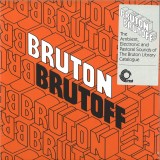
Rare musical magic from the Bruton library catalogue – ambient, spacey, pastoral and electronic. Music by John Cameron, Alan Hawkshaw, Fran-cis Monkman, Brian Bennett and more – all total masters of the scene. All very cool. All very now. All will sell very fast.
Over the last three decades Jonny Trunk has collected and written about library music. But he’s never had a great deal of luck with the Bruton catalogue. By this he means that he’s never stumbled across a massive stash, or lucked-out buying a huge run for practically nothing –that’s the kind of thing that used to happen in the 1990s and the early noughties if you were out there looking hard for library music. But he did manage to get about 25 in one hit about 20 years ago when the BBC shut down their “TV Training Department” near Lime Grove and also when a box of Brutons ended up being dumped at a hospital radio, and they didn’t want the records, so Jonny got a call.
There are lots of Bruton albums in existence – over 330 LPs in the vinyl catalogue, issued between 1978 and 1985. That’s a lot of music to wade through if you are looking for sublime modern day sounds. For many years now the “trophies” from the Bruton catalogue have been the beat or action driven LPs – the two Drama Montage albums (BRJ2 and BRJ8) have always been the big hitters, and others such as High Adventure (BRK2) too.
But Jonny has always found himself drawn to the lime green LPs, the pastoral, peaceful albums (The BRDs), which were full of the kind of gentle, lovely music that would turn up in Take Hart as Tony was paint-ing a woodpecker or a badger or an Autumn tree. The other Brutons he likes are the orange ones (The BRIs) simply because they are full of ex-perimental futuristic electronics and would remind him of 1980s ITV backgrounds. This LP series includes Brian Bennett’s cosmic classic Fantasia (BRI 10). Jonny has been knows to refer to this style of library music as “Krypton Factor library”, because it’s exactly what that strange but successful 1980s TV quiz show sounded like.
In recent years as interest in library music has expanded, we’ve watched
the price of a handful of Brutons really going through the roof - not the just the action and drama ones, but the more esoteric and experimental LPs too – like the BRDs and the BRIs. Jonny gets the vibe that people fi-nally want to hear this other more interesting and experimental side of the Bruton catalogue. So what better time than now to put together a compilation of such sublime period sounds.
Not only does this album bring together a set of fabulous cues that would cost the average man in the street a month’s wages (if the origi-nals were all wanted and if you could even track them all down), but it also chops out the need to listen to other tracks on library albums that are nowhere near as good.
The cues here all date from between 1978 and 1984. They come from the BRD, BRI, BRH, BRJ, BRM, BRR and BRs catalogues.
The composers are all legends within the genre, and here, were doing what great library composers do best – fulfilling a brief and utilising modern studio equipment to both commercial and beguiling effect.
HIGHLIGHTS First ever reissue of "Kabwlú", a very hard-to-find album released by Discos Fuentes in 1965. The mysterious Los Picapiedra (which translates as The Flintstones, inspired by the 1960s American cartoon show), was a short-lived studio group with one albumto their name, "Kabwlú", mixing 'folkloric' and 'modern' elements with calculated 'caveman' humor. It is very musically diverse; not only are there the requisite genres that could be found on similar Colombian teenage-oriented groups' records of the time, such as cumbia, gaita, rock, twist and pachanga, but there is also a smattering of surf, doo-wop, Latin jazz, guajira, ska, and calypso. But what makes the whole thing so special is the odd, off-kilter arrangements, spooky tunings, rudimentary clanging percussion, invented 'cave' language, prominent twanging electric guitar and many zany sound effects. Several of Los Picapiedra's songs became very popular in Colombia as well as Venezuela and especially in the 'rebajada' (slowed down) version as played by the 'sonidero' sound system DJs in Mexico, such as "La Hossa". Presented in its original artwork and pressed on 180g vinyl. Part of Vampisoul's reissue series of classic Fuentes LPs. DESCRIPTION While Discos Fuentes was known for recording all sorts of interesting sounds from traditional folkloric Colombian music to the latest popular international styles, every once and a while they would put out a "novelty" record, perhaps to exploit a passing fad, and at times the label would green-light something strange or even outlandish. Many of those left-field releases have their merits and have subsequently become collectors' items over the years. One such case is the mysterious Los Picapiedra (which translates as The Flintstones, no doubt inspired by the 1960s American sitcom cartoon show), a short-lived studio group with one album to their name, "Kabwlú" (an unpronounceable, invented "caveman" term that is also untranslatable, but seems to have been the 'traditional rhythm' of Los Picapiedra's 'homeland'). What is interesting about the record is that it is very musically diverse; not only are there the requisite genres that could be found on similar Colombian teenage-oriented groups' records of the time, such as cumbia, gaita, rock, twist and pachanga, but there is also a smattering of surf, doo-wop, Latin jazz, guajira, ska, and calypso. But what makes the whole thing so special is the odd, off-kilter arrangements, spooky tunings, rudimentary clanging percussion, invented 'cave' language, prominent twanging electric guitar and many zany sound effects. Much like its namesake American cartoon The Flintstones, "Kabwlú" trades in creative anachronism, mixing 'folkloric' and 'modern' elements with calculated 'caveman' humor that works on many different levels. For instance the title tune seems to have been inspired by the pachanga craze and recalls the vibe of Ray Barretto's massive 1962 hit, 'El Watusi', but it has a certain joyful simplicity and rock-solid underpinning that elevates it beyond mere novelty or exploitation - and argues for its timely reissue for today's audience. The band was a studio invention that had no major significance in Medellin's live music activity. However, several of Los Picapiedra's songs were very popular in Colombia as well as Venezuela and especially in the 'rebajada' (slowed down) version as played by the 'sonidero' sound system DJs in Mexico, such as "La Hossa". Pablo E Yglesias (aka DJ Bongohead, Peace & Rhythm) Additional research by Luis Daniel Vega
‘LiteAce Frequency’ is a collection of songs influenced by 70s Manila Sound and Pinoy soul, as well as incorporating elements of Japanese funk, Brazilian sounds and hip hop.
‘LiteAce Frequency’ follows Vex Ruffin’s ‘Emilio’ EP, released on Stones Throw in May.
The album will appeal to fans of Bullion, James Pants, Dam-Funk, Teebs, Daedelus, Paul White, Anika, Toro Y Moi, Ariel Pink.
Vex Ruffin’s music has featured on soundtracks for HBO’s hit series ‘Girls’ and Netflix’s ‘Russian Doll’. Vex Ruffin has a monthly radio show on NTS and will be supporting the release of his new album
with DJ sets, live streamed performances and active social media engagement.
Vex Ruffin has previously collaborated with artists including Anika, James Pants and Bruce Haack.
- A1: Our Time
- A2: Hungry (Feat Rapper Big Pooh & Black Milk)
- A3: Lower The Boom (Feat Oddisee & Ken Starr & Sareem Poems)
- A4: Real Detroit (Feat The Left)
- A5: Seasons (Feat Stik Figa)
- A6: Brag Language (Feat Buff1 & Magestik Lengend)
- B1: Streets Won't Let Me Chill (Feat Diamond District)
- B2: Balance (Feat John Robinson & Kenn Starr)
- B3: Turn & Run (Feat Med & Rapper Big Pooh)
- B4: Odds Ain't Fair (Feat Hassaan Mackey)
- B5: Brainwash (Feat Yu & Grap Luva & Finale)
- B6: Propa (Feat Oddisee & Tranqill)
Apollo Brown, one of the first members of the Mello Music Group production team, is the Detroit producer first grabbed the nations attention on Finale's Pipe Dream & a Promise album and then again as the Detroit Red Bull Big Tune Champion. The Reset is the first Apollo Brown-produced release in 2010 on MMG.
The Reset was an introduction to Apollo Brown's production: Reworked tracks, fresh verses, new production, new hooks, and new features, recombined to create an entirely new album that captures the haunting street soul of Detroit.
Producers: Apollo Brown
Featuring: Oddisee, Tranquil, Hassaan Mackey, Buff1, Magestik Legend, Diamond District, John Robinson, Kenn Starr, Rapper Big Pooh, Black Milk, Stik Figa
(Original Release May 25, 2010)
The Oystercatcher is the first collaborative LP from Cucina Povera (Maria Rossi) and ELS (Edward Simpson)
Recorded in London over two days, hours' worth of improvisations have been edited down to form these six tracks.
A fragile interplay is at work between Maria's drifting vocals and the ominous churn of Edward's modular synth. Each sonic element takes a turn at leading the way.
The opening track 'Mantle' is formed from sparse, monolithic electronics, woven gently with a thread of vocals. In the closing track 'Eon' Maria's voice shepherds spontaneous bursts of sounds, almost Rave-like if order were imposed, through 15 minutes of turmoil and resplendent until the end.
Maria's vocals make their own trails amongst the noise, bringing to mind the the exploratory language from Ursula K. Le Guin's album 'Music and Poetry from the Kesh', recalling the same understated mystery.
The overall effect of this collaboration is a completely unique creation albeit within a recognisable lineage of predecessors.
The artwork reflects the vision of these two artists, collaged together. Both images are from a trip to Helsinki. Edward's photograph of Tulips caught after dark are reviled by a flash. Maria's seemingly abstract drawing is a graphite rubbing taken from a granite slab of a pavement somewhere in Kallio. Together the two images represent two different methods for capturing a city's haptic landscape.
The album moves with a feeling of transience, which is no surprise given that the idea to collaborate was formed in Helsinki, realised in London and edited together in Rotterdam.
The Oystercatcher tells a fragile tale, one that spins out into the unknown. A cold union of voice and machine, still tentative and probing, learning to co-exist. A kind of fundamental shift whereby shared moments have been turned to sound.
The Oystercatcher is a bird that can freely travel between the earth, sea and sky. The motif is taken from a Tove Jansson short story. A dead bird washes ashore, two different versions of events are presented to how the bird came to die. The album feels like two different stories being presented on top of one another but ultimately coming to the same tragic conclusion.
Cucina Povera is Maria Rossi - Vocals
ELS is Edward Simpson - Synthesisers
Recorded in London across two days during the Summer of 2019
Mastered by Russell Haswell
"Listening To Pictures", Jon Hassells erste neue Arbeit seit fast einer Dekade, war eine lebhafte Anordnung von Instrumentals in seinem einzigartigen 'Fourth World' Sound aus Jazz, Dub und electroacoustischen Techniken. Mit "Seeing Through Sounds" dringt Hassell tiefer in unbekannte, imaginäre Regionen. Die Atmosphären sind dichter, das Werk klingt nachdenklicher als sein Vorgänger, eine gewisse Spannung lauert in dunklen Ecken. In der Mitte des Albums bemerkt man ein Ruckeln, Stottern, Störgeräusche, bevor langsam wieder Ruhe einkehrt, um schliesslich mit überwältigenden Klängen das Finale einzuleiten, bei dem Avantgardisten wie William Basinksi und The Caretaker grüssen. "Seeing Through Sounds" enthält einige der detailliertesten und verfrachtesten Musiken in der langen Karriere des 'Fourth World' Pioniers.
- A1: Fireflies & Palmwine
- A2: Big Man (Feat Shungudzo)
- A3: Patty Cake
- A4: Rebosando (Feat Chico Mann)
- A5: Body Yako (Feat Kongo Elektro & Thornato)
- A6: Ghost Dance
- B1: Fly Where You Want (Feat Jesse Royal)
- B2: Mi Poni (Feat Zuzuka Poderosa)
- B3: Makubenjalo (Feat Ongx & Epplesauce)
- B4: Yalla (Feat Karenbe)
- B5: Come Along (Feat Sye Elaine Spence)
- B6: Ghazal (Feat Alsarah)
- B7: New Story
The globetrotting beat maestro is back, with a truckload of tropical vibes and the irresistibly danceable soundtrack to your Summer! 3 years after releasing his groundbreaking collaborative album with singer Chico Mann (which landed him live sets on Boiler Room & KCRW's Morning Becomes Eclectic as well as a feature on NYTimes "Best Songs Of The Week") DJ/producer Captain Planet returns with NO VISA, set to drop June 26th on Bastard Jazz Recordings. In his trademark "Gumbo Funk" sound, the album mixes rhythms and musical styles from the Caribbean, Latin America, the Middle East and Africa, over highly danceable electronic beats, all firmly rooted in the hip hop, dancehall and house music that the Captain grew up playing as a DJ. Seamlessly bouncing from Brazilian Baile Funk, to Afrobeat, to Roots Reggae and Latin House, the entire record delivers the uplifting feel of one of the Captain's legendary boundary-crossing DJ sets. Building on these traditions he draws from, the Captain has created something fully original and unique.
NO VISA, the 5th full-length album from producer Charlie Wilder (aka Captain Planet), is both a return to form and a launchpad into the future. With 13 songs that feature vocalists from around the world, long-time fans will recognize several previous collaborators as well as the global influences that have always been central to Captain Planet's music. New friends, like prolific Zimbabwean-American singer Shungudzo (who has recent hits with Oliver Heldens & Rudimental), and Jamaican reggae star Jesse Royal, bring powerful subversive messages to the music as well. Showcasing the Captain's production chops and songwriting talents equally, the album unveils a unique musical landscape, a place where our political boundaries and cultural hierarchies begin to dissolve, where foreign languages mingle together and deep rooted traditions dance with the future.
With NO VISA, Captain Planet unveils a fully matured and truly unique form of electronic music- one that bridges gaps between worldwide cultural diasporas as well as contemporary dance music sub-genres (house, hip hop, dancehall & global bass). Throughout every Captain Planet song, it's clear to hear his inspired appreciation for breaking the boundaries between genres and bridging continents through rhythm.
L’Escalier des Aveugles, or The Stairway of the Blind, was commissioned in November 1990 by Spanish National Radio (Radio Nacional de España). Asked for a piece to premiere as part of the European Day of Music, Luc Ferrari returned with a radiophonic concept that organised his anecdotal music into montage form, sequencing short, elusive narratives in a successive way.
The completed composition is formed of thirteen chapters containing a mixture of environmental and synthesised sound, commentary, chatter, and encounters with people and places. Each focuses on a small event within this playbook, and Ferrari notes that each “in addition to being a realistic photograph, will be the subject of a ‘setting to music’: fragments of voice and atmosphere will be sampled and will produce musical matter or a ‘song’.”
The sonic language of Madrid forms the setting to which Ferrari lays out the persistent theme of the piece, that of the composer being guided throughout the city by a young woman. Using a game-like structure (liners for this edition include Ferrari’s “Regles de Jeu”, or “Rules of the Game” which act as a script or score to the piece) the motivation is posed: imagine that one day you are told “I know a place in Madrid that sounds amazing (or bizarre)”, to which you reply “Let’s go to it together.” The recordings toy with the relationships between guide and tourist, translator, director and actress, and masculine and feminine that emerge as Ferrari and the actresses follow this action, documenting the shared experience and connections they make as they visit these places.
Six actresses guide Ferrari (and the listener) through locations simultaneously ordinary and sonically rich: the metro; the El Corte Inglés department store where we hear the gossip from changing rooms set against music emanating from the PA; vagabonds declaiming their political stance in the Conde de Barajas plaza; interactions buying apples in a market; the reverberant and spacious halls of the Prado Museum where one actress gives a moving description of her favourite painting - Goya’s The 3rd of May 1808.
Ferrari replies in French to their comments in Spanish, and there are several self-referential plots, devices, and word games that flirt with the poetics and rhythm of language and sound. A recital of Lorca’s poem "La Casada Infiel" in “Hommage À Lorca” in amongst the location recordings feels striking, and the call and response of “La Nouvelle de L’Escalier”, where one of the actresses descends the staircase of the blind - a long stone stairway in Madrid proposed to Ferrari as an interesting location to visit during the trip by producer José Iges. She replies to Ferrari’s vocal enunciation of the place (and title) in French - L’Escalier des Aveugles - with the place-name in Spanish: La Escalera de los Ciegos.
Using this repeated title and image of the staircase of the blind as a symbolic place, a line is drawn to a situational landscape experienced and diffused through snapshots and allusion rather than holistically overviewed, sound conjuring pictures within the imagination. In the sensorial qualities of Ferrari’s treatment of emotion and language—fortified with electro-acoustic motifs and musical properties—the piece accelerates towards a render that is truthful, beautiful, yet also surreal; somewhere between theatre and reality, a gonzo cinema of the ear.
The Beneficiaries ist ein brandneues Detroit-Projekt von Jeff Mills, für das er sich mit zwei weiteren Detroiter Legenden zusammen tat: dem nicht minder visionären Detroit Techno-DJ/Produzenten Eddie Flashin' Fowlkes und der Poetin Jessica Care Moore, bekannt durch ihr 2015er Album "Black Tea: The Legend Of Jessi James" (feat. Roy Ayers, Talib Kweli, Jose James, Ursula Rucker), ihrem Beitrag zu Rawkus' legendärem Spoken-Word-Sampler "Eargasms", aus Russell Simmons' HBO-Serie "Def Poetry Jam", sowie Kollabos mit Nas ("Nastradamus"), Jeezy und den Silent Poets. Ferner wirken Amp Fiddler (Keyboards) und die beiden Perucssionisten Sundiata O M und Efe Bes mit. Die 6 Tracks haben eine Länge zwischen fünf und vierzehn Minuten.
To say Fredfades and Jawn Rice are House music producers would be sneering at their efforts across genres like Hip Hop, Soul, and Jazz. The Mutual Intentions collaborators have forged a sound together in classic House, siphoning a myriad of influences through their intricate constructions in the studio as solo acts since first meeting in 2007. Becoming fast friends over a shared love of the dusty beats of an SP1200, Jawn Rice and Fredfades started working together while the Mutual Intentions collective gestated around them. Individual works by Jawn and Fred dot the collective’s back catalogue like various nodes of evolution through the course of MI’s output.
“We’ve always been sharing sketches,” explains Jawn Rice, “but I feel that these past years have been more productive in getting some of these sketches out as songs with Fredrik. It’s just a continuation of our friendship.” Emboldened by this friendship and with their finely tuned skills in the studio,
honed to near-perfection, they eventually started making music together. Following two seminal solo LPs – Fredfades’ Warmth and Jawn Rice’s Highlights – the pair consolidated their music as a duo in 2019, striking out with their electrifying debut, Jacuzzi Boyz. In a fusion between Jawn’s electronic inclinations and Fred’s soulful eccentricities, Jacuzzi Boyz established the duo as a new force workingNew Release Information within the broad scope of House music, with a sound imbued in the origin story of House and the genre’s hip-hop allegiances.
In 2020 they continue to pursue music together in the sophomore LP, Luv Neva Fades. Following the release of the title track and lead single, Luv Neva Fades finds the producers cementing their artistic voice and re-enforcing their commitment to a singular sound. Lush Rhodes keys and bouncing percussion lay the foundations for the album, while buoyant bass-lines and sparkling synthesisers provide
the catalyst for a crooning vocal or ruminating melody. It’s a record that thrives in a sultry mood; an LP that basks in the warmth of its analogue origins and cools in the shade of languid chord progressions.
Like Jacuzzi Boys, this album is an extended collaborative affair, as Mutual Intentions’ reach stretches across the Atlantic with guest appearances from Byron the Aquarius, Javonntte, Arthur Kay, Bendik HK and the SP1200 that started it all. Shimmering melodies, hazy harmonies and boisterous beats draw Fredfades and Jawn Rice out of the jacuzzi and onto the dance floor, moving under shimmering stars, where the duo cement what they started with Luv Neva Fades.
'Foom label head Benjamin Freeney reworks Tim Burgess & Peter Gordon's restless, psychedelic epic, "Temperature High" into three new forms (two cuts for the dancefloor, and one ambient interlude), rearranging the rich source material of the original (metallic field recordings from the New York subway, Peter Gordon's original Korg bassline reincarnated in sub-bass form, Tim Burgess' ethereal vocal cut-up into new patterns) and fusing it with new percussive and melodic elements. The original track was featured on Tim Burgess & Peter Gordon’s Same Language, Different Worlds album from 2016, with contributions from Arthur Russell's close collaborators Peter Zummo and Mustafa Ahmed, as well as Factory Floor’s Nik Void.'