15-track double album black vinyl 2-LP including the singles Through The Wire, All Falls Down and Slow Jamz. With jaw-dropping cameos from Jay-Z, Common, Mos Def, John Legend, and the Harlem Boys Choir, this 2004 album is as explosive, provocative, and complex as rap gets. Kanye magically sledgehammers home opinions on taboo topics over beats that are equally daring.
A (new) vinyl version for one of our favourite Mika Vainio (Pan Sonic) albums; originally recorded between 1999–2004 and issued on CD only under his revered Ø alias for Finland’s Sähkö Recordings in 2005.
»Kantamoinen« is perhaps the most intimately beautiful yet little-known LP in the Ø canon, bridging the gap between his classic ’90s minimal techno productions and the project’s subsequent turn to more ambient, kosmic, and dubwise dimensions in the coolly brilliant »Oleva« and »Konstellaatio« albums.
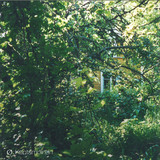
Dedicated to Mika’s grandma, Laina Vainio (1913–1991), and adorned with a cover image of her garden in Artjärvi, Finland, the 16-part 2LP is the closest you’ll get to a type of nostalgia in Mika’s catalogue.
Whilst recorded 1999–2004 at an early crest of his game-changing work with Pan Sonic, the album clearly manifests a quieter space for Mika to emote far more nuanced feels, from the wide-eyed vastness of »Galaxy« to a breathtaking »Sound Picture«, transitioning from Hans-Ulrich Obrist’s snippet of Oskar Sala into icy bliss, and the rosy warmth of »Summerland« clearly dedicated to his nan’s garden. The rest is better defined as ephemeral snapshots adding up to a broader picture, like a mind’s eye filling gaps in the memory from illusive vapours and sensations, generating all-time gems in the steepled choral synth voice of »In Wind«, or a sense of magic realism in the swaying organ of »Antenna-ant«, with the blooz folk wheeze of closer »To Home« that could feasibly score the most haunting moments of a Béla Tarr flick.
нет на складе
Последняя поставка 70 дней назад доступно для дозаказа без гарантии
On Last Night At Marienbad's latest, the imprint brings together three of the brightest souls found within the realms of Jazz, namely Mauricesax, 9ick and Milan93, with their collective talents synergising effortlessly on 'A Garden Between Us', alongside a stellar cast of remixers who add even further delight between the grooves….
As a genre, Jazz has perhaps lent itself the most to other musical universes, in that its curious heart, endlessly experimental nature, and parameter-defying spirit have wrapped itself deep within the core of countless albums, scenes, and music makers. It's a genre that welcomes reinvention, consistently defying its contents and always reaching out to find new methods of expressionism. Electronic music, in its many forms, has truly embraced Jazz perhaps like no other movement of music has, with a truly astonishing array of records surfacing in the past 40 years which have blended Jazz's unique motifs with grooves, chords, and emotive excellence. From 90s Jazz house and UR Techno, through to Future Jazz, downtempo, and Hip Hop, and around many other suns, there remains such an intrinsic and symbiotic relationship between the two musical realms that caters to those who wish to live music both within and out with themselves.
As practitioners of blending electronica and Jazz, few do it like the trio of Mauricesax, 9ick, and Milan93. All three are known for their distinctive soundscapes, yet share commonalities in terms of musical language, feel, and sense of progression. Bringing them together allows for overlaps in their sounds to emerge, and just like Jazz itself, this is where the intrinsicness of sound begins to blossom. 9ick brings his softly evolving vibe to the table, one which was so prevalent and celebrated on his 2025 album 'SMIL'; Milan93 draws from his focal point of exploring fill-laden grooves and a myriad of emotive sensibilities; and Mauricesax draws up his extensive musicality that exists at the corner of jazz, electronic, and experimental music, along with running musical workshops all over the globe.
'A Garden Between Us' represents the trio's core tenets, with this immediately obvious from the record's opener, 'Rhodora'. A gentle solo piano quickly evolves into a series of powerful rhythmic pulses, with brass lines bringing vitality and feel to proceedings. The track shifts gears with purpose, transitioning between musical vignettes of the highest order, with the synth work doing much to bind the transitions together. 'Tulip' emerges slightly differently, with glossy Rhodes tones and an unravelling rhythmic undercurrent setting an enthralling stage. The track flourishes amongst sweeping textures, coming up for air amongst a deeply hypnotic rhythmic section that holds on and never lets up. 'Honeysuckle' lands next, which sees the trio emerge with a boundless, dynamic soundscape. The drums shift within the undertones, as keys, chords, horns and hip-hop vocal samples dance around the pulse, capturing the imagination with their narrative-like placement. Wrapping up the A side comes 'Camellia'. A dazzling array of harmonic sounds converges around the transfixing rhythm section, which emerges from deep below to lavishly roll out over the midsection, with the delicateness of the instrumentation a real highlight here.
The B side features two exquisite remixes, with Pacific Coliseum's version of 'Tulip' landing first. Beginning with a signature four to the floor to get things going, his careful handling of the source material is seen in the tactful introduction of the blissful elements that made the original cut so impactful, with great focus placed on emotive fidelity. The result is a summer-bound house number that reimagines the original in all the right ways, flipping it into a euphoria-driven jazz-laden pacer that reaches for the heavens as much as it drives right into the heart. Teuteu then showcases their take on 'Honeysuckle', and at 9 minutes long, represents the longest cut on the record - and the experience is all the richer for it. Leaning heavily into dance music flavours, Teuteu shifts perspective totally into the realm of the club, with the walls beating hard to the kicks. The sax lines that drift ethereally up top keep eyes closed and souls full, as the dance shifts into the next phase.
An experience that drifts from the daydreaming, to soul-warming through to the club shaking - what else is left to experience, except for 'A Garden Between Us' and how it will brighten up life itself….
Trumpeter, rapper and sonic wanderer Pan Amsterdam has carved out one of the most distinctive voices operating at the intersection of jazz and hip-hop today.
Pan Amsterdam is a musical enigma wrapped in an enduring riddle. His creator is a jazz musician from Houston who’s found fame working with Detroit punk rock God, Iggy Pop, and British indie royalty, Metronomy, and now makes shapeshifting, adventurous hip hop out of the music’s spiritual home, New York.
He’s an irreverent character born out of frustration and named after a misunderstanding, yet one who’s on the verge of releasing his fifth album of truth-slaying, genre-crossing rhymes and beats. The result is a catalogue that feels both deeply rooted in Black American musical tradition and completely untethered by convention.
Pan Amsterdam returns with ‘Panarama’, his fourth full length album and a bold reassertion of his hip hop identity, released via Def Pressé. Created by Houston-born, New York-based musician and composer Leron Thomas, the record finds Pan Amsterdam embracing the harder edges of his sound while continuing to blur the lines between jazz improvisation, abstract rap, punk attitude, and experimental production
Written as a response to contemporary life and the endless cycle of information, conflict and distraction that defines modern culture, ‘Panarama’ unfolds as a stream of consciousness journey through hyper-normalised realities. Across sixteen tracks, Thomas navigates social commentary, personal reflection, absurdist humour, and cultural critique, delivering his observations with the same spontaneity and freedom that have become central to the Pan Amsterdam project
Lead single ‘Szechuan Beef’, produced by acclaimed collaborator 1FS, serves as one of the album’s defining statements. Built around Thomas’ signature free-flowing delivery, the track explores the overwhelming nature of contemporary life, where domestic conflict, social division, entertainment scandals and political discourse become flattened into a constant stream of content.
In Thomas’ own words: “My stream of consciousness style comes quite naturally to me due to the conditioning of scroll down culture where everything, no matter how minor or extreme, is hyper normalised.”
Elsewhere, the track ‘Vanilla Ice’ was written in response to widely publicised ICE killings and the speed at which tragedy is absorbed and forgotten within online culture. Thomas channels the anxiety and emotional disorientation of endlessly consuming information, allowing his thoughts to unfold in real time as social commentary collides with everyday digital noise. The result is both deeply personal and sharply observational, reflecting the fragmented reality of modern life. Other album highlights include the cinematic, Interpol-esque opener - ‘Old Friend’ complete with shimmering guitar lines and an far-reaching introspective, no-filter vocal as Thomas teams up with Nick Zinner (Yeah Yeah Yeahs) and Brad Truax (Interpol) across multiple tracks, often the production traverses left-field indie territory, but always maintaining Pan Amsterdam’s unique musical identity throughout. For the hip hop purists and beats lovers there are plenty of riches to discover from the clever nostalgic sample flips of ‘Cutlery’, the sleepy lofi of ‘Shuriken’ and the wonky LA beat scene / early Flying Lotus era beats of ‘Drunken Noodles’ - all boasting quick witted lyricism. ‘Deep Fried Shiney Things’ explores early electro and industrial sonics while album finisher is an upbeat new wave / indie band cut which sees Thomas take a break from rapping, but of course never letting up on the sharp observations nonetheless
While his previous record explored more alternative territory, ‘Panarama’ marks a deliberate return to rap, as Pan Amsterdam explains:
“I just wanted to do a rap album again.I enjoyed making my last album, but I felt like rapping again. I like to have the freedom to move in between musical worlds that suit the current state I’m in. Frequency accommodating frequency.”
This philosophy runs throughout the album. Tracks move effortlessly between jazz-inflected arrangements, experimental beats, punk energy and underground hip hop aesthetics, allowing ideas to evolve organically rather than conforming to traditional structures. Thomas describes himself as an improviser first and foremost: “I think like an improvisor. That’s how my albums pretty much move. It’s improvisation.”
Featuring additional contributions from Spice Programmers, AnOtter and Mr. Shn, ‘Panarama’ presents a wide-ranging cast of collaborators while remaining firmly rooted in Thomas’ singular creative vision. The record embraces contradiction, humour and unpredictability, capturing fleeting thoughts and observations with the same freedom and spontaneity that define jazz improvisation itself.
A musical enigma wrapped in an enduring riddle, Pan Amsterdam has built a reputation as one of contemporary music’s true outsiders. The project emerged from frustration, experimentation and artistic freedom, with Thomas drawing equally from his background as a jazz musician and his collaborations with artists including Iggy Pop and Metronomy. Operating from New York while carrying the spirit of Houston’s musical heritage, Pan Amsterdam has developed a distinctive voice that sits comfortably between avant-garde jazz, underground hip hop and experimental music.
Reuniting with Def Pressé for ‘Panarama’, Thomas explores what he describes as the more hardcore side of his artistic identity:
“They let me do anything and everything I wanna do so long as it’s on audio, and I need that freedom. What may verbally be perceived as vulgar to one group of people may be very thoughtful and a poignant description of the times that we’re presently in, so I’m glad that I’m part of a label home that understands that.”
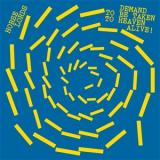
Die Musik auf Horse Lords' "Demand to Be Taken to Heaven Alive!" wirkt zugleich unglaublich detailliert und zutiefst menschlich. Die zwölf versammelten Stücke sind vielschichtig, verflochten, tonal und rhythmisch komplex - moiré-artige Muster aus Interaktion und Verzahnung, die sich sowohl körperlich als auch geistig entfalten, voller klanglicher Gänge mit einem unausweichlichen Groove. Künstler sind nicht notwendigerweise Wissenschaftler, Logiker oder spirituelle Führer, doch durch ihr persönliches Verständnis von Ordnung und Erfahrung eröffnen sie einen unmittelbaren Zugang zu gesteigerten Zuständen von Materialität und Immaterialität. Horse Lords wurden 2010 in Baltimore gegründet; sie gingen aus einer anderen Gruppe namens Teeth Mountain hervor und starteten als Trio mit Gitarrist Owen Gardner, Bassist Max Eilbacher und Schlagzeuger Sam Haberman, bevor der Altsaxofonist Andrew Bernstein zum Kernensemble hinzustieß. Obwohl das Quartett aus einer fruchtbaren Noise- und Experimental-Rock-Szene hervorgegangen ist - einem legendären Umfeld für Künstler und Außenseiter, das viele einflussreiche Bands hervorgebracht hat (Lungfish, Matmos) - war ihr Ansatz über sechs Alben, zahlreiche Kollaborationen und als gefeierte Liveband weit vielseitiger, als es die punktierten Rhythmen instrumentaler elektrischer Rockmusik vermuten lassen. Für dieses Projekt wird die Band durch Bassklarinettistin Madison Greenstone, Posaunist Weston Olencki und - erstmals bei Horse Lords - durch Gesang von Nina Guo und Evelyn Saylor ergänzt. Das Eröffnungsstück ,Eureka 378-B" ist ein Arrangement von sakraler Harfenmusik aus dem 19. Jahrhundert, getragen vom Gesang von Guo und Saylor; seine Melodie entfaltet sich weit und setzt einen tonalen Startpunkt für vieles, was folgt. Dazu kommen die kurzen "Rotations", die Fragmente aus anderen Stücken isolieren. "D2BT2HA!" enthält unzählige klangliche und konzeptuelle Schichten, doch angesichts der unverkennbaren Kraft und Menschlichkeit der Musik ist der Prozess, sie zu entschlüsseln, begeisternd und zutiefst lohnend. Selten ist eine Platte, die einen so unmittelbar packt und zugleich bei jedem Hören vollkommen neu erscheint.
You've never played a game like Blippo+ before, and you've never heard a video game soundtrack quite like Greatest Hits from Planet Blip.
Composed by Rob Kieswetter and Jona Bechtolt from the LA-based trio YACHT, the soundtrack collects 71 tracks from the cult classic video game Blippo+, reworked and sequenced into a continuous listen for this special release —a TV static-speckled gatefold double LP, out Oct. 16 via Hologram Opera, marking the soundtrack’s physical debut.
Taking the form of a cable TV simulator, Blippo+ captures the magical feeling of seizing a mysterious signal from outer space and discovering the television programming of an alien culture. Soundtracking the game’s pastiche of programs is Rob and Jona’s genre-spanning score—synth-heavy, eccentrically electronic, with a skewed sensibility that pays homage to cable access, library music, video art, and the late-night margins of the 80s and 90s underground.
TV obsessives will find plenty to love in Greatest Hits from Planet Blip: with surreal theme songs, jangly jingles, zippystings, catchy kitsch, period-accurate menu music and even pop hits from the alien airwaves, this propulsively playful soundtrack will have channel-flippers tingling with nostalgia.
“Planet Blip is an alien planet where art and music are the only currency and ‘consciousness particles’ form the basis of all media. To capture the spirit of this world, we drew inspiration
from all the music we felt best embodied this ethos and ran it through our own utopian blender,” say Bechtolt and Kieswetter.
Blippo+ is an award-winning, experimental, live-action video game created by YACHT and Telefantasy Studios, along with developers Noble Robot and Dustin Mierau, and published by Panic Games. It was released for Steam, Playdate and Nintendo Switch in 2025 to widespread
critical acclaim and has earned a devoted fandom. A Mac version followed earlier this year, and was nominated for an Apple Design Award.
"Simultaneously nostalgic and futuristic, otherworldly yet
welcoming, Blippo+ is an absolute artistic triumph.
" —Deven McClure, Screen Rant
"Blippo+’s presentation might ape old traditions, but the collective impact of its content is richer, deeper, and more entertaining than any mere remembrance.
" —Garrett Martin, Paste/Endless Mode
"In the increasingly reactionary and prescriptive landscape of video games, it is remarkable to encounter something so distinctive, so hopeful, so celebratory, so devoted to expanding the possibility space of art beyond a single medium." —Sam Bodrojan
Fast-rising pianist and producer Yoni Mayraz presents his debut LP ‘Dybbuk Tse!’ revealing the story of a malicious possession that is taking over one’s body and soul.
Dybbuk, known from Jewish folklore, is a malevolent wandering spirit that enters and possesses the body of a living person. It’s a cursed soul of a dead one that wanders tirelessly for sins committed during their life. The most vulnerable victims are the young and the sinful. Possession can be taken literally or as an analogy to the burden that young people carry generations back, which they have no influence on, and which they have to accept. Dybbuk can only be removed by exorcism. The titular ‘Dybbuk Tse!’ is a command to remove the spirit from the possessed body. The album is a story about possession but also about exorcism through music.
Recorded live with his band over the course of a spring week last year, ‘Dybbuk Tse!’ is indeed experimenting with the ‘darker side of things’, but yet with a somewhat lighthearted approach which is so typical of Yoni’s work. He easily combines jazz with the sound of 90’s New York hip hop and raw old school breakbeat. The album interweaves unique Middle Eastern melodies, sophisticated structures and sounds, and beautifully crafted solos played by some of the promising talents on the scene.
London based Israeli born pianist and producer Yoni Mayraz has set foot in the instrumental music scene with his EP ‘Rough Cuts’ released in 2020. Since then, Yoni and his band have been playing major venues and festivals around the world including the legendary Ronnie Scott’s and The Jazz Cafe, to name a few, bringing raw energy to stage with live versions of the studio materials, and stretching the melodies and structures into a Dancefloor-focused take on jazz.
With Picture About You, Recut opens a new chapter, blending the heritage of house music, acid textures and underground electronic culture into a contemporary vision for today’s dancefloors. Rooted in the essence of club culture, the EP explores hypnotic grooves, evolving patterns and the timeless dialogue between the DJ, the sound system and the crowd, where emotion, movement and energy become a universal language. The title track, “Picture About You”, reflects Recut’s artistic identity through the lens of his personal history and family roots. An important part of this story comes from his uncle, known as Mr. Steve, who in 1975 founded one of the pioneering independent radio stations in Southern Italy during the early years of independent broadcasting. His connection with radio, disco culture and the first generation of Italian clubs embodied a spirit of discovery, sharing and musical exploration that continues to shape Recut’s approach to music.
Musically, “Picture About You” unfolds through a hypnotic and emotional groove, blending old-school character with a contemporary perspective. A timeless club track where past and present come together in Recut’s own musical language. “Hey Jack” is a powerful dancefloor weapon driven by unstoppable grooves, hypnotic acid lines and captivating arpeggios. Built for peak-time moments, it pushes the energy forward with a relentless rhythm designed to ignite the crowd.
“Subwave” takes the journey into a deeper and more massive dimension. Driven by powerful low-end pressure, evolving dynamics and explosivetransitions, the track builds tension throughout its progression before releasing its full impact on the dancefloor. Closing the EP, “Neon Flux” delivers the final impact: fierce, electric and uncompromising, a track designed to push intensity beyond the limit and leave a lasting impression. Recut Music — Fun for DJing!
Celebrating ten years of independent music, Nerang Recordings returns with its sixteenth vinyl release, A Decade of Nerang Recordings - Mix Selections. Bringing together six artists from across the label’s history and extended community, the compilation showcases the diverse sounds that have shaped Nerang over the last decade. Featuring DJ Swagger, Nasty King Kurl, Subjoi, DOS, Low Tape and Moody McIvor, the release moves effortlessly between UK Garage, House, Tech House, Lo-Fi House, Electro and Synthwave while maintaining a clear identity throughout. Since its inception, Nerang Recordings has never been interested in following a single genre, scene or trend. Instead, the label has always focused on releasing music based on quality, individuality and atmosphere. Over the years that philosophy has resulted in a catalogue that crosses stylistic boundaries while remaining connected by a shared spirit. A Decade of Nerang Recordings - Mix Selections serves as both a celebration of the label’s first ten years and a statement of intent for the future. Each track represents a different corner of the Nerang universe, reflecting the sounds, influences and artists that have helped shape the label’s journey so far.
From rolling UK Garage rhythms and club-focused house cuts through to hazy lo-fi textures, cinematic synth work and darker electronic excursions, the compilation highlights the freedom that has always sat at the heart of the label. Rather than being confined by genre expectations, Nerang continues to embrace music on its own terms, allowing each release to find its own identity and audience. While thisrelease reflects on the past decade, it is equally focused on what comes next. The goal remains the same as it was on day one: support great artists, release music without limitations and continue exploring new territory wherever it may lead. Ten years in, Nerang Recordings remains committed to doing things its own way
IRST ALBUM IN 10 YEARS.
TOURING WITH TROPICAL FUCK STORM IN NOVEMBER (DATES BELOW).
PRODUCED BY DAN LUSCOMBE (THE DRONES) WHO IS ALSO PART OF THE LIVE BAND.
PREVIOUS ALBUMS ON HARDLY ART/SUB POP AND REMOTE CONTROL.
VERY LIMITED BLACK VINYL AND INDIES ONLY PINK VINYL . NON-RETURNABLE.
‘Jarrod Quarrell, creator of Lost Animal, is one of the most underrated songwriters in Australia and one of our all-time favourites. He creates poetic expressions. His work is very interesting in a highly original way and richly emotional. The songs reveal themselves more over many listens and always feel fresh. His powerful, beautiful, transformative, and unforgettable songs possess the vast depth of the human spirit.’ - GIMMIE GIMMIE GIMMIE ZINE
‘Quarrell has developed a collaged techne that embodies a heart-on-sleeve attitude. Lush melodic delays wash with an influx of lyrics that pierce with uncanny imagery and diction.’ - VICE
It’s not every day you hear about a new Lost Animal album. In fact, it’s been ten years between drinks. The debut Ex Tropical (Hardly Art/Sub Pop) was released in 2011, and followed by You Yang (Remote Control) in 2016. So what happened, and where’s frontman/mastermind Jarrod Quarrell been for the last ten years?
From the horse's mouth, “I don't give a fuck about productivity”. A humbling reply. It confirms Quarrell's MO: here’s an artist as a non-conformist. And when he does see fit to bless us with his unique vision of what music can sound like, it has the ability to completely charm and disarm. Amongst a sea of rock bands, LA is essentially a solo act. Simply put; LA is JQ. But on the other hand, amongst an ocean of solo acts, LA possesses the grandiosity of a full band, punk in spirit, but without being fast, or heavy.
Armed with keys and synths, timbres align more with what a toucan might listen to, as opposed to what's heard commonly throughout Melbourne's gig economy. Strings are gently plucked and horns are tenderly blown. These are the colourful brush strokes that decorate the upper frequencies. They’re the ticket to a far away land;exotic, and potentially very dangerous. If the crew from Hear My Eyes are reading this, consider Lost Animal performing Give Some Get Some as the soundtrack to the next time you screen The Hangover Part 2. Yeah, the one where shit gets super fried in Thailand.
The album examines the underbelly of what a ten year journey might rub up against. As one may expect, a lot of that action is below the belt. Tracks like Do That Thing, and In
Rewinding, a few things have happened in the past ten years that are worth illuminating. Shags is no longer commandeering the bass full time. Though he does make an appearance on a couple tracks. The main difference from present day to yesteryear LA is Dan Luscombe (The Drones). Luscombe has jumped into the role of producer (and also part of the live band). One could say he’s a producer of the Spector-ilk: playing a hands-on approach and assisting Quarrell's song crafting. He may have suggested to add a chorus or two, but the chord progressions remain distinctly Lost Animal. You'll recognise them easily by their beauty, combined with either fragility or rigidity. Luscombe is arguably the defining force that made this album happen. Perhaps he had Quarrell at gunpoint. Yet to be confirmed. Regardless, thank fuck for Luscombe because it may have been another decade.
But the album's defining feature is arguably Quarrell's lyricism. He may not cross-examine where he's been, but his voice does unmask where he is: absolved and reincarnated. The decade-long journey has resulted in him looking inwards and unlocking himself. The album's many mantras suggest that he may be a bird (I'm a Bird Now), or that he is living on another planet (Never is Forever). Whatever and wherever he may be,
Give Some Get Some invites the listener to reflect on their own journey over the past decade. Because the game's got a price. So ask yourself what have you taken, and what have you given? Life ain't a box of chocolates. It's a bowl of berries. And when fruit symbolizes temptation, get some.
IRST ALBUM IN 10 YEARS.
TOURING WITH TROPICAL FUCK STORM IN NOVEMBER (DATES BELOW).
PRODUCED BY DAN LUSCOMBE (THE DRONES) WHO IS ALSO PART OF THE LIVE BAND.
PREVIOUS ALBUMS ON HARDLY ART/SUB POP AND REMOTE CONTROL.
VERY LIMITED BLACK VINYL AND INDIES ONLY PINK VINYL . NON-RETURNABLE.
‘Jarrod Quarrell, creator of Lost Animal, is one of the most underrated songwriters in Australia and one of our all-time favourites. He creates poetic expressions. His work is very interesting in a highly original way and richly emotional. The songs reveal themselves more over many listens and always feel fresh. His powerful, beautiful, transformative, and unforgettable songs possess the vast depth of the human spirit.’ - GIMMIE GIMMIE GIMMIE ZINE
‘Quarrell has developed a collaged techne that embodies a heart-on-sleeve attitude. Lush melodic delays wash with an influx of lyrics that pierce with uncanny imagery and diction.’ - VICE
It’s not every day you hear about a new Lost Animal album. In fact, it’s been ten years between drinks. The debut Ex Tropical (Hardly Art/Sub Pop) was released in 2011, and followed by You Yang (Remote Control) in 2016. So what happened, and where’s frontman/mastermind Jarrod Quarrell been for the last ten years?
From the horse's mouth, “I don't give a fuck about productivity”. A humbling reply. It confirms Quarrell's MO: here’s an artist as a non-conformist. And when he does see fit to bless us with his unique vision of what music can sound like, it has the ability to completely charm and disarm. Amongst a sea of rock bands, LA is essentially a solo act. Simply put; LA is JQ. But on the other hand, amongst an ocean of solo acts, LA possesses the grandiosity of a full band, punk in spirit, but without being fast, or heavy.
Armed with keys and synths, timbres align more with what a toucan might listen to, as opposed to what's heard commonly throughout Melbourne's gig economy. Strings are gently plucked and horns are tenderly blown. These are the colourful brush strokes that decorate the upper frequencies. They’re the ticket to a far away land;exotic, and potentially very dangerous. If the crew from Hear My Eyes are reading this, consider Lost Animal performing Give Some Get Some as the soundtrack to the next time you screen The Hangover Part 2. Yeah, the one where shit gets super fried in Thailand.
The album examines the underbelly of what a ten year journey might rub up against. As one may expect, a lot of that action is below the belt. Tracks like Do That Thing, and In
Rewinding, a few things have happened in the past ten years that are worth illuminating. Shags is no longer commandeering the bass full time. Though he does make an appearance on a couple tracks. The main difference from present day to yesteryear LA is Dan Luscombe (The Drones). Luscombe has jumped into the role of producer (and also part of the live band). One could say he’s a producer of the Spector-ilk: playing a hands-on approach and assisting Quarrell's song crafting. He may have suggested to add a chorus or two, but the chord progressions remain distinctly Lost Animal. You'll recognise them easily by their beauty, combined with either fragility or rigidity. Luscombe is arguably the defining force that made this album happen. Perhaps he had Quarrell at gunpoint. Yet to be confirmed. Regardless, thank fuck for Luscombe because it may have been another decade.
But the album's defining feature is arguably Quarrell's lyricism. He may not cross-examine where he's been, but his voice does unmask where he is: absolved and reincarnated. The decade-long journey has resulted in him looking inwards and unlocking himself. The album's many mantras suggest that he may be a bird (I'm a Bird Now), or that he is living on another planet (Never is Forever). Whatever and wherever he may be,
Give Some Get Some invites the listener to reflect on their own journey over the past decade. Because the game's got a price. So ask yourself what have you taken, and what have you given? Life ain't a box of chocolates. It's a bowl of berries. And when fruit symbolizes temptation, get some.
‘Unfindable Ring', out October 23 on Bayonet Records, is an adventurer’s epic. The arc of the journey, like any good Spirited Away or Neverending Story, lands its wide-traveled protagonist right back at home before bedtime. Grumpy, like many great hero tricksters before him, has always been a project of juxtaposition: upbeat radio-ready hits whose buoyant, goofy hooks belie the dark thoughts they describe. Much of this, Schmitt acknowledges, owes its due to the matter-of-fact morbidity of the trans experience in America. It’s from these experiences—personal, romantic, political, and existential—that the tale of ‘Unfindable Ring’ unfolds.
Ambition and play have always defined the Grumpy sound. Late last year, the Fader praised their “demented, hooky” EP, “Piebald,” whose innovative fuzz-pop confections earned them coverage in NPR and the New York Times. Stereogum heralded them as “wonderfully weird,” and Paste designated them “the best of what’s next.”” Through boisterous collaborations with the likes of Sidney Gish and Claire Rousay, they’ve effortlessly ingratiated themselves with the titans of DIY, and, more recently, Schmitt has become an unlikely favored collaborator of chart-topping country giant Zach Bryan, who named his new record––which prominently features Schmitt’s harmonies–– conspicuously, ‘With Heaven On Top.’
In Grumpy, Heaven Schmitt is joined by Anya Good, Ellie Long (Kid Lake), Austin Arnold, Diego Clare (D.A. Crimson), and Lane Rodgers, who each contribute to every step of the process—engineering and recording, mixing, drafting artwork, producing, and making music videos. A kind of interdisciplinary thieves’ guild, the project, while once Schmitt’s solo eponym, is a labor of communal love.
“We are living these happy lives, and there are people we come across who don’t know us at all who want us to die,” Schmitt, explains. Often the visibility of the joy itself is what prompts the vitriol––“I’m so happy I could die,” Schmitt belts over and over on the chorus (a familiar figure of speech, sure, but one which, upon any scrutiny, shows Schmitt’s hand in the macabre.) A middle finger to fate, Good started asking, “What are you going to do with your One Beautiful Life?” Grumpy is going to keep playing, touring, searching, finding.
No Home is the new album by Lane Hartley, releasing October 23rd 2026 on Royal Oakie Records. Produced in collaboration with David Hartley of The War On Drugs & Adam McDaniel (Animal Collective, Angel Olsen, Geologist), the album was recorded at Drop of Sun Studios in Asheville and features contributions from North Carolina’s tight knit music community–including Mary Lattimore, Seth Kaufman of Floating Action & Dream Sitch, David Hartley, Jack Victor Johnson, and more.
After recording his debut album Naming Horses, Lane left Los Angeles and returned home to the Carolinas, eventually landing in Asheville. It wasn’t too long until the songs started flowing and Lane found himself reaching out to Adam McDaniel at Drop of Sun Studios–a vaunted space that’s been at the heart of indie-rock the past few years, bringing to life recent albums from MJ Lenderman, Wednesday, Fust, and more. McDaniel introduced Lane to David Hartley, and what originally started with discussions to record one song quickly turned into a plan to track a whole album live with a six piece band. Once in the studio, co-producer McDaniel encouraged the group to lean on intuition–“All of the players on this record really brought it to life in such a cosmic way. They instilled so much childlike wonder and fun into the making of the album. It inspired me to keep going” says Lane.
Lyrically the album is a collection of vignettes about people who’ve become alienated from their deepest desires of connection, belonging, intimacy, and autonomy–inspired both by Lane’s own life and the lives of people he’s loved. The unique character of the album emerged when Lane made the decision to pair the dark lyrical content with bright & lush arrangements, inspired by Gene Clark’s No Other, Neil Young’s After the Gold Rush, and Amen Dunes’ Love. In Lane’s words, “The content of the songs got way darker, and my reaction was to make the songs catchier, and to lean harder into the music that influenced me. I wanted each song to feel like a room in a haunted house, with a beautiful garden growing outside”.
Album opener “I Am Not Ashamed” was inspired by the anti-memoir of actress Barbara Peyton, a 1950’s Hollywood starlet who met an untimely end; “It’s about knowing that whatever you’ve done to survive, you still deserve love” says Lane. “Mother” pairs lyrics about ancestral trauma with the sunshine-pop influence of Colin Blunstone, featuring backing vocals from Lane’s sister Barrett Hartley. “It's about coming to terms with the fact that the people meant to protect us are dealing with their own trauma…”
Meanwhile, “All Of This Is Yours” and “Tone Poem” form the spiritual center of the album, an attempt to transmute anger & pain to bittersweet acceptance in the wake of a breakup. “I feel like on the surface this is essentially a breakup album, a lot of these songs are about mourning the end of a relationship and reflecting on what went down. I was falling in love and getting my heart broken, then waking up and driving across the country and doing it all over again.” “Love Is Not A Song” was inspired by Margo Guryan’s Love Songs, pairing bright piano with playful lyrics about an old man who’s been beaten down by life but still believes his greatest love is yet to come. Last but not least, title track “No Home” sums up the album’s key theme of alienation, “It all goes back to this feeling of wanting to belong to someone or somewhere, wanting to belong in your own body.”
“Simply put, it’s unlikely we’ll encounter a mix that leaves a cultural footprint and defines the sound of a generation quite like Northern Exposure again. Both mixes are absolutely 100% astoundingly brilliant”
DJ Mag
“Their best-loved mix CD is a trippy traipse through the verdant world of progressive house, a genre with one foot in the rave and the other somewhere in the great beyond” Rolling Stone - The 30 Greatest EDM
Albums Of All Time
Originally released on 27th September 1996, ‘Northern Exposure’ is widely regarded as one of the greatest mix compilations ever made. Thirty years on, it sounds as vital as ever - a testament to the fearless vision that went into its creation.
At a time when DJ culture was still writing its own rules, Sasha and John Digweed pushed against the grain. Drawing on sounds discovered during early trips to America - from Rabbit in the Moon to Future Sound of London - they built something that prioritised atmosphere over dancefloor convention. DJ Mag panned it on release. History changed their tune.
Northern Exposure Redux marks the 30th anniversary with a definitive reissue of both original mixes. The CD version also includes a newly created ambient mix. Shaped by the spirit of Bill Laswell and Mad Professor, it explores the deeper, more hypnotic DNA that always ran beneath the surface. Northern Exposure Redux North includes classic tracks by Keiichi Suzuki, The Future Sound Of London, and Banco de Gaia. Northern Exposure Redux South includes classic tracks by Dope On Plastic, Pete Lazonby, and a newly recreated version of ‘Dark And Long (Dark Train)’ by none other than Darren Emerson himself. Both vinyl versions also include a download code for both the North And South mixes, as well as the individual tracks.
‘I Feel 4 U’ was written by Rui Maia in collaboration with Kyle Quest and marks a new chapter in the journey of Mirror People, the alter ego of the musician, producer, and DJ. The track further deepens the collaborative spirit and connection to dance music that have defined the project since its inception.
Recorded last year, the song blends elements of disco, funk, and electronic music in a composition shaped by rhythmic fluidity and Kyle Quest’s melodic vocal approach. João Cabrita contributes saxophone and backing vocals, reinforcing the track’s organic and collective character.
The 7″ only vinyl-exclusive B-side, “Gordon Glu,” is a journey through the warm and melodious trademark sound of Mirror People, drawing on classy synth-pop, Balearic influences, and organic, jazz-funk-inspired grooves.
Toy Tonics Italomania Vol. 4 is a compilation dedicated to new ITALIAN DISCO. Not ITALO DISCO.
10 new tracks made by young producers from Italy, exclusively made for Toy Tonics. All songs with Italian vocals.
Made with a lot of love by
Cleeeo, Giorgio Lopez, Magnolia, Juan Soto & Sam Ruffillo, KOKO, Luca Averna, Ricardo Baez, Euro Nettuno, The Cube Guys and Paccone.
The Italomania compilation was initiated by Mathias ‚Kapote‘ Modica. Creative mind behind Toy Tonics and half italian producer himself.
The series is a manifesto to show the status of Italian disco of today.
Kapote invited the most relevant producers to show different new styles of modern Italian disco and house music.
With a wide range of influence: Live disco, indie dance, italo pop, and italo house.
Italian disco is not Italo disco. The last few years saw a big revival of the trashy pop music of the 1980s called Italo disco, mostly with English lyrics.
But this compilation is about something else. It is about this new Italian disco. Toy Tonics wants to show a new way to combine Italianity with dance culture.
The Italomania Vol. 4 Artists
Cleeeo - Come Tocchitu: A sexy and sophisticated disco house track by 22 year old newcomer DJ and producer Cleeeo. Driven by a warm, uplifting groove and strong dancefloor energy. The record is dedicated to Brazil. The vocals move between Italian and Portuguese. This creates a natural bridge between two cultures.
Giorgio Lopez - Italiani Brava Gente: Giorgio Lopez is an important player from the much talked about new music scene from Napoli.
For "Italiani Brava Gente," he teams up with Los Angeles artist Sueño. The track is a tongue-in-cheek take on the stereotypical Italian male. It pays homage to late Italodisco legend Pino D’Angiò. The story unfolds from the perspective of a foreign tourist navigating the contradictions of self-proclaimed Casanovas.
The Cube Guys - Saper Ringraziare: The legendary italo house duo shows their Italian vibes and musical taste with “Saper Ringraziare”. The track captures the warmth of summer and the infinity of urban nights. A combination of early Italo disco elements mixed with their typical groovy beats.
Magnolia - Vesuvio: Magnolia’s “Vesuvio” is a cover version of a song from the 1960s by artist E’ Zezi. While the original is more in a folk vibes, the new version is an irresistible piano house track with groovy, sun-soaked vibes. It is made for the dance floor. This track blends Mediterranean roots with the euphoric energy of modern house. Some might know the vocals already from another cover version by Nu Genea from the previous album.
Juan Soto & Sam Ruffillo - Italomexicano: What happens when a Toy Tonics artist hangs out in Mexico city and teams up with the local scene? The result is here. A blend a Toy Tonics sound and tons of vintage synthesizers and some additional production by Mexican producer talent Juan Soto.
You get "Italomexicano". A fuse of the mystique of Mexican mariachi with the magnetic pulse of Italo disco.
KOKO feat. Elena Moroder - I Can't Understand: This melancholic piano house track is a serious floorfiller! Goosebumps! Italian DJ and producer KOKO teams up with Elena Moroder on "I Can’t Understand". Elena delivers a captivating vocal performance. The track explores the misunderstandings of a relationship where emotions were never fully expressed. It blends an iconic piano melody with warm, uplifting grooves.
Luca Averna - Le Luci Della Pista: Luca Averna is a DJ, producer, and resident at the iconic Pikes Hotel in Ibiza. "Le Luci Della Pista" is an energetic track designed for peak-time Ibiza moments while keeping a strong groove and a playful spirit.
Ricardo Baez - È Venerdì: Ricardo Baez is an Italian-Venezuelan DJ and producer. He is known for his distinctive blend of house, dark electro, italo disco, and leftfield electronics. Well respected in Italy's contemporary electronic scene he has been releasing on labels such as Running Bag, Permanent Vacation, Bordello a Parigi, Correspondant, Mule music, Live at Robert Johnson.
Euro Nettuno - La Notte Chiama: These guys are hot! Part of the Polyamore Crew, one of the rising italian new disco collectives their sound mixes Italo house from the 1990ies, electro and Pop in a very cool new way.
Paccone - J'Adore Napoli: Vincenzo Paccone is a DJ, producer but also very renowned graphic designer. He is co-founder of NSS. A fashion agency that is by now one of the leading italian fashion crews. He has been also working as a designer for Circoloco Ibiza for many years and organizes some of the hottest parties in Napoli currently. He makes his official debut as a producer with “J’Adore Napoli”. It is a vibrant tribute to the house music culture born in Naples. The track draws inspiration from the late 1990s and early 2000s. And is part of a NSS campaign about the ’new coolness of the city of Napoli“.
Soul Quest Records opens a new chapter with Re:Quest Vol.1, the first instalment in a new remix series dedicated to revisiting, reimagining, and breathing fresh life into music from the label’s growing back catalogue. True to Soul Quest’s ethos of deep, soulful, and jazz-tinged sounds, Re:Quest brings together four new interpretations from a diverse cast of producers, each offering their own perspective while retaining the spirit of the original recordings.
Celebrate the season with Christmas Hits, a festive collection of modern holiday favourites and timeless classics pressed on beautiful opaque green vinyl. Featuring tracks from Wham!, Mariah Carey, Kelly Clarkson, Whitney Houston, Bruce Springsteen, and more, this essential Christmas soundtrack brings warmth, joy, and holiday spirit to every gathering.
'Hive Mind are excited to have worked with Rio de Janeiro based label QTV, to bring you this retrospective from the cosmic joker of contemporary Brazilian music, Negro Leo.
'The music on this retrospective, which draws together songs from his 14 albums, EPs and singles released since 2012, ranges widely and wildly across genres and styles, from the urgent and angular no-wave inspired punk-funk of Niños Heroes or Ilhas de Calor, through the psychedelic hoedown of Noite Invertida or the beautiful and delicate Esferas and on to the maximalist hyperpop of more recent works like RELA or Desejo de Lacrar. Negro Leo consistently confounds, confuses, disturbs and provokes.
'His music is explicitly and fiercely Brazilian and draws on the history of black Brazilian music for inspiration - Gilberto Gil and Tropicalism, Itamar Assumpção and the Vanguard Paulista, Funk Carioca, the Boi's rhythm from the northern carnivals, the samba of the streets and the country - it's all thrown into the mix, along with free-jazz, noise and various chunks of non-Brazilian pop. Leo's music and songs serve as an essential documentation of the country's rapidly shifting social fabric in the digital age, a time in which the country and its people feel lost in a "jungle of pixels".
'Some of these surreal songs can feel overwhelming at times, like a wall of noise full of unfamiliar sounds and rhythms, but there's an unapologetic punk spirit behind it all, alongside a genius composer. It's worth pushing through the that sense of overwhelm to the place where the beauty and complexity of the composition and songwriting shines.'
With absolute joy we can announce that one of our favorite dubplates of the last years is finally going to be released. If you heard Lion’s Den play, you heard this one. This is Violinbwoy’s take on a Belarusian traditional song. A beautiful interpretation by Laboratorium Pieśni remixed for sound system play by Violinbwoy in his laboratory.
A tune gathering the ancient spirits - from that time to this time… play it loud and feel the vibrations!
Forty years of cassette releases, pressed for the first time on vinyl
First of two instalments exploring the previously unreleased sonic archives of one of Poland’s most enigmatic
living artists - with its first volume focused on his deep listening practice and spiritual reverie (recorded 1990–2013)
The last time Andrzej Dudek-Dürer took a banknote bearing the face of the Polish anarchist Jarosław Dąbrowski from his pocket to trade it for a pair of shoes was in 1969. He bought them for 120zł - the equivalent of 100€ today - and never replaced them since then. Only rebuilt them, year after year, drawing a needle and thread through the leather each time it split, closing one wound before the next one opened. It became a ritual of precision, stitching a record of another year into their soles.
That same year, in Wrocław, he arrived at a conclusion that would recalibrate everything that followed. Convinced he was the reincarnation of Albrecht Dürer, he adopted the surname Dudek-Dürer, stopped cutting his hair and began wearing the same garments every day. It was the first ritual of many, though he wouldn't have called it that yet. Look closely enough, over the decades, and it is always the same gesture, returning in different material: hair growing in a single unbroken strand, a needle drawing thread through leather, sitar strings pulled taut across a neck he built with his own hands and magnetic tape spooling forward inside the cassette boxes stacked against his walls.
None of this began in a vacuum. Dudek-Dürer emerged from the Wrocław neo-avant-garde, in a Polish art world where an exhibition could be cancelled overnight by the stroke of a censor's pen. In 1973, his exhibition Auto-crucifixion was shut down by the state, and for a time he found himself blocked from exhibiting his own art at all - the one force in his life that ever came close to cutting the thread.
He seemed to experience it differently. In 1974, after long, patient research into sitar craftsmanship, he built his first prototype with his brother, a knowledgeable luthier. In 1978, in a smoked-out jazz club, he took his first steps into sound recording with the unreleased album Jazz From Underground with his first band. By 1979, recognition started to travel further than he could.
Turning toward Far-Eastern philosophy, meditation and the idea of reincarnation was another language of freedom for him. It was a way of claiming an inner territory the state could not reach, a border it could not close. Mail Art served a parallel function, reaching further out: in a country that restricted travel and expression, sending and receiving art through the postal system became an act of quiet rebellion.
The body, in his understanding, is only an envelope readied for constant transformation. From this came Metaphysical Telepathy: during the years he could not leave Poland, he treated that confinement as a rehearsal room, sending his mind out ahead on the same thread his body would later follow. Living Sculpture grew from the same root with performances of stillness beside static art objects, until the boundary between the object and the man beside it simply dissolved. Camera Meditation extended the same instinct into photography: a shutter click flattening three dimensions into two so that a single instant could be held forever. Inspired by the pioneers of self-portrait photography like Robert Cornelius, he used it to document time itself, and kept explaining to me: "You know. This is not about vanity. This is about observing time passing.”
The isolation did not end suddenly. It ended the way his own philosophy had already predicted it would, from the inside first. Mail Art quietly solved the problem politics couldn't. Correspondence built during years of confinement slowly worked its way through doors the state itself had kept locked. Contacts made through folded paper and stamps became invitations. Ultimately, invitations became passports.
In 1983 he made his first trip outside Poland, to Germany, in search of the audio technology he couldn’t get his hands on before. In 1985, he was invited by the Indian embassy in Poland to give a sitar concert on an instrument he had spent a decade patiently stringing together - half sitar, half tanpura, built from patience and determination. After the collapse of the People's Republic of Poland, the travels kept unspooling: South Korea, then Mexico, then Australia, Canada, New Zealand, Singapore, Japan and the United States - each stop leaving behind its own small knot of tape, tied off and carried home.
In the decades since, recognition arrived at the same unhurried pace: he conducted workshops at UC Berkeley, served as vice-president for artistic affairs of the Union of Polish Art Photographers and the Union of Polish Visual Artists between 2010 and 2014 and received the Bronze Medal for Merit to Culture - Gloria Artis. His visual work gradually entered collections including the National Museums of Warsaw, the Stedelijk Museum, Tate Modern, MoMA and the Venice Biennale. His musical practice, by contrast, never found that kind of room - left to circulate quietly, sharing his cassette tapes directly, waiting for someone willing to follow it further.
It took months before I could find a way to reach Andrzej Dudek-Dürer - his presence online is very close to nonexistent. Surprisingly, LinkedIn turned out to be the only door still open, a faintly absurd irony given everything else about him. I packed the strict minimum for a three-day trip and an empty notebook and made my way to Wrocław. His headquarters sits in the neighbourhood of Grabyszyn: a two-storey pre-war house that has belonged to his family for generations. The man who opened the door was long-haired, long-bearded, in his trademark leather shoes and patched jeans. We sat in his living room, in front of a computer where decades of recordings sat organised in cryptically named files, surrounded by books and objects that had arrived one layer at a time, leaving room for only two chairs in the middle. His shoes sat by the door, rebuilt so many times they had become their own quiet sculpture. Cassette tapes filled boxes against the walls, almost unlabelled, each one a spool of thread holding decades of sound that had never once been asked for, until now.
I listened for hours: meditating in front of strangers on the porch of a Seoul temple until the tourists stopped taking photos and simply waited with him; a stand-off with border guards at the US–Mexico crossing over an instrument they couldn't identify and didn't trust; a session with the Stockhausen family that he still, decades later, describes like it happened last week. All of it interrupted, occasionally, by the smell of soup boiling and fresh bread warming on the ceramic stove. After two days, it felt like being handed the end of a very long thread and asked, gently, to keep following it. I left with a USB drive holding his full discography, signed with his unmistakable signature.
Astral Meditations From A Living Statue is a length of that thread, drawn out from the boxes stacked against his walls - recordings gathered from different rooms, different countries, different decades. This first record breathes slowly: incense-thick, meditative, built for stillness. A cutting-edge séance in outer space where machines learn how to dream.
It begins with the neo-classical improvisations of Andrzej, space-delayed, recorded at Klub Muzyki i Literatury in Wrocław in 2002. 'When..So' opens the curtains with a deep-rooted meditation accompanied by slow-decaying piano figures illuminated by a candle-lit spirit gathering.
Los Angeles, 1990: a dormant villa, a grand piano, the voice of Bonnie Barnett. 'Exception' is captured in a single room, in a single afternoon - voice and keys circling each other, neither one leading, until the silence between the notes starts to feel like the instrument.
'The Meta...' and 'Tired Of...', recorded at Studio Morandi in Ponte Nossa, Italy, in 1992, settle into a sitar drone built entirely from patience - overtones stacking and beating against each other, strung by a man who never once set foot in India. 'Mastery Of...' follows, recorded the same year at Studio Suski in Łomianki, pushing that same hum further still, until pitch dissolves into a spectral reverie. 'Transcendental Sound', from 2000, closes the first record in a slow bath of celestial frequency - better heard beside the shores of the Odra river.
More than fifty years after deciding that a life could become an artwork, Andrzej Dudek-Dürer continues to inhabit that decision. His shoes keep wearing thin against the earth's crust. His hair keeps growing, one strand at a time. His cassette tapes keep spooling in the dark of their boxes.
Now the thread finds its last shape: a single unbroken groove, spiralling inward from the outer edge to the label at the centre. Never cut - the way nothing else in his life ever was. Drop the needle and it will find that groove and follow it, the same way a needle once followed leather, once followed a border it couldn't cross, once followed string into an instrument that didn't exist until he built it. This record is the other end of a thread that has been travelling for fifty years. For the length of both sides, it rests here, in your hands. This is a timeless proof that the Lord of the New Age was never lost."
Coming from deep within the city that brought us Master P’s legendary No Limit Dynasty and Lil Boosie comes an artist who uniquely encapsulates the crossing point between lowslung Hip Hop and forward thinking, emotive electronic music. 22-year-old New Orlean’s based Suicideyear AKA James Prudhomme brings his own Southern Gothic perspective to the table with new album ‘Color The Weather,’ set for release on July 6th via LuckyMe. Although not his debut album per se - 2015’s ‘Japan’ on OneOhTrix Point Never's Software label was a collection of previously released beats – ‘Color The Weather’ represents the first time Suicideyear has specifically sought to create a complete body of work, further developing different textures and sounds that were hinted on last year’s critically acclaimed ‘Hate Songs’ EP. Within these tracks lie the ghosts of Prudhomme’s past - a difficult childhood truncated in his teens by his family home burning down. When he left Baton Rouge for his new home in New Orleans he found himself further entrenched in the Southern Rap scene whilst he soaked up the avant-garde electronic music he found online. Balancing his tender instrumentation alongside some of the tightest drum programming in the game - these tracks twist and turn - new elements are built and destroyed constantly encompassing a huge emotional range. On the records’ two vocal features he expounds on this innovative and ambitious duality – Domino Records own Georgia filling the track with longing and hope whilst Prudhomme deconstructs the track around her. The Casey MQ featured ‘Said and Done’ goes further - the last third of the track slowing to a codeine induced haze paying a nod to the Chopped and Screwed sound of James youth. “Color The Weather is about the ability to build or form security after trauma/betrayal & building personal coping mechanisms to get through said traumas. Doing what it takes to control your life when powers are working against it. The total resilience of the human spirit.” James Prudhomme
With the stunning Planes In Reverse, Sascha Funke, the Berlin-born producer and DJ, and long-time member of the Kompakt family, releases his first album in almost a decade, since 2017’s Lotos Land. It’s a welcome return for one of the most eloquent and elegant producers in electronic and dance music, someone who’s always been able to say more with less, and the ten tracks here, moving effortlessly between techno, house, minimalism, disco house, and home listening tunes, are all gorgeously sculpted miniatures. With guest appearances from partner Julienne Dessagne (Fantastic Twins), with whom Funke has also worked in Saschienne, there’s something homely and family about it, too; a family of sounds, a home of tone. There’s also something consummate about Planes In Reverse, as though Sascha Funke has perfected the album format. There’s no flab here, no excess – it plays out like a perfectly designed experience, ten tracks, coming in under fifty minutes, an album where every moment matters.
It’s full of variety, but everything has the unmistakable Funke thumbprint, one that was developed during the late ‘90s / early ‘00s minimal techno and microhouse moment, but which was always open to other ideas and other sounds, too. Planes In Reverse came together quickly for Funke: “Last winter, I had two or three new tracks, which gave me a core feeling: ‘Ah, this could be the direction of something like an album.’ Sometimes it can be very easy that you wrap it up and then it becomes something coherent and solid. This happened within two or three months; it was very fast and direct.” Everything fell into place – the ten tracks revealed themselves, the album sat together as a whole, and the final piece of the puzzle was returning home again to Kompakt, who have supported Sascha Funke from the very start, releasing his first single, “Campus”, back in 1999.
Planes In Reverse opens stealthily with “What You See”, where rhythms percolate and bass prowls while gaseous textures fill the sonic spectrum. It’s also the first appearance of Fantastic Twins on the album; here, she speaks a hypnotic mantra, a prelude to the title track, where Dessagne has a pure pop moment, her voice ecstatic and vibrant. Indeed, Planes In Reverse plays out like thesis and antithesis ending in synthesis, the tracks nestling next to each other even as they shuttle between sounds, genres, perspectives. There are some beautiful moments dropped throughout Planes In Reverse – the heavenly textures that make the title track feel so cloud-bound; the glassy and orbital tones that drop from the skies through the disco house inspired “Karat”; the clamour and clatter of hyper-edited voices shuffling through “Splitter”; or the field recordings of Sascha’s son football training session that drop “Zockers” into a different place and space, slowly giving way to a beautifully paced electro-pop mantra. “In Germany,when the kids play a computer game, or when they play football, we describe it as zocken. They’re the players, they’re the Zockers.“ Funke explains.
Planes In Reverse winds down with the beautiful “Kruso”, where ticklish, loving arpeggios careen around the room, and drift-work chords shimmer and shuttle between your ears. It’s a perfect comedown to an album that feels breathes in and out at an organic pace, nothing above 130 BPM, everything sitting together just so. Indeed, that’s the feeling you take away from Planes In Reverse; it sums up the spirit of Sascha Funke productions perfectly, while also existing beautifully as its own world dreamt unto itself. It’s Sascha Funke down to the very essence. Nothing unnecessary, nothing extraneous: Pure Funke.
12 Inch Lovers - Celebrating 15 Years of Vinyl Culture!
Belgian vinyl-only event concept 12 Inch Lovers celebrates its 15th anniversary with two new additions to its established sampler series. Now entering its seventh year, the series reflects the music and atmosphere of the events, combining dancefloor favourites with carefully selected discoveries.
Samplers 13 & 14 bring together sought-after classics, hard-to-find gems and selected tracks and versions making their vinyl debut. Each volume features nine full-length tracks across two 12-inch records, making both releases essential additions for DJs and collectors alike.
Sampler 13 includes Sorry I Am Late by Kollektiv Turmstrasse, Marea (We've Lost Dancing) by Fred again.. & The Blessed Madonna, and Lifetimes by Slam feat. Tyrone Palmer. Further highlights include Tocadisco's Morumbi and the Martijn ten Velden Remix of Guitarra G.
Sampler 14 features Dreams by Deep Dish feat. Stevie Nicks, All That Matters by Kölsch feat. Troels Abrahamsen, and the NiCe7 Remix of It's Yours by Jon Cutler feat. E-Man. Belgian favourites Decoy & Roy with Inner Life and The Mackenzie with Higher In The Sky add to the selection.
Rooted in 15 years of vinyl-only events, these two compilations capture the distinctive sound of 12 Inch Lovers, offering lasting appeal for long-time fans, record collectors and DJs looking to bring proven classics back to the dancefloor.
Nothing But (Future) Classix, Straight From Vinyl!
Sampler 13 opens with Kollektiv Turmstrasse - Sorry I Am Late, the club track many will recognise from Solomun's legendary Boiler Room set in Tulum. Its unmistakable bassline sets the mood straight away. Next comes Skape D'Jear - Everything In You (Dedicated Clubba Mix), a
lesser-known house gem making its first appearance on vinyl.
Side B features Karmon feat. Terry Shand - Take My Hand, a melodic house track with a strong vocal performance that remains hard to find on vinyl. Tocadisco - Morumbi then takes things up a notch. With its driving percussion, this is a record that has blasted through the speakers of countless Belgian clubs and beyond.
Side C brings Fred again.. x The Blessed Madonna - Marea (We've Lost Dancing). A track about missing the shared experience of dancing, it became closely linked to the return to the dancefloor for many. Next, we head to Berlin with Kotai - Sucker DJ (Marcin "Highfish" Kozlowski Remix), a distinctive club classic that still holds its own. Daddy's Groove & Little Nancy - It's Not Right, But It's Okay closes this side with a groovy reworking of Whitney Houston's well-known song, now available on vinyl for the first time.
Side D captures the spirit of Ibiza with G Club presents Banda Sonora - Guitarra G (Martijn ten Velden Remix). Its recognisable guitar lines and gradual build make this a track to lose yourself in. This remix makes its vinyl debut here. Closing the sampler is Slam feat. Tyrone Palmer -
Lifetimes. Palmer's distinctive voice and the Scottish duo's outstanding production make this a record that still hits home after all these years.
Nine tracks across two 12-inch records, each in its full-length version. Much-loved classics, lesser-known gems and tracks making their vinyl debut. Selected with the same love for music that has driven 12 Inch Lovers' events for 15 years.
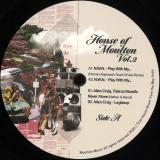
Moulton Music returns with House of Moulton Vol. 2, a four-track vinyl sampler featuring music from N.W.N., Homero Espinosa, Allen Craig, Nathan G, and Tobirus Mozelle.
Side A opens with Play With My... by N.W.N., a deep underground gem originally released on Bagira Ice Limited in 2018. After discovering the track last year, Homero Espinosa knew it deserved a vinyl release and reached out to N.W.N. to make it happen. Alongside the original, Homero delivers an exclusive remix that builds on the groove, adding his signature jazz-infused touch while staying true to the spirit of the record.
On Side B, Moulton digs into the vaults with two dancefloor favorites. Never Alone featuring Tobirus Mozelle gets the Nathan G treatment, delivering deep house at its finest with warm chords, soulful vocals, and timeless groove. Closing the sampler is Legbleep by Allen Craig, a deep, moody, techno-infused roller that perfectly rounds out the sampler.
Available now at your favorite record store.
сбор заказов
Заказать сейчас – как только наберется необходимое количество заказов, продукт будет отштампован.
Kokoroko today announce Tempos Difíceis Sempre Passam, a new remix EP reimagining tracks from their acclaimed album Tuff Times Never Last through the lens of some of Brazil's most exciting contemporary artists.
Translating the album's title into Portuguese, Tempos Difíceis Sempre Passam reflects both the enduring message at the heart of the original record and the creative dialogue between Kokoroko's expansive musical world and Brazil's rich, genre-defying music scene. The four-track collection brings together a handpicked group of artists whose individual approaches blur the boundaries between a variety of genres and contemporary Brazilian sounds.
To be released digitally and on limited vinyl, the EP also sees the return of acclaimed artist Luci Pina, whose artwork for Tuff Times Never Last is reimagined for this new chapter, creating a visual thread between the original album and its Brazilian counterpart.
Leading the announcement is Never Lost (Luedji Luna Remix), available now on all digital platforms. The celebrated Brazilian singer-songwriter brings her unmistakable warmth and emotive vocal sensibility to the track, offering a beautifully understated reinterpretation that deepens the song's themes of hope, resilience and togetherness.
Completing the EP are three further remixes from across Brazil's vibrant musical landscape. Onome of Kokoroko joins forces with acclaimed guitarist Nyron Higor for a richly textured rework of Da Du Dah, while producer Aleh Ferreira delivers a rhythm-driven reinterpretation of the same track. Closing the collection, Bruno Berle transforms Closer To Me with his signature blend of intimate songwriting, Brazilian groove and experimental pop sensibilities.
Together, the remixes offer fresh perspectives on Tuff Times Never Last, extending the album's spirit of optimism while celebrating the creative connections between London and Brazil.
Kokoroko today announce Tempos Difíceis Sempre Passam, a new remix EP reimagining tracks from their acclaimed album Tuff Times Never Last through the lens of some of Brazil's most exciting contemporary artists.
Translating the album's title into Portuguese, Tempos Difíceis Sempre Passam reflects both the enduring message at the heart of the original record and the creative dialogue between Kokoroko's expansive musical world and Brazil's rich, genre-defying music scene. The four-track collection brings together a handpicked group of artists whose individual approaches blur the boundaries between a variety of genres and contemporary Brazilian sounds.
To be released digitally and on limited vinyl, the EP also sees the return of acclaimed artist Luci Pina, whose artwork for Tuff Times Never Last is reimagined for this new chapter, creating a visual thread between the original album and its Brazilian counterpart.
Leading the announcement is Never Lost (Luedji Luna Remix), available now on all digital platforms. The celebrated Brazilian singer-songwriter brings her unmistakable warmth and emotive vocal sensibility to the track, offering a beautifully understated reinterpretation that deepens the song's themes of hope, resilience and togetherness.
Completing the EP are three further remixes from across Brazil's vibrant musical landscape. Onome of Kokoroko joins forces with acclaimed guitarist Nyron Higor for a richly textured rework of Da Du Dah, while producer Aleh Ferreira delivers a rhythm-driven reinterpretation of the same track. Closing the collection, Bruno Berle transforms Closer To Me with his signature blend of intimate songwriting, Brazilian groove and experimental pop sensibilities.
Together, the remixes offer fresh perspectives on Tuff Times Never Last, extending the album's spirit of optimism while celebrating the creative connections between London and Brazil.
Symbol Of The Land marks Dialog's first beat-driven album, broadening the duo’s vision of dubwise electronic music into a long-player shaped by collaboration and global exchange.
Over the last two years, Helsinki-based producers Samuel van Dijk and Rasmus Hedlund have been refining their voice within modern dub techno, testing their material on the road and inviting kindred spirits to their studio for real-life feedback loops. During these sessions, they built the album around live mixing, repeatedly re-recording elements as they work, committing effects and modulation before pushing digital processes back out into analogue voltage.
Across the record, the smoky tones of their regular collaborator, Jamaican singer Benji, plus the original voice of dub techno Paul St. Hilaire (aka Tikiman) fold into an open exchange of rhythm, space and sound. Their musings are housed by warm, patient grooves across a range of tempos and moods; from the blissed-out, reggae style on “Mellow Mood” to the wispy and esoteric “Constellation Of Stars”.
The album, which follows a string of well-loved releases on the duo’s own DOT Records, lands via Richard Akingbehin’s Kynant imprint, a label regularly dialling into the transcendent qualities of vocal dub techno.
What makes a life well lived? Career, home, savings, family: these are the milestones that make adulthood legible as success. Friendship, meanwhile, is often treated as something that either endures or doesn’t, more a matter of luck than a relationship requiring its own devotion, maintenance, and care. When really, as the world becomes more isolated and artificial by the day, friendships may be the most important thing a person ever builds.
“A lot of times in life I feel like a late bloomer, like I'm still trying to get my shit together in a way that other people have already figured out,” says Chastity Belt drummer/vocalist Gretchen Grimm. “But then I reflect on my adulthood, and my top priority has largely been my friends, which I do not regret at all.” That priority feels like the guiding principle on the band’s sixth album, All My Friends. Not that they set out to make an album about friendship—during mixing the band's longtime collaborator and engineer, Samur Khouja, pointed out that a lot of the songs referenced the subject. Which makes a lot of sense.
Julia Shapiro (guitar/vocals), Lydia Lund (guitar/vocals), Hunter Truscott (bass/vocals), and Grimm have been making music together for 15 years. Friendship has sustained the Chastity Belt project as its members have grown alongside one another, both as people and as musicians. Across a resonant catalog, they’ve moved from the raucous wit of their early records toward the lush, introspective moods they’ve refined on each album since via trademark intertwining guitars, meticulous rhythms, and double exposure of melancholy and optimism.
All My Friends comprises songs recorded across multiple years, time zones, and studios, including Seahorse Sound in LA, Way Out in Woodinville, and a centuries-old house on the Greek island of Hydra. The oldest track dates back to around 2018; the newest were finished within the past year. These days, the band spans three cities (Los Angeles, Seattle, and Chicago); less writing/rehearsal time means songs are often worked out in the studio, relying on the spontaneity and instinct that comes from knowing one another so well. The result is rawer and less polished than their last couple of records, closer in spirit to the band’s roots.
Ezra Collective's Here Because Of Hope is the most ambitious and personal record of their career - conceived as a body of work split into three spiritual and geographical movements, the album traces the movement of Black people across continents and decades, from the music of Africa to the rhythms of the Caribbean, and home to the streets of London. Formed in the youth clubs of London, Mercury Prize and BRIT Award-winners Femi Koleoso, TJ Koleoso, Joe Armon-Jones, James Mollison and Ife Ogunjobi have now spent over a decade making jazz joyful, urgent and undeniable. On Here Because Of Hope, they push that vision further than ever, asking a simple but profound question: why does so much Black music born out of pain sound so joyful? Their answer is hope: the belief, carried across generations and oceans, that something better is possible. Anchored by collaborations with Pa Salieu, Lila Iké, Leona Lewis, and reaching across the full breadth of the global African diaspora (including America, where those same African and Caribbean roots gave birth to jazz itself) Here Because Of Hope is a record of remarkable warmth, ambition and humanity, and the sound of Britain's most vital band at the peak of their powers.
Glasgow’s Hot Towel are a DJ & production duo, community dance party organiser and now record label reimagining the balearic spirit far from its original context and sunnier climes.
This debut EP contains 4 dance floor focused tracks tested and developed on the Hot Towel dance floor and beyond. Produced over the last 4 years in grey and rainy Glasgow these 4 tracks reinterpret the joy of warmth, connection and world building in dance music.
Warm in Your Office is a feet on the floor, head in the clouds, bouncing 90’s piano house inspired track with warm driving bass, punchy gated snare, percussion samples and a surprising nostalgic drop for fans of late 90’s and early 00’s Serie A.
The lo-fi beatbox rhythm of Low Pressure in Paradise features a melodic, rumbling bassline, vintage synth string stabs and a warm melancholic synth pad swell reminiscent of the day after the night before, or the thunderous ambience of an oncoming storm and the reflection that brings. Think warm orange and magenta sunset overcast with heavy mauve clouds and possibly a hangover from one too many negronis.
A sunbaked synth flute melody shimmers like heat haze in the latin / balearic inspired beach bar romp Last Minute Staycation. Cowbell and syncopated piano move the hips, while romantic synth strings pine for that magical other world away from the mundane. A shift in tone midway evokes the peril of a balearic dream turned nightmare, capped off with timbale and a shredding electric guitar solo serving Lambada meets Zappa.
Endless Cosmic Procession is a downtempo balearic builder that chugs along with minimal effort. Tuned percussion drives the groove, with bass and synth punctuations that reverberate into space and swirl with delay. A rising arpeggiator gently brings melody to complete the harmonic space of the track that rounds off the EP with a contemplative dance floor moment.
Glasgow’s Hot Towel are a DJ & production duo, community dance party organiser and now record label reimagining the balearic spirit far from its original context and sunnier climes.
This debut EP contains 4 dance floor focused tracks tested and developed on the Hot Towel dance floor and beyond. Produced over the last 4 years in grey and rainy Glasgow these 4 tracks reinterpret the joy of warmth, connection and world building in dance music.
Warm in Your Office is a feet on the floor, head in the clouds, bouncing 90’s piano house inspired track with warm driving bass, punchy gated snare, percussion samples and a surprising nostalgic drop for fans of late 90’s and early 00’s Serie A.
The lo-fi beatbox rhythm of Low Pressure in Paradise features a melodic, rumbling bassline, vintage synth string stabs and a warm melancholic synth pad swell reminiscent of the day after the night before, or the thunderous ambience of an oncoming storm and the reflection that brings. Think warm orange and magenta sunset overcast with heavy mauve clouds and possibly a hangover from one too many negronis.
A sunbaked synth flute melody shimmers like heat haze in the latin / balearic inspired beach bar romp Last Minute Staycation. Cowbell and syncopated piano move the hips, while romantic synth strings pine for that magical other world away from the mundane. A shift in tone midway evokes the peril of a balearic dream turned nightmare, capped off with timbale and a shredding electric guitar solo serving Lambada meets Zappa.
Endless Cosmic Procession is a downtempo balearic builder that chugs along with minimal effort. Tuned percussion drives the groove, with bass and synth punctuations that reverberate into space and swirl with delay. A rising arpeggiator gently brings melody to complete the harmonic space of the track that rounds off the EP with a contemplative dance floor moment.
On a class debut for Biscuit’s choice Good Morning Tapes label, Kyoto’s dub specialist G Version III runs signature fusions of digidub steppers, drill, and holographic, minor-key FM synths.
One up on her 12” for Riddim Chango last year (plus the »Scenery From Double Glazing« tape for Digital Sting in ’24), G Version III’s »Chapter II« most finely chisels her lucidly rugged definition of the late ’80s / early ’90s mystic steppers sound. The OG Caribbean spirit is heard filtered through UK dances and shored up in Japan, where G tessellates its salient points with a palette of glassy Japanese synth tones and chamber music to exquisite effect. If Wendy Carlos was a soundgyal?
Across six cuts she builds the dance around digidub x drill waltz »Livin 4« and a haunted dancehall special in the harpsichord/horn riff of »An Idyll«, impressing her prowess in the fusion of subcontinental scales with a drill-tipped skip in »Queen G Theme Chapter II«, and tucking right into an aerodynamic, flying steppers mode, shades away from Element, in »Motherearth Guidance«. At a slower, wider stride her »Higher Grade« goes eyes-down on massive subs, and »Voice of Mystique Warriyah« adapts the classic-schooled sound like TNT Roots in Tokyo.
*First-ever release on vinyl
*Produced in full cooperation with Hiroshi Yoshimura's estate
*Remastered from original sources by John Baldwin
*English translations of original 1996 release liner notes
*Reproductions of Yoshimura's handwritten recording notes
*Vinyl includes 5" x 7" postcard print
"My encounter with the Hoh Rain Forest, located inside Olympic National Park across the water from Seattle, felt like seeing a whole new world for the first time in my life. Long green fronds draped along the branches, like a scene in which fairies could be heard whispering to one another. But when you try to listen, no sound can be heard. Amidst the mysterious silence, in which no birds or insects make a sound, every living thing seemed to have stopped in its place, only to start dancing when some kind of spell is cast over them.
-Hiroshi Yoshimura
Originally issued on compact disc in 1996, Quiet Forest was Hiroshi Yoshimura’s last album-length work to be released before his passing in 2003. Largely inspired by his trip to the vast forests of the North American Pacific Northwest, the album is an aural reflection of the fantastical, surreal beauty he experienced as he walked through the otherworldly wilderness for the first time. The basic tracks were recorded in the fall of 1993. After numerous revisions to the song titles and a scrapped idea to overlay the tracks with nature field recordings, Hiroshi ultimately produced a latter-day masterwork that feels like the spiritual follow-up to Green, one of his defining works from a decade earlier."
*Produced in full cooperation with Hiroshi Yoshimura's estate
*Remastered from original sources by John Baldwin
*English translations of original 1996 release liner notes
*Reproductions of Yoshimura's handwritten recording notes
"My encounter with the Hoh Rain Forest, located inside Olympic National Park across the water from Seattle, felt like seeing a whole new world for the first time in my life. Long green fronds draped along the branches, like a scene in which fairies could be heard whispering to one another. But when you try to listen, no sound can be heard. Amidst the mysterious silence, in which no birds or insects make a sound, every living thing seemed to have stopped in its place, only to start dancing when some kind of spell is cast over them.
-Hiroshi Yoshimura
Originally issued on compact disc in 1996, Quiet Forest was Hiroshi Yoshimura’s last album-length work to be released before his passing in 2003. Largely inspired by his trip to the vast forests of the North American Pacific Northwest, the album is an aural reflection of the fantastical, surreal beauty he experienced as he walked through the otherworldly wilderness for the first time. The basic tracks were recorded in the fall of 1993. After numerous revisions to the song titles and a scrapped idea to overlay the tracks with nature field recordings, Hiroshi ultimately produced a latter-day masterwork that feels like the spiritual follow-up to Green, one of his defining works from a decade earlier."
Isle of Jura is proud to present the first official reissue of Esa’s self titled LP originally released in 1987. Following the 2024 reissue of iconic single 'A Muto', this full album release marks a bittersweet milestone for the label. Developed in close collaboration with the estate of the legendary producer Martin Socko Moukoko following his passing last year, this reissue stands as both a definitive archival release and a respectful tribute to his legacy in Cameroonian music.
Originally released on Atesa in 1987, Esa is a pristine encapsulation of the "Paris Makossa" phenomenon. In the mid 1980s, Cameroon’s finest musical minds migrated to Parisian studios, cross pollinating traditional rhythms with cutting edge European studio electronics and Antillean Zouk sensibilities. At the absolute center of this movement was visionary producer Martin Socko Moukoko. The album is driven by the dancefloor anthem 'A Muto', which showcases a brilliant fusion of horn heavy Makossa and slick Antillean Zouk. Across the five other expansive, spiritual tracks, the sonic template expands significantly. Striking a perfect balance between the urban, brass led grooves of Douala Makossa and the fast, driving, syncopated polyrhythms of Cameroonian Bikutsi, the LP delivers a unique rhythmic energy. These traditional backbones are seamlessly laced with Martin Socko Moukoko’s advanced studio programming, bubbling digital synthesisers, slinky slap bass, and rich, layered harmony vocals.
By bringing the full LP back into print alongside Martin Socko Moukoko’s family, Isle of Jura ensures that his musical legacy is preserved, allowing this timeless intersection of Cameroonian tradition and electronic innovation to be heard exactly as it was intended.
A 180 gram pressing in a 3mm full sleeve designed by Bradley Pinkerton.
Pure Motorised Instinct drives over to Dark Entries with At Last I’m Leaving the Earth, an LP of industrial-tinged ambient and new age. When legendary industrial outfit Nagamatzu went dormant in 1991, band member Stephen Jarvis moved forward with Pure Motorised Instinct, a name he pulled from a line in George Romero’s Dawn of the Dead. Throughout two cassette albums - 1991’s Between Intimacy and Elsewhere, and 1993’s Everything Is True - Jarvis pushed the Nagamatzu spirit in new directions. At Last I’m Leaving the Earth collects 9 tracks from this era, which are appearing on vinyl for the first time, along with 3 additional tracks on a bonus CD. The material here sits between the brooding and the optimistic, the claustrophobic and the soporific. Jarvis’s digital synths are pushed so far into tape-scuffed terrain that they talk and squawk analog-like, scurrying with vibrant curiosity. The late-night vibes peak on pieces like “Vincent V,” with its reverb-drenched digital drum machines, or “Geek,” which taps into a wide-eyed proto-vaporwave zone. At Last I’m Leaving the Earth is Black Lodge ambient for the empty set.
2026 Repress
Efficient Space honours the memory of producer and MC Ali Omar with Hashish Hits, a posthumous selection from the dub rebel’s self-released discography.
One of ten children in working-class Liverpool, Omar drew deep influence from his father's Arabic heritage—a thread central to his identity and sample origins. After art school and a spell clubbing during Manchester's halcyon days, he relocated to Sydney, where he cofounded the blunted downbeat duo Atone with fellow British expatriate Andy Fitzgerald. As an MC, he infiltrated the city’s house, dub, jungle, and bass circuits, becoming a regular fixture at the Bentley Bar, where he commanded the mic with his versatile, rumbling baritone and charisma.
Freakishly talented in the studio, Omar was a pioneer of the Akai sampler and Atari, deftly recording live sessions straight to DAT. Drawing on industry insights from his sister, Merseybeat firebrand Beryl Marsden—who supported The Beatles on their final UK tour and was signed to Decca and Columbia—the non-conformist sought to build a self-sufficient business model. Between 1998 and 2004, he independently issued four albums on CD through his Hashish Studios imprint, hustling copies directly to local record stores and live shows for instant returns, even hand-sewing screen-printed hessian sleeves for his final release.
Uncompromising in his principles and refusing to suffer fools or charlatans, Omar relished the opportunity to collaborate with those who embodied the same spirit. Hashish Hits offers a snapshot of his inner sanctum—Fitzgerald on the opening track's billowing smoke stacks, the serpentine vocals of Gina Mitchell and the magic hands of mixer Louis Mitchell on 'On Release,' and Wicked Beat Sound System’s Kye on 'Poor Man Beggar Man Thief'. Meanwhile, 'Suicide Bomber' smoulders with the tension of a lost Muslimgauze relic, as the instructional 'Roll Up' and 'The Last Straw' spiral deeper into Omar’s signature production vortex— where space stretches in slow motion and walls reverberate with ricocheting delay.
A true icon of Sydney’s underground scene, the larger-than-life Omar passed away on 23 June 2009 after a valiant battle with cancer. He is remembered for his assertive spirit, larrikin humour, wild anarchic personality, and enduring mantra: “Love and live your life”.1
The undisputed Godfather of Boogie, Leroy Burgess’s Logg project is his grand masterpiece.
The self-titled LP, originally released on Salsoul in August 1981, is one of the greatest albums of the post-disco era. It’s one of Be With’s favourite ever LPs and so it’s a complete honour to be giving it our reissue treatment. With all the touchstones of Burgess’s finest work - breezy grooves, undulating synths, funk-drenched bass and life-affirming lyrics - delivered with gospel-derived vocals and harmonies - it’s a record to uplift both body and spirit.
Already a cult soul figure as lead singer of seminal vocal group Black Ivory, Leroy Burgess cut his teeth as arranger, vocalist and songwriter with legendary producer Patrick Adams on essential late-70s projects like Phreek and Dazzle. He went on to define the essence of “boogie”: the vibrant underground dance sound that stood in contrast to commercial disco. With its reduced speed - mid-90 to under 110 BPM - the cool boogie of Burgess has the disco bounce, just more laidback.
All six tracks here could have been stand alone 12" hits. Indeed, some of them were. But together they are also an incredibly cohesive album, where all the compositions are deeply relevant to each other. In short, it’s essential; a thrilling showcase for Burgess’s finest arranging and production work - with his vocals at their euphoric peak alongside the inventive rhythm section of Aaron (Sonny) T. Davenport on drums and James Calloway on bass.
Opener “(You’ve Got) That Something” is a balmy sunshine groover with an insistent chorus whilst the timeless vocal of “Dancing Into The Stars” - married to percolating synth and airtight drums - showcases the chemistry between Burgess and the rhythm section.
The fusion of funk and gospel-influenced harmonies which propels “Something Else” is remarkable - deep, joyous and bouncy. Infamously mixed by Larry Levan, “I Know You Will” is an easy glide, all rollicking electric piano underpinned by a precise and relentlessly upbeat groove. “Lay It On The Line” radiates smooth, understated brilliance, elevated by interstellar keys and finally album-closer “Sweet To Me” is a chilled-out gem of profound soulful elegance.
Logg has long been a hit with the likes of Kenny Dope and Dam-Funk whilst, in the last decade, MCDE and Harvey Sutherland have routinely cited it as a huge influence. Accordingly, finding original copies on vinyl at affordable prices has been a thankless task. This fresh Be With reissue ensures this legendary record now sounds, looks and feels as sensational as it deserves to.
Mastered brilliantly by Simon Francis, cut by Pete Norman and with lovingly reproduced artwork, we think this is a reissue that does justice to this classic LP.
A long-time figure at the heart of Samurai Music, Last Life makes his first appearance on SAIBAI trading his signature snarl for shadowy psychedelia and snaking beatdowns. Since 2015 Mauro Picciau has been cultivating a sound that maximises on the space that opens up around half-time 170, finding plenty of power while stretching out his rhythms. On this new release he pivots towards subtler tones and textures, and plugs directly into the wave of innovative artistry occurring at the intersection of D&B and deep techno. Writhing, taut sound design spells out the mood on opening track 'Gear Cutter', as Picciau gets expressive with metallic feedback tones that elegantly contort across the front of the mix. There's a strong sense of narrative that brings the track's dynamic movement to the fore, holding back energetic shifts with a measured intent to ramp up the tension. 'Norma' has a more ceremonial feel, locking into a steady pulse and letting distant clouds of melodic ambience create a bewitching atmosphere around the percussive mantras. 'Radian' speaks its own minimalist, techno-spirited language, drawing on alien murmurs and steely drones to strike a lighter note without breaking the mysterious fog that hovers over the EP. 'The Moat' leads on a heavier set of drums to close the record out, shaping space with skilful reverb and a tightly controlled synth pulse. Within this echo chamber, and across the whole release, Picciau has capitalised on this patient approach to bed infinitesimal ripples into the mix, rewarding the active listener and instilling his creations with a kinetic vitality that can always be felt, no matter how slight the sound is.