The time has arrived for the release of the long awaited EP by LEBA, with the prolific title - Into The Lights.
Carefully and thoughtfully crafted over two years, the legendary record producer of High Power Music, General Lee, teamed up with the magnificent Legends Sly and Robbie, to produce the daughter of legendary Jamaican Icon Toots Hibbert: LEBA.
This LP features 7 songs including a feature from Jamaican Portland deejay Blackout JA, on track "No one loves you like me", which was released in 2021. These songs carry you on a musical journey of time and space, on a dub and reggae background, which soothes the ears of its listeners, and gets them grooving to the bassline of the late Robbie Shakespeare OD and Sly Dunbar OD and Taxi Gang.
The songs paint a picture through conscious words and messages, heavy and spacey instrumentation, recorded & mixed at One Pop Recording Studio Kingston Jamaica by Rorey Baker. An atmosphere that will surely transport its listeners into the calm and relaxing space of reggae and dub music.
Cerca:leba
The album opens with the ominous guitar-driven Hollow Sky, accompanied by its haunting music video's verdant vistas. The song, with Iceglass ghostly vocals, shimmers with that sounds like an Omnichord flittering like sonic firefly lights and brooding bass. This perfectly scores the less traveled wanderings through the dark wooden path of Dante's perdition, leading to the titular well that graces the album cover. The Crater opens with an unsettling riff and bass, with low, repetitive frequencies on the synth create a sense of unease. Here, Iceglass recounts a fatalistic requiem for the king of romance that is cataclysmic and leaves a scar upon the earth. With Fall Industrial Wall, once again, Iceglass channels a silky and Nico-like emotive deadpan; against a dirgelike melody backed by minimal synth, bass, and drum. Almost medieval and plaintive, with its folk droning horns, deep and shallow in their resonance. This song is anachronistic, setting the scene of ruins centuries-old with crumbling edifices strewn about like memories lost in time. With the poetic lyrics of The Chamber do we find the eponymous abyss. Here, dualities are laid bare; besides love, there is heartbreak, and without this sorrow, what meaning would there be to love if one knows not what it is to lose? This song encapsulates the idea that love is heartbreak, and love lost is reaching the deepest chamber of the heart. This is carried through a sombre horn, minimalist drum machine, and deliberate bassline overlaid with Iceglass german and english lyrics. The Well is led in with a softly distorted bassline overlaid with eerie banshee howls give way to Iceglass otherworld vocal refrain, echoing through time as if emanating from a hole in the ground, and encircling that hole is a garden of woe and despair. The sinfully seductive song The Moor features a captivating SAX SOLO courtesy of Perseas; a welcome shift in tone, juxtaposed well with the intensity of Iceglass tenebrous vocal purr. This hitherto unexplored foray into dark sensuality takes the song into sordid mid 80s territory, bringing to mind a dusky drive along a serpentine road, with equally haunting instrumentations straddling time with icy fire. Broken Characters is an acoustic folk interlude featuring Selofan's Dimitris Pavlidis on guitar. Here we find a more gentle approach with its earnest and romantic lyrics. The song's melodic hook is a soft caress along with the forlorn horn elements highlighting Iceglass at her most Nico-sounding vocal yet, singing the sorrowful truth that most artists are indeed broken characters. Chimerical opens with dirgelike synth organs. The chill of winter has befallen the lamentations sung by Iceglass carried by haunting chord progressions and minimal percussion, plaintively beseeching the song's subject to remain elusive, idealistic, and a dreamer. After an album highlighting more Jill than Jack, our male protagonist finally makes his ascent in the sonorous and breathtaking Dark Hill, a masterful march of sweeping synth horns, and trepidatious drum machine with William Maybelline's bellowing voice cracking like thunder, rattling the atmosphere like his heart against his ribs. Spirals swirls in a cautionary knell of cathedral-esque droning synth dirge, with Icarian lyrics shining like a sombre ray of hope; like the sun's rays creeping into the darkest of places. The song, minimalist in its tight percussion, echoes with the solace of Larissa Iceglass vocal litany; invoking elements of the supernatural, almost like a Casio preset sequenced to the beating of an angel's wings.
Following the release of the dreamy and bewitching darkwave debut single “Mirror Twin”, Harsh Symmetry announces the release of a full-length debut Display Model on Fabrika Records, home of Selofan, Lebanon Hanover, and She Past Away, whose own Doruk Öztürkcan mixed and mastered the LP. With a vocal style reminiscent of Cocteau Twins collaborator Cinder (This Mortal Coil, Cindytalk), and Ian McCulloch of Echo & The Bunnymen, Harsh Symmetry’s Julian Sharwarko is the epitome of old-school and post-punk and goth, capturing a vision that perfectly matches his sound, while physically resembling his music forebears to the point where he looks like he just stepped out of a copy of Smash Hits circa 1983. Hailing from Sacramento, California, Sharwarko’s love of music began at the tender age of 8, with parents who influenced his early music tastes by playing the music of Siouxsie and The Banshees, The Birthday Party, Iggy Pop, Depeche Mode, and Bauhaus. David Lynch’s work also made a profound impact on his style, specifically the short film The Grandmother.
- Al Wahem
- Al Hathayan
- Al Maraya
- Assarab
Al Wahem (“The Illusion”) is the new full-length release by PRAED, the Swiss–Lebanese duo of Raed Yassin and Paed Conca. Recorded between Beirut and Berlin, the album returns to the group’s central aesthetic: a rhythm-driven weave of Egyptian shaabi, electronics, improvisation and the gritty pulse of street-level sound. Nearly twenty years into the project, PRAED have distilled their approach into four pieces that subtly shift the listener’s bearings, reordering grooves and fragments until familiar elements take on new identities.
The twenty-minute title track sets the tone. A tightly interlocking two-drum foundation from Pascal Semerdjian and Ayman Zebdawi shapes a structure that expands steadily: synth figures branch outward, clarinet and bass lines act as internal guideposts, and brief vocal calls from Yassin and guest singer Mayssa Jallad sit inside the texture rather than leading it. PRAED’s shaabi keyboard language is present, but the duo stretch it outward, building tension and movement through patient accumulation.
“Al Hathayan,” at 4:46, tightens the focus. Conca’s clarinet moves between melodic arcs and clipped rhythmic gestures, threading through electronic loops that surface and disappear. Zebdawi’s percussion adds a raw, tactile quality, placing acoustic patterns and electronics in direct conversation. The piece acts as a bridge between the album’s two long-form compositions.
Side B begins with “Al Maraya,” a thirteen-minute piece that relies on electronic, bass and clarinet interplay. The atmosphere nods to the breadth of PRAED Orchestra!, but remains anchored in the duo’s rhythmic foundations. Rather than building mass, the layering creates a sense of depth, as if new spaces were opening inside the groove.
The album closes with “Assarab,” featuring keyboardist Amr Said. Semerdjian and Zebdawi again form a dual percussive axis, while synths hover between melody and pulse, and themes recur in widening circles rather than building vertically. The porous boundary between electronic and acoustic sources — processed clarinet mistaken for a sequencer, rhythmic figures springing from live drums — is where the album’s theme of “illusion” shows itself most clearly.
Al Wahem follows a long arc: early releases on Annihaya, a key appearance on Ruptured Sessions Vol. 5 – Live at Radio Lebanon (2013), later albums on Akuphone, and the large-scale PRAED Orchestra! documented on Morphine Records. This new Ruptured/Annihaya co-release brings the duo back to a concentrated format, reorganizing their familiar materials with renewed clarity and intent.
- A1: Pagan Ways
- A2: Sleep
- A3: Torture Rack
- A4: Frosty Life
- B1: Waiting List
- B2: My Love
- B3: I’m Doing This For You
- B4: Parrots
WHITE VINYL[26,26 €]
Lebanon Hanover kehren mit Songs zurück, welche die Zeit bis zum nächsten termin mit der Lieblingstherapeut*inn überbrücken können. Fast fünf Jahre nach der Veröffentlichung ihres letzten Werkes "Sci-Fi Sky" hat Lebanon Hanover nun mit "Asylum Lullabies" einen Soundtrack für einen Besuch in einer psychiatrischen Klinik kreiert. Das neue Album ist die Weiterentwicklung eines noch kälteren, noch bissigeren Sounds einer Band, die seit über einem Jahrzehnt die Nu Wave/Post-Punk-Szene dominiert, es ist ein sehr schweres Album, das sich mit psychischen Problemen, einer Trennung, andauernden Kriegen und dem aktuellen Horror der Welt befasst, der einen letztendlich mit Angst, Furcht und einem ständigen Gefühl der Erdrückung zurücklässt. Alles bricht gleichzeitig zusammen. Die Mitglieder Larissa Iceglass und William Maybeline schrieben diese Songs aus polarisierenden Perspektiven, haben dabei ein schlüssiges Album produziert. Für Fans von Twin Tribes, Ash Code, Selofan, Cold Wave, Independent, Postpunk
SiriusB002 is here—deep, raw, and full of soul. This time we welcome Albert Azar, a Lebanese producer based in Spain, known for crafting emotionally charged soundscapes that blur the line between rhythm and melody.
From bass guitar beginnings to cinematic electronic journeys, Azar brings a timeless touch to minimal music. Influenced by Pink Floyd and classic ’70s rock, his sound tells stories that stay with you.
Backed by Jay Tripwire and Herman Saiz, curators of SiriusB, this release keeps the bar high—stripped-back, expressive, and cut for the vinyl selectors.
- A1-: Mirror House
- A2-: Djinn Dance
- B1-: The Dictionary Of Lost Meanings
- B2-: The Spell
- C1-: Fragmented Realities
- C2-: Three Dimensional Spirits
- D1-: Ila3Sab
PRAED return to Discrepant, after their 2017’s entry Fabrication of Silver Dreams (CREP44)
Known for their signature blend of Egyptian Shaabi, free jazz and improvisation, the Lebanese duo behind PRAED - Raed Yassin and Paed Conca - now assemble a full orchestra for the second time taking the music to a deeper, rooted level.
Following their 2020 release Live in Sharjah, also under the PRAED Orchestra! moniker, the duo now revisit their unique blend of Arabic heritage and free jazz sensibilities with an album that keeps pushing further into strange and unexpected directions.
The Dictionary of Lost Meanings is just that, seven fully composed pieces and large-scale improvisations, performed by an expanded ensemble of musicians from across the globe. The result is dense and playful, unpredictable but familiar, a record where Arabic rhythms and microtonal melodies collide playfully against electronics, warped vocals and orchestral textures.
It’s less about genre than about memory — like tuning into a radio station broadcasting from somewhere between the past and the future.
PRAED continue to blur the line between popular culture and experimental music in ways that feel both grounded and completely their own.
PRAED ORCHESTRA! are
Raed Yassin: Synthesisers, Vocals, Beats
Paed Conca: Clarinet, Electric bass
Alan Bishop: Alto saxophone, Electric bass, Vocals
Andreas Bral: Harmonium, Electronics
Elisabeth Klinck: Violin
Christian Kobi: Soprano and Tenor Saxophones
Hans Koch: Bass Clarinet
Martin Küchen: Alto and Sopranino Saxophones
Maurice Louca: Synthesizer, electronics
Stan Maris: Accordion
Radwan Ghazi Moumneh: Buzuk, Vocals, Modular Synth
Youmna Saba: Electric Oud, Vocals
Sam Shalabi: Oud, Electric Guitar
Els Vandeweyer: Vibraphone
Khaled Yassine: Drums, Percussion
Michael Zerang: Drums, Percussion
Recorded by Jasper Jan Peeters at the Summer Bummer Festival, DE Studio,
Antwerp August 26, 2022
Mixed by Adham Zidan
Mastered by Mark Gergis
Produced by PRAED
Photos by Geert Vandepoele
GP04 is brought to you by DJ Ali, the Lebanese-Australian artist based in Melbourne. In this EP, Ali explores the realms of percussive Techno, showcasing his distinctive use of melodies, vocals, and irresistible rhythms. Transformation EP is a collection of tracks where the perception of time is manipulated and stretched into a parallel realm. Come on board & enjoy the journey!
Grisline is a fresh-born label exploring the balance between light and shadow — a sonic playground where genres blend, bend, and collide. Rooted in the pulse of electro, techno, and house, we’re drawn to contrasts, emotions, and movement, always in search of unexpected harmony.
Our first release comes from Fabrega & Christian, delivering four original tracks that chart a dynamic journey across the dancefloor. The title track, Dark Chai Bowl, opens with a groovy electro cut full of harmonic twists and crisp synth work, setting the tone for the ride ahead. Onda Vampiresca dives into darker territory, layering driving rhythms with flickers of brightness — a hypnotic blend for losing yourself in the moment. On the flip, Lilac Lebal ramps up the intensity with a percussive, floor-focused tool built for peak-time energy. Finally, Lampin’ (featuring Ku$h) winds things down with a smooth, atmospheric break — perfect for the after-hours or sunrise sets.
One of Europe's most popular alternative / dark wave bands. Lebanon Hanover have over one million monthly listeners on Spotify. Following their first US tour in over a decade, Lebanon Hanover returns with a soul-stirring double A-side single release, marking their first new material since the captivating 2020 album, 'Sci-Fi Sky.' Now, the enigmatic duo of William Maybelline and Larissa Iceglass beckons listeners into unventured sonic domains, intricately weaving folk-driven acoustic dream pop with the vulnerable essence of post-punk in a contemplative exploration of life's ephemeral yet profound nature. Embarking on a Cure-like sonic voyage reminiscent of the 'Head on the Door' and the 'Kiss Me’ era, title track 'Better Than Going Under' manifests as a romantic, sombre daydream. William Maybelline's brooding baritone intertwines with sighing back vocals, narrating an ode to life's fleeting yet boundless vistas. The acoustic strums initiate a folk-driven narrative which, when coupled with a celestial choir, crafts a contemplative soundscape of cautious optimism, reminiscent of Echo and the Bunnymen or The Church.. KYIV: Bearing the name of Ukraine's capital, 'KYIV,' voiced by Larissa Iceglass, delves into a narrative reflective of the sorrow and despair entwined within war-torn regions like Ukraine and beyond. The acoustic guitar and drum machine create a Cocteau Twins' 'Treasure'-esque soundscape, evoking a melancholic yet beautiful auditory journey. Iceglass's voice, transitioning from her husky baritone to a more resigned lament, embodies a poignant reflection on the harsh realities faced by those embroiled in conflict-ridden landscapes.
- A1: Sepehr - Twilight Calls
- A2: Sissy Fuss - No Restraint Instrumental Def
- A3: God Is God - Na Gore More Dub Edit
- A4: Alex Loveless - Voicenote
- A5: Suemori - Kisou
- A6: Mari Herzer - Limbal Ring
- A7: Elena Colombi Feat Juno Roche - Lost In A City
- A8: Loma Doom - Sisterresister
- A9: Decha - Mujeres
- B1: Pose Dia - Lovers Rock
- B2: Low End Activist - Need To Know Blue Room Version
- B3: Decha Wir Sind Da
- B4: Mayurashka - Libra Man
- B5: Nar John Silvestre - Ensel Ham
- B6: E-Bony - Slow Machines
- B7: Riva Ft Tommy Khosla - Resurfacing
- B8: Anenon - Length-Of-Night Improvisation
Following on from the celebrated first instalment, the second part of The Male Body Will Be Next compiles an entourage of daring sonic experiments, composed in response to bell hooks’ landmark book The Will to Change. Prompting artists and musicians to envision cross-gender solidarity, Osàre! Editions founder Elena Colombi presents an enrapturing, narrative album, conceptualised around collective transformation.
Resonating with hooks’ challenge to men to reclaim the sensitivity that patriarchy denies them, the name of the record arises from a photograph by Peter de Potter and Rebecca Salvadori’s film of the same title. In these depictions, naked flesh is exposed, made vulnerable and trembles with emotion as the fragility of masculine bodies are examined through the queer and female oppositional gaze. Transforming this visual language into musical expression, The Male Body Will Be Next swirls with punk vitriol, electrified noise, acid, electro and free-wheeling encounters charged by love, lust and limerence.
Gently plunking chords signal Pose Diva’s reimagining of lover’s rock before Sissy Fuss smashes in with a heavy-weight instrumental version of their erotic anthem ‘No Restraint’.
Made up of Turkish musician Etkin Çekin and Belarussian songstress Galina Ozeran, God is God delivers a gentle lullaby, while Low End Activist flirts with dark and brooding bass, shattering penetrating frequencies into luminous fragments. Riffing off the 2020 documentary about female early electronica pioneers, Loma Doom crafts a slowly oscillating drone zenith, the ultimate climax. In line with the conceptual underpinning, there are plenty of collaborations – Daytripper’s Riva and Sitar player Tommy Khosla, Lebanonese experimentalist N R and Swiss-French producer John Silvestre (AKA Typhon), as well as Colombi herself and trans author/activist Juno Roche. Within these partnerships, new modalities come alive as mediums, practices and perspectives are ignited and pushed in otherworldly, metamorphic directions.
- A1: Saddest Smile (3 46)
- A2: A Very Good Life (3 59)
- A3: Albatross (3 59)
- A4: I'm A Reject (3 08)
- A5: Cadaverously Quaint (3 45)
- A6: Bring Your Own Wine (3 53)
- B1: Northern Lights (3 32)
- B2: No One Holds Hands (3 17)
- B3: Why Not Just Be Normal (2 39)
- B4: Somehow We'll Get Through This (3 57)
- B5: Avalanche (5 41)
CASABLANCA first started as a party exploring the depths of Arabic grooves from Northern Africa and the Middle East, brought to life by two musical legends...Parisian digger Victor Kiswell, known for his journey through the world’s rarest records and influential NTS radio sets, and Dez Andrés, a Detroit native whose roots in the city's hip-hop and house scene are matched by his love for soul, fun, and jazz. The two artists have stepped into the studio to bring the same energy and ethos from their party to this album.
Love Raid is first in a series of cassette-only mixtapes with the cult WFMU show and blog Bodega Pop collecting assorted digs from across New York's bodegas and cell-phone stores. This first edition is focused on leftfield, novelty, and protest 45s from across the Arabic world recorded between 1960 & 1974.
"A series of random discoveries in the mid-1990s led me to abandon American and British pop and focus on non-English-language music, predominantly Arabic, for the next two decades.
Feeding my ears required biking down to Bay Ridge, Brooklyn, or hopping on the subway to Steinway Street in Queens, where I would pop into a handful of the local bodegas and immigrant-run cell-phone stores, some of which offered music from North Africa and the Middle East on cassettes and compact discs.
When CDs spiralled into obsolescence in the mid-2010s, I reluctantly made the switch to vinyl, concentrating on 45s and intentionally filling holes not well represented in the digital era – more artists than not hadn't made the transition from analog in the 1980s. This meant focusing on singles by a lot of artists I'd not heard of, and it quickly became evident just how much of the era – from approximately 1960 to 1974, when 7" records were all but abandoned in Egypt and Lebanon – had been forgotten.
What also became evident was the breadth of popular music issued by even hegemonic titan Sono Cairo. The consensus is that state radio and music publishing ignored traditional folk, shaabi, and other lowbrow pop in favor of the exalted art song we associate with Oum Kalthoum, Abdel Halim Hafez, and Farid al-Atrash.
While this active neglect of the broadest Arabic pop spectrum is mostly true, I accumulated a not inconsequential number of what I can only describe as "novelty" records by mostly one- and two-hit wonders. From catchy gimmicks like the "doktor, ya habibi" of Maha's "Doktor" and the "boom boom boom" of twins Thunai Badr's "Love Raid," to the Monty Python-level silliness of Sayed Mandoline's fake Italian crooning and maniacal laughter in "I Present to You the Mandolin," these were sounds I was genuinely surprised to hear.
Even more remarkable were the songs recorded in English: Karim Shukry's celebratory "Ramadan" and Motyaba & Nada's civil-rights plea "No Black No White" are two of my favorites, and thus included in the present collection.
The tracks compiled here are often as beautiful as they are beguiling, but while the intention was to absolutely put together a solid listen, it was also my hope to slightly expand our understanding of Arabic music of this period beyond not just the usual suspects, but also subjects – and treatment of same."
--Gary Sullivan.
Love Ensemble Quatuor is back with a fresh release that redefines their vibe. Half a decade later, the crew of ICTV, Nephews, and DimSum return under their solo aliases with a slick new record. This German-Swiss-Lebanese connection known for blending their respective styles, builds on the success of their first EP, while taking their sound into a new direction.
Side A kicks off with “Midnight Mirage,” a smooth, melodic track that mixes tight percussion, soft chords, and a rolling bassline – perfect for easing into a set. “Love Ensemble Theme” follows with deeper beats and rhythms that show the seamless chemistry between the four producers.
On the B-Side , “Elevated Workout” ramps up the energy with a punchy, club-ready vibe, packed with whistles, sound effects, and a nod to ‘90s rave energy. It’s been tested on the floor and gets the crowd moving every time.
To top it up, two remixes round out the record: Irish Hitmaker Trent Voyage delivers a hard-hitting take on “Elevated Workout,” while Venezuelan Swiss based producer Giorgio Maulini gives “Love Ensemble Theme” a unique breakbeat twist, adding more flavor to the release.
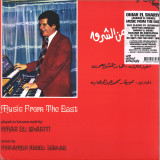
Wewantsounds is delighted to announce the reissue of Ammar El Sherei's sought-after instrumental album " Music From The East" from 1976. Here, the iconic Egyptian musician and composer revisits seven classic compositions by another Egyptian legend, Mohamed Abdel Wahab, in his own hypnotic way. Mixing Arabic music with funky arrangements and electric keyboard experimentations, the album is a perfect showcase for El Sherei's artistry. Curated and annotated by Lebanese-born Arabic music expert Mario Choueiry from Institut du Monde Arabe in Paris, this reissue has been newly remastered and comes with original Soutelphan artwork.
Buoyant, spirited, and merging the cultural influences of the Ivory Coast, Burkina Faso, and Lebanon, Moaïs debuts on 1432R like a cool glass of water. This EP blends his African influences with modern and informed house traditions, building a sound that’s energetic and timeless. It’s music colored by a longing and loving obsession with the stars and their guiding light, oriented to the DJ, and guaranteed to get the club rats racing.
"Deep Dancefloor Jams of African Disco, Funk, Boogie, Reggae & Proto Electro Music 1977-1986reggWhen a passionate DJ and crate digger intuitively selects music for a DJ compilation, without artistic compromise and without the burden of trends, AfroMagic vol.1 emerges from the depths of his soul. Herewith we present the new favorite phonomancer’s tool for all the DJs who experience the dance floor as a sanctuary and a source of freedom and love.
The most fundamental thing that defines African music is that it was created for dancing. In African dance, there is often no clear distinction between ritual celebration and social recreational entertainment – one can seemlessly merge with the other. Because dance and rhythm have more power than gesture and more richness than words, and because they express the deepest experiences of human beings, dance is in itself a complete and self-sufficient language. It is truly an expression of life with all of its emotions – joy, love, sadness and hope – without which there is no African music and dance. For the African people, dance and music are integral parts of the body and soul, thus depicting the expression of life, current emotional states, visions or dreams. Through hypnotic repetitive music and dance, people communicate with each other and with the souls of the dead, the animals, the plants, the stars, the Gods… They free the body and the spirit through ecstatic states, reaching a healing sense of freedom, happiness, and satisfaction.
Throughout history, this transcendental perception of rhythm and dance originating from Africa, influenced popular music worldwide, thus creating new living and breathing forms of musical genres – freeing them from their industrial mold. Funk, disco, soul, boogie, reggae, dancefloor jazz etc., developed in parallel all over the world. It is foolish to perpetually discuss where they originated from and who were the creators of all these fiery dance floor genres – being obvious that they directly or indirectly originate from the African continent and its people who were as well, over the centuries, influenced by disturbing socio-cultural factors of colonialism. However, no one can enslave the soul. The seeds of free and uninhibited dance and rhythm, true to their original form, initially first sprouted onto the USA’s fertile fields of clubbing and popular music while later evolving in other parts of the world.
The disco funk club culture manifested itself as a phenomenal explosion of artists and grooves in the second half of the 70s in the USA. Shortly it spread around the world continually reigning over charts in its various forms – to this day. Clubs emerged where the DJ is an almighty shaman and the dancers are a tribe united under one roof. This urban ritual had and still has a single goal: togetherness, freedom, and love. Clubs have evolved into temples where we free ourselves from the burden of a consumerist lifestyle and suppressed emotions – a place where we receive love and give love – to be who we really are.
Disco funk clubbing was such an influential global phenomenon that its influence can be observed in various other genres from the disco funk era i.e. progressive rock, which mutated by layering complex rock arrangements with a disco funk groove resulting in hybrids, highly sought by today’s diggers, producers and collectors. The profit-hungry music industry of the 80s very quickly commercialized the original disco funk sound by amputating of its original Afro groove to be able to easily ‘sell’ it globally. So, the original disco funk groove became underground again, and it has remained so until this day. Today, for a DJ to unearth that ravishing groove that will lead the dancers to the stars, he must dig passionately like a true musical archaeologist in search of that groove that picks you up after just a few initial beats. That groove which forces the atoms in your body to vibrate, that groove which unites the body and releases the burden.
The AfroMagic compilation series is created as a tool for real DJs who stick to the aesthetics and essence of clubbing.
This continuation of the Afromagic compilation by DJ Borovich was created in a private jam session which served as an escape route from intense and complex love problems.
Unconsciously driven by intuition and emotion and following a live mix tape framework where many tunes are arranged instantaneously, Borovich narrates his story with a strong rhythm that cuts loose even the most blocked off energy nodes and restores happiness to the spirit and the body.
The musical experience of the groove is completed by the lyrics of the songs, which symbolically give DJ Borovich universal answers to his questions arising from questioning the boundaries, nuances and other forms of love.
When considering that Borovich’s selection was created to facilitate an escape from the burdens of reality through rhythm and dance, we can be sure that Afromagic Vol. 2 will have a 100% uplifting, energized and spaced-out effect on the listeners.
The intro to A1, “Feeling Happy” by the Apostles, introduces us to an experienced and slow, cool and irregularly tight groove containing a confidently sung chorus that instantly gives a sense of freedom and hints at the remainder of Afromagic Vol. 2: “I’m gonna feel happy, ´cause I know I’m gonna be myself.” After the anthemic song mantra of the Apostles, Aigbe Lebarty uncompromisingly continues with a dirty disco rhythm. Acidified by accented synths that elevate it to shamanic levels and held together by a female tribal choir, we embark on an uncompromising ritual disco journey. Without a moment to take a breather the prog funk band Mighty Flames and their Road Man launch a highly vicious and raw, thick funk groove spiced with acid synths and dirty RnR breaks, raising the bar for the A side. Jimi Hendrix himself would surely praise it given the ultimate freedom and virtuosity in the solo sections. With the last tune on A side DJ Borovich decides to burn the floor with Geraldo Pino’s psychedelic, acid furious groove and lyrics which describe this HEAVY part of love problems: “The way she walk, the way she talk, the way she does a funky dances, she is really really heavy – that woman”.
While the A side represents a compact intoxicating afro groove machine that separates us from reality and lifts us up to the stars in over 23 minutes, the B side is a treasure trove of proto sub-genres gems. This selection represents the mission of the Afromagic: to find singular events in African recorded discography of popular music from the 70s and 80s that give evidence to the birth of new modern genres on the Dark Continent even before they emerged in the U.S.A. or Europe. The beginnings of electronic music influenced genres are represented back to back with 80s synth jazzy pop, all painted in African colours.
The B side opens big with Jake Sollo and a huge reggae blues number singing about the humiliation of a man – goosebumps guaranteed! “You think I’m nobody that’s why, you don’t know the way for me, I’m somebody I know, I found myself at last”. Adolf Ahanotu then enters the scene with a hard sliding tackle at B2 and an exotic rare disco funk dancefloor napalm. A ‘Sensation’ that would ignite even the coldest of introverts. While we approach the end of the compilation the narrative revolves again and takes a different turn. No less and no more than to the proto-electro that Baad John Cross serves us in “Give Me Some Lovin´”. The fat and repetitive broken electro synth groove, championing many early 90s electro tracks, is presented here without hesitation and with constant tension accompanied by a mantric chorus “Gimme some, gimme some, gimme some looooovin’, EVERBODY!!!”. Finally, we’re guided to the end of Afromagic Vol. 2 by Eji Oyevole’s 80s synth pop style presented in an authentic afro manner, giving us a glimpse at yet another released Afromagic edition, as well as giving an answer to DJ Borovich’s love problems. A smoothly broken electronic rhythm resembling electrified highlife sounds, carried on the wings of a virtuoso dreamy saxophone on top of which Eji presents the most intimate parts of himself. Finalizing the track with a symbolic chorus, on the surface referring to the dancefloor and simply having fun, but in actuality referring to the skill and happiness of living: “I´m a dancer, I can dance”. So, get up and dance among the stars with DJ Borovich and Afromagic.
New album of the Swiss/Lebanese experimental duo (Raed Yassin & Paed Conca). Praed is a band whose musical oeuvre can be described as a mixture of Arabic popular music, free jazz, and electronics.
Since then, the band has frequented numerous international music festivals and toured intensively world-wide, spanning Japan, Europe and Canada.
Through these endeavors, the band has created a large global network with other renowned musicians as musical collaborators.
CALAMITA = KARKHANA members TONY ELIEH, SHARIF SEHNAOUI and Lebanese drummer MALEK RIZKALLAH join forces with the Egyptian singer AYA METWALLI - the result is the improbable meeting between free jazz / improv, punk rock & Oum Kalthoum!
CALAMITA is the "rock project" of SHARIF SEHNAOUI and TONY ELIEH, two of the most active musicians on the Lebanese experimental scene (among others projects, both are members of the "free Middle Eastern music" collective KARKHANA). SEHNAOUI comes from a jazz and improv music background, ELIEH is primarily a rock musician and founding member of the Lebanese post-punk band THE SCRAMBLED EGGS whose work in the last decade has covered many directions from pop-rock to plain experimental. They are joined by Lebanese drummer MALEK RIZKALLAH (WHO KILLED BRUCE LEE, ex THE SCRAMBLED EGGS). As trio they develop instrumental pieces that draw their inspiration from artists as diverse as Tony Conrad, Last Exit or Oum Kalthoum.
AYA METWALLI is an Egyptian singer/songwriter, composer and sound artist currently based in Beirut. Grown up in Cairo, her father would play non-stop Oum Kalthoum songs on road trips to the beach and Aya's mother; known to have the most beautiful voice in the family, she always sang at home and at family gatherings, so long before Aya was able to form her own music taste, immense amounts of Arabic classic songs and melodies already settled in her subconsciousness …
After her first EP "Beitak" in 2016, Metwalli (named "a musical enigma" by The Guardian) started to integrate more experimental and eerie sonic excursions into her avant-pop, so the collaboration with CALAMITA feels like a natural or logic step.
The roots for "Al Saher" ("stay awake") were laid when SEHNAOUI and METWALLI first worked together in "Night", a dance piece by ALI CHAHROUR which included a wide collection of Arabic songs and ancient poems, later Sehnaoui invited her to work with CALAMITA. The four met in a recording studio in Beirut, using songs by "The Voice of Egypt" Oum Kalthoum as starting point.Together they aim to fully revisit the song format and explore the possibilities of classical Tarab songs, extracted from their origins and reframed within the music of the twenty-first century. The result is a mix of various styles and influences that often seek to stretch the contrasts to towering extremes - animprobable blend between free jazz & improv, punk rock & Oum Kalthoum!
ANGEL delivers a new dub techno EP, “Sous l’eau”, on the in Stuttgart-based label AMAS_Studio. The EP unveils 4 dub techno tracks including a remix by the Amas crew and Estrato Aurora.
it is a deep journey through and under the water of her mind and soul. listen and swim through her sound of berlin streets.
The original versions of “Particule I” and “Particule II” highlight a contemporary vision of dub techno, boasting some vocals and deep layers, while being aligned to the broader dub techno genre. AMAS Remix provides a singular vision of “Particule II”, with reverbs and harmonics that are more electronica-oriented, while the version of Spanish producer Estrato Aurora, working exclusively on analog instruments, unveils a deeper and more atmospheric touch.
Nadanna is extremely proud and excited to present TOBIAS BERNSTRUP's new album 'Technophobic'.
Bernstrup who works both as a visual artist and musician has been touring worldwide since the late 1990s and positioned himself as one of the leading re-inventors of Italo Disco with his unique mix of Italo, Synthpop and Gothic noir. He has created his own unmistakable stage persona wearing androgynous outfits in shiny latex and heavy make-up. Tobias has collaborated with seminal artists such as Trans-X, Apoptygma Berzerk, Martial Canterel, Xeno & Oaklander, Lebanon Hanover, and She Past Away.
'Technophobic' contains 10 smashing tracks including the recent single 'Utopia', and 'Metropolis of Tomorrow' featuring French dark synth wave artist HANTE. Combining influences from classic synthpop, minimal wave, dark wave in a retro futuristic manner TOBIAS BERNSTRUP has created an album reminiscent of the 80s but in a contemporary context of sound landscape.
LTD repress !
" After the successful "Mind Trip" EP, Pulse Msc releases its 4th release, a 4 track EP by Matthieu Faubourg with a stunning remix by the almighty Black Loops. With multiple kinds of sounds and influences, Scenario' is a beautiful dedication to Lebanon. The French producer was inspired by a trip there and has created these 4 pieces. The result is wonderful, colorful and conducive to the imagination. Expect to be strayed until you find your way. Hope is another important theme in that musical journey, well symbolized in the sentimental tune "Yaret" (which means "I Hope" in Lebanese Arabic). "
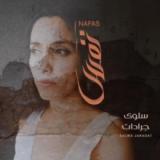
Thawra Records and Tiny House Music are proud to announce Nafas, the debut original album by Palestinian vocalist, researcher, and composer Salwa Jaradat, set for release in March 2026.
Rooted in a traditional Arabic singing practice yet shaped by a layered and deeply personal artistic journey, Nafas marks a powerful first statement from an artist whose work moves between heritage, research, and lived experience. The album emerges from years of musical and feminist inquiry, giving renewed breath to voices, emotions, and histories that have long existed on the margins.
Salwa Jaradat’s artistic formation is grounded in classical Arabic music and oral tradition, with studies at the Edward Said National Conservatory of Music in Palestine and later in musicology in Lebanon. Alongside her work as a performer, researcher, and archivist, she has developed a practice that treats music as a space of memory, resistance, and continuity. These threads converge in Nafas—an album that does not seek to modernize tradition, but rather to inhabit it differently, allowing it to speak in the present tense.
Developed through an intensive artistic residency in Lebanon, Nafas brings together a core ensemble of regional musicians, with Jaradat’s voice at its center—measured, expansive, and deeply intentional. Across six compositions, the album unfolds patiently, moving between stillness and momentum, intimacy and collectivity, breath and release.
Nafas will be released digitally and on vinyl, reinforcing Thawra Records and Tiny House Music’s ongoing commitment to long-form artistic statements and physical formats as vessels for care, depth, and listening.
- A1: Intro
- A2: Abaday
- A3: Mosaics
- A4: Kuda Arab
- A5: Mata Api
- A6: Ahmad’s Lament
- A7: Jamal
- B1: A Ladder On The Balcony
- B2: Bandar Batavia
- B3: Ombak, Ombak
- B4: Frag Men Ted Mea Ning
- B5: Pekojan Funk
- B6: Silk End
Tirakat brings together Jakarta-based trio Ali and Lebanese composer and multi instrumentalist Charif Megarbane in a collaboration rooted in long histories of cultural exchange between Indonesia and the Arab world. Ali are known for blending 1970s Indonesian psychedelic funk with Orkes Melayu, disco grooves, and Arab melodic forms, while Megarbane’s extensive catalogue has consistently explored similar cross-regional currents through jazz, library music, and Mediterranean-influenced arrangements. What connects the two is not genre alone, but a shared musical vocabulary shaped by overlapping histories, references, and lived cultural continuities.
The relationship between Indonesia and the Arab world stretches back over a thousand years, forged through Indian Ocean trade routes that carried not only goods, but languages, belief systems, instruments, and musical ideas. These exchanges were gradually absorbed into local traditions rather than replacing them. In Indonesia, Arabic musical elements entered through devotional practices and ensemble formats such as Gambus, Qasidah, and Orkes Melayu, where maq?m-derived melodic structures were adapted into local tuning systems and performance styles. Over time, these sounds became embedded within Indonesian popular music, shaping genres such as dangdut and informing a wider sonic landscape that remains audible today.
- A1: First Instrument
- A2: Mona Lisa Left Eye
- A3: Bebe Kids
- A4: Push Me Around Ft. Zack Fox
- A5: Hypnagogia
- A6: Nda Ft. Paris Texas
- A7: Fuck Cigarettes
- A8: Broke Ass Hoes
- B1: Opposite Sex
- B2: Describe
- B3: I Mac
- B4: Shrooms
- B5: Take Me Im Drugs
- B6: Lebanon James
- B7: Art Of Seduction
- B8: Play W Your Pride
Emerging from the vivid chaos of Detroit’s underground, ZelooperZ returns with Dali Ain’t Dead — a surreal yet deeply grounded statement from one of rap’s most singular voices. Following his recent collaborative exploration Dear Psilocybin (with Real Bad Man) — which found him moving through a “stream of psychosis” just before sobriety. (Pitchfork) — ZelooperZ enters this new chapter not simply as the same intricate-flows rapper, but as a rising cult-figure in underground hip-hop who’s forged an identity both enigmatic and quietly unstoppable.
On Dali Ain’t Dead, ZelooperZ channels the spirit of the surreal — the album’s title a nod to the iconic surrealist artist Salvador Dalí — as he reframes his world post-substance, post-chaos, yet still dripping with vivid imagination. Reviews highlight that the album finds him in a more focused mode: one critic writes that “ZelooperZ seems to have adopted a similar outlook to Dalí… embracing sobriety and allowing his art to exist as the psychotropic fuel for his mind.” (Album of the Year) Production (courtesy of Dilip) is inventive and cohesive, blending experimental hip-hop, trap, cloud-rap and drumless textures to mirror Ze’s newly clear-eyed vantage point and trademark eccentricity. (Legends Will Never Die)
Tracks like “Mona Lisa Left Eye” and “Push Me Around” (featuring Zack Fox) carry Z’s jagged humor and restless energy, while deeper cuts like “Shrooms” and “Take Me I’m Drugs” trace his evolving relationship with psychedelia and the legacy of his past. (Legends Will Never Die) In doing so, the record positions itself as the sound of a freak-icon in transition — still wild, still weird, but sharpened, matured, operating with a purpose and increasingly commanding the attention of fans who relish the underground unusual.
ZelooperZ’s trajectory continues to rise. From his roots in the Bruiser Brigade collective in Detroit to the present moment as a cult figure whose every release feels like a mission statement, Dali Ain’t Dead confirms that he’s no longer just the oddball off-to-the-side: he’s the weirdo that others are quietly watching. This album isn’t just for the longtime disciples of his left-field aesthetic — it’s an invitation to anyone curious about hip-hop bending, breaking, and rebuilding itself from the fringes inward.
- A1: Don't You Touch The Radio
- A2: Beirut
- A3: Do What You're Told
- A4: Ya Habibi
- A5: God's Own Remedy
- B1: We Are One
- B2: Gonna Be Fine
- B3: Run Run
- B4: Fallen Angel
- B5: Jericho
‘Under The Sun’ is the new album from The Wanton Bishops, a band by every definition of the word, but primarily the vision of one eclectic man – Nader Mansour. The album is an exploration of identity and ultimately a love letter to his hometown Beirut, capturing Nader’s kaleidoscopic life journey through a melting pot of musical influence; primarily gutsy blues-rock but with tinges of psychedelia, surf-rock, dance, as well as the Lebanese influences of Nadar’s hometown. “It’s Lebanese Rock”, adds Nader, “a new genre, a blueprint for future music. It’s not fusion, it’s confusion, it’s not world music, it’s rock music from the world, for the world”.
Following the release of The Wanton Bishops’ debut album ‘Sleep With The Lights On’, a Delta blues record inspired by the likes of RL Burnside and Muddy Waters, Nader journeyed to America’s deep south to experience the roots of Mississippi blues. The experience spawned a musical epiphany for Nader, as he returned home to Lebanon a changed man with a newly inspired musical vision. Nader’s music slowly emerged from the Delta swamps into the Lebanese mountains, and the music of The Wanton Bishops began to reflect Nader’s homeland, his people, and his personal journey. To quote Nader, "I’m finally getting to the core of the music I want to create, and that core is scarily confused, yet uniquely special, much like our own identity as Lebanese people living in Beirut, that eternal cultural crossroad."
- A1: Lack Of Character Polido 03 09
- A2: He Is Quiet And So Am I Dania 04 09
- A3: Conatus Alexandra Gruebler 03 32
- A4: Wait, Child Laurén Maria 02 17
- A5: Vessel Slowfoam 05 16
- B1: Milton Hotel Zeynep Ağcabay 03 37
- B2: Wide Eyed Saskia 05 13
- B3: Brad's Alarm Kaya 04 50
- B4: Clari Ii Severin Black 03 17
- B5: Gtr M-2 Pavel Milyakov 06 24
The fourth edition in the label’s compilation series brings together an almost entirely new cohort of ten artists from across the globe. Personal means of expression are archived side by side, coming to light in the form of sparse amorphous percussion, layered voices, restless arpeggios and undulating, heavily filtered soundscapes.
All digital and physical proceeds from this edition go towards Medical Aid For Palestine and the Lebanese Red Cross.
Mastered by Kinn. Design by Severin Black.
- 1: Invocation
- 2: Grotto That Returns The Echo Of My Cry
- 3: Face Of Unknown Stars
- 4: This Who Do Not Dance
- 5: Boiling Vortex
- 6: The Shining Host
The late pedal-steel guitarist Susan Alcorn leaves a final surprise hinting at new directions left underexplored on her collaboration with Nomad War Machine, the improvising metal duo of drummer Julius Masri and guitarist James Reichard. Their death-metal-influenced pummel adds new fire to her molten flow across a suite of improvised tracks that show off the vast range and simpatico of the trio. Julius Masri and James Reichard of Nomad War Machine: “An unexpected opportunity arose out of a catching-up conversation where Susan had revealed a recent fascination with death metal, confessing, ‘I’m 70 years old—I think about death!’ She had learned a couple of Arch Enemy songs on her pedal steel, particularly compelled by their frontwoman’s intensity and vigor as a performer. Voicing an appreciation for the hook-oriented sound of Swedish death metal made sense for a melodic thinker whose roots as veteran pedal steel player reached into the Texan Western swing circuit in the ’60s and ’70s. For her, ever the explorer, metal was a new, appealing point of departure into fresh musical territory. When she expressed an interest in playing with Nomad War Machine, it felt like there was a whole world of shared or complementary interests to explore.” Though known for her fluency in jazz, country, and free improvisation, Alcorn had also studied Arabic, the oud, and maqam, with all holding a deep curiosity for her. Pre-’70s country & western music had also been a lifelong presence for both members Nomad War Machine. Masri, a Lebanese free-jazz and metal drummer, and devoted fan of Texas swing legends like Speedy West, Jimmy Bryant, Leon Rhodes, and Joe Maphis, was also steeped in Arabic music traditions. James Reichard, before coming to “freely” improvised metal, xenharmonic music, and non-Western tuning systems, had grown up being subjected to countless singalongs to numerous pre-’70s country records, entranced by the pedal steel.
Designers is a new trio by Joachim Florent (double bass), Will Guthrie (drums) and Aki Rissanen (piano). Florent and Guthrie are based in Nantes, France, Rissanen in Helsinki, Finland, and their debut album on We Jazz Records presents a band with highly original, forward-reaching sound that builds on the long tradition of the jazz piano trio, updating it successfully.
This album is both a musical and political document that tells the story of one of the most brutal massacres that took place in 1976 in a Palestinian refugee camp during the Lebanese Civil War. Pianist Gaetano Liguori, along with Giulio Stocchi and Demetrio Stratos (the legendary singer of the band Area), composed this album, a gut-wrenching blend of free jazz, poetry, and Mediterranean music. The first edition was released in 1978 and, after almost 50 years, unfortunately, nothing seems to have changed. If we call ourselves human, we cannot help but grieve for the suffering of the Palestinian people. This is the third edition of the album, and as with the previous releases, all proceeds will go to charity. This time, we have chosen to donate the funds to UNRWA.
Wewantsounds is delighted to reissue Fairuz"s classic album Chat Iskandaria released on Relax-in in 1987. The album sees The Lebanese Diva going back to her roots and interpreting classic songs by the Rahbani Brothers in her own style accompanied by hypnotic traditional orchestral arrangements. Coming with its original deluxe gatefold sleeve, The album - curated by Mario Choueiry from Institut du Monde Arabe (Paris), who also wrote the liner notes (Fr/En) - has been newly remastered by Colorsound Studio in Paris.
- Session 1 Sandy Chamoun, Abed Kobeissy, Pascal Semerdjian
- Session 2 Makram Aboul Hosn
- Session 3 Abdo Sawma, Anthony Tawil
- Session 4 Ghassan Sahhab
- Session 5 Wassim Tanios
- Session 6 Julia Sabra
- Session 7 Farah Kaddour
- Session 8 Marc Ernest
- Session 9 Makram Aboul Hosn
- Session 10 Fayha Choir
- Session 11 Charbel Haber, Anthony Sahyoun, Fadi Tabbal, Marwan Tohme
Recorded in the Oscar Niemeyer Dome in Tripoli, Lebanon, The Dome Sessions captures the distinctive acoustics of this iconic masterpiece.
Designed in 1962, the dome’s architectural and acoustic qualities provide a distinctive reverb and resonance, shaping a project that dissolves the boundaries between sound, space, and memory.
Featuring performances by notable musicians from Lebanon's contemporary experimental scene, the album invites listeners to engage in an immersive auditory journey, exploring the interplay of sound, memory, and space.
[a] Session 1 Sandy Chamoun, Abed Kobeissy, Pascal Semerdjian [Voice, Tanbur, Drums]
[b] Session 2 Makram Aboul Hosn [Double Bass]
[c] Session 3 Abdo Sawma, Anthony Tawil [Percussions]
[d] Session 4 Ghassan Sahhab [Qanun]
[e] Session 5 Wassim Tanios [Duduk, Acoustic Guitar and E-bow]
[f] Session 6 Julia Sabra [Voice, Acoustic Guitar]
[g] Session 7 Farah Kaddour [Buzuq]
[h] Session 8 Marc Ernest [Bassoon]
[i] Session 9 Makram Aboul Hosn [Double Bass]
[j] Session 10 Fayha Choir [Voices]
[k] Session 11 Charbel Haber, Anthony Sahyoun, Fadi Tabbal, Marwan Tohme [Acoustic Guitars and E-Bow]
BLACK VINYL[21,64 €]
Lebanon Hanover kehren mit Songs zurück, welche die Zeit bis zum nächsten termin mit der Lieblingstherapeut*inn überbrücken können. Fast fünf Jahre nach der Veröffentlichung ihres letzten Werkes "Sci-Fi Sky" hat Lebanon Hanover nun mit "Asylum Lullabies" einen Soundtrack für einen Besuch in einer psychiatrischen Klinik kreiert. Das neue Album ist die Weiterentwicklung eines noch kälteren, noch bissigeren Sounds einer Band, die seit über einem Jahrzehnt die Nu Wave/Post-Punk-Szene dominiert, es ist ein sehr schweres Album, das sich mit psychischen Problemen, einer Trennung, andauernden Kriegen und dem aktuellen Horror der Welt befasst, der einen letztendlich mit Angst, Furcht und einem ständigen Gefühl der Erdrückung zurücklässt. Alles bricht gleichzeitig zusammen. Die Mitglieder Larissa Iceglass und William Maybeline schrieben diese Songs aus polarisierenden Perspektiven, haben dabei ein schlüssiges Album produziert. Für Fans von Twin Tribes, Ash Code, Selofan, Cold Wave, Independent, Postpunk
- A1: Pink Sky
- A2: Exactly Nothing
- A3: Barely Legal
- A4: In My Car
- A5: Two Part, Part Two
- A6: Paper Dolls
- B1: Blue Lebaron
- B2: Days
- B3: The Chancellor
- B4: Recreation
- B5: Daniel
- B6: Two Part
The Wee Small Hours: B-Sides and Other Detritus 2011-2025" besteht aus Raritäten, die das letzte Jahrzehnt von Real Estate bei Domino Records abdecken!
Der älteste Track der Compilation ist eine Coverversion von The Strokes' "Barely Legal", die für ein Stereogum-Tribute-Album aufgenommen wurde sowie die B-Seite der "It's Real" / "Blue Lebaron" 7". Weitere Cover sind "Paper Dolls" (The Nerves) von 2014, "Days" (Television) von 2021 und natürlich "Daniel" (Elton John) von 2024.
Außerdem enthält die Compilation "In My Car", das ursprünglich auf einer Record-Store-Day-Fanzine-Flexi-Disc aus dem Jahr 2012 veröffentlicht wurde, weitere B-Seiten, darunter die Tracks von der Atlas-Bonus-7" aus dem Jahr 2013, sowie einen unveröffentlichten Track namens "Two Part" aus den Atlas-Sessions.