"Rural" is the first long-play work of Carlos Asimbaya aka Kaifo, which sees a fully matured vision of Ecuadorian keyboard tradition catapulted into the future and rhythmically sustained by the "bomba" percussion; an Afroandean element that bears witness to the unique history of this country.
Trained in classical music composition and inspired by jazz, Kaifo's repertoire features haunting, extensive melodies and scales that inform listeners on the landscapes of Andean styles while delivering a postmodern dancefloor experience. " Carlos Asimbaya is a keyboardist, composer and producer hailing from the small town of Machachi, Cantón Mejía, Province of Pichincha Ecuador. In 2016 he began a process of personal research and exploration of various musical expressions of traditional music, collecting sonic resources from remote localities such as Aloag, Machachi, Chalguayacu, Cotacachi, Alausi, Borbon, Santo Domingo de los Tsachilas and more - customs that identify the history of Ecuador.
In June 2019, he finally published his first single "Desvío" - a warm fusion of bomba, albazo, dembow, global bass, etc. followed by other digital releases culminating in the EP "Curtido" as part of the 'Kipus' series of Eck Echo Records. With "Rural" Kaifo uplifts the Ecuadorian organ tradition inaugurated in the mid-1960s by the likes of Polibio Mayorga into futuristic clubbing arenas. "Tres Caminos" is a magnificent opener where psychedelia meets the soft snare elegance of the "albazo", the indigenous genre that defines the soul of this country. "Monte Espeso" introduces clubbers worldwide to the contagious grooves of "bomba", the trademark rhythm of Afroecuadorian communities. The raw keyboard melody strikes fast like a proverbial lightning. "Hecho Leña" sounds like the one-man orchestra that is Kaifo. Relentless timbales fills and an alcohol-fueled family vibe characterize this unique "chicha" track.
Buscar:light up
Vladislav Delay presents the fourth EP in his "Hide Behind The Silence" series with five 10" releases coming throughout 2023. Intuitive and raw music, momentary and reflective, released on Ripatti's own label "Rajaton".
Stillness is a myth. Consider concepts such as ”still water”, or ”still air” for that matter. Go to a restaurant, ask them for a glass of still water, hold it against the light and see where we’re at. Even though the water itself has been captured and imprisoned in the glass, it never stops breathing. It’s filled with tiny particles, dancing. Everything can be explained on a molecular level, but since we’re not scientists – and even if you happen to be – it’s the natural world of perception that moves me.
Still air is very similar. A hot summer’s day with zero wind feels completely still. It’s the closest I have felt to complete stillness. Or for a more urban adaptation, imagine the same vibe inside a normal apartment. In those moments, revelations and mind- blowing experiences can be had with experiments in stillness.
Try this: Just sit down for a minute on a sunny day, making sure there’s enough natural light. Do absolutely nothing. Try not to breathe for a bit. (If you need a mental anchor, you can play Cage’s 4’33” in your head but nothing else.) Watch the tiny dots of dust dancing :..’ ̈.:; ́ ́*°.,’:,. ̈ ̈ ̈ ̈:,.’
The movement is crazy, but the feeling of stillness comes from witnessing how subtle it is. In (perceived) complete stillness, every act of microscopic mobility seems to speak volumes. Yet, it feels both reassuring and oddly threatening that the stillness is never complete. What if we would need absolute stillness? Or is it just enough that we can perceive something as such? Extremes attract, so for both water and air, extraordinary movement is equally fascinating. That is also a luxury item of sorts. For us to enjoy a very ”loud” body of water or air, we need to be safe, in enough control of the situation. So when you are, it’s worthwhile to pay attention and take it all in.
A rapid flowing free with extreme strength and just barely in control. Look at that water go! No still water on this one, only ”sparkling”. A windy day when birds seem surprised how hard it is to fly, but in the end they make it. Trees bend but don’t break. The wind shows you its movement but doesn’t hurt you. It feels friendly, like a big clumsy dog that doesn’t quite understand its size.
It’s beautiful to be a guest of the elements, but not at the mercy of them. A new kind of dialogue forms.
Q&A with Sasu Ripatti:
1) Tell us something about the EP series ”Hide Behind the Silence”, what’s the idea and what can we expect?
Exploration of inaction. Of many kinds. In arts and in personal life, or at bigger and more serious levels. Questioning myself as a human being as well as an artist. Acknowledging the growing activism all around, and the very clear need for it, and how it reflects my own inaction.
Musically speaking, after Rakka, Isoviha and Speed Demon, I finally found some relief, but more importantly lost the need to go musically ever more outward and intensive. I felt quite strongly certain periods/moods from the past and they made me revisit some musical ideas or states of mind I was exploring early on.
It’s about live moments being captured, not much premeditation or editing. More intuitive and raw, even though the end result (to me) feels and sounds quite introspective and calm. It’s not very ambitious. Momentary and reflective.
2) Your music doesn’t sound very silent. Does it come from somewhere behind the silence?
Oh, this time to me it sounds quite quiet and playing with space if not silence. I don’t know what’s actually behind silence, but I think silence is the source of everything. We just don’t understand it yet.
3) What kind of thoughts or experiences gave inspiration to this series?
Writing this in Nov ’22, it’s not a stretch to say the world has been really unwell. Sometimes, like Mika Vainio put it, the world eats you up. I feel a bit like that. And I try to hide in my studio and stay away from it all, but it’s getting harder by the day. I’ve been questioning myself and thinking if what us artists are doing is worth anything, and whether it’s just a selfish thing I’ve been doing for the past 25 years, running away from everything. I haven’t come to a conclusion yet.
4) Is it easy for you to be in silence, or around silence?
Absolutely. I not only hide behind silence but I also love silence. It’s only since I started going back to nature as a grown-up person that I sensed and was enveloped by silence, true silence. I have begun to appreciate it a lot. I think all the people should spend more time in silence.
All tracks composed and produced by Sasu Ripatti.
Artwork by Marc Hohmann, photography by Shinnosuke Yoshimori.
Mastering by Stephan Mathieu for Schwebung Mastering.
Vinyl cut by SST Brueggemann.
Publishing by WARP Music Ltd.
A much-needed reissue of an all-time house classic, from the early explosion of the genre on dancefloors the world over. From the minds behind C+C Music Factory, David Cole and Robert Clivillés, Sandee ‘Notice Me’ encapsulates the New York Freestyle era of the late ‘80s perfectly. Early house heat laced with a distinctly Latin American feel, that has been heavy sampled since it burst onto the scene in ‘88. It’s syncopated, seductive and seriously infectious, with a steamy bassline that couples with Sandee’s echoed vocals to send your brain into a state of rapture.
The ‘Notice The House’ mix is a shining example of that freestyle flavour, with the ‘Club Vocal’ leaning into a more synth pop meets electro, proto house feeling. Taking the final spot the stripped back dubbed out, b-boy beast ‘Dubbin' At Studio 54’.
A must have record that still lights up the dance to this day.
- A1: Q - From Within (Body Mix)
- A2: Integrity Ii - Living In A Fantasy
- A3: Strange Ways - Strange Ways
- B1: Thee J Johanz - Stompin N Rising
- B2: Exposure - Love Quest
- B3: Tons Of Tones - Oh Ah Oh Ah Oh
- C1: Interface - Temazepam
- C2: It’s Thinking - Hyperion
- C3: Eric Nouhan - Technobility
- D1: Secret Cinema - Sundance
- D2: Hole In One - Spiritual Ideas For Virtual Reality
Vol.3[25,17 €]
Through 35 hedonistic highlights stretched across three volumes, Music For The Radical Xenomaniac delivers the first ever deep dive into The Netherlands’ colourful house sound of the 90s and the under-celebrated producers and record labels whose music soundtracked a countrywide cultural movement.
Plenty of books and documentaries have celebrated the riotous raves, legendary clubs, high profile DJs and promoters who shaped The Netherlands’ hedonistic house scene throughout the 90s. Music For The Radical Xenomaniac dares to challenge these narratives by shining a light, for the first time, on those who created the scene’s kaleidoscopic, game-changing and globally influential soundtrack.
Leading the charge were a disparate group of key creators who not only forged links with their counterparts in Detroit, Chicago, New York, Belgium, Germany and the United Kingdom, but also became celebrated figures on the worldwide electronic underground (Eric Nouhan, Aad De Mooy, Orlando Voorn, Stefan Robbers and Steve Rachmad). Alongside key underground imprints (Stealth Records, Basic Energy, ESP, Prime and Outland Records included) and lesser-known producers, these pioneers gave flavour to a radical musical movement via open-mindedness, unheard-of creativity and a genuinely futuristic ethos. All of these artists and labels are represented throughout the series.
So, what defined this hedonistic house sound from The Netherlands? Stylistically, it was varied – as the series so emphatically proves – but was defined by a set of distinctive sonic characteristics: emotive musical motifs, high-frequency synth sounds, mellow basslines, pulsating rhythms and more than a touch of hallucinatory intent.
Volume 2 contains a wealth of notable tracks and slept-on gems. These include Q’s ‘From Within (Body Mix)’, a lesser-known cut from the trio better-known as Quazar (Gert van Veen, R.o.X.Y co-founder Eddy De Clercq and Eric Cycle), Eric Nouhan’s melodic masterpiece ‘Technobility’, which is appearing on vinyl for the first time since 1994, and a rare collaboration between regular production partners Maarten van der Vleuten and Mike Kivits (better known as Aardvarck), which was initially released on a special R&S Records’ offshoot set up by the label’s co-founder, Renaat Renaat Vandepapeliere (Integrity II’s ‘Living In Fantasy’).
Other highlights include Exposure’s ‘Love Quest’, a highly sought-after 1991 track by The Hague-based DJ/producer Maurits Paardekooper, and an ambient-infused Andrew Weatherall favourite originally released by Stealth Records in 1993, Hole In One’s ‘Spiritual Ideas For Virtual Reality’.
Packed full of forward-thinking 90s gems remastered for today’s dance floors by Alden Tyrell, Music For The Radical Xenomaniac Volume 1 is a life-affirming celebration of a distinctly Dutch musical movement, whose rich textures and melodies are still inspiring new generations of DJs and dancers today.
- A1: The Connection Machine - Echoes From Tau Ceti
- A2: Direct Movement - Natural Chemistry
- A3: Paradise 3001 - Surfin The Cuban Waves
- B1: Exquisite Corpse - Strange Attractor
- B2: Orlando Voorn - Still
- B3: Nyx - Delphi (Rewaxed)
- C1: Stefan Robbers - Afridisiac (Jumpy Mix)
- C2: Fluxland - Fluxland
- C3: This Side Up - Glider
- D1: Georgio Schultz - Trance
- D2: Quazar - Cycle Drops
- D3: 2000 And One - Crystal
Vol.2[25,17 €]
Through 35 hedonistic highlights stretched across three volumes, Music For The Radical Xenomaniac delivers the first ever deep dive into The Netherlands’ colourful house sound of the 90s and the under-celebrated producers and record labels whose music soundtracked a countrywide cultural movement.
Plenty of books and documentaries have celebrated the riotous raves, legendary clubs, high profile DJs and promoters who shaped The Netherlands’ hedonistic house scene throughout the 90s. Music For The Radical Xenomaniac dares to challenge these narratives by shining a light, for the first time, on those who created the scene’s kaleidoscopic, game-changing and globally influential soundtrack.
Leading the charge were a disparate group of key creators who not only forged links with their counterparts in Detroit, Chicago, New York, Belgium, Germany and the United Kingdom, but also became celebrated figures on the worldwide electronic underground (Eric Nouhan, Aad De Mooy, Orlando Voorn, Stefan Robbers and Steve Rachmad). Alongside key underground imprints (Stealth Records, Basic Energy, ESP, Prime and Outland Records included) and lesser-known producers, these pioneers gave flavour to a radical musical movement via open-mindedness, unheard-of creativity and a genuinely futuristic ethos. All of these artists and labels are represented throughout the series.
So, what defined this hedonistic house sound from The Netherlands? Stylistically, it was varied – as the series so emphatically proves – but was defined by a set of distinctive sonic characteristics: emotive musical motifs, high-frequency synth sounds, mellow basslines, pulsating rhythms and more than a touch of hallucinatory intent.
Volume 3 is packed with in-demand tracks and hard-to-find gems, including a previously CD-only cut from Dutch techno originator Orlando Voorn (1999’s ‘Still’), a genuine rave classic from The Hague by hardcore DJ Charly Lownoise as Fluxland, and a killer cut from prolific producer – and genuinely influential pioneer – Aad De Mooy AKA D-Shake. He’s represented on this volume by Paradise 3001 cut ‘Surfin The Cuban Waves’, which first appeared on ESP Records in 1993.
Other highlights include Direct Movement’s ‘Natural Chemistry’, a sought-after slow house cut produced by Dennis Buné, who had an enormous impact on the Dutch house scene as Jaimy, and ‘Delphi (Rewaxed)’ by NYX, a highly regarded and hard to find single from former new wave and synth-pop producer Bart Barten, and occasional studio partner Hanz Meyer.
Packed full of forward-thinking 90s gems remastered for today’s dance floors by Alden Tyrell, Music For The Radical Xenomaniac Volume 3 is a life-affirming celebration of a distinctly Dutch musical movement, whose rich textures and melodies are still inspiring new generations of DJs and dancers today.
Jenny from Thebes begann, wie viele Alben der Mountain Goats, mit John Darnielle am Klavier, bis ein Text entstand. Dieser Text, "Jenny was a warrior / Jenny was a thief / Jenny hit the corner clinic begging for relief", wurde zu "Jenny III", einem Song, der eine Herausforderung darstellte, der er sich nie zuvor gestellt hatte: eine Fortsetzung zu einem seiner beliebtesten Alben zu schreiben.
Der Katalog der Mountain Goats ist voll von wiederkehrenden Charakteren_Jenny, die ursprünglich in dem ihren Namen tragenden Stück All Hail West Texas auftaucht, sowie in "Straight Six" von Jam Eater Blues und dem Transcendental Youth side two jam "Night Light", ist einer von ihnen, jemand, der unerwartet in einen Song eintritt und die Ohren der Fans spitzt, die darauf erpicht sind, die verschiedenen Erzählstränge fortzusetzen, die sich durch die Diskografie der Mountain Goats ziehen, bevor sie im Nebel verschwinden.
In diesen Liedern wird Jenny weitgehend durch ihre Abwesenheit definiert, und diese Definition wird ihr von anderen Charakteren gegeben. Sie läuft vor etwas weg.
Diese Merkmale sind betörend, sowohl für die Figuren, die ihre Geschichte bisher erzählt haben, als auch für den Zuhörer. Sie laden zu bestimmten Fragen ein: Wer ist Jenny wirklich? Wovor läuft sie weg? Nun, sie ist eine Kriegerin und eine Diebin, und da es sich um ein Album der Mountain Goats handelt, ist es eine sichere Wette, dass das, wovor sie flieht, etwas Schlimmes ist. Etwas katastrophal Schlimmes. Jenny from Thebes ist die Geschichte von Jenny, ihrem Haus im südwestlichen Ranchstil, den Menschen, für die dieses Haus ein Ort der Sicherheit ist, und der westtexanischen Stadt, die sich mit ihrer Existenz nicht anfreunden kann. Es ist eine Geschichte über das Individuum und die Gesellschaft, über Sicherheit und Schutz und diejenigen, die sich dafür entscheiden, sich um sie zu kümmern, wenn es sonst niemand tut. Aufgenommen im legendären The Church Studio in Tulsa, Oklahoma, mit der Grammy-prämierten Produzentin/Technikerin Trina Shoemaker, ist Jenny from Thebes eine üppige Sammlung von Songs, die Darnielle als Sängerin und die Mountain Goats als Band vorantreibt, indem sie ihre klangliche Palette wieder einmal erweitert und sich an Einflüsse wie Godspell, Jim Steinman und The Cars anlehnt. Getragen von den Bläser- und Streicherarrangements von Matt Douglas, der verträumten Gitarre der Bully-Leaderin (und Bleed Out-Produzentin) Alicia Bognanno und den Backing Vocals von Kathy Valentine von den Go-Go's und Matt Nathanson, ist Jenny from Thebes ein Musical von großem Ausmaß, ein Melodram mit detailreichen Charakteren und mitreißenden Emotionen.
Jenny from Thebes begann, wie viele Alben der Mountain Goats, mit John Darnielle am Klavier, bis ein Text entstand. Dieser Text, "Jenny was a warrior / Jenny was a thief / Jenny hit the corner clinic begging for relief", wurde zu "Jenny III", einem Song, der eine Herausforderung darstellte, der er sich nie zuvor gestellt hatte: eine Fortsetzung zu einem seiner beliebtesten Alben zu schreiben.
Der Katalog der Mountain Goats ist voll von wiederkehrenden Charakteren_Jenny, die ursprünglich in dem ihren Namen tragenden Stück All Hail West Texas auftaucht, sowie in "Straight Six" von Jam Eater Blues und dem Transcendental Youth side two jam "Night Light", ist einer von ihnen, jemand, der unerwartet in einen Song eintritt und die Ohren der Fans spitzt, die darauf erpicht sind, die verschiedenen Erzählstränge fortzusetzen, die sich durch die Diskografie der Mountain Goats ziehen, bevor sie im Nebel verschwinden.
In diesen Liedern wird Jenny weitgehend durch ihre Abwesenheit definiert, und diese Definition wird ihr von anderen Charakteren gegeben. Sie läuft vor etwas weg.
Diese Merkmale sind betörend, sowohl für die Figuren, die ihre Geschichte bisher erzählt haben, als auch für den Zuhörer. Sie laden zu bestimmten Fragen ein: Wer ist Jenny wirklich? Wovor läuft sie weg? Nun, sie ist eine Kriegerin und eine Diebin, und da es sich um ein Album der Mountain Goats handelt, ist es eine sichere Wette, dass das, wovor sie flieht, etwas Schlimmes ist. Etwas katastrophal Schlimmes. Jenny from Thebes ist die Geschichte von Jenny, ihrem Haus im südwestlichen Ranchstil, den Menschen, für die dieses Haus ein Ort der Sicherheit ist, und der westtexanischen Stadt, die sich mit ihrer Existenz nicht anfreunden kann. Es ist eine Geschichte über das Individuum und die Gesellschaft, über Sicherheit und Schutz und diejenigen, die sich dafür entscheiden, sich um sie zu kümmern, wenn es sonst niemand tut. Aufgenommen im legendären The Church Studio in Tulsa, Oklahoma, mit der Grammy-prämierten Produzentin/Technikerin Trina Shoemaker, ist Jenny from Thebes eine üppige Sammlung von Songs, die Darnielle als Sängerin und die Mountain Goats als Band vorantreibt, indem sie ihre klangliche Palette wieder einmal erweitert und sich an Einflüsse wie Godspell, Jim Steinman und The Cars anlehnt. Getragen von den Bläser- und Streicherarrangements von Matt Douglas, der verträumten Gitarre der Bully-Leaderin (und Bleed Out-Produzentin) Alicia Bognanno und den Backing Vocals von Kathy Valentine von den Go-Go's und Matt Nathanson, ist Jenny from Thebes ein Musical von großem Ausmaß, ein Melodram mit detailreichen Charakteren und mitreißenden Emotionen.
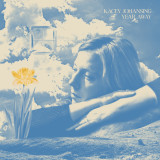
In March of 2020, after learning that a dear friend’s life was coming to an end, Johansing sat down and in one sitting wrote the song “Daffodils”. An elegiac tribute to someone facing death with grace and curiosity, the lyrics confront Johansing’s own mortality by observing the brief lifespan of a Hlower. Only a week later when the world came to an abrupt standstill, she soon found herself processing this recent loss while trying to make sense of a new global reality. Across the ensuing months, Johansing found herself increasingly untethered by a world of isolation and political upheaval.
Having been a frequent touring member of bands like Hand Habits and Fruit Bats, and often being called into the studio to lend her harmonies and multi-instrumental talents to records, Johansing’s phone no longer rang. Living in Los Angeles she feared her musical community was vanishing, as friends and collaborators continually announced they were leaving the city. It was in returning to her piano nightly that she found the greatest solace, feverishly writing the songs that would be collected on her next album. Resulting from this new sense of time and focus was a deepening of her songwriting. As Johansing recalls, “I felt like a metamorphosis happened during that time. There was a lot of personal growth and healing.”
Throughout Year Away Johansing traverses uncharted emotional landscapes brought upon by the changes occurring all around her. The forced self-reflection of the moment is aptly captured by “Old Friend”, featuring an aching melody and swooning production that recalls the best of Harry Nilsson. The epic piano and saxophone-driven “Smile with My Eyes” addresses the loss of community as friends became distant and political divides between family grew. On “Smile” Johansing pushes her vocals further than ever, expanding her range and using her peerless voice as the singular instrument it is. Facing the loss of a family home due to environmental destruction, “Shifting Sands” is marked by soaring Hlutes, Hield recordings and glassy synthesizers that nod to Japanese New Age.
“Daffodils”, the stunning album centerpiece, is built from a pastiche of looping samples, swirling Mellotron and dazzling vibraphone. “Keep your heart open wide, you never know your time / Keep your heart wild, true Hlower child”, Johansing sings as she says goodbye to an elder, while the band reaches a grief-stricken crescendo of woodwinds and chiming bells. On the title track, Johansing takes listeners on an eerily meditative journey of collective experiences. “I wanted to keep the progression simple and repetitive so that musically we could add new elements little by little, while the emotional tone of the lyrics becomes increasingly more strained and expressive”. The song grows to a fever pitch as Johansing sings higher than she thought possible; the tension of the repeating chords Hinally resolving into a hopeful coda as multiple soloists weave around each other.
Amidst heavier themes, Johansing still leaves room for her love of irresistible pop melodies and lush production. The driving “Last Drop” and mid-tempo “Valley Green” are two of her catchiest songs to date. On the former Johansing sings the anthemic chorus, “As if it were the last drop, and nothing ever lasts forever / As if it were the last stop, too far out to come back ever”, longing for a love that she’ll never take for granted, while also admitting that she doesn’t always know how good she has it. “Valley Green” features shimmering layers of 12- string guitars, stacked horns and an impeccable solo by co-producer and multi- instrumentalist Tim Ramsey (Vetiver, Fruit Bats), hinting at a love for bands like NRBQ.
Having been eager to capture the initial spark of songwriting, Johansing booked time at Highland Park’s 64 Sound Studio the week that it reopened. Over the course of three days, she and her band gathered basic tracks for 10 songs, before returning home to Hinish the record with Ramsey. Setting forth to make an album that paid homage to the music that kept them company during the months spent alone together, the duo pulled inspiration from a wide net including Burt Bacharach, John Carroll Kirby & Haruomi Hosono. Ramsey’s newfound love of early digital synthesizers dovetailed effortlessly with Johansing’s fondness for classic 70’s horn and string arrangements, creating a sound that is distinctly modern yet warm and familiar.
Once again Johansing called upon some of the Hinest players of Northeast Los Angeles’ vibrant music community to lend a hand with the record. The 70s R&B-folk of “Watch It Like a Show” features an electric guitar solo from Hand Habits’ Meg Duffy, while album closer “Endless Sound” boasts backing vocals from electronic musician Kaitlyn Aurelia Smith and swooping Indian-inspired violins from Amir Yaghmai (HAIM, The Voidz). The record shines brightly thanks to an ace mix from veteran producer Rob Schnapf (Beck, Elliott Smith, Cat Power), woodwinds from Logan Hone (John Carroll Kirby, Eddie Chacon), and a featured rhythm section of drummer Josh Adams (Jenny Lewis, Bedouine) and bassist Todd Dahlhoff (Feist, Devendra Banhart). Recorded across multiple studios including LA’s famed Sunset Sound, the album remains steadfastly buoyed by the adept engineering of Tyler Karmen (MGMT, Alvvays).
Though born of turbulent times, Year Away is ultimately interested in moving forward. The album ends with “Endless Sound,” where Johansing laments seismic global changes, (“The water is hotter, the mighty thaw / The current’s reversing, the last are lost”) but vows to keep going (“No storm can take me down / Endless light, endless sound”). It’s Year Away’s resilience that shines through despite the darkness. It’s a sound all her own and Johansing’s most cohesive set of songs yet.
- A1: The Man Made Of Stone 07:01:00
- A2: Window To The World 03:58:00
- A3: What Awaits Me 05:22:00
- B1: He Once Was 12:17:00
- B2: Underneath The Orphan Moon 03:53:00
- B3: Clouds That Never Rain 05:17:00
- C1: Bulletproof 04:17:00
- C2: Somewhere North Of Nowhere 06:46:00
- C3: Summoned From Afar 07:33:00
- C4: Love Is Still The Light 04:42:00
- D1: There Goes My Baby 03:50:00
- D2: Orphans Of The Universe 10:39:00
- D3: Elegant Vampires 04:27:00
Pattern-Seeking Animals sind eine bahnbrechende Prog-Rock-Band, die die Grenzen der musikalischen Erkundung immer mehr erweitert. Bestehend aus John Boegehold, Ted Leonard, Dave Meros und Jimmy Keegan, fesselt die Band mit komplexen Kompositionen. Auf ihrem 4. Album nähern sie sich neuen Klangwelten und Themen, die sie mit der DNA ihrer bisherigen Arbeit zu ihrem bisher einprägsamsten und stärksten Album kombinieren. Boegehold erklärt: "Da dies unsere vierte Veröffentlichung in weniger als 5 Jahren ist, war es meine Absicht, nicht über bereits bekanntes Terrain zu gehen. Wir haben andere Sounds, Texturen und Musikstile verwendet und sind auch ganz anders an den Gesang herangegangen." Der neue Ansatz macht sich nicht nur in Produktion und Sound bemerkbar, sondern auch bei den Texten. "Die Themen umfassen einen nordischen König, der über das Leben nachdenkt, während er erobert wird, einen alternden Sucher auf dem Weg zur Erleuchtung, Außerirdische, die Menschen jagen und sich der Gefangennahme entziehen, einen konfliktbeladenen Soldaten vor und nach dem Ersten Weltkrieg, eine schwangere Teenagerin, die eine schlimme Situation zu Hause hinter sich lässt, einen widerwilligen Helden, der in seiner letzten Schlacht siegt, und die Freundin eines Mannes, die ihn wegen seiner Verschwörungstheorien verlässt." Die Fans werden mit der ersten Single "Window to the World", einem energiegeladenen Up-Tempo-Art-Rock mit einem Hauch von Ska und Reggae, etwas Neues erleben. "Somewhere North of Nowhere" ist ein geradliniger Prog-Song mit einzigartigem Bridge-Teil. "Underneath the Orphan Moon" ist eine düstere Ballade über ein Teenager-Mädchen, das einer schlimmen Situation entflieht. Der stimmungsvolle und cineastische Song erinnert an einen klassischen Elton-John-Song, mit echter Streichergruppe. Das Album ist erhältlich als Ltd. 2CD Digipak und Digitalalbum (inkl. 3 Live-Bonustracks von ProgStock 2022) und als 2LP Gatefold 180g (inkl. 2 Live-Bonustracks von ProgStock 2022).
Two visionary maestros, Pierre Bastien and Michel Banabila, unite in their first collaborative album, Baba Soirée. The veterans of electronic music bring their unique expertise to the table, resulting in a captivating fusion of experimental styles. Bastien’s mechanical loops and experimental instrumental setups merge seamlessly with Banabila's sound design and impeccable skills of sampling collages. It's not a dance party, nor is it an avant-garde intervention. It's a soirée: a cultivated evening of sonic alchemy hosted by these two charismatic gentlemen.
Pierre Bastien is a composer and multi-instrumentalist with a background in French literature. He has spent decades crafting an idiosyncratic world of experimental sound with his self-built mechanical orchestra Mecanium. It was most notably showcased in audiovisual releases on Aphex Twin's Rephlex label. Bastien's creations are a mesmerizing combination of traditional instruments (he has a vast collection) and mechanical automatons. The violin in the track Rotomotor, for example, is physically played by one of his machines. In Baba Soirée, Bastien also plays a prepared cornet (Slow Dance, Banbas Aura), infusing the recordings with a breathy, dreamy dimension.
Michel Banabila, a sound artist, composer and producer, possesses an eclectic musical repertoire that defies genres. His seamless blend of minimal electronica, tribal ambient, and neo- classical influences has earned him a prominent place in the world of experimental music, and an impressive discography (Knekelhuis, Bureau B, Séance Center, a.o.). Banabila serves as the creative sampling editor for Baba Soirée, expertly weaving together the recordings to craft an evocative sonic tapestry.
The two share a curiosity for traditional instruments from various cultures. The instruments used in the recordings are shown in the cover artwork. A mutual admiration for each other's work paved the way for this fruitful artistic partnership of the Rotterdam-based artists: Collaborating on a single as a fundraiser for Yemen in 2022 set the stage for the creation of Baba Soirée.
For Pierre Bastien, Dada, Fluxus and International Situationism have played a significant role in shaping his artistic vision. The title Baba Soirée is an homage to Kurt Schwitters and Theo van Doesburg's "Kleine Dada Soirée" collaboration which took place exactly a century ago. There's an unmistakable stoicism and an anarchic not-giving-a-f*** attitude in these recordings by Bastien & Banabila, which resonates in the light of this Dada reference.
- Open Up Your Door
- Midnight Train
- Tonight The Streets Are Ours
- Coles Corner
- Ballad Of A Thin Man
- Baby, You're My Light
- Not The Only Road*
- My Little Treasures
- Standing At The Sky's Edge
- Heart Of Oak
- The Ocean
- Seek It
- Off My Mind
- Coming Home
- I Still Want You
- Just Like The Rain
- Run For Me
- Alone
- For Your Lover Give Some Time
- Serious
- Don't Stare At The Sun
- There's A Storm A'comin
2CD DIGIFILE/2LP MIT RICHARD HAWLEYS BELIEBTESTEN TITELN.
Die erste Best-Of-Sammlung von Richard Hawley (Pulp, Longpigs), die seine über 20-jährige Solo-Karriere umspannt, enthält Titel der für den Mercury Prize nominierten Alben Coles Corner (2005) und Standing at
the Sky's Edge (2012).
Kuratiert von Richard Hawley und Colin Elliot. Enthält außerdem eine brandneue, exklusive Bearbeitung von Not The Only Road, die in der Fernsehserie The Full Monty zu hören war.
Im Vorfeld der Aufführung von Standing at the Sky's Edge im Londoner West End (23. Februar) und des brandneuen Albums im Jahr 2024 wird sich "Now Then" sowohl auf das alte als auch auf das neue Publikum von Richard Hawley konzentrieren.
"Now Then" erscheint als Doppel-CD im Digifile (32 Songs) und Deluxe-Doppelvinyl im Gatefold Sleeve (22 Songs) mit halb schwarzem/halb blauem sowie halb weissem/halb blauem Vinyl.
Während „Hate Campaign“ ein eher unterschätztes Album in der riesigen Diskographie der schwedischen Band DISMEMBER ist, zeigte „Where Ironcrosses Grow“ aus dem Jahr 2004 die Band in Topform. Vom Titeltrack bis zum Schlussstück „As I Pull the Trigger“ bietet es 38 Minuten makellosen schwedischen Death Metal und enthält – zum ersten Mal seit dem Debüt – ein weiteres Artwork von Dan Seagrave.
- One Of Many Voices
- Dreams Of Lamp Filament Numbers
- The Full Del Monte Variety (Ft.malcolm Delmonte)
- Momma Mia! Imade You Some Sangria( Ft.malcolm Del Monte & Kadesha Drija)
- The Provocation (Ft. Malcolm Delmonte)
- Ajourney Towards Total Inward Isolation
- Then, Nothing
- Let’s See What You Could Have Won
- The Jolly Green Giant (Ft. My Name Isian)
- Milk Tray Man (Ft. Mathias Kom)
- Jet From Gladiator (Ft. Kadesha Drija)
- Malcolm, Come Back
- Plenty Of Fish In The Sea
- Better Than We Could Have Been (Ft. The Full Cast)
Orange vinyl, 100 only
Cardiff-based, DIY-folk-pop collective, Quiet Marauder, are set to release their 5th album at the end of October 2023. This follows on from their madcap 111-song debut album, MEN (2013), as well as the more recent Tiny Men Parts (2020) and The Gift (2021), and continues their long-established relationship both with their label, Bubblewrap Collective, and Canadian collaborators, The Burning Hell.
Recorded in a Snowbird Studios pop-up in Lourinha, Portugal, Introducing Malcolm Del Monte continues the band’s fascination with high concepts and musical, album-length storytelling. At its core, it is an album about self-identity, isolation, and our innate fluctuations as human beings. Set during the pandemic, the album's a very loosely autobiographical (read: almost entirely false) account of band leader Simon M. Read's day-to-day life during Covid lockdowns with partner, Kadesha Drija, and imaginary friend, Malcolm Del Monte.
Choosing to largely avoid the topic of the pandemic altogether, Introducing Malcolm Del Monte instead charts the highs and lows of these living arrangements. These range from outrageous daytime drinking (high) to disagreements on the nature of perversion (low), with the first half of the album covering Malcolm’s emergence and ultimate expulsion from the house. With his absence being sorely felt, the second half sheds light on the alternative voices looking to fill that Malcolm-shaped space: a murderous green giant; a despondent Milk Tray Man; and a broken-necked, hypersexual Jet from Gladiators.
As with their previous story-based albums, the foreground narratives act to enable background allusions to other core concerns: the power of nostalgia; advertising and cultural consumption; well-being and isolation; balancing acts of the self. Ultimately, the album’s message is of striking a balance between self-questioning and improvement, and most of all, not being too hard on yourself when things don’t feel quite right.
Sonically and seamlessly ranging from alt-folk to industrial synth to melodic indie-pop, Introducing Malcolm Del Monte covers a lot of ground. Injected with the musicality of Quiet Marauder themselves, as well as Canadian kindred spirits, The Burning Hell, instrumentation includes flute, piano, chunky bass, acoustic and electric guitar, programmed beats, synthscapes, bamboo clarinet, bongos, and a heap load of vocals. Indeed, alongside the main lead voices of Simon M. Read, Kadesha Drija and Malcolm Del Monte (Rowan Liggett) there are guest performances from My Name Is Ian and The Burning Hell’s Mathias Kom.
The album will be preceded by lead single and video Momma Mia! I Made You Some Sangria! on 22nd September,
The Living Mountain is the second solo album from songwriter Jenny Sturgeon (singer and multi- instrumentalist in Salt House and Northern Flyway), recorded and produced by Andy Bell at Clashnettie Arts Centre in the Cairngorms National Park.
The Living Mountain is inspired by Nan Shepherd's book The Living Mountain and Jenny's experience growing up near, and walking in, the Cairngorms. In the album Jenny explores her own connection to this highland area as well as delving into Nans philosophy of being in the mountains and peoples connection to the wild.
The twelve songs take inspiration from the chapter titles of Nans book; the lyrics tell of exploration, love, loss and wonder at the natural world from small scale mosses and moths to the wider landscape and ecosystem.
The album features Mairi Campbell on viola and vocals, Su-a Lee on cello, Grant Anderson on bass and vocals, and sound recordings from Jez Riley-French and Magnus Robb.
Mia Gargaret” is an ambient, (mostly) instrumental album by Chicago, IL singer, songwriter, multi-instrumentalist & producer Gia Margaret. It’s also not the follow-up she intended after the critical success of her 2018 debut, “There’s Always Glimmer”. But after she suddenly found herself without use of her primary instrument, she had to rethink her methods, at least temporarily. Gia explains: “After having to cancel tours because of illness, I was unable to sing for nearly half of the year. This left me feeling like a shell of myself, so I turned to my synthesizer for comfort. These compositions helped me hold onto my identity as a music maker. At times this music helped soothe my anxiety more than therapy or anything else could.” Documenting her self-healing and without singing or lyrics to steal the focus, the instrumental tracks on “Mia Gargaret” shine a light on Gia’s skills as a musician, composer & producer. Spare but immersive arrangements of synthesizer, piano & acoustic guitar simultaneously ache & soothe, building emotional landscapes that rise & recede like scenery through a train window. “Mia Gargaret” is a gorgeous experiment & a memorable meditation on the healing power of music. This version is a limited edition of 200 – pressed on pale blue vinyl with an exclusive lithograph print.
Kaipa is a Swedish band from the Uppsala area, which moves in symphonic rock with influences from folk music. The band is mainly influenced by Yes.
The result is as colourful musically and lyrically as Kaipa devotees will expect from the band’s rich discography dating back to the debut opus released in 1975. Formed in 1973, KAIPA never shied away from experimentation, embracing fresh elements and sounds manifesting especially on the albums released in the 2000’s. ‘
"Vittjar" is Kaipa's 11th studio album. The addition of the eminent guest-musicians Fredrik Lindqvist (recorders & whistles) and Elin Rubinsztein (violin) further underlines the folk influences in the music. Now available on vinyl in a new colour!
Kaipa is a Swedish band from the Uppsala area, which moves in symphonic rock with influences from folk music. The band is mainly influenced by Yes.
The result is as colourful musically and lyrically as Kaipa devotees will expect from the band’s rich discography dating back to the debut opus released in 1975. Formed in 1973, KAIPA never shied away from experimentation, embracing fresh elements and sounds manifesting especially on the albums released in the 2000’s. ‘
"Vittjar" is Kaipa's 11th studio album. The addition of the eminent guest-musicians Fredrik Lindqvist (recorders & whistles) and Elin Rubinsztein (violin) further underlines the folk influences in the music. Now available on vinyl in a new colour!
If you dare. Lynxes completes with Sloth a smattering of releases on the Berlin-based label. Vacuum is set in dark environs and picks up raving energy quickly with multiple layers dedicated to the iridescent journey before the unexpected breakthrough that longs for a ride into the unknown. Disstress follows steadily with ace tones and a punching clout that guides along the path. Alerting strikes of lightning will make your blood run cold along the right lines on Coping. Lydia Eisenblätter, head of Leipzig's OAM records and figuring prominently within the German techno scene, turns to the end with a Distress remix on a fast and floaty acid track. Hang in there!
- A1: Microwave Prince - Eternal Light
- A2: Dave Kane - Zero Plus (Dj Wout Remix)
- B1: Delerium Feat. Leigh Nash - Innocente (Mr. Sam's The Space Between Us Remix)
- B2: Mark N-R-G - Don't Stop
- C1: Taucher - Miracle (Phase Ii-Mix)
- C2: S'n's - Conflicts
- D1: Awa - Together We Can Learn
- D2: L.s.g. - Lonely Casseopaya
On the second sampler the first gem on the A side is undoubtedly one of the greatest pearls and trance compositions of the 90's, released on the prestigious German label that all current techno producers revere: Le Petit Prince. Microwave Prince 'Eternal Light' was, upon its release in 1995, already an extremely difficult record to find. 28 years later, this has not changed in the slightest. Closing the A side we have the essential DJ Wout remix of Dave Kane's 'Zero Plus', an enormous hit in the early 00's in clubs like La Bush, La Rocca, etc.
The B side brings us the legendary Delerium 'Innocente', reinterpreted by Mr Sam in his iconic and now timeless 'The Space Between Us Remix' and the German techno gem 'Don't Stop' by Mark N-R-G.
The C Side features 'Miracle', one of the most beautiful trance records ever made coming straight from Germany in the person of Taucher, undoubtedly one of the best producers of his generation. With S'N'S 'Conflicts' the C side brings us another true genius, a future prodigy of progressive and melodic house at the time of this release: Sander Kleinenberg. An emblematic record at Extreme on Mondays if there ever was one.
The D Side is taken up by two tracks that take us even deeper into the essences of trance music with the enigmatic track 'Together We Can Learn' by Awa. This mid 90's English trance gem was already a collector's item upon its release, so it's our privilege to have it on this sampler in 2023. As is the case with the second track 'Lonely Casseopaya' by L.S.G., composed by one of the true pioneers of trance: Oliver Lieb. This record is a treat for those who listen to it closely and feel the classic 'after' vibe of our golden age of Belgian clubbing.