Rising St Petersburg producer Meowsn purrs onto ROOB for the Running Out Of Steam sub-labels inaugural release, bringing the producer's trademark choppy hip-hop, sleazy hip-house and nostalgic radiance on a killer debut.
There's a free jazz spirit that flows through CATMOUSEGAME2; the dusty smell of an underground speakeasy can almost be felt on the EPs opener - 'DrunkCat' - a bouncing cut of NYC influenced hip hop that inspires images of large concrete buildings and greetings on the street. Appropriately named, this might be what those jazz-cats in Aristocats would be making had the movie not been for children.
The subterranean spirit of hip hop is alive still on 'Wistleman'; an improvised jazz cut that is simple and effective, before heads begin bopping with a little more conviction on the low-swing and vibrant soul of 'Ganksta'; infectious hip-house that can't help but be moved to.
The A-side completes with an alternative listening experience; subdued and experimental it encapsulates the energy of a lowly-lit after hours joint, before the dub-peppered vibes and let-go-for-a-walk basslines of 'Cashflow' invite you back to the dancefloor, 'Ladies You Know' maintaining that same scratch-influenced nostalgia that just feels oh so warm.
Rounding off the B-side is 'Winter Swapping'; cold winds whip up a storm as snowflakes slowly invade the windows while we're wrapped up warm and cosy inside with phat beats and friends.
out of Stock
Last delivered 2 years ago available to reorder, subject to availability
A.B. Crentsil is a heavyweight of Highlife music and the main vocalist of Sweet Talks, one of the most popular Ghanaian bands of the 1970’s. In 1992, musician Charles Amoah and producer Richie Osei Kuffour offered him the opportunity to explore a new popular sound: Bürger Highlife. Little did he know these studio sessions would give birth to the biggest song of his career.
Charles Amoah, who had released his Sweet Vibrations LP in 1984 to great acclaim, extensively toured in Europe with bands such as Black Earth and Saraba, was eager to bring a new sound to Crentsil, an artist he had admired for years. Throughout the 1980’s, Highlife had been changing pretty radically, following the same evolution as Congolese Soukous, Caribbean Zouk and most popular black music
genres of that era: Heavy use of drum machines, synths and digital technology was conveniently replacing big bands and expensive
analog studios and equipments. Mostly recorded, produced or mixed in Germany, this new breed of electric Highlife dubbed ‘Bürger Highlife’ could be defined as a fusion of Disco, Jazz, Funk and Pop with the popular Highlife beats, rhythms and lyrics.
According to A.B. Crentsil, the name was a reference to the ever present American cultural influence on Ghanaian musicians. Charles
Amoah has his own take: “I initially called this particular kind of Highlife ‘Ethno Pop’. Bürger is the German word for citizen, and that’s how Ghanaian musicians living and working in Germany were calling each other”.
The music for both “Obi Baa Wiase'' and “Sika Be Ba” was entirely composed and played by Charles Amoah, using minimal equipment: a
DX7 synth, a Korg M1, a Yamaha RX5 drum machine, and an Akai 1000 sampler. A.B. Crentsil provided the lyrics for both tunes on the spot. Obi Ba Wiase’s message is one of gratitude and faith: it says we should appreciate our life way more and follow the example of people who have a lot less but still praise God all day.
Charles remembers fondly Crentsil’s larger than life personality: "A.B. slept a lot, he really loved sleeping. His lack of punctuality was easily dismissed by his wonderful sense of humour and it wasn't uncommon to find musicians rolling with laughter on the studio floor."
Charles also remembers vividly the "Obi Baa Wiase" session: he could feel the magic in the air while working on the soon to be hit, and
knew something special was happening. A.B. asked for a break in the middle of the session, which Charles adamantly refused until the song was finished and the magic fully captured.
Success was not immediate, and Charles was first a little concerned by the lack of buzz following the immediate release of the Gyae Me
Life Ma Me album. But a few months down the line, the situation took a new turn. "Obi Baa Wiase" was making its way into radio playlists,
weddings and festive celebrations. It was covered by local bands, and soon most of Ghana and its European and American diasporas were hooked. It became A.B. Crentsil’s most requested song at live events for the following decades.
As producer Richie Moore wrote on the album back cover : "A perfect integration of two musical geniuses, the result of which are the
scintillating tracks of music on this record… so all you party fans go onto the floor and dance the body music"
out of Stock
Last delivered 4 years ago available to reorder, subject to availability
Little Bihlman ist ein mit dem Emmy Award ausgezeichneter Singer-Songwriter, der schon mit legendären Künstlern wie John Fogerty, Trey Anastasio (Phish), Dug Pinnick (King's X) und dem legendären Blueser Son Seals gearbeitet hat und mit seinem Solo Album einen zeitgemäßen und doch sofortigen 10-Song-Klassiker abliefert.
Little Bihlman ist ein mit dem Emmy Award ausgezeichneter Singer-Songwriter, der mit "The Legend Of Hipster Billings" ein Americana beeinflusstes Rockalbum vorlegt.
Die originellen Songs und Geschichten sind geschnitzt aus den Kämpfen und Triumphen des Lebens, inspiriert von Motorrädern, Sonnenschein, Kaffee, Staub, Whiskey, Regen, Tattoos, Narben, Benzin und Herzschmerz. "The Legend of Hipster Billings" lädt ein zu einer musikalischen Reise durch das Herzland Amerikas ein. Von Chicago, nach Nashville über den großen Mississippi in die Badlands von Dakota, hinauf in die majestätischen Berge von Utah und hinunter in die Lichter der Großstadt Las Vegas.
"The Legend of Hipster Billings" wurde aufgenommen und produziert von Miles Fulwider (Wynton Marsalis, Willie Nelson, Norah Jones und Chick Corea) ud Andrew Glasmacher. Little selbst blickt auf seine eigene persönlichen Reise sowie auf die Zusammenarbeit mit so herrausragdenden Künstlern wie John Fogerty, Trey Anastasio (Phish), Dug Pinnick (King's X) und dem legendären Bluesman Son Seals.
Little gibt dem Americana-Rock eine neue, zeitgemäße Note, indem er tiefgründige Texte, dreckige Gitarrenriffs, Gospel-Harmonien und mitreißende Grooves zum Einsatz bringt, welche diesem Album eine besondere Kraft verleiht.
Bihlman's Songs verkörpern eine authentische Annäherung an die Essenz von Herz und Seele, welche uns alle zusammenhält.
Während seiner bisherigen Karriere war Little mit mehr als 50 Songs in TV/Filmen weltweit. Dabei so große Sender wie FOX, ABC, CBS und Netflix. Darunter die preisgekrönten Serien "Sons of Anarchy", "Days of Our Lives" und kürzlich "Big Sky".
Little Bihlman hat sich einen Weg über den amerikanischen Rock-Highway gebahnt und sich als vielseitiger Musiker und Singer-Songwriter etabliert. Als Tournee-Veteran hat Little mit vielen der großen Rock- und Blues-Legenden an weltberühmten Orten gespielt, darunter das Weiße Haus mit dem legendären Bluesman Son Seals. Im Laufe der Jahre hat Little mit Grammy-prämierten Produzenten wie Jim Gaines (Journey, Stevie Ray Vaughan, Huey Lewis ), Roy Thomas Baker (Queen, The Cars) und Bruce Robb (Cherokee Studios) gearbeitet, um nur einige zu nennen.
Die Songs auf diesem Album tragen Geschichten in sich, welche sich beim Hören auf mysteriöse und wunderbare Art entfalten.
Enough Is Enough - auf deutsch: Genug ist genug! Clara Louise verarbeitet in ihrem neuen Album alte Erinnerungen und Glaubenssätze, die sie umprogrammieren möchte. In der Bridge der gleichnamigen Single singt sie „I am enough“ und diese Message zieht sich durch das ganze Album. Songs, die Mut machen, für sich selbst einzustehen und dabei trotzdem zart und zerbrechlich wirken. Musikalisch betritt Louise durchaus neue Pfade, denn insgesamt ist der Sound des Langspielers wuchtig und kraftvoll und vermittelt das Gefühl von „Aufbruch“, so auch ihr Song „Goodbye Little Old Town“, in dem sie Abschied von ihrer alten Heimat nimmt, die sie mit 16 Jahren zurückgelassen hat.
Die 29-Jährige ist eine erfolgreiche Tausendsasserin. Im letzten Jahr schrieb Clara Louise den Song „Haven“ für die Sängerin Cassandra Steen, mit der sie bereits auf Tour war, und den WWF. Kurz vor Beginn der Pandemie war Louise mit dem US-Singer-Songwriter Joshua Radin auf der Bühne zu sehen. So „ganz nebenbei“ ist Clara Louise auch noch Mitgründerin und Designerin einer nachhaltigen Schuhmarke in Nordamerika und Ideengeberin für eine internationale vegane Molkerei, von der Bryan Adams Gründungsmitglied ist. Außerdem engagiert sie sich gemeinsam mit der „Stiftung Deutsche Depressionshilfe“ für die Aufklärung des Krankheitsbilds „Depressionen“. Sie macht sich für ein Umdenken in der Modeindustrie, fairer Löhne und einem besseren Umgang mit Ressourcen stark.
Clara Louise ist wahrhaftig ein Synonym für tiefgründige Lyrik, für Veränderung, Durchhaltevermögen und Wachstum. Sie gehört heute zu den beliebtesten und erfolgreichsten Dichterinnen der aktuellen Zeit (über 50.000 verkaufte Gedichtbände im Eigenverlag), gibt Menschen auch in schweren Zeiten Mut zur Veränderung, zum Aufbruch und Fortschritt, zur Zuversicht und Hoffnung. Sie möchte als Beispiel vorangehen, was ein Mensch mit dem Fokus auf die einem wichtigen Dinge im Leben, einer unbändigen Leidenschaft und notwendigen Disziplin erreichen kann.
This HOT double-A side features the 70s Torch dancer 'HERE I GO AGAIN' - with it's crashing backbeat and fabulous 'call-to-the-floor' intro. The song was originally released in the USA by Atlantic Records in 1969, to little acclaim at the time, but later spiraled to No.11 in the UK pop charts in 1972 due to demand from the Northern Soul scene. 'TIGHTEN UP' was one of the first songs to be recorded by Archie Bell & The Drells, in Houston, Texas in 1967. The track had originally been developed by the T.S.U. Toronadoes and, coupled with Bell's unique spoken introduction, caught the imagination of the nation earning the band a gold disc and a No.1 R&B and Pop smash. It would become a UK Mod anthem and spawned future club hits care of Willie & The Mighty Magnificents 'Funky 8 Corners' and Frankie Crocker's floor packin' 'Ton Of Dynamite' (also available from Outta Sight, OSV106).
out of Stock
Last delivered 4 years ago available to reorder, subject to availability
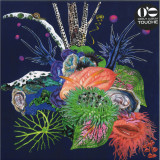
O’o share many of the musical characteristics of their ornithological namesake. The Kaua’i O’O produced the most exquisite birdsong before its extinction in Hawaii in the late 1980s. The beauty and character of its voice was delicate and mysterious, tuneful and surprising. You can experience it with just a cursory websearch, a haunting cri de coeur from the last century. If the poor O’O is consigned to history, then life is just beginning for this French duo, based in Spain, who’ve won plaudits and awards already in their short musical lifespan.
O’o are about to release their sublime debut album Touche. This is not an endling, it’s just the beginning: “I found the name on a website of weird English language words, and I loved the way the letters were arranged like a pair of glasses,” says O’o singer Victoria Suter. “Afterwards, I went onto YouTube and started listening to the last bird of its species, calling for a mate that would never come. I thought: ‘Oh my God, that’s so sad’. Then we talked about the name and we thought it could be a nice thing to honour it and keep it alive in some way.”
Suter met her musical partner Mathieu Daubigné at college in Agen, South West France, when the pair were studying music theory in their teens. Victoria moved to Barcelona in 2010; Mathieu followed six years later. Their debut EP, Spells, appeared in 2018 a beautifully crafted patchwork of vocals and samples that is redolent of the uncanny vocalese of Laurie Anderson. The bird makes an appearance at the beginning of the EP: “Sweet tooth beak. Soft melody peak / Oh O’o, go round and round in circles / Looking for a honeydrop, til you vanish, til you drop”.
That sense of profound longing for something lost is carried over to Touche, as well as the same heightened sensory awareness of the world around them. What has developed in spades is the creative process. O’o have blossomed organically, augmenting their pop sensibilities. Avant-garde techniques have been brought to heel as the pair create off-kilter pop music that warms the heart and nourishes the brain. The catalyst that enabled this bold pop transformation came with the song ‘Touche’ itself, a saucy chanson at the heart of the album. Suter’s wry narrative about a botanical femme fatale is inserted into a lithe and skittish song with reggaeton beats and an inviting, balmy atmosphere.
“The song is about a flower which attracts male insects, producing the very same smell as the female of the species,” explains Victoria. “The poor male is fooled by the sex-appeal of this botanical trap, and gets so excited that he exhausts himself and wastes all his other chances of ulterior mating and having any offspring. The flower entices the insect in in mermaid-like fashion, to come nearer and touch her. It’s the hot track!”
‘Touche’ reaches into hitherto unexplored areas of pop, while the rest of the album is accessible in the way that James Blake, Radiohead or Kate Bush are accessible, and it always challenges, in a way that pop isn’t supposed to. Suter writes playful, poignant, observational songs that tell stories as well as tell us something about ourselves. Songs like ‘Dorica Castra’ are built upon the voice as an instrument, centrifugal and layered from its core.
Complimentary to this method is Daubigné, who brings startling innovation with found sounds, samples and clever vocal manipulations—creating unique, otherworldly sonic flourishes. A guitar whirs like a musical spinning top on ‘Spin’, created in Ableton; an Ondes Martenot appears to make a guest appearance on the title track, though it’s the ingenuity of the Prophet 8 synthesiser. “I’ll often say to Mathieu, ‘what’s that?’” says Suter, He’ll reply, ‘that’s your voice’.”
O’o found their own voice when they won a competition held by the legendary festival organisers Primavera Sound. Victoria entered the band into a competition she saw on Instagram, sending off rough demos on the final day of entry, thinking little more about it other than the fact Mathieu might be annoyed. Soon they would have to build a live set from scratch and figure out how to present their music for the first time. At stake was seventy hours of recording time at Aclam studios, used by Rosalía and Kendrick Lamar, and for the winner a coveted spot at the festival. A pool of 350 acts were whittled down, and then O’o triumphed at a Battle of the Band style face off.
The O’O might be extinct, but O’o the band have learned how to fly. Just watch them go.
out of Stock
Last delivered 4 years ago available to reorder, subject to availability
Tropical Horses has been a figure of the Parisian underground for a little decade. After almost mistakenly seducing young talent runners who had only understood his music at its brightest, the boy released the very dark "Mirador" on Anywave in 2016, a hybrid between malevolent pop, walls of sound and assumed madness.
Since then, this great loner has never stopped rising to the hard, alone with his loopers, in intense and rough concerts while finely mixing extra-western grooves and melodies to his art. From these 5 years of maturation and opening results Fever, haunted, joyful and overpowering record.
Without a brutal evaluation of their own becoming, TV Priest might have never made their second album. Heralded as the next big thing in post-punk, they were established as a bolshy, sharp-witted outfit, the kind that starts movements with their political ire. There was of course truth in that, but it was a suit that quickly felt heavy on its wearer's shoulders, leaving little room for true vulnerability. "A lot of it did feel like I was being really careful and a bit at arm's length," says vocalist Charlie Drinkwater. "I think maybe I was not fully aware of the role I was taking. I had to take a step back and realize that what we were presenting was quite far away from the opinion of myself that I had. Now, I just want to be honest." Having made music together since their teenage years, the London four-piece piqued press attention in late 2019 with their first gig as a newly solidified group, a raucous outing in the warehouse district of Hackney Wick. Debut single "House of York" followed with a blistering critique of monarchist patriotism, and they were signed to Sub Pop for their debut album. When Uppers arrived in the height of a global pandemic, it reaped praise from critics and fans alike for its "dystopian doublespeak," but the band - Drinkwater, guitarist Alex Sprogis, producer, bass and keys player Nic Bueth and drummer Ed Kelland - were at home like the rest of us, drinking cups of tea and marking time via government-sanctioned daily exercise. As such, the personal and professional landmark of its release felt "both colossal and minuscule" dampened by the inability to share it live. "It was a real gratification and really cathartic, but on the other hand, it was really strange, and not great for my mental health" admits Drinkwater. "I wasn't prepared, and I hadn't necessarily expected it to reach as many people as it did." As such, My Other People maintains a strong sense of earth-rooted emotion, taking advantage of the opportunity to physically connect. Using "Saintless" (the closing song from Uppers) as something of a starting point, Drinkwater set about crafting lyrics that allowed him to articulate a deeper sense of personal truth, using music as a vessel to communicate with his bandmates about his depleting mental health. "Speaking very candidly, it was written at a time and a place where I was not, I would say, particularly well," he says. "There was a lot of things that had happened to myself and my family that were quite troubling moments.Despite that I do think the record has our most hopeful moments too; a lot of me trying to set myself reminders for living, just everyday sentiments to try and get myself out of the space I was in." "It was a bit of a moment for all of us where we realised that we can make something that, to us at least, feels truly beautiful," agrees Bueth. "Brutality and frustration are only a part of that puzzle, and despite a lot of us feeling quite disconnected at the time, overwhelmingly beautiful things were also still happening." This tension between existential fear born from the constant uncertainties of life, and an affirmative, cathartic urge to seize the moment, is central to My Other People, a record that heals by providing space for recognition, a ground zero in which you're welcome to stay awhile but which ultimately only leads up and out. For TV Priest, it is a follow-up that feels truly, properly them; free of bravado, unnecessary bluster or any audience pressure to commit solely to their original sound.
Without a brutal evaluation of their own becoming, TV Priest might have never made their second album. Heralded as the next big thing in post-punk, they were established as a bolshy, sharp-witted outfit, the kind that starts movements with their political ire. There was of course truth in that, but it was a suit that quickly felt heavy on its wearer's shoulders, leaving little room for true vulnerability. "A lot of it did feel like I was being really careful and a bit at arm's length," says vocalist Charlie Drinkwater. "I think maybe I was not fully aware of the role I was taking. I had to take a step back and realize that what we were presenting was quite far away from the opinion of myself that I had. Now, I just want to be honest." Having made music together since their teenage years, the London four-piece piqued press attention in late 2019 with their first gig as a newly solidified group, a raucous outing in the warehouse district of Hackney Wick. Debut single "House of York" followed with a blistering critique of monarchist patriotism, and they were signed to Sub Pop for their debut album. When Uppers arrived in the height of a global pandemic, it reaped praise from critics and fans alike for its "dystopian doublespeak," but the band - Drinkwater, guitarist Alex Sprogis, producer, bass and keys player Nic Bueth and drummer Ed Kelland - were at home like the rest of us, drinking cups of tea and marking time via government-sanctioned daily exercise. As such, the personal and professional landmark of its release felt "both colossal and minuscule" dampened by the inability to share it live. "It was a real gratification and really cathartic, but on the other hand, it was really strange, and not great for my mental health" admits Drinkwater. "I wasn't prepared, and I hadn't necessarily expected it to reach as many people as it did." As such, My Other People maintains a strong sense of earth-rooted emotion, taking advantage of the opportunity to physically connect. Using "Saintless" (the closing song from Uppers) as something of a starting point, Drinkwater set about crafting lyrics that allowed him to articulate a deeper sense of personal truth, using music as a vessel to communicate with his bandmates about his depleting mental health. "Speaking very candidly, it was written at a time and a place where I was not, I would say, particularly well," he says. "There was a lot of things that had happened to myself and my family that were quite troubling moments.Despite that I do think the record has our most hopeful moments too; a lot of me trying to set myself reminders for living, just everyday sentiments to try and get myself out of the space I was in." "It was a bit of a moment for all of us where we realised that we can make something that, to us at least, feels truly beautiful," agrees Bueth. "Brutality and frustration are only a part of that puzzle, and despite a lot of us feeling quite disconnected at the time, overwhelmingly beautiful things were also still happening." This tension between existential fear born from the constant uncertainties of life, and an affirmative, cathartic urge to seize the moment, is central to My Other People, a record that heals by providing space for recognition, a ground zero in which you're welcome to stay awhile but which ultimately only leads up and out. For TV Priest, it is a follow-up that feels truly, properly them; free of bravado, unnecessary bluster or any audience pressure to commit solely to their original sound.
AUF TOGO is the long-time collaboration of Sasa Crnobrnja
(from In Flagranti and Mytron & Ofofo) and Clement Cachot-Coulom
(from The Fabulous Penetrators and Big Girls).
After multiple singles and EPs on Leng Records and SaS Recordings, including two collaborative EPs with the tentacular outfit Becker & Mukai, acclaimed by fans and DJs alike, most of their time has been spent writing, recording and bringing to life the 8 amazing tracks that form their debut album “Movements”.
“Movements” follows in the steps of Auf Togo’s previous releases and won’t disappoint the early fans, but it also offers a completely new proposition. Their signature blend of slamming percussion, driving bass lines, psychedelic guitar hooks, fat analogue synths are expertly mixed with new musical ventures across the tracks: from the louche Hawaiian jazz of Along The Dotted Line to the psych-funk of Pan Con Tomate, the electronic wanderings of Mexico to the cinematic intensity of Radical Departures.
The result is a spell-binding summer album, one to listen to on a coastline somewhere under the Mediterranean sun, and one that is not afraid to wear its many influences on its sleeve, from 70s psych-rock to Balearic Beat, Space Disco and Afro Beat. The scope of “Movements” is wide and proves a captivating and gratifying listen.
Debut album from supergroup with members of In Flagranti and Mytron & Ofofo Pressed on 12” vinyl with artwork drawn and designed by Award winning animator Erica Russell UK/EU marketing campaign led by Neighborhood and specialist press/DJ by Your Army, with previous support from Mixmag, Trax, Ransom Note, NTS, Bill
Brewster, Andrew Weatherall and more.
"To kick off the yearlong celebration and provide the perfect summer soundtrack, Capitol Records and UMe will release a newly remastered and expanded edition of The Beach Boys career-spanning greatest hits collection, Sounds Of Summer: The Very Best Of The Beach Boys, on June 17. Originally released in 2003, the album soared to no. 16 in the US and stayed on the chart for 104 weeks. Now certified 4x platinum for sales of nearly four and a half million albums, the collection has been updated in both number of songs and audio quality, expanding the original 30-track best of with 50 more of the band’s most beloved songs for a total of 80 tracks that span their earliest hits to deeper fan-favorite cuts and from their 1962 debut album, Surfin’ Safari through to 1989’s Still Cruisin’.
Assembled by Mark Linett and Alan Boyd, the team behind 2013's GRAMMY® Award-winning SMiLE Sessions and last year’s acclaimed boxed set, Feel Flows – The Sunflower and Surf's Up Sessions 1969-1971, Sounds Of Summer features nearly every US Top 40 hit of The Beach Boys’ incredible career, including “California Girls,” “I Get Around,” “Surfer Girl,” “Surfin’ U.S.A.,” “Fun, Fun, Fun,” “God Only Knows,” “Good Vibrations,” “Be True To Your School,” “Wouldn’t It Be Nice,” “Kokomo,” “Barbara Ann,” “Help Me, Rhonda,” “In My Room,” and many others. Fifty additional tracks showcase a broad mix of songs from across their wide-ranging catalog with some of the many highlights including “All Summer Long,” “Disney Girls,” “Forever,” “Feel Flows,” “Friends,” “Roll Plymouth Rock,” “Sail on Sailor,” “Surf’s Up,” and “Wind Chimes.”
The collection boasts 24 new mixes including two first-time stereo mixes, plus 22 new-and-improved stereo mixes, which in some cases feature the latest in digital stereo extraction technology, allowing for the team to separate the original mono backing tracks for the first time.
The expanded edition of Sounds Of Summer will be available in a variety of formats, including a 3CD softpack, and as a Super Deluxe Edition 6LP vinyl boxed set on 180-gram black vinyl in two options – a standard set or a numbered, limited edition version featuring a rainbow foil slipcase and four collectible lithographs. Both versions will feature color printed sleeves that replicate the original “Capitol Catalog” sleeves that highlight the entire Beach Boys discography, and all formats will include a booklet with new liner notes and updated photos. The original 30-track version will also be available in its newly remastered and upgraded form on single CD or double gatefold LP on standard weight vinyl or as a higher-end limited edition numbered version pressed on 180-gram vinyl with a tip-on jacket and a lithograph. "
Released for the first time on vinyl, Queen’s compilation ‘The Platinum Collection’, featuring all three of their Greatest Hits albums, shows their unrivalled track record of chart-topping, award-winning, record-breaking rock and pop classics. June 17th will see the limited edition 6LP colour vinyl set released in a slipcase with brand new artwork. Each piece of vinyl will be a different colour and come in its own individually designed sleeve. The set also comes with an exclusive 24-page 12″ photo booklet. LIMITED EDITION
out of Stock
Last delivered 4 years ago available to reorder, subject to availability
The (seventh) new Half-handed Cloud album, ‘Flutterama’, is
a record of 18 jubilant indie-pop songs by John Ringhofer
that investigate spiritual incompetence with lively
arrangements and radiant melodies that skilfully dissolve into
deterioration using herky-jerky tape manipulation, analogue
wow-and-flutter, and an animated orchestra of homerecorded sound effects.
Ringhofer’s work on ‘Flutterama’ was inspired by Frances
Mary Hunter Gordon’s adolescent liturgies (recorded at
Abbey Road during The Beatles era), turbid sights and
sounds in Guy Maddin films, audaciously bold forms in Sister
Corita Kent’s devotional printmaking, the exquisite brittleness
of Elizabeth Cotten’s voice, Alberto Burri’s stitched wound
burlap assemblages, Alvar Aalto church design, Andrea
Büttner’s poverty-informed artwork, Lou Barlow/Dinosaur Jr’s
lo-fi ‘Poledo’ sound collage (which namechecks Jesus), Julie
Canlis book ‘A Theology of the Ordinary’, Wallace Berman’s
visual collage, and The Raincoats’ magnificently shaky DIY
aesthetic.
The album’s tape-fiddled tunes - recorded on the very same
16-track recorder last serviced by a sound technician who
also worked with The Beach Boys in their home studio -
employ surprisingly little synthesizer (“it felt like cheating,”
says Ringhofer) - he preferred to craft most of the album’s
effects the long way, frequently going behind the back of rock
instrumentation by hand-feeding ½” magnetic reel recordings
of chord organs, deflating balloons, some guitars, piano
(occasionally tracked with a baby on his lap), brass,
tablecloth swipes, and a quickly-cranked half-speed music
box. He was assisted by long-time Half-handed Cloud
contributor Brandon Buckner on drums, and single song
backing vocals from Anacortes, WA songsmith John Van
Deusen.
LP pressed on Opaque Brown vinyl
Second Sub Pop album by acclaimed UK act TV Priest finds them building on the
post-punk of their early material and maturing into a powerhouse of tense, politically
caustic, and thoughtful rock music.
Without a brutal evaluation of their own becoming, TV Priest might have never made
their second album. Heralded as the next big thing in post-punk, they were
established as a bolshy, sharp-witted outfit, the kind that starts movements with their
political ire. There was of course truth in that, but it was a suit that quickly felt heavy
on its wearer’s shoulders, leaving little room for true vulnerability. “A lot of it did feel
like I was being really careful and a bit at arm's length,” says vocalist Charlie
Drinkwater. “I think maybe I was not fully aware of the role I was taking. I had to take
a step back and realize that what we were presenting was quite far away from the
opinion of myself that I had. Now, I just want to be honest.”
Having made music together since their teenage years, the London four-piece piqued
press attention in late 2019 with their first gig as a newly solidified group, a raucous
outing in the warehouse district of Hackney Wick. Debut single ‘House of York’
followed with a blistering critique of monarchist patriotism, and they were signed to
Sub Pop for their debut album. When ‘Uppers’ arrived in the height of a global
pandemic, it reaped praise from critics and fans alike for its “dystopian doublespeak,”
but the band - Drinkwater, guitarist Alex Sprogis, producer, bass and keys player Nic
Bueth and drummer Ed Kelland - were at home like the rest of us, drinking cups of
tea and marking time via government-sanctioned daily exercise. As such, the
personal and professional landmark of its release felt “both colossal and minuscule”
dampened by the inability to share it live. “It was a real gratification and really
cathartic, but on the other hand, it was really strange, and not great for my mental
health,” admits Drinkwater. “I wasn’t prepared, and I hadn’t necessarily expected it to
reach as many people as it did.”
As such, ‘My Other People’ maintains a strong sense of earth-rooted emotion, taking
advantage of the opportunity to physically connect. Using ‘Saintless’ (the closing
song from ‘Uppers’) as something of a starting point, Drinkwater set about crafting
lyrics that allowed him to articulate a deeper sense of personal truth, using music as
a vessel to communicate with his bandmates about his depleting mental health.
“Speaking very candidly, it was written at a time and a place where I was not, I would
say, particularly well,” he says. “There was a lot of things that had happened to
myself and my family that were quite troubling moments. Despite that I do think the
record has our most hopeful moments too; a lot of me trying to set myself reminders
for living, just everyday sentiments to try and get myself out of the space I was in.”
“It was a bit of a moment for all of us where we realised that we can make something
that, to us at least, feels truly beautiful,” agrees Bueth. “Brutality and frustration are
only a part of that puzzle, and despite a lot of us feeling quite disconnected at the
time, overwhelmingly beautiful things were also still happening.”
This tension between existential fear born from the constant uncertainties of life, and
an affirmative, cathartic urge to seize the moment, is central to ‘My Other People’, a
record that heals by providing space for recognition, a ground zero in which you’re
welcome to stay awhile but which ultimately only leads up and out. For TV Priest, it is
a follow-up that feels truly, properly them; free of bravado, unnecessary bluster or
any audience pressure to commit solely to their original sound.
jamesjamesjames hovers somewhere between Y2K house and super-sugary PC music, creating a unique and sexy sound that just feels expensive. The Melbourne-based artist has built a large following with poppy earworms and pounding house, and now joins Shall Not Fade's Classic Cuts series for a full EP of hits.
james2007EP starts with the anthemic "It's Not You, It's Me"; pairing the rumble of jungle breaks with melancholic, airbrushed vocals that show their SOPHIE influence, it's an eye catching opener. "My Purple iPod Nano" has a sound palette which will transport you straight back to a 00s club night, teasing a climax that stays just out of reach with pumping synth stabs and a kick drum that packs a punch.
On the B-side, "Orange Tesla" is a high-pressure roller that centers a pacey melody - sure to be a 3am dancefloor energiser. The record closer, "I Dunno Her", brings back the emotive edge with spaced out pads and glittery little ear candy moments overarching the still-racing beat. Ballad-like vocals that are barely perceptible add depth. This EP showcases jjj's talent for catchy and clever hybrid music, which is sure to make him one to watch.
out of Stock
Last delivered 2 years ago available to reorder, subject to availability
The Nutty Trax Volume One EP is a record that looks at the more fun side of breakbeat hardcore whilst not descending into cheese territory. It takes its cues from the early sound of 1994, when things were a little naughty and a little annonymous. Larger than life pianos, hefty breaks, bouncy stabs and of course, the female lead vocal. This was made for midnight parties and summer afternoons, and is packed with feel good vibes!
out of Stock
Last delivered 4 years ago available to reorder, subject to availability
"Don’t be afraid, old son, it’s only me,
though not as I’ve appeared before,
on the battlements of your signature,
or margin of a book you can’t throw out"
~ Michael Donaghy
Whytwo is a young, enigmatic artist from Scotland, UK. A talented multi-instrumentalist and performer with an extraordinarily broad range.
First coming to Blu Mar Ten's attention after entering their 2017 remix competition, Whytwo created a wildly different take on their track 'Titans', bending it into a skittering, menacing groove while somehow maintaining a playful edge.
Fast-forward a little and we've now arrived at Whytwo's debut LP, 'Ghost', an exhilarating and elasticated take on Drum & Bass that exists in the hinterland between elation, melancholy and longing.
Mirroring Whytwo's music, the album's title, 'Ghost', is richly layered word, meaning, in different places and at different times; a memory of something or someone; to disappear without communication; to move quietly and quickly; to secretly do work for another; and, of course, a being caught between worlds.
From the old English, 'Gast', meaning 'breath' or 'spirit', the word eventually transformed into 'Ghost' coming to describe "a slight suggestion, mere shadow or semblance". All of these definitions relate, in some way, to the album now before us.
In conversations with Whytwo, he describes how his Jazz musician Grandfather was the person responsible for first giving him music-making software, and whose clarinet features on some of the album tracks. At the same time that 'Ghost' was being created, Whytwo was looking after a young child and some of the drums on 'Ghost' are recordings of the child hitting things. Whytwo describes the feeling of existing between these two extreme states, young & old, naive & experienced, primitive & advanced, and taking the role of a medium 'caught between worlds' whose task was to stitch together this generational fabric.
The result is nothing less than spectacular. Despite having its roots in Drum & Bass, the rules and conventions of the style are ruthlessly disobeyed resulting in glittering cascades of melody, harmony and rhythm that somehow burst with both sadness and joy, hope & loss, memory and anticipation. The music swoops and dips, briefly casting shadows before blasting them away with sunlight, evoking memories both personal and collective. This is 'Lost Soul Music' that manages to speak to all of us.
Despite being deceptively listenable, Whytwo insists this is not relaxing background music. Listeners should fully engage with the music beyond its attractive surface and absorb it at the same deep human level where it was created. 'Ghost's production levels are astoundingly high but focussing on those would be a mistake. They only serve to carry the spiritual content of the music across to the audience and unlock the valves of feeling. The beauty here is not the machine, but the ghost in the machine.
out of Stock
Last delivered 3 years ago available to reorder, subject to availability
Alex the Fairy is an artist based in Berlin producing music with an emphasis on electronic and concrete methods. Alex the Fairy is also part of the 3Ddancer trio, a live act focusing on improvisation and expression using electronics.
Alex The Fairy writes: "I had sent The Tapeworm tracks before, but I was being difficult so was asked to send a new bunch, with a deadline. I sent the new bunch, a fairly odd collection expecting perhaps some of them to be combined with the older stuff but not seeing any coherence in them. I figured The Tapeworm would find at least something. To my surprise the suggestion that came back was exclusively the tracks I had sent the second time, and, re-listening through the tracks in this new order after returning from a Christmas dinner lying on the floor of my nephews bedroom gave them a completely new context. Despite them being quite varied in terms of age (one had been flung together a few days earlier on the train while another was approaching Schulreife) they seemed to meld together in such a way that I hardly recognised them…
Last year my grandmother died. My last grandparent. I had put off seeing her during corona, as I thought it best not to put her at risk and had almost left to visit her days before her death but had delayed my departure because of a medical appointment. My failure to her weighs heavy on my mind - fates grimacing grin: too little, too late. The approaching march of death, one generation closer was a confrontation I wasn't prepared for.
While clearing out her flat in the following weeks I had kept some of my grandfathers cassettes, live recordings of jazz greats, Pink Floyd, Sade and some classical among them, none originals, several presumably from the radio e.g. a church organ rendition of Bach. At the time I wasn't sure why I was hanging on to them, other than the urge to hoard, and that it felt wrong not at least to keep some. Half a year later, half way through mixing this cassette, suffering from my first bout of COVID, I had the insatiable urge to hook up the cassette player I had received from my grandfather after his death around nineteen years earlier and had been dragging along with me since. I stuck a cassette in only to immediately return to the safety of my covers. I began to work my way into what I had saved, hearing the fruits of my grandfathers labour decades before. It felt like quite an intimate interaction with someone I had long lost contact to/was long gone. Quite a wonderful thing, these time traveling cassettes.
I returned to the tracks to mix them shortly before my corona/cassette experience, with a new mixing console at hand. I had been looking for one for several years, but nothing had ever clicked, until I found this old broadcast desk 30 minutes from my place (it also coincided with a payment from a job the sum of which matched the price identically… fates return). Installing became a massive hassle and I doubted my decision continuously, but the further it was implemented the more it made sense. The first track I recorded with the mixer is on this cassette. Shortly before the mixing I was introduced to an Effektgerät by a friend, Rapha. Another good friend Art lent me their one, and I ended up using copious amounts of it throughout mixing, alongside my usual space creators. All the tracks on this release were mixed again on this mixer and are in a sense all a bit of a dub of the originals. I wouldn't have worked this way without the mixer, and the effect gave me a dimension I hadn't had before, so, from a technical perspective, the mixer and this effect define this release, giving it a coherence, at least for me. Emotionally of course the chaos and turbulence of the preceding year and my newfound appreciation for the medium give it a meaning I will struggle to formulate." – Alex The Fairy, Berlin, 9 May 2022
out of Stock
Last delivered 4 years ago available to reorder, subject to availability
Solo bedroom-pop project of Michael Ramos (Flowertown, April Magazine, Hectorine). Mostly recorded between last Christmas and New Year's during a window of isolation at home, “Hey There Flower” preserves Tony Jay’s prowess at making beautifully eerie lo-fi pop; like a hazy memory where your favorite Sixties girl-group melody is perpetually slowed down. Without a band to practice with, Tony Jay recorded the music alone, but recruited a slew of friends to remotely record backing vocals: Karina Gill (Cindy), Griffin Jones (Galore), Kati Mashikian (Mister Baby), Alexis Harper (Al Harper), & Hannah Lew (Cold Beat). "Hey There Flower", the most recent release from the prolific and mysterious Tony Jay delivers real melodies -- both lacey with vocal harmonies and dusty with layered guitars -- as fans have come to expect. This release also carries forward and elaborates on Tony Jay's tradition of songs that express a kind of naked honesty about things we all know -- love and loneliness and all that -- while communicating at the same time a wry edge of skepticism, so that the songs are like coins spinning on edge before landing heads, tails, or lost under the couch. Tony Jay brings us into a nostalgia where we recognize moods from music of the past -- Marc Boland definitely comes to mind, as well as Velvet Underground of the Nico era, and Tony Jay even covers Francoise Hardy on this collection -- but the songs create a three dimensional space with what feels like a thousand layers so that instead of being thrown back in time, it's like stepping into a little world with its own laws of nature, of which the listener gets just a few hints. - Karina Gill, Cindy/Flowertown. “Hey There Flower” is introduced by thudding snare beats eliciting reverb-stained tattered noisy guitar scrapes, to weave abrasive shimmery emotive vibrations, imbued with shattered nostalgic dreams, lit by brittle yet dazzling forsaken keyboard flows, over submerged and distorted male vocal’s whispery deluge of obsessive longing, lonely melancholy, and dark desire to exude a hazy gritty concoction of awkward sadness and brooding unrest.” White Light // White Heat // “What Tony sketches are concise commentaries on love, loneliness and a few things in between. His mode of expression is sparse, intense, and captivating. The arrangements are invariably lo-fi and slow tempo, blanketed with a fuzzy hiss. And it only took one listen to decide that it is a very special album. It has a '60s feel, albeit washed in an eerie slowcore machine. An ace example is "September Skies", which could be the 1965 'last dance' at the prom for the introverted students.” - When You Motor Away
EALZ! Records & brand new label A.D.S team up to pay tribute to the mysterious bluesman and producer : Cleo Page.
Born in Louisiana, this L.A.-based musician worked with the great Johnny Otis, hang out on Central Avenue’s clubs and possibly jammed with top West Coast bluesmen like Jessie Allen, Pete “guitar” Lewis, Jimmy Nolen, Lafayette Thomas.
Curley Page for some, Sly Williams for others, difficult to follow his career and in definitive, little is known about him despite his “big deal” recently approved by blues specialists : Cleo Page IS the man who wrote and recorded the original Boot Hill, a blues classic covered many times up until now.
Cleo Page who lived in California since 14 years-old has been crossing Blues, Rhythm & Blues and proto-Rock'n'Roll in a personal way. He will run his own labels in the heart of Watts just after the 1965 riots. Those tragic events deeply influenced his laid-back groovy sounds, powerful guitar playing, organ-driven garage Blues with strong political and social messages. Somewhere between the first electric recordings of Howlin' Wolf and… Black Diamond Heavies!
You're about to discover 12 rare tracks probably recorded between late ‘60s and early ‘70s. This brand new release includes the ultra-rare track "Black Man part. 1 & 2".
Material reissued here for the first time in an arty/artisanal trifold Vinyl LP and a bonus Vinyl 7inch
out of Stock
Last delivered 4 years ago available to reorder, subject to availability
40-plus years since its original release, the pop-punk-new wave inventions of Anthony
Moore’s ‘Flying Doesn’t Help’ are freshly remastered, blasting the sparkling, angular
sounds into today with perfect vitality.
After spending the early years of the 1970s making experimental music first as a solo
artist, then with Slapp Happy and Henry Cow, 1976’s ‘OUT’ sessions had reinvigorated
Anthony’s youthful love of the naive pop melodies of pop radio, the undeniable excitement
of songs. While ‘OUT’ ultimately went unreleased at the time, the iconoclasm clouding the
late ’70s air was addictive and transformative for Anthony. England seemed to be roiled
as violently as it had been in counter-cultural days a decade earlier; the UK pop charts
breathlessly reflected the changing spectrum with equal parts aging hippie and prog
delicacies alongside new ascendant sounds: rough-hewn pub and punk rock, plus dub
reggae and disco and ska and Stiff and Krautrock. This proved to be an ideal environment
for Anthony to make records by exploring, as he puts it, the “deep connection between
minimalism, repetition, working with tape and celluloid and forming the modules of a
three-minute pop song.”
Caught up in a no-holds-barred era, Anthony was more than happy to play the out-of-hishead madman, raving through outrageous exchanges with the press, while ‘Judy Get
Down’ received Single Of The Week honours from the NME (with review penned by Brian
Eno). Represented by Blackhill Enterprises, Anthony did production work throughout
1978-1979, on Kevin Ayers’ ‘Rainbow Takeaway’, Manfred Mann’s Earth Band’s ‘Angel
Station’ and the first This Heat album, meanwhile cutting his own songs on a dead time
deal at Workhouse Studio with engineer / producer Laurie Latham. Through the wee
hours of countless nights, the two pieced together ‘Flying Doesn’t Help’, with a little help
from friends (an inspired bunch, including Bob Shilling, Charles Hayward, Chris Slade,
Robert Vogel, Festus, Matt Irving, Sam Harley, Bernie Clark, Edwin Cross and Martine
Moore on the telephone).
Building upon the axis of pop and experimental impulses that distinguished ‘OUT’, and
informed further by the raw sensibilities exploding everywhere, ‘Flying Doesn’t Help’
blasts out of the speakers with its own unique blend of sophistication and aggression,
Anthony’s keyboard flashes between arpeggiations and outright stabs among the noise of
slicing guitars, funk basslines and the reverbed blare of the drumkit. Opening with
Anthony’s greatest hit, ‘Judy Get Down’, and containing a noise-laden remake of the
Slapp Happy/Henry Cow number, ‘War’, among other delightful sweet-and-salty
confections, ‘Flying Doesn’t Help’ never stops moving, fuelled with raw outrage and dark
satirical intent, churning with the energy of next-gen types like Tubeway Army and DEVO,
while shimmering with the elegance of the still-challenging old guard types, like Cale and
Bowie.
Clearly, ‘Flying Doesn’t Help’ was steeped in the time, and the original release reflected a
deep mistrust of the corporation mindset. Information was a dubious concept, and
connections to any recognizable organization were seen as untrustworthy, so facts like
musician credits were left out of the package, and even Anthony’s name was altered (he
was credited as A. More on the album and Tony More on a single release). The label
name QUANGO was conceptual as well, standing for ‘Quasi Autonomous NonGovernmental Organization’; each record was sealed with red tape that the listener was
required to cut through in order to get to the music. Rather than recreate the conditions of
the original release of ‘Flying Doesn’t Help’, this reissue instead embraces the changed
environment of the current time and place: instead of no credits, now they are complete,
with Anthony’s full name restored and even the artwork subtly ‘relocated’ to reflect a new
set of relationships. All of which brings the forward-looking sounds of ‘Flying Doesn’t Help’
into the more independent-minded 21st Century syntax where it belongs.
The groundbreaking 2015 PlayStation® 4 game Everybody’s Gone to the Rapture tells the story of the inhabitants of a remote English valley who are caught up in world-shattering events beyond their control or understanding. Made by The Chinese Room - the studio responsible for the hauntingly beautiful Dear Esther - this tale of how people respond in the face of grave adversity is a non-linear, open-world experience that pushes innovative interactive storytelling to the next level. This story begins with the end of the world. The game has already won GameSpot’s Best of E3 and was nominated for Best in Show and Best PS4 game by IGN.
The soundtrack features the music by Jessica Curry, who is also joint Studio Head of the developer The Chinese Room. The music was recorded at the famedAIR Studios in London and features solo vocal performances by renowned Welsh soprano Elin Manahan Thomas, ethereal choir, and a tragically beautiful orchestral accompaniment. With her compelling soundtrack, Curry took home the BAFTA Games Award for Best Music.
Everybody’s Gone To The Rapture is available as a 2LP limited edition of 500 individually numbered copies on translucent red coloured vinyl and includes a
4-page booklet.
Mondo, in partnership with Back Lot Music Wright, are proud to present the premiere physical release of Steven Price's electrifying score to LAST NIGHT IN SOHO, the latest film by Edgar Wright.
Edgar Wright wanted a score to soundtrack the two eras of Last Night in Soho and tie together the stories of these two very different young women. To achieve this, Wright turned once again to his now-regular composer, Academy Award® winner Steven Price, who successfully scored both Baby Driver and The World’s End.
While Price’s influences for the score included contemporary film music by the likes of Ennio Morricone and John Barry, a “’60s session band” sound with echoing fragments of dialogue add a different and sometimes subliminally sinister edge to the score. The sounds of ‘60s Soho blend into the present-day London scenes as Eloise is sucked further into the past. “The idea is that Sandie’s voice becomes part of the film, so you hear her siren song from the ‘60s coming through, and Anya became an intrinsic part of it… I was pleased that the lead actress is also the lead singer in the film score; the whole thing knitted together.”
The album also features songs performed by Anya Taylor-Joy, including the lead single from the film "Downtown (Downtempo Version)"
"Released in May 1986 on SST Records and Blast First! in the UK, EVOL was the third studio album by Sonic Youth and showed the first signs of the band transforming their No Wave past into a greater alt-rock sensibility. “EVOL … marks the true departure point of Sonic Youth’s musical evolution,” noted Pitchfork, “In measured increments, Thurston Moore and Lee Ranaldo … bring form to the formless, tune to the tuneless, and with the help of Steve Shelley’s drums…, impose melody and composition on their trademark dissonance.” ""If Daydream Nation is Sonic Youth’s opus, EVOL was crucial research. There’s a directness that makes everything feel close. It is pure tension with little release. The entire record is a shadow." Stereogum likewise praised the album as one, “full of suspense…, the cornerstone [Nico-evoking] monotone [by Kim Gordon]. ‘In The Kingdom #19,’ featuring Mike Watt on bass and … vocals [by Ranaldo]…, is a harrowing story of a highway wreck over a suitably edgy instrumental backing punctuated by … live firecrackers in the vocal booth.” For Popstache, “EVOL slithers into the unconscious. Once the....detuned melodies and haunting riffs and final whispers of feedback depart from the speakers… the music [leaves] a faded footprint, forever reeling the listener back for another strange trip.” // “The seeds of greatness…” Pitchfork (who placed the album #31 of the Top 100 Albums of The 1980s) // “A near-masterpiece.” Trouser Press // “A stunningly fluent mixture of avant-garde instrumentation and subversions of rock’n’roll.” All Music Guide"
24 Songs. A new project from The Wedding Present. A new 7” single every month throughout 2022. 24 Songs sees David Gedge writing with legendary Sleeper guitarist Jon Stewart for the first time, and a more perfect union could not have been predicted. The notion of a monthly 7” single is not new to The Wedding Present, but 24 Songs shows us that even classic concepts can be reinvented. The series also continues the band’s association with photographer Jessica McMillan, who has created stunning images and films as a visual accompaniment to the recordings. Explaining 24 Songs, David Gedge said: “In 1991, The Wedding Present were rehearsing in a studio in Yorkshire when we hit upon an idea that immediately thrilled us all. Our bass player Keith Gregory had been a member of the ‘Sub Pop Singles Club’ - a service that allowed subscribers to receive 7”s released by that Seattle label on a monthly basis. Keith wondered if we, as a band, could attempt a similar thing. In that instant, The Wedding Present’s Hit Parade series was born and, during 1992, we managed to release a brand new 7” single each and every month. “The Hit Parade went on to become something of a significant milestone in the history of the band and it’s a project about which I’m often asked. As its thirtieth anniversary approached, I began to wonder if we should celebrate it in some way. A ‘Hit Parade Part 2’ didn’t feel quite right, though. Then, someone said to me: “Other bands have released music in similar ways but there has been nothing like the Hit Parade.” And they were right! A 7” single a month seems, somehow, very ‘Wedding Present’. So, inspired by that little idea from three decades ago, we’ve embarked on this new project, 24 Songs. “Even though The Wedding Present have never been known for taking the easy route, the idea of recording 24 tracks and releasing them in this way could seem daunting to any band. However, I’ve been inspired by the music that has been written since Jon and Melanie joined the group. The thought of celebrating this exciting new line-up with an exciting new series has motivated us all… and I suppose we also didn’t want any of these songs to be hidden away in the middle of an album!”
Now available at a much cheaper price. SOS JFK, the one and only album from folk two-piece The Children’s Hour, which featured Josephine Foster and Andy Bar. Initially released in 2003, the album introduced audiences to Foster’s enchanting vocals and poetic folk, which would be developed to staggering effect in her later solo recordings, such as the recently released critically acclaimed album Blood Rushing (Fire Records). The Children’s Hour were an acoustic duo comprised of members Andy Bar and Josephine Foster. The two friends first connected in 2000 in a short-lived rock trio called Golden Egg, and then on a lark formed the pop song-writing duo oriented toward more naïve themes. Foster was a recent opera school dropout and the band became a vehicle for her to explore singing in a non-operatic manner into a microphone and learn to play the guitar. Bar was finishing studies at the Art Institute of Chicago and was honing a personal and highly melodic fingerpicking style inspired by bossa nova in particular. They were heard performing in a Chicago dive bar and given a surprise invitation to make a studio recording (SOS JFK), which both found to be an extremely nerve-wrecking learning experience. Meanwhile fans of their music rose up from unexpected corners, even invited by the band Zwan to open all the shows of both bands´ maiden tour. Initially conceived of as a modest front porch collaboration and side project, the band did not withstand all the attention long. Bar and Foster took meandering paths in diverse directions, although the two remain stalwart pals and both continue to dedicate themselves to the muses.
Having initially met more than a decade ago at a local community radio station, sometimes doing guest slots on each other’s live, improvised noise shows, Cormac Culkeen and Dave Grenon knew they had a mutual interest in working with sonic textures. They listened to each other’s bands for a handful of years, and in 2017, “made good on a threat” that they’d been making for quite a long time: to start a band. At Cormac’s gentle but clear urging—declaring that they’d gone ahead and booked a space in which to record a video—the two wrote their first song, “Sebaldus,” an ambitious 12-minute trip, which also serves as the fireworks finale to their self-titled debut album. With surges of pathos that smooth out into something more soothing in turn, Cormac goes: “The hunter, you’ve seen him / The archer, his arrows are strong / And hunger, you’ve known her / I know the winter is long.” The track is as much about enduring a Canadian winter as it is about the eponymous 8th century hermit, shot through with sublimated desire. As Cormac put it, Joyful Joyful’s songs are “a little bit outside of time.” But while the lyrics beg close, oblique reading unto themselves, there’s also a distinct sense that they’re only one of many more ways that the duo shapes sound. Cormac, whose voice is like a sea with irregular tides, lights up about an idea in traditional sean-nós Irish music that songs already exist and are out there; it’s up to the singer to become the conduit. This belief in music as something to be channelled, and something more than sound, resonates with the singer’s fundamentalist religious past. To paraphrase: lots of group singing, harmonies, no instrumentation, totally unmediated, no priest, congregational—not choral, not a performance, not about talent, the spirit moves through people. “Of course that informs how I think about singing,” Cormac says. So, when they were exiled from the church because of their queerness, they took the music with them, dislocating it from its dogmatic bounds but not from its transcendent potential. This record might be thought of, then, as a kind of queering of sacred, devotional traditions—or at the very least, a space where all of these things can be held at once. Perhaps perceivable by some as contradictions, these intersecting influences create the conditions for an incredibly singular sound. Dave is steady and exploratory in his handling of this multiplicity, arranging sounds as they’re revealed, corralling them, coaxing them into form. “Because Dave is there,” Cormac says, “I get to sing three times higher, and three times lower, and faster, and backwards, and all of these sounds! That are there. They’re all there.” When asked about early musical memories, Cormac recalled an immediate fascination with harmony: from demanding that the first person they ever heard singing it explain what they were doing, to always (still, to this day) singing in harmony with their twin sister around the house, to being part of a children’s choir that sang soprano in Handel’s Messiah—not realizing until they entered the room with all the other ranges that their learned melody was but one part of the whole. Just as tellingly, Dave reflects on his early attraction to “abstraction and becoming abstract,” describing childhood afternoons messing with microphone and speaker feedback loops, producing long, enduring sounds with almost undetectable variations. In a way unique to the coalescing of these two listeners, notions of harmony are central to their output. Dave samples field recordings, old keyboards and synths, and vocal drones, running the live singing through four or five parallel effects chains, sampling and treating everything again in the moment. “Another way to put it is that Cormac’s voice comes into the board and then comes back out shifted, delayed, and shattered; Cormac and I hear it, live with it, and respond,” Dave says. This work is contingent not only on a deep intuition (neither of them read sheet music) of polyphony and due proportion (something St Thomas Aquinas famously listed as an attribute of beauty) but also on their connection to each other and ability to read subtle cues. Dave says they’d hold each other’s hands while performing if it was more convenient to do so, riffing on something else Cormac mentioned about traditional Irish singing: that someone would always hold the singer’s hand, for fear that without a tether to the ground they might find themselves utterly lost, unsure how to return. Joyful Joyful doesn’t shy away from offering such experiences of departure; they’re willing to unsettle their audiences because they themselves are unsettled. Their shared penchant for spooky, heavy music, and self-described “omnivorous” listening practices equip them with an array of sonic concepts that support this effort; Diamanda Galás, The Rankin Family, Pan Sonic, Pauline Oliveros, Keith Fullerton Whitman, Yma Sumac, and Catholic hymnody were just a few that came up. Observing their audience gives them insight about the effect of each song—something they considered while arranging the album. Its arc is marked by soft, sometimes sudden oscillations between cacophony and euphony, day and night (listen for insects), and from sexual, visceral entanglements to more ephemeral, celestial ones. Front to back, it arouses expansion, unraveling. Of lightning, Vicki Kirby writes: “quite curious initiation rites precede these electrical encounters. An intriguing communication, a sort of stuttering chatter between the ground and the sky, appears to anticipate the actual stroke.” By all accounts, something similar seems to happen at Joyful Joyful shows, between those on the stage and those off it, between what’s earthly and what’s beyond. “A lightning bolt is not a straightforward resolution of the buildup of a charge difference between the earth and a cloud … there is, as it were, some kind of nonlocal communication effected between the two,” writes Karen Barad, extrapolating on Kirby’s thought. Cormac acknowledges that while they and Dave play a role in this mysterious charge that comes about, they’re not solely responsible. However ineffable it may be, it’s undoubtedly a form of communion—and a sensuously shocking one at that
Two albums on 1CD with 28-page booklet, includes specially prepared
liner notes by the Penguin Guide to Jazz writer, Brian Morton
The idea of an LP as a single aesthetic unit, pioneered by Frank Sinatra and a few
others, was still relatively new at the time. Not the least of Coltrane's
achievements was to harness the long player's potential and to give it nearperfect, lastingly satisfying content. This is one of the great modern records." -
Penguin Guide To Jazz
Since its release in 1960, the fascination with Giant Steps has never wavered.
This is a true masterpiece that should be in everyone's collection." - DownBeat
Since his debut with the "Darling Darling Darling"track, immediately spotted by the media as well as by electronic music lovers, Louis Warynski has continued to evolve a world that belongs to him alone, over the last ten years and eight albums.Like Lewis Caroll's universe, Chapelier Fou's music is multiple, simple and complex, serious and light, classic and modern. Louis Warynski's work is woven on a classical basis, but it is constantly disrupted by subtle electronic arrangements and rhythms, thus taking the tracks outside of all convention.We find in Chapelier Fou the facetiousness of French composers such as Erik Satie, François de Roubaix or Robert Cohen Solal, not hesitating to blend pop and concrete music, but also this formidable capacity to make serious what is not serious, and vice versa of course. His music, very much at home on screen as well as on stage, has everything that makes up the trait of genius composers: accessible in appearance and adaptable in all forms. This is how Chapelier Fou has performed on stage as a soloist, juggling between violin, guitar, keyboards and pedals, in trio, quartet and even in orchestral formation with the Orchestre National of Metz. Often described as "electronic chamber music", it was expected that one day Chapelier Fou would offer us a version of his music without a single electronic or electrified part. It is now done with this Ensemb7e who performed on the stage of L'Arsenal de Metz, broadcasted by Arte Concert. Chapelier Fou Ensemb7e has received direct support from a wide audience, but also from venues programmers where the septet has been performing since June 2021. Ensemb7e stands for a mainly wooden septet: violin, viola, cello, piano, clarinet and drums accompany the multi-instrumentalist composer. It's hard to resist such musical enthusiasm! The magic happens immediately because the re-reading of these little jewels in pop format gives a touching and fulfilling dimension to Chapelier Fou's work: even more dreamy versions, sometimes more mischievous, but the richness of the classical instruments and the obvious pleasure of the musicians in interpreting them give a new life to all these titles that have filled us with wonder. It therefore seemed obvious to us after listening to his Ensemb7e concerts that there was more than a concert to be recorded, but a real album to offer. A studio album, but with the energy and vitality of a live one, produced with the care and generosity of Thomas Poli (who has collaborated with Dominique A, Yann Tiersen and many others).
Bobby Oroza puts his desire for the profound on wax with his sophomore album Get On The Otherside. Musically, he has updated the formula we were introduced to on the first record. But lyrically, songs are bravely rooted in the more complicated, ubiquitous inner tangles of life like self-examination and coming to terms with the vastness of the human experience. With Coronavirus bringing the world to a halt, Bobby-a father and husband-had to do something. No tours to play or studio time to fill, Bobby found himself back in the construction yard, doing blue-collar work to provide for his family. "I was super grateful for the work-a lot of my colleagues didn't have an option like that," Bobby admits. More than a few personal hardships forced him to acknowledge and work through some brutal truths. And what came of it? Well, for one, this new record Get On The Otherside which pretty well describes what Bobby's been through: He had to demolish his ego, his old ways of thinking, and his tried approaches to anchor into a refreshed perspective with new understandings. As Bobby tells it, "I had to do some real self-searching, come to terms with what was wrong, and how much of it I was responsible for." So how does this translate to the new album? Moments of clarity as to where the real value in life lies on "I Got Love," encouraging numbers like the title track "The Otherside", and declarations of self actualization on "My Place, My Time." Even the more straightforward love songs are outside the box lyrically like "Sweet Agony" and "Loving Body." If you have never had the pleasure of catching one of Bobby's live shows you may have no idea that he is a maverick on the guitar. He lets us in on a little of that on "Passing Things" with a solo that possesses the same restrained and space that his lyrics do. As we'd expect, the songwriting still has that raw, direct edge to it. But an evolution has taken place. There are new points of view on familiar territory which in Bobby's words "For me to love, I needed to take a bigger view of love. One with less ego and more empathy" really hold true. The result is a record with Bobby's new found humility on full display and a message of encouragement to anyone who is struggling and can't see a way out. It still may be hard to nail down and define Bobby and his sound. He's no one thing more than the other. But what he's showing us now, on Get On The Otherside, is that we can also label him a soulful, philosophical optimist. Someone who can say a lot with a little, and who wants us all to know that it's us that has to do the hard lifting to truly live a life in love-both with the world and with yourself.
out of Stock
Last delivered 4 years ago available to reorder, subject to availability
Equipe de Foot is a French duo of singer-songwriters who record pop
songs and play them much louder on stage
Since their formation in 2015, Alex & Mike have played hundreds of gigs, from the
sweaty basements of their hometown of Bordeaux to the stages of nationally
renown festivals and European venues, making a solid name for their band, and
little by little becoming part of the new wave of French rock. Equipe de Foot now
admit that their flaws might be their greatest strength, and bring their love for
English and American indie pop music and production to the forefront in their
songs. For 'Geranium' they have chosen to work with producer and sound
engineer (and fellow Beatles fan) Johannes Buff (Thurston Moore, Lee Ranaldo,
The Drones, Dalek and other various amazing projects) at Shorebreaker studio in
Tarnos, France. A meaningful choice both in terms of technical and artistic skills,
Johannes was able to assemble Equipe de Foot's good old wall of guitars, as well
as reach the heart of their pop songs to make the whole thing gloriously shine,
without altering the charming homemade vibe emanating from their beloved
demos.
The album is a constant rollercoaster, alternating lo- fi ballads and powerful
anthems, but always with a twist, be it a pitched loop on a chorus or an auto
tuned solo trumpet at the end of a sad piano song.
Subsequent to their formidable collabo with Max Delius a few months prior, Andreas Schuller and Jay Nagel deliver the next tracks for RFR. “Bionic Jelly” still moves in style within the croudian sound biotope, yet places the tooly aspect a little bit more in the foreground.
“It’s a match” starts restrainedly with dubby breakbeats, being driven forward by echoes and reverb. Rattling percussions jump on the sonic carpet and little by little increase the intensity of this funky opener. Yep, that fits!
„Stomache Grind“ comes around the corner way more relaxed than its title may suggest. Nothing indigestive is presented here, in contrary a digestif made of all the ingredients which crouds are famous for: Melody, broken beats, elaborately composed dub patterns and a dose of finesse.
Heavy 90s vibes in the final track of this EP. Kinda reminiscent of Luke Vibert in his best Rephlex days. Minimal, interlaced and mystical. “Shifting Space” not only moves space, but also time. Because this is what’s needed in order to enjoy the true depth of this track.
out of Stock
Last delivered 2 years ago available to reorder, subject to availability
HIGHLIGHTS! Acting as an artistic ambassador for Cuba, the Orquesta Revé made several tours abroad, traveling to Peru in 1971. This extremely scarce LP was recorded for MAG in Lima and comprises mostly Cuban songs -like the outstanding Vicente Rojas' original 'Mi Son Combinado'- and also a rare cover of Jorge Ben's 'Domingas'. Quite an invisible record even for hardcore collectors, and almost impossible to find in any condition, "De Habana a Lima" is now reissued for the first time. More: In 1956, the percussionist and composer from Guantanamo, Elio Revé, founded the orchestra popularly known as La Revé, which in the space of a few years became the Cuban music group par excellence for foreign audiences. Elio, dubbed the father of changüí for his seminal work on this genre, is also considered one of the forerunners of salsa music and his orchestra included musicians of the stature of vocalist Ibrahim Ferrer; pianists Chucho Valdés, César Pedroso and Juan Carlos Alfonso; and bass guitarist Juan Formell, who left the group in 1969 to form Los Van Van. Acting as an artistic ambassador for Cuba, the Orquesta Revé made several tours abroad in the seventies, traveling to countries such as Spain, Belgium and the People's Republic of Angola, and these journeys are well documented on the internet. However, little is known about their trip to Peru in 1971_ The local record label MAG quickly signed the Cuban groups that arrived in the Peruvian capital and that the head of the label, Manuel Guerrero, agreed to record. The La Revé LP was followed by a Los Compadres album the following year. "De Habana a Lima..." comprises a dozen songs labeled changüis, mostly written by Cuban composers, the exception being the closing track: 'Domingas', an original song by Brazilian artist Jorge Ben. In contrast, the album opens with the distinctly Cuban song 'Guajira guantanamera'.
out of Stock
Last delivered 3 years ago available to reorder, subject to availability
For the label’s next release, the team at Leng Records has decided to offer-up something a little bit different: a 12” compilation of little-known and hard-to-find Balearic gems selected by friend of the label Paul Beckett.
Plucked from the dusty corners of his collection, the five tracks on show are quietly colourful, tactile and musically rich excursions that effortlessly blur the boundaries between genres and sound terrific blasting from speakers on a humid Mediterranean or Adriatic afternoon.
First up is Ray & John’s languid, subtly disco-tinged ‘Day By Day (Instrumental)’, which originally featured on the flipside of the Italian duo’s sole single from 1984. Rich in rubbery bass guitar, sequenced synth-bass, sharp disco guitar licks, Fairlight stabs, dreamy chords and occasional chanted vocals, it sounds like Please-era Pet Shop Boys reclining at a Rimini pool party after copious amounts of happy pills.
It’s followed by Angel’o’s ‘Angelo’, a turn-of-the-80s gem picked from the band’s long-forgotten album, Dream Machine. Marked out by warming electric piano motifs, squelchy synth-bass and hazy lead vocals, the track successfully mixes krautrock and space rock sounds with the then fresh sound of synth-pop.
Next up is All Trouvee’s ‘Darling’, a thoroughly overlooked 1987 single whose minimalistic sleeve artwork lists each of the now-classic – and then cutting edge – synthesizers used to make the sun-soaked blend of mid-80s synth disco, AOR pop and sunset-ready jazz-funk piano solos.
Equally as impactful is Angel’s ‘Tomorrow Night’, a classic – if little-known – chunk of glossy, laidback synth-pop from 1980 that sounds like something you’d hear on AM radio stations in the early hours of the morning. Its’ sound – all delay-laden Linn drums, synth-horns, Nile Rodgers style guitar licks and echoing lead lines – was actually far sighted for the time but would become more familiar to listeners as synth-pop boomed in the mid 1980s. Those who buy the digital version of the EP will also have access to a longer, club-style mix as well as the short version featured on the 12”.
Rounding off a fine package is ‘Feeling Action’ by Eggs Time, a deliciously warm and woozy chunk of fretless bass-sporting Italian pop/West Coast jazz-rock fusion plucked from a real since of buried treasure: an Italian compilation called – for reasons that aren’t clear – Moby Dick. There’s certainly a tinge of both yacht rock and blue-eyed soul about the track’s gorgeous blend of FM synth sounds, eyes-closed jazz guitar solos, unfussy beats and sweet female lead vocals. It provides a fittingly horizontal finish to a collection packed to the rafters with long-overlooked, sun-baked treats.
out of Stock
Last delivered 2 years ago available to reorder, subject to availability
Enjoy Music from Bambi on light green coloured vinyl, released to celebrate the film’s 80th anniversary. Featuring classic songs including, “Little April Shower” and “Love Is a Song.”
Justin Thurgur has been at the heart of the UK's World Music scene for over twenty years; principally in his collaborations with the former Fela and Femi Kuti keyboardist, Dele Sosimi, and with the pianist and composer Kishon Khan, most recently in his groups Lokkhi Terra and Cubafrobeat. He has also worked with the likes of Afrobeat drum legend Tony Allen, and with the Cuban giants Giraldo Piloto, Julito Padron and Changuito. Thurgur is also a member of the seminal English folk group Bellowhead.
'Many Faces' brings together this musical journey, with Afro-infused grooves and nods towards Cuban Jazz and Dub, with Thurgur's early passion for the likes of Miles Davis, Coltrane, Lee Morgan, Wayne Shorter, Herbie Hancock, et al....
It features both Khan and Sosimi, who have contributed as co-writers as well as bringing their own inimitable sounds on piano, rhodes and hammond organ. Alongside them are some of the leading musicians on the UK's African, Cuban and Jazz scenes, plus collaborations with rising star singers Jade Pybus and Sahra Gure.
Justin Thurgur - trombone (and some additional keys)
Graeme Flowers - trumpet and flugel horn
Simeon May - tenor, baritone and alto sax
James Allsopp - bass clarinet
Jade Pybus - vocals (on 'Woman')
Sahra Gure - vocals (on 'Be A Little Wiser')
Kishon Khan - piano, rhodes and hammond organ (on tracks 1,3,4 and 5)
Dele Sosimi - piano (on tracks 2 and 6) and vocala (on track 6)
Phil Dawson - guitar
Suman Joshi - double bass (except track 5)
Jimmy Martinez - double bass (on track 5)
Tansay Omar - drums (on tracks 1,3 and 4)
Kunle Olofinjana - drums (on tracks 2 and 6)
Yoann Julliard - drums (on track 5)
Afla Sackey - congas and djembe (on tracks 1,2 and 6), shekere and cowbell, and vocals (on track 6)
Oreste 'Sambroso' Noda - congas (on tracks 3 and 5)
Evie Hilyer-Ziegler - violin and viola
Paul Sartin - violin
Track 1 written by J Thurgur and S Gure
Tracks 2 and 6 written by J Thurgur and Dele Sosimi
Track 3 written by J Thurgur
Track 4 written by J Thurgur and J Pybus
Track 5 written by J Thurgur and K Khan
Recorded at Fish Factory by Simone Gallizio and Sean Douglas, at Boneman Studios by Justin Thurgur, at Better Pass Your Own Studios by Phil Dawson, at Thank You Please Studio by Kishon Khan and at 224 Studios by Matteo Musetti.
Mixed at Hi Street Studio by Mauro Caccialanza.
Mastered at Gearbox by Caspar Sutton-Jones.
Artwork by Matthieu Dufour
Photos of by Siobhan Bradshaw, Justin Thurgur, Stephanie Sian Smith,
Chantal Azari, Alex Bonney, Heather Hoyle, Nicole Thurgur, Joanna Mendel, Tansay Omar, Richard Gearey, Faye Hilyer-Ziegler and Svetlana Onye.