As a further Addition to last Year´s seminal Chmmr debut Album here´s 2 smashing Bonus Tracks and and a noteworthy Remix by Thomas. Time to check out the Album again, niceness for the cold weeks to come and likewise to dig into the new Prins Thomas Diskomiks, de- and re- constructed by the gentleman that got our little label empire started is otherwise known as the rightful Principe Del Norte!
quête:little by little
B. Fleischmann, the longest-tenured solo artist on Morr Music, returns with indie-spirited, electronica-enhanced moments of bliss on his new album Stop Making Fans': Recorded with a little help from friends including vocalist Gloria Amesbauer, Markus Schneider (guitars), and Valentin Duit (drums), it's a two-part reflection on artistic self-reliance vs. fame-seeking conformism, another deeply personal, utterly idiosyncratic album by the Indietronic trailblazer.Stop it and just DO,' Sol LeWitt once wrote to sculptor Eva Hesse - and listening to B. Fleischmann's new album, he indeed does both: He slams on the brakes and stops looking at what anyone else is doing, stops pleasing, stops being restrained, and at the same time he floors the accelerator and delivers the kind of high-paced work that bursts at the seams with polyphonic energy and an urgency unique to his music.Arriving with interlocked bleeps, the hustle and bustle of an invisible grand station's atrium ( Here Comes The A Train'), Fleischmann's trademark vocals serve as a gentle reminder to resist the siren calls, to not trust the latest hype. Energy levels remain high throughout the first part of the LP - whether it's the mumbling, personal stocktaking of what feels like an underwater hymn ( There Is A Head'), the robotic, immodest pop tune It's Not Enough' (feat. Gloria Amesbauer) or the return to light-speed mode on Wakey Wakey' - the first half of this album is indeed all about letting off some steam.After the collected canter of 7-minute instrumental Hand In,' the multi-instrumentalist & his studio mates kick off the slower-paced part II with the title song: a note to self, a reminder to never buckle or water down an original vision... and indeed, it's a sonic tapestry that's impossible to compare or pigeonhole when he changes the rhythm in mid-track and turns yet another corner when you thought you had discovered a fixed pattern. That said, B. Fleischmann certainly knows how to orchestrate an entire funfair full of sonic attractions. Guest singer Gloria Amesbauer returns for soothing tunes The Pros of Your Children and "Hello Hello . B. Fleischmann guides us to his almost jazz-tinged Little Toy , and leaves behind an Endless Stunner — another typically dense and shape-shifting stream of harmonies that keeps winding its way until the very end of this album It's rare that an album is great because it does not live up to its title - but here's one. Stop Making Fans,' his first full-length release in five years, is another totally unique, and thus potentially fan-base enhancing release. But then again, it's always been like that: We're usually at our best when we care the least - look at the delightful ways of toddlers or really old people. That natural ease, those invisible shrugs of shoulders: it's what does the trick. And you can hear a lot of that on Stop Making Fans'.
Well before Shuggie Otis (Born Johnny Alexander Veliotes, Jr.) cut his debut album, musicianship and performance had long been a part of his life. The son of rhythm and blues legend Johnny Otis, Shuggie learned to play guitar as early as the age of two, and performed professionally with his father's band at eleven. Throughout his long and illustrious career he'd performed on records for the
likes of Frank Zappa, Al Kooper, Etta James, and George Duke, to name a few. In spite of all this, widespread mainstream success eluded Shuggie for much of his career. His most famous release to date is his 1974 album Inspiration/Information, which would experience new resurgent life in 2001. Those willing to dig a little deeper however, would discover hidden gold in his earlier releases, especially in the album directly before Inspiration/Information, his sophomore 1971 release Freedom Flight. As with his debut, Freedom Flight was produced by Shuggie's father Johnny Otis, and built upon the distinct sounds of his debut album: lush, baroque, string section arrangements, paired with hard funk rhythms, and funky blues melodies, with the majority of the instruments once again performed by Shuggie himself. The album also featured backing from premium session greats like George Duke and Aynsley Dunbar, and the track "Strawberry Letter 23". which became a Billboard hit for The Brothers Johnson 3 years later. An unearthed treasure of deft, technical skill, and virtuosic composition.
The Solar Phenomena label welcomes Achim Maerz for its fifth EP. The Hamburg producer is an associate of labels like Don't Be Afraid, where last year he released his mini-album of rough and ready house tracks that are improvised and innovative. The four cuts he serves up here are just as special and have an ethereal air to them.
In My House opens things up with serene synth work and lush Detroit stylings. It's a deep and widescreen track that encourages you to dream. Fresh Air is a little more upright, with rattling hits and pixelated, long tailed synths lingering above the rooted drums. As the title suggests, Leaving This Planet is a cosmic exploration, with ambient keys and meditative atmospheres joined by only the most subtle and suggestive sense of rhythm way down below. Last of all is Two Times, a beautiful deep house track with deft synths drifting, bleeding and wandering off into a starry night sky. All in all, then, these are truly thoughtful house tracks.
For the first release of 2018 we welcome Harry Wolfman to the Outplay family!
Having followed his work for the last couple of years we're very happy to have him deliver this varied 4-tracker, which very well might be some of his best work to date.
The A side starts off with 'Hitch'. A warm and dusty groover driven by rhodes, a rubbery bassline and a thudding kick. A lovely string piece in the middle of the track slowly builds up to the break for it to return to the head nodding groove soon after. The added percussion gives it a nice lively feel as well.
'Pigs in Blankets' sets the pace a little slower, but the funk goes on. The track incorporates 80's style samples with some excellent synth and chord work. Perfect for a warm up session.
Starting on the B side Harry takes it up a notch with 'Nemoto', which will be a definite stomper for the dance floor. It takes you on a 9 minute journey of rolling bumpy basslines, screaming distortion leads and hypnotising synth work.
Finally, to ease things off, STS-136 (Final Call) comes in at a slow 88 bpm pace as a perfect closure to the EP. Dreamy pads, piano licks and a calming marimba melody combined with a beat which feels like a warm blanket will make you wander off for a moment...
The second album by Istanbul's clarinet virtuoso Cüneyt Sepetçi is an intense trip into modern Turkish wedding and party music. The foundations go deep into Turkey and the surrounding regions' history, which each generation innovates and develops. These days, no wedding or circumcision party is complete without the sound of the micro-tonal keyboard. A new addition, these Turkish keyboardists can play between notes, and supply banging club rhythms in wide variety of time signatures.Sepetçi uses the bedrock of Volkan Sever's synth insanity as a jumping off point for some truly crazy solos. His fluttering sheets of notes tie knots around the pulsating, fried synthesizer. For this recording session, Sepetçi brought in two drummers, Fatih Özden (tapan) and Samet Sertol (darabouka), to play along with the Turkish drum machine. A dense nest of rhythmic complexity is the result. And to further connect to this music's rich past, the ancient double reed zurna of Ahmet Özden and Yasar Uçar's European violin weave ancient melodies and incredible solos throughout.
These musicians are some of the best in Istanbul, and all of these songs are first takes, recorded live with very little planning. Sepetçi essentially leads the band through these complex arrangements as they play them.In Istanbul, one may see Sepetçi playing for change on Istiklal Caddesi, the famous Turkish walking street at the center of the city. Or one may see him on one of the TV stations, playing Anatolian songs in his inimitable style. He's even begun touring outside of Turkey—at Denmark's Roskilde Festival, and at concerts in Italy, Beirut, and Israel. I want to go to America. He says. Do they have mosques there
An ethereal, unresolved presence fading into the stereo field, Hilja breathes into life with a haunted synth line and self-sampling vocal hook that instantly creates an enchanted space. Hilja is the debut album by Glasgow-based musician Maria Rossi aka Cucina Povera. Named after a style of southern Italian traditional cooking associated with precarity and making-do, a philosophy of simplicity and stoicism that applies perfectly to the spare but beautiful music Rossi experiments with. Hilja's marriage of minimal synth, field recordings and the hymnal dexterity of Rossi's vocal performances creates a new language, sometimes literally, to be spoken in some mythological Fourth World we've yet to create.
Originally from Finland, Rossi brings an acute sense of space, surroundings, and practicality to her working practice, with each composition often relying on a limited sound palette to create deeply affecting messages which transcend language. Cucina Povera's power is to communicate purely, often down to the solo-choir nature of Rossi's multi-layered voice, an achingly beautiful instrument which has seems to have an innate spirituality in its grain. The tension between the means and the end is at the heart of Cucina Povera, the invocation of a kind of secular spirituality at times using nothing but Rossi's voice. Indeed there's almost a Dogme-like purity to the arrangements: Elektra is a soothing song based around the lapping waves of Rossi's wordless backing vocals and a simple field recording of stones knocked together. Kehoitus is completely a cappella, a haunted fairytale told in glossolalia, evoking a quasi-religious experience with very little.
For music often minimal and simple there's a boldness that belies Hilja's status as a debut. Rossi allows each word, each sound and rhythm to exist in its own space, finding its own relationship with its surroundings. Mesikämmenen Veisu is perhaps the most ecclesiastical sounding composition here, burbling water trickles below a virtuoso vocal, with incredible arrangements in several registers undulating above. A meditation to relieve hunger and restriction, it's a perfect summing up of Hilja, a music ambient but completely earthed, finding enchantment in what you have to hand, the realism of magic, the magic of realism.
First Press limited to 300 with hand-screened sleeves.
Don't wanna move to Southern California / I wasn't really meant for LA...' So sang Dent May once upon a time, now he's eating those words with a side of avocado toast in his new Los Angeles bungalow. What made the lifelong Mississippi boy pull up stakes and head west No one looks at you funny if you wear a tuxedo to the supermarket.' What he means is he moved there to shake up his surroundings, clear his head, and write the most accomplished record of his young career, the magical mystery tour de force Across the Multiverse.
Following the lead of musical-polymaths-with-LA-ties before him like Brian Wilson, Van Dyke Parks, and Harry Nilsson, Dent's style on Across the Multiverse will be familiar to fans of his previous work. Yet there's something more refined about this collection... Stately strings mingle with boogie piano like old friends. Synths weave a celestial backdrop throughout. Every verse, bridge and chorus in its right place, giving it the unmistakable feel of a true songwriting craftsman at work. Lyrically Dent has never been sharper, musing on themes like modern romance ( Picture on a Screen', Face Down in the Gutter of Your Love'), existential dread ( Dream 4 Me', I'm Gonna Live Forever Until I'm Dead'), and the distance to the moon ( Distance to the Moon') as he searches for meaning among the infinite scrolling feeds of our 21st century augmented reality. The title track, a duet with Frankie Cosmos, is a deep space love song about finding love beyond impossible boundaries.
Across the Multiverse was written and recorded in a sunny bedroom in LA's Highland Park neighborhood, with Dent producing and playing nearly every instrument himself. The tracks were selected from dozens of songs written after the LA move, a gold rush of productivity inspired by late nights DJing rare disco funk cuts at local watering holes. It's his first record for new label Carpark and will be released August 18th.
Dent May is a self-described hotel bar lounge singer and aspiring daytime TV talk show host - has been charming his way into the hearts of music fans since the release of his debut album The Good Feeling Music of Dent May & His Magnificent Ukulele on Animal Collective's Paw Tracks label in 2009. The Mississippi-born, Los Angeles-based songwriter, performer, and Dolly Parton enthusiast has since released two more acclaimed records, Do Things (2012) and Warm Blanket (2013), dropped the holiday smash I'll Be Stoned For Christmas', and played hundreds of shows from Shanghai to Chicago. His latest album, Across the Multiverse, is an interstellar voyage of mythic proportions.
Under the alias of Zanov we find the works of French electronic pioneer Pierre Salkazanov, who had started playing guitar in the 1960s in a Shadows styled band, Les Ambassadors. Instrumental rock was not enough for Salkazanov, he was always looking for evolution, so when a meeting with French synth player Serge Ramses (of "Secret" fame) got him into the world of synthesizers he just dived deep into the bourgeoning world of electronic music. He got himself an EMS VCS3 and started producing works into a 4-track Teac tape machine. French music was at its best, it was the time of Jean Michel Jarre, Didier Bocquet, Richard Pinhas and Heldon, Alain Meunier... Even Gong's Tim Blake was living in France at that time. By the time of his second LP, Moebius 256 301, issued also on Polydor in 1977, Zanov had already gathered a small collection of gear, including an ARP 2600 and an ARP sequencer, his old VCS3, an RMI Harmonic and a PS 3300. Again under the influence of both first and second generation of Berlin school musicians the LP will appeal to fans of Klaus Schulze or Tangerine Dream, but they will also find a big deal of Zanov's own personal sound on it, since as the musician himself reckons he had little contact with other peers of his generation, so besides a general love for the electronic gear used and the sounds you could make out of them the creative ideas behind his works were all his own. On his second album a richer sound is found, not only due to the use of the new gear, since some of its tracks where recorded using only his old EMS, but also due to his won experience after having taken his works to the life stages in the Golf Drouot boite, the Lase Olympia venue (on the basement of the famous Olympia), the Paris Planetarium or those for planned one month tour (of which in the end only four dates were accomplished).
Zanov's three albums met with unanimous critical acclaim for the sound quality as well as for the originality of this very personal universe.
At long last, Mr. Jacob Korn gets drafted into Team LPH! Technically, he's been in our orbit since 2015, when he remixed a Leo Wölfel track for LPH WHITE, but it's only now that we're presenting an EP of originals by him. About time!
My Business is classic Korn—a little nerdy (intricate arrangements; twisty, turny top-line melodies), a little ravey, a little goofy, a little feisty, and a lotta fun. Four sure-shot firebombs that'll slip into any set, hand in glove, real nice.
Try 'em out. Wield 'em well.
- A1: And The Fishes In The Ocean
- A2: Heels Much Too High
- A3: Ode: Springtime And Summer
- A4: Sometimes I Don´t Regret
- A5: Eclectic Mystic
- A6: Under The Tree
- A7: What
- A8: The Story Of The Mongolian Horse
- B1: Shadows Of The Inner Light
- B2: It Doesn´t Matter How You Are
- B3: Ode: The Dark Ages
- B4: A Time When Painters Painted More
- B5: The Moon And The Night And The Men
- B6: What Is Real And What Is Wrong
- B7: Ode: Oh My Lord Milord
- B8: Ask Your Local Keyboard Player
Art pop meets Mongolian throat singing, Blade Runner meets Walter Carlos (Clockwork Orange), Tom Dissevelt and Kid Baltan (Bowie's favourite band) meet Tame Impala.
The fifth album from Marsmobil has been hailed by many as their best yet. With closer ties to Minx' (2006) than the last two albums, Fairytales Of The Supersurvivor' returns to Marsmobil's signature strength of wondrously brilliant songs ( And The Fishes In The Ocean', Shadows Of The Inner Light') that blend off-the-wall cinemascope sounds with dazzling beats and punchy, powerful hooks to create uniquely distinctive art pop anthems.
As always with Marsmobil, Roberto Di Gioia writes, plays, sings and programs everything himself. Here, as on Minx', he's brought in support from a fabulous singer - the very wonderful Amber Lin, who contributes vocals on four songs. All the cover illustrations are also by Di Gioia.
Multi-instrumentalist Roberto Di Gioia needs little introduction. The curious can explore his biography, discography and extensive lists of projects and collaborations as musician and songwriter (see below) for an impression of the hugely diverse achievements of this multi-talent and brilliant musician.
As a topical heads-up, Roberto Di Gioia is also the founder of the German jazz supergroup Web Web and released the album Oracle' in September 2017. The second Web Web album will follow in early 2018, hard on the heels of the fifth Marsmobil release. Di Gioia also wrote and produced Teufelswerk' for DJ Hell and contributed virtually all the songs on Hell's latest album, Zukunftsmusik'.
There were several groups within the Detroit music scene that shared the name of 'The Holidays'. From the 1950's through to the late 1960's our version of The Holidays who took their name from a group members car, a 1954 Oldsmobile 'Holiday', would record for the Star-x, Markie, Master and Holiday record Labels. Founding member James Holiday would also briefly pursue a solo career with releases on the Markie, Syco and Blue Rock labels respectively.
In 1969 James joined by his brother Jack, a baritone saxophonist and the former leader of the band within influential Detroit DJ 'Frantic' Ernie Durham's legendary Gold Room at the 20 Grand Theatre. The brothers together, with Maurice White and former Contours member Joe Billingslea formed 'The New Holidays' who recorded the 'Popcorn' Wylie produced song Maybe So, Maybe No' (Soul Hawk 1008). This current in demand 45 featured If I Only Knew' on the flipside, an excellent cover version of a previous Jimmy (Soul) Clark recording If I Only Knew Then (What I Know Now)' This was recorded at a later session to Maybe So, Maybe No' and featured a slightly different line up with Joe Billingslea making way for a youthful Elliot Smith.
By 1972 The Holidays found themselves without a label, so they formed their own, Marathon Records. Their initial release was the excellent double sider I'm So Glad (That I Met You)/Too Many Times' (Marathon 257). Both songs were written by James Holland and Sylvester Potts another former member of the Motown group 'The Contours' and were recorded under the artist name of 'The Fabulous Holidays.
Into 1973 and their next release was the soulful ballad Getting Kind Of Serious' (Marathon 18475) a Fritz Hale and Fredrick Charles Hawkins composition backed with an instrumental version. Followed by Ego Tripping' (Marathon 18475) an upbeat funky little mover backed with the ballad Lazy Day' written by James Holland, Anthony Hawkins and Fritz Hale.'
During 1975 The Holidays resumed their acquaintance with former record store owner Ronald Holmes a collaboration which led to the release of another excellent double sider This Is Love b/w The Love We Share' on the Rob-Ron (RR-75) label. The Love We Share' was recorded twice. Firstly as the issued 45 version under the shortened title of The Love We Share' and as an unissued longer version under the title of (Been Together Too Long) The Love We Share' with slightly different lyrics. During 1976 a further Holland/Holmes collaboration saw the release of the message song Procrastinate (Why Do We)' (Ron-Hol 76). After this release Ronald Holmes and the Holidays parted company.
During late 1976 into 1977 the Holland brothers wrote and produced two further songs which they recorded with Charles Hawkins (a founding member of the Psychedelic Rock and Funk Band, 'Black Merda') The up tempo dance track You Make Me Weak' and the less frenetic Lost Love' although never issued at the time both songs can be found on the recently released Soul Junction cd album Getting Kind Of Soulful' (SJCD5012). A later discovery of a alternative take of You Make Me Weak' (Take 2) is now available on vinyl for the first time backed with their uptempo dancer I'm So Glad (That I Met You)' The Motorcity continues to yield its long lost legacy.
Album includes the singles Drew Barrymore' and Love Galore' featuring Travis Scott.
The recent release of the Love Galore' single and video were met with rave reviews from fans and critics alike, including Pitchfork, Stereogum, Billboard, Vibe and more. The Fader calls the track a smooth collaboration... SZA and Travis Scott display a magnetic chemistry (in the video)...,' while Paper summarizes the song as a perfect breezy springtime jam for your Carrie-Bradshaw-at-her-MacBook moods, and if you haven't caught major feelings for SZA by the time the song is over then we really have nothing further to discuss.'
SZA, one of the redefining voices of today's contemporary music era, entered the music scene in 2012 with her first critically acclaimed EP, See.SZA.Run. Following that, she released S in 2013 and Z in 2014, both to rave reviews. In 2013, SZA signed to Top Dawg Entertainment, being the first female artist to join the label. SZA wrote and performed on Rihanna's Anti Single Consideration' in 2016 and helped write Nicki Minaj and Beyonce's Feelin Myself' in 2014.
Born in Maplewood, New Jersey as Solána Rowe, SZA grew up listening to classic and avant-garde jazz, alternative, and rap. She renamed herself finding inspiration within the Supreme Alphabet: the 'S' stands for savior or sovereign, the 'Z' for zig-zag, and the 'A' for Allah.
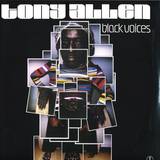
Comet presents the reissue of Black Voices (1999), featuring remastered versions and Ariya (Psyche Juju Mix)' as bonus track, which was not part of the original release.
Tony Allen completely rewrote the books on what was possible within the AfroBeat genre with his stunning 1999 album, Black Voices. When one considers exactly "what" is going on throughout Black Voices, it is quite mind boggling, as it is almost impossible to associate a minimalist, electronic feel with the massive walls of sound which Allen was known to create.
Yet these walls of sound are still very present, yet they gain an entirely new feel due to the presence of the producer, Doctor L. He takes the mesmerizing rhythms that Allen creates and he spins them into a stunningly modern sound. While Doctor L's production work throughout Black Voices is truly fantastic, it is clear that the genius behind the album lies within the mind of Tony Allen. With the absolutely mesmerizing, funky grooves that Allen creates, it comes a little surprise that the vocal collaborations are handled by members of one of the funkiest bands in history: Parliament-Funkadelic.
For almost two decades, Black Voices has remained a stunning example of the fantastic results that can occur when seemingly unrelated genres clash.
Granny13 opens with Nicola Ratti's 'Odd Doubt'. With the use of a modular system and tape loops, a broken rhythm is obtained by parallelism between single sound signals as LFO one or processed tapes.On the second side, Giovanni Lami's 'Johnny Leech' is made with a small bunch of equipment, just a chaotic hand-made synth (cacophonator) and a memoryman, working mainly on static electricity and leakage current in the synth used without any kind of power supply.
Reviews
The Wire
''Two Italian mucisians share a split single of glitchy fun and everyone goes some happy. Lami s piece uses a defective unplugged synthesizer to make huzzing chitters that have a kind of rhythm in spots. Ratti s contribution is a bit more structured it sounds like a record of accordion miniatures broken into pieces, then glued back together with little pieces of felt stuck onto it. Which would definitely be a pretty hep thing to hear.''
Textura
''Some releases qualify as art objects as much as musical collections, a case in point this recent seven-inch vinyl outing featuring material by Nicola Ratti on one side and Giovanni Lami on the other. That shouldn't be interpreted to mean that the musical content isn't worthy of one's time, as it assuredly is, but more to emphasize how striking the sleeve artwork by Opora is and how effectively it complements the musical content.Mastered by Giuseppe Ielasi and issued in an edition of 150 copies, the release opens with Odd Doubt, a concise experimental setting by the Milan-born Ratti, who's issued material on labels such as Anticipate, Preservation, Die Schachtel, and Entr'acte and who's presently working with Ielasi in the project Bellows, with Attila Faravelli as Faravelliratti, and with Enrico Malatesta and Faravelli in ~Tilde. Though Ratti started out as a guitar player, his current focus is more on beat-analog experimentation and sound installation. In Odd Doubt, Ratti's modular system and tape loops generate broken rhythms that varyingly call to mind dub-techno, even if dub-techno of an extremely wonky variety. Off-beat chords, crackle, and snare strikes add to the dubwise flavour of the material, though ultimately it registers as more of an experimental exploration than straight-up dub exercise.The flip side features Johnny Leech by Lami, a one-time photographer now known as both a field recordist and a musician focusing on soundscaping and sound-ecology. In his contribution to the seven-inch, Lami's chaotic hand-made synth (cacophonator) and memoryman give birth to blustery smears of static electricity that ultimately mutate into an Oval-like array of ripples and scratches. Johnny Leech is so removed from anything conventionally musical, it makes Odd Doubt sound like a Top 40 pop song. Like Ratti's piece, Lami's is short, so short, in fact, it gives the impression of being an excerpt from a larger sound art work. Here's a release where the abstract nature of the musical content matches its visual presentation.December 2014''
Vital Weekly 951
''Granny Records is from Greece, but the two musicians here are from Italy, of which I don't I heard from Giovanni Lami before. His piece is called 'Johnny Leech' and he uses a hand-made synth known as the cacophonator and a memory man (a delay machine), 'working mainly on static electricity and leakage current in the synth used without any kind of power supply'. It makes up for a nice piece of chaotic lo-fi sound, which is put forward through methods of improvisation. Quite a nice piece and it fits the format very well. The crackling of vinyl surely adds an extra layer. Nicola Ratti uses a modular synth and tape loops, of what seems to be percussive material, but the rhythm is broken down and the whole thing has a nice gentle feel to it, even when it bumps, clicks and glides, but the synth makes it more subtle. Here too one could say this perfect for a 7": one doesn't have the idea that this is cut from a longer part as is not unusual with this kind music. Especially Ratti seems to have worked out his music as a composition, which is very nice. (FdW)''Vital Weekly 951''Granny Records is from Greece, but the two musicians here are from Italy, of which I don't I heard from Giovanni Lami before. His piece is called 'Johnny Leech' and he uses a hand-made synth known as the cacophonator and a memory man (a delay machine), 'working mainly on static electricity and leakage current in the synth used without any kind of power supply'. It makes up for a nice piece of chaotic lo-fi sound, which is put forward through methods of improvisation. Quite a nice piece and it fits the format very well. The crackling of vinyl surely adds an extra layer. Nicola Ratti uses a modular synth and tape loops, of what seems to be percussive material, but the rhythm is broken down and the whole thing has a nice gentle feel to it, even when it bumps, clicks and glides, but the synth makes it more subtle. Here too one could say this perfect for a 7": one doesn't have the idea that this is cut from a longer part as is not unusual with this kind music. Especially Ratti seems to have worked out his music as a composition, which is very nice. (FdW)''Vital Weekly 951''Granny Records is from Greece, but the two musicians here are from Italy, of which I don't I heard from Giovanni Lami before. His piece is called 'Johnny Leech' and he uses a hand-made synth known as the cacophonator and a memory man (a delay machine), 'working mainly on static electricity and leakage current in the synth used without any kind of power supply'. It makes up for a nice piece of chaotic lo-fi sound, which is put forward through methods of improvisation. Quite a nice piece and it fits the format very well. The crackling of vinyl surely adds an extra layer. Nicola Ratti uses a modular synth and tape loops, of what seems to be percussive material, but the rhythm is broken down and the whole thing has a nice gentle feel to it, even when it bumps, clicks and glides, but the synth makes it more subtle. Here too one could say this perfect for a 7": one doesn't have the idea that this is cut from a longer part as is not unusual with this kind music. Especially Ratti seems to have worked out his music as a composition, which is very nice. (FdW)''
We are extremely happy to welcome Malouane to our roster for this third release. The atmosphere of Malouane is unique: raw, melodic and full of details with charm. "Long Way for the Homies" will recall artists like MCDE or Rick Wade, quite in the same vein: Jazzy, soul and house. The second, "Keep Yo Mama Clean" very catchy too: drums, beautiful basses and small samples interact with each other. These elements work perfectly, because Malouane has a real sense of musical arrangement, a real mastery of sampling. "This is supposed to be an Outro" is the last track of the original tracks: it is a little slower than the others but a great wealth: a real charm and a true personality emerges from this piece. The multitude of details and, again, the mastery of the sample make it a piece as much club as listening. Cody Currie has proposed his own vision. The young English producer made a great remix by putting his style and Clement's together. Finally, Times are ruff also offers their reinterpretation of Keep yo Mama Clean: softer and quite faithful to the atmosphere of this EP, with a small taste of Chaos in the CBD, the Dutch have done a remarkable job.
- A1: Trying To Find A Way
- A2: The Gembhre
- A3: Shimmy Shewobble
- A4: Parlour Blues
- B1: Thank You My People
- B2: Travelin' Man
- B3: Lullabye
Around the time of this recording, Stanley Cowell had achieved a degree of prominence as the pianist for the advanced bop quartet Music Inc., which he co-led with trumpeter Charles Tolliver, as well as for unusual projects like his Piano Choir. With Regeneration he chose another path, essentially trying to produce a jazz-infused pop album with strong African roots, perhaps owing a little bit to Stevie Wonder. He assembled an extremely strong cast of musicians for the venture, including Marion Brown, Billy Higgins, and Ed Blackwell, as well as several African string and percussion masters and, by and large, succeeded conceptually if not commercially. A few songs use vocals in a fairly standard pop framework, and, while they are performed capably enough, the lyrical content leaves something to be desired in typical mid-'70s fashion. But much of the rest of the music makes up for this with, among other things, a delightful fife and drum piece by Brown and strong bass work by Bill Lee (Spike's dad). Regeneration is an interesting, often enjoyable album which, aside from its own small pleasures, provides a snapshot of some of the cross-fertilization in genres occurring at the time.
'Y.O.U' is an emotive album of tripped out ambient hip hop instrumentals by FROM, written and recorded in the mid 90s under Trevor Jackson's infamous production persona The Underdog. Originally planned as a vocally-led, song-based project that should've surfaced between his production for The Brotherhood's legendary British hip hop album 'Elementalz' in 1996 and his acclaimed debut PLAYGROUP release in 2001, for multiple reasons it hasn't seen the light of day, until now.
Only Available as a ultra limited edition Vinyl and CD release, the LP consists of 11 tracks. Dream-like synth lines, ambient melodies, blissful guitars, raw beats and soft, fractured vocals draw you into a hallucinatory 12bit world. Drawing on Jackson's progressive and jazz rock influences as well as psychedelia and early electronics, the album closes with 'Belladonna'- a piano-sampled homage to the east coast golden age hip hop pioneers. NB: The CD features a longer version of 'Veratrum' not available on the vinyl version. All created on an Akai S950 mono sampler (limited to only 20 seconds sampling time), an Akai MG1212 12 channel mixer (which recorded on Betamax style tapes) and primitive outboard gear, Jackson honed his skills from his bedroom, where he produced the majority of his output at the time. With a huge collection of obscure vinyl, he dug deep into uncharted territories for samples and sound clips
- using material no one knew about (or would think about touching) in the mid 90s. The Underdog's initial releases were on Jackson's own Bite It! recordings label, which was started in 1991. A unique platform for UK hip hop with a visual aesthetic and ethos more akin to ECM and Factory
than other rap labels, its mission was to push artists beyond musical and cultural limitations prevalent at the time.
Home to artists like The Brotherhood, Scientists of Sound, Little Pauly Ryan and Lewis Parker (who later signed to Massive Attack's Melancholic label), Bite It! became a great success;
finally British rap had artists and releases that looked and sounded as good as their revered American counterparts. In 1993 Richard Russell (who had just started running XL recordings) asked Trevor to remix House of Pain, resulting in a top ten record, which helped launch Jackson's musical career via further remixes Massive Attack, Run DMC, U2, The Cure and countless others. Off the back of his remix success, The Brotherhood signed a deal in 1994 with Virgin Records. Their 'ELEMENTALZ' album was produced by Jackson and is still lauded by many as one of the finest British hip hop albums of all time.
Jackson continued to remix and produce as The Underdog until managerial issues forced him out of the project he'd been instrumental in instigating.
Soon after his close friend and manager tragically passed away - which when combined with the UK hip hop scene becoming increasingly volatile and the moral demise of rap culture in general - convinced Trevor to hang up his hip hop hat for good.
After leaving The Brotherhood he started Output Recordings. Internationally and sonically diverse, it gave Jackson a free reign to do as he pleased, with genre twisting releases from the likes of Fridge, Four Tet, Sonovac, Colder, his own PLAYGROUP project, The Rapture and LCD Soundsystem. With a non-compromising attitude, strong DIY aesthetic and consistently groundbreaking releases across its ten year life between 1996 and 2006, it became one of the most important and respected independent labels in the world.
- A1: Intro
- A2: Under My Thumb
- A3: When The Whip Comes Down
- A4: Let's Spend The Night Together
- A5: Shattered
- A6: Neighbours
- B1: Black Limousine
- B2: Just My Imagination
- B3: Twnety Flight Rock
- B4: Going To A Go Go
- B5: Let Me Go
- C1: Time Is On My Side
- C2: Beast Of Burden
- C3: You Can't Always Get What You Want
- D1: Little T & A
- D2: Angie
- D3: Tumbling Dice
- D4: She's So Cold
- D5: Hang Fire
- E1: Miss You
- E2: Honky Tonk Women
- E3: Brown Sugar
- E4: Start Me Up
- F1: Jumpin Jack Flash
- F2: (I Can't Get No) Satisfaction
- G1: From The Vault: Live In Leeds July 25 1982 (Dvd)
- G2: E-Mail Me When Available
Continuing the very successful 'From The Vault' series of classic, previously unreleased Rolling Stones live shows this release is taken from their performance at Roundhay Park in Leeds, England on 25 July 1982. This show was the last concert on their 1982 European Tour in support of 1981's acclaimed 'Tattoo You' album which would be their last live tour for seven years. About half of the 'Tattoo You' album is included in the set including the hit single 'Start Me Up'. This would be the last Rolling Stones show to feature Ian Stewart on piano. The footage has now been carefully restored and the sound has been newly mixed by Bob Clearmountain for this first official release of the show.Key Selling Points: Simultaneous release on DVD, SD Blu-ray, DVD+2CD and DVD+3LP. The 'From The Vault' series is now firmly established with Rolling Stones fans and has been very well received by critics. Full length concert of The Rolling Stones performing at their very best. Includes 'Under My Thumb,' 'Black Limousine,' 'Let's Spend The Night Together,' 'Beast Of Burden,' 'Honky Tonk Women,' 'Jumpin' Jack Flash,' 'Angie,' 'Tumbling Dice,' 'Miss You,' '(I Can't Get No) Satisfaction,' 'Start Me Up,' 'Shattered,' 'Brown Sugar' and many more!