Produced by Lenny Kravitz (Executive) and Fela Kuti’s original engineer Sodi Marciszewer (Artistic). Worldwide tour in 2024 / 2025 (North America, Europe, Australia). New album from 2018 Grammy nominated album “Black Times”. Seun Kuti set to release highly anticipated album ‘Heavier Yet (Lays The Crownless Head)’ featuring guests Damian Marley and Sampa The Great on October 4th. Afrobeat virtuoso Seun Kuti is gearing up to unleash his latest musical masterpiece upon the world with the upcoming release of his album that will be set to make waves globally via Milan independent label Record Kicks. Coming 6 years after the Grammy nominated album ‘Black times’, this album marks a pivotal moment in Seun Kuti's illustrious career, showcasing his evolution as an artist and activist. Executive produced by legendary musician Lenny Kravitz and Fela Kuti’s original engineer Sodi Marciszewer (artistic producer), ‘Heavier Yet (Lays The Crownless Head)’ promises to deliver a sonic experience like no other. With both Kravitz's and Sodi’s expertise together with Seun Kuti's unmatched talent, the album is poised to redefine the boundaries of contemporary music while staying true to the roots of afrobeat. Featuring a tracklist of six electrifying songs, each track on ‘Heavier Yet (Lays The Crownless Head)’ embodies the spirit of resistance, resilience, and revolution. Each song talks about standing up against challenges and fighting for change. Like the standalone singles ‘Dey’ feat reggae icon Damian Marley, described as “a song about embracing and championing who we are, regardless” and ‘Emi Aluta’, “a song about struggle (Aluta means struggle) that pays homage to all the great revolutionaries”, that features Zambian singer, rapper and songwriter, Sampa The Great, one of best and most innovative lyricists of our time. The song ‘T.O.P.’ is about “how society values money and success more than people”. Seun Kuti wants to change this by promoting empathy and reconnecting with nature. In another song, ‘Love & Revolution,’ he expresses his love for his wife and believes that true love can inspire people to make the world a better place. “This project has been very special to me from the moment I conceived it, speaking to Lenny Kravitz, who has shown me such a brotherly love and respect” Seun says. “He has brought me to his home. I met his daughter Zoe and he has guided us with fierceness. Since we spoke about the album, three years ago, as the executive producer of this project, he has always been by our side and very supportive”. “I want to thank Craig Ross and Sodi, the producer of this project. We had a great time. It was the first time for me in the studio with Sodi and I was really impressed by his work and his fatherly advice and dedication”. Each song on the album is a testament to Seun Kuti's unwavering commitment to using music as a tool for social change and empowerment. Through his powerful lyrics and infectious grooves, he continues to carry on the legacy of his father, the legendary Fela Kuti, while carving out his own path in the world of music. As a musician and pan-African activist, Seun has been involved in a number of campaigns in recent years, including #EndSARS – a social movement against police brutality in Nigeria. Significantly, he’s revived the Movement of the People (M.O.P.), the political party his father set up in 1979, which was quashed by the military government not long after Fela’s failed presidential bid. Fans can expect an album that not only entertains but also inspires and ignites a spirit of activism and liberation. Seun Kuti is a Nigerian musician, singer, and songwriter renowned for his captivating performances and socially conscious music. He is the youngest son of Afro beat pioneer Fela Kuti. Seun has spent most of his life preserving and extending his father's political and musical legacy as the leader of his father's former band Egypt 80. As a developing saxophonist and percussionist, he entered the formal ranks of the band before he was 12. In 1997 when Fela passed, in fulfilment of his father's wishes, Seun assumed the mantle as head of Egypt 80 and he has run it ever since. During his career, Seun Kuti released 4 albums with Egypt 80: ‘Many Things’ (2008), ‘From Africa with Fury: Rise for Knitting Factory Records’ (2011), coproduced by Brian Eno and John Reynolds, ‘A Long Way Beginning’ (2014) and the Grammy nominated ‘Black Times’ (2018) that included a feature from Carlos Santana. They also released numerous EPs. Seun has played for enthusiastically receptive audiences globally and collaborated with many great artists. In 2022, he joined forces with Roots frontman and MC extraordinaire Black Thought in the EP ‘African Dreams’. In 2023, Seun collaborated on Janelle Monae's ‘The Age of Pleasure’ (Grammy nominee for Album Of The Year) with the two singles 'Float' and 'Knows Better', teamed up with Talib Kweli and MadLib for their album ‘Liberation 2’ on the song ‘Nat Turner’ featuring Cassper Nyovest and released a new version of the single ‘Bad Man Lighter’ with Black Thought, featuring Vic Mensa
Buscar:lo fi society
Her tracks have been played and recommended by Iggy Pop, Mary Anne Hobbs and Nine Inch Nails. ZAMILSKA, one of the most original artists on the European electronic scene, announces a new album, "United Kingdom Of Anxiety" – out October 4.
Combining the rawness of techno and the trance-like nature of world music, industrial sound and a fine blend of trip-hop, the Polish producer created a dystopian, post-apocalyptic,
fascinating vision of a collapsing world. "United Kingdom Of Anxiety" begins with a sonic assault. The breaks and powerful bass in "Phantom" awaken from hypnotic slumber, numbness caused by the daily hustle, serve as a reminder that to survive in an unfriendly world, concentration, willpower and perseverance are essential. This is the beginning of a journey through "United Kingdom Of Anxiety" - the new album by Zamilska, a sensitive outsider.
"I’m here to ruin you again," announces a voice in "Mummy," while the crescendo of beats and noise in "Better Off" further amplifies the tension. It's hard to find peace when hell lurks just around the corner. Is it the horror of civilization or perhaps cosmic dread? The answer depends on the listener's sensitivity.
The much-needed balance and coolness are brought by huskie vocals - that is Ola Myszor - an incredibly talented young artist who appears in several tracks on the album. Besides huskie, there are other guests on "UKOA": Natalia Przybysz, who, with a robotic voice, delivers a manifesto of indomitable, proud solitude in "Persist" and Lukasz Pach, the charismatic frontman of the grindcore band Hostia. His growling is heard in the intense, uncompromising "No Gods," which was presented by Iggy Pop on his BBC6 Music radioshow.
The sonic spectrum is also filled with anonymous voices: echoes of quarrels, media messages, sounds of war clamor, monologues - looped, accelerated, manic, psychotic, but also a wistful singing coming from the depths, from afar. The metaphysical horror of Lovecraft on one hand, and the sober, no less gloomy diagnosis of George Orwell on the other, constantly correspond here.
This entire album is a story about society as a whole and the contemporary, dystopian world, which is inevitably heading towards war. The track "1984" clearly defines the inspiration for the artist's post-apocalyptic vision. A distorted radio signal, alarm siren and gabba/techno beats driving into the head like nails serve as an expression of the fear and anger born in a world of impending totalitarianism.
- A1: Kirk And The Jerks, To Be A Hero
- A2: Sub Society, Hokus Montage
- A3: Kirk And The Jerks, One Way To Do It
- A4: Wonderful Broken Thing, Roam Around
- A5: The Cry, Alone
- A6: Voluntários Da Pátria, O Homem Que Eu Amo
- A7: Wonderful Broken Thing, Birds Fly So High
- A8: Kirk And The Jerks, Hang On To The Dream
- A9: Figure Ground, Intro
- B1: Kirk And The Jerks, Gun And A Tear
- B2: The Cry, Twist Of Faith
- B3: Sub Society, A Whole Lot Less
- B4: Wonderful Broken Thing, We Don’t Touch
- B5: Wonderful Broken Thing, Trains
- B6: D J. Dex/Mt, Am Rap
- B7: Potential Threat, Self Inflicted Pain
- B8: Johnny Monster, Witch Doctor
- B9: Wonderful Broken Thing, Is This What You Wanted
In the early 1990s, before the era of social media dominance, skateboarding culture found its voice through magazines and VHS video releases, notably from brands like Santa Cruz and Powell Peralta. These videos not only shaped the skateboarding world but also influenced creativity across various industries worldwide.
In 1988 and 1989, two groundbreaking videos, "Shackle Me Not" and "Hokus Pokus," emerged from the fledgling skateboard company: H-Street, unleashed a seismic shift in street skateboarding. These videos are revered as iconic masterpieces, celebrated for their innovative skateboarding sequences and unforgettable soundtracks.
“What’s particularly interesting about Hokus Pokus was its soundtrack, largely comprised of demo cassettes, unsigned artists, and bands with loose ties to the brand. Some of the songs were goofy, others almost anthemic, and few sounded of their time. Perhaps it was the repetition or the fact that Matt Hensley could have skated to the sounds of a broken oven and it would have been iconic, but the songs in Hokus Pokus became a secret handshake for the hardcore—people who really gave a shit about skateboarding’s culture not just the act”.
Artless / Anthony Pappalardo
“When we were filming for Shackle Me Not we were still a brand new company and hardly anybody knew who we were and it was so brand new. I was so busy skating and I noticed there was like a movement in skateboarding, you could feel there was a change in the way, in the tide, not just white H-Street but with every company. I think that video, the H-Street video was saw raw, with the crazy music, and you know, just the wackiness of all of it, I think that feeling went out into the world, and kids everywhere understood you don’t need to live 20mn away from Del Mar to actually be part of what’s happening. I think that just opened up the world of skateboarding to more people”
Matt Hensley – Pro skater and Floggin Molly band member.
Fast forward 35 years, and H-Street, in collaboration with Paris (France) based label Stereo Ronin Records, embarks on a momentous project to release special edition vinyl soundtracks from these seminal videos. This exclusive release features meticulously remastered tracks, including new versions and previously unreleased gems on vinyl, making it a treasure trove for any skateboarding enthusiast.
Curated from bands like Kirk & The Jerks, Sub Society, Wonderful Broken Thing, Voluntários da Pátria and The Cry, representing the golden era of skateboarding music, this album promises an unparalleled experience for fans of Punk Rock, Indy Rock, and of course, skateboarding.
Working alongside RTM Studio in Paris, Stereo Ronin Records has undertaken a remastering journey, ensuring that this vinyl edition delivers a truly unique sonic experience, capturing the essence of a bygone era while resonating with contemporary audiences.
LTD. COL. VINYL[23,95 €]
France-based, prog-rock power trio LIZZARD are out to reclaim the creative, collaborative energy that has fueled them for over a decade. On `Mesh', the band's fifth full length album, LIZZARD capture the energetic, lightning-in-a-bottle optimism of the late `90s post-punk/art-rock scene and reinvigorate it as something empowering, inspiring and simmering with potential. Recorded by the band in the abandoned factory they use as their creative base and produced again by now long-time friend and collaborator Peter Junge, `Mesh' is LIZZARD unleashing the raw, spontaneous might of their pent up live sound through the production precision of their studio experience. As such, themes of duality and control, whether it's regaining it or letting it go, run right through the album. Resounding with Elwell's inimitable, thundering drums and a barrage of colossal riffs, `Black Sheep' explores the dichotomy of body and mind, of black and white, that we all wrestle with on a daily basis whilst the mellow polyrhythms and plaintive melodies of `Mad Hatters' ask pressing questions of the people who are supposedly in charge of society. Epic album closer `The Beholder' captures the reinvigorated LIZZARD at their bracing best; bittersweet guitar refrains are bolstered by Will Knox's signature driving basslines and crashing half-time grooves as frontman Ricou considers the great cycle of life from his own perspective. Testament to the band's formidable compositional prowess, `The Beholder' ends as it starts, a closed loop. With only Ricou's playful, pithy refrain of "What goes around, comes around" left ringing in our ears, LIZZARD masterfully frame `Mesh' as both a poignant conclusion to the last chapter and as a bright new beginning.
Black Vinyl[21,22 €]
France-based, prog-rock power trio LIZZARD are out to reclaim the creative, collaborative energy that has fueled them for over a decade. On `Mesh', the band's fifth full length album, LIZZARD capture the energetic, lightning-in-a-bottle optimism of the late `90s post-punk/art-rock scene and reinvigorate it as something empowering, inspiring and simmering with potential. Recorded by the band in the abandoned factory they use as their creative base and produced again by now long-time friend and collaborator Peter Junge, `Mesh' is LIZZARD unleashing the raw, spontaneous might of their pent up live sound through the production precision of their studio experience. As such, themes of duality and control, whether it's regaining it or letting it go, run right through the album. Resounding with Elwell's inimitable, thundering drums and a barrage of colossal riffs, `Black Sheep' explores the dichotomy of body and mind, of black and white, that we all wrestle with on a daily basis whilst the mellow polyrhythms and plaintive melodies of `Mad Hatters' ask pressing questions of the people who are supposedly in charge of society. Epic album closer `The Beholder' captures the reinvigorated LIZZARD at their bracing best; bittersweet guitar refrains are bolstered by Will Knox's signature driving basslines and crashing half-time grooves as frontman Ricou considers the great cycle of life from his own perspective. Testament to the band's formidable compositional prowess, `The Beholder' ends as it starts, a closed loop. With only Ricou's playful, pithy refrain of "What goes around, comes around" left ringing in our ears, LIZZARD masterfully frame `Mesh' as both a poignant conclusion to the last chapter and as a bright new beginning.
Perhaps best described as a pioneer of the underground experimental scene, the signature of Jørgen Teller on the musical landscape of Denmark traces back to the late 1970’s. Sprung out of a whirlpool of post-punk and art school ideas, Teller has relentlessly been chiseling away on the constrictions of music in various bands, collaborations and solo projects ever since. Searching out its farthest outposts - be it free jazz, noise or acousmatic music - Teller has strived towards an approach to music without rules, often by way of improvisation and usually with the aid of electric guitar.
This album is based on a live performance held at the Inter Arts Center in Malmö in early 2022, where Teller performed a semi-improvised piece in homage to the poet Poul Borum, whom he had worked with in the mid-90’s closely before Borum’s death in 1996.
As a composer, Teller relies on a set of “basic choices” that becomes a “precise point of departure” - where he can then go against his “good knowing” of the science, trends and different schools of music and go straight into his own instincts as a performer. For this performance, he used pre- recorded material of three rhythm boxes (all out of sync), timbales and sessions on Erica synths.
In dialogue with the label, Teller has focused on extracting the recording of the rhythm boxes and timbales alone, emphasizing the tension between the rhythms. With minimalist drum sequences that could easily be placed in a proto-techno context, and the whooshing of what might be an ancient rhombus instrument, there is a feeling of a primitive presence to Teller’s rhythmic excursions. A throwback to the spiritual realms of a wordless society fighting the demons of chance.
Occasionally pierced by stark industrial drum crashes and rattling post-punk percussion, it also conjures echoes from the darker side of the 1980s. In citing Borum as its inspiration, Teller shares that he channels the poet’s energy and their shared love of “noisy stuff and darkness”.
But the pace can also go somewhere close to breakbeat on track B2, where a whirlwind of rhythmic elements clash into a deranged deconstructed club tune.
The album also features a remix by a fellow colleague of the acousmatic community; the composer Jacob Riis. On the closing track B3, Riis quietly manipulates and balances the elements of Teller’s recordings and gently releases them into a contemplative pool of static.
Nigerian electronic musician and violist Ibukun Sunday debuts on Phantom Limb with Harmony / Balance, a brooding, introspective take on Afro-ambient music that follows two acclaimed digital-only albums for Phantom Limb imprint Spirituals.
Based in Lagos, Ibukun Sunday has expertly positioned himself between the rarely-married cultures of ambient and West African musics. He entwines his compositions with field recordings from his native Nigeria and deeply considered philosophies of existence, humanity, and society. The themes of Harmony / Balance derive from Swami and Hare Krishna founder A. C. Bhaktivedanta and his work Bhagavad-Gita Eng: “As It Is”, a script on the duality of human nature. In Bhaktivedanta’s text, two cousins - warriors from the sacred Hindu text the Mahābhārata - and their armies are pitted against each other. The humility, self control, and devotion of one cousin against the arrogance, envy, and pursuit of power of the other. Bhaktivedanta writes that from this battle we see the necessity to cultivate and nurture our love and faith, but to simultaneously understand our selfishness and hubris. Appropriately, in Ibukun Sunday’s music, a heavy, apocalyptic dread contrasts fascinatingly with passages of light. The static-spiked, corrosive sound design of Harmony / Balance conjures darkness, but its skipping rhythmic patterns and melodic contours are made of beautifully vibrant colours.
Though Sunday excels in the kind of drawn-out elegance also found in the work of Kali Malone, William Basinski or Fennesz, and also in a magisterial repetition akin to Terry Riley or Manuel Göttsching, his unique practice, classical training, and core culture shine through in a pure and singular way. Scattered throughout Harmony / Balance are unexpected melodic antiphonies closely aligned with African music, interspersed between huge, spacious drones and field recordings.
Lead track “Arrayed On The Battlefield” evokes mythical and deific wars with hissing, buzzing synthesis that could be dystopian if not for a levitational, sunlit harmonic structure. It rolls and shimmers, transcendent frequencies alive with rhythm. Later, “Enemy Of My Enemy” employs shimmering, meditative chord pads and blissful negative space, while towards the end of the record, “To Fight With” could have been taken from a Denis Villeneuve sci-fi - the fizzing, fiery distortion at its peak gradually, carefully yields a rumbling, distant thunder as it closes. Throughout the record, Sunday’s education as a classical viola player is also evident. A honed musicality and developed ear for harmonic resonances lend the work a measured eloquence, even amidst deep, spiritual intuitiveness. This intensely personal and powerfully expressive creativity is key to the grace with which he crosses divides.
Ibukun Sunday is a solo electronic musician and violist based in Lagos, Nigeria. He has released two albums with Phantom Limb’s digital-only imprint Spirituals, which enjoyed rightful acclaim as unique and powerful works of experimental ambient music. He also performed at Phantom Limb’s 5th anniversary celebrations in 2023, playing alongside Richard Skelton at St. John’s on Bethnal Green in London, UK.
Black Is Golden', the first full length release from Wyn Starks, isn't just the name of a record, it's his truth as a black man living in modern America. "I decided to call the album 'Black Is Golden' because throughout history black and brown people have gone through so much injustice in this country and yet contributed so much to society. I think it's important that we celebrate each other and all our differences." But the songs aren't all centered on social justice- the album features upbeat tracksk like "Circles" and "Dancing My Way" which showcase Stark's vocal range and sunny disposition; juxtoposed with "At The End Of The River", a deeply emotional track about the tragic loss of Wyn's twin brother. Starks' feels his journey to self-love is captured in this body of work. He shares, "I'm learning how to celebrate these accomplishments in my life and to love myself, flawa and all.
REPRESS
The second LP compendium of Emahoy Tsege Mariam Gebru's early solo piano works, recorded throughout the 1960s - finally available again. Emahoy Tsege Mariam Gebru is a true original - her compositions and unique playing style live somewhere between Erik Satie, Debussy, liturgical music of the Coptic Ethiopian Church, and Ethiopian traditional music. It is some of the most moving piano music you will ever hear! These original compositions, performed by Emahoy Tsege Mariam Gebru herself on solo piano, were originally self-released in Germany in small editions as fundraisers for orphanages, support organizations for widows of war victims, and other philanthropic causes. We are humbled and proud to present this album in collaboration with the EMAHOY TSEGE MARIAM MUSIC PUBLISHER and Foundation, and to assist in continuing her life-long mission of using music as a vessel to care for those who have been abandoned by society, or harmed by strife. Black vinyl LP comes in black inner-sleeves and heavy cardstock jacket with color printing and gold-foil stamping, and song notes by the composer herself. Restored and remastered by Timothy Stollenwerk.
"One of the best bands to come out of NYC since who gives a shit." -CVLT Nation. When you enter White Hills' lair in Brooklyn, the duo's insatiable desire for music and art is immediately palpable. Crates of vinyl from floor to ceiling line the long hallway. Guitars appear at every angle, one lying across a sofa in obvious mid-play with others in cases tucked beside amplifiers into every conceivable corner. Synthesizers and cables cover the purple satin bed while gouache paintings in various stages of progress strewn the floor. Album covers, movie posters, books, paintings, prints and souvenirs of subversive culture occupy the remaining wall space. A sanctuary of adoration, creation and imagination, it's also the nerve center of their record label Heads on Fire Industries and the site where the final mixes of their latest album Beyond This Fiction took shape. For nearly two decades, White Hills have been blowing minds with their sonic alchemy: a unique mix of neo-psychedelia, art rock, and post-punk- at once original and recognizable. Their cult reputation emblazoned in celluloid following their performance in Jim Jarmusch's sultry vampire romance Only Lovers Left Alive, the duo has toured vigorously since their inception. With a vast catalogue that astounds and a relentless punk ethos, time seems to energize the duo, making them increasingly daring and prolific. "Music creates a bliss beyond sex and drugs," professes one-woman rhythm section Ego Sensation. "We'll never stop making music. It's the highest high to be had in life." Founding member Dave W, whose signature other-worldly guitar sorcery defines the White Hills sound, grabs his Les Paul to record a melody lingering in his head from last night's dream before it escapes. Outside, the sound of passing sirens, honking horns and bits of conversation remind you that you're in the middle of New York, a city so flush with rock legacy and artistic innovation it would take lifetimes to drink it all in. A voice from outside shouts, "This shit is going for 3! These people got to be out of their fucking minds!" Dave shakes his head and laughs, "There's no place I'd rather be." Committed to a vocation marked by extremes, doubt, struggle and moments of ecstasy, Dave and Ego continue this torrid affair with music bearing their latest fruit Beyond This Fiction. Inspired by the ideas of Joseph Campbell, the writer/philosopher known for the book The Power of Myth, the album explores the idea of "riding between opposites"- forging one's own path unrestrained by the dualistic constraints of society. It's a cry to all the seers among us- call us outsiders or rebels- who feel smothered by convention and see nonconformity as the gateway into divine mystery. Recorded with Martin Bisi, known for his iconic NYC sound developed through his work with no-wave titans Sonic Youth, Swans and Lydia Lunch, Beyond This Fiction sees Dave W (guitar/vocals/synths) and Ego Sensation (drums/bass/vocals) orchestrating their distinct guitar heavy meditations into songs with a stronger focus on vocals than previous albums. Opener "Throw It Up In The Air" and closer "Beyond This Fiction" both have a lush quality that flirts with shoegaze. "Killing Crimson", a song that takes inspiration from Killing Joke and King Crimson, has a driving beat and a catchy hook that begs for a sing-a-long. "The Awakening" plunges into the meditative ambient abyss the band is well known for, featuring the unique voice of frequent collaborator poet Dan McGuire to deliver the meaning behind Beyond This Fiction. The album harnesses the seductive accessibility of 2015's Walks For Motorists while evoking the tempestuous soul of the band's seminal 2011 H-p1. Notorious shapeshifters, White Hills make Beyond This Fiction a familiar surprise. Back in the lair, Dave draws eyes on his hands in preparation for the day's video shoot. Ego reaches in the closet pulling out the red velvet jacket she wears on the cover of Beyond This Fiction where she stands in a NYC alley holding a glowing orb. "That's the portal- the gateway into the mystery. The music will take you there.".
Coming out on September 6th on Sharptone Records, Sundiver is Boston Manor’s fifth album and one that represents a glimmering dawn for the Blackpool five-piece. Grown from a seedbed of optimism and sobriety, the LP celebrates new beginnings, second chances and rebirth. With two members recently stepping into fatherhood, hope is baked into every note. “Datura came out of these really dark few years over the hangover of the pandemic,” Henry reflects. “I'd been struggling a lot with drinking and not taking care of myself and bad mental health and stuff. We wanted Sundiver to be the next morning of the following day.” He explains that it feels good this time round to write through the lens of positivity. “The themes began to emerge, of rebirth, spring, dawn, sunshine and then other elements just started to fit into that.” It was during the making of Sundiver that Henry found out he was going to be a dad. This album is a significant one for the band. Originally coming out of the emo and pop punk scene, they’ve explored sonics and genres throughout their career, taken risks and achieved more than they could ever had dreamed of. They’ve grown up as Boston Manor – their lives and the world changing around them. They’re now taking stock, at a crossroads of the band they were and the band they could be.
While writing the album, they revisited the bands that shaped them in the late 90s and early 00s. “I was listening to the music I loved when I was a teenager and I just thought, why don't we make music like our favourite bands?”, guitarist Mike Cuniff remembers with a smile. “So we brought our interests to the table that way. Y2K kind of vibe. There are elements of Deftones, there are elements of Portishead in there, some Garbage, The Cardigans.” He laughs and adds NSYNC to the list of inspirations. From this cocktail of classics comes a dynamic and ambitious record, rich with depth, groove and more hooks than Peter Pan’s nightmares. Lyrics that foxtrot from parallel universes to personal growth, vivid dreamscapes to raw grief. Individually they’re single strokes full of meaning and magic. Together they’re a landscape.
Container (out Feb 15th) is the first single and it’s them at their best – impassioned and infectious. “This song is about the stagnancy of life creeping up on you & how that can bring about change.,” Henry explains, citing Ocean Song by US band Daughters as an inspiration.
The concept of the butterfly effect is present on Sundiver – how small actions can lead to big changes. This is no clearer than on their second single, Sliding Doors (out April 5th). It has the golden sound of late 90s Lollapalooza rock – think Smashing Pumpkins - rebooted with crisp 2024 production and a potent heaviness. In the lyrics Henry wonders, what if?, pondering on what could be. The idea that there are infinite versions of you whose lives splinter off in different directions at every decision you make. That there’s another you out there somewhere right now reading this sentence, and another me writing it. “So much is down to chance and circumstance,” Henry says. “You might catch that train and your life totally changes. Or you might miss it and things stay the way they are.”
Heat Me Up (out May 30th) is defiant and victorious, the audio equivalent of quitting your shit job and driving into the hot summer sun with a head full of dreams. “The lyrics are about love and gratitude,” Henry shares. “Another theme on the record is just appreciating what you have. It’s about not taking for granted the things that you've been afforded.”
There was some natural magic in the creation of Sundiver. They worked with their usual producer, Larry Hibbitt, and engineer, Alex O’Donovan, but instead of recording in London again they ended up in the green pastures of Welwyn Garden City. “Because Larry lives out in the countryside now, it was a way different environment and way different experience recording this time,” Mike remembers. “That contributed a lot to the brighter sound of the record.” The daily barbecues they had during their recording sessions imbued the process with harmony – five old friends spending quality time together and making quality music.
However, the album is by no means one-note. Birthing this new world they’ve created wasn’t without it’s pain, and that can be heard in the heavier moments on Sundiver. What Is Taken Will Never Be Lost is the most-stripped back on the album, a slow rock number seasoned with the downtempo Portishead influence. The heartfelt lyrics are Henry’s way of processing the loss of his grandfather, who died in a hospice last year(?). “It was just fucking horrible. It was always cold when I went there and they were always trying to get rid of me. The song title, What Was Taken Can Ever Be Lost, is the idea of his memory fading at the time because of dementia.” Henry goes onto explain that shoeboxes of photographs, diaries and a legacy is what he’s left behind. “He lived a really rich life and it has really impacted me and my father. His legacy is etched into the fabric of history in a very small way.” This song continues the connection between his grandfather and the band, as his painted face is emblazoned on the cover of the very first Boston Manor EP, Driftwood. As well as emotionally heavy themes, there’s heaviness in the music of Sundiver too. The closing song, Oil In My Blood, descends into an intense shoegaze outro with Debbie Gough from Heriot screaming hellfire. It’s in moments like this that the band show us aggression and fury can be as much a part of positive change as quiet introspection. The last lyrics of the song, “It resets and starts again,” leaves us in contemplation as the final chord rings out.
Touring the US, Europe and Japan over the years makes for an impressive CV, but if you know anything about Boston Manor you’ll know that they’re all about their hometown. Their choice to work with Blackpool-based photographer Nick Barkworth is testament to that. They’ve been working with him since the pandemic. “He captures Blackpool in a light that really reflects the weirdness and quirkiness of the town,” Henry says.” He's got a really good way of presenting that.” For the Sundiver cover, Nick photographed a 30ft tall abstract glass sculpture made by the local artist John Ditchfield. A striking and bewitching monolith that’s familiar to them but unusual to most people. “It has such kind of a gravity and power to it,” Henry describes the sculpture which stands in a field just outside of the seaside town. “It reminds me of either an explosion or a star or a supernova. To me it represents new life, power and radiance.” Boston Manor have got a knack for that - connecting the otherworldly and the everyday, the stars and the streets.
They’re a band known for using their music to make bigger statements about society. This time round they’re harnessing the uplifting power of music, and the communion it creates, as an antidote to the daily doom and isolation. “It seems like absolute chaos out there at the moment,” Henry says. “You’ve got Gaza and Israel, you've got Russia, you've got the fact that 40% of the world is going to have an election this year and increasingly most governments are leaning very far to the Right. The internet is dividing everybody, people are getting poorer and more desperate. It's really, really scary.” They considered trying to tackle the weight of it all in their music. “We could’ve written Welcome to the Neighbourhood on steroids, where it's just absolute darkness and misery”. He’s referring to their 2018 concept album that deals with class, inequality and the bleaker side of Blackpool. “But I think it's really important to write something that people can be immersed in and find some sort of solace in. Somewhere they can escape to from the modern day pressures and everything that’s going on. We’re all in this together.”
The legendary UK Thrash Band Solitary mark three decades of metal, with the release of a brand new album " Embrace The Darkness" which is the fifth of their thirty year career - and not only is it their heaviest, hardest, most confrontational release to date, it's undoubtedly their best yet, following on from the highly acclaimed "The Truth Behind The Lies" (Metalville Records 2020).
The UK's resolute and relentless kings of thrash, Solitary, have tapped into the thick, black blood that pulses sluggishly through the fat and filth congested veins of society. It is fact that we live in dark times; alongside war, pandemics, grief and horror. These are the days of division, where we turn against each other in politically driven hatred and against ourselves, choking on a social media diet of self-loathing and isolation.
Through our ever-glowing screens we watch the crumbling of virtue and the slow, agonised death of decency and honour. Solitary have stared into the alleyways, the cellars and the broken minds of our youth and forged their most unflinching album yet. This is their hymn to a dying world, their soundtrack to the end of days it's time to "Embrace The Darkness"
DJ Support: Sidney Charles Chris Stussy, Archie Hamilton, Toni Varga, Catz 'n dogz, Tough Love, Neverdogs, De La Swing, Marco Carola, REBOOT, Rich NxT, Steve Lawler, Josh Butler, Okain, Ilario Alicante, Joseph Capriati, Leon, Marco Faraone, Riva Starr, Hector Couto, Archie Hamilton
Feel the infectious beats and raw energy of Sidney Charles' latest EP, 'Reso Riddim', which is dropping on his very own Heavy House Society imprint. Renowned for his distinct take on house music, Sidney Charles delivers a powerhouse two tracker that embodies his signature sound and energy for the dancefloor. As a DJ and producer, Sidney Charles has carved out a unique niche in the electronic music scene with what fans affectionately refer to as 'The Sidney Sound.' This signature style is built on heavy low ends, chunky drums, and cavernous low frequencies that connect directly with the body. With tracks like 'House Lessons' and 'Warehouse Romance,' and more recent 'Space Bass' and 'No Way Out,' Sidney established himself as a force to be reckoned with, showcasing his affinity for rough, dirty sounds with a modern twist. 'Reso Riddim' kicks off with the title track, a driving and edgy peak time weapon that boasts a stripped-back groove and an infectious bassline. Breakbeat elements add depth and dimension in the break, creating a track that is guaranteed to get the dancefloor moving and jumping. With its pulsating energy and relentless rhythm, 'Reso Riddim' sets a strong tone for the EP's journey. On 'Rawline 98,' Sidney Charles channels the spirit of the '90s with pumpin' jackin' beats, garage-inspired chords, and an old-school bassline that harkens back to the golden era of house music. The track exudes a bouncing energy and infectious swing that transports clubbers to a bygone era while keeping the dancefloor firmly rooted in the present. The 'Reso Riddim EP,' is also available on Vinyl which will include two extra tracks 'Objection' and 'Charles’ List,' for those who love the feel of wax both in their hands and on the decks
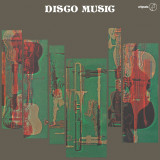
Composed by legendary library guitarist and founding member of I Gres, Silvano Chimenti, and accompanied by his orchestra, "Disco Music" is an essential release of the Usignolo catalog and probably one of the most sought after titles of the series. This album displays a broad range of styles masterfully blended together by Chimenti, going from disco-funky bangers "Happy California" and "Autostrade Americane" that lead way to the more dramatic and suspenseful vibes of "Society Problem" and "Tragedy", finishing off with the rock vibes of "Indian Summer" and the mellow atmospheres of softer, lounge-like songs such as "Lady Primavera" and "Chiara". One of the most complete and well-rounded library albums of its era, "Disco Music" is finally available on vinyl once again after a very long time as a limited edition pressing of 500 copies.
- Throw It Up In The Air
- Clear As Day
- Killing Crimson
- Fiend
- Closer
- The Awakening
- Beyond This Fiction
CLOUDY SEA BLUE VINYL[28,53 €]
"One of the best bands to come out of NYC since who gives a shit." -CVLT Nation. When you enter White Hills' lair in Brooklyn, the duo's insatiable desire for music and art is immediately palpable. Crates of vinyl from floor to ceiling line the long hallway. Guitars appear at every angle, one lying across a sofa in obvious mid-play with others in cases tucked beside amplifiers into every conceivable corner. Synthesizers and cables cover the purple satin bed while gouache paintings in various stages of progress strewn the floor. Album covers, movie posters, books, paintings, prints and souvenirs of subversive culture occupy the remaining wall space. A sanctuary of adoration, creation and imagination, it's also the nerve center of their record label Heads on Fire Industries and the site where the final mixes of their latest album Beyond This Fiction took shape. For nearly two decades, White Hills have been blowing minds with their sonic alchemy: a unique mix of neo-psychedelia, art rock, and post-punk- at once original and recognizable. Their cult reputation emblazoned in celluloid following their performance in Jim Jarmusch's sultry vampire romance Only Lovers Left Alive, the duo has toured vigorously since their inception. With a vast catalogue that astounds and a relentless punk ethos, time seems to energize the duo, making them increasingly daring and prolific. "Music creates a bliss beyond sex and drugs," professes one-woman rhythm section Ego Sensation. "We'll never stop making music. It's the highest high to be had in life." Founding member Dave W, whose signature other-worldly guitar sorcery defines the White Hills sound, grabs his Les Paul to record a melody lingering in his head from last night's dream before it escapes. Outside, the sound of passing sirens, honking horns and bits of conversation remind you that you're in the middle of New York, a city so flush with rock legacy and artistic innovation it would take lifetimes to drink it all in. A voice from outside shouts, "This shit is going for 3! These people got to be out of their fucking minds!" Dave shakes his head and laughs, "There's no place I'd rather be." Committed to a vocation marked by extremes, doubt, struggle and moments of ecstasy, Dave and Ego continue this torrid affair with music bearing their latest fruit Beyond This Fiction. Inspired by the ideas of Joseph Campbell, the writer/philosopher known for the book The Power of Myth, the album explores the idea of "riding between opposites"- forging one's own path unrestrained by the dualistic constraints of society. It's a cry to all the seers among us- call us outsiders or rebels- who feel smothered by convention and see nonconformity as the gateway into divine mystery. Recorded with Martin Bisi, known for his iconic NYC sound developed through his work with no-wave titans Sonic Youth, Swans and Lydia Lunch, Beyond This Fiction sees Dave W (guitar/vocals/synths) and Ego Sensation (drums/bass/vocals) orchestrating their distinct guitar heavy meditations into songs with a stronger focus on vocals than previous albums. Opener "Throw It Up In The Air" and closer "Beyond This Fiction" both have a lush quality that flirts with shoegaze. "Killing Crimson", a song that takes inspiration from Killing Joke and King Crimson, has a driving beat and a catchy hook that begs for a sing-a-long. "The Awakening" plunges into the meditative ambient abyss the band is well known for, featuring the unique voice of frequent collaborator poet Dan McGuire to deliver the meaning behind Beyond This Fiction. The album harnesses the seductive accessibility of 2015's Walks For Motorists while evoking the tempestuous soul of the band's seminal 2011 H-p1. Notorious shapeshifters, White Hills make Beyond This Fiction a familiar surprise. Back in the lair, Dave draws eyes on his hands in preparation for the day's video shoot. Ego reaches in the closet pulling out the red velvet jacket she wears on the cover of Beyond This Fiction where she stands in a NYC alley holding a glowing orb. "That's the portal- the gateway into the mystery. The music will take you there.".
- 01: Aha Mama
- 02: Srdce
- 03: Benefit Na Amazon (Feat. Dusan Vlk)
- 04: Nemám Koho Obdivovať (Feat. Katarzia)
- 05: Kde Budeme Bývať
- 06: Million Dollars (Feat. Drax)
- 07: Hotel Kyjev 2
- 08: Hotel Kyjev (Feat. Fvlcrvm)
- 09: Najkrajší Ľudia Robia Najškaredšie Veci (Feat. Edúv Syn, Temný Rudo, Paris, Dusan Vlk &Amp; Fvck_Kvlt)
- 10: Vyhor
- 11: Keď Sa Páči Niečo Všetkým Tak To Smrdí
- 12: Poor But Sexy
- 13: Outro
The Slovak trio Berlin Manson was formed as a so-called apartment band in the dark days of Corona lockdowns. The founders Patrik Nagy and Adam Dragun compensated for the lack of cultural activities by creating new and original music, where Patrik provided D.I.Y. made electronic beats with live guitar playing and Adam provided his lyrics full of irony and criticism of the scene and society.
After the first successful concerts and singles, the cloud around the name Berlin Manson is steadily growing. It wasn't until a track and music video titled I'm not dancing I'm nodding my head that catapulted them into the limelight of the alternative scene, heralding their debut EP Life Ends When You're Thirteen (2022). Later, the original duo were joined by drummer Tomáš Tabiš, who is also in the band 52 Hertz Whale, whose album was also released under the Weltschmerzen label. Their concert performances have gained more momentum and their drive has made them one of the most popular club and festival line-ups in Slovakia and the Czech Republic.
After a successful collaboration on the 2023 single Hotel Kyjev with Pisht Kralovic a.k.a. FVLCRVM, the band is releasing their first full-length album Poor but Sexy, with which they are moving under the Weltschmerzen roof. The fusion with roots in electronica, punk, pustpunk, rave and HC is once again complemented by Adam Dragun's great lyrics, which alternate social engagement with sarcasm, irony and cynicism, or nostalgia and sadness. On the current release we can also hear collaborations with guests such as Katarzia, Edúv Syn, Fvck Kvlt, Temný Rudo, Dušan Vlk or Paris.
Much time has passed since the Queer Australian/Italian-Armenian, multifaceted artist, Kristian Bahoudian aka Kris Baha, swapped the parched red earth and searing midday sun of the Australian landscape for the brutalist communist-era apartment blocks and slate-grey skies of former East Berlin. Kris is now a fixture in Berlin’s club scene and has toured most of the world as a DJ & live artist with his own unique production style of cyber industrial, EBM, wave, post punk, and early ‘90s IDM mutations. Remixing some of the scene’s most notable artists such as Boy Harsher and techno pop lord Boys Noize, Kris has garnered respect and trust in the electronic music scene for the last 13 years. To respond to the current AI revolution, Kris uploads himself to the cyber ether through his latest project: GHOSTS IN THE MACHIИE.
Across Dual Timelines —
” GHOSTS IN THE MACHIИE ” unfolds as a sci-fi cyberpunk concept project inhabiting dual timelines. In one, we glimpse a trans-humanist future where human consciousness exists as intricate sequences of binary code, entwined and controlled by omnipresent AI systems. In this coded future, a profound awakening stirs among a select few who manage to mutate the code they were governed by, unlocking memories of their history that was erased by the AI. Through this discovery they realize they can traverse temporal boundaries and utilize this power to send warning messages back in time to their former fully human selves. These eerie missives carry a dire warning for humanity, urging them to rectify the course of society before the relentless march of artificial intelligence deprives humanity of its essence. In this terrifying future, humans are rendered mere specters within the digital expanse, stripped of their souls, to become Ghosts In The Machine.
Collaboration with the future self —
The cyber odyssey unfolds from a unique perspective— Kris’s very own future self (his future ghost): a spectral entity endeavoring to caution its present incarnation against the ominous path it treads, attempting to avert a dystopian future.Sonic Alchemy —
A fuse of cybernetic synth waves, hyper-punk, and pulsating drum and bass laid out against the dystopian, industrial sonic landscape of this grim future “civilization”. Each track recounts a new chapter in the gripping narrative, drawing listeners deeper into their own story and the role we all play as a collective society with the future possibilities of unregulated AI.Recorded in Berlin with software and hardware synthesisers. AI was used to assist me with lyric themes, concepts and ideas. I also used a trained AI model of my own voice as backing vocals in ‘Haunting Me’.ll music, words & concepts by Kristian Bahoudian aka Kris Baha and his future ghost,
GHOSTS IN THE MACHIИE
- Fillmore East, June 17, 1970
- A1: Introduction
- A2: Directions
- A3: The Mask
- Fillmore East, June 17, 1970
- B1: It’s About That Time
- B2: Bitches Brew
- B3: The Theme
- Fillmore West, April 11, 1970
- C1: Paraphernalia (Bonus Track)
- C2: Footprints (Bonus Track)
- Fillmore East, June 18, 1970
- D1: Directions (Bonus Track)
- D2: The Mask (Bonus Track)
- Fillmore East, June 18, 1970
- E1: It’s About That Time
- E2: Bitches Brew
- Fillmore East, June 18, 1970
- F1: The Theme
- F2: Spanish Key (Encore)
- F3: The Theme
- Fillmore East, June 19, 1970
- G1: Directions
- G2: The Mask
- H2: I Fall In Love Too Easily
- H3: Sanctuary
- Fillmore East, June 19, 1970
- I1: Bitches Brew
- I2: The Theme
- Fillmore West, April 11, 1970
- I3: Miles Runs The Voodoo Down (Bonus Track)
- Fillmore East, June 20, 1970
- J1: Directions
- J2: The Mask
- Fillmore East, June 20, 1970
- K1: It’s About That Time
- K2: I Fall In Love Too Easily
- K3: Sanctuary
- Fillmore East, June 20, 1970
- L1: Bitches Brew
- L2: Willie Nelson
- L3: The Theme
- Fillmore East, June 19, 1970
- H1: It’s About That Time
Miles At The Fillmore - The Bootleg Series Vol. 3 features four historic perfor- mances from the Fillmore East and West in 1970, at a time when Miles Davis was single-handedly bringing jazz into the commercial rock era.
The visionary Bill Graham had booked Miles on a bill with The Grateful Dead at the Fillmore West and with fellow Columbia artist Laura Nyro in June 1970. The latter recordings are the earliest documented live performances of Miles’s band when he hired the keyboardists Chick Corea and Keith Jarrett, along with saxophonist Steve Grossman who had replaced Wayne Shorter. The rest of the rhythm section - bassist Dave Holland, drummer Jack De- Johnette and percussionist Airto Moreira - were the backbone of his band throughout this explosive period.
Curated by Carlos Santana, this set features fascinating firsthand accounts and profound insight into a seismic shift in American society, music, and culture. In a rare, in-depth interview, Miles was “so excited about the music that he wanted every set, every note made available to the public...” The searing heat of these concerts, originally issued in severely edited form, are now made whole. This set includes several bonus tracks like Wayne Shorter’s “Paraphernalia” and “Footprints”, an early version of “Miles Runs The Voodoo Down” plus a rare encore performance of “Spanish Key” from the Bitches Brew album.
The Bootleg Series Vol. 3: Miles At The Fillmore is available as a deluxe 6-LP boxset, housed in a lift-off box. This 6LP-set includes printed inner sleeves and a 12-page booklet with extensive liner notes and rare photos.
- Introduction
- Directions
- The Mask
- It’s About That Time
- Bitches Brew
- The Theme
- Paraphernalia
- Footprints
- Directions
- The Mask
- It’s About That Time
- Bitches Brew
- The Theme
- Spanish Key (Encore)
- The Theme
- Directions
- The Mask
- It’s About That Time
- I Fall In Love Too Easily
- Sanctuary
- Bitches Brew
- The Theme
- Fillmore West, April 11, 1970
- Miles Runs The Voodoo Down
- Directions
- The Mask
- It’s About That Time
- I Fall In Love Too Easily
- Sanctuary
- Bitches Brew
- Willie Nelson
- The Theme
These are four historic performances from the Fillmore East and West in 1970, at a time when Miles Davis was single-handedly bringing Jazz into the commercial Rock era. In their unedited form, all selections are previously unissued. The searing white heat of these concerts, originally issued in severely edited form, are now made whole. This set includes several bonus tracks like Wayne Shorter's “Paraphernalia” and “Footprints”, an early version of “Miles Runs The Voodoo Down” plus a rare encore performance of Bitches Brew’s “Spanish Key”.
The visionary Bill Graham had booked Miles on a bill with The Grateful Dead at the Fillmore West and with fellow Columbia artist Laura Nyro in June 1970. The latter recordings are the earliest documented live performances of Miles’s band when he hired two keyboardists--Chick Corea and Keith Jarrett, along with saxophonist Steve Grossman who had replaced Wayne Shorter. The rest of the rhythm section--keyboardist Corea, bassist Dave Holland, drummer Jack DeJohnette and percussionist Airto Moreira--were in the backbone of this band throughout this explosive period.
Curated by Carlos Santana, this set features fascinating firsthand accounts and profound insight into a seismic shift in American society, music, and culture. In a rare, in-depth interview, Miles--while listening to the concert playback--was “so excited about the music that he wanted every set, every note made available to the public...”
Previously Unreleased Recording. Limited to 1200 copies on transparent cherry vinyl. Tip-on jacket, Download code. Insert featuring LP sized original art by Grungie O'Muck. Includes the original recording of Richard Tucker's "Are You Leaving For The Country", later covered by Karen Dalton, and the only song co-written by Karen & Richard, "Sleeping In The Garden". "Richard, Cam & Bert seem to have grasped The Great Harmony. That is, ensemble singing that is at once sweet, precise, funky and a bit sardonic..." -Mike Jahn / New York Times (1970) "For a few years in the late sixties and early seventies Richard Cam & Bert ruled MacDougal St. walking a fine line between the increasingly commercialized demands created by groups like Crosby Stills and Nash and the fierce integrity of earlier folk performers, the generation to which Richard belonged. They managed this with great aplomb, producing original tunes of great integrity and obvious folkloric origins, as well as those which expressed the anarchic omnipresent psychedelia of the moment. They also never abandoned the idea of including some traditional material in their performances. But for the usual random application of luck they could have been very big." - Grungie O'Muck / Artist, Bluesman, Cover artist for their first album and contributor to this one. Richard Tucker, Campbell Bruce, and Bert Lee coalesced as a trio in the spring of 1968, and by the end of that year had become regular performers at fabled Greenwich Village nightspots - The Gaslight, The Bag I'm In, Cafe Feenjon, among others. But mostly they were street singers, busking regularly in Central Park. Their only LP, Limited Edition, was released in 1970, and sold mainly at gigs and on the street. Somewhere in The Stars compiles earlier, previously unreleased recordings, when all three members were signed with Peer-Southern Music publishers as writers and began using their studio to make demos and experiment musically. Beautifully recorded by house engineer Charlie Mack (supervised by Jimmy Ienner), the demos capture a back room casualness and rustic, homespun quality. For me, listening to their songs and harmonies is like entering a world you always hoped existed but had never experienced. Some of the songs were re-recorded the following year for Limited Edition, but many are heard here for the first time. Among them is the original demo for Richard Tucker's song, "Are You Leaving For The Country", which Karen Dalton covered on her seminal 1971 release, In My Own Time. Richard and Karen were husband and wife for much of the 1960s, performing as a duo (initially as a trio with Tim Hardin), and navigating their time on the Village scene while alternating living in a small mining town outside Boulder, Co. before splitting up in 1967. Also making its debut, is the only song Richard and Karen ever wrote together, the haunting "Sleeping In The Garden". Also contains two epic songs by Cam "One Of These First Nights", and "Stockholm") not on their LP, but staples of their live performances, and noted in a gig review by The New York Times, and in a column by future A&R hero, Karin Berg, who was an early champion. Another rarity is the only cover of "Sweet Mama" by Fred Neil we've ever heard. Campell Bruce came to New York in 1967 as lead singer with a band from Washington, DC, The Natty Bumpo. They'd recently signed a record deal with Phillips, but were falling apart. Cam landed in the Village with an acoustic guitar and first started playing and singing in the basket houses, and shortly thereafter at The Gaslight, as the "Cam Bruce Trio" (which included Collin Walcott). After opening for Mose Allison, Cam's hero, the trio went their separate ways, and Cam returned to regular solo gigs at The Flamenco, and the basket houses on Bleecker. Richard and Cam met up on that scene and quickly found a musical kinship as well as becoming best pals. Bert Lee arrived in New York as a runaway the following winter, and began playing and sleeping wherever he could. His sometime accompanist, Ron Price, introduced Bert to Richard and Cam just as Bert's own songs were garnering attention from publishers. According to Bert, "I arrived on the New York scene during a time of great change, and it was the notion of change that influenced me. All around me I saw there were two sorts of songwriters, on the one hand dedicated to the traditions that had inspired them, folk, jazz, the American songbook. On the other hand were songwriters influenced by the wave of experimentation that The Beatles were the perfect example of. Mixing genres, writing lyrics that weren't just about ordinary love and loss. Richard Tucker was a country blues player, with a relaxed and melodic approach to the craft. Cam wrote something more akin to soul songs, with a hint of jazz in the changes. I was writing tunes that sometimes drew on classical structures with a tendency toward what I suppose would be known as prog-rock. But I was rather adamant about not being pinned down stylistically, and so I would write, for example, a song based on some complex classical chord structure, and then go right ahead and write a simple folk song, like Evelyn. Our band was popular locally, and it was this variety that made it distinct." Delmore is excited to present this unearthed treasure, fifteen years in the making. In the words of Richard Tucker, "Tap on your knee, roll on the floor; if you aint free, what's it all for?" "The trio's singing, playing, and writing have all withstood the test of time. Believe me, because I was there. In 1969 R,C&B, myself, Charles John Quarto, David Bromberg, Ron Price, and Keith Sykes were just a few of that year's crop of song-slingers. We were young turks back then, out on the prowl in New York's Greenwich Village for record deals, gigs, and beautiful young women to sleep with and maybe even write a song about. I've lost the names and numbers of those lovelies and I'm not sure what happened to Ron Price, but Richard, Cam, and Bert are back! - Loudon Wainwright lll