Autokinetic’s techno roots reach back to 1993 when Mike McClure and John Golden formed Auto K in Minneapolis, forming the vibrant MPLS rave scene alongside Freddy Fresh, Woody McBride, and DVS1. Auto K then changed their name to Auto Kinetic, and now Mike McClure is ripping hypnotic modular techno in hyperspace solo as Autokinetic. These tracks have been secret weapons in DVS1 sets for the past couple years.
“great stuff as always” - Decoder
“Very cool” - Justin Cudmore
“It bangs!” - CMD
“Really good” - 2Lanes
“Great release!” - PlayPlay
“Sounds great!!” - Golden Medusa
“Big blend potential with these trax!” - Escaflowne
The A side consists of “Sidewinder” and the cheekily titled “Didgeradont”. Both of these are bonafide heady techno hits. I mean, the production on these…higher consciousness inducing dancefloor rolling mania. For the old ears and fresh feet alike.
The B side opens up with “File003”, which has a robotic restraint and up-beat bassline to keep you locked in for the never ending tunnel ride of a track. “Wakeword” ends the EP with a proper, slightly acidic challenger to meet all late night crowds with taste. But no chin scratching here. This is techno at its tastiest. Mike is a pro who knows how to kick and punch with full peak euphoric power. He’s been in the game for three decades at this point, and is still pushing his craft and himself to new heights.
300 copies pressed worldwide. Not to be missed out on.
Produced and performed by Mike McClure in MPLS, MN USA
Mastered by Dietrich Schoenemann.
Design by Nick Owen.
Distributed by One Eye Witness.
quête:lo hype
Defamator is the long-time-coming debut project of 24-year-old Chloe Gallardo. It tells a story of betrayal in love and friendship and the painful reality of overcoming love lost and former heartbreak.
Drawing influences from artists such as Broadcast, Grouper & My Bloody Valentine Gallardo adds her own haunting, folk-style vocals and hyper-specific lyrics to create a sonic unique to her. A style that she describes in her words as “dark shoegaze bedroom indie pop”.
Album opener “Bloodline” epitomises this bittersweet modus operandi. 15 seconds into its dainty acoustic strum , Gallardo adamantly sulks “I’m fucked up” - the salvo of a lyric about feeling like a family disappointment. As the track lifts up into a cascading gaze-pop rush, recalling the likes of Bachelor and Snail Mail, we’re blessed with a pristine elegance that belies the song’s raging core.
“I have always written music this way.”, she says of this fundamental contradiction. “It’s funny because I try so hard to write darker sounding songs and they always come out way too pretty. So, I’ve resorted to writing the most gut-wrenching and intense lyrics to compensate.”
Written mostly during peak-pandemic times in Gallardo’s bedroom - (“you can hear how scared and alone I was.”) - the songs that made their way onto Defamator arose from a concerted period of healing. Drawing from the teachings of therapy, the songwriting process gave her the means to channel some deeply entrenched emotional scars.
This venting of anger is implicit throughout the record. The album’s title - Gallardo’s own neologism - uses the concepts of “defamation” and “defamatory speech” to innovate a kind of pejorative accusation. As a result, it is like we are actively listening to Gallardo forcefully take command of her past. Of the title track she explains: “The song Defamator is about someone who spoke untruthful things about me in order to manipulate me and the way people perceived me and I felt that was an underlying theme in most of the album.”
Recorded at Jazzcat Studios in Long Beach California with Jonny Bell (Hanni El Khatib, Adult Books, etc.) Defamator marks Gallardo’s first time in a “legitimate recording studio”. And it shows. Bell’s production is vital moving part here. There’s more stripped back affairs - ‘There Will Be Blood”; ”The Way’ - songs which gently seethe and purr like Grouper’s spectral dream-pop; Gallardo’s fluttering folk-ish voice gloriously pushed to forefront.
Initially releasing on Oscilla Sound, then following up with records on Intramuros and FTD, E-Unity gained wider recognition when Resident Advisor described "post-Livity techno with a dreamy twist, from this promising young Frenchman". His next release – on TEMƎT – saw him inaugurate the imprint with the ‘Duo Road’ EP – four tracks of electronic futurism, jerky rhythms and dubbed-out frequencies.
‘BBB<3’ is an LP of club ballads that echo his influences, ranging from hyper-pop, Latin music, the hardcore continuum and post-dubstep stylings, featuring heavy bass mutations, spacey synths and hybrid rhythmic compositions.
In an uncertain world, E-Unity takes the opposite approach to a lot of contemporary electronic music which is always faster, harder and somehow dystopian. Instead he offers a record filled with sensibility, love and positivity, fighting the evil forces with heart emojis and sub-reinforced sonic weapons.
E-Unity shows extraordinary musicality and eclecticism throughout his productions and DJ mixes. His b2b set with Simo Cell at Positive Education Festival and former monthly residency on Rinse France solidified his notoriety as an adventurous yet thoughtful selector.
TEMƎT was launched by Simo Cell with a mission to release cross-genre electronic music, placing focus on the French music scene, whilst developing collaboration across different artistic disciplines. Previous artists to release on the label are Lolito, Less-O, Second., elise, E-Unity and Simo Cell, plus additional contributions from Low Jack, Peverelist and Skee Mask for their mix cassette series.
First LP from Donna Candy, the bass-vocal-drums trio trawled from the sub genres of experimental rock and busy pushing to the front of heavy music. Nu metal bass riffs, switch-pitched fuzz vocals and big, splashy drums layer over unsettling narratives and extreme loops to bring a bit of the pit to the dancefloor.
Begun as an off the cuff party band with the idea of finding a live sound that would fit between 4am trance sets, the trio soon found themselves addicted to the euphoric sludge they created. Swapping their usual guitar for a bass, JS Donny drives Donna Candy with simple riffs, split half clean and half shredded with Boris / Sunn O))) like distortion. Head-banging the whole way, they’ll switch speed or stop suddenly, bending and drawing out notes to ratchet things up for release. Nadja's vocals tear through the top layer - heavily processed and warped with weird imagery. Together there’s a feeling of what it might be like to see Sightings slowed by codeine but with Elvin Brandi on the mic.
Always set up facing each other, off stage and surrounded by the audience, Donna Candy encourage catharsis - reciprocally transforming energy between themselves and the crowd. They build a queer euphoria that pulls apart metal’s narrow dichotomy of nihilistic machismo vs. hyperfemininity, and begins to make the visceral faux-hybridity of nineties nu metal feel possible this time around. ‘Blooming’ brings us six offerings from the band on a four way split release that speaks for itself - once on board with the DC energy you’ll want to be a part of it.
- A1: Hyperactive Cracke
- A2: Love On Sale
- A3: Get Terminated
- A4: Johnny The Liar
- A5: Fiesta
- B1: Bohemian Life
- B2: Euphoria
- B3: Beat Me Up
- B4: Utopia
- B5: Where My Rats Play Snooker
- C1: Stamping White Horses
- C2: Like A Happy Reptile
- C3: One Lonely Summer (Ft Pia)
- C4: Dynamite Cocoa
- C5: The Quiller
- D1: Bay Rum
- D2: Mercer
- D3: Please Lighten Up
- D4: Walking Seaside Postcard
- D5: A Better Place To Be
Die deutsche Rocklegende Phillip Boa und seine Band Phillip Boa and the Voodooclub, in Zusammenarbeit mit Universal Music, freuen sich, anlässlich des 30-jährigen Jubiläums die Wiederveröffentlichung des
bahnbrechenden Albums Boaphenia anzukündigen.
Im Jahr 1993 veröffentlicht, stellte das Album aufgrund ihres musikkritischen so wie kommerziellen Erfolg eine wahre Zäsur in der Karriere der Band dar und gilt heute als Kultklassiker. So erreichte es in den deutschen Albumcharts Platz 25 und war auch in Österreich und der Schweiz in den Charts vertreten.
Boaphenia wird weithin als eines der bedeutendsten Alben der hiesigen Szene angesehen, welches vor allem Phillip Boas einzigartigen Ansatz beim Songwriting und seine Fähigkeit, verschiedene Genres und Stile zu vermischen, eindrucksvoll unter Beweis stellt. Mit seinem innovativen Ansatz zur Rockmusik und den
poetischen Texten etablierte sich die Band als einer der wichtigsten Acts in der deutschen AlternativeRock-Szene. Gleichzeitig reicht ihr Einfluss auch heute noch über deutsche Grenzen hinaus.
Die umfangreiche 30 Jahre Jubiläumsedition fährt mit edler weißer 2LP-Doppelvinyl und einem 2CDMintpack auf, und enthält außerdem ein nie zuvor dagewesenes Earbook, bestehend aus insgesamt vier
CDs, einem Hardcover-Fotobuch über 52 Seiten und einer 10“ Single auf Vinyl. Zudem befinden sich auf dem Release 10 komplett neue, bisher unveröffentlichte Songs.
Essential UK experimental composer Richard Skelton returns to Phantom Limb for new album selenodesy, interweaving his newfound love of electronics and synthesis with mastery of gritty organic texture.
Skelton’s music has always been rooted in landscape, in the loam and grit of the earth: from his 2009 Pennine Moors-inspired modern classic Landings to his more recent Moraine Sequence of geological excavations, his work has been bound inexorably with the stark and untended wilderness of northern landscapes. With this new album, however, Skelton shifts his gaze skyward — in part the result of a move in 2017 to the countryside near the Kielder Observatory, and to a so-called ‘dark sky’ region of the UK. In this remote landscape, light pollution is minimal, allowing the austere majesty of the night sky to be seen with greater clarity.
The resulting album, selenodesy, reveals a new, reverberant spaciousness to Skelton’s use of electronics. It marries the twin worlds of his previous Phantom Limb release - 2020’s These Charms May Be Sung Over A Wound, and its abandoned-factory threnody - with the landscape-revering arcana of his earlier work, which saw him bury instruments in the soil to return months later to recover and record with them, newly imbued with the land they occupied. selenodesy was prefigured by a period of insomnia and the relief found
in stargazing, during which Skelton tried to transcribe his hypnagogic visions: “much of this music came to me in the early hours, in that nowhere state between dreaming and waking. I’d look out the window and the night sky would be swirling with stars. Mars or Venus would be hovering in the corner of the room. I’d lie there and watch the Aurora Borealis dance across the ceiling.”
In selenodesy, we find the lingering, distorted sine waves of album opener “Albedo” that thrum and fizz with an icy, foreboding moonlight, rays of subtle movement that illuminate and darken alternately. Next follows lead single “The Plot of Lunar Phases”, whose passive shrieks echo about a cold, yawning space, reaching an ecstatic crescendo of hissing sonics and swirling celestial drone. Its dynamic range acts like the light of a lunar passage, from utmost darkness to radiant luminosity. Elsewhere, the pulsing, precessional bass of “Faint Ray Systems” gradually opens to reveal mournful, elegiac synthesis that reaches high into the night sky with an unearthly beauty. It is as if, during those long months of lockdown in the Scottish countryside, Skelton tapped into a series of sidereal electromagnetic transmissions, and transposed them into musical form.
Coherence is overrated. Especially if keeping things hazy, and not smoothing away all the rough edges, and allowing all the seeming contradictions to find their own unique harmony with each other in their own time can result in the heady magic of Lock Eyes & Collide, the second EP from South London-based quintet Moreish Idols. Across these four tracks, Moreish Idols deal in tangles of hyper-melodic guitar, sleepy-eyed murmurs glowing with unassuming poetry, blossoms of wise saxophone, rhythms that pulse and purr to their own inarguable logic. You could spend days trying to define what exactly it is they are doing over these fifteen or so minutes, but you’d be wiser to just lose yourself within Lock Eyes & Collide’s laser-guided twists and turns.
Pulling into focus. They passed tracks from initial collaborative song-writing sessions along to Dan Carey, who signed Moreish Idols to his Speedy Wunderground label and produced their first release on the label, the Float EP, in the summer of 2022 (they’d released a pair of self-released 7”s before lockdown). Restless, jerky, jagged and rhythmically centred, many of Float’s energetic pleasures bore the influence of their earlier flirtation of post-punk, but the ruminative When The River Runs Dry spelled deeper treasures lay within, while the erratic, wonderful Speedboat spoke to Moreish Idols’ essential gift for mystery. Lock Eyes & Collide is something else altogether, though – a looser constellation of ideas, a clearer hint of the group’s future.
The elements that compose the EP – swooning tremolo guitars, prickly melodic riddles, erudite saxophone improvs, loose and flexible rhythms – make perfect sense together, on vinyl if not on paper, sounding like Watery, Domestic-era Pavement one second and some bucolic Canterbury Scene prog the next, but always, always like Moreish Idols most of all.
The future that is undefined is limitless. If Lock Eyes & Collide captures Moreish Idols’ present, what do they see in their future? “If we’d just made Float II for our second EP, people would be, ‘Oh, they’re the band that does that,” says Tom. “I’m so glad we’ve made this weird alter-ego of our first EP; now we feel we can do whatever we want.”
Clear Vinyl
For polymath artist Wesley Joseph, writing a song is like shooting a film. He sees in terms of scenes and colors, lighting the proper mood, drawing the right emotional arc_far beyond just getting a catchy melody down on tape. Music and filmmaking are Joseph's two great loves. Film came first_he started making DIY videos at age 12 to entertain himself and his friends growing up in a small UK community_but when he moved to London to study it, the energy he discovered in the city demanded to be captured in song, resulting in his 2021 debut ULTRAMARINE, a distinctly cinematic collection of avant-R&B and soulful future-pop shot through with moments of surprising aggression and an intriguingly complex postmillennial aura. Since collaborating with the likes of Jorja Smith and Loyle Carner, he returns with GLOW, eight more songs of love, loss, anxiety, and joy about coming of age at a time of unprecedented change. Showcasing his range across songwriting, performing, and production_not to mention his flawless transitions between singing and rapping, between character studies and raw emotional honesty_it's a stunningly beautiful work that makes it clear Joseph's on the path to becoming a worldchanging talent. As on previous projects, Joseph is providing his own visual accompaniments for GLOW, creative directing its artwork and directing its first video. "COLD SUMMER" finds Joseph singing from a supervillain's perspective over woozy film-score strings, and the concept bleeds over into its video accompaniment, a cryptic post-post-Tarantino gangster comedy shot in Kazakhstan. It's usually hyperbole to call an artist as young and new as Joseph "visionary," but it's undeniable that he has a vision, one that transcends old ideas of genre and medium, one that seems to get bigger and richer every time he steps into a studio or behind a camera. GLOW is one of the deepest and most satisfyingly cinematic listening experiences of the year_and Wesley Joseph is just getting started.
Tape
The music of Melati ESP aka Melati Malay is a euphoric vision of megacity rhythm and rainforest escape, club breaks and weightless pop, mapping new dreams from the sound of futures passed: hipernatural.
Drawing on the music era of her teenage years growing up in Jakarta – Javanese radio Dangdut, gamelan cassettes, Moving Shadow-era liquid jungle, Japanese chill-out, etc. – as well as her current work in progressive percussion trio Asa Tone, Malay’s solo debut is boldly borderless, bridging worlds and wavelengths into a richly imagined hybrid synthetic utopia.
hipernatural is momentous linguistically, too, as Malay’s first foray into singing in Indonesian, the language of her youth. She characterizes her lyrical mode as “abstract, and a bit broken,” an intuitive collage of diaristic emotion and oblique poetry (“plant me in fleeting twilight / missing home, where is home? / I am another you”). Her voice serves as its own versatile instrument, alternately intimate and alien, sensual and sacred, shaded with the haze of hidden heavens.
Co-produced with long-time collaborator Kaazi (100% Silk, Asa Tone), the album’s 12 tracks are cohesive but eclectic, threading through temple bass music, cyber siren techno, Stereolab drum n bass, new age downtempo, and dial-up rave reveries, flecked with tactile fragments of offworld dialogue, computer hum, bubbling water, and beyond.
Malay’s technique of sampling and processing her voice into an electronic palette which she then performs on generative instruments gives the songs a bewitching artificial intelligence elegance, exquisite but uncanny. Hers is a hybridity both organic and hypermodern, deeply personal yet globally sourced – YouTube rips, nature tapes, cheap sample packs, club bootlegs. hipernatural champions a dynamic new language at the axis of then and now, of east and west
Originally released in 2014, Kero Kero Bonito’s debut mixtape, Intro Bonito, was a monumental success in the underground hyperpop scene bubbling up throughout the band’s hometown of South London. The trio, featuring Gus Lobban, Jamie Bulled, and Sarah Midori Perry, started crafting their unique blend of electronic pop music after school friends Gus & Jamie met Sarah on the internet. With Perry’s unique singing style (featuring lyrics in both Japanese and English), the band went on to write influential tracks such as “Sick Beat,” “I’d Rather Sleep,” “Pocket Crocodile,” and others that were inspired by J-pop, dancehall, and video game music.
The Intro Bonito mixtape paved the way for Kero Kero Bonito’s rise from underground glitch pop wizards to a monumental act within the PC Music scene and beyond. Since its release, the trio has built up a devoted fanbase across the globe, racked up over 500 million streams & video views across multiple albums, EPs, and singles, collaborated with numerous high-profile artists (e.g. 100 gecs, Porter Robinson, Felicita, Soccer Mommy, Ashnikko, etc), and performed at festivals around the world.
Highly Limited one off pressing of this new Lolina collaboration on her own Relaxin Records.
L4b is the "electronic", "experimental" ,"lots of sounds", "Jazz without instruments", "instruments without jazz", "without jazz instruments" collaboration of Brandon Juhans and Lolina. Other "experimental" albums by Brandon Juhans are Essential Dread (2020) and releases as Hanz; more "lots of sounds" by Lolina include Face The Music (Relaxin Records, 2022), previous projects Inga Copeland, Hype Williams.
"Gardiners Lesart von Purcell, dramatisch, hyperfein, manchmal brennend, überwältigend, immer bezaubernd, darf in der Diskographie des aufgeklärten Musikliebhabers nicht fehlen.
Purcell selbst ist da! " Magazine Diapason King Arthur wurde erstmals Mitte 1691 im Dorset Garden Theatre in London aufgeführt.
Es erwies sich als das populärste und beständigste aller Bühnenwerke Purcells und erlebte während des gesamten achtzehnten Jahrhunderts und darüber hinaus Wiederaufnahmen.
Jetzt erscheint diese bekannte Aufnahme von John Eliot Gardiner zum 80. Geburtstag des Dirigenten auf Vinyl.
For polymath artist Wesley Joseph, writing a song is like shooting a film - he sees in terms of scenes and colors, lighting the proper mood, drawing the right emotional arc. Music and filmmaking are Joseph’s two great loves. Film came first—he started making DIY videos at age 12 to entertain himself and his friends growing up in a small town in the UK. “There wasn’t really much happening,” he remembers, “and from a young age it created this mindset that doing everything myself was the only way to do it.”
But when he moved to London to study as a filmmaker, he discovered something in the freedom and independence of city life that demanded to be captured in song, and found a crew of collaborators—including A.K. Paul, Dave Okumu, Joy Orbison, Leon Vynehall, Lexxx, Loyle Carner and his childhood friend Jorja Smith—to help him do it. The result was his breakthrough single ‘Ghostin’’ and the 2021 debut ULTRAMARINE - released on his own imprint EEVILTWINN - a deeply textured collection of avant-R&B and soulful future-pop that stretched from psychedelic ballads to hard hip-hop bars (often in the span of a single track) and crystallized the mood of a young cohort trying to find love and live their dreams while the world is falling apart. Whilst his collaboration with Loyle Carner on single ‘Blood On My Nikes’ lead to him featuring on the artist’s critically acclaimed - and #3 charting album - earlier this year.
Now the nascent auteur returns with his Secretly Canadian debut GLOW, eight more songs of love, loss, anxiety, and joy about coming of age at a time of unprecedented change. Showcasing his range across songwriting, performing, and production—not to mention his flawless transitions between singing and rapping, between character studies and raw emotional honesty—it’s a stunningly beautiful work that makes it clear Joseph’s on the path to becoming a world-changing talent.
GLOW opens with the title track’s warm analog synths and cascading vocals that channel the harmonious Northern soul Joseph’s dad raised him on, a shimmering bed of clouds for the project’s opening credits. But like any good director, he quickly deepens the mood, drawing together disparate influences and emotions to build a unique sonic world spilling over with synchronicities and juxtapositions. “MONSOON” conjures nocturnal hedonism at the same time as it contemplates grief.
As on previous projects, Joseph is providing his own visual accompaniments for GLOW, creative directing its artwork and adding to his growing filmography as a director—he’s repped by the renowned production company Stink—with its first video. “COLD SUMMER” finds Joseph singing from a supervillain’s perspective over woozy film-score strings, and the concept bleeds over into its video accompaniment, a cryptic post-post-Tarantino film shot in Kazakhstan.
“I've never really seen them separately,” Joseph says of music and film. “They kind of just constantly drift into each other. And when they come together, it's like it was meant to be in my head the whole time.
It’s usually hyperbole to call an artist as young and new as Joseph “visionary,” but it’s undeniable that he has a vision, one that transcends old ideas of genre and medium, one that seems to get bigger and richer every time he steps into a studio or behind a camera. GLOW is one of the deepest and most satisfyingly cinematic listening experiences of the year—and Wesley Joseph is just getting started.
VE ABOULKHEIR - 22/12/2017 GUILIN SYNTHETIC DAYDREAM (2021)
22/12/2017 Guilin Synthetic Daydream is a perceptual trap. Inspired by an experience of intense perceptive disorientation while crossing a market in China, Eve Aboulkheir reinstantiates, in the field of sounds, the swirling and anamorphic universe of thwarted perceptions, surrounding multitudes and shifted sensations. She thus constructs a dreamlike and artificial universe, suspended and hyperactive, which is both an electronic vortex sucking us in and a mechanical ballet developing its arabesques around us, caught and fascinated by these volutes of sound that fracture like a kaleidoscope in which our eyes-ears are immersed. 22/12/2017 Guilin Synthetic Daydream approaches the musical form in the most direct way possible, i.e. through its effects and its empire on our sensorium.
(fr) 22/12/2017 Guilin Synthetic Daydream est un piège à perception. S’inspirant justement d’une expérience de désorientation perceptive intense lors de la traversée d’un marché, en Chine, Eve Aboulkheir réinstancie, dans le champ sonore, l’univers tourbillonnant et anamorphique des perceptions déjouées, des multitudes environnantes, des sensations décalibrées. Elle construit ainsi un univers onirique et artificiel, suspendu et hyperactif, à la fois vortex électronique nous aspirant et ballet mécanique développant ses arabesques autour de nous, piégés et fascinés par ces volutes de sons qui se fractalisent comme un kaléidoscope dans lequel sont plongés nos yeux-oreilles. 22/12/2017 Guilin Synthetic Daydream aborde la forme musicale de la manière la plus directe qui soit, c’est-à-dire à travers ses effets et son empire sur notre sensorium.
LASSE MARHAUG - HOW TO AVOID ANTS (2020)
Using concrète techniques to collect, transform and assemble sounds of various origins (sounds of tree branches, leaves, but also guitars or synthesizers), Lasse Marhaug elaborates a dense and subterranean work, which unfolds through the multiple dimensions induced by the great diversity of its sound material. There is a labyrinthine feeling in this work, a feeling that is better understood when the inspiration for the title of the piece How to avoid ants is revealed, a very practical and then poetic undertaking, that of avoiding the anthills lining the path to the forest camp in the kindergarten to which his little girl, who was then frightened of insects, was going. It is such an activity of circumvention, diversion and byways that Lasse Marhaug uses to create an exploratory and evasive music.
(fr) Utilisant les techniques concrètes pour collecter, transformer et assembler des sons d’origines variés (sons de branches, de feuillages, mais aussi de guitares ou de synthétiseurs), Lasse Marhaug élabore une œuvre dense et souterraine, qui se déploie au travers des multiples dimensions induites par la grande diversité du matériau sonore. Il y a un sentiment labyrinthique dans cette œuvre, sentiment qu’on comprend mieux lorsque se dévoile l’inspiration du titre de la pièce How to avoid ants, entreprise très pratique et devenue poétique, celle d’éviter les fourmilières jalonnant le chemin vers le camp forestier du jardin d’enfant dans lequel se rendait sa petite fille, alors effrayée par les insectes. C’est une telle activité de contournement, de déroute et de chemins de traverse qu’emprunte Lasse Marhaug pour créer une musique exploratoire et évasive.
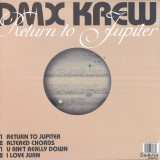
DMX Krew announces his return to Peggy Gou's Gudu Records with a new four-track EP, sharing the dreamy, Detroit-inspired title track, ‘Return to Jupiter’.
The full EP - out 14th April 2023 - will be his second release for the label and Gudu’s first release of 2023, set to be the label’s busiest year yet.
Ed DMX made his debut for Gudu with 2019’s Don’t You Wanna Play? EP, becoming the first artist to release on the label outside Peggy herself. Ed and Gudu have retained a regular working relationship ever since: he mastered Indonesian crate-digger Dea’s ‘Glazer Drum’ release for Gudu, contributed a pair of remixes to the reissue of Riff’s South African electro curio ‘Jacks Jive’, and now returns to the label with Return to Jupiter, a new original four-track EP.
Ed has been one of electronic music’s most respected faces for over 25 years. Debuting in the mid-1990s, he released his first decade of music almost exclusively through Grant Wilson-Claridge and Aphex Twin’s Rephlex label and his own Breakin’ imprint, but recent years have seen him ply his trade across a who’s who of dance music’s most respected underground labels: including Hypercolour, Balkan Vinyl, Central Processing Unit and, of course, Gudu.
Inspired by the futurist funk and vivid synthesiser epics of classic Detroit, ‘Return to Jupiter’ is dripping with richness and colour, driven by the sort of thick analogue basslines and distinctive melodies that have come to define Ed’s catalogue. The EP’s title track sets the tone for what’s to follow, introducing a language of sorts for the record - before ‘Altered Chords’ turns the funk up to 11, ‘U Ain’t Down’ aims its distorted kicks and wiggy, manipulated lead straight at peak time dancefloors, and ‘I Love Juan’ closes the EP on a star-gazing tip.
Founded by Peggy Gou in 2019, Gudu releases music from a global roster of artists, including DMX Krew, Maurice Fulton, Hiver, Dea, Mogwaa, Brain de Palma, Dukwa, JRMS and Peggy herself (including the hits ‘Starry Night’, ‘I Go’ and ‘Nabi’). 2023 will see Gudu’s busiest year to date, with new releases scheduled from the current roster and some exciting new faces.
Pink Blue Marbled Vinyl
Angelo is an EP, named after a car, featuring nine songs Brijean have crafted and carried with them through a period of profound change, loss, and relocation. It finds percussionist and singer Brijean Murphy and multi-instrumentalist/producer Doug Stuart processing the impossible the only way they know how: through rhythm and movement. The months surrounding the acclaimed release of Feelings, their full-length Ghostly International debut in 2021 which celebrated tender self-reflection and new possibilities, rang bittersweet with the absence of touring and the sudden passing of Murphy's father and both of Stuart's parents. In a haze of heartache, the duo left the Bay Area to be near family, resetting in four cities in under two years. Their to-go rig became their traveling studio and these tracks, along with Angelo, became their few constants. Whereas Feelings formed over collaborative jams with friends, Angelo's sessions presented Murphy and Stuart a chance to record at their most intimate, "to get us out of our grief and into our bodies," says Murphy. They explored new moods and styles, reaching for effervescent dance tempos and technicolor backdrops, vibrant hues in contrast to their more somber human experiences. Angelo beams with positivity and creative renewal _ a resourceful, collective answer to "what happens now?". Angelo the car is a 1981 Toyota Celica they got off Craigslist during their first stint in Los Angeles, where Murphy and Stuart have since settled. "Such a bro-y, `80s dude car, it's been super fun to drive around in a new town," Murphy says. "He's older than us, he's a classic, he's got a story." It is a spiritual vehicle with a cinematic appeal, first dropping them off in an alleyway for the scene-setting intro, "Which Way To The Club." The question is quickly resolved by "Take A Trip" as a cruising bassline mingles with crowd sounds, hand-claps, cuíca hiccups, whip-cracks, even a horse neigh. Brijean have found some club on this cross-dimensional trip - the kind of imagined space or chamber within one's self capable of "shifting a fraction of who you are," says Murphy. They wrote the track with the simple intention to be "as free as we could be," adds Stuart, likening the flip on the B section to a realm unlocked: "What if the world changed completely? You open the door to a new room." Next is "Shy Guy," a motivational anthem for the wallflowers among us. Murphy sets up the daydream: "We are in junior high, we're on the dance floor, what's going down, who is dancing, who is not, how are we gonna make them dance?" The narrator, the MC, hypes up the room as conga-driven rhythms bounce between languid synth and guitar lines. "Show me how to move...I feel something...I know you feel it too," Murphy sings sweetly, calling back to the opening lines of Feelings, and this time the audience chants it back. It is easy to picture Brijean performing this one - something they only got to do a handful of times until more recently, opening shows for Khruangbin and Washed Out, an experience they found informative. Murphy explains, "It was inspiring to be out there and let loose more. To see how people can expand their expression on stage gave me more liberty with how I viewed my musicianship. My role for so long was to be a backup percussionist, so why would I ever leave the drums, you know? But then after playing all these runs, you see these artists and realize you can, you have permission." "Angelo" and "Ooo La La" deliver the danciest stretch in Brijean's catalog to date. The title track adopts a deep house pulse replete with strings, hi-hats, and kicks. The latter opts for a funkier groove that foregoes verses in favor of warbled hums and extended breakdowns. What follows is perhaps the duo's dreamiest run, a comedown initiated with the honey-hued interlude "Colors" drifting into "Where Do We Go?", a tropicália reverie where Murphy contemplates the passage of time and space. It all culminates in "Caldwell's Way," a fond farewell to their Bay Area community - "a part of my life that I knew couldn't come back," says Murphy. Above shimmering organ sounds, lush strings, and the birdcall of their former neighborhood, she wistfully articulates the uncertainty of moving on by remembering the characters dear to them. There's the wisdom of their neighbor, Santos, who refused payment when helping them move out: "I'd rather have 100 friends than 100 dollars." And the song's namesake, Benjamin Caldwell Brown, a friend and club night cohort for many years. "I'm only miles away, maybe I'm just feeling lonely," the line resigns to warm nostalgia, and "Nostalgia" runs the closing credits to this healing and transportive collection.
Everything eventually turns to dust. Everyone knows this, but few want to acknowledge that our time on this mortal coil is fleeting, preferring to remain in stasis, in hopes that "the end" will pass them by. Chicago trio FACS (guitarist Brian Case, bassist Alianna Kalaba & drummer Noah Leger) have been perfecting their brand of intense, cathartic post-punk over the course of four ever-evolving albums, beginning with 2017's "Negative Houses" thru 2021's landmark "Present Tense', which saw the trio dig deep into the gaping maw of a black hole & pulling back whatever debris they could grasp onto. Their newest "Still Life In Decay" comes as an addendum to the last album - a "post-event review" if you will. "Still Life In Decay" starts with a squall of white noise before collapsing into the band already locked into "Constellation"s lumbering groove, with Case's guitar a ghostly presence, appearing & disappearing in washes of gauzy feedback throughout the track. FACS have never been more locked in as a unit, and "Still Life In Decay" is a decidedly more focused effort. The apocalyptic chaos that defined their previous album "Present Tense" is waved away in favor of an examination of events with cumbrous clarity. FACS are a heavy band, but they don't necessarily FEEL like one (see side two's "Still Life", where Case's fluttering, melodic guitar lines are buoyed by the insistent, underlying pulse of the bass & drums). As a rhythm section, Kalaba & Leger dance & twist around each other like a double helix, forming the DNA of what makes FACS special. Collectively they approach rhythm from outside the groove as opposed to inside it, creating a lattice where Case weaves guitar lines like creeping vines, which makes the moments on "Still Life In Decay" where the band DOES lock in even more powerful. When the guitar punctures the lock-step swing of "When You Say", it hits like a hammer. Case utilizes his lyrics like a person suffering from anterograde amnesia; repeating phrases & holding onto old memories in a desperate attempt to avoid the slide into oblivion. Freeform poetic missives touching on themes of resignation, cynicism, class warfare, and a search for identity & meaning in a crumbling society; A primal desire to hold onto anything in a post-pandemic barrage of sensory overload. The album is a decidedly local affair; recorded once again at Chicago's famed Electrical Audio by renowned engineer Sanford Parker & mixed at his Hypercube Studio in Chicago's Ravenswood neighborhood & mastered by Matthew Barnhart at Chicago Mastering Service.