Emerging from the Minneapolis underground and heading straight towards the sky, IE arrive on Quindi with a full-length album of sparkling, sophisticated wonder. Touching on kosmische grandeur, Riley-esque cyclical patterns, lounge pop and dubbed out psychedelia, the five-piece allow their songs to unfurl with a natural, hypnotic elegance which can take many different forms.
There's a loose, live quality to the recordings IE's members commit to record, which reflects their steady presence gigging in Minneapolis and the surrounding area. Since putting out their first release in 2016, they've glided from drone and synth-led jam band ambience (2018's Pome) to strung out, stoner-tinted slowcore (on 2023's outstanding Junk Body). For Reverse Earth they strike a smoky note that wraps itself around your skull across extended run times that evolve with a meditative poise.
From the deceptively driving 4/4 thrum of the opening title track through 'Divination Bag's snaking tryptamine mantras on to 'Simplify's slow and smouldering indie-soul, IE's sound is bathed in a sumptuous warm glow that rounds out the lows and the mids, creating a nocturnal shroud in which their nebulous song structures can feel deliciously endless.
Meredith Gill's drums provide rolling and tumbling undercurrents for the slowly shifting phases of the instrumental players, as Michael Gallope and Travis Workman trade keyboard parts and Workman and Sam Molstad chop and pick at their six-strings. Atop the thrum of her bass, Mariel Oliviera's vocal adapts to the scenery, from a distant, dreamlike siren song on 'Reverse Earth' to a spoken word meditation on 'Babel'.
There's space in each track for every instrument to cut through and have its moment, from a spiralling key vamp to a chicken-scratch guitar flex. The gently twisting, head-feeding groove exercises of the first four tracks give way to a slow and powerful march on 'Dark Rome', closing the record on a noirish anti-ballad fit to peal out in the closing slot at Twin Peaks' Roadhouse (circa season three).
As much as the tracks teem with composition, musicianship, and production to savor, a sound like IE's has a soporific quality that soaks in unconsciously. It's an evocative portal where the band feel as if they could just play on each piece ad infinitum - where the time itself seems to dislodge from its moorings.
out of Stock
Last delivered 17 months ago available to reorder, subject to availability
D R E A M S I C L E marks the highly anticipated 4th studio album from Grammy-winning singer-songwriter Maren Morris, via Columbia Records. Featuring songs written by Morris with Julia Michaels and Tobias Jesso Jr, plus production by Jack Antonoff and Greg Kurstin, this album is a deeply personal exploration of transformation, resilience, and self-discovery. As Morris describes it, “D R E A M S I C L E takes place in the aftermath of loosening my grip on my personal and professional life. Sweeping through the pits of grief, but never staying too long, and finding the joy in knowing that at my core, I’m still who I am – and that’s pretty f-ing great..." TRanslucent Orange LP Vinyl & standard CD. Promo & marketing activity.
Trambeat are an original soul band from Croydon, South London, formed in 2012 by songwriting duo guitarist Graham Potter and drummer Des James. The two played together in various bands over the years, eventually bringing together like-minded musicians from the Croydon music scene to form Trambeat. The name "Trambeat" derives from the where the band call home, with all band members living along the tram line that runs through the heart of Croydon. Initially the band operated as a loose collective, recording music and self-releasing it online and on CD. But following the 2013 release of their debut vinyl single, "Walk a Mile In My Shoes", and debut album "Tales From the Comprehensives" on Berlin labels Firestation Records and Sundae Soul Records, things began to move fast. With regular airplay by Gary Crowley on Radio London, offers of gigs began to roll in and they quickly morphed into a tight and exciting live band. Trambeat have supported the likes of Ranking Roger's The Beat, Geno Washington, The Four Aces (Desmond Dekker), Shakatak, The Flatmates and The Popguns and have featured at festivals right across the UK and Germany. Trambeat's debut release with LRK Records in 2023, the uptempo funk/soul crossover song "Don't Hold Back", proved popular at both Northern Soul and Funk clubs and was championed by "Northern Soul Girl" Levanna McLean who released a widely viewed clip dancing to the record. Indeed it became a staple at her very own Bristol Northern Soul Club and Funk Addict nights. The new single, "All Killer, No Filler", builds around a sultry, strutting bass riff bolstered by jazzy horns and a funky Nile Rogers influenced guitar. Vocalist Aimee lays down her manifesto for love without compromise, before building to an anthemic chorus you can't help singing along to.
out of Stock
Last delivered 17 months ago available to reorder, subject to availability
"Chicago-based composer, improviser, multi-media artist and underground legend, Rob Mazurek, joins forces with modular-synth maestro and light magician, Alberto Novello for a blacklight invocation that hurls us out into new and uncharted sound-dimensions.
Born of a chance encounter, Alberto Novello and Rob Mazurek's improvised collaboration, Sun Eaters, was recorded in a single afternoon at Dobialab, an experimental artist run space in Northern Italy. Alberto provided a loose rythmic and timbral bedrock over which Rob Mazurek sketched and weaved delicate harmonies with trumpets, adding atmosphere with bells and sampler.
Sun Eaters is a dizzying and disorientating space ritual, a totally out excercise in telepathic collaboration and psychedelic sound."
Modular Synth by Alberto Novello.
Trumpets, sampler, bells by Rob Mazurek.
Produced by Alberto Novello.
Recorded at Dobialab, Italy on 6th February 2024 by Michele Pegan.
Mixed by Alberto Novello at Ni Dieu Ni Maitre Studios Italy & Air Residency Austria.
Mastered by Hrvoje Nikšić, Croatia.
Artwork by Giulia Spanghero.
Some time back just after then and before now, i was approached to work up a rough working script for a Punk Rock film, based on a boys entre into the whole Punk Arena and how it would affect his life. A loosely updated tale somewhere along the lines of a ‘Punk Quadrophenia’.
After many stop / starts and we are waiting for funding… etc, etc... and changing of ideas. I thought I better just get on with it. I worked up twelve tracks and put an opening script together for approval. Like some of the best made plans, as time moved on, so did the theme and the initial rush of enthusiasm rolled on to somewhere else.
A shame but lurking in the back of Punk Art studios the tapes were found and a bent up copy of the working introduction script. So here it is in all its rough and ready glory. Who knows what might have been but here is some of what could have been… hope you enjoy the idea.
Mal-One
Driving is Sam Wilkes’ Indie Rock record. Iit is the first release on Wilkes Records, an imprint borne of the artist’s emergent need to self-release. The songs presented here exist comfortably within the ever-expanding Wilkesian cosmos, characterized as they are by virtuosity, torqued experimentalism, and collaboration with a range of talented musicians. But Driving’s influences, its sincerity, and its allegiance to a certain pop sensibility reflects a departure for an artist who has primarily staked his claim within the experimental jazz idiom.
Take the first track, “Folk Home,” which inaugurates the album’s fecundity—a bright, green, humid, summer feel. A swirling, freakout coda of reversed vocals gives way, in no short order, to a caterwaul of flute work that conjures Van Morrison’s (in)famous Astral Weeks sessions. Standing beside Morrison, the usual suspects are all present, if somewhat abstractedly. Dylan, The Dead, Joni, the Fab Four. Wilkes has developed a reputation as an experimental jazz luminary, but his deep affinity for the pop/rock/folk idiom of the latter twentieth century rings clear throughout Driving. More so than any Wilkes release to date, Driving is a collection guided by and dedicated to the man’s attention to songcraft.
Written and recorded during a period of rain-damage induced renter’s itinerance (and the attendant desire to produce a kind of therapeutic, self-soothing, home-feeling music), Driving loosely charts the trajectory/experience of “a protagonist,” both Wilkes and not, “who has figured out how to live an enlightened and fulfilled life, but is unable to do so because he thinks about it too much.” This friction is surely relatable — a symptom of our compulsively self-aware present. But Wilkes avoids the obvious pitfalls of public hand-wringing. Rather, Driving’s nine tracks evince a genuine, and mature searching-ness, both sonically and lyrically. The ending refrain of “Own” serves like something close to a thesis— “Letting go // isn’t a concept // it’s an action.” In an attempt to beat back ego, hyper-cogitation, language itself, Wilkes arrives at an axiom that feels so true and familiar, you’d swear you’d heard it one hundred times before.
Driving’s final third is, fittingly, its most emotive and cathartic. Tracks seven and eight, “Again, Again” and “And Again,” form a diptych, joined most obviously by the jangling, recursive grooves of guitarist Daryl Johns. Wilkes is said to have encouraged Johns to go “full Lindsey Buckingham” (clearly a welcome and resonant prompt), but one also catches stray Knopfler vibes, some intermittent Fripp, and (perhaps more-so in tone than technique) the spirit of DIY prophet and jangling man himself, Martin Newell (the Cleaners from Venus). Wilkes has stated that he finds joy in creating musical environments suitable to the contribution and flourishing of his favorite musicians. Throughout Driving, and in these two tracks especially, he has more than succeeded.
The record closes with the titular track: a story-song that, according to Wilkes, poured out of him (melody, composition, and lyrics) in a single sitting. The tale is told plainly, bravely, starkly; a mistake was made, regrets have been had, and all is wrapped up in the recollection of a deeply felt adolescent heartsickness—a time when the narrator was first afire with music and automotive freedom. The song captures the moment when meaning inexplicably falls into place, when a long-nagging memory suddenly assumes narrative form, and the subsequent sense of lightness and unburdening. It is fitting that Driving, a record conceived as a form of self-therapy, should culminate with a sense of humble revelation. That Wilkes is plainly eager to share the vulnerable fruits of this labor constitutes Driving’s joyful offering.
On their latest album, XIXA leave the sunbaked desert behind, taking listeners on a journey through the underworld. Diving into the richness of folklore, Brian Lopez and Gabriel Sullivan, who share XIXA’s songwriting, lead vocals and lead guitars, expand on their mystic, psychedelic rock, reaching more into their Latin influences to create a musical and lyrical narrative for XOLO, an album exploring both a mythic journey and what messages it might have for today. XOLO (in both band name and album title, the x is pronounced like ch) refers to the breed of Mexican hairless dog, Xoloitzcuintli. In Mayan and Aztec cultures, these dogs were held sacred and believed to have been guides through the underworld, Mictlán. The record loosely tells the story of a young girl, Arcoiris, who is guided through all nine levels of Mictlán by her sacred protector, El Xolo. The songs represent the various encounters El Xolo and Arcoiris experience while finding their way through a land of mystery and shadow. In a way, the idea of a Xolo-themed record pre-dates the band itself.
Capturing phantom drones behind dusty beats and haunted twangs, Ellis Swan and James Schimpl return for their third album as Dead Bandit. Locked into a musical language unique to their collaboration, the duo once again put us out to pasture across broad sonic plains, drums flapping like loose fence panels in the prairie breeze and bass rumbling like distant thunder. True to their previous two records, Swan and Schimpl keep the strung out guitars at the front of what they do, whether playing a naked, desolate strum or running six strings through disruptive effects processing until they're barely recognisable.
But while there are details of disturbance when listening to Dead Bandit's self-titled record up close, the wider impression is a smoother, more direct affair that toys with post-rock complexity and matches it with the emotional weight of melodic simplicity, gentle grooves and conscious arrangements. 'Weeds' offsets its languid fuzz guitar with shimmering sustained notes before settling into a patient, heavy-hearted composition charged with heartbreak leads pealing out in the middle distance.
By comparison, 'Glass' has a smoky, half-hidden backroom quality. Its brushed whisper of a beat, lingering guitar drones and subtle sub bass come on like a dub wise flip of a sad-eyed country ballad. The mood maintains on 'Half Smoked Cigarette', which captures the grey sky sullenness of post-punk and reframes it in the seductive isolation of rural America. While there's a thickness to the sound on these most direct of tracks on the album, there's also fragility inherent to the sound world Dead Bandit have been shaping out over these past few years.
'Buttercup' swaps sadness for sinister undercurrents, once more drawing on fulsome low end to fill out the sparse threads of instrumentation up top. 'Pink' finds a steady momentum for its own brand of brooding mystery, the sharp end of the beat bringing focus to the many-layered approaches to the guitar which roundly define the Dead Bandit sound. There's an even clearer direction mapped out in the vintage drum machine pulse of 'Koyo', all the better to carry swirling effects treatments and moody melodic figures. Even in these ominous climes there's space for plaintive, endearing hooks which land as the most direct phrases in Dead Bandit's musical lexicon to date.
The fundamental sound across this album holds true, but Dead Bandit are never bound to a singular practice. 'Lucien's Bitters' strikes up a pronounced drum machine beat which comes on like 90s downtempo, and it feels like a natural vessel for the heavy, shoegaze tinted lament of the guitars. At every turn, Swan and Schimpl prove their affinity for all kinds of approaches, and yet the end product is a deeply cohesive, immediate listen that shows just how clear their creative vision really is.
out of Stock
Last delivered 17 months ago available to reorder, subject to availability
Joni Void, the artistic persona of Montréal-based French-British producer Jean Néant (he/them) returns to songcraft on their warmest and most welcoming record yet, where the acclaimed sampledelic sound collagist chills out with an emotionally resonant song cycle tinged by downtempo, lo-fi, avant-pop, and trip-hop. Guests include Haco, Ytamo, Sook-Yin Lee, Pink Navel and N NAO. Every Life Is A Light expands on Void's recent stylistic turn towards more languorous and mellow lo-fi production, foreshadowed by the drifting looseness and ambient bricolage of their preceding experimental sound-art record. This transitional sensibility now shapes more defined song structures and styles, with loops are given time and space to unspool, and rhythms shot through the softer-focus lens of trip-hop and dub. Every Life Is A Light swaps the twitchy insistence of Void's acclaimed early albums for a newfound lightness and suppleness, still imbued with all the restlessness, sonic detailing, and emotional resonance that made their name. The neurotic brokenmachine kinetics of earlier Void, summarized by Sasha Geffen as "drawing despair and wonder from within the vast unfeeling of digital communication" in an 8.0 Pitchfork review, may be chilling out, but Void is becoming an ever better conjurer of hauntological feeling. Every Life Is A Light summons this in a comparatively buoyant, benevolent, head-nodding journey more open to tenderness and modest joys. Perhaps it's the sound of Void at greater peace with themselves and the world, despite the bittersweet cost: even as it channels grief, memorializing comrades and companions recently deceased, this album wants light. Void's raw materials continue to draw heavily from samples (their own Walkman cassette fieldrecordings and songs by others) and from a wide community of musical guests. Vocalists Haco on "Time Zone" and Ytamo on "Cloud Level" help levitate what could be lost tracks from a mid-90s Too Pure Records compilation of skewed-lounge electronica. Canadian musician Sook-Yin Lee sings on lead single "Vertigo," a sinewy 80bpm tape-loop and bassline groove propelled by psychedelically-layered lyrics that eventually turn the song in on itself entirely, like Grace Jones' "Nightclubbing" covered by Animal Collective. One of Void's greatest hip-hop loves is the Ruby Yacht collective; charter member Pink Navel drops some brilliant verses on "Story Board." The album's two minimal tracks, an extended piano loop set to a slow beat and shimmering electronics on "Muffin-A Song For My Cat" and the languid sampled bass riff and breakbeat of "Event Flow," are perhaps most overtly `lofi chill.' Indeed the whole album could be said to sit adjacent to those viral (if not already AI-generated) genre trends, which maybe begs the question on a lot of our minds: can specificity and authenticity of musical materials still be heard, still meaningfully signify substance and difference, still matter? Perhaps a question that fades in comparison to the career break Void could catch by landing on generic streaming playlists. More likely, these tracks remain too off-kilter, too genuinely lo-fi and ineffable, and too disqualified by the status of its peasant rights-holders, to catch the algos. Context remains the poor cousin of content. Meanwhile Void marches on, as a tireless organizer of local music events, bouncing around and often living in DIY venue, depending on the latest apartment eviction. With an ubiquitous polaroid camera in tow, they also document each communal happening with a single shot (and often a blinding flash bulb): a memory and metaphor for lives illuminated preciously, singularly, `imperfectly' in the moment. Dozens of these polaroids adorn the album's back cover and inner sleeve art in grid-like montages, as a fitting analog for the careful construction, grainy intimate materiality, and ephemeral feeling of these songs. Every Life Is A Light is Joni Void's most coherent and congenial record while relinquishing none of their experimentalist acumen as a producer or emotional attunement as a composer. Instead these qualities flourish, on an album that lights a humble flame for the fragile promise of homespun creative collaboration as unalienated labour and therapeutic communion, making an enchantingly idiosyncratic contribution to downtempo sample music along the way. Thanks for listening.
An intimate recording from the Blues hall-of-famer that puts you in the room with 3 Blues legends!
Remastered by multiple Grammy winner Michael Graves.
One of Candid’s historic blues releases, Memphis Slim, U.S.A. finds the Blues Hall Of Fame inductee in a rare, relaxed setting with two close friends and fellow blues icons, Jazz Gillum and Arbee Stidham. The intimacy—from their loose interplay and improvisation to the eerie realism of the recording—is palpable and feels more like an invitation to their inner circle than a commercial release.
Grammy-winner Michael Graves’ sensitive remastering brings Memphis Slim, U.S.A. to life, letting listeners in as the piano legend and his buddies offer a musical history of the blues from its Southern juke-joint roots up to its Chicago-style move toward R&B.
Memphis Slim, U.S.A. is an essential document that Candid is proud to bring back to the blues canon.
The Cosmocities label keeps it class with another deliciously deep house outing. This one comes from You Udagawa who opens up with 'Into The Rapture', a melodically rich cut with twinkling keys, lush pads and icy cow bells all detailing a steamy groove. 'We Become' is a loose-limbed sound with live-sounding chords and percussive bringing a Detroit vibe. Francesco Tristano remixes with a signature jazzy touch and nimble key work. 'Flows Forever' then keeps the jazzy, dance vibes flowing with more live drums and louche hits, 'Radiance' exudes cuddly warmth and late-night feels and Atjazz dubs it to perfection.
out of Stock
Last delivered 6 months ago available to reorder, subject to availability
Fust--the lyrical powerhouse Southern rock band from Durham, North Carolina--announce their new album Big Ugly, out March 7th on Dear Life Records, the record label that launched the careers of MJ Lenderman and Florry and that has become a haven for contemporary songwriters. Big Ugly arrives after the release of 2024's Songs of the Rail--"one of the best alt-country compilations_in a long, long time" (Paste) -- and 2023's standout Genevieve, which unassumingly introduced new listeners to Fust's unmistakable blend of "small-town poetry" (Mojo) with a familiar yet probing "country-tinged folk-rock" (KEXP) that made it "one of the most fun rock records of the year" (Pitchfork). Genevieve was their studio debut, recorded with producer Alex Farrar (Manning Fireworks, Rat Saw God, Tomorrow's Fire) in Asheville, North Carolina. The reception was far better than the band expected, stirring them to immediately start working on Big Ugly, their second collaboration with Farrar. Recorded over ten days in June of 2024, Big Ugly is the explosive sound of Fust uncovering a freedom within their sincere form of loose and fried guitar rock, realizing more than ever before an intimacy within bigness. The members -- Aaron Dowdy, Avery Sullivan, Frank Meadows, John Wallace, Justin Morris, Libby Rodenbough, Oliver Child-Lanning--weave their voices alongside guests like Merce Lemon, Dave Hartley (The War on Drugs), and John James Tourville (The Deslondes) to form a music that sounds like a conversation between old friends. And that's exactly what it is. At its heart, Big Ugly is a story cycle, following tough-skinned characters who seem to inhabit a shared and fictional small town--Big Ugly--that in reality gets its name from a lowly populated and unincorporated area in southern West Virginia around where Dowdy's family has deep roots. The album cover_a mural from the Big Ugly Community Center just off the Big Ugly Creek--was painted by locals for a 2004 play performed by the children that interpreted their elders' stories. In a way, Fust's Big Ugly does something similar as it takes the same area as its backdrop and reimagines a life depicted in the mural between the bars, gas stations, general stores, and double-wides. Throughout the album, we join the characters in finding history and meaning in the banal theater of their own private jerkwater.The songs on Big Ugly are hearteningly varied, moving from beer-fisted radio country to elegiac drones to deconstructed ballads. Songs like "Spangled" take up the theme of past traumas and present desensitizations colliding, of the small and cosmic coinciding in the life of a heedless protagonist. "Bleached" finds the soul-searching narrator recalling the feeling of inner vacancy in their childhood: thoughtless, speechless, herded around like cattle in backseats. And "Mountain Language" laments the poverties of Southern life at the same time that it promotes a higher poverty, a country utopia that's just out of grasp, where we could live if we could only "make it up the mountain again." The mystical hermeticism and the dime-store everyday are two sides of every insignificant thing in the town of Big Ugly.
Named after a Kate Bush deep-cut, James And The Cold Gun are dubbed "South Wales' Loudest" group from Cardiff, Wales UK. Earlier this year, Loosegroove Records (a Seattle-based label owned by Stone Gossard (Pearl Jam) discovered the band on KEXP Seattle w/Kevin Cole and immediately signed them. Their most recent single Chewing Glass was met with rave reviews from NME, Apple Music's Rockstars of 2023 Predictions, a recent sync in Rookie:Feds on ABC, and dozens of DSP playlist features across Spotify, Amazon, Apple, Deezer, and more.
Italian composer and saxophonist Laura Agnusdei returns with “Flowers Are Blooming In Antarctica” a career defining record that sees the artist diving into uncharted waters, a profound timeless meditation on our relationship with planet Earth, the eco-conflicts arising and the fascination with non human forms of life, backdropped to a vivid soundtrack of coral exotica, spiritual Jazz, fourth-world minimalism, tropical electronics, tribal futurism and contemporary elegance.
Every step of Laura Agnusdei’s path, from electroacoustic experimentation to her constant research based upon the acoustic dimension of wind instruments and their interaction with polymorphic electronic sounds, seems to have pivoted into a new sense of awareness, as if the mind and intellectual practice has finally caught up with the body, the heart and the soul, resulting in her most organic and transcendent work yet. “Flowers Are Blooming In Antarctica” is loosely inspired around a trifecta of pioneering ideas that explore unconventional reality: James Bridle’s ‘Ways Of Being’ with his radical story that mixes ecology, tech and intelligence; Luigi Serafini’s late-70s fantastical ‘Codex Seraphinianus’, an unparalleled collection of flora, fauna, anatomies metamorphosed into new fragile beings; J.G. Ballard’s climate-fiction foreshadowing sci-fi ruminations. These influences shift Agnusdei’s musical trajectory injecting doses of terrestrial malaise, the earthy sub-saharan ‘Ittiolalia’ with its wah-wah filtered sax and trance inducing groove; the rubbery playfulness of ‘Oasi Bar’; the gentle eco-system of ‘P.P.R.N’ reminiscent of Herbie Hancock’s innovative synthesis of funk, space and synthesizers; the kaleidoscopic northern lights of ‘Emperor Penguin Lullaby’, where south-east Asian echoes reach icy shores; the Jon Hassell hyper-ambience of ‘Cuttlefish REM Phase’; the post-apocalyptic march of ‘The Drowned World, a jazz standard for an artificial civilization on the brink of self-destruction. Nothing feels out of place and it’s no coincidence that one of the most powerful messages on the record is delivered on centerpiece ‘Are We Dinos?’ via an interview conducted with two preschoolers. Radical optimism or sonic liberation?
Laura Agnusdei’s tenor sax cuts deep all across “Flowers Are Blooming In Antarctica”, a laser baton raised up to the clouds, a conductor orchestrating devotional soundscapes for a three-eyed dolphin, guiding us through prismatic pastures and acidic oceans. Her tropicalized realm is pin-pointed with Miles-like sheer clarity, a bristling nakedness on the verge of exploding at any time, creating an album where ascension becomes the unifying code.
Loyle Carner will release his highly anticipated sophomore record, 'Not Waving, But Drowning' on 19 April via AMF Records.
'Not Waving, But Drowning' follows Loyle's BRIT (Best Male, Best Newcomer) and Mercury Prize nominated, top 20 debut 'Yesterday's Gone'. The bedrock of honest and raw sentimentality that you heard on 'Yesterday's Gone' left an inextinguishable mark on music in general and UK Hip Hop in particular, standing out as an ageless, bulletproof debut.
'Not Waving, But Drowning', Loyle's new album, gives yet more evidence - as if it were needed - of his razor-sharp flow and his unique storytelling ability. Yes, he can rap, but he allies that with the sensitivity of a poet, the observational skills of a novelist, and warmth of your best friend. The album opens with 'Dear Jean', a letter to his mother in which he's telling her that he has found the love of his life, 'a woman from the skies', and he's moving out.
It goes without saying that Loyle's music is hard to categorise, but what is even more impressive is that for someone who grew up listening to Mos Def, Biggie Smalls, Roots Manuva, and Wu Tang Clan, he doesn't sound like any of them. Although he might from time to time give lyrical nods to them, he's no imitator.
Loyle loves cooking. There are two tracks on this album named after chefs. The British-Israeli chef Yotam Ottolenghi, and the now deceased Italian chef Antonio Carluccio. 'Ottolenghi' the first single from the album was featured on the BBC Radio 1 B-list, BBC 6 Music A-list and has already been streamed over 5 million times.
Loyle refers to real life for everything, the title of 'Yesterday's Gone' came from a song of his step father, the title of his new album 'Not Waving, But Drowning' comes from a poem by his grandfather, which in turn came from a Stevie Smith poem. What you hear on the track 'Krispy' is real. He is pouring his heart out to his best friend Rebel Kleff after their relationship went downhill, he invites him on the track to say his piece but he doesn't turn up, so we get a flugel solo instead.
Loyle also has his own personal black consciousness movement. When he refers to his 'fathers' in the track 'Looking Back' he really is referring to two fathers. His biological father, a black man who he knows, but knows very little of, and his step father, a poet and musician who happens to be a white man but died a sudden unexpected death from epilepsy (SUDEP). With no real emotional ties to his biological father, but a deep connection with a deceased step-father, where does a young child turn He succinctly captures many of the great, unspoken, cultural and historical paradoxes of multicultural Britain on 'Looking Back'.
An album like this is hard to find. It is for those who like their Hip Hop to have soul, and their soul to have spirit. This is because it works on so many levels, but it is reflecting the personality of its creator. There are a host of collaborators here, Jorja Smith, Rebel Kleff, Kiko Bun, Kwes, Jordan Rakei, Sampha, Tom Misch and more, but none are overpowering. They blend righteously into place.
Loyle is not bitter with people who have let him down, or a society that lets so many down, but the combination of anger and love he has gives his voice the perfect blend of strength and vulnerability. This might be a coming of age album, but it's also a coming of ageless album. Loyle's 2019 Spring tour - which includes London's Roundhouse - sold out within 20 minutes of being on sale.
Not Waving, But Drowning
A rapper that raps about family is hard to find. The boys in the 'hood' tend not to be that interested in how much a 'brother' loves his mother, or how much he misses his dad, or even how much he misses his best friend. The boys in the 'hood' tend to be obsessed with the size of their cars, girls, bank accounts, and other personal 'possessions'. Loyle Carner's Mercury and BRIT Prize nominated debut 'Yesterday's Gone' (Released 2017), made it clear that he wasn't that kind of rapper. In fact, every time I talk to him about his work we talk about the world, and we tended to confuse ourselves by calling his work rap, poems, or songs, sometimes in the same sentence. They are in truth all of these things.
Here's some poetry.
Honestly I need them.
I hate them but I grieve them
I think I've finally found the reason
Trust
Like the fire needs the air.
I won't burn unless you're there.
'Not Waving, But Drowning', Loyle's forthcoming new album, gives us yet more evidence, (if it were needed), that he still has what rappers call, flow, but he hasn't lost any of his story telling qualities. Yes, the boy can rap, but a rapper with the sensitivity of a true poet, the observational skills of a novelist, and warmth of your best friend. The album opens with 'Dear Jean', a letter to his mother in which he's telling her that he has found the love of his life, (a woman from the skies), and he's moving out. He really loves the woman from the skies, but he still loves his mum, and so he reassures her that there is no competition, and tells her that 'She's not behind me or behind you, but beside we and beside two', his words. Or to put it another way, moving out without moving out. My words.
It goes without saying that Loyle's music is hard to categorise, but what is even more impressive is that for someone who grew up listening to Mos Def, Biggie Smalls, Roots Manuva, and Wu Tang Clan, he doesn't sound like any of them. Although he might from time to time give lyrical nods to them, he's no imitator. He says finding his own voice was something he always found easy. Although young, (in terms of a musical career), he has confidence in his own words and his own voice, and has never been tempted to sound like he's been hanging out in the USA, or rolling in 'Grime' on the mean streets of East London. And so when it comes to the creative process he doesn't simply find a beat to jump on and ride. Beats are important, but they are tenderly layered with samples, keyboards, or live drums, all imaginatively assembled for the laying on of words. Some tracks start with the idea, some with poetry, and some with a verse from a singer or some other melodic inspiration, but there is no formula.
Here's some poetry.
Don't hold any memories of us
Rather hold you everyday until the memories are dust
Yo we only caught the train
Cos you know I hate the bus
A prolific reader, who has dyslexia is hard to find. Add ADHD (Attention deficit hyperactivity disorder) to that and life should become even more difficult. To deal with your difficulties you devise coping strategies, which can differ from person to person. Loyle loves cooking. There are two tracks on this album named after chefs. The British-Israeli chef Ottolenghi, and the now deceased Italian chef Antonio Carluccio. Loyle describes himself as 'weird' because he is happy to read a cookbook as if he was reading a novel or a book of poetry. He has opened a cookery school for young adults not just because he loves food and wants to make more of it, but because it is one of the few things that can focus the ADHD mind. And when it comes to his other love, football, his approach is the same. Focus. He wanted to be a striker he says, up front scoring goals, but found his best position was in midfield because he was able to focus, check options, and see passes ahead of time, providing passes for other players just when they needed them. He says, 'You don't grow out of ADHD, you grow into it.' Loyle is also working with Levi's® on their music project where he is mentoring young musicians over a six month period, culminating at Liverpool Sound City festival.
More poetry.
When the going is tough
I wait till it falls on deaf ears
Hearsay
Without the boundaries of love
He also said, 'Ask most people and they will say that they love their mothers, but most are not going to rap about her'. On his first album Loyle's mum Jean wrote about the 'scribble of a boy' that growing up would take things apart to see how they worked. On this album she speaks with pride about a man who has found his place in the world.
Yes, poetry.
I'm still looking for the answers
Trying to find the right questions
Still waiting for my fathers
But can't break them in to sections
This poetry is serious. Loyle has his own personal black consciousness movement. He told me that he always felt safe at home, and being the darkest one in the family never meant a thing, but then when he had to face the outside world he felt hostility. It shook him up. Now he had to start asking questions, but what were the questions. This is serious. When he refers to his 'fathers' in the verse above taken from the track 'Looking Back' he really is referring to two fathers. His biological father, a black man who he knows, but knows very little of, and his step father, a poet and musician who happens to be a white man but died a sudden unexpected death from epilepsy (SUDEP). So to whom would a young black (or mixed race) kid turn He succinctly captures many of the great, unspoken, cultural and historical paradoxes of multicultural Britain when he says, 'My great grandfather could of owned my other one.' We are a people descended from enslaved people on one hand, and enslavers on the other, something we are still struggling to come to terms with, and this can be apparent in one family. A big book could have told you that, but here we get it in one line on the track, Looking Back.
Loyle refers to real life for everything. The album is peppered with captured moments that he records on his phone. These moments can range from conversations with taxi drivers, to capturing the moment when England scores a goal in the world cup. The title of 'Yesterday's Gone' came from a song of his step father, the title of his new album 'Not Waving but Drowning' comes from a poem by his grandfather, which in turn came from a Stevie Smith poem. What you hear on the track 'Krispy' is real. He is pouring his heart out to his best friend after their relationship went downhill, he invites him on the track to say his piece but he doesn't turn up, so we get a flugel solo instead. Yes people, this is real.
An album like this is hard to find. It is for those who like their Hip Hop to have soul, and their soul to have spirit, this is an album for those who have, (I'm sorry, I'm going to say it), emotional intelligence. This is because it works on so many levels, but it is reflecting the personality of its creator. There are a host of collaborators here, Jorja Smith, Rebel Kleff, Kiko Bun, Jordan Rakei, Sampha, Tom Misch and more, but none are overpowering. They blend righteously into place. Loyle is not bitter with people who have let him down, or the society that has let him down, but the combination of anger and love he has gives his voice the perfect blend of strength and vulnerability. This might be a coming of age album, but it's also a coming of ageless album. His first album worked, and this second album is a continuation of that work. Not creating a form, but being formless, as someone like Bruce Lee once said.
And here's some poetry from mum.
We talked long in to the darkest hours
Until we saw the burnished sky
And our eyes stung
As our words blurred and became thoughts
As we were silenced by the dawn
We clung to each other like sailors in a storm
out of Stock
Last delivered 19 months ago available to reorder, subject to availability
Smart dresser and dedicated beard groomer Manuold - real name Emmanuele Macagnone - has notched up some excellent releases since making his bow in 2017, including admired EPs on House Puff and Madhouse Records. Here he brings his classy brand of deep house to GLDOM for the first time. With its squelchy synth-bass, loose-limbed garage-house drums, gospel vocal samples and warm pads, opener 'Jersey' sounds like a long-lost Kerri Chandler gem. He continues the retro-futurist theme on the low-slung and jazzy 'Hot & Crunchy', before doffing a cap to deep house/tech-house fusion on the Tenaglia-influenced 'Zanzibar'. Over on the flip, 'Night Long' is a chunky slab of 21st century New Jersey deep house with an Italian twist, while 'In The Clouds' sees him successfully lean into his Italo-house influences while retaining a dreamy and chunky deep house flex.
out of Stock
Last delivered 13 months ago available to reorder, subject to availability
Straight outta Rockaway Beach, Queens, New York City, USA, THE WORLD, Prison is a state of mind, an experience, a loose collective, a band, a jam band and a bunch of psychedelic dudes who aren"t your average bunch of jambanders. All that, all at once, ALL THE TIME. You get what you"re dealing with here? No...you don"t. The only way to REALLY get it is to go to Prison -- and if you"re not from greater NYC and haven"t showed at any of the shows, here"s your best bet: their breakout album, Upstate. And whatta breakout! So high, you can"t get under it; so wide, you can"t get over it! How wide? Every song has two titles, that"s how wide. And almost everybody sings, like, all the time. That wide. Sure, you can break down the numbers -- five guys, five songs and four sides of vinyl in one gatefold sleeve -- but that won"t get you Upstate, either. Prison is the sound of everybody in the room figuring out where to go, individually and collectively. As they go through it, the meaning changes, the destination changes, the words mean something different. It"s meaning and no meaning, rising and falling, sinking and flying on the back of something massive cacophonized by three guitars, four vocals, a bass and drums. A lot of information bouncing around and enough time to really get you out of yourself! Take a look at the titles: each one a dichotomous inquest that the assembled Prison-ers march upon with fervor, glee, vengeance -- a whole spectrum of feels and perspectives woven into the jam for you to see. The Prison population changes with the seasons, and during the season this album was recorded, Sarim Al-Rawi, Mike Fellows, Sam Jayne, Matt Lilly and Paul Major were in Prison. Sarim you might know from Liquor Store, Mike"s made a bunch of scenes and records as Mighty Flashlight, Sam, who passed away in 2020 (R.I.P., brother) was in Love as Laughter -- and Paul Major you know from Endless Boogie, who Matt had roadied for -- and despite being "just a skateboarder who loves music" with no previous experience on the drums, he and Sarim inaugurated the Prison experience, like, seven years ago. Since then, it just fell together and it keeps doing so. A free thing called Prison.
TMNT: Shredder’s Revenge - Radical Remixes is a brand new take on Tee Lopes’ critically-acclaimed OST. This new soundtrack is included in the latest DLC from the multi million-seller game TMNT: Shredder’s Revenge. Several guests were invited to add their own touch: Anamanaguchi, Sean Bialo, Jake Kaufman, Button Masher, Keiji Yamagishi, Tomoya Tomita. Inspired by the 8-bit retro NES aesthetics, this album adds to the TMNT music legacy. Cowabunga!
This is the third release by Trevor Dunn (Mr Bungle, Fantomas, Trio Convulsant, various with John Zorn) and Kevin Rutmanis (Tomahawk, Melvins, Cows, Hepa/Titus) On this outing Trevor joins Lords and Lady Kevin (duo of Kevin Rutmanis and drummer/artist Gina Skwoz) for a full length LP "Last Days at Hot Slit"
Songs are loosely based on assorted gospel, blues and jazz songs, some original, some covers. Included is a re-working of Mingus "Devil Woman". The trio based the pieces on improvisations that were then arranged and used to build free standing songs. A multitude of instruments were exploited by all those involved, to create a sizzling blend of aural delicacies. The album title is from a collection by writer Andrea Dworkin, often sited as the Celine of feminism. Less outre perhaps than their previous recordings, these songs hover somewhere between soundtrack- like excursions, to jazz/ blues mutations to a demented "rock" sounding affair. Something for everybody, or perhaps, nobody! Uniting former and current members of Tomahawk, Last Days At Hot Slit marks a powerful reunion between Rutmanis and Dunn. The record took shape gradually, born from Rutmanis's raw, unconventional bass recordings. "I sent Trevor a phone recording of some hideous bass racket and asked if he wanted to add anything," Rutmanis shares. "What he sent back was something like delicious fresh cherries with ice and banana slices." The pair's combined creativity gave rise to a new, immersive soundscape, while their collaborative piece, Crackpot Whorehead, set the tone for the current formation of Lords and Lady Kevin."
Whitey Morgan & The 78’s make it to the top shelf of Bloodshot’s bar. NPR may not be the first place you’d think to go for snarling, blood-on-the-tele country music, but they sure got it right when faced with Whitey Morgan & The 78’s: “Staying close to the sound and subject matter of classic outlaw artists like Waylon Jennings, Merle Haggard and David Allan Coe, Morgan is poised to lead this hard-worn brand of country to the next generation.” More than a decade after we let this record loose, millions of Yellowstone viewers heard “Bad News” as delivered by Whitey Morgan & The 78’s from this here album.
We suspect more than a few of those folks will be compelled to drink straight from the source and hear more of what they love. It’s also not a stretch to say the rest of country has caught up with what Whitey Morgan was puttin’ down in 2010. Anyone listening to Chris Stapleton and Jamey Johnson will find a familiar friend right here. As for us, we like to think of their Bloodshot debut as the birth of Altlaw Country and 15 years later it’s earned the Barrel Select designation as one of the best damn records we’ve got. As such, this new pressing is on Bloodshot-red vinyl and now includes a replica of the Whitey Morgan & The 78’s Holiday Whiskey Extravaganza gig at Chicago’s Cobra Lounge
Disco-Antistat Ultrasonic - The most thorough way to wash records!
Our record washing machine Disco-Antistat Ultrasonic combines over 40 years of experience in the pflege and cleaning of records with highly developed, state-of-the-art cleaning technology.
The combination of ultrasonic cleaning and our proven goat hair brush system ensures gentle, groove-deep cleaning of your records and an audible improvement in the sound image. During operation, the cleaningfluid is permanently clarified by a filter system and dirt particles are rausgefiltert to minimize impurities in the liquid and thus achieve the best possible cleaning result.
Through our special cleaner, the record is treated antistatically and thus permanently prevented from re-soiling by adhering dust. With only a few handgriffen our washer is ready for operation and the intuitive operability ensures optimal results from the first record!
The simple and intuitive handling as well as the operating elements reduced to the essentials enable best cleaning results from the first record.
The cleaning time can be conveniently adjusted to the degree of soiling of the record, supported by a functional display.
A clearly visible progress indicator provides information on the cleaning status at a glance.
After use, the gefilterte Reinigungsflüssigkeit can be conveniently filled back into the bottle at the touch of a button via a built-in pump.
The permanent filtering of the cleaner prevents the liquid from accumulating dirt. Thus, a consistent cleaning result is achieved.
Thanks to the innovative magnetic coupling, inserting and removing the record is simple and quick.
Driven by an electric motor, the record rotates evenly in the tank, whereby a homogeneous treatment with ultrasound is achieved.
Cleanliness you can hear! A powerful ultrasonic transducer generates so-called cavitation bubbles, which act directly on the dirt and remove it gently and effectively. The ultrasonic waves also reach places that are inaccessible to conventional cleaning methods and ensure cleanliness down to the depth of the groove. The loosened dirt particles are then wiped off on the soft goat hair brushes.
DE:
Automatische Ultraschall Plattenwaschmaschine
Disco-Antistat Ultrasonic – Die gründlichste Art der Schallplattenwäsche!
Unsere Schallplattenwaschmaschine Disco-Antistat Ultrasonic vereint über 40 Jahre Erfahrung in der Pflege und Reinigung von Schallplatten mit hochentwickelter, modernster Reinigungstechnik.
Die Kombination aus Ultraschallreinigung und unserem bewährten Bürstensystem aus Ziegenhaar sorgt für eine schonende, rillentiefe Reinigung Ihrer Schallplatten und einer hörbaren Verbesserung des Klangbildes. Während des Betriebs wird die Reinigungsflüssigkeit permanent durch ein Filtersystem geklärt und Schmutzpartikel herausgefiltert, um Verunreinigungen der Flüssigkeit zu minimieren und somit das bestmögliche Reinigungsergebnis zu erreichen.
Durch unseren speziellen Reiniger wird die Schallplatte antistatisch behandelt und so dauerhaft die erneute Verschmutzung durch anhaftenden Staub verhindert. Mit nur wenigen Handgriffen ist unser Waschgerät betriebsbereit und die intuitive Bedienbarkeit sorgt für optimale Resultate ab der ersten Platte!
Die einfache und intuitive Handhabung sowie die auf das wesentliche reduzierten Bedienelemente ermöglichen beste Reinigungsergebnisse ab der ersten Schallplatte.
Die Reinigungsdauer kann, unterstützt durch ein funktionales Display, bequem dem Verschmutzungsgrad der Schallplatte angepasst werden.
Eine gut sichtbare Fortschrittsanzeige informiert auf einen Blick über den Status der Reinigung.
Nach Gebrauch kann die gefilterte Reinigungsflüssigkeit auf Knopfdruck über eine eingebaute Pumpe bequem in die Flasche zurück gefüllt werden.
Durch die permanente Filterung des Reinigers wird verhindert, dass sich die Flüssigkeit mit Schmutz anreichert. Somit wird ein gleichbleibendes Reinigungsergebnis erzielt.
Das Einsetzen und Entnehmen der Schallplatte ist Dank der innovativen Magnetankopplung simpel und schnell erledigt.
Angetrieben von einem Elektromotor rotiert die Schallplatte gleichmäßig in der Wanne, wodurch eine homogene Behandlung mit Ultraschall erreicht wird
Sauberkeit, die man hören kann! Ein leistungsstarker Ultraschallschwinger erzeugt sogenannte Kavitationsblasen, die direkt an den Verschmutzungen wirken und diese schonend und effektiv ablösen. Die Ultraschallwellen erreichen auch Stellen, die für konventionelle Reinigungsverfahren nicht zugänglich sind und sorgen für Sauberkeit bis in die Tiefe der Rille. Anschließend werden die gelösten Schmutzpartikel an den weichen Ziegenhaarbürsten abgestreift.
“My introduction to “noise” came from a record shop in Lake Worth, Florida ran by a musician named Kenny 5. Kenny had left Detroit sometime in the mid nineties and had begun selling used records and CD’s from the downtown strip of this tiny southern Florida city in a humble shop sandwiched between a deli and a dog grooming business. Kenny previously was on labels like Amphetamine Reptile and timeSTEREO, and the records and videotapes that would be on repeat at his shop were a vast sonic expanse that spoke to the eclecticism of his experience as a touring musician participating and adjacent to American noise culture through the early to late 90’s. In 1998, I was eleven years old and I would order a pizza with him and watch VHS tapes of Japanese noise and deathmatch bootlegs, as well as any other sonic and subcultural rarities that far outstripped my age to comprehend (notably the RRR “Journey Into Pain” compilation and various Vanilla Tapes videos). This widecast net of information formed an introduction to a reality that did not fall deaf on me, but it took many years later for me to reorient the specific freedoms of what this dense and cathartic sound culture had imparted on my life and would continue onward to.
What does this have to do with this selection of choice recordings from the Secret Boyfriend catalog for the enmossed label? For the uninitiated, Secret Boyfriend is the long running moniker of Ryan Martin, North Carolina musician and label proprietor of the Hot Releases imprint. For over a decade from this writing I have watched Secret Boyfriend, and Hot Releases by extension as a curatorial and archival effort, embodying the multiplanal capacity that noise loosely functions from as an umbrella ideology and formalist avenue for sound creation. For anecdotal purposes, from (before) 2006 until roughly 2023 the East Coast of the United States showcased a vibrant network of eclectic regional festivals that saw wide swaths of artists addressing and negotiating the notion of what qualified “noise” from a conceptual and ideological perspective. Some festivals honed in on particularities in aesthetics and tropes, and others had a kind of “catch-all” implementation that allowed for a salvation of the sort of alienated and singular artistry that was amassing throughout these territories. While clear guidelines had been set from regional predecessors as to how noise with a capital “N” should maneuver, Secret Boyfriend is emblematic in the spirit of fluidity that was either implicitly coupled to the notion of the genre, or grew to evolve towards or devolve from.
Within Secret Boyfriend performances, I have seen and admired a mirroring from a ravenous appreciator of this culture at large back towards itself. Typical of a Secret Boyfriend set is an interchangeable narrative arc wherein blistering feedback laden scrap metal improvisations are forayed into naive ambient or “pop” songs, or skipping CDs, or mixer feedback play, or delayed Roland 707 drum workouts all at once and in a unique hegemony. Secret Boyfriend's stylistic mastery of each endeavor is at once an homage to a history of loving listening and enacting, while a brave step into the realm of actualizing the unique fluidity of his own practice. In performance and the action of network engagement, Secret Boyfriend operates a survey of that which he sought to hear and that which he cultivates around his work. His operations are mirrors, and the project (alongside his other peers) is a reflection on the ethos of his time.
Conversely his recording practice narrows in on these moments and allows for a different kind of intimacy or alienation for the non live listener. This record of selected “pop songs” (let's call them that) is particularly poignant at a time when the culture Martin mirrors is at a strange crossroads with itself. The aforementioned festival networks necessarily change and shift. The onlookers become the artists, the artists find new horizons, and the spaces for these cycles fade into locales of a distant memory. It seems, from my perspective, that audiences currently yearn for a more bottlenecked experience, searching for some ontologically vetted manifestation of an idea, of a sound and less for an experience that functions in opposition to our collective banalities. This makes sense in the face of general global catastrophism that plagues us. We need certainty of what something is somewhere, don’t we? Noise as an idea has expanded and contracted to so many iterations of itself it is hard to tell what it even is, and it is particularly difficult to identify in the absence of solid network activations a moment to reflect on its own complexities and nuances. In the face of so much change, I argue that the language of noise culture at large has on one hand become increasingly didactic and predictable, and laughably inclusive and non linear on the other. Probably has always been this way, but now we are in the midst of a moment of extreme access and indexicality, which somehow cauterizes expansion and naivety and chance.
This record highlights the Secret Boyfriend that obscures didacticism by highlighting output that opens up for more challenging catharsis and emotive signal processing. It provides an entry to the materialism of a cultural field full of ecstatic complexity and beautiful inconsistency. In these muted moments Secret Boyfriend has given us over his career we have an argument for evolving languages that further challenge our notions of what is supposed to happen and how it is supposed to be presented. In his more song oriented expansiveness, we can punctuate the ability to think in new modalities. Listening to these recordings reminds me of the polarity of sitting in the record store as a kid and understanding that His Name Is Alive is on 4AD and (gasp!) timeSTEREO. This trite early impression that nothing is really as different as our imaginations might want them to be, and that we can do whatever we want mostly within the creative realms we work through is an important filter to look through Secret Boyfriend as a project and a vessel. If we can achieve abandon and vulnerability through our artistic endeavors, then we have a sound model for, maybe, new potentialities. If that’s too much projection, or just complete liberal bullshit, I am fine with that. Secret Boyfriend's oeuvre at best offers us moments of reprieve to ponder these complexities, or at least a moment to zone out on a drive through North Carolina Highway 54.
You have one pocket of life that you must do whatever you want to inside of. Secret Boyfriend does it affectionately, in a variety of forms, and always with deep sentimentality. These recordings are a wonderful set of songs to begin further investigation from. Thank you Ryan for allowing as many avenues as possible to continue a broad cultural exchange and conversation that intersect and refract while being the kind of artist that is brave enough to not phone in the effort.”
Sikka, otherwise known as Stu Keating, has become a regular on Kniteforce and its sister labels, and his history with Formation records and in the jungle scene is on full display with this EP. Letting loose with some furious jungle vibes, this EP is limited in number and will not stay on shelves for long, as it is a work of timeless jungle vibes, dark but not miserable, hard but not destructive, a real EP for and of the ages....
out of Stock
Last delivered 20 months ago available to reorder, subject to availability
“The music by Ludvig Forssell and El Michels Affair provides suitably thumping accompaniment.”
Soundtrack performed by El Michels Affair, an American cinematic soul group led by musician and producer Leon Michels.
* Leon has worked with a who’s who of talented musicians, including a brief spell as part of Wu-Tang’s touring band, he started making music under his own steam with the express intention that it be sampled by hip-hop producers. Jay Z, Beyoncé, Travis Scott and Don Toliver all used his work for their songs.
Bill Skarsgård stars as "Boy" who vows revenge after his family is murdered by Hilda Van Der Koy (Famke Janssen), the deranged matriarch of a corrupt post-apocalyptic dynasty that left the boy orphaned, deaf and voiceless. Driven by his inner voice, one which he co-opted from his favorite childhood video game, Boy trains with a mysterious shaman (Yayan Ruhian) to become an instrument of death and is set loose on the eve of the annual culling of dissidents. Bedlam ensues as Boy commits bloody martial arts mayhem, inciting a wrath of carnage and blood-letting. As he tries to get his bearings in this delirious realm, Boy soon falls in with a desperate resistance group, all the while bickering with the apparent ghost of his rebellious little sister.
out of Stock
Last delivered 22 months ago available to reorder, subject to availability
First Word Records areproud to present a new double-AA sided collaboration from K S R and Konny Kon (Children of Zeus) - 'Part of the Plan / Faded from the Jump', available on 7" vinyl and digital.
Two of Manchester's finest r&b ambassadors, the duo team up for two tracks displaying very different styles of soul music.
'Part of the Plan' has a timeless classic feel, nodding back to the likes of Stax and Atlantic, akin to the contemporary sound of Daptone artists like Jalen Ngonda or Thee Sacred Souls. Waves crash on the dock of the bay, with [ K S R ]'s soulful tones and Konny's laidback production (accompanied by Son of Zeus, Tyler Daley on the backing vox).
'Faded from the Jump' is another three and a half minutes of bliss, taking on a sound that's more signature to the duo's previous work, individually and collectively, sitting somewhere between future r&b, neo-soul and classic Manny street soul. [ K S R ] again takes the lead on this smoothed-out cut, with Konny behind the boards on production.
[ K S R ] hails from Moss Side and has been steadily building a strong rep for himself over the past few years with a slew of releases, including an EP and several singles via First Word. He was named "R&B act to watch" by Complex, and hand-picked by Mahalia to perform an event she curated personally at London's Jazz Cafe. He's toured with artists including Pip Millet, Etta Bond, Mica Miller & The Mouse Outfit, and also collaborated with various d&b artists, such as Zero T, Lenzman, Searchlight and Makoto. Music aside, [ K S R ] has also been creative ambassador for New Balance, Foot Locker, Nike, Size? and Manchester United.
Konny Kon is best known for being one half of hip hop soul duo, Children of Zeus. With performances for Colors and Soulection, and support from peers Jazzy Jeff, Jazzie B, Loose Ends & countless others, Children of Zeus have released two highly-acclaimed albums and two EPs on Worldwide Award winning-label, First Word. Additionally to writing, performing and producing, Konny is a formidable DJ, hosting a popular monthly show on NTS Radio, and performing at numerous events; most recently supporting Mercury Award-winner's Ezra Collective at every date on their European tour, culminating in a show with Children of Zeus at Wembley Arena, London.
Both artists have had wide support across the board from numerous tastemakers, including 1Xtra, BBC Radio 1, BBC 6 Music, Rinse, Represent, Unity, Mixmag, Notion, Hypebeast and tons more. The duo have previously collaborated on 'All on You' (from the CoZ album 'Travel Light') and single 'CGWY' (from [ K S R ]'s EP 'Peace + Harmony').
This single showcases the vocals of [ K S R ] and the production of Konny Kon to a degree that exudes pure quality and class, exemplifying the power of modern British soul music.
'Part of the Plan / Faded from the Jump' is released on 7" vinyl and digital, 22nd November 2024.
The first time on vinyl for this double-album, capturing Iggy without any band in various environments, mostly acoustic and also electric, but - just as rock"n"roll as ever! Stripped down versions of I Wanna Be Your Dog, Louie Louie, Nightclubbing, Jonathan Richmond"s Pablo Picasso with just 4-strings on his guitar and many other favourites as they"ve rarely been heard - and five otherwise unreleased songs. The 2LP set comprises a solo acoustic show from Barcelona, an acoustic studio session, a solo electric gig from Paris, plus more solo tracks from elsewhere. Skydog Records" first Iggy release was in 1976 with the riotous "last ever Stooges show", Metallic KO; this is its alternative hidden gem. Iggy Pop continues to tour the world as well as presenting radio shows.
NWOBHM legends GRIM REAPER release their first three studio albums on GATEFOLD COLOURED VINYL. SEE YOU IN HELL is the debut studio album released in 1983, on the independent record label Ebony Records.
10 years after their debut, City Of All Times audio-visual enquirers John B McKenna and Richard Greenan re-appear as Devonanon, to share the findings of a decade-long sonic experiment. Like its predecessor, Richard & John is a living, breathing collection of field recordings and compositions, gathered gradually from remote corners of the pair's lives. Familiar waypoints - interwoven microtonal synths, regurgitated live performances, polite whispering, and the gurgling hum of vehicles (land and sea) - all fold into the perpetual stew.
Where City read like a crumpled postcard account of fraternal reportage, Richard & John is a tone poem on something more amorphous, and out of time - a garbled history of human closeness, upheaval and mark-making, that seems to buckle and creak like a tapestry with no beginning or end. No two spoonfuls are the same, as our story reels through kosmische library stylings ('Wilderness Engine'), to cortex-quieting free association ('Generate Countryside'), and baroque instrumentation ('Blood Laughing', which features beautiful turns from Masayoshi Fujita on vibraphone, and Rosa Juritz on bassoon).
Continuing our quest to get all of the classic early AMT albums released on vinyl, we turn to 2004’s 'Mantra Of Love’, and with the help of Makoto Kawabata’s studio wizardry, we’ve made it possible.
This latest instalment in the ‘Acid Mothers Temple Vinyl Archives - First Time On Vinyl’ series (as with the three previous SOLD OUT releases in the series) have all been meticulously put together with the help of Makoto Kawabata with the original CD artwork recreated for these vinyl editions from archive photos stored in the vaults at the Acid Mothers Temple in Osaka, Japan and the original audio remastered by James Plotkin.
Here’s what others had to say upon it’s original CD only release back in 2004 …
“Acid Mothers are strong folk. You'd think they'd tire quickly, all tucked away on their island, strewn about on tree roots while baking their lungs and throats to a knotty green tinge. But instead of waltzing through life like hippies, they manage to not only tour and put out records every year, but also to fill those albums with 30-minute jams and assorted freakouts. And while evil jam bands would fill that space with guitar work taken from the Classic Rock Manual of Clichés, Makoto Kawabata and company assault listeners with frighteningly dense walls of white noise, psychedelic swirl effects and, yes, even guitar solos-- albeit ones that are more Merzbow or Keiji Haino than Gary Rossington. Truly, AMT's endurance and threshold for cosmic lashings are both worthy of admiration.
But how much AMT can you take in one sitting? If there's anything this band has taught us-- via records such as 2002's Electric Heavyland and the ferocious Acid Mothers Temple & the Melting Paraiso U.F.O-- it's that they're not afraid to reach for the upper regions of consciousness. On Mantra of Love, they offer two titles over the course of one hour, never faltering along the way, and it's as if we listeners are just brief visitors passing through a never-ending, spontaneous group trip. For all I know, Kawabata has hundreds of hours of this stuff on his hard drive-- at any single moment, this record's sheer volume of sound is a clamor to behold. However, if you aren't dialed into that the particular space AMT inhabits (for me, it's the mystical fire-baptism standby), you might not hear their glorious noise for all the, well, glorious noise.
"La Le Lo" begins as a lengthy psychedelic ballad sung by Cotton Casino (who doubles on "beer & cigarettes"), who is accompanied by her own ghostly backing vocals. The band is playing a mantra as Casino waxes earth-mother stylings to the moon. The serenity is broken by a patented AMT rave led by Kawabata's electric sitar (!) solo. Ace rhythm section Tsuyama Atsushi ("monster bass") and Koizumi Hajime hold things together, as does the generally decent recording quality (not a given for these guys), but the real money is in effects-- lots and lots effects. Much like France's Richard Pinhas or AMT's countrymen in Les Rallizes Denudes and High Rise, the band understands the collaborative power of solo + overdriven Moog sirens and screams. And, also like those artists, Acid Mothers can go on all night if need be. About 25 minutes into this piece, any hell that hadn't already broken loose gets its due, and the band speeds to a fiery climax before winding down into glimmering astro-ambience.
The second track, "L'Ambition dans le Miroir", also begins as a minor ballad featuring Casino's haunting solo vocal. The Mothers set her up with a faux-blues drag and a thick buffer of synth-rays; when Casino actually enters, she fights for airtime with an array of falling stars and cosmic dust. However, this time there is no overwhelming solo to power the comedown. Casino intermittently coos in the background while droning horns keep the auxiliary pixie haze from evaporating. As they showed on In C and La Novia, AMT are more than adept at creating calmer storms-- listeners just have to catch them in the right light. Mantra of Love doesn't necessarily capture the most inspired moments in their canon but as usual with this band's records, it's rarely at a loss for moments of horror or grandeur.”
London based songwriter Louis Gardner offers his first mixtape, released via Goldsmiths University imprint NX Records. On For The Open Room, Gardner spirals artfully through outsider jazz, pop, folk and noise, landing sprawled in a territory all his own.
Tangled riffs and strange structures form the terrain for intimate, un-rugged vocals to float above. Starting life like brisk journal entries or misshapen doodles in digital fuzz, Gardner's stories bloom with stop-start tension, oscillating between tender and guttural, crude and complex.
For the open room captures a flow state of ideas, traces and associations - from the bubbling jazz congruence of "It's Hard", to plucked maximalist fragility on "Ten Zithers". Wrapping up with "Body Left in the Snow", Louis reveals mightily undulating piano chops - leaving us to wonder what else is withheld, and what might appear next.
Recommended for fans of Jandek, Mount Eerie, Arthur Russell.
For number 83 in the Brazil 45 series we have a real treat. Di Melo's self-titled debut album has long been collectible for its irresistible Brazilian-funk sound, pleasing the Brazilian, B-Boy breaks, funk collectors, and sample hunters alike. With original copies for the album now fetching crazy sums, we felt these tracks needed another moment in the sun for all to enjoy.
For this release we have selected two of our favorite cuts from this cult album, ‘Kilariô ' & ‘Pernalonga'. Coincidentally these two gems were released on Odeon Records in 1975 as a rare promo campacto (a Brazilian 7", which plays at 33rpm). 'Kilariô' is a pure Brazilian-soul classic. All the right elements gel together, whilst Di Melo works his relaxed vocal magic over the top. ‘Pernalonga', with its catchy guitar and horns intro, loose break-beat drum, has the feel-good factor which some may recognize as one of the samples behind N.A.S.A featuring David Byrne, & Chali 2na's 'The People Tree' from 2009.
Di Melo is still recording to this day, releasing an album with Cotonete on Favorite Recordings in 2019 - a true don!!!
out of Stock
Last delivered 3 years ago available to reorder, subject to availability
I want nothing more than to be a loner,” Emily Kempf sings early on Flower of Devotion, the new album by Chicago trio Dehd. It’s a startling admission coming from a songwriter who, just a year ago on Dehd’s critically acclaimed Water, wrote eloquently about the joys and pains — more than anything, the necessity — of love, compassion, and companionship. But then, “admission” isn’t really the right word here, given the stridency of Kempf’s tone. “Loner” is a declaration.
The record ups the ante on Dehd’s sound & filters in just enough polish to bring out the shining and melancholy undertones in Jason Balla and Emily Kempf’s songwriting, even as it captures them at their most strident. Balla’s guitar lines at times flirt with ticklish cosmic country, while at others they reflect the dark marble sounds of Broadcast. Kempf, meanwhile, establishes herself as a singer of incredible expressive range, pinching into a high lonesome wail, letting loose a chirping “ooh!,” pushing her voice below its breaking point and letting it swing down there. When she and Balla bounce descending counter-melodies off one another over McGrady’s one-two thumps, or skitter off over a programmed drum pad, they sound like The B-52s shaking off heartache.
Re-mastered from the original Mono Master Tapes. Limited repress 1000 copies.
180 gr vinyl pressed by Pallas in Germany.
Deluxe high-gloss flipback album jacket.
Essay written by Brian Priestley.
Double insert using an original photo by JP Leloir from the concert.
Artwork by Jean-Louis Duralek.
Each record has been visually checked to prevent defects.
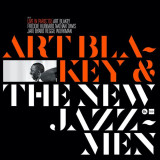
A never-before released Art Blakey 1965 live recordings.
First official release with the full permission and cooperation of the Art Blakey Estate & INA (Institut National de l’Audiovisuel).
Art Blakey, Live in ’65 boasts an exceptional one-hour concert from Paris in 1965. This performance showcases one of the few undocumented Blakey bands, the New Jazzmen, featuring Freddie Hubbard on trumpet, Jaki Byard on piano, Reggie Workman on bass, Nathan Davis on sax, and, of course, Blakey on drums.
Freddie Hubbard’s incendiary playing on “Blue Moon” and the blistering 24-minute version of his own “Crisis” shows that he was one of the most innovative trumpeters in jazz history.
On this live session, the audiences seem to have been enthusiastic and appreciative. “Everywhere we’d go people would say, This is the best Jazz Messengers we’ve heard!”, according to Davis. “And because of the way Jaki would play and Reggie would go, it was like a semi-freedom thing – with Messengers heads, you know, but when we got to soloing…! And Blakey was ridin’ and floatin’ the time…but he would always be loose enough to follow, to keep it going. He’s one helluva musician.”
Recorded at Palais de la Mutualité, Paris, France, November 3, 1965.
Freddie Hubbard (Trumpet)
Nathan Davis (Tenor saxophone)
Jacki Byard (Piano)
Reggie Workman (Bass)
Art Blakey (Drums)






![[ K S R ] & Konny Kon - Part of the Plan / Faded from the Jump](https://www.deejay.de/images/l/9/4/1111094.jpg)