The highly anticipated collaborative album, GOLDFISH, sees two of contemporary hip-hop's most revered and distinct production minds, Hit-Boy and The Alchemist, finally join forces for a full-length statement. Far from a simple beat-swap, this project is a masterclass in sonic cohesion, blurring the lines between their signature sounds to forge a new, golden-hued identity. Beyond production, the duo step from behind the boards to behind the mic to trade verses throughout the project, adding a personal layer to their creative vision.
GOLDFISH is a deeply immersive listen, perfectly balancing the West Coast muscle and polished, anthemic quality of Hit-Boy's work with the dusty, abstract texture and cinematic suspense that defines The Alchemist's aesthetic.
The result is a sound that feels both street-tested and museum-worthy. A collaborative manifesto, showcasing the infinite possibilities when two generational talents decide to link up, creating an instant classic in the canon of producer/MC albums.
Curió Curió came to flight by chance. Two artists, Rio-born, Austria-based singer and actress Luiza Monteiro and German producer Dustin Braun, had separately reached a fork in their journeys. An opportune encounter soon blossomed into an uplifting, heartfelt Brazilian MPB-groove project shaped by psychedelic disco and studio experimentation. In their own words Curió Curió’s sonic vision “is not straight disco, not straight samba, not strictly old-school but inspired by all of them, creating something contemporary but still nostalgic”.
A modern fusion influenced as much by Gal Costa and Jorge Ben Jor as Say She She and Bala Desejo, their sound deftly plots a course all of its own. A celebration of freedom, movement, love and life, intertwined with introspective moments of reflection. Treating tradition as something alive, migratory and unresolved, the album is not simply bound by a shared love of Brazilian music, but by a deeper question that runs through every track; where does one belong when home becomes plural? As a Brazilian living in Europe, Luiza's lyrics explore themes of identity, culture, and existence. The tracks move between cities and emotional registers without settling, tracing a sense of identity that shifts rather than resolves. Songs like ‘Amor Doente’ and ‘Mar sem Dar Pé’ circle around relationships that resist clarity, while ‘Menina Passarinho’ captures the fear and necessity of committing to music as a path. For Luiza, deepening her commitment to music alongside years in theatre was both inevitable and difficult. Braun’s production follows a similar logic. Initial ideas were often built without obvious reference points, only later incorporating rhythmic and vocal elements that hint at Brazil without reproducing it. Analogue techniques, tape, ribbon microphones and live ensemble recording bring a tactile quality that reflects the duo’s interest in process as much as outcome. Highlights include ‘Bem Querer’, built on an authentic samba street vibe with a super-catchy sing-along chorus, and ‘Vem pra Casa’ with its cosmic-tinged Brazilian boogie flavour. The album closes with ‘A Cor do Meu Sonho’, a quiet act of insistence. A refusal to shrink in unfamiliar environments, and a belief in the strength of difference. It is less a conclusion than a continuation, leaving the central question open. “I started to understand that I can belong to many places at once”, Luiza reflects. “And that can be something to embrace”. Lyrics from the song ‘Raiz’ translate in English to “I value a burning sun and the cold in the air. Constant change is my companion”. With Curió Curió, that idea is lived through sound, story and collaboration. A debut that feels both searching and assured, grounded in heritage yet shaped by distance.
Discosabotage Records is an evolution of the collective founded by Luval in Amsterdam in April 2024. Having recently relocated, he felt the need to create something that truly reflected his own vision and the music he loves. What started with selecting records gradually evolved into selecting demos, driven by an increasing desire to shape a distinctive identity and sound.
DSB001 is the label’s first various artists release, featuring Luval, Massi, Two Opposites, and Paradise City Breakers. Each artist brings a unique perspective while remaining connected to the vision behind Discosabotage. The release moves through different shades of electronic music, from deep and hypnotic grooves to darker, more introspective territories, always maintaining a strong sense of definition and purpose. While each track speaks its own language, together they form a cohesive journey rooted in underground electronic culture.
This first VA marks the beginning of a label that is still taking shape, defining its path through dark atmospheres, refined rhythms, and carefully crafted electronic textures. A first statement from Discosabotage, and the starting point of what is yet to come.
The album from an association of Ukrainian artists called Noneside brought musicians and painters together under the famous words of the writer Lina Kostenko "Sometimes I'm Blinded By Beauty..".
The painting by contemporary figurative artist Danik Manzhos “Decadence/Zaruba” frames the prog, trance housy music of such performers as Saturated Color (Neptune Discs, Nerang Recordings), with a real acid test for you, JJ Fortune’s (Late Night Superglue, BOOOoo! Rizzwax) LSD trip remix on Lostlojic’s tune, Brooht (Mr.Banger, Silias Records) with summer electro fairy-tale, and Slava Los backs with his timeless work “M-14”.
Mastered by Taras Bril, also awesome typefaces of Ivan Tsanko-Khlibovich used in design as always.
First of all, this is the music of love and unity, wherever you are - at home dancing in the kitchen or on the big festival floor - common feelings will unite and spin you in a crazy rhythm, will make you understand that we are not strangers to each other. Together we dance for a better future!
The Temptations Get High on Psychedelic Soul: Cloud Nine Soars with Ambitious Arrangements and Production, Features Standout Vocal Performances and Instrumentation by the Funk Brothers
The Temptations’ Cloud Nine announced that Motown — and “The Sound of Young America” — would never be the same. Influenced by the emergence of cutting-edge rock and pop currents, as well as increasing sociopolitical turmoil, the album broke down barriers between rock, psychedelia, and soul while heralding the arrival of visionary arrangements and production techniques. Bookended by traditional R&B numbers, the 1969 record sent the Temptations in bold new directions and signaled the advent of psychedelic soul.
Sourced from the original master tapes, strictly limited to 3,000 numbered copies, pressed at Fidelity Record Pressing, and housed in a Stoughton gatefold jacket, Mobile Fidelity’s 180g 45PM 2LP set presents Cloud Nine in audiophile sound for the first time on a domestic pressing. This collectible reissue bestows Norman Whitfield’s extraordinary production with the grand-scale dynamics, natural tonality, expansive openness, and low-end weight it deserves. The timbre of each of the five members’ voices is readily identifiable — even within the group harmonies — bestowing a realism never experienced outside the recording studio.
Making its debut on 45RPM, the album further benefits from the wide groove space by playing with greater separation and more realistic presence than prior editions. Everything from the brassiness of the horns to the dry snap of the snare comes across with reference-grade clarity and positioning. And since Motown’s renowned Funk Brothers backing band plays on many of the cuts, you’ll want to savor every note. The imaging, soundstaging, and organic bloom-and-decay of the notes make that possible.
Amid Cloud Nine, the instrumentation and architecture stand out as much as any element. Never before had a Motown album contained such ambitious patterns and complex passages. Seemingly conscientious of the departure from their past methods, the Temptations and Whitfield bunched together the tracks that mark a deep dive into psychedelic territory and counterbalance them with seven sterling soul cuts that dovetail with Motown tradition drenched with heartfelt vocals, swelling strings, and finger-snapping beats.
On the original 33RPM release, traditional Motown soul — laden with heartfelt vocals, swelling strings, and finger-snapping beats — occupies Side Two. These songs reveal an ensemble still very much on top of delivering pristine pop-soul material graced with romantic sweetness, persuasive insistent, and soaring highs. Re-energized after the departure of lead singer David Ruffin, who was fired for a variety of reasons in June 1968, the Temptations seamlessly meld with his replacement, Dennis Edwards, on one melodic gem after another.
The collective tackles five songs co-written by the legendary Motown team of Barrett Strong and Whitfield. Not the least of which are the smooth, shuffling “Why Did She Have to Leave Me (Why Did She Have to Go)” and deceptively simple, horn-spiked “Gonna Keep on Tryin’ till I Win Your Love.” On these tracks, as well as on a lush rendition of the ballad “Love Is a Hurtin’ Thing” and pleading, tender send-up of the Gerry Goffin-Carole King classic “Hey Girl,” Edwards and Paul Williams take turns on the lead with the estimable Eddie Kendricks, Melvin Franklin, and Otis Williams providing backing support.
All five vocalists trade-off leads on the simmering title track, a groundbreaking composition shot through with wah-wah-pedal effects, liquid funk, deep bass lines, Cuban percussion, saturated reverb, and gang choruses. Whitfield mines each member’s natural vocal range with spectacular results, keeps time with cymbals, and channels both the heated temperatures and escapist desires of a society embroiled in war, conflict, and experimental drugs.
Amazingly, the Temptations top themselves on the similarly revealing “Run Away Child, Running Wild.” Nearly 10 minutes in length, the song explodes R&B parameters and harbors a cinematic scope. Urgent pianos, distorted guitars, stripped-down percussion, steamy Hammond organs, minimal bass motifs, five distinct voices narrating the tale of a boy who fled home and now finds himself amid the scary, unforgiving external world: They combine to give the urgent tune a walls-closing-in atmosphere where fear and desperation reign. Bolstered by an extended instrumental section that precedes a climactic return of the singers’ voices, “Run Away Child, Running Wild” equaled the success of the record’s title track, with both reaching No. 6 on the pop charts.
The Love symbol is universal for LOVE. Přistěhovalci is the Czech word for Immigrants.
The "Love Immigrants" EP was created partially from field recordings in 2025. It has 3 Grooving Deep House tracks with messages of Solidarity, Love and Long Life.
The moment the instantly recognizable intertwined guitar passage on the title track to the Eagles' Hotel California begins, the record's genius becomes obvious all over again. Ranked the 118th Greatest Album of All Time by Rolling Stone, certified by RIAA as the third best-selling LP in history, and considered the foundation on which the Golden State's mid-‘70s music scene was built, the 1976 landmark is a music staple immune to shifts in trends, eras, and styles. Fearlessly addressing the chaos and consequences of American life, its songs remain strikingly prescient and gain creedence with each passing day.
Mastered from the original analogue master tapes, pressed on MoFi SuperVinyl, and limited to 17,500 numbered copies, Mobile Fidelity's UltraDisc One-Step 180g 45RPM 2LP vinyl box set ensures you will want to permanently check into and never leave this particular Hotel California. Up to the herculean task of standing head and shoulders above all prior reissues, this collectible edition plays with extreme clarity, organic richness, tube-like warmth, massive dynamics, and microscopic levels of detail. You'll be able to practically smell the colitas and feel the breeze in your hair. Songs come across with an epic sweep and feature immersive, front-to-back soundstages that allow the music unprecedented air, roominess, and separation. As for the noise floor? It's basically as invisible as the spirits that waft in the corridors of the unforgettable title song.
Aesthetically, the premium packaging and presentation of the UD1S Hotel California pressing befit its esteemed status. Housed in a deluxe box, it features gorgeous foil-stamped jackets and faithful-to-the-original graphics that illuminate the splendour of the recording. From every angle, this UD1S reissue exists as a curatorial artefact meant to be preserved, touched, and examined. It is made for discerning listeners that prize sound quality and production, and who desire to fully immerse themselves in the art – and everything involved with the album, from the renowned cover art to the meticulous finishes.
Indeed, the opportunity to zero in on all the particulars of the 26-million-selling Eagles record dubbed "a legitimate rock masterpiece" by vaunted Los Angeles Times scribe Robert Hilburn has never been better. A global phenomenon that marked the band debut of guitarist-singer Joe Walsh, Hotel California continues to resonate and connect with listeners of all generations taken by its narrative depth, stark directness, picturesque melodies, daring majesty, and ardent emotionalism. Adorned with a breathtaking exterior photograph of the Beverly Hills Hotel that serves as the simultaneously haunting and alluring cover art, and rounded out by a rear-cover shot of the Lido Hotel lobby that reinforces a notion that teeters between permanence and transience, Hotel California is brilliantly tied to a specific place that functions as a universally understood metaphor for the American Dream.
Confronting the darker undercurrents and oft-ignored constructs attached to that romantic notion, the record's songs revolve around a host of shared themes: excess, mobility, stability, illusion, fame, destruction, and idealism included. Notably, Hotel California appeared at a crucial junction in American history: During the country's bicentennial and amid escalating controversies related to the Vietnam War, energy crisis, and governmental corruption. That the Eagles manage to channel such cultural, social, and economical matters into a cohesive, stately, big-picture statement is alone a stupendous feat. That the album's reach, boldness, vitality, accessibility, and understated intensity have never waned make it a marvel.
Reflecting on Hotel California 40 years after its original release, and indirectly explaining its enduring appeal and increasing relevance, singer-songwriter Don Henley confirmed the record pertains to the "loss of innocence, the cost of naiveté...the difficulties of balancing loving relationships and work, trying to square the conflicting relationship between business and art; the corruption in politics, the fading away of the Sixties dream of ‘peace, love and understanding.'"
It can be argued that Henley and company squarely hit on and drove home those ideas in the surreal title track, chart-topping "Life in the Fast Lane," and grand "The Last Resort" alone. But that would miss the forest for the trees. Experienced as an unbroken whole, complete with the pristinely shot imagery and physical grooves, Hotel California unfolds like a geography-conscious saga by James Michener and plays like colour-saturated movie shot on 70mm film by Martin Scorsese. It's about our collective and individual decisions – and the shape of our past, present, and future. And, just like that conjured by our imaginations, Hotel California continues to take on a life of its own.
More About Mobile Fidelity UltraDisc One-Step and Why It Is Superior
Mobile Fidelity Sound Lab's UltraDisc One-Step (UD1S) technique bypasses generational losses inherent to the traditional three-step plating process by removing two steps: the production of father and mother plates, which are created to yield numerous stampers from each lacquer that is cut. For UD1S plating, stampers (also called "converts") are made directly from the lacquers. Since each lacquer yields only one stamper, multiple lacquers need to be cut. Mobile Fidelity's UD1S process produces a final LP with the lowest-possible noise floor. The removal of two steps of the plating process also reveals musical details and dynamics that would otherwise be lost due to the standard multi-step process. With UD1S, every aspect of vinyl production is optimized to produce the best-sounding vinyl album available today.
MoFi SuperVinyl
Developed by NEOTECH and RTI, MoFi SuperVinyl is the most exacting-to-specification vinyl compound ever devised. Analogue lovers have never seen (or heard) anything like it. Extraordinarily expensive and extremely painstaking to produce, the special proprietary compound addresses two specific areas of improvement: noise floor reduction and enhanced groove definition. The vinyl composition features a new carbonless dye (hold the disc up to the light and see) and produces the world's quietest surfaces. This high-definition formula also allows for the creation of cleaner grooves that are indistinguishable from the original lacquer. MoFi SuperVinyl provides the closest approximation of what the label's engineers hear in the mastering lab.
There was nothing in contemporary music like Chris Isaak’s Heart Shaped World when it hit shelves in June 1989. More than three decades later, the singer-songwriter’s third album still sounds unique — and claims a backstory nearly as fascinating as the retro-leaning material and standout performances that propelled it to sales of more than 2.5 million copies. Home to the Top 10 smash “Wicked Game,” the set remains a masterful mood piece that invites you to pour a late-night drink, sit in a dimmed room, and relish Isaak’s elegant albeit raw ruminations on love, relationships, and questionable decisions.
Sourced from the original master tapes, pressed at Fidelity Record Pressing, strictly limited to 3,000 numbered copies, and featuring the bonus track “Diddley Daddy,” Mobile Fidelity's UltraDisc One-Step 180g 45RPM 2LP box set of Heart Shaped World unearths the staggering inner details, saturated tones, and brilliant atmospherics of the crisp production. It brings you up close and personal with Isaak’s spectacular singing — impeccably controlled, tense, brooding, steamy, smoldering, haunted — situated amidst stripped-down backdrops that allow every note to fully bloom and decay.
While Isaak’s ever-steady baritone remains the anchor, the contributions of his trusty backing band, the aptly named Silvertone, come across with just as much cool, command, and realism. The indispensable playing of guitarist James Calvin Wilsey particularly emerges with superb clarity and dimensionality. The character of his 1965 Fender Stratocaster, shivering twang of his spring-coiled fills, and his signature use of reverb, delay, and vibrato seamlessly match Isaak's patient deliveries and the band’s unhurried rhythms. Experienced on UD1S with ultra-black backgrounds and a nearly invisible noise floor, Heart Shaped World is in every regard a demonstration disc.
The premium packaging of this UD1S pressing befits its elevated status. Housed in a deluxe slipcase, it features foil-stamped jackets and faithful-to-the-original graphics. Aurally and visually, this reissue is for discerning listeners who desire to immerse themselves in everything involved with the album, not the least of which is the cover art depicting a lost-in-thought Isaak staring ahead and sitting in what appears to be an efficiency apartment. The image epitomizes the record’s lonesome temperaments and pensive themes.
Of course, if not for director David Lynch hand-picking two cuts from Heart Shaped World for his 1990 film Wild at Heart, the record would’ve probably suffered the same fate as Isaak’s prior efforts and gone unnoticed by the mainstream. Despite receiving raves from outlets such as NME, Chicago Tribune, and Rolling Stone upon its original release, the album stalled in the lower quadrants of the Billboard charts and, after a few weeks, dropped off.
Cue the ear of Lee Chesnut. Then the music director for a large Atlanta radio station, Chesnut heard the instrumental version of “Wicked Game” on Lynch’s soundtrack and started airing the album rendition at all hours of the day. Aided by a sensual video featuring Isaak and supermodel Helena Christensen, the song found its way into the public consciousness by early ‘91 and helped make Isaak a most unlikely mainstream star in an era where his techniques had little to nothing in common with popular tastes.
Despite its vintage vibes and shared DNA with legends such as Roy Orbison, Chet Baker, and Glen Campbell, Heart Shaped World transcends nostalgia, rockabilly, and throwback tropes. For all the melodrama and sadness at hand, Isaak’s gorgeously transparent singing dives deep underneath emotional surfaces. He mines subtleties that indicate his feelings go beyond heartbreak and anguish, and occasionally suggest frustration, menace, and anger. You can hear it in his quivering falsetto, and the slow and methodical ways he allows delicate whispers to break into shadowy phrasing that crosses over to the darker sides of romance and desire.
That approach bolsters the title track, which suggests calm yet moves on ominous currents — its simmering pace and snare-drum snappiness foreshadowing Isaak raising the volume and urgency during the coda. The southwestern-tinged “Wrong to Love You” plays with similar concepts of hesitation, unease, and discord, Isaak careful never to fully erupt and give anything away. His poised deliveries offer a master class in the art of insinuation and hurt on “Nothing’s Changed,” sent up with a wordless backing chorus and crackling guitar lines straight out of a Memphis blues joint.
Heart Shaped World further boosts its merit via its abundant stylistic variations, from the upbeat country-and-western trot of “I’m Not Waiting” and Spanish acoustic shimmer of the jazz-based ballad “Blue Spanish Sky” to the swinging horn-accompanied grooves of “Don’t Make Me Love You” and desert smokiness of the understated “Kings of the Highway.” On the latter, Isaak comes across as resigned and absolute. His singing and pain worm their way into your soul, and echo akin to the way the music prepares to strike when you least expect.
“Trouble going 'round,” Isaak croons right as the album begins. “Trouble going down.” Damn straight.
Years Of Denial is back on Veyl with their second LP 'Suicide Disco Vol. 2'. The follow up to 2019’s 'Suicide Disco', the duo makes a triumphant return, elevating their distinct sound which fuses dark wave, goth, newbeat, post-punk, EBM, and techno. The LP features 12 tracks all written and produced at Ark of Noise studio, located miles away from the polluted noise of social turbulences, immersed in isolation, creative indulgence, and poetic writing.
From the start, 'Art Break' provides the perfect warm-up, gently cleansing the palette and re-introducing us to Barkosina’s lustful vocals with a slow-burning pace that only marks the beginning. 'Wrong' picks things up, injecting a dose of body music for an infectious piece that bleeds into 'La Pendue' which keeps the energy rising. Next up, 'Mr. Guillotine' delivers a razor sharp edge, carving out a fresh post-punk feel which then brings us to the brooding, 'Never Satisfied'.
'Lover’s Crime' marks the halfway point of the record and one of the album’s standout tracks. Undeniably seductive with an ominous feel, the pair keep this mood going with 'City Lights' and then smash things open with 'Dancing With Demons'. After the devious message sent with 'The Letter', we are submerged in the romantic melancholia of 'Death Of A Lover' and 'Regarding the Pain of Others' before closing things out with 'Social Anxiety' which features vocals by longtime collaborator Broken English Club. The result is an immersive journey through the pair’s self described, Suicide Disco sound, and further builds on the Years of Denial form and legacy.
Due to high demand, MEU has revisited two of Mr. K’s classics, previously only available as 12-inch extended mixes, and asked the master editor to pare them down to 7-inch size.
A true top-five peak record at the Garage, Thelma Houston’s “I’m Here Again” was “a highlight whenever Larry played it,” Danny Krivit recalls, “and he played it a lot!” Danny’s edit is a homage to Larry and Frankie Knuckles – in particular a similar private edit that Frankie did back in the day and shared with Krivit. “It was on reel to reel and I didn’t copy it correctly and lost it,” Danny remembers. “Reels were problematic! When I tried to get it again from him, unfortunately he had lost it too.” The song (likely an attempt by Motown to capitalize on the previous year’s monster hit “Don’t Leave Me This Way”) is, in its original form, a virtual retake of Thelma Houston’s breakout single, from the subdued, schmaltzy intro to the “oooh BABY!” leading to the chorus. What sets “I’m Here Again” apart though, is the incredible second half of the song. Naturally, it is here that Mr. K’s edit focuses. Over a vicious groove reminiscent of the Originals’ “Down To Love Town” breakdown (Michael Sutton wrote and produced both “Love Town” and “I’m Here Again”) Houston delivers soul-stirring ad libs as the band crackles with electricity behind her, the piano chasing a descending string riff so eagerly. Pure dancefloor peak energy! And the very first time having all these parts on a 7"!
For our flip, Danny has reached deep into the earliest foundations of his voluminous collection, and come out with a psychedelic pop classic rearranged for today’s sound systems and setlists. Recorded in the Beatles’ Abbey Road studio at the height of the Summer Of Love, the Zombies’ “Time Of The Season” is firmly linked in pop culture to the late ‘60s and the Vietnam era, breaking big in the summer of 1969. Krivit’s edit highlights the parade of lush sonic textures that ornament the hip composition, from the iconic, exquisitely echoed bass-clap-exhale riff that opens the song to the cascading Hammond organ solos of Rod Argent. “It’s a song from my childhood that really struck a chord,” Danny says. “Over the years I often played a rough edit which always seemed to go over great. The song seemed to get better and better, and age like fine wine.” We agree!
These two songs have both appeared on previous (separate) MEU 12-inches, but are presented here in custom new edits for the 7-inch format.
Move in Stereo: The Cars’ Eponymous Debut Album Functions as a Greatest-Hits Set with Classics Such as "You're All I've Got Tonight," "Good Times Roll," and "Just What I Needed"
Experience the Six-Times-Platinum Record in Definitive Sound on
Mobile Fidelity’s UltraDisc One-Step 180g 45RPM 2LP Box Set:
Strictly Limited to 4,000 Numbered Copies,
It Plays with Reference Definition and Presence
1/4” / 15 IPS analogue master to DSD 256 to analogue console to lathe.
Among the most critically and commercially successful debuts in history, the Cars' eponymous album doubles as a greatest-hits collection. Not one song on it is widely unrecognized or unknown. Consider the list: "You're All I've Got Tonight." "Good Times Roll." "Just What I Needed." "Moving in Stereo." "My Best Friend's Girl." "Don't Cha Stop." “Bye Bye Love.” Just call The Cars the best new-wave rock album ever made. And a natural candidate for preservation on a Mobile Fidelity UltraDisc One-Step pressing.
Sourced from the original analog tapes, pressed at Fidelity Record Pressing in California, mastered by engineer Krieg Wunderlich, and strictly limited to 4,000 numbered copies, MoFi’s UD1S 180g 45RPM 2LP box set presents the six-time platinum record in the most vivid, wide-spanning, three-dimensional sound it has enjoyed on vinyl. Compared to the label’s outstanding and out-of-print 180g 33RPM version, this collectible edition features richer textures, broader openness, greater presence, and bigger dynamics.
Benefitting from the extra groove space on 45RPM by playing with enhanced definition, deep-black backgrounds, and ultra-quiet surfaces, this reissue portrays the band’s oscillating rhythms, futuristic keyboard passages, and panned images with stunning realism. Songs take on an absolutely surreal quality. The Cars and producer Roy Thomas Baker manipulate arrangements at will to mesmerize listeners' senses. The concept of "moving in stereo” has likely never been truer.
The industry-leading packaging of the UD1S set gives fans another reason to gravitate towards the 1978 album. A deluxe slipcase, two foil-stamped jackets, faithful-to-the-original graphics, and MoFi inner sleeves make for a premium tactile experience. It invites you to immerse yourself in everything about the record, including the now-familiar cover art depicting Nataliya Medvedeva behind the wheel. Enhanced by her glistening ruby-red lips, her face flashes an expression caught between surprise, ecstasy, and disbelief — an apropos way of responding to The Cars whether you’re hearing it for the first or 1,115th time.
Introduced in 2024 into the National Recording Registry for its significance, and ranked the 353rd Greatest Album of All Time by Rolling Stone, The Cars explodes with emotion, energy, and hooks. Its songs unite then-disparate styles: bubblegum melodies, art-rock angularity, progressive structuralism, terse minimalism, and power-pop sheen. The stylish arrangements also benefit from a laidback cool and understated irony that remain uncommon in the world of contemporary mainstream music.
Equally rare is the deep chemistry the members shared before they entered London’s AIR Studios and knocked out the record in less than a month. Benjamin Orr and Ric Ocasek began their first band together in the early ‘70s. A subsequent group with future Cars keyboardist Greg Hawke preceded Orr and Ocasek bonding further by temporarily performing as a duo. One final pre-Cars ensemble, Cap’n Swing, brought guitarist Elliot Easton into the fold. A decision by Ocasek to take the band in a rock direction, a crucial lineup shuffle, and a name change begat the Cars so many listeners know and love.
Already a going concern in Boston, the quintet cut its teeth and woodshopped songs for nearly a year and a half before signing with Elektra and partnering with Baker. The Cars enjoyed success right out of the gate, hitting No. 18 on the Billboard Top 200 chart and netting a pair of Top 40 singles in the form of “Just What I Needed” and deceptively happy “My Best Friend’s Girl.” The sarcastic “Good Times Roll” climbed to No. 41, but soon enough, almost every track on The Cars became a radio staple — an honor far more meaningful than chart positions.
Obsessed with incorporating the latest technologies and sounds into its palette, the band spiced tunes with delightful and quirky accents — country-tinged guitar fills, echoing Syndrums, reggae splashes, hard-rock tones, robotic pulses. Orr's low, nuanced deliveries and Ocasek's cool, detached vocals lend shades of doubt and double meaning to the lyrics, which are further counterbalanced by synthesizer flourishes and electronic beats.
Accessible and eccentric, edgy and catchy: The results comprise a landmark whose characters come to vivid life with nuclear boots, dry-drip gloves, ribbon-festooned coiffures, suede-blue eyes, and rock ‘n’ roll hair. It's practically impossible to avoid humming along to every song, all enhanced by Baker's stellar production. Best known for his work with Queen, he ensured the record packed a punchy midrange, opened up with instrumental and vocal separation, and breathed with airy harmonies.
Indeed, from the timeless music to the sleek production and sonic restoration, The Cars on UD1S is just what you needed.
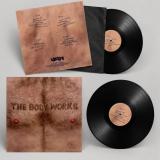
The Body Works begins from a simple idea: sound does not end at the speaker, and music is something that is not only heard, but held, felt, and carried. By translating sound into physical form, the project creates an encounter that exists between listening and touch.
Rhythm is anticipated by muscle, voices affect breathing, and repetition changes our sense of time. Listening is already a physical act. Rather than treating the body as a subject represented by the music, The Body Works treats it as the place where the music happens; the physical and perceptual space through which sound is experienced.
Primarily consisting of left-leaning club music, the LP moves between trap-tinged tech funk, sweaty nocturnal throb, bottom heavy breaks, seedy cowbell acid, pumping techno workouts, doting hi NRG, cosmic homoerotica, and electronic disco. Interspersed and laced atop are more exploratory approaches to sound. Synthesis, field recordings, voices, electroacoustic and musique concrete techniques, plus a dose of offbeat humour are all treated equally as compositional material.
The record travels through ordinary human actions and situations - partying, sleeping, travelling, cooking, flirting, drinking, dancing and listening. These are not presented simply as themes; they become compositional material through which sound, attention, movement and the body interact. "A lot of the record is just weird normal things happening around me. Sleeping, travelling, flirting, drinking water, trying to kill a fly. The more attention you give these things, the stranger they become", comments Bjarki.
Real soul heads won't need to be told that this is a reissue which stands tall over most: Lozano is a classic, much sought after and now hard to find record by young Puerto Ricans and Cubans in Spanish Harlem and the Bronx. It's the only album credited to the group and it's rich in funky arrangements and clean falsetto vocals. There are slower, more heart-aching laments like 'Loving You' next to sparkling confessionals about a moribund relationship ('Free Girl') and more empowering, upbeat grooves like 'Can't Get You Off Of My Mind' that capture the excitement of falling in love all over again. It's a wonderful rollercoaster of emotions that come with teenage romance and will have you nostalgic for those innocent times.
A timeless classic - coming up on nearly 20 years since the original 12's were released and the very first time this LP has collectively been available on wax. (over 15 years since last in circulation) This edition was remastered to analog perfection from the legendary Stefan Betke (POLE) sonically sculpting the original work into a true masterpiece - this album has never sounded so alive! This is truly a multidimensional sound experience; it's like taking a swim in an analogue ocean and being immersed into the deepest end of the Marianas Trench. This edition features two cuts, "A Night To Remember" (as featured on Richie Hawtin's ENTER: Ibiza 4XCD mix) & "Under The Ocean" from the original 2009 edition of the album. The remaining tracks were selected from CD2 including "Tswana Dub" (Phase90 Restructure) as featured on Deadbeat's classic mix "Radio Rothko" on NYC's theAgriculture. Also included is a "live" (recorded from the house booth) performance at "dub echoes" in NYC (a screening for the feature film).
a A1. A Night To Remember Remastered 11:07
b A2: Ocean View Remastered 5:30
c B1. Kingston’s Burning Dub live in nyc 8:08
d B2: De Lion’s Den Remastered 4:20
e C1: Never Forget Remastered 9:06
g D1: Love In Lofi Remastered 13:00
Remastered 4:44
a A1. A Night To Remember Remastered 11:07
b A2: Ocean View Remastered 5:30
c B1. Kingston’s Burning Dub live in nyc 8:08
d B2: De Lion’s Den Remastered 4:20
e C1: Never Forget Remastered 9:06
g D1: Love In Lofi Remastered 13:00
Remastered 4:44
The “Late Loop” LP by Andy Stott is released on Modern Love and marks the producer’s return after a five-year break from the studio. The album brings Alison Skidmore, Stott’s long-time vocal partner, and for the first time Elaine Howley to the forefront; their voices are used partly as full vocal performances and partly as fragmented, pitch-shifted loops, forming the emotional center of the record. Stott largely avoided established production tricks: no basslines, no reverb, just a delay as the sole effect, giving the arrangements an unusual clarity and fragility.
“Late Loop” sits somewhere between downbeat, electronica, and leftfield, and emerged from an experimental process that ranged from drone passages and brass-like concrète moments to song-oriented structures. Rhythm often emerges indirectly here: a drum machine was played back into the room, re-recorded, and pitched down; a pump organ was recorded with a microphone placed on the floor; valves and an aging mixing console audibly contribute to the atmosphere. Lyrically, themes of separation predominate; the voices were layered multiple times, then pared back until only the essentials remained. Mastering was handled by Rashad Becker, and the cover photo is by Myriam Boulos. With “Late Loop,” Modern Love presents an austere, meticulously crafted album whose details gradually reveal themselves with repeated listening.
After a long time, one of Dropout’s most memorable releases is finally back on vinyl.
The Hitmen’s “Like I Love You” returns as an official repress on the iconic Dropout imprint, this time pressed on striking limited red vinyl.
A defining track from The Hitmen’s catalogue, “Like I Love You” combines their unmistakable melodic sound, driving energy and an unforgettable vocal hook, a record that has lost none of its impact over the years.
With original vinyl copies becoming increasingly difficult to find, Dropout is bringing this classic back to the turntables for longtime fans, collectors and a new generation of DJs discovering the track today.
Pressed on red vinyl.
A long-awaited return to wax.
Curió Curió came to flight by chance. Two artists, Rio-born, Austria-based singer and actress Luiza Monteiro and German producer Dustin Braun, had separately reached a fork in their journeys. An opportune encounter soon blossomed into an uplifting, heartfelt Brazilian MPB-groove project shaped by psychedelic disco and studio experimentation. In their own words Curió Curió’s sonic vision “is not straight disco, not straight samba, not strictly old-school but inspired by all of them, creating something contemporary but still nostalgic”.
A modern fusion influenced as much by Gal Costa and Jorge Ben Jor as Say She She and Bala Desejo, their sound deftly plots a course all of its own. A celebration of freedom, movement, love and life, intertwined with introspective moments of reflection. Treating tradition as something alive, migratory and unresolved, the album is not simply bound by a shared love of Brazilian music, but by a deeper question that runs through every track; where does one belong when home becomes plural? As a Brazilian living in Europe, Luiza's lyrics explore themes of identity, culture, and existence. The tracks move between cities and emotional registers without settling, tracing a sense of identity that shifts rather than resolves. Songs like ‘Amor Doente’ and ‘Mar sem Dar Pé’ circle around relationships that resist clarity, while ‘Menina Passarinho’ captures the fear and necessity of committing to music as a path. For Luiza, deepening her commitment to music alongside years in theatre was both inevitable and difficult. Braun’s production follows a similar logic. Initial ideas were often built without obvious reference points, only later incorporating rhythmic and vocal elements that hint at Brazil without reproducing it. Analogue techniques, tape, ribbon microphones and live ensemble recording bring a tactile quality that reflects the duo’s interest in process as much as outcome. Highlights include ‘Bem Querer’, built on an authentic samba street vibe with a super-catchy sing-along chorus, and ‘Vem pra Casa’ with its cosmic-tinged Brazilian boogie flavour. The album closes with ‘A Cor do Meu Sonho’, a quiet act of insistence. A refusal to shrink in unfamiliar environments, and a belief in the strength of difference. It is less a conclusion than a continuation, leaving the central question open. “I started to understand that I can belong to many places at once”, Luiza reflects. “And that can be something to embrace”. Lyrics from the song ‘Raiz’ translate in English to “I value a burning sun and the cold in the air. Constant change is my companion”. With Curió Curió, that idea is lived through sound, story and collaboration. A debut that feels both searching and assured, grounded in heritage yet shaped by distance.
Editia de Camera returns with its first limited vinyl release. A conceptual space designed by Alin Crihan, the label focuses on the interdependence of creative mediums, from spoken word to canvas. The first release centers on works by Sebastian Hosu, a Romanian-born, Leipzig-based artist with exhibitions around the world, from Hong Kong to Bucharest, as well as his first publication, entitled Ballad for Space Lovers. Across the four selected pieces, Crihan explores the synergy of Sebastian’s brushstrokes, combining a rhythmic sense of forward motion with ethereal soundscapes that build and collapse, push and pull, toward an inherent sense of inertia that complements each other’s color palette—both on canvas and in sound.
How enduring is the signature song from Harry Chapin’s Verities & Balderdash? So timeless that it became the subject of a 2025 documentary in which artists from multiple generations weigh in on its impact on their lives and craft. “Cat’s in the Cradle” doubtlessly remains the main event on the singer-songwriter’s 1974 album. The legendary opening track also serves as a guidepost for the bold personal and social material that follows — as well as the gorgeous folk-rock arrangements that underpin the New York native’s most commercially successful work.
Sourced from the original master tapes, pressed at Fidelity Record Pressing, housed in a Stoughton jacket complete with a four-page insert, and strictly limited to 3,000 numbered copies, Mobile Fidelity’s 180g 33RPM LP of Verities & Balderdash presents Chapin’s fourth full-length in audiophile quality for the first time on vinyl. Captured during a golden era for sonics and production, the Top 5 effort features remarkable tonal balance, instrumental separation, and organic naturalism. Those valued aspects come into supreme focus on this reissue, which plays with dead-quiet surfaces and a low noise floor.
The newfound clarity, openness, and imaging underscore the lasting appeal of Chapin’s tender deliveries, soulful timbre, and careful phrasing. Every word comes across with incredible realism, while his underrated guitar playing occupies its own distinctive space. Also notable: The extension of the tasteful string accents; airiness of the backing vocals; depth and shape of the spare bass lines; and width and depth of the soundstaging. When on “Six String Orchestra” Chapin calls out names of instruments, they appear like magic, the band performing feet from you. Chapin has never sounded so lifelike on record.
Certified double platinum, Verities & Balderdash resonated with the times and public. “Cat’s in the Cradle” reached No. 1 on the chart on its way to being inducted into the Grammy Hall of Fame. The romantic ballad “I Wanna Learn a Love Song” flirted with the Top 40 and wrapped listeners in the equivalent of a cozy blanket. The record’s other single, the mini-epic “What Made America Famous?,” helped establish Chapin as one of the country’s most incisive and insightful commentators.
Verities & Balderdash teems with situational devices and topical matters. Chapin observes everything from the polarization of the nation to changes in moral standards and cultural priorities. He investigates pressing themes without ever turning preachy or elevating himself above the matters at hand. On “Halfway to Heaven,” whose coda races to the finish and ranks as the most urgent moment on the record, Chapin inhabits the mind of his frustrated protagonist akin to an eagle-eyed novelist.
Conveying emotions that range from melancholic to carefree, Chapin is as much of a singer as a storyteller. He assumes the voice of multiple characters within a single narrative. During the quirky “30,000 Pounds of Bananas,” a tale based on a delivery-truck accident in 1965, Chapin alters his delivery, pronunciation, and diction to become an old man reflecting on the mishap and mess. The tempo, too, adjusts to match the speed of the vehicle Chapin describes.
Adorned with timely laugh tracks to reinforce the bittersweet humor, the stripped-down “Six String Orchestra” takes everything up another notch, with Chapin intentionally missing guitar notes or playing a broken passage to illustrate the failures of the hopeful protagonist who doesn’t have what’s required to make it as an artist.
Chapin, of course, did not have any such problem. The lynchpin of a career cut short by a tragic traffic incident, Verities & Balderdash is Exhibit A of the savvy craft, feeling, and perspective he lent to American music.
Carly Simon’s quietly intense sophomore album comes across like an assertive notice nailed to a telephone pole for all to see. Bold, personal, and autobiographical, Anticipation announces the arrival of an artist who won’t back down. While Simon stands her ground on her eponymous debut, she elevates her passion and persona to heightened levels throughout this gold-certified record, dealing in private matters related to love, relationships, and desire. At times, Simon is nothing short of primal. She reflects on the difficulties of retaining your own identity while also giving yourself to a partner. Simon’s connection to her folk roots would never be stronger.
Sourced from the original master tapes, strictly limited to 3,000 numbered copies, pressed at Fidelity Record Pressing in California, and housed in a Stoughton gatefold jacket, Mobile Fidelity’s 180g 45RPM 2LP set of Anticipation lays bare the rich tapestries afforded by the spare blend of soft guitars, mellow orchestration, and dreamy melodies. Audiophiles and record collectors, take note: This is the first time Anticipation has been available on 45RPM. The wider grooves and dead-quiet surfaces prove extremely rewarding.
The rhythmic framework anchored by session pro Andy Newmark’s drumming sounds dynamic and balanced, with songs benefiting from a focused midrange and taut low-end. Simon’s attachment to and investment in each lyric is made evident by way of the intimate, hushed atmospherics and expansive responsiveness. And just as Simon’s vocals feel more transparent and direct, so, too, do the supporting choral arrangements.
Released before the singer-songwriter movement reached full bloom, Anticipation remains remarkable for the high-quality songwriting and Simon’s gutsy stance. The album cover — depicting the vocalist holding the gates at Queen Mary’s Garden in Regent’s Park and seemingly defying anyone to take her on — serves as a metaphor for the content within.
Known for having relationships with high-profile partners, Simon was heavily involved with Cat Stevens leading up to the recording of Anticipation. She draws from her experiences to craft tunes that resonate because of their honesty, realism, and strength. Few of those moments are better known than the Top 20 title track, which Simon composed in just 15 minutes as she waited for Stevens to pick her up for a date. Imbued with the nervousness, tension, and excitement that accompany the moments when a romance could go either way, the Grammy-nominated song presages the feminist-minded vulnerability and burning longing that informs a majority of the record.
On the soulful “Legend in Your Own Time,” also inspired by Stevens, Simon harnesses yearning as a conduit to feel-good paradise. Deemed by Rolling Stone an “absolute clincher, an awesome description of the psychic ravages of gone-nuts, know-nothing love,” her cover of Kris Kristofferson’s “I’ve Got to Have You” moans with no-holds-barred desire and breathtaking sensuality.
For all the wanting Simon pursues on Anticipation, her way of staying in control — vocally and personally — make the record a courageous statement of contemporary femininity. For further evidence, look to the bossa nova of “Summer’s Coming Around Again,” somber “Share the End,” soothing “Three Days,” and sincere “Julie Through the Glass,” a tribute to her young niece.
Simon would achieve international fame with her next album, No Secrets. Yet as this definitive reissue shows, Anticipation suggests the rest of the world was just a little late catching up to her.
Super Spicy Records, a colourful nu-disco and re-edit imprint founded by Mexican producer Monsieur Von Pratt, continues to offer up action-packed, compilation style EPs via the must-check Super Spicy Recipe series. Volume ten, the second of 2026, is another expansive affair featuring six scintillating jams. Expect horns-and-strings sporting nu-disco joy (Scorpio 69 and DJ Sobrino's infectious 'Fuego', Afro-Latin-fired disco-house fun (Tamati's joyous 'Yaounde Love Affair'), sample-rich jazz-house/deep house fusion (Monsieur Von Pratt's own 'What Is Jazz' and Milton V's energy-packed 'Sounds of Jazz'), housed-up disco re-edit action (Nico Raibak's 'It's So Good') and hands-aloft, tooled-up boogie revivalism (Raga's 'The Middle', a fine re-edit of a lesser-known electrofunk gem).
Australian producer Inkswel is back on the Cosmocities label in France with more of his superbly soulful sounds, this time with none other than Chicago legend Robert Owens. The lush 'Space Love' is a playful deep house jam with the sort of cosmic synths that recall early Fingers Inc and Owens's smoky tones only heighten that feeling. Steve Spacek provides a mix that rides on broken beats with elastic bass but just as much cosmic energy and a Fluterumental gets all loose-limbed and seductive. On the flip side are two Yoruba Soul mixes that bring extra rich soul vibes and shimmering pad work. A classy and timeless EP for sure.
This brand new EP from Hyper-On Experience maintains the incredible inventiveness we have come to expect from Hyper-On, but this time, blends it with some of the EZ Rollers style. Each track is the very definition of authentic and innovative old skool and jungle, and this is sure to be a much love classic in years to come!
Prozak has been kicking out the garage-house jams for a while now, and always on the best labels, from Time Is Now to Instinct, which is run by Burnski, who also heads up this one. And it's another case of pure fire from the off as 'Freak Ya Right' layers up silky, melodic bass with charged up synth stabs and a bubbly groove. 'No Use For Love' has a darker 90s undercurrent with organ basslines and more coarse percussive textures. 'Classics' cuts loose with an off-balance bassline that's cartoonish and oversized, while 'Ravers Inside' shuts down with plenty of pent-up funk and playful samples that will destroy the floor and nothing less.
St David's ongoing remix project - Tributes To House Masters - takes a second swipe at the reworks form, probing deep below the surface layer of house music history for another worthy four-track V/A. Paul Johnson's production style is unmistakable before we've even read the name, and shines through even after a remix from St David Swag; 'Take A Lickin'' features several of his sonic blazons, from sticky MIDI brass to ticklish vocal chops. Johnson also famously remixed a Bohannon record, so the latter's inclusion here on the B2 makes this one feel just that bit more knowledgeable. DJ Pierre's MLK-sampling hooter 'Meet Hate With Love' is the favourite big, flabby soulful house chooer in between.
Music Is the Healing Force of the Universe is a powerful and often ignored 1970 recording from the American avant-garde jazz saxophonist, singer and composer Albert Ayler. Apart from the posthumous album The Last Album, this was to be Ayler's last studio album, recorded and released before his death in November 1970. The album was initially judged as too difficult by Down Beat, then recognized by the most as “an important portrait of a man facing a life and death inner struggle beyond the boundaries of jazz, which takes jazz itself into a new dimension”. It also includes some of the most innovative use of sound by the free-jazz icon Albert Ayler.
Born and raised in the birthplace of House Music, Paul Johnson was known for his raw, soulful, and infectious sound, that helped shape Chicago's house scene and inspired generations of DJs worldwide in particular he was a massive inspiration to Daft Punk and the 'French Touch' scene.
Releasing a vast amount of music throughout the 1990s for some of the most consistently underground dance labels including legendary Chicago imprints Cajual, Relief and Dance Mania he finally gained global fame with his 1999 hit “Get Get Down,” a dancefloor anthem that topped charts across Europe. Despite facing physical challenges, including losing both legs in accidents, he remained an unstoppable force in music—touring, producing, and uplifting others with his resilient spirit and signature groove.
Re-pressed for our 35th anniversary, Paul Johnson’s classic 1995 debut album on Peacefrog, Bump Talkin is a timeless showcase of Paul’s signature deep, soulful house sound, blending irresistible peak-time, piano-driven anthems with a playful touch of bouncy Ghetto House energy.
They dont make em like this anymore...
RIP Paul Johnson.
Lisztomania returns with the second installment of its Lisztolove compilation series, a carefully curated selection of house cuts that celebrate groove, soul, and timeless dancefloor energy. Anthony Mea opens the A side with “Making Me Nervous,” setting the tone through woody, percussive drum textures layered with smooth vocals and soft, atmospheric pads. The result is warm, inviting, and effortlessly engaging. Erik Ellmann follows with another percussion-tinged offering, riding a supple rhythm enriched by soulful vocal cuts and a gentle chord progression that flows with natural ease. GMGN’s “Angel” leans into a jazzy, sample-driven aesthetic, gradually lifting the energy with finesse - a late-night builder designed for deep, glowing floors. On the flip, The Satum’s “Larraine” brings mid-tempo ’80s-tinged vibes, while Skarby channels classic French touch energy inspired by the golden 2000s era. Reece Johnson closes the record with an up-tempo soulful bumper primed for peak-time moments. A versatile vinyl package aimed at selectors who appreciate warmth, groove and timeless house aesthetics.
As always Kling Klong gives space for new artists and supports upcoming talents. This time Martin Eyerer & Rainer Weichhold had no doubts signing this debut release from Stuttgart's dj/producer Ninetoes as 'Finder' is obviously a massive stand-out track which has the words 'summer hit' written all over it. So it was just easy to convince Leon and Re-UP from Italy to do the remixes and help to make this release even more oustanding.
Support from:
Matthias Tanzmann, Loco Dice, Adam Beyer, Nick Curly, Butch, Riva Starr, Popof, Kaiserdisco
DJ Feedbacks:
Adam Beyer: like the leon mix!
Loco Dice: Will try. Please send me the WAV. Thanks
Nick Curly: schöner release....leon remix gefällt mir am besten, danke!
Matthias Tanzmann: woher kenne ich denn die Melodie Coole Tracks auf jeden Fall.
Davide Squillace: Nice one..
Monika Kruse: der leon remix rockt.
Tiefschwarz (Ali): nice nice :) re-up rmx is my favorite.
Butch: leon rocks
Riva Starr: leon rmx for me thx
Claptone: supersonniger tune das original
Ramon Tapia: Leon mix is cewl !
Gregor Tresher: Leon mix sounds cool.
Chus: Leon and Re-Up mixes for me.
Popof: Great remix from re up ! love it
Kaiserdisco: Original mix is nice, will try it out.
Wally Lopez: Leon remix are huge!! Support
Shinedoe: I'll try it out.
Cari Lekebusch is one of the architects of the Swedish techno scene whose influence naturally spilt out over the wider European landscape as part of the second wave in the late 80s and early 90s. Under his Yakari alias, he explored a tear-jerking and trance-infused style that was about looking outward to distant worlds beyond our own. This EP is a classic example and was originally released in 1994 on Loop Records. 'Positive Transphere' is an absorbing opener with dirty bass offset by sprawling synths, 'The Sound Ordeal' gets darker and more involving emotionally, before 'Lotus Trance' explodes in bright colours and new age love. 'Water Of Tranquility' is a more deep, insular closer. An EP that has aged perfectly and will still turn heads 30 years on.
Following the success of their debut release, the Dig This boys return with another statement-making record. If the first EP is anything to go by, this is not one to sleep on.
Brennan is no stranger to the scene, having enjoyed an incredible breakthrough year marked by several releases that have caught the attention of some of the industry’s biggest names.
This cohesive house record explores a range of flavours, equally suited to an intimate club or a festival dance floor. Brennan’s signature sound runs throughout, while revealing a softer side of the house music spectrum less seen by him before.
The A-side is driven by tribal drums, weighty sub-bass and summery chords with Brennans signature style sprinkled on top. On the flip side, the record moves into dreamier, deeper territory, drawing on the classic elements of deep house we all know and love—bringing the five-track release to a fitting close.
If there is one thing that WAX RDM loves to do, it is split, they love splitting bills, middle splits, banana splits and most of all a good old split EP, and they made sure to deliver on their first one. Not only is he responsible for saving the Netherlands from becoming an aquatic civilisation, the land creature known as Deltaplan also claimed the whole A side for his boombastic electrofied vinyl only rendition of Sexual Seduction, which could get any dance floor drenched in dripping sweat. The Hague city's APK Boys have split the split in 2 on side B. If Flipper was a fun loving dolphin who always dreamt of moving to The Hague City, this is what he would sound like, hard hitting, just a tad frustrated and ready to snap at any moment. Yes Yes finishes of the split with a sure-shot Electro heater which will take your mind into a dreamlike state, thinking of ways to make Flippers dreams come true. And if you think things couldn't get any better, APK provided us with a 3rd digital only track for good measure. Stay dry and keep swimming.
Welcome back, hope you've had a good trip so far. While we're digging global tunes, let's not forget what's cooking in our own yards. No less then a new dub don has risen from the wastelands of bratwursts, nutcrackers and garden gnomes: Toni Wobble is looking back on over 20 years of roots in punk, free parties and political movements. From anti-nuclear activism to the Gaggeldub performances, Toni's dug deep into the Dub universe: from Dubstation to Rootsbase to Subardo. By 2012, Toni became a respected operator of Leipzig's Plug Dub Soundsystem. Soon after, he didn't hesitate to create the very own solarpowered Sunplugged sound. Toni's live dub sets hit with all depth and energy of low bass sound culture, shaking the foundations with refreshing freakuency adventures. After a guest spot on our 18th release, helping RUZ dubbing out a deep b-side, it's time to unleash the full Wobble fury on 45Seven!
Out In Da Streetz was born in a lockdown, when urban life got stall, opening space for experiments. Inspired by Juke and Footwork at nights such as Bassmæssage, Toni ventured into Jungle production - the genre him love from way back. The result is an opus of subs, breaks, skanks and dubs. Expect 30 Hertz bass, wobbly midranges, halftime snares and Jungle edits sharp like razor. Don't miss the Ini cameo and hand-made skank work straight from the lab. The result ain't just a track, it's a state of inner and outer emergency, a deep dive into groove, texture and creative chaos.
Irie Cruise rolls up like a cloud of green smoke riding through the streets with a sick ride in a surreal vibe. Rootsy rhythms meet subtle Jungle twists inbetween the twinkles of Dub and the flickers of breakbeats. When the hook drops, the impulse fires up, the lowrider bounces through the turns of skanks, throwing dub delays and gliding deep into the night. By the final tone, you didn't just take a ride, you're actually a bit closer to the sun.
Toni Wobble is giving the full hundred. Dub ain't just a genre, it's a portal to infinite spaces of sound. It's a culture, a process and an attitude, all about echo, bass and space. But it's also about experimentation, consciousness and transformation. Each delay loop is reshaping reality, tearing it down and rebuilding it from the ground up. D.U.B. equals to deep universal beats, the universal frequency... Deep, wide and open. Tune in and dub out!
Emotional Response's 10th-anniversary celebration are brought to a superb close with Benedikt Frey. He serves up a magnificently dubbed out and psychedelic cover version of Joy Division's 'She's Love Control across four different versions. The vocal version might be the best for us - it retinas that compelling dark drum funk you expect from the band with eerie synth additions and hefty bass. The instrumental is more slow and dubbed out in a traditional sense with the Lucas Croon dub doused in endless reverb. Last of all is a dub by Frey himself that is full of open space and bass bin distorting headiness.
UpTight is a soundtrack album by Southern soul band Booker T. & the M.G.'s for the film of the same title. The album features "Time Is Tight", the single version of which became a US Top 10 hit and a signature song for the band.
FreedomB Delivers Timeless Groove on 'Essence Of Soul EP'. FreedomB is an artist defined by groove and movement rather than place. Drawing influence from jazz, funk, soul, and the earliest house and electronic rhythms, his sound is rooted in timeless dance music traditions and built for long, immersive nights on the floor. Focused on rhythm, flow, and emotional energy, FreedomB's productions exist to make people dance without compromise. With releases on labels such as Knee Deep In Sound, Roush, Toolroom, Sola, ElRow Music, and Flashmob Records, FreedomB has earned support from leading names including Hot Since 82, Supernova, Hector Couto, Solardo, and Flashmob. Now joining the Definitive Recordings catalogue, FreedomB presents 'Essence Of Soul EP', a two-track release that captures his deep-rooted love for classic house, disco, and soulful dancefloor energy. On 'Mi House Es Tu House', FreedomB delivers pure house nostalgia. A groovy beat and subtle bassline form the foundation, joined by classic piano chords that immediately set the tone. As the track unfolds, disco samples, a 90s-style synth melody, and a soulful female vocal sample build toward a powerful breakdown before dropping back into full groove, introducing a second timeless house synth theme. It's uplifting, energetic, and perfectly designed for any house music dancefloor. The title track 'Essence Of Soul' shifts into a deeper, more disco-infused direction. A straighter, nu-disco- inspired rhythm sets the pace while layered synths evolve throughout the arrangement. An 80s-style bassline anchors the groove, accompanied by filtered vocal chants, disco effects, and a spoken-word vocal reflecting on the meaning of music and the dancefloor. As the track progresses, rich piano chords and classic high house strings lift the energy into an emotional, late-night crescendo. 'Essence Of Soul EP' is a celebration of groove, soul, and timeless house energy. A release that lets the music speak and invites you to dance.
Not long after the well-received 'Bottlemess Brunch' and 'Billa' dropped, the FLDIN2 label is back with another killer drop. This one, we're told, draws on Fold producer Rob's early immersion in pirate radio and record-collecting years in suburban London during the early 2000s. Lovers of Ben UFO, Joy Orbison and Floating Points will all be into the lo-fi designs, not to mention the irresistible garage, tech and dub swagger he packs into these jams. 'Lotion' is a crispy, tightly coiled and skeletal UKG sound underpinned with wobbly low ends and sprinkled with chopped vocal fragments that make for a ghostly groove. 'Soft Launch' is fuller, with a more boring emotional impact from the yearning vocal stabs that are teased and buried throughout the mix.
We are taught to hold a shape. To repeat, to conform, to control. Over time the repetition becomes us - rigid, fearful, grasping for power, emptied of feeling. We live without living. The mechanical overtakes the organic. We lose ourselves, and in losing ourselves we lose our connection to everything.
This is the psychosis we call normal.
Yet something remains underneath. A flicker. A recognition. The long effort of reopening begins with glimpsing what we have become.
In continuation with the “Untitled” series, it is time to unveil the fifth chapter. 9-tracker with the talented artists which have gathered to make this disc come to life with the broad spectre of dancefloor ready frequencies that it contains. With some familiar faces and some new comers this is ready to be presented to the world of us music lovers that have big lust to non-standard beats. This LP is destined to land in the right persons hands who will treat the speakers rough and loud just how they should be treated with the material presented on it. The “Untitled” series continue thanks to the professional audio trips creators the spaceship sets space sails for the new edition soon.




![Intrusion - The Seduction of Silence - PART 2 [Remastered] (2x12")](https://www.deejay.de/images/l/4/1/1165441.jpg)