Back in 2018, Argentinian producer Fernando Pulichino released ‘Search of Indigo’ on Leng, a shuffling slab of colourful, Balearic-adjacent dub disco featuring his own distinctive lead vocals and backing vocals from Luca Gasparini. Six years on, the track returns renewed and refreshed thanks to a string of new floor-friendly reworks by LTJ Xperience and Pulichino himself. Fernando kicks off the EP with his ‘AM Mix’, an inspired re-invention that re-frames the song as a hard-wired, acid-fired chugger – all restless, razor-sharp TB-303 lines, low-slung bass guitar and sparkling piano riffs. On the digital version of the EP Pulichino has also offered up his ‘PM Mix’, a deliciously Balearic disco dub rich in colourful synth sounds, elastic bass, flanged guitars and sun-bright piano licks. It's LTJ Xperience’s trio of remixes that lie at the heart of the EP though. The Italian producer, real name Luca Trevisi, initially made his name as a downtempo and nu-jazz producer before perfecting a trademark style of chugging, slow-motion hedonism that draws influence from both deep house and nu-disco. His main Remix foregrounds many of these trademark elements, in the process delivering a bongo-rich chugger laden with delayheavy bass guitar sounds, head-nodding drums, heady guitar loops and echoing vocal snippets. On the Dirty Mix, Trevisi reaches for tight, short TB-303 ‘acid’ loops, a more sparse and heavy rhythm track offering a more heads-down, dubbed-out affair that should delight those who love late night and early morning hypnotism with flashes of wide-eyed sonic bliss. Then, to round things off, Trevisi delivers a heady, atmospheric and spaced-out Dub full of jazz guitar licks, bubbling electronics, vocal snippets and effects-laden bass. It’s a winning combination.
Suche:low e
- 1: Sons Of Liberty
- 2: Live Fast Die Old
- 3: Try This At Home
- 4: The Road
- 5: Faithful Son
- 6: Dan's Song
- 7: Richard Divine
- 8: Poetry Of The Deed
- 9: Sunday Nights
- 10: Isabel
- 11: The Fastest Way Back Home
- 12: Our Lady Of The Campfires
Poetry of the Deed is the third studio album by London-based singer-songwriter Frank Turner. Unlike Turner's previous solo albums, Poetry of the Deed was rehearsed, arranged and recorded with his full band. This marked a significant change in the singer songwriters musical output, spawning the singles ‘Poetry Of The Deed’, ‘Try This At Home’ and ‘The Road’. The video for ‘The Road’ saw Frank play 24 shows in 24 hours.. The successes of the third album included further Radio 1 daytime playlists, sessions with Zane Lowe and headlining a sold out show at London’s Shepherd’s Bush Empire and a few months later, The Roundhouse, London, setting him firmly on the course we see him on today, as a headline act the world over. Produced by Grammy nominated Alex Newport.
BRUK welcomes the daring shapes and inquisitive textures of ELLLL for her debut album, Earth Rotation. Across 13 scuffed cuts and grubby miniatures the Irish producer shapes out a distinctive sound world, steeped in sample science and powered by low-slung grooves. There's no direct message permeating Earth Rotation, but burning issues around embattled ecosystems hang in the air as ELLLL pushes her sound palette until it bites. Extended instrumental techniques lend the album an in-the-room tangibility, while dislocated micro-loops speak to less grounded atmospheres. Starting from densely packed collages and diligently chipping away until spacious, head-knocking arrangements remain, the end results of ELLLL's process call to mind the wayward sample acrobatics that made trip-hop and jungle so emotionally resonant and eerily alien in the same beat. There's rarely anything like conventional boom-bap or a cosily familiar break, but ELLLL finds compelling rhythms in unlikely sources of funk, whether plucked, bowed, sequenced or sculpted. Even when teetering towards techno on 'Titan', her particular approach is gloriously skewed and, by extension, innovative. No matter how serious the techniques involved, Earth Rotation is a celebration of the magic that happens when sound gets mistreated. If there are foreboding ideas lingering in the album's tendency towards dissonance, ELLLL also knows how to inject her work with a necessary mischief, making her a perfect fit amongst the maverick BRUK alumni.
Repress of DVS1's highly anticipated album that came out on Axis digital during the pandemic. From the perceiving body to the liminal space of the dream-state, audible frequencies send a neurofeedback message. A paradigm-shift is activated in the mind. A movement from the present hour toward the realm beyond measure. The pulse of a synthesized kick. The distance between evolving rhythms of time & place left behind. Sensations created in forgotten corners of the consciousness are distant, yet familiar. A low-penetrating drum beat pulsates. Hypnotic hallucinations reveal detailed layers, oscillating from the back to the forefront of the dream. Synth programming yields abstract ideas into concrete images. Lucid percussion arranged to paint a deeper shade of architecture in this future-memory-system. Be aware that sensations resonate into imagination without warning. The observer extends from rational thought to a deeper state of understanding. The mind-body experience gives way to a transient response from a shock wave to the steady state. The senses reach entrainment.
Coloured[25,17 €]
Ben Lukas Boysen’s new album, Alta Ripa, signifies a seismic shift in his artistic journey. It revisits the foundational impulses of his youth, shaped amidst the serene beauty of rural Germany—a bucolic backdrop where his creative palette flourished. However, it was his move to Berlin in the early 2000s that electrified his sound, infusing it with the city’s pulsating energy and diverse cultural influences. Alta Ripa captures this transformative experience, blending the introspective melodies of his rural beginnings with the bold, experimental tones born from Berlin’s vibrant electronic music scene. This album is a testament to Boysen’s evolution, showcasing how geographical shifts can profoundly shape artistic expression.
Boysen’s fourth studio album under his own name, Alta Ripa is a nod to his beginnings as much as a hint to his future, and as a work, it’s almost contradictory in its boldness and humility. He invites the listener on a journey of self-discovery; both for himself and for them, describing the music as “something the 15-year-old in me would have liked to hear but only the grown-up version of myself can write.”
His last two albums involved working closely with other musicians, including cellist Anne Müller, flugelhorn player Steffen Zimmer, and drummer Achim Färber. However, inspired in part by a recent return to live performance, Alta Ripa sees Boysen circling back to his passion for pure computer music.
For Boysen, the return to his youthful musical language marks a major turning point in his career. It represents a departure from his roots in classical music – his mother was an opera singer and his father an actor with an appreciation for Wagner, Arvo Pärt, Keith Jarrett, and Stockhausen. Although these are still important influences, Alta Ripa encapsulates a new, exploratory interplay between Boysen’s careful craft and his ability to let go of some of the process.
The album’s title comes from the original Roman name of the town that Boysen grew up in, Altrip, where he lived until his early twenties. This formative period is central to the ideas behind this album, from Boysen’s parental ‘schooling’ in classical music through to his sonic journeys through drum and bass, Aphex Twin, and Autechre — all of which changed his idea of what music could be. The extreme energy of tracks like ‘Acperience 1’ by Hardfloor, ‘Tracks & Fragment’ by Cari Lekebusch, ‘Focus2 Implan’ by Jiri.Ceiver, and ‘Low On Ice’ by Alec Empire are also pivotal influences.
For Boysen, this time of his musical development also involved knocking down the pillars that he previously thought had carried his world. A key moment for Boysen was being given a precious (pre-internet) club cassette at school that featured artists like Source Direct, Photek and Goldie. Excited by this new discovery, he introduced his father to the song ‘Dred Bass’ by Dead Dred. After the song finished, Boysen Sr. turned off the tape and proclaimed it was “the end of all music”. This heated exchange sparked a new, and more mature dialogue between the two that involved them sharing and discussing music on a regular basis.
Boysen’s classical and jazz music upbringing might not be easily noticeable from the electronic palette that he uses. But it can be found in its bones; the structure of the tracks and their dynamic shifts. On Alta Ripa, he intentionally embraces a spirit of controlled chaos, churning out sonic ideas to see what sticks.
One of Brian Eno’s Oblique Strategy cards contains the phrase “gardening, not architecture”, and the trajectory of Boysen’s creative path reflects this metaphor. In much of his previous work he followed a sort of Brutalist architect’s approach; here, he was fully responsible for the tracks’ austere structures and planned them with deliberate care. But by sacrificing some of that control on Alta Ripa, he sets the right conditions for a dark and unpredictable, organic growth. It’s a push forward into a new world.
Warehouse Find!
Detroit Swindle continue their incredible run of form with a cracking new EP for for their Freerange follow up, suitably entitled Unfinished Business. It's pretty fair to say that the Dutch duos 2012 Freerange debut helped cement their reputation as one of the most exciting young house music acts to emerge in recent years. Their relentless tour schedule and stream of quality EP's for the likes of Tsuba, Dirt Crew and their own fledgling label Heist are testament to their success. Remixes for the likes of Waze & Odyssee, Sowar and Medlar all did the damage as did their immense Boiler Room takeover session which sealed the deal for any skeptics. Turning to the fresh stuff, we see DS delivering three brand new originals plus we have a hard as nails (by our standards anyway!) remix from the enigmatic Crue.
Title track Unfinished Business sets the tone with a driving, shuffling, tech tinged beauty loaded with their trademark cut-up, MAW style vox samples.
Under The Spell drops next with a more low slung groove, rhodes stabs and breakdowns that are tried and tested for maximum dancefloor pleasure.
The B1 sees Crue step up for his hard hitting remix which brings a darker, raw edge to the EP with a bad boy basement feel and garage swing bringing some peaktime intensity.
Finally we close the EP with Woman, a track that's probably about as close as the DS boys get to a smooching torch song. Lush pads and strings bring a deeper vibe to proceedings but the female spoken word samples keep the energy high and ensure things never stray too far from the floor.
Forest On Stasys takes the plunge here and launches a new label, Aura Sonora, which debuts with a hugely limited and high-quality new 12" from the boss. The imprint will be "a platform designed for sound experimentation" and the first missive backs that up with a great blend of drum & bass, half-time and techno. 'Magnetismo' is a prickly opener with slippery rhythms underpinned by bold bass. 'Domo' is a darker sound with menacing low ends and prickly percussive patterns while 'Sideral' is another late-night prowler with low sling sounds, eerie atmospheres and a real sense of futurism. A great start to life for Aura Sonora.
Warehouse Find!
Janeret makes his FUSE debut as the Paris-based talent serves up a selection of cuts across ‘Quasar’.
When it comes to artists at the forefront of France’s rich house and minimal scene, a name at the top of most people’s lists would have to be Janeret. A core figure at the heart of Paris’ electronic landscape and a key part of the Yoyaku family, a flag-bearer of the country’s now globally renowned minimal landscape, the Joule boss has grown and evolved to bring his unique take on the genre to the masses with a selection of diverse releases via the likes of Up The Stuss, Berg Audio and Rutilance Recordings. Having featured on line ups for London mainstays FUSE while also playing for their sister label LOCUS, March welcomes the Frenchman’s first music on the label as he makes his debut with five slick productions across his expansive EP, ‘Quasar’.
Title track ‘Quasar’ is a bumping peak-time affair as skipping drums meet sweeping pads and echoed vocals, while ‘Elevated’ brings a warping, tunnelling bassline accented by breaks-influenced drums and spiralling electronics for yet more energy-charged output. On the flip, vinyl-only effort ‘Murk’ is driving late-hours effort armed with punchy kicks, further vocal interjections and hefty low-ends, with tight drum and fluctuating synths guiding the groove of ‘Spire’. Closing proceedings, digital exclusive ‘Pitch’ showcases signature Janeret sonics old and new, merging snaking grooves with dubby chords for a rich and peppy journey through soundscapes.
- A1: Sugar Minott - Run Things
- A2: Beres Hammond - Full Attention
- A3: Sanchez - Man With The Handle
- A4: Capleton - Almshouse
- A5: Cocoa Tea & Buju Banton - Too Young
- B1: Dirtsman - Strive
- B2: Ini Kamoze - Hotstepper
- B3: Sanchez - Forever
- B4: Beres Hammond & Sugar Minott & Tony Rebel - Where Is The Love
- B5: Charlie Chaplin - Swing Low
- C1: Luciano & Sizzla - Jah Line
- C2: Luciano - Chant Out
- C3: Sizzla - No White God
- C4: Mikey General - Sinners
- C5: Cocoa Tea & Tony Rebel - Grow Your Locks
- D1: Luciano & Mutabaruka - Psalms 24
- D2: Capleton - Stand Tall
- D3: Luciano & Marcia Griffiths - Hold On Natty
- D4: Prince Malachi & Turbulance - We Praise Jah (Lp Bonustrack)
Lamina is the moniker of multi-disciplinary French artist Clarice Calvo-Pinsolle. 'Olas Curativas' is Calvo-Pinsolle's first vinyl release. Taking influence from the natural world, works of hydrofeminism, and experiences with hypnotism, Calvo-Pinsolle prolifically performs and records her own refreshing take on ambient music alongside working as an established installation artist. She has previously released two full-length albums on Orila Records & Complex Holidays, as well as a joint LP with Kitchen Cynics, and a collaboration project with Bear Bones Lay Low under the moniker XAXI. Her discography is fleshed out by various contributions to compilations, including the opening track 'Soupire' on Twin System's 'Tendrils Lurched Purple In The Slush' tape series. Radio play of Laminas music includes Graham Dunning / NTS, Emil Mirzoev/ Kiosk Radio, Laura de Diaz / CAMPO BASE, xYsse / Radio Vacarme, Melina Despretz / Kiosk Radio, Chris Penty Alvarez / Noods Radio, Leoni Leoni / Radio Alhara, Laura Connant / Ola Radio, Bravo Tounky / Rootradio. Performances of material from 'Olas Curativas' include shows at Cafe Oto / London, Cosmos / Lisboa, TV Control Center / Athens, Iklektic / London, Braille Satellite / Lithuania, Slug Gallery / Leipzig, Spazio X / Treviso, Krut Festival / Ghent, Schiev Festival / Brussels, Woodblocks Festival / Brussels.
'Olas Curativas' was developed and written in 2022, with these pieces first heard as live jams at shows mainly around Brussels and Portugal, before being honed into this mesmeric full-length LP. Calvo-Pinsolle's effective use of manipulated field recordings and tape loops provide a backdrop for harmony that leans towards the mystical, brimming with melodies equal parts haunting and enchanting. Alongside harvesting a sound library over the past several years, Calvo-Pinsolle has developed an approach to composition using field recordings that informs both her musical and sculptural work. These recordings are transformed much like the ceramics seen in the record artwork; shaped, chiseled, and transformed. These ceramics were crafted and painted by Calvo-Pinsolle herself, and hints at this bridge between her two disciplines of music and sculpture. Although an expansive realm, throughout Calvo-Pinsolle's output there are consistent moods and qualities that are absolutely distinctive to this artist's creative worldview, and of which 'Olas Curativas' is a perfect encapsulation.
- Mr Bison - Reasons For Waiting
- Sweat - Back To The Family
- Hashtronaut - Bungle In The Jungle
- Elephant Tree - We Used To Know
- The Golden Grass - The Teacher
- Sergeant Thunderhoof - Son
- Oceanlord - Sweet Dream
- Lowrider; Elephant Tree - Nothing To Say
Red/Gold Vinyl[33,57 €]
Mit dem Begleitalbum "Best of Jethro Tull Redux" lässt sich das Erlebnis von "Aqualung Redux" noch erweitern und vertiefen. Mit beiden Werken zollen Magnetic Eye Records gemeinsam mit zahlreichen Freunden der britischen Rocklegende JETHRO TULL und ihrem Meilenstein-Album "Aqualung" aus dem Jahr 1971 respektvollen Tribut. Auf "Best of Jethro Tull Redux" bieten weitere spannende Künstler ihre Neuinterpretationen aus dem ebenso einzigartigen wie umfangreichen Gesamtwerk der Briten an.
JETHRO TULL sind musikalische Riesen mit einem einzigartigen Sound - oder besser gesagt Sounds, die im Kanon der Rockmusik unvergleichbar geblieben sind. Die 1967 in Blackpool, Lancashire, von dem Schotten Ian Anderson gegründete Band hat im Laufe ihrer jahrzehntelangen Karriere immer wieder stilistische Veränderungen und Imagewechsel durch- und überlebt. Vor allem die charakteristische Stimme ihres Frontmanns und die Einbeziehung der Querflöte als wesentliches Instrument haben JETHRO TULL dennoch mit einem unverkennbaren klanglichen Fingerabdruck versehen.
JETHRO TULL haben von Anfang an die Grenzen der Rockmusik neu vermessen. Durch die Einführung von Elementen aus der klassischen Musik, des Jazz sowie der traditionellen Musik haben die Briten zahlreiche Impulse gegeben, weshalb sie zunächst dem Art Rock zugerechnet wurden und mittlerweile unter anderem zum Progressive Rock zählen. Die britische Legende schaffte den Spagat zwischen Kunst, Breitenwirkung und kommerziellem Erfolg stets mit nur scheinbarer Leichtigkeit. Dazu trug auch die herausragende Bühnenpräsenz von Frontmann Ian Anderson bei, dessen theatralischen Auftritte sogar mit denen seines Zeitgenossen, dem legendären britischen Sänger Arthur Brown, konkurrierten.
Die Magnetic Eye Redux- Reihe lässt ausgewählte Künstler handverlesene klassische Alben aus der Geschichte des Rock und Metal komplett neu interpretieren und respektvoll in das neue Jahrtausend übertragen. Bisher hat das Label solche Meilensteine wie PINK FLOYDs "The Wall", HELMETs "Meantime", BLACK SABBATHs "Vol. 4", JIMMY HENDRIX' "Electric Ladyland", "Dirt" von ALICE IN CHAINS, AC/DCs "Back in Black" und den SOUNDGARDEN-Klassiker "Superunknown" in Redux-Versionen veröffentlicht. Unter vielen anderen haben sich solch herausragende Künstler wie MATT PIKE, PALLBEARER, THE MELVINS, ALL THEM WITCHES, KHEMMIS, ASG, ZAKK WYLDE, MARK LANEGAN, SCOTT REEDER an diversen Redux-Projekten beteiligt.
- Mr Bison - Reasons For Waiting
- Sweat - Back To The Family
- Hashtronaut - Bungle In The Jungle
- Elephant Tree - We Used To Know
- The Golden Grass - The Teacher
- Sergeant Thunderhoof - Son
- Oceanlord - Sweet Dream
- Lowrider; Elephant Tree - Nothing To Say
Black Vinyl[30,88 €]
Mit dem Begleitalbum "Best of Jethro Tull Redux" lässt sich das Erlebnis von "Aqualung Redux" noch erweitern und vertiefen. Mit beiden Werken zollen Magnetic Eye Records gemeinsam mit zahlreichen Freunden der britischen Rocklegende JETHRO TULL und ihrem Meilenstein-Album "Aqualung" aus dem Jahr 1971 respektvollen Tribut. Auf "Best of Jethro Tull Redux" bieten weitere spannende Künstler ihre Neuinterpretationen aus dem ebenso einzigartigen wie umfangreichen Gesamtwerk der Briten an.
JETHRO TULL sind musikalische Riesen mit einem einzigartigen Sound - oder besser gesagt Sounds, die im Kanon der Rockmusik unvergleichbar geblieben sind. Die 1967 in Blackpool, Lancashire, von dem Schotten Ian Anderson gegründete Band hat im Laufe ihrer jahrzehntelangen Karriere immer wieder stilistische Veränderungen und Imagewechsel durch- und überlebt. Vor allem die charakteristische Stimme ihres Frontmanns und die Einbeziehung der Querflöte als wesentliches Instrument haben JETHRO TULL dennoch mit einem unverkennbaren klanglichen Fingerabdruck versehen.
JETHRO TULL haben von Anfang an die Grenzen der Rockmusik neu vermessen. Durch die Einführung von Elementen aus der klassischen Musik, des Jazz sowie der traditionellen Musik haben die Briten zahlreiche Impulse gegeben, weshalb sie zunächst dem Art Rock zugerechnet wurden und mittlerweile unter anderem zum Progressive Rock zählen. Die britische Legende schaffte den Spagat zwischen Kunst, Breitenwirkung und kommerziellem Erfolg stets mit nur scheinbarer Leichtigkeit. Dazu trug auch die herausragende Bühnenpräsenz von Frontmann Ian Anderson bei, dessen theatralischen Auftritte sogar mit denen seines Zeitgenossen, dem legendären britischen Sänger Arthur Brown, konkurrierten.
Die Magnetic Eye Redux- Reihe lässt ausgewählte Künstler handverlesene klassische Alben aus der Geschichte des Rock und Metal komplett neu interpretieren und respektvoll in das neue Jahrtausend übertragen. Bisher hat das Label solche Meilensteine wie PINK FLOYDs "The Wall", HELMETs "Meantime", BLACK SABBATHs "Vol. 4", JIMMY HENDRIX' "Electric Ladyland", "Dirt" von ALICE IN CHAINS, AC/DCs "Back in Black" und den SOUNDGARDEN-Klassiker "Superunknown" in Redux-Versionen veröffentlicht. Unter vielen anderen haben sich solch herausragende Künstler wie MATT PIKE, PALLBEARER, THE MELVINS, ALL THEM WITCHES, KHEMMIS, ASG, ZAKK WYLDE, MARK LANEGAN, SCOTT REEDER an diversen Redux-Projekten beteiligt.
- A1: Last Of A Dyin’ Breed
- A2: One Day At A Time
- A3: Homegrown
- A4: Ready To Fly
- B1: Mississippi Blood
- B2: Good Teacher
- B3: Something To Live For
- B4: Life’s Twisted
- C1: Nothing Comes Easy
- C2: Honey Hole
- C3: Start Livin’ Life Again
- D1: Poor Man’s Dream
- D2: Do It Up Right
- D3: Sad Song
- D4: Low Down Dirty
Obscure & outstanding free jazz album reissued for the first time since it’s original release in 1969. Old-style gatefold sleeve LP, with liner notes by Ed Hazell.
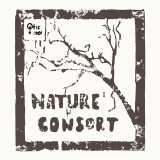
In the late 1960s, young jazz musician Bobby Naughton, a keyboardist and vibraphonist, faced significant challenges as he sought to record his first album. With major record labels and jazz clubs catering only to big names, Naughton and other creative musicians of his generation found themselves sidelined by the mainstream music industry. They turned to self-reliance and self-production, becoming part of a movement of independent musicians. Naughton’s debut album, Nature’s Consort, was a DIY effort in every sense—recorded on home equipment and featuring a hand-printed woodblock cover. The album was distributed independently at concerts and by mail, receiving little attention initially, but over the years it gained a reputation as a rare, sought-after artifact of the period.
Though recorded during an outdoor concert in Connecticut, Nature's Consort reflected the "loft jazz" scene in New York City. This avant-garde jazz movement centered around musicians who lived and played in loft spaces in lower Manhattan. Naughton commuted from his home in Southbury, Connecticut, to play with his bandmates Mark Whitecage, Mario Pavone, and Laurence Cook in New York's lofts. These musicians regularly performed at venues like Studio We, a key gathering spot for free-form jazz, where musicians could experiment and develop their sound, often with no audience present.
Naughton’s journey into jazz was a winding one. Originally from Boston, he played rockabilly and blues-rock before transitioning into free jazz. Inspired by avant-garde artists like Carla Bley and Paul Bley, Naughton sought to explore new forms of music that went beyond traditional jazz structures. His bandmates, Mark Whitecage and Mario Pavone, were both deeply affected by the death of John Coltrane in 1967, which prompted them to quit their day jobs, attend Coltrane’s funeral, and move to New York to pursue jazz full-time.
Nature’s Consort was a collective project, with band members sharing equally in any profits. However, Naughton was the driving force behind the group’s creative direction. He composed much of the original material and selected pieces by Ornette Coleman and Carla Bley for the band’s repertoire. Jazz critic Nat Hentoff praised the album for its “high-risk improvisation” and the musicians' ability to anticipate each other’s moves. Though Nature’s Consort received little press at the time, it has since been recognized as a significant early document of the loft jazz era, representing Naughton’s disciplined, improvisational approach to music.
“Isis was one of the first bands we signed on our label, even before longtime Suburban
signing Peter Pan Speedrock! The band were really on the rise when we signed them,
touring with bands like Motorpsycho and The Gathering. Edgar's Hair received great
reviews, but due to circumstances things went down after that, with the tragic death of
drummer Mike van Oijen as the all time low.
Now, after almost 25 years the album will finally be released on vinyl. 2LP in gatefold sleeve
with printed innersleeves and inlay and several bonustracks! If there is an album which
deserves a vinyl release, it's Edgar's Hair!” -Ronald Drayer, Suburban Records
- 1: Peach Blossom Paradise
- 2: Demon Cicadas In The Night
- 3: The Cold Curve
- 4: Saying Yes To Everything
- 5: Lighthouse
- 6: Revisionist Mystery
- 7: The Meander
- 8: The Wheel Of Persuasion
- 9: Another Tomorrow
- 10: Common Exotic
Prairiewolf make easy listening music for an age of fracture. They almost do it in spite of themselves. No one can seriously question the head music bona fides of the members of this Colorado-based trio.
Guitarist Stefan Beck has already assembled a formidable discography of jewel-toned guitar zone-outs under his Golden Brown moniker. And keyboardist and guitarist Jeremy Erwin and bassist Tyler Wilcox have both made their reputations as chroniclers of the vast world of out-music. Erwin helms the indispensable Heat Warps blog, a performance-by-performance archive of Miles Davis’s labyrinthine electric period. And Wilcox has been covering the ragged edges of psychedelia and experimental rock at Aquarium Drunkard and other publications, not to mention his own virtual basement for heads, the great bootleg blog Doom and Gloom from the Tomb.
These guys come by it honestly. And yet, given their backgrounds, Prairiewolf’s self-titled debut last spring was remarkably free of face-melters, brown acid blowouts, and ascendant spiritual jazz odysseys. Instead, they dropped a record of beautiful, elegant, low-key cosmic groovers that sounded like the piped-in background music to a resort hotel on Jupiter. It was an unlikely psychedelia, brocaded with mid-twentieth century sonic threading from the hi-fi era: vintage synthesizers, smears of spaghetti western, luxe tropical details, the faint schmaltz of space age pop. Imagine something like a Harmonia residency in the airport lounge. And yet somehow it all worked brilliantly. Prairiewolf became last summer’s cool-down standard. After a year woodshedding around Colorado’s Front Range region, the Prairiewolf boys have fired up their trusty Korg SR-120 drum machine for another outstanding collection of suborbital exotica. The appropriately titled Deep Time operates in its own chronology, unspooling at its unhurried pace. All its incongruous period and stylistic references—the new age pulses, Hawaiian steel, shaggy hippie rambles, lysergic guitar spirals, and orchestral synthesizer flourishes—float atop the album’s own singular temporality. Deep Time makes its own time.
From the moment Beck folds his slide guitar, origami-like, into a sound resembling the call of gulls on the tranquil album opener, “Peach Blossom Paradise,” there is a sense of departure from everyday life. The shimmering “Lighthouse” has a similar sunbaked nonchalance, like an afternoon passed day-drinking in a seaside bar. That they named their lush, kaleidoscopic downtempo track “The Meander” pretty much says it all. The ranging, propulsive “Saying Yes to Everything” seems like a nod in the direction of Rose City Band’s brand of wookie krautrock. And the motorik noir of “Demon Cicadas in the Night” also goes hard. Beck and Erwin’s intertwined guitar jam on the eerie album standout “The Cold Curve” evolves into something that sounds like primitive computer music. A genteel bassline from Wilcox on another album highlight, “Revisionist Mystery,” sets the stage for a loopy space jazz turn from guest clarinettist Matt Loewen of Rayonism. The title of post-rock cowboy tune “Another Tomorrow” might refer to the alternative future that so many critics heard in the music of Prairiewolf’s first album. Or it might simply refer to the persistence of time, however deep. Either way,
I’m thankful for the way Prairiewolf make each of their tunes a little oasis or sanctuary, each subsisting according to its own crystalline little logic for a few minutes. It is no simple task to filter out the omnipresent anger and anxiety of everyday life these days. But Prairiewolf are out here making it seem easy.
Brent S. Sirota
"We’ve taken a selection of the most in-demand and asked-for titles in our Brazil 45’s catalogue and given them a loving repress. Marking the third release in our now signature series, we shone the light on two sought-after tracks from Noriel Vilela and Juca Chaves.
On the A side, originally released in 1971 on Copacabana Records, Noriel Vilela's 1971 cover of Tennessee Ernice Ford's '16 Tons'. Ford’s 1955 original was a classic American pop-country-folk song, that Noriel masterfully flipped it into a low-slung, deeply toned samba groover.
On the B side Juca Chaves classic 'Take Me Back To Piaui' was released on 7"" by RGE In 1970 and features on his album 'Muito Vivo' from 1972. Sublime orchestration, velvety vocals and the instantly uplifting cuica tones, make this a must-have Brazilian cut. Chaves was an active critic of the Brazilian military dictatorship, and like Veloso and Gil, was exiled in the early 1970s, to Portugal and later Italy."
Jabu return with ‘A Soft and Gatherable Star’, an LP that sees the Bristol-based trio evolve from a uniquely spectral take on trip hop to proffer a singular vision between cloudy, downered dream-pop, off-kilter ambient, and the warm, low-end throb of sound system culture. This development is aligned with contemporaries like HTRK, Dean Blunt, Tarquin Manek, YL Hooi and Rat Heart Ensemble, whilst also harkening back to the likes of AR Kane (with whom they are set to play shows and release a collaborative single), the languorous drift of 'Victorialand' era Cocteau Twins or The Cure circa ‘Disintegration’. Comprising Jasmine Butt (vocals, guitar), Alex Rendall (vocals, keys) and Amos Childs (production, bass guitar), the trio’s method may have shifted but the feel remains consistent - slow, spatial, sensuous and gently melancholic. With a career arc unlike almost any other current guitar outfit, Jabu sit within a strong lineage of off-centre Bristolian music, and a very British strain of home-spun DIY bands. Self-recorded between Jas and Amos’ home in South Bristol and Amos’ mum’s house in rural North Somerset, the album came together via a process of trial and error - learning to play on borrowed instruments, using the equipment “wrong”, staying up late recording and slipping into strange, semi-conscious sleep deprived/inebriated headspaces. Having captured over 50 tracks, they honed in on those they liked most, shaping them further, whilst carving out space to allow input from people they love and admire - Daniela Dyson’s voice and Will Memotone's clarinet on ‘Ashes Over Shute Shelve’, Birthmark's synth on ‘Gently Fade’ and ‘Sea Mills’, Rakhi Singh (Manchester Collective) and Sebastian Gainsborough (Vessel)’s strings and arrangements on ‘All Night’, Josh Horsley’s cello on ‘If I Asked You, You'd Tell Me’, and Lorenzo Prati’s sax, again on ‘Sea Mills’. The album was mastered by Amir Shoat (HTRK, ML Buch, Dean Blunt, Carla Dal Forno). Influence-wise, the guitar-based material recalls the bands Amos listened to when younger, and Jas’ more folk-leaning inspirations. Deep-lying dub, hip hop and soul influences are also evident in both the way the LP was mixed, and the space ingrained in their subconscious. Tinged with melancholy, the songs cohere as a set of soliloquies and ruminations on love and tenderness. The album’s title comes from a poem by Amos’ late father which hangs on his wall and seeped into the record. ‘Ashes Over Shute Shelve’ is formed of lines from another poem of his. Recited by longtime collaborator Daniela Dyson and with Will Yates (Memotone) playing his mother’s clarinet, the track was imagined as a conversation between his parents. Geography and location also play a big part in the record, with several significant places name-checked in songs. Shute Shelve itself is a hill near Amos’ mum’s house, who explains “There’s a tree at the top with a 360° view of the Mendips, where my dad’s ashes were scattered. We used to go up there when we could first buy booze from the petrol station down the road, get drunk, light a fire, listen to music from my little battery powered CD player and sleep out without tents.” Titled after a Bristol suburb near where Amos’ grandparents lived and where Jas would spend time as a teenager, ‘Sea Mills’ references her being abandoned by friends on the Downs while high on mushrooms, stranded and missing the bus back. ‘Kosiše Flower’ references the city in Slovakia where Amos and Jas holidayed shortly after getting together and a flower he gave her, which she pressed in a book after an argument. ‘Oceanside Spider House’ is a location in Nintendo 64 game The Legend of Zelda: Majora’s Mask, where someone seeks shelter from the falling moon. Genre: Electronic / Ambient / Dream-pop
An antidote to the tough-guy hardcore spreading from CBGB's, emo outliers Native Nod's unique genre juxtaposition of damaged art-rock, daring/naive songwriting, and raw, poetic vocals have set them apart from the glut of early-'90s post-hardcore. Compiled here are the band's trio of seminal 7" EPs for the Gern Blandsten label, with liner notes by Jenn Pelly and scores of unseen photographs and ephemera.
Black[23,49 €]
Ben Lukas Boysen’s new album, Alta Ripa, signifies a seismic shift in his artistic journey. It revisits the foundational impulses of his youth, shaped amidst the serene beauty of rural Germany—a bucolic backdrop where his creative palette flourished. However, it was his move to Berlin in the early 2000s that electrified his sound, infusing it with the city’s pulsating energy and diverse cultural influences. Alta Ripa captures this transformative experience, blending the introspective melodies of his rural beginnings with the bold, experimental tones born from Berlin’s vibrant electronic music scene. This album is a testament to Boysen’s evolution, showcasing how geographical shifts can profoundly shape artistic expression.
Boysen’s fourth studio album under his own name, Alta Ripa is a nod to his beginnings as much as a hint to his future, and as a work, it’s almost contradictory in its boldness and humility. He invites the listener on a journey of self-discovery; both for himself and for them, describing the music as “something the 15-year-old in me would have liked to hear but only the grown-up version of myself can write.”
His last two albums involved working closely with other musicians, including cellist Anne Müller, flugelhorn player Steffen Zimmer, and drummer Achim Färber. However, inspired in part by a recent return to live performance, Alta Ripa sees Boysen circling back to his passion for pure computer music.
For Boysen, the return to his youthful musical language marks a major turning point in his career. It represents a departure from his roots in classical music – his mother was an opera singer and his father an actor with an appreciation for Wagner, Arvo Pärt, Keith Jarrett, and Stockhausen. Although these are still important influences, Alta Ripa encapsulates a new, exploratory interplay between Boysen’s careful craft and his ability to let go of some of the process.
The album’s title comes from the original Roman name of the town that Boysen grew up in, Altrip, where he lived until his early twenties. This formative period is central to the ideas behind this album, from Boysen’s parental ‘schooling’ in classical music through to his sonic journeys through drum and bass, Aphex Twin, and Autechre — all of which changed his idea of what music could be. The extreme energy of tracks like ‘Acperience 1’ by Hardfloor, ‘Tracks & Fragment’ by Cari Lekebusch, ‘Focus2 Implan’ by Jiri.Ceiver, and ‘Low On Ice’ by Alec Empire are also pivotal influences.
For Boysen, this time of his musical development also involved knocking down the pillars that he previously thought had carried his world. A key moment for Boysen was being given a precious (pre-internet) club cassette at school that featured artists like Source Direct, Photek and Goldie. Excited by this new discovery, he introduced his father to the song ‘Dred Bass’ by Dead Dred. After the song finished, Boysen Sr. turned off the tape and proclaimed it was “the end of all music”. This heated exchange sparked a new, and more mature dialogue between the two that involved them sharing and discussing music on a regular basis.
Boysen’s classical and jazz music upbringing might not be easily noticeable from the electronic palette that he uses. But it can be found in its bones; the structure of the tracks and their dynamic shifts. On Alta Ripa, he intentionally embraces a spirit of controlled chaos, churning out sonic ideas to see what sticks.
One of Brian Eno’s Oblique Strategy cards contains the phrase “gardening, not architecture”, and the trajectory of Boysen’s creative path reflects this metaphor. In much of his previous work he followed a sort of Brutalist architect’s approach; here, he was fully responsible for the tracks’ austere structures and planned them with deliberate care. But by sacrificing some of that control on Alta Ripa, he sets the right conditions for a dark and unpredictable, organic growth. It’s a push forward into a new world.