The formation OREGON has surely been well- known to most jazz and classical music enthusiasts.
During the past 50 plus years of band history, OREGON has become a synonym for genre-crossing music of the finest. Emerging in 1970 from the legendary Paul Winter Consort, OREGON, right from the start combined elements of jazz with those of symphonic classical music and what is known today under the makeshift term "world music".
If one takes into consideration that integrating musical elements from non- "western" cultures wasn't exactly common back then, this band's pioneering status is all the more clear.
More astonishing new music from Jason Boardman's BiD imprint.
KlangKollektor is a solo project by Lars Fischer (the drummer with the Psychedelic Cumbia band Trak Trak from Nurnberg.)
The clips here only tell half the story, these are meticulously evolving and utterly absorbing pieces.
A stellar collection of seven dubwise tracks over 4 sides with a Techno and Balearic influence.
out of Stock
Last delivered 2 years ago available to reorder, subject to availability
Son Mieux is a collective formed around Dutch singer, songwriter & producer Camiel Meiresonne. Once the keyboard player in Soul Sister Dance Revolution and in his young years frontman of All Missing Pieces. After playing in bands since he was eleven years old, he is now a grown young man, ready to invite the world into his own. Son Mieux writes his songs in the after hours, which make his songs both intimate & alive. By combining folk, indie and electronic music, he manages to create a unique sound and to process the expressions of his personality in his music.
The past two years have been an accumulation of highlights for Son Mieux. Single 'Even' became 3FM Megahit, debut EP 'Vice Versa' (2016) was streamed more than 6 million times and the song 'Easy' was used under major advertising campaigns from ING, McDonalds and Deezer. The band toured the country with sold-out club shows, festivals such as Zwarte Cross and Where The Wild Things Are.
In 2017 and 2018 they took their time to write the debut album. With singles 'Hiding', 'Everyday' and 'Old Love', the debut album Faire de Son Mieux makes a more mature and fuller sound. Together with producer Thijs van der Klugt (Douwe Bob, Sue the Night), a deepening was sought without losing the characteristic Son Mieux sound.
Faire de Son Mieux is available as a limited first pressing of 500 individually numbered copies on white vinyl. The package includes 5 exclusive inserts with song lyrics and photos.
Ruf Dug, the Mancunian record producer, radio host, and self-professed video game freak is back for round two on Pinchy and Friends recordings with a 6 song ep that truly defies categorization.
On this latest outing, Ruf Dug touches on genres as diverse as Dub, Zouk, Melodic House, Balearic Chug, Reggaeton and more....
On side A... 'Asking for Trouble' comes brazenly out of the gate with 'buttoned down'- a bold and instantly iconic Zouk-inspired dance floor destroyer.
It is then followed up by the soothing, downtempo sounds of 'Pomegranate Dub' - another instantly iconic track featuring a lead horn melody that evokes memories of the late, great John Hassall.
Jumping over to side two, things kick off with 'Watching', which, even at it's chuggy BPM, is as deadly as a dance floor track can get.
It’s a welcome return to the label with an EP that will sound as good by the poolside in Ibiza or on a wet Tuesday afternoon in Manchester. Buy or cry!
out of Stock
Last delivered 84 days ago available to reorder, subject to availability
“A corollary is a statement that follows naturally from another statement”
Presenting Corollary1, the first release in a new remix series flipping cuts from O.M.Theorem’s Lemma projects.
For this one we invited good friends DJ Sotofett and Ossia. Regular conspirators in bacalao and dosa dinners, monthly hangouts at Globus-Tresor and sound system parties in Milano & Bristol. Through appreciation of similar frequencies and shared experiences, friendships grow. It felt natural to invite the two to do remixes for us. One evening we bumped into them on the dancefloor during a live concert by Senegalese percussion outfit Ndagga Rhythm. This was a sign. BAM! The EP came alive.
On the A-side, we hear two fresh takes on Lemma1-B2. DJ Sotofett with his dub heavy output on Honest Jon's and Sex Tags Amfibia invites Ghanese Afro-Dub drummer Ekowmania for vocals and usual collaborator LNS for keyboard work on his sub-deep club-stepping colourful remix. We bet the infectious vocals will linger in your mind for a long time. Play it LOUD for full sub bass effect! The second interpretation of the same track is from O.M.Theorem. A techy dubstep banger, this one!
On the B side, Bristol and Peng! Sound's Ossia picked his favorite Lemma1-B1 and drove the mixing desk in true Dub-style fashion with a classic riddim that meets an avant garde melody going in and out of the mix. This is a remix that deserves attention, with every listen revealing new layers and details. Even the premasters sounded phat as a greasy hamburger on the German capital’s legendary Super Power Soundsystem! The second interpretation is from O.M.Theorem, rebuilding percussion and bass from Lemma1-A1. Liberating himself from all restrictions the result is a footwork-reminiscent 160 cut, ready for the dance floor.
out of Stock
Last delivered 2 years ago available to reorder, subject to availability
Both Tymon Dogg and Richard Dudanski had musical roots playing in The 101'ers with future Clash singer/guitarist Joe Strummer. All three shared a deep love for southern Spain, due perhaps to the influence of the Romero sisters, Paloma (later "Palmolive" of The Slits) and the artist Esperanza, who were among the first Spanish punk refugees in London. Tymon's career began with beguiling interactions with Apple Records, The Moody Blues and future Led Zeppelin members John Paul Jones and Jimmy Page before he discovered his true musical self as a punk / folk experimentalist, opening shows for the likes of The Slits, Raincoats and Pop Group and becoming the longest-running musical foil in Strummer's career, continuing into The Clash and Mescaleros. Similarly, Richard played in Basement 5, Public Image Ltd, The Raincoats and others before following Esperanza back to Granada...which subsequently became second home to Tymon and Joe. Spain is not without its own punk heroes, and chief among them was Granada's Antonio Arias, another pal of Joe's and leader of Spain's musical heroes, Lagartija Nick, which also included Dacoits members Juan Codorniu and JJ Machuca. Antonio sings the albums two Spanish-language songs. while Tymon sings the other nine...and there's an instrumental, "Mongols", which the band considered too epic as a stand-alone instrumental to mess with! Tymon sings three songs from his past: "The Wheel Of Life And Death" has been heard before as a live bonus track on the expanded reissue of "Battle Of Wills", "Conscience Money" was heard in a very different version on the impossible-to-find "Made Of Light" album, and an embryonic take of "Something To Prove" turned up the even rarer 1989 solo album, "Relentless". If you imagine the playful elasticity of "Sandinista!" recast into a more straightforward record, with Tymon taking the lead on something more than that album's "Lose This Skin", you're halfway there. Guests include Killing Joke bassist / famed producer Youth and Dr Robert from The Blow Monkeys
Ornette Coleman's hugely influential 'The Shape Of Jazz To Come'
pressed on limited edition 180g premium orange vinyl.
'The Shape of Jazz to Come' was a watershed event in the genesis of avant-guard jazz. The record shattered traditional concepts of jazz harmony, disposing of both the piano player and the whole idea of concretely outlined chord changes. The album includes Coleman's classic tune 'Lonely Woman.'
"The element that pours out of this disc is creativity in strong, concentrated waves. Four of the half dozen Coleman originals in this collection grow out of bop roots, but Coleman hears other things, too. This is not easy music for the listener, but even at its most difficult it remains compelling." - John S. Wilson, DownBeat
Since releasing on Reinforced at the age of 16, Dominic Stanton has always remained one of most influential producers in the west London broken beat scene. Those early adventures via numerous successful aliases laid the foundations for Dom's sound, eventually leading to the launch of 'Sonar's Ghost' in 2013.
Welcoming Sonar's Ghost to Metalheadz is now long overdue, so it's a pleasure to be showcasing 'The Fall and Rise Of...' as part of the Metalheadz Platinum series this July. Consisting of 5 collabs, 4 of them making the vinyl cut, the release draws inspiration from the rich heritage of jungle and breakbeat, effortlessly weaveing together intricate rhythms and immersive textures. Outrage & Scale feature on 2 tracks each, whilst Acid_Lab also gets in on the virtual collaboration bringing together a complimentary selection of styles.
out of Stock
Last delivered 18 months ago available to reorder, subject to availability
Alternative indie pop artist Rachel Chinouriri announces her long-awaited debut album What A Devastating Turn Of Events, out Friday 3rd May 2024 via Parlophone. What A Devastating Turn Of Events is a culmination of the experiences, challenges and joys of Chinouriri’s life so far, explored through the prism of musical stylings honed through years of experimentation and creation.
Ever-eclectic and brutally honest, the album traverses life’s light and shade, the writing and sharing a healing process for Rachel, and she hopes, her listeners. The album is now available to pre-order and pre-save. In addition to the digital release, the physical formats include the Standard LP & CD, exclusive red vinyl for HMV and select indie stores.
There is also a Deluxe LP and 7 inch (including 2 bonus tracks), cassette and CD + Zine that are all available exclusively via Rachel’s official store. Rachel will play her biggest sold out headline show to date at London’s KOKO on 6th March 2024. In celebration of the announcement of her debut album, Rachel also announced two US headline dates in New York and LA in March, plus a run of intimate in-store shows across the UK in February.
Alternative indie pop artist Rachel Chinouriri announces her long-awaited debut album What A Devastating Turn Of Events, out Friday 3rd May 2024 via Parlophone. What A Devastating Turn Of Events is a culmination of the experiences, challenges and joys of Chinouriri’s life so far, explored through the prism of musical stylings honed through years of experimentation and creation.
Ever-eclectic and brutally honest, the album traverses life’s light and shade, the writing and sharing a healing process for Rachel, and she hopes, her listeners. The album is now available to pre-order and pre-save. In addition to the digital release, the physical formats include the Standard LP & CD, exclusive red vinyl for HMV and select indie stores.
There is also a Deluxe LP and 7 inch (including 2 bonus tracks), cassette and CD + Zine that are all available exclusively via Rachel’s official store. Rachel will play her biggest sold out headline show to date at London’s KOKO on 6th March 2024. In celebration of the announcement of her debut album, Rachel also announced two US headline dates in New York and LA in March, plus a run of intimate in-store shows across the UK in February.
Runar Magnusson is an Icelandic/Danish sound artist and musician, currently based in Austria. With a masters degree in Electronic Music Composition from The Royal Academy of Music, Aarhus, Denmark, he is inspired by the sounds of nature, noise, and meditation. Magnusson specialises in atmospheric disturbances through minimalist compositions. A sly humour cuts through the dark hues of his works.
Magnusson writes: "The two works which make up "Inside Out of Chaos" are somewhat related. They were made at the same time and share the same source materials somewhat – a pool of sounds I had been experimenting with for a couple of years. Two separate projects created the opportunities for me to realise them in these finished forms.
At the beginning of 2020 I was invited to participate in an acousmatic concert series at the Traktorfabrikken in Vienna. Curated by Austrian composer Christian Tschinkel and performed on his Akusmonautikum sound system this particular event, titled Kill & Kaoss, was the last in the series. I named my piece after the event and dedicated it to Tschinkel´s Akusmonautikum system. Without my knowing, I had witnessed this system in action half a year earlier at a concert at the Hermann Nitsch Museum in Mistelbach, with Hermann Nitch playing the organ and Tschinkel operating the sound system – a profoundly enjoyable performance. I was very happy when I connected the dots soon after the invitation to participate. I intended my work for Kill & Kaoss to be a way to greet the new lunar year of the rat – a year which held many surprises… The event took place on 22nd of February 2020 at Traktorfabrikken, Vienna.
"Inside Out (for Trattner)" was composed for Austrian artist Josef Trattner. It was the soundtrack for a film that was a part of his exhibition "Inside Out" at the Kiesler Foundation in Vienna, 2020. I assisted with the installation of the exhibition, itself a filmed action that evolved into the movie of which this is the score. The installation was a very hard physical process that left me bloody and blistered. It was also a fascinating, trance-inducing experience. Mining with ones bare hands, digging out this huge structure and creating a womblike cave, a tunnel system, a playground, a hideaway while experiencing ever-increasing pain in the fingers and hands. The exhibition ran from 27 February 2020 until 23 December 2020.
I consider this release as the final part of a trilogy I refer to as "the three sisters of sorrow". These three releases are an insight into my state of mind at the time – a mental collapse, somewhat triggered by a move to a new country, the death of my friend Jóhann Jóhannsson and the loss of my father a year later. Between 2018 and 2021 I had the trilogy almost ready but had not been able to finish them. I sought professional help to lift me up from the deep and was diagnosed with ADHD, which explained many things in my life. Only after the darkness had lifted could I see that these three releases were connected. They depicted both the mental state I had been in – an incapacitating downward spiral, a crushing chaos – and also my search for the light, a way out of the maze and my path up to the surface."
‘Billie Holiday Sings’ is her first full-length album, released in the United States by Clef Records in 1952 on the 10-inch format. It contains her versions of “These Foolish Things”, which was covered in 1973 by Bryan Ferry and the classic standard “Blue Moon”. 1953’s ‘An Evening With’, her second ten-inch studio album, contains the famous Cotton Club song “Stormy Weather” and a translation of Edith Piaf’s success song “Mon Homme”, introduced by Billie Holiday as a jazz/blues recording called “My Man”. Both albums were recorded with a sextet including Oscar Peterson on piano, Ray Brown on double bass and Alvin Stoller on drums. Limited edition on crystal clear & solid silver vinyl. "Sings + An Evening With Billie Holiday" by Billie Holiday includes the following tracks: "Blue Moon", "These Foolish Things (Remind Me Of You)", "You Go To My Head", "Stormy Weather" and more.
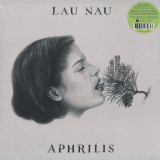
The title of the Lau Nau's 10th album, Aphrilis, derives from the Latin word aperire, meaning "to open." A fitting verb for the month of the year it is closely associated with — April. And while the images of plants and blossoms coming back to colorful life after a long, cold winter feels appropriate when listening to the rich and lustrous bloom of music on Aphrilis, another definition of open feels even more apt. For under the abundance lies the memory of times of austerity, the friction of hard choices, the acceptance that nothing is fixed and the future is unknown. This literal and metaphorical exploration of complexity and contradiction makes Aphrilis a multi-dimensional antidote for our troubled times, one that emphasizes the quiet and communal over noise and spectacle. Laura Naukkarinen, the Finnish artist behind this project, has long kept her mind and spirit open to whatever sounds and creative ideas felt appropriate for the moment. For the past six years that has meant primarily working with modular synthesis — learning how to build modules and releasing acclaimed work centered on its sounds like 5x4 (2023) or Puutarhassa (2022). Running parallel to this work, however, has been a continued exploration of acoustic instruments and group performances with her trio Lau Nau ja Seitsemäs Taivas. Aphrilis arrives then like fresh growth in a creative season cycle. A companion to her brilliant 2017 release Poseidon, the album, says Naukkarinen, "felt like a needed moment to embrace songs with lyrics again." And through the creation of this work, she remained open not only to her own creative muse, but also the input of her chosen collaborators. Each player on Aphrilis — Matti Bye on celesta and synths, Pekko Käppi on jouhikko, Hermanni Yli-Tepsa on violin and contrabass, Topias Tiheäsalo on electric guitar, Samuli Kosminen (Múm) on various instruments — was given free reign to arrange their own parts to accompany Naukkarinen's compositions. Kosminen’s lush fingerprint can also be heard in the mixing and production of the album, as with Poseidon six years ago. The moniker of this project may be taken from Naukkarinen’s own name, but Lau Nau feels more like a band than ever before. The delicacy and softness of the music is reflected in Naukkarinen’s lyrics. Each song is rife with imagery and creatures from the natural world. The spiders in the forest. The animals that keep a young woman company in her refuge in the woods. Wet grass. The feeling of the music is almost tactile, as if listening to the album will leave a bit of dew or sap on your fingers. The theme of this material, says Naukkarinen, runs even deeper. “The songs tell about cracks and changes of direction in different histories: personal, societal, planetary,” she says. “About moments when a yes can become a no and vice versa. The album wants to propose that at the moment of a crisis there is a possibility to influence the histories by our choices.” That may feel like a lot for such a fragile sounding collection of songs to bear. But Aphrilis is an album of surprising strength and resilience
out of Stock
Last delivered 2 years ago available to reorder, subject to availability
One of the shining beacons of the UK post-metal scene, Bossk have steadily built up an unrepentantly loyal following since 2005. Before they reach the big 20, the band are taking this opportunity to take pause and reflect on their past and all the hard graft that has led them to become one of the most lauded bands in the genre. .4, the latest in a series of numbered releases that presents material outside the remit of Bossk’s full-length album output, is a celebration of those 20 years and provides an enticing aperitif for their 3rd album proper, to be released sometime in 2025. As is tradition with these numbered releases, .4 is not a Bossk album in the conventional sense, instead forging a more experimental path by presenting re-worked versions of some old favourites, as well as a smattering of re-recorded songs that only the most obsessed Bossk fan will be familiar with. One deciding factor that emboldened Bossk to celebrate their past is the amicable departure of vocalist Sam Marsh due to his permanent relocation to the United States. The band wanted to give Sam an epic recorded send-off and the colossal 13-minute Events Occur in Real Time provides a fitting farewell for the vocalist, who’s guttural razor-wire screams have provided tectonic shifting textures to the band since their inception in 2005. Acting as the centrepiece of .4, this is the first studio take of the song ever recorded, conceived as it was in 2008, just months before the band went on temporary hiatus.
1981, the leaden years are over, the socialist left is in power in France and the first wave of punk seems a long way off. However, the youth of the day had not said its last word, and bands were springing up all over the place, free radio stations were opening up, fanzines were being published, concerts were being staged on the fly and little by little a scene was forming, a motley crew of kids in revolt, radical activists and just plain old folk passing through.
After having cut their teeth in a variety of more or less confidential bands, in which you'd come across a good number of players from this up-and-coming alternative scene, the members of Guernica moved up a gear, determined to blow on the still-glowing embers of rebel rock. With the shortage of venues the rule at the time, they began by scouring the suburban MJCs, putting on wild concerts and eventually meeting up with the squatters of the Couronnes commune and the members of V.I.S.A., with whom they played an active part in organising concerts in squatted buildings in these relegated areas of the capital.
In February 1983, the V.I.S.A. association and the Abattoir art collective (which included some members of Guernica) organised a concert at the Usine Pali-Kao. That evening, two groups took to the stage in succession: Guernica and a fledgling duo, Bérurier Noir. The evening will go down in the history of alternative rock as one of the key turning points of the period. After the departure of Loran, who played guitar with both bands, Fabrice Benoît joined Guernica on guitar, and the gang continued for a few more months, ending on a high note with a chaotic concert at the Eldorado in Paris.
Until now, it's been impossible to get your hands on any of the band's recordings unless you're lucky enough to own the Paris Mix compilation, the Guernica/Bérurier Noir split or the V.I.S.A. Usine Cascades 1982 cassette. This vinyl, a perfect record of the era, brings together the six tracks recorded by the band at the time.
A psychedelic storm rages over The Netherlands, and its name is Heath. Their upcoming debut album “Isaak’s Marble” marks the beginning of a long story and opens the door to the world of Heath, where anything is possible.
Odd time signatures, blazing harmonica, and driving guitars accompanied by narrative vocals create an enchanting journey. Heath is known for their energetic live shows, which together with carefully drawn out eclectic songs seamlessly blend into an atmosphere that is both hypnotic and liberating.
Heath is also playing Roadburn 2024 Roadburn Festival Artistic Director Walter Hoeijmakers: “It’s rare that we book a band for Roadburn before they even release their debut album, but we believe Heath are a rare band. You may not know them yet (or maybe you do, and that’s cool too), but we were lucky enough to get an early listen to ‘Isaak’s Marble,’ which will be released by Suburban Records on 10 May, and we knew immediately they needed to be on our stage this year. In Heath, we hear instrumental breadth and organic vocal melodies combine in ways that draw from classic influences like The Allman Brothers, Grateful Dead, or even the Red Devils, but they are not a throwback at all. They are a proper and vital new band, and their energy bleeds into every dynamic second of ‘Isaak’s Marble.’ We cannot wait to introduce them to the Roadburn audience, and we know they’ll be talked about afterward as a highlight for those who were there.”
Mayday is the third LP by Montreal-based artist, Myriam Gendron. It follows her earlier, critically acclaimed albums, Not So Deep As A Well (2014) and Ma délire - Songs of love, lost & found (2021). Myriam began exploring the complex folk traditions of Quebec (and beyond), with Ma délire, which combines traditional and original songs with arrangements that make space for avant-garde musical interludes by such folks as guitarist Bill Nace (Body/Head) and renowned jazz percussionist Chris Corsano. Mayday presents an even more syncretic fusion of the elements Myriam uses to create her sound. Most of the songs are original, sung in both English and French, and they blend traditional and avant elements with abandon. She is often accompanied on this album by the guitarist Marisa Anderson and drummer Jim White (Dirty Three, Xylouris White), whose work provides a quietly aggressive sort of free-rock base. Additional players include Montreal bassist Cédric Dind-Lavoie, Bill Nace and saxophonist Zoh Amba. Mayday is a thoroughly thrilling effort that manages to create new vistas of sound while maintaining a feel that is both intimate and familiar. The music here certainly possesses a richly serious tone, but Myriam Gendron (like Leonard Cohen) is able to infuse her darkness with a subtle, powerful light that reminds us that even the most pitch-black night is but a transitional state. Beautiful work.
Heavenly, crystalline psychedelic sounds, in our favored stereo mix! Jazzy, acoustic guitars and stacked Association-like harmonies showcase Tiffany Shade's gorgeous originals and a rendition of Love's "Softly To Me." Pressed on lavender vinyl! After a chance meeting in a record store, this Cleveland band got their start on Upbeat!, a local teen dance show similar to American Bandstand. Though their album was cut in two days over the course of 2 eight hour sessions, their arrangements shine through what was a scattered recording session. "We really worked hard in the studio even though we didn't have enough time to do all the things we wanted to do with music," bassist Robb Murphy remembers. "We were pretty excited. We just had no experience with that sort of thing. We had heard things but never had any experience. We were really babes in the woods. It was a terrific experience looking back on it. It was really a hell of a lot of fun, we loved the idea of being able to overdub even though we didn't get to do too much of that, it was still fun. That was pretty high tech in those days, being able to lay down a couple of tracks with your voice." guitarist Mike Barnes recalls. Similar to the Bosstown sound (Orpheus, Ultimate Spinach), Tiffany Shade lean towards harmony-driven vocals that combine their clever pop sensibilities with a versatile showcase of keys, organ, and scintillescent guitars. After their album's release in '68, they had the opportunity to open for Big Brother & Holding Co., but because of poor sales (and like many Mainstream artists) the band didn't last and went their separate ways in '69.
PRINCE PHILLIP MITCHELL has been performing, writing and producing since the early sixties and even spent a little time with Alvin Cash's backing group the Cash Registers. He wrote hits for Mel And Tim and Millie Jackson but is best known on the Northern Soul scene for his 'Shout' recording Free For All' and our chosen side, the crossover soul anthem I'm So Happy'.
LOU RAGLAND shot to fame on the Northern Soul scene with his 4-figure rarity I Travel Alone', recorded for 'Amy' Records in May 1967. It was his home town buddy, Edwin Starr, that helped Ragland secure the deal and although a flop at the time it cemented his popularity in England. When Starr came to the UK in 1983 with his Ric-Tic Revue Ragland was invited along and, at last, got the recognition he deserved.
Ngwaka Son Systéme’s debut album Iboto Ngenge means “power struggle” or “seizing the opportunity” but while words can only be roughly translated, the music reaches listeners unambiguously: A potent mixture of techno, rumba, soukous, zagué and dancehall with the unique “Kinoise” brand fresh out of Kinshasa, the Congolese megacity that never stops innovating in the music landscape worldwide. Ngwaka Son Systéme is led by musicians Love Lokombe and Bom’s Bomolo, having previously founded the band KOKOKO!. This new project continues the contemporary Congolese tradition of reinventing electronic music by shaping and crafting music instruments made of household objects. As a means to continue strengthening the links between Africa and Latin America, Eck Echo has tasked Colombian dub engineer Diego Gomez with the analog mixing of the stems, originally recorded by Levy David at Timbela Ba Studio in Kinshasa. With the aim to bring the lexicon of shared Colombian and Congolese music into the next chapter, we proudly present to the world the magnificent music of Ngwaka Son Systéme. The inadvertently techno-oriented Lakala, a trance-inducing experience where listeners can quickly relish to the lyrics even without speaking Lingala, for the shapes of the words are already inviting listeners to dance, sing and smile, all the while virtuoso percussionist Steroy operates the DIY-drum kit at high-tempo. The call-and-response effect, where each musician lends their voice to the choir, is particularly felt in Bo Lobi Pe, where the vocals guide us ever so playfully to the tune of an acoustic guitar that invites us to take off our shoes, kick back and relax. Zanga Mbongo (translated as “there is no money”) is lyrically a proud anthem to celebrating life in spite of economic scarcity, and musically it is a triumphant renewal to the legendary soukous genre of the 1970s, championed by worldwide renowned stars such as Pepe Kallé and Sam Mangwana.
SND & RTN brings it home on this new 12" for Lempuyang that explores their signature techno depths. 'Palantir' opens with fathoms-deep dub and ice-cold synths that snake their way over the face of the track, while 'Hyperdrive' has rumbling chords and smeared pads that keep you on the ocean floor and 'Dub Conjurer' allows in a little more light from the surface with delicate shards piercing the murk. 'Tales From The Outer Rim' shuts down with a nice gentle rhythm that undulates beneath rippling pad work and works well as perfect early evening warm up.
out of Stock
Last delivered 20 months ago available to reorder, subject to availability
Nick Llobet (they/them) was ready to throw in the towel. Llobet, who grew up in South Florida, learned to play guitar at a very young age, dabbling in everything from classical, blues, classic rock, and flamenco. They'd spent much of their early 20s searching for their voice as an artist and as an individual, as well as for a musical community Llobet would eventually move to Brooklyn, but after three years of looking for a hopeful artistic breakthrough, they spent much of their time in seclusion, consumed by social anxiety and imposter syndrome-and they were considering abandoning songwriting completely. One day, while commuting through Penn Station en route to their partner's family home in Virginia (that would also lead to the crucial purchase of a secondhand Tascam cassette recorder), they noticed Patti Smith sitting alone, waiting for a train. The typically shy Llobet decided to approach the icon, who was, in turn, delighted to see that Llobet was carrying a guitar. At the end of their interaction, Smith offered some parting wisdom: "She wished me luck and said, 'Practice hard, Nick.'" Llobet took her advice to heart, and this chance encounter kicked off a personal and artistic rebirth. They started performing as youbet, a play on their last name, and began "changing their vision for what a song could be." youbet's debut, Compare & Despair, a delightful gem of a record that showcases Llobet's propensity for freewheeling whimsy and emotional intensity. In May 2019, inspired by a song-a-week writing group that produced Compare & Despair, Llobet started a second club in which contributors would upload that week's song to a private Bandcamp. Invigorated by this small musical collaboration, the feedback, and the accountability, Llobet wrote 18 songs throughout the duration of the club, twelve of which became Way To Be. After this songwriting marathon, Llobet spent 2020 focusing on instrumental guitar work and political engagement. By the summer of 2021, they were ready to revisit the Way To Be tracks. Over the next year-and-a-half, Llobet worked on the record relentlessly, refining the lyrics, recording, and arrangements from their apartment. Llobet self-produced Way To Be and describes the process as an enormous, labor-intensive undertaking that felt akin to "making a whole film." Along the way, Llobet was joined by collaborators, including Julian Fader (Ava Luna), Adam Brisbin (Buck Meek), and Daniel Siles. Across Way To Be's 12 delightfully off-kilter tunes, Llobet uses wordplay and tongue-in-cheek humor to obliquely explore dysfunctional relationships, regret, self-confidence or the lack thereof, queerness, and self-discovery. Fuzzy at the edges and filled with playful, kinetic arrangements, Way To Be is a bridge into the entrancing world of youbet. You won't want to leave.
A much needed 12-inch sampler for Adapta's critically acclaimed Memory Program album. Originally released as cassette and digital download through Miami's Schematic Music Company. Beware!!..
out of Stock
Last delivered 14 months ago available to reorder, subject to availability
Live albums are often a ‘hit or miss’ affair but ‘Live Oblivion’ 1 & 2 buck that trend, Recorded across 2 nights in 1974 at the Hollywood venue The Whisky A Go Go. The group were finishing off a huge US tour that had roared down the east coast then across the Midwest and by the time they hit LA, as Brian recalls “we were all absolutely performing at our height. So I decided that I really needed to record the band live at that point”. Utilising the Wally Heider Mobile Truck, the scene was set for one of the greatest jazz-fusion live recordings to be made. The show opens with a hyper fast version of Beginning Again due to drummer Steve Ferrone being almost an hour late and running high on adrenaline, Brian remembers thinking “I don’t even know if I can play it that fast!” Fortunately, he and the Oblivion Express including stellar vocalist Alex Ligertwood rise to the challenge and the result is akin to some frenetic jazzy drum & bass but also pushes the group onto another level altogether for the rest of the show. Across both volumes there are no fillers and the highlights are many - Bumpin’ On Sunset, Freedom Jazz Dance, and Inner City Blues are all stunning, but especially the epic version of Maiden Voyage which Mos Def sampled on his 1997 'If You Can Huh! You Can Hear', and both DJ Mitsu in 2004 and 2017 Crimeapple both dipped into Live Oblivion to sample that fire for their own projects.
Live albums are often a ‘hit or miss’ affair but ‘Live Oblivion’ 1 & 2 buck that trend, Recorded across 2 nights in 1974 at the Hollywood venue The Whisky A Go Go. The group were finishing off a huge US tour that had roared down the east coast then across the Midwest and by the time they hit LA, as Brian recalls “we were all absolutely performing at our height. So I decided that I really needed to record the band live at that point”. Utilising the Wally Heider Mobile Truck, the scene was set for one of the greatest jazz-fusion live recordings to be made. The show opens with a hyper fast version of Beginning Again due to drummer Steve Ferrone being almost an hour late and running high on adrenaline, Brian remembers thinking “I don’t even know if I can play it that fast!” Fortunately, he and the Oblivion Express including stellar vocalist Alex Ligertwood rise to the challenge and the result is akin to some frenetic jazzy drum & bass but also pushes the group onto another level altogether for the rest of the show. Across both volumes there are no fillers and the highlights are many - Bumpin’ On Sunset, Freedom Jazz Dance, and Inner City Blues are all stunning, but especially the epic version of Maiden Voyage which Mos Def sampled on his 1997 'If You Can Huh! You Can Hear', and both DJ Mitsu in 2004 and 2017 Crimeapple both dipped into Live Oblivion to sample that fire for their own projects.
Queer artist de clair’s anticipated debut EP & big emotional lead track ‘funeral’ is finally here. Her music has already been published by NME, lablogotheque, The Line of Best Fit & Clash, seen live before waterbaby & Augustine and in global playlists such as Spotify Fresh Finds - even though she’s only been around for a few months. Recorded w Jens Resch & Jonny Coffer (Lykke Li, FKA twigs, Beyoncé) in London and backed by All Stripes PR (Arlo Parks, Flume). Indie/Folk similar to Okay Kaya, Phoebe Bridgers, Hannes & First Aid Kit
Kein Liedermacher des Landes war so zärtlich und zornig, so wacker und weitsichtig, so politisch agil und aktiv, so streng und zugleich sanft - wie Sigi Maron. Sagen wir, eine bunte Schar von Maron-Fans. Er war über Jahrzehnte der österreichische Protestsänger schlechthin. Im Mai 2024 wäre Maron, 2016 verstorben, achtzig Jahre alt geworden. Hier wird er wieder lebendig. Der Song "Red'n kaun ma boid" eröffnet diese Schallplatte, die - mit einer Auswahl der bekanntesten und beliebtesten Songs von Sigi Maron - ein Denkmal setzen will. Ein programmatischer Auftakt. "Red'n kaun ma boid" heißt auch ein Buch, das gemeinsam mit diesem Tonträger erscheint. Zusammen eröffnen die druck- und pressfrischen Memorabilia ein weites Feld von Erinnerungen, Ein- und Wertschätzungen, Schlaglichtern und Songbeispielen, die das Unterfangen, ein dauerhaftes Bild des Künstlers zu zeichnen, mit- und weitertragen. Denn eines ist klar: es braucht die Lieder, es braucht die Worte, es braucht die Stimme von Sigi Maron, um ihn noch einmal (und vielleicht auf Dauer) mitten in den Raum zu stellen. Und genau da gehört er hin, zumal in schwierigen Zeiten wie diesen. Nie waren Marons Songs brisanter als heute. Die Unbill diverser Lebens-Handicaps, Zeitgeisterstunden und Alltagswidrigkeiten wurde bei ihm Zeit seines Lebens mit dem Rock'n'Rollstuhl entsorgt. 1944 in Wien geboren, wuchs Sigi Maron mit sechs Geschwistern in Gneixendorf bei Krems auf. In den siebziger Jahren reifte er im Umfeld der "Arena"-Bewegung zum sozialkritischen Liedermacher heran. Sein erstes Album ("Schön is des Lebn", 1976) produzierte André Heller. In Zusammenarbeit mit den Schmetterlingen, später mit dem Kevin Coyne-Produzenten Bob Ward und mit Konstantin Wecker schuf er zeitlos gültige Meisterwerke wie "Laut & leise", "He Taxi", "5 vor 12" oder "Unterm Regenbogen". Die Single "Geh' no net fort" rangierte 1985 zehn Wochen lang in den Charts. Maron galt dabei immer als eine der schärfsten Speerspitzen der explizit politischen Kunst. 1998 und 2003 kandidierte er für die Kommunistische Partei für den niederösterreichischen Landtag. Vom beißenden Spott, der zärtlichen Zynik und volksverbundenen Derbheit seiner Formulierungswut blieben aber auch die eigenen Genossen meist nicht verschont. Manche erinnern sich: einst, Anfang der achtziger Jahre, protestierte Maron gegen den weitgehenden Ö3-Boykott der kritischen Liedermacher - die "Musicbox" war eine Ausnahme - vor dem Wiener Funkhaus. Und wurde dafür von der Polizei in die Psychiatrie eingeliefert. Dass er dereinst auch geliebt, gehört, geehrt würde, war damals nicht absehbar. Es ist eventuell eine späte Wiedergutmachung. Diese Schallplatte, die die die objektiv und subjektiv größten "Hits" einer langen Laufbahn versammelt (eine Handvoll Lieder, die drei bewegte Jahrzehnte umspannen), sollte jedenfalls einen Ehrenplatz finden im Pop-Archiv des Landes. Für viele wird die Revue der alten Songs ein Wiederhören bedeuten. Für andere ein lustvolles Neu-Entdecken. Dass es sich keineswegs um harmlosen, schunkelseligen "Austropop" handelt, auch wenn der Komponist und Texter nie dessen oberflächlichen Strickmustern entsagt hat, wird nach dem ersten Durchhören klar. Die Ehrenmitgliedschaft im Verein für deutliche Aussprache war und ist ihm sicher. Es gibt keinen zweiten wie Sigi, behalten wir ihn nachhaltig im Herzen.
Nick Llobet (they/them) was ready to throw in the towel. Llobet, who grew up in South Florida, learned to play guitar at a very young age, dabbling in everything from classical, blues, classic rock, and flamenco. They’d spent much of their early 20s searching for their voice as an artist and as an individual, as well as for a musical community. Llobet would eventually move to Brooklyn, but after three years of looking for a hopeful artistic breakthrough, they spent much of their time in seclusion, consumed by social anxiety and imposter syndrome—and they were considering abandoning songwriting completely. One day, while commuting through Penn Station en route to their partner’s family home in Virginia (that would also lead to the crucial purchase of a secondhand Tascam cassette recorder), they noticed Patti Smith sitting alone, waiting for a train. The typically shy Llobet decided to approach the icon, who was, in turn, delighted to see that Llobet was carrying a guitar. At the end of their interaction, Smith offered some parting wisdom: “She wished me luck and said, ‘Practice hard, Nick.’” Llobet took her advice to heart, and this chance encounter kicked off a personal and artistic rebirth. They started performing as youbet, a play on their last name, and began “changing their vision for what a song could be.” youbet’s debut, Compare & Despair, a delightful gem of a record that showcases Llobet’s propensity for freewheeling whimsy and emotional intensity. In May 2019, inspired by a song-a-week writing group that produced Compare & Despair, Llobet started a second club in which contributors would upload that week’s song to a private Bandcamp. Invigorated by this small musical collaboration, the feedback, and the accountability, Llobet wrote 18 songs throughout the duration of the club, twelve of which became Way To Be. After this songwriting marathon, Llobet spent 2020 focusing on instrumental guitar work and political engagement. By the summer of 2021, they were ready to revisit the Way To Be tracks. Over the next year-and-a-half, Llobet worked on the record relentlessly, refining the lyrics, recording, and arrangements from their apartment. Llobet self-produced Way To Be and describes the process as an enormous, labor-intensive undertaking that felt akin to “making a whole film.” Along the way, Llobet was joined by collaborators, including Julian Fader (Ava Luna), Adam Brisbin (Buck Meek), and Daniel Siles. Across Way To Be’s 12 delightfully off-kilter tunes, Llobet uses wordplay and tongue-in-cheek humor to obliquely explore dysfunctional relationships, regret, self-confidence or the lack thereof, queerness, and self-discovery. Fuzzy at the edges and filled with playful, kinetic arrangements, Way To Be is a bridge into the entrancing world of youbet. You won’t want to leave.
They’re back! This time the Finnish seers Mahti venture even deeper into the unknown on their third release Musiikki 3, assisted by the creativity of English musicians Richard Dawson and Sally Pilkington.
The music reaches for space and roots at the same time bringing forth Mr. Dawson's earthy guitars and angelic voice while Ms. Pilkington weaves ethereal layerings with her synths and joins occasionally the choir.
Hannu Saha conjures ancient Karelian spirits with his kantele while Muumu, Lehtibabba and Mätky mesmerize the listener with their unique mix of electro, rock and noise.
The end result is an album full of Musiikki unlike you've never heard before!
“These ancient musicians played their ‘mahti’… and the sound they produced was called ‘musiikki’”
Hannu Saha - string kanteles ,Tomi Leppänen - sequencer/drum brain/synthesizers , Jussi Lehtisalo - noise/vocals, Teemu Elo - guitar/synthesizers, Richard Dawson - guitar/vocals , Sally Pilkington - keyboards/vocals
New Zealand's Marlon Williams has quite simply got one of the most extraordinary, effortlessly distinctive voices of his generation-a fact well known to fans of his first, self-titled solo album, and his captivating live shows. An otherworldly instrument with an affecting vibrato, it's a voice that's earned repeated comparisons to the great Roy Orbison, and even briefly had Williams, in his youth, consider a career in classical singing, before realizing his temperament was more Stratocaster than Stradivarius. But it's the art of songwriting that has bedeviled the artist, and into which he has grown exponentially on his second album, Make Way For Love, out in February of 2018. It's Marlon Williams like you've never heard him before-exploring new musical terrain and revealing himself in an unprecedented way, in the wake of a fractured relationship. In early December, Williams and his longtime girlfriend, musician Aldous (Hannah) Harding, broke up. While personally wrenching, the split seemed to open the floodgates for Williams as a writer. "_I wrote about fifteen songs in a month," he recalls. Sure enough, while Make Way For Love draws on Williams' own story, in remarkably universal terms it captures the vagaries of relationships that we've all been through: he bliss (opener "Come To Me"); ache ("Love Is a Terrible Thing"); nagging questions ("Can I Call You"); and bitterness ("The Fire Of Love", whose lyrics Williams says he "agonized over" more than any). And there's "Nobody Gets What They Want Anymore", a duet with Harding, recorded after the two broke up, with Williams directing Harding's recording via a late-night long distance phone call. "We finally got to talk it out," he adds. "We still love each other very much."If "breakup record" is a trope-and certainly it is-then Marlon Williams has done it proud. Like the best of the lot, Make Way For Love doesn't shy away from heartbreak, but rather stares it in the face, and mines beauty from it.
"Named for the band’s third lease on life, Third Wind finds Gulfer at a unique moment in their ten-plus year career. When they started in 2011, Gulfer played scrappy, complex math rock influenced by the emo revival. But in 2024 they’ve emerged almost unrecognizable, while still retaining the spirit of what made them all fall in love with Gulfer in the first place.
Third Wind’s stylistic turns are emphasized by deeper texture and simpler songwriting, influenced by the reemergence of 90s alternative and shoegaze. With a new emphasis on atmosphere and more straightforward composition, Gulfer give themselves space to explore audaciously.
Album opener “Clean” gets as close to pop as the band has ever been, where “No Brainer” dabbles deftly in downer rock that asks “what even is my fucking place in the world? "Bold juxtapositions feature elsewhere on Third Wind: pop-punk bruiser “Too Slow” stops on a dime before evolving into a slow burning drum n bass passage, all within two minutes. And then there’s “Heartshape”, a downright love song shrouded in virtuosic performance and electric-acoustic counterpoint. Although these contrasts could be construed as aimless fiddling, their seamlessness is the true essence of Third Wind, indicative of a sage band with a renewed love for what they do."
After honing his craft over a decade, British pop singer-songwriter Benedict Cork releases his album ‘Notes On A Hopeless Romance’ – a love letter to relationships, past and present. Benedict first found his feet penning a series of acclaimed EPs and consequently this album’s new sound comes as a big melting pot of brash, electronic, melancholic, gospel-inspired pop music. Hailed as BBC Introducing Artist of the Year, Benedict’s refreshing vulnerability and distinct brand of melancholic pop has also gathered praise from Billboard, Clash and Wonderland. Of the album, Benedict says ‘I hope this album makes you feel things and gives you some comfort in the chaos of finding love, especially queer love! It’s dedicated to all the hearts I’ve known, all the hearts I’ve fallen for a little too quickly, and all the hearts that have screwed me over, even if I’m still a bit bitter’. Other achievements to date include touring with AlunaGeorge, MØ and Tom Walker as well as supporting Stevie Wonder and Lionel Richie at BST, Hyde Park alongside selling out a handful of UK and European headline shows.
With words as weapons and public infrastructure as his blank slate, John Fekner's City Squad are always questing for the ineffable, even as they yearn for concrete change - Make no mistake, Idioblast is a serious party where everyone is welcome.
Released in 1984, Idioblast is a lost classic, a future shock narrative ahead of its time, and yet completely of its era, like few artifacts before or since. The cover tips you off from the jump--a crude but effective collage featuring classic Fekner slogans like Toxic Junkie, Growth Decay and Soft Brains Watch The Screen And Buy The Jeans. In an uncanny and tragic coincidence, the very first lyric on the album--"The place to be is on the space shuttle/if you're brave enough to get on it"--seems to anticipate the Challenger disaster just two years later.
But for the most part, the tracks on Idioblast directly reference the concepts that inspired Fekner's visual art. Musically, "Rapicasso" utilizes pneumatic pounding with an industrial edge as Fekner equates the great and controversial painter with risk-taking graffiti kids bombing trains and billboards across the city. Art is in a constant state of exploding--forms, paradigms, outdated ideas.
Splitting the difference between hip-hop and new wave, the Santaniello-sung "The Beat" is like Thomas Dolby meets Run-DMC and should've been a radio staple for at least one sticky summer. It could soundtrack either a couples roller skate or a drug-fueled evening out. Channeling Fekner's slogan-stencil aesthetic, "Travelogue The 80's" is a tour de force reminiscent of Negativland's experiments in audio culture jamming. As Fekner details, "I grabbed all of the sounds via a shortwave radio picking up transmissions from LaGuardia airport and the TV. I recorded and edited on a Sony Pro Walkman and an Aiwa dual cassette deck."
"“A jazz artist to watch” (NPR) and “a virtuoso in the truest sense of the word” (JazzTimes), Morgan Guerin spent nearly a year crafting his multi-dimensional Tales Of The Facade, layering instruments and sounds track upon track. And while an impressive amount of the album is performed solely by Guerin, he also enlisted stellar collaborators, including Georgia Anne Muldrow, Melanie Charles, Cisco Swank, Zacchae’us Paul, J Hoard, and Kokayi. Despite Guerin’s widespread acclaim as a jazz artist, it would be reductive to call this a ""jazz album." "It touches a lot of different periods and styles of music," Guerin explains. "Wayne Shorter and John and Alice Coltrane are big influences, but so are people like Stevie Wonder, Marvin Gaye, Minnie Riperton, and Kendrick Lamar. I wanted all of those sounds to be represented. ” What’s left in the grooves obliterates concepts of genre even as it celebrates genres themselves. Now signed to Candid, Guerin’s music will finally reach an audience as vast and diverse as his musical vision."
The phrase "Once in a lifetime" is sometimes used carelessly to accentuate the importance of an event. But it was truly a unique occasion when the orchestras of Duke Ellington and Count Basie got together in the studio to record together for the first (and last) time. The Duke Ellington and Count Basie (both playing the piano) orchestras had already been competitors for 25 years but the leaders' mutual admiration (Ellington was one of Basie's main idols) and some brilliant planning made this a very successful and surprisingly uncrowded encounter. The result is almost an embarrassment of riches. Limited edition on solid orange & solid white vinyl. "First Time! The Count Meets The Duke" includes the following tracks: "Take The "A" Train", "Wild Man (Wild Man Moore)", "B D B" and more.
MISSILES fire off their debut album "Weaponize Tomorrow" on Svart Records Malmö’s MISSILES are set to release their inaugural album, "Weaponize Tomorrow", on May 10, 2024, under the banner of Svart Records. The members of MISSILES are no new kids on the block. Coming from punk, rock, and metal, as well as surf and rather diverse backgrounds, they all answered to the call of their good friend Gabriel Forslund - sincerely interested in doing something new and exciting together. The band's trajectory began with a 7" single released by the Swedish label Fetish in 2016. Initially viewed as a project, MISSILES have organically evolved into a fully dedicated band with a laser-guided focus, causing shock waves in the underground with their jet-fuel genre-clash. Combining abandoned sounds with new inventions on “Weaponize Tomorrow”, MISSILES promises to both pat you on the head and stab you in the back, delivering a unique blend of post-punk with a touch of goth rock. The band’s lineup consists of: Gabriel Forslund (vocals and guitar) Jens Rasmussen (drums) Tobias Augustsson (synthesizers) Sebastian Gadd (guitar) Linus Larsson (bass) MISSILES claim their debut is a one-of-a-kind album, truly a loved bastard. ”Weaponize Tomorrow” will appeal to those who enjoyed the certain “je ne sais quoi” found in the New Wave movement, a line of thought that is liberating to hear today when artists go to the bank with a genre description. MISSILES couldn’t be bothered; it’s rock, it’s pop, its punk, it’s je ne sais quoi. Hard to pin down, but undeniable to freak out to, "Weaponize Tomorrow" is a high yield blast wave that will leave MISSILES hot on the tongues of those looking for a sudden and dramatic, incendiary kick. A gut smashing future shock that will resonate across diverse musical landscapes, “Weaponize Tomorrow” will be the perfect atomic cocktail for fans of Wipers, Dead Moon, The Birthday Party, The Gun Club and even modern iconoclasts Molchat Doma and Beastmilk. Keep your finger on the button for MISSILES‘ explosive debut out on May 10, 2024.
CLUB OF PROBLEMS ist eine ganz neue Band aus Freiburg im Breisgau - die vier Typen dagegen sind längst erfahrene Hasen auf dem Gitarrenpop-Dancefloor. Jeremy James, Purple Reinhard, John Pelzer, Jackson Bollock - man kennt sie u.a. von Gringo Mayer, Prisoners Of Freedom, The Seducers, Serial Off, Neo Rodeo, Backslide, BAR, Virage Dangereux, Nicolas Sturm, Jimi Satans Schuhshop, Achtung Rakete, The Hojos, Institute Of Modern Melancholy. Außerdem: Unbedingt "Öffentliche Telefonbuchlesung" antesten.. Endlich bringen sie für ein gemeinsames Debütalbum all ihre Qualitäten zusammen: Melancholisch und schwer, dabei tanzy und mindestens so beknackt wie diese Zeit. Zwischen Pop, Folk, RnR und Punkrockbasis, zwischen Irrsinn, Unsinn und Sinnlichkeit. 11 Songs, die unsere alltägliche Gegenwart demontieren und als absurd ohrenschmeichelnde Stücke neu zusammensetzen. As big as it get"s!
Repress! PRESSED ON BLUE & WHITE SWIRL VINYL! Housed In A High Gloss Jacket With Each LP Tucked Into A Printed Inner Sleeve
Nasir "Nas" Jones' 2001 record Stillmatic was considered a major comeback for the 90s rap icon. It signalled a return to the gritty, urban chaos of his acclaimed debut album, after releasing record after record of gradually more mainstream material, and Nas' return to prominence in the highest echelons of hip-hop. In spite of this newfound critical clout, Stillmatic's release did nothing to squash his then ongoing feud with fellow New Yorker Jay-Z, who had gone so far as to challenge Nas to a pay-per-view rap battle. A challenge Nas rejected, stating "If Jay-Z wants to battle, he should drop his album the same day I do and let the people decide." Nas fans never would get the no-holds barred lyrical battle with Jay-Z many had speculated. What they got instead was one of Nas' most personal and introspective releases to date in 2002. Not long after Stillmatic's release, Nas spent much of his time away from the limelight to tend to his ill mother, who would pass on from breast cancer in 2002. His experiences with his mother's mortality as well as the fallout of his feud with Jay-Z, who continued to produce diss tracks as Nas tended to his mother, would inspire much of the lyrical material on his next record. God's Son was released in December of 2002, and like Stillmatic before it, was subject to major critical acclaim. On God's Son, Nas effectively took the battle-hardened demeanor he had cultivated and tore it down across 14 tracks that were emotionally insular, though still dusted in urban grit, and still finding time to shoot back at Jay-Z's potshots on tracks like "Last Real Nigga Alive" and "Mastermind." Assisting Nas was a slew of top-tier producers like The Alchemist, Eminem, Ron Browz, and Salaam Remi, over samples of James Brown, the Incredible Bongo Band, Fela Kuti, and Beethoven, and guest vocals from Alicia Keys, Kelis, Claudette Ortiz of City High, and even a posthumous 2Pac.
Introducing the next release in Names You Can Trust's long-running collaboration with the prolific and symbiotic musical universe of Bogotá, Colombia. Mau Gatiyo y Los Años Maravillosos formed in 2021, arising from the very same fertile ground of the Teusaquillo neighborhood that has spawned many records and musical mischievousness. At the heart of this experimental movement is what can only be described asTropicanibalismo, where a deep hunger for the roots of Colombian tropical music are only satiated by dissecting it, consuming it and ultimately creating something new again as some kind of untraditional, unholy, and yet referential form of musical sustenance.
Within this concept, there's a clear lineage of inspired and visionary artists that have been featured throughout NYCT's record catalog for the last 15 years that includes luminaries Frente Cumbiero, Meridian Brothers, and Romperayo. Each of these artists' tentacles have touched several parallel projects from their talented neighbors and friends, and whether through production, playing, engineering, or mixing, these collaborations have heavily contributed to a very fruitful and colorful scene that could only exist within Colombia's capital, while also gaining notoriety in the nooks and crannies of northern latitudes like New York, Chicago, and Los Angeles.
Mau Gatiyo, a talented accordian player and vocalist, together with his group (translated as The Wonder Years), is precisely one of these projects, a collective that has found their calling in the echoes of thevallenatosandcumbiasthat once populated the nation's airwaves throughout the 20th century. It's a traditional format that has always lent itself to storytelling, whether it be anecdotes about daily life, or using one's voice to raise uncomfortable questions in protest against the system. This is where Mau Gatiyo's poetic, almostnew wavetimbre finds a lane of its own, straddling a 2020s societal landscape under the guise of ostensibly old-time accordion music.
The debut 7-inch from the group, an excerpt from their recently released album Baño Unisex, was recorded at Mambo Negro studios by Ivan Medellin (La Sonora Mazurén) and mixed by Eblis Alvarez of Meridian Brothers, both familiar names and contributors to the NYCT catalog. Alvarez himself, who has emerged in recent years as an international beacon of this new tropical avant-garde, is no stranger to flipping traditional styles on their head, or at least respectfully off-kilter. Mau Gatiyo y sus Años Maravillosos proves to be another great vessel for this veryBogotano expression, draping the classical playing of its group members in a modern day cosmopolitan expression of righteousness, both outwardly in their dashing, performative fashion sense, and lyrically with their cheeky "420, Reloj"ganja-tune promotion – or even their outward dissenter objections to paramilitary and firearm power in "Poder Militar."
Ultimately, these songs lie at the crossroads where two cultural eras connect and become something unique, a protestation one with performance, dance, and artistic expression. This cathartic ritual of protest has a storied history in music, and these two new entries into the NYCT catalog will hopefully find their place amongst a modern day canon, or at the very least, have your feet moving and your head nodding in just approval.
Originally released on tape by SicSic in 2014, Aprilnacht commemorates a decade of music from Brannten Schnüre and marked the spring in a tetralogy of albums about the four seasons when it came out. Back then the Würzburg-based project consisted solely of Christian Schoppik, who later welcomed Katie Rich to take over the vocals. He used to perform as Agnes Beil, but dropped the name when, while making this album realized his music was becoming "much gentler and more fragile". Aprilnacht already captured the particular musical ideas that Schoppik would thoroughly keep exploring, delving deeper and deeper into the use and manipulation of samplers from sources so diverging as to wander between the five continents to post-war German family television and cult cinema. Heir of the ritualistic intensity of Coil, of the intricate sampler assemblies of Ghédalia Tazartès', and of the dusty, dismal old ballads from around the world, Brannten Schnüre manages to make these paths cross in a territory that is as inherent as it is uncanny; sieged by the past and intimate as a hearth. An organic approach to folk, ambient, and sound collage, where ethereal yet thoroughly textured pieces coalesce in enthralling, delicate, and innermost musical rituals.
The album cover paintings reveal the temper: dreary old towns where shadows come to dim the slow passage of crepuscular colors, a soft area of reanimation where wind and light come close and foresee the night of spring. Aprilnacht was inspired by the stories of German philosopher and writer Friedrich Alfred Schmid Noerr, whose work exhaustively examines the conflict between paganism and Christianity, safeguarding myth in a way that Schoppik describes as boldly modern, humorous and unpredictable in its variations of the Germanic folklore motifs. "I wanted to do the same with the music," he states, and the music here could as well be suitable for a night when household deities welcome wandering will-o'-the-wisps, water nymphs, and gyrovagues to discuss Perchta's leadership of The Wild Hunt, but this album is not a folk tale, it's not an elegy to worlds already gone, hidden in years; it's an intersection of routes that open mysteriously before our ears like a congregation of vapors. Aprilnacht is a gathering of voices; "There are too many children, and none of them keeps quiet," reads the last verse of «Requiem für eine Ringelnatter.»
Sensuality drips over the music to celebrate both the voluptuousness and tragic quality of nature; "It's raining on me, urine from your flowers," Schoppik sings in «Urin deiner Blüten» and later on, faced with a snake's erotic features, as if he wanted to be embraced by it: "Your quick, sharp tongue and your warm venom; that's what the pond is missing." Orality is where this profusion of contents thrives. When the voices get closer and condense, the words reveal the saliva employed to pronounce them; we feel the mouth and the tongue, but when breath envelops them in sorrow and softens their edges, they sound distant, diffused in the atmosphere, letting go of the body that held them. These two vocal facets oscillate permanently and interact naturally with the fertile assembly of samplers and instruments that develop throughout the album, which condense and disperse impersonating each other, interweaving to search for a specific syntax. Tangled whisperings of enigmatic phrases, timid voices that stick out to check the scene but hide away quickly, shivering trance chants and monastic ambiances, distant screams and clamors in between chaos and warfare swirl until bursting into subtle songs where even Mother Mary comes forth softly. Soothed by foggy atmospheres and crackling punctuations, these voices shape a vulnerable crowd, an occasion of fragility. Along this swarm of songs thrown into thin air, accordions sound like heavy-breathing lungs; clarinets sigh like curtains shaking; violin solos wander around like bees; Gjallarhorns cries distend like fleeing cattle; glockenspiels evoke remote music boxes and inherited toys; backward emanations emerge like slender waves retreating. On the banks of stretching loops and ember textures is where the songs slowly nest, collecting the words to find their tone.
A poem by Jorge Teillier says, "To talk with the dead you have to choose words that they recognize as easily as their hands recognized the fur of their dogs in the dark. To talk with the dead you have to know how to wait: they are fearful like the first steps of a child. But if we are patient one day they will answer us with a flame that suddenly revives in the fireplace." This may be Brannten Schnüre's main purpose: To find the voice to speak to those of whom we were a vision. Not in mourning, but acknowledging the obscure and volatile nature of spring's regenerative force, searching for the treasure of balance, as evidenced in the lyrics of «Requiem für ein Schwalbennest,» "Its nest was destroyed so many times before it was finished, and despite that, the shallow builds as if it is infatuated." The same idea is here in the words of Schmid Noerr, who made poetry an act of resistance to the horror of Nazism; "Since having seen the ability of a brilliant spirit to die, with a calm mouth that everyone saw, health is true again and we affirm it, even if rivers of blood flow." And as we call for the dusk's kindness, waiting to return home and eat with our kin by the stove, our ears become used to the games of the night. We feel like we're rowing on wetlands, while the "moon musick" keeps us vigilant against the slightest movement of water or sweet moan because eeriness here is imperative for survival. Do not succumb to the insipid howl of death, for nothing may last but mutability. You see, the rock has moved a little during the night; the rest is just wind fleeing from the void.
out of Stock
Last delivered 2 years ago available to reorder, subject to availability