7A Records is proud to present Davy Jones "The Bell Records Story". A lavish reissue of Davy Jones' self-titled album remastered with 6 bonus tracks. The CD version comes with a big 36 page colour booklet, extensive liner notes from Monkees historian Mark Kleiner and rare and previously unseen pictures. This reissue gives fans the opportunity to reassess an album that was unfairly neglected by record buyers at the time of its initial release in the fall of 1971.
Prior to entering the studio with producer Jackie Mills, Jones had recorded a batch of more somber and adult contemporary-sounding demos than the eventual Bell recordings of big band sunshine pop. While the latter played quite squarely into Jones’ established image; the former suggested another path that may (or may not) have launched Jones into a more fecund musical and commercial direction. Who can say? At the end of the day, we have these recordings and their manifold (and for too long overlooked) pleasures to enjoy, a worthy entry in the broad category of early seventies sunshine pop and in the specific canon of Davy Jones and Monkees-related recordings. Here is primetime Davy Jones, singing like an angel, and pointing to a love that leads to joy for all mankind. This release comes with a Booklet & Liner Notes & Photos
After 25 years of living his dream as one of hip hop’s most respected producers, Hi-Tek is digging back into his roots with a brand new trio of instrumental vinyl LPs. “Werk Road (1997 MPC 60)” is the third volume of the series, each featuring a selection of restored and remastered beats, carefully chosen from an archive of DAT tapes. These LPs manage to both provide a window into Tek’s development and to shine light on the work of an already enormously talented musician whose beats would’ve sounded right at home on classic releases from the mid-1990s.
1997 is when the name Hi-Tek began to develop a global buzz, largely due to the combustible indie-rap scene. He’d moved on from the now-shuttered Beatbox Studios in his hometown of Cincinnati and began building his first proper home studio in his new apartment on Werk Road. With a borrowed Akai MPC 60 drum machine as the foundation, he began churning out beats at a more prolific rate than ever.
In addition to placements on debut LPs by Mood and Royal Flush, Tek would make his name in 1997 as one-half of the duo Reflection Eternal with Brooklyn MC Talib Kweli. Their Rawkus Records debut 12” “Fortified Live” was an instant smash, and it quickly placed him at the top of the class of up-and-coming beatmakers. His unique balance of bassline-driven grooves behind soulful samples would eventually lead him to be in high demand for artists across the spectrum of the genre, and in short time he was producing for Common, Snoop Dogg, Raphael Saadiq, Dr. Dre, 50 Cent, and others from all over the country.
The work featured on “Werk Road (1997 MPC 60)” reveals an artist who would not only become one of the most respected producers in rap, but one of the cultural ambassadors of his home city of Cincinnati for over 25 years. In 2022, Hi-Tek was inducted into the Cincinnati Black Music Walk of Fame alongside luminaries like The Isley Brothers, Bootsy Collins and Midnight Star, and remains the most successful hip hop artist that the city has ever produced.
Perifaerye is a multi-part work of art comprising of 18 soundscapes, 36 digital drawings and 24 writings. Perifaerye is at once a record release, a book, a website; in the autumn of 2023 a series of playlists were published on billboards, linking the online soundscapes to the real-life physical realm. This publication is an artistic hybrid: a vinyl record / book combining sound, image and text.
The 18 audio works condense the sounds of the urban periphery into a sonic cartography. In Hamburg-Eidelstedt, people live in smaller detached houses and in larger apartment blocks. New housing estates have been developed recently in direct neighbourhood to the motorway, and currently in the district centre; a district where post-war housing estates and architectural remnants from a village past co-exist. Even meadows and fields, surrounded by the noise of motorways and other traffic, aeroplanes (the airport is close by) and railways (passenger and und freight trains, long distance, regional and local services). This collection of soundscapes – each a short composition on its own – presents a sonic portrait of a contemporary urban area.
In spring 2023, Jorn Ebner recorded the urban spaces of the Hamburg district of Eidelstedt. For each audio piece there is an image. The artist’s writings reflect and accompany the creative process.
For this book and record, Sebastian Kokus and Thomas Korf created a very haptic design. Each part of the whole can be experienced as a single piece: the A2-sized poster is part of the outer sleeve; the booklet presents image and text (German only); the record is visible through the holes in the inner and outer sleeves and forms part of the cover.
Big Crown Records is proud to present Zero Grace, Liam Bailey's sophomore album on the label. Following the success of 2020's Ekundayo album, the tried and true chemistry of Bailey and producer Leon Michels (El Michels Affair) is on full display again as they take the sound they established and push it further. On Zero Grace they lean more into the bleeding heart singer-songwriter side of Liam. The result, much like Bailey himself, is impulsively honest without reserve. Born and raised in Nottingham, England, the son of an English mother and 2nd generation Jamaican English father, Liam will admit his early childhood was fairly chaotic and filled with "all the cliche racism that happens when people started mixing up in the '80s in England." Liam got his early influences from his mom's record collection. Bob Marley and Dillinger, Stevie Wonder and The Supremes, The Beatles and Jimi Hendrix would eventually shape the singer/songwriter we know today. Fast-forward to 2005, Liam is in London performing at every open mic and acoustic night he could, hustling with hopes of landing a record deal. It was through this time that Liam first teamed up with Michels, musician/producer luminary, and the co-founder of Brooklyn's own Big Crown Records. Liam flew out to New York and those first sessions together produced the now classic tunes "When Will They Learn" and "I'm Gonna Miss You" which still gets spins at Reggae spots around the globe and were co-signed by heavy hitters like David Rodigan & Don Letts. That first trip to NYC brought a lot of industry attention to Liam, including being noticed by a just-famous Amy Winehouse who heard one of Liam's apartment-made, lo- recordings, and liked what she heard. Regardless of the audio quality, Liam's particular sound shone through - all guitar, warm-rough and genuine soul. Eventually Liam signed to Polydor and wound up bumping against the typical major label industry obstacles. They already had an idea of the Liam they wanted to make, promote, and push With the typical large advance enticement, Liam did his best to trust that path. "Maybe I can make it work,' that's what you're thinking," Liam remembers, "but, you quickly find out that you can't." Zero Grace is full of freedom and love, in fact, working with Leon Michels and Big Crown Records has encouraged Liam to be himself. On album opener "Holding On '' Bailey speaks to his observations & fears when looking out at the world in front of him and also to the dedication it has taken to get on the other side of his personal trials & tribulations. "Dance With Me" is an instantly infectious two-stepper that nods to those incredible soul records that were coming out of Jamaica during the early Reggae days. Bailey steps into the dance with hopes of finding a new love and pulls us all out on the dance oor with him. "Disorder Starts At Home" is another close to the chest tune that addresses the difficulties he struggles with from his early chaotic childhood and his progress in getting past them. "Mercy Tree" is a powerhouse of Reggae Rebel Music. Bailey addresses the racial tensions that plague humanity and encourages everyone to step up and do their part to help foster equality. What starts out as a declaration of injustice turns into a call for action and an inspiration for hope.
out of Stock
Last delivered 2 years ago available to reorder, subject to availability
The Three of Us is a name you might not know even if you are something of a jazz lover. It was the name that jazz keyboardist Hilton Felton - who will be much more well known to those with an ear for rare groove - used for this one groovy soul-jazz album. It arrived in super limited quantities back in 1971 and is now hugely sought after and therefore also rather expensive on the second-hand market. Joining Felton for these sessions were bassist Joe Harris and stickman Johnathan Setell, but it is Hilton's touch that really elevates the music - his free melodies and deep grooves really make their mark. This one has never been reissued before.
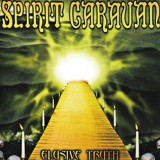
‘Elusive Truth’ was the second full-length record by D.C.-area doom rock Spirit Caravan led by the all time heavy lifer Scott ‘Wino’ Weinrich (The Obsessed, St. Vitus, Shrinebuilder, Probot). Originally released in 2001 and now remastered. “On this, Spirit Caravan's second foray into the long-player format, the band has collectively slowed down the tempo, and dropped the mood into even more contemplative territory. As the grandfather of modern stoner rock, Wino has certainly dipped his guitar picks in LSD this time around. Even though the engineering and production is bone dry and bottom heavy, Wino's psychedelic guitar work -- especially his stinging, busy leads -- has been ratcheted up a few clicks, even if the overall aesthetic is darker, and the superb musicianship from the trio simplified. The listener may be reminded of Hawkwind powered by an enormous diesel engine. As a title, Elusive Truth may indicate Wino's searching nature as a musician, and his attempt to continue down the sonic path through darkness, and through light. With this album, the listener is most certainly in darker territory.”
World Of Echo are proud to announce the long-awaited reissue, on 17th February, of the self-titled debut album by Bristol’s Movietone. Originally released in 1995 by Planet Records and reissued on CD in 2003 by The Pastels’ Geographic Music imprint, this is the first time Movietone has been reissued on vinyl. An expanded double-LP edition, it includes the extra tracks from the 2003 CD (their first two singles, and an unreleased demo of “Chance Is Her Opera”), and adds three more unearthed gems: demos of “Alkaline Eye” and “She Smiled Mandarine Like”, and an early take of “Late July”, recorded in a garden by Dave Pearce (Flying Saucer Attack) in 1993. Taken together, this is the definitive collection of music from the first phase of one of Bristol’s most remarkable groups.
Movietone was the cumulation of a series of events, explorations, and discoveries, starting at secondary school – the group’s core membership of Kate Wright, Rachel Brook, Matt Elliott and Matt Jones met at Cotham School in Bristol. As for many other groups, their early years were all about experimenting, and finding ways to ‘make do’, a DIY sensibility that would inform Movietone through their decade-long lifespan. From formative rehearsals in a shed in the garden of Brook’s family home, to recording early material to four-track in Redland Library, and on into the Whitehouse and Mr Grin’s studio sessions for their debut album, Movietone’s music fell together in a creatively unpredictable, yet conceptually rigorous manner.
By the time they released Movietone, they’d found a home with Bristol’s Planet, run by author Richard King and James Webster, who had both released their first two singles, “She Smiled Mandarine Like” and “Mono Valley”. There was other music happening around them in Bristol, too, from the Jones brothers’ avant-rock outfit Crescent (who were Movietone’s closest conspirators), through Elliott’s jungle/electronica project Third Eye Foundation, and Brook and Elliott’s membership of Flying Saucer Attack. A closely knit community, Movietone are the centre of this nestling architecture of groups.
The vision in the music, mostly, belongs to Wright, but Movietone ran in democratic creative consort. Listening back to Movietone, you can hear this democracy in action through the wildness of the music, which is balanced by the poetics of Wright’s lyrics and melodies. Full of half-captured memories and entangled abstractions, there’s an elliptical, ruminative quality to much of the writing here that shows the deep influence of the Beat Generation writers, along with a twilight environment captured in the songs that’s pure third-album Velvets, Galaxie 500, early Tindersticks, Codeine. Unpredictable interventions – the crashing glass in “Mono Valley”, the sudden explosions of “Orange Zero” – point towards the noise blowouts of My Bloody Valentine, the unpredictability of Sonic Youth; Wright’s understated vocal cadence suggest a deep, embodied understanding of John Cage’s Indeterminacy.
Movietone would go on to make three fantastic albums for Domino – Night & Day (1997), The Blossom Filled Streets (2000) and The Sand & The Stars (2003) – and their Peel Sessions were released early in 2022 by Textile. Still held in high regard by artists like Steven R. Smith, and The Pastels, whose Stephen McRobbie once described them as “one of the great unknown English groups,” it’s an absolute thrill to listen to Movietone anew – still inspired, still seductive, still magic, still mysterious.
As the fable goes: pre-discogs, intrepid disc jocks would often take trips to Italy (many tricking their spouse into believe it was a ‘holiday’!) to source records from the seemingly endless supply of top tier Italo, disco and cosmic record shops across the country. According to legend, the classified sections of local yellow pages and information booklets which would contain the addresses of the record shops and dealers in the area would often be ripped out unscrupulously, thwarting – or at least making it more difficult for – the next vinyl tourist to source out the rare gems amongst the rich seams – a wild west vinyl gold rush if you will.
Such stories are a rarity these days, with youtube making some of the most underground tracks common knowledge, and discogs almost making any record obtainable – at a price of course. Upgrading his digging methodology, Bosco has developed a secret New Technique to side-step the machine and in doing so obtained a clutch of amyl-soaked fluffers that are so rare, that upon writing they aren’t even listed online! Seriously, he must be communicating with some interdimensional, upper echelon Italo overlords; taking us on a primo-thrust tour through the most unexposed recesses of the Italo disco galaxy.
Don’t be hoodwinked by their sheer obscurity however; we wouldn’t give a toss if they couldn’t tear the arse off the dancefloor. But they’re all fuckin rhodium grade tackle peeps! Eight neon-drenched late night roman candles of Italo disco decadence that’ll defo have you jizzing rainbow skittles over the dancefloor as you search desperately through the fog for another huff of poppers off Darren.
Total Discogs market value: as yet undetermined
Pharoah Brunson’s Pyramid Points: 9999999999999
out of Stock
Last delivered 18 months ago available to reorder, subject to availability
Musique Infinie is the collaborative project of Manuel Oberholzer a.k.a. Feldermelder and Noémi Büchi.Their album »Earth«, released through the Hallow Ground label, is based on a spontaneously composed live score for Alexander Dovzhenko’s groundbreaking 1930 silent movie »Zemlya« (»Earth«) created for the 24th edition of the VIDEOEX festival for experimental film.
Frequently cited as a masterpiece of early 20th century filmmaking, the movie deals with the collectivisation of Ukraine’s agriculture. The Swiss duo complemented it with atmospherically rich electronic soundscapes that are both deeply immersive and highly evocative. As a stand-alone music release, the two-piece »Earth« album captures the essence of Büchi and Oberholzer’s collaboration that is marked by mutual trust and musical versatility that puts them in a state of »togetherness trance,« as they call it.
Oberholzer has been highly productive as a composer, musician, sound designer, and installation artist in recent years, releasing a slew of solo albums as well as a variety of collaboration records with artists such as Sara Oswald and Julian Sartorius. Büchi has recently debuted as a solo composer and sound artist working with electroacoustic techniques to create a »symphonic maximalism for the end of the world,« as she dubs it.
Both are prolific and versatile artists with a penchant for working conceptually, however their collaboration as Musique Infinie is an improvisational and thus by design an intuitive one.
Their sessions start with an exchange on emotions and thoughts rather than theoretical questions or aesthetic debates. When they get to work—often for several hours—they rarely talk.
They approached »Earth« the same way, improvising freely together and using only a few select samples from the film’s original score in the process. Their open-ended approach is marked by an aesthetic ambivalence that perfectly corresponds with the movie’s own inherent contradictions.
Dovzhenko approached his socio-political subject with poetic imagery and philosophical rigour, juxtaposing notions of traditionality with the depiction of modernity.
Büchi and Oberholzer accordingly work with motives that at o ce seem anthemic and elegiac, working with sounds and musical motives that evoke a sense of familiarity in one moment before transforming into something futuristic and uncanny in the next. Their score for »Zemlya« is not to be understood as a mere interpretation of the movie, but rather a re-narration or even re-negotiation of its aesthetic and emotional qualities under their very own terms. »Earth« is an album that concisely depicts what is at the core of the duo’s musical partnership
The music of Atlanta trio Omni has always swung fast and hit hard. And Souvenir, their fourth album and second for Sub Pop, packs their biggest punch yet. Inactive during the majority of the pandemic-the longest downtime in their history-they approached this recording with lots of pent-up energy. Guitarist Frankie Broyles, singer/bassist Philip Frobos, and drummer Chris Yonker converted their creative fuel into sharp, driving songs that land immediately, sporting chopping riffs, staccato beats, and wiry melodies. Why does Souvenir sound so sharp? Because each track is a compact unit that stands on its own, reflecting the time and place in which it was created. That's why Omni called the album Souvenir: it's a collection of audio objects, a stash of musical miniatures. Think of it as a family photo album, a binder of rare playing cards, a shoebox holding precious gems. Take "Plastic Pyramid," the first song Omni wrote after coming out of lockdown. Filled with twists and turns, it's a journey unto itself, charged by clanging chords, spinning rhythm, and Frobos trading lines with Izzy Glaudini of Automatic, with whom Omni toured with last fall. (Glaudini sings on two other Souvenir tracks, the first guest vocalist the band has collaborated with). Or take opener "Exacto," a slicing web of intertwined guitar and bass. Its razor-fine notes and syncopated beats perfectly match pointillist Frobos lyrics such as "Exacto, de facto, concise, quite right"-a line that could well be an Omni mantra. The precision and clarity of Souvenir comes from some new Omni developments. For one, this is their first album with Yonker as their full-time drummer, and his forceful playing adds exclamation points to every pointed moment on Souvenir. In addition, the trio worked with Atlanta-based engineer Kristofer Sampson for the first time. Sampson pushed the band to a higher degree of power, with Frobos's vocals more upfront in his pulsing mix and the rest of the music leaping out of the speakers. You might notice that Frobos' singing is a bit more emotional and even nostalgic this time around. In crafting his vocals, he was inspired by the early college radio rock of formative favorites like REM, the Cure, and Big Audio Dynamite-the kind of bands whose melodies could have been top 40 hits in an alternative universe. The lyrics on Souvenir are also by turns funny, absurd, and even cryptic. A wry humor has always coursed through Omni's songs, and this time, it comes in shades of both dark and light. In "Granite Kiss," an "astronomical" love story concludes with the hope that "we can decay together," while in "PG," a romantic walk in the park includes a rose-colored mugging. Immediacy rushes throughout every moment of Souvenir, making it the band's most powerful album to date. Omni has truly crafted a musical keepsake-a set of songs that you'll want to keep close, an aural memento you'll cherish for the rest of time.
High Roller Records, Als der inzwischen verstorbene Rhett Forrester die New Yorker Band Riot nach ihrem gut aufgenommenen Album "Born In America" von 1983 verließ, dauerte es nicht lange, bis er mit der Arbeit an seinem ersten Soloalbum begann. "Gone With The Wind" wurde ursprünglich 1984 auf dem französischen Label Bernett Records veröffentlicht. "Even The Score" von 1988 war das zweite und letzte offizielle Soloalbum von Rhett Forrester, da der legendäre Sänger am 22. Januar 1994 im Alter von 37 Jahren in Atlanta, Georgia, erschossen wurde. Obwohl auf "Even The Score" kein weiteres Studioalbum folgte, hörte Rhett nicht auf, neue Musik aufzunehmen. Er arbeitete mit verschiedenen Musikern in unterschiedlichen Bands und Projekten über einen Zeitraum von sechs Jahren bis zu seinem frühen Tod 1994 zusammen. Zwei davon sind auf "The Canadian Years" zu hören. Dr. Dirty (die Gruppe hieß ursprünglich Mr. Dirty, wurde aber wegen der Verwendung von zwei D's als Logo in Dr. Dirty umbenannt) war das Geistesprodukt des Gitarristen Rob Robins. Er erklärt: "Scot Gaines, der Bassist, und ich hatten schon fast ein Jahr lang geschrieben, als wir Rhett Forrester in Calgary trafen. Er hatte gerade seine Zeit bei Rick Plester's Black Symphony beendet. Wir waren auf der Suche nach einem Sänger, mit dem wir ein paar Gigs spielen konnten. Rhett wurde erwähnt, und wir trafen uns mit ihm, und es schien, als würde er gut passen! Wir haben ihm sofort die Songs vorgespielt, an denen wir gearbeitet hatten. Rhett war immer großartig im Studio und hat seine Parts aufgenommen. Ein echter Profi. Egal, was wir ihm vorsetzten, Rhett lieferte immer eine großartige Leistung ab." Die eigentlichen Demo-Sessions für Dr. Dirty fanden von 1992 bis Anfang 1993 statt. Rob Robins: "Wir haben vier Songs in Calgary aufgenommen: 'Red Bone Rock', 'Smoking Gun', 'In And Out' und 'Coming Home'. In LA haben wir 'Rescue Me', 'Hold On', 'Love Song' und 'Too Little Too Late' aufgenommen. Ursprünglich hatten wir ein gewisses Interesse von einem Label, gerade als sich das Projekt auflöste. Einer der wohl ungewöhnlichsten Beiträge von Rhett Forrester war 1992 (kurz vor den Dr. Dirty-Sessions) in Form von The Black Symphony (bestehend aus den drei Songs "In The Beginning", "Redemption" und "End Of Time") entstanden. Black Symphony war das Baby des kanadischen Gitarristen Rick Plester, der erklärt: "Ich habe so ziemlich das gesamte Material für die fünf Alben von The Black Symphony geschrieben. Ich habe in Magazinen in ganz Nordamerika Anzeigen für einen Leadsänger geschaltet und Rhett Forester hat sich gemeldet. Als er mich aus heiterem Himmel anrief, war ich angenehm überrascht, denn ich war schon vorher ein Fan von Riot gewesen. Ein paar Wochen später flogen wir Rhett nach Calgary in Kanada, wo ich zu der Zeit lebte. Einige Tage nach seiner Ankunft nahmen wir drei Songs in einem Studio in Calgary auf. Rhett war sehr unterhaltsam, es machte Spaß, mit ihm zusammen zu sein. Ich genoss seine Freundschaft. Er war sehr engagiert und brachte eine Menge mit. Am Ende war es traurig, dass ich ihn wegen seiner Drogenprobleme und abgebrannten Brücken gehen lassen musste."
High Roller Records, Als der inzwischen verstorbene Rhett Forrester die New Yorker Band Riot nach ihrem gut aufgenommenen Album "Born In America" von 1983 verließ, dauerte es nicht lange, bis er mit der Arbeit an seinem ersten Soloalbum begann. "Gone With The Wind" wurde ursprünglich 1984 auf dem französischen Label Bernett Records veröffentlicht. "Even The Score" von 1988 war das zweite und letzte offizielle Soloalbum von Rhett Forrester, da der legendäre Sänger am 22. Januar 1994 im Alter von 37 Jahren in Atlanta, Georgia, erschossen wurde. Obwohl auf "Even The Score" kein weiteres Studioalbum folgte, hörte Rhett nicht auf, neue Musik aufzunehmen. Er arbeitete mit verschiedenen Musikern in unterschiedlichen Bands und Projekten über einen Zeitraum von sechs Jahren bis zu seinem frühen Tod 1994 zusammen. Zwei davon sind auf "The Canadian Years" zu hören. Dr. Dirty (die Gruppe hieß ursprünglich Mr. Dirty, wurde aber wegen der Verwendung von zwei D's als Logo in Dr. Dirty umbenannt) war das Geistesprodukt des Gitarristen Rob Robins. Er erklärt: "Scot Gaines, der Bassist, und ich hatten schon fast ein Jahr lang geschrieben, als wir Rhett Forrester in Calgary trafen. Er hatte gerade seine Zeit bei Rick Plester's Black Symphony beendet. Wir waren auf der Suche nach einem Sänger, mit dem wir ein paar Gigs spielen konnten. Rhett wurde erwähnt, und wir trafen uns mit ihm, und es schien, als würde er gut passen! Wir haben ihm sofort die Songs vorgespielt, an denen wir gearbeitet hatten. Rhett war immer großartig im Studio und hat seine Parts aufgenommen. Ein echter Profi. Egal, was wir ihm vorsetzten, Rhett lieferte immer eine großartige Leistung ab." Die eigentlichen Demo-Sessions für Dr. Dirty fanden von 1992 bis Anfang 1993 statt. Rob Robins: "Wir haben vier Songs in Calgary aufgenommen: 'Red Bone Rock', 'Smoking Gun', 'In And Out' und 'Coming Home'. In LA haben wir 'Rescue Me', 'Hold On', 'Love Song' und 'Too Little Too Late' aufgenommen. Ursprünglich hatten wir ein gewisses Interesse von einem Label, gerade als sich das Projekt auflöste. Einer der wohl ungewöhnlichsten Beiträge von Rhett Forrester war 1992 (kurz vor den Dr. Dirty-Sessions) in Form von The Black Symphony (bestehend aus den drei Songs "In The Beginning", "Redemption" und "End Of Time") entstanden. Black Symphony war das Baby des kanadischen Gitarristen Rick Plester, der erklärt: "Ich habe so ziemlich das gesamte Material für die fünf Alben von The Black Symphony geschrieben. Ich habe in Magazinen in ganz Nordamerika Anzeigen für einen Leadsänger geschaltet und Rhett Forester hat sich gemeldet. Als er mich aus heiterem Himmel anrief, war ich angenehm überrascht, denn ich war schon vorher ein Fan von Riot gewesen. Ein paar Wochen später flogen wir Rhett nach Calgary in Kanada, wo ich zu der Zeit lebte. Einige Tage nach seiner Ankunft nahmen wir drei Songs in einem Studio in Calgary auf. Rhett war sehr unterhaltsam, es machte Spaß, mit ihm zusammen zu sein. Ich genoss seine Freundschaft. Er war sehr engagiert und brachte eine Menge mit. Am Ende war es traurig, dass ich ihn wegen seiner Drogenprobleme und abgebrannten Brücken gehen lassen musste."
London soul star Jordan Mackampa returns with a new album titled Welcome Home, Kid! out 16 February 2024 via AWAL. This new music sees Jordan come back to his love of R&B, soul, funk and gospel with references to Dru Hill and Blackstreet, producing a new sound that nods to his earlier soundcloud works and the nostalgia of his childhood. It's brazen and bold and presents an incredibly assured artist that is no longer afraid to show off their Blackness, queerness, or sexual expression in all their forms. Getting to this place has taken Jordan decades of growth, patience & gruelling lessons to reach this state and now he can stand in his Blackness proudly. This album tells the story of how he got to this place of self-worth and the stories of the varying complex but beautiful perspectives about the Black experience. He is open and honest about sex, intimacy, imposter syndrome and how he navigates healthy love, toxic heartbreak, friendships and forgiveness. The core theme of this record is introspection with Jordan explaining, “This was a big theme for me in writing a lot of these songs because no one else has lived life in my shoes, I really had to take other peoples’ opinions & stories out of the writing and put myself at the forefront of everything. Which in turn, made me put the guitar down more and stand centre stage naked in a way. This new album for me feels even more personal now - I use more self language of “I” over “we” because all of these stories are about me and my life in even more depth than the first record touched upon, whilst covering more bases either through my own first person story telling of something current I’m dealing with or a past situation I’m using music to heal through. The debut was me figuring out shit, this album is me putting the last puzzle piece on the board.”
Two years after recording an EP on a guitar he didn't know how to play, Ujko releases a piano album without knowing how to play the piano. To add to that, Hudba k filmu is a soundtrack to a movie that doesn't exist.
If Ujko previously played with the clumsiness and exposed intimacy of outsider music, on Hudba k filmu he instead focuses on the emotional and dramaturgical possibilities of a film score. The movie may be hypothetical, but this album still imposes a narrative of melancholy and hopelessness, even more penetrating in the guise of a supposedly background music. It's also mostly instrumental, adding to ambiguity and potential projection // Hudba k filmu sneaks up on the listener and encumbers them with the weight of their own world.
Ujko thereby manages to mediate his despair without being as presumptuously overbearing as most film composers. Even the lack of instrumental skill is barely noticeable, enough so that Hudba k filmu doesn't fall for its own concept, but is instead an accomplished and complete work of film music, lacking nothing.
A musical project with roots in the work of cult underground collective Noize Konspiracy, Ujko is an alias of Mišo Ormos. Hudba k filmu is his second release on the world-weary label Weltschmerzen.
Sublime Christian folk jazz from 1970s Norway. In the '60s and '70s churches throughout Europe had serious competition for the attention of its younger members. The ecclesiastical establishment was shocked to hear teenagers expressing 'Sympathy for the Devil' rather than sympathy for Christ and his teachings. In Norway at this time the same situation was prevalent as was happening across Europe; teenagers were turning their back on the church and embracing the temptations and pleasures of the flourishing new pop culture. Priest Olaf Hillestad was all to aware of what was going on, and instead of relying on the floundering traditional methods of rounding up his flock, he embraced the musical aspirations of his younger followers. In so doing he founded the Forum Experimentale in Oslo, an organisation that promised in its statutes to "boldly work for a renewal in service life, church music and church art". It was here in the late '60s where That's Why founder members Jan Simonsen and Per Arne Løvold became responsible for the jazz masses at Forum Experimentale's chapel. Together with some top-notch musicians from other Christian music centres around the Oslo district, they recorded two albums in 1970 and 1971 under the moniker That's Why. That's Why blended deep acoustic and electric jazz with elements of Norwegian folklore and Christianity. They also included interpretations of young and old transcendental Norwegian poets such as Sidsel Mørck Krogdahl, Alfred Hauge and Aslaug Vaa, as well as introducing English and Swedish songwriters such as Åke Rosenstrøm and Charles Wesley and even William Blake's "Children of the Future Age" into the mix. This highly original fusion of secular rhythmic music, jazz improvisation and a distinguished selection of transcendental lyrics is one of the standout qualities of That's Why, separating them from more programme-orientated Christian music. The unique mix leads the listener to think they are hearing among the record grooves the tightness of grey, sober Protestantism along with the ecstasy of a lay preacher. This listener, for one, has never heard anything quite like it.
Frank Maston’s Tulips is a sample-ready film score to the best 70s movie never made. Originally a super-limited self-release on his Phonoscope label in late 2017, Tulips has already become incredibly sought-after. Be With were introduced to Maston by mutual friends Aquarium Drunkard and it didn’t take long before we decided this modern classic deserved a reissue.
Inspired by the deep-grooving soundtracks of Italian cinema - think Morricone, Umiliani and Alessandroni - Maston conceived the entire Tulips project as a continuation of these revered works. Frank designed the artwork and made two 16mm films to accompany the music: “It wasn’t just the LP… it was kind of a whole vibe I was trying to create. Not really trying to emulate the things that influenced me but more trying to make something that could sit alongside those records on a shelf. I’m still very proud of the project.”
There’s a distinct library music feel too, with wiry organ, spacey keyboards and loping 60s guitar hinting at KPM and DeWolfe. Like the best library music, Tulips creates a cinematic universe through sound alone, evoking moving images in the listener’s technicolour imagination. It turns out that was accidentally on purpose: “I was discovering a lot of library music for the first time… listening to a composer’s entire catalog or finding all this obscure stuff. I wasn’t entirely conscious of the influence until I started making this music and realized I was channeling the vibe. That’s when I began focusing more on weaving melodic themes throughout the record to make it function more like a soundtrack”.
Tulips was recorded between 2015 and 2017 in a small studio in a village called Zwaag in Holland, during downtime from Frank’s touring duties with Jacco Gardner’s band. “Tulips” comes from the title of the very first demo he made in Holland, it was the first thing that came to mind. Makes sense.
Recording in Europe with some very European influences in mind, Frank wanted to eschew any American influences. But we can still feel the studio wizardry of the likes of Brian Wilson and Harry Nilsson in there somewhere. A psychedelic bedroom-pop song-cycle, full of hypnotic hooks and dusty drums, Tulips manages to sound charmingly homemade yet wholly widescreen.
Dreamy opener “Swans” is an exquisite soul instrumental and recalls the soft-psych of Koushik, which Be With loves of course. Tropicalia influences abound in the cool and breezy “New Danger” and the KPM-references are loud and proud on the lush organ pop of “Old Habits”. Fast-paced “Chase Theme No. 1” manages to be both tense and laid back, decorated by acid-drenched spaghetti Western guitars. The glorious Gainsbourg-esque melancholia of “Infinite Bliss” is all gauzy flutes and happy-sad vocalizing and the title is almost perfect: it’s bliss, no question; *if only* it went on forever. Side A closes with “Evening”, a subtle bossa nova beat thing. Gorgeous.
Side B opens with the heat-shimmer guitars of “Rain Dance”, evoking an unreleased Byrds or Buffalo Springfield backing track. Yes, it’s that good. “Sure Thing” is music to accompany an elevator ride you never want to end, but in a good way! The ornate “Garçon Manqué” is as beautiful as the instrumentals on Pet Sounds (think “Let’s Go Away For A While”) and the wistful “Turning In” starts like a stroll in the park before Maston introduces a scorched-Earth guitar solo that would startle if it wasn’t so pitch-perfect. “Chase Theme No. 2” is a briefer, more keening counterpart to what we hear on side A. The head-nod bass-drums-keys funk of “Hues” rounds out this staggeringly assured set; still opening each phrase with a plaintive strum, but using vibrato and heavy reverb to accent the electric organ melody. Sublime.
All these top drawer musical references might sound like just more of the usual release notes hyperbole, but there’s a reason that this still-young LP already changes hands for big money. It really is that good. Of course that first pressing didn’t hang around for long and Frank’s regularly been asked about a re-press pretty much ever since.
Re-issuing Tulips on Be With made sense to Frank “because the record would fit in so well with the catalogue”. Having already delved into the archives of KPM and Themes, and beginning to do the same with Coloursound and Selected Sounds, the collaboration “just makes sense and seems inevitable”. We agree.
Frank wasn’t sure a record of instrumentals with obscure soundtrack references would be an easy sell when it was originally released, and was surprised when Tulips turned out to be exactly what some people wanted to hear. We reckon its timeless beauty ensures that it’ll *always* have an audience.
The record was originally cut to be played at 45rpm, a technical quirk that grants the home listener the opportunity to go deeper, for longer. Played at 33rpm, the more languid unfurling of the tracks proves just as wonderful a trip. As a psilocybin-soaked case study from Aquarium Drunkard back in January of 2019 describes, some of the songs sound as if they were intended to be heard that way. The slower speed allowing the listener to step inside and perhaps even “crack the code” of the music’s meaning.
Mastered for this vinyl reissue by Simon Francis and featuring alternative burnt orange artwork from Maston himself, this Be With pressing is limited to just 500 copies. Hypnagogic it may be, but please don’t sleep.
out of Stock
Last delivered 2 years ago available to reorder, subject to availability
Maston’s Darkland is a breezy collection of the material from the Tulips sessions that didn’t make it on to the original LP. Originally a digital-only release for those in the know in the autumn of 2018, after re-issuing Tulips in 2020 it made too much sense for Be With to give Darkland a vinyl release.
Like Tulips, Darkland was recorded mostly in Hoorn, in the Netherlands, between 2015-2017 during downtime from Frank’s touring duties with Jacco Gardner’s band. Bits were also done in Los Angeles on some extended trips back home.
The collection plays like an alternate view of Maston’s instant modern classic Tulips; a companion piece to the LP proper with similar mixture of shorter themes and more full length tracks. As Frank Maston explains: “I think Darkland is the shadow of Tulips in a way… what it might’ve been in a different universe. But the heart of Tulips beats in these songs as well and they evoke the same memories and feelings for me. I see my process playing out across these songs - lots of experimentation and trying out new techniques and sounds and just sort of going for it.”
Frank goes on: “It was all from the same pool of material, like 30+ ideas. I was making a lot of little demos… some would be more fleshed out and become songs and others would just be a cool riff and not go anywhere. When I started trying to form it all into an LP I went through all the sessions and ideas and collected the ones I thought were the most fleshed out and cohesive together as a whole. There were a fair amount of songs that were finished and in hindsight really should have been on Tulips (like what would’ve been the title track). And the rest of these songs are either very early versions of tunes that ended up on Tulips or some cool ideas that just ended up being dead ends. It definitely shows how wide my net was in the beginning before I narrowed the record down stylistically.”
Darkland opens with its ornate 39 second title-track before striding into “Tulips”, that full-length title-track that never was. It’s a real head-nod, percussive-rich electric piano stunner that would’ve been a comfortable standout on the album proper. But now this “downlifting” gem is given ample room to shine on this record.
The funky organ-led bass and drums workout “Immaculate Conception” will keep your neck gently snapping while MPC fiends go reaching for their sampler. And that’s gospel. “Love Theme No 3” cuts a breathtakingly stylish vibra-slapped swathe through the middle of the opening side before we’re startled by the pronounced bass and twinkling percussion of “The Owl In Daylight”. Charming digi-drums underpin the wonky synth (quiet-)banger “Innovative Patterns” which has a lovely melodic switch-up in the final third before the tempo (and hairs on your neck) rise on the faintly creepy yet imminently groovy “Osiris”. The gorgeously soft-focus “Groove Experiment No 3” closes out the first half in slow-mo wonderment.
The lushly melancholic “Raincloud” ushers in side B before the emotionally-stirring “Phonic” taps at the door, coming on like the long lost sister to Pet Sounds’ “Let’s Go Away For A While”. Next up, the swooning beauty “Love Theme No 2” keenly sways in front of you, growing ever more insistent and hypnotic. The too-short “Italian Summer” conjures the same flirtatious imagery as the title hints at whilst “Endless” is a fascinating “piano-pella” alternative version to “Rain Dance” from Tulips. “Wonder Theme” has a nostalgic, exotic 60s swing and album closer “Willow” is a hushed, campfire folk gem. The gently circular strumming is just magical.
Speaking to Aquarium Drunkard back in 2019 about the sessions that became Tulips, Frank noted: “I was really surprised by the lack of sunlight during my first winter in Holland, so I would call it Darkland which then became the name of the first demo I wrote during that time. It was also the working title of the record when I first started writing. Some are full songs that didn’t make the cut (including what would have been the title track), some are just ideas that I never finished.”
Whilst we were working on Darkland’s vinyl release Frank explained more specifically about the music that didn’t make it on to Tulips: “When I was putting together the tracklisting for Tulips I was already thinking that whatever didn’t make it onto the LP would be cool to release eventually somehow. The response to Tulips has been so passionate over the years that it’s nice to be able to offer another piece of that world. And for me personally it’s amazing to have more of my work out there in the world. Most common bit of feedback was that many of these songs should have been on Tulips. The odd friend says it’s much better than Tulips.”
Just like Tulips before it, Simon Francis’s vinyl mastering for Darkland has been cut at 45rpm so you can trip out to this as well at a woozy 33 1/3. The artwork too has been designed by Frank himself as a literal visual continuation of the Tulips cover.
We couldn’t possibly say whether Darkland is better than Tulips, and luckily we don’t have to decide.
out of Stock
Last delivered 5 years ago available to reorder, subject to availability
At 15 years of age Danny aka DJH worked at his Dad’s record shop at the weekends in Kings Lynn. He also built himself a basic studio in the back of the shop where he linked up with a local customer and started to make music. These tracks would form an EP called The Bass Project which went on to be one of the most sought after hardcore records, being offered for up to £750 a copy. Not bad for a 15 year old kid who made his one and only release back in 1993.
26 years later and Danny has linked up with Vinyl Fanatiks and entrusted the label to reissue his childhood gem. And from the success of that EP, long since sold out on Vinyl Fanatiks, came a slew of fresh music, transporting an older DJH back to his youth with a succession of Eps on Amen Brother, under the Unfinished Bizzniz series. This is Part 2 of that series and DJH continues to delve through his samples to bring fresh takes on the hardcore scene that helped him cut his teeth in the business and eventually getting him signed to Nervous Records with his Tech House output.
Part 3 of this series has already been cut and ready for release in 2022. So don’t sleep on this top selektion my selekta!
out of Stock
Last delivered 3 years ago available to reorder, subject to availability
WRWTFWW Records is happy to announce the first-ever physical release of Louisiana-based composer and producer Jammin’ Sam Miller’s full HD re-creation/restoration of the beloved Super Metroid video game soundtrack. The limited biovinyl double LP is packed with 27 tracks and features an exclusive artwork by French illustrator Pierre Thyss, as well as an obi strip.
Composed by Kenji Yamamoto and Minako Hamano, the soundtrack for 1994 SNES exploration / action-adventure / sci-fi / alien video game Super Metroid has always been a fan-favorite. A true masterclass in music storytelling, it beautifully evokes the epic and eerie adventure of the game’s protagonist Samus Aran with superb use of atmospheric sounds, space-operatic arrangements, rumbling bass, oppressive techno-futurist moods, tribal drums, and airy synth themes, admirably balancing the ominous feel of a dark menace and contemplative, even soothing, ambient soundscapes.
Jammin' Sam Miller assiduously recreated the soundtrack note by note, by finding the original equipment used to create it, translating the MIDI into a modern studio context, adding in keyboard samples, and re-mixing and re-mastering the whole score. He explains: "This was made possible by locating the original instrument samples from workstation keyboards and drum machines before they were put into the game and rebuilding the soundtrack from the ground up, applying some modern mixing techniques along the way to lift the veil of 16bit compression and create an updated listening experience."
Super Metroid is pressed on biovinyl, a sustainable alternative to traditional vinyl. Biovinyl replaces petroleum in S-PVC by recycling used cooking oil or industrial waste gases, resulting in 100% CO2 savings in bio-based S-PVC production. Furthermore, it is 100% recyclable and reusable, embracing the circular economy ideology.
out of Stock
Last delivered 9 months ago available to reorder, subject to availability
"We Started Nothing is the debut studio album by English indie pop duo The Ting Tings. Jules & Katie's combination of dance, indie pop and new wave proved to be one of the hottest things in 2008. The result being the album peaking at #1 in the UK Albums Chart. We Started Nothing spawned no less than six hit singles, including ""That's Not My Name"", which reached #1 on the UK Singles Chart. Eventually, the band, the album and several singles and videos were nominated for a variety of NME, MTV, Grammy Award and Brit Awards. The Ting Tings won the MTV Award for Best UK Act and ""Shut Up and Let Me Go"" won the award for Best UK Video. We Started Nothing is available on black vinyl and contains an insert."
You just moved to the big city, you end up at a party where you don't know anyone and someone walks up to you and asks: "Hey, are you alone here?". That is exactly the feeling that Porcelain id describes on their debut album Bibi:1, short for the Arabic pet name Habibi. Porcelain id is the pseudonym under which Hubert Tuyishime (they/them/their) has been unleashing unique songs since 2020.
The album - inspired by their move from a quiet provincial town to Antwerp - is the soundtrack to walking into city traffic during rush hour and trusting to get out of the chaos in one piece. It is an ode to exciting encounters with complete strangers and to the friends you can come home to afterwards. A story about being a stranger in a city you've romanticized for so long, the rejection that comes with it, and the false nostalgia with which you look back on it all later on.
At first hearing, the completely English-language Bibi:1 may seem like a brusque farewell to the autobiographical intimacy and lo-fi singer-songwriter music on the previously released EPs Mango and Reprise, and especially on songs like Vlaanderen. But to Porcelain id it feels like an organic evolution. One towards more abstraction, experimentation and electronics, but never detached, and still building on the core of Porcelain id.
The new sound is the result of an intense collaboration with producer and partner in crime Youniss Ahamad, who, despite their different musical backgrounds, immediately felt challenged after Porcelain id's legendary elevator pitch: 'I want to make something that is situated between Nick Cave and the Bad Seeds and Yeezus by Kanye West'.
Together they drew the blueprint for Bibi:1 in Youniss' home studio. Track by track, without looking back. A sporadic, but rigid process that added to the intensity of the album. In the studio, the songs were taken to a higher level. The two invited a pack of talented friends and young musicians to the studio to add parts, a stark contrast to the solitary approach of previous EPs. Aram Abgaryan (recording engineer/synths/vocals), Nard Houdmeyers (guitar), Tim Caramin (drums), David Idrisov (bass), Alban Sarens (sax) and Emma Hessels (vocals) came by. Aram Santy was at the controls during the mixing sessions.
The result sounds like the ultimate symbiosis of Porcelain id and Youniss. Lofi, but ambitious. Fragile, but rough. Poppy, but disruptive. Sometimes challenging. Then welcoming again. Sometimes even danceable. Each song forms a small vignette that is part of a diverse, but coherent unity. Adam Coming Home and Low Poly are closest to the melancholy of Porcelain id's earlier work, while Lights! strikes a new path. First single Man Down, on the other hand, is inspired by the Antwerp students who drown every year and sounds like a wandering nightly stroll through the city. For Brilliant, David Idrisov was asked to 'play bass as if Chet Baker were not a trumpet player, but a bass player', a bizarre assignment that he accomplished with verve. And Cellophane flirts with emo trap and was sung with raspberries between the teeth, to simulate the effect of grills.
Als der inzwischen verstorbene Rhett Forrester die New Yorker Band Riot nach dem viel beachteten Album "Born In America" von 1983 verließ, dauerte es nicht lange, bis er eine Solokarriere startete, die in zwei Studioalben mündete: "Gone With The Wind" (1984) und "Even The Score" (1988). Am 22. Januar 1994 wurde der legendäre Sänger in Atlanta, Georgia, im Alter von 37 Jahren erschossen. Die "Sessions"-Compilation vereint eine Reihe verschiedener Projekte, an denen Rhett Forrester im Laufe seiner allzu kurzen, aber dennoch beeindruckenden Karriere beteiligt war. Die meisten dieser Aufnahmen sind im Vergleich zu den bekannteren Veröffentlichungen von Rhett Forrester, sei es mit der legendären Band Riot, Jack Starrs erstem Soloalbum "Out Of The Darkness" oder Rhett's eigenem Solo-Output, in Vergessenheit geraten. Den Anfang machen die "Dirty Water Sessions", die erstmals auf dem längst vergriffenen Compilation-Album "Hell Or Highwater" zu hören waren und in Texas mit dem Gitarristen und Co-Autor Jonathan Grell aufgenommen wurden, der früher bei der Band Winterkat spielte. Diese Songs sind die allerletzten Aufnahmen, die Rhett vor seinem frühen Tod machte. Als nächstes folgt das Projekt "Dogbone", eine Band, die Rhett mit den ehemaligen Keel-Mitgliedern Brian Jay und Dwain Miller gründete. Diese Aufnahmen wurden Mitte der 1990er Jahre in begrenztem Umfang halboffiziell veröffentlicht, sind aber bis heute weitgehend ungehört geblieben. Außerdem enthält "Sessions" den einzigen Track aus dem "Thrasher"-Projektalbum mit Rhett. Dieser Track wurde von Andrew Duck McDonald und Carl Canedy produziert und war auch auf der "Hell Or Highwater"-Compilation zu hören. Den Abschluss dieser Veröffentlichung bilden die Demos für Dr. Dirty, bekannt als "The Clear Lake Sessions". Diese Aufnahmen bildeten die Grundlage für die vollständigen Dr. Dirty-Aufnahmen, die auf der High Roller Records-Veröffentlichung "Rhett Forrester - The Canadian Years" zu hören sind.
Als der inzwischen verstorbene Rhett Forrester die New Yorker Band Riot nach dem viel beachteten Album "Born In America" von 1983 verließ, dauerte es nicht lange, bis er eine Solokarriere startete, die in zwei Studioalben mündete: "Gone With The Wind" (1984) und "Even The Score" (1988). Am 22. Januar 1994 wurde der legendäre Sänger in Atlanta, Georgia, im Alter von 37 Jahren erschossen. Die "Sessions"-Compilation vereint eine Reihe verschiedener Projekte, an denen Rhett Forrester im Laufe seiner allzu kurzen, aber dennoch beeindruckenden Karriere beteiligt war. Die meisten dieser Aufnahmen sind im Vergleich zu den bekannteren Veröffentlichungen von Rhett Forrester, sei es mit der legendären Band Riot, Jack Starrs erstem Soloalbum "Out Of The Darkness" oder Rhett's eigenem Solo-Output, in Vergessenheit geraten. Den Anfang machen die "Dirty Water Sessions", die erstmals auf dem längst vergriffenen Compilation-Album "Hell Or Highwater" zu hören waren und in Texas mit dem Gitarristen und Co-Autor Jonathan Grell aufgenommen wurden, der früher bei der Band Winterkat spielte. Diese Songs sind die allerletzten Aufnahmen, die Rhett vor seinem frühen Tod machte. Als nächstes folgt das Projekt "Dogbone", eine Band, die Rhett mit den ehemaligen Keel-Mitgliedern Brian Jay und Dwain Miller gründete. Diese Aufnahmen wurden Mitte der 1990er Jahre in begrenztem Umfang halboffiziell veröffentlicht, sind aber bis heute weitgehend ungehört geblieben. Außerdem enthält "Sessions" den einzigen Track aus dem "Thrasher"-Projektalbum mit Rhett. Dieser Track wurde von Andrew Duck McDonald und Carl Canedy produziert und war auch auf der "Hell Or Highwater"-Compilation zu hören. Den Abschluss dieser Veröffentlichung bilden die Demos für Dr. Dirty, bekannt als "The Clear Lake Sessions". Diese Aufnahmen bildeten die Grundlage für die vollständigen Dr. Dirty-Aufnahmen, die auf der High Roller Records-Veröffentlichung "Rhett Forrester - The Canadian Years" zu hören sind.
Mal-One’s new single ‘When The Two 77’s Clashed’ talks about that heady time back in 1977. The year the Rastafarian faith also picked up on a biblical quote that told of an apocalyptic time coming in the year the two 77’s clash in 1977.
Well it was definitely a heady year for the punk movement that also coincided with the release of The Clash’s debut album. Mal-One describes the bands rehearsal rooms where they created the songs and whose entrance supplied the cover shot for the album cover itself. A machine gun splatter through the songs on the album and the meanings they reflected to all our lives. Hope you enjoy the ride back in time, an important time that as the lyric of the songs points out… ‘It even says it in the Bible’…..
Days of the New (the Green album) is the second self-titled studio album from Days of the New, originally released in 1999 and written, performed and produced by Travis Meeks. After the first album, the band broke-up and with only Matt Taul on board from the past, lead bandmember Travis Meeks surrounded himself with a sea of musicians, including a young pre-Pussycat Dolls Nicole Scherzinger for background vocals and even drew in an orchestra. Influential Rolling Stone's review called the album "a progress report from an artist in the midst of a head-spinning transition". The first single "Enemy" charted #10 in the US Alternative Airplay chart, #10 in the Mainstream Rock Tracks and the second single "Weapon & The Wound charted #10 in the Mainstream Rock Tracks. Days of the New (the Green album) celebrates its 25th anniversary and is available on vinyl for the first time. This 2LP includes an insert.
Days of the New (II) by Days Of The New, released 16 February 2024, includes the following tracks: "Enemy", "Skeleton Key", "Bring Yourself" and more.
This version of Days of the New (II) comes as a 2xLP. This release comes with (a) Insert(s).
A raw-nerved hybrid of elemental Merseybeat, lugubrious surf-noir and sheer sonic assault, the remarkable legacy of Long Island's Mystic Tide has long been venerated within the '60s garage rock pantheon, even if their existential racket only slipped out on a series of painfully rare 45s. Now, the fruit of Joe Docko Jr and friends' cottage industry has been refurbished in best-ever sound, along with fresh insights as to how this singular brand of noise came to be.
A raw-nerved hybrid of elemental Merseybeat, lugubrious surf-noir and sheer sonic assault, the remarkable legacy of Long Island's Mystic Tide has long been venerated within the '60s garage rock pantheon, even if their existential racket only slipped out on a series of painfully rare 45s. Now, the fruit of Joe Docko Jr and friends' cottage industry has been refurbished in best-ever sound, along with fresh insights as to how this singular brand of noise came to be.
British singer-songwriter Katherine Priddy releases her much-anticipated sophomore album "The Pendulum Swing" via Cooking Vinyl. This follows her highly acclaimed 2021 debut The Eternal Rocks Beneath, which announced Priddy as a singular new talent on the contemporary roots music scene. Once again recorded in Birmingham by producer Simon J Weaver, guest musicians comprise John Smith (lead guitar), Harry Fausing Smith (strings), Marcus Hamblett (brass/double bass), George Boomsma (guitar, backing vocals, co-writer on track "Ready To Go"), Polly Virr (cello) and even a brief appearance from Priddy"s family members right at the end of the album, in keeping with its themes. With The Pendulum Swing, Priddy has managed to keep moving forward whilst acknowledging and honouring all that has gone before. For fans of Nick Drake and John Martyn.
Psychedelic Anxiety, as a mood, goes something like this: overwhelming, existential, vertigoic, arising when we stare into the void. This metaphysical unease also serves as the title for Brooklyn-based musician Frances Chang’s second album, and as a feeling it’s present throughout, charged by all things occultish. Recorded by Chang and engineer Andrea Schiavelli, featuring a cast of revered NYC DIY players, including Schiavelli (Eyes of Love) and Liza Winter (Birthing Hips), Psychedelic Anxiety relishes in the refining of aesthetic, in the electricity of improvisation, in balancing bleakness with humor. It embodies an idiosyncratic genre Chang calls slacker prog — offbeat, but brimming with spiritual and emotional resonance. The record infuses artifacts of the mundane with otherworldliness— even the love songs live more in the realm of fantasy (or horror) than the romantic. The psychic twin and mirror image of Chang’s 2022 debut full-length Support Your Local Nihilist, Psychedelic Anxiety by comparison is less urgent, leaving space for more nuance and storytelling. Together, these albums represent a new cycle of creativity for Chang, a reset to zero. “Eye Land,” captures Chang on a tour around the Irish and English countryside, in a moment of major life change. “Lying around your spare room,” she sings, “Sky is cloudy here in June.” Around her, guitar sputters and stops. Vocals branch off like vines on the side of an old house. It is a profoundly lovely song, a freaky miniature in the way that a Broadcast song is a freaky miniature. “Darkside” opens up with a particularly memorable narrative moment. “Last night I saw Parasite,” sings Chang, describing how she saw it alone, how regular life that week was acute, weird, intense. How she found comfort in resignation. After all: Psychedelic Anxiety is a serene, bizarre record full of alien sounds and big introspection.
The Silhouettes Project was founded by community organisers Jaden & Asher (aka Eerf Evil & Asher Kosher), and is a platform for the new generation of underground hip-hop, jazz, and soul artists in the UK. It aims to shine a light on artists who are making ground-breaking music but who are in need of a solid structure to work within - artists who they felt deserved more recognition. This led to the name ‘The Silhouettes Project’, as they wanted to shine a light on those artists in the shadows. In 2020, they released a number of singles that culminated in their self-titled debut LP, which has gained 65 million streams to date, & featured some of London’s foremost underground rappers & singers like ENNY, Lex Amor, & Kofi Stone. They will be releasing their second album in Q1 2024, The Silhouettes Project Volume II, starting the campaign this September with 'Knocked Down'. All proceeds from the album will go back into the organisation to support and sustain its running, its artists, and the non-profit studio ROOT 73 where the project was created. The contributors all receive an even split of the album, rather than of their specific track, which stays true to their ethos.
Comprising accomplished musicians Roy Bar-Tour, Atzmon Avrahami and Adam Yodfat, Les Dynamites built themselves a strong following for their fresh blend of Mediterranean and classic surf rock with Balkan and Yemini folk, catching the attention of Middle Eastern groove connoisseurs Batov Record. Their debut single for the label, “Pop Oud #2”, packed enough punch, and funk, for both psych fans and break dancers. Backed by a dubwise flip by digging pioneers Radio Trip, it received support from the likes of Juno, Monolith Cocktail and Worldwide FM.
“Uzi Kinrot” takes its name from guitarists Uri Kinrot and Uzi Feinerman of Boom Pam, pioneers of today’s resurgence in Middle Eastern surf rock. Ray Bar-Tour riffs like a Klezmer-playing Dick Dale over a Balkan sousaphone bass lines and snappy drum rhythms. Towards the end, Yemen Yehudith adds a special touch of traditional wailing, raising the excitement by another notch.
Recorded, co-arranged, produced, mixed and mastered by Uri “MixMonster” Wertheim of famed funk band, The Apples, and obscure sample scientists, RadioTrip. On “Uzi Kinrot” and “Sea Gull”, the group pay tribute to the Mediterranean surf heroes who inspired them most. They continue from where the seventies funk leaning “Pop Oud #2” left off, going deeper, and reuniting the classic Mediterranean and American surf sounds with a fresh perspective, destined to earn themselves an even greater following.
The Silhouettes Project was founded by community organisers Jaden & Asher (aka Eerf Evil & Asher Kosher), and is a platform for the new generation of underground hip-hop, jazz, and soul artists in the UK. It aims to shine a light on artists who are making ground-breaking music but who are in need of a solid structure to work within - artists who they felt deserved more recognition. This led to the name ‘The Silhouettes Project’, as they wanted to shine a light on those artists in the shadows. In 2020, they released a number of singles that culminated in their self-titled debut LP, which has gained 65 million streams to date, & featured some of London’s foremost underground rappers & singers like ENNY, Lex Amor, & Kofi Stone. They will be releasing their second album in Q1 2024, The Silhouettes Project Volume II, starting the campaign this September with 'Knocked Down'. All proceeds from the album will go back into the organisation to support and sustain its running, its artists, and the non-profit studio ROOT 73 where the project was created. The contributors all receive an even split of the album, rather than of their specific track, which stays true to their ethos.
Legendary US Metal masterpiece finally available again on deluxe180 grams vinyl after more than 35 years! With their sound and style completely defined on their previous and nearly perfect album, “Soldiers of the Night”, Vicious Rumors continue on with yet another outstanding sequel that could go hand in hand with their debut. This is pretty much US Power Metal with actual riffs, and some technical and mindblowing riffs at that with Geoff Thorpe’s tremendous skill and incredible songwriting. The standout here is hands down vocalist Carl Albert (Rest in peace). Nothing but energy sparks from his every lyric spoken. His aggressive and energetic mid-range performance can easily be matched to Bruce Dickinson. Vicious Rumors were truly out of this world when Carl was with them, this being the flawless beginning of that legacy. Its nearly impossible to pinpoint Vicious Rumors exact sound and style and just throw them in one genre, because you really can not. There are a few Speed Metal songs here, a few more Power Metal orientated ones, few hints of progessive structures, and even some Thrashy parts from time to time. Standout tracks would be the self title track, “Minute to Kill”, “R.L.H (Run Like Hell)”, and “Towns of Fire”. Then again, this whole album is just great with no real low points at all. In the end, this is an essential Vicious Rumors album, and often hailed as their finest release!
Remastered and first ever vinyl and CD release When it came time to create "What I like to do," GRÓA took advantage of the prolonged standstill of lockdown and spent months on end in a friend’s studio, slowly building up an elaborate sonic world that unequivocally captures the joyful ferocity of their live show. To achieve the album’s glorious unpredictability, the band allowed themselves an even greater level of freedom in the writing and recording process. “All our songs are made in such different ways,” says Fríða. “Sometimes they come from us jamming in the garage, but other times we’ll sit down and draw a song on paper and then try to put the images to music. Another thing we love to do is switch instruments—when I hear Karó play the bass, for example, it gives me new ideas because she looks at the bass in a completely different way than I do. We’re always trying to find a new angle on what we’re creating.” Encompassing everything from the gorgeously ominous sprawl of “Ég skal bíða eftir þér” (“I will wait for you”) to the hypnotically loopy harmonies of “Grannypants,” What I like to do also marks the first GRÓA release to feature one of Karó self-built instruments. “For the last album I made a waterphone, which is a metal instrument that you pour water into and then play with a bow,” explains Karó, who’s currently studying new media compositions at university.
In the beginning was a half-truth, the truth was of war and the half-truth was post-war. Fancying the pretensions of its cultural superiority, a continent chose to hide the truth behind ridiculous jargon and the soothing distance of offshored ?????????. Europe wished itself beyond war because it thought the privilege of peace a birthright, just as it refused to understand that post-war was a euphemism for interbellum. Then the truth has set us free.
The delusion was discarded and war was revealed as an inconceivable horror. Almost immediately it turned familiar and virtually comfortable. Novelty songs of drones gutting tanks became a laughing matter and the burning tanks, their crew inside, entertainment. Consequently, a plurality of people started to collectively dream of new stages of the righteous kind of carnage. This happened within weeks.
Our imagination has swollen to the point of loss of consciousness, compounded by the narrative form long in the sways of atrophy. All of this raises the question of to what degree were the years of peace culturally squandered. The art of the previous age prided itself on self-awareness, today we fail to even notice that we no longer recognize ourselves. But we have arrived where we started and our issues were not too complex for expression.
Since no art form generates action, the most appropriate art for a culture on the edge of extinction is one that simulates pain. In these times we shouldn't produce any other music, none but this, intended to prevent our silence from being misinterpreted.
For the last seven years, sound artist, technologist, and electronic musician Moisés Horta Valenzuela (aka Hexorcismos) has been studying artificial intelligence and generative art, wondering how these new technologies might be augmented into his musical process. Born in Tijuana and currently based in Berlin, Hexorcismos has long attempted to break down the permeable borders between musical styles and expressions, using the spaces in between to reinforce his politics and worldview. And on 'MUTALISMX - becoming sonic network', he expands his vision, inviting artists from across the globe to collaborate on work that questions the biases inherent in AI models, offering a collective alternative that could serve as a blueprint for further research.
The majority of AI art at this stage works with "big data", taking ideas from the cultural canon and muddying them with our contemporary reality. But if we accept that mass culture is always politically biased, always swaying towards historical prejudices, then there must be a counter-narrative. Hexorcismos began to develop a bottom-up approach, using "small data" to interrogate his idiosyncratic approach to art; he built a tool called SEMILLA.AI based on neural audio synthesis that could not only mimic his sonic fingerprint but transform it into another. So when he offered the synth to his network of collaborators, he gave them the option of either using only their data or sharing the signatures of each other artist involved in the project, blurring their identities into a mutual voice.
The result is a compilation that unspools with the coherence and fluidity of a single-artist album or adventurous DJ mix, genreless and boundless but unified by a singular message. Hunanese-American artist Kloxii Li for example takes rugged percussion and tense, industrial ambience, smudging her soundscape into a swirling gust of ghostly dissonance. Hexorcismos himself contributes two compositions: the lengthy, hypnotic 'Acaso de veras se vive con raíz en la Tierra', an AI-powered scramble of his pointed tribal guarachero experiments; and 'Interferencias', a collaboration with Mexican club veteran Bryan Dálvez, aka El Irreal Veintiuno that drives intense dancefloor rhythms into a dense haze of frozen drones and radio static. Elsewhere, Berlin-based Lebanese artist and writer Jessika Khazrik dissolves her voice into a mesh of obscured rhythms and dissociated whirrs, blending the organic with the artificial but retaining an overpowering sense of humanity.
Some artists were drawn to the nebulous aspects of the technology, searching for truth in a soup of different sounds, while others, such as KMRU, used Hexorcismos's synthesizer the examine their output. On 'hidden options', the Kenyan sound artist fed his immense catalog into the neural net, bringing out his mannerisms and tendencies in the process. Each track is singular but myriad, prompting both mutual respect and a sonic becoming, a feedback process between the artist and the tool, the individual and the collective. Data sets are made by people, and by engaging directly with musicians, Hexorcismos suggests a new way of utilizing a technology demonized and glorified without careful examination. Each artist owns their AI model, and alongside the album Hexorcismos will release SEMILLA.AI to the public (with custom-made models to start the process), allowing anyone to access this revolutionary technology.
Even the album's artwork reflects the political message, conceptualized by Chilean duo hypereikon, who used AI processes to develop a visual reflection of the technology and its possibilities. Operating outside of academia and capitalist enterprises, MUTUALISMX proposes an alternative future - one without borders that's not beholden to the Western canon, where independent labor can be prioritized and celebrated, and where creativity can truly flourish.
out of Stock
Last delivered 2 years ago available to reorder, subject to availability
"Atlanta Millionaires Club" von Faye Webster ist für die 21-jährige Songwriterin und Fotografin aus Atlanta bereits die dritte Albumveröffentlichung, aber die erste für Secretly Canadian. "Atlanta Millionaires Club" ist eine Sammlung von Songs, die dem Gefühl der Einsamkeit inmitten einer vorhandenen Gemeinschaft auf den Grund gehen. Die Musik basiert auf Alternative-Folk, bedient sich jedoch einer weiten Vielfalt von musikalischen Einflüssen und Genres, auch beeinflusst durch Websters Zeit in der Hip-Hop-Szene Atlantas in den Rap-Kollektiven von PSA und Awful Records. Die genreübergreifende Sammlung an Songs verbindet Websters federleichten Gesang, intimes Songwriting und ihren Scharfsinn, weil sie auffallend verletzlich und mutig aus ihrer eigenen Introvertiertheit und Herzschmerz schöpft. Den zehn Songs des "Atlanta Millionaires Club" unterliegt eine ganz eigene Traurigkeit, die von flüchtigen Beobachtungen und einem unerwarteten, schlitzohrigen Sinn für Humor unterbrochen wird: "Everything is way personal. I've never been that kind of person who can read a book and then write a song about the book," so Webster. "I have to write about very personal things for me to even want to write". "Atlanta Millionaires Club" wurde von Webster und Drew Vandenberg koproduziert und bei Chase Park Transduction in Athens, Georgia, aufgenommen. Der Titel geht auf Websters Vater zurück, der zusammen mit seinen Freunden während der Schulzeit regelmäßig an Aktionen für wohltätige Zwecke teilnahm und irgendwann dieser Gruppe den ironisch zu verstehenden Beinamen verpasste - als protzigen Kontrast zur harschen Realität.
glass beach's debut album the first glass beach album is the first album from glass beach. That's a good place to start, but the album's plain & descriptive title does little to explain exactly what goes on in the hour-long adventure contained therein.the first glass beach album was initially self-released by the band in Spring 2019, but it's roots date back to as early as 2015 - songwriter & band leader j mclendon started demoing songs for the album when they first moved to Los Angeles & spent three years polishing those first demos into these songs with bassist Jonas Newhouse & drummer William White. On their Bandcamp page, the band describes their sound as the accumulation of jazz, new wave, synth music, and emo distorted through the lens of punk. The songs that make up the first glass beach album are ambitious, theatrical and chaotic. Abandoning genre limitations makes glass beach's talent for songwriting all the more apparent - mathy guitar leads, catchy drum grooves and the constant interplay of horns, synths, and even the intermittent theremin set the perfect scene for j's stunning vocal performance, which can shift from a charming falsetto to the lead of a sing-a-long in an instant.