Bluish Green was 15 + years in the making, passively percolating bi-coastly in the background of three family members' lives, waiting for the perfect opportunity to present itself. That moment came in January 2024 when Ball Sisters & N1_Sound settled into the Spiritual World home base of Studio Z in Toronto, Canada. What started as three casually blissful days, resulted in a debut album, combining a unique blend of dub, neo soul, ambient & downtempo. Bluish Green sits halfway between a low-key dance floor and late night back room.
The album was almost entirely created live in the studio with very little discussion, conversation or conscious direction. There were no goals or future plans, just mutual appreciation for the moment. Repeat takes were few and far between, with the group moving fluidly from one track to the next. This preservation of emotion and human touch is deeply embedded into the music, allowing the listener to share in the raw moments that were experienced while Bluish Green was organically taking shape.
Sonic themes of the natural world run throughout the five song, 30 minute album. “R U 4 Real” welcomes the listener into T3AL’s unique ecosystem with intimate cicade-esque shakers. A reverberous güiro frog (acquired on a family trip one year ago) and synthesized ocean waves create an ambient wetland on the album's 8 minute instrument track “Frog Legacy ''. Bluish Green comes to a shimmering close on “Flip That Switch” with dubbed out crystalline slide-flute melodies resembling ocean birds that fade into an iridescent horizon.
Digital drum patterns skip & stride around contemplative circular lyrical themes on four of the five album tracks, while spatial flute melodies simultaneously spin just under the surface. The bass guitar on Bluish Green is a continuous harmonic support system, repeating on a different tectonic rotation, much slower and deeper, offering familiar footing that stops the listener from drifting out in the rippling undertow of analogue delay feedback.
“R U 4 Real”?... A question that T3AL revisits frequently when thinking of the surreal weekend that resulted in the trio’s debut album, Bluish Green
Suche:m flo
- A1: Six Shots Intro
- A2: The Showdown
- A3: Dirty Revolver
- A4: Mind Over Matter
- A5: Overkill
- A6: Flour City Ii
- A7: Carved Initials
- B1: The Showdown (Acapella)
- B2: Dirty Revolver (Acapella)
- B3: Mind Over Matter (Acapella)
- B4: Overkill (Acapella)
- B6: Flour City Ii (Acapella)
- B6: Carved Initials (Acapella)
Die französischen Pop.-Connaisseure aus Paris, LA FEMME, veröffentlichen ihr zweites Album ,Mystère".
Die Band hat die kulturelle Landschaft des modernen Paris massiv beeinflusst und ihre Musik an beiden Seiten der Stadt an der Seine verortet: im Glamour und an den weniger glamourösen Schauplätzen. Seit der Veröffentlichung ihres Debüts ,Psycho Tropical Berlin" haben LA FEMME prominente Bewunderer gesammelt: darunter die Regisseure Jacques Audiard und Romain Gavras, Legenden wie JEAN MICHEL JARRE und Hedi Slimane sowie eine stetig wachsende junge Fangemeinde, die ihnen den Titel ,French Best New Band of the Year" bei den französischen Music Awards und Plätze ganz oben in den französischen Charts einbrachte; dazu sorgten TV-Werbespots von Aplles, Renault und Sonos mit der Musik von LA FEMME für gespitzte Ohren.
Die Band kehrt mit einem psychedelischeren Sound und einer ganzen Reihe von Gastsängerinnen zurück, die eine Schneise durch die härtesten Elektrobeats schlagen. LA FEMME feiern ihre wunderbare Heimatstadt und hinterfragen das Ver- und Entlieben. ,Mystère" ist tatsächlich eine Kollektion von Kurzgeschichten über Liebe und Verlust. Jeder einzelnen Song überspringt Sprachbarrieren durch reine Melodie. Der retrofuturistische Surfpop-Sound der Band beruft sich noch immer auf den gleichen glamourös-punkigen Krach wie zuvor, doch dieses Mal ist er durchzogen von einer Zusammenstellung eleganter Einflüsse zwischen ENNIO MORRICONE, dem Disco-Rock von MARIE ET LES GARCONS und THE VELVET UNDERGROUND.
,Mystère" ist ein Fundament für die neue LA FEMME Vorliebe für orientalische Klänge; türkischen Disco, Tuareg Blues, mittelalterliche Psychedelia lehnen sich an an BRIAN ENO und PINK FLOYD.
The Swiss trio divr debuts on We Jazz on 2 February with their new album "Is This Water". divr is Philipp Eden on keys, Jonas Ruther on drums and Raphael Walser on bass, and they play largely acoustic improvisations which loops without ever quite repeating. Their music swings, but never feels like it’s doing so in response to a fixed, single pulse. The new album is mixed & post-produced by Dan Nicholls (of Y-OTIS).
“We play in multi-directional time. You could hear three different timings, but on the other hand it’s together. We land in the same place. It’s not done with maths, it’s more about entering a flow”, say the band members, based in Basel (Eden) and Zurich (Ruther, Walser), the city where they all met more than 15 years ago.
“It’s a free approach to playing time. We don’t refer to a straight metre. But play around it. We never repeat something exactly, it develops with every turn, there’s always a small difference.”
Wilurarrakutu is the brilliant debut from Papunya-based artist Keanu Nelson, an intimate exercise in musical storytelling and reflection. The album's eight tracks, sung in both Papunya Luritja and English, are verses of prose and poetry pulled directly from Nelson's notebooks and set to minimalist, DIY electronic arrangements.The evocative musical backdrops_featuring Casio keyboards, drum machines, and subtle synth flourishes_were created in collaborative sessions between Nelson and Sydney producer Yuta Matsumura. The two met by chance on Matsumura's visit to Papunya last year. Their impromptu jam sessions form the foundation for Wilurarrakutu's low-key sonic palette, influenced in parts by Papunya's strong local gospel music scene as well as the reggae beats often passed around the remote community via USB sticks and mobile phone transfers.Over these soundscapes, Nelson sings of family, friends, heritage, and culture, with a tone that balances joy and melancholy. They're themes and emotions that also echo through his work as a painter at the Papunya Tjupi Arts Centre. In this way, Wilurarrakutu becomes an extension of his art practice - a graceful audio portrait of a place that evokes the resonance of home.
- A1: An Angel (Feat Lisa Li-Lund)
- A2: As The Flowers Turn Green (Feat Lisa Li-Lund)
- A3: Berceuse
- A4: Death Poem Prt2
- A5: Green Field (Feat Olga Kouklaki)
- A6: Playing With The Big Boys (Feat Mark Mulholland)
- B1: The Kid Is Dead (Feat Don Letts & Gaudi)
- B2: The Crown (Feat Louise Quinn)
- B3: Come Again (Feat Lex Amor)
- B4: Where Is The Love (Feat Horace Andy)
- B5: Wait For Me (Feat Annie O'connell)
- Ascend
- Drift
- Astray
- Barren
- Nyctophobia
- Wreckage
- Scavenge
- Animal
- Phantasmagoria
- Torment
- Perish
The intrepid composer and field recordist Jacob Kirkegaard is no stranger to perilous and hostile regions of the world. His 4 Rooms invoked the radioactive decay through the amplification of architectural resonance in Chernobyl, Ukraine; and he has ventured to the arctic environments of Greenland on a number of occasions to document that barren, icy territory. His recurrent use of shadow and mystery through his work both as metaphor and as extended sonic technique reflects the complex, existential conditions that cross-contaminate what we consider civilization and what we consider wilderness. Waste disposal, firearms, the decomposition of dead bodies, the eerie stillness of morgues. These have also been the source material in Kirkegaard's formidable work.
With Snowblind, Kirkegaard turns to history, and a poetic, failed attempt for a team of Swedish explorers to reach the North Pole by balloon in the late 19th Century. Perhaps driven by blind adventurism, perhaps consumed by his own delusions, S.A. Andrée launched this ill-fated flight in July 1897, registering only two days in the air before crashing into the ice and ultimately failing to navigate the frigid waters and ice floes. Yet documentation of their expedition - photographic, scientific, and diaristic - survived, to be discovered some thirty years after their deaths.
"I wanted to created a cold and hostile album, where there is no escape, no warmth and no happy ending," as Kirkegaard explains about Snowblind. "Yet, I wanted to leave out any immediate drama. It is the creeping shock, the icy feeling from realizing what has been lost and that there's no escape."
Yes, Snowblind is a very bleak album, but one that eschews the isolationist, long-form drone of conceptually similar works by Thomas Köner, Lustmord, Werkbund, and Lull with interconnected constellations of cryptic tone, thrumming reverberation, arctic bluster, and a plethora of harrowing sonic proclamations.
Stick To Your Guns hold a mirror up to society’s ills without blurring its ugliness. In an attempt to unapologetically trumpet real change, the Southern California quintet—Jesse Barnett vocals,Andrew Rose [bass],Adam Galindo[drums], Chris Rawson [guitar], and Josh James [guitar]—never shy away from speaking or screaming unpopular truths from the purest place. Founded in2003, Stick To Your Guns have always written and performed with a sense of urgency, their socially conscious message hitting as hard as their signature hybrid of hardcore, punk, and metal. Over the course of their career, they’ve amassed over 50 million total streams, performed on four continents, and shared stages with the likes of Parkway Drive, Architects, and Every Time I Die. Most recently, Alternative Press praised 2017’s True View as “the result of a long time spent on self-reflection and realization.” The band’s latest release ‘Invisible Rain’ incorporates two new songs that remain quintessentially Stick To Your Guns while incorporating fresh elements. The band’s relentless pursuit of a better world and their critique of societal injustices continues to drive their music and message. In 2024, Stick To Your Guns signed with SharpTone Records, marking a new chapter in their storied career. This partnership promises to bring their potent blend of activism and music to an even broader audience, amplifying their call for change and social justice.
Erste Vinylveröffentlichung des Debütalbums von DEADSOUL TRIBE -feat.
Devon Graves (aka. Buddy Lackey) von PSYCHOTIC WALTZ -epischer Prog Metal für Fans von PSYCHOTIC WALTZ -für Vinyl gemastert, mit bedrucktem Einleger – Limitert auf 300 Exemplare Als sich die wahrlich einmalige Band PSYCHOTIC WALTZ 1997 auflöste, klaffte eine Lücke, die erst mit der Gründung von DEADSOUL TRIBE im Jahr 2001 wieder geschlossen werden konnte. Sänger, Flötist und Aushängeschild Devon Graves, auch als Buddy Lackey bekannt, war in der Zwischenzeit wegen einer Beziehung nach Wien gezogen, wo er dann auch geeignete Musiker für DEADSOUL TRIBE fand.
Auf dem Debüt „Deadsoul Tribe“ spielte Davon Graves noch einige Instrumente selbst, aber man war bereits eine Band mit vier Mitgliedern. Auch wenn sich der Stil in manchen Punkten von PSYCHOTIC WALTZ unterscheiden mag, ist die Zielgruppe automatisch definiert. Und sogar etwas erweitert, denn neben Metal und Prog kann man auch Einflüsse von Tool heraushören. Das sehr organisch klingende Album bekam sehr gute Kritiken und wurde von den Fans ohne Umwege angenommen. Im Anschluss spielte man auf dem Prog Power Europe Festival in Holland. Es ist erstaunlich, dass die Alben von DEADSOUL TRIBE bisher noch nicht als Vinyl veröffentlicht wurden, zumal der Katalog von PSYCHOTIC WALTZ 2024 eine neue Aufarbeitung bekommen hat (Inside Out/Sony Music). Golden Core schließen diese Lücke nun mit den ersten beiden Alben, natürlich gemastert für Vinyl und mit bedrucktem Einleger. Die LPs sind auf 300 Stück limitiert, die sicherlich schnell ausverkauft sein werden
- A1: This Tornado Loves You
- A2: The Next Time You Say Forever
- A3: People Got A Lotta Nerve
- A4: Polar Nettles
- A5: Vengeance Is Sleeping
- B1: Never Turn Your Back On Mother Earth
- B2: Middle Cyclone
- B3: Fever
- B4: Magpie To The Morning
- B5: I'm An Animal
- C1: Prison Girls
- C2: Don't Forget Me
- C3: The Pharaohs
- C4: Red Tide
- D1: Marais La Nuit
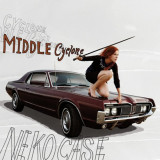
Originally release in March 2009, Midle Cyclone is repressed for 2025. 'Middle Cyclone' was produced by Case with Darryl Neudorf and recorded in Tucson, Brooklyn, Toronto, and Vermont. It features Case backed by her core band - guitarist Paul Rigby, bassist Tom V. Ray, backing vocalist Kelly Hogan, multi-instrumentalist Jon Rauhouse, and drummer Barry Mirochnick - along with numerous guests including M. Ward, Garth Hudson, Sarah Harmer, and members of The New Pornographers, Los Lobos, Calexico, The Sadies, Visqueen, The Lilys, and Giant Sand, among others. In addition to twelve new songs written by Case, 'Middle Cyclone' includes covers of "Never Turn Your Back on Mother Earth" by Sparks, and "Don't Forget Me" by Harry Nilsson.
In 2006, SPIN Magazine called Case "one of pop music's best" voices, and Interview Magazine hailed her album 'Fox Confessor Brings The Flood' as "one of the most original, beguiling, honest records of the year." The album also earned Case Female Artist of the Year honors from the PLUG Independent Music Awards, and a Top 10 placement in the Village Voice's annual Pazz and Jop Critics Poll of the year's best releases. 'Fox Confessor' was Case's first album to debut in the Billboard Top 100, and has sold nearly 200,000 copies in the U.S. alone.
While she was waiting for her last album 'Pripyat' to be released, Catalan composer and producer Marina Herlop was restless. She was concerned about her (by then) uncertain music career, and felt emotionally unmoored. "Some days I used to sit on the balcony of my flat to catch some sun," she explains, "I would close my eyes and start visualizing myself as a gardener, pulling out purple weeds from the soil, every bad memory or emotion I wanted to expulse being one of the plants." As the days dragged on, the fantasy deepened, and Herlop discovered that parts of the garden was withering; the energy she had been putting into the non-musical side of her life had seeped into her creative pasture and poisoned it. She knew what she needed to do to overcome the blight: plant some seeds and tend to her art to help it blossom and bloom once again. 'Nekkuja' is a place for Herlop's warmest, sweetest sentiments to rise to the surface and crack through the topsoil. She describes the record as a way for her to seek and affirm inner light, and it's undoubtedly her brightest, poppiest statement to date. The forward-thinking, experimental touches that nourished 'Pripyat' are still present, but blessed with a level of positivity that's rare to find in a scene so entranced by darkness and melancholy. Skittering fragments of ornate acoustic instrumentation provide a serene welcome to 'Busa', punctuated by precise electronic processes that shuttle the sound towards abstraction and fantasy. Herlop's voice grows over the tangle of sounds from a childish giggle into a layered, matted mantra, sounding passionate, hopeful and full of energy. The vitality spills over into 'Cosset', where she wraps powerful motifs around ricocheting beats and dramatic piano rolls. Herlop's garden opens up dramatically on 'Karada' when bucolic field recordings crack like sunlight over harp plucks and willowy vocals. Her voice seems to bend around the whooshing streams and chittering of birds as if she's singing to the manicured land itself - a utopian paradise that Herlop employs as a metaphor for the creative process. In contrast to the view that an artist is an isolated genius or an idol to be worshipped, Herlop believes that the garden helps us see the process as closer to devotion or perseverance. A gardener brings order to the wild chaos of the outdoors, collaborating with nature to arrange something vibrant and enduring. Blending familiar sounds with fanciful concepts, Herlop traces an imaginary garden, imploring us to wander and wonder. And by the album's billowing final track 'Babel', it's flowered into a flush of pruned vocal phrases and delicately groomed orchestral rushes, painted in orange, green, blue and red.
Repress!
Code 718 aka iconic NYC DJ Danny Tenaglia dropped this 'E2-E4' riffing classic back in the mists of 1992. Manuel Göttsching's original track would have been a staple of NYC clubs back then and would have featured in the warm up sets of jocks like Tenaglia who favoured the longer, deeper sets as well as on the play-lists of institutional night-spots such as the Loft and the Garage. The track's influence on a whole era of DJ's and producers that followed is immeasurable and across 3 sublime mixes Tenaglia distills the magic of the original into something totally NYC and club-friendly without losing any of the Göttsching magic, even managing to sprinkle a little Grace Jones in the mix with her fabulous 'I floated on a cloud' vocal sample liberally applied. 'Equinox' takes us on a trip that is emotive, uplifting and warm. This is how House music is meant to sound, respectfully steeped in what preceded it yet moving forward in a fresh direction. Another example of how on the money Strictly Rhythm were in their early days, classic after classic rolled out of the labels' offices and us, the record buying legions, were / are better off for it! This one's a tasty 2017 reissue and remaster, featuring all 3 mixes, unedited, as per the original release way back when. Do not sleep.
- A1: We Are The Champions
- A2: Fanfare For The Common Man
- A3: Rockin' All Over The World
- A4: Good Morning Judge
- A5: Wonderous Stories
- A6: So You Win Again
- A7: Love's Unkind
- A8: Ma Baker
- B1: Chanson D'amour
- B2: Don't Give Up On Us
- B3: When I Need You
- B4: Free
- B5: Sam
- B6: Angelo
- B7: You're Moving Out Today
- B8: Telephone Man
- B9: Pearl's A Singer
- C1: No More Heroes
- C2: White Riot
- C3: Sheena Is A Punk Rocker
- C4: All Around The World
- C5: Watching The Detectives
- C6: Roadrunner (Once)
- C7: Lido Shuffle
- D1: Yes Sir, I Can Boogie
- D2: Black Is Black
- D3: Daddy Cool
- D4: The Crunch
- D5: Star Wars Theme/Cantina Band
- D6: Float On
- D7: Easy
- E1: I Feel Love
- E2: Disco Inferno
- E3: Dance, Dance, Dance (Yowsah, Yowsah, Yowsah)
- E4: Best Of My Love
- E5: Boogie Nights
- E6: Car Wash
- E7: Nights On Broadway
- E8: Don't Leave Me This Way
- F1: Telephone Line
- F2: Silver Lady
- F3: Living Next Door To Alice
- F4: The Things We Do For Love
- F5: Every Man Must Have A Dream
- F6: Oh Lori
- F7: Way Down
- F8: Mull Of Kintyre
- C8: Ok?
- C9: Black Betty
After the incredible interest in the KOSMONAUCI debut album, we created a dedicated version for the Japanese market. "Japan Edition" has an insert translated into Japanese. The vinyl is black (180g). The label also has Japanese markings. Each record also has a special Japanese OBI.
U JAZZ ME is a boutique label rooted in U Know Me Records.
"Sorry, nie tu"is the debut album of the boys band KOSMONAUCI. The album consists of original compositions by the band members that were created over several years and evolved with the artists. The music of the Cosmonauts derives from jazz and improvisation, but over time the musicians have developed many new ways and possibilities to draw from many other, seemingly distant musical genres. Songs characterized by improvisation and rhythm of drum & bass or hip-hop are one of the characteristic features of the album "Sorry, nie tu". The music of the band KOSMONAUCI is stylistically extensive and at the same time very coherent, thanks to the combination of beautiful lyrical melodies with catchy and often surprising polyrhythms or bold improvisations. KOSMONAUCI have been playing together since high school, which can be heard very well in the chemistry of the whole band and the emotions flowing from the album. On March 21, 2024, the premiere of the debut album entitled "Sorry, nie tu" will take place. The album will be released by U Jazz Me, a sublabel of U Know Me Records. It will be the inaugural sublabel album.
KOSMONAUTS– a boys band originating from jazz traditions, which in its musical language draws onhip-hop,drum & bassandimprovisation. The instrumentarium, which includes saxophone (Miłosz Pieczonka), bass (Bartłomiej Lucjan), vibraphone (Tymon Kosma) and percussion (Jan Pieniążek), creates a unique style of the group, balancing between emotional melodies and polyrhythmic structures. The roots of the band's music go back to the jazz traditions of the 1950s to the 1990s. Their current sound, on the other hand, is much more varied by the search for ideas in genres such as hip-hop, drum & bass, alternative pop or the contemporary London Yass scene. KOSMONAUCI have been playing with each other since high school and have known each other since elementary school. They went to school together, to the concerts and grew up together in the field of music as well. The artists have classical and jazz education, which gives them a wide range of possibilities in the field of improvisation, performance and composition. Each of them has an individual style and different inspirations, which find a common denominator in the band, allowing them to create a unique style of playing and sound. Despite the fact that they have been active on the music scene in Poland and abroad since 2018. Their first album is released in 2024. Over the past few years, KOSMONAUCI have had the opportunity to perform at renowned jazz festivals, collaborate with renowned artists and learn from the best artists in Europe. The resultant of all these factors is the band's debut album "Sorry, nie tu", which will be released on the sublabel of the U Know Me label - U Jazz Me.
The Acidboychair music project started in the early noughties as a commentary on what journalist Simon Reynolds would summarise a few years later as Retromania. Initially conceived by Thomas Baldischwyler and Andreas Diefenbach as a performative revival travesty with large-format drum computers and synthesizers reconstructed from cardboard, everything took a surprising turn when DJ Mooner (the man behind the now defunct Munich music label Erkrankung Durch Musique) took an interest in the adventurous audio material produced by Baldischwyler. In 2005, the LP 1987 (EDM1016), produced almost exclusively with long-forgotten software (SoundEdit 16, RB-338, etc.), was released on Mooner's label. As a result of the growing number of bookings, Baldischwyler had to think about improving the performability of his intentionally amateurish productions. Fortunately, the Ableton Live programme became a DAW with a MIDI sequencer and support for VST plug-ins as early as 2004 - and this made it easier for him to execute his intuitive, error-friendly version of acid house. This can be heard on the first two sample-heavy tracks on the A-side of Come Down Easy, which were recorded in 2005 and 2006 respectively at Acidboychair gigs at Hamburg's Golden Pudel Club and Munich's Registratur. The first two tracks on the B-side (produced sometime between 2006 and 2008) were actually supposed to be part of a solo release on the Acido label run by Dynamo Dreesen, but this never materialised. However, the final tracks and the 133.3 BPM lock grooves that follow are the title and central to this catalogue number TBG123: Through ethno-musicologist Arthur Boto Conley, who had already released a one-sided 12 on his label with material from one of Baldischwyler's audio installations, he met Florian Meyer (Don't DJ) and Marc Matter (Spoken Matter), who introduced him to their collaborative project Institut F?r Feinmotorik (IFFM). Baldischwyler's attempt to approach the sound aesthetics of IFFM led to the tape 60 Minutes Of Barely Modified Lock Grooves (TCCC06), recorded in Rome in 2018. A buyer of this tape introduced him to the Detroit collective Pure Rave, which he immediately contacted and introduced to the work of the IFFM. It was important for Baldischwyler to have an analogue update made and so both the Detroiters and IFFM, who now live in Berlin, were given 8 copies of EDM1016's backstock to remix the material in their own way. At their jam in Detroit, Pure Rave opted for the almost identical material that IFFM had also used for a live performance in the Hamburg project space Beek. The dominant jumps in both arrangements come from the track Eightyseven, produced in the early 2000s for the LP 1987, an awkward remix of the Spacemen 3 track Come Down Easy, which is also referred to in the liner notes on the inner sleeve of TBG123. The almost two-decade-old revival idea thus turns into false memory syndrome and runs into a - in keeping with our times - clean-cut (endless) groove. Kassem Mosse (The KM of MM/KM) on Come Down Easy after a first listening session: I think it all works very well as a mix, no matter where you start it carries you further forward back in the loop. if I understand the liner notes correctly, it's about the music's turn from tradition preservation (doing everything right) to ecstatic delusion (not doing everything right when intoxicated). Now that I'm reading again instead of listening, the titles give me a different understanding of the connections; how the skipping belongs together, which playtime is connected. Now I can name my favourites. Thank you for the journey!
- 1: Let Me Live
- 2: The One You Are
- 3: Enjoy!
- 4: Fly Away
- 5: Come Into Resistance
- 6: Beneath The Silence
- 7: Still I'm Bleeding
- 8: I Need You
- 9: First In Line
- 10: Cross Of Hatred
- 11: Oceans Of Tomorrow
2x Swamp Green Coloured Vinyl[45,17 €]
“My introduction to “noise” came from a record shop in Lake Worth, Florida ran by a musician named Kenny 5. Kenny had left Detroit sometime in the mid nineties and had begun selling used records and CD’s from the downtown strip of this tiny southern Florida city in a humble shop sandwiched between a deli and a dog grooming business. Kenny previously was on labels like Amphetamine Reptile and timeSTEREO, and the records and videotapes that would be on repeat at his shop were a vast sonic expanse that spoke to the eclecticism of his experience as a touring musician participating and adjacent to American noise culture through the early to late 90’s. In 1998, I was eleven years old and I would order a pizza with him and watch VHS tapes of Japanese noise and deathmatch bootlegs, as well as any other sonic and subcultural rarities that far outstripped my age to comprehend (notably the RRR “Journey Into Pain” compilation and various Vanilla Tapes videos). This widecast net of information formed an introduction to a reality that did not fall deaf on me, but it took many years later for me to reorient the specific freedoms of what this dense and cathartic sound culture had imparted on my life and would continue onward to.
What does this have to do with this selection of choice recordings from the Secret Boyfriend catalog for the enmossed label? For the uninitiated, Secret Boyfriend is the long running moniker of Ryan Martin, North Carolina musician and label proprietor of the Hot Releases imprint. For over a decade from this writing I have watched Secret Boyfriend, and Hot Releases by extension as a curatorial and archival effort, embodying the multiplanal capacity that noise loosely functions from as an umbrella ideology and formalist avenue for sound creation. For anecdotal purposes, from (before) 2006 until roughly 2023 the East Coast of the United States showcased a vibrant network of eclectic regional festivals that saw wide swaths of artists addressing and negotiating the notion of what qualified “noise” from a conceptual and ideological perspective. Some festivals honed in on particularities in aesthetics and tropes, and others had a kind of “catch-all” implementation that allowed for a salvation of the sort of alienated and singular artistry that was amassing throughout these territories. While clear guidelines had been set from regional predecessors as to how noise with a capital “N” should maneuver, Secret Boyfriend is emblematic in the spirit of fluidity that was either implicitly coupled to the notion of the genre, or grew to evolve towards or devolve from.
Within Secret Boyfriend performances, I have seen and admired a mirroring from a ravenous appreciator of this culture at large back towards itself. Typical of a Secret Boyfriend set is an interchangeable narrative arc wherein blistering feedback laden scrap metal improvisations are forayed into naive ambient or “pop” songs, or skipping CDs, or mixer feedback play, or delayed Roland 707 drum workouts all at once and in a unique hegemony. Secret Boyfriend's stylistic mastery of each endeavor is at once an homage to a history of loving listening and enacting, while a brave step into the realm of actualizing the unique fluidity of his own practice. In performance and the action of network engagement, Secret Boyfriend operates a survey of that which he sought to hear and that which he cultivates around his work. His operations are mirrors, and the project (alongside his other peers) is a reflection on the ethos of his time.
Conversely his recording practice narrows in on these moments and allows for a different kind of intimacy or alienation for the non live listener. This record of selected “pop songs” (let's call them that) is particularly poignant at a time when the culture Martin mirrors is at a strange crossroads with itself. The aforementioned festival networks necessarily change and shift. The onlookers become the artists, the artists find new horizons, and the spaces for these cycles fade into locales of a distant memory. It seems, from my perspective, that audiences currently yearn for a more bottlenecked experience, searching for some ontologically vetted manifestation of an idea, of a sound and less for an experience that functions in opposition to our collective banalities. This makes sense in the face of general global catastrophism that plagues us. We need certainty of what something is somewhere, don’t we? Noise as an idea has expanded and contracted to so many iterations of itself it is hard to tell what it even is, and it is particularly difficult to identify in the absence of solid network activations a moment to reflect on its own complexities and nuances. In the face of so much change, I argue that the language of noise culture at large has on one hand become increasingly didactic and predictable, and laughably inclusive and non linear on the other. Probably has always been this way, but now we are in the midst of a moment of extreme access and indexicality, which somehow cauterizes expansion and naivety and chance.
This record highlights the Secret Boyfriend that obscures didacticism by highlighting output that opens up for more challenging catharsis and emotive signal processing. It provides an entry to the materialism of a cultural field full of ecstatic complexity and beautiful inconsistency. In these muted moments Secret Boyfriend has given us over his career we have an argument for evolving languages that further challenge our notions of what is supposed to happen and how it is supposed to be presented. In his more song oriented expansiveness, we can punctuate the ability to think in new modalities. Listening to these recordings reminds me of the polarity of sitting in the record store as a kid and understanding that His Name Is Alive is on 4AD and (gasp!) timeSTEREO. This trite early impression that nothing is really as different as our imaginations might want them to be, and that we can do whatever we want mostly within the creative realms we work through is an important filter to look through Secret Boyfriend as a project and a vessel. If we can achieve abandon and vulnerability through our artistic endeavors, then we have a sound model for, maybe, new potentialities. If that’s too much projection, or just complete liberal bullshit, I am fine with that. Secret Boyfriend's oeuvre at best offers us moments of reprieve to ponder these complexities, or at least a moment to zone out on a drive through North Carolina Highway 54.
You have one pocket of life that you must do whatever you want to inside of. Secret Boyfriend does it affectionately, in a variety of forms, and always with deep sentimentality. These recordings are a wonderful set of songs to begin further investigation from. Thank you Ryan for allowing as many avenues as possible to continue a broad cultural exchange and conversation that intersect and refract while being the kind of artist that is brave enough to not phone in the effort.”
- Nick Klein , May 2024