- 1: Hopes And Little Jokes
- 2: New Lanark
- 3: Camera
- 4: Prevent Me You
- 5: Evelyn
- 6: All Saint's Day
- 7: Hattonrigg Pit Disaster
- 8: Cathkin Braes
- 9: Ripped Apart
- 10: The Engineer
- 11: Swell
Cerca:m john henry
- A1: Opening Announcements From Hugh Cherry
- A2: Blue Suede Shoes (Carl Perkins)
- A3: This Ole House (Statler Brothers)
- A4: Announcements And Johnny Cash Intro From Hugh Cherry
- A5: Folsom Prison Blues
- A6: Busted
- A7: Dark As A Dungeon
- A8: I Stil Miss Someone
- B1: Cocaine Blues
- B2: 25 Minutes To Go
- B3: I'm Here To Get My Baby Out Of Jail
- B4: Orange Blossom Special
- B5: The Long Black Veil
- C1: Send A Picture Of Mother
- C2: The Wall
- C3: Dirty Old Egg-Sucking Dog
- C4: Flushed From The Bathroom Of Your Heart
- C5: Joe Bean
- C6: Jackson
- C7: I Got A Woman (With June Carter)
- D1: The Legend Of John Henry's Hammer
- D2: June's Poem
- D3: Green, Green Grass Of Home
- D4: Greystone Chapel
- D5: Closing Theme And Announcements
- 1: The Awakening - Mode For D.d. (4.47)
- 2: Doug Carn - Higher Ground (5.06)
- 3: Calvin Keys - Aunt Lovey (7.22)
- 4: Roland Haynes - Eglise (3.06)
- 5: The Awakening - Slinky (6.0)
- 6: Walter Bishop Jr. - Coral Keys (5.33)
- 7: Rudolph Johnson - Diswa (6.34)
- 8: Henry Franklin - Blue Lights (6.57)
- 9: Kellee Patterson - Maiden Voyage (5.17)
- 10: Chester Thompson - Power House (6.33)
- 11: The Awakening - March On (5.31)
- 12: Walter Bishop Jr. - Soul Village (6.16)
- 13: Rudolph Johnson - The Highest Pleasure (7.36)
This album brings together some of the finest music ever released on Black Jazz Records which in its short four-year history, between 1971 and 1975, released over 20 superlative albums which all successfully blending spiritual jazz, funk and soul jazz of the highest calibre. Similar to other independent jazz labels at the time, including Strata-East Records and Tribe Records, Black Jazz focussed on a number of key artists, most of whom first established their career during this period, and all of whom are featured here. Featuring The Awakening, Doug Carn, Walter Bishop, Chester Thompson, Kellee Patterson and more. Black Jazz Records was founded in Oakland, California, by pianist Gene Russell and percussionist Dick Schory.
The label released twenty albums between 1971 and 1975. Artists who recorded for Black Jazz Records included Cleveland Eaton (bassist for Ramsey Lewis), keyboardists Doug Carn and Chester Thompson, vocalist Kellee Patterson, saxophonist Rudolph Johnson, bassist Henry Franklin, and spiritual fusion group The Awakening. The label was distributed and financed by Ovation Records, based in Chicago. Schory founded Ovation in 1969, shortly after leaving RCA. Schory was a Grammy-nominated percussionist who was also known for his development of the stereo recording techniques including Dynagroove and RCA Victor’s Stereo Action. Schory also pioneered quadrophonic sound, and a number of Black Jazz Records were in quadrophonic and other formats such as ¼” tape and 8-track.
Black Jazz launched in 1971 with Gene Russell’s ‘New Direction’. Russell was the creative force behind the label, acting as producer, engineer and A&R and focussed on developing new solo artists. The most successful of these was Doug Carn, who released four albums featuring his wife, Jean Carn, as vocalist. She later changed her name to Jean Carne and became a successful soul singer signed to Gamble and Huff’s Philadelphia International empire.
- 1: Little B’s Poem (3:50)
- 2: Power And Glory (7:57)
- 3: Revelation (:4)
- 4: Chant (:36)
- 5: Western Sunrise (:0)
- 6: The Messenger (4:09)
- 7: Naima (4:28)
- 8: Mighty Mighty (5:47)
- 9: Higher Ground (5:04)
- 10: Fatherhood (4:15)
- 11: Trance Dance (8:39)
- 12: Acknowledgement (8:45)
- 13: Sweet Season (3:54)
- 14: Jihad (7:24)
This album brings together key tracks from Doug Carn recorded for Black Jazz Records in the 1970s.
Doug Carn is one of the most-important (and least-recognised) forces in the creation of the canon of 'deep and spiritual jazz music' - full of powerfully emotive intensity, consciously-uplifting lyricism and addictively beautiful melodies.
All of his LPs during this period have since achieved cult classic status including 'Infant Eyes', 'Adam's Apple', 'Spirit of the New Land' and 'Revelation'.
Aside from his songwriting and keyboard skills, many of the tracks here feature the stunning and powerful 5-octave range vocals of Jean Carn (later Carne), his wife at the time.
Musicians featured on this album include Alphonse Mouzon, Charles Tolliver, Henry Franklin, Michael Carvin, Walter Booker, Ronnie Laws and others. Aside from Carn’s compositions there are also striking interpretations of music by Lee Morgan, Miles Davis, John Coltrane, McCoy Tyner, Bobby Hutcherson and Wayne Shorter.
Black Jazz became one of the defining labels of independent and conscious jazz music in the 1970s alongside other important labels such as Strata-East and Tribe Records. As well as this Best of Doug Carn release, Soul Jazz Records are also releasing a Best of Black Jazz Records collection at the same time.
New chapter from Urban Underground Grooves bring the sign of duo No Hype DJ’s, comin’ back on the label with a new package of funk filtered cuts .
For the real lover of the MPC sampled style this package will take you back in the 90s era of the Henry Street Records heroes like DJ Sneak, Mateo & Matos or Johnick.
A side is fully dedicated to the dance floors energy with uplifting A1 banger “FnK’ It” reminding that Gene Farris wheel recordings feeling !
The A2 “Tribaldoria” it’s a Tribal banger that will shake your booties all the night.
B is very emotional and more relaxing, opening with a nice romantic theme “Rainy Dayz” to go towards a french filter crunchy jam and ending with a clear message of Be Yourself closing the records that represent a big meaning for this EP.
Lots of late nights and sunrises spent together between St. David and Wildbox in their labs and this the result of this hard work told as fairytale of 5 beautiful cuts.
Mixed and Mastered by St. David at TOW Records in Bari, Italy
Introducing the second release under the Statica imprint “MyCn18: Engraved Hourglass”
STATICA002 comes from Berlin-based artist Johannes Mai aka John Spring. John's productions have gained legendary notoriety over the past decade with his early releases revered for their timeless sound and experimental edge, whilst always keeping to a ritual of dancefloor compatibility. An influential artist who pushed the boundaries of minimalism and helped lay the foundations that have sculpted the sound of the present. It's a great honour to be releasing his first EP in over 13 years with 3 never before heard tracks from the mid 00’s.
“Train Ride” is an energetic A1 with pacey drums and a marching topline, while the A2 “Ravebehave” delves deep into spring reverb mastery and wavering synths. The B1 “Melodic Ten” begins with rolling percussion and uplifts with the whispers of enchanting vocals. B2 comes as a remix of Melodic Ten by Fabric resident and stand out London artist Harry McCanna aka Henry Hyde! stripping it back even further and introducing his own sinister synths, growling bass and groove-led drum patterns. It's a pleasure to have Harry featured on the release.
MyCn 18 is a young planetary nebula in the southern constellation Musca. It was discovered by Romano Coradi and Hugo Schwarz in 1991. MyCn 18's hourglass shape is produced by the expansion of a fast stellar wind within a slowly expanding cloud which is denser near its equator than its poles. The central star of the nebula is unknown.
Credits-:
A massive thank you to John Spring & Harry McCanna for their Contributions. Distributed by Deejay.de. Mastering by Justin Drake. Design and Curation by Alix
- A1: Blood In The Water 6 54
- A2: Enigma Of Reason 10 06
- A3: The Wanderer 5 03
- B1: The Big Quit 8 35
- B2: Devil's Encyclopedia 5 47
- B3: A Memory Of My Future 6 26
- C1: I Am Because You Are 4 32
- C2: My Share Of Your Life 7 48
- C3: Age Of Thought 4 38
- D1: Matchbox Racing 6 56
- D2: We Stay Loud 5 25
- D3: Melting Pot 5 51
Über drei Jahrzehnte nach ihrer Gründung durch Leslie Mandoki, setzen Mandoki Soulmates mit ihrem Album "A Memory Of Our Future" nicht nur musikalisch neue Maßstäbe, sondern präsentieren ein produktionstechnisches Meisterwerk: Das gesamte Album wurde analog aufgenommen und produziert - vom ersten Ton bis zum fertigen Vinyl. Die Produktion des rund 80-minütigen Konzeptalbums ist ein seltenes Unterfangen in der heutigen Musiklandschaft. Mit durchgehend analoger Signalverarbeitung vom Mikrofon bis zur Vinylpressung ist die Produktion von "A Memory Of Our Future" ein Manifest von Präzision und Leidenschaft, die in jedem Ton des Albums zu spüren ist. Das Mastering des analogen Magnetbandes durch Greg Calbi im renommierten Sterling Sound Studio in New York und der Vinylschnitt in den Emil Berliner Studios sind ein Symbol für die audiophile Exzellenz des Albums. Mit einem Setup, das in der gegenwärtigen Musikproduktion kaum noch zu finden ist, und mit der die Band eine Wärme und Lebendigkeit in ihrer Musik eingefangen hat, die in digitalen Aufnahmen oft verloren geht, haben die Soulmates ein Werk musikalischer Vielfalt geschaffen, das von Prog bis Jazz Rock reicht, und kompositorische Reife, spielerische Leichtigkeit und kunstvolle Solos mit großen Spannungsbögen und tiefgründigen Texten zu gesellschaftspolitischen Themen verbindet. Die generationsübergreifende Supergroup von Rock- und Fusion-Großmeistern mit Ian Anderson (Jethro Tull), Mike Stern, Al di Meola, Randy Brecker, Till Brönner, Bill Evans, John Helliwell (Supertramp), Cory Henry, Richard Bona, Steve Bailey, Simon Phillips (Toto), Leslie Mandoki, Tony Carey (Rainbow), Nick van Eede (Cutting Crew), Jesse Siebenberg und Mark Hart (beide Supertramp) ruft mit dem Album zum Handeln gegen Spaltung und für Menschlichkeit auf. Mit "A Memory Of Our Future" gelingt den Soulmates eine einzigartige Verschmelzung audiophiler Exzellenz und gesellschaftspolitisch relevanter Musik. Dieses Album ist nicht nur für Fans von Prog und Jazz Rock, sondern für alle, die echte Musik zu schätzen wissen.
Two supreme House Grooves from the world renowned “Maestro” of the dancefloor in the continuing build-up to the Louie Vega “Expansions In The NYC” album release. With “Another Day In My Life” Louie Vega incorporates elements of the classic jam “Never Had A Love So Good” by Charles Johnson (fully cleared and licensed from the legendary Henry Stone Music Company), and creates a driving and infectious soul-infused club anthem that ruled the DJ download platforms prior to its vinyl release. On the AA side, Louie works with his long time collaborator Axel Tosca as well as legendary Chicago DJ / Vocalist Mike Dunn to create his own very soulful and New York flavored interpretation of the renowned 1999 Deep Burnt song by Pepe Bradock, done of course with Pepe Bradocks blessings and appreciation.
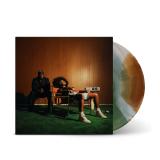
BLK ODYSSY is an Austin-based artist and producer whose boundary-pushing sound blends soul, hip-hop, rock, funk, and pop. Born in Plainfield, New Jersey, and raised in a household steeped in neo-soul, BLK began channeling his voice through music after the unjust killing of his older brother by police at age 12. That life-altering loss and the experience of growing up Black and male in 21st-century America fuels his raw, layered storytelling. His debut album, BLK VINTAGE (2021), written and produced with close collaborators, served as both a celebration and a critique of Black identity in America. It was met with critical acclaim and re-released in 2022 via Empire as BLK VINTAGE: The Reprise, featuring Mereba, Benny the Butcher, George Clinton, and Baby Rose. The project has since amassed over 100 million streams and positioned BLK ODYSSY as a standout voice in modern soul. His 2023 sophomore album, DIAMONDS & FREAKS, continued his ascent, merging surrealism and social commentary with contributions from Rapsody, KIRBY, Bootsy Collins, Cory Henry, and production from The Alchemist. NPR called BLK “a surrealist R&B auteur,” while Pitchfork praised his ability to bend genre into a cinematic sonic experience. In 2024, following a surreal Tiny Desk performance and festival appearances across Europe—including a headline set at North Sea Jazz Festival and Lollapalooza in Chicago—BLK ODYSSY launched a bold new chapter, with his third studio album, 1-800 FANTASY. The first single from the album, “WANT YOU” (co-produced by Tyler Johnson, known for his work with Harry Styles), marked a shift in tone. That was followed by “XXX” featuring Wiz Khalifa, and “STANK ROSE” featuring Joey Bada$$. Now averaging over 1M+ weekly streams, BLK ODYSSY is unleashing his fourth project, MOOD CONTROL, a ten-track album pushing alt-R&B, soul, and funk to new heights. 1xLP, pressed on Green, Brown & White 3 Color A Side B Side Vinyl.
“Diesmal bin ich mit dem Wunsch an meine Musik herangegangen, sie als etwas Gleichberechtigtes zu
verstehen, nicht als etwas nach dem Motto ’Ich bin der Chef’”, sagt Julian Lage über sein fünftes BlueNote-Album und Nachfolger des GRAMMY-nominierten ”Speak To Me”, erneut produziert von Joe Henry.
Diesmal wird der Gitarrenvirtuose mit einer neuen Band feat. John Medeski (Hammond B3, Piano), Jorge
Roeder (Double Bass) und Kenny Wollesen (Drums, Percussion) zu hören sein.
Während „Speak To Me“ Lages großes Statement als improvisierender Bandleader war, geht es ihm auf
seinem neuen Album darum, sich selbst mehr als Bandmitglied zu verstehen und die von ihm geschriebenen Stücke gemeinsam mit seinem neuen Ensemble zu erkunden. Ein prominenter Teil des neuen Sounds
ist dabei Organist John Medeski. Julian Lages moderner Gitarren-Sound trifft in dieser Kombination auf
Anklänge klassischer Gitarre/Orgel-Sessions der Jazzgeschichte, wie z.B. von Grant Green & Larry Young,
Wes Montgomery & Jimmy Smith oder Kenny Burrell & Jack McDuff.
**2010 Grammy Award Winner: Best Traditional Folk Album **
‘Marvelous…exuberant’ - Rolling Stone
Nonesuch Records releases a fifteenth anniversary edition of Carolina Chocolate Drop’s 2010 Grammy Award-winning album Genuine Negro Jig, featuring founding band members Dom Flemons, Rhiannon Giddens, and Justin Robinson. The reissue includes the original album and nine bonus tracks: seven previously unreleased tracks plus a 2025 remaster of ‘City of Refuge’ and a 2025 mix of ‘Memphis Shakedown’. This release marks the album’s first time on vinyl since its original pressing in 2010.
Genuine Negro Jig was released on February 16, 2010, reaching the top ten on the Billboard Folk chart and the top of the Bluegrass chart. It won the 2011 Grammy Award for Best Traditional Folk Album. Produced by Joe Henry, it was the first of three releases on Nonesuch followed by The Carolina Chocolate Drops/ Luminescent Orchestrii EP (2011) and the Grammy nominated album Leaving Eden (2012), produced by Buddy Miller. Widely acclaimed as one of 2010’s best, Genuine Negro Jig appeared in year-end lists of NPR, Paste, and more, and was featured in Rolling Stone’s 25 Best Country-Soul Albums in 2024.
“Genuine Negro Jig remains fresh fifteen years later not only because of the Carolina Chocolate Drops’ influence on American popular culture but also because it’s an excellent record in itself,” says Dr. Dwandalyn Reece and Dr. Steven Lewis of the Smithsonian National Museum of African American History and Culture in the album’s liner notes.
Carolina Chocolate Drops formed after band members Dom Flemons, Rhiannon Giddens, and Justin Robinson met at the Black Banjo Gathering in Boone, NC in 2005. All three trained in the Piedmont banjo and fiddle musical tradition under the tutelage of Joe Thompson, who was one of the last musicians of his era and his community to carry on the southern Black string band tradition. While old-time Southern string music is often associated with Caucasian musicians from Appalachia, Giddens pointed out in an NPR interview that “it seems that two things get left out of the history books. One, that there was string band music in the Piedmont, period. And that Black folk was such a huge part of string tradition.” Carolina Chocolate Drops sought to not only correct this misunderstanding but also to keep the centuries-old string music tradition alive and developing.
The members of Carolina Chocolate Drops, who came from diverse musical backgrounds, shared singing duties and swapped instruments throughout their sets. The band recently reunited for a single show at Rhiannon Giddens’ Biscuits and Banjos festival in Durham, North Carolina in April 2025. In celebration of the 20th Anniversary of the Black Banjo Gathering, the documentary Don’t Get Trouble In Your Mind: The Carolina Chocolate Drops’ Story by Filmmaker John Whitehead was released on Amazon Prime, Apple TV, and YouTube Free4all streaming platforms.
- 1: Sons Of Art
- 2: River Running
- 3: Lime Blossom
- 4: Galilee
- 5: Robin's Rest
- 6: Songs Of The Ainur
- 7: Return Of An Angel
- 8: Late Autumn Sunshine
The album is made up of two sessions recorded for BBC Radio 1 at Maida Vale Studios, from 1973 and 1978 that feature vocalist Norma Winstone, trumpeter Henry Lowther, saxophonists Art Themen, Tony Coe and Alan Wakeman, trombonist David Horler, bassists Dave Green and Jeff Clyne, and drummers Trevor Tomkins and John Marshall. The material, all composed by Garrick, includes some favourites from the classic LPs 'Troppo' and 'October Woman'. He wouldn't record the tracks "River Running" and "Galilee" until decades later, so this is the first time these '70s arrangements have been released. Whereas "Robin's Rest" and the title track are exclusive to this album - providing a fascinating insight into this uniquely talented artist.
Garrick was at the forefront of British jazz from the mid-1960s until his death in 2011 aged 78. He was a key member of The Don Rendell / Ian Carr Quintet, composing the jazz gems "Dusk Fire and "Black Marigolds" and released a series of seminal 1960s and 1970s LPs including 'Cold Mountain', 'The Heart is a Lotus' and 'Black Marigolds'. Remastered by Caspar Sutton-Jones @ Gearbox Records, 'Late Autumn Sunshine' is available as a 2LP set housed in a gatefold sleeve (a limited edition of 600 copies) and 'mini-LP' gatefold CD, with sleeve notes by Daniel Spicer (Jazzwise, The Wire). 'Late Autumn Sunshine' celebrates Michael Garrick's memory and should introduce him to many new fans.
Aufgenommen live im Village Gate in New York City am 26. und 27. November 1963 mit den Pianisten Horace Parlan, Melvin Rhyne und Jane Getz sowie dem Bassisten Henry Grimes und dem Schlagzeuger Sonny Brown. Die Musik wurde ursprünglich für einen Dokumentarfilm aufgenommen. Die Bänder lagen 62 Jahre lang im Archiv, bis sie nun veröffentlicht wurden. Restauriert und gemastert von Matthew Lutthans im Mastering Lab anhand der Originalbänder. Die Deluxe-CD-Edition enthält ein umfangreiches Booklet mit seltenen Fotos und Liner Notes von Jan Persson, Tom Copi, Raymond Ross und anderen, neu in Auftrag gegebene Liner Notes der Autoren John Kruth und May Cobb sowie Interviews und Testimonials von Jane Getz, den Saxophon-Ikonen James Carter und Chico Freeman, dem Posaunisten Steve Turre, Adam Dorn – Sohn des langjährigen Kirk-Produzenten und -Förderers Joel Dorn – und anderen.
- The Perfect Me
- Choco Fight
- + 81
- Believe E.s.p
- The Galaxist
- Makko Shobu
- Matchbook Seeks Maniac
- Cast Off Crown
- Kidz Are So Small
- Whither The Invisible Birds?
- Look Away
Später, in den Tagen der funkelnden weißen Overalls, erreichte Elvis einen Höhepunkt, als die Musik ihn so tief bewegte, ihn in solche Höhen hob, dass es nur noch eines zu tun gab: "die umgekehrte Klaue". Wenn Musik dich dazu bringt, ist das ein wirklich großartiges Gefühl. "Die umgekehrte Klaue" ist das, worum es bei Deerhoof geht. Ihre jubelnde Musik zieht dich in den Moment hinein, und dort freust du dich. Auf dem transzendenten Album ,Friend Opportunity" überrascht die Musik immer wieder: Songs wie ,Perfect Me" haben drei oder vier Abschnitte mit atemberaubenden Offenbarungen des Erhabenen; ,Matchbook Seeks Maniac" zieht in der Mitte einen ,99 Luftballoons"-Breakdown-Move durch, rockt ein Brahms-Intervall im pop-narkotischen Refrain, und die Beach Boys und The Who sind überall im Mix zu hören - es ist eines der glorreichsten Dinge, die man je hören wird. Auf früheren Alben war eine der Hauptwaffen von Deerhoof der negative Raum - die atemberaubenden Stille zwischen den Beats und Akkorden schlugen härter zu als jedes Klirren und Klirren von Gitarren und Becken. Deerhoof waren wie Maler, die leere Stellen auf der Leinwand ließen, um ihre Pinselstriche hervorzuheben; jetzt neigen sie dazu, jeden Quadratzentimeter auszufüllen und laden uns ein, jeden brillanten Winkel zu genießen. Und Songs wie ,Perfect Me", ,Believe in E.S.P." und ,Choco Fight" sind weitaus groove-orientierter - und ja, auch sexier - als alles, was sie bisher gemacht haben. Das alles ist in Gegenüberstellungen integriert, die eigentlich irritierend sein müssten, aber einfach nur erstaunlich klingen. ,Believe E.S.P." beginnt mit Deerhoofs Interpretation von funkiger Slinkopation, aber der nächste Abschnitt klingt wie etwas aus Palestrina; wie so viele dieser Songs ist es eine malerische Fahrt, die von einer erstaunlichen Aussicht zur nächsten führt, von weiten, schimmernden Wüsten über neblige Schluchten bis hin zu atemberaubenden, schneebedeckten Berggipfeln. Wie Mike Watt einmal über seine Band The Minutemen sagte, schreiben Deerhoof keine Songs, sondern Flüsse. Woher kommt dieses Zeug? Da ist das hoch aufragende, ungerade getaktete Gitarrenriffarama von Chavez, der Heavy-Metal-Donner von Strawinsky, die beschädigten Schnörkel von Gastr del Sol, der Klang und Stomp von Led Zeppelin, Japans illustre Reihe atemberaubend innovativer, von Frauen dominierter Bands wie Ex-Girl und Melt Banana. Und jetzt gibt es diese Mensch-Maschine-Beatbox-Rhythmen, bei denen der titanische Schlagzeuger Greg Saunier die Technologie übertrifft wie ein John Henry mit zwei Holzstiften in den Händen anstelle eines Vorschlaghammers. Manchmal erinnern sie an The Who - wie ,Underture" aus Tommy oder die großartige Live-Version von ,A Quick One", eine Rockband, die die Arbeit eines Orchesters leistet, fesselnde Träumereien im Wechsel mit kraftvollen Ausbrüchen gewundener Melodien, lyrischen Machtspielen und Inverted Claws, die überwältigende Freude hervorrufen. Aber es gibt noch eine weitere wichtige Quelle: Seit mindestens 20 Jahren hat der Hip-Hop die ausgefallenste und experimentellste Musik hervorgebracht, die die Popmusik je gesehen hat. Warum kann Rockmusik nicht das Gleiche tun, auf ihre eigene Weise? Während ,Friend Opportunity" also tangential den Hip-Hop (und verschiedene Epochen des Rock in seiner abenteuerlichsten Form) zitiert, wendet es meist nur die gleiche Denkweise an - was wäre, wenn wir einfach unserer Fantasie freien Lauf lassen würden? ,Friend Opportunity" ist eine Meisterleistung der Neuerfindung, die nur von Künstlern kommen konnte, die bereit waren, alles zu überdenken. ,Es ist, als wäre man wieder ein Kind", sagte Saunier einmal zu Pitchfork, ,denn das ist es, was Kinder die ganze Zeit tun. Jeden Tag lernen sie neue Dinge, von denen sie nicht wussten, dass sie sie tun können." Mann, wenn man von Sonic Youth spricht - Deerhoofs Frühling ist ewig. - Michael Azerrad
As trans-Atlantic alchemists pulling from a shared dialectic that somehow encompassed both postmodern deconstructionist tendencies and a delightfully subversive sense of poptimism, it’s easy to see how David Cunningham and Peter Gordon immediately hit it off upon initially meeting each other back in the late-1970s at the height of their youthful transgressions. Having initially worked together on the second Flying Lizards’ LP fourth wall, with its ingenious fusion of dismantled rhythms and rearranged melodies juxtaposed against the slyly sultry singing of Snatch’s Patti Palladin— with Gordon adding a few sprinkles of mischievous sax in the mix— it’s no wonder the collaboration would lead to further musical adventures.
Which leads us directly to the genesis of The Yellow Box. Embarking on a collaborative exercise in the structural repurposing of music as untethered puzzle pieces in need of rearrangement with no predetermined outcomes, the duo gave birth to a project that would see them move through both time and recording studios across Europe, taking nearly two years from 1981-1983 to complete. Enlisting the great Anton Fier on drums from The Feelies/Lounge Lizards nexus and John Greaves on bass from Henry Cow/Soft Heap lore to round out their dueling creative counterparts, the album would be something of a lost treasure until its eventual release on Cunningham’s Piano imprint in 1996.
Cinematic in scope, and filled with drifting drones, beautiful counter-melodies, eery minimalism, Kraftwerkian synthesizers, looped voices, skronky interludes, and other shifting undercurrents of sound, it was an album that utilized both a diverse array of expressive languages, as well as early sampling techniques and prepared instruments, well before most people were thinking in such expansive, integrated terms at the dawn of the 80’s. But such is life at the vanguard of new music. And one of the reasons that it likely sat on the shelf for so long before finally being released well over a decade later. Like a sparser, less groove-oriented version of My Life in the Bush of Ghosts, or a more radical take on the experimental work of Can’s Holger Czukay, The Yellow Box stands at the crossroads of time and technology, fusing multiple strands of musical thought and compositional techniques into a disjointed whole that somehow still comes off as a conceptually complete record.
Now, here it is again, over 40 years later, with perhaps even more historical resonance than it had before, remade and remodeled just waiting to be rediscovered again.
When we did the first ever vinyl reissue of this 1972 masterpiece back in 2012 it sold out so fast and so many lost the chance to grab a copy has translated into continuous messages asking us to do a repressing of this marvel - which we did and, again, it sold like hot bread. So here is a new edition of this UK jazz masterpiece, this time with a twist :
- Silk-screened cover art : we respect the original design, but have upgraded the printing from regular offset to silk screen to give it an artistic touch!
- In adition to the limited black vinyl edition (400 copies), we offer an ultra limited clear vinyl version (100 copies-only!)
One of the big names in UK Jazz, Neil Ardley was offered the leadership of the seminal New Jazz Orchestra in 1964. Under his direction the Orchestra moved though different styles and changes of personnel, bringing in musicians such as Mike Gibbs (trombone), Harry Beckett andHenry Lowther (trumpets) or even Jack Bruce (bass), some of them also contributed with the writing of some original compositions, making the NJO the root from which the UK's 70's jazz scene was to blossom.
By 1972 the NJO was already defunct, but his legacy remained in the works of its members. Ardley's 'A Symphony Of Amaranths' is a perfect example of what was boiling in the UK jazz scene. It was Ardleys tribute to his idols Duke Ellington and Gil Evans, and featured the skills of some great musicians of the scene including Don Rendell,Stan Tracey, Henry Lowther, Harry Beckett, Jeff Clyne & Jon Hiseman. Side B is inspired by the words of Edward Lear, W. B. Yeats, James Joyce and Lewis Carroll that are musicated by Ardley and feature, among other highlights, Ivor Cutler's narration of 'The Dong With A Luminous Nose' and Norma Winstone's vocals on 'Will You Walk A Little Faster'.
Musicians that participated in the recording session :
- Derek Watkins, Nigel Carter, Henry Lowther, Harold Beckett (trumpets)
- Derek Wadsworth, Ray Premru (trombones)
- Dick Hart (tuba)
- Barbara Thompson, Dave Gelly, Don Rendell, Dick Heckstall-Smith (woodwind, saxes)
- John Clementson (oboe)
- Bunny Gould (bassoon)
- Dave Gelly (glockenspiel)
- Neil Ardley (prepared piano)
- David Snell, Sidonie Goossens (harp)
- Stan Tracey (piano, celeste)
- Karl Jenkins (electric piano)
- Alan Branscombe (harpsichord)
- Frank Ricotti (vibraphone, percussion)
- Chris Laurence, Jeff Clyne (bass)
- Jon Hiseman (drums, percussion)
- Eric Gruenberg, Jack Rothstein, Kelly Isaacs (violin)
- Ken Essex (viola)
- Charles Tunnell, Francis Gabarro (cello)
- Ivor Cutler (narrator)
- Norma Winstone (vocal)
- Jack Rothstein, Neil Ardley (conductors)
If any album could conjure up the revolutionary spirit of Jamaica in the mid 1970’s, Tapper Zukie’s invincible M.P.L.A. set would surely be a fighting contender. The coming together of great rhythms and meaningful lyrics in a time of unrest in the country seemed to have made the album all the more urgent and relevant. As time would tell it would also prove to be a lasting success, not only with the hard core reggae fans but also their punk counterparts. Who embraced its militant themes and crossed the album over to a whole new audience. Tapper Zukie (b. David Sinclair, Kingston, Jamaica.) had already returned from a trip to London England by the mid 70’s .Initially sent with help from his parents, brother Blackbeard and producer Bunny ‘Striker’ Lee to remove the youth from his troublesome ways on the streets of Kingston, Jamaica. He had performed some live shows in London and made some recordings for Larry Lawrence, that produced his debut ‘Jump and Twist’. Alongside other recordings that would emerge as his ‘Man A Warrior’ set. But feeling homesick he had returned to Jamaica in 1974 to work with Bunny Lee. His work would consist of arranging sessions and collecting payments to bodyguard, the now very successful producer. His frustration of Bunny Lee’s reluctance to record him led him cutting ‘Judge I Oh Lord’ for producer Lloydie Slim. Bunny Lee’s then recording of Tapper’s ’Natty Dread Don’t Cry’ and its subsequent release aboard, led to an altercation between Tapper and producer. The police had to be called and an offer to provide the singer with a set of rhythms put this matter to rest. The eight rhythms and a further two from Jo Jo Hookim and Ossie Hibbert alongside some free studio time at King Tubby’s Studio would result in the M.P.L.A album.
The rhythm provided by Jo Jo Hookim was a Channel One studio cut by The Revolutionaires based on Little Richards ‘Freedom Blues’ and provided the backdrop to M.P.L.A. The Ossie Hibbert rhythm again cut at Channel One based on The Royals ‘Pick Up The Rockers’ would provide the backdrop to Tapper’s ‘Pick Up The Rockers’. These and the remaining Bunny Lee rhythms, were all cut in a one hour session, at King Tubby’s Studio. ’Don’t Get Crazy’ cut on a rhythm based on the Joe Frazier rhythm to Tony Brevett’s ‘Don’t Get Weary’. ‘Go De Natty’ cut on Cornell Campbell’s ‘Please Be True’, originally a cut to Alexander Henry’s ‘Please Be True’. ‘Stop The Gun Shooting’ runs over Horace Andy’s ‘Skylarking’.’Ital Pot’ cut on Johnny Clarke’s version of Burning Spear’s ‘Creation Rebel. ‘Marcus’ see’s Tapper professing over Johnny Clarke’s ‘Poor Marcus’ .’Chalice To Chalice’ pulls on Johnny Clarke’s ‘Give Me a Love’,’ Don’t Deal With Babylon’ answers Junior Ross and The Spears ‘Babylon Fall’ and ‘Freedom’ rides on the great rhythm of Junior Ross and The Spears ‘Liberty’. An outstanding album cut by one of Jamaica’s finest DJ’s and producers the mighty Tapper Zukie. We hope you enjoy this now timeless set.
- A1: Farewell Transmission
- A2: I've Been Riding With The Ghost
- A3: Just Be Simple
- A4: Almost Was Good Enough
- B1: The Old Black Hen
- B2: Peoria Lunch Box Blues
- B3: John Henry Split My Heart
- B4: Hold On Magnolia
- C1: Farewell Transmission
- C2: I've Been Riding With The Ghost
- C3: Just Be Simple
- C4: The Old Black Hen
- C5: Peoria Lunchbox Blues
- D1: John Henry Split My Heart
- D2: Hold On Magnolia
- D3: The Big Game Is Every Night
- D4: Whip-Poor-Will
- 1: Mein Fräulein
- 2: These New Communications
- 3: Tolerant Nation
- 4: Beryl
- 5: A Perishing Of Cherished Things
- 6: Property-Owning Democracy
- 7: Master Narrative
- 8: Pretty Straight Guy
- 9: The Contented Commuter
- 10: Brb
Barbara, das sind die Brüder Henry und John Tydeman aus Brighton, inspiriert von den Popgrößen der 1970er, The Kinks, ABBA, ELO, aber auch von charmanten, exzentrischen Werken britischer Schriftsteller wie George Orwell und Harold Pinter. Ihre Songs erzählen Geschichten von seltsamen Charakteren, die vom Leben hin- und hergerissen sind. Trotz der unvorhersehbaren Texte steckt in Barbaras Musik immer ein Hauch von Spaß, Uncoolem und – am wichtigsten – Tanz. Also, kommt zum Tanzen… und bleibt für die Geschichten. Oder auch andersrum. Barbara war mit The Divine Comedy, Haircut 100 und zuletzt Paul Weller auf Tour und erhält Probs von ihnen, den Medien, und dem legendären Produzenten Steve Lillywhite (Peter Gabriel, U2, Simple Minds, XTC, Ultravox).
- "Barbara ist eine der besten Gruppen überhaupt. Live sind sie großartig und ihre Songs auch. Clever und melodisch. Die Babs sind fabelhaft!" - Paul Weller
- "Sie sind genau mein Ding ... wirklich straffes Songwriting, sehr poptastisch!" - Neil Hannon (The Divine Comedy)
- "Diese Band ist mit nichts zu vergleichen, was ich je gehört habe, und ich liebe sie!" - Steve Lillywhite
- "Barbara ist wunderbar. Ich liebe ihre Songs und ihren Humor. Wir brauchen mehr Barbara in unserem Leben!" - Chris Difford (Squeeze)
- "Haircut One Hundred liebt Barbara. Sie sind so mutig wie unsere Blechbläser! Bacharach mit Schlägern und Bällen. Wir lieben sie!" - Nick Heyward (Haircut 100)
- "Barbara ist einer der einfallsreichsten und originellsten Musik-Acts, die ich je gesehen habe Eselsjahre! Sie machen in der britischen Musikszene bereits viel Lärm, und mit ihrer wunderbaren und originellen Herangehensweise an Text und Melodie, kombiniert mit einem mitreißenden und fröhlichen Vortragsstil, ist ihr zukünftiger Erfolg in einem unvermeidlich verrückten Musikgeschäft sicher. Geht hin und seht sie euch an!" - Dean Friedman
- "Barbara ist eine wahnsinnig talentierte Band mit einem angeborenen Gespür für Melodie und Arrangement ... Der ehrgeizige Umfang und die mitreißende Unmittelbarkeit ihres Sounds lassen ihr junges Alter nicht erahnen." - Phill Jupitus (BBC)
- "So ein fröhlicher, eingängiger und faszinierender Song." John Kennedy (Radio X) über "Property-Owning Democracy"
- "Ein absoluter Killersong ... eine Pop-Symphonie im Taschenformat!" Gary Crowley (BBC Radio) über "Property-Owning Democracy"
Mutant is proud to present Academy Award®-winning composer Michael Giacchino’s latest installment of his Exotic Themes for the Silver Screen series - Featuring more iconic scores from Giacchino’s career that have been exclusively rearranged and re-recorded for this series in the retro lounge style of the 1950s. Volume 2 spans the period of 2012 to 2022 and features not only his work with Marvel Studios (including their iconic Marvel Studios Fanfare, Spider-Man, Doctor Strange and more!) but also more career defining music for Disney Pixar (Inside Out, Coco and Lightyear) as well as smaller, cult classics like John Carter, and Tomorrowland, more personal films such as Jojo Rabbit and The Book of Henry. He has taken these iconic themes and transformed them into soothing, beautiful 60’s lounge-inspired reworks.
When we did the first ever vinyl reissue of this 1972 masterpiece back in 2012 it sold out so fast and so many lost the chance to grab a copy has translated into continuous messages asking us to do a repressing of this marvel - which we did and, again, it sold like hot bread. So here is a new edition of this UK jazz masterpiece, this time with a twist :
- Silk-screened cover art : we respect the original design, but have upgraded the printing from regular offset to silk screen to give it an artistic touch!
- In adition to the limited black vinyl edition (400 copies), we offer an ultra limited clear vinyl version (100 copies-only!)
One of the big names in UK Jazz, Neil Ardley was offered the leadership of the seminal New Jazz Orchestra in 1964. Under his direction the Orchestra moved though different styles and changes of personnel, bringing in musicians such as Mike Gibbs (trombone), Harry Beckett andHenry Lowther (trumpets) or even Jack Bruce (bass), some of them also contributed with the writing of some original compositions, making the NJO the root from which the UK's 70's jazz scene was to blossom.
By 1972 the NJO was already defunct, but his legacy remained in the works of its members. Ardley's 'A Symphony Of Amaranths' is a perfect example of what was boiling in the UK jazz scene. It was Ardleys tribute to his idols Duke Ellington and Gil Evans, and featured the skills of some great musicians of the scene including Don Rendell,Stan Tracey, Henry Lowther, Harry Beckett, Jeff Clyne & Jon Hiseman. Side B is inspired by the words of Edward Lear, W. B. Yeats, James Joyce and Lewis Carroll that are musicated by Ardley and feature, among other highlights, Ivor Cutler's narration of 'The Dong With A Luminous Nose' and Norma Winstone's vocals on 'Will You Walk A Little Faster'.
Musicians that participated in the recording session :
- Derek Watkins, Nigel Carter, Henry Lowther, Harold Beckett (trumpets)
- Derek Wadsworth, Ray Premru (trombones)
- Dick Hart (tuba)
- Barbara Thompson, Dave Gelly, Don Rendell, Dick Heckstall-Smith (woodwind, saxes)
- John Clementson (oboe)
- Bunny Gould (bassoon)
- Dave Gelly (glockenspiel)
- Neil Ardley (prepared piano)
- David Snell, Sidonie Goossens (harp)
- Stan Tracey (piano, celeste)
- Karl Jenkins (electric piano)
- Alan Branscombe (harpsichord)
- Frank Ricotti (vibraphone, percussion)
- Chris Laurence, Jeff Clyne (bass)
- Jon Hiseman (drums, percussion)
- Eric Gruenberg, Jack Rothstein, Kelly Isaacs (violin)
- Ken Essex (viola)
- Charles Tunnell, Francis Gabarro (cello)
- Ivor Cutler (narrator)
- Norma Winstone (vocal)
- Jack Rothstein, Neil Ardley (conductors)
Mutant is proud to present Academy Award®-winning composer Michael Giacchino’s latest installment of his Exotic Themes for the Silver Screen series - Featuring more iconic scores from Giacchino’s career that have been exclusively rearranged and re-recorded for this series in the retro lounge style of the 1950s.
Volume 2 spans the period of 2012 to 2022 and features not only his work with Marvel Studios (including their iconic Marvel Studios Fanfare, Spider-Man, Doctor Strange and more!) but also more career defining music for Disney • Pixar (Inside Out, Coco and Lightyear) as well as smaller, cult classics like John Carter, and Tomorrowland, more personal films such as Jojo Rabbit and The Book of Henry. He has taken these iconic themes and transformed them into soothing, beautiful 60’s lounge-inspired reworks.
Other highlights include ‘The Batman Suite’, taken from Matt Reeves' 2022 blockbuster The Batman, ‘Jyn Erso’s Theme’ from Rogue One: A Star Wars Story, as well as themes for War For The Planet Of The Apes, Jurassic World and two selections taken from his directorial debut Werewolf By Night
"We are thrilled to continue exploring Michael’s storied career with this incredible collection of some of his most beloved themes reworked for warm summer nights with a cocktail (or mocktail) in hand," says Mutant co-founder Spencer Hickman. "Michael is a rare composer who is comfortable with superheroes, horror, action, or intimate drama. He always manages to create incredibly beautiful earworms that have been further highlighted by these stripped-back downtempo versions of his award-winning themes.’
Featuring liner notes by Charles Phoenix, artwork by Luke Insect, and pressed on limited edition color vinyl (also available on CD)
“So much was rooted in the big orchestral sound, so it was really about scaling it back. The real trick is figuring out the little fun hooks and things you can add along the way. There were no rules; I was up for anything. It was a way to re-engage with the material and be creative in a new way.”
Exotic Themes for the Silver Screen – Volume 1 includes an array of reinterpreted pieces from Michael Giacchino’s career. Highlights include ‘Primordial Forest’ from the 1997 video game The Lost World: Jurassic Park, ‘Life and Death’ from Lost, the theme from Ratatouille, ‘Roar!’ from Cloverfield, ‘Enterprising Young Men’ from Star Trek (2009), ‘A Man, A Plan, A Code, Dubai’ from Mission: Impossible - Ghost Protocol, and a Super 8 suite.
Featuring package design by Luke Insect, and liner notes by Charles Phoenix.
Back On My Feet Again ist das 1961er Album von Furry Lewis, das ursprünglich bei Prestige Records
erschien. Mit seinem charakteristischen Finger-Picking- und Slide-Gitarren-Stil lässt Lewis auf diesem
Album seine frühen Klassiker wie „John Henry“ und „Big Chief Blues“ sowie traditionelle Songs und neuere
Kompositionen wieder aufleben. Dieses neu gemasterte Album wurde bei QRP in Zusammenarbeit mit
Acoustic Sounds auf 180-Gramm-Vinyl gepresst und ist in einer Replik mit Tip-On-Hülle untergebracht.
The discovery of Doris Dennison's score represents a genuine musicological breakthrough—what once would have been "a tree falling in the woods" thirty years ago now holds the potential to render "a thunderous clap in our minds." While researching Anna Halprin's lesser-known collaborators, scholar Tom Welsh uncovered the archives of AA Leath, one of Halprin's principal dancers. Buried within these materials was Dennison's handwritten score for Earth Interval, dated May 1956. Born in Saskatchewan, Canada, in 1908, and raised near Seattle, Dennison (1908-2009) encountered John Cage while teaching Dalcroze eurythmics at the Cornish College of the Arts. She joined Cage's earliest percussion quartet—alongside Margaret Jansen, the composer and his wife Xenia—in the group widely regarded as having performed the first complete concert of percussion music in the United States. This historic December 1938 concert was followed by tours and the landmark May 1941 performance at the California Club, comprising Cage and Lou Harrison's Double Music, the premiere of Cage's Third Construction, and Harrison's 13th Simfony.
As Bradford Bailey observes in his extensive liner notes, Earth Interval demonstrates "an extraordinary balance of elements that imbues the piece with a sense of clarity, directness, and constraint that is both distinct and ahead of its time." The work's most remarkable innovation lies in its approach to extended techniques, particularly Dennison's notation for the central movement: "In 2nd movement, 1st player lowers + raises a gong into a tub of water while beating." This technique, absorbed from Cage's experimental vocabulary, generates what Bailey describes as "fields of acoustic abstraction that bend and warp time through sustained resonances, beat, and space." The temporal sophistication of these manipulations anticipated Karlheinz Stockhausen's Mikrophonie I (1964) and Annea Lockwood's water-based sound investigations by over a decade. After joining Mills College as dance accompanist, Dennison maintained crucial connections to the Bay Area's experimental scene, collaborating with figures like Merce Cunningham and programming Cage's music throughout the 1950s.
Comprising three movements—Land Form, Air Tide, and Earth Play—Earth Interval is scored for recorder, drums, gongs, maracas, muted gongs, and bowl gongs. In total, the piece is just under eight minutes: "a fleeting glimmer of moment in time, a life spent at the cutting edge, and a singular creative vision that packs a powerful punch." When viewed in historical context, placed in contrast to roughly contemporaneous avant-garde percussion works by Cage, Harrison, Louis Thomas Hardin (Moondog), and Harry Partch, or important precursors like Edgard Varèse's Ionisation (1931) and Henry Cowell's Ostinato Pianissimo (1934), it's clear that Dennison was following her own path. Earth Interval is not derivative. It is a precursor to what was yet to come, alluding to developments of avant-garde and experimental music that wouldn't begin to appear on the cultural landscape until the 1970s and '80s, with the emergence of Post-Minimalism and more idiosyncratic artists and ensembles like Midori Takada, Ros Bandt, Peter Giger, Frank Perry, Christopher Tree, Michael Ranta, Gamelan Son of Lion, and Niagara.
This recording by Chicago's Third Coast Percussion, captured in March 2022, represents the first complete documentation of this pioneering work. The ensemble's interpretation reveals the piece's remarkable contemporaneity while maintaining its historical specificity. Where Cage, Harrison, and Partch employed "self-consciously off-kilter polyrhythms," Dennison's rhythmic sensibility anticipates minimalist developments by nearly a decade, yet integrates "forceful rests, as well as sharp shifts in sonic character, tempo, and meter, that break the momentum and breathe a sense of life into the piece's structure." This positions her work closer to Post-Minimalism decades before its emergence. The architectural approach demonstrates Dennison's understanding that "the composer almost entirely disappears" in favor of phenomenological listening experience, creating what might be called an egoless music that places its realities and meaning entirely in the ear of the beholder. The present recording, realized by Chicago's distinguished Third Coast Percussion ensemble, represents a significant achievement in experimental music scholarship and performance practice. As specialists in the Cage tradition and contemporary percussion repertoire, Third Coast Percussion approached Earth Interval with the historical sensitivity and technical precision required to illuminate Dennison's subtle compositional innovations. The March 2022 recording sessions, engineered by Colin Campbell, capture both the work's intimate chamber music qualities and its bold exploration of extended techniques. The ensemble's interpretation reveals the piece's remarkable contemporaneity—its ability to speak directly to current musical concerns while maintaining its historical specificity.
This recording serves multiple scholarly functions: it provides the first complete documentation of Dennison's compositional voice, offers insight into the broader network of experimental music practitioners surrounding Cage and Harrison, and demonstrates the sophisticated level of compositional thinking that was occurring within the Bay Area's dance-music collaborations of the 1950s. The work's emphasis on phenomenological listening—what might be called an "egoless" approach to musical experience—places it within a lineage of American experimental music that prioritizes perceptual process over compositional personality. The work's original obscurity—limited to AA Leath's performances at venues like the 1957 Pacific Coast Arts Festival at Reed College—paradoxically allowed it to remain "entirely on its own terms," free from the constraints of historical categorization. Drawing on Jacques Derrida's Archive Fever, the argument emerges that "the archive can acknowledge, celebrate, and resurrect" overlooked voices, transforming our understanding of experimental music history. The present Blume edition, featuring Third Coast Percussion's authoritative interpretation, includes a lavishly illustrated 16-page booklet designed by Bruno Stucchi / dinamomilano, containing complete scholarly apparatus, historical photographs, and detailed production notes. This recording enables "cross-temporal intersectionality," allowing Dennison to "belong to a newly formed and more dynamic understanding of the present and past," demonstrating how forgotten voices can reshape entire historical narratives when given proper scholarly attention and performance advocacy.
- A1: When One Door Opens Overture
- A2: Curtain Call
- A3: Self-Inflicted Wounds
- B1: No Good Place For The Lonely
- B2: Ball Peen Hammer
- B3: The Last Matador Of Bayonne
- C1: Prisoner
- C2: If Heartaches Were Nickels
- D1: The Ballad Of John Henry
- D2: Twenty-Four Hour Blues
- D3: Sloe Gin
Feiern Sie eine ikonische Nacht der Blues-Rock-Geschichte mit Joe Bonamassa's Live at the Hollywood Bowl with Orchestra, jetzt erhältlich auf lila Vinyl in limitierter Auflage. Dieser unvergessliche Auftritt fängt Bonamassa live im legendären Hollywood Bowl ein, begleitet von einem vollen Orchester, das seine kraftvolle Gitarrenarbeit und seinen gefühlvollen Gesang in unvorstellbare Sphären hebt.
Diese exklusive 180g-Pressung auf lila Vinyl verleiht einer der dynamischsten Live-Aufnahmen Bonamassas ein gerade zu royales Flair. Spüren Sie die Energie der Menge, die Leidenschaft in jeder Note und die Erhabenheit der Orchesterarrangements, die Bonamassas Klassikern neues Leben einhauchen.
Yowzers is a new album by Chicago composer, improvisor, and musical folklorist Ben LaMar Gay. Yowzers features Gay"s working quartet with Tommaso Moretti (drums, percussion, voice), Matthew Davis (tuba, piano, bells, voice), and Will Faber (guitar, ngoni, bells, voice), as well as guest instrumentalist Rob Frye and a mini-choir. The album recalls the high-minded freedom of Liberation Music Orchestra, the glitched-out electronic webs of Robert Aiki Aubrey Lowe, the unbridled rhythms and sandpaper bellows of Bukka White, and the harmolodic cartoon glory of Arthur Blythe"s Illusions. It"s all there, filtered through an improvisational approach and a lifetime of secrets embodied. For a man who has inhabited and traveled these continents so extensively, it"s safe to call this work true "Americana", despite what that word might mean to the average person in the United States.
- 1: I'm A Stranger Here/Stranger Blues
- 2: Nervous
- 3: I Just Want To Make Love To You
- 4: Born With The Blues
- 5: I Got My Eyes On You
- 6: John Henry
- 7: I Need Money
- 8: Everyday, I Have The Blues
- 9: Night Time Is The Right Time
- 10: My Own Fault
- 1: Baby, Won't You Please Come Home
- 2: Moanin
- 3: Money Honey
- 4: Kansas City
- 5: Bye Bye Baby
- 6: Medley : The Blues Ain't Nothin' But A Woman & Bye Bye Baby
- 7: Eyesight To The Blind*
- 8: Your Funeral & My Trial*
- 9: Bye Bye Bird*
- 10: Fattening Frogs For Snakes*
- 11: Bye Bye Blues*
- 12: Wake Up Baby**
The blues, born in the cotton fields of the American South, emerged from makeshift instruments and simple harmonies rooted in African heritage. It captured the struggles, hopes, and fleeting joys of laborers enduring harsh conditions, with its hallmark "blue note" adding a unique dissonance to this evocative musical style.
As industrialization progressed, the blues migrated to urban centers like Chicago and New Orleans, evolving with modern instruments and expanding themes to reflect urban struggles, sensual nights, and existential despair. This period birthed many of the musicians who later formed the American Folk and Blues Festival (AFBF), an initiative started in 1950s Germany to introduce Europe to the genre and counter its reductive reputation as a precursor to jazz.
The Lost Recordings celebrates these legendary artists through restored performances from the 1962 Olympia in Paris and the 1963 Stadttheater in Bremen. Featured artists include John Lee Hooker, Memphis Slim, Sonny Terry, Brownie McGhee, T-Bone Walker, Helen Humes, and others, showcasing the depth and evolution of the blues.
From intimate duos like Brownie McGhee and Sonny Terry’s harmonica-guitar interplay to T-Bone Walker’s electrifying group performances, each act demonstrates the genre's versatility and influence. John Lee Hooker’s solo mastery mesmerized audiences, while T-Bone Walker pioneered the electric guitar's place in blues, inspiring legends like B.B. King.
The album also highlights Sonny Boy Williamson, whose charismatic harmonica and profound sensitivity defined his performances. These concerts take listeners on a journey through the authentic sound of the blues, traversing America’s history and foreshadowing its transformative impact on global music.
- A1: Where The Devil Don't Stay
- A2: Tornadoes
- A3: The Day John Henry Died
- A4: Putting' People On The Moon
- A5: Goode's Field Road
- B1: Carl Perkins' Cadillac
- B2: Tva
- B3: The Sands Of Iwo Jima
- B4: Danko / Manuel
- C1: The Boys From Alabama
- C2: The Buford Stick
- C3: Never Gonna Change
- C4: Cottonseed
- D1: The Great Car Dealer War
- D2: Daddy's Cup
- D3: Lookout Mountain
- D4: Goddamn Lonely Love
- A1: Big Mike's; Drums, Bass, Clarinet, Organ, Mixed By, Written-By – Dijon (7); Guitar, Piano, Vocals
- A2: Scratching; Mixed By, Written-By – Dijon (7); Producer
- A3: Many Times;Drums, Baritone Guitar, Written-By – Michael Gordon (30); Guitar
- A4: Annie; Acoustic Guitar, Written-By – Dijon (7); Bass – Michael Gordon (30); Mixed By, Written-By – Jack Karaszewski; Saxophone
- A5: Noah's Highlight Reel; Clarinet, Guitar, Mixed By, Written-By – Dijon (7); Vocals
- A6: The Dress; Bass – Gabe Noel, Sam Wilkes (2); Drums, Synth, Written-By – Dijon (7); Guitar – Noah Le Gros; Keyboards – John Keek; Mixed By – Andrew Sarlo; Vocals
- B1: God In Wilson; Drums – Henry Kwapis; Guitar, Synth, Mixed By, Written-By – Dijon (7); Mixed By – Jack Karaszewski
- B2: Did You See It; Instruments
- B3: Talk Down; Bongos – Henry Kwapis; Drum Programming, Mixed By, Written-By – Jack Karaszewski; Drums, Synth
- B4: Rodeo Clown; Clarinet – John Keek; Mixed By – Jack Karaszewski; Written-By, Guitar – Dijon (7); Written-By, Guitar
- B5: End Of Record; Baritone Guitar, Bass, Synth – Michael Gordon (30); Mixed By – Jack Karaszewski; Mixed By
- B6: Credits!; Written-By, Mixed By – Dijon (7)
[a] A1 Big Mike's; Drums, Bass, Clarinet, Organ, Mixed By, Written-By – Dijon (7); Guitar, Piano, Vocals [Additional], Organ, Mixed By, Written-By – Michael Gordon (30); Mixed By – Jack Karaszewski; Slide Guitar – Noah Le Gros
[b] A2 Scratching; Mixed By, Written-By – Dijon (7); Producer [Additional] – Michael Gordon (30); Producer [Additional], Mixed By – Jack Karaszewski
[c] A3 Many Times;Drums, Baritone Guitar, Written-By – Michael Gordon (30); Guitar [Additional], Written-By – Dijon (7); Programmed By [Additional Programming], Mixed By, Written-By – Andrew Sarlo
[d] A4 Annie; Acoustic Guitar, Written-By – Dijon (7); Bass – Michael Gordon (30); Mixed By, Written-By – Jack Karaszewski; Saxophone [Casio Sax Replica] – John Keek; Vocals [Additional] – God's Children (11)
[e] A5 Noah's Highlight Reel; Clarinet, Guitar, Mixed By, Written-By – Dijon (7); Vocals [Additional], Bass, Synth, Written-By – Michael Gordon (30); Vocals [Additional], Written; By – Noah Le Gros
[f] A6 The Dress; Bass – Gabe Noel, Sam Wilkes (2); Drums, Synth, Written-By – Dijon (7); Guitar – Noah Le Gros; Keyboards – John Keek; Mixed By – Andrew Sarlo; Vocals [Additional] – Michael Gordon (30); Written-By – John Keuch
[h] B2 Did You See It; Instruments [All], Written-By – Dijon (7); Mixed By – Jack Karaszewski
[i] B3 Talk Down; Bongos – Henry Kwapis; Drum Programming, Mixed By, Written-By – Jack Karaszewski; Drums, Synth [Strega], Mixed By, Written-By – Dijon (7); Guitar, Baritone Guitar – Michael Gordon (30); Keyboards – John Keek; Written-By – John Keuch
[j] B4 Rodeo Clown; Clarinet – John Keek; Mixed By – Jack Karaszewski; Written-By, Guitar – Dijon (7); Written-By, Guitar [Additional], Bass – Michael Gordon (30); Written-By, Slide Guitar – Noah Le Gros
[k] B5 End of Record; Baritone Guitar, Bass, Synth – Michael Gordon (30); Mixed By – Jack Karaszewski; Mixed By [Stem Mix] – Andrew Sarlo; Written-By, Guitar, Mixed By – Dijon (7)
- A1: Funk Formula 1 (Intro) 0:32
- A2: The Power Of The One Featuring – George Benson, Williams Singers 4:58
- A3: Slide Eazy Featuring – Ellis Hall, Rod Castro 3:43
- A4: Creepin' Featuring – Christone "Kingfish" Ingram 4:53
- B1: Jam On Featuring – Brandon "Taz" Niederauer*, Snoop Dogg 5:02
- B2: Lips Turn Blue Featuring – Emmaline 4:10
- B3: Funkship Area-51 Featuring – Brother Nature, Christian Mcbride 3:59
- B4: Bewise Featuring – Robert "Bewise" Harding* 4:08
- C1: Soul Not 4 Sale Featuring – Hollywood Anderson 5:35
- C2: Club Funkateers Featuring – Branford Marsalis, Danielle René Withers*, Victor Wooten 3:32
- C3: Wantme2Stay Featuring – Branford Marsalis, Larry Graham, Uché 4:03
- C4: Funktropolis Featuring – Brother Nature, Johnny Davis 4:59
- D1: Wishing Well Featuring – Ellis Hall 5:35
- D2: Bootsy Off Broadway Featuring – Christian Mcbride, Emmaline, Frankie "Kash" Waddy* 3:22
- D3: Stargate Featuring – Dr. Cornel West*, Ellis Hall, Emisunshine, Victor Wooten 6:12
- D4: Stolen Dreams Featuring – Brother Nature, Henry Invisible*, Rod Castro (2) 3:52
- A1: Sixteen Tons
- A2: Shotgun Boogie
- A3: Nine Pound Hammer
- A4: Mr. And Mississippi
- A5: Anticipation Blues
- A6: John Henry
- A7: I Ain't A Gonna Let It Happen No More
- A8: The Ballad Of Davy Crockett
- B1: Mule Train
- B2: The Cry Of The Wild Goose
- B3: Dark As A Dungeon
- B4: Blackberry Boogie
- B5: The River Of No Return
- B6: Ain't Nobody's Business But My Own
- B7: Smokey Mountain Boogie
- B8: That's All
Tennessee Ernie Ford, will go down in music history for his bestknown song ‘Sixteen Tons’. Penned by country legend Merle
Travis, it put Ford at the top of the Billboard chart for seven
weeks in late 1955-early 1956, selling a million copies in just
three weeks. It was also Capitol Records’ first Number 1 of the
rock era. He also hosted a Thursday-night variety show, which
ran for nearly five years, and had several big hits in the US and
UK. His music endures, and this vinyl collection of his very best
songs is testament to a unique performer.
- Yowzers
- The Glorification Of Small Victories
- There, Inside The Morning Glory
- Roller Skates
- For Breezy
- I Am (Bells)
- Promontory
- John, John Henry
- Damn You Cute
- Cumulus
- Touch
- Leave Some For You
Black Vinyl[21,81 €]
Yowzers is a new album by Chicago composer, improvisor, and musical folklorist Ben LaMar Gay. Yowzers features Gay"s working quartet with Tommaso Moretti (drums, percussion, voice), Matthew Davis (tuba, piano, bells, voice), and Will Faber (guitar, ngoni, bells, voice), as well as guest instrumentalist Rob Frye and a mini-choir. The album recalls the high-minded freedom of Liberation Music Orchestra, the glitched-out electronic webs of Robert Aiki Aubrey Lowe, the unbridled rhythms and sandpaper bellows of Bukka White, and the harmolodic cartoon glory of Arthur Blythe"s Illusions. It"s all there, filtered through an improvisational approach and a lifetime of secrets embodied. For a man who has inhabited and traveled these continents so extensively, it"s safe to call this work true "Americana", despite what that word might mean to the average person in the United States.
Zur Feier von Arvo Pärt 90. Geburtstags erscheint das 2023 erschienene Album Tractus nun in einer
eleganten 2-LP-Vinyl-Edition, die alle Texte und Essays in einer hochwertig gedruckten Beilage enthält.
Tractus legt den Schwerpunkt auf Arvo Pärt-Kompositionen, in denen die Klangfarben von Chor und
Streichorchester verschmelzen. Es überwiegen neue Fassungen seiner Stücke mit fokussierten Aufführungen des Tallinner Kammerorchesters und des Estnischen Philharmonischen Kammerchors unter der Leitung
von Tõnu Kaljuste, die zum aufmerksamen und konzentrierten Zuhören einladen. Schon in der Eröffnungskomposition Littlemore Tractus, die von Reflexionen aus einer Predigt von John Henry Newman
ausgeht, schwingt der Gedanke von Veränderung, Verklärung und Erneuerung mit und gibt den Ton für
eine Aufnahme vor, deren Charakter davon definiert wird, Bilanz zu ziehen, nach innen zu schauen und
sich mit der Vergangenheit zu versöhnen. Zu den Kompositionen gehören Littlemore Tractus, Greater
Antiphons, Cantique des degrés, Sequentia, L’abbé Agathon, These Words... und Veni creator. Eine tiefgründige Neubearbeitung von Vater unser für Chor, Streicher und Klavier beschließt das Album. Das im
vergangenen Jahr in Tallinn aufgenommene und von Manfred Eicher produzierte Album Tractus setzt die
Reihe der maßgebenden Arvo Pärt-Alben fort, die 1984 mit dem epochalen Tabula rasa bei ECM New
Series begonnen wurde.
- Rain Crow
- Brown’s Dream
- Hook And Line
- Pumpkin Pie
- Duck's Eyeball
- Ryestraw
- Little Brown Jug
- Going To Raleigh
- Country Waltz
- Molly Put The Kettle On
- Fly Around My Pretty Little Miss
- John Henry
- Love Somebody
- Ebenezer
- Old Joe Clark
- Old Molly Hare
- Marching Jaybird
- Walkin' In The Parlor
Welcome to our porch
Through our many years of playing together on many stages across the globe, we have been able to share our Carolina roots with lots of people. But our tradition really doesn’t live on the stage; it lives on a back porch of Mebane, in a living room in Morganton and in countless other places wherever a musician might find themselves. We wanted to revisit the sounds, places, and textures at the beginning of our musical journey together and to share that experience with y’all. The rain, the cicadas, and thunder become part of the band, grounding us and the music firmly in the long narrative of the place we call home
- 1: Rain Crow
- 2: Brown’s Dream
- 3: Hook And Line
- 4: Pumpkin Pie
- 5: Duck’s Eyeball
- 6: Ryestraw
- 7: Little Brown Jug
- 8: Going To Raleigh
- 9: Country Waltz
- 10: Molly Put The Kettle On
- 11: Fly Around My Pretty Little Miss
- 12: John Henry
- 13: Love Somebody
- 14: Ebenezer
- 15: Old Joe Clark
- 16: Old Molly Hare
- 17: Marching Jaybird
- 18: Walkin’ In The Parlor
Rhiannon Giddens reunites with her former Carolina Chocolate Drops bandmate Justin Robinson on What Did the Blackbird Say to the Crow, an album of North Carolina fiddle and banjo music. Produced by Giddens and Joseph "joebass" DeJarnette, the album features Giddens on banjo and Robinson on fiddle, with the duo playing eighteen of their favourite North Carolina tunes: a mix of instrumentals and tunes with words.
Many were learned from their late mentor, the legendary North Carolina Piedmont musician Joe Thompson; one is from another musical hero, the late Etta Baker, from whom they also learned by listening to recordings of her playing. Giddens and Robinson recorded the album outdoors and on location at Thompson’s and Baker’s North Carolina homes, as well as the former plantation Mill Prong House. They were accompanied by the sounds of nature, including two different broods of cicadas, which had not emerged simultaneously since 1803, creating a true once-in-a-lifetime soundscape. The duo, along with four other string musicians including the multi-instrumentalist Dirk Powell, will embark on the Rhiannon Giddens & The Old-Time Revue North America tour in April.
“With the assaults on reality going on in the world today, we wanted to offer another kind of record, like walking back onto a gravel or dirt road while a stampede goes the other way,” Giddens says. “With the cicada choir, this record could’ve only happened at a certain time in the last 120 years. We doubled down on place, time, realness, and old-fashioned front porch music. It’s a reminder that another way exists, with music made for your community’s enjoyment and for dancing–not solely for commercial purposes.
“What is the role of music in our society?” she wonders. “How do we de-couple it from unfettered capitalism, where music is a product and musicians are incidental? How do we use the tools and system that we have been bequeathed in a way that reminds us of other ways of being?” Robinson adds, "Recording this album felt like being back in the saddle. Just this time Joe is not here, and his fiddle is under my chin. The album is about home, the cicadas, the storms, the music, and the people who make it feel like home."
Thompson was one of the last musicians of his era and his community to carry on the southern Black string band tradition. He played a crucial role in the lives of Giddens and Robinson, who, along with their Carolina Chocolate Drops bandmate Dom Flemons, spent their formative years learning from Thompson in traditional apprentice/mentor relationships. His influence has guided all of their artistic journeys as well as their mission to keep the legacy of the Black string band tradition alive.
In further tribute to Giddens’ North Carolina roots, What Did the Blackbird Say to the Crow will arrive just a week before Biscuits & Banjos, the inaugural edition of her first festival, which highlights the deep roots and enduring legacy of Black music, art, and culture while fostering community and storytelling. The sold-out festival will feature a much-anticipated Carolina Chocolate Drops reunion, their first performance together in more than a decade.
- A1: Where The Devil Don't Stay
- A2: Tornadoes
- A3: The Day John Henry Died
- A4: Puttin' People On The Moon
- A5: Goode's Field Road
- A6: Carl Perkins' Cadillac
- A7: Tva
- A8: The Sands Of Iwo Jima
- A9: Danko/Manuel
- B1: The Boys From Alabama
- B2: The Buford Stick
- B3: Never Gonna Change
- B4: Cottonseed
- B5: The Great Car Dealer War
- B6: Daddy's Cup
- B7: Lookout Mountain
- B8: Goddamn Lonely Love
PITCHFORK “This ‘Director’s Cut’ is the way it was always intended to be heard” - Patterson Hood In 2004 the Drive-By Truckers released what would become the best selling album in their illustrious catalog. The Dirty South is a concept album that examines the state of the South, and unveils the hypocrisy, irony, and tragedy that continues to exist. The album features live show staples like, “Tornadoes”, “Where The Devil Don’t Stay” and “Puttin’ People On The Moon” as well as rarities like “Goode’s Field Road” and “Daddy’s Cup.” The Complete Dirty South is a band-led rework of the original album. Principal member, Patterson Hood, took the reins and reimagined this record as it was originally intended. The complete version features resequenced audio, three additional tracks, four remixes along with updated vocals. The packaging comes with a perfect bound book featuring liner notes from Patterson Hood, track by track descriptions from Mike Cooley and Jason Isbell as well as never before seen photos along with updated artwork from the late Wes Freed.
- A1: Faith And Truth
- A2: Salvage
- A3: The Five Wounds
- A4: Obedience
- A5: The Image Of The King
- A6: Broken On The Body
- B1: Killing Vein
- B2: Defiance
- B3: Man Of Sorrows
- B4: A Little Heaven
- B5: The Mirror And The Light
- B6: Wolf Hall Suite
After 10 years, WOLF HALL returned our screens in 2024 bringing Hilary Mantel's epic saga to its grim conclusion in WOLF HALL: THE MIRROR AND THE LIGHT. Directed by Peter Kosminsky, the six episodes tell the continuing story of Thomas Cromwell (Mark Rylance) and his complex relationship with Henry VIII (Damian Lewis) after the execution of Anne Boleyn,.
The new soundtrack reunites original Wolf Hall composer Debbie Wiseman with The Locrian Ensemble. Debbie Wiseman comments on her return to that world - "The distinctive sound of Wolf Hall is all about immediacy and being in the present with these characters. Drawing on elements from the original Wolf Hall score, new themes have been created for our soprano, Grace Davidson, our viola player, Philip Dukes, and our mandolin player and guitarist John Parricelli. It's been the most thrilling experience composing the score for this production."
- A1: The Sweet Vandals – Too Much
- A2: Diesler – Revelations (Jazzinvaders Remix)
- A3: The Bamboos Feat Ohmega Watts – Get In The Scene
- A4: Naomi Davis & The Knights Of Forty First Street – Forty First Street Breakdowne
- A5: Eli Goulart E Banda Do Mato – Sunny
- B1: Daddy-O Of Stetsasonic – Drumma Man
- B2: The Supersonics – The Chosen One
- B3: Sharon Jackson & The Soul Destroyers – Fakin' It
- B4: Carlton Jumel Smith And Cold Diamond & Mink – Remember Me
- B5: Jay Are Feat Tiffany Page – It's Jay Are
This Is DJs Choice Vol. 4 brings you a great selection of Funk, Soul, Latin and Hip Hop.
Five years after the last installment of the series, Volume 4 is compiled by Gu, a long-time friend and DJ partner of Unique label founder Henry Storch, and the tracks represent the two decades they have known each other and played records together, as well as the music they enjoyed.
All choices are originally 7 Inch records from Gu's crates put together like a DJ-Set for you to enjoy: The Soul of The Sweet Vandals and Carlton Jumel Smith, the Deep Funk of Naomi Davis & The Knights Of Forty First Street, The Supersonics and Sharon Jackson & The Soul Destroyers, the Latin sounds of Diesler and Eli Goulart E Banda Do Mato and the Hip Hop grooves of Jay Are (aka J.Rawls and John Robinson), The Bamboos featuring Ohmega Watts and Daddy-O of Stetsasonic.
This compilation is a celebration of music from beginning to end.
About This Is DJs Choice:
The series started as a friendship project by Henry Storch, who wanted to immortalise friends and allies from the DJ scene, who picked vinyl as their format of choice. The genre didn't matter, as long as the vibe was right. In 2008 Vol. 1 featured a selection of organic Club Sounds and Break Beats put together by Soulinus & Pun, followed by Keb Darge & Lucinda Slim and their favorite Rhythm & Blues, Rockabilly and 60s Soul tunes on Vol. 2 in 2009. In 2019 Les Intouchables aka Marc Hype and DJ Suspect presented a variety of funky and soulful music with an addition of the occasional Boogie, Reggae and Hip Hop track.
About Gu:
Gu is a DJ, musician, label owner, producer, writer and producer from Northern Germany. His dedication to music started in his pre-teens in the late eighties and he is playing vinyl ever since. Over the years he has worked with a number of his favorite DJs and artists like Keb Darge, Andy Smith, Snowboy, The New Mastersounds, Osaka Monaurail, The Sweet Vandals, The Allergies, Andy Cooper of Ugly Duckling, Daddy-O of Stetsasonic and Chuck D of Public Enemy to name a few. His DJ career took him all over Europe again and again.
In 2005 he started Our Label Records with his brother Tom to release new Funk music on 7 Inch vinyl and added the Hip Hop 45 imprint Origu in 2015. Since 2009 and he is on air every week with his radioshow Home Diggin', which was also picked up by Chuck D's Rapstation in 2019. Additionally he is lead singer/rapper for the Songcore duo Sorry We're Closed and the Hip Hop outfit Alder Ego. He also does readings of his book of one-liners and competing on Slam Poetry stages.