Though synthesizers are the backbone of Shen’s music, while performing live, she plays self-made synths, invented instruments, and even acoustic objects like a bull whip.
Her live show vacillates between moments of restraint and swells of frenetic and confrontational movement. Her sound is dynamic with a sensitivity to texture and structure throughout. This sensitivity is maintained in her debut LP
Hair Birth, the result of several weekends locked in a studio creating cacophonous, wondrous synth noise with Harvard’s Buchla 100 and Serge modular systems.
She tracked hours of stems before cloistering herself in a painstaking editing process. Songs like ‘Under The Stall Door’ sound like a cybernetic rollercoaster with rumbles and shrieks that hurtle the listener through virtual space. Others, like ‘Bolete,’ are tense, dense mood pieces that move from the queasy to the tranquil to the surreal.
Vibe, Extended Organ’s first full-length studio LP since 2000’s XOXO was recorded in April 2016 by members Joe Potts, Fredrik Nilsen, Paul McCarthy, Tom Recchion, and Alex Stevens. The album consists of two side-long tracks, Hate and Vibe, recorded live at LACM Studio in Pasadena, California by acclaimed engineer André Knecht.
On Vibe, the band employs prepared piano, junk percussion, Joe Potts’ Chopped Optigan, electric guitar, voice, Rheem organ, various electronics, and homemade instruments. Each track is improvised, then assembled and edited without overdubbing in studio. The music moves with velocity and direction revealing surprises at every turn. The resulting sound is ominous, humorous, harmonious, chaotic and at times quietly erotic. This is abstractly powerful music.
The highly provocative cover image, created collaboratively by Joe Potts, Fredrik Nilsen, and Tom Recchion, is shrouded inside a unique laser-cut outer sleeve. Like the music contained within, the cover reveal is a beguiling experience in and of itself. This intriguing package was art directed and designed by Tom Recchion.
Formed in 1994, Extended Organ produces a dynamic otherworldly ambience which can be simultaneously hilarious and frightening. Joe Potts lays down a carpet of sound using and his self-engineered drone instrument, the “Chopped Optigan,” over which Paul McCarthy performs vocal and guitar improvisations channeled and processed by Alex Stevens. Alex also adds his own keyboard triggered synthesized sounds. Tom Recchion, renowned as an inventor of homemade instruments, a free improviser, and an accomplished composer of acoustic, electronic and tape music, performs an array of sounds folding lush beauty and horror sensibility into the matrix. Fredrik Nilsen plays an antique Rheem Mark 7 organ along with electronic sound and recordings created by Mike Kelley. Kelley was a member of the group from 2000 until his death in 2012 and continues to be a contributing member by virtue of sound recordings he provided before his death; “In case I can’t make a gig, I can still play.”
The LAFMS formed in the early 1970s around a loosely knit group of like-minded musical improvising sound experimenters in eastern Los Angeles who discovered their mutual interest and banded together to design modes of self production and distribution of recordings and publications, helping to develop and propel the DIY movement. In the ensuing 45 years the LAFMS has gone on to create dozens of records and groups (including Doo-Dooettes, AIRWAY, Le Forte Four, Smegma, John Duncan and Extended Organ), hundreds of concerts, festivals in both US and Europe, a full-scale gallery retrospective and volumes of artwork, sculptures, homemade instruments, videos, recordings, and other ephemera.
deleted
The Item is out of Stock. We will send You an Email as soon as it´s available again if you click on "in Stock Mail"
Eyvind Kang ist Komponist und Bratschist, dessen Werk experimentelle, klassische und traditionelle Musikformen umfasst. Zu seinen Kollaborationen zählen unter anderem Jessika Kenney, Bill Frisell, Laurie Anderson, Bennie Maupin, Stuart Dempster, Sun City Girls und SUNN O))). Kang ist bekannt für seine Erkundungen der Mikrotonalität, der modalen Improvisation und des Klangrituals. Seine Werke wurden weltweit auf führenden Festivals und Veranstaltungsorten präsentiert. Kang ist derzeit Fakultätsmitglied am CalArts und unterrichtet Komposition und experimentelle Klangpraktiken. Seit über dreißig Jahren erforscht Eyvind Kang die verschwommenen Grenzen zwischen Komponist, Interpret und Zuhörer. Auf Riparian präsentiert er eines seiner bisher intimsten und fokussiertesten Werke: zwei Langformstücke für Viola d'amore, improvisiert innerhalb mikrotonaler Systeme, die er während der Pandemie entwickelt hat. Kang bezeichnet diese Improvisationsmethode als ,Riparian" und beschwört damit das Bild eines Flusses herauf, der in verschiedene Richtungen überquert wird - fließend, nichtlinear und lebendig mit subtilen Variationen. ,Ich stellte mir Pizzicato und Arco wie das Springen von Stein zu Stein in einem Bach vor", sagt er. ,Es gibt eine geerdete Zufälligkeit, wie bei einem Frosch oder einer Schildkröte, die sich zwischen Land und Wasser bewegt." Jedes Stück auf Riparian ist eine erste Aufnahme, die im Studio als Teil dessen aufgenommen wurde, was Kang als ,eine Art Geschichtenerzählen unter gleichgesinnten Freunden" bezeichnet. Das Ergebnis ist Musik, die mit stiller Intensität und emotionaler Klarheit fließt und Melodien entfaltet, die sich sowohl uralt als auch lebendig präsent anfühlen. Produziert und aufgenommen von Randall Dunn (SU NN O))), Omar S ouleyman, Kali Malone) produziert und aufgenommen, fängt Riparian die volle Resonanz der Viola d'amore in einem reichen, dimensionalen Klang ein. Dunns Handschrift verleiht Kangs lyrischer Phrasierung Wärme und Transparenz und offenbart subtile Klangtexturen, die ein tiefes Hören belohnen. Meditativ und ausdrucksstark zugleich lädt Riparian den Hörer in einen Raum ein, in dem die Zeit weicher wird und Klang zu einer Form der Einstimmung wird .
Basta Now. Women, Trans & Non-binary in Experimental Music is a non-academic essay by French poet, novelist and music enthusiast Fanny Chiarello.
Basta Now is an introduction to the vast womxn experimental scene that was never written about, unravelling in the end a list of 2371 names of female, trans and non-binary artists around the world. The form is playful and is laid out in a careful design with illustrations, photos and lists, including discographies .
Basta Now is the first book publication on Permanent Draft, an all-female record label and micro-press founded by musician Valentina Magaletti and writer Fanny Chiarello that aims to give exposure to contemporary female, non-binary and transgender artists.
***
“In 2017, I set out to identify women from around the world making experimental music, who I considered worthy of more attention. Ever since, I've been adding names almost every day to an ever-expanding document, with a short biography for each, collated from online press or the artist’s website.
For a long time, I wondered what form to give to this database. I didn't want an academic approach, moreover I am neither a musicologist nor even an essayist but a novelist and a poet. When Valentina and I decided to found our all-female experimental music label, we thought it was time to give it a try. My book does not claim to be exhaustive, not even to cover the innumerable fields covered by the term "experimental music", but it will invite readers to open up and set off to discover a very rich and largely unrecognised universe
I think of all the curators who say that they would like to move towards parity of guest artists but that they don't know where to find women, and I dream that this book will be part of the answer – not as it would prescribe but as it would just say "Hey guys, open your eyes, they are just there, they are everywhere"...
The book will be produced in the aesthetics of fanzines, a bias that we think sticks with the DIY spirit of the music in question but also with the name of our own label, Permanent Draft.” (Fanny Chiarello, 2023)
Fåntratt’s “Ångerstupa” navigates the mystical expanse of Nordic folklore and seafaring legends, casting an experimental sound that intertwines the haunting melodies of dungeon synth with avant-garde innovation. With contributions from talents like Jovana Ćuk, the album transcends traditional genre boundaries. Fåntratt’s unique sound pays homage to influences like Bo Hansson, Örnatorpet, Paysage d'Hiver and Ildjarn while charting a new course in the realm of esoteric music.
Modern ambient minimalism with early music/baroque influences. Minimal and nuanced, Diary of a Candle is a consoling, melodic suite from acclaimed experimental composer, musician, and producer Faten Kanaan. On this album Faten uses counterpoint as a narrative tool to create music that is mysterious, smudgy, and deeply melodic. From the repetitive structures of modern minimalism and early music/baroque influences - to more languid textural ebbs and tides, there's a warmth in her use of synthesizers that gives her work a curiously timeless feel. Composing intuitively, her music creates its own world - one that isn't easily categorised. Diary of a Candle is punctuated with tender woodwinds and richly-layered strings, touched by the hazy atmospheres of 1970s/1980s films. Its understated heart-on sleeve romanticism follows the rhythm of nature: it bends in the breeze, drifts through the air, and settles on the ground. The ambiance is not an escapism, but the re-focusing of a lens through which humans are no longer the protagonists. Instead, a landscape's intimate details become the central figures. With the sparseness of Hiroshi Yoshimura's 1982 album 'Music for Nine Post Cards' as a starting-point influence, Faten's music exudes a wistful yet hopeful sentiment, honouring moments of beauty in the world around us. Some of the album titles are inspired by East-Asian rites and folkloric superstitions, often related to nature. All music written performed and mixed by Faten Kanaan. Mastered by Heba Kadry(Björk, Bon Iver, John Cale, Ryuichi Sakamoto, Deerhunter, Cate Le Bon, & many more). For fans of Kali Malone, Steve Reich, William Basinski, Sarah Davachi, Stars Of The Lid, , Mary Lattimore and Oneohtrix Point Never.
Felicia Atkinson’s music always puts the listener somewhere in particular. There are two categories of place that are important to »Image Langage«: the house and the landscape. Inside and outside, different ways of orienting a body towards the world. They are in dialogue, insofar as in the places Atkinson made this record—Leman Lake, during a residency at La Becque in Switzerland, and at her home on the wild coast of Normandy—the landscape is what is waiting for you when you leave the house, and vice-versa. Each threatens—or is it offers, kindly, even promises? —to dissolve the other. Recognizing the normalization of home studios these days, she revisited twentieth-century women artists who variously chose, and were chosen by, their homes as a place to work: the desert retreats of Agnes Martin and Georgia O’Keefe, the life and death of Sylvia Plath. Building a record is like building a house: a structure in which one can encounter oneself, each room a song with its own function in the project of everyday life.
At times listening to »Image Langage« is immediate, something like visiting a house by the sea, sharing the same ground, being invited to witness Atkinson’s acts of seeing, hearing, and reading in a sonic double of the places they occurred. In an aching moment of clarity in »The Lake is Speaking,« a pair of voices emerge out of the primordial murk of piano and organ, accompanying the listener to the edge of a reflective pool that makes a mirror of the cosmos. "I open my feet to fresh dirt, and the wet grass. I hold your hand. You hold his hand. In the distance without any distance. The comets, the stars." At other times, listening to »Image Langage« is more like being in a theatre, the composition a tangle of flickering forms and media that illuminate as best they can the darkness from which we experience it. On »Pieces of Sylvia,« a noirish orchestra drones and clatters beneath and around a montage of vocal images, stretching the listener across time, space, subjectivities. Atkinson says that "Image Langage" is like the fake title of a fake Godard film. There is indeed something cinematic about Atkinson’s work—not cinematic in the sense that it sounds like the score for someone else’s film, but cinematic in the sense that it produces its own images and langage and narratives, a kind of deliberate, dimensional world-building in sound.
»Image Langage« is built from instruments recorded as if field recordings, sound-images of instruments conjured from a keyboard, instruments Atkinson treats like characters, what she calls “a fantasy of an orchestra that doesn’t exist.” And then, speaking of Godard, there are the monologues, operating as both experimental-cinematic device and a literary style of narration. Voice can be a writerly anchor or a wisp of a textural presence. Atkinson’s capacious and slippery speech plunges into and out of the compositional depths, shifting shapes, channelling the voices of any number of beings, subjectivities, or elements of her surroundings—not unlike her midi keyboard, able to speak as a vast array of instruments.
»Image Langage« is an environmental record, in the vastest sense of the world. It is about getting lost in places imagined and real; it registers, too, the dizzying feeling of moving between such sites. It puts forth a concept of self that is hopelessly entangled with the rest of the world, born of both the ache of distance and the warmth of proximity.
For Félicia Atkinson, human voices inhabit an ecology alongside and within many other things that don’t speak, in the conventional sense: landscapes, images, books, memories, ideas. The French electro-acoustic composer and visual artist makes music that animates these other possible voices in conversation with her own, collaging field recording, MIDI instrumentation, and snippets of essayistic langage in both French and English. Her own voice, always shifting to make space, might whisper from the corner or assume another character’s tone. Atkinson uses composing as a way to process imaginative and creative life, frequently engaging with the work of visual artists, filmmakers, and novelists. Her layered compositions tell stories that alternately stretch and fold time and place, stories in which she is the narrator but not the protagonist.
Classic Black Vinyl, DL card. Jane Weavers experimental ensemble in collaboration with Peter Philipson and Raz Ullah, Fenella returns with a hallucinogenic excursion into ambient textures and hypnagogic drones on new album 'The Metallic Index'. Taking further steps into their combined compositional universe with this follow-up to 2019's acclaimed Fehérlófia album. Loosely based on a genuine story accounting the short-lived abilities of a young psychic nurse in 1920's London, Fenella's niche muse justifies this celebratory return to vinyl but not once does it fall into the supposed tropes of staid hauntological-plunderphonics which repeatedly come to muddy our thirsty streams. Fenella make spirited melodic progressive pop music that pulsates with the same magnetism that fans of Jane Weaver's own The Silver Globe and Modern Kosmology have come to expect and hold closely. Handcrafted using a generous archive of some of the best vintage equipment in the country (partly recorded at Soundgas studios in Darkest Derbyshire) the sound structures you hear at the heart of this album form the basis for Fenella's best work yet, while the individual spectral vocalisations and ethereal electronics that circle the room capture this trio's return, as peripheral visions, in full-phantasmic bloom. "A sonic exaltation and refinement of craft, going further into the realms of atmospheric abstract cosmology blissfully morphed with the mythopoetic" The Quietus
Situated in the Atlantic, approximately two hundred miles off the west coast of Ireland, the island of Hy Brasil featured on maps from around 1325 until the mid 1800s. Legend has it that it was surrounded in mist, appearing only every seven years. It was long thought to be the home of an advanced mysterious ancient civilisation.
Although often spotted by sailors, landing on Hy-Brasil proved elusive, though the Scottish sea captain, John Nisbet reports to have made land there in 1674. His expedition describes an island of large black rabbits and a stone castle, inhabited only by a strange magician.
In a strange twist, the phantom island is linked to the infamous Rendlesham Forest UFO event of 1980. After touching the craft that reportedly landed in Suffolk, USAF Sergeant Jim Peniston describes telepathically receiving a 16 page binary code text. Many years later, this code was deciphered to reveal that it was a list of co-ordinates of ancient sites around the world including the pyramids of Giza, the Nazca lines in Peru...and the location mapped over centuries as being that of Hy Brasil.
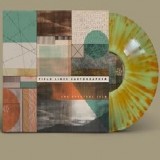
Field Lines Cartographer is the recording project of Mark Burford. Here, Mark explains the inspiration for the album and the recording process:
"When I stumbled on the legend of Hy Brasil, I knew straight away that I wanted to make an album inspired by it. It doesn't matter to me whether UFOs, ghosts, monsters or phantom islands are real or not, they're still fascinating to me and hugely inspirational for writing instrumental electronic music. I decided that the first two tracks - Side A of the LP - would be the trip to the island, perhaps spotting it on the horizon at night, seeing strange lights & journeying through mist & fog banks to strange shores. The second side of the record would be an exploration of Hy Brasil itself, which is why it gets a little bit darker & weirder, before finishing with a more serene, transcendental atmosphere in "The Hall Of Eyes" where the island's secrets become manifest...
"The whole album was written and recorded over a 6 week period using some new eurorack modules to augment my existing Moogs. I recorded the bulk of these pieces as a single live take - tweaking and improvising on a prepared theme and then adding overdubs afterwards. the concept of Hy Brasil inspired and drove me to be very quick.
"As with most of my work, I also buried some field recordings in the mix. The shifting sands and tides of the Lancashire coast and some shortwave radio samples are very deep in the recordings and you have to listen very carefully to pick them out. They are mainly there as a sort of base texture - almost like surface noise or hiss. In a 'deep listening' environment this record really takes me on a strange, hypnotic journey - that's how I felt as I was recording it and I really hope that comes across to other listeners. Hopefully people can go on a weird adventure in their minds with this on in their headphones!"
Acclaim for Mark:
Using analogue synths & field recordings, Field Lines Cartographer creates often dark, occasionally bucolic soundscapes, described in The Wire magazine as "shimmering and unsettling" and "The sound of big, strange worlds" by Electronic Sound magazine.
Mark is a part of the exciting north western electronic music cluster which also features Castles in Space recording artists, Polypores, Warrington Runcorn and Lo-Five.
deleted
The Item is out of Stock. We will send You an Email as soon as it´s available again if you click on "in Stock Mail"
Justin K Broadrick (Godflesh, Jesu, JK Flesh) breathes new life into his FINAL project for an album on Helm’s ALTER label. Formed in 1984 out of an obsession with the industrial, noise & power electronics acts of the early eighties, FINAL made its public debut at the legendary Mermaid pub in Birmingham when Broadrick was just 14 years old. A string of cassette releases via his Post MortemRekordings label established the name within the underground noise scene of the time until increased activity with his various groups (Napalm Death, Head of David and later Godflesh) meant that FINAL naturally fell by the wayside before the end of the decade. Broadrick reactivated the project in 1993 during the British ambient “isolationism” period and FINAL's sound became focussed more on texture, producing beatless ambient work with a number of albums for labels like Sentrax, Utech, No Quarter and Neurot. ‘It Comes To Us All’ is the first FINAL album to appear on vinyl since 2015’s ‘Black Dollars’ on Downwards and continues to explore the textural nature of Broadrick’s ambient work - this time through a filter of blown-out harmonic noise that reconnects the project with its harsher roots. Rather than channelling the angst of early power-electronics, the noise here rumbles along blissfully through 8 untitled tracks, sombre in tone and at times beautiful. Melodies sampled from pop music are put through a process of decay, stripped of their form and worn down with a rusty, melancholic afterglow. Reducing all its parts to slow-motion shadows of their former selves, ‘It Comes To Us All’ is an exploration of the decay of all living things that we face collectively, day after day.
Aaron Warren und Bjorn Copeland machen seit 1999 zusammen Musik: neun Jahre als Flaccid Mojo und 26 Jahre als Black Dice. Diese Zusammenarbeit ist wie eine Wanderung durch die verwüstete Landschaft der zeitgenössischen Musik. Indem sie Dummes, Gedämpftes und Verbrauchtem stapeln, schaffen die beiden immer wieder unausgewogene, atemberaubende Mutantenkonstruktionen. Das neueste Beispiel dafür ist ,Loose Jacks", das zweite Album von Flaccid Mojo. Es besteht aus kostenlosen Handy-Apps, fragmentierten YouTube-Videos und Elektronik mit zerbrochenen Bildschirmen - den verbrannten und zerknitterten Überresten des Streaming-Industriekomplexes. ,Loose Jacks" ist das breite, hysterische Grinsen, wenn man in den letzten Tagen einen Schatz findet. Die Songs von Flaccid Mojo sind für Live-Auftritte gemacht, mit einem modularen Arsenal an Rhythmen, Stabs und Payoffs, die alle bereitstehen. Das ist ihre Art, das Physische in den Mittelpunkt zu stellen und sicherzustellen, dass die körperlichen Vorgaben der Komposition jedes Songs diese Befehle an alle im Publikum wiederholen. Die Befriedigung eines Loops, der so lange läuft, bis er dir im Blut liegt, die Bassline, die zu einem Stoß geformt ist, der Snare-Hit, der so scharf ist wie der Ellbogen eines Fremden. Man kann sich wie ein Geist fühlen, der durch die Platte einer anderen Band schwebt, aber Loose Jacks ist wie eine Mauer, eine schwere Decke, starke Hände, die dich auf einen Haufen von Körpern heben. Es ist eine befreiende, unspirituelle Erfahrung. Eine fleischliche. Wie schon ihr Debütalbum ,Flaccid Mojo" (veröffentlicht 2022 bei Castle Face) wurde auch ,Loose Jacks" von Chris Coady aufgenommen, der seit den Neunzigern bei Black Dice-Konzerten dabei ist. Es ist toll, mit Leuten zu arbeiten, die es kapieren und nicht über Tonarten oder ,das Raster" diskutieren. Ähnlich wurde ,Loose Jacks" von Sarah Register gemastert, deren Band Talk Normal sich eine Wand mit dem Proberaum von Black Dice teilte. Für Fans von Chrome, Men's Recovery Project und den Chemical Brothers.
Following the release of his third album Dans cent ans (2023), which brought to a close the pop trilogy begun with Léviathan (2015) and Contre-temps (2018), Flavien Berger returns with a now classic 'counter-album': contrebande 02. le disque de l'été
Conceived as mirror albums to the trilogy, the counter-albums tell another side of Flavien Berger's creative process. Like contrebande 01. le disque de noël (2016) and radio contre-temps (2019), Flavien navigates between sonic experimentation (gervase weatherboy type beat), encounters (magie vermeille with Pomme), previously unreleased songs (sapon, plongereuse) and interludes (music 2000 beat titi poisson skit) reflecting an alternate itinerary of the making of his latest studio album Dans cent ans.
Floating Spectrum is the moniker for Taiwan-born, Berlin-based composer and audio technologist, Mei-Fang Liau. Her debut album as Floating Spectrum, A Point Between - crafted from a combination of synthesizers, everyday household objects, and unique software synthesizers made by Liau herself - is truly asound and vision unlike any other. To complete the album, Liau relied heavily on a self-made, fractal-inspired software synthesizer called Polyphylla, which simulates the way in which nature creates very complex and organic forms just by repeating slight variations of a simple form. It allowed Liau to create slowly evolving textures and sounds with complex dynamics, and thus the driving influence for the whole of A Point Between. The lone outlier is "Eruption," for which Liau built a generative sound system that turns visual data into sound. In this hybrid system, sensitively fluctuating analog signals, fine-tuned data analysis, and human intuition perform together as one coherent living being. The technological marvels of Floating Spectrum are, of course, uniquely impressive. But the more astonishing and intangible triumph of A Point Between is its singular ability to collect and shape such abstract sonic organisms into richly textured, immersive works of art. It's that profound resonance that makes A Point Between such an uncanny work of emotional and structural depth.
deleted
The Item is out of Stock. We will send You an Email as soon as it´s available again if you click on "in Stock Mail"
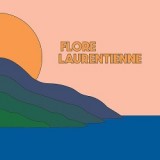
Imagine taking a Living Strings Collection vinyl or a vintage Technicolor film soundtrack and adding the imagery of a Spring in full bloom with the softest, most pastel paint. The marriage between his score-like string orchestrations along with analog synthesizers is an ingenious mix of the 50’s and 60’s familiar sounds. The eight pieces take you through seaside gardens and hills, pit-stopping into the window of his 1990’s gloomy living room. Mathieu’s very pure and certainly unique fugues Segway you into the sequences of repetitive streetlights and underground tunnels of road travel into the refreshing and familiar countryside. Mathieu David Gagnon’s music is an awakening of true beauty all around us. He closes gracefully with a slightly more grandiose version of the opening theme bringing complete closure. The beauty of nature and life is eloquently displayed through Mathieu David Gagnon’s learnings and works. Flore Laurentienne Vol. 1 is timeless, omni and minimalist; a real work of art
deleted
The Item is out of Stock. We will send You an Email as soon as it´s available again if you click on "in Stock Mail"
»Shell I« is the second edition on Edições CN by Brussels sound artist Florence Cats. It is a magical collection of 23 edits for voice, field recordings, theremin, and piano. Cats’ recorded piano rehearsals and singing sketches reminds us of Cornelius Cardew works. They are at the heart of Edições CN, where a sketch or rehearsal holds as much, if not more, truth than a definitive composition.
A melody line from Debussy passes by. Waves crash in the distance. Sails and flagpoles are sounding by the winds. Florence singing a stream of consciousness poem next to a water stream. Track by track you dream deeper in this generous collection. While the album’s A Side is an aquatic storyboard, the B Side is the essence of storms and days spent in the forest.
Cats holds a singular position at the firmament of Belgian sound explorers. Her art, almost unspectacular, is an important voice in these algorithmic times.
Florence Cats (Be, 1985) is an experimental artist working somewhere between music, sound, visual art and acupuncture. In 2023, she was selected as an emerging sound artist by Stuk, Q-O2 and Musica. Her work is a needle or antenna, inspired by the vibrations of sound and light in nature, travel, telepathy and dreams. She plays the theremin in experimental ways, interacting with her body, voice, water, radio and various.
It has almost been three years since Foxing released their fan and critically acclaimed album ‘Nearer My God’, selling 1,468 LPs first week and solidifying the band as one of the brightest up and coming voices in indie and alternative. The band will begin a new chapter with their new album and Hopeless debut ‘Draw Down The Moon’. An album about cosmic insignificance that was inspired by games such as Dungeons and Dragons and Zork, ‘Draw Down The Moon’ was produced by Andy Hull of Manchester Orchestra. For fans of American Football, Modern Baseball, Manchester Orchestra.
2LP, 180g clear vinyl. Stephan Thelen's music has grown beyond the Swiss Minimalist movement, as seen in his work over the past decade. His Fractal Sextet project exemplifies this evolution, deepening his original concepts while embracing new influences. Their second album, Sky Full of Hope, builds on the promise of their debut, showcasing a confident and cohesive group dynamic. The album features intricate polyrhythms and complex time signatures, but despite its mathematical foundations, the music remains accessible and engaging. Thelen credits the group's ability to blend technical precision with musicality, creating a sound that feels both refined and compelling.
Expanded vinyl edition of the 2019 tape/digital release. Francis Plagne’s Rural Objects was recorded at home in suburban Melbourne while under the influence of John Ashbery’s poem of the same name. Plagne sketches 14 landscapes, ranging from the bucolic to ethereal, using a wide variety of instruments (guitar, fretless bass, synths, keyboards, percussion, flute, bottle, plus a guest turn from Joe Talia on drums). Think Another Green World meets Get Up With It sprinkled with tape hiss. 300 copies on black vinyl. Full colour sleeve and insert featuring charcoal sketches by the artist
deleted
The Item is out of Stock. We will send You an Email as soon as it´s available again if you click on "in Stock Mail"
Francisco López offers a brand new field recording composition based on the recordings he did in the island of Tenerife whilst visiting for a performance at the Keroxen Festival, 2020.
Internationally recognized as one of the major figures of the sound art and experimental music scene, Francisco has an ear-like gift to point his microphones (and our ears) to the most special and unlikely of sound sources. For almost forty years he has developed an astonishing sonic universe, absolutely personal and iconoclastic, based on a profound listening of the world. Destroying boundaries between industrial sounds and wilderness sound environments, the presentation here is not unlike his most famous and celebrated works whilst still maintaining its unique relevance among a prolific catalogue of sounds.
Entitled Hidden Island Music the work explores its aforementioned ‘hidden sounds’ of Tenerife with a high sensorial mix of environmental and ‘industrial’ recordings taken in and around the Massifs of Teno and Anaga and later composed into a unique sonic journey through the huge sound pits of this rugged region of north Tenerife.
Another masterful work from one of the masters of his craft, shifting from the limits of our perception to the most dreadful abyss of sonic power, a profound and transcendental listening open to sensory and spiritual expansion.
Original environmental sound matter recorded at multiple locations in Macizo de Teno and Macizo de Anaga (Tenerife), November 2020.
Evolved, composed, edited, mixed and mastered at ‘mobile messor’ (Tenerife, Den Haag) and Dune Studio (Loosduinen), 2020-21.
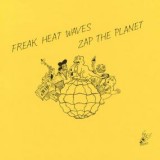
More than a decade ago, Freak Heat Waves emerged from Canada's stark Midwestern prairies, establishing their voice through early cassette-based experiments and DIY performances. Over the years, the group's live incarnations evolved as they endured a rigorous and nearly non-stop touring schedule. When not on the road, the Freaks became hermits, engaging in countless writing/production sessions that grew increasingly complex, eventually forcing them to travel beyond guitar, bass and drums.
Their home studios continuously relocated, advanced and diversified. New instruments started to appear and new trajectories were explored. The studio process became more dynamic, involving many overdubs, avant-garde recording techniques, experimental sound design and orchestrations that utilized legendary effects, drum machines and synths. Tireless curiosity fueled the duo as they merged their original sound with new discoveries and seemingly disparate influences. With their latest work, Zap The Planet, the Freaks find themselves splitting coasts in Montreal and Victoria, distanced by geography and time, connecting via serial transmission tethered to a lone ethernet terminal. Extenuating logistics can unexpectedly prompt innovation.
No Freak Heat Waves record has followed a singular path and no two are alike. Each album is an evolution in musical direction, songwriting and conceptualization. With Zap the Planet, (their second album on Telephone Explosion,) the duo have manifested more of their intrinsically unique vision and become more pronounced in their unhinged artistic process. The follow up to 2017’s Beyond XXXL finds the Freaks taking a fearless, inventive leap to create the greatest departure from their previous work. There are no fads here, no accidents either. Freak Heat Waves give us a record full of lo-fi digital grit and early MIDI instrumentation. Dirty samples crackle as they skate over immense analog synths. Psychotropic rhythms plant roots and the timeless, signature Freak Heat Waves vocals serve as guides throughout the journey. Through it all the Freaks find themselves zapped!
deleted
The Item is out of Stock. We will send You an Email as soon as it´s available again if you click on "in Stock Mail"
From his early days with Henry Cow, Fred Frith was seen as a brilliant instrumentalist and improviser, but what has been overlooked is what a first-rate composer he is. This recording offers both aspects. His most complex orchestral composition and two selected improvisations with the Ensemble Musiques Nouvelles. Fred Frith, as an infusion of energy and inspiration. ''Something about this Landscape was commissioned by Ars Musica in 2018. I composed the piece during a residency at Lou Harrison's straw-bale house in the desert at Joshua Tree, California. It's an inspiring place for a number of reasons - the silence, the light, the life, the history. The extraordinary diversity of birds during the migration season. Both other pieces are improvisations. The first one is the one we did during the concert (in public), the other one, very different, is the one we did during the dress rehearsal (on the day of the concert).'' Fred Frith.
OONA Recordings is proud to announce the upcoming release of the soundtrack for The Girl With The Needle by Frederikke Hoffmeier. Hoffmeier, whom performs under the stage name Puce Mary, brings a raw, intense and atmospheric score to this Oscar-nominated film, which is contending for Best International Feature. Known for her bold, experimental approach to sound, Hoffmeier’s composition immerses listeners in the film’s dark, emotionally-charged world. Directed by Magnus von Horn, The Girl With The Needle premiered at the Cannes Film Festival, where it earned praise for its uncompromising vision. The film went on to receive a Golden Globe nomination for Best Non-English Language Film and won two prestigious awards at the European Film Awards, including Best Score for Hoffmeier’s hauntingly powerful work. The score to The Girl With The Needle is as dark as it is compelling, a masterclass in creating tension, unease, and raw emotional weight. Hoffmeier’s sound design is equal parts abrasive and intimate, drawing the listener into a world of fractured beauty. Her use of organic textures, electro-acoustic undertones, and dissonant, atonal melodies challenges traditional notions of film music, offering something deeply visceral and unpredictable. The Guardian described Hoffmeier’s score as "nerve-abrading," highlighting the relentless, uncomfortable energy that underpins the film. The Chicago Reader similarly calls the score haunting, noting how it amplifies the film’s stark atmosphere. Drawing comparisons to the intense works of composers like Mica Levi, Awards Radar Magazine praises Hoffmeier for pushing the film’s emotional core to its breaking point, deepening the agony of the protagonist. Throughout the film, Hoffmeier’s score becomes as much a character as the people on screen. Her collaboration with von Horn is marked by a shared vision of pushing the limits of cinema and sound. Screen Daily describes the score as "daring," with its aggressive, contemporary tones standing in stark contrast to conventional film scores. The result is a uniquely modern, avant-garde work that reflects the film's visceral and unsettling nature. Hoffmeier crafts a world of sound that lingers long after the credits roll. The soundtrack’s fusion of organic instrumentation with electro-acoustic elements and bold industrial sounds sets it apart from the ordinary. The British Film Institute notes how Hoffmeier’s "atonal score" creates an "enervating effect," pulling listeners deeper into the film’s raw emotional depths. The combination of brutal sound design and haunting melodies builds a layered, evocative listening experience, one that grows increasingly intense with every listen.
I envision this music as emanating from a moon inhabited by otherworldly life forms and ecosystems; these sounds as evoking the moon’s topographies, beings, lunar rivers, and strands of light — as if this moon’s essence were itself sonic, vibrational matter.
Musically and acoustically, Strands Of Lunar Light departs from a set of tones corresponding to a confined harmonic series segment of a very low fundamental frequency: 5.15 hertz. Through twelve continuous sections, each employing various methods of activating openly tuned guitar strings, the music is sculpted from the twenty-four pitches corresponding to harmonics 24 through 47 of this fundamental frequency.
At times, the natural second (octave) harmonics of the open strings are activated and introduce a secondary, octave transposed version of the original harmonic series segment, doubling the fundamental frequency to 10.30 hertz, and thereby revealing a brighter vibrational realm.
As a consequence of the rational pitch relationships integral to harmonic series of tones, these two sub-audio fundamental frequencies (pitch wise existing two and three octaves below the E-string of a double bass, respectively) can be heard in the music as the frequencies of the interference patterns produced by the simultaneous sounding of any pair of adjacent tones in the respective sets of tones.
These interference patterns, of 5.15 or 10.30 hertz (depending on the octave of the tones produced), are perceived as even pulsations occurring with varying degrees of clarity over the course of the piece.
I imagine these fundamental frequencies and their related harmonic tones as the elemental components of a moon, and this music as offering a glimpse into its vast lunar-sonic existence.
Following his debut album Bisou Genou, released in October 2021, Frise Lumière are preparing the release of his second album Ambo (Experimental, minimalism, Noise Jazz, Avantgarde) for October 2024.Ambo is the outcome of numerous interactions from the past and present, affirming and advancing the research of his prepared bass's acoustic possibilities. His use of broomsticks, mallets, and drumsticks enhances his rhythmic playing. Whether he plays his instrument more conventionally or flat on his lap. A method that is already audible in a few of the tracks on his first LP
An outstanding raga-like drone lp with a distinctive cosmic vibe, Futuro Antico was a short living collaboration between the two italian Walter Maioli (Aktuala), Riccardo Sinigaglia and Gabin Dabiré (from Burkina Faso). The synthesis between ancient, ethnic and analog electronic music is just perfect, the minimalist repetition with slight changes gives associations of a slow growth; cyclic repetition gives the listener an opportunity to discover the sounds, to meditate, to go into the music, join the same journey trough ancient, primitive cultures and modern electronic soundscapes.Originally released in 1980, the sound is completly analog and warm, this reissue maintain the first tape artwork + info and photos.
Futuro Antico, released just on tape in 1980, this record contains the hypnotic session of Walter Maioli (Aktuala) and Riccardo Sinigaglia. Analog and warm sounds, a perfect mix of drone synth and ancient flutes (found in oriental countries) gives you the idea to fly on a spaceship towards some exotic sites. This records terribly remember the astonishing live Köln jam of Terry Riley and Don Cherry, the comparison fits!This reissue maintains the first tape artwork + info and photos in the innerfolder.
fter a hiatus of over eight years Fuzzy Lights are making a welcome return. Burials is the follow-up to the critically acclaimed album Rule of Twelfths, and the fourth album from the Cambridge-based post-folk collective.
Their sound has been stripped back to its component parts, deconstructed and rebuilt under less obvious influences. There’s a bedrock of folk-rock - predecessors like Trees and Fairport Convention - but this is then built upon through multiple layers, from the stillness of Talk Talk to the orchestral chaos of Godspeed You! Black Emperor. With Burials Fuzzy Lights have cultivated these sounds and influences into something new and fresh that distances the album from the rest of the folk-rock crowd.
The most striking element of these songs is how intimate they are. Lyricist Rachel Watkins has revealed a lot about herself in these seven songs, which have been written from a very personal perspective. Raw experiences have been distilled into each piece, her translucent vocals often betraying the content of the songs themselves. The album is bookended with the most personal of these. Opener ‘The Maidens Call’ reveals her loss from suffering a miscarriage, whilst album closer, ‘The Gathering Storm’ frames the rallying cry of women’s rights around how individuals must work together now, and in future generations, to destroy prejudice. There is also engagement with humanity’s immediate surroundings and the environment. ‘Under The Waves’ deals with devastation of coral reefs, ocean resources and our natural world, and ‘The Graveyard Song’ imagines the perception of time from the juxtaposed views of a yew tree and a young woman.
As scenarios, paths, and outcomes shift around us, Burials’ amalgam of glowering, intense instrumentation, timeless, weightless melody, and exactingly revealing lyricism carves a very particular path through the world. This is music that tears us away from the everyday not just as a form of escapism, but as a means of self-reflection on hardship and the strategies we develop to overcome it. It is the band’s rawest yet most accomplished statement to date.
Untangling signal from noise, truth from lies, message from distortion has become our daily experience. Levels of disinformation are at an all-time high, as global agendas clash and reality sinks beneath the horizon. Technology bewilders us, even as we search for meaning using the same channels designed to distract and confuse us. How does anything as coherent as a protest movement ever emerge from this overload? Yet, just occasionally, energy manages to flood the wires and people come together to oppose regimes that are evidently oppressive, and to recognise and confront injustice together, despite everything.
When alienation is pushed to unprecedented limits, how can the same force be reversed and made human again? The madness depicted in Allen Ginsberg’s mid 1950s poem: Howl mutates in Gabriel Prokofiev’s five-part E.P. of the same name, into something directed and urgent, outward-looking.
'HOWL!', initially inspired by the ‘Arab Spring’, explores the explosion of recent technologies as a conduit for protest and opposition movements of all kinds, but also their ambivalence and tendency towards corruption and confusion. Composed at first as a score for American choreographer, Maurice Causey, and premiered by Luzerner Ballet, the piece then evolved over multiple live performances, including its Hong Kong premiere in
2019, which took place just a few hundred metres from the independence protests, and featured local clarinettist Linus YS Fung who here appears on 'HOWL! II – Separation'.
For his main instrument in 'HOWL!' Prokofiev deploys the raw tone of an early 1970s ARP Odyssey Synthesiser, whose oscillations and richness provide a contrast to the anodyne, homogenous sounds we have been groomed to prefer. The ARP is then layered and filtered through computer processing and distortion; 'HOWL!' is a propulsive cascade of the rise and fall of collective political emotion, mediated through the technology of the past halfdecade. The rise and fall of mutual vitality in sync, and in tension with the machine.
With guest appearances from classical musicians, Fung Yat Shan (Clarinet) and Yury Revich (Violin), Prokofiev conjures a digital-age orchestra for the internet age, channelling the passions running through the wires that seek to turn blood into information. In 2022, with the war in Ukraine and protesting in Russia forbidden, 'HOWL!' feels as relevant as ever.
deleted
The Item is out of Stock. We will send You an Email as soon as it´s available again if you click on "in Stock Mail"
'The shrinking of the Aral Sea has been called one of the worst environmental disasters on the planet. Situated in Central Asia, it was once the fourth largest lake in the world. But the rivers that fed the Aral were diverted by Soviet irrigation projects from the 1960s. It has been disappearing ever since. By 1997, it had diminished to ten percent of its original size and satellite images captured by NASA in August of 2014 revealed that - for the first time in modern history - the Eastern basin of the Aral Sea had dried up completely, a region now known as the Aralkum desert. This disaster is the subject of Kazakh-British violinist Galya Bisengalieva’s arresting debut album “Aralkum”. As leader of the London Contemporary Orchestra, the award-winning violinist has collaborated with composers such as Steve Reich, Laurie Spiegel, Suzanne Ciani and can be heard on Radiohead’s A Moon Shaped Pool, Frank Ocean’s Blond and Thom Yorke’s Suspiria. “Aralkum” will be released via One Little Independent on September 4th.
deleted
The Item is out of Stock. We will send You an Email as soon as it´s available again if you click on "in Stock Mail"
The sum to infinity of a sequence is the sum of an infinite number of terms in the sequence. It is only possible to compute this sum if the terms of a sequence converge to zero. "sum to infinity" is also the second release from gamut inc, the retro-futuristic ensemble around composers and curators Marion Wörle and Maciej Sledziecki.
This second album by gamut inc combines custom-build autonomous music-machines with haunting classical synthesizer sounds to a dense musical kaleidoscope.
The core of the album is formed by Risset rhythms - cyclic accelerations and decelerations, in which rhythmic layers are repeatedly faded in and out, setting in motion a seemingly endless process of rhythmic movement. The motifs are taken from geometric and arithmetic series that create an urgency and restlessness. The rigor of the construction is obscured by an orchestrion whose timbres are reminiscent of a retro-futuristic indigenous ensemble. gamut inc translate strategies of electronic music like pulse-width modulation to music machines such as automated accordion, automated percussion or glockenspiels and create an intense atmosphere that is idiosyncratic, original and modern at the same time.
Gamut inc. build their own music machines, play electronic music festivals internationally, curate the AGGREGATE festival for automated pipe organs, and compose for film, radio drama, and theater. Their first opera, ROSSUMS UNIVERSAL ROBOTS, premiered in 2022. Since 2011, at the intersection of electronic club culture and experimental music, they have been producing live music, music theater, film and theater scores (including for the Junge Staatstheater Berlin) with their specially developed musical robots. They composed for ensembles like the RIAS chamber choir or the robot orchestra Logos Foundation and received invitations and commissions from international festivals and venues such as Sónar, CTM, Berghain, Sonic Acts, Technosphärenklänge or Numusic (NO).
Their first release EX MACHINA was produced exclusively with music robots, and released in 2014 in cooperation with Bôłt Records.
"Percussion tracks bring to mind the music of Einstürzende Neubauten in their industrial mechanics, until finally the music warms to an expression reminiscent of Johnny Cash's late work."
Süddeutsche Zeitung
The Norweigan wunderking of demented psychedelic song(de)struction is back with a fantastic collection of new songs. Gaute Granli is a one-man band, taking a complete stranger with thirsty ears by the nose, to leave him/her/them behind, confused and hungry for more recognisable hope. There's a constant form of recognition running through these 8 stretched songs, these strange flirts with folk music you think you already know, vocals that don't sound like they consist of words one knows and pop parts that are destroyed with a loop peddler. Although everything magically works, and made into a songstructure of sorts, a melancholic- almost religious air of desperation sits uncomfortably on top of all these songs like a frog that already got licked on its back twice in one morning. Limited to 300 copies, comes with an insert, download code and an Ultra Eczema sticker.
Gavin Vanaelst runs the space Aboli Bibelot in Antwerp where exhibitions and musical performances can happen side to side with dealings in centuries-old furniture and unique pieces of folk art or volkskunst. Gavin makes music under the aliases DJ Charme, Kassett and So Sorry. This is the first album under his birth name. Takeaway Loops cycles back to the days when Gavin was working as a courier for .
is a food delivery company. Their couriers - ehm, brand ambassadors, as the company prefers to call them - dressed in bright orange, they race their bikes around the city. They deliver meals and groceries for all sorts. Thanks to them, the privileged can stay tucked in their private spaces. Interaction between the two groups - the privileged and the brand ambassadors - is mostly kept to the bare minimum. And sparse communications are often driven by annoyances - “my Coke is warm because you kept it too close to the French Fries.” And on the streets the general public dis-approaches the brand ambassadors with pity. We tell our peers: “That’s not a good job,” and “stay away from the Sharing Economy.” Because, you know, in our capitalistic dollhouse we all stand our grounds and play our parts wholeheartedly.
During his shifts for , Gavin recorded location sounds on his phone at fast food restaurants while waiting on the orders he had to pick up and deliver. Later in his home studio Gavin added piano and electronics to this source material. The result: a gloomy soundtrack for a shadow world. Seven songs in evening blue with a bright orange glare.
A few years ago, our favorite Belgian publishing house Het Balanseer released Seizoenarbeid by Heike Geissler (available in English trough Semiotext(e)). Geissler writes about her job at Amazon in Leipzig. Because her writing and freelance work did not pay the bills any longer, she was forced towards this underprivileged shadow-world of unwanted jobs. Seizoenarbeid shed a light on freedom in an unfree world. A monument of ‘we are all in this, but not together’. Takeaway Loops gives us a similar peak in a world that is at the same time so visible, but then also very veiled for many. A world that we prefer to use, yet that most of us prefer not to see - a world that we don’t like to enter.
Last year at Harbourland subway station in Kobe i was mesmerized by its sound design, created by Hiroshi Yoshimura. For each part of the subway station he composed a short phrase. While walking trough the station, a full composition grows in your head. The looping melodies guide you trough a microworld. Trough a blue world of commuters, of the homeless, of the lonely, of the fast paced, of the tourist. Gavin creates a similar effect with Takeaway Loops. The tonality somehow corresponds to Yoshimura’s work. Yet instead of being guided trough a building, we are now taken to the after dark. You feel the concrete evening heat of the city. You hear the rain. Stiff fingers during cold winters’ nights. You are alone on the bike, cruising. Your maps app telling you where to go. You just left the fake leather bench of the well-lit pastiche interior of a fast food restaurant.
Next order, number ECN44! Please wait outside, sir?
Five years after the release of "Je vous dis" in 2018, Geins't Naït and L.Petitgand's second album from the "Mind Travel" and "Make Dogs Sing" collection on the German label "Offen", the duo are now writing a new chapter in their story with this fascinating poetic tale. The same mysterious and heady atmosphere which characterises the two musicians is present in this new work but clearly they have never ceased refining and polishing their sounds to give their compositions even more power and depth. Geins't Naït and L.Petitgand here offer twelve new tracks with names as enigmatic as the title "Like this maybe or This" itself and the record's whole universe. In reality, these mysterious names lead us to let ourselves be taken to the deep meaning of their creation. The subject matter is certainly difficult to grasp and invites us on an inner journey while leading us to doubt and question ourselves incessantly. There is a perfect alchemy between these two artists though this was far from self-evident as they come from two very different schools. Thierry Merigout, who is now the only representative left from the late 80's experimental project Geins't Naït in Nancy, comes from the post-industrial scene. As for Laurent Petitgand, he is a pure melodist who is best known for his work as a composer of music for films and live shows and has collaborated with Wim Wenders and Paul Auster in particular. "Like this maybe or This" is a fully accomplished symbiosis between Geinst Nait's industrial and experimental tonalities and the celestial melodies of Laurent Petitgand. "Shape of the storie" starts the album with a bewildering atmosphere which mixes a sample of a guttural voice with cavernous resonances thus prefiguring the album's general atmosphere. However, while some tracks like "HAC" fuel our existential anguish, other tracks have a poetic and melancholic tonality which touches our deepest humanity. This is the case of "Dustil" whose subtle piano notes combined with the melancholy violin show us a sublimated world. This fascinating blend of violence and gentleness makes this record an atypical work which enables listeners to lose themselves in an emotional nebula where they can perceive the turbulence and also the intensity of our inner life.
The first vinyl release between Carl Abrahamsson & Genesis Breyer P-Orridge, ’Loyalty Does Not End With Death’ is the final part of a spoken word trilogy initiated in 1990 with the Psychick TV & White Stains side ’At Stockholm’, and proceeded by their ‘Wordship’ [2004] album as Thee Majesty & Cotton Ferox.
Electing to use their own names for this final part of a 30 year wide series, the duo intend ‘Loyalty Does Not End With Death’ to be received without the connotations of their other projects. It’s the sound of two cosmically-travelled minds crossing paths after a long time to chew over the bare essentials - love and magick - via vibrant poetry and beautifully charged forms of ambient music.
In nine parts they conjure a warmly meditative music, where Abrahamsson’s characteristic, playful tones, cut-up electronics and gentle rhythms comfortably lay the bed for Genesis, who inhabits and enlivens the pristine scenes like an observant dark interpreter, translating the incomprehensible and revealing the divine through their psychedelic prism.
The spellbinding results were recorded in New York and Stockholm 2017/18 and could feasibly have occurred at any point between 1990 and now. They are blessed with a pacing, intuition and timelessness that pays testament to an enduring creative friendship, taking the form of writing, interviews, photographs and films (‘Change Itself’ [2016]) for nearly 35 years.
deleted
The Item is out of Stock. We will send You an Email as soon as it´s available again if you click on "in Stock Mail"
If there ever was a monicker apt for describing an artist’s behavior, that is Ghost Lemurs. Manifesting spottily in compilations and limited edition tapes, then returning to the shadows without much fanfare, the project has indeed demonstrated a ghostly behavior and a nature as puzzling as the animal it takes its name from. Wombs And Alien Spirits represents now their most public outing, one in which the duo of visual artist / producer Kareem Lofty and Daniele Guerrini (better known as Heith and as Haunter’s co-founder) are happy to showcase all the discoveries in a process of musical and spiritual research begun in 2019. Described by the artists themselves as an experiment in mediterranean psi-trance, the album makes use of an incredibly diverse number of traditions, sonic sources and techniques of musical experimentation, keeping its psychedelic intentions central to the whole creative endeavor. Moments of meditative relaxation are brought to unsettling new levels by cavernous basses and spaced out drones, while tight polyrhythms bring beautiful granular melodies to a sidereal ceremonial dance. As beautiful and captivating as it is, Wombs And Alien Spirits remains as chimeric and unrestrained as any previous effort by the two artists. It’s a type of folk music devoid of a specific homeland, but resulting from the authors’ heritages, simultaneously divided and united by the mediterranean sea, injected with all the trajectories of their personal journeys. It ends up sounding profoundly human and uncannily inhuman, tapping into the undiscovered alien element at the beginning of the experience of life. Genre: Electronic / Experimental Listen: