In 1959, Louis Armstrong’s live performance at the Oriental Theatre (now James M. Nederlander Theatre) in Chicago made jazz history. “Satchmo”, an emblematic figure of the time, shone with his trumpet talent and stage charisma, popularizing jazz worldwide. With classics such as “Bill Bailey” and “Cornet Chop Suey,” the concert cemented the golden era of jazz and Armstrong’s legacy—a blend of energy, emotion, and unity that continues to inspire the world today.
Louis Armstrong ist nicht nur einer der Schöpfer des Jazz, sondern mit Trompete und unverwechselbarer
Stimme eine auch heute noch enorm beliebte Pop-Legende. Diese bislang unveröffentlichte Live-Aufnahme
ist ein neues Juwel im Katalog des Künstlers, der seine größten Hits hier in swingenden, mitreißenden
Versionen präsentiert.
Im Sommer 1968 reiste Louis nach London, nur wenige Wochen nachdem er mit seinem Überraschungshit
”What A Wonderful World” Platz 1 der britischen Charts erobert hatte, und nahm in den BBC-Studios
einen Auftritt voll ansteckender Vitalität auf. Er selbst hielt diese Aufnahme für eine der besten seiner
gesamten Karriere.
Fünf Jahrzehnte nach seinem Tod veröffentlicht Verve den Mitschnitt jetzt erstmals komplett und frisch remastert auf Vinyl, CD und in digitaler Form, begleitet von ausführlichen Linernotes von Armstrong-Biograph
Ricky Riccardi. Hier erlebt man „Satchmo“ in all seinen Facetten, mit Jazzklassikern wie “Indiana” und
“When It’s Sleepy Time Down South”, seinem Chart-Hit ”What A Wonderful World” und Versionen von
Evergreens wie ”Mack The Knife” oder ”The Bare Necessities” aus Disneys „Dschungelbuch“.
Stilistisch beeinflusste Lous Armstrong fast alle nachkommenden Trompeter der traditionellen Jazzstile. Darüber hinaus ist Satchmo, dessen unverwechselbare Stimme seine weltweite Popularität begründete, neben Billie Holiday und Ella Fitzgerald einer der bekanntesten Sänger des Jazz. Armstrongs musikalische Wurzeln lagen im New-Orleans-Jazz. Er hatte maßgeblichen Anteil an der Entwicklung dieser Stilrichtung weg von der Kollektivimprovisation hin zum herausgestellten Solo, womit er das Starsolistentum im Jazz begründete.
Eigentlich kaum zu glauben, dass es bis heute kein Weihnachtsalbum des unvergessenen Louis Armstrong
gab, schließlich hat er einige der romantischsten, witzigsten und swingendsten Weihnachtssongs aller Zeiten
aufgenommen. Diesem Missstand hat sich jetzt das Jazzlabel Verve angenommen:
„Louis Wishes You A Cool Yule“ ist die erste Louis-Armstrong-Weihnachtsplatte überhaupt und präsentiert seine Weihnachtstracks erstmals als zusammenhängendes Gesamtwerk. Die Zusammenstellung enthält
sechs Decca-Singles aus den 1950er Jahren, zwei Duette mit seinen Lieblingspartnerinnen Ella Fitzgerald
und Velma Middleton, und den monumentalen Evergreen „What a Wonderful World“, der längst auch zu
einer Art Hoffnungshymne geworden ist, die zum Geist des Weihnachtsfestes passt.
Als besonderes Geschenk an Satchmo-Fans enthält das Album eine bisher unveröffentlichte Aufnahme
von Louis’ berührender Lesung von Samuel Clement Moores Gedicht „A Visit from St. Nicholas“ (auch
bekannt als „The Night Before Christmas“), für die Pianist Sullivan Fortner, eine Jazz-Ikone aus New
Orleans, eine wunderschöne musikalische Untermalung liefert.
"Louis Armstrong and Fats Waller only worked together twice, briefly in 1925 in Erskine Tate's band and four years later in the New York revue Connie's Hot Chocolates. But Waller made an indelible enough impression for Satchmo to record the tribute album Satch Plays Fats in 1955, when such ideas were new. The mid-'50s was a fertile time for Armstrong, and this makes for a stellar package." - ****1/2 Cub Koda, All Music Guide
Limited edition 180g audiophile pressing of the classic LP ‘Bing & Satchmo’
+ 4 bonus tracks.
After being friends for more than three decades and collaborating on records,
movies and radio shows, in 1960 Louis Armstrong and Bing Crosby taped their
one and only duet album, presented here in its entirety.
Louis Armstrong, vocals & trumpet Bing Crosby, vocals Orchestra arranged &
conducted by Billy May Recorded New York, June 28-30 & July 5, 1960.
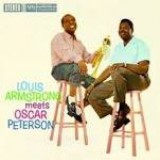
Louis Armstrong Meets Oscar Peterson is a brilliant undertaking in which Verve’s legendary “house pianist” encountered one of jazz’s most revered giants. A significant part of Peterson’s genius was his ability to be an exceptional pianist and leader, while also being a perfect accompanist when the circumstance demands… and in a situation like this, to be both. Armstrong is not only recognized as one of the most innovative, singular, fascinating and beloved artists of the 20th century, but also one of the most generous in the way he embraced and stimulated his collaborators. Backed by the Oscar Peterson Trio – bassist Ray Brown and guitarist Herb Ellis, and augmented by frequent fourth member Louis Bellson on drums – these peerless heavyweights created an album that is utterly compelling, radiantly jubilant and consummate in artistry. The musicians provided the setting for the jewel that is Pops, with Peterson perfectly embellishing every phrase Armstrong sings or plays. The focus here is primarily upon his totally personal and thoroughly captivating vocal style, with his occasional trumpet solos limited in all but one case to a single chorus. Essentially culled from the Great American Song Book – Cole Porter, the Gershwins and Harold Arlen among the songwriters – the pieces range from poignant ballads and blues to effusive easy-grooved swing. Each song is an exquisitely crafted gem that will warm the heart and enrich the soul.
deleted
The Item is out of Stock. We will send You an Email as soon as it´s available again if you click on "in Stock Mail"
Das vielleicht bestgelaunte Jazz-Album aller Zeiten und ein künstlerischer & aufnahmetechnischer Glanzpunkt. Nachdem Ella Fitzgerald und Louis Armstrong am Abend zuvor gemeinsam bei einem All-Star-Konzert aufgetreten waren, gingen sie am 16. August 1956 in ein Studio in L.A. um dieses Juwel von einem Album
aufzunehmen. Obwohl sie keine Zeit für Proben hatten, stimmte sofort die Chemie, das Ergebnis ist eine der wenigen wirklich unverzichtbaren Aufnahmen des Jazz.
This compilation album collects Decca tracks from
1942 onwards and covers Jordan's golden period;
featuring 11 Number 1's and 5 charting in the top 10.
Louis Jordan has left a real lasting legacy, as without
his ground breaking musical journey in the 40's & 50's,
we can genuinely say that none of the music we knew
and loved thereafter may have happened. Can't say
that about many artists, can you?
Hinter dem sorgefrei erscheinenden Titel Dolce Vita verbirgt sich eine dunklere, schmerzhafte Geschichte: es ist die der erzwungenen Flucht von Louis’ Großvater und dessen Familie vor der honduranischen Diktatur. Matute taucht unter dem ironisch gemeinten Motto Dolce Vita in die bewegte Geschichte Lateinamerikas ein, das unter der Herrschaft von Militärregimen und imperialistischen Großkonzernen, wie der United Fruit Company, jahrzehntelang litt.
Prima, who died in 1978, was the eternal game-changer. In his early years, he led various jazz outfits including the highly rated New Orleans Gang. A star of not only music, but also films – Prima appeared in several shorts and full-blown Hollywood productions during the ’30s. In 1967 he provided the voice for King Louie, the orang-utan in Disney’s The Jungle Book, for which many people remember Prima today. But as this essential double-album confirms, long before that he made great, humour-instilled, often exciting sounds that left audiences feeling happy. Featured here are all his very best and most loved songs
Ihr perfekt harmonierendes Duo setzt auf starke Kontraste und lebt von Empathie und intensivem Austausch. – Deutschlandfunk
Nachdem sie bereits bei mehreren Aufnahmen von Louis Sclavis für ECM zusammengearbeitet hatten,
darunter das letzte Album des Klarinettisten, betitelt Characters On A Wall, konzentrierten sich Sclavis
und der Pianist Benjamin Moussay in den letzten Jahren zunehmend auf ihre Duo-Kommunikation und
spielten in dieser Konstellation ausgedehnte und vielbeachtete Konzerte in ganz Europa. Mit einem Programm, das zu zwei Dritteln aus der Feder des Pianisten und zu einem Drittel aus der des Klarinettisten
stammt, erschafft das französische Duo eine Welt der kammermusikalischen Konversation, in der sich
lyrische Kontemplation und skurriler Erfindungsreichtum in einer fröhlichen, konzentrierten Zusammenarbeit abwechseln. Nachdenklich hüllt das Duo heikle Themen in warme Improvisationen, die nie überstürzt,
sondern geduldig das geschriebene Material mit seltener Kreativität und in fließenden Dialogen erkunden.
Unfolding wurde in den Studios La Buissonne, Südfrankreich im März 2024 aufgenommen und von Manfred
Eicher produziert.
Limited Clear vinyl reissue! Vintage Collection! The Queens of Lover’s Rock Louisa Mark, also known as
“Markswoman” (and) the Creator of Lover’s Rock Clem Bushay as producer. Featuring Aswad, Zabandis, The
Heptones, Rico and Don Drummond Jr. , Dennis Bovell, The In Crowd, Dave Barker, Owen Gray..and more
Bariton saxophonist Luca T. Mai is best known for his membership in the mighty Italian avantrock trio ZU. On his solo-debut album he is shifting his probing and powerful saxophone artistry from energetic sound scapes to celestial layered sax drones. Immersive and deep.
Recorded : Sep 2018 at ZK squatt Riot Studio
Mix/Mastered : Lorenzo Stecconi
deleted
The Item is out of Stock. We will send You an Email as soon as it´s available again if you click on "in Stock Mail"
Berlin-based Swiss vocalist Lucia Cadotsch returns with her celebrated Speak Low trio for their second album, released by We Jazz Records on 27 Nov. "Speak Low II" features Cadotsch on voice, Otis Sandsjö on tenor saxophone and Petter Eldh on double bass, and introduces guest artists Kit Downes on hammond organ and Lucy Railton on cello. "Speak Low II" picks up where their genre-bending and forward-looking debut album left off, introducing new shades into the band's sound and also diving even deeper into the songs they tackle. What makes Speak Low special is their approach to really get to the heart of each composition with seemingly minimal means, yet generating a sound which is both instantly recognisable and remarkably impactful.
"Speak Low II" comes almost five years after the band's lauded debut, and proves the depth of the band's approach right from the start. At the core of the trio's operation is an openness to their love of the music and to their surrounding scene(s). The album comes across as a unified collection of songs made truly theirs and found through listening to records and spending time with their musician friends, often on the road. The highly evolved band sound and the equality of the musicians shines through on the Speak Low sound, as the group uses their 100+ performances together as a vehicle for the development of their music.
"The first album was filled with pretty famous songs, but that was actually not at all intentional" explains Cadotsch. "Those were just my favourite songs of the previous 10 years and we started working on making them ours, musically. We were playing around with concepts for the second album, but soon realised that we just needed to find the right songs and adapt them organically, which comes through in how we interact with the songs and each other. This time around, we wanted to dig deeper and made finished arrangements of around 20 tracks, half of which we ditched in the process. The ones that made the cut have been through a lot and they just felt right for us."
In a way, the Speak Low approach could be described as archaeological. Three music lovers connecting with songs found at various sources, readily throwing away any ideas that don't seem natural to them, and hanging on tight to the ones that do.
Turns out there is a concept to "Speak Low II". It's the band itself, their shared musical development and their love of music.
"Speak Low II" will be available on We Jazz Records on vinyl (PURPLE and BLACK editions), CD and digitally. The vinyl versions come with a heavy duty tip-on sleeve and a printed inner sleeve. CD in digisleeve with no breaking plastic parts.
deleted
The Item is out of Stock. We will send You an Email as soon as it´s available again if you click on "in Stock Mail"
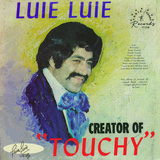
In the 1970’s, an outsider multi-instrumentalist known as Luie Luie created a conceptual album titled “Touchy”. The album consists of instrumental tracks each containing their own monologue that connects them to the concept of Touchy through dance or emotions. Luie plays every instrument on the album in his unique style that mixes Jazz, Latin, and Funk for a very unique sound that cannot be easily described. His performances are very raw and unpolished, and his performances are at times very unconventional.
Several hundred LPs were privately pressed and sold directly by Luie himself in 1974 and have become a rare collectors item, fetching several hundred dollars for an original copy. The album has been in such demand that European bootleggers pressed an unofficial run of LPs. Toxic Toast Records brings you the first ever officially licensed vinyl reissue of “Touchy” by Luie Luie. Limited to 500 on gold vinyl.
deleted
The Item is out of Stock. We will send You an Email as soon as it´s available again if you click on "in Stock Mail"
Luigi Grasso rubbed shoulders, when he was twenty, in New York. He then fed on all those artistic possibilities that thrive in the big apple, and bit into it with full teeth, with fierce greed. Jazz was already flowing in his veins, and he was going to enrich this impetuous river of multiple confluences, which he discovered in the prolix underground of the city universe. Meetings, musicians, friends, artists, approaches, differences, additions, mergers, the Italian had found his America for the best and for the sake of it. In words and music. As in Greenwich Village, where he would find a refuge nest in 2O14. In the heart of Manhattan between Soho, Broadway, Chelsea, Hudson. This once bohemian neighborhood, where trees thrive at the foot of red brick buildings, is more often called "the village". Here the young saxophonist from the south of Italy will pose his audacity and his appetite. He will quickly fraternize with the best, in this refuge for artists where gospel, rock, rap, soul and, above all, reign supreme, reign in gospel, rock, rap, soul.
REISSUE OF THE 1972 MASTERPIECE BY THE BRAZILIAN SOLO GUITARIST - A VIRTUOSO ALBUM BLENDING CLASSICAL TECHNIQUE AND BRAZILIAN RHYTHMS and A STUNNING COVER
Luis Carlos Vinhas “O som psicodelico” is an all-time classic and a landmark in brazilian music. Psychedelic Bossa Jazz
Official Reissue for the First Time Worldwide. 180gram Vinyl in Hardcover Sleeve with OBI Strip
Pianist from Rio de Janeiro, he started playing at night in the late 1950s, quickly participating in the bossa nova movement.
He joined the legendary Bossa Três alongside drummer Edison Machado and bassist Tião Neto, with whom he recorded three albums in the United States in 1962.
Back in Brazil, he continued to perform with Bossa Três alongside other works with Jorge Ben, Quarteto em Cy, Elis Regina and many others.
Vinhas was one of the great exponents of bossa nova. He worked as a pianist at Beco das Garrafas, as well as appearing on Elis Regina's albums, Quarteto em Cy, Jorge Ben Jor, Maria Bethânia, among others. He also formed one of the first musical groups of this period, Bossa Três, which, in 1966, with Leny Andrade and Pery Ribeiro on vocals, was renamed Gemini V. In 1963, he released Lp “The Bossa 3”. In 1964, he participated in the fabulous album - “O Som” by Meirelles e Os Copa 5. Still in that year he recorded the phenomenal Lp - “Novas Estruturas”.
In 1968 he released "O Som Psicodélico de Luiz Carlos Vinhas" a bold mix of jazz with the sounds that came from the tropicalist movement and psychedelic.
This LP is a milestone in Brazilian music and very rare in its original edition. Finally it was officially reissued by Mad About Records
deleted
The Item is out of Stock. We will send You an Email as soon as it´s available again if you click on "in Stock Mail"
Luka Kuplowskys Stimme ist ein Paradoxon - manchmal klingt sie zu leise, um eingefangen zu werden, als würde sie sich in Rauch auflösen, und im nächsten Moment ist sie so groß wie der Himmel. Es ist eine Stimme, die das Ohr beugt, um zuzuhören, und deren Musik einen einzigartigen Raum für poetische Sprache und improvisatorische Verspieltheit schafft. In den vier Jahren nach "Stardust" von 2020, einem reichhaltigen, jenseitigen Album mit Pop- und Jazzromantik, hat Kuplowsky den Umfang seiner Kreativität durch eine Reihe von Singles und Kollaborationen, die sich mit Ambient-Elektronik, Avant-Pop und psychedelischer Tropicalia befassen, still und leise erweitert. Auf seiner neuen Doppel-LP "How Can I Possibly Sleep When There Is Music" erweitert Kuplowsky sein Interesse an Improvisations-Ensembles und Live-Aufnahmen. Die siebenköpfige Band (Alex Lukashevsky, Anh Phung, Evan Cartwright, Felicity Williams, Josh Cole und Phillipe Melanson) schafft einen einzigartigen Sound aus Weite, Experimentierfreude und ungezügelter Ausdruckskraft, der Traditionen von Jazz, Folk und Blues durchquert. Konzipiert als eine Platte von Adaptionen und Antworten "auf ein Jahrtausend Poesie", vereint das Album die Poesie von Ryōkan Taigu, Bohdan Ihor Antonych, Maria Rainer Rilke, Yosana Akiko, Du Fu, Jalāl ad-Dīn Muhammad Rūmī, W.W.E Ross, Li Bai und La Fontaine und stellt sie in ein dynamisches Umfeld ekstatischen und fantasievollen Ausdrucks. Die neue LP wurde von dem bekannten Produzenten und Songwriter Sandro Perri aus Toronto produziert und vereint internationale literarische und musikalische Einflüsse mit hyperlokalen Toronto-Touchstones zu einem wunderschönen, ausufernden Album voller meditativer und freilaufender Klangabenteuer. In seiner Heimatstadt Toronto ist Kuplowsky nach wie vor ein aktives Mitglied der Jazzund Songwriter-Gemeinschaft. Er organisiert und spielt regelmäßig mit der eklektischen Tribute-Gruppe The Holy Oak Family Singers und arbeitet mit Ian Daniel Kehoe in ihrem Avant-Pop-Duo Ingredient".
Bassist Luke Stewart was called “one of the 25 most influential jazz artists of his generation” by Downbeat Magazine. Here he teams up with co-bandleader/sitarist Jarvis Earnshaw, drummer Ryan Sawyer and alto saxophonist Devin Waldan for a rich, expansive and mercurial set. Recorded at Pioneer Works in Red Hook, Brooklyn towards the end of the dark winter of 2021, the six performances explore and embrace chaos, ultimately finding a serenity made only more striking by what precedes it. The calm after the storm.
Unknown Rivers“ ist das Debüt des Bassisten Luke Stewart bei Pi Recordings. Stewart ist in der Musikszene allgegenwärtig und eine treibende Kraft. Er ist Leader oder Co-Leader von Bands wie Irreversible Entanglements oder des Exposure Quintet. DownBeat bezeichnet ihn als einen der „Twenty-Five Performers Who Could Shape Jazz for Decades“. Er hat mit Künstlern wie David Murray, Archie Shepp, Wadada Leo Smith, Nicole Mitchell, Nate Wooley und zahllosen anderen zusammengearbeitet. Stewart ist außerdem Kurator und Moderator mehrerer Konzertreihen in Washington, D.C. und New York, Schriftsteller, Aktivist, Produzent und DJ. Das neue Album hat er mit seinem langjähriges Silt Trio eingesp
A fascinating thing about jazz is what can arise through force of
circumstance rather than the result of planning. The drummer
scheduled to appear in a trio with Jan Lundgren at the Ystad
Sweden Jazz Festival had to cancel because of the pandemic,
which forced Lundgren to rethink the gig. The pianist - who is
also artistic director of the festival - quickly realised that things
could also work without a drummer. Serendipitously, the name
of Emile Parisien came to his mind... and a new trio was born.
The three musicians had never played together in this
configuration before; so, after a single day of rehearsals, the
band took to the festival’s main stage on 1 August 2020.
Jan Lundgren is one of those pioneers who gave European jazz
its distinct identity and freed it from American jazz. The Ystadbased pianist combines virtuosity, an acute sense of tonal
colour, awareness of form from European classical music and
his own folk music tradition. For him, to make music where
many different genres coalesce is both inevitable and natural.
Lars Danielsson’s bass playing is unmistakably melodic and
lyrical. He is one of just a handful of bassists who stand out
both as creative composers and as distinguished band leaders.
Technical brilliance, outstanding musical imagination and an
almost telepathic understanding of his fellow musicians - his
presence is ideal in this trio.
Soprano saxophonist Emile Parisien found his way into this
band practically out of nowhere. The vivacious Frenchman lives
jazz with body and soul and his honesty and authenticity ring
true in every note he plays. Parisien is a visionary of jazz,
aware of its legacy but always looking forward in an innovative
way.
This unique performance leaves the listener begging for more.
Having started this new venture so auspiciously, Jan, Lars and
Emile are surely going to want to aim even higher.
Recorded live in concert by Mattias Dalin (Eurosound AB) at
Ystad Sweden Jazz Festival, August 1, 2020. Mixed by Bo
Savik, Jan Lundgren and Lars Danielsson at Tia Dia Studios,
Mölnlycke, Sweden. Mastered by Bo Savik.
In 2016, the Walter Anderson Museum of Art and Luther Dickinson (North Mississippi All-Stars) set out to interpret the breathtaking Community Center Murals of American Regionalist, Walter Inglis Anderson through music - This venture followed in the footsteps of the adventurous artist who once wrote "all movement is to invisible music although few people hear it" Dickinson teamed up with John Medeski, Johnny Vidacovich and Dominic Davis to create these improvisational soundscapes on the spot - The result is a gorgeous tableau of sonic expression worthy of Anderson's iconic murals.
This 2004 track blends downtempo beats with Afro-Cuban rhythms, featuring contributions from notable artists, creating a seductive film noir atmosphere.
On the isle of Crete, the ancient practice of dipping your bread in different sauces and dips is called "papara". True to its music-as-sauce philosophy, Brussels-based groove formation M.CHUZI invites you to dip your ear into the sonic sauces that are on offer in its versatile menu.
Released 4th November via Sdban Ultra, the collective's debut album 'Papara' is an inviting mouthful of afro rhythms, funk, and prog jazz, combined with the spacey soundscapes of the Brussels metropole, as they look to Fela Kuti's afrobeat style for inspiration.
Winner of the prestigious Sound TrackIB1 contest held at Ancienne Belgique back in December 2019, the octet has gone from strength to strength, including having album track 'Tzatzìki' feature on the critically acclaimed various artist's compilation 'Lefto presents Jazz Cats volume 2', released earlier this summer. The track was arguably the highlight of the album and received radio support from leading radio DJs including Gilles Peterson of BBC Radio 6 Music and Worldwide FM fame.
It's the tasty 'Tzatzìki' that launches 'Papara', an exotica-spawned, merry bombardment of fizzing percussion and a subsequent brass freakout. Next up is the heavy acid rock of 'Mammoet' featuring rising trombonist Nabou, which soon breaks out into a groove-laden mix of Egyptian-inspired horns and Fela-style rhythms, before poetic warrior Joy Slam, adds her vocals to the dub-centric rhythms of the sweet 'Carbonade'.
Elsewhere, 'Intermetsauce' fuses skittish horns with funky drums while the spicy 'Tahini Miso' bursts into life with trance-inducing beats and mystical, Middle-Eastern seasoning. The album closes with the multi-rhythms of the burning 'Sambal', before we dive-dip into the funky 'Pickles', featuring Mixmaster Menno's (STUFF.) wildstyle scratching skills. With each track named after a band member or featured artists' favourite sauce, M.CHUZI serves you a diverse and flavourful plate of unique compositions, taking afro-groove and its descendants to a new level of eclectic dynamism.
Assembled by Pedro Alves Sousa, Má Estrela is a conjuration of ideas and obsessions around dub, leftfield dance phenomena and the hypnotic potential of urban somnambulance.
In a levitating state, not exactly detached from the unease of these end times, Sousa surrounds himself by a number of accomplices from past and present endeavours to project a scrying mirror reflection of distinct languages of trance and liberation - dub's space and infinity, jungle and footwork's broken shards, DJ Screws legacy perpetually reanimated via numerous slowed down anonymous versions on Youtube and the lyricism and fire of jazz.
Temporarily a quartet, comprised of Sousa on saxophone and its electronic processing, Bruno Silva and Simão Simões on electronics and Gabriel Ferrandini on acoustic and electronic drums, after the departure of Miguel Abras, Má Estrela had in their 2022 debut album their first document of this ongoing process that’s now continued with ‘Tornada". Miguel Abras has since been replaced with Bruna de Moura and Má Estrela came back to being a five piece.
Coming out in November through Discrepant, with Miguel Abras' bass still present, 'Tornada' deepens the symbiotic connection between those rhythmic, melodic and textural particles in a mutating flux of continuities and disruptions throughout seven tracks. Featuring the invocations of Elvin Brandhi in 'All You Did', 'Tornada' makes its way amidst harmonic spectres, rhythmic debris that breathe for life and a certain, implicit idea of ritual that sustains itself liminally between the ethereal dissolution of time and the physical projection of space.
A bouncy groove. beautiful melody. Hard bop, jazz rock, fusion. No label can capture the essence of this work. The pure crystal is now shining once again.
The popular work 'Leeward' is affectionately known as 'Mabumi's Fan' among fans. This is the second album recorded in 1978 by Mabumi Yamaguchi, a saxophonist who was active in the George Otsuka Group and the Colgen Band (later The Players). The titles/themes of all four songs, “Dawn (Yoake),” “Dewdrop (Tsuyu),” “Distant Thunder (Enrai),” and “Leeward (Kazashimo),” unfold before your eyes as vivid images in harmony with the musicality. . A groove that combines dynamism and elasticity. A dignified yet beautiful melody that touches your heart. Hard bop, jazz rock, fusion. All of these apply, but none of them can tell you the essence of this work. It doesn't need any labels, it's just a pure masterpiece.
text by Yusuke Ogawa (universounds/Deep Jazz Reality)
deleted
The Item is out of Stock. We will send You an Email as soon as it´s available again if you click on "in Stock Mail"
Before coming to Europe, in 1970, pianist Manuel Villarroel was a vet in his native Chilli. A few years later, as leader of the Machi Oul Big Band, he returned to the animal kingdom. A very specific kind of animal, for sure, the Quetzalcoatl, also known as the Feathered Serpent. What is behind this title (also the name of one of the three original compositions on this album released on the Palm label in 1976), is first and foremost a sort of homecoming...
After discovering the jazz of Herbie Hancock, McCoy Tyner, Miles Davis and John Coltrane, Villarroel was taken by the free jazz which was all the rage at the time in America and Europe, and this would inspire the first version of his Machi-Oul, project. This was a septet, with which the pianist would record, in 1971, the tremendous Terremoto (re-released by Souffle Continu FFL085). After this masterstroke Villarroel was invited to record with Perception (Perception & Friends) and with Baikida Carroll (Orange Fish Tears). While these were notable contributions, Villarroel was already looking into other combinations.
“I had to deal personally with my situation as an expatriate, without disavowing it. I tried not to betray my roots, I tried to translate into my music what was essential to me, to reflect my origins – Latin America, its musical and above all human feelings – while remaining faithful to jazz, which is the mode of expression of the musicians in the group”. This then is the ‘homecoming’ we mentioned, which would incite Manuel Villarroel to compose what he would call “structured free music”. In January 1972 the pianist enlarged his formation to reach the size of a real big band: the Septet became the Machi-Oul Big Band. Three years later in January 1975, with producer Jef Gilson at the helm, fifteen musicians including those from the old Septet (Jef Sicard, François and Jean-Louis Méchali, Gérard Coppéré) worked on a rare form of jazz. From togetherness to dissonance, we danse to it “Bolerito” then shake it up on “Leyendas De Nahuelbuta”. As for the concluding serpent, it is a piece which is impossible to pin down: “Quetzalcoat” is as impressive as it is difficult to grasp. To remind ourselves of this, lets listen to it again.