In spring 2025, Abul Mogard and Rafael Anton Irisarri created the source material for their second album, Where Light Pauses in the Silence of the Sun, during a three-day residency at Morphine Raum in Berlin. Functioning as both recording studio and performance venue, the space has no stage, with the audience gathered around the performers. Working within an open framework, the duo reshaped the music each evening while recording the performances live to multitrack. Rotary speakers, modular synthesizers and bowed guitar formed the core of their sonic language, captured through a 1970s mixing console and microphones placed around the room.
Back in Mogard’s studio in Rome, the material was further crafted as motifs were stretched, fragments isolated, and tempos dissolved. Irisarri recorded additional guitar textures and treatments in New York, while passages recorded by Martina Bertoni and Andrea Burelli in Berlin reinforced the harmonic centres and brought breath, refinement and a new sensibility to their compositions. The process continued as Mogard’s layering and subtraction reassembled everyone’s parts into the final arrangement.
The album opens with “In the Eastern Wild,” building from a sparse outline into a monumental formation of low-frequency weight, its internal motion shaped by the rotating Leslie speaker. “Over the Domes” widens into a broader acoustic field, where sustained modular tones meet waves of softly plucked guitar. The music then turns inward with “A Blue Descent,” centred on Bertoni’s cello, whose growling timbre introduces a melancholic depth.
At the album’s centre, “In a Quiet Radiance” unfolds around a slow guitar ostinato, its luminous stillness opening into a more expansive and reflective state. Across its ten-minute span, Burelli’s violin lines and Bertoni’s lower cello phrases gradually surface, weaving through the harmonic field. Mogard brings Burelli’s processed voice to the fore, its emotive, operatic presence becoming one of the record’s pivotal moments. “Of Blessed Ages” suspends the sonic flow, shifting between parallel major and minor chords as lingering, slowly decaying melodies shape the music’s internal drift. The closing “Among Shadows” settles into a darker resonance as layered textures recede.
Mogard and Irisarri’s shared language balances restraint and maximalism. UK magazine Crack describes the music as “a tidal wave held in suspension,” while Dutch newspaper de Volkskrant writes, “What a colossal sound, and how this music strikes at the emotions.” Reflecting on the residency sessions, Irisarri recalls: “At moments I genuinely couldn’t tell if a sound was coming from me or from Abul. It stopped feeling like two people making decisions and began to feel like we were inside a system moving on its own."
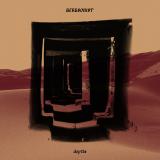
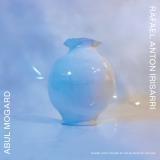
Marja de Sanctis’ cover artwork revisits the vessel sculpture from the duo’s first album, Impossibly Distant, Impossibly Close. There it appeared as raw, unfired clay. Here it has been fired in the kiln and finished with a glaze. Light gathers on its polished surface and spills into the surrounding space. As she explains, “I wanted to convey the idea of continuity within the duo, and the vessel became a kind of container for that idea. However, their music felt different this time, and with the collaboration of Martina and Andrea, I felt it should have a sleeker, softer, more glamorous look, very distant from the first raw appearance.” The transformation of the vessel from raw clay to fired form suggests a passage from immediacy toward permanence, mirroring the music’s gradual expansion.
Techno Новости
Все
In spring 2025, Abul Mogard and Rafael Anton Irisarri created the source material for their second album, Where Light Pauses in the Silence of the Sun, during a three-day residency at Morphine Raum in Berlin. Functioning as both recording studio and performance venue, the space has no stage, with the audience gathered around the performers. Working within an open framework, the duo reshaped the music each evening while recording the performances live to multitrack. Rotary speakers, modular synthesizers and bowed guitar formed the core of their sonic language, captured through a 1970s mixing console and microphones placed around the room.
Back in Mogard’s studio in Rome, the material was further crafted as motifs were stretched, fragments isolated, and tempos dissolved. Irisarri recorded additional guitar textures and treatments in New York, while passages recorded by Martina Bertoni and Andrea Burelli in Berlin reinforced the harmonic centres and brought breath, refinement and a new sensibility to their compositions. The process continued as Mogard’s layering and subtraction reassembled everyone’s parts into the final arrangement.
The album opens with “In the Eastern Wild,” building from a sparse outline into a monumental formation of low-frequency weight, its internal motion shaped by the rotating Leslie speaker. “Over the Domes” widens into a broader acoustic field, where sustained modular tones meet waves of softly plucked guitar. The music then turns inward with “A Blue Descent,” centred on Bertoni’s cello, whose growling timbre introduces a melancholic depth.
At the album’s centre, “In a Quiet Radiance” unfolds around a slow guitar ostinato, its luminous stillness opening into a more expansive and reflective state. Across its ten-minute span, Burelli’s violin lines and Bertoni’s lower cello phrases gradually surface, weaving through the harmonic field. Mogard brings Burelli’s processed voice to the fore, its emotive, operatic presence becoming one of the record’s pivotal moments. “Of Blessed Ages” suspends the sonic flow, shifting between parallel major and minor chords as lingering, slowly decaying melodies shape the music’s internal drift. The closing “Among Shadows” settles into a darker resonance as layered textures recede.
Mogard and Irisarri’s shared language balances restraint and maximalism. UK magazine Crack describes the music as “a tidal wave held in suspension,” while Dutch newspaper de Volkskrant writes, “What a colossal sound, and how this music strikes at the emotions.” Reflecting on the residency sessions, Irisarri recalls: “At moments I genuinely couldn’t tell if a sound was coming from me or from Abul. It stopped feeling like two people making decisions and began to feel like we were inside a system moving on its own."
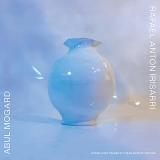
Marja de Sanctis’ cover artwork revisits the vessel sculpture from the duo’s first album, Impossibly Distant, Impossibly Close. There it appeared as raw, unfired clay. Here it has been fired in the kiln and finished with a glaze. Light gathers on its polished surface and spills into the surrounding space. As she explains, “I wanted to convey the idea of continuity within the duo, and the vessel became a kind of container for that idea. However, their music felt different this time, and with the collaboration of Martina and Andrea, I felt it should have a sleeker, softer, more glamorous look, very distant from the first raw appearance.” The transformation of the vessel from raw clay to fired form suggests a passage from immediacy toward permanence, mirroring the music’s gradual expansion.
In spring 2025, Abul Mogard and Rafael Anton Irisarri created the source material for their second album, Where Light Pauses in the Silence of the Sun, during a three-day residency at Morphine Raum in Berlin. Functioning as both recording studio and performance venue, the space has no stage, with the audience gathered around the performers. Working within an open framework, the duo reshaped the music each evening while recording the performances live to multitrack. Rotary speakers, modular synthesizers and bowed guitar formed the core of their sonic language, captured through a 1970s mixing console and microphones placed around the room.
Back in Mogard’s studio in Rome, the material was further crafted as motifs were stretched, fragments isolated, and tempos dissolved. Irisarri recorded additional guitar textures and treatments in New York, while passages recorded by Martina Bertoni and Andrea Burelli in Berlin reinforced the harmonic centres and brought breath, refinement and a new sensibility to their compositions. The process continued as Mogard’s layering and subtraction reassembled everyone’s parts into the final arrangement.
The album opens with “In the Eastern Wild,” building from a sparse outline into a monumental formation of low-frequency weight, its internal motion shaped by the rotating Leslie speaker. “Over the Domes” widens into a broader acoustic field, where sustained modular tones meet waves of softly plucked guitar. The music then turns inward with “A Blue Descent,” centred on Bertoni’s cello, whose growling timbre introduces a melancholic depth.
At the album’s centre, “In a Quiet Radiance” unfolds around a slow guitar ostinato, its luminous stillness opening into a more expansive and reflective state. Across its ten-minute span, Burelli’s violin lines and Bertoni’s lower cello phrases gradually surface, weaving through the harmonic field. Mogard brings Burelli’s processed voice to the fore, its emotive, operatic presence becoming one of the record’s pivotal moments. “Of Blessed Ages” suspends the sonic flow, shifting between parallel major and minor chords as lingering, slowly decaying melodies shape the music’s internal drift. The closing “Among Shadows” settles into a darker resonance as layered textures recede.
Mogard and Irisarri’s shared language balances restraint and maximalism. UK magazine Crack describes the music as “a tidal wave held in suspension,” while Dutch newspaper de Volkskrant writes, “What a colossal sound, and how this music strikes at the emotions.” Reflecting on the residency sessions, Irisarri recalls: “At moments I genuinely couldn’t tell if a sound was coming from me or from Abul. It stopped feeling like two people making decisions and began to feel like we were inside a system moving on its own."
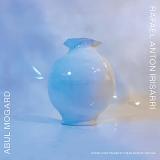
Marja de Sanctis’ cover artwork revisits the vessel sculpture from the duo’s first album, Impossibly Distant, Impossibly Close. There it appeared as raw, unfired clay. Here it has been fired in the kiln and finished with a glaze. Light gathers on its polished surface and spills into the surrounding space. As she explains, “I wanted to convey the idea of continuity within the duo, and the vessel became a kind of container for that idea. However, their music felt different this time, and with the collaboration of Martina and Andrea, I felt it should have a sleeker, softer, more glamorous look, very distant from the first raw appearance.” The transformation of the vessel from raw clay to fired form suggests a passage from immediacy toward permanence, mirroring the music’s gradual expansion.
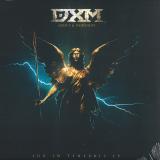
Bergsonist emerges on Dark Entries with Depths, a genre-bending 12-track LP of atmospheric and rhythmic excursions. For more than a decade, Moroccan-born Selwa Abd has been using the Bergsonist moniker to examine postcolonial identity and speculative temporalities across disparate media, including sound, image, video, and installation. She is also a key figure in New York underground music, fostering mutual aid and community support through her platforms Pick up the Flow (PUTF) and BizaarBazaar. On the 2025 album ASL أصل ⴰⵙⵍ, Bergsonist explored her Amazigh heritage using field recordings captured in Morocco. With Depths, her sixth LP, she continues the project of ancestral reconnection through sound. Abd notes: “I really use making music as therapy, not as a precious act, more as an energy release that makes me feel alive.” Depths overflows with this excess of vitality.
Tracks like “Trust the Current”, “Depths”, and “Underwater World Pursuit” showcase her singular take on diasporic techno-futurism, where James Stinson-esque atmospherics meet Moroccan rhythms. Elsewhere, “Again” and “Higher” push into coldwave territory, with icy arpeggios and electroid beats dancing beneath Abd’s ethereal vocals. But the dancefloor is not to be neglected: “Breakthrough” and “Ode to Life” spring forth with the kind of skewed peak-hour energy that only Bergsonist can bring. Artwork for Depths was designed by Eloise Leigh, and incorporates photographs by Abd and Greg Zifcak taken in Morocco. Also included is a protection poster that features an Amazigh symbol used for warding off the evil eye. Depths is an album that achieves a rare balance of elegance and DIY ethics - it is truly an ode to life.
- A1: Monika Kruse Meets Pig&Dan - So Good
- A2: Harrison Crump - Deep Down Inside (Michel Cleis Remix)
- B1: Jay Lumen - The One
- B2: Vsk - Echinopsis
- C1: Kevin Yost - Defence Mechanism
- C2: Tenzella - Hi 79
- C3: Uncertain - Cure
- D1: Juri Heidemann - Haras
- D2: Steve Robinson - No Space, No Time
- D3: Uncertain - Clash
- E1: Taster Peter - Body Call
- E2: D-Leria - Invisible
- E3: Filterheadz & Horatio - Bells Of Brightones
- F1: Uto Karem - Your Voice (Feat Biba)
- F2: George Vidal - Out From Obscurity
- F3: D-Unity - More Drums Please
Vol. 1[34,66 €]
We are so excited to present to the world the 3rd and final instalment in Danny Tenaglia’s GU Trilogy, Danny’s mixes have been a huge part of our DNA for many years, with his seminal Athens and London mixes forming the part of many people’s favourite DJ mixes of all time, Brooklyn is a stunning addition to that heritage and we can’t wait to release this album to the world.
This is the Vinyl Edition #2 of the album, curating a stellar selection of techno and melodic house. "As a native of Williamsburg, Brooklyn, this compilation is not only a celebration of my roots but also a tribute to the dynamic and ever-evolving nightlife that ignited and guided my musical career back in 1975.” Danny Tenaglia
Right now, right this second and of course right this moment while you listening to it or even while reading this line of text may be witnessed the real royalty of the underground of Thailand - DOTT. Pakarapol, the mastermind behind this release has made his name in concrete actions towards the development of the local and international scene whether it’s to play sweaty basements or grand festivals, releasing quality music or being one of the driving forces behind the record store called “More Rice” which is located in the heart of the capital city - Bangkok. On the title track of the release there has been intensive remix work done by the Uruguay’s own diamond level producer Luis Malon. Luis has brought his view and vision of how things are done and has flawlessly executed this doing so. With this Thai - Uruguayan connection the release is born for our ears and souls to indulge in and of course without any doubt to raise that dust from the floors, roofs or any given surfaces once the low ends of the record starting to give off its vibrations.
- A1: Fifth Era - Untitled
- A2: Matt Fraktal - Sarai Remis
- A3: Tzii - Antipatico
- A4: Fifth Era - Untitled
- A5: Tzii - Nel Ventre Della Balena Remix
- A6: Matt Fraktal - Meglio Soli Che Male Accompagnati Remix
- B1: Fifth Era - Untitled
- B2: Tzii - Untitled Remix
- B3: Tzii - Mi Amico Remix
- B4: Tzii - Hai Capito
- B5: Tzii - Non Hanno Nemmeno Occhi Per Piangere
- B6: Tzii - Rovina Dell'asino
Very limited tape bringing more epic remixes... We were thinking of making another LP with those tunes..
But for now a K7 is cool too.
Finally, it's time to get these classic tunes out on vinyl for the very first time. The support from DJs has been off the charts, and the list is long - including Carl Cox, Dave Clarke, Ben Sims, Kolsch, Deadmau5, Armin van Buuren, Lilly Palmer, Radio Slave and Laurent Garnier, just to name a few. The support spans a wide spectrum, from DJs with very different musical profiles - yet they all play these tracks. Proud to bring SWAY back on vinyl!
Big one from Milanese maestro Inner Lakes. Hell-bent on making 2025 his year, the Kalahari debutant maintains form and momentum with the latest in a flurry of vital releases.
A meticulously-crafted 4-tracker imbued with menace and urgent, late nite throb, it’s precisely the spiralling, nocturnal kinda style that has become his hallmark. Streetwise, upfront and packing a sizeable amount of f*ck-off NRG.
Expect noirish, night-stalking rave suspense and hardware-fuelled, high-velocity torque. Best heard in the company of shadow-dwelling spectres, or perhaps, at the event horizon of a black hole.
DJ tools reveal greater depth and nuance upon closer inspection, and disembodied vocals lure inquisitive ears deep into the dream state. Finely measured throughout, it’s a masterful balance between functionality and full-blown dancefloor immersion, all courtesy of a fella at the top of his game.
Written and Produced by Inner Lakes.
Mastered and cut by Kassian Troyer at Dubplates & Mastering.
Distributed by One Eye Witness.
Artwork by S.O.N.S
A two-tracker rooted in movement and memory.
It’s Girls Night / Long Hair marks a confident next step for the Amsterdam-based, Dutch-Argentinian artist, pushing deeper into darker, more physical territory. Built from warped drum patterns, low-end pressure and distorted, inhuman textures, it leans fully into a percussion-led, club-focused sound.
It’s Girls Night is immediate - fast, raw, and unrelenting.
Long Hair pulls things into a heavier, more ritualistic space - broken rhythms, slower tension, deeper atmosphere.
Shaped by formative nights in places like De School, the EP reflects a direct connection to the dancefloor - where repetition, intensity and immersion take over.
A concise, impactful release and the first in a series with fabric Originals
Cream Vinyl[18,45 €]
Black Vinyl[16,18 €]