Continuing the Mr Bongo Cuban Classics Series, we shine a light on Los Reyes 73 and their sensational debut LP from 1975. The album had multiple different pressings under various titles and artworks, but the music stayed the same and speaks for itself. The group set the bar high with this fiery Afro-Cuban-funk gem, letting loose a vibrant Latin workout combining psych rock trippiness with a heavy dose of deep funk. Elements that fuse to firmly cement this album as a ‘70s Cuban masterpiece and one of our favourites here at Mr Bongo HQ.
Releasing just two albums and a handful of 7-inch singles, the band were a popular and influential group in Cuba at the time. Since then, they have featured on several compilation albums across the 2000s that have helped raise their profile amongst new audiences worldwide.
Produced by the magical Raúl Gómez, the album featured a list of heavyweight Cuban musicians. Directed by Santiago Reyes and Ovidio Guerra, with orchestration from greats including Ricardo Eddy Martinez who also released the much-loved album 'Expreso Ritmico' in 1978 alongside Ignacio Herrera, Mario Valdes and Gilberto García. The album also features the writing prowess of Los Van Van’s Miguel Ángel Rasalps.
Blending traditional Cuban Son aesthetics with funk influences and psychedelic touches, the music housed within showcases a cosmic fusion that stands up on any modern dancefloor. The scintillating opener ‘Grandes Amigos’, the tripped out ‘Adeoey’ and the grooving ‘Un Lamento Hecho Cancion’ are just a handful of examples that exhibit the sheer musical melting pot of this album.
For this reissue, we have chosen to use the artwork from a Mexican version of the album released on Pentagrama Records that features the beautiful bird illustration cover art. The Cuban edition was released on the state-run Areito.
Introducing the inaugural vinyl release, envisioned by Ekaterina Arshanitsa, designer and founder of the progressive streetwear label, DESU Clothing titled "Fashion Show".
This exclusive LP marks the genesis of our limited vinyl collection, comprising of only 10 meticulously curated records, each edition being limited to 300 copies.
Articulating a fusion of progressive clothing design and intelligent music, "Fashion Show" will grace the shelves of our flagship fashion house in Bali, as well as select partner stores in global fashion capitals such as Paris, New York City, Los Angeles, Dubai, Tokyo, Moscow.
Renowned artists, who share a passion for DESU's innovative style, have composed exclusive tracks that embody our vision. Aquarius Heaven, eclectic singer, and stylish performer Monoplay, remarkable duo Kurt & DJ Nils, and Silas Hoppe, side project of techno producer Roman Shultz, all contribute to the first of ten collectible EPs. Each composition reflects a seamless blend of intellectual music and cutting-edge fashion, showcasing the subtle and profound synergy between sound and style.
We now present our first DESU "Fashion Show" - avant-garde electronic music with modern street fashion. Ready-to-Play!
out of Stock
Last delivered 2 years ago available to reorder, subject to availability
Visionary engineer, producer and dub experimentalist, Scientist returns to his roots to mix new album direct-to-disc for latest Night Dreamer session. With over 60,000 recordings to his name, Scientist (born Hopeton Overton Brown) is one of the most influential figures in dub. From Studio One to King Tubby"s, Channel One to Tuff Gong, he worked at Kingston"s premier studios, pioneering recording techniques and elevating the dub mix into an rt form in his own right. Known as the "Dub Chemist" for both his technical expertise and forwardthinking ideas, Scientist"s Night Dreamer session brings together musicians from across the London reggae scene, including The Instigators" rhythm section Mafia (bass) and Fluxy (drums), Creation Rebel guitarist Tony Ruffcut, vocalist Donovan Kingjay, Jah Shaka keyboardist Greg Assing and saxophonist Finn Peters.
I Don’t Know Who I Should Belong To:
“I Don’t Know Who I Should Belong To” erschien erstmals 1987 auf Vinyl als englisches Pendant zum Longplayer “Phönix” aus dem Jahr 1986. Lindenberg lebte damals im Berliner Hotel Intercontinental. Das
Leben an und mit der Mauer hat ihn beschäftigt und das veranlasst ihn, sich auf dem Album weiterhin mit politischen Themen auseinander zu setzen. Sie waren für die Gesellschaft zu dieser Zeit einfach von großer Bedeutung. Nicht allein für sein mutiges politisches Engagement in der damals noch geteilten Republik
gilt er bis heute als einer der wichtigsten deutschen Musiker. Die Re-Edition des Albums erscheint am 02.08.2024 in Form einer stark aufgewerteten, roten LP mit einem doppelseitigen Poster, welche streng limitiert und von Hand nummeriert in einer Auflage von nur 1.000 Stück erhältlich sein wird. Zusätzlich erscheint das Album erstmals als Standalone CD im Mintpack.
Marking its first decade of activity, Blume returns with the first ever vinyl reissue of the seminal “New Music for Electronic and Recorded Media”, from 1977, the third and final instalment in a suite of releases that includes James Tenney’s “Postal Pieces” and Ben Vida’s “Vocal Trio”. Unquestionably among the most important collections of experimental music to emerge during the 20th Century, “New Music for Electronic and Recorded Media” is the original feminist presentation in its context, releasing the work of Johanna M. Beyer, Annea Lockwood, Pauline Oliveros, Laurie Spiegel, Megan Roberts, Ruth Anderson, and Laurie Anderson under its collective banner. Includes newly commissioned liner notes by Jennifer Lucy Allen and Bradford Bailey.
Since its founding back in 2014, Blume has carved a unique place in cultural landscape, issuing free standing works, spanning the historical and contemporary, that represent singular gestures of creativity within the field of experimental sound. Joining their broad efforts in building networks of context and understanding that already includes the efforts of efforts of Werner Durand, Sarah Hennies, Bruce Nauman, John Butcher, Jocy de Oliveira, Mary Jane Leach, Valentina Magaletti, Alvin Curran, Julius Eastman, Alvin Lucier, and others, Blume delivers their third release in their first suite of releases for 2024, the fist ever vinyl reissue of the seminal “New Music for Electronic and Recorded Media” compilation, originally issued by Thomas Buckner's 1750 Arch Records in 1977. Out of print for decades on vinyl and arguably the most important feminist statement in the history of experimental music, illuminating the work of Johanna M. Beyer, Annea Lockwood, Pauline Oliveros, Laurie Spiegel, Megan Robert, Ruth Anderson, and Laurie Anderson - in a number of cases representing their recording debuts - during a crucial moment in the history of experimental music. Blume’s brand new edition - complete with newly commissioned liner notes by Jennifer Lucy Allen and Bradford Bailey, as well as reproducing Charles Amirkhanian’s original accompanying text - radically shifts perceptions of the past and present day with its truly revolutionary sounds.
Issued by Thomas Buckner's 1750 Arch Records in 1977, and out of print nearly the entire time since, “New Music for Electronic and Recorded Media” can be understood within two simple frameworks. On one hand, it is an astounding document of the landscape of experimental music toward the end of the 1970s. On the other, it is a historically significant feminist statement, being the first collection of experimental music entirely dedicated to female composers, a number of whom were grossly under-celebrated at the time, but have since gone on to be regarded as among the most important composers of their generation.
The eight pieces gathered by “New Music for Electronic and Recorded Media” - Johanna M. Beyer’s “Music of the Spheres”, Annea Lockwood’s “World Rhythms”, Pauline Oliveros’ “Bye Bye Butterfly”, Laurie Spiegel’s “Appalachian Grove I”, Megan Roberts’ “I Could Sit Here All Day”, Ruth Anderson’s “Points”, and Laurie Anderson’s “New York Social Life” and “Time To Go (For Diego)” - might be regarded as the first cohesive vision of alternate proximity or expression of experimental music to what has always been a frustratingly male dominated environment, and to the tropes, temperaments, and sensibilities that have been historically perceived to define it. It is an expanded vision of truth. While the presence of feminine sensibilities and temperaments in experimental music, however they may present themselves, were anything but new in 1977, “New Music for Electronic and Recorded Media” was the first opportunity, beyond the temporal limitations of live performance, to view them collectively, rather than as individualised expressions within a larger body of similar gestures (as was the case of Oliveros’ inclusion in Odyssey’s 1967 “New Sounds In Electronic Music” and “Extended Voices” compilations) where they might be confused for something else; to regard and celebrate a radical notion of feminine sonority for its unique characteristics and through its interrelations.
While its historical significance and groundbreaking nature can not be debated in its totality, nearly half a century on “New Music for Electronic and Recorded Media” remains compelling in both its musicality and the palpable sense of its lasting influence. Every composition across the album’s two sides is not only engrossing and deeply compelling - feeling as fresh and relevant as the day it was laid to tape - but clearly tangible in their lasting influence. Viewed in context, the album’s eight works feel like breath of fresh air when compared to much of what came before, and laid the groundwork for much of what was to come, introducing a new, often more holistic temperament and more sensitive and inclusive sensibility into the landscape of experimental music.
Particularly in the case of Annea Lockwood, Pauline Oliveros, Laurie Spiegel, Ruth Anderson, and Laurie Anderson, it's hard to throw ourselves back in time and imagine a moment when these composers rested in a fairly marginalised corner of the creative landscape. Blume’s brand new edition of “New Music for Electronic and Recorded Media” - complete with newly commissioned liner notes by Jennifer Lucy Allen and Bradford Bailey, as well as reproducing Charles Amirkhanian’s original accompanying text - brings us back to this confounding moment and points us toward a crucial moment of change set forth by these incredible composers and their sounds. Absolutely seminal and not to be missed.
Hailing from Denmark, CTRLS takes the steering wheel for KEY042, delivering an EP that embodies techno and raw industrial energy, marking his third appearance on the label.
The A-side begins 'ectomagnetic', a highly rhythmical track building through layers into a dreamy chord progression thats traddles the line between eyes-closed fantasia and full-body pump. In the midst of it all, the bassline drags our attention as its earthy, round essence stands out from the metallic universe created around it. A2 'injection shuffle' is a heavy hitter, characterized by distorted, ringing textures and old-school methodology, boasting menacing drum programming thatsolidifies its status as a peak-time big room monster. Continuingon the B, 'subsumed' offers another mystical journey blending body music with spaced-out melodies, all stamped with CTRLS's unmistakable touch. A sort of sci-fi tension, eerily drawing listeners into its other worldly atmosphere. Closing with 'nanocaust', the EP dives into intense atmospheres led by a broken beat bone and cavernous soundscapes - once again - presenting a general sound which will make you feel a different kind of energy.
Strong package of densely populated sonic environments, all inline with the sound of KEY.
out of Stock
Last delivered 7 months ago available to reorder, subject to availability
Katie Meluas Debütalbum "Call Off The Search" machte sie sofort zu einem außergewöhnlichen neuen Talent. Das Album, welches dieses Jahr sein 20-jähriges Jubiläum feiert, zeigt ihren einzigartigen Gesangsstil, der Jazz-, Blues- und Folk-Einflüsse mit zeitgenössischer Pop-Sensibilität vermischt. Das Album wurde von Mike Batt mitgeschrieben und produziert, der eine zentrale Rolle bei der Entwicklung des prächtigen und anspruchsvollen Klangs des Albums spielte. Das zentrale Thema von "Call Off The Search" ist die Liebe und die Selbstfindung, ausgedrückt durch eine Sammlung von gefühlvollen und introspektiven Songs, darunter die Leadsingle "The Closest Thing to Crazy", die mit ihrer gefühlvollen Performance und der fesselnden Melodie das Publikum weltweit sofort in ihren Bann zog. Von Kritikern und Zuhörern wurde das Album für seinen reifen und gefühlvollen Sound gelobt, vor allem wenn man bedenkt, dass Katie Melua zum Zeitpunkt der Veröffentlichung erst 19 Jahre alt war. Call Off The Search" fand bei einem breiten Publikum Anklang, wurde ein kommerzieller Erfolg und zu einem der meistverkauften Alben des Jahres 2003.
Diese Neuauflage zum 20-jährigen Jubiläum wurde in den Metropolis Studios in London neu gemastert und enthält B-Seiten sowie sieben bisher unveröffentlichte und unverfälschte Demos, die Katie und Mike Batt 2002 aufgenommen haben. Die von Pete Paphides verfassten Liner Notes enthalten Beiträge aus einem neuen Interview mit Katie.
40th anniversary edition of this seminal work by the multi-talented musician and producer Carlos Perón. After the release of “Impersonator” and the score of the film “Die Schwarze Spinne”, “Nothing Is True; Everything Is Permitted” is his third album released in the beginning of 1984. While still being an active member of Yello, it was around the start of the recording of “You Gotta Say Yes To Another Excess” that Carlos met the American musician Chris Lunch in Hamburg. He invited Chris to Zurich and together played with projects such as Romantic Rubber, Heavymetallen and recorded some sessions that become the basis of “Nothing Is True; Everything Is Permitted”. After the release of “You Gotta Say Yes To Another Excess”, Carlos decided to leave Yello and focused to finish the recording and mixing of his new solo album.
“Nothing Is True; Everything Is Permitted” has gone down in music history as a dark soundtrack without a film, influenced many artists and helped to develop diverse genders of electronic experimental and dance music.
Limited edition of 300 copies including all original tracks and new artwork.
Deeeeeep from the Ariwa archives... all unreleased music on here. Sounding absolutely essential to us. Dates of production uknown at time of writing...
The A Side is a Mad Professor produced version of Aisha's 'Give a Little Love', given the UK treatment. The Dub is a proper roller.
Side B is the unheard African Message Dub (Parts 1& 2). Recordings ft Jah Shaka on bass, Norman Grant (Twinkle Brothers) on Drums, Sgt Pepper and Mad Professor on the desk. Masterful UK Dub from these key figures.... pulled out of nowhere.
Not to be missed!
out of Stock
Last delivered 20 months ago available to reorder, subject to availability
* A classic roots instrumental from the late 1970s from legendary trombonist Vin Gordon, who played on numerous Studio One classics, as part of the in-house band Soul Vendors as well as countless sessions with Joe Gibbs, Lee Perry and many more.
* Vin played on Aswad’s classic `Warrior Charge’, which from that recording session, `Kojo Hoy’ was born.
* Featuring Aswad Riddim Section - Tony Gad on bass & keys, Angus Gaye on drums and “Bammie” Rose on flute.
* Previously released by Partial in 2015 on 10” (PRTL10005) which rapidly sold out. This issue features an extended dub version.
out of Stock
Last delivered 3 years ago available to reorder, subject to availability
The 2019 Stroom〰 split EP with Hessel Veldman marked the long-awaited vinyl debut of Enno Velthuys and served as a teaser for a reissue campaign of his work, shared between different labels. Finally!
In 1984 Velthuys released his classic tape ‘A Glimpse of Light’ on EXART, the label of Veldman, who stayed in close contact with Enno after hearing one of his private tapes being played on the radio by Willem de Ridder in 1980. During a live-broadcast event random tapes were played. “From Enno Velthuys, The Hague”, was written on the package. Willem introduced the tape, played it and a serene silence filled the studio. Present was a friend of De Ridder, Rob Smit, who visited Enno and his mother a few weeks later. This eventually resulted in Enno’s first release ‘Ontmoeting’ on KUBUS Kassettes in 1982. In those years, Enno was living a solitary life and rarely left his mother’s apartment. He managed to release 6 tapes of introvert, melancholic music from another dimension. Atmospheric melodies backed with sparse percussion, showing an excellent handling of the synthesizer.
The gifted musician with two souls silently passed away in 2009. Now we present, with involvement of the few once close to him, the first reissue of probably his most beloved work. Using the original master tape from the EXART vaults, carefully transferred, edited and remastered. Just Enno with his stripped-down compositions and fragile ambient sounds. An intimate experience celebrating bedroom-music and the glory days of do-it-yourself counterculture.
Ten bad boy digi riddims from the myspace era by Copenhagen’s Maffi crew, dubbed out into 3D space by disrupt in 2024. Raw, minimalist CyberDancehall at its best, nostalgic and oddly futuristic at the same time, this album is quickly becoming RoboCop’s favorite playlist when going to work.
…………………………………………………………………
Maffi Promotions a.k.a. Maffi Boys come straight outta 1773 Kbh V, Copenhagen, Denmark. Originally founded in 1990 by the two homeboys, lazy body Moog and Junior the Rat, Maffi Promotions have been a steady producer of simple digital riddims for years. Hanging out in the streets of Hummel City Junior & Moog used to entertain their friends with the primitve riddims of the Maffi sound. Not knowing that they would do the exact same thing fifteen years later, they continued to believe that one day they would move up the ladder, break out of the underground and reach for the stars.
Now, after finally adopting a little sense of realism, the two homeboys have realised that stardom is nothing compared to spamming people on myspace. So the two stoners decided to get a couple of friends together and turn up the bass online. Together with their sound crew FIREHOUSE, Maffi deal nuff weed and gyals!
Maffi Boys are very dedicated to the art of playing Sensible World of Soccer, rolling weed joints with Manitou tobacco and keeping it real in a Vesterbro-style. So watch out! And don’t test! We’ll be putting up new riddims on a weekly basis. We have nuff things brewing – including a delicious chicken!
………………………………………………………………
Growing up in the streets of Hummel City, Vesterbro, MOOG learned the pleasures of sleeping late, playing Sensible World Of Soccer and picking up hot gyals at an early age. He has spent most of his life trying to master these crucial skills. Taking a break from the dog race, Moog is currently focused on reaching a higher understanding of reggae-science and weedology.
JUNIOR experienced the necessity of rolling well-made spliffs at an early age. Incorporating the aestethic heritage of Scandinavian design, he has spent most of his life perfectionizing this old and traditional art form. Junior is currently taking his ph.d. in digital reggae by buying crates of 80’s 7″ and selecting for his sound system Firehouse.
out of Stock
Last delivered 23 months ago available to reorder, subject to availability
Sumer Is Icumen In is Quentin Thirionet's (Dhavali Giri, Pairi Daeza) debut album. Still, his musical escapades are vast and varied, based almost entirely on improvisation and live recordings, of which he occasionally distributes tapes without further information. Elusive to categorization and identification, unwilling to fix his musical activity under a stable pseudonym, his projects have ranged from gypsy jazz guitar swings, French traditional songs from Auvergne, and various experimental collaborations. Increasingly closer to electronic instrumentation, he crafted what Belgian label KRAAK presents here as Maibaum, his first ever solo output. As the title goes, this may be a maypole on which his multicolored sonic visions spring about.
Former rope access worker and currently a farmer of organic greens, Thirionet lives up to these lines of work as a musician. He assembles precisely what seems like a subtle balance between high manmade structures and soft fertilized soils; a high voltage pylon placed in a biotic landscape. It's all an even blend, spontaneous and steady, but this contraption comes from profound considerations. "I chose these tracks among many others," says Quentin, "because I heard the melodies all the time in my mind, and because I cried while playing them without really understanding why."
Armed with nothing more than a blackbox, a sequencer, a freeze pedal, and a tape player, Thirionet orchestrates a vivid rite of polished futures. At times reminiscent of Hans-Joachim Roedelius' enveloping arrangements, Maibaum's ambiances rely on mild repetitive patterns subsequently textured by prickling sprouts, mechanic dislocations and revamps that stoke and brighten the stirring motions. Jim O'Rourke's I'm Happy and I'm Singing comes to mind in terms of its detailed and prismatic nature, but Sumer Is Incumen In has its particular narrative. It's a tale of regeneration, of spring's delicate procedures and allure, a celebration of gracious and fortunate junctions between nature and machinery.
The album unfolds like a massive engine being made flesh to drift along the ether of a sultry land. The terrain turns pleasant and fertile in the title track; the colors and melodies of May start to unravel. Chromatic columns rise and define the scenery's depth of field breeding a synesthetic stream between crystal lights and warbling organisms. Grande Albero Buono Magico Uoma's brisk kaleidoscopic arpeggios sound like scanning a tree's litmus foliage. Then Ciguri takes us back to the foggy swamp of the beginning but is suddenly lit by an insect’s labyrinthine roundabout. The Jeweled Grid is a poem Quanta Qualia's lustrous metallic voice recites as a report of the album's phenomena. "Shiny revelations jump out. Pearls of thought flicker about." Images from within that distill to swirl around among us. The thicket dissolves as the album concludes calmly in Le Concept De Chien N'aboie Pas. Swaying under sieved solar light, leaves and branches tingle until the winds grow weak. All the warm creatures gathered along the way, and all those who danced around the maypole's splendid equilibrium now withdraw, folding up small to foster rebirth once again.
Imagine a Latin remake of Back to the Future. The mad scientist is Arsenio Rodriguez (the godfather of salsa) and the young student who travels through time with him is Eblis Alvarez (Meridian Brothers). This album can only be described as the perfect soundtrack for that movie that never was.
After the massive buzz generated by his first solo album, Mentallogenic, Alex Figueira got back in the studio to work in a more collective fashion this time, carefully assembling the second album of his largest project to date, Conjunto Papa Upa; a team of 6 musicians, spanning 3 generations of some of the best talent in the Latin and avant-garde scenes.
In an era where tropical music is dominated by purely electronic and rhythmically uniform sounds, the ten songs encompassed in “Fruta Madura” (“Ripe Fruit”) wander through the most diverse tempos, rhythms, and motifs effortlessly. A real breath of fresh air that gracefully incorporates soul, funk, jazz, psychedelia, and electronics into a solid tropical, irresistibly polyrhythmic foundation, without ever succumbing to the many genre clichés.
The distinctive production and catchy songwriting of Figueira shine in a very distinctive light on this second full-length. Living up to his reputation (Miles Cleret, founder of Soundway Records, called him “one of the scene's truly authentic and eccentric producers”), he takes the opportunity to show he’s not afraid to keep walking his own path.
Taking the band for a wild ride through the traditions of Africa, America, and the Caribbean; contrasting them with a ridiculously wide plethora of vintage, contemporary, and futuristic sounds, and pivoting on the exuberant musicality displayed by his musicians; the result leaves no doubt: this album is destined to be considered a future classic of the exciting tropical psychedelic music of the 21st century.
Addressing the most diverse themes in this new collection of songs, things take on a much more mature tone, as the title clearly suggests.
The opening track “El segundo es más sabroso” (“The second one is tastier”) sets the tone in the most assertive way imaginable, with the band boldly declaring, through multiple metaphorical references (laid upon a crazy mix of Dominican merengue, Detroit techno, classic and free jazz, dub, and electro), that the bar will be set higher with this second album.
The remaining compositions touch upon the most diverse subjects, with a fair dose of humor, sarcasm, and postmodern “magic realism”. “El Algoritmo” (The Algorithm) is a parranda-cumbia hybrid (for lack of a specific term) about the omnipresence of technology in our lives. The sophisticated Latin soul of the titling track “Fruta Madura” makes a case for the beauty of the maturity process. Some key philosophical teachings of Marcus Aurelius (the role of causality, the impositions of “the logos” and the importance of self-control) get a twisted cumbia treatment on “Reos del Deseo” (Prisoners of Desire). “No le pongas Coca-Cola” (“Don’t put Coca Cola in it”) shows us the most satirical side of the band, accusing those who mix Coca Cola with Rum of committing "sacrilege", on a powerful base of Dem Bow (the grandfather of Reggaeton), intertwined with touches of soul, salsa, and Cuban comparsa.
"Háblame Claro" (“Talk to me clearly”) is a story of heartbreak that evokes in its first part the spirit of the erotic salsa of the 80s (a subgenre deeply despised by purists), and after an unexpected samba interlude, leads to the hardest salsa of the 70s (a subgenre adored by purists), to end up in the surprising form of pure Afro-Cuban ceremonial music.
“Tu mamá tenía razón” ("Your Mom Was Right") is an attempt to exalt the spirit of the Latin American soap opera in the key of “acid bachata”, to recount a real-life case, witnessed by the band on countless occasions: the partying woman who arrives at the show accompanied by her bitter husband, who obviously does not like to dance. A very cheeky song to talk about the very serious and pertinent topic of female empowerment.
“La misma vaina” (“The same thing”) with its indescribable blend of bantú, candomblé, and Mozambique rhythms with abstract synthesizers, is an ode to adventure in favor of the aversion to taking risks and seeking predictability.
“Amigas picadas” (“Salty friends”) is another humorous song recounting another real-life case witnessed by the band on countless occasions: a love encounter sabotaged by the girlfriend's friends, who all happen to fancy the same guy. A jazzy take on the ancient Dominican rhythm of pambiche (grandfather of merengue), with generous psychedelic touches, resembling the classy late 60s releases of Guadeloupe's legendary producer / label owner Henri Debs.
“Vinimos a hablar” (“We came to talk”) takes sarcasm to the highest level, to ridicule the absurdity (also experienced by the band firsthand) seen in live music venues where people pay a ticket to go and have conversations that could be carried out much better on any bar, where no band is playing. The music alternates between a delicate melody with loose, sparse percussion and a full-on, pumping Angolan semba, with a techno kick drum included; bringing things to an apotheotic grooving finale, where the peculiar swing of Venezuelan calypso from the Callao region is thrown on top of all the precedent elements; closing the album in the most uplifting, “end of the carnival parade” feel.
The artwork is a delicate and impactful oil painting by Colombian artist Kevin Simón Mancera, who has collaborated many times with the label before (“Maracas, tambourines and other hellish things” tape and the Lola’s Dice LP).
What the experts are saying:
“Alex (Figueira) dove into this work with a brutal cohesion between lyrics and synths. Timbre poetry, sound poetry (you name it). And that, superimposed on his always impeccable percussive base, confirms the title of “avant-garde visionary of our beautiful Latin music”".
EBLIS ALVAREZ (MERIDIAN BROTHERS)
“Papa Upa's infectious quirkiness is a balm against boredom. A mature album, but without an expiration date”.
GLADYS PALMERA
“Here there is a lot of strength, drum, cadence and psychedelia, lost dance rhythms, united in an intercontinental Latin/African/and Caribbean journey, a unique winning combination that we could consider the new “Ritmo Figueira”.
DISCODELIC
All songs written by Alex Figueira.
Arranged and performed by Conjunto Papa Upa.
Recorded, produced, mixed and mastered by Alex Figueira at Heat Too Hot, Amsterdam.
This feels deliciously fated. Musical soulmates, Cromby is the only person Sally C will go record shopping with. The duo minted their friendship back in 2016, not long after both migrated to Berlin. A friendship forged through shared dancefloors, long hours at the pair’s beloved Bikini Waxx and impromptu B2B sessions, they have a common passion for good times and serious digging. If you want a sense of the genesis of Sally’s label baby Big Saldo’s Chunkers, just listen to the cult-favourite ‘Big Saldo & Cromby Dusty Hip Haus Mix’ that’s lived on her Soundcloud since 2019.
Cromby knows a Chunker that’s for sure. His contribution to the label is elite. Rinsed by the pair all year, it’s supports also include Job Jobse and Bambounou. In January it highlighted Nachtiville, where it was played all weekend long and became an unofficial hype anthem of the festival. A fiercely hunted track I.D ever since, lock this in as one of those catchy Crombyclassics we all love and can’t stop playing (and singing). ‘Pump It’ is an atmospheric roller, a perfect cut for maintaining the energy after the hands-up vibes of ‘House Flava’. ‘Free’ features Cromby’s own vocal debut – “I didn’t realise at the time of writing how fitting the lyrics would be for our times unfortunately,” he shares. Driven by punchy purring bass, it brings plenty of rugged energy with 303 flourishes, while dreamy keys balance things nicely. One for the after-hours.
The EP is rounded out with the wicked hoover-led ‘Best Not Miss’, that transports us back to a steaming Trade dancefloor circa 1997 and is thrilling in every sense.
out of Stock
Last delivered 19 months ago available to reorder, subject to availability
British-Trinidadian poet/musician/author Anthony Joseph’s latest album was inspired by and echoes the fertile London scene. Anthony has surrounded himself with some of the best musicians on the local scene, including Jason Yarde, Shabaka Hutchings (Sons Of Kemet, The Comet Is Coming), Crispin Robinson (founder of the iconic acid jazz band Galliano,) and Rod Youngs (Gil Scott Heron’s drummer). Operating as a dedication to poetic ancestors and a coming together of musical generations, ‘The Rich are Only Defeated When Running for their Lives’ is also an almighty jam. Recorded live in August 2020, it shows off the prowess of a team of master musicians from Paris and London. Jason Yarde, who also produced Joseph’s 2018 album ‘People of the Sun’ is credited as producer/ composer/arranger - to startling, albeit intimate, effect. Running throughout the release are inter-connected themes: memory, place, belonging and acts of homage. Anthony Joseph has released seven previous albums - six on Heavenly Sweetness - and collaborated with Archie Shepp, Keziah Jones and Meshell Ndgeocello who produced his album, ‘Time’ in 2014. He is the author of four poetry collections and three novels. His 2018 novel Kitch: A Fictional Biography of a Calypso Icon was shortlisted for the Republic of Consciousness Prize, the Royal Society of Literature’s Encore Award, and long listed for the OCM Bocas Prize for Caribbean Literature.
out of Stock
Last delivered 3 months ago available to reorder, subject to availability
Strut introduces a pioneering new compilation 'A Dancefloor In Ndola,' curated by revered East African DJ, Kampire. This release marks an evolution in Strut's approach to compilations, showcasing emerging DJ talent from across the world and embracing an innovative approach to musical discovery from the next wave of selectors. Forging her reputation through memorable sets for the Nyege Nyege Festival in Uganda over the last decade, Kampire now tours worldwide and is celebrated for her brilliantly curated sets spanning the full range of African music styles from the ‘70s and ‘80s to the present day.
Although born in Kenya to Ugandan parents, Kampire spent her formative years in Ndola, Zambia. ‘A Dancefloor In Ndola’ is inspired by artists and songs that formed part of her soundtrack during that time. “It is important for me to continually reference Africa’s own musical history,” she explains. “At 17, I didn’t pick up on my Dad’s music but now I love and collect those records. I’m constantly referencing them in my music sets today. I love that feeling of shared nostalgia where people recognise a song they haven’t heard in a long time. It is a touchstone for me when I’m playing.”
The compilation flows through different East African and South African genres from Congolese rumba and soukous to 1980s township bubblegum and the rich guitar-led sounds of Zambian kalindula. “There are styles of music on the compilation which are often considered unsophisticated from rural areas. I and other contemporary African artists and DJs draw inspiration from them; it is part of what makes us ourselves.” Kampire also shines the spotlight on many incredible women in African music from the ‘80s, including Congolese legends like Pembey Sheiro, Feza Shamamba and Princesse Mansia M’bila to V-Mash and Di Groovy Girls from South Africa.
‘A Dancefloor In Ndola’ is released on 2LP and CD and features exclusive new edits by Kampire alongside personal liner notes tracing her links to the music. Cover artwork montage is by Canon Rumanzi and vinyl restoration / mastering by The Carvery
Debut compilation by one of East Africa’s leading new generation DJs, Kampire.
Mix of African classics and rarities spanning 1970s – 1990s from Congolese soukous, South African bubblegum and Zambian kalindula.
Shining the spotlight on women in African music Pembey Sheiro, Feza Shamamba and Princesse Mandisa M’bila.
Exclusive cover artwork collage by Canon Rumanzi.
Worldwide DJ dates supporting release during Summer and Autumn 2024.
out of Stock
Last delivered 2 years ago available to reorder, subject to availability
Writing music for film and theatre has always been a big part of Hania Rani's musical world. It is also a part of the creative process that can be tantalisingly out of reach for listeners, either the project doesn't come to fruition or the music simply isn't available away from the film or play. From early collaborations with friends, to last year's two scores for full length films (xAbo: Father Boniecki directed by Aleksandra Potoczek and I Never Cry directed by Piotr Domalewski') Rani has been involved in many such projects, each representing an important step in her artistic development and life as a composer and artist:
"Composing for motion picture or theatre is for me a very different kind of work than writing for my own projects. Firstly, I need to collaborate with somebody else who sees the world through the lense of their own art and craft. That's why these kinds of encounters can be so exciting - they are a promise of creating something very new, as a result of creative work of so many people from all walks of life. Secondly, I feel that music in film is an invisible character, a missing emotion that creates a special atmosphere and sensation. It doesn't illustrate, it completes the work of art. I think it is an extremely sensitive matter that rejects banal associations and easy solutions. I feel like composing for film works like an exercise for my imagination."
It is the nature of these collaborations though, that sometimes the composers own preferred compositions don't make the final cut. This is where Music for Film and Theatre comes in as it allows Rani to present a selection of her own personal favourite pieces composed for film and plays. Pieces that made it to the final cut and pieces that were rejected by the director or the producer. Bringing the music together as an album offers a chance for Rani to share her music with her listeners on her own terms and a chance for her fans to hear a different side of her art.
"I put them in one place, as a collection of precious objects that were kept for years in a drawer. Some of them were composed a couple years ago, some are the result of recent research. I am very happy to finally be able to present them as a separate project."
Rani is of course grateful to all of the directors who have entrusted her to create music for their projects, but she professes especially warm feelings for the pieces composed for her first 'real' theatre play, Pradziady, directed by Michał Zdunik. The title comes from 'Dziady' a term in Slavic folklore for the spirits of the ancestors and a collection of pre-Christian rites, rituals and customs that were dedicated to them. The essence of these rituals was the 'communion of the living with the dead', namely, the establishment of relationships with the souls of the ancestors. "I felt this story needed extremely dark and fragile music, and at the same time a sound that could express the mixture of the two worlds - the living and the dead. I decided to compose part of the soundtrack with a string quartet but including two cellos, viola and only one violin. We recorded in a little house, completely built from wood, mostly from Finnish pine. I always felt this space has a very special, warm and natural acoustics - especially when it is combined with string instruments. The track composed for this theatre play is called Ghosts but actually didn't finally make it to the performance, although I like it so much that I thought it would perfectly fit
this compilation". Other highlights include the enchanting Soleil Pâle written for a collaboration with director Neels Castillon, and improvising dancers Alt Take, the beautiful melancholy of In Between (from the film score for xAbo: Father Boniecki) and the magical bliss of The Beach (from I Never Cry) and together they create a beautiful offering from an artist whose every note is worth hearing, but for whom the journey is just beginning:
"I am very happy to see that many artists consider my music as the right soundtrack for their works, because film music was always a huge inspiration for any of my compositions. I find there a lot of life and real emotions, but also a feeling of freedom. Freedom from my own thinking patterns and prejudices. I also believe strongly in collaboration between people, I always feel this is the way to create something really new, based on a mixture of different ways of thinking, feeling, expressing."
This then is Hania Rani, Music for Film and Theatre – enjoy!
out of Stock
Last delivered 2 years ago available to reorder, subject to availability
Experimental black metal from Brooklyn featuring members of Pyrrhon, Krallice, Sigur Rós, The Glen Branca Ensemble, Steve Reich. Recorded by Colin Marston (Dysrhythmia, Krallice, Liturgy). Follow-up to the bands well received 2022 debut Aveilut. The Promise Of Rain, the sophomore album of the experimental black metal band Scarcity, is an embodiment of the hard-to-believe truth that burdens are easier to bear when distributed, a realization Brendon Randall-Myers (conductor of the Glenn Branca Ensemble) grappled with extensively while writing this record. This is a sweat-drenched album about dispersion, about spreading, about the collective relieving of burdens through shared experience: one doesn’t have to go through everything alone. When Scarcity’s debut album Aveilut was written in early 2020, Randall-Myers and vocalist Doug Moore (Pyrrhon, Weeping Sores, Glorious Depravity, and Seputus) never expected to be able to play their songs live. The cathartic experience of playing something that came from a place of isolation out to people in a live setting is the root of the intensity in The Promise Of Rain. The Promise Of Rain begins where the craziest climaxes of Aveilut end, and is the first Scarcity record to include Tristan Kasten-Krause (Sigur Ros, Steve Reich, LEYA) on bass, Dylan Dilella (Pyrrhon) on guitar and Lev Weinstein (Krallice) on drums. Rather than building density with the quasi-orchestral layering on Aveilut, Scarcity challenged themselves to document what five people in a room could do, recording most of The Promise Of Rain in one or two takes, capturing the physical effort and urgency of a live performance. Scarcity forges a completely fresh sound in The Promise Of Rain with their alarming guitar work and melodic arpeggiating, shedding dead skin and breaking ground with sheer vulnerability. The lyrics for The Promise Of Rain were inspired by a trip Moore took to the high deserts of southern Utah in 2023. “To thrive in the desert is an act of abnegation—” he observes, “you do right by the land and receive its gifts, or it does away with you.” The necessity of adaptation is as evident in the desert as it is to the landscape of the human experience. The transformation of ideas and beliefs, the grief of losing relationships that had to end, and the fear involved in forming new ones under the grip of mental illness is conjured over and over again on this panoramic album.
Filipovich is one of a kind. The Belarus-born, Paris-based artist works in a multitude of media - found footage films, painting, silkscreening and performance to name a few. It's her musical output that has caught the attention of late, though, with Filipovich dropping a run of releases in recent years which began with 2021's Magnificat on Time Released Sound. Filipovich takes as much of a novel approach to her music-making as she does with her other artistic endeavours - Magnificat was centred around treated samples of Sergei Rachmaninov's All-Night Vigil, and she's also combined classical composition with contemporary electronic techniques on her subsequent drops.
For Idealized, Filipovich's debut on Sheffield's Central Processing Unit, she maintains the gothic air which characterised her previous releases and applies it to a record of widescreen contemporary techno joints. These tracks represent something of a gear shift for CPU, a label which has long made its name by delivering top-quality electro and machine-funk jams, but such is the quality of Idealized that these superbly-executed techno productions are sure to win over label fans both old and new.
Idealized is very much schooled in the German tradition of minimal/dub techno. Tracks like 'Physical', 'Wave' and 'Dance Minor' all anchor themselves on single, steady drum pulses and delay-drenched single-chord loops. Filipovich generally lets the central idea of these tracks play out across several minutes while introducing increasingly disorientating elements into the rest of the mix - wiccan atmospherics, clashing chords, spiralling delays and so forth. It's an approach at once respectful of Filipovich's predecessors - Basic Channel, Deepchord, Ellen Allien and so on - but also full of idiosyncrasies and individuality.
Many of the club cuts here hardwire us into the moody, murky environs of the darkest Berlin Basements. 'Ultra Red' rides forward on a crisp drum machine snap, a menacing burble of bassline and an eerie single-note synth whistle in the upper end of the mix; 'Dance Minor' shows off a bit of KiNK in the brain-bending modular loop that waxes and wanes at its centre; the second-half run from 'Wave' to closer 'Small Cave' travels ever-further out into deep space - the kick drums remain insistent, yet the textural elements are delivered with an edge and flair that evidences Filipovich's ability to think outside the box.
Filipovich's unusual methods, and the influence of sound art and electroacoustic composition on her music, are drawn out further when Idealized steps away from the dancefloor. 'Hydra' comes off like a more gothic version of Pole - its central pulse draws from dub techno but never quite settles into a danceable groove, and this beat is combined with the kind of unnerving keyboard work that would make John Carpenter proud. Although closer 'Small Cave' eventually locks into another dark-room techno roller, the opening section of the track delivers a weightless soundscape of bright, tinny chords and a scene-setting field recording.
Idealized, the first drop on Central Processing Unit from Paris-based Belarusian Lina Filpovich, broadens the label's horizons with a selection of finely crafted minimal/dub techno joints.
RIYL: Andy Stott, Deepchord, Ellen Allien, Moritz von Oswald
out of Stock
Last delivered 16 months ago available to reorder, subject to availability
Strut present the first definitive retrospective of an icon of 1970s and ‘80s soul, jazz and disco, Patrice Rushen, covering her peerless 6-year career with Elektra / Asylum from 1978 to 1984. Joining Elektra after three albums with jazz label Prestige, Patrice had shown prodigious talent at an early age and had first broken through after winning a competition to perform at the Monterrey Jazz Festival of 1972. By the time of the recordings on this collection, she had become a prolific and in-demand session musician and arranger on the West coast, appearing on over 80 recordings for other artists. She joined the Elektra / Asylum roster in 1978 as they launched a pop / jazz division alongside visionaries like Donald Byrd and Grover Washington, Jr. “The idea was to create music that was good for commercial radio / R&B,” Patrice explains. “We were all making sophisticated dance music, essentially.”
Drawing on some of the leading musicians in L.A. like saxophonist Gerald Albright, drummer “Ndugu” Chancler and bassman Freddie Washington and keeping an open minded approach from her training in classical, jazz and soundtrack scores, Patrice’s music was a different, more intricate proposition to many of the soul artists of the time. “L.A. musicians were not so locked into tradition,” she continues. “None of us were accustomed to limitation and the record label left us to take our own direction.”
Early classics like ‘Music Of The Earth’ and ‘Let’s Sing A Song Of Love’ were among Patrice’s first as a lead vocalist before her ‘Pizzazz’ album landed in 1979, featuring the unique disco of ‘Haven’t You Heard’ and one of her greatest ballads, ‘Settle For My Love’. “Although ballads make you feel more vulnerable as an artist because they are often personal, I think listeners relate to that sincerity,” she reflects. By now, Patrice’s records were supremely arranged and produced as her confidence as an all-round writer, producer, arranger and performer grew. Slick dancefloor anthem ‘Never Gonna Give You Up’ and the ‘Posh’ album in 1980 led to her landmark album ‘Straight From The Heart’ two years later. Receiving little support from her label, Patrice and her production team personally funded a promo campaign for the first single from it, ‘Forget Me Nots’. It went on to peak at no. 23 on the Billboard Hot 100 and the album was later Grammy-nominated, while the track became a timeless anthem and popular sample, inspiring Will Smith’s theme for the film ‘Men In Black’ and George Michael’s ‘Fastlove’.
Patrice’s final album for Elektra, ‘Now’ kept the bar high with sparse, synth-led songs including ‘Feel So Real’ and ‘To Each His Own’. It concluded a golden era creatively for Patrice which remains revered by soul and disco aficionados the world over.
‘Remind Me’ features all of Patrice Rushen’s chart singles, 12” versions and popular sample sources on one album for the first time. Formats included a 3LP set and 1CD fully remastered by The Carvery from the original tapes. Both formats include an exclusive new interview with Patrice Rushen and rare photos.
• First definitive Patrice Rushen compilation released on vinyl since the ‘80s
• Includes all of her chart hits, DJ favourites and sample sources
• Official release featuring full interview with Patrice Rushen about her career and music • Features rare photos from her personal collection + some of the photographers she has worked with during her career
• Fully remastered by The Carvery from the original ¼” tapes
• Start of full Patrice Rushen reissue programme from her Elektra era
out of Stock
Last delivered 6 years ago available to reorder, subject to availability
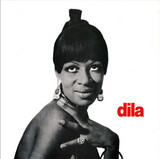
Far Out Recordings proudly presents the first and only album from the mysterious Brazilian vocal sensation Dila (pronounced “Jee-la”). Having reportedly died in a car crash shortly after the album’s release in 1971, there is very little known about the woman behind the voice. But the joyous music Dila left behind, gives us a picture as good as any, of a powerful feminine soul at the top of her game.
The liner notes on the elusive original LP, written by composer Arnoldo Medeiros attest: “Friend, look out! Because when this girl starts to sing, you’re in trouble. Hold the railing so you don’t fall down the stairs, because she’s coming this way and shaking up everything.”
Arranged and produced by Durval Ferreira, alongside his studio band affectionately known as “Os Grillos” (The Crickets), Dila (1971) is a rare glimpse into the authentic soulful Samba sound of Rio’s favelas in the late sixties and early seventies.
A blast of funky, percussive Brazilian breaks, scorching hot brass and swing-laden piano, the music is as iconic as the album’s stark cover, as is clear on opener ‘Inez’, composed by The Crickets’ bassist Romildo. There’s a fantastic interpretation of the Ivan Lins classic ‘Madalena’ (made famous by Elis Regina), a moving version of the Tom Jobim and Vinicius De Moraes classic ‘O Morro Não Tem Vez’, and a number of sunny original compositions by Arnold Madeiros, who’s other writing credits include music for Marcos Valle, Wanderlea, Evinha and Dom Salvador.
With original LPs extremely hard to come by, this rare treasure of Brazilian soul, which fans of Gal Costa, Celia, Evinha and Elis Regina will love, gets a much-deserved official reissue: remastered and pressed to 180g vinyl.
out of Stock
Last delivered 7 years ago available to reorder, subject to availability
OTOROKU is proud to reissue Evan Parker's first solo LP "Saxophone Solos". Recorded by Martin Davidson in 1975 at the Unity Theatre in London, at that time the preferred concert venue of the Musicians' Co-operative, Parker's densely woven and often cyclical style has yet to form; instead throaty murmurs appear under rough hewn whistles and calls - the wildly energetic beginnings of an extraordinary career. Reissued with liner notes from Seymour Wright in an edition of 500. "The four pieces across the two sides of Saxophone Solos - Aerobatics 1 to 4 - are testing, pressured, bronchial spectaculars of innovation and invention and determination. Evan tells four stories of exploration and imagination without much obvious precedent. Abstract Beckettian cliff-hanging detection/logic/magic/mystery. The conic vessel of the soprano saxophone here recorded contains the ur-protagonists: seeds, characters, settings, forces, conflicts, motions, for new ideas, to delve, to tap and to draw from it story after story as he has on solo record after record for 45 years. 'Aerobatics 1-3' were recorded on 17 June 1975, by Martin Davidson at Parker's first solo performance. This took place at London's Unity Theatre in Camden. 'Aerobatics 4' was recorded on 9 September the same year, by Jost Gebers in the then FMP studio in Charlottenburg, Berlin. Music of balance and gravity, fulcra, effort, poise and enquiry. Sounds thrown and shaken into and out of air, metal and wood. It is - as the titles suggest - spectacular." - Seymour Wright, 2020.
In Craig Charles' eigenen Worten enthält "The Craig Charles Trunk Of Funk Volume 3" "19 der feinsten Stücke von super-slinky Soul, boot shaking Blues und Boogie, schillernde Discosongs und feine funky rump shakers!"
Als Dichter, Schauspieler, Radio- und Fernsehstar (u. a. in der Science-Fiction-Comedy "Red Dwarf" und der Seifenoper "Coronation Street") ist er seit seiner Jugend berühmt, und seit über 22 Jahren predigt er in seinen weltberühmten BBC 6 Music-Wochenend- und Tagesshows für den guten Groove, legt in Clubs und auf Festivals rund um den Globus auf - sein Ruf als einer der profiliertesten Botschafter für alles, was Soul und Funky ist, ist unbestritten.
Craigs neueste Kollektion mischt Up-Tempo-Club-Klassiker mit frischer Musik von der Creme de la Creme der zeitgenössischen Soul- und Funk-Szene mit einer Prise Oldschool-Klassikern. Das Ergebnis ist so, als ob Craig persönlich als DJ auflegen würde - eine Mischung aus modernem und klassischem Soul, Disco, Deep Funk und beatlastigem Rhythm and Blues.
out of Stock
Last delivered 2 years ago available to reorder, subject to availability
Research Records welcomes back Melbourne quartet Big Yawn for their fourth full-length offering, "NGBE."
Big Yawn's ability to blend complex rhythm sections with infectious basslines, deep synth work, and tongue-in-cheek sampling remains ever-present, and perhaps is the most advanced we've heard yet.
Sitting in a world of its own, the album—named after the group's beloved and lost warehouse space, National Gallery of Brunswick East (where most of the material was recorded)—features a wide array of soundscapes spanning mutated drum 'n' bass, low-key grime, rap, and dub-wise antics, all laced with a heavy dose of FX.
Equal parts deep and menacing, the nine tracks encapsulate Big Yawn's evolution in the studio and on stage, most notably through their collaboration '2Stroke' with Melbourne-based future rap prodigy Teether and brought to life visually with album artwork by Julian Hocking.
out of Stock
Last delivered 2 years ago available to reorder, subject to availability
Asmaa Hamzaoui stands out as a pioneering female figure in the traditionally male-dominated realm of Gnawa music. With her group, Bnat Timbouktou, she brings a dynamic and spiritual dimension to the genre, infusing it with the vibrant energy of desert blues. Despite the essential role women have played in Gnawa rituals, female musicians have historically been underrepresented. Hamzaoui, however, is at the forefront of changing this trend. Born into a family deeply entrenched in Gnawa traditions in Casablanca, Hamzaoui was immersed in this musical heritage from a young age. Her father, a master musician, and her mother, a dancer, provided a rich environment for her early education in music. She learned to play the guembri, a three-stringed lute central to Gnawa music, and began performing with her father's band on the qraqeb, metal castanets used in Gnawa music, and in the choir. Encouraged by her father, she eventually formed her own group, Bnat Timbouktou. The group's debut album, "Oulad Lghaba," recorded in collaboration with the Swedish label ajabu! Records, was critically acclaimed and nominated for a Songlines Music Award. This album, along with their upcoming release "L'bnat," showcases Hamzaoui's commitment to preserving and revitalizing Gnawa music. "L'bnat," will emphasize the female traditions and spiritual aspects of Gnawa culture. Hamzaoui's performances are characterized by her powerful voice and the rhythmic, percussive playing of the guembri. Her music not only pays homage to the spiritual and healing qualities of Gnawa but also aims to keep the tradition alive by introducing it to new audiences worldwide.
Grande Coisa! (Big Deal!). You could hear it. It is the eternal irony of life. For a composer who has been making music since he was a teenager and only at the age of 38 does he make his work public, it can indeed be a big deal. Grande Coisa, is Dorea's first authorial album, and tells his stories, the ones he lived, others he heard about, but mainly the ones he created. With all the songs composed during the most isolated period in the pandemic, the work can be dense in many moments, difficult to digest, but there are sighs. And there are stories that intersect, like those of the boys who are one and also millions, and show the artist's vision of Brazil. The disappeared, forgotten, the sad and aimless still appear. And there is the warmth of the song for a loved one or even a family partnership, between mother and son. Grande Coisa has ten songs, all written by the artist himself, one of them with lyrics adapted from an excerpt from a book written by his mother. Its musical roots are rooted in rock, but with a blatantly Brazilian gaze and interpretation. It has musical production and minimalist paths chosen by Sebastian Notini, collaborative arrangements forged in the encounter of Dorea's guitar with Seba's percussive and melodic vein and Carla Suzart's bass, and a wood weave that ends the album with the timbres of Joana Queiroz (bass clarinet and clarinet) and Leandro Tigrão (flute) under the baton of maestro Per Ekdahl.
A holy grail for fans of French boogie, early hip hop, Arabic funk and Balearic bops,"Ettika" has been seriously sought after since Vidal Benjamin found it in the 1€ bin back in 2006. Teasing the ears of the underground via Vidal's 'Balearic Nightmare' mix for Noncollective, copies of the original were soon snapped up completely, and the later adopters were sated by a Blackdisco edit from Alexis Le-Tan (himself gifted Vidal's second copy), which is now also rare as hen's teeth. The fervour for the track is easy to understand. Underpinned by an endlessly buoyant bass groove, chanted female vocals dart out the speakers like a post- modern mantra while synth vamps flare in stuttering stereo.
Middle-Eastern motifs add an air of mystery, but this truly belongs in a dance floor utopia. That the track was the product of a 'back-to-work' scheme aimed at unemployed immigrant youth in Rouen only adds to the appeal. Led by teacher Bernard Guégan, a quartet of students delivered lyrics in French and Arabic inspired by their rejection letters, serving a little social commentary and a lot of funk. If you're mad on Ahmed Fakroun and Shams Dinn, or even those folks in the Bush of Ghosts, then this is a must have for you.
Archeology isn't just about excavation, there should be interpretation too, and in this case it comes from Italian duo Hear & Now and Leeds' The Veteran Delinquents. The former furnish the 12" with two radical takes, the dreamy downtempo stroll of their French Remix - all unhurried percussion, Gilmour-riffing and coastal élan - and the peaktime pump of their Arab Remix, which transports the original vocal into a land of desert new beat and Balearic trance with a little space left for some frazzled fretwork. If you've followed their work with Claremont you know the quality on show.
The Veteran Delinquents, the collaborative vehicle of Leeds stalwarts Craig Christon and Tim Hutton, condense a lifetime of club experiences into their remix, establishing the infectious groove of the original before subverting with chugging bass and winking acid, all augmented with their own slick synth work. The original was an all time classic at Craig's Joe's Bakery nights way back when, and this new interpretation is both respectful and revolutionary.
out of Stock
Last delivered 2 years ago available to reorder, subject to availability
The magic and majesty of Holger Czukay’s late career works for Claremont 56 is being celebrated on a new compilation. The former Can bassist – a musical maverick renowned for his freewheeling approach to composition, recording and promotion – released a string of inspired tracks on Paul Murphy’s label between 2009 and 2012, typically delivering hard-to-pigeonhole workouts, bona-fide epics and radical reinventions of some of his most beloved tracks.
The collection has been a labour of love – fitting given the sonic details and inventive musicality that marked out the late artist’s solo career – for Claremont 56 founder Paul Murphy AKA Mudd, who first reached out to Czukay after witnessing his now legendary live performance at the Roundhouse in 2009. As Murphy details in his introductory liner notes, it led to a productive working relationship between the pair that included collaborative recording sessions with Ben Smith in Czukay’s legendary Innerspace Studio – a former cinema in Cologne in which much of Can’s music was recorded.The impact of that Roundhouse gig on Murphy is reflected in the fact that two of the tracks on the collection are based on that celebrated performance. There’s ‘Ode To Perfume’, a languid and solo-laden version of one of Czukay’s most celebrated solo records that ratchets up the original’s inherent dreaminess, and a jaunty take on quirky kraut-pop number ‘Photosong’ featuring a spoken introduction recorded at the concert in question.
Murphy’s ability to coax Czukay into delving into his archives is evident across the compilation. Opener ‘A Perfect World (Remix)’ is an eccentric, ever-building masterpiece originally recorded in 1984 – but later re-imagined for Claremont 56 – featuring vocalist Sheldon Ancel and former Can band-mates Jaki Leibezeit and Michael Karoli, while ‘Fragrance’ is a subtly re-wired slab of picturesque Balearic kraut-dub which was initially recorded as a coda for ‘Ode To Perfume’ but lay unreleased for decades.
Then there’s ‘Let’s Get Cool’, a bright and breezy, French horn-sporting 2009 take on 1979 avant-disco classic ‘Cool In The Pool’; ‘My Persian Love (Remix)’, a 2010 re-take of one of his earliest solos recordings; and the near 18-minute brilliance of ‘Music Is A Miracle’. Originally recorded for his fans in the 1980s – but only released three decades later – this widescreen epic not only features drums by Jaki Leibezeit and a fine spoken word vocal by Czukay, but also numerous nods to some of his most revered tracks.
It's fitting, too, that two of the most potent cuts feature Czukay’s much-missed wife and musical muse Ursa Major: the dense, trippy and fittingly out-there ambient soundscape ‘In Space’, and the mesmerising ‘Music To be Murdered By’. Partially inspired by hearing painfully out of tune violin practice through his studio windows, the track was originally recorded for an unreleased album but finally found a home on Claremont 56’s 10th anniversary box set ion 2017. A genuinely spaced-out and mind-mangling slab of organic dub in Czukay’s distinctive style, it delivers a fine curtain call to the iconic artist’s endlessly inventive career.
out of Stock
Last delivered 11 months ago available to reorder, subject to availability
Even as a relatively new face on the scene, Boaksi, isn’t a stranger to longer format releases. The budding Zurich based producer made a splash with his first two releases “Under The Pavilion'' and "I Thought It Was Yesterday” which featured remixes from Soela, Louf and Al Zanders. Now he debuts on Seb Wildblood's all my thoughts label with a 4 track emotionally visceral EP titled Keep Movin’.
The title track, "Keep Movin'," takes a dynamic approach, layering creamy pads and impactful percussion with subtle dub techno influences that create a refreshingly deep groove, propelling a carefully positioned vocal sample into the forefront.
“Didn't I", leads with a beautiful, progressive melody that evokes a sense of yearning, and the ever-relatable Romanticism of the club. Delicately triggered chords dance off the wonderfully unpredictable drum patterns, while Boaksi's minimalist vocals add a touch of human emotion.
"Running Out Of Time" takes a more introspective turn, featuring distant, detuned textures that set the stage for a bed of soft, distorted pads. Stripped-back percussion allows the climbing arpeggios to take centre stage, building to a cleansing break that allows the atmosphereto expand before settling back into a warm, percussive groove.
The EP closes with "Wanna Be With You," another emotionally intelligent piece that showcases Boaksi's
prowess for crafting captivating soundscapes. Elemental drums and breathtaking, climatic chords provide the foundation for a beautifully free-forming synth arpeggio that flutters playfully around an unforgettable vocal hook.
out of Stock
Last delivered 11 months ago available to reorder, subject to availability
Much time has passed since the Queer Australian/Italian-Armenian, multifaceted artist, Kristian Bahoudian aka Kris Baha, swapped the parched red earth and searing midday sun of the Australian landscape for the brutalist communist-era apartment blocks and slate-grey skies of former East Berlin. Kris is now a fixture in Berlin’s club scene and has toured most of the world as a DJ & live artist with his own unique production style of cyber industrial, EBM, wave, post punk, and early ‘90s IDM mutations. Remixing some of the scene’s most notable artists such as Boy Harsher and techno pop lord Boys Noize, Kris has garnered respect and trust in the electronic music scene for the last 13 years. To respond to the current AI revolution, Kris uploads himself to the cyber ether through his latest project: GHOSTS IN THE MACHIИE.
Across Dual Timelines —
” GHOSTS IN THE MACHIИE ” unfolds as a sci-fi cyberpunk concept project inhabiting dual timelines. In one, we glimpse a trans-humanist future where human consciousness exists as intricate sequences of binary code, entwined and controlled by omnipresent AI systems. In this coded future, a profound awakening stirs among a select few who manage to mutate the code they were governed by, unlocking memories of their history that was erased by the AI. Through this discovery they realize they can traverse temporal boundaries and utilize this power to send warning messages back in time to their former fully human selves. These eerie missives carry a dire warning for humanity, urging them to rectify the course of society before the relentless march of artificial intelligence deprives humanity of its essence. In this terrifying future, humans are rendered mere specters within the digital expanse, stripped of their souls, to become Ghosts In The Machine.
Collaboration with the future self —
The cyber odyssey unfolds from a unique perspective— Kris’s very own future self (his future ghost): a spectral entity endeavoring to caution its present incarnation against the ominous path it treads, attempting to avert a dystopian future.Sonic Alchemy —
A fuse of cybernetic synth waves, hyper-punk, and pulsating drum and bass laid out against the dystopian, industrial sonic landscape of this grim future “civilization”. Each track recounts a new chapter in the gripping narrative, drawing listeners deeper into their own story and the role we all play as a collective society with the future possibilities of unregulated AI.Recorded in Berlin with software and hardware synthesisers. AI was used to assist me with lyric themes, concepts and ideas. I also used a trained AI model of my own voice as backing vocals in ‘Haunting Me’.ll music, words & concepts by Kristian Bahoudian aka Kris Baha and his future ghost,
GHOSTS IN THE MACHIИE
out of Stock
Last delivered 2 years ago available to reorder, subject to availability
Electro-boogie-machine 'Straight Line' is taken from 'Cool Cool', the upcoming third album by British multi-hyphenate James Alexander Bright. "'Straight Line' started out as a wonky homage to 80s & 90s radio", says James. "It's based on the memory of meeting someone you want to stay up all night listening to music with".
James' passionate voice, pitched somewhere between Eddie Chacon, Beck and Michael McDonald, takes a confident lead over a melange of body-popping LinnDrum beats, a host of swooping, fuzzy synths, and backseat-rocking bass. Initially written and recorded at his home studio in the rolling hills of the Hampshire countryside, 'Straight Line' was completed with regular collaborator Peter Lyons in East London.
out of Stock
Last delivered 2 years ago available to reorder, subject to availability
London-based producer/musician/DJ act Dub Fu Masters provides a triple delivery of high-quality funk-heavy, left-field jazz/fusion/house/tripped-out collaborative tracks featuring “NJB” with four-piece band Q3 and “Mr Frosty” with fellow London producer Son Of Abe. The EP’s three productions span a versatile sonic range of ear-wiggling treats, “Mr Frosty” is an acid-focused 303 workout, with a deeply rolling groove and hypnotically enticing bass layer. “NJB” explores a broken beat structure with the delightfully funky live band instrumentation of Q3, double bass, sax and a metric ton of groove.
The solo track “Herb Was Created” dives into the dub/reggae mood, holding a real tasty sound of old-school saturation and deeply enticing bass. Support from Âme, Damian Lazarus, Roger Sanchez, Paco Osuna, Sabo, David Guetta / Steve Aoki / Bakermat, Timo Maas,
Laurent Garnier, and Steve Lawler, Francesco Mami, Silicone Soul, Alex Taylor, Peter Kruder, Chaim, Bolam, Matisa, sim0ne, DJ Phantasy, Dan Marciano
out of Stock
Last delivered 15 months ago available to reorder, subject to availability
Far Out Recordings Proudly Presents The 1975 Self-titled Debut Album From Brazilian Vocalist And Bossa Nova Luminary Emilio Santiago. Nicknamed 'the Nat King Cole Of Brazil', Santiago Was A Master Bossa Balladeer And A Top-class Crooner. But He Is Known Equally For His Brazilian Funk, Soul And Boogie Classics. One Of His Best Know Is Album Opener 'bananeira', A Party-starting Version Of The Song Originally Written By Joao Donato And Gilberto Gil. 'brother' Is A Smooth-grooving Killer With Great Horn Arrangements And A Huge Backing Choir, While 'la Mulata' Is A Soulful, Swinging Salsa Stepper.
Originally Released On The Cid Label, The Album Showcases The Full Range Of Emilio's Talents, While Paying Homage To Some Of Brazil's Greatest Composers, Including Jorge Ben, Marcos And Sergio Valle And Ivan Lins Among Others.
The Credits On The Album Are A 'who's Who' Of Brazil's Greats, With João Donato On Keys, Wilson Das Neves, Ivan 'mamão' Conti And Paulinho On Drums, Durval Ferreira, Carlos Roberto Rocha And Helio Delmiro On Guitar, Ariovaldo, Orlandivo, And Chacal On Percussion, Danilo Caymmi On Flute, A Brass Section Featuring Victor Assis Brasil, Edson Maciel And Jesse Sadoc, And Backing Vocals From Jaime And Nair, Lúcia Lins, Jurema And Marcio Lott.
out of Stock
Last delivered 2 years ago available to reorder, subject to availability
Beyond the Bridge is excited to welcome a novel sonic experience to the roster with the debut of Australian artist gi. Capturing the essence of live experimentation, this release was recorded at the Worm Turns festival in 2023. It charts an immersive course through the uncharted territories of drone, IDM, and techno. Each track is thoughtfully selected, guiding the listener on a profound journey marked by peaks of intense emotional release and valleys of serene recuperation. Dive into a meticulously crafted soundscape that promises to enrich and challenge the auditory senses.?
out of Stock
Last delivered 2 years ago available to reorder, subject to availability
40 Years ago, Hunting Lodge was nearing the peak of its fertile 'tribal' period. In celebration of this anniversary we are releasing a book-style 3LP set including Nomad Souls, 'Tribal Warning Shot' (expanded) and The Harvest (live/expanded). All of the included tracks have been lovingly remastered from the original reels and cassettes, restored by Grant Richardson and mastered for vinyl by Sion Orgon. The Nomad Souls LP was originally released in the autumn of 1984 on S/M Operations in the USA, and in the following spring on Side Effekts Records, UK. The 'Tribal Warning Shot' 12” 4-track EP was released early 1985 on S/M Operations (USA). The title track was remixed with drums added for a 12” 45 release on Normal Records (Germany) soon thereafter. This version, along with the other three EP tracks appear on the second record in the set. A new remix of the 1983 7” 'Night From Night' b/w 'Untitled' is also included, along with 2 tracks that appeared on compilation albums and one previously unreleased track. To round off this LP we launch into a track from original The Harvest live cassette, to ease you into the album to come. The Harvest cassette was a collection of live Hunting Lodge tracks circa 1984 which has never appeared on LP until now. To make for a more cohesive theme we have separated the two LP sides by shows: Side A from Chicago, where the original 'Tribal Warning Shot (live)' was recorded, while the other side features a Detroit show which bears the distinction of being the only time Roselle Williams (The Wolf Hour) sang live with the band. Each side features one song that was NOT included on the original The Harvest release This set features a replica of the original S/M Operations' Nomad Souls cover, and of the original Normal Records 12” art on the second LP. The third sleeve features a newly designed back cover by Rolaid Alpo Cola, and an inner panel including the original promo poster artwork along with an essay from Graeme Revell.
The hypnotic folk music of the Ainu a cappella group Marewrew has received the first of two remix treatments by Pingipung artists. Part 01 is by Andi Otto and M.RUX.
Andi Otto was the curator of the Marewrew album for Pingipung, released earlier in 2024. He selected gems from their archive for the "Ukouk" LP. His remix pays homage to the frenetic vocal dynamics of the round canon Sikata Kuykuy. Beginning with a stubborn piano beat, it's the bass clarinets that sit in sync with the vocals that make this dance track so charming. Bonus fact: they're played by Pingipung co-founder Heiko Gogolin - his first outing on the instrument for his own label.
M.RUX's take on Etukuma Kara is playful and groovy. Many will remember his legendary 2018 remix of Umeko Ando (Iuta Upopo), which marked Pingipung's first involvement with Ainu traditional music from northern Japan. His reworking of Marewrew's vocal music blends elements of various tracks with his own percussion, and the result is nothing short of spectacular.
The two tracks will be released on 7" vinyl.
out of Stock
Last delivered 2 years ago available to reorder, subject to availability
This album was a self imposed ambitious project for us. Something to kick in the creative flow. The last few years, having been a challenging time in general, felt like a good time for a pivot. The last two albums were so guitar and keyboard centric, I wanted a weird and fun set of parameters for us to work with. I demo’d everything at home on cassette 4 track (harkening back to simpler times) using drum loops, and just had at it 'til I had a pile of “songs”. Tom and I chose one sound each using synths and created a range of 3 octaves of that sample, then loaded them into Roland SPD-SX samplers and learned the transcribed songs using drum sticks. The idea was to change the way we wrote and to have 4 people along the front of the stage essentially playing percussion. So no guitar, no keys. As we were recording I kept thinking how the sounds, when paired up, sounded a bit like brass. So, we added a saxophone horn section to round out the horniness of the sound with a bit of reedy bell tones. Thanks to Cansfis Foote & Brad Caulkins on tenor and Baritone saxophones :) Sort of a Dexy’s Midnight Runners meets Von LMO meets The Flesh Eaters meets the Screamers kinda punk junk. Poppy and hooky, heavy at times.. Sort of vacuous and maybe a bit sci-fi in sound. Boneheaded in riff and heady in lyrics. Recorded at Stu-Stu-Studio by me on 8 track 1/4” tape . So pretty hot and raw. Lots to write about today. A lot of these lyrics were taken from things people said in passing about taking on life right now that stuck with me. Things that made me reflect. Things that made me laugh. Things that made me WTF. Some folks are kind, genuine & give you love and energy. Some are greedy manipulative ghouls who hang off your veins. You must be strong, composed and take care of yourself. Be self aware and check your mind for cracks. Learn to relax and be well. There are moments of beauty and redemption. Its not all bad news and there’s always hope. People continue to surprise me one way or another. Anyhow, Hope you enjoy and good luck out there. — John Dwyer
Coloured vinyl repress of Penguin Cafe album Rain Before Seven… A sense of optimism infuses Penguin Cafe’s fifth studio album, not the braggadocious, overconfident kind, but more a blithe, self-effacing optimism in keeping with the national character. Even when all signs point to the contrary, it operates within the certainty that things are going to be alright. Probably.
The title comes from an old weather proverb with the rhyming prognostication — fine before eleven — hinting at a happy ending, irrespective of the science: “I found it in a book and I'd never heard it before,” says Arthur Jeffes, leader of Penguin Cafe. “It has faintly optimistic overtones and I quite like it. It's fallen out of usage recently but it does describe English weather patterns coming in off the Atlantic.”
From the widescreen reverie of opener ‘Welcome to London’ with its cheeky nod to Morricone to ‘Goldfinch Yodel’, the self-described “Maypole banger” at the denouement, there’s a welcome sense of sanguinity, always with an undercurrent of exotic rhythmic exuberance. Playfulness pervades, with a titular nod to A Matter of Life... from 2011, the last album title that concluded with an ellipsis. That Penguin Cafe debut is the bridge between the legendary Penguin Cafe Orchestra, led by Arthur’s father Simon Jeffes, and the much- loved descendent, led by Arthur.
“Stylistically it's really satisfying to get back to playful rhythms and instruments,” says the younger Jeffes, who kept the group’s debut from 12 years ago in mind when writing the new album. “Certainly when starting out, I became aware that we’d stopped using quite a few of the textures that had been there at the beginning—and it was certainly there in my dad's earlier stuff. So there's a lot of balafon and textures from completely different parts of the world, musically and geographically: ukuleles, cuatros and melodicas that you can hear.”
Encouraged by co-producer Robert Raths, the rhythmic elements of Rain Before Seven... have never been more to the fore and, at times, even hint at the electronic. ‘Find Your Feet’, for instance, is underpinned with more than just a pulse. Mixed by Tom Chichester-Clark, it brings to the musical melange what Arthur describes as a “near electronic feel”. He adds, excitedly: “There are elements of fun here which we haven't really done with the last three records.” Another ebullient highlight is ‘In Re Budd’, dedicated to the late ambient godfather Harold Budd, who Arthur discovered had died on the day he’d been writing the celebratory ear worm with a deceptively tricky syncopation. Played on an upright piano with some “prepared” felt to accentuate the bounce, Jeffes feels a track with an Afro Cuban Cafe vibe would appeal to Budd’s contrariness.
Crack Cloud has always been something beyond a rock band: both profound and grand, vaporous and elusive. The first iteration of Crack Cloud was formed nearly a decade ago as a proxy-rehab outlet on the fringes of Calgary. Over time, two EPs and accompanying visual pieces were produced out of the residence known as Red Mile. By 2017, several members had relocated to Vancouver, working out of harm reduction centers and low-barrier shelters. Sobriety, self-reformation and the idealism of their work further formed an ethos for Crack Cloud. It was during these years that the band produced their astounding 2020 album Pain Olympics. At once, their vision became expansive, cinematic. Now, Red Mile is a bit of a homecoming. Members have returned to Calgary. But Calgary/home has become a liminal space, a place of flux. After a decade of personal and collective growth, what does home even mean? Red Mile is, for them, something like samsara: a return and a rebirth. Red Mile's sound breathes expansive energy into the circuitous, street bound sonics of Crack Cloud's prior material. Fizzling synths intertwine with chiming pianos. Songs layer like Russian nesting dolls; one may find a Ramones chorus set within a desolate Western prog soundtrack only to watch it erupt into a joyous anthem. Real-ass guitars _ alternately lilting, scuzzy and soaring _ ring out across wide sun-bleached spaces. In 2024, the cumulative effect is (in rock instrumentation terms) naturalistic. Any whiff of embalmed nostalgia is absent. Even the close of the album - a winding, almost Jerry Garcia guitar noodle that leads us out of Red Mile - is delivered without sentimentality. Principal songwriter Zach Choy's lyrics are cutting but merciful, with a sharp self-awareness that never slides into self-satisfaction. Crack Cloud as artists are critical _ and ultimately as forgiving _ of themselves as they are the melting world around them. The songs balance an easy charm and cathartic power: affirming life without denying death. Recorded predominantly between the outskirts of Joshua Tree California, and Calgary, Alberta, this record is informed by a bittersweet mélange of old and new. The sprawling, novelistic structures of their previous albums are condensed and sharpened, while maintaining their refusal to delve into superficiality. Through playful melodies and elliptical guitar soliloquy, they deliver a final product of exceptional depth and distinctly unprecious warmth. Crack Cloud have produced a mature, vital work that interrogates the platitudes of the rock-n-roll lifestyle, but ultimately exalts its sacredness. Red Mile's de facto thesis statement "The Medium" is itself a rock song meditation: an ode to the form and its practitioners. This genre that _ typical, repeatable, corporatized as it can be _ somehow still has the power to help us live through life. We see the dusty sentiment of "I love rock and roll" exhumed, taken apart, and stitched back together. It's a song guided by faith _ if the medium helps us proclaim our love today, it's worth protecting from derision tomorrow. We live in an era where music seems to love hitting its head against the wall. Crack Cloud's Red Mile is the sound _ the feeling! _ of the bricks giving way.