After a short hiatus, Headstrong is back with Hard 2 The Power of Core from Clouds. True to form, the pairing of Liam Robertson & Calum Macleod drop four devastating, hyper-produced tracks. From the chamber-psytrance of lead track Doom Tune serving as a sidestep to the classic Clouds sound, to the hard hitting and rave infected Braincellz & System 4 (Hard To The Power of Core). Each track packs a punch with their modern take on the UK hardcore sound.
out of Stock
Last delivered 22 months ago available to reorder, subject to availability
In Togo, Gazo doesn’t need any special occasion to resonate with people. Like an everyday life soundtrack, it is present when everything is fine but also when sadness sets in. In France, electronic music is also a popular remedy at any time, but it is often far away when we look at the money we spent the night before with watery eyes. Ago Gazo set the scene for a hybrid genre in which the notions of trance and liberation are palpable. Percussion, instruments and traditional chants from Togo, analogical machines and modular synths share a common destiny in this project : bruising emotions like a boxer’s ears.
out of Stock
Last delivered 3 years ago available to reorder, subject to availability
U.S legendary producer Debonaire returns to Fdb Records to deliver his third EP to date!!! Thirteen years after “The Rise Of The Bass Planet” on French imprint run by Vstee, one of the Miami Bass pioneers, Claudio Barrella introduces “Badass”, a future classic EP taken from his eponymous album published in 2022 on Debonaire Records Inc.
Fulfilled with timeless electro references, this collection of four untouchable joints pushes once again the boundaries of old-school sound to the next-level. Ode to the glorious days of electrofunk, relentless “He Is The Master” on A side serves up a brilliantly dancefloor Hip-Hop/Electro monster enhanced by a nice flow of cut’n’paste samples featuring Newcleus, Schooly D, Dynamix II, Man Parrish, Cybotron and thousands of other unmissable classics. Here comes an outstanding Time Machine that will definitely break out your linoleum.
Second tune of the opus, slow “Badass Reprise (Wax Version)” signs a hip-rock masterpiece a la Rage Against The Machines characterized by a dirty Californian spirit. Fat!On the flipside, robotic “Computer Program”, written along with his partner in crime DJX aka Maggotron, offers a cutting-edge mayhem bas(s)ed upon crystal clear sororities, some heading vocoder robot lyrics fusing with Sci-Fi tones in the background. Ace!
The Absolute climax of the 12’’, “You Feel Me Now” brings a massive cocktail of beats and low frequencies, injecting serious 80's vibes over frantic scratches and sharp 808 programming.
Packed in a beautiful white sleeve and brilliantly illustrated by DJ and Plastic designer Julien Dumaine, this collectible wax will provide intense cyber vocals and retro flavored electro to your subwoofers! Must have!
out of Stock
Last delivered 3 years ago available to reorder, subject to availability
NOW Music is proud to present the next instalment in our ongoing ‘Yearbook’ series, NOW – Yearbook 1978; 85 tracks from a magical year in Pop! The 85 track special edition CD is housed in ‘hard-back-book’ packaging, including a 28-page booklet featuring a summary of the year, a track-by-track guide, a quiz, and original singles artwork. NOW – Yearbook 1978; 46 tracks on a 3LP set pressed on translucent pink vinyl - from a magical year in Pop!
out of Stock
Last delivered 3 years ago available to reorder, subject to availability
INDUSTROLLUTION: The lethal audio toxin of rhythmic machinery.
Drivetrain (Detroit, USA)
“Spin The Record”
Functional, purposeful and guaranteed to ignite any dance floor; put the needle on the record and wait for the climatic twist.
Jay Strata (Glasgow, Scotland)
“Heart Strings”
Drenched in rich, creamy chords, the seduction of a deep, melodic rapture, effortlessly takes control.
Teknobrat (Ottawa, Canada)
“Acid Barnako”
With elements known and beyond integrating in acid oscillation, the magnetic chorus refrain pushes the frequecy spectrum.
DJ Mourad (Tunis, Tunisia)
“Illegal Alien”
A mysteriously abstract high-tech warning signal clouds the atmosphere while the unforgiving thunder-pulse clears the air.
out of Stock
Last delivered 2 years ago available to reorder, subject to availability
Killer 4 tracker coming from Japan, by Yosuke Ikeda (AE35), co-founder of Tokyo Electro Beat Recordings. Deliver here a proper Miami style electro. Not to be missed.
out of Stock
Last delivered 10 months ago available to reorder, subject to availability
Lion Machine 23 is a four piece Rock band fronted by singer / guitarist & songwriter extraordinaire Daland based in North London, a mix between Oasis and Nirvana, who have already packed out venues across the city, as well as a recent tour of Argentina featuring a support for the Arctic Monkeys. This four song EP has been co-produced with West London’s finest, JBJ Studios Stormzy, Skrillex & more is due for release this Spring! UK dates incl festivals tbc.
2023s one to watch with true rock n roll style, prepared to get blown away by Lion Machine 23. `Liar’ kicks off with heavy grinding guitars, over which lead
singer Daland’s vocals laments the tone. Solid-driving strobe-lit bass completes the track with a rejuvenating catchy chorus when Daland belts out Liar you can’t help singing along.
Turning the noise up a notch on `The Mobile Phone’ lead singer Daland charismatically vocalises the good and bad of having technology at your fingertips. Bursting into a perspicuity of unending guitars and drums energise the track.
‘Always’ Summer festival anthem in the making, carries that feel good factor.
"Warum wie Tausende Deppen ganz plötzlich aufhören zu rappen // die Leute hängen doch an den Scheiben so wie Autovignetten."
"Wachstum"
Umse macht das Rap-Ding nicht erst seit gestern. Shows zwischen Flensburg und Luzern, youtube-Videos mit 300.000+ Clicks, 2 Alben und 2 EPs Alles dagewesen. Trotzdem ist für ihn die Zeit nicht stehen geblieben. Der Titel seines Debütalbums auf Jakarta Records ist Programm: "Wachstum".
Drei Jahre hat Umse an seinem neuen Album zusammen mit Hausproduzent Deckah geschraubt, aber "es brauch halt seine Zeit bis die Soundästehtik reift", denn etwas "zu verfassen was bleibt heißt eben ackern und schaffen". Das heißt nicht, dass Umse alles anders macht als in den vergangenen Jahren. Es gibt weiterhin "kein Strassendrama mit Handschusswaffen", kein Hipsterrap, keine Dubstepremixe, "keine Sandys und Mandys für den Chorus". Stattdessen besinnt sich Umse auf insgesamt 14 Tracks auf das was ihm "einfach so liegt: Nice Rhymes auf en Beat": zeitlose Musik ohne Redundanz, dafür gewohnt frisches, intelligentes Wortspiel - zugleich aber auch kein "90ties Revival sondern ein Style Überbleibsel".
Das Album wird auf allen Formaten erscheinen, die ersten 150 Kopien der Vinylausgabe auf farbigem Vinyl.
Stoned Part II is Lewis Taylor's pure, perfect dance-pop album. His second self-released album and fourth album proper, it initially appeared on his own label Slow Reality in 2004. It's been licensed to Be With for this long-awaited double LP release, its first ever vinyl edition. Gravely misunderstood at the time by hardcore fans and the music press alike, it has aged quite magnificently. An experiment in the sounds of contemporary pop and dance music, Lewis's wonky take on funky pop would annihilate anything kicking around the charts, then or now. If only it were given half a chance.
Stoned Part II is brimming with Lewis's trademark soul, his singing as beautiful as ever, but the rhythms throughout are more upbeat, the overall sound a more smooth and slicker dance-funk presentation. Roughly half the tracks are absolutely essential, fascinating re-workings of tracks from the eternal Stoned Part 1, as Lewis explains: "When we were doing Stoned we were trying different approaches with everything so we ended up with more than one version of nearly all the songs which left us with more than an album's worth of material. There was a lot of really cool house tunes around at the time which we were both really into and that shaped the sound and production, some songs more directly than others." Amen to that.
The swoonsome, string-drenched opener "Madman" is quite the departure, a bleepy, bumping soulful disco-house record with a bassline to die for. Is there anything he can't do? It's followed by another huge dancefloor stomper, "Keep Right On" again riding another killer bassline over funky drums and featuring Lewis's dazzling vocals. There's no let-up with the sparkling "Reconsider" which sounds an awful lot like Daft Punk meets Nile Rodgers (prescient as ever, our Lewis). The wide-eyed French filtered house vibe is to the fore here, and how this wasn't picked up by someone like Kylie and taken wholesale to the top of the charts is something we'll never understand.
Opening the B-Side, "When Will I Ever Learn 2" really slaps, presenting a breezier, more upbeat funk take on the brilliant original and incorporating "From The Day We Met" from Stoned Part I. "Out Of My Head Is The Way I Feel" is absolutely fantastic and one of Lewis's very best songs. The vocals, self-harmonising and virtuoso playing are next level. To close out the side, "Carried Away" is a real standout, Lewis's gorgeous falsetto riding a quasi D&B groove to begin with before adorning a more classically funky 2-step rhythm. The marriage of undulating synths and guitars is stunning, giving way to Lewis indulging his goosebump-inducing Brian Wilson harmonies.
The funky, Rhythm King drum machine soul of "Stoned Part 2" refashions the original in the style of an unearthed Sly Stone classic, circa There's A Riot Going On. Yes, it's that good. On we then glide to "Positively Beautiful 2" which, if it's even possible, manages to be better than the original. The epic, orchestral opening truly captivates before Lewis truly gets down with kaleidoscopic dancefloor-slaying Philly soul-funk. It's surely tracks like this which help explain why he was soon to be tapped up by Dangermouse and Cee-Lo for the musical director role with Gnarls Barkley. "Throw Me A Line" closes out the side
"Shame 2" is a blissful, restrained version of the massive original, without the crazy psych-soul wig-out. Definitely more radio-friendly, that's for sure. The gorgeous mellow vibe continues with "Won't Fade Away", featuring more Beach Boys harmonies over a barely-there pulse (a version of which later pops up in an altered state on The Lost Album). The album bows out with - you guessed it - a psych-soul wig-out! "Keep On Keeping On", a real highlight, opens with looped sampled drums a la Massive Attack and Lewis's multi-layered self-harmonising again very much high in the mix. It amps up gradually to feature vocals dripping with tune and bite before screaming guitars and crashing drums really blast this whole set into the stratosphere.
Simon Francis’s vinyl mastering, approved by Lewis himself, presents the twelve tracks over a double LP so it sounds exactly as it should. The records have been cut by Cicely Balston at Air Studios and pressed at Record Industry. Allow Lewis Taylor to get you Stoned, Part II.
out of Stock
Last delivered 3 years ago available to reorder, subject to availability
Der Titel des fünften SATURNUS-Albums, "The Storm Within", spielt sowohl auf die Stürme an, die in der Natur tosen, als auch Aufruhr in der Seele. Es ist recht offenkundig, dass die lange Zeit, welche die Dänen für dieses Album gebraucht haben, und die persönlichen Gründe, die hinter dem Umbruch in der Band standen, dessen künstlerischen Ausdruck stark inspiriert haben. SATURNUS haben sich mit "The Storm Within" selbst übertroffen. Die musikalischen Themen Meer, Regen und stürmische Gewässer ziehen sich wie ein roter Faden durch die Songs, in denen sich Wut, Verlust, Melancholie und Schmerz gleichermaßen widerspiegeln. Die handwerkliche Reife des Albums verleiht seinen erhabenen aber auch ruhigen Momenten sowie den gelegentlichen brutalen Ausbrüchen eine äußerst spannende Dynamik. Obendrein sorgt die erneute Zusammenarbeit mit Produzent Flemming Rasmussen, dem legendären dänischen Produzenten der METALLICA-Klassiker dafür, dass der Sound von "The Storm Within" seiner herausragenden musikalischen Qualität mehr als gerecht wird. Die Anfänge von SATURNUS liegen im Jahr 1991 als Sänger Thomas A.G. Jensen im Umfeld der dänischen Hauptstadt Kopenhagen nach Mitmusikern suchte, um eine Death-Metal-Band zu gründen. Nach mehreren Umbenennungen und Umbesetzungen wurde der Name SATURNUS schließlich im Jahr 1993 in Beton gegossen. Die Band veröffentlichte ihr erstes Album "Paradise Belongs to You" im Januar 1997 und erhielt sofort eine Einladung zum berühmten Roskilde Festival. Der Auftritt wurde vom norwegischen Rundfunk (NRK) aufgezeichnet und in ganz Skandinavien ausgestrahlt, was die Band binnen kürzester Zeit in Nordeuropa zu einer Marke in Sachen Death Doom machte. Nach ihrem zweiten Album "Martyre" (2000) und dem ikonischen dritten Studioalbum "Veronika Decides to Die" sowie ständigem Touren durch Europa und zunehmend auch darüber hinaus, erschien 2012 "Saturn in Ascension", das erneut von Flemming Rasmussen produziert wurde. Zur Feier ihres 20-jährigen Bestehens kehrten SATURNUS auf Europas Straßen zurück und traten unter anderem bei renommierten Festivals wie dem Brutal Assault (CZ), Copenhell (DK) und ArtMania (RO) auf. Von 2014 bis 2017 tourten die Dänen nur mit gelegentlichen Unterbrechungen, was sie bis nach Russland und in den Nahen Osten führte. Nach einigen signifikanten Umbesetzungen stießen die Gitarristen Indee (ehemals CLOUDS und EYE OF SOLITUDE) und Julio von AUTUMNAL im Jahr 2020 zu SATURNUS. Trotz weiterer Hindernisse, die durch die Pandemie entstanden, begann die Band schließlich mit der Arbeit an ihrem nächsten Album und setzte dabei auch die Zusammenarbeit mit Flemming Rasmussen fort. Die lange, schwierige Entstehung von "The Storm Within" verlangte SATURNUS auf dem Weg einige schmerzhafte Opfer ab. Blut, Schmerz und Schweiß haben ihre Spuren auf diesem Album hinterlassen. Doch aus jeder Note spricht eine brutale Ehrlichkeit. SATURNUS offenbaren ihre Seele und genau das macht "The Storm Within" zu einem brillanten Stück Musik.
Der Titel des fünften SATURNUS-Albums, "The Storm Within", spielt sowohl auf die Stürme an, die in der Natur tosen, als auch Aufruhr in der Seele. Es ist recht offenkundig, dass die lange Zeit, welche die Dänen für dieses Album gebraucht haben, und die persönlichen Gründe, die hinter dem Umbruch in der Band standen, dessen künstlerischen Ausdruck stark inspiriert haben. SATURNUS haben sich mit "The Storm Within" selbst übertroffen. Die musikalischen Themen Meer, Regen und stürmische Gewässer ziehen sich wie ein roter Faden durch die Songs, in denen sich Wut, Verlust, Melancholie und Schmerz gleichermaßen widerspiegeln. Die handwerkliche Reife des Albums verleiht seinen erhabenen aber auch ruhigen Momenten sowie den gelegentlichen brutalen Ausbrüchen eine äußerst spannende Dynamik. Obendrein sorgt die erneute Zusammenarbeit mit Produzent Flemming Rasmussen, dem legendären dänischen Produzenten der METALLICA-Klassiker dafür, dass der Sound von "The Storm Within" seiner herausragenden musikalischen Qualität mehr als gerecht wird. Die Anfänge von SATURNUS liegen im Jahr 1991 als Sänger Thomas A.G. Jensen im Umfeld der dänischen Hauptstadt Kopenhagen nach Mitmusikern suchte, um eine Death-Metal-Band zu gründen. Nach mehreren Umbenennungen und Umbesetzungen wurde der Name SATURNUS schließlich im Jahr 1993 in Beton gegossen. Die Band veröffentlichte ihr erstes Album "Paradise Belongs to You" im Januar 1997 und erhielt sofort eine Einladung zum berühmten Roskilde Festival. Der Auftritt wurde vom norwegischen Rundfunk (NRK) aufgezeichnet und in ganz Skandinavien ausgestrahlt, was die Band binnen kürzester Zeit in Nordeuropa zu einer Marke in Sachen Death Doom machte. Nach ihrem zweiten Album "Martyre" (2000) und dem ikonischen dritten Studioalbum "Veronika Decides to Die" sowie ständigem Touren durch Europa und zunehmend auch darüber hinaus, erschien 2012 "Saturn in Ascension", das erneut von Flemming Rasmussen produziert wurde. Zur Feier ihres 20-jährigen Bestehens kehrten SATURNUS auf Europas Straßen zurück und traten unter anderem bei renommierten Festivals wie dem Brutal Assault (CZ), Copenhell (DK) und ArtMania (RO) auf. Von 2014 bis 2017 tourten die Dänen nur mit gelegentlichen Unterbrechungen, was sie bis nach Russland und in den Nahen Osten führte. Nach einigen signifikanten Umbesetzungen stießen die Gitarristen Indee (ehemals CLOUDS und EYE OF SOLITUDE) und Julio von AUTUMNAL im Jahr 2020 zu SATURNUS. Trotz weiterer Hindernisse, die durch die Pandemie entstanden, begann die Band schließlich mit der Arbeit an ihrem nächsten Album und setzte dabei auch die Zusammenarbeit mit Flemming Rasmussen fort. Die lange, schwierige Entstehung von "The Storm Within" verlangte SATURNUS auf dem Weg einige schmerzhafte Opfer ab. Blut, Schmerz und Schweiß haben ihre Spuren auf diesem Album hinterlassen. Doch aus jeder Note spricht eine brutale Ehrlichkeit. SATURNUS offenbaren ihre Seele und genau das macht "The Storm Within" zu einem brillanten Stück Musik.
Der Titel des fünften SATURNUS-Albums, "The Storm Within", spielt sowohl auf die Stürme an, die in der Natur tosen, als auch Aufruhr in der Seele. Es ist recht offenkundig, dass die lange Zeit, welche die Dänen für dieses Album gebraucht haben, und die persönlichen Gründe, die hinter dem Umbruch in der Band standen, dessen künstlerischen Ausdruck stark inspiriert haben. SATURNUS haben sich mit "The Storm Within" selbst übertroffen. Die musikalischen Themen Meer, Regen und stürmische Gewässer ziehen sich wie ein roter Faden durch die Songs, in denen sich Wut, Verlust, Melancholie und Schmerz gleichermaßen widerspiegeln. Die handwerkliche Reife des Albums verleiht seinen erhabenen aber auch ruhigen Momenten sowie den gelegentlichen brutalen Ausbrüchen eine äußerst spannende Dynamik. Obendrein sorgt die erneute Zusammenarbeit mit Produzent Flemming Rasmussen, dem legendären dänischen Produzenten der METALLICA-Klassiker dafür, dass der Sound von "The Storm Within" seiner herausragenden musikalischen Qualität mehr als gerecht wird. Die Anfänge von SATURNUS liegen im Jahr 1991 als Sänger Thomas A.G. Jensen im Umfeld der dänischen Hauptstadt Kopenhagen nach Mitmusikern suchte, um eine Death-Metal-Band zu gründen. Nach mehreren Umbenennungen und Umbesetzungen wurde der Name SATURNUS schließlich im Jahr 1993 in Beton gegossen. Die Band veröffentlichte ihr erstes Album "Paradise Belongs to You" im Januar 1997 und erhielt sofort eine Einladung zum berühmten Roskilde Festival. Der Auftritt wurde vom norwegischen Rundfunk (NRK) aufgezeichnet und in ganz Skandinavien ausgestrahlt, was die Band binnen kürzester Zeit in Nordeuropa zu einer Marke in Sachen Death Doom machte. Nach ihrem zweiten Album "Martyre" (2000) und dem ikonischen dritten Studioalbum "Veronika Decides to Die" sowie ständigem Touren durch Europa und zunehmend auch darüber hinaus, erschien 2012 "Saturn in Ascension", das erneut von Flemming Rasmussen produziert wurde. Zur Feier ihres 20-jährigen Bestehens kehrten SATURNUS auf Europas Straßen zurück und traten unter anderem bei renommierten Festivals wie dem Brutal Assault (CZ), Copenhell (DK) und ArtMania (RO) auf. Von 2014 bis 2017 tourten die Dänen nur mit gelegentlichen Unterbrechungen, was sie bis nach Russland und in den Nahen Osten führte. Nach einigen signifikanten Umbesetzungen stießen die Gitarristen Indee (ehemals CLOUDS und EYE OF SOLITUDE) und Julio von AUTUMNAL im Jahr 2020 zu SATURNUS. Trotz weiterer Hindernisse, die durch die Pandemie entstanden, begann die Band schließlich mit der Arbeit an ihrem nächsten Album und setzte dabei auch die Zusammenarbeit mit Flemming Rasmussen fort. Die lange, schwierige Entstehung von "The Storm Within" verlangte SATURNUS auf dem Weg einige schmerzhafte Opfer ab. Blut, Schmerz und Schweiß haben ihre Spuren auf diesem Album hinterlassen. Doch aus jeder Note spricht eine brutale Ehrlichkeit. SATURNUS offenbaren ihre Seele und genau das macht "The Storm Within" zu einem brillanten Stück Musik.
Brazilian soul, psych, bossa and jazz, reimagined from Berlin, via the Dead Sea, on Moriah Plaza’s dreamy first album for Batov Records.
Moriah Plaza co-founders Tamir Chen and Moosh Lahav first encountered and fell in love with the beautiful and hypnotic sounds of Brazilian bossa nova and samba as children in Tel Aviv in the nineties, via the many local bands and tribute groups that had sprung up since the first wave of bossa had hit swept across the world. Likewise
they developed a fascination with elevator muzak, film soundtracks, and even the hotel pianist performing day-by-day in the lobby of the Sheraton Moriah where Tamir’s mother worked, overlooking the Dead Sea.
Relocating years later to the vastly different environment of Berlin, capital of a country that enjoyed its own Brazilian moment, Tamir and Moosh’s shared passion for Brazilian music would encourage them to create their own songs inspired by the warm pulse of Brazil, albeit a world apart, through a vastly different lens.
Whilst the initial inspiration for Moriah Plaza can be traced back to Tel Aviv and the Dead Sea, the band itself was conceived by Tamir and Moosh in Solarium Studio, Berlin, from the broken fragments of their former shoegaze band, Soda Fabric, who had the honour of backing outsider legend Daniel Johnston. They would go on to write and record their debut album in close collaboration with two Brazilians and fellow Berlin residents,, poet and singer Cecília Erisman, and singer, songwriter, synth operator and Tropical Disco Club founder Flavia Annechini.
The album opens with “Desendereçada”. Dirty drum machine beats thud away under flutes and extraneous noises and a spoken word commentary. The oddness and allure of the intro is a perfect introduction to the world of Moriah Plaza.
The pace picks up on “Mais Amor”. A beautiful Brazilian soul jazz number with a sublime vocal from Flavia Annechini that will surely appeal to the global dancefloor jazz scene. “Te Peço” daws us in deeper with sweetest jazz vocal over an irresistible bassline and bossa drums that transforms halfway through into a modern soul rhythm crowned by flute and horns. A flute solo from Moosh Lahav leads us into the final uplifting refrain.
The Pharoah Sanders meets Ravi Shankar in Rio grooves of “Estelar”
have that fresh feeling that will certainly appeal to fans of modern favourites Rebecca Vasment and Ruby Rushton. Next up, the mysterious “Lagoon de Merim” is practically two songs in one, the first half an atmospheric string-topped number somewhere between Arthur Verocai and Cinematic Orchestra, before snappy drums beats and playful organ chords introduce a slow brassy samba that fills the whole sonic room.
“Teu Porto” is a must for all DJs, mixing calypso, highlife and house, lilting guitars and smooth vocals by Cecilia Erismann.. The deep samba house grooves of “Samba Moosh” close us out. The rich blend of sweet vocals, soaring flute and gritty synths carry us off into the sunset.
Moriah Plaza’s self-titled debut album is a major addition to the global soul and jazz scene. providing the perfect summer soundtrack for music lovers around the world.
Wie gerne spielen Fettes Brot mit Bedeutungen? Ihr Album-Titel "Am Wasser gebaut" birgt bspw. zwei offensichtliche Ebenen. Entweder er meint: dir kommen schnell die Tränen. Oder: du kommst aus einer Hafenstadt. Ausgangspunkt 1 ging mit dem Plan konform, eine Art neuer Hip Hop Soul Music zu erschaffen. Wer sich starke Feelings leistet, macht sich natürlich auch verletzlich. Ausgangspunkt Numero 2 bedingte konsequenterweise den auf dem Artwork in den vielen s/w-Bildern gezeigten Hafenarbeiterlook - u.a. im großen Hamburger Blohm & Voss-Dock fotografiert. FB hoben damit auf den legendären Marlon Brando-Spielfilm "On The Waterfront" ab und auf Dexys Midnight Runners in deren früher "Soul Rebels"-Phase.
"Am Wasser gebaut" war das erste Fettes Brot-Album auf dem bandeigenen Label FBS. Mit "Emanuela" und "An Tagen wie diesen" protzt die Platte gleich mit 2 Smash Hits. Auf der vorliegenden Trockendock-Edition sind zudem 11(!) Bonussongs (B-Seiten, Outtakes, Single-only Songs) verewigt. Dazu gibts Presseclippings und Linernotes der Band und ihrer Gäste wie Bela B, etc., sowie ein umfangreiches Artwork-Update.
High Roller Records, reissue 2023, black vinyl, ltd 200, lyric sheet, poster, restored original artwork, Mastered for vinyl by Patrick W. Engel at TEMPLE OF DISHARMONY in September 2020. Cutting by SST Germany on Neumann machines for optimal quality on all levels
High Roller Records, reissue 2023, splatter vinyl, ltd 200, lyric sheet, poster, restored original artwork, Mastered for vinyl by Patrick W. Engel at TEMPLE OF DISHARMONY in September 2020. Cutting by SST Germany on Neumann machines for optimal quality on all levels
Sammath begann als Black Metal Band, die Ende 1993 von Jan Kruitwagen gegründet wurde, nachdem er von Australien zurück in die Niederlande gezogen war. Jan war sehr stark inspiriert80er Jahre Thrash und australischer Metal. Das erste Demo "Zwaardbroeders bij de Bergengte" (Brothers of the Sword at the Mountain Pass) wurde 96 veröffentlicht und führte dazu, dass das deutsche FolterRecords Label Sammath unter Vertrag nahmen.
Das erste Album "Strijd" (Schlacht) wurde 1999 veröffentlicht.2001 entwickelte sich Sammath zu einer Live-Band, Bassist Ruud Nillesen stieß zu diesem Zeitpunkt dazu. Seitdem wurden fünf weitere Alben veröffentlicht und viele Live-Shows gespielt.2013 unterschrieb Sammath bei Hammerheart Records und veröffentlichte das furiose Album "Godless Arrogance". Kurz darauf, im Jahr 2016, stieß Wim van der Valk (Inquisitor, Centurian) zur Band am Schlagzeug und Sammath wurde zu der mächtigen dreiköpfigen Kriegsmaschine, die sie heute ist. Alle in der Band begannen, eine größere Rolle bei den Arrangements der Musik zu spielen. Nach der Veröffentlichung des zweiten Albums auf Hammerheart "Across the Rhine is only Death" fanden gut aufgenommene Live-Shows in Deutschland, Serbien, Rumänien und Russland statt.
In Times New Roman... is raw, at times brutal and not recommended for the faint of heart. And yet, it’s perhaps the most beautiful and definitely the most rewarding album in their epic discography. Founder Joshua Homme's most acerbic lyrics to date are buoyed by the instantly identifiable QOTSA sonic signature, expanded and embellished with new and unprecedented twists in virtually every song. With In Times New Roman… we see that sometimes one needs to look beneath scars and scabs to see beauty, and sometimes the scabs and scars are the beauty.
out of Stock
Last delivered 3 years ago available to reorder, subject to availability
In Times New Roman... is raw, at times brutal and not recommended for the faint of heart. And yet, it’s perhaps the most beautiful and definitely the most rewarding album in their epic discography. Founder Joshua Homme's most acerbic lyrics to date are buoyed by the instantly identifiable QOTSA sonic signature, expanded and embellished with new and unprecedented twists in virtually every song. With In Times New Roman… we see that sometimes one needs to look beneath scars and scabs to see beauty, and sometimes the scabs and scars are the beauty.
out of Stock
Last delivered 3 years ago available to reorder, subject to availability
In Times New Roman... is raw, at times brutal and not recommended for the faint of heart. And yet, it’s perhaps the most beautiful and definitely the most rewarding album in their epic discography. Founder Joshua Homme's most acerbic lyrics to date are buoyed by the instantly identifiable QOTSA sonic signature, expanded and embellished with new and unprecedented twists in virtually every song. With In Times New Roman… we see that sometimes one needs to look beneath scars and scabs to see beauty, and sometimes the scabs and scars are the beauty.
out of Stock
Last delivered 23 months ago available to reorder, subject to availability
In Times New Roman... is raw, at times brutal and not recommended for the faint of heart. And yet, it’s perhaps the most beautiful and definitely the most rewarding album in their epic discography. Founder Joshua Homme's most acerbic lyrics to date are buoyed by the instantly identifiable QOTSA sonic signature, expanded and embellished with new and unprecedented twists in virtually every song. With In Times New Roman… we see that sometimes one needs to look beneath scars and scabs to see beauty, and sometimes the scabs and scars are the beauty.
out of Stock
Last delivered 3 years ago available to reorder, subject to availability
In Times New Roman... is raw, at times brutal and not recommended for the faint of heart. And yet, it’s perhaps the most beautiful and definitely the most rewarding album in their epic discography. Founder Joshua Homme's most acerbic lyrics to date are buoyed by the instantly identifiable QOTSA sonic signature, expanded and embellished with new and unprecedented twists in virtually every song. With In Times New Roman… we see that sometimes one needs to look beneath scars and scabs to see beauty, and sometimes the scabs and scars are the beauty.
out of Stock
Last delivered 3 years ago available to reorder, subject to availability
Die beliebte Band Bright Eyes mit der dritten Welle von Veröffentlichungen im Rahmen ihres laufenden Companions-Reihe. Das Projekt sieht vor, dass die Band ihren gesamten Katalog neu auflegt, wobei jedes Originalalbum von Neueinspielungen begleitet wird. Diese Companion EPs enthalten dazu Gastauftritte von Johanna and Klara Söderberg (aka First Aid Kit), Gillian Welch und Alynda Segarra (Hurray For The Riff Raff) sowie eine Coverversionen von "Wrecking Ball" von Gillian Welch. Eines der Dinge, die Conor Oberst auffielen, als er und seine Band durch mehr als zwanzig Jahre Musik gingen, war, dass er vielleicht tatsächlich die ganze Zeit über denselben Song geschrieben hat. Natürlich nicht klanglich, aber konzeptionell. Diese letzte Welle enthält mit Noise Floor frühe Bright Eyes-Songs, die so roh sind, dass Oberst sie damals nicht direkt veröffentlicht hat, sowie mit Cassadaga und The People's Key die ausgefeiltesten und anspruchsvollsten Alben der Band. Als Bright Eyes mit Cassadega auf Tournee gingen, spielten sie 7 ausverkaufte Abende in der Town Hall in New York. Was gibt es Erwachseneres als einen Rockstar? Und doch ... "Thematisch unterscheiden sich diese frühen Songs gar nicht so sehr von denen, die ich jetzt mache", sagt Oberst und schüttelt den Kopf. "Es hat etwas Bestätigendes und Entmutigendes an sich. Man fragt sich: Habe ich mich wirklich verändert oder bin ich gewachsen? Aber vielleicht liegt es auch nur daran, dass ich von Anfang an wusste, worüber ich schreiben wollte. Es war eine interessante Reise, all diese alten Songs wieder aufzugreifen und neu zu interpretieren."
Die beliebte Band Bright Eyes mit der dritten Welle von Veröffentlichungen im Rahmen ihres laufenden Companions-Reihe. Das Projekt sieht vor, dass die Band ihren gesamten Katalog neu auflegt, wobei jedes Originalalbum von Neueinspielungen begleitet wird. Eines der Dinge, die Conor Oberst auffielen, als er und seine Band durch mehr als zwanzig Jahre Musik gingen, war, dass er vielleicht tatsächlich die ganze Zeit über denselben Song geschrieben hat. Natürlich nicht klanglich, aber konzeptionell. Diese letzte Welle enthält mit Noise Floor frühe Bright Eyes-Songs, die so roh sind, dass Oberst sie damals nicht direkt veröffentlicht hat, sowie mit Cassadaga und The People's Key die ausgefeiltesten und anspruchsvollsten Alben der Band. Als Bright Eyes mit Cassadega auf Tournee gingen, spielten sie 7 ausverkaufte Abende in der Town Hall in New York. Was gibt es Erwachseneres als einen Rockstar? Und doch ... "Thematisch unterscheiden sich diese frühen Songs gar nicht so sehr von denen, die ich jetzt mache", sagt Oberst und schüttelt den Kopf. "Es hat etwas Bestätigendes und Entmutigendes an sich. Man fragt sich: Habe ich mich wirklich verändert oder bin ich gewachsen? Aber vielleicht liegt es auch nur daran, dass ich von Anfang an wusste, worüber ich schreiben wollte. Es war eine interessante Reise, all diese alten Songs wieder aufzugreifen und neu zu interpretieren."
Die beliebte Band Bright Eyes mit der dritten Welle von Veröffentlichungen im Rahmen ihres laufenden Companions-Reihe. Das Projekt sieht vor, dass die Band ihren gesamten Katalog neu auflegt, wobei jedes Originalalbum von Neueinspielungen begleitet wird. Diese Companion EP enthält dazu Gastauftritte von Johanna and Klara Söderberg (aka First Aid Kit) und Alynda Segarra (Hurray For The Riff Raff) sowie eine Coverversionen "When You Were Mine" von Prince. Eines der Dinge, die Conor Oberst auffielen, als er und seine Band durch mehr als zwanzig Jahre Musik gingen, war, dass er vielleicht tatsächlich die ganze Zeit über denselben Song geschrieben hat. Natürlich nicht klanglich, aber konzeptionell. Diese letzte Welle enthält mit Noise Floor frühe Bright Eyes-Songs, die so roh sind, dass Oberst sie damals nicht direkt veröffentlicht hat, sowie mit Cassadaga und The People's Key die ausgefeiltesten und anspruchsvollsten Alben der Band. Als Bright Eyes mit Cassadega auf Tournee gingen, spielten sie 7 ausverkaufte Abende in der Town Hall in New York. Was gibt es Erwachseneres als einen Rockstar? Und doch ... "Thematisch unterscheiden sich diese frühen Songs gar nicht so sehr von denen, die ich jetzt mache", sagt Oberst und schüttelt den Kopf. "Es hat etwas Bestätigendes und Entmutigendes an sich. Man fragt sich: Habe ich mich wirklich verändert oder bin ich gewachsen? Aber vielleicht liegt es auch nur daran, dass ich von Anfang an wusste, worüber ich schreiben wollte. Es war eine interessante Reise, all diese alten Songs wieder aufzugreifen und neu zu interpretieren."
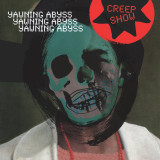
In the five years since Creep Show’s acclaimed Mr Dynamite album was released it’s fair to say that we’ve all been through a fair bit. Sitting here, in 2023, things don’t seem to be getting any better. There’s the cost of living crisis and political meltdowns; we're in deep water with global warming and to top it all there’s a war on our doorstep.
Back in 2018 everything seemed less complicated. Sure, there was stuff to get riled about, but we knew nothing about what was to come. Mr Dynamite was a fairground ride into the dark corners of a world that was on the brink of being blitzed in a blender. It was a record teetering on the edge. Five years down the line you’d expect the follow-up, Yawning Abyss, would double-down and bring the white-knuckled, teeth-gritted fury of the last five years to the boil. And yet….
A quick recap? No problem. Wrangler + John Grant = Creep Show. And Creep Show? “A band of musical misfits who have found a voice or two”, says Wrangler’s Ben “Benge” Edwards, whose Bond villain studio on the edge of a moorland is Creep Show Grand Central as well as home to an analogue synth arsenal that could sink ships.
Wrangler have known each other for a while. Tunng’s electronics wizard Phil Winter and Cabaret Voltaire’s trailblazing, pioneering frontman Stephen Mallinder go way back, while Phil and Benge crossed paths in the 21st century when they seemed to be increasingly in the same venues at the same times. Meanwhile, Mal had been living in Australia since the mid-90s and when, in 2007, he returned to the UK his old pal Phil suggested he meet Benge and the three of them immediately began working together.
Wrangler collectively bumped into Grant at their soundcheck for Sheffield’s Sensoria Festival in 2014 where they were playing with Carter Tutti. A friendship blossomed and when they were invited to perform together for Rough Trade’s 40th anniversary show at London’s Barbican in 2016, well, they jumped at the chance... and Creep Show was born.
Let’s talk about the new album... What is the ‘Yawning Abyss’? You might well ask. According to Mal, it’s “a cosmic event horizon that I can see from my attic window when stand on a chair”. Yeah. Thanks.
“On this album”, offers Benge, feet firmly on the floor, “Wrangler wrangled some vintage synths, mostly Roland, Moog, and the ‘Crystal Machine’ - then John Grant joined in the fun at Memetune Studios where lots of musical experiments were carried out. Then Mal and John ran off to Iceland with the master tapes and recorded a load of madcap vocals. Back at Memetune, me and Phil were left to try and make sense of it all. Which wasn’t hard because what they did in Iceland was totally magnificent.”
Which kind of brings us back to where we began. You’d imagine ‘Yawning Abyss’ would be blowing steam out of its furious ears. Mr Dynamite but kicking a wasps nest. Repeatedly. And yet…
Opener ‘The Bellows’ comes on like a modular ‘Radio Ga Ga’, the singalong ‘Moneyback’ (“You want your money back? / I didn’t think so”) sounds like Godley & Creme’s ‘Snack Attack’ meets Prince Charles And The City Beat Band (“Pennies, pounds, dollar bills, signed agreements, death wills”). ‘Yahtzee!’ is an unhinged electro breakdance party in four minutes and nine seconds.
Where Mr Dynamite was menace, a mélange of mangled voices, with Grant and Mallinder being heavily treated, pitched up or down, rendering their contributions largely indistinguishable, Yawning Abyss takes a more direct approach. You hesitate to say feelgood, but there’s a skip in the step here for sure.
The title track plays John Grant’s vocal straight. Completely. It’s good, so very good. Like ‘Axel F’ covered by Vangelis. The delicious shimmering synths of ‘Bungalow’ also plays those Grant pipes with a straight bat. ‘Matinee’ delves into darker, very funky territory. With Mal upfront it comes on like ‘The Crackdown’. Choice lyric: “You are starting to breakdown / And it’s so fun for me to see / You should have thought of that / You should have come prepared / You can see what’s happening and you look a little scared”.
So, you know, not all feelgood. But it does feel good. It’s probably best to draw your own conclusions... This is Creep Show after all.
Das 5. Studioalbum von Django Django trägt den Titel ”Off Planet” und besteht aus 21 Titeln, die in vier Teile aufgeteilt sind. Ursprünglich sollten es vier experimentelle EPs werden, die aber schnell in ein richtiges Album verwandelt wurden, als die Band das Potenzial der Aufnahmesession erkannte. ”Off Planet” enthält einige der aufregendsten und dynamischsten Stücke, die Django Django je produziert haben. Das Album ist eine Rückbesinnung auf ihre experimentellen und elektronischen Wurzeln und enthält außerdem spannende Gastauftritte von Self Esteem, Jack Penate und vielen anderen.
Jeder Teil des Albums wird digital veröffentlicht und am Tag der Veröffentlichung des vierten Teils wird das gesamte Album auf Doppel-Vinyl und Doppel-CD erscheinen.
Marco Vella and Anth Wendt step up to International Feel with a five-track EP of Balearic-tinged bliss for their first collaborative release as Other Mother.
There’s definitely something in the air round the Adelaide Hills. Longtime friends Marco (aka Body Corp) and Anth (aka Oisima) finally got together in Anth’s studio after the pandemic and the result is Numero Uno an EP of laidback synth guitar and drum machine workouts mixing 303 riffs and sunsets for a supremely low-slung vibe.
After cruising around the Hills in the day the pair worked on tracks by night and their carefree days soaking up the sun shines through. Opening track About Time sets a steady pace with its lush delayed guitars slow-rising acid melody and hefty sub perfect for Sunday pub garden appreciation. A side closer Zwang! drops the tempo but brings the percussion into focus for another masterclass in tension and release with interwoven 303s and dub feedback.
Side B keeps the beach-side atmos flowing with guitar licks working around sumptuous synth chords for Anyway Music - a song that’s the ultimate soundtrack understated parts fitting together seamlessly in service to the feeling and belying the technique required. Lost In The Forest makes use of expansive ambient pads synth riffs and shakers to evoke a sense of wonder sunlight coming through the trees.
The EP concludes with Where’s The Fifty a dreamy piece of drum synth phrases and 303 interplay that perfectly characterizes Marco and Anth’s collaboration - two musicians and producers playing to serve the song. They write elements that combine for a harmonious whole greater than the sum of its parts. This is the underlying feel of Other Mother and Numero Uno - we’re all in this together - and by working collaboratively a brighter future might just be around the corner.
out of Stock
Last delivered 2 years ago available to reorder, subject to availability
Wiederveröffentlichung des Umse Albums aus dem Jahr 2008 als Vinyl! Das 2008er Konzeptalbum des Ratinger MCs ist durchweg an eine Tageszeitung angelehnt. Seinem eigenständigen und ebenso intelligenten wie humorvollen Stil ist Umse hier durchgängig treu geblieben - nicht zuletzt dadurch konnte er sich stets deutlich vom aktuellen Hip Hop-Geschehen in Deutschland abheben. Chefredakteur Umse nähert sich auf diesem 12 Song-starken Konzeptalbum sämtlichen Themen von "Politik" und "Wirtschaft" über "Kontaktanzeigen" hin zum "TV Programm", dem "Wetter" oder den "Todesanzeigen" mit einem Augenzwinkern: Als Aufhänger dienen all seine persönlichen Erlebnisse zwischen bundesweiten Liveauftritten bis hin zum Fernsehabend auf der Couch. Umses technisch versierter, leidenschaftlich kreativer und perfektionistischer Schreibstil lädt den Hörer hierbei zur akustischen Langzeitlektüre ein. Die Beats auf "Rheinisches Blatt" stammen von Deckah, Firstar, Tesk und DJ Radrum. Besonders die Verwendung zahlreicher Vokal-Schnitte aus der ersten Golden Ära Hip Hops deutscher Machart, machen "Rheinisches Blatt" zu einem Hip Hop-Album klassischer Prägung, mit welchem die Fans der ersten Stunde definitiv ihre Freude haben werden.
Die Power Metal-Szene braucht einen Einlauf - und dieses Album ist einer!
Das neue Album "Out Of The Dark" von FROZEN LAND ist Power Metal der alten Schule - Punkt.
Es ist ein feuchter Traum für alle, die in den 90er Jahren angefangen haben, Power Metal zu hören. Es gibt keine Füllstücke. Es gibt keine nicht-eingängigen Refrains. Es gibt keine langweiligen Gitarrensolos.
Nach der letzten Veröffentlichung machte die Band eine 4-jährige Pause.
Und warum? Weil sie in dieser Zeit ihre Depressionen überwanden - laut augenzwinkernder, eigener Aussage, half LSD dabei - daher auch der Name des Albums, "Out Of The Dark".
Das Album ist im Grunde ein 7 Songs umfassendes Gesamtkunstwerk im traditionellen Power Metal-Sinne.
Aber bei den letzten 2 Tracks wird spannend! Tuomas hat eine perverse Vorliebe für Eurodance der 90er Jahre, was bereits durch das Cover von E-Types "Angels Crying" auf dem Debütalbum der Band durchschimmerte.
Auf diesem Album dachten FROZEN LAND nun, sie nehmen das Hedt selbst in die Hand und mischen Eurodance mit Metal. Nehmt es nicht zu ernst... FROZEN LAND tun das auch nicht!
Die Power Metal-Szene braucht einen Einlauf - und dieses Album ist einer!
Das neue Album "Out Of The Dark" von FROZEN LAND ist Power Metal der alten Schule - Punkt.
Es ist ein feuchter Traum für alle, die in den 90er Jahren angefangen haben, Power Metal zu hören. Es gibt keine Füllstücke. Es gibt keine nicht-eingängigen Refrains. Es gibt keine langweiligen Gitarrensolos.
Nach der letzten Veröffentlichung machte die Band eine 4-jährige Pause.
Und warum? Weil sie in dieser Zeit ihre Depressionen überwanden - laut augenzwinkernder, eigener Aussage, half LSD dabei - daher auch der Name des Albums, "Out Of The Dark".
Das Album ist im Grunde ein 7 Songs umfassendes Gesamtkunstwerk im traditionellen Power Metal-Sinne.
Aber bei den letzten 2 Tracks wird spannend! Tuomas hat eine perverse Vorliebe für Eurodance der 90er Jahre, was bereits durch das Cover von E-Types "Angels Crying" auf dem Debütalbum der Band durchschimmerte.
Auf diesem Album dachten FROZEN LAND nun, sie nehmen das Hedt selbst in die Hand und mischen Eurodance mit Metal. Nehmt es nicht zu ernst... FROZEN LAND tun das auch nicht!
Ctrls lands on Mechatronica, and fiercely mutates forward-thinking electro with machinist bass music into a cold-blooded and carefully programmed record, for the mind and for the floor.
out of Stock
Last delivered 2 years ago available to reorder, subject to availability
The next chapter of the Natural Information Society is here. Since Time Is Gravity, credited to Natural Information Society Community Ensemble with Ari Brown, presents a newly expanded manifestation of acclaimed composer & multi-instrumentalist Joshua Abrams nearly 15 year, 7 albums &-counting flagship ensemble. Joining the core NIS of Abrams (guimbri & bass), Lisa Alvarado (harmonium) Mikel Patrick Avery (drums) & Jason Stein (bass clarinet) are Hamid Drake (percussion), Josh Berman & Ben Lamar Gay (cornets), Nick Mazzarella & Mai Sugimoto (alto saxophones & flute), Kara Bershad (harp) & Chicago living legend of the tenor saxophone Ari Brown. Recorded live to tape at Electrical Audio & The Graham Foundation, cover painting Vibratory Cartography: Nepantla, by Lisa Alvarado. 2xLP on Eremite USA, 2xLP & CD on Aguirre/Eremite Europe. Out 14-04.
Since first developing Natural Information Society in 2010, Joshua Abrams has been gradually expanding the group’s conceptual underpinnings, its musical references & the sheer number of the group’s members. Its music is, in a sense, an expansive form of minimalism, based in repeated & overlaid rhythmic patterns, ostinatos & modality. Its roots, its scale & its meaning become clearer in time. If time is gravity, it also allows us to carry more. Having begun as fundamentally a rhythm section with Abrams’ guimbri at its core, the version here can stretch to a tentet, including six horns.
Abrams has been expanding his minimalism gradually, but he has long understood a key to minimalism’s potential: the breadth of its roots in the late 1950s & early 1960s, ranging from the dissatisfaction of young European-stream composers with the limitations of serialism to the simultaneous dissatisfaction of jazz musicians with the dense harmonic vocabulary of bop & hard bop. The former began exploring rhythmic complexity & narrow tonal palates in place of harmonic abstraction (Steve Reich’s Drumming, Philip Glass’ Music with Changing Parts; perhaps above all Terry Riley’s In C & his late ‘60s all-night organ & loop concerts); the later reduced dense chord changes to scales (signally with Miles Davis' Kind of Blue, but rapidly expanding with John Coltrane’s vast project). In the 1950s the LP record opened the world with documentation of Asian & African musics, key influences on both minimalists & jazz musicians. If John Coltrane’s soprano saxophone suggested the keening shehnai of Bismillah Khan, the instrument was rapidly taken up by two key minimalists, LaMonte Young & Riley, similarly appreciative of its flexible intonation, the same thing that kept it out of big bands.
If the guimbri, the North African hide-covered lute that Abrams plays with NIS, involves a rich tradition of hypnotic healing music associated with the Gnawa people, Abrams’ music also touches on other musics as well — other depths, memories & healings, different drones, rhythms & modes. As the group expands on Since Time Is Gravity, he has made certain jazz traditions in the same stream more explicit as well. If there is a mystical & elastic quality involved in the experience of time, both in direction & duration, you will catch it here. The parts for the choir of winds expand on the roles of Abrams’ guimbri, Mikel Patrick Avery & Hamid Drake’s percussion & Lisa Alvarado’s harmonium: at times, the winds are almost looping in the tentet version, each hitting a repeating note in turn, at once drone & distinct inflection on temporal sequence. The brilliance of the work resides in Abrams’ compositions, the NIS’ intuitive execution & in Ari Brown’s singular embodiment of the great tenor saxophone tradition, including the oracular genius of Eddie “Lockjaw” Davis, & Yusef Lateef. The three pieces by the expanded NIS featuring Brown —the opening “Moontide Chorus” & “Is” & the ultimate “Gravity”— have an immediate impact, & togther might be considered a kind of concerto for tenor saxophone. Here Brown presses almost indistinguishably from composed melody to improvised speech, getting so close to language that he might have a text. Everything here is a sign. Note the tap of the Rhythm Ace that links “Moontide Chorus” to “Is”, the attentive heart always present, even when signed by a machine. There’s a link here to the methodologies & meanings of dub music & the linear & vertical collage of beats, textures & tongues: treated with reverence, a sample of a beat-box can be as soulful, as hypnotic, as a mbira or a tamboura. If those pieces with Brown are heard as a suspended concerto, the three embrace & enfold the other works, like the sepals of a flower. That placement will also touch on the mysteries of our perception of time.
Particularly in “Is”, but elsewhere as well, a phenomenon of transcendence arises in which time appears to be tripartite, at once moving backwards & forwards & standing still. This is an act of technical brilliance certainly, but also an illumination of music’s ability to represent temporal consciousness through polymetrics. This particular listener has only heard it before in a few places, including the horn shouts & bowed basses of Coltrane’s Africa, in moments of Charles Mingus’ The Black Saint & the Sinner Lady, in certain pieces where tapes were literally running backwards, & earlier still in Dizzy Gillespie’s Cubana Be, Cubana Bop, in which the composer George Russell & conguero Chano Pozo found a music that spoke at once in the voices of Stravinsky’s Rite of Spring & the vestigial rites, rhythms & songs of the Yoruba language & Santeria religion of inland Cuba.
In Joshua Abrams’ compositions & the realization of them by the NIS, in the time of one’s close listening & memory thereof, distinctions between the “natural” & the “social”, the “quotidian” & the “transcendent” are erased, suspended or perhaps irrelevant. Consider two of the ensemble pieces, one named for nature, the other social science. In “Murmuration” the repeated wind figures of flute & alto saxophone combine with the interlocking patterns of harp, guimbri & frame drum (tar) to create a perfect moving stillness, not an imitation but a witness to the miracle of the starlings’ astonishing collective art, a surfeit of beauty that might be the ultimate defense tactic.
“Stigmergy” takes its name & concept from the Occupy movement’s Heather Marsh, who proposes a social system based on a cooperative rather than competitive models, one in which ideas are freely contributed & developed as ideas rather than an individual’s property. In its form, Abrams’ “Stigmergy” is the closes thing to traditional jazz, a series of accompanied solos by each of the wind players. However, the composed accompaniment is a radically collectivist notion: a repeated rhythmic figure, call it ostinato or riff, in which the different winds each play only a note or two of the figure, a concept both more collectivist & individualistic in its conception than any typical unison figure. It suggests another of the underlying recognitions that propel the Natural Information Society, the group as social organism, the teleology of hypnotic anarchy, all parts in place, functioning systematically, evolving & expressing itself, its nature & society, as a transformative organism.
George Lewis has described music as “a space for reflection on the human condition”. This suggests that, rather than a “distraction”, at least some music might serve as a distraction from distraction. It’s a focus, a clarity, a awareness, an external invitation to interiority, as if music itself is a model for form & contemplation, an organism contemplating for us or as us. If that is a possibility, & I am sure I have heard such musics, than this music is among them. How many of our rhythms, melodies & harmonies (cultural, historical, biological, psychic) might such music carry, translate & transform in the particulate ecstasy of our own murmuration? (Stuart Broomer, April 2022)
out of Stock
Last delivered 3 years ago available to reorder, subject to availability
*The product of a move from South Carolina to Berkeley, CA and the subsequent extended separation from loved ones, Toro Y Moi's third full-length, Anything in Return, puts Chaz Bundick right in the middle of the producer/songwriter dichotomy that his first two albums established.
*There's a pervasive sense of peace with his tendency to dabble in both sides of the modern music-making spectrum, and he sounds comfortable engaging in intuitive pop production and putting forth the impression of unmediated id.
*The producer's hand is prominent- not least in the sampled "yeah"s and "uh"s that give the album a hip-hop-indebted confidence- and many of the songs feature the 4/4 beats and deftly employed effects usually associated with house music. Tracks like "High Living" and "Day One" show a considerably Californian influence, their languid funk redolent of a West Coast temperament, and elsewhere- not least on lead single, "So Many Details"- the record plays with darker atmospheres than we're used to hearing from Toro Y Moi. Sounding quite assured in what some may call this songwriter's return to producer-hood, Anything in Return is Bundick uninhibited by issues of genre, an album that feels like the artist's essence.
*Born and raised in Columbia, South Carolina, Chaz Bundick has been toying with various musical projects since early adolescence. Having spent his formative years playing in punk and indie rock acts, his protean Toro Y Moi project has been his vessel for further musical exploration since 2001. During his time spent studying graphic design at the University of South Carolina, Chaz became increasingly focused on his solo work, incorporating electronics and allowing a wider range of influences- French house, Brian Wilson's pop, 80s R&B, and Stones Throw hip-hop- to show up in his music. By the time he graduated in spring 2009, Chaz had refined his sound to something all his own. Music journals across the board touted his hazy recordings as the sound of the summer, and he released his debut album, Causers of This in early 2010.
*Since then, Bundick has proven himself to be not just a prolific musician, but a diverse one as well, letting each successive release broaden the scope of the Toro Y Moi oeuvre. The funky psych-pop of 2011's Underneath the Pine evinced an artist who could create similar atmospheres even without the aid of source material and drum machines. His Freaking Out EP, a handful of singles and remixes, and a retrospective box-set plot points all along the producer/songwriter spectrum in which he's worked since his debut, and Anything In Return is another exciting offering that shows he's still not ready to settle into any one genre.
out of Stock
Last delivered 3 years ago available to reorder, subject to availability
French electronic post-punk/krautrock trio Veik recruit Sonic Boom and Vanishing Twin to reimagine tracks from their 2021 debut album, 'Surrounding Structures'. Both remixes have been pressed to wax by Fuzz Club, due out June 9 2023 on a heavy clear-blue 7" limited to 250 copies. On the A-side Sonic Boom (aka Pete Kember of Spacemen 3 and Spectrum) takes album-opener 'Difficult Machinery' and deconstructs it into a spaced-out, oscillating drone. Shifting gear on the B-side, 'Honesty (I Don't Wanna Know)' was already a piece of throbbing and discordant proto-punk and on this remix London psych-pop experimentalists Vanishing Twin turn it into an even more abrasive and unpredictable beast. Now being revisited via these remixes, Veik's 'Surrounding Structures' album was rooted in avant-garde krautrock and 70s no wave and inspired by brutalist and modernist architecture. It came highly praised by the likes of Loud & Quiet, Line of Best Fit, Louder Than War, BBC 6 Music, KEXP, France24, France Inter and more.
Exotica, ye-yé cumbia, guaracha infused twist, rock’n roll mambo, Spanish rumba, boogaloo beat, tropical garage and other unexpected bastard genres are featured in this festive compilation of bizarre hits taken from the glorious catalog of records released during the 60s and 70s on the Peruvian label Discos MAG. Some clearly unite genres, others are projects with creative names, but all are bold musical initiatives that got and will always get people onto the dance floor. “Sabroso Go Go” brings together fourteen musical mixes created in the recording studios of Manuel Antonio Guerrero (MAG), in which music directors combine rhythm with alchemy in a quest to find the philosopher's stone of the dance. Exotica, ye-yé cumbia, guaracha infused twist, rock’n roll mambo, Spanish rumba, boogaloo beat, tropical garage and other unexpected bastard genres are featured in this festive compilation. Although this compilation begins in 1957, experiments like this (some more memorable than others) were not new in Peru. The songs on this album were however much more successful hybrids. Some clearly unite genres, others are projects with creative names, but all are bold musical initiatives that got and will always get people onto the dance floor. At the end of the fifties, rock music shook the foundations of Peru, and orchestras rushed to cover hit songs and explore the possibilities of mixing them with tropical music. Lucho Macedo's orchestra took up the mantle and reinterpreted a well-known guaracha by Celia Cruz ('Rock and Roll') in mambo style, renaming it 'Rock and roll Mambo'. 'Maestro de Rock and Roll', a hit by the Cuban Conjunto Casino, received similar treatment. Another mix in this vein is the rock tune 'El Rock de los Chinos' by the Mexican Manolo Muñoz (author of 'Speedy González') recorded by the Chilean Choche Mérida for MAG in 1961. The following year, Chubby Checker’s 'The Twist' hit the scene and was immediately fused with guaracha by maestro Nelson Ferreyra. A legendary MAG musician, Carlos Pickling, composed 'La Charanga del Espacio' in 1963. The space sounds are produced by Pickling and his inseparable Hammond. He himself is the one who leads the orchestra that accompanies Benny Del Solar, Lita Branda and Pablo "Melcochita" Villanueva in the tropicalized version of Spanish Rumba, when the beats of the Iberian rumba were still exotic in South America. Around that time, the Chilean Willy Marambio was already living in Lima. In the track included on this album, the go-go style showcases his virtuosity on the trumpet. Another outstanding trumpet player, Roberto "Tito" Chicoma from Chiclayo, played as a session musician with MAG from 1959. A few years later, he became one of the most popular Colombian cumbia players, a talent he demonstrates in the song on this compilation, which blends the fun of go-go with yé-yé beats. 'Batijugando' was a hit from Mexico and was played in all the rhythms played across the Hispanic world since 1967. Inspired by the "Batman" series, it was performed at MAG by the Betico Salas orchestra, with vocals by the Panamanian lady crooner Nallye Fernández. 'Computador Electrónico' is another surprise on this album, performed by Panamanian vocalist Patty Pastel, it is the only known version in Spanish of 'Der Computer Nr. 3', originally sung in German by France Gall. Two other songs feature Edgar Zamudio. The versatility of Zamudio y Los Vikingos (originally a Chilean group) is demonstrated in the guitar-heavy song composed specifically for the late sixties skate fashion ('Go Go en Patines') and in his idiosyncratic protest song ('Día de Pago') performed in beat style. In the mid-seventies, Los Kintos, led by guitarist Francisco Acosta, developed different harmonic ideas in an instrumental track that veers from boogaloo to salsa, the fashionable rhythm of the day. Finally, in 1976, when the bumping hips dance craze swept the continent, Manuel Guerrero was quick to jump onto the bandwagon, composing a Bump song, together with his son Carlos. The Italian musician based in Lima, Luciano Luciani performed the song 'A Bailar Bump' backed by his band of local musicians Los Mulatos.
out of Stock
Last delivered 3 years ago available to reorder, subject to availability