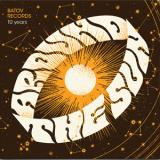
Around The Sun is a 23-track anniversary compilation marking ten years of Batov Records, featuring artists including Mulatu Astatke & Hoodna Orchestra, Sababa 5, Satellites, Boom Pam, MOMO. and Mamman Sani. The collection reflects the label's catalogue across Ethio-jazz, Anatolian psych, Mediterranean disco, contemporary jazz, instrumental music and other globally influenced styles. The release includes two Batov edits, several tracks appearing on vinyl for the first time.
Forty years of cassette releases, pressed for the first time on vinyl
First of two instalments exploring the previously unreleased sonic archives of one of Poland’s most enigmatic
living artists - with its first volume focused on his deep listening practice and spiritual reverie (recorded 1990–2013)
The last time Andrzej Dudek-Dürer took a banknote bearing the face of the Polish anarchist Jarosław Dąbrowski from his pocket to trade it for a pair of shoes was in 1969. He bought them for 120zł - the equivalent of 100€ today - and never replaced them since then. Only rebuilt them, year after year, drawing a needle and thread through the leather each time it split, closing one wound before the next one opened. It became a ritual of precision, stitching a record of another year into their soles.
That same year, in Wrocław, he arrived at a conclusion that would recalibrate everything that followed. Convinced he was the reincarnation of Albrecht Dürer, he adopted the surname Dudek-Dürer, stopped cutting his hair and began wearing the same garments every day. It was the first ritual of many, though he wouldn't have called it that yet. Look closely enough, over the decades, and it is always the same gesture, returning in different material: hair growing in a single unbroken strand, a needle drawing thread through leather, sitar strings pulled taut across a neck he built with his own hands and magnetic tape spooling forward inside the cassette boxes stacked against his walls.
None of this began in a vacuum. Dudek-Dürer emerged from the Wrocław neo-avant-garde, in a Polish art world where an exhibition could be cancelled overnight by the stroke of a censor's pen. In 1973, his exhibition Auto-crucifixion was shut down by the state, and for a time he found himself blocked from exhibiting his own art at all - the one force in his life that ever came close to cutting the thread.
He seemed to experience it differently. In 1974, after long, patient research into sitar craftsmanship, he built his first prototype with his brother, a knowledgeable luthier. In 1978, in a smoked-out jazz club, he took his first steps into sound recording with the unreleased album Jazz From Underground with his first band. By 1979, recognition started to travel further than he could.
Turning toward Far-Eastern philosophy, meditation and the idea of reincarnation was another language of freedom for him. It was a way of claiming an inner territory the state could not reach, a border it could not close. Mail Art served a parallel function, reaching further out: in a country that restricted travel and expression, sending and receiving art through the postal system became an act of quiet rebellion.
The body, in his understanding, is only an envelope readied for constant transformation. From this came Metaphysical Telepathy: during the years he could not leave Poland, he treated that confinement as a rehearsal room, sending his mind out ahead on the same thread his body would later follow. Living Sculpture grew from the same root with performances of stillness beside static art objects, until the boundary between the object and the man beside it simply dissolved. Camera Meditation extended the same instinct into photography: a shutter click flattening three dimensions into two so that a single instant could be held forever. Inspired by the pioneers of self-portrait photography like Robert Cornelius, he used it to document time itself, and kept explaining to me: "You know. This is not about vanity. This is about observing time passing.”
The isolation did not end suddenly. It ended the way his own philosophy had already predicted it would, from the inside first. Mail Art quietly solved the problem politics couldn't. Correspondence built during years of confinement slowly worked its way through doors the state itself had kept locked. Contacts made through folded paper and stamps became invitations. Ultimately, invitations became passports.
In 1983 he made his first trip outside Poland, to Germany, in search of the audio technology he couldn’t get his hands on before. In 1985, he was invited by the Indian embassy in Poland to give a sitar concert on an instrument he had spent a decade patiently stringing together - half sitar, half tanpura, built from patience and determination. After the collapse of the People's Republic of Poland, the travels kept unspooling: South Korea, then Mexico, then Australia, Canada, New Zealand, Singapore, Japan and the United States - each stop leaving behind its own small knot of tape, tied off and carried home.
In the decades since, recognition arrived at the same unhurried pace: he conducted workshops at UC Berkeley, served as vice-president for artistic affairs of the Union of Polish Art Photographers and the Union of Polish Visual Artists between 2010 and 2014 and received the Bronze Medal for Merit to Culture - Gloria Artis. His visual work gradually entered collections including the National Museums of Warsaw, the Stedelijk Museum, Tate Modern, MoMA and the Venice Biennale. His musical practice, by contrast, never found that kind of room - left to circulate quietly, sharing his cassette tapes directly, waiting for someone willing to follow it further.
It took months before I could find a way to reach Andrzej Dudek-Dürer - his presence online is very close to nonexistent. Surprisingly, LinkedIn turned out to be the only door still open, a faintly absurd irony given everything else about him. I packed the strict minimum for a three-day trip and an empty notebook and made my way to Wrocław. His headquarters sits in the neighbourhood of Grabyszyn: a two-storey pre-war house that has belonged to his family for generations. The man who opened the door was long-haired, long-bearded, in his trademark leather shoes and patched jeans. We sat in his living room, in front of a computer where decades of recordings sat organised in cryptically named files, surrounded by books and objects that had arrived one layer at a time, leaving room for only two chairs in the middle. His shoes sat by the door, rebuilt so many times they had become their own quiet sculpture. Cassette tapes filled boxes against the walls, almost unlabelled, each one a spool of thread holding decades of sound that had never once been asked for, until now.
I listened for hours: meditating in front of strangers on the porch of a Seoul temple until the tourists stopped taking photos and simply waited with him; a stand-off with border guards at the US–Mexico crossing over an instrument they couldn't identify and didn't trust; a session with the Stockhausen family that he still, decades later, describes like it happened last week. All of it interrupted, occasionally, by the smell of soup boiling and fresh bread warming on the ceramic stove. After two days, it felt like being handed the end of a very long thread and asked, gently, to keep following it. I left with a USB drive holding his full discography, signed with his unmistakable signature.
Astral Meditations From A Living Statue is a length of that thread, drawn out from the boxes stacked against his walls - recordings gathered from different rooms, different countries, different decades. This first record breathes slowly: incense-thick, meditative, built for stillness. A cutting-edge séance in outer space where machines learn how to dream.
It begins with the neo-classical improvisations of Andrzej, space-delayed, recorded at Klub Muzyki i Literatury in Wrocław in 2002. 'When..So' opens the curtains with a deep-rooted meditation accompanied by slow-decaying piano figures illuminated by a candle-lit spirit gathering.
Los Angeles, 1990: a dormant villa, a grand piano, the voice of Bonnie Barnett. 'Exception' is captured in a single room, in a single afternoon - voice and keys circling each other, neither one leading, until the silence between the notes starts to feel like the instrument.
'The Meta...' and 'Tired Of...', recorded at Studio Morandi in Ponte Nossa, Italy, in 1992, settle into a sitar drone built entirely from patience - overtones stacking and beating against each other, strung by a man who never once set foot in India. 'Mastery Of...' follows, recorded the same year at Studio Suski in Łomianki, pushing that same hum further still, until pitch dissolves into a spectral reverie. 'Transcendental Sound', from 2000, closes the first record in a slow bath of celestial frequency - better heard beside the shores of the Odra river.
More than fifty years after deciding that a life could become an artwork, Andrzej Dudek-Dürer continues to inhabit that decision. His shoes keep wearing thin against the earth's crust. His hair keeps growing, one strand at a time. His cassette tapes keep spooling in the dark of their boxes.
Now the thread finds its last shape: a single unbroken groove, spiralling inward from the outer edge to the label at the centre. Never cut - the way nothing else in his life ever was. Drop the needle and it will find that groove and follow it, the same way a needle once followed leather, once followed a border it couldn't cross, once followed string into an instrument that didn't exist until he built it. This record is the other end of a thread that has been travelling for fifty years. For the length of both sides, it rests here, in your hands. This is a timeless proof that the Lord of the New Age was never lost."
Von einer Band, die man liebt, wünscht man sich beides: dass sie überrascht und ganz sie selbst bleibt. Mit ihrem dritten Album "Ideale" gelingt Die Verlierer genau das. Was man von ihnen erwartet, scheint kaum eine Rolle zu spielen. Große Refrains, lange Stücke, Instrumentalpassagen und experimentellere Momente führen die Songs in unerwartete Richtungen. Zusammengehalten werden sie vom unverwechselbaren Sound der Band, der ihre Identität entscheidend prägt. Dazu kommt diese mitreißende Energie, die Die Verlierer seit ihrem ersten Album auszeichnet. Bei aller musikalischen Freiheit bleibt die Haltung stabil. Die Texte sind klar politisch: gegen Gier, Krieg und die Mächtigen, die entscheiden, Kasse machen und die Folgen anderen überlassen. (V.Varlet)
We are finally ready to unveil one of the most exciting projects we have worked on in our label's history: a new release by legendary disco project Hudson People, best remembered for their essential classic "Trip to Your Mind" - which just received its anniversary issue on our label!
Now it's time for "Hold On" - a brand-new single featuring several mixes based on an original recording from the late 1980s, with the completely unheard yet incredibly soulful voice of singer Rickey Owens, whom composer and producer Reginald Hudson worked with at the time.
When we first got in touch with Reg Hudson several years ago, we were originally interested in releasing his "Shake It - Make It Loose" album, which he recorded with John Davis (later known as one of the real voices behind Milli Vanilli). While talking about John Davis (RIP) and other great GI singers such as Karl Keaton, Reginald Hudson immediately mentioned Rickey Owens as one of the best singers he had ever worked with.
Of course, we had never heard of him, as none of his music had ever been released. But when Hudson showed us some old demos and sent us the original DAT recordings, we were immediately hooked.
"Hold On" was recorded in or around 1988 with a simple drum machine and keyboard accompaniment - essentially a demo intended to be recorded properly in a better studio. But the vocal performance was simply stunning, complete with beautifully recorded ad-libs. Owens had a truly remarkable, clear voice with an incredible amount of soul. Luckily, Hudson had his old DAT tapes digitized several years ago, so the acapella recordings survived in excellent shape.
We immediately reached out to several producers to create reworks of the track. The 12" EP compiles some of the most club-friendly of these new mixes - but there is more to come…
First up is Thomas Redfern, a senior producer, professional studio musician and keyboardist from London, UK. His version is a catchy, funky yet deep House track that could easily become a favourite on dancefloors around the globe. Redfern also blessed us with a dub mix that takes things even deeper.
But it gets even catchier on side B of the vinyl. Tom Quick sped up the tempo, added filters and delivered a rework that could make fans of Chromeo, Daft Punk, Stardust and any late-'90s French House afficionado go completely nuts. Yes, we mean it! With a fresh twist on the original, the track has a massive club appeal that we hope both DJs and dancers will dig.
The vinyl single is completed by a mix from German legend DJ Friction, whose version is based on synth layers from the Tom Quick mix. Friction added new drums and bass, giving the track the distinctive modern electro boogie funk vibe he is known for. His mix brings to mind classics such as Shannon's "Let the Music Play" and works of Freestyle's Tony Butler.
The vinyl 12" with 4 mixes is released on The Outer Edge's brand-new sublabel, 1st Floor Records, which focuses on more dancefloor-oriented material. More mixes are available digitally and should not be missed.
PR Feedback:
„Killer“ – Gilles Peterson
„Disco, deep house and boogie all in there! Superb!“ – Groove City Radio
„Dope!!“ – DJ Craze
„The boogie mixes are so good!“ – Selvagem
„Awesome and Huge Package“ - Leon El Ray
„Wow, Trip to Your Mind is so good and this is a real grower“ - Ibiza Sonica
„Really liking the Balearic & Redfern Mix, thanks!“ – Mystic Bill
„Both Thomas Redfern mixes are ace!“ – Deeper Shades of House
Bristol trio Jabu return with their first release for two years. Following on from their widely acclaimed third LP ‘A Soft and Gatherable Star’, this stand-alone double A-side Disco Mix 12” features four exclusive new tracks, while signposting fresh material currently being written, recorded and mixed for their forthcoming LP, due 2027.
If 2023 LP ‘Boiling Wells’ documented Jabu learning to be a live band, leaning into writing collectively in-the-moment, ‘A Soft and Gatherable Star’ took that record’s ad-hoc/mixtape blueprint, and fleshed out their transformation from an outfit rooted in hiphop and dubstep, to a guitar-based band with a unique take on dream-pop. It saw them described by The Face as “an experiential trio blending the raw edge of industrial dub with dreamy layers of ambient pop and shoegaze", and by The Wire as “like Mazzy Star remixed by The Mad Professor“.
Jabu have continued to grow in the space between releases, touring regularly for the first time, playing festivals such as Rewire and Le Guess Who?, and supporting the likes of Maria Somerville and AR Kane. Their extended live line-up now regularly incorporates those that contributed to ‘A Soft and Gatherable Star’, with new material often further developed as it gets passed back and forth between collaborators. Cellist Josh Horsley (Powders / Nightingale Floor) and multi-instrumentalist Will Yates (aka Memotone) both feature here, under the guiding hand of Birthmark’s mixing.
Titled after the rural, estuarine landscape bordering their Bristol hometown, ‘Severn Flood Plain’ sees the band pivot towards a more jagged and up-tempo, post-punk sound. It runs on a nagging drum machine pulse that feels closer to Joy Division than Sly Stone; while the echo-laced vocals and tremolo guitar phrasing hark back to the ‘50s slapback sound of Lee Hazlewood or Duane Eddy. Written and sung by Jasmine Butt, the lyrics describe a visit to a friend near the mouth of the Severn, and hint towards a darkness that can also be felt across that tidal landscape.
Dropping the pace to a languorous, sensual sprawl, ‘Where You Run To’ is plaintive and yearning, an opiated, ethereal flipside to ‘Severn Flood Plain’s more urgent, anxiety-laced opener. Alex Rendall’s vocals glide over a stripped, metronomic backdrop, eventually entwining with Memotone’s ghostly, processed clarinet.
If the band’s musical reference points appear to have shifted, their process remains indebted to dub and still very much rooted in the multicultural cross-pollination peculiar to their home city of Bristol. Both tracks are extended, with dub versions courtesy of Birthmark. The band sat in on those sessions, completing the circle that began with J’s on-stage mixing of their live sets. The strands provided by Will and Josh provide introspective counterpoint to the sound system leanings.
Jabu’s influences are threaded together as naturally here as on their long-running NTS radio show, ‘Music For Lovers’, which now occasionally guests on the Early Bird show slot. They are due to play World of Echo’s ‘Expected Music 2.0’ at London’s Walthamstow Trades Hall on 21st November with Loopsel, Insides, Giulio Erasmus, Thomas Bush, and Raime amongst others.
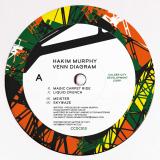
Hakim Murphy, Venn Diagram, four cuts on one twelve. Old Detroit machine funk meets old Chicago swing, no reinvention needed. Straightforward drum programming, straightforward intentions, nothing chasing trends here. Does what it says. Solid.
Channeling his honed sample craft towards the ominous portent of modern times, Romare returns with his fifth album Oblivion, with the previous 3 out of 4 LP's appearing on Ninja Tune. Across a suite of downtempo, broken beat, bubbling grooves and brooding reveries Archie Fairhurst threads a narrative that wrestles with the big questions of the present moment — the tipping points of the planet and technology, the fight for social justice and the power structures that govern our existence. While his trademark source material continues to cast a long line back through recorded history, this is Romare at his most contextual.
Nothing is placed by accident. 'Machines' hums its throbbing 4/4 pulse along to a German language recital of Johann Wolfgang von Goethe's 'Blessed Longing' — an enduring reflection on the human condition that rings true from way back in the 19th Century when it was written. 'Computer Love' slinks into a sumptuous trip-hop lull laced with sci-fi flourishes sculpted from samples of old computer documentaries — a bittersweet romantic backdrop to our complicated situationship with the devices in our lives. 'Take Us' goes one step further on its hard-stepping boom-bap strut as a subtle tale of possession by screens unfolds around Romare's signature strain of technicolour mutant funk.
There is space for optimism in the message on Oblivion as well — the strength of the suffragettes as a benchmark for social justice and activism amidst the speakeasy slink of ‘Deeds, Not Words', and spring-loaded acid house joint 'Change' pointing to the need for positive action in the face of imminent calamity.
The artwork for the album follows Fairhurst's thought process, drawing on Edvard Munch's iconic 'The Scream' along with Philippe Halsman and Salvador Dali’s ‘Voluptuous Death’ to help render the ideas of the album visually.
The wild ride of Oblivion races towards a final beguiling opiate on 'The Last Lullaby' — the perfect sedative after the rush of information and emotion that comes with a full-length trip through Romare's vivid, uniquely creative world of sound.
Rich Oddie of Orphx and Alex Pi of Pi Electronics introduce Anaxia, a new project arriving on Veyl with the 7-track LP “Maska”.
Built from raw electronics, stripped-down drum machines and a stark post-punk pulse, the record sits somewhere between industrial pressure and the ghostly minimalism of Suicide. It is direct but shadowed, physical but restrained, with vocals from Oddie and Pi cutting through the machinery rather than sitting on
top of it. Oddie’s background in Canada’s industrial underground and Pi’s long-running connection to the Greek electronic scene meet in a sound that feels tense, reduced and fully intentional. KAOSMOS and Florian Engerling add additional vocals, while remixes from In Trance 95 and Veyl regulars Years of Denial extend
the material into darker, more hypnotic territory. With “Maska”, Anaxia deliver a debut that feels fully formed: nocturnal, focused and stripped to its essentials. A natural fit for Veyl, the record draws a line between post-punk, industrial electronics and body music without overexplaining itself.
Superkill Records' debut release introduces Seoul-based producer Baeyoon, whose four-track EP opens with "Doxa," already played out by Derrick May during one of his recent tours in Japan. Baeyoon's sound layers melancholic, romantic pads over heavy kicks and basslines, stacking intricate arpeggios and irregular drum work into a retro-futurist take on Detroit techno. That tension between soft and machine-driven is the EP's throughline — uplifting, colourful and true to its lineage.
LowMoneyMusicLove coming through with some new friends. Volume 3 brings together TC80, Saharty, Ivo Reiderman and JJ Fortune for four distinct cuts.
TC80 opens with sleek, restless machine funk before Saharty takes things somewhere rougher and more twisted. Ivo Reiderman brings a brighter, sun-dazed energy to the B-side, with JJ Fortune rounding things off in his unmistakable style - low-slung, shadowy and quietly menacing.
New friends, proper grooves, "LowMoney feeling". Vinyl only.
Macedonia's own Stojche is Fuse's next guest for the club's freshly made imprint. The long standing DJ and producer has been known to keep Detroit's playfully hybrid style as the focus of his work and 'Metaphor' is the case in point. His four tracks bounce through a nostalgic balance of techno, house, and more with a modern crisp. A refreshing take on club music, Stojche keeps techno's sometimes nonchalant attitude at arms length with a charismatic record that hits its mark with every measure.
The record's first track 'Counterpunch' features heavily lined percussion but still brews up a storm far and wide with resonant dub stabs and open hi hats. The drum machine boasts a full spectrum, rolling through a light show of melodic flashes, perfect for a room compressing soundsystem. The maximalist, vintage detail that Stojche brings to his compositions blurs the lines between classic genres in a time of hasty hybridization, which gives it a sort of authenticity that can't be taken for granted. 'Chordal Tribe', on the other hand, raises the general euphoria of the EP. Luring in the listener with bright pads and full-on drums, Stochje's work is reliable main slot material that adds color to any mix while providing a persuasive low end. Shimmering hi hats give it an ethereal quality making it an appropriate interlude for almost any context. Moving on to the B side, the producer sharpens up his rhythm and emphasizes the hardgroove influence in 'Signal Drive'. Softening the pace of his drums with free use of melodic chord stabs, Stojche opens up his dance floor for a crowd bonding record once again, complete with filter transitions and pummeling toms. As the final contribution, his title track 'Metaphor' begins with a more obscure opening to conclude his EP for Fuse. Leaning more to a techno cut, the record remains flamboyant as ever with open hats and rides shuffling through his arrangement. A muted main synth becomes apparent to focus the energy of the track while allowing for liveset-like drum flickering to take shape beneath, claiming the immortality of old club records with the technical precision of a seasoned modern producer.
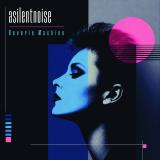
With their sixth studio album, ASN reveal a project in full command of its identity. “Reverie Machine” moves confidently through the many shades of post-punk, grounding its sound in analogue textures while embracing the electronic foundations of dancefloor-oriented wave.
Founded by Libero Volpe in 2007, the project now features Lorenzo Ceccarelli on bass, Alessio Rossetti on guitars and Gianpaolo Cesarini on analogue synths. Together, they carry ASN’s original fascination with kosmische music, science fiction and distant futures into a fully realised interplay of synthesizers, guitars and bass.
Across the eight tracks that make up this outstanding album, dreamlike instrumental passages meet darker songs shaped by evocative vocals, allowing atmosphere and melody to guide the journey. Rooted in the ’80s yet driven by its own imagination, “Reverie Machine” brings these influences together with the assurance and depth of a band at its most mature.
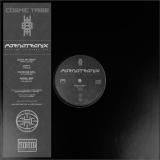
This new series is an atemporal series: Spicy Electro. Sexy vibes. Ecstatic sounds.
PORNOTRONIX brings together Dark Vektor, X-Truder, DJ Overdose and Calagad 13, turning this concept into music through machine funk, raw grooves and contemporary Electro. Four distinctive artists, four different approaches and one shared language where attitude, rhythm and underground spirit converge into a timeless Electro experience.
Der legendäre Euro-Disco-Klassiker „Slice Me Nice“ von Fancy erscheint als exklusive farbige 12“ Maxi Single in einer besonderen Edition für Sammler und Fans des kultigen80er-Jahre-Sounds.
Neben den beliebten Originalversionen enthält diese Veröffentlichung eine Auswahl brandneuer, moderner Remixe von renommierten Produzenten und DJs wie Pulsedriver, Brave, Flemming Dalum, DJ CON-T und Neospace. Die neuen Interpretationen verbinden den unverwechselbaren Charme des Originals mit zeitgemäßen Dance- und ClubSounds und machen diesen Klassiker fit für die Tanzflächen von heute.
Ob für DJs, Vinyl-Liebhaber oder Italo-Disco-Fans – diese 12“-Maxi bietet die perfekte Mischung aus Nostalgie und modernen Beats und ist eine unverzichtbare Ergänzung für jede Sammlung
From the co-writer of the iconic Hardcore Uproar, Suddi Raval arrives on Hello World Records with his debut EP — a five-track electronic journey that moves effortlessly between disco, electro, experimental electronics and analogue-fuelled psychedelia.
At the heart of the release is “Laser Beams and Mirror Balls”, the EP's titular track, reimagined by superstar DJ and producer Justin Robertson, who takes the neon-charged original and pushes it into new disco dimensions with his unmistakable production touch.
The journey begins with Robertson's remix before moving into the original French-vocalled version of “Laser Beams and Mirror Balls” — a hypnotic, pulsating slice of electronic disco that sets the tone for what follows.
On the flip side, “Oni Strangler” takes a darker, more hypnotic and exotic turn, drawing the listener deeper into Raval's richly textured electronic world. “Robot Computer” follows with a growling bass machine of electronic stabs, warped drones and relentless low-end energy.
Closing the EP is “Zub Sierra”, a spaced-out voyage through a dubbed-out otherworld before descending into deep, resonating electro synths — the kind of beautifully unpredictable analogue textures that only an analogue Odyssey can deliver.
Across all five tracks, Raval combines electro-flavoured rhythms with a kaleidoscope of electronic textures, forging pulsing basslines, hypnotic melodies and richly layered soundscapes. It's an EP that feels both rooted in the electronic music traditions that have influenced him and entirely of its own time.
Five tracks. One electronic journey. From laser beams and mirror balls to analogue odysseys and robot computers.
We have reached the final chapter of Kontra-Musik Records' 20th-anniversary celebrations - a busy and rewarding year filled with new releases, represses, club nights, festival appearances and tours. To bring the year to a fitting close, Andreas Tilliander, aka TM404, has once again teamed up with label head Ulf Eriksson for a new limited, vinyl-only 12-inch. Entitled Tjugo (Twenty), the EP sees the duo return to their dusty, machine-driven sound. It opens with Navet, a deep techno track built around rolling stabs, a melancholic organ chord and a solid bassline. From there, it moves into Ravet, a hissing, propulsive piece of minimal techno. The B-side is given over to Sjuhundrasjuttiosjuan, a slow, acidic bonnadub, to close of the year and the record.
Three decades deep and as essential as ever, Ralph Lawson's 20/20 Vision Recordings continues to mine its rich back catalogue with care. To that end, 'Full Circle Vol.3' feels both respectful and forward-facing with new mixes of enduring classics. Roman Flugel reworks 'Machine Life' into a driving club sound with fresh vocals and elastic acid lines, while MADVILLA sharpens 'Rhythm Freq' into a sleek hybrid of house, UKG and electro. Simon Baker's updated 'The Liptrick' retains its raw punch, and Formidable Force close with a warm, late-night dub of 'Reactivate'. It is a tidy reminder of the breadth and depth of sound this label has always dealt in.
Psyché is an eclectic project rooted in the Neapolitan music scene. Conceived in 2018, the project includes Marcello Giannini (Nu Genea Live Band, Guru, Bassolino, La Famiglia), Andrea De Fazio (Nu Genea Live Band, Parbleu, The Funkin Machine), and Paolo Petrella (Nu Genea Live Band, Fratelli Malibu). They were recently joined by Roberto Porzio (Parbleu, Fitness Forever, 24 Grana, The Funkin Machine).
"Hurriya (We Must Resist)" is a sonic bridge crossing the Mare Nostrum, connecting the shores of Naples and Tunisia.
At the heart of this fusion is the voice and soul of Tunisian musician Ziad Trabelsi, whose Arab roots intertwine with the psychedelic, Mediterranean sound of Psyché.
In this track, Afrobeat and Arabic sonorities meet to create a hypnotic journey, one where Ziad's oud weaves an evocative groove that gallops like horses in the desert.
The song carries the echo of the ancient dominations and cultural exchanges that have shaped Naples—a millennia-old crossroads of civilization—where traces of Arab and North African influences continue to resonate in its streets and, most notably, in its music.
"Hurriya"—the Arabic word for freedom—is an anthem of resistance and resilience, a dialogue between East and West that dissolves the rigid boundaries of geography and politics. It is a collective song for the freedom of all peoples, against oppression, abuse, and injustice everywhere in the world. As Psyché emphasize: "Even if life tests us severely, and we often feel like giving up in the face of injustice, we must resist. We must refuse to disappear."
The single is available digitally and physically, on January 23rd, as a 7" vinyl. The B-side of the physical release includes an exclusive, extended version of "Hurriya (We Must Resist)", available only in this format.
Year 3673. The frequencies have taken hold. What began as scattered transmissions from the underground has become an infection. Across the dead zones, abandoned receivers flicker back to life. Forbidden rhythms bleed through the static. Citizens once numb to the Global Order's neural grip are beginning to move again. But something else has awakened with them. Deep beneath the ruins, an unknown signal has begun answering SHIFT's transmissions. Its origin is untraceable. Its frequency predates the network. Those exposed report visions, lost time and an uncontrollable urge to follow the sound. The Global Order calls it contamination. SHIFT calls it evolution. A new generation has been born into the resistance; raised on distorted circuitry, machine funk and frequencies never meant for human ears. The signal is spreading. Do not adjust your receiver.