Nachpressung in neuen Farb-Kombinationenen des aktuellen Fu Manchu-Werkes! The Return Of Tomorrow ist das erste neue Album von Fu Manchu seit sechs Jahren, und sie haben sichergestellt, dass sich das Warten gelohnt hat. Ihr 14. Album ist ihre erste Doppel-LP mit neuem Material und wurde als Vinyl-Hörerlebnis konzipiert. Die erste LP enthält sieben Songs in ihrem ikonischen Heavy-Fuzz-Sound, darunter die erste Single "Hands Of The Zodiac" und das unerbittlich eingängige "Loch Ness Wrecking Machine". Auf der zweiten LP wird die Band mit sechs langsameren Stücken, darunter das Synthie-beeinflusste "Solar Baptized" und der Titeltrack, etwas ruhiger. Beide LPs haben 45 Umdrehungen pro Minute für den bestmöglichen Sound. CD-Hörer brauchen sich keine Sorgen zu machen, da diese Version des Albums speziell für dieses Format gemastert wurde.Wie das letzte Album der Band, Clone Of The Universe, und die dreiteilige Fu30 EP-Serie wurde The Return Of Tomorrow im Racket Room in Santa Ana, Kalifornien, von Jim Monroe (Adolescents, Ignite) aufgenommen und gemeinsam mit Fu Manchu produziert. Nach ihren 30+-Jubiläums-EPs und zugehöriger Reissue-Serie sind FU MANCHU endlich mit brandheißem neuem Material zurück! Diese limitierte Vinyl-Veröffentlichung ist in einem glänzenden Gatefold-Jacket mit bedruckten Hüllen mit Live-Fotos der Band verpackt und enthält eine White with Black Spinner/Splatter LP sowie eine White with Blue Spinner/Splatter LP
Buscar:machine et machin
Tokyo's Ryota OPP, who has released for Meda Fury / R&S, Le Temps Perdu, is going to start his own label Encrypt Nude and release his own sounds.
He has a long experience as a buyer and curator of the 2nd hand record shop "Coconuts Disk Ekoda" in Tokyo.
From this experience, he represents the influences that come from his favourite non-dance music such as Santana, Jaco Pastorius, Herbie Hancock, and managed to implement the mood of jazz, minimal, experimental, ambient, world, psychedelic feeling into his deep house music productions, and his DJ style.
'Palace' on the A takes us to an ambient/electric deep house place, utilising ethnic oriental percussive sounds in combination with cosmic Detroit flavours
On the B-side, a magical, psychedelic sound with chord progressions influenced by Terry Riley or the minimal moments of Jaco Pastorius forms into a deep house progression, equally influenced by the raw machine soul of the motor city.
photography by Julie Sundberg
artwork by Ayako Goka
mastered by Isao Kumano (PHONON Studio)
Das Londoner Post-Punk-Quartett Desperate Journalist kehrt im Herbst 2024 mit ihrem nunmehr fünften Studioalbum voller sardonischem, schrägem Humor und leidenschaftlicher Musik zurück. Auf ,No Hero", das die Vorab-Singles ,Unsympathetic Parts 1 & 2" und ,Afraid" sowie die kommende Leadsingle ,You Say You're Lonely" enthält, versucht die Band, ihren zerklüfteten, düsteren Trademark-Sound in immer interessantere Bahnen zu lenken. Als kreativer Neustart sind die vorab veröffentlichten Singles glänzende, strahlende Wegweiserfür die Richtung in die Desperate Journalist ihren ursprünglichen dunkelen Indie-Sound in neue, immer reizvollere Formen und zerklüftete Winkel schieben und ziehen, ohne dabei die ihnen ganz eigene glühende Essenz zu verlieren. Es gibt klirrende Synthesizer, erhabene Gothic-Anklänge, es gibt stürmische Melodien, es gibt gespenstische Klaviereinlagen, berserkerhafte Gitarrenausbrüche und das eine oder andere Stück, das ein bisschen nach den famosen The Icicle Works klingt. Und es gibt (mindestens) einen gigantischen, verzweifelten Desperate Journalist-Refrain im Song ,7", der mit höchster Logik tatsächlich als Track Nummer 7 des Albums fungiert. Die beste aller Album-Tracknummern, ganz sicher, in diesem Fall ein Song, der auch als mögliche Single funktionieren würde und deshalb Album Fokus Track ist. ,Immer wenn wir etwas Neues schreiben, möchte ich, dass es gleichzeitig verrückter und poppiger ist als das, was wir vorher gemacht haben, und ich denke, dies ist das Album, auf dem wir in dieser Hinsicht wirklich einen Sprung nach vorne gemacht haben." - Jo Bevan 2024 Desperate Journalist besteht aus Jo Bevan (Gesang, Synthesizer und Drum Machine), Robert Hardy (Gitarren, Synthesizer und Klavier), Caroline Helbert (Schlagzeug, Drum Machine und Percussion) und Simon Drowner (Bass und Synthesizer). Erhältlich als weiße Vinyl-LP, Digipack-CD & Musik-Kassette!
Skinshape (aka Will Dorey) releases his ninth studio album titled Another Side Of Skinshape on 27th September via Lewis Recordings. As the album title suggests, Dorey’s latest body of work is somewhat unlike anything in his prior discography. However, there is always a consistent Skinshape thread which pulsates throughout all of his music - a kind of sonic dreamscape which echoes a mystical nostalgia for a sun dappled afternoon.
Taking inspiration from childhood memories, Ethiopian rhythms, and even calls to prayer, Another Side Of Skinshape gained access to the most esoteric corners of Dorey’s mind. Whilst ‘It’s About Time’ and ‘Ananda’ display a slightly more synthesised palette than we typically hear of a Skinshape tune, singles ‘Stornoway’ and ‘Lady Sun’ (which features the hazy soul vocals of West London’s Hollie Cook) replicate the same lifeblood heard on albums Nostalgia, or Craterellus Tubaeformis.
Speaking on the album, Dorey says “Some songs pay homage to the 90s whilst others the 60s and 70s. Yet you may not perceive all of these in the form that they are presented. In any case I hope that the album is enjoyable and will fit casually into the flow of your day.”
Whilst making this album, Dorey experimented with various keyboards and drum machines, which are at times layered over the excellent drumming of Thomas Blunt, who played live onto tape. Blunt is well versed in the Skinshape vernacular, also being part of Dorey’s live band. Indeed, Another Side Of Skinshape is due for release just before a run of UK and US live dates, which will be the first time the band has ever hit the open road.
Dorey is a former member of the band Palace, has played Glastonbury, BBC Maida Vale and Shepherd’s Bush Empire to name a few. Skinshape’s ‘I Didn’t Know’ has streamed over 50 million times. He is proudly from Swanage, Dorest.
- The Ostrich
- Cycle Annie
- I'm Gonna Fight
- Soul City
- Oh No Don't Do It
- Love Can Make You Cry
- Teardrop In The Sand
- You're Driving Me Insane
- Sneaky Pete
- Wild One
- Really - Really - Really - Really - Really - Really Love
- Soul City
- Ya Running But I'll Getcha
- We Got Trouble
- Why Don't You Smile
- Johnny Won't Surf No More
- Tell Mamma Not To Cry
- Maybe Tomorrow
- Flowers For The Lady
- This Rose
- Surfin
- Little Deuce Coupe
- Sad Lonely Orphan Boy
- I've Got A Tiger In My Tank
- What About Me
Black Vinyl[50,38 €]
Oxblood & Gold Vinyl. Light In The Attic präsentiert in Zusammenarbeit mit Laurie Anderson und dem Lou Reed Archive die erste offizielle Anthologie von Lou Reeds Arbeiten für Pickwick Records 1964-1965. "Why Don't You Smile Now: Lou Reed At Pickwick Records 1964-65"enthält Raritäten, Kultklassiker (The Primitives' "The Ostrich") und bisher unveröffentlichtes Material (The Beachnuts' "Sad, Lonely Orphan Boy") und ist eine Zusammenstellung von Popsongs aus Reeds Feder, die er Mitte der 60er Jahre als angestellter Songwriter für das längst untergegangene Label Pickwick Records schrieb. Die Zusammenstellung ist der neueste Teil der Lou Reed Archive Serie und folgt auf Lou Reeds "Words & Music, May 1965" (2022) und die Wiederveröffentlichung von "Hudson River Wind Meditations" (2023). Als eine der originellsten und innovativsten Persönlichkeiten der Musikgeschichte erlangte Reed (1942-2013) zunächst als Mitbegründer und Frontmann der einflussreichen Band Velvet Underground Anerkennung. Im Laufe seiner fünf Jahrzehnte währenden Karriere brachte der zweifache Rock & Roll Hall of Famer seine einzigartige Vision in eine eklektische Bandbreite musikalischer Unternehmungen ein, darunter epochale Alben wie "Transformer" (1972) und wild experimentelle Werke wie der avantgardistische Noise-Klassiker "Metal Machine Music" (1975). Doch bevor er sich als Sänger, Songschreiber, Musiker und Dichter etablierte, begann Reed als interner Songschreiber (und gelegentlicher Session-Gitarrist/Sänger) bei Pickwick Records, einem Label, das sich auf Sound-ähnliche Aufnahmen spezialisierte, die die großen Pop-Hits der damaligen Zeit nachahmten. Von Garage-Rock und Girl-Group-Pop bis hin zu Blue-Eyed-Soul und Teenie-Idol-Balladen bietet Reeds Schaffen für Pickwick einen faszinierenden frühen Einblick in sein sich ständig weiterentwickelndes und wahrhaft grenzenloses künstlerisches Schaffen, das vom GRAMMYr-nominierten Mastering-Ingenieur John Baldwin restauriert und remastered wurde. Sowohl die 2xLP- als auch die CD-Editionen enthalten ausführliche Booklets mit ungesehenen Fotos, Linernotes von Richie Unterberger (renommierter Musikjournalist und Autor von "White Light/White Heat: The Velvet Underground day-by-day") und ein Essay von Lenny Kaye (dem legendären Gitarristen, Mitbegründer der Patti Smith Group, Autor, Produzent und Kurator der bahnbrechenden Garage-Rock-Anthologie "Nuggets"). Die Doppel-LP-Verpackung wurde von dem mehrfach mit dem GRAMMYr ausgezeichneten Künstler Masaki Koike gestaltet. Eine spezielle farbige Vinyl-Edition wird auf "Oxblood"-Wachs (A/B-Seite) und "Gold"-Wachs (C/D-Seite) gepresst.
- The Ostrich
- Cycle Annie
- I'm Gonna Fight
- Soul City
- Oh No Don't Do It
- Love Can Make You Cry
- Teardrop In The Sand
- You're Driving Me Insane
- Sneaky Pete
- Wild One
- Really - Really - Really - Really - Really - Really Love
- Soul City
- Ya Running But I'll Getcha
- We Got Trouble
- Why Don't You Smile
- Johnny Won't Surf No More
- Tell Mamma Not To Cry
- Maybe Tomorrow
- Flowers For The Lady
- This Rose
- Surfin
- Little Deuce Coupe
- Sad Lonely Orphan Boy
- I've Got A Tiger In My Tank
- What About Me
Oxblood & Gold Vinyl[54,58 €]
Light In The Attic präsentiert in Zusammenarbeit mit Laurie Anderson und dem Lou Reed Archive die erste offizielle Anthologie von Lou Reeds Arbeiten für Pickwick Records 1964-1965. "Why Don't You Smile Now: Lou Reed At Pickwick Records 1964-65"enthält Raritäten, Kultklassiker (The Primitives' "The Ostrich") und bisher unveröffentlichtes Material (The Beachnuts' "Sad, Lonely Orphan Boy") und ist eine Zusammenstellung von Popsongs aus Reeds Feder, die er Mitte der 60er Jahre als angestellter Songwriter für das längst untergegangene Label Pickwick Records schrieb. Die Zusammenstellung ist der neueste Teil der Lou Reed Archive Serie und folgt auf Lou Reeds "Words & Music, May 1965" (2022) und die Wiederveröffentlichung von "Hudson River Wind Meditations" (2023). Als eine der originellsten und innovativsten Persönlichkeiten der Musikgeschichte erlangte Reed (1942-2013) zunächst als Mitbegründer und Frontmann der einflussreichen Band Velvet Underground Anerkennung. Im Laufe seiner fünf Jahrzehnte währenden Karriere brachte der zweifache Rock & Roll Hall of Famer seine einzigartige Vision in eine eklektische Bandbreite musikalischer Unternehmungen ein, darunter epochale Alben wie "Transformer" (1972) und wild experimentelle Werke wie der avantgardistische Noise-Klassiker "Metal Machine Music" (1975). Doch bevor er sich als Sänger, Songschreiber, Musiker und Dichter etablierte, begann Reed als interner Songschreiber (und gelegentlicher Session-Gitarrist/Sänger) bei Pickwick Records, einem Label, das sich auf Sound-ähnliche Aufnahmen spezialisierte, die die großen Pop-Hits der damaligen Zeit nachahmten. Von Garage-Rock und Girl-Group-Pop bis hin zu Blue-Eyed-Soul und Teenie-Idol-Balladen bietet Reeds Schaffen für Pickwick einen faszinierenden frühen Einblick in sein sich ständig weiterentwickelndes und wahrhaft grenzenloses künstlerisches Schaffen, das vom GRAMMYr-nominierten Mastering-Ingenieur John Baldwin restauriert und remastered wurde. Sowohl die 2xLP- als auch die CD-Editionen enthalten ausführliche Booklets mit ungesehenen Fotos, Linernotes von Richie Unterberger (renommierter Musikjournalist und Autor von "White Light/White Heat: The Velvet Underground day-by-day") und ein Essay von Lenny Kaye (dem legendären Gitarristen, Mitbegründer der Patti Smith Group, Autor, Produzent und Kurator der bahnbrechenden Garage-Rock-Anthologie "Nuggets"). Die Doppel-LP-Verpackung wurde von dem mehrfach mit dem GRAMMYr ausgezeichneten Künstler Masaki Koike gestaltet.
The Ruins' eponymous EP (also known as the “gray record”) was originally released in the late spring of 1984 and in fact represents a significant moment in the Italian independent music scene of the early 1980s. The then contemporary burgeoning wave of entertainment music contaminated by experimental accents and conveyed essentially by electronic instruments saw the Ruins at the forefront. The band, essentially a duo, formed in Mestre (Venice) in 1978, had already carved out a window of national attention within the Italian new wave in 1981 with their first single “Short wave” and their participation in one of the very first (if not the very first) Italian new wave compilations entitled “Samples Only.”
Following this, between 1982 and 1983, there had been an important interlude in the evolution of the RUINS sound with the foundation of the quintet project (of which SPITTLE/DepenDance recently published an essential anthology titled “BRAIN FLAKES”). At the end of 1983, having concluded the group experience with the consequent and inevitable return to the original duo dimension the musical style further evolved putting even more emphasis on the unique blend of electronic sounds and almost black /soul influences of the new compositions that would later be collected in 1984 in the original version of E.P.
The duo's sound at that particular time was characterized by the innovative use of synthesizers and drum machines for unconventional song structures, which at the same time also encapsulated Ciranna and Pizzin's experimental ethos, thus allowing them to follow a parallel trajectory capable of maintaining a certain distance - while remaining somewhat related to - from the contemporary mainstream pop and the so-called ITALO disco strand.
Ultimately, this 1984 EP by the Ruins - of which Spittle DepenDance now offers a valuable reissue enriched with additional material from the period that has remained completely unreleased until now - is a testament to the band's innovative spirit and its role in shaping the Italian new wave scene, landing moreover to international acclaim and acclaim even over the following decades. With its mix of electronic experimentation and dark pop sensibility, it remains essential listening for fans of avant-garde pop music.
- 1: The Three ‘O’ Clock - Jet Fighter
- 2: The Rain Parade - Don’t Feel Bad
- 3: True West - Lucifer Sam
- 4: Bangles - Going Down To Liverpool
- 5: Thin White Rope - Down In The Desert
- 6: Game Theory - 24
- 7: The Dream Syndicate - Definitely Clean
- 8: The Long Ryders - Too Close To The Light
- 9: Green On Red - Illustrated Crawling
- 10: 28Th Day - Pages Turn
- 11: The Dream Syndicate - That’s What You Always Say
- 12: The Pandoras - In And Out Of My Life (In A Day)
- 13: The Long Ryders - Ivory Tower
- 14: The Three ‘O’ Clock - With A Cantaloupe Girlfriend
- 15: Bangles - All About You
- 16: The Rain Parade - Talking In My Sleep
- 17: The Three ‘O’ Clock - Her Heads Revolving
- 18: True West - Shot You Down
- 19: Wednesday Week - If Only
- 20: Thin White Rope - Exploring The Axis
- 21: The Rain Parade - Mystic Green
- 22: Green On Red - Lost World
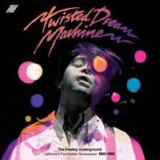
Futurismo proudly present a celebration of the Paisley Underground scene with TWISTED DREAM MACHINE The Paisley Underground / California’s Psychedelic Renaissance: 1982-1986, the next volume in their Altered Vision compilation series.
This collection draws from the neo psychedelic movement that took hold in California during the early to mid 80’s, one that melded the psychedelia, country, garage rock, avant-garde and pop of the 60’s with the DIY ethos of the then burgeoning punk scene, a hypnotic amalgamation of sound that came in staunch contrast to the blown out sonic excesses of the time.
Twisted Dream Machine takes you on a trip from the city to the desert, as the kaleidoscope of noise drifts from the The Dream Syndicate’s Velvet Underground inspired take on Crazy Horse and The Three O’Clock’s chiming baroque powerpop, to Rain Parade’s dreamy Beatlesesque melodies and the Bangles hook-laden Love inspired pop. Also featured are the wondrous sounds of Green On Red, The Long Ryder’s, Game Theory, True West, Thin White Rope and others highly worth your attention. If you are not familiar with some of the bands here, you will surely question how that is possible. The Paisley Underground, if anything, encapsulated a certain musical mindset, an outlook where the past and the future would collide in the moment. This thread would bond the bands, yet each honed it’s own sound in a twisted incarnation of the seeds planted two decades earlier. Whilst the ‘scene’ did remain contained, its influence did in fact spread throughout mainstream culture as the Bangles stuck a chord into the heart of MTV, whilst Prince took inspiration from the movement in his own songwriting and the naming of Paisley Park, as well as signing The Three O’Clock to his label and writing one of the Bangles biggest hits.
As you listen to the tracks on Twisted Dream Machine you will be reminded that there is still music left to discover and inspire, this compilation is aimed to hopefully delight longtime fans, as well as ignite a passion for those new to the bands. The Paisley Underground was the sound of neo psychedelic rock, it was subterranean pop...in
the classic sense, it was alternative rock before the term existed, a distillation of the fundamentals present at the dawn of rock ‘n’ roll, with a twist. The bands of the Paisley Underground may have been writing out of their own time, but as you listen to them in today’s context these songs should be heard as landmarks, rather than throwbacks. After all, nothing this good should stay underground. This 2xLP comes on limited edition coloured vinyl, it is housed in a gloss laminated outer sleeve with colour inner sleeves and contains a large fold-out poster with unseen photos and liner notes by Lisa Fancher of Frontier. Also available on CD with Gloss laminated Sleeve and Fold Out Poster.
Wewantsounds is delighted to announce the reissue of Steve Beresford's highly sought-after album "Dancing the Line", released in France in 1985 on the French label nato. The album, taking its inspiration from French designer Anne Marie Beretta's fashion, features his Alterations acolyte David Toop plus Alan Hacker and Kazuko Hohki (Frank Chickens) with lyrics by Andrew Brenner. The music mixes sophisticated ambient pop powered by a RX11 drum machine with elements synth funk and experimental music. "Tendance" and "Comfortable Gestures" have become underground classics over the years and this is the first time the album is reissued, in partnership with nato who will release the CD version later this year. The reissue includes audio newly remastered by Translab in Paris, original gatefold artwork and a 4-page insert with liner notes by nato's Jean Rochard....
Thrasher is the soundtrack to a virtual reality video game about a creature that has a life cycle that traverses different psychedelic realities. Thrasher was composed and performed by Brian Gibson, bassist of Lightning Bolt. It is the follow up to the acclaimed best-selling game and soundtrack Thumper. The central character in Thrasher is a giant centipede like creature, so Gibson employed a lot of melodic sequences that resonated well with its segments moving through space. The soundtrack has the drive you might expect knowing Gibson"s work in Lightning Bolt combined with complex melodic structures that are absolutely irresistible. In addition to bucking the hyperreality trend in gameplay, Gibson"s DIY ethos and warehouse culture roots permeate the entire soundtrack. He says it best: "Thumper has that combination of psychedelic and iconic that takes me back to the Fort Thunder days. Thrasher is a further exploration into some of those motifs." We recommend that you play this record VERY loudly.
repressed !
The multi-media project Kraftwerk was started in Düsseldorf, Germany 1970 by Ralf Hütter and Florian Schneider. They set up their electronic Kling Klang Studio where they conceived and produced all Kraftwerk albums.
Kraftwerk created the soundtrack for the digital age of the 21st century. AUTOBAHN 1974, RADIO-ACTIVITY 1975, TRANS EUROPE EXPRESS 1977, THE MAN-MACHINE 1978, COMPUTER WORLD 1981, TECHNO POP 1986, THE MIX 1991, TOUR DE FRANCE 2003. Their compositions, using innovative techniques, electronic sounds and synthetic voices combined with computerised rhythms, had a major musical influence on Electro, Hip Hop, Techno and Synth-Pop.
Much time has passed since the Queer Australian/Italian-Armenian, multifaceted artist, Kristian Bahoudian aka Kris Baha, swapped the parched red earth and searing midday sun of the Australian landscape for the brutalist communist-era apartment blocks and slate-grey skies of former East Berlin. Kris is now a fixture in Berlin’s club scene and has toured most of the world as a DJ & live artist with his own unique production style of cyber industrial, EBM, wave, post punk, and early ‘90s IDM mutations. Remixing some of the scene’s most notable artists such as Boy Harsher and techno pop lord Boys Noize, Kris has garnered respect and trust in the electronic music scene for the last 13 years. To respond to the current AI revolution, Kris uploads himself to the cyber ether through his latest project: GHOSTS IN THE MACHIИE.
Across Dual Timelines —
” GHOSTS IN THE MACHIИE ” unfolds as a sci-fi cyberpunk concept project inhabiting dual timelines. In one, we glimpse a trans-humanist future where human consciousness exists as intricate sequences of binary code, entwined and controlled by omnipresent AI systems. In this coded future, a profound awakening stirs among a select few who manage to mutate the code they were governed by, unlocking memories of their history that was erased by the AI. Through this discovery they realize they can traverse temporal boundaries and utilize this power to send warning messages back in time to their former fully human selves. These eerie missives carry a dire warning for humanity, urging them to rectify the course of society before the relentless march of artificial intelligence deprives humanity of its essence. In this terrifying future, humans are rendered mere specters within the digital expanse, stripped of their souls, to become Ghosts In The Machine.
Collaboration with the future self —
The cyber odyssey unfolds from a unique perspective— Kris’s very own future self (his future ghost): a spectral entity endeavoring to caution its present incarnation against the ominous path it treads, attempting to avert a dystopian future.Sonic Alchemy —
A fuse of cybernetic synth waves, hyper-punk, and pulsating drum and bass laid out against the dystopian, industrial sonic landscape of this grim future “civilization”. Each track recounts a new chapter in the gripping narrative, drawing listeners deeper into their own story and the role we all play as a collective society with the future possibilities of unregulated AI.Recorded in Berlin with software and hardware synthesisers. AI was used to assist me with lyric themes, concepts and ideas. I also used a trained AI model of my own voice as backing vocals in ‘Haunting Me’.ll music, words & concepts by Kristian Bahoudian aka Kris Baha and his future ghost,
GHOSTS IN THE MACHIИE
Thrasher is the soundtrack to a virtual reality video game about a creature that has a life cycle that traverses different psychedelic realities. Thrasher was composed and performed by Brian Gibson, bassist of Lightning Bolt. It is the follow up to the acclaimed best-selling game and soundtrack Thumper. The central character in Thrasher is a giant centipede like creature, so Gibson employed a lot of melodic sequences that resonated well with its segments moving through space. The soundtrack has the drive you might expect knowing Gibson"s work in Lightning Bolt combined with complex melodic structures that are absolutely irresistible. In addition to bucking the hyperreality trend in gameplay, Gibson"s DIY ethos and warehouse culture roots permeate the entire soundtrack. He says it best: "Thumper has that combination of psychedelic and iconic that takes me back to the Fort Thunder days. Thrasher is a further exploration into some of those motifs." We recommend that you play this record VERY loudly.
Fourth volume of Library Music miniatures by Daniel O’Sullivan (Ulver, Æthenor, This is Not This Heat, etc) for VHF, this time commissioned by the legendary German Music Library, Sonoton. Another sampling of O’Sullivan’s versatility and brilliance as a composer, performer, and sound designer, the focus on The Pastoral Machine is more “electronic” compared to the three previous albums O’Sullivan recorded for KPM (also issued on LP by VHF), with simpler arrangements and a focus on gentle and emotive synthesised soundworlds. Even without as many full ensemble arrangements, there’s still a wealth of diversity—“Empathogen” opens the record with latticed arpeggiating sequences recalling Japanese “environmental music” or Persian Surgery-era Terry Riley, “Fruit Of Stream Entry” burbles with gentle ripples evoking the album’s title, while “The Silversmith Of Space” mines a simple chord sequence evoking Eno’s ’70s classic short instrumentals. “Superstrings” is a series of hypnotic overlapping guitar patterns, like a lost Ash Ra or Achim Reichel track. The brief “Star Lore” is a heavy highlight with deep bass washes and grainy, tape-laminated melodies, followed immediately by Rose Keeler Schaffeler’s vocal feature on “The Oscillating Love” recalling futurist new-age pop in the vein of Enya or Virginia Astley. Housed in a jacket and heavy euro-style inner featuring collages by O’Sullivan, soon to be the subject of an art book published by Timeless Editions in mid-2024.
Nur wenige, streng limitiert: glänzendes Gatefold-Jacket, bedruckte Innenhüllen mit Live-Fotos der Band, LP 1 blaues, LP2 weißes Vinyl. Nach ihren 30+-Jubiläums-EPs und zugehöriger Reissue-Serie sind FU MANCHU endlich mit brandheißem neuem Material zurück! The Return Of Tomorrow ist das erste neue Album von Fu Manchu seit sechs Jahren, und sie haben sichergestellt, dass sich das Warten gelohnt hat. Ihr 14. Album ist ihre erste Doppel-LP mit neuem Material und wurde als Vinyl-Hörerlebnis konzipiert. Die erste LP enthält sieben Songs in ihrem ikonischen Heavy-Fuzz-Sound, darunter die erste Single "Hands Of The Zodiac" und das unerbittlich eingängige "Loch Ness Wrecking Machine". Auf der zweiten LP wird die Band mit sechs langsameren Stücken, darunter das Synthie-beeinflusste "Solar Baptized" und der Titeltrack, etwas ruhiger. Beide LPs haben 45 Umdrehungen pro Minute für den bestmöglichen Sound. CD-Hörer brauchen sich keine Sorgen zu machen, da diese Version des Albums speziell für dieses Format gemastert wurde.Wie das letzte Album der Band, Clone Of The Universe, und die dreiteilige Fu30 EP-Serie wurde The Return Of Tomorrow im Racket Room in Santa Ana, Kalifornien, von Jim Monroe (Adolescents, Ignite) aufgenommen und gemeinsam mit Fu Manchu produziert.
Sumer Is Icumen In is Quentin Thirionet's (Dhavali Giri, Pairi Daeza) debut album. Still, his musical escapades are vast and varied, based almost entirely on improvisation and live recordings, of which he occasionally distributes tapes without further information. Elusive to categorization and identification, unwilling to fix his musical activity under a stable pseudonym, his projects have ranged from gypsy jazz guitar swings, French traditional songs from Auvergne, and various experimental collaborations. Increasingly closer to electronic instrumentation, he crafted what Belgian label KRAAK presents here as Maibaum, his first ever solo output. As the title goes, this may be a maypole on which his multicolored sonic visions spring about.
Former rope access worker and currently a farmer of organic greens, Thirionet lives up to these lines of work as a musician. He assembles precisely what seems like a subtle balance between high manmade structures and soft fertilized soils; a high voltage pylon placed in a biotic landscape. It's all an even blend, spontaneous and steady, but this contraption comes from profound considerations. "I chose these tracks among many others," says Quentin, "because I heard the melodies all the time in my mind, and because I cried while playing them without really understanding why."
Armed with nothing more than a blackbox, a sequencer, a freeze pedal, and a tape player, Thirionet orchestrates a vivid rite of polished futures. At times reminiscent of Hans-Joachim Roedelius' enveloping arrangements, Maibaum's ambiances rely on mild repetitive patterns subsequently textured by prickling sprouts, mechanic dislocations and revamps that stoke and brighten the stirring motions. Jim O'Rourke's I'm Happy and I'm Singing comes to mind in terms of its detailed and prismatic nature, but Sumer Is Incumen In has its particular narrative. It's a tale of regeneration, of spring's delicate procedures and allure, a celebration of gracious and fortunate junctions between nature and machinery.
The album unfolds like a massive engine being made flesh to drift along the ether of a sultry land. The terrain turns pleasant and fertile in the title track; the colors and melodies of May start to unravel. Chromatic columns rise and define the scenery's depth of field breeding a synesthetic stream between crystal lights and warbling organisms. Grande Albero Buono Magico Uoma's brisk kaleidoscopic arpeggios sound like scanning a tree's litmus foliage. Then Ciguri takes us back to the foggy swamp of the beginning but is suddenly lit by an insect’s labyrinthine roundabout. The Jeweled Grid is a poem Quanta Qualia's lustrous metallic voice recites as a report of the album's phenomena. "Shiny revelations jump out. Pearls of thought flicker about." Images from within that distill to swirl around among us. The thicket dissolves as the album concludes calmly in Le Concept De Chien N'aboie Pas. Swaying under sieved solar light, leaves and branches tingle until the winds grow weak. All the warm creatures gathered along the way, and all those who danced around the maypole's splendid equilibrium now withdraw, folding up small to foster rebirth once again.
José Badía Berner
Much time has passed since the Queer Australian/Italian-Armenian, multifaceted artist, Kristian Bahoudian aka Kris Baha, swapped the parched red earth and searing midday sun of the Australian landscape for the brutalist communist-era apartment blocks and slate-grey skies of former East Berlin. Kris is now a fixture in Berlin’s club scene and has toured most of the world as a DJ & live artist with his own unique production style of cyber industrial, EBM, wave, post punk, and early ‘90s IDM mutations. Remixing some of the scene’s most notable artists such as Boy Harsher and techno pop lord Boys Noize, Kris has garnered respect and trust in the electronic music scene for the last 13 years. To respond to the current AI revolution, Kris uploads himself to the cyber ether through his latest project: GHOSTS IN THE MACHIИE.
Across Dual Timelines —
” GHOSTS IN THE MACHIИE ” unfolds as a sci-fi cyberpunk concept project inhabiting dual timelines. In one, we glimpse a trans-humanist future where human consciousness exists as intricate sequences of binary code, entwined and controlled by omnipresent AI systems. In this coded future, a profound awakening stirs among a select few who manage to mutate the code they were governed by, unlocking memories of their history that was erased by the AI. Through this discovery they realize they can traverse temporal boundaries and utilize this power to send warning messages back in time to their former fully human selves. These eerie missives carry a dire warning for humanity, urging them to rectify the course of society before the relentless march of artificial intelligence deprives humanity of its essence. In this terrifying future, humans are rendered mere specters within the digital expanse, stripped of their souls, to become Ghosts In The Machine.
Collaboration with the future self —
The cyber odyssey unfolds from a unique perspective— Kris’s very own future self (his future ghost): a spectral entity endeavoring to caution its present incarnation against the ominous path it treads, attempting to avert a dystopian future.Sonic Alchemy —
A fuse of cybernetic synth waves, hyper-punk, and pulsating drum and bass laid out against the dystopian, industrial sonic landscape of this grim future “civilization”. Each track recounts a new chapter in the gripping narrative, drawing listeners deeper into their own story and the role we all play as a collective society with the future possibilities of unregulated AI.Recorded in Berlin with software and hardware synthesisers. AI was used to assist me with lyric themes, concepts and ideas. I also used a trained AI model of my own voice as backing vocals in ‘Haunting Me’.ll music, words & concepts by Kristian Bahoudian aka Kris Baha and his future ghost,
GHOSTS IN THE MACHIИE