Buscar:mad doc

Estilos
Todo
Field Medic - Floral Prince LP
  • 1: h-o-u-s-e-k-e-y-z
  • 2: i want you so bad it hurts
  • 3: i will not mourn who i was that has gone away
  • 4: bundle of hyacinths
  • 5: HEADCASE
  • 6: it’s so lonely being sober
  • 7: better way
  • 8: talkin johnny & june (your arms around me)
  • 9: older now (it hurts)
  • 10: before your body goes
  • 11: TRANQUILIZED

For some time now, followers of Field Medic have been piecing together clues about Floral Prince. The name has been mentioned in late night Twitter hints, secret YouTube leaks, teaser riddles, Instagram live sets, and standalone single drops. This unconventional approach paints a bigger picture for the 11-track project as a whole, set for release October 2nd from Run For Cover Records. Part mixtape, part album, part collection, part musical patchwork quilt, Floral Prince is the latest offering from Field Medic, aka the preeminent Bay Area freak folk artist Kevin Patrick Sullivan. It’s a reflection of his unique approach to songwriting and a creative drive that can’t be contained to the traditional album format. Field Medic’s songwriting rarely slows down; even after the release of his 2019 full-length fade into the dawn and the busy touring schedule that followed, Sullivan still found himself flush with new songs and ideas. As he attempted to earmark certain songs for his next release Sullivan began to chafe at the pressures of a follow-up album. Longing for the spontaneity of Field Medic’s earlier work, Sullivan found inspiration in what he calls the “full-time freestyle” mindset where he writes and records songs on the fly with a four-track, usually with a self-imposed limit of three takes. “This style lends itself to more off-the-cuff lyrics and recordings that communicate their point much clearer to my ears,” he explains. “It’s also fun.”

The process proved surprisingly satisfying, often capturing the diary-like nature of Sullivan’s songwriting more accurately than some of the music he’d been poring over. “The songs born from this method aren’t always ‘hits,’ he says. “But they feel much more important to me…closer to how I really feel.” Some of these charming homespun missives made their way onto the internet, spurring fans to follow the breadcrumbs towards these first glimpses into Floral Prince and the ever-expanding Field Medic mythology. “I realized the songs I was saving for another album were much less focused and effective than some of the freestyles I had been creating and subsequently leaking,” Sullivan says. “I think that’s because I really enjoyed the process of writing and recording the freestyles, whereas the ‘hits’ I was attempting to make were being approached as more of a chore.” Floral Prince officially began to see the light of day through a series of stand-alone singles released throughout early 2020 in tandem with episodes of Sullivan’s homemade webseries, the field medic show. To invite fans further into Field Medic’s unique world of achingly beautiful melodies and conversational lyricism, songs like the atmospheric ballad “better way” and the Alex Menne (pickleboy/Great Grandpa) collaboration “talkin johnny & june (your arms around me)” were shared alongside the YouTube show’s accompanying live versions. Other tracks—like rousing opener “-h-o-u-s-e-k-e-y-z-” and the longing “i want you so bad it hurts”—were repurposed from the fade into the dawn sessions to finally find a home on Floral Prince. Elsewhere “it’s so lonely being sober” exemplifies the unvarnished appeal of the full-time freestyle attitude. The song’s direct lyrics and single-take phone recording preserve the deeply personal storytelling, relatable details, and palpable emotions that make Field Medic’s work so intimate and enthralling.

Although Floral Prince is culled from several years of Field Medic songs, its 11 tracks have a sense of cohesion that can be attributed to Sullivan’s singular vision and willingness to allow the listener into his life. “These songs were written through different seasons of my life but they all share a common theme of quiet, nagging, yet somehow defiant insecurity,” he explains. “To hear them all grouped together reminds me that I’ve always felt more or less the same way, and have had the same obsessive tendencies my whole life that have often led to self-destructive behavior. Maybe this is catharsis.” In the end Floral Prince is actually many things at once: a snapshot of an artist shaking off the perceived boundaries of his medium; a document of years of Sullivan’s life preserved in musical form; the closing of one songwriting chapter and the start of another. Or perhaps as Sullivan puts it, “All songs have their day…”

Reservar03.07.2026

debe ser publicado en 03.07.2026

22,06 €
Ragnar Johnson & Ralph Harrisson - Ethiopian Musics 1971 LP 2x12"

For nearly four decades, since its founding during the mid 1980s, the Belgian imprint, Sub Rosa, has continuously plumbed the depths of numerous, radical creative histories, assembling a catalog of releases that has almost no equivalent, while remaining nearly impossible to nail down. That said, for most of its run, Sub Rosa has been primarily recognized for its rigorous explorations of the lesser explored shadows of experimental sound practice (sound-art, sound-poetry, early electronic and electroacoustic music, free-improvisation, etc.), delivering a remarkable body of artifacts that have collectively helped to rewrite history in their wake. While it's always been impossible to anticipate where the label might take us next, threading their catalog are plenty of releases that throw further wrenches in the cogs, expanding our understanding of what they pursue, as in the case of a handful of titles, appearing as early as the 1980s, dedicated to ethnographic field-recordings from various parts of the world. Among the most striking and celebrated of these was 2017's Ethiopian Urban And Tribal Music: Mindanoo Mistiru / Gold From Wax, comprising an astounding body of recordings made by Ragnar Johnson and Ralph Harrisson in Ethiopia during 1971, reissuing material originally released by Lyrichord the following year. Now, Sub Rosa returns to the incredible work embarked upon by the pair and captured on that same trip with Ethiopian Musics 1971, comprising the recordings originally released by Ocora shortly after their completion, expanded in this edition to include an entire disc of never before released music. Widely regarded as some of the most important field-recordings ever made of indigenous Ethiopian folk music (as captivating and intoxicating as they are revelatory: providing insights into the roots of the country's singular traditions of popular music and jazz that have come to be celebrated the world over), this incredible collection is issued by Sub Rosa in a beautifully produced 2LP edition, complemented by a four page insert providing detailed descriptions of each song, as well as notes by the ethnomusicologists and recordists, as well as a 2CD edition, with a twelve page booklet. Insanely good and absolutely essential for any fan of field-recording, ethnomusicology, the music of Ethiopia, or the label's mission at large. Once again, Sub Rosa has defied our expectations and delivered a remarkably important intervention in the history of recorded sound.

Located in the Horn of Africa region of East Africa, few cultures are distinctly singular, while being so diverse (containing 80 distinct ethnic groups who speak 70 languages and 200 dialects) as that of Ethiopia. The home to some of the oldest surviving sects of Judaism, Christianity, and Islam (each contributing important aspects of its collective cultural body), particularly the country's culinary and musical traditions have become celebrated the world over, and (generally speaking) feel entirely independent of those of its neighbors. Given this, it's unsurprising that, during the summer of 1971, the young ethnographer, Ragnar Johnson, accompanied by Ralph Harrisson, traveled to Ethiopia to begin his brief career as a field recording ethnomusicologist, capturing material on reels of magnetic tape that would be subsequently released across three LPs for Lyrichord and Ocora, respectively, coming to form a cornerstone of documentation and study of the country's many indigenous musical traditions, as well as providing wide, global access to them for the first time. While Johnson's recording career was relatively brief, ending toward the end of the decade when he began to focus more on teaching in UK universities, with a focus on the anthropology of art and social anthropology, his impact on the field was lasting. Between 1971 and 1979, in addition to those he made in Ethiopia, he made hugely significant recordings in Yemen (also issued by Lyrichord before being reissued by Sub Rosa) and Papua New Guinea, which were originally released by David Toop's Quartz Publications to wide celebration, before being revisited by Ideologic Organ in 2023.

While it's worth noting that commercial releases of ethnomusicological recordings by labels like Folkways, Lyrichord, and Ocora were still in their relatively early days when he entered the field, Johnson's recordings quickly stood apart for their vivid qualities and clarity of space, allowing them to stand the test of time. As he later stated: "I used a Uher Report L stereo tape recorder, BASF quarter inch tapes at a recording speed of seven and a half inches per second with two directional microphones mounted to record an isosceles triangle of stereo sound," he reveals. "The location of the microphones and musicians was critical. The musicians were fully informed of all aspects of the recording process."

Johnson's recordings are extremely vivid, there is a clear sense of space and the cries of the flutes exist across the entire stereo field. It's a reflection of Johnson's skill as a field recordist that his recordings continue to be reissued over forty years later. "I used a Uher Report L stereo tape recorder, BASF quarter inch tapes at a recording speed of seven and a half inches per second with two directional microphones mounted to record an isosceles triangle of stereo sound," he reveals. "The location of the microphones and musicians was critical. The musicians were fully informed of all aspects of the recording process… I used to enjoy being in the moment and hearing something wonderful despite the stress of the vigilance required to ensure that the recordings were accomplished according to plan. The responsibility is to record and document the music as effectively as possible so that it has been preserved for posterity. It is better to actually record music than to sit in a seminar room debating the ethics of recording music." It is this very ethos and sense of clarity that can be encountered across the length of Ethiopian Musics 1971.

For the sake of clarity, the two LPs of material that comprise Ethiopian Musics 1971 should be regarded as a single body of recordings alongside those made in Ethiopia by Ragnar Johnson and Ralph Harrisson during the summer of 1971 (previously issued by Lyrichord and reissued by Sub Rosa), and as two that have, until now, remained historically distinct. The first LP gathers that material released by Ocora during the early 1970s on Musiques Ethiopiennes, while the second comprises (as far as we can tell) twelve never before issued recordings, expanding the journey and making this the definitive edition of the release with its incredible total of 23 recordings of songs, allowing it ever greater scope to achieve the recordists' modus operandi of capturing the broadest and most diverse cross section of Ethiopia's many musical cultures, ranging from different forms of urban music captured in Addis Ababa, documenting largely orally transmitted idioms within which lyrical content is given greater emphasis than the instrumental components (played on masenko fiddles, craar and bagana lyres, washint flutes and kabaro drums), to folk idioms hailing from the Danakil desert and the border regions with Sudan and Kenya. There are songs sung and played in bars, divination chants, laments, dances, Christian songs, and Amharic sung poetry, to only begin to scratch the surface.

Ethiopian Musics 1971 is one of those rare albums where each musical moment is pure, intoxicating gold, while also being greater through the sum of its parts. There are the many songs, forming a rich tapestry of remarkable range across the respective two LPs/CDs (moments that wondrously flirt with sonic abstraction; hypnotic rhythms; pulsing chant; melodies that, in structural arrangement and tonal combination, help us reframe how such a thing might be understood, and a great deal more), each imbued with a remarkable directness and emotive sensibility, and there is the stunning quality of these recordings themselves, transporting each sound to our ears as though we intimately share its creator's space, while being imbued with the pure heart and remarkable spirit with which they were made. As we said before, it's little wonder, once heard, why these recordings and this music feels as fresh and relevant (enduring more than 50 years) today as when they were made. Once again, Sub Rosa has raised the bar with this essential addition to the incredible work that Ragnar Johnson and Ralph Harrisson did back in Ethiopia during 1971, radically expanding our access to the sounds that they captured with these stunning, beautifully produced 2LP and 2CD editions. Absolutely engrossing from the first sounding to the last, this one can't be missed.

Reservar26.06.2026

debe ser publicado en 26.06.2026

23,95 €
Giardini di Mirò - Quasi Casa LP 2x12"

Nobody knew. Not the crowd packed into Circolo Kessel that Sunday evening, not even the six musicians on stage. When Giardini di Mirò played on March 19, 2023, it was supposed to be just another homecoming show in Cavriago, the kind of night where you play for the people who’ve known you longest. Some were missing from the audience, though: “Our closest friends stayed home to watch the football match tonight,” Jukka quipped from the stage. “But that’s fine, we’ll deal with them tomorrow.” In hindsight, even Juventus fans who celebrated their 1–0 victory over Inter made the wrong choice.

Seventy minutes in, all the instruments converged into a one-chord riff, driven by the drums and punctuated by screaming guitars. A repetitive rhythm that paired brutal volume with hypnotic precision. Even those at the back of the room felt it: that trance-like state where sound becomes physical. Then the wall of sound collapsed. Guitar feedback lingered in the air for a few seconds before fading into nothing.

This was the last sound Giardini di Mirò made. They haven’t played since, and there are no plans to do so again. But in that moment, nobody knew.

The closing song that night was also the opener of their debut full-length, recorded more than two decades earlier. Its title, A New Start, carries an unintended irony the band would likely appreciate. It is also oddly fitting that their final show took place in the same building where they began. Circolo Kessel, previously known as Calamita, served as the band’s rehearsal space for many years. Yet since their rise to becoming one of Europe’s defining post-rock acts, they had never performed a concert there.

In a fortunate coincidence, Markus Mathis – a longtime fan who had recorded several of their shows before – also captured this final concert using two room microphones and a feed from the mixing desk.

Quasi Casa is the complete, unfiltered document of that night: an “official bootleg” spanning over 70 minutes of purely instrumental music, drawing on material from across their entire career, from the earliest releases to Del Tutto Illusorio. It captures, with striking clarity, the intensity that defined the band’s live performances.

Rather than simply uploading the recording and calling it a day, the band chose to assemble a physical release as a parting gift to their fans. The double LP includes a 16-page booklet with extensive liner notes and visual material.

Reservar19.06.2026

debe ser publicado en 19.06.2026

30,21 €
casi - CASI LP

casi

CASI LP

12inchCAK189LP
Carpark Records
19.06.2026
  • A1: TRIGGER

  • A2: I’M HUNGOVER AND WENT TO CHURCH

  • A3: HOCKEY
  • A4: D.O.A
  • A5: INTRUSIVE THOUGHTS
  • B1: JUMPER

  • B2: ELEVEN87
  • B3: SUBSTANCE
  • B4: HUMAN STEREOTYPE
  • B5 5: BRIDGES

Near the end of fifth grade, Eli Edwards’ mom gave him $20 and told him to go find a friend. His team had won its soccer game that day, so they were out celebrating at a local pizza parlor with games. But, more importantly, there had been one other Black kid that day on the pitch in Spanaway, WA, a Tacoma suburb and military-base town at the rainy northwest corner of the United States. That kid just happened to be Xayvien Young. An instant deep connection was formed between Edwards and Young—Eli and Xay, as they prefer to be called were inseparable— and now twelve years later they are the electrifying, boundary-skipping duo Casi.

Along the way, Eli had relocated to Los Angeles with the indie rock band Enumclaw he had helped found, but he found himself flying home maybe a little too much. He was ostensibly visiting his girlfriend, but he spent most of his time with Xay. They cut tracks in every bit of free time they found until they had an epiphany: Maybe this music they’d made together for a dozen years was actually something special. Casi’s 10-track, self-titled debut out on Carpark Records is the electrifying proof they needed.

On the record, they enthusiastically explore every musical interest they have ever had—explosive hip-hop and unbridled hardcore, high-gloss nü metal and a little bit of emo—as a pair. These songs don’t ignore genre lines; they delight in destroying them, in finding ways to slam hip-hop and hardcore, emo and nü metal together until it seems illogical that they were ever apart. Take “Jumper,” where heavy metal guitars and face-kicking drums stir the moshpit for rabid verses about crushing ICE and the lessons you learn riding the poverty line. And take closer “Bridges,” where the melodic imprint of Deftones meets the relentless confessions of Death Grips. Here are the hard, funny, and loud stories of two 23-year-olds, screaming about the world over a breathless composite of all the music they’ve ever loved.

When Eli was in Los Angeles, Xay missed his friend. But in his absence, he also felt the spark of inspiration. Music was something that had just been their childhood hobby, but now Eli was in a rock band that had press accolades and tours. He got serious about the craft. Eli would write about the dislocation and isolation he felt in California, while Xay would document the hardships of being a young Black man with a complicated family while working menial jobs in Spanaway.

This isn’t a coming-of-age album for Casi; it is, instead, a raw and riveting snapshot of that process, painful as it can be. “Eleven87” is a breakup song, a soul beat springing beneath arching emo vocals. And “Intrusive Thoughts” treats that topic like a punching bag, Eli and Xav fighting against the mental habits that keep them down. These 10 songs instantly close that gap.

Reservar19.06.2026

debe ser publicado en 19.06.2026

25,84 €
Channel One Pres. - 100 Tons Of Dub LP

The mighty Channel One Studios,Kingston, Jamaica, has its place set in Reggae's Musical History.Its distinctive sound the studio created on opening its doors in 1972 to its closure in the early 1980's made it the Producers, Singers and Musicians studio of choice during this furtive period. Achieving that vibe and clarity, separated it from the other Kingston establishments.

Run by the Hookim Family's four sons, Jo Jo the eldest followed by Paulie, Ernest and Kenneth. Their father originally came from China and married a Chinese Jamaican lady and settled in the St Andrews district before moving to Kingston Town itself. The family business was built on jukeboxes and one armed bandit machines in and around Kingston. A lucrative venture until the gaming laws changed in 1970, outlawing the gaming machines. So the music side of the business would have to be expanded. So it was decided to open a studio to make the music to supply their already established Jukebox enterprise. The four brothers opened Channel One Recording Studios in 1972 at 29 Maxfield Avenue, Kingston 13. Initially as we stated the purpose of the studio was for the brothers use only, but this would soon change when the various Producers all looking for that Channel One sound came asking for studio time.

The brothers had used the services of Bill Garnet a renowned and well respected technical engineer on setting up the studio. They spent a lot of time laying out the space to get the right acoustics and picking the right quipment. They went with a four track API desk and the best quality microphones such as Neuman, Sony and AKG, vital in obtaining the quality sound and track separation that would prove so worthwhile after the music was recorded to give the best flexibility on the final mix downs. Jo Jo would take over the production duties after the initial hiring of Syd Bucknor a producer who had worked closely with Coxonne Dodds Studio 1 stable. The first release on the Channel One label would be 'Don't Give Up The Fight' by Stranger Cole and Gladstone 'Gladdy' Anderson.The initial two thousand run being swallowed up by their Jukebox interests and so the steady flow of hits would run up to the brake through hit of 1975 'Right Time' by  the Mighty Diamonds.

1977 saw Jo Jo extending his stays in New York to a semipermanent status, returning mainly to oversee recording sessions and then taking the results back to America for worldwide distribution. His brother Paulies senseless killing in that year also added to Jo Jo's decision to spend more time with his Hit Bound Manufacturing set up in New York. The Channel One studio would be upgraded in 1979 to sixteen tracks and although Jo Jo and Ernest still covered the mixing and engineering duties Kenneth would now supervise sessions. An often untold part of Channel Ones history is the involvement of Producer Niney The Observer. The mid to late 1970's were heavy times both musically and politically and Maxfield Avenue was in the heart of this crossfire. Some artists and musicians were weary of using the establishment especially when sessions ended late at night and exiting the studio at these times could be somewhat dangerous. But Niney’s fearlessness seen him over running and in many cases running the all night sessions with his trusted set of musicians loosely called The Soul Syndicate. Having the run of the mighty Channel One studio's allowed Niney to build up and work on a stockpile of rhythms that he still has yet to unleash on the world. We have been lucky to select a bunch of material from Niney's vaults for this release. Some great unreleased rhythms and some different cuts to some tracks you might already know. Niney's work with Dennis Brown and his own distinctive heavy roots style productions have been documented and indeed his work on Channel Ones Yellowman releases stand tall also. We hope this fine set of Niney Productions set inside the hollowed walls of Channel One will sit beside them as they so richly deserve.

No en stock

Haga su pedido ahora y le encargaremos el artículo en nuestro proveedor.

Ültimo hace: 5 Años
14,71 €
Anderson .Paak - Malibu (10 Year Anniversary) (MC)

Ten years ago, Anderson .Paak didn't just release an album; he staged a full-scale takeover of the soul and hip-hop landscape. Released on January 15, 2016, Malibu served as the definitive arrival of an artist who had spent years grinding in the underground before a star-making turn on Dr. Dre’s Compton. While his previous work hinted at his potential, Malibu was the moment the world met the "Cheeky Andy" persona in full—a virtuosic drummer, a raspy-voiced crooner, and a sharp-witted rapper all rolled into one. The album is a sprawling, sun-drenched journey through the Southern California coast, blending 1970s funk, church-reared gospel, and gritty boom-bap into something that feels both nostalgic and entirely futuristic. With a heavyweight production lineup including 9th Wonder, Madlib, Kaytranada, and Hi-Tek, the record maintains a warm, analog texture that was a breath of fresh air in an increasingly digital era. It’s an album that breathes, full of intentional imperfections and the kind of "in-the-pocket" groove that can only come from a seasoned live performer. Beyond the infectious, dance-floor-ready energy of tracks like "Am I Wrong" and "Come Down," the album is a deeply autobiographical masterwork. .Paak uses the 65-minute runtime to unpack his life story with startling clarity, touching on his mother’s gambling addiction, his father’s incarceration, and his own brushes with homelessness with a sense of resilience that never feels heavy-handed. He weaves these heavy themes through a lens of triumph, grounded by vintage surfing documentary samples that give the project its cinematic, coastal atmosphere. It’s a celebratory record born out of struggle, anchored by his impeccable technicality on the drums and a guest list—featuring ScHoolboy Q, Rapsody, and The Game—that feels hand-picked to complement his specific brand of West Coast swagger. A decade later, Malibu stands as a modern classic and the blueprint for the soulful revivalism that would eventually lead .Paak to global superstardom and Grammy-winning heights. It remains a testament to the idea that the most profound music often comes from the most personal places, proving ten years on that the best way to move forward is to stay rooted in the groove.

No en stock

Haga su pedido ahora y le encargaremos el artículo en nuestro proveedor.

Ültimo hace: 14 Días
15,92 €
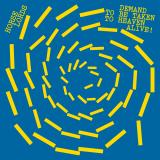
HORSE LORDS - DEMAND TO BE TAKEN TO HEAVEN ALIVE!
  • 1: EUREKA 378-B
  • 2: BRAIN OF THE FIRM
  • 3: ROTATION I
  • 4: PLAYING AND REALITY
  • 5: ROTATION II
  • 6: FIRST GALACTIC UTOPIA
  • 7: ROTATION III
  • 8: BEFORE THE LAW
  • 9: AFTER THE LAST SKY
  • 10: A CITY YET TO COME
  • 11: SECOND GALACTIC UTOPIA
  • 12: DEMAND TO BE TAKEN TO HEAVEN ALIVE!
También disponible

WHITE VINYL[23,49 €]


Die Musik auf Horse Lords' "Demand to Be Taken to Heaven Alive!" wirkt zugleich unglaublich detailliert und zutiefst menschlich. Die zwölf versammelten Stücke sind vielschichtig, verflochten, tonal und rhythmisch komplex - moiré-artige Muster aus Interaktion und Verzahnung, die sich sowohl körperlich als auch geistig entfalten, voller klanglicher Gänge mit einem unausweichlichen Groove. Künstler sind nicht notwendigerweise Wissenschaftler, Logiker oder spirituelle Führer, doch durch ihr persönliches Verständnis von Ordnung und Erfahrung eröffnen sie einen unmittelbaren Zugang zu gesteigerten Zuständen von Materialität und Immaterialität. Horse Lords wurden 2010 in Baltimore gegründet; sie gingen aus einer anderen Gruppe namens Teeth Mountain hervor und starteten als Trio mit Gitarrist Owen Gardner, Bassist Max Eilbacher und Schlagzeuger Sam Haberman, bevor der Altsaxofonist Andrew Bernstein zum Kernensemble hinzustieß. Obwohl das Quartett aus einer fruchtbaren Noise- und Experimental-Rock-Szene hervorgegangen ist - einem legendären Umfeld für Künstler und Außenseiter, das viele einflussreiche Bands hervorgebracht hat (Lungfish, Matmos) - war ihr Ansatz über sechs Alben, zahlreiche Kollaborationen und als gefeierte Liveband weit vielseitiger, als es die punktierten Rhythmen instrumentaler elektrischer Rockmusik vermuten lassen. Für dieses Projekt wird die Band durch Bassklarinettistin Madison Greenstone, Posaunist Weston Olencki und - erstmals bei Horse Lords - durch Gesang von Nina Guo und Evelyn Saylor ergänzt. Der Entstehungsprozess von "D2BT2HA!" brachte geografische Hürden mit sich, da die vier Mitglieder seit 2021 in unterschiedlichen Städten leben. Nach sechzehn Jahren als funktionierende Band übersteigt ihre gemeinsame Sprache jedoch jeden Ort. Die aus Deutschland stammenden Gardner, Eilbacher und Bernstein trafen sich in Berlin für die Aufnahmen, während Haberman die Schlagzeugparts in Baltimore erarbeitete. Beim Hören würde man dies nicht unbedingt erkennen, und gemeinsames, räumlich getrenntes Arbeiten ist heutzutage ohnehin keine Seltenheit mehr. Die Band merkt an, dass "es wichtiger war, den Konzepten und Visionen der jeweils anderen zu vertrauen, als Abschnitte immer wieder zu spielen, um zu überprüfen, ob die Musik funktioniert - obwohl dieses Vertrauen nur durch sehr enges gemeinsames Arbeiten möglich wurde". Obwohl "D2BT2HA!" nicht im engeren Sinne eine Suite ist, beeinflusst und durchdringt sich die Musik in komplexen Verknüpfungen selbst. Horse Lords erklären: "Uns gefällt die Vorstellung von Kunst als Werkzeug zur Perspektivveränderung - dass man Ideen rotieren kann und sie aus einem anderen Blickpunkt sehen/hören/fühlen kann." Oder, wie es der Swami Satchidananda Saraswati zugeschriebene Satz ausdrückt: "Understanding is standing under where you are already standing." Das Eröffnungsstück ,Eureka 378-B" ist ein Arrangement von sakraler Harfenmusik aus dem 19. Jahrhundert, getragen vom Gesang von Guo und Saylor; seine Melodie entfaltet sich weit und setzt einen tonalen Startpunkt für vieles, was folgt. Dazu kommen die kurzen "Rotations", die Fragmente aus anderen Stücken isolieren. Offensichtlich tragen die Titel der Stücke einiges an Bedeutung, und "D2BT2HA!" bildet da keine Ausnahme - Transzendenz und Erhebung sind der Musik inhärent, und wenn jede Kunst politisch ist, so sind die Tendenzen von Horse Lords optimistisch und gemeinschaftsorientiert. Transformation und Neubetrachtung sind nicht nur kompositorische Strategien, sondern eine philosophische Haltung, was sich in Titeln wie ,A City Yet To Come", dem Titeltrack oder utopischen Bezügen zeigt. Wie sie selbst sagen: "Wir versuchen Musik zu machen, die den Status quo herausfordert und dem Hörer einen Weg zur Befreiung eröffnet. Das Studium und die Erforschung von Klang und Musik hat eine spirituelle und ekstatische Dimension, und wir haben große Ehrfurcht vor ihrer Wirkung auf den Einzelnen und die Welt." "D2BT2HA!" enthält unzählige klangliche und konzeptuelle Schichten, doch angesichts der unverkennbaren Kraft und Menschlichkeit der Musik ist der Prozess, sie zu entschlüsseln, begeisternd und zutiefst lohnend. Selten ist eine Platte, die einen so unmittelbar packt und zugleich bei jedem Hören vollkommen neu erscheint.

Reservar12.06.2026

debe ser publicado en 12.06.2026

22,27 €
HORSE LORDS - DEMAND TO BE TAKEN TO HEAVEN ALIVE!

Die Musik auf Horse Lords' "Demand to Be Taken to Heaven Alive!" wirkt zugleich unglaublich detailliert und zutiefst menschlich. Die zwölf versammelten Stücke sind vielschichtig, verflochten, tonal und rhythmisch komplex - moiré-artige Muster aus Interaktion und Verzahnung, die sich sowohl körperlich als auch geistig entfalten, voller klanglicher Gänge mit einem unausweichlichen Groove. Künstler sind nicht notwendigerweise Wissenschaftler, Logiker oder spirituelle Führer, doch durch ihr persönliches Verständnis von Ordnung und Erfahrung eröffnen sie einen unmittelbaren Zugang zu gesteigerten Zuständen von Materialität und Immaterialität. Horse Lords wurden 2010 in Baltimore gegründet; sie gingen aus einer anderen Gruppe namens Teeth Mountain hervor und starteten als Trio mit Gitarrist Owen Gardner, Bassist Max Eilbacher und Schlagzeuger Sam Haberman, bevor der Altsaxofonist Andrew Bernstein zum Kernensemble hinzustieß. Obwohl das Quartett aus einer fruchtbaren Noise- und Experimental-Rock-Szene hervorgegangen ist - einem legendären Umfeld für Künstler und Außenseiter, das viele einflussreiche Bands hervorgebracht hat (Lungfish, Matmos) - war ihr Ansatz über sechs Alben, zahlreiche Kollaborationen und als gefeierte Liveband weit vielseitiger, als es die punktierten Rhythmen instrumentaler elektrischer Rockmusik vermuten lassen. Für dieses Projekt wird die Band durch Bassklarinettistin Madison Greenstone, Posaunist Weston Olencki und - erstmals bei Horse Lords - durch Gesang von Nina Guo und Evelyn Saylor ergänzt. Der Entstehungsprozess von "D2BT2HA!" brachte geografische Hürden mit sich, da die vier Mitglieder seit 2021 in unterschiedlichen Städten leben. Nach sechzehn Jahren als funktionierende Band übersteigt ihre gemeinsame Sprache jedoch jeden Ort. Die aus Deutschland stammenden Gardner, Eilbacher und Bernstein trafen sich in Berlin für die Aufnahmen, während Haberman die Schlagzeugparts in Baltimore erarbeitete. Beim Hören würde man dies nicht unbedingt erkennen, und gemeinsames, räumlich getrenntes Arbeiten ist heutzutage ohnehin keine Seltenheit mehr. Die Band merkt an, dass "es wichtiger war, den Konzepten und Visionen der jeweils anderen zu vertrauen, als Abschnitte immer wieder zu spielen, um zu überprüfen, ob die Musik funktioniert - obwohl dieses Vertrauen nur durch sehr enges gemeinsames Arbeiten möglich wurde". Obwohl "D2BT2HA!" nicht im engeren Sinne eine Suite ist, beeinflusst und durchdringt sich die Musik in komplexen Verknüpfungen selbst. Horse Lords erklären: "Uns gefällt die Vorstellung von Kunst als Werkzeug zur Perspektivveränderung - dass man Ideen rotieren kann und sie aus einem anderen Blickpunkt sehen/hören/fühlen kann." Oder, wie es der Swami Satchidananda Saraswati zugeschriebene Satz ausdrückt: "Understanding is standing under where you are already standing." Das Eröffnungsstück ,Eureka 378-B" ist ein Arrangement von sakraler Harfenmusik aus dem 19. Jahrhundert, getragen vom Gesang von Guo und Saylor; seine Melodie entfaltet sich weit und setzt einen tonalen Startpunkt für vieles, was folgt. Dazu kommen die kurzen "Rotations", die Fragmente aus anderen Stücken isolieren. Offensichtlich tragen die Titel der Stücke einiges an Bedeutung, und "D2BT2HA!" bildet da keine Ausnahme - Transzendenz und Erhebung sind der Musik inhärent, und wenn jede Kunst politisch ist, so sind die Tendenzen von Horse Lords optimistisch und gemeinschaftsorientiert. Transformation und Neubetrachtung sind nicht nur kompositorische Strategien, sondern eine philosophische Haltung, was sich in Titeln wie ,A City Yet To Come", dem Titeltrack oder utopischen Bezügen zeigt. Wie sie selbst sagen: "Wir versuchen Musik zu machen, die den Status quo herausfordert und dem Hörer einen Weg zur Befreiung eröffnet. Das Studium und die Erforschung von Klang und Musik hat eine spirituelle und ekstatische Dimension, und wir haben große Ehrfurcht vor ihrer Wirkung auf den Einzelnen und die Welt." "D2BT2HA!" enthält unzählige klangliche und konzeptuelle Schichten, doch angesichts der unverkennbaren Kraft und Menschlichkeit der Musik ist der Prozess, sie zu entschlüsseln, begeisternd und zutiefst lohnend. Selten ist eine Platte, die einen so unmittelbar packt und zugleich bei jedem Hören vollkommen neu erscheint.

Reservar12.06.2026

debe ser publicado en 12.06.2026

23,49 €
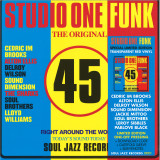
Various - STUDIO ONE FUNK 2x12"

Soul Jazz Records’ long out of print classic ‘Studio One Funk’ collection is being re-released in three new one-off limited-edition coloured pressing 18th anniversary format editions!
Firstly, a heavyweight special limited edition one-pressing only red 2xLP vinyl + download. Secondly, there is also a new special limited-edition one-off pressing edition red-pressed CD enclosed in jewel case and slipcase. And thirdly there is a very limited unique new one-off pressing red-cased cassette format (200 copies only)! 18 years on from its original release Studio One Funk remains one of our Studio One releases most in-demand titles and like all our earlier special coloured editions is sure to sell out fast!
Studio One Funk is made up of rare and unreleased Reggae Funk from the vaults of Studio One. Ever since the birth of Funk in America, the sound has been an ever-present ingredient in the melting pot of Studio One’s musical output.
The music on this release is a combination of originals, US covers and versions of existing Studio One cuts. Jackie Mittoo shows his appreciation for Booker T and The MGs, the studio group at Memphis’ famous Stax Records with ‘Hang Em High’, itself a cover of a film soundtrack by Dominic Frontiere. Incredibly this version has never before been released. Booker T’s super-funky ‘Melting Pot’ is also covered by the little-known Underground Vegetables.
Other versions include Isaac Hayes’ classic Blaxploitation soundtrack ‘Shaft’ again by Cedric Im Brooks track - another unreleased gem, straight from the tape master. Motown gets a look in with Alton’s stripped-down version of the Spinners classic ‘It’s A Shame’, written by Stevie Wonder and Syreeta.
James Brown is apparent in spirit with the JBs-inspired groove on the super rare cut “Now” by Lee Arab. Lloyd Williams similarly does a fine Kingston-style version of the hardest-working man in showbusiness on ‘Reggae Feet’.
Version-wise, we have ‘Idleberg’, Cedric Im Brooks tough instrumental cut on Horace Andy’s seminal ‘Skylarking’. The little-known Prince Moonie gives us a rare DJ cut of another Horace Andy classic, ‘See A Man’s Face’.
Pablove Black’s cut of Sidewalk Doctor (A/K/A Poco Tempo) is one of a handful of Studio One releases featuring Augustus Pablo’s trademark instrument, the melodica, played by Black himself.
Add to these original cuts from Studio One’s heavyweight session players including Leroy Sibbles, Jackie Mittoo, Leroy Sibbles, Eric Frater, Leroy ‘Horsemouth’ Wallace, Richard Ace, Vin Gordon and more and you have one of the finest selections of reggae and funk you will ever hear.


"This collection goes deep into the Brentford Road vaults and unearths a rake of previously unreleased gems alongside hard to find classics. Heavy and inspirational, totally unique and essentially timeless." Straight No Chaser
"An absolute treasure trove for the collector as well as being great for the ears and feet. Jackie Mittoo's 'Hang Em High' is worth the price of the album on its own." Echoes
"A superb collection that shows how much many Jamaican musicians were influenced by the heavy funk belting out of American studios from the early seventies onwards.” Touch
"The most satisfying listening experience so far in the Studio One series." The Wire
"Rare and unreleased grooves from Jamaica's house of excellence." Mojo

No en stock

Haga su pedido ahora y le encargaremos el artículo en nuestro proveedor.

Ültimo hace: 3 Años
30,67 €
BEAR - ANHEDONIA

BEAR

ANHEDONIA

12inchPELV318
Pelagic Records
05.06.2026
  • 1: EMPTY MARKERS
  • 2: LACERATE
  • 3: THE SMILE
  • 4: ANHEDONIA
  • 5: METASTATIC
También disponible

FROTHY CLEAR ED.[24,33 €]


BEAR's sound is a calculated collision of technical precision and unfiltered aggression _ a modern strain of European metal that balances math-inflected complexity with visceral, live-wire intensity. At the core of their identity a combination of brains and brute force. With Anhedonia, Belgian heavyweights BEAR deliver five songs of pure adrenaline and unfiltered heaviness that capture a band confronting the strange emotional vacuum that can follow trauma. Anhedonia is both a battle cry and a confession; a visceral document of resilience carved from years marked by illness, loss, uncertainty, and hard-won perseverance. Musically, Anhedonia represents a sharpened evolution of BEAR's already formidable sound. Known for their intricate rhythms, punishing riffs, and explosive intensity, the band made a conscious decision this time to strip away excess and focus on the core of each song. There is no wasted movement on this EP. Every riff lands with purpose. Every rhythmic shift feels earned. The band trimmed the fat without sacrificing identity, creating space for dynamics and melody to cut deeper than ever before. "The songs are somewhat stripped back, allowing more space for Maarten's vocals to really shine this time around. I feel like we really hit a great balance of maintaining our signature complex sound while also allowing for more experimentation and melody." (James Falck) Anhedonia acknowledges numbness without glorifying it. It confronts pain without being consumed by it. And in doing so, it transforms heaviness into something connective. BEAR have always been a band driven by conviction, and here they stand at their most authentic, vulnerable and ferocious. Together, BEAR create music that feels alive _ tense, volatile, and emotionally charged _ where technicality enhances impact, and heaviness carries genuine vulnerability beneath its surface. FOR FANS OF The Dillinger Escape Plan * Every Time I Die * Botch * Converge * Norma Jean * Coalesce * Herod

Reservar05.06.2026

debe ser publicado en 05.06.2026

19,96 €
BEAR - ANHEDONIA

BEAR

ANHEDONIA

12inchPELVC318
Pelagic Records
05.06.2026

BEAR's sound is a calculated collision of technical precision and unfiltered aggression _ a modern strain of European metal that balances math-inflected complexity with visceral, live-wire intensity. At the core of their identity a combination of brains and brute force. With Anhedonia, Belgian heavyweights BEAR deliver five songs of pure adrenaline and unfiltered heaviness that capture a band confronting the strange emotional vacuum that can follow trauma. Anhedonia is both a battle cry and a confession; a visceral document of resilience carved from years marked by illness, loss, uncertainty, and hard-won perseverance. Musically, Anhedonia represents a sharpened evolution of BEAR's already formidable sound. Known for their intricate rhythms, punishing riffs, and explosive intensity, the band made a conscious decision this time to strip away excess and focus on the core of each song. There is no wasted movement on this EP. Every riff lands with purpose. Every rhythmic shift feels earned. The band trimmed the fat without sacrificing identity, creating space for dynamics and melody to cut deeper than ever before. "The songs are somewhat stripped back, allowing more space for Maarten's vocals to really shine this time around. I feel like we really hit a great balance of maintaining our signature complex sound while also allowing for more experimentation and melody." (James Falck) Anhedonia acknowledges numbness without glorifying it. It confronts pain without being consumed by it. And in doing so, it transforms heaviness into something connective. BEAR have always been a band driven by conviction, and here they stand at their most authentic, vulnerable and ferocious. Together, BEAR create music that feels alive _ tense, volatile, and emotionally charged _ where technicality enhances impact, and heaviness carries genuine vulnerability beneath its surface. FOR FANS OF The Dillinger Escape Plan * Every Time I Die * Botch * Converge * Norma Jean * Coalesce * Herod

Reservar05.06.2026

debe ser publicado en 05.06.2026

24,33 €
Ezra Collective - Chapter 7 (10th Anniversary Edition) EP
  • B3: Chapter 7
  • B4: I Have a God (Feat. Zara McFarlane)
  • B3: Chapter 7
  • B4: I Have a God (Feat. Zara McFarlane)
  • A1: Enter the Jungle
  • A2: Chasing the Square
  • A3: Chapter 7 (Feat. Ty)
  • B1: I Have a God (Feat. Zara McFarlane)
  • B2: Colonial Mentality

Ezra Collective’s Chapter 7, now celebrating its tenth anniversary, captured the restless energy of a young band finding its voice - spiritually curious, rhythmically fearless, committed to community as compass. Built on grooves made for sweat-slicked basements and late-night communion, its seven movements reveal a blueprint forming: jazz as a living expression of where you come from and who you stand with.

The forthcoming Chapter 7 (10th Anniversary Edition) reissue revisits that formative statement from a band that would soon become trailblazers as both the first British jazz act to win the Mercury Prize, and then a BRIT Award. Remastered for vinyl and expanded with new incarnations - live cuts from NPR's Tiny Desk and the band’s landmark Royal Albert Hall performance - the reissue presents Chapter 7 not simply as an early document, but a living manifesto: rhythm as ritual, youth culture as sanctuary, and jazz as an open invitation.

Pressed on black vinyl, housed in a single sleeve jacket with printed inner sleeve, featuring credits and a message from the band.


k B3. Chapter 7 Live at NPR's Tiny Desk
m B4. I Have a God (Feat. Zara McFarlane) Live at the Royal Albert Hall


[k] B3. Chapter 7 [Live at NPR's Tiny Desk]
[m] B4. I Have a God (Feat. Zara McFarlane) [Live at the Royal Albert Hall]


[k] B3. Chapter 7 [Live at NPR's Tiny Desk]
[m] B4. I Have a God (Feat. Zara McFarlane) [Live at the Royal Albert Hall]


[f] B3 | Chapter 7 [Live at NPR's Tiny Desk]
[g] B4 | I Have a God (Feat. Zara McFarlane) [Live at the Royal Albert Hall]


[f] B3 | Chapter 7 [Live at NPR's Tiny Desk]
[g] B4 | I Have a God (Feat. Zara McFarlane) [Live at the Royal Albert Hall]

No en stock

Haga su pedido ahora y le encargaremos el artículo en nuestro proveedor.

Ültimo hace: 3 Meses
21,22 €
Various - Portrety 3 LP
  • 01: Jan Pieniążek - Portret
  • 02: Patrycja Wybrańczyk - The Last One
  • 03: Albert Karch - ...like wind
  • 04: Szymon - ņvvķɹvvĵμņ
  • 05: Jacek - squid s0ng
  • 06: Piotr - Up in the sky
  • 07: Piotr Gwadera - A deal with the Dill (A Tribute to Władysław Koperkiewicz)
  • 08: Ola Rzepka - War lullaby 22-206-19 bpm
También disponible

transparent green limited edition[34,03 €]


There are two versions of the record - classic black vinyl and transparent green limited edition (100 numbered copies) - both 180g with printed inner sleeve.

"PORTRETY" (Portraits) is a one-of-a-kind series – it focuses on artists known for their strong connection to the drums. Each person invited to the project is given freedom in their work. Ultimately, the track created for the album must be signed with the real names of our protagonists – that's our sole criterion.

This is how a kaleidoscope of sounds and eight original perspectives on music emerges.

LINER NOTES by Bartek Chaciński:"For part III of the compilation series focusing on Polish drummers, I’d like to start, as per usual, with a one liner…

There are three types of drummers: Those that can count, and those that… can’t.

Ok, but looking past the punchline, it turns out that there is, in fact, a third type: Drummers who can count, and pretty well too, but still struggle with triple rhythms. Amongst those who have ascended the heights of triple rhythm perfection you will certainly find, Piotr Gwader. One of the leaders of the movement, we could call an “Oberek Revival. He even proposed a new form: Footberk - splicing of Polish Folk dance and Chicago Footwork. He performed live with the OG of Footwork - RP Boo (Arpebu), but equally, he could successfully form a footberk duo with Jacek Prościnski, another protagonist from “Portraits 3”. Prościnski has been deeply immersed in the world of electronic dance music for years and offers us yet more proof of those interests here.

Triplets are also no stranger to Ola Rzepca (synonymous with the Drekoty Trio), in whose music there is no shortage of rhythmical complications and tempo changes. The same can be said of the improv-friendly contemporary jazz presented by Patrycja Wybrańczyk. These two Polish drummers show how versatile this discipline is on the Polish jazz scene. These qualities have already been well documented by Marcin „Groh” Grośkiewicz, but never so strongly as here.

Szymon „Pimpon” Gąsiorek is a musician who has made unconventionality the foundation of his individual style. Yet even in the piece by Jan Pieniążek (a dynamic and equally versatile drummer), we find an element of surprise in its melancholic atmosphere and construction, which introduces a triple rhythm while pushing the drum parts into the background. Portraits, on the other hand, does the complete opposite with its protagonists - it positions them in the foreground as the creators of specially commissioned original works. From this perspective, perhaps the most familiar names here may be Emade and Albert Karch, who are known as outstanding music producers and among the most interesting in Poland. “Portraits III” has presumably given them a momentary break from producing other artists, while for the music industry, it’s also a pleasant break in the rhythm and a shift of emphasis."

Reservar29.05.2026

debe ser publicado en 29.05.2026

26,85 €
Various - Portrety 3 LP

Various

Portrety 3 LP

12inchUKM132LTD
U Know Me Records
29.05.2026

There are two versions of the record - classic black vinyl and transparent green limited edition (100 numbered copies) - both 180g with printed inner sleeve.

"PORTRETY" (Portraits) is a one-of-a-kind series – it focuses on artists known for their strong connection to the drums. Each person invited to the project is given freedom in their work. Ultimately, the track created for the album must be signed with the real names of our protagonists – that's our sole criterion.

This is how a kaleidoscope of sounds and eight original perspectives on music emerges.

LINER NOTES by Bartek Chaciński:"For part III of the compilation series focusing on Polish drummers, I’d like to start, as per usual, with a one liner…

There are three types of drummers: Those that can count, and those that… can’t.

Ok, but looking past the punchline, it turns out that there is, in fact, a third type: Drummers who can count, and pretty well too, but still struggle with triple rhythms. Amongst those who have ascended the heights of triple rhythm perfection you will certainly find, Piotr Gwader. One of the leaders of the movement, we could call an “Oberek Revival. He even proposed a new form: Footberk - splicing of Polish Folk dance and Chicago Footwork. He performed live with the OG of Footwork - RP Boo (Arpebu), but equally, he could successfully form a footberk duo with Jacek Prościnski, another protagonist from “Portraits 3”. Prościnski has been deeply immersed in the world of electronic dance music for years and offers us yet more proof of those interests here.

Triplets are also no stranger to Ola Rzepca (synonymous with the Drekoty Trio), in whose music there is no shortage of rhythmical complications and tempo changes. The same can be said of the improv-friendly contemporary jazz presented by Patrycja Wybrańczyk. These two Polish drummers show how versatile this discipline is on the Polish jazz scene. These qualities have already been well documented by Marcin „Groh” Grośkiewicz, but never so strongly as here.

Szymon „Pimpon” Gąsiorek is a musician who has made unconventionality the foundation of his individual style. Yet even in the piece by Jan Pieniążek (a dynamic and equally versatile drummer), we find an element of surprise in its melancholic atmosphere and construction, which introduces a triple rhythm while pushing the drum parts into the background. Portraits, on the other hand, does the complete opposite with its protagonists - it positions them in the foreground as the creators of specially commissioned original works. From this perspective, perhaps the most familiar names here may be Emade and Albert Karch, who are known as outstanding music producers and among the most interesting in Poland. “Portraits III” has presumably given them a momentary break from producing other artists, while for the music industry, it’s also a pleasant break in the rhythm and a shift of emphasis."

Reservar29.05.2026

debe ser publicado en 29.05.2026

34,03 €
Anderson .Paak - Malibu (10 Year Anniversary) (Lp 2x12")

Ten years ago, Anderson .Paak didn't just release an album; he staged a full-scale takeover of the soul and hip-hop landscape. Released on January 15, 2016, Malibu served as the definitive arrival of an artist who had spent years grinding in the underground before a star-making turn on Dr. Dre’s Compton. While his previous work hinted at his potential, Malibu was the moment the world met the "Cheeky Andy" persona in full—a virtuosic drummer, a raspy-voiced crooner, and a sharp-witted rapper all rolled into one. The album is a sprawling, sun-drenched journey through the Southern California coast, blending 1970s funk, church-reared gospel, and gritty boom-bap into something that feels both nostalgic and entirely futuristic. With a heavyweight production lineup including 9th Wonder, Madlib, Kaytranada, and Hi-Tek, the record maintains a warm, analog texture that was a breath of fresh air in an increasingly digital era. It’s an album that breathes, full of intentional imperfections and the kind of "in-the-pocket" groove that can only come from a seasoned live performer. Beyond the infectious, dance-floor-ready energy of tracks like "Am I Wrong" and "Come Down," the album is a deeply autobiographical masterwork. .Paak uses the 65-minute runtime to unpack his life story with startling clarity, touching on his mother’s gambling addiction, his father’s incarceration, and his own brushes with homelessness with a sense of resilience that never feels heavy-handed. He weaves these heavy themes through a lens of triumph, grounded by vintage surfing documentary samples that give the project its cinematic, coastal atmosphere. It’s a celebratory record born out of struggle, anchored by his impeccable technicality on the drums and a guest list—featuring ScHoolboy Q, Rapsody, and The Game—that feels hand-picked to complement his specific brand of West Coast swagger. A decade later, Malibu stands as a modern classic and the blueprint for the soulful revivalism that would eventually lead .Paak to global superstardom and Grammy-winning heights. It remains a testament to the idea that the most profound music often comes from the most personal places, proving ten years on that the best way to move forward is to stay rooted in the groove.

No en stock

Haga su pedido ahora y le encargaremos el artículo en nuestro proveedor.

Ültimo hace: 4 Meses
39,71 €
Get Fucked - Unearthed Stash (DAT Archives 1998-2000)

Unearthed from the original DAT at Strange Weather Studios in South London, Get Fucked's Unearthed Stash traces a chronological journey through the legendary group's earliest recording sessions, from the raw chaos of their 1999 debut album to the more refined dub house explorations that led into their second LP.

Sourced from the best surviving master DATs this collection brings together remastered classics, lost versions and previously unreleased edits, offering unfiltered look into one of the UK underground's most fearless creative period.

Each track has been carefully remastered to preserve the saturated punch, tape grit and raw energy of the original sessions, while expanding definition for modern sound systems.

Pressed on 180g heavyweight black vinyl, Unearthed Stash is strictly for collectors and true heads preserving the energy and attitude that made Get Fucked pioneers of the London underground sound. A raw document of a lost era, revived.

Archival Gold. From The Source. Unearthed at Last.

No en stock

Haga su pedido ahora y le encargaremos el artículo en nuestro proveedor.

Ültimo hace: 4 Meses
34,92 €
VARIOUS - ANGRIFF AUF'S SCHLARAFFENLAND. EIN DEUTSCHPUNK-MIXTAPE. 2x12"
  • 1: Male - Sirenen
  • 1: 2Die Radierer - Angriff auf's Schlaraffenland
  • 1: 3Der KFc - Gefangen in der BRD
  • 1: 4Hans-A-Plast - Rock'n Roll Freitag
  • 1: 5Brüllen - Dämmerung canceln, Gesang stehen lassen (Tage
  • 1: 6Palais Schaumburg - Telefon
  • 1: 7Egotronic - Raven gegen Deutschland
  • 1: 8Carambolage - Tu doch nicht so
  • 1: 9Die Aeronauten - Freundin
  • 1: 0Korpus Kristi - Stadt der blauen Eier
  • 1: Östro 430 - Zu cool
  • 1: 2... but alive - Ohnmacht
  • 1: 3Isolierband - Keine Gnade
  • 1: 4Mutter - Ich weiß ja wer du bist
  • 1: 5Die Goldenen Zitronen - Flimmern
  • 1: 6Rotzkotz - Computamensch
  • 1: 7Acht Eimer Hühnerherzen - Eisenhüttenstadt
  • 1: 8Freiwillige Selbstkontrolle - Herz aus Stein
  • 1: 9Family 5 - Hau weg den Dreck
  • 2: 1S.Y.P.H. - Industrie-Mädchen
  • 2: Bärchen und die Milchbubis - Happy Bonbon
  • 2: 3EA80 - Verloren
  • 2: 4Die Nerven - Eine Minute schweben
  • 2: 5Superpunk - Nein nein nein
  • 2: 6Tommi Stumpff - Mich kriegt ihr nicht
  • 2: 7Toxoplasma - Ordinäre Liebe
  • 2: 8Schnipo Schranke - Pisse
  • 2: 9Terrorgruppe - Opa
  • 2: 10Antilopen Gang - Beate Zschäpe hört U (mit Jan Windmei
  • 2: 11Slime - Deutschland
  • 2: 1Tocotronic - Freiburg
  • 2: 13Muff Potter - Auf der Bordsteinkante (nachts um halb ei
  • 2: 14Dritte Wahl - Greif ein
  • 2: 15Normahl - Geh wie ein Tiger
  • 2: 16Stereo Total - Die Dachkatze
  • 2: 17The Shocks - More Kicks

Mit "Angriff auf"s Schlaraffenland" veröffentlicht Tapete Records eine umfassende, musikalisch kuratierte Reise durch 50 Jahre deutschsprachigen Punk - von den frühen Experimenten der späten 1970er bis zu modernen Positionen der Gegenwart. Die Compilation begleitet die Jubiläums-Veröffentlichungen des Ventil Verlags, der über 200 Autor:innen zu ihren prägendsten Punk-Songs versammelt und damit das Vermächtnis sowie die Relevanz des Genres würdigt. Wie ein gutes Mixtape verzichtet die Sammlung bewusst auf Chronologie und setzt auf rein musikalische Kriterien: rohe Energie, politische Haltung, Humor, Widerspruchsgeist und stilistische Vielfalt. Vertreten sind u. a. Die Radierer, Hans-A-Plast, Palais Schaumburg, Egotronic, Bärchen und die Milchbubis, Toxoplasma, Slime, Schnipo Schranke, Stereo Total, Die Nerven - Bands, die Punk mit Pop, Dada, Elektronik, Chanson oder Noise neu definiert haben. "Angriff auf"s Schlaraffenland" ist damit ein unverzichtbares Dokument für alle, die Punk nicht als Nostalgie, sondern als lebendige, widersprüchliche und weiterhin unbequeme Kulturform verstehen.

Reservar22.05.2026

debe ser publicado en 22.05.2026

31,05 €
Anderson .Paak - Malibu (10 Year Anniversary) (Lp 2x12")

Ten years ago, Anderson .Paak didn't just release an album; he staged a full-scale takeover of the soul and hip-hop landscape. Released on January 15, 2016, Malibu served as the definitive arrival of an artist who had spent years grinding in the underground before a star-making turn on Dr. Dre’s Compton. While his previous work hinted at his potential, Malibu was the moment the world met the "Cheeky Andy" persona in full—a virtuosic drummer, a raspy-voiced crooner, and a sharp-witted rapper all rolled into one. The album is a sprawling, sun-drenched journey through the Southern California coast, blending 1970s funk, church-reared gospel, and gritty boom-bap into something that feels both nostalgic and entirely futuristic. With a heavyweight production lineup including 9th Wonder, Madlib, Kaytranada, and Hi-Tek, the record maintains a warm, analog texture that was a breath of fresh air in an increasingly digital era. It’s an album that breathes, full of intentional imperfections and the kind of "in-the-pocket" groove that can only come from a seasoned live performer. Beyond the infectious, dance-floor-ready energy of tracks like "Am I Wrong" and "Come Down," the album is a deeply autobiographical masterwork. .Paak uses the 65-minute runtime to unpack his life story with startling clarity, touching on his mother’s gambling addiction, his father’s incarceration, and his own brushes with homelessness with a sense of resilience that never feels heavy-handed. He weaves these heavy themes through a lens of triumph, grounded by vintage surfing documentary samples that give the project its cinematic, coastal atmosphere. It’s a celebratory record born out of struggle, anchored by his impeccable technicality on the drums and a guest list—featuring ScHoolboy Q, Rapsody, and The Game—that feels hand-picked to complement his specific brand of West Coast swagger. A decade later, Malibu stands as a modern classic and the blueprint for the soulful revivalism that would eventually lead .Paak to global superstardom and Grammy-winning heights. It remains a testament to the idea that the most profound music often comes from the most personal places, proving ten years on that the best way to move forward is to stay rooted in the groove.

No en stock

Haga su pedido ahora y le encargaremos el artículo en nuestro proveedor.

Ültimo hace: 13 Días
29,37 €
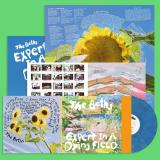
The Beths - Expert In A Dying Field LP

REPRESS ON SILVER VINYL . COMES WITH 24”x24” POSTER + DOWNLOAD CARD + GATEFOLD JACKET.


On The Beths’ album Expert In A Dying Field, Elizabeth Stokes’ songwriting positions her somewhere between being a novelist and a documentarian. The songs collected here are autobiographical, but they’re also character sketches of relationships – platonic, familial, romantic – and more importantly, their aftermaths. The shapes and ghosts left in absences. The question that hangs in the air: what do you do with how intimately versed you’ve become in a person, once they’re gone from your life?

The third LP from the New Zealand quartet houses 12 jewels of tight, guitar-heavy songs that worm their way into your head, an incandescent collision of power-pop and skuzz. With Expert, The Beths wanted to make an album meant to be experienced live, for both the listeners and themselves. They wanted it to be fun -- to hear, to play -- in spite of the prickling anxiety throughout the lyrics, the fear of change and struggle to cope.

Most of Expert was recorded at guitarist Jonathan Pearce’s studio on Karangahape Road in Tāmaki Makaurau, Aotearoa (Auckland, New Zealand) -- and sometimes in the building's cavernous stairwell at 1am -- toward the end of 2021, until they were interrupted by a four-month national lockdown. They traded notes remotely for months, songwriting from afar and fleshing out the arrangements alone, the first time they’d written together in such a way. The following February, The Beths left the country for the first time in more than two years to tour across the US, and simultaneously finish mixing the album on the road. That latter half felt more collaborative, with everyone on-hand to trade notes in real time, until it all culminated in a chaotic three-day studio mad-dash in Los Angeles. There, Expert finally became the record they were hearing in their heads.

Expert is an extension of the same skuzzy palette the band has built across their catalog, pop hooks embedded in incisive indie rock. The album’s title track “Expert In A Dying Field” introduces the thesis for the record: “How does it feel to be an expert in a dying field? How do you know it’s over when you can’t let go?” Stokes asks. “Love is learned over time ‘til you’re an expert in a dying field.”

The rest is a capsule of The Beths’ most electrifying and exciting output, a sonic spectrum: “Your Side” is a forlorn and sincere love song, emotive; while “Silence is Golden,” with its propulsive drum line and stop-start staccato of a guitar line winding up and down, is one of the band’s sharpest and most driving. “When You Know You Know” skews a bit groovier, pure pop and a natural addition to the band’s live set. “Knees Deep” was written last minute, but yields one of the best guitar lines on Expert. There’s a certain chaos across the 12 tracks, the palpable joy of playing music with long-time friends colliding with the raw nerves of pain.

Stokes strings it all together through her singular songwriting lens, earnest and self-effacing, zeroing in on the granules of doubt and how they snowball. Did I do the wrong thing? Or did you? And are we still good people at the end of it? She isn’t interested in villains, but instead interested in just telling the story. That insecurity and thoughtfulness, translated into universality and understanding, has been the guiding light of The Beths’ output since 2016. In the face of pain, there’s no dwelling on internal anguish - instead, through The Beths’ music, our shortcomings are met with acceptance. And Expert In A Dying Field is the most tactile that tenderness has been.

Reservar15.05.2026

debe ser publicado en 15.05.2026

21,43 €
LUCKY BREAK - MADE IT!

LUCKY BREAK

MADE IT!

12inchFIRELP814
Fire Records
08.05.2026

Nurtured on 90s alternative indie, lucky break's music melds the emotional directness of Fiona Apple, the wide-eyed warmth of Bedouine and the Americana-leaning alt rock of Lucinda Williams. Fans of Alvvays, Hole, Phoebe Bridgers and The Breeders will find familiar touchstones here. lucky break is a hand-drawn cartoon character and a girl with a guitar, an ever-expanding container for the feelings that come with making art. She can be very sad and very joyful, living somewhere between worlds. On her debut for Fire Records, made it!, lucky break builds a new world for her character to inhabit. made it! collects songs written between the ages of 19 and 23, documenting the uncertainty of early adulthood, the end of a first major relationship and the process of learning to stand up for yourself. Tracks like "Crush" pair sharp lyrical insight with big drums and crisp bass, while "Head Down" uses bright, dreamy guitars to explore themes of politics, consumer culture and moral complacency. Confessional, direct and emotionally precise, lucky break's songwriting is matched by a versatile and expressive vocal performance that shifts across moods and styles throughout the record. Produced with Elliott Woodbridge in Burbank, made it! is a playful, self-assured debut from a young artist who has already found her voice and is stepping confidently into a bright future. Digisleeve-CD and coloured Vinyl-LP w/ dlc available!

Reservar08.05.2026

debe ser publicado en 08.05.2026

26,01 €
LUCKY BREAK - MADE IT!

LUCKY BREAK

MADE IT!

12inchFIRELPP814
Fire Records
08.05.2026
  • 1: BIG SWING
  • 2: BURNING STRING
  • 3: CAMP SONG
  • 4: CITY LIGHTS
  • 5: CRUSH
  • 6: DARKLIGHT
  • 7: HEAD DOWN
  • 8: IF PEOPLE COULD FLY
  • 9: PICTURES OF HERSELF
  • 10: RED BALLOON
  • 11: SPINNING CUP
También disponible

SILVER VINYL[26,01 €]


Nurtured on 90s alternative indie, lucky break's music melds the emotional directness of Fiona Apple, the wide-eyed warmth of Bedouine and the Americana-leaning alt rock of Lucinda Williams. Fans of Alvvays, Hole, Phoebe Bridgers and The Breeders will find familiar touchstones here. lucky break is a hand-drawn cartoon character and a girl with a guitar, an ever-expanding container for the feelings that come with making art. She can be very sad and very joyful, living somewhere between worlds. On her debut for Fire Records, made it!, lucky break builds a new world for her character to inhabit. made it! collects songs written between the ages of 19 and 23, documenting the uncertainty of early adulthood, the end of a first major relationship and the process of learning to stand up for yourself. Tracks like "Crush" pair sharp lyrical insight with big drums and crisp bass, while "Head Down" uses bright, dreamy guitars to explore themes of politics, consumer culture and moral complacency. Confessional, direct and emotionally precise, lucky break's songwriting is matched by a versatile and expressive vocal performance that shifts across moods and styles throughout the record. Produced with Elliott Woodbridge in Burbank, made it! is a playful, self-assured debut from a young artist who has already found her voice and is stepping confidently into a bright future. Digisleeve-CD and coloured Vinyl-LP w/ dlc available!

Reservar08.05.2026

debe ser publicado en 08.05.2026

26,01 €
KRISTIN DIABLE - IMPOSSIBLE THINGS
  • 1: EVER SOFTLY YOU GO, PT
  • 2: BIDDING
  • 3: RECKLESS & FREE
  • 4: ONE MAN ON THE ROAD
  • 5: SHAME SAY
  • 6: GYPSY QUEEN
  • 7: RICKY'S ON THE DANCE FLOOR
  • 8: YOUR HEART, IT IS THE OCEAN
  • 9: SERPENTS & SAVIORS
  • 10: IMPOSSIBLE THINGS
  • 11: EVER SOFTLY YOU GO, PT. 2

Kristin Diable ist ein Original aus dem Süden - ihre Stimme ist so launisch und unnachgiebig wie der Mississippi. Ihre zeitlosen Melodien und scharfsinnigen Texte fangen das Mystische im Alltäglichen ein und enthüllen den Silberstreif am Horizont ganz gewöhnlicher Momente. Das Ergebnis ist ein Sound, der sich sowohl geerdet als auch jenseitig anfühlt. Diables vorheriges Album ,Create Your Own Mythology", das in Nashville mit Produzent Dave Cobb aufgenommen wurde, wurde von NPR, American Songwriter und Southern Living als eines der besten des Jahres gelobt. Ihr kommendes Album ,Impossible Things" schreibt das nächste Kapitel. Aufgenommen in den legendären Dockside Studios im Süden Louisianas mit Produzent Ben Alleman (Dr. John, Ryan Adams, Jenny Lewis, Madi Diaz), klingt es wie ein Radio, das auf zwei Zeitachsen gleichzeitig eingestellt ist: Dream-Pop-Echos, die durch ein Shotgun-Haus schweben, die Gnade eines Sonntagmorgens, an deren Stiefeln noch der Glitzer des Samstagabends klebt. Diese Songs haben es nicht eilig. Sie ziehen einen Stuhl heran, schieben einen Kaffee über den Tisch und sagen: ,Sag die Wahrheit und zuck nicht zurück." Diable zuckt nicht zurück. Sie schrieb diese Songs in Zeiten des Umbruchs und der Neuerfindung, während sie Verluste, den Tod geliebter Menschen, häusliche Gewalt, das Leben als alleinerziehende Mutter und die Abrechnung bewältigte, die damit einhergeht, ein Leben nach eigenen Vorstellungen neu aufzubauen. Was dabei entsteht, ist ein Werk, das eine Art spirituelles Jiu-Jitsu praktiziert und Last in Anmut und Schmerz in Architektur verwandelt. Dies ist ein Album, das nahelegt, dass Transzendenz nicht auf der anderen Seite der Not wartet, sondern genau hier in der Gegenwart lebt, wenn wir nur genau genug hinhören. Wenn der Song endet, sieht die Welt vielleicht noch genauso aus, aber du vielleicht nicht mehr. So fangen unmögliche Dinge meist an.

Reservar08.05.2026

debe ser publicado en 08.05.2026

24,79 €
The MIDI Janitor - Closed for the Festival LP
  • 1: Band 36
  • 2: Serenade Box
  • 3: Voice at the Edge of Summer
  • 4: Sovereignty Figure
  • 5: Sometimes Copies Were Made
  • 6: Gone to Another Sky
  • 7: Make Me, Your Weapon
  • 8: Prevented By Doctrine
  • 9: Closed for the Festival
  • 10: Save All Here
  • 11: Whisper in the Well
  • 12: Jewelled Wounds
Reservar08.05.2026

debe ser publicado en 08.05.2026

28,15 €
Caterina Barbieri & Bendik Giske - At Source LP

Caterina Barbieri & Bendik Giske's At Source resounds music as wellspring, that which is essential and unknowable, and yet utterly primary. It finds two acclaimed composer-musicians building a world together in self-contained collaboration between analogue synthesis and an extended approach to the saxophone that conjures its own universe of sound. It is at once intimate and cosmic, drawing on the challenges and possibilities of their artistic exchange, tearing down technique to access all the expansive possibilities of their sonic meeting point.


At Source is a document of the world of sound to be conjured when two artists strive for something together, discovering the expansions and limitations of performance by bodies and machines. It is not an exercise in assimilation, but in productive exchange and creative confrontation. It does not draw on outside energies or influences, but grapples with what there is to find in their respective playing. "It also reflects how natural the collaboration was," says Barbieri, "a meeting at the source which was spontaneous, graceful and natural".


Barbieri and Giske first met and were enthralled by one another's performances at Kunsthaus Glarus in 2019, a meeting that spurred conversations on the power of transitions as a compositional force. Giske later contributed a rework of Fantas for Fantas Variations (Editions Mego, 2021), an ambitious undertaking to rescore Barbieri’s work for his saxophone and voice, a challenge Giske had started undertaking two years prior as an ongoing practice of transcription. “The request came as a proof of aligned ideas”, says Giske.


Their new collaborative project then started during an artistic residency in Milan’s ICA in 2021, by invitation of swiss artist and curator Jan Vorisek, as the world was emerging from lockdown. This meeting, and the preceding closure of sites for cultural exchange, made their work together 'feel like springtime' says Barbieri. Giske, who was on the brink of releasing his sophomore album, Cracks, then joined Barbieri's light-years tour, which functioned as an inaugural incarnation of her newborn label and platform through a series of multi-artist curated shows with appearances of Lyra Pramuk, Nkisi, MFO, among other artists.


Through the tour, they continued to develop material live, and this release, laid down in the studio, is true to that ever-evolving process of creation, where live feedback stays essential to the vitality of this collaborative effort. The tracks are each named with two evocative words that contain the two poles of their sound. Theirs is both abstract and cosmic, in the synth as machine undermined by Barbieri's naturalistic playing, and in Giske's continuous exploration of the symbiosis between his instrument, voice, and body. These binaries, of body and machine, posed various challenges, notably in how the stepped patterns Barbieri uses were near-impossible to translate for Giske's body to perform, and other times where mathematical resolutions were needed to sync their playing. Explains Giske: "It forced me to go to the core of what I am and what I have to offer”. Barbieri says that it "explores the liminality between the machine and the human, and the vulnerability in this process".


At Source is testament to two divergent practices finding a whole cosmos in which to convene; music is crystalised and made utterly enveloping through the focused and critical work of two musicians working at their peak. The versions here are, temptingly, "just one of many versions" of this abundant source material Giske explains. Like the best collaborations, At Source is more than the sum of its parts – bringing more to the feast than the simple combination of two musicians, promising versions upon versions of the exquisite material captured here.

No en stock

Haga su pedido ahora y le encargaremos el artículo en nuestro proveedor.

Ültimo hace: 3 Días
22,90 €
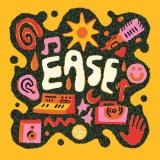
Various - Ease

Various

Ease

12inchSUN-001
Sun & Sound Detroit
05.05.2026

This isn’t a compilation—it’s a vinyl conversation between cities, generations, and musical bloodlines. This inaugural release embodies the spirit of collaboration, community, and cross-generational artistry that defines each artist’s deep musical legacy.

A statement on wax bringing together Glenn Underground, Coflo, Jon Dixon, Kevin Reynolds and sillygirlcarmen, this four-song project documents the shared language of five Artists through deep house, jazz roots, and forward-looking soul. Though these artists have shared DJ booths and dance floors around the world, this release marks a rare moment where their creative voices intertwine on wax. Each track stands on its own, but together they form a continuum—past, present, and future etched into wax. Pressed with intention and made for real systems, this release exists for the heads, the selectors, and anyone who still believes vinyl is where the story lives. Meant to be played—not archived. The kind of tracks that feel alive in the room and grow every time you hear them.

‘Ease’ EP tracks:
Glenn Underground ‘Dive (Into The Deep)’; the Chicago legend & Strictly Jaz Unit co-founder combines deep house, freeform jazz & soul, here in a jazz-infused, laid-back, hypnotic melange of house beat, synth chord riff, rippling arps, with a whisper of disco in the bassline and 80’s electro in the high, singing strings.

Coflo x sillygirlcarmen ‘Never Forget (That Feelin’)’; East Bay CA-based Coflo combines Hawaiian & Portugese roots with a global reach. A collaborative skipping house beat, pattering percussion & melodic jazz synth piano embrace sillygirlcarmen’s soulful voice and heartfelt lyrics. This collaboration marks a merging of emotional storytelling and percussive sophistication.

Jon Dixon ‘Saturday At Northland’; Detroit’s modern jazz & techno fusionist, rooted in long study and prestigious performance of classical & jazz piano both in orchestral and electronic contexts, employs his keyboard virtuosity in a thrilling wave of melodic piano improvisation & complex lively percussion, combining sheer craft with spiritual heft.

Kevin Reynolds ‘I Got Music’; from an Irish/US Detroit family, producer/live artist Reynolds blends techno, jazz, soul, from influences as diverse as 90s underground techno, Kraftwerk & John Coltrane, and roles/performances in multiple prestigious venues & positions. Here, a stealthy beat & Kraftwerk-evoking robotic electro synth theme are joined by a dual vocal used as a riff, while clusters of piano chords flower into jazz motifs.

No en stock

Haga su pedido ahora y le encargaremos el artículo en nuestro proveedor.

Ültimo hace: 48 Días
17,61 €
EUPHORIA - A Gift From Euphoria LP
  • 1: Lisa
  • 2: Stone River Hill Song
  • 3: Did You Get The Letter
  • 4: Through A Window
  • 5: Young Miss Pflugg
  • 6: Lady Bedford
  • 7: Suicide On The Hillside, Sunday Morning, After Tea
  • 8: Sweet Fanny Adams
  • 9: I’ll Be Home To You
  • 10: Sunshine Woman
  • 11: Hollyville Train
  • 12: Docker’s Son
  • 13: Something For The Milkman
  • 14: Too Young To Know
  • 15: World

Psychedelic MasterpieceOriginally released on Capitol Records in 1969, Euphoria’s debut album A Gift From Euphoria is an unsung album; one with incredible sonic radiance, masterful songwriting, and everlasting harmonies—with their fantastical combination of psychedelic, folk, country, and hard rock. The 15 songs set up a journey through the best of what had been happening within modern music by 1969. Comparisons to The White Album are apt as it leaps from genre to genre with shocking confidence, as if they knew this was their only chance to say it all on a record. But it was too good to last as this was the only album Euphoria made, one that is critically championed in hindsight and highly sought after nowadays, and it is Jackpot Records honor to be able to bring it to you. Now reissued from the original analog master tapes with the original cover artwork exclusively for RSD 2026.

Reservar24.04.2026

debe ser publicado en 24.04.2026

36,09 €
Christina Kubisch - TUNING

Christina Kubisch

TUNING

12inchFAIT-41LP
Faitiche
17.04.2026

Faitiche welcomes a new artist: Christina Kubisch belongs to the first generation of sound artists. Her practice ranges from performances, concerts, to works with video and visual art, but she is best known for her sound installations and electro-acoustic compositions.

TUNING brings together three pieces by Christina Kubisch from different periods of her oeuvre. What they have in common is the way they transform sound phenomena originally considered “non-music” into compositions.

Jan Jelinek: Gaming in Silence (2024) is the most recent work on this compilation. It’s a collage of electromagnetic waves, voice, and abstract sound textures. How did this combination come about?

Christina Kubisch: Gaming was commissioned as a fixed-media composition for the Sound Dome at ZKM Karlsruhe. Since Resonances: The Electromagnetic Bodies Project (2005), I’ve been making recordings in the old and new server rooms at the ZKM and in their permanent collection of historical computer games. Computer games like Asteroids (Atari, 1979) and Poly-Play (VEB Polytechnik, 1986) have specially generated analogue electromagnetic waves that interest me in particular on account of their density, rhythms and textures. I originally studied painting and to me the work of composition often feels like painting an abstract picture. I alter my source material as little as possible, layering and overlapping until a distinctive sound space emerges. In recent pieces, I sometimes combine magnetic waves with field recordings or live instruments. In Gaming it’s my recording of a Chinese song about silence.

JJ: Two persons walking through a street in Madrid (2004) is a recording from your Electrical Walks series. Here we should give a brief explanation of one of your best known works: participants in an Electrical Walk move through public spaces wearing prepared headphones that allow them to receive electromagnetic waves from their surroundings – for example from security gates, ATMs or neon signs. They discover a situation that normally is inaudible to the human ear and they can actively shape it by choreographing their movements. I really admire this piece, not least because there’s no clear dividing line between participants and artist. What exactly do we hear in Two persons walking through a street in Madrid (2004)?

CK: With this early work, I wanted to understand what is heard by people participating in an Electrical Walk in the same place but moving in different ways. The Spanish composer Miguel Alvarez-Fernàndez and I set off from opposite ends of a major shopping street in Madrid, met briefly in the middle, and then continued to the end. We both recorded our walks and I then layered them over one another. You might call it a work of electromagnetic conceptualism.

JJ: Diapason (2009 version) is an installation that plays a composition based on sounds from fifteen tuning forks. This setting is audible in the recording: there’s no dramatic arc, no beginning or end – instead, it recalls a piece of aleatoric music focussing on the decay phase. How did you come to make this work and could you tell us something about your compositional method?

CK: Diapason is part of a series of three pieces that deal with “non-instruments” or instruments that no longer exist: electrical mine bells used to send signals to the workers underground; a historical glass harmonica originally used for medicinal purposes; and tuning forks that were used by doctors to test people’s hearing. All of these methods are no longer in use. The sound of the tuning forks, audible only if held close to the ear, was recorded at the electronic studio at Berlin’s Technical University in such a way that even their decay remained audible. The frequencies range between 64 and 2048 Hertz and they can be adjusted at micro-intervals using small movable weights. The sequence and the duration of the pauses are dictated by chance and were not defined in advance. The 2009 version was created for an installation in the historic Holy Cross Church (Korskirken) in Bergen. Visitors could enter and leave the space at any time, deciding for themselves where and for how long they wished to listen to the sounds played back over an array of small loudspeakers placed on the floor of the apse.

Credits:

Gaming in Silence: commission of the ZKM/Hertzlab, Karlsruhe 2023
elektronic sound processing: Tom Thiel
sound engineering and mixing: Eckehard Güther

Diapason: produced at Elektronisches Studio of TU Berlin
rearrangement: Eckehard Güther

Christina Kubisch, published by Edition Christina Kubisch / Random Musick Publishing

image front: Transitionen 2021 by C. Kubisch, sonagrams of electronic waves (courtesy: Galerie Mazzoli Berlin)
image back: Diapason Tuning Fork, property of Folkmar Hein, Photo: Archiv Christina Kubisch

design by Tim Tetzner
mastered by Giuseppe Ielasi
Thanks to Miguel Álvarez-Fernández, Folkmar Hein, Dominik Kautz and Mario Mazzoli

Reservar17.04.2026

debe ser publicado en 17.04.2026

27,31 €
Wired - Kyoto 1970

Wired

Kyoto 1970

12inchMETAPHON028
Metaphon
17.04.2026

Wired was an ephemeral improvisational music project formed by Michael Ranta, Karl-Heinz Böttner, and Mike Lewis. On 28 April 1970, the trio recorded an extended studio session of approximately 140 minutes, in collaboration with Conny Plank, who engineered and mixed the recording in real time, incorporating elements of live electronics. This session was subsequently edited to album length and released in 1974 as part of the Free Improvisation 3LP box set issued by Deutsche Grammophon, alongside recordings by Iskra and New Phonic Art.

Owing to its exploratory electric sound world and Plank’s distinctive spatial production techniques, the Wired recording acquired a degree of underground cult status, particularly among listeners associated with krautrock and psychedelic improvisation.

Shortly after the studio session, Ranta and Böttner travelled to Japan, where they spent approximately six months performing with Karlheinz Stockhausen at Expo ’70 in Osaka. In addition to these activities, they engaged in various independent musical projects and performances.

The present release, sourced from the personal archive of Michael Ranta, documents a live duo performance by Ranta and Böttner, recorded on 27 July 1970 in an outdoor setting in Kyoto (the exact location remains unknown), before an audience of approximately 200 music teachers. The recording exhibits sonic and aesthetic characteristics closely aligned with the previously recorded studio material, retaining the distinctive “Wired” sound while situating it within a live, site-specific context.

Michael Ranta: percussion, voice, home-made instruments, tapes, tape delay, effects Karl-Heinz Böttner: guitar, organ, ocarina, voice, effects

Reservar17.04.2026

debe ser publicado en 17.04.2026

26,68 €
Index For Working Musik - Bunker Intimations II LP
  • 1: In Order That The First World May Fail
  • 2: Clown Utopia
  • 3: Rice Timeshare
  • 4 11: Days, 700 Years
  • 5: Going To Heaven On The End Of A String
  • 6: Ick Fantasia
  • 7: Geordie Vision
  • 8: Athena Allenby
  • 9: World Goodnight

Bunker Intimations II by London-based anti-formalists Index For Working Musik is a sister record to their second album Which Direction Goes The Beam, originally issued as a limited edition cassette with early copies of the vinyl pressing of that record. The 50-minute long collection of recordings was made across an intense three day period in March ‘25 under the duress of a very strict deadline. All tracks were improvised and mixed-down on the spot, a genuine document of a moment in time. Some of us think that it’s better than the record that it was trying to sell. And so here it now stands for wider judgment. Bunker Intimations II is released digitally and on vinyl via Tough Love.

Reservar17.04.2026

debe ser publicado en 17.04.2026

23,49 €
Guilty Razors - Complete Recordings 1977 - 1978

UILTY RAZORS, BONA FIDE PUNKS.


Writings on the topic that go off in all directions, mind-numbing lectures given by academics, and testimonies, most of them heavily doctored, from those who “lived through that era”: so many people today fantasize about the early days of punk in our country… This blessed moment when no one had yet thought of flaunting a ridiculous green mohawk, taking Sid Vicious as a hero, or – even worse – making the so-called alternative scene both festive and boorish. There was no such thing in 1976 or 1977, when it wasn’t easy to get hold of the first 45s by the Pistols or the Clash. Few people were aware of what was happening on the fringes of the fringes at the time. Malcolm McLaren was virtually unknown, and having short hair made you seem strange. Who knew then that rock music, which had taken a very bad turn since the early 1970s, would once again become an essential element of liberation? That, thanks to short and fast songs, it would once again rediscover that primitive, social side that was so hated by older generations? Who knew that, besides a few loners who read the music press (it was even better if they read it in English) and frequented the right record stores? Many of these formed bands, because it was impossible to do otherwise. We quickly went from listening to the Velvet Underground to trying to play the Stooges’ intros. It’s a somewhat collective story, even though there weren’t many people to start it.
The Guilty Razors were among those who took part in this initial upheaval in Paris. They were far from being the worst. They had something special and even released a single that was well above the national average. They also had enough songs to fill an album, the one you’re holding. In everyone’s opinion, they were definitely not among the punk impostors that followed in their wake. They were, at least, genuine and credible.

Guilty Razors, Parisian punk band (1975-1978). To understand something about their somewhat linear but very energetic sound, we might need to talk about the context in which it was born and, more broadly, recall the boredom (a theme that would become capital in punk songs) coupled with the desire to blow everything off, which were the basis for the formation of bands playing a rejuvenated rock music ; about the passion for a few records by the Kinks or the early Who, by the Stooges, by the Velvet mostly, which set you apart from the crowd.
And of course, we should remember this new wave, which was promoted by a few articles in the specialized press and some cutting-edge record stores, coming from New York or London, whose small but powerful influence could be felt in Paris and in a handful of isolated places in the provinces, lulled to sleep by so many appalling things, from Tangerine Dream to President Giscard d’Estaing...
In 1975-76, French music was, as almost always, in a sorry state ; it was still dominated by Johnny Hallyday and Sylvie Vartan. Local rock music was also rather bleak, apart from Bijou and Little Bob who tried to revive this small scene with poorly sound-engineered gigs played to almost no one.
In the working class suburbs at the time, it was mainly hard rock music played to 11 that helped people forget about their gruelling shifts at the factory. Here and there, on the outskirts of major cities, you still could find a few rockers with sideburns wearing black armbands since the death of Gene Vincent, but it wasn’t a proper mass movement, just a source of real danger to anyone they came across who wasn't like them. In August 1976, a festival unlike any other took place in Mont-de-Marsan – the First European Punk Festival as the poster said – with almost as many people on stage as in the audience. Yet, on that day, a quasi historical event happened, when, under the blazing afternoon sun, a band of unknowns called The Damned made an unprecedented noise in the arena, reminiscent of the chaotic Stooges in their early adolescence. They were the first genuine punk band to perform in our country: from then on, anything was possible, almost anything seemed permissible.

It makes sense that the four+1 members of Guilty Razors, who initially amplified acoustic guitars with crappy tape recorder microphones, would adopt punk music (pronounced paink in French) naturally and instinctively, since it combines liberating noise with speed of execution and – crucially – a very healthy sense of rebellion (the protesters of May 1968 proclaimed, and it was even a slogan, that they weren’t against old people, but against what had made them grow old. In the mid-1970s, it seemed normal and obvious that old people should now ALSO be targeted!!!).
At the time, the desire to fight back, and break down authority and apathy, was either red or black, often taking the form of leafleting, tumultuous general assemblies in the schoolyard, and massive or shabby demonstrations, most of the time overflowing with an exciting vitality that sometimes turned into fights with the riot police. Indeed, soon after the end of the Vietnam War and following Pinochet’s coup in Chile, all over France, Trotskyist and anarcho-libertarian fervour was firmly entrenched among parts of the educated youth population, who were equally rebellious and troublemakers whenever they had the chance. It should also be noted that when the single "Anarchy in the UK" was first heard, even though not many of us had access to it, both the title and its explosive sound immediately resonated with some of those troublemakers crying out for ANARCHY!!! Meanwhile, the left-wing majority still equated punks with reckless young neo-Nazis. Of course, the widely circulated photos in the mainstream press of Siouxsie Sioux with her swastikas didn’t necessarily help to win over the theorists of the Great Revolution. It took Joe Strummer to introduce The Clash as an anti-racist, anti-fascist and anti-ignorance band for the rejection of old-school revolutionaries to fade a little.

The Lycée Jean-Baptiste Say at Porte d’Auteuil, despite being located in the very posh and very exclusive 16th arrondissement of Paris, didn’t escape these "committed" upheavals, which doubled as the perfect outlet for the less timid members of this generation.
“Back then, politics were fun,” says Tristam Nada, who studied there and went on to become Guilty Razors’ frontman. “Jean-Baptiste was the leftist high-school in the neighbourhood. When the far right guys from the GUD came down there, the Communist League guys from elsewhere helped us fight them off.”
Anything that could challenge authority was fair game and of course, strikes for just about any reason would lead to increasingly frequent truancy (with a definitive farewell to education that would soon follow). Tristam Nada spent his 10th and 11th unfinished grades with José Perez, who had come from Spain, where his father, a janitor, had been sentenced to death by Franco. “José steered my tastes towards solid acts such as The Who. Like most teenagers, I had previously absorbed just about everything that came my way, from Yes to Led Zeppelin to Genesis. I was exploring… And then one day, he told me that he and his brother Carlos wanted to start a rock band.” The Perez brothers already played guitar. “Of course, they were Spanish!”, jokes their singer. “Then, somewhat reluctantly, José took up the bass and we were soon joined by Jano – who called himself Jano Homicid – who took up the rhythm guitar.” Several drummers would later join this core of not easily intimidated young guys who didn’t let adversity get the better of them.

The first rehearsals of the newly named Guilty Razors took place in the bedroom of a Perez aunt. There, the three rookies tried to cover a few standards, songs that often were an integral part of their lives. During a first, short gig, in front of a bewildered audience of tough old-school rockers, they launched into a clunky version of the Velvet Underground's “Heroin”. Challenge or recklessness? A bit of both, probably… And then, step by step, their limited repertoire expanded as they decided to write their own songs, sung in a not always very accurate or academic English, but who cared about proper grammar or the right vocabulary, since what truly mattered was to make the words sound as good as possible while playing very, very fast music? And spitting out those words in a language that left no doubt as to what it conveyed mattered as well.
Trying their hand a the kind of rock music disliked by most of the neighbourhood, making noise, being fiercely provocative: they still belonged to a tiny clique who, at this very moment, had chosen to impose this difference. And there were very few places in France or elsewhere, where one could witness the first stirrings of something that wasn’t a trend yet, let alone a movement.

In the provinces, in late 1976 or early 1977, there couldn’t be more than thirty record stores that were a bit more discerning than average, where you could hear this new kind of short-haired rock music called “punk”. The old clientele, who previously had no problem coming in to buy the latest McCartney or Aerosmith LP, now felt a little less comfortable there…
In Paris, these enlightened places were quite rare and often located nex to what would become the Forum des Halles, a big shopping mall. Between three aging sex workers, a couple of second-hand clothes shops, sellers of hippie paraphernalia and small fashion designers, the good word was loudly spread in two pioneering places – propagators of what was still only a new underground movement. Historically, the first one was the Open Market, a kind of poorly, but tastefully stocked cave. Speakers blasted out the sound of sixties garage bands from the Nuggets compilation (a crucial reference for José Perez) or the badly dressed English kids of Eddie and the Hot Rods. This black-painted den was opened a few years earlier by Marc Zermati, a character who wasn’t always in a sunny disposition, but always quite radical in his (good) choices and his opinions. He founded the independent label Skydog and was one of the promoters of the Mont-de-Marsan punk festivals. Not far from there was Harry Cover, another store more in tune with the new New York scene, which was amply covered in the house fanzine, Rock News (even though it was in it that the photos of the Sex Pistols were first published in France).
It was a favorite hang-out of the Perez brothers and Tristam Nada, as the latter explained. “It’s at Harry Cover’s that we first heard the Pistols and Clash’s 45s, and after that, we decided to start writing our first songs. If they could do it, so could we!”
The sonic shocks that were “Anarchy in the UK”, “White Riot” or the Buzzcocks’s EP, “Spiral Scratch” – which Guilty Razors' sound is reminiscent of – were soon to be amplified by an unparalleled visual shock. In April 1977, right after the release of their first LP, The Clash performed at the Palais des Glaces in Paris, during a punk night organised by Marc Zermati. For many who were there, it was the gig of a lifetime…
Of course, Guilty Razors and Tristam were in the audience: “That concert was fabulous… We Parisian punks were almost all dressed in black and white, with white shirts, skinny leather ties, bikers jackets or light jackets, etc. The Clash, on the other hand, wore colourful clothes. Well, the next day, at the Gibus, you’d spot everyone who had been at this concert, but they weren’t wearing anything black, they were all wearing colours.”

It makes sense to mention the Gibus club, as Guilty Razors often played there (sometimes in front of a hostile audience). It was also the only place in Paris that regularly scheduled new Parisian or Anglo-Saxon acts, such as Generation X, Siouxsie and the Banshees, the Slits, and Johnny Thunders who would become a kind of messed-up mascot for the venue. A little later, in 1978, the Rose Bonbon – formerly the Nashville – also attracted nightly owls in search of electric thrills… In 1977, the iconic but not necessarily excellent Asphalt Jungle often played at the Gibus, sometimes sharing the bill with Metal Urbain, the only band whose aura would later transcend the French borders (“I saw them as the French Sex Pistols,” said Geoff Travis, head of their British label Rough Trade). Already established in this small scene, Metal Urbain helped the young and restless Guilty Razors who had just arrived. Guitarist for Metal Urbain Hermann Schwartz remembers it: “They were younger than us, we were a bit like their mentors even if it’s too strong a word… At least they were credible. We thought they were good, and they had good songs which reminded of the Buzzcocks that I liked a lot. But at some point, they started hanging out with the Hells Angels. That’s when we stopped following them.”

The break-up was mutual, since, Guilty Razors, for their part, were shocked when they saw a fringe element of the audience at Metal Urbain concerts who repeatedly shouted “Sieg Heil” and gave Nazi salutes. These provocations, even still minor (the bulk of the skinhead crowd would later make their presence felt during concerts), weren’t really to the liking of the Perez brothers, whose anti-fascist convictions were firmly rooted. Some things are non-negotiable.
A few months earlier (in July 1978), Guilty Razors had nevertheless opened very successfully for Metal Urbain at the Bus Palladium, a more traditonally old-school rock night-club. But, as was sometimes the case back then, the night turned into a mass brawl when suburban rockers came to “beat up punks”.

Back then, Parisian nights weren’t always sweet and serene.

So, after opening as best as they could for The Jam (their sound having been ruined by the PA system), our local heroes were – once again – met outside by a horde of greasers out to get them. “Thankfully,” says Tristam, “we were with our roadies, motorless bikers who acted as a protective barrier. We were chased in the neighbouring streets and the whole thing ended in front of a bar, with the owner coming out with a rifle…”
Although Tristam and the Perez brothers narrowly escaped various, potentially bloody, incidents, they weren’t completely innocent of wrongdoing either. They still find amusing their mugging of two strangers in the street for example (“We were broke and we simply wanted to buy tickets for the Heartbreakers concert that night,” says Tristam). It so happened that their victims were two key figures in the rock business at the time: radio presenter Alain Manneval and music publisher Philippe Constantin. They filed a complaint and sought monetary compensation, but somehow the band’s manager, the skilful but very controversial Alexis, managed to get the complaint withdrawn and Guilty Razors ended up signing with Constantin with a substantial advance.

They also signed with Polydor and the label released in 1978 their only three-track 45, featuring “I Don't Wanna be A Rich”, “Hurts and Noises” and “Provocate” (songs that exuded perpetual rebellion and an unquenchable desire for “class” confrontation). It was a very good record, but due to a lack of promotion (radio stations didn’t play French artists singing in English), it didn’t sell very well. Only 800 copies were allegedly sold and the rest of the stock was pulped… Initially, the three tracks were to be included on a LP that never came to be, since they were dropped by Polydor (“Let’s say we sometimes caused a ruckus in their offices!” laughs Tristam.) In order to perfect the long-awaited LP, the band recorded demos of other tracks. There was a cover of Pink Floyd's “Lucifer Sam” from the Syd Barrett era – proof of an enduring love for the sixties’ greats –, “Wake Up” a hangover tale and “Bad Heart” about the Baader-Meinhof gang, whose actions had a profound impact on the era and on a generation seeking extreme dissent... On the album you’re now discovering, you can also hear five previously unreleased tracks recorded a bit later during an extended and freezing stay in Madrid, in a makeshift studio with the invaluable help of a drummer also acting as sound engineer. He was both an enthusiastic old hippie and a proper whizz at sound engineering. Here too, certain influences from the fifties and sixties (Link Wray, the Troggs) are more than obvious in the band’s music.

Shortly after a final stormy and rather barbaric (on the audience’s side) “Punk night” at the Olympia in June 1978, Tristam left the band ; his bandmates continued without him for a short while.

But like most pioneering punk bands of the era, Guilty Razors eventually split up for good after three years (besides once in Spain, they’d only played in Paris). The reason for ceasing business activities were more or less the same for everyone: there were no venues outside one’s small circuit to play this kind of rock music, which was still frightening, unknown, or of little interest to most people. The chances of recording an LP were virtually null, since major labels were only signing unoriginal but reassuring sub-Téléphone clones, and the smaller ones were only interested in progressive rock or French chanson for youth clubs. And what about self-production? No one in our small safety-pinned world had thought about it yet. There wasn’t enough money to embark on that sort of venture anyway.

So yes, the early days of punk in France were truly No Future!
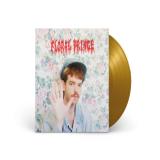
No en stock

Haga su pedido ahora y le encargaremos el artículo en nuestro proveedor.

Ültimo hace: 5 Meses
21,43 €
SLUTET - Slutet LP

SLUTET

Slutet LP

12inchCRYPTMETAL038
Crypt Of The Wizard
10.04.2026
  • 1: Seven Days of the Weak
  • 2: We Reap Our Crops
  • 3: Raped Beauty Sleep
  • 4: Old Blood Kapala
  • 5: O Ziemia!
Crypt of the Wizard is proud to make available two legendary underground albums by Slutet on vinyl and digital formats. Here we present the debut self titled LP Slutet - Slutet
Slutet originated in Uppsala well over a decade ago, first emerging as a loose idea around 2010. The original cluster of strangely like minded individuals - Dingir, Ryttersson, J.P., Sviatopolk, were equally set on starting a cult as they were a band, the former emerging as a loose collective known as The End Commune, while the latter eventually began rehearsing together as Slutet on September 1, 2013.
From this constellation three notorious demo tapes sprung which were self-released in very limited numbers, and only available by trading bodily fluids, blood, and/or hair for the cassettes. “A very loose guess but we made probably around 20-30 hand-drawn/custom demo tapes of the first three releases. We got blood and hair from many places, actually the very first offering was from INDONESIA. Slovakia, Germany, USA, Argentina, Norway, Canada, Finland followed.... if my memory serves..... hazy years indeed”
J.P. left early 2015. Later that year, after trying the band as a bass-drum-vocals outfit for a while, Fjalar joined on guitar. This is the classic constellation. Dingir, Ryttersson, Fjalar, Sviatopolk. The same troupe playing to this very day.
While the difficulty of obtaining the demos certainly added to the band’s bottomless mystique, the subsequent release of the self-titled compilation / LP secured their reputation as one of the most interesting and unorthodox bands recording under the somewhat ill-fitting moniker of ‘underground black metal’.
First released as a cassette by Berlin label Teratology Sound & Vision, and later on vinyl in an edition of 100 by Goatowarex, the self-titled LP is the definitive document of the very early and very wild years of the band as they begin to take form, fulminating against whatever was on offer.
“Between September 2013 and September 2014 we rehearsed and recorded 3 very crude demo cassettes; although sub-par in many musical and performance-wise aspects, the passion seeping through those recordings were evidently very real.”

Reservar10.04.2026

debe ser publicado en 10.04.2026

25,00 €
Various - Djax-Up-Beats 1990-2005: Volume 1 - The Acid Trip LP 3x12"

Delsin is pleased to announce an extensive compilation series combing through the catalogue of landmark Dutch techno label Djax-Up-Beats. The series, curated by Rush Hour co-founder Christiaan Macdonald, launches with a look at the label's legacy in the development of acid music through the 90s. In total, this first entry in the Djax-Up-Beats 1990-2005 series comprises 20 tracks, presented as a main triple-vinyl album plus two additional 12" EPs. The compilation also features all-new illustrations from Alan Oldham, the Detroit-rooted visual artist who gave Djax-Up-Beats a distinctive visual identity from very early on, and design by Lost Communication. Each volume of the series also features liner notes from music journalist Oli Warwick. Crucially, every track featured on the series has been carefully mastered by Johanz Westerman, bringing the best out of tracks that often had very little post-production treatment before they were originally pressed to wax. Volume 1 - The Acid Trip focuses on an area the label is best known for - acid house and techno. After the pioneering breakthroughs Chicago-based producers made with the Roland TB-303 in the late 1980s, acid music creation was starting to become more widespread when Djax-Up started in late 1990. The rebellious, rave-ready sound was an instant draw for label founder Miss Djax, and so her label ended up reflecting the development of acid as it spread from the Chicago roots across the world. Volume 1 - The Acid Trip looks at the diverse approaches to acid taken by artists on Djax-Up. Tracks on the compilation include an early outing from Ludovic 'St Germain' Navarre and Bjorn Torske's Ismistik alias, as well as Dutch pioneers such as Edge Of Motion, Spasms, Random XS and Acid Junkies, and Chicago heavyweights Mike Dearborn and Gene Hunt. With five more, equally extensive, volumes to come in this series, Djax-Up-Beats 1990-2005 is a thorough exploration of a true totem of techno culture - a renegade label that operated on its own terms and carried surprises and slammers in equal measure.

No en stock

Haga su pedido ahora y le encargaremos el artículo en nuestro proveedor.

Ültimo hace: 28 Días
29,83 €
DOODSESKADER - THE CHANGE IS ME
  • 01: Glass Mask On
  • 02: Celebrity Culture Simp Farm
  • 03: Please Just Make It Stop
  • 04: No Laughter Left In Me
  • 05: Weaponizing My Failures
  • 06: Unthinking My Every Thought
  • 07: Insignificant Other
  • 08: It Keeps On Stinging
  • 09: I Took A Pill In Vilvoorde
  • 10: Suffering In Technicolor

DOODSESKADER clearly haven’t had enough of redefining boundaries – they’ve only just gotten started. Tim De Gieter and Sigfried Burroughs return on April 3rd, 2026 with their third full-length album, The Change Is Me, a rollercoaster that can only be described as the unstable lovechild between witch house, hip-hop, industrial dream pop, and stadium rock that can’t decide if it wants to watch the world burn or shout from the rooftops that we need to save it. Their combination of grungy 90s melodies with distorted synths, sludgy bass, hard tuned vocals, rapping, singing, and explosions of undiluted rage at the current state of the world leave you wondering just exactly what it was you smoked last night, and if it was too much or not enough. The Change Is Me is an album that grabs you by the arm and asks if you’re ready to go on a grand adventure, then pulls you into its chaos before you can say “yes” or “no.”

Tim and Sigfried aren’t just breaking the boundaries between genres; they’re breaking out of their own Year cycle, a path they had laid out for themselves at the band’s inception in 2020. Up until now, the duo had set out to document their “journey to getting better” through writing one album each year: Year Zero (2020), Year One (2022), and most recently Year Two (2024). After spending eight months throughout 2024 and 2025 writing, recording, producing and mixing Year Three, the band scrapped the finished record entirely. Playing shows while simultaneously navigating the process of mixing Year Three created a sort of disconnect – the people that they were when they wrote that record and the people that playing shows made them become were no longer one and the same. “We’re people with faults and strengths, and we realized we needed to accept it. That’s equal parts bleak and liberating. If you’re so focused on self-improvement, you can’t even applaud yourself for how far you’ve come,” the band explains. “This project is meant to be a document of us and of the human condition, not a self-improvement handbook designed to keep us all stuck on what may or may not have happened to us or because of us in the past.”

DOODSESKADER chose instead to embark anew on a week-long creative journey in Tim’s own Much Luv Studio with one goal in mind: to make an album that captures who they are right now. Finally writing everything together in the same room for the first time in years, the process of bringing "The Change Is Me" to life was captured by Diana Lungu in their latest documentary, "Now I Know You See Me", out December 2nd, 2025.

"The Change Is Me" marks the beginning of DOODSESKADER’s shift into a more positive era, both musically and conceptually. Over the course of the 40-minute record we hear the two friends unite in a fight against a world that grows more and more disappointing, a concept made crystal clear in tracks like “Celebrity Culture Simp Farm,” “It Keeps On Stinging,” and of course the album’s epic closer “Suffering In Technicolor.” While their previous albums saw them trying to outrun their pasts and arrive at a better version of themselves, here the search for some external or internal revelation that will “make them better” is no more. It’s been replaced by the realization that change isn’t something we force: it’s gradual, and more importantly, it’s something that’s already there – we just need to reach out and accept it.

The band’s live appearances over the last several years have been instrumental in shaping their ideology. On stage is where the duo find connection; not only with the audience, but also with each other. Their sold-out release shows at Ancienne Belgique (2022) and VierNulVier (2024) have proven that they are one of Belgium’s must-see acts. Abroad, their energy has translated into a month-long EU/UK tour with French band Alcest in 2024, as well as appearances at festivals such as Roadburn Festival (NL), Eurosonic (NL), Hellfest (FR), Mystic Fest (PL), Jera On Air (NL), ArcTanGent (UK), Fluff Fest (CZ) and more.

"The Change Is Me" is out April 3rd, 2026 on DOODSESKADER’s own label, 45 Records.

Reservar03.04.2026

debe ser publicado en 03.04.2026

25,17 €
Quinie - Forefowk, Mind Me LP

The record is largely sung in Scots language, one of Scotland’s three official languages along with Gaelic and English. “Scots gives me a way of expressing myself which is connected directly with the landscapes I love. It brings the songs alive and it is a fascinating language. The name of the record is in Scots - Forefowk means the people who came before, or ancestors. When we say ‘mind me,’ we can mean a few things- remind, remember, watch over or care for me. The record explores how tradition needs to be constantly reconnected with, built upon, looked after, and shared.”
Quinie sings with a style inspired by Scottish Traveller singers. “I began singing unaccompanied Scots Song in 2015 after hearing Scots Traveller singer Sheila Stewart on the radio. Initially I felt like I shouldn't sing these songs because I'm not a Traveller, and I saw people around me doing that in a way that made me uncomfortable. But on the other hand this music made sense to me and I felt driven to learn. Over the years I have met Traveller friends who taught me that settled people sharing these songs could contribute to raising awareness. Scottish Travellers are marginalised and discriminated against in modern Scotland, despite being custodians of so many of our important traditions. So I started to perform them and tell this story. From there I built on my repertoire and started writing my own songs”.
To develop this record, Quinie travelled across Argyll with her horse. They went on a pilgrimage of sorts through the ancient landscapes of the West of Scotland to explore the interconnected relationships between people, ancestors, animals, and place. The album’s vinyl release is accompanied by a book and film, documenting this unusual research process.
Forefowk, Mind Me was recorded in August 2024 at The Big Shed in Highland Perthshire with support from Creative Scotland. Quinie is accompanied by an ensemble of musicians: Ailbhe Nic Oireachtaigh (viola), Oliver Pitt (duduk, bouzouki, percussion), Harry Górski-Brown (small pipes, violin), and Stevie Jones (double bass, recording, and mixing). Each of these artists brings their own distinctive voice, bridging contemporary experimental practice with worlds of traditional and early music.

Reservar03.04.2026

debe ser publicado en 03.04.2026

16,77 €
Agitator - Året av sex LP

Agitator

Året av sex LP

12inchLPADRR12C
ADRIAN RECORDS
03.04.2026

With two albums released—and a third arriving—in less than two years, Agitator are as ferocious in their release pace as they are on stage. All the more surprising, then, that the forthcoming album "Året av sex" is the darkest and slowest work they have made to date. Influenced as much by chanting witch doctors as by Christian Kjellvander and Leonard Cohen, and drawing from electronic and avant-garde music, the band reshapes its sound into something more brooding and expansive.

Partly recorded in a barn on the island of Öland, the album’s soundscape sees the drum kit augmented—and at times replaced—by scrap metal found in a nearby bay. Through this process, Agitator expand the idea of both what a creative process can be and what a rock band might look like in 2026. The result is bold, unsettling, and compelling: an album that digs deeper than many are willing to in Sweden today.

The lyrics on "Året av sex" are darker, more dangerous, and more precise than ever before. Given greater space within the broader sonic landscape, they become central to understanding this new incarnation of Agitator.

Agitator’s new album is released on March 27 via Adrian Recordings, preceded by three singles. The band’s first two albums have previously been praised by outlets including Dagens Nyheter, P3, Gaffa, Café, and PSL, leading to sold-out tours. A full Swedish tour is scheduled in connection with the album release.

Reservar03.04.2026

debe ser publicado en 03.04.2026

22,65 €
Adriaan de Roover - Chansons de Trottoir / Stoepliedjes (TAPE)

Adriaan de Roover

Chansons de Trottoir / Stoepliedjes (TAPE)

CassetteECN51
Edições CN
20.03.2026

This is a special work by acclaimed composer and musician Adriaan de Roover, who has released records on Dauw, VIERNULVIER, PIAS, and Consouling Sounds. Chansons de trottoir / Stoepliedjes documents his relationship to sampling in the form of a radio play.

Originally created as a radio piece for Resonance FM in Manchester, the album is a sonic portrait of a walk through Brussels. It is constructed from two field recordings: one made during a walk from Metro Midi towards Adriaan’s home, and another recorded on a walk towards Flagey. Rather than foregrounding recognizable landmarks, the piece focuses on the pavement underfoot: the steady, repetitive rhythm of footsteps on sidewalk tiles.

The recordings are mixed with samples from the music of the Brussels hip-hop group STIKSTOF. Their music became the soundtrack to a period in which Adriaan’s desire to move from Antwerp to Brussels began to take shape. Through repeated listening, the city of Brussels gradually revealed itself to him. This experience echoes that of countless music fans who, while listening to The Beatles, imagine what Liverpool might be like: a city revealed through sound and myth, often crystallized in lukewarm Hard Rock Café–style projections.

Chansons de trottoir / Stoepliedjes is an exercise in sampling and an exploration of how one might find a personal place within the music of others. It frames appropriation as an attentive and considered act. Suspended between memory and imagination, the piece exists closer to a dream state than to reportage.

Reservar20.03.2026

debe ser publicado en 20.03.2026

14,50 €
HIGH TONE - LIVE LP 2x12"

HIGH TONE

LIVE LP 2x12"

2x12inchFXLP42
JARRING EFFECTS
20.03.2026
  • THE ORIENTALIST
  • MOTHER DUBBER
  • 112: DUB
  • HARD WORKING
  • BAD WEATHER
  • SHORT VISIT
  • ENTER THE DRAGON
  • ONEW DUB
  • DELHI-KATMANDOU
  • TANIOTOSHI
  • ECHO-LOGIK

When High Tone Live dropped on Jarring Effects, it wasn't just another live album - it was a statement. Captured in the spring of 2003, the Lyon-based collective condensed years of experimentation into an 11-track journey that redefines what live dub can be. Since their formation in 1997, High Tone have stood at the crossroads of dub, electronic music, rock, and urban culture. With Jarring Effects as their home base, they built a reputation for transforming the stage into a laboratory - a place where basslines mutate, beats deconstruct, and every frequency breathes. High Tone Live draws from four key releases - Low Tone, Opus Incertum, Bass Température and ADN - Acid Dub Nucleik - revisiting them through the raw energy of the stage. Classics like "Dehli Katmandou" and "Enter the Dragon" are stretched, twisted, and reborn in extended, improvisational forms. Two unreleased tracks, "112 Dub" and "Onew Dub," complete the set, adding a dose of fresh material to a disc that feels both retrospective and forward-looking. As with any live recording, there are rough edges: the mix shifts, some moments feel caught mid-explosion. But that's the beauty of High Tone Live. The imperfections add warmth, immediacy - a reminder that this music is made by humans pushing machines to their limits. High Tone Live stands as one of the strongest documents of Europe's post-dub explosion. It's a record that bridges continents and genres - a sonic travelogue where analog grit meets digital hypnosis. More than a live set, it's a manifesto of independence and sound exploration, stamped with the unmistakable seal of Jarring Effects.

Reservar20.03.2026

debe ser publicado en 20.03.2026

31,05 €
Earth x Black Noi$e - Geometry of Murder: Extra Capsular Extraction Inversions (2x12")
  • A1: A Bureaucratic Desire For Revenge Part 1 (Black Noi$e Inversion)
  • A2: A Bureaucratic Desire For Revenge Part 2 (Black Noi$e Inversion)
  • B1: Ouroboros Is Broken (Black Noi$e Inversion)
  • C1: Geometry Of Murder (Black Noi$e Inversion)
  • C2: German Dental Work (Black Noi$e Inversion)
  • D1: Divine And Bright (Black Noi$e Inversion)
  • D2: Dissolution I (Black Noi$e Inversion)

New “Inversions” of drone rock pioneers Earth’s debut release. A collaboration between Dylan Carlson and Black Noi$e (Armand Hammer, Danny Brown, Earl Sweatshirt) formed in mutual respect and appreciation for one another. Both artists were intrigued by the creation of vast musical landscapes and the connection of music, with its ability to transport the listener. The music of Earth was recognised and celebrated for moving at a glacial pace and yet this new collaboration surprisingly saw Black Noi$e slowing things down even further.
The debut, which originally came out in 1991, notably featured Kelly Canary and Kurt Cobain on vocals on the tracks “A Bureaucratic Desire for Revenge Part 2” and “Divine and Bright”. Black Noi$e reimagines the original recordings with his experimental sensibility and innovative multi-instrumental, cross genre exploration. Applying contemporary electronics to the heavy droning bass and guitars and languid rhythms, this inversion oscillates and reverberates with a different kind of energy whilst simultaneously highlighting the much loved low slow and distorted properties of the original.

‘Extra Capsular Extraction’ was the first music Dylan made with Earth and his first time in a recording studio, which he recalls at the time as being “terribly exciting”. It also marked the first time collaborating with others and seeing it reified into a tangible object or product, a spirit that Dylan has carried through to the present. The original album is a document of a specific period and Dylan’s creative development. These inversions of Extra Capsular Extraction are, to quote Dylan, “an exciting way to reintegrate them into the present time and with my more expanded conceptions of musical endeavours”.
"Doom-metal innovators" Pitchfork.

"With guitars ramped up to the nth degree, but tuned to gut-wrenchingly low frequencies, Earth carved out a veritable canyon of pure molten drone, one which would have a profound influence on modern metal music." The Quietus

Reservar20.03.2026

debe ser publicado en 20.03.2026

29,20 €
Brian Auger’s Oblivion Express - Oblivion Express LP

Strut Records presents a fresh look at Oblivion Express, the 1971 album that marked Brian Auger’s shift into a new musical frontier. After years spent shaping the sound of British jazz-soul with the Trinity, Auger stepped into the new decade with a leaner, electrified ensemble and a renewed sense of purpose. This record captures the moment that transformation took shape.

Oblivion Express introduced a sound that was distinctly Auger’s own. Rather than echoing the fusion emerging in the United States, Auger developed a language rooted in the UK’s jazz underground, culminating in a spaced out jazz- rock / prog-fusion album awash with larger than life drum fills and Auger’s virtuosic organ playing. Between bassist Barry Dean and drummer Robbie McIntosh the album moves effortlessly between tight, articulated phrases and broader, improvisational passages. The trio’s interplay forms the backbone of the album and sets the tone for the sound that would define the early years of the Express.

Album opener “Dragon Song” launches with a restless drive that immediately signals Auger’s new direction. Auger chose to record this version of John McLaughlin’s piece (his friend and former bandmate in 'The Niddy Griddys') after hearing McLaughlin’s album Devotion during its mix at New York’s Record Plant Studios. Auger was blown away, recalling, “Oh my god, this is amazing. I wanted to record that myself - and I did!”. Pieces like “Total Eclipse” demonstrate the Oblivion Express’ command of dynamic contrast, and title track “Oblivion Express” explores the cinematic and compositional prowess of the group through stripped back, building moments vs. explosive melodic breakdowns. Riff-heavy “The Sword” later became known through Madlib’s usage in 2014 tracks “Yeti Movie” and “Parodies”.

In retrospect, Oblivion Express stands as a jazz leaning, prog-rock masterpiece and foundational moment in Auger’s catalogue. It captures the starting point of a new sound that is more focused, more urgent, and fully committed to the possibilities of jazz-rock at the dawn of the seventies. The album remains a vivid document of a band discovering its identity and setting the stage for the further array of influential releases that would follow.

No en stock

Haga su pedido ahora y le encargaremos el artículo en nuestro proveedor.

Ültimo hace: 6 Meses
23,11 €
E L U C I D & SEBB BASH - I GUESS U HAD TO BE THERE (TAPE)

Zwei Plattenspieler und ein Mikrofon. In der Klarheit dieser einfachen Schlussformel liegt eine Wahrheit - eine Wahrheit, die zugleich erahnen lässt, wie groß die Möglichkeiten innerhalb dieser Grenzen sind. Manchmal muss man daran erinnert werden.I Guess U Had To Be There, das neue Album des New Yorker Rappers ELUCID und des erfahrenen Produzenten Sebb Bash, ist genau so ein Fall. So frisch, als wäre es morgen entstanden - und doch kann man darauf wetten, dass man es auch 1989 hätte auflegen können und sofort alle Köpfe mitgenickt hätten.Es gibt Momente in der Musik, in denen Meister ihres Fachs sich auf dem Höhepunkt ihrer jeweiligen Schaffenskraft begegnen - Alben wie Madvillainy, Liquid Swords, Dr. Octagonecologyst oder Hell Hath No Fury -, bei denen das Ergebnis mehr ist als die Summe seiner Teile. ELUCID und Sebb Bash bewegen sich auf I Guess U Had To Be There genau in dieser berauschenden, scheinbar mühelosen Sphäre.Alles wirkt zugleich vertraut und bahnbrechend. Die Beats verschieben und wenden sich unter ELUCIDs Füßen, doch er balanciert sie wie auf einem Drahtseil - seine Performance so beweglich wie die einer Bergziege, Produzent und Rapper in perfekter Synchronität. Einige leuchtende Stars haben unvergessliche Gastauftritte: billy woods, Breezly Brewin, Estee Nack und Shabaka Hutchings. Doch im Kern ist dies eine Zwei-Mann-Show, und das Duo hält den Fokus genau dort, wo er hingehört.I Guess U Had To Be There ist ein fesselndes, konventionssprengendes Hörerlebnis und ein neuer Höhepunkt im Schaffen zweier der besten Künstler dieses Genres.

Reservar13.03.2026

debe ser publicado en 13.03.2026

19,75 €
Artículos por página

Language

N/ABPM
Vinyl