Gabon, 1980’s. President Omar Bongo has been in power since 1967. Together with his wife, the infamous singer Patience Dabany, he invents one of the ultimate political propaganda machine: ‘animation groups’, massive female choirs and dancers, up to 60 women deep, singing the praise of his regime over some of the best soukous rhythms ever, broadcasted live on TV.
Between 1982 and 1989, mainly thanks to the flourishing oil economy, a record-label is created, a state-of-the-art recording studio is set up, and the best Gabonese and Congolese musicians are recruited. Dozens of vinyls are pressed and sold with huge success all over the country.
The Bongo family has reigned continuously over Gabon until the 2023 coup d’état.
out of Stock
Last delivered 2 years ago available to reorder, subject to availability
Ukrainian vinyl label ARTREFORM significantly raises the stakes as its important anniversary (a soon-to-be-released 50th record) is gradually approaching. ARR048 is a double record, including three original tracks by Romanian producer Funky Trip and four Barac, Petit Batou, Lorgu, and Lukea remixes. ARTREFORM's founder, Kyiv DJ and sound producer JOSS, obviously trusts and bets on Funky Trip's talents, and this bet looks set to play out big time. Nicolae Catalin Cimpoier (Funky Trip's actual name) is a notable representative of the new
wave of the Romanian electronic scene that catapulted many stars to global fame. Thanks to a series of successful releases on Rawax Music and Stamp Records Paris, this Bucharest musician perfected his recognizable sound of crystal-clear minimal house, embellished with warm emotions and exquisite, shimmering melodies. Now it's high time Funky Trip transitioned to vinyl!
The second part of ARTREFORM's latest double vinyl release captures a new Romanian electronic scene star, Funky Trip, presenting a track called "Magic Woman." Just like femme fatale encounters often tend to, this occasion leaves one too many questions unanswered. Funky Trip's signature minimal house maintains tension through a looped leitmotif while the rhythm section and spacious ambient pads gradually trick the listener in. "Magic Woman" has the appeal of an ideal "second track" in the mix, the one intriguing enough yet leaving space for further narrative development. Funky Trip's delivery is delightfully contrasted by a beautiful remix by Lorgu that brings to the table an atmospheric, groovy house with many small nuances. The next track, "Les Voix," is another collaboration with Mia Zedan and a perfect specimen of ARTREFORM's sound pedigree: a powerful bass line coupled with an energetic and inventive tech house beat. However, its full depth of immersion takes effect via a remix by Lucas Morello, known as Lukea. His sci-fi-infused vibes of cosmic alienation and observation elevate this remix to the adornment of this Romanian-French-Ukrainian fruitful
creative collaboration.
Although it felt like the world had stopped spinning, at times, it was during these days, months, and years of uncertainty that many of Venice’s “Stained Glass” songs were conceived. Each member of Venice was quietly and privately cataloguing their artistic interpretation of this new reality and uncertainty by recording or writing down little snippets of ideas, like guitar riffs, melodies, or lyrics…all of these came about while looking at life through a new lens.
They set up the writing circle using an electronic drum kit, small tube amps, direct acoustic guitars and bass and the sm58 stage microphones for vocals. This small and simple setup allowed the band to work on ideas at low-volume levels by using headphones or low-level playback through studio monitors without bothering the neighbors with live drums. “Lunches made by Michael’s wife, Danielle, and visits from their dog Sachi, kept us grounded and let us stay in the creative bubble without leaving that space”, says bassist, Mark Harris. Michael and drummer, Andre Kemp, who co-produced Stained Glass, would later re-record the drum tracks with real drums in a friend’s studio.
“The beauty of this approach on Stained Glass was that one person’s idea would be presented to the other 5 musicians and each guy added a different color to that idea”, says Michael. “Whether it was an unexpected drum beat, or a moving guitar line, those simple ideas turned into pieces of art, colored by the different musical and lyrical contributions. That only happens when you are working that idea out, together, and playing as one unit”.
That was the main inspiration for the album title; like a kaleidoscope, each guy's experience and taste in music was bringing a different color to the songs, but together their contributions made one piece of art, one song. Michael concludes, “if you zoom out, each song becomes its own color and all those songs or colors come together to form one big piece of art, one big piece of ‘Stained Glass’”.
Rotterdam based artist ''Ben Buitendijk'' has been around for quite a while now. With a string of releases of labels such as ''Ogun Records'', ''Eshu Records'' and appearances on the mighty ''Field Records'', the time has come for Ben to launch his own imprint. Inspired by the city of Rotterdam and his love for anything architectural, Oblique was founded. A label that is designed to cater to Ben's vision on the overall electronic landscape and to display his love for well thought out drum patterns with dense long-stretched builds and strained atmospheres.
''Venomous EP'' comes in a package of three extended techno cuts with a certain corresponding theme. As the title might suggest, all cuts have a certain
touch of hazardousness to them.
''Black Mamba'' is best explained as the experience of poison slowly creeping through one's veins and leaving an irreversible trail of destruction.
''King Cobra'' feels more boisterous than it's predecessor. Again, a long repetitive build keeps on changing into a slightly psychotic state of being while razor-sharp bits of synthesis tickle the listeners brain like when undergoing acupuncture.
''Stingray'' is the final cut of this first ''Oblique'' effort. Whilst maintaining the corresponding ''Venomous'' theme, the last endeavour is a thumping outcry of muscular drums, a ponderous bass shot, and haunting pad sounds that together create a dystopian character. As an extra, Ben has thrown in an ominous locked groove that should be useful in adventurous club settings.
out of Stock
Last delivered 12 months ago available to reorder, subject to availability
Blue Bendy are kicking off 2024 with news of their highly anticipated debut album ‘So Medieval’ which is being released via state51 on 12 April. Alongside this big announcement the band are sharing the latest new track from the record, ‘Come On Baby, Dig!’, and dates for their UK tour including their largest headline show to date at The Garage in London on 9 May and a special Album Launch Show in the band’s hometown of Scunthorpe to celebrate the release.
‘So Medieval’ captures all the musical foibles, idiosyncrasies and departures from the norm which Blue Bendy have displayed across their previous releases. Expressing their sound over the course of a full record for the first time, ‘So Medieval’ is an explosive mix of genre, atmosphere and emotions. The end result is something rare for a new band: a debut album which is as experimental as it is confident and assured, as tender as it is visceral, as quiet as it is loud, as bloody as it is teary.
Released 25th January, new single ‘Come On Baby, Dig!’ follows on from previously released album tracks ‘Cloudy’ and ‘Mr. Bubblegum’. Simmering down the tempo and darkening the mood, the track stacks forlorn lyrics against an assortment of riffs, tones and textures. The music video, directed by Michael Julings, depicts an unnamed character locked in an existential battle with an immovable black fridge. Starring Laura Schuller, a performance artist recently cast in the Marina Abramović retrospective at the RA, the video also features the band coming together to conjure supernatural powers at the video's climax.
Singer and lyricist Arthur Nolan explains that “Dig is dedicated to an old flame and a city break. I was eat pray loving, digging around for some culture in the wake of breaking up. The wheels came off the trip quickly, and now I won’t go back to Bologna, I’m banned.”
Building on the momentum of their 2022 EP ‘Motorbike’ Blue Bendy are stretching out into vast new sonic terrain. Their following two singles ‘Mr Bubblegum’ - a joyously intricate piece of experimental guitar pop - and the frenetic, propulsive yet incredibly deft sprawl of ‘Cloudy’, saw the band reach new heights creatively. Of the former, The Guardian enthused: “indie is riddled with addled, verbose frontmen right now, but none so rapturous as Blue Bendy’s Arthur Nolan: here he dances all over splayed post-rock and micro-cataclysms.”
Having toured as main support for Squid and Cola as well as playing packed out tents at festivals like End Of The Road and Green Man, Blue Bendy have struck a balance between being obviously skilled musicians, writing complex, layered, overlapping and ambitious compositions, while also utilising space, breadth, and restraint. Their music is bursting with dynamism, exploring push-pull dynamics that results in something ceaselessly unpredictable.
Nia Archives is the star at the forefront of the latest era of jungle. Since her emergence in 2020, her collagist soundscapes have helped bring the sound to a new generation of clubgoers (though fair warning: don’t call her a “revivalist” – she’s the first to point out that the scene never went away). So when it comes to talk of the 24-year-old producer, DJ, singer and songwriter’s much-anticipated debut album, the odds are you’re thinking of a full-length record of weightless jungle tracks with basslines so intense they’ll leave your ears ringing.
But the reality of the Bradford-born, Leeds-raised artist’s first ever album – while very much replete with that exquisite jungle sound she does so well – is also doing something a little different. On the thrilling and freeing Silence Is Loud, Nia Archives is looking to make music for beyond the rave. As she explains: “I think music can be experienced in different ways, and there’s different kinds of music for different scenarios. Say you’re at a festival listening to music with thousands of other people, that can feel really uniting. But then you might listen to an album on your own in the bus, or in a taxi; and this project is definitely more a record to sit and listen to than a collection of club tracks.” Nia is intent that Silence Is Loud is taken in as a full body of work of something “more song-focussed, putting interesting sounds on jungle.” It means that this is a record which finds gloomy Britpop, warm Motown, soaring indie, a love for Kings of Leon’s Aha Shake Heartbreak, skittering IDM, Madchester, classic rock, old skool hardcore and more, woven and fused into her ragga and junglist tapestry, all layered with feeling, imbued with her songwriterly lyricism about loneliness, relationships, family, navigating her 20s, and the intense potential power of silence.
The vast sonic palette on Silence Is Loud comes down to Nia’s broad array of influences through her life. With her Jamaican heritage, Nia remembers hearing jungle as a child via her nana, as well as at Bradford Carnival, where she was drawn to the soundsystem culture, dancing carefree on the floats in the parade. The first album she ever bought was Rihanna’s debut, Music of the Sun, and she also went to Pentecostal church back then, and was obsessed with gospel. Aged 16, she moved to Manchester, where she didn’t really know anybody: and so, her solution to meeting people was going out. “Partying was a huge part of my life,” she says, “They used to do little freestyle cyphers at the house parties and I would join in – that’s kind of how I got into singing.” She had found music boring at school, but in meeting all these new people she became interested in making her own music as a hobby. “I was making boom-bap kind of stuff which I didn’t really like in the end,” she laughs, “My lyrics are quite deep, so on a hip-hop beat it all sounds really depressing. I wanted people to dance to my music.” And so she began experimenting with faster tempos alongside that melancholy songwriting, teaching herself how to make beats on Logic: “It’s all been a lot of trial and error, really.”
Nia went to study music in London, and was also interested in visual art, making collages and VHS: “Before the music, I was trying to make a visual archive of my life and the people around me,” she explains, “And then my music was like my diary, and a sonic archive, as well.” Hence, she paired the word “archives” with her middle name, Nia. To this day, in her spare time she’s working on pulling together a documentary on the global nature of the jungle scene.
Back on those first two EPs, Headz Gone West (2021) and Forbidden Feelingz (2022), she honed that junglist sound, painting it with new flecks of colour and vibrance. It was only after she started releasing work that she realised pursuing music could be a viable life path for her. The decision has been paying off ever since. Nia Archives placed third in the prestigious BBC Sound Poll for 2023, alongside garnering a nomination for the Brit Awards’ Rising Star prize, plus wins at the DJ Mag, NME, the MOBOs and Artist and Manager Awards. She has also toured the world – be it North America, Europe or Asia – and even opened a show in London as part of a little something called Beyoncé’s Renaissance World Tour. She’s renowned as a party-starter in her own right, too, with takeovers at Glastonbury, Warehouse Project and her own Bad Gyalz day event. She’s done official remixes for the likes of Jorja Smith, had a huge summer hit with her Yeah Yeah Yeahs rework ‘Off Wiv Ya Headz’, and worked with brands like Corteiz, Nike, Flannels, Burberry, FIFA and Apple. In just three years, it’s fair to say that Nia Archives has become a need-to-know name in dance music.
But Nia is not interested in being one fixed thing. Building on the terrain from her third EP, Sunrise Bang Ur Head Against Tha Wall, the universe of Silence Is Loud is not totally unfamiliar territory; but it’s still emblematic of a bolder scope than we’ve heard from the artist before. Working with Ethan P. Flynn (the songwriter and producer known for his work with FKA twigs and David Byrne), the resulting record is an impressive feat of deftly-sculpted textures; sometimes big and euphoric, like the wobbly, lusty bass of ‘Forbidden Feelingz’, or elsewhere notably gentle and quiet – see: the gorgeous, surprisingly drumless ‘Silence Is Loud (Reprise)’, a heartfelt number that sits somewhere in the school of Adele. “I really sharpened my songwriting skill on this project,” Nia says, “I was really intentional about what I was writing about, and I really loved co-producing with Ethan. His process is so different to anyone I’ve worked with before, and he’s got a kind of DIY set-up like me.” Flynn’s flat overlooks the Barbican, adding that unquantifiable futurist urban quality that the area holds to the music. The pair enjoyed the collaborative process so much that the album was done within three and a half months.
Perhaps this is why Silence Is Loud maintains an exuberant immediacy while still being sleek and spacious, interspersed with flourishes of metallic beats, lush melody and topped with her sugary but powerful vocal, floating over it all. There is an intimacy to the record, perhaps in part due to Nia writing most of her lyrics while sitting in bed in her flat in Bow (once a bedroom producer, always a bedroom producer). You can hear it on the refrain for lead single ‘Crowded Roomz’, which finds rippling guitar lines cutting taut through the beats as Nia refrains: “I feel so lonely crowded rooms.” The song is an examination of life on tour, constantly surrounded by people, but not necessarily those she can be herself around; more than that, the track is exemplary in the category of sad bangers.
Silence Is Loud often finds itself in that push and pull between melancholy and euphoria. There’s a celebration of her unconditional love for her younger brother (the title track), a rumination of an evening with an Irish boy she met by Temple Bar (‘Cards On The Table), or a letter to herself on the light and airy ‘Unfinished Business’, even coming to terms with a lover having a past they haven’t quite processed yet (“nobody comes with a clean slate”). The latter was recorded the week after a music festival, and accordingly captures Nia’s vocal in its not quite healed, husky state.
Nia’s work is always a snapshot of where she’s at when she’s making it. This might not be the debut album you were expecting, but that’s what makes Silence Is Loud so special. Nia Archives has learned the rules of her sound, and is unafraid to break them, pushing jungle and herself into new, unchartered territories that, in turn, go some way to map the history of the greats of British dance music. More than that, it plants her firmly in that lineage.
out of Stock
Last delivered 16 months ago available to reorder, subject to availability
Following their critically acclaimed 2019 debut album Unfurl, Hidden Notes Records are happy to announce the release of the multi-award-nominated experimental/contemporary folk string duo Fran & Flora’s sophomore full-length album, Precious Collection. Released on Friday 12th April 2024, this album, produced by the duo themselves, explodes in myriad directions expressing the richness of the long-standing collaboration between Francesca Ter-Berg (cello/vocals/electronics) and Flora Curzon (violin/vocals/electronics). With Klezmer and Yiddish song as the predominant inspiration for the record, Precious Collection defies convention, featuring self-penned tunes and unique arrangements pushing their ground-breaking project beyond their virtuosic string playing. Drummers Ursula Russell (Snapped Ankles, Alabaster DePlume) and Simon Roth (Chris Potter, Alice Zawadzki, Adrian Dunbar) feature on the record on full kit and Ukrainian Poik (marching drum) respectively, and Francesca and Flora experiment with bowed cymbals, extended piano techniques, and samples of found sounds.The album was recorded in three different locations - Total Refreshment Centre (London), Big Jelly Studios (Ramsgate) and Great North Sound Society (Maine, USA). The music of Fran & Flora sits in two camps, both steeped in tradition, with material drawn directly from archival recordings, recovered manuscripts and years of study with traditional music masters, whilst simultaneously garnering a contemporary and avant-garde aesthetic, speaking to the more classical and experimental listener. Fran & Flora inject their source material with drones, loops, free improvisation and electronics to create a ‘border-defying’ (Mojo) sound. Their influences range across a wide spectrum of artists and composers from Silver Mt.Zion to Rhiannon Giddens, Lankum, Brìghde Chaimbeul, Colin Stetson, Adrienne Lenker, Shabaka Hutchings and Mica Levi. As string players Fran & Flora’s collaborations together and separately includes performing with the likes of Tom Skinner, Portico Quartet, Imogen Heap, Riz Ahmed, Sam Lee, Talvin Singh, Jocelyn Pook, Hannah Peel and The Vernon Spring. Within the global Klezmer community they have worked with Zoe Aqua, London Klezmer Quartet, Sashe Lurje, Craig Judelman, Merlin & Polina Shepherd and Frank London, and have taught at Klezmer music camps including at Klezfest London, contributing to ongoing research and revival work.
Following their critically acclaimed 2019 debut album Unfurl, Hidden Notes Records are happy to announce the release of the multi-award-nominated experimental/contemporary folk string duo Fran & Flora’s sophomore full-length album, Precious Collection. Released on Friday 12th April 2024, this album, produced by the duo themselves, explodes in myriad directions expressing the richness of the long-standing collaboration between Francesca Ter-Berg (cello/vocals/electronics) and Flora Curzon (violin/vocals/electronics). With Klezmer and Yiddish song as the predominant inspiration for the record, Precious Collection defies convention, featuring self-penned tunes and unique arrangements pushing their ground-breaking project beyond their virtuosic string playing. Drummers Ursula Russell (Snapped Ankles, Alabaster DePlume) and Simon Roth (Chris Potter, Alice Zawadzki, Adrian Dunbar) feature on the record on full kit and Ukrainian Poik (marching drum) respectively, and Francesca and Flora experiment with bowed cymbals, extended piano techniques, and samples of found sounds.The album was recorded in three different locations - Total Refreshment Centre (London), Big Jelly Studios (Ramsgate) and Great North Sound Society (Maine, USA). The music of Fran & Flora sits in two camps, both steeped in tradition, with material drawn directly from archival recordings, recovered manuscripts and years of study with traditional music masters, whilst simultaneously garnering a contemporary and avant-garde aesthetic, speaking to the more classical and experimental listener. Fran & Flora inject their source material with drones, loops, free improvisation and electronics to create a ‘border-defying’ (Mojo) sound. Their influences range across a wide spectrum of artists and composers from Silver Mt.Zion to Rhiannon Giddens, Lankum, Brìghde Chaimbeul, Colin Stetson, Adrienne Lenker, Shabaka Hutchings and Mica Levi. As string players Fran & Flora’s collaborations together and separately includes performing with the likes of Tom Skinner, Portico Quartet, Imogen Heap, Riz Ahmed, Sam Lee, Talvin Singh, Jocelyn Pook, Hannah Peel and The Vernon Spring. Within the global Klezmer community they have worked with Zoe Aqua, London Klezmer Quartet, Sashe Lurje, Craig Judelman, Merlin & Polina Shepherd and Frank London, and have taught at Klezmer music camps including at Klezfest London, contributing to ongoing research and revival work.
To record "Ease the Work", Hour traveled via ferry with an entire studio’s worth of equipment to an old off-Broadway theater on Peaks Island in Maine, months before the first tourists would show up. The week-long session started with an island-wide power outage that halted recording on the first day, and ended with twelve songs that walk steadily between longing and contentment, sentimentality and subtlety, the lift of harmony and the compulsion of a melody you wish would play forever. Hour’s music cuts a broad pathway, and remains hard to classify or compare. Perhaps most at home beside work from Bill Frisell, Eiko Ishibashi, ECM Records, or the Louisville experimental chamber group Rachel’s, Ease the Work shows us life on the boundary of composition and improvisation. It reaches for the sweeping gestures and inspired pacing of classic film scores, Frank Sinatra ballads, and Scott Walker’s pop orchestra. It also retains the arresting intimacy of the band’s early work. Strings swell and harmonize in counterpoint with electric guitar, clarinet, and piano, while drums, synth pads, and field recordings complete the aural world.
"Ease the Work" by Hour includes the following tracks: "Stoner", "Brain Scrub", "Dying of Laughter", "The Most Gorgeous Day in History" and more.
Here at Four Flies, we kind of feel we need a bigger word than 'proud', this time, to present, in collaboration with Beat Records, the first-ever release of the original soundtrack written in 1976 by Guido & Maurizio De Angelis for the legendary Squadra Antifurto, the second chapter of the comedy-infused crime saga directed by Bruno Corbucci and starring Tomas Milian as the iconic Italian Police Marshal Nico Giraldi.
The excitement in this case is nothing short of gigantic, difficult to rein in for those who, like ourselves, grew up adoring the character played by Milian as one of our cult heroes, and dreaming that the soundtracks of the first three films in the saga – the only ones composed by the De Angelis brothers – would one day be released.
Since the launch of our label, Squadra Antifurto has been at the top of the list of film scores we most wanted to release. Until a few months ago, this dream of ours seemed destined to remain just that, so strong was the conviction in all of us that the master tapes were definitively lost, that they had forever vanished into thin air. That's why their recovery, made possible by Maurizio De Angelis himself and the persistence of our friends at Beat Records, is an extraordinary feat.
Nearly 50 years after it was first heard in cinemas, the soundtrack penned by the De Angelis brothers is resurrected in its entirety and can finally shine its incredible power all over us.
Beautifully seeping through this score – like many others composed by the golden duo in the 1970s – are elements from the Italian, and especially Roman, folk tradition, for instance in the warm, heartfelt ballad sung by Alberto Griso, "E nun ce voio sta," which first plays in the opening credit sequence and is then reprised in various forms throughout the film, culminating with the soul-stirring orchestral version that closes the album's tracklist.
But as in any Italian crime film worthy of that name, a different soundscapetakes centre stage: it's the music that accompanies the countless scenes of tension, action, and pursuit that punctuate the film, and which has made us fall madly in love with this score.
The main theme is a prog-funk joyride, drawing inspiration from the traditional tarantella but elevated to irresistible energy thanks to a rock orchestration featuring psychedelic flutes, wild percussion, distorted electric guitars, piano chords, and various feedback and delay effects.
The resulting groove is just mind-blowing, and we almost can't believe it's finally available on a record, completely remastered for vinyl.
We really couldn't be prouder, and dedicate this release to all passionate fans of Italian crime films, the De Angelis brothers, and Tomas Milian aka Nico Giraldi.
Available starting April 12th on standard black vinyl and limited coloured vinyl (transparent amber, limited to 300 copies).
NOTURNALL. This is the name of this young group that, in less than 10 years on the road, is considered one of the biggest and most important bands in Brazilian Heavy Metal history. Starting in 2014, its brief, but intense history brings some legends of the so-called “Brazilian metal scene” that left their marks on worldwide renowned bands: Shaman, Angra and Project46. They also have in their line-up legendary North American guitarist Mike Orlando, who sold hundreds of thousands of album copies with ADRENALINE MOB and was listed a top 100 guitar player of all time and also a top 10 superstar of the year 2008 by Guitar Player Magazine.Iconic concerts, bold tours, thrilling music videos and guest appearances by Heavy Metal legends from all over the world, such as Michael Kiske (Helloween, Unisonic), Mike Portnoy, James Labrie (Dream Theater), Russell Allen (Symphony X, Adrenaline Mob), Michael Romeo (Symphony X), Edu Falaschi, among others, consolidate the band as a true jewel of Brazilian Heavy Metal. In 2022, after almost 2 years away from stage, Noturnall started the year with a nostalgic concert in SESC 24 de Maio, presenting classic songs. Noturnall released their fourth studio album, entitled Cosmic Redemption, showcasing the band’s best shape and also featuring as special guests: guitarist MARTY FRIEDMAN and bassist DAVID ELLEFSON (both former MEGADETH), founding SYMPHONY X guitarist, MICHAEL ROMEO, the internationally renowned prog metal drummer, MIKE PORTNOY (ex-DREAM THEATER, THE WINERY DOGS, SONS OF APOLLO), who previously toured with the band and appeared in the video for the single “SCREAM! FOR!! ME!!!”, and lastly Brazilian MPB legend, NE Brazilian MPB legend, NEY MATOGROSSO.
Cosmic Redemption by Noturnall, released 12 April 2024, includes the following tracks: "Shallow Grave", "Shadows (Walking Through) (Feat. Michael Romeo)", "Tempo Não Para (Feat. Matogrosso)" and more.
This version of Cosmic Redemption comes as a 1xLP.
Das vierte Studioalbum von Billy Joel, ursprünglich veröffentlicht am 19. Mai 1976. Enthält den legendären Track "New York State Of Mind". Auf schwarzem Vinyl.
Das Hamburger Label Grand Hotel van Cleef kündigt, in großer Vorfreude und aller Feierlichkeit, das sechste Studioalbum der Indierock Band Kettcar an. Es hört auf den Namen "Gute Laune ungerecht verteilt" und erscheint am 05. April 2024. Der langerwartete Nachfolger von "Ich vs. Wir" (2017, "Eines der kraftvollsten und wichtigsten deutschen Alben des Jahres" - spiegel.de) wurde von Simon Frontzek, Rudi Maier, Philipp Schwär und Philipp Steinke produziert. Kettcar malen auf "Gute Laune ungerecht verteilt" das ganze Bild - textlich wie musikalisch. Schroffe Post-Punk-Gewitter, Akustisches, Sprechgesang. Welchen Style wollt ihr? Hier sind sie alle drauf. Die zwölf Songs erzählen Geschichten von, auf und über Bayreuth, Krankenhauszimmern, Rügen, dem Supermarkt, der Enterprise und der Blauen Lagune. Mal die Faust in der Tasche, mal das Herz im Hals Die erste Single aus dem Album heißt "München", ein Song, den man so von einer Band aus Hamburg sicher nicht erwartet hat.
Das Hamburger Label Grand Hotel van Cleef kündigt, in großer Vorfreude und aller Feierlichkeit, das sechste Studioalbum der Indierock Band Kettcar an. Es hört auf den Namen "Gute Laune ungerecht verteilt" und erscheint am 05. April 2024. Der langerwartete Nachfolger von "Ich vs. Wir" (2017, "Eines der kraftvollsten und wichtigsten deutschen Alben des Jahres" - spiegel.de) wurde von Simon Frontzek, Rudi Maier, Philipp Schwär und Philipp Steinke produziert. Kettcar malen auf "Gute Laune ungerecht verteilt" das ganze Bild - textlich wie musikalisch. Schroffe Post-Punk-Gewitter, Akustisches, Sprechgesang. Welchen Style wollt ihr? Hier sind sie alle drauf. Die zwölf Songs erzählen Geschichten von, auf und über Bayreuth, Krankenhauszimmern, Rügen, dem Supermarkt, der Enterprise und der Blauen Lagune. Mal die Faust in der Tasche, mal das Herz im Hals Die erste Single aus dem Album heißt "München", ein Song, den man so von einer Band aus Hamburg sicher nicht erwartet hat.
Das Hamburger Label Grand Hotel van Cleef kündigt, in großer Vorfreude und aller Feierlichkeit, das sechste Studioalbum der Indierock Band Kettcar an. Es hört auf den Namen "Gute Laune ungerecht verteilt" und erscheint am 05. April 2024. Der langerwartete Nachfolger von "Ich vs. Wir" (2017, "Eines der kraftvollsten und wichtigsten deutschen Alben des Jahres" - spiegel.de) wurde von Simon Frontzek, Rudi Maier, Philipp Schwär und Philipp Steinke produziert. Kettcar malen auf "Gute Laune ungerecht verteilt" das ganze Bild - textlich wie musikalisch. Schroffe Post-Punk-Gewitter, Akustisches, Sprechgesang. Welchen Style wollt ihr? Hier sind sie alle drauf. Die zwölf Songs erzählen Geschichten von, auf und über Bayreuth, Krankenhauszimmern, Rügen, dem Supermarkt, der Enterprise und der Blauen Lagune. Mal die Faust in der Tasche, mal das Herz im Hals Die erste Single aus dem Album heißt "München", ein Song, den man so von einer Band aus Hamburg sicher nicht erwartet hat.
Ltd. Edition Vinyl: limitiertes gelbes 180g Doppel-Vinyl, Cover mit Prägung und Durchnummerierung, bedruckte Innenhüllen, Poster und Fotos der Bandmitglieder
Einstürzende Neubauten präsentieren ihr neues Album. Sie suchen nach neuen Formen. Nach dem unentdeckten Ton und dem noch unausgesprochenen Wort. Seit ihrer Gründung am 1. April 1980 verschieben die Einstürzenden Neubauten die Parameter von Mainstream und Subkultur, um das Unhörbare hörbar zu machen. Und vielleicht auch das Unerhörte. Ein sich über vier Dekaden erstreckender Feldforschungsversuch, der nun ins nächste Stadium tritt. In ihrem 44. Bestehensjahr geht die Formation weit zurück zu ihren Wurzeln, um sich gleichzeitig neu zu definieren. Ein verändertes Selbstverständnis, für das das Berliner Quintett plus eins 2024 sein eigenes Genre kreiert hat: apm - alien pop music. Ständige Weiterentwicklung - so könnte man das Schaffen der Einstürzenden Neubauten kurz und knapp zusammenfassen. Eine musikalische Evolution, die beim 1981 veröffentlichten Albumdebüt "Kollaps" beginnt und sich nun auf dem im April 24 erscheinenden Album "Rampen - apm: alien pop music" manifestiert, auf diesem präsentieren sich Blixa Bargeld, N.U. Unruh, Alexander Hacke, Jochen Arbeit, Rudolph Moser und Felix Gebhard nun von ihrer unberechenbarsten und eigenwilligsten Seite. Auf ihrem neuen Album setzen die Neubauten nun allen Sound-Spekulationen ein - wenn auch spätes - Ende. Schon seit Mitte der 1980er-Jahre experimentieren die Einstürzenden Neubauten auf der Bühne mit sogenannten Rampen: Öffentliche Improvisationen mit offener Entwicklung und Ausgang; Abschussrampen ins noch Unerforschte, die die Band im Jahr 2022 auf ihrer letzten "Alles in Allem"-Tournee im Zugabenteil performte und deren Mitschnitte als Basis für das neue Album dienen. "Rampen - apm: alien pop music" ist Popmusik für Paralleluniversen und Zwischenwelten. Für Hyperräume und Interzonen. Mikrokosmisch und intergalaktisch zugleich. Eine demimondäne Behauptung außerhalb aller physikalischen Gesetze, mit der die Einstürzenden Neubauten ein stilistisches Niemandsland zwischen Vergangenheit und Zukunft betreten. Rückkehr zu den Wurzeln einerseits, andererseits entsteht aus lärmgewaltigen Kracheruptionen, auf kryptische, oftmals fragmentarische Lyrics treffend, eine neue Kunstform: Populäre Musik für Aliens und Außenseiter. Aus Anti-Pop ist Alien Pop geworden. Fremdartig. Kokonhaft versponnen. Ungehört. Sonus inauditus. Nicht ganz unabsichtlich erinnert das reduzierte Coverartwork an das ikonische Layout des "Weißen Albums" von den Beatles. "Ausgehend von der Idee, dass die Einstürzenden Neubauten in einem anderen Sonnensystem ebenso berühmt sind wie die Beatles in unserer Welt", so Blixa Bargeld über die Gratwanderung zwischen Avantgarde und Augenzwinkern, Provokation und popkultureller Diskontinuität. Womit auch direkt das zentrale Thema vorgegeben wäre, das sich wie ein roter Faden durch alle Songs zieht: Veränderung, utopische Gedankenspiele und Vergänglichkeit. "Ich habe auf der Platte ein paar Lösungen gefunden und Dinge formuliert, wie ich sie vorher noch nicht formuliert habe, weil sie mir noch nicht so klar waren. Ich bin jemand, der denkt, durch Musik Erkenntnisse zu gewinnen. Das war schon immer so. Die Überzeugung, in der Musik etwas zu finden, was ich vorher nicht wusste. Und etwas zu singen, was ich vorher nicht wusste. Etwas, was sich dann als Wahrheit herausstellt. Oder zumindest als sinnvoll, wenn man es ein wenig kleiner halten will." Dieses Album repräsentiert die nächste Stufe der Evolution, auf der man die bekannte Sprache schließlich hinter sich gelassen hat. Und die Eröffnung weiterer, unendlicher Möglichkeiten: alien pop music.
out of Stock
Last delivered 2 years ago available to reorder, subject to availability
, Old fat furry cat-puss , Wake up and look at this thing that I bring, Wake up, be bright , Be golden and light , Bagpuss, Oh hear what I sing. 12th of February, 1974, and for an audience of small children at 1:45pm, a life irrevocably coloured by the wayward wonderings of one saggy cloth cat. Some 44 years later and Earth Recordings opens the door to Bagpuss & Co. once again, revealing for the first time the original music in all its newly-mastered splendour. The 32 tracks that make up the main body of the compositions are – like all good folk music – a patchwork of traditional pieces, half-remembered tunes and pure improvisation. It's testament to Sandra Kerr and John Faulkner's musicianship that the recordings work so well, not only within the context of the television episodes, but as an album in its own right. Of the recording, Oliver Postgate (in his exquisite autobiography 'Seeing Things') says: "Between them Sandra and John could play every sort of instrument from a mountain dulcimer to an Irish fiddle. They knew and could sing every tune in the world and didn't bother with written music, except as a last resort. They were exactly suited to Gabriel the Toad and Madeleine the Rag Doll and in those roles were happy to play whatever music and sing whatever songs would be needed." Those songs manifested themselves as reworkings of familiar tunes ('I Saw A Ship'; 'Row Your Boat'; 'Bucket's Burning'), takes on traditional ballads ('Brian O'Lynn'; 'The Frog Princess'; 'Weaving Song'; 'The Old Woman Tossed Up in a Basket') and delicious flights of fancy ('The Bony King of Nowhere'; 'Turtle Calypso'; 'Uncle Feedle'). The counterpart to Madeleine and Gabriel's more polished ditties are the interludes from the mice; a raggle-taggle chorus that accompanies the creatures' efforts of help (with the mice once famously going on strike when they were not permitted sang as they worked). Again, Postgate muses: "Once I had worked out a few episodes I would make a very rough list of the bits where I though music would be appropriate. I would send it to Sandra and John to think about. Then we would borrow a fairly silent room in a remote house and, taking the various articles that we intended to celebrate with us, would spend a happy day with a tape recorder, thinking up and recording whatever songs and tunes came to mind." The outtakes provide an intimate – and often very humourous – insight into the trio's work ethic, if it can be called such a thing. (By all accounts they sound as though they're having a very jolly time indeed.) Highlights include alternative opening words and end music, as well as Postgate sound-checking in character as Bagpuss. This never-before heard audio provides a real treat for fans (and indeed those new to the Smallfilms stable) – affirmation again to the enduring quality of these special recordings, and the beloved programme that inspired them. "An accidental classic of the folk-roots underground that we never dared hope we’d hear with such clarity."Stewart Lee
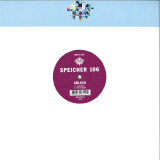
The year could not be complete without having a new release from the man behind the hat - KÖLSCH. He returns to SPEICHER following a phenomenal year of touring that took his DJing from the top of the Eifel Tower to the main stage of Tomorrowland. His IPSO imprint evolved into a global event and he released together with TIGA 'HAL', one of the biggest tracks of this summer.
For SPEICHER 106, he takes an unexpected turn with EMOTICON. Found sounds take on new sonic form and the result is an unconventionally unique groove odyssey. LITTLE DEATH is anything but tragic or small. A choir chant explodes over top of an enchanting house beat which elevates over time to an almighty apex that we have learned to love and rely on from KÖLSCH.
out of Stock
Last delivered 7 months ago available to reorder, subject to availability
Returning to the well of Roger Doyle once again, his “Babel” project spans a decade of composition work before its’ initial release in 1999 as a 5CD set. Over 100 pieces and almost 50 collaborators it marks a journey through a virtual tower of Babel with each piece corresponding to a room within an imagined giant tower city. For the 25th Anniversary vinyl edition Doyle has revisited it- remastering it and providing its first vinyl edit - 80 minutes spread across two 180gm LP’s - rounding out the package with extended liner notes and a download code to the full 6 hours.
We’ve previously explored Roger’s Operating Theatre days and the idea for this project came in the early nineteen eighties while Doyle was heavily involved with the experimental theatre group. Working with emerging technologies and across a variety of genres he realised that he would be unlikely to achieve an overarching compositional style. Instead deciding to make a virtue out of the fact that he composed so schizophrenically, he wished to create a musical alphabet out of short abstract sounds with these sounds being analogous to phonemes in speech. With Blade Runner and sci-fi embedded in the zeitgeist of the times he came to the idea of the Tower of Babel as both a futuristic skyscraper and also an embodiment of language.
In the spring of 1990 Babel was finally begun and kept growing until it reached over 6 hours of music and was released in 1999.A large-scale musical structure making use of many technologies and music languages, with each piece of music being thought of as a 'room' or place within an enormous tower city. Each track in the main section corresponds to a virtual sonic architecture. The pieces are divided into two kinds: aural representations of actual spaces like The Dressing Room, The Stairwell and Mr. Brady's Room alongside internalised dream spaces like the Room Of Rhetoric, the Spirit Levels and the Mansard childhood memory room. Listeners can navigate their way differently through this virtual building at each hearing. As a supplement to the Babel Tower KBBL - the fictitious radio station – broadcasts a number of shows. Each has its own style and atmosphere. Collaborating with DJs, actors, writers and singers, KBBL is made to sound like a real radio station with ads, traffic reports and phone-ins.
Examples of the connections within the project can be found via the architecture were the saxophonist in the off-stage dressing room is rehearsing for her solo in the concert-hall (heard in Pagoda Charm) or the room off the stairwell, where the sounds of piano lessons and apartment life can be heard and the apartment where a muffled KBBL can be overheard At a molecular level The Iron Language Alphabet is a sound alphabet containing tiny fragments of sound representing letters or characters of an alien alphabet. This sound alphabet can be heard scattered through other pieces like The Room of Rhetoric, Pagoda Charm and in KBBL in Johnny’s Body at 002. Other molecular scatterings can be found in Cantilena where two songs sung by Operating Theatre’s Elena Lopez in KBBL are exploded and re-arranged to form new entities.
Doyle’s Babel celebrates language - a slight variation on the Biblical morality tale - and musical expression in all its variety.
The Diggin' in the Crates Crew, commonly abbreviated as D.I.T.C., is a hip hop collective from New York City. It was founded by Diamond D and Showbiz and its name is from the art of digging for records to sample for production. The members have achieved substantial and consistent recognition in the music industry and Hip Hop circles.
They have collaborated with underground and commercial artists from around the world. All of the members are from the Bronx, with the exception of the late Big L from Harlem, and O.C. from Brooklyn. D.I.T.C., “The Official” Version is an alternative version of D.I.T.C.'s self-titled album D.I.T.C. which was not officially available on vinyl upon its initial release via Tommy Boy when it became apparent that group maintained vinyl rights of the album.
The Official Version has a different track listing with many of the songs being totally different versions than the ones appearing on the first album and also 2 tracks that weren't on D.I.T.C. at all - "All Love" and "We Known For That" (which is actually a remix of the 12" single "Internationally Known"). The album is executively produced by Show and re-released on D.I.T.C. Records with distribution by Fat Beats Distribution -20 years after its initial limited pressing.
Many of the songs appear in remixed forms that had yet to be released, some remixes and some original versions. Highlights include "Where Ya At"; the Big Pun/Milano collaboration but here, instead set over a slamming DJ Premier remix. Likewise, the "Way Of Life" features a totally different Buckwild beat, that is actually the original version of the track, that stands in stark contrast to the B-Boy anthem heard on the Tommy Boy album.
a A1. Thick Rockwilder Mix
b A2. Way Of Life Buckwild's OG Mix (Ft. additional Lord Finesse verse]
[c] A3. Get Yours [Show Remix]
[d] A4. Where Ya At [DJ Premier Remix] (w. Big Pun & Milano)
[e] A5. We Known For That (Internationally Known) [Show Remix]
'Final Symphony II' erkundet weitere beliebte Musik aus der Final Fantasy-Reihe, aufgenommen vom dem Royal Stockholm Philharmonic Orchestra. Reichhaltige, geschickte Arrangements von Nobuo Uematsus Werken, erstellt von Roger Wanamo und Jonne Valtonen, eine Suite des Co-Komponisten Masashi Hamauzu, basierend auf seiner gewaltigen Originalmusik für Final Fantasy XIII, oder das stimmungsvolle Eröffnungsstück 'In A Roundabout Way – Fanfare'. Der Pianist Mischa Cheung steht im Mittelpunkt der Final Fantasy IX-Suite 'For The People Of Gaia' und des Solo-Arrangements 'You Are Not Alone'. Schwarzes 180g Triple-Vinyl.
Whitney Houston’s self-titled debut album has few parallels. Viewed solely through the lens of sales numbers, Whitney Houston is a watershed statement on par with the most commercially successful and culturally dominant LPs ever released. Having sold more than 14 million copies in the U.S. and upwards of 25 million units worldwide, the 1985 LP became the equivalent of the television show or blockbuster film that everyone collectively experiences and discusses. Nearly four decades later, it’s lost none of its appeal or magnetism — and its artistic significance and historical import have only grown.
Sourced from the original master tapes, pressed at RTI on MoFi SuperVinyl, and strictly limited to 4,000 numbered copies, Mobile Fidelity's 180g SuperVinyl LP of Whitney Houston presents the breakthrough in audiophile sound for the first time. The signature traits Houston exhibits on every song — her three-octave range, radiant warmth, personal conviction, impossibly controlled register — come across with exceptional clarity, focus, and presence. Free of artificial ceilings and constricted dynamics, this reissue plays with an openness, airiness, and balance that put the singer’s once-in-a-lifetime instrument and immortal artistry into proper perspective.
It does the same for the songs’ cascading melodies and captivating arrangements. Individually produced by one of four renowned industry veterans — Kashif, Micheal Masser, Jermaine Jackson, and Narada Michael Walden — each composition feels grander, closer, more genuine. A vocal spectacular, Whitney Houston benefits from the high-end characteristics of SuperVinyl, which include a nearly inaudible noise floor, superb groove definition, and dead-quiet surfaces. This is how an album that changed the direction of popular music — opening previously inaccessible doors for Black artists; bringing smooth-singing vocalists back into the mainstream; kickstarting a movement that soon included several “divas” who would command the charts through the early 21st century — should look and sound.
Though Houston’s seemingly effortless performances suggest otherwise, creating the record Rolling Stone ranks as the 257th Greatest Album of All Time wasn’t easy. Nearly 18 months were required to identify songs suitable for a still-unknown singer who did not fit into the conventional frameworks of the mid ‘80s. Confident, powerful, and prodigiously talented, Houston would forge her own parameters with Whitney Houston. In the process, she obliterated the stubborn lines between R&B and pop, Black and white radio. She dared to reimagine who could be a superstar and then went out and defined the role. Recorded for nearly $400,000 and released on Valentine’s Day, the LP exceeded the wildest expectations of those most closely associated with it — save for Houston and her family.
Having made her first public appearance at the age of 11 singing at a Baptist church, Houston understood pressure and knew her way around, inside, and through a song. The invaluable guidance and support she received from her mother, Cissy, an accomplished gospel vocalist who backed Aretha Franklin and Elvis Presley, are on display throughout Whitney Houston. They arrive in the types of authoritativeness, discipline, and diction rare for even most seasoned veterans — and unheard-of for a 21-year-old newcomer. Houston brings a soulful elegance, understated glamour, and in-the-moment rapture to every note. Moving up, down, or staying in the middle of the vocal ladder; channelling softness or sweetness; showing restraint or increasing the volume, she is a marvel of emotionalism, a dynamo who can seamlessly transition from one mood to another within a verse.
Though the 10-track LP largely concerns itself with the ballad tradition, Houston covers the bases, getting into an R&B groove on the fleet “Thinking About You,” turning up the heat on the duet “Take Good Care of My Heart,” and investing the contagious dance-pop confection “How Will I Know” with all the anxiety, hope, energy, and enthusiasm its lyrics demand. Featuring her mom on background vocals and Houston’s pitch-perfect tone, uncanny precision, and skyscraper highs (no AutoTune here, friends), the synth-based anthem propelled Whitney Houston into the stratosphere, the vocalist into regular MTV rotation, and the term “crossover” into popular parlance. The double-platinum single reached No. 1 on the Hot 100, Hot R&B, and Adult Contemporary charts — a trifecta that foreshadowed accomplishments that would ultimately crown Houston as the most-awarded female artist of all time.
Whitney Houston became the first album by a Black female performer to top the Billboard charts. It remained there for 14 non-consecutive weeks en route to claiming the title of the best-selling LP of 1986. It stands as the first debut and first album by a solo female artist to spawn three No. Hits, as well as the first album by a Black female artist to top the year-end charts in Australia and Canada. These are just a handful of the accolades — along with four Grammy nominations — that surround a set that also contains the unforgettable ballad “Saving All My Love,” string-accompanied “Greatest Love of All,” and sensual “You Give Good Love.”
As TIME observed in an article written two years after the album took the world by storm: “This is infectious, can't-sit-down music, and her performance dares the listener not to smile right back.” We’re still smiling.
Hua Li has often worked the fruitful tension between opposing forces, whether being mixed-race, bisexual, or overtly political and softly vulnerable. Now the “half-Chinese, half-militant, half-rapper of your heart” is back with "ripe fruit falls but not in your mouth", her most ambitious and personal record to date. Playing between hazy R&B, hip-hop, jazz and electronic, Hua Li’s sophomore LP takes the imaginary garden as a proxy for cultivating home. With complex vocal arrangements, lush production by Alex Thibault (aka Gloze), and big, vibrant mixing by TNGHT’s Lunice, ripe fruit is a private confessional on a loud-ass record.
Following 2019’s Dynasty and 2020’s critically acclaimed Yellow Crane EP, "ripe fruit" is characteristically libertine. Textured and sensual, the Montreal multi-hyphenate balances her rich, waveforming tone with danceable, electronic signatures. The rapper is fierce and frequently funny, erupting from gauzy runs to deliver a quick uppercut that stings. With hooky, addictive features by Ambrose Getz and Darkus Millon, ripe fruit is an intimate record of healing, with Montreal’s nightlife at its heart. An artful collaborator, Hua Li co-wrote and performed on Gayance's 2023 Polaris short-listed album, Masquerade, and is the touring DJ for Inuk electro-pop throat singer, Riit.
Her charismatic stage show has taken her around the world, including tours with Cadence Weapon and Fat Tony (serving as the former’s touring DJ), to Reykjavik’s Secret Solstice Festival, the Montreal International Jazz Festival, and Pride Toronto. Luminous and compelling, Hua Li shows it takes tenderness to let things ripen, and guts to let things die. In-between is a kind of rapture that begs to be savoured.
For Fans Of: Gayance, Tirzah, FKA Twigs, Heems, Tkay Maidza
Les yeux grands fermés is a spontaneous new EP that is an ode to freedom, both in the creative process and in everyday life. This opus depicts the rather raw feelings of a young artist who had a tough time of it when he was starting out, and who is now finally experiencing the success he had been hoping for. More liberated, the protagonist is now enjoying a new life: a more freestyle lifestyle full of surprises and lightness, with days governed by studio sessions, parties and carnal relations... all the while keeping his feet firmly on the ground and his goals firmly in mind! In terms of songwriting and production, Les yeux grands fermés is an improved blend of ABSOLEM's last two projects, Leur dire and Balle d'Argent, featuring both their introspective songwriting, here even more touching, and their arrogant, second-rate side. ABSOLEM continues the journey begun on Balle d'Argent, a project in which the rapper discovered himself to be more than ever in harmony with his music (spontaneity, introspection, fluidity of text) and less concerned by all the external factors (industry, the race for numbers, social networks, pressure, etc.), social networks, pressure, etc.).
Produced in a very short space of time, Les yeux grands fermés is a highly intuitive and spontaneous project with some tracks created from scratch in just a few hours.
Entirely produced, recorded and mixed by Dee Eye in their cellar-home studio, the project retains the 'live' touch. studio, the project retains the 'home-made' touch that characterises the duo and which they are constantly perfecting. The featuring with JeanJass, who is very close to the duo, was just as natural, having worked with with Dee Eye and advises them on the creation of their projects. projects. The result is a track with a very intimate theme (esotericism and introspection), which takes the form of an astral journey.
Project after project, the chemistry between ABSOLEM and Dee Eye grew stronger and stronger and the main objective remains the same: to break new ground in every area production, writing, interpretation, mixing and mastering). Continuing to continue to work on a number of projects on their own, Dee Eye continues to progress experience and a keen eye in the artistic direction of ABSOLEM's projects. projects. With quality, consistency and efficiency always in mind and efficiency, ABSOLEM and Dee Eye are increasingly asserting their desire to create their own musical colour, a sort of hybrid between Slowthai and Asap Rocky with and Asap Rocky, with innovative production and flows, featuring rap lyrics.
This project unites artists from two labels, Chinese based bie Records
and Latin America based Shika Shika, separated by very contrasting
cultures and thousands of kilometers but united by shared values and a
shared musical vision
Driven by values of creativity, borderless music and fairness for artists, both
labels showcase artists that unite electronica with ambient and folk music,
purposefully existing outside of the globalized, copy- paste of the mainstream
music industry.
A mix of intrigue and mutual respect led to the birth of this compilation, with the
two labels teaming up to match together a group of their artists to remix each
other. The result is a widely imaginative, fresh and diverse selection of tracks
featuring some of the prominent producers such as DaYe, Lim Giong; Hualun, Sun
Dawei and Rainsoft from bie records and DJ Raff, Terror:Cactus, Numa Gama,
Barrio Lindo and El Buho from Shika Shika.
The compilation is a testament to music's power to transcend language and
cultural background as artists from hugely different contexts unite to explore and
build on each other's creative visions.
out of Stock
Last delivered 2 years ago available to reorder, subject to availability
"As Bill Orcutt’s most mature and exhilarating LP to date, Music for Four Guitars was a slab of undeniable Apollonian beauty. Its approachability and obvious novelty landed it not only on the year- end lists of every key-pushing codger in the underground in 2022, but also on NPR in the form of the Bill Orcutt Guitar Quartet, an ensemble assembled to perform this music and featuring Wendy Eisenberg, Ava Mendoza, and Shane Parish in addition to Orcutt. But while their Tiny Desk Concert gave a whiff of the quartet’s easy intimacy, the sterile confines of the virtual recital medium still left a puzzle unsolved: how might these brutally mannered bricks of minimalist counterpoint sound on a stage in front of actual breathing bodies?" "This was the question foremost in my mind when I first saw the quartet in San Francisco a few months before this double live LP was recorded. I was already familiar with the prowess of Eisenberg and Mendoza, two of the most technically intimidating shredders to blast out of the noise/improv underground, and knew Parish as the mastermind behind the epic translation of Orcutt's quartet recordings into a fully notated score. I was ready to be 'blown away'—and I most assuredly was. The quartet navigated Orcutt's jaggedly spiraling right angles into the shining core of the compositions with joyous ease, faithful to the originals in nearly every way (though their tempos were slightly ramped up, Blakey style, to communicate their breathless rush). The renditions were flawless, stellar and inspiring. I had expected nothing less." "Which leads us to this album, Four Guitars Live, recorded in November of 2023 at Le Guess Who? festival during the quartet’s first European tour. The true essence of this set is not simply in its faithfulness to the source compositions, but in the group's easy familiarity (no doubt the result of weeks on the road) and the generosity of their improvisations, both collective and solo. Orcutt, clearly cognizant of both the caliber of his collaborators and the singularity of their voices, has given everyone room to stretch out, and all have delivered some of their most moving passages to date." "One of this record's great thrills for me is imagining a listener, perhaps unfamiliar with the outer limits of contemporary guitar improvisation (or the Tzadik catalog), slammed into catatonia by Mendoza's liquefying lines on Out of the corner of the eye, then revived and healed by the languid, breathy lines of Parish's unaccompanied, spaced-out breakdown of the track's main theme, finally only to be crushed by Eisenberg’s staggering extended solo on Only at dusk (somehow channeling both Eugene Chadbourne and Buck Dharma)." "There's another peak, which begins at the end of side B, in Orcutt's own languid solo, encapsulating the flowing focus of his recent solo LPs, and serving as an introduction to the next side's ensemble tour de force, the psychic heart of the album, On the horizon: its melodic core passing first to Orcutt, launching into a sublime solo turn by Eisenberg, a duo of Parish and Mendoza, before parachuting back into the ensemble for a smashup rendition of Barely visible and Glimpsed while driving (renamed Barely driving) knitted together with an softly bubbling ensemble improvisation. The transfer is orchestrated yet seamless, its tonal form undeniable even in the presence of obvious dissonance." "The breadth of Four Guitars Live gives lie to the false notion that agile, polytonal improv is necessarily without soul, is necessarily inaccessible. Rather, Four Guitars posits a human avant-garde music that the most conservative will recognize as virtuosic and revel in its classic intervals, boiling counterpoint, and precisely- layered facets. Even the rockers in your life might dig it, so why not pass it on?"—Tom Carter
Epischer, gewaltiger Doom mit Anspielungen auf Candlemass, Bolt Thrower, My Dying Bride und Iron Maiden! Die US-Doom-Crew Stygian Crown aus Los Angeles kehrt mit ihrem lang erwarteten zweiten Album 'Funeral For A King' auf dem etablierten Label Cruz Del Sur zurück, einer beeindruckenden LP, die auf der Grundlage von epischem Doom- und Death Metal basiert. Der Nachfolger ihres vielbeachteten Debüts aus dem Jahr 2020 bleibt dabei der weitläufigen Doom-Vorlage der Band treu, die auch Elemente des klassischen Metal und Death Metal enthält, aber driftet gelegentlich auch in traditionelles Metal-Territorium ab. Das Album wurde in fünf verschiedenen Studios von Los Angeles bis Melbourne, Australien, aufgenommen. Neben dem CD-Jewelcase gibt es auch eine schwarze Vinyl inkl. Download uns Poster.
Rock Hard:
"...Für den Zweitling hat der Fünfer seine selbst proklamierten, allerdings bereits auf dem Vorgänger höchstens marginal heraushörbaren Death-Metal-Einflüsse noch weiter zurückgestellt. Hier regieren Doom- und Epic Metal in Reinstform. Einen charmanten Farbtupfer setzen die im kurzen Intro ´Let Thy Snares Be Planted´ sowie dem anschließenden Longtrack ´The Bargain´ zum Zuge kommenden Streichinstrumente, die dezent und nicht selbstzweckhaft eingesetzt werden, während der Fokus auf den schweren Gitarren und der fantastischen Arbeit von Sängerin Melissa Pinion verweilt. Was für ein Auftakt ins Doom-Jahr 2024!"
More about the world has changed than not in the decade since dance production dyad Frank & Tony released their last full-length record, 2014’s You Go Girl. Despite, or perhaps in spite of, this shifting landscape, house music has managed to stay fundamentally reliable (either a bug or its greatest feature, depending on who you ask). Where previously, Frank & Tony have been celebrated for their contemplative, studious approach to the genre, with 2024’s Ethos, the Brooklyn/Biarritz-based duo return amidst metastatic cultural upheaval to prove out those scholarly credentials — with an album that serves to remind listeners why dancefloors and liberatory politics consistently share the language of movements and revolutions.
Undoubtedly, Ethos is tremendously influenced by the multitude of projects originating from, and supported by, the duo and their label in the decade since You Go Girl– releasing records from a vast diversity of artists (including Nadia Khan, Gry, Villete, Darand Land, Alex Albrecht, DJ Sprinkles and CCL), and Harris becoming curatorial voice of Brooklyn’s premiere venue for audiophiles, Public Records, where he continues to amplify work across a global diaspora (and where the duo maintain a residency of wide praise).
It is this bright energy and focus on the necessity of community and relationships that animates the aptly-titled Ethos. If past Frank & Tony releases have been lauded as ‘a coloring book in which someone has exclusively drawn inside the lines… with extreme precision,’ Ethos deviates by inviting friends in for a game of exquisite corpse. From singer and pianist Eliana Glass, whose androgynous, double-reeded voice freestyles across album opener Olympia, to distinct track features from fellow house masterminds DaRand Land, DJ Aakmael and Lawrence over half of the album’s nine tracks highlight artists in the larger Scissor & Thread circle.
out of Stock
Last delivered 7 months ago available to reorder, subject to availability
When the grunge explosion of the early `90s elevated Seattle's flannel-clad misfits out of the divey clubs of downtown and into the mainstream, a new generation of restless artists filled the void left in the Pacific Northwest's underground music scene. The under-21 crowd making music in the wake of Nevermind seemed even less enamored with the slick production values, classic rock nods, and testosterone-fueled moshing culture that came with the Zeitgeist, favoring their own kind of Revolution Summer-style pivot away from the popular sounds of the era towards a more emotionally nuanced, melodic, and inclusive style of punk. The Puget Sound trio Lync perfectly captured the spirit of that era, blending the passionate chaos of the DC and San Diego scenes with the rough-hewn DIY pop sensibilities of Olympia's thriving indie community into one unified sound. Though they were only a band for two years, they helped define the next era of the Northwest underground, inspiring countless other artists and instigating the creation of beloved records from the region. After being out of print for over a decade, the band's sole LP These Are Not Fall Colors has been remastered and expanded into a 2xLP with the inclusion of "Can't Tie Yet"_a compilation track from the album's recording session_into a deluxe edition available courtesy of Suicide Squeeze Records. Originally released on K Records in the summer of '94 just a few months before the band called it quits, These Are Not Fall Colors is a boisterous collection of scrappy basement-show anthems played on duct-taped-together gear. Led by the off-kilter melodies of late singer/guitarist Sam Jayne and hammered into place by the driving bass of James Bertram and drum battery of David Schneider, the album's eleven songs channel that undefinable sound of the early `90s before descriptors like "post-hardcore" and "emo" became pejorative terms. Sure, you get a sense of the more sophisticated mid-tempo punk approach on songs like "B" and "Silverspoon Glasses," and maybe catch wind of wistful songwriting on "Pennies to Save" and "Cue Cards," but Lync seemed to cull their ideas from whatever bits of inspiration they could find in the gray gloom and geographic isolation of western Washington, absorbing it all and churning it together into a style uniquely their own. Despite Lync's short existence, modest aspirations, and DIY approach, their work had a ripple effect. Jayne would go on to make music under the moniker of Love As Laughter. Built to Spill's Doug Martsch was so enamored by the album that he enlisted Bertram and Schneider to serve as his rhythm section on the There's Nothing Wrong with Love tour. These Are Not Fall Colors engineer Phil Ek would go on to help record and produce records by Fleet Foxes, Band of Horses, and The Shins. Early bassist Isaac Brock and These Are Not Fall Colors album art contributor Jeremiah Green would go on to form Modest Mouse. Bertram and Green would also go on to form the revered indie rock group Red Stars Theory. At times it feels like you could pick any major Northwest indie rock group from the `90s and `00s and trace their DNA back to Lync. The deluxe edition of These Are Not Fall Colors comes pressed on 180g vinyl and packaged in a gatefold cover with printed inner sleeves and expanded artwork by Jesse LeDoux. The 2xLP also features an 18x24 poster with extensive liner notes by Brian Cook. Altogether, this new version of These Are Not Fall Colors not only brings this celebrated classic back into analog libraries of old fans, it also provides new context and appreciation for Lync's ongoing impact on both a local and international level.
Ben Webster was considered one of the ‘big three’ of swing tenors along with Coleman Hawkins (his main influence) and Lester Young. ‘Blue Saxophones’ is a studio album recorded in 1957 by Coleman Hawkins and Ben Webster. Accompanied by a rhythm section with Herb Ellis guitar, Alvin Stoller drums and Ray Brown on double bass led by Oscar Peterson. They just blend together beautifully, and with the great Oscar Peterson on piano, the approach is always very tasteful. This encounter shows the two veterans at the peaks of their powers. Most of the album is a relaxed meeting of old friends, though. Coleman and Webster duet beautifully on the heads of “La Rosita” and “It Never Entered My Mind”. Limited Edition on Cool Blue coloured vinyl.
2024 meldet sich die italienische Rockikone und Songwriterin Gianna Nannini mit einem neuen Projekt zurück, das nicht nur ein brandneues Album, sondern auch einen Film sowie eine internationale Tournee umfasst und das nach einem ihrer berühmtesten Hits benannt ist: "Sei nell'anima"! Das Album erscheint am 22. März 2024. Die erste Single "Silenzio" ist bereits erschienen, der Vorbote eines Konzeptalbums, auf dem sich Gianna Nannini zum ersten Mal so persönlich und schonungslos offen präsentiert, wie sie ihre Fans noch nie erlebt haben. Zusätzlich zum neuen Album wird das Biopic "Sei nell'anima" ab dem 2. Mai 2024 auf Netflix zu sehen sein. Erzählt wird Gianna Nanninis Lebensgeschichte in drei Dekaden. Ab November wird Gianna Nannini zudem auf Tour gehen, in der Schweiz wird sie am 25.11.2024 im Hallenstadion Zürich zu sehen sein.
96kHz - 48-bit HD Audio with digital booklet including original photography by Christopher Kayfield and liner notes by Shaun Brady.
Pianist Kevin Hays, bassist Ben Street, and drummer Billy Hart reunite for a second, scintillating trio date, BRIDGES, featuring original compositions by Hays and Hart with classics by Wayne Shorter, Bill Frisell, The Beatles, and Milton Nascimento.
Hays Street Hart, the trio of pianist Kevin Hays, bassist Ben Street, and legendary drummer Billy Hart, recorded their acclaimed 2021 debut, ALL THINGS ARE, under less than optimal conditions. The album began life as a performance in honor of Hart’s 80th birthday in December 2020, live-streamed from an empty Smoke Jazz Club in the final weeks of that grueling pandemic year. Despite those adversities, the music they created that night was spectacular enough to convince all involved that it should be released.
Two years later, the trio has reconvened, this time fully cognizant that they were going to record an album at Sear Sound Studios in NYC. The captivating BRIDGES brilliantly spotlights the unique chemistry and shared spirit of exploration that emerged fully formed on that initial impromptu session. The title succinctly hints at some of the reasons why Hays, Street and Hart work so well together: this is a trio that bridges generations, certainly, as well as a wealth of diverse experience and inspiration. But it also sums up a mutual desire to bring people together through music.
“In this world that seems to be crumbling beneath our feet,” Hays explains, “we sense the need to make allies where there might be adversaries. On the most intimate level, interpersonally and inter-psychically we set out to overcome any number of misunderstandings and adversarial situations.”
Not that there was any antagonism to overcome within the trio itself. More than anything, Hays Street Hart is a mutual admiration society of the highest order. The esteem in which the pianist and bassist hold Billy Hart likely goes without saying. The drummer was ordained in 2022 as an NEA Jazz Master, just one of the many honors he has chalked up over a breathtaking career. He began his career with an apprenticeship under the revered vocalist Shirley Horn and went on to make notable music with such luminaries as Miles Davis, McCoy Tyner, Herbie Hancock, Wes Montgomery, Jimmy Smith, Stan Getz, and as part of the quartet Quest featuring David Liebman and Richie Beirach.
But Hart is if anything, even more laudatory toward his younger bandmates. Street has been a member of the drummer’s stellar quartet for two decades, alongside pianist Ethan Iverson and saxophonist Mark Turner, a tenure that speaks for itself. As for Hays, Hart is quick to place the pianist in the exalted company of some of his iconic former collaborators.
“I’ve been lucky enough to have the chance to perform with Herbie Hancock and McCoy Tyner,” says Hart modestly. “Each generation presents their own equivalent, and Kevin is an example of the latest innovations. There was Herbie and McCoy, then it was Chick Corea and Keith Jarrett, and then you have what's coming next. I think Kevin is definitely part of that continuum.”
Though Hays sticks strictly to the piano on BRIDGES, he is also an accomplished singer whose vocal instincts fuel his inventive and lyrical melodicism. Street points to those facets as key to the connection between the pianist and Hart, who has enjoyed several meaningful collaborations with vocalists.
“It always seems to me that Kevin has the capacity to sing in his mind and then accompany himself on the piano,” Street describes. “That makes for such a nice connection with Billy, who has played with and learned from so many singers. I don't even feel like we're playing as a piano trio most of the time; it feels more like a quartet.”
Those qualities are especially clear on Hays’ “Butterfly,” which opens the album. Though it’s performed here as an instrumental, the pianist has composed lyrics for the piece, and its gorgeous, song-like quality shines through. Hays also contributed the breathtaking ballad “Song for Peace,” highlighted by Hart’s gentle, embracing brushwork and Street’s sturdy, stentorian tone. The pianist’s third original, “Row Row Row,” is constructed on a twelve-tone row, but as the playful title suggests, it has none of the more stringent qualities of the serialist composers.
Hart’s stunning “Irah,” originally recorded on his quartet’s self-titled 2006 debut, is dedicated to the composer’s mother and was recorded at Street’s suggestion. The bassist also brought guitarist Bill Frisell’s reflective “Throughout” to the date, imagining Frisell’s Americana influences would resonate with the similarly inclined Hays, who approaches the tune with a harp-like beauty. Hays’ love of pop and rock music is also reflected by the inclusion of The Beatles classic “With a Little Help from My Friends.”
The trio pays tribute to the late, great Wayne Shorter with “Capricorn,” originally released on the composer’s 1969 Blue Note album SUPER NOVA and later included on the Miles Davis Quintet set WATER BABIES. Hart called Shorter one of a kind. I think of the many times I heard him excel – with the Maynard Ferguson Big Band, with Art Blakey's Jazz Messengers, with Weather Report. And in each case, he was innovative.”
BRIDGES closes with the title track, a dazzling piece by the great Brazilian singer and songwriter Milton Nascimento, which Hays calls “one of my favorite compositions ever, by anybody.”
BRIDGES was recorded under ideal studio conditions by a now-established trio with a weeks-long European tour under their belts. Perhaps what’s most remarkable about the album is not that Hays, Street, and Hart play so masterfully together – with three artists of their caliber, who could expect any less? – but that this second outing maintains the bold spirit of inquisitiveness and spontaneity that its predecessor naturally possessed. Credit that to a trio perpetually determined to discover new bridges worth building.
From an avid record collector in his home of Brazil to an artist now championing an undisputable position in the upper echelon of D&B's global hierarchy, DJ Marky's 'The Time Is Right' LP sees one of underground music's biggest success stories serve up an incredibly significant album that represents his unwavering passion for both drum and bass culture and his own growth as an artist.
19 years on from the release of his debut album ‘In Rotation’ with XRS, the internationally revered DJ, producer, and label head has found a home for this greatly-awaited album on Shogun Audio, traversing an extensive and beguiling selection of sonic soundscapes across fifteen of the most refined tracks that you'll hear this year.
Capturing both his signature sound and pristine personality in an energetic, bubbly, and vibrant amalgamation of soon-to-be drum and bass anthems, 'The Time Is Right' is an immaculate 175BPM fuelled offering that celebrates one of the scene's most passionate, charismatic, and loved mainstays of the past two decades.
Teaming up with a selection of hugely talented collaborators, including the likes of Pola & Bryson, MC GQ, Makoto, Charli Brix, SOLAH, and many more, 'The Time Is Right' sees DJ Marky serve up a heartfelt, vigorous, and personal sonic journey that undoubtedly presents his most meaningful and complete body of work to date.
As a love letter to his peers, fans, collaborators, and the D&B scene as a whole, this latest album from one of D&B's biggest icons captures the brilliance of his innate ability to intertwine different cultures and music in a mesmerisingly effortless manner.
Through the deeply-personal and emotive feels of 'Colours Of My Mind ft. Pola & Bryson', future anthems such as 'Natural Feeling ft. Charli Brix & Alibi' and 'Back & Forth ft. Melinki, D'Cypher, Harry Shotta & GQ', certified club hits like 'Wrong Hands ft. L-Side, and many other gems embedded throughout the album, DJ Marky further cements his reputation as one of the most unique, talented, and iconic artists to ever grace the drum and bass scene.
Some artists embrace their success by repeating the steps that originally granted them fame. Billy Joel did the opposite, refusing to be contained by prescribed approaches or constrained by a given label. The follow-up to the breakthrough The Stranger, 52nd Street further expands on its predecessor's bold production techniques and inventive arrangements, incorporating more sophisticated textures as well as reflecting a jazz edge gleaned from New York City's thriving club scene.
A key piece of Mobile Fidelity's Billy Joel catalogue restoration series, 52nd Street is here sourced from the original master tapes and pressed on 45RPM 180g LP at RTI. The wider and deeper grooves – as well as the meticulous mastering – yield resplendent dynamics, broad soundstages, three-dimensional perspectives, and tonal balances absent from prior editions. This is how you want to experience the 1978 LP that captured the Grammy Award for Album of the Year.
Teaming again with producer Phil Ramone, Joel capitalizes on his momentum, churning out another direct-sounding affair replete with captivating melodic devices, showmanship accents, and penetrating lyrics. The singer's concision and focus is evident via the tune's lengths, with only "Until the Night" breaking the six-minute mark. Hit singles "Big Shot" and "My Life" rattle forth with an urgency and intensity that Joel had not previously demonstrated, the combination of passionate deliveries, snide overtones, and insistent grooves setting the table for what follows.
Broadening his palette, and drawing from New York's thriving jazz club scene and the city's late-70s grit, Joel splashes Latin and jazz colours on several pieces, employing veterans such as Dave Grusin and Freddie Hubbard to contribute along with a cast that includes a team of background vocalists and horn players. Everything is tastefully appointed, and yet the vocalist's trademark Broadway gaze and knack for the grand gesture coincide with the straight-ahead swagger.
52nd Street is one of the main reasons why Joel has always been championed for consistency. Everything here, from the production to the stand-up songs, helped redefine mainstream pop-rock. Decades later, it's finally available in fidelity that nears that of the Columbia Records' master tapes produced right on 52nd Street.
Das Jahr 2024 steht für Il Civetto im Zeichen eines neuen Albums mit neuer Single und einer Tour: »Liebe auf Eis«. Im April und Mai 2024 begeben sich Il Civetto dann auf ihre bislang größte Tour. Schon immer ging es in der flirrenden Pop-Internationale von Il Civetto um Fernweh, Sehnsucht und das Gefühl, unterwegs zu sein. Die Musik dieser Band imaginiert gleichzeitig den Vibe einer lauen Sommernacht und den Kater danach. Mit ihrem letzten Album »Späti del Sol« hatten sie diesen Möglichkeitsraum bis in die letzten Winkel ausgelotet, mit »Liebe auf Eis« geht die Berliner Band noch einen Schritt weiter. So kann man den Titel als Symbolbild für alles verstehen, um das es bei dieser Band geht. Euphorie und Melancholie sind bei Il Civetto kein Gegensatzpaar, wo Licht ist, ist auch Schatten. Gesellschaftlich, privat, auf allen Ebenen - darin liegt der besondere Zauber dieser Gruppe von Freunden. Es geht in ihrer Musik darum, Widersprüche auszuhalten, Gräben zu überbrücken, die gesellschaftliche Kälte in polarisierten Zeiten mit Liebe zu überwinden - »Liebe auf Eis«. Überhaupt sind Il Civetto auf dem neuen Album persönlicher geworden, noch näher an ihren Themen. »Es wird einen Song über meine Jugend geben, einen anderen für meinen Vater und auch die Liebeslieder sind noch von eigenen Erfahrungen geprägt«, sagt Keiditsch. Aufgenommen haben sie »Liebe auf Eis« erneut mit dem Produzenten Ralf Christian Mayer (u.a. Clueso, Cro, Zimmer90, F4), der die Vision dieser Band schon immer am besten verstanden hat. Produkt-Nachhaltigkeit: FSC zertifiziertes Material, Umweltfreundliche Farbe & Lacke, Nutzung erneuerbarer Energien bei Herstellung.
Miles Davis' A Tribute to Jack Johnson is the best jazz-rock record ever made. Equally inspired by the leader's desire to assemble the "greatest rock and roll band you have ever heard,” his adoration of Johnson, and Black Power politics, Davis created a hard-hitting set that surges with excitement, intensity, majesty, and power. Bridging the electric fusion he'd pursued on earlier efforts with a funkier, dirtier rhythmic approach, Davis zeroes in on concepts of spontaneity, freedom, and identity seldom achieved in the studio — and just as infrequently accepted by the mainstream.
Sourced from the original analog master tapes, pressed on MoFi SuperVinyl, and housed in a Stoughton jacket, Mobile Fidelity's 180g LP reissue brings it all to fore with startling realism. Benefitting from SuperVinyl’s nearly inaudible noise floor, superb groove definition, and clean, ultra-quiet surfaces, this 180g LP showcases everything — from the bold tonality of the headliner's white-hot trumpet solos to the decay of crashing cymbals, carry of wiry guitar notes, and echoes of the studio — in reference fashion.
Bristling with exuberance, Davis' high-register passages explode with authority and commanding presence. Around him, a barrage of urgent backbeats, knifing riffs, and supple bass lines emerge amidst black backgrounds. One of the most prominent differences long-time fans will notice is how much more aggressive, immediate, and vibrant the music sounds, with those aspects central to the composer's original desires.
Utilizing wah-wah and distortion, the go-to instrumentalist of the performances— guitarist John McLaughlin — attacks with a nasty edge, slashing style, and vicious streak that allows A Tribute to Jack Johnson< cross the until-then-impenetrable divide between rock and jazz. Davis puts both feet in the former camp and erases any gap. The stories of the record’s creation are nearly as legendary as the sounds within: Two sessions, multiple jams, different sets of musicians (several uncredited), and near-miraculous production perfectionism that made it all appear cohesive.
The least-well-known masterpiece of Davis' career, the 1971 record — seamlessly assembled and spliced together by producer Teo Macero — was a victim of limited record-label promotion. Audiences also didn’t immediately know what to make of its original cover art — faithfully replicated here. In addition, the powers that be at Columbia Records were directing the public’s attention to Miles at Fillmore, a completely different kind of album guided by two keyboardists. A Tribute to Jack Johnson practically lives in a different universe, one from the future. To many listeners who did manage to hear it — among them critic/musician Robert Quine, Stooges leader Iggy Pop, and renowned critic Robert Christgau — it surpassed everything that came before.
Indeed, Davis treated it as a personal manifesto: An opportunity to salute the Black championship boxer admired for his threatening image to the establishment and impeccable taste in clothes, cars, women and music. Davis explains in the liner notes his affinity for Johnson — a stance mirrored by the defiant music, which hits with a prize fighter's force and reflects the graceful elegance with which a pugilist navigates the ring — and closes the album with a Johnson quote read by Brock Peters.
Inspired not only by Johnson but by Jimi Hendrix and Sly Stone, Davis changed his approach and his band. He surrounds himself with a cadre of musicians in their 20s and, in the case of bassist Michael Henderson, a 19-year-old fresh from touring with Stevie Wonder. Henderson gives Davis what he requested: boogie-based grooves that don’t lose shape or direction. Soprano saxophonist Steve Grossman, drummer Billy Cobham, and organist Herbie Hancock adhere to a similar aesthetic that prizes brazenness, innovation, and energy.
In that vein, during a portion of “Yesternow,” Davis segues into a separate performance (which became known in its entirety as “Willie Nelson”) played by guitarists McLaughlin and Sonny Sharrock, bass clarinetist Bernie Maupin, keyboardist Chick Corea, bassist Dave Holland, and drummer Jack DeJohnette. Dig it!
Talking with jazz scholar Bill Milkowski — who himself noted how McLaughlin’s unrestrained style, decibel-forward volumes, and rapid-fire power chords engendered himself to the rock crowd at the same time that his harmonics and syncopation still definitely made him a jazz player — guitarist Henry Kaiser summed up part of the appeal of A Tribute to Jack Johnson as well as anyone, saying: “It’s a jazz record that way way more open than other jazz records at the time, but still not free jazz. McLaughlin’s rhythm guitar playing on ‘Right Off’ — the use of different chords in a rock shuffle than what anybody had used before — was revolutionary.”
And to think that’s just one aspect of a record that contains multitudes. “Never let them forget it.” Indeed.
Sitar-laden raga rock-xotica! Light the incense, turn on and tune out to this acid folk blend of electric oud, minitar and melodica - its genuine organic blend of both Eastern and Western sounds make this band truly sound like no other. Pressed on seaglass blue vinyl!
Third album from Norwegian jazz musician Bendik Hofseth. His career started in Oslo with the bands Chipahua and The Heavy Gentlemen together with Knut Reiersrud. He then went to study in the United States, where he also worked for several years as Michael Brecker's successor in the band Steps Ahead (1987-92) "Planets, Rivers and .... IKEA" first released in March 1996 is an album divided into three main parts. Four IKEA songs performed with pop/rock musicians. Performed with things like a piano prepared with screws from IKEA, rubbish bin, and a homemade Berimbau. Four "River songs" with a more jazz-oriented band and Three "Planet" melodies performed by a string quartet and a horn quintet. Despite an apparently wide-ranging use of musicians, it appears as a well-composed and coherent album, with an unmistakable Bendik Hofseth touch!
"For a long time, I'd come across these discs without really understanding what connected them, apart from a button and that famous logo designed by René Dessirier. Then, with a little more digging, I discovered the "self-production" link. For choirs, schools, folk singers, young pop groups, popular homes and even great composers who engraved unique copies of certain recording sessions...
The French equivalent of the English "Derby Service", the Kiosque d'Orphée, formerly at 7 Rue Grégoire de Tours in the 6th arrondissement, was taken over by Georges Batard in 1967 and moved to 20 Rue des Tournelles in the 4th arrondissement of Paris. The adventure lasted until 1991. Georges Batard was a sound engineer who used a Neumann tube engraver to engrave acetates from the tapes he received, before printing the precious vinyls in the press factories of the day, where he was able to produce very small runs of between 50 and 500 copies.
Of course, there were other structures for releasing his records, such as Voxigrave or, later, FLVM, but none of them had so many records in their catalog. Le Kiosque d'Orphée was neither a label nor a publisher, but a structure that allowed you to press your own vinyl, at a time when it was quite an adventure to get your first 45 rpm or 33 rpm album released!
Georges Batard was described as passionate and conscientious. His son, bassist Didier Batard, wrote of him:
"Georges was passionate about recording and reproducing the stereo sound of his great passion, music. He paid close attention to distortion rates, signal-to-noise ratios, response curves, rise times and other damping factors in audio equipment. He was looking for the exact reproduction of concert hall sound in his living room (with the same sound level, if possible...). In the late '50s/early '60s, he found other sound enthusiasts in AFDERS (Association Française pour le Développement de l'Enregistrement et de la Reproduction Sonores). He became its honorary president. Every Saturday afternoon, its members met to test au- dio equipment. Their opinions were published in the monthly Revue du Son.
All you had to do was send in your tapes and choose the number of record copies you'd like to take home with you, so you could finally share your creations and, in a way, exist. You could opt for a generic sleeve, available in several colors, directly customizable with your name and credits, or you could design your dream sleeve yourself in your living room or at a printer's.
This "Do It Yourself" temple gave birth to some superb pouches. Stencilled, hand-written, illustrated with paintings, drawings, illustrations by friends or girlfriends of the time, photo prints hastily stuck in the middle of a blank, white sleeve, on which the traces of time would leave their imprints, so that collectors and the curious would come and buy them decades later, with the promise of a musical discovery, unfortunately not always fulfilled...
What most of these records have in common is the youth of their songwriters, whether or not they've had a career. Stories of buddies, of getting by and dreams of glory made up this catalog. Most of them were amateur productions, both in terms of the level of the musicians and the quality of the recordings, made on a two-track or, the ultimate luxury, a 4-track in a teenager's bedroom or parents' living room.
It was the beginning of the home studio, thanks to the advent of the Revox portable tape recorder. A bit of a shaky DIY system, but, in return, the luxury of setting no limits: one-sided tracks, no outside censorship, no artistic director, no manager, no Barclay or EMI/Pathé Marconi logos...
When you finally had your own record, you could give it away or sell it to friends, family or after concerts. You could also drop it off at the nearest record shop, with undisguised pride.
It was also a calling card that could be sent to radio stations or music labels, in the hope of launching a career...
Many of the protagonists in this story tried to sign with labels, but in those days, bridges were not so easy to build between one's hometown, or even one's village, and the major or more specialized label that might have released these records. At the time, the advertisements published in the press by the Kiosque d'Orphée opened up the field of possibilities for provincial composers. It was now possible to make their own record, without having to go through the process of signing with a label.
Some of the composers who have gone on to make a career have used this channel to release their first record or parallel projects (Claude Engel, Dominique A, Andy Emler, Michel Deneuve, Claude Mairet, Mick Piellard, Tristan Mu- rail...) and sometimes even single or very limited pressings of work or promotional copies (Bernard Parmegiani, Jef Gilson...).
This album is the conclusion of a long investigation, begun six years ago. It took a long time to find the records, scattered all over the place, in the homes of collectors and sometimes the musicians themselves, and then to listen to them, sometimes painstakingly, to unearth these moments of grace.
From this work, 23 tracks remain, but there are dozens of others that could have been included, so we had to choose, and the choice had to be as universal as possible. This selection is obviously not objective, but I hope you'll like it.