Black Truffle is thrilled to present a Song for two Mothers / Occam IX the first ever solo release from Laetitia Sonami. Born in France in 1957, Sonami studied with Éliane Radigue in Paris before moving to California in 1978 to study electronic music at Mills College, going on to make important innovations in the field of live electronics interfaces and multi-media performance. Sonami is perhaps most closely associated with one of her inventions, the Lady’s Glove, an arm-length tailored glove fitted with movement sensors allowing the performer fluidly to control digital sound parameters and processing, as well as motors, lights and video playback. Having performed with the Lady’s Glove for 25 years, Sonami retired it in 2016, turning her attention to the interface/instrument heard and pictured here, the Spring Sprye.
In Sonami’s own description, “The Spring Spyre is composed of three thin springs that are attached to reverb tank pickups, mounted on a metal ring. The audio generated when the springs are touched, rubbed or struck is analyzed in Max/MSP. The extracted features are then used to train machine learning models in Wekinator and Rapidmax and control the audio synthesis in real time. We never actually hear the springs.” After decades of aversion to documenting her work on recordings, a Song for two Mothers / Occam IX treats listeners to two side-long performances with the Spring Spyre: the very first piece developed for the instrument and the most recent, the two contrasting remarkably in sound palette, energy and form. A Song for two Mothers (2023) spins an intricate web of rippling synthetic burbles, rapid sweeps and fizzing textures. Performed in real time with the sensitive and partly uncontrollable Spring Sprye ("a bit tyrannical," Sonami calls it), the music is delicate yet chaotic. Abrupt gestures hover against a backdrop of silence, "devoid of spatial or temporal direction". After several minutes, the sound-world becomes metallic and percussive, tapping and ticking in pointillistic flurries before a wavering harmonic cloud emerges, sprinkled with resonant drips and pops.
Occam IX is a radically different proposition. At the outset of Sonami’s exploration of the Spring Sprye, she asked her former teacher Éliane Radigue to compose a piece for it—and her: like all of Radigue’s work since she ceased working with analogue electronics at the beginning of the 21st century, Occam IX is written not only for an instrument but also for a particular performer. These scores are developed verbally, through meetings and conversations between performer and composer; each is grounded in an image (usually kept from listeners, to avoid influencing their experience); all magnify the subtlest acoustic phenomena and require great commitment and patience from the performer. Sonami’s is one of the few Occam pieces to make use of electronics, bringing it closer to Radigue’s famous longform pieces for ARP 2500. Beginning from a rumbling low tone, the listener is gradually immersed in slowly lapping waves of synthetic tones, eventually thinning out into delicate bell-like pings against a background of white noise, reminiscent of one of the most beautiful sections of Kyema from the Trilogie de la Morte.
Accompanied by notes from Sonami, her longtime collaborator Paul DeMarinis, and Radigue, and illustrated with scores, photographs and images of the Spring Spyre, a Song for two Mothers / Occam IX is an essential document celebrating an under-recognised pioneer of electronic music and performance.
Поиск:make a move
Все
If there's one musician in the last decade that you may hear in wildly diverse musical contexts it is Belgian electric bassist and sound sculptor Farida Amadou. Not only can you enjoy the unerringly skillful command she has over her instrument but also the transformative power to reinterpret and expand her material in spontaneous and unconventional ways.
Amadou is self-taught and radically aware of her idiosyncratic relationship with the bass guitar. She neither emulates the virtuosos of the electric bass, nor does she use the instrument as a pure sound generator that merely emits humming and feedback. She takes a completely independent and unique approach. This freedom enables her to create an overwhelming wall of sound, as well as simple, clear structures that are rhythmically concise yielding a wide associative space that lands somewhere between free jazz and noise.
Her work is often concentrated and circular where motifs are established and developed outward. It is an organic sound in the literal sense of the word, constantly in motion, yet resting in itself. The three solo pieces she has recorded for Week-End Records emphasize her impressive ability to ignite ecstasy from tranquility, to fan out a whole range of moods from a few potent ideas.
These attributes make her a musician who enriches every group she plays in, because she is present with her assured and crystallized sound but refrains from being domineering. However, her strengths are even more apparent when she plays solo: the contrasts between the dark, heavy clouds of sound and the rhythmic passages, and the transitions between movements which always sound "logical" yet surprising.
Her new solo album, "When It Rains It Pours" presents Amadou as an inspired improviser who follows her musical intuition and acumen to create a truly unique soundworld. Rarely has improvised music sounded so succinct and compelling.
Wenn es in den letzten zehn Jahren eine Musikerin gegeben hat, die man in den unterschiedlichsten musikalischen Kontexten immer wieder hören will: nicht weil sie eine passable Mitspielerin wäre, sondern weil sie diese Kontexte jedes Mal bereichert und auf spontane, unkonventionelle Weise erweitert, umdeutet, in neue transformiert, dann ist es die belgische E-Bassistin und Klangskulpteurin Farida Amadou.
Sie ist Autodidaktin - und sie versteht diese Selbstaneignung des Instruments radikal. Weder eifert sie den Virtuosen des E-Basses nach, noch verwendet sie das Instrument als reinen Klangerzeuger, der bloß Brummen und Feedbacks von sich gibt. Sie geht von einem völlig eigenständigen Ansatz aus. Der ermöglicht es ihr, eine überwältigende Wall of Sound zu kreieren genauso wie einfache, klare Strukturen, die rhythmisch prägnant sind und einen weiten Assoziationsraum zwischen Free Jazz und Noise eröffnen.
Ihre Musik ist konzentriert, hat einen langen Atem, kreist um Motive, entwickelt daraus neue Linien, die Amadou im Spiel weiterverfolgt. Es ist ein im Wortsinne organischer Sound, ständig in Bewegung, dabei in sich ruhend. Die Stücke, die sie für Week-End Records aufgenommen hat, unterstreichen ihre beeindruckende Fähigkeit, aus der Ruhe die Ekstase zu entfachen, aus wenigen Ideen eine ganze Palette an Stimmungen aufzufächern.
Das macht sie zu einer Musikerin, die jede Gruppe, in der sie spielt, bereichert, weil sie präsent ist, ohne zu dominieren, weil ihr Sound so prägnant ist, ohne die anderen zu übertönen. Im Solo treten die Stärken ihres Spiels aber noch stärker hervor: die Kontraste zwischen zwischen dunklen, schweren Klangwolken und den rhythmischen Passagen, vor allem die Übergänge, die immer „logisch“ klingen, aber zunächst unerwartet kommen und ihren eigenen Weg einschlagen. Ihr neues Solo-Album, “When It Rains It Pours” zeigt sie als inspirierte Improvisatorin, die sich nie bloß ihren Einfällen hingibt, sondern die Ideen zu Ende denkt, oder besser: spielt. Selten klang improvisierte Musik so kompakt und zwingend.
This is the first reissue of the “Piece Of The Action” LP since 1973, and the CD has bonus tracks with everything Bobby Hutton recorded between 1969 and 1974. Everything taken from the original master stapes and restored.
Bobby Hutton is from Detroit, Michigan and began his career after winning a talent show at the 20 Grand nightclub. In 1971 he performed on the very first nationally aired Soul Train TV programme. He cites Jackie Wilson as his biggest influence. He began writing under his real name Harold Hutton, then Billy Davis at Chess Records persuaded the change to Bobby Hutton. He had decided not to pursue a career at Motown, and after one single for Checker, then another at Blue Rock (a subsidiary of Mercury) he moved to the Philips label for the huge Northern Soul favourite, “Come See What's Left Of Me" which was first played at the Stafford All-Nighters back in1985, covered up as Casanova Brown. Talents that produced and arranged for Bobby during those Blue Rock/Philips sessions include Donny Hathaway and Joshie Jo Armstead, and in fact it was with Jo that Bobby co-wrote that Northern Soul classic.
The Philips tracks are all on the CD as bonus tracks to the Piece Of The Action” album for ABC Records in 1973.
Produced by Dee Ervin, there are several fine tracks to enjoy but surely none better than the Gary Wright-penned “Lend A Hand” which became one of the biggest 'modern' Northern Soul tracks of all-time after spins at venues like the Highland Room at the Blackpool Mecca and Wigan Casino. The track was first championed by DJ Colin Curtis in 1974.
The album is beautifully produced with vocal accompaniments from artists including Patti Hamilton of The Lovelites, Jean Plum, Mikki Farrow and Frankie Karl. It received great reviews at the time and that persuaded ABC to release a non-album follow-up 45 produced by the brilliant McKinley Jackson and Reginald Dozier credited “Loving You, Wanting You, Needing You, Wanting You”/'Watch Where You’re Going” which is an elusive, highly sought-after single by soul collectors worldwide (now an Expansion 7” reissue).
In 2007, Bobby was honoured as he was voted the best singer in Chicago, quite an achievement and something that Bobby is quite rightly very proud of
Dark Entries and Honey Soundsystem Records have teamed up once more to release the final volume of gay porn soundtracks by San Francisco-based musician and producer, Patrick Cowley. One of the most revolutionary and influential figures in the canon of disco, Cowley created his own brand of Hi-NRG dance music, The San Francisco Sound.' Born in Buffalo, NY on October 19, 1950, Patrick moved to San Francisco in 1971 to study at the City College of San Francisco. He founded the Electronic Music Lab at the school, where he would make experimental soundtracks by blending various types of music and adapting them to the synthesizer.
By the mid-70's, Patrick's synthesis techniques landed him a job composing and producing songs for disco superstar Sylvester, including hits like You Make Me Feel (Mighty Real)', Dance Disco Heat' and Stars.' This helped Patrick obtain more work as a remixer and producer. His 18-minute long remix of Donna Summer's I Feel Love' and his production work with edgy New Wave band Indoor Life were both of particular note. By 1981, Patrick had released a string of dance 12 singles, like Menergy' and Megatron Man'. He also had founded Megatone Records, the label upon which he released his debut album, Menergy'. Around this time Patrick was hospitalized and diagnosed with an unknown illness: that which would later be called AIDS. Throughout 1982, he recorded two more Hi-NRG hits, Do You Wanna Funk' for Sylvester, and Right On Target' for Paul Parker, as well as a second solo album Mind Warp'. On November 12, 1982, he passed away.
In 1979 Patrick was contacted by John Coletti, owner of famed gay porn company Fox Studio in Los Angeles. Patrick jumped on this offer and sent reels of his college compositions from the 70s to John in LA. Coletti then used a variable speed oscillator to adjust the pitch and speed of Patrick's songs in-sync with the film scenes. The result was the VHS collections Muscle Up' and School Daze' released in 1979 and 1980. Afternooners' is the third collection of Cowley's instrumental songs, recorded in May 1982. These recordings were culled from two 23-minute reels in the Fox Studio vaults. All songs were originally untitled, so we've used the titles from Fox Studio's 8mm film loops. This compilation also includes three bonus tracks found in the archives of fellow Megatone Records recording artist Paul Parker and the attic of teenage friend Lily Bartels. Influenced by Tomita, Wendy Carlos, and Giorgio Moroder, Patrick crafted a singular sound from his collection of synthesizers, percussion, modified guitars, and hand-built equipment. The listener enters a world of forbidden vices, evocative of Patrick's time spent in the bathhouses of San Francisco. The songs on Afternooners' reflect the advances of the equipment available at the onset of the 1980s. Cowley's unadulterated electronic forms are stripped down and dubbed up. Lush electronic percussion, soaring synthesizer riffs and low slung funk grooves comingle on these magnificent soundscapes.
Featuring 70 minutes of music never before released on vinyl. All songs have been remastered by George Horn at Fantasy Studios in Berkeley, CA. The vinyl is housed in a gatefold jacket designed by Berlin-based artist Gwenael Rattke, featuring black and white photos of Patrick in his studio that opens to a full color array of x-rated scenes from the Fox Studio vaults. Included is a fold-out poster featuring a handmade collage using photography and xeroxed graphics of classic gay porn imagery and an essay from Drew Daniel of Matmos. For Patrick's 67th birthday, Dark Entries and Honey Soundsystem Records present a glimpse into the futuristic world of a young genius. These recordings shed a new light on the experimental side of a disco legend who was taken too soon.
- A1: Beyond This World
- A2: Feelin' Alright
- A3: Sunshine
- A4: What "U" Waitin' 4?
- B1: U" Make Me Sweat
- B2: Acknowledge Your Own History
- B3: Belly Dancin' Dina
- B4: Good Newz Comin
- C1: Done By The Forces Of Nature
- C2: Beeds On A String
- C3: Tribe Vibes
- C4: J Beez Comin' Through
- D1: Black Woman
- D2: In Dayz "2" Come
- D3: Doin' Our Own Dang
- D4: Kool Accordin' "2" A Jungle Brother
"2" A Jungle Brother The Jungle Brothers' 1988 debut, Straight Out The Jungle, was important for many reasons. It was sloppy and goofy but had moments of real focus and social consciousness. It was a true kitchen sink' record, that caught a rap fanbase enraptured by Eric B. & Rakim, Public Enemy and Boogie Down Productions a bit off-guard. Also of note, beyond the excellence of the album itself, the Jungle Brothers were the fulcrum for what would become the Native Tongues movement - they came first, De La Soul and A Tribe Called Quest followed, under their guidance. By 1989, the group had even more confidence, plus a Warner Bros. contract and advance in their back pocket. They used it to great advantage on the self-produced and criminally underrated Done By The Forces Of Nature, expanding their sonic palette and continuing their Afrocentric approach to music and life. Singles like What 'U' Waitin' 4' and Doin' Our Own Dang' (with De La and Q-Tip, alongside Monie Love) showed the group's fun side, which has also lead the way in the hip-house' movement. But things weren't all fun and games, as deeper, more pensive album tracks like Black Woman,' Beeds On A String,' and Acknowledge Your Own History' show. It was another accomplished mix of fun, frolic and knowledge-of-self, proving that you could be serious in the rap game but still let off steam and fill the dancefloor. Done By The Forces Of Nature stands as one of the most cherished hip-hop documents of the late '80s among true-school heads, and this edition is the perfect way to revisit this classic thinking-man's (and woman's) rap platter. Issued for the first time ever on 2-LP with the original picture sleeve artwork, it also comes with a reproduction of the original insert, with credits and lyrics.
Current 93’s first and last album, NATURE UNVEILED dragged together my obsessions, as I had decided to make a pop album that dealt with my (then—as now!) primary fascinations: Christian apocalyptic and eschatological Christian texts.
In my Speed-Ridden Soul and Mind, I thought I was reinventing The Ronettes, and that the 2 long sides of NATURE UNVEILED were A- and B- Sides of a Wall Of Soundhogs HIT! But the reality is that I was sharing a squat in Vauxhall with Little Annie Anxiety, and hanging out with Youth in The BatCave, with chickens rescued by The Animal Liberation Front in our backyard. Or did that come soon after, soon later? The album was recorded at The Roundhouse Studios in London’s Chalk Farm, home of Bronze Records, the label of my heroes (then—as now!) Uriah Heep, and Motörhead too, for whom I had moved stage-gear on their tour promoting their debut single on Chiswick Records.
Anyway, anyway—I had not reinvented The Ronettes, though every time, every place, I listen to NATURE UNVEILED it Hits Me, And Feels Like A Judas Kiss. There has been NOTHING UNVEILED like NATURE UNVEILED, Before, Since, Or After.
Remastered by The Bricoleur at Bladud Flies!, and with the original artwork refreshed and reborn by Rob Hopeye, this 12” vinyl picture-disc comes in a full-colour die-cut sleeve, which is printed on both the outside and inside.
This is one of the first 4 reissues of the entire back catalogue of C93 on picture-disc and standard vinyl, in the lead-up to the publication of my autobiography at the end of 2025, whilst I also work on many other recording, publishing, and painting projects, and Watch And Pray! Each release in the picture-disc vinyl reissues series is limited to 1,000 copies, and the titles will not be repressed as picture-discs once they have sold out.
The Circus is a place of lights and colors, but also of shadows, even darkness. Admittedly, it delights children and makes adults laugh. But you only need one rainy autumn evening near a circus tent and the smell of fodder to think of the sadness of the clowns, the endless training of the animals and the freaks who are hidden in some caravan... cinema, the essence of the circus – movement, light, danger and burlesque – will have been admirably rendered in Notes on the circus by Jonas Mekas (1966), one of the inventors of the filmed diary. With Cirque, Michèle Bokanowski does similar work, entirely dedicated to spinning, in the musical field.
She distinguished herself in particular in the composition of musique concrète, among others Tabou and Trois chambres d'inquiétudes, after having studied with Pierre Schaeffer and Éliane Radigue. The latter, great lady of drone and minimalism, fell under the spell of Cirque and wrote the booklet for the piece as a poem.
The piece, divided into five movements, is based on the handling and editing of recordings captured within one or more circuses (this is not specified and is of no importance) between 1988 and 1993. The initial allegro reveals the gallop of a horse joined gradually by other images. The idea of the circular space of the circus tent is immediatly and magnificently rendered and will be constantly recalled by an insistent use of the loop technique. Children's laughter, applause and drum rolls are thus sheared, repeated before being brutally interrupted. Accordion interludes and the distortion of sounds create a dreamlike atmosphere. This beautiful nightmare reminds us, to quote Éliane Radigue, the "Magic of childhood still living in the heart of man even beyond its abrupt end."
Words by Alexandre Galand, from the book “Field Recording – L’usage sonore du monde en 100 albums” (ed. Le mot et le reste, 2012)
Major member of the french musique concrète scene, Michèle Bokanowski was born on August 9, 1943 in Cannes, FR, to a musician mother and a writer father. She now lives and works in Paris.
Music lover since adolescence, it was relatively late, at the age of 22, that Michèle Bokanowski decided to study composition. Reading In Search of a Concrete Music by Pierre Schaeffer was decisive. After classical training on harmony, she met Michel Puig, a student of René Leibowitz, who taught her writing and analysis based on the Treatise of Schönberg. In September 1970 she began a two-year internship in the ORTF Research Department under the direction of Pierre Schaeffer. She takes part in the same time in a research group on sound synthesis, studies musical computing at the Faculty of Vincennes and electronic music with Éliane Radigue.
Her main works are intended for concert: Pour un pianiste, Trois chambres d’inquiétude, Tabou, Phone Variations, Cirque, L’étoile Absinthe, Chant d’Ombre, Enfance, Rhapsodia, Cadence, Elsewhere. She has also composed for theater (with Catherine Dasté), dance (with choreographers Hideyuki Yano, Marceline Lartigue, Bernardo Montet) and cinema: music for the short films of Patrick Bokanowski and his two feature films L'Ange ( 1982) and A Solar Dream (2016).
- A1: Professor Clark Arrives 3 39
- A2: The Box - Theme 0 44
- A3: Ken And Reilly At C A.c.a. 0 53
- A4: Patty 0 35
- A5: Drug Cart Ride 1 06
- A6: Pent Tv - Ident 1 0 14
- A7: Introducing Mentor 0 30
- A8: Concludiato 1 53
- A9: Approaching Niagara 0 48
- A10: Initiato 2 03
- A11: Donet Makes Your Brown Eyes Blue 0 36
- A12: The Musk 1 33
- A13: The Maester 0 47
- A14: Pool Table Stand Off 0 14
- A15: Ken Enters The Pentaverate 1 01
- A16: Let’s Make Some Waves 0 54
- B1: The Demetrius Protocols 0 29
- B2: I’m A Free Man! 0 50
- B3: Skip Arrives 0 38
- B4: Pent Tv - News Bed 2 22
- B5: Accusations 1 15
- B6: The Spare Key 0 47
- B7: The Red Robes 1 27
- B8: Pent Tv - Ident 2 0 08
- B9: Ken’s Turning Point 1 57
- B10: The Box - Sting Horn 0 02
- B11: Hall Of Mirrors 4 33
- C1: The Box 3 3 04
- C2: Ken On Trial 1 16
- C3: Bruce Takes Control 1 36
- C4: Patty To The Rescue! 0 36
- C5: War Council 2 30
- C6: I'm Sorry 1 00
- C7: Bruce’s Plan 1 43
- C8: Enter Mentor 1 28
- C9: Mentor Reboot 0 05
- C10: Murder Montage 0 56
- D1: Pent Tv - Ident 3 0 08
- D2: I’m Just A Local News Guy 0 54
- D3: Reilly All Along 3 00
- D4: Lakeside Conversation 1 28
- D5: Get The Canadian! 0 22
- D6: The People Are Too Stupid 1 57
- D7: Charge Of The Liechtenstein Guard 2 54
- D8: Don’t Move Or The Sheila Gets It! 1 44
- D9: The World Has Changed 1 15
- D10: Pent Tv - Orange Alert 0 12
- D11: The Box - Ken Into Kentor 2 44
- D12: Kentor Start Up 0 09
- D13: The Box - The Septaverate 0 32
Die Musik zur Netflix Serie von Mike Myers. Aus der Feder von Paul & Phil Hartnoll, den legendären, kultigen, britischen Elektronik-Pionieren ORBITAL.
ORBITAL hat Musik beigesteuert zu: The Saint, Event Horizon, xXx, Spawn, Test Drive 4, Mortal Kombat, Mean Girls, Peaky Blinders, The Beach, Wipeout, Hackers, Teen Spirit, American Ultra und vielen mehr.
Doppel-LP gepresst auf Metallic Gold & Schwarzem Vinyl.
Black Truffle is thrilled to announce a reissue of Chico Mello and Helinho Brandão’s self-titled release from 1984, the first return to vinyl of this classic of Brazilian experimental music with its original cover art and complete track listing. An under-recognised figure whose work inhabits a singular terrain where radical new music techniques and music theatre meet musica popular brasileira, Mello has lived and worked in Berlin since the late 1980s. A student of Dieter Schnebel, Mello played in the 90s iteration of Arnold Dreyblatt’s Orchestra of Excited Strings alongside compatriot Silvia Ocougne, with whom he produced a radical and hilarious deconstruction of MPB classics on Musica Brasileira De(s)composta (an early and rather atypical release on Edition Wandelweiser).
On this release, his only recording predating his move to Europe, Mello works with the alto saxophonist Helinho Brandão, who appears to be otherwise unknown outside Brazil. The record’s six tracks range from solo saxophone improvisation to densely layered ensemble works bridging minimalism, acoustic sound art and a plaintive melodic sensibility that calls up Edu Lobo or Milton Nascimento. Beginning with a dramatic, dissonant wind and string surge from which emerge ominously pounding piano chords, opener ‘Água’ slowly builds in intensity, a halo of clustered vocal harmonies gradually closing in on Brandão’s squealing sax until the piece opens up to reveal a gorgeous passage of melodic singing. The piano accompaniment reduces to tolling bass notes as the voice begins a repeated incantation, suggesting a ritualistic atmosphere reminiscent of parts of Xenakis’ setting of Oresteia. Dissonant, sawing tremolos on the strings climb to a crescendo before disappearing into the sounds of water being poured and splashed into metal vessels, presented not as a field recording but as a percussive element performed by the ensemble. A child’s voice then appears, singing to piano accompaniment the same melody heard earlier in the piece. After a brief solo alto improvisation from Brandão, working with the guttural pops and fleeting melodic gestures of Braxton or Roscoe Mitchell, the remainder of the first side is dedicated to the leisurely unfolding of ‘Baiando’ over the course of twelve minutes. A trio for Brandão on soprano saxophone, Mello on a very period-appropriate phased nylon string guitar and Edu Dequech on bongos, the performance eases its way hypnotically through subtle variations on a set of rhythmic and melodic patterns, almost derailed at points by Brandão’s wild forays into extended technique but held together by Mello’s droning guitar notes.
The second side opens with another multi-part epic for a larger ensemble, ‘Matraca’, which makes use of strings, electric guitars and a wide range of South American percussion instruments. Rasping violin harmonics hover as drum hits, repeated guitar notes and triangle accompany a slowly descending bass glissando. A sudden change in direction introduces a thrumming, incessantly repeated bowed bass tone, beginning a series of episodes of minimalist phasing and pattern variation, the combinations of electric guitars and orchestral instruments giving the ensemble an ad hoc charm like the early Penguin Café Orchestra but with more percussive drive. Eventually the piece is overrun by a cacophony of the titular matracas (a kind of ratchet/cog rattle). Following a lyrical trio improvisation by Mello, Brandão and Gerson Kornin on bass, the final ‘Danca’ focuses entirely on Mello’s layered acoustic guitars and vocals, using this restricted palette to build up a haunting piece of almost orchestral density, reminiscent of the 70s work of Egberto Gismonti in how it thickens a folkish ambience with harmonic sophistication.
Arriving in a starkly beautiful gatefold sleeve and sounding better than ever in its new remaster, one might call the stunning music contained on Chico Mello/Helinho Brandão ahead of its time. But what (other than some of Mello’s own work) produced in the years since its initial release has really touched the organic fusion of minimalism, free improvisation, radical instrumental technique and popular song achieved here? Forty years after its first release, Chico Mello/Helinho Brandão remains music of the future.
- A1: Dancing In The Past
- A2: Nikui Aitu
- A3: Memai
- A4: Futaribotti No Heaven
- A5: Lover Boy
- B1: Venice No Gogatu
- B2: Sensual
- B3: See You...later
- B4: Congratulations
- B5: Wakare
Kimiko Kasai, who has had a spectacular career as a jazz vocalist, performing with Mal Waldron, Gil Evans, Herbie Hancock,
and others, moved to Toshiba EMI in 1987and released an LP of electro-pop Japanese works. He is in charge of the songwriting of all the songs himself,
and makes you listen to the adult and exotic majestic singing.
On their second album, Winter Pageant, The Softies move forward with focused delight. It's the combination of Jen Sbragia (All Girl Summer Fun Band) and Rose Melberg (Tiger Trap, Gaze, Go Sailor) that molds The Softies' panoply: feathers and thorns, fawn and fearless, fable and friction. Originally released in 1997, Winter Pageant is the drama of utter melancholia documenting the broken promises, missed phone calls, conversations stalled, love lost. Colossal tasks recorded two guitars deep, forming a new Iliad, chapters on brave deeds and the power of love on the move. You can live for love, or you could live for the splendid cascade of guitar on guitar, voice over voice: The Softies. Winter Pageant was recorded by Stuart Hallerman (Soundgarden, KARP) at his Avast! recording studio in Seattle, Washington.
Resonance is one of the most powerful forces this world has,
simply because there is no way to stop it. A drop of
condensed water separates itself from the concrete ceiling.
Propelled only by its own weight, it plummets down towards
a cacophony of naked bodies and §ailing arms to shatter on
a the forehead of an ecstatic dancer. And while all this is
happening, a voice resonates through the entire room,
making the walls shake and the crowd lose themselves even
further : “Move Your Body, Move Your Soul”. Narciss emerges
from a grimey basement in Berlin to bring us two heavy
utility dance§oor cuts on Actions Speak Louder Than Words,
his ¦rst Solo EP on Seelen. The title track is truly something
to behold. With a breakneck tempo, hard hitting percussions
and a legendary house vocal, it wields an absolutely
hypnotizing power that, before you know it, will make
everyone in attendance grind and juke till the early morning
hours. There is a palpapable vibe of mid 90s Detroit-Techno
but still it manages to cut out an identity for its own, with
razor sharp sound-design and a very uplifting attitude for its
genre. And while the tracks arrangement and sound-design is
very minimal, it is on Brennpunkt that Narciss really §exes
his trademark way of building tension with remarkably few
elements. Everything here is stripped down to its most
functional core. The synth-lead is simple yet menacing, the
kick-drum hits like a boxer, and you can be pretty sure that
the hihats will leave burns if you get too close to the record.
As is custom on this label, the B-side is dedicated to thereconstructive efforts of friends or family. This time the
mastermind of Manhigh and Grounded Theory, Mr. Henning
Baer, and Seelen’s very own Shaleen have both let their
actions speak. Henning Baer has taken on the title track in
his Remix and has transformed it into a true vintage electro
cut. A distorted synth and pad add heavy grit to the original’s
vocal, and the warehouse sized kickdrum will knock anyone
unprepared off their feet. Meanwhile Shaleen’s reinterpretation of Brennpunkt strips it down even further,
swirling the original’s elements into a groovy maelstrom.
This version rumbles, clicks and sneers, with sampled voices
from a Shakespeare play giving the whole ordeal a truly
macabre feeling. This is a tool for only the most darkest of
warehouses when the night is at its peak. So now, to
summarize this record : it is a call to action. And because of
this, it continues to resonate, even when the last track has
been played. And a resonance can never be stopped.
2024 Repress
180 Gram, Tip On Sleeve RSD version of this classic. One of the rarer records of the mythical Strata East albums is finally reissued for the first time on Heavenly Sweetness!
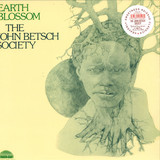
The recording of Earth Blossom, the John Betsch Societys one and only album, seems something of an enigma nowadays. For even though Nashville is clearly one of the towns in the US with the highest number of recording studios, who would have thought that the capital of country music would give birth to one of the forgotten masterpieces of 1970s spiritual jazz. The path leading to the album starts in 1963 when John Betsch, originally from Jacksonville in Florida, arrives in Nashville to study at Frisk University. He is a young drummer and joins Bob Holmes trio. Holmes is one of the towns major jazz organists and pianists; he becomes Betschs mentor and, over the space of two years, John will play alternately with him and with the trumpeter Louis Smiths group. However, in 1965, John leaves town to go to the prestigious Berkeley University in Boston and do a two-year course along with his fellow debutants with names like John Abercrombie, Ernie Watts and Alan Broadbent. Two years later, he is invited by a pianist friend, Billy Chilf, to join the legendary singer/songwriter Tim Hardins group. Just after Woodstock, John Betsch and Tim record a psychedelic album Columbia will never release together with the members of the future group Oregon: Colin Walcott, Glen Moore, Paul McCandles and his friend Billy Chilf. But he soon leaves this group to return to Nashville where he hooks up again with his friend Bob Holmes. Two years later, he is accepted on Archie Shepp and Max Roachs famous course at the University of Massachusetts Amherst (UMASS) and for the next four years he participates in this collective of intellectuals and musicians under the aegis of the two masters.
During this period he returns to Nashville to form his Society whose music is obviously influenced by the Afrocentric ideas of the UMASS student and political movement. However, the album, recorded in one day and in one take, also bears the hallmark of their generations psychedelic experiences, and in the themes and playing of the musicians we can hear a less violent form of music than the radical free jazz of New York or Chicago. Nature and environmental themes are the inspiration behind tracks touched by the spirit of Coltrane but also of Flower Power.
After Amherst, John Betsch joins Marion Browns group in 1976, leaves Tennessee for good and makes his home in New York over the next ten years or so. He plays and records with Dollar Brand, Kalaparusha Maurice McIntyre and many others, before heading off to France. He has lived in Paris for the last twenty years and played in Steve Lacy, Mal Waldron and Archie Shepp bands, as well as forming groups of his own. He now lives in Paris and plays with many musicians/bands.
DJ Support: Kerri Chandler, Prunk, M-High, Archie Hamilton, Mr.V, Alexi Delano, Laurent Garnier, Okain, Mystic Bill
Dutch House maestro Dennis Quin makes a welcome return to PIV this July with his ‘Treat You Right’ EP, comprising four originals, one of which features LA’s Cheshy on vocals. Over the past ten years Amsterdam’s Dennis Quin has moved from strength to strength and has become globally revered and respected for his raw and powerful productions, racking up releases on Cécille, Ibadan, Dungeon Meat, Eastenderz and of course the leading light of his hometown scene, PIV, where he returns with his latest EP.
Up first on the package is the original mix of title-cut ‘Treat You Right’ which sees Dennis team up with Los Angeles based Cheshy, delivering a composition that personifies the quintessential House sound, crisp 909 drums, fluttering stab sequences and a bumpy bass hook run in unison with Cheshy’s soulful vocal stylings, cinematic strings and shimmering synth lines. ‘Impressions’ follows next and showcases a different aesthetic with a swinging low-slung rhythm section, jazzy leads, marimba lines and bouncy subs to create a more Parisian deep house feel.
Further showcasing Quin’s dynamism as a producer ‘Touched’ then shifts up gears to a saturated skippy drum groove, vacillating synth stabs, a heavy dose of low-end drive and hypnotic vocal chants. Lastly to round out the release, Dennis offers up a ‘Classy Dub’ of the title-track, as the name would suggest stripping out a large portion of the vocals and reshaping the structure of some of the original elements and stirring some additional jazzy elements into the mix.
- A1: I See Heaven (Dedicated To Annika Armstrong) (Dedicated To Annika Armstrong)
- A2: Bless You With My Love
- A3: Satisfaction To The Bone/Nitty Gritty Naked Bone
- A4: Rapping With My Subconscious Mind
- A5: I'm A Lady
- B1: We're Together Again
- B2: Shake, Groove, Move
- B3: The Greatest Love Story
- B4: Sho-Nuf Funky Beat
- B5: Success Ya'll
2024 Reissue
US soul and rare groove outfit Heaven Sent & Ecstasy are a mysterious duo who only made this one record, but boy what a record it is. It first came in 1980 and has a weird sub title, but that doesn't detract from the gloriousness of the music. Some of its tunes were included in the soundtrack of Scrolls, The Book of Life and this is the first time it has landed on vinyl after a 2006 CD reissue. There are intricate moments of r&b pain, soaring jazz-funk grooves that will make any dance floor move and more raw funk jams driven by hard hitting kick and angular guitar riffs.
*REMASTERED ROUGH TRADE DEBUT LP LIMITED TO JUST 500 COPIES WITH EMBOSSED OUTER SLEEVE AND ORIGINAL INNER SLEEVE ON BLACK VINYL*
Dream POP, they called it. Given AR Kane’s Alex Ayuli once worked for advertising agency Saatchi & Saatchi, it’s no surprise that he and collaborator Rudy Tambala invented their own genre before critics could stick their oar in. It was a canny move, but more importantly, it was accurate: the music of AR Kane was made for dreamers, by dreamers, and its languor and longing made it particularly bewitching listening; their music is often smeared and blurry, happily lost in its own indefinable pleasures. “We wanted dream pop,” Tambala says, “that feeling of a dream where the rules are different. Dream logic.”
-UNCUT REISSUE OF THE MONTH
"A.R. Kane carved out a unique musical path, welding elements of pop, psych, dub, electronica, funk, noise, jazz, ambient and more in a way that had never been done before. Or since. Their debut in particular is a work of unbridled brilliance."
*Electronic Sound*
‘Sixty Nine’ the group’s debut LP that emerged in 1988 had critics and listeners struggling to fit language around A.R. Kane’s sound. As a title it was telling - the year of ‘Bitches Brew’, the year of ‘In A Silent Way’, the erotic möbius between two lovers - and as originally coined by the band themselves, ‘dream pop’ (before it became a free-floating signifier of vague import) was entirely apposite for the music A.R. Kane were making. Crafted in a dark small basement studio in which Tambala recalls the duo had “complete freedom - We wanted to go as far out as we could, and in doing so we discovered the point where it stops being music”. There was an irresistibly dreamy, somnambulant, sensual and almost surreal flow to ‘sixty nine’s sound, but also real darkness/dankness, the ruptures of the primordial and the reverberations of the subconscious, within the grooves of remarkable songs like ‘Dizzy’ and ‘Crazy Blue’. Alex’s plangent vocals floated and surged amidst exquisite peals of refracted feedback but crucially there was BASS here, lugubrious and funky and full of dread, sonic pleasure and sonic disturbance crushed together to make music with a center so deep it felt subcutaneous, music constructed from both the accidental and the deliberate, generous enough to dance with both serendipity and chaos. ‘sixty nine’ remains - especially in this remastered iteration - ravishing, revolutionary – Neil Kulkarni
"A.R. Kane made some of the most exciting, forward-thinking, and science fictional music of their era".s*
TIPP! :)
For the latest Cognitiva release the label present the 4th release of their Point of View series which focuses on dance floor-oriented sounds, this time they invite the marvellously talented Dr. Sud to deliver a wondrous, jazz laden odyssey, which entices as much as it delights - with some expert remixes to boot….
Dr Sud is the main alias of Gregorio Marigliano, an Italian music maker who was raised in Berlin. Marigliano’s music revolves around the principles of Jazz-meets-Dance music, drawing up the rich tradition that has come before in bringing a high level of musicality and ingenuity within his tunes. Moving fluidly between rhythms and feels, as Dr Sud he captures the imagination with thought provoking and captivating sequences, striking a fine balance between depth and danceability. Harmonies and groove play a key part within his music, such as was highlighted on his 2023 EP ‘Heading South’, coming courtesy of the Q1E2 imprint. This record really highlighted his profound abilities and deep set affection for instrumentation but also mood and tone, and it left many waiting for his next release with baited breath.
‘Point of View 4’ continues forth with the supreme feels that permeated through ‘Heading South’, with the key movement onwards being the inclusion of some killer remixes from Gary Superfly, Broke One, Turbojazz and Reekee. Two original cuts, ‘Breakfast Sun’ and ‘Desert Wind’, lead Sides A and B respectively, and do much to help create a distinctive balance and bookend kind of feel to the record. ‘Breakfast Sun’ begins with a wondrous polyrhythm to get things going, a lone vocal sample thrown in for good measure, and before long we are joined by some delicate but hyper precise melodic features. The slow drawn out chords contrast superbly with the short sharp stabs, acting in accordance with the drums, with the first breakdown providing space for the keys to really flourish and take over. The breakout back into the core rhythm allows for a lead synth line to emerge, and provide those bountiful feels we were all yearning for. The remixes do much to add flavour and some diverse alternative perpectives on the original, with the Turbojazz/Broke One remix taking things in a house-y leaning direction, with the hats and kicks shifting the rhythmic perspective towards sun kissed horizons. The Gary Superfly remix however takes things into a much more cosmic space, with a punchy acid line weaving within the underbelly of the track, providing that late night dance feel for club land scenarios.
On the B Side, ‘Desert Wind’ kicks things off, and once again the drums here start us off in a winning space. The groove is so delicate, poised and perfected, and when the first breakdown arrives the chords come into view, and its glorious to say the least. This track focuses on a much more smooth melodic sequence, with a greater emphasis placed on the lead line, but its just as impactful and soulful as the EPs opener. Delicate waterfall style keys shift in and out of view, providing an overall picture of sonic beauty that we can get behind time and time again. To wrap things up, the Reekee remix of ‘Desert Wind’ comes into view, with this track again moving into dance floor realms with a swinging garage beat that feels unstoppable, shifting and moving between the lines with a joyous ease.
Dr Sud may be a producer to keep a keen eye on, with this latest EP certainly doing that sentiment a great level of justice. This EP provides not only two beautiful original cuts from the man himself, but some imaginative remixes that honour the originals and provide us with an record that will linger long in the memory. For home use, down by the rivera, or in the club, this one has the lot…..
LIMITED 100 copies - heavy 180g pressing! Dive deep into the hypnotic cruise of "Sticky Traxx", the inaugural installment in a series of EPs by the skilled artist Jay Albert. The classic 3-tracker comes with "Waterfloor 4AM" on the A side, where Albert weaves a sonic tapestry that's as warm as it is dancefloor friendly. "Overcome" and "Undermine" ond the flip however are tracks that can glue a DJ set together. Imagine just a basic House groove that makes you move. Add a pinch of deepness and even techyness and you get there.
We are speaking about work tools for DJs who know how to get the hands up without a big drop. With beats, chords and basslines that are as sticky as the title suggests, this EP will resonate with enthusiasts seeking a more soulful and groove-filled experience on the floor. Now? Time to close your eyes and give yourself to the power of music.
Cetu Javu was a German synth-pop band lead by singer Javier Revilla Diez and synth wizard and composer Chris Demere. They started with the band in 1984 and in the spring next year surprisingly reached the third place in a young talent festival in Hanover. Several other shows followed but the highlight was a concert in December of 1986 as the opening act of Erasure. Their first maxi single “Help Me Now” was released in the spring of 1987 on their own label’s. Through the mediation of Talla 2XLC, Cetu Javu got a record contract with major company ZYX Records and released their debut album “Southern Lands” in 1990.
When the song “A Dónde”, a B-side sung in Spanish included on the single “So Strange”, hit number two in Spain, the band surprisingly achieved a great success and toured all this country. The second full-length, “Where Is Where”, was released in 1992 in Spain. The success did not stop here and led Cetu Javu became very popular in some other countries such as Argentina and Mexico. Unfortunately, in 1994, between problems and having to make decisions about the future, the group withdrew from the music scene and each member moved to focus to other activities.
“Where is Where” is re-released contains the original album along with some extended versions and remixes from the singles “¿Por Qué?”, “Dame Tu Mano” and “Una Mujer”. Limited edition of 500 copies on gatefold sleeve and a poster.