Ismael Pinkler lives in Buenos Aires. Belly Dance Services head Nick Hanzo in Vienna. Turns out the exact midpoint between the two is somewhere in open ocean. So they abandoned the plan to meet on Earth at all, and met on planet 126 in outer space.
It turned out to be a strange, hospitable little world — spinning at its own pulse, 126 beats per minute, changing landscape every few kilometers, as if it couldn't decide what kind of planet it wanted to be either. Ismael and Nick wandered it together, letting each new terrain talk them into a different song, until ten tracks had quietly assembled themselves. What they brought back drifts somewhere between shoegaze, techno, ambient, trippy tribal house and pop — grounded and gravitational, emotional and mental, to put it in terms Earthlings might understand.
Now, speaking seriously: Ismael and Nick built Planet 126 by passing sounds and ideas back and forth across the ocean, night after night, for eight months. The entire process — composition, vocal recording, production and mixing — took just eight months, a dream scenario for any electronic musician. The collaboration stayed positive, proactive and fresh throughout, letting the project move forward effortlessly. All tracks were written and produced by both musicians together; Nick wrote the lyrics and recorded the vocals, Ismael handled the mix. No samples, no references — just two people building a world from scratch.
Planet 126 also marks a milestone for Belly Dance Services: the label's 30th release, and likely its last. BDS began with BDS001, a vinyl EP by label founders Hanzo & Yaman, and has been solely helmed by Nick Hanzo for the past five years. Now it comes full circle — laid to rest with a big bang: a double vinyl gatefold album co-produced by Ismael Pinkler and label head Nick Hanzo.
Put your hands together and please welcome Linda Lo to Shall Not Fade's Time is Now imprint. The LA producer/DJ's new 12" EP "Masa" drops 23rd Oct 2026 and f**k is it sick.
Linda Lo fuses* mambo, samba, and salsa with UK garage, dubstep, and club rhythms to make guaranteed rewind material that is gonna light up the dance…
* imma talk about this fuses sh*t in a minute.. First we need to get a bit philosophical. Cos rewinds and fusions aside, this EP is alive. It's part of something bigger and cyclical, without a start or an end. It is music. It was part of someone else's music before and it will be part of other people's music in the future. Right now though, it's Linda Lo's music.
Too esoteric? Let me elaborate and, let's talk about fusion. There is the fusion that is – steal a bit of genre X and culture Y, chuck it on the grid and strut about professing fusion – and then there's actual fusion: Music that is something "new" and real and genuine. Music that you end up describing excitedly as a "fusion of" things (even if it inevitably ends up doing it a disservice). Music that is simultaneously one thing and not that thing, and also something else and not that something else too. Music that is just "music" to the creator but is also part of the progression and evolution of music for others. Mala wasn't making "dubstep". Skream & Benga ended up not making Garage. Like many before and after they were making their music and Linda Lo is making her music so let's hear from her about it. Big up Linda. This is real.
Notes from Linda:
-----------------
“Like Croydon by way of Havana”
“Masa, or corn-based dough used to make tortillas and tamales, is a traditional staple food for many in Mexico and throughout LatAm. In the Maya worldview, people's flesh is made out of masa. In order to make masa, corn must be dried, nixtamalized, ground, and mixed (often by hand) to create the right textured dough. I find much of my music work is a collision and a mixing of many elements, all worked into one product. In this way, I've worked these songs, transforming raw rhythms and sub bass into hand-mixed tunes. ‘Masa - EP' presents four delicious heaters. The title track explodes with a fiery double-time dubstep groove. Mambo horn stabs bite through a bass inferno. ‘Cenote' looks down upon a subterranean pool of sound—still on the surface but impossibly deep. ‘Minifalda', pure flirt and gyration, calls in cuica and other voices from a samba bateria. Finally, claves stitch across ‘Mestiza', a fusion of blooming lush orchestration and jagged 2step rhythm.
Around 1960, my grandparents were regular dancers at the Palladium in Los Angeles: young, Mexican, and falling in love to dance music, specifically big band mambo. My mom, consequently, is a fantastic dancer, and her mambo collection along with my dad's exotica records formed the base of my own vinyl collection. When I first discovered garage and dubstep, there was something indescribably familiar to me, something mambo-like about the syncopated offbeat hits and drama. Later, as I began stitching together mambo claves and 2step drums, I assumed I was trying out something totally new. The farther I go, the more I see that I was wrong.
Dubstep, garage and jungle share a parental lineage back to dub reggae, originating from Jamaica. Mambo hails from Cuba, and sister genres of salsa to NYC & PR, and bachata and meringue to the Dominican Republic. Yet, these musical genres of the Caribbean have not developed in isolation. Reggae, mambo, dancehall, salsa, even son jarocho from Veracrúz, Mexico (where my family is from), all developed together, influencing each other fundamentally. Ultimately, all musics of the Caribbean have come from West African polyrhythmic musical heritages. Garage, mambo, dubstep, and salsa are points in time along one musical continuum.
I feel very honored to be a selector working in Los Angeles (and elsewhere!). I hope I can share some music for the next generation of young people to fall in love to. "
-----------------
I'm moved by what Linda writes here. #1 Doing what you love, and finding you are part of something bigger. Creating for yourself freely and hoping to inspire others with healthy amounts of care, humility, freedom, self awareness and enjoyment. (It is inspiring and I'm honoured we are now a part of sharing Linda's music). #2 There's something wonderful about finding connection and a sense of place. A place physical, spiritual and in time. Music can help us all find connection and be part of a place. Wheel it up wherever you are.
It's been called " A lost classic of the Acid Jazz Era" and has been featured on Compilations and even Bootlegged.
Onward International "Foot In The Door" has earned it's place as one of the Foundation Stones of the Influential Acid Jazz Scene of the 1980's and 1990's. It’s Horn based intro is a Siren Call to fill floors and has been for over 40 years!
Recorded one Magical Night in the same studio and around the same time as Sade’s “Diamond Life” by the cream of London’s Session Musicians (who all later performed on Working Week’s Debut album.)
The title track was named when finally, after taking the master round to every record company in London, a door opened and a release deal was agreed.
The Airto Styled Batucada Beat Brazilian Boogie “Samba Doo Bonnay” is one of the other standout tracks from that now rare and ever more expensive Brit-Funk meets Acid Jazz E.P. and is now available digitally for the first time ever! And for Mambo Jazz Perfection Roberto Pla’s 21st Floor Mambo rounds off things nicely!
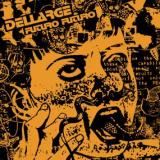
Hailing from Mexico City, Dellarge delivers L.I.E.S. a double lp jam packed with New Beat industrialized electro-wave on "Futuro, Futuro". These tracks go back to the days of the Belgium classics crossing over to the coast of Valenica crashing head on with the funkiness of something similar to Delgado's Delkom project. Don't worry, there is no trance cheeze within, head right to Mambo Especial for some latin New Beat piano anthem driven dance floor chug. Estado Alterado jumps into the 727 funk with some 101 acid leads and sleaze vocals, again making for a perfect floor filler. The album opener "Alien Body Music" is just that; a complete vocoder driven, slow beat acidic club burner. Dellarge hits all the angles perfect over these 15 tracks. Do not miss!
A hot slice of Latin dance music — produced by the legendary Masters at Work, the house icons and masters of that Nuyorican sound, “Little” Louie Vega and Kenny “Dope” González — from Los Amigos Invisibles, the Venezuelan band who have spent decades perfecting the art of getting away with everything.
Packed with raunchy songs (of course) that fuse every American genre under the sun — from salsa to acid jazz to disco to funk — this record tore up dance floors twenty years ago.
16 bongo bashin' tropic-trashin' mambo-shmambo monsteros!!
Everybody likes a bit of LATIN. It's steamy. It's tropical. It's hot. It gets the dames a-dancin' and the guys pay attention. Those wild rhythms are the sound of sweat. It's the heat that can't be beat.
Now let me tell you about LATIN. Real LATIN, bangin' LATIN. Not the sweet soft stuff your mama used to play. I'm talkin' hard bangin' LATIN that's the real deal. The stuff that makes you move. The motion of the ocean. Hot, wild, sexy rhythms. Skin slappin' coconut crackin' conga crushin' caliente copana. And horns to die for!!
You got your rhumba, your mambo, you got your cha cha cha. You got your Cuban heat, Brasilian beat, colourful Colombian cumbia and pure fire from all those little islands in the Caribbean. You cut 'em, you chop 'em, you cook 'em on up with a slug of jazz and some downhome RnB and you got yourself the devil's own firecracker. It's a sauce like liquid lava. It's LATIN that's off the scale.
Now you add your mezcal, your Carolina Reaper, you add yourself whatever you want, and that right there is a volcano in a bottle. Krakatoa ain't got nothin' on this baby! Put the needle on the record, watch your dancefloor EXPLODE!
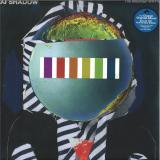
Celebrate a decade of a modern masterpiece. Originally released to critical acclaim, DJ Shadow’s The Mountain Will Fall gets a definitive reissue for its 10th Anniversary. Featuring the explosive, Gold-certified hit "Nobody Speak" featuring Run The Jewels, this album remains a towering achievement in instrumental hip-hop and experimental electronic production. This special anniversary edition is pressed on 2 x 140g classic black vinyl, delivering the rich, warm analog sound the album deserves. The release is housed in a stunning gatefold jacket showcasing brand-new artwork by the renowned artist Paul Insect, complete with premium spot gloss hits that make the visual design pop.
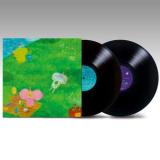
Katamari Damacy became a game beloved by fans across the world with its remarkable action mechanices of rolling your katamari and collecting items to become large enough to form a star for the cosmos. A vinyl pressing of Katamari Fortississimo Damacy, a collection of songs that brought the unique world of Katamari Damacy to life! Starting with "Katamari on the Rocks", and following up with "The Na-Na Song", you can feel the very soul of Katamari Damacy with every popular song. Plus, get a bonus track that was only featured in the trial version, "Katamari on the Rocks (Beta Version for Trial)"! Boasting a soundtrack that is packed with distinctive vocals and a broad range of musical styles, experience music that truly expounds on the feeling of Katamari Damacy at its best. Product shown is a luxurious gatefold sleeve housing two records inside. The outer packaging features an original illustration by Keita Takahashi, the creator of the Katamari Damacy series and art director for the first Katamari Damacy game! When you think of Katamari Damacy, you think of the colorfully chaotic artwork that comes hand in hand alongside it, and this packaging offers a high-quality, must-have item for a fan"s collection.
AMERICA!' wurde von Gabriel Roth live bei Penrose Recorders eingespielt und baut auf den klassischen Mambo-Klängen auf, für die die Band bekannt geworden ist – eine Mischung aus Latin Soul, Boogaloo und Salsa, wobei sie ihren kubanischen Wurzeln treu bleiben. Auf ihrem vierten Studioalbum präsentiert die Band eine All-Star-Besetzung neuer Sängerinnen, darunter Mariam Elhajli und Carolina Oliveros (von Combo Chimbita). Elhajli und Oliveros schöpfen beide aus der rohen Energie von Celia und La Lupe, richten den Blick jedoch auf etwas Intimeres: Themen wie Verlust, Umbrüche und die Last der Einwanderererfahrung.
"Cuba Greatest Hits" bringt die Hitze Havannas direkt ins Wohnzimmer und vereint die wichtigsten Klassiker der kubanischen Musik auf einem exklusiven Doppel-Vinyl. Von Son und Mambo bis Bolero und Latin Jazz bietet diese Compilation ein authentisches musikalisches Panorama mit Legenden wie Compay Segundo, Celia Cruz und Beny Moré. Ein atmosphärischer Katalogtitel voller Rhythmus, Lebensfreude und karibischem Flair - ideal für alle, die kubanische Musik lieben.
Little Beat More welcomes a new 7” from Conjunto Media Luna, a release that moves along the deep axis connecting Colombia and Mexico where cumbia mutates, and projects itself into new dimensions.
On the A-side, “Kumbia Tequendama” sees the group joined by rebajada pioneer Amantes del Futuro, a key figure in shaping the futuristic vision of cumbia across generations and geographies. Born between Mérida, Medellín, and the legendary Mambo Negro studios in Bogotá, the track reflects years of friendship and shared sonic research. Hypnotic accordion lines intertwine with dense low-end pressure, channeling an energy rooted in tradition but fully tuned to the present, built for dancefloors, sound systems, and the growing decentralized community of modern cumbia.
On the flip side, French producer La Dame reshapes “No es Moda”, originally featuring La Terrorista del Sabor, into a forward-leaning DnB and Future Bass reinterpretation. Faster, sharper, and more weightless, the remix opens a new perspective on the original while preserving its nocturnal spirit and emotional depth.
The artwork is signed by Bogotá’s own Mateo Rivano, whose unmistakable visual language has defined the aesthetic of some of the most visionary projects in contemporary cumbia.
Part of the wider sonic universe of Sociedad Internacional de la Kumbia, Conjunto Media Luna’s upcoming album, this 7” captures the group’s ongoing exploration of cumbia as a shared space, where distance disappears, traditions remain in motion, and new frequencies emerge from collective memory.
Made with Love by Little Beat More 2026
“We Dance We Think”
New single by Romperayo on 7-inch vinyl spinning at 45 rpm, released by the Austrian label discos
elgozo.
This record is a tribute to the sound of Cumbia Sabanera de Acordeón from Colombia, in dialogue with
Mexico’s Cumbia Sonidera. It also pays homage to the melodic line of the first generation of
Colombian accordion masters of Cumbia Sabanera such as Joaquín Betín, Emiro Caicedo, and
Policarpo Calle.
The two tracks are built on a solid rhythmic foundation of bass and percussion, accompanying a
melodic interplay between accordion and analog synthesizer.Mixed and produced by Pedro Ojeda Acosta at Romperayo Studios, both songs were recorded live, in
quartet format, at Mambo Negro Studios in Bogotá, Colombia, by Daniel Michel, featuring Iván
Medellín on accordion, Nicolás Eckardt on electric bass, Juan Manuel Toro on analog synth, and Pedro
Ojeda on percussion.
This single offers a first taste of Romperayo’s upcoming LP, set for release in early 2026 — once again
on discos elgozo.
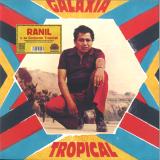
This release documents the legacy of Ranil, the Amazonian singer and bandleader who shaped a distinctive regional style blending cumbia, psychedelic textures and local rhythmic traditions. Born Jorge Raul Llerena Vasquez in 1935, Ranil rose from rural beginnings to front Los Silver's in the early 1970s before founding his own label, Producciones Llerena, to independently record his imaginative, genre-blurring music. His catalogue, long scattered across mismatched pressings, remains a vivid record of Amazonian creativity. Following his later career as a radio voice in Iquitos, this collection preserves key recordings and supports archival efforts that continue to highlight his cultural impact. Check the frisky percussion and euphoric vocals of 'Pueblo', the scratchy guitar and bustling funk of 'Bahia' or the lilting 'Albores De Mi Selva' for proof of just how irresisitble it still sounds today.
Combo Efectivo was formed in November 2024 in Bogota in a studio in the Teusaquillo district, at the invitation of Jazztropicante. It brings together an all-star cast from Bogota's neotropical movement and three iconic brass players from the current French jazz scene.
The chemistry was immediate and the energy palpable: a sound that was both playful and demanding, exuding groove, rich material rooted in contemporary jazz structures, and breathing the spirit of brass bands and the splendor of popular expression from the Colombian Caribbean.
A two-track EP was produced from this unique studio session, recorded and mixed at Mambo Negro Records, with the expertise of Daniel Michel. Mastered in Paris at Loom, this first 45 rpm single was released in February 2026 with The Pusher, officially marking the birth of the Casa Maguey Records label, which promotes the catalog resulting from Jazztropicante's encounters.
On the French side, three musicians who are making their mark on their generation: Stéphane Montigny on trombone, Antoine Berjeaut on trumpet, and saxophonist Léon Phal, the spearhead of a new generation of jazzmen. The Colombians are a cocktail of musicians from the most exciting groups on the current scene: Karen Nerak on vocals, rap, gaita, and percussion, Ruben Aragon on keyboards, Pelango on bass, and Kike Narvaez on drums.
Combo Efectivo magnifies the alchemy between the finesse of European jazz and the power of Colombian rhythms. A tropical trance fueled by improvisation, where the contemporary jazz scene and neo-tropicality meet in a spirit of openness and exploration.
The Éthiopiques series returns! Essential archive recordings from an extremely fruitful period in Ethiopian music.
Before “Swinging Addis” took over the world, there was Moussié Nerses Nalbandian — the Armenian-born composer who shaped modern Ethiopian music. Mentor, arranger, and pioneer, he laid the foundations of Ethio-jazz.
This Éthiopiques volume revives his forgotten legacy, recorded live by Either/ Orchestra First issue ever with new exclusive photos and in depth liner 8-page insert.
“Ethiopian jazzmen are the best musicians that we have seen so far in Africa.
They really are promising handlers of jazz instruments.”
Wilbur De Paris
(1959, after a concert in Addis Ababa)
አዲስ፡ዘመን። *Addis zèmèn* **A new era.**
The time is the mid-1950s and early 1960s, just before "Swinging Addis" bloomed – or rather boomed – onto the scene. Brass instruments are still dominant, but the advent of the electric guitar, and the very first electronic organs, are just around the corner. Rock’n'Roll, R’n’B, Soul and the Twist have not yet barged their way in. Addis Ababa is steeped in the big band atmosphere of the post-war era, with Glenn Miller's *In the* *Mood* as its world-wide theme song, neck and neck with the Latin craze that was in vogue at the same period. Life has become enjoyable once again, with the return of peace after the terrible Italian Fascist invasion of Ethiopia (1935-1941). The redeployment of modern music is part and parcel of the postwar reconstruction. *Addis zèmèn* – a new era – is the watchword of the postwar period, just as it was all across war-torn Europe.
The generation who were the young parents of baby boomers** were the first to enjoy this musical renaissance, before the baby boomers themselves took over and forever super-charged the soundtrack of the final days of imperial reign. Music is Ethiopia's most popular art form, and very often serves as the best barometer for the upsurge of energy that is critical for reconstruction. Whether it be jazz in Saint-Germain-des-Prés or the *zazous* who revolutionised both jazz and French *chanson* after the *Libération*, be it Madrid's post-Franco Movida, or Dada, the Surrealists and *les années folles* that followed World War I, the periods just after mourning and hardship always give rise to brighter and more tuneful tomorrows. Addis Ababa, as the country's capital, and the epicentre of change, was no exception to this vital rule.
**Two generations of Nalbandian musicians**
Nersès Nalbandian belonged to a family of Armenian exiles, who had moved to Ethiopia in the mid-1920s. The uncle Kevork arrived along with the fabled "*Arba Lidjotch*", the** "*40 Kids*", young Armenian orphans and musicians that the Ras Tafari had recruited when he visited Jerusalem in 1924, intending to turn their brass band into the official imperial band. If Kevork Nalbandian was the one who first opened the way of modernism, pushing innovation so far as to invent musical theatre, it was his nephew Nersès who would go on to become, from the 1940s and until his death in 1977, a pivotal figure of modern Ethiopian music and of the heights it. Going all the way back to the 1950s. Nothing less. And it is Nersès who is largely to thank for the brassy colours that so greatly contributed to the international renown of Ethiopian groove. While the younger generations today venture timidly into the genealogy of their country's modern music, often losing their way amidst a distinctly xenophobic historiographical complacency, many survivors of the imperial period are still around to bear witness and pay tribute to the essential role that "Moussié Nersès" played in the rise of Abyssinia's musical modernity.
Given the year of his birth (15 March 1915), no one knows for sure if Nersès Nalbandian was born in Aintab, today Gaziantep (Turkiye/former Ottoman Empire) or on the other side of the border in Alep, Syria... What is certain is that his family, like the entire Armenian community, was amongst the victims of the genocide perpetrated by the Turks. Alep, the place of safety – today in ruins.
Before Nersès then, there was uncle Kevork (1887-1963). For a quarter of a century, he was a whirlwind of activity in music teaching and theatrical innovation. *Guèbrè Mariam le Gondaré* (የጎንደሬ ገብረ ማርያም አጥቶ ማግኘት, 1926 EC=1934) is his most famous creation. This play included "ten Ethiopian songs" — a totally innovative approach. According to his autobiographical notes, preserved by the Nalbandian family, Kevork indicates that he composed some 50 such pieces over the course of his career. This shows just how much he understood, very early on, the critical importance of song as Ethiopia's crowning artistic form. Indeed, for Ethiopian listeners, the most important thing is the lyrics, with all their multifarious mischief, far more than a strong melody, sophisticated arrangements or even an exceptional voice. (This is also why Ethiopians by and large, and beginning with the artists and producers themselves, believed for a long time — and wrongly — that their music could not possibly be exported, and could never win over audiences abroad, who did not speak the country's languages).
Last but not least, one of Kevork's major contributions remains composing Ethiopia's first national anthem – with lyrics by Yoftahé Negussié.
Nersès Nalbandian moved to Ethiopia at the end of the 1930s, at the behest of his ground-breaking uncle. Proficient in many instruments (pretty much everything but the drums), conductor, choir director, composer, arranger, adapter, creator, piano tuner, purveyor of rented pianos,... he was above all an energetic and influential teacher. From 1946 onwards, thanks to Kevork's connexion, Nersès was appointed musical director of the Addis Ababa Municipality Band. In just a few years, Nersès transformed it into the first truly modern ensemble, thanks to the quality of his teaching, his choice of repertoire, and the sophistication of his arrangements. It was this group that would go on to become the orchestra of the Haile Selassie Theatre shortly after its inauguration in 1955, which was a major celebration of the Emperor's jubilee, marking the 25th anniversary of his on-again-off-again reign.
At some point or other in his long career, Nersès Nalbandian had a hand in the creation of just about every institutional band (Municipality Band, Police Orchestra, Imperial Bodyguard Band, Army Band, Yared Music School…), but it was with the Haile Selassie Theatre – today the National Theatre – that his abilities were most on display, up until his death in 1977. To this must be added the development of choral singing in Ethiopia, hitherto unknown, and a sort of secret garden dedicated to the memory of Armenian sacred music, and brought together in two thick, unpublished volumes. Shortly before his death (November 13, 1977), he was appointed to lead the impressive Ethiopian delegation at Festac in Lagos, Nigeria (January-February 1977).
His status as a stateless foreigner regularly excluded him from the most senior positions, in spite of the respect he commanded (and commands to this day) from the musicians of his era. Naturally gifted and largely self-taught, Nerses was tirelessly curious about new musical developments, drawing inspiration from the very first imported records, and especially from listening intensely to the musical programmes broadcast over short-wave radio – BBC *First*. A prolific composer and arranger, he was constantly mindful of formalising and integrating Ethiopian parameters (specific “musical modes”, pentatonic scale, and the dominance of ternary rhythms) into his “modernisation” of the musical culture, rather than trying to over-westernise it. It even seems very probable that *Moussié* Nerses made a decisive contribution to the development of tighter music-teaching methods, in order to revitalise musical education during this period of prodigious cultural ferment. Flying in the face of all the historiographical and musicological evidence, it is taken as sacrosanct dogma that the four musical modes or chords officially recognised today, the *qǝñǝt* or *qiñit* (ቅኝት), are every bit as millennial as Ethiopia itself. It would appear however that some streamlining of these chords actually took place in around 1960. It was only from this time onward that music teaching was structured around these four fundamental musical modes and chords: *Ambassel*, *Bati*, *Tezeta* and *Antchi Hoyé*. A historical and musical “details” that is, apparently, difficult to swallow, especially if that should honour a *foreigner*. Modern Ethiopian music has Nersès to thank for many of its standards and, to this day, it is not unusual for the National Radio to broadcast thunderous oldies that bear unmistakable traces of his outrageously groovy touch.
When it comes to Latin soul, Bobby Matos And The Combo Conquistadores 'Tema De Alma Latina', has to be up there as one of the heaviest tracks ever recorded. This much-loved Latin workout has been rocking dancefloors for years with its infectious, driving energy and pulsating rhythms. Released in 1968, the 'My Latin Soul' album on Philips Records now receives a welcome reissue on Mr Bongo. It’s a sheer delight throughout and a premier example of the Nu Yorican sound that was thriving in New York in the ‘60s.
From a young age, the Bronx, New York-born Latin jazz percussionist Bobby Matos found inspiration through the conga drum masters Mongo Santamaría and Patato Valdez (who he had informal backstage lessons with) and timbales legends Willie Bobo and Tito Puente. Bobby was drawn into New York's club scene and began playing in the vibrant ‘60s beat / bohemian Greenwich Village cafes, followed by stints in a wide range of different venues. These included Bronx dance halls and after-hours clubs in El Barrio, through to the elegance of Carnegie Hall, Central Park concerts, and off-Broadway theatres.
Later relocating to Los Angeles, Bobby played an important role in spreading Latin music far and wide. He became an inspiration to many on the jazz dance and acid jazz scenes in the ‘80s / '90s where his recordings were picked and played, becoming prized collector items amongst DJs. The track 'Tema De Alma Latina' was immortalised as a classic for many, after being featured on the Gilles Peterson’s Street Sounds Jazz Juice 5 compilation in 1987. A captivating listen from start to finish, the album features other treats such as the dynamic album opener ‘Nadie Baila Como Yo’, the blazing flute led 'Mambo Maxims', and the blistering piano shuffler 'Raices'.
A truly iconic Latin classic whether you’re being reunited with it like an old friend or discovering it as a fresh new find.
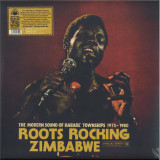
Analog Africa doesn't do anything other than special releases really, but this one tracing the label's origins back to Zimbabwe over 20 years ago is a real standout. A carefully curated collection of 25 tracks with a fine booklet proving plenty of extra context, it captures the birth of the country's modern music scene and brims with the creative sound explosion of the 70s and 80s. Before genres were fully defined, artists blended rock, rumba, soul and traditional rhythms in bold, experimental ways that still stand up and get diggers and dancers excited in 2025. Included are never-before-released tracks from Thomas Mapfumo, Oliver Mtukudzi and more and they all add up to rich and dynamic snapshot of Zimbabwe's peerless musical evolution during what was a transformative era.
Announcing the debut album from one of London’s most electrifying acts, New Regency Orchestra. An 18-piece Afro-Cuban big band, inspired by the musical melting pot of NYC in the 1950s, but with the punch and power of a whole host of London’s best Latin and jazz musicians. Blowing new life into these compositions, the album is a reimagining of some of the finest music from that golden era. From early 1950s René Hernandez and Tito Puente, through to the 1970s salsa of Rafael Labasta and Orlando Marin, produced and performed with fresh fire.
NRO is the brainchild of its artistic director, and the man behind Total Refreshment Centre and Church of Sound, Lex Blondin. Through a long-held passion for jazz, Lex discovered the explosive Afro-Cuban rhythms of mid-1940s NYC via the godfather of Afro-Cuban jazz, Mario Bauzá. A time when two musical worlds collided in a fusion of creativity and energy, jazz luminaries like Dizzy Gillespie and Charlie Parker joining forces with Cuban greats like Machito and Chano Pozo. This vibrant sound was music to dance to and found a home at The New York Palladium, a formative space of freedom and expression that was key to the scene’s development.
Although dance-focussed in their makeup, those early recordings are not often heard in modern club environments and Lex dreamt of retelling their story with a contemporary dynamism. A slice of serendipity followed, as a slot at a new festival opened up and Lex jumped at the chance to make this idea a reality, an 18-piece big band breathing new life into these beloved songs.
Enlisting the expertise of some of the capital’s finest talent, Lex and co-captain Andy Wood, of Como No fame, put together a world-class line-up of talent. Bringing in Eliane Correa as musical director and bandleader, a fluid and interchanging 18-piece band was formed.
The album itself is a hand-picked selection of timeless Afro-Cuban jazz classics, reimagined with NRO’s unbridled energy. It contains ten incredible instrumental tracks including 'Pregon' with its anthemic horn stabs and the addictive head nod bounce of 'Mambo Rama', alongside two scorching vocal numbers in 'Papa Boco' and 'Labasta Llego'. Coupling a heavyweight rhythm section with a wall of horns, they provide a fresh spin on songs from Tito Puente and Chico O'Farrill, René Hernandez through to Rafael Labasta.
“Some of the tunes like Tito Puente’s ‘Mambo Rama’ and ‘Scarlet Mambo’ might sound like they went to a gym as extra drums and bass synth were added to them whilst the tune ‘Sahib & Tito’ is a mix of Tito’s ‘Mambo Buda’ and Sahib Shihab’s ‘Nus’. Our intention is to be both respectful to the innovators and inventors of this incredible music and to pay our dues, but also to add something special from London where the city’s new jazz scene connects with its Latin American musicians and the musical influences around us.”
This pure collective joy, shared experience and music you can’t help but move to.
Erleben Sie das Dolce Vita mit der neuen Vinyl-Compilation
„Original Italian Classics Vol. 1“. Diese außergewöhnliche
Sammlung entführt Sie in die goldene Ära des Italo Pop
der 1950er und 1960er Jahre, als die Straßen Italiens von
unvergesslichen Melodien und charmanten Stimmen erfüllt
waren.
„Original Italian Classics“ vereint die größten Hits und
bekanntesten Interpreten dieser glanzvollen Zeit.
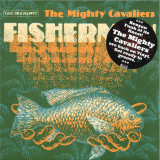
The journey continues. Now, the second Want Some Record release will be the first album of The Mighty Cavaliers from Kenya. It's a bit unusual that it is not coming in the original order of release, but that's how I got my hands on both records.
Anyway, this record is another masterpiece of Kenyan funk-influenced music at its best. The songwriting is not from just one musician; every musician contributed songs and music, which makes it very special. You can hear the different musical influences, and every track has its own personality.
'Fisherman' was released twice before, in 1976 and 1978. Now, it's time to spread this wonderful music to the world again in a very limited edition of only 500 pieces, with a brand new cover design.
Cuban virtuoso pianist Roberto Fonseca, former member of the Buena Vista Social Club, announces his new album "La Gran Diversión". A voyage into Cuba's roaring twenties, an invitation to party and dance, in a subtle blend of traditions drawn from his training with the greats, his incomparable talent, and wild modernity. "Together we'll laugh, cry and enjoy the mystery and magic of the rhythms and melodies I bring from my roots."
Pastime Paradise, first released by Stevie Wonder in 1976 got a new lease of life when sampled by Coolio on his Grammy Award winning Gangsta’s Paradise. It has also over the years been covered by Patti Smith as well as our fave version, courtesy of Latin percussionist Ray Barretto. First released on CTI in 1981, to this day it remains a staple for both the jazz and soul rooms. Never before released on a 12 inch, Major Keys continue their fine form with this extended floor filler that will appeal to DJ’s and collectors alike. It also flips it with La Cuna and Mambotango taken from the same 1981 LP. This is a special EP and one that you will want for your collection.
Fool’s Paradise is the exciting new label from Toolroom Records’ Mark Knight - that comes straight from the heart, it’s a natural progression from his hugely acclaimed 2021 album release, ‘Untold Business’, which saw Mark go back to his roots, paying homage to the more funky, soulful, and vocal House from the 1990s from where he came.
With a focus on real instrumentation and production, coupled with great song writing, this new Toolroom sub label will be a platform for high quality House music that’s designed to stand the test of time. Launching the new label with a mighty bang and delivering the first in our exciting new vinyl sampler series is head honcho, Mark Knight who joins forces with Australian Toolroom label mate, Sgt Slick and British Soul sensation, Beverley Knight on a dynamite cover of Prince’s 1979 classic, ‘I Wanna Be Your Lover’.
Respectfully transporting the song onto today’s dance floors, Mark & Sgt Slick deliver a classy uplifting soulful house production, loaded with funky guitars, warm pads and sublime key performances. Adding the icing on the cake and putting her own stamp on things, Beverley belts out one of her signature spine-tingling vocals, garnished with lush harmonies and BV’s that would indeed make The Purple One proud!
Completing the vinyl package is Dance music stalwart, Opolopo, and British Soul icon, Jaki Graham, who together bring the dance floor heat with their new single, ‘Fire’. Powered by a potent soulful house groove from Opolopo, loaded with warm piano hooks, emotive synth melodies and a sublime popping bass hook, ‘Fire’ see’s Jaki flaunt her electrifying vocal talents with a show-stopping performance on this irresistibly catchy song.
- I Wanna Be Your Lover reached Traxsource #1 where it stayed for 6 weeks consecutively - Radio support on BBC Radio 2, BBC Radio Cornwall, Hedkandi, Kiss FM, Mi-Soul, Gaydio, Radio 105 / Montecarlo (Italy), Mambo Radio, Rinse fm, Select Radio, Totally Wired Radio, Point Blank, RTE, Power fm (Ireland), Metro FM (SA), Cool Fm, Radio Reverb, Radio FG (France), Release Radio and many more.
DJ support from Husky, Hector Romero, Javi Bora, Grace Bones, Judge Jules, Sebb Junior, Jay Vegas, Odyssey Inc, ATFC, Claptone, Black Legend, Cevin Fisher, Michael Gray, Kisch, Hoxton Whores, Full Intention, Booker T, Jamie Jones, Knights Of The Turntable, Sam Divine, DJ Rae, CASSIMM, Alex Preston
'Afro-cuban : that term which sets the world on fire, from rumba to boléro, mambo to cha-cha- cha, before salsa, that 70's spicy sauce, took over from the others. But to speak truly, since the mists of times (of slavery), both Africa and Cuba aim to vamp that umbilical cord. The most recent example, CubAfrica, a record born from the reunion of a master from Africa and this very living institution from Cuba, during a show around Albi (in the south of France) where they were both headlining in spring 1996. Manu Dibango's sax melted perfectly with the rural music of Eliadès Ochoa and his Cuarteto Patria, here's the beginning of an idea.
Manda Moor steps out on Mood Child for the first time as the label co-founder links with mysterious talent Trangaz for four fresh productions on their collaborative ‘Peligro’ EP.
Ever since dropping her debut release in 2020, Danish-Filipino talent Manda Moor has been on an impressive upwards curve and one that doesn’t seem to be slowing anytime soon.
Having dropped back-to-back releases on Jamie Jones and Lee Foss’ iconic Hot Creations imprint, the hotly-tipped DJ/producer and label founder heads to her Mood Child label for the first time. Founded and created alongside Sirus Hood, the label serves as an artistic platform, a community-focused label, and an events series that delivers quality music via digital and physical formats, plus NFTs, unique experiences, and more. An ‘invitation to a journey that blends feelings, emotions and desires’, with takeovers at Hï Ibiza, Café Mambo, Lovefest, Fabrik and more, the first release saw Sirus partner with fellow Frenchman Malikk, and now the second arrives in perfect time for the peak summer months as Manda combines with Boogeyman and Pakate signee Trangaz.
New York City born-and-raised, he draws lines between primitive and futuristic sounds and rhythms influenced by world travel and different cultures, and the two reunite for their four-track ‘Peligro’ EP.
Crafted together in Ibiza, the EP showcases sonics capturing the island’s unique magic. Lead cut ‘El Peligro (Ibiza Mix)’ is a production made after a special day at the coves and hidden treasures of Atlantis, under full moonlight near Talamanca, with the rolling organic drums grooves, playful vocal murmurs and vibrant melodies journeying deep into the night.
Next, ‘Tagalog’ keeps the energy bubbling with another percussive workout sprinkled with vocal interjections and spoken words in the native Filipino language it is named after, while B1 ‘Chatita’ is a slinking production as wonky stabs meet and snaking low-end grooves. Closing the EP, the pair deliver the most stripped-back track with ‘Buena Vibra’ as a killer groove guides vocal chants to wrap things up in fine fashion.
Manda Moor & Trangaz ‘Peligro’ EP drops via Mood Child in July 2023.
New material from the enegmatic Mr Langestraat. TIP!
"One afternoon a couple of years ago, an excited Ronald Langestraat could barely contain himself. “I’ve started dancing!” he exclaimed. “I never did it before - I’d always admired it in the past, but just wasn’t able to move like that!” But then, at the ripe old age of 81, Ronald was gripped by the urge to respond to the rhythm and express himself in this physical way.
For a man who’s dedicated his life to music, in particular Jazz with a funky Latin inflection, it feels like an especially sage realization - like the treasure at the end of a long quest, or the princess after the end-game boss. The prize is freedom, and the shapes we make on the dance floor are mirrored in that piano solo over the stanzas - a caravan that trips from smokey basement clubs all the way to Shiva’s Tandava on the edge of the universe.
The music on this album is inspired by this revelation. Although these songs were written many moons ago, their interpretation is modern, full of renewed energy, with young, yet well-worn players. While it slots neatly into the daily music practice that Ronald adheres to, it’s a new chapter in a story that is still being written - and an invitation to get in touch with your dancing self and try out some new moves."
MOOD CHILD is the new artistic platform of DJ/Producers, SIRUS HOOD & MANDA MOOR.
Evolving from a collective idea during our difficult pandemic period, MOOD CHILD is, at its centre, about community, collaboration, friends and family. Working together, feeding each others creativity and forging fresh and exciting new sounds and projects.
MOOD CHILD is an invitation to a journey that blends different feelings, emotions and desires. To activate your inner child. Reinvigorate the wild, primitive and unfiltered state of being and create an almost divine sense of unity. All through the power of music and art.
Their collective sensibility is nurtured upon the dancefloor and last summer they were blessed to have presented a first MOOD CHILD experience in collaboration with Hï and Café Mambo in Ibiza. The mood then took them to Bagatelle in Zürich and Lovefest in Serbia and they now prepare to launch their 2023 campaign alongside the elrow family for a sold out event in Andorra 1st of April.
However, what is a party without its soundtrack? Their first release, as its title suggests, brilliantly displays the labels primal perception… ‘Homo Sapiens’ is the mood child of Sirus Hood and Malikk. Four carnal creations, all guaranteed to ignite a rabid dancefloor response.
‘Booty Side’ uses its compass to expertly navigate its way through bubbling acid and rolling snares as we go in search of Jack, while the title track will have us going ape to its chest-beating bump and knuckle-dragging groove.
Silverback beats swing low on the flip too as ‘King MTF Kong’ bites hard with its heavy Chicago hustle and detuned synth, while the feral Juke-infused finale, ‘Gorilla Walk’, is a break-neck bass-driven and bruising encounter that is more Jersey club than Empire State building.
The ‘Home Sapiens’ EP is released on the 14th April and will be available on vinyl and digital formats, alongside a series of exclusive NFTs.
MOOD CHILD’s official online store will launch soon and feature not only the music and digital art projects, but also an official clothing brand, sample packs and exclusive content from their artists.
• A Guy Called Gerald’s soundtrack to Trevor Miller’s Trip City novel was originally released in 1989 on cassette bundled with the book. It went on to sell 12,000 copies in a year before becoming an underground cult classic.
• Reissued in 2021 on vinyl for the first time as part of a bundle with the book, the vinyl is now available to buy on its own.
In the summer of 1989, when Trevor Miller’s Trip City book was first released with a five-track cassette EP by A Guy Called Gerald, there had been no other British novel like it. For 2021, Trip City came back and the original soundtrack by A Guy Called Gerald was also reissued on vinyl for the first time as part of a bundle with the book. Now the vinyl is available to buy on its own.
“I remember back in the 80s, in my hometown, Tony Wilson (of Factory Records fame) was fond of calling Shaun Ryder the WB Yeats of his day. In that vein, whether or not I like to see myself in the canon of Anthony Burgess and Clockwork Orange - with these five tracks, A Guy Called Gerald feels very much like the Ludwig Van to my Alex DeLarge.” Trevor Miller
“Coming on the heels of the acid house classic “Voodoo Ray”, the cut-up vocals, driving bass and hand claps of “FX” and “Trip City” blurred the line between the fictional Tower club and its real-world counterpart The Limelight. This reissue further blurs the lines between past and present, memorialising those heady times
of the Second Summer of Love that anyone invested in the counterculture, much like Valentine, can’t afford to forget.” The Wire
“The EP comprises five acid rollers that showcase his transition into the world of sampling, with the title track functioning as the main theme.” The Quietus
T-WAVE (original release date: 1 June 1980): 180g vinyl weight, clear orange vinyl.
Remastered & cut by Alex Wharton (Abbey Road Studios, London).
Sixth original album. The album is bursting with exhilarating funky sounds, including ‘Early Bird’, which starts with the sound of an alarm,
and ‘My Secret Beach’, a commercial song for the Mazda Familia.
out of Stock
Last delivered 12 days ago available to reorder, subject to availability
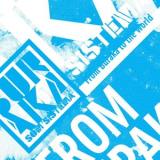
Released in 2006 as an EP, From Buraka to the World introduced Buraka Som Sistema"s explosive fusion of Angolan kuduro with bass music to the world. Twenty years on, the full album version - expanded in 2007 - gets its first ever vinyl pressing. This limited colour vinyl edition includes "Yah! (feat. Petty)", the breakout hit that set the tone for everything that followed, and "Wawaba (v.1.8)" as the sole version of that track, in place of the two takes that featured on the original release.
AMERICA!' wurde von Gabriel Roth live bei Penrose Recorders eingespielt und baut auf den klassischen Mambo-Klängen auf, für die die Band bekannt geworden ist – eine Mischung aus Latin Soul, Boogaloo und Salsa, wobei sie ihren kubanischen Wurzeln treu bleiben. Auf ihrem vierten Studioalbum präsentiert die Band eine All-Star-Besetzung neuer Sängerinnen, darunter Mariam Elhajli und Carolina Oliveros (von Combo Chimbita). Elhajli und Oliveros schöpfen beide aus der rohen Energie von Celia und La Lupe, richten den Blick jedoch auf etwas Intimeres: Themen wie Verlust, Umbrüche und die Last der Einwanderererfahrung.
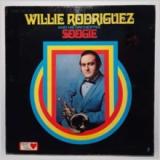
1969 salsa gem originally released on Mary Lou Records, one of the labels in the right place at the right time, just before Fania smashed almost all the competition. The album is mostly comprised of guaguancós, boleros, and improvised-space-filling descargas (jam sessions). We are now happy to reissue this rare and in-demand album after decades unavailable! It includes an insert with liner notes. "Soogie" (1969) was Willie Rodríguez's first album for Mary Lou Records. Mary Lou Records, at that time, was also one of the labels in the right place at the right time, just before Fania smashed almost all the competition. The album is mostly comprised of guaguancós, boleros, and improvised-space-filling descargas (jam sessions). This is remarkable, as it hardly includes boogaloo, which was still prevalent during those years, yet already on the way out. According to Bobby Marín, its musical director "we didn't call it salsa at the time; it had no name. It was mambo or música movida, they used to call it on the radio." The first tune, 'My Dog Soogie,' which provides the title for the recording, is a playful guaracha about a dog The following track is the wildly popular 'La Puerta del Dolor.' 'El Chivo' (the goat) is a spicy guaracha, which changes into a son montuno-guajira. 'Grande' is a guaguancó, followed by 'Los Callos de Dolores,' also a delightful guaguancó. Then comes the ballad 'Porque yo te Amo,' a monster hit of the sixties by popular Argentine singer Sandro. Next we have 'Al Compás del Güiro,' a guaguancó, with the delicious chorus that goes "cómo va, cómo va, cómo va, mi güiro cómo va." 'Paul's Thing' is an instrumental guaguancó, with engrossing sax solos. Finally, we have the smashing, extended descarga 'Salsa con Willie Rodríguez.' We are now happy to reissue this rare and in-demand 1969 salsa gem after decades unavailable!
„A Toda Cuba Le Gusta“ (1997) ist das Debütalbum der Afro-Cuban All Stars, einem Projekt unter der
Leitung von Juan de Marcos González, das die goldene Ära der kubanischen Musik feiert. Aufgenommen
wurde es 1996 in den EGREM Studios in Havanna, denselben Studios, in denen auch „Buena Vista Social
Club“ entstand. Das Album vereint legendäre Veteranen wie Rubén González und Raúl Planas mit jüngeren
Musikern zu einer mitreißenden Darbietung von Son, Danzón, Rumba und Mambo.
Die Platte sprüht vor Energie und wurde live aufgenommen, um die Atmosphäre eines Havannaer Tanzsaals
einzufangen. Sie erntete internationale Anerkennung und wurde für einen Grammy in der Kategorie „Best
Tropical Latin Performance“ nominiert. Als Hommage an Kubas musikalisches Erbe und zugleich als Auslöser für dessen weltweite Wiederbelebung gilt „A Toda Cuba Le Gusta“ als Meilenstein der kubanischen
Musikrenaissance der 1990er Jahre.
Zur Feier des anhaltenden Erfolgs des Albums veröffentlicht WorldCircuitRecords eine spezielle SplatterVinyl-Edition von ATodaCubaLeGusta, die an den 30. Jahrestag der Aufnahmen von 1996 erinnert. Diese
limitierte Sammleredition besticht durch ein auffälliges Vinyl-Design in den Farben der kubanischen Flagge
und eine Jubiläumsverpackung und bietet langjährigen Fans wie neuen Hörern gleichermaßen ein hochwertiges Format, um dieses Meilenstein-Album erneut zu entdecken.
After 25 years out of print, El Baile Alemán — the cult album by Señor Coconut (one of Atom™’s many aliases) — returns on vinyl via Transamericas. What began as a half-joke (“The only way I’d cover Kraftwerk is as chachachá or death metal…”) became a fever-born epiphany: Kraftwerk’s electronic minimalism recast through a tropical imagination — where chachachá, mambo, and cumbia intertwine with glitch, breakbeats, and distressed samples.
Long before reggaeton and trap filled stadiums and playlists, Señor Coconut was already mapping the fault lines between Latin rhythm and electronic form.
Originally released in Japan in 2000, El Baile Alemán caught the ear of Kraftwerk’s Florian Schneider, who unexpectedly championed the project. This reissue has been cut from Atom™’s 2022 remasters, preserving the album’s detail for a new generation of listeners. In the second half of 2026,
Transamericas will also reissue El Gran Baile (1997), his first outing — a rawer but equally idiosyncratic fusion of what Atom™ was going to frame as electrolatino.
out of Stock
Last delivered 59 days ago available to reorder, subject to availability
To mark its 20th birthday, Lisbon-born label Enchufada is releasing A Lisbon Club Story - 20 hand-picked tracks bridging bass, trap, grime and rave with baile funk, kuduro, batida, Afro-house and more dance-oriented styles. A mix of 12 archive selections and eight fresh cuts, the LP unites some of the boldest champions of Afro-diasporic and global bass music today, from household names in Portugal such as Buraka Som Sistema - back with their first track in 12 years, DJ Marfox and Shaka Lion to newgen dynamos like Vanyfox and international stars like Dengue Dengue Dengue and Mina.
Gatefold LP Reissue in Crystal Blue Persuasion. Back in 1999 when David Byrne originally compiled this retrospective - making it the first in our critically acclaimed World Psychedelic Classics series - the idea of doing a psychedelic album from outside the U.S. or Europe was a total surprise. More than twenty years since this anthology first hit the shelves, the mutants are back in stock with their electric guitars, cans of bug spray, and deviant, freaky psychedelia.
During the 1950s, Tito Puente was at the height of his popularity and helped to bring Afro-Cuban and Caribbean sounds, like mambo, son, and chacha-cha, to mainstream audiences. Dance Mania, probably his most celebrated album, features the great Ray Barretto on congas. It was added to the National Recording Registry in 2002 and is listed among the "1001 Albums You Must Hear Before You Die". Includes the bonus tracks 'Oye Como Va', 'Mambo Gil' and 'Cha-Cha-Gua'.
The borderless, tropical band “of Tropique,” whose core sound blends funk and rock-infused exotica, releases a 12-track full-length album on vinyl LP!!
This work maximizes their core lineup as a guitar-less trio, featuring a diverse array of 14 guest musicians to construct a rich sonic landscape.
This landmark release in the history of domestic exotica and tropical music features Mutsumi Kobayashi of the Minyo Crusaders, Rockin' Enocky of Jackie
& The Cedrics, to global talents like Joshua Camp of CHICHA LIBRE and MIRAMAR, the standard-bearer of US new wave Latin bands, and more!
It's a masterpiece that delivers the full thrill, excitement, and pleasure of encountering unknown music.