In Todmorden, the oddly-named market border town in West Yorkshire with a habit for embracing the weird and wonderful, a burst of sunshine is a precious thing. Through the thick of Winter, through every season in fact, the town’s folk are used to the wind and rain, fog and mist. As much a part of the town as the trademark deep valley it sits in, here the lay of the land invites the weather in, just as it does the many musicians, artists, and unique characters that have come to call the place home over the centuries.
Bridget Hayden is one such soul who found a home among these hills. The experimental musician, who invites the ghosts in for the classic folk songs that make up her stunning new album, knows only too well about such weather, how rare and treasured the breaks from it are. Her favourite thing to do in the valley, she says, is “to make the most of every tiny minute of sunshine.”
Such aspirations nearly derailed the recording of Cold Blows the Rain, her new eight-song collection released via the Todmorden- based label Basin Rock. Having hired the town’s Oddfellow’s Hall to record these new songs in the late summer of 2022, Hayden says the weather was so good she ended up basking in every second of it, only moving inside to begin recording when the sun was setting, working deep into the night to make up the time.
There’s a good chance, however, that it had to be this way. The songs that make up Cold Blows the Rain are not made for the sunlight. They come, instead, wrapped in mist and coated with drizzle, those elements shaping the album as much as the voice and the instruments held within, as real but ambiguous as the ghosts that linger in the shadows. The sound of the dark valley floor.
Mostly centred around meditative and experimental improvisation, Bridget’s work to-date has seen her spend more than two decades recording and performing on the underground music scene. She’s also toured internationally both as a solo artist and as part of bands such as Schisms and The Telescopes, while working on various side-projects with the likes of Folklore Tapes.
For all of this sonic exploration, so much of her work has been formed around elements of traditional folk aesthetics and, over time, she began to piece together a collection of reinterpreted traditional songs that she absorbed as a child from her mother: through The Dubliners and Muddy Waters, to Bessie Smith and The Leadbelly Songbook. Harvesting her love for Nina Simone, Karen Dalton, Margaret Barry, and more, Bridget takes these traditional songs and transforms them into something uniquely evocative
"It goes back to the womb,” Bridget says of that connection. “I would not call it a memory as it is so deep within my blood and bones. My mum was the source, she sang all the time, as part of life. So it was a very lulling and natural introduction. It seemed common to hear her singing – unbeknownst to her – in time with a raindrop dripping at the window,” Bridget continues. “I’ve always wanted to do a folk record as I love these songs so much. It comes much more naturally to me to sing other people’s words, especially when they’re as beautiful as these old verses.”
Underpinned by waves of analogue reverb, and led by Bridget’s stirring and weather-beaten voice, the songs on Cold Blows the Rain drift and crawl like low heavy clouds on flat-top hills, shaped by the land. The backdrop is equally as arresting, all subtle gloom cast in shadow, a gentle but pronounced swirling of textures, crafted from harmonium and violin courtesy of The Apparitions (Sam Mcloughlin and Dan Bridgewood-Hill).
“The weather speaks the most eloquently about human loss,” Bridget says, articulating such sentiments. “It’s good to feel enveloped by something so much vaster than ourselves. The rain and the tears all become one.”
Поиск:man da
Все
Hardanger is a collaboration by Mariska Baars (aka Soccer Committee), Niki Jansen, and Rutger Zuydervelt (aka Machinefabriek). The title refers to the instrument played by Jansen, the Hardanger fiddle. It’s a fresh addition to the established musical chemistry from regular collaborators Baars and Zuydervelt.
The music on Hardanger started with improvisations by Niki Jansen, guided by Mariska Baars, who responded with vocal and guitar recordings. Rutger Zuydervelt used this material as the building blocks for the two long-form pieces found on the album. These tracks are like two sides of the same coin, one a collage-like electro-acoustic piece, the other more drawn-out and contemplative.
--
Mariska Baars is probably better known as soccer Committee, creating an experimental blend of ambient rooted in folk music, with minimal arrangements. She has been releasing albums since 2005. In addition to her solo output she is part of improvisation ensemble Piiptsjilling and Fean (Laaps, 2020) and has worked on several duo albums with Rutger Zuydervelt. On other occasions she collaborated with a.o. Annelies Monseré, Wouter van Veldhoven, Peter Broderick and Greg Haines.
Niki Jansen is a violinist who plays both the regular and a hardanger fiddle.She specializes in folk music, especially old Dutch folk music. She plays in various ensembles like Twee violen en een bas (with Jos Koning and Willem Raadsveld), and country quartet Daisy Chain. In addition to music, she also works as a sustainability advisor for governments and institutions and manages a food forest in a cooperative.
Rutger Zuydervelt is perhaps better known as Machinefabriek, the alias under which he releases music since 2004. The stream of releases since is vast, many of them collaborations (with Peter Broderick, Gareth Davis, Chantal Acda, Dirk Serries, and many many more). He regularly works with Mariska Baars, with whom he also plays in Piiptsjilling and Fean (Laaps, 2020). Zuydervelt is an avid composer of scores for film and dance performances, and also works as a graphic designer.
- La La La
- Cruz
- Lost Angel
- Taquero
- Dream Suite
- The Mystery Of Miss Mari Jane
- Cha Cha Cha
- Sea Changes
- Cinema Lover
- Die Again, Yesterday
- Hollywood Ten
As Jess Sylvester finished his Hardly Art debut as Marinero in the fall of 2020, he realized it was time for a change. Sylvester grew up in Marin County, on the doorstep of San Francisco. It was a nurturing community for a high-school punk with a pompadour and, later, for a sober songwriter with a proclivity for moody psychedelia. But he wanted to be challenged and inspired by a new setting and scenario around strangers who prompted him to approach his music in unexpected ways. So in September 2020, as the world continued to reel in lockdown, Sylvester headed several hours south to Los Angeles, a city that, despite the relative proximity, the film buff knew largely from classic and cult films situated there. When he arrived, he kept digging into that cinematic past-Robert Altman's The Long Goodbye, with John Williams' classic theme, or classic 90s movies about East LA, many featuring Edward James Olmos. They shaped his understanding of his new town just as it began to open. This is one pillar of the multivalent and endlessly lush La La La, Marinero's new album about sobriety, identity, and fantasy that is playfully named both for the city that helped shape it and the sophisticated pop it contains. Sylvester wrote about characters outside of himself, whether considering the heroine reckoning with her own version of keeping clean or the screenwriters whose work was deemed communist simply as a political convenience. He linked those songs with motivational anthems about self-acceptance and playful numbers about flirting through food, shaping a 12-song set rich with humor, empathy, and encouragement. Sure, La La La is a continuation of the slippery genre play Sylvester started with 2021's Hella Love, 2019's Trópico de Cáncer, or even before that. But it also feels like a fresh beginning for Marinero, as Sylvester realizes how boundless this project can be. He began to think about the music of his childhood, how his mother is from San Francisco with Mexican roots, and how he'd heard so much salsa growing up as an impetuous teenager. So he wrote "Taquero," a red-hot salsa tune that uses tacos and their trappings as a source of endless metaphors for come-ons. And then there was the Ray Barreto or Santana-inspired "Pocha Pachanga," with organ gliding and percussion pulsing beneath his yearning vocals, warped as if by desert winds. In Los Angeles, he found a wealth of players who spoke this music like language itself (including Chicano Batman's Eduardo Arenas), all ready to play with and push these familiar forms. Sylvester has also been sober for 21 years, since a cross-country sojourn to attend college in Boston ended in a chemical haze. Today, he sees friends facing the same decisions he made two decades ago, and he brings bits of that experience to bear in songs that feel like self-help anthems. Recorded with a musical hero (and labelmate) of his, Chris Cohen, "Sea Changes" feels like sunshine breaking through dark clouds, as Sylvester acknowledges the newfound confidence and clarity in a friend who has stepped away from destructive habits. In the past, Sylvester has been intractably linked to his identity as a Mexican-American, born to parents from Mexico and Irish- American descent who settled in San Francisco. That can be limiting, of course, tying him to notions of sound and style that aren't always correct. On La La La, he simultaneously steps into and out of those preconceptions, singing tracks above salsa in joyous Spanish or pondering the dynamics of the Hollywood Ten and blacklists above mysterious lap steel and teasing trumpet. His identity, then, should now be clear: He is a Californian, making music shaped by the diversity of encounters and experiences that are a central part of that state's fabric. Never before has he presented himself so fully and unabashedly on tape as with La La La, an album Sylvester built with new inspirations to deliver new charms.
- A1: Color Me Blu - Fields Of Laughter
- A2: Apple - Love Melody In E Minor
- A3: Tribal Sinfonia - Do You Want Me
- A4: Harve And Charee - New Me
- B1: Kwartet Frits Kaatee - Easy Evil
- B2: Ernie Scott Trio - Souled Out
- B3: Bunker Hill - Dionysis
- B4: San Diego - Sands Of Malibu
- C1: Synod - Sheryl Song Is Gonna Do My Dancing
- C2: Whiz Kids - Long Time Gone
- C3: Ross Miller - I Can Love Her Anyway
- C4: Thunderbolt The Wondercolt - Ragged Edge
- C5: Eyrle Oliver - Lovely Lady
- D1: Lisa Richards - A Day In The Life Of A Fool
- D2: Joe Bozzi Quintet - Masquerade
- D3: George Melvin Quintet - It ´S Good Not To Forget
Watch out! You are holding the 125th (one-hundred-and-twenty fifth!) album on Tramp Records in your hands! We are honored to celebrate this impressive anniversary with the tenth volume in the Praise Poems series. This time, too, we go on a journey to discover previously unheard regions of jazz, folk and AOR from the 1970s and 80s.
Praise Poems Vol.10 presents sixteen (almost) forgotten rare groove gems, all released between the years 1970 and 1984. One of the many highlights is the opening track: "Fields of Laughter" by Color Me Blu - originally released on an acetate only of which two copies exist worldwide. But there is much, much more to discover. This brandnew volume features a wide range of genres, from AOR (Whiz Kids, Ross Miller, and another previously unreleased track by Harve & Charee) to Latin-Rock a'la Santana (Color Me Blue, Tribal Sinfonia, and Apple) to Soul-Jazz (Ernie Lewis Trio, Joe Bozzi Quintet or Dutch saxophonist Frits Kaatee). Right at the end, one track in particular stands out: the wonderful "It's Good Not To Forget" by George Melvin and his quintet - a fabulously dreamy, thoughtful instrumental piece in the style of Ramsey Lewis with catchy tune potential.
Not many compilation series make it to a tenth edition. And if they do, then you often notice that the quality of the songs goes in the opposite direction to the increasing number of series: namely decreasing. Not so with Praise Poems Vol. 10, which the creators prove in an impressive new way. They have found tracks that were originally either a) pressed by the musicians themselves in very small editions or b) released by small, regional labels. It is understandable that neither the musicians nor these small labels had the necessary knowledge or budget to market their albums or singles professionally. The majority of the bands therefore did not manage to reach a large audience - although they certainly had the potential for the big stage.
"Praise Poems 10 - A journey into soulful jazz and funk from the 1970s" makes these almost 50-year-old treasures accessible to a new audience. We hope that you enjoy discovering your personal favorite song(s) and we are already looking forward to many more releases!
"Langt Fra Jorden" ("Lejos De La Tierra", in Spanish, for the book) is the result of the dialogue between the Spanish photographer and artist Irene Zottola and the Danish musician and artist øjeRum initiated by IIKKI, between June 2024 and November 2024.
øjeRum is Copenhagen based musician and collage artist Paw Grabowski. In his øjeRum guise, he plucks and strums his treated acoustic instruments, sounding at times like church bells, at times like angelic harp, at time like drones, and suspends the listener in the magic of his melodies.
With a deep back-catalogue of releases since 2014 - spanning labels such as eilean rec., Room40, Line, Opal Tapes and many more - he continues exploring his minimal, textural and deeply personal style of ambient music.
Irene Zottola is a Spanish photographer and artist who explores the limits of analog photography to generate a world of dreamlike and poetic character, often accompanying her images with text.
She has been self-taught in Madrid in the laboratory of the Slow Photo collective since 2016. In 2017 she is a finalist in the Rfotofolio Grant.
Her work has been exhibited in Spain, Italy and Morocco. She has published with editorials such as La Bella Varsovia and Lumen (Spain) and magazines such as She shoots film (Australia), Fisheyemagazine (France) and Vostmagazine (Korea).
In 2021 she received one of the Grants to Creation granted by VEGAP with which she began a new project in Paris and was part of the artistic residence ART(e)gileak of the BBK with a participatory photography project. She is one of the 33 authors of the Mission Region project organized by the Community of Madrid and is part of the platform of the National Image Centre in Spain. Winner in 2020 of the V Edition of the Photochannel Contest, she has published with Ediciones Anómalas her first photobook, "Icarus", which has been a finalist in PhotoEspaña and in Les Photobook Awards of Les Rencontres d'Arles 2022.
"Lejos De La Tierra’’ is her second book.
Fine Art Book, Ltd. to 500 copies:
Hardcover book printed on Munken Print Cream 115g/m2 // 80 pages, 17cm x 23cm, 42 photos // Logo and slot embossed // Hot gold stamping // Visible seam and cutting cover pages // Hand-numbered, hand-stamped.
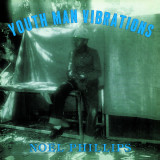
Erstmalige Wiederveröffentlichung seit 1981! Noel Phillips, der bis dato ausschließlich in Sammlerkreisen einen Namen hat, war seinerzeit 17 Jahre alt, als er für den Produzenten Prince Jammy dieses Juwel des Roots Reggae eingesungen hat, das es ab sofort zu entdecken gilt. Mit den Musikern Bass: Robbie Shakespeare, Drums: Sly Dunbar, Guitar: Boo Peep, Dougie, Horns: Deadly Headley, Bobby, Organ: Ansel, Winston Wright, Percussion: Scully, Sticky, Piano: Gladdy. Als CD exklusiv in der Box "Rootsman Vibration At King Jammy's" (VPGSCD7000) - Tipp!
The influence of the UK’s Steel City on electronic music is well documented and undisputed and continues to push the envelope with key figures such as Winston Hazel (Forgemasters, The Step), DJ Parrot/Crooked Man, Richard Benson (RAC, SWAG, Altern 8), Chris Duckenfield (RAC, Popular Peoples Front, SWAG, All Ears Distribution), a thriving underground club scene and the likes of Synaptic Voyager reinforcing the city’s rich musical legacy.
Matt White and Paul Baines have been making off-kilter, emotive, late night electronic jams since meeting in the early 90’s and while life took them on different paths for a while, they have recently blown the thick layer of dust from their synths and drum machines and got busy in the studio to create some amazing new music which draws influence from that classic UK techno sound which played such an important part in the development of dance music culture around the world. With recent releases on Frame Of Mind, Acquit and Telomere Plastic the duo are clearly on a roll, wearing the heritage of their city on their sleeve and delivering what can only be described as heartfelt, authentic machine music made with love and soul.
From the opening beats of lead track Dawn Till Dusk we are drawn in to another place which feels comfortably familiar yet organic, fluid and loose in a way that tugs on the heartstrings. A million miles from cookie-cutter tech house, this is two guys in a bedroom studio, digging deep on hardware machines to create a sound to get completely lost in. Lonely Promontory takes things deeper still with immersive pads, taught electro beats and blissed-out melodic lines which give just hint of optimism and recall those beloved sounds of B12, Redcell and Likemind.
Flipping over we have Stellar Engine which goes a littler heavier on the beats and bass whilst still retaining a floating quality, once again highlighting the hardware jam workflow that Synaptic Voyager utilise in their studio. Once Exposed takes us back to those heady days of the early 90’s when techno, house and ambient electronics combined to create a heady blend of deep atmospherics and driving beats which could work on both dance floors and car stereos alike. Rounding off the EP we have Cognitive Network which goes for a straighter four on the floor techno groove and a killer bassline to lose yourself in. These recordings were delivered to the label in unedited long form (some tracks totalling 15 minutes or more in length!) which Jimpster lovingly edited into the versions which you hear on this release.
- A1: 3 Horas Da Manha (Ivan Lins, Waldemar Correia)
- A2: Samba Do Aviao (Antonio Carlos Jobim)
- A3: Tema Medieval (Agustin Pereyra Lucena)
- A4: Despues De Las Seis (Agustin Pereyra Lucena, Guillermo Reuter)
- A5: Tema Barroco (Guillermo Reuter)
- A6: La Rana (João Donato)
- B1: Pra Que Chorar (Baden Powell)
- B2: Encuentro De Sombras (Agustin Pereyra Lucena)
Far Out Recordings proudly presents Argentinian guitarist Agustín Pereyra Lucena’s 1980 album La Rana. Recorded in Oslo, La Rana features Agustín’s stunning takes on compositions by Ivan Lins, Antonio Carlos Jobim and Agustín’s friend and musical hero Baden Powell. In addition to these, and a number of Agustín’s own compositions including the fifteen-minute masterpiece “Encuentro De Sombras”, the album’s title track is an idiosyncratic version of Joao Donato’s “A Rã” (Eng: The Frog/ Esp: La Rana) from his 1973 album Quem É Quem.
Forming the rest of the quartet are two fellow Argentinians who were also Agustin’s bandmates from the group Candeias: bassist and multi-instrumentalist Guillermo Reuter and flautist Ruben Izarrualde; with Norweigan drummer Finn Sletten on drums and percussion.
Throughout La Rana we hear not only Agustín’s fabled guitar playing, which ascended him to share stages with the likes of Vinicius de Moraes, Dorival Cayymi, Toquinho, Maria Bethania, Chico Buarque and Quarteto Em Cy, but also his talent as a vocalist. He also provided the heartening illustration for the cover art, which perfectly fits the cordial, inviting tone of the music. Inspired in equal measure by South American rhythms and Norweigan glaciers, mountains and waterfalls, La Rana is filled with the warmth, humility and sincerity of a man seizing a joyful moment in life through music.
002 - Remixes[15,93 €]
‘Ice Cream Dream Boy’ serves as a celebratory anthem, an ode to manifesting dreams into reality, and a testament to Shanti's knack for creating infectious and uplifting dance music as she explains: “I wanted to make a happy and uplifting vocal summer tune and I just so happened to be in the peak honeymoon romance period with my now partner (The Ice Cream Dream Boy). He had discovered my love for soft plush toys and decided to buy me a cute little fluffy Jellycat Ice Cream so when I made the instrumental I felt insecure and unsure about what lyrics to write, so I just decided to sing about what I was currently experiencing in my life. I had been a fan of Shivum Sharma for a while and I had just done a remix for his amazing song '7am', so after establishing a cute lil connection I thought I’d ask him to help me write the song as I was very new to writing lyrics!”
- A1: Progetto Tribale - The Sweep
- A2: Onirico - Echo Giomini
- A3: Open Spaces - Artist In Wonderland
- B1: Alex Neri – The Wizard (Hot Funky Version)
- B2: M C.j. Feat. Sima - To Yourself Be Free - Instrumental Mix Energy Prod
- B3: Mato Grosso - Titanic Expande
- C1: Dreamatic - I Can Feel It (Part 1)
- C2: Carol Bailey - Understand Me Free Your Mind (Dream Piano Remix)
- C3: The True Underground Sound Of Rome - Secret Doctrine
- D1: Don Carlos - Boy
- D2: Lazy Bird – Jazzy Doll (Odyssey Dub)
Vol 2[28,99 €]
Volume 1 of this expertly curated project of 90s Italian House - put together by Don Carlos.
If Paradise was half as nice… by Fabio De Luca.
Googling “paradise house”, the first results to pop up are an endless list of European b&b’s with whitewashed lime façades, all of them promising “…an unmatched travel experience a few steps from the sea”. Next, a little further down, are the institutional websites of a few select semi-luxury retirement homes (no photos shown, but lots of stock images of smiling nurses with reassuring looks). To find the “paradise house” we’re after, we have to scroll even further down. Much further down.
It feels like yesterday, and at the same time it seems like a million years ago. The Eighties had just ended, and it was still unclear what to expect from the Nineties. Mobile phones that were not the size of a briefcase and did not cost as much as a car? A frightening economic crisis? The guitar-rock revival?! Certainly, the best place to observe that moment of transition was the dancefloor. Truly epochal transformations were happening there. From America, within a short distance one from the other, two revolutionary new musical styles had arrived: the first one sounded a bit like an “on a budget” version of the best Seventies disco-music – Philly sound made with a set of piano-bar keyboards! – the other was even more sparse, futuristic and extraterrestrial. It was a music with a quite distinct “physical” component, which at the same time, to be fully grasped, seemed to call for the knotty theories of certain French post-modern philosophers: Gilles Deleuze, Félix Guattari, Paul Virilio... Both those genres – we would learn shortly after – were born in the black communities of Chicago and Detroit, although listening to those vinyl 12” (often wrapped in generic white covers, and with little indication in the label) you could not easily guess whether behind them there was a black boy from somewhere in the Usa, or a girl from Berlin, or a pale kid from a Cornish coastal town.
Quickly, similar sounds began to show up from all corners of Europe. A thousand variations of the same intuition: leaner, less lean, happier, slightly less intoxicated, more broken, slower, faster, much faster... Boom! From the dancefloors – the London ones at least, whose chronicles we eagerly read every month in the pages of The Face and i-D – came tales of a new generation of clubbers who had completely stopped “dressing up” to go dancing; of hot tempered hooligans bursting into tears and hugging everyone under the strobe lights as the notes of Strings of Life rose up through the fumes of dry ice (certain “smiling” pills were also involved, sure). At this point, however, we must move on to Switzerland.
In Switzerland, in the quiet and diligent town of Lugano, between the 1980s and 1990s there was a club called “Morandi”. Its hot night was on Wednesdays, when the audience also came from Milan, Como, Varese and Zurich. Legend goes that, one night, none less than Prince and Sheila E were spotted hiding among the sofas, on a day-off of the Italian dates of the Nude Tour… The Wednesday resident and superstar was an Italian dj with an exotic name: Don Carlos. The soundtrack he devised was a mixture of Chicago, Detroit, the most progressive R&B and certain forgotten classics of old disco music: practically, what the Paradise Garage in New York might have sounded like had it not closed in 1987. In between, Don Carlos also managed to squeeze in some tracks he had worked on in his studio on Lago Maggiore. One in particular: a track that was rather slow compared to the BPM in fashion at the time, but which was a perfect bridge between house and R&B. The title was Alone: Don Carlos would explain years later that it had to be intended both in the English meaning of “by itself” and like the Italian word meaning “halo”. That wasn’t the only double entendre about the song, anyway. Its own very deep nature was, indeed, double. On the one hand, Alone was built around an angelic keyboard pattern and a romantic piano riff that took you straight to heaven; on the other, it showcased enough electronic squelches (plus a sax part that sounded like it had been dissolved by acid rain) to pigeonhole the tune into the “junk modernity” section, aka the hallmark of all the most innovative sounds of the time: music that sounded like it was hand-crafted from the scraps of glittering overground pop.
No one knows who was the first to call it “paradise house”, nor when it happened. Alternative definitions on the same topic one happened to hear included “ambient house”, “dream house”, “Mediterranean progressive”… but of course none were as good (and alluring) as “paradise house”. What is certain is that such inclination for sounds that were in equal measure angelic and neurotic, romantic and unaffective, quickly became the trademark of the second generation of Italian house. Music that seemed shyly equidistant from all the rhythmic and electronic revolutions that had happened up to that moment (“Music perfectly adept at going nowhere slowly” as noted by English journalist Craig McLean in a legendary field report for Blah Blah Blah magazine). Music that to a inattentive ear might have sounded as anonymous as a snapshot of a random group of passers-by at 10AM in the centre of any major city, but perfectly described the (slow) awakening in the real world after the universal love binge of the so-called Second Summer of Love.
For a brief but unforgettable season, in Italy “paradise house” was the official soundtrack of interminable weekends spent inside the car, darting from one club to another, cutting the peninsula from North to centre, from East to West coast in pursuit of the latest after-hours disco, trading kilometres per hour with beats per minute: practically, a new New Year’s Eve every Friday and Saturday night. This too was no small transformation, as well as a shock for an adult Italy that was encountering for the first time – thanks to its sons and daughters – the wild side of industrial modernity. The clubbers of the so-called “fuoriorario” scene were the balls gone mad in the pinball machine most feared by newspapers, magazines and TV pundits. What they did each and every weekend, apart from going crazy to the sound of the current white labels, was linking distant geographical points and non-places (thank you Marc Augé!) – old dance halls, farmhouses and business centres – transformed for one night into house music heaven. As Marco D’Eramo wrote in his 1995 essay on Chicago, Il maiale e il grattacielo: “Four-wheeled capitalism distorts our age-old image of the city, it allows the suburbs to be connected to each other, whereas before they were connected only by the centre (…) It makes possible a metropolitan area without a metropolis, without a city centre, without downtown. The periphery is no longer a periphery of any centre, but is self-centred”.
“Paradise house” perfectly understood all of this and turned it into a sort of cyber-blues that didn’t even need words, and unexpectedly brought back a drop of melancholic (post?)-humanity within a world that by then – as we would wholly realise in the decades to come – was fully inhuman and heartless. A world where we were all alone, and surrounded by a sinister yellowish halo, like a neon at the end of its life cycle. But, for one night at least, happy.
- A1: Dadge Von O Von Non "83
- A2: Azo Nkplon Doun Nde
- A3: Mo Ngbadun Re
- A4: Fini Les Paves
- B1: Feso Jaiye
- B2: Adigbedoto
- B3: Tu Es Tout Seul
- B4: Yiri Yiri Boum
- C1: Agbadja Moderne No2
- C2: Manzanillo
- C3: L'indomptable Gnonnas
- C4: Bailando Mi Solo
- D1: Gbeto Enon Mon
- D2: El Cochechivo
- D3: Ati Mawuin Dagamasi
- D4: Avivogbe
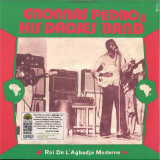
Analog Africa is back with a dedicated project celebrating Gnonnas Pedro, the king of Modern Agbadja, and they press it up on a marvellous double album that includes an eight-page booklet with a ton of extra info. Although four tracks of his have previously appeared on the 2009 Legends of Benin compilation, this bumper pack features 16 of Pedro's best works, all of which captivated Africa at the time. His vibrant blend of Agbadja, Cuban fon, jerk, highlife and more unique styles, all of which come with vocals sung in Fon, Mina, Yoruba, French, English and Spanish, add up to one hell of a rich sound. This is a great testament to the artist's extraordinary legacy.
Jazz & Milk-Labelhead und Freestyle-DJ-Koryphäe Dusty aus München meldet sich mit seiner neuen EP "As Above So Below" zurück, die gefühlvoll, warm und grenzüberschreitend Deep-House-Grooves mit Elementen aus Jazz, Dub und westafrikanischen Rhythmen kombiniert, die einen Sound erzeugen, der ebenso introspektiv wie dancefloortauglich ist. Die EP ist eine berauschende Mischung der rohen Stimmkraft und den perkussiven Rhythmen des ghanaischen Künstlers King Owusu (Jembaa Groove), der die Bühne mit Legenden wie Ebo Taylor und Pat Thomas teilte, und erscheint zum 20-jährigen Labeljubiläum in 2025. Support kommt von Peter Kruder, Severino, Don Letts, Opolopo und dem jüngst verstorbenen DJ Harvey. Dusty legt weiterhin weltweit - Johannesburg bis Istanbul, Manila bis London - auf, veranstaltet die Jazz & Milk-Labelabende in München und Köln und eine Radiosendung auf dublab.de moderiert.
"Full support of EP!" - DJ Harvey, Klymax Bali, International Feel, Pikes
"Very nice! Thank you!" - Peter Kruder, Kruder & Dorfmeister
"Great EP! Love it!" - Ruff Stuff, Shall Not Fade
"SEXY... DEEEEEP." - Severino, Horse Meat Disco
"Warm and deep - very nice!" - Opolopo
"Good to go on Culture Clash Radio!" - Don Letts, BBC Radio 6 Music
- A1: Sommernacht
- A2: Wer Die Rose Ehrt
- A3: Guten Tag
- A4: Die Tagesreise
- B1: Will Alles Wagen
- B2: Nach Süden
- B3: Es Gibt Momente
- B4: Gewitterregen
- B5: Nachtigall
- C1: Schnee Und Erde
- C2: Komm Doch Einfach Mit
- C3: Seelenlieder Ii
- C4: Asyl Im Paradies
- C5: Dein Gesicht
- D1: Reichtum Der Welt
- D2: Das Paradies
- D3: Zwei Sonnen
- D4: Und Ich Geh In Den Tag
- D5: Zweigroschenlied
- E1: Viel Zu Weit
- E2: Ps
- E3: Wind Trägt Alle Worte Fort
- F1: Heute Bin Ich Allein
- F2: N Käfer Auf´m Blatt
Blue / black marbled Vinyl[28,78 €]
36 Jahre nach dem Fall der Mauer, präsentieren Dirk Zöllner (Die Zöllner) und Manuel Schmid (Stern-Combo Meißen) die schönsten Balladen aus dem
Land vor unserer Zeit. Keine Nostalgie Show, sondern Pflege eines hochwertigen Kulturerbes. Ein opulentes klangliches Erlebnis mit zwei Sängern,
zwei Klavieren, Saxophon, Gitarre. Lieder von Lift, Karat, Biege, Bartzsch, Bicking und Lakomy. Sänger und Pianist Manuel Schmid sorgt auch mit
eigenen Alben in der deutschsprachigen Musikszene für Aufsehen und hat 2024 mit der EP „Die Himmelsscheibe von Nebra“ die Stern-Combo Meißen
wieder in aller Munde gebracht. Saxophonist Marek Arnold ist in der internationalen Progressive-Rock Szene längst eine feste Größe und hat
gemeinsame Alben mit Steve Hackett (GENESIS), Jon Anderson (YES) oder Derek Sherinian (DREAM THEATER) veröffentlicht. Das vorliegende
Konzertmitschnitt wurde von ihm bearbeitet und gemixt. Sänger Dirk Zöllner und der Pianist André Gensicke arbeiten seit November 1987 zusammen
und gründeten im Juni 1988 ihre Bigband „Die Zöllner“. Sechzehn Alben erschienen in den vergangenen 35 Jahren. Zöllner veröffentlichte außerdem
vier Bücher und engagiert sich als Kolumnist der „Freien Presse“ für einen friedvollen gesellschaftlichen Zusammenhalt. Das Raue und das Weiche,
das Improvisierte und das Klare – schon mehrfach kam es zur Symbiose der sehr unterschiedlichen Stimmen von Dirk Zöllner und Manuel Schmid. In
Zeiten von Corona veröffentlichten die beiden ein Wohnzimmerkonzert mit besagtem Liedgut. 2024 wurde die Symbiose nun live erlebbar und als
Mitschnittfestgehalten.
Efficient Space honours the memory of producer and MC Ali Omar with Hashish Hits, a posthumous selection from the dub rebel’s self-released discography.
One of ten children in working-class Liverpool, Omar drew deep influence from his father's Arabic heritage—a thread central to his identity and sample origins. After art school and a spell clubbing during Manchester's halcyon days, he relocated to Sydney, where he cofounded the blunted downbeat duo Atone with fellow British expatriate Andy Fitzgerald. As an MC, he infiltrated the city’s house, dub, jungle, and bass circuits, becoming a regular fixture at the Bentley Bar, where he commanded the mic with his versatile, rumbling baritone and charisma.
Freakishly talented in the studio, Omar was a pioneer of the Akai sampler and Atari, deftly recording live sessions straight to DAT. Drawing on industry insights from his sister, Merseybeat firebrand Beryl Marsden—who supported The Beatles on their final UK tour and was signed to Decca and Columbia—the non-conformist sought to build a self-sufficient business model. Between 1998 and 2004, he independently issued four albums on CD through his Hashish Studios imprint, hustling copies directly to local record stores and live shows for instant returns, even hand-sewing screen-printed hessian sleeves for his final release.
Uncompromising in his principles and refusing to suffer fools or charlatans, Omar relished the opportunity to collaborate with those who embodied the same spirit. Hashish Hits offers a snapshot of his inner sanctum—Fitzgerald on the opening track's billowing smoke stacks, the serpentine vocals of Gina Mitchell and the magic hands of mixer Louis Mitchell on 'On Release,' and Wicked Beat Sound System’s Kye on 'Poor Man Beggar Man Thief'. Meanwhile, 'Suicide Bomber' smoulders with the tension of a lost Muslimgauze relic, as the instructional 'Roll Up' and 'The Last Straw' spiral deeper into Omar’s signature production vortex— where space stretches in slow motion and walls reverberate with ricocheting delay.
A true icon of Sydney’s underground scene, the larger-than-life Omar passed away on 23 June 2009 after a valiant battle with cancer. He is remembered for his assertive spirit, larrikin humour, wild anarchic personality, and enduring mantra: “Love and live your life”.1
2 x black LP + LP Booklet
Die GRAMMY®-gekrönten Progressive-Music-Titanen Dream Theater melden sich mit ihrem 16. Studioalbum "Parasomnia" zurück - eine Ankündigung, die satte 15 Jahre auf sich warten ließ. Es ist das erste Album mit der legendären Besetzung Sänger James LaBrie, Gitarrist John Petrucci, Bassist John Myung, Keyboarder Jordan Rudess und Schlagzeuger Mike Portnoy seit "Black Clouds & Silver Linings" von 2009. "Parasomnia" wurde von Petrucci produziert, von James 'Jimmy T' Meslin aufgenom-men und von Andy Sneap abgemischt. Hugh Syme hat erneut seine kreative Vision für das Cover-Artwork beigesteuert. Vom Opener "In The Arms Of Morpheus" bis zum abschließenden "The Shadow Man Incident" kehren Dream Theater mit einer Samm-lung von Songs zurück, die zeigen, weshalb die Band seit vier Jahrzehnten eine treue Fangemeinde hat. Mit einer Spielzeit von 71 Minuten nimmt "Parasomnia" den Hörer mit auf eine musikalische Reise, die seit Beginn der Karriere zum Synonym für die Band geworden ist
ltd 2 x ultra-clear 2 LP + LP Booklet
Die GRAMMY®-gekrönten Progressive-Music-Titanen Dream Theater melden sich mit ihrem 16. Studioalbum "Parasomnia" zurück - eine Ankündigung, die satte 15 Jahre auf sich warten ließ. Es ist das erste Album mit der legendären Besetzung Sänger James LaBrie, Gitarrist John Petrucci, Bassist John Myung, Keyboarder Jordan Rudess und Schlagzeuger Mike Portnoy seit "Black Clouds & Silver Linings" von 2009. "Parasomnia" wurde von Petrucci produziert, von James 'Jimmy T' Meslin aufgenom-men und von Andy Sneap abgemischt. Hugh Syme hat erneut seine kreative Vision für das Cover-Artwork beigesteuert. Vom Opener "In The Arms Of Morpheus" bis zum abschließenden "The Shadow Man Incident" kehren Dream Theater mit einer Samm-lung von Songs zurück, die zeigen, weshalb die Band seit vier Jahrzehnten eine treue Fangemeinde hat. Mit einer Spielzeit von 71 Minuten nimmt "Parasomnia" den Hörer mit auf eine musikalische Reise, die seit Beginn der Karriere zum Synonym für die Band geworden ist.
Texture returns for its second release with debut EP by Detroit-based STS. ‘Swallowed by a Whale’, dips a toe into the deep ocean of a swirling mind, notated with captivating rhythms and intense, otherworldly sounds. Danny Daze and Jonny from Space turn 'Souvlaki Man' on its head, highlighting the Miami-Detroit psychedelic sonic connection. On the Bside, Lyon's Warzou thickens 'Boot Stuck in the Swamp' to a sludgy lowend workout.
Als sich die wahrlich einmalige Band PSYCHOTIC WALTZ 1997 auflöste, klaffte eine Lücke, die erst mit der Gründung von DEADSOUL TRIBE im Jahr 2001 wieder geschlossen werden konnte. Sänger, Flötist und Aushängeschild Devon Graves, auch als Buddy Lackey bekannt, war in der Zwischenzeit wegen einer Beziehung nach Wien gezogen, wo er dann auch geeignete Musiker für DEADSOUL TRIBE fand. Auf dem Debüt „Deadsoul Tribe“ spielte Davon Graves noch einige Instrumente selbst, aber man war bereits eine Band mit vier Mitgliedern.
Auch wenn sich der Stil in manchen Punkten von PSYCHOTIC WALTZ unterscheiden mag, ist die Zielgruppe automatisch definiert. Und sogar etwas erweitert, denn neben Metal und Prog kann man auch Einflüsse von Tool heraushören. Das sehr organisch klingende Album bekam sehr gute Kritiken und wurde von den Fans ohne Umwege angenommen. Im Anschluss spielte man auf dem Prog Power Europe Festival in Holland. Es ist erstaunlich, dass die Alben von DEADSOUL TRIBE bisher noch nicht als Vinyl veröffentlicht wurden, zumal der Katalog von PSYCHOTIC WALTZ 2024 eine neue Aufarbeitung bekommen hat (Inside Out/Sony Music). Golden Core schließen diese Lücke nun mit den ersten beiden Alben, natürlich gemastert für Vinyl und mit bedrucktem Einleger. Die LPs sind auf 300 Stück limitiert, die sicherlich schnell ausverkauft sein werden.
Mit "Nobody Loves You More" veröffentlicht Kim Deal am 22.11.24 auf 4AD ihr erstes Soloalbum. Die elf Songs umfassende Sammlung ist das erste Album der in Dayton, Ohio lebenden Künstlerin unter ihrem eigenen Namen. "Nobody Loves You More" ist Kim Deals Debütalbum, obwohl es nicht das erste Mal ist, dass sie einen Alleingang unternimmt - 2013 veröffentlichte sie im Eigenverlag eine fünfteilige Reihe von zehn Songs, die limitiert als 7" erschienen. Im Einklang mit Deals akribischer Herangehensweise an ihre Kunst, wurde das Album über mehrere Jahre hinweg verfeinert. Die ältesten Songs, "Are You Mine?" und "Wish I Was", wurden 2011 geschrieben und aufgenommen, kurz nachdem Deal von der "Lost Cities Tour" der Pixies zurückkam und nach Los Angeles umzog (frühe Versionen dieser Songs waren in der besagten Vinyl-Serie enthalten). Die letzten Aufnahmen für "Nobody Loves You More" fanden im November 2022 mit dem legendären Tontechniker und engen Freund Steve Albini statt, der den letzten Track "A Good Time Pushed" in seinem Electrical Audio Studio in Chicago einspielte. Auf dem Weg dorthin hat sie eine Vielzahl von Mitstreitern aus der Vergangenheit und Gegenwart hinzugezogen, von den Breeders (Mando Lopez, Zwillingsschwester Kelley Deal, Jim Macpherson, Britt Walford) oder auch Raymond McGinley (Teenage Fanclub), Jack Lawrence (Raconteurs) sowie Fay Milton und Ayse Hassan von den Savages. "Nobody Loves You More" wurde von Marta Salogni gemischt und von Heba Kadry gemastert. Zu jedem Song gibt es eine persönliche Geschichte. Sie handeln von den Winterferien mit ihren Eltern auf den Florida Keys ("Summerland"), einem Hochzeitsband-Cover von "Margaritaville" ("Coast") oder auch der Demenz ihrer Mutter ("Are You Mine?"). Die Platte zelebriert Deals unvergleichliche Kunstfertigkeit, die nicht nur auf die Höhepunkte ihrer Karriere mit gefeierten Bands der Alternative-Landschaft (Pixies, The Amps, The Breeders) verweist, sondern auch auf ihr unverrückbares kulturelles Gewicht, das über Generationen hinweg Musiker und Musikerinnen wie Kurt Cobain und Olivia Rodrigo beeinflusst hat.
2006
"GlaubeLiebeTod"Wenn ein Album so erfolgreich war wie "Wahrheit oder Pflicht" wächst die Erwartungshaltung ins Unermessliche! Doch OOMPH! haben die schwierige Aufgabe mit Bravour gemeistert!"GlaubeLiebeTod" ist das mit Abstand abwechslungsreichste Werk des Trios. OOMPH! haben sich deutlich weiter entwickelt und ihr Spektrum um etliche neue Elemente bereichert. Beispielsweise sticht der dramatische Stampfer "Spiel mir das Lied vom Tod" heraus. Völliges Neuland betritt die Band auch mit der morbiden Piano-Bombast-Ballade "Eine Frau spricht im Schlaf". Die unverzerrten, sehnsüchtigen Gitarren in "Das letzte Streichholz" sowie die düsteren Doom-Riffs in "Land in Sicht" hat man in dieser Form ebenfalls noch nicht bei OOMPH! gehört. Nicht neu, aber dennoch überraschend ist die phasenweise Rückbesinnung auf die EBM-Anfänge des Trios in den frühen Neunzigern, die u.a. bei der ersten Auskopplung "Gott ist ein Popstar" deutlich wird. Abgesehen davon gibt es natürlich noch genügend Nummern, die die bisherige Linie weiterführen und mit hymnischen Hooklines und fantasievollen Sounds auftrumpfen. Dazu zählen vor allem der wunderschöne "Träumst Du" und der mächtige Metaller "Mein Schatz".