■ Das Album "Spiral" wurde ursprünglich 1973 von der Harry Roche Constellation veröffentlicht.
Angeführt von Posaunist und Musikdirektor Harry Roche, mit ein wenig Unterstützung von einer
Gruppe von Arrangeuren, darunter Pete Moore (der Mann, der für das unvergessliche Pearl &
Dean-Jingle verantwortlich war), Don Lusher und sogar Stan Tracey, war die Constellation eigentlich
nie eine fest arbeitende Band, sondern eher eine Gruppe führender Session-Musiker.
"Spiral" bietet jazzige, funkige und verrückte, aber entspannte Instrumental-Neuinterpretationen von
Stevie Wonder, The Who und Bob Dylan. Der Titeltrack enthält den Gesang von Claire Torrey, die
auch zu Pink Floyds "The Dark Side of the Moon" beigetragen hat. Das Album wurde bei seiner
Erstveröffentlichung völlig übersehen und schnell aus dem Verkauf genommen. Es findet seinen Platz
in der Jazz-Lounge-Szene, wo "Spiral" auf Augenhöhe mit Roy Budds Get Carter Score steht.
Zur Feier seines 50. Jubiläums ist das Album als limitierte Edition von 1000 einzeln nummerierten
Copies auf White Vinyl erhältlich.
Search:mann
Brueder Selke, a polyinstrumental composer duo originally from East Berlin, consistently enriches the repertoire of their two primary instruments: cello and piano. Their independent curator role shines through as they frequently host boutique concerts and happenings, featuring both established and emerging artists during their yearly Q3Ambientfest.
'Go East' marks a significant milestone in the long-term collaboration of Brueder Selke, two brothers who grew up on the socialist side of the Berlin Wall. The tracks are driven by the essential components of a restored Piano-Strings machine, along with two electronic organs named Sandy and the ET6-1, and a E-Piano, all manufactured by Vermona in the late 1970s and early 1980s.
Their innate sense of interplay, developed during their upbringing in GDR times, stems from a deep-rooted longing for connection and exchange with like-minded musicians and individuals. Through their music, they convey ideas that embrace a universal duality, showcasing how diverse elements harmoniously complement each other. The album encompasses a wide range of atmospheric moods, from intimate classical chamber music to expansive textural landscapes created by these now rarely intact socialist synthesizers, with their parameters mimicking strings and keyboard instruments. In this ironic and thoughtful manner, Sebastian and Daniel once again skilfully let their main instruments, cello and piano, merge into one another.
'Go East' aptly reflects the artist's profoundly experimental yet accessible approach, making it their 8th duo album. The 2x2 recordings were produced in their Klingenthal Studio in Potsdam in February 2022.
- Derived From The Trout Mask In A Tentative Manner 04:55
- The Dissolution Of Time 08:57
- Abdication 05:02
- The Alphabet Of Steps 06:23
- Les Cycles Extatiques 06:52
- The Geometry Of Rhythmics 05:26
- At The Margin Of Moments 06:37
- Through The Deserts Of Postmodernity 09:36
- Stereometry Of Moving Bodies 06:27
- Suspecting Metaphysical Symbols 07:28
After two years, Carl and Andreas present their second album, and once again, it opens up a wide associative space for us. What strikes us initially is the uncommon instrumentation: a church organ, harpsichord, glass tubes, and more. Like their first album (The Aporias of Futurism), it is mysterious and dark. But it also carries a strong touch of rebellion and adrenaline, sometimes quite pointedly. The pieces are now shorter and feature intricate yet irresistible rhythms. The impact is immediate, yet it maintains a sense of solemnity and ceremony. The Apollonian complexity of the rhythms and subtle melodic interweavings is transformed into a Dionysian, ecstatic, hypnotic, and at times tribal context. "Music for Unknown Rituals" oscillates between primitive instincts and avant-garde intrigues.
The process began in Döblitz, a small village on the Saale river in Germany, inside an old church that houses an organ built in 1886 by Johann Adolph Ibach. Carl and Andreas gained access and secluded themselves there for a few days, accompanied by the organ, an instrument made of glass tubes, and a set of modular synthesizers. After recording the basic tracks in Döblitz, the work continued in Munich and Berlin. Carl played electric guitars, harpsichord, bass, metallophone, xylophone, Indian harmonium, and various percussive instruments. Andreas added layers of electronic sounds, noises, and atmospheric drones. He also created percussive structures extracted and derived from recorded material of technical and industrial noises, which contrasted with the acoustic drums played by Carl. The antithetical approach continues with the dichotomous arrangement of the instruments, often panned hard left and right in the stereo field, creating an antiphonic communication. Some parts, especially the use of the electric guitar, evoke memories of the psychedelic sixties. However, this is anything but a nostalgic album—these musical references are merely remnants, set pieces, and fragments used from a contemporary, post-modern, post-youth-cultural, and post-romantic perspective.
Although Andreas and Carl continue on their chosen path of composing music with an almost literary narrative structure, this album is conceptually and formally completely different from their first effort. If “The Aporias of Futurism” was a revolutionary manifesto (in a pataphysical sense), "Music for Unknown Rituals" is more like the implementation in action; it is the practical application of the previous statement. To put it another way, if "The Aporias of Futurism” was the conceptual manifesto of a dark utopia of modernity, "Music for Unknown Rituals" is the staging of free will surrendering to the myths and catharsis of a Greek tragedy. And in response to this, the artwork features a leitmotif of histrionics with hands, the hands being the first and intuitive part of the body to express something: a ritual, a prayer, a defeat...
— Andreas Gerth is one half of Driftmachine, and Carl Osterhelt is part of F.S.K and collaborates with Hans-Joachim Irmler of Faust. Both became connected through their participation in the Tied & Tickled Trio.
- A1: Dat Soll Punkrock Sein?!
- A2: A40
- A3: Sarrazin Vs. Guttenberg
- A4: Louis De Funes
- A5: Die Einfachheit
- A6: Nicht Wie Sie
- A7: Der Mann Für Unten Rum
- B1: Hier Bei Uns
- B2: Zeit Bleibt Stehen
- B3: Ein Problemchen
- B4: Wir Ham Den Punk Verstanden
- B5: Rot Weiss Oberhausen
- B6: Zyklopen
- B7: Klgn
- B8: Alles Gute Und Viel Glück
Zum ersten Mal auf "normalem" Vinyl (die Picture-LP ist seit Jahren aus) auf Black /White Colored Vinyl. Die Emscherkurve77 stellte 2011 die (rhetorische) Frage "Dat soll Punkrock sein?!" und die Antwort in Form von 15 neuen Gassenhauern ließ nicht lange auf sich warten: Das erste Album bei dem Gitarrist Daniel jetzt mit Szene-Urgestein "Secret Agent" Spiller zusammen das Mikro übernahm, läutete für die Ruhrpott-Punks eine neue Ära in ihrer langen Bandvita ein.Songs wie "Wir ham den Punk verstanden", ""Hier bei uns", "Nicht wie sie" bis hin zum Dritte Wahl Cover "Zeit bleib stehen" oder dem pogo-lastigen Titellied wurden bei den Konzerten schnell Höhepunkte der Setlist und gelten zurecht auch heute noch als deutsche Punk-Klassiker.Dabei kommt weder der bissige Humor oder kleinere Seitenhiebe zu kurz, noch braucht sich die Band irgendwelchem aufgesetztem Pathos zu bedienen: Man ist lieber "der "Einfachheit (verschrieben)", was zwar sympathisch untertrieben ist, aber Punkrock und sein Revier hat man halt im Herzen oder nicht...
Since their formation in 1977 Mark Perry’s group Alternative TV have moved far away from their more direct punk rock beginnings into all manner of other areas of music that have sometimes themselves drawn from improvisation, free jazz, industrial and electronic music. On Direct Action, Alternative TV’s first studio album since Opposing Forces in 2015, we are presented with six instrumental tracks which steadily rip apart all expectations as they shed all allusions to rock music in favour of the kinda sonic mutilations that once helped 1979’s classic (and Nurse With Wound list endorsed) Vibing Up the Senile Man (Part One) stumble into weird and wonderful shapes. Direct Action marries guttural electronics to sounds most artists would consign to the bin and through Perry’s long perfected mastery of pulling together disparate strands to create something entirely alchemical and invigorating delivers a unique stamp to the ATV story. With the help of longtime collaborator Dave Morgan alongside the input of Gareth Matthews, Ruth Tidmarsh and Cos Chapman, abstract patterns of dishevelled sound rub alongside occasional percussion, disembodied plasma guitar strums and even what seems like an oboe groaning in a murky corner. Similar to its distant cousin of Vibing…, everything adds up to a whole that’s demanding yet completely rewarding as every listen prises open the dark scab of contemporary malaise to reveal something fresh. The front cover’s homage to an incredible album by a pioneering electronic group we are not going to name should in itself point to the unpredictable nature of the music here. If you are savvy enough to get that reference, then you’re on the right path to understanding where Direct Action resides. Easy listening this ain’t. Limited to 600
"Stop Violence Against Women" has been the life-long credo from Rico Puestel and "Make A Way (For Women)" is a stomping protest of 11 minutes and 11 seconds that proclaims the fortitude of women! Playing this one out there is more of an solidary act than just "a track being played"...
What Rico himself has to say about it: "With my 2022 Friebe-projects 'Jenni' and 'Jenni II', I started to make a public appearance on this topic of violence against women musically. Back in childhood days, I already felt an intensely unjust manner and imbalance regarding women in society and an almost predetermined non-equality. The violence always seemed so ever-present, even in the smallest details of behaviour and the associated self-understanding of men within their deeper planted attitude towards. I always felt an honourable glory and profound importance in women that seems impeccable and unreachable for men. It's clear that men would just be memories and ghosts without women... Musically speaking, while grewing up with Gabba and Trance i. a. in the 1990s, I simply feel no charm to nowadays reflection on these times with productions and releases that somehow just sound insincere and scheming. I'm missing the real attitude, feel and groove that doesn't even care if it's Techno, House or whatever and I'm also missing some of the stylistic approaches as well as the spirit from the "Minimal"-era. Based on all those thoughts, "Make A Way (For Women)" became this clenched fist - raised for good!"
"Sonic Mojo", das erste neue Studioalbum seit sieben Jahren, bietet genau das, was die treue FOGHAT Fangemeinde von ihrer Lieblingsband erwarten darf.
Von den ersten Tönen ihres selbst betitelten Klassikers aus dem Jahr 1972 über ihr bombastisches Multi-Platin-Juwel "Foghat Live" (1977) und das von Slide-Gitarren durchtränkte "Under The Influence" aus dem Jahr 2016 bis hin zu ihrem kommenden Album "Sonic Mojo" ging es bei FOGHAT immer nur um die Musik. Musik, die laut gespielt wird. Musik, die live gespielt wird. Musik, die dich dazu bringt, dich zu bewegen.
Drei der Songs auf "Sonic Mojo" haben für Roger Earl eine besondere Bedeutung, da diese gemeinsam mit Kim Simmonds geschrieben wurden, dem Mann, der Roger 1967 als Mitglied von Savoy Brown zu seinem Durchbruch verhalf. Leider verstarb Kim kurz nach dem Schreiben dieser Songs im Dezember 2022.
Auf ihrem neuen Album ziehen FOGHAT mit einigen großartigen Coverversionen zudem den Hut vor legendären Künstlern, die bereits vor ihnen da waren, wie unter anderem Willie Dixon, B.B. King oder Chuck Berry.
Auf welchem Album ist das Lied? Eine Frage, die der renommierten anglo-amerikanischen Jazz-Sängerin immer wieder gestellt wird. Da ihre Setlists ausnahmslos eine Mischung aus altem und neuem Repertoire enthalten, lautet die Antwort auch oft, dass der angefragte Song auf keinem Album bislang ist.
Dieses Album ist daher eine Sammlung dieser Lieder. Es ist eine Antwort an all die Leute, die im Laufe der Jahre etwas enttäuscht gesagt haben: "Sie haben 'If You Go Away' nicht aufgenommen?" und so weiter. Dies ist auch das erste Mal, dass Stacey Kent einen Song zweimal für ein Album aufgenommen hat. 'If You Go Away' kam 2018 in das Live-Repertoire, als ihr Mann Jim Tomlinson ein Orchester-Arrangement für ein Konzert in Paris schrieb. Von Zeit zu Zeit sang sie auch Jacques Brels Original 'Ne Me Quitte Pas'. Aber egal in welcher Sprache auch immer, jemand würde fragen, warum sie es nicht in genau der anderen gesungen hat. Einige Sänger haben darauf reagiert, indem sie beide Sprachen in dieselbe Version interpoliert haben. Da beide Liedtexte für sich genommen wunderschön sind und es gleichermaßen verdienen, aufgenommen zu werden, wurde der Song dann halt in zwei Versionen ins Tracklisting aufgenommen. Somit ist 'Summer Me, Winter Me' auch eine repräsentative Auswahl der Songs, die einige dieser Fan-Wünsche erfüllen soll.
Five groups, one mythical studio - documenting the emergence of a generation!
The initial postulate was simple: five groups, one emblematic studio and 24 hours for each to imagine and record two unreleased tracks with one objective - the will to document a French jazz scene in the midst of renewal.
In these last few years, several innovative currents have shaken up the world of jazz and attracted new fans. They have bubbled up from Los Angeles, impregnated with hip-hop culture (Kamasi Washington, Terrace Martin, Thundercat), or from London, tinged with African rhythms (Nubya Garcia, Kokoroko, Ezra Collective). Meanwhile, in France, a new scene is emerging, carrying with it more of a dancefloor-oriented sound influenced by electronic music - an obvious kinship with the French Touch explosion of the late 90s.
Historically, every movement has been assimilated to a certain neighbourhood, to specific clubs where late at night, young guns stayed up to imagine the jazz of tomorrow - the Cotton Club for the jazz of the 20s, Minton’s Playhouse in Harlem for Be-Bop, the Black Hawk in San Francisco for West Coast jazz, Birdland in New York for Hard-Bop or a lot more recently, the Total Refreshment Centre which has been the playing field for the new London scene.
In Paris too, this new sound is associated with actual venues, places which have allowed these groups to form, create a repertoire and forge an aesthetic - Le Baiser Salé for Monsieur Mâlâ, La Gare/Le Gore for Photon, La Pêche in Montreuil for Ishkero, La Petite Halle for Underground Canopy and also le Duc des Lombards and le 38 Riv’ for Alex Monfort; it’s in a live context that this music will always continue to evolve.
Keeping this “live” spirit, with all its spontaneity, was actually the guiding line for the elaboration of this Studio Pigalle compilation. Each take was recorded in the most organic way possible, bringing all the musicians together in the same room to limit post-production alterations before the final cut was assembled, in just one day, by studio in-house sound engineer, Felix Rémy.
A feeling of urgency permeates a record guided by an artistic production taking care to crystalise the essence of this artistically free-range generation whose childhoods were rocked just as much by Bill Evans and Roy Hargrove as by J Dilla and Jeff Mills. One of the two tracks recorded is geared towards the dancefloor, and the other, more cosmic/ambient gives freer rein to individual interpretation.
There were therefore many possible ways of interpreting these guidelines for the five formations which number among the most distinctive on the current French musical landscape, and the occasion, for some, to rummage through their archives! With Transe (Mbappé) and Da Verdere (Vella), Monsieur
Mâlâ present us with two unreleased tracks issued from the very first rehearsals of the quintet reworked especially for this compilation. “Seen the aesthetic range of this group, it all worked out very naturally in the studio”, recounts keyboardist Nicholas Vella “Recording like they did in the sixties with all the channels live and working with small imperfections was a very interesting task, even when it came to the mix, we had to make do with the takes we had... “
“Our group is very recent, and with this session, in just two tracks, we had the opportunity to present the entirety of our musical universe,” says Photons pianist Gauthier Toux. “All too often, we assimilate this fusion between jazz and dance music to computers and post-production modifications. For “Dessine”, we kept the first take, and we must have recorded just three or four for the other track with more of a techno bent. In one day, we understood that we could play our entire repertoire live, from A to Z”.
“When the Komos label offered me this project, it immediately spoke to me”, remembers Alex Monfort “Straight away, I thought of “Since I Met You”, a track with a nine/four time signature which really is reminiscent of a new- soul groove, but with this extra cosmic vibe! I wrote the words to the chorus and Nina Tonji placed her voice on the track, adding her own verses. For “Tonight”, the up-tempo track, I wanted to head off in more of a hybrid direction inspired by Kaytranada or the Black Radio series by Robert Glasper. A cross-over between jazz and hip-hop which really does represent my world, and I also tried to place vocals centre stage (Emcee Agora)”.
“We truly resonated with the way Antoine Rajon imagined this compilation and the recording session”, confide Warren Dongué and Jérémy Tallon from Underground Canopy. “When arriving in this studio we felt as if we had gone backtothe70s! Inkeepingwiththespiritofthisera,heknewhowtoletus keep our spontaneity, without recording in too many takes, and that’s how we like to work”.
“We managed to adhere to the themes of the compilation without changing our instrumentation, we wanted to remain faithful to the sound of Ishkero on these new compositions and take them somewhere else” – says drummer TaoEhrlich -“Withoutaddinganyelectronics.Thesessionwassupervisedin a truly subtle and benevolent manner. From a human perspective, it was also a wonderful experience”.
Whether turned towards hip-hop, ethnic or electronic music, the artists featured on this Studio Pigalle compilation represent the eclecticism of a new generation in the process of writing the first chapters of its history. Open to experimentation, these artists continue to hold high an immutable love for improvisation and creation in the moment... another definition of the word Jazz!
Clear vinyl, limited to 700 copies. Upon hitting play on the opening prologue track of BATS, it's safe to assume that we're about to embark on quite the journey - with GAMA BOMB as our intrepid tour guides. From the tombs of Egypt to the faded glamour of old Hollywood, Philly, Domo, John, Joe and James lead us through new sonic landscapes and all manner of novel adventures on what they themselves call their "weirdest" album yet. Sonically, GAMA BOMB manage to stay true to their distinctive thrash sound, honed to perfection over two decades at the frontline of headbanging and fist-pumping. There are nods to heavy metal titans such as Judas Priest and Iron Maiden, there's even a sliver of Bad Brains-esque punk attitude, and more familiar influences such as Tankard and Sodom are still evident. But if you think GAMA BOMB are serving up something run of the mill then you've clearly not accounted for a blazing saxophone solo (courtesy of Irish sax man Gavin Kerins) or a star-turn from hip hop pioneer The Egyptian Lover who raps on - naturally - Egyptron. BATS is an album that could only be borne from GAMA BOMB; on this, their eighth studio album, they have embraced their inner absurdities, they've taken a trust fall into each other's arms, relying on the idiosyncratic glue that has bound them together over the last 21 years to propel them forwards.
LP - 180 Gram Grey Marble Vinyl / Handnumbered Edition limited to 300 Units Prodigious multi-instrumentalist Nate Wood joins the indefatigably creative partnership forged in New York City by Gilad Hekselman and Will Vinson. Urban Myth is a powerful, diverse but unified set of recordings that combines elements of jazz with pop accessibility and the directness and honesty of folk and delivers a new surprise at every turn. The Jazz Mann gave Trio Grande four stars and wrote about them "The sound of three huge individual talents coming together to create something that is even greater than the sum of its parts."
Futurebae ist ein genrefluides Feuerwerk, based in Berlin, die ihr Debütalbum „BLA (Berlin Love Affair) bei uns releasen wird. Futurebae mischt die Genres zu einem sehr eigenen Mix: Einflüsse aus den 80s, gepaart mit Pop, Rave & Rap.
Inhaltlich ist das Album ein Konzeptalbum über das Selbstfinden im Berliner Großstadttrubel, zwischen Hedonismus und Depression, zwischen Freiheit und dem Wunsch nach Bindung, zwischen kompromissloser Party und schlechtem Gewissen. Futurebae vereint Party und Haltung. Nicht zuletzt ging ihr 2022er Track „Männer lol“, released am internationalen Frauenkampftag, viral.
Futurebae ist in der deutschen Szene bereits ein großer Geheimtipp: Nach Kooperationen mit Tropikel Ltd., Dilla, Dissy und Mine ist sie unter anderem gerade mit Nico KIZ im Studio. In diesem Jahr war futurebae bereits mit Provinz, Roy Bianco & Die Abbrunzati Boys, Blond und Fatoni auf Tour. Auch die großen Festivalslots ließen nicht lange auf sich warten, so spielte futurebae bereits auf dem Dockville, Deichbrand, Not Afraid Festival (in WIEN) und Modular, und spielt dieses Jahr u.a. noch auf dem Lollapalooza, Vogelball, Dilla Festival, Pangea und Singoldsand Festival. Im November geht Futurebae auf ihre erste Headlinertour
Das vierte Studioalbum 'Day And Age' von Frost* ist zurück auf Standard CD Jewelcase. Für dieses Album arbeitete die Band als 3-Mann-Besetzung, bestehend aus Godfrey und seinen langjährigen Mitstreitern John Mitchell und Nathan King. 'Um ehrlich zu sein, hat uns der Wechsel ziemlich beflügelt', sagt Godfrey, 'er gab uns eine viel breitere Palette an kompositorischen Möglichkeiten', wir schrieben einen Song und sagten: 'Stellen wir uns vor, Schlagzeuger x ist zur Band gestoßen, was würde er hier tun? Das hat uns in einige interessante neue Richtungen geführt'. Am Ende wurden drei Schlagzeuger Teil des Aufnahmeprojekts: Kaz Rodriguez (Chaka Khan, Josh Groban), Darby Todd (The Darkness, Martin Barre) und Pat Mastelotto (Mister Mister, King Crimson). 'Jeder Musiker brachte einen ganz anderen Spielstil mit', sagt John Mitchell, 'und wir haben die Songs auf sie zugeschnitten.' Im Januar 2020 richtete die Band für eine Woche ein neues, temporäres Studio in einem umgebauten Turm der Küstenwache in Dungeness in East Sussex (Großbritannien) ein. 'Wir waren 30 Fuß vom Meer entfernt, neben einem Atomkraftwerk und einem Leuchtturm, mitten im Winter! Es gab also kaum Tageslicht und das Wetter war furchtbar', lacht Bassist Nathan King, 'Wir haben dort 'Terrestrial' und 'Repeat To Fade' geschrieben, und in meinem Kopf kann man förmlich hören, wie sich die düstere, isolierte Bedrückung auf uns auswirkte. Die Songs, die wir schrieben, waren viel düsterer - der Wind heulte nachts um das Gebäude, das Kraftwerk erzeugte Knistern auf dem Ton, ein riesiger Leuchtturm nebenan fegte alle 30 Sekunden ein riesiges Licht in den Nebel und John schrie 'ENJOY YOURSELVES YOU SCUM' in ein Mikrofon. Es war absolut genial!'.Jetzt erhältlich als Standard CD Jewelcase, als Ersatz für die ausverkaufte Ltd. 2CD Edition.
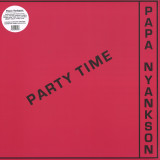
Kalita are proud to present the first ever reissue of Papa Yankson’s highly sought-after 1989 disco-infused highlife masterpiece 'Party Time'! Showcasing the late Ghanaian superstar at his very best, ‘Party Time’ encapsulates the blending of deep, rhythmic West African highlife with synthesizers and electronic styles that had exploded during the decade. Now, thirty-five years after initial release, and with original copies having reached grail status on the second-hand collector’s scene, Kalita brings this phenomenal record back to life, with extensive liner notes detailing Papa Yankson’s musical career.
A recipient of the Grand Medal of Ghana for his contribution to Ghanaian music, Papa Yankson was a key member of C.K. Mann’s Carousel Seven outfit during the 1970s, releasing joint albums together on the infamous Essiebons label to great success.
However, it was at the end of the following decade that Papa released ‘Party Time’, highlighting his forward-thinking musical style with its numerous hypnotic and driving up-tempo disco-soaked highlife cuts. Originally released in a small run on the short-lived Marriot Promotion label, the album features the standouts ‘Wonma Yenko Po’ and ‘Mumumde’, each showcasing deep highlife melodies, heavy drum patterns and phenomenal horn performances from the ingenious Sammy Lartey Jr on saxophone and Nana Asare on trumpet to boot.
With original copies selling for eye-watering amounts on the rare occasion that they come up for sale, the time is ripe for Kalita to celebrate this true Ghanaian 80’s grail, accompanied by liner notes and never-before-seen contemporary photos of Papa Yankson.
- 1: Sittin’ Here
- 2: Stop Dat
- 3: I Luv U
- 4: Brand New Day
- 5: 2 Far (Feat. Wiley)
- 6: Fix Up, Look Sharp
- 7: Cut ‘Em Off
- 8: Hold Ya Mouf’ (Feat. God’s Gift)
- 9: Round We Go
- 10: Jus’ A Rascal
- 11: Wot U On?
- 12: Jezebel
- 13: Seems 2 Be
- 14: Live O
- 15: Do It!
- 1: Vexed
- 2: Street Fighter
- 3: Win Feat. Breeze
- 4: We Aint Havin It Feat. Wiley
- 5: Kryme Feat. Redrum And Sharky Major
- 6: Ready 4 War Feat. Sharky Major, Armour And Stormin
- 7: Street Fighter (Instrumental)
- 8: Go (Instrumental)
- 9: Ho (Instrumental)
- 10: String Ho (Instrumental)
- 11: Ting Ting (Instrumental)
- 12: Wheel (Instrumental)
Dizzee Rascal ist der HipHop Shooting Star des Jahres 2003 in England. Sein Debüt "Boy In Da Corner" bekam überall überragende Kritiken und brachte ihm den begehrten Mercury Award ein. Mike "The Streets" Skinner ist zwar nicht der einzige, der in Dizzee Rascal die Zukunft des UK HipHop/Garage sieht, aber der Mann muss es wirklich wissen.
Es heißt, lang lebe der König und so weiter, aber nichts ist jemals in Stein gemeißelt. Ein Vierteljahrhundert nach seiner selbstverschuldeten Krönung und seinem selbstveröffentlichten Debüt-Soloalbum hat Kenny Anderson - DIY-Pop-Reisender, Restaurator eines angestammten Hauses am Meer, Squeezebox-Lothario, Fife for life, Diamantenschürfer, Herzensbrecher, und der Mann, der auch als King Creosote bekannt ist - über 100 Platten veröffentlicht (wenn man relativ konservativ schätzt), mit Künstlern wie Jon Hopkins, KT Tunstall und Lone Pigeon von Beta Band zusammengearbeitet und seine Songs von Künstlern wie Patti Smith und Simple Minds covern und aufführen lassen. Jetzt hat er trotz oder vielleicht gerade wegen all dem eine neue LP angekündigt. Sie heißt I DES und wird am 3. November veröffentlicht.
Und nein, es ist nicht an ihm, der so sehr von spielerischer Lyrik beseelt ist, vorbeigegangen, dass der Titel seiner neuesten Veröffentlichung ein einfaches Anagramm von "Dies" ist. Aber man sollte sich ein paar Dinge vor Augen halten: 1) I DES ist eine Anspielung auf KCs wichtigsten Kollaborateur dieses Mal - Multiinstrumentalist und Co-Produzent Derek O'Neill alias Des Lawson of Blantyre (From Scotland With Love von 2014, Astronaut Meets Appleman von 2016); und 2) HRH King Creosote hat sein ganzes musikalisches Leben lang um sein Ende gerungen.
Das Album wurde größtenteils zwischen 2016 und 2020 geschrieben, aber nichts ist jemals so einfach: Es gibt etwas Altes (Bäume), etwas Blaues (ebenfalls Bäume), etwas Geliehenes (Heimkassetten und Gesang aus allen Epochen; Texte aus der fernen Vergangenheit) und etwas Neues (KC scherzt, dass ein möglicher Titel für dieses Album We All Got Synths for Christmas war).
Und hier ist King Creosote: Sänger, Songwriter, rosaroter Schwindler, Vater dreier wunderschöner Töchter. Er wurde im Winter 1967 geboren. In jenem Jahr wüteten Überschwemmungen und Schneestürme, aber alles wuchs und überstand den Sturm.
- A1: ???!!! .......... (Intro) 00:36:00
- A2: Halloween In Ostberlin 05:05:00
- A3: Fliegender Fisch 05:05:00
- A4: Hurensöhne 05:06:00
- A5: Hintenvorn 03:45:00
- B1: Loch Im Kopp 03:39:00
- B2: Mann Ohne Schatten 05:45:00
- B3: Diebe 03:50:00
- B4: Rot Wie Mohn 04:34:00
- C1: Bye Bye 03:41:00
- C2: Hexen 04:21:00
- C3: Neider 03:24:00
- C4: High Heels 05:33:00
- D1: Hass (Becker) 03:02:00
- D2: Kriminelle Energie 03:58:00
- D3: Weit Bis Nach Haus 04:33:00
- D4: Auf & Davon 03:54:00
- D5: Traumpaar 03:36:00
Mit "Februar" und "Hurensöhne" liegen zwei weitere Albumklassiker der Erfolgsband aufwendig überarbeitet vor. Wie auch bereits mit den drei Erstlingswerken "Tanzt keiner Boogie", "Bataillon D'Amour" und "Mont Klamott" sind hier die Original Masterbänder komplett neu digitalisiert und nach heutigem Stand der Studiotechnik neu gemastert worden. Zusätzlich enthalten beide Alben auch diesmal wieder attraktive Bonustitel und werden limitiert in einem wertigem Digipack angeboten das zudem noch ein neues, erweitertes Booklet enthält.
Die Fans der Band, die grad beim Bundesvision Songcontest den zweiten Platz abräumte und sich deutlich vor anderen Spitzenkünstlern der Republik durchsetzen konnte, werden ihrer Sammlung zwei weitere Highlights hinzufügen können.
Just what the doctor ordered...
Next up on Q1E2 Recordings - for the label's fifth release so far - is Dr Sud. He's a Rome-born, Berlin-raised producer whose music is a fusion of percussion-centric soundscapes and integrated jazz-leaning harmonies, drawing inspiration from diverse genres like electronica, funk, and house.
On 'Heading South', the broken beat don serves up his specialist percussive sound, folding all manner of drums into synth-smothered house. The EP explores the undulating cycle of morning into night, back into morning, inviting you to dance your way through it all.
'Brina', a word which in Italian refers to morning dew - perhaps found on a tent on the morning of a festival - represents the breaking of dawn with broken beats. The track breaks and squints into the start of the day with spacious kick drums leaving room for warm, almost familiar pads and keys.
Then, 'Life Itself' reflects daytime, revolving around an arpeggiating synth that soon makes way for luscious keys.
An excursion into percussive bliss concludes side A in the form of the magical, grin-inducing 'Evening Breath'. This, as you might have guessed, is where the listener cruises through smoothly into the final stages of the day. It encapsulates that last burst of light as the sun sets and a slight shiver of the evening air slivers up your spine.
Then, before you know it, the mysterious night arrives. Flip to that B side, and 'Tramontana' will greet you, inviting you to dance deep into the late hours.
When you're there, the chugging '3/4AM' will hit the spot like an unforgettable dance floor moment, bursting with low and slow Balearic tendencies.
Finally, 'Mondgesicht' - "Moonface" in German -fittingly concludes proceedings with deep lounge vibes. Mumbles of effortless trumpet manoeuvre through a swaying sea of percussion and delicious, wavering synth solo. The day is here again. The cycle is complete.
This is some seriously high-quality music on show here from Dr Sud. The EP is out on Q1E2 Recordings in October.
Das Duo mit Wohnsitzen in San Francisco und New York besteht aus Mike Stroud, der sich gelegentlich seine Brötchen als Tour-Gitarrist von Dashboard Confessional und Ben Kweller verdient, und Mastermind und Soundtüftler Evan Mast. Evan mag manch einem bereits unter dem Pseudonym E*Vas bekannt sein oder auch als Mitbegründer des Labels Audio Dregs. Er ist der Mann hinter den Achtziger-Amiga-Sounds und den relaxten Beats und zeichnet verantwortlich für so verrückte Ideen, wie z.B. die deutsche Nationalhymne zu verclashen. Solche Geistesblitze hat er im Dutzend, und so entstand ein Album prallvoller Emo-Electroclash-Tunes für Couch Potatoes. Da ist es beinahe Ironie des Schicksals, dass diese Band ausgerechnet von Paul Bangs entdeckt wurde, seines Zeichens Sänger einer der fleißigsten Live-Bands der Welt: Interpol.
Breezy headwinds, orange-tinged skies, hazy, serene bliss – just some of the profound feelings to be had on the latest release from Oath, a masterclass in melody and mood from one of the finest ever to do…..
Italian producer and DJ Jacy remains one of the stand-out musical characters from a dazzling ensemble of atmosphere builders who were so prevalent during the late 80s and early 90s. His craftsmanship is simply legendary, his music quite simply some of the finest to exude from this period of time, and of which is still making waves in the collective sands now. His dedication to the creation of emotive sweeps, gorgeous rippling tones and easy going, freeing atmospheres has remained a cornerstone of his sound, from the early days through to his excellent work on his imprint Home of House, along with sublime releases on Kalahari Oyster Cult and Hot Haus Recs. Jacy’s sound was broadcast to the world once again via Safe Trip’s ‘Welcome To Paradise’ compilations, where his inclusions were something that lingered long in the memory – an essential component of what is known as the ‘Dream House’ sound. It’s difficult to convey into words exactly how a Jacy record can take the listener, but perhaps it’s different for everyone – one thing can be agreed on though, it’s an experience like no other.
‘Night Fantasy’ is Jacy’s first EP in 4 years, and much like his other records, this one blesses us with warmth, delight and joy, in the softest and most subtle of manners. The title track, which opens up the record, greets the listener with a familiar drum pattern, one which then gives way to the rock-hard bass line, and then the pads arrive. Heavenly angelic in form, their presence is complimented by the arrival of the breathy vocal sample, which evolves to provide a wondrous narrative with the cascading synth line that comes soon after. As a combination its intoxicating, with the breakdown giving us time to get to know this mixture very well, indeed, before powering home with excellence. ‘Just Change’ comes on next, and this one opens up with that classic and explicitly dreamy chord sequence we all know and cherish, with Jacy allowing us to soak up this goodness before shifting the perspective to the rhythm. The interplay that occurs here between keys and drums is something different, before everything transitions into a sequence to close your eyes too. ‘Dat Tape’ shifts perspective to more of a swing in terms of the groove, with sweeping background pads doing much to tug at the heartstrings. The vocal sample is so very effective at crafting an audial narrative, inviting the listener to swim deeper into the goodness, with the subtle transitions doing much to keep things ticking over. Finally, we have ‘Come On’, and this one keeps a spacious feel between the keys and the drums, and it works ever so well. The bass line occupies the bottom ends superbly, with interchanges in chords and some ever-so-familiar vocal samples thrown into the mix – and its simply wonderful.
To convey deep set feelings is to have faith in musical dexterity, to understand the grooves in the record, to follow instinct and trust in the process and precedent. Jacy has always found the sweet spot in his music by following this approach, it seems, and this new record of his is an accumulation of a lifetime of dedication and passion to music and all of its many flavors. Soaring, effective melodic undulations and rapturous, fluctuating rhythms, coupled with atmospheres to drift into – what more could you wish for? Lets get lost within it once again….