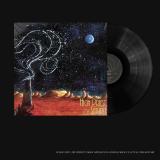
'Prince of Failure' marks a significant shift in Daniel Tompkins' creative world Written & developed over several years with Paul Ortiz (Chimp Spanner), the album traces a long internal process rather than a single moment of inspiration. The material reflects on neurodivergence, masking, & the psychological weight of living out of alignment with expectation - themes that shape both the narrative & the sound of the record. The Prince is presented as an archetype rather than a persona: a name given to the internal voice formed through self- doubt, perfectionism, & misinterpretation. By defining it, Tompkins reframes it. The songs move through states of disorientation, isolation, & repetition before arriving at a quieter form of acceptance. The emphasis is on observation rather than resolution.
This new album compiles several songs made in the years following Black To Comm's classic "Alphabet 1968" album. Originally released on the seminal Type label in 2009 (and to be reissued on Cellule 75 this year) "Alphabet 1968" combined the sound of vintage shellac and vinyl loops with broken electronics and field recordings, the press release mentioning disparate influences "ranging from Moondog to Basic Channel by way of Bernard Herrmann". In a beautiful one-page review in The Wire magazine (later reprinted in his book Ghosts Of My Life) Mark Fisher compared Richter's music to JF Sebastian’s miniature automata in Blade Runner ("with their bizarre mixture of the clockwork and the computerised, the antique and the ultramodern, the playful and the sinister"), ETA Hoffmann's inventor-magicians and Auguste Villiers de l'Isle-Adam's 1886 tale of Thomas Edison's (fictitious) construction of an artificial human.
Now titled "Coh Bâle" (inspired by a strange dream) these recordings were supposed to become a follow-up to said album but for reasons unknown it never materialized and the album seemed forever lost. At the time Richter started to dive deeper into several strains of (so-called) world music aka the folk music of Southeast Asia and Eastern Europe as well as liturgical and medieval music, the Kraut-Electronica of Harmonia and several certain Mediterranean experimentalists from the 1980's who started to merge their mostly electronic and field recording based compositions with traditional musics from all over the world by way of new sampling technology.
Many of the songs for the album were recorded while travelling and at various residencies around Europe: a detuned piano in a Thessaloniki basement (Richter played at a children's birthday party there), vintage synthesizers in the GRM studios in Paris, decaying acoustic instruments found in an old Black Forest mansion, childrens' voices at a workshop in Karlsruhe's ZKM Institute; then mixed on headphones in the ICE trains running between these places and his hometown Hamburg.
"Coh Bâle" is taking inspirations from old Nonesuch Explorer and Ocora LP's, Crammed Records, 80s Mediterranean Ambient (Nuno Canavarro, Roberto Musci) combined with the DIY spirit of Deux Filles and Flaming Tunes and the playfulness of Asa Chang & Junray. The songs are both mysterious and transparent, intricate and frugal, vibrant and patient. One of the album's unexpected climaxes is a gorgeous (artificial) berimbau version of the Welsh traditional "Iechyd o Gylch".
No two songs feature the same instrumentation and many acoustic sources (pianos, flutes, wood percussion, viola, tablas, autoharp) were disassembled and later coalesced into new configurations or used as virtual instruments; later combined with samples, field recordings, electronics and (on a few tracks) autotuned vocals reminding of recent works by the likes of Claire Rousay or More Eaze.
We had to wait for a worldwide pandemic for Richter to dig deep into the vaults and finally bring these recordings to light. This is the 2nd release from his archives after the "Diode, Triode" LP which presented Musique Concrète/Acousmatic recordings made at INA/GRM and ZKM. Another massive Double-CD (MM∞XX Vol. 1 & 2) was released last year featuring collaborations with 33 artists such as Andrew Pekler, Richard Youngs, Eric Chenaux, Maja Ratkje, Radwan Ghazi Moumneh of Jerusalem In my Heart, GRM boss François Bonnet (Kassel Jaeger), Felix Kubin, Timo van Luijk (In Camera, Af Ursin), Luke Fowler and many others, showing Richter's versatility and his willingness to reinvent himself for every new release.
Marc Richter is widely known under his Black To Comm moniker, having released (at least) 12 albums under this alias in the last 20 years. He is currently signed to the Thrill Jockey label. Richter composes soundtracks for film and has worked with visual artists such as Mike Kelley and Ho Tzu Nyen. He also records as Jemh Circs and Mouchoir Étanche for his own Cellule 75 label (named in tribute to the late Luc Ferrari).
out of Stock
Last delivered 4 months ago available to reorder, subject to availability
Songs Before Bed (2022) marks Otto Benson’s first physical release under his own name, following earlier
work under aliases including Memo Boy, OTTO, and Pudding Club.
Originally published as a digital-only release through Otto's own WNOADIARWB website and platforms on
New Year's Eve 2022, Songs Before Bed bridges the gap between the more experimental psychedelic
electronic works of OTTO and his most recent release, the acclaimed Peanut, released on NYE 2025.
Blending brief pop fragments with melodic bedroom guitar, droning ambient shoegaze textures, and blissful
IDM jaunts reminiscent of the Rephlex catalog, the album offers a seamless overview of Otto Benson's
genre-defying sound. Originally conceived as a late-night record, Songs Before Bed (2022) rewards
listening at any hour.
Remastered for vinyl by Stephan Mathieu and pressed on Sonopress EcoRecord, an environmentally
conscious alternative to PVC, special care was taken by Palto Flats and Otto Benson to make a sustainable
product without sacrificing sound quality.
HIGH PRIEST OF SATURN's sophomore album 10 year anniversary reissue out in June High Priest of Saturn is a Norwegian slow-burning psychedelic doom band. Their music is a blend of 70s-influenced heavy rock, melodic riffs, Hammond organ, and haunting, ethereal vocals. Drawing influences from bands like Sleep, The Doors, and Deep Purple, High Priest of Saturn have created a ritualistic, trippy, space-influenced sound of their own. Son of Earth and Sky was originally released in 2016 on Svart Records. The album has been sold out for years and remained a fan favorite on digital platforms with millions of streams. Now on its 10-year anniversary we at Svart are proud to bring back the critically acclaimed album to the market on physical formats. Dig in, zone out, and trip on Son of Earth and Sky. Release date June 12th, 2026.
HIGH PRIEST OF SATURN's sophomore album 10 year anniversary reissue out in June High Priest of Saturn is a Norwegian slow-burning psychedelic doom band. Their music is a blend of 70s-influenced heavy rock, melodic riffs, Hammond organ, and haunting, ethereal vocals. Drawing influences from bands like Sleep, The Doors, and Deep Purple, High Priest of Saturn have created a ritualistic, trippy, space-influenced sound of their own. Son of Earth and Sky was originally released in 2016 on Svart Records. The album has been sold out for years and remained a fan favorite on digital platforms with millions of streams. Now on its 10-year anniversary we at Svart are proud to bring back the critically acclaimed album to the market on physical formats. Dig in, zone out, and trip on Son of Earth and Sky. Release date June 12th, 2026.
Diles Que No Me Maten sind eine fünfköpfige Band aus Mexiko-Stadt, deren vom Krautrock beeinflusster Art-Rock sich zu etwas wirklich Einzigartigem entwickelt hat - drahtig, poetisch und voller Improvisationslust. Ihr viertes Album ,Escrito en Agua" (Geschrieben im Wasser), ist ihr bisher fokussiertestes und zugänglichstes Werk, aufgenommen in einem provisorischen Studio in Santa María La Ribera mit Produzent Sebastián Rojas. Aufgebaut um zurückhaltendes Schlagzeugspiel, bewusste Pausen und die spirituelle Schwere der Begräbnismusik aus Oaxaca, bewegt sich das Album mit einer gemächlichen Selbstsicherheit, die sich hart erkämpft anfühlt. Thematisch ist ,Escrito en Agua" ein Album über Präsenz, Umherirren und Widerstandskraft - Songs, die mit Mehrdeutigkeit leben, anstatt sie aufzulösen. Die Lead-Single ,Hiriku" gibt den Ton an und verbindet frenetischen Krautrock mit Zeilen aus José Vicente Anayas visionärem Gedicht ,Híkuri", während der herausragende Track ,No me" ein Mantra der Selbstsicherheit in etwas weitaus emotional Komplexeres verwandelt. Gewidmet sowohl dem indigenen Morgenstern Tunuwame als auch dem palästinensischen Dichter Mahmoud Darwish, endet das Album so, wie es beginnt: still und transzendent, mit achtsamer Aufmerksamkeit für die kleinsten Details dessen, was es bedeutet, lebendig zu sein.
Even in these most turbulent of times, dub musician and fatigued onlooker Elijah Minnelli remains an inexplicable stalwart on the lower rungs of the Breadminster County Council.
His latest record ‘Clams As A Main Meal’ continues his astute siphoning of council funds, this time with help from the Breadminster Board of Abstinence. As a further mark of respect, the original head of the Board, Dr. K'houldoux, graces the cover art in his infamous ‘Looming Moon of Desire’ guise.*
As fine a backdrop as any for Minneli’s off-brand dub experiments, and ‘Clams...’ is the truest representation of his varied wheelhouse yet...
We find vocal appearances from dub goliath Dennis Bovell and Welsh-language singer Carwyn Ellis. A pair of tracks which build on 2024’s acclaimed ‘Perpetual Musket’, a collection of folk songs reworked alongside reggae vocalists, released by FatCat Records. It garnered glowing reviews, with nods from The Guardian and The Quietus concluding with prominent appearances on their respective yearly round-up lists.
Elsewhere, the album finds Minnelli in a more experimental mode, all wheezing contraptions and cockeyed bass, creaking with the weight of creation, a satisfying tactility laid seam-side up.
As well as ‘Perpetual Musket’, the new album follows years of sold out 7" singles, handmade and self-released. Online, the tracks have amassed global streams numbering in the millions. His tracks have found play across an eclectic range of radio mixes and dance floors, most notably the likes of Andrew Weatherall, Batu, Optimo and Zakia Sewell (BBC6Music).
It is perhaps worth mentioning that this everbuilding interest in his work is at great odds with the growing suspicions amongst his fellow townsfolk, who see his Breadminster County Council Music Initiative as nothing more than an empty cash-grab.
Further Reading on the Breadminster Board of Abstinence
In the late 70s, Breadminster was awash with the last vestiges of the hippy era. Though the flared silhouette of the lower leg remained, the utopian ideals that had once flowed merrily around the youth's shaded ankles had begun to wane. LSD and free love had led to a sharp spike in population and a generation of children raised by air-headed psychonauts unprepared for the bleary-eyed strictures of parenthood.
Aware of the crisis, the County Council entrusted Dr. Paulinque K'houldoux to spearhead a pushback, and it was his pro-abstinence movement - a mixture of education initiatives and radical renutrition campaigns - that came to impact Breadminster's census deep into the new millennium.
Being a pseudo-archipelago Breadminster has fundamentally limited resources, however deep-seated ties to distant coastal villages meant that oysters were a regular part of the local diet. K'houldoux pinpointed this as a factor in the town's overpopulation, and believed that simply replacing these with clams (a “lesser mollusk”) would help lower the erotic urges of the people. It was his “anti-aphrodesia” movement that first championed the idea of “Clams As A Main Meal,” and the slogan “Consider Abstinence” carried the message yet further.
The Breadminster Board of Abstinence soon became involved in all cultural happenings in the area, with K'houldoux MCing at prominent festivals and performances, sometimes dressed as the “Looming Moon of Desire” - an idea of his relating to the tide, seafood, menstrual cycles, and his privately held celestial predilections.
It was in 1981 that it was revealed Dr. K'houldoux had never fully qualified as a doctor and was seeking exile in Breadminster due to a series of botched bracelet heists in which he had previously been involved. K'houldoux was subsequently extradited to Basingstoke, where he served 3 of a 12-year sentence, owing to the lunar-oriented prisoner health campaigns he helped implement.
It has been a strange twist of bureaucratic fate that the Breadminster Board of Abstinence has never stopped receiving public funding, despite its lack of clear utility. And while its roots are tied to a rose-tinted past, the Board continues to sponsor cultural events and projects to this day.
An extract from: Eugeniq Schooner's article in Sydney Parishioner: “Clams, Breadminster and Countercultural Abstinence Trends” (2008)
out of Stock
Last delivered 4 months ago available to reorder, subject to availability
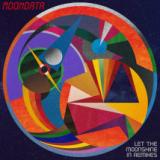
Moondata’s little-known sole single, 1984’s decidedly Balearic, jazz-funk/boogie fusion gem ‘Let The Moonshine In’, is a very important record to the Rotation Sound System crew. It has become a familiar favourite at their annual Rotation Garden Party micro-festival and formed the centrepiece of their first compilation, summer 2025’s superb Everything You’re About To Hear Is True Volume 1. It’s increasingly rare these days for an artist from the 80s to still have their master tapes but even rarer still for them to have the multitrack tapes too. This is something of the holy grail when it comes to licensing old music so when it happens the opportunity to remix and create new versions needs to be grabbed with both hands.
The original record, a genuine rarity beloved of synth-loving crate-diggers, had an unusual gestation. Originally recorded in demo form by musician Jean-Marie Gogniat, it was turned into a finished single by a group of German musicians with a little help from lyricist and vocalist Joe Mwenda, and a crew of backing vocalists whose number included a locally based American singer – a pre-fame Jennifer Rush. Fittingly, the pre-vocal instrumental mix, which has sat unreleased since 1984, is included as a bonus track on the digital edition of this new remix package. The Rotation Sound System crew’s mixes, headed up by long-serving producer Dean Meredith, sprinkle 21st century magic across Gogniat’s one-off masterpiece while retaining core elements of the original and offering nods aplenty to club-focused sounds of the 1980s. They are, in effect, the versions the track deserved – but never got – back in the mid 1980s.
To begin, Meredith reunites with long-time production partner Andrew Meecham for the pair’s first remix as Chicken Lips in three years – a typically sparse and spaced-out ‘Malfunction Dub’ with delay-laden synths, vocals and guitar snippets sit over a sparse post-electro beat and bass guitar. Meredith then joins forces with fellow Rotation Sound System member Ben Shenton for takes under their two bestknown aliases. First, they don the T-Kutt guise for some dubbed out, funky bass guitar-propelled boogie-meets-proto house action that rocks out a killer, Clavinet-expanded groove while spinning in talkbox and backing vocals.
The pair then re-emerge as Mind Fair, famed for their releases on Golf Channel Recordings and their own Rogue Cat Sounds, and deliver a warmer, deeper and more organic-sounding take that’s as languid and tactile as it is warm and saucereyed. To round off the vinyl version of the EP, Rotation Sound System’s other core members – Rob J, Rich Hall and Stuart Robinson – don the now-familiar Wrekin Havoc guise and re-invent the track as a raw, analogue-rich shuffle through 1980s electro – all squelchy synth-bass, stabbing, cut-up vocal samples, chiming synth melodies and echoing beats. The expanded digital download edition of the EP contains a trio of additional bonus rubs. Alongside instrumental versions of the T-Kutt and Mind Fair mixes, we also get a full vocal T-Kutt rework that adds back in Joe Mwenda’s beautifully delivered verses. These additional DJ tools round off a beautifully rendered set of re-imaginations of a genuine cult classic. Gogniat, the man who started it all way back in the summer of 1984, certainly approves.
out of Stock
Last delivered 4 months ago available to reorder, subject to availability
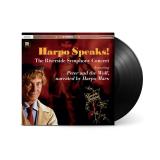
On March 20, 1964, legendary American comedian and harpist Harpo Marx joined the Riverside Symphony on stage at a benefit for the Southern California organization. By then, the comic had been in semi-retirement, and after a series of heart attacks in 1961, he was told to stop working altogether. But to a lifelong performer, nothing compared to the feeling of being on stage. Benefit shows, he slyly argued, were not technically work, since he wasn’t getting paid. For the next few years, Marx’s wife and doctors grudgingly went along with the pitch. Harpo Speaks! The Riverside Symphony Concert, out June 5 from Ramseur Records, captures a considerably remarkable, one-of-a-kind performance: The silent Marx Brother, the one whose trademark persona led many audiences to believe he was actually mute, spoke. As Harpo Marx’s first, and last—recorded just six months before his death—live album, Harpo Speaks! places listeners in the room, immersed in the swell of the Riverside Orchestra as Marx performs alongside the symphony and leads them in a narration of Peter and the Wolf. In another unusual move for Marx, he allowed the recording of the show for posterity, though the tapes seemingly disappeared after his death. Harpo Speaks! is the result of heroic archival work. Recently discovered by longtime Marx Brother archivist John Tefteller, he and Marx biographer and expert Robert Bader set out to restore the long lost recording. “The fact that we have a recording is a miracle,” says Bader. “It was not the most professionally recorded thing.
It was very haphazard. The work that was done to rehabilitate it is stunning. It’s as if you’ve found something covered with layers of mold and dirt, got it all cleaned off, and now are able to see something brand new underneath it.” Across the recording’s near-43 minute runtime, Marx, alongside the Riverside Symphony, takes the cheering audience through the delightfully lighthearted “Toy Symphony” and carries them into the softly romantic “Moon Medley,” (a medley of “Fly Me to the Moon” and “How High the Moon,” arranged by his son Bill, alongside his own composition, “Moon Tune”) and a rare instrumental performance of his composition “Guardian Angels.” And then the concert’s true highlight: the near 22-minute long riveting narration of Peter and the Wolf. For the first time, Harpo reveals his voice: deep, yet soft-spoken, refined, yet still retaining the slightest hint of his New York City origin. And, in speaking, he entertained, getting laughs not just for his physical gags, but for the storytelling itself: the dramatic inflections in moments of suspense, the arch mischievousness, and tongue-in-cheek references to Goldwater, Rockefeller, and Nixon.
Shape of the Moon is the California based duo of Benjamin Burke and Bear Glass that explores existential headspaces beyond mundane frames of thought. Following streams of consciousness that contemplate the stardust that forms us to the very first human sound that reverberated through a cave, Shape of the Moon intertwines language and music into ambient dream-weaving narratives.
When the land is laid bare forms a collection of recordings composed of Burke reciting his introspective poems and Glass improvising gripping modular synth and string patterns. Burke brings a wealth of experience working between an impressively vast range of written and visual mediums to Glass’s live electronics and acoustic instrumentation mirroring the spoken word. The pieces on the album consist of excerpts from live outdoor performances under the night sky in the Mojave desert as well as sessions in Glass’s off-grid solar powered studio. Burke drapes vivid vocal narration over deeply immersive textures and melodies conjured up by Glass on Buchla, bass and sitar, painting peaks and valleys that live score the storytelling. The duo tread their own path fusing poetry with undulating electroacoustic instrumentals, arriving at meditative and ASMR territories that draw inspiration from ambient and electronica. Often joined on stage by guest musicians playing anything from Rhodes, percussion, jaw harp and saxophone, the recordings edge towards blues and spiritual jazz.
Benjamin Burke is a poet, writer, performer, and visual artist who spends his time lending a hand to unusual artistic expeditions around the world. Most recently, he helped to launch Dhun and Dhun School, a humanist eco-township and progressive education center on a 500 acre biopreserve in Rajasthan, India. He has written and performed countless unusual shows, experimenting widely and, through that, witnessing firsthand what makes ideas resonate for his audiences. This work evolved over time into an approach he refers to as Applied Poetics which he employs to help communities set intentions, scientists present their findings, and humanitarian organizations find their footing.
Bear Glass is a sound artist, multi-instrumentalist, music teacher, live sound engineer, and founding member of Mobius Acoustics who build innovative sound systems and host events on the West Coast (utilizing a quadraphonic setup for live performances and immersive drone bath sessions). Glass is involved in various collaborative projects with a couple of releases under different pseudonyms as well as a solo tape featuring a track with prolific producer Carlos Niño. For most of the year, Glass lives sustainably off-grid with his family on a plot of land outside Joshua Tree, a mini utopia infamous for his well curated private campouts and artist residencies. Wide skies, magnificent climates, and being surrounded by the love of family and friends inform Bear’s musical output and artistic practice.
Shape of the Moon present their debut album for Marionette’s 30th title, channeling an inquisitive yet playful state of mind that marvels at the mysteries of the universe.
Instead of looking back with longing, Futurebirds uses the past as fuel - after more than 15 years together, the band has channeled everything they've lived and learned into their best project yet, one that elevates and adds new dimension to their signature cosmic Americana, psychedelic country-rock sound Self-reflective lyricism explores themes of isolation, release, love lost and found again, and ultimately, embracing life in all its chaos.
Indiana Jones and the Last Crusade original motion picture soundtrack, now available on sand colour vinyl, featuring music composed and conducted by John Williams.
The Flaming Sideburns' debut album remastered 25th anniversary edition out in June via Svart Records In the beginning of the new Millennium, The Flaming Sideburns were getting ready to record our first proper album. First we rented Ismo Alanko’s old rehearsal room in Otaniemi, Espoo, and turned it into a recording facility. Old analog tape recorders, vintage microphones, a Space Echo unit, and other top equipment were brought in directly from Berlin, Germany by the album’s producer, Jürgen Hendlmeier. As producer Jürgen Hendlmeier recalls the final steps of the sessions: “Fact is, when we mastered the record at Seawolf Studios we had no real idea what to do with this equipment. We just wanted to make it louder and louder – that was all we wanted. We wanted to go to twelve instead of eleven.” When Hallelujah Rock’n’Rollah was first released, it did not sound as “natural” as it had originally been planned to be – but the album was a huge success for the band nevertheless. For this remastered edition, Hendlmeier dug deep enough to finally find the files containing all the original mixes. The album’s producer then remastered the album himself, and the end result is far more convincing. Compared to the original version—which is already very good—the album now feels as if it has been completely remixed for the better. As a bonus, on the original album some of the songs were edited shorter, but now all of them appear in their original length. -Eduardo Martinez
The Flaming Sideburns' debut album remastered 25th anniversary edition out in June via Svart Records In the beginning of the new Millennium, The Flaming Sideburns were getting ready to record our first proper album. First we rented Ismo Alanko’s old rehearsal room in Otaniemi, Espoo, and turned it into a recording facility. Old analog tape recorders, vintage microphones, a Space Echo unit, and other top equipment were brought in directly from Berlin, Germany by the album’s producer, Jürgen Hendlmeier. As producer Jürgen Hendlmeier recalls the final steps of the sessions: “Fact is, when we mastered the record at Seawolf Studios we had no real idea what to do with this equipment. We just wanted to make it louder and louder – that was all we wanted. We wanted to go to twelve instead of eleven.” When Hallelujah Rock’n’Rollah was first released, it did not sound as “natural” as it had originally been planned to be – but the album was a huge success for the band nevertheless. For this remastered edition, Hendlmeier dug deep enough to finally find the files containing all the original mixes. The album’s producer then remastered the album himself, and the end result is far more convincing. Compared to the original version—which is already very good—the album now feels as if it has been completely remixed for the better. As a bonus, on the original album some of the songs were edited shorter, but now all of them appear in their original length. -Eduardo Martinez
In honor of the December full moon 2021, Luigi Tozzi finally invites us to yet another emotional journey, down into the depths of the Deep Blue.
The release comes in a limited edition, marbled 180-gram double vinyl, and an unlimited black edition. Sheathed inside a matte white sleeve of a high-quality carton with Hypnus signature, custom cut round corners. All adorned with a stunning artwork by Gabriella Holmstrom.
Early support from Brando Lupi, Svreca, Artefakt, and Eric Cloutier to name a few.
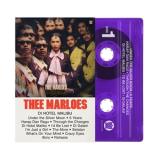
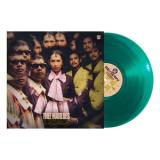
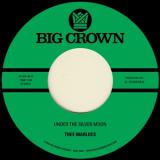
Big Crown freut sich, das zweite Album von Thee Marloes, ,Di Hotel Malibu", zu präsentieren. Es erweitert den Rahmen - ein selbstbewusster Schritt weg von den Grenzen, die ihren Sound einst klar definierten, hin zu etwas Durchlässigerem, Gesprächigerem und zutiefst Indonesischem. Zwei Jahre sind vergangen, seit ,Perak", das Debütalbum des Trios aus Surabaya bei Big Crown Records, ihren einzigartigen Sound vorstellte. Dieses neue Album bricht nicht mit dieser Tradition, sondern erweitert sie und zeigt, wie sehr sie als Band seit der Veröffentlichung ihres Debüts und all den damit verbundenen Erfahrungen gewachsen sind. Bestehend aus der Sängerin und Keyboarderin Natassya Sianturi, dem Gitarristen und Produzenten Sinatrya Dharaka und dem Schlagzeuger Tommy Satwick, haben Thee Marloes stets als Einheit gearbeitet, wobei ihre Songs von Satwick, haben Thee Marloes stets als Einheit gearbeitet, wobei ihre Songs von gemeinsamen Referenzpunkten und einem ausgeprägten Sinn für Groove geprägt sind.
Auf diesem Album erweitert sich diese gemeinsame Sprache. Die Arrangements bewegen sich über ein breiteres Spektrum, mit neuen instrumentalen Farben, unerwarteten rhythmischen Wendungen und einem lockereren Ansatz in Bezug auf die Struktur. Die Band beschreibt es als eine Reaktion auf die letzten zwei Jahre ihres Lebens: soziale Realitäten, Liebesleben in Der Album-Opener ,Under the Silver Moon" ist ein kühler Two-Stepper, der die bitteren und süßen Seiten von Fernbeziehungen vor einem luftigen musikalischen Hintergrund thematisiert. ,Six Years" ist eine Seite aus dem Leben der Sängerin Natassya Sianturi und ihrem Kampf, den Schritt zu wagen, einen bequemen und sicheren Tagesjob aufzugeben, um ihrem Traum von einem erfüllten Leben zu folgen.
Big Crown freut sich, das zweite Album von Thee Marloes, ,Di Hotel Malibu", zu präsentieren. Es erweitert den Rahmen - ein selbstbewusster Schritt weg von den Grenzen, die ihren Sound einst klar definierten, hin zu etwas Durchlässigerem, Gesprächigerem und zutiefst Indonesischem. Zwei Jahre sind vergangen, seit ,Perak", das Debütalbum des Trios aus Surabaya bei Big Crown Records, ihren einzigartigen Sound vorstellte. Dieses neue Album bricht nicht mit dieser Tradition, sondern erweitert sie und zeigt, wie sehr sie als Band seit der Veröffentlichung ihres Debüts und all den damit verbundenen Erfahrungen gewachsen sind. Bestehend aus der Sängerin und Keyboarderin Natassya Sianturi, dem Gitarristen und Produzenten Sinatrya Dharaka und dem Schlagzeuger Tommy Satwick, haben Thee Marloes stets als Einheit gearbeitet, wobei ihre Songs von Satwick, haben Thee Marloes stets als Einheit gearbeitet, wobei ihre Songs von gemeinsamen Referenzpunkten und einem ausgeprägten Sinn für Groove geprägt sind.
Auf diesem Album erweitert sich diese gemeinsame Sprache. Die Arrangements bewegen sich über ein breiteres Spektrum, mit neuen instrumentalen Farben, unerwarteten rhythmischen Wendungen und einem lockereren Ansatz in Bezug auf die Struktur. Die Band beschreibt es als eine Reaktion auf die letzten zwei Jahre ihres Lebens: soziale Realitäten, Liebesleben in Der Album-Opener ,Under the Silver Moon" ist ein kühler Two-Stepper, der die bitteren und süßen Seiten von Fernbeziehungen vor einem luftigen musikalischen Hintergrund thematisiert. ,Six Years" ist eine Seite aus dem Leben der Sängerin Natassya Sianturi und ihrem Kampf, den Schritt zu wagen, einen bequemen und sicheren Tagesjob aufzugeben, um ihrem Traum von einem erfüllten Leben zu folgen.
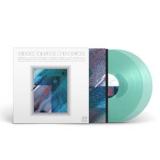
Two Piers proudly announces the upcoming release of Bridges Towards Open Spaces: Circadian Rhythms 1967–2025.
This new collection brings together a wide range of artists and styles, weaving immersive sonic landscapes that explore a connection between natural cycles and the rhythms within.
Featuring artists such as Brian Eno, Moebius, Roedelius, Meat Beat Manifesto, Fun Boy Three, Daniel Avery, and Spectrum, the compilation moves fluidly between shimmering ambient textures and raw, straight-ahead garage rock.
Bridges Towards Open Spaces: Circadian Rhythms 1967–2025 follows in the footsteps of Two Piers acclaimed previous releases, Night Train: Transcontinental Landscapes 1968–2019 and Music for the Stars: Celestial Music 1960–1979, continuing the label’s exploration of expansive, time-spanning musical journeys.
“I wanted once again to shape a compilation around a time period, this collection is a nod to my days behind the counter of a record shop, the people I met and the styles of music that was played and I was introduced to. Some are from that time, some are of the style/feeling, that I can associate & with the friends I met there; from the early shift to the late shifts as the tempo rose throughout the day and the neons of London started to buzz”
The album will be available on Limited Vinyl and CD in May, arriving just in time for the longer, warmer days and the shifting light of the Seasons Sun.
DYING VICTIMS PRODUCTIONS is proud to present the striking debut EP of Spain’s FABLE, Long Hath the Night Dwelt, on CD and 12” vinyl formats. FABLE started as a solo-project by Jose Soler (Phantom Spell, Chantrice) influenced by ‘70s and ‘80s hard rock and heavy metal – a list as varied and idiosyncratic as Thin Lizzy, Whitesnake, Pagan Altar, Ashbury, and Hällas – along with hints of old US metal. Duly girded, the band bring forth their public debut, Long Hath the Night Dwelt. An actually-narrated prelude sets the stage for a cautionary tale about class struggle and revolution, FABLE indeed using fables and stories as a medium to tell an expansive story of the woodsfolk dominated under the iron claw of “The Owl.” Despite that, the band’s debut EP is exceptionally compact at five tracks in 22 minutes, moving with a simmering patience that’s heavy on mood and dynamic in its restraint. Never overdriven nor busy, warm and intimate but with a psychic distance that seems impossibly ancient, FABLE very much evoke the perhaps-centuries-old folklore that seems so central to their rustic rock; the wise-sage vocals almost seem an afterthought when the narrative flow of the music starts winding and wending like smoke from a tavern fireplace, so illustrative is its hushed power. However, each element here is equally important, and all work together to form a totality that’s unfussy but hewn with class and care. And this is just the start of this FABLE: discover for yourself how Long Hath the Night Dwelt!
The second installment of The Tape Masters series by German film music maestro Peter Thomas. Audiophile pressing in deluxe 2x10" vinyl set, limited to 500 copies.
While volume one of the series compiled Thomas' dopest library music cuts, this album dives deep into the soulful side of the Peter Thomas Sound Orchester, featuring the mystique house band of Afro-American Munich GI club Tabarin Bar, Donna Summer's first solo recordings, stunning cinematic funk instrumentals and a healthy amount of breaks and beats.
Out of the 20 scorching tunes on this compilation, only three were released at the time of their recording and are nearly impossible to find on the 2ndhand market, ten have never been released anywhere before, others celebrate their first outing on vinyl or in stereo.
Peter Thomas is widely acknowledged as Germany's most inventive film music composer of the 1960s and 1970s, best known for his iconic soundtracks. Today, his work is cherished not least for its incredible groove factor. The story of this compilation traces the origins of the Peter Thomas Sound Orchester's rhythm section and its soul music background, shines a light on unsung heroes like singer Joe Quick and unearthes nuggets that have been lying dormant on tape for decades.
All music was carefully transferred from Peter Thomas' private master tapes and cut in full dynamics, housed in a beautiful fold-out cover with liner notes and private pictures. The compilation is released in cooperation with Peter Thomas' son Philip who represents the Peter Thomas Sound Orchester catalogue since his father's passing in 2020.
out of Stock
Last delivered 5 months ago available to reorder, subject to availability
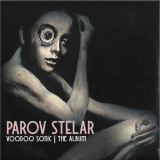
The Voodoo Universe is now complete! The masterpiece combining the Trilogy 1-3 will be released on November 27th and is a magnificent work show of the multifaceted genius.
Concerts by successful musicians often have an air of church-mass: Fans pay homage to their idols, hailing them, giving the impression of following them blindly. Parov Stelar, a globally successful musician from Austria, is one such artist. Is this art of seduction a kind of Voodoo, Black Magic even? Who can tell? It makes no difference whatsoever, as to his fans Parov Stelar easily passes as a High-Priest of grooves that perfectly understands how to put them in ecstasy.
In Voodoo, Bondieu, a higher being communicates to the masses through priests called Loas. Parov Stelar manages to do so with his music. Voodoo Sonic was born and delivered with the idea to replace the conventional album with several EPs, allowing greater musical freedom and the possibility to explore the many sonic landscapes of Voodoo Sonic.
Now the Voodoo Sonic Universe is complete and celebrated with all three parts combined into one ultimate and highly demanded package. It's a Parov Stelar work show which makes it possible to enjoy his diverse sound world in all of its facets.
The Artwork for Voodoo Sonic was designed and painted by Parov Stelar himself. From the art studio to the recording studio, on to the dance floor in the form of art and beats. Parov Stelar is an all in one king of art.
The icing on the cake is the Voodoo Sonic documentary, which can be seen on all Parov Stelar channels available. (coming September 2020).
If you want to see Parov Stelar live, you will get the chance in summer 2021 at festivals in many countries following by a headliner tour across Europe towards the end of the year.
out of Stock
Last delivered 4 years ago available to reorder, subject to availability
Following the success of his debut EP 'Departure', J Michael Harris returns with a dynamic neo-jazz album that marks his evolution as an artist. Bringing together legendary musicians from London, Los Angeles, and Atlanta, the album embodies elements of jazz, dance and electronica while drawing inspiration from luminaries such as Robert Glasper, J Dilla, Aphex Twin, Sampha, and Herbie Hancock.
All music written by J Michael Harris (saxophone, piano, fender rhodes, synths, EWI, clarinet, flute)
featuring
Freddy Sheed (drums, percussion, programming/ Lewis Capaldi, The Japanese House, The 1975)
Jimmy Haslip (bass/ Yellowjackets, Allan Holdsworth, Jeff Lorber Fusion)
Mo Pleasure (piano, hammond b3/ Earth Wind and Fire,
Michael Jackson, Ray Charles)
Karlos Edwards (percussion/ Nitin Sawney, Spice Girls, Mark Ronson)
Henry Collins (trumpet/ Amy Winehouse, Tom Jones, Van Morrison)
Mixed and Mastered by Guy Massey (The Divine Comedy, Kylie, The Beatles)
Während wir auf ihr zweites Album ,Di Hotel Malibu" warten, verwöhnen uns Thee Marloes mit einer atemberaubenden Doppel-A-Seite. Die A-Seite, ,Under the Silver Moon", ist ein knallharter Two-Stepper, der sowohl die bitteren als auch die süßen Seiten einer Fernbeziehung einfängt, vor einem luftigen musikalischen Hintergrund. Die musikalische Leistung und die Produktion ziehen dich vom ersten Snare-Schlag an in ihren Bann, während Frontfrau Natassya Sianturis honigsüße Stimme durch Metaphern und Prosa lebhafte Bilder heraufbeschwört. Auf der B-Seite offenbart ,Through the Changes" die zarteste Seite des Sounds der Band. Kraftvoll und zart zugleich reflektiert der Song darüber, wie wir uns vorstellen - und damit ringen -, was nach dem Tod kommt. Natassya sehnt sich nach Gesellschaft und Gesprächen mit einem geliebten Menschen, der verstorben ist, mal erinnert sie sich an gemeinsame Momente, mal hinterfragt sie, ob es Sinn macht, weiterhin mit ihm zu sprechen und an ihn zu denken. Ihr Gesang ist so intim, dass es unmöglich ist, nicht jedes Wort zu spüren, während die Band die perfekte, zurückhaltende Begleitung liefert.
The Collaboration - Having toured together over the years, Lattimore and Barwick now join forces to co-write and record this full-length album. Their creative synergy brings together harp, voice, and analog synths in a deeply emotional, immersive sound journey. The album was recorded at the Philharmonie de Paris with co-producer Trevor Spencer (Fleet Foxes, Beach House). This album continues a unique series of collaborations between the label and the Musée de la Musique, featuring historical instruments in contemporary composition. Since 2017, InFiné and the Philharmonie de Paris have co-developed a series of albums designed to highlight the extraordinary instrument collection of the Musée de la Musique. Following the albums InBach by Arandel (2020) and Saturn 63 by Seb Martel (2022), this third release is a meeting of two iconic contemporary ambient voices: Mary Lattimore and Julianna Barwick. The project offers the artists full access to the museum’s playable instruments for recording, sound conservation, and creative reinterpretation.
--
Tragic Magic brings together Julianna Barwick and Mary Lattimore, two of contemporary ambient, experimental and electronic music’s most celebrated composers, for a unique collaboration at the Philharmonie de Paris, with extraordinary access to the Musée de la Musique’s instrument collection, in partnership with the French label InFiné. The album features seven immersive, evocative compositions guided by the human spirit – intimate, grounded in friendship, both earthly and cosmic – and part of a greater continuum, reflecting the solace and transformative power of artistry across generations.
Co-produced by Trevor Spencer (Fleet Foxes, Beach House), Tragic Magic was created in just nine days, a testament to the “musical telepathy” that has developed between Barwick and Lattimore over years of touring and friendship. Arriving in Paris from Los Angeles shortly after the 2025 wildfires, their sessions combined improvisation with the emotions and experiences they carried, in a setting both inspiring and deeply supportive. Lattimore selected harps tracing the instrument’s evolution from 1728 to 1873, while Barwick chose several iconic analog synthesizers, including the Roland JUPITER and Sequential Circuits PROPHET-5. In freeform dialogue between voice and instrument, they create a meditation on tragedy, wonder, and the restorative power of shared experience.
The duo, often joined by Spencer, also explored the city, sharing meals and visiting museums and landmarks, each encounter leaving an impression on their next session. The experience allowed them to work intimately with rare instruments, blending their personal sensibilities with centuries of history, resulting in music that honors the past while remaining a deeply authentic expression of the present.
Throughout Tragic Magic, Barwick and Lattimore find something beyond themselves: a sense that while everything may not be okay, beauty persists. Their approach – transforming life into music, observing, feeling, and creating – continues a lineage of creative expression and visionary invention, embodied in the very instruments they employed for this project.
out of Stock
Last delivered 7 months ago available to reorder, subject to availability
Tudo is an album by world renowned Grammy-nominated singer/songwriter Bebel Gilberto, originally released in 2014.
Gilberto, daughter of bossa nova immortal João Gilberto, is one of the most internationally famous and beloved of Brazilian musicians. Tudo, which means "everything" in English, showcases Bebel's ethereal vocals and wistful, dreamy song writing in each of the 12 tracks.
Bebel reunites with Mario Caldato Jr., who produced her first landmark album Tanto Tempo.
With Bebel singing in French, English, and Portuguese, Tudo is a shimmering, sweet summery collection that includes original songs along with songs by João Gilberto, Antonio Carlos Jobim and Neil Young, as well as soulful duet with Seu Jorge.
The gorgeous melodies are shaped by touches of electronica and Bebel's intimate vocals hint at a fantastical Rio de Janeiro, a style that has earned her a devoted fanbase worldwide.
Tudo is available on black vinyl and includes a 4-page booklet with pictures and lyrics.
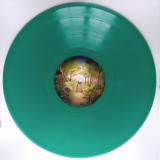
Türkisfarbenes Vinyl, Gatefold, inkl. Insert. Willy Astors Humor ist seit Jahrzehnten ein Markenzeichen: verspielt, sprachverliebt und voller Leichtigkeit und hat damit seit Dekaden ein Alleinstellungsmerkmal. Doch jenseits seiner Wortakrobatik ist Astor stets auch ein ernstzunehmender Musiker und Gitarrist mit ausgeprägtem Sinn für harmonische Weite. Was er nun gemeinsam mit seinen langjährigen Weggefährten Roberto di Gioia und Ferdi Kirner auf seinem Werk "The Sound Of Islands Vol. VII" vorlegt, überrascht selbst versierte Kenner seiner Musik: ein Album von bemerkenswerter Ruhe und Klarheit. "Sound Of Islands Vol. VII" ist ein instrumentaler Hörgenuss. Das neue Werk holt einen perfekt runter, ist eine wahre Wohltat für gestresste Seelen und strapazierte Ohren.
Katz Mulk's ''All the mess'' is a collection of songs about playing and play-work, recorded between 2023-25 in Glasgow and Tokyo. Developed from performances across the UK and during a residency at Xevarion Institute in Hong Kong, with dancers, costume design by Mary Hurrell, and mobile speaker design by Chris Ball. Slithering breath, crackling synths, dented gongs, and dub loops pull songs into unexpected, unsettling patterns, like being a kid again but with more electronics.
Oceanine, Jolanda Moletta’s third album and her first for Beacon Sound, is a powerful and ethereal statement of artistic community. Expanding on her previous work, each track represents a collaboration with a different female vocalist, with the foundational elements being generated entirely by her own voice. By turns haunting, enchanting, and inspiring, you won’t want to come up for air once you’ve been pulled under. Representing a musical practice that is distinctly feminist, this is an album with a longer view in mind, to an age when the altars were to goddesses and women were centered as powerful beings representing the earth’s cycles of regeneration and renewal. Oceanine then, in all its beauty, can be viewed as an album of survival. It is deeply transportive, accessing something that lies within all of us. As the late, great Lithuanian folklorist and archaeologist Marija Gimbutas noted, “We must refocus our collective memory. The necessity for this has never been greater as we discover that the path of 'progress' is extinguishing the very conditions for life on earth.”
Jolanda Moletta is a multimedia artist and one-woman electronic choir. She creates wordless compositions through extended vocal techniques, integrating wearable-controlled live processing, alongside symbolic visuals. Moletta considers her performances to be a collective ritual and creates her Sonic & Visual Spells following the cycles of nature and the moon. Jolanda's 2022 critically acclaimed album Nine Spells was released on the Ambientologist label, followed by Night Caves on Whitelabrecs in 2025. Moletta’s artistic practice is a radical and spiritual journey through sound art, ritual, and the symbolic archaeology of the feminine.
Oceanine is inspired by sirens, water nymphs, and the timeless call of the sea. At its core lies Jolanda’s deep, lifelong connection to the Mediterranean Sea and to the ancient and modern myths and folklore that have emerged from its waters. Growing up by the Mar Ligure, Jolanda was surrounded by stories carried by salt, wind, and waves: legends of sirens, echoes of ancient voices, and the sea as both origin and oracle. This intimate relationship with the Mediterranean is not merely a backdrop, but a living source that shapes Oceanine’s emotional, symbolic, and sonic world.
Each track features a different female vocalist, creating a rich tapestry of voices, styles, and perspectives. This artistic choice not only broadens the album’s sonic palette, but also deepens its narrative core: celebrating the power, beauty, and mystique of feminine energy through myth, history, and sound.
The entire album is built exclusively from the human voice, processed and layered, yet always remaining voice, and nothing else. For each piece, Jolanda invited every vocalist involved to contribute a raw stem: a short, unedited melodic fragment of just a few seconds, inspired by the album’s themes. These intimate vocal seeds became the foundation of each track: the guest artists’ voices appear as brief, melodic stems, while the entire surrounding “orchestral” fabric is created solely from Jolanda’s own layered and processed voice. In this way, Jolanda’s voice becomes the Ocean itself, embracing, absorbing, and carrying the sirens’ calls within a vast, immersive soundscape. Every song is a unique expression of the feminine experience, revealing its depth, complexity, and emotional range, echoing the call of the sea and the many faces of the siren archetype.
The figure of the siren has transformed across centuries. In myths of Ancient Greece and Rome, sirens were hybrid beings, part woman, part bird, whose irresistible songs lured sailors to their doom. During the Middle Ages, the image shifted toward the half-woman, half-fish figure, often associated with temptation and danger. Historically, the voice of women has often been feared. Sirens were considered harbingers of misfortune not simply because they seduced or destroyed, but because they were powerful liminal beings.
In Ancient Greek, sirens functioned as psychopomps: figures who existed between worlds and guided souls, especially between life and death. Their songs were believed to carry forbidden knowledge, including prophetic insight and the ability to reveal truths about fate and the future. The danger of the sirens lay in what they revealed: knowledge that humans were not meant, or ready, to hear.
Oceanine confronts this legacy head-on. The voices heard throughout the album are not merely beautiful: they are dark and luminous, wild and enchanting, magical, soothing, dreamy, and at times fractured or distorted. They whisper, lament, beckon, and enchant. Like sirens, they skim the surface of the water and sink into its depths, hovering on the edge between tenderness and danger, vulnerability and power. They rise toward the sky, dissolve into mist, and return as echoes charged with raw, elemental emotion: voices that seduce, warn, mourn, and remember. They refuse to be reduced to decoration.
Alongside the album’s release in May, Oceanine will also unfold as a visual and performative work through a short art film. The film includes a live session recorded inside a sea cave facing the Mar Ligure, the very coastline where Jolanda spent her childhood, dreaming of sirens and listening to the sea as if it were speaking directly to her. This site-specific performance reconnects the music to its place of origin, allowing the voice to resonate within stone, water, and air, and transforming the cave into both a sanctuary and a threshold between myth and reality.
What if the sirens’ songs were considered dangerous because they carried another truth, an ancient truth long forgotten?
Oceanine embraces the idea that we are still deeply woven into myth. Though we may see ourselves as rational and modern beings, our world is saturated with ancient symbols and archetypes, often distorted, simplified, or stripped of their original meaning. And if those symbols are allowed to shift, if the mirror once held by the siren becomes an invitation to look beyond appearances and into what has been obscured, then we may finally uncover a deeper truth and reclaim the voice that was always ours.
Oceanine is not just an album. It is a reclamation, a spell, and a call from the depths.
Als die Idee für ein viertes Album (zum zweiten Mal) aufkam, war American Football klar, dass es düsterer werden würde. Nach einer einjährigen Welttour mit ausverkauften Konzerten zum 25-jährigen Bandjubiläum und der Veröffentlichung eines Coveralbums (mit Songs von Iron & Wine, Ethel Cain, Blondshell, u.a.) tat sich das Quartett mit Produzent/Toningenieur Sonny Diperri (My Bloody Valentine, M83, Kurt Vile) zusammen, um sein bis dato essentiellstes Album aufzunehmen. LP4 verbindet atmosphärische Soundlandschaften mit emotionaler Katharsis im Post-Rock-Stil. Anders als alles, was American Football bisher aufgenommen hat, fügt sie sich dennoch nahtlos in ihren stetig wachsenden und beeindruckenden Katalog ein. LP4 ist ein ambitioniertes künstlerisches Statement einer Band, die die Grenzen von Genre und Kultur immer wieder neu definiert. Es ist ein wunderschönes und vielschichtiges Album, das sich Zeit nimmt, seine Schönheit zu entfalten, während es gleichzeitig die dunkleren Seiten anklingen lässt, die sich so gut wie möglich verbergen. Das Album enthält Gastvocals von Brendan Yates (Turnstile), Wisp und Caithlin De Marrais (Rainer Maria).
Unreleased tracks not available until release date.
Trick Dice is the 2015 collaborative album from Richmond, Virginia rapper Nickelus F and producer Shawn Kemp AKA Lil Ugly Mane, widely regarded as one of the most enduring and understated releases of its era. The album captured a specific moment in underground hip-hop—unpolished, regional, and uncompromising—earning long-term respect from listeners, artists, and tastemakers alike. Over the last decade, Trick Dice has continued to circulate through word of mouth, remaining a reference point for fans of stripped-down, writer-focused rap.
This 10-year anniversary reissue presents Trick Dice in its most complete form to date. The standard edition is expanded into a double LP vinyl release and includes eight previously unreleased tracks recorded during the original sessions. The project has been newly prepared for vinyl to ensure fidelity and balance across the expanded track list.
- Nickelus F is a respected underground hip-hop artist with a decade-plus catalog and long-term credibility among tastemakers and peers
- Trick Dice is a collaborative album with producer Shawn Kemp AKA Lil Ugly Mane, marking a milestone project. It is a cult-favorite release with sustained organic demand.
- Expanded 2×LP vinyl edition including 8 previously unreleased tracks from the original recording era
- Bonus tracks curated and finalized specifically for this reissue
- Strong appeal to collectors and underground hip-hop audiences
Jeder Künstler muss seine eigene Stimme finden. Gia Margaret fand sich selbst erst, als sie ihre Stimme verlor. Aufgrund einer Stimmbandverletzung, die sie jahrelang am Singen hinderte, entwickelte sie andere musikalische Ausdrucksformen und meisterte die Grammatik einer komplexen, heimeligen Form der Ambient-Musik, die von Ernest Hood begründet und von The Books perfektioniert wurde. Angeführt von sanften Klaviermelodien, die wie Atem auf Glas hauchen, jetzt, da ihre physische Stimme geheilt und ihre künstlerische Stimme geschliffen ist, schließt sich der Kreis mit Singing, ihrem ersten Gesangsalbum seit There's Always Glimmer aus dem Jahr 2018. Die Musik auf Singing zeugt von derselben Sensibilität für Details, die sie in ihrer Stille entwickelt hat. ,Es gab eine Zeit, in der ich wirklich nicht wusste, ob ich jemals wieder singen würde. Als ich dann geheilt war, stand ich unter großem innerem Druck, stark zurückzukommen", sagt Margaret. ,Ich wusste nicht mehr, wer ich war. Es fühlte sich an, als würde ich neu anfangen und mich wieder mit diesen sehr alten, alten Teilen meiner selbst verbinden." Dieses Gefühl der Vermischung von Entfremdung und Wiederentdeckung ist auf dem gesamten Album spürbar. Im Opener ,Everyone Around Me Dancing" beobachtet sie eine Party von den Seitenlinien aus und ist sich bewusst, wie ihr Körper sie von gemeinschaftlicher Freude abhält, ihr aber gleichzeitig neue Wege der Selbsterkenntnis eröffnet. Ausgeschlossen von der Szene ist sie ,näher am Boden, am Planeten". In ,Alive Inside" ist sie so weit entfernt von der Quelle, dass sie zu jedem betet, der sie hören könnte (,ein Gott, ein verstorbener Freund, ein Geist"). Wenn ihre Stimme anschwillt, scheint sie in einem Netz aus Verzerrungen gefangen zu sein; es ist, als würde sie in ihrem Streben die Grenzen des Sagbaren ausloten. Der Entstehungsprozess von ,Singing" war ein Prozess des Lernens, jedem dieser Gefühle zu vertrauen. Das Album wurde teilweise in London mit Guy Sigsworth von Frou Frou aufgenommen, der Margaret dabei half, die Vielzahl ihrer Ideen für ,Good Friend" zu vereinen, einem Highlight des Albums, das unter anderem gregorianische Gesänge von ILA und Turntable-Scratches enthält . David Bazan und Amy Millan sind ebenfalls zu hören, ebenso wie Kurt Vile und Sean Carey, während Margarets langjähriger Kollaborateur Doug Saltzman einen Großteil des Albums spielt und co-produziert. Deb Talan, ehemals Mitglied von The Weepies, steuert ihre Stimme, ihr Klavier und ihre Gitarre zum abschließenden und definitiven Statement des Albums ,E-Motion" bei. Gia Margaret singt stets. Jede Note dieses Albums singt ein warmes Requiem für ihr vergangenes Ich; jede Ebene singt ihr zukünftiges Ich ins Leben. Auf dem gesamten Album wendet sie die Lektionen der Sprachlosigkeit an - die quasi-rationalen Wege, auf denen wir kommunizieren, ohne zu kommunizieren, die Art und Weise, wie formlose Klänge wie ein Skalpell zum Kern der Dinge vordringen können - auf ihre eigene künstlerische Stimme.
Jeder Künstler muss seine eigene Stimme finden. Gia Margaret fand sich selbst erst, als sie ihre Stimme verlor. Aufgrund einer Stimmbandverletzung, die sie jahrelang am Singen hinderte, entwickelte sie andere musikalische Ausdrucksformen und meisterte die Grammatik einer komplexen, heimeligen Form der Ambient-Musik, die von Ernest Hood begründet und von The Books perfektioniert wurde. Angeführt von sanften Klaviermelodien, die wie Atem auf Glas hauchen, jetzt, da ihre physische Stimme geheilt und ihre künstlerische Stimme geschliffen ist, schließt sich der Kreis mit Singing, ihrem ersten Gesangsalbum seit There's Always Glimmer aus dem Jahr 2018. Die Musik auf Singing zeugt von derselben Sensibilität für Details, die sie in ihrer Stille entwickelt hat. ,Es gab eine Zeit, in der ich wirklich nicht wusste, ob ich jemals wieder singen würde. Als ich dann geheilt war, stand ich unter großem innerem Druck, stark zurückzukommen", sagt Margaret. ,Ich wusste nicht mehr, wer ich war. Es fühlte sich an, als würde ich neu anfangen und mich wieder mit diesen sehr alten, alten Teilen meiner selbst verbinden." Dieses Gefühl der Vermischung von Entfremdung und Wiederentdeckung ist auf dem gesamten Album spürbar. Im Opener ,Everyone Around Me Dancing" beobachtet sie eine Party von den Seitenlinien aus und ist sich bewusst, wie ihr Körper sie von gemeinschaftlicher Freude abhält, ihr aber gleichzeitig neue Wege der Selbsterkenntnis eröffnet. Ausgeschlossen von der Szene ist sie ,näher am Boden, am Planeten". In ,Alive Inside" ist sie so weit entfernt von der Quelle, dass sie zu jedem betet, der sie hören könnte (,ein Gott, ein verstorbener Freund, ein Geist"). Wenn ihre Stimme anschwillt, scheint sie in einem Netz aus Verzerrungen gefangen zu sein; es ist, als würde sie in ihrem Streben die Grenzen des Sagbaren ausloten. Der Entstehungsprozess von ,Singing" war ein Prozess des Lernens, jedem dieser Gefühle zu vertrauen. Das Album wurde teilweise in London mit Guy Sigsworth von Frou Frou aufgenommen, der Margaret dabei half, die Vielzahl ihrer Ideen für ,Good Friend" zu vereinen, einem Highlight des Albums, das unter anderem gregorianische Gesänge von ILA und Turntable-Scratches enthält . David Bazan und Amy Millan sind ebenfalls zu hören, ebenso wie Kurt Vile und Sean Carey, während Margarets langjähriger Kollaborateur Doug Saltzman einen Großteil des Albums spielt und co-produziert. Deb Talan, ehemals Mitglied von The Weepies, steuert ihre Stimme, ihr Klavier und ihre Gitarre zum abschließenden und definitiven Statement des Albums ,E-Motion" bei. Gia Margaret singt stets. Jede Note dieses Albums singt ein warmes Requiem für ihr vergangenes Ich; jede Ebene singt ihr zukünftiges Ich ins Leben. Auf dem gesamten Album wendet sie die Lektionen der Sprachlosigkeit an - die quasi-rationalen Wege, auf denen wir kommunizieren, ohne zu kommunizieren, die Art und Weise, wie formlose Klänge wie ein Skalpell zum Kern der Dinge vordringen können - auf ihre eigene künstlerische Stimme.
Saxophonist, producer and composer Brian Allen Simon explores darker hues, transposing waking and altered states under his studio veil Anenon. On the deeply evocative new album 'Dream Temperature', he shifts electronic processing to the foreground, introducing digitized wind instruments and unworldly atmospherics, not heard since his innovating mid-late 2010s output.
A longtime Los Angeles resident, born and raised, Brian Allen Simon has expressively operated under the moniker Anenon, releasing the highly revered 'Petrol' (2016), 'Tongue' (2018) and the viscerally beautiful 'Moons Melt Milk Light' (2023), in a line of unwavering musical dialogues. While the penultimate album was a deliberate, reductive, entirely acoustic detour that was born out of a want to unplug, 'Dream Temperature' sees Brian primed with a newly discovered wind synthesizer as his central compositional tool, alongside acoustic piano and tenor saxophone. The entirety of the album's electronics are triggered by Brian's lungs, generating otherworldly synths modulated by expressive breath control, channelled through the laptop as the core processing chamber for added textural components and field recordings.
A free floating and heavy emotional resonance marks 'Dream Temperature' from beginning to end, invoking the feeling of waking up, still heavy from a night of half-remembered dreams, and continuing one's day in this state. Simon maps out the album's spatial voice early on the statement title track, a deep, yet compact cut, generated from digital saxophone rasps that whistle by in close proximity, along with haze filled textures and sub bass. There is a sonic oscillation of urban grit and pastoral drift throughout as tracks pass by like introspective thoughts, fueling both a tense and ethereal quality that underpins the album. Interluding solo and part-solo piano improvisations 'Last Sun 1' and '2' are positioned adjacent to the buffering digital soundscapes. Their softer, still processed timbres pierce the melancholic exterior, offering a contrasting tenderness that could echo the grace of Ry?ichi Sakamoto, the spiritualist rigor of ECM's Keith Jarrett and a touch akin to Aphex Twin's piano miniatures. 'Nulle Part 1+2' signals the first appearance of an acoustic wind instrument, as tenor saxophone flourishes are juxtaposed against noisy drones, all shouting at the void, with notes resurfacing like lost digital data.
The album was recorded at home during either sunset or nocturnal hours between September of 2024 and October of 2025, a period in which Brian found himself craving more lengthy and intimate studio time as he searched for more pronounced textural qualities amidst his new sonic ambitions. 'When The Light Appears, Boy' shows further evidence of this deeper universe, revealing a grittier edge as the album's essential blueprint is sonically inked. A sprawling expanse of wind synths rhythmically encircle the listener before a dreamy, ghostly ambience blankets 'Toyama'. The sound is evocative of the productions of post dubstep era luminaries such as Burial or the productions of HTRK's Nigel Yang. More isolating and enveloping than the previous all acoustic record, this is music both disorienting and yet warmly inviting all at once. A sonic diarist at heart, personal field recordings were also taken from Sardinia, Japan, Big Sur and LA which intersect at unexpected moments throughout the album's 31-minute play time.
'Dream Temperature' is a vital coalescence of both Simon's electronic and acoustic practices with repositioned electronics akin to earlier works, both haunting and elegant, yet still profoundly personal. Simon continuously resonates as an experimental outlier treading an enthralling, non-linear musical path. This music resolutely glows with an unknowing aura, like an untapped energy source waiting to be discharged.
Havukruunu's KUU ERKYLÄN YLLÄ reissued in April Svart Records continue to reissue the albums of Havukruunu, bringing their highly sought after 2021 EP KUU ERKYLÄN YLLÄ back on the market in April 2026. Statement from the band: "There has been a lot of rumors and mystery surrounding the album cover art for Kuu Erkylän Yllä EP. Why was the album cover art different on the cassette version and the Vinyl/CD version at the time of release? The most well-known theory is probably that the original cover art was destroyed with an axe, which is why "the blue cover" ended up only on the cassette release and the damaged artwork could no longer be transferred to the CD/Vinyl versions. We completely deny this rumor: "the blue cover" was not destroyed with an axe, but was run over by a car, and we also confirm that "the blue cover" was not even the original cover art. The original cover art has now been found from the archives and the reissue published by Svart has now been made for the first time ever with the cover art that the release was originally intended to have." The Quorthonian homemade assault Kuu Erkylän Yllä contains Havukruunu‘s earliest and, at the time on recording, latest compositions combined, reworked and finished finally to do justice for the original vision of the band. Journey to the pitch-black star-night of Erkylä, where the Night Tower stands ever vigilant under the sign….. Presented for the first time with the original, previously unused album art by Heidi Kosenius, Kuu Erkylän Yllä is available now on new limited vinyl colours and housed in a gatefold sleeve. Kuu Erkylän Yllä was performed during first four full moons of MMXXI by Stefa - Voice, Guitars, Synth Bootleg-Henkka – Guitars Sinisalo - Electric Bass Guitar Kostajainen - 125 INTERCITY EXPRESS
Havukruunu's KUU ERKYLÄN YLLÄ reissued in April Svart Records continue to reissue the albums of Havukruunu, bringing their highly sought after 2021 EP KUU ERKYLÄN YLLÄ back on the market in April 2026. Statement from the band: "There has been a lot of rumors and mystery surrounding the album cover art for Kuu Erkylän Yllä EP. Why was the album cover art different on the cassette version and the Vinyl/CD version at the time of release? The most well-known theory is probably that the original cover art was destroyed with an axe, which is why "the blue cover" ended up only on the cassette release and the damaged artwork could no longer be transferred to the CD/Vinyl versions. We completely deny this rumor: "the blue cover" was not destroyed with an axe, but was run over by a car, and we also confirm that "the blue cover" was not even the original cover art. The original cover art has now been found from the archives and the reissue published by Svart has now been made for the first time ever with the cover art that the release was originally intended to have." The Quorthonian homemade assault Kuu Erkylän Yllä contains Havukruunu‘s earliest and, at the time on recording, latest compositions combined, reworked and finished finally to do justice for the original vision of the band. Journey to the pitch-black star-night of Erkylä, where the Night Tower stands ever vigilant under the sign….. Presented for the first time with the original, previously unused album art by Heidi Kosenius, Kuu Erkylän Yllä is available now on new limited vinyl colours and housed in a gatefold sleeve. Kuu Erkylän Yllä was performed during first four full moons of MMXXI by Stefa - Voice, Guitars, Synth Bootleg-Henkka – Guitars Sinisalo - Electric Bass Guitar Kostajainen - 125 INTERCITY EXPRESS
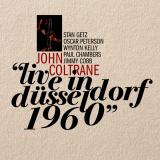
Concert recorded on March 28, 1960 at the Apollo Theater in Düsseldorf, which had been converted into a television studio by German radio for broadcast on TV. Originally planned as a performance by the Miles Davis Quintet + Guests, Miles Davis ultimately chose not to take part in the recording, leaving Coltrane to take the lead.
First time on Vinyl.
Remastered Vinyl by Dominique Blanc-Francard
A delve into the murky avenues of sonic territories, exploring off-grid zones & askew worlds – Daisy Moon leans harder into her 4/4 vision in this dancefloor-ready EP – the first release for Off-Kilter.
Each track pulses along to its own singular logic, with Daisy’s distinctive voice and vocal manipulations playfully drizzled throughout, marking an elegant collision of her sonic worlds.
Spirit Princess is a breakneck peak-time explosion – club-ready and bouncy with a pulsing bassline fit to burst from the subs of any system underpinning waves of textured ambience, nagging synths and granular gusts of found sound.
Fuelled with late night techno energy, Grain Pip offers a heads down counterpoint to the title track, while the B side serves up different energies again. Perhaps the most playful track on the record – The Stuff – demonstrates Daisy’s cheekier side as a producer and person, as inspired by a summer of fun with friends on festival dancefloors: a house banger stuffed with melodic stabs, pitched vocals and swung hats, made for the joys and follies of the 3am dancefloor. Drop Cycle rounds things off with a trippy, rolling excursion of delays and warped synths.
Dizzying sonics and relentless dancefloor energy with razor-sharp precision and uncompromising force.
out of Stock
Last delivered 5 months ago available to reorder, subject to availability
Amore Libero – Free Love marks the first film score composed by Fabio Frizzi, written in 1974 for the movie of the same name directed by Pier Ludovico Pavoni. Set against the exotic backdrop of the Seychelles, the film tells the story of Simo, a free-spirited young woman played by Laura Gemser in her cinematic debut, blending sensuality and the spirit of liberation so typical of the 1970s.
Frizzi’s score perfectly captures the film’s atmosphere, weaving together evocative melodies, funky grooves, and progressive textures — an elegant, psychedelic soundscape that reflects both the tropical setting and the film’s themes of freedom and desire. The recording features the Goblin in their classic line-up: Fabio Pignatelli (bass), Massimo Morante (guitar), Walter Martino (drums), and Claudio Simonetti (keyboards), with Vince Tempera handling arrangements and orchestral direction.
Long regarded as a true holy grail for collectors, now, for the first time ever, it is officially reissued on vinyl, bringing back to light a fundamental chapter in Italian film music and progressive sound. An essential record that merges Frizzi’s melodic genius with the visionary energy of the Goblin, Amore Libero – Free Love stands as a timeless document of an extraordinary era in Italian cinema and its music.
A Record Store Day 2026 exclusive / Pearly light blue vinyl edition / 30x30cm insert with extensive liner notes
Recorded in 1960, The Genius Hits the Road was a conceptual album by the great Ray Charles with all its songs referring to a geographical location. Arranged and conducted by Ralph Burns and featuring key members of Ray's band - including saxophonist David "Fathead" Newman and trumpeter Marcus Belgrave - plus strings, the album includes the perennial hit "Georgia On My Mind" - the Hoagy Carmichael song that Ray Charles made his own.