Phonica returns to reissuing rare underground dance music with a limited pressing of the sought after 'Electric Nite / Atmospheric' 12" by Yoogie Van Bellen and Christian Linder.
Originally released way back in 2001 on the Marc et Claude's label, the initial pressing has surged in value over the past few years due to its gradually increasing scarcity, no doubt due to its appearance in many underground sets. A lot of recent interest was caused by 'Electric Nite' being the final track in Jane Fitz's legendary set at Houghton 2025, which has been archived by Resident Advisor and has now had over 110,000 listens (!)
In fact, both 'Electric Nite' and 'Atmospheric' are longform psychedelic-tinged Techno/Trance beauties, perfect late night material for the more open-minded DJs and dancers out there.
Divorce From New York returns with Jazzthetics, a sophisticated blend of Broken Beat, Nu Jazz and House, where detailed musicianship meets club ready energy. Featuring collaborations with Quiet Dawn, Stickydub, and Carla Luna, the EP explores warm, organic textures and rhythmic depth.
Remixes by K15, GE-OLOGY, and Stefan Ringer expand the sonic palette with future?minded interpretations that connect soulful atmospheres with powerful grooves.
After releasing three LPs and appearing on influential labels such as Nervous Records and Toy Tonics, as well as being featured on the acclaimed Somewhere Soul compilation, Divorce From New York presents his new EP Jazzthetics.
Distinctive fusion of Broken Beat, Nu Jazz, and House. Collaborations with Quiet Dawn, Stickydub, and Carla Luna, plus remixes by K15, GE-OLOGY, and Stefan Ringer.
12" vinyl format with premium finish and digital download included.
Supported on stations such as NTS Radio, Worldwide FM, Rinse FM, The Lot Radio, and Kiosk Radio. Endorsed by influential DJs and platforms including Lefto, Marco Weibel, Mr.Redley, Somewhere Soul, and Brownswood Recordings.
Backed by an international promo campaign and European club tour throughout summer 2026.
Riva Starr teams up with Australian duo Close Counters for a sun-soaked debut on Heist.
What do you get when you put an Italian house legend in the studio with 2 of the most talented artists from Melbourne? Have a listen to the newest release on Heist and you’ll find out. On their ‘Push your luck’ EP, Riva Starr, Close Counters and UK soul singer Andre Espeut bring a heavy dose of jazz & soul and most of all, upbeat dancefloor energy. Whether it’s the deep soulful vibe of the title track or the house meets jazz-funk energy of ‘Gearbox’, this EP brings together everything we love about house music.
‘Push your luck’ comes right in the middle of Close Counters’ world tour, just after Riva Starr’s album ‘Keep me on the dancefloor’ and is the follow up to their recent collab ‘Jinga’ on Riva Starr’s own Snatch Records. We all know Riva Starr from his 2013 Fatboy Slim collab ‘Eat sleep rave repeat’, his work with Groove Armada, and more recently his collab with Prunk on his PIV records debut album. Close Counters have already worked with Heist mainstays Fouk and had their breakthrough moment with their 2023 album ‘Soulacousta II’, which got wide support ranging from Gilles Peterson to Jyoto and Folamour.
Their ‘Push your luck’ EP kicks off with the title track featuring the silky vocals of Andre Espeut. When we first heard this song, we immediately got transported to the soulful sound of the mid 2000s led by Recloose’s unique track ‘Dust’ with Fat Freddy’s Drop singer Joe Dukie. It’s moody, stripped back, and bouncy at the same time. The lush chords, disco bassline, and vocal harmonies all make for a track that goes beyond genres and trends. This is a future classic.
‘Gearbox’ is a disco-tinged piano jam full of live elements, rolling congas and disco bleeps, where the musicality of the Close Counters boys comes in at full speed. This song takes its inspiration from the Brazilian jazz-funk of legends Marcos Valle and Azymuth, with a clear sense of modern-day dancefloors and a love for electronic noise. Also; 10/10 for creatively naming the track after the glitchy electronic sound that freaks & funks throughout the track.
On the flip, ‘Dizzy’ sees the trio go more into disco-house territory, again teaming up with Andre Espeut for a track that blends catchy vocal loops with a tight groove and lush chords. The EP finishes with a club dub of ‘Push your luck’ for those in favor of more groove and less vocals.
We’ve had Riva Starr and the Close Counters boys on our radar for a while, and they landed on Heist with the perfect combination of musicality and dancefloor power. We hope you like this release as much as we do!
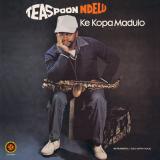
In recent years, Teaspoon Ndelu’s work has found a new audience through reissues from labels such as Mr Bongo and Sofrito Super Singles. Mr Bongo’s 2021 reissue of Teaspoon & The Waves brought his 1977 jazz-funk classic back into circulation, while Sofrito’s Soweto Disco featured two tracks from the album, Oh Yeh Soweto and a re-edit of Friday Night, introducing Ndelu’s music to a new generation of listeners and selectors.
Originally released in 1981, Ke Kopa Madulo is a beautiful slice of South African funk from the late Teaspoon Ndelu, sitting somewhere between township soul, funk and gospel. At its heart is Ndelu’s unmistakable voice and this hypnotic electric piano, carried by a deeply infectious groove.
Long sought-after by collectors, the original has become increasingly difficult to find. We’re very happy to bring Ke Kopa Madulo back to vinyl for the first time in nearly five decades with this officially licensed reissue, giving this remarkable piece of South African musical history a new life.
For the dancers, the selectors and the listeners — Ke Kopa Madulo is back.
Mastered by Simbad
Executive producer : Fred “Spider” Jacquier
Graphic Design by Graeme Arendse
Notes : Marc Linge
A DJ, producer and significant figure in contemporary electronic music, Marcel Dettmann steps forward to contribute to Running Back’s ongoing Mastermix series. Whereas previous editions of Mastermix have taken an ear to the sound of lapsed, legendary clubs such as Wild Pitch and Front, Dettmann’s curation deftly captures the man himself in ongoing perpetual motion, raiding the vault for his own precision-tooled edits, long-employed on dancefloors to devastating effect. Alongside a continuous mix, this release arrives as a 3LP gatefold, and as a limited edition cassette.
Closely associated with Berlin’s techno landscape, Dettmann was born and raised in the former GDR, then later immersed in the bleary-eyed counter cultural landscape of post-unification Berlin. Initially oriented by post-punk, industrial and new-wave music, Dettmann has been DJing since 1993, always expanding and perfecting his repertoire. He later began working behind the counter at the city’s tastemaking rave boutique Hard Wax, and a decade after he first dropped a needle, became (and remains) resident at notable local nightspot Berghain/Panorama Bar, where his instincts have helped sculpt the signature sound of both main dancefloors.
Of course, you’re probably not asking, “Who is Marcel Dettmann?” More importantly, you might want to know; just what treats has he gifted us here? The trip begins with a simple pitch-shift skywards, transforming Identified Patient’s creeping ‘The Female Medical College of Pennsylvania’ into a peak-time freakout, before an alternate take on Toctronic’s ‘Bis uns das Licht vertreibt’ emerges from the vaults for the first time. Dating from 1995, and one of Dettmann’s all-time favourites, Cristian Vogel’s ‘Untitled’ clambers back into the box with respectable cuts, while John Bender’s ‘Victims of A Victimless Crime’ kicks off the flip sporting a new arrangement, transporting us back to the foundations of a confident, stripped-back sound.
A few subtle edits to Clark’s perilously funky ‘Dirty Pixie’ takes us to Dettmann’s remix of Junior Boys. Produced in 2010, it transposes the Canadian duo’s sophisticated pop with our curator in his minimal prime, and has since become an irresistible prize for high-minded diggers. The same can be said for Experimental Products’ explosive proto-electro anthem ‘Who Is Kip Jones?’, empowered from pricey Discogs purgatory with just the slightest of tweaks. It’s deservedly sandwiched between the guiding influences of Chicago and Detroit in the form of Mutant Beat Dance’s raw ‘The Human Factor’ and a shimmering new version of previous solo production ‘Water’, featuring close friend and Ostgut Ton ally, Ryan Elliot.
The second half of the Mastermix seamlessly connects the mechanical past and digital present of EBM and industrial in the dance, with Dettmann’s instincts as a guiding hand. Severed Heads’ iconic ‘We Have Come To Bless This House’ emerges with mere nips and tucks, while Nitzer Ebb’s ‘Shame’ is significantly reimagined as a highwire act of rhythm and tension, setting up a sensual second take on a 2017 remix of ‘Limbo’ from Swiss synth heroes, Yello.
Core musical memories are shaken and stirred with a context-shifting take on Frank Duval’s emotional classic ‘Ogon’, while Ian North’s ‘Sex Lust You’ and Ford Proco’s notable Coil collaboration ‘Expansion Naranja’ effectively throb with only minor adjustments, respectfully imagined as “shadow versions”. Meanwhile, a simple breakbeat lifts Albert Kuningas’s ‘Astraalprojektio’ in the direction of wide-eyed dancefloors, while a fresh take on K-Alexi Shelby’s ‘Season of The Real’ inexplicably emerges somehow even funkier than before.
The conclusion of the compilation leads back to Das Tier from the prolific experimentalist Conrad Schnitzler, whose swirling synths and hypnotic vocals are duly tightened by Dettmann, but only as he puts it, “in conversation with the original.” Concluding three discs and thirty years of commitment to the dancefloor, this Mastermix not only offers us the opportunity to eavesdrop on this endless exchange, but to gain some sought-after material for our own record collections.
For over three decades, Berlin-based DJ, producer, and curator Marcel Dettmann has remained a central force in electronic music, continuously pushing the boundaries of the craft. Deeply rooted in early influences ranging from post-punk and industrial to synth-pop, his dynamic DJ sets and expansive discography, including seminal releases on Ostgut Ton and Dekmantel, effortlessly weave together raw techno, Chicago house, electro, and avant-garde soundscapes.
Far beyond club booths and releases on his own imprints, MDR and Bad Manners, Dettmann’s multidisciplinary ethos has led him into artistic territories spanning gallery soundscapes, ballet compositions, and cinematic film scores. This relentless creative curiosity defines a career built at the intersection of dancefloor functionality, collaborative experimentation, and perpetual sonic evolution.
Dettmann introduced My Own Shadow last year, a project where music, visual art, and photography converged in two EPs, Approaching (2025) and Faultline (2026) prior to the release of the full album this coming Autumn. More than just a name, this project lets sound, image, and vision blend organically, reflecting his intuitive process of deconstruction, resonance, and emotional discovery.
Speaking about the project Marcel says “My Own Shadow wasn’t born from a big concept. I simply liked the idea of working under another name and started following it. Different things I was doing - music, photography, visual work - slowly began to connect.
It happened quite naturally. My Own Shadow is me - just seen from another perspective.” Neither an alter ego nor a departure, My Own Shadow: Album is an intimate reflection of the artist; a transient, ever-shifting form that dances with the light and subtly reshapes its contours to reveal new depths.
My Own Shadow: Album is built with textural minimalism through rhythm, tension and release, embarking on a path through the recollections and experience of the dancefloor. This space remains the ultimate proving ground where history, instinct, and transcendence collide, guiding Dettmann through his musical interests.
My Own Shadow - Album is driven by rhythm, texture, space and tension. Across tracks such as ‘Gravitational Scar’ and ‘Resolution Vector’, these elements are constantly reshaped, connecting Dettmann’s past with a sound that remains firmly in motion.
Dutch-born and Singapore-based, Mike Risk has spent more than three decades immersed in house music. As a DJ, producer, promoter and agent, he has experienced the culture from multiple angles, building relationships and sharing dancefloors across Amsterdam, London, Ibiza, New York, Chicago, Singapore and beyond.
Now Is Forever is a full-circle moment. A statement. A celebration of a lifelong relationship with house music.
Mike first made his mark in the Dutch underground through Club Risk and later RiskSoundSystem, two platforms that helped shape nightlife culture in the Netherlands throughout the 1990s and 2000s. After decades spent championing the music of others, Now Is Forever is Mike adding his own chapter to the culture that shaped his life.
Created with longtime collaborator Greg van Bueren (Hardsoul) between Amsterdam and Singapore, the album is a deeply personal tribute to the music, people and places that shaped him. From the clubs of Amsterdam and London to the sounds of Chicago, New York and Detroit, it distils decades of dancefloors, record stores, studios and late-night conversations into one body of work.
From deep and soulful grooves to raw house cuts and acid-tinged late-night moments, Now Is Forever explores house music in its full spectrum. It reflects the way Mike has always approached a dancefloor as a DJ: not as a collection of tracks, but as a journey through the many moods and moments that make a greatnight unforgettable.
Featuring Mike Dunn, Bluey Robinson, Marc Evans and John Agesilas, the album brings together years of experience, inspiration and dedication. Crafted not out of commercial pressure but out of creative necessity, it is the product of pure love-for the culture, for the craft, for the music.
Now Is Forever is a past-forward record: rooted in the music, dancefloors and relationships that shaped Mike, while carrying their spirit firmly into the present. At its heart, it is about honouring the kid who first fell in love with house music-and never let go.
Because when you are truly lost in music, there is no past and no future. There is only now.
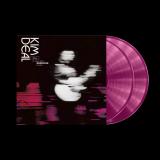
On March 1 2025, Kim Deal hosted a once-in-a-lifetime sold-out performance at London’s historic Barbican, playing special orchestrated renditions of songs from her acclaimed debut solo album Nobody Loves You More, followed by tracks from The Breeders’ back catalog and earlier solo work. The evening, culminating with a heartfelt standing ovation, was documented in full, to be released as a live record entitled Live at the Barbican on November 13 — arriving almost two years after Nobody Loves You More’s initial release (on November 22, 2024) and rounding out its celebrations.
Live at the Barbican finds Deal backed by a 25-piece ensemble, marking the first time in a decades-long career, that she has played with an orchestra. The idea for the performance came to Deal while mixing her solo album in Hackney: “I invited myself! That’s how I came to play ‘Nobody Loves You More’ at the Barbican. Years ago, I had worked with Chris Sharp at the 4AD label and I knew he was currently at The Barbican. So, I reached out to Chris and said I have orchestration on this record. I would love to be able to perform these songs with an actual orchestra. And Chris said yes, we’d love to have you.”
Alongside the orchestra and Shards choir, Deal was also joined by a band composed of Mando Lopez (The Breeders), Susan Voelz (Poi Dog Pondering), Lindsay Glover, Nick White (Phoebe Bridgers), and Rob Bochnik (The Frames), as well as special guest Raymond McGinley (Teenage Fanclub). The live record was mixed at Studio Black Box and mastered by Heba Kadry.
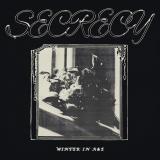
Where other bands seem to be hellbent on pushing an energy of exhilaration, London’s premiere grief peddler’s SECRECY seem to be more interested in reminding us all what deep shit we are in. Their debut recorded outing captures the morbid and grandiose power of their successful string of London shows, refining the message to a promising and bewildering first release. Taking compositional cues from THE EXECUTE, SOUTHERN DEATH CULT, and THE CHAMELEONS, the room filling instrumentals carry a bleak and punishing prophecy of moral turmoil and hysteria, opting to drive the notion of post punk off a cliff through force of will alone. The sound is crisp and wide without giving up the austerity necessary to carry the prophetic sense of dire urgency in the vocals, driving and marching drums and bass lines carrying almost danceable guitar parts to climax. Soaring guitars over driving drums push the corpus to blistering movement, restrained by lyrics about fucking and dying, an Eros/Thanatos act delivered with a refreshing lack of irony or sarcasm. Lyrical influences from RIMBAUD and BAUDELAIRE abound, veering from the brink of poetry back down to primitive taunts and cries.
Few tracks carry the weight of techno history quite like Dave Clarke’s ‘Wisdom To The Wise’. Created in a damp basement flat in Brighton in the early ’90s, the track was produced on an Atari 1040 and micro-sampler, drenched in dubbed-out reverb and shaped by a young Clarke still honing the sound that would soon make his name.
‘Wisdom To The Wise’ became the centrepiece of Red 2, the second instalment of Clarke’s seminal three-release series. With Red 1 already making serious waves, it was Red 2 that sent interest in Clarke into overdrive. Within a year, the series had helped propel him from underground producer to global techno force, culminating in a major-label album deal and international recognition.
The track’s influence has endured ever since, earning celebrated reinterpretations from techno heavyweights including Robert Hood, Marcel Dettmann, Boys Noize and Steve Rachmad. Now, Spectrum adds another chapter to that lineage with a very special remix from label boss Joris Voorn.
Staying faithful to the spirit and unmistakable character of the original, Voorn brings his own weight to the classic, reinforcing its impact with a heavier kick and the subtle production touches that have become his signature. Originally created as a weapon for his own sets, the remix has been road-tested on dancefloors and is now ready to be unleashed beyond the booth.
To close out the year, Life In Patterns presents Spektrum II, the second installment in the compilation series curated by Ferdinger. This 16-track VA, scheduled to release in early December 2024, comes as a double vinyl with four digital bonus tracks and download codes.
Spektrum II ventures into the depths of dynamic techno, combining driving beats with intricate, groove-rich patterns. The compilation seamlessly shifts from deep, dubby tones to bright, euphoric moments, embodying the labels signature sound. Its a bold exploration of diverse sonic textures, blending harmonic and dissonant elements for an immersive listening experience.
Gäste: Oli Rubow, Sandie Wollasch, Jona Heckmann, Alex Weis, Ulf Kleiner, Marcus Bartelt, Bernd Windisch,
Andrew Murphy
Reviews und Features in den relevanten Medien
Die „Rudies“ stehen hier als Synonym für die Verbreitung und Vermengung ursprünglicher karibischer Rhythmen
(inklusive „Dubbing") mit westlichen Beats. Vor Jahrzehnten über England eingereist und von dort weiter ins restliche
Europa getrommelt.
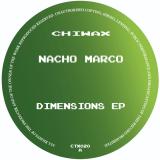
Nacho Marco returns on CHIWAX!
We are very happy to present you his third production for us so far.
A beatuy full of Groove, Soul and Deepness!
Highly recommended!
Psyché is an eclectic project rooted in the Neapolitan music scene. Conceived in 2018, the project includes Marcello Giannini (Nu Genea Live Band, Guru, Bassolino, La Famiglia), Andrea De Fazio (Nu Genea Live Band, Parbleu, The Funkin Machine), and Paolo Petrella (Nu Genea Live Band, Fratelli Malibu). They were recently joined by Roberto Porzio (Parbleu, Fitness Forever, 24 Grana, The Funkin Machine).
"Hurriya (We Must Resist)" is a sonic bridge crossing the Mare Nostrum, connecting the shores of Naples and Tunisia.
At the heart of this fusion is the voice and soul of Tunisian musician Ziad Trabelsi, whose Arab roots intertwine with the psychedelic, Mediterranean sound of Psyché.
In this track, Afrobeat and Arabic sonorities meet to create a hypnotic journey, one where Ziad's oud weaves an evocative groove that gallops like horses in the desert.
The song carries the echo of the ancient dominations and cultural exchanges that have shaped Naples—a millennia-old crossroads of civilization—where traces of Arab and North African influences continue to resonate in its streets and, most notably, in its music.
"Hurriya"—the Arabic word for freedom—is an anthem of resistance and resilience, a dialogue between East and West that dissolves the rigid boundaries of geography and politics. It is a collective song for the freedom of all peoples, against oppression, abuse, and injustice everywhere in the world. As Psyché emphasize: "Even if life tests us severely, and we often feel like giving up in the face of injustice, we must resist. We must refuse to disappear."
The single is available digitally and physically, on January 23rd, as a 7" vinyl. The B-side of the physical release includes an exclusive, extended version of "Hurriya (We Must Resist)", available only in this format.
'Within the current Finnish jazz scene’s colourful embrace of ear pleasing and spiritual-leaning ensembles, Fågelbörs have felt a bit like an anomaly. They’re a lean quartet adhered to a virtuosic puritanism and a stern belief that every gesture serves the whole.
'A combo composed entirely of underground veterans, they belong to what could be described as the third wave of Finnish improvised music; several of whom helped shape that movement in the early 2000s. Elsewhere their collective lineage wends a bendy path through recent years of Finnish free jazz, experimental music, and dub. They’ve been alternately affiliated with projects such as Rauhan Orkersteri, Jooklo Quartet, Mohel, Kemialliset Ystävät, Odd Funk Records, Muumiot, Pascal & Baya Rays, and more.
'As Fågelbörs they’re configured like the four cardinal directions, a dynamic and cosmos-scaled unit capable of summoning elemental blasts of chaos and ecstatic, life-affirming joy. On Bagelfårs, they expand the unique vision of entropy and melody they introduced with their brilliant debut Marjassa (Ultraääni, 2022). Together, Matti Luokkanen (sax), Jaakko Tolvi (percussion), Tuure Tammi (trumpet), and Tero Kemppainen (bass) lock as an Aylerian helix, where effervescent free improv is always counterbalanced with key moments of gleeful, marching band-like reverie and mournful dissolves into passages of narcotic blues.'
This vinyl edition of Repairing the Clock delivers five hard-edged cuts: four remixes by Thomas P. Heckmann, Umwelt, Legowelt, and Crystal Geometry, plus a raw original. Driven by analog grit and human tension, each track pushes the project into darker, heavier territory.
Already backed by Dave Clarke, Marcel Dettmann, Ben Sims, Terence Fixmer and more..
Half a century after its original release, legendary Lebanese musician and singer Marcel Khalife—renowned oud player and global icon of both music and activism—returns with a new recording. On this album, he reinterprets four of the five tracks from his debut, Promises of the Storm. A bold defiance of time and history.
Why revisit the same album, 50 years later? The reasons are many, but one stands above the rest: history itself seems to be repeating. The narrative unfolds once more in the same dire circumstances as half a century ago, as if time has folded in on itself, returning everything to its starting point. The urgency, the necessity—it all remains, pressing and inescapable. We must begin again.
In 1976, a young Marcel Khalife found himself exiled in Paris, fleeing the Lebanese Civil War and his family’s Christian village, where his progressive, left-wing ideas had placed him under a kind of house arrest. He was one of the few to openly and unwaveringly champion the Palestinian cause. The situation quickly became untenable, especially since, just a month before the war began in March 1975, Khalife—fresh out of the conservatory—had given his first public concert to great acclaim. Then, everything collapsed. What does one do when trapped at home? Read books, play the oud, and turn those readings into songs. In his family’s de facto prison, Khalife began setting the poetry of the great Palestinian poet Mahmoud Darwish to music. These songs, born of confinement, he carried with him into exile, driving to Paris where a producer offered him the chance to record an album. Naturally, the tracks were the ones he had been improvising at home from Darwish’s poems. The album’s title, Promises of the Storm, echoed the war that was just beginning. Khalife recalls that the album became a hit after a concert at the Fête de l’Huma, where 500 copies were sold in a single day. “Everything started there, and it never stopped,” he remembers. He would meet Mahmoud Darwish shortly after, at a dinner organized by mutual friends. From that moment, a deep friendship blossomed between the two men.
With Darwish’s words and Khalife’s music, the songs of Promises of the Storm are imbued with a powerful evocative force—melancholy, tenderness, and poetic resistance in the face of violence. The album catapulted Khalife to international stardom, leading to endless tours and recordings, yet he never abandoned his commitments.
Now, 50 years later, Promises of the Storm returns in a fresh recording, because history is repeating itself. After the Israeli bombings in Lebanon at the end of 2024, Khalife, who was on tour, found himself stranded in Paris. He remembered a recurring request from his son, musician Bachar Mar-Khalife, who had often urged him to re-record his now-classic debut album. One morning, oud in hand, Marcel knocked on his son’s door and said, “Shall we? I’m ready to record.”
These new versions are stripped down, raw, and intimate—just the solitary strings of the oud. Khalife sings as never before, his voice no longer marked by the fragility of youth but imbued with something deeper, freer, unshackled. It soars high yet resonates low, always clear, as if to escape sadness, to evoke love and violence, desire and exile. In just four songs, Khalife encapsulates a lifetime, and a philosophy of life. Rita tells of a love of Darwish’s, with the haunting line (translated from Arabic): “Between Rita’s eyes and mine, a rifle.” Oummi invokes the figure of the mother as a metaphor for the lost land. Promises of the Storm is a meditation on revolution, the hope for change, the melancholy of defeat, and the power of thought. Passport captures, through poetry, the feeling of being stateless—a citizen of everywhere and nowhere.
Time has only strengthened these texts and this music. History never repeats itself without a valid, indispensable reason for the present. That reason is fully contained in Marcel Khalife’s new interpretations, which have never sounded so clear, so right, so essential.
Double LP, pressed on gold vinyl. As part of Lineage II's 22nd anniversary celebration, NC America and Black Screen Records are proud to announce the first-ever Lineage II collector's edition vinyl album, which elegantly combines a track selection reflecting the game's iconic history and memorable musical identity. This vinyl album is now available for pre-order and will hit the stores in November. Arranged by composers Bill Brown (Tom Clancy's Rainbow Six), Jamie Christopherson (Metal Gear Rising: Revengeance), Inon Zur (Fallout 4), and NCSOUND, the track list is a collection of 40 of the most recognized pieces from the original soundtrack, carefully selected to create a cohesive listening experience rather than a complete collection. Published by NC, the album flows between calm, reflective village themes, atmospheric exploration pieces, and more intense, dramatic compositions tied to combat, progression and large-scale conflict. The track list draws from the original soundtrack's most recognized pieces and centers on two major regions: Giran and Aden. Early on their journey, players venture into the world's southern territory of Giran. As they explore the region's villages, tracks such as "Crossroad at Dawn," "Shepard's Flute" and "Caravans Crossing" help create a calm, grounded atmosphere that reflects the peaceful nature of travel through the area. In contrast, the world's northern territory of Aden reflects the game's grander, more conflict driven spirit. As players continue their journey, the Elven Village track "Unicorn's Rest" marks a turning point, gradually giving way to darker settlements and imposing castles through standout tracks such as "Knighting Ceremony" from the iconic Aden Castle and "Expedition March" from the Town of Oren, where tension, warfare and large scale conflict take center stage. Across both regions, the tracks are more than background music; they shape how players experience each location, from villages and hunting zones to moments of intense combat. This collection brings together the sounds that have defined Lineage II for the past 22 years, offering a reflective musical journey for both longtime players and new listeners alike.
Atom Trance Force 20 is a special one for fans of 90s hard trance. EDM’s DJ Manga (Made In Hong Kong, Judgement Day, etc.) discovered two previously unreleased tracks, originally recorded in 1995 and 1996, and generously offered us the opportunity to release them on vinyl. Naturally, we accepted and are proud to present: DJ Manga – Motion (Original DAT Recordings 1995–1996) A1 and title track “Motion” (1995) is everything you’d hope for from an unreleased 90s trancer. It’s got the pianos, it’s got the melody that sticks in the back of your mind for days after hearing it, and it’s got the raw bassline and drums that drive in that special way they did back in the day. A2 features label head Micropulse on remix duties. Keeping the core elements of Marc’s original composition intact, the remix seeks to add some modern magic to the vintage charm and sprinkle some Atom energy onto the release. The flip side gives us “The Key” (1996), which occupies the entirety of side B and stretches out across 10 more minutes of 90s magic. It’s difficult to write track descriptions without sounding like AI, but the intro is long, the lead is sizzly, and the resonant bassline fits perfectly to round off this EP — the type of release that doesn’t come around often. The tools Marc used to produce the original 90s tracks included a Roland JD-800, Korg Poly-800, Roland TR-505, and some kind of Akai S-series sampler, all sequenced with an Atari 1040ST. For those interested, the 2026 remix uses a Novation Supernova II, Access Virus TI, Korg Wavestation AD, Waldorf Blofeld, E-MU E4XT Ultra, 208HP of Eurorack, and two Lexicon PCM70s.
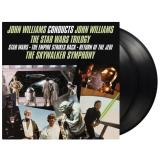
In 1990, John Williams created the compilation album John Williams Conducts John Williams – The Star Wars Trilogy, which features 13 of his most memorable tracks from the original Star Wars Trilogy. All performed by the Skywalker Symphony Orchestra, it features the iconic “Main Theme” and “Throne Room / Finale” from Episode IV – A New Hope, “The Imperial March” from Episode V – The Empire Strikes Back, and “Luke And Leia”. The album brings together some of the best-known themes from the original trilogy in one collection. The result is a varied selection of music from across the three films.
John Williams Conducts John Williams – The Star Wars Trilogy is available on black vinyl. This 2LP package includes an insert with liner notes by the creator of the Star Wars franchise, George Lucas.
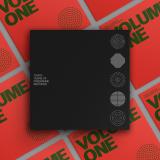
Freerange are repressing a limited amount of Volume One of 30 Years Of Freerange. Josh Wink, Ralph Session ft. Brandon Markell Holmes, Philippa, Palm Skin Productions, Nacho Marco & Lovebirds all step up with original music for the EP. Volume One includes the beautifully designed box which holds all five volumes of this landmark release.
Limited Edition 2026 Black Vinyl Repress.
Up in Flames is Dan Snaith's second album, originally released under the Manitoba moniker on March 31, 2003 .
Made with the same modest home setup as its predecessor, it nonetheless sounds like a different artist entirely - a kaleidoscopic rush of sun-bright melodies, tumbling percussion, and psychedelic pop that traded the hushed intimacy of Start Breaking My Heart for something warmer, bigger, and more joyfully overstuffed, encompassing 1960s psychedelia, Madchaster swagger and shoegaze swoon.
Snaith was later forced to change his artist name after a well-documented lawsuit, and Up in Flames stands as the final album released under the Manitoba name - a high point to go out on. The record was met with widespread critical acclaim, and has since been recognized by Pitchfork as one of the standout albums of the 2000s. It remains, by most accounts, one of Snaith's finest and most beloved records.
The legendary Charlemagne Palestine returns to Black Truffle with KKKAAARRREEENNNIIINNNAAA, capturing a 2025 performance in London alongside two close collaborators of recent years, multi-instrumentalist Daniel O’Sullivan and guitarist Oren Ambarchi. While perhaps still best known for the ecstatic piano clouds of his ‘strumming music’ performances, Palestine’s life-long search for what he calls the ‘golden sound’ has taken in an enormous variety of methods of sound production. Now stretching back an incredible six decades, his exploration of continuous sound forms has led him to mega-instruments from the carillon bells of the Saint Thomas Episcopal Church to the synthesizer armada of the Moog Sound Lab, with stops along the way at many of Europe’s grandest church organs. Just as important, though, has been Palestine’s practice as a singer, beginning with his childhood experience of sacred Jewish music and growing through his studies of Indian and Javanese musical traditions in the 1970s.
KKKAAARRREEENNNIIINNNAAA reimagines a key work showcasing Palestine’s voice, the haunting ‘magic song’ Karenina for falsetto singing and harmonium, recorded in Paris in March 1997 to honour the spirit of Palestine’s recently departed black labrador. In this trio version, which Palestine describes as the ‘karaoke’ version, O’Sullivan controls three cassette machines playing the original recording, their slow drift out of phase creating complex patterns of delays and ricochets as the recorded voice chants the syllables of Karenina’s name and other trance words. Beginning with a held organ tone that gradually expands to fill out the frequency spectrum, the piece soon grows into a dense psychedelic mass, as Palestine’s electric organs and the echoing pre-recorded voices are joined by Ambarchi’s swirling Leslie guitar tones and O’Sullivan’s viola, synthesizer and additional vocals. Atop it all sits Palestine’s live voice, in an extraordinary performance of keening, shamanic intensity, sometimes delivered in melodic unison with his keyboard playing.
Though clearly a work of Palestine’s design that sits squarely within his oeuvre, Ambarchi and O’Sullivan are far from simple accompanists on KKKAAARRREEENNNIIINNNAAA. As the elements of the teeming, emotionally charged stew writhe and twist, different elements come momentarily to the surface, O’Sullivan’s spaced-out viola taking the lead in moments that recall Kosugi’s Catch Wave, Ambarchi’s gliding chords and signature stuttering tones enriching the details of many of the quieter episodes. Throughout all its transformations, the music is buoyed up by a sacred aura, as Palestine intones his hypnotic prayer for the soul of his departed pet. Arriving emblazoned with a striking labrador painting by O’Sullivan on the cover, KKKAAARRREEENNNIIINNNAAA is an essential slice of modern ritual music.
Chris Liebing's collaboration with Daniel Miller, Pascal 'Stubbleman' Gabriel and Terence Fixmer, aka The Alte Stuben Modular Ensemble, 'Entangled Circuits', has been remixed by Hayden Payne, better known as Phase Fatale. Originally released on Chris Liebing's 'Evolver' LP earlier this year, the remix will be released via CLR 20th November 2026. The original track is a collaboration between Liebing and The Alte Stuben Modular Ensemble made up of Mute founder Daniel Miller, Pascal 'Stubbleman' Gabriel and Terence Fixmer. New York-born, Berlin-based Phase Fatale has held residencies at Berghain, Brooklyn's Merge and Tbilisi's KHIDI, and has built a catalogue across Ostgut Ton, Dekmantel, Jealous God and his own BITE imprint, carrying a lineage that runs from New York's cold-wave underground through to the sharper industrial edges of Berlin's club circuit.
Phase Fatale rebuilds 'Entangled Circuits' around a hypnotic bassline, pitching the original's synth stabs up a notch.
Weighted kick drums, relentless repetition, and industrial texture anchor the rework in techno mastery, delivering a peak-time weapon without loosening its grip on the source material.
The original version of 'Entangled Circuits' appears on 'Evolver', Liebing's first solo techno LP, released 27th March 2026 on CLR. 'Entangled Circuits' was composed on a skiing trip to Oberlech, Austria with The Alte Stuben Modular Ensemble, Mute founder Daniel Miller, Pascal 'Stubbleman' Gabriel and Terence Fixmer, blending dark, modular synth textures with driving rhythmic sequencing. Marking a distillation of over three decades at Techno's core, the album pairs introspective depth with immediate, floor-driven impact, bringing together contributions from the likes of Luke Slater, Charlotte de Witte, Speedy J and The Advent, while ultimately remaining rooted in Liebing's singular vision.
Andreas Tilliander released »Ljud« in 2001 as the first full-length album under his real name. The year before, the Swedish producer’s »Cliphop« album under his Mokira moniker had established him in the world of adventurous electronic music and the clicks’n’cuts scene. »Ljud« was just as minimalistic, warm, and playful as its predecessor while also notably inspired by house music. It is a timeless record based on happy accidents, playful loops, and lively spontaneity. For its 25th anniversary, Keplar presents a vinyl reissue with adjusted artwork by graphic designer Marc Hohmann and updated mastering by the artist himself.
Tilliander laid the foundation for his two first albums when he got rid of most of his music gear in 1998 after meeting Joel Brindefalk, who was already releasing music on the legendary Börft label. Brindefalk was using a computer as his main instrument and introduced Tilliander to the audio editing suite Sonic Foundry Sound Forge. »What he did with that software is what made me sell most of the hardware except my Nord Modular and a Korg MS-20.« The former synthesizer played an integral role while Tilliander made the tracks for »Ljud,« working primarily in the modular studio environment Jeskola Buzz.
»Ljud« came together in an intuitive process. »It’s still how I work 25 years later: I first make loops, create bits and pieces, and build up my own sound library as a foundation,« Tilliander explains. The Nord Modular and Buzz, which allowed him to swap samples and produce new sounds out of pre-existing ones, provided him with material for loops that formed the basis of the ten tracks. »I would start with a few elements, add more into the mix, then take them out again—arranging the pieces in real time while recording.« The casualness and vivacity of this improvisational approach becomes tangible throughout »Ljud.«
»Ljud« was released on Achim Szepanski’s Mille Plateaux, which had published the seminal »Clicks+Cuts« compilation in 2000. »I was part of that scene and I liked the digital aesthetic of the label,« says Tilliander »Coming from a very analogue setup, working with computer music and this kind of minimalism was very inspiring.« When preparing »Ljud« for the Keplar reissue, he ran the music through an analogue outboard and noticed he was still happy with the way it sounded. »It brought back fond memories. I hope the same is true for people who heard it back then, and that everyone who discovers it now will enjoy it, too!«
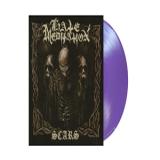
Hate Meditation's cult 2013 black metal full-length Scars, led by Blake Judd, returns via Back On Black Records on CD and a stunning limited purple vinyl LP reissue, capturing raw, malevolent tempo shifts and icy melodic hooks.
DJ Tails & Noizer is a legendary Dutch hardcore and rave duo consisting of Marc (Tails) Oudijn and Michel (Noizer) van der Padt. Rising to prominence in the mid-1990s, they became essential figures in the Early Rave and Happy Hardcore scenes.
"Drum & Basz" is their signature anthem, widely regarded as a genre-defining track.
They have performed at the world's most iconic hardcore events, including Thunderdome, Mysteryland, and the Love Parade.
Available in the Hardcore Legends series on black vinyl!
3x12'' Re-issue of this Drexciyan masterpiece that was previously released on Supremat. Now including the tracks that were only available on the CD version when the album first came out in 2001.
If the late James Marcel Stinson left anything in his wake it's certainly the staggering amount of beauty he produced over the years. Tresor Records prepare to re issue a slice of that beauty on October 10th.
Thematically, 'The Opening Of The Cerebral Gate' saw Stinson shift away from the grand narrative of the Drexciyan saga, instead exploring a sub-plot of esoteric concepts revolving around internal, mental and psychedelic tropes. Musically, it presents the electro genius at the height of his game.
Krone, uno de los nombres más representativos de la escena nacional, con presencia en algunos de los sellos más potentes del género, vuelve a ser el encargado de dar vida a una referencia física de nuestro sello con dos tracks ya presentes en el catálogo Digipot.
En la cara A/ Phantom Magnet nos atrapa en un túnel en el que breaks potentes cortan a través de atmósferas frías y sintes robóticos, un track que atrapará a los aficionados al sonido neurotech y que ahora podrán disfrutar en el mejor de los formatos.
Para el lado B/ Pupeteers Carnival (ft. Moce) presenta unas baterías dinámicas y afiladas envueltas por sintes inquietantes proyectando un viaje oscuro y mental perfecto para crear momentos de tensión antes de dar el siguiente paso en tu set.
En resumen, Melting Pot 24 trae de vuelta (esta vez en formato vinilo) dos tracks representativos del sonido que marcó una época en nuestra evolución como sello.
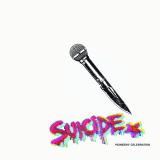
Oráculo Records joins forces once again with Unknown Pleasures Records under the banner of “The Black Alliance” to celebrate one of electronic music’s most influential acts: SUICIDE. Widely regarded as pioneers whose radical approach helped lay the foundations of minimal synth and darkwave, Alan Vega and Martin Rev receive a tribute from artists who carried their influence into new territories. Absolute Body Control, Gabi Delgado of DAF, Patrick Codenys and Richard 23 of Front 242, and Dirk Da Davo of The Neon Judgement appear alongside some of the most compelling contemporary projects in the international dark music underground. Spread across two records, this collection of cover versions also features SUICIDE songs revisited by Alan Vega himself with Marc Hurtado, presented on vinyl for the first time. Their presence creates a direct connection between the original voice of SUICIDE and the generations shaped by the duo’s uncompromising vision. An instant classic in spirit and scope, “SUICIDE Pioneers’ Celebration” honours a legacy that continues to resonate across the underground. Produced in a one-off pressing of just 500 copies, this is a collector’s edition to discover, play and treasure for years to come.
Following the first volume released on Details Sound in 2023, Vago Spazio del Ritmo Vol. 2 expands its investigation into the relationship between sound and space, this time exploring the inner sphere through resonance.
Here, as the subject seeks to preserve itself while still being open to reciprocal transformation with the world, sound—through its shifting frequencies and vague, indefinite forms—and the inner sphere—as a field of possibilities, variations, and deviations—become the medium guiding the listener toward an authentic form of being-in-the-world.
Compiled and curated by Luce Clandestina, the compilation explores a rich spectrum of ambient textures and IDM-tinged dilated rhythms. Side A opens with soft, melodic explorations and atmospheric soundscapes crafted by Andrea (Ilian Tape), D’Arcangelo, Eusebeia, and Philipp Otterbach. Side B, featuring contributions from DSR (Dream Sonic Research), Sun Genam, Katatonic Silentio’s remix of Otterbach piece, and a second appearance by D’Arcangelo, turns toward transcendental forms of resonance.
Mastered by Marco Milanesio, O.F.F Studio (Turin, IT)
Design by Beatrice Lattuada
Pressed at R.A.N.D Musik
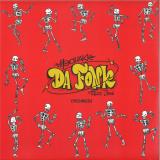
Four years after its original release, Mochakk's breakout anthem 'Da Fonk' featuring Joni continues to define a generation of house music. Originally released via Nervous Records in 2022, the record has surpassed 60 million Spotify streams alone, becoming Mochakk's signature track and one of the most recognizable records in modern dance music.
Fronted by fellow Brazilian artist Joni's soulful vocals, "Da Fonk" bridges classic house and contemporary club energy. Its stripped-back bassline and timeless groove have made it a fixture on stages and dancefloors around the world, while also marking a turning point for Mochakk, who has since become one of electronic music's defining artists, widely praised for his vibrant live sets in which "Da Fonk" has remained a staple. To celebrate the track's continued success, Nervous Records releases the 'Da Fonk' Remix Pack today across all streaming platforms, alongside a limited edition three-vinyl release available during Mochakk's long-awaited New York City takeover from August 28, 29 and 30.
Spanning three parts, the remix pack brings together a wide range of artists, each offering a different take on one of house music's most enduring records of recent years.
The first vinyl features Mochakk’s Original Mix and OG Dub of “Da Fonk”, in addition to a new Bass Mix from Marco Carola, whose signature rolling grooves and understated approach bring fresh weight to the original without losing its unmistakable feel. The second vinyl moves across a broad spectrum of club sounds. Australian duo Confidence Man inject their playful, high-energy style into the track, while Berlin's DJ Gigola delivers a sleek, club-focused interpretation. Cinthie, known for her deep-rooted house sound and analogue production style, offers a warm and driving remix, with Brazil’s Bronka rounding out the record on a fresh, contemporary rework. The third vinyl shines a light on Brazil's electronic music scene with an all-Brazilian lineup. Solarce Brothers contribute a soulful reinterpretation that nods to the original's house roots, alongside remixes from DJ Fuzil, Classmatic, and Deekapz & kLap, each bringing their own perspective to one of Brazil's all-time most influential electronic releases on global stages.
Celebrating 30 years since ‘Buena Vista Social Club’ was released, this classic will be made available on limited edition pearl vinyl and features the remastered audio and bonus tracks released as part of the album’s 25th Anniversary in 2021.
Masterminded by the trio of Cuban bandleader Juan de Marcos González, American producer and guitarist Ry Cooder, and British producer and label owner Nick Gold, 'Buena Vista Social Club’ is both the name given to this extraordinary group of musicians and the album they recorded in just seven days in 1996 in Havana’s 1950s vintage EGREM studios. It was clear from the atmosphere of the recording sessions that something very special was taking place. However, no one could have predicted that Buena Vista Social Club would become a worldwide phenomenon – awarded a Grammy in 1997 and, at over 8 million copies, outselling any other record in the same genre.
The acclaim of the original album elevated the artists (including Ibrahim Ferrer, Rubén González, Eliades Ochoa, Compay Segundo and Omara Portuondo) to superstar status, inspired an award-winning film by Wim Wenders, a Tony Award-Winning Broadway Musical and contributed to popularising Cuba’s rich musical heritage. Produced by Ry Cooder and Executive Produced by Nick Gold for World Circuit, the timeless quality of the music and the sheer verve of the veteran performers have ensured that this album will go down as one of the landmark recordings of the 20th century.
DJ Support: Marco Carola, Funk D'Void, Fish Go Deep, Quentin Harris, Carl Craig, Horse Meat Disco, moodymanc and many more
Me Me Me is back after 2 years on ice, with a new focus and new priorities, built around the regional music community being driven by Man Power and friends in North East England.
Written, recorded, performed and pressed in the North East, Newcastle live artist Mac Seldom's Twenty Twenty-Three EP see's the artist find his stride after early outings on Skream's "Of Unsound Mind" label and Scuba's "Hotflush Recordings" and leans into a more house-not-house rhythmic palette to further cement his status as being one of the most exciting and adept sound designers to recently emerge in club music.
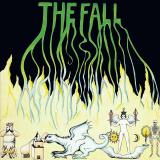
7–Early Years–79 was The Fall's first comp ever. Originally released on Step-Forward in 1981, the LP compiles the group's first four singles recorded for the label between 1977 and 1979 – Bingo-Master's Break-Out, It's The New Thing, Rowche Rumble and Fiery Jack – none of which appeared on any of the band's studio albums. (Also included is "Dice Man" from 1979's Dragnet.) Taken together, these 7-inches are The Fall as they initially emerged from the primordial soup of '77 Manchester, pushing out from founder Mark E. Smith's poetry-collective origins into the early punk scene.
Right from the first track, "Repetition," Smith and crew's working-class art punk is in full effect. His obtuse lyrical brilliance and inimitable vocal delivery ride atop the band's ringing atonal guitar, looping basslines and propulsive drumming – complemented by wheezy combo organ tones. The tracks from each 7-inch are presented here in reverse chronological order. The Fall's fierce contrarianism defines the early UK punk sound and, at the same time, sounds nothing like any of their contemporaries.
The revolving cast of band members includes Martin Bramah, Una Baines and Karl Burns as well as Marc Riley, Craig Scanlon and Stephen Hanley who would remain in The Fall's classic '80s lineups. Many of their best-known songs are featured here – from "Psycho Mafia" and "Rowche Rumble" to the Mayo Thompson-produced "Fiery Jack."
Superior Viaduct's edition is the first time that 77–Early Years–79 has been reissued on vinyl. Includes liner notes by Stephen Malkmus.
Originally released on Flying Nun in 1983, Fall In A Hole is a double LP of an especially incendiary Fall show at Mainstreet Cabaret in Auckland, NZ in August 1982. The second of a two-night stand, this would be the band's final concert of its successful first tour of Australia and New Zealand. Recorded by longtime Flying Nun associate Chris Knox – who also made the striking cover artwork – Fall In A Hole follows the release of earlier live albums Totale's Turns and A Part of America Therein, 1981.
Besides capturing The Fall onstage during one of its most feral and exhilarating periods, Fall In A Hole is historically significant for several reasons. It heralds the end of Marc Riley's tenure with the band, an era considered by many Fall fans to be the group's peak, and showcases the two-drummer lineup heard on 1982's Hex Enduction Hour, with both Paul Hanley and Karl Burns sharing drumkit duties onstage. With Riley and Craig Scanlon on dual guitars and Stephen Hanley on bass, The Fall was stepping out in its final iteration with a majority of personnel rooted in their late '70s lineup.
The setlist is peppered with a mix of singles and album tracks old and new – including several that had yet to be released. Rarities like "Fantastic Life," "Backdrop" and "Solicitor In Studio" are given epic, feedback-drenched airings, while fan favorites like "Hip Priest," "Prole Art Threat" and "The Classical" radiate with lively, raucous energy.
Superior Viaduct's edition is the first time that Fall In A Hole has been reissued on vinyl. Includes liner notes by Roy Montgomery. Digital transfers made from analogue master tapes in the Flying Nun Collection and Chris Knox Collection held at the Alexander Turnbull Library (National Library of New Zealand).
Bill Withers was a modest, gentle, and yet towering musical figure responsible for some of the most important, universally known soul hits ever written. It’s no wonder that “Just the Two of Us” and “Ain’t No Sunshine” won him two Grammy awards and undoubtedly played a huge role in getting him inducted into both the Songwriters and Rock and Roll Hall of Fame.
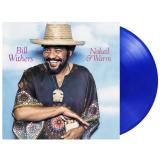
Naked & Warm is Withers' fifth studio album, released in 1976. A year earlier, the Sussex label—home to Bill's first four landmark albums—ceased operations. Withers then signed with the mighty Columbia Records, which would remain his home until the end of his recording career. While Naked & Warm retains Bill's unique, earthy approach to soul that made him Sussex's biggest star, it's clear that musically too, he was in transition; the first half of the album is full of synthesized jazz-funk vamps, while "City Of The Angels" is an almost 11 minutes long cosmic funk excursion combining biting Rhodes chords with swirling synth pads and Dorothy Ashby's spiritual harp work. All in all, Naked & Warm might be one of Bill's most underrated records, simply because his previous work for Sussex was just that impactful.
Naked & Warm is available as a 50th anniversary edition of 1500 individually numbered copies on blue vinyl and includes a 4-page booklet featuring lyrics and new liner notes written by Marcia Withers.