Ten years after his first full-length effort ‘Man Is Deaf’ landed him firmly in the runnings for DJ Mag’s album of the year, prodigal son Michael Anthony Wright AKA Brassica returns to Civil Music with a deeply accomplished, painstakingly whittled LP of hydraulic electro slickness, rich synthscapes, and hooky, peak-time tearjerkers for the most discerning front-left lifers. ‘Tribeless Gathering’ is a barnstorming testament to Brassica’s stylistic and timbral deftness, touching down in the elusive epicentre of the club/home listening venn diagram with ease.
From the elastic, neon acid pointillism of opener ‘Hop Kweng’ to the mardy, miasmic plod of closing chugger ‘Changa Hill’, Brassica seamlessly segues between avenues of influence, his notoriously omnivorous musical knowledge roadmapping each turn. Raised on a diet of everything from early rave standards to metal, and schooled in avant garde sonics as a student of sound design at LCC, Brassica does a peerless job of sublimating his countless influences into a record of refined, heterogeneous, and most crucially, catchy, club moods.
Less spartan than his more recent oeuvre on Feel My Bicep, and less baroque than his technicolour experiments in postmodern synth pop with vocalist Stuart Warwick, Tribeless Gathering represents Brassica’s triumphant return to the main room, replete with rushy hooks primed for the planet’s finest soundsystems, and passages of heads-down tension bound to draw listeners right to the edge of their seats. Overall it is a concise and refined testament to Wright’s command of spectral sonics and effortless ability to pressurise a dancefloor. It is no surprise that he has also worked as a prolific mastering engineer, tuning music from a plethora of dance disciplines for maximum club impact. This work extends to his own projects (including this one), cementing them as rare expressions of complete artistry from studio to turntable.
As we delve deeper into the record, we are ushered through a series of accomplished and varied club moods, each channelling a unique cocktail of influences, but retaining a warm, ebullient analogue sensibility unique to Brassica’s work. This playful scope of influence calls to mind James T Cotton or Machinedrum’s experiments in dance music form, but Wright manages it all under one roof, wrangling everything from sashaying wub-laden two step to snarling Dillinja-esque FM damage into something inherently his.
Choice cut ‘Change Yourself’ layers an almost Cerrone-like piano refrain over radiant surges of saturated bass, dubby, strobing chords and a jagged, driving break, building to a jaw-clenching apex of dancefloor elation, while the rude, playful half-step of ‘Elevation’ breaks down the vintage speed garage formula into linear fragments, utilising a tight palette of resonant bass slugs, infectious synth leads and Papua New Guinea-style vocal strobes. The aptly named ‘Hold Tight’ fuses heart-in-mouth UK ‘ardkore pads with glissando acid disturbance and surgical snare fills in a formula which recalls the ethereal grit of Nubian Mindz’ 00s experiments in big-smoke break science, while the questing melodic arcs and arpeggiated squarewaves of ‘Pinball Marinara’ could easily have soundtracked an 80s sci-fi epic, beset with sparkling, bare-bones drum programming and hazy beds of sub sediment.
With ‘Tribeless Gathering’, Brassica both irreverently fuses and pays homage to the many unique and weird permutations of UK dance music. The short lived gathering of junglists, ravers and house hotsteppas of a similar name may have long since dissipated, along with the tribes themselves, but across these 11 tracks, he lays a blueprint for a new sound of togetherness.
Ever since he made his first trip to Japan to DJ, Optimo Music founder JD Twitch has been bewitched by Japanese music, and particularly the vibrant, imaginative, and often far-sighted sounds which emerged from the island nation during the 1980s. Now he’s put years of digging in Japanese record shops to good use on Polyphonic Cosmos, the latest release on his compilation-focused Cease & Desist imprint.
Subtitled ‘A Beginners Guide to Japan In The ‘80s’, the collection offers a personal selection of Japanese gems recorded and released between 1981 and ’86 – a period when advances in recording and musical technology offered the nation’s artists and producers a whole new tool kit to employ. When combined with the unique musical culture of Japan, where local traditions are frequently fused with Western styles to create timeless, off-kilter aural fusions, this embrace of locally pioneered music technology had spectacular, often unusual results.
Eight years in the making, Polyphonic Cosmos provides an endlessly entertaining musical snapshot of Japanese music of the early-to-mid ‘80s with all of the open-minded eclecticism and sonic twists that you would expect from the Glasgow-based DJ.
Compare and contrast, for example, the gently breezy, morning-fresh folk-plus-electronics bliss of ‘ばら二曲 Baranikyoku (Fellini&Rota)’ by World Standard – the most familiar alias of long-serving musician/producer Sohichiro Suzuki – and the hallucinatory, slow-motion tribal rhythms, post-punk rhythms and tape delay-laden electronics of Imitation’s ‘Exotic Dance’. Or, for that matter, the tipsy mid-‘80s electronic reggae of Pecker’s ‘Sha La La’, the grungy but melodic post-punk strut of ‘You Go On Natural’ by Earthling (a track Twitch accurately describes as “sheer unrelenting groove”), and the unearthly, swirling sonics, new age instrumentation and flotation tank vocals of prolific (and seemingly mysterious) act Geinoh Yamashirogumi’s ‘Rimme Kohkyogaku Meiki’.
It’s a credit to JD Twitch’s curatorial skills that the quality never dips, and sonic surprises lurk around every corner. Consider for a moment the hard to describe, far-sighted audio immersion of D-Day’s ‘Ki-Ra’ – all languid post-pop guitar, enveloping chords, spoken word vocals, shuffling 808 beats and marimba melodies – and the two contributions from video games soundtrack specialist (and driving instrumental synth-pop specialist) Hiroyuki Namba.
The collection naturally includes some selections that have long been favourites in Twitch’s DJ sets – see Masumi Hara’s ‘Your Dream’ – as well as a handful of tracks from artists who may be more recognisable to those with only rudimentary knowledge of Japanese musical culture. The great Yasuaki Shimizu, whose work as Mariah has become far better known in recent years thanks to reissues of some of his most magical albums, is represented via ‘The Crow’, a picturesque chunk of horizontal, hard-to-define jazz-not-jazz smokiness, while the collection fittingly concludes with a sublimely funky, oddball electronic workout from Yellow Magic Orchestra legend Ryuichi Sakamoto (the frankly incredible ‘Wongga Dance Song’).
Loud Enough returns with the third and final installment of the 3-EP series dedicated to Roman Pigna Records, the dancefloor-oriented sister label of Nature Records. Following the releases by Marco Passarani and Mario Pierro, it's now Francesco De Bellis's turn, akaFrancisco / Mr. Cisco.
In line with the previous EPs, LE004 showcases four tracks: two timeless cuts, "Fregna The Age" and "Miss Cha Cha Cha," alongside two previously unreleased tracks from the same era, "Move" and "House." Each piece embodies Francisco's groovy, Chicago-inspired signature style, ensuring a captivating journey on the dance floor. Music produced and written by Francesco De Bellis. Originally recorded in Studio 22 (Pigna Studios) Rome, Italy 2024 – 2008. Remixed in Mondo Studio Rome 2023
Doc Sleep returns to Dark Entries with Cloud Sight Fade, an album of ethereal house and techno. Doc Sleep is the alias of DJ and producer Melissa Maristuen. Following 2023’s Birds, her ambient and IDM-leaning debut album, Cloud Sight Fade shows Doc drawing on her years of queer clubbing to bring us seven diverse tracks sitting between muscular New York house, Berlin twilight techno, and funky West-coast breakbeats. Production began in the Bay Area and was completed in Berlin; Maristuen says that this work became a love letter to the West Coast’s magnificent natural landscape, the light of the Pacific sunrise. While draped in dreamlike textures and melodies, this is also a record about embodiment and the memories that live within our corporeal forms. The powerful grooves on the breakbeat-inflected “Lemon Zest” and the propulsive “Cloud Sight Fade” remind us that dance music is for bodies dancing. Meanwhile, tracks like the sparkling album-closer “Enchanted Static” or the brooding groover “Water Sign” plunge us deeper into hypnotic depths. On Cloud Sight Fade, Doc Sleep guides us through slumber and wakefulness, in and out of our bodies, with the mastery of a seasoned DJ and clubgoer.
Ever dreamed to travel to Trinidad & Tobago? Disco Segreta makes this dream come true with it’s 6th release: the much awaited officially licensed reissue of this tropicalo-disco synth bass boogie atomic bomb, from the original analog masters.
Written in late 1983 by Mario Baldoni aka Miro of “Real Life Games” LP (1977) and Brina’s “Stranamore” (1984) fame. Originally released in July 1984 on the small Pineapple label – a sublabel of Armando Sciascia’s “Vedette” – with close to no success and a pressing fault: a glitch on the vocal version, that affected all copies.
This tropical summerish blend of italo and boogie, along with the male/female alternate spanish/english singing, turned into a true classic of the genre over the years, slowly making the playlists of the most respected DJs and diggers worldwide. The 4-tracks 12″ features the original vocal and instrumental versions in their original length, carefully dubbed from the analog stereo masters and taken back to new life through Disco Segreta’s usual respectful mastering. Also, two new remixes are featured.
With releases that have been heavily rooted in Glasgow's Southside, Full Dose take things international for the next release and invite Jamaican dancehall artist I Jahbar (SKRS, Duppy Gun) to showcase their talents over two versatile Brollachan productions.
Smokin' is a celebration of marijuana in the truest sense, with I Jahbar's potent delivery perfectly connecting to the bouncy dance floor riddim.
UFO is an altogether different prospect, the spaced out percussive production serves as a blank canvas for I Jahbar to make a call for peace, unity and love to overpower the corrupt forces at large here in 2023.
To close on either side are dubbed out, free-form remixes from Lvchessi, Full Dose's brother in sound."
Plafond continues, taking center stage after the mother label BAKK ceded. Here, two long-time collaborators, Ekolali, originating from Sweden, and Tala Drum Corps, from the Netherlands, await their returns. The former reappears with a characteristic approach earlier heard on 'Doggerland'. The latter did multiple dance releases yet now debuts for this series, expanding on his stylistic spectrum. Despite shared tempo, the energies of the track are each of their own. Pulsating with energetic urgency, Ekolali, towards hypnotic movement, Tala Drum Corps. 'Totem Mollusca' shoots for the sun, like a budding landscape, yellow rays, waterdrops - kraut-inspired yet club-like without seeking a climax. 'tokyo subway' has a marimba-ridden, timeless approach - a clock-ticking, crude atmosphere, as a dream long passed, slowly ascending. Known for its two-sided, two-songs approach, Plafond offers two artists or artist combinations the freeform room for exploration and elongation of their respective sound and practices. This is the eighth in the series.
Mood Child Presents 'Various Moods Vol. 2' VA; six multi-mood tracks from artists including DJ Sneak, Antss, Marian (BR), and more.
Mood Child, the brainchild of Manda Moor and Sirus Hood, is back with ‘Various Moods Vol. 2’, a captivating collection of six tunes, each possessing its own distinct mood and power.
The VA kicks off with ‘Pakit Ban’ a timeless percussive and funky anthem. Brazilian talents Marian (BR) and Freenzy join forces to create this highly requested track, which has graced not only Manda and Sirus’ sets but also those of Jamie Jones and The Martinez Brothers.
House legend DJ Sneak returns to Mood Child with ‘Wemen’s Groove’. Prepare to be hooked by Sneak’s bouncy rhythms and to feel a masterclass with the massive buildup and incomparable vibe. Making his debut on the label, Barcelona-based artist Dafgal delivers ‘Gozando’. This high-energy tune features a universal groove and a captivating female vocal that will undoubtedly get anyone in a good mood.
UK rising star Antss drops ‘La La Lala’, a simple yet immensely effective track. Its powerful bassline, combined with playful voices, is tailor-made for electrifying crowds.
Brazilian duo Rokke & Techin present ‘Diamonds’, a shiny gem. Its addictive bass-led loop is complemented by an unforgettable bubbly synth, leading to a drop that etches memories.
Riffel & Jack Baron’s ‘Flute’ boasts an irresistible groove, complete with wonderful flute melodies. It’s auditory candy for discerning listeners.
After a completely sold out first release by Tom Carruthers and Mario Liberti. TCR. is back with one of the secret weapons inside many DJ bags. Heavily supported by Ricardo Villalobos, Tini, Anthea, Arapu, Alexandra, Velasco, Liquid Earth, Bill Patrick, Josh Baker, Lis Sarroca and many others TCR.002 by ‘Unknown Artist’ has been played on some of the top dance-floors around Europe.
The whole EP is a tribute to an Ibizan band from the late eighties and early nineties.
Extremely limited copies, don’t sleep on this one and remember… Pon, Ponte Bien, Pon Selo, Pon Pin Pon, Pon Amor, El Party Que No Pare.
Glasgow based Seated Records return with more 1980s Scottish Post-Punk / New Wave material. In this 8-track mini compilation the label introduces the work of Stirling band 22 Beaches, offering a deep dive into music recorded between 1980-1984 - the majority of which has never seen the light of day!
22 Beaches formed in Stirling in the late 1970s as an evolution of the short lived group ‘Alone at Last’ - drummer Fred Parson’s and guitarist Stephen Hunter being the two who spanned the divide. Out of the six members of 22 Beaches, many were school friends, and the rest naturally fell together. The band toured extensively and played at a truly diverse set of venues across the UK: from a local swimming pool boiler room, to small nightclubs and university parties, to several fundraisers for the miners strike. Maybe most notably of all, drummer Fred Parsons described playing at what he calls “the Grangemouth International”, organised by local promoter Brian Guthrie and which featured an all-star lineup of 22 Beaches, The Exploited and the first incarnation of The Cocteau Twins. A coach was hired to ship the audience to Grangemouth from Stirling, the cost of which was included in the ticket. The gig then paused halfway through for a 'help yourself' buffet. Young promoters take heed. This is how it's done!
Over the course of the 80s the band released music on three different, and now sought after, various artists compilation cassettes. “What Day Is It?” and “Sadie When She Died” were released on a compilation of local Stirling artists 'The A.N.K.L.E File'. The track from which the current record takes its namesake - “Dust” - was initially released on a compilation-tape for the fanzine 'Another Spark'. And ‘‘Zoo” (also featured on this record) was first released on Glasgow label Pleasantly Surprised via compilation, 'An Hour Of Eloquent Sounds', where 22 Beaches rubbed shoulders with early music from Scottish names Primal Scream, Cocteau Twins, The Wake and Sunset Gun. Unfortunately, 22 Beaches never met the same level of commercial success as these others and decided to retire the project in 1984 - leaving their recordings and demos to gather dust (hehe)…until now!
This compilation, “Dust: recordings 1980-1984” follows the band's journey and the changes in their sound over the years. It moves from the raw, punk energy of early DIY recordings through to the A Certain Ratio style Balearica of their later pieces. The record's opener and title track “Dust” is perhaps the most shining example of the latter. Characterised by the plenitude of sonic space in the mix, “Dust” has an almost dub sensibility that is communicated through centrality of Parsons’ drums, McChord’s percussion, and Fildes’ Bass while the harmonising vocals of Sharkey and McGregor chant over the top to give the track its distinctive psychedelic edge. This is an atmosphere only exacerbated by the lofi quality of the recording which sits the vocals in the same aural realm as much 1960s psych-folk. On “Cartoon Boy”, the band strips things down further. A droning bass line persists through the tape fuzz and is accompanied by the sounds of a sole looping guitar chord sequence and McGregor and Sharkey’s vocals - respectively and carefully dancing around one another before harmonising in the most beautiful way. The result is a haunting and abstract Marine Girls style heartbreaker. ‘That Girl’ again delivers a dub adjacent rhythm section similar to that of “Dust”. However, on this instance crisp guitar chords, a distant, phased organ and blue-eyed soul vocal delivery, produce a track that could easily have been a lost Orange Juice recording from their sessions with Dennis Bovel. On “Somebody Got It Wrong” and “One Of Us” the band employ a more macro approach where a jangling guitar with an almost highlife-influenced tone, vocal ad-libs and syncopated percussion give the music a Talking Heads-esque swagger.
Taken together these tracks illustrate a clear trajectory in the band's sound, moving from from the high energy no-wave quality of early recordings towards a more dub influenced, and stripped-back sound - a sonic trajectory followed by so many bands of the time, not least those emerging from the diaspora of Manchester’s Factory Records.
On “Breathing’’ we hear the beginning of this transition, with the strong influence of the oddball NYC disco styles of Was (Not Was) and ZE records. All of this is meshed together with the residual punk rock energy of 1980s UK. This combination is employed to excellent effect with the addition of the distinctly Scottish (and what the band confirmed to me to be spontaneous) vocal delivery of: “Do you love me? Do you want me?” “Aye!” “Do you love me? Do you need me?” “Naw!”.
On the record’s closing tracks, “Zoo” and “Talent Show”, we hear early examples of the band’s work, playing with their rawest all-in-one-take live energy where Hunter’s spiralling guitar riffs and McGregor's distorted vocal exclamations lead the charge. The band recalls that these initial-forays did not always translate so well into multitrack recording and overdubbing: “the deconstruction took away some of the band's natural feel”. On “Talent Show” the record ends with Sharkey delivering an almost unintelligible spoken word section over the top of the track, making for one final, disorientating, almost manic slice of post-punk.
These tracks from 1980-1984 chart the progress of a unique contribution to the world of Scottish Post-Punk and New Wave, encapsulating not only the musical trajectory of 22 Beaches but also echoing the broader sonic landscape of 1980s UK, a testament to the adaptability and creativity of the UK’s underground music of the time.
Commissioned and curated by Flora Yin Wong for her label and publishing house Doyenne, ‘Venus Rising From The Sea’ is a collection of love-themed cover versions featuring Teresa Winter, Susu Laroche, Alex Zhang Hungtai, aya, Maria Minerva, Christina Vantzou, Spivak, Salamanda, clare rousay, Wild Terrier Orchestra, Dania and Flora Yin Wong herself covering songs by The Cure, Robert Wyatt, Mariah Carey, The Cranberries, Pentangle, The Carter Family, Spiritualized, Debussy and more.
‘Venus Rising From The Sea’ takes its cues from the classical deity Aphrodite - whose name literally means “sea foam” - for an ever necessary expression of love in the modern age. The label asked friends and collaborators to interpret “love” in whichever way they saw fit, be it obsession, self-love, unrequited, unconditional, whatever. But despite the open brief, and the vastly different modes of execution, all the artists involved somehow ended up linking hands with a shared determination to smudge the original songs into bleary-eyed, uncanny traces of the originals.
To open, Pentangle's jaunty 'No Love is Sorrow' is puffed into stormy clouds by Teresa Winter, who retains the original’s unmistakable bass twang and teases Jacqui McShee's siren song into a saturated buzz of layered, obfuscated words. Verses twist into verses, lines into echoed-out lines, capturing the song’s boundless yearning, rather than tracing its exact contours. Next, Susu Laroche yields one of the set’s highlights on a brilliantly nuanced, highly impactful version of Nina Simone’s take on folk standard ‘Black is the Colour of My True Love’s Hair’, turning the original’s multi-faceted Appalachian/Scottish routes into a heart-stopping, Nico-esque fuzz we haven’t stopped playing for weeks. Christina Vantzou (the CV ov CV & JAB) is joined by pianist Ezra Fieremans in the absorbingly filmic scenes of ‘Hot Springs’, while Maria Spivak's interpretation of Robert Wyatt's 'Just as You Are' finds her singing Brazilian vocalist Mônica Vasconcelos' words with reverence, smearing them into a hypnagogic fantasy.
Flora Yin Wong takes an inconspicuous approach on her love-letter to Mariah Carey's 'The Roof (Back in Time)', itself a melodramatic interpolation of Mobb Deep's Herbie Hancock-sampling 'Shook Ones, Part II'. The unmistakable piano line is frayed into a granulated gurgle, fleshed out by gauzy cries; Mariah's ecstatic diva logic haunts the edges like a furtive glance, hanging beautifully behind Wong's dense soundscapes. Alex Zhang Hungtai's take on the 1927 standard 'Me and My Shadow' is even more atomised, reduced to a disembodied vocal that oozes around a clattering woodblock.
Always a standout, aya's tribute to The Cure's 'Lovesong' infuses the 1989 classic with the same self-investigatory charm she exhibited on 'im hole', slowing it down to a giddy, infatuated lurch, and replacing the guitars with eerily-tuned oscillations and drums with hollowed-out, electrically charged thuds. "I will always love you," she moans through a wall of static, like some lost “Pop Artificielle” addendum. The album’s biggest surprise is saved for last, however, a cover of The Cranberries' 'No Need To Argue' from Paralaxe Editions boss Dania Shihab. Already a poignant memory of a faded romance, Dania's version is even more glacial, her tender voice gusting over inverted guitars and looping, wordless moans, guiding us ever so gracefully into the nether-world.
‘Venus Rising From The Sea’ is a gooey, emotionally raw set of recollections and affirmations from some of the scene's most open-hearted operatives. In the end, the love that's most evident is the love each of the artists has for their source material, somehow binding loose threads into a rich tapestry that will leave you gasping, perhaps a little tearful too.
Musica Per Immagini is glad to present the first vinyl release of Detto Mariano's “Delitto Al Ristorante Cinese”, the second original Soundtrack in the so-called 'delitti' series. It's another classic iteration of the crime-comedy films that came out of the partnership between director Bruno Corbucci and actor Tomas Milian, a special connection that had started with the great success of “Squadra Antiscippo” and was followed by eleven more pictures, all centered on the character of Nico Giraldi, a former criminal who, while having become a cop, was unwilling to give up his in your face attitude and the Roman slang of the city's thieves. The score by the Italian composer is a mix of sounds characterized by a unique investigation of musical timbre. Nine tracks that cross the entire sound spectrum: electronic pulses,
funk rhythms, jazz and Mediterranean sounds and some oriental atmospheres. A brief summary of the artist's creativity passed away a few months ago.
The limited 7" edition of Marine Eyes' latest full-length ambient record 'To Belong' hears a distilling of the original fourteen-track record down to just four selections. Though every track on the digital version of the album works in its own right, the choice on offer here - 'Hushed', 'Of The West', 'Bluest' and 'Call & Answer' - are particularly deserving of the study on wax. Something static, nigh time-crystalline is achieved on the B2, with its held root note evincing something of the quality of an infinite dream; the A1 recalls some mix of DJ Healer, Malibu or David Motion with its three note tenor-pad lilt; the A2 gets at the best of both worlds, sounding like a paradisiacal bathhouse vision set in slow motion; the B1 is the tensest, opting for a moodier key, but its reversed guitar taps and sustained choir-synth working in a no less lachrymose aesthetic.
“Songs to Make Love To” is the 10th studio album by The Dining Rooms (Stefano Ghittoni and Cesare Malfatti), extending the Milanese duo’s classic sound legacy among psychedelic folk, cinematic atmospheres and hip hop-inspired downtempo rhythms. As always divided into instrumental and vocal tracks, it is entirely played and produced by Stefano and Cesare and features guest appearances on vocals by Chiara Castello (I’m Not a Blonde), Egeeno (of the Roman collective Tropicantesimo) and labelmate Tomaz Di Cunto aka Toco. “Songs To Make Love To” talks about love and relationship dynamics in every aspect, but also explores anthropological and ethnomusicological themes by making use of field recordings. “Songs To Make Love To” talks about love and relationship dynamics in every aspect, but also explores anthropological and ethnomusicological themes by making use of field recordings. “Songs To Make Love To”, whose artwork was made with works by artist Tatjana Zonca, talks about love and the explicit act of loving each other, but also and especially about the construction of love, the dynamics of love relationships inside and outside the couple, free and liberated love, without constraints and outside the concept of possession. A further peculiarity that contributes to the uniqueness of “Songs To...” is the in-depth exploration of anthropological and ethnomusicological themes, particularly dear to Alan Lomax: the classic TDR sound therefore blends, especially in the instrumental tracks, with classic field recordings of sounds from the Genoese carruggi, the Milanese dockyard, the Spanish quarters of Naples and cities such as Istanbul and São Paulo.
Long awaited new record YOIONWAXOO9 is finally here!
We've been preparing for it for a really long time.
But there's a reason for that.
First of all, meet a brand new kind of records in our series - printed vinyl! Let's tell you a secret, our distributor made it exclusively for YOI, for which we thank him for such support and faith in our art! Now the incredible artwork made by our boss Alexey Mikheev is even easier, more exciting and fun to watch! So YOI becomes the first and only dance music label who makes printed vinyl with animated artwork.
Secondly, of course, the whole situation in the world cannot go unnoticed, and we cannot and do not want to remain silent about it, because we are as always, as from the very beginning, for unity and art, creation and development, friendship and love, happiness and peace. So this record once again brings together artists from different countries: Mariche from Argentina, Italian Sbruf, label boss Watsche from Russia and Englishman Yogi P, and the artwork reflects our planet, which is spinning thanks to our dancing day and night everywhere where the best house music is played!
Coral Morphologic and Nick León’s Projections of a Coral City marks a series of collisions between distant
worlds: the organic and the artificial, the Eocene and the Anthropocene, sea and cement—and even, perhaps, ambient music and activism.
Coral Morphologic are the Miami duo of marine biologist Colin Foord and musician J.D. McKay; since 2007, they have used a variety of multimedia projects to generate environmental awareness of marine biodiversity—most notably Coral City Camera, an underwater webcam streaming live from an urban reef ecosystem in PortMiami.
Their citymate Nick León is a linchpin of South Florida’s contemporary leftfield electronic scene, with releases for Tra Tra Trax, Future Times, and NAAFI, and credits on records by Rosalía, GAIKA, and Iceboy Violet, among others.
This collaborative project dates back to 2022, when Coral Morphologic mounted a monumental projection-
mapping installation on Biscayne Boulevard. For five nights in late November and early December, macroscopic films of corals played out across the exterior of Knight Concert Hall. The installation was, on the one hand, a glimpse into a possible future, imagining how the city’s skyline might appear if unchecked global warming and rising seas led coral reefs to colonize the built environment. But it also represented a look back into the deep past, a reminder that Miami is literally built from marine limestone mined from the Everglades. Its concrete foundations began life, eons ago, as a marine ecosystem—the same ecosystem that may one day reclaim them. As above, so below.
As an album, Projections of a Coral City is a suite of interconnected movements spread across two sides of vinyl. The tones are watery, the mood elegiac, the colors a washed-out pastel. Forms that appear static on the surface gradually open up to reveal hidden depths teeming with microscopic movement. You might detect resonances with other aquatically minded works—Jürgen Müller’s Science of the Sea, Harold Budd’s liquid piano compositions, even the slow-moving melancholy of Dr. Roger Payne’s Songs of the Humpback Whale. But ultimately Projections of a Coral City creates the impression of a world unto itself—a hauntingly beautiful space at the meeting point between sorrow and hope.
——-
Balmat is a label with a cloudy outline. Jointly shepherded by Albert Salinas and Philip Sherburne, two friends living in Cardedeu, Catalonia, and on the Balearic island of Menorca, Balmat grew out of Lapsus Radio, a weekly show born almost ten years ago. Balmat’s mission is simple: to foster new ideas, expand upon personal obsessions, and put enveloping sounds out into the world.
“Balmat” means “empty” or “void” in Catalan. But quite apart from any negative connotations, we prefer to think of it in terms of possibility: a space waiting to be filled.
Far Out Radio Systems, the musical project by Thomas Neyens, is set to make waves with the release of his anticipated second album, "Mariana No Death." This transformative musical journey invites listeners to explore the depths of the Mariana Trench, where the protagonist seeks solace amidst the chaotic realities of our world. Drawing inspiration from the roots of early techno and lo-fi electronica, Thomas Neyens showcases a unique sound palette, embracing a DIY and raw production style. "Mariana No Death" is a testament to pure machine music that delivers a powerful message of honesty and a hopeful outlook for brighter days ahead.
A collection of music for the various films and theatre plays by Mirko Krsticevic, Croatian and Yugoslavian composer and musician active since 1970s. All and Nothing at All (Film and Theatre Music 1978 - 1988) focuses on his work for the underground and avantgarde cinema from the era: directors Ivan Martinac, Svemir Pavic, Lordan Zafranovic, Aleksandar F. Stasenko and Vanca Kljakovic are all part of the Split Cinema Club association; their work explores art, death, sexuality and eroticism. Pavic's portrait of surrealist painter Ljuba Popovic, made in the same year as its counterpart by Walerian Borowczyk, features scenes form Beaubourg Gallery in Paris and Udo Kier as a guest. Side B of the record is all about theatre: plays by Sam Shepard, Rainer Werner Fassbinder and Jean Giraudoux were all produced in Sarajevo and Split in the 1980s, with the rare electronic takes by Mirko Krsticevic and his subtle minimalist soundings of the themes from the Cold War era. This unique and diverse compositions by founder of the rock band Metak and sound studio Tetrapak from Split, are document of the time that is, especially in the closing Chernobyl theme, relevant again. Composer, musician and musical arranger Mirko Krsticevic was born in 1948 in Sibenik. He graduated in music theory at the Pedagogical Academy in Split and then at the Music Academy in Sarajevo. He studied composition with Josip Magdic, Mladen Pozajic and Miroslav Spiler. He is the co-founder of the Tetrapak music studio in Split, where numerous performers and musicians have recorded (Animatori, D'Boys, Haustor, Oliver Mandic, Gibonni, Srdjan Marjanovic, Stil, Trotakt Projekt and others). The first group he founded was the rock group Che, which performed his own songs, in which he played bass guitar. It was founded in the summer of 1969. Together with Ranko Boban and Momcilo Popadic, he founded the Metak group in the spring of 1978 in Prigradica on Korcula. In the group, he is the author of songs and lyrics, and he also plays the bass guitar. "Da mi je biti morski pas" is the group's most successful single, which in 1980 became one of the most played songs on radio and television. Metak performed in Belgrade in front of 70,000 people, and the media declared them the best group along with Macedonian Leb i sol. In compositional work and arrangements for other pop and rock artists, Krsticevic had high commercial success with Tutti Frutti Balkan Band, Biljana Petrovic, Seid Memic Vajta, Pepel in kri, Osmi putnik, Oliver Dragojevic , Djordji Peruzovic, Henda and others. Parallel to his pop and rock career, Krsticevic composed stage and film music for 45 films, mostly collaborating with the circle of experimental and amateur directors of the Split Cinema Club (Kino klub Split) as well as the rest of the local underground scene. He is the author of stage music for 130 theatre plays, and also records his own compositions in the field of contemporary music. He wrote over 30 works for solo instruments, chamber and symphonic music. At the end of 2007, he founded the Split society for contemporary music and the contemporary music ensemble Splithesis. In 2015, he founded his own orchestra The Highway to Well Family, composed of fourteen musicians and three singers. In 2021, he founded Arthesis, an artistic organization for contemporary music and visual arts. He is the author of four operas: "Krvava svadba" (1997), "Halugica" (1999), "Atlantida - Legenda o Dan'zoru" (2018) i "Atlantida II - Lu'blis Kaoamos" (2020). He is the winner of numerous awards, lives and works in Split. Gatefold LP with extensive liner notes, Direct Metal Mastering (DMM) from original tapes, pressed at Record Industry. File under: Soundtrack, Stage, Electronica
Voodoos and Taboos unveil their highly anticipated new series with ‘Human Aventura,’ the debut album from promising Corsican producer.
Right from the start, his talent captivates listeners. The record boasts exciting collaborations with fellow artists and friends, including Noiro and Blinkduus Dischetto (Solid State).
With its esoteric and melancholic atmospheres, interwoven with nods to the Chiptune scene, the album seamlessly blends elements of electro and house music. “Defined as ‘libidinous Mediterranean spoken disco,’ the album promises an immersive journey into a unique sonic landscape, where sultry rhythms meet hypnotic melodies.
Ozone were a group on Motown between 1980 and 1983. They were put together by Charles Alexander Glenn from Nashville where he had a band The Endeavors. He then brough his best musicians to Los Angeles where Billy Preston recommended to Motown they become the touring band for Teena Marie. They also played for Luther Vandross and then recorded five albums for Motown. “(Our Hearts) Will Always Shine, also credited as “Our Hearts (Will Always Shine)” on Motown has become a timeless and in demand modern soul record, copies of the 7” original now commanding in excess of £300. It has a Gene Page (of Barry White fame) string arrangement and is produced by the group with Michael Stokes (Creative Source, Enchantment, Magic Lady, LTD, Active Force etc)
Ghastly and hallucinatory – 'last liasse' is a sign of the times, alternative pop record by helen island. Within this debut album, the artist captures the saccharine gaze of digital escapism through characteristic filtered high notes, cut-up genres, and processed vocals. Providing a comprehensive overview of helen island’s self-distributed initiatives, with the ethos of the Parisian Simple Music Experience collective, the twelve tracks set a solid musical score that resonates with the age to come.
California's James Bernard is a much-loved regular on this label as well as being a veteran of the wider ambient scene who has been hard at it for more than three decades. His latest outing on Past Inside The Present with Anthene (aka Brad Deschamps of Toronto) is Soft Octaves, an album that finds them crafting a series of sounds using electric six-string bass.
It has a huge range from the deepest depths to the wispiest of highs and each of the tracks here was recorded in one single take. The results are spellbinding indeed and the range of the bass's sonic ability is astonishing as it sounds at times like a cello, at others woodwind and is always intriguing.
The project to found this new independent label, owned by the Italian DJ and producer Alessandro Baglioni, stems from the intention of promoting top and emerging artists on the international scene linked to the contemporary electronic music movement.
The predilection for deep sounds, the search for new percussion and the care of harmonic sounds, represent the distinctive signs of this newborn Italian label from Milan.
Habitat Recordings L.T.D presents its second various artists of a series dedicated to contemporary electronic music created through a careful selection of sounds and grooves in line with the recording project.
Dima Disk is back in action & on the shelves with six tracks of dark & moody takes on jungle/breaks on freshly registered Surve Records. Our informants reported that the duo of Robert Nikolajev & Ragnar Rahuoja might have been sitting on this for a while.
We last heard of them on Rubadub’s white label series in 2017. The wait is easily forgivable though –– take “Maribo” with its propelling bass-engines, high flying synth stabs & hi–hat skelter for starters. Sweaty! Or “Pahakas” full of mischievous funk & rumble plus that firm “Woooh!” sample. Smokey, energetic dance equipment for you & yours.
Reissue of the 1997 album from Britpop outfit Salad
RIYL Elastica, Echobelly, Sleeper
Critically received as one of their best albums, the album shows a clear development from theirearlier playing days and imbibes a more refined, skilled sound palette
Produced by veteran musician and producer Donald Ross Skinner, guitarist for Edwyn Collins and Julian Cope
Features the tracks ‘Cardboard King’ and ‘Yeah Yeah’
Pressed up on 140g black vinyl
Comes with an exclusive signed print from lead singer Marijna Van Der Vlugt
Marina Herlop is often described as a pianist, a lingering remnant of her classical training. But what strikes the listener on Herlop’s breakout track miu is the intricate trickery of her voice, tracing rhythmical clusters around the subtlest of musical beds, in a technique inspired by Carnatic music of Southern India.
miu, the opening track of Herlop’s new studio album Pripyat, was among the first songs that the young Catalan artist made on a computer, after two albums – 2016’s Nanook and 2018’s Babasha – that brought spectral elegance to the sound of piano and voice. This spirit of adventure continues into Pripyat, Herlop’s first full album produced on a computer, and her most intensely emotional work to date.
Listening to Pripyat you can feel the emotional toil and creative endeavour that went into the record. Fans of Nanook and Babasha will recognise the combination of melancholic piano and elegant vocal lines that is found on Pripyat tracks like abans abans. But Pripyat has a far fuller, almost chaotic sound when compared to Herlop’s previous work, with the addition of electronic drums, electric bass lines and a wealth of sublime production effects.
Marino Scarabelli, the creator of unforgettable progressions in “Are You Loving” and “Love In A Summer Night”, so characteristic and unique that can still give us goosebumps, sat down in the studio again and composed another italo banger. Traditionally, he was joined by Stefano Brignoli, who wrote the lyrics and lent his voice, and that’s how we witnessed the creation of new bomb by Some Bizarre.
But this is not the end of the sensation, because Linda Jo Rizzo joined the band as a guest and you will hear her in female vocal parts, as befits real, indigenous Italo disco. The whole thing was produced by A.P. Mono in collaboration with Marino Scarabelli. For dessert, a very nice remix by Electro Potato.
Future Romance unveils their exclusive vinyl release series called „Collector“, featuring the labels most wanted and most sucessful tracks. This collector's release is a sonic journey through the realms of melodic house & techno, featuring four captivating tracks by different distinct artists. Each composition has already garnered widespread acclaim and massive DJ support from across the globe. "Collector" is a testament to Future Romance's commitment to delivering unparalleled musical experiences on the beloved vinyl medium. Part I gives us wonderful tracks by Einmusik & Solee, Several Definitions, Gai Barone and Emiliano Demarco & Maxi Vega.
Originally released on the seminal self-titled Nucleus Roots album at the turn of the millennium, Under De Kitchen is finally getting a well-deserved vinyl pressing with new dubs and remixes!
Vocals come courtesy of Manchester's Des Nia Lashimba, accompanied by Moses, Dub Dadda and Maria
Bristol's Sasha Steppa steps up on remix duties with her debut production, elevating the track even further with her trademark high-energy peak-time stepper style
Normandy via Glasgow dubber Stalawa strips everything back for his futuristic interpretation, channeling plenty of Rhythm & Sound inspiration
As usual, Dub Junction isn't doing things by halves, with three separate records being pressed to house all six mixes, all with their own unique two-colour marbled effect.
All the gems of Electronic Music in a 5 LP boxset with : Fakear - Kölsch - Fritz Kalkbrenner - Laurent Garnier - Bicep - Kerri Chandler Thylacine - Bob Sinclar - Mr. Oizo - The Prodigy - Alex Gopher - Purple Disco Machine...
Hannah Archimbault is a multidisciplinary French artist based in London. Hannah opens up her inner deep emotions throughout minimal sequences and loops of sustained and touching organ notes, with reminiscences of Philip Glass, Eva-Maria Houben, Harold Budd or Kali Malone and a contemporary vein that questions love in current times. "The EP came after a break up as I decided to compose in the process of going through this love grief and how you could grow from it, learn to love oneself after the break-up. Each song represents a different stage on this life chapter.". Indeed moving anger, sadness and acceptance are well represented on this sonic, brave redemption of the grief through the artform.
The A side 'Lip Locked' is an animated collaboration between Parris and Untold, is certified fast house compatible and comes stripped back to the classic raw elements of synth stab, vocal, sub bass and kick drum.
Early support by Ben UFO and Marie Montexier.
'Just Look at the Rain' sees a rare solo outing for Untold spinning crunchy breakbeats and guitar stabs into something both old school and new.
ORO was set up in 2014 as a sub-label of Hemlock for the more 'out there' material and has released music from Brian Routh (R.I.P), Untold, IVVVO and Lord Skywave.
Parris runs the label Can You Feel The Sun with Call Super and has just wrapped up a busy summer with performances at Love International, Houghton and Glastonbury festivals, as well as touring the US and Columbia.
In 2023 Untold founded and began running the modular synth brand Laine.
Kamai Music’s 26th release comes from the Electronic producer duo and live act Kon Faber.
A1: “Ambiguity” is a bouncy, groove- and percussion-heavy collaboration between established producer Iorie,
including a vocal duet.
A2: “Cheer” is an emotional, atmospheric track with a mesmerizing interplay of synth lines and jazzy melodic
licks from professional jazz saxophone player Marius Dick.
A3: “Weberwiese” is a large space with choirs and wide synth pads. The track opens up through a virtuous,
acoustic lead guitar embedded into a hypnotic and bouncy groove.
B1: South African producer Fka Mash gives a deep Afro House twist including a rich bass lead synth.
B2: Kamai’s own Jacob Groening shows a simplistic interpretation of “Cheer” and adds a new depth through a
non-metrically played lead synth.
B3: “Weberwiese” is remixed by Joep Mencke, who adds trance-like melodies and creates a melodic house
spin for the big stage.
As a complete artist, Luna Maria Cedron gently and melancholy brings together the influences and facets of her existence. Behind her alias, Fiesta En El Vacio, the artist summons a number of Latin musicalities that make her career: Castilian flamenco, popular ballads from Venezuela meet the new generations of urban music: reggaeton rythms and sharp electronics. The uncompromising texts leave no alternative: this record claims the emancipation of women, the fight against this order of things that no longer suits anyone. Fiesta En El Vacio is a cry from the heart for and an encouragement to hope.
Halbert kicks off "OUR STORY“ EP with no fear and no compromises to his sound legacy. It has been produced during the last year in the neighborhood of Santa Catalina - where everything is happening - under the experience and influence of local parties such as private villas and small sweaty clubs.
A1 "OLEEVA" features a weird half-tempo break, grooving along a 4x4 kick and Bmore loop style. The "Spanish" trumpets act as an irresistible hook, leaving a long lasting impression. A fusion of folklore and timeless sounds, "Oleeva" is a true party anthem that defies genres. Continuing the journey, A2 "WHAT IS IT?" is a playful cocktail-Molotov made of fat FM rolling bassline, slap bass guitar, arabic strings, and other mind-bending surprises. Get ready to let loose and immerse yourself in this freaky gem.
On the flip, B1 "SECRET PATH" delivers a functional old catchy house jam with a non-directional arrangement where organic meets dark electronic synth sound. An ideal companion for a pool party or daytime vibes. Wrapping up the EP, B2 ”POWER UP!" shines as a high energy breakbeat tune influenced by Plank Records sound. Featuring an evolving big guitar synth stab, lively percussion, uplifting trancy synths and robust old school bass.
Mixed by Halbert and Hamid at MariaDiaz Studio. Mastered by Marco Pellegrino at AnalogCutMastering Berlin.
The debut release from Sofia Grant delves into the topic of environmentalism, a subject close to her heart and a topic foremost in the minds of many. With smoky vocals and accompanied by spectacular musicianship from the likes of Poppy Daniels, Ernesto Marichales, Lorenz Osengor Okello, Sofia has created a five track EP that introduces a noteworthy talent to the Jazz re:freshed catalogue. In keeping with her values, Sofia specifically requested that the physical format be pressed on eco-friendly vinyl which produces a uniquely coloured product that utilises recycled materials and offsets carbon emissions created in its manufacture....
Two mavericks, out on the weekend, trying to make it pay...
"Maverick was the word that came to mind when I listened to this music. A slightly wayward independence of spirit and outlook. The word originally referred to an unbranded male calf that had become separated from the herd (because Texan rancher Sam Maverick was so negligent in his branding - ‘if it ain’t branded, it’s a Maverick’). But Sam’s grandson Maury Maverick gave it a different twist in his short but stormy Congressional career as the only liberal member of the Southern Democratic caucus. Maury was so out of step with his own folks that he not only voted in 1937 to make lynching a federal crime, he even addressed the House to condemn the practice as barbaric. His attempt to ban racist mob murder sadly failed, but it’s that refusal to march in step which distinguishes the two ‘mavericks’ who made this record.
Who would attempt to combine cunning ethnological forgery, Scottish folk songs, claw-hammer guitar, untutored horn-tootling, elastically relaxed drumming and garage electronic fuckery? Only Greg and Stefan, high on sea, sunshine and mis-judged micro-dosing – that’s who. ‘Don’t drown’ was offered as practical advice during the self-described ‘Yellow Submarine’ phase of making this record. And while they managed to avoid literally doing so (phew), they sound here like they got pretty ‘deep in’ to an Octopus’s sound world all their own. This surprisingly clear analogue recording has just enough Bikini Bottom grit to ensure traction. The tunes are inviting, and the sonic disruptions are too good-natured and goofy to upset even the most delicate digestion.
The sessions have had a couple of years to marinate, courtesy of some pandemic, and are here offered in that most Archducal of vinyl formats, the double ten inch. What are you waiting for, a side of Crabby Patties? Get your water-wings and dive in (unless you’re tripping)!" - Bruce Russell (The Dead C)
Pumice is the long-running, endlessly inventive project of New Zealand native Stefan Neville (1974), whose shambolic music is equally reminiscent of Kiwi pop groups such as The Clean and Tall Dwarfs as well as the country's experimental noise-rock bands like the Dead C. Largely recorded solo by himself on junky equipment, his songs typically feature blown-out guitars, wheezing chord organs, and vocals disguised by tape hiss and static.
Greg Malcolm (1965) is a guitarist from New Zealand who has played everywhere on the globe and with all most everyone, including Rosy Parlane, Toshimaru Nakamura, Tetuzi Akiyama and Bruce Russell, as well as solo releases on his own label, Corpus Hermeticum, Kraak and Celebrate Psi Phenomenon.
Melts In Your Mind is the mercurial new LP by Healing Force Project, aka Italian producer Antonio Marini.
An amorphous, shapeshifting, intangible proposition, Melts In Your Mind represents Healing Force Project at it’s most fluid and alchemical yet, a melon-twisting amalgam of jazz, dub and acid house tropes mulched and rearranged in inimitable style. Seemingly live and erratic polyrhythms, liquid basslines and expressive roving keys combine with kitchen sink sample hits and rogue licks for a thrilling, constantly shifting, alive sound. It’s music that’s difficult to grasp on first or even fourth listen, and as such continues to reward on repeat. Rather than going somewhere, tracks just go, rarely repeating motifs but riffing on, digging into and working out.
Behavior Of Waves sets the scene discretely enough, a simple bass refrain that is eventually overcome with an urgent rhythm that stumbles over itself into a post-dub cavern. The title track resembles a scramble of disparate earthly sounds - lurking synthesizer, restless popping drums, West African balafon and a muted vocal sample - sucked into the same swirling black hole and dropped into another dimension, completely cohesive. Equator acts as loose-limbed palette cleanser, an unmoored drift gently driven forward by an insistent snare roll and improv piano stabs. Inharmonious Layer stands out on the record for being less reliant on samples and by it’s relatively predictable unfolding, a queasy acid lope from the darkest corner of a deviant dancefloor, while on Diaphonization Marini flexes his aptitude with drum sampling, a bouncing excursion in sampled loops interrupted by unironic jazz cliches, the product of an omnivorous lover of the genre’s high and low. Melts In Your Mind closes on the droning tambura, ethereal pads and scattered rhythm of Two Waves In The Dark, a suitably metaphysical and ultimately peaceful resting place for a record that challenges perceptions from the outset.
Marini has released records as Healing Force Project on Firecracker, Berceuse Heroique, Bedouin and most recently Beat Machine Records. He’s based in Treviso, Italy.
Melts In Your Mind was written, produced and mixed by Antonio Marini. It was mastered by Chris Wang. Art and design by Ginji Kimura.
Drumcode is set to release ‘Elevate’ a 10-track compilation showcasing cuts from a fresh array of label family and friends, including BEC, Juliet Fox and rising talent Chelina Manuhutu, Tini Gessler and DJ Dee. The project is also testament to techno’s global appeal with artists coming from Japan, China and Australia, as well as across the UK and Europe.
Always with an eye on the future, ‘Elevate’ sees a total of seven artists make their Drumcode debut split across three vinyl EPs. The third and final part sees Tini Gessler, Marie Vaunt and BEC let loose three future Drumcode classics.
Freestyle Records presents Albert "Alchemist" Thompson's Promise Land, an EP featuring vocals from reggae & dancehall greats Frankie Paul, Joseph Cotton, Prince Malachi & Anthony John, representing a musical collection that has gradually evolved, matured & marinated over the course of the past 32 years - now finally seeing it's first ever release.
Albert Thompson (brother to the great Peter Chemist) was chief engineer at the storied I&I Sound Recording Studio after it moved it's base from Los Angeles to Jamaica in 1989, working with a wide range of heavyweight artists such as Dennis Brown, Bunny Wailer, Mighty Diamonds, Gregory Isaacs & many many more. During some studio downtime in early 1991, Albert laid down the rhythm track (itself a take on Aswad's Love Fire riddim, made most famous by Dennis Brown's iconic Promised land vocal track) with musical assistance from Tony Thomas.
16 years and a move to London later, Albert had founded his Alchemist Recording Studio on Brixton's Acre Lane in a space above the legendary Supertone Records - recording dubplates with talented local artists and touring Jamaican artists alike. Digging out the Promise Land tape, he proceeded to cut these 4 vocals on the version during the course of 2007. Another 16 years gone, and after hearing the tracks following a chance encounter with Albert in South East London, we felt they were finally ready to see release!
8 years almost to the day after releasing his unique re-interpretation album of his field recordings made in the late 90's in Tanzania, Kink Gong is back with another volume of bushmen madness. Here’s what Kink Gong aka Laurent Jean-neau has to say about his end of millennium trip:
‘’My experience in Tanzania is now over 20 years and most of the so called remix was started in Tanzania and left un-finished, then eventually retouched in Vienna, Paris, Shanghai, Kunming, Dali or Vientiane. 20 years later I searched my Tanzanian files and rediscovered unfinished tracks which are being now refreshed on this new record.
Back to the early days of the XXI century, when I lost my health trying to survive with the HADZAs, the last bushmen in northern Tanzania. In 1999 James Stephenson from NYC invited me to join his Hadzas friends. I would leave the bush to rest in a place with enough food and electricity and start to edit, loop and work on the original recordings, to trans-form them into organic abstract compositions, the only instrument I had recorded a lot with the Hadzas was the malimba and I bought different malimbas in Arusha to take back with me to Europe, I used either the original record-ings or me playing malimbas on some tracks and applied some electronic treatment to it, at that time I used Roland synths for some tracks.
The original recordings are related to scenes at night by the fire with the Hadzas, but also 3 different types of celebra-tions, Epeme Men was recorded on a moonless night with men and women singing and dancing in complete dark-ness in Mangola, an Hadza camp. Irawk Drum Under the Rain was recorded during daytime at a Multi ethnic gathering at the Franciscan Spanish catholic mission with a crowd dancing and singing under heavy rain while an IRAWK large (and wet) drum was being played, Northern Tanzania. Makonde Island was recorded in southern Tanzania at the boarder with Mozambique and is a pure scene of trance taking place on an island where the MAKONDE fishermen off the coast of Mtwara, get wild, hitting plastic containers for the sound, drunk and stoned men and women are hysterical-ly jumping and falling on each other, ending up with a few wounded.
Once again I'm responsible for this act of multicultural sabotage, but don’t forget that you can always listen to the origi-nal recordings on the Kink Gong recs collection. ‘’
Laurent Jeanneau, Berlin 2023
Drumcode is set to release ‘Elevate’ a 10-track compilation showcasing cuts from a fresh array of label family and friends, including BEC, Juliet Fox and rising talent Chelina Manuhutu, Tini Gessler and DJ Dee. The project is also testament to techno’s global appeal with artists coming from Japan, China and Australia, as well as across the UK and Europe.
Always with an eye on the future, ‘Elevate’ sees a total of seven artists make their Drumcode debut split across three vinyl EPs. The third and final part sees Tini Gessler, Marie Vaunt and BEC let loose three future Drumcode classics.
Bingo Club demands no rules for entry. Everyone knows your name. The hours are endless and the dress code remains
unspoken.
Martin Rousselot opened the doors to the Bingo Club at the dawn of the 2020's. Joined by Neysa Barnett, Vassili
Yatchinovsky, Marie-Paule Bargès and Emile Larroche, Bingo Club puts down its signature sound-stamp and juggles with
styles of different kinds; if five songs throb to the clank-clank of New York trains, five more drift lazily like Marseille's sailspotted waves.
Group signifiers and visual tropes are reduced to a molten wash of melodies and images that, whether heard or seen, unite
kindred spirits.
Whether as a duo or as a soloist, in English or in French, a warm mix of soothing voices is blanketed by soft rock
instrumentation. The videos are filmed with an analogue camera across the four corners of the globe.
A first EP, "Separated," released in 2020, sees a collaboration with Al Carson (Weyes Blood, Ariel Pink, Jessica Pratt...). In
2021 the single "Someday," featuring Annie Lime & Jonas San, comes out. In 2022, Bingo Club presents its debut album «
Better Lucky Than Beautiful », produced and mixed in Paris at Studio CBE by David Mestre (Sebastien Tellier, Chassol, ...).
The album is a collection of ten songs, written in different times and places, like a musical travel diary or sound-postcards.
Pink Friday: Roman Reloaded, also known as Roman Reloaded, is the second studio album by Nicki Minaj. Looking to transition from her debut studio album, Pink Friday (2010), Minaj wanted to make a follow-up record about “just having fun”. Stylistically, the album is divided by a first half of hip hop tracks and a second half of dance-pop songs.
Internationally, the album peaked at number one in Canada and the United Kingdom, and reached the top five in Australia, Ireland, and New Zealand.
The album was promoted with six singles. Its lead single “Starships” peaked at number five on the US Billboard Hot 100. Follow-up singles “Right by My Side” and “Beez in the Trap” experienced moderate success on the Hot R&B/Hip-Hop Songs component chart. “Pound the Alarm” and “Va Va Voom” peaked at numbers fifteen and twenty-two on the Billboard Hot 100, respectively. “Automatic” was released as single only in French. The album was additionally promoted through the Pink Friday Tour and the Pink Friday: Reloaded Tour, which visited North America, Asia, Europe, and Oceania throughout May and December 2012.
The decade of the 80s is revived through recordings like "Eyes" that allow you to travel through the music and trigger those old emotions of innocence, joy and adventure. It's possible you don't understand a word of what they're singing in the chorus, but the song is very catchy! Maybe not even Maria Chiara Perugini knows what she sings about, but she makes you hang on to every word of her like a nursery rhyme of synths, beach and bubblegum. "Eyes" is so amazing, so mesmerizing and more and more people are discovering this italo-disco masterpiece that usually satisfies and makes fun of you at the same time. If you try playing it at 75% speed gives a hypnotic vapor wave vibe! And even more, the song would have fit well in the dance club scenes from Scarface. Beyond the words - difficult to find a text that makes sense, sometimes out of context, unundestandable even for a French listener - the piece is so surprisingly likeable for the unique tone of Clio's voice, a strange cross between teenager and adult, and the part where she spoke another language, with some really cool synthesizers, are people's favorite parts. 0:31 "Je suis bien heureuse" , 0:47 "La nuit a ses merveilles", 0:57 "Il y a de quoi y perdre la tete, pour toi, sha, pour toi", 1:36 "Je n'ai plus de bulles", 1:52 "Je vous prie applaudissement". "Eyes" by Clio contains all the emotions that a dance-pop song should contain plus the essential element of mystery, a kind of magic that takes place between the chorus and the bass line, a shot in the dark drizzly night of the Italo-Disco. made by Roberto Ferrante, a guarantee for the perfect productions of the 80s, when he was only 20 years old.
Recently created Guatemalan label Identidata is extremely proud to present Sacratávica, the very first collected survey of Joaquín Orellana’s compositions. With a career spanning over 50 years of activity across contemporary art, performance, theater and sound art, Orellana is a highly singular figure in Guatamalan culture. Often considered to be the sole avant-garde composer in the country, his work has a deeply interdisciplinary quality. Most of his music was created using an orchestra of his self-built instruments, also known as Útiles Sonoros. Sitting at the border of sculpture, sound installation and musical instrument, these Útiles Sonoros, which he’s been building and developing since the late ‘60s, are at the center of his artistic activity.
Aside the obvious formal aspect, his compositions also have a strong political message, while being deeply rooted in Guatemalan history, folklore and various identities, both indigenous and modern. Playful opener “Híbrido a presión” was one of the first of his compositions to be performed entirely using the Útiles Sonoros. However, due to its technical complexity the piece was seldom reproduced, except for a later staging that Orellana directed in Louisville, Kentucky. “Ramajes”(1984), initially titled “Evocación profunda y ramajes de una marimba” , tracks the many incarnations of the marimba across history, before reaching its final form as one of Orellana’s instruments by combining vibrational percussion with melody and poetry fragments.
The title track, ‘’Sacratávica’’, represents one of the most ambitious and emotionally charged pieces from the album. An expansive 22 minute composition mixing textures that mimick field recordings and multi-layered vocal melodies culminating in choral catharsis, ‘’Sacratávica’’ deals in baroque maximalism without ever feeling cluttered. For the casual listener, the track immediately stands out, not only because of the moving vocal layered harmonies, but also through its epic scale and strong sonic narrative. Dubbed “Las voces del Rio Negro”, the piece references the massacres that took place in Coban during a period where the army massacred numerous towns, throwing the bodies in the nearby Rio Negro (the Black River).
Final track, “Fantoidea”, a glistening, metallic ambient improvisation, was a reimagining of Disney’s Fantasia using Paul Dukas’s “The Sorcerer's Apprentice” as inspiration.
Despite his work being presented in numerous exhibitions and concerts in various prestigious museums and theaters across the world, very few quality recordings exist to date. The only previously available recordings so far or either of very poor quality or did not receive enough attention. This is why, although The compositions presented not being previously unheard, having them all together in a high quality audio object represents a key moment In Guatemalan and Latin American culture.
Recorded on August 31st 2016 during a historical concert attended by over 1000 people at the Centro Cultural Miguel Angel Asturias, designed by Efrain Recinos, one of Guatemala’s leading contemporary artist from the last century, the four pieces were performed by a selection of over 90 musicians (including 60 vocalists) who were already familiar with Orellana’s instruments, cherry-picked from the Guatemalan Conservatory.
For the people behind Identidata, it has been a long and arduous process to put together these pieces. Trying to offer a panoramic view of Orellana’s work, the curators have selected pieces ranging from different decades and artistic periods. Sacratávica is a portrait of a singular artist whose work speaks not only to his culture, but carries strong aesthetic sensibilities that resonate universally.
In the fall 2021, Belgian saxophone player Robin Verheyen was invited by Kunstencentrum KAAP and W.E.R.F. records to play a solo concert during AMOK festival in the beautiful Bruges baroque church Walburga. The haunting concert was recorded in its entirety and additionally an extra recording session was scheduled in the Chamber Music Hall of the Bruges Concertgebouw. Both rooms have one thing in common: special acoustics. The playful dialogue Robin created with both spaces created an extremely unique sound and formed the basis for the title of this first solo album: Playing The Room.
Over the past two decades, Robin Verheyen has proven to be not only one of Belgium's brightest saxophonists of his generation, but also that he is a musical jack-of-all trades. Within his band with dEUS frontman Tom Barman - TaxiWars - he demonstrated his ability to rock, while with Bach Riddles he showed that he is no stranger to baroque music either. In his own bands he was often surrounded with illustrious American jazz greats like Joey Baron or Marc Copland, but with 'Playing The Room' Robin proves that he can hold his own as well and what an exceptional musician and improviser he is.
Playing The Room offers the listener a musical journey full of discoveries on the edge of spirituality and virtuosity. The album will be officially released on W.E.R.F records on Friday, May 5, and will be available in a limited edition on vinyl. An absolute must-have for any musical connoisseur.
«The Rarities» ist eine Zusammenstellung von Fan-Favourites, Raritäten und bisher unveröffentlichten Songs, die alle von Mariah selbst handverlesen wurden. Auf der zweiten CD gibt es als Zugabe die noch nie zuvor in voller Länge veröffentlichte Audioaufnahme von «Live at the Tokyo Dome», Mariahs erstem Konzertauftritt in Japan, welcher anlässlich ihrer Daydream-Welttournee 1996 stattfand
LP COLOUR IS CLEAR. New vinyl edition of the second album from USA emo / indie rock band The Appleseed Cast. Originally released in 2000 on Deep Elm Records.
La Monte Young was a primary influence on Minimalism, the Fluxus movement and performance art through his legendary compositions of extended time durations and the development of just intonation and rational number based tuning systems. With wife and collaborator, artist Marian Zazeela, they would formulate the composite sound environments of the Dream House. Seeing reissue for the first time since its initial 1969 release, Young and Zazeela's first full-length album is often referred to as »The Black Record« due to Zazeela's stunning cover design, complete with the composer's liner notes in elegant hand-lettered script.
JIMMY EDGAR's latest release for Innovative Leisure, LIQUIDS HEAVEN, is a psychedelic canvas of future R&B, euphoric bass, mutant tear-theclub-up rap, foundation-splintering noise, and gossamer soul.
On a surface level, it is a starburst of avant-garde fusion, collecting a diverse cast of eccentric geniuses and re- configured into an anthology of n - musique concrete.
As with all of his work, there is a deeper and subversive intent.
Do not mistakenly believe that LIQUIDS HEAVEN is merely a technicolor dream of ethereal abstractions. It bangs as hard as anything to ever bump from a subwoofer.
Over a polychromatic blast of crunk, bounce on Everybody like a rap
rave inside a 31st century space station. Bite That 2 finds Trinidad James spitting flames over booty- shaking, wall- crumbling bass. On Ya, 645AR chirps over a metallic chassis of booming industrial funk.For all the high energy propulsion, there is a counter-balance of melancholic beauty.
The album's opener, Euphoria features a Liz Y2K vocal that levitates with plaintive longing. The Milk- aided Dreams 1000000 sounds like the chimerical soundtrack to a manga utopia that needs to be imagined. Milk also appears on the finale, Never Leave, which
captures a bittersweet sadness, the wistful emotion of the tide slipping away.
Jimmy's career has been a series of fascinating left- turns. Signed to Warp Records as a teenage electronic music prodigy, his work needs a scholarly bibliography to properly assess. He's recorded for the world's most respected imprints (Warp, K7, Hotflush, Innovative Leisure and his own New Reality Now).
Raised in Detroit, there have been stints soaking up inspiration in Berlin, Atlanta, LA, and New York. His list of close collaborators includes the most innovative musicians of the millennium, including Hudson Mohawke, Danny Brown, SOPHIE, DAWN, Mykki Blanco, Vince Staples, and several full projects with Machinedrum
as J-E-T-S.
"Le Disque De l'Art Gué" highlights in a 10-track compilation the avant-garde and dreamlike work of Fizzè, in between medieval ballad, acoustic industrial and psychedelic world music. It includes original tracks from "Kulu Hatha Mamnua" and "Manoeuvres d'Automne" albums released in 1987 + unreleased materials and remixes by Fizzè.
Compilation, concept and production by Fizzé, Orsett & Fischer
Analog mastering by Tim Stollenwerk
Drawings, obi strip and insert layout by Anne-Marie Gratton
The record cover represents the acrylic painting "Till" by Alex Rabus
Arp Frique returns to the scene with a new album after a string of releases, leaving the cratediggers and dancefloor tastemakers with underground classics like Nos Magia, Voyage and Nyame Ye. On ''Analog People Digital World' he embraces the digital coldness of Yamaha’s classic DX7 synthesizer to create a refreshing listening experience using only the FM synthesis-based sounds from this machine to find new heat for an analog world, reflecting on the digital revolution we are living through. The album features Ghanaian songstress Mariseya (Omampam, Jah Kingdom, Digital World, Roi Salomon), Cape Verdean OG Americo Brito (Go Now Wetiko) and Surinam funkstar Sumy, who joins the record on the opening track “Spiritual Masseuse”. Arp Frique closes the album with “Duncan Truffle”, a very intense and wobbling instrumental echoing Bootsy and Bernie Worrell on a solo exercise. Expect an analog-digital exploration of lofi funk, highlife, zouk and reggae. Does that DX7 sound hot or cold to you?
From samba and bossa nova through to baile funk, with carioca expressions of jazz, rock and hip hop in between, the sound of Rio de Janeiro, while continually evolving, has always held an unnameable quality which reflects the magic and mystique of the city itself. Multi-instrumentalist and arranger Antonio Neves is the city’s newest trailblazer: the enfant-terrible of Rio’s music scene, leading a vital and diverse constellation of both emerging and well-known artists advancing the city’s musical legacy.
“It all started one sleepless night, after watching a Quincy Jones documentary”. Inspired by the legendary music magnate, Neves began writing a list of artists residing in Rio de Janeiro “people that I admire, that I consider geniuses of their instruments, who share with me affinities, anxieties and projects.” The list included some of Brazil’s most revered living musicians who Neves has worked with in recent years: Hamilton de Holanda, Leo Gandelman and Dorival Caymmi. Neves also called on some of Brazil's most exciting emerging talents including Alice Cayymii and Ana Frango Eletrico.
A Pegada Agora É Essa (The Sway Now) is Neves’ second album: a vibrant portrait of the current Brazilian music scene. From the regional to universal, popular to erudite, samba to rap, Latin rhythms to jazz, MPB and pop to good old rock'n'roll, Neves walks with fluency and mastery amongst all the musical genres that Brazil has to offer.
“My offer to the musicians was complete freedom to express themselves through the songs I proposed – classics like “Summertime”, “Luz Negra” and “Noite de Temporal”, and compositions of my own – creating a space of authorship for the band and the guests. A space for inventions, purges, delusions, laughter. The idea was to bring the freedom of jazz crossed by Brazilian rhythms, such as the traditionals Partido Alto (A Pegada Agora É Essa) and Jongo (Jongo no Feudo and Luz Negra); rhythms of African-Brazilian religions like Candomblé (Noite de Temporal) and Umbanda (Forte Apache); and a tribute to newest Rio de Janeiro’s contribution to Brazilian music, the Funk Carioca (Simba)”.
Coming from a musical family, Antonio’s father, Eduardo Neves, was a renowned conductor and a professor at Juilliard School of Music and the California Jazz Conservatory. In the bohemian neighbourhood of Lapa, aged 14, Antonio began his career as a drummer, before experimenting with brass. He would soon become a skilled trombonist and arranger achieving the recognition of his teachers and peers. It wasn’t long before he would be playing with some of the biggest names in Brazilian music, such as Hamilton de Holanda, Leo Gandelman, Moreno Veloso, Kassin and Elza Soares.
His debut album as a trombonist was PA7 (2017, Rock It), released at the same time he was travelling the world playing with artists like Moreno Veloso, Kassin and Leo Gandelman, and recording the albums Jobim, Orquestra e Convidados (2017, Biscoito Fino), with Mário Adnet and Paulo Jobim; and Elza Soares Canta e Chora Lupi (2017, Coqueiro Verde Records). More recently, Neves was the arranger for the acclaimed Little Electric Chicken Heart album, by Ana Frango Elétrico, which has been nominated for a Latin Grammy and voted 2019’s ‘Brazilian Music Revelation’ by The Art Critics Association of São Paulo.
In 1975, under the oppressive air of military dictatorship in Brazil, brothers Lelo and Zé Eduardo Nazario invited bassist Zeca Assumpção to join their musical experiments in a basement under Sao Paulo’s Teodoro Sampaio Street. As teenagers, the trio had already been playing together in Hermeto Pascoal’s Grupo, alongside guitarist Toninho Horta and saxophonist Nivaldo Ornelas, and it was while working together under Hermeto’s direction that the Paulista rhythm section (as they were then known) began to realise their own potential.
With many nightclubs and venues closed in the mid-70s and government censors dictating the output of radio, TV and art galleries, many Brazilian artists fled during the years of dictatorship. But underground, Grupo Um were fusing avant garde ideals with contemporary jazz and Afro Brazilian rhythm; making phenomenally free and expressive music - in stark contrast to the sterile, conservative conditions being imposed above ground.
Just like Hermeto Pascoal’s Viajando Com O Som from the following year, Starting Point was recorded over two days at Vice-Versa Studios, by revered engineer Renato Viola. The studio was one of the best in Sao Paulo and musicians communicated with engineers through cameras and a monitor, allowing the group complete immersion in the process. They also made use of the studio’s hemispherical tiled room, which served as an acoustic reverberation chamber.
The album begins with Zé Eduardo Nazario’s thunderous drum solo on “Porão da Teodoro”, before clearing the clouds with the lone Berimbau which opens “Onze Por Oito”. Built around a hypnotic electric bass line, heady Fender Rhodes improvisations, and more rip-roaring drums, it’s a rapturous, electrifying freak-jam in 11/8.
Like some invertebrate deep-sea curiosity, the free-form “Organica” is made up of Lelo Nazario’s playfully eerie prepared piano, with Zé Eduardo’s percussion flurries darting around Assumpçao’s double bass. The equally non-conformist, percussion-only piece “Jardim Candida” features many of Zé Eduardo’s home-made instruments, including a long saw blade played with vibraphone sticks and violin bow. While working with Hermeto, Zé Eduardo famously built his own all-in-one percussion set-up known as the “Barraca de Percussão” (Percussion Tent) - the first of its kind in Brazil, which he would also use on Hermeto Pascoal’s Viajando Com O Som and throughout his career.
“Suite Orquidea Negra'' (Black Orchid Suite) was written by Lelo Nazario as the score for an imaginary movie - the story of a rare, black orchid which produced a substance meant to cure all diseases, but which had mysteriously disappeared from the laboratory… “As a screenplay it’s not very good” reflects Lelo in jest, “but the music ended up being very interesting, the way its parts are chained to one another carries a little of the mystery I imagined for the movie.”
The album closes with the triumphant “Cortejo dos Reis Negros” (Procession of Black Kings) - a groovy variation on the Maracatu rhythm, with a two-note bassline underpinning piano improvisations, exultant wordless vocals, cuicas, slide-whistles and a very special guest appearance from Zé’s dog Bolinha.
Starting Point was to mark the inception of one of Brazil’s most daring instrumental groups. Their debut now sits in the lofty echelon of otherworldly 70s Brazilian music, alongside the likes of Marcos Resende & Index’s self-titled debut, Cesar Mariano & Cia’s Sao Paulo Brasil, Azymuth’s debut and indeed Hermeto Pascoal’s Viajando Com O Som. But just like all of those titles, which were either shelved or largely ignored at the time, Grupo Um - so radically ahead of their time - struggled to find a label to release their debut album. So Lelo kept the tapes safe in his archives, which is where they sat for almost half a century. Finally, almost fifty years later, this mesmerising piece of history is here, and it was only the beginning...
Grupo Um’s Starting Point will be released by Far Out Recordings, on vinyl LP, with an insert featuring unseen photos and liner notes by the Nazario brothers, as well as a CD on 17th February 2023.
You Can Can is an echoed affirmation, an album which traces song forms around silence, field recordings, and degraded analog memories. This is folk music transmogrified and mutated, as if recorded and reconstructed in Pierre Schaffer’s GRM studio.
Not your typical Mariposa folk duo, the group is comprised of Toronto avant-music scene stalwarts, vocalist Felicity Williams (Bernice, Bahamas) and bricolage artist and synthesist Andrew Zukerman (Fleshtone Aura, Badge Epoch). The album feels like a somnambulant conversation, fragmented and half-remembered with Williams’ vocals traveling through a landscape of field recordings and Zukerman’s saturated concrète topographies. It is an electro-acoustic assemblage, both analog and digital, comprised of air, electricity, minerals, wood, and water. Although the album nods towards traditional forms of folk and musique concrète (if at this point it can be called a traditional form), it is outwardly and inwardly contemporary; non-linear, citational, opaque, and sui generis. In a way it feels like a sonic index of the narrative experiments found on the infamous Language school-related publisher The Figures, in the work of Lyn Hejinian, Clark Coolidge, and Lydia Davis. In the musical continuum, the album picks up where Linda Perhacs left off in the early 70’s—explored by Gastr Del Sol in the ‘90s—a convergence of rural acoustic idioms and urban avant-electronics. This is country music for the discerning cosmopolitan citizen of the 21st Century.
RIYL: Luc Ferrari, Brannten Schnüre, William Basinski, Oval, Eric Chenaux, Emmanuelle Parrenin About Everything In Time and Failure Figures, Felicity Williams says:
Everything In Time is indebted to the language of Brazilian author Clarice Lispector (as translated by Alison Entrekin). Drawing on insights from psychoanalysis, we trace the roots of melancholy to render them available to consciousness; words from the ghostly realm of the transpersonal filter through dreams and shine a beam of light onto a lone trillium in a forest at night. Other influences include the experience of not knowing, of being subject to a gestation outside of one’s control. This is an ode to the power of naming to obliterate, to set free.
Failure Figures is a meditation on the radical contingency of reality and the vicissitudes of the will. With Slavoj Zizek as my guide (think: “Hegel for dummies” - I’m the dummy in this scenario), I wander through the valley of the shadow of death, and take heart. The last verse refers to an experience I had recording at a studio in Brussels. I was singing in French, with which I have some fluency, and the producer was complaining to the artist whose song it was that my delivery was not convincing. Thinking I was out of ear shot, he said in French, “c’est comme elle n'est pas là”; I was pronouncing the words correctly, but I failed to express anything. So what or whom is responsible for conveying meaning, if not the form of the word itself? And if the connection between meaning and form is broken, how do we fix it?
Gratitude to Thom Gill (guitar) and Daniel Fortin (bass) who joined us on the recording of Failure Figures. Thanks as well to my old roommate Christopher Willes, who unwittingly left behind his hand bells deep in the hall closet. We unearthed them by accident, and the bells became an important sound element. Thanks to other past roomies Robin Dann and Claire Harvie, whose childhood piano and guitar respectively still reside with us, and were used in the recording. Field recordings were made in Toronto, Canada and Celestún, Mexico in 2020.
ENARCHY is the debut album by Leipzig-based producer and singer Maria die Ruhe. It is the result of a deep and thorough look the
artist took into both her own inner workings and the world around her. In 14 tracks, she explores different types of energy,
oscillating between head and heart. Final destination of this sometimes painful process of self- exploration is the embodiment of
her own power and creativity; the realization, that she manifests her role as catalyst, healer, and fighter for freedom and equality
by reporting on her experiences. These songs are about nothing less than that. And you can also dance to them.
In a musical sense, Maria surpasses herself compared to previous releases. She is bolder, more explorative and dissolves genre
boundaries. Acoustic instruments like the cello and the piano unite playfully with electronic beats. Her expressive voice speaks and
sings from the lowest lows to the loftiest heights. Her self-disclosing lyrics communicate the deepest messages of the soul. One can
tell right away: something is at stake here, this is about a real human living through something real, and now reporting from the
front lines of the human experience.
With lines like „Things are changing all the fucking time“ (ENARCHY) she posts a reminder for the current zeitgeist and the resulting
global uncertainty. „Some things need to be destroyed before they can heal“ is a demand for openness towards change, even if it is
challenging, requires energy, and leaves behind some scars.
In ART IS THE ONLY REAL TRANSLATION OF LIVING FOR ME, Maria uses sentences like „I’ve been trying to please you, I got headaches
and I still don’t fit“ to express her desperation with existing structures of injustice and the lack of livability of the artist lifestyle.
„Ah, you’re an artist - and what do you do professionally?“ Everyone loves music and art! When, o when, will the understanding
follow that there need to be people who make this art as a central part of their lives?
Frustration takes turns with hope and a growing acceptance of the self. In EQUALISTA, Maria discusses antiquated conditions like the
inequality between the sexes in a kind of manifesto, with a simple proposal for solution: „Let’s both be selfish and raise our
energies, to create a whole world with all the things we need.“
In WE BELONG TO NEVER, Maria sings about the everyday horror of toxic relationships. Lines like „Disengagement and rage, I’ve become such a slave.“ express the despair of the emptiness that results from a lack of affection. She also describes treacherous
narcissistic manipulation: „You cut me small just to feel tall.“
In SKIN, she confesses: „I’m not as enough as everyone else.“ and describes the long and painful way from rejecting her own body
to loving herself unconditionally. „I hate what I feel, while I pretend to be free“ means she doesn’t want to be reduced down to
her body, doesn’t want to be seen as an instagrammable, thoroughly designed product; she wants to be acknowledged as an
individual.
In LOST, she poses a question that many are currently forced to ask themselves: „What do we do with all this solitude?“ Maybe
making use of the reclusion by exploring the shadow self. „Can you cope with the truth?“
The conclusion: energy is being freed up through the means of self-experience and living through the personal darkness -
ENARCHY. The realization: every human being is self-determined and should simply do what they feel. It is everyone’s right to
choose their own life’s path. Here, intuition serves as a signpost. This is both feminine and strong.
ENARCHY celebrates an embodied anarchy by working through the personal shadow and the genuine, healthy integration of the
struggle survived - not as a destructive rebellion, but as a testament of shameless, joyful self-empowerment.
„In the end, I want to be alive, because in reality, I’m free.“
Last year the Atlanta artist releaed her debut EP Swan, made with producer Marshall Vore who is known for his work with folk dynamo Phoebe Bridgers. The five song col¬lection found a supportive home with Royal Mountain Re¬cords, and drew remarkable acclaim for a debut EP, earning praise from outlets like NPR, FADER, Nylon, Paste, Under The Radar, Coup De Main and Line of Best Fit among many others.
When I’m Alone is the debut album from Girlpuppy. Across the record, Harvey weaves in several cinematic allusions: a Keanu Reeves look alike pops up in “Teenage Dream,” named for the alternate title of an ‘80s movie he stars in;
Between electronic music and traditional African music, dive into the heart of this subtle mix thanks to the leading artists of the genre! Bonobo - Vaudou Game - Bonga -Guts - Fatoumata Diawara - Philippe Cohen Solal - Manu Dibango -Anschorsong
Die Nautik Doom Metal Meister AHAB stechen endlich wieder in See!
Acht Jahre nach ihrem von Fans und Presse gefeierten, letzten Studio Album „The Boats Of The Glenn Carrig“, welches 2015 als erstes Nautik Doom Album ever die deutschen Album Charts enterte, sowie der Veröffentlichung von „Live Prey“ (2020), wird die Doom Metal Größe AHAB im Jahr 2023 ihr 19-jähriges Bandjubiläum in glorreichem Stil feiern. Dieses Mal inspiriert von Jules Verne’s Meisterwerk 20000 Leagues Under The Sea, kehren die Wegbereiter eines ganzen Genres am 13. Januar 2023 mit ihrem fünften Studioalbum, The Coral Tombs, über Napalm Records zurück!
Die Meister des Nautik Doom Metals interpretieren musikalisch wie seither einen maritimen Roman. Doch Album Opener „Prof. Arronax’ descent into the vast oceans” entpuppt sich zunächst als Überraschung, als ein Sturm aus Blastbeats über den Hörer herein bricht, bis er in die epische Erhabenheit unendlicher
Melancholie-meets-Heavyness eintaucht, die AHAB’s unverkennlichen Sound definiert.
Auf dem Album geben sich hochkarätige Gäste wie Chris Dark von ULTHA sowie niemand Geringerer als der Meister des extremen Dooms höchstpersönlich, Greg Chandler – Sänger und Mastermind von ESOTERIC – die Ehre.
AHAB haben vor rund 19 Jahren nicht nur das Schiff ihres Genres erbaut und steuern es bis heute, doch mit The Coral Tombs werden sie ohne Frage unerreicht als eine der besten Funeral Nautik Doom Metal Bands die Top- 2023- Album Listen des Jahres anführen!
For this uniquely personal retrospective spread over twelve vinyl discs, Sven Väth takes us back to the early days of his DJ career. On What I Used To Play we meet great pioneers of electronic music, gifted percussionists, obscure wave bands, and innovative producers of a bygone 'new electronic' era. Rough beats and irresistible grooves from the identification stage of house, techno, and acid remind us not just how far electronic music has evolved over the past four decades, but how great it was to dance to EBM, techno, and house for the very first time.
If there is one protagonist of the electronic music scene who has remained curious, innovative and at the very cutting edge of music for over four decades, it's Sven Väth. His multi-layered artist albums and Sound of the Season mix compilations have been defining the genre for over two decades, and even today, he is constantly on the lookout for the next top tune to add to the highlights of his next set. At least, that's the case when he's not producing them himself as an artist or remixer. "Actually, it's always been part of my DNA to think ahead," and nothing had been further from his mind than looking back at his past, but when in spring of 2020 the international DJ circuit had to be scaled down to virtually zero, the 'restless traveler' suddenly had time. Time to stop and reflect on "how it actually was back then, at the very beginning of my career..."
"It was a great trip and with every track, beautiful memories came flooding back".
In the London apartment, he had just moved into, Sven has set up a "little music room", where he cocooned himself for several days, "to look way back for the first time and review my musical journey through the eighties, so to speak."
The interim result was six thematically oriented playlists with a grand total of 120 tracks from 'early 80s' to 'Balearic late 80s', together with excursions into afrobeat, European new wave, and EBM sounds and a few epochal techno/house tracks from the USA in between. From these 'Best of Sven Väth's favorites', the project What I Used To Play crystallized. Sven remembers how the Cocoon team reacted to his proposal: "They found the idea of making a compilation out of it MEGA from the beginning and everyone said 'Sven, go for it', but then, of course, the work really started, namely, to clear the rights and to get clean sounding masters of the up to 40-year-old tracks. There was also disappointment, of course. We couldn't clear certain titles because the rights holders in the USA had fallen out with each other or simply disappeared from the scene. In short, it wasn't easy, but now I can safely say we got the most important tracks."
Finally, after two years of research, curation, design, and administrative fine-tuning, the "little retrospective" from 1981 to 1990 is available. The exquisitely packaged, and three-kilo heavy box set is not only physically impressive, WIUTP is also the definitive record of Sven Väth's musical development. On each of the twenty-four sides of vinyl, you can trace track by track, what influenced him during which phase, and how he took off as a DJ from his parents' Queen's Pub straight into the spotlight at Dorian Gray. There and at Vogue (later OMEN), Sven became the style-defining player in the DJ booth that he still is today.
1981 - 1990: Future Sounds of Now
In the early eighties, the crowd in clubs like Vogue and Dorian Gray danced to what nowadays we call 'dance classics' - mainly disco, funk, soul, and chart pop. It was up to a new generation of DJs, including Sven Väth, the youngest protagonist in the Rhine-Main area at the time, to create their own club-ready music mix. Good new tracks and potential floor-fillers were rarities that had to be sought out and found, in order to prove oneself worthy.
Without MP3s, internet streaming, or other digital download possibilities, music didn't just gravitate to the DJ, instead, it had to be tracked down. In well-stocked record stores in Frankfurt and Wiesbaden or even in Amsterdam, London, or New York, Sven and friends sourced the material for countless magical nights. On WIUTP we can follow Sven's very personal journey through this wild, innovative era in which synth-pop, funk, hip-hop, and disco were successively replaced as 'club music' by house, techno, acid, and breakbeat. By the end of the decade, it was clear to see that these once exotic 'fringe' phenomena would soon become 'mass' phenomena.
Early 80s
Dirty Talk by the Italian-American duo Klein & M.B.O. represents the most innovative phase of the Italo-disco genre in the early eighties like no other track. Mario Boncaldo (I) and Tony Carrasco relied entirely on the original synthetic drum and percussion sounds of the Roland TR-808, coupled with the raunchy vocals of Rossana Casale and guitar accents of Davide Piatto. Of course, other tracks from this period were also influential in style, most notably Unit by Logic System, which worked as the perfect soundtrack to the laser lighting system at the legendary Dorian Gray club. With stomping beats and robotic rap interludes, Bostich by Yello also belongs on Sven's eternal playlist - after all, it caught the attention of Afrikaa Bambaataa, who invited the Swiss duo to perform at the Roxy in New York in 1983.
EBM Wave - Mid 80s
From today's point of view, the almost ten-minute-long, downtempo track Giant by Matt Johnson's band project The The, would probably not be considered an obvious club classic. However, a closer (re)listen reveals the rhythmic intricacies of the percussion overdubs by JG Thirlwell (aka Foetus) on Johnson's composition, and it becomes clear why this exceptional piece of music is one of Sven's absolute favorites. Other classics from this phase include Kaw-Liga by the mysterious The Residents, the hypnotic-synthetic Our Darkness by Anne Clark (and David Harrow), and last but not least, the somber, monotonous anthem Where Are You? by 16Bit, one of Sven Väth's projects together with Michael Münzing, Luca Anzilotti from 1986.
US House - Late 80s
You certainly can't talk about Chicago house without mentioning Frankie Knuckles. The resident DJ at the Warehouse not only gave the name to an entire genre, but also produced epochal floor fillers on the Trax label like the timeless Your Love, sung (and moaned) by Jamie Principle. Acid house protagonists Phuture also hail from Chicago, and on We Are Phuture (also released on Trax) we hear the chirping acid sounds of the legendary Roland TB-303 in full effect. Another featured classic is No UFO's by Detroit's Model 500 aka Juan Atkins, who is rightly considered the 'Godfather of Techno' even if the genre-defining track from 1985 still breathes with the spirit of hip-hop and electro from the first breakdance era.
Afrobeat
Le Serpent, by Algerian-born Abdelmadjid Guemguem, is a track that sounds completely different from everything else on WIUTP. Made in 1978, it's a monumental, rousing groove created without bass or synths, just with five congas! Even though Guem sadly passed away in 2021, his immortal, acoustic beats are understood all over the world and will continue to enrich many thousands of DJ sets for years to come. Another classic that not only Sven appreciates beyond measure is Hugh Masekela's Don't Go Lose it, Baby. In addition to being one of the most important jazz pioneers, the trumpeter and freedom fighter from Johannesburg was very experimental, integrating electronic sounds into his music in later years, in a similar vein to Miles Davis and Herbie Hancock. Dutch jazz pianist Jasper van't Hof's afrobeat project Pili Pili has also aged well. The trance-like, almost sixteen-minute-long track of the same name, manages to fill a whole side on the seventh of twelve vinyl discs in the WIUTP box.
UK-US-Euro - Late 80s
Time for a change of scene, in the truest sense of the word, and from a musical perspective, this section is like landing on another planet. First up is Andrew Weatherall's classic remix of Primal Scream's Loaded, featuring the iconic Peter Fonda sample (lifted from the 1966 biker film Wild Angels) that came to personify the mood triggered by the British Second Summer of Love in the late eighties: "We wanna be free to do what we wanna do, and we wanna get loaded...". This period also saw the emergence of M/A/R/R/S whose only single, 1987's Pump Up The Volume, became a club classic with support from DJ legend CJ Mackintosh. In this most eclectic of sections, we also encounter New York house and reggae producer Bobby Konders and his seminal Nervous Acid.
Balearic - Late 80s
Those who know him, know that Sven had already lost his heart to the 'magic island' of Ibiza as a teenager, so with that in mind, the WIUTP project couldn't end without a Balearic chapter. Inspired by Manuel Göttsching's E2-E4, the immortal, eponymously titled Sueño Latino belongs in there without question. Equally popular on the island was, and still is Break 4 Love by Raze, which thinking about it, would also fit perfectly into the house chapter. Last, but not least, there's an overdue reunion with Sven Väth himself, in his role as frontman of the successful Frankfurt trio OFF. Together with Michael Münzing and Luca Anzilotti (later of Snap!) this 'Organization For Fun' created the off-the-wall club hit Electric Salsa in 1986 which incidentally turned into an international chart smash, putting Sven in the enviable position of having to decide between pop stardom and a DJ career. Well, we all know how that decision turned out and the rest, as they say, is history. A not insignificant part of his story is What I Used To Play. Enjoy!
Very limited numbers of this old LP have surfaced from 2001!! Rising from the tragic demise of Heavenly, Marine Research are a revelation in pop music, swinging with rich, aquatic clarity. Sounds from the Gulf Stream is a much more languid approach than anything previously attempted by Amelia and co., warmly oscillating between Ursella Andress in Dr. No and Carroll Baker in Baby Doll. Diving bell deep to coral sands, breathtakingly lush reef to seashore with pail in hand. 1. Parallel Horizontal 2. You And A Girl 3. Hopefulness to Hopelessness 4. Queen B 5. Chucking Out Time 6. Glamour Gap 7. At The Lost And Found 8. Venn Diagram 9. End Of The Affair 10. Y.Y.U.B.
'Water Temple' is the debut album of the Berlin-based group Property. Comprised of Marijn Degenaar (NL) and Vivant de Non (AUS), the group use the theme of hydromancy to straddle the poetics of reverb from a post-punk perspective. The album wanders through dense end-of-world sensations without keeping away from piercing melodic instrumentation. As hazy as 'Water Temple' can get, Property just as easily trade the murky side of their post-punk sound for analogue synthesisers that feel almost celestial. Used to striking effect on 'Water Temple', the chorus-heavy bassline is interwoven with a strident melody that punctures the rhythm and accents the Neue Deutsche Welle energy that the pair play on at certain moments. Similarly, the vocals on 'Water Tempel' flirt with our cracked times from another angle, rendering a remarkable first transmission from this new duo. Foggy synthesisers fill the cavities of every track, though the driving leads ensure the ambience never overtakes the song-structures across the album. This tendency is best captured on the downer-anthem Blood Cube with its sharp drum machine rhythm, just as Clear Boys reprises this rowdy pop edge for a forceful album closer. The burning melancholy of 'Water Temple' is as shadowy as it is enlivening Track list: 1. Empty Leather Spell 2. Diet Of Worms 3. Water Tempel 4. Sea Wall 5. Blood Cube 6. Verbreek d Eed Niet 7. Het Oerslijm 8. Clear Boys
AVNU (UK) follows up his fantastic recent single on Ellum Audio with a long-awaited and hugely adventurous new album, ‘Tough To Love But Worth The Effort’.
AVNU (UK) is based on the East Coast of Scotland and has been deeply immersed in music for twenty plus years. He has a love of everything from rock, soul and blues to disco, electro, techno, trance and rave. All of that comes out in his innovative sounds, which range from sweat-inducing club tracks to hooky and feel-good grooves. This album finds him working his magic across 15 tracks that bring plenty of fresh perspective to house, electro, synth, techno and pop. They add up to a storytelling record filled with left turns and tracks that work in a range of different contexts.
'Surprise!' opens with a glossy electro beat and shimmering 80s synths that set the tone for the whole record. 'I Love You' brings a French touch influence with plenty of filtered synth loops and crisp drums under a soulful vocal, then 'Supaflake' cuts loose on an old-school funk vibe with nods to early Daft Punk. This most colourful of records plays out through the likes of sombre cosmic techno offering 'Bad Karma,' the longing chords and heavy-hearted electronica of 'Odyssey Jam' feat Mariel Ito and distorted bass of 'Phlegm In The Street' which comes with laser-like synths and menacing vocals.
The future styles continue on 'Yo E, Check This Out' which collides jungle breakbeats with brain-melting sine waves, while 'Wilkie' is a moment to catch your breath amongst bright and shiny synths and deeper drums that suspend you in a celestial sky. 'Proud You’re Mine' is a perfect electro-dance-pop gem that has potential to be a summer festival anthem and the title track closes down with six minutes of enchanting and mystical synth lines and hypnotic drums.
‘Tough To Love But Worth The Effort’ is a spectacularly broad and accomplished album that lives in a world of its own.
Following on from his debut album ºs on AD93, conceptual artist Aboutface presents a new vaporous LP– a vital climate emergency-themed project which utilises poetry collected from his dreams alongside glaciology research and sound recordings captured during polar expeditions c/o the Alfred Wegener Institute – a centre for polar and marine research. Featuring long term Violin collaborator Taro and dream prose reciter Leyla Pillai, the album explores a surreal and abstract intersection between the collective dream realm and the disappearing polar cryosphere, evoking the interconnectivity between environmental change and the collective subconscious.
A self-release, all profits will go towards Extinction Rebellion’s legal fund to help provide counsel to those protesting against contributors to the climate emergency. Limited to 300 Eco renewable-energy recycled gatefold vinyl produced with Deepgrooves, NL. Downloads and streaming limited to one of Earth’s revolution of the Sun only– an ephemeral release for an ephemeral existence.
Having crested the west coast modular-ambient wave in just a few releases - including 2018's Sharing Waves on the influential LA experimental imprint Leaving Records - Sean Hellfritsch has swapped the mossy analog synth improvisations of his prior output for refined melodic arrangements dressed in sprightly dawn-of-digital textures. Big Earth Energy plumbs the depths of Hellfritsch's multimedia mind and naturalist heart, spinning an impressionistic narrative world off of cultural touchstones like the PC game MYST, and the work of Studio Ghibli composer Joe Hisaishi. Inspired by the aforementioned, and guided by Hellfritsch's experience as an animator and filmmaker, Big Earth Energy is the soundtrack to a hypothetical video game with a pointedly ecological premise, and a twist of psychedelic charm. In Hellfritsch's imagined virtual journey, the player assumes the perspective of a treefrog sixty-five-million years ago, hopping epochs with each new level, forming a comprehensive picture of the massive changes the planet has gone through over the eons. The ultimate goal of the game is not to amass resources, defeat enemies, or gain power, but to fully witness the unfolding of one of the biggest systems of energy imaginable - or as the album's creator puts it - "to explore the incomprehensibly vast energetic expression and mystery that is Earth." Big Earth Energy is steeped in exploratory RPG intrigue, possibility, and contemplation, lovingly overlaid with Miyazaki-an sentiments and aesthetics. The through-composed, organic, meandering synthesis heard on previous Cool Maritime albums has been fully replaced by meticulous polygonal arrangements that recall the computerized sheen of late 80s work by composers like Hiroshi Yoshimura, and Yoichiro Yoshikawa - using true-to-period gear no less. Even given its referentiality, Big Earth Energy comes off as forward-facing where so much reminiscent music remains fixed to a bygone moment in pop culture. Hellfritsch has created a musical world where the endless verdancy of the biosphere finds its parallel in the golden age of early 1990s video games, and late 80s Japanese environmental music, all while pointing to a hopeful planetary and artistic future that vindicates the motives of all of these muses.
Lee Burridges’ All Day I Dream Presents Jim Rider’s Fantastic New EP, The Final Straw
The UK-Producer Revives the Labels’ Heavier Melodic Sensibilities Across 4-Originals
The title track opens an EP led by intention, accenting a time in the producer’s life where he was disillusioned with his day job and intent on pursuing music full time once again. “The Final Straw'' includes a romantic, husky narrative delivered by Namibian vocalist “Black Soda” (AKA Annely Ickua). Here we find him pulling from his musical upbringing - melodic elements afforded to him by his Mother, a folk musician and singer, and his focus on percussion fueled by his background as a drummer.
“Rascals” is a follow up to “Fools” from Jim’s 2021 Beatport category #1 EP “Popcorn & Politics”. It pays homage to the classic 1950s American TV show “Little Rascals” with eccentric keys and playful percussion alongside dazzling, eccentric elements from keys to tropical-inspired marimbas. “Los Que Caen,” as the name suggests, is inspired by Rider’s love of latin music and percussion and includes a heavy bass guitar riff, bouncy synths and a harp-led rhythm section. EP closer “The Cypriot” blends lead flute lines with plucky synths and a driving bassline while sporadic haunting vocal ad-libs and delayed keys add decoration to the track.
Freda Payne’s two-step classic rare groove “Tell Me Please” gets it’s long overdue first release on 7” single. Since first recorded and released in 1978 it has remained only as an album track from Freda’s “Supernatural High” LP that year. This Skip Scarborough composed song also featured on Expansion’s ‘Skip Scarborough Songbook’ but a 7” edition has never appeared before. It is accompanied by a Pam Sawyer/Marilyn McLeod song
“I Get High (On Your Memory)” produced by Tony Camillo. Originals of this on Capitol Records from 1977 exchange hands for small fortunes making both these songs on one 7” single an essential purchase. Both high quality definitive luxury soul.
After almost three years of silence OPAQ finally returns with the debut album of STIGMA, Steve Marie's new alias.
Through noticeable releases on Libertine, Better Sound, Philoxenia or more recently on Mahres, Steve Marie has built a reputation of an extensive and very talented producer, he's back with what appears to be his biggest outlet to date. An album at the crossroads of genres with inspirations ranging from synth-pop to EBM and paying homage to the 80's sound. The 11 tracks will not leave anyone indifferent, as much for a gentle listening as for destroying dancefloors.
Over the past few years, Luca Binatti released a steady stream of quality EPs that showcased a remarkable talent with a clear understanding of what makes dance music unique. Also known for his guise as D:fferent Place, where house music is the main topic, Luca's boldest experiments belong under the Pressure Point project.
Pressure Point's debut on Pluie/Noir is no different — a collection of four ultra-personal tracks drenched in honest emotion and playful psychedelia. And it sounds as human as it sounds outer-worldly. Inspired by music genres unrestricted by the club ecosystems, "Ghost on Tape" features compositions that span from deeply spacial house to low-swung finely-detailed minimal.
Cover artwork features a stunning painting by the exquisite London-based artist David Surman. "Mask of a King / Midas" is inspired by Agamemnon's mask found in ancient Mycenae and Picasso's last self-portraits, furthering the emotional impact of the release as a whole. Limited pressing.
Since he started producing music, Berlin-based American sound artist Jake Muir has been obsessed with sampling. His 2018 album "Lady's Mantle" was based on manipulated chunks of vintage Californian surf rock, and its follow-up, 2020's midnight symphony "The Hum Of Your Veiled Voice" was sourced from a wide variety of old records, and inspired by the work of experimental turntablists like Marina Rosenfeld, Janek Schaefer and Philip Jeck.
On "Mana", Muir looks back to a misunderstood musical movement. Around 1995, a group of New York producers and DJs - including DJ Olive, DJ Spooky and Spectre - pioneered a genre-dissolving sound by unifying hip-hop techniques with ideas pulled from dub, jungle, ambient music and industrial noise. Badged "illbient", it was a short-lived genre that felt like a high-minded psychedelic cousin of the UK's trip-hop.
Muir uses illbient as the springboard for "Mana", utilizing a selection of samples to inform his frothy drones and foreboding atmospheres. He ushers the material into 2021 by diverting it through his own contemporary worldview, attempting to recreate the hyperreal fantasy histories of Japanese RPGs (think "Dark Souls" and "Final Fantasy") and nod to sensual, tactile soundscapes of European industrial labels Staalplaat and Soleilmoon. The result is a magickal, sensory journey that's as physical as it is representational.
If the illbient producers were encouraging a burgeoning experimental music landscape to emphasize the tactile feeling of turntablism and sample manipulation, Muir is doing the same with "Mana". Each track heaves and breathes not just with his cultural reference points, but with layered, complicated emotions. We can hear joy, sadness, desire and anguish, obscured by disintegrating noise, hallucinogenic harmonies and sub-aquatic bass. It's electronic music that's rooted not in technology, but in touch.
New imprint Distant Waters, from Nantes, France is an ode to high seas, far away oceanic lands and unknown marine wildlife. Co-founder of the label, Sans Sucre, who released previously on Antam records and Planet Tapes offer this first EP from Distant Waters.
The A1 of this four-track EP, Tetrodoxin, is the starting point of the aquatic story, with whales samples and aquatic groove, it fit perfectly to warm up a wet dancefloor.
A2, Aqualung is inspired by asian groove, with some tastes of Yellow Magic Orchestra matching with 303 elements.
The B-side follows up with Sequential Hermaphrodism, A downbeat track with an heavy hip hop inspired bassline. Then it finish with Ampullae Of Lorenzini, the most dancefloor oriented track of the EP, with a mysterious sweet voice.
The Parisian jazz / funk collective The Big Hustle returns with the release of their third LP titled For Life published by Betino’s records. The Big Hustle here definitively asserts its identity, once again demonstrating the strength of the collective, and positions itself as the guardian of "real" organic music from the US jazz / funk tradition of the 70's.
The group has chosen for this new opus to refocus on the musical core of the band. However a few selected guests are present, for example the virtuoso saxophonist Baptiste Herbin, and Marie Sané, rising star of the Parisian soul scene.
The group returns to a musical approach close to their first LP, favoring instrumental titles to vocal pieces. The artistic orientation here has been to favor mastery and precision over spontaneity and the raw side of the beginnings. Funk in all its forms remains the essence of this album, especially on « 78 Funk ». We can also identify influences from jazz, afro pop, hip hop, modern gospel to rock. The overall sound of the album is marked by a more advanced and worked production. We can discover new sounds brought by the post production work that evoke the sound of dub, hip hop etc ... Nicolas Gueguen (Beat Assailant, NTM, Booster…) is once again in charge of the mixing process and brings his savoir-faire to reveal the best of each track and highlight all the subtleties of the arrangements and the interpretation.
For Life stands as the continuation of the artistic path of The Big Hustle : an odyssey in the making through the African American musical tradition of yesterday, today and tomorrow. The Big Hustle is definitely ready to evolve in the current musical world and well beyond. For Life!
A MAJOR EXPLORATION OF TOKYO'S CUTTING EDGE 80S SOUND THROUGH THE MUSIC OF CULT JAPANESE LABEL NIPPON COLUMBIA AND ITS BETTER DAYS IMPRINT, SELECTED BY BRITISH RADIO PRESENTER AND DJ NICK LUSCOMBE.
‘Tokyo Dreaming’ is a superb selection picked from the highly collectible Nippon Columbia label and its Better Days sub-label. For the occasion, we’ve teamed up with journalist and Japanese music expert Nick Luscombe who was granted rare access to the much-guarded Nippon Columbia's vaults for a masterful selection encapsulating the fascinating sound of Tokyo in the late 70s and 80s. The selection mixes electro, synth-pop, funk and ambient and features such artists as Ryuichi Sakamoto, Mariah, Shigeo Sekito, Juicy Fruits, Hitomi "Penny" Tohyama and Yumi Murata. The tracklist includes many sought-after rarities and hidden gems which have never been released outside of Japan and the set has been newly remastered by Nippon Columbia. The album has been designed by famed London-based designer Optigram and is annotated by Nick.
Nippon Columbia, one of Japan's oldest music labels is also one of its most collectible thanks to its sub-label Better Days which, in the late 70s, became a hotbed for Tokyo's new generation of pop artists eager to experiment with ambient, electro and funk. Armed with a string of new Japanese-made synthesizers and drum machines that would soon take the world by storm, they made cutting-edge music, which has since become highly sought-after by a new generation of Japanese music lovers. Nick Luscombe, who has long been a leading advocate of Japanese music from this era, has handpicked a selection of some of the sharpest music released on these labels at the time.
According to Nick, “Tokyo Dreaming is a look back to an incredible era of Japanese music, that still sounds and feels like the future. It was a moment when brand-new music tech from Japan helped forge new ideas and experiments that permeated pop, soul and jazz and helped create new forms of music including electro and techno. The perfect meeting point that would help create a new soundtrack for modern living.“
?The selection starts with "The End of Asia" by Ryuichi Sakamoto from his 1978 ground-breaking debut "Thousand Knives Of" (reissued last year by Wewantsounds). The track became a staple of Sakamoto's and YMO's live shows and was even re-recorded by the group for their 1980 album 'X Multiplies'. The track is followed by Mariah's cult Armenian folk flavoured synth pop classic "Shinzo No Tobira" (1983), which first spread outside of Japan when the Scottish DJ duo Optimo started playing the track regularly at their shows.
?Chika Asamoto's "Self Control" (1988) and Jun Fukamachi's "Treasure Hunter" (1985) are perfect songs in the synth-pop canon, while Yumi Murata's rendition of Akiko Yano's "Watashi No Bus" and Hitomi "Penny" Tohyama's "Rainy Driver" both from 1981, move closer towards the slicker, funkier sound of City Pop.
?'Tokyo Dreaming' superbly showcases the breadth of 80s Japanese music and the way electro pop was a playing ground for musicians to experiment with many styles, as showcased by Akira Sakata's dub-enfused "Room" from 1980, Kazumi Watanabe's discoid "Tokyo Joe" (1980) and Juicy Fruits' "kawai" robotic Techno pop song "Jenie Gets Angry".
?The selection flows effortlessly between many shades of synth and ends with two cult classics in the form of Yasuaki Shimizu's "Semi Tori No Hi" and Shigeo Sekito's ambient-jazz masterpiece "The Word II" from his highly sought-after album "Kareinaru Electone (The Word) Vol.2" which, although recorded in 1975, perfectly announces the synth revolution to come. Tokyo Dreaming showcases the groundbreaking sounds of a city turned giant sonic lab which was restlessly inventing the music of the future.
Nick Luscombe is a highly respected and in-demand music influencer who discovers great music from all over the world and shares it internationally through his many radio shows and DJ sets. He has been in charge of music selection for various radio programs since 1999, and from 2010 - 2019, was the DJ for the popular BBC Radio music program "Late Junction”. He has also curated and presented music shows for Monocle and British Airways radio stations. He has worked as both Chief Music Editor at iTunes and Director of Music at London’s Institute of Contemporary Art, and is the founder of MSCTY.
Hidden in a world of anonymity we are craving for intimacy.
AI. The second output in the MAT editions series on CLIKNO is a double 12" separated into "Anonymity" and "Intimacy". The digital world and social media in particular change our perception and behavior; our values and morals undergo a transformation and
shift. How much are we still anonymous? How much are we still intimate (with us/with others)? What does anonymity and intimacy mean to us today?
MUSIC. Dr.Nojoke shows on AI his deeper, darker and trippier side.
A. Petar Plet Plete is a Bulgarian tongue twister sung by anonymous voices, which hypnotize through endless repetitions over a straight Maurizio-esque groove with odd melodic percussion. Nivin grooves elegantly with typical Dr.Nojoke clicks and sophisticated loops of a mysterious female voice reminding slightly to Kraftwerk's Man-machine era.
I. EOW and Nuknot are both intimate orgies of thick textures of reverberations and reflections as if space is folding in itself and time is on hold. EOW seduces with a heavy kick-drum groove and a triplet bassline underneath crawling through unconscious memories. Woe! Nuknot is carried by transcending atmospheres, a dubby low end bassline and a repetitious glassy sound, that can drive a crowd into madness - inspired by Moritz von Oswald and Deadbeat. Nuknot ends with an ambient lock groove.
ART. CLIKNO curates artworks from living artists. On MAT ed.02 CLIKNO is proud to present digital artist Lucas Gutierrez and his work "Your Mesh.sgl", originally part of the exhibition - Knowledge Of - at Aperto Raum Berlin, 2017. An exhibition and dialogue exploring the term "knowledge" and the manner in which self-studies are structured within contemporary artistic approach.
TEXT. MAT02 comes with writings to anonymity and intimacy from the Danish philosopher, actress and choreographer Marianne Kjaer Klausen.
The album celebrates also the 15th CLIKNOversary of Dr.Nojoke.
Inventing Importance - With its third vinyl release CLIKNO starts the MAT editions, which brings together contemporary art with profound texts and deep techno music equally, a conceptual and collectible series for heart, soul and mind - conceived by Dr.Nojoke.
music - Dr.Nojoke throws in three tunes in his unmistakable style hitting the dancefloors of a parallel universe. Stomping beats with gravitational bass-lines are folded with deep textured moods, dub delays and a plethora of subtle sounds and strange loops all in an intricate and organic production build from diverse noises and field recordings. This music aims as much for the dancefloor as it is enjoyable at home.
art - "You Brew Stew" is a digital painting by Denver-based artist Jonathan Canupp. The painting was created in 2018, took 25 hours and is made of 28,000 strokes, original size: 24" x 24". Jonathan is a multi-faceted artist also working as sound designer for video games and films and producing music under diverse monikers such as Ten and Tracer and Petrichoir.
text - Over the course of the MAT editions, philosopher, actress, director and performer Marianne Kjaer Klausen will contribute writings about humanity, society and freedom. Sample from MAT ed.01: "The owl of Minerva spreads its wings only with the falling of the dusk. The paradox, to know when she has landed, would be one true turning point for the wisdom of humanity."
MAT 01 is a strictly limited vinyl-only release with a 12" x 12" inlay in a thick transparent PVC sleeve.
Artwork and text are reproduced in an offset print on offset paper for a premium look and feel.
Four years on since the landing of his immersive debut full-length "Marianne Brandt", Noorden main operator Alex Ketzer returns with his second studio album, "OTC"!
Perpetuating the non-linear narrative arc initiated by its forerunner, all the while establishing further club-functional bridges over the course of its eleven tracks, "OTC" weaves a fine tissue of lushly textured electronica, downtempo elegies and spacious tech-mospheres and old-school rave motifs through intricate combinations of sorts, marrying the entrancing primal power of the beat with a pastel-coloured palette of Rephlex-nostalgic electronics.
True to his genre-busting, non-formulaic standards of composition, Ketzer once again opted for the fragmentary rather than the straightforward, putting on a collection of variedly contemplative, dark, energetic and motion-inducing cuts in exploded-view.
Instant is the trio of Bernd Schöll (Bass, Vocals, Rhythm), Mike Hauer (Guitar, Synth, Percussion), and Marion Siekmann (Vocals) from Munich, Germany. They formed in 1980 after meeting through mutual friends attending the local art and graphic design school. The trio were dissatisfied with their surrounding musical environment. Inspired by the Velvet Underground, Kraftwerk, and Giorgio Moroder, they set out to create their own brand of Neue Deutsche Welle fusing Dada, disco, and Krautrock.
Over the course of 2 weeks in Summer 1980 the band teamed up with local producer Mario Strack to record 6 songs. These would make up their debut eponymous album that was originally self-released on 10' vinyl in 1981. They utilized a simple set up of guitar, bass, and keyboards, plus the BOSS DR-55 Dr. Rhythm drum machine. Metal scraps clanging appear on the tracks 'Do Not' and 'Optimate Minimum', and a washing machine was sampled on the track 'Joyboy', which features Marion reading from the appliance's instruction manual. The A-side features 4 tracks in 11 minute, while the B-side hosts 2 songs in the same stretch of time. 'Charade' features no wave saxophone accompaniment from Kai Taschner of Munich New Wave band Luna Set. Marion's vocals are between Nico's Teutonic chill and Alison Statton's (Young Marble Giants) playfulness, while Bernd takes a monotone approach. Lyrics for 'My Boy' and 'Everybody's Gotta Mutate' were adapted from 'Rotwang', a fragmented novel written by Tim Hildebrandt, one of the brothers famous for illustrating the works of Tolkien.
All songs have been remastered for vinyl by George Horn at Fantasy Studios in Berkeley. The vinyl comes housed in a replica of the original jacket design, which features a neon red screen-printed drawing of a cut-out doll family on a stark white background. Each LP includes a postcard insert with lyrics.
Following the success of the last Parquet Most Wanted EP´s, here comes the 10th volume with four beautiful melodic-techno hymns by SOLEE, RANCIDO, MARIUS LEHNERT, SUPACOOKS and DOUGLAS GREED! Already massive international DJ support by STEPHAN BODZIN, , KÖLSCH, KOLLEKTIV TURMSTRASSE, GUY J, MACEO PLEX, FRANKEY & SANDRINO, HERNAN CATTANEO, EELKE KLEIJN and many more...100% Must-Have!
Alésia Cosmos was a collective of musicians led by Bruno de Chénerilles formed in the early 1980s in Strasbourg, France. The group consisted of Pascal Holtzer (guitar, synthesizer, tapes, drum machine, vocals), Pierre Clavreux (vocals, gong), Marie-Berthe Servier (vocals), Bruno (guitar, tapes, synthesizer, drum machine, vocals) and Tunisian percussionist Lotfi Ben Ayed (darbukas, bendir). In 1981 Bruno composed and wrote some sci-fi radio plays for French state radio channel France Culture. Under the influences of William Burroughs, John Cage, Pierre Henry and others, he developed tape music studio work. By 1982 he appeared for the first time under the name Alésia Cosmos Furi Show. It was a solo performance on guitar, voice, analog synth and tapes. This experimental show lead to a music project based on Bruno and Pascal's compositions to be performed and recorded with other musicians in the beginning of 1983.
Exclusivo! was the group's debut album recorded and self-released in 1983 on Planetarium. Pascal and Bruno would compose tunes in their personal home studios. Then they would bring the tapes, electronics, guitar lines and lyrics to experiment and rehearse with the other members of the group. Improvisations and adaptations brought more ideas and the album was recorded in a few days. The result was a musical mixing of electronic music, field recordings, North African and Asian percussion, electric guitars and voices, compositions and free improvisations. All four musicians take turns singing onomatopoeic phrases and backing vocals, even sometimes in an unknown language, a sort of mixed bag between Breton and Japanese. All songs have been remastered cut by George Horn at Fantasy Studios in Berkeley. Each LP is housed in a replica of the 1983 cover and includes a 6-page insert with photos, lyrics, reviews and liner notes by Bruno de Chénerilles.
West Africa's most iconic dance-band are back. A decade on from their last album and almost half a century since their formation, Senegal's Orchestra Baobab return with a timeless set of classic, swaying tunes fusing Afro-Cuban rhythms and African tradition in the group's trademark style.
Palto Flats & WRWTFWW Records are ecstatic to announce the highly-anticipated reissue of Japanese percussionist Midori Takada's sought after and timeless ambient / minimal album "Through The Looking Glass", originally released in 1983 by RCA Japan.
Considered a Holy Grail of Japanese music by many, "Through The Looking Glass" is Midori Takada's first solo endeavor, a captivating four-song suite capturing her deep quests into traditional African and Asian percussive language and exploring contemplative ambient sounds with an admirably precise use of marimba. The result is alternatively ethereal and vibrant, always precise and mesmerizing, and makes for an atmospheric masterpiece and an unparalleled sonic and spiritual experience.
The fully licensed reissue is available as a single 33rpm LP and a limited 45rpm DLP, both cut directly from the original studio reels (AAA), at Emil Berliner (formerly the in-house recording department of renowned classical record label Deutsche Grammophon) for the 45rpm DLP, and at the equally famous Frankfurter SST Studio for the LP. It is also available in CD format for the first time. All versions come with extensive liner notes.
After 20 years of onset record of Robert Miles Self and Smilax Publishing have no exclusive for the World "Dreamland" in a special double LP "Deluxe Edition" which includes the most successful singles like CHILDREN, FABLE, ANE AND ONE and FREEDOM with the old so-called "Dreamland" in homage. unique debut album that holds the record as the most Italian dance 'album sold in the World of all time, but also as a representative of the only Italian manufacturer to have won the prestigious British award !!!!!!
Given the underground acclaim heaped on Marie Davidson's previous albums - ultra-stylish affairs that blend elements of minimal wave, dark Italo-disco, off-kilter electro and moody ambient - it's little surprise to see her popping up on Minimal Wave offshoot Cititrax. The album's nine tracks are largely sharp, rough and fuzzy, with sparse-but-dense drum machines rhythms underpinning bouncy, delay-laden synth lines, thrusting electronics and Davidson's sleazy, spoken word vocals. It's an attractive combination that guarantees thrills throughout, from the almost claustrophobic throb of "Denial", to the mutant electrofunk bounce of "Good Vibes".
endlich: mit bittersweet legt marek hemmann sein zweites Soloalbum auf Freude am Tanzen vor. ein großer Schritt nach der letzten duo-Veröffentlichung unter dem namen marian, und in seiner weiter gedachten Pop-klangsprache ganz eindeutig: ein echter hemmann. zehn Tracks, schnörkellos und vorwärtsdrängend, nach hemmann-manier diffe- renziert abgemischt und lakonisch betitelt durch knappe wortmarken. der feine elektronische Sound wird immer wieder aufgebrochen durch den einsatz knarzig-poppiger Synthies, eingespielt mit einem augenscheinlich stark vermehrten maschinenpark. diese warmen, bassigen Sounds sind der stete begleiter durch das album, und führen die analoge Vergangenheit in die digitale zukunft. denn sie sind nicht mittelpunkt, sondern Teil eines erdigen bodens, auf dem alle Songs stehen. es gibt kaum einen Song, der in seinem Stil dem anderen gleicht, das album führt seine hörer von tiefem house über knackige Tanzflächenkracher und ambientsongs bis hin zu frühlingshaften romanzen mit gitarrensamples. Schon auf seinen bisherigen Veröffentlichungen offenbarte sich hemmann immer ganz einfach als großer liebhaber elektronischer musik mit einem feinen händchen für vielschichtige arrangements und den gewissen schwebenden, ins unendliche weisenden Sound. Ja, er ist gewiss der große romantiker unter den elektro-musikern, und er weiß seine musikalischen Talente auch dementsprechend einzusetzen. und so ist auch bittersweet wieder solch ein schönes, geheimnisvolles wesen zwischen Tanzfläche und balkon, zwischen süßem Sonnenaufgang und energiegeladener club-nacht.
The follow up to her UK number 1 album This Is How Tomorrow Moves, the stark and striking fourth album by beabadoobee is named for the electricity towers that dot every major artery in the world—the strong, spindly structures that reminded Beatrice Laus of her connection to friends and family at home while she was staring down extreme disconnection and isolation on tour over the past few years.
The title can also be read as an allusion to Laus’ spiky, forceful new sound—the waves of distortion that crash and shatter across this record’s 14 songs mirroring the intense crackle you hear when walking under power lines. The pylon is also a fitting symbol for an album that reckons with the repetitive anxieties of your mid-twenties: What if I’m always going to be this way? What if life is just pylon after pylon on the road?
The album’s first single is available to stream and buy from today: “Sun Has Set” introduces Pylon as, in essence, a set of songs that began as diary entries, words that Laus thought she’d never be able to say out loud. “A lot of the songs on this record are things I wish I could have said to someone,” she says. “This song has this petty tunnel vision—it’s like, I hate you. You’re gonna stay here and listen to how much I hate you. Because I never got to say that.” The single comes accompanied by a striking first person video directed by Bea’s partner and longtime visual collaborator Jake Erland.
Ever a devotee of pure rock music—both as something to be cherished and something to be played with—Laus casts these feelings in songs that touch on classic grunge, midwest emo and ‘90s radio rock, zeroing in on a sound that is both harsher and more direct than any of her previous records. She says the music she’s loved has “always been an influence” on her music, and so for B4 she went straight to the source. A fair few of Beabadoobee’s composite influences contributed to Pylon, a fact that speaks to the goodwill and respect Laus has amassed over the course of her relatively brief career.
Hayley Williams sings on “Nothing to Prove,” a deeply anthemic indie-rock song about getting your power back from fairweather friends who just want a bit of your success. The moody “Powerlines” features a verse from Turnstile singer Brendan Yates, a master of matching vocal force with emotional nuance. Elsewhere, you’ll find contributions from Pinegrove’s Evan Stephens Hall, Deftones’ Chino Moreno, and Title Fight’s Shane Moran, as well as, on “Write Me A Letter”, production work from Laus’ longtime friends and collaborators Matty Healy and George Daniel of The 1975.
Beabadoobee will debut songs from the record on the Powerlines Tour, her first ever arena shows and biggest tour to date, taking in shows across North America, the UK and Europe this autumn-winter. The Powerlines Tour kicks off 1 October and includes stops at Madison Square Garden, The Kia Forum, The O2 and more (full routing below). Support comes from Wisp in the US, Canada and UK and Violet Grohl in France, The Netherlands, Belgium and Germany.
Born in the Philippines and raised in London, Beatrice Laus emerged as a British alternative music icon across three acclaimed albums and five EPs. She has garnered multiple BRIT Award and BBC Sound Of nominations, and won NME’s Radar award, whilst amassing over 10 billion streams worldwide and more than 12 million followers across her social channels.
This Is How Tomorrow Moves became her first record to reach number 1 on the UK Official Album Chart in 2024, following her Top 10 albums Fake It Flowers (which reached number 8) in 2020 and 2022’s Beatopia (#4). Earlier this year, beabadoobee released the one-off single ‘‘All I Did Was Dream Of You,” teaming up with Grammy-nominated best New Artist The Marías, the result of a longtime mutual creative admiration between María Zardoya and Bea.
Error 404 ist das Debütalbum von Roubix. Glitch Pop auf dem Fundament von Italo Disco. Mehr gibt es dazu eigentlich nicht zu sagen. Es klingt, als würde Europa der 80er durch ein gestörtes Signal senden. Arpeggios, große analoge Hooks und der typische 80er-Drumsound – alles bricht auseinander, setzt wieder ein und baut sich neu auf. Der Glitch ist kein Fehler. Er ist der Kern des Albums. Nostalgie, die nicht vollständig lädt. Verbindungen, die immer wieder abbrechen. Und trotzdem hört man nicht auf zu tanzen. Vergangenheit und Gegenwart laufen hier nicht nebeneinander – sie kollidieren. Nach seinem Einzug ins Halbfinale des Eurovision Song Contest 2024 für San Marino und inzwischen über einer Million Streams ist Error 404 das erste vollständige Statement von Roubix.
Pierre Mariétan (1935–2025) was a prolific Swiss composer, sound artist, and pioneer in acoustic ecology who spent most of his life working in France. Over his long career, he composed more than 300 instrumental, orchestral, vocal, and electronic pieces. Mariétan studied under avant-garde legends like Pierre Boulez, Karlheinz Stockhausen, and Bernd Alois Zimmermann. In 1966, he founded GERM (Groupe d’Étude et de Réalisation Musicales), a music collective that blurred the lines between strict composition and free improvisation. In 1969 the French BYG label released a GERM album and the same year GERM played at the legendary 5-day Festival in Amougies, Belgium, sharing stage with Pink Floyd, The Soft Machine, Frank Zappa, Don Cherry,…
In 1979 Mariétan founded the Laboratoire d'Acoustique Urbaine (Urban Acoustics Laboratory) to bridge environmental sounds, urban architecture, and musical composition. Mariétan was also a professor at the University of Paris where he taught the relationship between sound and space. Later in life, he remained active as a director for the Movement of Environmental Sound and continued developing permanent, immersive sound installations across the globe. His album Musique d’été was originally released on cassette back in 1983 by Éditions Salabert and Costin Miereanu’s Poly-Art International, and it has been slightly tweaked for this LP reissue. The record splits his vision of "Summer Music" into two different vibes. Side A is a deep dive into an electronic, synthesizer-driven landscape, while Side B features raw acoustic field recordings of forests and traditional Swiss alphorns.
Adjust the intensity of the sound at the same level, if not just above the background noise specific to the place of diffusion.
John Prine's Found Dogs is a newly curated archival release celebrating the 30th anniversary of Lost Dogs & Mixed Blessings. Drawn from the original recording sessions and demos from the era, Found Dogs collects alternate versions, acoustic performances, and five previously unreleased tracks, offering a rare look into Prine's songwriting and studio process during a pivotal period of his career.Highlights include alternate takes of "Ain't Hurtin' Nobody" and "Quit Hollerin' At Me," a solo acoustic version of "Humidity Built the Snowman," demos such as "Lake Marie," and unreleased recordings including "Hey Ah Nothin'," "World Without Love," and "Dogs in Burlington." All tracks have been newly remastered for vinyl.
A1: Esther Abrami / Claudio Capéo / The City of Prague - Coup de foudre - 4:08
A2: Esther Abrami / The City of Prague Philharmonic Or - Envoutée - 2:22
A3: Esther Abrami & The City of Prague Philharmonic Or - Fusion 2:30
A4: Esther Abrami / Jimmy Whoo / The City of Prague Ph - Obsession 3:22
B1: Esther Abrami / The City of Prague Philharmonic Or - Jalousie - 1:59
B2: Esther Abrami / The City of Prague Philharmonic Or - Emprise - 3:40
B3: Esther Abrami / The City of Prague Philharmonic Or - Rupture - 3:16
B4: Esther Abrami & The City of Prague Philharmonic Or - Deuxième Chance - 4:20
B5: Esther Abrami / The City of Prague Philharmonic Or - Libérée - 1:29
C1: Esther Abrami & Marina Viotti & The City of Prague - Romeo & Juliet: Love Theme - 3:20
C2: Esther Abrami / The City of Prague Philharmonic Or - Le Cirque: Désillusion Amoureuse - 1:24
C3: Esther Abrami & The City of Prague Philharmonic Or - All by myself 3:18
C4: Esther Abrami & The City of Prague Philharmonic Or - Carmen, GB 9/WD 31: L'amour est un oiseau rebelle "Habanera" (Arr. for Violin & Orchestra by Esther Abrami & Max Knoth) 3:44
C5: Esther Abrami & The City of Prague Philharmonic Or - Moods, Impressions and Souvenirs, Op. 41/H 311, Book 4, No.14: Lento (Arr. for Violin & Orchestra by Jan-Peter Klöpfel) 2:02
D1: Esther Abrami / The City of Prague Philharmonic Or - Léocadia, FP 106: 1. Les chemins de l'amour (Arr. for Violin & Orchestra by Esther Abrami & Jan-Peter Klöpfel) 2:50
D2: Esther Abrami / The City of Prague Philharmonic Or - Orpheé et Eurydice, Wq. 41; Dance of the Blessed Spirits "Melody" (Arr. for Violin & Orchestra by Jan-Peter Klöpfel) 2:54
D3: Esther Abrami / The City of Prague Philharmonic Or - Chaconne in G Minor (Arr. for Violin & Orchestra by Esther Abrami & Max Knoth) 4:34
D4: Esther Abrami & Ensemble Plein Jeu - Coeur à Coeur - 1:26
"Amour" ist ein bedeutender künstlerischer Meilenstein für die Geigerin und Social-Media-Sensation Esther Abrami. Erstmals stellt sie auf einem Album eine groß angelegte Originalkomposition ins Zentrum. Ihre neun Sätze umfassende Suite für Violine und Orchester ist eine ausdrucksstarke Auseinandersetzung mit der Liebe in all ihren Facetten und fängt das gesamte Spektrum der Emotionen ein - von Zärtlichkeit und Leidenschaft bis hin zu Sehnsucht und Verlust. Über die Suite hinaus versammelt "Amour" eine vielfältige Auswahl ikonischer klassischer Werke rund um das Thema Liebe, die von Esther Abrami neu für Solo-Violine und Orchester arrangiert wurden. Ein besonderes Highlight ist Nino Rotas "Romeo and Juliet: Love Theme", mit der gefeierten Mezzosopranistin Marina Viotti. Ihre Stimme tritt dabei in einen musikalischen Dialog mit Esther Abramis Violine. Das Programm umfasst weiterhin Instrumentalarrangements von Céline Dions "All by Myself" sowie Georges Bizets "Habanera" aus "Carmen", wie auch neue Versionen für Violine und Orchester von Francis Poulencs "Les chemins de l'amour", Christoph Willibald Glucks "Tanz der seligen Geister" aus "Orfeo ed Euridice" und der virtuosen "Chaconne in g-Moll" von Tomaso Antonio Vitali. Auch eine neu arrangierte Version von Charlie Chaplins "Désillusion amoureuse" aus seinem Film "The Circus" ist auf dem Album enthalten. Im Laufe ihrer Karriere hat sich Esther Abrami einen Namen damit gemacht, klassische Musik einem breiten und vielfältigen Publikum vorzustellen. Mit "Amour" verbindet sie erstmals ihre unverwechselbare Stimme als Interpretin mit ihrem Schaffen als Komponistin. Das Album erscheint als CD sowie als Doppel-LP in einer limitierten Ecorecord InkPlosion Version, bei der jede LP individuell gestaltet ist. Die Doppel-LP enthält außerdem 3 Bonus-Tracks, die bisher nur digital erschienen sind.
Driven by a lush and irresistible energy, Beyond Brazilian Stories takes you on a musical journey between Brazilian traditions and jazz improvisation.
Introduced to the richness of Brazilian music by Philippe Baden Powell, pianist Mathieu Bélis and double bassist Stéphane Dardour founded BSP PRODUCTIONS and formed the quintet Beyond Brazilian Stories, joined by saxophonist David Florsch, drummer Louis Bao Lao, and Äulne, vocalist and flutist.
Together, they revisit masterpieces by giants such as Milton Nascimento, Airto Moreira, Hermeto Pascoal, Dorival Caymmi, Edu Lobo and Moacir Santos, blending popular melodies with soaring instrumental passages.
The group also brings its own compositions, inspired by the vibrant energy of Brazilian music, creating a sound that is both authentic and innovative.
Their new album O ritmo do sonho has been awarded the “Revelation” distinction by Jazz Magazine!
Album contributors:
Mariana Zwarg - flutist, daughter of Itiberê Zwarg, Hermeto Pascoal’s bassist.
Edmundo Carneiro - Brazilian percussion legend (Tania Maria, De La Soul, Saint Germain, etc.).
Jessica Simon - trombonist, member of the Orchestre National de Jazz.
“An explosive fusion where samba, bossa and jazz become the playground for joyful and virtuosic freedom....” Jazz Rhônes Alpes
“...the brilliant Hermeto Pascoal,
whose spirit is present throughout O ritmo do sonho...” Revelation Jazzmag
Robert Nasveld (*1955 Utrecht) studied piano at the Utrecht Conservatory with Polo de Haas, Sas Bunge and Herman Uhlhorn, composition with Joep Straesser, and electronic music with Ton Bruynèl. After completing his piano studies, Robert Nasveld specialised in 20th-century repertoire, with a particular focus on Dutch, Russian and American music. He achieved international fame as a pianist for his interpretations of the works of the American composer George Crumb, which led to invitations to perform at various events, including the Warsaw Autumn Festival (1990). His connection with George Crumb also enabled him to produce a seven-hour live broadcast of Crumb's music for VPRO radio in 1986 and a television program with the composer. Nasveld recorded the complete works for one piano by George Crumb, which was released by the Attacca label in 1991. He has given concerts in Europe, Russia, and the United States.
Nasveld was also a member of the Orgella Quartet, founded in 1976 (with Margaret Krill, Polo de Haas, and Niek de Vente), Piano Kwadraat, and the Netherlands Pianists Quartet (with Marian Bolt, Corien van den Berg, and Niek de Vente). These ensembles specialised in performing music for two eight-handed pianos. He also collaborated with several vocalists, including Claron McFadden, Marjanne Kweksilber, and Liesbeth List (tour 1983/'84). Due to multiple sclerosis, he retired from performing in 1998.
From 1988 to 2021 Robert Nasveld worked for Dutch national radio (NOS/NPS/NTR) as a program producer for NPO Klassiek. Until 2004, he was editor of Supplement, which received the Silver Reiss Microphone in 1996, the highest award for a radio program, for its adventurous and innovative programming. Robert Nasveld also programmed concept evenings at Muziekcentrum Vredenburg, featuring contemporary music performed by soloists, ensembles, and the broadcasting orchestras for NOS/NPS. From 2019 until his retirement in 2021, he presented a series of podcasts for NTR/NPO Radio 4 about electronic music pioneers. The three compositions on this LP are the only tape pieces recorded by Nasveld. They were created at Ton Bruynèl’s studio at the Utrecht Conservatory and the Institute for Sonology in Utrecht.
A timeless classic - coming up on nearly 20 years since the original 12's were released and the very first time this LP has collectively been available on wax. (over 15 years since last in circulation) This edition was remastered to analog perfection from the legendary Stefan Betke (POLE) sonically sculpting the original work into a true masterpiece - this album has never sounded so alive! This is truly a multidimensional sound experience; it's like taking a swim in an analogue ocean and being immersed into the deepest end of the Marianas Trench. This edition features two cuts, "A Night To Remember" (as featured on Richie Hawtin's ENTER: Ibiza 4XCD mix) & "Under The Ocean" from the original 2009 edition of the album. The remaining tracks were selected from CD2 including "Tswana Dub" (Phase90 Restructure) as featured on Deadbeat's classic mix "Radio Rothko" on NYC's theAgriculture. Also included is a "live" (recorded from the house booth) performance at "dub echoes" in NYC (a screening for the feature film).
a A1. A Night To Remember Remastered 11:07
b A2: Ocean View Remastered 5:30
c B1. Kingston’s Burning Dub live in nyc 8:08
d B2: De Lion’s Den Remastered 4:20
e C1: Never Forget Remastered 9:06
g D1: Love In Lofi Remastered 13:00
Remastered 4:44
a A1. A Night To Remember Remastered 11:07
b A2: Ocean View Remastered 5:30
c B1. Kingston’s Burning Dub live in nyc 8:08
d B2: De Lion’s Den Remastered 4:20
e C1: Never Forget Remastered 9:06
g D1: Love In Lofi Remastered 13:00
Remastered 4:44
Since 2005, Mariska Baars aka soccer Committee, has quietly carved out a singular space where folk, ambient and experimental music dissolve into one another. Working with little more than her voice, an acoustic guitar and delicate loops, Baars creates songs of a remarkable intimacy. There's nowhere to hide in these arrangements, and that's precisely where their magic lies.
For Accidental Meetings, Baars revisits a selection of songs from across her catalogue, gently reshaping and reimagining some of her finest work. The result is a deeply personal, evocative listen that feels both familiar and newly discovered.
out of Stock
Last delivered 5 days ago available to reorder, subject to availability
On her first Harmony Index album, multi-instrumentalist and producer Nico Leibman spotlights the feelings that are most difficult to express, bringing out the friction between her dreamy hooks and harsher sonics. Written almost like a DJ set, the album shifts intentionally between piano-led trip-hop, lounge, dream pop, 2-step and breakbeat house, not languishing in nostalgia but defining a language that's rooted in desire, surrender and forward motion.
Until now, Leibman has been best known as a touring musician, working alongside artists like Jessica Pratt and Ana Roxanne, while slowly putting together new solo material in-between frequent tours. The album was written in bursts over the course of five long years and provided Leibman with a much-needed outlet - a chance for her to lock into her personal musical preoccupations, like Janet Jackson's 'The Velvet Rope', Everything but the Girl's 'Walking Wounded' and Prefab Sprout's 'Jordan: The Comeback'.
It's this era of pop - when nascent technology collided at force with skillful, soulful songwriting - that provides the album's backbone, fleshed out by Leibman's potent meditations on a spectrum of experiences in Los Angeles. And as the record was evolving, Leibman let long night drives crack her creative world open. Embracing the city's notoriously cinematic romantic side, she used the car as a "little chamber of limerence," in her own words, enabling her fantasies and acting as a test system for each song. "If it wasn't hitting in the car," she says. "It wasn't going to be on the record, period."
This sense of motion is evident almost immediately on 'Recognize', when Leibman's breathy words are carried into the night by choppy, uptempo breaks and resonant pads. So even when she simply coos over chugging guitars and bass on the first half of 'Enough', the drop into a low-slung breakbeat is implied. "Another digression, a break in this tension," she sings. "Was I foolish to believe that this was never your intention?" Leibman's tales of disillusionment are imbued with power, buoyed by her pitch-perfect production, with additional help from co-producer Cesar Maria.
On 'Don't Pretend', she sings softly and soulfully over decelerated Timbaland-inspired beats and a dubwise bassline, aided by additional production from Purelink. And 'If' marks the point where she lets go, infusing her euphoria with melancholy as her voice soars alongside the album's most infectious piano riff. Fittingly, the album concludes with 'Trust', a song about surrendering to the possibilities of love that works as a potent metaphor for the album's evolution. Over the course of five years, Leibman learned to let people in, finally trusting the process. "It's also a fantasy of what it would feel like to finally be in love again," she laughs, accepting that it's still just a fantasy. But it's this hope in unfulfilled longing that gives the album its unique character, defining a bold, unguarded voice in LA's experimental pop landscape.
Erweiterte Deluxe-Jubiläumsausgabe von "The Fallen By Watch Bird", das neben dem Originalalbum auch das Kompendium "The Watchbird Alluminate" enthält, alternative Versionen und Neuinterpretationen von u.a. Demdike Stare, The Focus Group, Anworth Kirk und Emma Tricca. Seit der ursprünglichen Veröffentlichung vor 15 Jahren hat sich Jane Weaver zu einer der markantesten und experimentierfreudigsten Stimmen aus UK entwickelt und eine Reihe von gefeierten Alben veröffentlicht, darunter "The Silver Globe", "Modern Kosmology", "Flock" und "Love In Constant Spectacle". Es ist ein psychedelischer Femme-Folk-Rock-Teppich, der Einflüsse aus dem osteuropäischen Kinderkino, deutschen Kunstmärchen, der TV-Musik der 70er Jahre und elektronischen Soundtracks der 80er Jahre aufgreift. Dieses konzeptionelle Album, das von Synths und Mystik durchdrungen ist, verwebt Bilder von abwesenden Seeleuten, Telekinese, Tierbotschaften und weißer Magie mit heidnischen Themen wie Tod und Wiedergeburt. Ein prägendes Meisterwerk aus ihrer ständig wachsenden Diskografie, das ihre Reise von ihren folkloristischen und poporientierten Anfängen bis hin zu den psychedelischen Synth-Pop-Experimenten von heute dokumentiert. Das Album umfasst sieben Kapitel und enthält Beiträge von Septième Soeur Wendy Flower vom Folk-Pop-Duo Wendy & Bonnie, das 1969 das Album Genesis veröffentlichte, Lisa Jen, der walisischen Sängerin auf Gruff Rhys' Candylion, der verstorbenen amerikanischen Folk-Pop-Sängerin Susan Christie und dem bosnischen Folk-Musiker und Violinisten Behar. Als Extra setzt "The Watchbird Alluminate" die Reise fort, indem es in Drone, Psychedelia, Folk und weitere Klanglandschaften eintaucht. Einzel-CD oder limitierte 2LP-Edition in Marineblau und Cremefarbenem Vinyl, Gatefold-Sleeve + Obi-Streifen & DL-Karte.
Kukangendai are the innovative three-piece Kyoto based experimental rock band formed in 2006 with Junya Noguchi on guitar and vocals, Keisuke Koyano on bass, and Hideaki Yamada on drums. Since 2016 the band have set up shop in their studio and venue space, Soto, which houses an incredibly well tuned and powerful sound system that has become a well known destination for touring musicians. In March of 2025, Marionette was celebrating a belated 10 years of activity with label showcases across Japan in collaboration with Dotei Records, and Soto was inevitably one of the stops as many label alumni have set foot in the venue over the years. This is where I got to experience Kukangendai perform for the very first time and knew right then we were destined to work together.
Kukangendai embody an undeniable sense of timing and precision through collage-like repetition of minimalist phrases that manifest as a single unified rhythm. Their latest offering for Marionette, titled Baquet Wheel, is a purely acoustic endeavor, remarkably recorded live using Taku Unami's special binaural microphone. The trio seamlessly twist polyrhythms and melodies rooted in jazz, krautrock, blues, and Tuareg producing a timeless sound that preserves the primitive and memory evoking narratives buried deep within the music. Over the course of five tracks, the visceral nature of Kukangendai’s dynamic evolves from playful riffs that are seemingly familiar yet strikingly original, making it impossible to discern exactly when this material was conceived.
Kukangendai have maintained a prolific yet relatively low profile for the last two decades, with a handful of self-released editions on their own labels (Soto and Leftbrain) as well as a collaborative album with pioneering electronic music composer Ryuichi Sakamoto in 2018, then venturing outside Japan in 2019 to release their first widely distributed album on Ideologic Organ, a label curated by Sunn O)))’s Stephen O'Malley. Other collaborative projects to date include an album produced with rap group Moe and ghosts, live performances with Keiji Haino and with poet Gozo Yoshimasu, productions with the Chiten theater company, and most recently a remix album of their works featuring Carl Stone and Madteo.
XKatedral ist stolz darauf, ein neues Album in voller Länge von Label-Mitbegründerin Maria W. Horn zu präsentieren. ,Melting Pillars of Snow" ist eine Sammlung neuer Kompositionen der renommierten schwedischen Komponistin, geschrieben für Kontrabassblockflöte, Sho, Percussion, E-Gitarre, Gesang und Elektronik, gespielt von Horn zusammen mit einem Kammerensemble bestehend aus Anna Petrini, Mattias Hallsten, Magdalena Meitzner und Mats Erlandsson. Das Album enthält außerdem eine Erzählung von Horn sowie einen Gastauftritt von Michael Gira auf der ersten Single ,Scythe of Saturn". Für ,Melting Pillars of Snow" ließ sich Maria von W. G. Sebalds Roman ,Die Ringe des Saturn" inspirieren, einer poetischen Reflexion, die einem namenlosen Erzähler folgt, der an der Küste von Suffolk in England umherwandert. Während sich die Landschaft allmählich verändert, thematisiert der Text auf vielfältige Weise den Lauf der Zeit und die Distanz zwischen Vergangenheit, Gegenwart und Zukunft und spiegelt dabei sowohl weitreichende zeitliche Maßstäbe wie die Zyklen der Jahreszeiten und die tiefe historische Zeit als auch mikroskopisch kleine Momente und Fragmente wider. Mit den Kompositionen auf dieser Veröffentlichung beschwört Maria ein ähnliches Gefühl der Stille herauf - eine Umgebung, in der die Bewegung der Zeit selbst beleuchtet und beobachtet werden kann. Das Instrumentarium auf diesem Album ist Horns bislang ambitioniertestes: Sie ergänzt ihre gewohnte Palette aus maßgeschneiderter algorithmischer Synthese und elektronischer Bearbeitung um eine komplexe Auswahl an Perkussionsinstrumenten, Blasinstrumente, die an beiden Enden des musikalischen Spektrums spielen, sowie E-Gitarre, um so einen spiralförmigen, spektralen Klangteppich durch den gesamten Frequenzbereich zu weben. Die Perkussionistin Magdalena Meizner spielt spezielle Techniken auf dem Obertondreieck, dem Dubachi, den Pauken und dem Tam-Tam sowie auf gestimmten Weingläsern und gestrichenen Crotales. Die von Anna Petrini gespielte tieftönige Kontrabassblockflöte und das von Mattias Hallsten gespielte hochfrequente Sho fügen kontrastierende Akkordarrangements hinzu, die in strengen metrischen Strukturen eingebettet sind. Das Ensemble wird durch Mats Erlandsson vervollständigt, der auf E- und Akustikgitarren spielt und dabei von sanften Arpeggio-Figuren zu düsteren Drones und Feedback-Heulern wechselt.
Maria Taylor is a singer-songwriter and founding member of Azure Ray, known for her hushed vocals, cinematic arrangements, and emotionally intimate songwriting. Her new album Story"s End unfolds like a reflective narrative, shaped by years of writing and profound personal change, where sweeping strings and quiet melodies trace loss, resilience, and transformation.
Hailing from Athens, Georgia, Now It’s Overhead is the acclaimed indie rock band fronted by Andy LeMaster. Emerging in the early 2000s alongside the era-defining Saddle Creek scene, LeMaster collaborated with artists including Conor Oberst (Bright Eyes), Michael Stipe (R.E.M.), Orenda Fink (Azure Ray), and Maria Taylor (Azure Ray).
During this period, Now It’s Overhead released three acclaimed full-length albums: Now It’s Overhead (2001), Fall Back Open (2004), and Dark Light Daybreak (2006). Available on vinyl for the first time, these long-awaited editions are essential for listeners and collectors exploring the indie rock landscape of the early 2000s. All three albums have been newly remastered by Andy LeMaster—musician, songwriter, engineer, producer, and visual artist.
The Associated Press described Now It’s Overhead as “a unique brand of organic and synthetic dark pop—made possible by LeMaster’s studio prowess—that remains distinctive even when Conor Oberst and Michael Stipe briefly stop by.”
Accompanying these reissues, Now It’s Overhead is also releasing new music for the first time in nearly twenty years. The five-song EP, in the beginning, arrives digitally on September 18, 2026.
Hailing from Athens, Georgia, Now It’s Overhead is the acclaimed indie rock band fronted by Andy LeMaster. Emerging in the early 2000s alongside the era-defining Saddle Creek scene, LeMaster collaborated with artists including Conor Oberst (Bright Eyes), Michael Stipe (R.E.M.), Orenda Fink (Azure Ray), and Maria Taylor (Azure Ray).
During this period, Now It’s Overhead released three acclaimed full-length albums: Now It’s Overhead (2001), Fall Back Open (2004), and Dark Light Daybreak (2006). Available on vinyl for the first time, these long-awaited editions are essential for listeners and collectors exploring the indie rock landscape of the early 2000s. All three albums have been newly remastered by Andy LeMaster—musician, songwriter, engineer, producer, and visual artist.
The Associated Press described Now It’s Overhead as “a unique brand of organic and synthetic dark pop—made possible by LeMaster’s studio prowess—that remains distinctive even when Conor Oberst and Michael Stipe briefly stop by.”
Accompanying these reissues, Now It’s Overhead is also releasing new music for the first time in nearly twenty years. The five-song EP, in the beginning, arrives digitally on September 18, 2026.
Co-founder of Pond and touring member of Tame Impala, Jay Watson, also makes music as GUM. “GUM is my brain, unfiltered,” Watson says. A labour of love and an exercise in joy, written and recorded with Ambrose Kenny-Smith, best known as the mesmeric harmonica-player, keyboardist and vocalist with King Gizzard & The Lizard Wizard and The Murlocs. The debut collaborative album between the two is a 10 track exploration into groove, blues and soul, deeply hypnotic from start to finish.
Hazy, unhurried ambient escape Hidden Hour feels less like an album and more like a collection of small, deliberate pauses from Los Angeles-based Cynthia Bernard. The 18 tracks add up to an album exactly an hour long, and each one is tied to a specific place, be that a bridge, a mountaintop in Los Padres, a friend's tea hut in Mendocino, and you can hear that groundedness in every choice, from glockenspiel to piccolo guitar to lap steel. Collaborations with Liom and Dimming blend in seamlessly to Marine Eyes' first solo release on her own label, Cloud Collecting, and it carries the mark of someone able to soundtrack stillness with real beauty.
Recorded in Los Angeles over the course of a single day at a studio in the Eagle Rock neighborhood, Dois Desertos was produced by Mario Caldato Jr. and emerged without a predetermined plan or schedule. The project took shape during Portuguese musician João Pimenta Gomes' stay in Los Angeles with his family. During that time, through Rodrigo Amarante, João met Mario and Samantha Caldato, as well as musicians Abe Rounds (drums and percussion) and Gabe Noel (bass and cello). From those encounters, the album began to unfold organically.
Working from simple scores—some containing little more than chord progressions—the sessions left plenty of room for improvisation. Every performance was captured live, in a single take, with no overdubs. The mixing process, also carried out live by Mario Caldato Jr., followed the same philosophy: effects and level adjustments were performed in real time and printed directly to the final two-track master.
At the heart of the album's sound is the Cristal Baschet, a rare instrument played by rubbing glass rods with the hands, causing metal resonators to vibrate and produce an ethereal, resonant tone. João describes its sound as "a trace, almost like a shadow." Rather than taking the lead, the instrument serves as a textural foundation, while the bass and cello carry the melodic lines. Some of these melodies are original compositions, while others draw from traditional Portuguese fado, reimagined through an open and exploratory approach.
The album has a dreamlike atmosphere, reflecting the perspective of someone experiencing Los Angeles from the outside—not in a rush to belong, but fully receptive to the city's unique energy. Two films helped shape this imaginary landscape: Model Shop (Jacques Demy, 1969), in which the French filmmaker uses Los Angeles as a pretext to simply observe and inhabit the city, and Thom Andersen's Los Angeles Plays Itself. The result is Dois Desertos, an album that, in João's own words, "could never have been made anywhere else."
With Dois Desertos, João Pimenta Gomes invites listeners into a deeply immersive experience, revealing a more exploratory side of his artistic practice while reinforcing Amor in Sound's commitment to releasing original works that engage with the many languages of contemporary music.
'La Proyección' is the debut LP by Jose María Lluch, featuring 11 compositions developed between 2015 and 2024. Recorded and assembled in his home studio, the album combines fingerpicked guitar, field recordings, tape manipulation, and ethereal soundscapes into a deeply personal listening experience. A reflection on memory, imperfection, and the freedom to create without external expectations. 'La Proyección', the debut LP by Jose María Lluch, an architect and musician from San Sebastián, emerges as a transition-a gradual shift that unfolded over time. Intimate and innocent, disconnected and erratic at times, the 11 compositions presented here are drawn from recordings spanning nine years, between 2015 and 2024. Humbly assembled in his home studio, the music invites listeners to let their minds drift as the processes of composition, recording, and editing intertwine. Field recordings from everyday life, fingerpicked guitar, soothing harmonics, tape manipulation, and ethereal soundscapes are combined with a naïve openness. The album reveals the joy found in imperfection. Rarely do we have the chance to glimpse someone's work in its most unguarded form, without a specific context, after years spent making music simply as a way to break away-not for anyone else, but for oneself. The songs on 'La Proyección' reveal that very essence, shaped by a shared memory.
out of Stock
Last delivered 17 days ago available to reorder, subject to availability
Das neue EUROTEURO Album "Magic" stellt eine musikalische Neuorientierung dar, bewegt sich zwischen New Wave, Art Pop und Neuer Deutscher Welle. Ein Sound, der sich nicht festlegen will aber trotzdem seine klare Form nicht verliert. Das Wiener Projekt um Peter T. präsentiert sich von der düsteren Seite. Die Texte sind teils in Deutsch, teils auf Englisch gehalten, Englisch erlaubt abstrakter zu bleiben, weil es nicht Muttersprache ist und dadurch etwas Fantastischeres behält. Deutsch hingegen eignet sich im Euroteuro Kosmos besser für klare Aussagen, direkte Botschaften, Slogans der Subversion. Nach ihren bisherigen "Volume"-Veröffentlichungen, die eher als Singles-Collections fungierten, steht "Magic" als das erste geschlossene Album da. Entstanden in einem gemeinsamen Prozess, an dem Musiker*innen wie Alexander Kranabetter, Topsy Turvy, Katarina Maria Trenk, Soap&Skin, Farce, Voodoo Jürgens und Elisa Mory beteiligt sind. Magic ist ein Nachtalbum. Es führt an einen inneren Ort, der sich im Laufe der Songs verändert. Am Anfang steht ein eher karger Raum, ein Ich, das sich umsieht und eine Bestandsaufnahme macht. Mit der Zeit wandelt sich dieser Raum, wird dichter, vielschichtiger. Der Hedonismus ist Draußen. Die Verweigerung von Selbstoptimierung auch. Euroteuro wird 10 und im Zentrum steht die Frage warum wir sterben müssen und was dann sein wird. Der Blick ist nach innen gerichtet. Euroteuro ist unterwegs zwischen Orientierungslosigkeit und Euphorie, durch eine Nacht, die nicht endet. "Magic" der Soundtrack dieser nächtlichen Odyssee ist schön und unheimlich zugleich. Das Albumartwork folgt dem, ist psychedelisch, zugleich schön und bedrohlich, trägt Trauer in sich und verweist auf den Kreislauf von Werden und Vergehen. Das Ölbild existierte bereits, die Künstlerin Ramsko brachte es ins Studio, wo es sofort mit der Musik resonierte. 180g schweres, klassisch schwarzes Vinyl oder CD im 6seitigen Digisleeve erhältlich
This album is the soundtrack to Absolum, a fully hand-drawn universe with a unique story, created by the team behind Streets of Rage 4, TMNT: Shredder's Revenge, and more.
Known for Ori and the Blind Forest and Halo Infinite, lead composer Gareth Coker brings his signature emotional depth, blending dark fantasy orchestration with medieval-inspired themes and somber atmospheres.
From orchestral soundscapes to thrilling boss battle themes, this soundtrack features guest tracks from Mick Gordon (DOOM 2016, Wolfenstein: The New Order, Atomic Heart), Yuka Kitamura (Elden Ring, Dark Souls III, Dark Souls II), Motoi Sakuraba (the Dark Souls series, Mario Golf, Star Ocean), and Rachel Hardy (Stray Gods, Eternal Strands), setting the tone for the events unfolding in this cute yet twisted fantasy world.
Magic may be forbidden in these lands, but the music is no less enchanting!
Welcome to Somewhere Else Entirely – a cinematic road trip to the sea, picking up traces of Indie Folk, Dream Pop and Neo-Soul along the way.
Floatist's debut explores finding connection in uncertain times through playful yet driving grooves, cinematic strings and hazy analogue soundscapes - embracing the unknown with curiosity, courage and joy.
Somewhere Else Entirely brings together twelve tracks that drift between worlds. Gentle, intimate voices tell stories and merge into immersive choirs, floating on airy grooves. The music invites the listener to sink in, get comfortable, roll down the imaginary window and lean their head into the warm rush of air, while sun-drenched maritime landscapes pass by and the salty breeze announces the approaching sea.
For fans of: Helena Deland, Nick Hakim, Puma Blue, Feist, Konradsen, Clairo, Alice Phoebe Lou, Lianne La Havas, Lutalo, Klangstof, Sam Evian, Hannah Cohen, Rosie Lowe
Christophe Chassol's brilliantly-dazzling third album, crowns his trilogy of ultrascores (a method he elaborated for harmonizing, symphonizing real life, the 'here and now'), which started out in Creole-speaking New Orleans (Nola Che?rie, 2011) before pursuing its route through India (Indiamore, 2013).
In March 2014, Christophe Chassol took off for Martinique, his family's birthplace; these West Indies that epitomize everything he dreamt of expressing, from the purely personal to the perfectly panoptic. Hand-in-hand with the production sound mixer Marie-France Barrier and the sound engineer Johann Levasseur, the trio filmed and recorded a myriad of extraordinary encounters, scenes of everyday life, the carnival... a highly-evocative documentary that was to become the matrix of Big Sun.
Back in France, he composed, edited, rehearsed and created the 27 tracks of a 70- minute West Indian space odyssey. Big Sun is a weaveworld of birds' songs and Pipo Gertrude's whistling, Joby Bernabe?s poetry and a te?te-a?-te?te with a lady mountain-dweller, Sissido and Samak's rap, Mario Masse's flute, the Fort de France carnival, conch shell echoes, the ocean's music and the hullabaloo of a game of dominos. And sumptuous pieces of music like La Route de la Trace or Reich & Darwin, which suddenly spring up at a bend in the road and take our breath away.











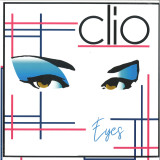

















![Intrusion - The Seduction of Silence - PART 2 [Remastered] (2x12")](https://www.deejay.de/images/l/4/1/1165441.jpg)