Given The Fall's penchant for iconoclasm, it's no surprise that they decided to say goodbye to the '70s with a series of gigs at Northern England's gruffest halls. The band's formidable live show was met with even more derision and disorder than customary during these late '79 and early '80 performances, and they skillfully amplified such sentiments back at the crowd. Totale's Turns, The Fall's first live album, was released on Rough Trade just prior to their pivotal third album, 1980's Grotesque. "The difference between you and us is that we have brains," shouts Mark E. Smith to open Totale's Turns as the band breaks into the rollicking "Fiery Jack," their latest single at the time. Each player is at their jagged best: Marc Riley and Craig Scanlon's splintering guitars, Steve Hanley's thunderous bass and Smith's combative sneer reverberate over "Rowche Rumble," "Choc-Stock" and "Spectre Vs. Rector" more than any studio would ever allow. Totale's Turns never panders to live-record conventions, serving instead as a gripping exhibit of The Fall en masse and arguably the most accurate document of the group to date. Superior Viaduct's edition is the first time that Totale's Turns has been available on vinyl domestically. Liner notes by Brian Turner.
Cerca:mark grant
First time on vinyl!
Newly remastered. LP housed in a gatefold jacket.
Featuring Herbie Hancock, Martha Reeves, Alphonse Mouzon, Chuck Rainey, Patryce “Choc’let” Banks, Carlos Morales, and members of The Pointer Sisters.
In the 1970s, Betty Davis defied genre and gender by pushing her voice to extremes and embracing the erotic. She articulated a kind of pre-punk, funk-blues fusion that had yet to be normalized in mainstream music – a style that few musicians have come close to replicating. As one of the first Black women to write, arrange, and produce her own albums, Betty was a visionary who disregarded industry boundaries and constraints. Raw, unapologetic and in full control, Betty paved the way for generations of future artists who said “funk you” to the music industry and social norms.
In 1979, when Davis entered an L.A. studio to record her fifth and final album, she was reeling from a series of setbacks. Three years earlier, after recording her fourth album, Is It Love Or Desire, Davis was dropped from her label and the LP was subsequently shelved. In 1978, her beloved band Funk House went their separate ways. Looking for a fresh start, Davis relocated to Hollywood to focus on songwriting. Before long, British manager Simon Lait (Toni Basil), offered to fund her next project.
With renewed vigor, Davis reunited with former Funk House guitarist Carlos Morales and brought together industry veterans like fusion drummer Alphonse Mouzon and session bassist Chuck Rainey. Old friends Anita and Bonnie Pointer (The Pointer Sisters) and Patryce “Choc’let” Banks joined Davis on vocals, as did Motown legend Martha Reeves. The resulting album, Crashin’ From Passion, was her most musically diverse, blending elements of reggae and calypso (“I’ve Danced Before”), jazz (“Hangin’ Out in Hollywood,” “Tell Me a Few Things”), dark synth-pop (“She’s a Woman”), and even disco (“All I Do Is Think of You”). Equally exploratory are Davis’ vocals, as she trades in her signature sass and snarls for more nuanced stylings.
Among the album’s few funk tracks is “Quintessence of Hip,” in which Davis hails musicians like Bob Dylan, Billie Holiday, Stevie Wonder, and John Coltrane, while deftly integrating elements of their work. The song also offers a moment of stark vulnerability, as she sings, “Isn’t rich? Isn’t it queer? Losing my timing so late in my career.” It would prove to be a prophetic line in the months to follow.
The mixing process was mired by artistic differences and then cut short, amid the death of Davis’ beloved father. Bereft and exasperated, Davis returned home for the funeral, setting into motion her retirement from the music industry. Crashin’ From Passion, meanwhile, would be shelved for 15 years and licensed for a CD-only release, without Davis’ consent, in the ‘90s. This 2023 edition of the album, made with Davis’ full approval and cooperation, marks its first official release and first time ever on vinyl. The package was designed by GRAMMY®-winning artist, Masaki Koike, while the album cover features an incredible shot of Betty captured in London in the mid-1970s by renowned photographer Kate Simon.
Crashin’ From Passion was remastered by Dave Cooley at Elysian Masters and pressed on vinyl at Record Technology, Inc. (RTI). The accompanying booklet includes a treasure trove of rare photos from the era, plus lyrics, and new liner notes by writer, ethnomusicologist, and Betty’s close friend, Danielle Maggio, who integrates interviews that she conducted with Davis, marking her last ever interviews.

First time on vinyl!
Newly remastered. LP housed in a gatefold jacket.
Featuring Herbie Hancock, Martha Reeves, Alphonse Mouzon, Chuck Rainey, Patryce “Choc’let” Banks, Carlos Morales, and members of The Pointer Sisters.
In the 1970s, Betty Davis defied genre and gender by pushing her voice to extremes and embracing the erotic. She articulated a kind of pre-punk, funk-blues fusion that had yet to be normalized in mainstream music – a style that few musicians have come close to replicating. As one of the first Black women to write, arrange, and produce her own albums, Betty was a visionary who disregarded industry boundaries and constraints. Raw, unapologetic and in full control, Betty paved the way for generations of future artists who said “funk you” to the music industry and social norms.
In 1979, when Davis entered an L.A. studio to record her fifth and final album, she was reeling from a series of setbacks. Three years earlier, after recording her fourth album, Is It Love Or Desire, Davis was dropped from her label and the LP was subsequently shelved. In 1978, her beloved band Funk House went their separate ways. Looking for a fresh start, Davis relocated to Hollywood to focus on songwriting. Before long, British manager Simon Lait (Toni Basil), offered to fund her next project.
With renewed vigor, Davis reunited with former Funk House guitarist Carlos Morales and brought together industry veterans like fusion drummer Alphonse Mouzon and session bassist Chuck Rainey. Old friends Anita and Bonnie Pointer (The Pointer Sisters) and Patryce “Choc’let” Banks joined Davis on vocals, as did Motown legend Martha Reeves. The resulting album, Crashin’ From Passion, was her most musically diverse, blending elements of reggae and calypso (“I’ve Danced Before”), jazz (“Hangin’ Out in Hollywood,” “Tell Me a Few Things”), dark synth-pop (“She’s a Woman”), and even disco (“All I Do Is Think of You”). Equally exploratory are Davis’ vocals, as she trades in her signature sass and snarls for more nuanced stylings.
Among the album’s few funk tracks is “Quintessence of Hip,” in which Davis hails musicians like Bob Dylan, Billie Holiday, Stevie Wonder, and John Coltrane, while deftly integrating elements of their work. The song also offers a moment of stark vulnerability, as she sings, “Isn’t rich? Isn’t it queer? Losing my timing so late in my career.” It would prove to be a prophetic line in the months to follow.
The mixing process was mired by artistic differences and then cut short, amid the death of Davis’ beloved father. Bereft and exasperated, Davis returned home for the funeral, setting into motion her retirement from the music industry. Crashin’ From Passion, meanwhile, would be shelved for 15 years and licensed for a CD-only release, without Davis’ consent, in the ‘90s. This 2023 edition of the album, made with Davis’ full approval and cooperation, marks its first official release and first time ever on vinyl. The package was designed by GRAMMY®-winning artist, Masaki Koike, while the album cover features an incredible shot of Betty captured in London in the mid-1970s by renowned photographer Kate Simon.
Crashin’ From Passion was remastered by Dave Cooley at Elysian Masters and pressed on vinyl at Record Technology, Inc. (RTI). The accompanying booklet includes a treasure trove of rare photos from the era, plus lyrics, and new liner notes by writer, ethnomusicologist, and Betty’s close friend, Danielle Maggio, who integrates interviews that she conducted with Davis, marking her last ever interviews.
2025 Repress
Macedonia's own Stojche is Fuse's next guest for the club's freshly made imprint. The long standing DJ and producer has been known to keep Detroit's playfully hybrid style as the focus of his work and 'Metaphor' is the case in point. His four tracks bounce through a nostalgic balance of techno, house, and more with a modern crisp. A refreshing take on club music, Stojche keeps techno's sometimes nonchalant attitude at arms length with a charismatic record that hits its mark with every measure.
The record's first track 'Counterpunch' features heavily lined percussion but still brews up a storm far and wide with resonant dub stabs and open hi hats. The drum machine boasts a full spectrum, rolling through a light show of melodic flashes, perfect for a room compressing soundsystem. The maximalist, vintage detail that Stojche brings to his compositions blurs the lines between classic genres in a time of hasty hybridization, which gives it a sort of authenticity that can't be taken for granted. 'Chordal Tribe', on the other hand, raises the general euphoria of the EP. Luring in the listener with bright pads and full-on drums, Stochje's work is reliable main slot material that adds color to any mix while providing a persuasive low end. Shimmering hi hats give it an ethereal quality making it an appropriate interlude for almost any context. Moving on to the B side, the producer sharpens up his rhythm and emphasizes the hardgroove influence in 'Signal Drive'. Softening the pace of his drums with free use of melodic chord stabs, Stojche opens up his dance floor for a crowd bonding record once again, complete with filter transitions and pummeling toms. As the final contribution, his title track 'Metaphor' begins with a more obscure opening to conclude his EP for Fuse. Leaning more to a techno cut, the record remains flamboyant as ever with open hats and rides shuffling through his arrangement. A muted main synth becomes apparent to focus the energy of the track while allowing for liveset-like drum flickering to take shape beneath, claiming the immortality of old club records with the technical precision of a seasoned modern producer.
Some artists embrace their success by repeating the steps that originally granted them fame. Billy Joel did the opposite, refusing to be contained by prescribed approaches or constrained by a given label. The follow-up to the breakthrough The Stranger, 52nd Street further expands on its predecessor's bold production techniques and inventive arrangements, incorporating more sophisticated textures as well as reflecting a jazz edge gleaned from New York City's thriving club scene.
A key piece of Mobile Fidelity's Billy Joel catalogue restoration series, 52nd Street is here sourced from the original master tapes and pressed on 45RPM 180g LP at RTI. The wider and deeper grooves – as well as the meticulous mastering – yield resplendent dynamics, broad soundstages, three-dimensional perspectives, and tonal balances absent from prior editions. This is how you want to experience the 1978 LP that captured the Grammy Award for Album of the Year.
Teaming again with producer Phil Ramone, Joel capitalizes on his momentum, churning out another direct-sounding affair replete with captivating melodic devices, showmanship accents, and penetrating lyrics. The singer's concision and focus is evident via the tune's lengths, with only "Until the Night" breaking the six-minute mark. Hit singles "Big Shot" and "My Life" rattle forth with an urgency and intensity that Joel had not previously demonstrated, the combination of passionate deliveries, snide overtones, and insistent grooves setting the table for what follows.
Broadening his palette, and drawing from New York's thriving jazz club scene and the city's late-70s grit, Joel splashes Latin and jazz colours on several pieces, employing veterans such as Dave Grusin and Freddie Hubbard to contribute along with a cast that includes a team of background vocalists and horn players. Everything is tastefully appointed, and yet the vocalist's trademark Broadway gaze and knack for the grand gesture coincide with the straight-ahead swagger.
52nd Street is one of the main reasons why Joel has always been championed for consistency. Everything here, from the production to the stand-up songs, helped redefine mainstream pop-rock. Decades later, it's finally available in fidelity that nears that of the Columbia Records' master tapes produced right on 52nd Street.
Following her contribution to this Spring’s Gudu & Friends Vol. 1 compilation, Lady Blacktronika steps out with a full EP for Peggy Gou’s Gudu label.
Whether operating as Lady Blacktronika or her Femanyst alias, Akua Grant has built a deserved reputation as one of house and techno’s most daring and unique artists - one that dates back 25 years now, when she first debuted as a vocalist.
“House and techno” can be a cliched catch-all term, but in Grant’s case, she really has explored the extremes of both sides. Her early Lady Blacktronika work, when she earned the nickname The First Lady of Beatdown, saw her produce and narrate a style of deep house that was both sensitive and transgressive, while as Femanyst, she explores some of techno’s darkest corners, all distorted kicks and serrated edges.
Her EP for Gudu kicks off with some serious intent: ‘Baby I Got It’ chops its vocals rough and raw, pairing them with marching drums and the sort of idiosyncratic synth-work that feels like a Blacktronika signature at this point. ‘Sing the Blues’ and ‘Hold My Hand’ take things smoother, but without ever deferring to type — as ever with Grant’s music, she works with such sleight of hand that it’s easy to skip back three minutes previous and wonder how the hell we got here. Her tracks are just that hypnotic and hallucinatory.
Closing the EP, Octo Octa provides a remix of ‘Hold My Hand’ that extends things to a full 12 minutes (note: slightly shorter on the vinyl due to time constraints), taking us out with crushed percs and held pads over some undeniable drum work.
This EP marks the final release of Gudu’s busiest year to date, with music on the label in 2023 coming from Special Request, Matisa, Mogwaa, Hiver, Matrefakt, DMX Krew, Dukwa, Brain de Palma, Lady Blacktronika, Salamanda and Closet Yi.
In den Jahren 1961 und 1962 hätte sich der Gitarrist Grant Green eigentlich auch gleich in Rudy Van Gelders Tonstudio in Englewood Cliffs als Untermieter einquartieren können. Denn in diesem Zeitraum war er dort an mehr als zwei Dutzend Einspielungen für Blue Note Records beteiligt. Die eine Hälfte machte er unter eigenem Namen, die andere Hälfte als Sideman von Größen wie Stanley Turrentine, Lou Donaldson, Hank Mobley, Ike Quebec, Horace Parlan und Baby Face Willette.
Um den Markt nicht zu übersättigen, sah sich Alfred Lion dazu gezwungen, einige von Greens Aufnahmen zu archivieren. Fünf von ihnen erschienen erstmals in den 1980ern. Darunter auch das im Januar 1962 entstandene Album “Nigeria”, das zu den unterbewerteten Juwelen des Gitarristen gehört. Zu erleben ist Grant Green auf ihm mit einer wirklich erstklassigen Band und einem ebenso exzellenten Repertoire (mit dem Sonny-Rollins-Klassiker “Airegin” und vier zeitlosen Standards).
BLUE NOTE TONE POET EDITION: Stereo, produziert von Joe Harley, komplett analog von Kevin Gray von den Originalbändern gemastert, RTI-Pressung (180g), stabiles deluxe tip-on jacket, wattierte Innenhülle.
Delasi, the Koforidua-based producer, singer and rapper has released his new single ‘Amplifier’ featuring Nii Noi Nortey.
Prophetic, spiritual and frenetic, ‘Amplifier’ is Delasi’s testimony in musical form. A manifestation of Delasi emerging triumphant after many years in limbo as he searched for a long-awaited breakthrough in the music industry.
Produced by Delasi himself alongside Morgan Greenstreet, ‘Amplifier’ is underpinned by the texture of coastal rhythms indigenous to Accra and tightly ornamented with bustling drum breaks, electronic synth lines and jazz sensibilities.
Veteran Ghanaian multi-instrumentalist and sound designer Nii Noi Nortey appears on the track to deliver an explosive and rhythmically intense saxophone performance throughout as it tastefully builds to an emphatic crescendo.
Self-described as a prayer, the track’s maximalist and percussive instrumentation is cleverly juxtaposed with minimal lyrics where Delasi’s faint vocal repeats a series of repeated phrases like evoking the mood and semblance of a meditative chant and religious experience. Harkening to the work of afrofuturistic jazz musicians like Sun Ra and Pharaoh Sanders.
Speaking on the track’s meaning, Delasi said: “‘Amplifier’ is my prayer and like with other songs of mine it can scare me because I write things and then it’ll manifest in exact detail. The song is basically outlining how hard I’ve worked and how I need an amplifier to have my desires fulfilled. It's like a mantra and that’s why it's not so lyrical”.
‘Amplifier’ marks Delasi’s first release as a lead artist since his 2015 self-released project ‘#thoughtjourney’ which garnered support and praise from Rolling Stone, BBC6 Music, Worldwide FM, KCRW, Afropop Worldwide, Deutschlandfunk Kultur, NRK and legendary French DJ/Producer Laurent Garnier. Additionally parlaying into touring and festival gigs across Nairobi, Berlin, Morocco, Denmark and Sweden.
Delasi is an artist that has been quietly prolific for over a decade. Honing his musicianship exploring sonic possibilities with Ableton and Teenage Engineering. Eventually entrenching himself in the Ghanaian rap scene via collaborations with Hammer of The Last Two, Reggie Rockstone and Yaw P with whom he would release a joint project ‘Imperfections: The Break Up Vol 1’ in 2013.
He was musically raised on a diet heavily influenced by his father who exposed him to the sounds of Marvin Gaye, Bob Marley & The Wailers, Bobby McFerrin, Jim Reeves and Billy Ocean alongside the soundtracks for movies like Doctor Zhivago, The Sound of Music and La Bamba. Delasi’s own tastes would be heavily informed by linchpins of US Hip-Hop like Wu-Tang Clan, Nas, Onyx and M.O.P in addition to alternative R&B artists Frank Ocean and James Blake.
After many years of operating as a proudly independent and self-contained artist, Delasi has now partnered with Gilles Peterson’s Brownswood Recordings. One of the world’s leading indie labels, famed for their instrumental role in breaking the likes of KOKOROKO, Yussef Dayes, Swindle, Joe-Armon Jones, Shabaka And The Ancestors, Zara McFarlane and Ghostpoet.
With Delasi now being granted resources to give his music the grand and worthy footing, he is now on the cusp of the artistic breakthrough that was long out of reach. Speaking further on how the deal with Brownswood inspired the new single, Delasi said:
“The music I’ve created this go round is so strong that I can’t handle it all by myself. Though I had a lot of fun doing it all by myself with ‘#thoughtjourney’, this time around I needed it to be with a home who could properly amplify it.”
deu Zwei Jahre nach der erfolgreichen Rückkehr der Walkabouts mit dem Chart-Album "Acetylene" erscheint 2007 mit "Fly High Brave Dreamers" endlich ein neues Chris & Carla Album. Eine Ewigkeit (1998!) war es her, seit die beiden das letzte Mal als Duo in Erscheinung getreten waren. Musikalisch hatte sich seitdem einiges getan. Natürlich blieben die Markenzeichen hörbar: die warme, hervorragend unaufdringlich produzierte Grundstimmung, Eckmans Gitarrenspiel, die Gesangsharmonien. Doch herausgekommen ist dabei die Upbeat-Version einer Chris-&-Carla-Platte. Die eine Hälfte entstand mit analogen Instrumenten als digitale Produktion, quasi ein Folktronica-Entwurf, die anderen fünf Songs so live und direkt wie möglich mit Unterstützung von u. a. Al Deloner (Ex-Midnight Choir) und Jason Victor (Steve Wynn, Willard Grant Conspiracy). Der elfte Song, "Salad Days" von den Young Marble Giants, liefert das Credo für dieses Album: Bleib direkt und halte alles so simpel wie möglich. Ab sofort wieder auf Doppel Vinyl erhältlich.
and Sebastian Kokus and the prolific Ulf Schütte, the Hamburg-based trio has tirelessly expanded upon its sound and extended its musical style. After 2022’s »S/T« documented the results of their first jam sessions as a newly-founded group, »V.A.« started even more modestly and became an even bigger undertaking. Originally conceived as a small one-off release, it grew into a full record which sees the group embracing dub music, collaborating with Peaking Lights’ Aaron Coyes and inviting other artists—No UFO’s, Seekers International, Coco Em—who reworked select tracks in true dub style. »V.A.« is marked by inconsistency, openness, and heterogeneity in the best sense of those words: ever-changing, constantly surprising and consistently in motion.
The starting point for »V.A.« was a Hamburg concert in December 2022 together with Coyes, who played a solo set as Peaking Lights. On the request of the event organiser, Cloud Management teamed up with him for a jam session after the gig, laying the foundation for a track that the group took to the studio before sending it to Coyes to record vocals for it. Another song quickly followed and even though the band initially intended to release »PST« and »0rten Pitch« as standalone 7” single, they soon decided to have others create versions of the two tunes to round them off in the form of a 12” EP. Once more though, one thing led to another and now »V.A.« collects five original pieces by Cloud Management as well as three—four on the digital version—remixes by other artists.
Collaborating with Leipzig-based Canadian producer No UFO’s, the Canadian Seekers International collective, and Kenyan multi-disciplinary artist Coco Em came about organically. As fans of their friend Konrad Jandavs’ work for labels such as Spectrum Spools, Root Strata and his own Nice Up International, Korf, Kokus and Schütte asked him for a remix and granted him full creative freedom for his take on »PST«. Jandavs also connected them with the prolific Richmond-based soundsystem worshippers, who present their take on the same track on this record as well as a version of »Electric CD.« Also this track appears three times on the record, having been re-rubbed by Emma Mbeki Nzioka, who was introduced to the the trio by its label Altin Village & Mine.
There isn’t really a common thread running through the rough digi-dub of No UFO’s take on »PST«, Seekers International’s traditionally-minded yet infinitely playful dub-psychedelia and Coco Em’s bass-heavy, percussive, pulsating take on »Electric CD.« However, as a group dedicated to staying in flux at all times, Cloud Management ended up embracing the creative differences between their own work and those of their respective collaborators. In calling it »V.A.,« they paid tribute to their somewhat loose, but conceptually consistent concept of giving various artists full creative licence over their own work. Neither a true album in the strict sense of the world nor just a compilation, »V.A.« is actually the essential Cloud Management record: ever-changing, constantly surprising, consistently in motion.
Ursprünglich im Juni 1998 nach dem Weggang des langjährigen Bassisten Paul Kimble veröffentlicht, war 'Jubilee' das vierte und letzte Studioalbum von Grant Lee Buffalo. Zum 25. Jubiläum des Albums präsentiert Chrysalis Catalogue 'Jubilee' erstmals auf Vinyl.
'Jubilee' ist geprägt von einer fröhlichen, feierlichen Stimmung und zeigt Grant Lee Phillips' markanten, eklektischen Songwriting-Stil mit Glam-geprägtem Hardrock und Alt-Country-Klängen. Zu den Highlights gehören die Single 'Truly, Truly' sowie Gastvokalbeiträge von Robyn Hitchcocks ('My, My, My', 'The Shallow End') und Michael
Stipe ('Everybody Needs A Little Sanctuary'). Seite vier schließt mit dem Bonustrack 'Were You There', einer Rarität, die ursprünglich auf der Promotions-CD 'Yours Truly' erschien.
Neu gemastert von Miles Showell in den Abbey Road Studios aus den originalen Produktionsmastern, auf zwei 180g transparenten Vinylscheiben gepresst und in einem Gatefold-Cover mit gefütterten Innenhüllen untergebracht.
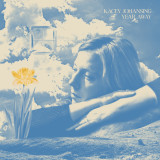
In March of 2020, after learning that a dear friend’s life was coming to an end, Johansing sat down and in one sitting wrote the song “Daffodils”. An elegiac tribute to someone facing death with grace and curiosity, the lyrics confront Johansing’s own mortality by observing the brief lifespan of a Hlower. Only a week later when the world came to an abrupt standstill, she soon found herself processing this recent loss while trying to make sense of a new global reality. Across the ensuing months, Johansing found herself increasingly untethered by a world of isolation and political upheaval.
Having been a frequent touring member of bands like Hand Habits and Fruit Bats, and often being called into the studio to lend her harmonies and multi-instrumental talents to records, Johansing’s phone no longer rang. Living in Los Angeles she feared her musical community was vanishing, as friends and collaborators continually announced they were leaving the city. It was in returning to her piano nightly that she found the greatest solace, feverishly writing the songs that would be collected on her next album. Resulting from this new sense of time and focus was a deepening of her songwriting. As Johansing recalls, “I felt like a metamorphosis happened during that time. There was a lot of personal growth and healing.”
Throughout Year Away Johansing traverses uncharted emotional landscapes brought upon by the changes occurring all around her. The forced self-reflection of the moment is aptly captured by “Old Friend”, featuring an aching melody and swooning production that recalls the best of Harry Nilsson. The epic piano and saxophone-driven “Smile with My Eyes” addresses the loss of community as friends became distant and political divides between family grew. On “Smile” Johansing pushes her vocals further than ever, expanding her range and using her peerless voice as the singular instrument it is. Facing the loss of a family home due to environmental destruction, “Shifting Sands” is marked by soaring Hlutes, Hield recordings and glassy synthesizers that nod to Japanese New Age.
“Daffodils”, the stunning album centerpiece, is built from a pastiche of looping samples, swirling Mellotron and dazzling vibraphone. “Keep your heart open wide, you never know your time / Keep your heart wild, true Hlower child”, Johansing sings as she says goodbye to an elder, while the band reaches a grief-stricken crescendo of woodwinds and chiming bells. On the title track, Johansing takes listeners on an eerily meditative journey of collective experiences. “I wanted to keep the progression simple and repetitive so that musically we could add new elements little by little, while the emotional tone of the lyrics becomes increasingly more strained and expressive”. The song grows to a fever pitch as Johansing sings higher than she thought possible; the tension of the repeating chords Hinally resolving into a hopeful coda as multiple soloists weave around each other.
Amidst heavier themes, Johansing still leaves room for her love of irresistible pop melodies and lush production. The driving “Last Drop” and mid-tempo “Valley Green” are two of her catchiest songs to date. On the former Johansing sings the anthemic chorus, “As if it were the last drop, and nothing ever lasts forever / As if it were the last stop, too far out to come back ever”, longing for a love that she’ll never take for granted, while also admitting that she doesn’t always know how good she has it. “Valley Green” features shimmering layers of 12- string guitars, stacked horns and an impeccable solo by co-producer and multi- instrumentalist Tim Ramsey (Vetiver, Fruit Bats), hinting at a love for bands like NRBQ.
Having been eager to capture the initial spark of songwriting, Johansing booked time at Highland Park’s 64 Sound Studio the week that it reopened. Over the course of three days, she and her band gathered basic tracks for 10 songs, before returning home to Hinish the record with Ramsey. Setting forth to make an album that paid homage to the music that kept them company during the months spent alone together, the duo pulled inspiration from a wide net including Burt Bacharach, John Carroll Kirby & Haruomi Hosono. Ramsey’s newfound love of early digital synthesizers dovetailed effortlessly with Johansing’s fondness for classic 70’s horn and string arrangements, creating a sound that is distinctly modern yet warm and familiar.
Once again Johansing called upon some of the Hinest players of Northeast Los Angeles’ vibrant music community to lend a hand with the record. The 70s R&B-folk of “Watch It Like a Show” features an electric guitar solo from Hand Habits’ Meg Duffy, while album closer “Endless Sound” boasts backing vocals from electronic musician Kaitlyn Aurelia Smith and swooping Indian-inspired violins from Amir Yaghmai (HAIM, The Voidz). The record shines brightly thanks to an ace mix from veteran producer Rob Schnapf (Beck, Elliott Smith, Cat Power), woodwinds from Logan Hone (John Carroll Kirby, Eddie Chacon), and a featured rhythm section of drummer Josh Adams (Jenny Lewis, Bedouine) and bassist Todd Dahlhoff (Feist, Devendra Banhart). Recorded across multiple studios including LA’s famed Sunset Sound, the album remains steadfastly buoyed by the adept engineering of Tyler Karmen (MGMT, Alvvays).
Though born of turbulent times, Year Away is ultimately interested in moving forward. The album ends with “Endless Sound,” where Johansing laments seismic global changes, (“The water is hotter, the mighty thaw / The current’s reversing, the last are lost”) but vows to keep going (“No storm can take me down / Endless light, endless sound”). It’s Year Away’s resilience that shines through despite the darkness. It’s a sound all her own and Johansing’s most cohesive set of songs yet.
Toying with the familiar but not afraid to break with expectations, AVEM presents a versatile range of works that make up his debut album.
Dream State was largely written and produced in times of the pandemic, specifically during lockdown periods — a context that grants the album an air of melancholic isolation. Offering seven songs on a double LP, it marks the collective imprint LOKD’s vinyl premiere. Merging sounds of Electronica, House and Techno, LOKDLP001 finds its place neatly outside of common categories.
In the past years, the Swiss DJ, producer and live act has made a name for himself with a steadily growing catalogue: not only through a handful of EPs, but also by releasing countless singles, remix- es and live recordings. In autumn of 2023, the Basel– based artist now reveals his first studio album.
Instrumentation ranges from studio percussion re- cordings, synthesizer & drum machine classics, all the way to ethereal piano and vocal performances; all performed and recorded by the artist himself.
Familiar structures of House and Techno are introduced, only to be broken again by gleam- ing twists and turns. A focus on percussion is ap- parent throughout the album, be it in the dynamic texture of drum recordings or in the evolving break- beat rhythms of a guiding bass drum.
Dream State tells an ephemeral tale of the uncertain, treading through an unique territory of opposites — from rapid progression to outright hypnosis, from weightless yearning all the way to euphoric catharsis.
In the late 2000s a sprawling catalog of what is now genre-defining music was emanating from an unlikely place. Cleveland, Ohio has a broad reputation for many things, but in the aughts, psyche-expanding Kosmische wasn’t necessarily Cleveland’s calling card… until Emeralds. The trio of John Elliott, Steve Hauschildt, and Mark McGuire had released a profusion of limited-run cassettes, CD-Rs, and vinyl titles that had been passed around basement shows and then migrated to niche music communities online, creating a unique kind of murmur, even in the height of the DIY blog era. Three kids from the rust belt were crafting a distinctive and truly far-out strain of music on their own terms in the Midwest. They were flipping lids in wood-paneled basements and circulating around the underground with soaring sounds stylistically indebted to deep German electronic music pioneers and released with the ethos and twisted fervor of renegade Midwestern noise freaks. After several releases garnered a die-hard fandom in niche circles of internet/music culture, and then catching the attention of the late Peter Rehberg, the renowned artist and curator of the Editions Mego label, an expectation was set that the next Emeralds record was going to be a big one. And in 2010, Does it Look Like I’m Here? was it.
mp3s of this album; they can finally get a fresh copy on vinyl. Does It Look Like I’m Here? became a hallmark that would carve a path for an entire scene. Ghostly International is thrilled to reissue the album, remastered by Heba Kadry, including 7 bonus tracks exclusive to the digital album and CD. The limited edition 2xLP includes extensive liner notes by Chris Madak (Bee Mask).
„Eine blühende Solokarriere aufgebaut auf einfallsreicher Programmgestaltung und einem sondierenden Interpretationsstil“,
sagt die New York Times über Daniel Hope. Auf seinem neuen Album erkundet der Stargeiger die Diversität amerikanischer Musik in atemberaubenden neuen Bearbeitungen von Werken aus
Klassik und Jazz, die von George Gershwin, Aaron Copland, Leonard Bernstein, Kurt Weill, Florence Price, Duke Ellington, Sam Cooke und Samuel A. Ward stammen.
Begleitet wird Hope vom Zürcher Kammerorchester und von großartigen Gastmusiker*innen, u.a. Soul-Sängerin Joy Denalane und renommierten Jazzpianisten Marcus Roberts. Als künstlerischer Leiter des New Century Chamber Orchestra in San Francisco hat Hope einen engen Bezug zur amerikanischen Kulturlandschaft und dies wird nun auf seinem Album „America“ durch vielfältige und faszinierende Werke musikalisch erlebbar.
„In jüngster Zeit gibt es eine starke Bewegung mit dem Ziel, afro-amerikanische Komponisten wiederzubeleben und neu zu
entdecken, etwa Florence Price oder William Grant Still. Es gibt noch viele andere Komponisten, deren Geschichten erst heute erzählt werden‘“, sagt Hope.
Markus Roberts fügt hinzu: „Amerikanische Musik verkörpert das amerikanische Leben: Flexibilität und die Fähigkeit, kontinuierlich etwas zu erschaffen und neu zu gestalten“. Hope und Roberts sind über die Jahre oft zusammen aufgetreten; mit dieser Aufnahme
faszinieren sie einmal mehr durch einen exzellent musizierten Dialog zwischen Jazz und Klassik.
The last album of Dead Cat In a Bag on vinyl! 180g + downloadcode.
"Do you know it? Ennio Morricone, Nick Cave, Mark Lanegan, Tom Waits and Zach Condon walk into the bar, and there are all the seats occupied by the Dead Cat In A Bag musicians. Really." - this is how Jarek Szubrycht started the review of the last album of the Italian group Dead Cat In Bag in Gazeta Wyborcza. And he was right. Really.
Yes! Dead Cat In A Bag is back! They are back with a new album "We've Been Through".
After exploring several so called Neo-Folk regions, flirting with Folk Noir, mostly with Traditional Folk in a modern perspective, for example Americana to Tex-Mex and Balkan Music to Alternative Country, on this third record the ensemble drifts to a cinematic landscape, focusing on the theme of overcoming.
We've Been Through puts together World Music elements incorporating an almost soundtrack experience for a journey into both Day and Night, Hope and Disillusionment and telling stories of broken romances and shipwrecks.
Utilizing banjo and theatrical vocal delivery, together with with classic and odd instruments, the band remap the original charts but still set sail the desired destinations. And if, about the previous records, critics were prone to recall the prowess of Waits, Cave, Lanegan, Cash and Tindersticks, this time it will be harder to name the grandfathers.
Now there is a Morricone (or was it Badalamenti?) guiding spirit and a dreamlike universe full of memories, from the dry electric blues of a stream of consciousness duet in Duet For Nothing to the unexpected crooning vocals provided by Liam McKahey (CousetauX) in Lost Friends (a banjo droven dirge dealing with electronics and a bassoon, with steal percussions and a music saw for a frame), from the rendition of the traditional Wayfaring Stranger, balancing between electric guitars and Bluegrass, to the intimate cover of Leonard Cohen's Hunter's Lullaby, from the rock-(swamp)blues of The Cat Is Dead (enriched by Italian bass hero Gianni Maroccolo, from Litfiba and C.S.I.) to the soft meloncholy of the string quartet in Between Day And Night, from the dark cabaret of Fiddler, The Ship Is Sinking to the soft porch song, between Willard Grant Conspiracy and Kris Kristofferson, of the final title track.
You can hear a shrawn and a blues harp, whispers and choirs, love and dudgeon as the record goes. This is the sound of an orchestra playing on a sinking ship: what else could a fiddler do? And what can we do, in the end?
Following their debut Glastonbury Festival performance, Broadside Hacks in collaboration with British Underground today announce the UK premiere of The Broadside Hack; a new documentary telling the story of the young vanguard of UK artists sharing radical interpretations, proto-feminist narratives and queer histories through the lens of British traditional folk song. An accompanying live album of the songs performed in the film will also be released in December on LP and digitally. Having enjoyed its US premiere at SXSW in March, The Broadside Hack is a short music documentary produced by British Underground, created with the aid of a grant from Arts Council England and PRS Foundation. Directed by Crispin Parry and filmed by The Northern Cowboys, It explores the influence of traditional folk songs on a new generation of musicians, filmed just as the UK was emerging from the dark days of the pandemic. The documentary was made in collaboration with music collective Broadside Hacks and features influential artists and groups from the new folk scene, including Rough Trade signees caroline, former Goat Girl bassist Naima Bock, whose acclaimed album Giant Palm was released on Sub Pop earlier this year, Shovel Dance Collective, Thyrsis, Broadside Hacks and Boss Morris. Discovering a fresh vitality in the tunes and new histories in the stories they tell, the film includes conversations, dances and intimate performances filmed at Peter Gabriel’s Real World Studios in Box, Wiltshire between 17th and 19th August 2021. The live concert and screening of The Broadside Hack arguably marks the close of the first chapter in the story of the UK’s new folk scene; a story in which Broadside Hacks has been central. Initially formed as a folk night, the pandemic forced it to change its shape, morphing into a collective of young, like-minded musicians who met to play folk music in South London. “An adventurous exploration of traditional music by the young and folk curious” - The Times // “All your favourite players in one Sunday League team” - Loud And Quiet // "The band play old folk songs, those so old their authors have been lost in time, and inject in them such life, depth and emotion that it's extremely affecting" - The Quietus // Side 1 A1 Boss Morris - Up The Hill A2 Interview Shovel Dance Collective - ‘A Collective Authoring of History’ A3 Shovel Dance Collective - The Bold Fisherman / My Husband Has No Courage In Him A4 [Interview] Thyrsis - ‘Collaboration Across Space and Time’ A5 Thyrsis - Single Sailor A6 [Interview] Naima Bock (Broadside Hacks) - ‘Retracing Beginnings’ A7 Broadside Hacks - Gently Johnny. Side 2 B1 Shovel Dance Collective - Merrily Kissed the Quaker B2 [Interview] Shovel Dance Collective - ‘Queering Folk Songs of the Past’ B3 Thyrsis - Godstow Bridge B4 [Interview] Naima Bock (Broadside Hacks) - ‘The Broadside Hacks Folk Club’ B5 Broadside Hacks - Rain and Snow B6 Boss Morris - Young Collins
- A1: City Sounds
- A2: Turn Me Around
- B1: When You Call Me
- B2: Night Flight
- B3: Soothsayer (Feat Theo Croker)
- C1: Why Must You Fly (Feat Omar)
- C2: To Be As One (Feat Theo Croker)
- C3: (Bring On The) Bad Weather (Bring On The)
- D1: Lazy Days (Feat Emma-Jean Thackray)
- D2: Find Your Heaven (Feat Valerie Etienne)
- D3: Virgil
Black Vinyl[26,85 €]
Welcome to ‘STR4TASFEAR, Bluey and Gilles’ second STR4TA album released.
A collection of songs, melodies, grooves and sounds that sit perfectly in the brand new music world it’s part of. Gilles and Bluey are both men who emerged into the Brit funk world. They were both part of this truly thrilling chapter in the story of homegrown music; which manifests itself here in a sumptuous mixture of twanging basslines, spacey synth melodies, clicking beats and wispy, ethereal voices.
And for this new set, they’ve got a few like-minded souls along to join the party. Multi-talented Neo-soul Godfather Omar, and celebrated vocalist, Valerie Etienne, both represent Brit funk’s first bounce. Also welcomed in to the fold is musical polymath, Emma-Jean Thackray, Brighton duo Anushka and Floridian trumpeter/vocalist Theo Croker. ‘STR4TASFEAR’ is Gilles and Bluey’s wide-open window into a timeless, wonderful world of Brit funk (Words by Mark Webster, 2022).
STR4TA has received a rapturous reception, with standout tracks ‘We Like It’ achieving over 1 million streams on Spotify and ‘Rhythm In Your Mind’ exceeding 12 weeks on Jazz FM’s playlist. They have been heavily supported by BBC 6Music, The Guardian, Wax Poetics, The Vinyl Factory, CLASH, Télérama (FR), Radio Nova (FR), Rolling Stones Italy & Japan. Most recent singles “When You Call Me” & “Night Flight”, taken from the upcoming album, has already received support from Rampage (BBC 1Xtra), Jamz Supernova (BBC 6 Music), Deb Grant (Jazz FM) plus NTS, Mi-Soul, Solar Radio, KCRW (US), KEXP (US), Concrete Islands, CRACK Magazine, and Nu-Funk (Spotify).
- A1: City Sounds
- A2: Turn Me Around
- B1: When You Call Me
- B2: Night Flight 05 25
- B3: Soothsayer (Feat. Theo Croker)
- C1: Why Must You Fly (Feat. Omar)
- C2: To Be As One (Feat. Theo Croker)
- C3: (Bring On The) Bad Weather (Feat. Anushka)
- D1: Lazy Days (Feat. Emma-Jean Thackray)
- D2: Find Your Heaven (Feat. Valerie Etienne)
- D3: Virgil (Vocal Version)
White Vinyl[32,73 €]
Welcome to ‘STR4TASFEAR, Bluey and Gilles’ second STR4TA album released.
A collection of songs, melodies, grooves and sounds that sit perfectly in the brand new music world it’s part of. Gilles and Bluey are both men who emerged into the Brit funk world. They were both part of this truly thrilling chapter in the story of homegrown music; which manifests itself here in a sumptuous mixture of twanging basslines, spacey synth melodies, clicking beats and wispy, ethereal voices.
And for this new set, they’ve got a few like-minded souls along to join the party. Multi-talented Neo-soul Godfather Omar, and celebrated vocalist, Valerie Etienne, both represent Brit funk’s first bounce. Also welcomed in to the fold is musical polymath, Emma-Jean Thackray, Brighton duo Anushka and Floridian trumpeter/vocalist Theo Croker. ‘STR4TASFEAR’ is Gilles and Bluey’s wide-open window into a timeless, wonderful world of Brit funk (Words by Mark Webster, 2022).
STR4TA has received a rapturous reception, with standout tracks ‘We Like It’ achieving over 1 million streams on Spotify and ‘Rhythm In Your Mind’ exceeding 12 weeks on Jazz FM’s playlist. They have been heavily supported by BBC 6Music, The Guardian, Wax Poetics, The Vinyl Factory, CLASH, Télérama (FR), Radio Nova (FR), Rolling Stones Italy & Japan. Most recent singles “When You Call Me” & “Night Flight”, taken from the upcoming album, has already received support from Rampage (BBC 1Xtra), Jamz Supernova (BBC 6 Music), Deb Grant (Jazz FM) plus NTS, Mi-Soul, Solar Radio, KCRW (US), KEXP (US), Concrete Islands, CRACK Magazine, and Nu-Funk (Spotify).
Deluxe 180gram vinyl edition comes in a foil-embossed and die-cut cardstock jacket with printed inner sleeve and additional 12x12 art cards featuring the collages of Maciek Szczerbowski. All the art interacts with the die-cut jacket framing. Edition of 300. Rooted in a distinct and immediately identifiable sound_with the cello of Rebecca Foon (Saltland, Set Fire To Flames, Thee Silver Mt Zion) and the marimba of ex-Godspeed You! Black Emperor percussionist Bruce Cawdron at its core_Esmerine has long embroidered emotive chamber works using threads of post-classical, post-rock, Minimalism, neo-Baroque, jazz, pop and a wide array of folk traditions. Multi-instrumentalist Brian Sanderson, who joined the group in 2012, has furthered Esmerine's melodic and ethnomusicological sensibility ever since, expanding the ensemble's palette as its third core member with guitars, ngoni, ekonting, hulusi, brass horns of all sorts, and more. Since 2003, six stately and filmic instrumental albums have inscribed compositional landscapes through epigrammatic miniatures, longform multi-movement chronicles, and all manner of evocative musical prosody between. Marked by an inimitably turbid yet tempered pastoralism, alternately lit by dappled dawn and disquieted dusk, Esmerine's musical narratives balance asceticism and romanticism, melancholy and hope, stillness and wanderlust. Esmerine now shares Everything Was Forever Until It Was No More, its seventh full-length album and first in five years. The band surprise-dropped the full album digitally on 06 May 2022, with the CD and Deluxe 180gram LP editions hitting stores on official release date 26 August 2022. Following an acclaimed run of mid-career records on Constellation through the 2010s_the last three of which have all been finalists or winners of Juno Awards for Instrumental Album of the Year and/or Album Packaging of the Year_Esmerine began working on new music at decade's end. Under the auspices of a grant from the Canada Council for the Arts, and a summer 2019 residency at Le Château de Monthelon (an artist commune in France where the band has cherished long-standing spiritual, creative, and personal connections), compositional seeds were planted_and then pandemic rooted everyone in place. In between lockdown waves, at the respective rural Québec homesteads of Cawdron and Foon, longtime co-producer Jace Lasek (The Bernard Lakes) began capturing the band in various stripped-down configurations with spartan remote equipment. More fulsome arrangement and overdub sessions at Foon's converted barn during the summer of 2021 brought the album to full fruition_where a notable increase in the use of acoustic piano also poured forth, with just about every band member having a go. The record also signals the definitive integration of bassist Philippe Charbonneau_having joined Esmerine as a touring member pre-pandemic, he plays throughout the album on upright and electric bass, with turns on piano and synth, as well as sound design contributions via tape echo and other processing. Everything Was Forever Until It Was No More grapples with the existential tensions between atmosphere and airlessness, seclusion and claustrophobia, forbearance and coalescence. In many ways it is one of Esmerine's most restrained records. Only a few passages are driven by full percussion. There is palpably less Sturm and Drang or overt crescendos compared to its recent predecessors. The new album roils with a different sort of dynamic intensity, where instrumental densities ebb and flow within an overtonal centre, melding into each other with gauzy timbral warmth, sometimes tracing fleeting tendrils outwards, but always rotating around a saturnine gravitational force. Everything Was Forever Until It Was No More is like a dark forest lit by a closely-orbiting opalescent planet; it could be the alternate score to Von Trier's Melancholia or Cormac McCarthy's The Road.
The Silvertones were steeped in the grand tradition of Jamaican vocal trios along with other greats such as The Heptones, The Abyssinians and The Kingstonians. Formed in 1964 by Delroy Denton, Keith Coley and Gilmore Grant, the group recorded under a variety of names in the ska and rocksteady era for Duke Reid’s Treasure Isle and Coxsone Dodd’s Studio One, before hooking up with producer Lee “Scratch” Perry.
Originally released in 1973, The Silvertones’ debut Silver Bullets was recorded at Perry’s Black Ark studio with vocal tracks captured at King Tubby’s Dromilly Avenue studio in a marathon, all-night session. While firmly planted in roots reggae, Silver Bullets’ dense harmonies and relaxed vibe harken back to rocksteady. The album marks an interesting point in Jamaican music where the past and the future are visible in the grooves of a single LP—from classic rocksteady-tinged love songs like “That’s When It Hurts” and “Rock Me In Your Soul” to the Rasta anthem “Rejoice Jah Jah Children.”
Antarctica Starts Here presents the first widely available domestic release of Silver Bullets. This reissue is part of an archival series that focuses on Trojan’s essential ’60s and ’70s catalogue. Liner notes by JR Gonne.
Grant-Lee Phillips' new album, All That You Can Dream, is a turbulent and
highly musical rumination that finds the veteran singer-songwriter
addressing the strange fragility of life
The collection of songs bears the markings of his prolific output, a melodic
prowess and an ear for lyric in everyday conversation. Comparable to the works
Low or Duster, Phillips offers a salve to a wounded world, struggling to regain
equilibrium. This is Grant- Lee Phillips at his most reflective, wrestling with the
most pertinent of questions. Focusing on life in quarantine ("A Sudden Place,"
"Cruel Trick") and the ever-shifting political landscape ("Rats in a Barrel," "Cut to
the Ending"), this collection shows that Phillips remains one of the finest singersongwriters of our time.
Leeds art-rock group Mush (Dan Hyndman vocals / guitar, Phil Porter drums,
Nick Grant bass, Myles Kirk guitar) are set to return with album ‘Down Tools’
via Memphis Industries. The new record marks the prolific band’s third album
in as many years, following hype-building early singles ‘Alternative Facts’
and ‘Gig Economy’, 2020’s debut album ‘3D Routine’ and 2021’s acclaimed
‘Lines Redacted’, which pushed their sound further and, as Uncut wrote, saw
them become “kindred spirits to Wand and King Gizzard & The Lizard
Wizard, two other bands prolifically honing their sound and approach,
steadily developing their voice.”
On ‘Down Tools’, this voice grows again into a more brilliantly singular
sound. It sees Mush getting loose, moving away from the defined moods and
textures of ‘Lines Redacted’ with a musical openness, straddling genres
while avoiding pastiche. Hyndman says of the lyrics on ‘Down Tools’ that
“there was a conscious decision to retreat further from an observational
approach” with vocals being ad-libbed lending the record a more abstract
feel. Hyndman continues: “this album is less dark than the previous one. The
Armageddon obsession has eased, or at least the symptoms have become
milder due to saturation. Musically there’s a lot more chill on the record -
there’s a few more mellow tracks out there and the most astute listener may
even be able to decipher some of the words, fingers crossed.”
While grief and work balance form themes on the record, Hyndman’s
approach is largely made up of abstract, disconnected streams of
consciousness and lines liberally taken from books, paintings, films and
beyond. On ‘Human Resources’, Hyndman dramatically retells a battle he
had with an HR department at a job in a David and Goliath style. The song
‘Group Of Death’, a phrase chillingly familiar to any football fan, is
emblematic of the turn towards softer, more considered sounds. Hyndman
says: “In my warped imagination it just sounds like a Paul McCartney song,
but it won’t to others. I initially had the idea of doing a World Cup song called
‘Group of Death’, but by the time it was written nothing beyond the title had
any relevance to football. Anyway, the next World Cup is in Qatar so fuck
that shit.”
‘Northern Safari’, meanwhile, is a song about the way the North of England
has been portrayed in the media and used as a mirror to reflect some of the
nastier elements of what’s going on in society, in particular vox pops around
Doncaster, portraying a particular narrative of the collapse of the red wall and
the disgruntled ex-miners.
‘Down Tools’ sees Mush idiosyncratically ping-pong from finger picked
looseners to noise-rock bangers to brilliantly entertaining effect, avoiding
post punk saturation with an easy style and wit.
Loss and hope, isolation and communion, the cessation and renewal of purpose. Timeless and
salient, these themes echo throughout the fifth album from Midlake, their first since ‘Antiphon’
in 2013.
From the cover to the title and beyond, a longing to reconnect with that which seems lost and
seek purpose in its passing sits at the record’s core. The cover star is keyboardist/flautist Jesse
Chandler’s father, who, tragically, passed away in 2018. As singer Eric Pulido explains, “He
was a lovely human, and it was really heavy and sad, and he came to Jesse in a dream. I
reference it in a song. He said, ‘Hey, Jesse, you need to get the band back together.’ I didn’t
take that lightly.”
A desire to commune with the past and connect with present, lived experience asserts itself
from the opening of the album. ‘Bethel Woods’ sustains and develops that reconnection,
evoking the steadfast and contemplative urgency of ‘The Trials of Van Occupanther’ to back a
lyric steeped in yearning for a paradisal time and place of hope and optimism. Soaring guitars
and atmospheric noise effects extend a sonic scope further developed by ‘Glistening,’ where
arpeggios dance like light glancing off a lake. In just three songs, Midlake reintroduce
themselves and reach out into fresh territory with a richly intuitive dynamism, honouring their
past as a seedbed of possibility.
Elsewhere, the prog-enhanced funk-rock of ‘Gone’ seeks to find hope in relationships that
seem fragile. The ELO-esque ‘Meanwhile…’ draws inspiration from what happened when
Midlake paused after ‘Antiphon’, developing universal resonance as a song about the beautiful
growths that can emerge from the cracks and gaps between things. ‘Dawning’ draws on 1970s
soft-rock stylings for another song searching for hope, its keyboard line reaching out towards
an uncertain future while everything seems to collapse around it; ‘The End’ reflects on the
difficulties of partings.
On-hand was new collaborator John Congleton, who produced, engineered and mixed the
album, marking Midlake’s first record with an outside producer. “I can’t say enough just how
much his influence brought our music to another sonic place than we would have,” says Pulido.
“I don’t want to record without a producer again. Part of that is the health of the band, because
as you get older you get more opinionated and you kind of need that person who says, ‘No, it’s
going to be this way!’ It’s hard to do that with your friends.”
The result is a powerful, warming expression of resolve and renewal for Midlake, opening up
new futures for the band and honouring their storied history. Formed in the small town of
Denton, with roots in the University of North Texas College of Music, Midlake delivered an
auspicious debut with 2004’s ‘Bamnan and Slivercork’. For the follow-up, they looked further
afield and deeper within to deliver 2006’s wondrous ‘The Trials of Van Occupanther’, a modern
classic pitched between 1871, 1971 and somewhere out of time: between Henry David
Thoreau and Neil Young’s ‘After the Gold Rush’, between 1970s Laurel Canyon thinking and a
longing for something more mysterious.
Confidence bolstered by a growing fanbase and a developed sense of their own far-reaching
abilities, Midlake - a band acutely attuned to seasonal shifts - then embraced change. In 2010,
they visited darker psych-folk thickets for ‘The Courage of Others’ and backed John Grant on
his lustrously spiky breakthrough album, ‘Queen of Denmark’. When singer Tim Smith departed
Midlake in 2012, Pulido stepped up to the lead vocal role for 2013’s freshly exploratory
‘Antiphon’, teasing out singular routes through vintage electric-folk pastures.
In reuniting, the bandmates were adamant that Midlake needed their absolute focus. The result
is an album of tremendously engaged thematic and sonic reach with a warm, wise sense of
intimacy at its heart: an album to break bread and commune with, honour the past and travel
onwards with. In ‘Bethel Woods’, Pulido sings of gathering seeds. On ‘For the Sake of Bethel
Woods’, those seeds are lovingly nurtured, taking rich and spectacular bloom.
LP pressed on 180g vinyl in a gatefold sleeve printed on matt card and printed inner sleeve
with lyrics and digital download card.
Loss and hope, isolation and communion, the cessation and renewal of purpose. Timeless and
salient, these themes echo throughout the fifth album from Midlake, their first since ‘Antiphon’
in 2013.
From the cover to the title and beyond, a longing to reconnect with that which seems lost and
seek purpose in its passing sits at the record’s core. The cover star is keyboardist/flautist Jesse
Chandler’s father, who, tragically, passed away in 2018. As singer Eric Pulido explains, “He
was a lovely human, and it was really heavy and sad, and he came to Jesse in a dream. I
reference it in a song. He said, ‘Hey, Jesse, you need to get the band back together.’ I didn’t
take that lightly.”
A desire to commune with the past and connect with present, lived experience asserts itself
from the opening of the album. ‘Bethel Woods’ sustains and develops that reconnection,
evoking the steadfast and contemplative urgency of ‘The Trials of Van Occupanther’ to back a
lyric steeped in yearning for a paradisal time and place of hope and optimism. Soaring guitars
and atmospheric noise effects extend a sonic scope further developed by ‘Glistening,’ where
arpeggios dance like light glancing off a lake. In just three songs, Midlake reintroduce
themselves and reach out into fresh territory with a richly intuitive dynamism, honouring their
past as a seedbed of possibility.
Elsewhere, the prog-enhanced funk-rock of ‘Gone’ seeks to find hope in relationships that
seem fragile. The ELO-esque ‘Meanwhile…’ draws inspiration from what happened when
Midlake paused after ‘Antiphon’, developing universal resonance as a song about the beautiful
growths that can emerge from the cracks and gaps between things. ‘Dawning’ draws on 1970s
soft-rock stylings for another song searching for hope, its keyboard line reaching out towards
an uncertain future while everything seems to collapse around it; ‘The End’ reflects on the
difficulties of partings.
On-hand was new collaborator John Congleton, who produced, engineered and mixed the
album, marking Midlake’s first record with an outside producer. “I can’t say enough just how
much his influence brought our music to another sonic place than we would have,” says Pulido.
“I don’t want to record without a producer again. Part of that is the health of the band, because
as you get older you get more opinionated and you kind of need that person who says, ‘No, it’s
going to be this way!’ It’s hard to do that with your friends.”
The result is a powerful, warming expression of resolve and renewal for Midlake, opening up
new futures for the band and honouring their storied history. Formed in the small town of
Denton, with roots in the University of North Texas College of Music, Midlake delivered an
auspicious debut with 2004’s ‘Bamnan and Slivercork’. For the follow-up, they looked further
afield and deeper within to deliver 2006’s wondrous ‘The Trials of Van Occupanther’, a modern
classic pitched between 1871, 1971 and somewhere out of time: between Henry David
Thoreau and Neil Young’s ‘After the Gold Rush’, between 1970s Laurel Canyon thinking and a
longing for something more mysterious.
Confidence bolstered by a growing fanbase and a developed sense of their own far-reaching
abilities, Midlake - a band acutely attuned to seasonal shifts - then embraced change. In 2010,
they visited darker psych-folk thickets for ‘The Courage of Others’ and backed John Grant on
his lustrously spiky breakthrough album, ‘Queen of Denmark’. When singer Tim Smith departed
Midlake in 2012, Pulido stepped up to the lead vocal role for 2013’s freshly exploratory
‘Antiphon’, teasing out singular routes through vintage electric-folk pastures.
In reuniting, the bandmates were adamant that Midlake needed their absolute focus. The result
is an album of tremendously engaged thematic and sonic reach with a warm, wise sense of
intimacy at its heart: an album to break bread and commune with, honour the past and travel
onwards with. In ‘Bethel Woods’, Pulido sings of gathering seeds. On ‘For the Sake of Bethel
Woods’, those seeds are lovingly nurtured, taking rich and spectacular bloom.
LP pressed on 180g vinyl in a gatefold sleeve printed on matt card and printed inner sleeve
with lyrics and digital download card.
Effortlessly hopscotching between vintage acid and 80s Rn’B, insouciant Francophone pop and twinkling electro house, Lou Hayter has delivered something at once utterly unique and defiantly timeless with her much anticipated debut solo LP, released on Skint Records. It has been a long time coming for London native Hayter, who first made her mark professionally as keyboardist for New Young Pony Club, one of THE bands at the epicentre of the white hot day-glo nu rave scene alongside the likes of the Klaxons and Test Icicles in 2006. But, to fully place her debut album in context, it is necessary to rewind a little bit – to the very beginning in fact, with Hayter growing up on a diet of Bowie, Prince, Human League and Jellybean-era Madonna while concomitantly learning classical piano from the age of five. The flames of this deliciously varied musical palette were further stoked by trips to record shops in Soho with her brother (Soul Jazz was a particular obsession), but it was while studying in Cambridge that the match was well and truly struck – she used her student grant to buy a set of Technics and started putting on club nights, before moving to London and working at Trevor Jackson’s seminal Output Recordings, placing Hayter smack bang in the middle of all the action, with disco punk fever hitting full force and bands like the Rapture and LCD Soundsystem first breaking out.
The hugely successful, Mercury-nominated New Young Pony Club followed shortly after, but it’s through her subsequent output that she started to distil and refine her idiosyncratic tastes. And certainly, you can hear hints of both the New Sins, the 80’s New Wave duo she formed with Nick Phillips, and Tomorrow’s World, the swooning Gallic pop act she fronts alongside Air’s JB Dunckel, in her remarkable debut. Full to bursting with evocative electro-soul love letters to her home town of London alongside addictive disco torch ballads, it’s like Kylie meeting Mr Fingers or, Jam & Lewis producing Jane Birkin – something beautiful and melancholic yet sharply modern and new. From the warm, woozy, lysergic harmonies of opener “Cherry on Top”, which sound like a beloved old cassette unravelling, to the fizzy, infectious “Cold Feet”, which calls to mind Lisa Lisa & Cult Jam at their most heartworn, taken in toto the album perfectly nails the essence of gorgeously nostalgic synth-pop with a twist; crisp, stylish and sophisticated music which heralds the next chapter of Lou Hayter quite nicely, actually. Her retro-futuristic results will give 2021 the pop fix it so desperately needs.
- A1: The Nips - Gabrielle
- A2: Dolly Mixture - New Look Baby
- A3: The Blades- Revelations Of Heartbreak
- A4: The Crooks - Modern Boys
- A5: Inspiral Carpets - Saturn 5
- A6: The Users - Kicks In Style
- A7: Untamed Youth - Untamed Youth
- B1: Les Elite - Get A Job
- B2: The Gents - The Faker
- B3: The Name - Fuck Art Let’s Dance
- B4: The Scene - Something That You Said
- B5: The Killermeters - Why Should It Happen To Me
- B6: The Accidents - Blood Spattered With Guitars
- C1: The Fixations - No Way Out
- C2: The Leepers - Paint A Day
- C3: The Variations - Fight Back
- C4: The Same - Movements
- C5: The Kick - Stuck On The Edge Of A Blade
- C6: Daggermen - Ivor The Engine Driver
- C7: New Hearts - Only A Fool
- D1: The Long Ryders - Looking For Lewis And Clark
- D2: Ocean Colour Scene - The Day We Caught The Train
- D3: Nine Below Zero - Pack Fair & Square
- D4: The Jolt - I Can’t Wait
- D7: The Moment - Sticks & Stones
- D5: The Inmates - Dirty Water
- D6: Scarlet Party - 101 Dam-Nations
In 1979 as a 15-year-old Eddie Piller was perfectly placed to be at the epicentre of the Mod revival. An inquisitive passion
for music, a family connection to Mod royalty The Small Faces, and an attitude that saw him travelling his home city, then
the country and then the world to take in the sounds that were emerging. In the years since, Piller has been a legendary
figure within the music industry setting up and continuing to own the ground-breaking Acid Jazz label, signing multiplatinum artists such as Jamiroquai and The Brand New Heavies collaborating on compilations with Martin Freeman and as
an award winning broadcaster even setting up his own Totally Wired Radio station. In The Mod Revival he looks back at the
movement that set him on his way.
• Mod is a sixties youth movement original built on sharp clothes, American soul music and nights on the town, that has never
really died. The originals added young British groups to their likes and then moved on, but their influence echoed on
through the 1970s in Northern Soul clubs, and in the sixties influenced bands of the pub rock era. When punk arrived, it was
supposed to sweep away the past, but instead the Sex Pistols were covering the Small Faces. The Clash brought in Mod DJ
Guy Stevens to produce London’s Calling, The Buzzcocks sounded closer to the Hollies than The Ramones and in The Jam’s
Paul Weller there was a musical and sartorial nod to the past of The Who, The Beatles and pop art arrows.
• Weller had spent the 1970s becoming obsessed by mod and saw punk as having a similar youthful energy to the era he had
missed by being born a decade too late. For others Weller’s style proved an inspiration, and as the Jam broke through in late
1978, they saw a wave of bands follow in their wake, and they themselves influenced others to form their own groups. But
there were other things. In bleak late 70s Britain the glorious optimism of the 1960s looked bright and shiny, and as it was
only a decade or so in the past, it was easy to pick up original records, clothes and books for pennies, and as you bought
these you met other like-minded souls who did the same. For those a little too young for punk, it was a community of gigs,
scooters, clothes, bands and records, and for many it developed on through.
• Eddie never stopped being a mod and has a unique perspective having now lived through four decades of being intimately
involved in the music that has emerged from the mod scene. In this part two double vinyl edition (Part 1 and its CD
equivalent reached #14 in the UK compilations charts) Ed guides us through some of his favourite music from the scene. He
guides us through a plethora of bands whose influences include The Who, The Kinks and the Jam, to sixties soul and R&B,
those with an eye on psychedelia. The records have a vitality and a certain stylish swagger to them, that marks them out as
mod. In the deluxe booklet, Piller has written a 5000 word note describing what it meant to him and has granted access to
his own scrapbooksfrom his many years of gig-going from which pages and memorabilia are reproduced.
• Eddie Piller’s Mod Revival is a personal appraisal from the founder of The Modcast, on what the mod explosion of the late
70s and 80s means to him…
Toronto’s infamous psychedelic multimedia collective, Intersystems, make a surprise return with a new full-length LP, #IV. Coming via Waveshaper Media, #IV is Intersystems’ first new material since 1968! Intersystems’ pioneering avant/electronic music sounded positively alien in the 1960s, and more than 50 years later, this latest body of work sounds just as otherworldly.
When they arrived on the scene in the late 1960s, Intersystems stood out from their peers. Comprised of architect Dik Zander, light sculptor Michael Hayden, poet Blake Parker, and musician John Mills-Cockell (of Syrinx, Kensington Market and more), the group mounted groundbreaking pan-sensory events and released a trilogy of defiantly disorienting records.
Where more conventional purveyors of sonic psychedelia were content with fuzztone guitar and orientalist tropes, Intersystems managed to approximate the full psychedelic experience in all its euphoric wonder and terror. Initially wrangling homespun gadgetry, feverishly spliced-together tapes, and mutant beat poetry, Intersystems were also among the very first to deploy a Moog Synthesizer; their Moog modular system was the first to be imported into Canada. Intersystems’ three vinyl LP recordings, meanwhile, justifiably became coveted collector's items given their scarce quantity and singular unsettling vision.
The reissue of Intersystems’ full discography in 2015 prompted acclaim from a number of major outlets. Among them, PopMatters hailed the set as "one of those great lost recordings (three of 'em actually) that comes from the lysergic era..." Mills-Cockell’s work in Syrinx has also been reissued to great acclaim in recent years.
Fifty-plus years after their 1968 album Free Psychedelic Poster Inside, Hayden and Mills-Cockell decided to revive the long-dormant project with a series of sessions at Hamilton's storied Grant Avenue Studio. The resultant music remains remarkably congruent with the project's original vision while clearly emerging from the present moment. With original poet/lyricist Blake Parker now deceased, Hayden and Mills-Cockell made the counterintuitive (yet strangely apt) decision to render Parker's words electronically. As the computer-synthesized voice alternates between an eerily life-like delivery and slurred cybernetic faltering, it brings a new dystopian tint to the group's anxious surrealism. Taking cues from its predecessor, Free Psychedelic Poster Inside, a modular Moog Synthesizer system is the primary instrument, yet here it offers a dynamic blend of different sonorities: barbed wire basslines, Subotnickesque chirping, gestural plumes of colour and percussive filigree.
While the group cut their teeth in the 1960s, make no mistake these new Intersystems recordings aren't a “comeback" or an attempt to rehash the "good old days". What one hears instead is the sound of Mills-Cockell and Hayden re-energizing the project, bringing with them the myriad experience they’ve accumulated in the intervening 50 years. These aural concoctions—no less perplexing than their 1960s predecessors—build upon the Intersystems foundation but very decidedly reside in the present moment, reminding listeners of just how forward-looking this group was in the first place.
- A1: Pilot: The Fire
- A2: Will I Remember To Remember?
- A3: My New Foster Parents
- A4: No Friends, Just Visions
- A5: Her Love Interest
- A6: His Love Interest
- A7: The Future Is Bright, The Future Is Orange
- B1: I, Robot?
- B2: The Ballad Of Loss And Self-Doubt
- B3: The Domestic Accomplices
- B4: Mastering My Powers
- B5: Infinite Versions Of Myself, Same Old House Fire
- B6: Let’s Run Into The Flames Together
- B7: Epic Plot Twist: Extinguished
For Fans Of: The Burning Hell; Belle & Sebastian; Iron & Wine.
Following swiftly on from last year’s Tiny Men Parts EP, Quiet Marauder re-enter the sonic fray with their latest Bubblewrap Collective long-player, The Gift, on 9th April 2021. Taking a strong divergence from the bombastic pop-punk of its predecessor, The Gift sees backing vocalist Kadesha Drija step to the foreground for the majority of the album, standing afront a richly crafted, multi-instrumental acoustic-folk backdrop.
Recorded pre-pandemic, January 2020, in The Burning Hell’s (Canada) pop-up Snowbird Studios, aka an art deco villa in Riofreddo, near Rome (Italy), this release marks another chapter in the ongoing international collaboration between the bands. For this album, Quiet Marauder’s (Wales) contributions of acoustic guitar, bass, trumpet and layered lead and backing vocals are granted further textural depth from their Canadian counterparts. These include minimalist harmonic splashes of flute, piano, organ (Jake Nicoll), electric guitar, bouzouki (Darren Browne) and bass clarinet (Ariel Sharratt).
Returning to the conceptual songwriting approach of previous releases MEN and The Crack And What It Meant, The Gift charts the narrative of a troubled teenage girl (Willow) haunted by visions of a mysterious house fire. Willow’s path is traced through well-meaning foster parents, teenage love interests, time-bending superpowers, distrust of domestic appliances and, ultimately, her own memories; covering themes of self-identity and the fallibility of human recall. Though the album marks a more overtly serious tone for the band, the sensitive subject matter is delicately handled through their trademark low-key, observational and, sometimes, darkly humorous lyrics.
- A1: Height/Dismay - Mother's Footsteps
- A2: The Frenzied Bricks - Vicious Circle
- A3: Modern Jazz - Zoom Dub
- A4: Mr Knott - Poor Galileo (He Has Gone Mad)
- A5: Aeroplane Footsteps - Arabia
- B1: Shanghai Au Go-Go - I Cried All Winter
- B2: Matt Mawson - Open The Goddam Door
- B3: The Horse He's Sick - Terminal Rebound
- B4: Wrong Kind Of Stone Age - Ravi Dubbi
- B5: Les Trois Etrangers - Luna
Oz Echoes peels away another layer of Australia's '80s DIY hive mind. The Oz Waves successor exposes a deeper circuit of micro-run cassettes, community radio archives and irrationally abandoned studio sessions, as Steele Bonus sequences a 10-track compendium of drone pop, psyche-electronics and agitated tape cut-ups.
From the Sydney cassette network, The Horse He's Sick returns with an industrial car crash, alongside Wrong Kind of Stone Age's pagan cacophony and primal riddims. M Squared dynamo Patrick Gibson appears in both Height/Dismay and Mr Knott, his respective studio-as-an-instrument collaborations with Dru Jones (Scattered Order) and ex-Slugfucker Gordon Renouf - the former's worn out apparition hails from an instantly deleted 1981 7", while Mr Knott entrust one of the compilation's five previously unreleased tracks.
Matt Mawson represents Brisbane music media-printed matter collective ZIP, as Adelaide's Three D Radio grants access to their vaults of live-to-air recordings and aspiring demo submissions, rescuing the slap-happy punk-funk of The Frenzied Bricks and Jandy Rainbow's prodigious beginnings in Les Trois Etrangers and Aeroplane Footsteps. Synchronously in Melbourne, Ash Wednesday (Karen Marks, The Metronomes) leads Modern Jazz' improvised proto-techno and EBM pioneers Shanghai Au Go-Go home record their sardonic synth-wave.
A cherry-picked cast of unusual suspects, Oz Echoes' unfamed artist and non-band narratives are detailed by track-by-track liner notes with rarely published archival visions and artwork from Video Synth, prompting further rabbit hole ventures into this golden era of creative risk-taking and instant action.
- A1: Sweet Chariot - Laurel Aitken
- A2: Brown Skin Girl - Ben Bowers With The Babba Motta Orchestra
- A3: Not Me (Man Smart, Woman Smarter) - Hubert Porter
- A4: Mango Time - Count Lasher’s Seven
- A5: Doctor - Count Lasher
- A6: It All Began With Adam And Eve - Lord Flea
- A7: Healin’ In The Balmyard - Harold Richardson & The Ticklers
- B1: Country Gal - Harold Richardson
- B2: Linstead - Market & Day O Wrigglers
- B3: Blu-Lu-Lup - Lord Fly
- B4: Samfi Man - Count Lasher & His Quintet
- B5: Glamour Gal - Harold Richardson & The Ticklers
- B6: Solas Market - Boysie Grant
- B7: The Naughty Little Flea - Boysie Grant & Reynold’s Calypso Clippers
If you are in search of the origins of Jamaican music this is a great album to start with. Mento was the original Jamaican folk music that predates Ska and Reggae. Played Exclusively on acoustic instruments Mento was based on both African and European elements. The 1950s was Mento’s golden age, as many artists recorded songs using a variety of rhythms and styles. It was the peak of Mento’s creativity and popularity and the birth of Jamaica’s recording industry.
The Pet Parade,” the title track to Fruit Bats’ newest album, might be a surprising opening track for longtime fans of Eric D. Johnson’s beloved indie folk-rock project. The six-and-a-half-minute tone poem smolders and drones over just two chords, inspired by the strange and silly community events that he saw growing up outside of Chicago, in La Grange, Illinois, in which people dressed up and showed off their pets. Decades later, The Pet Parade emerges in troubled times, living within what Johnson refers to as the beauty and absurdity of existence. While many of the songs on The Pet Parade were actually written before the pandemic, it’s impossible to disassociate the record from the times. As an example, producer Josh Kaufman (Bob Weir, The National, and Bonny Light Horseman, in which he plays with Johnson and Anaïs Mitchell) was brought in for his deep emotional touch and bandleading abilities. However, Johnson, Kaufman, and the other musicians on The Pet Parade drummers Joe Russo and Matt Barrick (The Walkmen, Fleet Foxes), singer-songwriter Johanna Samuels, pianist Thomas Bartlett (Nico Muhly, Sufjan Stevens), and fiddler Jim Becker (Califone, Iron & Wine) were forced to self-record their parts in bedrooms and home studios across America. Still, says Johnson, “The songs have enough intimacy that it doesn’t sound like it was made a million miles away.” Such tension and turmoil also impacted the lyrics of The Pet Parade. While “Cub Pilot” and “Here For Now, For You” began as more traditional love songs from a personal “I” to a specific “you” Johnson quickly realized that these songs needed to comfort broader audiences, changing the words to a more inclusive “we” and “us.” So too in “The Balcony,” a song ostensibly about a particular space in his grandmother’s apartment, but one that evolved into a metaphor on patience. At times upbeat and reassuring (“Eagles Below Us”) and at times quietly contemplative (“On the Avalon Stairs”), The Pet Parade marks a milestone for Johnson, who celebrates 20 years of Fruit Bats in 2021. In some ways still a cult band, in other ways a time-tested act, Fruit Bats has consistently earned enough small victories to carve out a career in a notoriously fickle scene. And Johnson himself who has played in The Shins, composed film scores, gone solo and returned back to the moniker that started it all, and most recently, earned two GRAMMY® nominations with Bonny Light Horseman doesn’t take this long route of life’s pet parade for granted. “I’m still really excited to make records,” he says. “Lucky and happy and maybe happier that things went slower for me. I’m savoring it a lot more.
- A1: Radiorama - Chance To Desire (Vocal Version)
- A2: Valerie Dore - The Night (Original Mix)
- A3: Faber Dj - For Your Love (Vocal Version)
- A4: Roxanne - Show Me
- B1: Laserdance - Humanoid Invasion (Dance Mix)
- B2: 50 & 50 Brothers - Red Man
- B3: Max Coveri & Radiorama - One Two Three (Super Mix)
- B4: Meet Point - The Key Of The Night
- C1: Susanne Meals - Forever
- C2: Ken Laszlo - Don't Cry (Swedish Remix)
- C3: Grant Miller - Lost In Paradise (Extended Version)
- C4: Koto - Jabdah (Original Zyx Remix)
- D1: Joe Lockwood - Hey You
- D2: R Giusti - Escape From Danger (Vocal Version)
- D3: Joe Yellow - Love At First (Extended Version)
- D4: Mark Tower - You Aren't Fall In Love (Vocal Version)
Re-Issue on Extreme Eating. Housed in a gatefold sleeve designed by Steve Lippert, mastered by Matt Colton at Alchemy. Everything else was done by Sleaford Mods. From Original Press Release 2015 "Key Markets was a large supermarket bang in the centre of Grantham from the early 1970's up until around 1980," explains Jason Williamson. "My mum would take me there and I'd always have a large coke in a plastic orange cup surrounded by varnished wood trimmings and big lamp shades with flowers on them. Beige bricks with bright yellow points of sale and large black foam letters surrounded you and this is why we called the album 'Key Markets'. It's the continuation of the day to day and how we see it, the un-incredible landscape." "The album was recorded in various periods between summer 2014 through to October of that year. We worked fast as we normally do, the method was the same as the other albums and like the other two, the sound has naturally moved itself along. 'Key Markets' is in places quite abstract but it still deals heavily with the disorientation of modern existence. It still touches on character assassination, the delusion of grandeur and the pointlessness of government politics. It's a classic. Fuck em." 1/Live Tonight 2/No One's Bothered 3/Bronx in a Six 4/Silly Me 5/Cunt Make It Up 6/Face To Faces 7/Arabia 8/In Quiet Streets 9/Tarantula Deadly Cargo 10/Rupert Trousers 11/Giddy on the Ciggies 12/The Blob
New asset on the granted Future Me Records: up-to-date hostile trio project, nomads from the unknown suburb. 4 grungy ritualistic tunes building up a hedonistic code for the dancefloor.
Spectral fog on “Tuxedo” opening the EP, increasing the voodoo environment with “Lebabon”. It falls to the slow-erosion beat “Ancient Prog” to shut the A side.
An obscure timbre marks the B side: it’s the stabbed rough track “Torpedo”!
Ending with the very radical Kluentah’s imprint assaulting “Torpedo” — crafting a nasty remix which whips out the deranged flesh of the original track.
- A1: Like Falling In Love - Ernest Ranglin & The Federal Band
- A2: Profile Cha Cha - Cecil Lloyd & The Starline Troubadors
- A3: I Love Paris - Lennie Hibbert Combo
- A4: T'is Wonderful - Eric Grant Orchestra
- A5: C'est Magnifique - George Moxey
- A6: Go Fife Go - Count Owen & His Calypsonians
- B1: Angelima - Ernest Ranglin
- B2: Estrellita - Lennie Hibbert Combo
- B3: Rhumbina - Cecil Lloyd & The Starline Troubadors
- B4: Sly Mongoose - Ernest Ranglin
- C1: Linstead Market - Baba Motta & Ernest Ranglin
- C2: Wheel And Turn Me - Bertie King
- C3: Come Back Liza - Ernest Ranglin & Baba Motta
- C4: Solas Market - Solas Market
- C5: Brown Skin Gal - Bertie King & Baba Motta
- C6: Mango Walk - Bertie King & Ernest Ranglin
- C7: Aye Aye Aye - Count Owen & His Calypsonians
- C8: Razor Merengue - Eric Grant Orchestra
- D1: Ernest's Tune - Ernest Ranglin
- D2: String Of Pearls - Audley Williams & His Orchestra
- D3: Monday Monday - Winston Turner Quintet
Reaching out to the real roots of the Jamaican sixties musical explosion…
Some of the originators of the genre, including Ernest Ranglin, Lennie Hibbert & Cecil Lloyd, playing in their element and demonstrating just where they're coming from
- A1: Rainbow Deux (6 57)
- A2: Let Love In (6 14)
- A3: Sigh (4 08)
- B1: The Darkest Night (7 32)
- B2: Surrender Now (6 08)
- B3: Summer Is Her Name (4 37)
- C1: Are You Ready (3 18)
- C2: Streets (Keep Me Runnin’) (7 00)
- C3: Samba Dreams (3 20)
- D1: Let’s Go Deep (5 27)
- D2: We Should Be Laughin’ (3 45)
- D3: Wishful Thinking (4 00)
TThe melodically adventurous soul of Leon Ware continues its expression in his final opus Rainbow Deux, released on double vinyl on September 13th. The album features new songs recorded and performed by Leon before his health turned, leading to his transition on February 23rd 2017. Co-produced by Taylor Graves, it has stellar musical contributions from the likes of Kamasi Washington, Thundercat, Ronald Bruner Jr, Rob Bacon and Wayne Linsey.
Taylor Graves came into Leon’s musical family in 2002 when he, his brother Cameron and the Bruner brothers Ronald Jr and Stephen (Thundercat) were playing along with their schoolmate Kamasi at an L.A. jazz club. Taylor, Cameron, Ronald and Stephen became Leon’s band for his debut shows in Japan in 2002 and Taylor continued to work with Leon as his mentor and collaborator over the next 15 years.
“Leon was ALWAYS writing something or developing his musical palette” his wife Carol Ware tells us, so it’s impossible to pinpoint any single moment of Rainbow Deux’s genesis. Six of the songs go back to 2012/2013 and were released in 2014 as part of Sigh, a Japan-only CD collection heavy with Rob Bacon’s tasteful licks and Wayne Linsey’s piano vibes. The rest of the material comes from Leon’s sessions with Taylor.
Describing Leon’s and his process, here’s Taylor: “We’d start by having some great homemade food! Then a glass of wine ‘to slow down time’. After we’d have our fill and smoked our joints we’d go into his studio room to listen and create.”
The album was finished-up around August of 2016 in a back-and-forth between Leon and his go-to mastering engineer Toni Economides in the UK.
Leon worked on Rainbow Deux with life’s greatest challenge looming over him, yet it is one of his most focused and cohesive solo offerings since the 1980s. The entire record is a vibe: mellow, deep and smooth as silk. The lyrical themes are eternal, and the music is elegant, soulful and sensual.
The album opens with the hypnotic throb of “For The Rainbow”, coming on like a percussive, slow-mo house shuffle. Gilles Peterson is a fan. The exotic “Let Love In” follows, with its gradual-build Island Funk, intricate guitar picks and sassy female vocals. It explodes when it hits its stride. “Sigh” is the stylish slow jam close-out to side A. Serene guitars and polished drums create neck snapping funk, with a swaggering finger-snap strut.
Side B opens with the easy-burning broken-beaty “The Darkest Night”, the centrepiece of the album. Kamasi Washington’s lurking sax, restrained and beautiful, unfurls into the dank, sticky atmosphere of Thundercat’s signature creeping bass laid over his brother’s in-the-pocket drums. Leon’s vocals are perfect, a masterclass in seductive sax-soul.
“Surrender Now” conjures waves of vocals to swell and wash over the glossy piano, subtly bumping hip-hop drums and bubbling synth-bass stabs. It’s got the trademark Leon layers. “Summer Is Her Name” has Kamasi’s effortless, melancholic sunshine sax give way to rising tempos and propulsive rhythms.
“Are You Ready” is a total highlight (and we’ve been playing it out for ages). It’s a nimble groove of piano and synth rolling around Theo Croker’s sensual trumpet playing. Digi-soul at its finest. With lush G-Funk sensibilities “Streets (Keep Me Runnin’)” sounds like a lost Dam-Funk produced gem. All tough kicks and snares and street sounds. Leon’s hood pass will be forever intact.
“Samba Dreams” is the first of two tracks that bring a little Rio magic to Rainbow Deux. Leon created a whole body of work in partnership with Brazilian legend Marcos Valle that includes “Rockin’ You Eternally” - a hit for Leon - and “Estrelar” – a hit for Marcos. Leon channels his obvious love of Brazilian music here through more of Croker’s sumptuous trumpet, played over loose percussion. “Let’s Go Deep” is next up. A dreamy between-the-sheets quiet storm anthem and a real showcase for Leon’s vocals.
The dripping, honeyed harp-funk of “We Should Be Laughin’” marks the star turn of the brilliant Kimbra. Leon first met her on-stage to do an impromptu duet of “Inside My Love” during an open-air celebration of Minnie Riperton in July of 2014. Kimbra was working with Taylor on her music and he brought her to Leon’s house to do some writing. This was the result.
Warm synths radiate shuffling samba soul on “Wishful Thinking” as those Brazilian rhythms return to bring Rainbow Deux to a close.
During an apartment move Leon and Carol rediscovered some watercolours Leon had done years ago. One of these paintings had been dubbed “Deux Hearts” and Leon decided it should be on the cover of Rainbow Deux, getting as far as approving a draft concept for the artwork.
Carol has overseen developing that draft into the final gatefold sleeve. It brings together quotes, photographs and tributes in what is a reflection on the music, relationships and philosophy of the sensual minister.
Gerry “the gov” Brown, Leon’s long-time sound engineer, was by his side throughout the project, recording and mixing. The album was mastered by Toni Economides and Simon Francis’ additional sensitive work makes sure this double LP sounds like it should on vinyl.
Be With’s first ever release was Leon’s eponymous LP. Re-issuing that album planted the seed of a relationship that has grown to grant us the privilege of presenting his crowning achievement. We know that Leon’s fans all over the Earth will love Rainbow Deux. But we also hope that this album, the final entry in a phenomenal body of work, will reach new fans and find fresh conduits for the spirit of this oft-unsung hero of Soul.
Leon always said “they will get it when I'm gone.”
He also said that “the spirit never dies”…
This outstanding UK film score by Mr Roy Budd has been a treasure amongst music collectors for as long as I've known. Now, for the first time, Dynamite Cuts is making a 2x7' 45 collection of the musical gems form the 'Get Carter' Film using the original first pressing sleeve which was Japan only mega rare. His masterful chords and textures are a joy to listen to alongside killer bass and drum grooves that make for a cinematic musical heaven. Amongst my personal favourite Roy Budd compositions, 'Getting nowhere in a hurry,' is an easy listening gem with killer harpsichord lead lines and 'Hallucinations' (I love the deep groove in this song!) features his trade mark lush vocal production. Both cuts are sure to become favourites of yours too!
The music was play by the same following member of Roy's trusted crew.
GET CARTER Musicians
Roy Budd - Harpsichord, Piano, EMS AKS
Jeff Clyne - Electric Bass & Double bass
Chris Karan - Drums, percussion and Tabla
Brain Daly & Judd Proctor - Guitar
Lesley Cline, Johnny Turnbull & Mickey Gallagher Vocals on
'Hallucinations' & 'Getting nowhere in a hurry'
Lesley Cline - Lead Vocal on 'Love is a four letter word'
Recorded at the Olympic studios
Jack fishman - Producer
Roy Budd - Arranger
Keith Grant - Engineered
Following the recent reissues of Jose Mauro's Obnoxius, Piri's Voces Querem Mate and Victor Assis Brasil's Toca Antonio Carlos Jobim, Far Out Recordings presents a second album from Victor Assis Brasil from the treasure trove of the Quartin Records catalogue, Esperanto. Over the course of the 1960s, Roberto Quartin released more than 20 albums in Brazil on his label Forma, by artists including the likes of Eumir Deodato, Quarteto Em Cy, Baden Powell and Vinicius De Moraës. Selling the rights of Forma to Polygram in 1969, Quartin struck out for pastures new at the dawn of the 1970s with the launch of his self-titled label. Significant works and high-water marks for Brazilian music overall followed in that decade's first year. These singular gems in Brazilian music, difficult to categorise yet compellingly beautiful, have for too long gone unheard.Gifted his first saxophone by his aunt at the age of fourteen, only four years later the inherently gifted and determined young musician Victor Assis Brasil recorded his debut album, with a second to follow only a year later. The prodigious young carioca was subsequently granted a place to study at Berklee College of Music, where he played alongside the likes of Dizzy Gillespie, Clark Terry, Chick Corea and Ron Carter. It was also during this period he recorded Esperanto and Toca Antonio Carlos Jobim with Roberto Quartin, upon returning to Brazil in the summer of 1970.Recorded in the same sessions as the Toca Antonio Carlos Jobim album, Esperanto consists of five deep jazz cuts: original compositions except for a heavy-swinging latin-jazz cover of Jimmy Heath's 'Ginger Bread Boy', alongside more moments of wild frenetic jazz, like 'Quarenta Graus A Sombra', amongst more melancholic, but no less captivating compositions like 'Marilia' and 'Ao Amigo Quartin'. Esperanto's influences span both American continents, finding a meeting point for Latin jazz and North American post-bop, with Roberto Quartin's perfectionist approach to sound elevating the already incandescent music to divine new heights. The band consists of some mercurial greats of Brazilian music: Dom Salvador (bass), Edison Machado (drums), Helio Delmiro (guitar) and Edson Lobo (Bass).Victor Assis Brasil passed away aged just thirty-five, due to a rare circulatory disease, but by this point his status was already cemented as one of the most talented musicians in Brazil's history.
As Claremont 56 speeds towards its' ten-year anniversary, label founder Paul Murphy continues to champion little known producers and previously unheard artists. Over the past 12 months, the label has showcased material from rising talents
such as Bella Figura, Simon Peter, Paraiso and Oma & Amberfame. Now, Claremont 56 is adding another new name to the roster: Statues. Essex-based trio Bradley Lucke (production/bass/percussion/keys), Mark Crooks (keys/production) and Grant Carruthers (vocals/guitar) has been making music on-and-off together since they were teenagers, and last year decided to come together under the Statues alias. They submitted a number of demos to Paul Murphy, who was so impressed by what he heard that he offered to help produce and write an album with them. As debut singles go, 'Alaula' is stunning. Reminiscent of many softly spun
moments from the Claremont 56 back catalogue, it builds slowly and breezily via subtle waves of organic and electronic instrumentation. Carruthers' impassioned vocals pop in and out of the mix at opportune moments, peeping above alluring acoustic guitar, bass, synthesizer and Rhodes parts. Throw in
tumbling, life-affrming piano lines and swelling cello parts - both provided by friend-of- the-family Robin Lee of Faze Action - and you've got another near- perfect chunk of sunset-friendly, horizontal brilliance. On the fip, Murphy dons his familiar Mudd alias to provide a superb Piano Dub. Building the action around a sparse, delay-laden percussion track, Murphy teases out the track's most potent moments, in the process creating something
that lingers even longer in the memory. Lee's superb piano and cello work naturally takes pride of place, as Murphy expertly emphasizes the track's impeccably atmospheric nature.