Let's see now – you just love that hugely fertile foundation period of Jamaican pop music from the birth of ska, through the spectacularly brief two year heyday of rocksteady up to and including the arrival of the first incarnation of reggae a.k.a. early or 'boss' reggae. But you're also aware that the pioneers of these sounds (including The Pioneers!) won't be creating music in these styles or touring forever – so what do you do?
Well, if you're Neil Anderson, owner of Original Gravity Records, the creation bit isn't a problem. You put forth period-authentic style material from a 'roster' of acts – such as Junior Dell & The D-Lites - that in reality consist mostly of yourself (you are a multi-instrumentalist and lyricist after all!) and whichever extra musicians and session singer you rope in for a given track. In the case of Junior Dell & The D-Lites that singer was Adrian Dell – soon to be dubbed (no pun intended) 'Junior' - first appearing on 2021's uptempo ska tribute to Salvadoran retro-dancing internet sensation Aranivah, entitled Miss Aranivah. And you keep putting out stuff so profusely and effectively that there are clamours for you to tour 'the band' which - er - doesn't really exist. What a botheration! Still, maybe your session singer could become – well - a permanent singer? Maybe you can rustle up assorted bredren to become the rest of the band and...you know what? That might just work!
And so, in the blink of an eye, Junior Dell & The D-Lites becomes a bona fide actual live band fronted by a young Jamaican singer playing fresh 60s/70s-style Jamaican music with an energy last seen and heard in, well, the 1960s and 70s. And it tours so effectively that there are clamours for 'the band' – or more accurately, now – the band - to release an album. Wait...what now? And, by the way, you've got a European tour coming up in April wouldn't it be great if the album was ready to tour by then? Pressure drop? Pressure rise more like!
Then again, Junior Dell & The D-Lites have done so many sure-shot singles to date that assembling them along with a new cut, an extended version of one of the singles and re-recordings of two of the label's previous singles that were originally by 'label mates' The Regulators should be a cinch. So expect all the hits: bluebeat banger 20 Flight Ska, the euphoric ska bounce of the aforementioned Miss Aranivah and the title track, a de rigueur smattering of covers (opener Jump Around, midway markers Praise You and Just Can't Get Enough, and one of the re-recordings, closer Don't Look Back In Anger), early reggae groovers Cool Right Down, Last Night Reggay, Can't Stop The Reggae (in a new extended form) and crowd-pleasing new one Mi Try along with the other Junior Dell re-recording - the gorgeous Why Why Why which nods to the period of reggae between the sound of '69 and the arrival of roots.
Don't you brag and don't you boast but that's a Whole Lotta Skankin' going on! Do the ska, do the rocksteady, do the reggay, why– it's another scorcher!
‘Red Moon’ is Alannah’s second solo single and marks her first ever physical vinyl release. The song reflects on growth, misdirection and self-reconnection, told through a woman looking back at her younger self. Written on a quiet beach in the Algarve, under a striking red moon, the moment became the catalyst for the lyrics, carrying a deep, spiritual stillness into the music. Alannah is a 23-year-old singer-songwriter whose sound blends RnB, jazz and hip-hop with soulful, storytelling vocals. Influenced by artists such as Sarah Vaughan and Billie Holiday, she views songwriting as a form of emotional release and shared healing. With performances at iconic venues including Ronnie Scott’s and Pizza Express Jazz Club, her voice carries a timeless energy, full of heart, vulnerability, and quiet power. Stanley Hood’s remix reimagines ‘Red Moon’ into a moody Deep House cut. Alannah’s layered vocals float over warm keys, late-night percussion, and thick, club-ready production, shifting the emotional core towards the dancefloor while preserving the intimacy of the lyrics. Supported across specialist radio and tastemaker sets. Released as a Record Store Day exclusive on coloured 7" vinyl with full picture artwork. Strictly limited run. When it’s gone, it’s gone.
The craft of making music and the exploration of new methods for creating sounds were at the very heart of producing markmechanik’s LP “Invest in Rest”. The months-long production process led to one key insight: music is a tool. And this tool opens up possibilities for slowing down, sets a counterpoint to the fast-paced digital age, and leaves intellectual overthinking behind.
In his second solo release, markmechanik fully dedicates himself to blending sampling with digital and analog sounds. Between the sounds, you can hear the celebrated time spent in the studio—the playful tinkering with sounds and devices has been distilled into the LP’s eight tracks.
Six track 12" collecting all the cuts of Wayne's first recording for Wackie's, from 1976. A classic of raw underground vibes from the Sounds Unlimited studio early days of Wackie's productions. This 12" contains: the original NY 45 vocal & dub cuts, the second mix of the vocal from the first 'Reggae Goodies' LP, the rare horns cut by Baba Leslie & Mark, the dub cut from the very rare 'Dub Unlimited' LP, a finally a previously unreleased raw rhythm drum & bass dubplate cut (NB: this last cut is taken from a 50 year old acetate and is appropriately crunchy!)
Massive VA with Seclusion's eclectic style, including techno, electro, and ghetto house.With a solid artistic selection: DJ Deeon, DJ Shufflemaster, DJ T-1000, Anné...
In 1998, Carsten Nicolai, also known as Alva Noto, visited a sound installation created by Robert Lippok for a group exhibition in Weimar, Germany. Soon after, he invited Lippok to release music on his label raster-noton. »Open Close Open« was released in 2001 and marked the beginning of Lippok's solo career. Before, Lippok had already played in Ornament und Verbrechen (with his brother Ronald Lippok) and To Rococo Rot (with Ronald Lippok and Stefan Schneider).
The title of the EP is a linguistic reference to the instructions found on everyday objects. In fact, the sound of birds or a closing door can be heard. Besides field recordings, cultural fragments were used – including the sample of the famous Adagietto from Gustav Mahler's Symphony. No. 5. – and integrated into three loop-based pieces, that have been praised by Fact Magazine as »a masterclass in collage, looping and tactile processing.«
The source material for »Open Close Open« initially served as a soundtrack for a video by Takehito Koganezawa, a visual artist from Japan. For this remastered vinyl reissue, Lippok revisited the original sound material and produced a new track called »Licht.«
The long-overdue revival of Bim Sherman’s catalog begins here. These essential recordings will become widely available again for the first time in decades, opening a new chapter in the appreciation of one of Jamaica’s most distinctive voices and representing a major moment for reggae and dub aficionados around the world. This reissue series will not only preserve his legacy but will also offer listeners the chance to experience the depth and timeless resonance of Sherman’s work in its full glory.
Bim Sherman—born Jarret Lloyd Vincent, in Westmoreland, Jamaica—holds a unique place in reggae history. Emerging in the mid 70s, his ethereal, haunting vocal style quickly set him apart from his contemporaries. He was soon collaborating with the top producers and musicians of the era, including Adrian Sherwood and the On-U Sound collective, bridging the gap between roots reggae and experimental dub and laying the groundwork for the fusion of Jamaican sounds with the vibrant underground scene in the UK. His career, from Kingston to London to Mumbai, was marked by an artistic daring and spiritual intensity that has earned him enduring respect across generations.
The centerpiece of this reissue campaign is Ghetto Dub from 1988, a record that distills Sherman’s artistry into its most potent form. Originally released in a limited number, the album embodies the stark yet soulful beauty of dub production. With its reverb-drenched drums, cavernous basslines, and echo-laden atmospherics, Ghetto Dub transforms Sherman’s various tracks into spectral presences that drift in and out of the mix. The arrangement and production—minimal yet profoundly textured—captures both the raw urgency of Jamaican street culture and the forward-looking experimentation of the UK dub scene. Each track unfolds like a meditation, balancing grit with grace, density with space. Ghetto Dub is more than an album; it is an immersive soundscape that reaffirms Bim Sherman as one of reggae’s most otherworldly and visionary figures.
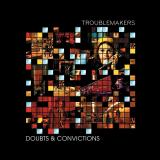
To mark the 25th anniversary of its release, Doubts and Convictions by Troublemakers is officially reissued, more than twenty years after its original release in 2001.
Never reissued until now, this emblematic French Touch album—originally signed in Chicago, USA—captures a moment when French electronic music opened up to jazz, soul and transatlantic grooves.
Valvula Records returns with its third EP, reinforcing its identity through a powerful release that brings together Swedish and Brazilian artists in a compelling convergence of contemporary Techno. The project highlights the creative strength of artists who are actively shaping Raw and Hypnotic Techno with personality, consistency, and a clear artistic vision.
Alexander Johansson and Mattias Fridell deliver an intense and precisely crafted collaboration, reflecting the maturity of a partnership built on deep, impactful productions. Brankelo continues to expand his international presence following recent releases on the renowned Planet Rhythm, contributing a track driven by raw energy and sonic intensity.
Sev Dah maintains his distinctive contemporary groove, offering an exclusive track that adds tension and movement to the EP. Alvinho L. Noise and Steel Force join forces on a hypnotic, driving track powered by a solid and immersive groove, reinforcing the EP's raw and uncompromising character.
Designed for the dancefloor, DJs, and true Techno enthusiasts, this release marks another strong step forward for Valvula Records in building an authentic and relevant catalog.
Marking twenty years since South African producer and DJ Esa Williams left Cape Town, Dala What We Must is a deeply personal and expansive debut LP, an exploration of movement, memory, and sound shaped by two decades of creative evolution.
Co-created with collaborator and multi-instrumentalist Robin G. Breeze, the album deftly combines field recordings, layered instrumentation, and emotionally resonant compositions into a nuanced, globally influenced body of work. It also stands as Esa’s most collaborative release to date, featuring contributions from musicians across London, Oaxaca, Nairobi, and Cape Town, each adding their own creative energy to a project built on openness, trust, and shared experience.
The album draws inspiration from Esa’s recent ventures into documentary scoring and soundtracking, with projects like Cursed (Audible) and The Invisible Hand teaching him to listen differently, to honour space, to serve the story. That sensibility permeates the album, resulting in music that breathes, lingers, and listens as much as it speaks.
The title, Dala What We Must, is a South African call to action: a reminder to do what’s necessary, even in uncertainty. Finalised in the months leading up to Esa’s transition into fatherhood, the record carries a sense of grounding, care, and quiet transformation.
Dala What We Must is a sonic reflection of journey and community, a deeply collaborative project rooted in connection and guided by intention.
AE Productions in association with Sure Shot Recordings and In Effect Recordings are pleased to announce a 10 Year Anniversary Edition of the critically acclaimed Phill Most Chill and Paul Nice album as the Fabreeze Brothers.
The hugely successful first edition which was pressed on colour vinyl and supplied in double fold out sleeve sold out in only 2 weeks from release date and then the 2nd pressing black vinyl edition sold out a little while later but has for years been out of print but is increasingly requested by shops, via email, social media, AE Productions website back in stock requests, etc…
As it has been 10 years since original release back in 2015 at the time of proceeding with manufacturing, it was the perfect opportunity to do a 3rd pressing to mark the anniversary but we had to pull out all the stops for a 3rd run of this incredible album and also make it subtly different again in packaging design from the 1st and 2nd pressings so that each has it’s own particular feel and quality.
With help from the original designer and all-round vinyl artwork supremo Mr Krum we have found some nice adjustments for the gatefold sleeve where the detail from the insert sheet found in the original issues is incorporated into the inside panels of the sleeve. We have also tweaked the hype sticker to mark the 10th Anniversary Edition and updated the vinyl labels so as to work better with the new Splatter vinyl which follows the original red and yellow vinyl but each splattered with the opposite colour.
For something a little extra we have compiled a Limited Expanded Edition Double Cassette Box Set that includes the original album and also a ‘Bonus Tape’ which features all of the remixes, alternate versions, Original Versions of album cuts and bonus tracks found on B-sides of the array of singles and we included for good measure 2 tracks that only appeared on the promotional only LP sampler that ended up being different on the final release. This is limited to cassette just for the non-vinyl heads as all of these tracks already appear on vinyl. The outer box is A5 card in black with gold foil Fabreeze Brothers logo and comes with discography booklet.
‘The Bonus Tape’ from the box set is also available as a standalone cassette release with alternate j-card art work so that it has it’s own flavour and so that anyone that purchased one of the original run of cassettes that sold out before we could even ship any copies, did not need to purchase the main album again unnecessarily and to make it noticeable from the Expanded Edition Box Set version.
This version also has an alternate shell design in keeping with the clear shell with dark liner that was commonplace back in the 90’s and the cassette geeks may note the red text on the spine as was also a common design back then – giving this a pseudonym of ‘the 90’s tape’ during the design process.
We couldn’t stop there so we also have an extremely low quantity Limited Edition Mini Disc version which is the main album plus 8 of the bonus tracks from The Bonus Tape – only missing the 2 least significant alternate versions but clocking in at just a few seconds under 80 minutes – the absolute maximum for the format! Mini Disc???!!! You’re probably asking – yes!
While looking into the cassette duplication options we realised that the duplicator also offers Mini Disc production so we thought that it may be worth doing a very small run just because not only are professionally manufactured Mini Disc’s rare in Hip Hop, they are rare within the entire music industry as they never really took off as a medium to purchase music but ended up as the choice for home recorded Walkman and car use. Indeed, AE boss Mr Fantastic still has his main machine, portable and old discs. Amazingly also, the sleeve artwork transferred brilliantly to the Mini Disc template. They are manufactured using high quality Sony discs using ATRAC 4.5 codec.
All releases are supplied with unique free download codes on cards that are included inside the packaging but also with the Expanded Edition cassette and Mini Disc having 2 cards – 1 for the main album and a 2nd card for ‘The Bonus Tape’. The free downloads are supplied direct from Phill Most Chill’s Bandcamp page keeping it independent.
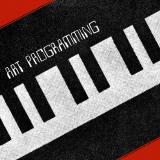
We are excited to continue our work with Art P / Art Programming by finally offering the first full-length work from this Bremen-based electronic group. Originally released only on cassette in 1983, the self-titled album has now been fully restored and remastered, complete with bonus tracks and unreleased mixes unearthed from a rare demo.
The LP opens with "Wesen vom anderen Stern" ("Beings from Another Planet"), a downtempo, 808-driven electro synth wave track with German lyrics telling a story of aliens capturing earth, becoming the new "Herren" (lords), while humans are reduced to mere "objects." Art Programming founding member Jens-Markus Wegener notes that this track has always been a favorite during live performances, and it's easy to imagine how the futuristic sounds would have blown people away at the time.
Next is the electro/proto-techno title track "Art Programming," which we previously issued on a limited 12" in its full-length form. With its straightforward Roland 808 rhythms, catchy synth lines, and vocoder vocals, it's a classic example of German electro, and one of the earliest proto-techno tracks - long before Cybotron claimed the techno mantle. Its extensive break and electronic twist make it an early precursor to the genre. Wegener recalls that this track was created exclusively by him and Grotelüschen, with Grotelüschen contributing most of the melodic elements, while Wegener focused on drum machine programming and vocoder vocals.
On "That's Me," the album welcomes back singer Claudia Roebke. Although it's an electronic composition, Roebke adds a rock-infused, almost psychedelic vibe to the song. The lyrics, written by Wegener, depict a person obsessed with their appearance, using irony to critique societal beauty norms, questioning the obsession with perfection and attraction.
The album continues with a series of uptempo electro tracks: "Videoscreen," "La Gare," and "Genscher Pull 'N' Push." The first two feature slightly different mixes from an earlier demo that we personally prefered over the versions that were available on the final cassette release. "Videoscreen" expands on the theme of social isolation, with lyrics reflecting on a world obsessed with watching video all day - a topic that resonates strongly with today's culture of doom scrolling and social media addiction.
Next up, "Genscher Pull 'N' Push" is an incredible electro/wave/proto-techno track recorded in October 1982 with a political edge. Originally omitted from the album, it was only available on the demo cassette we mentioned earlier. The song takes aim at German politics, with lyrics that shout "bitte geh nach links / bitte geh nach rechts" ("please go to the left" and "please go to the right"), referencing the shifting political allegiances during the 1982 coalition change, when Genscher's party, the FDP, left the Helmut Schmidt cabinet to join the CDU/CSU opposition. The track was never released as the political topic had become outdated just a few months later.
The album closes with "Light and Fire," which originally served as the album's opening track. Its quirky, upbeat vibe now makes for a fitting outro.
The gear used on this album reads like a dream list for early 80s electronic music production: Roland Jupiter 4, TR 808, TB 303, System 100, SVC 350, Korg Mono/Poly, Moog Prodigy, FRICKE-Sequenzer, Roland CSQ-100 Sequenzer, Coron DS-8, MM 12/2, Sony TC 399, TEAC-244 Portastudio, Ibanez DM 1000, EH-Electric Mistress, EV-Micro. This unique lineup of equipment sets the album apart from NDW releases of the era, lending it a distinct sound with heavy proto-techno leanings and that straightforward electro vibe we all love.
The album is being released as a very limited edition of 300 copies on transparent red vinyl, complete with a full picture sleeve and lyrics inlay. This is yet another rediscovered and restored 80s gem on our label that you definitely don't want to miss!
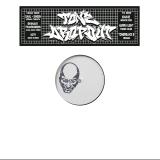
Tone Dropout Records kick off the new year in emphatic style with a brand-new 6-track vinyl EP that stays true to the label’s unmistakable dancefloor-driven sound.
Packed with heavyweight grooves, acid lines, breaks, and bleeps, this release delivers six high-impact tracks designed for late-night systems and packed floors. The EP also marks an exciting moment for the label, welcoming two new artists into the Tone Dropout family while celebrating the return of long-standing contributors.
Joining the roster for the first time are KWAKE and Harry Light, both making a powerful debut on the label. They sit alongside Tone Dropout regulars SkyWave Transmissions and XOTR, while label co-owners DAWL and SWEEN reunite once again, delivering an acid-fuelled opener and a special bonus breaks track on Side B.
As always, the EP is overflowing with breaks, bleeps, acid, and raw rave energy.
Side A – The Head Side
Side A opens strong with DAWL and SWEEN at the helm, laying down a driving four-to-the-floor acid groover that would warm up any dancefloor with ease. It’s a statement opener — and a sign of much more to come from the duo throughout the year.
Next up, SkyWave Transmissions brings his trademark experience and finesse, delivering a tightly produced acid-bleep track that showcases depth, quality, and character. Following seamlessly is long-time collaborator XOTR, who rounds out the side with a pure slice of northern bleep excellence — unmistakably Sheffield in style and sound.
Side B
Side B introduces the first of the new Tone Dropout members, KWAKE. A long-time friend of the label, this marks his first official appearance, and he doesn’t disappoint. His track is a full-force breaks banger, capturing authentic rave energy and guaranteed to ignite the floor.
Next comes Harry Light, making an immediate impact with a pounding house-and-breaks hybrid. Impeccably produced and relentless in energy, the track lives up to its name perfectly — “POWER HOUSE.” Both newcomers arrive firing on all cylinders, delivering two massive dancefloor weapons back-to-back.
Closing out the EP, DAWL and SWEEN return with Tones Breaks 5, a three-minute breaks workout and the latest installment in the label’s breaks series. This track also serves as a respectful nod to one of their musical heroes, Frankie Bones, rounding off the release on a high.
Six tracks. All killers. No fillers.
In challenging times, this EP delivers exceptional value — a complete package of club-ready music pressed to vinyl and built for real dancefloors.
Another quality release from Tone Dropout Records.
Reframed is Vitess’ third album, released on his own label Retro Futura, and marks a new turning point in his artistic journey. Unlike his previous albums — the first fully exploring the Retro aesthetic, the second embodying the Futura — Reframed brings these two worlds together within a single, coherent yet eclectic body of work. The album opens with sounds inspired by 90s progressive music and gradually moves toward more futuristic textures. This album format gives Vitess complete freedom: the freedom to build a full, living musical experience, introducing for the first time a strong instrumental dimension — most notably through the use of live drums — and allowing each track to interact with others, transform, or mirror one another, while maintaining a clear narrative thread that guides the listener throughout.
The title Reframed directly reflects this approach. The album is built around tracks conceived as Recto / Verso, offering a form of double listening experience. On the one hand, electronic, club-oriented and progressive versions, designed for energy and dancefloor movement; on the other hand, more introspective, pop and instrumental counterparts, created for listening and storytelling. Starting from the same musical foundation — a vocal sample, a percussion element, or a melody — Vitess develops two distinct interpretations of the same track, generating contrasting yet deeply connected sonic worlds. This method, central to his creative process, highlights his ability to explore a single detail in depth and let a micro-element lead him toward radically different sonic dimensions, while ensuring coherence and a strong identity across the album.
For Reframed, Vitess also collaborates for the first time with other artists: Stupid Flash, ATOEM, and Lucile, selected for their ability to enrich his universe and push it toward new aesthetics. These collaborations recreate a sense of collective energy reminiscent of his early days playing in bands, while remaining true to the essence of the Vitess project: a primarily solitary approach rooted in exploration, experimentation, and embracing the unexpected paths each idea can take.
SMIILE RECORDS launches its new vinyl-focused sub-imprint SMIILEWAX with a three-track EP from Jen Cardini, released March 27th, 2026. Marking Cardini’s first solo project since the 90s, ‘petit monstre’ delivers percussive, club-ready cuts built for modern dance floors. The EP moves from stripped, rhythm-led groove to raw acid pressure and a drum-focused homage to the New York underground. A bold, floor-tested statement from one of dance music’s most quietly influential selectors and curators.
Karkossyn returns to the shadows with Undergrowth, a harrowing descent into the Bristolian void that pushes dark drum and bass into its most predatory forms. The EP opens with a cold, eerie prologue. A warning that constructs a menacing world before the listener is dragged into the sonic abyss.
Drawing from dnb, trip-hop, and jungle, the soundscapes are characterized by a visceral dread birthed from the dampest corners of the South West. These tracks are built on distorted bass, gritty drums, and raw percussion, layered with atmospheric drones that heighten the feeling of suspense throughout.
Adding to the murk, Bristol’s own Pessimist provides a remix that results in a skeletal, rhythmic haunting. It is a definitive statement of UK dread, solidifying Karkossyn’s place as an uncompromising architect of industrial-tinged carnage.
Marking a milestone for the imprint, this serves as Erosion’s first physical release.
ZGMDP001 marks the first dubplate release on Zeugma Records.
Po-Sobachi. Set in place.
Four tracks engineered for structural pressure and dancefloor endurance. Reduced motion, reinforced grooves, concrete-weight frequencies designed to realign bodies under load.
Featuring Rikha, Pabloisnotkind, Eliptica (Rikha & Antonio Valente live project) and Lucretio (The Analogue Cops - Timeless) on remixing duties showing off his skills.
No gimmicks, just strenght.
Straight to the point, pure power.
Cut at Burbidub
Mastered by Riccardo Chiarucci (Rikha) in Colle di Val d'Elsa
Additional processing on B1, B2 by Andrea Pedra (Kian T)
Artwork by Luigi De Santis
pdqb is an entity without a fixed form, moving through multiple timelines at once, performing in all of them simultaneously.
Every tone on this record was sampled somewhere else: in collapsed futures, unfinished pasts, and inside stress loops that never resolved. The tracks are not composed - they are retrieved, stitched together from moments that already happened and moments that haven't happened yet.
The music is unstable, dependent on who listens, and in which dimension, the tracks re-arrange themselves, revealing different harmonics, different fears, different exits. No two listeners hear the same, even if they play it at the same time.
The überskilled Detroit remixers provide a solution for Earthbound listeners - those unable to time-travel or shapeshift: By filtering pdqb's multidimensional signal through machine discipline, they force a temporary alignment - a version of a track that sounds the same to most listeners. Only then does collective rhythm become possible, a shared timeline where bodies on a dancefloor move to the same future at once.
---
Dr. Paul Dominic Quentin Bernard defines Future Traumatic Stress Disorder as a cognitive condition marked by a reversal of mnemonic orientation. Memory, in this model, no longer operates retrospectively but functions prospectively, encoding anticipated survival outcomes rather than past experience. Affected subjects do not recall what has been lived through; instead, they retain anticipatory memory structures of what will be survived. Bernard notes that this temporal inversion produces sustained psychological stress and warrants further empirical investigation.
WRWTFWW Records is extremely excited to announce Hot-N-Ready Remixes Delivered by Pizza Hotline In 20 Minutes or Less, the brand new remix album from Pizza Hotline, landing hot and fast on a limited edition Neon Arcade Arctic Pearl Colored Vinyl Double LP, cut at 45rpm and housed in a heavyweight sleeve with artwork by Equip Studio.
From the high-octane mind of PIZZA HOTLINE - the man behind cult classics that helped redefine liquid drum & bass through a Y2K, console-era lens - comes a full-throttle remix album that feels like a secret bonus disc unlocked after beating the game, a portal into a parallel universe of rave-powered nostalgia and pixel-perfect bliss. Warp-speed liquid DNB, atmospheric jungle, and dancefloor-crushing remixes of legendary tracks extracted from the greatest video games ever made collide in a sensory overload of pure arcade euphoria. Soaring pads, breakbeats that ricochet like laser fire, deep-space subs, and rhythms that feel like drifting through a cyber-city at 3AM with only a CRT glow to guide you.
The album plays like a late-night arcade run fueled by muscle memory and emotion: PlayStation futurism meets WipeEout velocities, Donkey Kong adventure grit, GoldenEye stealth tension, and Sega Saturn dream-logic. It's fast, melodic, immersive, and deeply cinematic - a love letter to video game soundtracks, club culture, and the spaces where the two collide.
This release marks the fifth Pizza Hotline collaboration with WRWTFWW, following the ultra-classic Level Select, its brilliant follow-up Polygon Island, the collaborative smash Anti Gravity Tournament with Mitch Murder, and the Low Poly Breaks cassette series.
Rising star Storm Mollison lands her debut on Heist with an ep blending House & R 'n B and we're completely hooked.
The future is looking bright for Storm Mollison - Heist's newest. Marked as artist to look out for by Shazam on their fast forward 2026 list, Storm's got a bright and busy year ahead, after an already big 2025. Last year alone, she featured on Kiki's hit 'Getting ready for the party', featured on a Mixmag London event and a Raw Cuts X Heist ADE party, had her first cover feature on Spotify, multiple radio 1 appearances, released several singles, a full EP on Noir Fever and a Luuk van Dijk remix.
If that's not enough to get you excited, we suggest you just listen to her 'Act like that' EP on Heist. In Storm's own words: "it's the most exciting music I've made so far" and we couldn't agree more. Her EP is a perfect blend of her love for house music and soulful R 'n B with its 4 tracks smothered in deep chords, smooth vocals and crunchy textures.
EP opener 'Doing Sumthin'' has been a staple in Dam Swindle's sets ever since receiving Storm's first demo and has never failed to make the crowd bounce from left to right with its quirky and equally cool vocal courtesy of Aaron Pfeiffer. Sometimes, you just need someone to tell you which way to move and before you know it, the whole club is doing it. The beat is chunky, and the sax lick is a nice wink to the old school house that has influences Storm's sound so much.
Act Like That - the EP's title track -, is a modern R' n B song that could have easily been on Rochelle Jordan's latest album. The lyrics are perfectly delivered by Storm herself and celebrate women who stand up to unreliable men. It could well be the badass soundtrack of womanhood for 2026 delivered in a silky-smooth package that'll live rent-free in your head for the foreseeable future.
On the flipside is "Gotta Go', an undercover dancefloor burner with lush keys and a lean-back groove. The track relies on crisp textures and little frizzles all throughout the track, with a big breakdown for ultimate release.
Ep closer 'Workin' takes us back into R 'n B territory, this time in a very danceable form. Storm's soft vocals lie on top of a steady beat with deep chords and a bassline so sexy It'll make you get down no matter where you're hearing this.
It's hard to speak about a breakthrough for an artist that has already seen such a rise in the scene, but if we're talking about her music, this will be the record that people come back to after years and say, "remember when she releases ALT!?"
On the cover: Keiji Haino. Inside: Shamica Ruddock, Seppuku Pistols, Jabu, Gregory TS Walker, Viktar Siamaška, The Primer: John Butcher, Invisible Jukebox: Wolfgang Voigt, Epiphanies: Mark Webber on Spaceman 3, The Inner Sleeve: Céline Gillain on Leonard Cohen, Global Ear: Nicosia, Unlimited Editions: Nashazphone, and in the reviews sections: Wendy Eisenberg, Ivo Perelman, Yellow Swans, Meshell Ndegeocello, Tristwch Y Fenywod, Byard Lancaster, Zdeněk Liška, Dr John, Supernormal, Heroines Of Sound, and much more.
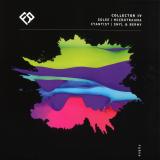
Future Romance returns with another V/A EP called „Collector IV“, the next chapter in its vinyl-only series dedicated to the label’s most in-demand releases. This edition brings together four standout tracks that move effortlessly between melodic house and techno, crafted by a handpicked selection of distinctive artists. Each track has already made its mark on dancefloors worldwide, earning strong DJ support and international recognition. Collector IV underlines Future Romance’s ongoing passion for curating timeless club music, pressed with care for true vinyl lovers. Featuring tracks by Solee, Microtrauma, SNYL & Berny, and Cyantist.
With their upcoming album Waves, Moonchild enters a bold new chapter. A deeply personal and emotionally raw project, Waves explores themes of grief, healing, resilience, and self-worth, eschewing the love songs that once dominated their catalog. "This album is about processing loss and stepping into your power," says Amber. "It's a lyrical departure, but it reflects what I've been going through these past few years."
The project also marks a return to in-person collaboration and a new embrace of sampling and sonic experimentation. The result is an album that feels more vulnerable and grounded than ever, while still pushing the boundaries of their signature sound.
Reissue of a lost hit by the British composer Kevan Frost, now championed and given a brand-new Dub Mix by Mark Grusane. Up for pre-order now and due late-March on our RSS series!
Kevan Frost grew up in Jos, Nigeria where he became a self-taught musician and developed a deep understanding of rhythm and melody. In the 90's, Frost was a session musician for many studios in London, one of these was unable to pay him so they gave him a few free days in the studio and the result was "Give It Up" as he explains:
"I went in and recorded all the music in a day, and the vocals and mix on day two. This was the days of only having 24 tracks available on tape so I programmed the drums, bass and keyboard parts on C-Lab which was only available on the Atari computer and the samples I made on my Akai S-1000 sampler. Full of floppy disks I went in early on day one and printed all of this on tape. I then recorded the guitar parts. Day two was me layering the lead vocals and Backing vocal parts as quick as I could before starting to mix."
However, the track fell into obscurity with no major label backing or marketing budget. A friend of Mark Grusane’s came across it in Brooklyn at the African Record Centre and it eventually ended up in Mark's hands and from there he edited the original track to a more stripped-back dub mix and began playing it out to great effect on dancefloors.
After a bit of digging, we tracked down Kevan and a fully licensed reissue is due on Rush Hour in late March 2026, including a brand new ‘Dub Mix’ from Mark Grusane.
Bambe welcomes Low Jack — the alias of French producer Philippe Hallais — to the label with his debut single “MARKET,” backed by a remix from Bambe label head Bambounou. Following the dark ambient explorations of his recent album Lacrimosa on Stroom, Low Jack returns decisively to the dance floor, channeling his club instincts while preserving a deep-rooted connection to contemporary art.
Originally conceived as a commissioned composition for Australian visual artist Thomas Jeppe, “MARKET” was created to accompany an immersive installation exploring the hallucinatory rhythms of cosmopolitan life. The work was presented in February 2025 at Circolo UltraFiorucci, a newly launched cultural space in Milan, where sound and image converged to envelop visitors in Jeppe’s vivid, destabilized urban vision.
Recontextualized for the club, “MARKET” bridges installation and dance floor, reinforcing Low Jack’s singular ability to move fluidly between experimental art contexts and forward-leaning club music — now sharpened further by Bambounou’s remix, which pushes the track into electro territory.
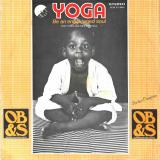
The rare and deeply funky LP "Yoga – Be An Enlightened Soul – Stay Young And Pure With Yoga"
by Osunfisan Brothers & Sisters is set to return to vinyl in an official reissue, marking the first
authorized repress of one of Nigeria’s most elusive spiritual records.
Originally released in limited circulation, Yoga occupies a unique place in many collectors grail list.
According to Mr Femi Osunfisan, the album was conceived by his senior brother and bandleader, "We
chose yoga to as a concept to channel our music, but it was not intended to practise yoga with the
music". Neither pop record nor conventional boogie LP, the album is highly sought-after for the amazing
production by the Sound master Odion Iruoje and for the heavy afro-disco workouts.
At a time when Nigerian music was dominated by Afrobeat, highlife, and disco, Osunfisan Brothers &
Sisters charted a more introspective path—using rhythm, voice, and repetition as tools for enlightenment
and personal grounding.
Every journey has it's final beat.
This vinyl marks the last NTFO release - a record made to move bodies
and stay in collections long after the needle lifts.
No reissues! No repress!
The Golden Gate Quartett VA5 marks the fifth vinyl Various Artists release on Golden Gate Club Records, continuing the label’s tradition of carefully curated club music with character and depth.
This new chapter brings together a sharp selection of artists - SaPu, Tripmastaz, Cesare vs Disorder, and the trio Alex New, Gruman & Zlene - each contributing one track and guiding listeners through hypnotic rhythms, subtle textures, and a distinct raw energy.
While each contribution carries a clear individual signature, the tracks share a cohesive spirit, balancing low-end weight, atmosphere, groove, and punch, all while maintaining a refined sense of swing.
Golden Gate Quartett VA5 stands as both a statement and a celebration, showcasing diversity within a unified sound and reaffirming Golden Gate Club’s commitment to quality, timeless club music crafted with dedication for the dancefloor.
Following an exclusive, instantly sold-out preview during ADE 2025, Shades marks the highly anticipated second release from Life Cycle. The official release is finally here, featuring two tracks that perfectly encapsulate the vision Life Cycle first introduced with its debut release, ‘Magic Happens’, a true musical journey without boundaries. With Shades on Side A and Love Touch on Side B, the record delivers two distinct sonic vibes, carefully crafted by the label’s founder and the producer behind the release, Fabrizio Fattore.
Anywhere, Anyway captures a selection of club tools that Makèz and their close circle have tested, refined and played across dance floors worldwide. Each track carries that familiar equilibrium the duo keeps guard over, a steady pull between raw club energy and moments meant for intimate listening.
Much like their recent album on No Art, the EP took shape while traveling, moving from session to session with artists from different musical worlds. Those encounters left their marks, subtle shifts in rhythm, harmony and texture, shaping the edges of the EP. The Amsterdam duo keeps seeking creative impulses from unexpected angles, letting ideas find them wherever they are. Anywhere, anyway.
Glaskin is the alias of two brothers, Jonathan and Ferdinand, based in Munich. The pair have emerged as key figures in the citys electronic music scene as longtime residents of the renowned Blitz Club, standing out a homegrown talents amongst its vibrant electronic landscape. Bringing a unique, forward-thinking techno style, as evidenced by their contributions to Mutual Rytms Federation Of Rytm II and III compilations in previous years, they now mark a new chapter and open 2025 in style with their debut 12 on the label, Inertia Of Motion. Each cut on the EP has been handcrafted with analogue gear, reflecting their distinctive artistic and sonic vision. The release is a direct outcome of the creative process behind their live set, which has become an integral part of the duos identity and shows a natural evolution of their singular sound.
Hush Up kicks things off with deep, rubbery and rolling techno rhythms. The drums are stripped back and laced with pulsing synth patterns and spoken word snippets that add a freaky edge. Double Tap ups the anti with classic, pumping deep techno with smart filters adding movement to the track as urgent leads hurry onwards. Inertia bring a more anxious atmosphere with tightly coiled drums and perc and eerie bell sounds ring out over the fat, twisted bassline. The brilliant Tank brings mind-melting loopy techno with dubby chords and textured leads warming their way between the beats to great effect, while Motion is suspenseful techno that locks you into a high speed groove peppered with thumping hits and kicks. Last of all, digital bonus Blushed Blue explores a moody, minimal, late night techno sound that is warm, stylish and hypnotic to close the show
Blue Hour distills over a decade of artistry into his debut album Selva, unearthing eight tracks inspired by ancient wisdom and forgotten worlds.
Blue Hour is the moniker of Luke Standing, a multifaceted artist, producer, and label owner navigating between past and present electronic dance music. Over more than a decade, Standing has built a career balancing transformative craft with a sharp curatorial approach, earning him respect across the global scene. After years of sonic experimentation, he now releases his debut LP Selva. “I never set out to make an LP – it just wrote itself,” he says. “I followed my intuition, and the music found its own path.”
Born and raised in the UK, Standing grew up in parallel with club culture, moving between Brighton, Bristol and Berlin while running club nights and establishing himself under former aliases Furesshu and Esoteric.
He launched his Blue Hour project in late 2013, shortly after relocating to Berlin. Initially a platform for his own music, Blue Hour quickly became a collaborative hub, blurring the lines between personal output and curation. Over time, Standing has cultivated an international ecosystem of like-minded artists while continuously expanding his own sonic horizons.
Selva marks his first full-length studio album, weaving a lifetime of influences into a cohesive narrative inspired by ancient wisdom and forgotten worlds. The eight-track double LP transforms his inner dialogue into a subconscious story pulling inspiration from a labyrinthine network of influence and experience. “I followed the music obsessively, reflecting and refining until the story revealed itself,” Standing explains.
“To me, the LP evokes Amazonian or Mayan jungles, themes of exploration, the mysteries of the natural world, wisdom passed down through generations. I didn't set out to write about these things consciously,
they just emerged on their own.” he adds.The album was shaped through intensive work in his studio and periods spent in subtropical locations.
Listening closely, Selva unfolds like a modern ceremony: the opening tracks channel his early UK dance influences, shifting into blends of traditional and contemporary techno, then expanding into melodic soundscapes before concluding with transcendental textures and atmospheres. The result is an introspective journey where functionality and emotive storytelling coexist, revealing a depth in Blue Hour we haven’t heard before.
Whether performing, curating, or producing, Standing operates with a deep commitment to sound, culture, and collaboration. More than an artist, he is an architectural thinker of what electronic music could become. “Every release is my own metamorphosis,” he says. “This LP reflects my current form, and I’m curious to see what the next chapter brings.” Few artists can unify a lifetime of genre-spanning influences into a sound as sharp and focused. On Selva, Blue Hour does exactly that, opening a new era of deeper
immersion from his Berlin-based label.
Beat Machine Records is proud to drop the sixteenth chapter of its iconic Swinging Flavors series, starring Newcastle’s own Nectax — a breakbeat alchemist pushing jungle and D&B into jagged, unpredictable territory — backed with a remix from forward-thinking bass manipulator Fracture.
Cool Runnings is exactly that: a hypnotic, mid-nineties-tinged jungle cut stripped back and dubbed out, but sharpened with modern production techniques that give every snare and sub-bass a punchy, alive quality. Razor-sharp breaks collide with rolling basslines, weaving a track that’s at once nostalgic and fully of-the-moment.
The B-side flips the energy with Fracture’s remix, injecting fractured percussion, jagged fills, and high-octane bass tweaks. It’s a modern take that preserves the original’s laidback groove while kicking it into full-blown club chaos. Together, the two tracks form a high-voltage 7” that bridges classic jungle aesthetics with contemporary sonic experimentation. “Cool Runnings is my take on a laidback mid-nineties tipped Jungle track. Stripped back, dubbed out, but with a subtle focus on modern production techniques to tie it all together,” says the artist.
Following recent Swinging Flavors contributors like Ac1d Vicious, DJ Sofa, and Ornette Hawkins, Nectax marks the next evolution for the series: tense, textured, and unafraid to push the floor into new territory.
The release continues Beat Machine Records’ mission to highlight forward-thinking club music rooted in underground culture, with a sharp focus on physical formats and hybrid rhythms.
Analog Fingerprints Vol. 0 is a compilation bringing together the early 2000s works of Marco Passarani under his Analog Fingerprints alias, collecting key tracks originally released on Rome’s Plasmek and Pigna labels.
For Numbers, the story starts long before the label itself. In their formative years, digging in Glasgow’s Rubadub, Passarani’s records felt like dispatches from a future city. Releases on his own Nature Records and on labels such as Generator and Interr-Ference Communications were mind blowing: rooted in Detroit techno, Chicago house and electro, yet pushing somewhere new. Much like fellow travellers Autechre, who would remix him in 2001, Passarani’s music balanced machine funk with restless experimentation.
Information was scarce, and you would hear these records first on the dancefloor or at listening stations in shops like Rubadub. Print fanzines like Ear and early web outposts such as Forcefield offered only fragments. But there was a palpable axis forming between Detroit techno and a new European wave of record labels including Skam, Rephlex, Clone, Viewlexx and Nature itself. It was the sound that defined Saturday nights at Rubadub’s ‘69’ parties in Paisley, just outside of Glasgow.
Passarani’s records, in particular, were instrumental in bringing together the future Numbers co-founders. Richard had already booked him pre-Numbers; meanwhile Calum (Spencer) and Jack (Jackmaster), then 16/17 year olds working alternate Saturdays in Rubadub, were so enamoured with the Roman sound that they travelled to Rome for the Bitz Festival in 2003 to seek out Passarani and Lory D at their source.
The first Analog Fingerprints release landed as a 12” on Plasmek in 2001, following the fractured, IDM-leaning 6 Katun material. For Passarani, the project marked a recalibration. A DJ first and foremost, he had moved into production via early computer setups, from a Commodore Amiga through primitive PC audio, Cubase and Logic, later experimenting with Ableton. The IDM scene had offered a playground for trial and error, but there was always a tension between abstraction and the dancefloor. Analog Fingerprints became the bridge: still intelligent, but with more dance than distance. After years of broken beats and complex arrangements, he wanted directness without surrendering identity.
Working closely with Francesco de Bellis and Mario Pierro in the Pigneto district, the trio formed Pigna as a vehicle for reclaiming a more accessible dance sound, deliberately steering away from the minimal wave beginning to dominate Europe. Sessions were fast, instinctive, often stretching late into the night with friends dropping by. It was a studio as social space, production as collective energy.
“In that constant search for balance, Analog Fingerprints was my way of expressing something closer to the classic dance floor. The track 'Tribute' - a tribute to my favourite early Detroit techno track of all time, 'First Bass' by Separate Minds - came after I realised I had almost lost my connection with the dance floor. The simplest step was to take inspiration from early Chicago and Detroit and twist it in our Roman ‘Pigna’ way. My goal was to create more accessible dancefloor tracks by mixing my unconscious Italo roots with my teenage love for that early US sound, ensuring the result was as far as possible from the minimal sound that was starting to dominate everywhere.” - Marco Passarani
Technically, the Analog Fingerprints tracks span a transitional era: Roland TR-909, SH-101 and Alpha Juno hardware met early software experiments. A Novation Drumstation rack stood in for the unattainable TR-808, syncing with TB-303 and TR-606. Yet the true secret weapon was Jeskola Buzz, a tracker-style modular environment that allowed step-by-step parameter control and strange melodic constructions, later exported into the audio sequencer. Even the lead on ‘Tribute’ came from an early PPG Wave-style plugin. It was hybrid thinking at a moment when digital tools still felt unstable but full of possibility for technologists like Passarani.
Behind the music sat Finalfrontier, a loose Roman collective orbiting Nature and Plasmek. Distribution and production were intertwined; importing obscure records into Italy built connections with like-minded outsiders across Europe and the US. Expensive phone bills and fax machines forged an “electronix network” that linked Rome to Clone, Viewlexx, Skam, Rephlex, Rubadub and Detroit’s Underground Resistance. There was a shared sense of survival and resistance, of operating against commercial systems.
Passarani recalls “The first time I found a sheet of paper inside an Underground Resistance 12” with info about upcoming releases... and a huge picture of Spock on the back. Imagine that: you love the music, you love Star Trek, and there’s someone on the other side of the ocean sharing those same values and sounds. It was the perfect match. We even gave our original company the suffix ‘Finalfrontier’: that says it all.”
Feedback in that era arrived physically: distributor faxes, conversations with visiting DJs, the experience of playing abroad and meeting kids who had connected with the records. Glasgow became a key node in a scattered outlier network. Passarani personally brought the first two Nature releases to Fat Cat in London, playing them in-store. Shortly after, a fax arrived from Rubadub in Glasgow requesting copies.
“I still remember that phone buzz and the fax paper slowly sliding out, with someone I didn’t know saying they wanted 75 copies of Nature 001. Or like the time we got a fax from the Rephlex crew just saying, “Hello Nature Records, Keep up the good work.” That was how we knew the message was getting through. It was a fantastic feeling; just one piece of thermal fax paper as an analog notification - the mood for the entire week would change.” - Passarani
The connection to Glasgow has since stretched across generations. As Passarani reflects, links often fracture as scenes renew themselves, but in Glasgow something different happened. New and old mixed seamlessly. There was a visible trust in what came before, and a willingness to carry it forward rather than discard it. Observed from Rome, it was deeply encouraging.
Analog Fingerprints Vol. 0 captures that moment of exchange: Rome to Glasgow, Detroit to Europe, experiment to dancefloor. It documents an artist recalibrating his sound and a network of scenes discovering one another in real time, connected by vinyl, faxes and shared intent.
Kenshi Yonezu’s cinematic new chapter comes to life on vinyl.
This special single features Kenshi Yonezu’s latest hit IRIS OUT, the evocative theme from CHAINSAW MAN – THE MOVIE: REZE ARC, Top 5 of the Billboard Global 200 charted song,
becoming the highest-ever charting position for a Japanese language song, alongside JANE DOE, a powerful collaboration with J-pop icon Hikaru Utada. Blending Yonezu’s inventive
production with Utada’s signature vocals, the track marks a landmark meeting of two of Japan’s most visionary artists.
The release also includes Yonezu’s global platinum hit KICK BACK, together with fresh remixes by Frost Children and 2 more, each reimagining the song through a distinctive creative lens.
Pressed on single black 45 RPM vinyl, IRIS OUT/JANE DOE is housed in a sleek single-pocket jacket with a fold-out 12”x24” insert including an Illustration by Kenshi Yonezu, making it a
must-have for collectors and fans of Kenshi Yonezu’s bold, genre-defying sound.
The Citadel Speaks marks the first recorded statement of ElektrAV as a curatorial imprint.
Rooted in Pamplona’s Citadel —and more specifically within the Arms Hall— this release brings together Alberta Balsam, Boris Divider, Bendiak, Komatssu and µ-Ziq, artists whose practices have resonated within the festival’s ecosystem through a shared sensitivity to space, experimentation and sound as cultural expression. Their contributions are not conceived as documentation of an event, but as part of an ongoing cultural dialogue.
The Citadel is not presented here as a venue, but as an active entity: a space that absorbs, transforms and emits sound. Each contribution responds to that condition, forming a collective statement shaped by place, time and intention.
This first volume initiates a living archive.
What follows is not a catalogue of releases, but a body of work.
French talent Hyden makes label debut on Mutual Rytm with conceptual new techno EP, 'To Whom It May Concern'. Hyden is a potent force in the French underground, creating powerful techno with dense percussion, immersive grooves and subtle nods to classic influences - all through his own unique lens. Having delivered standout releases in recent years, here he offers up sounds "anchored in psychoanalysis, time, and emotional residue" as he makes his mark on SHDW's Mutual Rytm imprint, delivering influences of dream logic and surrealism as the palette moves between brutality and introspection. "It's hypnotic music for moments of rupture where something breaks or breaks through". Opener 'Manifest Content' is inspired by Freudian theory and explores the surface illusions of thought and dream. It's about the dissonance between what we perceive and the deeper meaning that slips away beneath and is a deep and dubby techno track with flashes of unsettling melody. 'Bruises' is emotional trauma made sonic. This piece delves into invisible scars and traumas, residues of past conflict or intimacy - it's slow-burning, heavy and raw. 'Jikan' is a meditation built on time and its erosion. Inspired by the Japanese concept of impermanence, it reflects fleeting moments, decay and the tension between stillness and motion with jacked up but warm drums and turbulent bass. Next, 'Free Will' is born from inner conflict and plays with deterministic rhythms and evolving layers, questioning whether we are truly in control or just passengers in a prewritten sequence. The vocal mentions, "creatures, you're out of time" to bring darkness to the intense but sleek rhythms. The streamlined physicality of 'Swarm' channels the primal force of collective movement and is a nod to the loss of individuality in group behaviour. In addition, the package is loaded with digital bonus cuts. 'Yumehara' is a dive into surreal dream-states and evokes subconscious landscapes where logic dissolves and emotion reigns, while 'Lu Bu' is brutal and warlike and named after the legendary Chinese general that captures impulsive violence, betrayal and reckless glory with relentless energy and rhythm. Lastly, 'Neon Pale' is a synthetic dreamscape about fading beauty under artificial light - a melancholy ode to cities at night and the loss of warmth in modern life.
Berlin's Scheermann debuts on Mutual Rytm with deeply personal EP, 'Viciosa'.
Scheermann is at the heart of the Berlin underground as a DJ/producer, but also working behind the scenes at the Intakt Berlin vinyl pressing plant, where he first met Mutual Rytm founder SHDW. As a resident of the Lorem Ipsum party series, he delivers cultured and compelling grooves, and is also an active member of the Wesertekk collective - supporting and pushing club culture to the forefront in more rural areas. His music comes from a deeply personal place, never chasing hype or headlines, and is usually found at home on his own imprint, SAMMLER. This new EP marks his first appearance away from the label as he unveils a collection of records crafted over five years, with each track representing different moments in his life.
'Viciosa' kicks off with paranoid vocals panning about as swinging, warehouse-ready drums pound heavily below. The gritty synth craft adds plenty of texture as filters build the vibe. 'Placid Sin' is even more intense with unresolved synths tripping you in a loopy state while coarse percussion and cantering drums march on. 'Don't Care' is a rave-ready cut that injects your soul with urgent synth energy over more minimal and moody drums. 'Kano' brings a more elastic rhythm with dubby undercurrents and sleek sonar pulses infusing it with mystery, while 'Reika' is a nimble cut with icy hi hats and curious synth notes layering in late night suspense. First digital bonus 'Resoclap' is a heavyweight swinger with dark, groaning voices, before the second digital bonus 'Mizu' provides a speedy and supple workout for body and mind.
Scheermann 'Viciosa' lands on Mutual Rytm on 22nd August 2025.
Elevation, released in 1974 on Impulse! Records, finds saxophonist Pharoah Sanders expanding his spiritual jazz vision on an album that balances ecstatic expression with focused ensemble interplay. Produced by Ed Michel and recorded in 1973 across two live performances and a studio session, Elevation features a dynamic ensemble including Joe Bonner on piano, Calvin Hill on bass, and Michael Carvin on drums.
The album’s open forms, modal grooves, and spiritual themes underscore Sanders’s ongoing search for transcendence and cultural affirmation through sound. With chant-like melodies, circular motifs, and immersive rhythmic textures, pieces like “The Gathering” and the title track reflect a more meditative and exploratory side of Sanders’s aesthetic. Elevation comes towards the end of Sanders’ tenure on Impulse!— a cohesive and spiritually resonant statement that bridges the raw fire of earlier albums with a deeper, more spacious sound.
The album’s open forms, modal grooves, and spiritual themes underscore Sanders’ ongoing search for transcendence and cultural affirmation through sound. With chant-like melodies, circular motifs, and immersive rhythmic textures, pieces like “The Gathering” and the title track reflect a more meditative and exploratory side of Sanders’s aesthetic. Elevation marks the culmination of his Impulse! discography — a cohesive and spiritually resonant final studio statement that bridges the raw fire of earlier albums with a deeper, more spacious sound.
The Verve Vault series is always mastered from analog tapes and pressed on 180g vinyl at Optimal.
a A1. Elevation 18:26
b A2. Greeting To Saud (Brother McCoy Tyner) 4:15
[c] B1. Ore-Se-Rere (Nigerian Juju HiLife) [6:20]
[d] B2. The Gathering [14:09]
[e] B3. Spiritual Blessing [6:20]
[a] A1. Elevation [18:26]
[b] A2. Greeting To Saud (Brother McCoy Tyner) [4:15]
[c] B1. Ore-Se-Rere (Nigerian Juju HiLife) [6:20]
[d] B2. The Gathering [14:09]
[e] B3. Spiritual Blessing [6:20]
[a] A1. Elevation [18:26]
[b] A2. Greeting To Saud (Brother McCoy Tyner) [4:15]
[c] B1. Ore-Se-Rere (Nigerian Juju HiLife) [6:20]
[d] B2. The Gathering [14:09]
[e] B3. Spiritual Blessing [6:20]
[a] A1. Elevation [18:26]
[b] A2. Greeting To Saud (Brother McCoy Tyner) [4:15]
[c] B1. Ore-Se-Rere (Nigerian Juju HiLife) [6:20]
[d] B2. The Gathering [14:09]
[e] B3. Spiritual Blessing [6:20]