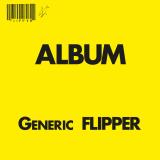
Generic Flipper, the debut album by Flipper, remains the most absorbing full-length LP to emerge from the early San Francisco punk scene. A constant source of imitation for so-called "noise rock" bands, it has yet to be surpassed in its nihilistic glee.
Recorded between October 1980 and August 1981 and released in 1982 on the indispensable Subterranean Records, this album functions as a chaotic, sticky mass of individual personalities: the magma-like bass eruptions and dual vocals of Will Shatter and Bruce Loose, Ted Falconi's icy guitar scraping and the relentless beat of drummer Steve DePace. At times playful and taciturn, paranoid and absurd, Generic charts a deliberate path that willfully chances destruction.
In early '80s punk, when the hardening default was "faster-shorter-louder," Generic subverts the nascent hardcore scene with a strictly applied regimen of turgid-slower-heavier. The lyrics are bleak, yet unnervingly beautiful. "Ever" sets the tone with trademark restraint – "Ever wish the human race didn't exist? And then realize you're one too?" – while closer "Sex Bomb" is a churning, 8-minute epic with looping bass, saxophone accompaniment and electronic effects of dropping bombs.
Tons of indie bands have attempted to recreate Flipper's mix of acidic guitar, metallic bass sludge and sardonically brilliant lyricism, using the seemingly effortless template they pioneered; however, the effect usually drives listeners right back to Generic. While most of their contemporaries wilt under direct comparison, No Trend, the Butthole Surfers, feedtime and Church Police are a few who can stand the frigid heat.
out of Stock
Last delivered 5 months ago available to reorder, subject to availability
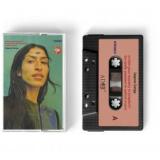
Nicaraguan-American artist Dagmar Zuniga makes music that feels both intimate and expansive: songs drift like disrupted signals, carried by harmony, tape hiss, and a strong sense of touch. Her debut solo album in filth your mystery is kingdom / far smile peasant in yellow music — written and recorded in New York, Norway, and Athens, Georgia over a period of five years on her longtime companion, the Tascam 424 — was uploaded to Bandcamp and YouTube in January 2025, quickly garnering over two hundred thousand views and the attention of artists such as Mount Eerie, who invited her to tour with them that summer. This year, what was once a jewel of tapped-in algorithms and message boards will meet the world at large, with in filth arriving digitally on March 4, and physically on April 10, via AD 93.
in filth is an atmospheric, devotional collage where one voice multiplies into a chorus of selves, sometimes delicate, sometimes severe; an effect created by Zuniga’s masterful layering of texture and complex harmonies. Synths glitter out like spears of sunlight from beneath clouds of moody, time-distorted guitars, and songs spin about themselves like tightly-wound music boxes, making use of a kind of hypnotic repetition, before melting apart into their components or slipping into the following track.
Zuniga began recording to tape as a teenager, drawn to the physicality of the medium — how a tape recording is fragile, mutable, and alive. Though her ethereal sound may draw easy comparisons to other female pioneers of psychedelic folk, she is influenced just as much by the darker sounds of Syd Barrett and The Fall. Like Barrett, Zuniga is a painter, and she is interested not only in recording music but in creating a full, self-contained artistic universe: she creates her own artwork, merchandise, music videos, and bootleg tapes of new and unfinished music that she exclusively sells at live shows (“If something is not material, it does not exist,” she insists). Her world has not gone unvisited, garnering her a monthly show on NTS Radio ‘World of Pain’, as well as a forthcoming appearance at Rewire Festival in April 2026.
Though Zuniga’s work explores themes of solitude and suffering, the suffering in her songs is not borrowed or displayed; it is held, then opened outward through empathy — an exacting practice of attention that insists on shared ground. Solitude, in her work, is not withdrawal but a starting point for connection. Likewise, over time, her recording process has become increasingly communal, with in filth featuring musicians Hayes Hoey, Austyn Wohlers (Tomato Flower), and Zach Phillips (Fievel Is Glauque). Newer recordings widen the circle even more. For Zuniga, collaboration is a way to “find a place between worlds,” echoing Badiou’s idea of love as a vision refracted through the prism of difference. Meaning emerges there — in the space between voices, between artist and listener. “I hope my music helps people work through difficult experiences,” she says. “The same way it helps me.”
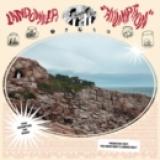
"Western Massachusetts band Landowner play abrasively-clean minimalist punk. Singer Dan Shaw started Landowner in 2016, writing and recording the project's debut Impressive Almanac with a practice amp and a laptop drum machine. Shaw's initial concept was a made-up genre called “weak d-beat”, meant to sound intentionally absurd “as if Antelope were reading the sheet music of Discharge”. When Shaw joined with his current bandmates in 2017, they translated these early experiments in restraint, minimalism, and caricatured hardcore as a live band. This provided Landowner with its own unique set of blueprints: the guitars “slap hard” without using any distortion or effects, the rhythm section is tight, fast, and repetitious, and the song structures make space for lyrics that reflect on the global systems and dark absurdities our lives are tangled in. Comparisons could be made to The Fall, Lungfish, or Uranium Club, but across their five albums, they make it clear: Landowner just sound like Landowner.
Assumption is the band's fifth album. Sonically, it captures the vibrancy and intensity of their live performances. The album title “Assumption” encapsulates the album's multi-layered themes. We make assumptions, taking in information online through an overload of decontextualized snippets and headlines, and then quickly form conclusions, or we allow artificial intelligence to do the thinking for us. Assumption is the sound of a band that established its own musical identity and has reached a place of tightness with an ease gained from years of playing together, sounding mechanically precise and at the same time fully human. It may be the band's most cohesive and fully realized work to date."
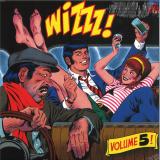
The journey through French-speaking pop archives continues with this fifth volume, packed with fuzz, gimmicks, and dissent. Far from the charts, the selected tracks display a great creative freedom, often backed by corrosive humor. Welcome to the surprising, kaleidoscopic, and colorful world of the late sixties and early seventies, Wizzz!
Born in Montauban, Robert Pico stumbled into music by chance when he met René Vaneste, then artistic director at Pathé-Marconi. René brought him to Paris to record his first 45 RPM EP in 1964. A year later, Pierre Perret introduced him to Vogue, where he recorded his second album with Claude Nougaro’s orchestra. Sylvie Vartan then introduced him to RCA, where he recorded four singles, including the astonishing "Chien Fidèle," a track backed by a hair-rising fuzz guitar. Alongside his solo career, he also composed for other artists like Alain Delon (the song was recorded but remains unreleased), Magali Noël, Bourvil, and Georges Guétary. In the Paris of the sixties, he mingled with Mireille Darc, Elsa Martinelli, Marie Laforêt, France Gall, Françoise Hardy, Petula Clark, Régine, Dani, Serge Gainsbourg, Joe Dassin, Franck Fernandel, Charles Level, and Roland Vincent. Despite his efforts and winning a Grand Prix Sacem for his final record, Robert Pico didn’t achieve the expected success in show business and decided to leave Paris and return to the Southwest, where he devoted himself to writing. He is the author of 23 books (including Delon et Compagnie, Jean-Marc Savary Editions 2025, a memoir about his youth and his many encounters). Today, he is relieved to never have become a celebrity and devotes himself to his work with passion.
In 1969, the Franco-Italian movie Erotissimo was released, directed by Gérard Pirès (who later directed Taxi in 1998, written and produced by Luc Besson). This pop comedy features Annie Girardot, Jean Yanne, Francis Blanche, Serge Gainsbourg, Nicole Croisille, Jacques Martin, and Patrick Topaloff. The soundtrack was written by Michel Polnareff and William Sheller, with lyrics by Jean-Lou Dabadie. "La Femme Faux-cils," performed by Annie Girardot. It recounts the feelings of a rich CEO's wife who seeks to develop her sex appeal under the influence of advertisement and magazines. Groovy, sparkling and light, this track, with ITS lush arrangements humorously critiques consumer society and feminine beauty standards.
“Je suis l’Etat” (1967) is the flagship track of the first EP by singer-songwriter Spauv Georges, aka Georges Larriaga, better known as Jim Larriaga (1941-2022). Born into a family of bakers, the young man was initially planning to become a hairdresser when he discovered English-speaking music through Elvis Presley and the Beatles. After this revelation, he decided he would become a songwriter and gave himself five years to succeed. He recorded his first two EP’s independently for RCA under the pseudonym Spauv Georges; meaning “that poor George”, a nickname given to him by the mother of her friend Jean-Pierre Prévotat (future drummer of the Players, Triangle, or Johnny Hallyday). Portraying a depressed and eccentric young man, Spauv Georges created corrosive and amusing songs that didn’t reach a wide audience, despite a TV appearance with Jean-Christophe Averty.
Supported by his loyal friend and fellow songwriter Jean-Max Rivière, Georges Larriaga met the future singer Carlos in the early '70s, then Sylvie Vartan’s assistant. He wrote songs for Carlos, including the popular "La vie est belle," "Y’a des indiens partout," and "La cantine", which went onto become a huge hit in 1972. He also composed for Claude François (“Anne-Marie”, 1971), Charlotte Julian (“Fleur de province”, 1972), helped launch child singer Roméo (who sold 4 million records), and later wrote the hit "Pas besoin d’éducation sexuelle" (1975) for the young Julie Bataille. In 1971, Jim recorded an album for Disc'Az: “L’univers étrange et fou de Jim Larriaga”, which featured pop gems like “La maison de mon père”.
The story of the song "Zoé" began when Pierre Dorsay, artistic director at Vogue Records, asked Swiss singer and musician Pierre Alain to write a song for a new female singer. The inspiration came when he realized that Zoé (the artist's name) was also the name of France's first atomic battery, created in 1948, which consisted of uranium oxide immersed in heavy water! The lyrics reflect a bubbling energy that must be handled with caution, while the instrumentation echoes this atomic theme, notably with the use of a theremin.
Zoé’s career lasted only as long as a single 45 RPM, but it seems Christine Fontane was the vocalist behind this pseudonym, who is known for several EPs, a good "popcorn" album in 1964, and a handful of children’s singles in the '70s. Regardless, the photograph on the cover is of a different girl entirely.
Later, Pierre Alain continued his career, writing songs for himself, Marie Laforêt, Danièle Licari, Alice Dona, Arlette Zola (3rd place in Eurovision 1982), and achieving multiple gold and platinum records in Canada. Also an inventor with several patents, president of the Romande Academy, and head of the French Alliance in Geneva, he now composes atonal music, books, and poetry. Moreover, he is also the host of "Les Mardis de Pierre Alain" at "Le P'tit Music'Hohl" in Geneva.
Filled with oriental choruses and fuzz guitar, "Fou" is from Jacques Da Sylva's only EP released by Vogue in 1967. Despite the quality of this recording, all traces of this singer disappear after this first effort.
Valentin is a baroque pop singer born in Belgium. He is the songwriter and composer of most of the tracks on his three singles released in the late 60s in Canada. A legend says that he reincarnated himself as Jacky Valentin during the 1970s for a rock'n'roll revival career in Belgium, but his older brother sadly debunked this story. Valentin's first two singles were arranged by Claude Rogen, a Parisian session pianist who had come to Canada to promote the song “Mister A Gogo”, a cover of David Bowie’s “Laughing Gnome”, adapted by singer Delphine, his wife at the time. Far from his usual network, Claude Rogen arranged music for Polydor, including the arrangements for “Je suis un vagabond” in 1969, a jerk tune with string arrangements and a furious optimism.
Jacques Malia wrote, composed, and recorded his only 45 EP for Festival in 1966. “Histoire de gitan” is an incredible beat track with bohemian scat that tells the story of a gypsy musician who came to Paris to make it in the Music-Hall, to no avail. The hero of the song and its author probably shared a similar fate, as Jacques Malia faded into anonymity after this remarkable attempt.
Bernard Jamet recorded two EPs for Barclay in the late sixties and co-wrote several songs with Christine Pilzer, Pascal Danel, and prolific songwriters Michel Delancray and Mya Simile. The track “Raison Légale” (1968), his masterpiece, immerses the listener in a courtroom right when a murderer is being judged, with jerk rhythm and free arrangements. A unique, paranoid, judicial, and psychedelic oddity.
Jean-Pierre Lebrot-Millers started his career in show business in 1967 as a singer and songwriter for the Philips label. After three singles, he wrote several songs of a new kind with his friend Pierre Halioche, in the midst of the sexual liberation movement and the democratization of drugs. With provocative lyrics, “Les filles du hasard” and “Barbara au Chapeau Rose” were released on a Philips singles in 1968. The character of Barbara was inspired by a queen of Parisian nightlife during the psychedelic years: model Charlotte Martin, who dated Eric Clapton from 1965 to 1968, then Jimmy Page from 1970 to 1983. Jean-Claude Petit’s arrangements, with a table-filled intro, soul brass, and Hendrixian guitar, emphasize the flamboyance of a hedonistic and sexy character, whose dog is named Junkie because “Junkie est un nom exquis”! The track was recorded live in three takes with a full orchestra.
Upon its release, the record was censored by Europe 1 and RTL due to its references to drug use. Jean-Pierre Lebrot was then banned from the airwaves and later dismissed by his record label. He changed his artist name to Jean-Pierre Millers, while his companion Pierre Halioche became D. Dolby for a new dreamy composition, “Chilla”, which Jean-Pierre produced himself with arrangements by Jean Musy. Once again, the song was immediately censored everywhere. After this setback, he decided to stop singing and started taking on odd jobs to support his Swedish wife and their son until the day he met Jean-Pierre Martin, then production manager at Decca, who had worked with Manu Dibango. Martin offered Jean-Pierre Lebrot-Millers, then employed at Rank Xerox, the position of artistic director at Decca. He accepted and became, a year later, promotion director (radio, press, TV). He worked on Julio Iglesias’s first album for Decca, which became a massive hit and allowed him to meet Claude Carrère. The latter asked him to write new songs and find their performers, much like a “talent scout.” It’s through him that Jean-Pierre discovered Julie Pietri and Corinne Hermès. He composed “Ma Pompadour” for Ringo, Sheila’s husband, and took the microphone again for the syncope hit “Rendez-Vous” in 1982.
That same year, Jean-Pierre Lebrot-Millers tried to release a track for which he had heavily gone into debt: “Si la vie est un cadeau”. Having recorded it in London, he presented it to numerous professionals, all of whom refused to get involved. The same thing happened with Antenne 2 and the Sacem when he proposed the song as France’s entry for Eurovision. He then met Haïm Saban, who was producing cartoon soundtracks and had just launched the Goldorak theme song. Saban, having listened to the song, declared it had the potential to become a hit. He sent Jean-Pierre and Corinne Hermès to meet the CEO of the Luxembourg radio and television network. The latter received them, asked to hear a verse and chorus a cappella in his office, and immediately hired them to represent Luxembourg at Eurovision 1983. They reworked the arrangements and recorded a new version with Haïm Saban as co-producer. The song ended up winning Eurovision 1983, a great comeback for our hero. He continued producing and hung out with the band Nacash in Belgium when a couple came to introduce their daughter for an impromptu audition in a hotel room. The girl sang “Les démons de minuit” while dancing to a radio cassette. Impressed, he had her take singing lessons for a year and composed a song for her (for which he had the melody and title, but no lyrics). This required him to go on the hunt for a lyricist, who ended up being Guy Carlier. They recorded the song, which was initially a ballad, at Bernard Estardy’s CBE studio, and gave the singer a new name: Melody. They showed the song around their industry network without success. Later, Estardy called Jean-Pierre to suggest changing the rhythm and making it pop-rock. Orlando, Dalida’s brother, liked the result and decided to co-produce the track. “Y’a pas que les grands qui rêvent » became a classic hit. The song has since been covered by Juliette Armanet (as a ballad, like the original) and Valentina.
Born into an aristocratic Breton family, Hervé Mettais-Cartier worked as a DJ at Queen Kiss, a nightclub in Poitiers, where he formed the band Les Concentrés with Michel (an actor) and Christian (a radio technician). Together, they created a repertoire of whimsical songs (“Ma bique est morte”, “J’suis un salaud”, “Fils de dégénéré”...) that they performed on stage dressed in white (in homage to “concentrated milk”). They performed at Bliboquet and Olympia in 1968 for the 10th edition of the “Relais de la chanson Française” organized by L’Humanité-Dimanche and Nous les Garçons et les Filles, sponsored by Pepsi Cola. Winners in the author-composer category, alongside Danish singer Dorte, their visibility allowed them to record a 45, and appear on television in Jean-Christophe Averty’s show. The A-side of the disc features Bruno le ravageur, a casatchok dedicated to Bruno Caquatrix, the director of Olympia, nicknamed in the song “Coq Atroce” or “croque-actrices”. The B-side is dedicated to “Fils de dégénéré”, a quirky tribute to Hervé's aristocratic roots, mixing absurdity with sophisticated vocal harmonies.
After Les Concentrés, Hervé Mettais-Cartier formed the duo La Paire et sa Bêtise with his friend Olivier Robert. They performed in Parisian cabarets and toured with Pierre Vassiliu. In the late 1970s, Hervé began a solo career. He recorded two albums for the Motors label in 1978 and 1979, which did not achieve their anticipated success due to lack of promotion. In 1980, he met Bernadette, with whom he started a family and created a “Chansons à voir” (songs to see) show that he performed until his death at the end of 2024.
Publicité comes from the final EP by the Missiles (Ducretet Thomson, 1966), a disc that also includes “La (nouvelle) guerre de cent ans”, featured on Volume 4 of our Wizzz! series. Please refer to the booklet for the story of the band.
“He’s 1.82 meters tall, 28 years old, weighs 135 kg, is black and Belgian”: this is the description of singer Hegesippe on the back of his sole single (Decca, 1967). He appears on the album cover wearing a Greek toga, like a hippie gag – we are at the end of the year 1967. In “Le crédo d’Hegesippe”, this former bodyguard of Antoine and the Charlots plays the delightful card of the thick brute converted to Flower-Power and non-violence, with arrangements by Jean-Daniel Mercier, aka Paul Mille.
“Ethéro-disco” was released on a promotional record for clients of the Maréchal company (Liège, Belgium) for the New Year 1979. Over a funky rhythm, celebrity impersonations (Brigitte Bardot, Jacques Dutronc, Fernandel…) deliver an enigmatic text about pharmaceutical products like ether, bismuth, and aspartate. The track was composed by Dan Sarravah (responsible for Joanna's “Hold-up inusité” featured on Wizzz! Volume 3) and Tony Talado, who was also a singer (one 45 in 1967), songwriter (with over a dozen credits between 1964 and 1985 in various styles from surf music to disco), author (Devenez Végétarien, Dricot Editions, 1985), ad designer, and psychologist.
Décollez-les is on the A-side of Mamlouk's only single, a pseudonym for Marsel Hurten, who is known for his work on several EPs in the late sixties, as well as composing music for Hervé Vilard’s “Capri, c’est fini”, Claude Channes' “La Haine”, Annie Philippe’s “On m’a toujours dit”, and Nancy Holloway’s “Panne de Cœur”.
This strange song, with Afrobeat horns and absurd dialogues between a chef and his kitchen staff, is the result of a collaboration between Marsel Hurten and one of his neighbors, a photographer from Pavillon-sous-Bois (93), where the musician settled after returning from the Algerian War. A music video was shot to promote the record.
Marsel Hurten was born in Tourcoing (59) into a musical family. At a young age, he joined the brass band founded by his grandfather, playing the piston before studying trumpet at the conservatory, as well as teaching himself how to play the guitar. As an orchestra musician, he toured in France, Belgium, Germany, and England. He released a series of solo 45’s between 1965 and 1968 for the DMF and Az labels before stopping recording to focus on working for other artists (Gilles Olivier, Noëlle Cordier…).
“L’amour nu” (Vogue, 1971) is the work of the short-lived Belgian band Mozaïque. The track, written by singer Jacques Albin, closely resembles another of his compositions, “Carré Blanc”, which he recorded in 1969 for Disc’AZ.
Represented by the Lumi Son micro-label based in Marignane (Côte d'Azur), Jean-Marc Garrigues released two 45 RPMs in the late sixties, defending the French jerk sound. The song “Je dis Non” is a short, joyful ode to youth, pop music, and rebellion.
Songwriter and performer Jacques Penuel released three singles. The first one, “Astronef 328” (Fontana, 1969), features a dizzying series of chords punctuated by sound effects, a sci-fi story, and arrangements by Jean-Claude Vannier.
We would like to sincerely thank Pierre Alain, Moon Blaha, Marsel Hurten, Bastien Larriaga, Jean-Pierre Lebrot-Millers, Bernadette Mettais-Cartier, Robert Pico, Olivier Robert, Claude Rogen, Micky Segura.
out of Stock
Last delivered 8 months ago available to reorder, subject to availability
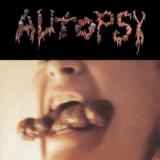
Frontman Chris Reifert was already a well-known force on the underground through his time as drummer with Florida's highly respected death metal combo Death. After playing drums on the band's debut album, the much acclaimed 'Scream Bloody Gore', Chris moved back west to the more open climate of San Francisco & formed Autopsy. The band released the demo 'Critical Madness' in 1988 & it wasn't long before Peaceville Records snapped them up in a deal initially spanning 4 albums.
The partnership kicked off in April 1989 with their debut album 'Severed Survival'; a brutal explosion of heavy riffs, tight drumming & a screaming vocal, rounded off with concepts of death, disease & diabolica. This was swiftly followed up with the equally genre-defining 'Mental Funeral' opus in 1991. Released in the autumn of 1995, Autopsy's then fourth & final album before splitting, 'Shitfun', was a glorious scatological gross out & exercise in the limits of extremity & a fitting end to one of the finest bands of a Doomed generation before their return from the grave in 2009 which has continued to go from strength to strength to the current day. This thirtieth anniversary vinyl pressing of 'Shitfun' is presented on bowel- busting limited brown marble- effect vinyl, including the original cover art & printed inner sleeve.
'Total Spook' mixtape is Artetetra's homage to the forgotten cassette and CD culture of mass-distributed commercial Halloween sound effects, horror tales, and spooky music productions across the eighties and nineties.
Mainly produced in the U.S. these objects featured some of the famous names of the entertainment and commercial industry such as Prince's Dr. Fink (yes, that synth master), Elvira, the Mistress of the Dark and Hallmark as well as unknown and anonymous creatives and artists. In these tracks engineers, musicians and producers arguably had carte blanche in experimenting with extreme samples and vocal manipulation, time-based effects, extended techniques, spooky sound fonts and stock sound effects developing their unique ideas around the sound ambience of the Halloween and horror imagery's campy cliches.
After digging around 30 hours of material gathered from dedicated YouTube channels and playlists such as the ones created by 'Beetlemuse' and 'Caleb Jones', I have compiled a 100' mixtape showcasing some of the most endearing, weird and experimental sound designs long forgotten in the vaporware-like consumer culture of the '80s and ‘90s.
Returning after four years, Los Angeles indie-pop band Massage unveil Coaster, a luminous 10-track album steeped in melodic depth and emotional honesty. Widely recognized for their infectious pop sensibility, the five-piece approach the turbulence of adulthood through shimmering pop songs that capture both nostalgia and growth. Drawing inspiration from The Cure, Big Star, Echo and the Bunnymen, and The Go- Betweens, Massage now transcend their influences, offering a sound that's uniquely their own. Coaster is a testament to the band's evolution-embracing the "inbetween," writing pop songs that linger. What makes compelling is how three musicians take on writing and vocal duties, leading to stylistic shifts between tracks while maintaining a cohesive, signature sound. Across the record, the band's lyricism explores the messiness and resilience of adulthood-resolving to keep moving forward, even when life is uncertain. The recording process mirrored these themes: a willingness to make mistakes, hit reset, and chase down the unique world within each song. This is the soundtrack of five friends navigating life's unpredictability together. Their chemistry and shared history create moments of spontaneous brilliance- whether in the driving interplay between guitars, the pulse of vintage effects, or the heartfelt harmonies threading the album. Coaster is more than a collection of standout pop songs; it documents growth and camaraderie, bridging nostalgia with honest self-reflection and crafting melodies that linger long after the final note.
FOLLOW UP TO THE CRITICALLY ACCLAIMED 2023 ALBUM ‘RPB’ (UTR151):
- #4 MOJO FOLK ALBUMS OF THE YEAR+ FOLK ALBUM OF THE MONTH:
“ IT MELTS TRAD TECHNIQUES AND MINECRAFT BURBLE INTO ‘A MASSIVE, MULTI-PLAYER ONLINE DREAM’ . INCOMPREHENSIBLE/IRRESISTIBLE’
‘ME LOST ME’S RPG (UPSET THE RHYTHM) IS AN EXCITING, IMAGINATIVE ALBUM EXPLORING THE LINKS BETWEEN TRADITIONAL INFLUENCES AND ELECTRONICS IN FERTILE WAYS.’ THE GUARDIAN - FOLK ALBUMS OF THE MONTH.
'FROM NEWCASTLE, VIA UPSET THE RHYTHM, JAYNE DENT EXPLORES FOLK ART AND FUTURISM TO SPELLBINDING EFFECT' THE QUIETUS
FULL PAGE REVIEW IN WIRE MAGAZINE:"ME LOST ME'S NEW ALBUM RPG IS FILLED WITH STORIES OF ADVENTURE AND SELF-DISCOVERY IN VERDANT NATURAL LANDSCAPES, SUNG WITH FEELING AND CLARITY"
Me Lost Me - the project of Newcastle-based artist Jayne Dent - delights in experimenting with songwriting, creating a beguiling mix of soaring vocals and atmospheric electronics that playfully push the boundaries of genre.
On Me Lost Me’s fourth full-length, This Material Moment - arriving on Upset the Rhythm on 27th June - she has created an “emotionally raw” album, her most honest and vulnerable yet.
Concerned with physicality, interpretations, and, yes, materiality, This Material Moment is an album akin to rummaging through a box of long-forgotten trinkets. With each song, Me Lost Me extracts something from the box and asks us to consider it from every angle. "This is an album which uses words as a material, a playful tool for experimentation, full of metaphor, abstraction and analogies.” Jayne says, “it has softness and anger, humour, hope and despair, intensity of feeling in all directions expressed as textures, objects, places."
With the release of This Material Moment Me Lost Me puts into practice the automatic writing techniques she developed during a workshop with Julia Holter, and in the process has spun her music in different directions that draws on poetry, psalms and using mesostic poems and phonetic translations to generate words. “Despite the chance-based writing strategies throughout, it feels like the most emotionally raw album I've ever made,” she says, likening the process to a Rorschah test which revealed things to her she wasn’t expecting to express. “I wanted to hide in stories, but I saw things plainly when I tried to write.” Having finished the writing process, Jayne realised that she had an unexpectedly personal album on her hands, into which her feelings of burnout and overwhelm had crept unconsciously. “Several of the songs for me express a kind of inner conflict, where you’re trying to keep hope and desire and beauty and art near to your heart, to live a meaningful life, but finding that increasingly hard to hold onto in a world that’s so fucked up.”
Whilst Jayne Dent’s music as Me Lost Me has previously presented time stretching back and forwards in opposition (noticeably on 2023’s album RPG), on This Material Moment she does away with linearity altogether, evoking rather than narrating, and presenting feelings, happenings and moods with no clear beginning or end point - “like experiencing a vista, trying to capture a moment that is unfolding all at once”. Instead, each track on This Material Moment exists entirely in media res, adjacent to past and future, and instead sprawling across the endless now.
This Material Moment was written and arranged solo, but played with a core band of John Pope on electric/double bass, Faye MacCalman on clarinet, and now with the addition of Ewan Mackenzie (Dextro/Pigs x7) on drums - bringing in live drums and electric bass for the first time. The album was recorded by Sam Grant at Blank Studios in Newcastle, who also worked on RPG.
out of Stock
Last delivered 15 months ago available to reorder, subject to availability
Reissue of in-demand Italo title, with accompanying edits by Hysteric. "For the much-requested 12'' reissue of Roaring Mosquitoes, Best Record followed the hint by a die-hard German researcher and esteemed DJ of 'hidden musical treasures' Frinda Di Lanco. Further enriching this reissue - masterfully remastered by Dom Scuteri - with two of his splendid edits is the Australian DJ-producer George Hysteric, one of the world's leading authorities and a leading figure in Italo Disco. The juxtaposition of the two songs performed with grit and physicality by Agostina Casalino and her cousin Antonietta Casalino (aka Roaring Mosquitoes) highlights two aesthetically and rhythmically similar approaches, albeit with different roots and inspirations. "You Aren't With Me" has the merit of not wanting to reinvent the genre, but exploits the familiarity of pop-dance forms, obtaining an immediate catchiness. The piece stands out for its linearity while reworking melodic mechanisms typical of the 80s new wave: short instrumental intro, well-defined verse-chorus, obsessive repetition of melodic hooks that make it an immediate and "dragging" song on the dance floor. The arrangement focuses on a solid electronic drum groove, sinuous basslines, clean guitar riffs, "cutting" keyboards and the use of the chorus typical of the Italo Disco of those years. Some passages recall the melodic line and rhythmic progression of "Tonight... Crazy Night", an intriguing song that the Canadian artist Dorine Hollier created in 1984 at the Titania Studios in Rome with Pierluigi Giombini. Even with "Ah Ah Ah Ah" which features a vibrant and cheerful sound there's a playful use of citation for some idea that Diego Pepe took from a Micky & Joyce track. It evokes the "space disco" spirit of Jean-Pierre Massiera and the influence of the French scene of 1979: polyphonic synthetic strings, echo effects on electronic hi-hats and a vaguely futuristic atmosphere, but with an even more captivating sound revitalized with more scratchy modern touches and compressed basslines. A mix of vintage and contemporary that enhance its charm."
out of Stock
Last delivered 27 days ago available to reorder, subject to availability
High Roller Records, reissue 2025, red/ blue galaxy effect vinyl, ltd 500, 425gsm heavy cardboard cover, poster, A5 promo photo, lyric sheet, mastered by Patrick W. Engel at Temple of Disharmony
High Roller Records, golden/ red galaxy effect vinyl, ltd 500, 2 bonus tracks (Mrs. Victoria + Lucifer's Hammer), 425gsm heavy cardboard cover, lyric sheet, poster, A5 photocard, mastered for vinyl by Patrick W. Engel at Temple of Disharmony
A resiny slab in the grand tradition of weed-fiend odysseys from Sleep, Weedeater and Bongzilla, ready to inebriate the riff-obsessed masses. Red-eyed at the crossroads of thunderous stoner sludge and towering doom, Hashtronaut are ready to daze and inebriate the riff-obsessed masses on this planet and beyond. No Return is a resiny slab In the grand tradition of weed-fiend odysseys from Sleep, Weedeater and Bongzilla, an intoxicating and pummeling journey through time and space infused with a lungful of potent hook-doom. Pummeling and intoxcating stoner metal for fans of Sleep, Bongzilla, Electric Wizard and Monolord LP re-pressed on weedy green vinyl w/ ripple effect!
"ADN", High Tone's second album, is energy packed, much like their debut album. The ingredients remain the same, but this time, the record is bursting with breaks, loops and samples of voices, electro and even hip-hop sounds. High Tone are incorporating all sorts of influences to create their own personal ground breaking massive dub style, a subtle mixture of an unbeatable energy, an undeniable sense of arrangement and a great desire to surprise. Just first-class dub.
out of Stock
Last delivered 16 months ago available to reorder, subject to availability
Quickly on the heels of their debut, Cuneiform Tabs return with Age, an LP that takes a massive leap forward in both melodic sensibilities and inventiveness. Bathed in late night psychedelia and the looping repetition of a drone sample, the group's experimental penchants remain, yet this time wrapped around tunes too sweet to be denied. In pulling back a little of the crackle and haze that made their first album so inviting, the Tabs have revealed more of their pop instincts. The overall effect is a perfect set of early Animal Collective demos or Syd Barrett attempting a Television Personalities cover at 3am.
The duo of Matt Bleyle and Sterling Mackinnon continue their system of trading 4-track tapes between the Bay Area and London, a furtive correspondence until sonic nuggets are fully formed. While these songs are very much the product of the Tascam and rudimentary software that is integral to the band, this album is truly the embrace of their songwriting talents – not unlike the recent breakthrough of labelmate Cindy Lee.
With the dream-like strum of "Ivy," slow shimmer of "Orbital Rings" and enchanting, madcap swirl of "Blended Medal," this is hypnagogic pop at its finest. Age is the record Bob Pollard hears in his head every time he steps down to the basement to pick up a guitar. This is the sound of riding in an elevator hearing McCartney singing "Blackbird" in the distance, only to have it draw closer and closer with each floor as you finally race down the hallway, putting your ear to each door searching for the source. This is Leonard Cohen smoking in the middle of the street outside a Suicide show. If all of this sounds phenomenal, it is.
Norman Westberg (guitar), Giridhar Udupa (ghatam, konnakol, khanjira, percussion) and Jacek Mazurkiewicz (double bass, electronics)An extraordinary meeting of three artists from three different musical worlds and three different continents. Norman Westberg (ex-Swans) and Jacek Mazurkiewicz have already released one album together "First Man In The Moon" in 2021 (published by the Swiss label Hallow Ground).In the new project, they are accompanied by Giridhar Udupa, an Indian master of ghatam (a clay percussion instrument that looks like a jug). The album will feature 3 long trance compositions, referring to ambient, krautrock, free jazz and Indian music.Jacek Mazurkiewicz describes the creation of this album as follows:"I met Norman Westberg while supporting the Swans tour in Poland as 3FoNIA. A few years later, during Norman's tour with Gira, we recorded a duet.The trio session took place similarly to the previous duet session during Norman's solo concert in Warsaw on the Swans tour.Recorded with Adam Toczko, a quick meeting on a day off from work.I invited Giridhar Udupa to the trio, whom I had met earlier during the period when I co-founded the band Limboski. I once invited Wacek Zimpel to play a few concerts with Giridhar. Wacek later created Saagara and I was wondering about some unusual musical context in which I would find myself with Giridhar. I was looking for an interesting sound configuration, but also a cultural one, with a different approach to creating music. I got the impression that for both Norman and Giridhar it was a fairly fresh meeting, not obvious. And on the other hand, ordinary - everyone did their own thing."Detroit guitarist Norman Westberg moved to New York in 1980 and became a part of the experimental music scene that was experiencing its golden age. Westberg himself became a permanent fixture when he joined the iconic avant-rock band Swans in 1983, and was the only member other than frontman Michael Gira to play with them for most of the band's run, both until their 1997 disbandment and his return in 2010. Westberg has also been involved with other legendary New York noise-rock acts, including Jim Thirlwell's Foetus and the post-Swans Heroine Sheiks, in which he played with Cows frontman Shannon Selberg; and in 2014, he joined the noise-rock supergroup Hidden Rifles, whose members included Mike Watt of Minutemen and Mark Shippy of U.S. Maple. Westberg's solo compositions, most often for solo guitar and a set of effects, draw on drone and post-minimalism, bringing to mind dark ambient passages from Swans albums.Giridhar Udupa is an extremely valued teacher and world-renowned artist, an Indian master of ghatam (a clay percussion instrument that looks like a jug). He was born into a family with long musical traditions. He began learning to play at the age of four, guided by his father. At the age of twelve, he already had his first performances behind him. He currently gives concerts alongside the greatest masters. He has received many prestigious awards. He performs in the USA, Spain, Canada, France, Switzerland, Germany, Oman and Kuwait. Giridhar Udupa is a member of the band of the Indian vocalist Bombay Jayashri, nominated for an Oscar for the best song for the film Life of Pi. He is one of the founders of the Layatharanga band. He also plays virtuoso other traditional instruments of South India, such as mridangam and kanjira, and is excellent at using the konnakol technique (a type of rhythmic vocalization).For three decades, the artist has been a global ambassador and icon of Carnatic music. He is the founder of The Udupa Foundation, a charity organization established in 2015 to promote Indian music, performing arts and culture. He has participated in recording dozens of albums. He is also well-known in our country thanks to his cooperation with Polish performers, which resulted in excellent artistic effects, such as the famous Indialucia - Michał Czachowski's group / project or the Saagara formation, led by Wacław Zimpel. Udupa also played on the album Lechoechoplexita, released by Leszek Hefi Wiśniewski, and on the album of the band Layatharanga, released in our country.Jacek Mazurkiewicz is interested in music in the broad sense. He puts his sounds together based on emotional impressions and pulse. Combining acoustics with electronics, he is constantly looking for a new sound. Solo as 3FoNIA, in a duet with Mikołaj Trzaska or Tomek Dąbrowski, the JMB trio with Wojtek Jachna and Jacek Buhl, in the Modular String Trio quartet, the Afrobeat quintet Faso Tamala are just some of his musical incarnations. With Patryk Zakrocki, as part of an audio mission, he massaged hundreds of pairs of ears in the Inner Ear Massage Office. He also deals with sound design, composing and producing music for films and theatre performances. He collaborated with many Polish and foreign artists.
PURPLE TRAP, the powerful trio of KEIJI HAINO (voice, guitar), BILL LASWELL on bass and RASHIED ALI (drums), recorded live on stage at The Stone.
Recorded in december 2005, this furious live album by what can easily be called a super group remained unreleased till in 2023 BILL LASWELL made it accessible in a rough-mixed digital version for his bandcamp subscribers program exclusively. For this vinyl version, the music has been newly mixed by DIRK DRESSELHAUS (SchneiderTM) and mastered / cut by RUY MARINÉ at Dubplates & Mastering Berlin.
PURPLE TRAP, the trio of LASWELL / HAINO / ALI, reunited for this one-off gig as part of a 5-day-HAINO-festival at John Zorn's venue "The Stone", seven years after its only album Decided ... Already The Motionless Heart Of Tranquility, Tangling The Prayer Called "I" had been recorded (released on Tzadik in 1999).
The six untitled tracks (+ one as digital bonus) deliver what can be expected from such musical masters:
RASHIED ALI, iconic free jazz drummer who played with JOHN and ALICE COLTRANE, PHAROAH SANDERS, SONNY ROLLINS, JAMES BLOOD ULMER and countless more, is all drums, from quiet tiny sounds to high-energy rhythm patterns.
KEIJI HAINO, one of the most prolific artists of the Japanese experimental / noise scene for almost 50 years now, switches between truculent guitar splatters and full-on psychedelic outbursts.
BILL LASWELL, who as producer and musician created a massive body of work in fiields as diverse as ambient, world music, funk, jazz (and often hybrids of these), has proven his mastery in improvisation in projects like MASSACRE, PAINKILLER or (early) MATERIAL and provides the low-end grounding with his signicature bass sound, or adds effect-laden ornaments to the whole.
An overdue addition to a very small body of work by a clearly under-documented supergroup!
Recorded at The Stone, New York, december 15th, 2005. Edited by James Dellatacoma at Orange Music, West Orange, NJ. Mixed by Dirk Dresselhaus at the Zone, Berlin. Mastered & cut by Ruy Mariné at D&M, Berlin.
Layout & design by kaidoh. Cover photography by Jasmin Bär.
In a decidedly experimental approach, Brain Damage and Emiko Ota unveil a new vision of dub, reinventing the unexpected. While the sound treatment techniques inherent to the genre remain-evolving mixes, echoes, reverbs, and bass frequencies that are almost palpable-the Anglo-Jamaican roots of the style have indeed been replaced, re-conceptualized, recomposed, and rewritten. The duo seems to engage in a musical dialogue using a novel language, tinged with Japanese spoken word, creating moments of rare intensity, as unpredictable as they are hypnotic. By allowing for controlled improvisation, Brain Damage and Emiko Ota recreate the tracks of their latest album at each performance, oscillating between introspection and exaltation. With post-dub as the pretext, they once again explore, captivate, and surprise. For fans of: Massive Attack, Björk, Lee Scratch Perry... POST-DUB. With 16 soon 17 albums and nearly 900 concerts since 1999, French dub pioneer Brain Damage collaborates with artists like Horace Andy, Big Youth, Groundation and more recently with Mad Professor and Emiko Ota. Alongside his many productions showcasing his incredible vitality and unbridled creativity, the intensity of his live performances has earned him a strong international reputation.
SC returns with a full length LP showcasing his vast armoury of musical ability in a controlled, contemplative reflection of his inner self, laid bare in breaks-driven form for the enjoyment of Spatial fans new and old - continuing the ongoing celebration and evolution of classic atmospheric drum & bass.
A1 - Fear of the Deep
Curious, high twinkling bells cautiously introduce Fear of the Deep, reminiscent of classic sci-fi movies building atmosphere and intrigue, before the hi-hat heavy, snappy break previously used in Spatial classic Essence (also by ASC) makes a welcome return. The 2-step - occasionally broken - beat pattern drives the track along with a darkly, investigative energy, while a typically deep bassline rumbles beneath, setting the scene perfectly.
A2 - Concentric Circles
A change of pace for ASC here with Concentric Circles, exploring a jazzier spectrum of influences not often broached in his production adventures, with broken scattershot beats toying and playing around a wealth of reverberating brass samples to create a minimal yet quietly imposing undertone. Double bass props up the composition wonderfully, completing an exquisitely quirky entry to the LP.
B1 - Say It
Opening with rousing strings and quietly ominous effects, ASC utilises a unique fusion of melancholic atmospherics, jazzy basslines and a classic old-school breakbeat to form Say It. Dense, purposeful kicks stomp across the mix as the strings and synthwork wash in the foreground, developing a sombre, contemplative tone to the track throughout, before a wonderful outro ending with those delightful strings.
B2 - Virtual World
Filtered Hot Pants breaks gently ease their way to the forefront of a beautifully constructed intro to Virtual World, trademark crispness and intricacy etched onto the beats effortlessly, as we've come to expect from ASC. Delicately nuanced vocal samples combine with an intense concoction of synths and micro-melodies, dancing over the sharp breaks and a suitably earthy undertone bassline.
C1 - Eons
The classic, intense atmospherics continue with Eons, a spacey piece introduced by a memorable melody, tinged with purpose and allure. This melody continues through sci-fi computer FX reminiscent of early 720, and persistent backdrop synths as we are treated to a gentle flurry of perfectly edited amens leaping and falling over subtle, juddering basslines creating that elusive blend of both headphone and dancefloor appeal.
C2 - Timeslides
ASC flexes the timeless Hot Pants break again - crisply edited with a sharpness in the mix which is simply to die for - in Timeslides, a track which continues the brooding, introspective tone of the LP. Utilising a varied array of samples and effects which will transport you straight back to that unmistakable era of 90's atmospheric heaven with several nods to forefathers of this wonderful sound - just how we like it at Spatial.
D1 - Lightspeed
Take a moment to appreciate the bells tolling, glimmering and colliding during an enchanting intro, freely crafting layered melodies without a care as ASC presents us with an immensely memorable piece in Lightspeed. Long, elongated vocals drift and swirl through the airy soundscape, all punctuated by finely tuned and arranged Circles breaks, energetically deployed for the discerning breakbeat aficionado.
D2 - Nightvision
Intensity is dialled up to 11 in Nightvision, a deeply atmospheric track which showcases a perfect, symbiotic combination of melancholy, drama and raw energy. The lively breaks take center stage over a heavy, consistent 808 bassline with enveloping masses of atmospherics circling, gripping your attention, joined by dreamy vocal samples deployed subtly in an ever-changing tone to close the LP in style.
Words by Chris Hayes (Spatial / Red Mist)
out of Stock
Last delivered 11 months ago available to reorder, subject to availability
A MASSIVE speaker-smashing release, decades overdue. It's been bootlegged - shamefully so, many times over the years - but finally we present the first ever officially licensed reissue of this truly special Afro-disco-not-disco LP from 1979. A favourite of Harvey, Antal, Young Marco and, er, every great DJ to ever play deep records ever, basically. It's not hard to see - or, indeed, *feel* why.
Gem after gem of relentless, irresistibly funky gold, it's an incredibly revelatory album with endlessly complex drum patterns and basslines to dive into, throughout. Truly, this is uniquely FIRE music, unlike anything else you've ever heard, based on Gwo ka music from the gorgeous islands of Guadeloupe and Martinique. A thrilling synthesis of primal, hypnotic drums - the most tribal of percussive elements high in the mix throughout - with the loping synth pyrotechnics of, amongst a whole host of other greats, Wally Badarou and bass power of disco funk don Sauveur Mallia (Arpadys, Spatial & Co.)
Originally released on the seminal French label Barclay, you'd be hard pressed to even find an original copy in nice condition anywhere, let alone for a reasonable price, so it's high time an officially licensed, remastered reissue came around. It's just the latest in a long line of Be With reissues where the music sounds like the - drop-dead dazzling - cover. This here is a true drum attack. BUY ON SIGHT!
Tumblack was a short-lived project, produced and arranged by electronic wizard Yves Hayat and it can certainly be regarded as one of the first examples of Zouk, mixing powerful disco-funk arrangements with Gwo ka, traditional music from Guadeloupe. Gwo ka is an Antillean Creole term for "big drum". You can say that again! It refers to both a family of hand drums and the music played with them, which is a major part of Guadeloupean folk music.Whilst the first side is credited to the exceptional Tumblack band, the flip is given over to "Tumblack & Friends". These weren't just any old friends. Oh no, they were the absolute cream of the French scene (think Arpadys, Voyage, Le Club, Giant, CCPP, Synthesis, Swing Family) such as Sauveur Mallia, Wally Badarou, Marc Chantereau on percussion, Slim Pezin on guitar and Jean-Paul Batailley and Pierre Alain-Dahan handling drum duties.
The urgent, frantic "Fracas" gets things moving straight away with a cavalcade of drums and percussive funk before giving way to the stratospheric "Invocation", one of the album's many, many highlights. It's effectively one long heavenly drum break, a really hard, raw, tribal drum workout without a whole lot else going on - and all the better for it! One to make you sweat, no question. Up next, "Jubilé" is announced with a bellowing accapella voice, chanting the titular name before the heaviest of kicks smashes out your system and lulls you into an absolute state of bliss for nearly 6 minutes. Whoooooosh! Rounding out the sensational A-Side, "Vaudou" is a scratchy, funky patterned drum workout which - yep, yet again - absolutely slays your neck muscles, making them snap and contract in extraordinary fashion. TURN IT UP!
Ushering in the B-Side, the brief, fidgety, African chant-funk of "Parlement" segues seamlessly, beautifully into "Waka", an overwhelmingly rich gem of percussive funk. You do not want this to end, once it hits its stride. For maximum heavenly drum pleasure, you'd need to go a long way than the moment "Waka" feels like it's fading out before it kick-drum-blend into the mighty "Caraïba (Intro)". It's just staggeringly good. It's a minute-long layered drum prelude to the gigantic track which follows. Indeed, "Caraïba" is arguably the best loved and most well-known cut off the LP. And with good reason...featuring that Mallia bass, warm Rhodes and clavs, synth magic, memorably alto sax lines and, of course, tribal chanting.
Another mighty super-ahead-of-its-time classic, the bouncing bass heavy synth funk of "Chunga Funk" deploys Mallia and Wally Badarou (on Mini Moog) exceptionally well. I mean, come on, that bassline is just ridiculous. Try not to move to this one. This extraordinary record closes out with the more traditional Gwo ka sounds of "Bateau La Passé", the tribal chorus making the hairs on the back of your neck stand up.
Tumblack really is a gorgeous late-70s disco-not-disco essential. It's an absolute MONSTER that will completely blow you away; and, yes, it's as compelling and trance-inducing as the cover. The audio for Tumblack has been carefully remastered by Be With regular Simon Francis, ensuring it sounds better than ever. Cicely Balston's expert skills have made sure nothing is lost in the cut whilst the records have been pressed to the highest possible standard at Record Industry in Holland. The cover of Tumblack is so iconic and we sought special permission from original artist Hélène Majera to recreate this at Be With HQ. It absolutely zings off the print and serves as the perfect finishing touch to this long overdue re-issue.
out of Stock
Last delivered 13 months ago available to reorder, subject to availability
T. Gowdy returns with a major statement and luminous stylistic expansion on his third album for Constellation. Trill Scan is an exquisite suite of songs literally and figuratively about alchemy, where Gowdy melds his background in choral and medieval music with his trademark analogue electronics. Following the acclaimed Miracles (Bleep Album of the Week / Albums of the Year 2022), Gowdy's bar-raising new LP centers human voice for the first time. Choral set-pieces and solo lead vocals, along with his own lute playing, are novel elements in Gowdy's work, and draw on strains of Middle Ages polyphony and the Baroque "broken style" to further distinguish Trill Scan from anything in his discography to date. Gowdy sees "the modal language of medieval Europe as a less distant cousin to indigenous traditional music practice" compared to a Classical-colonial "patriarchal order of tonality that honours a system of domination." The 12th century Notre Dame School of choral music and 17th century style brisé each carry tonal materiality, heterodox technique, and cultural-historical symbolism central to Trill Scan's conceptual and compositional alchemy. Gowdy coheres these beautifully into his palette of serpentine slowburn electronics, a minimal analogue-driven techno shaped by aleatory strategies and tinged with post-punk grit. Gowdy's sound has been aptly described as "gently transportative, flickering like a busted halogen lamp" and his overriding pursuit of psychoacoustic immanence likened to "getting your brain massaged" and praised as "blissful work that bristles with effervescent energy, like brain waves coming in and out of focus." Trill Scan expands this sonic sensibility with more conspicuous harmonic complexity, stylistic variety, and humanistic narrative arc. Alternately sacramental and intimately personal vocals, sometimes wordless and sometimes lyrical, are worked into superlative instrumental tracks, yielding a warmly immersive concept album that's equally Gowdy's most musical. Gowdy sings explicitly of alchemy on the hypnotic album centerpiece "Novus Lumen" with lyrics that gesture at these medieval processes of material investigation. The tension between the scientific and esoteric is crucial; the separation and synthesis of physical substances in medieval alchemy maps onto his fixation with the interplay between the materiality of sound and psychoacoustics. Gowdy follows the Jungian interpretation of classic alchemical texts as an historical bridge to theories of the psyche, where consciousness itself is treated as materiality and similarly subjected to methodical analysis and experimentation, to deconstruction, dissolution, transformation, reintegration, metamorphosis. Song titles like "Arislei Bone" and "Materiadiscipuli" further reference these mythopoetic throughlines from medieval alchemy to modern psychology. Gowdy chooses disruptive forms from the history of Western music that symbolize and prefigure the modern psychological subject and its struggle for/against order, even as they also evoke liturgy and the Renaissance court. The sacramental adds a potent dimension to his pursuit of psychoacoustic activation, meditation, and transcendence, as choral passages intersperse with electronic drone and pointillism throughout the album. His gorgeous Fennesz-meets-lute rendition of the Baroque composition "Courante" by François Dufault offers idiomatic salon-secular counterpoint. Album closer "Strewn" is bookended by a final recurrence of choral invocation, with pulsing earworm motorik techno in between, over which Gowdy whisper-sings a dreamlike vision quest of mythic-alchemical imagery: "as I washed my eyes they turned to metal / and the memories melted to the metal / the metal of my heart." A mesmerizing final song that explicitly invokes Gowdy's search for materialized abstraction and substantive musical immanence wrought from his own psycho-therapeutic subjectivity, and encapsulates the album's turn towards more harmonic, historicized, and humanistic elements. Trill Scan commingles empyrean and earthly electronic songcraft to genuinely original and absorbing effect. Thanks for listening. RIYL: Coil, Nicolás Jaar, Alessandro Cortini, Pantha Du Prince, Fennesz, Visible Cloaks, Actress,
Aunes is a rare solo album from peripatetic Australian cellist-composer-performer Judith Hamann, presenting six pieces recorded across several years and countries. Developing the collage techniques and expanded sound palettes heard on their previous releases, Aunes makes use of synthesizers, organ, voice and location recordings alongside the dazzlingly pure, enveloping tones of Hamann's cello. The record takes its name from an old French unit of measurement for fabric, varying around the country and from material to material. Unlike the platinum metre bar deposited in the National Archives after the Revolution as an immovable standard, an aune of silk differed from an aune of linen: the measure could not be separated from the material. In much the same way, in these six pieces_which Hamann thinks of as `songs'_formal aspects such as tuning, pacing, melodic shape and timbre are not abstractions applied universally to musical material but are inextricable from the instruments and sounds used, even from the places and communities in which the music was made. Audible location sound embeds the music in its place of making, as in the delicate duet for church organ and wordless singing `schloss, night', where shuffles and cluttering in the reverberant church space form a phantom accompaniment, gradually displaced by a uneasy shimmer of wavering tones from half-opened organ stops. `Casa Di Riposo, Gesu' Redentore' documents a walk up a hill to an outdoor mass in Chiusure, layering voices near and far with footsteps, insects and other incidental sounds. Like in the work of Moniek Darge or Luc Ferrari, location recordings are folded on themselves in space and time, their documentary function dislocated to dreamlike effect. On other pieces, it is the emphatic presence of the performing body that grounds the music, whether in the intimate fragility of Hamann's softly sung and hummed vocal tones or the clothing that rustles across a microphone on the opening `by the line'. The idea of a music inextricable from its material conditions is perhaps most strikingly communicated on the album's briefest piece `bruststärke (lung song)', composed from layered whistling recorded while Hamann suffered through an asthma flare up, the results halfway between field recordings of an imaginary aviary and the audiopoems of Henri Chopin. More than any of Hamann's previous solo works, a strong melodic sensibility runs through Aunes, even when, like on `seventeen fabrics of measure', the music hangs together by the merest thread. At other points, Hamann's love of pop music is more obvious: the rich synth harmonies of `by the line' could almost be a melting fragment of a backing track from Hounds of Love. The expansive closing piece `neither from nor toward' exemplifies the highly personal musical language that Hamann has developed in recent years through constant solo performance (and a rigorous discipline of instrumental practice), pairing two overdubbed voices with the boundless depth and harmonic richness of just-intoned cello notes, calling up Ockegham or Linda Caitlin Smith in its elegiac slow motion arcs. Hamann's most personal work yet, Aunes arrives in a striking sleeve reproducing a section of a painting made from sewn pieces of dyed wool by Wilder Alison, a friend and fellow resident at Akademie Schloss Solitude, one of the temporary homes where much of this music was recorded.
Scanning Backwards, Phase Fatale’s second full-length album originally released on Berghain’s in-house label Ostgut Ton in 2020 is now reissued via his label BITE on limited edition pink marble vinyl after being long sold out and sought after. Using the connection between weaponized sound and psychological manipulation as a conceptual foundation, Hayden Payne explores the ways in which music – and sub frequencies in particular – are used to influence thinking and to synchronize emotions and behavior: from military technology to sound systems and the physicality and sexuality of queer techno culture.
Known for his innovative post-punk takes of dance music as featured on EPs for unterton and Ostgut Ton, the Berghain resident draws on his background as both a guitarist and sound engineer to create a heady mix of broken rhythms, noise-, and shoegaze-inflected techno, often at slower tempos. The result is music with space and pace to expand, highlighting the intense rushes of frequencies found in both sonic warfare and functional dance music. Over eight tracks named after a combination of historical and fictional narratives from literature and science fiction, Payne’s rhythmic excursions explore different manifestations of sound as power – specifically within the context of seeing Berghain as an instrument itself. This is also reflected in the album artwork, taken from an early flyer for the SNAX party series and an obvious ode to the fetishization of power dynamics.
In his own words: “All tracks on the album, no matter the style, were tailored to sound a certain way in Berghain – something I figured out through years of dancing in the middle of the floor, DJing as a resident and investigating what frequencies really penetrate the body. This includes speech and high-frequency, brain-penetrating instrumentation and drilling textures that I had not utilized so often before, but which I think also have an effect on thought and memory. It’s especially true in a space where gay and fetish roots combine with music in unexpected ways, almost in a cultish manner. A musical and physical deprogramming and reprogramming, psychic driving and de-patterning, the erasing and replacing of memories.”
Ultimately, Scanning Backwards surveys not only the manipulative properties of electronic music (mantras, loops, subliminal messages) but also how rhythm facilitates both moving and thinking in synchrony; a pulse of coordinated sound- and brainwaves.
out of Stock
Last delivered 84 days ago available to reorder, subject to availability
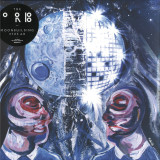
The long-awaited new full-length from legendary electronic pioneers THE ORB with cover design from iconic graphic wizards THE DESIGNERS REPUBLIC • A fascinating sonic journey over four epic tracks, constantly switching between psychedelic flourishes and beat-driven focus
Veritable pioneers of electronic music, iconic act THE ORB returns to Kompakt with the new full-length MOONBUILDING 2703 AD - another major slice of psychedelic synth bliss, obscure loops and deep ambient textures tossed in swinging breakbeats and powerful basslines. Installing a forward momentum rather unusual for a genre-defying project like this, the latest effort from masterminds Alex Paterson and Thomas Fehlmann follows their 2005 album success on Kompakt, the cheekily named "Okie Dokie It's The Orb On Kompakt" (KOMPAKT CD 45), as well as several contributions to our Speicher and Pop Ambient series - but more importantly, it finds the legendary duo at the peak of its creativity, ringing in another essential phase in what can only be called a ground-breaking career.
True to form, the new offering MOONBUILDING 2703 AD features a small track list, but turns each one of its four cuts into a mini epic in its own right. Opener GOD'S MIRRORBALL hits the ground floating, employing a handful of cozy statics to great effect before finally discharging into an intricate mosaic of atmospheric melodic sketches and gripping rhythms. With a hypnotic runtime of more than 14 minutes, it immediately establishes a blueprint for the other album tracks to follow, perfectly illustrating the vast extent of the artists' vision and their impressive skills in luring in listeners - welcome to THE ORB's sonic labyrinth, where nothing is what it seems and the unexpected waits just around the corner.
Likewise, follow-up track MOONSCAPES 2703 BC presents itself as a uniquely versatile affair sitting comfortably between ambient flourishes and beat-driven focus, holding as many twists and turns as a caper movie, but carefully grounding every single one of its cliffhangers in its impeccable flow. With a runtime of approximately 9 minutes, LUNAR CAVES is the shortest jam of the bunch - and also the most ethereal, keeping its rhythmic content to a bare, pulse-like minimum and opting for enticing, freewheeling synth textures instead. Album closer and title cut MOONBUILDING 2703 AD introduces a surprisingly jazzy vibe mingling rather well with the wealth of electronic tricks up its sleeve - even indulging in abrasive bass sweeps and a breathtaking multitude of different rhythm sections constantly switching places. It's a fitting closing act for a full-length as multifaceted as this, as idiosyncratic as possible and as muscling as needed.
• Das langerwartete neue Album der legendären Elektronikpioniere THE ORB mit einem Coverdesign der gefeierten Graphikschmiede THE DESIGNERS REBUBLIC • Eine faszinierende Klangreise über vier epische Tracks hinweg, permanent zwischen psychedelischen Schlüsselreizen und beatgetriebenem Fokus changierend
Mit THE ORB kehren echte Pioniere der elektronischen Musik zu Kompakt zurück - der Langspieler MOONBUILDING 2703 AD präsentiert erneut einen grossen Wurf in Richtung psychedelischen Synthie-Segens, obskurer Loops und porentiefer Ambient-Texturen, geschwenkt in schwungvollen Breakbeats und wirkmächtigen Basslines. Mit einem für genresprengende Projekte wie diesem hier eher unüblichen Vorwärtsdrang beerbt das neue Album von den Großmeistern Alex Paterson und Thomas Fehlmann ihren 2005er Erfolg auf Kompakt, das augenzwinkernd benannte "Okie Dokie It's The Orb On Kompakt" (KOMPAKT CD 45), sowie einige Beiträge zu unseren Speicher- und Pop-Ambient-Serien - viel wichtiger allerdings, daß wir das legendäre Duo auf der Höhe ihrer Schaffenskraft antreffen, eine neue wesentliche Phase einläutend in einer Laufbahn, die nur als bahnbrechend bezeichnet werden kann.
In bekannter Manier hat das neue Werk MOONBUILDING 2703 AD eine eher kleine Tracklist vorzuweisen, baut dafür aber jeden seiner vier Tracks zu Mini-Epen von eigenem Recht um. Der Eröffnungsakt GOD'S MIRRORBALL schwebt einem da vor Ohren, zuerst nur mit einer Handvoll gemütlichen Rauschens bewaffnet, später dann in ein feingliedriges Mosaik von atmosphärischen Melodieskizzen und mitreissenden Rhythmen explodierend. Mit einer hypnotisierenden Lauflänge von über 14 Minuten etabliert das Stück die Blaupause für die folgenden Ereignisse, perfekt die enorme Reichweite der künstlerischen Vision und ihre Fähigkeit zur massenhaften Verführung nichtsahnender Tänzer illustrierend - willkommen in THE ORB's Klanglabyrinth, wo nichts ist wie es scheint und das Unerwartete um jede Ecke lauert.
Ähnlich präsentiert sich der Folgetrack MOONSCAPES 2703 BC als einzigartig vielseitige Angelegenheit, bequem zwischen ambienten Ornamenten und beatgetriebenem Fokus sitzend und mit sovielen Drehungen und Wendungen wie ein Gaunerfilm - doch stets seine Cliffhanger im makellosen Flow erdend. Ein wenig über 9 Minuten lang, ist LUNAR CAVES der kürzeste Entwurf in der Gruppe - und auch der ätherischste, hält er doch die Rhythmusanteile auf einem puls-ähnlichem Minimum und optiert stattdessen für freilaufende Synthie-Texturen. Das letzte Kapitel des Albums schließlich ist auch der Titeltrack: MOONBUILDING 2703 AD besitzt eine überraschend jazzige Note, die sich ziemlich gut in den Reichtum an elektronischen Tricks einfügt, welche hier aus dem Ärmel geschüttelt werden - sogar in rauem Bass schwelgend und eine atemberaubende Vielfalt an Rhythmussektionen aufrufend, die ständig die Plätze tauschen. Es ist ein passender Abschluss für ein derart facettenreiches Album, so idiosynkratisch wie möglich und so anschiebend wie nötig.
out of Stock
Last delivered 10 months ago available to reorder, subject to availability
Waxwork Records is thrilled to present GODZILLA 70th Anniversary Original Motion Picture Soundtrack by composer Akira Ifukube. Released in 1954 by director Ishirô Honda, Godzilla holds the record for being the longest- running franchise in film history. Waxwork Records worked closely with Toho to create this deluxe 70th Anniversary release, featuring a re-mastered score and all-new art.
When ships begin to go missing near Odo Island off the coast of Japan, the locals look to the government for help. Paleontologist Kyohei Yamane (Takashi Shimura) is sent to investigate the situation. There, he discovers the horrors of Godzilla, who soon begins attacking the Japanese mainland. As the military’s efforts to destroy the monster continuously fail, scientist Daisuke Serizawa (Akihiko Hirata) is called upon to use his “Oxygen Destroyer” to kill the beast. Finding Godzilla in Tokyo Bay, Serzawa’s machine is used and finally, the beast is felled.
Since its release, Godzilla has continued to terrorize audiences around the world. The film has influenced countless filmmakers, with both Akira Kurosawa and Steven Speilberg citing it as one of their favorite films. The genius use of practical special effects and miniatures changed how the Japanese film industry made movies for decades. Godzilla has spawned over thirty sequel films and countless video games, comic books, toys, TV shows, and more becoming a pop culture phenomenon in the process.
The film’s score by Akira Ifukube has become an instantly recognizable piece of film music. Given only the script and a week in which to compose, Ifukube crafted a score that feels as enormous as the kaiju himself. Godzilla’s theme has become a staple of nearly all subsequent Godzilla films and was considered by Ifukube to be the greatest piece of music he had written. Using low-pitched brass and string instruments, Ifukube gives the score a massiveness and weight that complement the terror and destruction brought about by the rampaging monster. Ifukube also used a deeply resonant stringed instrument to create Godzilla’s iconic roar, a trick used to create the roar throughout the franchise.
Waxwork Records is beyond excited to present this vinyl release of Godzilla for its 70th Anniversary. Re-mastered, pressed to colored vinyl, housed in a deluxe gatefold jacket with matte satin coating, an art print, and featuring all-new artwork throughout by Robert Sammelin.
Kinda Busy 04 Fourth release for Kinda Busy featuring Blumet with Sin23 and Protokick in a super Tekno Tribe mission.
Side A starts with Pain is Gain a fresh new banger from Blumet at 167bpm smashing samples from an old Dead Prez tune and another Hip Hop classic!! Spot the samples! Banging pumping tribe with chopped samples properly mashed up and a solid synth reef on the second part of the track, to make you trip along with the rythm ! Funny surprise on the outro, Fuck Meloni !
A2 features The Amulet, a massive track from the infamous Protokick at 163bpm. Classic smashing kick in his style with very hypnotic synths and effects with a crispy and trancy voice to the end, can't miss this papa !!
The flip belongs to the new scene talent by now resident on the label since Kinda Busy 03, Sin23.
B1 with Engine Overload is a trippy and stompy pumping Tribe at 165bpm, brillant to mix with Aku Sound from Kinda Busy 03 ! Crunchy and clean sounds delivered here with a pro sound design that will exceed expectations !
B2 is the place for Tek in Trance at 163bpm. This is a more dated track from Sin23, yet well acclaimed and validated by his fans ! He likes to blend different styles and sounds, bringing that trance feeling on the percussions of the pumping Tribe. Top tune !!
Do not miss this release !!
out of Stock
Last delivered 19 months ago available to reorder, subject to availability
MIRACLE OF SOUND hat weltweit über 1 Milliarde organische Streams gesammelt und zahlreiche virale Hits erzielt, darunter den erfolgreichen Song
„Valhalla Calling“.
Mit Materia (Best Of 2011 – 2024) veröffentlicht Mastermind Gavin Dunne sein erstes physisches Release und Napalm Records Debüt am 08.
November 2024.
Als Multi-Instrumentalist, Songwriter und Sänger hat Dunne mit seinem Solo-Projekt MIRACLE OF SOUND zahlreiche #1 Chartplatzierungen in ganz
Europa erlangt, kooperiert mit Ubisoft, Bioware, Owlcat/Games Workshop, EA und Bethesda und produziert virale Hits. Sein Projekt ist bekannt für
themenbezogene Musik, die von wagemutigen Charakteren, sagenhaften Filmgeschichten, Büchern und Gaming-Klassikern wie Mass Effect,
Assassin’s Creed, Warhammer 40k, Wasteland 2 und Watch Dogs inspiriert ist.
Das Best Of-Album steht als Sinnbild für seinen kreativen Geist und präsentiert eine exklusive Auswahl, die Hörer*innen in die mystischen Welten von
Wikingern, Piraten, Seemannsliedern, keltische Geschichte und moderner Fantasy entführt
The syndicate manifests its sonic potential in full glory. Giving rise to this collection of colossal heavyweights, Sentry demonstrates its spotless record of selecting certified heavyweights for the discography once again, twenty-fold. Stepping into the ring are some of the scene's most prolific artists alongside a plethora of promising, choice newcomers.
Boasting more than an hour of supercharged sound system pressure with names like Caspa, Truth, Bukez Finezt, Nomine and Youngsta himself on the controls - the subsequent inferno proves to be an authoritative display of quality bass music, that is sure to reach roaring stacks of speakers all around the globe for years to come."
"Vintage flavours transmute into fiery low-end excursions in 'Sun Ra' as Onhell reigns with fire and brimstone and makes way for what's to come. Rolling on, Taso lays waste with dimly lit half-time flows as we enter the smoke-filled mansion of Argo's meticulously crafted 'Since Then' - a prime cut of hip-hop infused breakbeats and bass.
Abstrakt Sonance & Substance set the heater into overdrive and blunts aflame as we proceed into the shelling of 207's 'Gypsy Dub' - then promptly being crunched to bits by 'Crocodile' - encapsulating Dayzero's cold-blooded dance floor armaments. Brace yourself for battle as we step to the drums of Caspa's tribal warfare, full-frontal assault engineered for the club.
Unrestrained power surges propelling us onwards in Coltcut & Ourman's decidedly high-grade collaboration as listeners march through Khiva's haunting sound system belter 'Teeth' and a zealous dosage of Dubstep as envisioned by Truth. Led through eerie alleys and pressure-ridden environments with LSN on the buttons, the onslaught proceeds with the relentlessly driving 'R U Broke' in Mr. K's signature style.
Opus merciless injects straight fury in an auditory form in the spiked 'Lime Pickle' - Bukez Finezt keeping pace with a murderous Cembalo-ridden thug anthem, lunacy! Minimal instrumentation to its fullest effect, Sukh Knight's 'Modulate' keeps it spicy - as does the claustrophobic sub-bass chiming by Leftlow. Thanom ignites what's left of the residual air in 'Tumble It' - dangerous goods.
The subsequent time bomb armed by A:Grade & Feonix, cast into the abyss that is Nomine's space-bending 'Judas' - big speaker business. The clock strikes its final hour - Youngsta & Cimm finish off the survivors with a no-holds-barred showdown, the 'Last Judgement' executing its massive verdict.
out of Stock
Last delivered 17 months ago available to reorder, subject to availability
Something About Livingis an album of live recordings by experimental jazz composer/multi-instrumentalist Robert Stillman. The music was captured over the course of Stillman's time as the solo support act for The Smile (Thom Yorke, Jonny Greenwood, Tom Skinner). The album weaves excerpts from various theater and arena shows along the tour's North American routing into a seamless whole, creating a 40-minute program that represents an expanded version of Stillman's ever-transforming live set.
Something About Livingis the product of a steady, on-stage evolution that happened over the course of the nearly 60 shows opening for the Smile across the EU, UK, US, Canada and Mexico. However, the creative origins of the set began in relative isolation during the pandemic, through Stillman's work on projects like his multi-media installationUnseen Forcesand his monthly broadcast for Margate Radio, both of which drew upon solo improvisation using saxophone, cassettes, Yamaha DX7 synthesizer, and effects.
"At the time The Smile asked whether I'd like to open for them on their first tour, I felt like I'd already been preparing without really knowing it," says Stillman. "I'd been doing this music constantly, but always for a hypothetical audience" During the pandemic, Stillman's solo set-up served as the research lab where he worked on all the concepts he was interested in: solo improvisation, creating and manipulating cassettes, FM synthesis, analogue delays chains, no-input mixing, and non-metric rhythmic pulses. So when he was offered the first Smile tour, the idea was to bring "the lab" onto the stage.
What Stillman could not have prepared for was the experience of playing in venues with capacities of up to ten thousand listeners. "The first tour was in summer 2022, so not that long after the worst of the pandemic, when I had pretty much made peace with the idea that I might never be able to perform for an audience again. Then all of a sudden I found myself in front of huge numbers of people, and felt the massive responsibility of being with an audience, of this thing I'd done alone for so longactually being witnessed, and it was completely overwhelming!" On the flip-side, Stillman also recalls, was a new appreciation of how powerful the live performance was as a social phenomenon. "It's a cliche, but also true: the moment of making and hearing music in a shared time and space has a very specific meaning and power; there was a sense that everyone in the venue was necessary to make it real, regardless of what they were doing, or how they felt about it. There was an inevitability about it that I'd never fully appreciated."
Over the course of the tours that followed, Stillman transformed this appreciation of the shared moment into an ethic of spontaneity that guided the development of his live set. "An important reference for this set has always been an Animal Collective show I saw when I first moved to New York, probably in 2001 or so, that has always set the high-water mark for what I wanted to do live- they were improvising a lot, and out of what would seem to be absolute chaos they'd find their way to something structured, and then back out again into the unknown. It was so thrilling to witness".
ThoughSomething About Livingcompiles recordings from different dates along the tour, Stillman has edited and mixed them into a work that seeks to reflect the ebb and flow between 'chaos and control' that characterizes his live set. Among the compositions featured are some from previous album releases ("Time of Waves", "What I Owe", "What Does it Mean to Be American") as well as some new compositions ("The Dream of Waking", "Renaissance 2.0," and the title track, "Something About Living").
The album/track title "Something About Living" is a reference to a line from Stillman's favorite film,My Dinner With André: "André Gregory is explaining the value of life experiences that, as he says, are'to do with living'.That really struck me, the way he articulated it. I strongly believe live music situations can ask these kinds of questions, for performers and audiences. I hope that's reflected in this music."
[a] 01: Time of Waves (Live in Miami FL) [Live]
[b] 02: What Does It Mean to Be American (Live in Forest Hills NY) [Live]
[c] 03: The Dream of Waking (Live in St Augustine FL) [Live]
[d] 04: Something About Living (Live in Richmond VA) [Live]
[e] 05: What I Owe (Live in Chesterfield MO) [Live]
[f] 06: Renaissance 2.0 (Live in Chesterfield MO) [Live]
Excellent robotic electro(nix) as Pan-Am Tracks welcomes DVS NME and Krypton 81 with this ambitious project that pays homage to German Electro producer Das Muster. Both artists set the tone with intricate rhythms and analogue warmth. Pulsating basslines and shimmering synths intertwine, creating a vibrant, futuristic soundscape. This dynamic interplay between the two artists continues throughout the album, as DVS NME and Krypton 81 counterpoint each others explorations into the sound. A sonic trip that will surely resonate with fans of the genre.
out of Stock
Last delivered 2 years ago available to reorder, subject to availability
“Loves Love” jettisoned STÜM into 2024 and now “Beautiful Dancers” is here to take him ever higher.
As the second single off his forthcoming Essence Of Time EP, “Beautiful Dancers” is a blissful yet haunting take on techno. This track is total club rapture made up of ghostly vocal calls, static-like percussion and howling wind effects. A record of mixed emotions, pleasure and pain all blended up into 6 plus minutes.
Speaking on the tune, STÜM says “The songwriting process involved juxtaposing the organic with the synthetic weaving together contrasting sounds to mirror the duality of human emotion.”
Third in line is “Limbo”, a heaving acid hit full of hypnotic foreign instruments and vocals. This one gives off a massive street party feeling. From there we head to “Escape” a more dreamy and introspective bell-tone tune. A deliberate breather from STÜM before storming into the title track of the EP.
“Essence Of Time” is a shimmering rave piece. Dulcet piano intertwines with airy effects and hammering synths – another excellent example of STÜM’s ability to blend light and shade all at once.
out of Stock
Last delivered 2 years ago available to reorder, subject to availability
When the body starts screaming...SOFT VIOLET harnesses the pain with beats and rhythms, bass, synth and vocals, to manifest a rejuvenated writhing musical being that thumps and bumps. Downtrodden...upbeat! Upbeat!
Following multiple band projects, including the parallel powerhouse acts Spinnen and the ecstatic Turkish-Armenian-Friendship TAF, multi-instrumentalist SOFT VIOLET, now releases her solo debut album: Sterner Stuff. And that it is: Guttural with a pounding heart laid out on sexy stainless-steel surface, defiantly glinting.
Playful experimentation reigns free, fusing drum-machine and analogue synths with bass and vocals, to create a hybrid glittering creature that shines sublime.
SOFT VIOLET has a special power to tap in, making clearly conscious decisions to break and irritate, strutting through techno beats, poetically proclaiming personal and political urgency with a confidence, sincerity and sense of humour echoing the likes of Zheani and Sneaks or (thrillingly also) the 1990's heroes Cibo Matto.
SOFT VIOLET urges the listener to unite, to love and be loved and find ways, through music, of transforming pain into something joyous and uplifting, porous and free, as well as incessantly danceable.
SOFT VIOLET dares to go places that others do not, tapping into an honesty that others shy away from, welcoming everyone in to come play.
SOFT VIOLET is a fighter rising in solidarity. The beginning of the matriarchy is already in full effect. See You In The International Court Of Justice Bitch. Let's bounce!
No Signal records is proud to introduce for the 10th release of the label one of the most important producer of all time: Jamie Bissmire. His productions have been central part of the scene through the 90s and the last decades. The UK legend spread the proper techno and electronic vibe with his solo moniker and in collaborations projects like Bandulu and Space DJz satisfying any kind of enthusiastic. The EP starts with the ambient skit "Subteranium", subtle synths and textures combined with a smooth-alternate basslines keep the listener moody and tense for an unexpected start. In Temporal Mst open up the dances. Slightly distorted 4/4 beat track, jam-packed in No Signal style, plucked arps well arranged for an elegant swing. Lore & Order is the match up to lead the dancefoors and listeners into more gloomy and wicked mood. Different sequenced synths wrap the drum groove for an hypnotic, yet enchanting and dreamy moving session. The Tapestry of Fate is definitely a massive Jamie Bissmire's signature track. Total ensemble of Ground Recordings releases, wicked patterns, dark mood and relentless pressure. Dancefloors will go mad for it. Antediluvian Analogue closes the shakers with a more modern vision, high cut on bass synth and 2/4 bleepy synth for a step-forward march. Woven Whispers closes the EP as Subteranium opened. Gloomy and dark mood, effective and reverberated synths in full shaded ambient atmosphere to stun the listener and bring it into a different sound dimension.
out of Stock
Last delivered 7 months ago available to reorder, subject to availability
Polido has been fantasizing with the idea of free music throughout his artistic career. Free from restraints, logos, musical genres, but also from this modern obsession with narratives, plans, business plans, algorithms and bubble wrapped ideas for comfort of those of you that can’t breathe without everything making sense.
“Hearing Smoke” has nothing of that. It has been four years since Holuzam released the double album “A Casa e os Cães / Sabor a Terra” and for four years I have been daydreaming about what would come next. This is it, eleven new pieces about the future of the future of music. It is the result of years of study, research and sound consolidation. Sound as matter, mutating, transforming, absorbing all around, a shapeshifting entity connecting with the principles of freedom.
"Polido has been researching Portuguese contemporary composition, its very own sounds and ideas. Its origins, the web of repression, tension and censorship before the April 25th revolution in 1974; secondly, as an afterthought, freedom, equality and a unique sense of community and belonging screaming through the music. He absorbed those states of mind and made an album that listens to the current world and presents globalization as a mental trap.
If the music that inspired him somehow comes from a post-colonial world, “Hearing Smoke” questions how we can create something new in this permanent state of cultural colonization, where new trends or forms of music only thrive if they are accepted by the dominant cultures. The physical world has been transformed, but ideas like “world music” or “ghetto music” still show that dominance, the Strange can only be accepted if it incorporates the rules and codes of that dominant force. What I am saying is that it is hard for Portuguese musicians to present themselves as original. They will never have that credit unless the music relates to something that exists in another
realm. Never for their benefit, but for the power of association. I may sound arrogant here, but Polido is unique, original, one of a kind (all those words, all those redundant synonyms). I knew it four years ago when I got lost in the way “A Casa e os Cães” is assembled and how he makes something memorable out of the most commonplace conversations. “Hearing Smoke” continues the flow and puts us in the centre of these ever evolving masses of sound.
Somehow his music finds you, it starts speaking with you until it asks you to be a part of it. Polido’s beats and harmonics are combined in such a tender way that you mellow out while listening to these beats - thinking of the brilliant “Saque”. Even when he exposes you to something more harsh - “Canto D’Amorte” or the closing moments of the last track “Custa A Crer” - there’s still a cradle effect.
But what keeps me returning to this album is how it seems to transform in my ears. Not every time I listen to it, but while I am listening to it. The sound seems to move, embracing me and controlling my inner thoughts. These start to move along at the same pace, with the same feeling of cloudiness. Nothing new here, the thing is how it feels different from time to time, how the music, because of something that changes or moves, comes as a catharsis/revelation. It drives me nuts how the beats come and go in tracks like “Fogo Firme (Encomendação)” or “The More I Think, The Less I Can Speak“, leaving everything suspended and, simultaneously, relieved. When dramatic - ”Prova De Existência“ - it is sad af and gorgeously epic.
Trap, bass music, dubstep, ambient, hauntology and contemporary music flow side by side here, no pushing around, free of interpretation, and you are free to feel or listen to whatever you want in “Hearing Smoke”. That’s free music for you. Not a hard concept, something for you to enjoy, feel, reflect about. This is what the future will sound like."
Unequal cycles in search of synchronous experiences: On his new album »Pounding«, Frank Bretschneider tells of distance, convergence and congruence in a continuous, ever-changing flow of events. What is often regarded as an unquestionable dogma in club music (for which Bretschneider has provided significant impetus since the 1990s) – the groove – appears precarious, unstable, and in motion. Pulse and accent are volatile encounters and have to be found again and again for short, delightful moments. Music becomes a constant process of negotiation.
In search of new sound spaces, Bretschneider has recently worked a lot with modular synthesizers, both solo (for example on »abtasten_halten«, 2020) and in collaborations, including the project Beispiel together with Jan Jelinek. »Pounding« was created using similar means – conceived in 2020 for the Pochen Biennale in Chemnitz, subsequently developed further and recorded in March and April 2023 on a sample-based modular system. And in fact, Bretschneider is once again exemplarily scanning his own sound material, such as dub effects that listen to themselves disintegrate; but also the human voice, or more precisely: the stuttering of fragments of speech, far in the distance but omnipresent, like a mysterious narration. Aesthetically, the eleven pieces form part of a series of works with a focus on percussion. Bretschneider has already perfected this approach with albums like »Rhythm« (2007) and has been shifting the perspective ever since, for ever new results.
Shifting is the basic principle of »Pounding«. Bretschneider combines elements that are in different aggregate states, changing their relationship to each other and thus ensuring the complex overall movement. He lets one to two-bar loops run against each other and through small manipulations, develops a network of rhythms that creates a hypnotic state in the counterplay of repetition and mutation, between clearly recognizable meter and disorientation. There are comparable approaches in aleatoric music. Bretschneider combines them with sounds and patterns that are reminiscent of step sequencer logic and at the same time go far beyond it. The result is relational techno. Never obvious, always restless and exciting.
out of Stock
Last delivered 16 months ago available to reorder, subject to availability
On August 16, Toronto-based musician and producer David Psutka aka ACT! (fka Egyptrixx / Anamai / Ceramic TL) will release his latest project ‘Face to Face, Day by Day’ for his own Halocline Trance imprint.
This is is Psutka’s third album proper as ACT! following the release of the “sonic mixtape” ‘Universalist’ in 2018 and the augmented reality soundtrack ‘Grey Matter AR’ in 2021; a series of Snapchat filters created by artist Karen Vanderborght and soundtracked by ACT! which explored the poetic and existential potential of AR and social media.
“Aesthetic accidents in the periphery of the ‘work’ can be the message. In 2018, at an Egyptrixx concert at Bagni Misteriosi de Teatro Franco Parenti - a gorgeous, sprawling outdoor pool theatre in Milan - I had a clarifying moment. Gigs around then had mostly been in pummelling, dark music venues, so I wasn't prepared for this expansive space (and the thoughtful work of the organisers who had layered sheets of plastic film on the pool to parallel eco-materialist themes from a previous album). It was the midday soundcheck that struck me most - brittle digital sounds from the set echoed off the colonial Milanese facades and ricocheted down the Via Carlo Botta, pinging off buildings in the distance and clashing with the noise of traffic, tourists and whatever else. It was a strange, collisionist moment, and a reminder that my essential approach to music is, above all, a preoccupation with the materiality of sound.
Everything on Face to Face, Day by Day began as an improvisation. Openness to accidents and the emotional complexity that comes from centering them in composition has become important to my work, and helps the music go beyond the possibility of what is playable, imaginable. I also wanted to channel adventurous solo pop records of the 1970’s and 80’s, like Yasuaki Shimizu, Jon + Vangelis and Stevie Wonder. These came from an interesting era in commercial music as studio production techniques became increasingly formalised as compositional devices, like AMS RMX16 percussion sounds and early digital stereo effects.
Like many musicians, I’ve been travelling and performing less since the pandemic and as a result, have wanted studio sessions to feel more collaborative and improvisational. There were great writing and recording sessions for this album. Vox, synth, sax and guitar jams - much of what ended up on the record isn’t edited much, if at all. I jammed a sm57 into Colin Fisher’s sax bell and created feedback loops using various preamps and distortion units. The clunky sounds were sampled and used as percussion elements. I also had a great synth jam session with Jeremy Greenspan at Barton Building Studio in Hamilton, which was recorded by filmmaker Liz Adler.
I’ve had a few months to sit with this album and see clear throughlines connecting it to previous projects. There are aspects of the experiential and structuralist sound design ideas from the EGYPTRIXX records; and also some arrangement tricks borrowed from ANAMAI - specifically, the use of interruptionist sound events. Perhaps most of all, it feels connected to the Ceramic TL + Ipek Gorgun record ‘Perfect Lung’ and its splattered take on musical complexity. “ (David Psutka)
In addition to ACT!, Psutka has released music with numerous projects including Anamai, Egyptrixx and Ceramic TL, he has collaborated widely with artists such as Junior Boys, Ipek Gorgun, and Kuedo as well as Jessy Lanza (2016) and an official remix for Massive Attack’s ‘Hymn of the Big Wheel (2012). The contributions on this album, from Robin Dann and Ben Gunning, reflect the deeply collaborative nature of the Halocline Trance label and the Toronto creative scene more broadly.
Many of Psutka’s releases have received critical acclaim from media outlets such as Pitchfork, Exclaim, The Quietus and Resident Advisor. As a live performer, he has toured extensively including performing at Sonar Festival, Roskilde, Mutek, MOMA PS1 Warm-UP and CTM Festival. He’s also presented sound installations at various institutions such as Galeria Civica Commune di Modena, and Art Gallery of Ontario (AGO).
In 2015, Psutka launched Halocline Trance as a home for his various sound projects, events and collaborations. Now a creative collective and label, it has grown to include a diverse array of artists including Casey MQ, Xuan Ye, Myst Milano, Colin Fisher and others. The label is described as “genre-agnostic” and conceptually open, supporting work across a wide spectrum of creative fields including soundtrack recording, AR design and traditional artist albums. Their impeccable roster also includes, theorist/improviser Eldritch Priest, and AR/VR artist Karen Vanderborght. In recent years, Halocline Trance has established itself as a platform that facilitates many of Canada’s most exciting creative music projects. Many of the releases have received critical acclaim from outlets including Pitchfork, Exclaim, Bandcamp and Resident Advisor.
One of melodic techno’s biggest breakout stars, Massano steps up for his Drumcode EP debut. The emerging DJ/producer from Liverpool already gave us a taste of his elite studio capabilities via the fantastic ‘Betrayal’, his contribution to last year’s Drumcode A-Sides Vol.12 release – one of the highlights of the compilation. Massano’s sound hits with a fantastic punch, characterised by super charged sound design and powerful melodic riffs with key releases on Afterlife and his own Simulate to date. His ‘Telepathic’ EP reinforces why we’re rightly so excited to have him on Drumcode. The title track is a juicy psy-laced stomper, propelled by a menacing low-end vocal that adds plenty of atmosphere to the cut. ‘Destructure’ is formed around rattling percussive effects, before euphoric melodic layers build in intensity throughout the second half. When the two elements coalesce, we’re treated to a track with immense peak-time power, that never loses its unique edge. ‘The Method’ is a melodic ace, shifting between laser-kisser dynamism and full throttle bass-driven energy.
out of Stock
Last delivered 46 days ago available to reorder, subject to availability
"Trauma and the shock effect of it - the leftover residue of harsh reality so impactful that it shapes the way you imagine, envision and calculate your position in regard to everything and everyone around you.
A new type of psychological radius evolves. Boundaries are reinforced. Relationships are recessed. A damaged brief system float aimlessly. Vulnerable to and for anything reminiscent of a worthy cause. The truth about facts became satirical monologue, dead end expressions that have no critical arrangement. We all know someone that either has been or will be"
- Jeff Mills
The Eyewitness reveals a habitual pattern in the way it symbolizes a mirror reflection of mankind in our most vulnerable moments. It is the forthcoming album of Jeff Mills and it is composed from the perspective of an unknowingly complicit bystander and it is at the very least, psychologically pathological in nature. What this release is essentially proposing is an admission to the diagnosis that no one is immune to shock and trauma. Not the accuser or the accused. And this abnormality s culturally and generally transmittable - handed down and passed over to one another disguised as righteous theatre.
As an artist, what Mills is notoriously known for is the perspectives and paths he chooses to approach hefty, complex, and sometimes, awkward subjects. The best way to recognize the narratives of his mostrecent album works such as "The Clairvoyant", an eerie transcending album that plays through like a Seance for creating a bridge to reach another dimension or "Mind Power Mind Control", a cautionary warning about the consequences of supporting deceit, mind control and mass mental persuasion is to start by first taking a moment to look at yourself in a mirror. He's suggesting sound as a reflection and what we might be able to see in ourselves. Proposing that we might be the problem and a solution. In the same vicinity of his recent solo albums, the direction, scope or target of The Eyewitness is first about us, then about it.
More than the few previous albums he's released lately, this one has a unique relationship in terms of imagery and visual treatments that represent the concept. The front cover shows Mills, neatly dressed in a black suit that appears to be caught in the act of doing something methodically as he cohorts to supportwith a bright white type of surgical light towards the viewer. Stark and in the act of.......something offensive - it could be some type of hypnotic machine at work. Other photos show him in darkened spaces. Remote and deep in thought.
Other clues are the titles of the tracks such as "Sacred Iridescent Mirror (The Pledge)": this refers to the act of installing value and credit to something ambiguous and "Menticide" which means the systematic effort to undermine and destroy a person's values and beliefs. In the opening track, "in A Traumatized World" we hear the narration spoken by Mills. In a language he specifically created for this album. It's a dialect that is designed to be undistinguishable, but spoken with a compassion that it could be sympathized with. In the latter part of the track, it reaches a climatic point. Meaning, "it" has happened. And the album is the evidence.
On extra note:
In this day and age,it's comforting to see a musician like Jeff Mills administer music conceptually without any conditions attached. The artistry and craft of using sound and rhythm to bring forth a concern, a warning or the result of a diagnosis to the listener.
out of Stock
Last delivered 5 months ago available to reorder, subject to availability
Northampton, Massachusetts. The Five Colleges. Hampshire College. Forward-thinking education. Electronic Music studies. A vast student population created and sustained a vibrant cultural scene. This is but a snapshot of a fraction, but a fertile and significant one that impacted the lives of many who came in contact with it. The book follows a tight group of people who got together, made music, promoted and released it, created the conditions for others to record and release music, booked bands and then scattered throughout the Midwest and East Coast.
First person memories and memorabilia from Christopher Vine, Craig O'Donnell, Elliott Sharp, James Whittemore, Nicholas Brown, Sean Elias and others, patch up a story of joyous action, firm and enthusiastic DIY endeavours to make things happen as they would like them to happen. It is about a local scene and some key protagonists and it communicates values and methods that are still current — and probably will always be in some form or another among young people with a serious drive to act upon their artistic inclinations. This is also a depiction of what was in fact a model of a music scene. A complete ecosystem was in place during this period. Northampton, sure, but extended across the whole of Pioneer Valley in Western Massachusetts. Bars, music and record stores, live music, College radio, electronic music studios, written press and a lot of energy going into creative work. The immediate "punk effect" motivated the appearance of numerous bands, many short lived, others evolving into New Wave / Power Pop territory, eventually crossing into Post-Punk experimentation.
Turning The Crank is also a companion to an EP of the same title, including music played, produced and recorded in Northampton between decades (1970s going into the 1980s) by different combinations of individuals resulting in The Higher Primates, The Scientific Americans and Human Error. Music in turns mechanical and austere, gorgeously loose, in love with Dub.
NEW features of the MK2 version
Built for the club: Rigid chassis construction with an even heavier design with additional reinforcements made of metal, rubber and molding compound for high vibration damping and isolation
More powerful starting torque (adjustable from 2.8 - 4.5 kg/cm)
Fine-tuned motor control for further optimization of wow and flutter and rotation
Newly developed, height-adjustable tone arm base (VTA) and Anti-Skating control
Particularly light weight and rigid, satin aluminium material used for tone arm pipe
Pitch scale for precise adjustments
Optional ground terminal offers additional protection in complex club & studio environments
Easily replaceable, freely rotatable LED needle light in new aluminium design
High-quality and hard-wearing silver metallic finish
Quartz driven DJ turntable with upper-torque direct drive
Adjustable stop speed (0.2 - 6 sec.)
Precise control of motor with 3 speeds (33 1/3, 45 & 78 RPM)
Precision manufactured, die cast aluminium turntable
Rubber inlays for reduction of vibrations and background noise
Statically-balanced universal S-shaped tonearm with hydraulic lift and anti-skating mechanism
Universal connection for pickup systems (SME)
Pitch range +/-8 %, +/-16 %, +/-50 % (Ultra Pitch)
Quartz lock
Additional start/stop button for vertical positioning
Reverse function: switch for forwards and reverse operation
Recessed connection cavity for easy installation in cases & seamless adjustment
Phono and line out (no grounding required)
Removable mains and RCA cable
Safety mains switch
Shock-absorbing feet against vibrations
Technical Data
Turntable:
Type: direct-drive turntable
Drive: quartz driven upper-torque direct drive
Motor: 16-pole, 3-phase, brushless motor
Turntable speeds: 3 speeds, manual (33 1/3, 45, 78 RPM)
Starting torque: 2.8 - 4.5 kg/cm (adjustable)
Adjustable stop time (0.2 - 6 sec.)
Start-up time / change to RPM: 55dB (DIN-B)
Brake system: electronic brake
Platter:
Material: die cast aluminium
Diameter: 332 mm
Weight: approx. 1.5 kg
Tone arm:
Type: universal, statically balanced, S-shaped
Effective length: 230 mm
Overhang: 15 mm
Tracking error range: < 3°
VTA setting range: 0-6 mm
Useable weight of pickups: 3.5~8.5 g (incl. headshell 13~18 g)
Anti-skating range: 0 - 3 g
Effective tone arm mass: 30 g
Connections: 1x Phono/Line Out (gold-plated), 1x GND earth connection
General:
Power supply: AC 115/230 V, 60/50 Hz (EU/US), AC 100 V, 50/60 Hz (JP)
Power consumption: 13 W
Dimensions: 458 x 354 x 144,6 mm
Weight: approx. 11.7 kg
Accessories included: turntable, slipmat, LED needle light, counterweight, PHONO Cinch cable with earth, AC mains adapter, operating instructions
With this EP an attempt is made at documenting the vibrant action happening during the late 1970s and early 1980s in the Pioneer Valley area of Western Massachusetts, US. The story is richer than the snapshot we present here, and a more detailed account is to be found in the accompanying book that can be purchased separately.
The Five Colleges in Hampshire County congregated a vast student population that inevitably interacted with the towns in the area. Bars, music and record stores, live music and a lot of experimentation and free thinking. Hampshire College, especially, promoted new approaches to teaching, subjects that might be considered radical by some even today, although a more favourable context would now surely exist for openly debating such topics as American Indians, Kayak Design, Black Oral Tradition, Food Management, etc. And the music? The immediate "punk effect" motivated the creation of numerous bands, many short lived, others evolving into New Wave / Power Pop territory, eventually crossing into Post-Punk experimentation. What is captured in "Noho EP" is a more electronic disposition, favoured by the existence of EMS gear and other equipment at Hampshire College and University of Massachusetts. We chose to focus on a group of musicians who, for a time, played together in different combinations under the loose umbrella of the Tekno Tunes label and the structure around it.
These musicians come from very different backgrounds and the nucleus portrayed here consisted of Christopher Vine, Elliott Sharp, James Whittemore and Nicholas Brown.
Of the several line-up changes The Scientific Americans went through, it was actually only the duo of Chris Vine and Jim Whittemore who recorded "Among Bodge Watt". Never before released, it is a companion piece to their track "El Salvador" available on the 1981 ROIR tape-album "Load & Go!". The Sci Ams were founders of the Tekno Tunes label and also created the Tekno Tours "concert promotion agency", under which name they exposed local audiences to bands such as The Stranglers, The Slits, Pylon, Pere Ubu, The Psychedelic Furs, The Bush Tetras, Steel Pulse, etc. Their own sound kept progressing but at its best there's a solid dub undercurrent, pretty obvious in "Among Bodge Watt".
Human Error was born out of a collective jam by Chris Vine, Elliott Sharp, Jim Whittemore and Nick Brown. Elliott Sharp had moved to Northampton in August of 1978 and naturally became involved in the local music scene, hooking up first with Whittemore at a hi-fi audio store where he worked at the time. Basement jams followed stimulating conversations, and other musicians joined the sessions. "Clandestinator" sounds gorgeously loose, an effortless groove coming from a quasi-dub set-up. Nothing here seems calculated, the music just flows, contagious and irregular as the handclaps in the mix.
The Higher Primates later evolved into a "proper" band but started as Nick Brown's solo project. The Primates only ever released a (now sought-after) 7" single in 1980 (on the Tekno Tunes label, precisely). Both tracks on "Noho EP" were recorded the following year and never released until now. "Auto Music in the Disco Dub Style" is self-explanatory, with a steady, mid-tempo TR808 beat running through, supporting synth squelches, echoes and reverbs, a fat bassline, dissonant melodic lines and odd vocal snippets. Kind of a DJ tool when the concept was barely in place. The more uptempo "Teresa Variations" adds a Fender Jazz bass and Selmer sax to the electronics. It actually sounds more "Disco", even with the robotic, unintelligible vocals. On top of this, the vibe is sealed by the overall Radiophonic Workshop analogue strangeness applied to a dance beat.