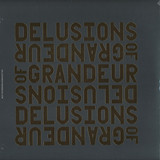
The third long player on Night Defined Recordings sees SUED affiliate SW. presenting his new mini LP ‘Night’ and walking a tightrope between jazz and club music. The tracks manifest and dematerialize themselves almost in a non-tangible and floating way, which can be seen as more than just a musical approach but rather shows the artist referring to issues of volatility and evanescence. While listening, some may find themselves in the dark and dusty atmosphere of a jazz club, where the band in the corner at the other end of the room is playing their instruments just when the beat kicks in and puts you right into the club atmosphere.
Written & produced by SW. at SUEDstudio Mastering by Mattias Fridell
Artwork by Studio Belser
Buscar:may
Ramrock Red Records are incredibly excited to present Kameelah Waheed – straight outta New Jersey. Brought to our attention by London DJ/promoter, Barry King, Kameelah immediately delighted us with her direct, no messin’ delivery, compelling, earworm hooks and beautifully crafted lyrics.
Teaming up with Kelly Murray on co-production on the ‘Original Version’, Kameelah unleashes a stripped back, jazzy hip-hop vibe punctuated with a Donald Byrd’ish trumpet riff. The North Street gang take the Donald Byrd flavour a step further with a full on nod to the Mizzell Brothers in the first North Street West dusty funk production. Releasing digitally around April 24th as a five track EP with a further 7” vinyl release around May/June, ‘Holding On’ is set to tick a lot of musical heads boxes.
Growing up in an Islamic household, sneaking snippets of worldly music into her household was close to pulling off a major heist during Kameelah’s teenage years. She was introduced to the world of sound from MTV, rap and house music and the live bands of the 80's courtesy of her older sister, along with tribal and island music that her mother played. Kameelah was encouraged to consider song writing as a career option when she received an opportunity to write for Bunny Sigler of Philadelphia International Records. Heading up the hip-hop rock band band, Gov’t Cheaze in 2000, Kameelah performed at Philadelphia’s Black Lily Film Festival as well as a set at the very first Roots Picnic.
Previous releases have included ‘Traveling’ by Kameelah Waheed & GC, produced by Larry Gold, featured on the ‘Beat Generation Compilation’ released on BBE, making the Top 10 Most Played on UK urban radio stations. In 2011, Kameelah Waheed and Government Cheaze signed with indie label, Philly Through My Ear (PTME) founded by Will Smith Sr. The self-titled CD can be found on iTunes.
In 1976, seven Cabo Verdean musicians going by the name Voz Di Sanicolau gathered in a small recording studio in Rotterdam where they laid down an album of fearsome coladeira songs inspired by the music of their home island of Sao Nicolau.
The album took only a few days to record, which may explain the unexpected urgency that fires each track. Treble-soaked electric guitar lines snake back and forth through percussion-and-cavaquinho driven rhythms rooted in the sound of the islands established by the previous generation of Cabo Verdean emigres; subtle keyboards wash through the background, and the vocals, traded between Joana Do Rosario and To-Ze, alternately push the music forward and soar above it. The resulting album is both deeply felt and fiercely executed, and in its grooves one hears the sound of some of the finest Cabo Verdean musicians of their era locked in complete unity of purpose.
It should have been the beginning of something extraordinary; but the pressures of making ends meet forced the musicians back to their day jobs, and Voz Di Sanicolau vanished as quickly as they had appeared, leaving their lone album, Fundo de Mare Palinha, as sole proof of their existence. Forty-four years later the album sounds as fresh as it did the day it was recorded. It is unknown if dutch sound engineer Frans Rolland, who oversaw the recordings, knew he was helping to make history: during these sessions, Joana Do Rosario, whose majestic vocals were crucial to the sound of Voz Di Sanicolau, became the first Cabo Verdean woman ever to appear on a long playing record.
One of the biggest selling hits by T. Rex from late spring/early summer 1971. These bare alternative versions were recorded in London during January 1971. 500 copies pressed on red vinyl in T.REX House Bags, 500 copies pressed as picture discs. All royalties go to The Light of Love Foundation (These recordings and many more were amongst the tapes stolen from Marc & Gloria’s home in 1977, some of this material was returned to The Light of Love Foundation last year). This year sees T. Rex inducted into the U.S Rock n Roll Hall of Fame in May and has already seen the profile of T.Rex heightened.
- A1: Oneness Of Juju - African Rhythms (Album Version)
- A2: Oneness Of Juju - Follow Me
- A3: Oneness Of Juju – Nooky
- B1: Oneness Of Juju – River Luv Rite
- B2: Roach Om – No Name #3 / Love Is… / My Nigger & Me
- B3: Juju – Nairobi / Chants
- C1: Oneness Of Juju – Chants / Don’t Give Up
- C2: Oneness Of Juju – Be About The Future
- C3: Juju & The Space Rangers – Got To Be Right On It (Original 45 Version)
- D1: Oneness Of Juju – Space Jungle Funk
- D2: Oneness Of Juju – West Wind (Previously Unreleased)
- E1: Juju & The Space Rangers – Plastic (Original 45 Version)
- E2: Plunky & Oneness Of Juju – Every Way But Loose (Original Version)
- E3: Okyerema Asante Feat Plunky – Sabi (Black Fire Mix)
- F1: Okyerema Asante Feat Plunky – Asante Sana
- F2: Oneness Of Juju – Bootsie’s Lament (Unreleased Version)
Strut kick off a brand new deal with the seminal independent black jazz and soul label Black Fire in May with 'African Rhythms 1970-1982', a comprehensive 2CD / 3LP compilation of Oneness Of Juju, led by Plunky J. Branch. Tracing their career from the band's earliest work in 1970 with South African exiled jazzman Ndikho Xaba in San Francisco, the compilation covers the band's journey to New York's loft jazz scene, forming Juju and releasing two landmark albums of hard-hitting percussive jazz on Strata-East. "I saw myself as a cultural warrior," explains Plunky. "We studied about Africa and tried to infuse our music with an African spirit." Moving back to his hometown of Richmond, Virginia during the mid-'70s, Plunky drew in a superb new group of musicians and vocalists and created the band's new incarnation, Oneness Of Juju, retaining the African influence but fusing his sound with funk and R'n'B on the classic 'African Rhythms' album. "We realised that, if we put a backbeat to the Afro-Cuban rhythms, people in Richmond and Washington D.C. could be drawn into it; it didn't change anything about our message." The change would lead to a series of enduring soul-jazz classics on Jimmy Gray's Black Fire label, including 'River Luv Rite', 'Plastic' and 'Don't Give Up' and their biggest crossover international hit, 'Every Way But Loose' in 1982, later famously remixed by Larry Levan. The band received renewed interest in their music during the mid-'80s as Washington D.C.'s go-go innovators cited the band as a major influence and rare groove DJs revived their albums for London dancefloors.
Alinka makes an eagerly anticipated return to Crosstown Rebels with the outstanding Control Transmission, her last appearance on the label featuring in 2016 collaborating with Shaun J. Wright. This solo release demonstrates her versatile sound that is inspired by her experience in scenes across the world.
Control Transmission begins with robust 909 drums as the claps resound with force. The bass, a razor-sharp, distorted and filtered charge is introduced commanding attention, further electro inspired samples and effects are layered in this powerful track. Day Zero captures the spirit of the Mayan jungles, with synth that propels with energy, ebbing and flowing with mystical chords that give a nod to the famous festival spearheaded by Damian Lazarus.
Born in Kiev, Alinka has a unique power on the decks and in the studio, influenced by the city of Chicago, with toes tipped in Detroit techno and Europe’s key cities. Immigrating to Chicago with her family as a child she immersed herself in the scene, digging for records and becoming resident for Justin Long’s Dotbleep party at Smartbar. In 2012 an impromptu meeting with former Hercules and Love Affair vocalist Shaun J. Wright changed her life. The pair launched their Twirl parties and label whilst continuing to evolve their collaboration.
The result has been an impressive catalogue of material from, with music featured on Jackathon Jams, Crosstown Rebels, Leftroom, The Classic Music Company and of course Twirl. Now living in Berlin, Alinka has used this base to play at parties across Europe including the likes Panorama Bar and Circo Loco, whilst regularly returning to the US to play for promoters such as Ladyfag. 2020 will she Alinka’s evolution continue, with a packed schedule of releases and her newly launched label Fantasy Life.
Black Vinyl Edition
The Log and the Leeway follows a 6 year journey of personal exploration and drastic change for Bram Bosteels and his singular Kaboom Karavan universe. What entails is a sound-curiosity of rare format, following a metamorphosis that goes beyond the musical.
Early in the process, Bram was struck by the word/concept of a Leeway : the gradual departure from an intented course due to external influences. Following a boyish fascination for explorers travel journals, logbooks and the far fetched corners of the world, he could not have forseen how fitting of a title he had chosen. Drastically all of a sudden one day, completely unexpectedly, Bram experienced his own father dying in front of him from a rare disease. Shocked and confused by this intense encounter, his perspectives and musical course departed from its original path. But at the same time it was an enlightenment and a necessary influence for him to realise the initial idea and finish this album, started over half a decade before.
The ones familiar with Kaboom Karavan already know that nothing really sounds quite like it. Bram’s musical (and non-musical) universe is of the rare breed that seems to be entirely his own. Self-contained, but never opaque. Quite the opposite actually. Bram never pushes us away, instead, by listening to his music we are given view to a synesthetic wunderkammer of images, places, objects and possibilities. Distant but magnetic, alien but intimately familiar, Kaboom is folk music from another dimension. Listening to The Log and the Leeway is like waking up next to a bonfire in the middle of a swamp wearing somebody else’s clothes: You may not know how you got here, but whatever is happening seems to very directly involve YOU. What will happen?
Note from Erik K Skodvin (Miasmah): All the sounds, fabrics, instrumentation and stories that binds The Log and the Leeway together go far beyond what can be touched up in this simple writeup. As someone who have followed this journey since the beginning, and seen it shift from lighthearted fun to the most crepuscular personal experience, heard the stories behind (almost) every field recording and gone through boundless amounts of clips, visual details, notes, and inspirations – I can only say that it is with great pleasure and certain nostalgia I can present this record in full through Miasmah and close this quite extraordinary chapter. Bram is without doubt the most fascinating person I know. Like I told him in April 2020 during a trying time: “If everything fails, we´ll open a Kaboom Karavan museum” - an idea that might not be as far-fetched as it sounds.
Featuring: Cover painting by John Lurie. 16 page booklet of Musical illustration / collagés by Walter Dhoogh & Erik K Skodvin that more or less connects (or confuses) the dots between the music and stories behind. Mastered by Lupo at Loop-O
Optimo Music presents “Vanessa 77” the debut album from New Zealander Vanessa Worm. Originally due in May it was rescheduled due to the lockdown but we couldn’t wait any longer to get it out into the world, so here it is, on vinyl and digital.
After entrusting us to release 3 much loved singles it seemed right to let Vanessa stretch out across an album and show the world what she is about and how talented she is. Vanessa is exactly the kind of artist Optimo Music dreams of finding; her music fits in with no genre and no scene – it is its own genre and its own scene. Musically free and anarchic, Vanessa conforms to nobody’s dogma. Before lockdown Vanessa played a series of Southern Hemisphere live shows that entranced all who saw them. Hopefully next year she can come and do the same in the Northern Hemisphere.
We asked her for a few thoughts about her album. Vanessa says – “Vanessa 77, like most creative endeavours is a journey of self discovery. Mentally, emotionally and creatively. I spent most of my time alone in winter 2019 – focused solely on personal development & self realisation via the creation of this album. It was a way for me to put my mental state onto a plate – the joys, the fears, the epiphanies, and so on. I so desperately wanted to share what I was learning with the world too – I intended for Vanessa 77 to help others to heal, self-realise and alchemise. It was a 9 month process of death and a re-birth from the old into the new. Much like the world is experiencing now entering 2020, I hope this album can provide some form of healing, soothing, celebration and act as a sub-conscious guide for us as we enter into this New Earth. Thank you to all who listens, enjoy!”
Commodo returns to Black Acre for the first time in over two years with surprise new three-track EP, ‘Loan Shark’. Slated for release on May 22, ‘Loan Shark’ will land as his third release with the label, following 2018 standout ‘Dyrge’ and 2016’s blistering debut album, ‘How What Time’. A quietly elusive producer, Commodo’s recent work for Deep Medi, Bandulu and Black Acre has seen him established as one of UK bass music’s contemporary frontrunners, who continues to influence the wider landscape through the strength and imagination of his output alone. His latest EP continues this theme apace, melding together supreme bass weight, texture and meticulous sampling (‘Loan Shark’, ‘Hot Pursuit’) and vivid, sepia-tone melodies (‘Contraband’) across a record that, as the track titles suggest, plays out like a filmic, magnum-plated car chase.Tracklist : A1/Commodo - Loan Shark B1/Commodo – Contraband B2/Commodo - Hot Pursuit
Very very limited please aware
Tetrode Music head honcho and Sound Signature affiliate, Specter, lines up the next Second Hand Records NYC release and it’s that deep, soulful goodness you need in your life.
'Peace of Mind' hits right from the needle drop. Made for the dancers! Listen to this on a real sound system for that enhanced feeling.
'Front & Center' keeps the energy flowing, mixing deep chords over dark warehouse bass lines. Big leagues tune!
'Cold Sweat' would fit snuggly against any Larry Heard record, or maybe its just that Chi-town flavor soul music we love! Byron The Aquarius adds another layer of flavor to this already killer cut. Deeeeeeep!
DJ Support:
DJ Spinna, Kai Alce, Ash Lauren, Byron The Aquarius, Stefan Ringer, Hugo LX
More Swiss jazz bliss! We Release Jazz (Ryo Fukui’s Scenery and Mellow Dream, Marc Moulin’s Placebo Live 1971…) is madly happy to unleash another reissue from Geneva’s very own Boillat Thérace Quintet. The My Greatest Love album features none other than bebop and hard-bop legend Benny Bailey and is available for the first time since 1975 on vinyl LP as well as digipack CD. Galvanized by the creation of the Montreux Jazz Festival in the late 60s and lively local scenes, jazz music was healthy and booming in Switzerland in the 1970s. One band that beautifully captured this energy was Jean-François Boillat and Raymond Thérace’s Boillat Thérace Quintet whose self-titled debut and impressive Montreux appearance set the tone for quality Helvetic jazz in 1974. Following this first excellent impression, the Boillat-Thérace ensemble connected with American trumpeter Benny Bailey and recorded the magnificent My Greatest Love in May and June of 1975. The modal, hard bop and soul-jazz gem includes first-class takes on Freddie Hubbard’s “Gibraltar”, Kenny Dorham’s “Blue Bossa”, and Jimmy Heath’s “Gemini”, plus deliciously funky originals from the Geneva crew, including the upbeat “Le Colin” and the swaying fan-favorite “Prompt” and its thrilling solos. Bailey is on trumpet and flugelhorn, Boillat on Fender Rhodes and piano, Thérace on saxophone and flute, Roger Vaucher on Fender bass, Eric Wespi on drums, and Rogelio Garcia on percussion and tenor saxophone…heavy sessions and deep vibes! This is reissued in conjunction with Boillat Thérace Quintet’s self-titled debut album (1974), also available via We Release Jazz.
Written in 2012 using just a MicroKorg and a mic, “Penguins Can’t Fly” is a magnificent slice of italo disco and a tribute to the Ghent based italo night Pingwing. It became a bit of a local underground hit which lead to Club Mayz performing it live at one of the parties at SMAK Ghent – once. The track never saw the light of day before so we’re stoked to announce this 7inch containing the original version backed with a powerful instrumental on the flip.
Startisha introduces Naeem as a restlessly creative artist with an impressionistic, genre-bending album. As a complete work, Startisha exemplifies artistic daring and emotional intelligence while exploring new ideas and sounds, and philosophically excavating the artist's histories. Startisha may be loaded with impressive collaborations and left-field sounds, but don't get it twisted_this music comes straight from Naeem's heart, representing the journey he's taken to get to this point as well as what lies in the future for him. Baltimore-hailing Naeem Juwan has spent much of the last decade stretching his creative legs in a variety of ways: he's hit the road with artists ranging from the Avalanches and Bon Iver to Big Red Machine and Mouse on Mars, took part in a 37d03d residency in Berlin, and was selected as the music resident in 2019 for New York's Pioneer Works space. Through it all, he's been building the songs that make up Startisha, a record a half-decade in the making that featured Juwan pulling from creative circles all across the U.S. to craft a truly unique document of sound. After studio sessions in Philadelphia and New York, Juwan decamped to Minneapolis and holed up in Justin Vernon's home studio, where Startisha continued to come together with contributions from Vernon, Ryan Olson (Gayngs, Polica), Swamp Dogg, Velvet Negroni, Francis and the Lights, and regular collaborators Amanda Blank and Micah James.
“Here we have new music by an artist you may have heard but have never heard of, reason being the Austro-Balinese surf goth formally known as The Hands would now like to be referred to as Dully. Yes, Dully. The ESP Institute proudly presents his second official release which can only be described as independent gothic technotic antipop. Enjoy!” –DJ Harvey
Emotional Rescue is proud to reissue a collection of global music band, International Noise Orchestra, presented across 4 special EPs.
Founded when Berlin based musician Ulrich Hornberg mixed a newly acquired Commodore 64 with visiting Algerian drummer Jol Allouche's tablas "old culture meets new technology" the fundamentals were laid. Simple, maybe naive, with a curiosity to combine and inspire. 'The means of production must belong to the workers', investing in a studio, label and publishing house allowed INO the adventure to record what they wanted, a project via 'gastes', taking their influences and culture, in a melting pot of eastern melodies, african percussion, jazz, soul, dub, and pop an orchestra not of size, but of different playing styles and idiosyncratic interpretations.
Old meets new starts with their cover of Gimme Your Lovin, taking Winwood's classic and molding a white funk, pop, rock, dance hybrid, with enigmatic actor / singer Richard Strange's distinctive poetic delivery. Following Dr. Sarmaz, released under INO's alias - Internationales Gerauschorchester - the global dance vibrations begin.
Feel It Flow is pure 80's dance pop, with Glynnis Thomas (Savage Progress) distinctive tones leading to the jazz fusion of Atai, before closing with the guitar / synth / tabla rhythms of Culture Rescue Service.
Repress
First up is a reinvention from Coby Sey - the Lewisham, South London musician who's founded the Curl collective alongside Mica Levi and Brother May and collaborated with Babyfather, Klein and Tirzah, noted as one of the 50 best new artists of 2019 by the guardian. The tone and atmospherics of the original’s combination of synthesiser and woodwind are sliced into ghostly, mesmeric fragments and refitted in layers around loping, propulsive rhythms with something like UKG's steppiness - languid despite being uptempo, bright and almost gleeful despite the inescapable mournfulness of the source material.
Who’s The Technician? of Ireland's Wah Wah Wino label - turns in a remix that wrestles with the original over seven- and-a-half-minutes of relentlessly captivating deep digi-dancehall, less of a remix than a rebirth cycle, with the latent soul-splitting lament of Kolida Babo’s duduk copy-pasted onto a delirious mercurial lead rotating through hedonistic ecstasy and burnout, a snake-eating-its-own-tail of a version cracking open the third eye with a crowbar, plus a post- apocalyptic, ruthlessly space-invading dub that blasts the remix’s scale out to the starkest retreats of the universe in search of...
Smooth acid injected edgy house cuts on this new Klasse Wrecks! For the last 3 years SJ Tequilla (Naota Matsuda) and Aaty Matoba have been a regular but hidden fixture in Berlin's underground music scene. You may have caught them at their regular spot in a dark tunnel next to the sprawling Ostkreuz station in Kreuzberg, lucky to sneak a quick listen before the cops came in and shut things down yet again. Armed only with an electrical generator, a 606, 303 and various dub echo delay units the pair have slowly been refining their Teknobusker project into quite a special thing. Proving that creativity blooms best when using a limited set of tools, the SJ Teknobuskers music is gritty and dark but also retains an important sense of humour. WRECKS029 was recorded between the years 2018-2019 and does a deft job in capturing a flavour of the rhythms, tones and squelches that echoed down the tunnels during Berlin's endless summers.
Black Sheep – and their 1991 ‘A Wolf in Sheep’s Clothing’ album - were definitely an outlier in the Native Tongues fold. They were raunchier and more playful than their peers which, given that those peers were A Tribe Called Quest, De La Soul and Jungle Brothers, is really saying something.
‘Strobelite Honey’ catches that difference perfectly, leaning heavily on a pair of 1980 disco samples rather than the jazz of their brethren, and taking a somewhat less chivalrous approach to women. ‘Strobelite’s slender but fun narrative sees rapper Dres up in the club and fooled by the lights – approaching a girl he likes the look off but backing off when they reveal she’s not what he expected. Charmed, we’re sure.
Dres and his partner Mr. Lawnge were always willing to push boundaries, and that extends to the often confusing labelling of the various remixes of this choice single. 12”s dropped with the ‘No We Didn’t Mix’, ‘Yes We Did Mix’ and ‘Maybe We Did Mix’ (not to mention a separate 12” of House mixes).
The last and best of these accompanied the original version on the now-rare 1991 7”, as it does here. The ‘Maybe We Did Mix’ adds urgent horns - almost like the buzzing of a bee - and a new beat to completely reconfigure the sound into something much more of its era. It’s a reminder of when remixes were about much more than the same beat with different rappers.
One of the biggest selling hits by T. Rex from late spring/early summer 1971. These bare alternative versions were recorded in London during January 1971. 500 copies pressed on red vinyl in T.REX House Bags, 500 copies pressed as picture discs. All royalties go to The Light of Love Foundation (These recordings and many more were amongst the tapes stolen from Marc & Gloria’s home in 1977, some of this material was returned to The Light of Love Foundation last year). This year sees T. Rex inducted into the U.S Rock n Roll Hall of Fame in May and has already seen the profile of T.Rex heightened.
May 1990 The Brand New Heavies released ‘that blue album’ and with it came a winning formula which would go on to earn them 16 top 40 hits and three million worldwide album sales not to mention two UK Platinum albums. Emerging at the heart of the Acid Jazz scene, their self-titled 1990 debut made an instant impact with audiences on both sides of the Atlantic and over the last three decades the band have not let up releasing enduring classics such as You Are The Universe, Midnight At The Oasis & Dream Come True to name but a few. To celebrate these thirty years we’re releasing a limited edition 7-inch vinyl, the first 7-inch release since Stay This Way came out in 1992. The 7-inch will contain the vocal performances of both Beverley Knight and N’Dea Davenport on Beautiful and Getaway respectively.
This massive 12” EP combines some of Sublove’s rarest releases with a brand new surprise. Vexation is an AMAZING track that was recently discovered by Sublove sitting on a DAT. How this superb piece of amen mayhem wasn't released I just do not know, but finally it gets its day on wax, where it always deserved to be. A huge 1994 styled jungle Amen roller, truly amazing. This track sits next a bunch of other tough to find and mindblowingly good Sublove tunes. Get in!
Club / DJ Support
Billy Bunter, the Fat Controller, Glowkid, Slipmatt, Dj Jedi, Dj Luna-C, Dj Brisk, Clayfighter, Jimni Cricket, Bustin, Sc@r, Doughboy, Saiyan, Dave Skywalker, Ponder and many others
New technologies have affected the way we discover music. As much as I love crate digging, it was while browsing Bandcamp that I stumbled upon Baby Bye. The song caught my attention and as soon as I finished listening to it, I listened again and again, in what seemed to be an endless loop.
In my living room, images of a fireplace came to my mind, I was cozy while outside progressively turned into the landscape of Siberia. The unforgiving winter with its cold and darkness surrounded me, but I felt wrapped up in warmth and light.
I contacted Chikiss and invited her to play live at a STAUB. When I asked her if I could release her music, she offered to rerelease Baby Bye.
Being so in love with the song, I accepted instantly. When we started to work on the record, I realized I wanted to add something more, not just reissue a track. I feel sometimes we do not treat the things we love with enough respect. I feel fortunate to be given the chance to treat her music with the attention I thought she deserved in the first place.
That is why I asked Stanislav to remix the song. It may seem like an odd choice, but by doing so I brought together two of my favorite artists. This record means a lot to me and I sincerely hope you will appreciate it.
Presenting Shirley Scott’s deeply personal album, ‘One for Me’ - a defiant tribute to the music she always desired to create but was shrouded by the demands of her vibrant career. Thoughtful curation of the band, tracks, and completely self-funded, this project set off on an innovative trajectory supported by Harold Vick on tenor saxophone and Billy Higgins on drums. Originally released on the revolutionary artist-owned label, Strata-East Records, in January 1975, this unique project will be available to enjoy again on Arc Records from 15th May 2020.
The impetus for this record was a real desire for Shirley to express herself more freely and create something for herself, taking back the power she’d seemingly relinquished throughout her career. Maxine Gordon, Scott’s close friend, and executive producer on the original record, expresses thatthey often had intimate discussions about how Scott was being told what to play, what to wear, how to look and how to speak in public for many years. Having had enough of these restrictions, she created this record to please no one but herself.
As Scott expresses on the back of the original LP sleeve:
“All of the music recorded in this album is both personal and very purposeful to me, because it is the first step toward honesty about what and how I want to play. I’ve done a lot of other albums, a lot of different ways for a lot ofdifferent people and now, with the help of the Creator, in whom all things are possible, I have done one for me too.”
Having self-raised funds to make the record, with complete control over the masters, and with her dream band together, Scott recorded at Blue Rock Studio in November 1974. Harold Vick, often referred to as one of the “unsung tenor saxophonists” of his time, was cherry picked to bring Scott’s vision to life. Throughout his career, he released records on Blue Note, RCA as well as performing and recording with a string of legendary artists such as Ray Charles, and Aretha Franklin. Completing the dream trio was highly sought out drummer Billy Higgins, who is the most recorded drummer in the history of Blue Note Records, having played on 45 Blue Note albums. The key to their success was that Higgins tuned his drums to fit with the organ’s bass sound which, of course, Scott played with her feet.
Scott was also known as “Little Miss Half-Steps,” a name given to her by tenor saxophonist George Coleman, (who wrote a composition by that name in her honor) - she regularly played with both George & Harold. Coleman is known to have admired Scott’s half-steps (when you play two adjacent keys on the organ or piano) and their close bond and mutual respect is solidified on this record through a track titled ‘Big George’ - specifically written for Coleman.
“Queen of the Organ”, Shirley Scott was born in Philadelphia in 1934 and lived there most of her life until her early death in March 2002 at the age of 67. Having mastered the piano at an early age, Scott switched from piano to organ at the tender age of 21. Scott had a legendary recording career as a leaderwith 45 albums mainly released on Impulse and Prestige and is often remembered for her work with Eddie “Lockjaw” Davis and Stanley Turrentine.Boasting a thriving career as a musician and composer, Scott progressed to a professor at Cheyney University in her later years. She was a treasured mother and grandmother, and a cherished friend of music scholar, Maxine Gordon, who’s honour it is to collaborate with Arc Records on shining a new bright light on this monumental body of work.
Last summer Liam Gallagher joined the list of all-time greats (Paul McCartney, Page and Plant, Nirvana and many more) who have filmed a prestigious MTV Unplugged session. Having missed Oasis’s 1996 session through illness, the show at Hull’s City Hall found Liam fulfilling some unfinished business entirely on his own terms.
Now Liam is set to release the ‘MTV Unplugged’ live album of the show on April 24th.
The show’s electrifying atmosphere is palpable from the very beginning with a phenomenal reaction as Liam takes to the stage with ‘Wall of Glass’. Material from Liam’s solo career such as his personal favourite ‘Once’ and the joyous ‘Now That I’ve Found You’ resonates in this stripped-back format, with his vocal shining alongside a trio of backing singers and string arrangements performed by the 24-piece Urban Soul Orchestra.
Oasis guitarist Bonehead features on performances of ‘Some Might Say’, ‘Stand By Me’, ‘Cast No Shadow’ and Liam’s first ever live vocal performance of the ‘Definitely Maybe’ bonus track ‘Sad Song’. The show concludes on a crowd-pleasing high with an emotive take on the classic ‘Champagne Supernova’.
Liam launches the ‘MTV Unplugged’ album by sharing the new version of ‘Gone’, which was one of the strongest performances of the night. Stripped of the force of the studio recording, ‘Gone’ instead reveals new-found bombastic dynamics and an evocative cinematic atmosphere.
Fantastic first album of Tunisian producer Azu Tiwaline, melting psychedelic dub, industrial and hypnotic techno deeply rooted in her berber culture, supported by Lena Willikens, Nicola Cruz, Toma Kami and Violet, to name a few!
Azu Tiwaline is a new name for a new spirit: one of a producer inspired by the need to explore her origins, rooted in the Tunisian Sahara. The Call to a different sound, organic and raw, vibrating in the great spaces of the African desert where trance music resonates... Ecstatic ritual.
Her first album, Draw Me A Silence, conceived as a diptych, reveals the multiple facets of her identity. Uniting the bonds that connect Berber music, dub culture and techno hypnosis, Azu Tiwaline invites us to refocus on our senses and our Nature. She knows how to use contrasts between light and the invisible, exploring the complexity of our emotions and the mystery that emanates from them, in a polyrhythmic chiaroscuro that runs through each one of her tracks, and of which we discover, as we go along, all the outlines.
Draw Me A Silence Part. I (to be released in February 2020), delivers the most hypnotic variant of her music, centered on dark percussive rhythms and a skillful use of repetition; each of the 5 tracks ineluctably carrying the listener into a trance. Two major tunes particularly illustrate the artist's imagination: "Itrik" and "Berbeka", perfectly synthesizing the heritage of Berber trance music and her techniques derived from minimalist and repetitive electronic music.
The continuation, Draw Me A Silence Part. II (to be released in April 2020), gives prominence to a deep heritage drawn from the dub culture and its numerous bass music filiations. This second part thus gives a new breath in the use of sound space, exploited in a much broader way, leaving all their space to complex syncopated percussive lines, supported by massive basslines dedicated to the best sound-systems. Omok, the first of the five tracks of this Part II is the perfect demonstration of this, playing here the essential role of a bridge to the darker waters of this album's end.
Each of these two parts exist as an Entity, and it is only when they are united that they will reveal their full meaning. Thus, in May, Draw Me A Silence will find its final form in a double-vinyl unifying them. Listening to this album in its entirety offers us a wide panorama of the sound landscapes visited by Azu Tiwaline, who seems to breathe primitive sounds of a faraway desert into a music with modern tones - and vice versa. A resolutely hybrid sound and a singular experience, playing with contrasts and nuances to catch the listener in vast and so far unexplored territories.
- A1: Dissolving Clouds
- A2: Birds Fly By Flapping Their Wings
- A3: Warmed By The Drift
- A4: In Triple Time
- B1: From A Solid To A Liquid
- B2: Arafura
- B3: Fall In Fall Out
- C1: Daphnis 26
- C2: Altostratus
- C3: Sherbrooke
- D1: People Are Friends
- D2: In The Shape Of A Flute
- D3: Fair Winds For Escort
- E1: Windscale Piles
- E2: Insolate
- E3: La Caldera
- F1: Birds Fly By Flapping Their Wings
- F2: Warmed By The Drift
- F3: Lost Horizon
Dropsonde was originally released by Touch (UK) in 2006. This is a reissue with seven previously unreleased recordings.
Widely regarded as one of Norwegian electronic music's most important artists, Biosphere's Geir Jenssen career spans nearly two decades, several albums, lots of remixes, various sound installations, commissions, soundtracks and even the odd Himalayan summit.
You may recognise his work without knowing it, so frequently does it crop up on TV trailers and idents. In the early 1990s he was a pioneer of so-called 'Ambient Techno', but since then, he has refined his sound into something more magnetic and enduring.
Dropsonde' isn't a soundtrack like the interwoven 'Substrata' nor an episodic journey in the way that 'Autour de la Lune' is. Here Geir Jenssen is pushing new directions towards the jazz colours of Miles Davis and Jon Hassell, whilst re-invigorating the pulse and projection of his signature sound: a hypnotic combination of pleasure and dread.
The spatial aspects some have dubbed "Arctic sound" but it summons strong feelings, or as Exclaim from Canada put it, "in order to climb higher, you must first go deeper". Jon Savage adds: "As with all of the Biosphere albums, the music draws you in and makes you want to listen and feel. Jenssen's work acts on a very emotional level, one that encourages you to drift away into a haze of images and scenes brought to you by the music, where spectacular beauty hides unseen danger. Intense and moving, but comforting and soothing at the same time."
A 'dropsonde' is a weather reconnaissance device designed to be dropped from an airplane or similar craft at altitude to take telemetry as it falls to the ground. It typically relays information to a computer in the dropping airplane by radio. The fall may be slowed by a parachute. Information collected by a typical dropsonde may include wind speed, temperature, humidity, and atmospheric pressure.
Limited to 300 units.
Project founded in Mallorca circa 2015 releasing 'Four Seasons' by the end of that year, it was a digital and musical tribute to nature itself.
Then based in Barcelona on december 2017 came out an EP/Anti titled 'Continental', 41 minutes of pure melancholic weird dreams with crunchy beats.
On may 2019 Diürn presents 'Una Història Hologràfica', one hour of experimental electronic music that expands through downtempo, techno and ambient. The album pushes the sound boundaries further by exploring the consciousness of the unknown.
Rich NxT returns to FUSE to open June with his latest EP, ‘The Swish Cheese’.
A quintessential member of the FUSE family since its formation, longstanding resident label favourite Rich NxT may well currently be in one of his finest periods of musical output to date. With recent releases and remixes via the likes of Moxy Muzik, S .A.S.H. and his own NxT Records, and fresh from his stand out remix of Planetary Notions head honcho Joe Rolét on Infuse, the London-
based DJ, producer and label boss now returns to his home imprint of FUSE in emphatic fashion to deliver three fresh original productions in the form of his ‘The Swish Cheese’ EP.
A-side and title cut ‘Swish Cheese’ is a low-slung effort that layers rumbling sub-bass and squelchy stabs beneath icy snares to reveal a twisting and hypnotic opener, whilst on the flip ‘Your Time’ welcomes rich organic percussion arrangements, soft chords amongst tripped-out vocal snippets and further warping basslines. To close, the slick ‘Heaven Base’ shapes up the package with authority as swinging drum grooves meet soaring vocals and arpeggiated synths lines, offering up yet more trademark no-nonsense Rich NxT sonics via the ever-impressing London imprint.
THE FISRT AUDIOTRIX ALBUM !!!!
10 Tracks by Ixindamix in multiple styles featuring Sim Simmer on The ones that left, Scallywag on Boom Boom Boom and Wotcha Braincells and Roberta Carrieri on Yodelix.
2 X 180G Vinyl in a beautifully designed full-colour picture sleeve with free download code inside.
What Ixindamix says !
"I’m extremely proud to present my new album “The Underground Tree” the first for over 10 years is out on 23rd May !
The title comes from a line in “Reserve the Right” – “We are family, I’ve got my possee and me, we’re fruit from the underground tree” the last track on the album, a rambling rap covering many subjects from climate change to data collection all written under the influence of a heavy hangover, where I foolishly decided it would be a good idea to get back on the mic. You can read more about that here …..
Also featuring on the album are Sim Simmer, Scallywag and Roberta Carrieri on vocals. From Bass House to Drum & Bass with a twist of Acid, Breakbeat, Ghetto, Garage and Swing, these 10 tracks are to be released on a double vinyl album available at the end of May. You can hear the megamix below.
Family is one of the most important things to us, whether it be blood or our larger sound system families, tribes or crews. They are the people that mean the most to us and make our everyday lives the best they can be. This album is dedicated to them all friends and fans the world over xxxx.
When people talk about Italian dance music, they tend to focus on Rome and Napoli rather than Bologna. Yet the city in Northern Italy not only played a key role in the development of “Italo-house” in the late 1980s and early ‘90s, but also boasts a vibrant contemporary scene. To prove the point, Boogie Café has put together “Bologna On The Move”, a four-track selection of sizzling hot cuts from some of the city’s latest wave of deep and soulful dance music talents.
Leading the charge is Sam Ruffillo, a producer who first appeared on Boogie Café last year following an impressive 2018 debut on Irma Dance floor. He kicks off proceedings with the infectious “U Make Me Sing”, a heavyweight slab of rolling breakbeat goodness rich in tight vocal samples, jazzy guitar licks and wonderfully warm and weighty bass.
Later in the EP Ruffilo returns to action alongside Brine, another rising star with links to legendary Italian label Irma. “Request Line” is a fine slab of chunky, U.S garage-influenced deep house that sees the duo pepper swinging drums and toasty bass with heady organ stabs, cut-up vocal samples and trippy electronics.
Fittingly, Brine gets a chance to showcase his skills as a solo producer via “Star Chaser”, a looser and jazzier house excursion that doffs a cap to the glory years of jazz-funk whilst championing rich deep house synth riffs, jaunty bass and more spaced-out vocal snippets.
You’ll hear a similar jazz-funk influence at the heart of the EP’s only contribution from Red Rooster founder and former House of Disco artist D’Arabia. The most experienced of the three artists on show, he offers up “Straight Outta Fire”, a bouncy, deep and percussive affair that wraps drowsy male vocals, sustained chords and harmonica samples around disco-influenced house beats and what may well be the squelchiest bassline ever to emerge from Bologna.
DJ Support:
Bedmo Disco, Lord leopard, Melon Bomb, Dave Harvey, Haze City, Aroop Roy, Lay Far , Danvers, Kassian, Dave Jarvis,
Jimmy The Twin & Cengiz.
- A1: Shika 5' 04
- A2: Korin 6' 16
- A3: Ratanka 8' 13
- A4: 4 Gen Ga Nai 5' 07
- A5: Furura 3' 58
- B1: Mochi 3' 10
- B2: Shonen 4' 51
- B3: Tsuchi No Ue 6' 01
- B4: Biton 5' 36
- B5: Heritage 2' 25
- 1: Kyoku Wa Mirai 8' 25
- 2: Trampoline 5' 06
- 3: Toki No Uta 4' 59
- 4: Umiuta ' 50
- 5: New New Penopion 3' 26
- 6: Furo 3' 58
- 7: Yuki Yu 3' 25
- 8: Nana Hongi 4' 52
- 9: Saihate 8' 53
- 1: Iso (Phase) 7' 34
- 2: Music Exists 6' 41
- 3: Monki 5' 06
- 4: Papa 6
- 5: Yoru Wa Nagame ' 13
- A4: Riku No Hate, Mizu No Shiro 7' 03
- B1: Sanma 7' 21
- B2: Nitamono Doushi 3' 23
- B3: Wataridori 7' 28
- B1: Onjuku 4' 13
- 1: Budo No Arika 3' 43
- 2: Choe 4' 1
- 3: Korin (Instrumental) 6' 16
- 4: Jingreel 6' 17
- 5: Kick Out The Ass! 3' 01
- 6: Fururano 1 3' 58
- 7: Guitar 3' 41
- 8: Ten To Ten 7' 03
- 6: Nanja Nronja 4' 08
- 7: Tomas Azarahi 2' 4
- 8: Doble Andreas 3' 25
- 9: Johan No Gohan 3' 20
- 10: Sukkarakaan 5' 33
- A1: Eyes 6' 30
- A2: Ende 3' 22
- A3: Tsuki No Oto 7' 29
Now finally, the great "Music Exists"-series by Tokyo-based duo the Tenniscoats is completed. Apart from the regular 4 volumes, there is a heavy cardboard box, beautifully screenprinted and hand-numbered by senorburns, in 12 different color-combinations. Inside you'll find an extra-LP of bonus-tracks and alternative versions, "Music Exists disc 5", which only comes exclusively with this box. Like on the other LPs, you’ll hear heartbreaking songs, beautifully arranged with acoustic guitar, melodica, psychedelic keyboards and soundexperiments. Also included is a A3-Poster with a drawing by Ueno not used within the previous album-artworks.
Limited one-time pressing of only 500 copies worldwide. There is a small amount of full boxes with all 5 LPs and Poster available, for those, who don‘t have any of the albums so far.
Tenniscoats have devoted followers allover the world, but their releases were always hard to find outside of Japan. Except for their album "Tokinouta", which saw a very limited run on vinyl, and the seminal "Two Sunsets", their collaboration with the Pastels (and a small handfull of 7"s), there were never any vinyl-releases, and also the CDs were hard to get for any-one, who doesn't speak or read japanese.
So, this is the chance to dive deep into the beautiful, unique world of the Tenniscoats and their opus magnum "music exists".
"It may even be their greatest ever music, essential plus" Monorail Music, Glasgow
"Whatever's ailing you, Tokyo's Tenniscoats have got something for that" Boomkat, Manchester
Kodokushi or lonely death refers to a Japanese phenomenon of people dying alone and remaining undiscovered for a long period of time.
Simon Crab in his most elegant contemporary style. A heavy dose of emotion (maybe disturbing!?) from the man behind the hugely influential alternative music band Bourbonese Qualk.
Lush soundscape, meticulous programming whilst still containing the dub DNA, what a conquest of freedom!
Unmistakable and inimitable Detlef magic on the B-side. Tolouse Low Trax serve a cerebral utopian idea long to 7,42 minutes.
Music for the head... and body! It's coming out in April, limited to 200 copies.
After humble lo-fi beginnings in the Australian Art-Pop Underground, Donny Benet has expanded his cult-like following across the Globe with a resonant Array of danceable Repertoire dealing with Love- and Affection. New album "Mr Experience" marks a new chapter, informed by a wealth of musical- and personal development.
For Mr Experience, Donny envisioned a Soundtrack to a Dinner-Party- Set in the late 1980's. While his earlier Recordings drew Inspiration from DIY Pop Conspirators such as Ariel Pink & John Maus, Donny channelled the Stylings of Bryan Ferry & Hiroshi Yoshimura as the Impetus for new Material, evident on the Intimacy found on ‘Girl Of My Dreams’ and it's lush production- with a soothing whistle-along Chorus for good Measure!
Sincerity has been a key component of Donny Benet’s output since the beginning. His songs deal with genuine Emotion served on a kitsch Platter. An alter-ego manifested in the beginning of the 2010's, Donny has blurred the Lines of Artifice to create a back- Catalogue that can embrace- and challenge, often simultaneously, - the notion of Irony in Art.
"Mr Experience" moves further away from ironic Notions as Donny explores lyrical- and musical themes which embody Observations of Maturation in his audience, his tightknit musical Community- and himself. While ‘mature’ is a term that often rings hollow as an album descriptor, the term couldn’t be more apt for Mr Experience.
Previous album The Don was created with the luxury of time. The phenomenal Response to that Album across Europe- and the United States - fuelled by accompanying Music Videos clocking in Views in the Millions- meant that there were scant Windows of Opportunity to write- and record a follow-up.
With a legacy in Sydney’s music community, working with Sarah Blasko, and tightknik collaborators Jack Ladder & Kirin J Callinan, Donny Benet is accustomed to collaboration on the Stage- and in the Studio, mostnotably on the 2014 full-length release Weekend At Donny’s.
“There is such immense talent evident in every aspect of the Donny Bene experience - the vision of the character, the steadfast adherence his narrative and the musicality of Benet himself all combine to makesomething truly genius.” - Double J, Australin.
“Donny Benet makes feminine music for everybody” - Vice, Netherlands.
“The Don does not sound like amusical copying machine”. - 3voor12 National, Netherlands.
“The set was punctuated with virtuosic solos and exquisite harmonies, and added another layer of genius to the show.
We almost couldn’t handle it... Donny for president!" - Indie Berlin.
“Everyone loves Donny Benet” - Feature in Gonzai, France.
“Phenomenal Australian Showman... Offers Top-Class Dance Music with Virtuose-Bass Guitar- and Keyboard Parts & incredible Sound-Colour feel.” - Podujatie.sk, Slovakia.
Donny has toured Europe five times since the start of 2018 and has played in the UK, Austria, Germany, Slovakia, France, Netherlands, Spain, Portugal, Belgium, Denmark, Switzerland, Czech Republic, Greece and Sweden. The Don will revisit Europe twice in 2020, once for his own headline shows in May then back again in August for festivals!
- A1: Flag Day/The Mother Stone
- A2: I Want To Love You
- B1: The Great I Am
- B2: Lullabbey
- B3: No Where's Where Nothing's Died (A Marvelous Pain) (A Marvelous Pain)
- B4: Thanks For Staying
- C1: Little Planet Pig
- C2: You're So Wonderful
- C3: I Dig Your Dog
- C4: Katya
- B1: All I Am In You/The Big Worm
- B2: No Where's Where Nothing's Died
- B3: Licking The Days
- B4: For The Longest Time
- B5: The Hodge-Podge Porridge Poke
"I think most of it takes place in dreams," Caleb Landry Jones says of his debut solo album, The Mother Stone. "I'm talking more about dreams than I am about what's happened in the physical realm. Or I'm talking about both, and you're not sure what's what." Caleb Landry Jones was born in Garland, Texas in 1989 and comes from a long line of fiddle players. Three, maybe four generations back, on his mother's side. His grandfather wrote jingles for commercials, his mother was a singer-songwriter who taught piano lessons in the house, and his father was a contractor who did a lot of work for the Dallas music-equipment retailer Brook Mays and knew a guy if you needed a bass or a banjo. But Jones is not sure if you can hear any of this in his music and he does not play the fiddle. Jones has been writing and recording music since age 16, around the same time he started acting professionally. Played in a band called Robert Jones for a minute, lost his guitar player to higher education, moved into his own place, and broke up with somebody, at which point the songs really started coming hard and fast. "I started playing guitar and playing more keys," he says, "and then started writing record after record after record after record, because I didn't know what to do with myself. It was a good way of healing. And it felt like as soon as I started doing it, it felt like it needed to happen all the time." In the ensuing years he'd spend a lot of time carrying unrecorded songs around in his head like goldfish in a bag, waiting for a chance to record them in marathon sessions in his parents' barn. "You gotta play the songs every day, or every two or three days, to keep `em," he says. "Otherwise I forget them." Sometimes the ideas fuse together, one chapter to the next; this is how songs grow into seven-plus-minute epics like the ones on The Mother Stone. His back catalog is around seven hundred songs deep_ a whole discography of full albums, most of them unheard outside the barn, at least for now.
new quartet by Samuel Rohrer, Max Loderbauer, Stian Westerhus & Tobias Freund In the present era of media saturation, the artist's dilemma has shifted away from the question whether to fuse disparate stylistic elements, towards the decision of which energies to draw upon: a situation most rewarding for those who listen to musicians navigating this limitless terrain. One such journey, the captivating full-length release from Samuel Rohrer's new Kave quartet coming out this May, is bringing together players who are equally well-versed in the quick-thinking mechanics of free group improvisation and the compositional strategies of contemplative / ‘ambient’ electronic music. With Rohrer acting as creative director and most of the quartet sharing synthesizer duties, there’s a strong sense of unified purpose to this set, and a narrative flow that never causes the listener to focus on one constituent part at the expense of the whole. At the same time, the players know all well that cohesion counts for little without those constituent parts being compelling in their own right. Rohrer and Loderbauer, for example, have previously crafted a unique techno-organic approach with the Ambiq trio, and the lessons learned from that partnership are put to inspired use within this new configuration. Stian Westerhus’ contributions on guitar and vocals, along with Tobias Freund’s electronic reinforcements - Freund also has worked since many years with Max Loderbauer as NSI - all conspire to make something that Rohrer aptly compares as “forest”-like. It’s a descriptor that will have vastly different meanings for each listener. For Rohrer, it refers to music that is confident in the “deep-rootedness” of its foundations and defined by a density and mystery easily confused with darkness, while nevertheless proving its bright vitRight away, on the introductory odyssey 'Cambium' the quartet sets out to make good on this metaphor, creating a hypnotic foundation for what is about to unfold during the next 42 minutes, with brooding, slow, 'searchlight in a fog,' synth washes and percussive stridulation. The twin 'Hibernation' tracks show all the unique elements beginning to coalesce: the emotional tenor is one of vulnerability that melts into the determination of 'staring into the void', a temperamental state challenging to represent authentically in music. The atmosphere of psychic challenge effort lessly gives way to the faintly nostalgic glimmers of 'Giant Peach' - a literary reference to the macabre whimsy of Roald Dahl. The ultimate dissolution of barriers between organicism and synthesis is accomplished on the majestic 'Divided We Fall', a title referring to Westerhus’ smoky vocalization that winds into a double helix formed from electronic surges. Again, the ease with which it all comes together is mesmerizing, and while there’s an aura of risk accompanying this walk through the woods, there’s a much more enduring impression of carefully orchestrated growth and change.
2x12"
It’s taken Yotam Avni a little while to get to his debut album; almost a decade, really, since his debut 12”, “That’s What The World Needs”, on California’s Seasons Limited imprint. During that time, the Tel-Aviv based producer has refined his productions, tightening the groove and paring everything back to bare essentials; the power in an Avni cut is its combination of piston-pulse propulsion and a deep, but gently applied, musicality. This combination gives his techno productions added heft on the dance floor, but also a lyrical sensibility that places him squarely in a tradition of techno legends who somehow manage to make the four-to-the-floor a space of poetic intensity, of rigorous joy.
Avni’s been on Kompakt’s radar for a while, first appearing on the label last year, with his Speicher contribution, “Mañana Mañana”. (“Track For Agoria”, from that EP, also appeared on Total 19.) The connection immediately made sense – dance music that managed to feel both lush and streamlined across the same great gasp of late-night energy. But with Yotam Avni Was Here, he’s taken a huge leap. After a brief intro, Avni sets his stall with “Beyond The Dance”, which features slow-moving vocal melisma over sculptural, melting tonalities, a tintinnabulating, harpsichord-like two-note phrase pacing out the track. Then “It Was What It Was” comes into view, its strip-light textures suddenly placed into sharp relief by a muted trumpet figure that hangs in the air, melancholy and pensive.
It’s no surprise, at this point, to discover that Avni’s inspirations for Was Here took in the histories of both techno and jazz. “I wanted to try something more around Detroit Techno meets ECM,” he reflects, when explaining the motivating forces behind the album. “Carl Craig’s Just Another Day EP and Kenny Larkin’s Keys, Strings, Tambourines came out during my high school years and had huge impact on me.” Avni’s also appeared on Transmat compilations, and remixed artists like the Midwest’s Titonton Duvanté, and Orlando Voorn – the latter particularly important for the way he connected the Detroit and Amsterdam techno scenes – his career path is marked by ongoing connections, direct and indirect, to Detroit’s storied history.
“I always wanted to go back to those hi-tek soul roots on a full album,” he continues, and he’s definitely exploring that terrain here, with the sky-strafing brass on “Free Darius Now”, morse-code keys on “Vortex” and glitchy, microhouse tickles of “Know Hope” all contributing to an oblique narrative that seems to arc across Was Here – one fleshed out by guest musicians, who include dop and Gerog Levin on vocals, and trumpets by Greg Paulus (of Beirut and No Regular Play). The cover art makes the jazz connection explicit, riffing on the text-based, minimal design of The Modern Jazz Quartet’s 1955 album for Prestige, Concorde. But the way Avni has gathered around him both inspiring musicians and intriguing reference points makes me think of his broader career as well, the collectivism behind his AVADON nights in Tel-Aviv, his many and wide-ranging releases on labels like Innervisions, Hotflush and Stroboscopic Artefacts, and the openness of his productions, which seem to be all about the multiple, the possibilities of cross-pollination, of fusing this with that, of adding and subtracting, all under the pulsating thumbprint of techno.
Good things, after all, are worth waiting for.
Exciting new producer Yves Tomas releases on Rekids with ‘Pilot EP’ this May - a bold and versatile debut release exhibiting the artist’s broad range of influences.
Hailing from London but with roots in Bristol, Yves Tomas is a producer, vocalist and DJ brought up in the centre of UK club music. Since experimenting with music through his childhood and early teens he’s gone on to become an engineer, working in studios alongside some of the biggest names in grime and pop music. This has led to him developing his own unique style of electronic music as a reactionary expression to working in the meat grinder culture of mainstream music. He now joins Radio Slave
Rekids - a label known and respected for discovering many luminary figures in electronic music.
With its otherworldly melody and echoing effects, ‘Braindead’ is a downtempo track that remains beatless until the halfway mark, moving onto the beautifully arranged ‘MA1’ with its reverb-drenched breaks, quivering synths, and ever-evolving chopped and looped vocals. ‘River’ then incorporates elements of grime and jungle courtesy of its lively stabs, soulful chords and compelling rhythm built on punchy percussion. Taking things into a spiritual direction, Elephant & Snake’ meanders forward using
syncopated drums, washy chants and elevating organ keys before ‘Callout FM’ follows with its rattling snares, twisted arpeggios, and crystalline pads.
Nearing the end, ‘Pilot’ is a stripped-back affair with sporadic kicks, a fuzzy bassline, and vocoder vocals until digital bonus track ‘Birds Of The Barbican’ ties everything together by generating an uplifting atmosphere destined to elevate revellers for many years to come.
If Galaxy Lane’s first EP didn’t send the portals of time and space upside down, then the second EP will throw you down a vortex of hypnotic grooves juxtaposed with eerily erratic rhythms built in outer space.
The first of two EP’s to be trusted in the hands of Lone Romantic, ‘Night’ and ‘Later That Night’ will explore the concept of capturing moments in time.
Maybe Galaxy Lane can best summarise…
“I want people to really feel the mistakes in this music, the dirt, the rough and raw approach, the ‘sitting on the floor surrounded by wires at 3am messing with synths’ approach. That to me is the magic of this music, the interaction of man and machine, to hear the nuances, the tweaking of knobs and pushes of faders. I think we have lost that somewhat with digital technology, and have lost a lot of feeling in the process”
‘Night’ will propel the listener into ethereal textures layered over rough and raw beats, as outlined on opening track ‘Deep Space Nine’. If that sets you up for thinking this will be a dreamy ride, ‘Communication’ hits hard at the rear of the spaceship, coming at you with intergalactic bleeps, zaps and back cracking rhythms made for getting down.
Side 2 sets off on an exploration of wild eyed boundary flexing in the shape of ‘Enter The Light’. Pushing the machines to near breaking point whilst just hanging on, it’s a track that shows what can be done when the spaceship is left to drive itself, you can do nothing more than go with it and and see what happens.
‘Snow Day’ is perhaps the perfect way to round us back in. A more calmer, smoother ride, it’s unmistakable polyrhythms soothing the soul and setting us up for the next chapter…
If Galaxy Lane’s first EP didn’t send the portals of time and space upside down, then the second EP will throw you down a vortex of hypnotic grooves juxtaposed with eerily erratic rhythms built in outer space.
The first of two EP’s to be trusted in the hands of Lone Romantic, ‘Night’ and ‘Later That Night’ will explore the concept of capturing moments in time.
Maybe Galaxy Lane can best summarise…
“I want people to really feel the mistakes in this music, the dirt, the rough and raw approach, the ‘sitting on the floor surrounded by wires at 3am messing with synths’ approach. That to me is the magic of this music, the interaction of man and machine, to hear the nuances, the tweaking of knobs and pushes of faders. I think we have lost that somewhat with digital technology, and have lost a lot of feeling in the process”
‘Night’ will propel the listener into ethereal textures layered over rough and raw beats, as outlined on opening track ‘Deep Space Nine’. If that sets you up for thinking this will be a dreamy ride, ‘Communication’ hits hard at the rear of the spaceship, coming at you with intergalactic bleeps, zaps and back cracking rhythms made for getting down.
Side 2 sets off on an exploration of wild eyed boundary flexing in the shape of ‘Enter The Light’. Pushing the machines to near breaking point whilst just hanging on, it’s a track that shows what can be done when the spaceship is left to drive itself, you can do nothing more than go with it and and see what happens.
‘Snow Day’ is perhaps the perfect way to round us back in. A more calmer, smoother ride, it’s unmistakable polyrhythms soothing the soul and setting us up for the next chapter…
Volker.live ’s debut and final release
“My Love Will Set You Free” Final release? We see the question mark popping up over your head. Well yes, these four tracks are a time capsule, a historic cache which takes you back to one hot summer of 2019. When this care-free boy band formed and made it their goal to climb up the world’s stages to play an all-hardware live set & have f.u.n. while doing so. This endeavor went swimmingly. Festival gigs were pocketed and crowds intrigued. The stand-out track of their gigs was always “My Love Will Set You Free”, an acid-house stomper with uplifting, yet melancholic vocals from their friend ÆN.
Friends and neighbors were quick to re-interpret the song and the idea of a record took shape.
Lehult’s Lucky Charmz propels the listener into the void by upping the acidity. Closing in on a playtime of 10 minutes, we’re readily giving up our sense for time and space. Whirring drum hits meet feedbacking tape delay while riding the rock solid bass line.
Erobique liked the song so much, he quickly drew up two versions of his own. His “Disko Mix” oozes that saccharine, danceable magic mélange of days past. Warm keys, hand claps, and Aen’s intimate voice are stirred into an exquisite cocktail. You know that Carsten Meyer would never forget the umbrella on top. He’ll keep the cherry though.
The “Black Velvet Mix” closes the curtains for a slow dance. This is personal, it’s just between you and the song. Sub rosa.
In the meantime, Volker.live decided to follow separate paths of their adventure, but everyone agreed to release these songs into the world. May they serve as a reminder of what can be created out of care-free energy that’s driven by a deep connection to music. Please check out their other musical undertakings as Echoel and Goodmemory.live .
Now finally, the great "Music Exists"-series by Tokyo-based duo the Tenniscoats is completed. Apart from the regular 4 volumes, there is a heavy cardboard box, beautifully screenprinted and hand-numbered by senorburns, in 12 different color-combinations. Inside you'll find an extra-LP of bonus-tracks and alternative versions, "Music Exists disc 5", which only comes exclusively with this box. Like on the other LPs, you’ll hear heartbreaking songs, beautifully arranged with acoustic guitar, melodica, psychedelic keyboards and soundexperiments. Also included is a A3-Poster with a drawing by Ueno not used within the previous album-artworks.
Limited one-time pressing of only 500 copies worldwide. There is a small amount of full boxes with all 5 LPs and Poster available, for those, who don‘t have any of the albums so far.
Tenniscoats have devoted followers allover the world, but their releases were always hard to find outside of Japan. Except for their album "Tokinouta", which saw a very limited run on vinyl, and the seminal "Two Sunsets", their collaboration with the Pastels (and a small handfull of 7"s), there were never any vinyl-releases, and also the CDs were hard to get for any-one, who doesn't speak or read japanese.
So, this is the chance to dive deep into the beautiful, unique world of the Tenniscoats and their opus magnum "music exists".
"It may even be their greatest ever music, essential plus" Monorail Music, Glasgow
"Whatever's ailing you, Tokyo's Tenniscoats have got something for that" Boomkat, Manchester
Time Lapse is out May 8th on 180 gram transparent forest green vinyl and compact disc.
A must for fans of artists such as GAS, Explosions in the Sky, or Bioshpere's earlier deep works.
Time Lapse is the 7th proper album from Bradford UK based worriedaboutsatan and third since the project has returned into a solo effort by Gavin Miller. Time Lapse is also the project's first album for North American emotional electronics stable n5MD.
For well over a decade, worriedaboutsatan has effortlessly nurtured a muzzled amalgamation of ambient, techno, and post-rock. The project is a go-to for its adaptation of dark, slow-churning, humanistic techno. Labyrinthine guitars, swelling 303s, and deep pulsing 808s all are utilized in the satan arsenal to realize some of the murkiest forward-moving soundscapes of the last decade. Time Lapse is quintessential worriedaboutsatan, filled with sprawling slow-burn arrangements bathed in velvety reverb tails.
After shooting out his introspective album NACHT, AFN-Head Johannes Klingebiel goes for something completely different with his first full solo EP for his label. The title track "It's such a beautiful day" and "Dream" follow roughly the patches of that genre labeled "Lo-Fi-House" without simply imitating them. On the flipside you'll get Johannes' trademark melodic melancholic house vibes with slow-burner "Here + There" and cosmic beast "Under The Hood". Four tracks ready for a festival summer that wasn't meant to be. But maybe we can still enjoy this very beautiful day...
On his third solo album, following the success of "Éternel été", the founder of the electro duo Nôze is exploring, through piano and synths, the encounter between poetry and song. In this new work he has set to music verses by William Shakespeare, Victor Hugo, Pablo Neruda and on three songs, those of the poet Marceline Desbordes-Valmore, a pioneer of romanticism who notably influenced Verlaine and Baudelaire.
But what does this Oh !, giving its title to Ezéchiel Pailhès' third solo album, stand for? Is it an Oh ! of surprise, admiration or pain? "It is rather the Oh ! found in romantic poetry" says the French composer and singer with his deep and sweet voice. "An interjection that refers to a form of lament", even though it can convey other emotions such as complaint, nostalgia, a sad delight or a longed-for solace.
In Tout va bien, his previous album released in 2017, Ezéchiel Pailhès had set two Shakespeare sonnets to music. One of them, "Eternal été" has become a great success, thanks to its lines tinged with spleen and bliss. "Poetry, and its musicality, have always been part of my universe. For this new album, I therefore wanted to explore further the adaptation of poems into songs. "Bien Certain" is, once again, taken from William Shakespeare. "Tu te rappelleras" comes from Pablo Neruda's collection La centaine d'amour. "Oh ! Pourquoi te cacher ?" is from Victor Hugo. As for "Sans l'oublier", "La sincère" and "J'avais froid", they were all written by Marceline Desbordes-Valmore, a 19th century French poetess, still fairly unknown".
With Oh !, Ezechiel Pailhès has become more of a singer than ever before, through seven songs and four instrumental compositions, with intimate and warm modulations, carried by hypnotic piano melodies, instruments with unusual timbre and a subtle electronic production that recalls his past productions with his former duo Nôze.
"I wanted to expand my music further into songs" Ezéchiel adds, "to work more with my voice as a solo instrument and to limit the overlapping of voices and choirs found in my previous records". Produced in his Montreuil home studio, Oh ! is nevertheless imbued with an emotion found in his previous albums, close to 'saudade' or a slight melancholy, sometimes enhanced by chosen texts that evoke the disappointment of love, the longing, the distance between two people, or even men's weakness. "These poems evoke themes that may seem far from the concerns of our times. Yet, they are timeless and eternal; they manage to convey emotions that can often be difficult to say or write."
Among the texts chosen for this new album, the verses of the poet Marceline Desbordes-Valmore (1786-1859) are on a par with William Shakespeare's sonnets or Pablo Neruda's poem found on the same record:
" Sans l'oublier, on peut fuir ce qu'on aime.
On peut bannir son nom de ses discours,
Et, de l'absence implorant le secours,
Se dérober à ce maître suprême,
Sans l'oublier ! "
(…)
" Sans oublier une voix triste et tendre,
Oh ! que de jours j'ai vus naître et finir !
Je la redoute encore dans l'avenir :
C'est une voix que l'on cesse d'entendre,
Sans l'oublier ! "
"Without forgetting, we can run away from what we love.
Banish their name from our conversations,
And, begging the absence for consolation,
Escape the grip of this supreme master,
Without forgetting! "
(…)
"Without forgetting a sad and gentle voice,
Oh, how many days have I seen rise and fall!
And still I fear from the future:
A voice that can no longer be heard,
Without forgetting! "
Although less known today than her male counterparts, Marceline Desbordes-Valmore marked her times and the Romantic movement through the quality of her texts and her formal inventions, which Balzac admired, and whose influence seems to have been decisive on Verlaine and Baudelaire.
"Marceline Desbordes-Valmore's poetry is highly musical," says Ezéchiel with admiration. "Her artistry with rhythm and repetition sounds very good and takes on a new dimension when set to music. She even meant for some of her texts to become songs"
Having finished the announcement for RIP Swirls first EP that was out late last year on Public Pos-session, titled “9Teen90”, with the words: “A better life starts here”… we now find ourselves in a situa-tion where we might have given a slightly off prognosis. Despite whatever happened out in the real world, Rip Swirls music was a good & constant companion in the last couple of month.
On his new EP he picks up where he has left off in terms of mood, subtly introducing more silhouet-tes of his broad musical tastes. As icing on the cake the record includes features by “Catnapp” and “Sofie”. Wherever you may be - we “Hope U Are Well”. Enjoy the music.
The Advent (Cisco Ferreira) delivers his first full-length Electro album in 17 years. Released this May on Sync 24's burgeoning Cultivated Electronics label, 'Life Cycles' finds the past meeting the future. Because, to get a truer feel for this new long-player, we should head back even further to a 1995 classic - The Advent's debut album, 'Elements Of Life'. In fact, fans will recognise a nod to the original artwork of that seminal release, as 'Life Cycles' takes us full circle, containing unreleased Electro gems from the '90s, available for the first time.
"I have been making electro music for nearly 3 decades now and excited to see that it is in demand with this new wave of talented producers out there. 'Life Cycles' is an album where I explore my older past and connect with the future, 2020 and this new electro generation," says Cisco. Ever since Cisco Ferreira discovered Acid House in the London clubs he frequented, his journey has been about making his mark on the electronic music scene.
Fresh from college he landed a job as assistant sound-engineer in several recording studios where he learned the art of translating feelings to frequencies, recording high profile artists from the world of Rock, Pop, Dance and Reggae. When acid label, Jack Trax moved in next-door, Cisco started recording for the likes of Adonis, Fingers Inc, Marshall Jefferson and Derrick May.
These rendezvous sparked the inspiration for his first EPs on R&S and Fragile. By 1994 Ferreira had signed a record deal for 12 EPs and 3 albums together with Colin McBean. This was the beginning of an era during which the duo set a worldwide standard for high quality underground Electro and Techno.
They hit the world with a refreshing sound, both as The Advent, and G Flame (Cisco) and Mr G (the alias Colin still uses today). Nowadays The Advent is a solo project for Cisco as he bombards crowds around the world with his trademark raw, energetic sound.
As much as The Advent is known for uncompromising Techno, so his Electro has been a huge influence for a lot of young Electro artists today (including his own son and sometime Electro collaborator, Zein) and when you listen to 'Life Cycles' you'll understand why. From the moment the beats kick in on track 1, 'Music Is Life' we're met with full on Advent power. The album explores classic old-school Electro vibes from the tough machine funk of tracks like 'This Is Not' and 'Vast' to the acid excursions on 'Panda', via some the ghetto boogie of 'L.U.' or 'Stasis V2'. And lest we forget what an amazing live performer The Advent is, there's even the deeply hypnotic 'Live@Motor 1998'.
- A1: Fists Of Fury
- A2: Can You Hear Him
- B3: Hub-Tones
- B4: Connections
- C5: Tiffakonkae
- C6: The Invincible Youth
- D7: Testify
- D8: One Of One
- E1: The Space Travelers Lullaby
- E2: Vi Lua Vi Sol
- F1: Street Fighter Mas
- F2: Song For The Fallen
- G1: Journey
- G2: The Psalmnist
- H1: Show Us The Way
- H2: Will You Sing
- I1: The Secret Of Jinsinson
- I2: Will You Love Me Tomorrow
- J1: My Family
- J2: Agents Of Multiverse
- J3: Ooh Child
Kamasi Washington's wide-reaching double album Heaven & Earth arrives on Young Turks. Much like his previous releases, Heaven & Earth once again finds Kamasi setting out to expand the minds and horizons of all who encounter his music. Recorded as a double album, this expanded canvas gives his trademark tones the opportunity to offer a wider than ever before selection of fully immersive, freestyling psychedelic jazz that carries a distinctly spiritual edge.In an instant, Heaven and Earth really burrows deeper into the external cosmos that we were left circling around the edge of with his debut long-player, The Epic (released in 2015 via Flying Lotus's Brainfeeder label), yet it also carries us further into the distance of the deeply cinematic overtones that his debut Young Turks EP, Harmony of Difference pointed us in the direction of. While it is both instantly recognisable as a Kamasi Washington recording, Heaven and Earth's luxurious running time matched with a searching narrative sees Kamasi breaking out of any sounds or scenes he may be associated with, smoothly transcending into new, dynamic and sonically experimental levels and counterpoints of his now widely praised signature sound.
Washington convened his band, The Next Step, as well as members of the long running collective The West Coast Get Down at Henson Studios in Los Angeles to record the 16 tracks on Heaven & Earth. The music was composed, written and arranged by Washington, with new arrangements of jazz and bebop legend Freddie Hubbard's 'Hubtones' and iconic kung fu film theme 'Fists of Fury,' as well as one song by bandmate Ryan Porter. Thundercat, Terrace Martin, Ronald Bruner, Jr., Cameron Graves, Brandon Coleman, Miles Mosley, Patrice Quinn, Tony Austin and many more contribute to the album.Stretching out at two and a half hours of entirely newly recorded music, Kamasi Washington paints a vision of Heaven and Earth that is spread across two sections with eight movements apiece. It sees him wrestling with and attempting to make sense of the meaning of both Heaven and Earth within his mind and his place within the wider universe as a whole, with the Heaven side representing the world Kamasi sees inwardly, the world that is a part of him, while the Earth side represents the world he sees outwardly, the world that he is a part of. An existential experiment with saxophones that's set to take you on a journey that is as widely thrilling as it is deeply searching.
**LP FORMAT IS VERY LIMITED - PLEASE BE AWARE THAT UNFORTUNATELY THERE MAY BE CUTS TO ORDERS**
For Los Angeles' The Black Queen, the depths of isolation and loss have always functioned as a gateway to being born anew. Much has transpired since the band released their cold, cutting debut album Fever Daydream (a record that Revolver described as 'a haunting exploration of the darker side of pop music'). But throughout it all, the trio of Greg Puciato (former frontman of the now-defunct The Dillinger Escape Plan), Joshua Eustis (of Telefon Tel Aviv, Puscifer, and Nine Inch Nails), and Steven Alexander (a tech member for Nine Inch Nails, Ke$ha, and A Perfect Circle) have emerged as triumphant and intense as ever, documenting their journey via the synth-streaked industrial anthems of their sophomore release, Infinite Games.Formed in 2011 after a chance meeting between Puciato and Eustis backstage at a Dillinger show in which they both realized they were huge fansof each other's work, The Black Queen became a labor of love for its members to explore sounds and emotions that they couldn't quite fit into their full-time projects. Injecting a pained, twilit edge into slick new-wave tracks as fit for the dance floor as they are for some imagined dystopian skyline, the trio have managed to channel their scattered, eclectic influences into a surprisingly cohesive vision. 'We've got a pretty weird cross section,' Puciato says of the band's musical chemistry. 'We can go out for food and listen to Power Trip on the way there, then Baltimore club music on the way back, and then talk about how killer Maxwell's Embrya album was, and then get sidetracked and talk about the Celeste video game soundtrack, then all have to be quiet so that we can grab a voice recording of some weird sounding radio interference. It's all over the place and unusually far reaching,and there's a lot of passion for discovery.'After releasing their 2016 debut album Fever Daydream to critical acclaim however, the trio underwent several major upheavals that cast the project in a completely new light. Puciato's main project The Dillinger Escape Plan disbanded. Chris Cornell of Soundgarden killed himself while Puciato was on tour with him. Eustis put out music under his beloved Telefon Tel Aviv monikerfor the first time since his former bandmate Charles Cooper died in 2009. Thetrio's storage space was robbed. Puciato suffered a relapse into crippling anxiety and paranoia. Once again, in the face of tragedy, The Black Queen had to rebuild everything from the ground up.The first step was acquiring a new studio space, which immensely helped the band get back into the rhythm of freely collaborating with one another, and experimenting with sounds for as long (and as loud) as they wanted. The resulting album, Infinite Games, marks a massive leap forward for The Black Queen. Not only are the band's icy R&B instincts more sharply pronounced; they've also rendered their morbid electronics in more lush detail than ever before, filling out the corners of their songs with chilling ambient passages
that create a wide-screen backdrop for Puciato's eerie, tortured vocals. 'I think this album is actually hookier, but more insidious in that it reveals itself over time,' Puciato says about Infinite Games. His choice of words says something about the album's creeping, pitch-black approach to pop music.With this release, the group have also announced a new undertaking in the form of their new label, Federal Prisoner. Resisting the more marketing-centricapproach that feels standard at this point for the record label game, the goal of Federal Prisoner is to provide an outlet for projects that emerge naturally from The Black Queen's own creative endeavors and collaborations with otherartists. In a way, Federal Prisoner solidifies TBQ's commitment to creating music on their own terms, following the same organic sense of inspiration that led them to forming in the first place. As Puciato puts it, 'It's just an expression of passion and individualism in a way that opens more doors for us to create and to own what we create with minimal compromise. It's as much an act of refusal as it is a statement of intent.'Infinite Games, the second album from experimental Los Angeles synth-pop trio The Black Queen, comes out on September 28th
After much anticipation, our Belgian disco diamonds Rheinzand present their debut full-length album. On their self-titled record, The Belgian trio wraps the human heart in synthetic threads of modular electronic disco. 9 songs writhing on timeless dancefloors, morphing in and out of shapes of luxuriant melody and vivid instrumentation.
The album is full of classic disco and electro sounds, wielded with imposing prowess by multi-instrumentalist Reinhard Vanbergen. It’s both an exploration ofdance music’s electronic genealogy and the vintage cool that has defined its different eras. Still, an organic atmosphere pervades as the blend of real instrumentation fixes a sort of retro-futurism, imagining an alternative timeline that’s a bit more exciting, more sensuous and libidinal, maybe more human, too, than our current outlook.
We start the engines with Break of Dawn, a compelling beat rises from the basement and soon we’re submerged by the pulsing bassline. Dark sunglasses on, we cruise through the night, letting flashing city lights flow into unbroken torrents of color. Blind awakens us, a splash of handclaps in the face, vivid strings and Charlotte’s trademark slick vocals enter the stage. Tantalizing sunbeams power up circuits of electronic synths blipping and beeping away.
Later down the road, we hit the Latin part of town. Porque fits enchanting vocal spells in beautiful Spanish on playful flamenco rhythms. Fourteen Again is a throwback to early electro, playing around with knobs and buttons. An oscillating synth imagines new worlds of plastic emotion. Still disco and still very cool, though. A constant velocity is sustained throughout the album bythis recurring locomotive synth, trudging away beneath the action. Once in a while, we hear the deep, mighty, trembling voice of Mr. Rheinzand speaking to us in incantations. Someone’s pulling the strings here.
On Slippery People, the trio cover the Talking Heads classic in a characteristic procedure of bouncy funk. We’re swirled around by the delirious glasswork of You Don’t Know Me into the hypnagogic funk noir of Strange World. Drifting through the house of mirrors after the fourth mojito.
Obey collects all these threads in a full-bodied future classic disco anthem, before Queen of The Dawn wraps up the show with a sky-bound epic of operatic choirs and ceremonious drums that lands somewhere between Kate Bush’s Aerial and Peter Gabriel’s most bombastic.
»KAMILHAN; il y a péril en la demeure« is the conclusion of a 5-part cycle of works by artist Grischa Lichtenberger which was initiated with the album »LA DEMEURE; il y a péril en la demeure« in 2015 and continued with the triple EP release »Spielraum, Allgegenwart, Strahlung« in 2016. In addition to the concept of „demeure“, ones residence as a symbol for the joy and artistic possibilities one can find in isolation, Lichtenberger places a further emphasis on the expression of the voice, represented by the word „Kamilhan“. „Kamilhan“ is a non-existent word, an expression that Ernst Bloch once mentioned in an anecdote about his childhood. Fascinated by its sound but without knowing its meaning, it remained vivid in his memory in its purely „material“ form. Lichtenberger also refers to this childish perception of language. Words that we do not know, but repeat in our thoughts until they become insignificant. Lyrics in a foreign language that we do not understand and still sing along and imitate. With computer-generated voices, Lichtenberger tries to reproduce these experiences. In his tracks we hear syllables and phrases that are similar to words and that seem familiar to us, but whose meaning remains a secret. As on the previous album, the tracks on »KAMILHAN« are constantly torn apart and reassembled. Borrowings from hip-hop and even pop are unmistakable, desired, and yet delusive. Rhythms that are repeatedly broken in order to re-organize themselves into new temporal patterns. Melodies that are pierced by precisely these intricate rhythms. Voices that lack any empathy due to their artificiality. Lichtenberger himself describes these tracks as „crooked ballads“, which, by deliberately following classic pop song structures, try to sell us the absurd as the normal, and in turn smuggle some hope of recognition into the absurd. »KAMILHAN; il y a péril en la demeure« will be released on May 08, 2020 on CD and as a limited double vinyl edition including a handmade and signed silkscreen print.
It goes without saying that the global metal scene would not be the same without Sepultura. For 35 years now, the Brazilian icons are not only a band revered worldwide; they have been, are and forever will be at the very forefront of Thrash Metal, trailblazing ever since they released their long-since legendary debut album “Morbid Visions” in 1986.
While quickly establishing themselves as leaders of the second wave of Thrash already in the late eighties, to this day they never came even close to stagnation. “Quadra”, their mighty new undertaking, is proof of a will unbroken, a thirst unquenched and a quality so staggeringly high it’s a wonder this band doesn’t implode. Now three albums deep into what may very well be their strongest incarnation yet – uniting the talents of old-school members Andreas Kisser (guitars, vocals) and Paulo Xisto Pinto Jr. (bass), vocal force of nature Derrick Leon Green (vocals) and drummer Eloy Casagrande – Sepultura are an unleashed power to be reckoned with, uniting bucketloads of experience and youthful vigour in a totally revived way.
“On ‘Quadra’, we felt the urge to revisit that old thrash feeling of ‘Beneath the Remains’ or ‘Arise“,’ only seen through the eyes of today,” Andreas Kisser utters the magic words. “Add to that the tribal percussion, the orchestral elements, the choirs, the melodies and the clean vocals and you get a thorough run-through of our entire career, backed by a very contemporary approach.” Fuelled by an energy almost uncanny for a band that has been active for so long, Sepultura storm through a contemporary thrash monument, backed by sublime melodies, a very eerie atmosphere and a fiendishly high level of technicality. Kisser is appreciating these compliments, still maintaining his very down to earth approach. “We don’t heed the past and we don’t try to be preoccupied by the future too much,” he shrugs. “We’re in the now, trying every day to make Sepultura a little bit better. That’s what keeping us strong.”
And that’s what they have been doing for the last 30+ years. Album after album, tour after tour, no gap in between records longer than three years. “Music is all we do,” Kisser states matter-of-factly. “If it wouldn’t be for Sepultura,” he laughs, “I would be a sad and lonely guy. Sepultura is what we are.” And “Quadra” is living testimony to that. The old Sepultura echo through the very fibre of the songs in all its raw and morbid splendour, but yet it’s the present, the experienced and refined beast that is Sepultura in 2020 that’s blasting out thrash metal anthems for a fucked-up age.
With now 15 albums under their belts, Sepultura are the work horses of the metal world, always ready to attack. In many ways, “Quadra” broadens the vision the Brazilian thrash troopers had on “Machine Messiah” (2017), again relying on the impeccable talent of Swedish producing giant Jens Bogren and his Fascination Street Studios. “He is so full of passion, it’s unbelievable, man,” Kisser raves. “He’s really there, he really cares about the projects he’s doing. For Sepultura, he’s like the fifth member of the band. The chemistry was so amazing, 99 percent of what we were trying do to actually worked. That was insane!” Even after more than 30 years at the forefront of international thrash, guitarist Kisser sounds positively baffled by working with Bogren. “We felt like we were in our rehearsal room.”
Bringing together a monumental grandeur and a wild, untamed ferocity, Sepultura stepped up their game musically – and conceptually as well. “We were possessed by the number four, by the numerology of it”, Kisser starts to explain. “I divided the album into four parts as if we were doing a double vinyl. Side one is the pure and raw thrash side. Side two brings in the rhythms and percussion from our ‘Roots’ era. Three is getting a bit experimental and four brings forth the melodies and the acoustic guitars.” With John North’s book “Quadrivium” as a further source of inspiration, Sepultura dive deep into a mystical world full of hidden meanings. “You have four seasons and twelve month in a year just to pick one example. A lot of stuff in our culture is divided like that.”
Plus, Quadra also is the Portuguese word for ‘sport court’ that by definition is a limited area of land, with regulatory demarcations, where according to a set of rules the game takes place,” he adds. “We all come from different Quadras. The countries, all nations with their borders and traditions; culture, religions, laws, education and a set of rules where life takes place.” In the Quadra of thrash, however, we all are the same. And we bow our heads in unison to the mighty leader that is Sepultura.
Official Mr Bongo 7” Hip Hop Reissue.
Craft a record iconic enough and, no matter what you’ve sampled to make it, you’re destined to be sampled more yourself. It helps if you’ve got Rakim’s voice, of course. When he and Eric B went into Power Play Studios in New York in 1987 to record ‘I Ain’t No Joke’, their next move was highly anticipated due to the critical success of the duo’s first record, ‘Eric B. Is President’. Rakim was already seen as a masterful MC with a distinctive slow, baritone flow and seamless access to a rich vein of words not often heard in hip-hop.
People’s first exposure to this track was on the landmark ‘Paid in Full’ album, and it was clear this had the potential to jump off as a single. The repetitive, simply scratched sample of ‘Pass the Peas’ by the JB’s was an infectious ear worm that needed a truly strong MC to stand up to it. He did more than that – here Rakim spun timeless lyrics and lines that would go on to be sampled and referred to dozens of times down through hip-hop history. He took one of rap’s great instrumentals and wrestled it to the floor.
Of course, you can’t have Eric B & Rakim without Eric B. The DJ gets his time to shine on the flip, and while he isn’t a man renowned for his dexterity and turntablist skills, the track still knocks. Maybe it’s because Eric B has already realised what many would come to work out later: If you haven’t got Rakim on your record, at least scratch his vocals. This re-release comes with a brand new cover utilising some of Dan Lish’s trademark artwork.
Samosa Records 10 is the brand new spin off label from Samosa Records concentrating on 2 choice cuts from some of the finest producers at the label one each side of a 10” vinyl. It also see’s Samosa announce an exciting collaboration with another of the finest labels out there Tropical Disco who will be handling the digital release for this one down the line.
Launching the brand new imprint it’s only fitting for the label bosses De Gama and Les Inferno to lead things out.
First up is De Gama’s Sometimes Sometimes which see’s him creating a much more reflective track than his previous powerful peak-time percussive club jams. Despite its ever so bluesy laid-back sentiments it’s no less a sublime outing. Velvety smooth the lead vocal is definitely one of those once heard never forgotten magical musical moments. It’s a track of simplicity, a smooth bassline, subtle guitar licks and the wonderful vocal performance. It’s an entrancing life affirming track which has all the hallmarks of a track which absolutely must be listened to again and again. And yeah, maybe just one more time!
Over on the flip Les Inferno takes us off towards classic Philly territory with an equally subtle but ever so funky slice of feel-good disco in ‘Yeah C’Mon’. Smooth percussion, an ever so danceable bassline, brilliantly performed yet subtle keys and another absolute monster vocal. And did we forget to mention the disco flute? Yeah Disco flute, does it get any better. We think not?
This is a 10” which is quite simply undeniable. You must have this in your collection right now because you will need to listen to it time and again. Samosa continues its quest to dominate the disco vinyl landscape with yet another ridiculously superb release.
What are you waiting for just order this and thank us later.
LET’S be frank, it was only a matter of time before we nabbed Dan Piu. Many years in the game with his own uber-respected labels Moto Music and deepArtSounds, in demand as an artist under his many guises (Allstarr Motomusic/George Btp) and collaborative projects (The WineLambs, Zarenzeit and Theory Of Movement, which he shares with deep house don Grant aka Anthony Collins), Piu may be old school but his recent renaissance has turned many heads including ours. His analogue alchemy is right up our strasse so we are beyond thrilled to be able to present the Zurich-based producer’s Technological Singularity EP here at Hizou.
From the celestial groove-heavy Quantum Computing to the angular electronica of Robots In Rage and from the melodic techfunk of A Machine Will Never Do X to the soul-warming F#uk The World To The Core, aficionados, followers and fanboys will not be disappointed.
Echocord welcomes the return of STL this May with the ‘Take Off Music’ EP, comprised of three murky, dubbed out cuts from the acclaimed German producer. Stephan Laubner, better known as STL has long been one of the most respected producers in the underground electronic music scene. Racking up releases on the likes of Smallville, Perlon, Echospace Detroit, his own Something and of course Echocord where he returns here. ‘Fluxxy’ leads on the package, embracing STL’s signature style via, dusty analogue drums, choppy dub stabs, penetrating low end flutters and airy atmospherics before ‘Dub Plus’ lays focus on a stripped-back, perfectly balanced drum groove, hazy field recordings and bubbling chord delays and bell chime synths. ‘Magic Thing’ then rounds out the release, fusing fm synth melodies and gritty bass stab sequences with thunderous subs and Laubner’s robust rhythmic style. Once again STL delivers a touch of class with a contemporary Dub Techno style for Echocord.
yellow & red mixed vinyl
Mike Redman's Deformer project has achieved cult status throughout the years. Known for its extreme, horror infused electronic music and surprising collaborations with groundbreaking musicians, visual artists and film studios, Deformer keeps reinventing its sound while keeping its signature aesthetics. Consistent in being outrageous... with the new record "Inner-Outcast" musical boundaries are being crushed, again with a little help from some heavyweight invitees. On four of six tracks Deformer's fierce breakbeats enter into a deadly duel with the live drums of legendary ex-Suffocation drummer and blastbeat pioneer Mike Smith. Vernon Reid of Living Colour lays down some menacing guitar solos, Body Count's Ice-T provides some threatening words and many more legends are making "Inner-Outcast" an original, intense and above all, an unpolished release. A special appearance is made by iconic Hollywood actor Tony Todd, providing a haunting vocal performance as horror villain Candyman. Oh, and the cherry on top is definitely the amazing cover art by visual artist Ed Repka, known for his classic artwork for legendary bands like Death and Megadeth. With "Inner-Outcast", music journalists may have to come up with a new term for yet another genre, because Deformer's ever evolving sound is more unorthodox than ever...
blue & purple mixed vinyl
Mike Redman's Deformer project has achieved cult status throughout the years. Known for its extreme, horror infused electronic music and surprising collaborations with groundbreaking musicians, visual artists and film studios, Deformer keeps reinventing its sound while keeping its signature aesthetics. Consistent in being outrageous... with the new record "Inner-Outcast" musical boundaries are being crushed, again with a little help from some heavyweight invitees. On four of six tracks Deformer's fierce breakbeats enter into a deadly duel with the live drums of legendary ex-Suffocation drummer and blastbeat pioneer Mike Smith. Vernon Reid of Living Colour lays down some menacing guitar solos, Body Count's Ice-T provides some threatening words and many more legends are making "Inner-Outcast" an original, intense and above all, an unpolished release. A special appearance is made by iconic Hollywood actor Tony Todd, providing a haunting vocal performance as horror villain Candyman. Oh, and the cherry on top is definitely the amazing cover art by visual artist Ed Repka, known for his classic artwork for legendary bands like Death and Megadeth. With "Inner-Outcast", music journalists may have to come up with a new term for yet another genre, because Deformer's ever evolving sound is more unorthodox than ever...
die ANGEL, the duo project of ILPO VÄISÄNEN (ex-PAN SONIC) & DIRK DRESSELHAUS aka SCHNEIDER TM, starts its 3rd decade of sonic explorations with the release of album #10 which bears the programmatic title "Utopien I".180g LP and DL on KARL.
die ANGEL (or just ANGEL in the early days) was born in 1999during a joint European tour of PAN SONIC and SCHNEIDER TM with the aim to use electronics, string instruments and effect loops to develop a sonic world that goes beyond fixed structures and clearly defined genres. Coming from different musical backgrounds proved quite an advantage for the duo as it meant that ILPO VÄISÄNEN (ex-PAN SONIC) & DIRK DRESSELHAUS (SCHNEIDER TM) had to find their particular modus operandi: communication through noise and action, instant composition, spirit.
Over the course of over 2 decades now, die ANGEL crafted a catalogue of 9 albums released on labels like EDITIONS MEGO or EDITION TELEMARK that were recordings of either the core duo or featured like-minded artists like cellist HILDUR GUDNASDOTTIR, OREN AMBARCHI, LUCIO CAPECE or BJ NILSEN. die ANGELdelve deep into the microcosms of tones, shaping nuanced layers of abstract sound that integrate elements of Musique Concrète, Minimal Music, Industrial, Noise, Blues and Psychedelia, and yet bear the unmistakable die ANGEL signature.
"Utopien I" is not only the duo's latest effort (feat. OREN AMBARCHI) but also a clear political call: in a world of a general decline, we need new ideas and approaches to design the future.
All tracks performed & recorded December 2015 - January 2016
by Ilpo Väisänen & Dirk Dresselhaus at ZONE, Berlin
Overdubs on 'Cargo Cult'by Oren Ambarchi (Milano, Italy) April – May 2016
Edited & mixed by Dirk Dresselhaus May 2016 at ZONE, Berlin
Mastered by Helmut Erler at D&M, Berlin, December 2019
Ilpo Väisänen : electronics & effects
Dirk Dresselhaus : electric guitar & effects
Oren Ambarchi : electric guitar & effects
One Sided 7", Limited edition of 200 copies on black vinyl, handstamped whitelabel with additional photo inlay.
Tribe'n'Bass? Tech'n'Bass? Drum'n'Tech? Whatever you might call it, the first ever vinyl release of the freshly launched imprint Freebreakz.FWD is a quite trip, a journey into the unknown and unexplored.
For their conjunctional studio effort that is „Alien Swamp“ we see Hamburg's baze.djunkiii and Berlin-based Donna Maya draw influences from spiralling TribeTekno and the freeform approach of the teknival scene, pay homage to their love for advanced, experimental Drum'n'Bass and fuse these elements with a stripped down high tech vibe somewhat reminiscent of early Minimal Techno coming out of Motor City Detroit. Imagine all these bits falling together at breakneck speed and with a well psychedelic notion and you'll be
captivated by one of the most unique dancefloor cuts from a space-exploring future, the electroid soundtrack for illegal raves taking place under the two suns of life-bearing exoplanets in binary star systems far far away.
- A1: Chamomile
- A2: Plum Blossom
- A3: Tuberosa
- B1: Jasmine
- B2: Orchid
- B3: Rose
- C1: Chamomile Night (Alva Noto Remodel)
- C2: Chamomile Day (Alva Noto Remodel)
- D1: Flower Protocol (Oceanic Remix)
- E1: Flower Protocol (Suzanne Kraft Remix)
- F1: Flower Protocol (Bell Towers Remix)
- F2: Flower Protocol (Laura Groves Remix)
Part I (Disc 1)
The Taiwanese artist Yutie Lee covers six Chinese folk songs about Flowers.
Tuberosa, Rose, Jasmine, Plum Blossom, Orchids & Chamomile all are odes to the beauty of the plant. The flower also being a metaphor for something we are desperately longing for, but can never quite get. However you may want to interpret the songs, they are all telling a story of something pure and indestructible. In the end nature will prevail?
Romantic thoughts created in a time long before the current state of the world.
By artificially mutating her voice, Yutie Lee successfully manages to transfer the songs into 2020s arguably much more complex, dystopian reality. She does this not without a bow to the past, prevailing something of the original songs sweet essence, even adding a layer of humour… in the end leaving the listener with a feeling of good hope.
Part II (Disc 2-3)
To complete the package Yutie Lee’s versions have been remixed by, Alva Noto, Bell Towers, Laura Groves, Oceanic and Suzanne Kraft.
Following on from an excellent debut in 2019, with ‘Karoussel’, Mow Records unveils its second album. A further exploration of label head Mowgan’s penchant for house music and authentic African sounds, ‘Soya’ features percussion and vocals from Solo Sanou, an artist whose roots lie in Burkina Faso - though he’s based in Toulouse, where the album was recorded.
Comprised seven Afro house cuts that utilise organic instrumentation and Solo’s raw, emotive voice, the album is the second installment in a series of five long-players recorded by Mowgan in the space of a year. This new LP goes deep into the heart of Africa’s rich musical culture, delivering contagious rhythms, rousing atmospherics and a pure, organic, unadulterated sound that has been cultivated through electrifying jam sessions at Mowgan’s studio. Also featured on ‘Soya’ are Yoan Hernandez and Yaya Dembele who play guitar, Gauthier Djalate on bass, alongside Mamadou ‘Madou’ Dembele, a multi-instrumentalist who plays flute and ngoni, while also handling backing vocals with Adama Coulibaly aka Demsi and teaming up for a duet with Solo on ‘Badenya’. Another vocalist, Fanta, was intrinsic to this LP. The granddaughter of renowned Malian performer Kandia Kouyaté, Fanta appears on ‘Fatanya’ and is a crucial component of the album’s conception…
The story goes that Mowgan was making an album with Fanta when he realised he needed a percussionist. Fanta brought in Solo Sanou, who was very timid to begin with. Mowgan liked his style and decided to work on some music with Solo separately. As the relationship blossomed, and they recorded more music, Solo brought more and more instruments to Mowgan’s studio. During those sessions Mowgan gently encouraged Solo to try using his voice, eventually he did and, when he heard how good it sounded, ended up singing across the whole LP. So, the beauty of this album, beyond the wonderful instrumentation, is the fact that you’re hearing Solo Sanou sing for the very first time.
With all the songs recorded in his native languages, Bobo and Bambara, ‘Soya’ is an exhilarating blend of electronic production and African influences that emanates a feeling of authenticity throughout. From the opening cut ‘Adamine’, which is about Solo’s first meeting with Mowgan, to ‘Badenya’ which refers to family bonds - “There may be quarrels, but it will never catch fire,” Solo says.
There is social commentary, such as that featured on ‘Fantaya’, which is about poverty - “While some people worry about what they will eat at night, others have fun without worrying about them,” he says.
A soul-nourishing, vibrant and utterly contagious collection of raw, authentic Afro house, ‘Soya’ marks another step forward for Mow Records and a triumph for all the artists involved. Look out for further installments…
Seb Wildblood readies his first new release of 2020, the ‘Hazy House’ EP. After a year that saw Wildblood releasing his landmark LP, ‘sketches of transition' – which received a glowing 8/10 review in DJ Mag and made it into Mixmag’s of Albums of 2019 round-up – his new two-tracker is set for release via his London / Los Angeles based label, all my thoughts, on April 17th. Along with his recently released edit of Rosalia’s ‘A Palé’ for charity, the EP marks the DJ/producer’s return to a more dancefloor-focused sound, having ventured further into the worlds of downtempo electronics, R&B and Balearic-imbued house on his introspective and accomplished debut album.
‘Hazy House’ is an encapsulation of what a Seb Wildblood DJ set sounds like in 2020, fusing tough house rhythms with electro’s futuristic atmosphere and an ear for emotive melodic hooks. With dreamy flourishes and subtle complexities, the EP retains much of the depth that ‘sketches’ emphasized, despite being his most club-ready work since 2018’s ‘Grab The Wheel’ EP. The resulting release is one that showcases Wildblood’s considered, painterly technique, and his capacity to create thoughtful soundscapes even when focused on mobility and energy.
‘Hazy House Vol. 1’ on the A-side is buoyant and lush, with a warm synth bed hovering on top of its bouncy beat before a soft, chiming arpeggio motif floats into the mix, tying everything together in a silky deep house bow.
‘Vol. 2’ is similarly inviting, if a little more robust. With a sharp beat, angelic choral synths, and a subtle vocoder, the track is one for the depth of the night, when the last push of energy carries you through, right into the warmth of the afterglow.
Inspired by moments experienced throughout his second world tour in 2019, which saw him playing DJ sets everywhere from Australia and Japan to the UK and across North America, the title ‘Hazy House’ is a tongue-in-cheek nod to the assumptions some may have about Wildblood’s sound. But as the EP highlights, there’s a subtle intricacy at play in the producer’s work that further establishes him as a distinct voice for both club-driven sounds, and for those more suited to headphones.
In 2017 Brooklyn's Bryce Hackford spent a week at the PRAH Foundation in Margate (UK) recording rhythmic foundations and the environment around him. After his residency, eleven musician friends contributed their performances to what would become Safe (Exits). All of these contributions, however, were made in isolation and the task of mixing them together became the crux of the production.
Bryce's records largely explore improvisation with electronics, using recording as the compositional medium, and feature the occasional contributing musician. Eleven make Safe (Exits) more of a chance ensemble record, with players in unlikely combinations, from disparate backgrounds both personal and musical, pushing a collage aesthetic beyond sampling. The poetics of these sounds is the focus of this album.
Safe (Exits) attempts to create a rare space where rhythms get propulsive enough to make one dance yet become subtle enough to make them nod into the serene vistas of distant, contemplative waves.
Safe (Exits) is Bryce's first album since 2015 and second release with Spring Theory.
Featuring: Gabi AsFOUR, Brian Close, Matt Evans, Adrian Knight, Kiki Kudo, David Lackner, Frank Lyon, Camilla Padgitt-Coles, Bernardo Risquez, Viktor Timofeev and Justin Tripp
Greece is maybe not the first country that comes to mind when you think of Afrojazz. (Interpret 'Afrodyssey Orchestra' unexpectedly hit the scene some time ago after the release of In the Land of Aou Tila, their debut album — while that first album was going to the hands of the few lucky ones who managed to discover the band back then, Afrodyssey Orchestra were already booking more studio time in order to start working on further recordings.
Three years later, we’re proud to present you 'Under the Sun', with seven new compositions, that reflect the logical evolution, the band has experienced during this time, including some fine-tuning in their line-up. A melange of African polyrhythms, jazz, a scent of the Balkans and a fling with Afrobeat that holds hands with their beginnings — all this devised through the prism of the vast Greek musical universe. It's the - one and only - Greek band out there, playing music influenced by the mother continent!
LIMITED EDITION 300 ONLY WHITE VINYL
There was a terrible egregious shift in vibration the day the transmission arrived. It came to me in a dream, as was natural for these particular occurrences, and left no time for preparation. The sound was unmistakable, a low baritone that echoed wildly and reeked of ancient fumes. A deeply monumental and monolithic apparition stood before what appeared to be a crowd of hexagonal beings. The vibrations worked through them in an apparent communicatory way, though would be impossible to translate in any logical linguistic fashion. I don’t know how but I knew they were aware of me, though their disposition was imminent of their consciousness as being collective, rather than individual; and were largely unbothered by my presence.
Once the transmission had finished it was clear that there had been a tamper. The kind of which Id seen before, and had resulted in definite yet undefinable change in the fabric of reality.
I initially stumbled upon the odd and highly dangerous musical practices of Perhaps while on an assignment in Bermuda. There had been rumors of a local tribesman partaking in occult practices, of which I knew was native strictly to the Goat Bleeding Bad Men of the Congolese jungle. These rumors intrigued my journalistic nature, so I took the afternoon off in the hopes to possibly glean something that would be an easy pitch to a tabloid back home.
Upon arrival it was clear there was a strange foreign intervention within the community of the tribe, which was largely uninhabited upon first glance. Much of the surrounding foliage had been strung with the entrails of various animals and there were several disturbing fixtures composed of bones and various organs lining the commune. I managed to track down the tribesman, who appeared to be in some deep trance and was entirely unable to communicate, though seemed to be fixated on a single task: the drawing of a peculiar symbol. My researching the symbol resulted in only one hit, a piece of musical literature by a band Perhaps, who I later found to be recording in the area just weeks before.
It didn’t take long for me to become fully fixated on Perhaps, who were anything but coy about their whereabouts and metaphysical practices. Wherever they went a small commune followed, which was typically composed of deranged acid freaks, occultists, and Norweigian dairy farmers who had sold all their assets to follow the band after “hearing their music speak from the mountains”. After managing to crack into one of their camps that was stationed in an abandoned motel, I spoke with Jim Haney of Perhaps regarding their cultish practices, who gave little in way of detail but claimed to be working towards a deconstruction of reality through a linguistic utilization of vibration.
My stint with the cosmic beings through the telekinetic transmission had lead to one conclusion; that Perhaps have been in the works on something new. It seems as if they may have landed on the result which Haney had mentioned years ago. Through my continued interest I’ve procured the names of other members of this current project, which include: Sean Mcdermott, Tom Weeks, Ricky Petraglia, David Khoshtinat, Ben Talmi, Makoto Kawabata, Lucas Brode, Isiah Mitchell, Olivia Kieffer, Tyler Skoglund, Chang Chang. Though I can’t say exactly what is to come, it seems as if the ideas that were proposed during my initial meet may have been surpassed. Perhaps’ plans have begun to surface, and we are all at risk, for whatever that means. The great column and the vibrational prismic beings have shifted their attention to earthly matters, it would be foolhardy to not heed their warning. Though, self-preservation may be an impossibility.
Sam Hailstone Dec 24/ 2019
Los Afroins was the flagship salsa band of the obscure but beloved INS label from Colombia. Their 1975 LP "Goza La Salsa" is just as hard to find as their first record, and contains 10 bright and sassy salsa dura treasures that light up the dance floor with their incessant rhythms, syncopated trumpets and trombone and buoyant melodies. There are smoking covers of hits by Panama's Bush y sus Magníficos ('Salsa Al Pindin') and Bronx timbalero Orlando Marín and His Orchestra ('Está De Bala') as well as updated renditions of old Cuban chestnuts 'La Masacre' (written by Joseíto Fernández of 'Guantanamera' fame) and 'Matusa' (originally titled 'Macusa', composed by Francisco Repilado aka Compay Segundo).
The entire record makes for a very tasty and satisfying party platter filled with guaguancó, mozambique, pachanga, descarga and bolero that deserves to be more accessible and better known by today's fans of Colombian salsa who may have heard of The Latin Brothers or Sonora Carruseles, but have yet to discover the short-lived but highly sought after Los Afroins. "Goza La Salsa" is presented here in facsimile artwork and pressed on 180 gram vinyl.
“The aptly named Goza La Salsa (Enjoy Salsa) is the second album by Los Afroins, the flagship salsa band of the obscure but beloved INS label (Industria Nacional Del Sonido Ltda., Medellín, Colombia). The combo's repertoire focused mostly on cover versions hit tunes from New York, Cuba and Puerto Rico, both classic and contemporary, but for this record, their sophomore outing from 1975, their arrangements got tighter and there are more original compositions, which makes for a satisfying evolution in both style and content. Pianist Agustín "El Conde" Martínez, who would later work with Joe Arroyo and Juan Piña, led the group and did some arranging, with studio session production by INS artistic director Alfredo "Sabor" Linares. The vocals were handled by a pair of fresh-faced singers, Lucho Puerto Rico and Roy "Tayrona" Betancourt, who would later go on to fame in the 1980s, the former with his own Lucho Puerto Rico Y Su Conjunto Sonero and Conjunto Son Del Barrio (both in collaboration with Alfredo Linares), and the latter with Willie Salcedo, Reales Brass De Colombia, and Los Caribes. Additional arrangements were by Luis Felipe Basto of Los Black Stars and Luis E Mosquera, while the rest of the band was made up of INS related studio musicians. Goza La Salsa is just as hard to find as their first record and contains 10 bright and sassy salsa dura treasures that light up the dance floor with their incessant rhythms, syncopated trumpets and trombone and buoyant melodies. There are smoking covers of hits by Panama's Bush y sus Magníficos ('Salsa Al Pindin') and Bronx timbalero Orlando Marín and His Orchestra ('Está De Bala') as well as updated renditions of old Cuban chestnuts 'La Masacre' (written by Joseíto Fernández of 'Guantanamera' fame, and a hit for Cuarteto Caney) and 'Matusa' (originally titled 'Macusa', composed by Francisco Repilado aka Compay Segundo and made famous by Duo Los Compadres). This time around there are six excellent originals with the hottest pair being Lucho Puerto Rico's theme song 'Puerto Rico Power' and the percussion heavy final track, 'Alejada' sung and composed by Roy Betancourt. Just like the first album, the entire record makes for a very tasty and satisfying party platter filled with guaguancó, mozambique, pachanga, descarga and bolero that deserves to be more accessible and better known by today's fans of Colombian salsa who may have heard of The Latin Brothers or Sonora Carruseles, but have yet to discover the short-lived but highly sought after Los Afroins." Pablo E Yglesias DJ Bongohead of Peace & Rhythm
“We first performed this at the All Points East festival in Victoria Park in May 2019. The crowd reaction was so positive that I was inspired to do my first-ever bit of crowd-surfing (which I enjoyed so much that I have repeated it a couple of times since). We played the song throughout the summer & eventually recorded it after our final
performance of the year at the End of the Road festival on September 4th. “It’s a straightforward love song about someone stuck alone in the house whilst the object of their affections is out dancing to House music at a rave. “‘Everybody in the Place’ is the title of a Jeremy
Deller 2019 documentary on Rave Culture.”
- A1: I See The Rain ( Marmalade )
- A2: And Your Bird Can Sing ( The Beatles )
- A3: It’s All Over Now, Baby Blue ( Bob Dylan )
- A4: Who Knows Where The Time Goes? ( Fairport Convention )
- A5: Cinnamon Girl ( Neil Young And Crazy Horse )
- B1: Alone Again Or ( Love )
- B2: The Warmth Of The Sun ( The Beach Boys )
- B3: Different Drum ( Stone Poneys Featuring Linda Ronstadt )
- B4: The Kids Are Alright ( The Who )
- C1: Sunday Morning ( The Velvet Underground )
- C2: Everybody Knows This Is Nowhere ( Neil Young And Crazy Horse )
- C3: Care Of Cell 44 ( The Zombies )
- C4: Monday, Monday ( The Mamas & The Papas )
- D1: She May Call You Up Tonight ( The Left Banke )
- D2: Run To Me ( Bee Gees )
- D3: Village Green Preservation Society ( The Kinks )
- D4: I Can See For Miles ( The Who )
The first collaborative album between alternative rock artist Matthew Sweet and Bangles singer/guitarist Susanna Hoffs. First released in 2006, Under The Covers Vol. 1 finds the duo celebrating their mutual love of song writing from the ‘60s across 17 cover versions from the era. Highlights include a fan-favourite version of ‘Different Drum’, ‘Cinnamon Girl’ and ‘Sunday Morning’. Pressed on two heavyweight 180g silver vinyl.
- A1: Sugar Magnolia (Grateful Dead)
- A2: Go All The Way (Raspberries)
- A3: Second Hand News (Fleetwood Mac)
- A4: All The Young Dudes (Mott The Hoople)
- A5: You Can Close Your Eyes (James Taylor)
- A6: Marquee Moon (Television)
- B1: Here Comes My Girl (Tom Petty & The Heartbreakers)
- B2: I’ve Seen All Good People (Yes)
- B3: Hello It’s Me (Todd Rundgren)
- B4: Willin’ (Little Feat)
- B5: Back Of A Car (Big Star)
- B6: Couldn’t I Just Tell You (Todd Rundgren)
- C1: Gimme Some Truth (John Lennon)
- C2: Maggie May (Rod Stewart)
- C3: Beware Of Darkness (George Harrison)
- C4: Dreaming (Blondie)
- C5: Bell Bottom Blues (Derek & The Dominos)
- C6: You’re So Vain (Carly Simon)
- D1: I Wanna Be Sedated (Ramones)
- D2: Baby Blue (Badfinger)
- D3: You Say You Don’t Love Me (Buzzcocks)
- D4: (What’s So Funny ‘Bout) Peace, Love And Understanding (Brinsley Schwarz)
- D5: Everything I Own (Bread)
- D6: Melissa (Allman Brothers Band)
- D7: Killer Queen (Queen)
- D8: A Song For You (Gram Parsons)
The second collaborative album between alternative rock artist Matthew Sweet and Bangles singer/guitarist Susanna Hoffs. First released in 2009, on Under The Covers Vol. 2 the duo cover 26 of their favourite tracks from the 1970s. For this edition in the series, Sweet and Hoffs invited guests into the studio including Lindsey Buckingham on ‘Second Hand News’, Dhani Harrison on a cover of his father’s ‘Beware Of Darkness and Steve Howe reprising his guitar parts on a version of the Yes track ‘I’ve Seen All Good People’ Pressed on two heavyweight 180g green vinyl.
To coincide with the announcement, the pair have shared a video for the album’s title track directed by Sam Davis and Tom Andrew, who has previously received two UK Music Video Awards nominations for his work with Avery. Speaking about the video, Andrew explains, “We were keen to capture a visual representation of the tempo and atmospheric emotion of the track and make a video exploring the notion of collaboration. A super-motion approach allowed us to explore details of motion shared between two people, in tactile actions of aiding and supporting.” Cortini adds, “The video embodies the volatility and hidden nature of the music’s subject and meaning. A meaning that is ultimately personal and unique the listener/spectator.” Watch the clip .
Beginning as a collaborative experiment before the pair had even met, Avery and Cortini then worked remotely and free of concept or deadline over several years. The result, finally completed when both artists were touring with Nine Inch Nails in 2018, is a quietly powerful album rooted in trust, process and experimentation. The first fruits of their labour were unveiled last year when ‘Water’ and ‘Sun’ appeared online, subsequently released as a very limited 7” run that was sold at FYF Festival and Mount Analog in Los Angeles, and Phonica Records in London. Both tracks are included on the album.
“It was very much a shared process”, notes Avery. “I would like to credit Alessandro with his belief that music has a life of its own, as well as the importance he places on the first take... That even something that may be considered out-of-step by some should be respected. Some of the tracks were borne simply out of a tiny synth part, or a bit of tape hiss that we had recorded. And that approach taught me a lot. It’s a record that’s been worked on hard, but not laboured over.”
“I was a big fan of Daniel’s, and his work always spoke to me in a certain way,’’ explains Cortini. “Then, when we started working together, it just clicked. It’s very hard to explain, but I can always hear the love in his work, and that is true on this record. After our first collaboration, we just kept sending each other music and maintaining that dialogue. Next thing you know, we’re sitting in a hotel room in New York and had finished the record in three hours.”
The collaborative album follows Avery’s second record Song For Alpha, released in early 2018, and last year’s expanded edition B-sides & Remixes. Mixmag called the sophomore LP “A beautiful maturation of Avery’s work as a producer,” while The Guardian hailed its “Majestic, cavernous techno” and Loud & Quiet praised Avery as “A producer fast approaching the peak of his powers,” “This album cements Daniel Avery as one of the best,” wrote DIY. The London-based producer will perform at BBC Radio 3’s Unclassified Live on April 3rd, a new series of concerts in the Southbank Centre's Queen Elizabeth Hall presented by Unclassified host and presenter Elizabeth Alker and conducted by André de Ridder – tickets are available here. Avery has also just been announced in the first wave of acts for London festivals Re-Textured and the inaugural Wide Awake, taking place in April and June respectively.
Cortini released his most recent solo album Volume Massimo on Mute in July 2019, following Fine, the Italian artist’s final album under his SONOIO alias, which came out the previous year. The Quietus called the former “an album that showcases just how much Cortini‘s aesthetic has developed since his early days,” while Exclaim! hailed it “a melodic exploration of textures and layers … an instrumental masterpiece that adds to an already incredible body of work by the gifted and skilled composer.”
- A1: Tromboranga - Chachacha Chatuchak
- A2: Alex Wilson - Ain't Nobody
- A3: Antoine Tato Garcia - La Rumba Me Va (Jeff The Fish Rework)
- B1: Camille - As
- B2: Camarao Orkestra - Afroben
- B3: Fabiano Chagas - Frevus
- C1: Juan Pablo Torres - All Rhythem Ahead
- C2: The Santiago Acevedo Ensemble - El Gato Del Raval
- C3: Mayomi - Conga Con Rumba
- D1: Ec3 - Manteca
- D2: Born74 - Alla Voy
- D3: La Calenda Beat - Es Mas Lindo
- D4: Jizue - Habana
Following on from the release of 'Modern Jazz Dance Classics, Volume One' in 2019, which was popular on the jazz underground, the Staubgold's MJDC sub label returns with another compilation comprising mainly of contemporary artists carefully selected by DJ Jeff The Fish, this time on a Latin trip for 'Sol Vibrations: Latin Dance Movements'.
There are carefully selected tracks from all over the world to make a great set and selection, including three acts based in Catalonia (Tromboranga, The Santiago Acevedo Ensemble and Antoine 'Tato' Garcia), some from the US (Camille, EC3), the UK (Alex Wilson, Born 74), France (Mayomi, Camarao Orkestra), Japan (Jizue), Brazil (Fabio Chagas), Cuba (Jean Pablo Torres) and Uruguay (La Calenda Beat).
For some time now in the continual hunt for new DJ material to play in the jazz scene, the Modern Jazz Dance Classics label (a division of Staubgold) has been coming across great tracks by current artists that are often only available on digital or CD format. The brainchild of French based DJ Jeff The Fish and Markus Detmer at the Staubgold record label in Germany, MJDC aims to provide DJs with this new music on vinyl and inject new sounds into the jazz dance scene.
Originally released in 1978, Music By William Eaton is a private-press album from the accomplished experimental stringed instrument builder. The atmospheric recording techniques, mixed with a hint of Fahey/Takoma-lineage make for a listening experience akin to the mountainscape drawing represented on the album cover. The experience may seem simple at first, but like any great trip in nature, new details consistently reveal themselves upon each listen.
“When I started building instruments, playing guitar took on a whole new dimension. From the conception to the birth of each instrument, new layers of meaning unfolded. Cycles, connections and interdependencies became apparent as I contemplated the growth of trees from seed to old age, and the transformation from raw wood to the building of a musical instrument. I sought out quiet natural environments to play and listen to the “voice” of my 6 string, 12 string, 26 string (Elesion Harmonium) and double neck quadraphonic electric guitar. Deep canyons contained a beautiful resonant quality and echo. A starlit night with a full moon provided all the reflection and endless space by which to project music into the cosmos. The sound of a bubbling stream and singing birds added a natural symphonic tapestry to a melody or chord pattern. As I perceived it, everything was participating in a serendipitous dance. Everything was part of the music.
During this time, I decided to record an instrumental album of music. The idea was simple; it would be a series of tone poems with no titles or any information attached, only the words ‘Music by William Eaton.’ While some of the songs evolved out of composed chord progressions, most of the songs were played spontaneously, only on the occasion of the recording. These improvised songs haven’t been played since.” -- William Eaton
Recommended for fans of John Fahey, Harry Partch, Robbie Basho, Laraaji
- A1: Ousia
- A2: What It Takes
- A3: Disinheritance
- A4: Agathon
- A5: Determined Outcome
- A6: Misology
- A7: Afterworld Alliance
- A8: Palinodes
- A9: Backhanded Cloud
- A10: Glorious You
- B1: For Raymond Scott
- B2: Matronymic
- B3: The Red Desert
- B4: Conciliation
- B5: Ataraxia
- B6: The Unlimited
- B7: The Runaround
- B8: Climb That Mountain
- B9: Captain Praxis
- B10: Eudaimonia
- B11: The Lydian Ring
"Aporia" is a New Age album from Sufjan Stevens and his step-father and record label co-owner, Lowell Brams. In the spirit of the New Age composers who sanded off the edges of their synths' sawtooth waves, "Aporia" approximates a rich soundtrack from an imagined sci-fi epic brimming with moody, hooky, gauzy synthesizer soundscapes. The album may suggest the progeny of a John Carpenter, Wendy Carlos, and Mike Oldfield marriage, but it stands apart from these touchstones and generates a meditative universe all its own. This is no mere curio in the Sufjan Stevens catalog - but a fully realized collaborative musical piece. Stevens and Brams recorded "Aporia" over the course of the last several years during Brams' visits to Stevens' home in New York with the help of several frequent Asthmatic Kitty collaborators, including Thomas Bartlett (Doveman), D.M. Stith, Nick Berry (Dots Will Echo), John Ringhofer (Half-handed Cloud) drummer and longtime collaborator James McAlister, keyboardist and trombonist Steve Moore (Sunn O)))), guitarist Yuuki Matthews (The Shins) and vocalist Cat Martino.
LostSoundBytes throws us by force into the deep end of a poorly lubricated engine with this 5 tracks mini album. Hear the dirty mechanical rumble of an old abandoned tractor that LostSoundBytes has just hot wired and driven off with, leaving road kill on his way. Driving fast or slow, you may ask. Who cares ! For our beneluxian shaman puts the pedal to the metal destroying the speakers on the way with Rusty Tractor. A certain vision of combustion by our mechanic LostSoundBytes : saturated rhythms on beaten up drum machines dragging us between Brussels and Paris.
After his last release on Dirt Crew in 2017 we are more than delighted to bring back the talented Harry Wolfman.
With impressive records on labels like Phonica, Omena, Outplay and Toy Tonics in the last years he has drawn up a fine new selection of music that spans across many genres and moods. This is also the first release for us in the new year after a lil break and it continues to explore the more eclectic approach we are following for a while now since the outings of artists like Dampé, S3A and Dan Only.
Harry presents an exciting opener for his new EP, together with vocalist Christian Crow he has made the blissful and breaks laden “poppy” good feel tune “A Way You Come Home to Me” that shines a bright light in these darker months. Followed by the deeper club tune “Step by Step”, building around yet another vocal recording. This time it’s Harry sampling his own voice and looping it into a repetitive piece of good feel House music.
We are getting deeper on the B side with “Speaking Raman”, one of these signature Harry tunes, a playful dusty lo-fi piece of music build around a piano theme and embedded in deep bass and driving beats, his sound trademark on all of these more floor orientated tracks on the EP. To close out the record we added two of his cinematic, ambient electronica works that we personally love so much. The haunting “Always 3” is a deep sphere that sucks you in a meditational and soothing womb of sounds. Ending with the electroid cut “Green Trees”, it’s broken and fragile and gives this indie-tronica track a warm and gentle touch.
We hope you enjoy these tunes and that they may be your soundtrack to the upcoming warmer months.
Ionisation is the first LP by Italian poet Adriano Spatola. Born in Yugoslavia in 1941, by the age of 23 he became a major force in the Italian avant-garde. “Towards Total Poetry,” Spatola’s critical study on the state of modern poetry, spells out his position: “to become a total medium, to escape all limitations to include theater, photography, music, painting, typography, cinematographic techniques, and every other aspect of culture, in a utopian ambition to return to origins.” Graphic poetry (cut-up zeroglyphs), volatile and beautiful prose (particularly his books The Porthole and Majakovskiiiiiiij), and of course sound poetry, represented here for the first time. Spatola was the editor of many underground publications: Baobab (a legendary audio-cassette magazine), Tam Tam, and Edition Geiger. Each of his pursuits spread the margins of the format, all done with a relentless, piercing curatorial eye.
Spatola has dark, drunken wit in spades. In his sound poems, an even more saturated persona is conjured. A desperate humor sneers through this LP, a humor that has surrendered to the severe joke of life long ago - lashing out on syllables and ingrown word games. Particularly, his classic “Aviation/Aviateur” (akin to his “Seduction/Seducteur,” & “Violacion/Violateur” etc.). Read by lesser performers, these pieces would falter and float by in the trough, though Spatola’s bull-like confidence tears through. “Poker Foundation” features the poet hysterically singing “the play of the words” over a classical radio piece, mocking and squawking against the string swells. Steve Lacy plays scissors, knife, and saxophone on “Hommage à Eric Satie,” a piece originally recorded for the luxurious Cramps LP boxset Futura. Collaborators Gian Paolo Roffi and Paul Vangelisti are also featured across the collection.
The LP concludes with the titular work “Ionisation,” recorded just days before his premature death in 1988. Feeling his sinking health, his belly in the quicksand, he prefaces the piece, “a funeral march for my body.” He proceeds to scrape and pound the microphone on his chest, face, and clothing. This thick pumping of Adriano’s torso rapping across the speakers abruptly stops after two minutes. A piercing moment.
I was born the day after Adriano died, which has some poetic meaning to me, naturally. I am indebted to him, his sickly sweet manner. The opportunity to publish these largely unknown sound works is an honor which brings a warmth to my torso. Much appreciation goes to Giovanni Fontana (poet and dear friend of Adriano), who helped produce this edition with me. “Every single word has been a tempest of gestures.“
Sean McCann, January 2020
After the first classy, deep and aetherial 12" back in May 2019, B2 Recordings is back with it's second release, and here we see the labelowner Bengoa move things forward with a three-track EP of all original material following a five-year hiatus. Title-cut 'Forest Law' takes the lead with robust, organic percussion at its core while wandering subs, airy, circling synth lines and vocal chants ebb and flow throughout the groove to create a rolling, hypnotic groove. 'A Little More' opens the flip-side next, embracing a dub leaning feel with choppy stab echoes, crunchy drums and bumpy bass hits before 'Corponation' rounds out the release, laying focus on expansive voice murmurs, airy atmospherics and an acid tinged bass hook alongside loosely shuffling, jazz tinged drums.
It is with great pleasure that Public Possession and Cascine present to you the debut album of Bell Towers. Elev-en singles deep into his catalogue, his first LP is finally ready, an „Ode to escaping into (and out of) the emo-tional pits of dance floors – about finding a place in one night’s fantasy¹”. Musically it’s all we’ve ever wanted from a Bell Towers production: ear worm melodies, sharp baselines, wild cross-references in between genres and at last sees him explore his abilities as a singer/songwriter to full extent. Junior Mix is the sort of pop music that one is always looking for, but rarely finds - bright, charming and a little bit mad.
We sincerely hope you enjoy.
PP, Nov. 2019
¹Hayley Morgan, Oyster Magazine 117
- A1: My Generation (The Smothers Brothers Comedy Hour, 15 September 1967)
- A2: I Can't Explain (Twickenham Film Studios, 3 August 1965)
- A3: Happy Jack (Leeds University, 14 February 1970)
- A4: I Can See For Miles (The Smothers Brothers Show, 15 September 1967)
- A5: Magic Bus (Beat-Club, 12 October 1968)
- B6: Long Live Rock (Olympic Studios, Barnes, London, 5 June 1972)
- B1: Anyway, Anyhow, Anywhere (Ready Steady Go! 1 July 1965)
- B2: Young Man Blues (Coliseum, London, 14 December 1969)
- B3: My Wife (Gaumont State Theatre, Kilburn, London, 15 December 1977)
- B4: Baba O'riley (Shepperton Studios, London, 25 May 1978)
- C1: A Quick One, While He's Away (The Rolling Stones Rock And Roll Circus Film, Recorded On 11 December 1968)
- C2: Tommy Can You Hear Me? (Beat-Club, 27 September 1969)
- C3: Sparks (Woodstock Music And Arts Fair, Ny, 17 August 1969)
- C4: Pinball Wizard (Woodstock Music And Arts Fair, Ny, 17 August 1969)
- C5: See Me, Feel Me (Woodstock Music And Arts Fair, Ny, 17 August 1969)
- D1: Join Together/Road Runner/My Generation Blues (Medley) (Pontiac Silverdome, Pontiac, Michigan On 6 December 1975)
- D2: Won't Get Fooled Again (Shepperton Film Studios, London, 25 May 1978)
It's with great pleasure that we announce the return of New York's synth wizard Steve Moore to KOMPAKT - pretty much exactly 10 years after his much lauded first appearance 'Bayern Kurve' on our SPEICHER series.
Steve Moore is widely recognized as one half of Italo Disco-tinged horror-prog project ZOMBI, his numerous thriller movie soundtrack works (The Guest, VFW, Mayhem, Bliss, The Mind's Eye) as well has his clubbier output on Ron Morelli's L.I.E.S. imprint.
The title track of this 4 track EP, "Frame Dragging" sees Moore in full spine tingling mode. In case you've ever stepped into a hot bath on a cold day (in case you haven't you should try it) you should be well familiar with the phenomenon of being incredibly cold and hot at once. That's exactly what 'Frame Digging' does to the dance floor. Goosebump massacre.
"Gamma Quadrant" combines emotive balearic elements with a rolling minimal house track that reminds us of early Playhouse glory. Or is it early Kompakt?
'Gravity Well' and 'Protostar' are both taking a more chilled out route. They perfectly bookend both sides of the record and showcase Moore's stunning ability of creating suspenseful, spaced out beauty.
Limited gold vinyl version + insert. Three years after the release of his magnum opus 'Sciencing', Tim Vanhamel is back with new album 'APPLZ ≠ APPLZ'. Sly & the Family Stone, Marvin Gaye, Curtis Mayfield, Public Enemy, Jimi Hendrix... Consider this a tribute to those kinds of records, with a tongue in cheek nod and celebratory flavour.
The compilation "Celestial Birds" reveals and focuses on the widely unkown electronic compositions of the AACM founder and jazz pianist MUHAL RICHARD ABRAMS. #5 in the Perihel Series, curated by zeitkratzer director REINHOLD FRIEDL.
Anybody interested in jazz knows that Chicago has always been an impressive hot spot for new talents – and still is. One essential landmark in the history and development of jazz was the founding of the AACM (Association for the Advancement of Creative Musicians) in May 1965. This non-profit organization was a melting pot (and starting point) for artists like ANTHONY BRAXTON, ROSCOE MITCHELL, GEORGE LEWIS or LESTER BOWIE and his ART ENSEMBLE OF CHICAGO but one of its actual founding members is known only to the deep connaisseurs: MUHAL RICHARD ABRAMS (1930 – 2017).
The autodidact pianist and composer left music school and university, deciding to learn music by himself.
From 1961 on, the EXPERIMENTAL BAND was his first ensemble, but it soon turned out that ABRAMS' interests went beyond jazz and that he was open to the avant-garde and new music and most of all: electronic music. Which led to a double problem: On the one hand, black musicians had almost no access to the rare electronic music studios located in and funded by universities or broadcasting corporations. On the other hand, there were strong reservations regarding electronic music in the black music community.
In his important book "A Power Stranger Than Itself – The AACM and American Experimental Music" GEORGE LEWIS writes that "the use of electronics … proved controversial and widely misunderstood in a world of jazz in which acoustic instruments became conflated with musical, and eventually, cultural and even racial authenticity." ABRAMS' response was to actually "hide" his electronic pieces on the B-sides of his albums, and this compilation focuses on some of his best electronic experiments: the 22-minute long epic "The Bird Song" from 1968 in its original version incl. the reverb that was removed on the later CD reissue on DELMARK, the synthesizer compositions "Conversations With The Three Of Me" (1989) and "Think All, Focus One"1995) plus " Spihumonesty" (1980) with a 2nd synthesizer played by GEORGE LEWIS and YOUSEF YANCEY on theremin.
"Celestial Birds" casts a new light on the underrated experimenter MUHAL RICHARD ABRAMS, his innovative approach to composition and pieces that lay dormant for way too long!
- A1: Bill Haley And His Comets - See You Later Alligator
- A2: Elvis Presley - That's All Right
- A3: Buddy Holly And The Crickets (2) - That'll Be The Day
- A4: Fats Domino - Ain't That A Shame
- A5: Chuck Berry - Roll Over Beethoven
- A6: Everly Brothers - Wake Up Little Susie
- A7: Little Richard - Long Tall Sally
- A8: Jerry Lee Lewis - Whole Lotta Shakin' Goin' On
- A9: Chuck Berry - Maybellene
- A10: Elvis Presley - Hound Dog
- B1: Bill Haley And His Comets - Rock Around The Clock
- B2: Chubby Checker - The Twist
- B3: Elvis Presley - Jailhouse Rock
- B4: Jerry Lee Lewis - Great Balls Of Fire
- B5: The Shirelles - Will You Love Me Tomorrow
- B6: Bobby Vee - Rubber Ball
- B7: Neil Sedaka - Calender Girl
- B8: Roy Orbison - Only The Lonely
- B9: Elvis Presley - All Shook Up
- B10: Frankie Lymon & The Teenagers - Why Do Fools Fall In Love
For years, Rhythm Buro and Zadig have maintained a special relationship. The French DJ and producer (real name Sylvain Peltier,) became involved with the Ukrainian institution when he headlined their first party in Kyiv back in 2014. In the few years since, both Sylvain and Rhythm Buro have developed into strong international brands that have become well-known and trusted. They are thus ready to present another form of collaboration: Zadig's debut record on the Kyiv-based label. "Takara-machi" EP is the sixth release in Rhythm Buro's catalogue, following previous releases by Haze, Na Nich, Cyspe and a few VAs on the imprint.
RB006 is particularly notable for its sonic diversity. Zadig, often known for his uncompromising and hard-hitting techno ventures, explores a deeper musical side here, and delves into his wide range of influences and inspirations. A good example of this is found in the manga series "Amer Beton", with the excellent soundtrack by Plaid, hence the Japanese name for the record's title track. At least three of the six tracks on the record follow this influence precisely and are rather cinematic: these are A and B sides' closing tracks; "Shores of Sorrow" and "Kuro & Shiro". Both of which play to a certain dreamy ambient field. The title track on B2 exemplifies Zadig's passion towards an old-school 100 bpm-ish tempo.
And then there's the more dancey side of the record. The EP's opener, "No-face" on A1, and its following tune on A2, "What We Become" are both a clear take, albeit more modern, to classic Detroit techno. Rich with melodies and 909 patterns, both A1 and A2 are conscious in their reference to Detroit, and pay homage to the master minds that spawned the genre in their studios 30 years ago and started it all. The B-side's opening track is another dance floor friendly stomper, although in a different way: "A World of Children" may be best labelled as "slower-electro". Its synth-heavy, almost naive essence, describe its name perfectly.
Despite its aforementioned diversity of sound and tempos, Zadig's "Takara-machi" EP still possesses and maintains a unique commonality and voice across the spectrum. It is dreamy, it is soulful, it puts substance over form. In other words, it has something the vast majority of today's techno palette is missing. Rhythm Buro doesn't miss the mark in unearthing and releasing pure quality for those who know and care.
The blending of Don and Phil Everly’s voices is truly one of the great sounds of post-war American popular music. Derived from Folk and traditional styles brought to the USA via immigrant communities, their seamless vocal harmonies had its precursors in mid-twentieth century duo / family Country music acts such as the Louvin Brothers, Delmore Brothers and many others. The Everlys, however, were able to bring the fraternal harmony approach into the mainstream pop market of the late 1950s by dint of their youth, good looks, and that other, far more elusive quality – timing. Recorded for the Cadence label in Nashville in 1957, their first album “The Everly Brothers” features the singles “Bye Bye Love” (US # 2, UK # 6) and “Wake Up Little Susie” (US # 1, UK # 2). Issued in a faithful reproduction of the original LP sleeve, the inner sleeve features annotation by Alan Robinson. The record is pressed on 180 gram white viny
Delroy Edwards keeps the old school fire burning, returning to L.I.E.S. with a new 8 track lp titled "Slap Happy". Once again this is back to basics, no punches pulled Chicago House worship, hitting all ends of the dance specturm. Sparse beat tracks, 80s synth stabs, 727 latin percussion...the elements are all there and put together in perfect form...many try but few can execute the vintage sound like this. What may even be Edward's most mature release, it comes in a time when the roots of dance music have been forgotten to the grotesque trends of the day. This is a reminder of why we were drawn to this music in the first place and what it can sound like.
Container is the project of American noise veteran Ren Schofield, originally from Providence, Rhode Island, and now based in London. Container first appeared at the turn of the decade with a slew of freakish tapes for various small labels. In wake of thesereleases, Editions Mego offshoot Spectrum Spools –run by old friend John Elliott of the band Emeralds –took the punt to release his debut LP, a collection of mutated Techno tracks simply titled ‘LP’.
The record gained attention quickly in the Electronicmusic scene largely thanks to Schofield’s unique production style that separates him from forms of conventional dance music. Whilst the music of Container sits perfectly fine within the genre and is functional enough to blow apart the walls of any club, years on the US noise circuit have given Schofield’s brand of techno a rawness and direct intensity that stands out in the club and crosses over into other sub-sections of the underground.
His modest set up of Roland MC-909, a four-track porta studio and anarray of pedals allowed him to hone his scuzzy and bewildering beat music over the years, leading to three more well received, and literally titled, LP’s. Over this time period Container also released some EPs on Morphine, Liberation Technologies and Diagonal, did a variety of remixes for acts likeFour Tet, The Body, Panda Bear and Fucked Up plus maintained a healthy touring schedule that reached over every continent.
His exhilarating live show has hit pretty much every major electronic music festival andclub in Europe, as well as tours and gigs with a diverse range of acts such as Wolf Eyes, Zola Jesus, Daughters, Pharmakon and Ryley Walker.Almost a decade since his debut, Container arrives on ALTER with his first non-”LP” titled album called ‘Scramblers’. The title taken from both a Baltimore street drug and a Rhode Island Diner he used to eat at with his father.
Schofield elaborates: “The juxtaposition between these two Scramblers is a great one. I wanted to pay homage to a nice name that lends itself to both depraved and wholesome contexts and do my part to carry on the tradition.” The eight tracks have their origins in live performance and a more high-octane delivery is noticeable when compared with previous Container albums.
‘Mottle’ sits in a mysterious zone between the productions of EVOL and early Ruff Sqwad. Fierce electro cuts like ‘Trench’ and ‘Nozzle’ work alongside the nauseous slink of ‘Duster’, which in typical Container fashion morphs into a frenzy in no time.
A frenzy which may be linkedcosmically to the fact that ‘Scramblers’ was recorded, mixed and mastered in one day, reinforcing further his unorthodox and fun approach to club music.
The long standing and hugely respected label and events company Astropolis welcome Blutch for a new single that comes ahead of his debut album on this same label later in 2020, and includes a remix from Michael Mayer.
Blutch has had numerous releases on the likes Nowadays, Dance Around 88 and Délicieuse Musique, has collaborated with heavyweights like Terrence Parker and Red Rack’em and has received support from NTS and Radio 1. He is a respected talent in France and deals in classy electronica that blurs the lines between dream states and reality, and the forthcoming album will be presented as a gripping audiovisual tale with the help of video maker Romain Navier.
First up here is expressive techno masterpiece ‘Beau Rivage’ which soars on supple synth lines and elastic drum programming. It’s elegant stuff awash with melodic beauty and emotion. Single, ‘Compétition’ which gets an early release on December 18th is another excellently mature and musical track with symphonic synths reaching to the heavens and colourful arps lighting up the uplifting grooves. ‘2014’ is driven by vast, pounding and cavernous drums, with distant vocal harmonies bring an angelic feel to the celestial synths and chords. The final vinyl-only original is the brilliant ‘La Cité Des Etoiles’, which is layered up with pixelated leads, soft chords and found sound percussion samples that fire your every synapse.
Remixing is Kompakt label boss and one of the most revered names in electronic music, Michael Mayer. He flips ‘La Cité Des Etoiles’ into deeply rooted techno that is riddled with claps and synth lines that bright real light. Buy the digital version and we’ll also get the added bonus of ‘Vorlen’, which again brims with fantastic synths, chords and sorting grooves.
This is a fantastic package that more that whets the appetite for the forthcoming album.
- A1: La Comtesse Noire (Thème)
- A2: La Mort À La Bouche
- A3: Vox Intima
- A4: Eromantic Jazz
- A5: La Comtesse Noire (Reprise)
- A6: Eromantic Lounge
- A7: La Comtesse Noire (Reprise #2)
- A8: Piano Romantique
- B1: Des Frissons Sur La Peau (Thème)
- B2: Des Frissons Sur La Peau (Instrumental)
- B3: Des Frissons Sur La Peau (Instrumental #2)
- B4: Des Frissons Sur La Peau (Piano)
- B5: Virée Nocturne
- B6: Des Frissons Sur La Peau (Suite Pianistique)
- B7: Ça Tourne!" (Chutes De Sessions)
The Omega Productions Records is proud to present you the Female Vampire (La Comtesse noire • 1975) and Tender and Perverse Emmanuelle (Des frisson sur la peau • 1973) original motion picture soundtracks, composed by Daniel J. White.
Released in Paris on May 7th, 1975, Female Vampire is one of the most iconic films of director Jess Franco. stakhanovist Daniel J. White, who became popular in 1965 with the score of the Belle and Sébastien series, composed the soundtrack of this Eurociné production at the age of 59.
At a time when sound experimentation is in the spotlight among many musicians for the pictures, Daniel J. White takes the opposite to offer two scores mixing a classic compositional obsolete with, however, many atonal and jazzy influences. He composed for Female Vampire one of his most famous themes and repeated many times in innumerable productions stamped Eurociné (Zombie Lake, Oasis of the Living Dead).
With strong Italian influences (like Bruno Nicolai, also a favorite composer of Jess Franco), the Tender and Perverse Emmanuelle soundtrack is the straightforward stylistic continuity of Female Vampire, offering unparalleled melancholy lyricism.
From the great Daniel J. White: an inevitable classic Italian thriller lovers. - We offer you in conclusion, an unpublished suite formed of the musician’s session falls during the recording of these two
original tapes.
- A1: Big Michael
- A2: Audacity (Feat Headie One)
- A3: Crown
- A4: Rainfall (Feat Tiana Major9)
- A5: Rachael's Little Brother
- A6: Handsome
- A7: Do Better
- A8: Don't Forget To Breathe (Feat Yebba - Interlude)
- A9: One Second (Feat Her)
- A10: Pop Boy (Feat Aitch)
- A11: Own It (Feat Ed Sheeran & Burna Boy)
- A12: Wiley Flow
- A13: Bronze
- A14: Superheroes
- A15: Lessons
- A16: Vossi Bop
The hugely anticipated second full length album from the incredible Stormzy.
Following the release of Gang Signs and Prayer, his award-winning, platinum-selling debut album, Stormzy may no longer be stepping between the street and the sermon, but he’s still walking between two worlds: that of the celebrity and of the Everyman. His desire to stay grounded is evident; as his career continues to soar, he seems more and more determined to help others reach new heights of their own.
Das Dessauer Harzfein-Kollektiv meldet sich mit der ElectroEP "Phasen und Frequenzen" zurück. Die 6 Songs zwischen
klassischem Electrofunk, Breaks, 808-Trap-Beats, VocoderVocals und Scratches sind in Zusammenarbeit von DJ Magic
Mayer mit Magnetic Bass Force, Chris Bert und Selecta Ras
entstanden. Seit 1992 ist Harzfein ein Netzwerk kreativer
Akteure aus verschiedenen musikalischen Genres des HipHop.
Ein Großteil dieses Netzwerks zählt bereits seit Beginn der
1980er Jahre zu den Pionieren der HipHop-Kultur in der
ehemaligen DDR. Seit 1994 veröffentlicht Harzfein in immer
wieder unterschiedlichen Konstellationen Schallplatten als
Beleg einer stets lebendigen Idee: sich gemeinschaftlich
musikalisch frei ausleben und ausdrücken zu wollen.
First Word Records is incredibly proud to present 'Starts Again', the debut album from Tawiah.
The latest signing to the Worldwide Award-winning indie label, Tawiah is somewhat of a trailblazer in the world of alt-soul. Despite this being her debut album, she's long-established in the UK music scene, having previously self-released two EPs and a mixtape, as well as high-profile collaborations with Cinematic Orchestra, Blood Orange, Mark Ronson, Kindness, Cee-Lo, Wiley, Zed Bias and Eric Lau. Additionally being championed by the likes of Zane Lowe, Gilles Peterson and The Guardian, and supporting Moses Sumney on his recent EU tour, it's finally time to unleash a full solo project into the world.
'Starts Again' is an exploration of her identity as a queer woman of colour, raised in a pentecostal family, and a determination to express her musicianship in all its raw glory, free of the constraints of major label wrangles from before.
Co-produced with Sam Beste (Hejira), the album also features vocals from Sharlene Hector, Vula Malinga, Ladonna Young, Ade Omotayo and Rahel Debebe-Dessalegne, as well as glorious string arrangements composed by Miguel Atwood-Ferguson, with a series of field recordings from Ghana, amongst the varied components.
In Tawiah's words; "the process of creating this record independently has taken years!! From self-produced demos to live recording sessions with my good friends; Blue May, Sam Beste, Alex Reeve, Alex Bonfanti, Nathan Allen and Lewis Wright. Sam and I then had two years of long joyful studio sessions working on the post production. With no external deadlines or briefs we had the freedom to create whatever came. It was a privilege to collaborate in this way".
A triumphant 10-piece opus, the music seamlessly blends avant-garde sensibilities with low-slung beats and layered harmonies. The vestiges of Tawiah's early church vocal training contrast subtly against a distinctive South London accent, which has helped place her firmly at the vanguard of the British alternative soul movement, and establish a rep as one of the country's most exciting live performers. Time Out even saying "she slays so hard, you better hope there's a doctor in the house".
With a series of immersive live shows being planned in collaboration with spatial artist, Studio Myrrh, the latter half of 2019 headed into 2020 is looking to be a busy time for Tawiah. A decade on from her debut EP, 'Starts Again' is a creative reset of-sorts, though she is already highly revered within the music industry. A unique talent, this debut album should rightly cement her status as one of the UK's finest recording artists and songwriters.
Canyons are places of mystery and beauty. The interesting thing is, while they are one of the great wonders in the history of planet earth and attract scientists of all kinds of disciplines, they have also been a popular retreat for artists and musicians. You will have heard of Topanga Canyon, Rickie Lee Jones and Chicago recorded here. Laurel Canyon is even more well known, a mythical place where Crosby, Stills & Nash developed their unique vocal sound while hanging around Mama Cass' place. Or was it in Joni Mitchell's house on Lookout Mountain? Ok, you get the picture. There is something unexplainable, almost magical going on in canyons.
Maybe that's why Andy Platts and Shawn Lee were thinking of "Canyons" when they wrote and recorded their third album as Young Gun Silver Fox. With "West End Coast" and "AM Waves" these two very talented musicians, singers, songwriters, arrangers and producers already explored all things Westcoast, AOR, Softrock and Boogie. But - especially if you are a into the golden age of this sound running from circa 1976 to 1984 - you will be aware that there is no return once you started digging these unconditional musical delights with their timeless compositions, untouchable musicianship and refined arrangements. The great albums from that era appeared when punk broke and the musical establishment was shaken to the ground. Today they sound more up to date than ever. Who would have thought back then?
On "Canyons" Young Gun Silver Fox turned it up to eleven. They are nothing but "Kids" cruising in the fast lane, totally over the top searching for the "Dream Woman", touching down in Tokyo caught in a "Long Distance Love Affair", imagining the theme for a lost 70s TV series starring "Danny Jamaica", being on the winning side in a "Private Paradise", getting deep and soulful in "Things We Left Unsaid" and wondering how to spread "All This Love". Their bass lines, sound layers, brass arrangements and harmony vocals are immaculate. Everything fits perfectly. Just like this. "Who Needs Words" when everything is crystal clear? Exactly!
"Canyons", after all, are magical places of rare beauty. (Mr. Mellow - Porcaroc Club/Mr. Mellow's Sunday Scene/Soho Radio).
Eastwood Rides Again follows the theme of Lee ‘Scratch’ Perry & The Upsetters previous classic, Return Of Django - and like that one, the groove isn’t just the rocksteady rhythms you’d expect – but also maybe this more spacious version of the style. They got their funk on with the inspiration of Spaghetti Westerns and soul music. The record is largely instrumental and it's a representation of Perry’s significant production skills. Lee ‘Scratch’ Perry was a pioneer in the 1970's development of dub music and worked together with artists such as Bob Marley and the Wailers, The Clash and The Beastie Boys. Nowadays he’s still performing and recording music.
A member of popular techno trio Agents of Time, Italian artist Fedele goes solo AF on his Turbo debut, No Mercy for Beginners. Against the backdrop of a nightmare international tour experience, Fedele channeled his negative feelings away from people and into creating darkly euromotional dancefloor catharsis. Try it sometime.
Sharp-eared lovers of listening may notice that lead track “Riot Revolte” purloins the loin jewels (the street-tough vocals) from Tiga’s 2004 classic, “Pleasure from the Bass.” DJ Hell noticed the shit out of this, introducing a mutant variation on the PFTB baseline into his lurid after-hours remix. Moreover, the entire EP recalls the legendary run of killer electro records that kicked off what many, many people refer to as Turbo’s Silver Age in the early-mid 2000s. This may be utterly meaningless, or it may herald the coming era of compressed cyclical time that will dictate dance music taste in the 2020s with the sort of mathematical precision rarely found outside pie chart software. Either way, you heard it here first.
Underrated drummer’s 1965 album. His debut solo album and one of only two Blue Note albums as leader (the second emerged in 1997).
Recorded at the Van Gelder Studio on 19th May 1965 Featuring Blue Note legend Joe Henderson on tenor, Steve Kuhn on piano and Steve Swallow on bass.
Showcasing three fine La Roca originals (the title track, ‘Candu’, ‘Tears Come From Heaven’), Steve Swallow’s ‘Eiderdown’ and interesting takes on the standards ‘Malaguena’ and ‘Lazy Afternoon’. Produced by Alfred Lion Includes a famous Reid Miles cover, plus photography by Francis Wolff and liner notes by Ira Gitler
At home, in the islands of Cabo Verde, there was grog, or grogu, a strong sugarcane moonshine not dissimilar to Colombian aguardiente, copiously consumed at Funaná parties. In the diaspora, in Europe, there was leite quente (hot milk). "I can still remember the taste of the first leite quente I drank in Lisbon," says Antonino Furtado Gomes, Pilon's drummer and current band leader.
Synthesize the Soul, Ostinato Records' second compilation, revealed chapter one of the Cabo Verde cultural story in Europe, zooming in on visionaries like Paulino Vieira who made Lisbon the headquarters spearheading the musical revolution taking place within Cape Verdean emigre communities across Europe in the 1980's. Musicians from across the diaspora would eagerly travel to the Portuguese capital to record.
Grupo Pilon represents the second chapter of the Krioulu diaspora story. In smaller pockets, second generation musicians were independently contributing to one of the most lush periods of cultural innovation by immigrants in Europe. In Luxembourg, in 1986, a group of teenagers formed the largely unknown (outside of Cape Verdean circles) but consistently brilliant band named after the blunt instrument used in the islands to pound corn for Cabo Verde's national dish, cachupa.
With only five members, Pilon combined searing estilo Krioulu drumming and the hybrid ColaZouk style with blissful synth work and rugged guitar licks, creating a stripped-down, addictive sound that masterfully straddled two worlds, a seductive electro-Funaná carnival born from the first few sips of hot milk.
The band drew from the inspiring political changes of the day: the release of Nelson Mandela in South Africa and the fall of the Berlin Wall. The right to democracy became a constant theme in Pilon's songs.
With access to better opportunities than their parents' generation, Pilon's roster were part time musicians. Music was not part of their academic upbringing nor a full-time gig. Their rhythm and style were wonderfully imperfect, made out of rawer skills and inexperience. Pilon did not follow the templates established by revered Cabo Verde bands. Keyboard player Emilio Borges played off beat and the band preferred arranging their songs to start from the beat normally heard in the middle of a composition rather than the beginning.
These two elements made Pilon's music simple, unique, and inimitable. From 1997-2015, a lack of concerts and professional musicians proved near fatal. Today, Antonino and what remain of the original quintet are slowly piecing back together the puzzle of their once mighty outfit from an unlikely pocket of Europe. In it's heyday in the 90's, Pilon serenaded audiences in Paris, Lyon, Marseille, Lisbon, Rotterdam and Frankfurt, securing their reputation as a respected and unifying cultural force.
This LP, drawing from the six most powerful songs from Pilon's three-album catalog, is the serving of still fresh leite quente to spice the summer and maybe even fuel the next generation of musicians in the Krioulu corners of Europe.
HRDvsion – Stroke implies different things. Different strokes for different folks. Not to spoil, but there is a Luke vs. Darth dynamic here. So let’s just keep it at that. Bring it on Death Star!
Joannes – Ow_kay, Joannes got that Wagwan thang going on. Rolling thunder under the hood, sprinkled with some breaks and reverbed. Yeah, it’s that hands in the air moment. Package includes a big phat breakdown.
Orson Wells – If War of the Worlds had a contemporaneous soundtrack, this would be on it. Electro-breaks, tunnel vision, planets colliding. Do not fear us, we come in peace.
Rydim (Part of ItaloJohnson Trio) – This got that nasty boompty. Think of Derrick Carter remixing Gemini remixing Derrick May. Can I have a bump, to straighten things out? Mit ein kleines bisschen acid?
- 1: The Faltering Sky
- 2: Intrinsic
- 3: Room
- 4: Exit Ghost
- 5: Valse I
- 6: August 2-22
- 7: Shuiyeh
- 8: Berlin 6-11
- 9: White Sun
- 10: Undertow
- 11: Mayerling
- 12: Ferndell
- 13: Alcina
Part II[16,18 €]
Die Cut Sleeve with download. It’s a strange betweenworld, bookended by sleep and the jolt of being wide awake in a place where you wonder how you got there. You know the feeling… It seems familiar but the colours are, well, unreal. In a high-ceilinged room, a grand piano plays lush melodies as, meanwhile, somewhere, an Alice In Wonderland clock ticks, cellos are bowed, a swarm of something vibrates and the hallucinatory crowd around Rosemary’s Baby babble. An echoey electronic hum builds and falls like a 50s refrigerator passed through and effects board, things run backwards, staccato strings are plucked… and that’s not the half of it. “I’ve never been happy staying in one particular school of musical thought. The fun has been turning things on their heads, to try something you were not supposed to do.” We’re on an immersive and adventurous travelogue with the former member of the legendary Tangerine Dream, Paul Haslinger - this is a man who knows how to build tension, hold moods, illustrate contempt, lies, passion and pleasure; He can create fear, loathing and love - he’s been unlocking the nuances of such emotions in a hugely successful career as a TV and film soundtrack composer (Halt And Catch Fire, Underworld and the Golden Globe-nominated Sleeper Cell). ‘Exit Ghost’ is his long thought out opus, a moment caught in time, flicking through reference points, taking an ethereal excursion that permeates musical genres as it becomes awash with intricate sounds and cross-pollinating rhythms. Built originally from the warmth of his grand piano ‘Exit Ghost’ resonates with purity and power, from an eerie and evocative betweenworld, that’s at once expansive and rolling, then intoxicating and suffocating in equal measures; modern composition at its most uplifting; cerebral, celebratory, intense and beautiful. “The soul searching in connection with this record was extensive. Finding places of resonance, giving a colour to your memories. It was more challenging because it’s not somebody else’s narrative. Finding the core of your own story can be the most difficult task of all.” Created over the span of eight years and filled with literal and personal references, the album itself is a testament to the search - a quest filled with hints, particles and suggestions.
Samuel Rohrer CONTINUAL DECENTERING With his Arjunamusic label and a growing catalog of categorydefying releases, Samuel Rohrer continues to quietly, yet confidently, make a name for himself as a genuinely unique Gigure within the European electronic music realm. In the current era, talk of blurring boundaries between musical genres and attitudes is more the rule than the exception, but not always something done with any degree of success. Rohrer is one of those rare alchemical explorers to have truly created a hybrid which is all his own, one that does not just exist to melt distinctions for its own sake, but is a natural result of years of experimentation with both the determination of electronic music and the ludic spirit of ‘free improvisation.’ On his newest offering, Continual Decentering, this vision is applied to a set of mostly in real time (live) performed explorations. In keeping with his many years’ worth of fruitful collaborations, the tonal palette on this new record is one that is expectedly rich for those familiar with his work, yet still surprising in terms of how exactly the differing tonal colors come together. Representative tracks like Spondee and The Fringe are brimming with dub pulses, noir shivers and blooming timbral variations that are in many places carefully isolated / focused and in other places blended together in vivid fusions. In terms of the emotional atmosphere created here, the pensive and questioning tone hearkens back to the ‘wide open’ state of electronic music in the mid-late 1990s, yet with a greater clarity and maturity of vision that makes this music feel like a possible answer to aesthetic questions being raised at that time. As with Rohrer’s most recent solo work, like the Range of Regularity LP, Continual Decentering showcases the artist’s skill in turning the drum kit into a lead instrument. While the term “lead instrument” denotes a kind of exuberant “Glash,” or a clear separation from the rest of the voices in an ensemble, we can take the term to mean something different throughout this listening program of 13 short vignettes: that is to say, everything else within the audible environment exists to complement the character of the percussive playing rather than to stand apart from it. It helps that Rohrer has, in fact, developed a unique and complex hybrid system in which drum hits trigger modular synthesizer processes, the use of which makes for an incredibly fluid response time between distinct sonic events. In contrast to the previous Range... LP, this new offering is propelled less by interlacing threads of intensity and more by a shared sense of deep listening. As displayed on pieces like All Too Human, there is a profound sense of attention to silences or thoughtful pauses that maybe hints at another crucial aspect of Rohrer’s style: over the course of this program, we tend to hear the player not only playing but listening, an activity which makes perfect sense given the sense of instrumental dialogue already mentioned. All of the above come together to give Continual Decentering a “live”-ness that will easily translate from recorded document to dynamic performance.
"Mr Bongo" is proud to present three unique reworks of Kit Sebastian.
Each of the producers featured in this package created their own
interpretation of the 'lo-fi-hi-fi’ originals and have taken the duo’s
sound into bold new directions. When it came to choosing who should remix Kit Sebastian, Natureboy Flako (Flako/Dario Rojo Guerra) was a producer at the top of our list.
Keeping true to the original, whilst leaving his own stamp on the
track, his mix adds break-beat drums and middle-Eastern guitar riffs
that transform the track into a more cinematic piece. It sounds to us
like the music from an exotica dive-bar scene in a David Lynch film -
which of course, is a very good thing.
Producer and DJ Baris K, who was behind the awesome 'İstanbul 70'
series (re-edits of classic Turkish gems), takes ‘Durma’ in a very
different direction. Totally reconstructing the track, his remix has
flipped the original and totally run wild.
The results are an epic left-field electronic workout. By bringing the spoken-word vocals to the forefront and giving the track a darker industrial vibe, it wouldn't sound out of place bouncing around the walls of a Berlin basement club at 5am on a Sunday morning.
The paring of Kit Sebastian and Halal Cool J grew after DJing together
at the alternative Great Escape party at the Mr Bongo HQ in May 2019.
They share a love for dusty old psychedelic Turkish records. Halal Cool J (aka Aly Jamal/Don Leisure) has released records on First World and is a co-member of Darkhouse Family with Earl Jeffers.
For his interpretation he has delivered a mix-tape-collage with a hip-hop aesthetic, and rather than focusing on remixing a specific song, he has cut and paste his favourite elements of tracks taken off the band’s 'Mantra Moderne’ album. Available in 2 limited-edition, hand-numbered sleeve designs.
- A1: Starfish – This Town
- A2: Vampire Lezbos – Stop Killing The Seals
- A3: Nubbin – Windyyy
- A4: Saucer – Jail Ain't Stopping Us
- A5: Machine – Blind Man's Holiday
- A6: Medelicious – Beverly
- A7: Hitting Birth – Same 18
- A8: Nubbin – Wonderama
- B1: Crunchbird – Woodstock Unvisited
- B2: The Ones – Talk To Me
- B3: Pod – 123
- B4: Thrillhammer – Alice's Palace
- B5: Yellow Snow – Take Me For A Ride
- B6: Helltrout – Precious Hyde
- B7: Bundle Of Hiss – Wench
- C1: Starfish – Run Around
- C2: Thrillhammer – Bleed
- C3: Chemistry Set – Fields
- C4: My Name – Voice Of A Generation Gap
- C5: Small Stars – It's Getting Late
- C6: Shug – Am Fm
- C7: Treehouse – Debbie Had A Dream
- D1: My Name – Why I Fight
- D2: Soylent Green – It Smiles
- D5: Saucer – Chicky Chicky Frown
- D6: Attica – The System
- D3: Kill Sybil – Best
- D4: Calamity Jane – Magdalena
Soul Jazz Records new release takes us on a serious road trip into the North-West region of the USA, 1986-97, to explore the amazing lost and forgotten sounds of the Grunge era.
This Deluxe massive 28-track Double CD with 44-page outsize booklet features extensive text, band features and interviews, exclusive photos. Also Worldwide digital release + Ltd.Edition Two seperate double-vinyl albums with full notes and free download code.
The underground music scene of the North-west of America arose from the early 1980's, strung out in isolated towns across the vast state of Washington. In its early days bands who showed an allegiance to their roots of punk. Yet, by 1991,Nirvana, the biggest band in the world, had been born from this community of outsiders.
This compilation features some of the many divergent bands who emerged out of the North-west during this era. Intensely researched and documented this album features many bands who have now disappeared from history after releasing maybe just a couple of singles, or an album, or even never making it onto vinyl – alongside some bands that continue to this day.
Perhaps most fascinating is the wide-ranging styles that these grunge bands incorporated - from punk to metal, experimental and more.
All Roads lead to Nirvana: 17 of the bands featured here played alongside Nirvana in the period 1987 to 93. All 23 bands featured feature members who shared a stage with Nirvana. Jack Endino (The Ones) produced 37 Nirvana songs. Dave Foster (Helltrout) was Nirvana's 3rd drummer. Bundle of Hiss became TAD who played more gigs with Nirvana than any other band.
With fantastically in-depth sleevenotes, interviews with most of the bands, exclusive photography and all sonically remastered tracks this is a comprehensive double CD (and 2 volumes of 2x12" vinyl releases) bringing together the hidden, lost and forgotten sounds of the North-west grunge era.
Reviews & Articles: Seattle Times feature here. Irish Times here. Read article by compiler Nick Soulsby in Nirvana Legacy here Read second article by the compiler here. Read article about the artwork here.
REVE is a new label from Paris. Dedicated to artists from all around the world, genres & areas, respecting the 12' history, its heritage and available as digital too.
This new label brings its first issue with PAUL JOHNSON's cover aka THE P.J. PROJECT of one of considered best LARRY HEARD & ROBERT OWENS track : 'bring down the walls'.
Originally released in 1986 on Trax Records, Paul does the whole track with the last gear generation, 'the best ear of Chicago' goes back to the house roots.
On the other side, one of the few Ron Hardy's protégé : K ALEXI SHELBY interpretation of GLENN UNDERGROUND 'Indians & Bagpipes'. K refreshes this anthem with the highest Chicago Edit level you can aim. Deeply thinked structure. Doubling the bagpipes adding subliminal frequencies, colors wish is refreshing the track. He follows his rules and put his style in it. After playing it for years. It is both "handbanging" as we say here & subtile. Hit.
To conclude this extended play, PROFESSOR INC brings a remix focusing on the filters moves & trackey part of GLENN UNDERGROUND, big sound, infrabass & fatness underground dj tool.
This is how it is, 12' at its best, legit and godness. Mastering by Mathieu Berthet.
You may want to stock up on this one because who know when the pressings may stop.
A record to be enjoyed to its very last second AM Jazz is set to place this songwriter where he just might, finally, receive the recognition he deserves; from unsung hero to a truly worthy candidate for being called up to join the City of Manchester’s ranks of great musical icons. Whether you prefer to know him as Mr. Roberts or simply call him Al, it’s time to become acquainted with the real Jim Noir.
Tossing his bowler onto the hat stand and sliding on his slippers, AM Jazz sees ‘Jim’ putting his feet up whilst Alan Roberts takes the lead. A creative masterpiece for the record player and the mantlepiece, it’s a multi-layered album that features close friends including those dearly departed, and is his truest record to date, by a songwriter painting his own hypnotic Portrait of the Artist as a Young Man.
“I haven’t 'felt' like Jim Noir for a long time. I’m not sure I ever did; it was a construct of other people’s imaginations,” reveals Al. “AM Jazz is definitely the kind of music I make generally. It harks back to when I started making music years ago and didn’t worry about capturing a particular style. It will be nice to show people more of that.
It's the best album I've written; real hypnotic minimalism, the good stuff!” 15 years since he recorded the first ever 'Jim Noir' EP, AM
Jazz is the record all Noirheads won’t be surprised Al had inside him.
Letting the Beatlesesque stylings of his most recent album Finnish Line be (5 years ago no less), AM Jazz suits the Noir repertoire of his catalogue so far and is another homegrown offering which sees the Daveyhulme composer tinkering in his suburban Manchester studio once more, with the magic of his computer work sorcery, analog and tape recordings.
“For this I went back to the slightly more haphazard way I wrote my first album, Tower Of Love, wherein I’d use things in front of me, or a bit wrong like headphones for a microphone, to make the most Hi-Fi Lo-fi album ever.”
Whilst a brief disappearance of Jim’s online persona may have provoked bleak theories as to his whereabouts, Al had little time for digital distraction. Whilst writing and creating with friends, he has worked on electronic pet project, FAX with former Alfie guitarist, Ian Smith, and the vintage analogue house meets electro sound of his own solo EP Granada Personnel Recovery, as well as producing local band, Shaking Chainsor, and helping long-time musical colleague, Aidan Smith with his long-awaited 'The Planets' project; “I’ve been writing in dribs and drabs when I feel like it,” Al says. “I used to write all day everyday but it’s a lot harder now I’m (feeling) over 100 years old.” Never not sonically exploring or being inspired by the sounds around him, there was even a red-carpet moment when he appeared as a film premier guest after a couple of his songs were selected for the OST of director Jason Wingard’s film Eaten By Lions.
Performing all AM Jazz’s instrumental parts himself but also, at the right moment, bringing in present and past pals along the way, sexy lounge song, ‘Hexagons’ features 'Phil Anderson' and Mark Williamson singing and playing “legendary OTT guitar solo” respectively. Meanwhile the orchestration of ‘Peppergone’ waltzes like a beautifully romantic ode to Beethoven’s Moonlight Sonata – a tribute to dearly departed best friend 'Batfinks' who originally wrote the chords in his song 'Peppercorn.' “I hope he doesn’t think it’s shit,” Al jests. Listen closely and you may even find a few unsuspecting celebrity guest appearances as, perhaps, it could be the very first album to feature soundbites of podcasts sneaking onto the recordings. “I will have a podcast on if I’m recording; Adam Buxton, Athletico Mince, Frank Skinner or Richard Herring… I’m sure some mics will have picked them up, like in the old Tower of Love days,” he says referring to his breakout debut.
Culled from around 50 tunes AM Jazz moves like the time of the day, from dawn to night, stirring from the pop of ‘Good Mood’ and ‘Upside Down’s Beta Band groove. “As the album was playing, I imagined this smoky backstreet with all those neon signs outside clubs at about 4am,” Al says. Mellow ‘TOL Circle’ is like Percy Faith’s Theme From A Summer Place synthesized, capturing the style of TV library music or movie soundtrack obscurity that has always stirred Al’s curiosity, and the album plunges into a vast chasm of instrumental exploration with ‘Mystermoods,’ visiting Japan’s funky synth whiz duo Testpattern and Hakabashi Sakamoto. Darkening and deepening in intensity, ‘Eggshell’ is like an undiscovered gem from Angelo Badalamenti’s cutting room floor, the Panda Bear shimmer of ‘Lander’ is where blissful positivity and sadness meet, about another of his friends who left the world too young. “By the album’s close, its nearly time to let go and enter the ether,” he says of the album’s story. “Like one would do when they take their final sigh on this earth.”
LP IN STOUGHTON JACKET, PRINTED INNERS, OBI STRIP WITH FOUR OF SAMANTHA KEELY SMITH'S INCREDIBLE CONSCIOUSNESS MEMORY LANDSCAPES GRACING THE ALBUM SLEEVE.
The Pyroclasts album is the result of a daily practice which was regularly performed each morning, or evening during the two week Life Metal sessions at Electrical Audio during July 2018, when all of the days musical participants would gather and work through a 12 minute improvised modal drone at the start and or end of the day’s work. The piece performed was timed with a stopwatch and tracked to two inch tape, it was an exercise and a chance to dig into a deep opening or closing of the days session in a deep musical way with all of the participants. To connect/reconnect, liberate the creative mind a bit and greet each other and the space through the practice of sound immersion. The players across the four pieces of Pyroclasts are Tim Midyett, T.O.S., Hildur Guðnadóttir, and as always Stephen O’Malley & Greg Anderson.
The music on Pyroclasts is inextricably woven to Life Metal. It exists on the very same tape reels, was explicitly recorded by Steve Albini. The brightness and vividity of that glorious session glares through these four tracks, the precision and radiance, prismatic lustrousness of the saturation, the elemental sculptural shapes, the abstract renderings. It is a sister, or perhaps a shadow album. Or perhaps the now apparent miasma or aether. But it also exists in a form of a pause, a time space which exist in between and around the compositional structures of Sunn O)))’s titanic works.
For the listener or recipient/participant there are deep rewards within the patience of pulling down the walls and letting the music feel, and feel the music. To be immersed will reveal great detail and colour, clarify image, encourage a depth of focus and stillness which may lead to a quite profound experience. Sitting inside the space of time. A deep form of elementalism, even atomism, and connection with presence moment, time and reality.
Sunn O))) would invite their audience to consider these points of perception when experiencing and listening to Pyroclasts. Sunn O))) would also invite and encourage the audience to use Pyroclasts as a lens to review and reexperience the complexity of the Life Metal album, and even to interrupt its sequence with Pyroclasts. This elaboration can bring the astute listener both abyssal, hallowed rewards.
Pyroclasts was recorded and mixed by Steve Albini at Electrical Audio on two inch tape July 2018, and mastered by Matt Colton through all analogue AAA process at Metropolis July 2019.
Stephen & Greg would like to dedicate this album to the memories of Ron Guardipee, Kerstin Daley & Scott Walker.
Twelve years have passed since eedl released their masterpiece “Everse” spa.RK, 2007 and in that time the duo -formed by Miguel Ángel Martínez and Joan Duat- have shied away from the spotlight and stage. Despite this apparent lethargy, their previous two works - "Parallemped EP" spa.RK, 2003 and the aforementioned "Everse"- provided them with cult national scene status, while raising more than a few eyebrows among European “headz”. Both works continue to sound overwhelmingly modern and
undated, an obvious signal that eedl is a special breed of cutting edge electronic music.
Although creatively silent for a number of years they have remained musically active. As well as his career as a product designer, Miguel Ángel has applied his musical experience to the technology sector, and since 2016 has fully immersed himself in “modular”–Winter Modular, Plankton Electronics and Patching Panda–; Meanwhile, Joan, office programmer and classically trained pianist, has found his equilibrium with work and building a family life.
"Unstored" is their long awaited return to the fray and their second studio album. It is comprised of eight songs, some of which have been have been slow cooked since 2002, with others gestating more recently. Maybe such a long hiatus seems excessive, but the meticulousness nature and obsessive love for detail found in "Unstored" more than justifies the wait, which at times felt like a long goodbye.
This collection of songs navigates between perfectionist electronica, new generation electro, noisy harmonies, glitch and deconstructed rhythms; a sonic memoire with strong roots in British experimental electronic music -reminiscent of Autechre or Plaid-, another reason in understanding the longing produced by their extended absence.
It is therefore with great honour that in early January 2020, Lapsus will release the new album from the elusive eedl project in a luxury edition format.
When was the last time EDMX served you what you expected? Maybe you drop the needle down in anticipation of some slick boogie-inflected synth pop and get walloped in the face with hellfire techno. Perhaps you were itching for body-popping electro and got cerebrally hijacked by pagan coldwave.
On this latest magnum opus, his first on Queen Nanny. Ed Upton is in the mood to get down low in every sense of the word. On the frequency range, this is a record dripping with lard-fed bass at every turn. The arrangements too are devilishly low in channel count – raw riddims with just a few key ingredients to do the necessary damage. Then there are the tempos, which predominantly set cruise control at 90 BPM and glide.
It’s not hard to tell where EDMX’s inspiration has sparked from on this album – in the spirit of celebrating the compatability of oddball sonics from all corners of the globe, he’s patched his sound into a specific vibe and struck gold with some of the most distinctive riddims you’re likely to hear all year.
Andy Ash has been quietly sneaking out seriously good analogue-driven electronic music on some of the best underground labels for over a decade.
The Liverpool-based producer, DJ and visual artist (the artwork for this re- lease is Andy’s own oil on canvas) has graced the likes of Chicago’s Stilove4music, NYC’s On The Prowl, Sydney’s People Must Jam and has remixed Fantastic Man for Detroit label Kolour LTD amongst many others.
The bottom line is that he’s definitely one of the UK’s unsung heroes when it comes to deep, raw, Chicago and Detroit-influenced house music and we’re proud to welcome him to Delusions Of Grandeur with an amazing three tracker entitled the Bottleneck EP.
The title track opens with snappy hats, flappy congas and sloppy baseline all sitting perfectly in the mix and with a looseness that is much harder to achieve that it may seem. A simple synth melody doubles up the bassline while an extra square wave lead adds that little extra hook without distracting us from the bouncing groove. With Bottleneck, less is definitely more.
Flipping over we have Hump, an altogether darker affair with a twisting acid line joining distorted 808 drums and tripped-out snippets of spoken word coming in and out of focus. The low-slung bumpy groove and spacey synth parts make this a compelling warehouse track which will draw everyone into it’s seductive confines.
Closing the release we have Actual Price, a shuffling, deep groover with rumbling low end and machine-like analogue synth part skipping around the crunchy beats. A cerebral yet punchy and dynamic closer to an excellent release!
The new album by Robert Piotrowicz does not fit any category. What this multicoloured electronic instrumentation aims to channel is the acoustic experience and energy of the performing musician. As a result of a wide range of creative means used, the narrative language of the compositions bursts withtension and mystery.
The album includes slow hypnotic passages of stone electronics (“To Fleh”), vigorous tempos and circular repetitions (“Euzo Found Gitar”), sprawling artificial soundscapes, back-to-origins ethnicity (ethnical subsoil and elements) liberated from any geographical identity (“Ocarina Wars”), as well as dreamlike minimalism with unpretentious cinematographic traits (“Flares Et Wasser Hole”). Some of these unusual melodic patterns may resemble the corporality of the animal throat rather than any human-created instrument (“Electros Spong”).
Although Euzebio was recorded with synths, the final shape of individual tracks and the album’s overall acoustic image go far beyond any electronic genre. The instruments have not become a goal in itself. They were merely a building block, a tool that helped achieve the album’s extended structure - a diverse whole with rich spatial features.
All sounds performed and recorded by Robert Piotrowicz on Buchla and Serge synthesizers at EMS Elektronmusikstudion in
Stockholm 2013/2014. composed, mixed and premastered by Robert Piotrowicz artwork and photos: Robert Piotrowicz design
and layout: Lasse Marhaug special thanks: Ocarina Jones and Tomasz Gil mastered and cut by Rashad Becker at D&M Berlin
Produced by Musica Genera
As electronic musician Lorenz Brunner sketched his vision for the first Recondite full-length on Ghostly in five years he took a step back to assess who and where he was as an artist. 2013’s Hinterland accelerated a progression — he’s since been touring around the world and releasing music with labels such as Hotflush and his own Plangent Records — yet, for him, the album cast a shadow of pressure that widened over time. As with most art forms, perhaps especially music, there is an expectation to change, to creatively pivot elsewhere with each project. After careful consideration, Brunner rejects this notion with his new work, opting alternately to use the icy Hinterland as an aesthetic and tonal template for a like-minded map of evocative compositions aptly titled after the German word “stillstand,” now presented as Dwell.
“I am coherent with what I do, even if I’m not reinventing myself,” Brunner says contentedly. In regards to the album title, he adds, “It’s like when you’re on a hike and you stop and look at the scenery; you may know which path you want to go next but right now you are dwelling.” The title also doubles as a reference to everyday domestic life, a restorative haven for Brunner between tours. Like Hinterland, he incorporates a subtle range of field recordings to intensify the textural atmosphere. While he worked at home on “Mirror Games,” Brunner noticed the buzz coming from across the room, where his wife was using an electric toothbrush, naturally harmonized with the track. He decided to push that frequency further and record the device directly, syncing vibrations for added urgency across the propulsive piece as well as parts of the ambient “Interlude 2.”
Windswept, moody, and melodic, moments on Dwell linger with emotional resonance. The title track sends an eerie synth loop through a field of techno kicks. The beats recede for a breather four minutes in as if to survey the surroundings. If Brunner pivots anywhere — possibly just a new perspective afforded by being confidently stationary in his craft — it’s by leaning more into hip-hop structures. He’s an avid rap fan and his love for those production techniques is notably present on “Nobilia,” a queasy shuffler (titled in reference to the Super Nintendo game Secret of Evermore), “Interlude 1,” which skitters in lockstep with contemplative synth chords, and “Surface,” an isolatory, ruminative sequence. The closer “Moon Pearl” soothes and shimmers like its namesake, a cherished gem in The Legend of Zelda series that allows carriers of the gem to retain their shape and essence in the Dark World.
In an era where constant reinvention and highly self-reflexive brand awareness reigns supreme in the music industry, Brunner as Recondite does something many artists try to avoid, he dwells in his own established identity, one that has garnered him a devoted fanbase. His murky electronic productions, built around mirage-like pads and clipped drum programming, have proven to be highly functional and spectrally enveloping; Dwell is not a return to form, it is a further study of the shapes, it is the modes, and the structures Brunner has trademarked.
As electronic musician Lorenz Brunner sketched his vision for the first Recondite full-length on Ghostly in five years he took a step back to assess who and where he was as an artist. 2013’s Hinterland accelerated a progression — he’s since been touring around the world and releasing music with labels such as Hotflush and his own Plangent Records — yet, for him, the album cast a shadow of pressure that widened over time. As with most art forms, perhaps especially music, there is an expectation to change, to creatively pivot elsewhere with each project. After careful consideration, Brunner rejects this notion with his new work, opting alternately to use the icy Hinterland as an aesthetic and tonal template for a like-minded map of evocative compositions aptly titled after the German word “stillstand,” now presented as Dwell.
“I am coherent with what I do, even if I’m not reinventing myself,” Brunner says contentedly. In regards to the album title, he adds, “It’s like when you’re on a hike and you stop and look at the scenery; you may know which path you want to go next but right now you are dwelling.” The title also doubles as a reference to everyday domestic life, a restorative haven for Brunner between tours. Like Hinterland, he incorporates a subtle range of field recordings to intensify the textural atmosphere. While he worked at home on “Mirror Games,” Brunner noticed the buzz coming from across the room, where his wife was using an electric toothbrush, naturally harmonized with the track. He decided to push that frequency further and record the device directly, syncing vibrations for added urgency across the propulsive piece as well as parts of the ambient “Interlude 2.”
Windswept, moody, and melodic, moments on Dwell linger with emotional resonance. The title track sends an eerie synth loop through a field of techno kicks. The beats recede for a breather four minutes in as if to survey the surroundings. If Brunner pivots anywhere — possibly just a new perspective afforded by being confidently stationary in his craft — it’s by leaning more into hip-hop structures. He’s an avid rap fan and his love for those production techniques is notably present on “Nobilia,” a queasy shuffler (titled in reference to the Super Nintendo game Secret of Evermore), “Interlude 1,” which skitters in lockstep with contemplative synth chords, and “Surface,” an isolatory, ruminative sequence. The closer “Moon Pearl” soothes and shimmers like its namesake, a cherished gem in The Legend of Zelda series that allows carriers of the gem to retain their shape and essence in the Dark World.
In an era where constant reinvention and highly self-reflexive brand awareness reigns supreme in the music industry, Brunner as Recondite does something many artists try to avoid, he dwells in his own established identity, one that has garnered him a devoted fanbase. His murky electronic productions, built around mirage-like pads and clipped drum programming, have proven to be highly functional and spectrally enveloping; Dwell is not a return to form, it is a further study of the shapes, it is the modes, and the structures Brunner has trademarked.
"I'm always looking for ways to be surprised," says composer and multi instrumentalist Jeff Parker as he explains the process, and the thinking, behind his new album Suite for Max Brown, released via a new partnership between International Anthem and Nonesuch Records.
"If I sit down at the piano or with my guitar, with staff paper and a pencil, I'm eventually going to fall into writing patterns, into things I already know. So, when I make music, that's what I'm trying to get away from-the things that I know." Despite its musical departures, in presentation Suite for Max Brown is an informal companion piece to The New Breed, Parker's debut release on International Anthem, which was honored as one of the "Best Albums of 2016" by New York Times, Observer, and Los Angeles Times.
"I made The New Breed based off these old sample-based compositions and mixed them with improvising," Parker says. "That's in a nutshell how I make a lot of my music; it's a combination of sampling, editing, retriggering audio, and recording it, moving it around and trying to make it into something cohesive... With Max Brown, it's evolved." Though Parker collaborates with a coterie of musicians under the group name The New Breed, theirs is by no means a conventional "band" relationship.
Parker is very much a solo artist on Suite for Max Brown. His accompanists are often working alone with Parker, reacting to what Parker has provided them, and then Parker uses those individual parts to layer and assemble into his final tracks. The process may be relatively solitary and cerebral, but the results feel like in-the-moment jams-warm-hearted, human, alive. Suite for Max Brown brims with personality, boasting the rhythmic flow of hip hop and the soulful swing of jazz.
For the first time on 12” single, two Curtis Mayfield songs given the Patti Jo treatment and mixed by Tom Moulton. While originally from the early 1970's, these versions were previously only available on 7” originally from the Scepter/Wand labels.
Patti came from Florida and sang in her own group P.J. Smith & Co before releasing just four songs across two singles as a solo artist. Released in brand new Soul Brother 12” range bag.
THE NEW ALBUM LAUNCH! Available on LP & CD – Artwork & Sound Attached. 'IZIPHO SOUL RECORDS' cannot contain their excitement any longer. The eagerly anticipated follow up to ‘ONE LOVE’, which was last year’s number one independent soul album of the year, is soon upon us. ABSOULUTELY is an album described by Cornell as ‘Songs that came through my Soul and out of my Heart!’
No sales pitch required - suffice to say it’s all killer - no filler.
Eight original songs and two classic covers from our heroes Curtis Mayfield and Marvin Gaye (Mr Gaye’s heavenly spirit filled the room when CC & Co laid this one down!) Songs: Say Yes, I See Love, Earn It, Come Live With Me Angel, I Could Never, Ever Since, Love Thang, Morning Touch, Ghosted & We’re A Winner.
Vinyl Only
Obrani Records goes back to business with the new release "Test" EP from label's founder Kristina and TC80's remix. Starting with references to the vintage sound, - through some psychedelic patterns and haunted beats to a delicate surreal tech landscape. It may bring you to a parallel reality of hidden cyber worlds, so don't miss the opportunity to join this fascinating trip of twisting groovy house, minimal, techno, and electro into exciting new forms.
- A1: Yogisoul - Junipher
- A2: Elaquent - Utopia
- A3: Yogisoul - Slowburners
- A4: Flofilz - Strafzettel
- A5: Sraw - Casio (Feat Kristoffer Eikre)
- A6: Bluestaeb - Everyday (Feat The Galactic Suite)
- A7: Jake Milliner - Maybe Later
- B1: 10.4 Rog - Groovebox
- B2: Shungu - Dream Discipline
- B3: Jabar Ligla - Frihavnsession
- B4: Fredfades - Rockets
- B5: 10.4 Rog - Une
- B6: Jabar Ligla - Zeon
- B7: Brainorchestra - Go-On
- B8: Ol’ Burger Beats - It's New
Mutual Intentions is proud to present “Mutual Friends" - their first compilation. The compilation is put to life by Stian Stu from Mutual Intentions and features top notch, jazzy hiphop beats from producers
such as FloFilz, Bluestaeb, Fredfades, Elaquent, Ol’ Burger Beats, SRAW, 10.4 ROG, Yogisoul and many more. Artwork by Boiler Room’s own Joe Prytherch.
New Zealand juggernaut Fat Freddy’s Drop return with a new studio album, ‘Special Edition Part 1’, due for digital release on 15th November, with 2LP Vinyl and CD following up on 10th January. The 45rpm vinyl edition is produced with
a different track order across four sides and promises to deliver super fat loud audio.
Part 1 of a double album, ‘Special Edition Part 1’, comprises of six tracks of which ‘Raleigh Twenty’, ‘Trickle Down’ and
‘Six-Eight Instrumental’ were written and recorded undercover at the band’s Wellington studio, BAYS, while the other
tracks; ‘Special Edition, ‘Kamo Kamo’, and ‘OneFourteen’, have all been developed and evolved from the band’s celebrated live jam sessions, whilst on the road in front of audiences worldwide.
Supremely crafted at Freddy’s own BAYS studio in hometown Wellington, the deep musical and rich vocal layers reflect
Freddy’s inspiration from the black music lexicon and is a response to the crowd energy at their world dominating live
shows.
‘Special Edition Part 1’ is the first release of a long envisaged double album project with separate chapters. The next
journey, Part 2 will be released in 2020 after stringent road-testing with audiences over 35 shows across New Zealand, UK and Europe celebrating the release of the Part 1. These upcoming live performances will allow the band to fully explore new song-writing technology and give rise to a slamming Part 2. The new album follows on from 2015’s ‘BAYS’ LP, which saw support from Financial Times, Resident Advisor, Dummy, the DJ Mag and Clash-acclaimed ‘Blackbird,’ second album ‘Dr Boondigga and the Big BW’ - which gained rave reviews by The Guardian and BBC Music - and the band’s record breaking debut album ‘Based on a True Story’, which went nine times platinum and remained in New Zealand’s top 40 charts for over two years after its release in
2005.
The album cover artwork is by Wellington artist Otis Chamberlain, a continuing evolution from his creation for the its first single ‘Trickle Down’, a work that's morphed from digital cover art to the band’s massive summer tour backdrop and the recently released late-night buttery steppers ‘Kamo Kamo’. Fat Freddy’s Drop have been performing and recording together for more than 15 years, establishing themselves as one of New Zealand's most internationally successful acts. Considered one of the best live experiences in the world, they will embark on their biggest European and UK tour since they sold out a double hitter at London’s 02 Academy Brixton in 2018. Including an already sold out show in Dublin, the band will headline Cardiff’s Motorpoint Arena on 29th April 2020, Liverpool’s Invisible Wind Factory on 30th April, returning back to London’s Alexandra Palace on 1st May – the palace was the scene of two triumphant sold out headline concerts in 2014 and 2017 - before heading north to Glasgow’s Barrowland on 3rd May.
This new Signatune various artist EP is something special to have in anybody's record collection! It starts off with a cosmic and trippy tune by Timo called 'Pilar', followed by 'Ravisher' an excellent
warm up tune by Romanian LOy. Litmus comes back on the label with 'Shoelace' a bouncy minimal beat guaranteed to get tired feet up dancing, and Hyacin closes the EP perfectly with
'Hayzy'. Out in May 2018!
Filthy electro and acid on this new release on Klasse Wrecks' sub-label Zodiac 44! A 'as nasty as it wants to be' four tracker from new producer Ludgate Squatter, the 8th in the labels 12 release only schedule (one for each sign of the Zodiac dummy). ZCANC closely adheres to the labels 'outsider' sound, distorted drums and an atmosphere so dark, demented and paranoid you start to worry a little for the artist after listening to the music. Little is known about Ludgate Squatter and maybe thats for the best, there's an evil genius out there somewhere armed with a broken 707 and he's taking no prisoners. Recommended!!
Coming into orbit late November PS001.2 continues the dancefloor focussed explorations of one of Australia’s most loved new labels, Pure Space. Just in time for the Aussie summer the release highlights the sound of the new generation of electro and broken-beat producers emerging from the countries east coast.
On the A-side Point Guard returns to the label with his razor-sharp electro outing ‘Odyssey’. An emotional expedition that harnesses dancefloor euphoria with a powerfully burning bassline. Joining forces to complete the A side is Melbourne producer Disrute and label head Andy Garvey. Here an ever-evolving synthline propels you forward throughout the track that builds infinitely but pauses just to release Garvey’s mesmerising vocal, ‘NRG’.
Flip the axis and you will find swirling synths and scattered percussion that creates the murky club weapon that is emerging Sydney producer PMA’s ‘Hek’. Completing the release, Roy Mills brings you to a full rotation with ‘Aquatic Pressure’. His jittery breakbeat cut that slows to a half step mid way and returns with odd-ball synth mayhem.
What more can be said about The Slackers? Having released over 20 albums and countless singles over a decades-spanning career that dates back to 1991, the New York City hometown heroes have managed to thrive both underground and internationally in the firmly entrenched revival scenes of ska, punk and rock 'n roll.
Their generational impact may be unmatched, especially considering the incredible run and reach that they've made throughout a myriad of tours across North America, Europe and South America.
Easily standard bearers for the modern day, working, independent musician, The Slackers have also embodied a very thoughtful and respectful brand of Jamaican roots music and production into their own skilled compositions and writing. It's a concrete connection to the musical roots that makes this particular one-off release on NYCT a prime example of The Slackers in their most classic and reverential stance.
Two unreleased exclusive instrumentals in the canonical Jamaican stylee: one ska, one rock steady, two burners on the preferred 7-inch format.
Pudel Produkte UG Ltd. information.
The Pudel Produkte UG announces, that they will now go along with it. They finally found time for future - just like the others.
But the others - They don't have him anyway: The Pudel. They have safes, hill forests, studios with numbers, power stations or factories, water gates, green valleys or rich beautiful ageless brits with mirrors and thousands of other cheap opportunities. Well. Whatdoweknow. We can only talk about the Pudel. This bare and pure creature. That poodle without an egg.
"Ich und mein Pudel" (Me and my poodle) is the name of the new anthem of our house written by the noble mould punk Rocko Schamoni. The original version on his album "Musik für Jugendliche" (music for teenagers) swings by in some quite bavarian hump-pattatata leather shorts. Alongside with that, a brass commando shows up in such a beyond comfy speed - it needs to lie down to wake up. All that is different, yet, of course, sick. But we all know: No Pudel may remain alone!
Therefore: PUDEL PRODUKTE 30 is out now! A fat 12" with remixes of: DIGITALISM/ FALTY D/ BRAND BREWER FRICK/ PULSINGER & IRL. (Cover by Alex Solman).
Plus: many more remixes online. Its the Pudels online-coming out prom night - if you like. A win for the future - probably for sure.
PUDEL PRODUCTS
Always far away from the pack against the pack!
R.S. (And at night under the stars, by the river, I am alone. You cant remove me, never will, cause i want to be here."
WRWTFWW Records is beyond thrilled to announce the first ever vinyl maxi-single release for "Raum", Grauzone's best-kept secret and underground mega-gem from 1980. The four-track affair includes the full title track sourced from the original reels, as well as a club-ready rework by Naum Gabo (Jonnie Wilkes of Optimo and James Savage) with help from Dennis Young of Liquid Liquid, and an extended edit by legendary Frankfurt DJ Ata (Robert-Johnson club, Playhouse/Klang/Ongaku labels). The 12 inch vinyl is cut at 45rpm and comes with a never-seen cover art by band member Stephan Eicher and a handmade Xerox hype sticker.
Initally released almost 40 years ago on the beloved compilation Swiss Wave - The Album (Off Course Records) alongside the band's massive hit "Eisbär", "Raum" is the biggest Grauzone track people have yet to discover. An über-infectious New York style bassline played by Christian "GT" Trüssel and frantic drumming by Marco Repetto blend with Martin Eicher's hauntingly hopeless lyrics and Claudine Chirac's saxophone escapades to personify post-punk heaven and all its wonderful anomalies. It's disco with an edge, pop filled with fear, it's The Cure infused with proto-techno and Swiss art chic. Or maybe, it's simply one hell of a song that will make you dance and shout. It's good!
For the celebration of the 50th anniversary of the legendary Machine Gun recordings at the Lila Eule in Bremen, Peter Brötzmann put together a trio with the Berlin pianist, composer Alexander von Schlippenbach and the percussionist Han Bennink, who already sat on the drums 50 years ago. They were so pleased with the music ,that they decided to release it and continue to play gigs as the trio.
Machine Gun was originally recorded in May 1968 by an octet consisting of influential musicians of new jazz and improvised music . The LP was repressed on Cien Fuegos in 2018.
- A1: Truenos
- A2: Gavilán
- A3: Virgo
- A4: Baja Y Suda
- A5: Sum Sum (Cover)
- B1: Badman
- B2: Secreto Ritual
- B3: Clarividencia
- B4: Truenos (Instrumental)
- C1: Gavilán (Instrumental)
- C2: Virgo (Instrumental)
- C3: Baja Y Suda (Instrumental)
- D1: Badman (Instrumental)
- D2: Secreto Ritual (Instrumental)
- D2: Clarividencia (Instrumental)
Europe’s leading reggaeton experimenters DJ Clara! And Maoupa Mazzocchetti. exert a tripped-out spin on modern Latin dance and vintage Galician folk styles for Low Jack’s boundary-stepping club division of Editions Gravats. Following the duo’s 2018 debut EP
and Clara!’s ‘Meiga de Acero’ single in 2019 for Les Disques De La Bretagne, ‘Luna Nueva’ binds the duo’s astrological, spiritual and romantic dancefloor cues in a significant new take on Caribbean futurism.
Designed to make you sweat - and maybe check your head -
the album pairs Clara!’s effortlessly nimble vocals with lean and spacious co-production by Maoupa Mazzocchetti in a way that faithfully and daringly plays with reggaeton convention, and, by extension, offers a critique of global electronic dance music currents.
Based in Brussels, Belgium, but originally from northern Spain, Clara! brings a strong knowledge of reggaeton, perreo and trap absorbed from beach parties and clubs back home to a wickedly offset batch of productions by Maoupa, who’s arguably earned a mean reputation in recent years for his killer mixtapes with the PRR! PRR! gang, as well as a slew of 12”s for everyone from Unknown Precept and Mannequin to Arma since 2014.
Together they throw down eight distinctive vocal cuts on disc 1, while disc 2 is loaded with their singular instrumentals. Clara! dispatches ice cool but barbed bars in diverse flows, bewitching Maoupa’s rhythms with on point style in the dramatic ‘Badman’ - a bullet for the male gaze - while layering herself in choral cadence on a spellbinding cover of Faltiquera’s Galician folk song ’Sum Sum’ over unusual tablas and drones...
But while the finer details of Clara!’s pointed but humorous lyrics may be lost on non-Spanish speakers, her co-productions with Mauopa are bound to resonate regardless of tongue, with strong, dare-to-be-different highlights in the hard and psychedelic drive of ‘Gaviléan’ and the bolshy bashment grind of ‘Virgo’, along with straight up freaky gear such as ‘Baja Y Suda’, plus their cold fusion of reggaeton and Mahraganat influences in ‘Secreto Ritual’, and warped hypermodernism in ‘Clarividencia.’ No matter what angle or
language it’s approached from, ‘Luna Nueva’ cycles fresh and luminous with a steadfast yet experimental call to the ‘floor while the world collapses around them.
Following the release of his debut album, ‘sketches of transition’, UK house devotee Seb Wildblood has curated a brand new collection of remixes, inviting a cast of artists to reimagine tracks from the LP - featuring contributions from Suzanne Kraft, object blue, Ciel and Jenifa Mayanja. Running Back and ESP Institute affiliate Suzanne Kraft opens into the collection, offering a typically atmospheric, Italo-inspired take on sombre pop cut ‘amelia’.
Breakthrough experimental club producer and DJ, object blue, warps the easy-going pace set out in ‘sketches’, drawing focus to its woozy mood with muffled vocals and disjointed percussive hits. Swirling synths and a rich ambient tapestry make for an intoxicating rework.
On the B-side, Bumako Recordings boss Jenifa Mayanja puts a percussive deep house spin on the technicolor minimalism of ‘small talk’. A live bass groove pops beneath the track’s swaying synth beds and melodic chimes, making for the most “classic” dancefloor take of the bunch.
Discwoman affiliate and DJ/producer extraordinaire, Ciel, bathes ‘bahn’ in fluttering psychedelic percussion. Invoking the likes of Orbital, Boards of Canada and The Black Dog, with an emotional candour shining through the foggy atmosphere.
Whether offering up dreamy, hypnotic deep house tracks or soft downbeats, Jenifa Mayanja's work has always tended towards the melancholic fields and cinematic soundscapes. Jenifa sets the bar always high, also in terms of quality and depth. She again delivers 5 extraordinary tracks, a mixture of elongated chords, playful smooth melodies and synth games, gentle new age jazz keys, all what your open minded heart can welcome. The mini album also contains a space ambient with pensive synth lines remix by Allstarr Motomusic.
Following January’s acclaimed vinyl debut from Exterior and summer’s much-loved Kota Motomura EP, Edinburgh’s Hobbes Music label ends 2019 with its first album release, also a debut, from GAMING, a fresh new braindance electronica project straight outta Glasgow.
GAMING is a new solo outing that brings together a lifelong love of music and technology and creating left field, rhythmic electronica. It’s the sound of IDM, nineties techno and mensch maschine computer music that is as spontaneous as it is programmed. It's a bit of a grower and may take time to get under your skin....
“Scenes From A Deserted City is a collection of tracks that started as a set of riffs, loops, rhythms and grooves and unfurled around a sense of growing unease about the future of the urban environment around me.
It’s an album that started out as sound…and ended up as a way of telling stories about the age of anxiety we live in, how our world is changing, and how we find a way through that.
This is DIY electronica from Glasgow – it was made on a growing collection of digital and analogue synths and FX units, including a bunch of modular racks, each with its own idiosyncrasies and character that belies the assumption of the binary.
The studio where it was recorded – an abandoned, and often very cold, school building reclaimed by the community some twenty years ago – offered up stories of resilience, even when all seems lost. (I’m not sure what the mice contributed but they definitely climbed in and out of some synths).
This album is ultimately about my changing relationship with Glasgow, a city I’ve lived in for more than 25 years. It’s about how I feel now about the increasing sense of urban decay and how the city can be a very isolating place. It’s about how I reflect on my younger creative self trying to find a direction but mainly feeling a sense of dislocation and not fitting in. And it’s about the questions I have about how that relationship is changing, how it will be forced to move forward.
The result is a soundtrack for walking home on your own, in that headphone bubble when it’s just you focusing on that music that makes sense to you alone. It’s for early in the morning, after the night before, or going to work with the memories of that slipping and sliding inside your head. It’s about how it feels to be both elated and lonely, to be lost in the familiar, despairingly hopeful.”
We wanted to make a promo text for this release, but then this message by Alphabets Heaven came thru:
Subtitles is my love letter to salsa. A torn, scribbled, badly translated love letter to an old address that the resident left years ago. But fuck it, it's still a love letter.
Every since I heard Larry Harlow's La Cartera about 12 years ago I've been trying to find out as much as I could about salsa. So much of it runs counter to everything I know about dance music, and yet it so clearly bangs. So on and off for the last 10 years I've been buying salsa, trying to work out how many imprints of Fania there were, trying to get my head round the horn arrangements, and generally having a great time with basically no contact with anyone who was actually a part of the culture in anyway. My Spanish is pretty bad as well, so all I really know is quite a few songs are about farmers.
Subtitles is my shot at salsa. My completely uneducated stab at something that's way too complex to just guess at. Not surprisingly, it sounds nothing like salsa. What's weird is that it sounds like pretty much everything else I listen to. I think in many ways it's the most honest thing I've ever made. By completely failing at making salsa I've managed to blend together all the club music, art music and everything else I've loved. You might hear some UK funky, or whatever the 2019 version of that is called. You might hear some minimalism. You might hear some psyched out shit. You also might hear a gigantic fucking mess. Subtitles is a translation to a film done so badly you find out more about the person who translated it than the film. I was trying to tell you about the film, but maybe you'll like the subtitles.
Shout to London Afrobeat Collective for the horns Memotone for the cello Deft for the Woos. Shout out to Scratcha DVA for being Scratcha DVA.
When it comes to underground New York Disco, Donna McGhee's highly sought-after 1978 LP, "Make It Last Forever," ranks among the best in the genre, thanks to Donna’s singing and the production skills of legendary producers Greg Carmichael and Patrick Adams.
Featuring five songs penned by the producing pair, it's got their quintessential Disco sound of the late 70s topped by Donna McGhee's superb vocals. These have also blessed recordings by The Fatback Band, Phreek, Bumblebee Unlimited and The Universal Robot Band around the same time.
The album has been an elusive affair since it first came out in 1978 and this is one the first times in decades it is widely available in its original form with newly remastered audio. Donna McGhee has been one of the key female singers of the New York disco scene, gracing several cult albums with her superb singing. The Brooklyn native began her career singing Gospel in her grandmother's choir from an early age, honing her skills and making a name for herself locally as a talented singer.
Her first break in the industry came when she was spotted by bass player Johnny Flippin, who invited her to join his band.
The group was none other than The Fatback Band led by drummer Bill Curtis. This was 1975 and the album was "Raising Hell."
McGhee's vocals can be heard throughout the album including the dancefloor classic "(Are You Ready) Do The Bus Stop" and after this initial collaboration, she stayed with the group for a another few years recording “Night Fever” in 1976 and touring with them all around the country. Following an encounter with producer Greg Carmichael, Donna McGhee jumped ship and started working with the prolific producer and his partner Patrick Adams.
A string of collaborations followed with singles and albums that have become the stuff of legend over the years: Donna can indeed be heard singing with Bumblebee Unlimited, Universal robot Band and on Phreek's classic self-titled album from 1978, singing on the track "May My Love Be With You."
In 1978, After Greg Carmichael set up his own label, Red Greg Records, he and Adams decided to get McGhee in the recording studio and produce her first solo album. With the pair playing most of the instruments, they got five tracks out of the session. The result, "Make It Last Forever" is an all-time Adams/Carmichael classic: funky disco arrangements with a touch of synths over a pulsating groove magnified by McGhee's superb sexy singing.
All five tracks have become classics in their own right.
When acclaimed South African musician Guy Buttery first sought out Dr. Kanada Narahari in late 2016, it was as his patient.
“It was a dark time.” Buttery recalls, “I had been bedridden for months and had been suffering from debilitating bouts of fatigue which no diagnosis or medication could help me get to the bottom of. When I first met Kanada, I was at the stage where even picking up my guitar to make music had become a joyless and taxing exercise.”
As Buttery’s searched for a cure, a family member recommended he see Kanada an Ayurvedic doctor who had relocated to South Africa from India and set up a practice in Durban. It was during this consultation, that the musician first experienced how Narahari infused the healing properties of Indian Classical music into his practice. Rather than treating him with a smorgasbord of pharmaceuticals, Narahari played his sitar and set Buttery on a strict daily diet of Raga’s to fast track his recovery.
Buttery was not only struck by his doctor’s musical talents but by the powerful healing properties inherent in his sitar compositions. When he left Narahari’s doctors room that afternoon, he asserts he was feeling decidedly clearer, lighter and stronger.
“Diving into Kanada’s music was definitely one of the reasons I'm still here today.” he admits. “The consistent tonal centre at the heart of Indian Classical Music, literally became my support pillar over this period. A central core of sorts in which to fall back on, strengthen and discover.”
Narahari as it turned out, was not only a prominent music therapist (and one of the only Ayurvedic doctors practicing in South Africa) but like Buttery, a highly accomplished musician with a devoted following back in his homeland.
Born in a small village along the Western Ghats in Karnataka, India, Narahari, at the age of nine, had enrolled to study Carnatic classical vocal and developed an interest in Hindustani Classical music with a particular passion for the sitar. While Buttery had secured his reputation as one of South Africa’s musical treasures, a multi-instrumentalist who commands sold-out performances both locally and internationally and more recently had been awarded the prestigious 2018 Standard Bank Young Artist for Music.
From this consultation, a friendship developed between the two musicians with Buttery soon inviting Narahari to join him in his studio. But it wasn’t all plain sailing in the beginning. While Buttery and Narahari’s sensibilities were very much aligned, there were a range of cultural and musical influences, nuances and inflections that first needed to be navigated and understood.
“I suppose we had to find a common ground.” Buttery says, before adding, “Which in the end turned out to be pretty "uncommon ground" for the both of us.”
It was after a few intensive sessions together that something exhilarating began to emerge. What began as a few idle improvisations soon evolved into feverish and lengthier jams. Whenever time permitted, the musicians would meet, descending deeper into the emerging sounds, while reimagining the realms that existed between their African and Indian heritages.
Over the next few months, the duo would rack up over fifteen hours of recordings in studio, and it was up to Buttery to shape the material into an album which they collectively titled Nāḍī, which Narahari translates from the Sanskrit as "The Channel" or "An Internal River".
During this period, Narahari bestowed upon Buttery, the moniker Guruji while Guy would refer to him, in affectionate return, as Panditji. Each time the musicians would meet, the studio space would be cleared by an impromptu ritual, with Guruji burning African Imphepho while Panditji would chant a Sanskrit mantra dusting Indian Agarbatti clouds over their instruments.
Once the room had been made hazy with this aromatic alchemy (with the ancestors welcomed in) the musicians would pick up their instruments and plunge into shimmering tides of sound. Reflecting on these sessions, Narahari recalls the immense creative freedom he felt throughout: “Guy and I tried to wander as much as possible, without any speculative, preoccupied ideologies or limitations. Love remained at the forefront of our journey together.”
“Those evenings we spent together in the studio” adds Buttery, “felt incredibly rich with purpose and a profound sense of freedom. While improvising, anything could happen and mostly did.”
On a first listen, the tracks on Nāḍī emerge as salty, humid invocations to the inscrutable depths and misty myths of the Indian ocean-- that vast body of water that stretches between, and laps the shorelines, of the artists’ respective homelands.
When asked to describe the sound him and Narahari refined, Buttery prefers to relay a series of evocative images.
“For me” he explains, “Nāḍī is a lighthouse, a beacon that resides at the bottom of the ocean.” As Buttery envisions it, “what once offered light to guide ships to safety, has been submerged and re-purposed by marine life as a coral-reef temple. Similarly, this sunken lighthouse exists as a concealed cenotaph, memorializing the ancient sea-routes and passages that once connected the two distant lands.”
On paper this may sound obscure but listening to the songs, it serves as an apt metaphor.
Across each meditative movement, listeners are able to relive the journey, immersing themselves in a series of incantations, replete with high dynamics, delicate African-Indian inflections and virtuoso string playing of an entirely new order. Further complimenting the fusion of musical dialects are a range of guest artists including Shane Cooper on bass, Thandi Ntuli on vocals, Chris Letcher on organ, Ronan Skillen on tabla and percussion and Julian Redpath on guitar, synth and backing vocals.
Now like the submerged lighthouse, the recordings stand as a monument, a marker and snapshot of this fortuitous meeting, a tribute to the healing gifts of Guruji and Panditji in performance. It’s a process that already, both musicians look back on with reverence and nostalgia.
Buttery ruminates in closing, that when he first met Kanada his illness correlated with the biggest drought South Africa had experienced in many years “…for whatever reason, whenever we would connect and make music together, the sky would tend to open. Even if it was just a few drops. This went on for months, until finally the drought dissipated and my health had been restored.”
By the time the heavens did open across the East Coast, a deep friendship had been forged and with it abundant musical offerings poured down. A treasured sample of which we able to share in every time we press play and immerse ourselves in the sacrosanct musical universe that is Nāḍī.
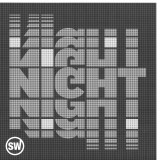
The band C.R.A.C. was formed in 1974 by bassist/vocalist Rick Cua, drummer Tommy Rozzano, keyboardist Larry Arlotta, and lead singer/percussionist Ricky Chisholm. Their name is an acronym for the founding members' last names. Playing mostly popular covers, the band's main gig was four nights a week at a Syracuse, NY club called Big Daddy's. It didn't take long before Big Daddy's was packed whenever C.R.A.C. was there.
As they gained popularity, a variety of opportunities presented themselves. Soon, they had enough new gigs to leave Big Daddy's and focus on their budding career.
Drawing inspiration from other bands in their genre, their passion for music, and the success of their first radio single, "Of The Lites," they continued to add to their repertoire of songs written by members of the band. Fresh off the high of their radio debut, they added two new members: guitarist Ronnie DeRollo and singer/percussionist Duane "Spoon" Walker. C.R.A.C., or as they became known at this time, CRAC, continued on their upward trajectory as one of New York's premier funk and R&B bands. The band continued to expand throughout the late 70's as their territory moved throughout New York and New England.
The busier the band got, the more their talent grew, and this afforded some members the honour of playing with such well-known artists as Maynard Ferguson, Melba Moore, Sea Level, Duke Jupiter, and The Outlaws.
Airplay on Tom Ravenscroft (BBC Radio 6 Music), Re:lax w/ Re:ni, Laksa & Biggabush (NTS), Gage (NTS), From The Depths with Drakeford (NTS)
Premieres of Four Feet and Blasphemy on Trax Mag and Ransom Note
Review on 2 Hungry Ghosts
DJ support from Midland, Bruce, Re:ni, Troy Gunner, Maya Jane Coles, Minor Science, Via Maris, Mosca, Blackdown/Martin Clark, Horse Meat Disco, Tony Thorpe, Daire Carolan (All City Records), Deft, Phototherapy, Shadow Child / Polymod, Lukas Wigflex, Soulphiction/ Jackmate
Since debuting on the label in May 2017, East London duo Earthboogie has been part of the extended Leng family. In rhat time, Izak Gray and Nicola Robinson have delivered a swathe of superb singles and a fine debut album, 2018’s critically acclaimed Human Call. Here they present their sole single of 2019, a two-track fusion of intergalactic, terrestrial and tribal elements reflective of their by-now trademark style. Fittingly, lead cut “Creepy Steve” – a previously unheard workout recorded during the sessions for Human Call – contains many of the musical ingredients that made Earthboogie such an enticing proposition. It boasts a raw, fuzzy and driving analogue bassline, densely layered tribal percussion, dub disco-influenced guitars, woozy electronics and sporadic blasts of African style chanting. As if that wasn’t enough to get the blood pumping, Gray and Robinson have also thrown in some extended, rock style guitar solos and more cowbells, bongos and timbales than you can shake a stick at
It comes accompanied by a previously unheard remix of “Human Call”, the title track from their superb debut album, by friend and fellow musical fusionist Joel Harrison. His version is warm, woozy, driving and percussive, brilliantly re-imagining Earthboogie’s original version as a supersonic slab of peak-time ready deep house. The band’s original chanted vocals, guitars and melodies slowly rise above bustling, all-action drums, weighty bass, alien-sounding electronic flourishes, poignant trumpet parts and seriously dreamy sustained chords.
I remember the first time I read W.E.B. DuBois eclectic masterpiece The Souls of Black Folk. The way in which this Weberian scholar flowed from personal account to prose to sociological analysis to music and even political intervention has had a lasting impact on my own work as a cultural anthropologist. It made me understand that as scholars we must use different means in order to give expression to the totality of the lived experience: There is only so much in an academic text.
The experience of alienation has always been at the heart of my scholarly and artistic practice. I have used academic writing, lecturing, theatre performance and electronic improvisation to understand and represent it as a theoretical concept, postcolonial condition and lived experience. I believe, some issues need to be told like a story, some analyzed in most abstract terms and others need to be sung like a gospel. The medium changes the message.
In this sense, I guess, I’m a singing cultural anthropologist.
For some time now I have been engaged in the use of dystopian themes and sounds to paint a sonic picture of structural racism and whiteness of our present. But recently I have grown weary of this Ballardian idea of Future Now and the resulting phantasmagorian aesthetics myself and others have been invested in. The widespread availability of Digital Audio Workstations, sequencers, loopers and delay pedals has lead us into a futuristic cul de sac best described by Mark Fisher as the very absence of future.
Likewise, I am most skeptical of the “naturalist” countermovement, the return of folk. Especially in Germany, I am convinced there is no such thing as an innocent or progressive folk musical expression as it is always connected to the idea of the homeland (“Heimat”) which in turn produces the colony. It seems to me, the current zeitgeist is stuck between a “museum of a dystopian future” and a “museum of an idealized past”, but I wanted to sing about the present.
So, I involuntarily returned to pop music in its two-folded meaning of something popular and addressing not an essentialist notion of “Volk” or its woke cousin “communities”, but society as a whole.
I entered the studio just with a few lo-fi sounding melodies and rhythms from my circuit bent CASIO synthesizer. I had no clue what the finished product would sound like. But as soon as Markus started drumming, in a way strangely reminding me of CAN’s Ethnographic Forgery Series, my uptight sounds were suddenly embedded within a warmer global sound spectrum. The alien at home and abroad and the strange overlapped: We were seeing one and the same sound differently but were gently held together by Tobias’ producing.
Making music is about building coalitions. It’s about suggesting an articulation of styles, sounds and people, that hasn’t materialized, yet, but may help us in the current crisis: I wanted Amon Düül II to send their drug induced archangel thunderbird to rescue the refugees, that had tried to escape the police by climbing up a tree in Munich in 2016. I wanted Sun Ra to taunt far-right protesters in Chemnitz in 2018. And I wanted to mourn the loss of a former kebab shop cum discotheque that served as proof that there is such a thing as a minoritarian universalism.
SCHLAND IS THE PLACE FOR ME is a pop album featuring songs of alienation, not only as a tragic experience, but as a pop-cultural promise. Maybe Bill Callahan sung it best, “I am Star Wars today, I am no longer English grey”. I want those who suffer from alienation to stand in alliance with those who seek alienation, and vice-versa. A coalition, that tolerates the possibility that we are moved by the same groove for contrary reasons.
Fehler Kuti
Munich, Autumn 2019
Music by Julian Warner, Markus Acher & Tobias Siegert
Saxophone on RINDERMARKT by Franz Brunner
Trombone on RINDERMARKT and IL by Matthias Götz
Recorded and mixed by Tobias Siegert in Munich.
SONTAGSFAVORIT mixed by Dario Albiez in Dusseldorf.
Mastered by Duphonic in Augsburg.
Artwork by Atelier Grande, Munich.
The time of superficiality is over, we need another perspec- tive. The Tableau Vivant, that reenactment of painting by people, offers a new way of looking at things. A look into the depths, into the innermost of the artwork, a liveliness that jumps right out of the picture. Tableau, the project of the Kame House founder Infuso Giallo and Berlin musician Joshua Gottmanns, dedicates its debut »Double Dream Hands« to a new liveliness. While Infuso Giallo delivered a new interpretation of Moog-Exotica with his first release »Ode to Sansevieria«, Joshua Gottmanns is an »old hand« in the business and has proven his songwriting qualities in different projects for more than ten years, most recent- ly in his project Neuzeitliche Bodenbeläge together with Niklas Wandt. But it’s not about the merits of past records, but the here and now, about the moment. This may have passed in the next second and at the same time lasting an eternity. In four live sessions (the term »Jams« may also be applicable), quite independent entities have emerged that embrace life and come into contact with themselves: Within You, Without You. The congenial pairing of these two new masters of (almost) instrumental songwriting features excursions into New Beat and Percussive Exotica as well as Austro-Wave and Electronica and is promising a playful mix of travels at the edge of stasis with a peculiar musical drawl and abrupt, danceable explosions of ecstasy.
- A1: Saginaw Country Line
- A2: God’s Gift To Man
- A3: It Was Almost Something
- A4: Every Couples’ Not A Pair
- A5: All We Need Is Understanding
- A6: Everything’s Tuesday
- B1: I Never Get Tired Of You
- B2: My Credit Didn’t Go Through
- B3: Things Are Bound To Get Better Later On
- B4: Mary Lou Thomas
• 1972 Debut solo album from the frontman of Chairmen of the Board
• Featuring ‘All We Need Is Understanding’ and Every Couple’s Not A Pair’
• Fans of Chairmen of the Board will quickly find the sound recognisable, with 4 songs overlapping with ‘In
Session’ and ‘Bittersweet’. The album was produced by Johnson, Mayner, Perry and Weatherspoon
• Detroit soul classic reissued on 180g heavyweight classic black vinyl with printed inner sleeve and original
artwork
Markus Suckut is a well known producer in the techno world, whose releases have found a home on such respected labels as Rekids, Odd Even, Hypercolour or Edit Select to name just a few. Suckut is also the founder of the SCKT imprint. The Düsseldorf producer has been a part of the 'made of CONCRETE' family for some time now and the pair up between the two on 'Voices In My Head' feels like an ideal match.
The title track 'Voices In My Head' may give off a tranquil feel but pay close attention and you’ll hear the psychosis bubbling below the surface. The synth scribbles that underpin the track would get the best of a sane mind in the right setting. '8' follows. It’s a smart, profound cut designed to raise the pressure on the dancefloor. On the flip, 'Drift' comes to life with fantastic mind-bending sweeps. Label bosses Rebar close the EP off on a quasi devotional touch with their rework of 'Voices In My Head'. The pair stays in the deep end with sublime synths and a stripped back rhythmic architecture. It’s a perfect counterpoint to Suckut’s original.
Microdosing is a series of compilation 12”s selected by Julienne Dessagne aka Fantastic Twins, and designed in collaboration with French visual artist Geff Pellet. Microdosing is a collective experiment aimed at helping you fighting back your modern obsession with happiness. You may deserve a nice day but the day does not need a nice you, nothing should be forced, everything is permitted. Microdosing will provide you with sonic healing weapons on regular basis and at irregular dosage. Those doses will favour psychedelic social techniques against self help tyranny, creation over soma, provoking over numbing, our outer-selves over our inner-selves. Microdosing refuses the fatality of the pleasure principle. Life is a struggle, time to embrace it. —— “The cure 4 pain is in the pain” The Microdosing community is an endless Tibetan geometric tattoo on a thousand backs, a black well opening on infinite space. Let us embrace the void in our lives as it is fruitful. Cooper Saver hails from L.A, a city of fallen angels. “Phase 0” is a demonic weapon of choice, its beauty rising from urban ashes. Borusiade’s “Worlds” is an industrial mantra, tribal rhythms driving you through the seven circles of agony, the voyage being the destination itself. Zillas On Acid’s “S-Test” slowly pours acid into your retina, its groove showing you that the blind are the true see-ers. Scott Fraser’s “Deliria” concludes this chapter with the serenity only known to true martyrs. This is not a soothing piece, just the realisation that peace comes from eternal damnation. Microdosing is happy to lead you through the dances that know no threshold. To the chant of “the only cure for pain is in the pain”, you will travel further through an empty eternity. (Ivan Smagghe)
PINK VINYL WITH PINK SLEEVE.
Kungens Män hail from Stockholm, Sweden and have been around as a musical unit since 2012. Their inspiration comes from the drone, the rattle of the loose screw, the circuit failure of the effects, the phatness of the moog and from the very diverse wiring of a bunch of middle aged Swedish freaks. Kungens Män never plan the next musical move - it presents itself.
Nine months after their acclaimed album 'Chef' (also released on Riot Season) the band return with 'Hårt Som Ben’, a stunning follow up with a debut UK tour to coincide.
Echoes And Dust on ‘Chef’: “From pure psychedelic freak out, to exploratory ramblings, and all imbued with a sense of communal priority to create together a work of immense intelligence, Chef is an album which begs for continued listens and deep immersion. That it is so accessible too, makes that genius shine through even more so. Superb.”
At the end of May 2019 Kungens Män packed a couple of cars full of instruments and life supporting essentials and drove into the woods of Värmland to spend three days in the legendary Silence Studio. It has hosted recordings by bands and musicians like Bo Hansson, Motorpsycho, The Hellacopters, Bob Hund and Union Carbide Productions, the presence felt and seen all over the place. In between watching VHS tapes with Twin Peaks, Miles Davis and Roskilde Festival 92, cooking pasta, sleeping in bunk beds, Bruce Bannering shirts and chilling in the sun, Kungens Män managed to record about 13 hours of music. Some of it will never reach your ears, but here’s the first slab made public – Hårt som ben – Hard As Bone. Not very hard, that is.
‘Portuguese electronic alchemist Bruno Silva aka Ondness aka Serpente lands his first ever vinyl release as Ondness on the ever-evolving SOUK imprint. The last year couldn’t have been better for Bruno Silva. Two major releases under his moniker Serpente, “A Noiva” (Tormenta Eléctrica) and “Parada” (Ecstatic) and a Ondness tape, “Not Really Now Not Any More” (Holuzam). “O Meio Que Sumiu” is the first vinyl release by Ondness, following more than a dozen releases on tape, CDRs and digital. He’s also graduating to vinyl on the Discrepant family, after his 2018 tape “Celas Death Squad” combining Serpente and Ondness works as a split.
“Meio Que Sumiu” can be translated as the “community that disappeared” and it alludes to the disappearance of outdoors communities and how it affects the music we listen (and how we listen to it). Ondness wanted to release an album less about himself and his inspirations and more about his aspirations about how dance music could be in an era of constant interactivity and information.
But also, how it fails to be that aspiration. Once again, like in “Not Really Now Not Any More”, Bruno works in the territory of science fiction. Investigating the present and future with nostalgia about how things could be and could evolve.
It’s music in the realm of non- existing, instead of raving nostalgia about dance music from the 1990s, Bruno explores the idea of possible futures with different approaches to dance/electronic music in each song.
In “Meio Que Sumiu” it’s obvious his music has matured and found its listenes. Bruno is no longer a bedroom musician. (He never was, but he sure worked on that idea. And very well, we might say). The dancefloor is now his, with music that explores the deeper immersion of ourselves. Communities may be changing, but the principles of dance music are always the same. Even with motion sickness for future nostalgia, like the music in “Meio Que Sumiu”.
On the hunt for timelessness we travel far and wide and realise only the wisest and stupidest of men never change. Brilliance borders lunacy. Extreme wisdom and extreme stupidity are the same. When u know everything u know nothing. Just as minus infinity reaches plus infinity and forms a circle. Just as extreme right wing and extreme left wing are basically the same but arrived from a different angle. Extremely bad taste becomes good, and extremely good taste is contrived. The truth is in the middle (yes i have come at an age where i can say that) so we have to embrace change to be the only constant. Everything and everyone always changes. So what does it mean “to be timeless”?
A very special thanks to Efdemin.
The story goes like this:
He gave us the strong winds remix. We told him its a bomb. We also said its a little sad maybe perhaps that it contains so little of the original. “Oh let me try something” was his answer. And the very next day we got sent the good winds mix. Of course we asked if we could include both mixes. How could we choose?
First time available on 180 grm black 180 grm vinyl 2LP . Revelation is the first album that was fully recorded & produced at Anton's recording studio in Berlin . It is the 14th full length release from the Brian Jonestown Massacre recorded from late 2012 to early 2014. With Anton Newcombe refining the 13 tracks that appear on the album Featuring Ricky Maymi an original member of the band plays on this album. It also features Joachim Alhund (Les Big Byrds) , Constatine Karlis (Dimmer), & Ryan Van Kriedt (Asteroid #4) . Plus vocal performance in Swedish by Joachim Alhund (Les Big Byrds) on the opening track . This album brings the traditional Brian Jonestown Massacre sound mixed with eastern influences & bringing it up to date with the benefit of all the additional weirdness that's been discovered in the past 40 years. Two dozen band members later and numerous ups and downs' (some have been famously sensationalized in the media ), the one thing that has always remained consistent for this psychedelic collective, is front man Mr. Anton Alfred Newcombe
The Voices of East Harlem were an ensemble of vocalists who for Just Sunshine Records recorded two albums under the direction of Leroy Hutson and Curtis Mayfield. “Wanted Dead or Alive” is one of their most classic songs, a highly sought after ‘Rare Groove’ track together with “Can You Feel It”.
Hot off the heels of Aluxes, his 2018 Lumière Noire debut EP, young Mexican DJ/producer Iñigo
Vontier is inviting Chloé's label on a trip to the far corners of the body & mind with an album of
demented grooves, psychedelic take-offs and imaginary comic strips of mystical rituals. A
bewitching debut full-length. Mexicans may never possess the sonic science of the Germans,
the hedonistic madness of the English or the gift for synthesis of the French, but, as proven by
Iñigo Vontier's first full-length for Lumière Noire, their universe is much more exciting than
anyone would have ever thought.
The DJ/producer fully asserts his origins by brandishing the album’s title "El Hijo del Maiz" ("the
son of the corn") almost as an emblem: "in Mexico, corn is eaten daily. It has long been defined
as 'the gold of America', and I consider all Mexicans as children of corn". A spiritual and
embodied vision Iñigo's first Lumière Noire release, the four-track Aluxes, set the tone of the
young talent's distinctive interpretation of dark disco, which creeps up on the dancefloor from its
iconoclastic side. The two tracks and two remixes (one by Flügel, the other by Inigo himself)
featured on the 12" for lead single "Xu Xu" (featuring Red Axes-affiliate Xen's irrelevant vocals)
was a full-bodied confirmation that Vontier sees the dancefloor as an arena for the occult –
whether from the peoples of the equatorial jungle, the Middle East or, even from indocile
machines. But, while the spiritual element seems part and parcel of the Jalisco native’s output, it
is in no way the only ingredient of this first long-player: "this album best reflects my own vision
and spirituality, and the way I feel it" he says.
Whether contemplative or frenetic, the collection of tracks that make up “El Hijo Del Maiz” takes
the kitchen sink and throws it out the window: languid rhythms, haunted vocals, and mysterious
percussion fuel a discombobulated house set that scrambles the listener's five senses, leaving
one disoriented and exposed to the vagaries of vertigo. Following the demented, dystopian “Xu
Xu” EP, which explored an imaginary jungle that harbored Mayan and Egyptian pyramids,
Middle Eastern accents are once more present in the off-kilter “Bo Ni Ke” and its Japaneseinfluenced vocal trickery, which Moroccan flutes à la Jajouka transform into a feverish trance.
With the following three tracks, Iñigo Vontier raises himself to the same level of excellence as
the Pachanga duo (of which pride of the Mexican scene Rebolledo, is also known as a prolific
artisan of deconstruction): “Awaken”'s slumbering voice, heard as through the veil of hypnosis,
slowly introduces a techno beat which, as in follow-up “Time”, literally brings the listener to a
levitative state. In a housier vein, yet continuing in the same psychedelic, 90s-infused spirit,
“Don’t Go Back” disrupts the genre’s usual signatures with an out-of-tune keyboard that is
becoming the artist's trademark, destabilizing the listener into a drunken vertigo, with a good
helping of sexiness: "I think the sexy dimension definitely brings a kind of magic to music," says
Vontier. “I'm sure I felt this magic during my DJ sets, and I like to think that sorcerers use this
element in their practices. I might consider myself a bit of a sorcerer when I take over the DJ
booth, by the way." A mood and sound that can once again be found – in a quieter, more
bucolic version – on “Chiquitita” (feat. the flute stylings of pioneer DJ Rocca, now a partner of
cosmic disco legend Daniele Baldelli). The more cinematic, fast-paced and dreamy beat of the
no less captivating “Little Monster” might evoke the mischievous spirit of the Mayas' minor
mythological creatures, while ode to the magical herb Marijuana (feat Thomass Jackson)
proudly tramples into the debate that such a provocative title inevitably provokes: "psychedelic
drugs are powerful tools to reach a higher level of consciousness about what surrounds us, but
we must learn how to complete this psychic journey by ourselves, notably through meditation
and love.
In the end, El Hijo del Maiz is an album-length confirmation of Iñigo Vontier's uniqueness, and
his adherence to Lumière Noire's policy of letting artists fully express their vision – while letting
their passions guide their idiosyncrasies and explorations of innovative electronic signatures
Rebekah’s Elements label welcomes Storb who delivers two vigorous cuts, while the label boss herself and Scalameriya provide remixes.
Something of a mystery, Storb may be elusive but his driving music speaks volumes. The industrial techno producer has released on labels like Diffuse Reality and Emetic, but now he is invited to join Birmingham’s pivotal techno tastemaker Rebekah’s imprint accompanied by a remix from the esteemed artist herself, not to mention Serbian techno purveyor and live performer Scalameriya who’s recently released on THEM and Genesa Records.
Taking a haunted and brutal route from the off, ‘The Donut Theory’ is built on contorted synths and sewed pads that together generate a twisting and turning aural experience, followed by ‘Gasp’ which thunders forward using hyperdrive drums, frazzled effects, overdriven machine sounds and caustic textures.
On the flip, Scalameriya remixes ‘The Donut Theory’ incorporating hammering broken beats, urgent alarm samples, industrial components and fizzing stabs. Tying it all together, Elements boss Rebekah reinterprets ‘Gasp’ by stripping things back to focus on colossal kicks and firing sirens that permeate a relentless groove to generate a pure warehouse inclined energy.
Jasmine Azarian caught my ear with a DJ set a while back so I asked her to send some tracks over. The first two she sent were stunning - raw, emotive, warehouse anthems (no Hard Wax you may not steal my description). If that doesn't float your mojito we have none other than Manni Dee and Ossian remixing each track just to add a shit ton more sizzle to the party.
Club Internacional dig deep to launch their new global reissue series in style with two long lost cuts from Rio-based label Top Tape. First up is Jose da Silva aka Zeca Do Trombone.
A massively respected instrumentalist, he has worked his trade over the years with many of Brazil's leading artists such as Tim Maia, Milton Nascimento, Elizeth Cardoso, Beth Carvalo, Martino Da Vila, Gonzaguinha and Carlos Dafe amongst others.
He also produced a very much sought after LP in 1976 alongside Roberto Sax which was finally re-released this year on Mad About Records. Tema Do Brisa dates from a few years later in 1978 and is Zeca's only solo 45 single. Never released on digital and never reissued on vinyl before, it is with great pleasure that Club Internacional re-launch this psychedelic jazz and heavily funk influenced gem with its still stunningly fresh sounding drum patterns to a new generation of listeners. Fans of jazz, funk, rare groove and Brazilian music in general will appreciate the strong vibes of this original track and be delighted to finally have this record in their hands. The track represents a unique moment in the career of a great musician fully in control of his instrument and more than willing to test its musical boundaries. Zeca continues to play out as an artist regularly in Brasil right up to the present time.
On the flip side, Sambacanas, or Os Sambacanas as they were sometimes also known, were a group of Samba musicians recorded by the Sao Paulo based producer Julio Nagib.
Although they were mostly known for a samba covers LP entitled 'Sucessos Da Juventude Em Tempo De Samba' (re-released in the UK under the title 'Fly Me To Brazil'), this song, Panga, Danga, Panga, was the A side of their only 45 single release for Top Tape which came out in 1976. Again this track has never been re-released before in its 45 single version, and has not been made available digitally. A beautiful example of raw and simple Batucada-style Brazilian samba music infused with Latin funk vibes, it features excellent vocals and percussion including the berimbau and cuica. Club Internacional hopes you enjoy this journey back to rediscover these very different, but wonderful, long lost sounds of Brazil on this limited edition vinyl 45 pressing to add to your record collection. Each Club Internacional edition may take some time, but it will be worth the wait!
Reissue of this 1976 LP from Zambia. Deep minimal African music, lovely compositions over scarce drum machines and (fuzzy) guitars.. Beautiful music with a deeper message in the lyrics which is explained better in the long review below. Some words from the label. There is music that falls right into place, a perfectly articulated expression of a few distinct influences. Then, there is another kind of median music, something more mysterious, the result of time, place, technology, and alchemy. Zambian writer and musician Smokey Haangala’s Aunka Ma Kwacha (The Money is Gone) released in 1976 is an example of this more mystical metallurgy, falling somewhere between psychedelic Zamrock, US folk, Kalindula, and Sundown Beat (music played after dark) from Tongaland. The unique mix of languages on the album (Bemba, Tonga, Lozi, and English) also suggest this complex cultural crossroads. Underlying the whole album is the insistent beat of a simple drum machine, which was totally unheard of in Zambia at the time, and parallels pioneering experiments by Francis Bebey, Sly Stone, and Shuggie Otis, utilizing a technology which would later come to define dance music. Then there’s the album’s original artwork by Peter Kependa, done in style similar to the infamous Jamaican dancehall illustrator Wilfred Limonious, interpreting the album’s title and primary theme; the burden of financial inequality.
In this sense the album is political, but the theme is extrapolated and explored through its impact on personal life; love, marriage, social status, and diet. The album is full of cautionary tales, folklore and references to magic, aspects of Zambian culture simultaneously mystifying and alluring to outsiders, part of what attracted Western readers to Nigerian writer Amos Tutuola’s hallucinatory Yoruba folktales. After becoming a household name in Zambia for his music, writing, and television appearances, Smokey Haangala died at the age of 38, the very week his book The Black Eye was published, abruptly ending his brilliant and ascending career. We are lucky to have his inimitable work to remember him by, Aunka Ma Kwacha resting comfortably in the pantheon of re-visionary works by Rodriguez, Kissoon Ramasar, TJ Hustler, and William Onyeabor.
A new release on our Jukebox Jam imprint features two originally unissued sides from the Poet Of The Blues, Percy Mayfield. 'Gone Astray' is an irresistibly jazzy, mid-tempo Rhythm & Blues track which just epitomises class. The flip is a closing time blues lament with Mayfield drawling his way through his guidelines for dealing with heartache and strife.
- A1: Maybellene Aka Maybelline
- A2: Roll Over Beethoven
- A3: Johnny B Goode
- A4: Oh, Baby Doll
- A5: Round & Round
- A6: Come On
- A7: Almost Grown
- A8: Reelin' & Rockin
- A9: School Days
- A10: Carol
- B1: Rock & Roll Music
- B2: Sweet Little Sixteen
- B3: Too Much Monkey Business
- B4: Thirty Days (To Come Back Home) (To Come Back Home)
- B5: Brown Eyed Handsome Man
- B6: Go Go Go
- B7: Run Rudolph Run
- B8: Memphis, Tennessee
- B9: Back In The Usa
- B10: Route 66
This essential LP edition compiles 20 of Chuck Berry’s most emblematic and celebrated songs, taped by the Chess label between 1955 and 1961.
These recordings helped define the exact nature of early rock & roll. All-time classics such as Berry’s car songs (“Maybellene”), his calculated and carefully crafted instant smashes for the 1950s teenage market (“Reelin’ and Rockin’,” “Sweet Little Sixteen,” “School Days”), and his celebrations of the music itself (“Rock and Roll Music,” “Johnny B. Goode,” “Roll Over Beethoven”), are some of the greatest rock tunes ever written.
Take “Johnny B. Goode” specifically - the intro alone is arguably one of the most iconic pieces of music ever recorded, and the subsequent hand in hand energy of both the vocal and the instrumentation not only forms a brilliantly hook throughout the track, but also creates something uniquely Chuck Berry.
This material will convince even the sceptics of Berry’s brilliance. All of these original gems, which have been brilliantly remastered to achieve the most pristine sound, are simple two-and-a-half-minute songs that convey all the sheer power and emotion of rock & roll. Enjoy!
As we head towards the end of 2019, the CoOp Presents crew unleash a heater for the cold months, and a very warm welcome to the label for Danvers, with an EP entitled 'Light Movements'.
Joe Danvers has been building a diverse catalogue of dance music over the past several years, including releases on FINA Records, Boogie Cafe and Wotnot (his debut release also featured mixes from the likes of Joe Armon-Jones & Warren Xcince). Aside from his solo efforts, Danvers makes up 50% of Kassian, who in turn have dropped releases on Phonica White & Heist Recordings, as well as a series of highly-acclaimed remixes. Their debut track 'The Premise' was nominated as "Track of the Year" at Gilles Peterson's Worldwide Awards.
These various projects have been shown support far and wide from selectors such as Bradley Zero and Detroit Swindle, whilst Danvers & Kassian have been booked for parties across Europe this past Summer. Danvers is also co-founder of Curve Records, along with Luke Campion & Mike Wilkin of Fact / Vinyl Factory.
So to the EP - 4-tracks demonstrating Danvers' flair for eclectic bruk boogie. 'Devotional' kicks off the set, featuring the soulful vocals of Natalie May atop a rhode-laden bubbler. The EP's title track 'Light Movements' follows and is a more stripped-down affair, with big kicks and synth stabs. Next comes 'The Flex', inspired by Selectors Assemble runnings - a tasty stepper with a huuuuge b-line. Finally closing out the EP on a deeper jazzy vibe we have 'Calmer' featuring the don T. Williams.
Expect more big things from Danvers and from the CoOp Presents crew in 2020. In the meantime, get this one on your speakers and watch for the movements. Standardly essential business.
First reissue of this long time looked after Japanese experimental gem from the 80's !
A walk in Paris somewhere between the 30's and the 50's made by a Japanese lost soul. "Montparnasse" by Yoran is a surreal journey into an era which has maybe existed but long gone. A melancholic phantasy about a time you'll never know and can only smell the atmosphere. Memories and flashes come from an ancient time, cobbled streets where heels crack far away surrounded by the tickle of a street musician, a classical dance class directed by some piano notes or an announcement from an old train station. The cryptic french spoken-word infuses the extracts and sound collages taken from different french movies looped into a broken tape player. The result is one of the most mysterious and looked after japanese 80's underground record.This reissue is pressed for the first time on 12" at 45 RPM. Remastered and limited to 500 copies.
“Experimental trio Giraffe crystalize time on ‘Desert Haze’, their new LP on Marionette. Giraffe is the musical project of Sascha Demand (guitar), Jürgen Hall (keys), and Charly Schöppner (percussion). Sascha Demand is a composer that comes from a contemporary and improvised musical background, collaborating with the likes of Ensemble Integrales and Vinko Globokar. Jürgen Hall works in electroacoustic experimental projects, theatre and film scores, with releases on Staubgold and Edition Stora. Charly Schöppner is known for his popular music releases such as Boytronic on major production companies in the 1980´s and composes for theatre, dance, and film scores. With only a couple of releases to date on the wonderful Meakusma imprint as well as an EP on Marmo, little is known about Giraffe. After letting go of other artistic projects, the trio now focuses solely on Giraffe by continuously searching for and finding their own unique language.
Sascha, Jürgen and Charly have quite diverse musical backgrounds, though morphing into Giraffe they tower into one single composer. Their music is a critical statement, not in a political sense but rather an artistic one. Being mindful about what it means to create and how to position themselves as artists nowadays (without the constant hassle of being en vogue and short-lived trends) shaped their rather rare and stoic artistic stance. It is refreshingly honest to see their expression develop so naturally.
On Desert Haze, they’ve created a vibrant and minimalistic tribal sound that feels inspired by the Saharan traditional music of the Tuareg, Jazz, and German psychedelic krautrock. Giraffe themselves also list the radical music of the Viennese School (Schoenberg along with his pupils Berg and Webern) as well as the Köln School with its early electronic experiments as their main influence and inspiration. More precisely the composition process and the organization of musical material within space and time, where a conceptual and intellectual approach melds with an experimental yet expressive sound searching method.
Side A focuses on the trios studio work; it is built around tone color and pitch analysis of resonating prepared guitar sounds. Through a unique mixture of free improvisation and a serialism "rule set”, they develop instrumental layers and structures to form their tracks. Side B sees Giraffe playing more freely with a reduced setup - representative of what you may hear when listening to them live.
Desert Haze, along with its track-titles, showcases an almost mimetic approach to art. The haptic music grabs the listener not as a passive recipient but as an active resonant body to vibrate through. One can almost feel the Elements, pressure and heat forming a diamond, hypnotic overtones ringing through windy caves, shamanistic rhythms conjuring up mysterious and ancient landscapes - where the constant cycle of sedimentation and erosion reveals structures of fragile beauty - always gentle to the hand’s touch and the mind’s eye.”
This split release unites two female underground acts, both of whom have recently become pivotal parts of the contemporary electronic musical landscape in Japan. Hot on the heels of the acclaimed PAREDO EP compilation (TAL12), which has been released in May 2019 (and also includes contributions from Lena Willikens and Miki Yui), the SUPER MILD split album is the second outing by KOPY and TENTENKO on TAL. Their newest works punctuate their highly individual approaches to contemporary experimental dance music.
TENTENKO is a Tokyo-based electronic music producer. Her career began in 2013 when she joined the mainstream idol group BIS. Immediately after her departure from BIS in 2014 she commenced work on her solo project under her artist name TENTENKO. Since then she has radically reinvented her music away from glossy J-POP towards weird and industrial rooted dancefloor. TENTENKO first made a name for herself on the alternative Japanese music scene with a steady flow of live performances as well as collaborations with members of the legendary Japanese noise band HIJOKAIDAN.
For a few years now KOPY has been an unpredictable and charismatic part of the vital electronic music scene of Osaka. She has quickly garnered a reputation for creating her live sets exclusively with borrowed electronic equipment. Her name KOPY very much originates from this "concept". Apart from a few performances at Düsseldorfs famous nightspot SALON DES AMATEURS, she has been invited by LENA WILLIKENS to her showcase at the MEAKUSMA FESTIVAL in 2018. Her sinister dancefloor mystique is heavily steeped in the free spirited noise and rhythm cultures of her hometown.
- The Secret Of Christmas
- Hard Candy Christmas
- Snowqueen Of Texas
- Holiday Dreaming
- Last Christmas Ft. John Early & Kate Berlant
- I'll Be Home For Christmas
- The Coldest Night Of The Year Ft. Jesse Woods
- What Do The Lonely Do At Christmas?
- New Year Love
- Have Yourself A Merry Little Christmas
- Happy New Year
- Auld Lang Syne
GOLD VINYL[22,27 €]
On this collection of holiday songs, Austin chanteuse Molly Burch does Christmas with a twist. Quite an omnibus, the album features classics like “I’ll Be Home for Christmas” and “Auld Lang Syne” alongside heartland hits like “Hard Candy Christmas” and “Snowqueen of Texas”.
“This is the most fun I’ve had making a record yet,” Burch says. And you can hear that joy on tracks like ABBA’s “Happy New Year” as well as a playful cover of Wham’s “Last Christmas” with two special guests: actor / comedians John Early (Search Party, Wet Hot American Summer) and Kate Berlant (Sorry to Bother You) add a blithe intro and backing vocals throughout.
Recorded by Will Paterson (RF Shannon, Jesse Woods) and Jarvis Taveniere (Woods, Martin Courtney, Purple Mountains), the album also features two beautiful originals penned by Burch to add to your holiday canon. “I hope it’s a Christmas album for people who love Christmas music and people who don’t love Christmas music. May these songs welcome in a fresh new year and many warm, happy nights.”
- The Secret Of Christmas
- Hard Candy Christmas
- Snowqueen Of Texas
- Holiday Dreaming
- Last Christmas Ft. John Early & Kate Berlant
- I'll Be Home For Christmas
- The Coldest Night Of The Year Ft. Jesse Woods
- What Do The Lonely Do At Christmas?
- New Year Love
- Have Yourself A Merry Little Christmas
- Happy New Year
- Auld Lang Syne
CANDY CANE VINYL[22,27 €]
On this collection of holiday songs, Austin chanteuse Molly Burch does Christmas with a twist. Quite an omnibus, the album features classics like “I’ll Be Home for Christmas” and “Auld Lang Syne” alongside heartland hits like “Hard Candy Christmas” and “Snowqueen of Texas”.
“This is the most fun I’ve had making a record yet,” Burch says. And you can hear that joy on tracks like ABBA’s “Happy New Year” as well as a playful cover of Wham’s “Last Christmas” with two special guests: actor / comedians John Early (Search Party, Wet Hot American Summer) and Kate Berlant (Sorry to Bother You) add a blithe intro and backing vocals throughout.
Recorded by Will Paterson (RF Shannon, Jesse Woods) and Jarvis Taveniere (Woods, Martin Courtney, Purple Mountains), the album also features two beautiful originals penned by Burch to add to your holiday canon. “I hope it’s a Christmas album for people who love Christmas music and people who don’t love Christmas music. May these songs welcome in a fresh new year and many warm, happy nights.”