As naturally as X-Altera came to be, the music itself is a unique refraction of styles and bold, contradictory approaches. But it all blends together uncannily well—maybe because of the decades of production experience that went into it, or the holistic mindset Mullinix took from the beginning. The name itself reflects as much. "X-Altera references two things. It comes from Latin—ex altera—which means 'from or of the other side.' Which could be a metaphysical thing, or you could say it's jungle ethics brought into the techno world. And I spelled it this way as a reference to X-101 and X-102, the Underground Resistance project of Je- Mills, Mike Banks, and Robert Hood." Detroit meets London, deep techno meets drum & bass, old meets new—X-Altera unites these threads in order to take them in unknown directions.A fresh debut from one of the most vital electronic producers of the last 20 years, Tadd Mullinix (Dabrye, JTC, Charles Manier), who looks to the past of techno and jungle to find a new ways forward.
We are happy to introduce a new release and a new project from Ben Vedren and Chez Damier; a new collaboration that has been in the making for some time now. Side AA1 presents a unique sound in its vibe, kind of a minimal track. The French discussion/vocal in the background adds another dimension. You don't need to speak the language to understand what's going on, but you must wonder at some point: Do I understand French or is it the music that made me understand them An "organ" sound intervenes towards the end bringing power and light to the hall. It's eleven minutes of pure music! While "AA" is composed of two different remixes of a different track, 'Berlin Nights in Paris' It can probably be called the House anthem. It starts strong with some acid sound and is filled with a lot of wonderful elements. Like a gourmet meal, you wonder if the track shouldn't have been at least three times longer to satisfy the gluttony of the listen. The Techno remixes of the track. It's a perfect example of Detroit meets House. Techno track can, with no doubt, feed and drive the dance floor. No need for more than five words to describe it - it's a serious Techno track.
We present you the third release in our very successful collaboration series with "Roar Groove" and "The Revenge'.
Straight after his new brilliant album "When the Thrill Comes" that was release in May this year Graeme Clark is back
on Dirt Crew with four new gems.
The opening, funky and twisting, "Times Get Tough" is a deep rolling down tempo Disco/ House stomper that builds into this
ecstatic groove we got to love so much from his previous outings. Pure good times and hands in the air action promised on this one!
"Subconcious" is that darker and meaner side of House track with a slammin' Chicago beat he delivers this old school jackin' feel.
Big bass lines and soulful vocal samples tied together by "on the fly" drum patterns.
The B-side of this new EP opens with an hypnotic jam that builds and builds till those sweet synths start soaring in.
All carried by this ultra phat bass line, we can only imagine how this one will sound on a massive sound system!
"Searchlight" is def a highlight of this release. Can we go even deeper and darker oh yes! With "Come Down" we get
a proper come down to close this EP. Deep sub basses with floating tops and again that classic Jack House beat.
Certainly a late night track made for those sweaty and long dj sets.
Summer is here and "The Revenge" has the perfect soundtrack for hot and steamy nights, inside or on the open field!
After previously releasing Starship Commander Woooo Woooo's - Mastership LP, Left Ear Records have continued excavating the archives of the artist more formally known as Omer Coleman Jr. The result is two handpicked mid 80's instrumentals salvaged from the original master tapes, as well as an extended vocal edit on the flip for good measure.
.
After laying his alter ego to rest Omer made a handful of electronic releases on his own Kansas based 'Remo' label. Of these releases Left Ear has selected their two favourite instrumentals: 'Lovin 'Babe' Sure Is Fun' and 'So Good'. 'Lovin 'Babe' Sure Is Fun' was originally released in '85 and was created to celebrate a time in America where 'the economy was good, people were happy and love was in the air', the essence of which Omer captured using his Roland 808 and 303 in what may best be described as Acid-Boogie. 'So Good' on the other hand is a sensual downtempo cut shaped with heavy-bass, telephone samples and guitar solos that conjures images of late Night Rendezvous and compromising scenarios.
Red Hare's roots run all the way back to the Washington D.C. music scene of the 80's and 90's, where Shawn Brown, Jason Farrell and Dave Eight immersed themselves in the braids and tangles of that city's unique strain of hardcore.
In 1987, Brown (the original (and current) singer of Dag Nasty) and guitarist Farrell founded Swiz— a harsher take on melodic hardcore released via Dischord's sister-label Sammich and their own freshly-minted label Hell- fire. Eight joined Swiz on bass in 1989 and remained until the band wrapped it up in 1990.
By 1995, Farrell and Eight reconvened to immerse themselves in the angular post-hardcore stylings of Bluetip, yet found enough juice to again tap Brown for the short-lived Swiz reboot, Sweetbelly Freakdown. Meanwhile, Joe Gorelick was living a parallel existence drumming in the band Garden Variety. A fortuitous string of circum- stances led him down the Jersey turnpike straight into Bluetip's empty drum chair. Although Gorelick did not record with the band, his prowess was nonetheless noted and cataloged for future missions — first in 2002 with Farrell in Retisonic and now with Brown, Farrell, Jason and Eight in Red Hare.
Red Hare are set to release their second album Little Acts of Destruction on May 11th through a joint effort with Dischord and their own label Hellfire. Like their debut Nites of Midnite (2013) and their stop-gap 7', Lexicon Mist (2016), the album was recorded and mixed by longtime collaborator and friend J.Robbins. These 14 songs are a heady/hearty mix of the familiar and new that bristle with the energy of the hometown sound they helped shape.
Mehmet Aslan returns to his own Fleeting Wax imprint, in order to deliver the first in a series of releases as part of a new project, ghost station, including a collaboration with fellow Turkish singer, songwriter and vocal producer, Idil Mese.
Efsun, translating to enchantment in Farsi, is the sound of Idil Mese transforming an understated, somewhat folksy instrumental of Aslan's into a bewitching and subtle musical spell. Initially tense,
Idil Mese's vocal spell wraps beautifully around a brittle guitar motif, inches above a sea of atmospheric ambience. In it's second half, synthesis and sitar unite, taking efsun into more revelatory territory, employing a playful melody and warm, cosmic textures.
Meanwhile, on 'ghost station', from which the project takes its name, layers of meaning and recording slowly unravel, revealing a compelling soundscape. Recorded in one take, and completed across one night, 'ghost station' began with Aslan and his sampler surfing the busy radio waves of Berlin, eventually settling on a beautiful score broadcast on one of the city's classical stations. Just as soon as Aslan had the frequency on lockdown, the signal disappeared unable to be retrieved quickly enough, if ever. Loosely inspired by the work of Swiss visual artist and musician Pipilotti Rist, the track instead unfolds woozily like a dream, undulating through offbeat bleeps, ghostly voices and improvised swells of noise, while still maintaining it's own quietly propulsive groove.
Sounding more like himself than ever on his own Fleeting Wax outlet and incorporating an impressive range of musical techniques over just two tracks, 'ghost station' further establishes Mehmet Aslan as a restlessly inventive musical talent. -Text by John Thorp
'Turquoise', that is Turkuvaz, is a French-origin word inspired by the color of the Mediterranean, located within the borders of Turkey. Meaning; blue is the color that plays the green. At the same time it is relative. Because both colors are in it, if you love blue you will see blue, if you love green you will see it green. It means heaven and earth. The eternity is turquoise... The eternity is infinite. At the same time; the boundary between the earth and the sky. Some will find love in it , some will find serenity, some will remember the loneliness and find sadness, embracing some with zeal and reminiscent of the return to the nest, the power of holding hands tightly with two hands.And according to my opinion, the concept of life, the mortal world, is how we see these lands curtained until the last breath of life that we have been living on for centuries.There are billions of beings in our sky and on Earth that do not attract our attention, We can not see, can not hear, can only feel, there are enough lights to count and never disappear in the stage. This EP that you hold in your hand is a reflection of it.
Music was the easiest way to reach you. In doing so, the motto was 'never disappearing at the stage'. I know, because if nobody hears me, God, the real dominion of light the true owner of all the darkness will hear me.
Each sound I created, I filled it with a light and I added a little more sand to the clock. Sounds I created is to show you your own technique of finding your way to light, to make you understand that you are not alone, and that there is someplace really there for you. Without much effort, resting and reviving.
I believe that every one of us who lives on earth has a specific, holy purpose. The important thing is to find and catch it. Our inner journey is to be able to complete our enlightenment as spiritually as possible. And I still believe that we always need music to do that. Because the sounds; they will never disappear.
Turquoise, which is the work of this enlightenment period, which I have lived and found to be my self, will be a source of light for you and help you find God who lives in you.
Sharif Laffrey can charm the snake out of any basket. This is his first offering for the ESP Institute. Side A's Tangier is a long drawn-out exercise, an endurance test of the highest order. Over the span of some thirteen minutes, elements bob and weave intermittently and layers overlap haphazardly—the type of exciting dynamic that's born out of restriction—as if putting down a live jam without enough hands to work the console, yet Sharif perseveres. As touch and go as this arrangement may be, there is something that undoubtedly glues it all in place; the combination of his massive rolling 16th-note bassline and his tough-as-nails drumkit is so good that, upon first listen, we spat out our tea and insisted on its release. On side B, Everything Is Nice carries on with loose arrangement, dirty production and layers of inexplicable spoken- word samples (a Sharif calling card by now) but this time we're lead to a melancholy place, the blue comedown to Side A's antagonistic trial. With his ESP Institute debut, Sharif leaves you mentally unhinged, as if you've smoked something interesting and arrived bewildered in some Saharan labyrinth. These two songs will guide you through the medina to score the black meat.
Fresh off the back of the languorous poolside disco and tropical pop of their debut album 'Shapes On Shapes' released last November, LA based duo Wild & Free return with a collection of essential remixes from label mates and influences alike by revisiting the heady disco of recent single 'Ferns and Stuff'.
Both multi-instrumentalists, singers and producers in their own right, Wild & Free duo Drew Kramer and George Cochrane came together in 2015 and have spent the past 2 years crafting a series of acclaimed EPs and remixes (for the likes of Joe Goddard (Hot Chip), Panama, Gigamesh, RAC and Ben Browning of Cut/Copy) that saw them tipped by the likes of Spin, XLR8R, Indie Shuffle, Clash Magazine, Data Transmission and many more and take their live show on the road playing alongside the likes of Brooklyn's Body Language.After releasing a few solid ep's and two full lengths album's Xinobi has gained real recognition among established and well-known artists and opinion-makers, and his underground cult has amplified. What has followed is remixes, edits and reworks for artists such as Sbtrkt, The Avener, John Grant, Toro Y Moi, Nicolas Jaar, Agnes Obel, Kris Menace and Tensnake.Along with Moullinex and Mr. Mitsuhirato he gave birth to the still-growing-influent Discotexas who here lend their label mates their expert musical arrangement skills with 'Discotexas Club Mix' thrown in for good measure. And it doesn't stop there, with legendary New Yorker Justin Strauss, who has produced and mixed records and remixes for the likes of LCD Soundsystem, Beyonce, La Roux and Goldfrapp contributing a 'Whatever/Whatever' mix as part of the slick and hugely influential production duo he formed with Bryan Mette.
Already noticed for his remixes and array of collaborators and with several releases under his belt (including a track on the 'Bonjour Colette' compilation), Tokyo-based Yuki Abe AKA producer/DJ Boys Get Hurt gets his inspiration from the melancholic feelings the end of summer inevitably brings about, a personal and evocative sensibility in tune with the land of the rising sun's delicate culture. Yuki expertly crafts bouncy disco-house music with sprinklings of electronica, indie, ambient, hip-hop and R&B. Here he adds a mix with a loose and joyful feel that fits the sentiments of what Wild and Free represent perfectly.
Jimi Tenor's mind will travel where his body can't go. Living in isolation in east-Helsinki suburb he picks mushrooms and has exotic musical fantasiesin the calmness of the endless. He has made a quantum connection in Berlin with rhythm geniouses Ekow Alabi Savage and Max Weissenfeldt to create his latest tour de force "Order of Nothingness".
Mind travel is easy and music is a perfect way to illustate the possibilities. Using historical failed experimental keyboard Extravoice from Hammond organ company has opened the floodgates of Jimi's creative passages. Philophon studios in Berlin has a plethora of exotic instruments and they have been extensively used in making this album. JIMI likes to switch between wind instruments and keyboards to get a creative edge.
Is there any meaning in Mysteria Did Salvador Dali design the Chupa Chups logo Was Finland part of the Soviet Union Order of Nothingness might not aswer these question, but instead will confuse you a little bit more.
"The art of the future, therefore, will not be poorer, but infinitely richer in subject-matter. And the form of the art of the future will also not be inferior to the present forms of art, but infinitely superior to them. Superior, not in the sense of having a refined and complex technique, but in the sense of the capacity briefly, simply, and clearly to transmit, without any superfluities, the feeling which the artist has experienced and wishes to transmit." - Leo Tolstoy, "What is Art"
This statement can be made of Lucky Brown's attempt to "briefly, simply, and clearly" capture the feeling of the sound, soul, smoke and soil of the Texas Hill Country with his upcoming album "Mesquite Suite".
A little more than one year after the release of his firebrand "Mesquite Beat/Justice" single on imprint "Tramp Tapes" (TR-1040) Lucky Brown offers us here another glimpse into the sound and concept of the Mesquite Suite.
Saints & Beggars is a rustic pentatonic horn-led 6/8 anthem that builds upon a simple primitive melody assembled from two opposing figures set against two repeating figures. Brown conceived the motif while in meditation in a yoga-turned-composition studio in San Marcos, Texas. He later delicately draped the parts around it like woodsmoke. The overall effect of the composition is one of economy and restraint - nothing could be added or taken away. The horns, guitar and vintage electric combo organ begin in unison and then the figure brazenly explodes like a flock of white winged doves from a pecan tree in humid dusk. Here are featured extemporizations from Jason Cressey - trombone, Peter Daniel - saxophone, Colin Higgins - guitar, and drummer Ollie Klomp, with an exposition of open horns in the climax. The tune is drenched in shitty reverb which engenders a mysterious dimension begging the record diggers' favorite questions: "...when is this from", "...where is this from".
'Bout To Blow, remaining uncompiled in the upcoming "Mesquite Suite" (exclusively released on this single only), is a specimen of the generic Deep Funk on 45 that lit a fire in Lucky's heart more than 20 years ago. The use of the word generic here is not meant to be derogatory. Rather, it is to transmit the sense that this tune falls squarely within the confines of the so-called Deep Funk canon. 'Bout to Blow offers classic dancefloor essentials: driving bassline, hard drum beat, chanky guitar, and outrageously distorted horns fiercely executing a devastatingly primitive horn line. Also, for devout followers of Lucky Brown's recorded work, there is hidden in the bridge an easter egg in the form of a self-referential quote: the bridge of 'Bout To Blow is also the head of T.D. & The Jimmy James 3's "Jalapeño Pep" (TR-1025)!
It has been Lucky Brown's aim to paint for the world a picture of the vernacular jazz that America's neighborhoods once crafted as their own homegrown cultural heritage. Lucky Brown's music is a rejection of the elitism, classism, and status of the music industrial complex and is an antitoxin to it's resultant homogeneity. He wants with his heart and his art to transmit an everyday people's sound, made by everyday people, dedicated to the upliftment of all people. Could this be the "art of the future" that Tolstoy wrote of in 1904
Key-selling points:
- "Bout To Blow" is available on this 7" release only
- "Saints & Beggars" is taken from the forthcoming album "Mesquite Suite" (out september 2018)
The world has barely recovered from the previous sting of the Scorpio Man, when he lands in another dose. "Cold Turkey Time" from Ernie Hawks' debut album gets a single treatment here arriving back to back with the 45 only track "Tracking Down". The latter should make the b-boys move even if heard in the relaxing steams of a Turkish bath, where its breezy melodies eventually point at.
"Cold Turkey Time" is a serious slab of jazzy funk that shares many of the exotica qualities of its partnering side. It might sound nice, while driving a fine European sports mobile down on a spiraling mountain road, preferably in a 60's dandy state of mind. The eerie wordless vocals at the end tie the package together so nicely that Dario Argento could have made a scene out of it.
The continental vibes emanating from this vinyl single are bound to appeal to rare groove fanatics and secret agents alike. Ernie Hawks and his merry bunch of professionals are on a mean streak here, so keep listening.
Reminiscent of the infamous quote 'There are four lights", the release kicks off with an homage to the will of resistance. From Captain Picard to Orwell - may the (referential) chain of command is not as evident as H4L's sci-fi passion, the title track's power structure couldn't be wielded more efficiently: While stomping kick drums and subtle hi-hats build up a foreplay full of suspense, the witty melody with its warped and distorted sounds grants 'Four Lights' the perfect authority. Following a similar approach, 'Fesch' with its bouncy and mantra-like groove, in which synths playing a ping-pong game, completes the swinging A-side. Deep'a & Biri, the Israeli DJ and producer duo from Tel Aviv, start the flip side with their interpretation of 'Four Lights". By using breaks and greater attention for details, the remix not only redirects the originals' energy into more hypnotic realms, Deep'a & Biri extract the melody's keys in order to create a moody and dense version. Resonating from two decades of warehouse reverberation experience, 'Disc 2 Dysnomia' finishes the release with an IDM-drenched workout, full of UK bass knowledge, unpolished electro grooves, and swirling synth poetry. Absolute freedom means absolute lawlessness.
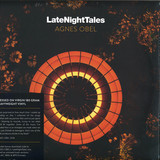
to Me, Sounds Have Always Been More Interesting Than Words,' Says Agnes Obel. i Love It When The Voice Becomes An Instrument And You Almost Forget It's A Human Voice.' Never Is This More Apt Than On This Beautifully Programmed And Bewitching Selection Of Music.
Agnes' 2010 Debut Album Philharmonics Went Platinum In France And Belgium And, Unsurprisingly, Quintuple Platinum In Her Native Denmark, Where She Also Won Five Danish Music Awards (equivalent To The Brits) In 2011. The Follow-up Aventine, Released In Late 2013, Was Imbued With The Same Measured Calmness As Her Debut. It Went Platinum In Belgium And Gold In Denmark And France.
For The Mix You Have In Your Hands It Feels Almost As If Agnes Has Scoured The World Looking For Kindred Spirits - Or Kindred Songs. There's A Quietude About It All, The Antithesis Of A Rush Hour, Like A Frozen Lake On A Sunday Morning. This Is Aided By A Veritable Cornucopia Of New Obel Material, Including A Haunting Reading Of Danish Song 'glemmer Du', Inger Christensen's 'poem About Death' Set To Original Music, And An Agnes Original, 'bee Dance'.
Among Them, There's The Enigmatic Jamaican Singer Nora Dean Who Weighs In With The Hypnotic And Slinky Duke Reid Production, 'ay Ay Ay Ay (angie-lala)' And The Sparse, Sardonic 'party Girl' By Michelle Gurevich, So Good It Inspired The Eponymous French Movie. There Are The Plangent Voices, The Bulgarian Folklore Choir, Nina Simone, Ray Davies And Agnes Herself, Ringing True. Somehow, Ms Obel Makes Even Makes The Electronic Tracks Bow To Her Needs As With Yello Whose 'great Mission' Is More Martin Denny Than Underworld And Cult Greek Composer Lena Platonos' 'bloody Shadows From A Distance' Pulses Gently Rather Than Throbs And Can's Recently Rediscovered 'obscura Primavera', Unusually Hushed.
"i Was Surprised At How Much Time I Ended Up Spending On This. I Collected All The Songs Together With My Partner Alex And We Just Spent Time Listening To Records, Trying To See What Would Fit Together. Some Of The Music I've Included Here Is On Mixtapes We Made When We Were Just Friends As Teenagers. Each One Of The Tracks Produces Stories In My Head." - Agnes Obel, February 2018
out of Stock
Last delivered 2 years ago available to reorder, subject to availability
Way back in 1967, an animated superhero cartoon was released into the world. It was created by Grantray-Lawrence Animation and was based on a web-spinning, crime fighting blue and red dressed character that had originated in1962, in Marvel Comics by Stan Lee and Steve Ditko. This amazing series (that we're not allowed to mention the name of for legal reasons) ran on ABC TV in the USA, then Canada, then a few years later started to spread its web further, running here in the UK throughout summer holidays, after school and possibly early mornings at weekends in the late 1970s. The series then got released on VHS video (and probably Betamax too) in the mid 1980s and still continues to spin its animated magic around the world through further broadcasts, YouTube and DVDs.
The series was notoriously low budget, with animated errors everywhere and numerous scenes, sequences and backgrounds being re-used all the time, often across the same episode. Even a certain spider logo on a costume would appear with six legs, then eight legs later on, then back to six again in the same show.
Series One opened with a newly written spider theme, a classic, hooky song all about doing whatever spiders can, and had, as Big George (RIP) once pointed out to me, a set of session singers falling slightly out of time with the backing track after the first verse. Series One also featured background music by jobbing composers Bob Harris and Ray Ellis but these cues and master tapes are now believed to be lost.
After Series One the company Grantray-Lawrence went bankrupt, so the amazing spider series (that we're not allowed to mention for legal reasons) was taken on by producer Steve Krantz. He brought in new talent, including animation director Ralph Bakshi who later went on to turn a Robert Crumb strip cartoon into the feature Fritz The Cat. Krantz also slashed the already cripplingly small spider budget, and brought in the idea of using economic library music. Here, thanks possibly to an independent sync agent (it has been suggested that a company called Music Sound Track Services may have been the one) production turned to the KPM catalogue. This was one of the few really established library catalogues around at the time with a modern edge, it was full of fabulous, modern dramatic music tracks - often all on the same LP. But more importantly all the tracks were far longer than the one minute musical cuts that many of the fledgling USA library companies were issuing at the time. Not only would this KPM music be efficient, affordable and very easy to use, it would also mean syndication worldwide would not be held up by any future musical issues. Krantz produced two amazing spider series (that we're not allowed to mention for legal reasons), and both were smothered with KPM music. In fact barely a spider second goes by without music playing in either the background or foreground.
For many years I - and many nostalgic others - have been thinking about putting this vinyl album together. For many enthusiasts this really is formative music - a junior foray into hip swinging crime jazz and esoteric musical grooviness. I've also read on line accounts by DJs from WFMU on the trail of original spider master tapes, and there's even a whole forum dedicated to Spidey-Jazz'. Then recently I was looking at an old spider tracklist and realized that several of my favourite KPM cues were there including Syd Dale's Hell Raisers' and Walk And Talk', both from one of the most elusive and desirable KPM albums of all time (yes, you just try and find yourself a copy of KPM 1002 right now), so I decided to push on and get the album made.
So, what features on this Spider-Jazz Lp Well it's music from the amazing TV series we are not allowed to mention for legal reasons, BUT, not music from Series One. No, but it is all from Series Two and Series Three. From looking at archival cue sheets, over 50 tracks from various early KPM 1000 series albums were used across episodes. I've distilled this down into one exciting and enthralling LP, and if this works a further Spider Jazz album may well swing in to production. If you're interested (and I'm sure you may well be) cues here came from KPM1001, KPM1002, KPM1015, KPM1017, KPM1018 and KPM1043 and were composed by master library composers of the era - Dale, Hawkshaw, Hawksworth, Mansfield etc.
And if you are listening over there in the USA, you may well recognize many of the cues here not just from the amazing TV series (that we're not allowed to mention for legal reasons) but also from classic 1960s and 1970s NFL highlight shows that we are allowed to mention.
Uncanny Valley EP sonically explores the uneasy, obscure but familiar relationships between human and machine in contemporary life. This is the debut release on RESIST, the record label launched by experimental club/art hybrid event from Belfast, Northern Ireland. This debut release is by RESIST event and label founder, Koichi. Remix comes from electronic music innovator and Eotrax label owner, Eomac in an anxiety driven, frenzied remix of the title track.
Jagged and angular sonics, and warm organic artefacts are the defining sound of this release, which imitates the theme behind the music. Machines are being engineered to have a place in intimate and personal areas of human life. What does it mean to be human in this increasingly digital world Are we anything more than complicated robots made of flesh Where does humanity stop and the uncanny begin
Koichi returns with a new sound, signalling a departure away from his previous aesthetic and into a new direction breaking free from the boundaries and categories of restrictive genre definitions. His music continues to contain a heavy techno aspect, and also draws on raw industrial and experimental influences.
Koichi is an electronic musician, music researcher, and event curator who explores resisting exclusionary identities and disrupting discourses of power and prejudice through music and live digital art.
It's been over 10 years since the release of Gui Boratto's breakthrough full length debut 'Chromophobia'. As to what its title suggests, he shook up the techno game with a contrast of lushly coloured minimal grooves and melody, whilst many will recall that the album included the highlight single Beautiful Life' which became a dance floor anthem for that era. Four albums in and countless EPs and remixes under his belt, the Brazilian producer's unique savoir-faire in carving out a functional album out of diversely routed singles and features is back at it on his fifth studio LP, 'Pentagram'. Here Gui Boratto lays down a nuanced 12-track narrative that reinvigorates his signature sound into a refreshingly different perspective that feels all too familiar - including the return of Beautiful Life' vocalist (and Gui Boratto's wife) Luciana Villanova on the single "Overload".
Through his signature kaleidoscopic approach, Boratto delivers an album built as a far-reaching hub-and-spoke system, broadly inclusive as can be. From the opening cut, 'The Walker' - hot on the trail of Tears For Fears 'Elemental' (one of Boratto's "favourite 80's bands") - to the hi-NRG euphoria of 'Forgotten' and its pounding tech alter ego 'Forgive Me'. "I was going into 2 different directions", Boratto says, "the typical indie- electronic-rock' Boratto kind of production like It's Majik' or Like You' and a much more techno approach." He goes on, "I decided to split them into two twin sister songs. When I play live I always put these two songs together."
The Brazilian Producer further embraces the pop-friendly essence of his past work on tracks like 'The Phoenix', featuring vocalist Nathan Berger, and 'Overload', both melding acidulous synthlines with laser-precise breaks, vox hooks and drops calibrated for extended radio and club use, although sieved through his distinctive rainbow-hued musical prism. For the symbolists out there, the album's pared-down closer '618' duration accidentally happens to equate the proportions of the said pentagram. "Coincidence" Boratto questions, and capsulises, "not so ufanista and supporter of Brazilian neo-concretism, but I guess the brazilian sculptor Lygia Clark also inspired me a lot. Not the meaning of her sculptures, but the shape of the hinge of most of her work. I've wanted to transmit the scientific pentagram's point of view. It's not a religious kind of thing."
Whereas 'Spur' (a field-tested 808 and 909-heavy "purist track", "very, very old school" Boratto insists) and 'Alcazar' are sheer smooth-edged four-to- the-floor epics, the album also shares its lot of startling moments, such as with the John Barry'esque 'Scene 2' (with a hint of Amon Tobin, 'Easy Muffin' style, throw in) and its refined string-laden buildup, 100% fitted for a 007 opening credit sequence, or with 'Hallucination' (feat B.T.) and the further James Holden-ish title-track 'Pentagram' (think 'The Idiots Are Winning'), "one of those exercises I did when I got my Buchla modular synth" Boratto analyses, "I think I've used more then 30 different snares, with different delays and reverbs. The whole song is alive". And so is 'Pentagram' in its entirety: alive and definitely just as manifold and hopeful as its architectonics are the stuff of science and dreams all at once.
Es ist zehn Jahre her seit der Veröffentlichung von Gui Borattos bahnbrechendem Debütalbum - Chromophobia . So wie der Titel vermuten ließ, war das Album mit seinen kontrastreichen Minimalgrooves und den üppig gefärbten Melodien ein Schocker im besten Sinne. Ihr erinnert euch sicher noch an die Hit-Single - Beautiful Life , eine Dancefloor-Hymne aus dieser Zeit. Nach vier Alben und unzähligen EPs und Remixen ist das einmalige Savoir-faire des brasilianischen Produzenten, aus vielfältigen Singles und Features stimmige Alben zu schaffen, auch auf seinem fünften Studioalbum - Pentagram zu hören. Hier legt Gui Boratto ein Zwölf-Track-Narrativ vor, das seine Handschrift auf erquickende Weise wiederbelebt. Wiederbelebt wird auch die Stimme von - Beautiful Life (die der Frau Gui Borattos gehört) auf dem Stück - Overload .
Durch seinen charakteristisch kaleidoskopischen Ansatz liefert Boratto ein Album, das gebaut ist wie die Speichen deines Fahrrads, von dem Opener - The Walker - direkt auf der Spur von Tears For Fears - Elemental (einer von Borattos - favourite 80's bands ) - zur Hi-NRG-Euphorie von - Forgotten und seinem stampfenden Counterpart - Forgive Me . - Ich bin in zwei unterschiedlichen Richtungen gegangen , sagt Boratto: - den typischen ,Indie-Electronic-Rock'-Weg wie in - It's Majik oder - Like You und den Techno-Weg. Er fügt hinzu: - Ich hab mich entschieden jedem Track seinen Zwillings-Track an die Seite zu stellen. Immer wenn ich live spiele lege ich die zwei Stücke zusammen.
Der brasilianische Produzent erschließt weiter die Pop-Essenz seiner vergangenen Arbeit auf Tracks wie - The Phoenix (feat. Nathan Berger) und - Overload . Beide kombinieren zwitschernde Synthi-Melodien mit lasergenauen Breaks, Hooklines, Drops und sind wie gemacht für die Rotation und den Club. Und für die Symbolisten da draußen: die Länge des reduzierten Closers - 618 beträgt zufälliger Weise genau die Proportionen des besagten Pentagramms. - Fügung , fragt Boratto und fasst zusammen: - Ich bin kein Anhänger des brasilianische Neo-Konkretismus , aber ich glaube die brasilianische Künstlerin Lygia Clark hat mich sehr inspiriert. Nicht die Bedeutung ihre Skulpturen aber die Form der meisten ihrer Arbeiten. Ich wollte den wissenschaftlichen Blickwinkel auf das Pentagramm übersetzen. Nicht im religiösen Sinne oder so."
Während - Spur (ein erprobter - purist track auf der Basis von 808 und 909, - sehr, sehr old school , wie Boratto betont) und - Alcazar glatte Vierviertel-Epen sind, hält das Album auch Überraschungsmomente bereit. Z.B. das John Barryschen - Scene 2 (auch eine Spur von Amon Tobins - Easy Muffin ist darin zu hören) und seinem Streicher-Aufbau, der hundertprozentig geeignet wär für eine Eröffnungssequenz in einem Bond-Film. Auch - Hallucination (feat. B.T.) oder der James-Holden-hafte Titeltrack - Pentagram (wir denken da an - The Idiots Are Winning ) wäre da zu nennen. - Einer dieser Übungen, die ich gemacht habe, als ich meinen Buchla-Modular-Synthesizer bekommen habe, war , erinnert sich Boratto, - mehr als 30 verschiedene Snares, Delays und Reverbs zu verwenden. Der ganze Song sollte am Leben sein. Und so ist - Pentagram im Ganzen: lebendig und sicher genau so vielfältig wie sein Bauplan, der auch der Wissenschaft und den Träumen zugrundeliegt.
out of Stock
Last delivered 3 years ago available to reorder, subject to availability
Music and Poetry of the Kesh is the documentation of an invented Pacific Coast peoples from a far distant time, and the soundtrack of famed science fiction author, Ursula K. Le Guin's Always Coming Home In the novel, the story of Stone Telling, a young woman of the Kesh, is woven within a larger anthropological folklore and fantasy. The ways of the Kesh were originally presented in 1985 as a five hundred plus page book accompanied with illustrations of instruments and tools, maps, a glossary of terms, recipes, poems, an alphabet (Le Guin's conlang, so she could write non-English lyrics), and with early editions, a cassette of field recordings' and indigenous song. Le Guin wanted to hear the people she'd imagined, she embarked on an elaborate process with her friend Todd Barton to invoke their spirit and tradition.
For Music and Poetry of the Kesh, the words and lyrics are attributed to Le Guin as composed by Barton, an Oregon-based musician, composer and Buchla synthesist (the two worked together previously on public radio projects). But the cassette notes credit the sounds and voices to the world of the Kesh, making origins ambiguous. For instance, The River Song' description reads, The prominent rhythm instrument is the doubure binga, a set of nine brass bowls struck with cloth-covered wooden mallets, here played by Ready.' According to writer and long-time friend of LeGuin, Moe Bowstern (who pens the liners for the Freedom To Spend edition of Kesh), Barton built and then taught himself to play several instruments of Le Guin's design, among them the seven-foot horn known to the Kesh as the Houmbúta and the Wéosai Medoud Teyahi bone flute.' Barton's crafting of original instruments lends an other-worldly texture to the recordings of the Kesh, not unlike fellow builders Bobby Brown and Lonnie Holley. Bowstern notes, Other musician / makers have crafted their own Kesh instruments after encountering the earlier cassette recordings that accompanied some editions of the book.' Both Barton and Le Guin are sensitive to the sovereignty of indigenous Californians and were careful not to trample the traditions of the Tolowa people who lived in the valley long before the Kesh. You research deeply, and then you bring your own voice to the table,' said Barton. Within the Kesh culture, the numbers four and five shape the lives, society and rituals. Barton composed loosely around these numbers, patiently listening to the land of Napa Valley for signs and audio signals from the natural elements. Todd incorporated ambient sounds of the creek by Le Guin's house and a campfire they built together. The songs of Kesh are joyful, soothing and meditative, while the instrumental works drift far past the imaginary lands. Heron Dance' is an uplifting first track, featuring a Wéosai Medoud Teyahi (made from a deer or lamb thigh bone with a cattail reed) and the great Houmbúta (used for theatre and ceremony). A Music of the Eighth House' sends gossamer waves of the faintest sounds to float on the wind.' Like the languages invented in the vocal work of Anna Homler, Meredith Monk, and Elizabeth Fraser, the Kesh songs and poems play with the shape of voice.
The Music and Poetry of the Kesh cassette was meant to accompany and enhance the experience of reading Always Coming Home. Presented in this edition as a long-playing album, where only traces of the book linger (the jacket offers some of Le Guin's illustration, and a letterpressed bookmark featuring the the narrative modes of western civilization and the Kesh valley is included), the music alone breaking the silence of what might be. It can transport—offering a landscape for imagining a future homecoming. One in which we are balanced, peaceful, and tend to the earth and its creatures. A line from the Sun Dance poem reminds us, We are nothing much without one another.' Freedom To Spend gives new life to the recordings of the Kesh people in the first ever vinyl edition of Music and Poetry of the Kesh, out on LP, and digital formats on March 23, 2018. The LP will include a deluxe spot printed jacket with illustrations from Always Coming Home, a facsimile of the original lyric sheet, liner notes by Moe Bowstern, multi-format digital download code and a limited edition bookmark letter pressed by Stumptown Printers in Portland, OR.
This past Monday, January 22, Ursula passed from this realm to another leaving a life spent building and exploring other worlds while challenging social concepts of the real word she inhabited.
Freedom To Spend had been working under Ursula's enthusiastic endorsement and with Todd Barton, her musical collaborator on Kesh, to give the music that accompanied her 1985 epoch a new life. With the Le Guin family's encouragement to move forward with our planned release, we are humbled to play this small role in sharing Ursula's work.
As Pete Swanson, one third of Freedom To Spend, stated, Ursula's legacy is her work which transformed the world, and this is another piece of the universe that her imagination birthed becoming real.' Listen to A Teaching Poem / Heron Dance' below.
The War On Drugs announce their fourth full-length album, A Deeper Understanding, out August 25th on Atlantic Records. A Deeper Understanding is the band's first album since 2014's universally acclaimed Lost In The Dream, and their debut album with Atlantic. Following the Record Store Day release of the 11-minute Thinking of a Place,' The War On Drugs present the album's lead single, Holding On.'
For much of the three and a half year period since the release of Lost In The Dream, The War On Drugs' frontman, Adam Granduciel, led the charge for his Philadelphia-based sextet as he holed up in studios in New York and Los Angeles to write, record, edit, and tinker—but, above all, to busy himself in work. Teaming up with engineer Shawn Everett (Alabama Shakes, Weezer), Granduciel challenged the notion of what it means to create a fully realized piece of music in today's modern landscape. Calling on his bandmates - bassist Dave Hartley, keyboarding Robbie Bennett, drummer Charlie Hall and multi-instrumentalists Anthony LaMarca and Jon Natchez -- continuously throughout the process, the result is a band record' in the noblest sense, featuring collaboration, coordination, and confidence at every turn. Through those years of relocation, the revisiting and reexamining of endless hours of recordings, unbridled exploration and exuberance, Granduciel's gritty love of his craft succeeded in pushing the band to great heights.
Max Loderbauer, who has so far made consistently engaging contributions to the Arjunamusic family, is back to lend his unique interpretive skills to the master recordings for the Brightbird album by João Paulo Esteves da Silva, Mário Franco and Samuel Rohrer. Loderbauer has set himself up for a chal- lenge, since the original album's completely improvised flow of small-ensemble, conversational jazz feels complete enough without outside intervention. However, Loderbauer's role as electronics operator in the similarly attuned Ambiq trio has already shown that, through his mastery of tone color, he has a talent for teasing out the additional hidden details within an apparently 'complete' sonic environment. It's a task he mana- ges to accomplish without ever overriding or contradicting the cohesive message provided by his collaborators.
Adding to the challenge here, Loderbauer chooses to re- mix using only sounds from the original recordings. By doing so, it might seem he is willfully denying himself the chance to use his own signature tools and turn Brightbird's source materi- al into stunningly new electro-acoustic hybrid blooms. Yet Loderbauer succeeds here by becoming something more like a translator than an augmenter - he finds a way to make mea- ningful syntactical changes to the trio's rich and versatile vo- cabulary, and once again unveils a verdant world of hidden details in the process.
The A-side 'Trusting Heart/Cosmos' has an anxious tone introduced by a set of Doppler-effected piano notes that seem to melt in the sun, and is soon complemented by a va- riegated, chattering rhythm line. Here Loderbauer builds up a tactile tension between rhythmic certainty and sharp-angled, de-tuned, and occasionally scrambled instrumentation, framing a disorienting (yet engaging) virtual space where ob- jects' bright hues rapidly change as they contract and expand along multiple dimensions. For the b-side 'Noontide', Lo- derbauer switches to a more focused and streamlined idiom with an uncanny ease, riding along steady waves of sequencer patterning and silvery, resonant shiverings. Reverberating, ho- lographic piano again provides the tonal center here, and the notes ring with a forward-thinking optimism not far removed from classics of the 'Krautrock' era.
Current supporters of all the artists involved will find this to be an invigorating synopsis of their work to date, while newcomers will be treated to a soundworld where skillful fu- sion (the act itself, rather than the music genre with the same name) is constantly on display.
Tom Dicicco returns under his newly launched Veyg moniker with four mesmerising house cuts entitled 'My Sweet Soul' arriving on his eponymous vinyl only label Veyg Times.
Run Out Run founder Tom Dicicco's output includes ppearances on labels like Juju & Jordash's Off Minor, John Osborn's Dred Records, Anthony Parasole's The Corner and renowned Dutch techno staple Delsin. The British producer started producing under his Veyg alias earlier this year as a means of exploring more adventurous productions spanning house, techno, disco, and beyond. His second outing once again demonstrates how
versatile he is as a producer.
For the last decade, Argentina has become the epicenter of a musical explosion that characteristically blends folk music from the surrounding Andes and electronic beats. The artist arguably responsible for its emergence on a global platform is one named Chancha Via Circuito- a Buenos Aires native named Pedro Canale whose first album Rodante (2008) opened the floodgates by pushing the borders of Cumbia listeners weren't even aware existed. He's gone on to release other highly acclaimed albums such as Rio Arriba (2010), which Resident Advisor described as 'aural magical realism', and Amansara (2014), which catapulted him onto acclaimed international stages and received praises from Pitchfork to the New York Times.
Four years later, in the midst of some very notable global turbulence, Chancha Via Circuito brings us his highly anticipated new album Bienaventuranza- a word that essentially means bliss. Replete with his signature touches of Andean instruments (think lots of flute and charango), the folkloric elements on this album blend fluidly with danceable and digestible electronic beats. He's been cooking this record slowly, with unprecedented amounts of care and in a much more collaborative manner than his past albums.
Appearing on the album are heavy hitters in the digital cumbia scene, including Mateo Kingman, Kaleema, and Lido Pimienta, all of whom contribute their highly distinguishable sounds to the natural flow of the album. Most of these collaborations came about almost effortlessly. La Victoria is a track that blends cumbia, dancehall, and a bit of mysticism- carried by Lido Pimienta's luminous voice, Colombian Dancehall wizard Manu Ranks happened to be in town and slipped into the song naturally. Kawa Kawa came from an improv jam during rehearsal one day with Kaleema (Heidi Lewandowski) and Federico Estevez (percussionist in Chancha Via Circuito). Niño Hermoso, which is lyrically a fable, sounds the way it does because Pedro saw a video of Gianluz (Gianluca Zonzini), who he knows from dance classes, singing a Pocahontas song on Youtube.
As dancefloor-friendly as it is mystical, Bienaventuranza is as Chancha as it gets- with elements from Cumbia to Dancehall to Andean Folk to Global house, crystal clear production, and collaborations that are evidently natural and genuine, the record holds true to the sound that Canale has played such a huge part in creating. Since the release of his last album, the digital folk scene has also grown exponentially. From a new generation of producers to more listeners in unassuming parts of the globe, Pedro has been humbled to see the sound develop- and proves with this album that he's grown swiftly alongside it.
out of Stock
Last delivered 14 months ago available to reorder, subject to availability
Following two previous excursions into degraded tape loops, fuzzed-out ambience and bittersweet moments of tenderness, O$VMV$M return to Idle Hands to complete a trilogy of LPs with 12 vignettes from the underbelly of the Bristol scene.
Bound to Young Echo's ever-swelling cult of wayward sonics, individually Amos 'Jabu' Childs and Sam 'Neek' Barrett have plenty of irons in the fire. Childs deals in forlorn, vocal-led introspection alongside Alex Rendall and Jasmine Butt as Jabu, while Barrett can be found laying down punishing modern grime variations alongside Kahn, or delving into more traditional soundsystem sonics in Gorgon Sound. Meanwhile the pair were clearly heard laying down some of the tones that seep out of the uncredited Young Echo collective LP from earlier this year. Their production work behind Rider Shafique's killerLion7" on Lavalava was unmissable, and their blunted beats behind Manonmars' debut LP are awaited with anticipation.
As O$VMV$M, the pair enter a particular sound world that mixes cosy nostalgia with creeping dread. Even at its most mellow, a sense of unease hovers beneath the surface, and that's what makes their approach so compelling. The sound palette is broad, from pitch-shifted RnB vocal licks to foggy trumpets crawling at half speed, but over it all a dense blanket of dust gives the sensation of peering back through time.
Putting paid to the idea that immersive music needs to be long and drawn out, the dose response on these condensed mood capsules is quick and strong. In a little over 20 minutes O$VMV$M take you far and wide. The trip over the past three LPs has been an adventure for both label and artists - Sam and Amos have shaped out a style that now feels like a fully formed entity independent of their other ventures. We look forward to seeing where O$VMV$M heads from here.
As we enter the Summer months, Excursions welcomes back The Showfa, with A Gospel Excursion Volume Two. Four more dishes of hot spiritual gumbo for your mind, body & soul.
Once again The Showfa has expertly cut together a concoction of gospel, soul, disco, latin, jazz, funk, and spiritual rhythm & blues. The glorious disco rework of a track called 'Amazing' sets the tone with an infectious piano riff and powerfully uplifting vocal. 'Surely Surely' follows, with a more vigorous strut, a short, sweet slice of disco funk, no messing about. 'Praising' keeps the groove and tempo solidly in a delicious eighties boogie formation, slap bass and sax in tow. The set closes out with beautiful latin-jazz tinged vibrations sauntering through 'I'll Show You The Way', before switching to the sweetest sweet soul you ever did hear. Soul food of the highest calibre.
The previous volume was shown love last year by an assortment of selectors and tastemakers, including Tony Humphries, Horse Meat Disco, Gilles Peterson, Craig Charles, BBC 6Music, Mi-Soul, Rinse FM and Mixmag, and also saw The Showfa spinning on the airwaves on NTS with Charlie Bones, and for Wax Poetics.
Another joyously ethereal platter, and another one that will never leave the box.
Now, these tracks do one thing: they are meant for the club and in the club they should stay. A somewhat sweaty enviroment, like 150 people and a good analog soundsystem... something along those lines. The aim is at a real track-y, immediate vibe - without diving too deep to the autistic side of disco edits. Just trying to master the ancient art of elevating a piece of music by cutting and pasting.
out of Stock
Last delivered 4 years ago available to reorder, subject to availability
Plug in and dream .... Lullabies for Robots continues the run of fine EPs on Verdant Recordings exploring the melodic, deeper side of techno. This release a split shared by Vancouver's ESB known for his meandering soulful analogue jams. Verdant Recordings has been lucky to sign two exquisite tracks. 'Subliminal Wave' is R2D2 getting off to an acid groove whilst 'Phayse Distance' holds a more relaxed droid after party vibe. On the other side Mihail P is back for Verdant after his debut appearance on Emerald City. Memory Upgrades features warm bumping percussion underneath a joyful hook. Memory Upgrades is a masterful piece of delicate electronica with references back to Warp's seminal Artificial Intelligence series. Another beautifully presented EP on heavy vinyl and printed sleeve with artwork by Sophie O'Leary: perhaps the best cover of the series to date
Mike Huckaby, Bergqvist, DJ Sports, Raam and LNS remix 'Deep Soundscapes', Takecha's album recently released on Sweden's Love Potion.
Released in March, the album incorporates Takeshi Fukushima's work between 1990 to 2013 and affirms why the producer is such a respected figure within Japan's electronic music scene. Now his compositions have been remixed by some of house music's best, featuring renditions from Detroit's Mike Huckaby, Aniara's Henrik Bergqvist, the elusive Raam, Firecracker and Regelbau's DJ Sports, as well as Wania and Freakout Cult's LNS.
Mike Huckaby inaugurates the release with his sultry take on 'Low Sentiment', blending deep synths with murmuring vocals to forge a proper deep house cut. Bergqvist then remixes 'Rhodes Deep' creating a bouncy minimal cut incorporating the original's scintillating melody alongside meandering percussion and twisted effects, making way into DJ Sports' remix of 'Gradual Atmosphere' with its intricate breakbeat drums and dreamlike atmospherics. Raam then reinvents 'Calm Imagination' taking it into subterranean territories complete with infectious keys, until LNS ties it all together with her mesmerising beatless reimagining of 'Factory 141'.
With this new work Maurizio Abate recovers the discourse started with Loneliness, Desire and Revenge (2016) but with a different narrative sensitivity. The symbolic air that you breathe suggests a personal and universal experience in which thoughts and perceptions remain as enveloped in an eternal cosmic wheel. It's a condition that flows sincerely into an emphatic introspection and identification between the stasis of an inner soul and the flowing vitality of stagnant aquatic landscapes. In this direction the music of Abate always condenses multiple ranges of different emotional spectra evoked by profound naturalistic references. The airy openings of the strings, the distant whispers of the harmonica, cascades of phrasings more calm or more torrential can lead into the magnificent climax of the Nostalgia. The string arrangement for violin and cello by Lucia Gasti introduces in a dimension of idyll, in elegiac passages of touching poetry almost of chamber music but at the same time wet by the pastoral and bucolic moods of autumn landscapes, they are paintings imbued with different flavors and colours that recall the light and the candor of the Venetian tonalisms or the moving paintings full of meaning of Tarkoski. In the darkest and saddest moments the open chords are like suspensions of unresolved questions and torments, but the cathartic finale with a free and minimalist piano prelude to possible future glares, almost to perceiving that even where there's stasis the sun can still shine the hope for the new on the clearing of the pond. Remains the feeling with that stylistic "freedom of expression" dear to the visionaries Fahey and Basho, but also a clear interpretation of the expressive possibility of the lead guitar, absolutely lyrical and contemporary for refinement of the crystalline sound, which places this work in parallel with the basic acoustic tests of others great like Jim O'Rourke, Jack Rose or James Blackshaw.
180g double vinyl with digital download insert.
The definitive rock 'n' roll album by the mighty Eddie Cochran, the wildest in a wild generation of rockers.
Prematurely dead at the age of 21, it took Eddie only three years and 32 titles to dynamite the universe of rock 'n' roll.
LYBES DIMEM is a project by visual artist and musician Lukas Rehm. With a focus on digital sound-de- sign, elaborate beat structures and the use of error, the music plays with cognitive phenomena and abstraction while maintaining an emotional refuge. LYBES DIMEM is presented in formats ranging from spatial sound experiences to sy- nesthetic shows complementing the auditive layers with visualiza- tions of real-time data, computer graphics and moving image. Lukas Rehms installative art, and compo- sitions have been internationally presented and awarded with multi- ple emerging arts prices.
SYNCLEFT CHRONEM is the first album released by LYBES DIMEM in both digital and vinyl format and accompanied by a moving image artwork. The title reflects the pro- jects interest in the potential of difference, cognitive frictions and exertion: sync = variability in the processing of auditive and visual signals, syncleft = the synaptic cleft, which is a crucial empty spa- ce in biological neural networks, chronem = the chroneme as a the- oretical unit to measure the time of
an articulated sound. Mathemati- cally clean sounds juxtapose pat- terns and transitions familiar from the realm of organic acoustics. Multi-layered noise textures ex- plore the simulated space. A tem- porary continuity is provided by percussive and melodic elements, right until the next escalation, eventually awaiting a concluding resolution.
The visual language explores dif- ferent phenomena and techniques of cognition inspired by the rhe- torics of big science (computer graphics, discontinuity of materi- al, pop cultural references). Both the moving image artwork and the graphic design of the release pay tribute to the multi-layered appro- ach of the music. The design of the vinyl cover by studio BNAG.cc uses subtractive colour synthesis to interchange between abstract for- mality and representationalism.
SYNCLEFT CHRONEM is the first release by LYBES DIMEM on SVS Records following a first encounter at the SVS residency at the 4D Spa- tial Sound Institute in Budapest.
Here We Are Releasing The Second Album Of Cologne Born Producer Thyladomid Who Is Familiar To Many Through His Work On Hamburg Label Diynamic Which Has Lead Him To Perform Around The World, Together With Artists Such As: Adriatique, Solomun, Kollektiv Turmstraße, Hosh, David August, Stimming, And Many More. More Then 30 Minutes Playing Time, 6 Tracks And Artwork By Florian Kramer Offer A Lot To Discover. Thyladomid Is Famous For His Forward Thinking Deep Melodic Dance Music Which Earned Him Respect And Support From Many People Of The Scene And Evolved Also In Cooperations With Adriatique And The Singer Mahfoud. You Can Find Two Tracks Featuring Mahfoud On The Album. With His First Album "interstellar Destiny" In 2015 Thyladomid Has Already Changed Towards More Introspective Music And You Will Hear He Has Taken That A Step Further Here. In Comparison To His First Album, "places" Refers To Different Places Which Inspired Him To Write The Album And Offers A Higher Level Of Complexity In The Making Of Music Which Has Helped Thyladomid To Enhance The Moody Quality In A Dazzling Way Sometimes Even Spine Tingling When You Let Yourself Go To Explore The Abundance Of The Trax. As He Said In His Own Words: - the Albums Intention Was That Of An Organic Produced Album With Different Moods. Instruments Such As Piano And And Violin As Well As Field Recording Bring Alive A Special Quality. The Bouncing Of Stones On A Frozen Pond Recorded With Multiple Microphones Suggest For Example An Authentic Spacious Quality. The Self Recorded Percussion, Sometimes Quite Exotic Were Included In All Of The Tracks. The Combination Of Synthetic Sounds With Traditionally Instruments Was One Of The Big Challenges For Me. The Piano And Prophet 6 Und The Moog Sub37 Were The Main Instruments Used For The Album'. Thyladomid Started Working On The Album 2 1/2 Years Ago. His Classical Training On The Piano Helped To Quickly Come Up With A Musical Theme Which Is Based On Different Tonalities Which Were Then Linked To Each Other And Which Actually Helped To Structure The Whole Release. The Good Weather In Summer Was A Good Inspiration And Finally Led To The Idea To Dedicate Tracks To A Certain Place, A Place Which Means A Lot For Him. From That Idea The Title Of The Whole Album Derived: "places ". "a Little Church In Amsterdam" As He Says "is Such A Track Encouraged By The City Of Amsterdam I Love And Respects So Much And Actually Have Spend So Much Time In. It Is A Track I Played Outside In My Garden To Friends And Which Works Perfectly For Me.' "a Little Church In Amsterdam" Is A Track Where Melodies Bloom And Flourish. It Feels Like Zooming In On Nature Grasping A Time Lapse Symphony. "blossoming Limburg Ft Mahfoud" Was Born In The Capital Of Limburg Which Is Located In The South Of The Netherlands And Reflects The Summer Of 2017 And Was Recorded In A Warehouse. It Reflects The Intimacy And Synergetic Level Between Mahfoud And Thyladomid. The Fantastic Deep Vocal Track Is Spiced Up With Lots Of Acoustic Details Which All Happen In The Background But Effectively Surface To Pull The Listener Into His World. "night Owl" Is A Lyrical Dreamy Piano Piece With A Melancholic Note And An Ear For Details. Acoustic Finesse Presented On An Episodic Scale. We Guess The Track Was Influenced By The Works Of Four Tet Or Pantha Du Prince. "kollwitzplatz" Is A Small Park In Berlin's Prenzlauer Berg Which Was Thyladomid's Home For 2 Years . - the Cafes And Restaurants Laced By The Alleys Of The Kollwitz District Resemble A Piece Of Home For Me And Represents The Time Of My Stay In Berlin'. Musically "kollwitzplatz" Is Full Of Life. You Can Hear Children Talking While The Piano Attracts Sounds Like Moths Are Attracted To Light. The Track Offers This Richness Of Percussive Elements And Sound Sources Creating A Stunning Complexity Which Does Not Limiting Itself But Rather Creates This Free Flow Of Acoustic Signals. You Instantly Will Feel: There Is A Lot To Discover At "kollwitzplatz". "underwater Rhapsody", The Title Says It All: It Has That Episodic, Free-flowing Structure, Featuring A Range Of Highly Contrasted Moods, Color And Tonality. What It Actually Means To The Listener Is That Grande Chords Meet Dissonances Of Sound That Fly In Like Drones Cross The Big Time Melodies That Gain A Centrifugal Force At Times... And All This Leaves You Dizzy And Creates Another Big Listening Experience As The Whole Album Is Directed To Entertain You In A Smart And Distinguished Way.
Following the U.S. Army's liberation of Munich in May 1945, the world's first Amerikahaus was inaugurated there with a library, a magazine reading room, a children's library, a record and lm department, and lecture and seminar rooms, together with a concert hall and exhibition space. Up to 80,000 people a month utilized the offerings of Amerikahaus during its early years. Beginning in 1953, the United States Information Agency (USIA), an institution founded as an instrument of the Cold War, began to finance Amerikahaus. In addition to representing the U.S., its principal task in West Germany was to democratize and denazify the postwar population. After the beginning of the Cold War, many of these re-educative measures also served as propaganda in a programmatic linking of democratic and economic principles meant to strengthen transatlantic relations against the Communist Bloc. In 1997, the U.S. government concluded its work at Amerikahaus in Munich and shipped almost all its items back to the States. However, 1,630 long-playing vinyl records from the library were left behind in cardboard boxes in the basement. When Michaela Melián looked through this forgotten collection, one of the first things she came across was Don Gillis' 1940 tone poem »Portrait of a Frontier Town«, whose second movement is entitled »Where the West Begins«. Don Gillis, a composer and radio producer, used the musical styles and genres of that decade to create an explicitly American program music. Michaela Melián's »Music from a Frontier Town« is fueled by the diverse sonic material of this extensive record collection once considered as an instrument of cultural education. This record has been produced in addition to Melián's twenty-four hour performative music installation »Music from a Frontier Town« in the garage of what is now the Bavarian Center for Transatlantic Relations at Karolinenplatz, Munich (4-5 May 2018).
Various Artists including Buttechno, Broshuda, Garrett David, Steven Warwick and more... Each track was composed with the theme of Apophenia in mind (the tendency to perceive connections and meaning between unrelated things), keeping a foot between club and experimental material. This record is a complement to a contemporary exhibition in Berlin and a 122 pages book.
Cause we love Vinyl..... Here is the first Vinyl from the Label JACKFRUIT RECORDINGS, a new label founded in 2017. Label Owner is the Berlin based Artist, DOMPE, known for good arranged House Sounds. He releases a lot, a real creative mind. Four handmade tracks can be found on the Vinyl. THE JOKER: Do you need a Joker Deep and warm Techhouse-Bassline So who is you favourite Buffoon now Risky grinning attitudes sounds you have to hear loud. After that bomb it's time for an new experience: It's time to Boogie. 1,2,3,4 what are you waiting for Move your Body to the Groove. CRY: snappy sounds, a necessary amount of percussions and a beat that makes you teeter along. FREE BIRD: Here are some very new House Beats for you! It is really time for some spring feelings, so the sounds go fresher! And it feels like hearing the bird singing, sitting in the sun meanwhile. Real Groove comes through your Speakers - turn is loud! Percussions make you hooo. So shake your body once again and dance until the spring is coming. JACK BROWN: Hey Sweetheart you are such a hot fruity! Another brilliant cooperation between AGENT! and DOMPE and as it is common: never change a winning team! These both guys living in Berlin are not only Friends; they got a perfect match with their sounds and ideas. Soundaholics with playful whims in their heads. There is a rumour that JACK BROWN gives his Name to JACK FRUIT. Not really just kidding. JACK BROWN makes you dance, drags u to the middle of the floor. Charming Bassline, Vocal and a direct urge for snipping your fingers.
out of Stock
Last delivered 36 days ago available to reorder, subject to availability
The Safe Trip Organisation Has Been Broadcasting Their Musical Version Of A Traditional "numbers Station" On The Frequency 5079. Human Intelligence Suggests The Agent Behind Four Regular, Ear-pleasing Transmissions Is The Safe Trip Associate "artis".
.
Using A Specially Modified "one-time Pad", We Were Able To Decipher These Undercover Operatives. The Ethereal, Dreamy, Arpeggio-driven Throb Of "panthera Pardus", With Its Poignant Tone And Undulating Lead Lines, Was Clearly Meant As A Warning.. The Same Could Be Said Of "cetacea", Where Melancholic Synthesizer Sounds And Meandering Electronics Gently Wind Their Way Around Hybrid Electronic/acoustic Percussion.
Panic Set In Once We Deciphered "giganthopithecus", A Composition Littered With Frequent Increases In Percussive Intensity And A Mind-altering Melodic Refrain. Our Hunch That Artis Was Ordering Immediate Action By Agents Was Confirmed By "delphinae", Whose Colourful Melodic Fluidity, Futurist New Age Construction And Layered Wooden Drum Hits Deeply Affected Our Researchers. We Ordered Our Own Agents To Raid The Station, But Artis Had Long Since Scuttled Off Into The Hazy Morning Sunshine.
It's rare to come across a debut album that delights and surprises in equal measure, but that's exactly what you can expect from Human Call, the first full-length excursion from daydreaming dancefloor fusionists Earthboogie.The East London-based duo of Izak Gray and Nicola Robinson has previous form when it comes to creating beautiful, funk-fuelled fusions of soundsystem-ready rhythms, humid instrumentation and intergalactic audio explorations. To date, they've released a pair of fine EPs on Leng, both of which did a splendid job in showcasing their unique musical vision.Even so, this vision has never been clearer than it is on Human Call, a vibrant eight-track missive that fixes the sticky tropical cheeriness of African and South American dance music - be it Afro-disco, Afro-funk or samba - with a wide range of complimentary sounds, styles and influences, from spacey analogue electronics, sun-kissed Balearica and hazy West Coast jazz-rock, to chunky dub disco, snappy retro-futurist house and bouncy, dub-fuelled club workouts.Throughout, Gray and Robinson showcase an impressive level of musicianship, variously combining crunchy drum machine hits and dusty old synthesizers with razor-sharp electric and acoustic guitars, rich bass, cascading saxophone solos and hazy, life-affirming vocal harmonies.The result is a string of memorable highlights, from the sticky tropical-house-meets-dub disco futurism of 'Human Call' and fuzzy disco-funk righteousness of opener 'Overground', to the post-punk disco jauntiness of 'Stargazing' and samba-infused dancefloor bliss of Nina Miranda collaboration 'Silken Moon'. Cheery, absorbing, imaginative and hugely entertaining, Human Call offers a perfect snapshot of Earthboogie's distinctive musical world.
To the beat of the drum! Contrary to its predecessor, the second volume of Rhythm Trainx only features only one drummer and one drummer only. Said drum is by courtesy of Ketiov (the brain child of Catz ‚n Dogz' Voitek Taranczuk) and what was initially expected to be just a contribution to a various artist compilation, mushroomed into a six-track exercise in bonus beats and rhythm tools, with propelling percussions, murky bass lines and tribal thrills. Channeling the heroes of the past with the means of today, Ketiov balances functionality with interestingness. Impressively crafted, brilliantly executed and perfectly pounding. Even deaf DJs could spice up their sorry lives with two copies of this. Blow your whistle!
out of Stock
Last delivered 89 days ago available to reorder, subject to availability
'Harnessed To Flesh' is the new release from Berlin based industrial project OPERANT (Instruments of Discipline's founder and sub, respectively, Luna Vassarotti & August Skipper). Since 2016's 'ZK-II' & 2017's 'Zero Knowledge' Operant have been consistently touring, enforcing their reputation as a live act, melding chaotic noise with a disturbed, euphoric techno.
With this new release Operant engage a sense of intimacy which encapsulates their live performance; there is the familiar sense of hypnotic rhythms and collaged sound seen in the earlier works but the duo's production and focus have evolved, opening up new spaces and textures to their sound.
The opening track, 'Also To The Inorganic World' reflects the more noise oriented moments of their live show, improvised fragments, contact mic's and metal sheets combine with soundtrack like synths that seek to bolster a sense of unreality and pervert lo-fi expectations, 'Be A Boy' is a slow build, punctuated by car-crash impacts with the most coherent, almost narrative driven vocal of the record, concluding with a jarring, rhythmic seizure. Side-A finishes with 'Chancellory', an underlying sense of being underwater pervades, choking vocal sounds straddle the line between disturbing and playful. The B-Side sees a more direct and aggressive approach, 'The Sacrifice of Meaning for Power' is a dance floor oriented storm of percussion and punishing snares, Luna's vocals violently penetrate at moments, creating a feeling of vertigo within the locked rhythm, 'Dead Realities VIII' closes the record, beginning with a gabber influenced, rhythmic groundwork that unravels into a dronescape where an already torn reality is utterly destroyed.