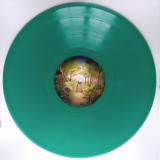
Repress
The Collaboration - Having toured together over the years, Lattimore and Barwick now join forces to co-write and record this full-length album. Their creative synergy brings together harp, voice, and analog synths in a deeply emotional, immersive sound journey. The album was recorded at the Philharmonie de Paris with co-producer Trevor Spencer (Fleet Foxes, Beach House). This album continues a unique series of collaborations between the label and the Musée de la Musique, featuring historical instruments in contemporary composition. Since 2017, InFiné and the Philharmonie de Paris have co-developed a series of albums designed to highlight the extraordinary instrument collection of the Musée de la Musique. Following the albums InBach by Arandel (2020) and Saturn 63 by Seb Martel (2022), this third release is a meeting of two iconic contemporary ambient voices: Mary Lattimore and Julianna Barwick. The project offers the artists full access to the museum’s playable instruments for recording, sound conservation, and creative reinterpretation.
--
Tragic Magic brings together Julianna Barwick and Mary Lattimore, two of contemporary ambient, experimental and electronic music’s most celebrated composers, for a unique collaboration at the Philharmonie de Paris, with extraordinary access to the Musée de la Musique’s instrument collection, in partnership with the French label InFiné. The album features seven immersive, evocative compositions guided by the human spirit – intimate, grounded in friendship, both earthly and cosmic – and part of a greater continuum, reflecting the solace and transformative power of artistry across generations.
Co-produced by Trevor Spencer (Fleet Foxes, Beach House), Tragic Magic was created in just nine days, a testament to the “musical telepathy” that has developed between Barwick and Lattimore over years of touring and friendship. Arriving in Paris from Los Angeles shortly after the 2025 wildfires, their sessions combined improvisation with the emotions and experiences they carried, in a setting both inspiring and deeply supportive. Lattimore selected harps tracing the instrument’s evolution from 1728 to 1873, while Barwick chose several iconic analog synthesizers, including the Roland JUPITER and Sequential Circuits PROPHET-5. In freeform dialogue between voice and instrument, they create a meditation on tragedy, wonder, and the restorative power of shared experience.
The duo, often joined by Spencer, also explored the city, sharing meals and visiting museums and landmarks, each encounter leaving an impression on their next session. The experience allowed them to work intimately with rare instruments, blending their personal sensibilities with centuries of history, resulting in music that honors the past while remaining a deeply authentic expression of the present.
Throughout Tragic Magic, Barwick and Lattimore find something beyond themselves: a sense that while everything may not be okay, beauty persists. Their approach – transforming life into music, observing, feeling, and creating – continues a lineage of creative expression and visionary invention, embodied in the very instruments they employed for this project.
Search:melted artists
- 1
- A1: Intro
- A2: The Magic Number
- A3: Change In Speak
- A4: Cool Breeze On The Rocks (The Melted Version)
- A5: Can U Keep A Secret
- A6: Jenifa Taught Me (Derwin’s Revenge)
- A7: Ghetto Thang
- A8: Transmitting Live From Mars
- A9: Eye Know
- A10: Take It Off
- A11: A Little Bit Of Soap
- B1: Tread Water
- B2: Potholes In My Lawn
- B3: Say No Go
- B4: Do As De La Does
- B5: Plug Tunin’ (Last Chance To Comprehend)
- B6: De La Orgee
- B7: Buddy (With Jungle Brothers And Q-Tip From A Tribe Called Quest)
- B8: Description
- B9: Me Myself And I
- B10: This Is A Recording 4 Living In A Full Time Era (L I.f.e.)
- B11: I Can Do Anything (Delacratic)
- B12: D A.i.s.y. Age
2X12 VINYL[35,25 €]
Orange Version[18,28 €]
Yellow VINYL[35,50 €]
Magenta version[35,50 €]
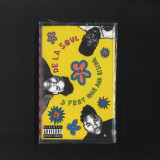
Finally back on tape, officially reissued. Must have! 3 Feet High and Rising is the debut studio album by hip hop trio De La Soul and was released on March 3, 1989 It marked the first of three full- length collaborations with producer Prince Paul, which would become the critical and commercial peak of both parties. Critically, as well as commercially, the album was a success. It contains the singles, "Me Myself and I", "The Magic Number", "Buddy", and "Eye Know". The album title came from the Johnny Cash song "Five Feet High and Rising". It is listed on Rolling Stone's 200 Essential Rock Records and The Source's 100 Best Rap Albums. When Village Voice held its annual Pazz & Jop Critics Poll for 1989, 3 Feet High and Rising was ranked #1. It was also listed on the Rolling Stone's The 500 Greatest Albums of All Time. Released amid the 1989 boom in gangsta rap, which gravitated towards hardcore, confrontational, violent lyrics, De La Soul's uniquely positive style made them an oddity beginning with the first single, "Me, Myself and I". Their positivity meant many observers labeled them a 'hippie' group, based on their declaration of the 'D.A.I.S.Y. Age' (Da. Inner. Soul. Yall). Sampling artists as diverse as Hall & Oates, Steely Dan and The Turtles, 3 Feet High and Rising is often viewed as the stylistic beginning of 1990s alternative hip hop (and especially jazz rap).
- A1: Intro
- A2: The Magic Number
- A3: Change In Speak
- A4: Cool Breeze On The Rocks (The Melted Version)
- A5: Can U Keep A Secret
- A6: Jenifa Taught Me (Derwin's Revenge) (Derwin's Revenge)
- A7: Ghetto Thang
- A8: Transmitting Live From Mars
- A9: Eye Know
- A10: Take It Off
- A11: A Little Bit Of Soap
- A12: Tread Water
- A13: Potholes In My Lawn
- B1: Say No Go
- B10: Daisy Age
- B2: Do As De La Does
- B3: Plug Tunin' (Last Chance To Comprehend) (Last Chance To Comprehend)
- B4: De La Orgee
- B5: Buddy (With Jungle Brothers & Q-Tip From A Tribe Called Quest)
- B6: Description
- B7: Me Myself & I
- B8: This Is A Recording 4 Living In A Full Time Era (Life) (Life)
- B9: I Can Do Anything (Delacratic) (Delacratic)
Finally back on tape, officially reissued. Must have! 3 Feet High and Rising is the debut studio album by hip hop trio De La Soul and was released on March 3, 1989 It marked the first of three full- length collaborations with producer Prince Paul, which would become the critical and commercial peak of both parties. Critically, as well as commercially, the album was a success. It contains the singles, "Me Myself and I", "The Magic Number", "Buddy", and "Eye Know". The album title came from the Johnny Cash song "Five Feet High and Rising". It is listed on Rolling Stone's 200 Essential Rock Records and The Source's 100 Best Rap Albums. When Village Voice held its annual Pazz & Jop Critics Poll for 1989, 3 Feet High and Rising was ranked #1. It was also listed on the Rolling Stone's The 500 Greatest Albums of All Time. Released amid the 1989 boom in gangsta rap, which gravitated towards hardcore, confrontational, violent lyrics, De La Soul's uniquely positive style made them an oddity beginning with the first single, "Me, Myself and I". Their positivity meant many observers labeled them a 'hippie' group, based on their declaration of the 'D.A.I.S.Y. Age' (Da. Inner. Soul. Yall). Sampling artists as diverse as Hall & Oates, Steely Dan and The Turtles, 3 Feet High and Rising is often viewed as the stylistic beginning of 1990s alternative hip hop (and especially jazz rap).
A cocktail of rebellious queer vocal fragments, deceptive percussive granules and swaying hammered vibrations, upsammy and Valentina Magaletti's first collaboration trembles with suspense. The seeds of 'Seismo' were sown following a commission from Amsterdam's Rijksmuseum to soundtrack an exhibition of work from the Museum Boijmans van Beuningen in Rotterdam and the duo didn't want to approach their collaboration flippantly. So, wandering the museum's maze of rooms, they recorded various improvised percussive sounds with their arsenal of microphones, using the space to inform various rhythms and textures that were sculpted later into electroacoustic vignettes. This was just the starting point, though; as Magaletti and upsammy began performing together, the project evolved and 'Seismo' began to take shape. The duo had struck on a salient aesthetic concept, using mostly digital and acoustic mallet instruments to blur the boundary between their roles and create friction between the synthetic and the authentic. And the finished record is a phantasmagoric push-and-pull between its various conflicting elements: harmony and dissonance, randomness and predictability, openness and constraint. 'Seismo' isn't the first time that upsammy has studied her environment in search of revelation. On her acclaimed second album, 2024's 'Germ in a Population of Buildings', the Amsterdam-based DJ, producer and multidisciplinary artist erected her complex, unorthodox rhythms and eerie melodies around a modernist frame of field recordings collected in various cityscapes, countering heavyweight basslines with subtle, microscopic sounds. London-based Italian vanguard Magaletti, meanwhile, has applied her unique logic to innumerable projects at this point, working with everyone from batida icon Nídia and hardcore-dub outfit Moin to French writer Fanny Chiarello and British bass scientist Shackleton. For years she's approached the drums with criticism, attempting to challenge any preconceptions, something that's most visible on 2020's 'A Queer Anthology of Drums'. And both artists' thoughtful perspectives are welded together seamlessly on 'Seismo', a dizzying suite of eight eccentric statements that's fragile but never insecure, gauzy but not indistinct. An unnerving sense of space characterizes 'It Comes to an End' as Magaletti's in situ improvisations herald for upsammy's microscopic glitches and chiming pitch-bent melodies. It's almost unbalancing to witness the track's impossible dimensionality, the interplay between reverberant marimba hits and bone-dry synths, or percussion that's been recorded and processed in consciously different settings. A new architecture emerges in the sound itself that the two artists scan and explore meticulously, testing its boundaries with undulating hybridized rhythms on the invigorating 'Superimposed' and offsetting the powdery drums with liquified smacks and alien voices. The duo's vibrations are knotted with piano flourishes on 'Hyperlocalize', balanced with artificial clanks and clangs that disappear into the track's sonorous atmosphere, replaced by whispers and half-hallucinated insectoid chirps. 'Seismo' is an album that feeds off the energy generated by its juxtapositions: the tension and anticipation that's melted by rapid, hyperactive movement and the finely drawn rhythms disrupted by a layer of indistinct, barely perceptible microsounds. It's a collaboration that sounds like two minds challenging each other but not wrestling, each peering from their own distinct vantage point and imagining a third landscape shaped by optimistic, queer vibrations.
- A1: Intro
- B1: The Magic Number
- C1: Change In Speak
- C2: Cool Breeze On The Rocks (The Melted Version)
- D1: Can You Keep A Secret
- E1: Jenifa Taught Me (Derwin’s Revenge)
- F1: Ghetto Thang
- G1: Transmitting Live From Mars
- G2: Eye Know Feat Otis Redding
- H1: Take It Off
- H2: A Little Bit Of Soap
- I1: Tread Water
- J1: Potholes In My Lawn
- J2: Say No Go
- K1: Do As De La Does
- L1: Plug Tunin' (Last Chance To Comprehend)
- M1: De La Orgee
- N1: Buddy (With Jungle Brothers And Q-Tip From A Tribe Called Quest)
- O1: Description
- P1: Me Myself And I
- Q1: This Is A Recording 4 Living In A Fulltime Era (L I.f.e.)
- Q2: I Can Do Anything (Delacratic)
- R1: D A.i.s.y. Age
- S1: What’s More (From The Movie Soundtrack Hell On 1St Avenue)
- V1: Buddy (Native Tongue Decision Part 2)
- T1: Jenifa (Taught Me) (12” Mix)
- U1: Buddy (Native Tongue Decision Part 1)
3 Feet High and Rising is the debut studio album by hip-hop trio De La Soul, and was released on March 3, 1989. It marked the first of three full-length collaborations with producer Prince Paul, which would become the critical and commercial peak of both parties. It contains the singles, “Me Myself and I”, “The Magic Number,” “Buddy,” and “Eye Know”. The album title came from the Johnny Cash song “Five Feet High and Rising”. It is listed on both Rolling Stone’s 200 Essential Rock Records and The Source’s 100 Best Rap Albums. When Village Voice held its annual Pazz & Jop Critics Poll for 1989, 3 Feet High and Rising was ranked #1. It was also listed on Rolling Stone’s The 500 Greatest Albums of All Time.
Released amid the 1989 boom in gangsta rap, which gravitated towards hardcore, confrontational, violent lyrics, De La Soul's uniquely positive style made them an oddity beginning with the first single, “Me, Myself and I.” Their positivity meant many observers labeled them a “hippie” group, based on their declaration of the “D.A.I.S.Y. Age” (Da. Inner. Soul. Yall). Sampling artists as diverse as Hall & Oates, Steely Dan and The Turtles, 3 Feet High and Rising is often viewed as the stylistic beginning of 1990s alternative hip hop (and especially jazz rap). 3 Feet High & Rising was chosen by the Library of Congress to be added to the National Recording Registry for its cultural significance and general excellence.
This special boxset release of De La Soul’s 3 Feet High and Rising includes twelve 7” custom singles pressed on splatter vinyl and housed in custom sleeves, housed in a box that includes a 7” pinup and a double-sided 7” slipmat, and is available first at record stores as part of RSD Black Friday. "
In our 20th celebration year we welcome back Loz Goddard! It’s been quite a while since we last saw him on our label. With his standout debut collab release with Harry Wolfman in 2016 he has developed a unique mix of electronica, deep soundscapes and lush organic Deep House on labels such as “Oath”, “Razor N Tape”, “Church”, “Outplay” and “Apparel Music”. Now he finally returns with a mini album that features beautiful crafted ambient and electronica cuts paired with three upbeat tracks that will for sure shake the dance floors in and outdoors this summer! Enjoy!
In his own words, here are some insights on the influences and production process of these six pieces:
The release is named after a night in the White Hotel in Salford watching Skee Mask. At the time I had a bunch of unfinished ambient ideas as a result of making “Balloon Tree Road” (out on Oath). There were a lot of ideas I still loved that didn’t get finished for that release, so I set about finishing them late 2022 & early 2023 with the view to releasing an EP or ‘mini album’ that was again angled a bit more towards home-listening.
The more upbeat tracks are newer jams that I created in 2023. I wanted to include a few club-ready tracks on the record as well, so the release appeals to DJ’s as well as home listeners. I approached the production much like my past two records on Oath, with lots of live drum elements, some sampling and a mixing approach which keeps everything sound warm and organic. It’s rough round the edges - as has been the case with my productions of late - and offers a nice contrast to my DJ sets and radio shows at the moment, in which I am playing mostly Deep/Progressive House, Breaks & Techno. There’s some influence on the title track from the Deep & Lo-Fi House sound of artists like Baltra & Mall Grab, and I have taken influence from all the breaks I’ve been playing in DJ sets for ‘How’s This for a Vague Song Title’.
All tracks mastered by Salz Mastering in Cologne. Photography & Art by Break 3000.
Fantastic masterpiece, considered one of the best Italo-Disco songs ever. A mega-classic produced by Stefano Zito and Carlo Favilli (the latter passed away too soon) characterized by a heartbreaking melody and lush strings that exemplify the mood and rhythm of the Italo-Disco style with the use of some sounds of pre-bleepy keyboard and siren that technically make it one of the very first rave songs ever, inspiring the style of many artists that came later, like Duft Punk. However, many of them don't even come close with their imaginative computers to that bassline and string sounds that melted the souls of many of us back in that distant April 1983, even if it seems that part of the melodic line has been copied not very subtly by Casco from that of El Deux's Computer-Madchen released in 1982 in Switzerland, where Salvatore Cusato was working as a club-DJ. On the flip another excellent remix version by Danilo Braca of the song revisited a few years later. The confirmation of the wisdom and foresight of its producers, aware that the BPM would soon be lowered by a lot. In the more than 8 minutes of "Cyberlover" the constant melancholy background together with the drum/bass/synth lines are preserved intact, giving us a complete reissued product.
- A1: Intro
- A2: The Magic Number
- A3: Change In Speak
- A4: Cool Breeze On The Rocks (The Melted Version)
- A5: Can U Keep A Secret
- A6: Jenifa Taught Me (Derwin's Revenge) (Derwin's Revenge)
- A7: Ghetto Thang
- B1: Transmitting Live From Mars
- B2: Eye Know
- B3: Take It Off
- B4: A Little Bit Of Soap
- B5: Tread Water
- B6: Potholes In My Lawn
- C1: Say No Go
- C2: Do As De La Does
- C3: Plug Tunin' (Last Chance To Comprehend) (Last Chance To Comprehend)
- C4: De La Orgee
- C5: Buddy (With Jungle Brothers & Q-Tip From A Tribe Called Quest)
- D1: Description
- D2: Me Myself & I
- D3: This Is A Recording 4 Living In A Full Time Era (Life) (Life)
- D4: I Can Do Anything (Delacratic) (Delacratic)
- D5: Daisy Age
2X12 VINYL[35,25 €]
Blue Version[18,28 €]
Orange Version[18,28 €]
Magenta version[35,50 €]
3 Feet High and Rising is the debut studio album by hip hop trio De La Soul and was released on March 3, 1989
It marked the first of three full- length collaborations with producer Prince Paul, which would become the critical and commercial peak of both parties. Critically, as well as commercially, the album was a success. It contains the singles, "Me Myself and I", "The Magic Number", "Buddy", and "Eye Know".
The album title came from the Johnny Cash song "Five Feet High and Rising". It is listed on Rolling Stone's 200 Essential Rock Records and The Source's 100 Best Rap Albums. When Village Voice held its annual Pazz & Jop Critics Poll for 1989, 3 Feet High and Rising was ranked #1. It was also listed on the Rolling Stone's
The 500 Greatest Albums of All Time. Released amid the 1989 boom in gangsta rap, which gravitated towards hardcore, confrontational, violent lyrics, De La Soul's uniquely positive style made them an oddity beginning with the first single, "Me, Myself and I". Their positivity meant many observers labeled them a 'hippie' group, based on their declaration of the 'D.A.I.S.Y. Age' (Da. Inner. Soul. Yall).
Sampling artists as diverse as Hall & Oates, Steely Dan and The Turtles, 3 Feet High and Rising is often viewed as the stylistic beginning of 1990s alternative hip hop (and especially jazz rap).
The electronic music producer and DJ whose catalogue of collaborations namechecks acts as diverse as Agoria, Green Velvet, Roman Flugel to Nitzer Ebb, Depeche Mode and David Holmes is set to release his 6th studio album The Strand Cinema on the 24th March on his own label PKR.
The last five years have seen an evolutionary shift for the electronic musician, undertaking more soundtrack work, including for film (Nightride on Netflix, Rough), radio (The Northern Bank Job BBC R4) and theatre (East Belfast Boy).
The Strand Cinema album is a tribute to the art deco cinema building , The Strand, where Phil’s recording studio is. A stirring and beautiful record, it seamlessly traverses the worlds of contemporary classical to beautifully elevated dance music with a recognisably cinematic influence. Managing to sound both grand and expansive, as well as minimal and introspective – it’s a record that explores the macro and the micro.
The opening track “Strand Cinema”, begins with a steady, gentle, looping pulse, almost recalling the kosmische ripples of Cluster, before sweeping and enveloping strings enter, resulting in a track that manages to sound both grandiose and tender in one fell swoop.
Lead single “Atlantic” perhaps most perfectly encapsulates the various sonic worlds that Kieran is operating in, merging a bordering on euphoric dance beat layered with infectious melodies, while remaining anchored to organic sounds, as strings and percussion collide with the driving and hypnotic groove of the track.
“Strike the Match” showcases Kieran’s talents for detail, in a track that feels almost palpably textural and rich in complexity but without feeling overly busy or superfluous; while “Elephant in Castle” utilises intense, almost gargling electronics, that drone with a foreboding and ominous tone, but also produces fractured moments of light, beauty and poignancy.
Created during Covid Kieran’s method was “To literally be like a tuning fork and ask: What's in my chest? If I were to describe what's inside me, and what's going on in the outside world, If I had to score that in a film, what would it sound like right now? I guess I sort of soundtracked my own life”
“One positive side of lockdowns was that we spent more time in natural surroundings where I’d make field recordings. I’d also record acoustic sounds: cello, violin, percussion, guitar etc and then create my own sample bank from all these single one-note sounds. So, creating your own loops and drones. The album was created from organic sounds manipulated by machines; melted, mangled and hacked with computers but machines only sound as good as the human spirit put into them.
The idea of nature and humans versus technology is the concept behind the album’s A/V show which debuts in Belfast in March before touring. Featuring works by 11 artists from across the worlds of film, animation, advertising, architecture, computer science and dance such as Scottish BAFTA nominated Simone Smith, LA based director Frederico Marzio Vitetta who is famous for skateboarding films like ‘Wet Dream’ with Spike Jonze, to futuristic CGI from BAFTA nominated Kris Kelly and a video from contemporary dancer Oona Doherty. onscreen visualisations that explores The visuals explore nature and technology along a timeline from past, present to future with cinema as a loose reference point with varying degrees of utopian versus dystopian moods.
- A1: Intro
- A2: The Magic Number
- A3: Change In Speak
- A4: Cool Breeze On The Rocks (The Melted Version)
- A5: Can U Keep A Secret
- A6: Jenifa Taught Me (Derwin's Revenge) (Derwin's Revenge)
- A7: Ghetto Thang
- B1: Transmitting Live From Mars
- B2: Eye Know
- B3: Take It Off
- B4: A Little Bit Of Soap
- B5: Tread Water
- B6: Potholes In My Lawn
- C1: Say No Go
- C2: Do As De La Does
- C3: Plug Tunin' (Last Chance To Comprehend) (Last Chance To Comprehend)
- C4: De La Orgee
- C5: Buddy (With Jungle Brothers & Q-Tip From A Tribe Called Quest)
- D1: Description
- D2: Me Myself & I
- D3: This Is A Recording 4 Living In A Full Time Era (Life) (Life)
- D4: I Can Do Anything (Delacratic) (Delacratic)
- D5: Daisy Age
Blue Version[18,28 €]
Orange Version[18,28 €]
Yellow VINYL[35,50 €]
Magenta version[35,50 €]
3 Feet High and Rising is the debut studio album by hip hop trio De La Soul and was released on March 3, 1989
It marked the first of three full- length collaborations with producer Prince Paul, which would become the critical and commercial peak of both parties. Critically, as well as commercially, the album was a success. It contains the singles, "Me Myself and I", "The Magic Number", "Buddy", and "Eye Know".
The album title came from the Johnny Cash song "Five Feet High and Rising". It is listed on Rolling Stone's 200 Essential Rock Records and The Source's 100 Best Rap Albums. When Village Voice held its annual Pazz & Jop Critics Poll for 1989, 3 Feet High and Rising was ranked #1. It was also listed on the Rolling Stone's
The 500 Greatest Albums of All Time. Released amid the 1989 boom in gangsta rap, which gravitated towards hardcore, confrontational, violent lyrics, De La Soul's uniquely positive style made them an oddity beginning with the first single, "Me, Myself and I". Their positivity meant many observers labeled them a 'hippie' group, based on their declaration of the 'D.A.I.S.Y. Age' (Da. Inner. Soul. Yall).
Sampling artists as diverse as Hall & Oates, Steely Dan and The Turtles, 3 Feet High and Rising is often viewed as the stylistic beginning of 1990s alternative hip hop (and especially jazz rap).
- A1: Intro
- A2: The Magic Number
- A3: Change In Speak
- A4: Cool Breeze On The Rocks (The Melted Version)
- A5: Can U Keep A Secret
- A6: Jenifa Taught Me (Derwin's Revenge) (Derwin's Revenge)
- A7: Ghetto Thang
- B1: Transmitting Live From Mars
- B2: Eye Know
- B3: Take It Off
- B4: A Little Bit Of Soap
- B5: Tread Water
- B6: Potholes In My Lawn
- C1: Say No Go
- C2: Do As De La Does
- C3: Plug Tunin' (Last Chance To Comprehend) (Last Chance To Comprehend)
- C4: De La Orgee
- C5: Buddy (With Jungle Brothers & Q-Tip From A Tribe Called Quest)
- D1: Description
- D2: Me Myself & I
- D3: This Is A Recording 4 Living In A Full Time Era (Life) (Life)
- D4: I Can Do Anything (Delacratic) (Delacratic)
- D5: Daisy Age
3 Feet High and Rising is the debut studio album by hip hop trio De La Soul and was released on March 3, 1989
It marked the first of three full- length collaborations with producer Prince Paul, which would become the critical and commercial peak of both parties. Critically, as well as commercially, the album was a success. It contains the singles, "Me Myself and I", "The Magic Number", "Buddy", and "Eye Know".
The album title came from the Johnny Cash song "Five Feet High and Rising". It is listed on Rolling Stone's 200 Essential Rock Records and The Source's 100 Best Rap Albums. When Village Voice held its annual Pazz & Jop Critics Poll for 1989, 3 Feet High and Rising was ranked #1. It was also listed on the Rolling Stone's
The 500 Greatest Albums of All Time. Released amid the 1989 boom in gangsta rap, which gravitated towards hardcore, confrontational, violent lyrics, De La Soul's uniquely positive style made them an oddity beginning with the first single, "Me, Myself and I". Their positivity meant many observers labeled them a 'hippie' group, based on their declaration of the 'D.A.I.S.Y. Age' (Da. Inner. Soul. Yall).
Sampling artists as diverse as Hall & Oates, Steely Dan and The Turtles, 3 Feet High and Rising is often viewed as the stylistic beginning of 1990s alternative hip hop (and especially jazz rap).
orange vinyl
As &on&on, DJ's Noni and Worth Way have been making some serious waves over the past year, being named one of DJ Mag top artists to check out in 2022 and also featured on Disclosure's DJ Kicks compilation.
On their first release on the label, the duo boast their prowess in composing uplifting, melodic dance music which draws on myriad influences to create unique and innovative sounds. Whilst every track on Mentalphysics has fun and festivity at its core, some take their inspiration from disco ('Mid Valley'), whilst others from groovy deep house ('All Day') or breakbeat ('Delta T'). Finally, 'Melted' subtly evokes speed garage in the way the bass dips, giving the track lots of depth and 'Samo' brings things to an anthemic close with reverberating cymbals filling any space with body and movement.
New Zealand dreampop luminaries French For Rabbits have dedicated nearly a decade to creaming warmly detailed and expansive music together. Their third, prophetic, LP The Overflow is set for release via Reckless Yes (UK), AAA Records (NZ/Aus), and A Modest Proposal (Italy) is described by the band as their most “immediate and honest” record to date. The Overflow draws on the influence of contemporary artists Laura Jean, Hannah Cohen and Hundred Waters alongside the storytelling of folk and rap music, and even references 90’s cultural touch points such as Moby, Enya and The Lion King. Whilst its inspirations are diverse-the result is a singular album that is confident in its delivery. The album follows on from their elegantly stated second LP The Weight of Melted Snow and their 2014 break-out Spirits, which received millions of streams, and song placements everywhere from the Vampire Diaries to Netflix’s Never Have I Ever TV series. On their new album, the group, led by Brooke Singer, sweeps forward with their most dazzling body of work to date-from the introverts’ anthem ‘The Outsider’ to the unfurling end-of-the-world statement piece “Nothing in my Hands”. Written and recorded mostly in 2020 in Wellington, the songs on The Overflow cover a wide range of topics, with the common threads of introversion and anxiety woven throughout. Yet, on first listen, you could be forgiven for mistaking the album’s subject matter for something lighter and more upbeat, resplendent with featherlight vocals and delicate layers
Natalie Chami and Whitney Johnson perform as a duo under the
name Damiana.
Both artists have built their own catalogs as multi-instrumentalist improvisers
and composers in the Chicago experimental scene, exploring the intersections
between ambient, electro-acoustic improv, and more legible songcraft based
around their voices and their work with synths and electronics -- all filtered
through their backgrounds in classical performance and education.
Chami’s solo recordings under the TALsounds moniker have appeared on labels
such as NNA Tapes, and Ba Da Bing!, and her collaborative projects include
the trio Good Willsmith. Johnson has released a series of solo LPs as Matchess
on the label Trouble in Mind, and has contributed to recordings and live performances by Ryley Walker, Circuit Des Yeux, and Tortoise’s 20th anniversary
performances of TNT, among other artists.
After meeting in the early 2010s, Chami and Johnson embarked on multiple US
tours together, and their informal duo collaborations naturally crystallized over
time into the Damiana project The duo’s debut album Vines presents their first
recordings after years of live sets and home recording sessions.
The album strikes a balance between the realms of deliberate compositional
sculpting and free-form improvisation, as Damiana’s evolving sessions of looping synth phrases and harmonized vocal lines emphasize austere beauty and
meditation as much as spectral disorientation and instrumental complexity.
While the tracks on Vines create the illusion at any given moment of a standing
cloud, often colored by Johnson’s lush viola and Chami’s effect-manipulated
electronics, a zoomed out perspective of each session reveals an undulating
story arc with contrasting emotional resonances and constantly shifting timbral
focus.
Treading the line between transportive stasis and upward motion, the duo has
honed their sense of when to push forward with a new texture or melodic
flourish without disrupting the atmospheres that they meticulously build together. Packaging: LP Black vinyl. Artwork by Heather Gabel (from the band
HIDE). Manufactured at 8Merch in Poland.
- 1


