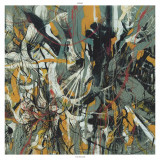
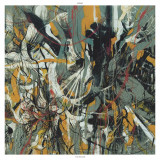
“I hope you die by my side, the two of us at the exact same time, I hope we die not long from now, the two of us at the exact same time”
By the time Molly Nilsson released History, she had already established a fledgling cult status built on homemade YouTube videos and home-burnt Cdrs. Writing from a distance, it’s clear that History is the first classic album in her canon and arguably a classic of the 21st Century underground music panorama.While the methodology on History hadn’t changed from Nilsson’s previous 3 albums – it was recorded solo at The Lighthouse, Nilsson’s home studio based on a Berlin crossroads – on this record the songwriting reached a new peak and the emotional scythe cut deeper. Here, Nilsson managed to combine a cosmic, outward looking perspective with an intimate knowledge of the human condition and its place in these turbulent times. In truth, no other songwriter has excavated the modern psyche so clearly and perfectly.
The tracklist to Nilsson’s fourth album reads as an early greatest hits for Molly Nilsson followers and also serves as the perfect entry point to a whole world the artist has been building for the last 10 years. In Real Life crystalises the millenial obsession with relationships built online, with a generation paying for the baby boomer’s excesses with their anxiety towards the harshness of every day life. It’s a call to arms for a generation who fell in love on Skype. On I Hope You Die, one of Molly Nilsson’s most iconic songs, the songwriter flips the song title into a tale of doomed romance, a relationship based on discommunications and the thrill of the other. It’s also one of the most heartfelt songs full of pathos written by anyone, an ode to obsession. Doomed romance, life lived on the flipside of day and the role of the outsider in society are themes that crop up through-out History. On
Bottles Of Tomorrow, the narrator is sweeping up, in love with the night and examining the remains a society leaves behind.
On City Of Atlantis, Nilsson veers from the plaintive balladry she had begun to make her name with, embracing trance-like synth and dance music details to create an unlikely anthem using the mythological city as a means to comment on the patriarchal rendering of history by power. With by now trademark panache, she turns complicated subject matter into a glorious song that transforms into an ecstatic pop moment.
Hotel Home, another Nilsson classic, paints loneliness not as a debilitating anxiety, but as a powerful to that propels the artist forward through her travels. It’s a song that hints at an endearing self-awareness also; the writer is never at home, living life on the road, content that “the world will find me when the time is ripe.”
There’s never been a greater time.
quête:method man
Over the course of 20 years, German artist Black To Comm (Marc Richter) has pushed the limits of / and merged the aesthetics of art, conceptual installations, and music, coming in a wave of innovation alongside his peers Pita, Fennesz, and later Sarah Davachi to name a few. Through it all Richter as Black to Comm has challenged assumptions, explored identity, and confronted the concept of authorship itself. At Zeenath Parallel Heavens finds Black to Comm contemplating the hybridity within each and every one of us, be it sexual, racial, cultural, or linguistic. Richter mirrors personal dualities musically with a combination of sounds he created and manipulated samples, blurring their boundaries. "I always try to blur the line between sampling and my own recordings, also between "real" instruments,MIDI, electronics, editing, between authenticity and theatrics/artificiality," says Richter. When recording he became aware of how AI text programs processing resembles his own methods. "I had the realization recently that the way I compose is not too dissimilar to what AI software is doing nowadays - especially when the AI is hallucinating (this is the term used when the AI is overloaded/overcharged/inundated and comes up with made-up results)." Human behavior reflected in a computer facsimile of human intelligence appealed to the ethos of Black to Comm, whose titles and concepts are often oblique and tongue-in-cheek.
Am National Album Day (NAD), der nun schon zum sechsten Mal stattfindet, kommt die UK-Musikszene jedes Jahr zusammen, um die Albumkultur zu feiern und zu fördern. Das diesjährige Thema der 90er Jahre soll ein Licht auf ein äußerst reichhaltiges Musikjahrzehnt werfen, das sich zwischen Pop, Trip Hop und Hip Hop bewegte: NAD-Release: Wu-Tang Clan "Enter the Wu-Tang (36 Chambers)" - Gold Marbled Vinyl.
Flächendeckender Release der B4E LP des US-Produzenten Yung Bae von 2018, die bislang nur in Miniauflagen im Eigenvertrieb erschien. Yung Bae ist einer der prominentesten Vertreter des Vaporwave-Subgenres Future Funk, der Electro-Funk-Sounds mit japanischen 1980er City-Pop-Samples zu einem verspielten Disco-Pop kombiniert. Er spielte auf Coachella, arbeitete mit Method Man, Mike Posner und Jon Batiste zusammen und veröffentlichte bis dato acht Alben und unzählige EPs.
Miss Tiny is a brand-new musical project featuring acclaimed record producer and Speedy Wunderground label founder Dan Carey (Wet Leg, Slowthai, Fontaines D.C.) alongside Ben Romans-Hopcraft of Warmduscher / Insecure Men / Childhood fame.
A spiritually, and methodically united front, Miss Tiny’s universe is a thoroughly explored romance between heritage, rebellion, and years old friendship; a triptych of variables all gravitating towards one signalled output, with no real sense of time, or external pressures. Having spent the best part of a decade orchestrating haphazard jam-sessions, Carey and Romans-Hopcraft would eventually go on to discover a fundamental principle of their own. One which would come to define Miss Tiny, throughout her various forms and guises.
“We called it anti-recording,” continues Carey. “Only doing it for the pleasure of doing it”. When fully committing to this practice, the music meticulously follows two courses; refine, or degrade. Perfect the moment, or let it go; never to be heard, or re-lived ever again for fear that the action of pressing record, would inevitably take ownership of the occasion and lead the experimentation into a downward spiral towards something all-together tangible.
The irony of a seminal producer and critically revered musician banding together out of mutual distaste for recording, is not one that’s gone amiss. In fact, they’ll be the first to proudly call it into question- and yet still, Miss Tiny holds her own despite all peripheral associations, and would eventually go on to be documented. These aren’t ‘sit-down-and-write-a-song’ kinda songs. These spurts of spontaneity which would, in time, ultimately form the duo's debut EP ‘DEN7’, are years’ worth of trial and error. Trial and elation. A process in which strong technique and melodic-manipulation are the sole foundations required to reinvent the meaning of memory; be it guitar and drums, or flesh and blood.
Produced and recorded at Carey’s ‘Speedy Wunderground’ studio in Streatham, ‘DEN7’ is a masterful introduction to a group whose members need none. Through chopping, editing, and re-defining their improvised segments into songs which they could eventually go on to learn, Carey and Romans-Hopcraft by chance, stumbled upon gold-dust. Like Alice and her looking glass, our two protagonists effortlessly pass through all notions of engineered logic in order to see beyond the expected. The bigger picture perhaps. Or the magic in the small things that matter most.
"Creating this record took me around 2 years, I was moving quite a bit, without a steady working or living space, travelling and playing live again for the first time since the pandemic. At first there was creative insecurity and many abandoned ideas, I wanted to make something special for YUKU but everything felt dry and soulless. In my head this was supposed to be a dancefloor record, but this idea quickly became an obstruction in my creative flow.
During this time I started learning modular synthesis, and although there was definitely a learning curve this method of making music gave the record direction and refreshed my way to approach composition. It is also very fun to learn. What came out is a collage of sorts that is more honest and reflective of my emotions and those of the people and spaces that I have exchanged with. Thanks to YUKU and the amazing people that took part in this record and in my life in the past two years. Hope you all enjoy."
- Joaquin Cornejo
- A1: Rapper's Delight - The Sugarhill Gang
- A2: The Breaks - Kurtis Blow
- A3: The Message - Grandmaster Flash & The Furious Five
- A4: Guess Who's Back - Rakim
- A5: Intergalactic - Beastie Boys
- B1: Gravel Pit - Wu-Tang Clan
- B2: Regulate - Warren G Ft Nate Dogg
- B3: Get Me Home - Foxy Brown Ft Blackstreet
- B4: Push It - Salt-N-Pepa
- B5: Fight The Power - Public Enemy
- C1: The Real Slim Shady - Eminem
- C2: X- Szibit
- C3: Gimme Some More - Busta Rhymes
- C4: Ms Jackson - Outkast
- C5: Beautiful - Snoop Dogg Ft Pharrell. Uncle Charlie Wilson
- D1: Nuthin' But A "G" Thang - Dr Dre Ft. Snoop Dogg
- D2: Mama Said Knock You Out - Ll Cool J
- D3: Paid In Full - Eric B & Rakim
- D4: Da Rockwilder - Method Man, Redman
- D5: Straight Outta Compton - N W.a
- E1: In Da Club - 50 Cent
- E2: No Diggity - Blackstreet Ft Dr. Dre, Queen Pen
- E3: I Got 5 On It - Luniz Ft Michael Marshall
- E4: Fu-Gee-La - Fugees
- F2: U Can't Touch This - M C. Hammer
- F3: How Many Licks? - Lil' Kim Ft Sisqo
- F4: Get Back - Ludacris
- F5: Can I Kick It? - A Tribe Called Quest
- G1: Mfg - Die Fantastischen Vier
- G2: Ahnma - Beginner Ft Gzuz & Gentleman
- G3: Cruisen - Massive Töne
- G4: Bon Voyage - Deichkind Ft Nina
- G5: Dickes B - Seeed Ft Black Kappa
- H1: 2002 - Sido Ft Apache 207
- H2: A-N-N-A - Freundeskreis
- H3: Ohne Dich - Kasimir1441, Badmómzjay, Wildbwoys
- H4: Bamba - Luciano Ft Bia & Aitch
- H5: Humble - Kendrick Lamar
- H6: Locked Up - Akon
- E5: X Gon' Give It To Ya - Dmx
- F1: Super Freaky Girl - Nicki Minaj
”Guess Who’s Back” - Hip-Hop is! Das beliebte Genre ist aus der Musiklandschaft nicht mehr wegzudenken und feiert dieses Jahr sein 50-jähriges Jubiläum! Zu diesem Anlass erscheint das brandneue Album „HipHop At Fifty (50 Jahre Hip-Hop)“ mit vielen Hits aus den Anfangsjahren des Genres sowie zahlreichen deutschen und internationalen Chartstürmern. Eins ist sicher – dieses Album kommt ”Straight Outta Compton”!
Mit Oldschool-Pionier*innen wie Dr. Dre, Eminem, Snoop Dogg, Busta Rhymes, LL COOL J, 50 Cent, DMX, Lil’ Kim, Fugees als auch mit deutschen Rap-Größen wie Die Fantastischen Vier, Luciano, Sido, Apache 207, Seeed oder Deichkind hat das Album einiges zu bieten.
Ob die groovigen Sounds von ”Super Freaky Girl”, die explosive Rap Power von ”Bamba”, der weltweite Club-Klassiker ”In Da Club” oder der funky Vibe mit harschen Lyrics des Klassikers von ”The Real Slim Shady” – diese Mischung sorgt für die volle Ladung Hip-Hop!
Erhältlich als 4LP, 3CD, eAlbum und im Streaming ab dem 29. September 2023!
- Mission Statement
- First Strike
- Guillotine Dreams
- Grey's Lament (Grandmotherland)
- New Sight
- Quiet Strength
- Molotov Cocktails At Brunch (A Love Song)
- Dirty Hands
- Mood Swings
- Far Away (Champagne Steam Rooms)
Committed to tradition, yet set on innovation, Super Duty Tough Work is a constantly evolving, art-rap ensemble with their intentions set on shaking up the industry and providing offerings that elevate joy, while standing in opposition to the homicidal capitalist ideals of the ruling class and their aspiring accomplices.
Rooted in the tradition of Black American resistance arts, Super Duty Tough Work is known for their scathing wit and thorough analysis, pushing their radical politic of revolution, party, and bullshit - both on record and on stage.
Inspired by the dirty jazz sample sound of 90s east coast hip hop, Super Duty Tough Work are the live incarnation of hip hop culture's quintessential era, appearing as a band but manifesting a sound that's more akin to something straight out of an MPC or SP-404 sampler.
Revered for their methodically curated sets, Super Duty Tough Work mixes laidback rap action and razor- sharp delivery with hypnotic loops and effortless transitions, keeping audiences on their feet and transfixed in anticipation for what's coming next.
Simply put: internationalism is the theme, liberation through hedonism is the dream, and satisfaction is guaranteed from the team whose specialty is taking audiences on a journey through a culture where loops are slayed and jewels are the tools of the trade.
Super Duty Tough Work. Paradigm Shift. Worldwide 9/8 via Next Door Records.
- A1: Young Alpine (3 44)
- A2: Turtle Party Ii (3 32)
- A3: Free! (4 33)
- A4: Know By Now (3 37)
- B1: Guitar Maniacs (3 25)
- B2: Lay Down (3 20)
- B3: Mystic Encounters (4 13)
- B4: Melt Lemon Drops (4 38)
- C1: Diner Thursdays (3 00)
- C2: The Lowdown (3 48)
- C3: Piano Maniacs (2 59)
- C4: Thanks (3 06)
- D1: Back In The Day (4 16)
- D2: Prospect (Feat Jasia 10) (3 54)
- D3: Waterloo (1 32)
- D4: Understanding Science (1 29)
As one half of Minutes Unlimited, a group formed with fellow electronic producer Michna (Ghostly International), Eliot Lipp displays a talent for creating precise, shiny techno/trap that showcases both artists’ synth and drum machine dexterity.
He also provides the prefix for the appropriately named Lipphead, a collaborative effort with underground hip-hop and downtempo producer Blockhead. Lipphead’s loose and experimental approach to dance music stands in stark contrast to the cold, methodical tone of Minutes Unlimited.
Somewhere in between and slightly off-center of these two sounds is 'Encounters,' Lipp’s forthcoming full length LP. From laid-back downtempo cuts 'Know By Now' and 'The Lowdown' to choppy upbeat hip-hop instrumentals like 'Guitar Maniacs' – Eliot condenses years of growth and influence into this expansive double LP. Comprised of 16 tracks, the sequencing of Encounters pulls from Lipp’s DJing experience, creating a seamless and cohesive listening experience from start to finish.
On Rock Island, their second LP, Palm produces evidence of a distinct musical language, developed over time, in isolation, and out of necessity. On the island, melodies are struck on what might be shells or spines. Rhythms are scratched out, swept over, scratched again. Individual instruments, and sometimes entire sections, skip and stutter. There is the sense of a music box with wonky tension or a warped transmission in which all the noise is taken for signal.
Like other groups so acclaimed for their compulsive live show, Palm has been burdened by the constant comparison between their recorded material and their touring set. On Rock Island, they render this tired discussion moot, using the album form to present that which could never be completely live, reserving for performance that which could never be completely reproduced.
Despite appearing behind the instruments typical of rock music, Palm trades in sounds of their own making. On these songs, one of the guitars and the drum kit are used as MIDI triggers, producing an index that can be combed through later and replaced with new information. The percussion is sometimes augmented so as to suggest a multiplication of limbs. The strings are manipulated to choke, crack, and hum like other instruments, or other bodies, might.
Working again with engineer Matt Labozza, the band spent the better part of a month in a rented farmhouse in Upstate New York. With the benefits of time and space, Palm recorded the various elements piecemeal, only rarely playing together in groups larger than two or three. While some members tracked, others holed up in the next room, experimenting with quantization, beat replacement, and other methods borrowed from electronic music. Even accounting for the many labors that brought them to be, these materials seem produced by an organic logic. Their complex friction forms a habit of thought, scores a network of grooves on the floor of the mind.
This is music with dimensionality. Sonic objects are deployed, developed, and dissected in various states of mutation. The listener flits about between the field and the lab. The tone is warm in a way only the sun could make, the pace as forceful and as variable as a gale. Whether one locates Rock Island in a sea or in a refinished attic (as in Greg Burak's album cover), whether one escapes to there or is banished, its psychic environs are charted clearly enough. Only at this remove from the mainland can we sense the conditions necessary for such a strange species of sound.
- A1: Yantra
- B1: Tor 8
- B2: Temple
- C1: Black Jack
- C2: Astra
- D1: Gamma (Alternate Mix)
- E1: Sexuality (My Reality)
- E2: Space Cowboys I
- F1: Raum 422
- G1: Friedrichshain Funk
- G2: Solar
- I1: Hymn (In The Name Of Fantasy)
- I2: Gamma (The Other Side)
- J1: Don't Be Stupid Day (Extended Album Mix)
- K2: Waver
- L1: It's Time (To Move Your Body)
- M1: Shri Yantra
- M2: Make Me Scream
- N1: Liyah
- O1: Halide Part 1
- O2: Voices
- P1: Halide Part 2
- K1: Space Cowboys Ii
EACH COPY Personally SIGNED BY LEN FAKI
Len Faki has always been a defining character of the techno underground. His unique approach to DJing, the consistent work as a producer and the quality output of his label Figure has all shaped the current environment.
Starting out as a clubber in the 90's, his inspirations have always reached back to the first encounters with electronic music, when new worlds opened and everything seemed possible.
While these experiences have always influenced Faki's productions and used to be released under many different aliases back in the day, they have been waiting since to be made into a proper album under the Len Faki moniker.
After quickly climbing to the top of the international DJ circuit, busy touring schedules never quite allowed for it. Finally faced with the opportunity of a long overdue creative break, Faki decided tackle the life-time venture with the necessary dedication and focus.
Excited about the new project, he also took the time and energy needed to expand his production methods. Finding new techniques allowed him to truly bring all his different influences to the surface. The process was one of following his own heart, occasionally challenging and surprising himself. Naturally the result emerged as two parallel experiences, which are now presented across two discs. Both still carry all the signature features of Faki's style but with added layers of depth and detail. There's that special contrast of dark and heady grooves, paired with dreamy melodies that transport the listener to places beyond the mind. But we also see all strains of his previous work being incorporated, mixed and molded into something new altogether.
While the first disc focuses on the kind of techno, which Faki has been brought up by and given back to for so many years of his life, the second is more loose and experimental, with forays into house, ambient and broken beats - the sounds he has always kept very passionate about.
It creates two distinct experiences, showcasing the entire breadth of Faki's cosmos. Where some ideas stay straight and kick hard, like the neon bleep opener Tor 8 or joyfully booming Astra, others take the newfound freedom to inspire a wistful broken beat ballad such as Hymn (In the Name of Fantasy) or the soulfully subdued Drum & Bass closer Voices.
Many songs even exist as pairings, with their respective counterpart on the other disc. For example, the duo of Shri Yantra/Yantra, where similar soundscapes have been looked through different lenses, making for a more straight-laced or shuffled rhythm. Also noteworthy are Faki's appearance as a veritable house producer on Hymn (In the Name of Freedom) as well as the inclusion of two very personal pieces:
The Halide tracks were made in remembrance of Faki's late mother, who passed away during the final production stage of the EP. These delicate tracks capture the intense sadness Faki was feeling at the time and helped him to process his grief and eventually to finish off the album.
By doing so Faki has given us a complete artistic statement, one that proves him to be as curious and driven now as ever, taking his sound to all-new realms.
Public Service Broadcasting kündigt This New Noise an, den neu abgemischten und neu gemasterten Live-Mitschnitt ihrer gefeierten BBC Proms-Show 2022 in der Londoner Royal Albert Hall, der am 8. September 2023 über Test Card Recordings veröffentlicht wird. Bei This New Noise, einer Feier der Macht des Radios, die anlässlich des hundertjährigen Bestehens der BBC geschrieben wurde, tat sich die Band mit dem 88-köpfigen BBC Symphony Orchestra unter der Leitung von Jules Buckley zusammen. Es war eine herausragende Aufführung bei den BBC Proms 2022 und wurde von The Telegraph mit 5* bewertet, der es als "eine klangvolle, zeitgemäße und letztlich berührende Show" bezeichnete. Gründungsmitglied J. Willgoose, Esq. hat das Konzert von Grund auf neu abgemischt, um der vielschichtigen Aufführung noch mehr Tiefe und Textur zu verleihen und sie in einem neuen Licht zu zeigen. This New Noise ist das zweite Mal, dass Public Service Broadcasting einen Auftrag für die BBC Proms erhalten hat. Im Jahr 2019 spielte die Band ein Orchesterarrangement ihres 2015er Studioalbums The Race for Space mit dem Multi-Story Orchestra anlässlich des 50. Jahrestages der ersten bemannten Mondmission. Public Service Broadcasting lehrt seit mehr als einem Jahrzehnt "die Lektionen der Vergangenheit durch die Musik der Zukunft". Das Debütalbum Inform - Educate - Entertain aus dem Jahr 2013 nutzte Archivsamples des British Film Institute als Audioportale zur Battle Of Britain, dem Gipfel des Everest und darüber hinaus. Zwei Jahre später nutzte The Race For Space ähnliche Methoden, um die Rivalität und den Heroismus der Supermächte im Orbit und auf dem Mond zu loben. Als Indie-DIY-Phänomen hat das Album mit über 100.000 verkauften Exemplaren allein im Vereinigten Königreich inzwischen Goldstatus erreicht. Im Jahr 2017 erforschten sie gemeinsam mit Stimmen wie James Dean Bradfield von den Manic Street Preachers in Every Valley auf bewegende Weise die Gemeinschaft und die Erinnerung an den Aufstieg und Fall der britischen Kohleindustrie. Ihr bisher ehrgeizigstes Projekt, Bright Magic, bringt den Hörer in das Herz und die de facto Hauptstadt Europas, die kulturelle und politische Metropole, die die "Hauptstadt" der Bundesrepublik Deutschland ist - Berlin. Das Ende 2021 erschienene vierte Album der Band, das auf Platz 2 der britischen Albumcharts einstieg, wurde von Electronic Sound als "ihr bisher ehrgeizigstes, unkonventionellstes und majestätischstes Werk, ihr glorreicher kreativer Höhepunkt, ihr Magnum Opus" beschrieben, DIY meinte, "es blühte am ruhigsten auf und brach am glühendsten aus" und Clash meinte, es "zementierte den Ruf von PSB als vitaler Act an der Spitze ihres Spiels". Das Album enthielt auch mehrere BBC Radio 6 Music A-Listed Singles, darunter "People, Let's Dance" ft. EERA und "Blue Heaven" ft. Andreya Casablanca.
d 1.4A CELLO SINGS IN DAVENTRY FT. SETH LAKEMAN
Public Service Broadcasting kündigt This New Noise an, den neu abgemischten und neu gemasterten Live-Mitschnitt ihrer gefeierten BBC Proms-Show 2022 in der Londoner Royal Albert Hall, der am 8. September 2023 über Test Card Recordings veröffentlicht wird. Bei This New Noise, einer Feier der Macht des Radios, die anlässlich des hundertjährigen Bestehens der BBC geschrieben wurde, tat sich die Band mit dem 88-köpfigen BBC Symphony Orchestra unter der Leitung von Jules Buckley zusammen. Es war eine herausragende Aufführung bei den BBC Proms 2022 und wurde von The Telegraph mit 5* bewertet, der es als "eine klangvolle, zeitgemäße und letztlich berührende Show" bezeichnete. Gründungsmitglied J. Willgoose, Esq. hat das Konzert von Grund auf neu abgemischt, um der vielschichtigen Aufführung noch mehr Tiefe und Textur zu verleihen und sie in einem neuen Licht zu zeigen. This New Noise ist das zweite Mal, dass Public Service Broadcasting einen Auftrag für die BBC Proms erhalten hat. Im Jahr 2019 spielte die Band ein Orchesterarrangement ihres 2015er Studioalbums The Race for Space mit dem Multi-Story Orchestra anlässlich des 50. Jahrestages der ersten bemannten Mondmission. Public Service Broadcasting lehrt seit mehr als einem Jahrzehnt "die Lektionen der Vergangenheit durch die Musik der Zukunft". Das Debütalbum Inform - Educate - Entertain aus dem Jahr 2013 nutzte Archivsamples des British Film Institute als Audioportale zur Battle Of Britain, dem Gipfel des Everest und darüber hinaus. Zwei Jahre später nutzte The Race For Space ähnliche Methoden, um die Rivalität und den Heroismus der Supermächte im Orbit und auf dem Mond zu loben. Als Indie-DIY-Phänomen hat das Album mit über 100.000 verkauften Exemplaren allein im Vereinigten Königreich inzwischen Goldstatus erreicht. Im Jahr 2017 erforschten sie gemeinsam mit Stimmen wie James Dean Bradfield von den Manic Street Preachers in Every Valley auf bewegende Weise die Gemeinschaft und die Erinnerung an den Aufstieg und Fall der britischen Kohleindustrie. Ihr bisher ehrgeizigstes Projekt, Bright Magic, bringt den Hörer in das Herz und die de facto Hauptstadt Europas, die kulturelle und politische Metropole, die die "Hauptstadt" der Bundesrepublik Deutschland ist - Berlin. Das Ende 2021 erschienene vierte Album der Band, das auf Platz 2 der britischen Albumcharts einstieg, wurde von Electronic Sound als "ihr bisher ehrgeizigstes, unkonventionellstes und majestätischstes Werk, ihr glorreicher kreativer Höhepunkt, ihr Magnum Opus" beschrieben, DIY meinte, "es blühte am ruhigsten auf und brach am glühendsten aus" und Clash meinte, es "zementierte den Ruf von PSB als vitaler Act an der Spitze ihres Spiels". Das Album enthielt auch mehrere BBC Radio 6 Music A-Listed Singles, darunter "People, Let's Dance" ft. EERA und "Blue Heaven" ft. Andreya Casablanca.
[d] 1.4A CELLO SINGS IN DAVENTRY [FT. SETH LAKEMAN]
[d] 1.4A CELLO SINGS IN DAVENTRY [FT. SETH LAKEMAN]
- A1: Maxine
- A2: Flowers (Feat. Method Man, Raekwon & Superb)
- A3: Never Be The Same Again (Feat. Carl Thomas & Raekwon)
- B1: Theodore (Feat. Trife, Twiz)
- B2: Ghost Shower
- B3: Strawberry (Feat. Killah Sin)
- C1: The Forest
- C2: The Juks (Feat. Superb & Trife)
- C3: Walking Through The Darkness (Feat. Takitha)
- D1: The Hilton (Feat. Raekwon)
- D2: Love Session (Feat. Ruff Endz)
- D3: Street Chemistry
Ghostface Killah reunites with his partner in rhyme Raekwon to bring fans Bulletproof Wallets, which continues Ghost’s winning streak of delivering front to back classic material. Filled with the usual Ghost slang, bass heavy production, Bulletproof Wallets dropped not long after Supreme Clientele without skipping a beat. The fun Ghost & Rae are having on this record is beyond apparent. Bulletproof Wallets is almost like a party album, hit singles and street bangers. “Never Be the Same Again” (with Carl Thomas & Raekwon) and “Ghost Showers” play alongside “Maxine” and “The Forrest” all working off each others energy. Other stand outs like “Walking through the Darkness”, “The Hilton” all bang through the speakers and continues to add to Ghost’s undeniable catalog. On some groundbreaking production from The RZA, Alchemist, Carlos 6 July Broady and Mathmatics, Ghostface shines and the chemistry between Rae and Ghost is incredible!
Taking a giant leap forward, replete with addictive hooks at every turn, Dolphins (the 9th record in the catalogue), stands out as the strongest and most articulate Islands record yet. Nick Thorburn and crew manage to tap into both the pain and the joy of living, (sometimes within the very same breath), while musically stripping things down to their simplest element: a bouncing bassline, a snappy kick and snare, or a persistent, hooky guitar line.
Though Dolphins is arguably their biggest musical departure (which is saying something, coming from a band that has constantly reinvented their sound from album to album), the DNA of Thorburn's first band The Unicorns can clearly be heard throughout songs like "Headlines", "Life's A Joke" and "And All You Can Do is Laugh".
Dolphins, which came together over a methodical, carefully considered multi-year process, continues Thorburn's fruitful collaboration with co-producer Patrick Ford (!!!), and features production on a few songs from Chris Coady (Beach House) and Mike Stroud (Ratatat).
In 1972, a foursome of design students set out to make a record. This was, in many ways, a strictly creative endeavor. The quartet — composed of Dave Pescod, Alan Lewis, Phil Rawle, and Ted Rockley — were all trained, not as musicians, but as creatives. Art school heavyweights, the four were well-versed in the methodology of intentional experimentation, in the delicate balance of pushing the limits without completely unmooring oneself from a guiding creative intention. Emboldened by a high-brow familiarity with thoughtful experimentation and all the non-conviction of non-musicians, Bowes Road Band’s stint in the world of popular music yielded a record that is as much mind-melting as it is a direct product of its time. Their sprawling LP “Back in the HCA” embodies the exigence “art for art’s sake,” but it is for art’s sake that this record, however off the deep end it seems to travel (hear: “Doctor, Doctor”), remains a unified, and stunning, body of work. The LP’s do-ityourself garage rock noisemaking meets highfalutin creative processes. “Back in the HCA” is warbling psychedelic freakout (“Two Fingers,” “Doctor, Doctor”), Donovan-esque English countryside folk stylings (“Inside My Head,” “Goodbye to Rosie”), and avant-garde jazz improvisions (“Grass is Grass,” “Tomorrow’s Truth”) in one luminous release.
Originally an 9-track LP, Jakarta, Uno Loop, and Bowes Road Band decided to mine the six most cohesive tracks for the reissue, though the extras may be released somewhere down the line. Cohesion efforts aside, “Back in the HCA” stands alone in its singular conception of a genre-bending continuum — it evades definition. That said, the LP can easily be situated in the sonic environment in which it was conceived. By the end of the 60s, England was crawling with blues-based rock outfits that were starting to venture into prog rock territory. You can hear this popular dint cast over the folkier side of the LP. But Bowes Road Band was armed with their non-musicianship: they existed completely liberated from the motivating yet ultimately paralyzing lust for stardom. Enjoying this liberation, Bowes Road Band was utterly free to make noise. This freedom meant drawn out sax interludes amidst sweetly folk stylings (“Grass is Grass”) and Shaggs-like fuzzed-out freakouts that spiral into a void (Doctor, Doctor). This freedom also meant straight-forward tuneful cuts like “Goodbye Rosie” that conspicuously introduce heavily distorted auto-organ accompaniment mid-track amidst poignant lyricism. Bowes Road Band crafts a unified sound and then cracks it open.
With a completely off-the-radar status, Bowes Road Band could only press 50 copies of the record — 10 for each of them and 10 for the school. The band’s lifespan was to end there, or so they thought. “Back in the HCA” was the accidental fruit of a Berlin flea market treasure hunt by Jannis Stürtz, DJ and co-founder of Habibi Funk and Jakarta Records. After finding and sharing the LP with a few colleagues, Stürtz managed to get in touch with the band, get ahold of the master tapes collecting dust in Ted Rockley’s attic, and start the reissuing process. The record is still adorned with its original cover art designed by Alan Pescod, both reminiscent of bygone school days and the Zoom calls of yesterday — in short, reunion. Its re-discovery was happenstance and ought to be listened to as such. That is, “Back in the HCA” was not made to be listened to on a broad scale, or, at least, was not made with this goal in mind; it is neither in its time nor of its time. Of course, the group explicitly cites the folk tunes of the English countryside, the distorted rock groups that reigned during the record’s conception, and the fringes of psychedelic music that only the uber-underground might recognize (e.g., “Dreaming of Alice”). Yet still with these obvious influences, “Back in the HCA” always existed beyond the domain of both traditional musicianship and conventional commodification. Bowes Road Band’s DIY musicality beams through in technicolor across “Back in the HCA.” The vinyl includes an 8-page booklet detailing the albums creation and interviews with the band.
Lead single “Grass is Grass,” out July 14 along with album pre-order, encapsulates the record’s range: the track unfurls into a sprawling sax-driven trip following a sundrenched, Donovan-esque intro w/ lyrics “naively about parks and gardens, not marijuana!” The keyed-down folk cut “Goodbye to Rosie” is single 2 and elevates stripped-down acoustics with golden tinges, out August 4th. Focus track “Tomorrow’s Truth” constructs the fuzzed-out underbelly of acid folk. Listen for echoes of late Beatles, Mark Fry, and Donovan (if they were armed by an unshakabele willful naiveté). Like Sgt. Pepper’s on a shoestring budget—take a trip to the underground with LP “Back in the HCA,” available everywhere physically and digitally on September 1st via Jakarta Records and Uno Loop.
Besides online promotion from label profiles, the album will be further promoted by external agencies within the UK and US.
No shortage of colorful characters emerged from Cameroon’s bikutsi scene in the 1980’s and early 90’s. Gibraltar Drakus is one of the most enduring and enigmatic of the artists who helped transform bikutsi into a beautifully endless fabric of triplet rhythms that eventually reached ears around the world.
Following the advent of Cameroon Radio Television in 1987, bikutsi began to supplant makossa and soukous for domination of the local airwaves and the attention of cosmopolitan, thrill-seeking residents of Cameroon’s capital Yaoundé and beyond. Biktusi perfectly fused Beti traditional music and increasingly electronic, highly rhythmic guitarbased bikutsi. Mimicking the sound of village-based xylophone music by rigging a mute to electric guitar strings, bikutsi artists provided a relentlessly energetic dance format for those with a taste for music steeped in their hometown sensibility (countering the popular makossa that many felt sounded less indigenous).
By the early 1990’s, Les Tetes Brûlées were indisputably the most famous and influential artists in bikutsi, due in part to the innovations of their incendiary guitarist Théodore Zanzibar Epeme. Following their first European tour in 1987, the band blew up internationally but Zanzibar tragically, and mysteriously, passed away, which nearly brought an end to the band completely. In hindsight, the consensus among most Cameroonians is Zanzibar’s contributions to biktusi were transformational and immeasurable.
“Zanzibar is the one who taught me how to compose a song, and I learned a lot from Zanzibar musically. We spent whole nights working on methods and other approaches to compose beautiful songs. I owe half of everything I have today to Zanzibar!”
Swept up in all this was Gibraltar Drakus, who was the youngest member of Les Têtes Brûlées and was also the protégé of his biggest supporter, Zanzibar. So it was fitting that he dedicate his 1989 debut to their groundbreaking late guitarist who had meant so much to him. Drakus literally exploded from his first album Hommage A Zanzibar (1989), which sold over 100,000 copies despite rampant piracy. For the recording, Drakus made sure he engaged prolific producer Mystic Jim to record and mix the album. The innovation musically rests both within the guitar interplay and the discipline in the orchestration, which result in a mind-bending clockwork of cross-rhythmic harmony.
- A1: Maroon Commandos - Bi Sophia N°1 (El Sofia)
- A2: Issa Juma & Waanyka - Ateka (El Corín Tellado)
- B1: Orchestre Shika-Shika - Diabanza (La Gallina Java)
- B2: Viva Makale - Safari (La Mecedora)
- B3: Les Mangelepa - El Trouble Pt 1 (El Trouble)
- C1: Nairobi Matata Jazz - Dada Mwajuma (La Pistola)
- C2: Les Volcano - Hakuna Dawa Ya Mapenzi (La Guitarra Sónica)
- D1: Lawi Somona - Safi (El Mapache)
- D2: Les Kilimambogo - Wakumbuke Wazazi (El Coyote)
- D3: Les Mangelepa - El Trouble Pt 2
This compilation takes us on a journey to the Colombian coast where the passion for African music burns bright.It's impossible to understand this love affair without first looking to San Basilio de Palenque - the first free town in colonial Latin America, established in 1691 as a place of refuge and autonomy for black slaves. It's a place where pride in African heritage and culture could be kept alive, just 50 km away from Cartagena de Indias.
The Afro Caribbeans' connection to their roots gave rise to the "picós" - artisanal, high-powered sound systems akin to those found in Jamaica. These music aficionados have a keen ear for African melodies, leading to a vibrant collector's scene that brought Afro sounds to the streets of Barranquilla, Cartagena, and Santa Marta. This compilation showcases the best of Kenyan Benga music - a unique style with a distinct guitar-picking method that draws from traditional instruments like the nyatiti and orutu. Learn everything about the history and stories behind these African tracks, from the carefully guarded "exclusives" to the piconema - the practice of renaming songs in Spanish based on their lyrics or the reaction of the dancefloor.
The project has been led by Spanish vinyl collector Joan Pujol aka Golfo De Guinea surrounded by a team of passionate music lovers including Don Alirio, a musicologist from Barranquilla who offered a coastal perspective, and George Ouma, a Kenyan DJ, collector, and Benga advocate who helped with track selection and securing rights. The result is a compilation that captures the joy and energy of sub-Saharan polyrhythm, bringing together a vibrant mix of genres that are sure to move your feet. So sit back, turn up the volume, and let yourself be transported to the vibrant streets of the Colombian coast and the shores of Lake Victoria.
The follow up to the band’s celebrated 2020 release Fish Pond Fish and Darlingside’s fourth LP marks a subtle but remarkable departure for the Boston-based quartet NPR once described as “exquisitely arranged, literary minded, baroque folk- pop.” While the album retains much of the lushness and sophistication of Extralife (2018) and Fish Pond Fish, the band’s latest work highlights the individuality of the four songwriters in a way that adds a fitting element of reinvention to an album that captures brilliantly the quality of the moment in which it was made. Grappling with change both personal and universal, with quandaries domestic and existential, Everything Is Alive is an album about loss and the struggle for a semblance of redemption; themes of grief, distance and hope permeate an album filled with vivid imagery and lyrical creativity. Comprised of Don Mitchell, Auyon Mukharji, Harris Paseltiner and David Senft, four likeminded multi-instrumentalists who first met at Williams College in 2009, Darlingside’s career has been defined by the elegance of their compositions and the remarkable unity of their four voices. Their talent for harmony and melodic world-building is part of what garnered praise from outlets like NPR, Rolling Stone and The New Yorker, and what has created demand worldwide for their extraordinary live performances. Becoming beautifully unindividualized has, in other words, worked very well for Darlingside in the past. With a vigor and discipline more common to graduate-level writing workshops than to indie rock, Darlingside have, over the years, experimented with all manners of idiosyncratic methods for elevating and upholding a truly democratic process of songwriting—processes that include multiple rounds of group writing and recording exercises—all with the aim of escaping the trap that bands with multiple songwriters often fall into: the ruse of ego-driven infighting and artistic incoherence. Everything Is Alive is Darlingside taking a risk. Nudged by the limitations created by pandemic isolation, as well as through other more voluntary catalysts, the album, which was produced and recorded by the band and mixed by Tucker Martine (My Morning Jacket, Sufjan Stevens, Iron and Wine), foregrounds in a sustained and heretofore untried way the individual voices of each member.
- A1: Beastie Boys - Posse In Effect
- A2: Method Man - Sub Crazy
- A3: Jayo Felony - Penitentiary Bound
- A4: South Central Cartel - Servin' 'Em Heat
- A5: 3Rd Bass - Green Eggs And Swine
- B1: Flatlinerz - Rivaz Of Red
- B2: Redman - Hardcore
- B3: Empd - It's Going Down
- B4: Boss - 2 To Da Head
- B5: Onyx - Bichasniguz
- C1: Ll Cool J - Eat Em Up L Chill
- C2: Junkyard Band - Sardines
- C3: Nikki D - Monday We'll Be Together
- C4: Davy D - Have You Seen Davy?
- D1: Jazzy Jay - (This) Def Jam
- D2: Nice & Smooth - Let's All Get Down
- D3: The Afros - Afros In The House
- D4: Prime Minister Pete Nice & Daddy Rich - Dust To Dust
- D5: Slick Rick - King
The six letters of Def Jam, like the three of RAL (for Rush Associated Labels), Russell Simmons and Rick Rubin imprinted them indelibly into hip hop mythology. The epicenter is New York, in order to make sure to have in its ranks the best representatives of Boom Bap, Hardcore Funk, Go-Go or Electro. Beastie Boys, EPMD, Onyx, Redman, Method Man, LL Cool J, Junkyard Band, South Central Cartel, 3rd Bass; the list of MC's who left a mark stamped with the Def Jam or RAL logo is a freestyle where catching your breath is difficult. In order to study more closely the footprints left by these behemoths, Uncle O, the man behind the 5 volumes of Shaolin Soul compilations, explored the label's 1985-1995 period. From another age, tucked away behind a photograph of Glen E. Friedman, the man who created the visual history of Def Jam and RAL through iconic covers, they are the work of rap's T-Rex. Dinosaur Beats. Reviews R2, Mojo Blues and Soul, Guardian, Record Collector Ads R2, Mojo.
Selected Classics presents a crucially curated cross section of Colorado producer Andrew Dahabrah, aka FOANS’ finest work, sourced from a nearly six-hour self-released vault of tracks posted to his Bandcamp in 2018. Simply called Classics, the sprawling 100-song digital collection was intended as the project’s final offering- a comprehensive culling of the hard drive, after which there’d be “no looking back”.
Fortunately, minds have changed, and FOANS remains extant, but an air of finality and desperation still haunts these tracks, born of bruised emotions and the burnout of working seven days a week “in the middle of nowhere” as an electrician in isolated oil fields. It’s music of hidden hours and private survival, slipstreaming through sleek cybernetic house, gauzy matrix ambience, low-slung dusty jack, and woozy fractal techno. Placeless and weightless, heady and kinetic, Selected Classics distills Dahabrah’s sidewinding inner vision to its swooning fiber optic essence.
The state51 Conspiracy is proud to announce Wacław Zimpel’s long-awaited fourth solo album, ‘Train Spotter’, due for release on 31 March 2023 on state51 Records.
In the seven years since the release of his debut solo album, ‘Lines’, Wacław Zimpel has developed from his idiosyncratic approach to jazz to growing into a potent and inventive force in the field of electronic music.
‘Train Spotter’ was created for a specific brief from The City of Warsaw: to capture the Sound of the City of Warsaw. But, as Zimpel soon found out, the sounds of a city don’t exist in isolation; they’re part of a wider environment that is itself undergoing upheaval against a background of internal and external forces.
“Train Spotter is about my experience of a city that recently went through a pandemic, endless anti-government demonstrations against human rights violations against women’s right to choose and the LGBTQ community, as well as waves of war refugees from Ukraine and the extraordinary solidarity of people willing to help and unite across political divides to help others in need.”
Spread over six tracks, the manipulated samples are blended with Zimpel’s own electronic production flourishes and playing to create a seamless blend that’s uniquely his. Recording a variety of mechanised and repetitive sounds including tramlines, baggage carousels and bouncing basketballs in municipal parks among many other found sources, Zimpel fed the results through a host electronic equipment including synthesisers, keyboards and plug-ins.
For all its production methods, ‘Train Spotter’ bears an organic warmth that reflects the city that inspired it. But what also adds to the sonic intrigue is a rise in intensity within each of the individual tracks that themselves become ever more forceful as the album continues.
MEANTIME das neue Album des kanadischen Songwriters Grant Davidson aka Slow Leaves, handelt vom Warten auf etwas Bedeutsames im Leben und davon, wie all die alltäglichen Dinge, die während des Wartens passieren, das eigentlich Bedeutsame ausmachen. Wenn man blinzelt, verpasst man es; wenn man zu viel nachdenkt, verpasst man es. Wenn man Glück hat, gibt es in der Zwischenzeit die Liebe und den Tod und nicht viel weniger. Das Album ist durchzogen von einer eleganten Erdigkeit, Meantime ist eine Sammlung von Folksongs, die mit paisleyfarbenen 1960er- und 70er-Jahre-Tönen verziert sind. Während die Musik eine Retro-Sensibilität aufweist, wird diese durch eine Unmittelbarkeit in den Texten ausgeglichen, die ihn fest in der heutigen Zeit verankert. Slow Leaves ist ein in sich geschlossenes Soloprojekt, bei dem Davidson jeden Aspekt der Musik und ihrer Präsentation kuratiert, einschließlich der Rolle des Multiinstrumentalisten, Produzenten, Coverdesigners, Fotografen und Videofilmers. Er betrachtet die Gesamtheit dieser verschiedenen Aspekte als wesentliche Teile eines größeren Projekts der Selbsterkenntnis durch künstlerische Methoden. Sein Folk- und Psych-Rock-Stil erinnert an ältere Songwriter wie Mickey Newbury, Nick Drake, Roky Erickson, Gene Clark und Neil Young. Aber sie leben auch in der Welt der modernen Klassiker wie Andy Shauf, Bonny "Prince" Billy, Bedouine, Big Thief und Bill Callahan. Seine seidige Stimme wurde schon mit Roy Orbison oder Bryan Ferry verglichen.
- A1: Neva Left
- A2: Moment I Feared
- A3: Bacc In Da Dayz
- A4: Promise You This
- B1: Trash Bags
- B2: Swivel
- B3: Go On
- B4: Big Mouth
- B5: Toss It
- C1: 420 (Blaze Up)
- C2: Lavender (Nightfall Remix)
- C3: Let Us Begin
- C4: Mount Kushmore
- D1: Vapours (Dj Battlecat Remix)
- D2: Still Here
- D3: Love Around The World (Feat Big Bub)
- D4: Transition (Bonus Track)
2023 Repress
Snoop Dogg is a legendary personality. He burst on to the scene in the early 90’s and stole the show with his appearances on Dr. Dre’s classic album, The Chronic which cemented him as a prominent figure within the halls of hip hop. Since then he has gone on to release multiple platinum albums, star in major motion pictures, and even host a TV show with the one and only, Martha Stewart! In 2017, Snoop releaed the album, Neva Left which was a call back to the style that gained him notoriety. Packed with features from the likes of Too $hort, Wiz Khalifa, K CAMP, Nef The Pharoah, Devin the Dude, KRS-One, Redman, Method Man, BADBADNOTGOOD, Kaytranada and more.
The next chapter of the Natural Information Society is here. Since Time Is Gravity, credited to Natural Information Society Community Ensemble with Ari Brown, presents a newly expanded manifestation of acclaimed composer & multi-instrumentalist Joshua Abrams nearly 15 year, 7 albums &-counting flagship ensemble. Joining the core NIS of Abrams (guimbri & bass), Lisa Alvarado (harmonium) Mikel Patrick Avery (drums) & Jason Stein (bass clarinet) are Hamid Drake (percussion), Josh Berman & Ben Lamar Gay (cornets), Nick Mazzarella & Mai Sugimoto (alto saxophones & flute), Kara Bershad (harp) & Chicago living legend of the tenor saxophone Ari Brown. Recorded live to tape at Electrical Audio & The Graham Foundation, cover painting Vibratory Cartography: Nepantla, by Lisa Alvarado. 2xLP on Eremite USA, 2xLP & CD on Aguirre/Eremite Europe. Out 14-04.
Since first developing Natural Information Society in 2010, Joshua Abrams has been gradually expanding the group’s conceptual underpinnings, its musical references & the sheer number of the group’s members. Its music is, in a sense, an expansive form of minimalism, based in repeated & overlaid rhythmic patterns, ostinatos & modality. Its roots, its scale & its meaning become clearer in time. If time is gravity, it also allows us to carry more. Having begun as fundamentally a rhythm section with Abrams’ guimbri at its core, the version here can stretch to a tentet, including six horns.
Abrams has been expanding his minimalism gradually, but he has long understood a key to minimalism’s potential: the breadth of its roots in the late 1950s & early 1960s, ranging from the dissatisfaction of young European-stream composers with the limitations of serialism to the simultaneous dissatisfaction of jazz musicians with the dense harmonic vocabulary of bop & hard bop. The former began exploring rhythmic complexity & narrow tonal palates in place of harmonic abstraction (Steve Reich’s Drumming, Philip Glass’ Music with Changing Parts; perhaps above all Terry Riley’s In C & his late ‘60s all-night organ & loop concerts); the later reduced dense chord changes to scales (signally with Miles Davis' Kind of Blue, but rapidly expanding with John Coltrane’s vast project). In the 1950s the LP record opened the world with documentation of Asian & African musics, key influences on both minimalists & jazz musicians. If John Coltrane’s soprano saxophone suggested the keening shehnai of Bismillah Khan, the instrument was rapidly taken up by two key minimalists, LaMonte Young & Riley, similarly appreciative of its flexible intonation, the same thing that kept it out of big bands.
If the guimbri, the North African hide-covered lute that Abrams plays with NIS, involves a rich tradition of hypnotic healing music associated with the Gnawa people, Abrams’ music also touches on other musics as well — other depths, memories & healings, different drones, rhythms & modes. As the group expands on Since Time Is Gravity, he has made certain jazz traditions in the same stream more explicit as well. If there is a mystical & elastic quality involved in the experience of time, both in direction & duration, you will catch it here. The parts for the choir of winds expand on the roles of Abrams’ guimbri, Mikel Patrick Avery & Hamid Drake’s percussion & Lisa Alvarado’s harmonium: at times, the winds are almost looping in the tentet version, each hitting a repeating note in turn, at once drone & distinct inflection on temporal sequence. The brilliance of the work resides in Abrams’ compositions, the NIS’ intuitive execution & in Ari Brown’s singular embodiment of the great tenor saxophone tradition, including the oracular genius of Eddie “Lockjaw” Davis, & Yusef Lateef. The three pieces by the expanded NIS featuring Brown —the opening “Moontide Chorus” & “Is” & the ultimate “Gravity”— have an immediate impact, & togther might be considered a kind of concerto for tenor saxophone. Here Brown presses almost indistinguishably from composed melody to improvised speech, getting so close to language that he might have a text. Everything here is a sign. Note the tap of the Rhythm Ace that links “Moontide Chorus” to “Is”, the attentive heart always present, even when signed by a machine. There’s a link here to the methodologies & meanings of dub music & the linear & vertical collage of beats, textures & tongues: treated with reverence, a sample of a beat-box can be as soulful, as hypnotic, as a mbira or a tamboura. If those pieces with Brown are heard as a suspended concerto, the three embrace & enfold the other works, like the sepals of a flower. That placement will also touch on the mysteries of our perception of time.
Particularly in “Is”, but elsewhere as well, a phenomenon of transcendence arises in which time appears to be tripartite, at once moving backwards & forwards & standing still. This is an act of technical brilliance certainly, but also an illumination of music’s ability to represent temporal consciousness through polymetrics. This particular listener has only heard it before in a few places, including the horn shouts & bowed basses of Coltrane’s Africa, in moments of Charles Mingus’ The Black Saint & the Sinner Lady, in certain pieces where tapes were literally running backwards, & earlier still in Dizzy Gillespie’s Cubana Be, Cubana Bop, in which the composer George Russell & conguero Chano Pozo found a music that spoke at once in the voices of Stravinsky’s Rite of Spring & the vestigial rites, rhythms & songs of the Yoruba language & Santeria religion of inland Cuba.
In Joshua Abrams’ compositions & the realization of them by the NIS, in the time of one’s close listening & memory thereof, distinctions between the “natural” & the “social”, the “quotidian” & the “transcendent” are erased, suspended or perhaps irrelevant. Consider two of the ensemble pieces, one named for nature, the other social science. In “Murmuration” the repeated wind figures of flute & alto saxophone combine with the interlocking patterns of harp, guimbri & frame drum (tar) to create a perfect moving stillness, not an imitation but a witness to the miracle of the starlings’ astonishing collective art, a surfeit of beauty that might be the ultimate defense tactic.
“Stigmergy” takes its name & concept from the Occupy movement’s Heather Marsh, who proposes a social system based on a cooperative rather than competitive models, one in which ideas are freely contributed & developed as ideas rather than an individual’s property. In its form, Abrams’ “Stigmergy” is the closes thing to traditional jazz, a series of accompanied solos by each of the wind players. However, the composed accompaniment is a radically collectivist notion: a repeated rhythmic figure, call it ostinato or riff, in which the different winds each play only a note or two of the figure, a concept both more collectivist & individualistic in its conception than any typical unison figure. It suggests another of the underlying recognitions that propel the Natural Information Society, the group as social organism, the teleology of hypnotic anarchy, all parts in place, functioning systematically, evolving & expressing itself, its nature & society, as a transformative organism.
George Lewis has described music as “a space for reflection on the human condition”. This suggests that, rather than a “distraction”, at least some music might serve as a distraction from distraction. It’s a focus, a clarity, a awareness, an external invitation to interiority, as if music itself is a model for form & contemplation, an organism contemplating for us or as us. If that is a possibility, & I am sure I have heard such musics, than this music is among them. How many of our rhythms, melodies & harmonies (cultural, historical, biological, psychic) might such music carry, translate & transform in the particulate ecstasy of our own murmuration? (Stuart Broomer, April 2022)
Nicholas Allbrook is a Western Australian native and a highly-accomplished Australian songwriter, and multi-instrumentalist. Since the beginning of his artistic career in 2005, Allbrook has brought community and collaboration to the forefront of his artistic method. Whether it was in the poignant lyricism of his solo musical endeavors (Ganough, Wallis and Fatuna/Wabi-Sabi) or in the production style of his band POND's latest album '9', Allbrook shows a deep understanding of the human experience and the importance of art in modern society. He has collaborated with Australian and international musicians alike, from King Krule to Cat Le Bon, Holy Fuck and Cuco. Emotional, geological, psycho-geographical: this is the terrain of Manganese, Allbrook's fourth album away from Pond life. A psyche-pop wonderland, Allbrook's new solo album is the sound of a musician with a symphony in his back pocket, the Eighties history of Oz-rock in his rearview mirror and modern Australia in his sights.
- 1: Colombus
- 2: Oiseau Du Matin
- 3: Les Amis De Poin
- 4: No California
- 5: Valparaiso
- 6: Cambodia
- 7: Autoroute
- 8: Pluie
The sun is shining, the heat is enveloping the body, something is still wrong. « L’Ete Suivant » (The Following Summer), the fourth album of the French quartet Limousine still maintains, as its predecessors, this mystery around indolent music difficult to circumscribe, between jazz, pop, easy-listening.
Limousine is a parallel project but essential for the musicians who participate. It is a recreation, a group without a singer, who over the years has become a ritual for these four boys trained in jazz, who have since drifted to many different shores, and who also follow varied careers - within well-known formations and with famous artists (Poni Hoax, Jeanne Added, Thomas de Pourquery, Joakim).
"The following summer ..." is today the fourth Limousine album after "Siam Roads" in 2014, already published at Ekleroshock. Where this previous project revolved around a trip to Thailand, an initiatory meeting with a traditional musician from the region of Isaan, this new record follows no path except that of fantasy and loitering. It is the result of a simple working method: the quartet met during the last three summers, between the end of July and the beginning of August, in the same studio of the 18th arrondissement of Paris.
In general, it is at this time of the season that Paris begins to empty and the atmosphere of the capital oscillates between lightness, spleen, impatience and serenity. It is among others what resonates in this disc: a form of graceful detachment, an exhilarating nonchalance.
- A1: Escapement
- A2: Swift Automatons
- A3: Vibration Consensus Reality (For Spectral Multiband Resonator) (For Spectral Multiband Resonator)
- A4: Scatterbrains
- A5: Phantasia Telephonics
- B1: The Violet Light
- B2: Void Manifest
- B3: Clockwork Fables
- B4: Mass Lossless Interbeing
- B5: A Floating World Of Demons
- B6: Endless Flower
Black Vinyl[28,53 €]
Ocean Abyss Colored Vinyl. Edition of 500 copies.
(Whirring Marvels In) Consensus Reality is the new album by Eluvium - the renowned moniker of prolific modern composer, Matthew Robert Cooper . Taking initial inspirations from T.S. Eliot 's The Waste Land and Richard Brautigan 's All Watched Over By Machines Of Loving Grace , (Whirring Marvels) inherently deals both with humankind's need for meaning, and the emergence of algorithms reflecting the feedback loops of humankind's interactions with machines themselves.
This complicated relationship that we have with technology, automations, and algorithms - and the influence they in turn have on shaping our image of the world - is the mechanized heart and soul of an album that almost instantly establishes itself as a peak in Eluvium 's inimitable catalog.
During the writing process for (Whirring Marvels In) Consensus Reality , Cooper began experiencing shoulder and arm pain that rendered his left arm increasingly debilitated. This inspired new compositional methods that blended varying degrees of electronic automations with traditional songwriting. Lyrical themes were built using algorithms to cull content from a notebook filled with years of scribbled thoughts, poems, considerations, conspiracies, scientific notions, and notes on the spirit of existence.
Employing musicians from all around the world - including members of the American Contemporary Music Ensemble ( ACME ), Golden Retriever, and the entire Budapest Scoring Orchestra - much of the music was conducted and recorded remotely via teleconference during the global COVID lockdowns of 2020 and 2021. This approach to composing served as an unintended but serendipitous challenge for an album inspired by the complicated convenience of technology.
(Whirring Marvels In) Consensus Reality blends an ornate combination of ingredients to construct a narrative of our dynamic invention; technological advancement; loneliness and isolationism; and unchecked idealism in a world of never-ending growth. The resulting hope that somehow emerges is itself a marvel of innovation and inspiration.
DJ Paul Sitter returns with a new batch of hot hits, this time we get into Sergio Leone's westerns, with great music by Ennio Morricone, whose riffs are used on this 45. This is complemented by rap Anderson.Paak, T.I., Method Man and Busta Rhymes. Definitely a bomb for the dance floors (ask if you want to the b-side clip sent)
- 1: One Two Seven (Intro)
- 2: Harlem Boy (Feat. Diddy)
- 3: Stay With Me (Feat. Kid Capri)
- 4: Active (Feat. Mobb Deep)
- 5: That Can Be You (Feat. Raekwon)
- 6: Goodnight (Feat. Busta Rhymes)
- 7: Golden Era (Feat. Rockness Monsta)
- 8: Supply Pressure (Feat. Kool G Rap)
- 9: Keep Tryin' (Feat. Sauce Money)
- 10: Calling Me (Feat. T-Pain)
- 11: Eighty Six (Feat. Jadakiss)
- 12: One Two Seven (Outro)
Armed with a discography that includes hits for the likes of Nas (“Ether”), Big L (“Ebonics”), Jim Jones (“Pop Champagne” f/ Juelz Santana), Snoop Dogg, 50 Cent, Fat Joe, Lil Wayne, Killer Mike, Papoose, Method Man, Ja Rule and more, the Harlem-based, iconic producer returns with his most coveted compilation album to date with, One Twenty Seven.
Named after Harlem’s 127th street that raised the gifted beatsmith/recording artist, the 12 track LP boasts a soundscape that ranges from 808 heavy club bangers, head nodding boom-bap and menacing underground joints, equipped with a star-studded line-up of guest appearances that include Diddy, Kid Capri, Mobb Deep, Raekwon, Busta Rhymes, Rockness Monsta, Kool G Rap, Sauce Money, T-Pain, Jadakiss and more!
Forest Moss Colored Vinyl. Edition of 500 copies. (Whirring Marvels In) Consensus Reality is the new album by Eluvium - the renowned moniker of prolific modern composer, Matthew Robert Cooper . Taking initial inspirations from T.S. Eliot 's The Waste Land and Richard Brautigan 's All Watched Over By Machines Of Loving Grace , (Whirring Marvels) inherently deals both with humankind's need for meaning, and the emergence of algorithms reflecting the feedback loops of humankind's interactions with machines themselves. This complicated relationship that we have with technology, automations, and algorithms - and the influence they in turn have on shaping our image of the world - is the mechanized heart and soul of an album that almost instantly establishes itself as a peak in Eluvium 's inimitable catalog. During the writing process for (Whirring Marvels In) Consensus Reality , Cooper began experiencing shoulder and arm pain that rendered his left arm increasingly debilitated. This inspired new compositional methods that blended varying degrees of electronic automations with traditional songwriting. Lyrical themes were built using algorithms to cull content from a notebook filled with years of scribbled thoughts, poems, considerations, conspiracies, scientific notions, and notes on the spirit of existence. Employing musicians from all around the world - including members of the American Contemporary Music Ensemble ( ACME ), Golden Retriever , and the entire Budapest Scoring Orchestra - much of the music was conducted and recorded remotely via teleconference during the global COVID lockdowns of 2020 and 2021. This approach to composing served as an unintended but serendipitous challenge for an album inspired by the complicated convenience of technology. (Whirring Marvels In) Consensus Reality blends an ornate combination of ingredients to construct a narrative of our dynamic invention; technological advancement; loneliness and isolationism; and unchecked idealism in a world of never-ending growth. The resulting hope that somehow emerges is itself a marvel of innovation and inspiration.
Ascended Dead kehren zurück wie ein Sturm aus dem neunten Kreis der Hölle in den Himmel! Das neue Album "Evenfall of the Apocalypse" läutet den finalen Marsch in die Vernichtung durch gerade noch kontrolliertem Death Metal und formzerstörende Nekromantie ein.
Ascended Dead spielen Death Metal auf die uralte Art und Weise, mit inhärent bösartigen Wurzeln und einer methodischen Grausamkeit, die man heutzutage kaum noch hört. Fleischschälende Intensität in Überschallgeschwindigkeit, technisch rasende Leads, die direkt durch Knochen schneiden und eine unerbittliche, vernichtende Kraft, die selten lange genug pausiert, um Luft zu holen. Doch inmitten dieser flammenden Feuersbrunst ist eine ganz bewusste und fanatische Liebe zum Detail und zum Handwerk nicht zu leugnen, die dem Pandämonium klare Struktur und Einprägsamkeit verleiht.
Während die Band mehr als genug Fähigkeiten und Fertigkeiten besitzt, um ein düsteres Akustikstück wie "Passage to Eternity", einen seltenen Moment der Ruhe, zu spielen, dienen wiederholte Durchläufe von "Evenfall of the Apocalypse" nur dazu, Ascended Dead's unaufhaltsamen Platz an der Spitze des brutalen, wahren Death Metal zu verewigen und dessen Banner in die Zukunft zu tragen.
- Das erste neue Album von Ascended Dead seit 2017
- US- und Europa-Touren für 2023 geplant
- Gemischt und gemastert von Stevie D (Worm, Evoken)
- Schlagzeuger Charlie Koryn sitzt derzeit auch auf dem höchsten Drum-Thron des Death Metal und spielt für Morbid Angel
- FFO: Possessed, Sadistic Intent, Necrovore, Force of Darkness, Black Curse, Morbid Angel, Immolation, Angelcorpse, Sarcofago, Triumvir Foul, Concrete Winds, Ruin Lust, Degial
Ascended Dead kehren zurück wie ein Sturm aus dem neunten Kreis der Hölle in den Himmel! Das neue Album "Evenfall of the Apocalypse" läutet den finalen Marsch in die Vernichtung durch gerade noch kontrolliertem Death Metal und formzerstörende Nekromantie ein.
Ascended Dead spielen Death Metal auf die uralte Art und Weise, mit inhärent bösartigen Wurzeln und einer methodischen Grausamkeit, die man heutzutage kaum noch hört. Fleischschälende Intensität in Überschallgeschwindigkeit, technisch rasende Leads, die direkt durch Knochen schneiden und eine unerbittliche, vernichtende Kraft, die selten lange genug pausiert, um Luft zu holen. Doch inmitten dieser flammenden Feuersbrunst ist eine ganz bewusste und fanatische Liebe zum Detail und zum Handwerk nicht zu leugnen, die dem Pandämonium klare Struktur und Einprägsamkeit verleiht.
Während die Band mehr als genug Fähigkeiten und Fertigkeiten besitzt, um ein düsteres Akustikstück wie "Passage to Eternity", einen seltenen Moment der Ruhe, zu spielen, dienen wiederholte Durchläufe von "Evenfall of the Apocalypse" nur dazu, Ascended Dead's unaufhaltsamen Platz an der Spitze des brutalen, wahren Death Metal zu verewigen und dessen Banner in die Zukunft zu tragen.
- Das erste neue Album von Ascended Dead seit 2017
- US- und Europa-Touren für 2023 geplant
- Gemischt und gemastert von Stevie D (Worm, Evoken)
- Schlagzeuger Charlie Koryn sitzt derzeit auch auf dem höchsten Drum-Thron des Death Metal und spielt für Morbid Angel
- FFO: Possessed, Sadistic Intent, Necrovore, Force of Darkness, Black Curse, Morbid Angel, Immolation, Angelcorpse, Sarcofago, Triumvir Foul, Concrete Winds, Ruin Lust, Degial
Unreleased but perfectly formed "hidden" album, recorded in 1989-90 by Nuno Rebelo on the wake of his "Sagração Do Mês De Maio" double LP (composed in 1988 as soundtrack to the third Manobras de Maio fashion event in Lisbon). The tracks convey a sense of investigative curiosity regarding computer composition and they sound wonderfully artificial. Titles as "Moon OK", "Tiny Space Ships" or "Dança Das Creaturas Elásticas" ("Elastic Creatures Dance") embody this idea of otherworldness, a kind of music actually coming from another place, composed and played by elastic creatures. It displays the functional qualities of Library Music, illustrating playful as much as moody and dense moments. In this way the album comes across as a soundtrack for moving images, sure, but with unusual framing and sharp angles. A unique object in the Portuguese avantgarde, keeping its distance from Academia but also from contemporary independent releases ("Plux Quba" by Nuno Canavarro comes to mind). António Duarte's 2019 mastering enhances this collection of music liberated from the archives of one of the most brilliant, active and challenging musicians of his generation.
Nuno Rebelo was born in 1960, graduated in Architecture, founded Street Kids and Mler Ife Dada, played in the "transitional" line up of GNR in 1982. His creativity expanded into improvised music. Performances and recordings with other musicians multiplied. He composed music for theatre, dance, jingles and, on an almost contradictory scale to his underground credentials, soundtracks for the Expo 98 and Porto 2001 mega events.
“Improvisações Cristalizadas” by Nuno Rebelo:
Short electronic pieces composed in 1989-90 using the Atari 1040ST computer with Steinberg Pro24 Software, Two Yamaha Sound Modules (TX81ZX and TG55) and Ensoniq Mirage Sampler with keyboard. The composition method for each piece evolved from a short improvisation on the Mirage keyboard, recorded in MIDI to the computer. Counterpoint permutations (inversion, reversion, inverted reversion, transpositions) were then applied through the software, distributing the variations of the initial improvisation by other timbres. No other musical material was used.
Ltd coloured 2LP edition, w/ etching on side D! "I'm obsessed with late 90's Meshug- gah, early Dillinger Escape Plan, and early Cult of Luna," explains guitarist Pierre Carroz deftly about the influences behind the sound of his brainchild. Combining the sonic agility of the American math-core pioneers with the relentless ferocity of the Swedish progressive metal innovators, Herod produce a brand of heavy music that is truly face melting. Having played with le- gendary metal acts like Obituary, Napalm Death and Carcass, Herod are no strangers to the international metal scene, and it shows in the calibre of their music. Their upcom- ing third album The Iconoclast puts the full power of their artistry on display, redefining musical heaviness and atmosphere at every turn imaginable. Iconoclast sees the Swiss quintet paint with a consistent palette of groovy syncopated riff- ing, heavy breakdowns, and a diversity of vocal techniques and deliveries. Using similar col- ours and textures to create many different pictures, it's an approach that feels almost experi- mental. Like great abstract painters like Kazimir Malevich or Jackson Pollock, Herod continue to develop their technique and method throughout their oeuvre. Iconoclast is a creation of pure magnificence, combining an undeniable artistic mindset with the best of what modern metal has to offer. «The Edifice» features the incredible Matt McGachy from Canadian technical death metal legends Cryptopsy while the album closer sees the band collaborate with long-time friend Loi"c Rosetti: «The Prophecy» poses him against a most ferocious backdrop, capturing two amazing vocalists of the past and present Ocean Col- lective teaming up and facing off, since Herod's vocalist Mike Pilat was the main vocalist on The Ocean's «Precambrian» album (2007). FOR FANS OF Meshuggah, Gojira, Cult of Luna, LLNN, Vildjharta, Primitive Man, Uneven Structure
- A1: Pistol Opera
- A2: Invisible Other (Feat Method Man)
- A3: Faith Healer
- A4: Be Wise As Serpents
- A5: Heroin On A Harpoon (Feat Geechi Sued Of Camp Jo)
- B1: Curse Of Canaan (Feat Kurupt)
- B2: Rambo Knife
- B3: 3 Levels Of Hikmah
- B4: Killpoint (Feat Mop)
- C1: Deadman's Hand
- C2: Winged Assassins (Feat Boob Bronx & Ras Kass)
- C3: A War Chest & Propaganda Machine
- C4: Gunpowder Plot (Feat Ot The Real)
- C5: Slight Rebellion Off Madison
- D1: Father Yod (Feat Ill Bill & Lord Goat)
- D2: Spoils Of War (Feat Big Twins)
- D3: Joro Piana Robes (Feat Thirstin Howl The 3Rd)
- D4: Zafiro Anejo (Feat Boob Bronx & Recognize Ali)
Underground rap stalwart, Vinnie Paz returns with his seventh studio LP, Tortured in the Name of God’s Unconditional Love. The 18 track LP falls on the heels of Jedi Mind Trick’s 10th album, The Funeral and the Raven, which dropped in November of ’21, and succeed’s the April 21 release of Vinnie’s sixth studio LP, Burn Everything That Bears Your Name.
Weighing in at nearly one hour of all new music, the hard-hitting LP ranks among Vinnie’s most decorated line-up of guest appearances to date, with features from the likes of Method Man, M.O.P., Kurupt, Geechi Suede (Camp Lo), Ras Kass, ILL Bill, Lord Goat, Big Twins, Thirstin Howl the 3rd and more. To boot, Pazienza calls upon the production talents of DJ Muggs, C-Lance, Stu Bangas, Oh No and more to lay the foundation with their neck-snapping soundscapes.
Over the past two decades, Pack Pistol Pazzy has ranked amont the most commercially successful indie hip-hop artists in the underground, and with his latest solo effort his legacy is only further reinforced.
Veteran artist Sebra Cruz releases his debut album ‘Don't Worry Psy Happy’ on DJ Tennis’ revered Life & Death imprint. The daring eleven track LP is as experimental as it is definitive and encapsulates the Italian spirit in perfect style.
The LP follows two previously teased singles; ‘Margaret’, an ode to Cruz’ girlfriend which is a deeply passionate and expressive melodic house offering and album title ‘Don’t Worry Psy Happy’ a hedonistic, tripped out soundscape.
The lead track ‘Sunfish’ is a melange of powerful synths overlaid with sporadic vocals and a swinging breakbeat which make the record the perfect soundtrack for early morning dancefloor euphoria.
The album continues its genreless motif and is hard to pin down. It broaches a variety of styles including cinematic and ambient leaning sonics such as ‘Optimist’ and ‘Poliziesco’, the latter which includes Gabriele Fabbri’s atmospheric guitar riff throughout.
‘The Siebel Road To Mars’ is a similarly powerful yet emotive record which samples current Italian President Sergio Mattarella between the piano and the extraterrestrial sound palette. Continuing with the more abstract tracks ‘Flying Junior’, which was named after Cruz’ own sailboat, emulates the peacefulness and tranquillity of the sea. It’s yet another reflection of Sebra Cruz’ artistic personality.
Juxtaposing the calm and serene records from the album, ‘AltreCose’, inspired by the energy of the Neapolitan people during Sebra’s DJing residency in the 90s, is a more high energy disco-infused record. Similarly ‘When Life Was Slow’, released on Life & Death back in 2020, is another upbeat dance interpretation and a tribute to Cruz’ passion for Italian composers from the 60s and 70s.
Speaking about the album Sebra says: “What emerges is in my opinion an album with predominantly Italian spirit, disco, house with both edgy and gentle influences. I never decide what to do first, I simply follow my spur of the moment instinct. Releasing an album for Life & Death is cool because I've always had huge respect for Manfredi.”
Sebra Cruz and DJ Tennis have a long lasting and trusting collaborative relationship exhibited by the former's numerous releases on Tennis’ Life and Death label. DJ Tennis’ encyclopaedic musical brain and shared passion for Italian composers perfectly complements Sebra’s stylings.
Striking an impeccable balance between abstract and obscure sonics and more methodical and conventional melodies, 'Don't Worry Psy Happy’ is a body of work that exquisitely expresses Sebra Cruz’ personality via different worlds and mediums.
DAFNE VICENTE-SANDOVAL - MINOS CIRCUIT (2021)
Minos Circuit is the resonance of a double exploration, that of an instrument, the bassoon - an instrument dear to Dafne Vicente-Sandoval - and that of a listening, of a gaze, almost. The first exploration deconstructs the instrument, tearing it apart, reducing it to an archipelago of sound bodies stimulated by an electro-acoustic device that generates feedback and infiltrates each part of the bassoon, in order to carry out a methodical, systematic examination. The second exploration is the inner one of attention and listening, the one that measures, at each moment, the necessity or not of an intervention in the very act of the musical work, of this subtle balance that is established between composition and observation, between action and contemplation.
(fr) Minos Circuit est la mise en résonance d’une exploration double, celle d’un instrument, le basson — instrument cher à Dafne Vicente-Sandoval — et celle d’une écoute, d’un regard, presque. La première exploration déconstruit l’instrument, le met en pièce, le réduisant en un archipel de corps sonores stimulés par un dispositif électroacoustique générateurs de larsens qui vont s’infiltrer dans chacune des parties du basson, pour en faire l’examen méthodique, systématique. La seconde exploration, c’est celle, intérieure, de l’attention et de l’écoute, celle qui mesure, à chaque instant, la nécessité ou non d’une intervention dans l’agir même de l’œuvre, de cette bascule subtile qui s’établit entre composition et observation, entre action et contemplation.
LARS PETTER HAGEN - TRANSFIGURATION 4 (2018)
Both a “meditation on musical ruins” and “a study of the material of Richard Strauss’s Metamorphoses”, Transfiguration 4 works on the musical fragment as an expressive and poetic possibility that can be deployed below or beyond simple musical syntax, a syntax that is still too often equated with music itself. What Lars Petter Hagen highlights in this remarkable work is that the power of music lies at its fringes, that is, at the edge of its own disappearance. Transfiguration 4 floats in a particularly moving way in these troubled lands, where nothing is ever resolved, and where everything, however, is suspended, like a stream of blurred memories that memory would summon to form an intuition. A musical intuition.
(fr) A la fois « méditation sur les ruines musicales » et « étude du matériau de Metamorfosen de Richard Strauss », Transfiguration 4 travaille le fragment musical comme possibilité expressive, poétique, pouvant se déployer en-deçà ou au-delà de la simple syntaxe musicale, syntaxe encore trop souvent assimilée à la musique même. Ce que met en lumière Lars Petter Hagen dans cette œuvre remarquable, c’est que la puissance de la musique se situe à ses franges, c’est-à-dire aux lisières de sa propre disparition. Transfiguration 4 flotte de manière particulièrement émouvante dans ces contrées troubles, où rien jamais ne se résout, et où tout, pourtant, se suspend, comme un flux de souvenirs flous que la mémoire convoquerait pour former une intuition. Une intuition musicale.