Search:mey

Styles
All
CITY SUCKERS - THE RIDE

Comes in a sleeve screenprinted by the artist. Mastered by Yves De Mey.

Antwerp-based freaks City Suckers compose rythms on various hardware and vintage drumcomputers, with the use of fx-send, samples and sequencers. Progressing loop-based compositions, layering patterns into a painting of rhythms, bass and keys.

In Stock

On Stock and ready to ship

19,75
Sex Judas feat. Ricky - The Book Of Dreams / After Sex LP 2x12"

Oslo’s Sex Judas feat. Ricky announces 2 x LP for Norway’s Snick Snack Music
The band’s varied concept album portrays a break-up of epic proportions and releases Jabnuary 2025
Digital Release Date: 3rd May 2024
Vinyl Release Date: Jan 2025

“Are you ready for the big disaster? The moment when everything unravels?

On their third album, Sex Judas feat. Ricky portrays a break-up of astronomical proportions. The band's mascots, Sex Judas and Ricky, embodied by artist Sindre Goksøyr, find themselves in the midst of a separation, and their feelings are sprayed all over the big screen.

But what is actually going on? Sex Judas feat. Ricky consists of the musicians Tore Gjedrem (Ost & Kjex), Sidiki Camara, Ivar Winther, Tracee Meyn, Tore Brevik, Kristian Edvardsen and Linn Nystadnes, a stellar team part of Oslo's musical underground. Together, they play a mixture of funk, disco, post-punk, traditional music from Mali and electronica that always moves the dance floor, with two previous critically acclaimed albums on the Scottish Optimo Music and a Norwegian Grammy to show.

Sex Judas’ third album, ‘The Book Of Dreams / After Sex’, is a double disc and a two-part musical affair. In the first part, Sex Judas' version of the breakup is depicted in a band format, with music inspired by the alternative 80s. Think Grace Jones, Tom Tom Club, DAF, No Wave, and the Compass Point Studio backing band in a blissful cocktail.

In part two, depicting Ricky’s breakdown, the band has created their most experimental music to date in close collaboration with contemporary composer Ole-Henrik Moe. The songs influenced by Ole-Henrik's tones are fluid and beautifully ambient, with inspiration ranging from 30s and 40s film music, Norwegian folk, contemporary electronica and IDM topped with Moe’s modern string arrangements.” - Snick Snack Music

In Stock

On Stock and ready to ship

22,48
DORTMUND - TITANIC / THE DEEP

Dortmund

TITANIC / THE DEEP

7"-VinylFUNKSCAPES005
FUNKSCAPES
08.02.2024

Official reissue of Dortmund's self-released single from 1981. For those in the know a sought-after gem, for everybody else the single you didn't know you need in your life! Comes in picture sleeve with the original artwork. Limited edition.

'Titanic' - quite self-explanatory - is about the queen of the ocean and her sinking as a ship believed as unsinkable. Starting off with its morse code-like sounds it evolves into a heavy grooving mélange of alternative rock, funk, new wave and synth pop.

The B-Side 'The Deep' explores depths you didn't know about. This instrumental jazz boogie funk fusion piece takes you on a five minute journey that will be your life-saver on any day.

In the early 1980s the scene of the Ruhr area was alive and kicking but still under the radar. Musicians played in different bands and projects of various styles. Three guys gathered simply under their city name "Dortmund" and did their own thing which led to this conceptual single - their only release.

Before that Elmar Krohn (keyboards) and Thomas Meyer (vocals, bass, guitar, keyboards) were part of the "Mardi Gras Band", a funk and soul band with a great reputation for their live shows. They were also involved in writing 'Blame It On The Boogie' which got performed by "The Jacksons" in 1978 but that is another story. On the drums they were joined by Siegfried Hermes who also played in the band "Die Salinos".

In Stock

On Stock and ready to ship

14,92
GUY CABAY - CABAYCÉDAIRE LP

Guy Cabay

CABAYCÉDAIRE LP

12inchTRILPFR061
Tricatel
03.07.2023

The Belgian vibraphonist Guy Cabay has played with Toots Thielemans, Philip Caherine or Raoul Faisant. Composer, arranger, musicologist and singer, he also wrote and recorded two extraordinary albums in Liege Walloon. Tricatel is happy to make them available at last, 46 years after their publication.

"Gravity kills us. Perhaps that is the meaning of Adam's Fall. We are condemned to be Newton's apple, not the balloon carried away by the wind. But it happens nevertheless that, by the grace of music in particular, we escape gravity, that time escapes time, that another breath inflates our lungs, so much lighter than the one that usually suffocates us.

We don't take light music seriously, and that's good. Only serious music deserves to be treated so badly. Guy Cabay's music flows from a purer source and speaks to us in a more tender voice. One can obviously describe it as one labels export product. Origin: Belgium. Ingredients: jazz, bossa nova, tropicalism, song - proportions may vary. Calorific value: none.

Non-perishable product. But this would say as much about what this music really is as if, in. order to evoke what the foggy blue of a Norman sky inspires, one were to take note of the variations in the percentage of humidity in the atmosphere at Etretat and make a learned presentation on the laws of refraction.

Guy Cabay did pass through Brazil and still lives there a little, a Brazil that is not the one ofcartographers or travel agencies, a Brazil that is as real as the Far West in which Fenimore Cooper's child readers lived, as blurred and limpid as a dream. It is not the Amazon thatflows through this Brazil, but the Ourthe, a tributary of the Meuse, which makes it morefamiliar, stranger and even more poetic.

To let oneself be bathed in this melancholichappiness, to let oneself be carried by this river is sweet, as sweet as the fluid consonants of the Walloon language, this 'd' which becomes 'dj' in his mouth, as in Portuguese, by the way. To know how to create melodies that hold on a note like Jobim's samba, like a fildeferist above a waterfall of chords, is not given to everyone. It is a gift. Knowing how to lace others on dozens of points, as on Tot a-fet rote cou d'zeur cou d'zos, a poignant encounter between Randy Newman and Robert Wyatt, is another. These are not the only ones that the fairies offered to Guy Cabay and that, by an almost miracle, he offers us again today. Hearts up."

Bertrand Burgalat

In Stock

On Stock and ready to ship

16,60
Mauricio Kagel, Kölner Ensemble für Neue Musik - Mauricio Kagel: Acustica LP 2x12"

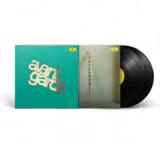
Album #2 der brandneuen Vinyl-Serie mit zukunftsweisenden Aufnahmen der musikalischen Avantgarde.
Mauricio Kagels Acustica, komponiert für experimentelle Klangerzeuger und Lautsprecher, zählt zu seinen
radikalsten Werken. Es kombiniert elektroakustisches Tonbandmaterial mit akustischen Darbietungen und
verkörpert Kagels Idee des instrumentalen Theaters, in dem Klang, Gestik und Präsenz der Darsteller zu
einem einzigen musikalischen Akt verschmelzen. Das Werk erkundet ein erweitertes Feld der Musikalität
und nutzt erfundene Instrumente, um den Klang von traditionellen Aufführungskonventionen zu befreien.
Die Vielzahl globaler Klangquellen spiegelt die Vielfalt seiner Kindheit in Buenos Aires wider, verwandelt
Chaos in spielerische Ordnung und betont die Autonomie jedes einzelnen Interpreten innerhalb eines kollektiven Ganzen. Mit Acustica schuf Kagel eine einzigartige lateinamerikanische Antwort auf die europäische
Avantgarde: eine lebendige, demokratische Klangwelt voller Erfindungsreichtum und Menschlichkeit.
Gemastert und geschnitten von den originalen analogen ¼-Zoll-2-Spur-Masterbändern von Rainer Maillard und Sidney Claire Meyer in den Emil Berliner Studios.
Limitierte und nummerierte Auflage mit Original-Artwork und einem neu gestalteten, wunderschön gearbeiteten Sammler-Cover mit neuen Liner Notes von Bradford Bailey, gepresst auf 180-g-Vinyl

pre-order now01.05.2026

expected to be published on 01.05.2026

48,70
Luc Ferrari, Konstantin Simonovitch - Luc Ferrari: Presque Rien Nr.1; Societé II

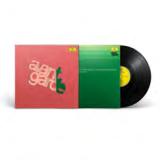
Album #1 der brandneuen Vinyl-Serie mit zukunftsweisenden Aufnahmen der musikalischen Avantgarde.
Luc Ferraris Presque Rien Nr. 1 und Société II zählen zu den radikalsten Werken der Avantgarde des
20. Jahrhunderts. Mit Presque Rien Nr. 1 leistete Ferrari Pionierarbeit bei der Verwendung von Umgebungsaufnahmen als vollständiges musikalisches Material – er nahm die Geräusche eines kroatischen Fischerdorfes im Morgengrauen auf. Ohne Manipulation markierte dies einen entscheidenden Wandel hin zum
klanglichen Minimalismus und beeinflusste Generationen von experimentellen Künstlern.
Im Gegensatz dazu verkörpert Société II, komponiert für Klavier, Schlagzeug und Ensemble, Ferraris politisch aufgeladene, theatralische Seite. Entstanden inmitten der sozialen Umwälzungen der späten 1960er
Jahre, inszeniert es eine feministische Allegorie, in der die Interpreten um die Vorherrschaft wetteifern und
dabei Struktur, Improvisation und Satire miteinander verbinden.
Gemastert und geschnitten von den originalen analogen ¼-Zoll-2-Spur-Masterbändern von Rainer Maillard und Sidney Claire Meyer in den Emil Berliner Studios.
Limitierte und nummerierte Auflage mit Original-Artwork und einem neu gestalteten, wunderschön gearbeiteten Sammler-Cover mit neuen Liner Notes von Bradford Bailey, gepresst auf 180-g-Vinyl.

pre-order now01.05.2026

expected to be published on 01.05.2026

35,08
Boston Symphony Orchestra, Ensemble Tashi, Seiji Ozawa - Toru Takemitsu: Quatrain; A Flock Descends Into The Pentagonal Garden

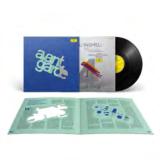
Album #3 der brandneuen Vinyl-Serie mit zukunftsweisenden Aufnahmen der musikalischen Avantgarde.
Tōru Takemitsus Quatrain und A Flock Descends into the Pentagonal Garden sind Beispiele für seine
Synthese aus westlichen Avantgarde-Techniken und japanischer Ästhetik. In Quatrain evoziert Takemitsu
durch fließende Veränderungen von Klangfarbe und Atmosphäre das japanische Konzept von ma – dem
Raum zwischen den Dingen. Er verglich das Werk mit einem Emaki, einer Bildrolle, die Szene für Szene
entfaltet, wobei jede musikalische Idee unabhängig ist, aber dennoch miteinander verwoben ist.
A Flock Descends into the Pentagonal Garden erweitert diese Ideen zu einer zirkulären, nichtlinearen
Klangwelt. Sein „flock”-Motiv, das zuerst in der Oboe zu hören ist, taucht in ein schimmerndes harmonisches Feld ein, das von den Streichern geschaffen wird – den „garden”. Hier wird Takemitsus Zeit- und
Raumgefühl eher immersiv und zyklisch als progressiv.
Gemischt und geschnitten von den originalen analogen 1-Zoll-8-Spur-Masterbändern von Rainer Maillard
und Sidney Claire Meyer in den Emil Berliner Studios.
Limitierte und nummerierte Auflage mit Original-Artwork und einem neu gestalteten, wunderschön gearbeiteten Sammler-Cover mit neuen Liner Notes von Bradford Bailey, gepresst auf 180-g-Vinyl

pre-order now01.05.2026

expected to be published on 01.05.2026

35,08
Momoko Kikuchi - Ocean Side LP

Momoko Kikuchi

Ocean Side LP

12inchWRWTFWW107CLRD
WRWTFWW Records
01.05.2026
  • A1: Ocean Side
  • A2: Shadow Surfer
  • A3: Blind Curve
  • A4: Summer Eyes
  • A5: Futari No Night Dive
  • B1: Seishun No Ijiwaru
  • B2: Evening Break
  • B3: So Many Dreams
  • B4: I Will

WRWTFWW Records is very excited to announce the first release from its new City Pop Series with Japanese singer, actress, entertainer, scholar and all-around legend Momoko Kikuchi’s sun-drenched classic Ocean Side album, available now as a limited-edition transparent vinyl LP in a heavyweight sleeve with obi.

A cult classic among Japanese music collectors, Ocean Side was originally released in 1984 by mythical label VAP and features lush compositions and arrangements by J-Pop icon Tetsuji Hayashi (Mariya Takeuchi, Miki Matsubara, Omega Tribe, Junichi Inagaki, Urusei Yatsura anime, soundtrack…). Momoko Kikuchi’s city pop gem is a flawless mix of heartwarming beachside funk, breezy grooves, and silky-smooth vocals - the feel-good music we all need in our life right now.

The 9-track summer-is-forever adventure notably includes the ultra-funky megahit “Blind Curve”, the fan-favorite title song, and the insanely romantic ballad “Futari No Night Drive”. A vibrant reflection of summer in 1980s Japan, Ocean Side masterfully balances nostalgia and elegance, and provides part of the origin story for revered modern music genres such as chillwave, and future funk, and vaporwave.

The official reissue licensed from VAP, Inc. is sourced from the original masters with an audiophile-cut by Sidney Meyer at Emil Berliner Studios.

WRWTFWW’s City Pop Series and its Lopetz/Büro Destruct-designed logo also includes jazz-fusion-AOR-mellow-funk treasure Safari (1984), a limited capsule collection of merch, and much more to come in the near future.

out of Stock

Order now and we will order the item for you at our supplier.

29,83

Last In: 14 days ago
Thomas D - Neocortex (LP 2x12")
  • 1: Federleicht Feat. Reinhard Mey
  • 2: Vom Ich Zum Wir Zum Wir Zur Einheit
  • 3: Das Leben Ist Ein Geschenk Feat. Gu
  • 4: Mutterliebe – Vaterstolz
  • 5: Neocortex
  • 6: Nur Mut
  • 7: Ständige Veränderung Feat. Jack Mcbannon
  • 8: Mein Nachbar
  • 9: Om
  • 10: Auf Wiedersehn
  • 11: Alaska
  • 12: Kurz Zu Mir

Mit seinem neuen Solo-Projekt „NEOCORTEX“ präsentiert Thomas D ein Werk, dessen Entstehungsprozess teilweise über ein Jahrzehnt zurückreicht. Abseits der großen Stadion-Produktionen der Fantastischen Vier liegt der Fokus hier auf einer persönlichen und inhaltlich dichten Auseinandersetzung mit dem menschlichen Sein. Im Gegensatz zu den vorangegangenen Veröffentlichungen mit der Hamburger Band The KBCS handelt es sich bei den zwölf Titeln ausschließlich um neues Material und keine Remakes.

Musikalisch setzt Thomas D erneut auf die Zusammenarbeit mit den KBCS, die für einen organischen und geerdeten Sound sorgen. Ergänzt wird das Album durch Kollaborationen mit dem Künstler Gu sowie der Liedermacher-Legende Reinhard Mey.

„NEOCORTEX“ dokumentiert eine über 13 Jahre gereifte künstlerische Entwicklung und zeigt Thomas D als Songwriter, der sich direkter und lebensnäher als in bisherigen Solo-Arbeiten positioniert.

pre-order now17.04.2026

expected to be published on 17.04.2026

32,35
Various - Tchic Tchic: French Bossa Nova 1963-1974  Colored Edition LP 2x12"
  • A1: Les Masques - Il Faut Tenir (1969)
  • A2: Isabelle Aubret - Casa Forte (1971)
  • A3: Christianne Legrand - Hlm Et Ciné Roman (1972)
  • A4: Jean Constantin - Pas Tant D'chichi Ponpon (1972)
  • A5: Billy Nencioli & Baden Powell - Si Rien Ne Va (1969)
  • B1-: Marpessa Dawn - Le Petit Cuica (1963)
  • B2: Jean-Pierre Sabar - Vai Vai (1974)
  • B3: Sophia Loren - De Jour En Jour (1963)
  • B4: Isabelle - Jusqu’à La Tombée Du Jour (1969)
  • B5: Sylvia Fels - Corto Maltesse (1974)
  • C1: Frank Gérard - Comme Une Samba (1972)
  • C2: Ann Sorel - La Poupée Des Favellas (1971)
  • C3: Charles Level - Un Enfant Café Au Lait (1971)
  • C4: Andrea Parisy - Les Mains Qui Font Du Bien (1970)
  • C5: Audrey Arno - Quand Jean-Paul Rentrera (1969)
  • C6: Aldo Frank - T’as Vu Ce Printemps (1970)
  • D1: Christianne Legrand - Cent Mille Poissons Dans Ton Filet (1972)
  • D2: Clarinha - Lemenja (1970)
  • D3: Hit Parade Des Enfants - Aquarela (1976)
  • D4: Jean-Pierre Lang - Tendresse (1965)
  • D5: Magalie Noël - Une Énorme Samba (1970)
  • D6: Françoise Legrand - La Lune

Ever since the late 1950s bossa-nova revolution, Brazil’s influence on French music has been undeniable. Pierre Barouh, Georges Moustaki and a vast array of lesser known artists, all made the Musica Popular Brasileira (MPB) an axis of promotion at the service of a cool and metaphysical, modern and mixed Brazilian lifestyle. Some were seduced by the poetic languors of the bossa, some were looking for fun, and others just loved the American hybridization of jazz-bossa, jazz-samba.


What is bossa nova? One of its creators, Joao Gilberto said: "Its style, cadence, everything is samba. At the very start, we didn't call it bossa nova, we sang a little samba made up of a single note - Samba de uma nota so .... The discussion around the origins of bossa nova is therefore useless”. It is nevertheless useful to remember that these magnificent Brazilian songs, which the guitarist describes as samba, were shifted and balanced around improbable chords. "I like things that lean, the in-betweens that limp with grace," said Pierre Barrouh, quoting Jean Cocteau.


With emotion, arrangements for violin and supple guitar licks, bossa nova rapidly changed. A transformation that can be heard in the Tchic, tchic, French Bossa Nova 1963-1974 compilation, the result of a cultural reappropriation, which traveled through the United States and supplemented itself in France.

A musical revolution that has remained significant, bossa nova was born in Rio. From 1956 to 1961, Brazil lived through its golden years. In five years, the country had invented its modernist style. Elected president in 1956, Juscelino Kubitschek de Oliveira, an elegant man with a broad forehead, brandished a promising slogan: "Fifty years of progress in five years". He quickly got to work. Not worried about increasing debt, he launched the project for a new federal capital, Brasilia, designed by the communist architect Oscar Niemeyer. Volkswagen opened state-of-the-art factories and created the “fusquinha”, the Beetle. In Rio, the Vespa made its first appearance. The Arpoador Surf Club crew run into the “girl” from Ipanema, Helô Pinheiro - the tanned garota ("chick"), between a flower and mermaid, who at 17 walked by the Veloso bar, where the fiery author and composer, Tom Jobim and Vinicius de Moraes, were getting drunk on whiskey. From then on, bossa symbolized cool.

In 1958, Joao Gilberto recorded Chega de Saudade, which the directors of Philips denied, calling it "music for fagots". The marketing director, who believed in it, secretly pressed 3000 78-inch vinyls and distributed them at schools around Rio, creating a tidal wave.

American jazzmen then took over. In particular, trumpeter Dizzy Gillespie and guitarist Charlie Byrd. In November 1962, the Brazilian Ministry of Foreign Affairs funded a "Bossa-Nova" concert at Carnegie Hall in New York, inviting the genre’s pioneers. Unprepared, the show soon turned to disaster. But the troupe was invited to the White House by Jackie Kennedy. The first lady loved "the new beat" and in particular Maria Ninguem, a song by Carlos Lyra, later covered by Brigitte Bardot.

In Brazil, the 1964 military coup quickly ended this euphoria. The destructive atmosphere that ensued pushed many Brazilian musicians to leave, if not to exile. Thus, Tom Jobim, Sergio Mendes and Joao Gilberto arrived to the United States. In New York, Joao Gilberto met saxophonist Stan Getz. At the time, he was married to the Bahianese Astrud Weinert Gilberto, who had a German father. She had never sung before, but she knew how to speak English. Getz therefore asked her to replace her husband on The Girl From Ipanema. The Getz/Gilberto record with Tom Jobim on piano, was released in March 1964. Phil Ramone, the "pope of pop" was in charge of sound.

Bossa nova arrived in Paris through the classic “guitar-voice” channel (Pierre Barouh, Baden Powell, Moustaki…) But France loved jazz and Paris had already welcomed its American contributors. All these good people were to pass through Saint-Germain-des-Prés. The cabaret l'Escale became the Mecca of Latin American sound where one could find Pierre Barrouh and his friends, such as the Camara Trio, samba-jazz aces, whose only record was published by the Saravah label. With a band strangely called Les Masques (a band that included Nicole Croisille and Pierre Vassiliu, among others), the Camara Trio recorded an interesting Brazilian Sound, including the track Il faut tenir which is present on this tasty compilation of rarities.

Other enlightened musicians can also be found on the compilation, such as Jean-Pierre Sabar (songwriter for Hardy, Auffray, Leforestier ...) and the French pop rock organist Balthazar. In 1975, Sabar recorded Aurinkoinen Musiikkimatka on a Finnish label, which featured the crazy Vai, Vai, included on this record. We are now following the footsteps of Brazilian electronic musicians such as Sergio Mendes, Eumir Deodato or Marcos Valle who created funk and disco sounds on their keyboards and synthesizers. A style that influenced Véronique Sanson when she wrote Jusqu’à la Tombée de la nuit in 1969 for Isabelle de Funès, the niece of Louis and a great friend of Michel Berger - Sanson did end up singing this track on her 1992 Sans Regret record.


The pinnacle of exoticism and travel, Sylvia Fels’ Corto Maltese includes bongos, sea mist and ocean sounds. The title was taken from Jacky Chalard’s concept album written in 1974, Je suis vivant, mais j’ai peur (I am alive, but I am scared), based on Gilbert Deflez’s science fiction novel.


However, bossa nova extended the scope of popularity. "In the 1970s, I was a fan of Sergio Mendes, Getz / Gilberto. I fell in love with this music that I knew because I had been an orchestral singer, " explained Isabelle Aubret, who in 1971 delivered a composite record of covers by the very funky Jorge Ben, Orfeu Negro, Tom Jobim, Vinicius de Morais and Jean Ferrat. "I recorded this album for Meys Records in Paris, far from Brazil, with wonderful musicians, François Raubert, Roland Vincent, Alain Goraguer...". The latter wrote the arrangements for Casa Forte, a very percussive title borrowed from Edu Lobo, one of the initiators of the bossa who spent time in California. "Jazz and bossa came together and produced very rhythmic music. I love singing, it allows me to dream, to have fun, to feel a high on stage, and these songs brought me joy, made me swing, my singing felt like a dance.”


The world tours of French singers and their desire for the tropics, often brought them to Rio with its hills, forests, caipirinhas and tanned bodies. There are surprises though, like this Iemenja (Iemenja is the goddess of the sea in the Afro-Brazilian candomblé religion). Not unlike the composer and musician Jean-Pierre Lang, based in Sao Paulo, Claire Chevalier taught Brazil to Brazil. In 1970, the singer and painter published a 45-inch vinyl, Mon mari et mes amants (My husband and my lovers), under the improbable pseudonym of Clarinha (little Claire). She was then living in Rio, with her husband, Joël Leibovitz, who founded a band called Azimuth, and who owned a record label specialized in "sambas enredos" songs for samba school parades.


For its B side, she asked Pierre Perret to come up with lyrics for a song composed by Carlos Imperial: "Oh goddess of the sea, o goddess Iemenja, I bring a white rose to adorn your long hair ..." . "Perret came to see us, and we had fun, remembers Joël Leibovitz. We wrote Lemenja for fun, we recorded it at the Havaí studio, behind the Central do Brasil the central station. Erlon Chaves, the arranger who worked with Elis Regina, joined us" adding his share of Afro-Brazilian percussions and funky brass to the mix.

There is a common misunderstanding in Franco-Brazilian history: that bossa, admittedly hedonistic, is perceived as funny, even though the poets who wrote the texts are often philosophizing on the human condition. Its French interpreters pull it towards a carnival inspired universe, far removed from its fundamental essence. Thus, Jean Constantin covered the famous Samba da minha terra, an ode to the art of samba written by the classic Bahian composer Dorival Caymmi, renaming it with the enticing title of Pas tant de tchi tchi pompon: "On your pier there is no tchi tchi / when you arch your back, you know everything is alright ”(lyrics by Gérard Calvi). This expedited bossa aims for the absurd, but retains a certain elegance.

Indeed, Jean Constantin was not an idiot, the rather large man had a huge mustache and liked fantasy, (Les pantoufles à papa, Le pacha, inspired by cha-cha-cha-cha, salsa and jazz) but he was also the lyricist of Mon manège à moi interpreted by Edith Piaf, the composer of Mon Truc en plume by Zizi Jeanmaire and the soundtrack of François Truffaut’s 400 Blows. Le Poulpe, published in 1970, from which this bossa is extract, was arranged by Jean-Claude Vannier, an accomplice of Serge Gainsbourg’s Melody Nelson. In short: "There is enough of samba / By looking at the parasol / Because my poor cabeza / Is going to die in the sun".

Even the American actress Marpessa Down, who was at the heart of the bossa nova revolution with her role as Euridyce in Marcel Camus’ film Orfeu Negro, winner of the 1959 Cannes Palme d'or, fed the clichée with Je voudrais parler au petit cuica - "Tell me how you manage to always make people want to dance / It's true, I must admit that I cannot resist your magic" - in consequence, once can hear the cuica, a little drum inherited from the Bantu.


But bossa nova had many angles. Societal, of course, pushing actresses who were symbols of women's liberation like Brigitte Bardot, Jeanne Moreau, or Sophia Loren to engage in the exercise of accelerated bossa. In February of 1963, Sophia Loren made a record in French in Rome, Je ne t'aime plus, featuring the song De jour en jour, a bossa written by two Italians, Armando Trovajoli and Tino Fornai, which was released a little later by Barclay. Bossa accompanied the 1960s, a decade of moral liberation. Ann Sorel, who interpreted La Poupée des favellas, caused a sensation with L’amour à plusieurs, a provocative song written by Frédéric Bottom and Jean-Claude Vannier. As for the actress Andrea Parisy, she displayed her bourgeois cheekiness in Marcel Carné's Les Tricheurs before interpreting Les mains qui font du bien. And Magalie Noël, the friend of Boris Vian, who sung Johnny fais-moi mal, was hired to sing Une énorme Samba, composed by Alain Goraguer (arranger to Gainsbourg, Bobby Lapointe and Jean Ferrat) with lyrics by Frédéric Botton.

But in the end, of what wood is bossa nova made of? The answer is given by Christianne Legrand, daughter of Raymond the conductor, and sister to Michel the composer: "With me, with jà" - jà means "immediately" in Portuguese. In 1972, the singer, an expert in vocal jazz and a member of the Double Six, published Le Brésil de Christianne Legrand. Two songs included on the Tchic Tchic compilation that demonstrate how bossa, jazz, funk, rock, etc. work like a swiss army knife: the music is used to denounce broken systems, or miracles, HLM et ciné roman, Cent mille poissons dans ton filet, two songs from the O Cafona soundtrack, a successful telenovela broadcast, at the time in black and white, on TV Globo. The first was adapted in French by the fighter and friend of the Legrand tribe, Agnès Varda. The second is content with a play on words, jostling them into a summer fun.


Véronique Mortaigne

pre-order now17.04.2026

expected to be published on 17.04.2026

27,31
Good Flying Birds - Talulah's Tape

Good Flying Birds

Talulah's Tape

CassettePINK EDITION
Carpark Records
03.04.2026

Talulah’s Tape is the debut offering from magnetic Midwest-jangle collective Good Flying Birds. Across a patchwork mixtape of stripped-down home recordings that span the independent-guitar spectrum, the band delivers colorful, intricate pop songs perched between the immediacy of DIY punk and the intimate sweetness of twee. Breakbeats, memes, and noise glue everything together, making the album feel as chronically online as it is timeless.

Originally released on cassette in January 2025 by Midwest-punk legend Martin Meyers’s Rotten Apple label, the tape sold more than 300 copies in under a month and quickly became an out-of-print and coveted item. Meyers called it “certified catnip for popheads.” Now, with a refined track list and a fresh master from Greg Obis, Talulah’s Tape returns on LP and CD via Carpark and Smoking Room in October 2025.

While production and approach vary, a through-line of sensitive self-contemplation rests on bright, scrappy guitars and hyperactive melodic bass. Opener “Down on Me” rides a buoyant bass line while jangling guitars frame reflections on overcoming trauma: “I see you in the mirror every time I cry / I hear your voice every time I try.” Next, the guitars trade twinkling counter-melodies on “I Care for You,” pairing sugary, lovestruck lyrics with effervescent strums: “You catch me when I fall / You build me up so tall.”

The rosy grin occasionally twists into a wicked smirk. “Dynamic” warns, “You used to paint the face, but now you’re just the clown,” while “Glass” asks, “Is it lonely at the top when everyone follows the trend, and you hold the pen?” Both tracks brim with sparkling guitar interplay. By the closing, nearly five-minute “Last Straw,” Good Flying Birds stand far beyond conventional indie-pop or 4-track punk, unveiling a roller-coaster of unpredictable changes, vocal harmonies, and instrumental cross-talk.

Altogether, Talulah’s Tape is a pastel-yellow, candy-coated shell filled with thoughtful juxtapositions and melodic experiments. Standing on the same ground as idiosyncratic songwriters like Connie Converse and Daniel Johnston, Good Flying Birds find sweetness in sadness, tear stains on a colorful flower-print couch. Simultaneously, it’s packed with the scratchy guitars and vibrant rhythms of Scottish guitar groups like The Pastels, Orange Juice, and Josef K. It’s a tremendous opening statement from a band just getting started.

pre-order now03.04.2026

expected to be published on 03.04.2026

13,91
RAMI GABRIEL - TUNDERIZER
  • Majesty And Misery
  • Tunderizer
  • Out Of Our Bed
  • Waiting For The Drugs
  • 680:
  • Ain't I Worth That
  • Whiskey On The Rocks
  • Greece Without The Greeks
  • Chennai
  • Nothome
  • Select A Room
  • Approaching Ramp
  • Money And Blood

Rami Gabriels zweites Album ,Tunderizer" bringt den harten Experimentalismus des Post-Punk-Industrial in die gemütliche Atmosphäre von zu Hause. Wie Schatten, die durch Spiegel huschen, verdeckt ein Mix aus Lo-Fi-Noise-Art und Feldaufnahmen das super abgestimmte Songwriting. ,Tunderizer" rockt in allen Bereichen, von mitreißenden Melodien bis hin zu dekonstruktivem Rauschen, von Country bis Tarab, von Skronk bis Delta Blues. Der in Beirut geborene Rami Gabriel ist Komponist und Songwriter und spielt Oud, Buzuq und Gitarre. Er lernte Blues und Jazz, indem er mit legendären Musikern aus Chicago auftrat und diese Musikstile mit arabischen Traditionen verband. Rami tritt häufig in Nordamerika und international auf, unter anderem in Europa, Indien, der Türkei, dem Libanon und Ghana. Kürzlich spielte er beim Portland Jazz Festival, dem NYC Arab Festival und dem Festival International De Louisiane. Rami leitet die in Chicago beliebten Bands The Arab Blues und das R&B-Quartett Rami & the Reliables. Er stand schon mit Größen wie Buddy Guy, Zakir Hussein, Bela Fleck, Edgar Meyers und Rakesh Chaurasia auf der Bühne. Er war Vorband für den britischen Songwriter Nick Lowe und nimmt regelmäßig mit Mitgliedern der amerikanischen Rocklegenden NRBQ auf. Außerdem stand er schon mit Prostitute, Marvin Tate und anderen Punk- und Noise-Künstlern auf der Bühne. Seine Musik wurde von experimentellen Künstlern wie Fire-Toolz, Beau Wanzer, Sen Morimoto, Lynyn, k-rAd und Alex Hall von Reliable Recorders aus Chicago remixt.

pre-order now27.03.2026

expected to be published on 27.03.2026

22,65
CLUB DER TOTEN DICHTER - GALGENLIEDER (CHRISTIAN MORGENSTERN - GEDICHTE NEU VERT
  • 1: Zum Geleit / Galgenberg
  • 2: Bim Bam Bum
  • 3: Das Mondschaf
  • 4: Galgenbruders Lied An Sophie, Die Henkersmaid
  • 5: Das Geht An Dich
  • 6: Der Werwolf
  • 7: Der Mond
  • 8: Der Hecht
  • 9: Bundeslied Der Galgenbrüder
  • 10: Der Tanz
  • 11: Der Lattenzaun
  • 12: Das Fest Des Wüstlings
  • 13: Die Zwei Wurzeln
  • 14: Leise Lieder

Mit "Galgenlieder" präsentiert der Club der toten Dichter sein Jubiläumsprojekt zum 20-jährigen Bestehen - eine außergewöhnliche Neuvertonung der legendären Gedichte Christian Morgensterns. Dessen skurriler Humor, philosophische Tiefe und spielerische Leichtigkeit bilden die ideale Grundlage für Reinhardt Repkes musikalische Neuinterpretationen, die den berühmten Texten wie "Der Lattenzaun", "Das Mondschaf" oder "Der Werwolf" ein zeitgemäßes, berührendes Klanggewand verleihen. Für dieses achte Programm des Clubs konnte Schauspieler Hans-Werner Meyer als Gastsänger gewonnen werden. Seine spontane Begeisterung - und seine persönliche Verbindung zu Morgensterns Lyrik - prägen den intensiven Vortrag zwischen Ironie, Wärme und feiner Melancholie. Begleitet wird er von Markus Runzheimer (Element of Crime), der Bass, Percussion und Gesang beisteuert. Bandgründer Reinhardt Repke zeichnet erneut für die Kompositionen verantwortlich und formt mit Gitarre und Stimme den charakteristischen Sound des Projekts.

pre-order now20.03.2026

expected to be published on 20.03.2026

24,79
Omar Gudjonsson - 210 LP

Omar Gudjonsson

210 LP

12inchYEB785524
YELLOWBIRD
20.02.2026
  • 1: Arnavatnsheioi
  • 2: Hofslundur 4
  • 3: Garoaskoli
  • 4: Afi Meysi
  • 5: Amma Lukka
  • 6: Reynilundur 8
  • 7: Garoaskoli 2
  • 8: Lolla
  • 9: Sioustu Dagar Pabba
pre-order now20.02.2026

expected to be published on 20.02.2026

26,68
Helviofox - Rodeado de Batida

At 19, Helviofox adds his signature to the batida template that by now seems to have been in existence since forever. Such is the strength of this primordial fountain, a source of rejuvenation. Also within the literal family: Helvio cites brothers Dadifox and Erycox as main influences.

Curiosity for the sound made him go into production by the time he was 13. A couple of years later (2020) he became co-founder of TLS with E8Prod, Alberfox, DiionyG and other mates. His talent fully developed since then, opening a slight detour that became a new path parallel to the main road.

Lively basslines anchor the beat directly lifted from tradition and clearly channeled to the dancefloor. Strong, well rounded grooves, a spot-on sense of timing and tempo, elegant atmospheres, all part of Helvio's notion of arrangement and his perception of dance music boundaries, stretching them just enough to present a challenge but not as far as to disconnect head and feet and risk losing the floor.

This liminal space between experimentation and popularity is both dangerous and attractive. There is no one formula. Precisely why it still retains plenty of fuel for current and future generations to contribute personal visions.

Lisboa, 2025

out of Stock

Order now and we will order the item for you at our supplier.

23,32

Last In: 77 days ago
Stabbing - Eon of Obscenity

Stabbing

Eon of Obscenity

12inch19802976041
Sony Music
30.01.2026

Mit "Eon of Obscenity" erreicht die texanische Brutal-Death-Metal-Band STABBING neue Höhen der klanglichen Vulgarität. Das Album ist gespickt mit unerwarteten Momenten verdrehter Technizität und sinneszerstörender Kraft. Das Debüt des Quartetts beim Label Century Media übertrifft, überrollt und vernichtet die Konkurrenz gänzlich. Mit Tracks wie "Inhuman Torture Chamber" nimmt Sängerin Bridget Lynch ihren Platz als eine der kraftvollsten und markantesten Stimmen des Genres ein und macht ihrem ehemaligen Tourkollegen Ricky Meyer von Suffocation mit dem Track "Nauseating Composition" ordentlich Konkurrenz. Nachdem sie sich in der Underground-Szene einen Namen gemacht haben, mit Sanguisugabogg und 200 Stab Wounds (u. a.) auf Tournee waren und beim Maryland Deathfest und Milwaukee Metalfest bahnbrechende Auftritte geliefert haben, setzen STABBING neue Maßstäbe in Sachen Brutalität - und legen ohne Kompromisse noch eine Schippe drauf.

pre-order now30.01.2026

expected to be published on 30.01.2026

24,16
Boston Symphony Orchestra, Sir Colin Davis - Decca Pure Analogue: Sibelius: Symphonies Nos 5 & 7 LP 2x12"

Sir Colin Davis wählte die Musik von Sibelius, um eines seiner Konzerte als erster Gastdirigent des BSO im
Oktober 1972 zu eröffnen. Es war ein entscheidender Moment: Davis hatte die Bostoner Sibelius-Tradition
wiederbelebt. Dieses Album mit den Sinfonien Nr. 5 und 7 war sowohl die erste Veröffentlichung des
mittlerweile legendären Davis/Boston-Sibelius-Zyklus als auch eine der letzten Quadrophonie-Aufnahmen
bei Philips. „Niemand, der Colin Davis’ Zyklus der Sibelius-Sinfonien hört, wird daran zweifeln, dass er ein
geborener Sibelius-Interpret ist.“ – Gramophone Magazin
Erstmals als Doppel-LP konnte der Klang des Albums weiter verbessert und außerdem ”Tapiola” von
Sibelius inkludiert werden.
Die vollständig analoge Vinyl-Serie DECCA PURE ANALOGUE punktet mit einigen der legendärsten Aufnahmen aus den Archiven von Decca & Philips. Die Serie wird von Rainer Maillard gemastert und von
Sidney C. Meyer in den renommierten Emil Berliner Studios geschnitten, bei Pallas auf 180-Gramm-Vinyl
gepresst und in luxuriösen Gatefolds in handnummerierten, limitierten Auflagen präsentiert.
Es werden ausschließlich originale analoge Quellen verwendet, in diesem Fall vierspurige QuadrophonieBänder.
Jedes Album enthält das Original-Artwork und die Original-Liner Notes, Archivfotos und Faksimiles der
Original-Aufnahmeprotokolle sowie neu verfasste Anmerkungen, die die Geschichte der Aufnahme, den
technischen Hintergrund und den Mastering-Prozess detailliert beschreiben

pre-order now16.01.2026

expected to be published on 16.01.2026

59,03
Chicago Symphony Orchestra, Sir Georg Solti - Decca Pure Analogue: Stravinsky: Le Sacre du printemps

Als Sir Georg Solti im Herbst 1969 sein Amt als Musikdirektor antrat, verglich er die Stadt Chicago und
ihr berühmtes Orchester einmal mit dem „Dornröschen“-Schlaf. Doch fünf Jahre später war es ein anderes
Ballett – Strawinskys „Le Sacre du Printemps“ –, das zeigte, wie explosiv diese neue Beziehung geworden
war, in einer Aufnahme, die auch ein halbes Jahrhundert nach ihrer Entstehung noch immer aus den Lautsprechern dröhnt. „Glamourös und kraftvoll.“ – Gramophone
Deccas vollständig analoge Vinyl-Serie DECCA PURE ANALOGUE punktet mit einigen der legendärsten
Aufnahmen aus den Archiven von Decca und Philips. Die Serie wurde von Rainer Maillard gemastert und
von Sidney C. Meyer in den renommierten Emil Berliner Studios geschnitten, bei Pallas auf 180-gr.-Vinyl
gepresst und in luxuriösen Gatefolds in handnummerierten, limitierten Auflagen präsentiert.
Es werden ausschließlich originale analoge Quellen verwendet – in diesem Fall 2-Track Stereo-Bänder–
und es kommen keine zusätzlichen Geräte im Signalweg zum Einsatz, d. h. es findet keinerlei digitale
Klangbearbeitung statt.
Die LP wurde für 45RPM gemastert, um einen besseren Hochtonbereich zu erzielen und die ganze „Wucht
und Klarheit“ der Originalaufnahme wiederzugeben.
Jedes Album enthält das Original-Artwork und Original-Liner Notes, Archivfotos und Faksimiles der OriginalAufnahmeprotokolle sowie neu verfasste Anmerkungen, die die Geschichte der Aufnahme, den technischen
Hintergrund und den Mastering-Prozess beschreiben.

pre-order now16.01.2026

expected to be published on 16.01.2026

48,70
Wiener Philharmoniker, Willi Boskovsky - Decca Pure Analogue: New Year’s Day Concert in Vienna 1979 LP 2x12"

Wiener Philharmoniker, Willi Boskovsky

Decca Pure Analogue: New Year’s Day Concert in Vienna 1979 LP...

2x12inch4871497
Decca Records
16.01.2026

Das Neujahrskonzert 1979 in Wien war sowohl musikalisch als auch technisch ein Höhepunkt. Es war sowohl
das Ende einer goldenen Ära für Willi Boskovsky, längjähriger Konzertmeister der Wiener Philharmoniker
und Dirigent sensationeller Neujahrskonzerte, als auch der Beginn eines neuen Zeitalters in der Aufnahmetechnik. Lange Zeit als erste digital aufgenommene Veröffentlichung von Decca gefeiert, hat die jüngste
Recherche eine Reihe von analogen Sicherheitsmastern zutage gefördert, die fast ein halbes Jahrhundert
lang unberührt in den Archiven der Decca schlummerten – bis heute. „Dies ist eine sensationelle Veröffentlichung.“ – Gramophone Magazin
Deccas vollständig analoge Vinyl-Serie DECCA PURE ANALOGUE punktet mit legendären Aufnahmen
aus den Archiven von Decca und Philips. Die Serie wurde von Rainer Maillard gemastert und von Sidney
C. Meyer in den renommierten Emil Berliner Studios geschnitten, bei Pallas auf 180-Gramm-Vinyl gepresst
und in luxuriösen Gatefolds in handnummerierten, limitierten Auflagen präsentiert.
Es werden ausschließlich originale analoge Quellen verwendet – in diesem Fall erstmals analoge Master
früher digitaler Aufnahmen – und es kommen keine zusätzlichen Geräte im Signalweg zum Einsatz.
Jedes Album enthält das Original-Artwork und die Original-Liner Notes, Archivfotos und Faksimiles der
Original-Aufnahmeprotokolle sowie neue Anmerkungen, die die Geschichte der Aufnahme, den technischen
Hintergrund und den Mastering-Prozess detailliert beschreiben

pre-order now16.01.2026

expected to be published on 16.01.2026

59,03
Biboul Darouiche & The Bantu Jazz Connection - Strolling Through The Worlds

Strolling through the world by Biboul Darouiche & The Bantu Jazz Connection marks the first vinyl release on Crispy Water and is a vibrant fusion of African rhythms, jazz improvisation, and soulful storytelling, blending ancestral rhythm with contemporary jazz expression. Recorded with an ensemble of outstanding musicians, the album moves effortlessly between groove, spirit, and freedom — connecting continents through sound.

BIBOUL DAROUICHE is a singer, percussionist, composer and head of the ensemble. By playing the conga, djembe, calimba and - the African treetrunk drum (also called nkul or tam-tam, which by the way should not be missing at any concert!) Darouiche brings a very special color to his music. He works mainly in Europe, but his engagements also take him to the Middle East, the countries of the CIS, Brazil and the USA. Since1995 he has been a member of Klaus Doldinger's Passport. He has also worked with musicians such as Al Di Meola, Pee Wee Ellis, Roy Ayers, Graham Haynes, Paquito D'Rivera and the Jazz Baltica Ensemble.

The Austrian multi-instrumentalist and producer MICHAEL HORNEK, who is part of the permanent cast of Klaus Doldinger's Passport as a keyboardist, plays keyboards, percussion and sings. His free-jazzy percussive playing inspires every listener. Hornek's keyboard skills can be heard on over 750 music productions, and the trend is of course increasing!

Mauritian bassist LINLEY MARTHE is one of the world's best bassists. He was a long time permanent member of the band Joe Zawinul Syndicate,worked with musicians like Dave Liebmann, Richard Galliano, Omar Hakimand many more. Zawinul said of Linley Marthe in an interview: “Linley is a phenomenon. I don't know if anyone can match him in terms of bass playing."

ROGER BIWANDU, french musician born and raised in Bordeaux/France, with roots from Congo (DRC) is an artist resident at l'Apollo bar in Bordeaux since june 1997, he plays there one time per month. He played with a lot of great musicians all over the world, with some heavy weights too, like Joe Zawinul, Salif Keita, Marcus Miller, Lee Ritenour, John Beasley, Dee Dee Bridgewater, Franck McComb, to name a few.

stock from07.05.2026

18,28

Last In: 4 months ago
Items per Page:
N/ABPM
Vinyl