Since starting Bytes in 2019 we’ve fielded a lot of messages along the lines of, “Is this ever going to be released on vinyl?” The bulk of these requests have concerned remixes of artists on Bytes done by Andy Bell (RIDE/Oasis) under his electronic alter-ego GLOK. And on realising that he has done four for us now (Franz Kirmann, Steve Queralt & Michael Smith, Herrmann Kristoffersen and Seagoth), it seemed silly not to compile them all together on a four-track 12” EP. The super limited edition 12” is on black wax and comes in the original Bytes house bag with a vinyl sticker containing all the release info signed by Andy. Edition of 250. No repress.
A1. SOLITARY (GLOK REMIX) - FRANZ KIRMANN
The first remix Andy ever did for Bytes was a radical reworking of ‘Solitary’, the towering ambient closer to Franz Kirmann’s ‘Madrapour’ album, which was released on Bytes in 2019. Andy’s remix is a heartbreaking, melancholic 3am banger. This is one for fans of Four Tet and Jon Hopkins, a slowburner with billowing plumes of distortion that builds towards an ecstatic rush of a finale.
A2. CHALDEAN ORACLE (GLOK REMIX) - STEVE QUERALT & MICHAEL SMITH
In 2023 Andy took ‘Chaldean Oracle’, a track from the collaboration between his RIDE bandmate Steve Queralt and the writer Michael Smith, down the K-Hole, eschewing Michael’s vocal almost entirely and turning in a Detroit dub-techno monster with echoes of Bandulu and Carl Craig in its shimmering melodies, eerie distortion and pounding drums.
‘Gone Gold’ was the title track of the excellent second album by ambient-techno group Herrmann Kristoffersen (2021). Andy taps deep into the dub at the heart of the original, with echoes of John Carpenter's soundtracks and his own extended electronic excursions under the GLOK moniker.
B2. ETERNITY (GLOK REMIX) - SEAGOTH
It was Andy who brought Seagoth to the attention of Bytes when he played ‘Eternity’ on his Soho Radio show in 2020. It all came full circle when Bytes released ‘Eternity’ as a single in 2021, with a stunning remix by Andy in his GLOK guise on the flip. Andy strips the track back to showcase the resonant vocal in all its glory before the blissed-out outro that makes full use of the track’s dancefloor-friendly drum break.
The Rio-based project Pra Gira Girar presents a new interpretation of the song Atabaque Chora, originally made famous by the trio Os Tincoãs. Written by Dadinho and Mateus Aleluia, the piece opens the group’s iconic 1977 album Os Tincoãs —and has now been chosen to mark the beginning of Pra Gira Girar’s own recording journey.
Formed by Alvaro Lancellotti, Michele Leal, and Alan de Deus on vocals, Pedro Costa on guitar, Kassin on bass, Zé Manoel on piano and vocals, Zero Telles (in memoriam) and Anna Magalhães on percussion, and Diogo Gomes on trumpet, the project was born from Alvaro Lancellotti’s long-standing admiration for the work of Os Tincoãs and his wish to create a live show celebrating the legendary trio.
For a year, Alvaro, Michele, Alan, and Pedro made up the core of the group, meeting weekly for rehearsals that became a deep dive into Os Tincoãs’ intricate vocal arrangements. These sessions were essential to recreating the grandeur and complexity of the Bahian trio’s music. Pedro Costa transcribed the vocal lines and, together with Michele Leal — a singer-songwriter with a background in choral singing — adapted the arrangements for a formation that, unlike Os Tincoãs, features a female voice.
Celebrating the 30th anniversary of its original release, Night Song returns in a special edition on rose leaf green coloured vinyl. A Grammy Award nominee, the album captures the extraordinary meeting of the legendary Nusrat Fateh Ali Khan and Canadian guitarist, producer and composer Michael Brook, whose atmospheric soundscapes provide the perfect setting for Nusrat’s ecstatic, transcendent vocals.
With Nusrat’s legacy continuing to reach new audiences following the landmark 2024 release of the unearthed archive recording Chain of Light, Night Song remains one of the defining cross-cultural collaborations of its era. This anniversary edition includes a printed inner sleeve with updated liner notes and photographs.
Over the last decade and a half, Rotation Sound System’s annual gathering in the Staffordshire countryside has become one of underground dance music culture’s true success stories – an intimate gathering of like-minded friends and partygoers, powered by a custom-built six-way sound system, with music provided by a carefully curated line-up of dusty-fingered diggers, selectors and hand-picked live performers.
At the heart of the collective’s unique and much-loved approach lies a dedication to finding and sharing lesser-known gems and audio obscurities – fantastic records whose charm and quality has long been overlooked.
Last year, the core members of the crew – founders Dean Meredith and Ben Shenton (renowned for their productions as Mind Fair), and Wrekin’ Havoc trio Rob J, Stuart Robinson and Rich Hall – offered a snapshot of their unique musical approach via debut compilation Everything You Are About To Hear Is True, Volume 1, in the process introducing a global audience to some of the countless unknown mid-tempo classics nestled in their collections.
Fresh from another sold out edition of their acclaimed micro-festival, they’re back with volume two, another must-have collection of slept-on classics, loved-up shufflers and wide-eyed Balearic beats, all of which have played a part in Rotation’s story over the last 13 years.
Appearing on gatefold double vinyl with extensive liner notes telling the stories behind the tracks, Everything You’re About To Hear Is True, Volume 2 is full to bursting with music that sounds mind-blowing on the crew’s high-end sound system.
For proof, check the analogue-rich intergalactic shuffle of Paul Atreides’ 2015 jam ‘Arrakis Walk’, the relaxed boogie-soul of Rocky Winters’ Chaz Jankel produced ‘Vicious Circle’, the easy-listening-jazz-rock bliss of Vincent Maclin’s ‘Should’ve Took a Chance’, the 80s soul squelch of ‘Ecstasy (Centurion Mix)’ by Endgames and the immersive British dub drift of Sigma’s ‘Remember (Dub Style)’.
Everywhere you look, you’ll find eye-opening and ear-pleasing delights. There’s Pinky’s lightly acid-flecked, breakbeat-fuelled, acid house-era street soul classic ‘I Wanna Be The One (Instrumental Groove)’, the 1992 new age downtempo seduction of Linda Myers (‘Shine On Me’), the Clavinet-and-synth sporting jazz-rock/space-rock fusion of Wolfhound (1984 gem ‘Another Moon Song’), the Gallic colour of Buzy’s ‘Keep Cool (Version Maxi)’ and the guitar solo-laden electrofunk explorations of mid-80s UK act Lifesighs (‘Get Serious’, here presented in its extended instrumental form).
By the time Michael Nau completed Popfly, the songs felt less like compositions than companions. Arriving in fragments, notebook lines, and fleeting observations, these pieces kept company for years until taking their final form. The result is one of Nau's most openhearted, expansive records, both homespun and otherworldly at once. Radiant folk melodies, tape-warped textures, and flashes of everyday wonder coexist in perfect balance on Popfly. Nau has never been a songwriter who forces songs into existence. Instead, he follows them, trusting intuition over agenda and allowing songs to gradually reveal themselves. Writing and recording often blur together, with melodies evolving before lyrics are finished and stray recordings forming the basis for new songs. Popfly showcases these creative detours: thoughtful folk songs, sonic experiments, and accidental beauty transformed into fully realized compositions. Many songs began at home, growing in meaning. Since he entered the Vermont studio, Little Jamaica, with longtime friend and collaborator Benny Yurco, many of them had already lived several lives. "Studio recording feels like covering my own songs," Nau says. This idea flows throughout: performances are lived-in, feeling effortless, as if assembling itself. The title track carries a flicker of wonder in its simple observations. "New Slack" moves with the loose confidence of a song content to follow its own path. On "Lost Station Hideaway," soft static and fading signals become something strangely comforting, as if the song itself is being broadcast from somewhere just beyond reach. Family and friendship are deeply woven throughout the record. Nau's children contribute vocals, bringing warmth and spontaneity to the album's communal spirit, with longtime collaborator and wife Whitney McGraw lending her serene voice. The harmonies that drift from them extend the album's central impulse of people gathering to make something beautiful. Across Popfly, loose-limbed folk songs mingle with homespun psych-pop, porchside country-folk, dreamlike atmospherics, and quietly profound observations. The record moves with the ease of conversation among old friends, finding beauty in tiny revelations, strange coincidences, and everyday mysteries. The record is full of transmissions from different moments in Nau's life, stitched together by instinct, affection, and time. Taken together, they form a portrait of a life spent paying close attention to the world and its small miracles.
Built with the immediacy that comes from limitation, iPhone Grime is almost exactly what it says on the tape case. Pulled directly from the portable communication device of Front Left Life's Louis Payne, iPhone Grime is the perfect distillation of raw ideas through a simple medium. When producers can drown in the infinite possibilities of the DAW vortex, a simple phone app can steer you swiftly to the sharpest results. Snippets of real world sound captured on the mic ground these quick-fire beats in a time and place, dynamic and street-level like grime and early dubstep was when it was being imagined on PlayStation games and filmed on ropey phone cameras.
Payne is undoubtedly bringing perspective to his sketches, having forged a connection with London's club scene through his part in the widely hailed Front Left Life parties in Catford, at Venue MOT and elsewhere. With a roll call of guests that cuts a sharp line through the best of bassweight club music right now, his taste and knowledge precedes his first steps into the production arena. Rather than puzzling out the path to a thousand likes for a hardware jam reel, he's opted for a direct line between his brain and the beat at the end of it.
You can hear the naivety behind vocal loops like the one nagging away on 'Follow That', calling to mind the first time you ever tried making a Fruity Loops beat. But these are no amateur throwaways — the technology has moved on and Payne's instincts guide him towards legit constructions that could easily do damage in the club. Sometimes they exist as no more than an eight bar loop, while others like 'Wind It Up (Dream Dealers Version)' or 'Extra Dimensional Being' stretch an idea out. Throughout it all, the looming throb of square wave bass glues the record together and anchors the grime dimension of Payne's job lot of phone jams.
Payne's work is all his own, and the snatches of real life around the beats anchor this music in his own London life. But, like previous shifts in technology and accessibility, iPhone Grime also raises an important prospect—that anyone with one of these apps, a Bluetooth speaker and an idea can bring music out of studios and into the world. History has already proven, when that happens the possibilities become thrillingly unpredictable.
Ever-evolving Amsterdam duo ANOTR continue their forward momentum with the release of their highly anticipated third studio album, ‘Withness’, out via their own imprint No Art. Rooted firmly in dance music, ‘Withness’ sees the pair refine their sound into their most dance-floor focused and cohesive project to date.
Born during their global tour, ‘Withness’ was shaped in real time: written, tested and refined on dancefloors across the world. Following the expansive, genre-blurring approach of their 2025 LP ‘On A Trip’, the duo felt a pull back toward the club - not as a limitation, but as a unifying space. “We really wanted to have a wide variety of songs that we can play out and create moments,” they explain. “Every track needed to make sense wherever people come together to dance.”
That intention sits at the heart of ‘Withness’. A title that reimagines the idea of “witnessing” into something more active and collective. ‘Withness’ is an album about experiencing life with others. It’s about the moments you share, the people who shape them, and the energy that becomes real only when you’re fully present. The album captures the collective high of friendship. Whether in a packed club, at a festival, or in a living room with friends, the album is designed to soundtrack moments of connection.
“The memories you make with people, they’re the witness of those moments. Withness is about being in it together.” - ANOTR
Sonically, the album marks a clear evolution. Drawing from their early club roots while building on the songwriting confidence developed on their previous records, classic drum machines and 909 samples sit alongside warm, 80s-tinged textures, layered vocals and modern production techniques, creating a sound that feels both nostalgic and forward-thinking.
A key part of the process was spontaneity. The duo embraced a free-flowing, collaborative studio environment, often working with a rotating cast of contributors. Their now-signature “open mic” approach encouraged anyone in the room to experiment with melodies, lyrics and vocal ideas. This energy translates directly into the album’s standout moments. From the euphoric pull of ‘Withness’ to the groove-led ‘Do It With Ya’, the uplifting ‘Paradise’, each track is built to live beyond a single setting.
The LP comes at a timely moment, as their single ‘Talk To You ft. 54 Ultra’ has become the biggest global breakout dance single this year. Sitting firmly in Spotify’s Global Top 200, it has surpassed 175 million streams, and is currently No. 21 in the UK Singles Chart. Spotify have tipped it in their much-coveted global ‘Sound Of The Summer 2026’ list and other highlights include peaking at No. 7 in Shazam’s Global Chart, No.1 on Beatport Top 100 and gaining over 600M UGC views so far.
"After a couple of years shaping her sound in the studio, Budino lands the "Signal EP", a record that grew out of the desire to make music for her own sets. Citing the journey she aims to create in the club as a key inspiration, she certainly put in the mileage, with a booking schedule tirelessly spanning all points of the compass. Although this is her first label-released original record, it's no novice effort: ALT027 shows a confident artist, fully in control, with a distinct vision and the technical expertise to bring it to life. On opener "Stay More", a trippy trance rendition, the sturdy kick and distorted sines leave ample room for mid-bass acid lines to roam freely. In its company, a myriad of risers, gated white noises and delayed fills appear - signifiers within the artist's palette, as will become apparent. "Wireless" features similar crafty sub movement, but this time the drums are infused with conga patterns and other exotic slices of battery. Because of the zest these rhythms bring, the track can keep building for several minutes until a synthesised lead emerges. When that finally happens, the affair really takes off. On the other side, "Alpha 7" rides the call-and-response dynamics between different formant and deep-vibrating leads, its shimmering arpeggios and atmospheric pads adding colour. Closer "1031" provides an organic touch with its live guitar bass pulse and enigmatic, eerie vocals. Amidst ever-evolving micro-frills, a sturdy square lead thrusts it forward. The groove, again, is endlessly seductive. This characterizes Budino's skilled approach: it's often so hypnotic it feels unclear whether the themes materialise from the surrounding, seemingly fluid compositions - or dissolve into them. In any case, these are multi-dimensional cuts you will love getting lost in on a nearby dancefloor."
Blending shimmering disco grooves, warm analog synths and soulful vocals, Luna Soul bring together the elegance of the 70s and 80s with contemporary disco pop. Formed by German singer Lisa Michèle Lietz and Spanish guitarist Jordi Arnau Rubio, the band creates music that feels equally at home on the dancefloor and during a quiet drive home after midnight.
Following the release of their debut album „First Move“ (2025), Luna Soul have established themselves as an internationally touring live act, performing more than 50 concerts each year across Germany, Spain, France, the Netherlands and Denmark. Airplay and features on radio stations including Deutschlandradio Kultur, Radio Eins, NDR and Bayern 2 introduced the band to a growing European audience.
With their new album „Second Nature“ Luna Soul expand both sonically and emotionally. Written between tours and shaped by constant movement, the record explores themes of change, longing, resilience and the search for genuine connection. Ten new songs unfold like scenes from a midnight movie. Synthesizers, guitars and soulful melodies accompany stories of long journeys, quiet conversations, fading memories and the hope found in new beginnings. The album’s first singles, “Only Human” and “Down The Line” capture the two emotional poles of the record. „Only Human“ embraces vulnerability and acceptance with an uplifting warmth, while „Down The Line“ moves through nocturnal cityscapes, combining cinematic intimacy with the pulse of the dancefloor. Together they introduce an album that feels equally suited to solitary late-night drives and crowded dancefloors.
Live, Luna Soul perform as an multi-national four- to six-piece band, seamlessly moving between disco, sophisticated indie pop, yacht rock and atmospheric slow-burners. Their performances combine musical precision with emotional immediacy, inviting audiences into the same cinematic world that defines „Second Nature“.
„Second Nature“ defines Luna Soul‘s most mature artistic statement to date, a record less concerned with nostalgia than with preserving fleeting moments before they disappear.
Eine Hommage an innovative mexikanische Musiker, die elektronische und indigene Instrumente mit Minimalismus, Ambient, Jazz und New-Age-Ästhetik verschmolzen haben Mit 12 visionären Künstlern, darunter Luis Pérez, Arturo Meza, Jorge Reyes, Aristeo und Tribu, um nur einige zu nennen Zusammengestellt und produziert vom mexikanischen Journalisten, Musiker und DJ Carlos ,Tropicaza" Icaza sowie dem Gründer von dublab radio und Creative Producer des LA Phil, Mark ,Frosty" McNeill Cover-Artwork vom legendären Künstler Eduardo Terrazas sowie Design und Layout von D.Norsen Design Doppel-LP, gepresst bei Optimal, inklusive Booklet mit Liner Notes Audio remastered vom GRAMMYr-nominierten Toningenieur John Baldwin Limitierte Farbvinyl-Edition, gepresst auf violettem und rosa Vinyl //// ,A LA ALTURA" - oder ,To The Height" - würdigt mexikanische Musiker, die sich in den letzten Jahrzehnten des 20. Jahrhunderts mit elektronischen und indigenen Instrumenten auf experimentelles Terrain wagten und dabei im Dialog mit Minimalismus, Ambient, Jazz und New-Age-Ästhetik standen. Über ein Jahrzehnt in Arbeit und liebevoll kuratiert vom mexikanischen Journalisten, Musiker und DJ Carlos ,Tropicaza" Icaza sowie dem Gründer von dublab radio und Creative Producer des LA Phil, Mark ,Frosty" McNeill, basiert A LA ALTURA auf Originalbändern und Masteraufnahmen mit unveröffentlichten, längst vergriffenen und privat gepressten Aufnahmen. Die Bände 1 & 2 präsentieren 25 visionäre Künstler, die sich aktiv für eine Art Bewusstseinserweiterung einsetzten - sei es durch die Suche nach den Sternen mittels ihrer Musik oder durch die Weiterentwicklung der Kunstform selbst. Ebenso kühn setzen diese beiden Bände ein Zeichen dafür, dass mexikanische Künstler und Komponisten wie Luis Pérez, Arturo Meza, Jorge Reyes, Ana Ruiz und Antonio Zepeda in einem Atemzug mit Michael Rother, Terry Riley, Hiroshi Yoshimura und den vielen anderen Künstlern genannt werden sollten, die zu Recht für ihren Experimentiergeist gefeiert wurden.
Eine Hommage an innovative mexikanische Musiker, die elektronische und indigene Instrumente mit Minimalismus, Ambient, Jazz und New-Age-Ästhetik verschmolzen haben Mit 12 visionären Künstlern, darunter Luis Pérez, Arturo Meza, Jorge Reyes, Aristeo und Tribu, um nur einige zu nennen Zusammengestellt und produziert vom mexikanischen Journalisten, Musiker und DJ Carlos ,Tropicaza" Icaza sowie dem Gründer von dublab radio und Creative Producer des LA Phil, Mark ,Frosty" McNeill Cover-Artwork vom legendären Künstler Eduardo Terrazas sowie Design und Layout von D.Norsen Design Doppel-LP, gepresst bei Optimal, inklusive Booklet mit Liner Notes Audio remastered vom GRAMMYr-nominierten Toningenieur John Baldwin Limitierte Farbvinyl-Edition, gepresst auf violettem und rosa Vinyl //// ,A LA ALTURA" - oder ,To The Height" - würdigt mexikanische Musiker, die sich in den letzten Jahrzehnten des 20. Jahrhunderts mit elektronischen und indigenen Instrumenten auf experimentelles Terrain wagten und dabei im Dialog mit Minimalismus, Ambient, Jazz und New-Age-Ästhetik standen. Über ein Jahrzehnt in Arbeit und liebevoll kuratiert vom mexikanischen Journalisten, Musiker und DJ Carlos ,Tropicaza" Icaza sowie dem Gründer von dublab radio und Creative Producer des LA Phil, Mark ,Frosty" McNeill, basiert A LA ALTURA auf Originalbändern und Masteraufnahmen mit unveröffentlichten, längst vergriffenen und privat gepressten Aufnahmen. Die Bände 1 & 2 präsentieren 25 visionäre Künstler, die sich aktiv für eine Art Bewusstseinserweiterung einsetzten - sei es durch die Suche nach den Sternen mittels ihrer Musik oder durch die Weiterentwicklung der Kunstform selbst. Ebenso kühn setzen diese beiden Bände ein Zeichen dafür, dass mexikanische Künstler und Komponisten wie Luis Pérez, Arturo Meza, Jorge Reyes, Ana Ruiz und Antonio Zepeda in einem Atemzug mit Michael Rother, Terry Riley, Hiroshi Yoshimura und den vielen anderen Künstlern genannt werden sollten, die zu Recht für ihren Experimentiergeist gefeiert wurden.
Eine Hommage an innovative mexikanische Musiker, die elektronische und indigene Instrumente mit Minimalismus, Ambient, Jazz und New-Age-Ästhetik verschmolzen haben Mit 12 visionären Künstlern, darunter Luis Pérez, Arturo Meza, Jorge Reyes, Aristeo und Tribu, um nur einige zu nennen Zusammengestellt und produziert vom mexikanischen Journalisten, Musiker und DJ Carlos ,Tropicaza" Icaza sowie dem Gründer von dublab radio und Creative Producer des LA Phil, Mark ,Frosty" McNeill Cover-Artwork vom legendären Künstler Eduardo Terrazas sowie Design und Layout von D.Norsen Design Doppel-LP, gepresst bei Optimal, inklusive Booklet mit Liner Notes Audio remastered vom GRAMMYr-nominierten Toningenieur John Baldwin Limitierte Farbvinyl-Edition, gepresst auf violettem und rosa Vinyl //// ,A LA ALTURA" - oder ,To The Height" - würdigt mexikanische Musiker, die sich in den letzten Jahrzehnten des 20. Jahrhunderts mit elektronischen und indigenen Instrumenten auf experimentelles Terrain wagten und dabei im Dialog mit Minimalismus, Ambient, Jazz und New-Age-Ästhetik standen. Über ein Jahrzehnt in Arbeit und liebevoll kuratiert vom mexikanischen Journalisten, Musiker und DJ Carlos ,Tropicaza" Icaza sowie dem Gründer von dublab radio und Creative Producer des LA Phil, Mark ,Frosty" McNeill, basiert A LA ALTURA auf Originalbändern und Masteraufnahmen mit unveröffentlichten, längst vergriffenen und privat gepressten Aufnahmen. Die Bände 1 & 2 präsentieren 25 visionäre Künstler, die sich aktiv für eine Art Bewusstseinserweiterung einsetzten - sei es durch die Suche nach den Sternen mittels ihrer Musik oder durch die Weiterentwicklung der Kunstform selbst. Ebenso kühn setzen diese beiden Bände ein Zeichen dafür, dass mexikanische Künstler und Komponisten wie Luis Pérez, Arturo Meza, Jorge Reyes, Ana Ruiz und Antonio Zepeda in einem Atemzug mit Michael Rother, Terry Riley, Hiroshi Yoshimura und den vielen anderen Künstlern genannt werden sollten, die zu Recht für ihren Experimentiergeist gefeiert wurden.
Eine Hommage an innovative mexikanische Musiker, die elektronische und indigene Instrumente mit Minimalismus, Ambient, Jazz und New-Age-Ästhetik verschmelzen Mit 13 visionären Künstlern, darunter Ana Ruiz, Oxomaxoma, Gerardo Bátiz, Antonio Zepeda und Airwaves, um nur einige zu nennen Enthält 4 bisher unveröffentlichte Titel Zusammengestellt und produziert vom mexikanischen Journalisten, Musiker und DJ Carlos ,Tropicaza" Icaza sowie dem Gründer von dublab radio und dem Creative Producer des LA Phil, Mark ,Frosty" McNeill Covergestaltung vom legendären Künstler Eduardo Terrazas, Design und Layout von D.Norsen Design Doppel-LP, gepresst bei Optimal, inklusive Booklet mit Liner Notes Audio remastert vom GRAMMYr-nominierten Toningenieur John Baldwin Limitierte Farbvinyl-Auflage auf gelbem und blauem Vinyl ///// ,A LA ALTURA" (zu Deutsch: ,Zu den Höhen") würdigt mexikanische Musiker, die sich in den letzten Jahrzehnten des 20. Jahrhunderts mit elektronischen und indigenen Instrumenten auf experimentelles Terrain wagten - im Dialog mit Minimalismus, Ambient, Jazz und New-Age-Ästhetik. Über ein Jahrzehnt in der Entstehung und liebevoll zusammengestellt vom mexikanischen Journalisten, Musiker und DJ Carlos ,Tropicaza" Icaza sowie dem Gründer von dublab radio und Creative Producer des LA Phil, Mark ,Frosty" McNeill, basiert A LA ALTURA auf Originalbändern und Masteraufnahmen mit unveröffentlichten, längst vergriffenen und privat gepressten Aufnahmen. Die Bände 1 und 2 präsentieren 25 visionäre Künstler, die sich aktiv für eine Form der Bewusstseinserweiterung einsetzten - sei es durch das Streben nach den Sternen mittels ihrer Musik oder durch die Weiterentwicklung der Kunstform selbst. Ebenso kühn setzen diese beiden Bände ein Zeichen dafür, dass mexikanische Künstler und Komponisten wie Luis Pérez, Arturo Meza, Jorge Reyes, Ana Ruiz und Antonio Zepeda in einem Atemzug mit Michael Rother, Terry Riley, Hiroshi Yoshimura und den vielen anderen Künstlern genannt werden sollten, die zu Recht für ihren Experimentiergeist gefeiert wurden.
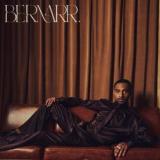
BERNARR, the latest album from Grammy Award-winning singer, songwriter, and vocal powerhouse Durand Bernarr, marks the next chapter following his 2026 Grammy Award for Best Progressive R&B Album for BLOOM. Named after his father, legendary sound engineer Bernarr Fields, the album honors legacy while capturing Durand in full command of his voice, his lineage, and his artistic evolution. Originally envisioned as a deluxe edition of BLOOM, the project evolved into a full-length album, blending Bernarr's signature R&B, soul, and gospel roots with vibrant influences from yacht rock, P-Funk, house, and Miami bass. The album features collaborations with Khalid, Big Sean, Sevyn Streeter, VIC MENSA, and James Fauntleroy, alongside production from Raphael Saadiq, Bryan-Michael Cox, and James Fauntleroy
Deluxe LP features 140g virgin vinyl; heavy-duty board jacket, artwork by Art Rosenbaum + DL. RIYL: Bob Dylan, John Prine, Townes Van Zandt, Ry Cooder, Michael Chapman, Michael Hurley, The Youngbloods & Bonnie “Prince” Billy. Jake Xerxes Fussell’s 4th album finds the acclaimed folksong interpreter, guitarist, and singer navigating fresh sonic and compositional landscapes on the most conceptually focused, breathtakingly rendered, and enigmatically poignant record of his wondrous catalog. Produced by James Elkington and featuring formidable players both familiar (Casey Toll, Libby Rodenbough) and new (Joe Westerlund, Bonnie “Prince” Billy), it includes Jake’s first original compositions; atmospheric arrangements with pedal steel, horns, and strings. One of the most striking and strangely moving moments on Jake Xerxes Fussell’s gorgeous Good and Green Again an album, his fourth and most recent, replete with such dazzling moments arrives at its very end, with the brief words to the final song “Washington.” “General Washington/Noblest of men/His house, his horse, his cherry tree, and him,” Fussell sings, after a hushed introductory passage in which his trademark percussively fingerpicked Telecaster converses lacily with James Elkington’s parlor piano. That’s the entire lyrical content of the song, which proceeds to float away on orchestral clouds of French horn, trumpet, and strings, until it simply stops, suddenly evaporating, vanishing with no fade or trace, no resolution to its sorrowful minor-key chord progression, just silence and stillness and stark presidential absence. It feels like the end of a film, or the cold departure of a ghost, and is unlike anything else Jake has recorded. In all his work Jake humanizes his material with his own profound curatorial and interpretive gifts, unmooring stories and melodies from their specific eras and origins and setting them adrift in our own waterways. The robust burr of his voice, which periodically melts and catches at a particularly tender turn of phrase, and the swung rhythmic undertow of exquisite, seemingly effortless guitar-playing here he plays more acoustic than ever before pull new valences of meaning from ostensibly antique songs and subjects. On Good and Green Again, Jake not only ventures beyond his established mastery of songcatching and songmaking into songwriting, but likewise navigates fresh sonic and compositional landscapes, going green with lusher, more atmospheric and ambitious arrangements. The result is the most conceptually focused, breathtakingly rendered, and enigmatically poignant record of his wondrous catalog. It’s also his most deliberately premeditated album, representing his fruitful return to a producer partnership after two self-produced projects, What in the Natural World (2017) and Out of Sight (2019) (William Tyler produced his friend’s self-titled 2015 debut.) This time James Elkington produced and played a panoply of instruments, bringing to Jake’s arcane song choices his own peerless sense of harmony and orchestration, balance and dramatic tension. The pair enlisted a group of formidable players including regular bandmembers Casey Toll (Mt. Moriah, Nathan Bowles) on upright bass, Libby Rodenbough (Mipso) on strings, and Nathan Golub on pedal steel. They were joined by welcome newcomers Joe Westerlund (Megafaun, Califone) on drums, Joseph Decosimo on fiddle, Anna Jacobson on brass, and veteran collaborator and avowed Fussell fan Bonnie “Prince” Billy, who contributes additional vocals. Album opener “Love Farewell” (featuring some beautiful singing by Bonnie “Prince” Billy), an elliptical tale of the folly of war, set to the world’s most heartbreaking goodbye march for a lover left behind. “Carriebelle” and “Breast of Glass” each similarly concerns, in its own way, romantic love and leavings. All three songs highlight Jacobson’s diaphanous, understated brass parts, tying them together in a true lover’s knot. “Rolling Mills Are Burning Down,” with its distant keening strings and capacious sense of space, observes and mourns the loss of work and community in the wake of elemental disaster. Nine-minute tour de force “The Golden Willow Tree,” the sole explicitly narrative song herein, is a hypnotic, minimalist rendering of a tragic maritime ballad about scuttling an enemy ship in exchange for wealth and glory and a captain’s inevitable betrayal. “Fussell is creating his own legacy within the long lineage of traditional folk musicians and storytellers that have come before him.” The New York Times // “So elegant … It’s relaxing in the way that pondering a Zen koan is relaxing, and sweet in the way that the wounded, honey-voiced blues of Mississippi John Hurt are sweet.” Pitchfork // “Music that resides at the seams of Appalachia and the cosmos.”
The wait is over, Return To The 37th Chamber is El Michels Affair's highly anticipated follow up to 2009's underground cult classic Enter the 37th Chamber. Churning out classic records since then for the likes of Lee Fields, The Arcs, The Shacks, and tons more, it is clear that EMA's signature sound is stronger & sharper than ever. This time, in addition to re-interpreting the Wu compositions for a live band, EMA pays homage to the production and sonic fog that makes a RZA beat so recognizable. Producer and bandleader Leon Michels recorded the album completely analog, sometimes hitting 6 generations of tape before it was ready for mixing, giving the Return to The 37th Chamber it's own hazy sound. Adding to the unique fidelity, the record is laced with psychedelic flourishes, John Carpenter' synths, heavy metal guitars, triumpha0nt horns, and traditional Chinese instruments that make up for the lack of the Wu's superlative vocals. From start to finish it's a dark trip that walks the line between RZA's timeless hip-hop aesthetic and the cinematic soul EMA has become known for. El Michels Affair tackles some classics like 4th Chamber and Wu Tang Aint Nuthin to Fuck Wit, as well as some deeper cuts like Ol Dirty Bastard's Snakes, Raekwon's Verbal Intercourse, and Shaolin Brew, Wu-Tang's contribution to the St. Ide's Hip Hop endorsement campaign from 1994. This time El Michels brings some of the Big Crown family along for the ride. Lee Fields handles vocal duties on Snakes and is joined by Shannon Wise of The Shacks for their version of Tearz, which pays as much homage to the Wendy Rene sample as it does to the Wu-Tang Clan. Lady Wray makes an appearance on the cover of Method Man's hit, All I Need, lending her vocal prowess to what gave the Wu one of their biggest hits of all time. Interspersed throughout the record are some original interludes that are like the rug that ties the room together,' giving Return To The 37th Chamber a cinematic narrative that makes it a proper El Michels Affair record and not just a collection of covers. From the music to the presentation, this album is a perfect example of what can only be achieved through diversity. The end result is as much a kaleidoscope of influences and multiculturalism as the city it was recorded in. El Michels Affair is once again, sounding out the city' that raised them, pulling elements of art and culture from across the country and around the globe to create an album truly unique in it's own right.
A quiet intensity permeates Chantal Michelle’s music, like a veiled flame. Even at its most spare and delicate, an undulating tension unsettles the ear through wavering microtonal interference and uncanny spatial juxtaposition. She takes seriously the mandate of the composer to foster new relationships between various types of sounds, bringing together disparate field recordings, instrumental stems, and the sounds of circuitry in unheard configurations. Resolution is elusive, in its place a sense of oblong cyclicality and prickly uncertainty. When the veil is pulled back, we find more depth, more complexity, and more mystery.
Unit of Heart, Michelle’s second album of 2026, presents two interrelated pieces that highlight diverging compositional modes. Here she brings in two key collaborators: Patrick Shiroishi, who contributes flutes and saxophones throughout, and poet Funto Omojola, whose words and voice bookend the title composition. Both compositions unfold gradually, but where the album’s a-side “Sudden Oceans” presents a minimal tonal palette focused entirely on the subtle grain of wind instruments, “Unit of Heart” proceeds linearly, moving through passages of synthesizer, environmental recordings, and full-cheeked wails of saxophone. Both encourage a state of focused listening as the scope of the music deepens and widens.
“Sudden Oceans” allows the listener to hover in rippling currents of air, breath overlapping breath in a shimmering patchwork. All flutes and saxophones on the piece are played by Shiroishi, which are molded by Michelle into a pattern that resembles the flow of tidal waters, surging and receding moment to moment as the tonal density increases. Expansive and recursive, it reflects both the restorative awe and eerie disquiet of encountering the sublime. The first and last sounds we hear are the gentle rush of unmediated breath as Shiroishi connects and disconnects from his flute.
Michelle’s skill at presenting the familiar as preternatural comes to the fore on “Unit of Heart, ” one of her most ambitious works. Omojola’s voice begins with a melody that could be a lullaby, but as it’s bounced around the stereo field it takes on a haunted quality. Their poem, reprinted on the LP’s inner sleeve, hints at a similar type of transformation: “I mean this is where our mouth turns saliva into spears only a throat can recognize. ” Pads of downy synthesizer billow and are subsumed by a discordant ringing. The climactic section features atonal electronics and field recordings, first of water and then the evening call of insects, processed in such a way to transform them into pulsating bursts of noise. What we think we know about the world, what is elemental, can change with even the slightest adjustment of the lens.
Wewantsounds is proud to present the first official release of a legendary 1977 concert capturing Don Cherry, Collin Walcott, and Leon Thomas in their only documented performance together. Recorded live on March 5, 1977, at Pease Auditorium in Ypsilanti, Michigan, the performance featured the three musicians playing an immersive hypnotic set, joined for part of the evening by the rest of Oregon. Long circulating among a few Don Cherry fans, the full concert is now available as a deluxe, remastered 2-LP gatefold set featuring Moki Cherry artwork and new liner notes by Jason Weiss—licensed by the Don Cherry Estate and producer James Quinlan.
Don Cherry’s huge influence has steadily grown over the years, as fans and new generations of listeners continue to uncover the vast breadth of his global musical vision. Sunrise captures Cherry during a particularly fertile late-1970s period, when the American jazz trumpeter blended global and Eastern spiritual concepts into his "Organic Music" philosophy, drawing deeply from Eastern and African traditions. Moving fluidly between trumpet, the West African doussn'gouni (a traditional hunter's harp from Mali), bamboo flutes, percussion, and vocals, Cherry creates a deeply resonant world music soundscape.
Recorded live on March 5, 1977, at Pease Auditorium in Ypsilanti, Michigan, the show took place just a month after Don Cherry participated in the recording of Collin Walcott's ECM album Grazing Dreams. With Walcott playing alongside Cherry and vocalist Leon Thomas, bringing his unmistakable yodel-style vocal approach—and joined for part of the night by the rest of Oregon (Ralph Towner, Paul McCandless and Glen Moore)—the performance stands as a stunning, hypnotic forerunner to the formation of CODONA. The newly remastered audio is so vivid and intimate that it feels as though you are sitting directly in the room with the musicians.
The release also serves as a vibrant homage to Don and Moki Cherry’s creative partnership, featuring a reproduction of Moki’s striking 1975 Mandala tapestry on the front cover.
The concert was produced by James Quinlan, a central pillar of the U.S. Jazz and World Music scene who worked as a sound engineer for Carla Bley, booked Fela Kuti’s major U.S. tour in the 1980s, and went on to direct the Creative Music Studio and found Miami’s Rhythm Foundation. In the album's liner notes, Quinlan reflects in conversation with writer Jason Weiss on the surprise magic of that night:
"Don brought Leon Thomas with him... as a guest, unannounced. It was not part of the advertisement or contract... I don't know of any other time that they recorded or performed together. So, that was completely unique... The audience had no idea what was coming... It was a sound that was just mesmerizing, almost like a mantra."
Licensed by the Don Cherry Estate and James Quinlan, Sunrise is available as a deluxe 2-LP gatefold set featuring new liner notes by Jason Weiss—an essential document in the rich, ever-evolving Don Cherry musical journey.
- 2026 Edition, gepresst auf apricotfarbenem Vinyl - Erweitertes Gatefold-Cover - Enthält ein 20-seitiges Booklet mit seltenen Fotos und Liner Notes von Lenny Kaye sowie Beiträgen von Nick Cave und Devendra Banhart. Karen Daltons Album ,In My Own Time" aus dem Jahr 1971 gilt als wahres Meisterwerk einer der geheimnisvollsten, rätselhaftesten und nachhaltig einflussreichsten Künstlerinnen der Musikgeschichte. Das neu erweiterte, 20-seitige LP-Booklet mit selten gezeigten Fotos, Liner Notes des Musikers und Autors Lenny Kaye sowie Beiträgen von Nick Cave und Devendra Banhart rundet das Paket ab. Die in Oklahoma aufgewachsene Karen Dalton (1937-1993) brachte eine Vielzahl von Einflüssen in ihr Werk ein. Wie Lenny Kaye in den Liner Notes schreibt, hört man den Jazz von Ella Fitzgerald und Billie Holiday, die Intensität von Nina Simone, den Appalachen-Gesang von Jean Ritchie sowie den R&B und Country, die auf ihrem Weg nach New York unweigerlich in ihre Musik einflossen. Ausgestattet mit einem Langhalsbanjo und einer 12-saitigen Gitarre hob sich Dalton durch ihren unverwechselbaren, lebensmüden Gesang von ihren Kollegen ab. In den frühen 60er Jahren wurde sie zu einer festen Größe in der Folk-Szene von Greenwich Village, wo sie traditionelles Material, Blues-Standards und die Songs ihrer Zeitgenossen interpretierte, darunter Tim Hardin, Fred Neil und Richard Tucker, den sie später heiratete. Bob Dylan war unterdessen sofort von ihrer Kunst begeistert. ,Meine Lieblingssängerin dort war Karen Dalton", erinnerte er sich in *Chronicles: Volume One* (Simon & Schuster, 2004). ,Karen hatte eine Stimme wie Billie Holiday und spielte Gitarre wie Jimmy Reed." Wer Dalton kannte, wusste, dass sie kein Interesse daran hatte, sich den Launen der Plattenindustrie zu beugen. Auf der Bühne interagierte sie kaum mit dem Publikum. Im Studio fühlte sie sich beim Aufnahmeprozess ebenso unwohl. Ihr Debütalbum von 1969, *It's So Hard to Tell Who's Going To Love You The Best*, das 2009 von Light in the Attic neu aufgelegt wurde, entstand heimlich, als Dalton dachte, sie würde nur Songs proben. Als Michael Lang, Mitveranstalter von Woodstock, Dalton ansprach, ob sie ein Folgealbum für sein neues Label ,Just Sunshine" aufnehmen wolle, war sie, gelinde gesagt, skeptisch. Das Album musste nach ihren eigenen Bedingungen und in ihrem eigenen Tempo entstehen. Daraus wurde ein sechsmonatiger Aufenthalt in den Bearsville Studios in Woodstock, New York. Produziert wurde das Album von dem Bassisten Harvey Brooks, der bereits auf ,It's So Hard to Tell Who's Going To Love You The Best" an Daltons Seite gespielt hatte. Brooks, der stolz darauf war, unkompliziert, zuverlässig und unterstützend zu sein, verstand Daltons Arbeitsweise, war aber auch bereit, sie sanft zu ermutigen und die Künstlerin dazu herauszufordern, ihre kreativen Grenzen zu erweitern. ,Ich habe versucht, ihr einen flexiblen Rahmen zu bieten", erzählte er Kaye. ,Ich habe die Entscheidungen ihr überlassen - das Tempo, das Feeling festzulegen." Sie war sehr zurückhaltend, und ich habe ihr alles vorgelegt; wenn sie mehr brauchte, habe ich ihr Optionen angeboten. Alle gingen einfühlsam auf sie ein. Sie war die Anführerin. Dalton, die selten ihre eigenen Kompositionen aufführte, wählte eine Reihe von Stücken zur Interpretation aus - von traditionellen Liedern wie ,Katie Cruel" und ,Same Old Man" bis hin zu Paul Butterfields ,In My Own Dream" und Richard Tuckers ,Are You Leaving For The Country". Außerdem erweiterte sie ihr übliches Repertoire und fügte R&B-Hits wie ,When a Man Loves a Woman" und ,How Sweet It Is" hinzu. Im Gegensatz zu ihrer vorherigen LP bot Daltons neue Aufnahme vollere, poporientiertere Arrangements, an denen eine ganze Reihe talentierter Studiomusiker mitwirkte. Auch wenn das Publikum der 70er Jahre vielleicht noch nicht bereit für Daltons Musik war, stand eine neue Generation kurz davor, ihr Werk zu entdecken. In den Jahrzehnten nach ihrem Tod nannten viele Künstler Karen Dalton als Einfluss, darunter Lucinda Williams, Joanna Newsom, Nick Cave, Angel Olsen, Devendra Banhart, Sharon Van Etten, Courtney Barnett und Adele. In dem kürzlich gefeierten Dokumentarfilm ,Karen Dalton: In My Own Time" sinniert Cave über Daltons einzigartige Anziehungskraft: ,Es wird eine Art Anspruch an den Zuhörer gestellt", erklärt er. Ob man es mag oder nicht, man muss in ihre Welt eintauchen. Und es ist eine Welt voller Verzweiflung. Peter Walker, der ebenfalls im Film zu sehen ist, führt diesen Gedanken weiter aus: ,Wenn sie in ihrer Musik ein bestimmtes Gefühl empfinden und es so rüberbringen kann, dass man dieses Gefühl auch spürt, dann ist das wirklich das Magischste, was man tun kann." Er fügt hinzu: ,Sie hatte eine tiefe, tiefgründige und liebevolle Seele - das hört man in ihrer Musik."