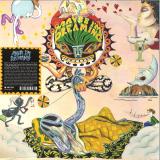
Prolapse wurden Anfang der 90er Jahre in Leicester gegründet, heute sind die Bandmitglieder über ganz Großbritannien und Skandinavien verstreut. Nach wie vor verfolgen sie ihren ganz eigenen Sound der stetigen Wiederholung, kombiniert mit verdrehten Melodien und vereinen dabei Einflüsse von Post-Punk über Krautrock bis hin zu Folk. Zu ihren bisherigen Veröffentlichungen gehören zahlreiche Singles sowie vier Alben bei unterschiedlichsten Labels, darunter Cherry Red und Radar. Mick Derrick und Linda Steelyard liefern sich intensive Gesangsduelle, kombiniert mit heftigen, dreifachen Gitarrenattacken und stampfenden Rhythmen. Das fünfte Prolapse-Album "I Wonder When They"re Going to Destroy Your Face" erscheint bei Tapete Records und stellt die ersten neuen Aufnahmen der Band seit ihrem letzten Album "Ghosts of Dead Aeroplanes" dar, das vor 26 Jahren veröffentlicht wurde. In mancher Hinsicht aber fühlt es sich an, als hätte es überhaupt keine Zäsur gegeben. Vom ersten ununterbrochenen Riff von "The Fall of Cashline" an machen Prolapse klar, dass sie wieder da sind - immer und immer wieder (und immer und immer wieder).
“Great Doubt” is the third full length LP by Danish composer Astrid Sonne. Throughout her acclaimed discography, Astrid Sonne has been carefully crafting different moods through electronic and acoustic instrumental endeavours. On “Great Doubt” this skill is refined, now with the distinct addition of the composer's own vocal in front. The tone of each track is unmistakably Sonne’s, structured around contrasts through an impeccable sense of timing. Lyrics on the album are sparse, merely highlighting different scenes or emotional states of being, leaving the music to fill in the blanks. Yet they also form a pattern of ambiguity, consolidated through the album title, searching for answers through looking at how and what you are asking, questions for the world, questions of love. The viola, a trusted companion since Astrid Sonne’s youth, appears effortlessly throughout the album, fully integrated into the sonic universe; through a pizzicato driven arrangement in the poignant track “Almost” or along with booms and claps in mutated cinematic stabs during “Give my all”, paraphrasing Mariah Carey's 1997 ballad. Yet the string section also gives way to explorations of woodwinds, counterbalancing the bowed movements with digital brass and airy flutes. Finally, beats and detuned piano are fresh additions to the soundscape, cementing how Sonne’s practice is always evolving into new territories. In fall 2022, Astrid Sonne relocated from Copenhagen with its peers of artists such as ML Buch, Erika de Casier and Smerz, to live in London, where musicians of the South-East London scene like Coby Sey, Lolina, Still House Plants and Mica Levi provide a new inspirational framework. “Great Doubt” bears witness to both of those geographical locations, yet finds itself in its own unique space, in many ways due to the presence of Sonne's voice throughout. A voice that has always been present in her work, but never fully explored as a solo instrument before now. Astrid Sonne elaborates on the wish to work more in depth with the voice: “I come from a tradition of choir singing where I’ve used my voice as a way of creating unity with other voices. I’ve disciplined my voice in a certain way and this album is an exploration of me trying to find my own voice as an instrument, as a communicator, as a new way of being honest.” Questions take up a central role throughout the album. The doubt is both a blessing and a curse, always lying in-between, acting as both what holds back and drives forward. A metamorphosis not going anywhere. The great doubt takes place in a space of courage, chances, love, loss, gifts and surprises. Genre: Electronic / Experimental
out of Stock
Last delivered 12 months ago available to reorder, subject to availability
Indonesian duo Kuntari make music that's so distinctive, they had to devise their own genre: primal-core. On Mutu Beton, multiinstrumentalist Tesla Manaf and percussionist Rio Abror dialog with both history and their tropical surroundings in Bandung, West Java's mountainous capital. Using the cornet and hulusi, a free reed instrument made from a bottle gourd and bamboo pipes, Manaf echoes the bellows of local elephants, orangutans and rhinos, grazing Abror's ancestral Indonesian rhythms with potent overdriven riffs and evocative microtonal chimes.
It's music that's profoundly atmospheric and simultaneously raw, recorded live to fully encapsulate the dynamic and deeply human interaction between the two seasoned players. There are elements of sludge metal, noise and post-hardcore, references to traditional folk music and jazz, and gestures towards sound art, 20th century minimalism and dark ambient, but what Kuntari do is completely idiosyncratic -- it's hardly surprising it needed a similarly unique categorization.
Manaf started Kuntari as a solo project, debuting in 2020 with Black Shirt Attracts More Feather and animating his nimble instrumental improvisations with bold electronic processes and booming synthetic drums. And by the time he recorded 2022's acclaimed Last Boy Picked, his approach had evolved significantly; prioritizing organic sounds, he played prepared cornet and piano, bringing in additional percussionists to help devise a ritualistic rhythm section. Abror was one of those performers, and ended up sticking around, playing on 2023's furious LARYNX/STRIDULA, the stylistic precursor for Mutu Beton. At this stage, the duo have racked up a litany of accolades and collaborated with a spectrum of like-minded artists, from noise deity Keiji Haino to fellow Indonesian free-thinker Rully Shabara, who's best known for his work with Senyawa and avant-garde supergroup Osmium. Mutu Beton plays like a lap of honor, showcasing their most kinetic and most feral recordings to date. Kuntari surpass their own high standards, folding history and geography in on itself and suggesting a trailblazing Indonesian cultural movement that's not restricted by highbrow Western conventions. It's not just automation and technology that drives progression, it's interaction and observation. And there's nothing more primal, or revolutionary, than that.
out of Stock
Last delivered 13 months ago available to reorder, subject to availability
Just a year after the last compilation stood out as one of the best of 2024, Pete Herbert is back with a another brilliant collection of poolside sounds that again explore leftfield Balearica. These are delightfully horizontal grooves that transport you to sunny climes and starry skies in an instant. His own reworks feature, including a version of Sidirum's blissful and astral trip 'Ex Plane', a more tropical and propulsive dub of Lulla's 'Love Comes Quickly' and a quietly epic ambient daydream rework of Bill Mango's 'Inflight Sample.' These are grown-up sounds for cathartic moments lost in your own thoughts.
DJ Feedback
Don Letts/BBC6:
"Good to go on my show!"
Phil Mison/Cantoma:
"Another great MFSP release . Very summery, full support."
Leo Mas/Amnesia:
"Great Stuff."
Sean Johnston/ALFOS:
"PH on fire once again."
Trepanado/Selvagem/Brazil:
"Makes me wanna set sails and just go."
Ruf Dug/Pikes:
"Yeah this ticks loads of my boxes. Mega work."
Bill Brewster/DJ History/Lowlife:
"Some nice cuts on here especially Marius, Fernando etc."
Marco Gallerani/Hell Yeah:
"Beautiful compilation overall."
Sally Rogers/A Man Called Adam:
"Loads of lovely tracks here."
Feel Fly/International Feel:
"Definitely the compilation of the summer! thank you for this fresh breath of summer!"
Max Essa/Jansen Jardin,Tokyo:
"A beautifully curated collection providing a sublime listening experience!"
out of Stock
Last delivered 10 months ago available to reorder, subject to availability
LP comes with 24 page 8.5x11 full color booklet. In the blurred and memorial hallways of bygone time, to remember is to wander between the rooms of our own experiences, to appear and disappear, like a play of overlapping shadows. In music set drifting through the architecture of his own memories, Moses Brown weaves a story that oscillates between the past and the present, like a mason turning over stones to reconstruct his childhood home in this beautiful and disquieting soundtrack to growing up. On Stone Upon Stone, Moses' first solo LP attributed to his given name after several releases under the brilliant and despondent "Peace de Resistance" moniker, he moves sidelong into the realm of soundtracks with this score to the construction of his childhood home in a story spanning 1993-2023. Laid out in lush and provocative minimalist instrumentals, the album unfolds a story about the planning, partial construction, and dissolution of a home in constant state of becoming through the lens of its only child, coming of age under flux. Influenced by the approach of friends and collaborators Straw Man Army's OST to Charles Darwin's Voyage of the Beagle, Stone Upon Stone was originally intended as a soundtrack to a novel of the same name by Wieslaw Mysliwski, an epic set in Poland about a family's construction of a mausoleum. Struck by the story's parallels with his own family's project, he got the idea to complete the work as a personal narrative. Created from layers of different mellotron voices then separated, re-amplified, and recorded as if they were a sitting chamber orchestra, the music eerily blurs the line between human and synthetic, giving way to something akin to a memory with it's blurriness of fact and fiction. In the same spirit of association, this record is certainly influenced by other minimalists working within the confines of "soundtrack", like Philip Glass' North Star and the film work of Michael Nyman. But Brown's soundtrack works within its own peculiar depth of field, living in the listener's imagination, thriving in its own sense of loneliness, aspiration, and confusion that only childhood can evoke. Listeners will feel the entropy of aging in Stone Upon Stone, like a memoir in cascading tones, that sets it apart from so much else in DIY music, and rewards with repeated listens. For Fans of Philip Glass, Kali Malone, Julius Eastman, Mica Levi, Roedelius.
Dabei sein ist alles ist 100 Prozent Oxo 86 pur. Wenn es eine Band schafft auch bei Frust und schlechten Zeiten aus der Seele zu sprechen und zeitgleich ein Lächeln ins Gesicht zaubert, dann die Bernauer mit ihrem bissig-verschmitzte Humor. Das 2022er-Album nun wieder auf Vinyl in neuen Farben erhältlich. "Dabei sein ist Alles!" ist schlichtweg ein Bernauer-Meisterstück geworden....wer hätte auch ernsthaft daran gezweifelt? Auch in konzertlosen Pandemiezeiten und nach über 24 Monaten Corona-Scheisse hat sich die Band ihren spritzigen Charme und wohl einmaliges Händchen für sofort zündende Lieder bewahrt, wenngleich auch an OXO86 diese Zeiten in ihren Texten nicht spurlos vorbeigegangen sind! Aber keine Sorge: Von der ersten Note bis zum letzten Akkord gibt es 100 Prozent OXO86 pur! Und wenn es eine Band schafft Dir auch bei Frust und schlechten Zeiten aus der Seele zu sprechen und Dir zeitgleich ein Lächeln ins Gesicht zaubert, während Deine Füsse unmerklich anfangen zu wippen, dann wohl die Bernauer, oder? Natürlich kommt auch der bissig-verschmitzte Humor mit hundsgemeinen Ohrwürmern im unvergleichlichen OXO-Stil nicht zu kurz und so gibts auf "Dabei sein ist Alles" eigentlich alles in den 13 neuen Songs, was die Band schon immer ausmachte..." 2025er LP-Nachpressung des noch aktuellen OXO-Albums - limitiert auf 333 x als Ultraclear with Pink & BlacK Splatter Vinyl!
DJ Support: Midland, Craig Richards, Vladimir Ivkovic, Benji B, Emerald, Cici, Darwin, Jossy Mitsu, I JORDAN, Daria Kolosova, Alienata, Carl Craig, Paula Tape, OK Williams, Hammer, Kassian
Kilig Unveils New Era with Air In The Dark / Back To Sofa Surfing
Elusive leftfield electronica producer Kilig emerges from the shadows to unveil a new era on Cross Country with Air In The Dark and Back To Sofa Surfing—two tracks that signal a matured, exploratory sound, balancing introspective ambience with subtle rhythmic propulsion.
In a celebration of London’s enduring spirit of community, experimentation, and unity - fabric resident Bobby. and FOLD’s own Voicedrone join forces to rework Air In The Dark. Bobby. crafts an epic, psilocybin-inspired reinterpretation; Voicedrone - a hard-hitting high BPM electro reinterpretation; and cult favourite RAMZi offering a warm, deep ambient cut.
Back To Sofa Surfing receives its own forward-facing treatment from Manami and Dufraine — two voices at the cutting edge of London’s bass and electro underground. Hailing from a shared studio space , the remixes are infused with raw dub, bass, acid, and electro infused energy.
Mutant is proud to present Academy Award®-winning composer Michael Giacchino’s latest installment of his Exotic Themes for the Silver Screen series - Featuring more iconic scores from Giacchino’s career that have been exclusively rearranged and re-recorded for this series in the retro lounge style of the 1950s.
Volume 2 spans the period of 2012 to 2022 and features not only his work with Marvel Studios (including their iconic Marvel Studios Fanfare, Spider-Man, Doctor Strange and more!) but also more career defining music for Disney • Pixar (Inside Out, Coco and Lightyear) as well as smaller, cult classics like John Carter, and Tomorrowland, more personal films such as Jojo Rabbit and The Book of Henry. He has taken these iconic themes and transformed them into soothing, beautiful 60’s lounge-inspired reworks.
Other highlights include ‘The Batman Suite’, taken from Matt Reeves' 2022 blockbuster The Batman, ‘Jyn Erso’s Theme’ from Rogue One: A Star Wars Story, as well as themes for War For The Planet Of The Apes, Jurassic World and two selections taken from his directorial debut Werewolf By Night
"We are thrilled to continue exploring Michael’s storied career with this incredible collection of some of his most beloved themes reworked for warm summer nights with a cocktail (or mocktail) in hand," says Mutant co-founder Spencer Hickman. "Michael is a rare composer who is comfortable with superheroes, horror, action, or intimate drama. He always manages to create incredibly beautiful earworms that have been further highlighted by these stripped-back downtempo versions of his award-winning themes.’
Featuring liner notes by Charles Phoenix, artwork by Luke Insect, and pressed on limited edition color vinyl (also available on CD)
“So much was rooted in the big orchestral sound, so it was really about scaling it back. The real trick is figuring out the little fun hooks and things you can add along the way. There were no rules; I was up for anything. It was a way to re-engage with the material and be creative in a new way.”
Exotic Themes for the Silver Screen – Volume 1 includes an array of reinterpreted pieces from Michael Giacchino’s career. Highlights include ‘Primordial Forest’ from the 1997 video game The Lost World: Jurassic Park, ‘Life and Death’ from Lost, the theme from Ratatouille, ‘Roar!’ from Cloverfield, ‘Enterprising Young Men’ from Star Trek (2009), ‘A Man, A Plan, A Code, Dubai’ from Mission: Impossible - Ghost Protocol, and a Super 8 suite.
Featuring package design by Luke Insect, and liner notes by Charles Phoenix.
Minor Slip ist das Felte-Debüt von Shaki Tavi, dem Hauptprojekt des aus Oklahoma stammenden und in LA lebenden DIY-Aktivisten Leon Manson und einer Gruppe von Freunden und Mitstreitern. Durch die schichtweisen Böen von verwaschenen Gitarren und übersteuerten Drums tauchen trügerisch schöne Pop-Hooks auf, die durch Mansons verwitterten, harmonischen Bariton und sein Händchen für einfallsreiche Strukturen beleuchtet werden. Als er die Ursprünge des Albums auf eine Phase des Burnouts und der Desillusionierung zurückführt, erinnert er sich: "Ich fing an, mich einfach mit ein paar minimalen Effekten und Geräten hinzusetzen, Riffs zu spielen und mich zu fragen, `Was, wenn es Spaß machen könnte? Was, wenn es für mich sein könnte?'" Das Ergebnis ist kraftvoll, verletzlich, eingängig und ungewöhnlich authentisch, eine Eruption kreativer Kraft des Kindes von Rockmusikern, dessen Leidenschaft und Antrieb als Außenseiter in einer Kleinstadt entstanden, und gestärkt inmitten der Künstlichkeit und der Selbstverteidigungsrealität von LA. Die Leadsingle "Breaker" kombiniert einen Midtempo-Breakbeat mit prismatischen Gitarren und entspanntem Gesang in einer Kreuzung von Genres, die Mansons Jahre in verschiedenen Bands und Szenen zu einer aufrichtigen, kompromisslosen Vision verdichtet. Auf "Foam" schweben Schädelrassel-Riffs und eine heulende Gitarrenhook über Big Beat-Drums und beschwören gleichermaßen arenagroße Erhabenheit und schrilles Schwanken herauf. Die Fülle und der Ehrgeiz in Mansons Arrangements entwickelten sich im Laufe von einigen Jahren des Schreibens, Überarbeitens, und Aufnehmens. Er erinnert sich: "Nach einigen überraschenden Rückmeldungen auf ein paar Bedroom-Demos holte ich meine Bandkollegen ins Studio, um ausgefeiltere Versionen zu machen; diese zweite Phase beinhaltete eine vertraute Art von existenziellem Abdriften und Zweifeln, aber die Lösung war die gleiche wie immer: es einfach halten, Sachen machen, die ich mag, und von dort aus gehen." Trotz seiner einzigartigen Vision ist Manson der Gemeinschaft sehr verbunden; er hat jahrelang bei der kreativen Non-Profit-Organisation Non Plus Ultra in LA gearbeitet, und obwohl er das enorme Ausmaß der Kunstszene an der Westküste anerkennt, merkt er an: "Das Gute an dieser Stadt ist, dass die kreative Energie unübertroffen ist, wenn man in der Lage ist, die Segel zu setzen und sie zu nutzen." Manson fasst die emotionale Investition in seine Arbeit wie folgt zusammen: "Diese Platte fühlte sich manchmal wie eine Last, manchmal wie eine Rettungsinsel an; es war ein Prozess, in dem man alles, was passiert, willkommen heißt, auch wenn es kleine Ausrutscher gibt."
Old-time and traditional music stay exciting for their contrasts. Exacting instrumentation honed through mentorships and late-night jams at fiddler's conventions tangles with a community-sourced inventiveness that influences variants and new sounds. Joseph Decosimo is a master of this genre for this very reason, blending deep technique with an openness and curiosity that keep his music crackling with life. A "marvelous fiddler" (No Depression) and banjo player who braids "exultation and veneration" (INDY Week) into his music, on his third solo album Fiery Gizzard Decosimo gathers a close-knit ensemble of friends from his musical career to infuse his interpretations of fiddle and banjo pieces with a contagious communal joy. As an artist working with traditional music from the South and Appalachia, Decosimo chooses songs based not only on historical significance and lineage but also his own sensory approach. For Fiery Gizzard, his ear was tuned to otherworldly tones and mystery, sourcing from field recordings such as Virginia fiddler Luther Davis' hypnotic version of "Shady Grove" while amping up the music's psychedelic potential. On the middle Tennessee banjo composition "Flowery Girls," a VHS of bluesman Abner Jay inspired Decosimo to rig up a pickup inside a fretless banjo and play it thr ough a tube amp to capture some of Jay's edge and funkiness. But to round out the sound and keep it kinetic meant galvanizing a genre-eschewing crew to jam out - and not in a "spaced-out drooly" kind of way, he laughs, but as a sort of "responsive conversation." Decosimo has always been a community-minded artist. He began playing as a seventh graderin Tennessee, fostering relationships with older players at jams and in homes, a learning mode natural to his inquisitive nature and desire for musical connection. A folklorist by intuition, he later became one by profession, studying with old-time legend Clyde Davenport, teaching in East Tennessee State University's renowned bluegrass program, and receiving his PhD at the University of North Carolina with a dissertation titled "Catching the `Wild Note': Listening, Learning, and Connoisseurship in Old-Time Music." In North Carolina, Decosimo kicked about in the verdant environment of Durham and Chapel Hill's folk and indie scenes, collaborating with artists including Alice Gerrard, Hiss Golden Messenger, and Jake Xerxes Fussell. This community has influenced his own music, including his "sublime and strangely heartening" (Bandcamp Daily) 2022 release While You Were Slumbering and Beehive Cathedral, Decosimo's 2024 "Appalachian mountain music treasury" (New Commute) trio album with Luke Richardson and Cleek Schrey for Dear Life Records. Continuing on this path, Fiery Gizzard is home base for a loose outfit of mostly Tarheel-based musicians from within and beyond traditional music. Inspired by a tour with fiddler Stephanie Coleman (Nora Brown), guitarist Jay Hammond, and synth builder and multi-instrumentalist Matthew O'Connell, Decosimo assembled studiomates based on close friendships and comfort. Coleman, O'Connell, and Hammond contribute to Fiery Gizzard, along with bassist and producer Andy Stack (Helado Negro, Wye Oak), horn player Kelly Pratt (Beirut, David Byrne), Mipso and Fust's Libby Rodenbough, Joseph O'Connell (Elephant Micah), andtrad/experimental artist Cleek Schrey. Decosimo's fiddle and banjo work is virtuosic, intricate and simple simultaneously, a testament to his many years of study. On some tracks, his playing or lovely, plain-hearted singing is the centerpiece, such as on his interpretations of Texan street preacher Washington Phillips' 1929 recording "I Had a Good Father and Mother" or the Eastern Kentucky fiddle barn-burner "Glory in the Meetinghouse," famously played by Luther Strong for Alan Lomax. But there's also a trusting open-door policy, like where Southern Appalachian tune "Ida Red" relaxes into Coleman's sweet, confident fiddling and Hammond's loping guitar. As a bandleader, Decosimo's confidence and enthusiasm for the music reveal the heart of traditional music and how it can come to life through community. Fiery Gizzard is Joseph Decosimo as a powerful champion of traditional music - a sponge who soaks up as much as he squeezes out, a responsive artist who makes his genre accessible, and a magnet who can bring musicians of all sorts into his orbit with his same passion.
‘Maybe I’m Dreaming’ is the latest collection selected by Mikey Young (Total Control, EddyCurrent Suppression Ring) and Keith Abrahamsson (Founder and Head of A&R at AnthologyRecordings), the mangled minds behind the beloved ‘Follow the Sun’, ‘Sad About the Times’,and ‘…Still Sad’ compilations. The twenty tracks of ‘Maybe I’m Dreaming’ make a conscious(and unconscious) detour from its predecessors, sourced entirely from private press releases,spanning new decades and production modes within homespun folk, soft rock and otherwise70s and 80s FM radio adjacent music. The magic of ‘Maybe I’m Dreaming’ is the untold story of the artists behind these songs; thosewho missed the big time, but whose song craft and unrequited care hit the right notes, bothhigh and low.
Where ‘Follow the Sun’ and ‘Sad About the Times’ introduced us to the fame chasing, ambitioncrashing crooners who missed their shot in the mainstream, ‘Maybe I’m Dreaming’ delvesdeeper into the isolated wilds - a private world where production quirks, late-night tape hiss andone-man studio dreams were not necessarily a choice but the hand that was dealt.
With the parameters set to ‘private press only’, Young and Abrahamsson follow a circuitous trailof invention and emotion, documenting a spirit that’s more homespun, sometimes lonelier andoften a little weirder. The guitars still strum, but the keyboards’ hum is more prevalent andprecious; wistful harmonies brush up against lo-fi drum machines; a bittersweet fog lingeringover even the brightest melodies.
As with their previous collaborations, Young and Abrahamsson weren’t interested inconstructing a museum or drafting a historical survey. ‘Maybe I’m Dreaming’ is a sentimentalmixtape, assembled late at night when the mind wanders and old memories blur with imaginedfutures, those within reach and those far too mysterious to ever encounter. Songs wereunearthed in personal collections, deep YouTube burrows, dilapidated web archives and thedim corners of Discogs, with many selections tied not only to intuition but to personalconnection. Some tracks arrived via friends - Kelley Stoltz, a frequent guide for Young, tipped him off toboth Peter Kraemer’s lost gem ‘Let the Light Slip’ and Awakening’s revelatory closer - addingan unseen but deeply felt thread of camaraderie to the compilation.
The journey takes in a wide, strange sweep: The Watson Brothers Band’s ‘Just Whistle’ opensthe collection with a sigh and a shrug, a song that feels like it’s been waiting for decades to beheard again. Jim Huxley’s ‘Tessa on a Magazine’, rediscovered after a long and winding searchby Young, shimmers with a distinctly Australian melancholia. The heartbreak of Rick Penta’s‘My Story Changes’ and Twice As Nice’s delicate ‘Thoughts of You’ float easily alongside themore buoyant, radio-dream sheen of Barracuda’s ‘Baby I Love You’ and MAK’s sunshinedappled ‘That’s Life’.
Widening the aperture to the late 1970s and early 1980s allows for a deeper exploration intoevolving production techniques and musical technologies. The Squad’s ‘D.L.M.H.I.M.A.’ andChristoph Spendel Group’s ‘Forever’ crackle with the kind of bedroom synth warmth that couldonly come from the analogue age, while the soulful, yearning undercurrent of Awakening’s‘Gotta Do Somethin / Might As Well Cultivate’ caps the collection with a call for action - ormaybe just acceptance - in an accidental Brian Eno ‘Here Come the Warm Jets’ parroting.
While ‘Maybe I’m Dreaming’ moves away from the ‘sad man with guitar’ archetype that hoveredover its predecessors, it remains tethered to a familiar emotional gravity - a balance of longingand lightness that defines this corner of the musical universe. Each track shuffles gentlybetween resignation and hope, sadness and serenity, as if the artists themselves were chasinga dream just beyond reach, recording not for fame but for the simple act of getting it, thatprimal, creative itch, out into the world.
Available on CD and 2LP, featuring the third eye-opening artwork of Dang Wayne Olsen. Thedouble LP set arrives in an outrageous double-wide spine jacket with printed inners and adream journal entry by Pacific Northwest artifactual authority Josh Lewellen.
out of Stock
Last delivered 14 months ago available to reorder, subject to availability
The follow up the successful ‘Gary Crowley’s Lost 80s’ released in 2019
“I count myself incredibly lucky when I think back to my 1980’s. A lot of those bands and artists that
resonated with me during that time are featured on this, our sequel to our first Lost 80s collection, which we
have inspiringly titled “GC Lost 80s Two”!
I must be honest and say as soon as I delivered the track listing for the first compilation, I already had a
selection in mind for a sequel (if ever I was asked by those cool folks at Demon). Thankfully, they asked...and
this is it.” Gary Crowley
21 tracks compiled and themed by Gary Crowley side-by-side. Many of these tracks are rare and hard to find,
the better-known artists appearing represented by some of their lesser-known (‘lost’) tracks.
Presented on 2 x 180g Clear Heavyweight vinyl, includes an introduction and track-by-track notes by Gary
Crowley, plus memories of the era from Mick Talbot (The Style Council) and more.
“Expect a selection of not only the bigger names with some of their ‘lost’ gems, but also a raft of lesserknown artists. Many of the latter came nowhere near the mainstream but most certainly (IMHO) deserve
another chance to shine under the spotlight. It was such a diverse and eclectic time for music, hopefully this
box set mirrors that.” Gary Crowley
b a2. Working Week – Venceremos (We Will Win) 7” version
h b2. Working Week – Venceremos (We Will Win) 7” version
r c6. World’s Famous Supreme Team – Hey! DJ 7” version
[s] d1. General Public - Tenderness [Special Dance Mix]
[t] d2. Colourbox featuring Lorita Grahame– Baby I Love You So [12” Version]
[12” Remix]
out of Stock
Last delivered 14 months ago available to reorder, subject to availability
John Carroll Kirby brings his signature sound tofilm scoring with the official soundtrack album forfeature film ‘The Luckiest Man in America’, whichpremiered at the Toronto Film Festival andreceived a wide theatrical release.
John Carroll Kirby’s background is steeped in jazz,but his signature sound blends genres and styles.He has collaborated with artists ranging fromsuperstars Solange, Frank Ocean, Harry Stylesand Steve Lacy (earning him a GRAMMY nod forthe smash hit ‘Bad Habit’) to beloved indiemusicians like Connan Mockasin, Yves Tumor,Eddie Chacon and Liv.e.
John Carroll Kirby has released several recordswith Stones Throw, most recently ‘Blowout’ in2023, which Pitchfork called “endlessly vibey… hismost energetic and immediately enjoyable releaseyet.”
His records have received previous support fromPitchfork, The FADER, LA Times, The Guardian,BBC Radio 1, BBC 6 Music, MOJO, Clash andVICE, among many others.
Kirby has toured extensively across NorthAmerica, Europe, Australia / NZ and Asia, and ison tour throughout Summer 2025 with Khruangbinin the US.
For fans of Duval Timothy, Sam Gendel, AlabasterdePlume
118 pages * no ads * Pure Prince Content! - new High Quality paper version. (Originally printed in 2018)
Wax Poetics Issue 67 contains interviews and write-ups on a slew of Prince's albums, including 1978's For You, 1986's Parade, 1987's Sign "O" the Times, 1988's Lovesexy, 1991's Diamonds and Pearls, and 1995's The Gold Experience—with interviews from engineer Chris Moon, manager Owen Husney, engineer Susan Rogers, producer/engineer David Z, poet Ingrid Chavez, tour manager Alan Leeds, dancer Cat Glover, saxophonist Eric Leeds, guitarist and bandleader Levi Seacer Jr., engineer Michael Koppelman, trombonist Michael B. Nelson, and keyboardist Tommy Barbarella.
Issue 67 also includes standalone interviews with Jill Jones, Andre Cymone, and members of the Revolution: Doctor Fink, Bobby Z., Brown Mark, and Wendy & Lisa.
'Maybe I'm Dreaming' ist die neueste Sammlung von Mikey Young (Total Control, Eddy Current Suppression Ring) und Keith Abrahamsson (Gründer und Leiter A&R bei Anthology Recordings) - den Köpfen hinter den beliebten Kompilationen 'Follow the Sun', 'Sad About the Times' und '...Still Sad'. Die zwanzig Tracks von 'Maybe I'm Dreaming' weichen von ihren Vorgängern ab. Sie stammen vollständig aus privaten Pressungen und umspannen neue Jahrzehnte und Produktionsmodi innerhalb der Genres Homepunk-Folk, Softrock und sonstiger FM-Radio-Musik der 70er und 80er Jahre. Die Magie von 'Maybe I'm Dreaming' liegt in den unerzählten Geschichten der Künstler:innen, die hinter diesen Liedern stehen - diejenigen, die den großen Durchbruch verpasst haben, deren Songhandwerk und unerwiderte Sorgfalt aber die richtigen Töne treffen.
'Maybe I'm Dreaming' taucht tief in die isolierte Wildnis ein - eine private Welt, in der Produktionsmacken, nächtliches Bandrauschen und Ein-Mann-Studio-Träume keine Wahl waren, sondern das ausgeteilte Blatt.
Die Songs wurden in persönlichen Sammlungen, in den Tiefen von YouTube, in verfallenen Webarchiven und in den düsteren Ecken von Discogs ausgegraben. Die Auswahl vieler Stücke basiert dabei nicht nur auf Intuition, sondern auch auf persönlichen Verbindungen. Einige Tracks wurden über Freunde entdeckt und fügen der Zusammenstellung einen unsichtbaren, aber tief empfundenen Faden der Kameradschaft hinzu.
Zwar entfernt sich 'Maybe I'm Dreaming' vom Archetyp des „traurigen Mannes mit Gitarre“, der über den Vorgängern schwebte, aber die vertraute emotionale Schwere bleibt erhalten - eine Balance aus Sehnsucht und Leichtigkeit, die diese Ecke des musikalischen Universums definiert. Jeder Track schwankt sanft zwischen Resignation und Hoffnung, Traurigkeit und Gelassenheit, als würden die Künstler selbst einem unerreichbaren Traum hinterherjagen und die Aufnahmen nicht wegen des Ruhmes, sondern aus dem einfachen Bedürfnis heraus machen, diesen ursprünglichen, kreativen Drang in die Welt hinauszutragen.
'Maybe I'm Dreaming' ist eine Einladung, noch ein wenig länger mit halb geschlossenen Augen im Grenzbereich zwischen Erinnerung und Vorstellung zu schweben. Vielleicht träumst du. Vielleicht bist du wach. Vielleicht spielt es keine Rolle.
- 2LP: (Das Doppel-LP-Set mit dem Artwork von Dang Wayne Olsen wird in einer breiten Kartontasche mit bedruckten Innenhüllen geliefert. Zudem enthält es einen Traumtagebucheintrag von Josh Lewellen, dem Experten für Artefakte aus dem pazifischen Nordwesten.)
Prometheus is the 2012 science fiction horror film directed by Ridley Scott, written by Jon Spaihts and Damon Lindelof and starring Noomi Rapace, Michael Fassbender, Guy Pearce, Idris Elba, Logan Marshall-Green and Charlize Theron. It is set in the late 21st century and centers on the crew of the spaceship Prometheus as it follows a star map discovered among the artifacts of several ancient Earth cultures. Seeking the origins of humanity, the crew arrives on a distant world and discovers a threat that could cause the extinction of the human species.
Marc Streitenfeld is a German composer. He has frequently collaborated with director Ridley Scott. Streitenfeld has composed the music for many high-profile Hollywood features as well as critically acclaimed independent films, including American Gangster, Body of Lies, The Grey, Poltergeist and All I See Is You.
Prometheus became the fifth collaboration between the composer and the director. The score was recorded over one week with a 90-piece orchestra at Abbey Road Studios. Streitenfeld began coming up with ideas for the score after reading the script prior to the commencement of filming. To create an “unsettling” sound, he provided the orchestra with reversed music sheets to have them play segments of the score backwards, before then digitally reversing it. The track “Friend from the Past” reprises Jerry Goldsmith’s original main title from the Alien soundtrack.
The discovery of Doris Dennison's score represents a genuine musicological breakthrough—what once would have been "a tree falling in the woods" thirty years ago now holds the potential to render "a thunderous clap in our minds." While researching Anna Halprin's lesser-known collaborators, scholar Tom Welsh uncovered the archives of AA Leath, one of Halprin's principal dancers. Buried within these materials was Dennison's handwritten score for Earth Interval, dated May 1956. Born in Saskatchewan, Canada, in 1908, and raised near Seattle, Dennison (1908-2009) encountered John Cage while teaching Dalcroze eurythmics at the Cornish College of the Arts. She joined Cage's earliest percussion quartet—alongside Margaret Jansen, the composer and his wife Xenia—in the group widely regarded as having performed the first complete concert of percussion music in the United States. This historic December 1938 concert was followed by tours and the landmark May 1941 performance at the California Club, comprising Cage and Lou Harrison's Double Music, the premiere of Cage's Third Construction, and Harrison's 13th Simfony.
As Bradford Bailey observes in his extensive liner notes, Earth Interval demonstrates "an extraordinary balance of elements that imbues the piece with a sense of clarity, directness, and constraint that is both distinct and ahead of its time." The work's most remarkable innovation lies in its approach to extended techniques, particularly Dennison's notation for the central movement: "In 2nd movement, 1st player lowers + raises a gong into a tub of water while beating." This technique, absorbed from Cage's experimental vocabulary, generates what Bailey describes as "fields of acoustic abstraction that bend and warp time through sustained resonances, beat, and space." The temporal sophistication of these manipulations anticipated Karlheinz Stockhausen's Mikrophonie I (1964) and Annea Lockwood's water-based sound investigations by over a decade. After joining Mills College as dance accompanist, Dennison maintained crucial connections to the Bay Area's experimental scene, collaborating with figures like Merce Cunningham and programming Cage's music throughout the 1950s.
Comprising three movements—Land Form, Air Tide, and Earth Play—Earth Interval is scored for recorder, drums, gongs, maracas, muted gongs, and bowl gongs. In total, the piece is just under eight minutes: "a fleeting glimmer of moment in time, a life spent at the cutting edge, and a singular creative vision that packs a powerful punch." When viewed in historical context, placed in contrast to roughly contemporaneous avant-garde percussion works by Cage, Harrison, Louis Thomas Hardin (Moondog), and Harry Partch, or important precursors like Edgard Varèse's Ionisation (1931) and Henry Cowell's Ostinato Pianissimo (1934), it's clear that Dennison was following her own path. Earth Interval is not derivative. It is a precursor to what was yet to come, alluding to developments of avant-garde and experimental music that wouldn't begin to appear on the cultural landscape until the 1970s and '80s, with the emergence of Post-Minimalism and more idiosyncratic artists and ensembles like Midori Takada, Ros Bandt, Peter Giger, Frank Perry, Christopher Tree, Michael Ranta, Gamelan Son of Lion, and Niagara.
This recording by Chicago's Third Coast Percussion, captured in March 2022, represents the first complete documentation of this pioneering work. The ensemble's interpretation reveals the piece's remarkable contemporaneity while maintaining its historical specificity. Where Cage, Harrison, and Partch employed "self-consciously off-kilter polyrhythms," Dennison's rhythmic sensibility anticipates minimalist developments by nearly a decade, yet integrates "forceful rests, as well as sharp shifts in sonic character, tempo, and meter, that break the momentum and breathe a sense of life into the piece's structure." This positions her work closer to Post-Minimalism decades before its emergence. The architectural approach demonstrates Dennison's understanding that "the composer almost entirely disappears" in favor of phenomenological listening experience, creating what might be called an egoless music that places its realities and meaning entirely in the ear of the beholder. The present recording, realized by Chicago's distinguished Third Coast Percussion ensemble, represents a significant achievement in experimental music scholarship and performance practice. As specialists in the Cage tradition and contemporary percussion repertoire, Third Coast Percussion approached Earth Interval with the historical sensitivity and technical precision required to illuminate Dennison's subtle compositional innovations. The March 2022 recording sessions, engineered by Colin Campbell, capture both the work's intimate chamber music qualities and its bold exploration of extended techniques. The ensemble's interpretation reveals the piece's remarkable contemporaneity—its ability to speak directly to current musical concerns while maintaining its historical specificity.
This recording serves multiple scholarly functions: it provides the first complete documentation of Dennison's compositional voice, offers insight into the broader network of experimental music practitioners surrounding Cage and Harrison, and demonstrates the sophisticated level of compositional thinking that was occurring within the Bay Area's dance-music collaborations of the 1950s. The work's emphasis on phenomenological listening—what might be called an "egoless" approach to musical experience—places it within a lineage of American experimental music that prioritizes perceptual process over compositional personality. The work's original obscurity—limited to AA Leath's performances at venues like the 1957 Pacific Coast Arts Festival at Reed College—paradoxically allowed it to remain "entirely on its own terms," free from the constraints of historical categorization. Drawing on Jacques Derrida's Archive Fever, the argument emerges that "the archive can acknowledge, celebrate, and resurrect" overlooked voices, transforming our understanding of experimental music history. The present Blume edition, featuring Third Coast Percussion's authoritative interpretation, includes a lavishly illustrated 16-page booklet designed by Bruno Stucchi / dinamomilano, containing complete scholarly apparatus, historical photographs, and detailed production notes. This recording enables "cross-temporal intersectionality," allowing Dennison to "belong to a newly formed and more dynamic understanding of the present and past," demonstrating how forgotten voices can reshape entire historical narratives when given proper scholarly attention and performance advocacy.
The Making Of Five Leaves Left tells the story of how Nick Drake’s debut album ‘Five Leaves Left’ came to be released in 1969. This Nick Drake Estate authorised 4LP edition comprises over 30 previously unheard outtakes from the sessions, compiled across three discs. The final disc to complete the package is the original Joe Boyd produced album. The whole set has been mastered by John Wood. Accompanied by a 60 page book printed on special textured paper stock, written by Neil Storey in collaboration with Richard Morton-Jack, complete with full track recording details, charts and recording history. This Nick Drake Estate authorised 4CD edition comprises over 30 previously unheard outtakes from the sessions, compiled across three discs. The final disc to complete the package is the original Joe Boyd produced album. The whole set has been mastered by John Wood.
Accompanied by a 60 page book printed on special textured paper stock, written by Neil Storey in collaboration with Richard Morton-Jack, complete with full track recording details, charts and recording history.
Compiled by Philip King
“And then came the rise of synth pop : blokes with dodgy haircuts hunched over keyboard-operated
machines stuffed with wires and do-it-yourself tone oscillators making sounds like a brood of geese
passing gas in a wind tunnel. Whoopee! This is the way the ‘70s ended : not with a blood-curdling bang
bang but with a cheap, synthesized, emasculating whimper.”
NICK KENT, NME.
All The Young Droids: Junkshop Synth Pop 1978-1985 is a new compilation that charts the
underbelly of the epoch-defining sound of the synthesiser in 80s popular music. Compiled by Philip
King (previously seen compiling All The Young Droogs, Glitterbest and Boobs - The Junkshop
Glam Discotheque), the music here connects the dots between DIY synth enthusiasts grappling with
new, cheap synthesisers at the tail-end of punk and wannabe, jobbing songwriters enthral to the new
music pioneered by Gary Numan, Depeche Mode and Daniel Miller’s Mute Records. Featuring rare
tracks of auto-didactic progressive pop music, proto-techno punk, shoot-for-the-stars-land-in-the-gutter
chart flops and heralded, underground synth classics, School Daze paints a picture of beautiful failure.
Complete with extensive sleeve notes written by King and never before seen imagery, all 24 tracks
were remastered by RPM in-house engineer Simon Murphy, many from vinyl copies due to lost master
tapes. The story told on All The Young Droids is one of the dawning opportunity presented by both the
emergence to the market of cheaper analog synthesisers and the distribution networks plus indie labels
that exploded with the advent of punk music in 1976. While the music that sprouted out all over the
globe in the wake of these factors was decried as fake, plastic, a refutation of punk’s guitar-led
revolution, it’s telling that much of the music on All The Young Droids.. was created in bedrooms,
ramshackle studios and home-made set ups with often borrowed equipment. In the era of record labels
jumping to capitalise on the success of The Sex Pistols, The Clash (both on major labels, of course)
these artists struggled to stand out from a new gold-rush with next to no budget or PR team. With radio
and labels desperate for the new Yazoo, what resulted was a testament to necessity being the mother
of invention.
At the time, the synthesiser was the music of the future, a shiny new machine that could paint like an
orchestra with a single finger and a 4-track. In the hands of Manchester avant-pranksters Gerry & The
Holograms it’s a pulsing, sardonic weapon.. the only instrument on the Messthetics classic lampooning
of New Wave fashion. In Hamburg, a 16 year old Andreas Dorau used it to write and record (with his
female classmates on vocals) a global smash in Fred Vom Jupiter (later licensed to Mute Records).
The hard-to-find English version (Fred From Jupiter, natch) is included here. Many artists with alreadystoried careers caught the bug and recorded synthesiser-fuelled peons to space, computers, the future
and, of course, love-interests. Harry Kakoulli, late of Squeeze, recorded a solo album in 1979 that
included the incredible power-synth-pop smash-that-never-smashed I’m On A Rocket. Similarly, Ian
North of Neo and American Power Pop stalwarts Milk ’n’ Cookies bought a Korg MS20 and used a
tape machine to record We’re Not Lonely, an absolute lost-classic of minimal synth pop. We’re Not
Lonely also features on the Junkshop Synth Pop sampler 7” twinned with John Howard unreleased
track You Will See, released April 12th 2025.
There are plenty of compilation debuts in evidence. Sole Sister were a mysterious trio who were
featured on the Scaling Triangles compilation of female-fronted, queer-adjacent post-punk /
underground music that also featured The Petticoats. Selwin Image were from San Francisco and
featured members of the recently defunct power pop/punk group The Pushups. Their stupidly catchy
The Unknown fizzes with New Wave energy - think XTC to Sparks but remains unreleased until now.
Dream Unit’s A Drop In The Ocean is an early synth wave cut, positively teaming with Joy Division
instrumentation, previously only released on a long-forgotten and super rare, self-released EP.
Incandescent Luminaire’s Famous Names belies an archetypal struggle of a small-town trying to
make it in a cruel industry but is a thrilling New Romantic-Synth Wave cross over with a OMD
gloominess that’s a joy to hear. Feminist Minimal Wave track I Am A Time Bomb by performance artist
Peta Lilly and Michael Chance is a revelation destined for new found cult status. It was released on 7”
and lost until now.
The flipside to the subterranean, never-made-it synth pop mentioned above are the ambitious, even
fruity attempts at success that have a perennial elegance to their confidence. New Jersey-ite Billy
London (real name Ed Barth) tried to cash in on the synth boom with Woman, released by a major
label, a lurching new wave track built on the Louie Louie rhythm and a wonderfully camp Lou Reedstyle sleazy vocal before exploding in the synthesised chorus. The song bombed but with a chorus like
this, you have to wonder why? Ex-Glitter Band member John Springate’s My Life is truly epic, with
doomed chord progressions and massive sounding drums turning into at least 3 different songs in the
course of the track. Before you wonder what’s going on the song resolves with a glorious return to the
main refrain.
The dry-ice-dressed dance floor is well catered for too. Design’s Premonition and Vision’s Lucifer’s
Friend are stone-cold minimal synth bangers, well loved but given a new lease of life here. The
Warlord’s The Ultimate Warlord was released in 1978, a homespun proto Hi NRG banger that was
later re-recorded by The Immortals in Canada who had a club hit with it. One-man- band Disco
Volante’s No Motion was re-issued by Synth wave label Medical in 2012 but makes its first vinyl
compilation appearance here. Close your eyes and you can imagine what Lawrence of Felt would have
sounded like with some cheap Korgs a little earlier in his career. Gibraltar-based trio The Microbes
imagined a computer programming people to dance - how prescient - and ended up with a propulsive,
robo-funk track with splendid rubbery bass playing over a tectonic drum machine. Previously picked up
by Belgian label Stroom TV, Dee Jay Bert & Eagle’s heavily Euro-accented I Am Your Master
demands the listener to “come to paradise!” In a frankly terrifying manner.
All The Young Droids is the first compilation to peel away from the narrative that dour, Minimal Synth
and Cold Wave were the only musical children of the first rush of synth pop. Philip King and School
Daze Records describe a much more complicated world: along with the austere, Brutalist children of
Daniel Miller (who produced Alan Burnham’s Bowie-Low-influenced Science Fiction here) was a
plethora of desperate cash-ins, accidental mainstream hits, ambitious pop dramas and major label
punts that went nowhere. Crucially, the compilation blurs the line between junk and treasure. What if the
two things are interchangeable. What if it’s all science fiction?
out of Stock
Last delivered 14 months ago available to reorder, subject to availability
DJ Support: Rossi., Chris Stussy, Marco Corola, Joseph Capriati, Michael Bibi
Jansons makes his debut on HMGRWN with "Yeah Yeah Yeah", a stripped-back, groove-heavy roller with a captivating vocal hook... A peak-time track that's been a huge play for ROSSI. in recent months... The track is already gaining huge support in the run up to the release, with artists such as Chris Stussy, Marco Carola, Joseph Capriati, Michael Bibi, Franky Rizardo and many more...
out of Stock
Last delivered 73 days ago available to reorder, subject to availability
Nachdem sie auf dem SXSW, New Colossus und Spot Festival für Furore gesorgt haben, veröffentlicht das Berliner Indie-Pop-Trio Matching Outfits ihr erstes Album bei Bar/None Records in Zusammenarbeit mit Dreams of Field Recordings erscheint. Auf "Ditch Me" erzählt die schwedische Frontfrau Linnea Mårtensson mit einer Mischung aus trockenem Humor und roher Verletzlichkeit von dem Jahr nach einer Trennung. Vom Schock, der Trauer und der Wut bis hin zur grimmigen Akzeptanz, wieder in den Dating-Pool zu springen, bleibt kein Gefühl unausgelebt, kein Detail unkommentiert. Die Bandmitglieder Rachel Glassberg und Leah Corper passen sich dem Wirbelwind der Emotionen auf Schritt und Tritt an und wechseln blitzschnell von mäandernden Melodien zu kontrolliertem Chaos, während die reduzierte Produktion von Chad Matheny (Emperor X) die Texte in den Mittelpunkt stellt. Was passiert in diesem Jahr? Die Zeit vergeht, die Vogelkirsche blüht, Geburtstage kommen und gehen und die Alltäglichkeit des Lebens geht weiter - nur mit einem riesigen Loch in der Mitte, das niemand sonst zu bemerken scheint. Richtet man den mikroskopischen Fokus auf diese Leere, malt sie in Pastellfarben, fügt einen Hauch von Velvet Underground und international akzentuierte dreistimmige Harmonien hinzu, dann erhält man so etwas wie "Ditch Me". Die Geschichte von Matching Outfits beginnt auf einem Bauernhof außerhalb von Mjöbäck, Schweden, wo Linnea - Saxophonistin einer Marschkapelle, Chorsängerin und autodidaktische Pianistin - die Musik von The Moldy Peaches und Belle and Sebastian entdeckte und begann, eigene Songs zu schreiben. Nachdem sie nach Berlin gezogen war, ging sie zu einer Open-Mic-Nacht und traf dort Rachel, eine amerikanische Kollegin, die sich bereit erklärte, Schlagzeug auf ihrem Song zu spielen, in dem es darum ging, in einer Karaoke-Bar abgewimmelt zu werden. Leah, eine Bassistin und geheimnisvolle Frau aus Großbritannien, vervollständigte das Trio und Matching Outfits war geboren. Nachdem sie ihr erstes Tape "Band Made Out Of Sand" auf dem Berliner Kassettenlabel Kitchen Leg veröffentlicht hatten, tourte die Band durch Deutschland und Skandinavien, wurde aber auch vom Kult-Radiosender WFMU aus New Jersey eingeladen, ein Syd-Barrett-Cover für eine Fundraising-Compilation aufzunehmen. Matching Outfits tragen keine passenden Outfits, außer wenn sie es tun.
Teddy Abrams, the Grammy Award winning conductor, composer, and multi-instrumentalist deemed by the New York Times as a “Maestro of the People,” and named Musical America’s 2022 Conductor of the Year, announces Preludes, an album of solo piano works composed and performed by Abrams and produced by Gabriel Kahane and Casey Foubert, via New Amsterdam Records.
Preludes is a contemplative, personal, and playful set of simple solo piano pieces whose recorded sonic identities were developed in collaboration with Gabriel Kahane and Casey Foubert. Kahane and Foubert “identified the personality of each Prelude and found a sound world for every track to match the intrinsic characteristics of the individual works.” The 16 pieces that make up Preludes take inspiration from the canon of classical piano works such as Bach’s Inventions and Bartok’s Mikrokosmos, yet they are imbued with Abrams’ immaculate compositional language and a depth in production uncommon to “classical” works.
Coming on the tail end of Abram’s Grammy Award Winning Piano Concerto (2023), Abrams explains: “After the crazy, frenetic, joyful energy of my Piano Concerto, I wanted to create a piano work that explored a completely different energy and soundscape. While the Piano Concerto is overtly populist, referencing American genres like jazz, funk, and Gospel music, the Preludes are meant to be introspective, intimate, and simple enough for pianists of many skill levels to play in both performance and home settings.
Grinderman entstand 2005, als Nick Cave Material für das Album „Abattoir Blues/The Lyre of Orpheus“
von Nick Cave & The Bad Seeds schrieb. Gemeinsam mit Martyn Casey am Bass, Warren Ellis an Violine
und Gitarre und Jim Sclavunos am Schlagzeug erarbeitete die Band gemeinsam Songs. 2006 ging sie in
ein Londoner Studio und begann eine Marathon-Session mit Songwriting und Demoaufnahmen. Mit dem
Ziel, den raueren, ursprünglicheren Sound von Caves gefeiertem Post-Punk-Projekt „The Birthday Party“ nachzubilden, wichen die Texte und die Musik von Grinderman deutlich von Nick Caves früheren Arbeiten
mit The Bad Seeds ab.
Im darauffolgenden April nahmen sie die besten dieser neuen Songs auf und nahmen mit Hilfe ihres langjährigen Freundes und Produzenten Nick Launay ein Album auf. Ihr am 5. März 2007 veröffentlichtes Debü-
talbum „Grinderman“ mit elf Songs wurde von der Kritik hoch gelobt und enthält die Singles „No Pussy
Blues“ und „Get It On“. Das Quartett kam 2009 wieder zusammen, um „Grinderman 2“ aufzunehmen, das
2010 erschien. Im Dezember 2011 gab Cave die Auflösung der Band auf einem Musikfestival in Australien
bekannt.
Das „unglaublich aufregende Debütalbum“ (Observer Music Monthly) ist auf schwarzem Öko-Vinyl und im
CD-Digisleeve-Format erhältlich
out of Stock
Last delivered 14 months ago available to reorder, subject to availability
Leng Records proudly presents Everything You’re About to Hear Is True: Volume 1, a compilation carefully curated by Rotation Soundsystem. Brought together by Rotation founders Dean Meredith and Ben Shenton, alongside the Wrekin Havoc trio of Rob J, Stuart Robinson, and Rich Hall, this debut volume captures the collective’s shared vision – shaped by decades of crate-digging.
Founded in 2013, Rotation has grown from a modest gathering in Staffordshire into a thriving community of like-minded music lovers, attracting heads and partygoers from across the UK – and well beyond. What began as an intimate affair has evolved into a full-scale, three-day celebration, now held in a grand yurt and powered by a bespoke six-way sound system. The rig features four Klipschorns, two JBLs with twin 18” and 15” sub reinforcements, compression horns, and an Isonoe 420 mixer.
Meredith explains: “With the help of my brother, Martin, I’m constantly looking at ways to improve the setup. I love the way Larry Levan did that at The Paradise Garage. We have a few things that are custom-made. I want our system to be unique to us.”
According to regular attendee, DJ and writer Steve KIW: “In the right hands, the sound system at Rotation – very much Dean’s labour of love – is untouchable. The comparisons with Mancuso’s Loft come easily because they are deserved. There isn’t a bad spot in the yurt. Wherever you are, it sounds incredible.”
As the dancing continues through the weekend, the DJ line-up has grown to match the occasion. Guests and headliners have included a roll call of legendary selectors: Bill Brewster, Colleen “Cosmo” Murphy, Phil Mison, Nick The Record, Ruf Dug, Mark Seven, and The Idjut Boys — the latter playing a marathon 10-hour set in 2024. The parties have also featured live performances from Emperor Machine, Quinn Lamont Luke, Reuben Vaun Smith, and Orbs of Light.
Presented on gatefold double vinyl, this lovingly assembled collection is the result of decades spent digging through dusty crates, reflecting the selectors’ deep-rooted passion for uncovering rare gems and overlooked treasures. Decidedly European in spirit, the album brings together 14 rarities with standout selections from Belgium, Sweden, Italy, Germany, and France. The vast majority of tracks are true obscurities, and nearly every one is a mid-tempo bumper.
“This has been a long time coming – something we’ve always dreamed of doing. We’re incredibly thankful to Leng Records, who understand our vision and what we’re trying to build. This compilation pulls together some of our favourite tracks from over the years. It’s not just a playlist – it’s a journey, a window into the sound of Rotation,” says Meredith.
out of Stock
Last delivered 59 days ago available to reorder, subject to availability
Transversales Disques proudly presents the first official reissue of Michel Colombier's cult 1973 soundtrack "L'héritier". The man behind "Psyche Rock" and "Requiem pour un con" delivers an incredibly intense downtempo spacey-prog-funk score with outstanding drums, wah-wah guitars, deep Rhodes chords and superb bass performed by a legendary rhythm section (Jannick Top, Jean Schultheis, Claude Engel). The soundtrack of "L’héritier" is linked with the score of "Tarot", an improbable Spanish giallo that Colombier composed the same year, featuring Nanette Workman on the main theme. It perfectly captures the essence of this thriller with deep drama grooves and electronic experimentations. This 2025 deluxe edition contains 5 unreleased tracks from the '"Tarot" score.
Protector Edition: Amethyst Swirl Vinyl. Mit "Sharon Van Etten & The Attachment Theory" präsentiert Sharon Van Etten eine aufregende neue Dimension ihres Sounds und Songwritings. Zum ersten Mal wurde das Album in völliger Zusammenarbeit mit ihrer Band - Jorge Balbi (Schlagzeug, Maschinen), Devra Hoff (Bass, Gesang) und Teeny Lieberson (Synthesizer, Klavier, Gitarre, Gesang) - geschrieben und aufgenommen, was Van Etten genau die Freiheit gab, die sich aus dem Loslassen ergeben hat. Die Themen sind zeitlos, klassisch Sharon, aber die Klänge sind neu, vollständig realisiert und scharf wie Glas. Diese neue Herangehensweise begann während der Proben in der Wüste für eine bevorstehende Tournee, als Van Etten ihre Band in den kreativen Prozess einbezog: "Zum ersten Mal in meinem Leben habe ich die Band gefragt, ob wir einfach jammen können. Worte, die nie aus meinem Mund kamen - niemals! Aber ich liebte alle Sounds, die wir bekamen. Ich war neugierig - was würde passieren?" Offenbar Magie. "In einer Stunde schrieben wir zwei Songs, aus denen schließlich "I Can't Imagine" und "Southern Life" wurden." Das Album wurde im ehemaligen Studio der Eurythmics, The Church, aufgenommen, das perfekt zu der mystischen Mischung aus Elektronik und analogen Texturen der Band passt. Die Produzentin Marta Salogni (Björk, Bon Iver, Animal Collective, Mica Levi) war sowohl als Bindeglied als auch als Produzentin unverzichtbar, da sie "die Synthesizer liebte und einen Sinn für Abenteuer hatte" und es verstand, "die Dunkelheit und die einzigartigen Klänge zu umarmen, die wir während des Schreibprozesses entwickelt hatten", so Van Etten. Über diese neue künstlerische Geisteshaltung und die Kunst des gemeinsamen Schreibens sinniert Van Etten: "Manchmal ist es aufregend, manchmal ist es beängstigend, manchmal fühlt man sich festgefahren. Jeder Tag fühlt sich ein wenig anders an - einfach in Frieden zu sein mit dem, was man fühlt und wer man ist und wie man in diesem Moment zu den Menschen steht. Wenn ich einfach offenbleiben kann und gleichzeitig weiß, dass sich meine Gefühle jeden Tag ändern, ist das alles, was ich im Moment tun kann. Das und versuchen, die beste Person zu sein, die ich sein kann, während ich andere Menschen so sein lasse, wie sie sind, und es nicht persönlich nehme und einfach nur bin. Ich bin noch nicht so weit, aber ich versuche, jeden Tag so weit zu sein." Mit "Sharon Van Etten & The Attachment Theory" vertieft Van Etten den Diskurs, der einen Großteil ihres Katalogs belebt, und erforscht, was es bedeutet, einfach nur ein Mensch zu sein. Das ist ihr Genie - schräg, aber auch relevant und persönlich.
Wiederveröffentlichung des zweiten Milkshakes-Albums als schwarze Vinyl-Stereo-LP! ,Vom eröffnenden Raspeln von ,SEVEN DAYS" bis zu den ausklingenden Tönen von ,WO' NOW" geht der rasende Beat weiter. Sogar die ruhigeren Tracks sind mit dem unverwechselbaren MILKSHAKES-Branding versehen, was darauf hindeutet, dass THE MILKSHAKES die unbestreitbaren Anführer des World Beat sind!", heißt es hier. Nach dem imaginären internationalen Erfolg ihres Debütalbums ,Talking Bout...", und der 45er Single "It's You" c/w ,Please Don't Tell My Baby" beschlossen die Milkshakes, das wenige Geld, das sie noch hatten, für einen weiteren Longplayer zu verschwenden. Das Ergebnis war das clever betitelte, wenn auch etwas prahlerisch klingende ,Fourteen Rhythm & Beat Greats". In der Tat, wenn man die Augen schließt und den Plattenspieler ausschaltet, könnten alle 14 - zähle sie (wenn du das nächste Mal deine Augen öffnest) - fein gearbeiteten Stücke auf dieser LP fast als ,großartig" bezeichnet werden, je nachdem, wo du musikalisch stehst. Mit Live-Favoriten wie ,Black Sails In The Moonlight" und ,Red Monkey" war der allgemeine Konsens, dass dies das bisher beste Werk von THE MILKSHAKES sei (fragt sie selbst). Das muss zum Teil stimmen, denn das renommierte Londoner Label Big Beat Records fand das Album gut genug, um es auf seinem eigenen renommierten Label Big Beat wiederzuveröffentlichen - und das gleich zweimal. Aber das war vor über 40 Jahren, also versucht bitte, eure Begeisterung zu zügeln und bildet eine geordnete Schlange... obwohl, je schneller sie ausverkauft ist, desto eher kann sie - wieder einmal - nachgepresst werden. Bassist Russ Wilkins erinnert sich an die Aufnahme der LP: ,Die Aufnahmen fanden in Herne Bay in Oakwoods zweitem Studio statt. Ich glaube, ich war gerade mit den Prisoners dort gewesen und hatte "Taste of Pink" aufgenommen. Ich benutzte meinen Framus Star Bass und fing gerade an, einen Fender-Bassverstärker zu benutzen, der mich im Studio im Stich ließ, also musste ich einen AC30 Top verwenden, der ziemlich verzerrt und nicht das war, was ich wollte, aber wir mussten damit arbeiten. Man kann es bei "No-one Else" hören, das bei den Proben großartig klang. "Can You Tell Me" war der Beginn des Strippings, bei dem wir versuchten, so minimal wie möglich zu sein, und ich schaffte es später, es auf nur zwei Noten zu reduzieren. Es gab natürlich auch die Wall City Version der Platte, die von Hansi Steinmetz in Berlin herausgebracht wurde - mit einem andersfarbigen Logo auf der Vorderseite. Da sind auch viel mehr Backing Vocals drauf. Ich denke, dafür muss ich etwas Verantwortung übernehmen. Es wurde eher wie die vorherigen Pop Rivets-Alben aufgenommen, indem wir uns alle zusammen in einem Raum aufstellten und live spielten, mit sehr wenigen Overdubs, abgesehen von dem einen oder anderen Solo. Wir haben noch ein weiteres in dieser Art gemacht und dann die Richtung geändert, als wir die sieben Alben an einem Tag oder was auch immer veröffentlichten." RUSS WIILKINS, MAI 2025
Dom Dolla makes a triumphant return, with 'Take It', a deep, dark, heaving club mix that combines an evocatively catchy vocal, with a deep groove beat to create one hooky production. Off the back of his 2017 ARIA nomination for Best Dance Release for the huge collaboration with Torren Foot on 'Be Randy', Dom has been busy touring the globe, stewing away in the dark corners of clubs, tweaking 'Take It', until it reached tech-house perfection.
"I put the bones of this tune together in a hotel room while road tripping between gigs in Arizona earlier this year, feeling heavily inspired by the west coast club audiences I was playing to. The vocals were written and recorded while sick in bed, using my tour manager's iPhone earbud microphone and a duvet as my vocal booth. At the time I had planned on replacing my recording with a cleaner take when I got home to Australia, but was never able to recreate something I liked as much, so it stayed! It's been slaying it for me ever since.", Dom Dolla had to say on explaining the origins of 'Take It'.
Having received over 20 million streams and consecutive ARIA Club Chart #1s for the former and Define, his 2016 collaboration with Go Freek, it becomes obvious that perfection is a common occurrence for Dom Dolla. Also, giving reason to why Dom has been cherry picked for official remixes by the likes of RUFUS DU SOL, Flight Facilities, Peking Duk, Madison Avenue, Motez and Sneaky Sound System and ongoing festival slots at Beyond The Valley (closing out the festival 4 years running), Splendour In The Grass, EDC Las Vegas and Splash House Palm Springs.
With Chris Lake, Kyle Watson and Billy Kenny already jumping on board, 'Take It' will be sure to garner a solid amount of support from the big-dogs. This goes without saying when Pete Tong is your biggest supporter, playing a spate of Dom Dolla releases across BBC Radio 1, a guest mix on All Gone Pete Tong and chosen as support for Pete Tong's huge orchestrated Ibiza Classics show at Melbourne's Sidney Myer Music Bowl.
After being tried and tested, this track is 100% guaranteed to rip your heart out and 'take it' straight onto the darkest dance floor out there. Australia, hold tight for a tour announce very soon, otherwise you can catch Dom on dance-floors throughout the US from July.
11 million streams across Spotify, SoundCloud + YouTube
#1 ARIA Club Chart
#1 Beatport Overall
Named as Pete Tong's artist to watch for 2019
out of Stock
Last delivered 10 days ago available to reorder, subject to availability
Dig deep in to the released output of famed producer David Axelrod and you’ll discover this gem, Pride. The single self-titled release is the pairing of Axelrod with his son Michael. The father-son duo deliver psychedelic pop with what many may call a Baroque folk-rock twist. Issued in 1970, the project is somewhat in the realm of the output from groups such as Love or The Byrds – but indelibly David Axelrod through and through.
Tamako Kitashirakawa is a secondary school pupil. She divides her time between her badminton club and the family shop, where mochi (rice cakes) are made and sold.
Her quiet life is disrupted by the arrival of a strange talking bird who moves in with Tamako...
The vinyl includes the credits from the anime as well as the most memorable BGMs*. The music is very peaceful, relaxing and almost nostalgic for fans of the series, with a strong piano presence on many of the BGMs.
Final Error is a death- thrash metal band from Lippstadt, North Rhine- Westphalia
(Germany), founded in 2014. The original lineup included Jens "Hammer"
Schillhammer (bass), Chris Krause (guitar), Achim Kietz (vocals), and Michael "Mieke"
Joachimsmeier (drums).
In 2016, they released their frst EP, "Sick of Your Lies". After several lineup changes -
Krause and Kietz both left - the band evolved further toward a pure metal sound,
moving away from their early hardcore punk infuences. New members like Fabian
Sendfeld, Juan Manuel Fuentes, Nico Paiva, and Andreas Kramer shaped this new
direction.
Their debut album "The Blind Lead the Blind" was released in 2019 via Dedication
Records, followed by the EP "Dead Man Walking" (2021) on KKR Records, both
accompanied by professional music videos directed by Matthias Kollek. In 2022, they
released their second full- length album, "Necromantic Rituals". After Kramer's
departure in 2023, the band welcomed seasoned drummer Burkhard "Borgy" Fabian
Black Vinyl LP. The world has changed, we shouldn't try and pretend otherwise. While we were shut away in isolation our routines shifted, social patterns evolved, and our hopes and dreams were twisted into cobwebs we're still trying to wipe from our fingers. Ziúr tentatively approached this on her last album Antifate, an ambitious and complex hybrid pop fever dream that looked back to a Medieval escapist fantasy as the scent of revolution seemed to hum in the air. But when restrictions were eased, she found herself staring down a discombobulated society that had trapped itself in a spiral of microwaved nostalgia and detached, narcotic repetition. Eyeroll then is Ziúr's musical panacea, a tincture to wake us from our creative slumber and prompt external connection and reflection. It's a polyphonous hex that demands human interaction, and Ziúr's hand-picked alliance of collaborators - Elvin Brandhi, Abdullah Miniawy, Iceboy Violet, Juliana Huxtable, Ledef, and James Ginzburg - each provide distinct voices that together herald a bewildering sonic epoch. Ziúr's palette had to evolve to match the scope of the project, but it was pure necessity that informed the album's defining tone. Recording mostly at night, Ziúr was conscious of the noise she was making so developed a unique way to record organic percussion. Using a set of rototoms - low profile tunable drums - she scratched, scraped and gently tapped the skins to build up the undulating and unstable rhythmic backdrop for each track. It's the first sound we hear on the opener 'Eyeroll', rattling like lost marbles against Elvin Brandhi's primal croaks and screams. And when Brandhi's twisted articulations form words, Ziúr matches the energy with chaotic thuds and serrated blasts of saturated electronics. "I roll the shittiest cigarette," she squeals like she's about to start a mosh pit at Paris's GRM Studios. Without pause, Abdullah Miniawy takes over on 'Malikan', building on the promise of material with Simo Cell, Carl Gari and HVAD with corrosive trumpet blasts and charged, politically incendiary Arabic vocals. Inspired by pre-Islamic poetry and the Qu'ranic chanters he heard growing up in Saudi Arabia and Egypt, he spins labyrinthine stories that cross between the worlds, breaking down physical and spiritual borders simultaneously. Miniawy's scope is expanded even further on his second collaboration, 'If The City Burns I Will Not Run'. "If it rains and the city drowns," he utters over gaseous electronics, "I will not run away, but I will be anxious for the heart of one close to me." After a supple vocal turn from Manchester's Iceboy Violet on 'Move On' and a surreal interlude from poet- DJ-artist-theorist Juliana Huxtable on '99 Favor Taste', Brandhi returns with two more hyperactive collaborations: ,'Nontrivial Differential' and 'Cut Cut Quote'. On the former she slices into Ziúr's skeletal jazz eruptions, screaming and crooning interchangeably, fluxing between the rap battle and the cabaret. The latter is completely different meanwhile, with Brandhi settling into her role as front-woman and groaning dizzying improvised passages that sound like grunge crossed with psychedelic no-wave. Brandhi's spiky musical history has prepared her well for this collaboration; she's a prolific producer and has been using her voice spontaneously since debuting with father-daughter improv duo Yeah You in the mid 2020s. She's found an ideal foil in Ziúr, a producer who matches her restless energy and willingness to bend formality, and leaves an indelible mark on Eyeroll. But the album's most tender moments are from Ziúr herself, who winds the album down on 'Hasty Revisionism', growling over collapsible beats and cascading strings, and comes to an unexpected conclusion with country coda 'Lacrymaturity'. Its feverish amalgamation of country music and euphoric, experimental electronics might seem incongruous at first, but in context with the rest of the album is the only possible conclusion. With Eyeroll Ziúr is making a firm statement about togetherness, humanity, and the renewal of hope when all seems lost. By bringing together such a wide but philosophically harmonic team of collaborators, she's conducted a body of work that speaks to the creative fringe in no uncertain terms. Now's the time to throw away what you think you know, and build bridges you didn't think you need. Now's the time for action. She may have spent her entire career avoiding the solipsistic trappings of "queer art", but by assembling a communal statement that questions so many normative assumptions about music, politics, and beyond, Ziúr has chanced upon her queerest album yet. Cringe? Eyeroll.
out of Stock
Last delivered 15 months ago available to reorder, subject to availability
Claremont 56 founder Paul ‘Mudd’ Murphy has been in a rich vein of creative form of late. Having released his first solo album in 18 years in 2024, the effervescent and picture-perfect 'In The Garden of Mindfulness', Murphy is well on his way to finishing solo LP number three – a set you’ll be able to hear in full later in 2025. To get us in the mood, he’s offering up a two-track taster featuring instrumental takes on cuts that will appear as full-vocal songs on the final album. Both were written with, and feature instrumentation by, regular collaborator Michele Chiavarini, an Italian musician, producer, composer, and arranger who has long been part of the Claremont 56 family.
Up first is ‘Mahalo (12" Instrumental Mix)’, a languid and emotion-rich groover built around a smooth, mid-tempo jazz-funk-goes-disco groove – think crispy drums, delay-laden hand percussion and rubbery bass guitar – and all manner of ear-catching musical details. As the track unfolds, you can expect to hear lilting strings, warming electric piano chords, mazy synth solos, heady horn-style blasts and glistening, eyes-closed guitar licks. It’s a genuinely superb slab of musically rich dancefloor warmth. The track that follows, ‘Mata Ne’, is an altogether dreamier and more dub-influenced affair. Featuring some sublime piano playing from Chiavarini, it sees Murphy layer simmering strings, cascading guitar licks, spacey synths and blissed-out melodic motifs atop the kind of chunky, dubby groove that has long been one of his aural trademarks. Offering positivity and melancholia in equal measure, ‘Mata Ne’ is Mudd at his most musically majestic. His forthcoming album will be worth waiting for.
out of Stock
Last delivered 9 months ago available to reorder, subject to availability
Motel d'amour - A Lost Electro-Funk Gem from the NDW Era Resurfaces
When we first collaborated with Collage member Markus Kammann on the EP project "Mit den Puppen tanzen" at the end of last year, we never imagined what would follow: Kammann approached us with a completely unreleased full-length album by his former band. Upon receiving the first three preview tracks, we were floored. One of them was "Nachtcafé" - a track that kicks off with a funky bassline layered over the punchy rhythm of a Roland TR-808. Add shimmering synths and Katrin A. Kunze's sharp, distinctive vocals, and we instantly knew we were hearing something special.
For a label dedicated to rediscovering lost treasures, this was exactly what we'd been searching for. The next two tracks - "Rendezvous" and "Casanova" - were just as compelling. When Kammann sent us the full album, we realized we were holding an electro-funk grail from the late golden days of the German Neue Deutsche Welle (NDW). We were listening to "Motel d'amour".
"Motel d'amour" is a concept album, offering a sharp, vibrant perspective from a confident, intelligent, and radiant young woman eager to experience nightlife, love, and music. Kunze's lyrics paint vivid scenes of flirtation ("Nachtcafé", "Rendezvous"), encounters with men ("Casanova"), the pulse of nightlife ("Die Nacht ist noch jung"), love ("Rotes Licht für rote Liebe"), one-night stands ("Motel d'amour"), and more. Rarely has a German album from that era captured emotional nuance and social dynamics so insightfully. Without veering into the overly personal, Kunze's direct, daring lyrical style was groundbreaking at the time - and remains refreshingly bold today.
While German listeners will fully appreciate the lyrical depth, the music speaks volumes on its own. Kunze's words are masterfully complemented by the production of Markus Kammann and Jürgen Grah. As heard on the in-demand "Mit den Puppen tanzen", their creativity seemed boundless. Each track is tightly composed, catchy, and full of character. While many German bands at the time leaned into rock, Kammann drew from the deep grooves of Earth, Wind & Fire, The Isley Brothers, Brothers Johnson, The Commodores, and the electro-futurism of Afrika Bambaataa's "Planet Rock" and "Looking for the Perfect Beat". The result: tracks with unmistakable electro-funk flair, powered by the classic 808 drum sound.
Though primarily rooted in funk and electro, the album retains flashes of NDW aesthetics - "Wir haben getanzt heut' Nacht" being a prime example. The instrumentation is a dream list for vintage gear lovers: Yamaha keyboards, Roland Juno-60, vocoder, Micromoog, Hohner D6 Clavinet, Fender bass, and a Telecaster guitar all feature prominently.
Recorded in 1985 at the high-profile Delta Studio by Richard Rossbach, the album attracted interest from Polydor. However, the label proposed using the compositions for a solo project with singer Inga Humpe (of Neonbabies), who was already signed to their roster. This would have required replacing Kunze as the vocalist, an idea the group firmly rejected. As a result, "Motel d'amour" was shelved, and Kammann, Grah, and Kunze moved on to form Cold End.
The album cover features a rare archival photo of Katrin A. Kunze - rediscovered by Kammann and now finally seeing the light of day, 40 years later.
We believe Motel d'amour deserves recognition alongside cult German classics like P!OFF?, 1. Futurologischer Congress' "Wer spricht?", Ami Marie's "Verrückt nach Glück", the funkier cuts of Cosa Rosa, or Piet Klocke's groove classic "Heute ist nicht sonst". It's a record that fits into adventurous DJ sets but also rewards a full, start-to-finish listen.
A note on audio quality: Sadly, the original master tapes were lost. The tracks were restored from a vintage TDK cassette. Thanks to modern digital tools, we were able to remaster them to a high standard - but in some songs light distortions remain. We appreciate your understanding and hope you enjoy this lost and undiscovered gem.
out of Stock
Last delivered 15 months ago available to reorder, subject to availability
Motel d'amour - A Lost Electro-Funk Gem from the NDW Era Resurfaces
When we first collaborated with Collage member Markus Kammann on the EP project "Mit den Puppen tanzen" at the end of last year, we never imagined what would follow: Kammann approached us with a completely unreleased full-length album by his former band. Upon receiving the first three preview tracks, we were floored. One of them was "Nachtcafé" - a track that kicks off with a funky bassline layered over the punchy rhythm of a Roland TR-808. Add shimmering synths and Katrin A. Kunze's sharp, distinctive vocals, and we instantly knew we were hearing something special.
For a label dedicated to rediscovering lost treasures, this was exactly what we'd been searching for. The next two tracks - "Rendezvous" and "Casanova" - were just as compelling. When Kammann sent us the full album, we realized we were holding an electro-funk grail from the late golden days of the German Neue Deutsche Welle (NDW). We were listening to "Motel d'amour".
"Motel d'amour" is a concept album, offering a sharp, vibrant perspective from a confident, intelligent, and radiant young woman eager to experience nightlife, love, and music. Kunze's lyrics paint vivid scenes of flirtation ("Nachtcafé", "Rendezvous"), encounters with men ("Casanova"), the pulse of nightlife ("Die Nacht ist noch jung"), love ("Rotes Licht für rote Liebe"), one-night stands ("Motel d'amour"), and more. Rarely has a German album from that era captured emotional nuance and social dynamics so insightfully. Without veering into the overly personal, Kunze's direct, daring lyrical style was groundbreaking at the time - and remains refreshingly bold today.
While German listeners will fully appreciate the lyrical depth, the music speaks volumes on its own. Kunze's words are masterfully complemented by the production of Markus Kammann and Jürgen Grah. As heard on the in-demand "Mit den Puppen tanzen", their creativity seemed boundless. Each track is tightly composed, catchy, and full of character. While many German bands at the time leaned into rock, Kammann drew from the deep grooves of Earth, Wind & Fire, The Isley Brothers, Brothers Johnson, The Commodores, and the electro-futurism of Afrika Bambaataa's "Planet Rock" and "Looking for the Perfect Beat". The result: tracks with unmistakable electro-funk flair, powered by the classic 808 drum sound.
Though primarily rooted in funk and electro, the album retains flashes of NDW aesthetics - "Wir haben getanzt heut' Nacht" being a prime example. The instrumentation is a dream list for vintage gear lovers: Yamaha keyboards, Roland Juno-60, vocoder, Micromoog, Hohner D6 Clavinet, Fender bass, and a Telecaster guitar all feature prominently.
Recorded in 1985 at the high-profile Delta Studio by Richard Rossbach, the album attracted interest from Polydor. However, the label proposed using the compositions for a solo project with singer Inga Humpe (of Neonbabies), who was already signed to their roster. This would have required replacing Kunze as the vocalist, an idea the group firmly rejected. As a result, "Motel d'amour" was shelved, and Kammann, Grah, and Kunze moved on to form Cold End.
The album cover features a rare archival photo of Katrin A. Kunze - rediscovered by Kammann and now finally seeing the light of day, 40 years later.
We believe Motel d'amour deserves recognition alongside cult German classics like P!OFF?, 1. Futurologischer Congress' "Wer spricht?", Ami Marie's "Verrückt nach Glück", the funkier cuts of Cosa Rosa, or Piet Klocke's groove classic "Heute ist nicht sonst". It's a record that fits into adventurous DJ sets but also rewards a full, start-to-finish listen.
A note on audio quality: Sadly, the original master tapes were lost. The tracks were restored from a vintage TDK cassette. Thanks to modern digital tools, we were able to remaster them to a high standard - but in some songs light distortions remain. We appreciate your understanding and hope you enjoy this lost and undiscovered gem.
out of Stock
Last delivered 15 months ago available to reorder, subject to availability
State Change is the riveting new album from composer and performer Molly Joyce, out July 11, 2025 via FatCat Records’ 130701 imprint. Blending influences ranging from the 20th century modernist lineage to the spectral drones of Andy Stott, Missy Mazzoli, and Nico Muhly, State Change draws unflinchingly from the medical record of a childhood trauma for seven electro-acoustic tone poems — stark and oppressive in its medical aesthetic, yet ultimately cathartic and healing. Joyce crafted the album with Grammy-winning producer William Brittelle largely at Figure 8 Studios with engineer Michael Hammond.
When Joyce was seven years old, she was involved in a car accident that nearly amputated her left hand and required many intensive surgeries; to this day, her hand is still impaired. Joyce pushed through this life change, and over the past eight years, her reputation has swelled as one of her generation’s most daring, conceptually driven composers.
Joyce’s 2020 debut for New Amsterdam Records, Breaking and Entering, ruminated on this seismic shift in pieces for toy organ, voice, and electronic sampling of both sources. The New York Times noted her music’s “serene power”; The Washington Post described her as “one of the most versatile, prolific and intriguing composers working under the vast new-music dome.” Pitchfork lauded her 2022 album Perspective — a sonic portrait of disability built from interview recordings, also released on New Amsterdam — as “a powerful work of love and empathy that underscores the poison of ableism in American culture.”
Standard redefined The professional RMX-95 4+1 channel club mixer blurs the lines between analogue workflow and digital technology. The RMX-95 is a cutting-edge, extraordinarily versatile creative tool thanks to its dual-USB 2.0 interface, redesigned effects section, optional MIDI mapping of all controls and smooth integration of the djay Pro DJ software. The club mixer has a familiar and user-friendly interface, making it suitable for both professional and hobby DJs.
Surgical sound manipulation in every detail Will you go for ''Classic'' or ''Kill''? The RMX-95's 3-band EQ can be adjusted to allow maximum sound control for unique results. Echo, Reverb, Flanger, Phaser, Vinyl Brake, Loop Roll, Noise, Pitch Shift, Delay, Ping Pong Delay, Tape Delay, Bit Crusher and Transformer are just some of the many studio-quality effects included in the brand-new Beat FX unit. The dedicated FX frequency control (LPF/HPF) lets you apply the effects to a specific frequency range for a more unique sound. And that's not all: Each channel also features a bipolar filter unit (LPF and HPF) with real-time resonance adjustment. This allows for even more complex sound productions. Two digital displays show parameter changes in real time for precise control that goes beyond hearing. Connections galore The RMX-95 also excels in terms of connectivity: Four CD, two line, and two phono inputs are available on the four input channels. The separate microphone channel has two microphone connections (1 x jack, 1 x jack/XLR combination jack) and an additional AUX input. The master output offers RCA or balanced XLR cable connections. The booth output has two jack connections for stereo operation. However, it can also be used in mono mode.
A recording device can be connected to the Rec output via RCA jacks to record DJ sets regardless of the master output level. Last but not least, the DJ mixer has two jacks for headphones. Crisp cuts and smooth blending The adjustable curve of all faders provides DJs with the creative flexibility they want while mixing. Turntablists and scratch wizzards can also upgrade the crossfader with the contactless RMX innoFADER. Maximum flexibility: dual-USB audio interface Superior 24-bit sound quality is provided by the ten inputs and outputs of the high-quality dual-USB 2.0 interface. The two USB ports allow smooth transitions between DJs and maximum flexibility when using different setups in a single club night. In addition, the active USB hub enables the connection of additional USB devices. Fully digital architecture The RMX-95's digital architecture transforms the DJ mixer into an individually mappable MIDI controller. As part of this, the setup menu provides a wealth of customisable options, such as EQ frequency range, Neural Mix EQ mode, audio interface routing, and zone routing for the booth output. DVS-enabled for djay Pro & Neural Mix The RMX-95 works with Algoriddim djay Pro via plug and play. The DJ app's ground-breaking Neural Mix function lets you isolate beats, melodies, and vocals in the mix in real time. The RMX-95 supports djay Pro's advanced DVS integration with Mac, PC, iPhone and iPad.
The DJ software is also compatible with streaming services like Apple Music, Tidal, SoundCloud, Beatport and Beatsource. Indestructible design The club mixer's sleek black metal surface is not only eye-catching but also highly durable. The solid metal housing and hard-wearing metal shafts in all of the built-in potentiometers and switches provide a long service life, even with heavy club use. An internet connection and a separate Apple Music, Tidal, Beatport, Beatsource or SoundCloud subscription is required to use this service.
Professional 4+1-channel DJ club mixer - DUAL 10 In/Out USB 2.0 audio interface with superb, 24-bit sound quality
New Beat FX unit with multiple effects in studio quality: Echo, Reverb, Flanger, Phaser, Vinyl Brake, Loop Roll, Noise, Pitch Shift, Delay, Ping Pong Delay, Tape Delay, Bit Crusher,Transformer - FX frequency control (LPF/HPF) for manipulating effects in selected frequency band -
Sound filters: Bi-polar filter unit with LPF and HPF - Realtime resonance control for channel filters - Active USB hub to connect USB accessories
3-band EQ with adjustable behaviour (classic/kill) -
Two digital displays showing real-time information of parameter changes -
Digital mixer architecture with extensive adjustment options - Extensive setup menu, including:
- EQ frequency range (low, high)
- Neural Mix EQ mode
- Audio interface routing
- Booth output zone routing (matrix)
- Cue solo option
- RMX innoFADER compatible
- Adjustable linefader and crossfader curves
- MIDI-compatible control elements
- 2x High-retention USB 2.0 port, especially durable
- 2x Headphone outputs via 6.3/3.5 mm stereo jack with split cue
- 2x Mic inputs with dedicated MIC ON button
- Booth output in stereo or mono
- High-quality and hard-wearing, pure black metallic finish
- Sturdy construction in a metal housing with bolted metal shafts
- Kensington lock to secure the device
- Incl. instruction manual, power cord and USB cable
- Frequency Range: 20 Hz - 20 kHz +2/-3dB - Inputs: 7x line RCA, 2x phono RCA, 1x mic combo-XLR/jack, 1x mic 6.3mm jack (TR), 2x USB port - Outputs: master XLR (balanced), master RCA (unbalanced), booth (TRS) (balanced), rec RCA (unbalanced), 1x headphones 6.3mm jack, 1x headphones 3.5mm jack - EQ range classic at 70 Hz, 1 kHz, 13 kHz: -26 dB/+9 dB - EQ range isolator at 70 Hz, 1 kHz, 13 kHz: -90 dB (total kill)/+9 dB - EQ range mic at 100 Hz, 10 kHz: -12 dB/+ 12dB - EQ headphones at 100 Hz, 10 kHz: -29dB - Power Source: AC100-240V, 50/60Hz - Power Consumption: 29 W - Dimensions: 322(W) x 387(D) x 107.5(H) mm - Weight: 6.8 kg
If there is one quality that best sums up the personality and music of Michel Petrucciani, it is generosity.
It was on stage, in the moment, in close proximity to the audience, in the warm intimacy of a club setting, that he most truthfully expressed his passion for sharing.
Many musicians, he confessed, play too selfishly. They play only for themselves and a few happy few. I play to please and to communicate. I’d like to think I’m a very happy person.
That’s why it’s essential for me to transmit and give others the generosity that is vital in art, music, and life.”
This is proven by these magnificent moments captured live in 1997 in Tokyo.
Accompanied by Anthony Jackson and Steve Gadd - two close friends with whom he shared an almost telepathic musical relationship - Michel Petrucciani delivers an intense hour of pianoforte, performing both standards and original compositions to unleash his boundless generosity and sensual lyrical expression live on stage.
Once again, one is struck by the solar clarity of his phrasing, the vigour and percussive precision of his touch (this master of tempo played ‘deep in the note’), and the breadth of his long lines where each note remains distinct and articulate. Michel infused everything he played with great emphasis and nuance - but above all, with sincerity. His heart sang immediately through the piano. This record is the most brilliant demonstration of that.
· Until now, this album had never been released on vinyl. Now available as a 180g double vinyl edition, mastered specifically for vinyl, housed in a 350g leather-textured sleeve with Struktura finish, offering an elegant texture and refined feel.
Compiled by Philip King
“And then came the rise of synth pop : blokes with dodgy haircuts hunched over keyboard-operated
machines stuffed with wires and do-it-yourself tone oscillators making sounds like a brood of geese
passing gas in a wind tunnel. Whoopee! This is the way the ‘70s ended : not with a blood-curdling bang
bang but with a cheap, synthesized, emasculating whimper.”
NICK KENT, NME.
All The Young Droids: Junkshop Synth Pop 1978-1985 is a new compilation that charts the
underbelly of the epoch-defining sound of the synthesiser in 80s popular music. Compiled by Philip
King (previously seen compiling All The Young Droogs, Glitterbest and Boobs - The Junkshop
Glam Discotheque), the music here connects the dots between DIY synth enthusiasts grappling with
new, cheap synthesisers at the tail-end of punk and wannabe, jobbing songwriters enthral to the new
music pioneered by Gary Numan, Depeche Mode and Daniel Miller’s Mute Records. Featuring rare
tracks of auto-didactic progressive pop music, proto-techno punk, shoot-for-the-stars-land-in-the-gutter
chart flops and heralded, underground synth classics, School Daze paints a picture of beautiful failure.
Complete with extensive sleeve notes written by King and never before seen imagery, all 24 tracks
were remastered by RPM in-house engineer Simon Murphy, many from vinyl copies due to lost master
tapes. The story told on All The Young Droids is one of the dawning opportunity presented by both the
emergence to the market of cheaper analog synthesisers and the distribution networks plus indie labels
that exploded with the advent of punk music in 1976. While the music that sprouted out all over the
globe in the wake of these factors was decried as fake, plastic, a refutation of punk’s guitar-led
revolution, it’s telling that much of the music on All The Young Droids.. was created in bedrooms,
ramshackle studios and home-made set ups with often borrowed equipment. In the era of record labels
jumping to capitalise on the success of The Sex Pistols, The Clash (both on major labels, of course)
these artists struggled to stand out from a new gold-rush with next to no budget or PR team. With radio
and labels desperate for the new Yazoo, what resulted was a testament to necessity being the mother
of invention.
At the time, the synthesiser was the music of the future, a shiny new machine that could paint like an
orchestra with a single finger and a 4-track. In the hands of Manchester avant-pranksters Gerry & The
Holograms it’s a pulsing, sardonic weapon.. the only instrument on the Messthetics classic lampooning
of New Wave fashion. In Hamburg, a 16 year old Andreas Dorau used it to write and record (with his
female classmates on vocals) a global smash in Fred Vom Jupiter (later licensed to Mute Records).
The hard-to-find English version (Fred From Jupiter, natch) is included here. Many artists with alreadystoried careers caught the bug and recorded synthesiser-fuelled peons to space, computers, the future
and, of course, love-interests. Harry Kakoulli, late of Squeeze, recorded a solo album in 1979 that
included the incredible power-synth-pop smash-that-never-smashed I’m On A Rocket. Similarly, Ian
North of Neo and American Power Pop stalwarts Milk ’n’ Cookies bought a Korg MS20 and used a
tape machine to record We’re Not Lonely, an absolute lost-classic of minimal synth pop. We’re Not
Lonely also features on the Junkshop Synth Pop sampler 7” twinned with John Howard unreleased
track You Will See, released April 12th 2025.
There are plenty of compilation debuts in evidence. Sole Sister were a mysterious trio who were
featured on the Scaling Triangles compilation of female-fronted, queer-adjacent post-punk /
underground music that also featured The Petticoats. Selwin Image were from San Francisco and
featured members of the recently defunct power pop/punk group The Pushups. Their stupidly catchy
The Unknown fizzes with New Wave energy - think XTC to Sparks but remains unreleased until now.
Dream Unit’s A Drop In The Ocean is an early synth wave cut, positively teaming with Joy Division
instrumentation, previously only released on a long-forgotten and super rare, self-released EP.
Incandescent Luminaire’s Famous Names belies an archetypal struggle of a small-town trying to
make it in a cruel industry but is a thrilling New Romantic-Synth Wave cross over with a OMD
gloominess that’s a joy to hear. Feminist Minimal Wave track I Am A Time Bomb by performance artist
Peta Lilly and Michael Chance is a revelation destined for new found cult status. It was released on 7”
and lost until now.
The flipside to the subterranean, never-made-it synth pop mentioned above are the ambitious, even
fruity attempts at success that have a perennial elegance to their confidence. New Jersey-ite Billy
London (real name Ed Barth) tried to cash in on the synth boom with Woman, released by a major
label, a lurching new wave track built on the Louie Louie rhythm and a wonderfully camp Lou Reedstyle sleazy vocal before exploding in the synthesised chorus. The song bombed but with a chorus like
this, you have to wonder why? Ex-Glitter Band member John Springate’s My Life is truly epic, with
doomed chord progressions and massive sounding drums turning into at least 3 different songs in the
course of the track. Before you wonder what’s going on the song resolves with a glorious return to the
main refrain.
The dry-ice-dressed dance floor is well catered for too. Design’s Premonition and Vision’s Lucifer’s
Friend are stone-cold minimal synth bangers, well loved but given a new lease of life here. The
Warlord’s The Ultimate Warlord was released in 1978, a homespun proto Hi NRG banger that was
later re-recorded by The Immortals in Canada who had a club hit with it. One-man- band Disco
Volante’s No Motion was re-issued by Synth wave label Medical in 2012 but makes its first vinyl
compilation appearance here. Close your eyes and you can imagine what Lawrence of Felt would have
sounded like with some cheap Korgs a little earlier in his career. Gibraltar-based trio The Microbes
imagined a computer programming people to dance - how prescient - and ended up with a propulsive,
robo-funk track with splendid rubbery bass playing over a tectonic drum machine. Previously picked up
by Belgian label Stroom TV, Dee Jay Bert & Eagle’s heavily Euro-accented I Am Your Master
demands the listener to “come to paradise!” In a frankly terrifying manner.
All The Young Droids is the first compilation to peel away from the narrative that dour, Minimal Synth
and Cold Wave were the only musical children of the first rush of synth pop. Philip King and School
Daze Records describe a much more complicated world: along with the austere, Brutalist children of
Daniel Miller (who produced Alan Burnham’s Bowie-Low-influenced Science Fiction here) was a
plethora of desperate cash-ins, accidental mainstream hits, ambitious pop dramas and major label
punts that went nowhere. Crucially, the compilation blurs the line between junk and treasure. What if the
two things are interchangeable. What if it’s all science fiction?
out of Stock
Last delivered 10 months ago available to reorder, subject to availability